Article

Genetic Model and Main Controlling Factors of the Wuding Geothermal Field, Yunnan Province, China: Implications for Sustainable Geothermal Utilization
1
CAGS/Key Laboratory of Karst Dynamics, Institute of Karst Geology, MNR & GZAR, Guilin 541004, China
2
International Research Centre on Karst Under the Auspices of UNESCO, National Center for International Research on Karst Dynamic System and Global Change, Guilin 541004, China
3
Yunnan Southern Geological Exploration Engineering Co., Ltd., Dali 671000, China
*
Authors to whom correspondence should be addressed.
Sustainability 2026, 18(8), 3681; https://doi.org/10.3390/su18083681
Submission received: 17 February 2026 / Revised: 31 March 2026 / Accepted: 2 April 2026 / Published: 8 April 2026

Abstract

Located in the north of Yunnan Province, China, the Wuding geothermal area is a typical medium- and low-temperature geothermal system with strong hydrothermal activity and development potential as a clean and renewable energy resource. This study systematically investigates the main controlling factors of the Wuding geothermal field through field investigation, hydrochemical analysis, and stable isotope analysis, and puts forward a genetic model of the geothermal field. The results show that the Wuding geothermal field is a medium- to low-temperature, conduction-dominated geothermal system, and its geothermal water is predominantly of the Ca–HCO3 (calcium bicarbonate) type. The recharge area lies at an altitude above 2250 m, which is speculated to be within the mountainous area in the southwest of the study area. The underground hot water in the area is immature water. The source water circulates to the deep heat storage zone along faults, rises to the surface through heat convection, and is exposed as hot springs. Upon discharge, the geothermal water mixes with shallow cold water, with cold-water dilution accounting for up to 85% of the total volume. Using the silica thermometer, cation thermometer, and silicon enthalpy model, the maximum temperature of heat storage is estimated to be 91 °C, with the depth of geothermal water circulation reaching 2200 m. The thermal reservoir is composed of dolomites of the Upper Cambrian Erdaoshui Formation (∈3e) and Sinian Dengying Formation (Zbd). Its heat source is heat flow from the upper mantle and the decay of radioactive elements. Continuous heat flow to the thermal reservoir is maintained through the fold fracture zone and faults in the core of the Hongshanwan anticline. The proposed genetic model of the Wuding geothermal field provides a scientific basis for the sustainable redevelopment and utilization of this geothermal resource and is of significance for regional low-carbon energy use and socio-economic sustainable development.

1. Introduction

As a renewable resource, geothermal energy has many advantages, including huge reserves, high energy utilization efficiency (5.4 and 3.6 times that of solar energy and wind energy, respectively), low cost, and low emissions [1].
Against the backdrop of global efforts to address climate change, reduce carbon emissions, and promote the energy transition, geothermal energy, as a clean, stable, and renewable energy source, has increasingly attracted worldwide attention. Compared with intermittent energy sources such as solar and wind power, geothermal energy offers the advantages of continuous year-round output, high thermal efficiency, and low environmental impact, making it an important component of future low-carbon energy systems and sustainable energy development [2]. China is endowed with abundant geothermal resources, particularly medium- to low-temperature hydrothermal resources, which are widely distributed and provide distinct advantages for development and utilization. Geothermal energy can meet the needs of direct uses such as space heating, spa applications, and agricultural irrigation, and can also be applied in higher-value sectors including power generation and industrial heating. It therefore plays an important role in optimizing the national energy structure, promoting regional economic development, improving environmental quality, and supporting sustainable socio-economic development.
In particular, China’s Energy Production and Consumption Revolution Strategy (2016–2030) proposed that non-fossil energy should account for 20% of primary energy consumption by 2030, while the 14th Five-Year Plan for a Modern Energy System further specified that, by 2025, the share of non-fossil energy in total energy consumption should increase to around 20%, and the proportion of non-fossil energy in total power generation should reach approximately 39% [3,4]. Under the policy drive of carbon peaking and carbon neutrality targets, the development potential of geothermal energy as a renewable resource is expected to be further explored and expanded. In this context, clarifying the formation mechanism, circulation process, and development potential of geothermal systems is of practical significance for the sustainable utilization and scientific management of geothermal resources.
Yunnan Province is located within the collision zone between the Indian and Eurasian plates, where tectonic activity is particularly intense. Its diverse geological structures and abundant remnants of magmatic activity have created highly complex and varied conditions for geothermal resource formation [5]. In addition to high-temperature geothermal resources, Yunnan also hosts widely distributed medium- to low-temperature geothermal systems, which can, to a certain extent, satisfy the utilization demands of different sectors [6,7]. Such resources have broad prospects for direct use and can provide important support for local low-carbon development and the sustainable use of regional energy resources.
In China, 84.1% of the nation’s geothermal resources are concentrated in the South Tibet–West Sichuan–West Yunnan area, with a power generation potential of approximately 7.12 million kW. This geothermal area has 139 geothermal fields with temperatures higher than 150 °C, among which 49 fields (35.3%) are located in West Yunnan [8,9,10,11,12,13].
The anomalous development of fault structures in Yunnan Province reflects the cumulative influence of multiple tectonic episodes, with the most significant being the Himalayan orogeny, which controls the storage and migration of geothermal energy [14,15,16,17]. Affected by the cutting of deep and large faults, many hot springs also occur along the Jinsha River, Nu River, and Lancang River. In particular, the Luoneng geothermal area in Wuding features a wide distribution of geothermal resources, especially hot-water ponds, where the water temperature reaches as high as 56 °C. It offers a unique opportunity for the comprehensive utilization of hot springs and promotion of economic development in Western China. Therefore, a better understanding of the geological characteristics, hydrochemical evolution, and genetic mechanism of the Wuding geothermal field is important not only for geothermal theory, but also for the sustainable redevelopment and utilization of local geothermal resources.
Based on this background, this study investigates the hydrochemical characteristics, stable isotope composition, reservoir temperature, and circulation processes of the Wuding geothermal field, and establishes a genetic model of the geothermal system. The results are expected to provide a scientific basis for the sustainable management, rational development, and efficient utilization of medium- to low-temperature geothermal resources in Wuding and other comparable regions.

2. Study Area

2.1. Geographic Overview

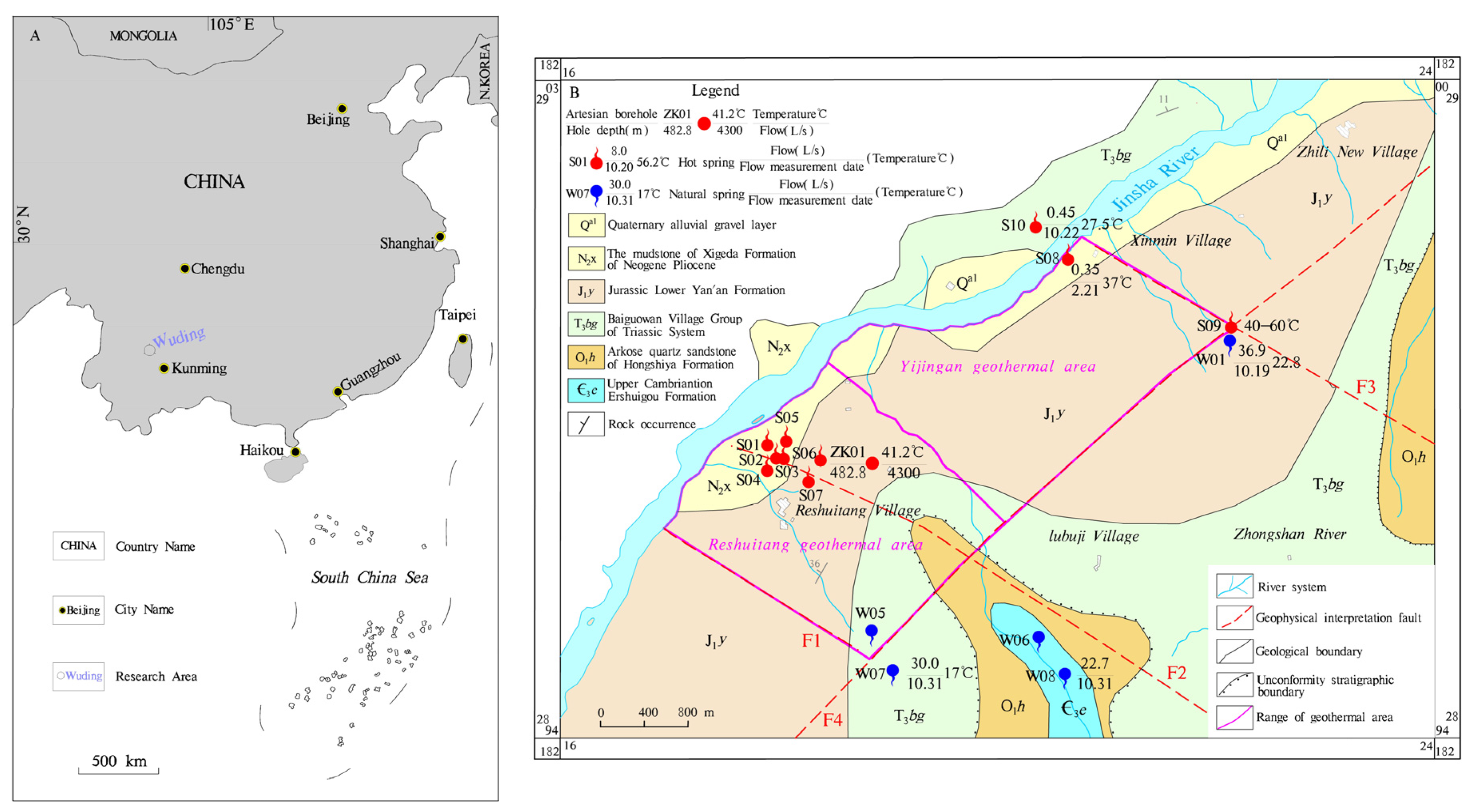
The research area is located in the north (102°9′–102°15′ E and 26°7′–26°10′ N) of Wuding County, Yunnan Province, on the south bank of the Jinsha River at the junction of Yunnan Province and Sichuan Province. Wuding County is located in a low-latitude plateau and belongs to the continental subtropical plateau monsoon climate. The county features two river systems; namely, the Jinsha and Yuanjiang river systems. The Luoneng geothermal area lies on the south bank of Jinsha River, Jiyi Town, Wuding County, Yunnan Province. Specifically, this area is located in the Wudongde Hydropower Reservoir area of Jinsha River, 14.0 km away from the tourist attractions of the Jiyi Great Rift Valley (Figure 1).
The study area is located at the junction of the northern part of the central Yunnan plateau and the southern edge of the western Sichuan plateau. The Jinsha River passes through the study area from southwest to northeast. The landform is characterized by a canyon terrain with high banks and low valleys. The terrain is broken by the Jinsha River and its tributaries, and the mountains generally trend north to south [18,19,20].

2.2. Regional Strata

In the Luoneng geothermal area, lower Proterozoic to Quaternary strata are exposed, except for Devonian, Carboniferous, and Permian strata. The regional strata comprise the Proterozoic Hekou Formation (Pt1h), the Tong’an Formation (Pt1h), the lower Sinian Chengjiang Formation (Zac), the upper Sinian Dengying Formation (Zbd), the upper Cambrian Erdaoshui Formation (∈3e), the lower Ordovician Hongshiya Formation (O1h), and the upper Triassic Baiguowan Formation (T3bg). In particular, the most widely distributed strata include the lower Jurassic Yimen Formation (J1y), the middle Jurassic Xincun Formation (J2x), the middle Jurassic Niugongdang Formation (J2n), the upper Cretaceous Xiaoba Formation (K2x), the upper Cretaceous Leidashu Formation (K2l), the tertiary Pliocene Xigeda Formation (N2x), and the Quaternary (Q4).

2.3. Geological Structure

The study area is located in the central part of the Sichuan–Yunnan anteclise, with complex regional geological structures and well-developed folds and faults. It features a series of NE wide and gentle Mesozoic syncline structures that formed under NNE and NE torsional compressive stress generated by the combined action of the north to south and east to west compressive stress during the Yanshanian. The syncline structures have similar characteristics and are generally relatively complete. The core is composed of the Cretaceous system, with a flat occurrence. The two wings are composed of the Jurassic and Triassic system, and the dip angle is generally 10–30°. The fault structure in the area is SN oriented, and regional major active faults include the Luoci–Yimen fault and Yuanmou fault on the east and west sides of the Reshuitang (hot-water pond).

3. Materials and Methods

3.1. Water Sample Collection and Testing

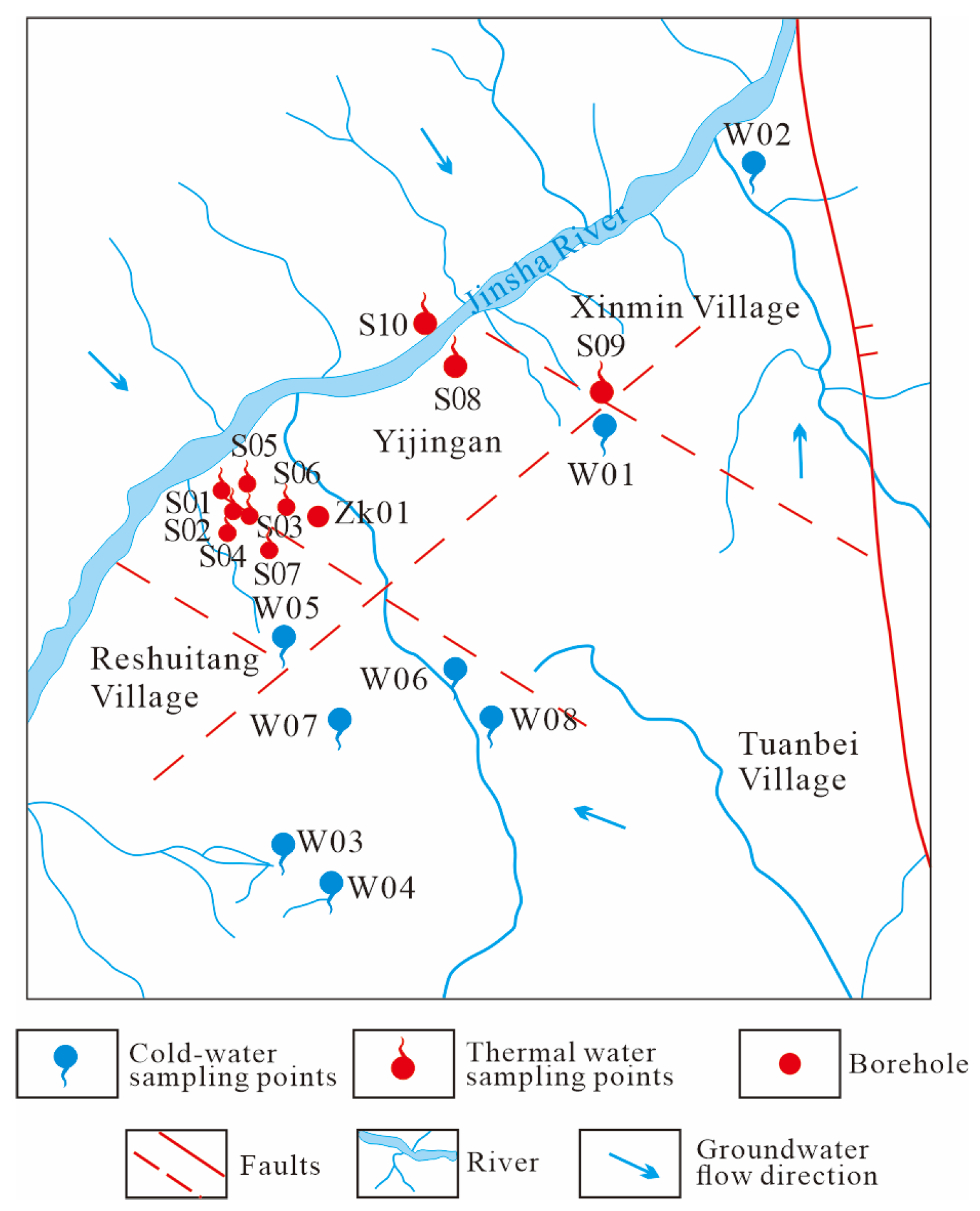
In September 2025, a total of 17 water samples were collected to represent the wet season. Among these samples, 10, 6, and 1 were obtained from hot springs, cold springs, and a geothermal well, respectively. Figure 2 shows the spatial distribution of sampling sites for δD and δ18O isotope analyses. This sampling design covers the major water body types utilized for water resources in the study area.
Water sampling and sample preservation were carried out in strict accordance with the Specification for Geological Exploration of Geothermal Resources (GB/T 11615–2010; Specification for Geological Exploration of Geothermal Resources. Standards Press of China: Beijing, China, 2010) [11]. Prior to sampling, the sampling containers were rinsed three to five times with the source water, followed by two rinses with deionized water and drying, to minimize contamination and ensure sample representativeness. For dissolved silica (SiO2) analysis, water samples were diluted five-fold immediately after collection and stored in polyethylene bottles prior to measurement. All sample bottles were filled completely to prevent gas exchange with the atmosphere. The accuracy of water temperature measurement was 0.1 °C, and groundwater discharge was measured using a flow velocity meter and related field methods.
Field parameters, including water temperature and pH, were measured in situ using a Hach HQ40d portable multimeter((Hach, Loveland, CO, USA)). The temperature of geothermal well water was additionally measured on site using a thermocouple thermometer. Samples for routine ion analysis were collected in 500 mL polyethylene bottles. Before use, the bottles were rinsed with deionized water, and immediately prior to sampling they were rinsed three times with the sample water. All water samples were filtered through 0.45 μm membrane filters before collection and stored at 4 °C until analysis.
On-site measurements of pH, dissolved oxygen (DO), oxidation–reduction potential (Eh), and electrical conductivity were performed using portable field meters. Dissolved SiO2 was determined using the molybdenum yellow spectrophotometric method. Ca2+ and HCO3 were measured using hardness and alkalinity titration methods, respectively. Mg2+, Na+, K+, SO42−, and Cl were analyzed using Dionex ICS-1500 and Metrohm MIC ion chromatographs.
Stable isotopes of hydrogen and oxygen (δD and δ18O) were determined using high-temperature conversion elemental analysis coupled to isotope ratio mass spectrometry, with analytical precisions of ±0.3‰ and ±0.16‰, respectively. Tritium (3H) was measured using an ultra-low-background liquid scintillation spectrometer (Quantulus 1220). No special pretreatment was required prior to isotope analysis, and all isotopic results are reported relative to the VSMOW standard.
S01–S06 represent the main discharge points of the Reshuitang hot springs. Following impoundment of the Wudongde Hydropower Station reservoir, the entire Reshuitang hot spring area will be submerged. The spring discharge features are shown in Photos 3-1 and 3-2.
All laboratory analyses were conducted at the Institute of Karst Geology, Chinese Academy of Geological Sciences. Analytical quality control was performed using certified reference materials provided by the National Standard Center. Blank controls were included throughout the analytical procedure, and all reagents were of analytical grade. The relative standard deviations of the measurements were generally less than 10%, indicating that the analytical precision was adequate for the purposes of this study.

3.2. Method

The analytical results were mapped using CorelDRAW 2021 (Corel Corporation, Ottawa, ON, Canada) and MapGIS 10.7 (China University of Geosciences, Wuhan, China). Statistical analyses of the hydrochemical parameters were carried out in SPSS 29 (IBM, Armonk, NY, USA). Water samples were classified according to the Shukarev hydrochemical scheme to characterize the spatial variability of hydrochemical composition within the study area. Piper trilinear diagrams, together with Durov and Schoeller plots, were generated using AquaChem 14.0 (Waterloo Hydrogeologic, Inc., Waterloo, ON, Canada) to identify the hydrochemical facies and the factors controlling major-ion distribution. Gibbs diagrams, ionic ratio plots, and isotope relationship diagrams were prepared in Origin 2024 (OriginLab, Northampton, MA, USA), and correlation analysis was further applied to quantify the relationships among major hydrochemical parameters. Based on these analyses, the principal controls on water chemistry were identified, and the geological characteristics and genetic model of the Wuding geothermal field were further constrained through an integrated interpretation of borehole core data, regional hydrogeological surveys, groundwater geochemistry, isotope analyses, and geophysical exploration.

4. Results and Analysis

4.1. Distribution Characteristics of Geothermal Resources

(1) Reshuitang geothermal area
The geothermal reservoir in this area is of the banded type (tectonic fracture). The thermal reservoir comprises dolomite of the Sinian Dengying Formation (Zbd). Zbd presents a layered distribution in space, with highly developed karst fissure and solution fissure. It is characterized by consistently high thickness (389–650 m), deep burial depth, wide distribution area, and good thermal conditions.
(2) Yijingan geothermal area
The geothermal reservoir in this area is of the layered type, and the thermal reservoir also comprises dolomite of the Sinian Dengying Formation (Zbd). The spatial distribution, fissures, thickness, and thermal conditions are similar to those of the Reshuitang geothermal area. However, in this area, the burial depth is shallow, the proportion of cold water mixing with hot water is high, and the temperature of the geothermal water is low, with the temperature of surface water at the spring being only 27.5 °C (Table 1).
The hydrothermal activity in the study area mainly involves warm and hot spring water, reflecting the general single phase. The survey in this study covered 10 hot springs, comprising 4 low-temperature hot springs (25–45 °C) and 6 medium- and high-temperature hot springs (45–95 °C).

4.2. Hydrochemical Characteristics of the Study Area

In this study, a total of 52 geothermal water samples, including historical datasets, were compiled for hydrochemical and hydrogen–oxygen isotope analyses. Among these samples, 24 were subjected to comprehensive analysis, 23 to hydrochemical analysis, and 4 to hydrogen and oxygen isotope analysis (Table 2). According to the exposure of geothermal water, the sampling sites were mainly concentrated in the vicinity of Hotan Village and Yijingan Village. During on-site sampling, the water temperature was measured on site. Water samples for measuring SiO2 content were immediately diluted five times and then stored in a polyethylene bucket for testing. The sampling bucket was washed three times with the water to be sampled and moistened twice with deionized water and dried. To prevent gas from entering the water sample, the sampling bucket was filled completely (leaving no headspace) at each sampling.
(1) Hydrochemistry
The temperatures of hot spring water and cold spring water in the study area differ markedly. Hot spring temperatures range from 27.0 to 56.2 °C, including both low- to medium-temperature and medium- to high-temperature springs, whereas cold spring temperatures range from 17.0 to 22.8 °C. The geothermal well water has a temperature of 41.2 °C, indicating a low-temperature geothermal resource. The pH values of the hot spring waters range from 7.62 to 8.04, with a mean of 7.84, while those of the cold spring waters range from 7.44 to 8.33, with a mean of 7.94; both are weakly alkaline.
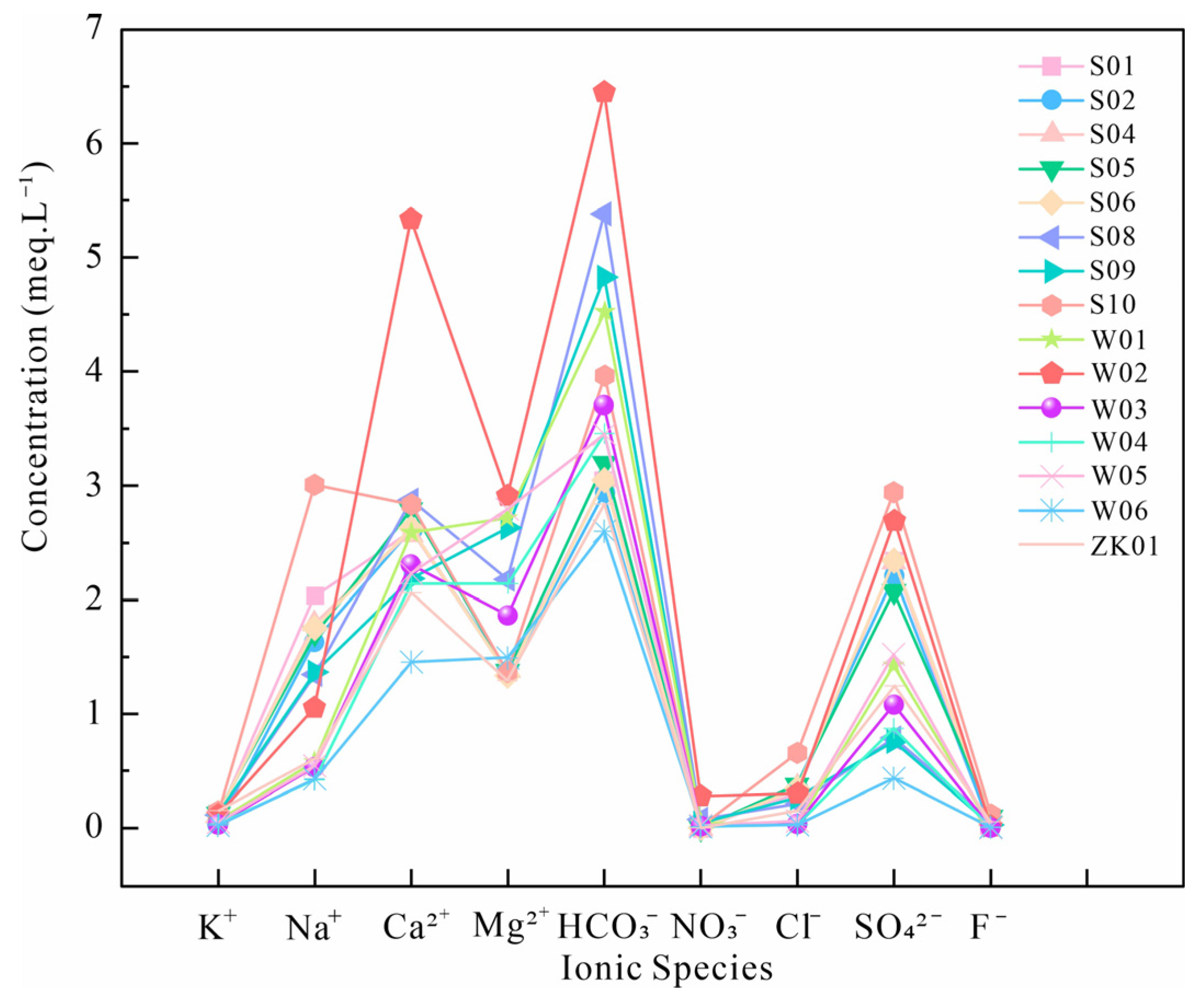
As shown in Figure 3, the sampled waters exhibit broadly consistent ionic variation trends and similar hydrochemical patterns, suggesting comparable evolutionary pathways and indicating that the groundwater system is controlled by a common water–rock interaction process.
The pH value of the geothermal water samples from the study area ranged from 7.54 to 8.12, with an average of 7.88, indicating weakly alkaline spring water. In this study, water temperature, water volume, and pH were monitored for a year, and they showed small dynamic changes with time.
Geothermal water in the study area exhibits a wide temperature range spatially, with the highest temperature of 56 °C at S02 and the lowest temperature of 37 °C at S08.
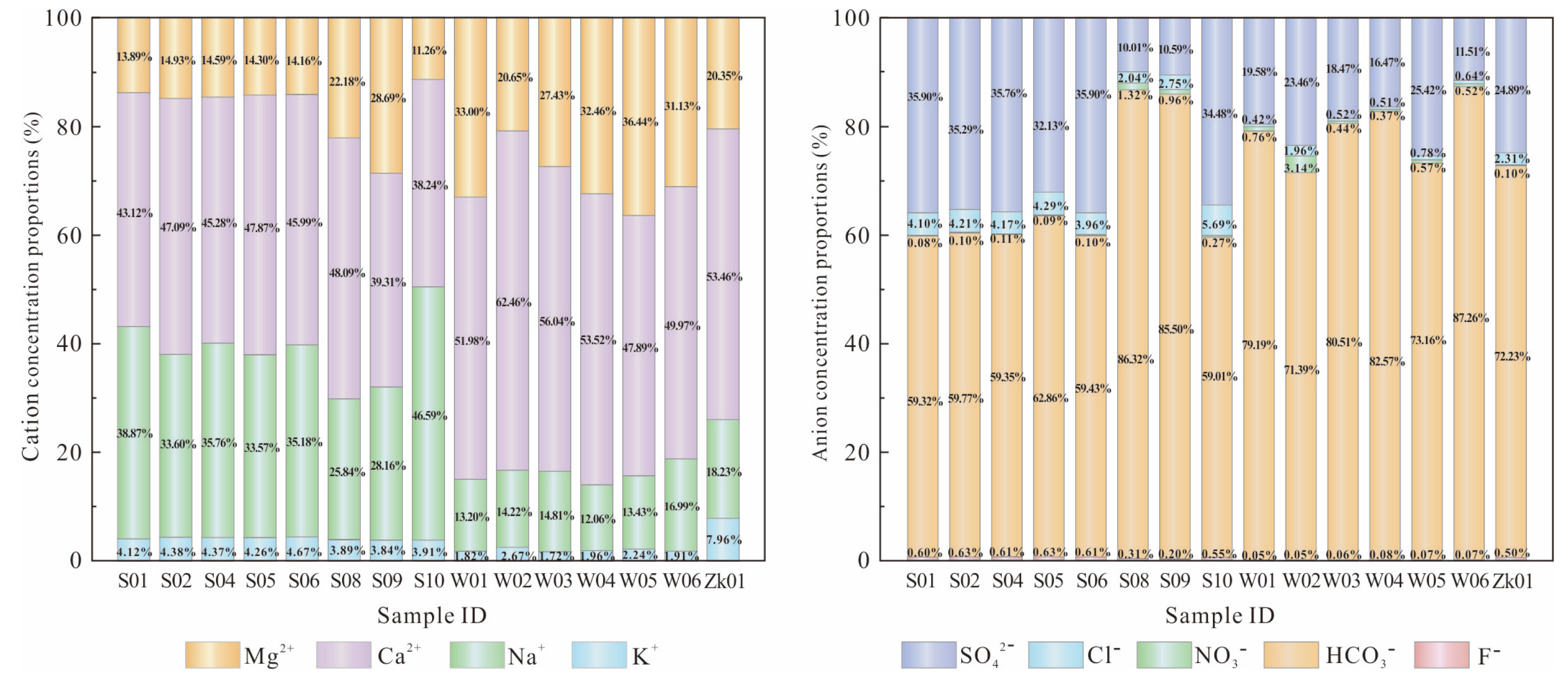
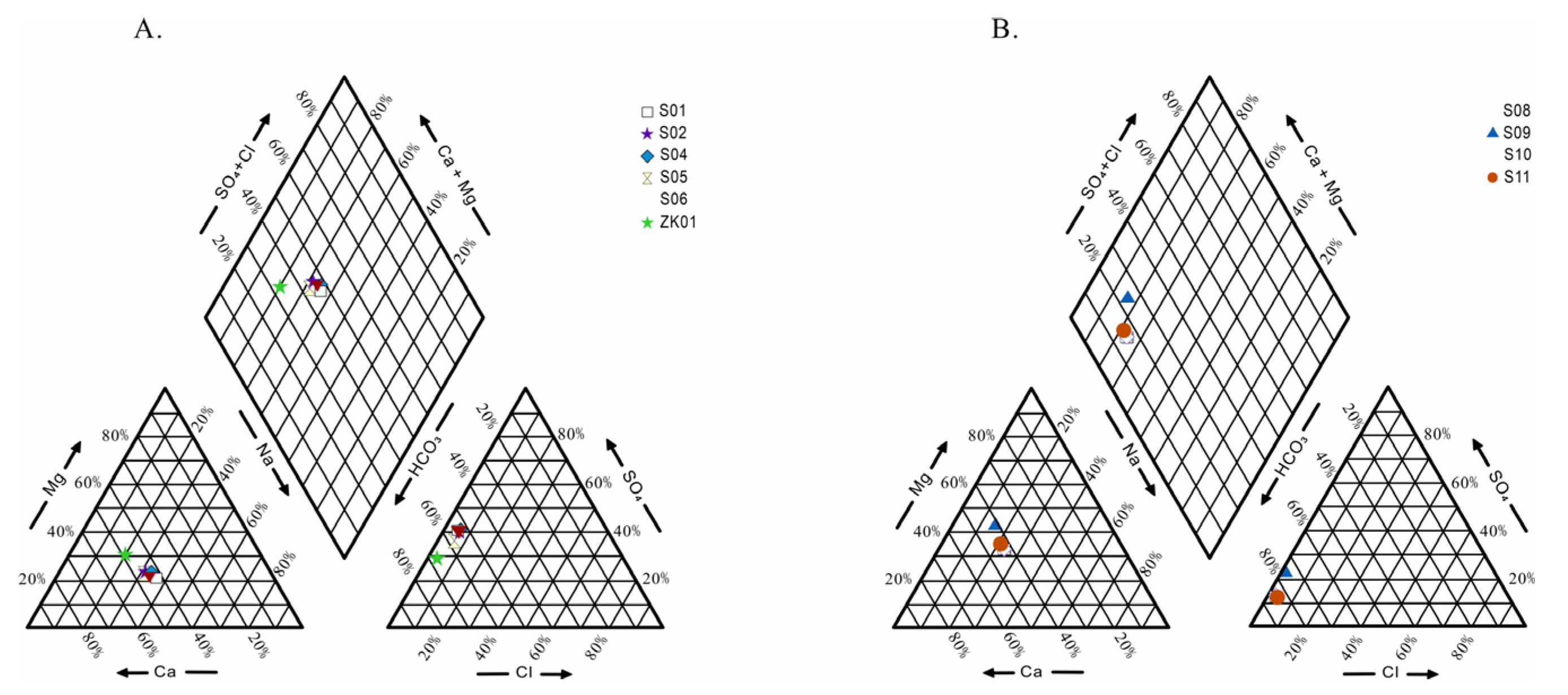
Regarding the geothermal fluid in Tangcun, the main anion is HCO3, followed by SO4 and Cl (Figure 4), and the main cation is Ca, followed by Mg. In Yijingan Village, the main anion is HCO3 and the main cation is Ca, followed by Mg. Based on the analysis of the hydrochemical types of the two areas, water quality does not significantly vary among these areas, and their recharge sources are speculated to be similar (Figure 5).
In particular, the contents of various hydrochemical components of geothermal water in Luoneng are as follows: Na+ + K+ content of 20.25–51.72 mg/L (41.71 mg/L on average), Ca2+ concentration of 41.33–55.92 mg/L (51.06 mg/L on average), Mg2+ concentration of 15.73–16.71 mg/L (16.47 mg/L on average), Cl concentration of 5.55–13.31 mg/L (11.64 mg/L on average), SO42− concentration of 59.72–112.5 mg/L (100.40 mg/L on average), HCO3 content of 173.5–195.2 mg/L (184.35 mg/L on average), NO3 concentration of 0.24–0.34 mg/L (0.29 mg/L on average), and TDS of 342.8–470 mg/L (438.13 mg/L on average).
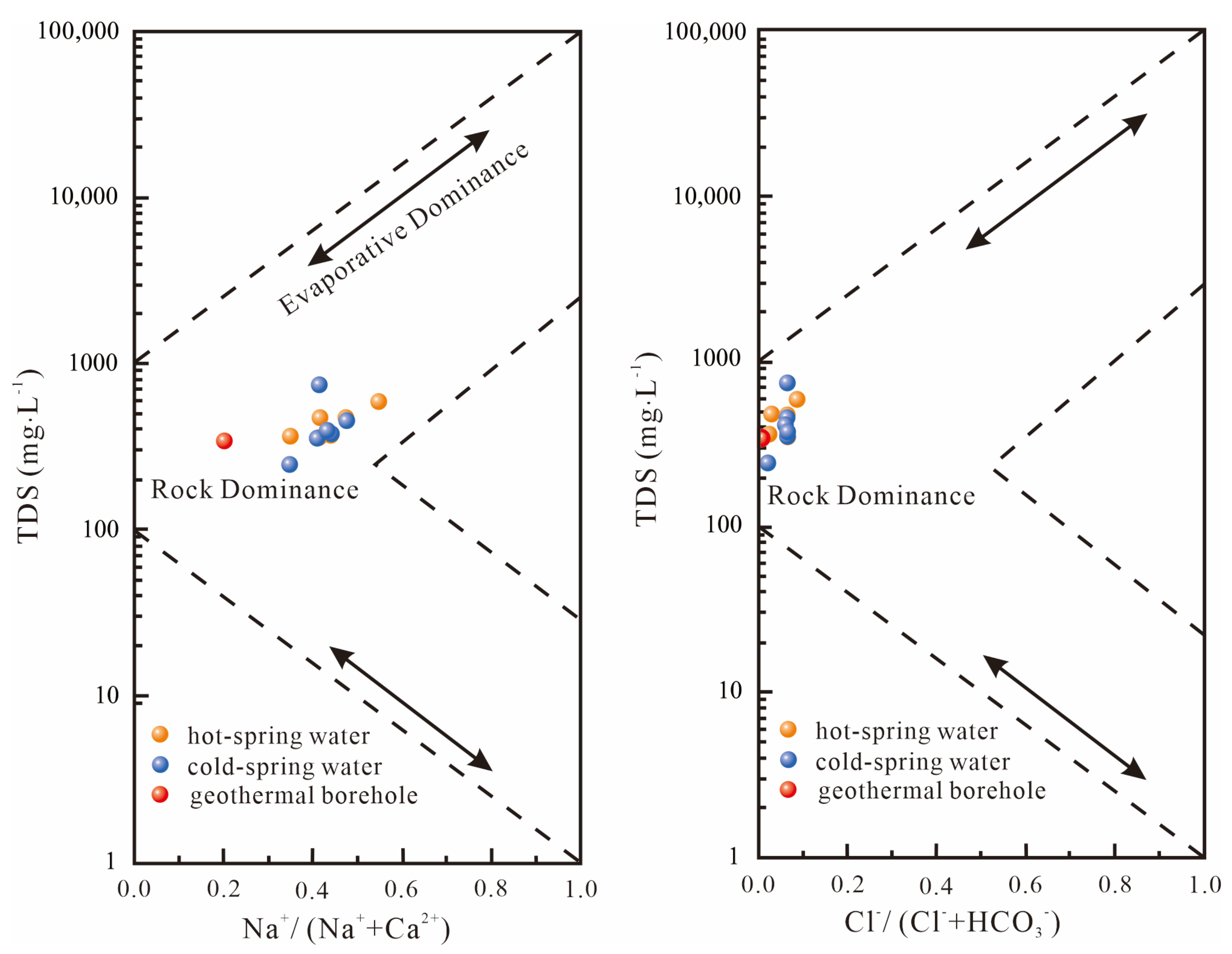
The Gibbs diagram reflects three controlling influences—evaporative concentration, rock weathering, and meteoric precipitation—and allows for a qualitative assessment of factors affecting water chemistry constituents and the identification of ionic sources. All samples have TDS values between 200 and 800 mg/L, Na+/(Na+ + Ca2+) ratios between 0.21 and 0.55, and Cl/(Cl + HCO3) ratios between 0.007 and 0.066 (Figure 6). These results indicate that water quality in the study area is primarily controlled by rock weathering, is partly influenced by evaporative concentration, and is least affected by direct meteoric recharge. The high proportions of Ca2+ and HCO3, with Na+ subordinate, suggest that dissolution of carbonate rocks (calcite and dolomite) dominates hydrochemical evolution, with silicate alteration as a secondary process. Meanwhile, the hot spring water, cold spring water, and geothermal wells show overlapping and clustered distributions, implying a strong common origin and a shared mid- to low-temperature water–rock interaction, with only weak modification by evaporation or meteoric inputs.
(2) Provenance and evolutionary pathways of major ions
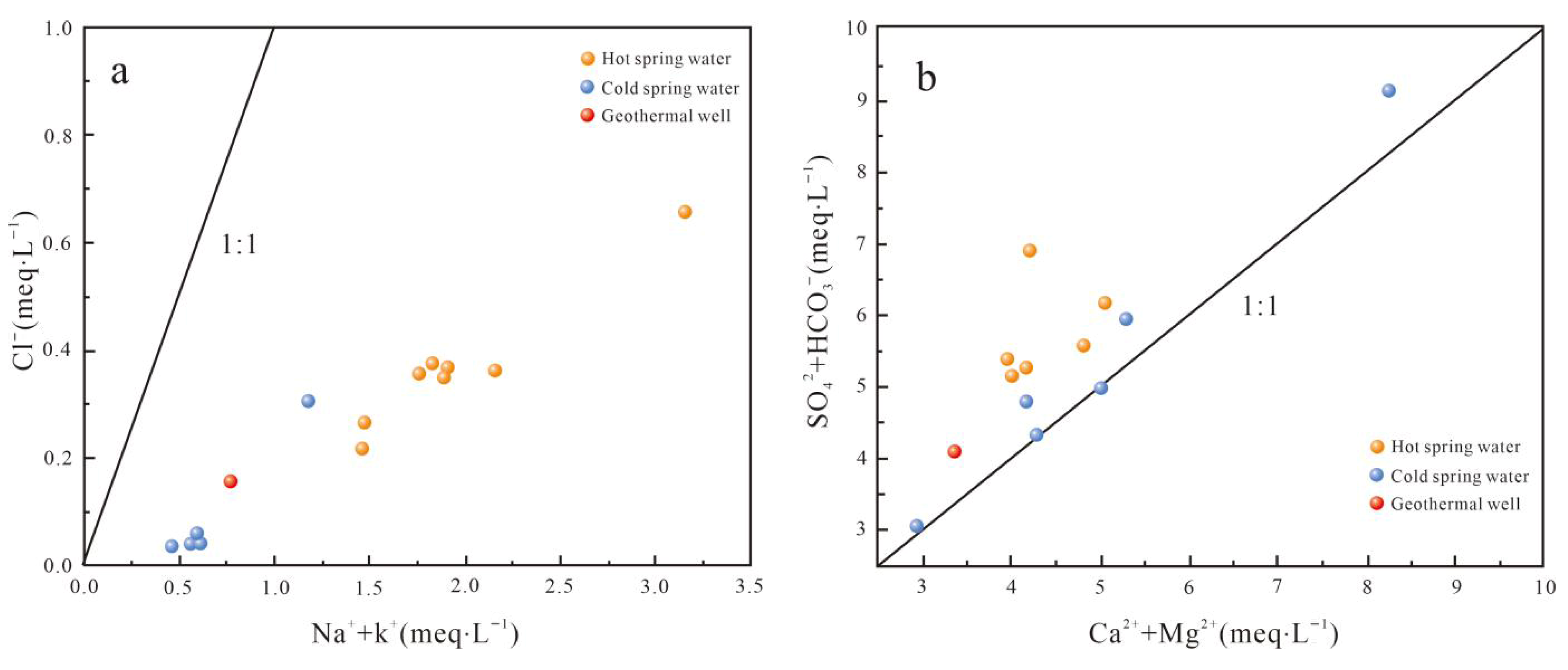
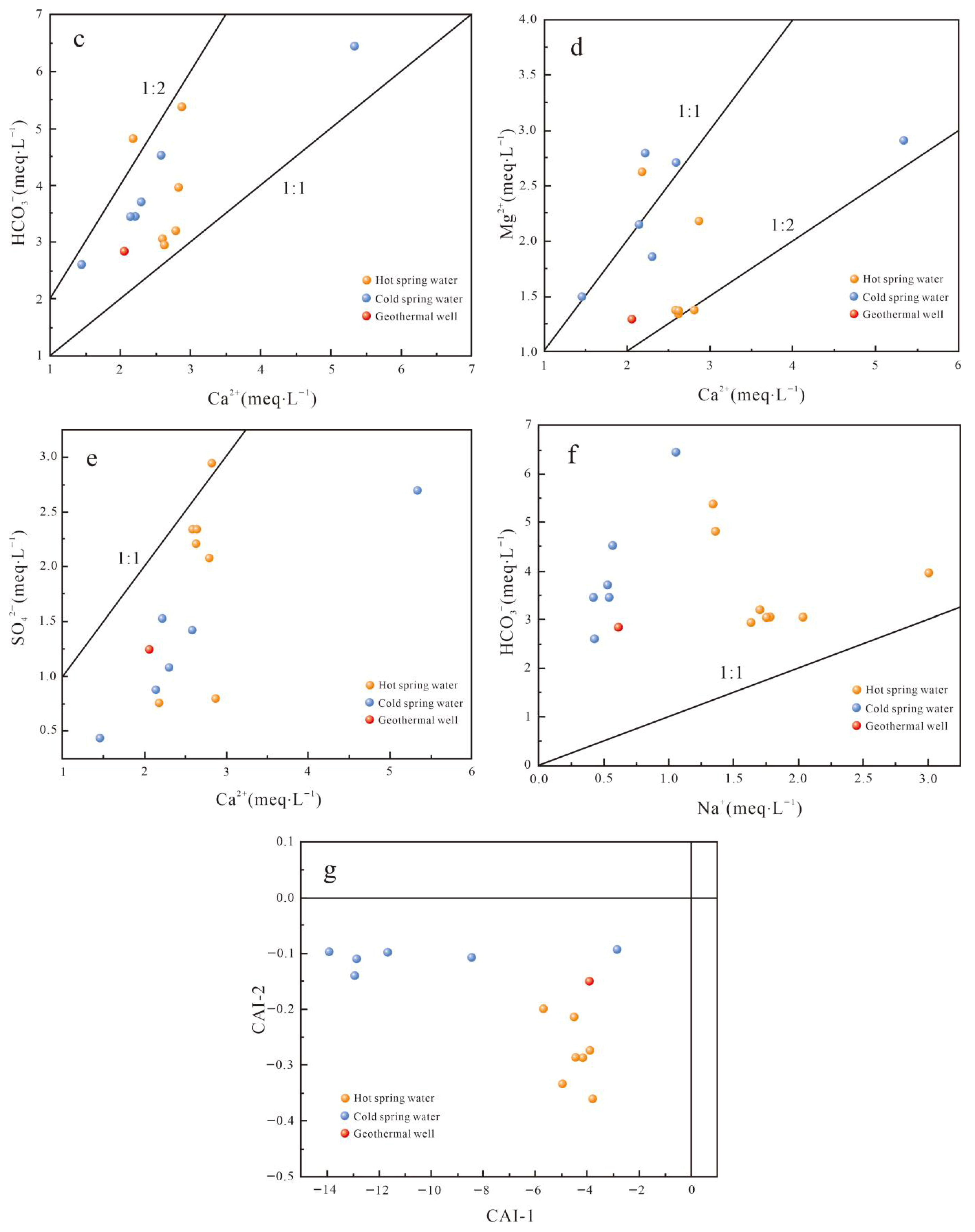
In groundwater research, the concentration ratios of specific ions can be used to analyze groundwater conditions and related geological processes and further infer the origins of various ionic components in geothermal water. Water samples from the study area were all located below the Cl/(Na+ + K+) = 1 line (Figure 7a), indicating that the samples were relatively enriched in Na+ and K+ but had relatively low Cl content. The Na+ and K+ mainly originated from feldspar hydrolysis, which largely eliminates the influence of evaporite dissolution. Most geothermal and cold spring water samples were located near or above the (Ca2+ + Mg2+)/(SO42− + HCO3) = 1 line (Figure 7b), indicating a basic charge balance between cations and anions; a few hot spring water samples showed relative enrichment in Na+ and K+ to maintain charge balance. HCO3 and Ca2+ showed a significant positive correlation (Figure 7c), with most samples concentrated near the 1:2 line and a few leaning toward the 1:1 line.
This indicates that calcite dissolution was the primary factor in the study area, followed by dolomite dissolution. The release of Mg2+ from dolomite dissolution resulted in a Ca2+/HCO3 ratio lower than the 1:2 relationship controlled by calcite. The Ca2+/Mg2+ ratio can be used to identify the main source of dissolved minerals.
As shown in Figure 7d, geothermal water was mostly concentrated near the 1:2 line, while cold spring water was mostly concentrated near the 1:1 line, indicating that carbonate dissolution was the primary factor in the shallow layers, while silicate/feldspar weathering/alteration was more significant in the deeper layers. Most water samples deviated significantly from the SO42−/Ca2+ = 1 line (Figure 7e), with only a few approaching 1:1.
It is speculated that the samples reacted weakly with gypsum after deep circulation, primarily influenced by carbonate dissolution or ion exchange. This indicates that SO42− in the water does not mainly originate from gypsum dissolution but rather from the oxidation of sulfides in the underlying strata. According to Figure 7f, all water samples in the study area were above the HCO3/Na+ = 1 line, and geothermal water was closer to the 1:1 line than cold spring water, showing that carbonate dissolution contributed more to the ion source than silicate weathering. Feldspar weathering was relatively more complete in deep hydrothermal circulation, while carbonate dissolution was dominant in shallow circulation.
A negative CAI value indicates that Ca2+ and Mg2+ in the geothermal water undergo ion exchange with Na+ and K+ in the surrounding rock; a positive CAI value indicates reverse ion exchange. Furthermore, the larger the absolute values of CAI-1 and CAI-2, the stronger the cation exchange, and vice versa. In this area, the CAI-1 of the geothermal water ranges from −14.0 to −2.5, and the CAI-2 ranges from −3.5 to −0.097 (Figure 7g), indicating significant ion exchange.
(3) Isotope analysis
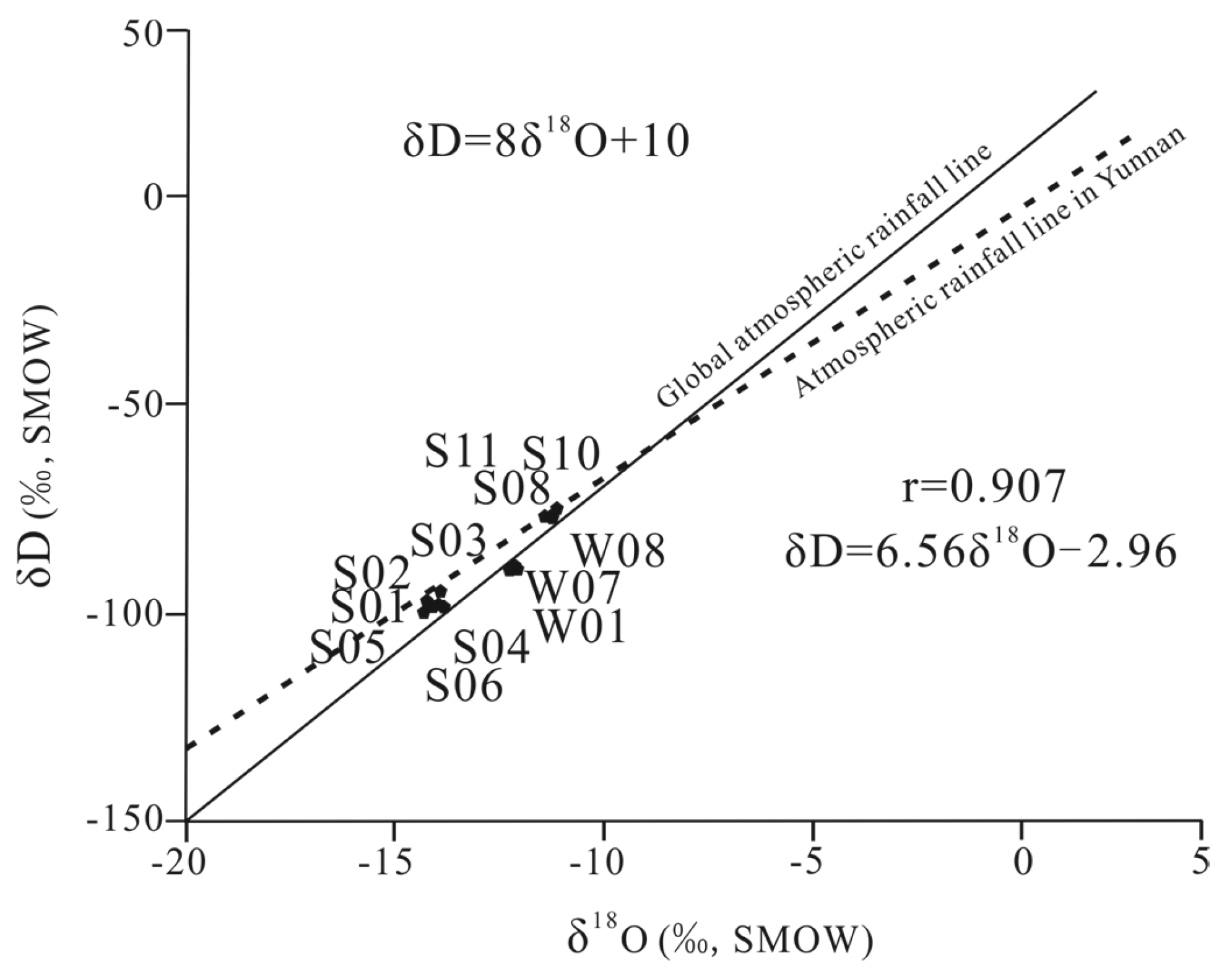
Regarding the water at the hot spring point in the Tangcun geothermal area (T > 25 °C), the δD value ranged from −98.5‰ to −95.3‰, with an average of −96.9‰, and the δ18O value from −13.88‰ to −13.08‰, with an average of −13.48‰. At the hot spring point in the Yijingan geothermal area (T > 25 °C), the δD value ranged from −77.7‰ to −77.5‰, with an average of −77.6‰, and the δ18O value from −11.28‰ to −11.22‰, with an average of −11.25‰. At the cold-water site (T < 25 °C), the δD value ranged from −88.6‰ to −88.1‰, with an average of −88.3‰, and the δ18O value from −12.16‰ to −12.12‰, with an average of −12.14‰. Overall, the two geothermal areas exhibit pronounced differences in isotopic values. In the Yijingan geothermal area, the δD and δ18O at the hot spring site exceed those at the cold-water site, whereas the cold-water site shows higher values than those in the Reshuitang geothermal area (Figure 8).
Stable hydrogen and oxygen isotopes are important constituents of water molecules. During the hydrological cycle, they are affected by processes such as evaporation, isotopic fractionation, and water mixing, and therefore exhibit systematic variations. As a result, they are widely used as effective tracers for investigating the origin and evolution of groundwater [15]. Based on the analysis of approximately 400 samples from different types of water bodies, previous studies established the Global Meteoric Water Line (GMWL) as δD = 8δ18O + 10 [7]. Owing to regional controls such as evaporation and humidity, local meteoric water lines differ from the global relationship. Based on 111 precipitation samples, the Local Meteoric Water Line (LMWL) for Yunnan Province was derived as δD = 6.56δ18O − 2.96 [9]. By projecting the isotopic data of the sampled waters onto the δD–δ18O diagram, the recharge source of the geothermal water can be identified (Figure 7). All water samples from the study area plot close to both the GMWL and the Yunnan LMWL, with only slight deviations, indicating that the geothermal waters are mainly recharged by atmospheric precipitation and have undergone water–rock interaction accompanied by isotopic exchange.
The stable isotopes of atmospheric precipitation in the study area fall within the range of Yunnan and the world. The δD value of the geothermal fluid was essentially the same as that of local rainwater, indicating that the primary source of the geothermal water is atmospheric precipitation. In contrast, its δ18O value was significantly higher than that of rainwater, which may be the result of material exchange between oxygen isotopes in geothermal water and oxygen isotopes in surrounding rocks [21,22,23,24,25,26].
It can be concluded that the elevation of the recharge area of hot springs in the Tangcun geothermal area (S01–S06) is 2251–2279 m. According to the topographic map of the study area, the recharge area is speculated to be from Yangquan Village to Yangfang Village. In the Jingan geothermal area (S08, S10, S11), the elevation of the recharge area is between 1247 and 1545 m. According to the topographic map, the recharge area is speculated to be the area from Tuzhuang to Dapingzi Village, and the geothermal fluid flows from southwest to northeast (Table 3).
(4) Hot water circulation depth
The Wuding geothermal field is located within the high heat flow zone of the Sichuan–Yunnan block depression, where the regional mean terrestrial heat flow is relatively high, reaching 77 mW/m2, with considerable local variation. In the study area, the Bouguer gravity anomaly ranges from −235 to −240 mGal; furthermore, the Moho is relatively shallow, with an estimated depth of approximately 48 km [27].
According to the hydrogen and oxygen isotope characteristics of the geothermal fluid in the study area and the structural characteristics of the geothermal area, the main source of groundwater supply in the geothermal area is atmospheric precipitation, and the elevation of the water supply area is approximately 1247–1545 m. Temperature measurement data of the hydrological borehole (ZK01) in the study area revealed a geothermal gradient of 2.69 °C/100 m, a thermal storage temperature of 82.88 °C (calculated using the quartz thermometer), and an average temperature of 21 °C. The depth of the normal temperature layer was found to be 15 m. Accordingly, the geothermal fluid circulation depth in the study area is 2.2 km. This implies that the thermal reservoir is the Sinian carbonate formation.
(5) Mixing ratio of cold and hot water
As deep geothermal water ascends after circulation at depth, it may mix to varying degrees with shallow cold water near the surface. Therefore, when estimating reservoir temperature, the influence of cold-water mixing on calculation accuracy must be taken into account. In this study, the silica–enthalpy equation and the silica–enthalpy diagram were used to evaluate both the reservoir temperature and the proportion of cold-water mixing.
(6) Silica–enthalpy equation method
The silica–enthalpy equation method treats the initial enthalpy of deep geothermal water and the mixing ratio between hot and cold water as unknown parameters to be solved. It is first assumed that SiO2 in the deep geothermal water is in a saturated state. As the geothermal water rises toward the surface, shallow cold water mixes with it, resulting in decreases in both enthalpy and SiO2 concentration. Finally, the measured spring or wellhead water represents the final enthalpy and final SiO2 concentration of the mixed water. The governing equations are as follows:
S S = S c X 1 + S h ( 1 X 1 )
S i O 2 s = S i O 2 c X 2 + S i O 2 h ( 1 X 2 )
Rearranging gives
X 1 = S h S S S h S c
X 2 = S i O 2 h S i O 2 s S i O 2 h S i O 2 c
where Ss is the final enthalpy of geothermal water (J/g); Sc is the enthalpy of surface cold water (J/g); X1 is the fraction of cold water calculated from the enthalpy equation; X2 is the fraction of cold water back-calculated from the SiO2 concentration; Sh is the initial enthalpy of deep geothermal water (J/g); SiO2s is the final SiO2 concentration of geothermal water (mg/L); SiO2c is the SiO2 concentration of surface cold water (mg/L); and SiO2h is the initial SiO2 concentration of deep geothermal water (mg/L).
Because numerous cold spring samples were collected, a representative sample was selected for the mixing calculation. After comparative evaluation, sample W03, with a temperature of 19.3 °C and a SiO2 concentration of 10.54 mg/L, was chosen as the representative cold-water endmember. For each thermal water sample, the corresponding enthalpy and SiO2 values at the measured temperature were substituted into the equations. The initial enthalpy and SiO2 concentration of deep geothermal water were determined according to the empirical relationships among geothermal water temperature, enthalpy, and SiO2 concentration summarized by Fournier et al.
Comparing the silicon–enthalpy diagram method and the silicon–enthalpy estimation method, the two methods provided similar results, with the mixing ratio of hot and cold water ranging between 40% and 85%. Nevertheless, the mixing ratio of cold and hot water differed among different hot springs. The temperature of geothermal fluid in the Tangcun geothermal area was higher than 50 °C, and the mixing ratio with cold water was less than 50%. The temperature of geothermal fluid in the Yijingan Village geothermal area was lower than 30 °C, and the mixing ratio with cold water was close to 80%.
(7) Hot storage temperature
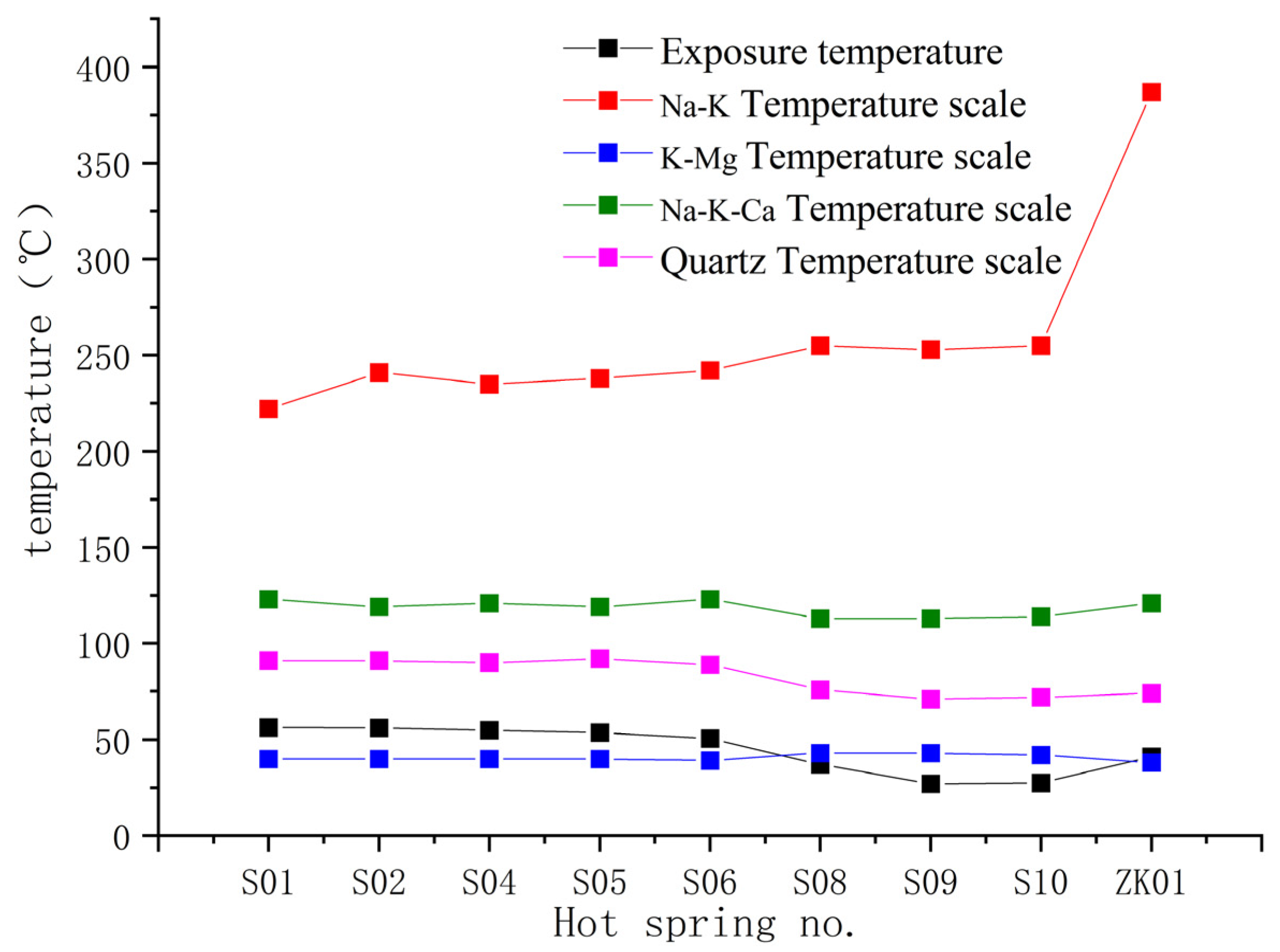
The most commonly used temperature scale methods include the SiO2, Na-K, Na-K-Ca, and isotope temperature scales [28,29,30,31,32]. Through the analysis of the equilibrium state of the water–rock interaction of geothermal water in the Luoneng geothermal area, this study selected an appropriate geochemical temperature scale method to calculate the temperature of thermal storage [33,34,35,36,37,38]. The average value of the results obtained using the selected method was taken as the temperature of deep thermal storage (Figure 9).
The results are as follows: (1) The cation temperature scale provided relatively high temperatures compared with the sampling temperature of the hot spring as a whole. The temperature estimated using the Na-K temperature scale was 222–387 °C, which is relatively large. This is because the temperature scale is applicable to deep thermal storage above 150 °C, leading to a large deviation for the study area. The temperature estimated using the Na-K-Ca temperature scale was 113–123 °C, which is slightly higher and may be attributable to the error caused by Ca2+ not reaching saturation. In the analysis of the saturation index (SI), gypsum does not reach the dynamic equilibrium of water–rock ion exchange, which is consistent with this result. (2) Compared with the cation geothermometer, the silica geothermometer provided results with only small deviation. According to the analysis of the relationship between silica and temperature in the study area, quartz is the main mineral controlling the solubility of silica in the area, and the temperature estimated using the quartz temperature scale was 71–92 °C, with an average of 82.88 °C. (3) In brief, the quartz temperature scale is more suitable for the estimation of the hot water temperature in the study area. Therefore, the temperature determined using the quartz geothermometer is approximately the temperature of the thermal reservoir in the study area.

4.3. Thermal Reservoir Structure

The underground geothermal system in the Luoneng geothermal area is a typical medium–low temperature conduction type, and active magma does not exist in the deep underground as an additional heat source. The geothermal water depends only on normal or high regional heat flow as the heat source. Owing to the presence of dolomite in the Sinian Dengying Formation (Zbd) aquifer with high porosity and permeability, which is overlain by a thick waterproof and thermal insulation cover, low-temperature geothermal water occurs in the study area.
The study area features a relatively complex type of geothermal heat storage. The thermal reservoir in the hot water pool area is the banded type (structural fracture type), whereas the thermal reservoir in the Jingan geothermal area is the layered type composed of dolomite of the Sinian Dengying Formation (Zbd).

4.4. Heat Source Conditions

The heat source is the energy source of geothermal resources, which include residual heat of magma, decay heat of radioactive elements, and heat conduction of the upper mantle. In areas with high-temperature geothermal fluids and magmatic rock distribution, the main heat source is the residual heat of magma. For medium- and low-temperature geothermal systems, the main heat sources are radioactive element decay and conductive heat flow from the upper mantle. According to a previous study, the primary source of geothermal energy in the Luoneng geothermal area is the conduction of heat energy in the deep upper mantle.

4.5. Thermal Reservoir Characteristics

The thermal reservoir in the Luoneng geothermal area is a carbonate thermal reservoir comprising dolomite of the Upper Cambrian Erdaoshui Formation (∈3e) and dolomite of the Sinian Dengying Formation (Zbd). The Erdaoshui Formation specifically consists of light-gray thin- to medium-thickness layered sandy argillaceous dolomitic limestone with thin-layered marl and sandy shale. The area also features a moderately developed underground river with karst fissure cave water, and the flow of the large spring is 10–100 L/s, with a thickness of 68–124 m.
Zbd formed during the Sinian, which is also characterized by a high tendency to form strong folds and fractures. These folds and fractures promote connection with deep heat sources and the storage of heat energy. Dolomite crystals correspond to rhombohedrons shaped similar to a chevron and a half-shaped rhombohedron, and the crystals are in simple linear contact. After being subjected to external force, dolomite cracks along the joint surface, which is an “X” type with a large number. The joints have good continuity, dense and uniform distribution, and can provide sufficient storage space.

4.6. Hot Channel Characteristics

The study area has a relatively developed fault structure, especially the Huili–Hongshanwan fault, which runs from Wuding to Sichuan along the north–south direction. It is a large-scale and deep-cutting fault, forming the famous “Jiyi Great Rift”, which plays an important role in connecting deep heat sources. This fault controls the strata on the east and west sides and the faults in lower order and has the characteristics of multi-period activity. It is an active thermal conductivity fault, not only connecting deep heat sources but also facilitating the circulation of underground water and conduction of heat flow from the deep along the way. By providing a necessary channel for upward migration under the effect of water pressure difference, density difference, etc., this fault plays an essential role in thermal conduction and water circulation.
The study area is located at the ridge of the Hongshan Bay anticline, with relatively developed fissures, good water conductivity, and strong water enrichment capacity, providing a channel for infiltration and recharge by atmospheric precipitation. The Hongshanwan anticline and F2 fault have relatively developed fractures, with an average width of 0.53 mm and a density of 12 cracks/m. With six times the fracture development compared to strata without structural development, the study area exhibits distinct thermal channel characteristics. The Hongshanwan anticline and the F1, F2, F3, and F4 faults provide favorable channel conditions for the formation of the geothermal system.

4.7. Conceptual Model of Geothermal Genesis

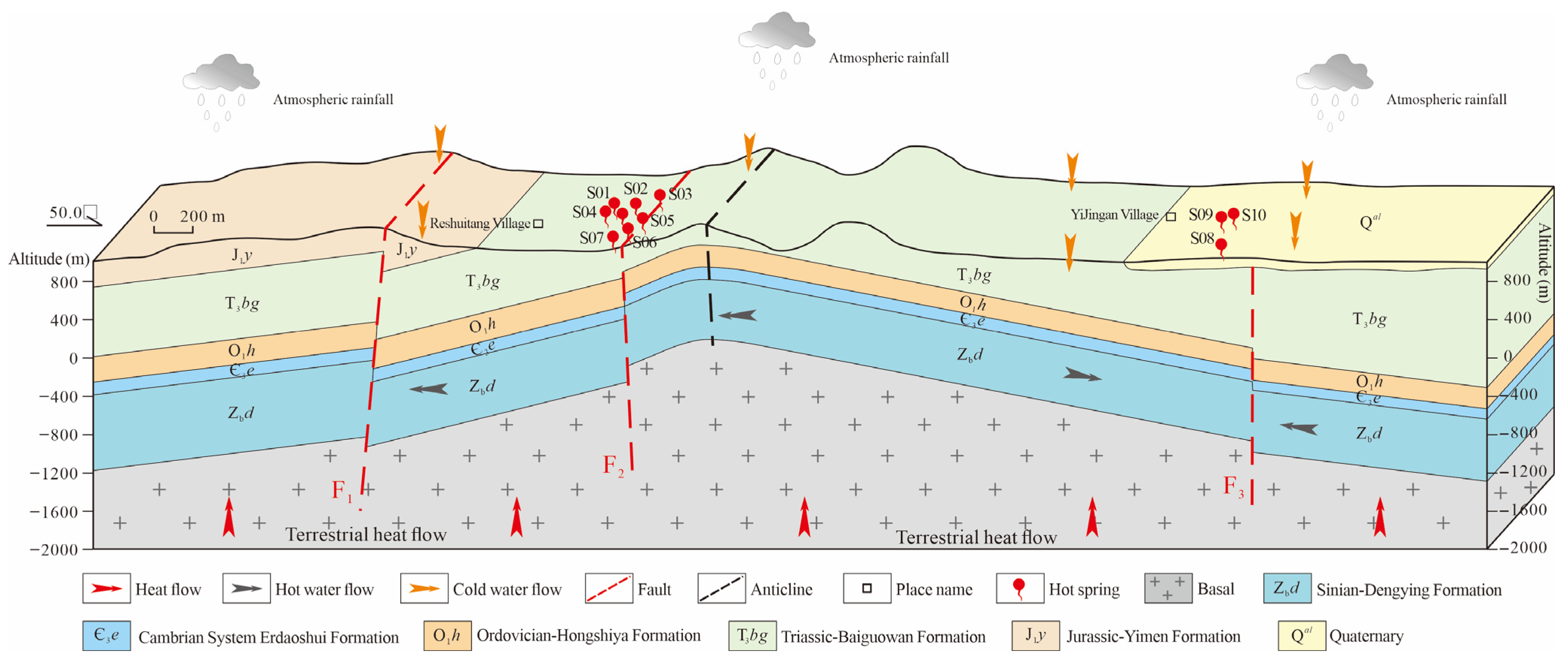
The geothermal system of the Luoneng geothermal area in Wuding is a layered and zonal geothermal system with thermal reservoirs composed of dolomites of the Sinian Dengying Formation (Zbd) and the Cambrian Ershuigou Formation. Heat is transmitted upward through the fracture zone of the ridge of the Hongshan Bay anticline and the secondary fault of the Hongshan Bay fault. In the Yangquan–Yangfang area on the right bank of the Jinsha River, atmospheric precipitation seeps deep into the Earth through the fractures. The water absorbs heat from mantle heat flow and heat generated by the decay of radioactive elements in the upper crust. The hot water is stored in the carbonate rocks to form a layered heat reservoir, which is insulated by a cover of Mesozoic clastic rocks. Along the fracture zone, a local zonal heat reservoir forms in the clastic rock cover, and under the effect of density difference and pressure difference, hot water is discharged as a 56 °C hot spring at the low potential surface of the exposed surface of the fault. The conceptual model of geothermal genesis in the study area is summarized as follows (Figure 10):
(1) In the study area, heat generated by magmatic activity does not occur as an additional heat source, and the main sources of heat energy are heat conduction from the upper mantle and the decay of radioactive elements. The thermal reservoir receives continuous heat flow through the fracture zone and rock strata in the core of the Hongshanwan anticline. The rock strata on both sides of the F1, F2, F3, F4, and other faults in the area possess relatively well-developed fractures, providing suitable channels for thermal and water conduction.
(2) The thermal reservoir in the study area is composed of dolomites of the Sinian Dengying Formation (Zbd) and the Cambrian Ershuigou Formation. The rock strata are hard and brittle, with well-developed fissures, strong permeability, good connectivity, good water-bearing capacity, and high heat dissipation performance. The thermal reservoir has a temperature of 82.88 °C and a burial depth of 1500–2200 m. The thermal reservoir is overlain by a thermal insulation cover composed of sandstone and shale interbedding of the lower Ordovician Hongshiya Formation (O1h). Fracture development in this cover is not prominent, and its water-bearing capacity is relatively poor.
(3) The main source of geothermal fluid in the study area is atmospheric precipitation. The supply area is located in the area from the Yangquan Village to Yangfang Village on the right bank of the Jinsha River, where dolomite is exposed. Atmospheric precipitation migrates to the deep along faults and fractures, and forms geothermal water after reaching a certain depth (1500–2200 m). The geothermal water is then discharged in the form of springs in low-lying areas.

4.8. Implications for Development and Utilization, and Regional Comparison

Integrated hydrogeochemical data, hydrogen and oxygen isotopes, and reservoir temperature estimates indicate that the Wuding geothermal field is a medium- to low-temperature, conduction-dominated geothermal system, and that the geothermal water undergoes significant mixing with shallow cold water during its ascent. The reservoir is mainly hosted in Sinian–Cambrian carbonate rocks, with NE-trending faults serving as the principal flow conduits, while the Paleogene mudstone cap plays an important role in thermal insulation. These characteristics suggest that the Wuding geothermal field is more appropriately classified as a medium- to low-temperature geothermal resource for direct use. Accordingly, its development should preferentially focus on applications such as spa and wellness use, space heating, protected agriculture, and agricultural product drying, rather than being evaluated simply as a high-temperature geothermal system for power generation.
At the same time, the geothermal waters in the study area are immature and are strongly affected by cold-water mixing, indicating a clear hydraulic connection with shallow groundwater and a reservoir system that is sensitive to production-induced disturbance. Therefore, the development of the Wuding geothermal field should follow the principles of protective development, cascade utilization, and dynamic monitoring. Prior to large-scale utilization, pumping–recharge tests and long-term monitoring should be further strengthened to constrain a reasonable production rate and reduce the risk of cold-water breakthrough. Compared with high-temperature convective geothermal fields in the region, the Wuding geothermal field does not exhibit obvious high-enthalpy reservoir characteristics. In contrast, relative to typical medium- to low-temperature geothermal systems controlled mainly by fault-guided flow, the Wuding geothermal field is more strongly characterized by the coupled thermal control of an anticline–fault–caprock system. This suggests that structural permeability, caprock integrity, and the degree of shallow cold-water mixing should be treated as key factors in future exploration and geothermal well siting.
Compared with high-temperature convective geothermal systems such as the Rehai geothermal field in Tengchong, western Yunnan, the Wuding geothermal field differs markedly in terms of heat source mechanism, reservoir type, and development target [39]. The Tengchong Rehai geothermal field is a typical high-temperature hydrothermal convection system, with granite as the principal reservoir rock, a reservoir temperature of approximately 230 °C, and a near-surface boiling zone. In contrast, the Wuding geothermal field shows no evidence of direct heating by active magmatism. Its thermal regime is mainly controlled by conductive heating under a regional high heat flow background, resulting in a much lower reservoir temperature and a stronger influence of shallow cold-water mixing. Therefore, Wuding should not be regarded as having the same development potential as high-temperature power generation geothermal fields such as Tengchong; instead, a more practical development pathway is the direct utilization of medium- to low-temperature geothermal resources.
Compared with the low-temperature Xifeng geothermal field in Guizhou Province [40], both systems share several common features, including meteoric recharge, fault-controlled flow, low- to medium-temperature reservoirs, and near-surface mixing processes. Previous studies have shown that the Xifeng geothermal field has a reservoir temperature of approximately 77 °C, with thermal waters mainly of the Ca–Mg–HCO3 or Ca–Mg–HCO3–SO4 type, and that the geothermal fluids re-emerge after deep circulation along fault zones. Similar to Xifeng, the Wuding geothermal field is a non-volcanic, fault-controlled hydrothermal system. However, Wuding is more strongly characterized by the coupled thermal control of an anticline–fault–caprock system and exhibits a higher proportion of cold-water mixing. These features indicate that greater attention should be paid during development to recharge area protection, the risk of cold-water breakthrough, and the role of caprock integrity in maintaining reservoir stability.

5. Conclusions

1. The Luoneng geothermal area in Wuding has good water yield. The hot-water pool features two regional large active faults on the east and west sides; namely, the Luoci–Yimen and Yuanmou faults. The Hongshanwan anticline has well-developed fractures, and fold fissures serve the main water-rich and water-conducting structure. Therefore, the strata in the study area have good water-bearing capacity.
2. The study area is divided into the Reshuitang geothermal area and the Yijingan geothermal area. The thermal storage type of the hot water geothermal area in Tangcun is the banded type, and that of the Jingan geothermal area is the layered type.
3. The geothermal system in the study area is a mixed type of banded and layered types composed of dolomites of the Upper Cambrian Erdaoshui Formation (∈3e) and the Sinian Dengying Formation (Zbd). Its primary heat sources are upper mantle heat flow and the decay of radioactive elements. The thermal reservoir receives continuous heat flow through the fold fracture zone and faults in the core of the Hongshanwan anticline. The caprock of the reservoir is composed of sandstone and shale interbedding of the lower Ordovician Hongya Formation (O1h).
4. The Wuding geothermal field is a medium- to low-temperature, conduction-dominated geothermal system and is therefore more suitable for direct utilization than for high-enthalpy geothermal power generation. Future development should focus on protective exploitation and dynamic monitoring, with particular attention given to fault-controlled flow, caprock integrity, and shallow cold-water mixing.

Author Contributions

Conceptualization, J.B.; methodology, J.B.; formal analysis, F.G.; investigation, Q.Z. and J.B.; writing—original draft preparation, J.B.; writing—review and editing, F.G.; project administration, J.B. and Q.Z. All co-authors performed a critical revision of the intellectual content of this article. All authors have read and agreed to the published version of the manuscript.

Funding

This research was supported by the Guangxi Key Technologies R&D Program (Nos. FN2600640111), the special funding for basic scientific research business expenses of the Chinese Academy of Geological Sciences (Grant Nos. JKYZD202331 and JKYQN202366), the Guangxi Natural Science Foundation (Grant No. 2026GXNSFBA00640307), and the Geological Survey Program of China Geological Survey (Grant No. DD20240200707).

Institutional Review Board Statement

Not applicable.

Informed Consent Statement

Not applicable.

Data Availability Statement

The original contributions presented in this study are included in the article. Further inquiries can be directed to the corresponding authors.

Acknowledgments

Du Wen-Yue and Yang Hui of the Institute of Karst Geology of the Chinese Academy of Geological Sciences were of great help during sample testing and analysis processes.

Conflicts of Interest

Author Fufang Gao is employed by the Yunnan Southern Geological Exploration Engineering Co., Ltd. The remaining authors declare that the research was conducted in the absence of any commercial or financial relationships that could be construed as a potential conflict of interest. The authors declare that this study received funding from Geological Survey Program of China Geological Survey. The funders were not involved in the study design, collection, analysis, interpretation of data, the writing of this article or the decision to submit it for publication.

References

  1. Guo, Q.; Pang, Z.; Wang, Y.; Tian, J. Fluid geochemistry and geothermometry applications of the Kangding high-temperature geothermal system in eastern Himalayas. Appl. Geochem. 2017, 81, 63–75. [Google Scholar] [CrossRef]
  2. Bai, L.; Gao, H.; Li, W.; Zhang, S.; Wang, Y.; Bai, J. Hydrochemical Characteristics and Geothermal Origin Mechanism Analysis of Geothermal Water in the Xinding Basin, China. Water 2026, 18, 346. [Google Scholar] [CrossRef]
  3. Chen, L.; Zhang, J.; Xu, L.; Li, Q.; Sun, Y.; Zhao, X.; Chen, S.; Li, J. A study on the geothermal circulation system of granite: An example from the Lancang area, Yunnan. Geothermics 2024, 116, 102853. [Google Scholar] [CrossRef]
  4. Guo, Q.H. Hydrogeochemistry of high-temperature geothermal systems in China: A review. Appl. Geochem. 2012, 27, 1887–1898. [Google Scholar] [CrossRef]
  5. Ba, J.J.; Gao, F.F.; Peng, C. Characteristics of nitrate and heavy metals pollution in Huixian Wetland and its health risk assessment. Alex. Eng. J. 2022, 61, 9031–9042. [Google Scholar] [CrossRef]
  6. Billarent-Cedillo, A.; Levresse, G.; Ferrari, L.; Inguaggiato, C.; Inguaggiato, S.; Hernández-Pérez, E.; Hernández-Espriú, A.; Camargo, F.C.; Hernández, J.C.; Arias-Paz, A. Deciphering origins and pathways of low-enthalpy geothermal waters in the unconventional geothermal system of Juchipila graben (Central Mexico). Geothermics 2021, 94, 102076. [Google Scholar] [CrossRef]
  7. Li, Y.; Dor, J.; Zhang, C.; Wang, G.; Zhang, B.; Zhang, F.; Xing, Y. Genesis of the Xifeng low-temperature geothermal field, Guizhou, SW China: Constrains from geology, element geochemistry, and D-O isotopes. Front. Earth Sci. 2021, 9, 782943. [Google Scholar] [CrossRef]
  8. Ba, J.; Dan, Y.; Luo, F.; Tang, C.; Peng, C. Seasonal Differences in the Hydrochemical Characteristics of Karst Wetlands and the Associated Mechanisms in Huixian, China. Water 2022, 14, 2362. [Google Scholar] [CrossRef]
  9. Xu, L.; Chen, S.; Zhang, J.; Cheng, Y.; Li, Q.; Chen, L.; Sun, Y.; Tan, H. Characteristics and Formation Mechanism of Geothermal Resources in Tectonically Active Regions: A Case Study of the Red River Fault in Western Yunnan Province, China. Geochem. Int. 2024, 62, 1433–1449. [Google Scholar] [CrossRef]
  10. Guo, G.; Zhu, M. The concentration of gold in different media of the Rehai Geothermal Field in Tengchong County, Yunnan, China. In Water-Rock Interaction; Routledge: Abingdon, UK, 2021. [Google Scholar] [CrossRef]
  11. Ba, J.; Tu, S.; Zhang, Q.; Tang, C. Hydrochemical and Isotopic Characteristics of Ruidian Geothermal Field in Yunnan, China. Int. J. Heat Technol. 2020, 38, 533–540. [Google Scholar] [CrossRef]
  12. Wang, G.L.; Zhang, F.W.; Liu, Z.M. An analysis of present situation and prospects of geothermal energy development and utilization in the world. Acta Geosci. Sin. 2000, 21, 134–139. [Google Scholar] [CrossRef]
  13. McGibbon, C.; Crossey, L.J.; Karlstrom, K.E.; Grulke, T. Carbonic springs as distal manifestations of geothermal systems, highlighting the importance of fault pathways and hydrochemical mixing: Example from the Jemez Mountains, New Mexico. Appl. Geochem. 2018, 98, 45–57. [Google Scholar] [CrossRef]
  14. Guo, S.Y.; Li, X.J. Reservoir stratum characteristics and geothermal resources potential of Rongcheng uplift geothermal field in Baoding, Hebei. Chin. J. Geol. 2013, 48, 922–931. [Google Scholar] [CrossRef]
  15. Yi, L.; Qi, J.H.; Li, X.; Xu, M.; Zhang, X.; Zhang, Q.; Tang, Y. Geochemical characteristics and genesis of the high-temperature geothermal systems in the north section of the Sanjiang Orogenic belt in southeast Tibetan Plateau. J. Volcanol. Geotherm. Res. 2021, 414, 107244. [Google Scholar] [CrossRef]
  16. Mongillo, M.A. Preface to geothermics special issue on sustainable geothermal utilization. Geothermics 2010, 39, 279–282. [Google Scholar] [CrossRef]
  17. Li, S.T.; Wen, D.G.; Feng, B.; Li, F.; Yue, D.; Zhang, Q.; Wang, J.; Feng, Z. Numerical optimization of geothermal energy extraction from deep karst reservoir in North China. Renew. Energy 2023, 202, 1071–1085. [Google Scholar] [CrossRef]
  18. Borden, R.K.; Brown, P.L.; Sturgess, S. Geochemical and hydrological evolution of mine impacted waters at the Argyle Diamond Mine, Western Australia. Appl. Geochem. 2022, 139, 105253. [Google Scholar] [CrossRef]
  19. Chang, X.-W.; Xu, M.; Jiang, L.-W.; Li, X.; Zhang, Y.-H. Hydrogeochemical Characteristics and Formation of Low-Temperature Geothermal Waters in Mangbang-Longling Area of Western Yunnan, China. J. Chem. 2021, 2021, 5527354. [Google Scholar] [CrossRef]
  20. Li, B.; Wang, G.; Liu, F.; Shi, Z.; Kong, Q.; Zhang, S.; Yan, X.; Liao, F.; Guo, L.; Liu, C. Hydrochemical characteristics and evolution of geothermal waters in western Yunnan, China based on self-organizing map and hydrogeochemical simulation. Appl. Geochem. 2025, 181, 106291. [Google Scholar] [CrossRef]
  21. Zhu, M.; Tong, W. Surface hydrothermal minerals and their distribution in the Tengchong geothermal area, China. Geothermics 1987, 16, 181–195. [Google Scholar] [CrossRef]
  22. Sevault, A.; Soibam, J. Investigation of an innovative latent heatstorage concept in a stovepipe. Chem. Eng. Trans. 2018, 65, 25–30. [Google Scholar] [CrossRef]
  23. Chatterjee, S.; Gusyev, M.A.; Sinha, U.K.; Mohokar, H.V.; Dash, A. Understanding water circulation with tritium tracer in the Tural-Rajwadi geothermal area, India. Appl. Geochem. 2019, 109, 104373. [Google Scholar] [CrossRef]
  24. Jones, B.; Peng, X. Signatures of biologically influenced CaCo3 and Mg–Fe silicate precipitation in hot springs: Case study from the Ruidian geothermal area, western Yunnan Province, China. Sedimentology 2014, 61, 56–89. [Google Scholar] [CrossRef]
  25. Zhang, G.P.; Liu, C.Q.; Liu, H.; Jin, Z.; Han, G.; Li, L. Geochemistry of the Rehai and Ruidian geothermal waters, Yunnan Province, China. Geothermics 2008, 37, 73–83. [Google Scholar] [CrossRef]
  26. Guo, Q.H.; Wang, Y. Geochemistry of hot springs in the Tengchong hydrothermal areas, Southwestern China. J. Volcanol. Geotherm. Res. 2018, 215, 61–73. [Google Scholar] [CrossRef]
  27. Jiang, Z.; Li, P.; Tu, J.; Wei, D.; Zhang, R.; Wang, Y.; Dai, X. Arsenic in geothermal systems of Tengchong, China: Potential contamination on freshwater resources. Int. Biodeterior. Biodegrad. 2016, 128, 28–35. [Google Scholar] [CrossRef]
  28. Sun, H.; Zhang, X.; Zhou, L.; Shao, X. Hydration heat and shrinkage of the support of high-performance concrete-filled steel tubes. Chem. Eng. Trans. 2018, 66, 1171–1176. [Google Scholar] [CrossRef]
  29. Pirlo, M.C. Hydrogeochemistry and geothermometry of thermal groudwaters from the Bidsville Track Ridge, Great Artesian Basin, South Australia. Geothermics 2004, 33, 743–774. [Google Scholar] [CrossRef]
  30. Edmunds, W.M. Bath Thermal Waters: 400 Years in the History of Geochemistry and Hydrogeology; Geological Society: London, UK, 2004; Volume 225, pp. 193–199. [Google Scholar] [CrossRef]
  31. Gledhill, D.K.; Morse, J.W. Calcite solubility in Na–Ca–Mg–Cl brines. Chem. Geol. 2006, 233, 249–256. [Google Scholar] [CrossRef]
  32. Chandrajith, R.; Barth, J.A.C.; Subasinghe, N.D. Geochemical and isotope characterization of geothermal spring waters in Sri Lanka: Evidence for steeper than expected geothermal gradients. J. Hydrol. 2013, 476, 360–369. [Google Scholar] [CrossRef]
  33. Kearey, P.; Wei, H. Geothermal fields of China. J. Volcanol. Geoth. Res. 1993, 56, 415–428. [Google Scholar] [CrossRef]
  34. Giggenbach, W.; Sheppard, D.S.; Robinson, B.W. Geochemical structure and position of the Waiotapu geothermal field, New Zealand. Geothermics 1994, 23, 599–644. [Google Scholar] [CrossRef]
  35. Olvera-García, E.; Ayling, B.F.; Rueda-Gutiérrez, J.B.; Rivera, A.M.M.; Rodríguez-Rodríguez, G.F.; Malo, J.; Sánchez, J.; Rodríguez-Molina, Y.; Pardo, Y.; Casallas-Veloza, Y.P.; et al. Expert-driven play fairway analysis applied to the Azufral Volcano Geothermal area in southwestern Colombia. Geothermics 2023, 115, 102827. [Google Scholar] [CrossRef]
  36. Zhang, J.; Li, W.Y.; Tang, X.C.; Tian, J.; Wang, Y.; Guo, Q.; Pang, Z. Geothermal data analysis at the high-temperature hydrothermal area in Western Sichuan. Sci. China Earth Sci. 2017, 60, 1507–1521. [Google Scholar] [CrossRef]
  37. Prasetio, R.; Hutabarat, J.; Daud, Y.; Hendarmawan, H. Distribution of 222Rn and CO2 across faults and its origin in Wayang Windu geothermal area, West Java-Indonesia. Geothermics 2023, 110, 102691. [Google Scholar] [CrossRef]
  38. Mitrofan, H.; Marin, C.; Povară, I.; Ioniţă, D.E.; Tudorache, A.; Vişan, M. Better constraining silica-enthalpy mixing models in a setting of two separate (karst and non-karst) dilution regimes. Hydrogeol. J. 2019, 27, 291–304. [Google Scholar] [CrossRef]
  39. Tan, H.; Li, D.; Qin, X.L.J. Analysis of a wide field electromagnetic method for deep geothermal factors in Sanying Basin, western Yunnan, China. Nat. Gas Ind. B 2024, 11, 66–73. [Google Scholar] [CrossRef]
  40. Guo, L.; Wang, G.; Sheng, Y.; Shi, Z. Hydrogeochemical Constraints Shape Hot Spring Microbial Community Compositions: Evidence From Acidic, Moderate-Temperature Springs and Alkaline, High-Temperature Springs, Southwestern Yunnan Geothermal Areas, China. J. Geophys. Res. Biogeosci. 2021, 126, e2020JG005868. [Google Scholar] [CrossRef]
Figure 1. (A) Location of the Wuding geothermal field; (B) hydrogeological map of the Wuding geothermal field.
Sustainability 18 03681 g001
Figure 2. Distribution of sampling sites in the study area.
Sustainability 18 03681 g002
Figure 3. Line chart of the main ions of geothermal water in the study area.
Sustainability 18 03681 g003
Figure 4. Distribution of elemental composition in water samples.
Sustainability 18 03681 g004
Figure 5. Piper trilinear diagrams of geothermal water in (A) Reshuitang Village and (B) Yijingan Village.
Sustainability 18 03681 g005
Figure 6. Gibbs diagrams of (A) TDS versus Na/(Na + Ca); (B) TDS versus Cl/(Cl + HCO3).
Sustainability 18 03681 g006
Figure 7. Water chemistry ion ratio analysis charts. (a) Cl/(Na++K+); (b) (SO42−+HCO3)/(Ca2++Mg2+); (c) HCO3/Ca2+; (d) Mg2+/Ca2+; (e) SO42−/Ca2+; (f) HCO3/Na+; (g) CAI-2/CAI-1.
Sustainability 18 03681 g007aSustainability 18 03681 g007b
Figure 8. Distribution map of hydrogen and oxygen isotopes in the study area.
Sustainability 18 03681 g008
Figure 9. Comparison of thermal storage temperature and spring point temperature.
Sustainability 18 03681 g009
Figure 10. Geothermal genesis model.
Sustainability 18 03681 g010
Table 1. Characteristics of hot and warm spring sites in the study area.
No.PositionTemperature (°C)Flow (L/s)Spring Mouth Elevation
S01Reshuitang Village54.08.50910
S02Reshuitang Village56.120.4916
S03Reshuitang Village47.40.20918
S04Reshuitang Village53.82.02931
S05Reshuitang Village52.318.2923
S06Reshuitang Village51.811.5944
S07Reshuitang Village28.80.10953
S08Yijingan Village37.00.48887
S09Zhili lao Village27.00.84993
S10Chuanfang Village27.50.45909
S11Xinmin Village58.00.591172
Table 2. Hydrochemical characteristics of groundwater of the Wuding geothermal field.
No.TypePHTemperature/
(°C)
TDS/
(mg/L)
Cation Mass Concentration/(mg/L)Anion Mass Concentration/(mg/L)
K+Na+Ca2+Mg2+HCO3NO3ClSO42−F
S01hot spring water7.9456.2470.04.9646.7651.8716.71185.90.2512.87112.51.88
S028.0456.1350.04.9037.5952.6816.71179.70.3012.67106.11.89
S047.9654.9364.05.0140.9751.8716.71185.90.3413.07112.01.91
S057.9553.6360.04.9739.2255.9216.71195.20.2713.3199.771.97
S067.9950.5369.05.3440.3052.6816.22185.90.3112.38112.31.92
S087.5437.0363.04.6530.9257.5426.54328.45.047.7538.081.17
S097.6527.0476.24.2731.3443.7631.94294.43.319.4736.470.68
S107.6227.5587.85.8069.1256.7316.71241.71.0923.32141.222.28
W01cold spring water7.7522.8459.91.8113.1751.8732.93275.82.651.4768.210.16
W027.4422741.34.5724.36107.035.37393.517.2910.82129.290.28
W037.6619.3383.11.4212.2146.1922.61226.21.241.4551.890.19
W048.2519354.31.579.6842.9526.05210.70.941.2942.030.23
W058.3317397.32.0812.5044.5733.91210.71.642.2473.220.20
W068.2219.5246.91.129.9229.1818.18158.80.941.1720.950.13
ZK01geothermal well7.7541.2342.86.1614.0941.3315.73173.50.245.5559.721.19
Table 3. Calculation table of geothermal water supply elevation in the study area.
No.Sampling Elevation (m)δ18O (‰)δD (‰)Recharge Elevation (m)
S01910−13.88−95.32275
S02908−13.87−96.22270
S03914−13.85−96.52268
S04909−13.82−97.12251
S05926−13.81−97.82264
S06944−13.80−98.52279
S08896−11.25−77.61250
S10905−11.22−77.41247
S111180−11.28−77.81545
Disclaimer/Publisher’s Note: The statements, opinions and data contained in all publications are solely those of the individual author(s) and contributor(s) and not of MDPI and/or the editor(s). MDPI and/or the editor(s) disclaim responsibility for any injury to people or property resulting from any ideas, methods, instructions or products referred to in the content.