Article

Responsible Supply Chains Through ESG Factors and Transformative Trajectories

by
Pietro De Giovanni
Strategy and Operations Knowledge Area and DIR, Claudio Dematté Research Division, Sustainable Operations and Supply Chain Monitor, SDA Bocconi School of Management, 20136 Milan, Italy
Sustainability 2026, 18(7), 3344; https://doi.org/10.3390/su18073344
Submission received: 31 December 2025 / Revised: 5 March 2026 / Accepted: 6 March 2026 / Published: 30 March 2026

Abstract

This study examines the Environmental, Social, and Governance (ESG) factors to be used in guiding suppliers and creating responsible supply chains. By adopting an integrated mixed-method approach (Delphi in conjunction with the survey method), this research determines the ESG factors prioritized by companies in relation to the assessment, qualification, and tendering of suppliers. We discover that the adaptation of ESG factors follows an unorganized and heterogenous process, resulting in complex adoption. Finally, this study searches for an evolutionary set of trajectories that suppliers can undertake to evolve according to their ESG maturity and their importance in the supply chains, revealing the operational plans necessary for suppliers to become Champions.

1. Introduction

Today, in light of the global importance of sustainability and responsibility in supply chains, the topic of supplier alignment has become a core focus in the creation of sustainable eco-systems. In view of growing pressures in terms of regulatory policies, stakeholder demands, geopolitical challenges, and environmental uncertainties, companies are required to redesign their supply chains and manage them in a holistic manner. This evolution also involves a paradigm shift in the supply chain dynamics and the role that the suppliers should play. The latter are expected to progress from merely executing the terms and conditions set in the contracts to becoming active co-creators of value. The current literature has widely emphasized the evolution of sustainability as the new paradigm in supply chain management [1,2], but there remains a crucial gap related to the potential role that guiding frameworks could play in the transformation of suppliers from mere participants to active role-players, which requires structured and well-functioning guiding mechanisms [3,4].
For example, Maersk, one of the world’s biggest players in container logistics services, has transformed their offer to their clients. While in the past, a client could use the Full Container Loads (FCL) shipping solutions, Maersk now offers a much more environmentally responsible shipping option by encouraging their clients to opt for Less-than-Container Loads (LCL) solutions. By consolidating shipments from more clients in a single shipping container, they have managed to achieve a massive reduction in their CO2 emissions output in exchange for additional revenues. This sort of tradeoff in prioritizing targets has become one of the hallmarks of the adoption and adaptation processes required for greater ESG synergies in supply chains, in line with greater overall stakeholder interests [5,6]. Also, an example of collaboration between two former competitors, Nestlé (Nespresso) and Illy, highlights how the sustainability agenda can provide a balanced platform for co-opetition. Given common threats in the environment, such as sourcing, the two firms incrementally progressed through the phases of co-opetition development to create circular economy systems for the capsules. This project aligns with [7], according to which competition among supply chains changes when considering ESG factors, requiring new mindsets and strategies for engaging suppliers and partners in these eco-systems. Also important is the experience of Fincantieri, a leading shipbuilding company, which has established its supplier development program in the form of the PartnerShip program [8]. Fincantieri’s example of procurement as a strategic partnership, through the integration of the principles of long-term contracting, joint-governance structure, training in leading-edge areas, and performance-based monitoring, aligns well with the responsible eco-system concept pushed by finance-based engagement mechanisms with the support of certain financial institutions. In this context, Fincantieri acts as the leader, guaranteeing the industrial plan and supporting suppliers in receiving the necessary funds from financial institutions.
Supported by real cases in which supply chains have been transformed through ESG, the topic of guiding transformation into a responsible supply chain has been widely covered in the literature, from which it has emerged as a process influenced by systemic complexity, pressures from stakeholder involvement, and technological factors [9,10]. However, the emerging paradigm from the previous cases is a multi-dimensional system wherein companies increasingly use ESG factors to undergo systemic change [11] and adopt innovative approaches to supply chain management [12,13].
Despite these developments, two important research gaps currently exist within the academic and managerial literature. First, there is little empirical insight into which specific ESG practices companies apply to develop their suppliers and create responsible supply chains. Although researchers often note their application, the adoption process has not been extensively examined [14,15]. Second, with regard to the specific characteristics of the ESG factors involved, the current research identifies deficient concerning the types of ESG system pathways and transformative plans proposed to suppliers to guarantee their proper evolution [16,17]. Therefore, this paper seeks to fill these gaps by investigating which ESG factors enable the creation of responsible supply chains, identifying which of them plays key roles during the assessment, qualification, and tender phases. Additionally, this paper identifies the ESG trajectories and transformative plans that responsible supply chains can follow according to supplier importance and ESG maturity.
To address these research goals, this study adopts a mixed-method approach, combining qualitative assessment via the Delphi approach with a survey method. The Delphi approach was chosen because of its potential demonstrated in qualitative research to establish a convergence of view on complex, multifaceted issues such as ESG assessment in supply chain management. By involving 88 experts with knowledge in procurement, manufacturing, and sustainability practices, the Delphi study derives—through multiple rounds—a final set of the 18 most relevant indicators essential to create responsible supply chains, playing different roles in the assessment, qualification, and tendering phases. Based on this starting point, the second phase of the research applied a structured questionnaire that was distributed to over 1200 companies, yielding 155 confirmed responses. This was designed to determine the level of implementation of the ESG factors emerging from the Delphi study and to identify the transformative trajectories that suppliers can follow to create responsible supply chains.
The remaining sections of this paper are organized as follows: Section 2 introduces a review of the existing literature. Section 3 discusses the research methodology, along with the reasons behind the proposal of the mixed methods approach. Section 4 explores the ESG factors prioritized by the firms in relation to the processes of assessment, qualification, and tendering. Section 5 identifies the trajectories and guiding programs for suppliers to follow to develop each of the ESG factors. Section 6 discusses the limitations of this study and proposes avenues for future studies, concluding the paper.

2. Literature Review

The last few years have seen a radical shift regarding the concept of sustainable supply chains, with important changes also noted in related directives. For instance, the recent adjustments of the CSRD and CE3D with the Omnibus Package have significantly modified supply chain perimeters from a sustainability perspective [18]. The importance of supply chains has progressed from cost-effective and lean operations to becoming the basis for achieving and promoting ESG-related goals, with ad hoc obligations and targets. Due to the increased focus on ESG factors, it is time for companies to adapt and develop their supply chains with a focus on both the sustainability and responsibility of their businesses worldwide, requiring the alignment of all suppliers and stakeholders involved [19].
The evolution of supply chain theory also provides the basis for a paradigm shift in sustainability matters. In the supply chain context, ref. [9] conceived supply chains as complex adaptive systems, whereby supply chains exhibit evolution through feedback cycles that necessitate multi-level orchestration approaches and transcend traditional dyadic relationships. This explains why the integration required by ESG transformation has remained an ongoing process that necessitates systemic coordination to overcome both organizational and geographical limits [18]. Similarly, ref. [5] emphasized—already many years ago—that the transition from logistics to strategic supply chain management requires globalization, information technology, and outsourcing, investing in performance-oriented partnerships and cooperative frameworks for sustainability [18]. This has been confirmed by [20], who explain the upcoming role of the strategic focus of supply chain management, considering supply chain performance at large and accounting for ESG-related topics. Moreover, ref. [10] propose an analysis of the paradigm shift in the development path from physical logistics to strategic supply networks. The author’s recognized the increasing role of diagnostic approaches, such as maturity analysis, KPI, and supply chain auditing, in assessing alignment with successive objectives. Ref. [2] directly connect their research to this historical development by stressing the concept of governance in sustainable supply chains, with more attention paid to longer-term value creation. Following the same logic, ref. [15] summarized the current evolution of supply chain management as a discipline, showing that sustainability plays a key role since it includes the expectations of various stakeholders, climate risk, and government regulations: these drivers push companies toward guiding mechanisms, thus embedding ESG principles throughout the supply chain.
In this vein, many studies concern themselves with the concept of guiding supply chains toward sustainability. Ref. [4] analyzed engagement with suppliers regarding carbon management, highlighting that performance monitoring, goal alignment, and ethical organizational culture can translate to satisfying ESG targets. However, guiding mechanisms and programs must be institutionalized, that is, incorporated into supplier assessment, agreements, and reporting, rather than being left to personal relationships or compliance. Investigating triadic sustainability governance with respect to consumers, suppliers, and third-party actors, ref. [21] discovered that even where pure collaboration is being pursued, its effectiveness is limited, and especially where asymmetry exists between the actors. This implies that capability development incentives, co-funded technology development, and joint learning platforms are critical if collaborative efforts are to evolve from tokenism to producing meaningful outcomes. However, this necessity for high-level collaboration is even more important within the context specified by [22], where the authors empirically established that pro-environmental support may extend and improve organizational performance by including customers and suppliers within the guiding processes. Indeed, this evolution can occur in various directions, differentiating between transactional engagement (for example, the procurement of credentials) and developmental engagement (for example, the joint generation of knowledge/supplier innovation). Also, ref. [23] provide more context to the green supply chain approach by noting the need to incorporate environmentally conscious practices like pollution, resource, and carbon management into supply chain operations. Hence, devising a mechanism-driven means of engagement, particularly when working with suppliers that lack the internal drivers or capabilities necessary to adhere to environmental standards, is in line with initiatives that advocate for the development of guiding structures to provide support.
To better grasp the role of supporting tools as change management levers, ref. [24] have screened the game theory-based analytical literature, highlighting examples of how the accomplishment of carefully crafted incentives (e.g., reverse revenue sharing agreements and/or joint profit maximization) may align economic and green objectives. This framework can be applied to any industry that deals with low-margin and high-cost activities (such as the recycling of used batteries) and should be looked at as a mechanism that translates sustainability from a regulatory requirement into a competitive benefit. The authors identified the public policies and circular economy plans as the means of alignment at the macro-level. The use of tools such as the green tax credit, subsidies, and Extended Producer Responsibility legislation ensures the creation of a favorable environment that catalyzes change, even under conditions of limited resources. Financial instruments have also proven to be influential in determining supply chain behavior. Ref. [25] show how instruments such as ESG-linked credits, green loans, and common investment platforms not only create liquidity but also help determine supply chain behavior in the long run, and how supply chain finance, which goes beyond accessing capital, integrates an element of sustainability through ESG criteria in determining eligibility.
The paradigm shift from traditional contracting to transformative and guiding programs is clearly accelerated by technological trends. Ref. [13], digital technologies such as IoT, RFID, and analytics increase visibility and traceability, which are critical to the real-time monitoring of ESG metrics. Such technologies also reinforce the firms’ capacity to offer guidance across different levels and around the world, thereby ensuring scalable supportive practices. This shift already materialized during the internet era, when [6] illustrated the role of internet platforms in creating a digitally integrated ecosystem that automatically carries out audit activities, planning, and decision-making. Also, ref. [1] demonstrate how technologies allow companies to prioritize supplier development programs, as well as to reach a high level of compliance in the integration of sustainability within operations.
Indeed, guiding suppliers should follow ad hoc rules in order to produce ethical results. Specifically, ethical leadership, which focuses on values such as transparency, anti-corruption, and fair treatment of all stakeholders, requires the support of auditing, codes of conduct, and supplier training [26]. Such measures ensure that the ethical values are not merely lofty ideas but can be really implemented. Refs. [27,28] highlight the importance of aligning goals and values in the contemporary context of modernized supply chain integration, suggesting the integration of the supply chain with green and ethical practices in response to the external stimuli of reputational risks, buyer demand, and government regulations. Ref. [12] focus on the next generation of supply chains, namely, the transition from SC 3.0 to SC 5.0, based on the principles of human-centric automation, circular economy, and the use of artificial intelligence. Ref. [29] and other researchers also concur with the idea of “smart governance,” focusing on the international integration of policies aligning global supply chains with ESG standards.
Although the literature is rich with respect to the development of mechanisms for aligning supply chains with ESG, two important gaps remain: first, the literature is deficient in recognizing which ESG factors companies should develop to create guiding mechanisms and programs to transform the supply chain into a responsible entity; second, we have even less knowledge of ESG trajectories and the plans to put in place to encourage the transformation of supply chains. This paper seeks to fill these gaps by answering two research questions:
  • RQ1: Which ESG factors should companies consider in creating responsible supply chains, and which of them are most important during the supplier assessment, qualification, and tender phases?
  • RQ2: Which types of ESG trajectories and transformative plans can firms implement to create responsible supply chains according to supplier importance and ESG maturity?

3. Methodology

In this research, a mixed-method approach was used, consisting of a structured qualitative phase using the Delphi method and an empirical study, to investigate supply chain development, transformative programs, and the role of ESG factors. In using such a combination, it is possible to identify meaningful ESG factors for supply chains through qualitative research and to test their usage through a quantitative analysis. Similar approaches have been used in the past in a number of other instances where the phenomena were very complex, requiring analysis through a unique technique [30,31,32].

3.1. Qualitative Phase: Delphi Method to Prioritize the ESG Factors

The initial phase of the study aimed to explore which of the ESG factors are most essential to companies in constructing dynamic, sustainable, and responsible supply chains. This study employes a Delphi method to determine the expert consensus after several rounds [33,34]. The technique makes use of informed participants, encourages convergence through iterative feedback, retains anonymity to reduce pressure and dominance effects, and promotes critical reflection. The analysis process includes the following five sequential steps:
  • Step 1: Indicator selection
We started out with a set of 100 ESG indicators, which were designed by Fincantieri—an active partner of the Sustainable Operations and Supply Chain (SOSC) Monitor at SDA Bocconi School of Management—for supplier selection and engagement. These indicators map how ESG factors are increasingly set to form a structured part of a responsible supply chain, especially in procurement (the full list of ESG factors can be found in Appendix A).
  • Step 2: Expert panel evaluation
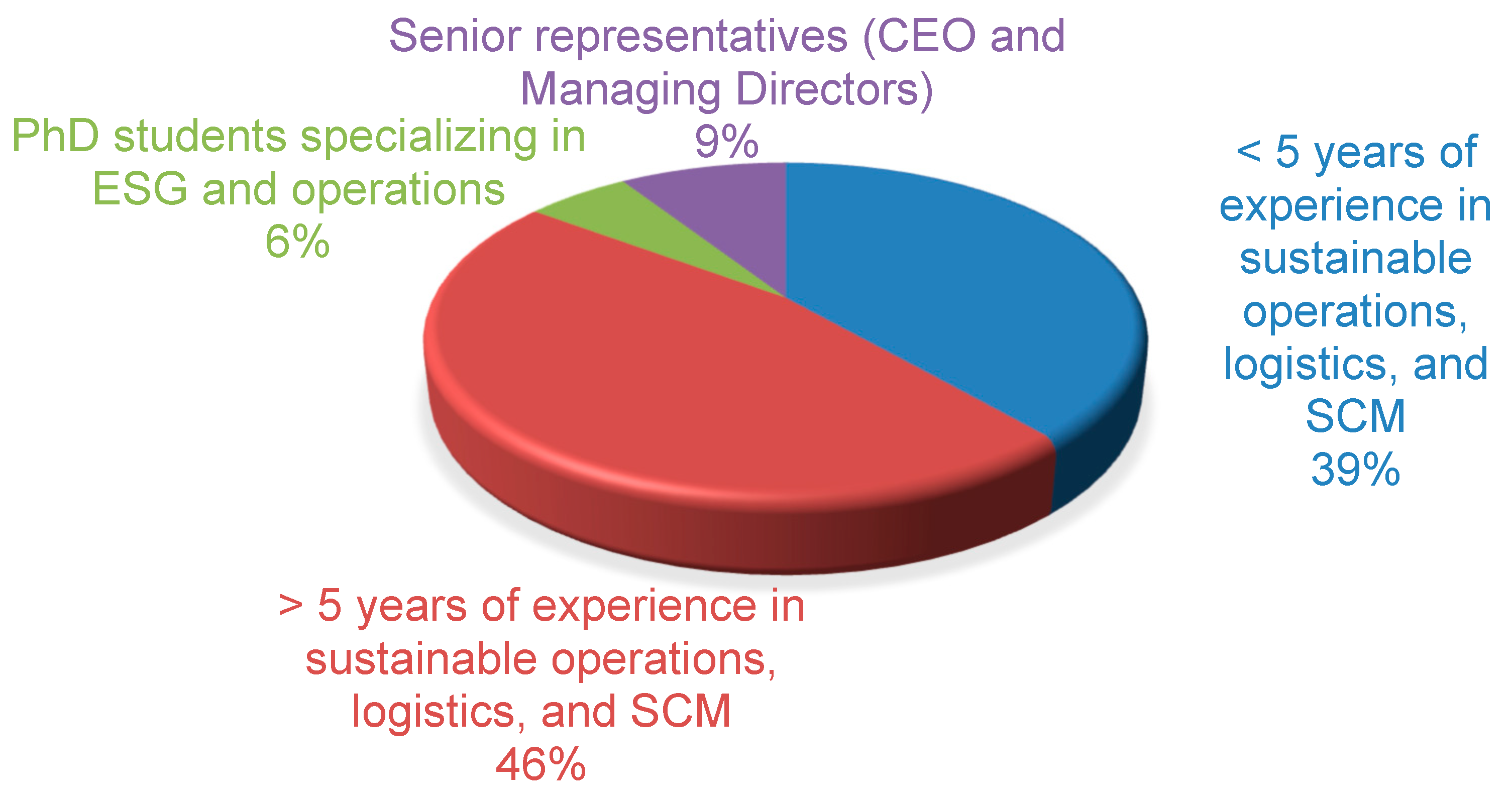
A panel of 88 experts in the areas of sustainability, operation, logistics, and SCM was involved in assessing the importance of the 100 ESG factors on a scale of 0–100. The study involved the voluntary participation of professional experts and did not collect sensitive personal data. All participants were informed about the purpose of the study and provided their informed consent prior to participation; hence, the study qualified for exemption from formal ethics committee approval. This generated a shorter list of ESG factors, linked to ESG priorities. Figure 1 describes the composition of the expert panel.
  • Step 3: Feedback and iteration
After the first round, we obtained 40 ESG factors by aggregating results, which were anonymized and explained to participants. Experts received a chance to update their judgments in a second round, encouraging thought and harmonization. To assess the degree of convergence among expert evaluations, Kendall’s coefficient of concordance (W) was computed for each round. Results indicate an increase in agreement from Round 1 (W = 0.40, p < 0.001) to Round 2 (W = 0.61, p < 0.001), suggesting substantial convergence following controlled feedback.
  • Step 4: Threshold assessment
The very low level of deviation (<5%) in each round, as well as signs of respondent fatigue, meant that the iteration process was ended early without being forced to reach a consensus. This takes into account the variability of ESG factors across industrial contexts.
  • Step 5: Final selection
A quasi-consensus of 91% was achieved, and a final list of 18 indicators that are perceived to be most relevant to supply chain responsibility was produced. While Kendall’s W captures panel-level convergence in the relative evaluation of ESG factors, the 91% threshold reflects item-level endorsement used for factor selection; together, these complementary criteria support convergence without imposing a forced consensus.
The Delphi technique worked properly in obtaining a well-rounded, functional understanding of the ESG factors of concern in the supply chain. As also advocated in [35], the structured anonymity and controlled feedback of the Delphi technique indicate that the final indicators are a reflection of judgment and not of group interaction.

3.2. Quantitative Phase: Large-Scale Survey on ESG Adoption

The second phase, which follows-up on the results of the qualitative research carried out via the Delphi analysis, was designed to identify the extent to which the ESG indicators were being utilized to develop responsible supply chains. This was achieved by using a structured survey that was presented to a wide selection of organizations involved in operations, logistics, and supply chain management activities. The structured survey was developed from the 18 ESG indicators and administered to 1200 firms. After the eight-week period, 155 responses were recorded. According to the American Association for Public Opinion Research (AAPOR) recommendations, we computed the response rate using the traditional response rate formula (RR1). This resulted in a 12.9% overall response rate and a sample composition as presented in Table 1.
This approach ensures that there is a representative balance between small and large businesses. The survey allows us to obtain the rate of uptake of ESG factors within the supplier assessment, qualification, and tendering phases. Moreover, we captured information on transformative programs and guiding trajectories using all the ESG factors listed in Appendix A.
Before running the descriptive analysis, we checked for non-response bias. All ESG factors listed in Appendix A were measured using binary form; the respondents were asked to indicate whether the ESG factor was present (Yes = 1) or absent (No = 0) to identify the possible trajectories toward responsibility. Although the variables are binary in form, we assessed potential non-response bias using a standard early–late respondent comparison. To achieve this goal, we used Chi-square tests comparing early and late respondents across the key binary variables, revealing no statistically significant differences. In Appendix B, we report the non-response bias for the 18 ESG factors, which are further detailed in Section 4. Finally, to evaluate the representativeness of the samples with respect to sectoral composition, we compared the sector-distribution of respondents with the distribution of the population from which the samples were drawn. We performed a Chi-square test of goodness of fit using the sectoral categories available for respondents and the population frame. The Chi-square test suggests that there is no significant difference between samples and the population frame with respect to sectoral composition, since the probability is higher than 0.05.

4. ESG Factors for Responsible Supply Chains

This section tackles the first research question using the outcome of the Delphi method and the results of the survey with respect to the related ESG criteria. By integrating expert preferences via the Delphi method with the empirical findings obtained from this study, six factors for each ESG were identified within the context of supplier evaluation, qualification, and tendering to create responsible supply chains. Since all the findings in this paper are derived from theoretical development and expert-based analytical procedures, we employ descriptive statistics to answer the research questions.

4.1. Environmental Factors in Supplier Assessment, Qualification, and Tendering

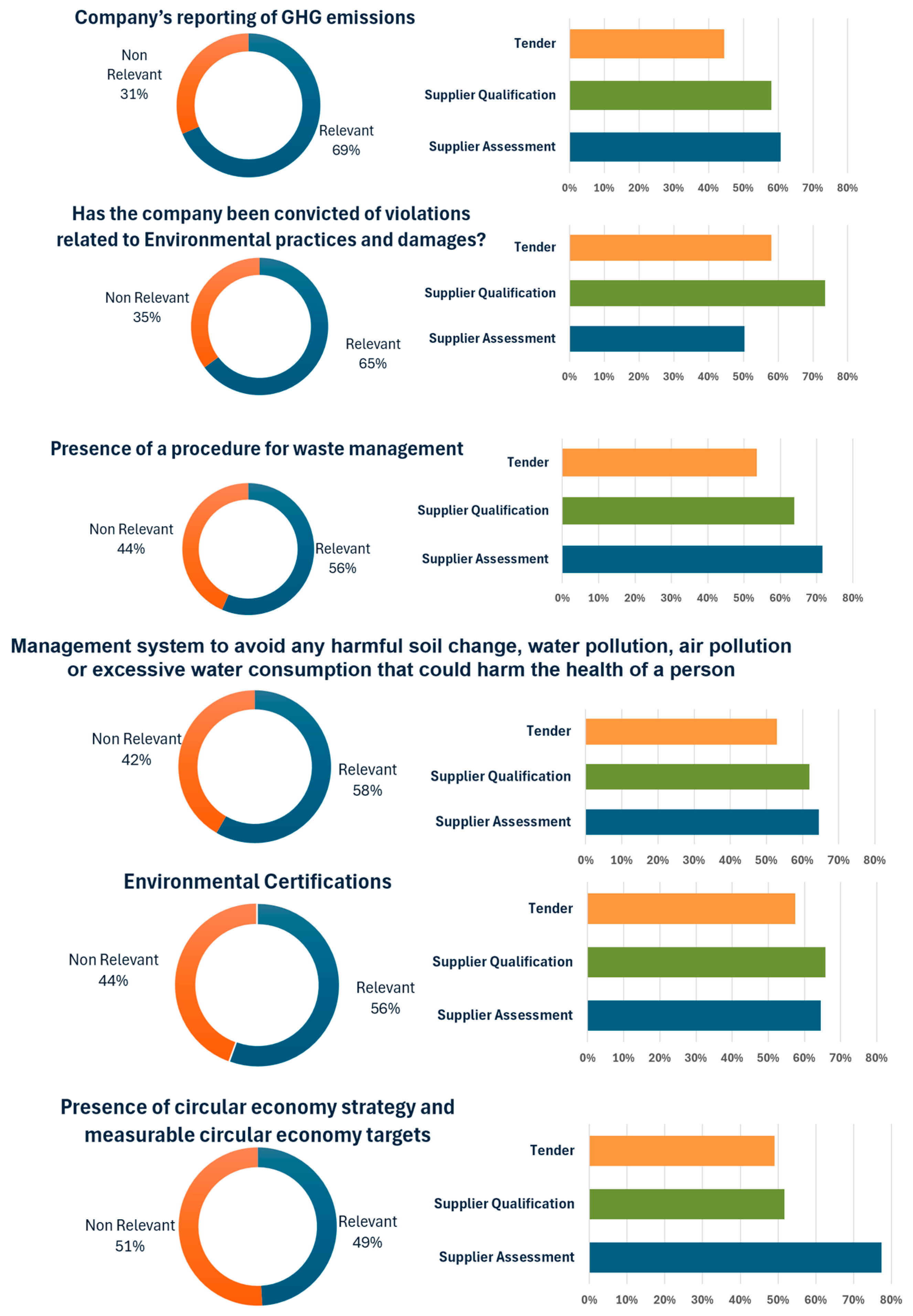
As displayed in Figure 2, among the most broadly embraced E-Factors, GHG emissions reporting is identified as being important by 69% of respondents. The natural progression of adopting regulations regarding Scope 3 emissions reporting has contributed to this widespread adoption. This result is in line with previous studies emphasizing carbon transparency and the importance of excluding/suspending suppliers [2,4]. Companies utilize this factor in different ways and in different steps. It is used as an indicator of data management and climate readiness during assessment, becomes a threshold of engagement in qualification, and is selective during the process of bidding and actual procurement: carbon reduction objectives are incorporated in the contract agreement and are made operational as incentives. This represents a natural progression from a focus on compliance and capability development, emphasizing the theory of aligning sustainability and operational excellence [1].
Another common criterion with widespread support, including the endorsement of 65% of the sample, is the absence of environment-related infringements or penal notices. Although this criterion can be seen as being somewhat negative, it actually indexes the ways in which supplier assessment is being progressively situated within the discourse of risk management, in line with the concepts of institutional legitimacy [18]. However, one should note that the somewhat reduced presence of this criterion in the assessment phase highlights the typical asymmetry of information present in procurement at the upstream end of the market, for which there is currently no third-party information or audit evidence.
Interestingly, the waste management process has been shown to be considered important by 56% of companies. Although not as mainstream as carbon reporting, this criterion is valued for its direct connection to process maturity in environmental issues. Especially within manufacturing and logistics industries, it reflects supplier maturity in handling end-of-life issues, which, in recent years, are most likely linked to circular economy challenges [24]. Interestingly, in early supplier evaluation and qualification, this factor serves as a convenient shorthand for internal maturity; similarly, in tendering, it can be used for the documentation or certification for hazardous waste procedures. However, its decreased importance within tendering practices might indicate maturity in operations as a means toward entering markets rather than receiving rewards in competitive procedures.
Closely aligned with this—albeit more from a prevention or avoidance perspective—is the area where companies must implement systems aimed at preventing environmental damage to air, water, and soils, which has been identified as being important by 58% of firms. Very much aligned with industry-related environmental risk factors, this topic allows one to identify possible high-risk players, driving due diligence in qualification, and while not so prominent in tendering, its applicability grows in environmental impact-intensive projects. These findings are consistent with the existing literature, according to which many industries exhibit high levels of salience (such as chemicals, agri-food, and infrastructure) where industry-specific and associated ESG factors must be adopted to manage environmental risk [15,36].
The importance of environmental certification, exemplified by standards like ISO 14001 or EMAS, is acknowledged as being important by 56% of respondents; this factor is significant because certification is recognized as a two-way tool for both compliance and alignment with international standards. The importance of certification is reflected in different levels of the decisional process, including screening, where certification is a quick indicator of environmental maturity. The results on assessment, qualification, and tender are in line with [27], indicating that certification schemes may not be very effective when not linked to specific output performance.
Finally, the least utilized—yet possibly the most challenging—factor is the existence of a circular economy plan, which only 49% of companies supported. Though this criterion indicates a very low level of institutionalization, it is relevant to the process of becoming a new frontier in ESG. The criterion is basically applied in supplier screening to identify forward-thinking suppliers who have innovative potential in the creation of value in the form of reused materials, logistics designed according to a closed-loop model, and waste valorization plans. The likely reason for this criterion being given less weight in qualitative screening and contract awarding is the lack of mutual metrics, third-party verification, and enabling legislation, the absence of which is represented in the literature as an important barrier to circular economy solutions [6,10].

4.2. Social Factors in Supplier Assessment, Qualification and Tendering

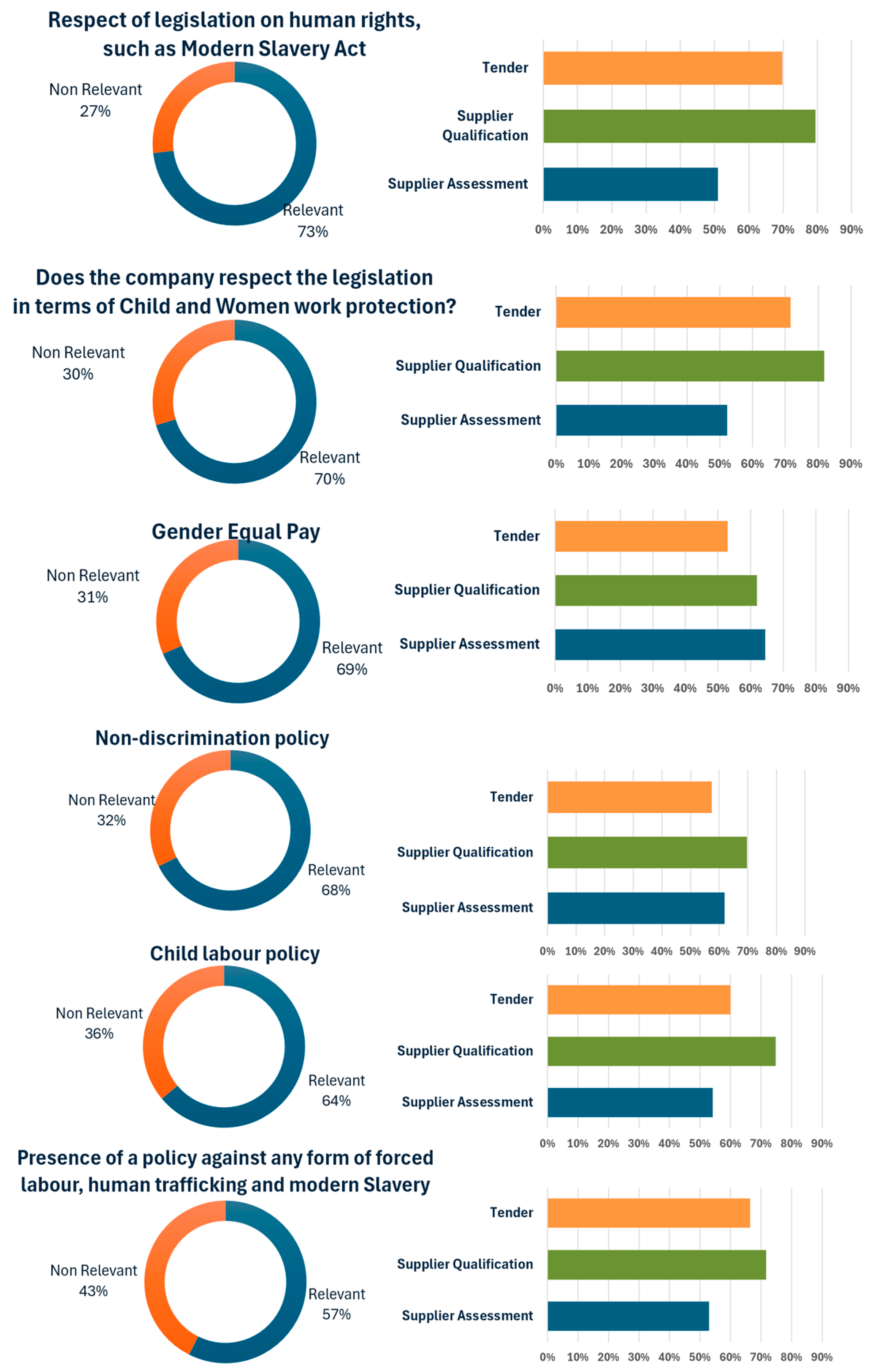
Among the most important S-Factors emerged from this study and displayed in Figure 3, the presence of human rights legislation, including standards such as the Modern Slavery Act appears highly relevant for 73% of the companies. This S-Factor features largely in the assessment stage, where firms ask for proof of observance in the form of audits by a third party, signed codes of conduct, or internal HR records. Though it occurs to a limited extent in the initial assessment process because of the absence of empirically verified evidence, it resurfaces during the tendering process. This corresponds to the two-fold logic of legal observance and legitimacy-seeking in the theoretical framework on supply-chain accountability [9,11]. Furthermore, the use of such indicators also satisfies the need for enhanced transnational value chain transparency, a condition aggravated by the absence of protective legislation in the countries of product manufacture [7].
Moreover, 70% of companies consider the observance of bans against child labor and gender to be a priority. These factors serve simultaneously as mitigators of risk and as a sign of being attuned to the best global standards for workers. It is most commonly observed during the qualification stage, where companies ask for documentation related to HR policies or subject suppliers to social compliance audits. Its importance rises for sectors that are more labor-intensive or reputation-sensitive, such as the textile, food, and consumer goods sectors. Finally, this factor is less observed in the assessment stage, although its significance emerges for differentiation strategies based on ESG principles, particularly for brand value.
Gender pay equity also appears to be a key consideration, which 69% of the participants affirm as important. Noticeably, this criterion also entails the whole responsibility procedure, but with varying levels of immediacy and concreteness. In the early assessment, it typically appears in the form of publicly professed principles on DEI or company statements. In the next stage, during the qualification, this criterion assumes a more rigorous form, which includes, for example, gender-disaggregated remuneration information, equality pay audits, or commitment plans. At the tendering stage, it might become relatively unimportant in absolute terms, although it assumes more importance in the context of innovation, social responsibility, and talent retention. This is in line with emerging studies surveying the business literature on the business imperative of inclusion, suggesting its role in the enhancement of resilience, innovation, and positioning in the market [3,4].
Another important factor is the existence of anti-discrimination policies, regarded as important by 68% of companies. Compared to other S-Factors, it is easier to detect through external sources, such as codes of ethics or websites, which makes it especially valuable in initial supplier screenings. In terms of qualification, its importance derives from companies that pursuit the synchronization with in-house values and expectations. In tendering, its importance depends on the role of ESG factors in the competitive strategy, such that when it entails reputation or differentiation, anti-discrimination policies become symbolic signals for corporate integration and legitimacy.
The establishment of explicit child labor policies, although partly coinciding with general human rights issues, is considered a separate and applicable S-Factor and was cited by 64% of the sample. In this respect, although mainly in terms of defense, the use of this factor during the screening process, companies can avoid any potential risks associated with prosecution and/or reputation damage, especially with respect to purchasing practices relating to developing countries and/or multiple subcontractors. This factor emerges through simple statements or supplier questionnaires during screening procedures.
Lastly, a significant focus falls on the banning of all types of forced labor, including human trafficking and modern slavery, identified as important in creating responsible supply chains by 57% of the firms. This criterion spans all levels of supplier engagement. In the evaluation process, companies self-report or interpret general levels of compliance. In qualification, the matter becomes legally binding and evidenced through certifications or audit verification. In tendering, it serves as a reputation builder and exemplifies due diligence, primarily assisting the firm’s legitimacy after contracting. Its widespread adoption identifies an increasing integration of risk management, ethics, and stakeholder support within global supply chains.

4.3. Governance Factors for Supplier Assessment, Qualification and Tendering

Nowadays, the G-Factors are quickly becoming key considerations within the framework of responsible supply chains. Though governance factors have been regarded as traditional back-end compliance approaches, through our assessment, we have identified a paradigm shift that emphasizes the integration of these factors within the initial assessment phases associated with the supplier. This trend reflects that the larger institutional forces acting on firms in their promotion of transparency and integrity within supply chain governance; hence, it has become a hot topic [12,14].
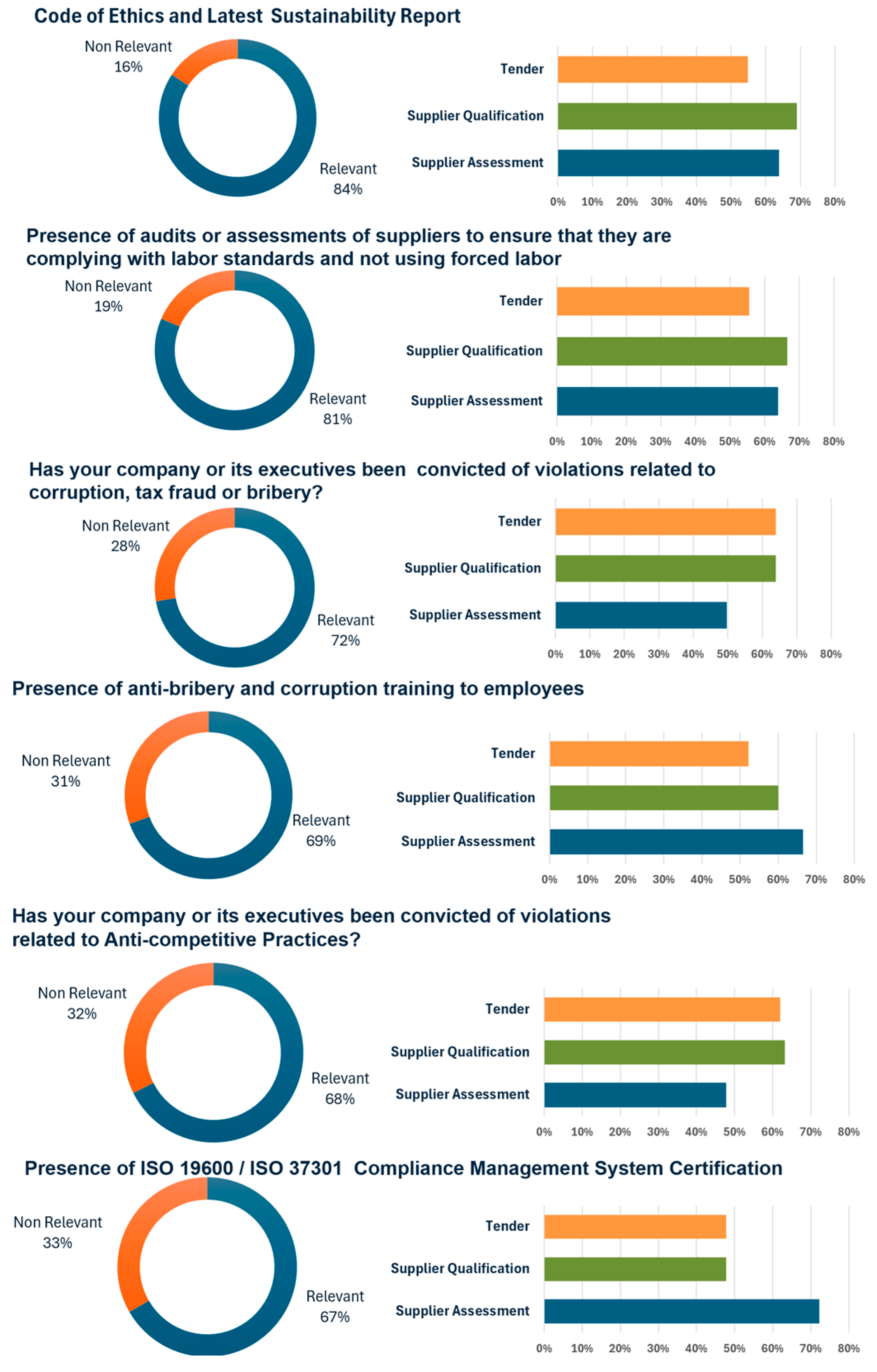
As it results from Figure 4, the most important G-Factor resulting from the study, considered significant by 84% of the surveyed firms, is the co-existence of an updated code of ethics and a recent sustainability report. Indeed, those instruments act as initial signals of the supplier’s cultural maturity and transparency, which is especially significant in the assessment process, where the element of asymmetry of information is the most prominent. According to [5,6], the maturity of the respective governance structures of the suppliers links to their ability to participate in the design of sophisticated supply chains. Finally, in the qualification process, these instruments act as alignment devices, ensuring that the values of the respective suppliers converge to the values of the purchasing company. Even if less effective in the tendering process, these instruments act as reputational markers, imbuing legitimacy to the selection procedures of the contracting process.
However, it is also equally important to ensure the implementation of audits or third-party verifications related to labor standards and the prohibition of forced labor, with this being a criterion of relevance for 81% of the firms. In the initial screening phase, organizations check whether the supplier is already included in established monitoring frameworks or has legitimate audit certificates (SMETA, SA8000, etc.). In the screening phase, companies require evidence or third-party audit reports, particularly in the case of countries with restricted institutional protections for suppliers. Instead, in the tendering phase, companies confirm the validity of due diligence by avoiding shadow risks in the cases of stakeholder inquiry or supply chain disruptions. This criterion, as explained by [21,35], is an inherent component of the adaptability of global value chains facing ESG challenges.
The next governance criterion with large-scale operational value is related to the verification of the absence of convictions for corruption, tax fraud, and bribery offenses, considered relevant by 72% of companies. This criterion primarily focuses on the binary exclusion filter within the qualification stage of removing high-risk suppliers. Though stages of risk assessment can be negatively influenced due to the scarcity of relevant data, companies either use self-reporting or check government databases for sanctions. On the other hand, within the context of the tendering, this criterion works as a final preventive measure against the legal and reputational risks of doing business with tainted business associates, more specifically in the regulated sectors of defense, pharmaceuticals, and public infrastructure, where issues of transparency and integrity are extremely pertinent to government contracts [9,37].
The presence of anticorruption and antibribery staff training, which pertains to the remaining 69% of companies, presents a more complex and developmental view on governance. It may not always be a tough selection criterion but it becomes a proxy indicator for the presence of an ethics culture. The presence or absence of anticorruption and antibribery staff training during the assessment phase usually becomes apparent in the self-reports from suppliers. Evidence during the selection phase usually includes the submission of relevant documents like anticorruption and antibribery staff trainings. This criterion tends to weaken during the final phase but may be used as a point of differentiation if the criterion includes ESG maturity and internal controls.
A further legal/compliance and reputation risk management approach relates to the vetting of suppliers for any convictions regarding anti-competitive practices, including collusion, price-fixing, or market manipulation. This criterion, found to be relevant to 68% of firms, once again takes on particular significance at the assessment stages of the qualification process, where buyers evaluate the litigious risk posed by would-be suppliers. Although the assessment stages may lack sufficient information systems support to identify such challenges, the criterion arises at the tender stages when, for instance, specific industries involving public procurement must pass a third-party audit or civil society scrutiny tests.
Finally, the availability of formal compliance management certifications, especially the ISO 19600 certification, is considered a governance maturity indicator by 67% of companies surveyed. These certifications ensure that suppliers have set up their own internal control procedures, which, in turn, have been vetted by formal international audits. Their usage has become common during initial screenings in which the buyer looks for structural signs of governance trustworthiness. During the qualification process, companies check the authenticity and applicability of these certifications to determine if they are relevant, i.e., in terms of recentness. Although their importance usually wanes during the tendering procedure, their inclusion in traceability, compliance, or audit rights might still be applicable in certain contractual arrangements, especially in those involving traceability [18], becoming more institutionalized in the ESG architecture in complex supply chains.

5. Guiding Plans and Transformative Programs for Suppliers

Having established which ESG factors are essential for companies in supplier selection (RQ1), this section examines how companies translate their ESG priorities into mechanisms by which to support the progressive development and support of suppliers as full value creation partners in the context of sustainability challenges (RQ2).
Historically, these lines of research have moved the focus of analysis away from selection and towards transformation. It has become even more obvious that in supply chain sustainability, it would be necessary, to some extent, to abandon exclusionary logic in favor of an engagement approach, in which suppliers would be guided through carefully thought-out paths of ESG growth [1]. In either case, a different definition for supplier management would be needed: one that focuses not on selection and control but rather on dynamic structures for supporting, guiding, and growth.
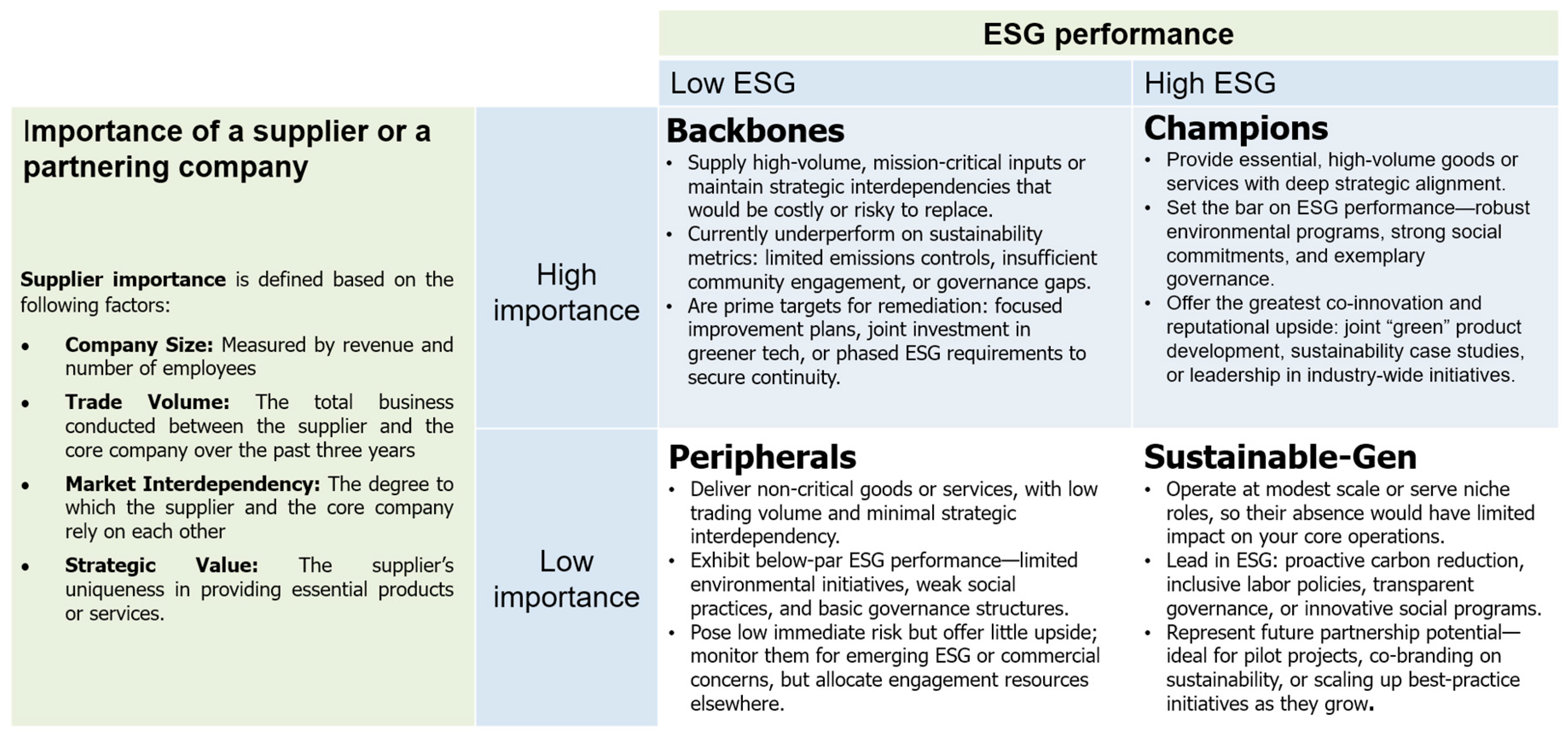
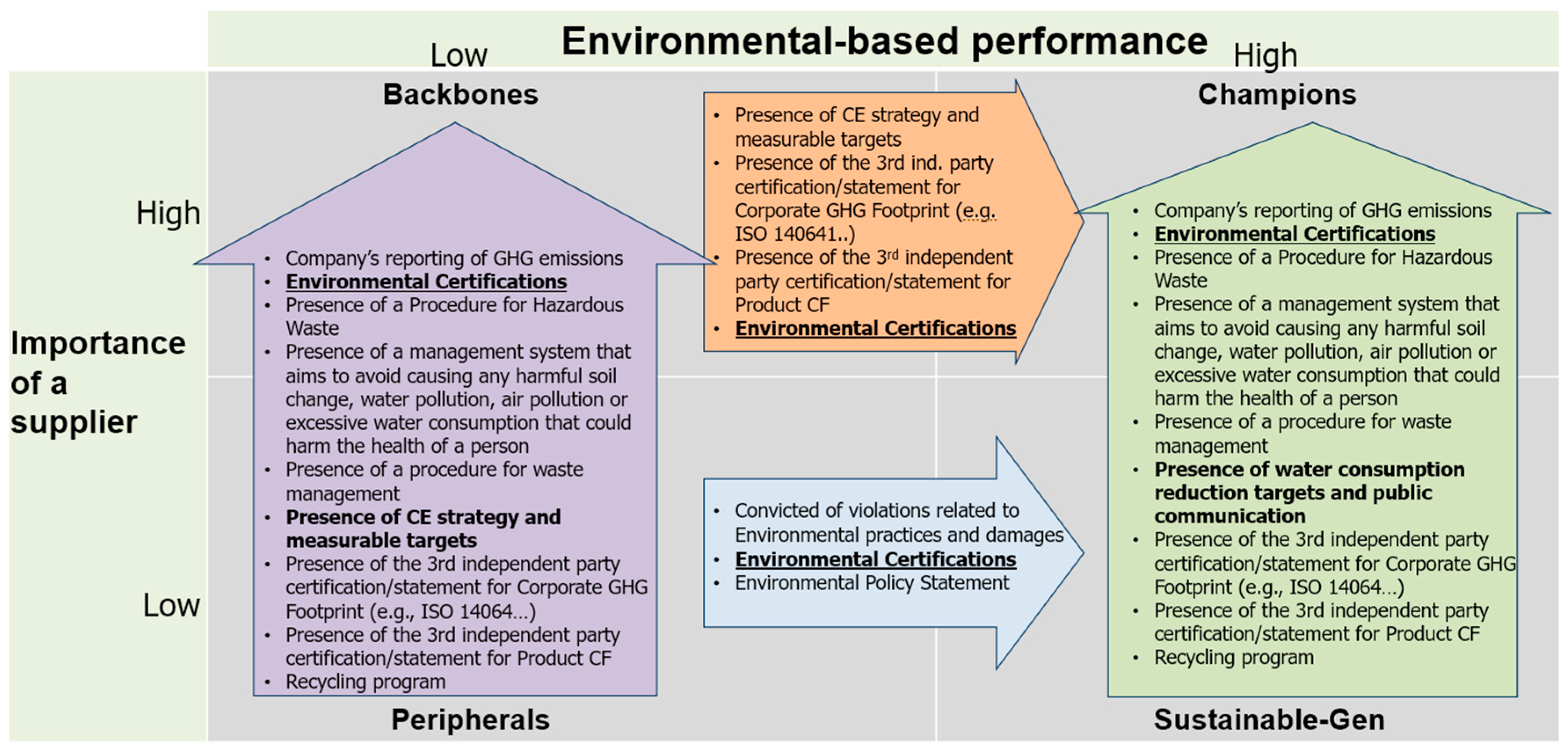
In this regard, in order to adequately represent the complexity of the suppliers’ evolution in the spheres of ESG, we propose a framework structured in a two-dimensional matrix, named Supplier ESG Maturity Matrix, which focuses on the most distinctive factors for every firm. Specifically, as shown in Figure 5, the evolution of suppliers can move in two directions: (1) the importance of suppliers in the creation of business value, which includes aspects that go beyond commercial volume and include innovation, uniqueness, and interdependence criteria, according to the Kraljic’s matrix, as well as more recent literature such as [24]; and (2) ESG maturity, which was determined in our previous analysis.
Crossing these dimensions results in a four-quadrant matrix, each associated with a unique typology of supplier:
  • Champions (High ESG–High Strategic Importance): These suppliers display excellent levels of ESG maturity and, at the same time, are highly important for the operations and strategy of their corresponding firms. These suppliers are preferred for close relational alliances, co-branding, and common sustainability innovations. Today, these are proxies for reputation capital and resilience [37].
  • Backbones (Low ESG–High Strategic Importance): These suppliers have the minimum operating requirements but lack mature ESG performance. As legacy or high-volume industrial suppliers, they embody both risk and the potential in the context of improvement. Companies implement customized improvement initiatives in the forms of ESG audits, sustainability training, and joint roadmaps of decarbonization action (for example, [12,15]).
  • Sustainable-Gen (High ESG–Low Strategic Importance): Sustainable-Gen suppliers are usually smaller companies or new entrants that possess high ESG ratings but have less strategic significance for the company. Their creativity, flexibility, and nimbleness make these suppliers suitable for pilots, supplier incubators, and learning ecosystems [29]. The scale-up of their ESG practices via targeted investment enables leading companies to proactively influence future markets.
  • Peripherals (Low ESG–Low Strategic Importance): These niche suppliers have less operational value and low ESG maturity. They are not necessarily high risk but do not make any significant contributions towards meeting the company’s sustainability and strategic objectives.
This framework is not a classification framework that consists of static categories; rather, it helps the company to formulate strategies to understand how to engage suppliers. For example, Peripherals can be required only to pass compliance screening, and Backbones can be mobilized through transformation programs supported by two-sided investment, KPIs, and technical support. Based on each supplier’s characteristics, they can be treated differently. This helps the leading company address its responsibilities.
The supplier ESG maturity matrix introduces a trajectory logic that aligns with evolutionary perspectives on supply chain management [10]. Accordingly, the concept of ESG maturity is dynamic and can be shaped by different trajectories. As such, the matrix is conceptually framed as a continuum rather than a set of distinct and exclusive categories. Suppliers categorized as Peripherals cannot evolve directly in Champions. Instead, evolution to the next level of ESG maturity always passes through other unique configurations that are underpinned by distinct strategic logics.
In particular, the supplier ESG maturity matrix identifies two theoretically possible evolutionary trajectories: The first trajectory involves evolution from the Peripherals to Backbones to Champions and finds its application in the strategic role of the supplier within the buyer’s operations. The second trajectory involves evolution from the Peripherals to Sustainable-Gen to Champions and requires improvements to the supplier’s performance on the basis of environmental variables. As such, Backbones and Sustainable-Gen represent complementary transition archetypes rather than distinct and mutually exclusive ESG maturity levels that suppliers may reach. Backbones and Sustainable-Gen represent two different paths through which suppliers may evolve to the next level of ESG maturity.
It is worth noting that the research design of this study is consistent with the trajectory logic; that is, the research is designed to capture not just the adoption of ESG practices by the supplier but also the role that ESG plays in facilitating the transition to the next level of ESG maturity. For each of the ESG factors, respondents to the survey are asked to rate the adoption of the factor as facilitators of evolution to the next level of ESG maturity in specific transitions—i.e., from Peripherals to Backbones, from Peripherals to Sustainable-Gen, from Backbones to Champions, and from Sustainable-Gen to Champions.
To identify the evolutionary trajectories, respondents were asked to assess a broad set of 100 ESG factors. In fact, the ESG criteria used in the supplier assessment, qualification, and tendering processes, which typically reflect current practices, may differ from those ESG factors that are perceived as critical for driving suppliers’ future evolution across maturity stages. To identify the various paths, the ESG initiatives with highest frequency have been selected among the 100 ESG factors.

5.1. Transformative Trajectories Through E-Factors

Supplier development and integration related to the environment does not only concern selection but also involves focus and development. Proceeding with the supplier typology framework displayed in Figure 5, the current section examines the role of the categorization of firms in directing their suppliers in the matrix, particularly with respect to Champions, thereby combining relevance and maturity for the environment. In answering RQ2, it was found that E-Factors like carbon reporting, waste reduction, pollution reduction, and circular economy, among others, are not selection filters; rather, they are instruments of development.
A look at the empirical evidence, summarized in Figure 6, indicates that the degree of horizontal movement along the ESG performance dimension, within the range of low to high environmental maturity, can be accomplished by addressing a comparatively narrow range of interventions. For suppliers already identified as Backbones because of their high strategic value, improvement through investment in merely a few E-Factors qualifies them for Champion classification. Within this group, three factors can be identified as critical: (1) implementation of circular economy approaches with concrete objectives and targets, (2) holding third-party-authenticated carbon footprint credentials on both company and product levels, and (3) sound documentation and reporting on environmental matters along widely recognized standards like ISO 14064 or GHG Protocol. These variables operate as critical milestones that differentiate between suppliers primarily attuned to meeting governmental requirements and those aligned with forward environmental policies. This corresponds with the literature asserting that purposeful capability development can stimulate outstanding performance improvement within high-quality suppliers [36].
In contrast, the vertical dimension, focused on the strategic value of suppliers committed to environmental issues, is more challenging and less linear than the horizontal dimension. Supplier classification at the Backbone level, as opposed to the Peripheral classification, signifies improvement in overall performance with regard to environmental issues, as well as stronger integration with the operations of the firm. In this case, performance regarding environmental issues will no longer suffice. A system of alignment for various suppliers, incorporating integrated waste management, pollution prevention, and environmental certifications, with regard to multiple environmental factors, should satisfy the conditions regarding scalability, standardization, and adjustment to the firm’s strategic sustainability plan [38].
Notably, the process of promoting a Peripheral to a Backbone often automatically moves a company into the Champion quadrant, given proper support in ESG capability development. This implies that environmental maturity can no longer simply be regarded as a consequence of strategic forethinking; instead, it can—and must—be considered a precursor or input to enhanced relational lockstep thinking and resulting co-investments. This observation aligns with more recent contributions to sustainable supply chain orchestration thinking, whereby a focus on environmental responsibility is currently highlighted as a reputation- or operationally grounded foundation in superior supplier partnerships [8].
The Sustainable-Gen supplier group—those with high environmental quality but, as yet, little strategic significance—confronts a different set of issues. Suppliers in this category are typically indicative of smaller, entrepreneurial companies that, in early stages of development, incorporated high-quality green processes like closed-loop logistics systems, low-carbon manufacturing processes, or environmental disclosure. However, in pursuing Champion-level suppliers, more than simply technical expertise will be required, along with the development of relational capabilities. This will include setting up formalized systems of environmental governance (such as ISO 14001 systems or EMAS certification), specifying strategic sustainability objectives (such as water reduction and zero waste to landfills), and actively participating in communication or co-branding programs that will resonate with the ESG trajectory of leading firms. Relational capital and visibility in the value chain are seen by [39] as key enablers of supplier advancement, especially with regard to small but competent environmental organizations.
In sum, the analysis shows that the environmental development paths of suppliers cannot be recurrent in the same way. Instead, they necessitate customized trajectories, depending on positioning, industry, and intentions. The focal firm has one, primary decision: investing in the accelerated development of their currently existing Backbones, ensuring, in this way, the continuity of operation, combined with enhanced ESG performance; or pursuing the developmental potential possessed by Sustainable-Gen partners, which, being adaptable, innovative, and agile, might unlock higher future achievements. In both approaches, companies require resource allocation and respective infrastructures for engaging with suppliers, ensuring their upskilling in this regard, as well as their co-accountability in ESG.

5.2. Transformative Trajectories Through S-Factors

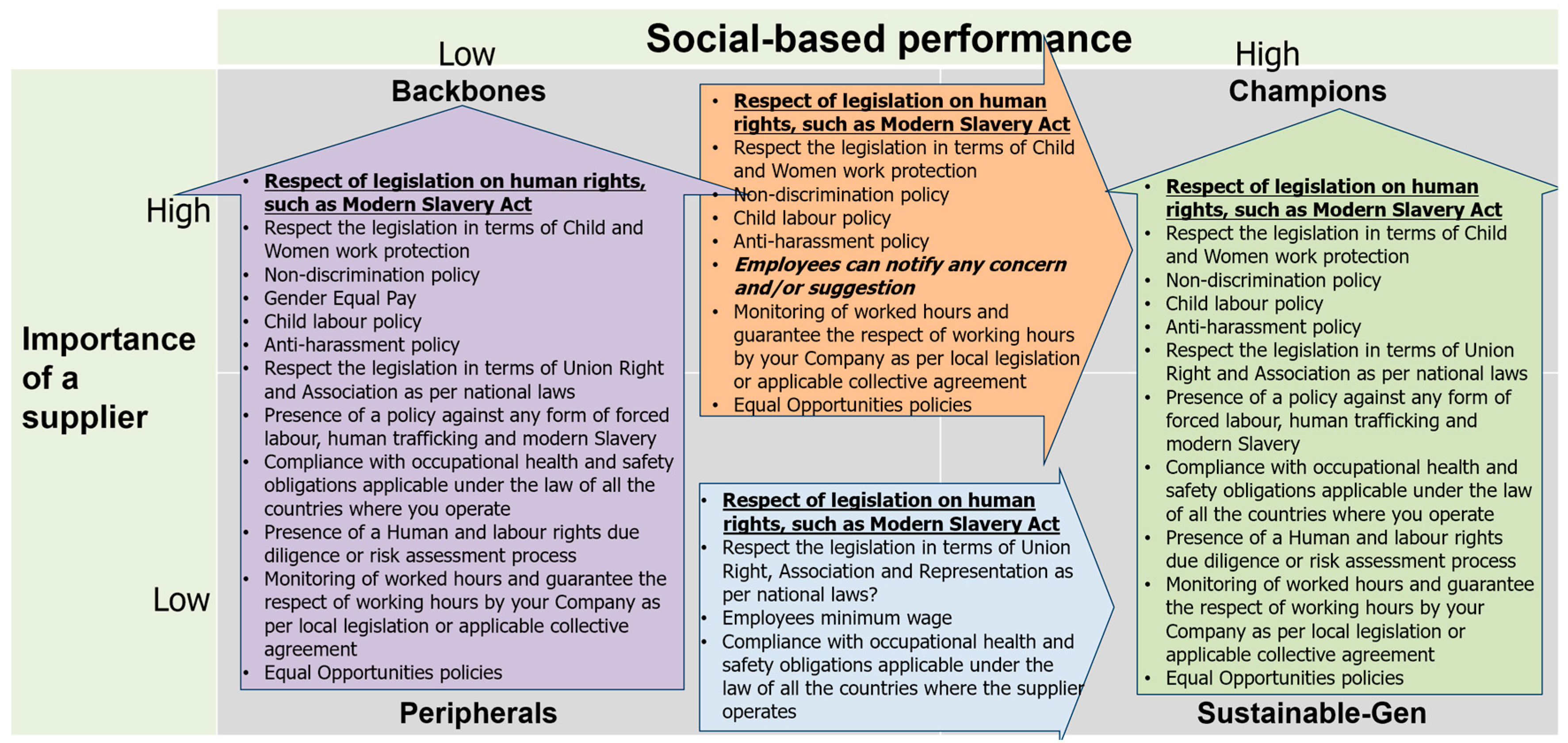
The increasing integration of social sustainability within supply chain management represents a paradigm shift for companies to think about suppliers not only for compliance risk management but also for social value creation. In connection with RQ2, the assessment of S-Factors shows that companies not only account for the current capabilities of the suppliers vis-à-vis basic labor standards but help the suppliers develop into responsible partners for social value creation. Like the environmental aspect, the transformation process of suppliers for the social dimension requires through two crucial factors: the importance of the supplier for the buying firm, and the level of supplier maturity for social sustainability [37]. Current studies on supply chain ethics [1,2] highlight the significance of this aspect.
Crossing horizontally within the matrix in Figure 7—meaning improving the social performance of a supplier while keeping the same level of strategic importance—requires intervention with high leverage and focus. As far as the role of the Backbone suppliers is concerned, achieving Champion-level performance largely depends upon the integration of a broader definition of social sustainability into their mindset. This not only involves minimum requirements of the law—such as the Modern Slavery Act, child labor laws, or protection of gender equity—but also the voluntary embrace of cutting-edge practices, such as freedom of association in its formal or meaningful sense, the elimination of human trafficking and forced labor in all forms, and the establishment of human rights diligence systems. Adding these layers of accountability goes beyond ensuring the legitimacy of the supplier as, further, it helps protect the whole chain from negative shocks of any kind linked to the social sphere [11,15].
A similar trend is seen for suppliers classified as Sustainable-Gen; that is, those that may not currently score centrally operationally, but they display comparatively mature social processes. Although these suppliers are already comparatively strong social performers, they still need to work hard on institutionalizing important mechanisms such as wage transparency and grievance mechanisms to becoming Champions [37]. Nevertheless, the development path of these suppliers is hampered by the lack of strategic significance. This points to the critical insight that social sustainability, though important, may not be not sufficient in upgrading suppliers if they lack strong operational embedding. This corroborates theoretical arguments about the salience of social capital and visibility within supply chain upgrading (for example, [21]).
The vertical development process in the matrix, starting from the position of either Peripheral/Sustainable-Gen suppliers and moving forward to the central ones, needs an even more comprehensive and process-oriented change. To be recognized from an overall strategic perspective, the suppliers must move from mere statements and promises to measurable and verifiable action plans regarding workplace safety measures and labor laws protection of employees. They should enable feedback from employees and must adhere consistently to global regulations regarding working hours and compensation. The process of change is not only operational; it determines the ability of the supplier to institutionalize social governance within internal management structures that correspond to the ethical demands of global value chains [7,12].
One important trend occurs for the suppliers in the Peripherical quadrant, who sometimes receive the least attention, and yet succeed in improving both their social maturity and their level of relevance—or, in other words, migrating to the Champion quadrant. This trend, in turn, illustrates the challenges encountered in achieving alignment on both fronts—i.e., performance and positioning. Therefore, the evidence emphasizes that evolution within the supply chain needs to be purposefully triggered by the organization through planned programs of encouragement, recognition, and reward alignment on the buying side. The strategy can effectively encompass activities such as “the conduct of supplier social audits, collaborative developmental activities, and differential tender treatment in recognition of social innovation.” According to the literature (e.g., [8]), successful supplier enablement requires relational, reciprocal, and long-term relationships. Ultimately, suppliers are highly involved in securing a supply chain that is embracing, just, and rights-friendly, rather than simply ticking boxes denoting compliance. This is because a supply chain must be regarded as a dynamic system in which social value is a function of a proactive process of capability building, and in which social sustainability is not simply a reputation-enhancer; it is a competitive tool.

5.3. Transformative Trajectories Through G-Factors

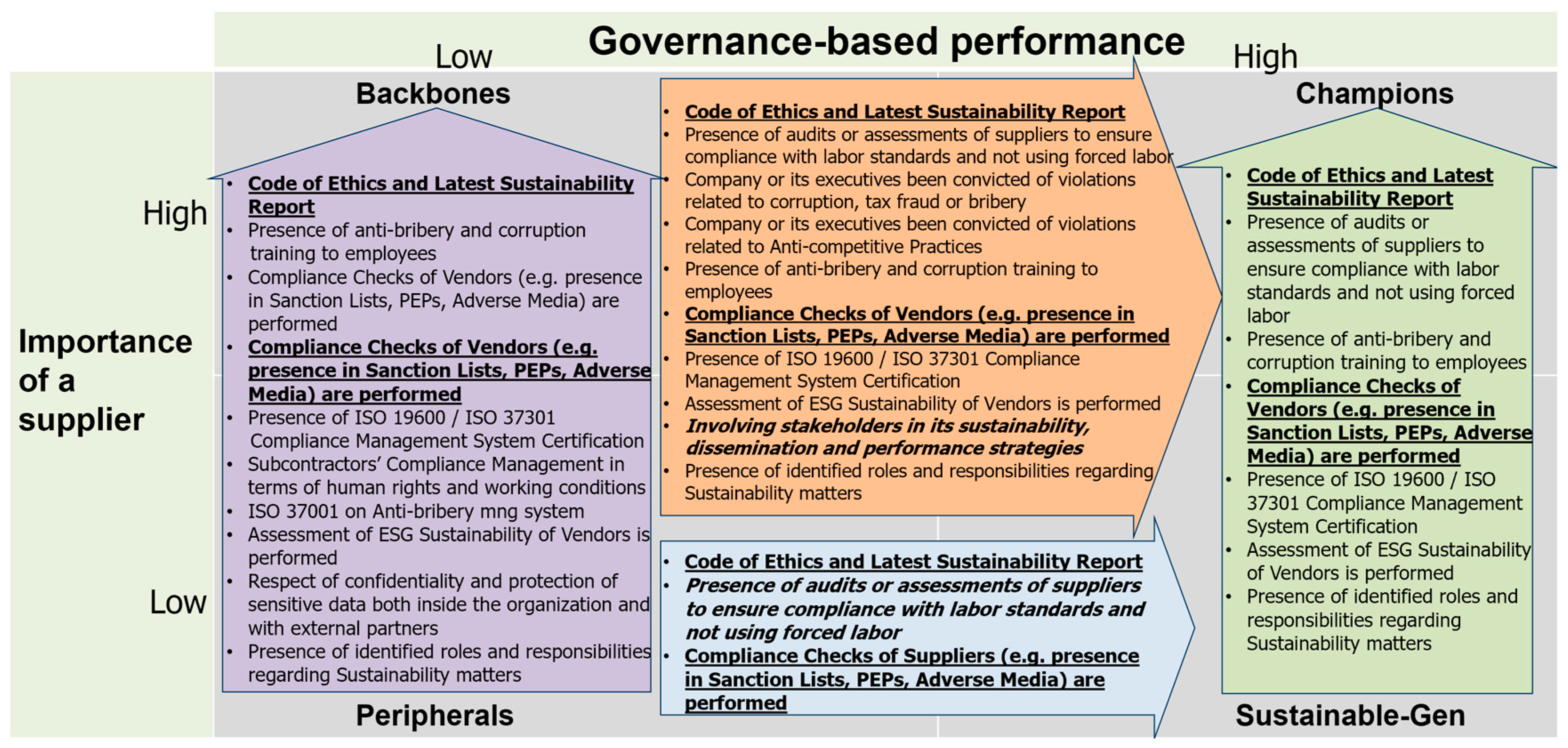
The governance aspect of sustainability—considered in the past to be solely a response mechanism within the context of the sustainability paradigm—is rapidly unfolding, with the capacity to positively impact the development and integration of suppliers in sustainable supply chains. As indicated by the empirical evidence displayed in Figure 8, the G-Factors have moved away from being formalities related to ethical guidelines or legal filings; these factors have come to represent the foundation for creating a framework within which risk management, trust creation, and sustainable long-term collaborative wealth can be fostered.
In the context of Backbones, the move toward becoming a Champion means the addition of a specific set of elements that promote greater internal consistency and external accountability. These would involve the use of external audits concerning compliance with workers’ rights (particularly the avoidance of forced and exploitative work practices), anti-corruption staff training initiatives, and effective reputational due diligence procedures (such as regular scanning for watchlists, politically exposed persons checks, and negative media screening tests). Such initiatives are generally institutionalized within global norms (notably concerning the OECD Guidelines for Multinational Enterprises) and are further formalized as part of ISO certification (notably ISO 37301 for compliance management systems and ISO 37001 for anti-bribery systems [29]).
Conversely, in order for vertical transformation to take place, ranging from Peripheral suppliers to strategically important Backbones, a rather complicated process must be undertaken. These suppliers must create a governance structure from scratch, transforming their usual practices and minimal documentation into systematic audit processes, assigning specific roles for sustainability and compliance, and information security in accordance with worldwide standards [37]. Most important, as a policymaker, they must initiate actions to extend their governance control even to their subcontractors to prevent supply chain integrity. In other words, this process refers to the “governance capacity-building,” a necessary skill for being authorized for high-value contracts [15].
Notably, the Sustainable-Gen group appears instead as a hidden value driver. These suppliers already have sophisticated compliance management processes, training programs, proven ESG vetting processes, and documentation processes in place. Yet, due to their peripheral position, such strategic value is not necessarily properly leveraged. In such cases, the Peripherical-to-Champion level of improvement mostly requires that these suppliers not only continue performing well from a governance perspective but attain closer positioning to the supply chain. This could be achieved, for example, through shared reporting processes for ESG factors, through innovation efforts for compliance technology, or through participation in forward-looking procurement pilot programs, as suggested in recent studies on the critical role of visibility and interdependence for supplier development [9,39].
The transition from Peripheral to Sustainable-Gen, although full of promise, is not without significant challenges. This transition requires a structured approach towards formalization and standardization. Suppliers in this transition should develop codified practices like codes of ethics publications, obtain standardized certifications, and devise procedures to gain the confidence to be included. Unless complemented by important improvements, their impact on the sustainability initiative of the whole supply chain may not be significant.
Overall, the results emphasize the critical role played by governance and emphasize that firms cannot miss chances to govern their supply chain responsibly. As highlighted by the literature [5,20], governance capabilities do not follow sustainability; rather, they are their predecessors, having the ability to structure incentives, reduce asymmetries, and enable the coordination necessary for collaborative sustainability. As such, leading organizations must look at supplier governance not as a gatekeeper function but as a driver towards achieving responsible supply chains.

6. Conclusions

This paper sheds light on how ESG factors can lead to the formation of responsible supply chains, requiring transformative programs and plans to properly guide suppliers through this new paradigm shift. Using a combination of qualitative and quantitative approaches, this paper identifies ESG factors and develops trajectories by which supply chains can evolve. The qualitative analysis allows for the identification of a cluster of ESG factors for responsible supply chain creation, which can serve as drivers for guiding suppliers in the proper way. The quantitative analysis highlights which of the earlier-identified ESG factors are adopted by companies for assessment, qualification, and tendering, ensuring the pursuit of responsible supply chains. Focusing on 18 ESG factors, the findings indicate a new paradigm for responsible supply chains emerging: ESG factors are no longer merely passive filters but drivers in the active creation of ethical, adaptive, and strategically balanced supply networks.
One of the main research contributions of this paper is the supplier ESG maturity matrix, which categorizes four types of suppliers in terms of ESG maturity: Peripherals, Sustainable-Gen, Backbones, and Champions. These are not static dimensions but dynamic ones that provide routes for supplier development. The findings identify possible operational plans and trajectories that companies can propose to encourage suppliers to evolve and align with responsible supply chains. In fact, the matrix indicates non-linear transitions, which require suppliers to be fully aligned, able to make the necessary changes, and supported with ad hoc mechanisms. Hence, the future of supply chains and sustainability requires partnership and the development of responsible eco-systems, rather than mere checks.
This study is not without limitations, suggesting opportunities for future research. First, this research examines ESG factors without scrutinizing the effectiveness of ESG in financial, reputation, and operational areas. Future research should explore this direction further. Second, this research focuses on a lead-firm approach. To acquire further insights, future research could investigate ESG factors from a supplier’s perspective, exploring how ESG competencies spread over tiers, including lead firms as catalysts for the entire process of ecosystem change. Ultimately, a networked and longitudinal study of the adoption path for ESG will increase the generalizability of the results. Considering the trajectory from impact to assessment, and from ecosystem to individual company, future work should demonstrate how ESG factors, when used to encourage responsible supply chains, generate positive impacts for all parties involved. This is a research direction that the author is currently exploring.

Funding

This research received no external funding.

Data Availability Statement

The raw data supporting the conclusions of this article will be made available by the authors on request.

Acknowledgments

This research was undertaken at the DIR—Claudio Dematte’ Research Division, within the Sustainable Operations and Supply Chain (SOSC) Monitor at SDA Bocconi School of Management (Milan, Italy). Special thanks go to all the companies that continuously support the research projects at the SOSC Monitor, which are listed here in alphabetical order: Accenture S.p.A., Carpe Diem Valuenet S.r.l., Celebron S.r.l., DNV Business Assurance Italy S.r.l., Elex Italia S.c.P.A., Engie Servizi S.p.A., Evoca S.p.A., FERCAM S.p.A., Fincantieri S.p.A., Lacchi S.p.A., Logistica del Golfo S.r.l., Merck Serono S.p.A., (an affiliate of Merck KGaA, Darmstadt, Germany), KONTRACTOR BY KOPRON S.p.A., Mundys S.p.A., Nesea-NSA Italia S.r.l., Prologis Italy Management S.r.l., Salov S.p.A. (Filippo Berio and Sagra brands), SCS Azioninnova S.p.A., Spinosi Marketing Strategies S.r.l. and Verity AG.

Conflicts of Interest

The author declares no conflict of interest.

Appendix A. List of ESG Factors

Each ESG factor was operationalized as a dichotomous variable, requiring respondents to indicate a Yes/No response based on the existence or non-existence of the following 100 practices within their organization:
  • Has the company been convicted of violations related to environmental practices and damages?
  • Company’s reporting of GHG emissions
  • Presence of an Environmental Product Declaration (EPD)
  • Presence of a procedure for waste management
  • Presence of a procedure for hazardous waste management
  • Recycling program
  • % of waste recycled
  • Environmental policy statement
  • Environmental certifications
  • Monitoring of annual water consumption?
  • Presence of water consumption reduction targets and public communication
  • Presence of circular economy strategy and measurable circular economy targets
  • Design products/services/business models in line with circular economy principles
  • Presence of a management system that aims to avoid causing any harmful soil change, water pollution, air pollution, or excessive water consumption that could harm the health of a person
  • Presence of a management system that aims to avoid unlawful eviction and unlawful taking of land, forests, and waters that could adversely impact near communities health and safety
  • Presence of a publicly available commitment to maintain, enhance, or conserve biodiversity in your company’s operational activities
  • Presence of target to reduce waste generated in %
  • Presence of target to increase waste recycled in %
  • Presence of policy and procedures for the use of chemicals
  • Presence of a policy to replace chemicals with greener products
  • Upload policy and/or procedures for the use of chemicals
  • Presence of a publicly available no-deforestation commitment for your company’s operational activities
  • Presence of quantification of the carbon footprint of company’s product(s)
  • Methodology used for quantification of the carbon footprint of company’s product(s)
  • Presence of the 3rd independent party certification/statement for product carbon Footprint
  • Quantification and reporting of GHG emissions and removals at company level
  • Methodology used for quantification and reporting of GHG emissions
  • Presence of the 3rd independent party certification/statement for corporate GHG footprint (e.g., ISO 14064-1, …)
  • Presence of reporting to the Carbon Disclosure Project (CDP) on GHG emissions and climate change strategy
  • Company’s GHG emissions for Scope 1 (tCO2eq)
  • Company’s GHG emissions for Scope 2 (tCO2eq)
  • Company’s GHG emissions for Scope 3 (tCO2eq)
  • Presence of GHG emissions reduction targets
  • Company’s emissions reduction targets
  • Presence of Science Based Targets (SBT)
  • Presence of ISO 50001 certification regarding energy management systems
  • Last time an energy efficiency audit has been performed
  • Presence of industrial wastewater discharge
  • Has the company had any incidents for non-compliance with the limits of substances of concern in wastewater discharges?
  • Monitoring of waste generated and recycled
  • Presence of goals and targets to reduce, reuse, and recycle the amount of packaging used for products
  • Engaging with suppliers to increase sourcing based on circular economy principles
  • Presence of SVHCs or restricted substances according to the REACH Regulation, including the product(s) supplied by the company, as well as any articles contained within the product(s)
  • Compliance with REACH requirements if SVHC substances are produced, imported, or contained in the products sold
  • Compliance with RoHS directive
  • List of environmental management procedures
  • Has your company been prosecuted and/or fined for environmental offenses in the last 5 years?
  • Presence of environmental training for employees
  • Code of ethics and latest sustainability report
  • Have your company or its executives been convicted of violations related to anti-competitive practices?
  • Have your company or its executives been convicted of violations related to corruption, tax fraud, or bribery?
  • Has your company been convicted of violations related to customs clearance?
  • Governmental and political affiliations within the company’s management
  • Dealings with blacklisted companies and countries
  • Assessment of ESG sustainability of vendors is performed
  • Procurement of conflict minerals
  • Supplier sustainability program for vendors and sub-vendors
  • Subcontractors’ compliance management in terms of human rights and working conditions
  • Compliance checks of vendors (e.g., presence in Sanction Lists, PEPs, Adverse Media) are performed
  • ISO 37001 on anti-bribery management system
  • Presence of ISO 19600/ISO 37301 Compliance Management System Certification
  • Presence within the organization of identified roles and responsibilities regarding sustainability matters
  • How does the company involve stakeholders in its sustainability, dissemination, and performance strategies?
  • Respect of confidentiality and protection of sensitive data both inside the organization and with external partners
  • Presence of ISO 20400, sustainable procurement guidance
  • The company engages directly with smelters and refineries of conflict materials
  • Presence of the Conflict Mineral Reporting Template (CMRT) of the responsible minerals initiatives
  • Has the organization or any key person ever been found guilty of any violations of security, anti-terrorism, organized crime or fraud laws? (If yes, please provide more details with a dedicated attachment)
  • Presence of anti-bribery and corruption training to employees
  • Presence of audits or assessments of suppliers to ensure that they are complying with labor standards and not using forced labor
  • Can employees notify the company of any concern and/or make a suggestion to the company?
  • Respect of legislation on human rights, such as the Modern Slavery Act
  • Does the company respect the legislation in terms of child and women work protection?
  • Does the company respect the legislation in terms of union rights, association, and representation as per national laws?
  • Non-discrimination policy
  • Gender equal pay
  • Anti-harassment policy
  • % of women in managerial positions
  • Human capital development program
  • Child labor policy
  • Respect of independent union formation as per national laws
  • Policy to manage labor standards and practices
  • Overtime work procedure
  • Employees minimum wage
  • Workers’ identity documents retention
  • ISO 26001 in Social Responsibility Guideline
  • Social accountability certifications (SA8000, …)
  • Equal opportunities policies
  • Working conditions procedures
  • Presence of ISO 30415 certification regarding diversity and inclusion
  • Number of women employed
  • Presence of a procedure/policy for inclusion of diversity
  • Respect of the provisions of the ILO Convention on child labor
  • Compliance with occupational health and safety obligations applicable under the law of all the countries where you operate
  • Presence of a policy against any form of forced labor, human trafficking, and modern slavery
  • Your organization pays living wages to ensure that employees are paid wages that aid them with their basic needs. If Yes, presence of a “living wage” policy for your organization in place for:
  • Presence of a human and labor rights due diligence or risk assessment process
  • Presence of a process to manage disciplinary practices, forbidding corporal punishment, mental or physical coercion, and verbal abuse of workers
  • Monitoring of worked hours and a guarantee of the respect of working hours by your company as per local legislation or applicable collective agreement
  • Presence of a whistleblowing policy. If so, please upload a copy. If not, please describe what mechanisms you have in place for concerns to be raised.

Appendix B. Non-Response Bias

ESG Factor (Binary: Yes/No)Early Respondents (% Yes)Late Respondents (% Yes)Chi-Square (df = 1)p-Value
Company’s reporting of GHG emissions71.869.50.090.76
Has the company been convicted of violations related to environmental practices and damages?6.47.80.110.74
Presence of a procedure for waste management83.381.80.060.8
Management system to avoid any harmful soil change, water pollution, air pollution, or excessive water consumption that could harm the health of a person76.9740.170.68
Respect of legislation on human rights, such as the Modern Slavery Act88.586.40.150.7
Does the company respect the legislation in terms of child and women work protection?9189.60.070.79
Gender equal pay64.1610.180.67
Non-discrimination policy92.390.90.080.78
Child labor policy85.983.10.230.63
Presence of a policy against any form of forced labour, human trafficking, and modern slavery87.285.70.060.81
Presence of circular economy strategy and measurable circular economy targets58.956.60.080.78
Code of ethics and latest sustainability report80.879.20.050.82
Presence of audits or assessments of suppliers to ensure that they are complying with labor standards and not using forced labor66.764.90.050.82
Has your company or its executives been convicted of violations related to corruption, tax fraud or bribery?5.16.50.140.71
Presence of anti-bribery and corruption training to employees7270.10.060.81
Has your company or its executives been convicted of violations related to anti-competitive practices?3.85.20.180.67
Presence of ISO 19600/ISO 37301 Compliance Management System Certification54.9520.120.73

References

  1. Carter, C.R.; Liane Easton, P. Sustainable supply chain management: Evolution and future directions. Int. J. Phys. Distrib. Logist. Manag. 2011, 41, 46–62. [Google Scholar] [CrossRef]
  2. Rajeev, A.; Pati, R.K.; Padhi, S.S.; Govindan, K. Evolution of sustainability in supply chain management: A literature review. J. Clean. Prod. 2017, 162, 299–314. [Google Scholar] [CrossRef]
  3. Chaudhuri, A.; Bhatia, M.S.; Kayikci, Y.; Fernandes, K.J.; Fosso-Wamba, S. Improving social sustainability and reducing supply chain risks through blockchain implementation: Role of outcome and behavioural mechanisms. Ann. Oper. Res. 2023, 327, 401–433. [Google Scholar] [CrossRef]
  4. Lintukangas, K.; Arminen, H.; Kähkönen, A.K.; Karttunen, E. Determinants of supply chain engagement in carbon management. J. Bus. Ethics 2023, 186, 87–104. [Google Scholar] [CrossRef]
  5. Ballou, R.H. The evolution and future of logistics and supply chain management. Eur. Bus. Rev. 2007, 19, 332–348. [Google Scholar] [CrossRef]
  6. Folinas, D.; Manthou, V.; Sigala, M.; Vlachopoulou, M. E-volution of a supply chain: Cases and best practices. Internet Res. 2004, 14, 274–283. [Google Scholar] [CrossRef]
  7. Mirzabeiki, V.; He, Q.; Sarpong, D. Sustainability-driven co-opetition in supply chains as strategic capabilities: Drivers, facilitators, and barriers. Int. J. Prod. Res. 2023, 61, 4826–4852. [Google Scholar] [CrossRef]
  8. De Giovanni, P.; Folgiero, P. Strategies for The Circular Economy: Circular Districts and Networks; Taylor & Francis: New York, NY, USA, 2023. [Google Scholar]
  9. MacCarthy, B.L.; Blome, C.; Olhager, J.; Srai, J.S.; Zhao, X. Supply chain evolution–theory, concepts and science. Int. J. Oper. Prod. Manag. 2016, 36, 1696–1718. [Google Scholar] [CrossRef]
  10. Sindi, S.; Roe, M. The evolution of supply chains and logistics. In Strategic Supply Chain Management: The Development of a Diagnostic Model; Springer International Publishing: Cham, Switzerland, 2017; pp. 7–25. [Google Scholar]
  11. Pettit, T.J.; Croxton, K.L.; Fiksel, J. The evolution of resilience in supply chain management: A retrospective on ensuring supply chain resilience. J. Bus. Logist. 2019, 40, 56–65. [Google Scholar] [CrossRef]
  12. Lahmar, A.; Zekhnini, K.; Masmoudi, M.; Siddiqui, A.A. Navigating the sustainable supply chain realm: Revolutionizing from 3.0 to 5.0. Comput. Ind. Eng. 2025, 208, 111380. [Google Scholar] [CrossRef]
  13. Singh, J.; Raghuram, D.J. Evolution of supply chain management with emerging technologies. Int. J. Mech. Eng. Technol. 2017, 8, 235–240. [Google Scholar]
  14. Carter, C.R.; Hatton, M.R.; Wu, C.; Chen, X. Sustainable supply chain management: Continuing evolution and future directions. Int. J. Phys. Distrib. Logist. Manag. 2020, 50, 122–146. [Google Scholar] [CrossRef]
  15. Shen, W.; Hu, D.; Günay, E.E.; Kremer, G.E.O. Evolution of supply chain management: A sustainability focused review. Int. J. Sustain. Manuf. 2020, 4, 319–335. [Google Scholar] [CrossRef]
  16. Debnath, B.; El-Hassani, R.; Chattopadhyay, A.K.; Kumar, T.K.; Ghosh, S.K.; Baidya, R. Time evolution of a supply chain network: Kinetic Modeling. Phys. A Stat. Mech. Its Appl. 2022, 607, 128085. [Google Scholar] [CrossRef]
  17. Doğan, N.Ö.; Derici, S. Historical Evolution of Supply Chain Management in The VUCA Age: Sustainable, LARG and Digital Supply Chain Managements. Gaziantep Üniversitesi Sos. Bilim. Derg. 2025, 24, 273–293. [Google Scholar] [CrossRef]
  18. De Giovanni, P. Why Nobody Measures the Scope 4 (Avoided) Emissions? Let’s Get It Started! Sustainability 2025, 17, 8317. [Google Scholar] [CrossRef]
  19. Maleki Vishkaei, B. Optimal ordering for Product-as-a-Service models with circular economy practices. Int. J. Prod. Res. 2025, 63, 4066–4085. [Google Scholar] [CrossRef]
  20. Parkhi, S.; Joshi, S.; Gupta, S.; Sharma, M. A Study of Evolution and Future of Supply Chain Management. AIMS Int. J. Manag. 2015, 9, 95–106. [Google Scholar]
  21. Jraisat, L.; Upadhyay, A.; Ghalia, T.; Jresseit, M.; Kumar, V.; Sarpong, D. Triads in sustainable supply-chain perspective: Why is a collaboration mechanism needed? Int. J. Prod. Res. 2023, 61, 4725–4741. [Google Scholar] [CrossRef]
  22. Sharma, A.; Borah, S.B.; Haque, T.; Adhikary, A. Engaging customers and suppliers for environmental sustainability: Investigating the drivers and the effects on firm performance. J. Acad. Mark. Sci. 2025, 53, 341–366. [Google Scholar] [CrossRef]
  23. Rasool, Y.; Iftikhar, B.; Nazir, M.N.; Kamran, H.W. Supply chain evolution and green supply chain perspective. Int. J. Econ. Commer. Manag. 2016, 4, 716–724. [Google Scholar]
  24. Ramani, V.; De Giovanni, P. Circular economy business strategies and public schemes: A game theory-based survey. Int. Trans. Oper. Res. 2026. Early View. [Google Scholar] [CrossRef]
  25. Parida, R.; Dash, M.K.; Kumar, A.; Zavadskas, E.K.; Luthra, S.; Mulat-Weldemeskel, E. Evolution of supply chain finance: A comprehensive review and proposed research directions with network clustering analysis. Sustain. Dev. 2022, 30, 1343–1369. [Google Scholar] [CrossRef]
  26. Soni, R.G.; Soni, B. Evolution of supply chain management: Ethical issues for leaders. In Competition Forum; American Society for Competitiveness: Indiana, PA, USA, 2019; Volume 17, pp. 240–247. [Google Scholar]
  27. Stevens, G.C.; Johnson, M. Integrating the supply chain… 25 years on. Int. J. Phys. Distrib. Logist. Manag. 2016, 46, 19–42. [Google Scholar] [CrossRef]
  28. Nelson, D.M.; Marsillac, E.; Rao, S.S. Antecedents and evolution of the green supply chain. J. Oper. Supply Chain. Manag. 2012, 29–43. [Google Scholar] [CrossRef]
  29. Alshurideh, M.T.; Alrawabdeh, W.A.; El khatib, M.; Alshurideh, A.; Al Kurdi, B.; Hamadneh, S.; Nawaiseh, A.K.; Al-Sulaiti, K.; Shwedeh, F.; Alzoubi, H.M. Digital Evolution and Smart Governance: Shaping Global Supply Chain Efficiency. In International Scientific Conference Management and Engineering; Springer Nature: Cham, Switzerland, 2024; pp. 19–27. [Google Scholar]
  30. Saunders, M.; Lewis, P.; Thornhill, A. Research Methods for Business Students, 8th ed.; Pearson: London, UK, 2009. [Google Scholar]
  31. Venkatesh, V.; Brown, S.A.; Bala, H. Bridging the qualitative–quantitative divide: Guidelines for conducting mixed methods research in information systems. MIS Q. 2013, 37, 21–54. [Google Scholar] [CrossRef]
  32. De Giovanni, P. The modern meaning of “quality”: Analysis, evolution and strategies. TQM J. 2024, 36, 309–327. [Google Scholar] [CrossRef]
  33. Linstone, H.A.; Turoff, M. (Eds.) The Delphi Method: Techniques and Applications; Addison-Wesley: Boston, MA, USA, 2002. [Google Scholar]
  34. Okoli, C.; Pawlowski, S.D. The Delphi method as a research tool: An example, design considerations and applications. Inf. Manag. 2004, 42, 15–29. [Google Scholar] [CrossRef]
  35. Rowe, G.; Wright, G. The Delphi technique as a forecasting tool: Issues and analysis. Int. J. Forecast. 1999, 15, 353–375. [Google Scholar] [CrossRef]
  36. De Giovanni, P. A dynamic game of circular economy with environmental producer responsibility and digital product passport. Int. Game Theory Rev. 2026, 28, 2540003. [Google Scholar] [CrossRef]
  37. Vishkaei, B.M.; De Giovanni, P. Accelerating the transition from linear to circular systems through a subscription-based approach. Int. J. Prod. Res. 2026, 64, 1904–1927. [Google Scholar] [CrossRef]
  38. Pagell, M.; Wu, Z. Building a more complete theory of sustainable supply chain management using case studies of 10 exemplars. J. Supply Chain. Manag. 2009, 45, 37–56. [Google Scholar] [CrossRef]
  39. Mishra, D.; Dwivedi, Y.K.; Rana, N.P.; Hassini, E. Evolution of supply chain ripple effect: A bibliometric and meta-analytic view of the constructs. Int. J. Prod. Res. 2021, 59, 129–147. [Google Scholar] [CrossRef]
Figure 1. Panel used for the Delphi technique.
Sustainability 18 03344 g001
Figure 2. E-Factors for assessment, qualification, and tendering.
Sustainability 18 03344 g002
Figure 3. S-Factors for assessment, qualification, and tendering.
Sustainability 18 03344 g003
Figure 4. G-Factors for assessment, qualification, and tendering.
Sustainability 18 03344 g004
Figure 5. Supplier ESG maturity matrix.
Sustainability 18 03344 g005
Figure 6. Evolution of suppliers through the E-factors.
Sustainability 18 03344 g006
Figure 7. Evolution of suppliers through the S-factors.
Sustainability 18 03344 g007
Figure 8. Evolution of suppliers through the G-factors.
Sustainability 18 03344 g008
Table 1. Firm size distribution.
MetricFirms (n = 155)
Revenue < €10 M63%
Revenue €10 M–250 M29%
Revenue > €250 M8%
Employees < 5036%
Employees 50–50043%
Employees > 50021%
Disclaimer/Publisher’s Note: The statements, opinions and data contained in all publications are solely those of the individual author(s) and contributor(s) and not of MDPI and/or the editor(s). MDPI and/or the editor(s) disclaim responsibility for any injury to people or property resulting from any ideas, methods, instructions or products referred to in the content.