Article

Optimization of the Urban Food-Energy-Water Nexus: A Micro-Supply Chain and Circular Economy Approach

Industrial Engineering and Management Systems, University of Central Florida, Orlando, FL 32816, USA
*
Author to whom correspondence should be addressed.
Sustainability 2026, 18(6), 2751; https://doi.org/10.3390/su18062751
Submission received: 11 September 2025 / Revised: 28 February 2026 / Accepted: 9 March 2026 / Published: 11 March 2026

Abstract

This paper presents a mathematical programming model to optimize the design and sustainability performance of the urban food–energy–water (FEW) nexus. The model incorporates a micro supply chain and addresses the supply-demand balance within existing and future FEW systems using performance indicators such as cost and carbon footprint. The problem allows for optimal discrete choices, such as investment in new assets, as well as continuous choices, including capacity of different units and produce exchange among urban farms. The model is applied to an urban agriculture network in South Florida that integrates renewable energy technologies (solar, wind, biomass), combined heat and power (CHP) units, reclaimed wastewater and stormwater for irrigation, and electric vehicles for produce transport. The optimization process identifies the most effective infrastructure investment decisions, resource allocation, and technology configurations to support circular economy practices and long-term sustainability objectives. The proposed framework enables reductions in carbon footprints, food waste, and improves food accessibility in food deserts and strengthens collaboration among urban farms. It supports the planning of resilient urban FEW systems by aligning resource use with social, economic and environmental sustainability objectives. The results provide a decision-support tool for urban planners and policymakers, offering practical insights to guide infrastructure investment and sustainability planning in other geographic regions.

1. Introduction

1.1. Background and Motivations

The global environment is constantly changing, through urbanization, technological advancements, industrialization, globalization, demographic shifts, and environmental concerns. These changes are leading to increased demand for food, energy, and water (FEW) resources and as demand for these resources continues to increase, it is important to consider the supply of these resources. Sustainable strategies for managing the supply of FEW resources need to be addressed due to current issues in the world environment, which include food security [1], global warming [2], water scarcity [3] and waste production [4]. Policymakers face challenges in devising optimal strategies for efficient resource management that are also cost-effective, resilient and sustainable. These strategies must be capable of meeting escalating global demands for resources, while also contributing to sustainable development.
The three resources, food, energy and water, are all independent and interconnected, where a change in one resource has an effect on another. It is important to study these resources as well as the connections that occur between them. The FEW nexus framework has been developed with the purpose of investigating the interconnectedness of FEW resources and to identify the complexities, tradeoffs and synergies that occur within that nexus, as well as to develop systems and policies that would meet sustainability goals of efficiently utilizing these resources [5]. The main objective of this paper is to explore and design an optimal system for efficient management of food, energy, and water resources, through the combination of agent-based modeling (ABM) and optimization techniques.

1.2. Literature Survey

Many studies have been conducted on the investigation of the FEW nexus, with some discussing the framework and the connections between resources, and others utilizing modeling techniques to investigate the interactions that occur. Scanlon et al. [6] discuss the challenges associated with managing food, energy, and water resources, emphasize the importance of integrated management, and outline potential solutions. Other works in the literature have examined the interdependencies among resources, aiming to understand the internal and external forces that lead to changes in one resource and their effects on other resources. A wide variety of methods have been utilized to study these interactions and identify the forces that lead to synergetic changes between the FEW resources, including life cycle analysis [7], econometric models [8], one-way analysis [9], ecological network analysis [10], statistical models [11], and interactive analysis [12]. Other research conducted in the literature include the design of optimal systems for the FEW nexus; these systems are investigated, evaluated on their impact, and assessed whether they meet sustainability objectives. Optimization models are utilized to design and optimize systems for FEW resources [13,14]. Other examples include the utilization of the agent-based modeling (ABM) framework to study the interactions between resources in the nexus [15].
ABMs have been employed to investigate interactions between autonomous agents within systems across various fields, and the emergent phenomena that occur as a result of these interactions is studied [16]. In terms of agricultural ABMs, a wide variety of models have been developed to investigate agent interactions, each with varying objectives. Some models focused on developing frameworks to address food deserts [17] and to assess community food sustainability and security [18]. Dobbie et al. [18] found that taking a systems approach to food security can enhance food sustainability and promote food security in rural contexts. Continuing in the rural context, ABM was employed to develop a framework that considers food availability, access, utilization and stability for households in Malawi [19]. In the urban context, ABM was applied to evaluate the impact of different policy interventions on food accessibility for low-income populations in Brooklyn, NY [20]. Farmers’ markets contributed to improved food access for individuals residing near these markets; however, spatial issues were not addressed for those located further away [20]. Farmers’ markets were utilized to address food deserts, and a green transport (GT) system was incorporated to address spatial concerns [15]. ABM was also used to develop a comprehensive food system in Qatar, where open field farmers’ markets and greenhouses were used to supply food locally, and to participate in trade with other countries, exporting food globally [21]. Other ABMs in the literature focused on studying the interactions that occur in food markets, focusing on customer satisfaction [22] and pricing strategies [23]. ABM has also successfully modeled and simulated commodity markets, investigating the dynamics of prices and quantities of goods sold in these markets [24]. The access and pricing of fruits and vegetables was investigated in [25], where the study explored how an increase in vendors and changes in prices affected residents’ produce consumption. The effect of small food shop openings as well as their location was also investigated using ABM [26]. The remaining papers in the literature with regard to agricultural ABMs focused on farmer decision making [27], water management for crop yields [28,29] and bioenergy crop adoption [30].
Focusing on the development of optimal systems is a good starting point, as it leads to answering the question of optimally managing resources in order to meet sustainability goals as well as meeting future demands. Optimization models are a popular framework that have been adopted to design such systems, and to employ them on different case studies, to gain a greater understanding of the connections between resources. A holistic approach was investigated to synergistically optimize the benefits of the FEW nexus and utilized a non-dominated sorting genetic algorithm (NSGA-II) to solve the developed model; the developed model reduced water shortage rate and increased the benefits of hydropower [31]. The authors of [32] present a network-based approach which focused on energy and water resources and how to design a system that was more efficient, removing redundant flows in the nexus. A cost minimization approach for coal and agriculture production in a region with limited water and land resources is presented in [33]. Another optimization model regarding the FEW nexus is discussed and applied in [34], where the results indicate that water resources are the most critical factor when managing a system. An optimization framework was developed in [35] for food security scenarios in Qatar and considered economic and environmental performances of various technologies, and mentions that future work should investigate synergies that occur between food, energy, and water systems. Single and multi-objective optimization models were used to manage resource security in food, energy, and water sectors, focusing on optimizing priority index of resources and water allocation decisions, and finding that this approach is viable for managing limited resources [36]. Water and food security were investigated using an optimization approach in [37], focusing on the water–food nexus, where optimal water and agricultural policy were determined. A multi-objective nonlinear programming model was used to determine the optimal design of food, energy, and water systems in rural communities and incorporated the cultivation of crops such as sugarcane for bioethanol production to support economic activities within the system [38]. Multi-objective optimization was also employed to maximize bioenergy production in rural Shanxi Province, China, by optimizing land allocation for crops and livestock populations while integrating animal waste into the water–energy–food–carbon nexus and balancing economic costs with carbon footprint reduction [39]. Another study also focused on cropland allocation, where multi-objective MILP was used to maximize food and bioenergy production from crop residues while minimizing water consumption across Indian agriculture regions, demonstrating benefits from inter-regional cooperation [40]. A multi-period MILP framework integrated desalination, energy generation (fossil fuels and solar), and crop production across multiple farming modes in Kuwait to optimize economic and environmental trade-offs [41]. A review of the applicable tools for sustainable FEW nexus systems in [42] discusses which tools are effective for efficient resource management, mentioning the use of ABM and optimization models. When these methods are coupled together, they are capable of describing real world systems and determining efficient and optimal solutions. The various optimization models in the literature with regard to the urban FEW nexus do not model a comprehensive system that involves food, energy, and water resources, but instead focus on investigating one or two resources at a time, thus not capturing the connections and synergies that occur between the three resources.

1.3. Contributions and Novelties

The main objective of this paper is to explore and design an optimal system for efficient management of food, energy, and water resources, through the combination of agent-based modeling and optimization techniques. This paper extends prior work, in which a set of comprehensive agent-based models were developed to model the evolving urban FEW nexus [15,43]. Agent based modeling is utilized to simulate an urban agriculture (UA) network in a FEW nexus that is supported by community microgrids (MG), reclaimed wastewater, storm water reuse, farmers’ markets, combined heat and power (CHP) units, electric vehicles (EVs) and a micro supply chain. The micro supply chain was established in [43] and is a result of collaborating urban farms engaging in a farmer-to-farmer exchange (FFE). The results from the ABM model [15] will be fed into an optimization model in this paper. The model will determine the optimal capacities of renewable energy technologies, the efficient use of resources in the nexus, and what resources contribute to a circular economy; for example, the waste-to-energy conversion through the generation of biogas. The proposed framework will aim to minimize carbon footprints, maximize profit, minimize startup costs, reduce food waste, address spatial aspects due to food deserts, and enhance sustainability of local food systems. Additionally, the proposed system allows us to investigate the various interactions that occur between agents in food, energy, and water sectors, leading to valuable insights into sustainable development practices and policy formulation. The system synergizes strategic plans and policies to meet the economic, environmental and social sustainability goals of the urban FEW nexus and allows for a greater understanding of the complexities, risks, trade-offs, and synergies involved, as well as addressing the issue of spatiality on an urban scale. The novelty is in the use of optimization for the design of an optimal system that integrates technology and management as a nexus framework, where interactions between components are identified and a circular economy is incorporated. Previous studies on optimizing the FEW nexus have not considered circular economy principles through the conversion of food waste into bioenergy, nor have they incorporated a micro supply chain supported by electric vehicles within the urban FEW nexus. In this paper, we address these gaps by integrating both aspects into our proposed optimization framework.
The primary contribution of this work is the development of an integrated optimization framework for the urban FEW nexus that jointly captures food redistribution through an EV-supported micro supply chain, renewable energy systems, waste-to-energy conversion, and community microgrid operation within a unified mathematical programming formulation. A South Florida case study [15] serves to illustrate its applicability and decision-support capabilities in a realistic planning context. The proposed system can aid policymakers in developing future sustainable cities that meet sustainability objectives, such as lower carbon emissions, use of renewable energy, and waste reduction. Additionally, the system can aid policymakers in making strategic decisions for their respective regions and demonstrates the impact of urban farming on social sustainability, increasing food availability for locals, and encouraging farmers to collaborate and increase food production. Compared to existing FEW nexus optimization studies, which often focus on one or two sectors in isolation or treat system components sequentially, the proposed framework integrates food logistics, renewable energy systems, waste-to-energy conversion, and transportation decisions within a single optimization formulation. The proposed model enables evaluation of system-level trade-offs and synergies that cannot be captured by siloed approaches.
The remainder of the paper is organized as follows. Section 2 presents the mathematical formulation of the proposed optimization model for the urban FEW nexus. Section 3 describes the proposed methodology and the South Florida case study, including data sources and model inputs. Section 4 discusses numerical results and their implications for sustainability and planning. Finally, Section 5 concludes the paper and outlines key findings and future research directions.

2. Problem Formulation

In this section, the urban farms FEW nexus problem is formulated as a mixed integer linear programming (MILP) model. Binary decision variables are introduced for state charging and discharging of the EVs that are used to transport produce among the farms and for commitment state of biofuels at each time index under consideration.

2.1. Objective Function

The objective of the model is to minimize the total cost as illustrated in Equation (1). The total cost is the sum of different components’ costs, emission cost, and transportation cost. The detail of each cost is given by Equations (2)–(8). The biomass energy cost is given by Equation (2) which is a function of the biomass amount, P g , t B i o F , and utilizes binary variables, u g , t , for commitment state of biomass unit g in hour t. The cost also includes the start-up and shut-down costs of the unit. An emission cost, E C g , t B i o F , that considers emissions to the environment by the biomass electricity generation unit is also added. The degradation cost, C o s t E S , of energy storage units considers the amount of power charged and discharged at every time period under consideration. A linear relationship is assumed for the sake of simplicity and in order to keep the model as a MILP. This assumption, however, is not restrictive and other degradation forms can be utilized. The costs of renewable energy generation, C o s t W T and C o s t P V , are written in terms of the maximum size of the systems which are decision variables to be determined through optimization and which will eventually provide the size of solar capacity and wind power generation to be installed at the farms. The fuel consumption cost, C o s t C H P , as provided by Equation (6) considers the amount of fuel consumed by the boilers and CPH units factored by the gas price, ρ N G . An emission cost, E C c , t C H P , is also included. The cost of transporting produce between farms, C o s t T R P , is based on the distance between farms which is known a priori and the decision variable, T f , f ^ F O O D , which indicates the amount of produce transported from a farm f to another farm f’. Finally, the cost (or profit) from exchanging electricity with some external network is given by Equation (8).
M i n i m i z e   C o s t = C o s t B i o F + C o s t E S + C o s t W T + C o s t P V + C o s t C H P + C o s t T R P + C o s t U N .
C o s t B i o F = t g ( a g B i o F P g , t B i o F + b g B i o F u g , t ) + S U C g ( u g , t u g , t ) + S D C g ( u g , t 1 u g , t ) + E C g , t B i o F .
C o s t E S = t s α s E S ( P s , t C H + P s , t D C H ) + β s E S .
C o s t W T = t w O M w P f W T , M A X .
C o s t P V = t v O M v P f P V , M A X .
C o s t C H P = t c ( f c , t B o i l e r + f c , t C H P ) ρ N G + E C c , t C H P .
C o s t T R P = f f ^ M C D f , f ^ F A R M T f , f ^ F O O D .
C o s t U N = t ρ t E P t E .

2.2. Biofuel Units Modeling

Equations (9)–(25) are used for modeling biofuel units. Equation (9) shows the emission cost. The active power and reactive power limitations follow the relations of Equations (10) and (11). The maximum generated power by biofuel units is limited by the amount of food waste from farms ( W F g f , t F A R M ). Equations (12)–(15) are used for linearizing (10) and (11). Equations (16) and (17) are used to model ramp-up and down constraints. Equations (18)–(23) show the minimum on and minimum off time of biofuel units. Equations (24) and (25) are used for linearization [44].
E C g , t B i o F = e α d e E F D e , g P g , t B i o F .
P g B i o F , M I N   u g , t P g , t B i o F R W t o P W F g f , t F A R M   .
R P t o Q R W t o P W F g f , t F A R M Q g , t B i o F R P t o Q R W t o P W F g f , t F A R M .
W F f , t F A R M W F ^ f , t F A R M .
W F f , t F A R M M u g f , t .
W F f , t F A R M W F ^ f , t F A R M M ( 1 u g f , t ) .
t W F ^ f , t F A R M W F F ^ f F A R M
P g , t B i o F P g , t 1 B i o F ( 1 u g , t + u g , t ) U R g + ( u g , t u g , t ) P g B i o F , M I N .
P g , t 1 B i o F P g , t B i o F ( 1 u g , t 1 + u g , t 1 ) D R g + ( u g , t 1 u g , t 1 ) P g B i o F , M I N .
X g , t 1 B i o F , o n + u g , t ( 1 u g , t ) M X g , t B i o F , o n X g , t 1 B i o F , o n + u g , t .
X g , t B i o F , o n u g , t M .
X g , t 1 B i o F , o n T g B i o F , o n ( u g , t 1 u g , t ) .
X g , t 1 B i o F , o f f + 1 u g , t u g , t M X g , t B i o F , o f f X g , t 1 B i o F , o f f + 1 u g , t .
X g , t B i o F , o f f ( 1 u g , t ) M .
X g , t 1 B i o F , o f f T g B i o F , o f f ( u g , t u g , t 1 ) .
u g , t u g , t 1 .
u g , t 1 + u g , t 1 u g , t u g , t .

2.3. Energy Storage Units Modeling

Equation (26) represents the hourly charging and discharging power of the energy storage (ES) unit. Equations (27) and (28) define the maximum hourly charge and discharge power of the ES unit. Equation (29) ensures that the ES unit can only operate in one mode, either charging or discharging, at any given hour. Equation (30) defines the hourly state of charge (SOC) of the ES unit, and Equation (31) specifies the hourly minimum and maximum SOC of the ES unit. As indicated in (31) for finding the optimal capacity of the ES units, the maximum SOC of ESs ( S O C s E S , M A X ) is considered as a variable that is determined by the optimization problem [45,46].
P s , t S T = P s , t D C H P s , t C H .
0 P s , t C H P s M A X , C H u s , t E S , C H .
0 P s , t D C H P s M A X , D C H u s , t E S , D C H .
u s , t E S , D C H + u s , t E S , C H 1 .
S O C s , t E S = S O C s , t 1 E S + ( P s , t C H η s E S , C H P s , t E S , D C H / η s E S , D C H ) t .
0.05 × S O C s E S , M A X S O C s , t E S S O C s E S , M A X .

2.4. Wind Turbine Modeling

Equations (32) and (33) determine the optimal capacity of wind turbines (WTs) and consider the maximum permissible penetration level of renewable energy sources. Equation (34) defines the upper limit of WT power output based on the maximum penetration level of these units [47].
P f , t W T = P f , t W T , F O R P f W T , M A X .
P f W T , M A X P ^ f W T , M A X .
f P f , t W T P W T , P E N , M A X P D , M A X .

2.5. Photovoltaic Modeling

Equations (35)–(37) are used to determine the optimal capacity of PV units, employing the same approach used for WTs in Section 2.4.
P b f , t P V = P f , t P V , F O R P f P V , M A X .
P f P V , M A X P ^ f P V , M A X .
f P b P V C , t P V P P V , P E N , M A X P D , M A X .

2.6. Combined Heat and Power Modeling

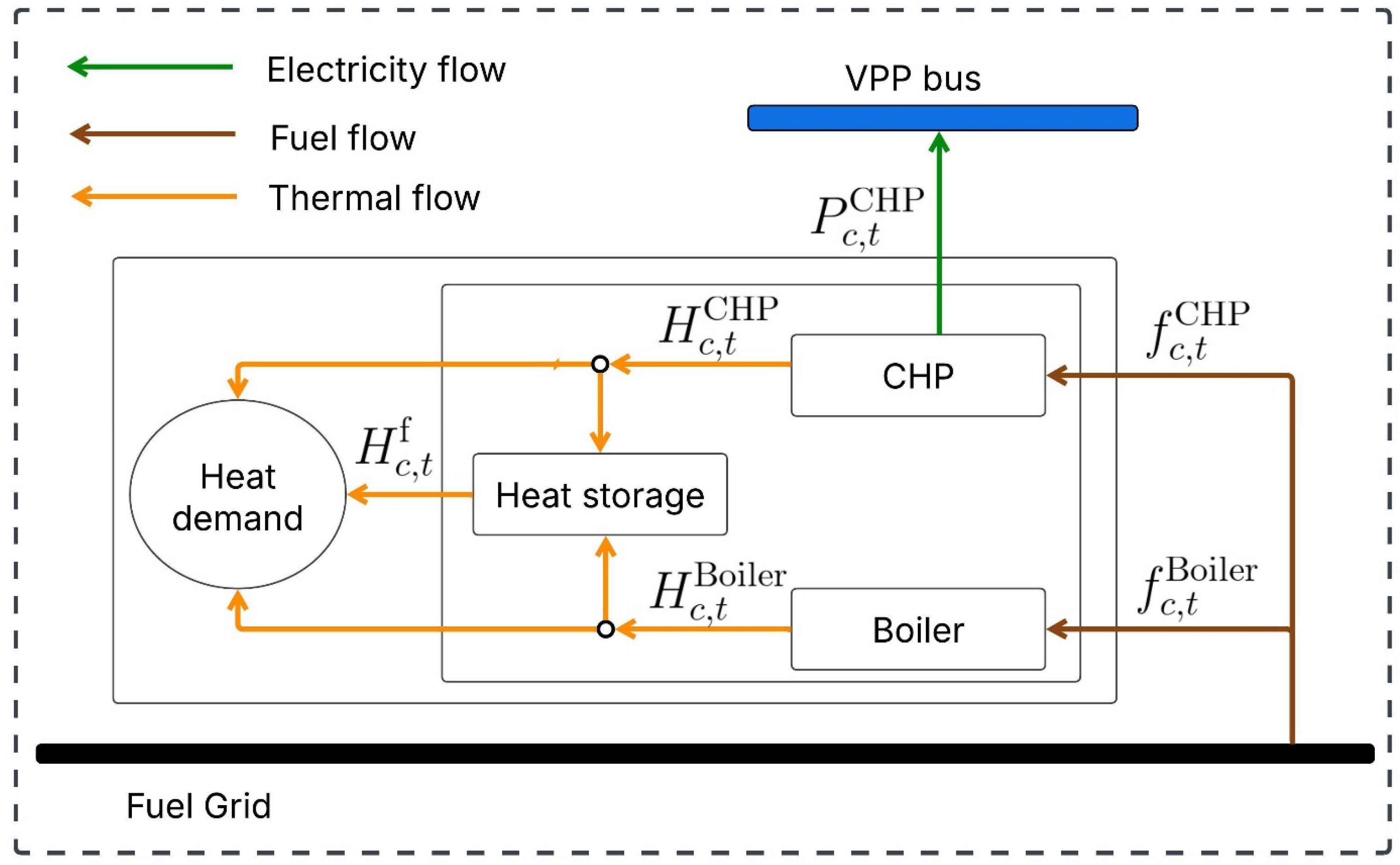
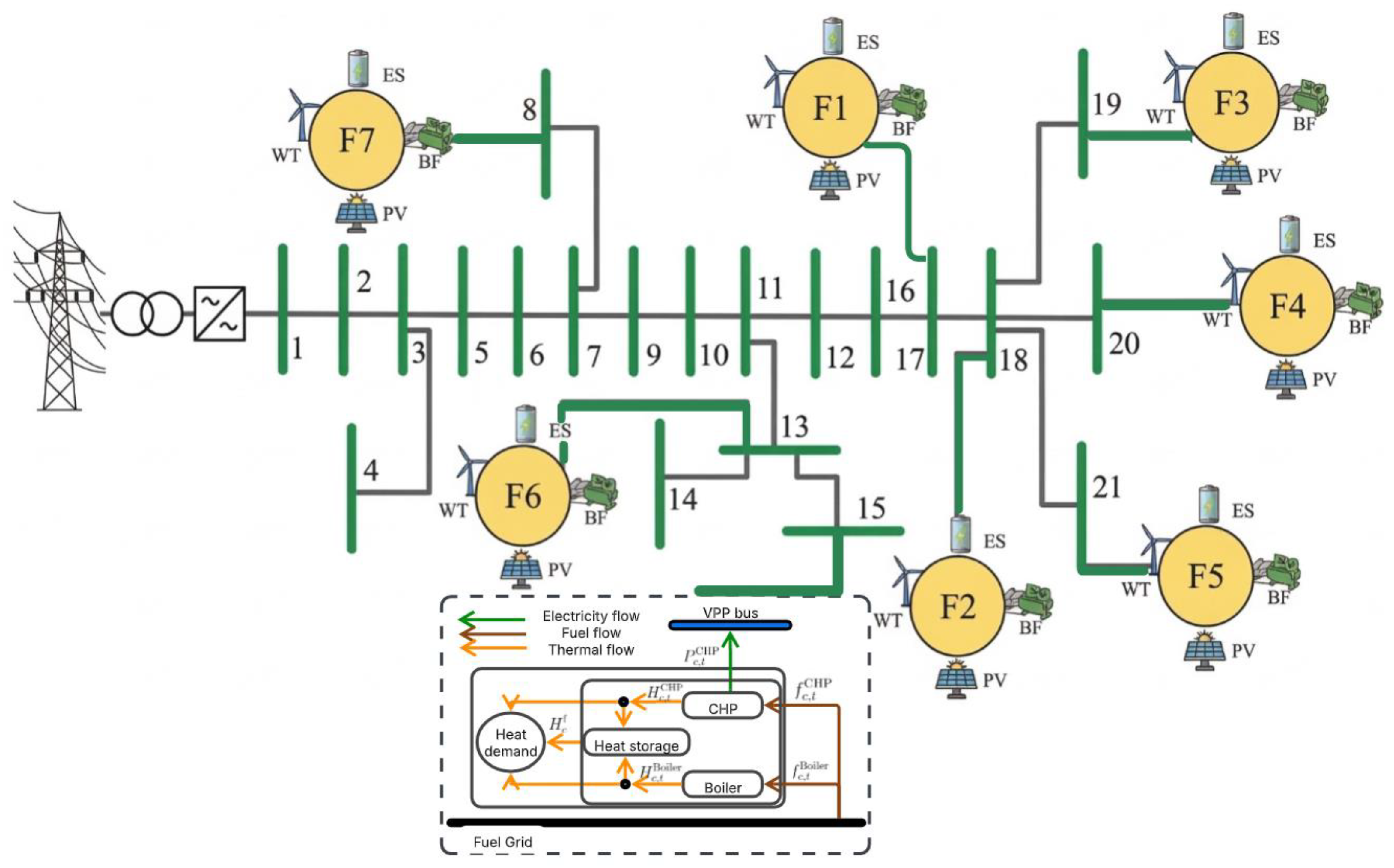
A combined heat and power (CHP) system is integrated to meet the electrical and thermal demands of the studied network, as illustrated in Figure 1. To enhance system flexibility, a boiler is included as a supplementary energy source, and thermal storage is incorporated to improve operational adaptability of the CHP unit. The studied CHP unit is modeled by Equations (38)–(47). Equations (38)–(40) are utilized to describe the boiler’s produced heat, the CHP’s generated heat, and the CHP’s produced electrical energy, respectively. Equation (41) defines the heat flow constraint, and Equation (42) models the thermal energy retained in the heat storage in the subsequent hour. Equations (43) and (44) define the heat storage limits and heat balance equilibriums. Equations (45)–(47) indicate the maximum allowable fuel usage for the boiler and CHP unit, as well as the emission cost attributed to the CHP unit [48].
H c , t B o i l e r = f c , t B o i l e r η c B o i l e r .
H c , t C H P = f c , t C H P α c C H P / ( 1 + α c C H P ) .
P c , t C H P = f c , t C H P / ( 1 + α c C H P ) .
H t D = c H c , t B o i l e r + H c , t C H P + H c , t f .
H c , t s H c , t f = H c , t + 1 s .
H c , t s H C S , M A X .
H c , 0 s = H c , 24 s .
f c , t B o i l e r f c B o i l e r , M A X .
f c , t C H P f c C H P , M A X .
E C c , t C H P = e α c e E F C e , c ( f c , t B o i l e r + f c , t C H P ) .

2.7. Farm Modeling

Equations (48)–(56) consider the farms that are responsible for satisfying the food demand of consumers at each urban farm location. Equations (48)–(50) are used to calculate the amount of exported produce between the farms. The shipments are delivered in predetermined food baskets comprising 1.4 kg fruits and vegetables as described in our agent-based modeling work between the farms [15,43]. The total amount of exported produce from a farm must be lower than the total produced produce on that farm (Equation (51)). Equation (52) guarantees that the food demand in the urban locations should be satisfied by the farms. The power demand for growing produce on farms is a function of the amount of water that is pumped by water pumps to irrigate farms as depicted in (53). Food waste on farms is calculated by (54). This waste is used by the biofuel units to produce power. Equation (55) determines the amount of charging demand by the transportation system (electric vehicles fleet) to transport food among farms. Equation (56) is used to convert EVs’ charging demand in each farm to EVs’ charging demand in each hour based on the hours that EVs are available at charging stations.
D f , f ^ F A R M T f , f ^ F O O D T ^ f , f ^ F O O D .
T f , f ^ F O O D M U f , f ^ T R P .
T f , f ^ F O O D T ^ f , f ^ F O O D M ( 1 U f , f ^ T R P ) .
f ^ T f , f ^ F O O D F P f F A R M .
f ^ T f , f ^ F O O D = F D f ^ F A R M .
P D f , t F A R M = I R G f , t F A R M   R W t o P .
W F f , t F A R M = F P f F A R M f ^ T f , f ^ F O O D .
E V ^ f b C D = f ^ T f , f ^ F O O D R E V t o P   U f , f ^ F S .
E V f b , t C D = E V ^ f b C D / T E V , A V .

2.8. Load Balance Constraints

The load balance constraint shown in (57) enforces energy conservation at each time interval. The electrical network is represented using a lossless single-bus abstraction for each farm microgrid, without explicit modeling of line impedances, thermal limits, or voltage magnitude constraints. Therefore, internal peer-to-peer transfers occur without congestion constraints, and no line losses are assumed. This abstraction is consistent with the planning-level objective of the MILP, which focuses on technology sizing and resource coordination rather than operational optimal power flow.
P b , t G P b , t D E V f b , t C D P D f , t ^ F A R M = 0 .

3. Proposed Methodology

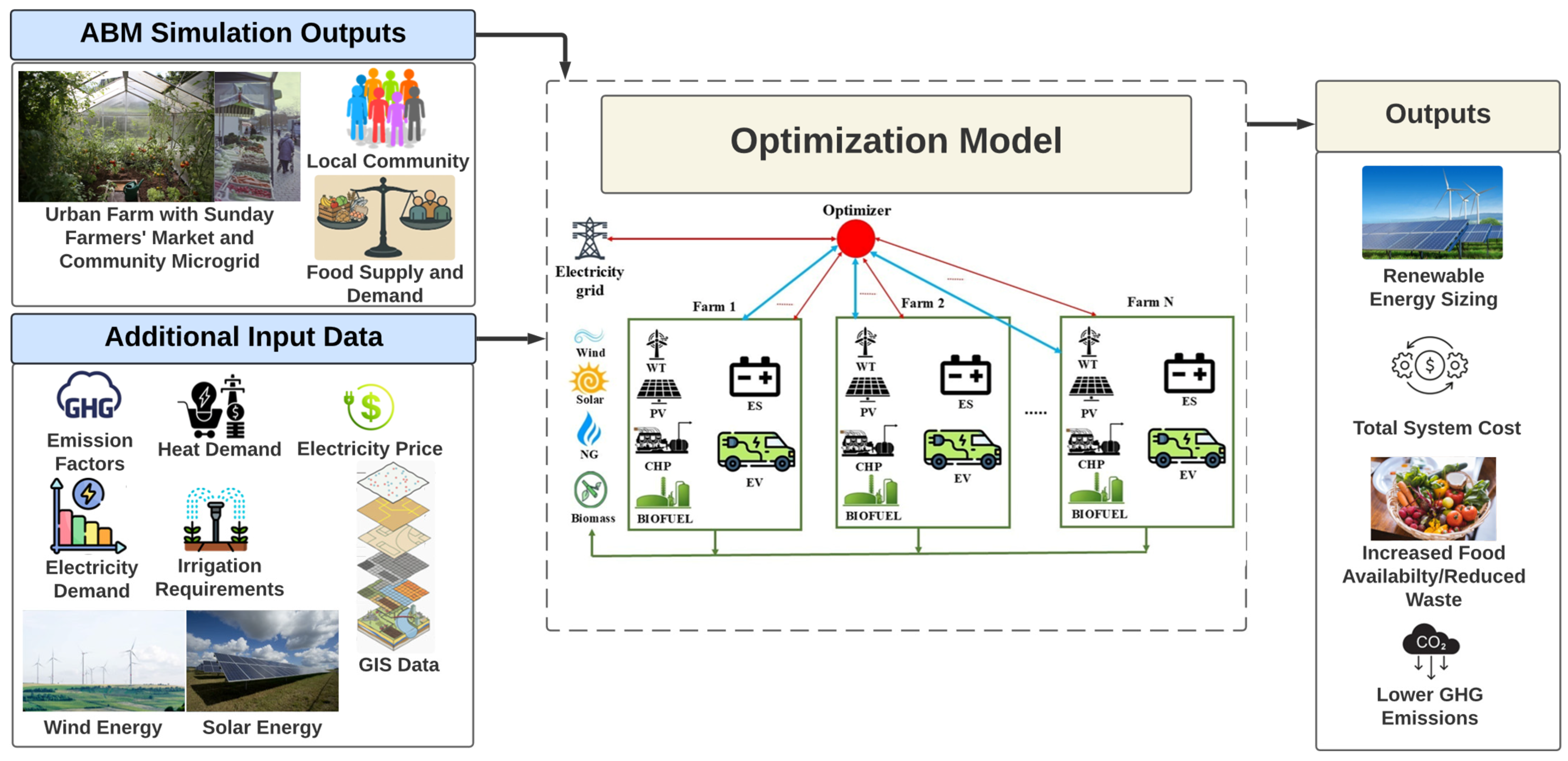
This section describes the application of the proposed optimization framework for the urban FEW nexus using a case study of an UA network in South Florida. Figure 2 illustrates the overall methodology, showing the agent-based simulation outputs [15] and additional data sources that are integrated into the optimization model to determine optimal food distribution, renewable energy technology sizing, and waste-to-energy conversion across the UA network.

3.1. Superstructure of Alternatives

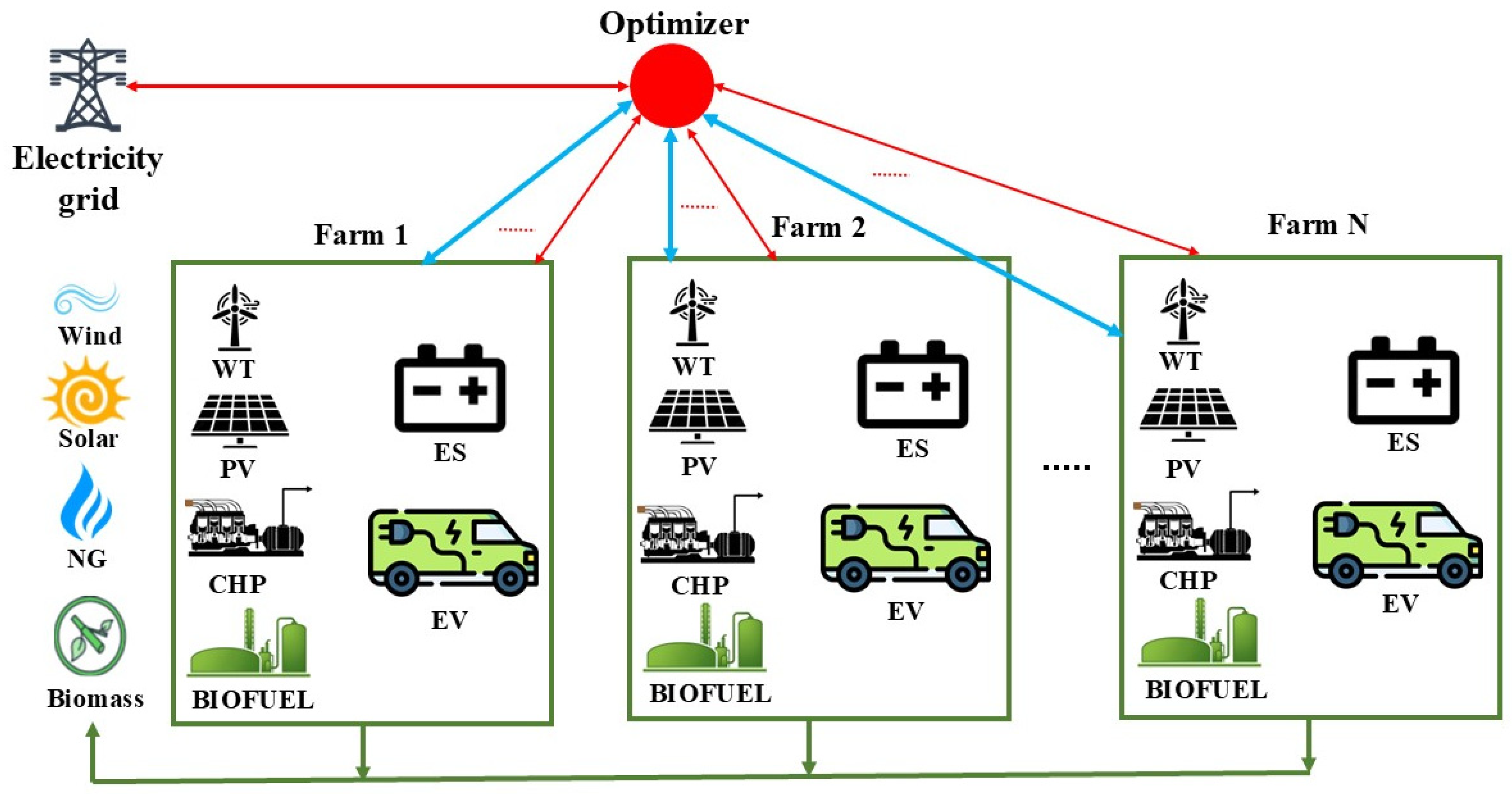
The mathematical programming model developed in this paper is designed to complement our prior agent-based simulations by enabling integrated, planning-level decision making across food, energy, and water sectors within a unified mathematical programming framework. The methodology to develop the mathematical programming model for the FEW nexus of urban farms is introduced here. First, the network of farms considered, options for energy and power generation, and produce exchange among farms is illustrated. Figure 3 shows the different elements to be modeled and their interactions. This figure shows all possible technologies and exchange alternatives. Certain alternatives can be, however, excluded, and this will be determined after optimizing the overall system as explained previously.

3.2. Illustrative Case Study

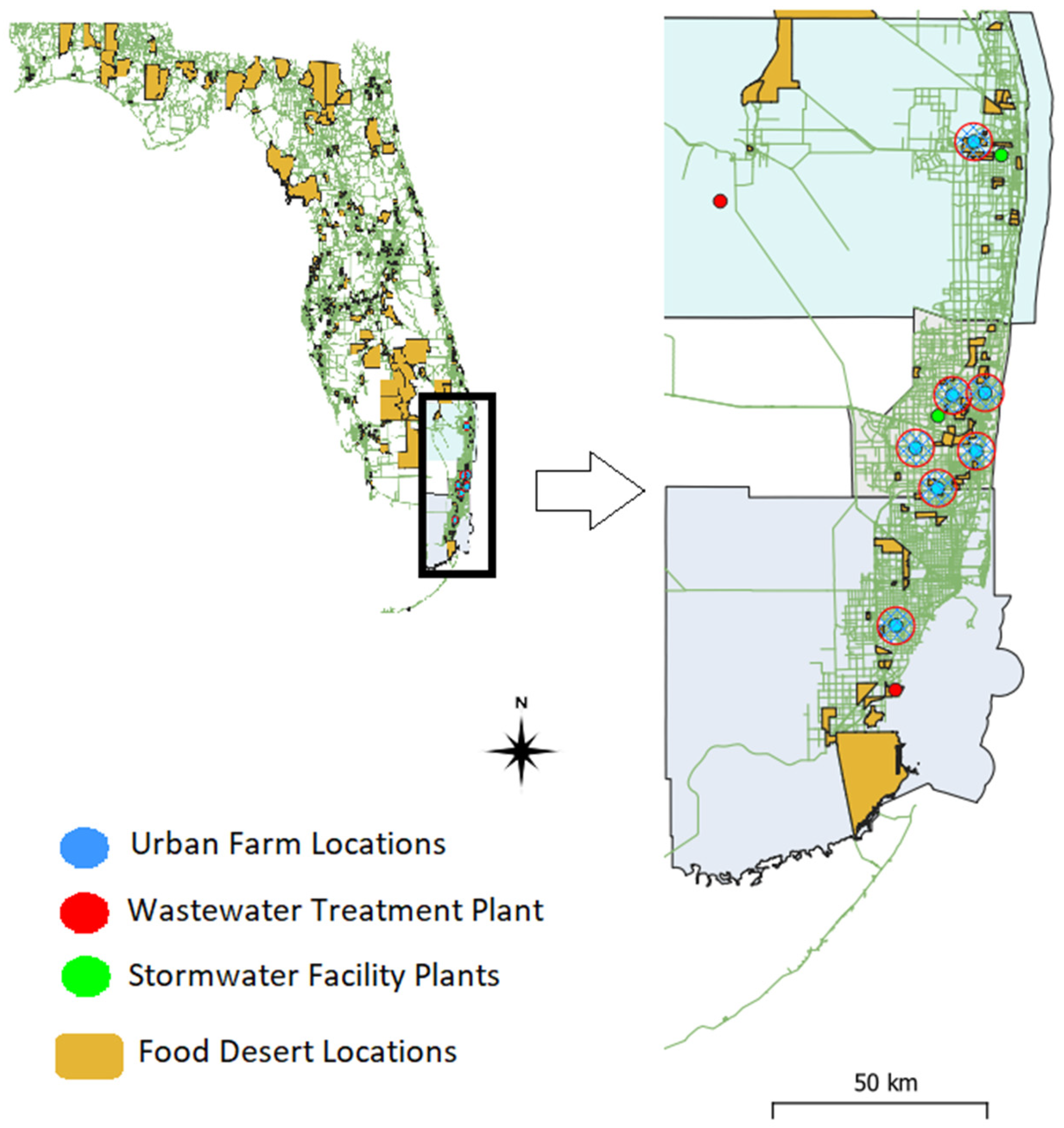
This study builds on a previously published case study [15] to illustrate the proposed mathematical programming model of the FEW nexus. The case study is situated in South Florida, USA where there is an emphasis on urban agriculture to combat food deserts that encompass Broward, Miami-Dade, and Palm Beach counties. The urban agriculture (UA) network comprises multiple urban agriculture sites (UASs) with community-scale microgrids (MGs) that support UA activities and provide fresh produce to the communities located in close vicinity to the UASs. A geographic information system (GIS) map is incorporated to address spatial aspects and includes several features. These include the proposed locations of the UASs, the roads that the EVs may use as part of the micro supply chain to transport produce between UASs, the positions of various food deserts in the area, and the distribution of households based on census data. The UASs are depicted in Figure 3 by the blue dots, each enclosed by a circle representing the approximate 5 km radius of the surrounding community served by the UAS. This ensures that the area served by the UAS overlaps with populations located in food deserts, where individuals are characterized as having low mobility and lacking access to a supermarket within 1.6 km in urban locations or 16 km in rural areas [49]. Wastewater treatment facilities utilized for water reclamation are depicted in red in Figure 4, and stormwater facilities are depicted in green. These facilities are responsible for providing reclaimed and storm water for the UASs that will be utilized for irrigation purposes.
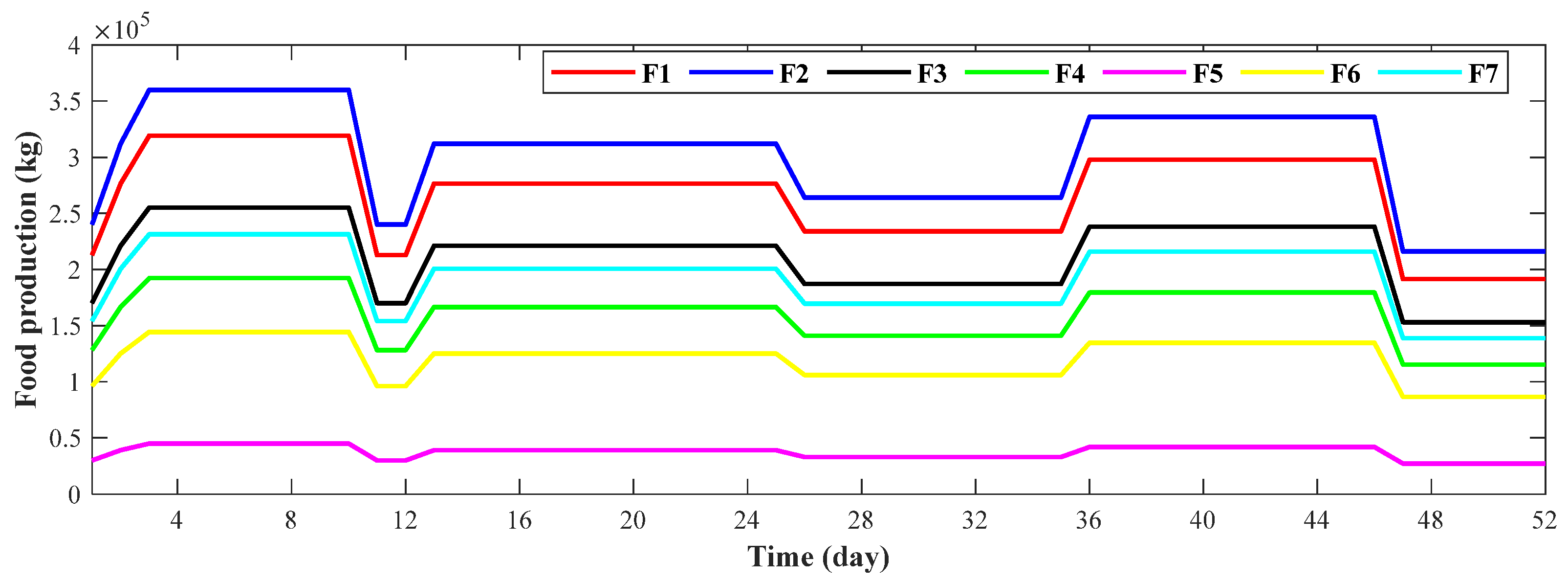
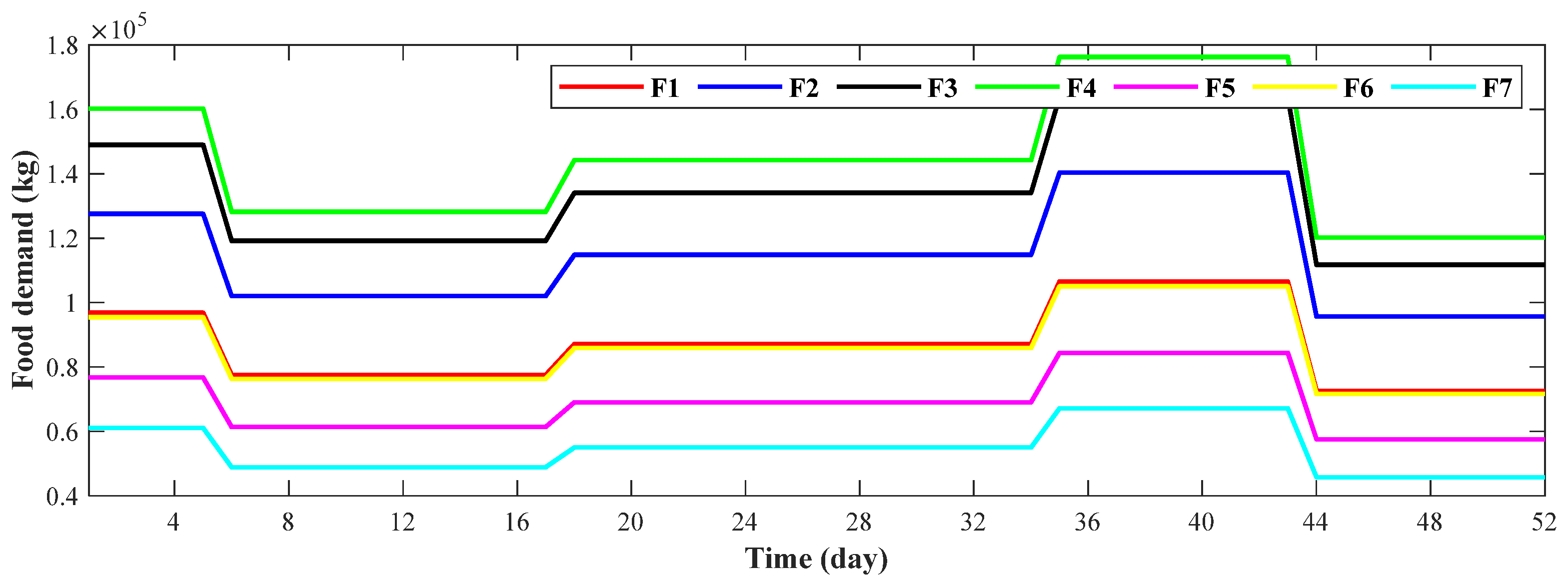
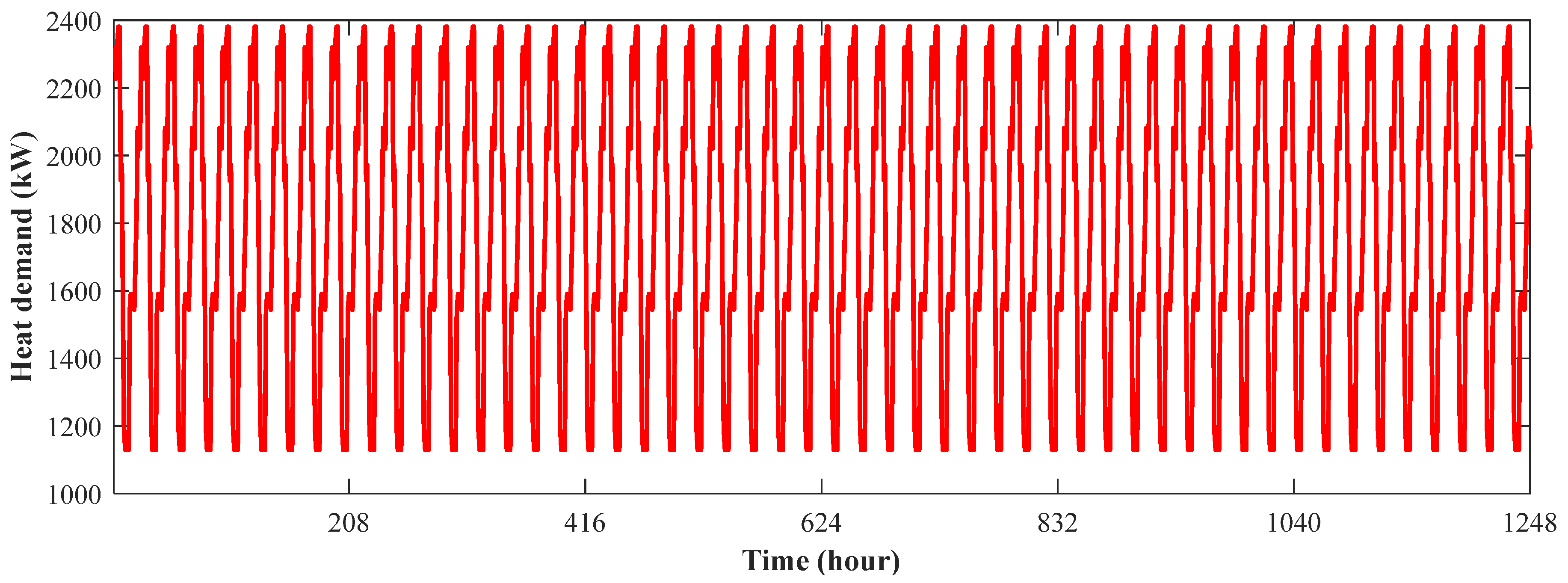
Simulation results from the previously developed agent-based model [15], covering a 52-week period, are used as inputs to the optimization framework, including farm locations, transportation distances, food supply and demand, and resource profiles. These inputs are used to evaluate the performance of the proposed method, and to capture the interactions that occur between food, energy, and water resources, providing system-level insights for infrastructure planning and policy design. Produce is sold every Sunday at a farmers’ market at each UAS; therefore, 52 weeks correspond to 52 market days, representing a full year and capturing both planning and operational aspects of the system. The distances between the urban farms shown in Table 1 are based on the road network and routes that EVs would take to transport produce. These distances are derived from a GIS-based road network and are direction-dependent, reflecting real-world routing conditions. In addition, the amount of food production (supply) and demand for each farm for 52 days is illustrated in Figure 5 and Figure 6.
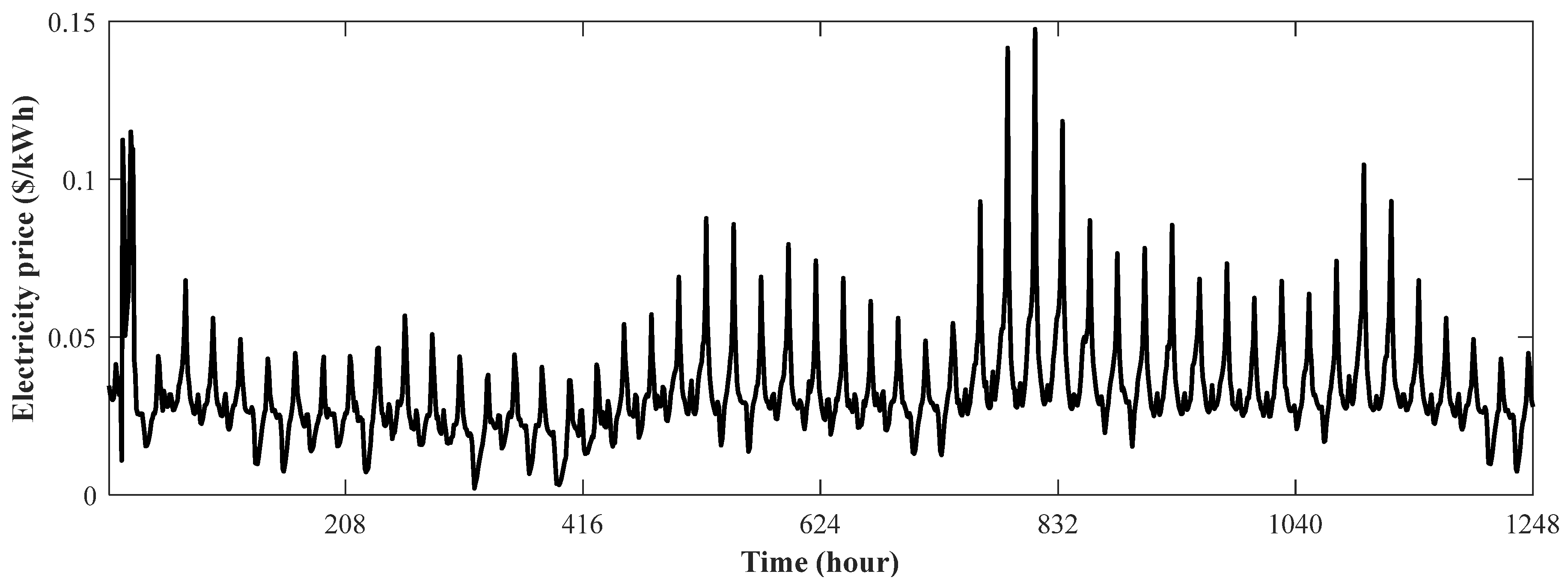
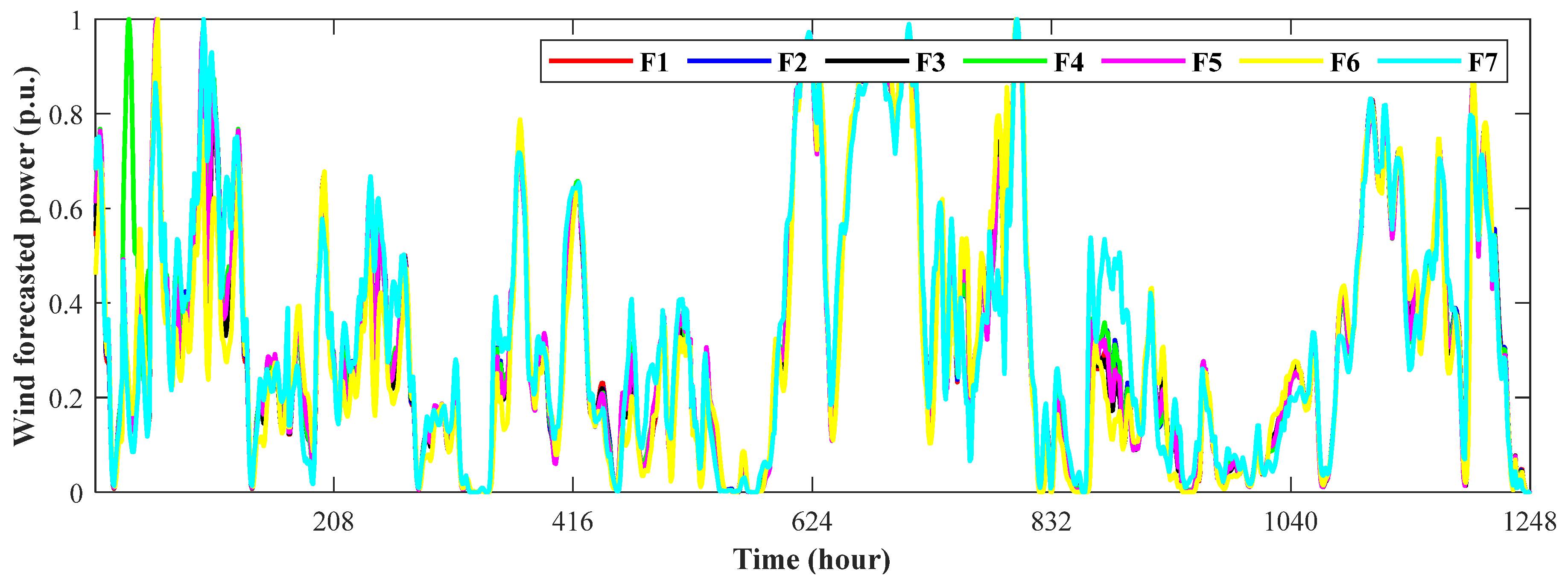
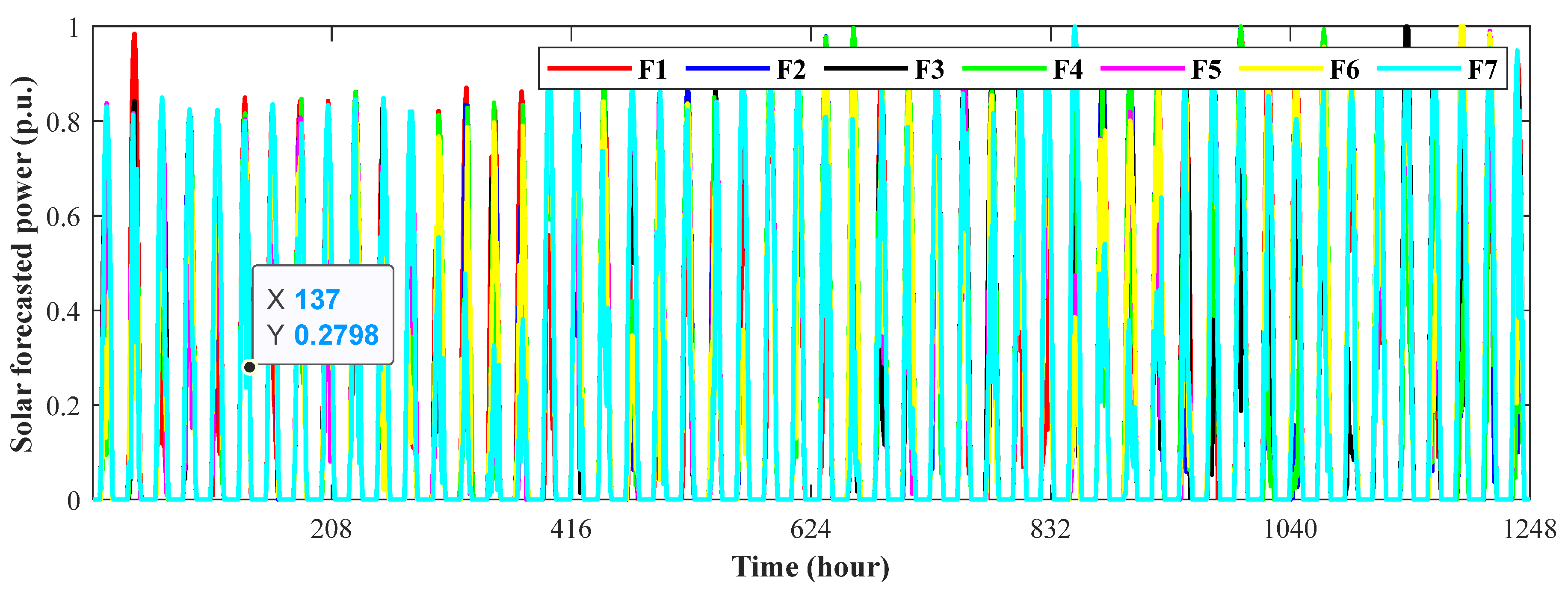
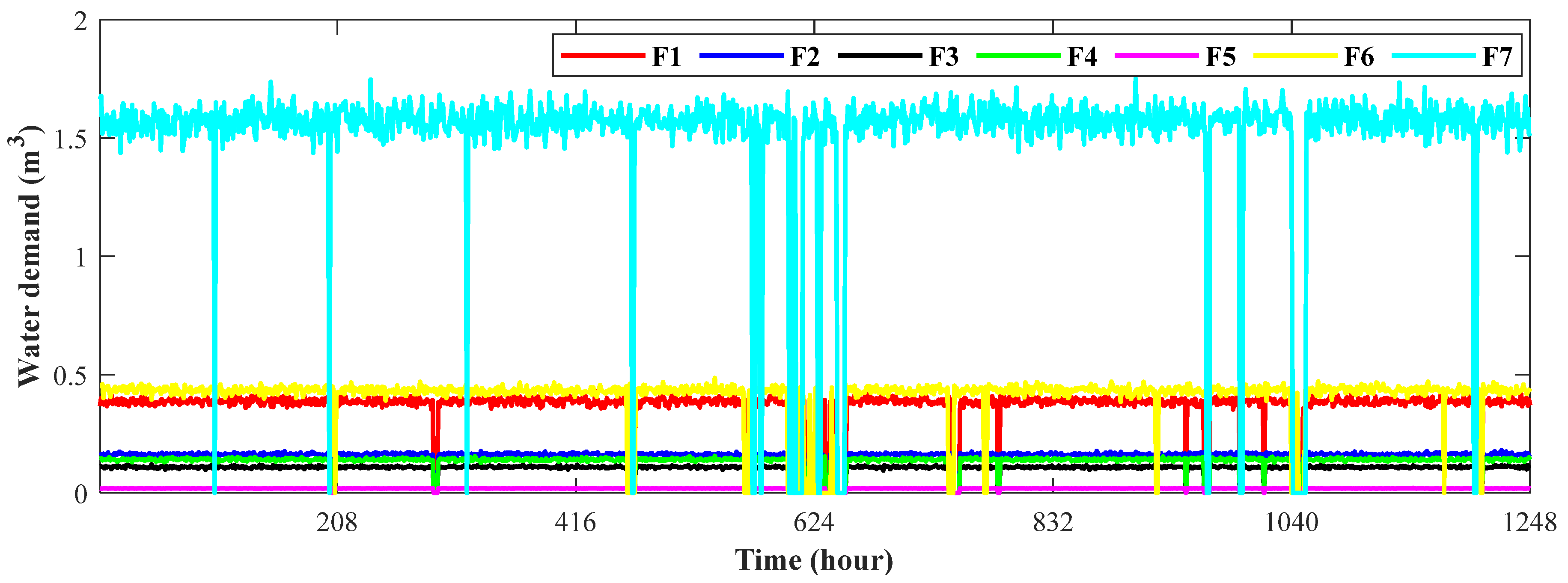
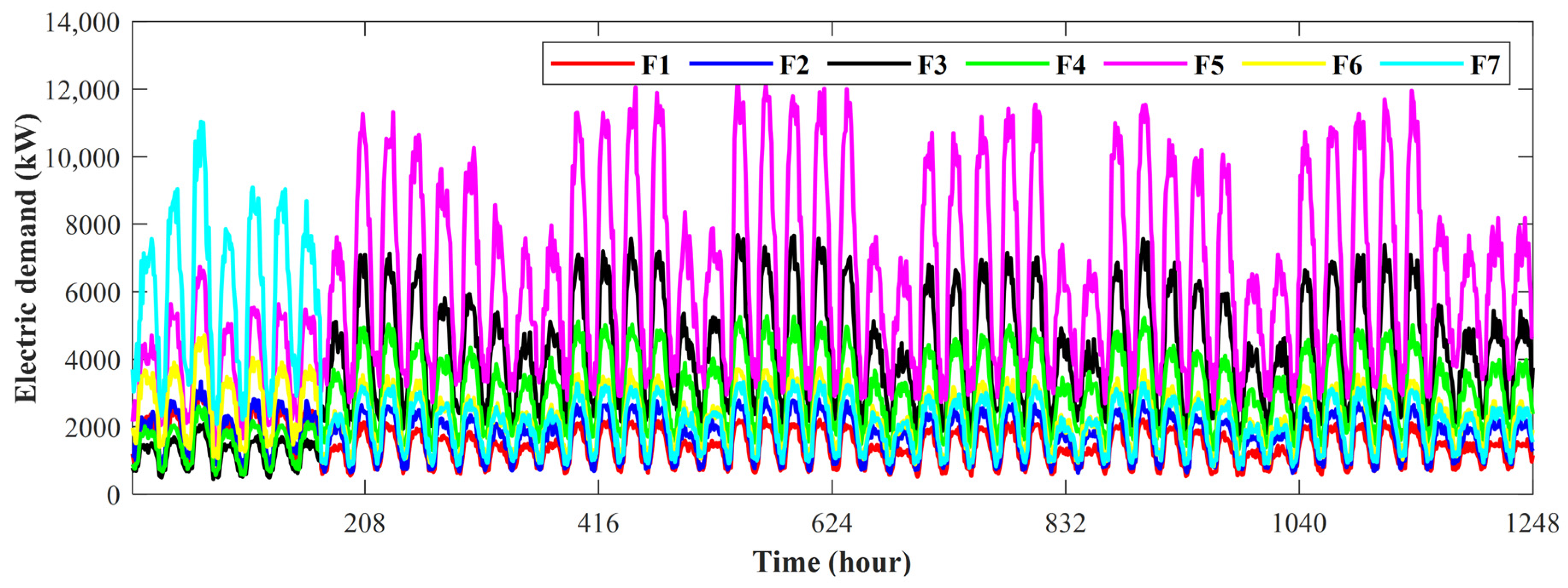
An electricity network, with farms located at different nodes as depicted in Figure 7, is considered. Each farm may include a biofuel unit, an energy storage (ES) system, a wind farm (WF), or a photovoltaic (PV) plant. The capacity of each unit is determined by the optimization problem. The input parameters of the different units are summarized in Table 2, Table 3 and Table 4. The operating and maintenance costs for wind turbines ( O M w ) and solar panels ( O M v ) are assumed to be 0.01 $/kW. A CHP system is located at bus 15, with the input data presented in Table 3. In addition, Figure 8, Figure 9, Figure 10, Figure 11, Figure 12 and Figure 13 present the remaining input data used for each farm in the model. These include the forecasted solar and wind power, water demand for irrigation, electricity demand, electricity price, and heat demand. All time-series inputs used in the optimization model, including wind and solar generation profiles, water demand, electricity demand, electricity prices, and heat demand (Figure 7, Figure 8, Figure 9, Figure 10, Figure 11 and Figure 12), are obtained from the outputs of our previously published agent-based model of the same South Florida urban agriculture network [15]. These profiles represent a consistent dataset corresponding to a representative year (2019) used in the ABM and are incorporated into the MILP formulation as exogenous inputs.

4. Numerical Results and Discussion

The optimization model was applied to the FEW nexus case study based in South Florida, which comprises seven urban farms that are connected through a community microgrid system. Several technologies are considered, as discussed in the previous sections, including solar PV, wind turbines, CHP units, biofuel usage, energy storage systems, and EVs. The objective is to determine the optimal specifications of energy technologies and minimize total system cost over a one-year period. The farms operate under a collaborative agreement that facilitates food exchange and establishes a micro supply chain. Food supply and demand are balanced across the network, with excess produce transported via EVs to farms with unmet demand. A circular economy approach is incorporated by converting unsold produce or produce that was not transported to other farms into biofuel, thus integrating waste-to-energy pathways. The model is solved for a 52-week period, and the Sunday farmers’ market scenario is modeled as 52 days.
The quantities of food transported between farms and the amounts sold at each location were calculated, and the total food waste generated at each farm over the 52 market days was determined (Table 5). Food waste is higher at farms where production greatly exceeds demand (e.g., Farms 1 and 2) and surplus produce cannot be fully redistributed once demand across the UA network is met. Farm 5 generates zero food waste because it is a net importer of produce, and demand consistently exceeds supply at this location. The waste was processed by biofuel units to generate power, reinforcing the circular economy approach and contributing to the microgrid electricity demand at each farm. The micro supply chain redistributed produce across the UA network, ensuring that demand was met at all farms. This redistribution led to a 15.2% increase in food availability for consumers, resulting from a 15.2% reduction in food waste across the seven urban farms. The micro supply chain facilitated farmer-to-farmer exchange across the UA network, allowing surplus produce at individual farms to be reallocated to other farms where local production was insufficient to meet demand.
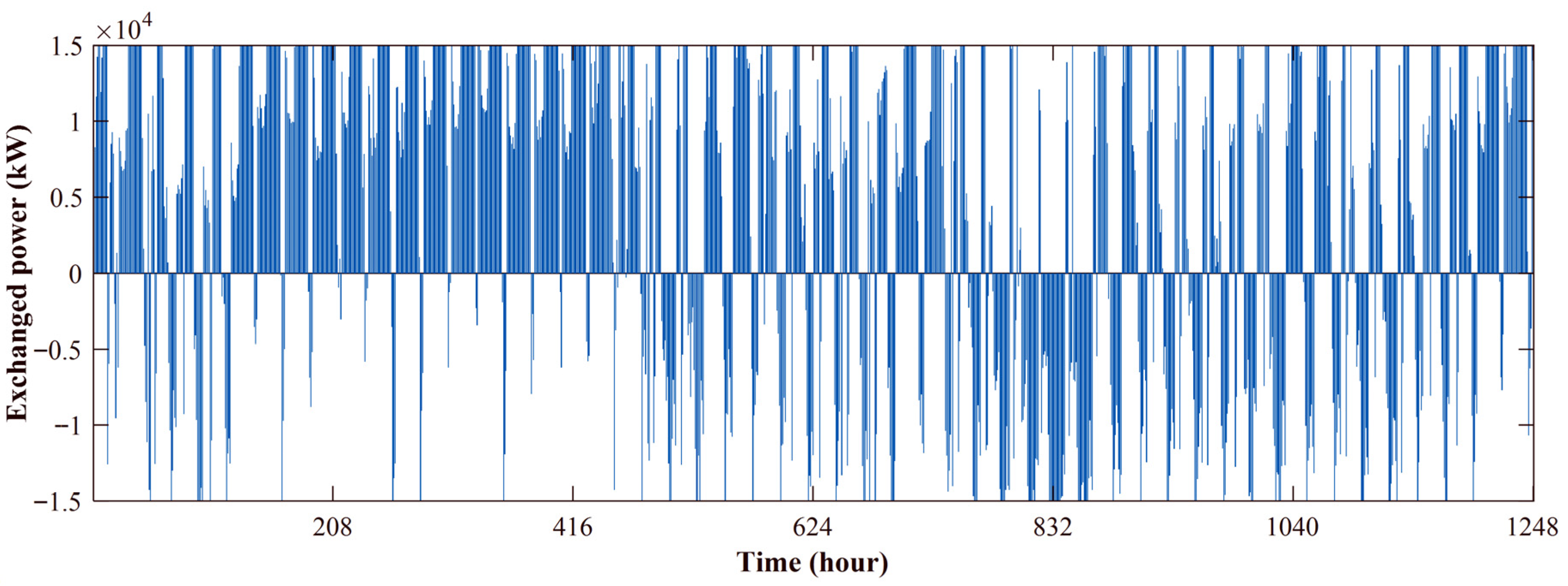
The power network can exchange power with the upstream network to decrease the total system cost and adjust the power balance in the network as illustrated in Figure 14. Positive values indicate that power is purchased from the upstream network, and negative values represent surplus power that is sold back to the upstream network. As shown in Figure 13, power purchases generally occur during periods of high electricity prices, when local power generation may not be sufficient to meet demand. Power is exported and sold to the upstream network during times of excess power generation from local sources in the system, and when power cannot be stored in the energy storage system. In addition to exchanges with the upstream network, the design of the power network shown in Figure 7 is a conceptual representation of power sharing among urban farm microgrids. Each microgrid is modeled as a single bus using a lossless copper-plate abstraction, and no line-flow constraints, thermal limits, voltage constraints, or AC/DC power-flow equations are enforced. Accordingly, internal transmission losses are not modeled. This abstraction is adopted to support planning-level technology sizing and resource coordination rather than detailed operational power-flow analysis. This flexibility allowed surplus electricity to be utilized by other microgrids in the network, reducing reliance on upstream purchases and improving overall system resilience.
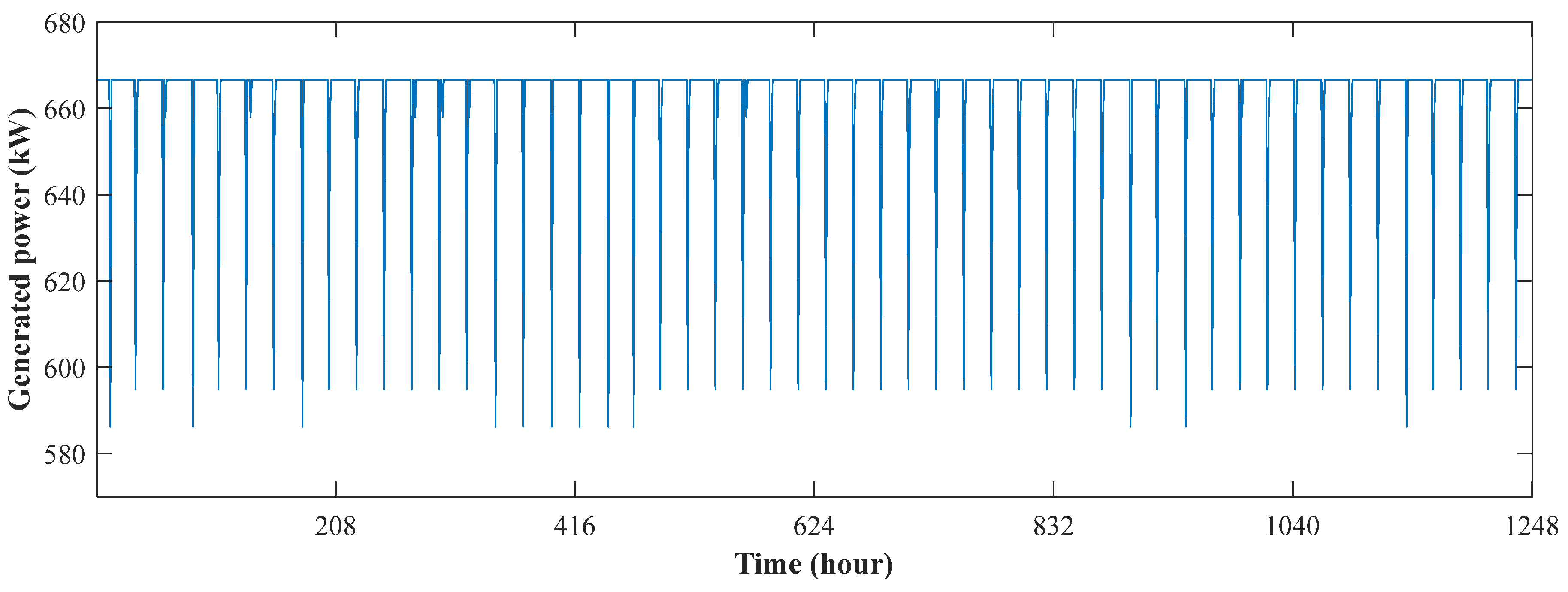
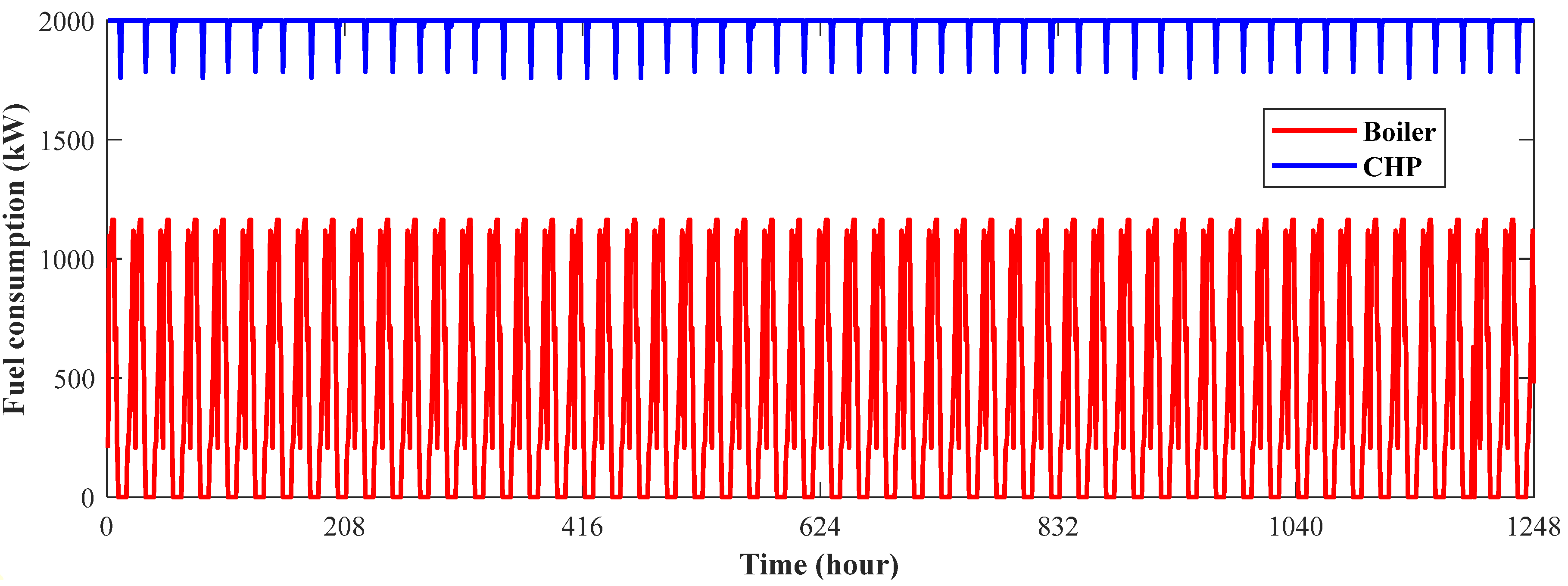
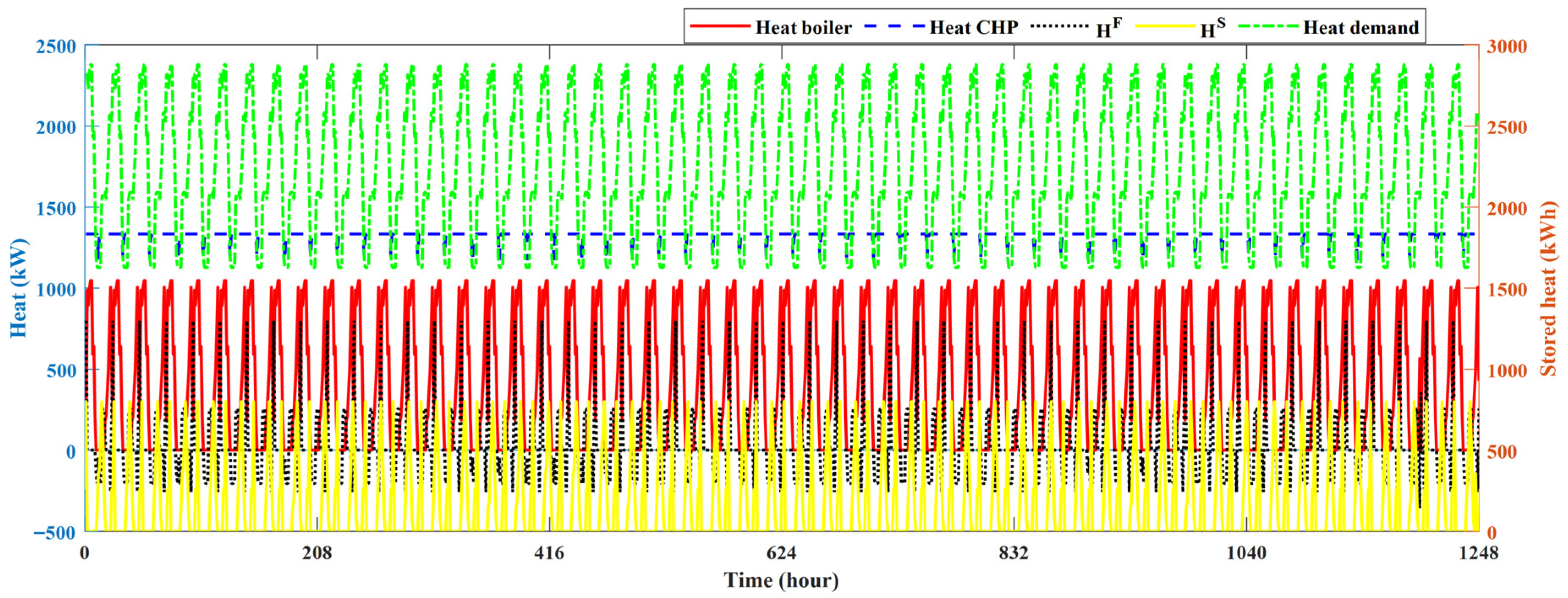
The operational performance of the CHP system is illustrated in Figure 15, Figure 16 and Figure 17. The model operates at an hourly resolution and is used to support planning-level analysis over the annual study horizon. Figure 15 displays the power generated by the CHP unit, which consistently operated at maximum capacity throughout the modeled period as an optimal outcome of the model. This behavior was driven by the system’s thermal requirements, as the CHP unit was responsible for meeting heat demand. Despite the system having a high operational cost, the model prioritizes its continuous use to ensure sufficient thermal energy supply, and that heat demand is satisfied. Figure 16 illustrates the fuel consumption of the CHP and boiler units; the heat storage unit also plays a role in satisfying the system’s thermal load. Together, the three components operate in concert to satisfy total heat demand. Figure 17 provides a breakdown of each component’s role in heat generation, storage, and release over time.
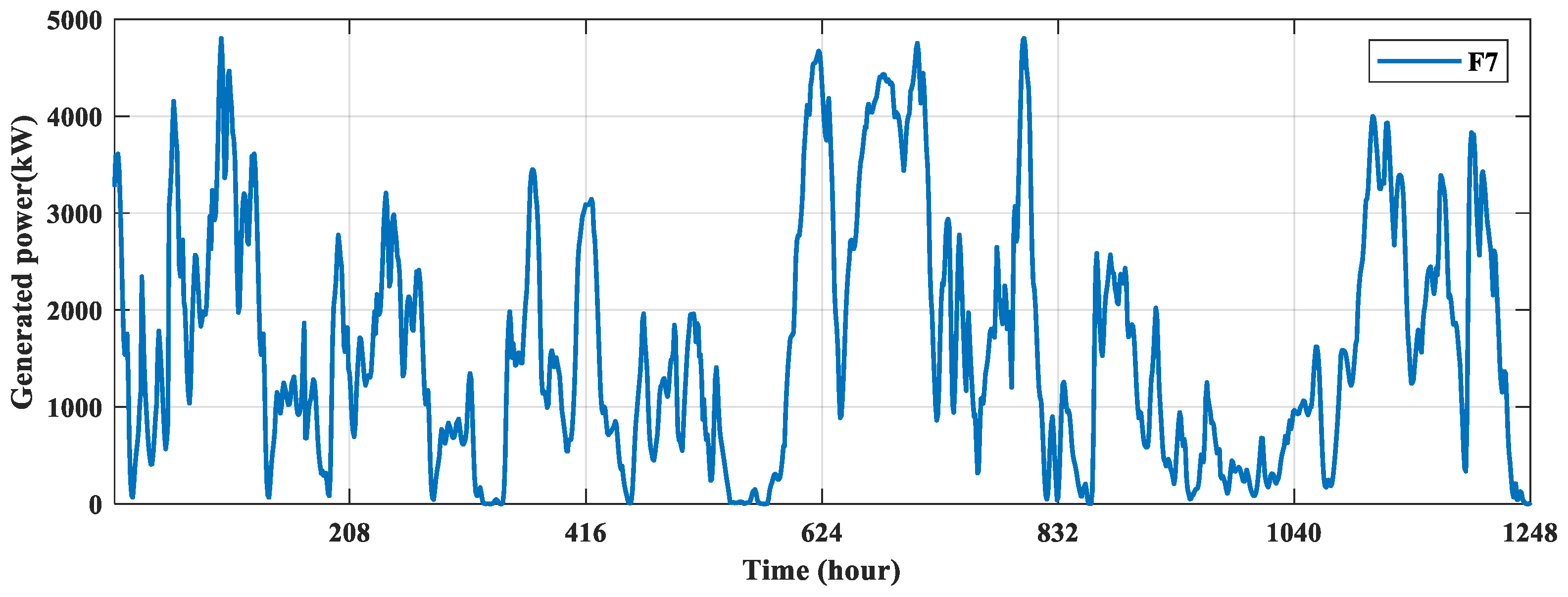
Table 6 presents the optimal capacities of PVs to be installed at each farm. PVs are installed in all farms except Farm 6, with the highest capacity allocated to Farm 3 (2239 kW), followed by Farm 7 (1271 kW). The model also specified the optimal capacity of WTs to be installed at each farm (Table 7). In this instance, only Farm 7 had WTs installed, with a capacity of 4803 kW. The allocation was driven by Farm 7 having the highest electricity demand in the network. The corresponding wind power generation at Farm 7 is illustrated in Figure 18. The model did not assign installations of PVs or WTs to Farm 6; instead, its electricity demand was met through imports from the interconnected power network (Figure 7) and through biofuels as will be discussed in the following paragraph. The integration of renewable energy technologies (solar and wind) contributed to a reduced carbon footprint. The estimated greenhouse gases (GHGs) that were avoided due to renewable energy generation were 8601.5 metric tons of CO2 over a one-year period; this is based on the energy generation profile of the state of Florida, which is composed of approximately 80% non-renewables. The avoided GHG emissions are calculated based on the total annual electricity that would be generated from the optimal configuration of solar and wind technologies at the seven urban farm locations, multiplied by 886 lbs·MWh−1, as this is the amount of CO2 emitted per MWh of electricity generated in the state of Florida [50].
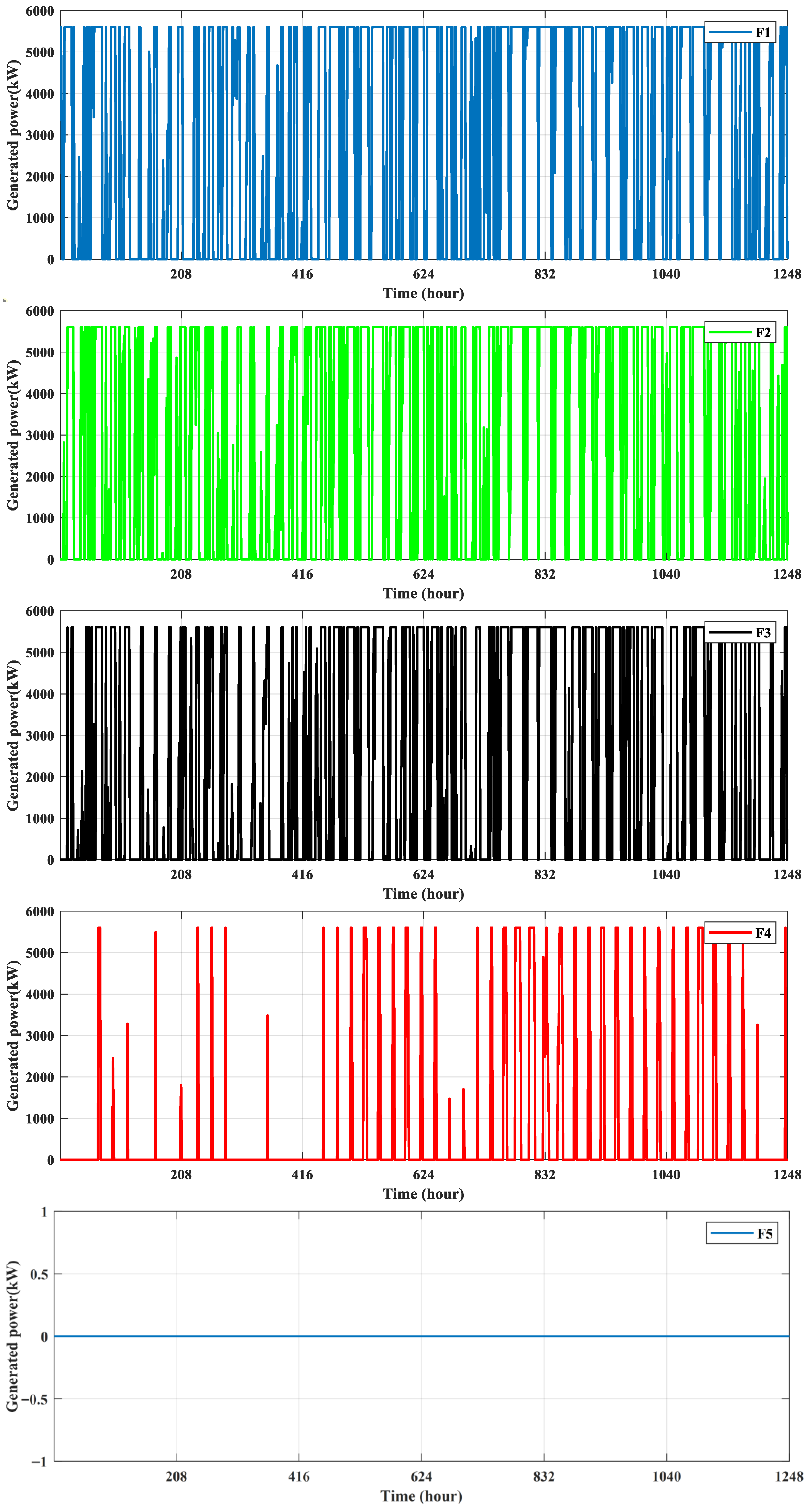
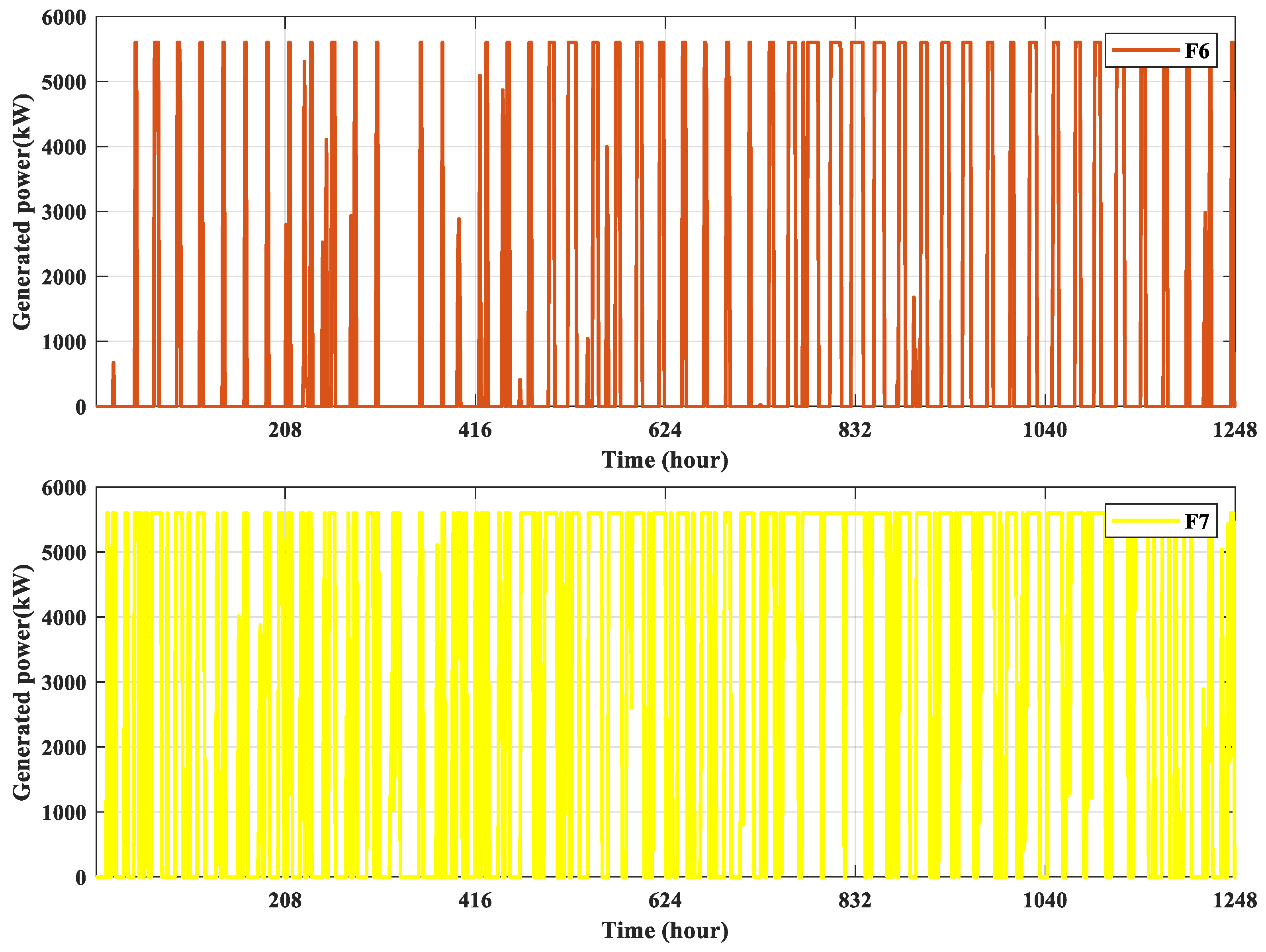
The capacity of biofuel units was constrained by the amount of food waste generated at each farm, and their deployment depended on the local balance of food supply and demand within the UA network. Figure 19 illustrates the power generated by biofuel units at each farm throughout the modeled period. Power generation at Farm 5 was zero, as no food waste was produced at this location. On the remaining six farms, biofuel output varied according to the quantity of unsold produce or produce not redistributed to other farms. By converting food waste into energy, the biofuel units supported a circular economy, reducing waste and decreasing reliance on external electricity sources.
Table 8 summarizes the total annual operational cost of the system and the breakdown of each component over the modeled 52-week period. All reported costs correspond to operating, maintenance, fuel, transportation, and emission-related costs; capital investment costs are not included. The overall system cost was $741,581, and this cost represents the aggregated annual operational cost for the urban agriculture network with seven urban farms over a one-year planning horizon. When distributed across the network, this corresponds to an average annual operational cost of approximately $106,000 per urban farm location, which is consistent with the scale of electricity demand profiles of the community microgrids, renewable energy operation, micro supply chain transportation, and the energy and resource conversion processes considered in the system. The largest contributor to total cost is the biofuel cost at $504,030. This expense reflects the conversion of unsold produce into food waste and subsequently into bioenergy, and includes the emission-related costs associated with biofuel combustion. While this pathway supports circular economy objectives, it introduces an economic trade-off associated with waste-to-energy conversion. The cost of operating the micro supply chain via EVs, which facilitates food redistribution among the seven farms, amounted to $176,140. Power exchange with the upstream network incurs a cost of $34,036, indicating the role of local renewable energy technologies in meeting electricity demand. Finally, the costs associated with solar and wind technologies only reflect their operation and maintenance expenses, rather than capital investments, over the study period. Overall, the cost breakdown provides insight into the dominant economic drivers and trade-offs within the coordinated FEW nexus system, where most operational costs are associated with local resource utilization and reliance on external electricity purchases remains minimal. These results illustrate the economic trade-offs inherent in coordinated planning, in which operational costs associated with logistics and circular economy pathways are balanced against sustainability outcomes and system-level resilience.
The results presented in this study illustrate how integrated modeling and optimization of the FEW nexus enable coordinated, joint planning across food, energy, and water systems by capturing interdependencies and synergies among food redistribution, energy systems, and waste-to-energy pathways. The proposed model supports circular economy principles and facilitates the design of self-sufficient UA networks that align with sustainability objectives set by policymakers. This is achieved through optimizing renewable energy capacities, conversion of food waste into biofuels, coordinating food exchange between farms, and establishing a micro supply chain. Food transport via EVs and collaboration among farms improved food access for consumers located in food deserts and reduced food waste. The addition of the micro supply chain to the UA network aims to support social and environmental sustainability objectives.
The findings from this study provide valuable insights for policymakers and urban planners by offering a modeling framework that supports urban decarbonization, strengthens local food systems, and improves the integration of critical infrastructure. The proposed model can be adapted to other geographic regions and serves as a decision-support tool for sustainable urban planning. In addition, the inclusion of CHP units and modeling of thermal energy demands broaden the applicability of the model to colder regions or rural areas where there are greater demands for thermal energy. At the same time, the results highlight economic trade-offs, such as biofuel generation, suggesting the potential for supplemental circular economy pathways. This could be the conversion of surplus food waste into fertilizers, which can be applied to farm crops or sold for profit. The resultant revenue could then be reinvested in other renewable technologies, such as solar or wind. To maximize the benefits of the proposed system, policymakers need to establish clear urban farming guidelines and create incentives for farmer collaboration. These efforts can enable a coordinated micro supply chain that strengthens urban food systems and improves food security, including communities that are affected by food deserts. Additionally, suitable locations for urban farming need to be identified by urban planners. The resultant infrastructure can have a positive social and environmental impact on local communities and advance the broader objectives of urban sustainability.
The results of this study contribute to the FEW nexus literature by demonstrating the value of a unified optimization framework that combines food redistribution via a micro supply chain, renewable energy generation and storage, waste-to-energy conversion, and green transportation. The proposed formulation models food, energy and water flows across multiple urban farms within a single decision-support structure. These findings suggest that planning-level FEW nexus models can effectively capture system-wide tradeoffs between operational cost, environmental impact, and resource utilization when infrastructure, logistics, and circular economy pathways are optimized. The framework also demonstrates how agent-based simulation outputs can be embedded within mathematical optimization models, capturing behavioral dynamics within urban FEW system analysis.
There are some limitations associated with the proposed approach in this paper. First, the optimization framework is intended as a planning-level decision-support tool and is formulated deterministically, relying on inputs derived from agent-based simulation output; thus, stochastic elements (e.g., uncertainty in demand, renewable energy generation, and behavioral dynamics) are not modeled. Second, the illustrative case study focuses on a specific urban agriculture network in South Florida; although the framework is generalizable, numerical results are context-dependent and should not be interpreted as universally applicable. Different geographic regions may have differing energy generation profiles, with varying levels of renewable penetration rates, thus the magnitude of potential carbon emissions avoided may differ. In addition, the integration of agent-based simulation outputs assumes that behavioral dynamics captured by the ABM remain stable over the planning horizon, particularly with respect to food supply and demand. These limitations define the scope and interpretation of the results, and the findings are intended to provide planning-level insights into system-wide trends, trade-offs, and coordination benefits achievable through integrated FEW nexus optimization.

5. Conclusions

This paper formulated a mathematical programming model to design and optimize the FEW nexus using an illustrative case study of an urban agriculture network in South Florida. The network consists of seven urban farms, each integrated within a renewable energy microgrid and connected through a micro supply chain designed to increase food availability, reduce waste and support local sustainability objectives. The model determined the optimal capacities of renewable energy technologies, biomass utilization, and balanced supply and demand across the system while minimizing costs and emissions. Results showed that the overall cost of the system was $741,581 over the modeled period, with biofuel representing the largest cost component at $504,030. The cost of operating the micro supply chain via EVs was $176,140, which contributed to reduced food waste, increased food availability by 15.2% and strengthened collaboration among farms.
This paper demonstrates the potential of mathematical programming to optimize and manage the complex interactions between food, energy, and water systems, while also evaluating policy scenarios and their impacts on system performance. The findings provide a decision-support tool for policymakers and urban planners, particularly for the development of future sustainable cities. The model is adaptable to other geographic regions and can inform the design of resilient urban agriculture networks that reduce environmental impacts, lower operational costs and improve food access. To support this, policymakers need to adopt clear urban farming regulations and implement strategic site selection to facilitate farm collaboration and strengthen the resilience of urban food systems.
Future research will focus on extending the proposed framework in several ways. First, uncertainty in food production, renewable energy generation, and demand will be incorporated through stochastic or multi-stage optimization formulations, which are widely used in energy and infrastructure planning to assess robustness and risk-performance trade-offs under uncertainty [51]. Second, the model can be extended to a multi-period or dynamic setting to capture long-term planning decisions and infrastructure evolution [52]. Third, alternative policy and market scenarios, such as alternative carbon pricing schemes or renewable energy incentives should be evaluated, and the framework applied to other case studies to further assess its generalizability.


Author Contributions

Conceptualization, M.E. and L.R.; methodology, M.E. and L.R.; software, M.E.; validation, M.E. and L.R.; formal analysis, M.E. and L.R.; investigation, M.E. and L.R.; resources, L.R.; data curation, M.E.; writing—original draft preparation, M.E.; writing—review and editing, M.E. and L.R.; visualization, M.E.; supervision, L.R.; project administration, L.R.; funding acquisition, L.R. All authors have read and agreed to the published version of the manuscript.

Funding

This research received no external funding.

Institutional Review Board Statement

Not applicable.

Informed Consent Statement

Not applicable.

Data Availability Statement

Data available upon request.

Conflicts of Interest

The authors declare no conflicts of interest.

Nomenclature

A. Indices
b , b ^ Indices of buses
f , f ^ Indices of farms
e Index for different types of emissions (NOx or CO2 or SO2)
g, c, s, w, vIndex for different units (biofuel, CHP, ES, WT, and PV)
t Index for time (hour)
T E V , A V ⊂ tTime intervals that electric vehicles are in parking lots to be charged
B. Parameters
a g B i o F , b g B i o F , c g B i o F Biofuel cost function coefficients
D R g Ramp-down rate limit of g-th biofuel (kW)
D f , f ^ F A R M Distance between farms (Km)
E F D e , g , E F C e , c Emission factor for the e-th emission type for biofuel and CHP (lb/kWh)
f c B o i l e r , M A X , f c C H P , M A X Maximum allowable fuel input for boiler and CHP units (kW)
F P f F A R M Maximum amount of food produced by farm f (kg)
F D f ^ F A R M Food demand in farm f (kg)
H t D Heat demand at time t (kWh)
H C S , M A X Maximum heat storage capacity (kWh)
I R G f , t F A R M Amount of required water to irrigate farm f at time t (m3)
M A big value used for linearization
M C Mileage cost for transporting food among farms ($/Km)
O M v , O M w Operation and maintenance costs of PVs and WTs ($/kW)
P b , t D , Q b , t D Active (kW) and reactive (kVar) residential load demand at bus b during hour t
P g B i o F , M I N Lower limits of active generated power by biofuels (kW)
P s M A X , C H , P s M A X , D C H Maximum limit for ES charging and discharging (kW)
P f , t W T , F O R , P f , t P V , F O R WT and PV forecasted power output in farm f at time t (p.u)
P W T , P E N , M A X , P P V , P E N , M A X Maximum penetration of WT and PV units (kWh)
P D , M A X Maximum load demand in the study day (kWh)
R W t o P Rate of converting food waste to power
R P t o Q Rate of converting active power to reactive power
R W t o P Rate of converting water to power
R E V t o P Rate of converting mileage payment by electric vehicles to power
S U C g , S D C g Start-up and shut-down biofuel cost ($)
T g B i o F , o n Minimum required uptime of the g-th biofuel unit (h)
T g B i o F , o f f Minimum required downtime of the g-th biofuel unit (h)
U R g Ramp-up rate limit of the g-th biofuel unit (kW)
α d e , α c e Externality cost of the e-th type of emission produced by biofuel and CHP units ($/lb)
α c C H P Parameter used in the generation characteristic equations of CHP units
α s E S , β s E S Cost coefficients of ESs
t Time interval duration for scheduling (hour)
η c B o i l e r Efficiency of boiler
η s E S , C H , η s E S , D C H Efficiency of ES during charging and discharging
ρ t E Day ahead electricity price ($/kWh)
ρ N G Gas price ($/kWh)
C. Variables
C o s t B i o F , C o s t W T , C o s t P V , C o s t C H P Biofuel, WT, PV, and CHP unit cost ($)
C o s t E S ES degradation cost ($)
E C g , t B i o F , E C c , t C H P Biofuel and CHP emission cost ($)
E V ^ f b C D Required power by electric vehicles at farm f (kWh)
E V f , t C D Required power by electric vehicles at farm f at time t (kWh)
f c , t B o i l e r , f c , t C H P Amount of fuel consumed by boiler and CHP units at time t (kW)
H c , t B o i l e r , H c , t C H P Amount of heat generated by boiler and CHP units at time t (kWh)
H c , t f Heat flow out of the heat tank at time t (kWh)
H c , t s Heat stored in the heat tank at time t (kWh)
P s , t C H ,   P s , t D C H Amount of ES charge and discharge at hour t (kW)
P g , t B i o F , P s , t S T , P f , t W T , P v , t P V , P c , t C H P Power contribution of biofuel, ES, EV, WT, PV, and CHP units to the energy market (kW)
P b , t G , Q b , t G Active (kW) and reactive (kVar) power generated at bus b during hour t
C o s t U N Profit from exchanging power with the upstream network
P t E Amount of exchanging power with the upstream network (kW)
P f W T , M A X , P f P V , M A X Maximum size of WT and PV unit at farm f (kW)
P ^ f W T , M A X , P ^ f P V , M A X Auxiliary variables for calculating WT and PV units’ size (kW)
P D f , t ^ F A R M Consumed power by water pumps to irrigate farm f at time t (kW)
Q g , t B i o F Amount of reactive power generated by biofuels (kVar)
S O C s , t E S SOC of ES and EV at hour t (kWh)
S O C s E S , M A X Size of ES (kWh)
T f , f ^ F O O D Amount of transported food between farm f and f (kg)
T ^ f , f ^ F O O D Auxiliary variable to calculate the amount of transported food between farms (kg)
C o s t T R P Cost of transporting food among farms by electric vehicles ($)
u s , t E S , C H , u s , t E S , D C H Binary variables for state of charging and discharging of ES
u g , t , u g , t Binary variables indicating the commitment state of biofuel g at hour t
U f , f ^ T R P Binary variable for farms
W F g f , t F A R M Amount of food waste in farm f at time t (kg)
W F F ^ f F A R M Amount of food waste in farm f (kg)
W F ^ f F A R M Auxiliary variable for food waste (kg)
X g , t B i o F , o n On-time of g-th biofuel at hour t (h)
X g , t B i o F , o f f Off-time of g-th biofuel at hour t (h)

References

  1. Wang, Y.; Yuan, Z.; Tang, Y. Enhancing food security and environmental sustainability: A critical review of food loss and waste management. Resour. Environ. Sustain. 2021, 4, 100023. [Google Scholar] [CrossRef]
  2. Kompas, T.; Che, T.N.; Grafton, R.Q. Global impacts of heat and water stress on food production and severe food insecurity. Sci. Rep. 2024, 14, 14398. [Google Scholar] [CrossRef] [PubMed]
  3. Djehdian, L.A.; Chini, C.M.; Marston, L.; Konar, M.; Stillwell, A.S. Exposure of urban food–energy–water (FEW) systems to water scarcity. Sustain. Cities Soc. 2019, 50, 101621. [Google Scholar] [CrossRef]
  4. Goh, K.C.; Kurniawan, T.A.; Othman, M.H.D.; Anouzla, A.; Aziz, F.; Ali, I.; Casila, J.C.C.; Khan, M.I.; Zhang, D.; Dai, W.; et al. Reinforcing urban resilience through sound landfill management: Addressing global climatic challenges with novel solutions. Process Saf. Environ. Prot. 2025, 195, 106789. [Google Scholar] [CrossRef]
  5. Huang, D.; Wen, F.; Li, G.; Wang, Y. Coupled development of the urban water-energy-food nexus: A systematic analysis of two megacities in China’s Beijing-Tianjin-Hebei area. J. Clean. Prod. 2023, 419, 138051. [Google Scholar] [CrossRef]
  6. Scanlon, B.R.; Ruddell, B.L.; Reed, P.M.; Hook, R.I.; Zheng, C.; Tidwell, V.C.; Siebert, S. The food-energy-water nexus: Transforming science for society. Water Resour. Res. 2017, 53, 3550–3556. [Google Scholar] [CrossRef]
  7. Feng, K.; Hubacek, K.; Siu, Y.L.; Li, X. The energy and water nexus in Chinese electricity production: A hybrid life cycle analysis. Renew. Sustain. Energy Rev. 2014, 39, 342–355. [Google Scholar] [CrossRef]
  8. Huang, D.; Li, G.; Sun, C.; Liu, Q. Exploring interactions in the local water-energy-food nexus (WEF-Nexus) using a simultaneous equations model. Sci. Total Environ. 2020, 703, 135034. [Google Scholar] [CrossRef]
  9. Babel, M.S.; Shrestha, B.; Perret, S.R. Hydrological impact of biofuel production: A case study of the Khlong Phlo Watershed in Thailand. Agric. Water Manag. 2011, 101, 8–26. [Google Scholar] [CrossRef]
  10. Li, X.; Zhang, L.; Hao, Y.; Shi, Z.; Zhang, P.; Xiong, X.; Li, Y.; Lu, Z. Understanding resilience of urban food-energy-water nexus system: Insights from an ecological network analysis of megacity Beijing. Sustain. Cities Soc. 2023, 95, 104605. [Google Scholar] [CrossRef]
  11. Alimagham, S.M.; Soltani, A.; Zeinali, E.; Kazemi, H. Energy flow analysis and estimation of greenhouse gases (GHG) emissions in different scenarios of soybean production (Case study: Gorgan region, Iran). J. Clean. Prod. 2017, 149, 621–628. [Google Scholar] [CrossRef]
  12. Chen, X.P.; Li, Y.P.; Gao, P.P.; Liu, J.; Zhang, H. A multi-scenario BP-neural-network ecologically-extended input-output model for synergetic management of water-electricity nexus system—A case study of Fujian province. J. Clean. Prod. 2023, 399, 136581. [Google Scholar] [CrossRef]
  13. Zhang, T.; Tan, Q.; Zhang, T.; He, L.; Yu, X.; Zhang, S. A multi-objective optimization decision-making methodology for fostering synergies in the water-energy-food nexus. J. Clean. Prod. 2024, 479, 144051. [Google Scholar] [CrossRef]
  14. Xia, Q.; Tian, G.; Zhao, D.; Zhao, Q.; Varis, O. Effects of new-type urbanization on resource pressure: Evidence from a water-energy-food system perspective in China. Sustain. Cities Soc. 2024, 107, 105411. [Google Scholar] [CrossRef]
  15. Elkamel, M.; Valencia, A.; Zhang, W.; Zheng, Q.P.; Chang, N.-B. Multi-agent modeling for linking a green transportation system with an urban agriculture network in a food-energy-water nexus. Sustain. Cities Soc. 2023, 89, 104354. [Google Scholar] [CrossRef]
  16. Abar, S.; Theodoropoulos, G.K.; Lemarinier, P.; O’Hare, G.M.P. Agent Based Modelling and Simulation tools: A review of the state-of-art software. Comput. Sci. Rev. 2017, 24, 13–33. [Google Scholar] [CrossRef]
  17. Abel, K.C.; Faust, K.M. Modeling complex human systems: An adaptable framework of urban food deserts. Sustain. Cities Soc. 2020, 52, 101795. [Google Scholar] [CrossRef]
  18. Dobbie, S.; Schreckenberg, K.; Dyke, J.G.; Schaafsma, M.; Balbi, S. Agent-Based Modelling to Assess Community Food Security and Sustainable Livelihoods. J. Artif. Soc. Soc. Simul. 2018, 21, 9. [Google Scholar] [CrossRef]
  19. Dobbie, S.; Balbi, S. Design of an Empirical Agent-Based Model to Explore Rural Household Food Security Within a Developing Country Context. In Advances in Social Simulation 2015; Springer: Cham, Switzerland, 2017; pp. 81–94. [Google Scholar] [CrossRef]
  20. Widener, M.J.; Metcalf, S.S.; Bar-Yam, Y. Agent-based modeling of policies to improve urban food access for low-income populations. Appl. Geogr. 2013, 40, 1–10. [Google Scholar] [CrossRef]
  21. Namany, S.; Govindan, R.; Di Martino, M.; Pistikopoulos, E.N.; Linke, P.; Avraamidou, S.; Al-Ansari, T. Developing intelligence in food security: An agent-based modelling approach of Qatar’s food system interactions under socio-economic and environmental considerations. Sustain. Prod. Consum. 2022, 32, 669–689. [Google Scholar] [CrossRef]
  22. Ghandar, A.; Theodoropoulos, G.; Zhong, M.; Zhen, B.; Chen, S.; Gong, Y.; Ahmed, A. An Agent-Based Modelling Framework for Urban Agriculture. In Proceedings of the 2019 Winter Simulation Conference (WSC), National Harbor, MD, USA, 8–11 December 2019; pp. 1767–1778. [Google Scholar]
  23. Chang, X.; Li, J.; Rodriguez, D.; Su, Q. Agent-based simulation of pricing strategy for agri-products considering customer preference. Int. J. Prod. Res. 2016, 54, 3777–3795. [Google Scholar] [CrossRef]
  24. Giulioni, G. An agent-based modeling and simulation approach to commodity markets. Soc. Sci. Comput. Rev. 2019, 37, 355–370. [Google Scholar] [CrossRef]
  25. Li, Y.; Zhang, D.; Thapa, J.R.; Madondo, K.; Yi, S.; Fisher, E.; Griffin, K.; Liu, B.; Wang, Y.; Pagán, J.A. Assessing the role of access and price on the consumption of fruits and vegetables across New York City using agent-based modeling. Prev. Med. 2018, 106, 73–78. [Google Scholar] [CrossRef]
  26. Calisti, R.; Proietti, P.; Marchini, A. Promoting sustainable food consumption: An agent-based model about outcomes of small shop openings. J. Artif. Soc. Soc. Simul. 2019, 22, 2. [Google Scholar] [CrossRef]
  27. Huber, R.; Bakker, M.; Balmann, A.; Berger, T.; Bithell, M.; Brown, C.; Grêt-Regamey, A.; Xiong, H.; Le, Q.B.; Mack, G.; et al. Representation of decision-making in European agricultural agent-based models. Agric. Syst. 2018, 167, 143–160. [Google Scholar] [CrossRef]
  28. Tamburino, L.; Di Baldassarre, G.; Vico, G. Water management for irrigation, crop yield and social attitudes: A socio-agricultural agent-based model to explore a collective action problem. Hydrol. Sci. J. 2020, 65, 1815–1829. [Google Scholar] [CrossRef]
  29. Nouri, A.; Saghafian, B.; Delavar, M.; Bazargan-Lari, M.R. Agent-Based Modeling for Evaluation of Crop Pattern and Water Management Policies. Water Resour. Manag. 2019, 33, 3707–3720. [Google Scholar] [CrossRef]
  30. Huang, S.; Hu, G.; Chennault, C.; Su, L.; Brandes, E.; Heaton, E.; Schulte, L.; Wang, L.; Tyndall, J. Agent-based modeling of bioenergy crop adoption and farmer decision-making. Energy 2016, 115, 1188–1201. [Google Scholar] [CrossRef]
  31. Uen, T.-S.; Chang, F.-J.; Zhou, Y.; Tsai, W.-P. Exploring synergistic benefits of Water-Food-Energy Nexus through multi-objective reservoir optimization schemes. Sci. Total Environ. 2018, 633, 341–351. [Google Scholar] [CrossRef]
  32. Tsolas, S.D.; Karim, M.N.; Hasan, M.F. Optimization of water-energy nexus: A network representation-based graphical approach. Appl. Energy 2018, 224, 230–250. [Google Scholar] [CrossRef]
  33. Gao, J.; Xu, X.; Cao, G.; Ermoliev, Y.M.; Ermolieva, T.Y.; Rovenskaya, E.A. Optimizing regional food and energy production under limited water availability through integrated modeling. Sustainability 2018, 10, 1689. [Google Scholar] [CrossRef]
  34. Zhang, T.; Tan, Q.; Yu, X.; Zhang, S. Synergy assessment and optimization for water-energy-food nexus: Modeling and application. Renew. Sustain. Energy Rev. 2020, 134, 110059. [Google Scholar] [CrossRef]
  35. Namany, S.; Al-Ansari, T.; Govindan, R. Optimisation of the energy, water, and food nexus for food security scenarios. Comput. Chem. Eng. 2019, 129, 106513. [Google Scholar] [CrossRef]
  36. Wicaksono, A.; Jeong, G.; Kang, D. Water–energy–food nexus simulation: An optimization approach for resource security. Water 2019, 11, 667. [Google Scholar] [CrossRef]
  37. Mortada, S.; Abou Najm, M.; Yassine, A.; El Fadel, M.; Alamiddine, I. Towards sustainable water-food nexus: An optimization approach. J. Clean. Prod. 2018, 178, 408–418. [Google Scholar] [CrossRef]
  38. Medina-Santana, A.A.; Flores-Tlacuahuac, A.; Cárdenas-Barrón, L.E.; Fuentes-Cortés, L.F. Optimal design of the water-energy-food nexus for rural communities. Comput. Chem. Eng. 2020, 143, 107120. [Google Scholar] [CrossRef]
  39. Yang, G.; Su, Y.; Huo, L.; Guo, D.; Wu, Y. A multi-objective synergistic optimization model considering the water-energy-food-carbon nexus and bioenergy. Agric. Water Manag. 2025, 312, 109431. [Google Scholar] [CrossRef]
  40. Agrawal, A.; Bakshi, B.R.; Kodamana, H.; Ramteke, M. Multi-objective optimization of food-energy-water nexus via crops land allocation. Comput. Chem. Eng. 2024, 183, 108610. [Google Scholar] [CrossRef]
  41. Alhajeri, N.S.; Al-Fadhli, F.M.; Deshpande, A.A.; El-Halwagi, M.M. Optimization of water-energy-food nexus via an integrated system of solar-assisted desalination and farming. J. Clean. Prod. 2024, 434, 140362. [Google Scholar] [CrossRef]
  42. Namany, S.; Al-Ansari, T.; Govindan, R. Sustainable energy, water and food nexus systems: A focused review of decision-making tools for efficient resource management and governance. J. Clean. Prod. 2019, 225, 610–626. [Google Scholar] [CrossRef]
  43. Elkamel, M.; Rabelo, L.; Sarmiento, A.T. Agent-Based Simulation and Micro Supply Chain of the Food–Energy–Water Nexus for Collaborating Urban Farms and the Incorporation of a Community Microgrid Based on Renewable Energy. Energies 2023, 16, 2614. [Google Scholar] [CrossRef]
  44. Adams, W.P.; Forrester, R.J. A simple recipe for concise mixed 0-1 linearizations. Oper. Res. Lett. 2005, 33, 55–61. [Google Scholar] [CrossRef]
  45. Sedghi, M.; Ahmadian, A.; Aliakbar-Golkar, M. Optimal Storage Planning in Active Distribution Network Considering Uncertainty of Wind Power Distributed Generation. IEEE Trans. Power Syst. 2016, 31, 304–316. [Google Scholar] [CrossRef]
  46. Sadeghi, S.; Ahmadian, A.; Diabat, A.; Elkamel, A. Modeling energy management of an energy hub with hybrid energy storage systems for a smart island considering water–electricity nexus. Int. J. Hydrogen Energy 2024, 71, 600–616. [Google Scholar] [CrossRef]
  47. Ahmadian, A.; Asadpour, M.; Mazouz, A.; Alhameli, F.; Mohammadi-ivatloo, B.; Elkamel, A. Techno-economic evaluation of PEVs energy storage capability in wind distributed generations planning. Sustain. Cities Soc. 2020, 56, 102117. [Google Scholar] [CrossRef]
  48. Rabiee, A.; Jamadi, M.; Mohammadi-Ivatloo, B.; Ahmadian, A. Optimal Non-Convex Combined Heat and Power Economic Dispatch via Improved Artificial Bee Colony Algorithm. Processes 2020, 8, 1036. [Google Scholar] [CrossRef]
  49. Dutko, P.; Ver Ploeg, M.; Farrigan, T. Characteristics and Influential Factors of Food Deserts; United States Department of Agriculture, Economic Research Service: Washington, DC, USA, 2012.
  50. U.S. Energy Information Administration. Florida Electricity Profile 2019. Available online: https://www.eia.gov/electricity/state/archive/2019/florida/ (accessed on 6 June 2025).
  51. Elkamel, M.; Ahmadian, A.; Diabat, A.; Zheng, Q.P. Stochastic optimization for price-based unit commitment in renewable energy-based personal rapid transit systems in sustainable smart cities. Sustain. Cities Soc. 2021, 65, 102618. [Google Scholar] [CrossRef]
  52. Cho, S.; Grossmann, I.E. Two-stage stochastic programming model and solution strategy for proactive planning and reactive operations of resilient power systems under disruptions. Int. J. Electr. Power Energy Syst. 2025, 173, 111419. [Google Scholar] [CrossRef]
Figure 1. Structure of the CHP system.
Sustainability 18 02751 g001
Figure 2. Methodology overview for the urban FEW nexus optimization framework.
Sustainability 18 02751 g002
Figure 3. Food–Energy–Water nexus of urban farms, electricity generation, and produce exchange.
Sustainability 18 02751 g003
Figure 4. Distribution of UASs, food deserts, stormwater and wastewater facility locations in the study area; red circles represent the areas served by each UAS.
Sustainability 18 02751 g004
Figure 5. Amount of food production in each farm.
Sustainability 18 02751 g005
Figure 6. Amount of food demand on each farm.
Sustainability 18 02751 g006
Figure 7. Single-line diagram of the electricity network, with a CHP system (detailed in Figure 1) at Bus 15.
Sustainability 18 02751 g007
Figure 8. Forecasted wind power in each farm.
Sustainability 18 02751 g008
Figure 9. Forecasted solar power in each farm.
Sustainability 18 02751 g009
Figure 10. Water demand for irrigation of farms.
Sustainability 18 02751 g010
Figure 11. Electricity demand at each farm.
Sustainability 18 02751 g011
Figure 12. Electricity price.
Sustainability 18 02751 g012
Figure 13. Heat demand.
Sustainability 18 02751 g013
Figure 14. Amount of exchanged power with the UN.
Sustainability 18 02751 g014
Figure 15. Generated power by CHP unit.
Sustainability 18 02751 g015
Figure 16. Fuel consumption by boiler and CHP units.
Sustainability 18 02751 g016
Figure 17. Generated and stored heat by different components.
Sustainability 18 02751 g017
Figure 18. Generated power by WTs at Farm 7.
Sustainability 18 02751 g018
Figure 19. Generated power by biofuel units at each farm.
Sustainability 18 02751 g019aSustainability 18 02751 g019b
Table 1. Distance between farms (km).
DistanceF1F2F3F4F5F6F7
F1015.9317.2217.715.4558.0882.54
F216.57034.9210.6233.6376.2770.64
F317.0637.65028.3215.9353.7489.94
F418.839.4928.64022.0479.3265
F522.3632.0215.521.88062.1184.31
F659.3774.9848.7572.7353.420137.57
F781.5768.8687.8564.3682.06134.510
Table 2. Biofuel units’ data.
a g B i o F ($/kW) b g B i o F ($) T g B i o F , o n (h) T g B i o F , o f f (h)
Parameter0.0280.002333
Table 3. CHP data.
Table 3. CHP data.
Bus. No H C S , M A X (kWh) α c C H P H c , 0 s (kWh) f c C H P , M A X (kW) f c B o i l e r , M A X (kW) η c B o i l e r
158002257.7200020000.9
Table 4. ESs data.
Table 4. ESs data.
P s M A X , C H ( k W ) P s M A X , C H (kW) α s E S ($/kW) β s E S ($) η s E S , C H η s E S , D C H
Parameter100010000.0090.0010.860.86
Table 5. Total food waste at each farm over 52-week period.
FarmFood Waste (kg)
F1146,757
F2148,995
F328,113
F415,481
F50
F615,759
F753,546
Table 6. Optimal capacity of PVs in each farm.
FarmThe Capacity of PVs (kW)
F1741
F2458
F32239
F4415
F5223
F60
F71271
Table 7. Optimal capacity of WTs in each farm.
FarmThe Capacity of WTs (kW)
F10
F20
F30
F40
F50
F60
F74803
Table 8. Total cost.
CostValue ($)
Cost of exchanging power with UN34,036
Biofuel cost504,030
ES cost4675
WT cost48
Solar cost53
CHP cost22,599
Transportation cost176,140
Total cost741,581
Disclaimer/Publisher’s Note: The statements, opinions and data contained in all publications are solely those of the individual author(s) and contributor(s) and not of MDPI and/or the editor(s). MDPI and/or the editor(s) disclaim responsibility for any injury to people or property resulting from any ideas, methods, instructions or products referred to in the content.