Article

Regional Differentiation of Precision Agriculture in Poland—Economic Aspects and Limitations of Its Development


by
Elżbieta Jadwiga Szymańska
1,*,
Andrzej Krasnodębski
2 and
Aleksandra Bilik
1
1
Department of Logistics, Institute of Economics and Finance, Warsaw University of Life Sciences—SGGW, 02-787 Warszawa, Poland
2
Department of Management and Economics of Enterprises, Faculty of Agriculture and Economics, Agricultural University in Krakow, 31-120 Krakow, Poland
*
Author to whom correspondence should be addressed.
Sustainability 2026, 18(7), 3342; https://doi.org/10.3390/su18073342
Submission received: 11 February 2026 / Revised: 16 March 2026 / Accepted: 26 March 2026 / Published: 30 March 2026
(This article belongs to the Section Sustainable Agriculture)

Abstract

Modern agriculture must combine profitability with environmental protection and food safety by using advanced knowledge and continuously introducing new technologies. The study aimed to evaluate the diversification of precision farming in Poland and identify limitations to its development. The study used literature reviews and two secondary data sources: the Local Database of the Central Statistical Office (GUS) regarding the share of farms using precision farming solutions by voivodeship and the nationwide precision farming survey conducted by the Polish Space Industry Foundation. The survey included 432 agricultural producers from across Poland. Data analysis utilized descriptive statistics, comparative analysis, cluster analysis, and a chi-squared (χ2) test. Existing research shows that advanced precision farming technologies in Poland have been implemented only on a limited number of farms. This is due to limited knowledge among agricultural producers, the small scale of production on most farms, and high investment costs. These technologies include equipping farms with sprayers for strip application of plant protection products during sowing or planting, precision irrigation or weed control, variable-dose fertilizers or plant protection products, and soil sampling for analysis. The use of precision farming technologies varies regionally. They are primarily used on large farms located in western and northern Poland. The study’s results may be helpful to decision-makers in agricultural policy and to agricultural producers.

1. Introduction

To maintain the profitability of farm production while meeting environmental protection and food safety requirements, modern agriculture must be based on professional knowledge and continually implement new technologies. Like other sectors of the national economy, it must develop using the achievements of science and technology. The present enormous technological progress enables more rational, environmentally friendly, and human-friendly fertilization and plant protection products, thanks to precision agriculture (PA) [1].
Precision agriculture plays a crucial role in achieving sustainable development goals, enabling more efficient and rational use of natural resources. The use of modern technologies, such as GPSs, sensors, and data analysis, allows the adaptation of fertilization, irrigation, and plant protection to the specific needs of crops. This reduces the use of chemicals and mitigates the negative environmental impacts of agriculture, particularly on soil and groundwater [2]. This agricultural system also contributes to improving the economic efficiency of farms. Optimizing the use of fertilizers, fuel, and plant protection products reduces production costs and increases yields, which contributes to the stability of farmers’ incomes [3]. Furthermore, the development of agricultural technologies supports the modernization of rural areas and enhances farmers’ competences. Precision agriculture also applies to livestock farming, ensuring the highest possible levels of animal welfare and environmental protection. This goal is achieved by generating reliable data using biosensors, robotics, digital technologies, and integrated databases to enable automated, intuitive production management [4].
Precision agriculture started in 1970 when European farmers introduced the technique of “automated guidance”. It was characterized by the creation of technological paths in the field, along which agricultural machines moved. The dynamic development of PA occurred after 2000, when advances in technology enabled the widespread use of GNSSs (radio navigation using radio waves transmitted from satellites), particularly GPS (a satellite navigation system). Thanks to the collection of extensive data and the use of this information, PA began to develop rapidly [5]. A new impetus in precision agriculture emerged at the beginning of the second decade of this century. This was due to the evolution of several technologies [6]:
  • Microprocessor prices decreased;
  • A “cloud” service was introduced,
  • A prominent data analyst appeared;
  • The so-called intelligent technologies are increasingly installed as standard equipment on tractors, combines, and other equipment.
In this comparison, agricultural equipment has become both the largest data generator and an executive tool, e.g., for planning and mapping.
Precision agriculture is the concept of a systemic approach to the complete reorganization of the agricultural system aimed at reducing input, increasing productivity, and raising the level of agriculture. Such a production system mainly uses several coherent technologies, including the global positioning system (GPS), local information system (GIS), miniaturized sensor elements, yield monitors, automatic control, remote reading of field sensors, mobile computing systems, and advanced information processing and telecommunications processes [7,8]. Precision farming is based on observation, measurement, and response to the variability of conditions in arable fields or in animal husbandry.
The first farms in Poland were equipped with precision farming systems in 2007–2008. Initially, the interest in this form of farming concerned only large agricultural enterprises. Today, many new machines and tractors are already equipped with GPSs as standard. Every major tractor manufacturer now offers precision farming systems. More and more farmers are already convinced to use these systems; unfortunately, the purchase price of such systems is a barrier for many agricultural producers [9].
The main idea behind the implementation of precision agriculture is the precise management of crop planning, fertilization, and protection, as well as effectively managing animal herds. In crop production, the goal is to maximize yields and improve their quality, while minimizing costs and meeting environmental protection requirements [10]. In livestock production, precision agriculture solutions focus on managing production systems to improve animal performance, health, and welfare, while minimizing environmental impact and optimizing resource utilization. Precision agriculture technologies enable automated, continuous, real-time monitoring of livestock [11]. The literature discusses issues related to the development of precision agriculture, its advantages, and implementation constraints. However, few such studies focus on Poland and the regional variations in the use of this type of technology. This is primarily due to the lack of available data from farms. This study, therefore, attempts to fill this research gap. The aim of the study was to evaluate the diversity of precision farming in Poland and identify limitations to its development.
Polish agriculture is characterized by several features that hinder the implementation of precision farming. First, there is a high fragmentation of agricultural holdings in the country. Unlike Western European countries, where large, intensive farms predominate (e.g., Germany, France), most farms in Poland are relatively small, limiting the economic feasibility of implementing costly precision technologies. Poland has diverse soil and climatic conditions, from fertile black earth in the west to less fertile soils in the northeastern regions, requiring different fertilizer application rates and precise monitoring of soil parameters. Furthermore, before 1989, Polish farms operated under a traditional model with low mechanization and limited access to modern machinery. Therefore, the introduction of precision farming requires overcoming technological and organizational delays, which is not the case in countries with a longer tradition of intensive, mechanized agriculture.
The study consists of four chapters. The introduction presents the justification for choosing the research topic. The first chapter reviews the literature on the core of precision agriculture and its benefits for farms. Then, in the second chapter, data sources and research methodology are presented. The third chapter presents the research results. The fourth chapter contains a discussion on the research results. The study concludes with conclusions and recommendations for future research.

1.1. Literature Review

1.1.1. The Essence of Precision Agriculture

The first definition of precision agriculture, stated in 1997, is “an integrated information—and production-based farming system that is designed to increase long-term, site-specific and whole farm production efficiency, productivity and profitability while minimizing unintended impacts on wildlife and the environment” [12]. In its assumptions, precision agriculture aims to introduce greater accuracy and diligence in the performance of all agricultural processes and to respond to changing environmental conditions. Therefore, it does not treat the field but divides it into smaller areas, and, thanks to the measurements, it allows adjusting activities to specific crops. In livestock production, precision farming is a series of fine management methods supported by information technology, based on real-time data collection and analysis, with the intelligent sensing and analysis of individual animal information and behavior as the core, aiming to improve animal productivity and animal welfare [13].
In the European Union, precision agriculture is defined as an approach to managing the entire farm using information technology, data acquisition via satellite positioning (GNSS), remote sensing, and the collection of proximal data [14,15]. The technologies used in precision farming aim to optimize input use while reducing the negative environmental impact of agriculture.
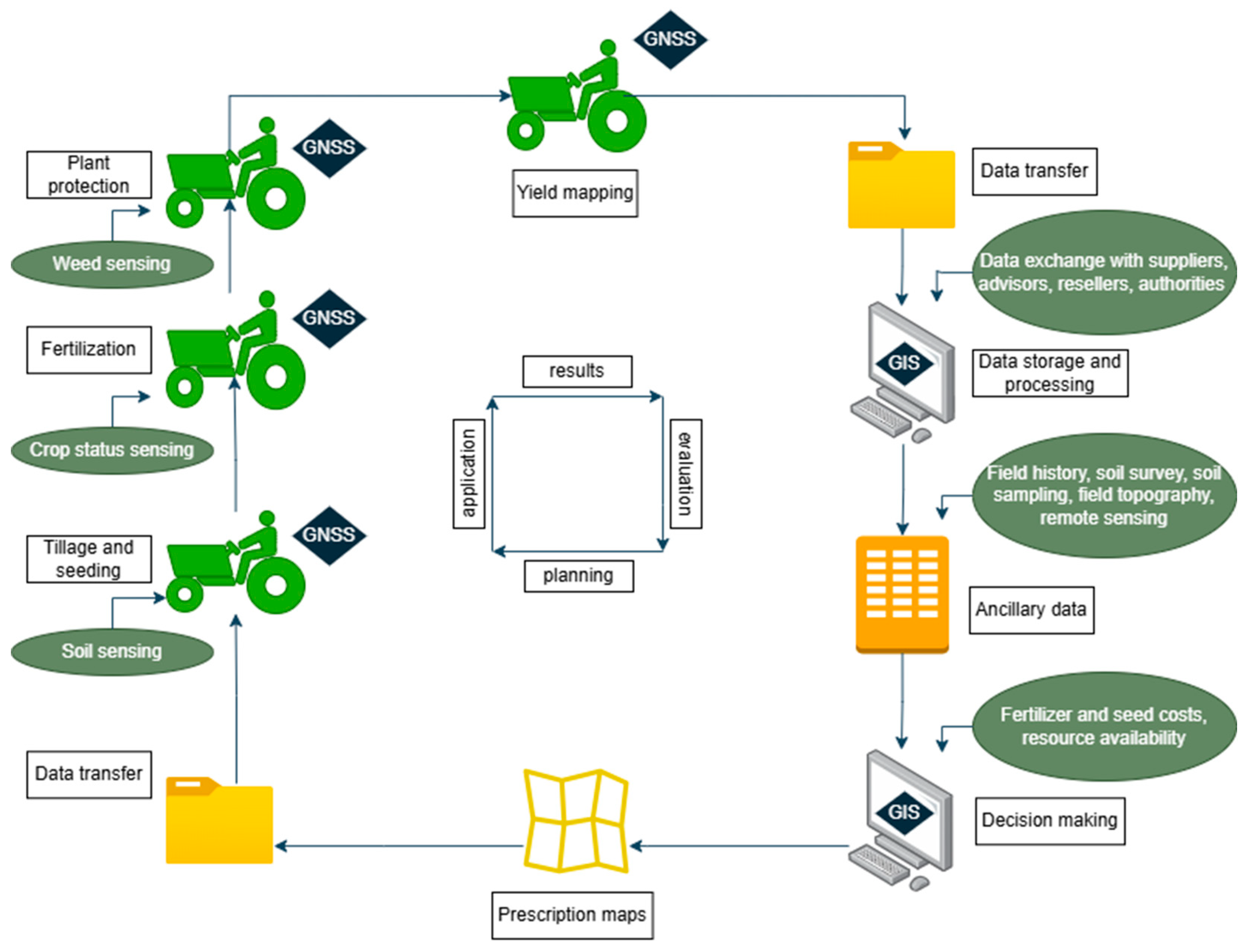
According to R. Gebers and V. Adamchuk [2], precision farming comprises a set of technologies that combine sensors, information systems, improved machinery, and conscious management to optimize production by accounting for variability and uncertainty in agricultural systems. Precision farming enables monitoring of the food production chain and managing the quantity and quality of farm products. A typical precision agriculture cropping cycle is shown in Figure 1.
The essence and basis of operation in precision agriculture is to collect information about the natural variability of a given area, i.e., an agricultural plot. This is possible thanks to advanced technology and is done with high accuracy, down to a few centimeters. The obtained data are used to prepare and implement precise agrotechnical treatments (fertilization or plant protection) tailored to the detected variability. A necessary condition for the implementation of precision agriculture is to create a digital image of soil abundance and variability; hence, the most crucial element in precision agriculture is accurate maps, made using GPS and GIS5 techniques, showing the outline of the field and the changing soil abundance in macro- and microelements or changing soil pH in a given area. In addition to the satellite positioning system and geographic information system, precision farming cannot work without online yield measurement techniques, computer techniques, devices for remote monitoring of the condition of the soil and crops, and agricultural machinery with the ability to control the number of dosed agents [16].
The introduction of agricultural farming technology can be divided into four stages [17]:
  • Data collection in space and time using spatial information systems, incl. via GPS, satellite and aerial photos, drones, and digital data—e.g., the variability of habitat conditions, rainfall, temperature, soil fertility, plant yields, etc., is recorded;
  • Treatments planning based on maps of spatial distribution of data and their interpretation—based on models, application maps are created, indicating the appropriate sowing rates, the amount of fertilization, or doses of pesticides or herbicides;
  • Control of the performance of field treatments thanks to the equipment of agricultural machines with navigation systems—e.g., modern precision seeders are equipped with systems for smooth adjustment of the dose of fertilizer and seeds depending on the place in the field or automatic control that allows you to turn the seeder’s sections at the headlands on or off;
  • Assessment of basic effects: agronomic, economic, and environmental. This stage is based on using the acquired information to obtain maximum production efficiency.
The introduction of precision agriculture technologies requires significant financial resources, and the size of the acreage for which it is economically justified depends on many factors, such as the technologies used, cultivated plant species, crop prices, and production methods [18].
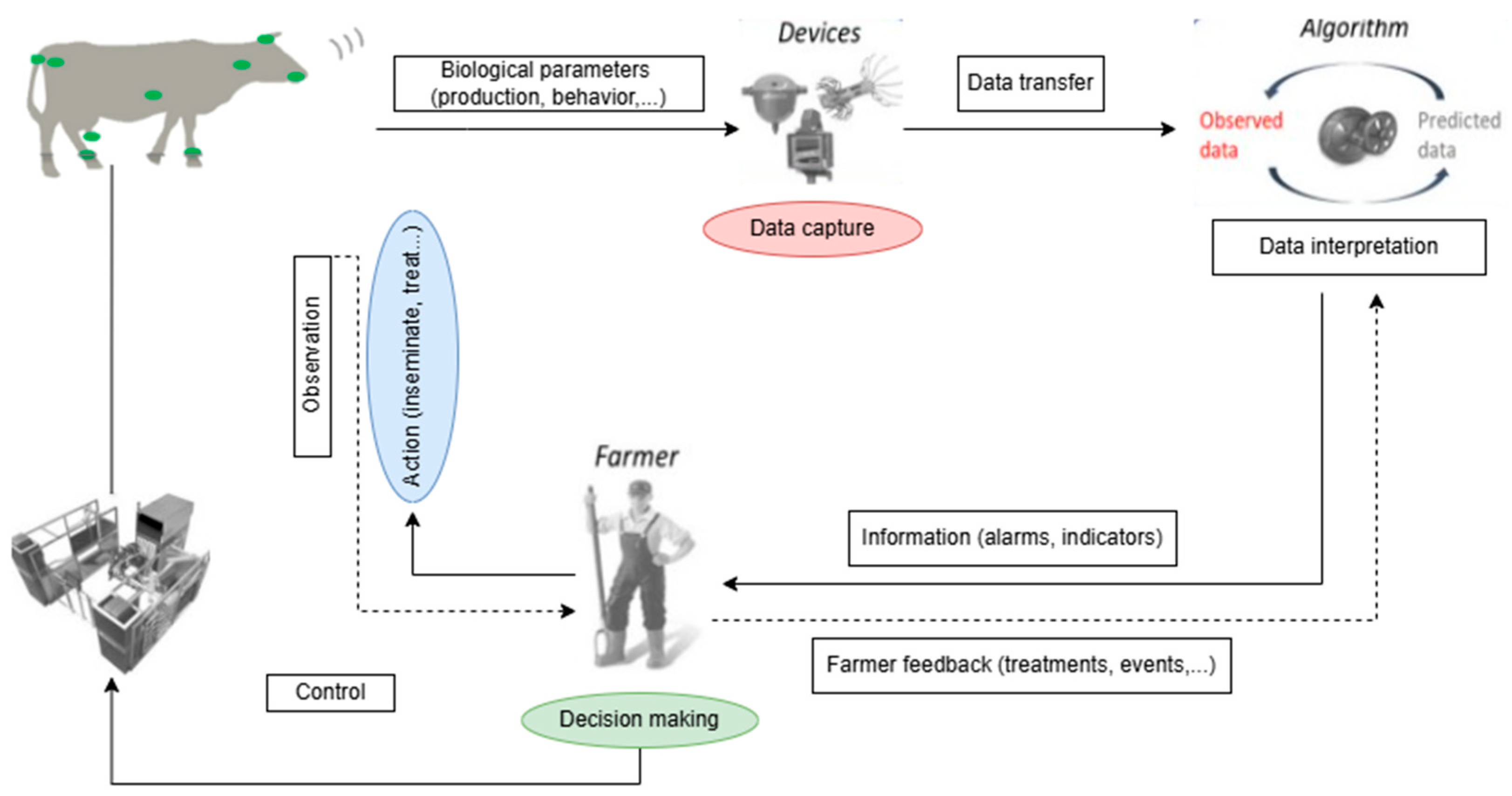
An example of precision farming in animal production is shown in Figure 2. Precision livestock farming (PLF) involves the combined use of sensor technology, related algorithms, interfaces, and applications in animal husbandry. PLF technology is used in all animal production systems and has been most widely described in dairy farming. PLF is rapidly evolving, extending beyond health alerts to an integrated decision-making system. It incorporates data from animal sensors and production data, as well as external data [19].
Decision support systems offer farmers actionable insights and recommendations to optimize management practices [20]. Additionally, PLF technology includes automation technologies such as automatic feeding systems, milking robots, and waste disposal systems that streamline labor-intensive tasks and ensure consistent, accurate management of livestock operations [11]. These systems enable remote monitoring and control of livestock facilities via mobile applications or web interfaces, allowing farmers to access real-time data, receive alerts and notifications, and remotely manage various aspects of their operations from anywhere with internet access [19,21].
The precision agriculture system includes, among others [22]:
  • Agricultural computer software for acquiring, processing, and analysing data, including both field software (mobile type) and overall farm management software (desktop type);
  • Precise field sensors allowing the collection data on local variability in terms of its optimization of alignment, to maximize the efficiency of plant production;
  • Yield monitors installed on agricultural combines that, in real-time, gather information on the quality and local variability of the yield in a given area;
  • Specialized equipment installed on agricultural machinery (precision GPS receivers, parallel navigation system, variable dosing system fertilizers, a precise spray control system, or an autonomous system steering an agrarian tractor with a terrain slope compensation module);
  • Necessary knowledge for the proper use of technology and adequate analysis of the collected information.
Precision agriculture in crop and animal production is currently being shaped by two major technological trends: the possibilities of big data and advanced analytics on the one hand, and aerial imagery, feeding and milking robots, and smart sensors on the other [23]. Moreover, the artificial intelligence (AI) plays a key role in the development of precision agriculture, enabling effective resource management and improving decision-making processes. AI, big data, and machine learning technologies help forecast prices, estimate yields, and detect pests and diseases. These technologies can provide farmers with advice on demand levels, optimal crop varieties for profitability, pesticide use, and future price trends. AI is becoming a powerful tool for managing the growing complexity of modern agriculture by significantly mitigating resource and labor shortages [24]. Although artificial intelligence (AI) helps optimize production and agricultural processes, its implementation in agriculture is associated with certain challenges and limitations, such as cyberattacks, lack of detailed information, and the marginalization of small farms [25].
The most essential advantages of precision agriculture are [26]:
Increasing the yield of plants by introducing precise fertilization;
Reducing the use of fertilizers and plant protection products to the necessary minimum;
Reducing environmental pollution through sustainable development;
Reduction in production costs thanks to lower financial outlays for agrotechnical treatments;
Increasing the efficiency of people and machines;
The possibility of performing agrotechnical treatments regardless of weather conditions;
Preparation of accurate data on the size and quality of crops;
The ability to estimate the yield of farmland and its profitability;
Easier and more effective farm management.

1.1.2. Benefits of Using Precision Farming in Research

The literature highlights numerous benefits of using precision farming systems. According to Ekielski and others [27], it enables reduced resource use, including lower labor inputs, higher yields, lower costs, and increased profits. Their practical application enhances food quality and safety, while also improving the health and well-being of farm animals. Simultaneously, precision farming reduces the negative environmental and climate impacts of agriculture while also improving public health. In livestock production, precision farming systems improve the well-being of farm animals, for example, by improving the detection of health problems, enabling faster treatment, or by detecting problems with feeding systems, which helps reduce the risk of starvation. Monitoring and controlling the housing environment can improve animal comfort, and automated milking systems facilitate animal choice and improve human–animal interactions [28].
According to S. Swinton and J. Loewenberg-DeBoer [29], the key factor for implementing precision agriculture on farms is its profitability. However, the results of economic research related to profitability are often contradictory and incomparable [30]. According to J. Stafford [31], the economic profitability of precision farming is difficult to demonstrate, although the environmental benefits are obvious. Profitability depends on the degree of spatial variability of soil conditions, field size, and uncertainty about production and input prices [32]. According to S. Swinton and M. Ahmad [33], increased income from higher yields, combined with improved input control, may yield benefits in gross margin in subsequent seasons. The benefits of precision farming relate to increasing yields, optimizing inputs, and improving farming practices and work quality [15]. The research of J. Loewenberg-DeBoer [34] shows that covering the entire farm with this system is more effective than introducing it to a single operation, because it allows for the use of equipment, information, and human potential to a greater extent.
According to the European Commission [15], economic research on precision agriculture based on implemented technologies can be grouped into three categories: the use of VRT (variable rate technology), plant protection based on sensors, and automatic guidance systems. The economic results of adopting a variable dose rate depend on the type of crop, field size, and type of agriculture. Goering [35] proposed soil sampling to determine the need for differential lime application. As a result, some farmers have cut their production costs by more than 40%. Thus, the varied use of inputs contributed to this.
R. Bongiovanni and J. Loewenberg-DeBoer [36], using simulation models of soybean and corn in the USA and Canada, showed that variable lime doses can increase annual returns. In turn, R.J. Godwin and et al. [37] analysed the potential of precision farming for grain production in Great Britain. The analysis covered several precision agriculture systems. On this basis, the profitability and optimal farm size were established. According to their calculations, the cost of precision farming methods depends on the technology used, depreciation, current interest rates, and the harvested area. Based on the analysed studies, it can be concluded that economic margins from the precise application of fertilizers increase as fertilizer and crop prices rise. For high-value crops, higher profitability can be achieved by implementing VRT.
The research conducted by M. Zagórda and M. Walczyk [38] shows that, compared to homogeneous fertilization, precise nitrogen fertilization of winter wheat resulted in a slight increase in yield of 3.2%, with total nitrogen consumption approximately 14% lower. Other authors [39,40,41] found that the gross economic benefit of area-specific nitrogen fertilization depends on the type of sensor used and the field size, increasing nitrogen efficiency by 10–15% and reducing its use without affecting yields. The economic assessment suggested that the field size must exceed 250 hectares to obtain financial benefits. At the same time, research in Denmark showed no economic impact of redistributing fertilizers in the field across high- and low-yield zones [42]. A potential explanation for the low benefits may be the decline in the profit function around the economic optimum [43], possibly because the application rate was already close to the optimum; therefore, VRT had only a marginal effect. J. Loewenberg-DeBoer and M. Boehjle [44] also found that after considering the full cost of development and implementation of the variable fertilizer dose indicator, it is unprofitable, especially if only one fertilizer is used.
Precise fertilization and irrigation are widely perceived as an excellent way to save water and fertilizer and maximize yield [45]. Several authors [46,47] showed, however, that the mere use of these technologies is not enough to increase the efficiency of the entire production process.
Other studies concerned spatially alternating herbicide application [48] or dynamic detection of soil organic matter [49] and yield mapping [50,51,52]. Plant protection is an essential element of precision farming. According to Doruchowski [53], due to its specificity, position in the production process, and importance for crop quality and final food products, plant protection is the field in which the use of precision agriculture elements is the most economically profitable and ecologically advantageous. A study by K. Dammer and R. Adamek [54] showed that spraying at variable dose rates using sensor technology reduced the need for insecticides by an average of 13% while maintaining biodiversity in farmland. Other studies have shown that precision farming can reduce costs by up to 38%. Most of these savings will come from using less fertilizer. Farmers who use variable application techniques can save up to 51% on phytosanitary pesticides and 46% on fertilizers [55]. According to S.G. Daberkow [56], quick-changing technologies are suitable for the cultivation of plants that require significant inputs and achieve higher yields.
In recent decades, automated guidance systems have also been developed around the world. Research conducted by various authors shows that the minimum area required for lighting systems to recover the capital cost is 100–139 hectares, while in the case of an automatic guidance system, this area increases to 300–450 hectares [57,58]. In the UK, the economic benefits of guidance systems have been estimated for a 500-hectare farm [59], but studies have shown that they are higher when using other, more complex systems, such as controlled field movement.
The benefits of automatic guidance systems include lower input costs, as well as higher yields and better soil structure due to reduced soil compaction. Other benefits necessary for the farmer are greater work speed and comfort, and the possibility of extending hours of work in the field. For example, automatic control systems are available for various tractor models, making work less tiring. In turn, the evolution of precision dairy farming technology offers enormous opportunities to utilize automated individual cow management systems better, thereby reducing labor requirements, such as milking twice a day. In addition, the literature offers opinions on improving animal welfare [60].
The benefits of precision agriculture also include environmental effects. This production system improves soil and water quality by using reduced or precise inputs such as nutrients, pesticides, and irrigation water [3]. At the same time, the environmental impact of PA is poorly researched, and quantified data is lacking [15]. Economic benefits are relatively easy to calculate, while ecological effects are more difficult to detect and investigate, as they often unfold over many years.
A. McBratney et al. [61] suggest that the existing research on precision agriculture does not focus on the entire management of farming. Most studies analyse individual fields in experimental farms or commercial farms. The most significant limitation of a precision agriculture system is the lack of quantitative optimization criteria for crop management that account for environmental impacts.
L. Gaultney [62] noted that solving technical and technological problems does not guarantee economic profitability, and that the use of advanced technology does not replace knowledge and is not a guarantee of success for an unaware user. The implementation of precision agriculture is not possible without knowledge of the subject, the ability to order and enrich the acquired knowledge, and the ability to critically evaluate one’s own actions and correct mistakes [63].

2. Materials and Methods

The primary source of information was literature data and two sources of secondary data. The first was the Local Data Database of the Central Statistical Office. Data was obtained from this database on the share of farms using precision farming solutions, broken down by voivodeship. The data covered the year 2023 and included the following variables:
Share of farms with robots, i.e., fully mechanized, autonomous machines (Robots);
Share of farms with GPS-based plant protection product application equipment (GPS_PPP);
Share of farms with sprayers for banded application of plant protection products during sowing or planting, precision irrigation, or weeding (Banded_PPP);
Share of farms using variable-rate fertilizer or plant protection product application (VRA);
Share of farms with precise crop monitoring (Monitoring);
Share of farms with soil samples collected for analysis (Soil_samples).
The second source of data was a nationwide study on precision farming conducted by the Polish Space Industry Foundation. The research was conducted using the CAWI Computer-Assisted Web Interview) method in 2021. It is a quite common technique of collecting information in quantitative market and public opinion research, in which the respondent is asked to fill in an electronic questionnaire. A total of 432 agricultural producers from all over Poland participated in the research. The aim of the research was to answer the following questions [64]:
  • Do Polish farmers know what precision agriculture is and do they use it on their farms?
  • Is precision agriculture in the opinion of farmers profitable?
  • Do farmers that are not using precision farming want to know what it is and how it can be implemented on their farm?
Data analysis utilized descriptive statistics, comparative analysis, cluster analysis, and a chi-squared ( χ 2 ) test.
χ 2 = i = 1 n ( O i E i ) 2 E i
where
O—observed value
E—expected value
This test is used to verify the null hypothesis (H0) which assumes that there is no significant difference between expected and observed data. The null hypothesis is rejected if the chi-square value p is less than 5%. Moreover, the researched farms were divided into three groups according to the area of agricultural land, up to 2 ha, from 2 to 20 ha and over 20 ha. The analyses were performed with the use of the STATISTICA 13 64-bit program.

3. Results

3.1. Regional Differentiation of Precision Agriculture in Poland

Precision agriculture implementation varies regionally. This is due to differences in agricultural structural conditions, the level of farm development, and access to capital and technological knowledge. Higher levels of precision agriculture technology adoption are typically observed in regions with larger farm sizes and greater marketability, which promote the profitability of investments in modern digital solutions and production automation. In contrast, in areas with a fragmented agrarian structure, the rate of innovation adoption is typically lower, reflecting the economic and organizational constraints on farms [65]. Research also indicates that the adoption of precision agriculture technologies depends on the development of advisory infrastructure, knowledge transfer, and institutional support, which can significantly differentiate regions within a single country [66]. Furthermore, the development of precision agriculture is strongly linked to the processes of agricultural modernization and the digitization of rural areas, which are progressing unevenly across space [67].
Data show that precision farming on Polish farms most commonly involves sprayers for banded application of plant protection products during sowing or planting, as well as precision irrigation and weeding (Table 1). These solutions are prevalent in all voivodeships. A significant percentage of farms also use variable-dose fertilizer or plant protection product applications. Soil sampling for analysis is also a popular activity. However, the greatest variability between voivodeships is observed in the share of farms with GPS-based equipment for plant protection product applications and the percentage of agricultural producers conducting precise crop monitoring (Table 2).
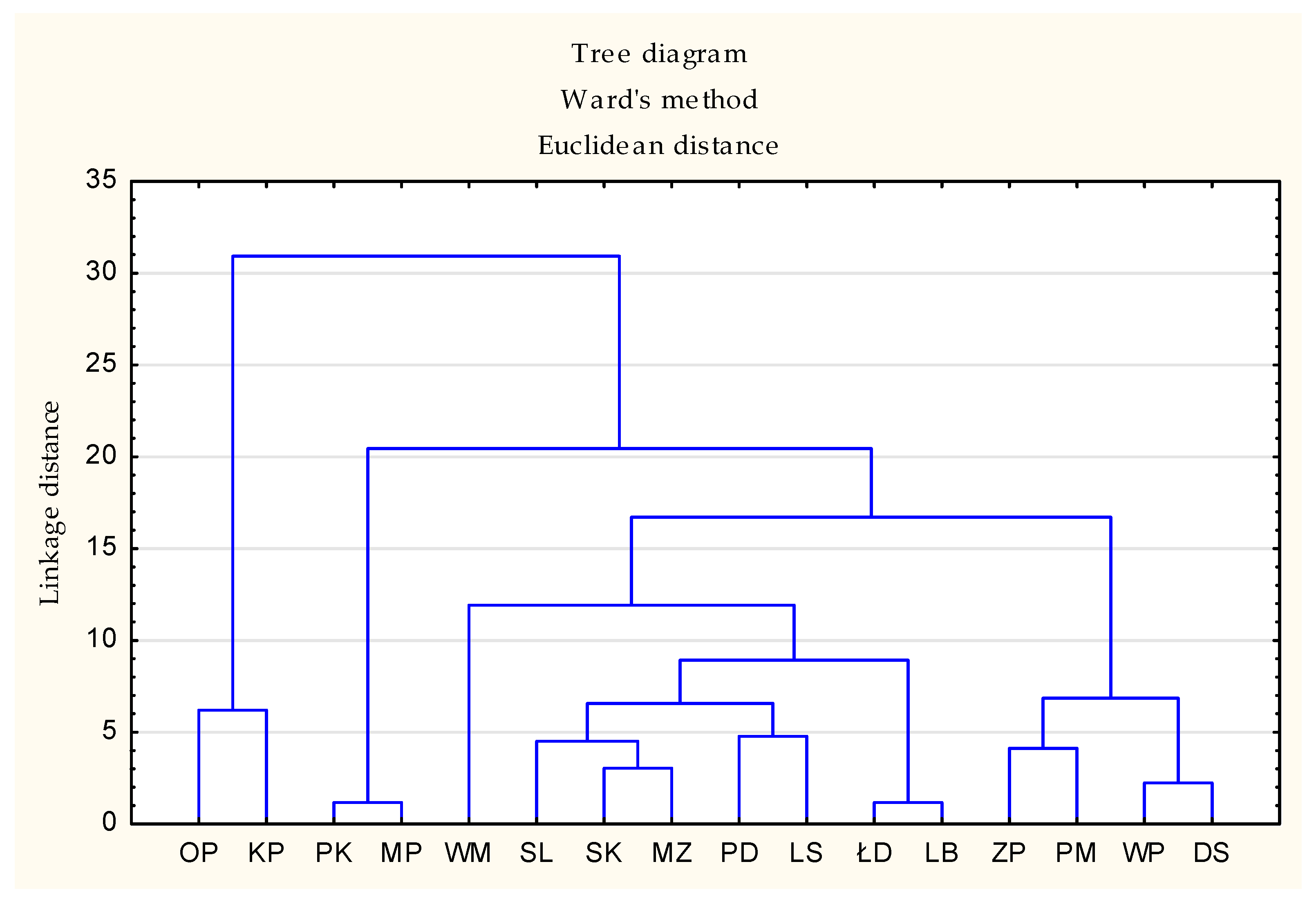
The slightest variation was observed in the share of farms using sprayers for banded application of plant protection products during sowing or planting, precision irrigation, or weeding. A cluster analysis using Ward’s method and Euclidean distance identified similarities among voivodeships in the level of use of precision farming technologies. The dendrogram shows clear differentiation among the analysed spatial units. Based on the course of object connections, four main groups of voivodeships can be distinguished, each characterized by varying levels of precision farming development (Figure 3). The first, clearly distinct group consists of the Kuyavian-Pomeranian and Opole Voivodeships, with average farmland areas of 17.29 ha and 19.86 ha, respectively. In these voivodeships, the share of farms using various precision farming solutions is similar. A significant difference occurs only in the share of farms for which soil samples are collected for analysis. The percentage of such entities in the former voivodeship is 3.9%, and in the latter, it is 8.5%.
The second group consists of voivodeships with a highly fragmented agrarian structure, namely the Lesser Poland and Subcarpatian Voivodeships. Farms located in these voivodeships are least likely to use precision farming solutions. A radically different group comprises the voivodeships with the largest farms, located in the West Pomeranian, Pomeranian, Greater Poland, and Lower Silesian Voivodeships. These farms are more likely to use precision farming solutions. The fourth cluster comprises the remaining voivodeships. Within this group, we can distinguish a group containing the Lublin and Łódź Voivodeships, as well as a group comprising the Podlaskie and Lubusz Voivodeships, which are in the extreme east and west of Poland.
The literature review shows that interest in precision agriculture in Poland is increasing. The greater availability of machines and devices facilitates this. Technologies related to tractor auto steering are chosen, as well as variable dosing of seeds or fertilizers. Farmers, especially large ones, are increasingly using services to assess soil quality, its physical properties, and nutrient content. They provide maps that are then used to apply fertilizers. Mobile applications for farm management are becoming popular, especially among younger farmers. Large-scale farms or service providers often equip their equipment with GPS locators that allow tracking of the machine park (e.g., position, time) on the farm. EU funds support the purchase of this type of technology, which is granted based on innovation [68].
There are, however, many limitations and difficulties associated with adopting precision farming. The biggest problem is the high cost of purchasing specialized equipment. In addition, to fully realize the potential of precision farming, farmers who implement modern methods must continually deepen their knowledge, collaborate with producers and scientists, and be open to innovation. In Poland, precision farming is unfortunately still rare. This is related not only to significant investments that need to be made, but also to the very fragmented structure of agriculture, where precision farming is mainly used on large-scale farms.
B. Klepacki [69] listed the following difficulties in the implementation of precision agriculture in Poland:
  • There is area fragmentation of farms, while it is easier to use expensive machinery on large farms;
  • Investment costs are high, especially at the stage of purchasing specialized equipment;
  • The requirements for farmers regarding biological, technological, technical, and information technologies are high;
  • There is a need for continuous improvement of knowledge and advisory services are relatively poorly prepared in this area;
  • There are no widespread models for the comprehensive use of such agriculture in Poland.
The data presented show that agricultural farming in Poland is currently limited. This is mainly due to the small scale of production, which limits the achievement of favorable economic effects, high investment costs, and the lack of knowledge and skills of agricultural producers.
The implementation of precision agriculture in Poland is supported primarily by national programs and European Union funds. One of the most important mechanisms is the Common Agricultural Policy, implemented in Poland through the Strategic Plan for the CAP 2023–2027, which supports the modernization of farms and the implementation of modern technologies such as GPSs, sensors, and automated machine control [70,71]. Another important source of funding is the Rural Development Programme, under which farmers can receive subsidies for farm modernization and the purchase of modern machinery and technologies used in precision agriculture [70]. Another important instrument is the National Recovery Plan (KPO), in particular the “Agriculture 4.0” program, which supports the digitalization of farms, including through financing drones, sensors, and production management software [72]. Financial support is also provided by the Agency for Restructuring and Modernization of Agriculture (ARiMR) in the form of various investment programs and subsidies. Additionally, farmers can benefit from eco-schemes in direct payments, which reward the use of technologies that reduce the use of fertilizers and plant protection products, which often involves the use of precision farming solutions [73]. These sources are also supplemented by private sector financial instruments, such as loans or leasing for the purchase of modern agricultural technologies.

3.2. The State of Farmers’ Knowledge of Precision Agriculture in Poland

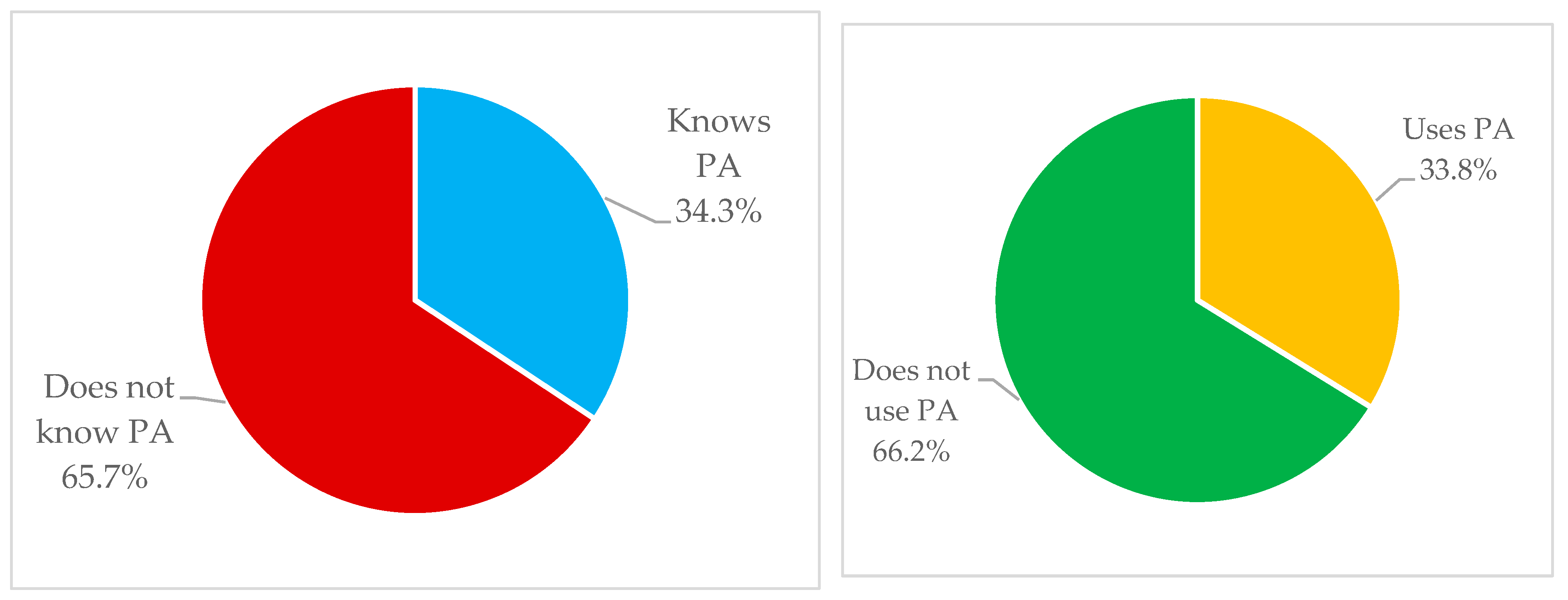
Among respondents, only 34.3% were aware of precision agriculture. In this group, only 33.8% of the respondents use this production system on their farms (Figure 4).
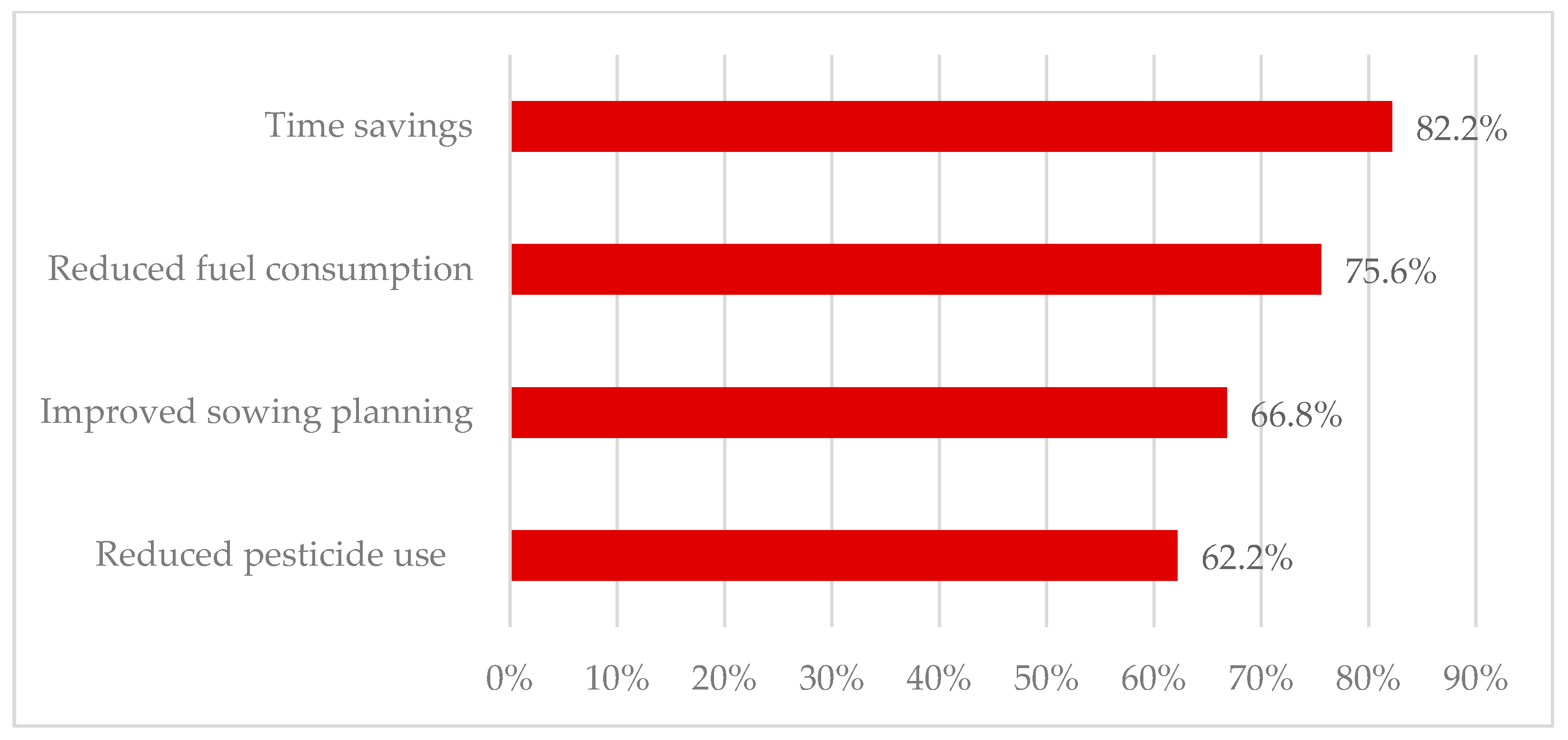
Respondents who use precision agriculture on their farms were also asked whether, in their opinion, this production system is profitable. Almost 90% of respondents in this group confirmed the profitability of PA. Most people (82.2%) indicated that using PA saves time (Figure 5). More than 3/4 of respondents said that this system allows for lower fuel consumption (75.6%). In addition, reductions in pesticide use (62.2%) and improvements in sowing planning (66.7%) were noted. The results confirm that precision agriculture is financially beneficial for farms and the environment, as it enables lower fuel and chemical consumption.
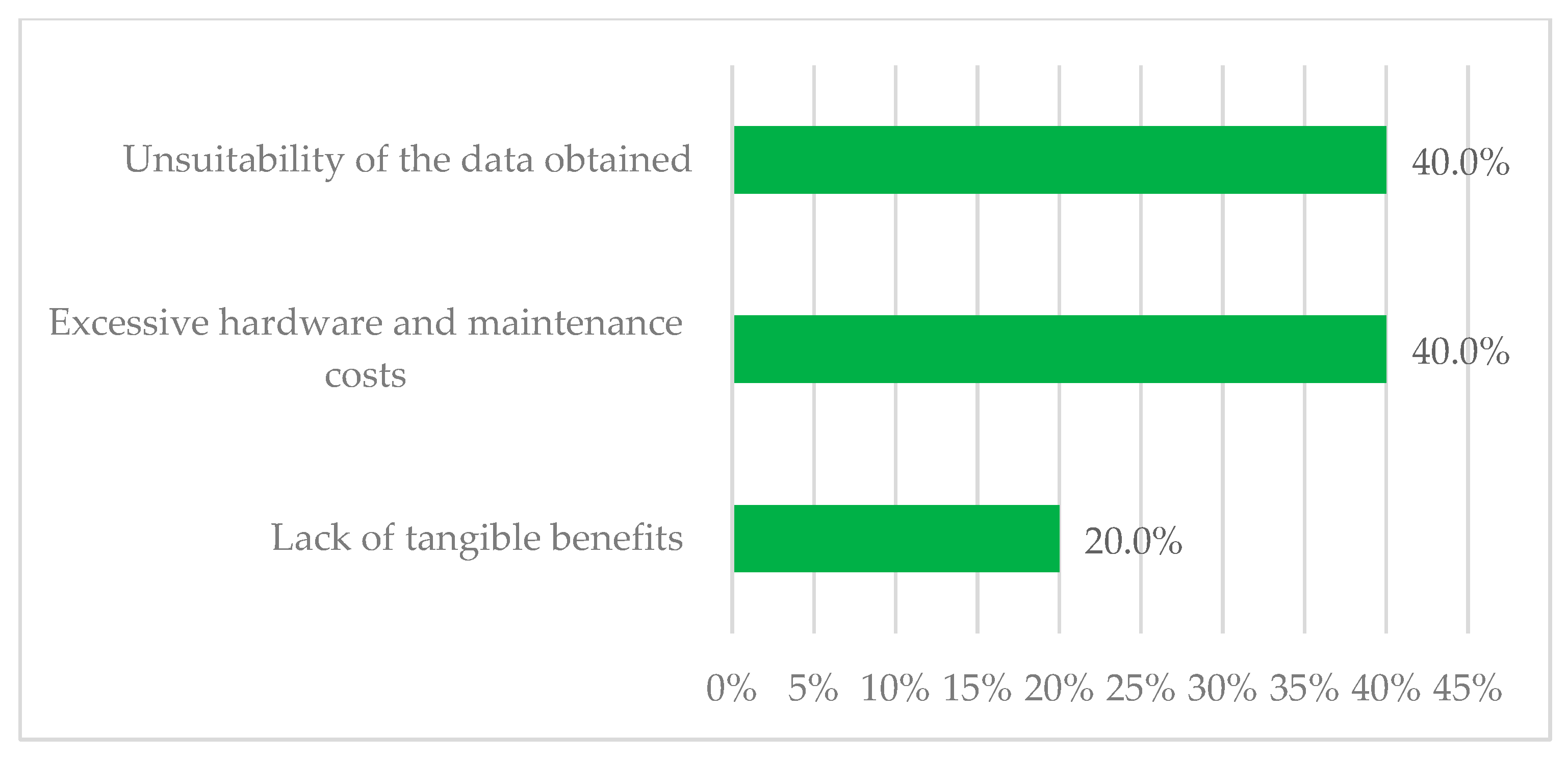
Only 10% of respondents who reported using precision farming on their farms believed it was unprofitable. Among the reasons for the unprofitability of precision agriculture, the most frequently indicated were the excessively high costs of purchasing machinery and equipment and their maintenance (40%) (Figure 6). A similarly large percentage of respondents mentioned the lack of usefulness of the collected data (40%). According to respondents, too much information is obtained while using PA that cannot be used. According to 20% of respondents who have implemented PA on their farms, an essential limitation of its use is the lack of measurable financial benefits.
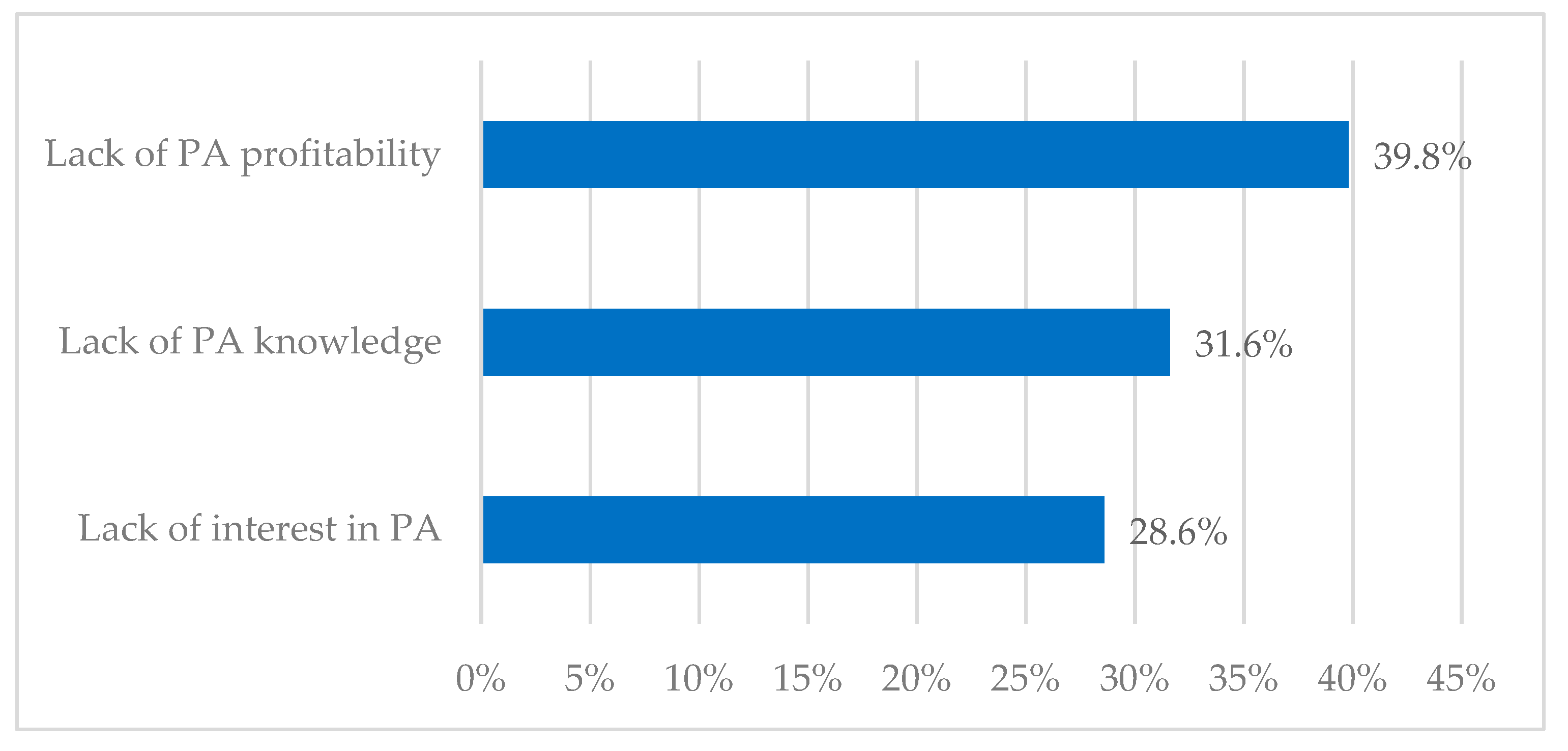
Among all respondents who know what precision agriculture is, 66.2% do not use this production system on their farms. In this group, 39.8% of respondents thought that it is not profitable to implement precision farming, 31.6% did not know how to start, and 28.6% of respondents did not feel such a need (Figure 7). In the group of respondents who do not understand what precision agriculture is, 74.3% want to gain knowledge on this subject, which indicates the possibility of further development of PA.
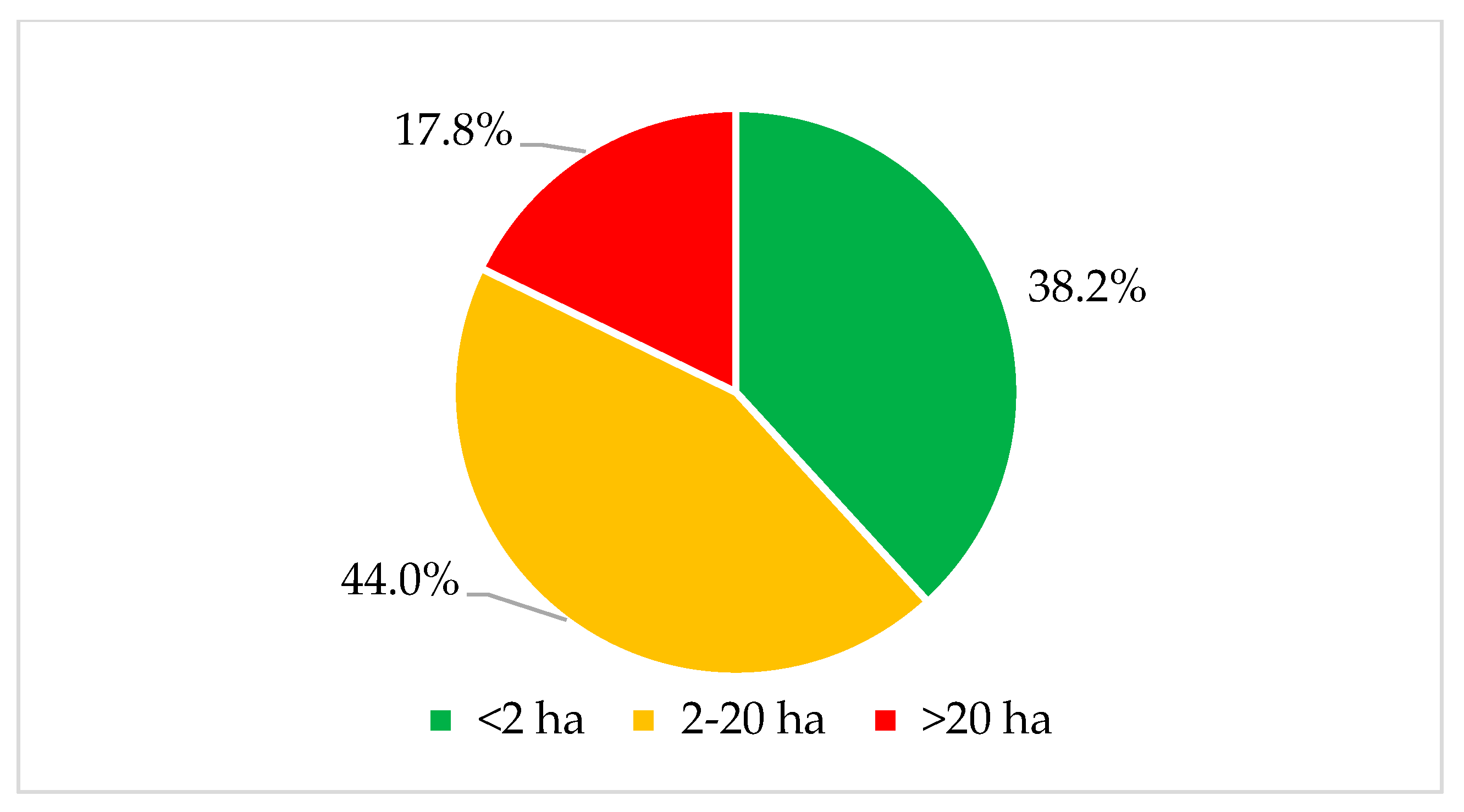
The study group was diverse in terms of farm areas. Medium-sized farms accounted for most of the surveyed entities, with areas of 2 to 20 ha (Figure 8). Small farms up to 2 ha accounted for 38.2%, and large farms above 20 ha accounted for 17.8% of the data.
Among respondents running large farms (over 20 ha), 70.5% knew what precision farming was, and 54.5% used it on their farms. Among farms of 2–20 ha, 33.2% of respondents were aware of precision farming, and 22.2% used it in practice. Among the respondents running small farms of up to 2 ha, only 18.8% knew what PA is. In this group, 19.4% use precision agriculture on their farms. The results of the statistical analysis are presented in Table 3.
The analysis shows a highly statistically significant correlation between farm size and knowledge of precision agriculture techniques (p = 0.0000). Research has shown that as farm size increases, respondents have a greater understanding of the technique. Research shows that farms with larger agricultural areas are more likely to use precision farming technologies (Table 4). Only farms using this type of technology were included in the analysis.
The research also showed a highly significant statistical relationship between the size of farm and the use of the mentioned technique (p = 0.00006). This relationship likely stems from the high investment costs of precision farming machinery and equipment. Large farms are more likely to adopt precision farming solutions because the high costs of purchasing technologies such as GPSs, sensors, and production management software can be spread across a larger area of land, reducing the unit cost of the investment and accelerating its return. Furthermore, they typically have greater financial capital and more modern machinery that is compatible with digital systems. According to Schimmelpfennig [74], large-sized farms show higher adoption rates of PATs driven by the potential of higher benefits to the costs of investment and economies of scale. Even small savings in the use of fertilizers, fuel, or plant protection products on large farms translate into significant economic benefits. Additionally, larger farms generally have higher variability in field features, making the economic benefits of PA adoption more substantial compared to farms with smaller field heterogeneity [75]. Large farms are also more likely to utilize technological consulting and production data analysis, which facilitates the implementation of innovative solutions that increase the efficiency and competitiveness of agricultural production.

4. Discussion

Precision farming technologies bring numerous social, economic, and environmental benefits [76]. However, their widespread adoption by agricultural producers remains insufficient and slow [77]. This situation is attributed to insufficient knowledge, lack of funds for investment in new technologies, and the short economic usefulness of investments [76]. The negative aspects of this situation are manifested not only at the economic level (e.g., loss of competitiveness) and the environmental level (e.g., larger carbon footprint from agricultural production), but also at the socio-demographic level (e.g., reluctance of young people to work in agriculture and the associated depopulation of rural areas) [78].
Regional variation in the use of precision agriculture results primarily from the level of economic development, agrarian structure, access to digital technologies, and environmental conditions [79]. In highly developed countries, such as the United States, Germany, and the Netherlands, precision agriculture is widely implemented thanks to large-scale farms, high levels of mechanization, and institutional and financial support, which favors the use of GPSs, soil sensors, and satellite data analysis [2]. In Central and Eastern Europe, including Poland, the pace of implementation of these technologies is more spatially diverse—higher in regions with larger, better-equipped commercial farms and lower in areas with a fragmented agrarian structure, as research confirms. According to USDA Economic Research Service reports, corn and soybean farms in North America have significantly benefited from adopting variable rate technology (VRT) and auto-guidance systems. These PATs enabled substantial production cost savings and net profit growth through precise input application and improved operational efficiency, with the efficiency gains from guidance technology being particularly notable. Research by European scholars confirms this trend but specifically points out that in regions with complex topography and fragmented fields, the economies of scale from PATs are significantly constrained [80]. In developing countries, financial constraints, insufficient technical infrastructure, and lower levels of digital literacy among farmers are slowing the adoption of precision farming technologies. However, there is also growing interest in mobile solutions and cheaper crop-monitoring systems [65]. Environmental factors, such as variability in soil and climate conditions, have also been shown to impact the cost-effectiveness of implementing these technologies, further exacerbating regional disparities in their use [2].
Implementing precision agriculture technologies in production is a key economic decision for agricultural producers, as achieving potential economic and environmental benefits often requires significant financial investment [81]. Factors such as expected cost savings, anticipated yield increases, and the resulting profitability and return on investment influence this decision-making process, such as the producer’s risk tolerance, openness to new or environmentally friendly technologies, and the level of public support [82].
The implementation of precision farming technologies faces several constraints, not only economic but also political, cultural, and institutional. Political factors include the variability of public support instruments, the heterogeneity of subsidy programs, and regulatory uncertainty regarding digital technologies in agriculture, which can make it difficult for farmers to plan investments in modern technological solutions. The current policy framework for precision agriculture is generally fragmented. Dahaim et al. [83] outlined potential European policies that are changing or may need to change to accommodate the implementation of this farming system. Due to the high investment costs of precision farming technologies, regulations regarding investment support for this type of operation are particularly important. According to Belayneh [84], cooperative farming and economic incentives, such as subsidies and low-interest loans, could especially encourage small farmers to adopt precision farming solutions.
Existing research has also demonstrated the significant influence of cultural and social factors on the adoption and use of digital technologies. Studies [85,86,87,88] have shown that farmers’ beliefs, knowledge systems, risk perception, social networks, and access to information influence decision-making regarding digital technologies. Furthermore, cultural practices related to land use, work dynamics, and gender roles may also influence the implementation and outcomes of digital agriculture initiatives.
Institutional factors include limited access to technological advice and training, insufficient digital infrastructure in rural areas, and a lack of interoperability between various systems and devices used in precision agriculture, which hinders their integration and full utilization of technological potential. Furthermore, infrastructure constraints hinder the implementation of precision farming technologies, contributing to economic hardship in many rural areas. As a result, the pace of implementation of precision agriculture technologies varies regionally and structurally, and the propensity to use them depends on, among other factors, farm size, the level of mechanization, access to capital, knowledge, and advisory support [89].
The use of digital technologies in agriculture is uneven, even within European Union countries covered by the Common Agricultural Policy. Their use is determined by socioeconomic, agroecological, institutional, and informational factors. A common barrier is farmers’ reluctance to invest in conditions that do not allow for the full exploitation of technological benefits. Furthermore, there is an information asymmetry between the supply and demand for digital technologies. Despite the many advanced digital technologies and their ongoing development, farmers lack sufficient information about their potential use [90]. Such a state can lead to the inappropriate selection and use of technology [91,92,93].
According to Smidt and Yokonya [94], barriers to the use of digital technologies on small farms include limited infrastructure availability and low income. The position of agricultural digitalization in government policy and the level of support for farmers is also crucial. Furthermore, many authors point to the importance of disseminating knowledge about existing digital technologies, building trust in these tools, and verifying how these solutions should be adapted to agricultural activities in each area [95,96,97,98,99]. Farmers’ knowledge is fundamental regarding the scale and area of operations, climatic conditions, and the pace of change, as confirmed by the conducted research.
According to Wang and Dong [100], the primary factors influencing farmers’ decisions to adopt digital technologies are outcome expectations, social impact, and data quality. These factors shape the decision to adopt a new technological solution. However, the factors influencing these decisions vary across regions of the world, primarily reflected in social conditions. According to Singh et al. [101], the use of local language in technological software is crucial—especially in decision-support applications.
Research by Cordel [102] shows that in the group of countries including Poland, Lithuania, Latvia, Finland, Denmark, Moldova, Estonia, and Norway, barriers to implementing precision farming included difficulties in selecting appropriate tools due to their abundance and diversity, lack of or poor internet connection, lack of skills and training in using digital tools, lack of independent advisors, little to no noticeable results, lack of interest from older farmers, and underestimation of the importance of data in the decision-making process. The last two barriers were identified only among respondents from these countries and were not identified in any other region. In Central European countries (Germany, Italy, Switzerland, Belgium, Austria, the Netherlands, the Czech Republic, and Slovakia), barriers include adapting individual technologies to individual needs, problems with data timeliness, pricing, data security, lack of significant effects for some tools, and the considerable time required for data entry.
According to S. Samborski [103], the state of precision agriculture in Poland is characterized by the following aspects:
The number one PA tool used, due to its most rapid payback, is Global Navigation Satellite Systems (GNSSs), with their auto-steer and light bars;
Auto-section control of spreaders, sprayers, and planters is being used more often, even on medium-sized farms, due to their simplicity in use and savings on agricultural inputs. For irregularly shaped fields and fields without tramlines, these savings are estimated by farmers at 5–15%;
Yield mapping is used mainly for grains and winter rape. The total number of combines equipped with a yield mapping system is estimated to be a few hundred. There is one potato harvester with yield mapping;
The lack of proper calibration of the system often limits the quality of yield mapping. Moreover, yield data, due to its information-intensive nature and lack of appropriate processing, are not frequently used for decision-making;
There is one combination with a grain protein sensor used for research purposes,
Soil sampling, together with the creation of soil fertility maps, has been offered by PA companies and crop consultants for about 15 years;
Variable rate application of potassium, phosphorus, and lime fertilizers is used on big and huge farms, primarily based on grid soil sampling;
A few companies offer soil electro-conductivity mapping to do soil sampling by management zones, but the within-field soil electro-conductivity patterns are usually not verified, even by soil texture or other soil characteristics determination;
Small and very small farms very often do not do any soil sampling;
A few companies started to offer processing of satellite images via website applications to estimate biomass production and yield potential, and to produce maps, primarily for variable application of nitrogen;
The total number of active optical sensors used for variable application of nitrogen in cereals is estimated to be several dozen, including all the offered worldwide,
Variable rate application of pesticides and variable rate seeding is estimated to be used only on a few to a dozen farms;
The biggest farms use software based on GNSS technology to improve the work efficiency of farm tractors and machinery;
PA is taught at a few universities and recently also in technical and agricultural secondary schools;
Only 3% of farms in Poland in 2018 used specialized farm management software.
A study by Stępień et al. [96] on farms in Poland, Lithuania, and Romania found that Polish farmers expressed the most extraordinary openness to AI technologies. Regardless of their country of origin, respondents highly rated the usefulness of individual technologies and gave low ratings to the required skills. The most significant barriers to implementing AI-based technologies included farm size (40% of Polish respondents) and production scale (50% of Polish respondents), which was confirmed in the conducted research. Among the considerable difficulties, they cited high cost (30% of Polish respondents) and insufficient knowledge (35% of Polish respondents). In turn, the barrier of attachment to traditional methods was cited by 15% of respondents in Poland and as many as 45% in Romania. Therefore, the sociological factors that constitute barriers to implementing digital technologies vary across regions depending on their level of socioeconomic development.
Research conducted by Kramarz and Runowski [104] on 389 farms in the Małopolska and Podkarpackie Voivodeships indicates that precision farming technologies were less prevalent among this group, significantly less popular than cloud-based farm management systems or sensors collecting real-time data. The likelihood of using at least one digital technology on a farm increased with farm size. The disparity in development between small and large farms resulting from differences in access to technology was also noted by Barret and Rose [105], Carcamo et al. [106], and Kamai and Bablu [107]. Such differences were also demonstrated in the studies described here.
In the farms studied by Kramarz and Runowski [104], precision farming was more frequently used by agricultural producers under 50. A total of 66% of the farms surveyed did not use any digital technology. Regarding technologies such as precision farming systems and artificial intelligence-based crop production automation, approximately 25% of respondents reported insufficient knowledge as a barrier to their use. This percentage did not vary significantly across different farm sizes, demographic characteristics, or prior experience with digital technologies. The research thus confirmed that implementing digital technologies faces several barriers. According to respondents, statistically significant barriers included insufficient knowledge, limited trust, and financial considerations.
Based on a literature review, Pierpaolia et al. [108] identified the most important aspects influencing the implementation of technologies on farms. These included farm size; cost reduction or higher revenues to acquire a positive benefit/cost ratio; total income; land tenure; farmers’ education; familiarity with computers; access to information (via extension services, service provider, technology sellers); and location. The typical PA adopter is, indeed, depicted as an educated farmer, the owner of a larger farm with a good soil quality and aiming to implement more productive agricultural practice to face growing competitive pressures.

5. Conclusions and Recommendations

Modern agriculture faces the need to reconcile increased food production with environmental protection and the rational use of resources. The answer to these challenges lies in the concept of sustainable agriculture, which aims to achieve high production efficiency while limiting negative impacts on ecosystems and ensuring farm economic stability. One of the most essential tools for implementing these objectives is precision agriculture, which uses modern technologies to optimize production processes. Precision agriculture is the engine of innovation for farms and agricultural enterprises. The innovative contribution of PA is visible in the areas of automatic machine control and management of the machine park, the practical use of information obtained from remote sensing methods and statistics, and planning and management of agricultural production.
The review of recent research on precision agriculture shows that it is carried out to varying degrees and primarily focuses on technical aspects. Few studies show a significant economic advantage of using this production system, especially at the scale of the entire farm. Results are similar across field and simulation studies, but many simulation models appear to overestimate the potential of precision agriculture because they do not include all limiting factors. Continuing the research, one should look for ways to measure the profitability of PA, and especially its environmental effects, which are difficult to determine because they require extended periods of time.
The existing research indicates that precision farming technologies in Poland have been implemented only on a few farms. This is due to limited knowledge among agricultural producers, the small scale of production on most farms, and high investment costs. These technologies include equipping farms with sprayers for strip application of plant protection products during sowing or planting, precision irrigation or weed control, variable-dose fertilizers or plant protection products, and soil sampling for analysis. The use of precision farming technologies varies regionally. They are primarily used on large farms located in western and northern Poland. Given the need to develop Polish agriculture and the farm industry, every effort should be made to effectively reach farmers with information about precision agriculture and the opportunities it offers.
As the cost of advanced IT systems decreases and the level of education among agricultural producers increases, and as stricter requirements regarding food safety and environmental protection are implemented, PA will likely be implemented on an increasing number of farms. In addition, some of the currently identified problems, such as the high costs of purchasing and maintaining machines and devices or the lack of data use, will likely be eliminated as technologies used in precision agriculture develop.
Based on a literature review and our own research, the following recommendations for the development of precision agriculture can be identified:
Developing digital literacy in rural areas through the implementation of educational and training programs for farmers;
Creating forms of technological cooperation between farms, such as technology cooperatives enabling the shared use of expensive precision agriculture machinery and systems;
Introducing diverse financial support instruments, including subsidies based on farm size and investment capacity;
Integrating precision agriculture solutions with green transition policies and sustainable agricultural development strategies;
Strengthening agricultural advisory systems to provide knowledge transfer and technological support to farmers;
Developing digital infrastructure in rural areas, particularly access to broadband internet;
Increasing the interoperability and standardization of technologies used in precision agriculture, which will facilitate the integration of various systems and devices.
The research conducted demonstrates significant limitations due to the limited availability of data on precision agriculture. Furthermore, it only covers Poland. Therefore, further research should take a broader perspective into account. Given the economic and environmental benefits of precision agriculture, further research could explore ways to increase producers’ interest in it to protect the environment. It is advisable to explore the potential for using precision agriculture solutions on small farms and ways to adapt financial support for precision agriculture investments to the regional conditions of agricultural production.

Author Contributions

Conceptualization, E.J.S.; methodology, E.J.S.; software, E.J.S.; validation, E.J.S., A.K. and A.B.; formal analysis, E.J.S. and A.K.; investigation, E.J.S. and A.K.; resources, E.J.S. and A.K.; data curation, E.J.S., A.K. and A.B.; writing—original draft preparation, E.J.S., A.K. and A.B.; writing—review and editing, E.J.S., A.K. and A.B.; visualization, E.J.S. and A.B.; supervision, E.J.S. and A.K.; project administration, E.J.S. and A.K.; funding acquisition, E.J.S., A.K. and A.B. All authors have read and agreed to the published version of the manuscript.

Funding

This research received no external funding.

Institutional Review Board Statement

Not applicable.

Informed Consent Statement

Not applicable.

Data Availability Statement

The original contributions presented in this study are included in the article. Further inquiries can be directed to the corresponding author.

Conflicts of Interest

The authors declare no conflicts of interest.

References

  1. Dominik, A. System Rolnictwa Precyzyjnego. (Precision Agriculture System); Centrum Doradztwa Rolniczego w Brwinowie, Oddział w Radomiu: Radom, Poland, 2010. [Google Scholar]
  2. Gebbers, R.; Adamchuk, V.I. Precision agriculture and food security. Science 2010, 327, 828–831. [Google Scholar] [CrossRef]
  3. Bongiovanni, R.; Lowenberg-DeBoer, J. Precision agriculture and sustainability. Precis. Agric. 2004, 5, 359–387. [Google Scholar] [CrossRef]
  4. Wójcik, P.; Karpowicz, A. Zastosowanie rozwiązań rolnictwa precyzyjnego w chowie i hodowli bydła oraz owiec. Zagadnienia Doradz. Rol. 2023, 113, 37–49. [Google Scholar]
  5. Rolnictwo Precyzyjne—Wady i Zalety. (Precision Agriculture—Advantages and Disadvantages). Available online: https://agrohandel.com.pl/rolnictwo-precyzyjne-wady-zalety/ (accessed on 28 August 2022).
  6. Kowalczyk, S.; Krzyżanowski, J.; Kwasek, M. Z Badań nad Rolnictwem Społecznie Zrównoważonym. Zrównoważone Systemy Żywościowe. (From Research on Socially Sustainable Agriculture. Sustainable Food Systems); Instytut Ekonomiki Rolnictwa i Gospodarki żywnościowej—Państwowy Instytut Badawczy: Warszawa, Poland, 2018; p. 47. Available online: https://cor.sgh.waw.pl/bitstream/handle/20.500.12182/698/Kowalczyk_Kwasek_pw-83-skompresowany-min.pdf?sequence=2&isAllowed=y (accessed on 28 August 2022).
  7. Gokool, S.; Mahomed, M.; Kunz, R.; Clulow, A.; Sibanda, M.; Naiken, V.; Chetty, K.; Mabhaudhi, T. Crop Monitoring in Smallholder Farms Using Unmanned Aerial Vehicles to Facilitate Precision Agriculture Practices: A Scoping Review and Bibliometric Analysis. Sustainability 2023, 15, 3557. [Google Scholar] [CrossRef]
  8. Mishra, S. Emerging Technologies—Principles and Applications in Precision Agriculture. In Data Science in Agriculture and Natural Resource Management. Studies in Big Data; Reddy, G.P.O., Raval, M.S., Adinarayana, J., Chaudhary, S., Eds.; Springer: Singapore, 2022; Volume 96. [Google Scholar] [CrossRef]
  9. Technologie to Przyszłość Rolnictwa. (Technologies Are the Future of Agriculture). Available online: https://www.nowoczesnerolnictwo.info/technologie-w-rolnictwie/technologie-to-przyszlosc-rolnictwa/# (accessed on 28 August 2022).
  10. Rolnictwo Precyzyjne. Czym Jest i Jakie Daje Korzyści? (Precision Agriculture. What Is It and What Are Its Benefits?). Available online: https://atmesys.com/rolnictwo-precyzyjne-czym-jest-i-jakie-daje-korzysci/ (accessed on 28 August 2022).
  11. Papakonstantinou, G.I.; Voulgarakis, N.; Terzidou, G.; Fotos, L.; Giamouri, E.; Papatsiros, V.G. Precision Livestock Farming Technology: Applications and Challenges of Animal Welfare and Climate Change. Agriculture 2024, 14, 620. [Google Scholar] [CrossRef]
  12. US Congress. Agricultural Research, Extension, and Education Reauthorization Act of 1997, H.R. 2534, 105th Congress. Available online: https://www.congress.gov/bill/105th-congress/house-bill/2534/text (accessed on 26 August 2022).
  13. Jiang, B.; Tang, W.; Cui, L.; Deng, X. Precision Livestock Farming Research: A Global Scientometric Review. Animals 2023, 13, 2096. [Google Scholar] [CrossRef] [PubMed]
  14. Brase, A.T. Precision Agriculture; Thomson Delmar Learning: New York, NY, USA, 2006. [Google Scholar]
  15. European Commission. Precision Agriculture—An Opportunity for EU Farmers—Potential Support with the CAP 2014–2020; European Union: Brussels, Belgium, 2014. [Google Scholar]
  16. Baum, R.; Wajszczuk, K.; Wawrzynowicz, J. Miejsce i rola rolnictwa precyzyjnego w koncepcji zrównoważonego rozwoju gospodarstw rolnych. (Place and role of precision agriculture in the concept of sustainable development of farms). Ekon. I Sr. 2012, 41, 71–83. [Google Scholar]
  17. Walczykova, M. Wybrane aspekty rolnictwa precyzyjnego. (Selected aspects of precision farming). In Inżynieria Rolnicza w Dobie Innowacyjnej Gospodarki; Juliszewski, T., Ed.; Polskie Towarzystwo Inżynierii Rolniczej: Kraków, Poland, 2012; pp. 321–332. [Google Scholar]
  18. Gozdowski, D.; Samborski, S.; Sioma, S. Rolnictwo Precyzyjne. (Precision Agriculture); Wydawnictwo SGGW: Warszawa, Poland, 2007. [Google Scholar]
  19. Kleen, J.L.; Guatteo, R. Precision Livestock Farming: What Does It Contain and What Are the Perspectives? Animals 2023, 13, 779. [Google Scholar] [CrossRef]
  20. Berckmans, D. General introduction to precision livestock farming. Anim. Front. 2017, 7, 6–11. [Google Scholar] [CrossRef]
  21. Wathes, C.M.; Kristensen, H.H.; Aerts, J.M.; Berckmans, D. Is precision livestock farming an engineer’s daydream or nightmare, an animal’s friend or foe, and a farmer’s panacea or pitfall? Comput. Electron. Agric. 2008, 64, 2–10. [Google Scholar] [CrossRef]
  22. Walaszczyk, A. Systemy informacyjne w rolnictwie precyzyjnym. (Information systems in precision Agriculture). In Innowacje w Zarządzaniu i Inżynierii Produkcji; Knosala, R., Ed.; Oficyna Wydawnicza Polskiego Towarzystwa Zarządzania Produkcją: Opole, Poland, 2012. [Google Scholar]
  23. Perakis, K.; Lampathaki, F.; Nikas, K.; Georgiou, Y.; Marko, O.; Maselyne, J. CYBELE—Fostering precision agriculture & livestock farming through secure access to large-scale HPC enabled virtual industrial experimentation environments fostering scalable big data analytics. Comput. Netw. 2020, 168, 107035. [Google Scholar] [CrossRef]
  24. Gupta, G.; Kumar Pal, S. Applications of AI in precision agriculture. Discov. Agric. 2025, 3, 61. [Google Scholar] [CrossRef]
  25. Mustaza, S.M.; Pauzi, N.A.M.; Zainal, N.; Moubark, A.M. Artificial intelligence in precision agriculture: A review. J. Kejuruter. 2025, 37, 1025–1047. [Google Scholar] [CrossRef]
  26. Rolnictwo Precyzyjne w Produkcji Roślinnej. (Precision Agriculture in Plant Production). Available online: https://www.kalendarzrolnikow.pl/9641/rolnictwo-precyzyjne-w-produkcji-roslinnej (accessed on 28 August 2022).
  27. Ekielski, A.; Walczak, J.; Skudlarski, J.; Pomianek, B.; Zeyland, J.; Hryhorowicz, M. Precyzyjne i Inteligentne Rolnictwo—Stan i Perspektywy Wdrażania; Ekielski, A., Walczak, J., Eds.; Wydawnictwo Naukowe Scholar: Warszawa, Poland, 2023. [Google Scholar]
  28. van Erp-van der Kooij, E.; Rutter, S.M. Using precision farming to improve animal welfare. CAB Rev. 2020, 15, 51. [Google Scholar] [CrossRef]
  29. Swinton, S.; Lowenberg-DeBoer, J. Evaluating the Profitability of Site Specific Farming. J. Prod. Agric. 1998, 11, 439–446. [Google Scholar] [CrossRef]
  30. Bullock, D.; Lowenberg-DeBoer, J. Using Spatial Analysis to Study the Values of Variable Rate Technology and Information. J. Agric. Econ. 2007, 58, 517–535. [Google Scholar] [CrossRef]
  31. Stafford, J.A. Brief History of Precision Agriculture. In Book of Abstracts: 2nd Conference on Precision Crop Protection; Wiley: Bonn, Germany, 2007. [Google Scholar]
  32. Murat, I.; Madhu, K. Stochastic Technology, Risk Preferences, and Adoption of Site Specific Technologies. Am. J. Agric. Econ. 2003, 85, 305–317. [Google Scholar] [CrossRef]
  33. Swinton, S.; Ahmad, M. Returns to Farmer Investment in Precision Agriculture Equipment and Services. In Proceedings of the 3rd International Conference on Precision Agriculture; Robert, P.C., Rust, R.H., Larson, W.F., Eds.; American Society of Agronomy; Crop Science Society of America: Madison, WI, USA, 1996; pp. 1009–1018. [Google Scholar]
  34. Lowenberg-DeBoer, J. Precision farming or convenience agriculture. In Proceedings of the 11th Australian Agronomy Conference: Solutions for Better Environment; Geelong, VIC, Australia, 2003; Australian Society of Agronomy: Geelong, VIC, Australia, 2003. [Google Scholar]
  35. Goering, C. Recycling a concept. In Agricultural Engineering Magazine; American Society of Agricultural Engineering: St. Joseph, MI, USA, 1993. [Google Scholar]
  36. Bongiovanni, R.; Lowenberg-DeBoer, J. Economics of Variable Rate Lime in Indiana. Precis. Agric. 2000, 2, 55–70. [Google Scholar] [CrossRef]
  37. Godwin, R.J.; Wood, G.A.; Taylor, J.C.; Knight, S.M.; Welsh, J.P. Precision Farming of Cereal Crops: A Review of a Six Year Experiment to develop Management Guidelines. Biosyst. Eng. 2003, 84, 375–391. [Google Scholar] [CrossRef]
  38. Zagórda, M.; Walczyk, M. Precyzyjne nawożenie azotem pszenicy ozimej na podstawie pomiarów SPAD. (Precise nitrogen fertilization of winter wheat based on SPAD measurements). Inżynieria Rol. 2007, 95, 249–256. [Google Scholar]
  39. Anselin, L.; Bongiovanni, R.; Lowenberg-DeBoer, J. A spatial econometric approach to the economics of site-specific nitrogen management in corn production. Am. J. Agric. Econ. 2004, 86, 675–687. [Google Scholar] [CrossRef]
  40. Meyer-Aurich, A.; Gandorfer, M.; Heißenhuber, A. Economic analysis of precision farming technologies at the farm level: Two German case studies. In Agricultural Systems: Economics, Technology, and Diversity; Castalonge, O.W., Ed.; Nova Science Publishers: Hauppage, NY, USA, 2008; pp. 67–76. [Google Scholar]
  41. Meyer-Aurich, A.; Weersink, A.; Gandorfer, M.; Wagner, P. Optimal site-specific fertilization and harvesting strategies with respect to crop yield and quality response to nitrogen. Agric. Syst. 2010, 103, 478–485. [Google Scholar] [CrossRef]
  42. Oleson, J.; Sørensen, P.; Thomsen, I.K.; Eriksen, J.; Thomsen, A.G.; Berntsen, J. Integrated Nitrogen input systems in Denmark. In Agriculture and the Nitrogen Cycle; Mosier, A.R., Syers, J.K., Freney, J.R., Eds.; Island Press: Washington, DC, USA, 2004; pp. 129–140. [Google Scholar]
  43. Pannell, D. Flat earth economics: The far-reaching consequences of flat payoff functions in economic decision making. Rev. Agric. Econ. 2006, 28, 553–566. [Google Scholar] [CrossRef]
  44. Lowenberg DeBoer, J.; Boehjle, M. Revolution, Evolution or Dead End: Economic perspectives on precision agriculture. In Precision Agriculture, Proceeding of the 3rd International Conference on Precision Agriculture; Robert, P.C., Robert, R.H., Rust, W.E., Larson, W.F., Eds.; American Society of Agronomy; Crop Science Society of America: Madison, WI, USA, 1996. [Google Scholar]
  45. Zhao, B.; Ata-Ul-Karim, S.T.; Liu, Z.; Ning, D.; Xiao, J.; Liu, Z.; Qin, A.; Nan, J.; Duan, A. Development of a critical nitrogen dilution curve based on leaf dry matter for summer maize. Field Crops Res. 2003, 208, 60–68. [Google Scholar] [CrossRef]
  46. Adeyemi, O.; Grove, I.; Peets, S.; Norton, T. Advanced monitoring and management systems for improving sustainability in precision irrigation. Sustainability 2017, 9, 353. [Google Scholar] [CrossRef]
  47. West, G.; Kovacs, K. Addressing Groundwater Declines with Precision Agriculture: An Economic Comparison of Monitoring Methods for Variable-Rate Irrigation. Water 2017, 9, 28. [Google Scholar] [CrossRef]
  48. Stafford, J.; Miller, P. Spatially selective application of herbicide to cereal crops. Comput. Electron. Agric. 1993, 9, 217–229. [Google Scholar] [CrossRef]
  49. Price, R.; Hummel, J. Soil Organic Matter Content Prediction Using Visible and Near Infrared Wavelengths; American Society of Agricultural Engineers: St. Joseph, MI, USA, 1994; pp. 94–105. [Google Scholar]
  50. Vansichen, R.; de Baerdemaeker, J. Continuous wheat yield measurement on a combine. In Proceedings of Symposium & Automated Agriculture for the 21st Century; American Society of Agricultural Engineers: St. Joseph, MI, USA, 1991; pp. 346–355. [Google Scholar]
  51. Searcy, S.; Schueller, J.; Bae, Y.; Borgelt, S.; Stout, B. Mapping of spatially variable yield during grain combining. Trans. Am. Soc. Agric. Eng. 1989, 32, 826–829. [Google Scholar] [CrossRef]
  52. Stafford, J.; Ambler, B.; Smith, M. Sensing and mapping grain yield variation. In Proceedings of Symposium & Automated Agriculture for the 21st Century; American Society of Agricultural Engineers: St. Joseph, MI, USA, 1991; pp. 356–365. [Google Scholar]
  53. Doruchowski, G. Elementy rolnictwa precyzyjnego w ochronie roślin. Inżynieria Rol. 2005, 66, 131–139. [Google Scholar]
  54. Dammer, K.; Adamek, R. Sensor-Based Insecticide Spraying to Control Cereal Aphids and Preserve Lady Beetles. Agron. J. 2012, 104, 1694–1701. [Google Scholar] [CrossRef]
  55. Núñez-Cárdenas, P.; Diezma, B.; San Miguel, G.; Valero, C.; Correa, E.C. Environmental LCA of Precision Agriculture for Stone Fruit Production. Agronomy 2022, 12, 1545. [Google Scholar] [CrossRef]
  56. Daberkow, S.G. Adoption Rates for Recommended Crop Management Practices: Implications for Precision Farming. In Precision Agriculture 1997, Proceedings of the 1st European Conference; Stafford, J.V., Ed.; BIOS Scientific Publishers: Warwick, UK, 1997; pp. 941–948. [Google Scholar]
  57. Frank, H.; Gandorfer, M.; Noack, P.O. Ökonomische Bewertung von Parallelfahrsystemen. In Referate der 28. GIL—Jahrestagung in Kiel; Müller, R.A.E., Sundermeier, H.-H., Theuvsen, L., Schütze, S., Morgenstern, M., Eds.; GIL: Kiel, Germany, 2008; pp. 47–50. [Google Scholar]
  58. Heege, H. (Ed.) Precision in Crop Farming; Springer: Dordrecht, The Netherland, 2013; p. 356. [Google Scholar]
  59. Knight, S.; Miller, P.; Orson, J. An up-to-date cost/benefit analysis of precision farming techniques to guide growers of cereals and oilseeds. HGCA Res. Rev. 2009, 71, 115. [Google Scholar]
  60. Atanasov, D.; Popova, B. Sustainable development characteristics of different dairy farms in Bulgaria. Trakia J. Sci. 2010, 8, 245–253. [Google Scholar]
  61. McBratney, A.; Whelan, B.; Ancev, T.; Bouma, J. Future directions of Precision Agriculture. Precis. Agric. 2005, 6, 7–23. [Google Scholar] [CrossRef]
  62. Gaultney, L. Economic and environmental benefits of precision agriculture in fruit and vegetable production. In Book of Abstracts: International Symposium—Precision Agriculture for Fruits and Vegetables; International Society for Horticultural Science: Leuven, Belgium, 2008. [Google Scholar]
  63. Doruchowski, G. Postęp i nowe koncepcje w rolnictwie precyzyjnym. (Progress and new concepts in precision farming). Inżynieria Rol. 2008, 107, 19–31. [Google Scholar]
  64. Zbytek, Z. Raport Polskiej Fundacji Przemysłu Kosmicznego. Rolnictwo Precyzyjne w Polsce. (Precision Agriculture in Poland); Polska Fundacja Przemysłu Kosmicznego: Toruń, Poland, 2021. [Google Scholar]
  65. Lowenberg-DeBoer, J.; Erickson, B. Setting the record straight on precision agriculture adoption. Agron. J. 2019, 111, 1552–1569. [Google Scholar] [CrossRef]
  66. European Commission. Digitalising the EU Agricultural Sector. 2025. Available online: https://digital-strategy.ec.europa.eu/en/policies/digitalisation-agriculture (accessed on 10 February 2026).
  67. OECD. Digital Opportunities for Better Agricultural Policies; OECD Publishing: Paris, France, 2021; Available online: https://www.oecd.org (accessed on 26 August 2025).
  68. Koncewicz-Baran, M.; Świątek, S. Agriculture in Poland Soil Characteristics and Quality; The Embassy of the Kingdom of the Netherlands: Warsaw, Poland, 2021. [Google Scholar]
  69. Klepacki, B. Precision farming as an element of the 4.0 industry economy. Ann. Pol. Assoc. Agric. Agrobus. Econ. 2020, 22, 119–128. [Google Scholar] [CrossRef]
  70. Ministry of Agriculture and Rural Development. Strategic Plan for the Common Agricultural Policy 2023–2027; Ministry of Agriculture and Rural Development: Warsaw, Poland, 2022. Available online: https://www.gov.pl/web/rolnictwo/plan-strategiczny-dla-wspolnej-polityki-rolnej-na-lata-2023-27 (accessed on 16 March 2026).
  71. European Commission. Common Agricultural Policy 2023–2027; European Commission: Luxembourg, 2022; Available online: https://poland.representation.ec.europa.eu/news/wspolna-polityka-rolna-na-lata-2023-2027-2022-08-31_pl (accessed on 11 March 2026).
  72. Government of Poland. National Recovery and Resilience Plan (Krajowy Plan Odbudowy); Government of Poland: Warsaw, Poland, 2021. Available online: https://www.gov.pl/web/edukacja/krajowy-plan-odbudowy-i-zwiekszania-odpornosci (accessed on 11 March 2026).
  73. European Commission. Eco-Schemes in the Common Agricultural Policy; European Commission: Luxembourg, 2024; Available online: https://agriculture.ec.europa.eu/common-agricultural-policy/income-support/eco-schemes_pl (accessed on 11 March 2026).
  74. Schimmelpfennig, D. Farm Profits and Adoption of Precision Agriculture; ERR-217; U.S. Department of Agriculture, Economic Research Service: Washington, DC, USA, 2016; Volume 46. Available online: https://www.ers.usda.gov/publications/pub-details?pubid=80325 (accessed on 11 March 2026).
  75. Soto, I.; Barnes, A.; Balafoutis, A.; Beck, B.; Sanchez, B.; Vangeyte, J.; Fountas, S.; Van der Wal, T.; Eory, V.; Gómez-Barbero, M. The Contribution of Precision Agriculture Technologies to Farm Productivity and the Mitigation of Greenhouse Gas Emissions in the EU; Publications Office of the European Union: Luxembourg, 2019. [Google Scholar]
  76. Blasch, J.; van der Kroon, B.; van Beukering, P.; Munster, R.; Fabiani, S.; Nino, P.; Vanino, S. Farmer preferences for adopting precision farming technologies: A case study from Italy. Eur. Rev. Agric. Econ. 2022, 49, 33–81. [Google Scholar] [CrossRef]
  77. Troiano, S.; Carzedda, M.; Marangon, F. Better richer than environmentally friendly? Describing preferences toward and factors affecting precision agriculture adoption in Italy. Agric. Food Econ. 2023, 11, 16. [Google Scholar] [CrossRef] [PubMed]
  78. Kroupová, Z.Ž.; Aulová, R.; Rumánková, L.; Bajan, B.; Čechura, L.; Šimek, P.; Jarolímek, J. Drivers and barriers to precision agriculture technology and digitalisation adoption: Meta-analysis of decision choice models. Precis. Agric. 2025, 26, 17. [Google Scholar] [CrossRef]
  79. Pierce, F.J.; Nowak, P. Aspects of precision agriculture. Adv. Agron. 1999, 67, 1–85. [Google Scholar] [CrossRef]
  80. Adamopoulos, T.; Brandt, L.; Leight, J.; Restuccia, D. Misallocation, Selection, and Productivity: A Quantitative Analysis with Panel Data from China. Econometrica 2022, 90, 1261–1282. [Google Scholar] [CrossRef]
  81. Mathanker, S. A Precision Agriculture Technology Course for Regions with Lower Technology Adoption Levels. Appl. Eng. Agric. 2021, 37, 871–877. [Google Scholar] [CrossRef]
  82. D’Antoni, J.; Mishra, A.; Joo, H. Farmers’ perception of precision technology: The case of autosteer adoption by cotton farmers. Comput. Electron. Agric. 2012, 87, 121–128. [Google Scholar] [CrossRef]
  83. Daheim, C.; Poppe, K.; Schrijver, R. Precision Agriculture and the Future of Farming in Europe; Directorate-General for Parliamentary Research Services, European Parliament: Brussels, Belgium, 2016. [Google Scholar] [CrossRef]
  84. Belayneh, M. Factors Affecting the Adoption and Effectiveness of Soil and Water Conservation Measures among Small-Holder Rural Farmers: The Case of Gumara Watershed. Resour. Conserv. Recycl. Adv. 2023, 18, 200159. [Google Scholar] [CrossRef]
  85. Hüttel, S.; Leuchten, M.T.; Leyer, M. The Importance of Social Norm on Adopting Sustainable Digital Fertilisation Methods. Organ. Environ. 2020, 35, 79–102. [Google Scholar] [CrossRef]
  86. Van Campenhout, B. The Role of Information in Agricultural Technology Adoption: Experimental Evidence from Rice Farmers in Uganda. Econ. Dev. Cult. Change 2021, 69, 1221–1255. [Google Scholar] [CrossRef]
  87. Rolandi, S.; Brunori, G.; Bacco, M.; Scotti, I. The Digitalization of Agriculture and Rural Areas: Towards a Taxonomy of the Impacts. Sustainability 2021, 13, 5172. [Google Scholar] [CrossRef]
  88. Lioutas, E.D.; Charatsari, C.; De Rosa, M. Digitalization of agriculture: A way to solve the food problem or a trolley dilemma? Technol. Soc. 2021, 67, 101744. [Google Scholar] [CrossRef]
  89. Pandeya, S.; Gyawali, B.R.; Upadhaya, S. Factors Influencing Precision Agriculture Technology Adoption Among Small-Scale Farmers in Kentucky and Their Implications for Policy and Practice. Agriculture 2025, 15, 177. [Google Scholar] [CrossRef]
  90. Bucci, G.; Bentivoglio, D.; Finco, A. Factors affecting ICT adoption in agriculture: A case study in Italy. Qual. Access Success 2019, 20, 122–129. [Google Scholar]
  91. Dhillon, R.; Moncur, Q.; Lowell, C.; Kumaran, S.; Folck, A.; Cao, D. Precision Agriculture (PA) techniques for smallholder farmers in the US: Status and potential opportunities. In Proceedings of the National Conference on Next-Generation Sustainable Technologies for Small-Scale Producers; Springer Nature: Singapore, 2023; pp. 166–175. [Google Scholar]
  92. Gebresenbet, G.; Bosona, T.; Patterson, D.; Persson, H.; Fischer, B.; Mandaluniz, N.; Chirici, G.; Zacepins, A.; Komasilovs, V.; Pitulac, T.; et al. A concept for application of integrated digital technologies to enhance future smart agricultural systems. Smart Agric. Technol. 2023, 5, 100255. [Google Scholar] [CrossRef]
  93. Dibbern, T.; Santos Romani, L.A.; Silveira Massruha, S.M.F. Main drivers and barriers to the adoption of digital agriculture technologies. Smart Agric. Technol. 2024, 8, 100459. [Google Scholar] [CrossRef]
  94. Smidt, H.J.; Jokonya, O. Factors affecting digital technology adoption by small-scale farmers in agriculture value chains (AVCs) in South Africa. Inf. Technol. Dev. 2021, 28, 558–584. [Google Scholar] [CrossRef]
  95. Stępień, S.; Smędzik-Ambroży, K.; Polcyn, J.; Kwiliński, A.; Maican, I. Are small farms sustainable and technologically smart? Evidence from Poland, Romania, and Lithuania. Cent. Eur. Econ. J. 2023, 10, 116–132. [Google Scholar] [CrossRef]
  96. Sidibe, A.; Schmitt Olabisi, L.; Doumbia, H.; Toure, K.; Niamba, C.A. Barriers and enablers of the use of digital technologies for sustainable agricultural development and food security: Learning from cases in Mali. Elementa 2021, 9, 00106. [Google Scholar] [CrossRef]
  97. Jiao, X.; Zhang, H.; Ma, W.; Wang, C.; Li, X.; Zhang, F. Science and technology backyard: A novel approach to empower smallholder farmers for sustainable intensification of agriculture in China. J. Integr. Agric. 2019, 18, 1657–1666. [Google Scholar] [CrossRef]
  98. Dittmer, K.M.; Burns, S.; Shelton, S.; Wollenberg, E. Principles for Socially Inclusive Digital Tools for Smallholder Farmers: A Guide; Agroecological Transitions; Alliance of Bioversity & CIAT: Rome, Italy, 2022. [Google Scholar]
  99. Kaushal, S.; Kumar, S.; Tabrez, S. Artificial intelligence in agriculture. Int. J. Sci. Res. 2022, 11, 1682–1688. [Google Scholar] [CrossRef]
  100. Wang, B.; Dong, H. Research on the farmers’ agricultural digital service use behavior under the rural revitalization strategy—Based on the extended technology acceptance model. Front. Environ. Sci. 2023, 11, 1180072. [Google Scholar] [CrossRef]
  101. Singh, N.K.; Sunitha, N.H.; Tripathi, G.; Saikanth, D.R.K.; Sharma, A.; Jose, A.E.; Mary, M.V.K.J. Impact of digital technologies in agricultural extension. Asian J. Agric. Ext. Econ. Sociol. 2023, 41, 963–970. [Google Scholar] [CrossRef]
  102. Cordel, P. Overcoming Barriers to Uptake of Digital Agriculture by Farmers; Report; FAIRshare. 2021. Available online: https://www.h2020fairshare.eu/files/wp-content/uploads/2023/03/fairshare_d3.6_overcoming_barriers_to_uptake_of_da_by_farmers_final.pdf (accessed on 10 February 2026).
  103. Samborski, S. Rolnictwo Precyzyjne (Precision Farming); PWN: Warszawa, Poland, 2008. [Google Scholar]
  104. Kramarz, P.; Runowski, H. Possibilities of using digital technologies in agriculture in areas with high agrarian fragmentation. Precis. Agric. 2025, 26, 48. [Google Scholar] [CrossRef]
  105. Barrett, H.; Rose, D.C. Perceptions of the fourth agricultural revolution: What’s in, what’s out, and what consequences are anticipated? Sociol. Rural. 2022, 62, 162–189. [Google Scholar] [CrossRef]
  106. Carcamo, P.; Brugler, S.; Sahraei, M. Artificial Intelligence Applications in Agriculture Need a Justice Lens to Address Risks and Provide Benefits to Smallholder Farmers. ResearchGate. 2023. Available online: https://www.researchgate.net/publication/383175357 (accessed on 10 February 2026).
  107. Kamai, M.; Bablu, T.A. Mobile applications empowering smallholder farmers: A review of the impact on agricultural development. Int. J. Soc. Anal. 2023, 8, 36–50. [Google Scholar]
  108. Pierpaoli, E.; Carli, G.; Pignatti, E.; Canavari, M. Drivers of precision agriculture technologies adoption: A literature review. Procedia Technol. 2013, 8, 61–69. [Google Scholar] [CrossRef]
Figure 1. Precision agriculture information flow in crop production, source: [2].
Sustainability 18 03342 g001
Figure 2. Precision agriculture information flow in livestock production on a dairy farm, source: [19]. Note: solid line—system operation, dash line—farmer observation, the green color on the cow indicates—sensors.
Sustainability 18 03342 g002
Figure 3. Dendrogram of regional diversity of precision agriculture in Poland. Voivodeship designations: Lower Silesian (DS), Kuyavian-Pomeranian (KP), Lublin (LB), Lubusz (LS), Łódź (ŁD), Lesser Poland (MP), Masovian (MZ), Opole (OP), Subcarpathian (PK), Podlaskie (PD), Pomeranian (PM), Silesian (SL), Świętokrzyskie (SK), Warmian-Masurian (WM), Greater Poland (WP), West Pomeranian (ZP).
Sustainability 18 03342 g003
Figure 4. Knowledge of precision farming and the scope of its application, Source: own calculations based on [64].
Sustainability 18 03342 g004
Figure 5. Benefits of using precision farming, source: own calculations based on [65].
Sustainability 18 03342 g005
Figure 6. Limitations in the use of precision farming, source: own calculations based on [65].
Sustainability 18 03342 g006
Figure 7. Reasons for not applying precision farming on farms, source: own calculations based on [65].
Sustainability 18 03342 g007
Figure 8. Structure of researched farms in terms of agricultural land area, source: own calculations based on [65].
Sustainability 18 03342 g008
Table 1. Share of farms using precision farming technology solutions by voivodeship in Poland [%].
VoivodeshipsTechnological Solutions Used in Precision Agriculture
RobotsGPS_PPPBanded_PPPVRAMonitoringSoil_Samples
DS0.800.3225.3710.633.2711.46
KP1.820.4926.3217.143.9016.47
LB0.780.1221.6914.652.629.54
LS1.160.2917.469.303.229.33
ŁD1.010.1321.2514.412.5510.57
MP0.770.0619.555.901.024.45
MZ1.260.1222.4311.451.729.07
OP2.640.4723.9917.388.5019.81
PK0.570.0519.174.890.754.71
PD1.230.1017.4513.501.088.62
PM1.630.2121.948.772.1012.35
SL1.260.2720.549.231.985.14
SK0.780.0120.2411.931.907.08
WM1.190.2513.877.602.0311.93
WP1.330.2224.5810.932.6413.36
ZP1.130.6619.639.834.3514.59
Voivodeship designations: Lower Silesian (DS), Kuyavian-Pomeranian (KP), Lublin (LB), Lubusz (LS), Łódź (ŁD), Lesser Poland (MP), Masovian (MZ), Opole (OP), Subcarpathian (PK), Podlaskie (PD), Pomeranian (PM), Silesian (SL), Świętokrzyskie (SK), Warmian-Masurian (WM), Greater Poland (WP), West Pomeranian (ZP).
Table 2. Descriptive statistics of variables related to precision agriculture in Poland.
Variables Mean Variance MinimumMaximumStd.dev CV
Robots 1.210.250.572.640.5041.51
GPS_PPP0.230.030.010.660.1876.25
Banded_PPP20.9710.4413.8726.323.2315.41
VRA11.1013.214.8917.383.6332.75
Monitoring2.733.370.758.501.8467.36
Soil_samples10.5318.134.4519.814.2640.43
Table 3. Knowledge about precision agriculture in the researched farms with different agricultural land area.
AnswerSmall Farms
up to 2 ha
Medium Farms
from 2 to 20 ha
Large Farms
over 20 ha
Yes18.8%33.2%70.5%
No81.2%66.8%29.5%
p-valuep = 0.00000
Table 4. The use of precision agriculture in the researched farms with different agricultural land areas.
AnswerSmall Farms
up to 2 ha
Medium Farms
from 2 to 20 ha
Large Farms
over 20 ha
Yes19.4%22.2%54.5%
No80.7%77.8%45.5%
p-valuep = 0.00006
Disclaimer/Publisher’s Note: The statements, opinions and data contained in all publications are solely those of the individual author(s) and contributor(s) and not of MDPI and/or the editor(s). MDPI and/or the editor(s) disclaim responsibility for any injury to people or property resulting from any ideas, methods, instructions or products referred to in the content.