


Abstract
Agricultural biomass recycling efficiency is central to advancing the green and sustainable transition of agriculture. Drawing on panel data for 30 Chinese provinces from 2019 to 2023, this study measures recycling efficiency using a three-stage super-efficiency SBM model with undesirable output and examines its determinants with a panel Tobit model. The second-stage SFA indicates that the effects of external conditions on input slacks are input-specific. In particular, GDP is statistically significant only in the biomass-generation slack equation, whereas topographic relief and rural road network density do not show robust associations with any slack measure once controls are included. After removing the influence of environmental factors and random shocks, the overall national level of agricultural biomass recycling efficiency remains moderate. The national mean Stage 3 efficiency decreased from 0.586 in 2019 to 0.427 in 2022 and recovered to 0.543 in 2023. The five-year average was 0.510, which is close to the Stage 1 average of 0.503. Spatial analysis indicates weak global spatial autocorrelation, with only occasional local clustering. The efficiency centroid oscillated during the study period rather than following a one-way migration path, with a total displacement of 70.05 km. The determinant analysis indicates that the number of specialised agricultural machinery has the most stable positive association with recycling efficiency, while other policy, market, and human capital variables do not show robust significance in the short panel. These findings underline the need to align equipment deployment and collection systems with local terrain and transport conditions, expand machinery leasing and service provision, and strengthen capacity building in low-efficiency regions. Establishing a national information sharing and dispatch platform would facilitate cross-regional resource flows and more efficient allocation, while improving local service outlets would make participation more convenient for farmers and reduce transaction costs.
1. Introduction
Agricultural production in China generates substantial quantities of biomass each year, of which crop straw and livestock manure account for the largest shares. The annual output of crop straw reaches approximately 0.8 billion tonnes [1], while the annual production of livestock and poultry manure exceeds 3.8 billion tonnes [2]. Agricultural biomass recycling encompasses the resource utilisation of agricultural biomass through collection, aggregation, storage, and transportation. The objective is to achieve efficient recovery, standardised management, and effective utilisation of agricultural biomass under prevailing resource endowments and technological conditions. Agricultural biomass recycling supports rural environmental governance, energy substitution, and circular economy development. However, the large volume and geographically dispersed nature of agricultural biomass mean that recycling has long been constrained by organisational difficulties, high costs, and weak linkages across system components. Agricultural biomass recycling, therefore, remains a prominent challenge in rural environmental governance and circular resource utilisation.
The organisation of biomass collection, the provision of storage and transport services, and processing capacity all influence recycling efficiency. Substantial interregional differences exist in resource endowments, production conditions, the natural environment, industrial infrastructure for recycling, and policy support. Recycling models and management practices also vary across regions, and recycling performance consequently exhibits pronounced regional disparities and intertemporal fluctuations. A systematic analysis of the spatiotemporal variation in recycling efficiency is therefore required. Efficiency evaluation can help distinguish whether changes in recycling performance are driven by managerial improvements or by shifts in external conditions. It can further characterise trends in regional disparities and identify key enabling factors and weak links that still require optimisation. Cross-regional and intertemporal comparisons of recycling efficiency, together with analyses of disparity sources, are essential for improving the recycling system and enhancing circular resource utilisation.
This study contributes by providing a systematic assessment of agricultural biomass recycling efficiency in China and its regional differentiation. By integrating comparable efficiency measurement with the identification of influencing factors, the study reveals the primary sources and key determinants of efficiency disparities. The findings provide empirical evidence for region-specific improvements in recycling organisation, technology application, and industrial coordination, thereby facilitating a green transition in rural areas.
1.1. Agricultural Biomass Recycling and Efficiency Evaluation
Agricultural biomass can be recycled through fertiliser use [3,4,5], feed use [6], fuel use [7], and energy conversion, among other pathways [8,9,10]. It contributes to environmental protection [11,12,13,14], energy development [15], and the promotion of integrated crop-livestock systems [16] and circular economy development [17]. In the field of efficiency evaluation at the biomass feedstock production stage, scholars have increasingly combined DEA with other analytical methods. Sisto et al. [18] integrated DEA with multi-criteria decision analysis to assess agricultural residue production efficiency across Polish regions, revealing significant regional disparities driven by irrigation, mechanisation, and crop type. Wichapa et al. [7] combined a novel DEA variant with the best-worst method to evaluate biomass materials for charcoal briquette production, coupling efficiency analysis with expert consensus to strengthen decision robustness. Life cycle perspectives have also been incorporated into efficiency frameworks. Rajabi Hamedani et al. [19] integrated life cycle assessment (LCA) with DEA to evaluate the eco-efficiency of electricity generation from vineyard waste gasification in Iran, confirming that optimising agricultural practices could substantially reduce environmental impacts. Nejad et al. [20] conducted a similar life cycle energy and environmental assessment of sugarcane production in Iran, identifying energy-saving potential through input optimisation. Yang et al. [21] applied LCA combined with output-oriented DEA to smallholder sugarcane systems in China, showing that benchmarking against high-performing farms could increase yields while reducing carbon footprints.
1.2. Efficiency Evaluation Methods
Efficiency assessment enables evaluation of regional performance differences and optimisation of resource allocation. Whether in agricultural low-carbon transformation [22], green development [23], or the circular utilisation of water resources [24], efficiency assessment methods can identify bottlenecks and refine improvement pathways. As a non-parametric approach, data envelopment analysis (DEA) does not require a pre-specified production function and has therefore been widely applied in efficiency evaluation. Gong et al. [25] used DEA to measure the efficiency of the straw biomass fertiliser utilisation industry. Ren et al. [26] estimated domestic agricultural resilience efficiency using a two-stage dynamic DEA model, while Zhan et al. [27] applied DEA to evaluate grain production efficiency in the Heihe River Basin.
Unlike DEA, stochastic frontier analysis (SFA) can distinguish environmental effects from random disturbances. Yan et al. [28] employed an SFA model to examine the relationship between farm size and agricultural production efficiency. To measure DMU efficiency more accurately, Fried et al. [29] integrated the two approaches and proposed the three-stage DEA efficiency measurement model. This model separates environmental factors to obtain more accurate estimates of pure managerial efficiency. Liu et al. [30] applied the three-stage DEA model to measure China’s agricultural green productivity. For example, Chen et al. [31] used a three-stage DEA model to estimate China’s agricultural energy efficiency. Wang et al. [32] found that China’s agricultural production efficiency increased significantly after environmental variables were excluded. However, Luo et al. [33] reported that excluding environmental variables led to a decline in the overall technical efficiency of agricultural water use.
Although the three-stage DEA model removes the influence of random disturbances and environmental variables, it cannot differentiate among units rated as fully efficient. To address this issue, Anderson [34] and Tone [35,36], among others, successively proposed the super-efficiency DEA model, the slack-based measure (SBM) model, the super-efficiency SBM model, and the super-efficiency SBM model incorporating undesirable outputs. SBM adopts a non-radial and non-angular efficiency measurement approach, directly addressing input and output slacks without assuming proportional relationships between inputs and outputs. Ji et al. [37] used a three-stage SBM model to measure agricultural eco-efficiency. Compared with conventional DEA, the super-efficiency SBM model can break through the upper bound of 1 for traditional efficiency scores [38], thereby enabling a more precise differentiation and ranking of all efficient DMUs. Jiang et al. [39] employed a two-stage network SBM model to estimate and analyse farmland recycling efficiency in Xinjiang. Chen et al. [40] adopted a Super-SBM model to examine the impacts of straw retention subsidies and straw burning on agricultural production efficiency.
1.3. Spatiotemporal Evolution
To ensure that strategies are aligned with regional conditions, researchers have evaluated and analysed efficiency across different regions [41,42]. Spatiotemporal evolution analysis has been used to reveal efficiency disparities across regions and time periods, as well as the combined effects of multiple factors [43,44]. Wang [45] employed Moran’s I to show that county-level agricultural efficiency exhibited spatial agglomeration effects. Using the standard deviational ellipse method, Zhao [46] found that, driven by advances in science and technology and market mechanisms, the centre of gravity of livestock development tended to shift towards the northwest. Qin et al. [47] used the Dagum Gini coefficient to measure interregional disparities in agricultural carbon emission efficiency in China. Wang et al. [48] applied kernel density estimation to empirically examine the spatiotemporal evolution of China’s agricultural green total factor productivity. Based on a time series analysis, Yan et al. [49] found that the biogas utilisation rate of agricultural waste in China exhibited an overall L-shaped pattern during 2008–2017. Chen et al. [50] showed that the green recycling efficiency of cultivated land in China displayed a fluctuating upward trend over 2001–2016.
1.4. Tobit Model
Factors influencing efficiency have also attracted considerable scholarly attention. As the Tobit model can effectively handle limited or truncated dependent variables, it has been widely used to analyse the impacts of various factors on efficiency [51,52,53,54,55]. Ma et al. [56] employed a Tobit model to examine the effects of occupational differentiation, planting structure, and the agricultural disaster rate on the green recycling efficiency of cultivated land. Tian et al. [57] used a Tobit model and found that the level of economic development, energy intensity, and government intervention were important factors influencing changes in urban environmental efficiency. However, agricultural biomass recycling efficiency needs to take full account of multiple aspects, including diversified utilisation pathways, recycling specialisation, and the socio-economic context [58]. Guo [59] pointed out that straw biomass feed utilisation faces problems such as immature processing technologies and insufficient policy support. Li [60] argued that collaboration in agricultural biomass recycling should be strengthened to improve recycling efficiency. Wang et al. [61] measured the operational efficiency of biomass energy enterprises and found substantial disparities in operational efficiency. Scholars have also discussed issues related to employee quality [62], willingness to participate [63], and government support [64].
Scholars have also explored the factors influencing agricultural biomass recycling efficiency from multiple perspectives. Government support has been identified as a key external driver. Zhang and Fu [65] found that agricultural policies significantly influenced farmers’ resource utilisation decisions, Deng et al. [66] revealed that government regulation shaped compliance behaviour in livestock waste management, and Zhao and Hu [67] demonstrated that perceived environmental regulations positively affected farmers’ willingness to participate in recycling. However, excessive reliance on fiscal subsidies may undermine the endogenous growth dynamics of recycling enterprises. The educational attainment of farmers has also received attention. Wu et al. [68] showed that intrinsic perceptions and environmental cognition influenced farmers’ willingness to utilise straw resources, and Cui et al. [69] found that perceived technological benefits promoted adoption of recycling technologies, suggesting that education enhances environmental awareness and thereby increases participation. Regarding recycling infrastructure, Jiang et al. [70] highlighted the role of specialised collection and pre-treatment equipment in improving processing efficiency, while Wang et al. [71] noted that accessible recycling services and equipment-sharing arrangements through agricultural machinery cooperatives could reduce participation barriers. The capitalisation and marketisation level of the recycling industry is also recognised as important; He et al. [72] demonstrated that market-oriented platform mechanisms could dynamically optimise recycling efficiency.
1.5. Comprehensive Review
Research on agricultural biomass recycling has yielded substantial achievements at the technical and engineering levels. Efficiency evaluation methods have expanded from conventional DEA to three-stage adjustment and from static comparisons to spatiotemporal analysis. However, research on agricultural biomass recycling efficiency still has the following limitations: (1) spatiotemporal dynamic comparisons and evolution analyses across regions and periods are lacking, making it difficult to systematically reveal changes in the regional distribution pattern of efficiency and the sources of disparities; (2) the mechanism-based interpretation and quantitative identification of how factors such as resource endowments, policy support, organisational models, and infrastructure affect overall recycling efficiency remain insufficient; and (3) research objects are largely concentrated in specific regions or single recycling pathways, with a lack of comprehensive efficiency assessment of major agricultural biomass recycling. Therefore, within a more comparable efficiency measurement framework, it is necessary to systematically characterise the spatiotemporal evolution of agricultural biomass recycling efficiency and further identify key driving factors and major constraining links, thereby providing more robust empirical evidence for optimising recycling systems in accordance with local conditions and formulating differentiated strategies.
To address the above issues, this study intends to conduct the following work. (1) With respect to efficiency measurement, a three-stage framework will be adopted to adjust the efficiency results. By separating the effects of external environmental factors and random disturbances on efficiency, the pure managerial efficiency of each region will be characterised more closely. In addition, a super-efficiency SBM model will be introduced to differentiate and rank high-efficiency regions in greater detail. (2) With respect to spatiotemporal evolution, kernel density estimation, spatial autocorrelation analysis, and Dagum Gini coefficient decomposition will be combined to systematically characterise temporal changes, spatial agglomeration features, and the sources of regional disparities in agricultural biomass recycling efficiency. (3) With respect to the identification of influencing factors, given the limited nature of efficiency scores, a panel Tobit model will be constructed to quantitatively identify driving and constraining factors across dimensions such as government support, the recycling service system, and the allocation of specialised machinery, thereby providing empirical evidence for policy design and the alignment of regionally differentiated strategies.
2. Materials and Methods
2.1. Research Methods
2.1.1. Three-Stage Super-SBM Model with Undesirable Outputs
The three-stage approach controls for the influence of environmental factors in efficiency evaluation. The Super-SBM model overcomes the limitations of radial measurement in conventional DEA and improves evaluation precision. Because inappropriate handling of agricultural biomass may generate adverse environmental impacts, the resulting undesirable outputs are incorporated into the evaluation framework.
The choice of a three-stage DEA-SFA-Super-SBM framework, rather than alternative efficiency approaches, is motivated by the specific analytical requirements of this study. First, whereas a dynamic SBM model captures intertemporal efficiency change and technological progress through a Malmquist-type decomposition, its primary strength lies in measuring productivity growth between periods. The present study, by contrast, focuses on cross-sectional efficiency levels and their spatial distribution within each year, making a static efficiency measure more directly suited to the research questions. Second, a metafrontier approach would be appropriate when decision-making units operate under fundamentally different technological sets, such as when comparing developed and developing countries with structurally different production possibilities. In the case of Chinese provincial agricultural biomass recycling, all 30 provinces operate within the same national policy, technology, and market framework; a common frontier is therefore the more defensible assumption, and a metafrontier decomposition would introduce additional parameters without a clear analytical rationale. Third, spatial stochastic frontier models, which embed spatial dependence directly in the frontier estimation, represent an integrated alternative. However, such models require strong distributional assumptions on both the inefficiency term and the spatial error structure, and their estimation in short panels (T = 5) with a moderate number of cross-sectional units (N = 30) remains computationally challenging and sensitive to misspecification. The three-stage DEA-SFA framework adopted here separates the tasks of efficiency estimation and environmental adjustment into distinct, transparent stages, each of which can be validated independently. This modular structure is particularly advantageous when the primary objective is to obtain environmentally adjusted efficiency scores for subsequent spatiotemporal analysis, because it avoids conflating the frontier estimation with the spatial modelling step.
Stage 1. The Super-SBM-Undesirable model is employed to conduct a preliminary estimation of agricultural biomass recycling efficiency across Chinese provinces. The efficiency measurement model is specified in Equation (1):
Subject to:
In Equation (1), denotes the i-th input variable; denotes the desirable output; denotes the undesirable output; and denotes the weight vector.
Stage 2. Slack variables are extracted, and an SFA regression model is used to remove the effects of environmental variables and random disturbances on the efficiency measurement. The SFA regression model is given in Equation (2):
In Equation (2), ; is the slack variable, representing the excessive input of the i-th input indicator for the k-th DMU (i.e., the amount by which inputs could be radially reduced for the DMU to reach efficiency); denotes the environmental variables; denotes the parameters to be estimated; captures the effect of environmental variables on the slack variable; it is conventionally assumed that , where is the composite error term; represents random error and follows a normal distribution; and represents managerial inefficiency and follows a truncated normal distribution, with and being independent. Based on the values of and , the input and output indicators are adjusted, and the adjusted results are presented in Equation (3):
The initial inputs are adjusted using Equation (3) to control for the effects of environmental factors and random noise, thereby normalising all decision-making units (DMUs) to a common environmental baseline. Specifically, the external operational conditions are standardised based on the estimated values of environmental variables, while stochastic disturbances are eliminated by isolating the stochastic error term to remove their interference with efficiency values.
Stage 3. The adjusted data obtained after removing the effects of environmental variables and random disturbances through SFA regression were incorporated into the Super-SBM model with undesirable outputs to re-estimate provincial agricultural biomass recycling efficiency, with the resulting values representing managerial efficiency net of environmental and stochastic influences.
After the three-stage efficiency measurement had been completed, a unified three-tier spatial analytical framework was employed to characterise the spatiotemporal evolution of the adjusted efficiency scores. These three tiers sequentially address progressively deeper questions regarding the efficiency distribution. The first tier concerns distributional dynamics (Section 2.1.2; kernel density estimation), examining how the national distributional shape evolves over time—namely, whether the interprovincial distribution converges towards a unimodal pattern, diverges into multiple “clubs”, or remains broadly stable. The second tier concerns spatial dependence (Section 2.1.3; Moran’s I), testing whether efficiency levels are correlated among geographically adjacent provinces, that is, whether spatial clustering exists and, if so, where it is located and how persistent it is. The third tier concerns directional diffusion (Section 2.1.4; the standard deviational ellipse), tracing the spatial centroid and orientation of the efficiency distribution, that is, in which direction and at what speed the geographic centre of straw resource utilisation efficiency shifts.
Accordingly, each method targets a distinct dimension of the spatiotemporal pattern, and their combined application yields a more comprehensive characterisation than any single approach. The distributional-dynamics tier reveals whether national efficiency improvements are broadly shared or increasingly polarised. The spatial-dependence tier identifies where clustering occurs and whether efficiency gains spill over into neighbouring provinces. The directional-diffusion tier captures the macro-level geographic trajectory of efficiency evolution. Taken together, the three tiers provide an integrated diagnosis of whether China’s agricultural biomass resource utilisation efficiency is moving towards convergent improvement, persistent inequality, or a dynamic reallocation of regional advantages. It should be noted that the Super-SBM model employed here is a static efficiency measure: all 150 province-year observations are pooled onto a common production frontier to obtain efficiency scores, but the model does not incorporate intertemporal carry-over variables, technological change decomposition, or dynamic transition estimation (as in dynamic DEA or Malmquist index approaches). Accordingly, references to “evolution” and “dynamic change” throughout this paper denote year-by-year comparisons of pooled efficiency scores rather than formally estimated intertemporal transition processes.
2.1.2. Kernel Density Estimation
Kernel density estimation is a non-parametric method that characterises the data distribution without imposing a parametric form, thereby exhibiting strong robustness. The formula is given in Equation (4):
In Equation (4), denotes the kernel function; x denotes the evaluation point; denotes i.i.d. observations; denotes the number of decision-making units; and denotes the bandwidth. Common kernel functions include the uniform kernel, triangular kernel, and Gaussian kernel. This study adopts the Gaussian kernel function for kernel density estimation, as shown in Equation (5):
2.1.3. Moran’s I
Moran’s I is a spatial autocorrelation test, including Global Moran’s I and Local Moran’s I. Global Moran’s I is mainly used to identify whether correlations exist in the overall data distribution, whereas Local Moran’s I is used to determine the clustering pattern of neighbouring spatial units. The formulas are given in Equations (6) and (7).
In these equations, denotes Global Moran’s I; denotes Local Moran’s I; denotes the biomass recycling efficiency of province i; and denotes the elements of the spatial weight matrix.
2.1.4. Standard Deviational Ellipse
The standard deviational ellipse is used to quantitatively analyse the spatial distribution pattern of agricultural biomass recycling efficiency in China by calculating changes in the azimuth, the lengths of the major and minor axes, the location and movement trajectory of the ellipse centre, and related indicators. The formulas are given in Equations (8) and (9):
In these equations, denotes the centre of gravity of agricultural biomass recycling efficiency; denotes the number of provinces; denotes the weight of agricultural biomass recycling efficiency for province i; the azimuth refers to the clockwise angle between the ellipse’s major axis and true north; and and denote the deviations between the coordinates of province i and the centre of gravity.
2.1.5. Panel Tobit Model
Because the values obtained from the three-stage super-efficiency SBM-Undesirable model are left-censored at 0, the explained variable is restricted; under such circumstances, regression using conventional ordinary least squares would yield biased results. Accordingly, a panel Tobit model is adopted for the regression analysis of influencing factors, as specified in Equation (10):
In Equation (10), is the explained variable, i.e., agricultural biomass recycling efficiency; is the intercept term; denotes the coefficients; denotes the factors influencing recycling efficiency; and is the random error term.
2.2. Selection of Variables and Data Collection
2.2.1. Selection of Indicators for Agricultural Biomass Recycling Efficiency
In the measurement of agricultural biomass recycling efficiency, the input indicators for the decision-making unit (DMU) typically cover production resources such as capital, labour, and facilities and equipment. In addition to biomass recycling and utilisation outputs, outputs should also reflect ecological benefits. Existing studies have shown that agricultural labour, agricultural machinery power, agricultural production factor inputs, and capital inputs can be used as input indicators [73,74,75], whereas agricultural non-point source pollution and the outputs of major agricultural biomass recycling and utilisation can be used as output indicators [76,77]. Accordingly, this study constructs an input-output indicator system at the provincial level. Agricultural fiscal expenditure is used to represent capital input, the number of agricultural workers in each province is used to represent labour input, and the output of major agricultural biomass and the total power of agricultural machinery in each province are used to represent production factor inputs.
The outputs of agricultural biomass recycling, such as biomass power generation, biogas production, silage output, and straw incorporation into farmland, are presented in Table 1. Given the pronounced ecological externalities associated with agricultural biomass recycling and utilisation, undesirable outputs are further specified. Effective recycling can reduce open-field straw burning. Therefore, the number of cropland straw-burning fire hotspots was used as the undesirable output.
Table 1.
Variables for measuring agricultural biomass recycling efficiency.
2.2.2. Selection of Environmental Factors
Agricultural biomass recycling is characterised by considerable complexity, and its efficiency is also affected by exogenous environmental factors. In particular, topographic relief and rural road density may influence the collection and transportation of agricultural biomass.
Greater topographic relief is unfavourable for the operation of mechanised agricultural equipment, increases the difficulty of biomass collection, and lengthens transportation distances. Road density is a core indicator of regional transport accessibility that directly affects biomass collection and market linkage efficiency. It may also influence the mobility of labour inputs, thereby affecting recycling efficiency. Moreover, the level of regional economic development not only shapes the choice of technologies and development models for the resource-oriented recycling of agricultural biomass but also determines the fiscal capacity of local governments to support the agricultural biomass recycling industry.
The economic status of rural households may exert complex effects on their willingness to participate in agricultural biomass recycling. On the one hand, households with higher income generally have stronger financial and risk-bearing capacities and are more likely to adopt equipment requiring upfront investment, such as biogas facilities and straw-processing machinery, thereby potentially exhibiting greater willingness to participate. On the other hand, higher-income households face higher opportunity costs of labour and may prefer to allocate time and effort to activities with higher returns rather than to recycling-related undertakings.
2.2.3. Factors Influencing Agricultural Biomass Recycling Efficiency
Analysing the factors influencing agricultural biomass recycling efficiency is conducive to identifying the key determinants of efficiency, thereby guiding resources towards links and areas that enhance efficiency and achieve an optimised allocation of resources. Biomass recycling is mainly affected by government support [65,66,67], farmers’ educational attainment [68,69], the level of recycling specialisation [70], the accessibility of recycling services [71], and the level of the recycling market [72]. These factors are presented in Table 2. This study will employ a panel Tobit model to examine the effects of different factors on agricultural biomass recycling.
Table 2.
Selection of indicators influencing agricultural biomass recycling efficiency.
(1) Government support: Agricultural biomass recycling generates substantial environmental and social benefits; however, it requires large upfront investment and entails high operating costs. Governments support the sector by providing fiscal subsidies and policy guidance, implementing financial assistance, and promoting technological innovation. Nevertheless, some recycling enterprises have been observed to treat government subsidies as their primary source of profit, rather than relying on market competitiveness and technological innovation. Therefore, this study selects earmarked subsidies for agricultural resources and ecological protection.
(2) Educational level of farmers: As the owners and suppliers of agricultural biomass, farmers with stronger awareness of and concern for environmental protection are more likely to participate actively in recycling and utilisation. Education can effectively enhance farmers’ environmental awareness and thereby promote their participation. Accordingly, the average years of schooling of agricultural workers are used as an indicator of farmers’ educational attainment.
(3) Recycling service accessibility: Well-developed agricultural biomass recycling facilities can effectively improve convenience and increase farmers’ willingness to participate. Agricultural machinery specialised cooperatives can provide convenient recycling and processing equipment and technical support to agricultural practitioners through equipment rental and service provision.
(4) Level of recycling specialisation: The collection and pre-treatment of agricultural biomass involve complex procedures, and specialised development can reduce reliance on manual labour and improve processing efficiency. Therefore, the number of straw incorporation machines, straw pick-up and baling machines, and livestock and poultry manure treatment machines in each province is used to measure the level of recycling specialisation.
(5) Capitalisation level of agricultural biomass recycling: The level of capitalisation directly affects the volume of agricultural biomass recycling. The number of listed companies whose main business involves the agricultural biomass industry can serve as an important indicator of the level of capitalisation. Listed companies typically possess stronger financial capacity and technological advantages and can promote technological innovation and industrial upgrading in the agricultural biomass recycling industry, thereby improving recycling efficiency.
2.2.4. Data Collection
(1) The study sample comprised 30 provinces, municipalities, and autonomous regions in China (Hong Kong, Macao, Taiwan, and Tibet were excluded due to agricultural production conditions and data availability). The data were mainly obtained from the China Statistical Yearbook, China Rural Statistical Yearbook, China Agricultural Machinery Industry Yearbook, China Population and Employment Statistical Yearbook, China Basic Unit Statistical Yearbook, China Electric Power Industry Statistical Yearbook, and the relevant provincial yearbooks. The parameters involved in the calculation, including livestock breeding cycles, emission coefficients, as well as crop straw-to-grain ratios and recoverable coefficients, are presented in Table 3.
Table 3.
Parameters involved in the calculation of major agricultural biomass generation.
(2) Calculation of Agricultural Biomass Yield. The agricultural biomass in this study is primarily defined as including crop straw and livestock manure. The yield is calculated using the following formula:
where represents the total agricultural biomass yield; denotes the number of the i-th type of livestock; indicates the breeding cycle of the i th type of livestock; refers to the manure excretion coefficient of the i th type of livestock; represents the yield of the j th type of crop; denotes the straw-to-grain ratio of the j th type of crop; and refers to the harvestable coefficient of the j-th type of crop.
(3) Table 1 data sources. Data on annual crop output and livestock inventories for each province were obtained from the China Rural Statistical Yearbook. Crop straw output was calculated by multiplying crop production by the corresponding straw-to-grain ratio, which remained relatively stable over the sample period, and livestock and poultry manure production was estimated by multiplying livestock inventories by species-specific excretion coefficients based on standard breeding cycles; total agricultural biomass generation was then measured as the sum of straw output and manure production. Expenditure on agriculture, forestry, and water affairs, total power of agricultural machinery, number of agricultural employees, regional economic development level, and household economic status of rural residents were all drawn from the China Statistical Yearbook. Fire-point coordinates on cultivated land were obtained from the near-real-time surface high-temperature anomaly monitoring system maintained by the Aerospace Information Research Institute, Chinese Academy of Sciences; the coordinates were overlaid with provincial administrative boundaries and cultivated land masks in ArcGIS 10.6 to extract provincial-level fire-point counts. Provincial terrain relief data were derived from a publicly available dataset compiled by Dr. Zeng Bing of Anhui University of Finance and Economics. The density of the rural road network was calculated as the ratio of total rural road mileage to provincial administrative area, with mileage data obtained from provincial statistical yearbooks and administrative area data collected from the official websites of the respective provincial people’s governments. Biomass power generation data were obtained from the China Electric Power Industry Statistical Compilation; biogas production data were sourced from the China Environmental Statistical Yearbook; silage output data were retrieved from the CEIC Data database; straw return-to-field volumes were collected through consultation with provincial departments of agriculture and rural affairs; and the number of agricultural waste utilisation enterprises was obtained from the China Basic Units Statistical Yearbook.
Table 2 data sources. Subsidies for agricultural resources and ecological protection were collected from the official website of the Ministry of Finance of the People’s Republic of China. The average years of schooling of farmers were obtained from the China Rural Statistical Yearbook. The number of agricultural machinery professional cooperatives and the number of specialised agricultural mechanisation service households were sourced from the China Agricultural Machinery Industry Yearbook. For the number of relevant listed enterprises, enterprise information was first collected using web-scraping software (Bazhuayu Collector) from financial information platforms, such as Tonghuashun and Sina Finance; the publicly disclosed annual reports and official websites of the candidate enterprises were then examined to determine whether their principal business activities and products were directly related to agricultural biomass recycling and utilisation, including biomass power generation, activated carbon production, and organic fertiliser manufacturing, and only enterprises meeting these criteria were retained to construct the final database.
Major agricultural biomass recycling quantity. This includes biomass power generation, biogas production, silage output, and straw incorporation into farmland. Processing of biomass straw fire hotspot counts. The provincial biomass fire hotspot dataset was constructed as follows. First, fire hotspot data for the corresponding months during 2019–2023 within the Asian region were downloaded from the surface high-temperature anomaly query service system released by the Chinese Academy of Sciences’ Institute of Remote Sensing and Digital Earth, http://satsee.radi.ac.cn:8080/index.html (accessed on 6 May 2024) and converted into spatial vector points. Second, using the administrative boundary map of China as a mask, provincial fire hotspot data for China were extracted, retaining only anomalous fire hotspots with confidence levels above 90% and fire temperatures between 500 K and 1000 K. Finally, a cultivated land raster map of China was used as a mask to remove fire hotspots located in non-cultivated areas, thereby constructing the dataset of crop straw biomass fire hotspots. The confidence threshold of 90% was adopted following the standard practice of the MODIS active fire product and the Chinese Academy of Sciences’ fire monitoring protocol, which classifies fire detections with confidence levels below this value as likely false positives caused by industrial heat sources, sun glint, or sensor noise [78]. The temperature window of 500–1000 K was selected to capture the typical range of open-field biomass combustion: temperatures below 500 K generally correspond to non-combustion thermal anomalies such as heated rooftops or industrial facilities, whereas temperatures exceeding 1000 K are rare in agricultural straw burning and more commonly associated with industrial furnaces or volcanic activity [79]. Applying both thresholds jointly ensures that only genuine crop-residue burning events on cultivated land are retained in the dataset as shown in Figure 1.
Figure 1.
Data acquisition process for provincial straw fire hotspot counts.
3. Results
3.1. Agricultural Biomass Recycling Efficiency in the First Stage
The first-stage results show that the national average recycling efficiency was 0.503, indicating that overall performance remains low. Among the six major regions, East China had the highest mean efficiency at 0.785, followed by North China (0.733) and Central South China (0.535). In contrast, Northwest, Northeast, and Southwest China recorded relatively low scores of 0.287, 0.235, and 0.148, respectively, all below 0.5. Southwest China exhibited the lowest average, reflecting considerable room for improvement.
At the provincial level, Tianjin achieved the highest average recycling efficiency of 1.062, reaching super-efficient status. Shanghai and Jiangxi also exceeded 1.0. Zhejiang performed strongly with an average of 0.920, exceeding 0.9. Shandong, Hainan, and Anhui performed well, with averages between 0.8 and 0.9, specifically 0.841, 0.832, and 0.830, respectively. By contrast, seven provinces recorded averages below 0.1, including Yunnan, Sichuan, Jilin, Liaoning, Guizhou, Gansu, and Qinghai. These results highlight pronounced inter-provincial disparities.
However, the first-stage estimates did not control for exogenous environmental variables. Managerial inefficiency may therefore be confounded with external conditions such as terrain characteristics, rural transportation infrastructure, regional economic development, and farmers’ income levels.
3.2. Impact of Environmental Factors on Recycling Efficiency
To disentangle environmental influences from stochastic disturbances in input slacks, the second-stage stochastic frontier analysis (SFA) was estimated with a truncated normal inefficiency specification. To improve numerical stability, each slack variable was rescaled, and all environmental covariates were standardised (z-scores); GDP and rural per capita disposable income followed the logarithmic scale used. As reported in Table 4, all four slack equations converged. The LR statistics indicate rejection of the no-inefficiency null in each equation under the conventional χ2(1) approximation. However, the estimated Gamma values exhibited substantial heterogeneity across slacks (γ = 0.255–1.000), implying that the relative importance of managerial inefficiency versus random noise differs by input dimension. In particular, the labour-slack equation showed a comparatively low γ (noise-dominated variation), whereas the biomass-generation and fiscal-expenditure slacks were largely inefficiency-driven. The machinery power equation displayed an extreme γ close to one, and the estimated σ_v approached its numerical lower bound, suggesting that random shocks are negligible in that specification and the frontier decomposition should be interpreted with caution.
Table 4.
Results of the SFA regression model (truncated normal inefficiency).
(1) Topographic relief. After standardisation, topographic relief did not exhibit a statistically discernible association with any of the four slack measures (p > 0.10 throughout). The coefficient signs were not uniform across equations, indicating that terrain complexity does not translate into a robust, directionally consistent effect on input redundancy once other environmental factors are controlled for.
(2) Rural road network density. Road density was not statistically significant in any slack equation (p > 0.10). Although the coefficients were negative for fiscal expenditure and machinery power slacks and positive for biomass generation and labour slacks, these patterns are not robust in the current sample.
(3) Regional economic development level. GDP showed a negative and statistically significant relationship with biomass-generation slack (β = −2.063, p < 0.05), suggesting that more economically developed provinces tend to exhibit lower biomass generation input redundancy after accounting for other environmental conditions. In contrast, GDP was not significant in the other three slack equations (p > 0.10), so its effect should not be generalized across all input dimensions.
(4) Economic status of rural households. Rural household per capita disposable income was not statistically significant in any slack equation (p > 0.10). This implies that income differences alone do not systematically explain cross-provincial variation in input redundancies once terrain, accessibility, and regional development are jointly considered.
3.3. Analysis of Agricultural Biomass Recycling Efficiency in the Third Stage
Based on the SFA results, input variables were adjusted to remove the influence of environmental factors. The adjusted data more accurately reflect each DMU’s managerial performance and provide a reliable basis for third-stage efficiency evaluation. Figure 2 presents a comparison of mean provincial efficiency between the first and third stages over 2019–2023. Figure 3 and Figure 4 show the spatial visualisation of efficiency values for the two stages, respectively.
Figure 2.
Average agricultural biomass recycling efficiency in the first and third stages.
Figure 3.
Spatial visualisation of agricultural biomass recycling efficiency in the first stage.
Figure 4.
Spatial visualisation of agricultural biomass recycling efficiency in the third stage.
Following the three-layer spatial analytical framework outlined in Section 2.1, the results below are organised around three progressively deeper questions. Section 3.3.1 applies kernel density estimation to characterise the distributional dynamics of Stage 3 efficiency, assessing whether the cross-provincial distribution is converging, diverging, or polarising over time. Section 3.3.2 uses global and local Moran’s I to test for spatial dependence, identifying whether efficiency clustering exists and where it is located. Section 3.3.3 employs the standard deviational ellipse to trace the directional diffusion of the efficiency centroid, revealing the macro-geographic trajectory of efficiency shifts. It is important to note that the standard deviational ellipse is a descriptive tool that captures centroid movement and distributional dispersion; it does not test for statistical dependence or causal spatial spillovers. This three-tier spatial analytical framework is intended to systematically diagnose the spatiotemporal pattern of agricultural biomass recycling efficiency. By revealing distributional convergence, spatial dependence, and the direction of centroid migration, it provides a scientific basis for formulating differentiated regional policies, facilitating technology diffusion, and dynamically optimising resource allocation.
3.3.1. Temporal Evolution of Agricultural Biomass Recycling Efficiency
The national mean Stage 3 recycling efficiency was 0.586 in 2019, declined to 0.427 in 2022, and partially recovered to 0.543 in 2023, exhibiting a pattern of decline followed by recovery rather than steady improvement (Figure 2). The five-year average was 0.510, only marginally above the Stage 1 average of 0.503. The near equality of these two averages indicates that efficiency gains from removing unfavourable environmental constraints in some provinces were offset by losses in provinces whose favourable conditions had inflated their Stage 1 scores. Overall managerial efficiency, after controlling for environmental influences, remained moderate.
At the regional level, East China had the highest five-year average of 0.728, though this was 0.057 below its Stage 1 average of 0.785, indicating that favourable conditions had boosted its apparent performance. North China ranked second at 0.689, also below its Stage 1 value of 0.733. Central South China averaged 0.569 and exceeded its Stage 1 value of 0.535. Provinces such as Guangxi and Hubei gained efficiency once environmental disadvantages were removed. Northwest China averaged 0.390, up from 0.287 in Stage 1, representing the largest regional gain. This suggests that unfavourable terrain and weak infrastructure had substantially depressed the apparent efficiency of provinces such as Shaanxi and Qinghai. Northeast China averaged 0.247, slightly above its Stage 1 value of 0.235. Southwest China remained the lowest at 0.165, marginally above its Stage 1 value of 0.148. These regional contrasts are summarised in Figure 5.
Figure 5.
Changes in the regional agricultural biomass recycling efficiency of the first and third stages.
In summary, East China and North China showed lower Stage 3 than Stage 1 values. Flat terrain, dense road networks, and strong economic foundations had inflated their apparent performance. Northwest China, Central South China, Northeast China, and Southwest China showed the opposite. Adverse conditions had suppressed their true managerial capacity, which became visible only after environmental adjustment.
At the provincial level, eight provinces recorded mean Stage 3 efficiency above 0.7, as shown in Figure 6. Guangxi ranked first at 1.055, followed by Jiangxi at 1.019, Jiangsu at 0.961, Shandong at 0.895, Anhui at 0.882, Hebei at 0.849, Zhejiang at 0.796, and Xinjiang at 0.723. A further eight provinces were between 0.5 and 0.7, namely Inner Mongolia at 0.680, Tianjin at 0.675, Hubei at 0.671, Beijing at 0.630, Heilongjiang at 0.629, Guangdong at 0.621, Shanxi at 0.613, and Chongqing at 0.503. Five provinces lie between 0.3 and 0.5, including Ningxia, Shanghai, Shaanxi, Hainan, and Henan. The remaining nine provinces were below 0.3, indicating clear polarisation. The gap between the highest and lowest provincial means was 1.016. Provinces at the upper end tend to combine stronger agricultural feedstock bases with earlier development of biomass utilisation industries. For example, China’s first specialised straw biomass power plant was built in Shanxian County, Heze, Shandong, in 2005. Hubei and Jiangsu host several listed biomass power generation enterprises. Guangxi has also developed straw-based products with high technical standards, including flame-retardant straw panels produced by the Fenglin Group.
Figure 6.
Comparison of provincial efficiency of the first and third stages.
From Stage 1 to Stage 3, several provinces showed marked declines in mean efficiency. The largest reductions were observed in Shanghai, Hainan, and Tianjin, where the Stage 3 means were 0.587, 0.415, and 0.386 lower than their Stage 1 values, respectively. This pattern implies that their relatively high Stage 1 scores were strongly influenced by favourable environmental conditions rather than managerial performance. By contrast, Guangxi, Shaanxi, and Qinghai showed the largest improvements after adjustment, with Stage 3 means exceeding Stage 1 by 0.361, 0.284, and 0.218, respectively. This suggests that adverse terrain and weaker infrastructure had previously masked their underlying efficiency.
To further analyse the efficiency distribution, a Kernel Density Estimation (KDE) was performed using Silverman’s rule as the baseline bandwidth. Figure 7 plots the distributions for 2019 to 2023. The annual density curves did not shift rightward steadily. Some years moved towards higher efficiency, but 2021 exhibited a marked reconcentration at low efficiency levels, indicating cyclical adjustment rather than smooth improvement.
Figure 7.
Kernel density estimation of agricultural biomass recycling efficiency.
The distributions exhibited a bimodal structure. The first peak fell in the low-efficiency range of approximately 0 to 0.3, and the second peak appeared near efficiency values of 1.0. The low-efficiency group likely consists of provinces constrained by limited recycling output and weak operational capability in biomass utilisation. The high-efficiency group reflects provinces with stronger technology adoption, more established utilisation pathways such as power generation, biogas use, silage processing, and straw return, and greater organisational capacity. In 2021, the low-efficiency peak rose substantially, indicating a temporary expansion of provinces trapped in low performance, while the high-efficiency peak remained visible across all years. A stable right-side tail was also present throughout the period, confirming that a small subset of provinces maintained comparatively outstanding recycling performance.
Re-estimation using a wider bandwidth (Scott × 1.35) and a narrower bandwidth (Scott × 0.80) yielded the same bimodality, persistent right-tail behaviour, and stable interannual ordering, supporting the view that China’s agricultural biomass recycling efficiency is characterised by sustained structural differentiation rather than convergence.
3.3.2. Spatial Agglomeration Characteristics of Agricultural Biomass Recycling Efficiency
The global Moran’s I index was calculated for 2019 to 2023 using the updated efficiency estimates. Based on the third stage efficiency, the index varied from −0.100 to 0.116 and did not pass the 5% significance test in any year, indicating weak overall spatial autocorrelation, as shown in Table 5. Robustness checks using Rook contiguity, KNN (k = 5 and 7), and inverse distance weight matrices confirm this conclusion (Appendix A, Table A1).
Table 5.
Agricultural biomass recycling Moran’s index.
It should be noted that the global Moran’s I statistic summarises spatial autocorrelation across all provinces, whereas local indicators of spatial association identify localised clustering and spatial outliers that may be obscured in the global measure. Anselin (1995) [80] showed that meaningful local clusters can coexist with an insignificant global index when positive and negative local associations offset each other. Therefore, the absence of global significance does not rule out local spatial structure, and LISA analysis remains methodologically appropriate.
Based on the LISA permutation test using a two-sided 5% significance level, the significant local patterns under the third-stage efficiency are summarised in Table 6 and illustrated in Figure 8. A significant high-high cluster is detected in 2022, comprising Anhui, Jiangxi, and Shandong. High-low outliers were identified in 2020, namely Guangxi and Hainan, and in 2023, namely Xinjiang.
Table 6.
Significant LISA cluster types (p < 0.05) by year.
Figure 8.
Moran’s I scatter plot of agricultural biomass recycling efficiency from 2019 to 2023.
From the perspective of agricultural biomass recycling, the short-lived high-high cluster in 2022 points to a period in which neighbouring provinces in eastern and central China simultaneously achieved higher adjusted efficiency. This pattern is consistent with coordinated improvements along the recycling chain, including straw collection and storage, service provision by machinery operators, and the availability of downstream utilisation routes such as bioenergy, feed, and field return. The high-low outliers suggest provinces whose adjusted efficiency outperforms surrounding areas. In practice, such outliers often reflect locally targeted policy support, differences in crop structure and residue availability, or project-based investments that have not yet diffused to adjacent provinces. Overall, the evidence supports a weak global spatial dependence but non-negligible local heterogeneity in provincial recycling performance, which helps distinguish broad regional conditions from more localised managerial and institutional factors. The LISA results are qualitatively consistent across alternative weight matrices (Appendix A, Table A2).
3.3.3. Spatiotemporal Evolution of the Spatial Distribution Pattern
Table 7 shows that the spatial centroid of agricultural biomass recycling efficiency in China followed a non-monotonic migration path from 2019 to 2023. The cumulative net displacement over this period was 70.05 km (derived from centroid coordinates), yet the total inter-annual path length amounted to 580.23 km—suggesting that while the net shift was modest, considerable spatial rebalancing took place between successive years. The centroid stayed within Henan Province and its neighbouring areas throughout the entire period, pointing to a relatively stable geographic concentration that aligns with the weak stability of local spatial clustering discussed in Section 3.3.2.
Table 7.
Parameters of the standard deviation ellipse for the spatial distribution of agricultural biomass recycling efficiency (Stage 3).
Spatial dispersion of Stage 3 efficiency alternated between contraction and expansion. The ellipse area fell from 157.557 × 10⁴ km2 in 2019 to 121.495 × 10⁴ km2 in 2020, rose to 210.862 × 10⁴ km2 in 2021, dropped again to 106.034 × 10⁴ km2 in 2022, and rebounded to 203.804 × 10⁴ km2 in 2023. Axis length variations in Table 7 reinforce this oscillatory pattern, with the sharpest contraction recorded in 2022 (minor axis: 569.43 km). As shown in Figure 9, Both expansion years (2021 and 2023) coincided with a northward rebound of the centroid from the prior year, whereas the marked contraction in 2022 accompanied a southward shift.
Figure 9.
Centroid shift and spatial pattern evolution of agricultural biomass recycling efficiency.
Ellipse orientation varied widely across the five years, with rotation angles of 104.16°, 175.73°, 23.59°, 159.65°, and 7.05° in successive years. The dominant spatial direction thus shifted repeatedly without settling into a steady evolutionary trend. In terms of directional concentration, the axis ratio peaked in 2023 at 1.0877, when the ellipse was at its most elongated, and reached its lowest in 2021 at 1.0071, when the shape came closest to a circle.
Taken together, these results indicate that the centroid remained anchored in the Central Plains, but the dispersion and directional properties of the spatial efficiency distribution fluctuated markedly from year to year. The efficiency spatial pattern, therefore, evolved through intermittent restructuring rather than any sustained, unidirectional diffusion.
3.4. Analysis of the Factors Influencing Agricultural Biomass Recycling Efficiency
3.4.1. Theoretical Analysis and Hypotheses
Based on institutional economics, circular economy systems theory, eco-efficiency theory, and human capital theory, this study develops an analytical framework to examine the determinants of interprovincial agricultural biomass recycling efficiency in China. The framework identifies five dimensions: policy instruments, capitalisation intensity, organisational infrastructure, technological specialisation, and human capital. Based on the theoretical reasoning for each dimension, testable hypotheses are formulated to investigate their relationships with provincial recycling efficiency as measured by the third-stage Super-SBM model.
Institutional Economics Perspective: Government Support and Market Incentives
- Agricultural Subsidies and Recycling Efficiency
From the perspective of institutional economics [81], government subsidies and environmental policy signals constitute formal institutional arrangements that shape the behaviour of economic agents in agricultural biomass recycling. Agricultural resource and ecological conservation subsidies (AEC), as direct fiscal transfers, are designed to internalise the positive externalities of recycling activities and address market failure. Well-designed subsidy mechanisms can attract enterprises into the recycling sector, reduce initial investment risk, and stabilise market expectations through policy signalling [82].
Empirical evidence on the effectiveness of biomass-related subsidies is mixed. Lin et al. [83] developed a game-theoretic model of government-biorefinery interaction and found that subsidy effects differ across design variants: transport subsidies proved more cost-effective in raising biomass utilisation rates, whereas production subsidies were more conducive to balanced facility deployment. Li et al. [84] demonstrated that bio-straw recycling systems can foster agricultural productivity and green development, although the transmission from fiscal inputs to efficiency improvement is mediated by institutional implementation quality and regional administrative capacity. These findings suggest that the design of subsidy instruments matters as much as their existence.
In the Chinese provincial context, AEC subsidies operate at the intersection of central policy mandates and local implementation discretion. The theoretical expectation of a positive relationship rests on the assumption that subsidies effectively lower entry barriers and attract private investment. Accordingly, the following hypothesis is proposed:
H1:
Agricultural resource and ecological conservation subsidies (AEC) are positively associated with provincial agricultural biomass recycling efficiency.
- Capital Market Penetration and Recycling Efficiency
The number of relevant listed enterprises (RLE) reflects the degree to which capital market institutions have penetrated the biomass recycling industry. Listed companies are subject to more stringent governance frameworks, including securities disclosure requirements, board oversight, and performance accountability, which should improve managerial efficiency and resource integration [81]. Listed firms also enjoy greater access to capital for R&D investment and value chain upgrading.
Sisto et al. [18] found that government effectiveness and regulatory quality enhanced the technical efficiency of agricultural residue production in EU regions, reinforcing the relevance of institutional governance for the circular bioeconomy transition. Listed enterprises may serve as conduits for introducing formal governance practices and capital resources into provincial recycling systems. Accordingly, the following hypothesis is proposed:
H2:
The number of agricultural biomass-related listed enterprises (RLE) is positively associated with provincial recycling efficiency.
Circular Economy Systems Theory: Organisational Infrastructure and Service Accessibility
Circular economy theory [85,86] emphasises the role of organisational infrastructure in facilitating material circulation. Agricultural machinery cooperatives (AMC), as organisational nodes within the circular economy system, provide smallholders with equipment-sharing platforms, standardised service delivery, and coordination functions. From the perspective of transaction cost economics [87], cooperatives reduce coordination costs through resource pooling and economies of scale.
In China, biomass resources are dispersed across millions of small-scale farming households, resulting in high collection and coordination costs. Shen et al. [88], based on evidence from central China, reported that cooperative members achieved returns from straw incorporation more rapidly than non-members, suggesting that cooperatives facilitate technology adoption at the household level. Wei and Lu [89] further demonstrated that service outsourcing through cooperatives reduced machinery input redundancy. Accordingly, the following hypothesis is proposed:
H3:
The number of agricultural machinery cooperatives (AMC) is positively associated with provincial recycling efficiency.
Eco-Efficiency Theory: Technological Specialisation
Eco-efficiency theory posits that technological upgrading and specialisation can increase the value generated per unit of environmental impact [90]. Specialised agricultural machinery (SAM), including straw incorporation machines, straw pick-up and baling machines, as well as livestock manure treatment equipment, represents the technological specialisation dimension. Such machinery reduces labour intensity, increases processing throughput, and enhances product quality. Regions with greater mechanical endowments can accordingly achieve higher collection and processing efficiency.
Empirical evidence supports the role of mechanisation. Yan et al. [91] using micro-survey data from the Ministry of Agriculture and Rural Affairs of China, identified a significant relationship between agricultural mechanisation and environmental efficiency. Research on China’s Comprehensive Straw Resource Utilisation pilot policy also found that counties with greater machinery capacity were more likely to be selected, suggesting that machinery endowment constitutes a precondition for effective biomass utilisation. Accordingly, the following hypothesis is proposed:
H4:
The number of specialised agricultural machinery units (SAM) is positively associated with provincial recycling efficiency.
Human Capital Theory: Farmers’ Educational Attainment
Human capital theory [92,93] holds that education enhances cognitive capacity, information-processing ability, and environmental awareness, thereby increasing adoption of environmentally friendly practices. Farmers with more years of schooling (YSF) are expected to possess a deeper understanding of recycling benefits and a greater capacity for adopting new technologies.
However, the relationship is more nuanced. In the context of rapid urbanisation in China, better-educated farmers face higher opportunity costs, as they are more readily absorbed into non-agricultural employment. This creates an offsetting mechanism: while education may enhance environmental awareness, it simultaneously raises the probability of labour transfer, reducing the supply of skilled agricultural labour for recycling activities. Despite this complexity, the baseline theoretical expectation remains positive. Accordingly, the following hypothesis is proposed:
H5:
Farmers’ years of schooling (YSF) are positively associated with provincial recycling efficiency.
The five hypotheses and their theoretical bases are summarised in Table 8.
Table 8.
Summary of hypotheses.
Although each hypothesis is anchored in a distinct theoretical tradition, the five dimensions are not independent in practice but interact within a unified recycling system. Government subsidies (AEC) can lower the cost threshold for machinery acquisition, thereby reinforcing the technological specialisation channel (SAM); conversely, the returns to machinery investment depend partly on whether organisational infrastructure (AMC) is in place to coordinate equipment sharing and service delivery among smallholders. Capital market penetration (RLE) may strengthen cooperative development by providing downstream demand stability and upstream financing, while higher levels of farmer education (YSF) can improve the adoption rate and operational efficiency of new equipment. These potential complementarities suggest that the five dimensions form a mutually reinforcing system rather than a set of parallel, independent pathways. Empirically, however, the short panel and limited sample size constrain our ability to test interaction effects formally; the present analysis therefore treats each dimension as a separate predictor while acknowledging that their joint effects may exceed the sum of individual contributions.
3.4.2. Econometric Model Specification
- Panel Tobit Model
Because the third-stage Super-SBM efficiency values are bounded at zero, ordinary least squares estimation would yield biased and inconsistent estimates. It should be noted that there is an ongoing methodological debate regarding whether zero-valued efficiency scores from DEA/SBM models represent statistical censoring or corner solutions [94]. In the classical censoring framework, the zero values arise because a latent variable falls below a threshold, whereas in the corner solution interpretation, zero efficiency reflects a genuine boundary outcome rather than an unobserved latent value. Although the Tobit model strictly assumes the former, it has been widely adopted in the two-stage DEA/SBM literature as a practical approach for handling bounded efficiency scores (e.g., Li et al. [84]; Yan et al. [91]). Following this established convention, a pooled panel Tobit model was adopted, with province-level clustered robust standard errors to account for within-province correlation. The pooled specification was chosen because the fixed-effects Tobit estimator suffers from the incidental parameters problem, which produces inconsistent estimates in short panels [95]. The random-effects Tobit model was also considered; however, given the relatively short panel (T = 5) and the primary interest in cross-sectional variation across provinces, the pooled Tobit with clustered standard errors was deemed the more parsimonious and transparent specification. As an additional check, an OLS panel regression with province-clustered standard errors was estimated; the sign, magnitude, and significance of all coefficients were qualitatively consistent with the Tobit results, indicating that the findings are not driven by the distributional assumptions of the Tobit specification. The model is specified as follows:
Given the spatial dimension emphasised in the earlier sections of this paper, a spatial panel econometric framework, such as a spatial Durbin model or a spatial autoregressive Tobit model, might appear to be a more coherent alternative. This option was carefully considered but not adopted for two reasons. First, the spatial autocorrelation analysis in Section 3.3.2 shows that the global Moran’s I for Stage 3 efficiency does not attain significance at the 5% level in any year (values range from −0.100 to 0.116), indicating that spatial dependence in the adjusted efficiency scores is weak. Embedding a spatial weight matrix in the Tobit regression would therefore impose a structure that the data do not empirically support, risking overfitting and complicating interpretation without substantive analytical gain. Second, spatial panel Tobit models require joint estimation of the censoring mechanism and the spatial autoregressive process, which involves computationally intensive simulation-based maximum likelihood or Bayesian methods. With a short panel of T = 5 and N = 30, the number of parameters relative to the effective sample size would make such an estimator unreliable, and the results would be highly sensitive to the choice of spatial weight matrix specification.
A further clarification concerns the econometric consistency between the super-efficiency SBM and the Tobit specification. Super-efficiency SBM scores are left-bounded at zero but right-unbounded, meaning that efficient DMUs can receive scores exceeding one. The standard Tobit model assumes left-censoring at zero and places no upper bound on the latent variable, which is precisely the structure exhibited by super-efficiency scores. This contrasts with conventional DEA efficiency scores bounded within [0, 1], where a two-limit Tobit or fractional regression model would be more appropriate. In the present dataset, the super-efficiency SBM scores range from 0 to values above 1 (with 14 observations at the zero bound and several exceeding unity), and the Tobit left-censoring specification directly accommodates this distributional feature. The absence of a theoretical upper bound in the super-efficiency SBM model thus aligns naturally with the single left-censored Tobit formulation, ensuring econometric consistency between the efficiency measure and the regression specification.
where y*it denotes the latent efficiency; yit denotes the observed third-stage Super-SBM efficiency; i indexes provinces (i = 1, …, 30); t indexes years (t = 2019, …, 2023); and εit~N(0, σ2). Parameters were estimated by maximum likelihood.
- Variable Treatment
Two specifications were estimated. Model A applies natural logarithmic transformation to AEC, AMC, and SAM to reduce skewness and facilitate interpretation of coefficients as semi-elasticities. Model B retains the original measurement units to facilitate comparison with existing studies. Both models employ province-level clustered robust standard errors.
3.4.3. Estimation Results
- Model Diagnostics
The diagnostic statistics for both model specifications are reported in Table 9. Both models passed the likelihood ratio test at the 1% significance level, confirming the joint significance of the explanatory variables. Model A yielded a marginally higher Pseudo R2 (0.1158 versus 0.1027) and lower AIC/BIC values, indicating a slightly superior fit. It should be noted that McFadden Pseudo R2 values are not directly comparable to OLS R2; values in the range of 0.1–0.2 are generally considered indicative of adequate model fit in limited dependent variable models [96]. All variance inflation factor (VIF) values remained below 3.0, ruling out multicollinearity concerns.
Table 9.
Model diagnostic statistics.
- Regression Results
The panel Tobit regression results are presented in Table 10. Among the five explanatory variables, the number of specialised agricultural machinery units (SAM) was the only variable that attained statistical significance.
Table 10.
Panel Tobit regression results.
As reported in Table 11, all VIF values remained well below the conventional threshold of 5, confirming the absence of multicollinearity.
Table 11.
Variance inflation factors (VIF).
To assess the economic magnitude of the effects, marginal effects at the mean were computed for Model A, as reported in Table 12. The unconditional marginal effect of ln(SAM) was 0.125, indicating that the impact remained economically meaningful after accounting for the censoring probability. With a probability of being uncensored of 0.789, the conditional marginal effect was 0.090, which, relative to the mean efficiency of 0.506, represents a proportionally substantial effect.
Table 12.
Marginal effects at the mean (Model A).
- Robustness Check: Year Fixed Effects
To control for common temporal trends, year fixed effects were introduced. The results are reported in Table 13. The Pseudo R2 increased to 0.192, and the joint test for year dummies was significant (LR χ2(4) = 14.69, p = 0.005). The SAM coefficient adjusted only marginally from 0.158 to 0.154 and remained significant at the 1% level, confirming its robustness. The year dummies for 2021 and 2023 were significantly positive, indicating common temporal trends in recycling efficiency.
Table 13.
Regression results with year fixed effects.
3.4.4. Hypothesis Testing Results and Discussion
- H4 (SAM): Specialised Machinery
The number of specialised agricultural machinery units was the most significant and robust determinant of recycling efficiency across both specifications. In Model A, where SAM enters in logarithmic form, the estimated coefficient of 0.158 (p < 0.01, z = 2.85) implies that a 10% increase in specialised machinery units was associated with an approximately 0.015-unit increase in latent efficiency (calculated as 0.158 × ln(1.10) ≈ 0.158 × 0.0953 ≈ 0.015), or equivalently, a doubling of specialised machinery corresponds to an approximately 0.110-unit increase (0.158 × ln(2) ≈ 0.110). Under Model B, each additional 10,000 units corresponded to a 0.047-unit efficiency gain (p < 0.001, z = 4.48). The unconditional marginal effect from Model A with respect to ln(SAM) was 0.125; to contextualise, a 10% increase in SAM translates to an unconditional efficiency gain of approximately 0.012 units, which, relative to the mean efficiency of 0.506, represents approximately a 2.4% proportional improvement.
These findings strongly support H4 and are consistent with the eco-efficiency framework: dedicated collection, baling, and treatment machinery constitute the primary driver of provincial recycling efficiency. Regions with superior mechanical endowments can overcome the spatial dispersion and seasonality inherent in biomass collection. In the robustness check with year fixed effects, the SAM coefficient adjusted only marginally from 0.158 to 0.154, with significance unchanged.
- H1 (AEC): Subsidy Effects
The AEC coefficient was positive in both specifications but did not attain significance (Model A: p = 0.448; Model B: p = 0.127). H1 was therefore not supported.
Several factors may account for this result. First, provinces differ substantially in subsidy allocation criteria and implementation efficiency; in some regions, a dispersed allocation approach may achieve broad coverage but insufficient per-unit intensity to reach the effective incentive threshold. Second, subsidies lacking appropriate safeguards may generate perverse effects: certain recycling enterprises may treat subsidies as their primary revenue source rather than investing in market-oriented innovation, creating subsidy dependence that offsets the intended incentive. Third, the impact of subsidies on efficiency may involve a time lag: current-period subsidies must pass through stages of equipment procurement and capacity building before translating into efficiency gains, and a five-year panel may be insufficient to capture such cumulative effects. These interpretations, however, remain speculative and would require further empirical investigation with longer time series or micro-level data to substantiate.
- H2 (RLE): Capitalisation Level
The RLE coefficient was near zero under Model A and marginally negative under Model B; neither attained significance. H2 was not supported.
Several explanations merit consideration, though they remain conjectural at this stage. First, the governance advantages of listed companies operate at the enterprise level, whereas the dependent variable captures aggregate provincial efficiency, including numerous unlisted SMEs and dispersed households. Firm-level improvements may be difficult to transmit to the broader provincial system through limited value chain linkages. Second, listed biomass enterprises tend to concentrate in specific segments (e.g., power generation, biofuels) and may not have achieved coverage across the complete collection-utilisation chain. Third, a count-based indicator cannot capture the quality dimension: a small number of leading firms may exert a greater influence than a larger number of smaller listed companies. Future research employing firm-level data or more nuanced measures of capital market participation could help clarify these mechanisms.
- H3 (AMC): Cooperative Accessibility
The AMC coefficient was positive but did not attain significance under either specification. H3 was not supported.
This result may reflect a gap between institutional existence and operational functioning, although the precise mechanisms remain to be verified. Although a large number of cooperatives are registered in China, a considerable proportion may be nominal entities lacking substantive operational capacity. Most cooperatives may remain oriented towards conventional agricultural production services, with few offering dedicated recycling services such as baling and pretreatment. Furthermore, cooperatives may realise their cost-reducing potential through network effects that require sufficient organisational density; dispersed cooperatives may struggle to form regional collection and transportation networks. These conjectures would benefit from validation through micro-level survey data on cooperative operational status and service scope.
- H5 (YSF): Farmer Education
The YSF coefficient was negative and non-significant under both specifications (Model A: p = 0.667; Model B: p = 0.468). The coefficient direction was contrary to the positive expectation. H5 was not supported.
A plausible interpretation is that better-educated farmers possess more non-agricultural employment options and face higher opportunity costs. Against the backdrop of accelerating urbanisation, more educated farmers may tend to transition to urban sectors, reducing the rural labour supply available for biomass collection. This opportunity cost effect could potentially outweigh the environmental awareness effect, producing a net negative impact. Additionally, the current rural education system is oriented predominantly toward general education and may lack specialised training in recycling technologies. Recycling efficiency may also be determined more by government policy implementation, enterprise-level technology investment, and machinery endowment than by individual farmers’ educational attainment. However, given the non-significance of the coefficient, these explanations should be regarded as tentative hypotheses rather than established findings.
3.4.5. Analysis and Key Findings
Across both model specifications and the robustness check, technological specialisation (SAM) was the only stable and statistically significant determinant of agricultural biomass recycling efficiency. Its coefficient sign and significance remained consistent regardless of variable treatment or the inclusion of year fixed effects. This indicates that, among the factors examined, the relationship between specialised machinery endowment and recycling efficiency is the most direct and robust.
The non-significance of the remaining four variables did not imply that institutional, organisational, or human capital factors were unimportant. Rather, it more likely indicated that their effects had not yet been reliably identified in provincial panel data. This result may be explained, on the one hand, by possible blockages in the transmission chain. For example, enterprises may have become overly reliant on subsidies, thereby weakening their intrinsic incentives for innovation. Similarly, some cooperatives may have been registered but not actually operated, with the result that their organisational advantages were not realised. The opportunity costs associated with improvements in human capital may, in the short term, have offset the expected positive effects. Econometric factors, including measurement error, policy time lags, and the relatively short panel, may also have constrained the identification of these effects.
These findings yield policy implications that can be directly anchored to the estimated marginal effects from the Tobit model (Table 10 and Table 11). Because SAM was the only statistically significant determinant (β = 0.158, p < 0.01 in Model A; β = 0.047, p < 0.001 in Model B), evidence-based policy recommendations can be quantified only for this variable; for the remaining four variables, policy guidance necessarily remains exploratory pending further empirical identification. All quantified projections below are derived from estimated model coefficients and should be interpreted as model-based associations rather than deterministic policy outcomes; actual efficiency gains will depend on local implementation conditions, complementary investments, and contextual factors not captured in the model.
First, specialised machinery expansion should be the centrepiece of provincial recycling policy. The unconditional marginal effect of ln(SAM) is 0.125 (Table 11), implying that a 10% increase in specialised agricultural machinery units would raise expected recycling efficiency by approximately 0.012 units, equivalent to a 2.4% proportional improvement relative to the sample mean efficiency of 0.506. More ambitiously, a doubling of the provincial SAM stock corresponds to a latent efficiency gain of approximately 0.110 units (0.158 × ln 2), or a 21.7% proportional improvement. Under Model B, each additional 10,000 specialised machinery units is associated with a 0.047-unit efficiency gain. These estimates provide concrete benchmarks for machinery procurement programmes: provinces currently below the national mean SAM level could target a 50% expansion in their specialised machinery fleet, which the model predicts would yield approximately a 0.064-unit increase in latent efficiency (0.158 × ln 1.50 ≈ 0.064), representing a 12.6% proportional improvement over mean efficiency. Central and provincial governments should therefore allocate dedicated budget lines within agricultural modernisation programmes specifically for straw incorporation machines, pick-up balers, and livestock manure treatment equipment, with quantifiable procurement targets calibrated to these marginal returns.
Second, policy design should account for the conditional marginal effect structure. The conditional marginal effect of ln(SAM) is 0.090 (Table 11), which, compared with the unconditional effect of 0.125, indicates that approximately 28% of the total marginal impact operates through changing the probability of a province moving from zero to positive efficiency. This suggests that machinery investment is particularly consequential for provinces currently at the efficiency frontier’s lower bound. Targeted machinery deployment programmes should therefore prioritise provinces with zero or near-zero third-stage efficiency scores, where the marginal return on machinery investment is highest not only in raising the efficiency level but also in lifting provinces above the zero-efficiency threshold.
Third, for the four non-significant variables (AEC, RLE, AMC, and YSF), the absence of statistically significant marginal effects precludes quantified policy prescriptions at this stage. However, the non-significance itself carries policy-relevant information. The positive but non-significant AEC coefficient (unconditional ME = 0.015; p = 0.448) suggests that agricultural subsidies in their current form may not be generating measurable efficiency returns, pointing to a need for redesigning subsidy delivery mechanisms rather than simply increasing subsidy volumes. The near-zero RLE coefficient (unconditional ME ≈ 0.000) indicates that the presence of listed enterprises has not translated into provincial-level efficiency gains, suggesting that policy interventions aimed at strengthening value chain linkages between listed firms and dispersed recycling networks may be more productive than policies focused solely on attracting capital market entry. The non-significant AMC coefficient (unconditional ME ≈ 0.000) implies that increasing the number of cooperatives without improving their operational quality and service scope is unlikely to improve efficiency. Finally, the negative but non-significant YSF coefficient (unconditional ME = −0.020) signals that general education expansion alone is insufficient and possibly counterproductive if it accelerates rural-to-urban labour migration; vocational training programmes specifically targeting recycling technologies may be more effective than broad educational investment. These interpretations, while consistent with the estimated coefficient patterns, require validation through future research with longer panels or micro-level data before they can support quantified policy targets.
4. Discussion
4.1. Effects of External Environmental Variables on Recycling Efficiency
After controlling for external environmental factors and random shocks, the national average agricultural biomass recycling efficiency in 2019–2023 changed only slightly (0.503 in Stage 1 to 0.510 in Stage 3). This does not mean that the environment is irrelevant; rather, it reflects offsetting adjustments. Provinces previously constrained by adverse conditions tend to show higher net efficiency after adjustment, whereas provinces that benefited from favourable conditions lose part of the apparent advantage embedded in their Stage 1 scores. As a result, the national mean remains broadly stable, while provincial rankings and gaps are restructured.
The second-stage SFA (truncated normal inefficiency) clarifies the nature of slack variation. All four slack equations converged, and the LR tests reject the no-inefficiency null in each equation. This confirms the presence of systematic inefficiency beyond pure noise. However, Gamma differs substantially across inputs (γ = 0.255–1.000). The labour slack equation shows a relatively low γ, meaning its variation is more noise-dominated. By contrast, biomass-generation and fiscal-expenditure slacks are largely inefficiency-driven. The machinery-power equation has γ close to one, and the implied noise component is near its numerical lower bound, so its decomposition should be treated cautiously.
The environmental variables do not exhibit broad or consistent effects across slack equations. First, topographic relief is not significant in any equation (p > 0.10), and the coefficient signs are not consistent. Second, rural road network density is also insignificant in all four equations (p > 0.10). GDP has an input-specific effect: it is negative and significant only for biomass-generation slack (β = −2.063, p < 0.05), indicating lower biomass-generation input redundancy in more economically developed provinces. GDP is not significant for the other three slacks. Finally, rural per capita disposable income is not significant in any slack equation (p > 0.10), suggesting that income differences alone do not explain cross-provincial slack variation once the other controls are included.
4.2. Evolution of the Spatial Efficiency Pattern
From 2019 to 2023, Stage 3 efficiency did not follow a sustained upward trajectory. The national mean declined from 0.586 in 2019 to 0.427 in 2022 and recovered to 0.543 in 2023, showing a fluctuating decline and recovery pattern. In terms of spatial dependence, the global Moran’s I ranges from negative 0.100 to 0.116 and does not pass the 5 percent significance test in any year, indicating weak global spatial autocorrelation once environmental effects are removed. Local clustering, however, appears in specific years. LISA results show a high-high cluster in 2022 involving Anhui, Jiangxi, and Shandong. Guangxi and Hainan in 2020 and Xinjiang in 2023 present high-low outlier patterns. These local configurations do not persist over multiple years, suggesting that spatial spillovers are limited and unstable once environmental advantages are netted out.
The distribution dynamics also indicate divergence rather than convergence. Kernel density curves do not shift rightward in a steady manner, and 2021 shows renewed concentration in the low efficiency range. The distribution is bimodal, with one mode in the low efficiency interval of 0 to 0.3 and another close to 1.0, accompanied by a persistent right tail. This indicates the coexistence of a stable low-efficiency group and a small set of high-efficiency provinces, rather than a uniform national improvement path.
The standard deviation ellipse analysis reinforces this conclusion. The efficiency centroid follows an oscillatory movement rather than a one-way drift. The total displacement from 2019 to 2023 is 70.05 km, and the cumulative path length reaches 580.23 km, indicating pronounced interannual rebalancing. The ellipse area alternates between contraction and expansion, suggesting that efficiency improvement does not diffuse smoothly from a stable core to surrounding areas but instead occurs through pulse-like regional rotation.
These spatial patterns can be interpreted through three structural mechanisms. First, scale economies in collection logistics play a central role. Provinces in the East China and North China high-high clusters are characterised by large contiguous plains and high crop output density, which lower per-unit collection and transport costs and enable specialised recycling enterprises to achieve minimum efficient scale. By contrast, provinces in the Southwest and Northwest low-low clusters face fragmented terrain where biomass is spatially dispersed, raising per-tonne collection costs above the threshold at which commercial recycling becomes viable. Second, technology spillovers operate through supply-chain proximity. In provinces such as Shandong, Jiangsu, and Hubei, the early establishment of biomass power plants and listed recycling enterprises created localised equipment-supply chains, technical-service networks, and trained labour pools that neighbouring provinces could partially access. However, the weak global Moran’s I after environmental adjustment suggests that these spillovers attenuate rapidly with distance and do not generate nationwide diffusion. Third, policy concentration reinforces the clustering pattern. Central government pilot programmes for comprehensive straw utilisation and equipment purchase subsidies have been disproportionately allocated to major grain-producing provinces, many of which are located in eastern and northern China. This creates a self-reinforcing cycle in which early policy investment builds infrastructure that attracts further investment, while provinces outside the policy spotlight lack the initial conditions to launch comparable programmes. The coexistence of these three mechanisms explains why the efficiency distribution remains bimodal: provinces that benefit from all three channels form the high-efficiency mode near 1.0, while provinces lacking any of these preconditions remain trapped in the low-efficiency mode between 0 and 0.3.
4.3. Key Drivers of Biomass Recycling Efficiency
Panel Tobit results indicate that, after controlling for year fixed effects, specialised agricultural machinery ownership is the most robust positive driver of Stage 3 recycling efficiency. The log coefficient is 0.154 and is significant at the 1 percent level. This aligns with the operational characteristics of biomass recycling. Collection and pretreatment are labour-intensive and time-sensitive, and mechanisation can substitute for labour, raise processing capacity, and support scaled operation, which translates directly into efficiency gains.
The mechanism through which specialised machinery enhances efficiency operates along three interconnected channels. The first is a direct labour substitution channel: straw incorporation machines, pick-up balers, and manure treatment equipment replace manual collection and handling, which is the most labour-intensive and time-constrained stage of the recycling chain. Because biomass must be collected within a narrow post-harvest window before field preparation for the next crop cycle, mechanisation relaxes the binding time constraint and increases the proportion of available biomass that is actually recovered. The second channel is a throughput-scaling effect: mechanised systems process larger volumes per unit time, enabling collection enterprises to cover wider geographic areas and achieve the minimum throughput required for downstream utilisation facilities (e.g., biomass power plants, biogas stations) to operate at efficient capacity. This is consistent with the observation that provinces with higher SAM levels tend to host more operational biomass utilisation enterprises. The third channel is a quality-upgrading effect: mechanised baling and densification reduce moisture content and standardise feedstock dimensions, lowering transport costs per unit of energy content and improving the conversion efficiency of downstream processing. These three channels reinforce each other: labour substitution enables faster collection, which supports larger throughput, which in turn justifies investment in quality-improving equipment. It should be acknowledged that these mechanisms are theoretically grounded interpretations of the estimated association rather than empirically identified causal pathways. The Tobit model establishes a robust statistical relationship between SAM and recycling efficiency, but the decomposition into labour substitution, throughput-scaling, and quality-upgrading channels is inferred from operational logic and domain knowledge rather than directly tested through mediation analysis or instrumental variable estimation. Formal identification of each channel would require micro-level or firm-level data that are not available in the current provincial panel.
The non-significance of the remaining four variables can also be understood through mechanism-based reasoning rather than being dismissed as null results. For agricultural subsidies (AEC), the absence of a significant effect despite positive coefficients suggests a transmission blockage: subsidies may not be reaching the collection and pretreatment stage where the binding constraint lies, or they may be captured by downstream enterprises without improving upstream collection coverage. For listed enterprises (RLE), the mechanism failure likely lies in weak vertical integration: listed biomass firms in China predominantly operate in power generation or biofuel segments and have limited backward linkages to the dispersed smallholder collection networks that determine provincial-level efficiency. For cooperatives (AMC), the gap between institutional registration and operational functioning means that the organisational channel through which cooperatives are expected to reduce transaction costs and pool equipment is not activated in a substantial proportion of cases. For farmer education (YSF), the competing mechanism of labour migration dominates. In the current stage of China’s urbanisation, better-educated farmers are more likely to exit agriculture entirely, reducing the labour supply available for collection activities, which counteracts the awareness-raising channel through which education is expected to promote recycling participation.
By contrast, other variables show weaker or unstable associations in this short panel. Agricultural resource and ecological conservation subsidies, the number of relevant listed enterprises, the number of agricultural machinery cooperatives, and farmers’ years of schooling do not exhibit robust significance once time effects are controlled. This does not imply that these factors are unimportant. Their effects may depend on local implementation quality, policy lags, and value chain coordination, and a five-year window may be insufficient to detect their influence reliably.
4.4. Policy Implications
These results carry several policy implications. First, efficiency assessment should distinguish environmental conditions from managerial performance. Although the adjusted national mean changes little, provincial rankings and gaps are substantially restructured, so policy evaluation should not rely only on averages but should identify where genuine progress occurs. Second, weak global spatial dependence and short-lived local clustering imply that efficiency improvement largely depends on strengthening provincial recycling systems. Cross-regional coordination should focus on areas with tight supply chain linkages and avoid generic cooperation arrangements. Third, specialised machinery is the most actionable policy lever. Equipment for collection, storage, transport, and pretreatment should be configured to local terrain and transport conditions, and machinery leasing and service provision should be expanded to lower participation barriers for smallholders and improve utilisation rates. Fourth, a cross-regional biomass resource dispatch and information sharing platform should be established, alongside stronger grassroots service outlets to reduce farmers’ transaction costs and to address the last-mile constraints in low-efficiency regions. These recommendations are grounded in estimated model coefficients and should be understood as model-based associations; actual policy outcomes will depend on implementation quality, local conditions, and complementary institutional arrangements.
5. Conclusions
This study measured agricultural biomass recycling efficiency in China from 2019 to 2023 using a three-stage super-efficiency SBM model with undesirable output. Combining kernel density estimation, spatial autocorrelation analysis, and the standard deviational ellipse, the study provided a systematic assessment of the spatiotemporal evolution of efficiency. The main findings are as follows.
(1) External environmental factors have a marked influence on the frontier decomposition, but their direction and magnitude vary across input categories and are not uniformly significant. After removing the effects of environmental factors and random disturbances, the national mean efficiency over 2019 to 2023 rises slightly from 0.503 in Stage 1 to 0.510 in Stage 3. The overall level remains stable, while the internal structure is reshaped. The likelihood ratio tests are significant for all four slack equations, confirming the presence of inefficiency. However, the estimated Gamma values display substantial heterogeneity (γ = 0.255–1.000), implying that the relative contribution of managerial inefficiency versus random noise differs by input dimension: labour slack is comparatively noise-dominated, whereas biomass-generation and fiscal-expenditure slacks are largely inefficiency-driven; the machinery-power equation yields an extreme γ close to one and should therefore be interpreted with caution. In terms of covariate effects, topographic relief and rural road network density do not exhibit statistically discernible associations with any slack measure (p > 0.10). Regional economic development shows a negative and significant relationship only with biomass-generation slack, suggesting that more developed provinces tend to have lower biomass-generation redundancy, while its effects on the other slacks are not robust. Rural household income is not statistically significant across equations, indicating that income differences alone do not systematically explain cross-provincial variation in input redundancies once other environmental conditions are jointly controlled for.
(2) Adjusted Stage 3 efficiency does not show a sustained upward trend during the study period and instead displays pronounced fluctuations. The national mean decreases from 0.586 in 2019 to 0.427 in 2022 and then recovers to 0.543 in 2023. Spatial autocorrelation analysis shows that the global Moran’s I ranges from negative 0.100 to 0.116, and none of the yearly values pass the 5 percent significance test, indicating weak global spatial dependence. Local clustering occurs only occasionally and lacks persistence. In 2022, Anhui, Jiangxi, and Shandong formed a high-high cluster. Guangxi and Hainan in 2020 and Xinjiang in 2023 appear as high-low outliers, indicating limited spatial spillovers but pronounced local heterogeneity.
(3) The efficiency distribution shows divergence rather than convergence. Kernel density curves do not shift rightward in a steady manner, and 2021 exhibits renewed concentration in low-efficiency areas. The distribution remains bimodal, with one mode in the low efficiency range of 0 to 0.3 and another close to 1.0, together with a stable right tail. The standard deviational ellipse analysis indicates oscillatory rather than one-way movement of the efficiency centroid. The total displacement from 2019 to 2023 is 70.05 km, and the cumulative path length reaches 580.23 km. The ellipse area alternates between contraction and expansion, pointing to pronounced interannual rebalancing.
(4) Panel Tobit regression identifies specialised agricultural machinery ownership as the most robust positive driver of Stage 3 recycling efficiency. After controlling for year fixed effects, the log coefficient is approximately 0.154 and is significant at the 1 percent level. By contrast, agricultural resource and ecological conservation subsidies, the number of relevant listed enterprises, agricultural machinery cooperatives, and farmers’ years of schooling do not show stable significance in the short panel.
Several limitations should be acknowledged. First, the analysis was conducted at the provincial level and relied on a relatively short panel (2019–2023); therefore, intra-provincial heterogeneity and potential policy time-lag effects could not be fully captured. Second, although the three-stage DEA-SFA adjustment and the panel Tobit framework were appropriate for efficiency correction and association testing, the estimated relationships should be interpreted as correlational rather than strictly causal. Future research could extend the study period and incorporate micro-level or firm-level evidence to strengthen causal inference and mechanism validation. Third, although agricultural biomass constitutes an important component of agricultural waste, it does not represent the entirety of such waste streams. Accordingly, the proposed framework evaluated recovery efficiency for biomass-related materials rather than for the full spectrum of rural/agricultural solid wastes. Future research could extend the efficiency assessment to these non-biomass agricultural wastes.
Author Contributions
Conceptualization, S.L. and Y.Z.; methodology, Y.Z. and S.L.; software, Y.Z.; validation, Y.Z., S.L. and Y.X.; formal analysis, S.L. and Y.Z.; investigation, Y.Z. and Y.X.; resources, Y.Z. and S.L.; data curation, Y.Z.; writing—original draft preparation, S.L. and Y.Z.; writing—review and editing, S.L. and Y.X.; visualization, Y.Z. and Y.X.; supervision, S.L.; project administration, S.L.; funding acquisition, S.L. All authors have read and agreed to the published version of the manuscript.
Funding
This research was supported by the National Social Science Fund General Project, China, Research on the Collaborative Configuration and Incentive Mechanisms of Crop Residue Recycling Supply Chain Networks under Rural Revitalisation (Grant No. 20BGL114). And Research Centre for Rural Revitalisation and Green Development; Hunan Provincial Key Laboratory of Smart Logistics Technology, Changsha, Hunan, China.
Institutional Review Board Statement
Not applicable.
Informed Consent Statement
Not applicable.
Data Availability Statement
The original contributions presented in this study are included in the article. Further inquiries can be directed to the corresponding author.
Conflicts of Interest
The authors declare no conflict of interest.
Abbreviations
| DEA | Data Envelopment Analysis |
| SFA | Stochastic Frontier Analysis |
| SBM | Slack-Based Measure |
| DMU | Decision-Making Unit |
| KDE | Kernel Density Estimation |
| LISA | Local Indicators of Spatial Association |
| AEC | Agricultural Resource and Ecological Conservation Subsidies |
| EEP | Frequency of Environmental Protection Initiatives |
| YSF | Years of Schooling of Farmers |
| AMC | Agricultural Machinery Cooperatives |
| SAM | Specialised Agricultural Machinery |
| RLE | Relevant Listed Enterprises |
| VIF | Variance Inflation Factor |
| LR | Likelihood Ratio |
Appendix A. Robustness of Spatial Autocorrelation Analysis
Table A1.
Global Moran’s I under alternative spatial weight matrices (2019–2023).
Table A2.
Significant LISA cluster types (HH and HL) under alternative weight matrices (p < 0.05, 999 permutations).
References
- Wang, X.L.; Guo, D. Analysis of the Current Status and Issues in Resource-Based Treatment of Agricultural Waste in China. Hebei Agric. Mach. 2021, 9, 167–168. [Google Scholar]
- Guo, Q.H. The Gradual Divergence of Agriculture and Animal Husbandry and Their Reconstruction. China Rural Econ. 2021, 9, 22–35. [Google Scholar]
- Wang, C.; Luo, D.; Zhang, X.; Huang, R.; Cao, Y.; Liu, G.; Zhang, Y.; Wang, H. Biochar-based slow-release of fertilizers for sustainable agriculture: A mini review. Environ. Sci. Ecotechnol. 2022, 10, 100167. [Google Scholar] [CrossRef] [Scilit] [PubMed]
- Yin, Y.; Guo, S.; Xu, Q.; Liu, J.; Wang, H.; Zhuang, Y.; Wang, Z.; Hua, L.; Liu, H.; Zhai, L. Co-benefits for cropland yield, nitrogen emissions, and climate impact through multi-objective optimization agricultural manure solutions. Nat. Commun. 2025, 16, 6415. [Google Scholar] [CrossRef] [Scilit]
- Sim, D.H.; Tan, I.; Lim, L.; Yeo, F.; Phornvillay, S.; Abat, M.; Lam, S.S.; Hameed, B. Biochar-based slow/controlled-release fertilizer for sustainable agriculture: Recent advances, challenges and future prospects. J. Environ. Chem. Eng. 2025, 13, 118826. [Google Scholar] [CrossRef] [Scilit]
- Liu, J.; Liu, F.; Wang, Q.S. Research Progress on Pre-treatment of Corn Stalk for Feed Application. China Feed 2025, 17, 166–172. [Google Scholar] [CrossRef]
- Wichapa, N.; Nasawat, P.; Kanchanaruangrong, N.; Choompol, A. A combined DEAV-BWM approach for effective evaluation and ranking of biomass materials in charcoal briquette production. MethodsX 2024, 13, 103075. [Google Scholar] [CrossRef] [Scilit]
- Yang, Y.; Ni, J.; Zhou, S.; Xie, G.H. Comparison of energy performance and environmental impacts of three corn stover-based bioenergy pathways. J. Clean. Prod. 2020, 272, 122631. [Google Scholar] [CrossRef] [Scilit]
- Vasković, S.; Peric, M.; Gvero, P.; Komatina, M.; Jugovic, M. Multi-criteria analysis of agricultural bioenergy chains. Therm. Sci. 2025, 29, 2769–2780. [Google Scholar] [CrossRef] [Scilit]
- Choudhary, T.; Singh, P.; Bhunia, H. Pyrolysis of rice straw: A critical review. Biomass Convers. Biorefinery 2025, 15, 22663–22674. [Google Scholar] [CrossRef] [Scilit]
- Li, J.; Wang, J.; Yue, Z.; Chen, T.; Dai, H.; Wang, J.; Liu, Z.; Yu, J. Effects of Reduced Chemical Fertilizer Application and Co-application of Composted Crop and Livestock Residues on Yield, Quality, and Nutrient Uptake of Greenhouse Tomatoes. Chin. J. Soil Fertil. 2025, 3, 127–137. [Google Scholar]
- Jiang, X.; Lu, M.; Liu, Y.; Li, H.; Yuan, S.; Lin, B. Spatial Distribution and Comprehensive Utilization Potential of Four Major Types of Straw and Livestock Manure in Jiangsu Province. J. Agric. Environ. Sci. 2024, 43, 675–687. [Google Scholar]
- Huo, L.; Zhao, L.; Yao, Z.; Luo, J.; Zhang, P.; Xie, T.; Jia, J.; Deng, Y.; Wei, X. Greenhouse Gas Emission Reduction Potential of Agricultural Biomass Energy. Trans. Chin. Soc. Agric. Eng. 2021, 37, 179–187. [Google Scholar] [CrossRef]
- Wang, Y.; Han, X.; Zhen, L.; Du, C.; Chen, Y.; Chang, C. Research Progress on Pretreatment Technologies for Straw-Based Biomass. Henan Agric. Sci. 2022, 51, 1–10. [Google Scholar]
- Zhang, W.; Wang, Y.; Li, F.; Li, Z. Research on Design Schemes for Centralized Biogas Energy Stations and Resource Utilization of Rural Manure Waste. Ecol. Econ. 2021, 37, 220–227. [Google Scholar]
- Jiang, G.; Wang, Y.; Min, J. Research on the Synergistic Governance Mechanism of Crop-Livestock Integration for Utilizing Farming Waste in Fields from a Supply-Demand Perspective. Resour. Environ. Arid Areas 2024, 38, 177–190. [Google Scholar] [CrossRef]
- Qu, B.; Zhang, J.; Wang, R.; Lan, X.; Zhou, T.; Zhen, F.; Zhang, L. Research Overview on Biomass Refining Technologies for Crop Fiber Waste. J. Yangzhou Univ. 2025, 46, 1–11. [Google Scholar]
- Sisto, R.; Di Santo, N.; D’Atteo, V.; Sica, E. The hidden harvest: An efficiency indicator for agricultural residues production. Econ. Agro-Aliment. 2025, 27, 483–509. [Google Scholar] [CrossRef] [Scilit]
- Rajabi Hamedani, S.; Del Zotto, L.; Bocci, E.; Colantoni, A.; Villarini, M. Eco-efficiency assessment of bioelectricity production from iranian vineyard biomass gasification. Biomass Bioenergy 2019, 127, 105271. [Google Scholar] [CrossRef] [Scilit]
- Nejad, M.S.; Almassi, M.; Ghahderijani, M. Life cycle energy and environmental impacts in sugarcane production: A case study of amirkabir sugarcane agro-industrial company in khuzestan province. Results Eng. 2023, 20, 101545. [Google Scholar] [CrossRef] [Scilit]
- Yang, L.; Zhou, Y.; Meng, B.; Li, H.; Zhan, J.; Xiong, H.; Zhao, H.; Cong, W.; Wang, X.; Zhang, W.; et al. Reconciling productivity, profitability and sustainability of small-holder sugarcane farms: A combined life cycle and data envelopment analysis. Agric. Syst. 2022, 199, 103392. [Google Scholar] [CrossRef] [Scilit]
- Wang, W.; Lee, H. An Empirical Study on Carbon Emission Efficiency of Animal Husbandry in China. SAGE Open 2025, 15, 21582440251318882. [Google Scholar] [CrossRef] [Scilit]
- Han, G.; Yang, H.; Xie, H. Research on the efficiency and spatiotemporal evolution characteristics of agricultural green development in central cities of the Yangtze River Delta. Front. Environ. Sci. 2024, 12, 1502824. [Google Scholar] [CrossRef] [Scilit]
- Santos-Arteaga, F.J.; Buendía, A.; André, F.J. A dynamic approach to analyze the evolution of water use efficiency across Spanish regions. J. Environ. Manag. 2025, 389, 126174. [Google Scholar] [CrossRef] [Scilit]
- Gong, Q.; Zheng, X.; Shi, R.; Chen, P.; Gao, Y.; Cheng, W.; Yang, B.; Zhang, C. Performance Study on Fertilizer Utilization of Agricultural Waste in Shanxi Province: Management of Organic Fertilizer Enterprises Based on a Three-Stage DEA Model. Chin. Agric. Resour. Reg. Plan. 2021, 42, 16–24. [Google Scholar]
- Ren, F.; Tian, Z.; Chen, H.; Shen, Y.-T. Energy consumption, CO2 emissions, and agricultural disaster efficiency evaluation of China based on the two-stage dynamic DEA method. Environ. Sci. Pollut. Res. Int. 2021, 28, 1901–1918. [Google Scholar] [CrossRef] [Scilit]
- Zhan, J.; Zhang, F.; Li, Z.; Zhang, Y.; Qi, W. Evaluation of food security based on DEA method: A case study of Heihe River Basin. Ann. Oper. Res. 2020, 290, 697–706. [Google Scholar] [CrossRef] [Scilit]
- Yan, J.; Chen, C.; Hu, B. Farm size and production efficiency in Chinese agriculture: Output and profit. China Agric. Econ. Rev. 2018, 11, 20–38. [Google Scholar] [CrossRef] [Scilit]
- Fried, H.; Lovell, C.; Schmidt, S.; Yaisawarng, S. Accounting for Environmental Effects and Statistical Noise in Data Envelopment Analysis. J. Product. Anal. 2002, 17, 157–174. [Google Scholar] [CrossRef] [Scilit]
- Liu, S.; Lei, P.; Li, X.; Li, Y. A nonseparable undesirable output modified three-stage data envelopment analysis application for evaluation of agricultural green total factor productivity in China. Sci. Total Environ. 2022, 838, 155947. [Google Scholar] [CrossRef] [Scilit]
- Chen, Y.; Hu, S.; Lu, W.; Zhu, W.; Pan, Y.; Shen, Y. An Improved Method for Calculating Agricultural Energy Efficiency Based on Three-Stage DEA. Chin. J. Ecol. Agric. (Chin. Engl.) 2025, 33, 153–165. [Google Scholar] [CrossRef]
- Wang, L.; Yu, C.; Wang, M.; Du, D. Policy Effects and Spatiotemporal Variations in China’s Agricultural Production Efficiency: An Empirical Analysis Based on a Three-Stage DEA Model. Soft Sci. 2019, 33, 33–39. [Google Scholar]
- Luo, J.; Dong, M. Research on Green Efficiency of Water Use in Grain Production Based on the Three-Stage SBM-Malmquist Index: A Case Study of Ningxia. Chin. Agric. Resour. Reg. Plan. 2023, 44, 67–77. [Google Scholar]
- Andersen, P.; Petersen, N.C. A Procedure for Ranking Efficient Units in Data Envelopment Analysis. Manag. Sci. 1993, 39, 1261–1264. [Google Scholar] [CrossRef] [Scilit]
- Tone, K. A slacks-based measure of efficiency in data envelopment analysis. Eur. J. Oper. Res. 2001, 130, 498–509. [Google Scholar] [CrossRef] [Scilit]
- Tone, K. Dealing with undesirable outputs in DEA: A Slacks-Based Measure (SBM) approach. Nippon. Opereshonzu Risachi Gakkai Shunki Kenkyu Happyokai Abus. 2004, 2004, 44–45. [Google Scholar]
- Ji, X.; Shang, J. Research on Ecological Efficiency of Chinese Agriculture Based on a Three-Stage SBM Model. Chin. Agric. Resour. Reg. Plan. 2021, 42, 210–217. [Google Scholar]
- Li, P.; Wen, M.; Dong, C.; Sang, B.; Wang, J.; Li, K. Comprehensive Benefit Evaluation Method for Renewable Energy Power Generation Technologies Based on Fuzzy DEMATEL-Super-Efficiency DEA. Power Syst. Technol. 2024, 48, 2346–2355. [Google Scholar] [CrossRef]
- Jiang, Z.; Wang, Y.; Xie, C. Spatiotemporal Evolution Characteristics and Improvement Pathways of Agricultural Land Utilization Efficiency in Xinjiang. J. Agric. Resour. Environ. 2025, 42, 901–910. [Google Scholar] [CrossRef]
- Chen, H.; Elahi, E.; Lei, X. Impact of different straw treatment methods on agricultural production efficiency: An empirical evidence of Jiangsu Province of China. Front. Environ. Sci. 2022, 10, 986921. [Google Scholar] [CrossRef] [Scilit]
- Chen, Y.; Mu, H. Measurement of Agricultural Ecological Efficiency in China and Analysis of Influencing Factors. Stat. Decis. Mak. 2022, 38, 101–106. [Google Scholar] [CrossRef]
- Li, H. Measurement of Agricultural Ecological Efficiency in China Based on the Super-Efficient SBM Model and Analysis of Its Influencing Factors. J. Hebei Univ. Geosci. 2023, 46, 102–108. [Google Scholar] [CrossRef]
- Zheng, X.; Xu, R. Measuring China’s Total Factor Agricultural Energy Efficiency and Regional Variations Under Carbon Emission Constraints. J. Yunnan Agric. Univ. (Soc. Sci. Ed.) 2022, 16, 134–142. [Google Scholar]
- Yuan, P.; Zhou, Y. Spatiotemporal Evolution and Improvement Pathways of Agricultural Ecological Efficiency in the Yellow River Basin. Ecol. Econ. 2021, 37, 8. [Google Scholar]
- Wang, H. Spatiotemporal Evolution of Agricultural Efficiency in Anhui Counties Based on the SSBM-ESDA Model. Econ. Geogr. 2020, 40, 175–183. [Google Scholar]
- Zhao, X. Spatiotemporal Evolution of China’s Livestock Production Center under the New Development Paradigm. China Feed 2023, 1, 193–202. [Google Scholar] [CrossRef]
- Qin, Q.; Yan, H.; Liu, J.; Chen, X.; Ye, B. China’s agricultural GHG emission efficiency: Regional disparity and spatial dynamic evolution. Environ. Geochem. Health 2022, 44, 2863–2879. [Google Scholar] [CrossRef] [Scilit]
- Wang, Y.F.; Zhang, Q.J.; Bai, Y. Green Total Factor Productivity in China’s Agriculture and Its Spatiotemporal Evolution. Stat. Decis. Mak. 2022, 38, 98–102. [Google Scholar]
- Yan, B.; Yan, J.; Li, Y.; Qin, Y.; Yang, L. Spatial distribution of biogas potential, utilization ratio and development potential of biogas from agricultural waste in China. J. Clean. Prod. 2021, 292, 126077. [Google Scholar] [CrossRef] [Scilit]
- Chen, Q.; Xie, H. Temporal-Spatial Differentiation and Optimization Analysis of Cultivated Land Green Utilization Efficiency in China. Land 2019, 8, 158. [Google Scholar] [CrossRef] [Scilit]
- Tobin, J. Estimation of Relationships for Limited Dependent Variables. Econometrica 1958, 26, 24–36. [Google Scholar] [CrossRef] [Scilit]
- Tian, Z.; Fang, Q.; Ju, Y.; Ren, Y. Evaluation of Green Transformation Efficiency and Influencing Factors in Manufacturing Industries Across China’s Three Major River Basins. Resour. Environ. Yangtze River Basin 2023, 32, 2072–2084. [Google Scholar]
- Ma, H.; Yang, X.; Gao, T. Evaluation and Attribution Analysis of Water Resource Utilization Efficiency in Central China. Chin. J. Environ. Sci. 2023, 43, 2662–2672. [Google Scholar] [CrossRef]
- Chen, W.; Hong, J.; Li, Z.; Wang, Y.; Zhang, T.; Geng, Y. Spatiotemporal Evolution and Influencing Factors of Carbon Emission Efficiency in China’s Soybean Production from 2011 to 2020. China Popul. Resour. Environ. 2024, 34, 70–80. [Google Scholar]
- Jin, Y.; Dai, H.; Li, T.; Zhou, J. Spatiotemporal Evolution and Influence Pathways of Tourism Eco-Efficiency in the Dongting Lake Region under the Beautiful China Initiative. Econ. Geogr. 2024, 44, 222–229. [Google Scholar] [CrossRef]
- Ma, D.; Xiao, Y.; Zhang, F.; Zhao, N.; Xiao, Y.; Chuai, X. Spatiotemporal characteristics and influencing factors of agricultural low-carbon economic efficiency in China. Front. Environ. Sci. 2022, 10, 980896. [Google Scholar] [CrossRef] [Scilit]
- Tian, G.; Li, J.; Miao, C.; Du, P. Analysis of Green Development Efficiency and Influencing Factors in Chinese Cities Based on Non-Expected Output. Econ. Geogr. 2022, 42, 83–91. [Google Scholar] [CrossRef]
- Liu, J.; Yan, X.; Zhang, M.; Liu, T.; Sun, Z. Distribution of Crop Straw Resources and Analysis of Their Utilization in China. J. Agric. Resour. Environ. 2025, 42, 1–13. [Google Scholar] [CrossRef]
- Guo, Z.J. A Brief Discussion on the Current Application Status and Value of Straw Feed in Agricultural Ecological Resources. China Feed 2021, 1, 133–136. [Google Scholar] [CrossRef]
- Li, P.; Zhang, J. Industrial Synergy Model for Agricultural and Forestry Waste Substratization: Operational Performance, Spatial Heterogeneity, and Regional Co-evolution. Chin. Agric. Resour. Reg. Plan. 2016, 37, 155–162+178. [Google Scholar]
- Wang, H.; Yang, T. Research on Green Technological Innovation Efficiency and Its Influencing Factors in Biomass Power Generation Enterprises: An Examination Based on the Bootstrap-DEA Method. Res. Sci. Technol. Manag. 2021, 41, 191–198. [Google Scholar] [CrossRef]
- Zhang, X.; Qiao, J.; Shen, X. Economic Performance of Livestock and Poultry Breeding Waste Treatment and Influencing Factors: Based on data of farms in Beijing. Resour. Sci. 2019, 41, 1250–1261. [Google Scholar] [CrossRef] [Scilit]
- Jiang, G.; Hu, H. Preference Heterogeneity, Farmer-Participatory Program Design, and Resource Utilization of Livestock Waste: Evidence from a Choice Experiment on Integrated Crop-Livestock Systems Among Livestock Farmers. J. Nanjing Agric. Univ. (Soc. Sci. Ed.) 2024, 24, 161–173. [Google Scholar]
- Laborde, D.; Mamun, A.; Martin, W.; Piñeiro, V.; Vos, R. Agricultural subsidies and global greenhouse gas emissions. Nat. Commun. 2021, 12, 2601. [Google Scholar] [CrossRef] [Scilit]
- Zhang, B.; Fu, S. How Do Agricultural Policies Influence Farmers’ Decisions on Resource Utilization of Production Waste?—An Empirical Study Based on Survey Data from 1,227 Households in Anhui Province. Rural Econ. 2023, 9, 98–108. [Google Scholar]
- Deng, Y.; Guo, Y.; Zhu, J. Compliance Behavior Choices in Livestock and Poultry Waste Management under Government Regulation. Chin. Agric. Resour. Reg. Plan. 2021, 42, 95–102. [Google Scholar]
- Zhao, H.; Hu, W. The Influence of Perceived Environmental Regulations on Farmers’ Willingness to Participate in Agricultural Waste Resource Utilization. J. Chin. Ecol. Agric. (Chin. Engl.) 2021, 29, 600–612. [Google Scholar] [CrossRef]
- Wu, Y.; Zhang, J.; Wang, X. Intrinsic Perceptions, Environmental Policies, and Farmers’ Willingness to Utilize Straw Resources. Resour. Environ. Arid Areas 2021, 35, 31–38. [Google Scholar] [CrossRef]
- Cui, Q.; Gao, Q.; Sun, X.; Shen, Q.; Gao, C.; Xu, L. Perceived Potential Benefits of Technology and Adoption Behavior of Agricultural Waste Recycling Technologies: A Case Study of Peach Branch Waste Recycling. J. China Agric. Univ. 2020, 25, 186–198. [Google Scholar]
- Jiang, Y.; Li, S.; Ma, X.; Han, X.; Xie, Z.; Wang, Y. Research Progress on Resource Utilization of Agricultural Waste in the Northeast Black Soil Region. J. Jilin Agric. Univ. 2022, 44, 706–716. [Google Scholar] [CrossRef]
- Wang, J.; Da, L.; Ma, L. Analysis of the Driving Mechanisms for Farmers’ Integration into the Green Transformation of Agricultural Production: Taking the Resource Utilization of Agricultural Waste by Farmers as an Example. J. Nanjing Agric. Univ. Soc. Sci. Ed. 2023, 23, 165–177. [Google Scholar]
- He, H.; Zhang, C.; Wang, S.; Sun, J.; Ma, F.; Sun, Q. Dynamic optimization of battery recycling e-platforms under non-equalizing supply and demand: Recycling price and service commissions. Waste Manag. 2024, 177, 266–277. [Google Scholar] [CrossRef] [Scilit] [PubMed]
- Xu, R.; Hao, D.; Ding, Y.; Liu, W. Evolutionary Trends, Regional Differences, and Driving Factors of Green Production Efficiency in Chinese Agriculture. Stat. Decis. Mak. 2024, 40, 115–120. [Google Scholar]
- Man, C.B.; Lei, B. Analysis of Agricultural Production Efficiency Measurement in Northwest China Based on the Super-Efficient SBM Model and Malmquist Index. North. Hortic. 2024, 23, 138–145. [Google Scholar]
- Song, Y.; Li, A.; Li, R. Performance Evaluation and Emission Reduction Cost Analysis of Low-Carbon Agriculture in the Beijing–Tianjin–Hebei Region. Ecol. Econ. 2024, 40, 128–135. [Google Scholar]
- Wang, L.; Wang, Y.Y.; Li, J.H.; Liu, H. Study on Production Efficiency Differences and Influencing Factors Among Strawberry Growers of Different Scales in Jiangsu Province. North. Hortic. 2024, 17, 129–136. [Google Scholar] [CrossRef]
- Qian, Z.; Liu, S. Spatial Correlation Network Structure Characteristics and Driving Factors of Green and Low-Carbon Agricultural Production Efficiency in the Yellow River Basin. Resour. Environ. Arid Areas 2024, 38, 27–38. [Google Scholar]
- Giglio, L.; Schroeder, W.; Justice, C.O. The Collection 6 MODIS Active Fire Detection Algorithm and Fire Products. Remote Sens. Environ. 2016, 178, 31–41. [Google Scholar] [CrossRef] [Scilit]
- Wooster, M.J.; Roberts, G.; Perry, G.L.W.; Kaufman, Y.J. Retrieval of Biomass Combustion Rates and Totals from Fire Radiative Power Observations: FRP Derivation and Calibration Relationships between Biomass Consumption and Fire Radiative Energy Release. J. Geophys. Res. Atmos. 2005, 110, D24311. [Google Scholar] [CrossRef] [Scilit]
- Anselin, L. Local indicators of spatial association-LISA. Geogr. Anal. 1995, 27, 93–115. [Google Scholar] [CrossRef] [Scilit]
- North, D.C. Institutions, Institutional Change and Economic Performance; Cambridge University Press: Cambridge, UK, 1990. [Google Scholar]
- Stiglitz, J.E. Distinguished lecture on economics in government: The private uses of public interests: Incentives and institutions. J. Econ. Perspect. 1998, 12, 3–22. [Google Scholar] [CrossRef] [Scilit]
- Lin, J.; Li, Y.; Qian, Y.; Liu, G. Effectiveness of government subsidies for biomass-based industries: Incorporating the feedstock acquisition process. Energy Policy 2024, 192, 114251. [Google Scholar] [CrossRef] [Scilit]
- Li, D.; Wang, Y.; Lu, D.; Chen, X.; Cui, Z.; Chen, X.; Lu, J.; Nie, J.; Wang, H.; Zhou, J. Bio-straw resource recycling systems: Agricultural productivity and green development. Resour. Conserv. Recycl. 2023, 190, 106844. [Google Scholar] [CrossRef] [Scilit]
- Pearce, D.W.; Turner, R.K. Economics of Natural Resources and the Environment; Johns Hopkins University Press: Baltimore, MD, USA, 1989. [Google Scholar]
- Geissdoerfer, M.; Savaget, P.; Bocken, N.M.P.; Hultink, E.J. The circular economy—A new sustainability paradigm? J. Clean. Prod. 2017, 143, 757–768. [Google Scholar] [CrossRef] [Scilit]
- Williamson, O.E. The Economic Institutions of Capitalism: Firms, Markets, Relational Contracting; Free Press: Washington, DC, USA, 1985. [Google Scholar]
- Shen, X.; Jin, S.; Liang, Z.; Ao, R. Unravelling the effects of straw return on rice production in central China: Evidence for future policy-making. Soil Use Manag. 2024, 40, e13118. [Google Scholar] [CrossRef] [Scilit]
- Wei, S.; Lu, Y. Adoption mode of agricultural machinery and food productivity: Evidence from China. Front. Sustain. Food Syst. 2024, 7, 1257918. [Google Scholar] [CrossRef] [Scilit]
- Schaltegger, S.; Sturm, A. Ecological Rationality: Approaches for Designing Ecology-Oriented Management Instruments. Unternehmung 1990, 44, 273–290. [Google Scholar]
- Yan, F.; Sun, X.; Chen, S.; Dai, G. Does agricultural mechanization improve agricultural environmental efficiency? Front. Environ. Sci. 2024, 11, 1344903. [Google Scholar]
- Becker, G.S. Human Capital: A Theoretical and Empirical Analysis, with Special Reference to Education; University of Chicago Press: Chicago, IL, USA, 1993. [Google Scholar]
- Schultz, T.W. Investment in human capital. Am. Econ. Rev. 1961, 51, 1–17. [Google Scholar]
- Simar, L.; Wilson, P.W. Estimation and inference in two-stage, semi-parametric models of production processes. J. Econom. 2007, 136, 31–64. [Google Scholar] [CrossRef] [Scilit]
- Greene, W.H. Fixed effects and bias due to the incidental parameters problem in the Tobit model. Econom. Rev. 2004, 23, 125–147. [Google Scholar] [CrossRef] [Scilit]
- McFadden, D. Quantitative methods for analysing travel behaviour of individuals: Some recent developments. In Behavioural Travel Modelling, 1st ed.; Hensher, D.A., Stopher, P.R., Eds.; Croom Helm: London, UK, 1979; pp. 279–318. [Google Scholar]
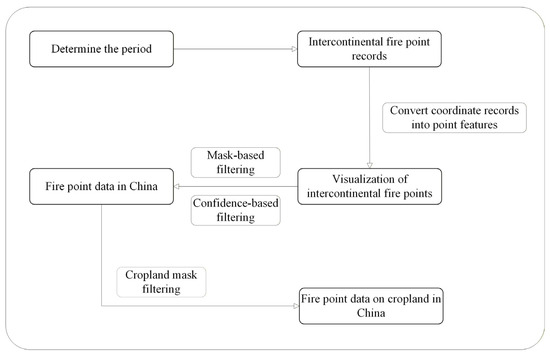
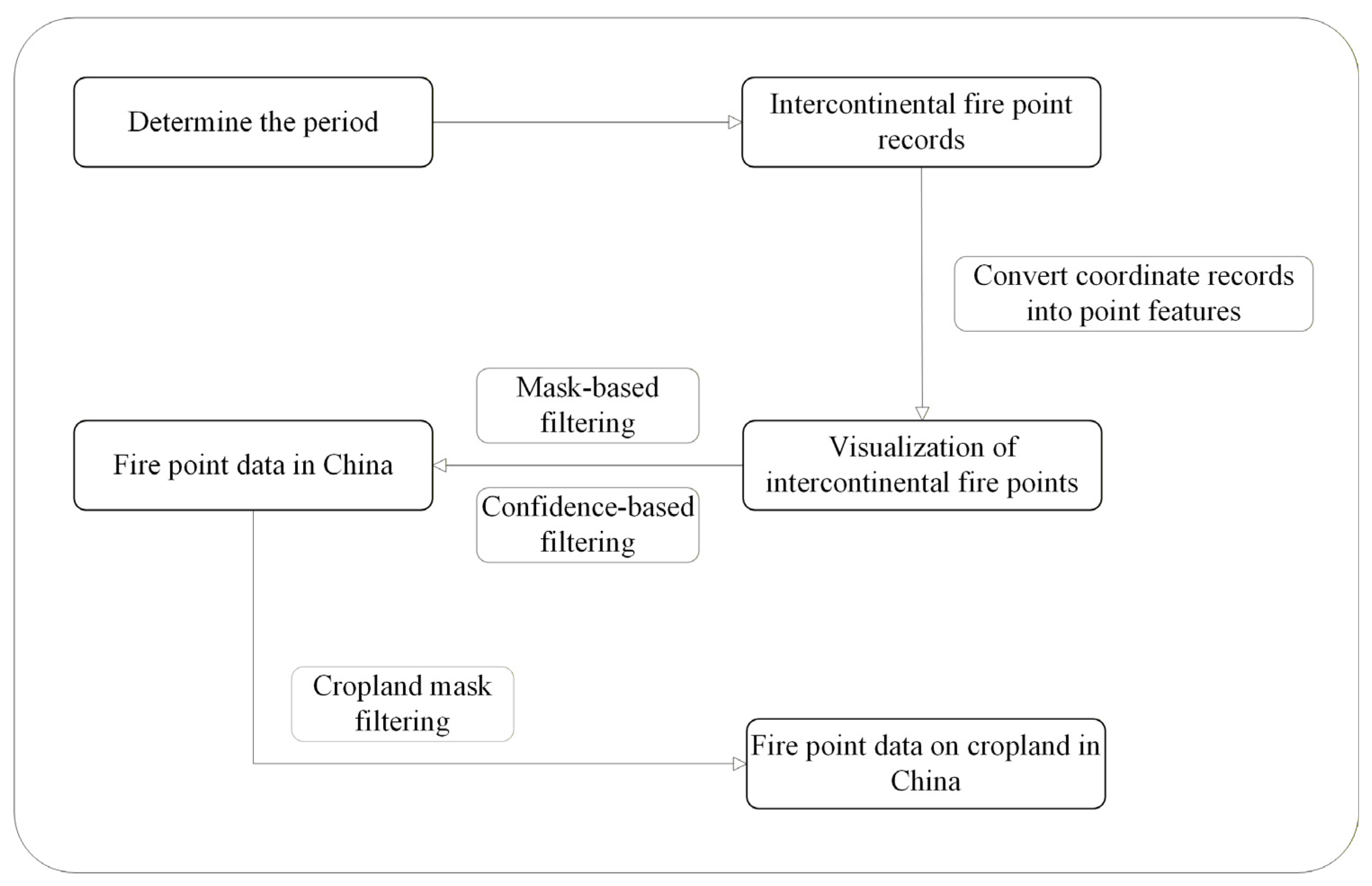
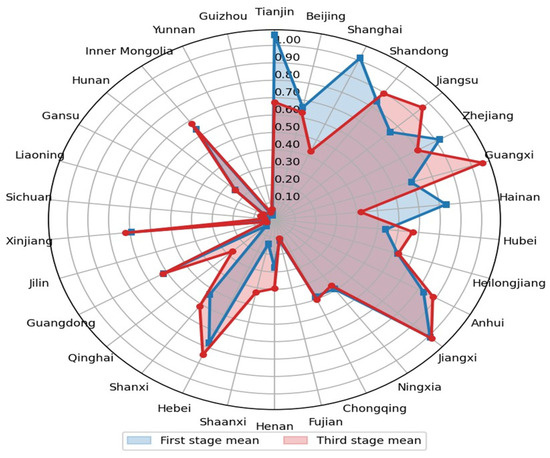
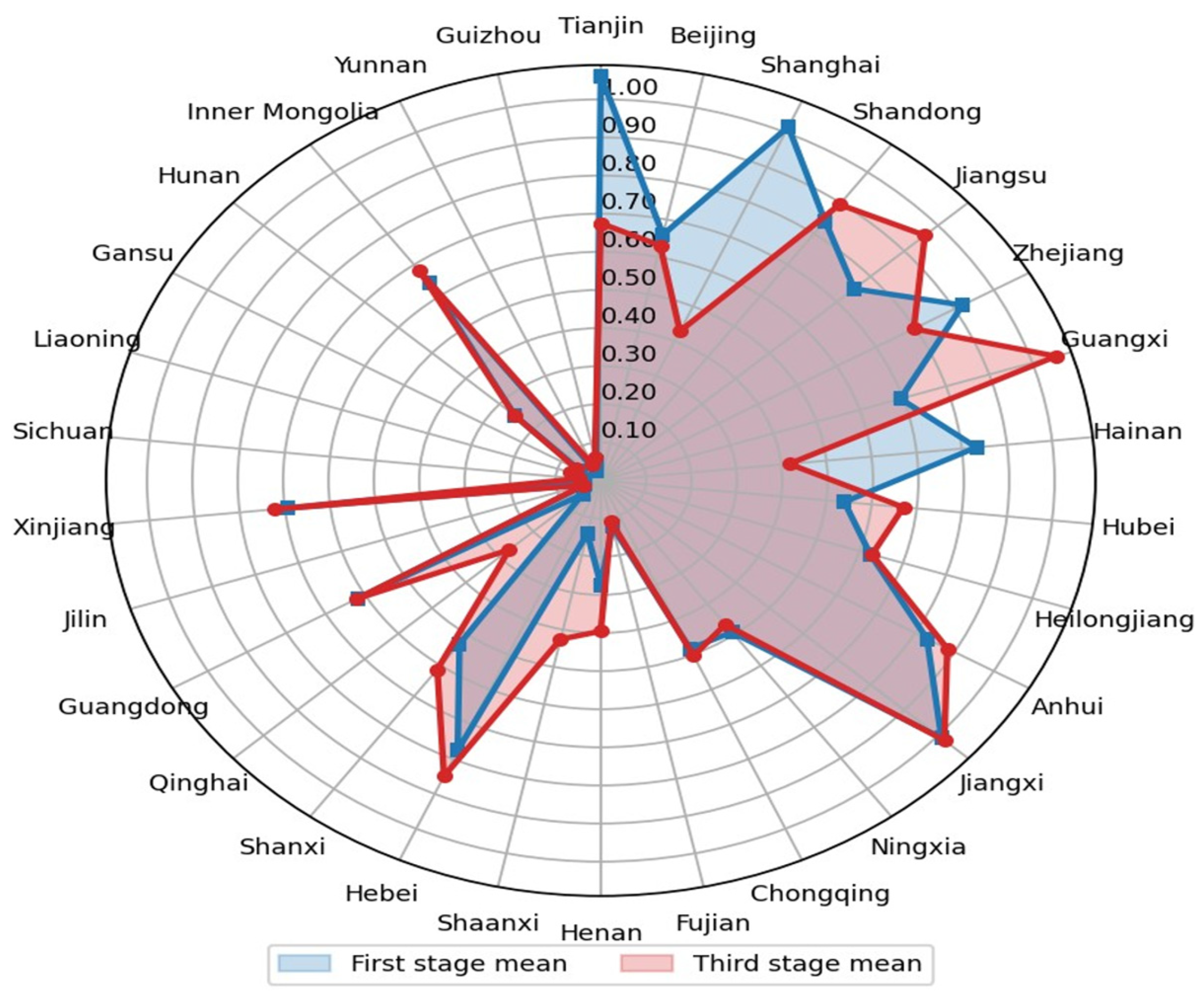
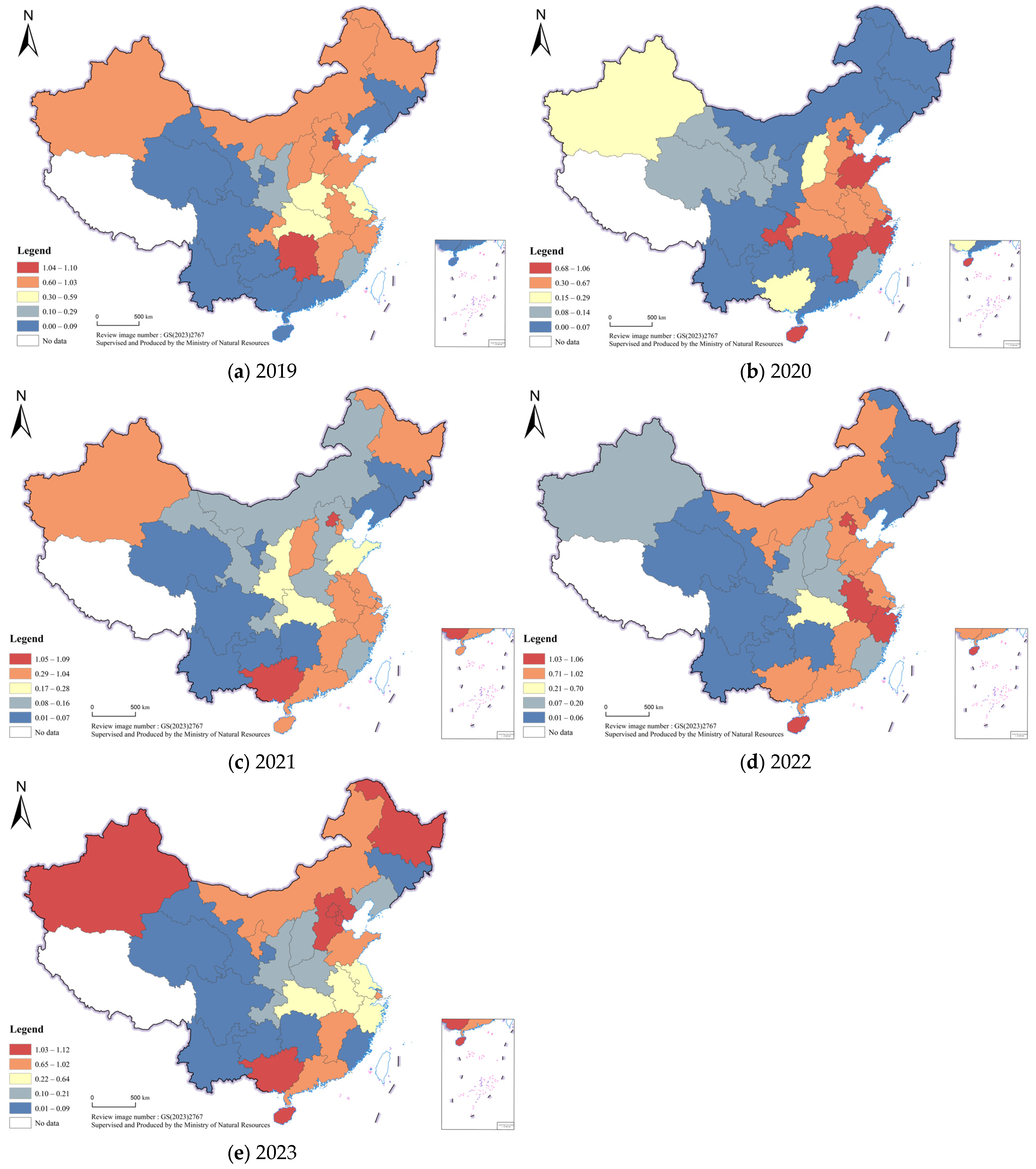
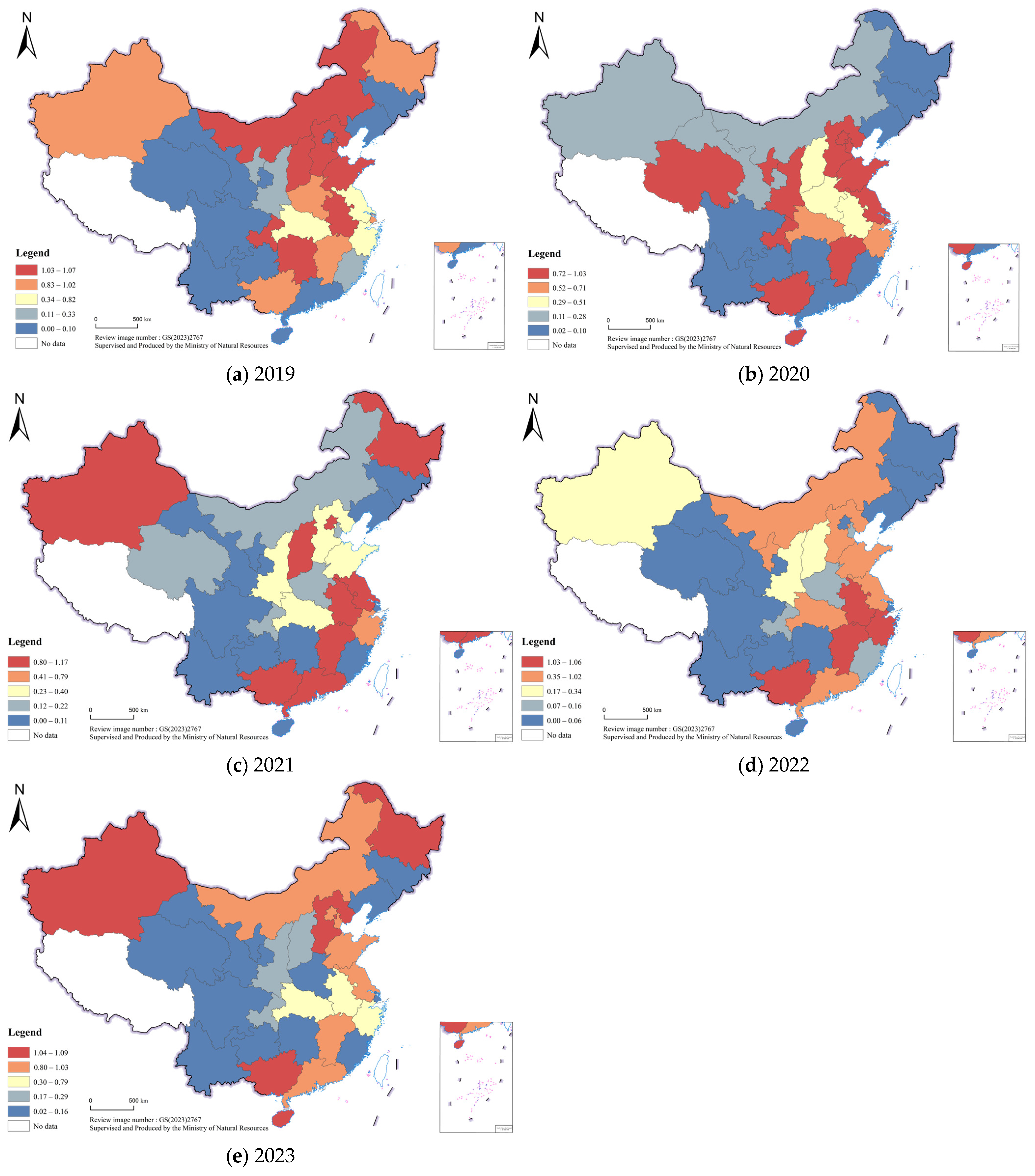
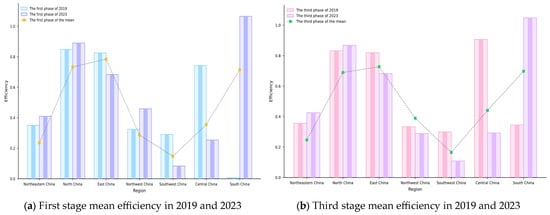
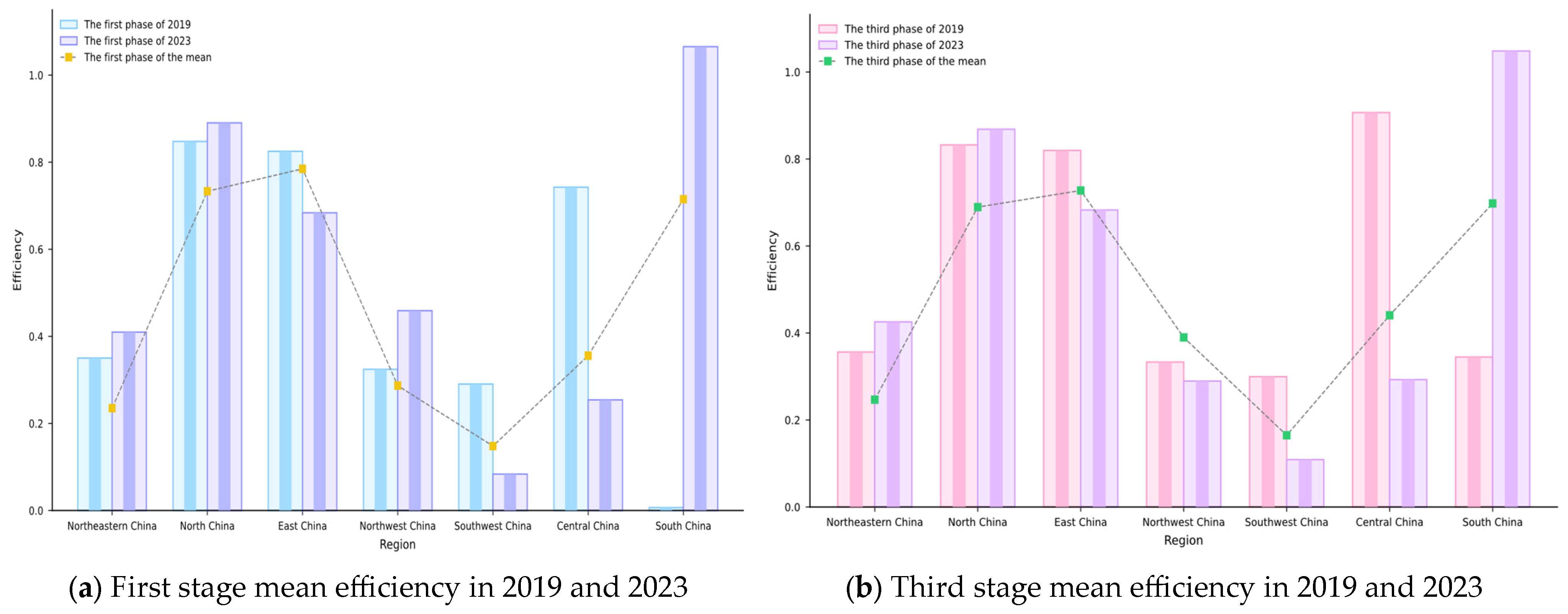
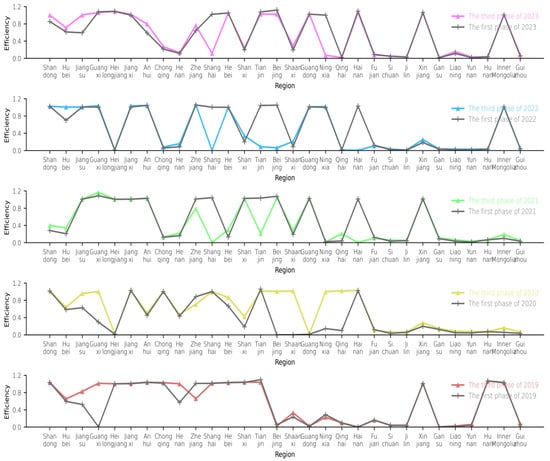
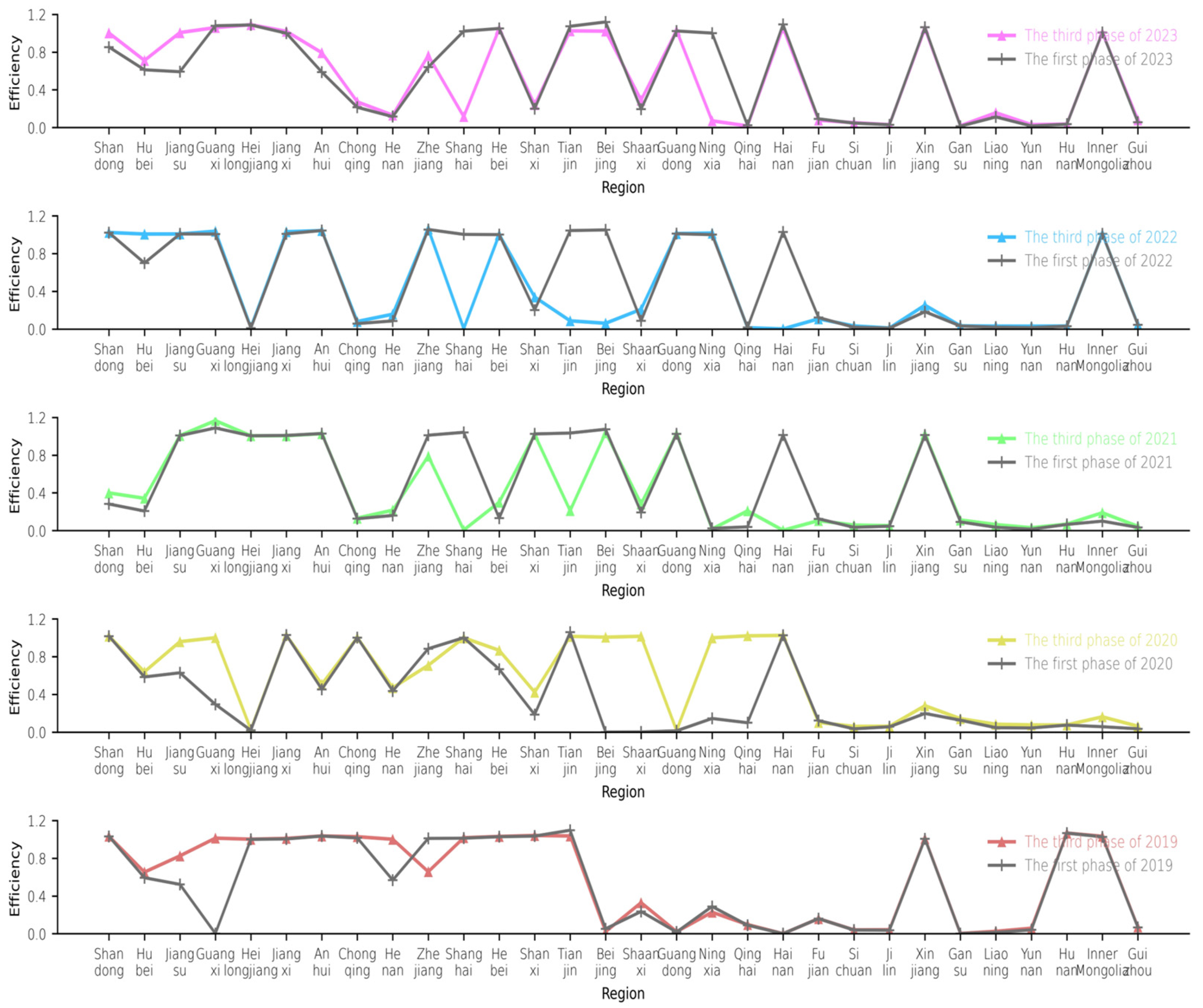
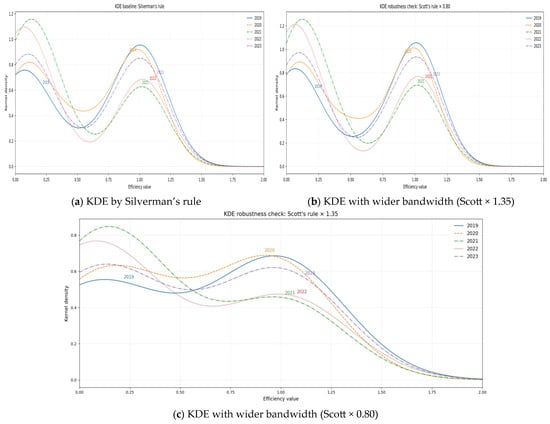
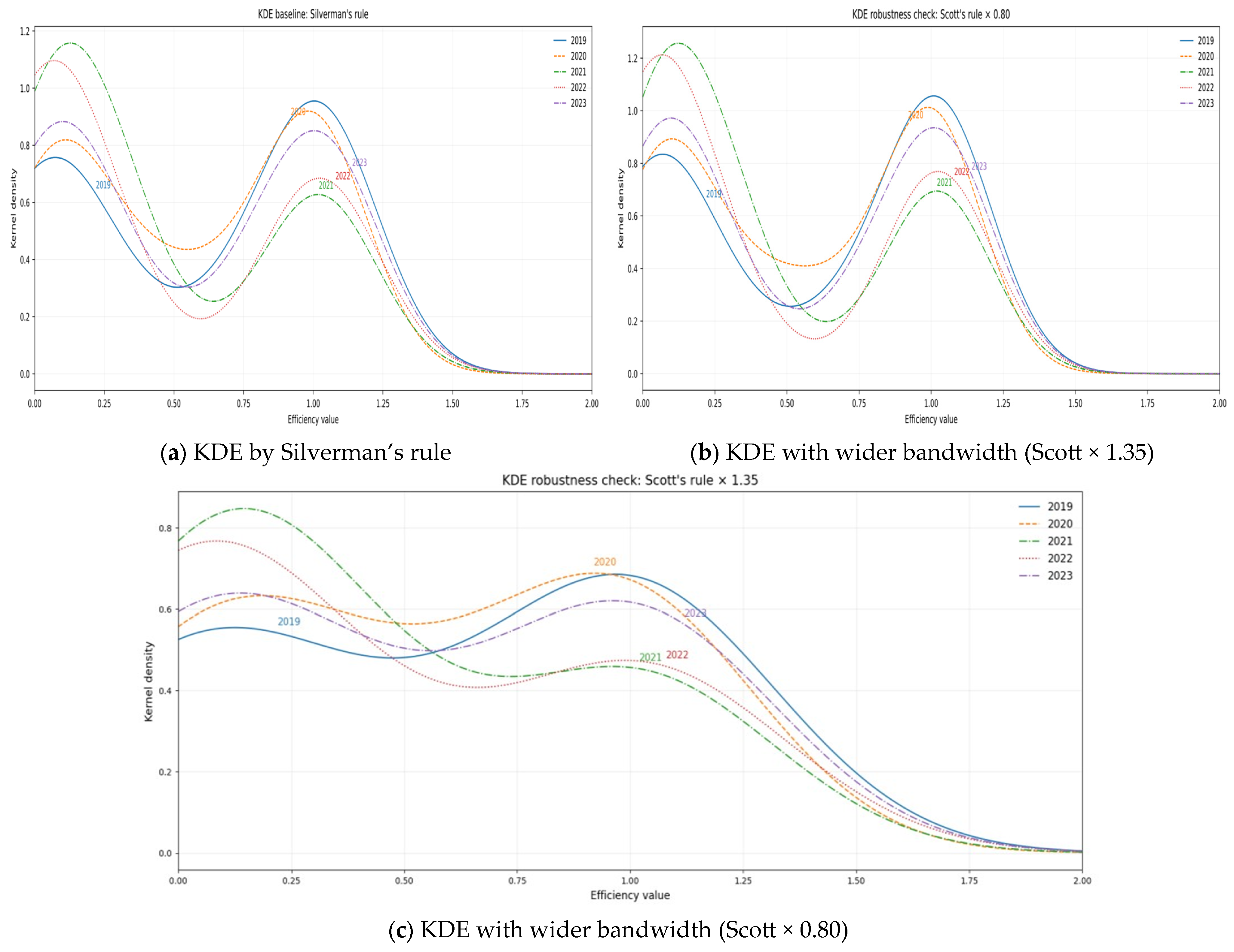
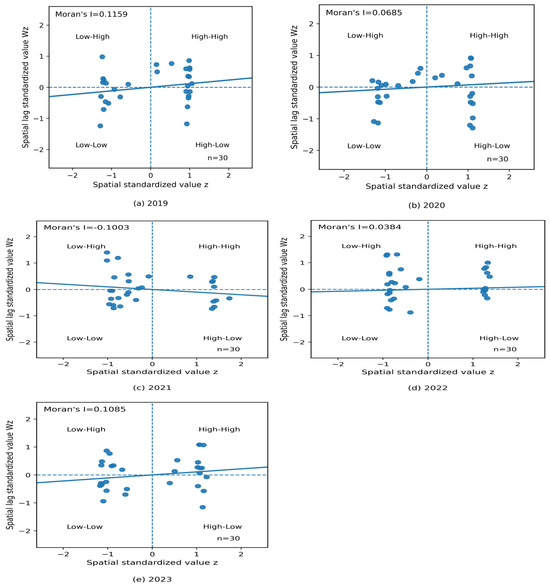
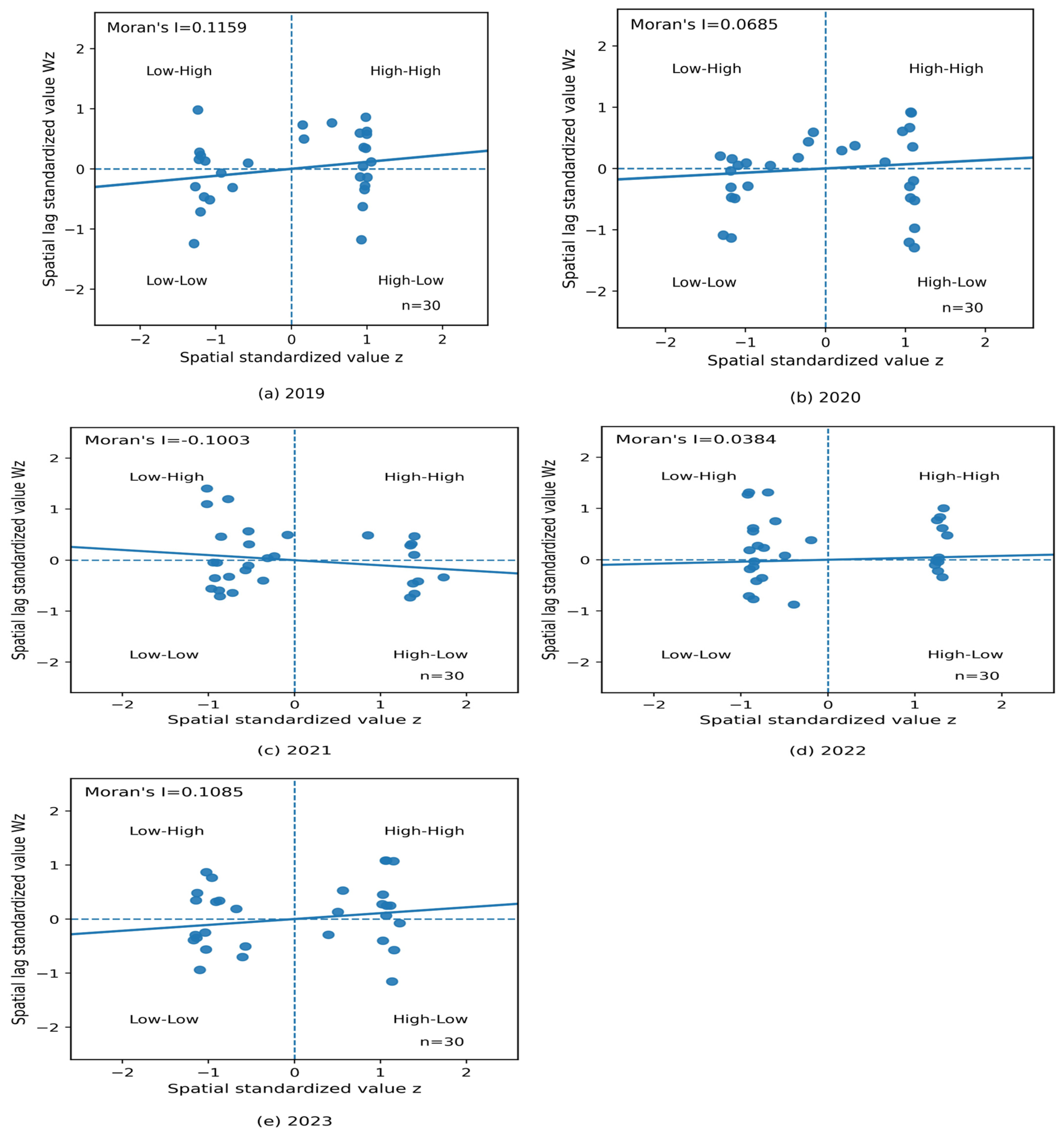
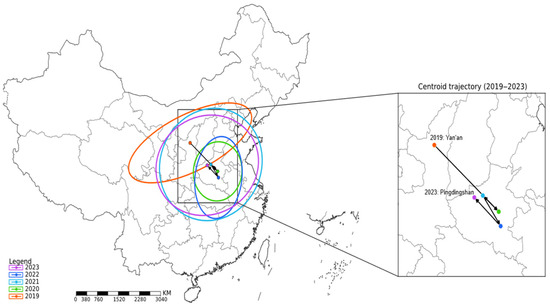
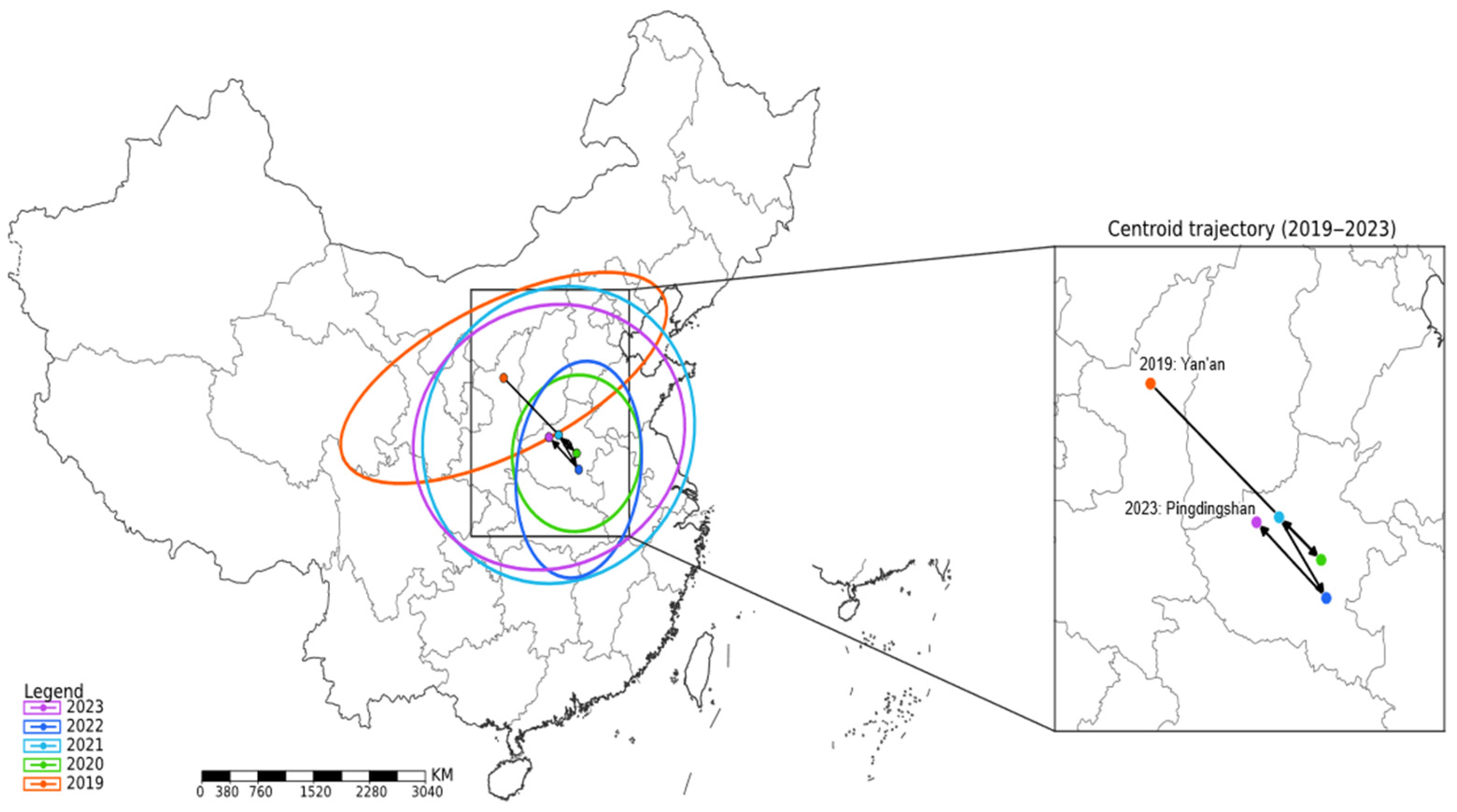

Disclaimer/Publisher’s Note: The statements, opinions and data contained in all publications are solely those of the individual author(s) and contributor(s) and not of MDPI and/or the editor(s). MDPI and/or the editor(s) disclaim responsibility for any injury to people or property resulting from any ideas, methods, instructions or products referred to in the content. |
© 2026 by the authors. Licensee MDPI, Basel, Switzerland. This article is an open access article distributed under the terms and conditions of the Creative Commons Attribution (CC BY) license.