Development and Performance Evaluation of New Sustainable Bio-Based Building Insulation Materials


Abstract
1. Introduction
2. Materials and Methodologies
2.1. Raw Materials
2.2. Experimental Methodology
2.2.1. Density Measurement
2.2.2. Thermal Conductivity Measurement
2.2.3. Mechanical Properties
2.2.4. Abrasion Resistance
2.2.5. Water Absorption Test
2.2.6. Standards and Experimental Reliability
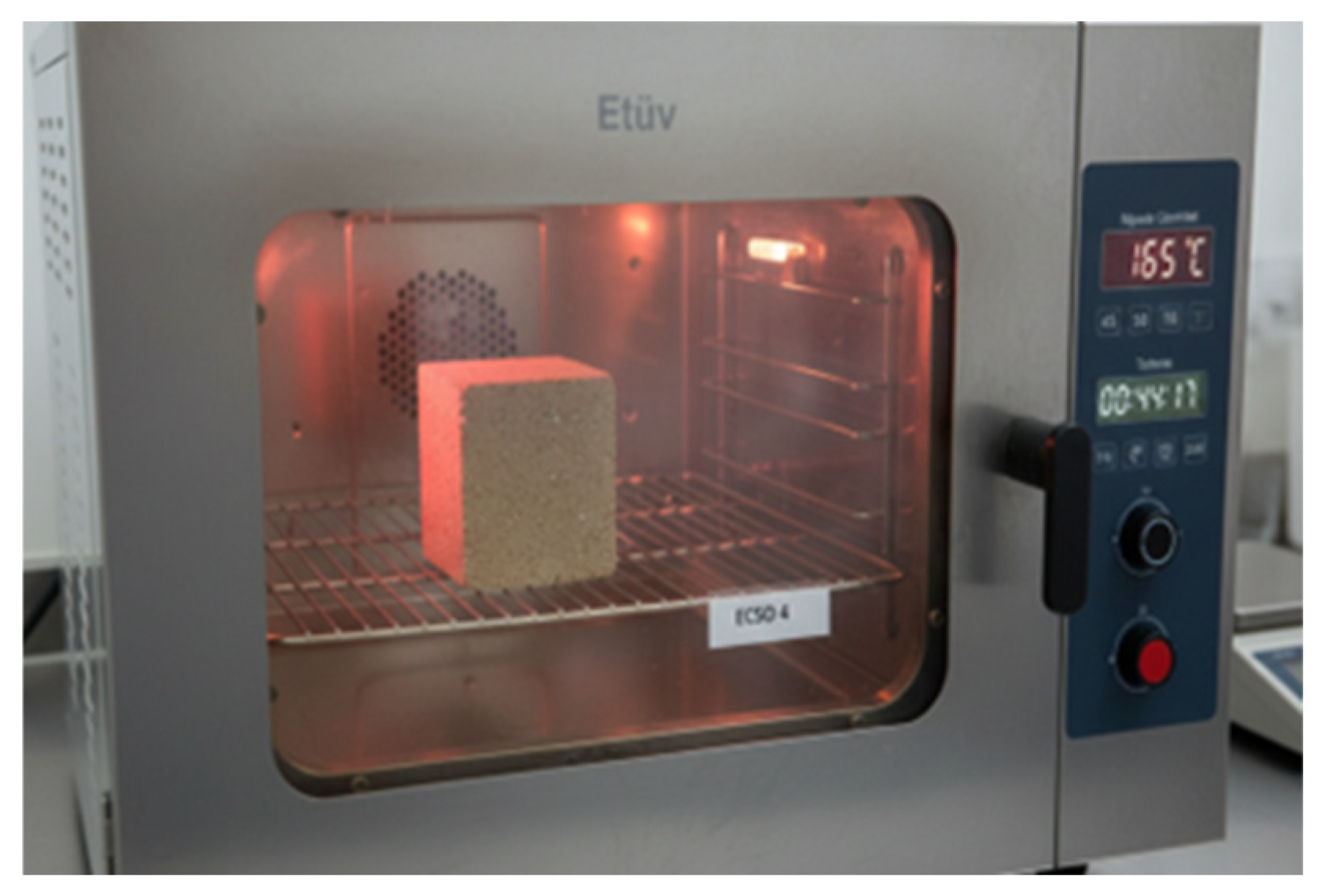
2.2.7. Experimental Design and Sample Preparation
3. Results and Discussion
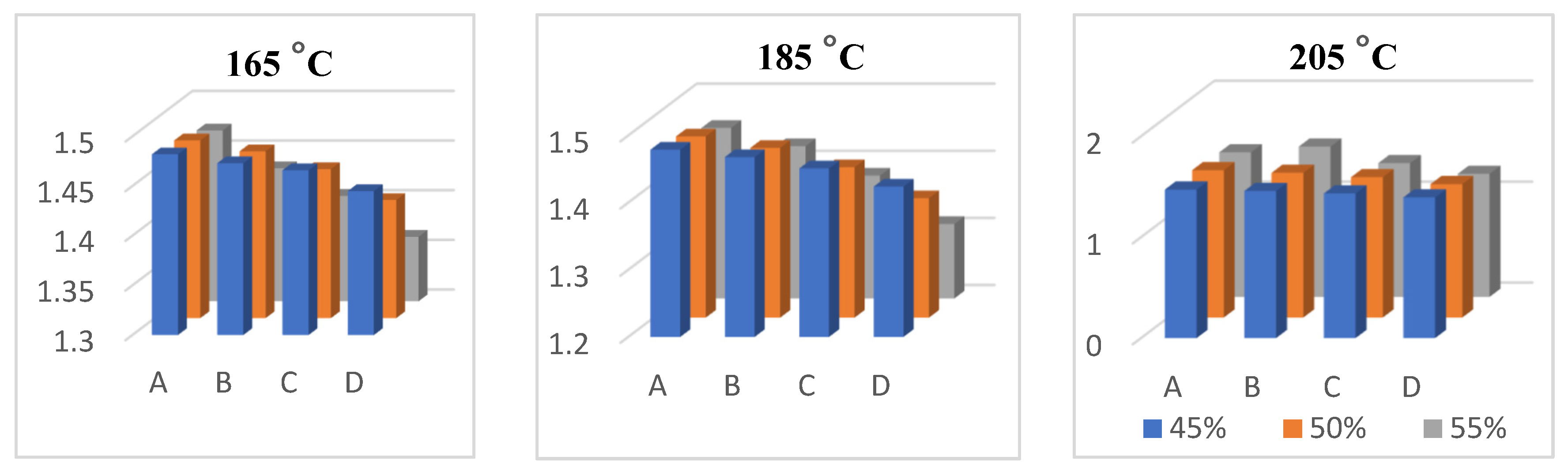
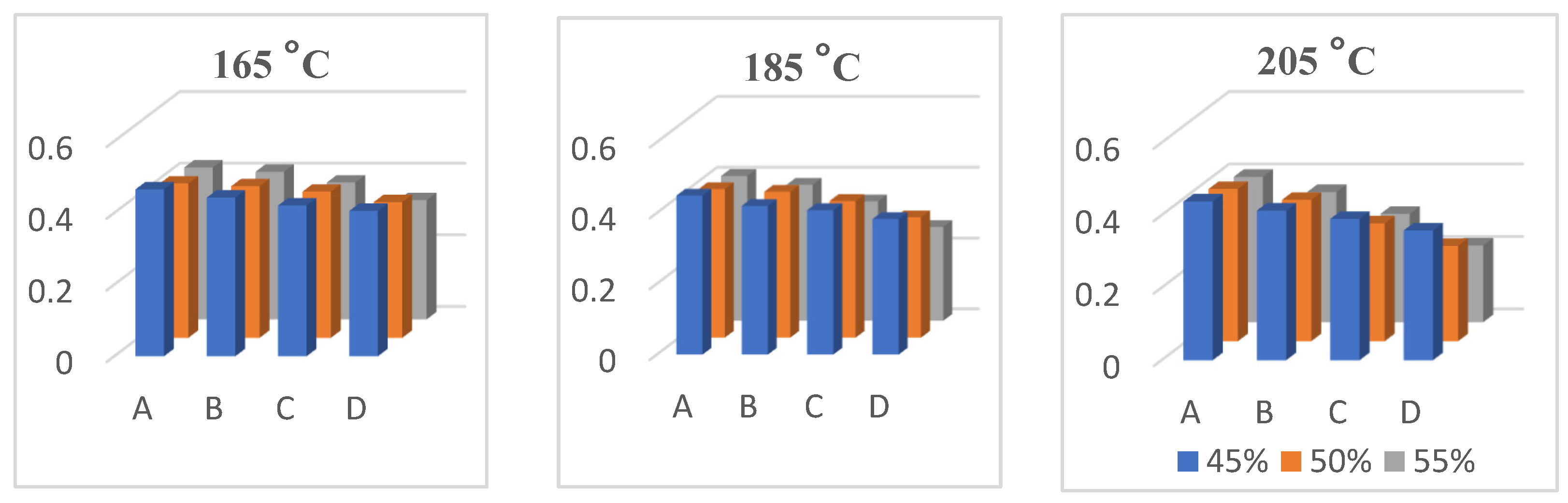
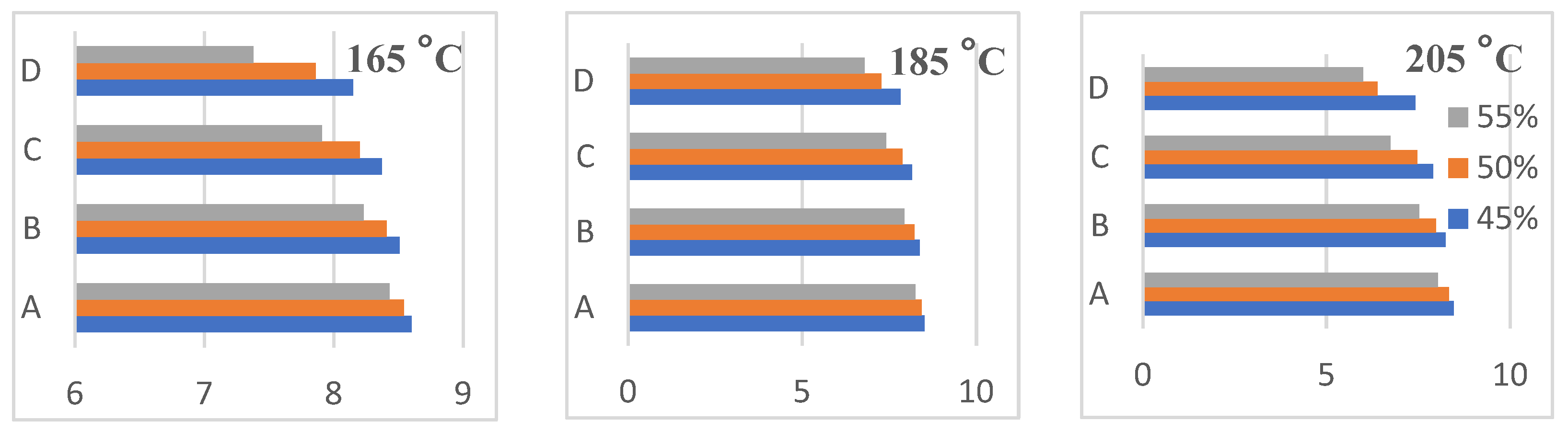
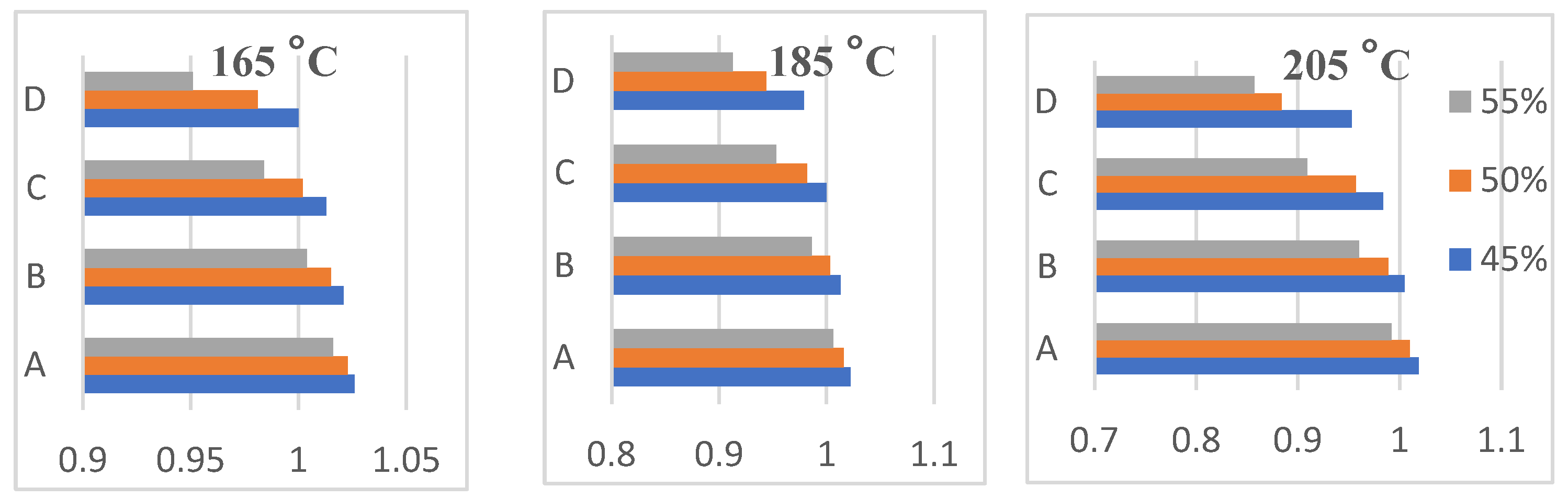
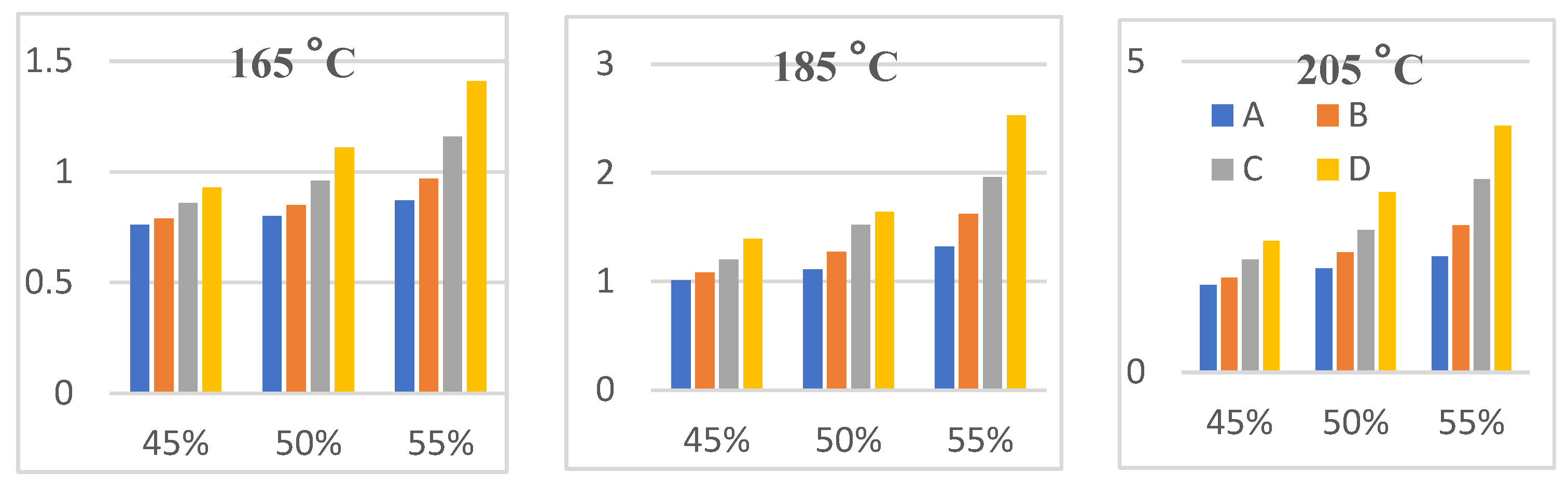
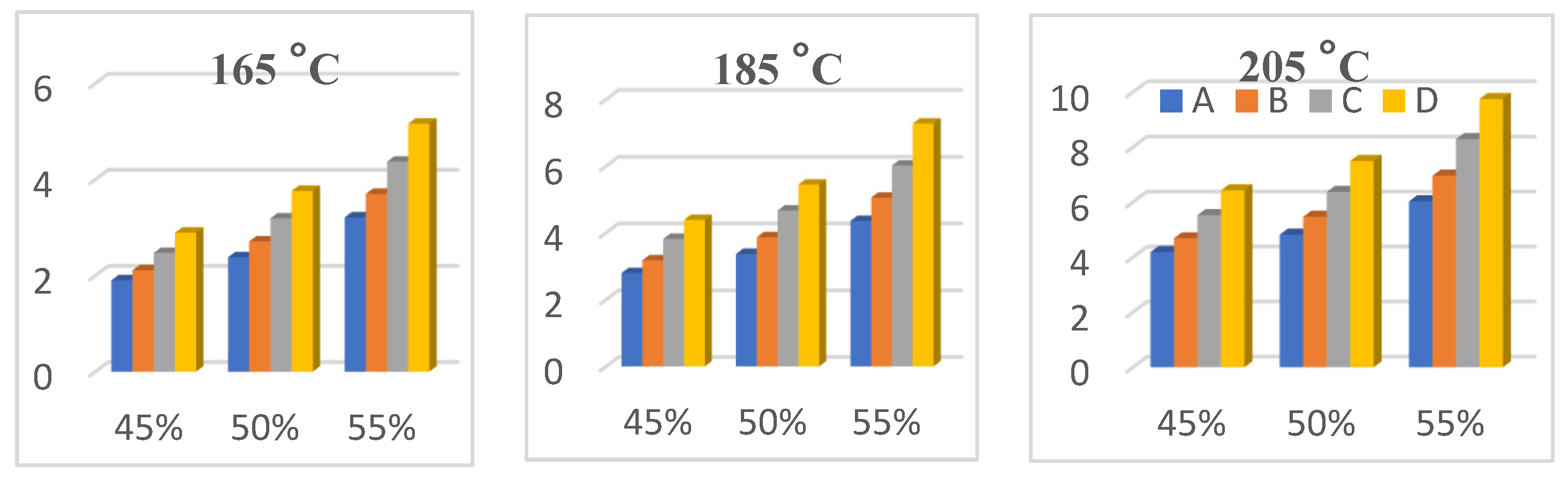
3.1. Experimental Results and Discussion of Physical, Thermal, and Mechanical Properties
3.1.1. Statistical Uncertainty and Error Analysis
3.1.2. Application of Error Analysis to Key Properties
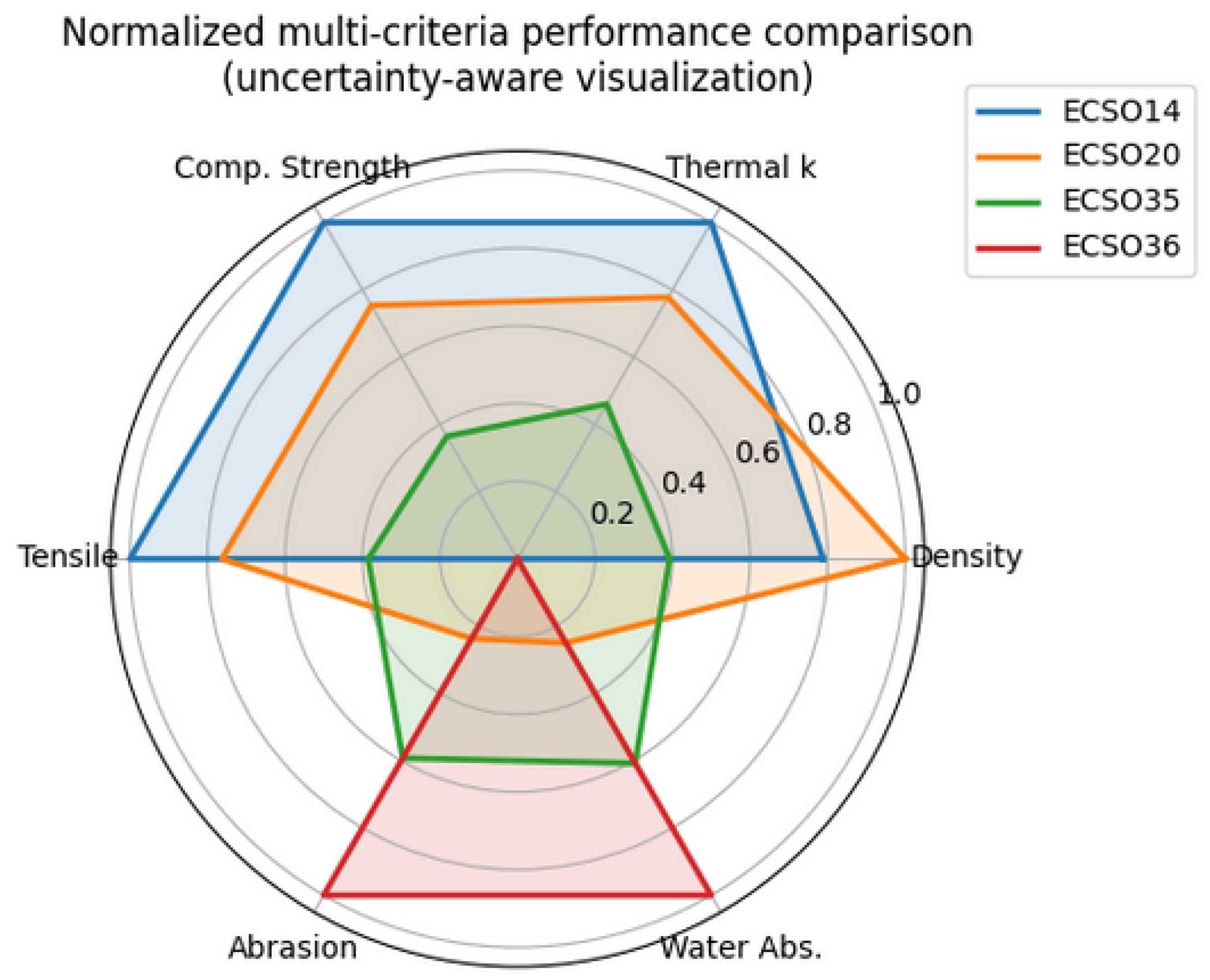
3.1.3. Integrated Multi-Criteria Performance and Uncertainty Evaluation
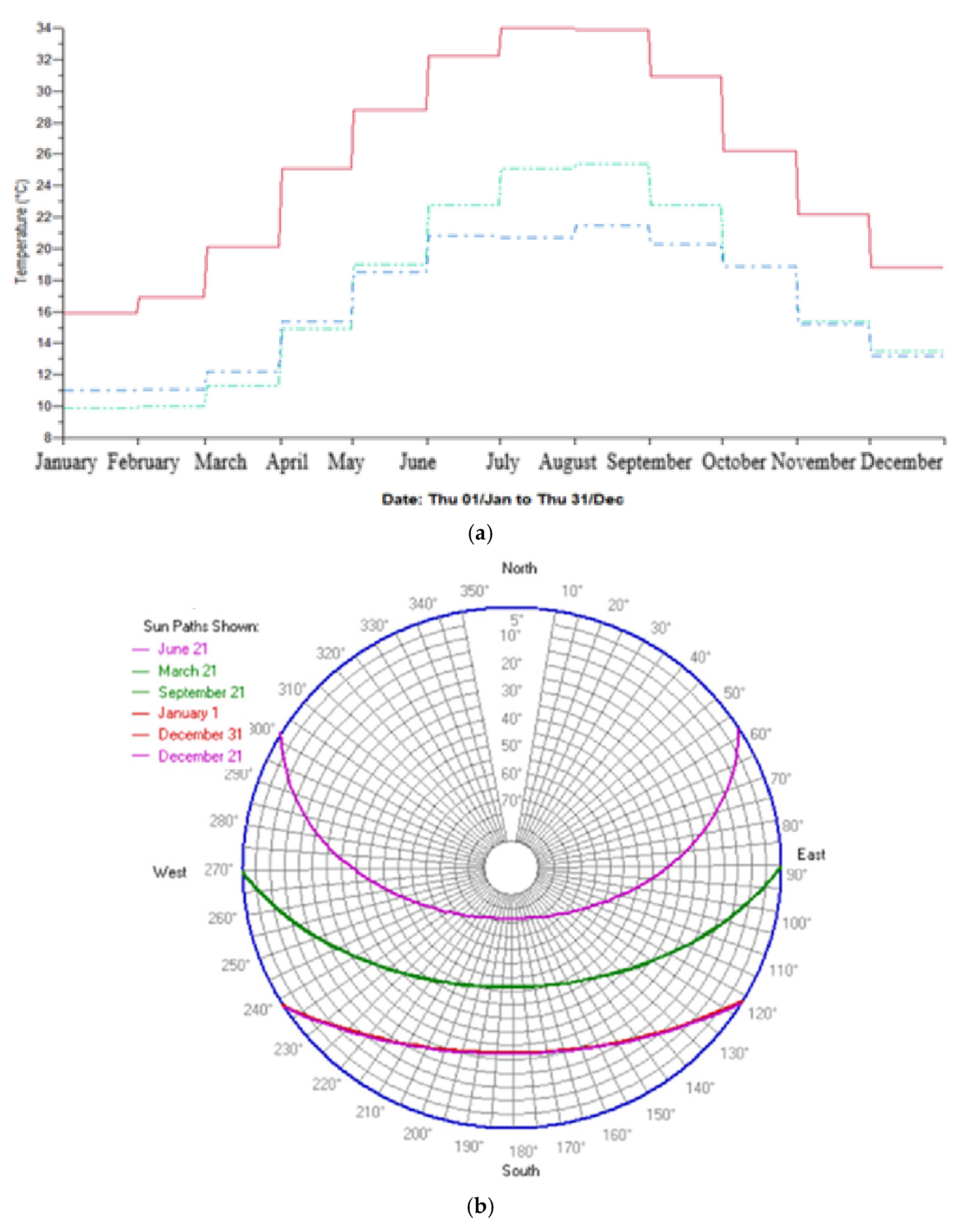
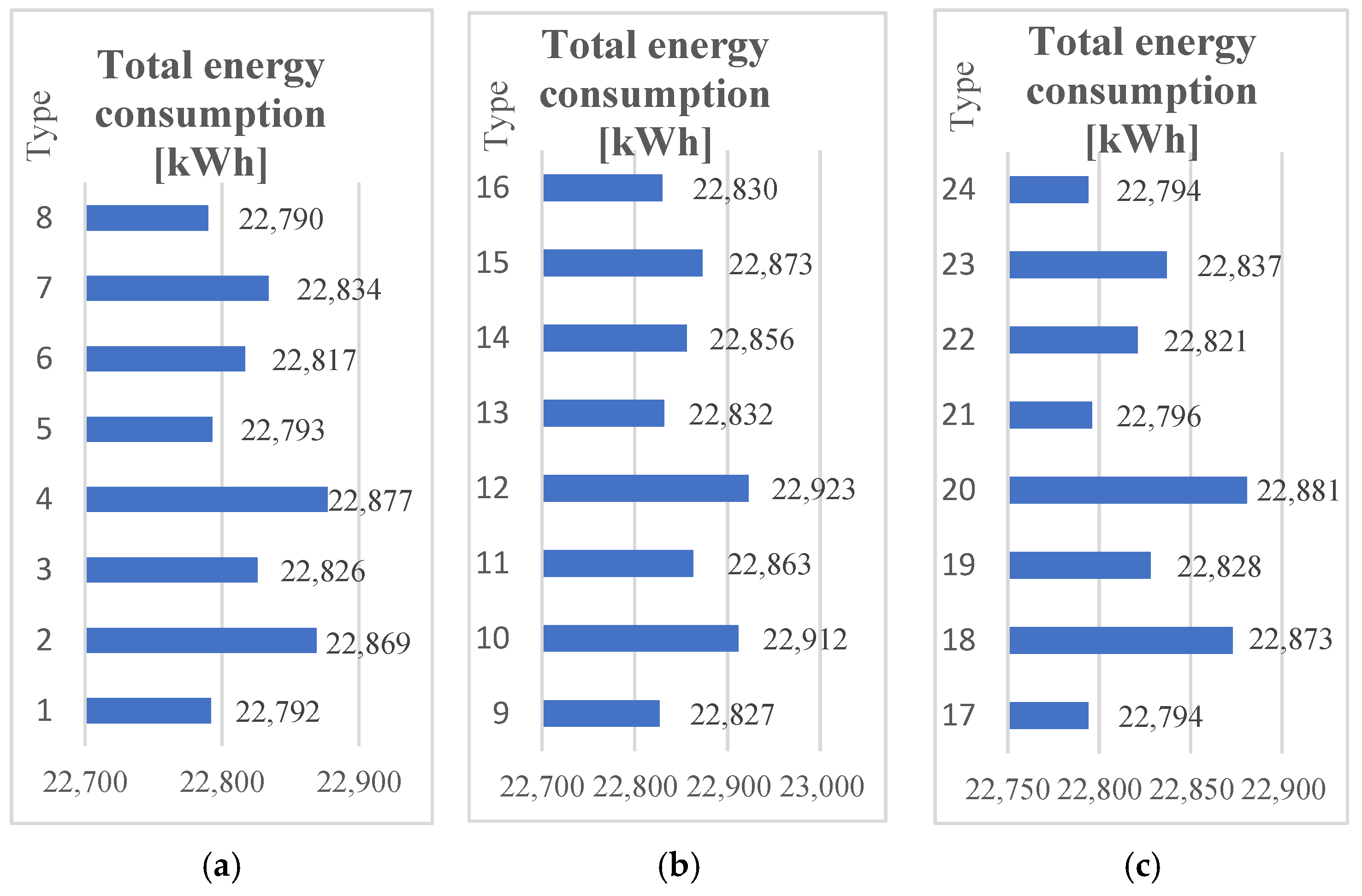
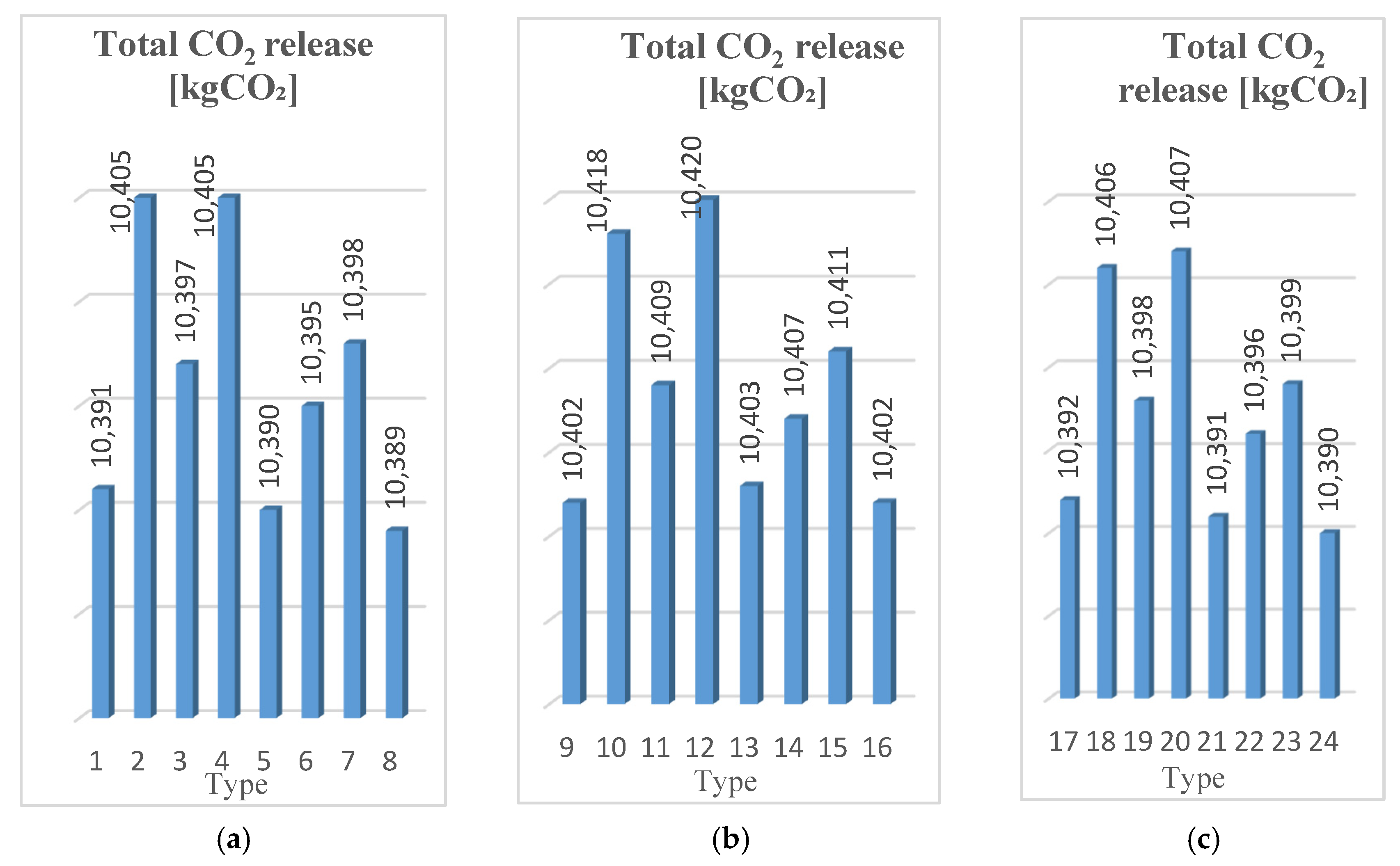
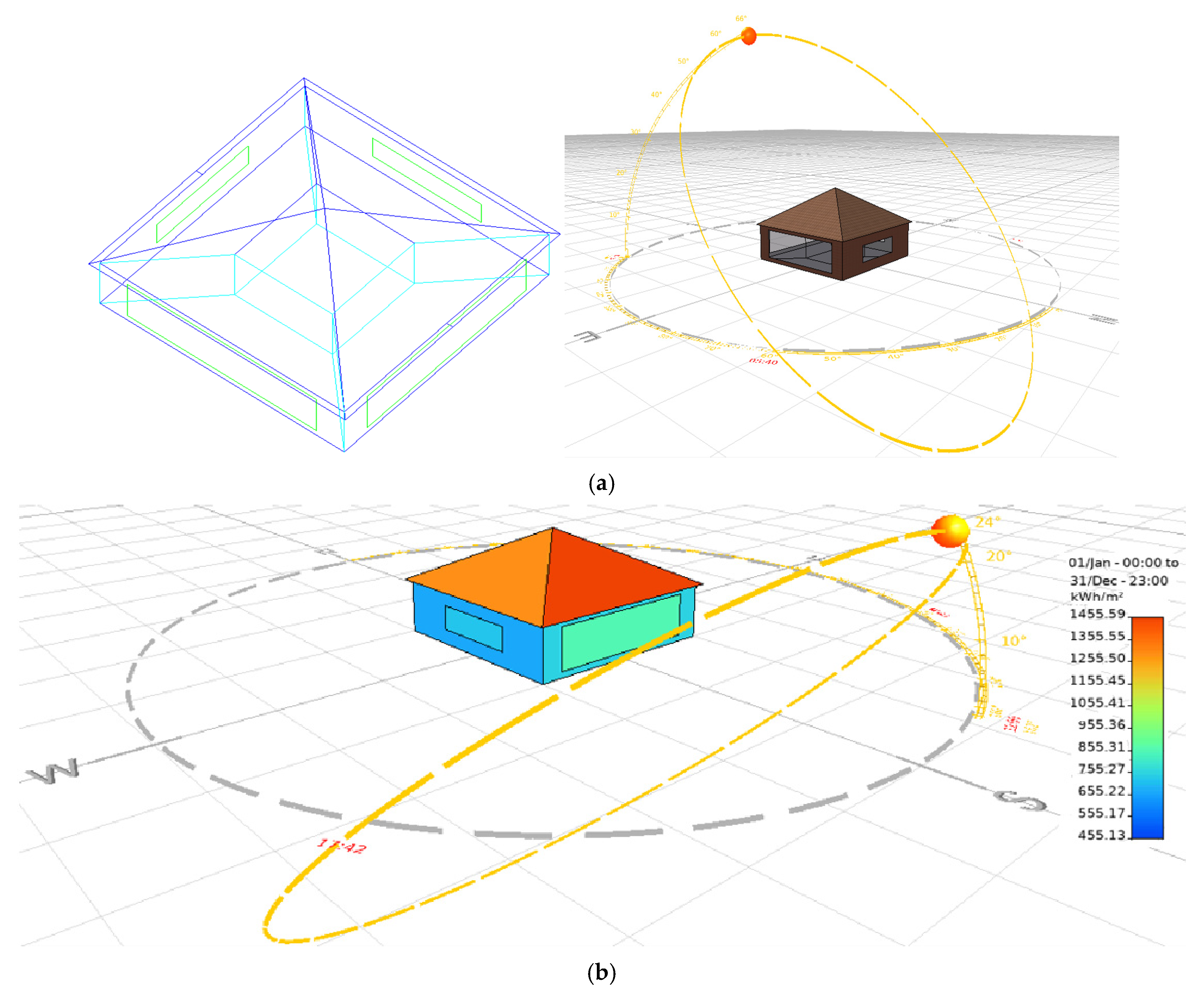
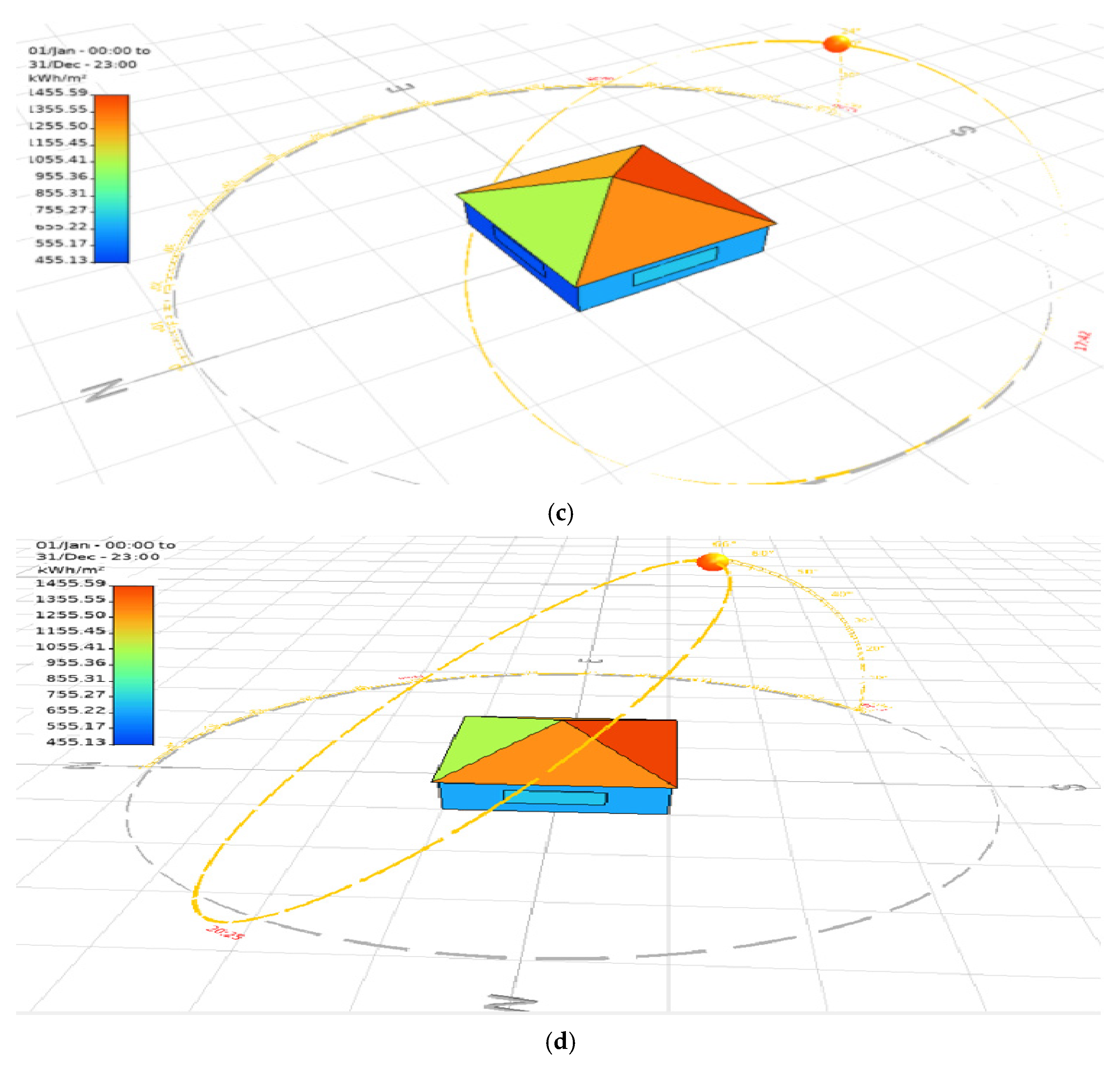
3.2. Comparative Energy and Environmental Performance of ECSO36 Insulation Material Under Ankara Climate Conditions: An IES-VE Simulation Study
3.3. Energy–Carbon Relationship Modeling and Performance Evaluation
3.3.1. Correlation Analysis Between Energy Consumption and CO2 Emissions
3.3.2. Regression-Based Energy–Carbon Formulation
3.3.3. Normalized Energy–Carbon Performance Index (NECPI)
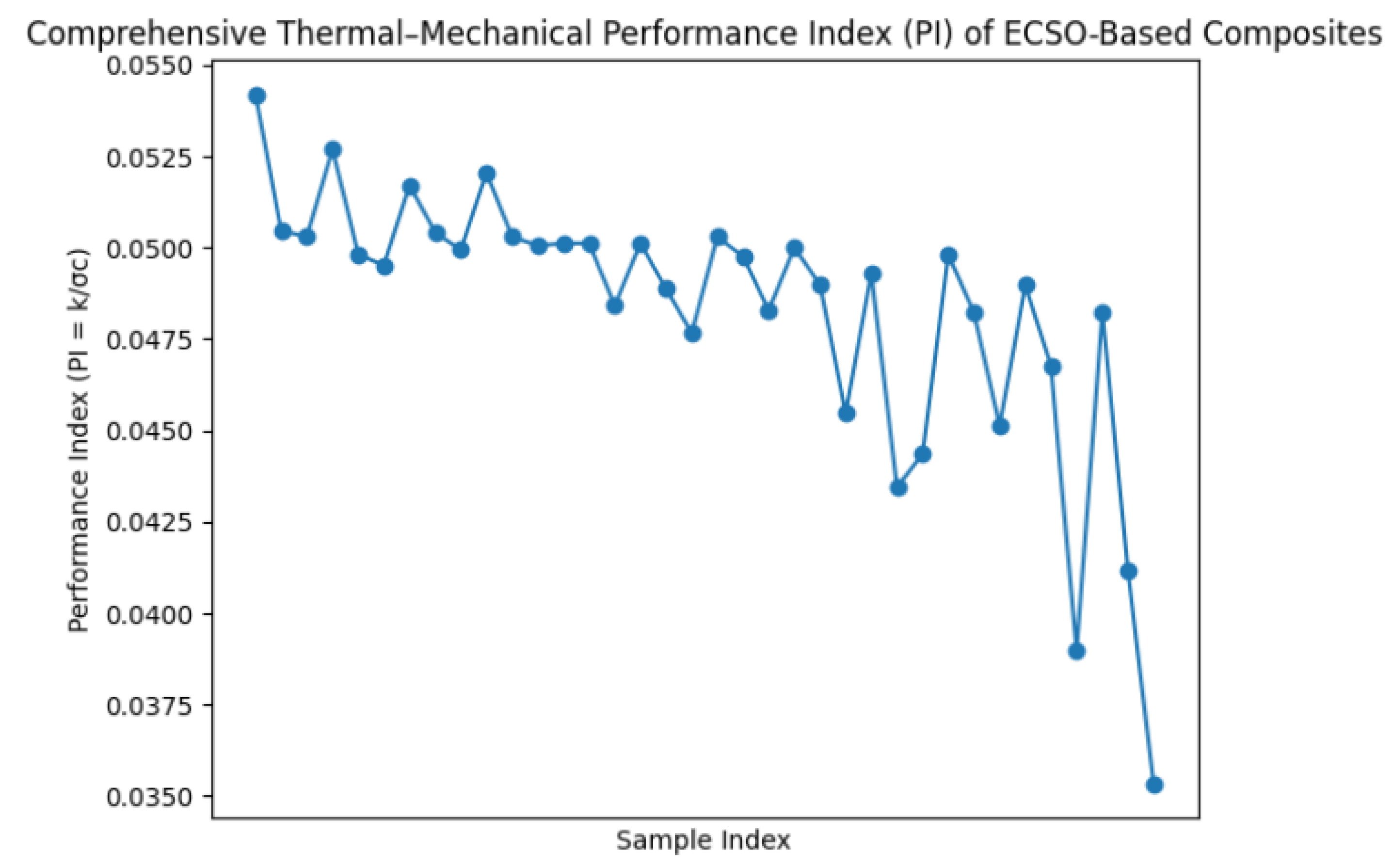
3.3.4. Comprehensive Performance Evaluation and Optimization Indicator
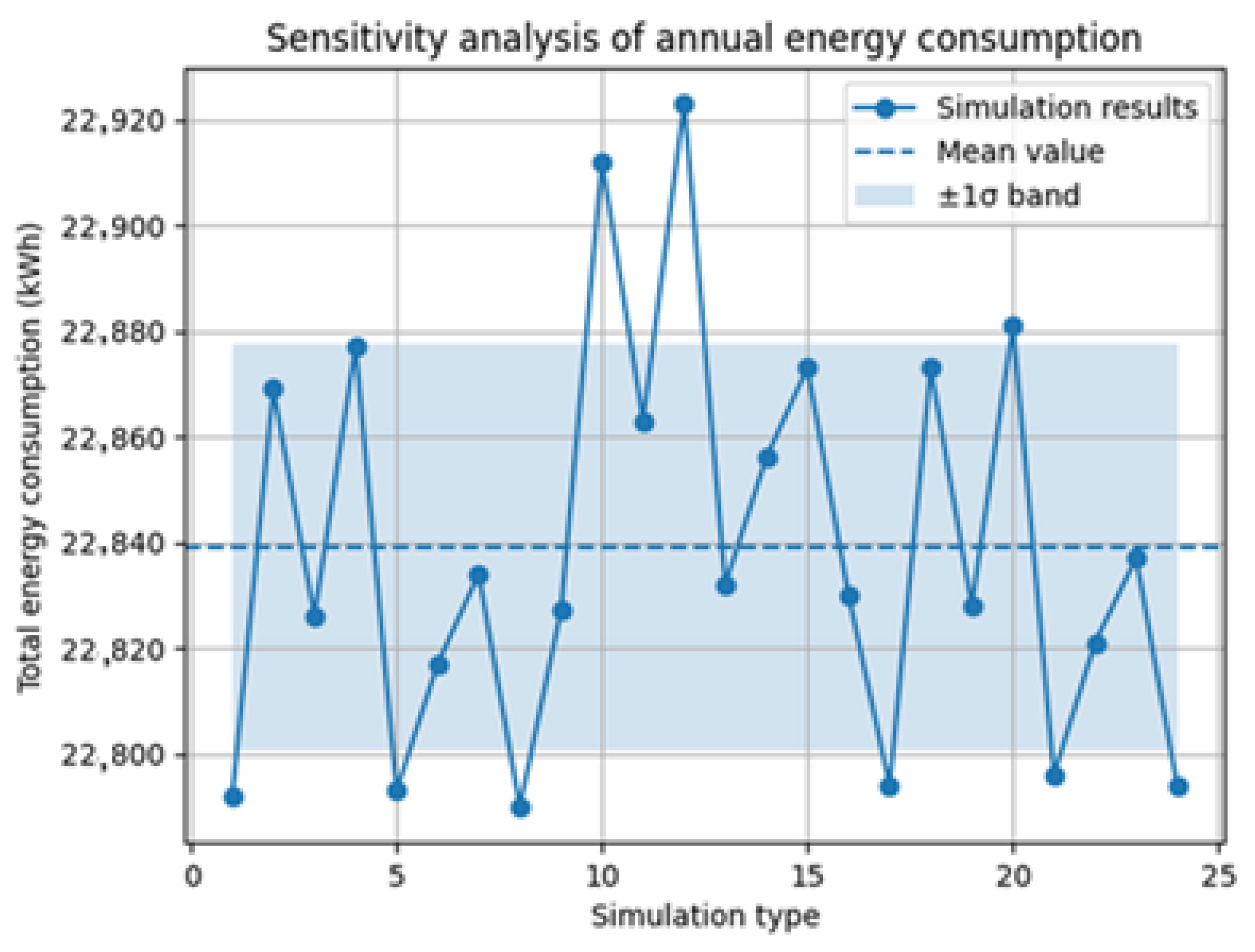
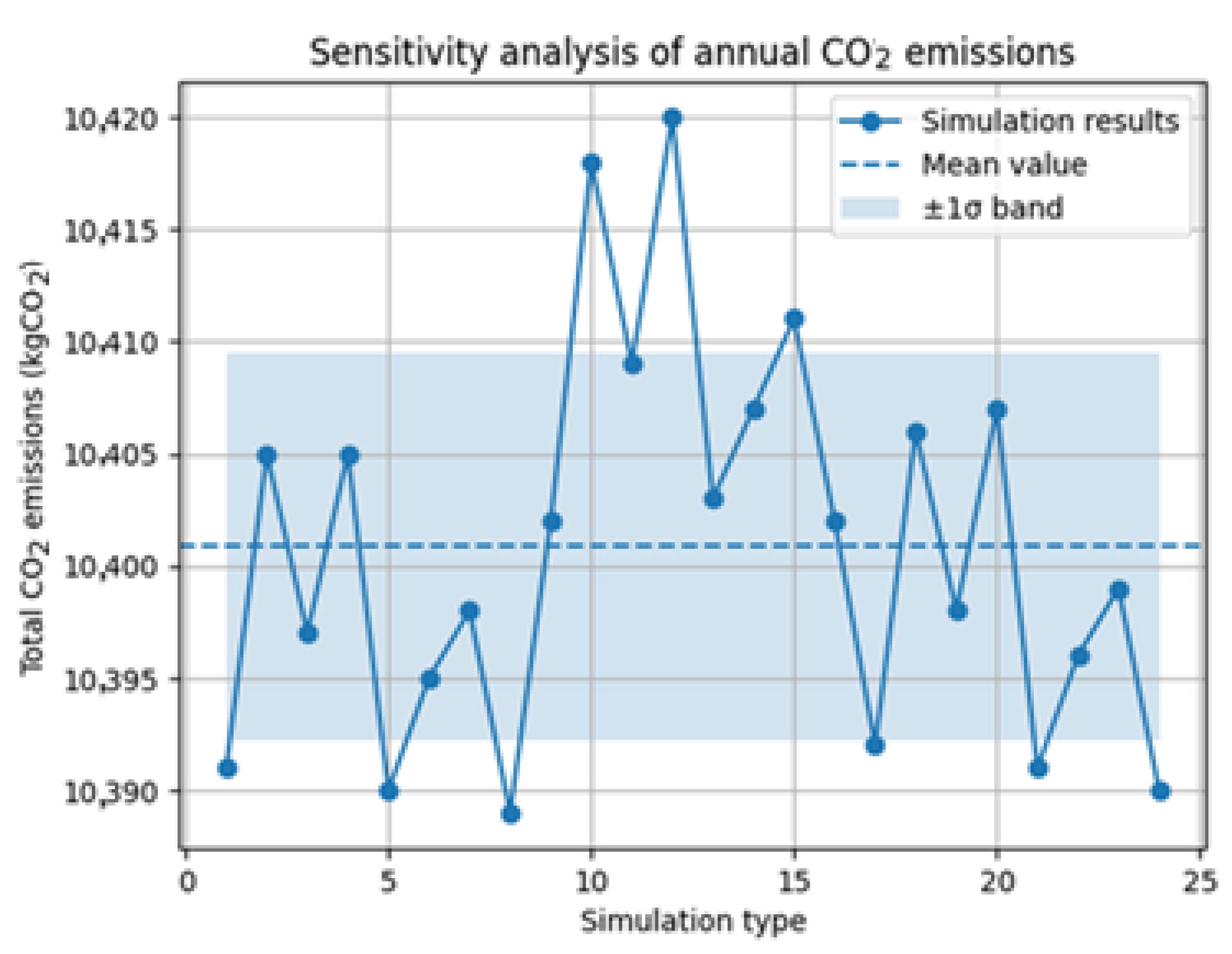
3.3.5. Sensitivity Analysis of Building Energy Simulation Results
Energy Consumption Sensitivity
CO2 Emission Sensitivity
3.3.6. Implications for ECSO36-Based Wall Systems
4. Conclusions
Funding
Institutional Review Board Statement
Informed Consent Statement
Data Availability Statement
Conflicts of Interest
References
- Jelić, A.; Sekulić, M.; Travica, M.; Gržetić, J.; Ugrinović, V.; Marinković, A.D.; Božić, A.; Stamenović, M.; Putić, S. Determination of Mechanical Properties of Epoxy Composite Materials Reinforced with Silicate Nanofillers Using Digital Image Correlation (DIC). Polymers 2022, 14, 1255. [Google Scholar] [CrossRef] [Scilit]
- Atmakuri, A.; Palevicius, A.; Kolli, L.; Vilkauskas, A.; Janusas, G.; Puglia, D. Development and Analysis of Mechanical Properties of Caryota and Sisal Natural Fibers Reinforced Epoxy Hybrid Composites. Polymers 2021, 13, 864. [Google Scholar] [CrossRef] [Scilit]
- Korolev, A.; Mishnev, M.; Zherebtsov, D.; Vatin, N.I.; Karelina, M.; Arjmand, M. Polymers under Load and Heating Deformability: Modelling and Predicting. Polymers 2021, 13, 428. [Google Scholar] [CrossRef] [Scilit]
- Zhang, W.; Wu, W.; Meng, W.; Xie, W.; Cui, Y.; Xu, J.; Qu, H. Core-Shell Graphitic Carbon Nitride/Zinc Phytate as a Novel Efficient Flame Retardant for Fire Safety and Smoke Suppression in Epoxy Resin. Polymers 2020, 12, 212. [Google Scholar] [CrossRef] [Scilit]
- Rodríguez-Uicab, O.; Abot, J.L.; Avilés, F. Electrical Resistance Sensing of Epoxy Curing Using an Embedded Carbon Nanotube Yarn. Sensors 2020, 20, 3230. [Google Scholar] [CrossRef] [Scilit]
- Shi, X.; Shi, G.; Li, S.; Du, X.; Han, Y. Sound Insulation Properties of Hollow Polystyrene Spheres/Polyethylene Glycol/Epoxy Composites. Polymers 2022, 14, 1388. [Google Scholar] [CrossRef] [Scilit] [PubMed]
- Sukanto, H.; Raharjo, W.W.; Ariawan, D.; Triyono, J.; Kaavesina, M. Epoxy resins are thermosetting for mechanical engineering. Open Eng. 2021, 11, 797–814. [Google Scholar] [CrossRef] [Scilit]
- Van Fan, Y.; Lee, C.T.; Lim, J.S.; Klemeš, J.J.; Le, P.T.K. Cross-disciplinary approaches towards a smart, resilient, and sustainable circular economy. J. Clean. Prod. 2019, 232, 1482–1491. [Google Scholar] [CrossRef] [Scilit]
- Liu, S.; Chevali, V.S.; Xu, Z.; Hui, D.; Wang, H. A review of extending the performance of epoxy resins using carbon nanomaterials. Compos. Part B Eng. 2018, 136, 197–214. [Google Scholar] [CrossRef] [Scilit]
- Di Mauro, C.; Malburet, S.; Genua, A.; Graillot, A.; Mija, A. Sustainable Series of New Epoxidized Vegetable Oil-Based Thermosets with Chemical Recycling Properties. Biomacromolecules 2020, 21, 3923–3935. [Google Scholar] [CrossRef] [Scilit]
- Zhao, X.L.; Liu, Y.Y.; Weng, Y.; Li, Y.D.; Zeng, J.B. Sustainable Epoxy Vitrimers from Epoxidized Soybean Oil and Vanillin. ACS Sustain. Chem. Eng. 2020, 8, 15020–15029. [Google Scholar] [CrossRef] [Scilit]
- Auvergne, R.; Caillol, S.; David, G.; Boutevin, B.; Pascault, J.P. Biobased thermosetting epoxy: Present and future. Chem. Rev. 2014, 114, 1082–1115. [Google Scholar] [CrossRef] [Scilit] [PubMed]
- Ding, C.; Matharu, A.S. Recent developments on biobased curing agents: A review of their preparation and use. ACS Sustain. Chem. Eng. 2014, 2, 2217–2236. [Google Scholar] [CrossRef] [Scilit]
- Shanmugam, V.; Mensah, R.A.; Försth, M.; Sas, G.; Restás, Á.; Addy, C.; Xu, Q.; Jiang, L.; Neisiany, R.E.; Singha, S.; et al. Circular economy in biocomposite development: State-of-the-art, challenges, and emerging trends. Compos. Compos. Part C Open Access 2021, 5, 100138. [Google Scholar] [CrossRef] [Scilit]
- Biermann, U.; Friedt, W.; Lang, S.; Lühs, W.; Machmüller, G.; Metzger, J.O.; Rüsch gen Klaas, M.; Schaefer, H.J.; Schneider, M.P. New syntheses with oils and fats as renewable raw materials for the chemical industry. Angew. Chem. Int. Ed. 2000, 39, 2206–2224. [Google Scholar] [CrossRef] [Scilit]
- Biermann, U.; Butte, W.; Eren, T.; Haase, D.; Metzger, J.O. Regio- and stereoselective lective Diels–Alder additions of maleic anhydride to conjugated triene fatty acid methyl esters. Eur. J. Org. Chem. 2007, 2007, 3859–3862. [Google Scholar] [CrossRef] [Scilit]
- Tremblay-Parrado, K.K.; García-Astrain, C.; Avérous, L. Click chemistry for the synthesis of biobased polymers and networks derived from vegetable oils. Green Chem. 2021, 23, 4296–4327. [Google Scholar] [CrossRef] [Scilit]
- Biermann, U.; Bornscheuer, U.; Meier, M.A.R.; Metzger, J.O.; Schäfer, H.J. Oils and fats as renewable raw materials in chemistry. Angew. Chem. Int. Ed. 2011, 50, 3854–3871. [Google Scholar] [CrossRef] [Scilit]
- Tan, S.G.; Chow, W.S. Biobased epoxidized vegetable oils and its greener epoxy blends: A review. Polym.-Plast. Technol. Eng. 2010, 49, 1581–1590. [Google Scholar] [CrossRef] [Scilit]
- Gandini, A.; Lacerda, T.M.; Carvalho, A.J.F.; Trovatti, E. Progress of polymers from renewable resources: Furans, vegetable oils, and polysaccharides. Chem. Rev. 2016, 116, 1637–1669. [Google Scholar] [CrossRef] [Scilit]
- Mustapha, R.; Rahmat, A.R.; Abdul Majid, R.; Mustapha, S.N.H. Vegetable oil-based epoxy resins and their composites with bio-based hardeners: A short review. Polym.-Plast. Technol. Eng. 2019, 58, 1311–1326. [Google Scholar] [CrossRef] [Scilit]
- Meier, M.A.R.; Metzger, J.O.; Schubert, U.S. Plant oil renewable resources as green alternatives in polymer science. Chem. Soc. Rev. 2007, 36, 1788–1802. [Google Scholar] [CrossRef] [Scilit] [PubMed]
- Rahman, M.M.; Dey, A.; Yodo, N.; Lee, C.W.; Grewell, D. Soybean by-products Bioplastic (polylactic acid)-based plant containers: Sustainable development and performance study. Sustainability 2023, 15, 5373. [Google Scholar] [CrossRef] [Scilit]
- Kalita, D.J.; Tarnavchyk, I.; Sibi, M.; Moser, B.R.; Webster, D.C.; Chisholm, B.J. Biobased poly(vinyl ether)s s derived from soybean oil, linseed oil, and camelina oil: Synthesis, characterization, and properties of crosslinked networks and surface coatings. Prog. Org. Coat. 2018, 125, 453–462. [Google Scholar] [CrossRef] [Scilit]
- Di Mauro, C.; Tran, T.-N.; Mija, A. One-pot terpolymerization synthesis of high carbon biocontent recyclable epoxy thermosets and their composites with flax woven fibers. ACS Sustain. Chem. Eng. 2021, 9, 8526–8538. [Google Scholar] [CrossRef] [Scilit]
- Paramarta AWebster, D.C. The exploration of Michael-addition reaction chemistry to create high performance, ambient cure thermoset coatings based on soybean oil. Prog. Org. Coat. 2017, 108, 59–67. [Google Scholar] [CrossRef] [Scilit]
- Arvin, Z.Y.; Rahimi, A.; Webster, D.C. High performance bio-based thermosets from dimethacrylated epoxidized sucrose soyate (DMESS). Eur. Polym. J. 2018, 99, 202–211. [Google Scholar] [CrossRef] [Scilit]
- Zhang, W.; Zhang, Y.; Liang, H.; Liang, D.; Cao, H.; Liu, C.; Qian, Y.; Lu, Q.; Zhang, C. High bio-content castor oil-based waterborne polyurethane/sodium lignosulfonate composites for environmental friendly UV absorption application. Ind. Crop. Prod. 2019, 142, 111836. [Google Scholar] [CrossRef] [Scilit]
- Di Mauro, C.; Genua, A.; Rymarczyk, M.; Dobbels, C.; Malburet, S.; Graillot, A.; Mija, A. Chemical and mechanical reprocessed resins and bio-composites based on five epoxidized vegetable oil thermosets reinforced with flax fibers or PLA woven. Compos. Sci. Technol. 2021, 205, 108678. [Google Scholar] [CrossRef] [Scilit]
- Badea, G.; Lăcătuşu, I.; Badea, N.; Ott, C.; Meghea, A. Use of various vegetable oils in designing photoprotective nanostructured formulations for UV protection and antioxidant activity. Ind. Crop. Prod. 2015, 67, 18–24. [Google Scholar] [CrossRef] [Scilit]
- Bansal, K.; Webster, D.; Quadir, M. Self-assembled nanostructures from amphiphilic sucrose-soyates for. Langmuir 2022, 38, 2066–2075. [Google Scholar] [CrossRef] [Scilit] [PubMed]
- Liu, P.; Zhang, X.; Liu, R.; Liu, X.; Liu, J. Highly functional bio-based acrylates with a hard core and soft arms: From synthesis to enhancement of an acrylated epoxidized soybean oil-based UV-curable coating. Prog. Org. Coat. 2019, 134, 342–348. [Google Scholar] [CrossRef] [Scilit]
- Pan, X.; Sengupta, P.; Webster, D.C. Novel biobased epoxy compounds: Epoxidized sucrose esters of fatty acids. Green Chem. 2011, 13, 965–975. [Google Scholar] [CrossRef] [Scilit]
- Monono, E.M.; Webster, D.C.; Wiesenborn, D.P. Pilot scale (10 kg) production and characterization of epoxidized sucrose soyate. Ind. Crop. Prod. 2015, 74, 987–997. [Google Scholar] [CrossRef] [Scilit]
- He, Z.; Nam, S.; Kulkarni, S.; Bagheri Kashani, M.; Nagarajan, R. Thermal evaluation of biocomposites made from poly(lactic acid) and cottonseed byproducts. Macromol 2025, 5, 16. [Google Scholar] [CrossRef] [Scilit]
- Hartman, G.L.; West, E.D.; Herman, T.K. Crops that feed the world 2. Soybean—Worldwide production, use, and constraints caused by pathogens and pests. Food Secur. 2011, 3, 5–17. [Google Scholar] [CrossRef] [Scilit]
- Chen, K.-I.; Erh, M.-H.; Su, N.-W.; Liu, W.-H.; Chou, C.-C.; Cheng, K.-C. Soyfoods and soybean products: From traditional use to modern applications. Appl. Microbiol. Biotechnol. 2012, 96, 9–22. [Google Scholar] [CrossRef] [Scilit]
- Fombuena, V.; Petrucci, R.; Dominici, F.; Jord’a-Vilaplana, A.; Montanes, N.; Torre, L. Maleinized linseed oil as epoxy resin hardener for composites with high bio content obtained from linen byproducts. Polymers 2019, 11, 301. [Google Scholar] [CrossRef] [Scilit]
- Sahoo, S.K.; Khandelwal, V.; Manik, G. Renewable approach to synthesize highly toughened bioepoxy from castor oil derivative–epoxy methyl ricinoleate and cured with biorenewable phenalkamine. Ind. Eng. Chem. Res. 2018, 57, 11323–11334. [Google Scholar] [CrossRef] [Scilit]
- Chen, Z.; Chisholm, B.J.; Patani, R.; Wu, J.F.; Fernando, S.; Jogodzinski, K.; Webster, D.C. Soy-based UV-curable thiol–ene coatings. J. Coat. Technol. Res. 2010, 7, 603–613. [Google Scholar] [CrossRef] [Scilit]
- He, Z.; Rogers, S.I.; Nam, S.; Dhandapani, R. Preparation and Evaluation of the Poly (lactic acid)–Cottonseed Oil Composite Films. ACS Omega 2026, 11, 12675–12686. [Google Scholar] [CrossRef] [Scilit] [PubMed]
- Bailey, A.E. Bailey’s Industrial Oil and Fat Products; Wiley: New York, NY, USA, 1996. [Google Scholar]
- Güner, S.; Yağcı, Y.; Tuncer Erciyes, A. Polymers from Triglyceride Oils. Prog. Polym. Sci. 2006, 31, 633–670. [Google Scholar] [CrossRef] [Scilit]
- Deligny, P.; Tuck, N. Alkyds and Polyesters. In Resins for Surface Coatings; Oldring, P.K.T., Ed.; Wiley: New York, NY, USA, 2000; Volume II, pp. 1–204. [Google Scholar]
- Wool, R.P.; Sun, X.S. Polymers and Composite Resins from Plant Oils in Bio-Based Polymers and Composites; Elsevier Academic Press: Burlington, NJ, USA, 2005; pp. 6–113. [Google Scholar]
- Belgacem, M.N.; Gandini, A. Materials from Vegetable Oils: Major Sources, Properties, and Applications. In Monomers, Polymers, and Composites from Renewable Resources; Elsevier: Amsterdam, The Netherlands, 2008; Chapter 3; pp. 39–66. [Google Scholar]
- Lu, Y.; Larock, R.C. Novel Polymeric Materials from Vegetable Oils and Vinyl Monomers: Preparation, Properties, and Applications. ChemSusChem 2009, 2, 136–147. [Google Scholar] [CrossRef] [Scilit] [PubMed]
- Hui, Y.H. Bailey’s Industrial Oil and Fats Products, Edible Oil and Fat Products: General Application, 5th ed.; Wiley: Blackwell, OK, USA, 1995; Volume 1, pp. 19–44. [Google Scholar]
- Whba, R.; Sahinbay, S.; Whba, F.; Nakir, M.Y.; Altin, S. Unlocking the Potential of Epoxidized Natural Rubber (ENR)-Based Polymer Electrolytes: Key Strategies, Bibliometric Insights, and Future Directions. Langmuir 2025, 41, 17311–17321. [Google Scholar] [CrossRef] [Scilit] [PubMed]
- Khot, S.N.; Lascala, J.J.; Can, E.; Morye, S.S.; Williams, G.I.; Palmese, G.R.; Kusefoglu, S.H.; Wool, R.P. Development and Application of Triglyceride-Based Polymers and Composites. J. Appl. Polym. Sci. 2001, 82, 703–723. [Google Scholar] [CrossRef] [Scilit]
- Habib, F.; Bajpai, M. Synthesis and Characterization of Acrylated Epoxidized Soybean Oil for UV-Cured Coatings. Chem. Chem. Technol. 2011, 5, 317–326. [Google Scholar] [CrossRef] [Scilit]
- Ronda, J.C.; Lligadas, G.; Galià, M.; Cádiz, V. Vegetable Oils as Platform Chemicals for Polymer Synthesis. Eur. J. Lipid Sci. Technol. 2011, 113, 46–58. [Google Scholar] [CrossRef] [Scilit]
- Montero de Espinosa, L.; Meier, M.A.R. Plant Oils: The Perfect Renewable Resource for Polymer Science? Eur. Polym. J. 2011, 47, 837–852. [Google Scholar] [CrossRef] [Scilit]
- O’Brien, R.D. Cottonseed oil. In Vegetable Oils in Food Technology: Composition, Properties and Uses; Blackwell Publishing Ltd.: Oxford, UK, 2002; pp. 203–230. [Google Scholar]
- Xia, Y.; Larock, R.C. Vegetable Oil-Based Polymeric Materials: Synthesis, Properties, and Applications. Green Chem. 2010, 12, 1893–1909. [Google Scholar] [CrossRef] [Scilit]
- Setien, R.A.; Ghasemi, S.; Pourhashem, G.; Webster, D.C. Comparison of epoxidation methods for biobased oils: Dioxirane intermediates generated from Oxone versus peracid derived from hydrogen peroxide. Polym. Int. 2021, 70, 594–603. [Google Scholar] [CrossRef] [Scilit]
- Carbonell-Verdu, A.; Bernardi, L.; Garcia-Garcia, D.; Sanchez-Nacher, L.; Balart, R. Development of environmentally friendly composite matrices from epoxidized cottonseed oil. Eur. Polym. J. 2015, 63, 1–10. [Google Scholar] [CrossRef] [Scilit]
- Pérez-Sena, W.Y.; Cai, X.; Kebir, N.; Vernières-Hassimi, L.; Serra, C.; Salmi, T.; Leveneur, S. Aminolysis of cyclic-carbonate vegetable oils as a non-isocyanate route for the synthesis of polyurethane: A kinetic and thermal study. Chem. Eng. J. 2018, 346, 271–280. [Google Scholar] [CrossRef] [Scilit]
- Gadelha, I.C.N.; Fonseca, N.B.S.; Oloris, S.C.S.; Melo, M.M.; Soto-Blanco, B. Gossypol toxicity from cottonseed products. Sci. World J. 2014, 2014, 231635. [Google Scholar] [CrossRef] [Scilit] [PubMed]
- Bello, E.; Aladesuru, A. Cottonseed (Gossypium arboretum) oil biodiesel. Sci. Agric. 2015, 11, 1–7. [Google Scholar]
- Orhevba, B.A.; Efomah, A. Extraction and Characterization of Cottonseed (Gossypium) Oil. J. Basic Appl. Sci. 2012, 1, 398–402. [Google Scholar]
- Isaac, I.O.; Ekpa, O.D. Fatty acid composition of cottonseed oil and its application in production and evaluation of biopolymers. Am. J. Polym. Sci. 2013, 3, 13–22. [Google Scholar]
- Meng, Y.; Kebir, N.; Cai, X.; Leveneur, S. In-depth kinetic modeling and chemical analysis for the epoxidation of vegetable oils in a liquid–liquid–solid system. Catalysts 2023, 13, 274. [Google Scholar] [CrossRef] [Scilit]
- Available online: https://www.izoder.org.tr/dosyalar/haberler/Turkiye-U-degerleri-haritasi-raporu-2016-Turkce.pdf (accessed on 12 December 2025).
- Qi, Y.; Weng, Z.; Kou, Y.; Li, J.; Cao, Q.; Wang, J.; Zhang, S.; Jian, X. Facile synthesis of bio-based tetra-functional epoxy resin and its potential application as a high-performance composite resin matrix. Compos. Part B Eng. 2021, 214, 108749. [Google Scholar] [CrossRef] [Scilit]
- Ortiz, P.; Vendamme, R.; Eevers, W. Fully Biobased Epoxy Resins from Fatty Acids and Lignin. Molecules 2020, 25, 1158. [Google Scholar] [CrossRef] [Scilit]
- Bunekar, N.; Tsai, T.Y. Chapter 4—Bio-based nanomaterials for properties and applications. In Bio-Based Nanomaterials: Synthesis Protocols, Mechanisms and Applications; Elsevier: Amsterdam, The Netherlands, 2022; pp. 67–72. [Google Scholar]
- Chen, Y.; Xi, Z.; Zhao, L. New bio-based polymeric thermosets synthesized by ring-opening polymerization of epoxidized soybean oil with a green curing agent. Eur. Polym. J. 2016, 84, 435–447. [Google Scholar] [CrossRef] [Scilit]
- Huang, X.; Yang, X.; Liu, H.; Shang, S.; Cai, Z.; Wu, K. Bio-based thermosetting epoxy foams from epoxidized soybean oil and rosin with enhanced properties. Ind. Crops Prod. 2019, 139, 111540. [Google Scholar] [CrossRef] [Scilit]
- Gobin, M.; Loulergue, P.; Audic, J.L.; Lemiègre, L. Synthesis and characterization of bio-based polyester materials from vegetable oil and short- to long-chain dicarboxylic acids. Ind. Crops Prod. 2015, 70, 213–220. [Google Scholar] [CrossRef] [Scilit]
- Pawar, M.; Kadam, A.; Yemul, O.; Thamke, V.; Kodam, K. Biodegradable bioepoxy resins based on epoxidized natural oil (cottonseed & algae) cured with citric and tartaric acids through solution polymerization: A renewable approach. Ind. Crops Prod. 2016, 89, 434–447. [Google Scholar]
- Biswas, A.; Adhvaryu, A.; Gordon, S.H.; Erhan, S.Z.; Willett, J.L. Synthesis of Diethylamine-Functionalized Soybean Oil. J. Agric. Food Chem. 2005, 53, 9485–9490. [Google Scholar] [CrossRef] [Scilit]
- Cakmakli, B.; Hazer, B.; Tekin, I.O.; Kizgut, S.; Koksal, M.; Menceloglu, Y. Synthesis and Characterization of Polymeric Linseed Oil Grafted Methyl Methacrylate or Styrene. Macromol. Biosci. 2004, 4, 649–655. [Google Scholar] [CrossRef] [Scilit]
- Rana, S.; Karak, N.; Cho, J.W.; Kim, Y.H. Enhanced Dispersion of Carbon Nanotubes in Hyperbranched Polyurethane and Properties of Nanocomposites. Nanotechnology 2008, 19, 495707. [Google Scholar] [CrossRef] [Scilit]
- Zhang, X.; Do, M.D.; Kurniawan, L.; Qiao, G.G. Wheat Gluten-Based Renewable and Biodegradable Polymer Materials with Enhanced Hydrophobicity by Using Epoxidized Soybean Oil as a Modifier. Carbohydr. Res. 2010, 345, 2174–2182. [Google Scholar] [CrossRef] [Scilit]
- Fu, C.; Zhang, B.; Ruan, C.; Hu, C.; Fu, Y.; Wang, Y. Improved Hydrolytic Stability of Poly(DL-Lactide) with epoxidized soybean oil. Polym. Degrad. Stab. 2010, 95, 485–490. [Google Scholar] [CrossRef] [Scilit]
- Xu, Y.; You, M.; Qu, J. Melt Rheology of Poly(lactic acid) Plasticized by Epoxidized Soybean Oil. Wuhan Univ. J. Nat. Sci. 2009, 14, 349–354. [Google Scholar] [CrossRef] [Scilit]
- Zhan, G.Z.; Zhao, L.; Hu, S.; Gan, W.J.; Yu, Y.F.; Tang, X.L. A Novel Biobased Epoxidized Soybean Oil Modified Cyanate Ester. Polym. Eng. Sci. 2008, 48, 1322–1328. [Google Scholar] [CrossRef] [Scilit]
- Ali, F.; Young, W.; Chang, Y.W.; Kang, S.C.; Yoon, J.Y. Thermal, Mechanical, and Theological Properties of Poly(Lactic Acid)/Epoxidized Soybean Oil Blends. Polym. Bull. 2009, 62, 91–98. [Google Scholar] [CrossRef] [Scilit]
- Japon, S.; Boogh, L.; Leterrier, Y.; Manson, J.A.E. Reactive Processing of Poly(Ethylene Terephthalate) Modified with Multifunctional Epoxy-Based Additives. Polymer 2000, 41, 5809–5818. [Google Scholar] [CrossRef] [Scilit]
- Zhang, H.; Guo, Y.; Yao, J.; He, M. Epoxidised soybean oil polymer composites reinforced with modified microcrystalline cellulose. J. Exp. Nanosci. 2016, 11, 1213. [Google Scholar] [CrossRef] [Scilit]
- Gogoi, G.; Thakur, A.J.; Maji, T.K. Effect of natural crosslinker on the properties of chicken feather and modified vegetable oil-based green composites. J. Nat. Fibers 2022, 19, 7896. [Google Scholar] [CrossRef] [Scilit]
- Balo, F.; Yücel, L.; Uçar, A. Research of the thermal and strength properties for materials obtained with sunflower oil. J. Adhes. Sci. Technol. 2011, 25, 1629–1645. [Google Scholar] [CrossRef] [Scilit]
- Supanchaiyamat, N.; Shuttleworth, P.S.; Sikhom, C.; Chaengkham, S.; Yue, H.-B.; Fernández-Blázquez, J.P.; Budarin, V.L.; Hunt, A.J. Bio-based carbonaceous composite materials from epoxidised linseed oil, bio-derived curing agent and starch with controllable functionality. RSC Adv. 2017, 7, 24282–24290. [Google Scholar] [CrossRef] [Scilit]
- Bhalerao, M.S.; Patwardhan, A.V.; Bhosale, M.A.; Kulkarni, V.M.; Bhanage, B.M. Epoxidised soybean oil–Cu/Cu2O bio-nanocomposite material: Synthesis and characterization with antibacterial activity. RSC Adv. 2016, 6, 38906–38912. [Google Scholar] [CrossRef] [Scilit]
- Balo, F. Castor oil-based building materials reinforced with fly ash, clay, expanded perlite, and pumice powder. Ceram. Silik. 2011, 55, 280–293. [Google Scholar]
- Supanchaiyamat, N.; Hunt, A.J.; Shuttleworth, P.S.; Ding, C.; Clark, J.H.; Matharu, A.S. Bio-based thermoset composites from epoxidised linseed oil and expanded starch. RSC Adv. 2014, 4, 23304–23313. [Google Scholar] [CrossRef] [Scilit]
- Anuar, H.; Rahman, N.A.A.; Manshor, M.R.; Alli, Y.A.; Alimi, O.A.; Alif, F.; Suhr, J. Novel soda lignin/PLA/EPO biocomposite: A promising and sustainable material for 3D printing filament. Mater. Today Commun. 2023, 35, 106093. [Google Scholar] [CrossRef] [Scilit]
- Balo, F. Characterization of green building materials manufactured from canola oil and natural zeolite. J. Mater. Cycles Waste Manag. (JMCWM) 2015, 17, 336–349. [Google Scholar] [CrossRef] [Scilit]
- Sarma, A.D.; Federico, C.E.; Staropoli, M.; Nzulu, F.; Weydert, M.; Verge, P.; Schmidt, D.F. Properties of silica-filled rubber compounds vs. epoxidized oil content and degree of epoxidation. Ind. Crop. Prod. 2021, 168, 113600. [Google Scholar] [CrossRef] [Scilit]
- Hidalgo, P.; Echeverria, A.; Romero, L.; Navia, R.; Hunter, R. Microwave-assisted epoxidized oil production from the wet microalga Nannochloropsis gaditana to obtain environmentally friendly epoxy resins. Chem. Eng. Process. Process Intensif. 2023, 183, 109215. [Google Scholar] [CrossRef] [Scilit]
- Balo, F.; Yücel, L.; Uçar, A. Determination of the thermal and mechanical properties for materials containing epoxidized palm oil, clay and fly ash. Int. J. Sustain. Eng. 2010, 3, 47–57. [Google Scholar] [CrossRef] [Scilit]
- Lee, K.-Y.; Ho, K.K.; Schlufter, K.; Bismarck, A. Hierarchical composites reinforced with robust short sisal fiber preforms utilizing bacterial cellulose as a binder. Compos. Sci. Technol. 2012, 72, 1479–1486. [Google Scholar] [CrossRef] [Scilit]
- Santmarti, A.; Zhang, H.; Lappalainen, T.; Lee, K.-Y. Cellulose nanocomposites reinforced with bacterial cellulose sheets prepared from pristine and disintegrated pellicle. Compos. Part A Appl. Sci. Manuf. 2020, 130, 105766. [Google Scholar] [CrossRef] [Scilit]
- Balo, F.; Yucel, H.L.; Ucar, A. Physical and mechanical properties of materials prepared using class C fly ash and soybean oil. J. Porous Mater. 2009, 17, 553–564. [Google Scholar] [CrossRef] [Scilit]
- Lal, S.S.; Kannan, S.; Sahoo, S.K. Investigation on the effect of castor-oil-based bio-resins on mechanical, visco-elastic, and water diffusion properties of flax fiber reinforced epoxy composites. Polym. Compos. 2023, 44, 4289–4308. [Google Scholar]
- Balo, F.; Yücel, L. Assessment of thermal performance of green building materials produced with plant oils. Int. J. Mater. Sci. (IJMSCI) 2013, 3, 118–129. [Google Scholar]
- Zhao, Y.; Huang, M.; Gao, Z.; He, H.; Chen, Y.; He, F.; Lin, Y.; Yan, B.; Chen, S. Bio-based epoxy resins of epoxidized soybean oil cured with salicylic acid loaded with chitosan: Evaluation of physical–chemical properties. Polym. Eng. Sci. 2023, 63, 1613. [Google Scholar] [CrossRef] [Scilit]
- Matic, A.; Hess, A.; Schanzenbach, D.; Schlaad, H. Epoxidized 1, 4-polymyrcene. Polym. Chem. 2020, 11, 1364–1368. [Google Scholar] [CrossRef] [Scilit]
- Balo, F. Feasibility study of ‘green’ insulation materials including tall oil: Environmental, economical and thermal properties. Energy Build. 2015, 86, 161–175. [Google Scholar] [CrossRef] [Scilit]
- Hu, Y.; Jia, P.; Lamm, M.E.; Sha, Y.; Kurnaz, L.B.; Ma, Y.; Zhou, Y. Plant oil-derived vitrimers-graphene composites with self-healing ability triggered by multiple stimuli. Compos. Part B Eng. 2023, 259, 110704. [Google Scholar] [CrossRef] [Scilit]
- Sumrith, N.; Dangtungee, R. Mechanical properties of water hyacinth fiber reinforced bio-based epoxy composite. In Applied Engineering, Materials and Mechanics III; Trans Tech Publications Ltd.: Wollerau, Switzerland, 2019; Volume 818, pp. 7–11. [Google Scholar]
- Balo, F. Theoretical modelling, experimental testing and simulation analysis of thermal properties for green building-insulation materials. Polymers 2025, 17, 340. [Google Scholar] [CrossRef] [Scilit] [PubMed]
- Budd, R.; Cree, D. Effect of fire retardants on mechanical properties of a green bio-epoxy composite. J. Appl. Polym. Sci. 2019, 136, 47398. [Google Scholar] [CrossRef] [Scilit]
- Yashas Gowda, T.G.; Madhu, P.; Kushvaha, V.; Rangappa, S.M.; Siengchin, S. A new study on flax-basalt-carbon fiber reinforced epoxy/bioepoxy hybrid composites. Polym. Compos. 2021, 42, 1891–1900. [Google Scholar]
- Balo, F.; Uçar, A.; Yücel, L. Development of the insulation materials from coal fly ash, perlite, clay and linseed oil. Ceram. Silik. 2010, 54, 182–191. [Google Scholar]
- Garcia-Mejia, G.; Saavedra-Intriago, G.; Cedeño, A.R.; Rivas-Ferrín, A.; Tapia-Bastidas, C. Effect of silica fume and rice husk silica in bio-epoxy composites. Mater. Today Proc. 2020, 33, 2008–2012. [Google Scholar] [CrossRef] [Scilit]
- Shahriari-Khalaji, M.; Alassod, A.; Nozhat, Z. Cotton-based health care textile: A mini review. Polym. Bull. 2022, 79, 10409–10432. [Google Scholar] [CrossRef] [Scilit]
- Lligadas, G.; Ronda, J.C.; Galià, M.; Cádiz, V. Renewable polymeric materials from vegetable oils: A perspective. Mater. Today 2013, 16, 337–343. [Google Scholar] [CrossRef] [Scilit]
- Riaz, T.; Iqbal, M.W.; Mahmood, S.; Yasmin, I.; Leghari, A.A.; Rehman, A.; Mushtaq, A.; Ali, K.; Azam, M.; Bilal, M. Cottonseed oil: A review of extraction techniques, physicochemical, functional, and nutritional properties. Crit. Rev. Food Sci. Nutr. 2021, 63, 1219–1237. [Google Scholar] [CrossRef] [Scilit] [PubMed]
- Zhang, W.-J.; Xu, Z.-R.; Pan, X.-L.; Yan, X.-H.; Wang, Y.-B. Advances in gossypol toxicity and processing effects of whole cottonseed in dairy cows feeding. Livest. Sci. 2007, 111, 1–9. [Google Scholar] [CrossRef] [Scilit]
- Mahadi, M.B.; Azmi, I.S.; Ab Kadir, M.Z.; Mohamed, N.; Rahman, M.A.; Jalil, M.J. Sustainable epoxidation of expired palm oil–derived oleic acid via in situ peracid mechanism with applied ion resin Amberlite IR-120H: From waste to wealth. Biomass-Convers. Biorefinery 2023, 14, 17395–17403. [Google Scholar] [CrossRef] [Scilit]
- Dinda, S.; Patwardhan, A.V.; Goud, V.V.; Pradhan, N.C. Epoxidation of cottonseed oil by aqueous hydrogen peroxide catalyzed by liquid inorganic acids. Bioresour. Technol. 2008, 99, 3737–3744. [Google Scholar] [CrossRef] [Scilit]
- Cai, X.; Zheng, J.L.; Aguilera, A.F.; Vernières-Hassimi, L.; Tolvanen, P.; Salmi, T.; Leveneur, S. Leveneur, Influence of ring-opening reactions on the kinetics of cottonseed oil epoxidation. Int. J. Chem. Kinet. 2018, 50, 726–741. [Google Scholar] [CrossRef] [Scilit]
- Kim, J.R.; Sharma, S. The development and comparison of bio-thermoset plastics from epoxidized plant oils. Ind. Crop. Prod. 2012, 36, 485–499. [Google Scholar] [CrossRef] [Scilit]
- Saurabh, T.; Patnaik, M.; Bhagat, S.; Renge, V. Studies on synthesis of biobased epoxide using cottonseed oil. Int. J. Adv. Eng. Res. Stud. 2012, 1, 279–284. [Google Scholar]
- Wijayapala, R.; Mishra, S.; Elmore, B.; Freeman, C.; Kundu, S. Synthesis and characterization of crosslinked polymers from cottonseed oil. J. Appl. Polym. Sci. 2019, 136, 47655. [Google Scholar] [CrossRef] [Scilit]
- Narute, P.; Rao, G.R.; Misra, S.; Palanisamy, A. Modification of cottonseed oil for amine cured epoxy resin: Studies on thermo-mechanical, physico-chemical, morphological and antimicrobial properties. Prog. Org. Coat. 2015, 88, 316–324. [Google Scholar] [CrossRef] [Scilit]
- Carbonell-Verdu, A.; Garcia-Garcia, D.; Dominici, F.; Torre, L.; Sanchez-Nacher, L.; Balart, R. PLA films with improved flexibility properties by using maleinized cottonseed oil. Eur. Polym. J. 2017, 91, 248–259. [Google Scholar] [CrossRef] [Scilit]
- Azmi, I.S.; Jalil, M.J.; Hadi, A. Epoxidation of unsaturated fatty acid–based palm oil via peracid mechanism as an intermediate product. Biomass-Convers. Biorefinery 2022, 14, 7847–7855. [Google Scholar] [CrossRef] [Scilit]
- Carbonell-Verdu, A.; Garcia-Sanoguera, D.; Jord’a-Vilaplana, A.; Sanchez-Nacher, L.; Balart, R. A new biobased plasticizer for poly (vinyl chloride) based on epoxidized cottonseed oil. J. Appl. Polym. Sci. 2016, 133, 43642. [Google Scholar] [CrossRef] [Scilit]
- Zhang, L.; Luo, Y.; Hou, Z.; He, Z.; Eli, W. Synthesis of carbonated cottonseed oil and its application as lubricating base oil. J. Am. Oil Chem. Soc. 2014, 91, 143–150. [Google Scholar] [CrossRef] [Scilit]
- Jia, L.K.; Gong, L.X.; Ji, W.J.; Kan, C.Y. Synthesis of vegetable oil-based polyol with cottonseed oil and sorbitol derived from natural source. Chin. Chem. Lett. 2011, 22, 1289–1292. [Google Scholar] [CrossRef] [Scilit]
- Gaikwad, M.S.; Gite, V.V.; Mahulikar, P.P.; Hundiwale, D.G.; Yemul, O.S. Eco-friendly polyurethane coatings from cottonseed and karanja oil. Prog. Org. Coat. 2015, 86, 164–172. [Google Scholar] [CrossRef] [Scilit]
- Meshram, P.D.; Puri, R.G.; Patil, A.L.; Gite, V.V. High-performance moisture cured poly (ether–urethane) amide coatings based on renewable resource (cottonseed oil). J. Coat. Technol. Res. 2012, 10, 331–338. [Google Scholar] [CrossRef] [Scilit]
- Muhammad, A.A.; Frederick, F.Y.; Muhammad, C.B. Extraction, Characterization and Epoxidation of Cotton Seed Oil. Nanochem. Res. 2023, 8, 252–257. [Google Scholar]
- West, C.; West, C.; Zhang, S.; Fang, X.; Greeson, K.; Dhandapani, R.; Ankeny, M.; Salmon, S.; Shen, J. Chemoenzymatic Synthesis of Epoxidized Cottonseed Oil as a Sustainable PVC Plasticizer. ACS Appl. Polym. Mater. 2025, 7, 4427–4435. [Google Scholar] [CrossRef] [Scilit]
- Carbonell-Verdu, A.; Samper, M.D.; Garcia-Garcia, D.; Sanchez-Nacher, L.; Balart, R. Plasticization effect of epoxidized cottonseed oil (ECSO) on poly(lactic acid). Ind. Crop. Prod. 2017, 104, 278–286. [Google Scholar] [CrossRef] [Scilit]
- Vonsul, M.I.; Webster, D.C. Investigation of cottonseed oil as renewable source for the development of highly functional UV-curable materials. Prog. Org. Coat. 2023, 185, 107883. [Google Scholar] [CrossRef] [Scilit]






| Acid Name | Structure | Fomula |
|---|---|---|
| Licanic |  | C18H28O3 |
| Vernolic |  | C18H32O3 |
| Ricinoleic |  | C18H33O3 |
| α-Eleostearic | CH3-(CH2)3-CH=CH-CH=CH-CH=CH(CH2)7COOH | C18H30O2 |
| Linolenic | CH3-CH2-CH=CH-CH2-CH=CH-CH2-CH=CH(CH2)7COOH | C18H30O2 |
| Linoleic | CH3(CH2)4CH=CH-CH2-CH=CH(CH2)7COOH | C18H32O2 |
| Oleic | CH3(CH2)7CH=CH(CH2)7COOH | C18H34O2 |
| Stearic | CH3(CH2)16COOH | C18H36O2 |
| Palmitoleic | CH3(CH2)5CH=CH(CH2)7COOH | C16H30O2 |
| Palmitic | CH3(CH2)14COOH | C16H32O2 |
| Myristic | CH3(CH2)12COOH | C14H28O2 |
| Fatty Acid | Sunflower | Soybean | Refined Tall | Rape Seed | Palm | Oiticica | Linseed | Castor | Cotton Seed | Peanut |
|---|---|---|---|---|---|---|---|---|---|---|
| Licanic | - | - | - | - | - | 74 | - | - | - | - |
| Ricinoleic | - | - | - | - | - | - | - | 87.5 | - | - |
| Linolenic | - | 7 | 12 | 10 | - | - | 52 | 0.5 | 0.28 | 2.06 |
| Linoleic | 47 | 53 | 35 | 26 | 9 | 8 | 17 | 4 | 55.47 | 23.80 |
| Oleic | 42 | 24 | 46 | 56 | 45 | 8 | 22 | 5 | 18.46 | 54.13 |
| Stearic | 4 | 4 | 3 | 2 | 5 | 4 | 4 | 0.5 | 2.53 | 2.51 |
| Palmitic | 6 | 12 | 4 | 4 | 39 | 6 | 5 | 1.5 | 19.09 | 9.49 |
| thers | - | - | - | 2 | 2 | - | - | - | 0.49 | 4.05 |
| Fatty 258 | Triglyceride’s Iodine Value | Acid’s Iodine Value | Double Bonds Number | Number of Carbon Atoms |
|---|---|---|---|---|
| Licanic | 258.1 | 261.0 | 3 | 18 |
| Ricinoleic | 81.6 | 85.1 | 1 | 18 |
| Linolenic and α-Eleostearic | 261.6 | 273.5 | 3 | 18 |
| Linoleic | 173.2 | 181.0 | 2 | 18 |
| Oleic | 86.0 | 89.9 | 1 | 18 |
| Palmitoleic | 95.0 | 99.8 | 1 | 16 |
| Methodologies | Application |
|---|---|
| Peroxy acids (conventional) | Strong acids like acetic or formic acid are used in the traditional procedure, along with hydrogen peroxide. Longer reaction times and greater conversion rates, but they are more likely to cause adverse reactions. |
| Metal-catalyzed | High valence metals such as Ti, W, Mo, and Re are used as metal catalysts. Less H2O2 than peracids. |
| Chemoenzymatic | Catalysts are enzymes. Highest conversion rates (90%) compared to other epoxidation techniques. |
| Acid ion exchange resin | Selectivity is increased and side reactions are decreased when an acid ion exchange resin catalyst is used. After the process, acid ion exchange resin catalysts are readily recovered. Acid ion exchange resin catalysts are more efficient than acid catalysts; this significantly shortens the reaction time. |
| Oil | Selectivity | Conversion | Hydroxyl Value (mg KOH/g) | OOp | OOe | IVf | IV0 |
|---|---|---|---|---|---|---|---|
| Canola | 1.00 | 98.5 | NA | 6.59 | 6.50 | 2.8 | 112.20 |
| Peanut | 0.89 | 0.81 | 1.0 | 5.89 | 4.27 | 10.20 | 97.91 |
| Cottonseed | 0.86 | 0.80 | 1.8 | 6.93 | 5.52 | 8.12 | 117.93 |
| Radish | 0.85 | 0.69 | 1.2 | 7.08 | 4.89 | 20.30 | 105.10 |
| Soybean | 0.96 | 0.84 | 4.7 | 7.95 | 6.65 | 17.11 | 138.48 |
| Linseed | 0.97 | 0.81 | 7.3 | 11.07 | 8.91 | 31.02 | 189.41 |
| Ref. | Results | Formula | Implementation | Research |
|---|---|---|---|---|
| [81] | Hydrophilicity enhanced by hydroxy groups. | Epoxidized soybean oil (0–25%) + 1-methylimidazole + MCC + anhydride | Pharmaceutical, food, cosmetics, medical | Microcrystalline cellulose with epoxidized soybean oil |
| [82] | Reduced water absorption and swelling with divinyl pimaric acid. | Methacrylated soybean oil (<60%) + co-monomer + chicken feather fibers (30%) | Home furnishings (frames, panels, chairs) | Chicken feathers with natural crosslinker |
| [83] | Thermal strength features. | Clay, fly ash, sunflower oil | Insulation materials | Sunflower oil-based materials |
| [84] | Increased juvenile modulus (400%) and tensile strength (260%). | Epoxidized linseed oil + Pripol 1009 + DMAP + artificial fillers | High-temp applications, membranes | Blend of starch and linseed oil |
| [85] | Great thermal stability and antibacterial qualities. | DMAP + Cu/Cu2O NPs + dried epoxidized soybean oil | Biomedical uses, antimicrobial materials | Cu/Cu2O impact on antibacterial properties |
| [86] | Feasibility study. | Pumice, perlite, clay, fly ash, castor oil | Insulation materials | Castor oil-based materials |
| [87] | 150% increase in tensile strength with starch content. | Expanded starch (10–23%) + epoxidized linseed oil + Pripol 1009 | Biocomposite, vinyl films | Linseed oil with expanded starch |
| [88] | Increased impact strength (37%). | PLA (100 phr) + epoxidized oil + alkaline lignin powder | 3D printing applications | Bio-composite filament |
| [89] | Physical–mechanical features. | Natural zeolite, fly ash, clay, canola oil | Insulation materials | Canola oil-based materials |
| [90] | Ideal silica-to-silanol ratio found for dynamic loading. | Silica, ZnO, butadiene rubber, epoxidized oil | Static and dynamic applications | Rubber with silica in epoxidized oil |
| [91] | Enhanced reactivity with microwave assistance. | Microalgae oil + solvent mixture | Thermosetting resin | Composite made of algae |
| [92] | Physical–mechanical features. | Coal fly ash, clay, palm oil | Insulation materials | Palm oil-based materials |
| [93] | Improved tensile/flexural strength, fiber adhesion. | Luperox P + acrylated-epoxidized soybean oil + sisal | Bio-based composites | Bacterial cellulose & sisal fibers |
| [94] | High tensile strength with pristine pellicle sheets. | Acrylate-epoxidized soybean oil + bacterial cellulose | Medical composites | Bacterial cellulose nanocomposite |
| [95] | Physical–mechanical features. | Coal fly ash, clay, soybean oil | Insulation materials | Soybean oil-based materials |
| [96] | Improved fracture toughness, impact strength. | Flax cloth + epoxidized castor oil + methanol | Automotive and structural applications | Castor oil epoxy with flax fiber |
| [97] | Feasibility study. | Clay, fly ash, 4 plant oils | Insulation materials | Plant oil thermal performance |
| [98] | Redox characteristics, corrosion protection. | Cellulose nanofibers + aniline | Anti-corrosion coatings | Cellulose/polyaniline nanofibers |
| [99] | Reaction enthalpy higher at low chitosan loading. | Salicylic acid + epoxidized soybean oil + chitosan | Composites and curing agents | Chitosan-cured epoxidized soybean oil |
| [100] | Feasibility study. | Fly ash, clay, tall oil | Building materials | Tall oil-based materials |
| [101] | Trimer formation, increased tensile strength. | Tung oil + maleic anhydride + epoxidized soybean oil | Self-healing software | Vitrimers from graphene/plant oil |
| [102] | Enhanced interfacial interaction with silane. | Silane treated fibers + epoxy | Bio-based composite | Water hyacinth fibers |
| [103] | Feasibility study. | Clay, fly ash, sesame oil | Insulation materials | Sesame oil-based materials |
| [104] | Reduction in toughness due to dispersion. | Ammonium polyphosphates + epoxy resin | Fire retardants | Fire retardant effects |
| [105] | Synthetic epoxy outperformed bio-epoxy. | Bio-epoxy + stacked laminates | Dashboards, roofing panels | Textile lamination |
| [106] | Curing study. | Coal fly ash, perlite, clay, linseed oil | Insulation materials | Linseed oil-based materials |
| [107] | Bio-silica showed 25% increase in mechanical properties. | Bio-silica + epoxy resin | Bio-based composites | Rice husk silica composite |
| Oxide | SiO2 | Al2O3 | Fe2O3 | CaO | MgO | K2O | Na2O | TiO2 | LOI |
|---|---|---|---|---|---|---|---|---|---|
| Content (wt.%) | 55.2 | 23.8 | 7.1 | 3.4 | 2.6 | 3.1 | 1.4 | 1.2 | 2.2 |
| SiO2 | Al2O3 | Fe2O3 | S + A + F | CaO | MgO | SO3 | Na2O | K2O | Na2O eq | P2O5 | LOI | S.P2O5 | Reac. SiO2 | |
|---|---|---|---|---|---|---|---|---|---|---|---|---|---|---|
| Weight % | 56.13 | 25.01 | 5.89 | 87.03 | 1.7 | 2.18 | 0.08 | 0.41 | 3.88 | 2.96 | 0.12 | 2.6 | 7.64 | 42.31 |
| Property | Unit | Typical Value/Range |
|---|---|---|
| Main chemical composition | — | Calcium carbonate (CaCO3) |
| CaCO3 content | wt.% | 94–97 |
| Calcium (Ca) | wt.% | 37–40 |
| Magnesium carbonate (MgCO3) | wt.% | 0.3–1.0 |
| Phosphates | wt.% | <1 |
| Organic matrix (proteins, membranes) | wt.% | <2 |
| Particle size (after grinding) | µm | 10–100 |
| Density | g/cm3 | 2.6–2.8 |
| Specific surface area | m2/g | 1–5 |
| Thermal decomposition temperature (CaCO3 → CaO + CO2) | °C | 700–850 |
| Color | — | White to off-white |
| Morphology | — | Irregular/angular particles |
| Cottonseed Oil | ||
| Parameter | Unit | Value |
| Oil volume | mL | 112.0 |
| Oil percentage | % | 35.2 |
| Peroxide value | MEq/kg | 10.4 |
| Ph value | - | 4.1 |
| Iodine value | g I2/100 g | 114.7 |
| Saponification value | mg KOH/g | 191.2 |
| Acid value | mg KOH/g | 0.66 |
| Specific gravity | g | 0.923 |
| Moisture content | - | 0.980 |
| Epoxidized Cottonseed Oil | ||
| Parameter | Unit | Value |
| Viscosity (Ford Cup) | s | 182 |
| Oxirane value | 3.68 | |
| Acid value | (mg KOH/g Oil) | - |
| Iodine value | (g I2/100 g Oil) | 21.40 |
| Specific gravity | at 30 °C | 0.973 |
| Group | Sample Code | |||||||||
|---|---|---|---|---|---|---|---|---|---|---|
| Epoxidized Cottonseed Oil | ||||||||||
| 165 °C | 185 °C | 205 °C | ||||||||
| 45 | 50 | 55 | 45 | 50 | 55 | 45 | 50 | 55 | ||
| A | 60% Clay 30% Fly ash 5% Perlite 5% Eggshell | ECSO1 | ECSO2 | ECSO3 | ECSO13 | ECSO14 | ECSO15 | ECSO25 | ECSO26 | ECSO27 |
| B | 50% Clay 40% Fly ash 5% Perlite 5% Eggshell | ECSO4 | ECSO5 | ECSO6 | ECSO16 | ECSO17 | ECSO19 | ECSO28 | ECSO29 | ECSO30 |
| C | 40% Clay 50% Fly ash 5% Perlite 5% Eggshell | ECSO7 | ECSO8 | ECSO9 | ECSO19 | ECSO20 | ECSO21 | ECSO31 | ECSO32 | ECSO33 |
| D | 30% Clay 60% Fly ash 5% Perlite 5% Eggshell | ECSO10 | ECSO11 | ECSO12 | ECSO22 | ECSO23 | ECSO24 | ECSO34 | ECSO35 | ECSO36 |
| Sample | ECSO (wt.%) | Curing Temp (°C) | Density (g/cm3) | Thermal Conductivity (W/m·K) | Compressive Strength (MPa) | Tensile Strength * (MPa) | Abrasion Loss (%) | Water Absorption (%) |
|---|---|---|---|---|---|---|---|---|
| ECSO14 (Group A) | 55 | 205 | 1.433 | 0.401 | 8.03 | 0.992 | 1.86 | 6.03 |
| ECSO20 (Group C) | 55 | 205 | 1.490 | 0.359 | 7.53 | 0.960 | 2.36 | 6.96 |
| ECSO35 (Group D) | 55 | 205 | 1.326 | 0.299 | 6.74 | 0.909 | 3.11 | 8.29 |
| ECSO36 (Group D) | 55 | 205 | 1.220 | 0.212 | 6.00 | 0.857 | 3.97 | 9.75 |
| Property | Measurement Method | Typical Uncertainty Range |
|---|---|---|
| Density | Mass–volume method | ±2–3% |
| Thermal conductivity (k) | Hot-wire method (ASTM C518) | ±3–5% |
| Compressive strength | Uniaxial compression test | ±3–5% |
| Tensile strength (indirect) | TS 500 empirical relation | ±5% |
| Water absorption | Immersion test | ±3–4% |
| Abrasion loss | Weight-loss method | ±3–5% |
| Thermophysical Properties of Building Materials | |||
|---|---|---|---|
| Thermal Conductivity [W/(m·K)] | Density [g/cm3] | ||
| Building Materials | Isolated Concrete | 0.230 | 700.00 |
| Cellular Concrete | 0.500 | 1300.00 | |
| Gas Concrete | 0.300 | 800.00 | |
| Brick | 0.620 | 1800.00 | |
| Concrete Brick | 0.250 | 1300.00 | |
| Light Clay Brick | 0.290 | 1020.00 | |
| Light White Brick | 0.330 | 985.00 | |
| Sample ECSO36 | 0.247 | 1344.00 | |
| Insulation Materials | XPS | 0.033 | 33.00 |
| Plaster | Plaster | 0.021 | 700.00 |
| Building Information | |
|---|---|
| Carrier system | Reinforced concrete |
| Total floors | Ground |
| Floor height | 3.00 m |
| Total building area | 100 m2 |
| Total external wall surface area | 120 m2 |
| Total window area | 48 m2 |
| Material information | [mm] |
| Building material thickness | 200 |
| Insulation material thickness | 50 |
| Plaster thickness | 40 |
| TOTAL | 290 |
| CONSTRUCTION DETAILS (from the inside to out) | |||||
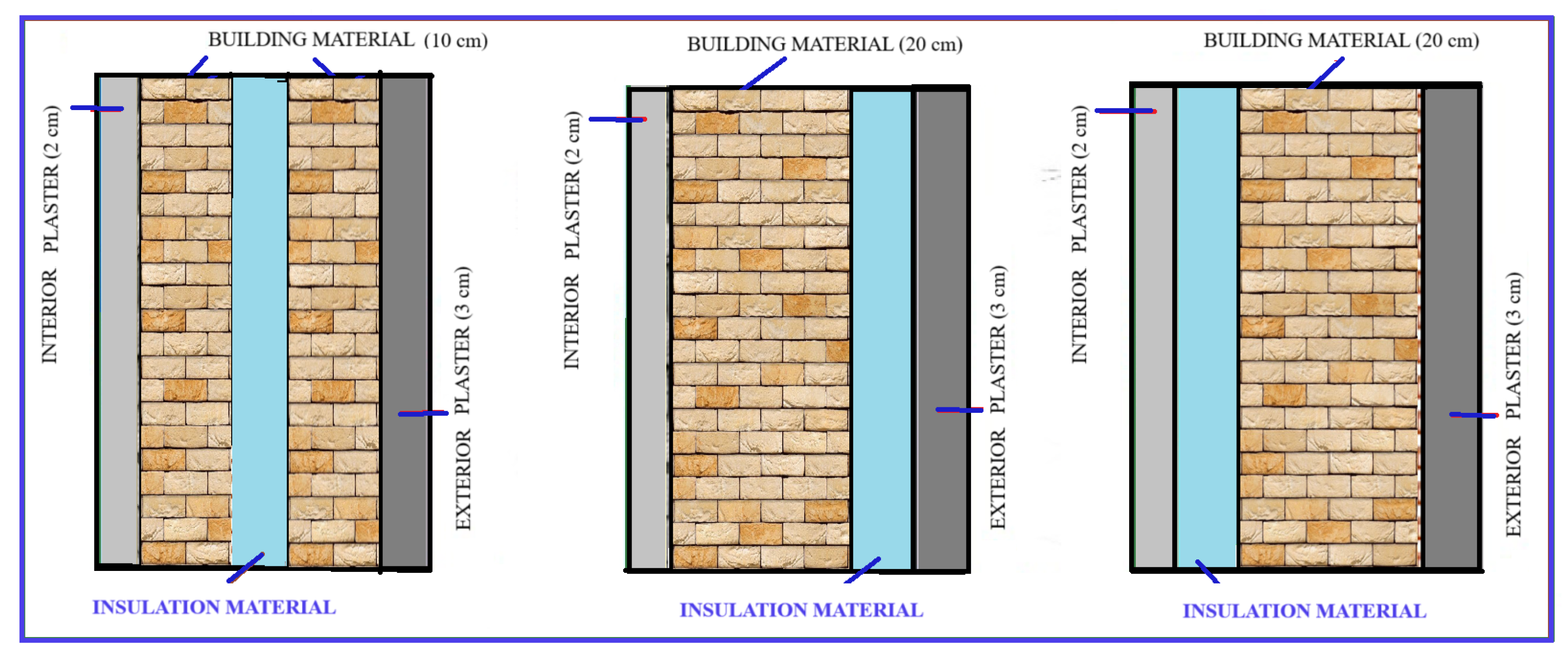
| 1 | Plaster (2.00 cm) | Isolated Concrete (20.00 cm) | XPS (5.00 cm) | Plaster (2.00 cm) | |
| 2 | Cellular Concrete (20.00 cm) | ||||
| 3 | Gas Concrete (20.00 cm) | ||||
| 4 | Brick (20.00 cm) | ||||
| 5 | Concrete Brick (20.00 cm) | ||||
| 6 | Light Clay Brick (20.00 cm) | ||||
| 7 | Light White Brick (20.00 cm) | ||||
| 8 | Sample 36 (20.00 cm) | ||||
| 9 | XPS (5.00 cm) | İsolated Concrete (20.00 cm) | |||
| 10 | Cellular Concrete (20.00 cm) | ||||
| 11 | Gas Concrete (20.00 cm) | ||||
| 12 | Brick (20.00 cm) | ||||
| 13 | Concrete Brick (20.00 cm) | ||||
| 14 | Light Clay Brick (20.00 cm) | ||||
| 15 | Light White Brick (20.00 cm) | ||||
| 16 | Sample 36 (20.00 cm) | ||||
| 17 | İsolated Concrete (10.00 cm) | XPS (5.00 cm) | İsolated Concrete (10.00 cm) | ||
| 18 | Cellular Concrete (10.00 cm) | Cellular Concrete (10.00 cm) | |||
| 19 | Gas Concrete (10.00 cm) | Gas Concrete (10.00 cm) | |||
| 20 | Brick (10.00 cm) | Brick (10.00 cm) | |||
| 21 | Concrete Brick (10.00 cm) | Concrete Brick (10.00 cm) | |||
| 22 | Light Clay Brick (10.00 cm) | Light Clay Brick (10.00 cm) | |||
| 23 | Light White Brick (10.00 cm) | Light White Brick (10.00 cm) | |||
| 24 | Sample 36 (10.00 cm) | Sample 36 (10.00 cm) | |||
| Parameter | Value |
|---|---|
| Regression model | CO2 = 0.218·E + 5418.87 |
| Emission factor (α) | 0.218 kgCO2/kWh |
Disclaimer/Publisher’s Note: The statements, opinions and data contained in all publications are solely those of the individual author(s) and contributor(s) and not of MDPI and/or the editor(s). MDPI and/or the editor(s) disclaim responsibility for any injury to people or property resulting from any ideas, methods, instructions or products referred to in the content. |
© 2026 by the author. Licensee MDPI, Basel, Switzerland. This article is an open access article distributed under the terms and conditions of the Creative Commons Attribution (CC BY) license.
Share and Cite
Balo, F. Development and Performance Evaluation of New Sustainable Bio-Based Building Insulation Materials. Sustainability 2026, 18, 2874. https://doi.org/10.3390/su18062874
Balo F. Development and Performance Evaluation of New Sustainable Bio-Based Building Insulation Materials. Sustainability. 2026; 18(6):2874. https://doi.org/10.3390/su18062874
Chicago/Turabian StyleBalo, Figen. 2026. "Development and Performance Evaluation of New Sustainable Bio-Based Building Insulation Materials" Sustainability 18, no. 6: 2874. https://doi.org/10.3390/su18062874
APA StyleBalo, F. (2026). Development and Performance Evaluation of New Sustainable Bio-Based Building Insulation Materials. Sustainability, 18(6), 2874. https://doi.org/10.3390/su18062874