Article

Research on the Impact of Supply Chain Green Strategic Alliances on Corporate Green Innovation

1
School of International Economics and Business, Nanjing University of Finance and Economics, Nanjing 210023, China
2
College of Business, Shanghai University of Finance and Economics, Shanghai 200433, China
*
Author to whom correspondence should be addressed.
Sustainability 2026, 18(6), 2875; https://doi.org/10.3390/su18062875
Submission received: 26 January 2026 / Revised: 6 March 2026 / Accepted: 11 March 2026 / Published: 14 March 2026

Abstract

Green technological innovation is a core driving force for firms’ low-carbon transformation. However, because critical green technologies and knowledge are often dispersed across upstream and downstream partners within supply chains, firms’ green transformation faces substantial challenges. Previous studies have primarily focused on internal drivers at the firm level while overlooking the empowering role of green collaborative cooperation among supply chain partners. To address this gap, this study introduces empowerment theory to systematically examine how supply chain green strategic alliances enhance firms’ green innovation capability. Using a sample of Chinese A-share listed firms from 2011 to 2023, we construct a firm-level indicator of supply chain green strategic alliances based on textual analysis and machine learning techniques and empirically test its impact on green innovation. The results show that participation in green strategic alliances significantly promotes firms’ green innovation. Mechanism analyses further reveal that this effect operates through the reconstruction of green knowledge, increased environmental investment, and improved green governance. Moreover, the positive effect is more pronounced in regions with stronger intellectual property protection, greater green credit support, and stricter environmental regulation, as well as among firms with closer supply chain relationships. This study identifies supply chain green strategic alliances as a key inter-organizational empowerment mechanism and provides important practical implications for leveraging supply chain collaboration to accelerate sustainable development and firms’ green transformation.

1. Introduction

In recent years, green innovation has become an important strategy for promoting economic growth while achieving environmental sustainability [1]. Firms increasingly recognize that green innovation can enhance competitive advantage and improve economic performance [2]. However, green innovation is typically characterized by long research and development cycles, high technological uncertainty, and significant externalities of returns [3], which impose substantial resource constraints and risk pressures on individual firms. Importantly, the challenges associated with green innovation arise not only from insufficient financial investment or limited managerial commitment, but also from the highly dispersed distribution of green knowledge and technological capabilities [4]. A firm’s green technological trajectory depends not only on its internal research capacity but also on upstream material choices, compatibility with production standards, and downstream customers’ environmental preferences [5]. In other words, critical green resources are often embedded within supply chain partners, making it difficult for firms to achieve technological breakthroughs through internal efforts alone [6]. Consequently, integrating dispersed green resources through cross-organizational collaboration has become a central issue in advancing firm green innovation.
Against this backdrop, supply chain green strategic alliances have emerged as an important form of inter-organizational collaboration that enables firms to move beyond endogenous growth paths and gain access to complementary green resources. Supply chain green strategic alliances refer to long-term cooperative relationships established between firms and their key suppliers or customers around shared environmental objectives. Through coordinated activities such as technological research and development, green procurement, cleaner production, and environmental management, these alliances aim to jointly improve environmental and economic performance [7]. Although prior studies have recognized the potential benefits of supply chain green strategic alliances, limited attention has been devoted to their impact on firm green innovation and the mechanisms through which such effects operate. Existing literature has examined the drivers of green innovation from both internal and external perspectives [8,9,10,11,12,13]. However, two limitations remain. First, most studies emphasize the passive influence of external macro institutions, such as environmental regulation and policy pressure, while overlooking firms’ strategic choices as proactive actors. Second, research focusing on organizational characteristics is often confined to the internal level of individual firms and fails to capture the synergistic effects generated by inter-organizational collaboration. As an important boundary-spanning organizational arrangement, strategic alliances blur traditional firm boundaries and become a key channel through which firms acquire external resources and capabilities [14]. Nevertheless, within the context of green innovation, how supply chain alliances empower firm innovation activities remains insufficiently understood.
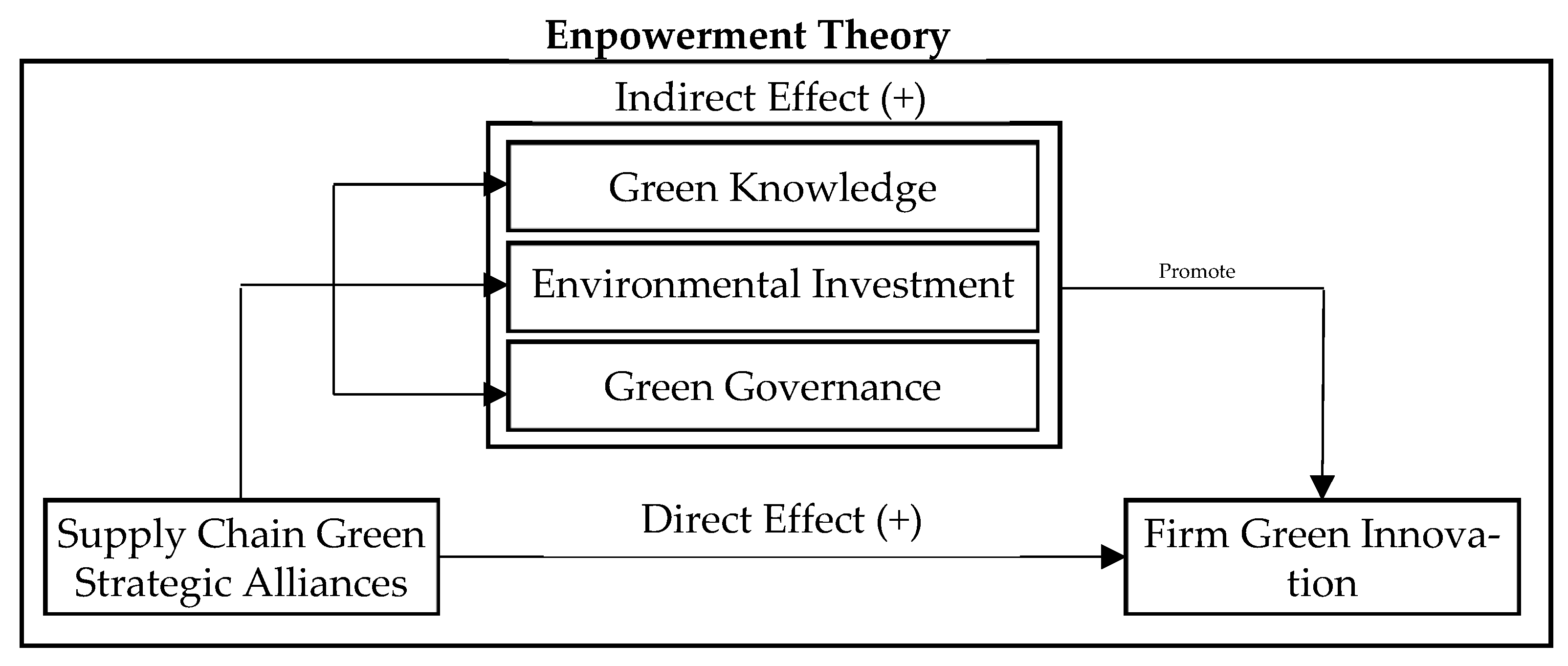
To address this gap, this study draws on empowerment theory to explain how supply chain green strategic alliances enhance firm green innovation. Empowerment theory suggests that when actors face capability gaps arising from resource scarcity, structural constraints, or insufficient motivation, external actors can strengthen their capacity and autonomy by providing resources, improving organizational structures, and facilitating knowledge transfer [15,16]. From this perspective, supply chain green strategic alliances can be viewed as a multidimensional external empowerment mechanism operating throughout the process of firm green innovation. Specifically, these alliances facilitate cross-organizational flows of green knowledge, enabling firms to access technical expertise and innovative experience dispersed among upstream and downstream partners. They also encourage member firms to increase environmental investment, providing financial support and resource guarantees for green technological research and development and equipment upgrading. In addition, by establishing long-term cooperative norms and shared environmental objectives, supply chain green strategic alliances strengthen green governance mechanisms, reduce coordination costs and transaction risks associated with green innovation, and enhance firms’ strategic willingness to engage in green innovation activities.
Based on this theoretical framework, this study addresses two research questions.
RQ1: What is the relationship between supply chain green strategic alliances and firm green innovation?
RQ2: Through what mechanisms do supply chain green strategic alliances influence firm green innovation?
Using a sample of Chinese A-share listed firms from 2011 to 2023, this study constructs a firm-level indicator of supply chain green strategic alliances based on text analysis and machine learning techniques and empirically examines their impact on firm green innovation.
This study makes four contributions to the literature. First, it extends the application of empowerment theory to inter-organizational contexts. While prior studies mainly focus on empowerment within organizations, such as individuals or teams [17,18], this study highlights relational empowerment in supply chain networks. By examining resource empowerment, structural empowerment, and institutional empowerment, this study develops a theoretical framework of inter-organizational collaborative empowerment that explains how supply chain alliances enhance firm green innovation.
Second, this study provides practical insights into how firms can overcome the resource constraints associated with green innovation. Given the high risk and long development cycle of green innovation, forming supply chain green strategic alliances offers an effective strategy for accessing environmental knowledge and stabilizing long-term resource support. By building green partnerships with upstream and downstream partners, firms can move beyond closed innovation and accelerate the generation of green technological outcomes.
Third, this study contributes to the literature on strategic alliances and firm innovation. Existing research primarily focuses on horizontal alliances and their effects on firm innovation performance [14,19,20]. In contrast, this study shifts the analytical focus to vertical alliances embedded within supply chain relationships and examines how environmentally oriented collaboration between upstream and downstream partners influences firm green innovation.
Fourth, this study introduces methodological and empirical innovations. Drawing on nearly 3.6 million inter-corporate alliance agreements from 2011 to 2023, this study applies text analysis and machine learning techniques combined with green policy keywords to construct a large-scale indicator of supply chain green strategic alliances. This approach provides a novel empirical tool for measuring green collaborative alliances and allows us to identify three mechanisms through which supply chain alliances promote firm green innovation: the reconfiguration of green knowledge boundaries, increased environmental investment, and improved green governance structures.
The remainder of this paper is organized as follows. Section 2 reviews the relevant literature. Section 3 develops the testable hypotheses. Section 4 describes the research design and empirical methodology in detail. Section 5 reports the main empirical results. Section 6 discusses the findings and presents the conclusions.

2. Literature Review

2.1. Firm Green Innovation

In recent years, with the growing emphasis on green and sustainable development, scholars have conducted extensive research on the drivers of firm green innovation. Existing studies generally examine these drivers from two perspectives: external institutional forces and internal firm characteristics. From the perspective of external drivers, institutional forces constitute a central line of inquiry. The literature mainly develops along two strands: the institutional constraint view and the institutional incentive view. On the one hand, some studies argue that environmental regulation increases the economic costs of firms’ environmental compliance and may therefore inhibit firm green innovation [8]. On the other hand, research based on the Porter Hypothesis suggests that environmental regulation can generate an innovation compensation effect by offsetting compliance costs, improving corporate productivity and competitiveness, and thereby stimulating firm green innovation [21]. In addition to regulatory constraints, governments often implement fiscal and tax incentive policies, such as subsidies, rewards, and tax rebates, to address the externality and high-risk characteristics of green innovation activities [22]. These policies help correct market failures and promote the efficient allocation of green innovation resources [23]. Moreover, through signaling effects, fiscal and tax incentives convey policy priorities and guide social capital toward environmentally oriented firms, thereby alleviating shortages of research and development funding [24]. From a stakeholder perspective, financial institutions such as banks, insurance companies, and securities firms also play an important role in supporting firm green innovation. Through financial instruments including green credit, green bonds, and green funds, these institutions channel capital toward ecological protection and environmental governance projects. Such mechanisms can alleviate firms’ financing constraints and provide financial support for technological development and green product innovation [11]. From the perspective of internal firm characteristics, several firm-level factors have been shown to influence firm green innovation. For example, executives’ green identity recognition [12], directors’ environmental backgrounds [25], younger management teams [26], and greater firm financial flexibility [27] have all been found to significantly promote firm green innovation.

2.2. Supply Chain Green Strategic Alliances

Strategic alliances, as an important form of inter-firm collaboration, have become a key organizational mechanism through which firms respond to complex environments, access external resources, and achieve collaborative innovation. Horizontal strategic alliances typically refer to cooperative relationships between firms and universities, research institutes, state-owned firms, and financial institutions. Such alliances can significantly enhance firms’ market position and competitive advantage [28,29,30]. However, because participants in horizontal alliances often share similar technological trajectories and industry experience, core knowledge can be easily imitated or replicated, which may induce opportunistic behaviors such as free riding and selective information disclosure [31]. These limitations have motivated scholars to shift their analytical focus toward supply chain networks.
Supply chain strategic alliances represent an important form of vertical collaboration that connects upstream and downstream partners and integrates core resources along the value chain, thereby improving overall supply chain coordination efficiency [32]. Their effects can be summarized in two main aspects. First, such alliances facilitate access to external resources and promote knowledge flows. They provide firms with channels to acquire diversified knowledge, technologies, and market information [33], thereby expanding firms’ knowledge boundaries and strengthening innovation capabilities. Second, supply chain alliances generate governance and coordination effects. Through relationship-specific investments and contractual arrangements, alliances help restrain opportunistic behavior, enhance mutual trust, and stabilize cooperative expectations [34]. In addition, supply chain alliances create synergistic effects through cost sharing and knowledge complementarity, thereby promoting technological innovation [35], facilitating product development [36], and accelerating the commercialization of new products [37].
Building on this literature, green strategic alliances refer to strategic partnerships established between firms and their stakeholders [38] in which complementary resources, benefits, and risks are shared to jointly create value and achieve sustainable development goals across ecological, economic, and social dimensions [7]. After joining a green strategic alliance, firms are subject to monitoring mechanisms and complementary incentive structures embedded in cooperative agreements. These arrangements strengthen both the motivation and institutional safeguards that support the achievement of firms’ green development objectives [39].

3. Hypothesis Development

3.1. Supply Chain Green Strategic Alliances and Firm Green Innovation

Empowerment theory suggests that when organizations are endowed with critical resources, structural support, and institutional safeguards, they become better able to identify environmental opportunities, integrate dispersed resources, and achieve strategic objectives [40,41]. Empowerment is reflected not only in increased resource availability but also in enhanced organizational capacity to mobilize resources, coordinate interdependent activities, and implement innovation. Importantly, empowerment operates across multiple levels, including internal organizational systems, inter-organizational relationships, and the broader institutional environment [42,43]. In the context of this study, supply chain green strategic alliances represent a form of inter-organizational empowerment oriented toward environmental objectives. By integrating green technological resources, facilitating knowledge exchange, and establishing governance and coordination mechanisms among upstream and downstream partners, these alliances strengthen firms’ capabilities to undertake green innovation. Green innovation typically involves substantial investment requirements, high technological uncertainty, and strong interdependence across supply chain actors, which often exceed the capabilities of individual firms [44]. Supply chain green strategic alliances therefore provide an important empowerment platform that improves firms’ access to green resources, supports environmental investment, and strengthens governance structures, thereby enabling corporations to overcome capability constraints and enhance firm green innovation.
From the perspective of motivation, participation in supply chain green strategic alliances strengthens firms’ strategic incentives to engage in green innovation by aligning environmental objectives with economic returns. Through alliance-based collaboration, firms and their partners can jointly develop differentiated green products and environmentally friendly production solutions, enabling them to capture green market premiums and build sustainable competitive advantages [45]. Meanwhile, under increasing institutional pressures such as carbon pricing mechanisms, ESG disclosure requirements, and environmental compliance audits, green strategic alliances provide firms with collective legitimacy and risk-sharing arrangements. These mechanisms reduce the uncertainty associated with environmental compliance and reinforce firms’ strategic commitment to green transformation [46]. Such motivation encourages corporations to proactively invest in green technologies and pursue environmentally oriented innovation strategies, thereby promoting firm green innovation [47,48].
From the perspective of capability, supply chain green strategic alliances provide firms with structured mechanisms for accessing, integrating, and utilizing external green innovation resources. Through technological knowledge sharing, expanded access to green financing channels, and contract-based governance and monitoring, these alliances strengthen firms’ capacity to overcome internal resource constraints and capability limitations that often hinder green innovation [49]. Collaborative interactions within such alliances facilitate the diffusion of green technologies, enhance firms’ absorptive capacity for environmental knowledge, and improve coordination across different stages of the value chain [49]. As a result, corporations are better able to integrate dispersed green resources and accelerate the development and commercialization of green technologies. For example, within its supply network for key components such as batteries, motors, and electronic control systems, BYD Company Limited has collaborated with upstream and downstream partners to establish a green supply chain coordination platform. Through the joint development of green procurement standards, the sharing of carbon emissions data, and the co-development of low-carbon manufacturing processes, this alliance has improved the efficiency of green technology diffusion among member corporations and promoted knowledge spillovers and green innovation upgrading across the value chain.
Based on the above analysis, the following hypothesis is proposed.
H1. 
Supply chain green alliances are positively associated with firm green innovation.

3.2. Mechanism Analysis

3.2.1. Reconstructing Green Knowledge

Reconstructing the green knowledge structure. Grounded in empowerment theory, supply chain green strategic alliances empower firms by expanding access to external green knowledge and strengthening their capability to integrate and exploit such knowledge [50,51]. By connecting upstream and downstream partners, these alliances reconstruct firms’ green knowledge boundaries through the integration of green technological knowledge, thereby facilitating firm green innovation [52,53]. Unlike modular innovation, green innovation relies more heavily on cross-boundary collaboration involving proprietary knowledge related to green production processes, product attributes, and sustainability-oriented market demand [54,55]. From the knowledge-based view, firms’ knowledge capability consists of two key dimensions: knowledge breadth and knowledge depth. Knowledge breadth is developed through the integration of heterogeneous knowledge across different domains, whereas knowledge depth arises from the intensive accumulation of expertise within specific domains [50,56].
Regarding knowledge breadth, supply chain green strategic alliances enable firms to acquire diversified inputs such as green market trends, user preferences, and eco-design knowledge [51,52]. Upstream partners typically contribute exploratory and tacit knowledge, including new material development and green technology principles, whereas downstream partners provide application-oriented knowledge related to commercialization, market feedback, and implementation strategies [53,54]. The complementarity of these heterogeneous inputs enhances firms’ ability to identify, combine, and update green knowledge. Regarding knowledge depth, repeated technical collaboration and feedback within alliances facilitate the systematic absorption of explicit knowledge, the internalization of tacit knowledge, and cumulative organizational learning [50,56]. Through this empowerment-driven reconfiguration of the green knowledge structure, supply chain green strategic alliances significantly promote firm green innovation [52,55].
Based on the above analysis, the following hypothesis is proposed:
H2a. 
Supply chain green strategic alliances enhance firm green innovation by reconstructing the green knowledge.

3.2.2. Strengthening Environmental Investment

Strengthening environmental investment. Drawing on empowerment theory, supply chain green strategic alliances empower firms by enhancing both the motivation and the capacity to allocate environmental capital, thereby strengthening the financial foundation for firm green innovation. Because sustained environmental investment represents a critical strategic resource, its accumulation and allocation play a decisive role in determining the continuity and effectiveness of green innovation activities [57]. Supply chain green strategic alliances reinforce firms’ environmental investment primarily through two channels: increased investment willingness and enhanced resource provision.
From the willingness channel, when demand for green innovation is highly uncertain, supply chain green strategic alliances enable partners to establish shared environmental objectives and stable cooperative relationships that increase the perceived certainty of returns on environmental investment. This, in turn, strengthens firms’ commitment to relationship-specific green assets and encourages long-term environmental investment [55]. From the resource-provision channel, the trust and coordination embedded in alliance relationships improve firms’ financing conditions [58]. Upstream suppliers may provide trade credit or extended payment terms, financial institutions may offer more favorable loan conditions due to the alliance’s green reputation and supply chain stability, and stable downstream procurement contracts improve the predictability of project returns. By reducing financing uncertainty and opportunity costs, this empowerment-driven increase in environmental investment significantly promotes firm green innovation [11].
Based on the above analysis, the following hypothesis is proposed:
H2b. 
Supply chain green alliances enhance firm green innovation by strengthening environmental investment.

3.2.3. Optimizing Green Governance

Optimizing the green governance structure. Grounded in empowerment theory, supply chain green strategic alliances empower firms by strengthening governance safeguards and strategic accountability, thereby improving the governance conditions for firm green innovation [59,60]. Because green innovation typically requires substantial investment, long development cycles, and uncertain short-term returns, firms may underinvest in green innovation when governance mechanisms are weak and opportunistic incentives prevail. In this context, the contractual governance embedded in supply chain green strategic alliances shapes firms’ green strategic orientation through two key dimensions: constraint and incentive [61,62].
On the constraint dimension, formal alliance contracts restrain green opportunism [59]. Given the asset specificity and long payback periods associated with green projects, short-term incentives may undermine collaborative efforts. By specifying rights and responsibilities, resource commitments, and compliance requirements among partners, alliance contracts reduce cooperation uncertainty, limit free riding and opportunistic exit, and embed green innovation within firms’ medium- and long-term strategic agendas [63]. On the incentive dimension, participation in supply chain green strategic alliances strengthens external rewards for green innovation. The alliance functions as a credible signal of firms’ green commitment and capability, improving access to institutional support such as priority government green procurement programs, collaborative project opportunities, and green certifications [62]. In addition, a stronger green reputation enhances financing conditions, credit assessments, and market evaluations, thereby lowering the cost of capital and alleviating firms’ financing constraints [60]. Through this empowerment-driven optimization of governance mechanisms, supply chain green strategic alliances significantly promote firm green innovation [64].
Based on the above analysis, the following hypothesis is proposed:
H2c. 
Supply chain green alliances enhance firm green innovation by optimizing green governance.
The theoretical framework is shown in Figure 1.

4. Methodology

4.1. Research Model Construction

This study adopts a quantitative research approach for several reasons. First, the study examines the relationship between supply chain green strategic alliances and firm green innovation, as well as the underlying mechanisms, which constitutes a typical hypothesis-testing research setting. Quantitative methods based on large-sample data and statistical analysis enable us to identify the relationships among variables and estimate the magnitude of their effects, thereby providing rigorous empirical evidence for the proposed hypotheses. Second, existing studies on green supply chain alliances have largely relied on qualitative case analyses [39]. Although such approaches provide valuable insights into the internal dynamics of alliance operations, their findings are often limited in external validity because they depend on specific organizational contexts. A quantitative approach enables theory testing across a broader industrial setting and therefore improves the generalizability of the results. Third, this study incorporates multiple control variables to account for potential confounding factors. Quantitative methods allow these factors to be effectively controlled through regression models, enabling a more precise estimation of the net effect of the core explanatory variable on firm green innovation. Accordingly, this study constructs the following regression model to test the proposed hypotheses.
GPAT i , t = β 0 + β 1 GSA i , t + β i CVs i , t + Y e a r + F i r m + ε i , t
Here, GPATi,t denotes the firm green innovation of firm i in year t, and GSAi,t denotes the supply chain green strategic alliance of firm i in year t. CVs represent a set of control variables for firm i in year t, while Year and Firm denote year fixed effects and firm fixed effects, respectively. If the coefficient β1 on GSAi,t is significantly positive, then Hypothesis 1 is supported.

4.2. Sample Selection and Data Sources

This study uses Chinese A-share listed firms in the Shanghai and Shenzhen stock markets from 2011 to 2023 as the initial research sample. The starting year of 2011 is selected for two reasons. First, after 2010, green technological innovation activities among Chinese firms entered a more active stage, and the quality of patent data improved significantly. Second, beginning in 2011, the disclosure of strategic alliance information by listed firms became more standardized, and platforms such as Eastmoney (eastmoney.com) started to systematically collect and publish alliance announcements, thereby improving data availability. The data used in this study are obtained from three professional databases and integrated through a multi-step matching procedure.
Strategic alliance data: These data are collected from strategic alliance agreement announcements disclosed by listed firms on Eastmoney. Using Python 3.11.3 scripts, we crawled and organized 3,264,000 strategic alliance announcements released by Shanghai and Shenzhen A-share listed firms between 2011 and 2023. To ensure data quality, several screening criteria were applied. Only announcements explicitly involving technological cooperation, research and development alliances, or green collaboration were retained. Announcements related solely to general commercial cooperation, such as sales agency agreements or procurement contracts, were excluded. When multiple announcements referred to the same alliance event, only the first disclosure was retained.
Firm green innovation data: These data are obtained from the IncoPat patent database, a leading global technological innovation intelligence platform that covers patent information recorded by the China National Intellectual Property Administration (CNIPA). The database has been widely used in both domestic and international academic research. We collected patent application and grant data for all listed firms during the sample period and identified green patents based on the International Patent Classification (IPC) Green Inventory issued by the World Intellectual Property Organization (WIPO), thereby constructing firm-level green innovation indicators.
Financial and corporate governance data: These data are obtained from the China Stock Market and Accounting Research (CSMAR) database, one of the most widely used financial and economic databases in empirical research. The database compiles information from official disclosure sources such as listed firms’ annual reports and interim announcements, ensuring high data reliability and accuracy.

4.3. Variable Definitions

4.3.1. Dependent Variable

Firm Green Innovation (GPAT). Following prior research [65], this study measures firm green innovation by the number of green patent applications filed by a listed firm in a given year. The variable GPAT is constructed as the natural logarithm of the number of green patent applications plus one.

4.3.2. Explanatory Variables

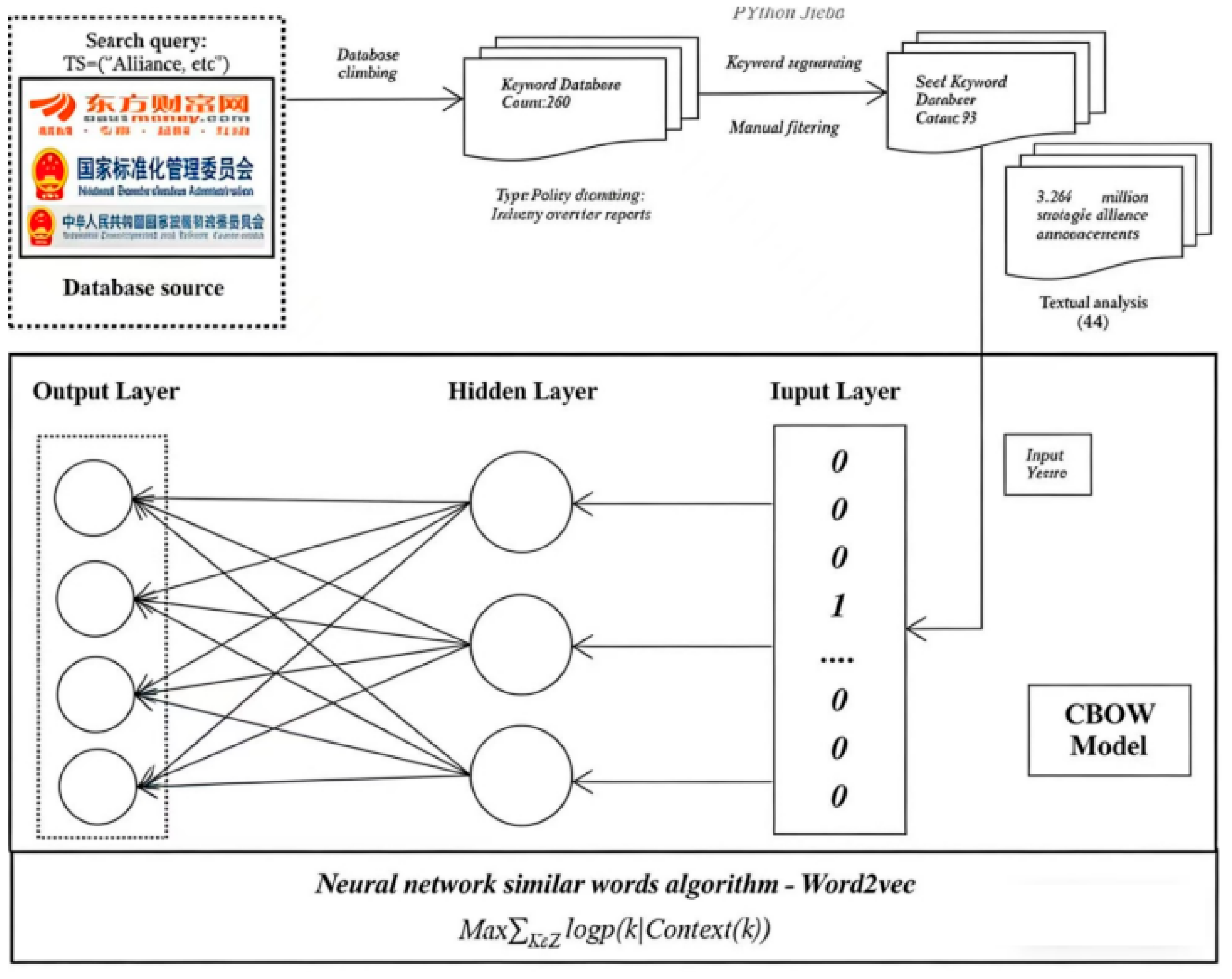
Supply chain green strategic alliance (GSA). Drawing on prior research, this study constructs an indicator of supply chain green strategic alliances using a text-mining approach. The specific steps are as follows. First, based on Eastmoney, a total of 3,264,000 announcement texts released by listed firms and containing keywords such as “strategic alliance”, “strategic union”, “strategic cooperation”, and “strategic partnership” were extracted. A Hidden Markov Model (HMM) was then applied for entity–relation extraction to identify detailed information on strategic alliance cooperation in the announcements. Second, semantic parsing was conducted on policy documents such as the Guidance Catalogue for Green Industries and the National Standards for Green Supply Chain Management. Candidate terms were generated using Jieba tokenization in Python, and 93 high-frequency seed terms were selected through double manual verification to construct a foundational domain lexicon for green alliances, covering core concepts such as cleaner production, circular economy, and carbon emission reduction. Third, semantic space mapping was performed using the Continuous Bag-of-Words (CBOW) architecture of Word2Vec, and vocabulary expansion was achieved via context-vector prediction. The objective function of the model can be expressed as: max k z logp [ k | Context ( k ) ] , where k denotes the center word, Z denotes the corpus, and Context(k) represents the contextual feature vector within the sliding window. After manual validation, a green alliance keyword repository with more than 280 terms was constructed. Fourth, semantic network analysis was conducted on key elements in the announcements, such as cooperating entities, environmental content, implementation cycle, and the scale of green investment. The analysis focused on identifying the following information: (1) whether the partners belong to an upstream–downstream relationship within the supply chain; (2) whether the cooperation content involves green technology sharing and co-development of environmental standards; and (3) whether explicit energy-saving and emission-reduction targets are included. Matching was performed using the Levenshtein distance algorithm in Python, together with manual cross-checking, and 9842 valid supply chain green strategic alliance contracts were ultimately identified. Fifth, a dynamic adjustment mechanism was established. For announcements indicating alliance termination or failure to achieve environmental targets, the alliance status was no longer counted from that year onward. Finally, an annual firm-level indicator measuring the number of supply chain green strategic alliances participated in by each firm (GSA) was constructed. A more detailed description of the indicator construction process is provided in the Appendix A and Figure A1.

4.3.3. Control Variables

This study controls for a set of variables capturing firm characteristics, firm governance characteristics, as well as industry and year effects. Firm green innovation may be influenced by factors such as firm size (Size) and leverage (Lev). In addition, effective firm governance can enhance firms’ capability to integrate technological resources. Therefore, this study includes governance-related variables such as the number of years since listing (ListAge) and board size (Board). To further account for unobserved heterogeneity across industries and time, industry and year fixed effects are included in the regression models. Detailed definitions of all variables are reported in Table 1.

5. Empirical Results and Analysis

5.1. Descriptive Statistics

Table 2 reports the descriptive statistics of the main variables. The mean value of firm green innovation (GPAT) is 0.265, with a minimum of 0 and a maximum of 2.996, indicating substantial variation in the level of firm green innovation among Chinese listed firms. The mean value of participation in supply chain green strategic alliances (GSAN) is 0.079, with a standard deviation of 0.394, a minimum of 0, and a maximum of 9, suggesting considerable dispersion in firms’ participation in such alliances across the sample. The descriptive statistics of the remaining control variables fall within reasonable ranges and are therefore not discussed in detail.

5.2. Correlation Analysis

Table 3 reports the Pearson correlation coefficients among the main variables. The results indicate that supply chain green strategic alliances are significantly and positively correlated with firm green innovation (p < 0.01), suggesting that firms with greater participation in green strategic alliances tend to exhibit higher levels of green innovation. This finding provides preliminary support for the main hypothesis of this study. With respect to the control variables, firm size, financial leverage, return on assets, cash flow, growth opportunities, board size, and ownership concentration are all positively correlated with firm green innovation. These results indicate that firms with larger size, stronger profitability, greater financial liquidity, stronger growth prospects, and more effective governance structures tend to demonstrate higher levels of green innovation. In contrast, the proportion of independent directors and CEO duality are negatively correlated with firm green innovation, suggesting that board independence and concentrated managerial authority may influence firms’ strategic orientation toward environmental governance. In addition, the absolute values of most pairwise correlation coefficients are below 0.5, suggesting that severe multicollinearity is unlikely to be a concern. To further assess this issue, variance inflation factors (VIF) are calculated. All VIF values are below 2, which is well below the conventional threshold of 10, indicating that multicollinearity does not pose a serious concern for the regression analysis.

5.3. Baseline Regression

Based on Model (1), this study estimates multivariate regression models to examine the impact of supply chain green strategic alliances on firm green innovation. The regression results are reported in Table 4. Columns (1) and (2) report that the coefficients on supply chain green strategic alliances are 0.275 and 0.134, respectively, both statistically significant at the 1% level. After introducing two-way fixed effects in Column (3), the estimated coefficient of supply chain green strategic alliances remains positive and significant at the 1% level. These results indicate that greater participation in supply chain green strategic alliances is associated with higher levels of firm green innovation, providing empirical support for the main hypothesis of this study.

5.4. Robustness Checks

5.4.1. Alternative Measures of the Explanatory Variable

To test the robustness of the baseline results, this study replaces the baseline explanatory variable with three alternative measures: a dummy variable indicating whether a firm participates in a supply chain green strategic alliance (GSA), the number of sentences related to supply chain green strategic alliances disclosed in firm reports (GSAS), and the tone score of supply chain green strategic alliance statements (GSAT). Columns (1)–(3) of Table 5 report that after adopting these alternative measures of the explanatory variable, the estimated coefficients remain positive and statistically significant at the 1% level. These results confirm the robustness of the main findings.

5.4.2. Adjusting the Sample Period

To mitigate the potential impact of the COVID-19 pandemic, this study restricts the sample period to 2011–2019 and re-estimates the regression model. As reported in Column (4) of Table 5, the coefficient of the core explanatory variable remains positive and statistically significant at the 1% level, providing additional support for the robustness of the main findings.

5.4.3. Exclusion Tests

Improvements in firm green innovation may arise from structural factors other than the direct effect of supply chain green strategic alliances. For example, a firm’s position in the alliance network, its participation in industry associations or chambers of commerce, and the size of its upstream and downstream partners may increase external connectivity and generate scale spillover effects, thereby influencing the level of firm green innovation. To address these potential concerns, this study introduces additional control variables into the baseline regression model, including alliance network centrality (Degree, Close), the number of executives who are members of industry associations or chambers of commerce (Num), the average firm size of the top five suppliers (Supply), and the average firm size of the top five customers (Custom). As reported in Columns (5)–(7) of Table 5, the coefficient of supply chain green strategic alliances remains positive and statistically significant at the 1% level. These results indicate that the baseline findings remain robust after controlling for these additional factors.

5.5. Endogeneity Tests

5.5.1. Propensity Score Matching (PSM)

Considering that firms participating in supply chain green strategic alliances and those that do not participate may differ systematically in operational characteristics and other dimensions, this study employs propensity score matching (PSM) to alleviate potential sample selection bias. First, using a Logit model, we take whether a firm participates in a supply chain green strategic alliance as the dependent variable and include the full set of baseline control variables as covariates to estimate propensity scores. Secondly, following the common methods in the literature, we use one-to-one nearest neighbor matching and kernel matching to identify control firms with similar features. The baseline regression is then re-estimated using the matched sample. The regression results reported in Columns (1)–(2) of Table 6 show that the coefficient on supply chain green strategic alliances remains positive and statistically significant at the 1% level, indicating that the baseline findings remain robust after accounting for potential selection bias.

5.5.2. Heckman Two-Stage Model

To address the potential problem of sample selection bias, this study adopts the Heckman two-stage model. In the first stage, a Probit model is used to estimate the inverse Mills ratio (IMR), where the explanatory variables consist of firm characteristics and firm governance variables. In the second stage, the estimated IMR is incorporated into the baseline regression as an additional control variable to test whether potential selection bias biases the main results. As reported in Column (3) of Table 6, after including the IMR, the coefficient on supply chain green strategic alliances remains positive and statistically significant. This result indicates that the positive relationship between supply chain green strategic alliances and firm green innovation remains robust after accounting for potential selection bias.

5.6. Mechanism Test

The empirical results reported in Table 4 show that supply chain green strategic alliances significantly promote firm green innovation. However, the specific mechanisms through which this effect operates remain unclear. To further examine the underlying mechanisms, this study conducts mechanism analyses focusing on the three pathways proposed in the research hypotheses: the reconfiguration of green knowledge, environmental investment, and the optimization of green governance. Therefore, the following empirical models are specified to test these mechanisms.
Mediator i , t = β 0 + β 1 GSAN i , t + β 2 CVs i , t + Y e a r + F i r m + ε i , t
In the mechanism analysis, Mediatori,t represents the mediating variable for firm i in year t, GSANi,t denotes the supply chain green strategic alliance variable, and other control variables remain consistent with the baseline regression model.
Firstly, based on theoretical arguments, supply chain green strategic alliances can enhance green innovation among firms by promoting green knowledge exchange and resource sharing, thereby promoting the absorption, restructuring, and reuse of green technologies. To capture this mechanism, this study uses green knowledge diversification as a proxy indicator. According to previous literature [66]. Green Knowledge Diversification (KD) is calculated using the Techman entropy index as follows: i = 1 n p i l n ( 1 / p i ) , where p i = P i / P ; i represents the technology category in the firm’s knowledge base; N represents all technology categories covered by the firm’s patents; P i represents the number of patents related to technology category i in the corporation; P represents the total number of green patents in the firm. Column (1) of Table 7 shows that, at the 1% significance level, supply chain green strategic alliances are significantly and positively associated with green knowledge diversification, indicating that firms obtain more heterogeneous green knowledge and develop stronger green knowledge restructuring capabilities through participation in green strategic alliances. Therefore, the green knowledge reconstruction mechanism hypothesis is supported.
Secondly, supply chain green strategic alliances can promote firm green innovation by strengthening environmental investment. On the one hand, investments in relationship-specific assets such as research and development facilities, energy-saving equipment, and green production processes can shorten the iteration cycle of green technologies, accelerate the output of green innovation, and facilitate commercialization. On the other hand, firms’ environmental investment not only provides the material foundation for resource integration but also significantly improves the efficiency and quality of green knowledge transformation and integration. Therefore, this study examines this mechanism from the perspective of environmental asset investment. Specifically, Environmental Asset Investment (GR&D) is measured using entries in the “Construction in Progress” section of listed firms’ annual reports that contain keywords such as “Environmental Protection,” “Greening,” “Energy Conservation,” “Emission Reduction,” “Desulfurization,” “Dust Removal,” “Wastewater Treatment,” and “Soil and Water Conservation.” These entries are identified as environmental investment projects, and the total amount is treated as firms’ environmental expenditure. The intensity of environmental asset investment is then measured as the ratio of this amount to capitalized expenditures, including cash paid for the purchase of fixed assets, intangible assets, and other long-term assets. The regression results reported in Column (2) of Table 7 indicate a significant positive relationship between supply chain green strategic alliances and environmental asset investment at the 1% significance level, suggesting that participation in supply chain green strategic alliances significantly increases firms’ environmental investment. Therefore, the environmental investment mechanism hypothesis is supported.
Finally, supply chain green strategic alliances can also promote firm green innovation by optimizing green governance structures. Strategic alliance governance has mainly evolved into two core forms: contract governance and incentive governance. To test this mechanism, this study employs two variables, namely management opportunism and government environmental subsidies, to examine the role of supply chain green strategic alliances in governance optimization. Management opportunism (MGO) is constructed through factor analysis based on three dimensions: environmental responsibility, social responsibility, and governance responsibility. Government Environmental Subsidies (GES) are measured using detailed information disclosed under the “Government Subsidies” section in the annual report notes of listed firms. Specifically, entries containing keywords such as “environmental governance”, “energy conservation and emission reduction”, “environmental protection subsidies”, and “environmental protection rewards” are extracted, and the natural logarithm of the total amount plus one is used as a proxy for the intensity of government environmental subsidies. The regression results reported in Columns (3) and (4) of Table 7 indicate that supply chain green strategic alliances are significantly negatively associated with management opportunism and positively associated with government environmental subsidies, with statistical significance at the 5% and 1% levels, respectively. These findings suggest that participation in supply chain green strategic alliances significantly reduces opportunistic behavior and strengthens external incentive mechanisms. Therefore, the green governance optimization mechanism hypothesis is supported.

5.7. Cross-Sectional Analysis

5.7.1. Intellectual Property Rights Protection

Strong intellectual property protection can alleviate firms’ concerns about the potential leakage of core technologies within alliances and facilitate internal diffusion of tacit knowledge. At the same time, stronger intellectual property protection provides legal safeguards for the application and commercialization of green technologies, thereby increasing firms’ incentives to engage in technological integration. Accordingly, this study uses China’s National Intellectual Property Pilot and Demonstration City program as a proxy for regional intellectual property protection intensity (GP). As reported in Column (1) of Table 8, the coefficient on the interaction term GSAN × GP is 0.010 and is statistically significant at the 5% level. This result indicates that in regions with stronger intellectual property protection, supply chain green strategic alliances have a stronger positive effect on firm green innovation.

5.7.2. Green Credit

Green credit, as an important financing instrument for guiding firms’ green investment, can alleviate financing constraints in the process of green technology integration by providing access to relatively low-cost capital. Alliance members can use green credit to accelerate the commercialization of green technologies and strengthen their commitment to environmental responsibilities within the alliance, thereby reinforcing the strategic commitment to firm green innovation. This study measures firms’ access to green credit based on China’s Green Credit Guidelines policy (ER). As reported in Column (2) of Table 8, the coefficient on the interaction term GSAN × ER is 0.006 and is statistically significant at the 5% level. This result indicates that under stronger green credit support, supply chain green strategic alliances play a stronger role in promoting firm green innovation.

5.7.3. Environmental Regulation

Environmental regulation increases firms’ compliance costs and incentivizes alliance members to adopt more proactive strategies for green transformation. At the same time, it encourages collaborative relationships among alliance partners, thereby reducing institutional transaction costs and strengthening the technological integration role of green strategic alliances. The intensity of environmental regulation is measured by constructing an index based on the frequency of environment-related keywords in provincial government work reports in China (IPP). As reported in Column (3) of Table 8, the coefficient on the interaction term GSAN × IPP is 0.010 and is statistically significant at the 5% level. This result indicates that stronger environmental regulation amplifies the positive effect of supply chain green strategic alliances on firm green innovation.

5.7.4. Supply Chain Relationship

Strong supply chain relationships can reduce information asymmetry and opportunistic behavior among alliance members, thereby providing a trust-based foundation for knowledge and resource sharing. At the same time, stable collaborative relationships help build a shared green vision among alliance partners and strengthen firms’ willingness to sustain long-term investment in green innovation. In this study, supply chain relationship quality is measured by the average of the sales share attributable to the top five customers and the procurement share attributable to the top five suppliers (Scii). As reported in Column (4) of Table 8, the coefficient on the interaction term GSAN × Scii is 0.013 and is statistically significant at the 1% level. This result indicates that for firms with stronger supply chain relationships, green strategic alliances are more effective in promoting firm green innovation.

6. Conclusions, Discussion, Implications, and Limitations

6.1. Conclusions

Using a sample of Chinese A-share listed firms from 2011 to 2023, this study constructs a firm-level measure of supply chain green strategic alliances based on textual analysis and machine learning and examines its impact on firm green innovation. The results show that firms participating in supply chain green strategic alliances demonstrate significantly higher levels of green innovation output, suggesting that inter-firm environmental collaboration enhances technological capability rather than serving merely symbolic roles. Mechanism analyses indicate that this effect operates through three channels: the expansion of green knowledge, increased environmental investment, and improved green governance. These mechanisms collectively strengthen firms’ capacity to engage in green innovation with long-term environmental benefits. Cross-sectional analyses further show that the positive effect of supply chain green strategic alliances is stronger in regions with stronger intellectual property protection, greater green credit support, and stricter environmental regulation, as well as among firms with closer supply chain relationships. These findings are consistent with the view that institutional support and relational stability enhance the effectiveness of collaborative green innovation. Overall, this study contributes to the literature on firm innovation and supply chain networks by identifying green strategic alliances as an important organizational mechanism through which firms overcome capability and resource constraints and promote green technological transformation under increasing environmental pressures.

6.2. Discussion

Our findings contribute to the growing literature that identifies supply chain relationships as an important determinant of firm environmental innovation. Prior research shows that environmental pressures can propagate along customer–supplier links and induce upstream firms to improve their green technological activities, highlighting the governance role of supply chain partners in shaping firms’ innovation incentives [28]. Consistent with this literature, our results indicate that supply chain relationships significantly influence firms’ environmental behavior. However, while prior studies mainly emphasize pressure transmission arising from regulatory exposure or partner environmental risk, we show that voluntary supply chain green strategic alliances constitute an additional channel that enhances firms’ green innovation capability. This finding suggests that supply chain collaboration not only constrains corporations through external pressure but also enables them to build internal innovation capacity.
Our results are also consistent with the strategic alliance and green supply chain literature showing that green alliances promote green innovation through inter-organizational learning and resource integration [7,67]. Extending this literature, we provide large-sample archival evidence based on a machine-learning measure of supply chain green alliances and identify specific internal mechanisms through which alliances influence innovation outcomes. Specifically, supply chain green alliances expand firms’ access to external environmental knowledge, increase environmental investment, and strengthen green governance structures. These findings provide microlevel evidence explaining how collaborative arrangements translate into tangible green innovation outputs, thereby addressing concerns that alliance participation may reflect symbolic environmental engagement rather than substantive technological change.
Moreover, our cross-sectional evidence helps reconcile mixed findings in recent research regarding the institutional conditions under which green alliances are most effective. Some studies suggest that alliances play a substitution role in weak institutional environments by compensating for resource constraints [67]. In contrast, we find that the innovation effect is stronger in regions with stronger intellectual property protection, greater green credit availability, and stricter environmental regulation. This pattern is consistent with the argument that stronger institutional protection reduces knowledge appropriation risk and improves firms’ ability to appropriate returns from innovation, thereby strengthening incentives to engage in alliance-based knowledge exchange and long-term environmental investment [68].
Finally, our findings complement emerging evidence on green innovation diffusion within supply chain networks. Recent studies show that green innovation can spread across supply chain partners through knowledge sharing and inter-firm learning [69,70]. We extend this literature by demonstrating that formalized supply chain green strategic alliances not only facilitate knowledge spillovers but also induce changes in firms’ investment and governance decisions, which jointly enhance green technological innovation. Overall, our study provides new evidence that supply chain green strategic alliances represent an important organizational mechanism through which firms strengthen innovation capability and respond to increasing environmental and regulatory pressures.

6.3. Theoretical Contributions

This study contributes to empowerment theory by extending it to the context of supply chain green strategic alliances and clarifying how inter-organizational empowerment translates into firm green innovation through internal structural transformation. While prior empowerment research has primarily emphasized how internal organizational practices or digital technologies enhance firm capabilities, this study conceptualizes supply chain green strategic alliances as an inter-firm empowerment mechanism that strengthens firms’ strategic capacity for green innovation. Specifically, we show that such alliances empower firms by reconstructing their green knowledge structures, strengthening environmental investment capacity, and optimizing green governance arrangements. These findings reveal that empowerment operates through three interrelated pathways: knowledge empowerment, which expands and deepens firms’ green knowledge bases; resource empowerment, which enhances firms’ ability and willingness to allocate environmental capital; and governance empowerment, which aligns internal decision-making structures with long-term green innovation objectives. By identifying these internal transformation mechanisms, this study moves empowerment theory beyond a general capability-enhancement perspective and provides a more integrated theoretical explanation of how inter-organizational collaboration reshapes firms’ knowledge structures, resource allocation, and governance foundations to support sustained green innovation.

6.4. Managerial Implications

Based on the above findings, this study yields several important managerial implications. First, managers should recognize supply chain green strategic alliances not merely as compliance-driven environmental initiatives but as a core strategic mechanism for building firm green innovation capability. Rather than relying solely on internal R&D, firms can leverage alliances with upstream and downstream partners to access complementary green knowledge and technologies, thereby overcoming capability constraints arising from fragmented resources. Second, firms should actively use green alliances to restructure their green knowledge boundaries by establishing stable channels for joint learning, technology sharing, and coordinated problem solving. Such collaboration can reduce uncertainty and improve the efficiency of green innovation activities. Third, the results indicate that participation in green alliances stimulates environmental investment and strengthens green governance structures. Managers are therefore encouraged to incorporate explicit environmental objectives, contractual safeguards, and accountability mechanisms into alliance agreements in order to mitigate opportunistic behavior and reinforce long-term commitment to green innovation projects. Fourth, because the innovation-enhancing effect of green strategic alliances is stronger under conditions of robust intellectual property protection, greater green credit availability, stricter environmental regulation, and closer supply chain relationships, firms should strategically select alliance partners and operating environments where institutional support and relational embeddedness can maximize the benefits of collaborative green innovation. Overall, these implications suggest that supply chain green strategic alliances function as an inter-firm empowerment mechanism through which firms can simultaneously strengthen internal innovation capability and respond more effectively to environmental and regulatory pressures, thereby accelerating their transition toward sustainable and low-carbon development.

6.5. Limitations and Future Research

This study has several limitations that provide opportunities for future research. First, our analysis focuses on publicly listed firms, which generally possess greater financial resources, stronger governance structures, and higher disclosure transparency than small and medium-sized firms. As a result, listed firms may be better positioned to establish green strategic alliances and invest in green innovation, which may limit the generalizability of our findings to smaller and more resource-constrained firms. Future research could examine privately held firms and small and medium-sized firms to assess whether supply chain green strategic alliances play a similar capability-enhancing role in these settings. Second, our sample is drawn from Chinese listed firms operating within a distinct institutional environment characterized by evolving environmental regulation and expanding green finance. These institutional features may influence both alliance formation and innovation incentives. Future research could extend the analysis to other countries and institutional contexts to evaluate the external validity of our findings.


Author Contributions

Conceptualization, R.X., W.X., Q.D. and L.X.; Methodology, W.X.; Software, W.X.; Formal analysis, R.X., W.X. and Q.D.; Investigation, R.X., W.X. and Q.D.; Data curation, R.X. and W.X.; Writing—original draft, R.X.; Writing—review & editing, R.X., W.X., Q.D. and L.X.; Project administration, L.X.; Funding acquisition, L.X. All authors have read and agreed to the published version of the manuscript.

Funding

This research received no external funding.

Institutional Review Board Statement

Not applicable.

Informed Consent Statement

Not applicable.

Data Availability Statement

The raw data supporting the conclusions of this article will be made available by the authors on request.

Conflicts of Interest

The authors declare no conflict of interest.

Appendix A. Examples of Feature Keywords and Classification Criteria for Identifying Supply Chain Green Strategic Alliances

In this study, a text analysis approach is employed to identify supply chain green strategic alliances from strategic alliance announcements disclosed by listed firms. Each announcement is evaluated individually based on three sequential screening criteria. The specific procedure is shown in Figure A1.
Step 1. Identification of partner relationships
The first step determines whether the alliance involves upstream or downstream supply chain partners. An alliance is classified as a supply chain relationship if the announcement contains keywords indicating vertical cooperation, such as supply chain, upstream and downstream, supplier, vendor, purchaser, distributor, dealer, agent, channel partner, customer, supply chain coordination, demand and supply parties, procurement party, supplying party, and other related terms.
Step 2. Identification of cooperation content
Conditional on the presence of a supply chain relationship, the announcement is further examined to determine whether it involves green cooperation. An alliance is classified as containing green content if the announcement includes expressions related to green technologies or environmental standards. Specifically, three categories of keywords are used.
(1)
Green technology sharing. Keywords include green technology, environmental protection technology, clean technology, energy-saving technology, emission reduction technology, low-carbon technology, new energy technology, renewable energy technology, ecological restoration technology, pollution control technology, end-of-pipe treatment technology, source reduction technology, circular utilization technology, comprehensive resource utilization, green processes, clean production processes, technology sharing, technology transfer, technology licensing, technology exchange, technological cooperation, joint research and development, co-development, technology introduction, technology output, and technology diffusion.
(2)
Joint development of environmental standards. Keywords include environmental standards, green standards, low-carbon standards, energy efficiency standards, emission standards, pollutant discharge standards, energy consumption standards, green certification, environmental certification, low-carbon certification, eco-label, carbon label, green evaluation, environmental evaluation, joint formulation, co-formulation, standard co-construction, mutual recognition of standards, access standards, technical specifications, and environmental regulations.
(3)
Green research and development. Keywords include green R&D, environmental R&D, green innovation, green technological innovation, clean technology R&D, environmental product development, green product design, eco-design, green design, environmental materials, green materials, biodegradable materials, and renewable materials.
Step 3. Identification of cooperation objectives
The final step examines whether the alliance contains explicit environmental performance goals. An alliance is regarded as having a clear green orientation if the announcement includes statements related to the following objectives.
(1)
Energy saving and efficiency improvement. Keywords include energy saving, energy conservation, reduction in energy consumption, energy efficiency improvement, energy utilization rate, decline in energy intensity, and energy savings.
(2)
Emission reduction and pollution control. Keywords include emission reduction, discharge reduction, pollution abatement, carbon emission reduction, carbon neutrality, zero carbon, low-carbon emissions, pollutant reduction, clean production, pollution control, compliant discharge, ultra-low emissions, near-zero emissions, and zero emissions.
(3)
Resource recycling. Keywords include circular utilization, resource recycling, waste utilization, reuse, regeneration, resource recovery, harmless treatment, reduction, resource conservation, and improvement in resource use efficiency.
(4)
Environmental performance objectives. Keywords include environmental goals, energy-saving targets, emission-reduction targets, carbon targets, green development goals, sustainable development goals, environmental performance, green performance, environmental commitments, and energy conservation and emission-reduction responsibilities.
In practice, a hierarchical screening procedure is adopted to construct the indicator of supply chain green strategic alliances. First, announcements that satisfy Step 1 (supply chain relationship) are retained. Second, among these announcements, those meeting Step 2 (green cooperation content) are further selected. Finally, for announcements that satisfy the first two criteria, the presence of Step 3 (explicit environmental objectives) is recorded as an auxiliary measure of the alliance’s green intensity.
Figure A1. Main Steps in Constructing the Supply Chain Green Strategic Alliance Indicator.
Sustainability 18 02875 g0a1

References

  1. Alam, S.; Zhang, J.; Shehzad, M.U.; Boamah, F.A.; Wang, B. The Inclusive Analysis of Green Technology Implementation Impacts on Employees Age, Job Experience, and Size in Manufacturing Firms: Empirical Assessment. Environ. Dev. Sustain. 2024, 26, 4467–4486. [Google Scholar] [CrossRef]
  2. Alam, S.; Zhang, J.; Khan, N.; Ali, A. Mechanism of Knowledge Management Process towards Minimizing Manufacturing Risk under Green Technology Implementation: An Empirical Assessment. Environ. Sci. Pollut. Res. 2023, 30, 51977–51994. [Google Scholar] [CrossRef] [PubMed]
  3. Ji, H.; Yang, L.; Lian, C. CEO Power and Green Innovation: Evidence from China. Sustainability 2025, 17, 3660. [Google Scholar] [CrossRef]
  4. Alam, S.; Zhang, J.; Muhammad, S.; Ali, A.; Khan, N. The Mechanism of Knowledge Management Process toward Minimizing Technical Risks under Green Implementation Network: A Direct and Configurational Approach. J. Manuf. Technol. Manag. 2023, 34, 937–960. [Google Scholar] [CrossRef]
  5. Sun, R.; He, D.; Yan, J. Dynamic Analysis of Green Technology Innovation in Products and Processes under Supply Chain Competition Scenarios—A Study Based on Stochastic Differential Game Model. J. Environ. Manag. 2025, 373, 123545. [Google Scholar] [CrossRef]
  6. Lian, G.; Xu, A.; Zhu, Y. Substantive Green Innovation or Symbolic Green Innovation? The Impact of ER on Enterprise Green Innovation Based on the Dual Moderating Effects. J. Innov. Knowl. 2022, 7, 100203. [Google Scholar] [CrossRef]
  7. Bai, X.; Coelho, A.; Lopes Cancela, B. The Relationship between Green Supply Chain and Green Innovation Based on the Push of Green Strategic Alliances. Corp. Soc. Responsib. Environ. Manag. 2024, 31, 1026–1041. [Google Scholar] [CrossRef]
  8. Zhao, Z.; Zhao, Y.; Lv, X.; Li, X.; Zheng, L.; Fan, S.; Zuo, S. Environmental Regulation and Green Innovation: Does State Ownership Matter? Energy Econ. 2024, 136, 107762. [Google Scholar] [CrossRef]
  9. Lu, H.; Zhang, Y.; Jiang, J.; Cao, G. Do Market-Based Environmental Regulations Always Promote Enterprise Green Innovation Commercialization? J. Environ. Manag. 2025, 375, 124183. [Google Scholar] [CrossRef]
  10. Wu, S.; Ning, L.; Mu, S. Exploring the Nexus between Technological Collaboration and Green Innovation: The Role of Corporate R&D Structure and Managerial Orientation. J. Bus. Res. 2025, 199, 115561. [Google Scholar] [CrossRef]
  11. Lei, H.; Gao, R.; Ning, C.; Sun, G. Green Finance and Corporate Green Innovation. Financ. Res. Lett. 2025, 72, 106577. [Google Scholar] [CrossRef]
  12. Hu, W.; Shi, S. CEO Green Background and Enterprise Green Innovation. Int. Rev. Econ. Financ. 2025, 97, 103765. [Google Scholar] [CrossRef]
  13. Yin, J.; Gao, X. Do the Environmental Underperformance Intensity and Duration Affect Corporate Green Innovation? Evidence from the Chinese Manufacturing Industry. J. Bus. Res. 2026, 209, 116093. [Google Scholar] [CrossRef]
  14. Chemmanur, T.J.; Shen, Y.; Xie, J. Innovation beyond Firm Boundaries: Strategic Alliances and Corporate Innovation. J. Corp. Financ. 2023, 80, 102418. [Google Scholar] [CrossRef]
  15. Mahmoud, M.A.; Ahmad, S.; Poespowidjojo, D.A.L. Psychological Empowerment and Individual Performance: The Mediating Effect of Intrapreneurial Behaviour. Eur. J. Innov. Manag. 2022, 25, 1388–1408. [Google Scholar] [CrossRef]
  16. Hasanein, A.M.; Elrayah, M. Beyond the Workplace: How Psychological Empowerment Influences Employee Creativity in the Saudi Hotel Sector—The Mediating Role of Affective Commitment and the Moderating Role of Psychological Safety. Eur. J. Investig. Health Psychol. Educ. 2025, 15, 76. [Google Scholar] [CrossRef]
  17. Rothman, L.; De Vijlder, F.; Schalk, R.; Van Regenmortel, M. A Systematic Review on Organizational Empowerment. Int. J. Organ. Anal. 2019, 27, 1336–1361. [Google Scholar] [CrossRef]
  18. Cui, Y.; Yu, G. A Cross-Level Examination of Team-Directed Empowering Leadership and Subordinates’ Innovative Performance: An AMO Theory Perspective. Int. J. Manpow. 2021, 42, 1257–1278. [Google Scholar] [CrossRef]
  19. Li, K.; Qiu, J.; Wang, J. Technology Conglomeration, Strategic Alliances, and Corporate Innovation. Manag. Sci. 2019, 65, 5065–5090. [Google Scholar] [CrossRef]
  20. Lehkra, P.; Rajan, R.; Dhir, S. Critical Antecedents Influencing Innovation Performance of Strategic Alliance: A Meta Analytical View. J. Bus. Ind. Mark. 2025, 40, 2028–2043. [Google Scholar] [CrossRef]
  21. Porter, M.E.; Linde, C. van der Toward a New Conception of the Environment-Competitiveness Relationship. J. Econ. Perspect. 1995, 9, 97–118. [Google Scholar] [CrossRef]
  22. Huang, X.; Bi, Y.; Xu, Z.; Huang, X.; Liu, F.; Liu, J. Shutting down or Helping to Transform? Green Fiscal Policy, Fiscal Decentralisation and Investment Efficiency of Heavily Polluting Companies—A Capacity Utilisation-Based Perspective. J. Asian Econ. 2025, 100, 102011. [Google Scholar] [CrossRef]
  23. Wang, H.; Yang, J.; Zhu, N. Does Tax Incentives Matter to Enterprises’ Green Technology Innovation? The Mediating Role on R&D Investment. Sustainability 2024, 16, 5902. [Google Scholar] [CrossRef]
  24. Yang, L.; Song, S.; Liu, C. Green Signals: The Impact of Environmental Protection Support Policies on Firms’ Green Innovation. Bus. Strategy Environ. 2024, 33, 3258–3278. [Google Scholar] [CrossRef]
  25. Liu, L.; Dong, H.; Qi, L. How Directors with Green Backgrounds Drive Corporate Green Innovation: Evidence from China. Sustainability 2025, 17, 6944. [Google Scholar] [CrossRef]
  26. Chen, Z.; Li, B.; Lou, X.; Liang, Y.; Feng, T. Is the Increasing Carbon Pressure an Incentive or Obstacle to Corporate Creativity? Evidence from Chinese Listed Firms. Struct. Change Econ. Dyn. 2025, 74, 186–201. [Google Scholar] [CrossRef]
  27. Ma, S.; Appolloni, A. Can Financial Flexibility Enhance Corporate Green Innovation Performance? Evidence from an ESG Approach in China. J. Environ. Manag. 2025, 387, 125869. [Google Scholar] [CrossRef] [PubMed]
  28. Lin, H.; Wen, J.; Li, W.; He, Y. Strategic Alliances and Corporate ESG Performance. Int. Rev. Econ. Financ. 2025, 98, 103855. [Google Scholar] [CrossRef]
  29. Lobo, C.A.; Marinho, A.; Santos Pereira, C.; Azevedo, M.; Moreira, F. The Role of Leadership and Strategic Alliances in Innovation and Digital Transformation for Sustainable Entrepreneurial Ecosystems: A Comprehensive Analysis of the Existing Literature. Sustainability 2025, 17, 6182. [Google Scholar] [CrossRef]
  30. Gulati, R. Alliances and Networks. Strateg. Manag. J. 1998, 19, 293–317. [Google Scholar] [CrossRef]
  31. Zhong, Y.; Wang, A.; Aalbers, R.; McCarthy, K.J.; Zhang, R. Keeping Things Cordial: Competition, Cooperation and Coopetition in Venture Capital Syndicates. J. Bus. Res. 2025, 201, 115638. [Google Scholar] [CrossRef]
  32. Zhang, Y.; Tong, T.W. How Vertical Integration Affects Firm Innovation: Quasi-Experimental Evidence. Organ. Sci. 2021, 32, 455–479. [Google Scholar] [CrossRef]
  33. Hipp, A.; Binz, C. Firm Survival in Complex Value Chains and Global Innovation Systems: Evidence from Solar Photovoltaics. Res. Policy 2020, 49, 103876. [Google Scholar] [CrossRef]
  34. Onofrei, G.; Nguyen, H.M.; Zhang, M.; Fynes, B. Building Supply Chain Relational Capital: The Impact of Supplier and Customer Leveraging on Innovation Performance. Bus. Strategy Environ. 2020, 29, 3422–3434. [Google Scholar] [CrossRef]
  35. Zahoor, N.; Khan, Z.; Wu, J.; Tarba, S.Y.; Donbesuur, F.; Khan, H. Vertical Alliances and Innovation: A Systematic Review of the Literature and a Future Research Agenda. Technovation 2023, 122, 102588. [Google Scholar] [CrossRef]
  36. Gusmerotti, N.M.; Testa, F.; Mecca, D.; Iannuzzi, T.; Patrucco, A.S. Dynamic Tensions in Supply Chain Collaboration: The Role of Organizational Capabilities in Advancing the Circular Economy. J. Purch. Supply Manag. 2025, 31, 101033. [Google Scholar] [CrossRef]
  37. Mudambi, R.; Puck, J. A Global Value Chain Analysis of the ‘Regional Strategy’Perspective. J. Manag. Stud. 2016, 53, 1076–1093. [Google Scholar] [CrossRef]
  38. Castañer, X.; Oliveira, N. Collaboration, Coordination, and Cooperation among Organizations: Establishing the Distinctive Meanings of These Terms through a Systematic Literature Review. J. Manag. 2020, 46, 965–1001. [Google Scholar] [CrossRef]
  39. Niesten, E.; Jolink, A. Motivations for Environmental Alliances: Generating and Internalizing Environmental and Knowledge Value. Int. J. Manag. Rev. 2020, 22, 356–377. [Google Scholar] [CrossRef]
  40. Conger, J.A.; Kanungo, R.N. The Empowerment Process: Integrating Theory and Practice. Acad. Manag. Rev. 1988, 13, 471–482. [Google Scholar] [CrossRef]
  41. Spreitzer, G.M. Psychological Empowerment in the Workplace: Dimensions, Measurement, and Validation. Acad. Manag. J. 1995, 38, 1442–1465. [Google Scholar] [CrossRef]
  42. Zimmerman, M.A. Empowerment Theory: Psychological, Organizational and Community Levels of Analysis. In Handbook of Community Psychology; Springer: Berlin/Heidelberg, Germany, 2000; pp. 43–63. [Google Scholar]
  43. Thomas, K.W.; Velthouse, B.A. Cognitive Elements of Empowerment: An “Interpretive” Model of Intrinsic Task Motivation. Acad. Manag. Rev. 1990, 15, 666–681. [Google Scholar]
  44. Horbach, J.; Rammer, C.; Rennings, K. Determinants of Eco-Innovations by Type of Environmental Impact—The Role of Regulatory Push/Pull, Technology Push and Market Pull. Ecol. Econ. 2012, 78, 112–122. [Google Scholar] [CrossRef]
  45. Wei, X.; Fang, G.; Yu, X. From Collaboration to Green Transformation: How Strategic Alliances Drive Green Total Factor Productivity through Dynamic Capabilities? J. Innov. Knowl. 2025, 10, 100783. [Google Scholar] [CrossRef]
  46. Zou, H.; Zhang, L.; Qi, G. How Institutional Pressures on Green Innovation Are Perceived by Firms? The Role of Board Social Ties. Bus. Strategy Dev. 2024, 7, e400. [Google Scholar] [CrossRef]
  47. Ruan, L.; Yang, L.; Dong, K. Corporate Green Innovation: The Influence of ESG Information Disclosure. J. Innov. Knowl. 2024, 9, 100628. [Google Scholar] [CrossRef]
  48. Wang, D.; Wang, T. Does ESG Information Disclosure Improve Green Innovation in Manufacturing Enterprises? Sustainability 2025, 17, 2413. [Google Scholar] [CrossRef]
  49. Li, X.; Wang, R.; Nan, M.; Shi, Y. Research on the Impact of Green Supply Chain Integration on Enterprises’ Green Innovation. Sustainability 2025, 17, 2859. [Google Scholar] [CrossRef]
  50. Singh, K.; Chaudhuri, R.; Chatterjee, S. Assessing the Impact of Digital Transformation on Green Supply Chain for Achieving Carbon Neutrality and Accelerating Circular Economy Initiatives. Comput. Ind. Eng. 2025, 201, 110943. [Google Scholar] [CrossRef]
  51. Wang, J.; Duan, K.; Zheng, Y. Green Supply Chain Management, Green Technology Innovation and Firms’ Energy Consumption Intensity. Energy Econ. 2025, 141, 108133. [Google Scholar] [CrossRef]
  52. Yang, L.; Xu, B.; Yang, Z.; Yang, X. Connected for a Greener Tomorrow: How Supply Chain Digitalization Enhances Corporate Green Innovation? Int. Rev. Econ. Financ. 2025, 105, 104846. [Google Scholar] [CrossRef]
  53. Jiang, G.; Peng, J.; Liang, X.; Pan, J. Supply Chain Digitization and Continuous Green Innovation: Evidence from China. Energy Econ. 2025, 142, 108158. [Google Scholar] [CrossRef]
  54. Negi, P.; Jaiswal, A.; Mathur, G. Knowledge Sharing and Green Innovation: A Literature Review for Future Research Agenda. Soc. Sci. Humanit. Open 2025, 12, 101889. [Google Scholar] [CrossRef]
  55. Cui, W. Green Management Innovation, Supply Chain Finance Capabilities, and Corporate Green Innovation Performance. Financ. Res. Lett. 2025, 85, 108157. [Google Scholar] [CrossRef]
  56. Javed, A.; Li, Q.; Basit, A. Enhancing Ambidextrous Green Innovation: The Role of Green Supply Chain Integration, Knowledge Capabilities and Technology Dynamism in Manufacturing. J. Manuf. Technol. Manag. 2025, 36, 431–454. [Google Scholar] [CrossRef]
  57. Fan, X.; Wang, Z.; Wu, S.; Li, K. Environmental Investment and Green Innovation in Polluting Enterprises: Evidence from Heavily Polluting Listed Firms in China. J. Environ. Manag. 2025, 393, 127177. [Google Scholar] [CrossRef] [PubMed]
  58. Sun, G.; Hu, X.; Chen, X.; Xiao, J. Sustainability Uncertainty and Supply Chain Financing: A Perspective Based on Divergent ESG Evaluations in China. Systems 2025, 13, 850. [Google Scholar] [CrossRef]
  59. Abbas, J. Green Supply Chain Management and Firm Sustainable Performance: Unlocking the Role of Transactional and Transformational Leadership in Firm Sustainable Operations. Environ. Dev. Sustain. 2024, 28, 1827–1846. [Google Scholar] [CrossRef]
  60. Tu, Y.; Hu, L.; Hua, X.; Li, H. Supply Chain Stability and Corporate Green Technology Innovation. Int. Rev. Econ. Financ. 2025, 97, 103769. [Google Scholar] [CrossRef]
  61. Chotia, V.; Sharma, M.; Alghafes, R.; Walsh, S.T. Driving Business Performance through Green Procurement Policy: The Power of Supply Chain Information Sharing for Robust Supply Chain. Technovation 2026, 149, 103358. [Google Scholar] [CrossRef]
  62. Adjei-Bamfo, P.; Djajadikerta, H.G.; Jie, F.; Brown, K.; Kiani Mavi, R. Supply Chain Innovation: A Framework of Public Procurement as a Demand-Side Innovation Driver. Int. J. Phys. Distrib. Logist. Manag. 2025, 55, 118–143. [Google Scholar] [CrossRef]
  63. Zhang, J.; Gao, Y.; Alam, S. A Visual Analysis of Hotspots and Frontiers in Blockchain Based on Scientific Knowledge Map. J. Knowl. Econ. 2025, 1–38. [Google Scholar] [CrossRef]
  64. Huang, S.; Tan, H. Evaluating the Effects of Green Supply Chain, Digital Technologies, and Energy Prices on Renewable Energy Innovations: A Way Forward for an Emerging Economy. Energy Econ. 2025, 141, 108038. [Google Scholar] [CrossRef]
  65. Dechezleprêtre, A.; Neumayer, E.; Perkins, R. Environmental Regulation and the Cross-Border Diffusion of New Technology: Evidence from Automobile Patents. Res. Policy 2015, 44, 244–257. [Google Scholar] [CrossRef]
  66. Carnabuci, G.; Operti, E. Where Do Firms’ Recombinant Capabilities Come from? Intraorganizational Networks, Knowledge, and Firms’ Ability to Innovate through Technological Recombination. Strateg. Manag. J. 2013, 34, 1591–1613. [Google Scholar] [CrossRef]
  67. Wang, Y.; Hao, J.; Guo, H.; Xian, M.; Liao, Q. How Green Strategic Alliances Enhance Green Innovation: Mechanisms and Evidence in China. Financ. Res. Lett. 2025, 77, 107096. [Google Scholar] [CrossRef]
  68. Lin, J.; Cao, X.; Dong, X.; An, Y. Environmental Regulations, Supply Chain Relationships, and Green Technological Innovation. J. Corp. Financ. 2024, 88, 102645. [Google Scholar] [CrossRef]
  69. Guo, C.; Luo, J.; Tian, G. Green Wave Goes up the Stream: Green Innovation among Supply Chain Partners. Br. Account. Rev. 2025, 101725. [Google Scholar] [CrossRef]
  70. Yu, R.; Moon, H.; Cheng, T.; Hou, Y.; Song, M. Supply Chain Effects of Green Innovation: A Cultural Perspective on the Performance of Chinese and Korean Firm. J. Environ. Manag. 2025, 394, 127588. [Google Scholar] [CrossRef]
Figure 1. Theoretical Framework.
Sustainability 18 02875 g001
Table 1. Variable Description and Definition.
Variable PropertiesVarNameSymbolVariable Description
Explained variableFirm Green InnovationGPATln (Number of green patent applications+1)
Explanatory variableSupply Chain Green Strategic AllianceGSANNumber of corporate participating in supply chain green strategic alliances
Mediating variablesGreen knowledgeKD Green   Knowledge   Diversification   ( KD )   Calculation   Using   Techman   Entropy   Index ,   i = 1 n p i l n ( 1 / p i ) , where p i = P i / P ; i denotes a technological category in the firm’s knowledge base; n represents all technological categories covered by the firm’s patents; P i denotes the number of the firm’s patents that involve technological category i ; and P denotes the total number of the firm’s green patents.
Environmental investmentGR&DEnvironmental investment (GR&D) is achieved by selecting keywords such as “environmental protection” and “greening” from the annual reports of listed firms, and using their total amount as the firm’s environmental expenditure; Then, the intensity of environmental investment is measured as the ratio of that amount to capitalized expenditures (including cash paid for the purchase of fixed assets, intangible assets, and other long-term assets).
Green GovernanceMGOManagement Green Opportunism (MGO) is derived through factor analysis based on three dimensions: environmental responsibility, social responsibility, and governance responsibility.
GESGovernment Environmental Subsidies (GES) are constructed using detailed information under “Government Subsidies” in the annual report notes of listed firms: extracting entries containing keywords such as “environmental governance”, “energy conservation and emission reduction”, “environmental protection subsidies”, and “environmental protection rewards”, and using the natural logarithm of the total amount plus one as a proxy for the intensity of government environmental subsidies.
Control variableFirm sizeSizeTake the natural logarithm of annual total assets
Debt-to-asset ratioLevYear-end total liabilities/Year-end total assets
Net profit margin of total assetsROANet profit/average balance of total assets
Cash flowCashflowNet cash flows from operating activities/total assets
Growth potentialGrowthCurrent year’s operating income/previous year’s operating income − 1
Number of directorsBoardTake the natural logarithm of the number of board members
Proportion held by the largest shareholderTop1Number of shares held by the largest shareholder/total number of shares
Proportion of independent directorsIndepIndependent directors/number of directors
Dual roles combinedDualIf the chairman and general manager are the same person, take 1; otherwise, take 0
Nature of property rightsSOEState-owned holding firms take 1, while others take 0
Number of years listedListAgeLn (current year − listing year + 1)
Table 2. Descriptive statistics result.
VarNameObsMeanSDMinMedianMax
GPAT25,1340.2650.6240.0000.0002.996
GSAN25,1340.0790.3940.0000.0009.000
Size25,13422.0511.18619.59021.88226.444
Lev25,1340.3830.1930.0320.3710.925
ROA25,1340.0450.068−0.3750.0440.255
Cashflow25,1340.0510.067−0.1990.0490.267
Growth25,1340.1510.353−0.6480.1003.705
Board25,1342.0970.1951.6092.1972.708
Top125,1340.3310.1410.0760.3090.758
Indep25,1340.3770.0540.3330.3640.600
Dual25,1340.3420.4740.0000.0001.000
SOE25,1340.2330.4230.0000.0001.000
ListAge25,1341.9070.9570.0002.0793.434
Table 3. Correlation analysis result.
VarNameGPATGSANSizeLevROACashflowGrowthVIF
GPAT1
GSAN0.035 ***1 1.02
Size0.555 ***−0.113 ***1 1.75
Lev0.339 ***−0.094 ***−0.475 ***1 1.69
ROA0.104 ***0.019 ***−0.0060.393 ***1 1.83
Cashflow0.137 ***0.029 ***−0.095 ***0.175 ***−0.468 ***1 1.34
Growth0.083 ***−0.030 ***−0.054 ***−0.041 ***−0.287 ***−0.035 ***11.15
Board0.162 ***−0.019 ***−0.244 ***−0.133 ***−0.005−0.013 *−0.0071.71
Top10.061 ***0.019 ***−0.081 ***0.032 ***−0.161 ***−0.113 ***−0.0071.12
Indep−0.063 ***0.0040.018 ***0.012 *0.019 ***−0.0030.0101.55
Dual−0.124 ***−0.0090.164 ***0.109 ***−0.043 ***0.001−0.029 ***1.13
SOE0.174 ***0.007−0.324 ***−0.261 ***0.115 ***0.038 ***0.055 ***1.43
ListAge0.277 ***−0.033 ***−0.459 ***−0.368 ***0.259 ***0.0010.092 ***1.68
VarNameBoardTop1IndepDualSOEListAge
Board1
Top10.035 ***1
Indep0.578 ***−0.048 ***1
Dual0.168 ***0.0100−0.106 ***1
SOE−0.247 ***−0.133 ***0.057 ***0.286 ***1
ListAge−0.152 ***0.141 ***0.024 ***0.250 ***−0.433 ***1
Note: * and *** indicate statistical significance at the 10% and 1% levels, respectively.
Table 4. Benchmark Regression Analysis.
VarName(1)(2)(3)
GPATGPATGPAT
GSAN0.275 ***0.134 ***0.134 ***
(0.007)(0.014)(0.014)
Size 0.013
(0.008)
Lev 0.024
(0.026)
ROA 0.043
(0.044)
Cashflow −0.047
(0.047)
Growth −0.003
(0.007)
Board 0.030
(0.040)
Top1 −0.028
(0.059)
Indep 0.066
(0.112)
Dual 0.001
(0.007)
SOE 0.003
(0.014)
ListAge −0.023 **
(0.010)
Constant0.094 ***0.106 ***−0.226
(0.003)(0.001)(0.214)
Firm FENoYesYes
Year FENoYesYes
N25,13425,13425,134
Adj-R20.0570.5160.516
Note: ** and *** indicate statistical significance at the 5% and 1% levels, respectively. Robust standard errors clustered at the firm level are reported in parentheses.
Table 5. Robustness test result.
VarName(1)(2)(3)(4)(5)(6)(7)
GPATGPATGPATGPATGPATGPATGPAT
GSA0.101 ***
(0.011)
GSAS 0.525 ***
(0.069)
GSAT 0.236 ***
(0.018)
GSAN 0.124 ***0.133 ***0.133 ***0.134 ***
(0.018)(0.014)(0.014)(0.014)
Constant−0.130−0.146−0.098−0.554 *−0.183−0.196−0.230
(−0.611)(−0.681)(−0.462)(0.318)(0.213)(0.212)(0.213)
ControlYesYesYesYesYesYesYes
Firm FEYesYesYesYesYesYesYes
Year FEYesYesYesYesYesYesYes
N25,13425,13425,13412,95125,13425,13425,134
Adj-R20.5130.5080.5170.5930.5170.5160.516
Note: * and *** indicate statistical significance at the 10% and 1% levels, respectively. Robust standard errors clustered at the firm level are reported in parentheses.
Table 6. Endogeneity test.
VarName(1)(2)(3)
GPATGPATGPAT
GSAN0.117 ***0.111 ***0.134 ***
(0.023)(0.020)(0.014)
IMR 1.450
(0.968)
Constant−0.755−0.457−7.667
(1.345)(0.917)(9.523)
ControlYesYesYes
Firm FEYesYesYes
Year FEYesYesYes
N2751403925,134
Adj-R20.4740.5050.516
Note: *** indicates statistical significance at the 1% level. Robust standard errors clustered at the firm level are reported in parentheses.
Table 7. Mechanism test result.
VarName(1)(2)(3)(4)
KDGR&DMGOGES
GSAN0.091 ***0.147 **−0.042 ***0.334 **
(0.027)(0.059)(0.007)(0.137)
Constant0.376−4.547 ***−0.534 **−4.208
(0.673)(1.347)(0.209)(3.831)
ControlYesYesYesYes
Firm FEYesYesYesYes
Year FEYesYesYesYes
N25,13425,13425,13425,134
Adj-R20.1490.4130.7290.432
Note: **, and *** indicate statistical significance at the 5%, and 1% levels, respectively. Robust standard errors clustered at the firm level are reported in parentheses.
Table 8. Heterogeneity analysis.
VarName(1)(2)(3)(4)
GPATGPATGPATGPAT
GSAN × GP0.010 **
(0.005)
GSAN × ER 0.006 ***
(0.002)
GSAN × IPP 0.010 **
(0.004)
GSAN × Scii 0.013 ***
(0.004)
GSAN0.049 ***0.051 ***0.048 ***0.053 ***
(8.649)(9.036)(8.718)(9.693)
Constant−0.073−0.094−0.099−0.101
(−0.346)(−0.441)(−0.469)(−0.473)
ControlYesYesYesYes
Firm FEYesYesYesYes
Year FEYesYesYesYes
N25,13925,13925,13725,139
Adj_R20.5170.5170.5180.517
Note: **, and *** indicate statistical significance at the 5%, and 1% levels, respectively. Robust standard errors clustered at the firm level are reported in parentheses.
Disclaimer/Publisher’s Note: The statements, opinions and data contained in all publications are solely those of the individual author(s) and contributor(s) and not of MDPI and/or the editor(s). MDPI and/or the editor(s) disclaim responsibility for any injury to people or property resulting from any ideas, methods, instructions or products referred to in the content.