


Leveraging AI to Build Agile and Resilient Healthcare Supply Chains for Sustainable Performance: A Systematic Scoping Review and Future Directions

 ,
,  ,
, 
Abstract
1. Introduction
2. Review of Relevant Literature
2.1. Supply Chain Disruptions, Simulations, and Digital Twins
2.2. Supply Chain Sustainability and Operational Resilience
2.3. HSC Technology Digitization for Sustainability and Resilience
2.4. Gaps in Existing Research
3. Research Methodology
Paper Selection and Agreement Index
4. Results
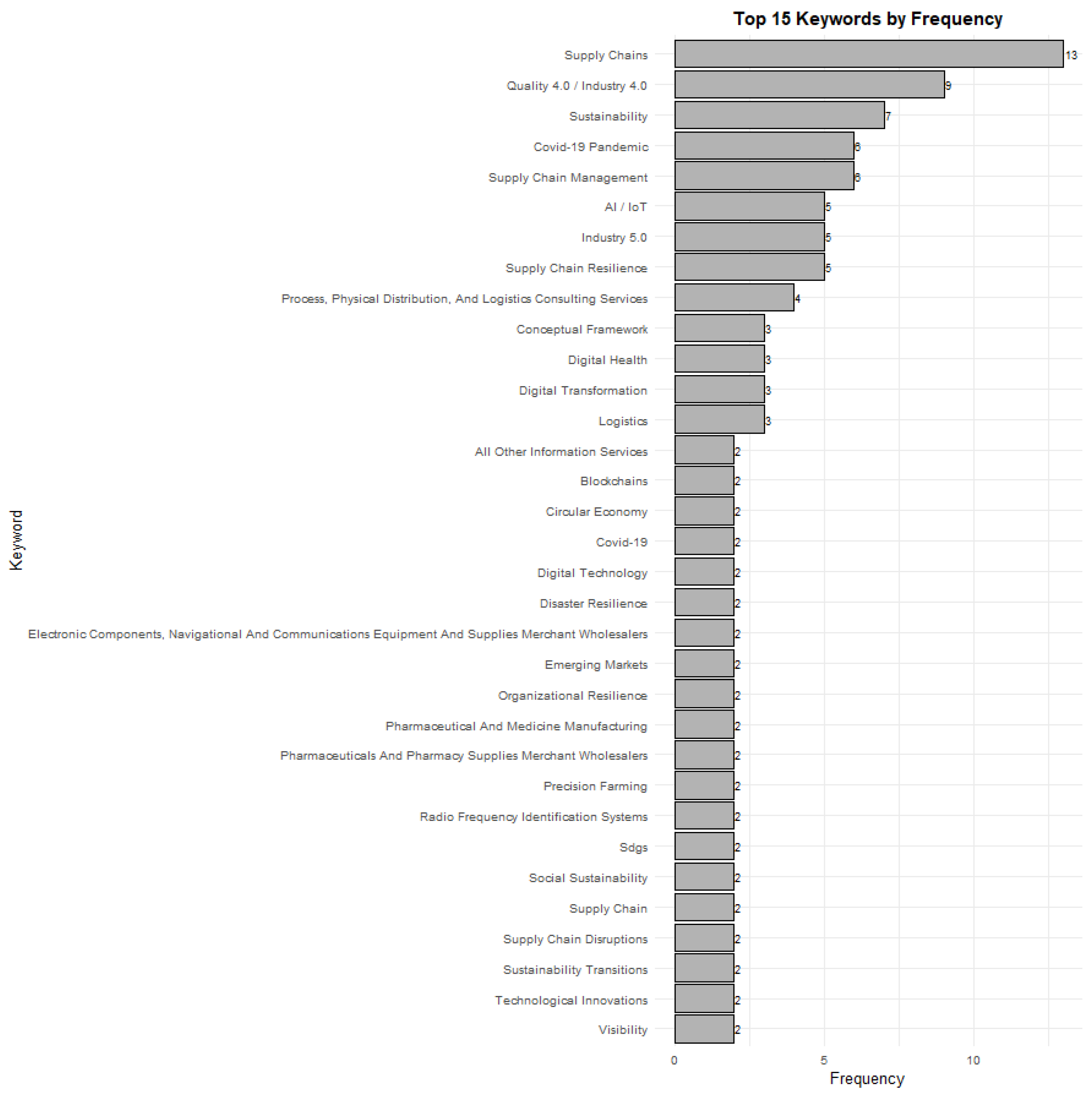
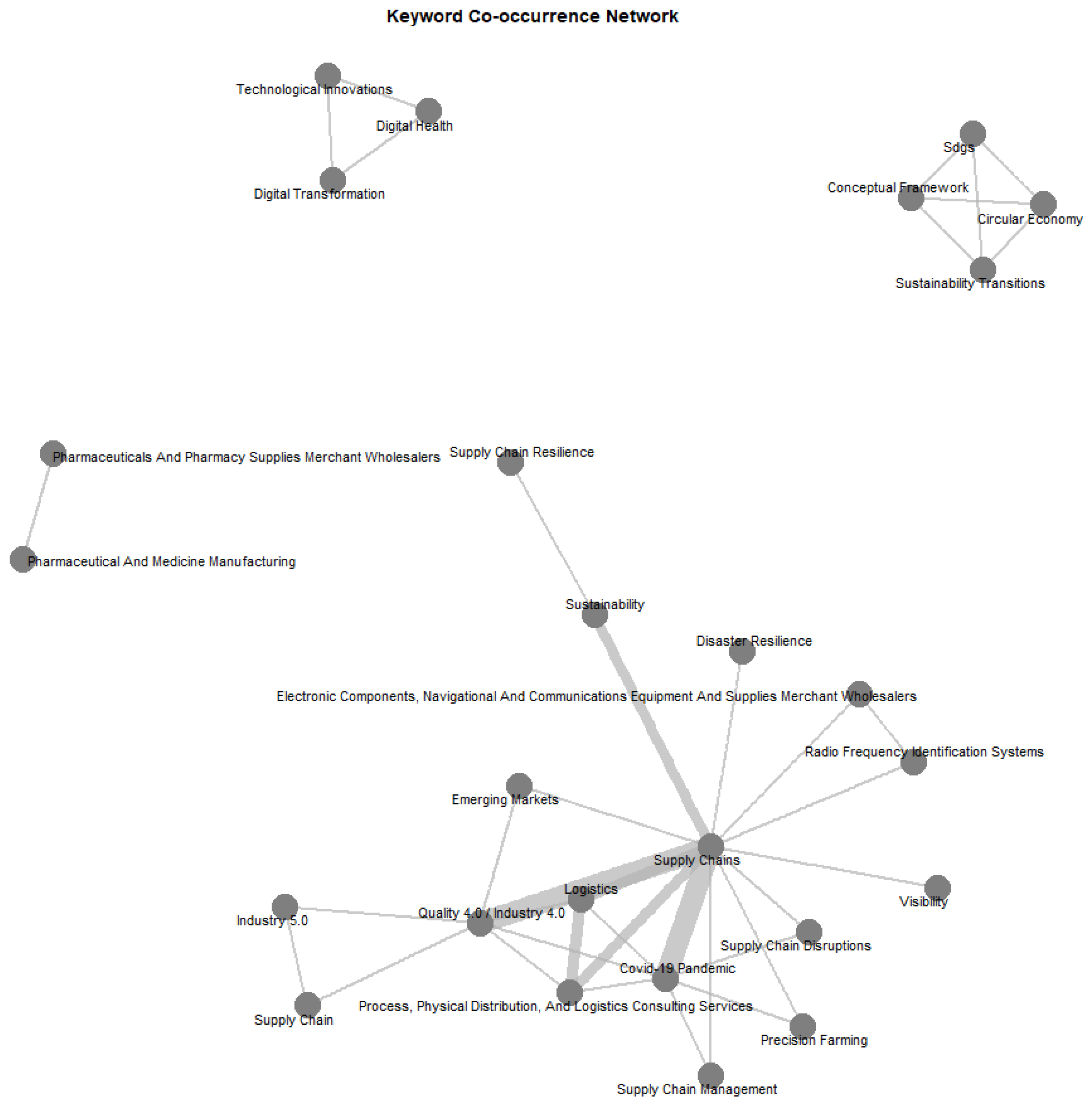
4.1. Summary of Current Literature Trends
4.2. Major Themes from Topic Modeling
- Topic 1: Supply Chain Sustainability
- Topic 2: Supply Chain Disruptions
- Topic 3: Healthcare Industry Technology Transformation
- (1)
- Sustainability and responsible systems design;
- (2)
- Disruptions and resilience planning;
- (3)
- Healthcare-focused digital transformation.
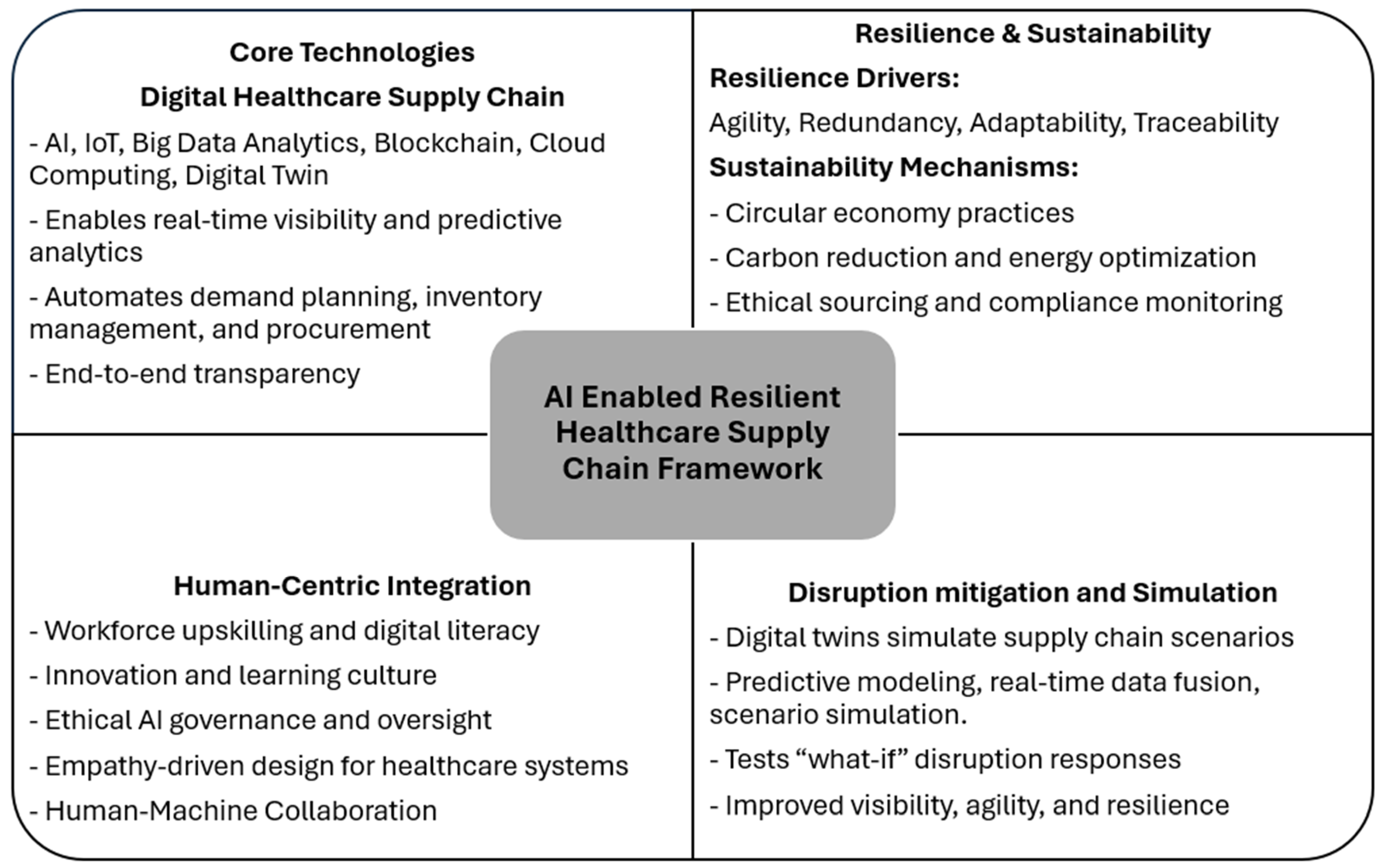
5. Discussion
6. Conclusions, Implications, Limitations, and Future Directions
6.1. Implications for Practitioners and Research
6.2. Limitations
6.3. Future Research Directions
Supplementary Materials
Author Contributions
Funding
Institutional Review Board Statement
Informed Consent Statement
Data Availability Statement
Conflicts of Interest
Appendix A

| Author(s) & Year | Study Type & Method | Technology/AI Focus | Key Contributions/Findings | Thematic Category |
|---|---|---|---|---|
| Agrawal et al., 2024 [16] | Systematic literature review | Industry 5.0 (I5.0) technologies | I5.0 potential to mitigate pandemic, war, climate disruptions | Topic 3 |
| Deveci, 2023 [22] | Conceptual + Fuzzy decision-making | AI adoption in healthcare supply chain | Identified technology intensity, trialability, and government support as key factors driving AI adoption; policy and managerial recommendations provided | Topic 3 |
| Lee & Yoon, 2021 [23] | Literature review + Case analysis | AI applications in healthcare | AI enhances diagnosis, treatment, nursing, and hospital management; adoption opportunities and challenges discussed; emphasizes structured implementation strategies | Topic 3 |
| Govindan et al., 2023 [25] | Review | Risk mitigation models | Epidemic disruption strategies and future research agenda | Topic 2 |
| Ivanov, 2025 [26] | Conceptual + case illustration | Industry 5.0, adaptability framework | Bio-inspired adaptability framework integrating resilience, sustainability, human-centricity | Topic 2 |
| Petrudi et al., 2024 [27] | M-TISM + case study | Digitalization, viability modeling | Digital engagement critical for supply chain viability | Topic 2 |
| Kashem et al., 2024 [28] | Systematic literature review | Digital SC technologies | Post-COVID digitization strategies for resilience | Topic 2 |
| Monferdini & Bottani, 2024 [29] | Literature review + case study | Industry 4.0 (I4.0) | I4.0 enhances risk management, resilience, sustainability post-COVID | Topic 2 |
| Miguel et al., 2024 [30] | Conceptual | Industry 5.0, digital transformation | Reshoring and glocalization enabled by digital/I5.0 for resilience & sustainability | Topic 3 |
| Vlachos & Graham, 2025 [31] | Bibliometric + Systematic literature review | IoT, GenAI | TCM-AIO-E framework; IoT evolution toward autonomous SCs | Topic 2 |
| Setyadi et al., 2025 [32] | Conceptual framework | Resilience–sustainability integration | Typology linking resilience enablers, operational strategies, and SDGs | Topic 1 |
| Patalas-Maliszewska & Łosyk, 2024 [33] | Systematic literature review | I4.0/I5.0, AI, IoT | Digitalization drives sustainable manufacturing transformation | Topic 1 |
| Werbińska-Wojciechowska et al., 2024 [34] | Systematic literature review | Digital Twin | Digital twin framework for transport & SC operations | Topic 3 |
| Ahmed et al., 2023 [35] | Empirical case study (DMAIC + SD, DES, AB simulation) | Simulation, Lean Six Sigma | Integrates hybrid simulation with Six Sigma; achieves 50% reduction in processing time, 25% production increase, and 8% cost reduction; demonstrates digital-supported operational resilience | Topic 3 |
| Polo et al., 2025 [36] | Systematic literature review + bibliometric | AI, optimization, bio-inspired models | Modeling trends in viable/resilient SCs | Topic 1 |
| Setyadi et al., 2025b [37] | Conceptual multi-level framework | Circularity, localization, digital resilience | Develops Integrated Sustainable Operational Strategy (ISOS) linking circular economy, localization, and digital resilience across macro–meso–micro levels | Topic 1 |
| Setyadi et al., 2025a [38] | Conceptual framework | Green Lean, sustainability integration | Proposes Green Lean Operational Excellence (GLOE) framework integrating sustainability and resilience into lean systems; advances operational strategy under climate disruption | Topic 1 |
| Reyna-Castillo et al., 2025 [39] | Empirical survey + fuzzy modeling | Social sustainability analytics | Social sustainability dimensions moderately enhance SC resilience | Topic 1 |
| Winkelmann et al., 2024 [40] | Systematic literature review | Blockchain, AI, digital tech | Digital technologies (esp. blockchain) advance triple-bottom-line sustainability | Topic 1 |
| Karoulanis, 2024 [41] | Systematic literature review | RFID, blockchain, AI | Technology-enabled visibility indirectly strengthens SC sustainability | Topic 1 |
| Mastrantonas et al., 2024 [42] | PRISMA-based qualitative review | Industry 4.0 (pharma) | I4.0 adoption linked to SDGs; COVID as inflection point | Topic 3 |
| Sharma et al., 2022 [43] | Empirical survey | Visibility, traceability | Visibility mediates sustainability and performance under COVID | Topic 1 |
| Marinagi et al., 2023 [44] | Systematic review | I4.0 technologies (AI, IoT, DT, BDA) | I4.0 impact on KPIs for SC resilience | Topic 2 |
| Shakur et al., 2024 [45] | MCDM (Bayesian BWM) | Industry 4.0 | Adoption challenges affecting SC resilience in FMCG | Topic 2 |
| Asadi et al., 2025 [46] | MCDM + robust optimization + case | Industry 5.0, stochastic modeling | Viable-sustainable supplier selection under uncertainty | Topic 1 |
| Pang et al., 2023 [47] | Conceptual education framework | Industry 5.0, AI, blockchain, ML | Proposes new digital health education paradigm embedding I5.0 technologies to build workforce capability for resilient, human-centric healthcare systems | Topic 3 |
| Kumar et al., 2025 [48] | Empirical + Social media data analysis | AI-driven ML & NLP for disaster response | Real-time social media analytics can detect urgent supply shortages, classify needs, and locate victims to support crisis response | Topic 2 |
| Liu et al., 2025 [49] | Empirical + Optimization modeling | AI-enhanced stochastic programming & DRO | AI improves computational efficiency and resource allocation; DRO model reduces waiting penalty cost 43 to 81%; outperforms benchmark policies | Topic 2 |
| Debnath et al., 2023 [51] | MCDM (Bayesian BWM) | Industry 4.0 | CSFs for I4.0 adoption enhancing PSC sustainability | Topic 1 |
| Lin et al., 2024 [52] | Conceptual framework | Pharmacy 5.0, CPS, analytics | Framework for personalized, digital pharmacy care | Topic 3 |
| Castillo et al., 2025 [53] | Qualitative interviews | Industry 5.0, digitalization | Human-centric I5.0 adoption; leadership & resilience | Topic 1 |
| ForouzeshNejad, 2022 [54] | Hybrid MCDM case study | I4.0, leagile, sustainability | Integrates agility, sustainability, I4.0 in medical supplier selection | Topic 1 |
| Singh et al., 2024 [61] | Multi-method | AI-enabled SC | Transparency-driven AI enhances resilience and customization | Topic 2 |
| Basulo-Ribeiro & Teixeira, 2024 [62] | Qualitative interviews | Industry 5.0 in healthcare | Human-technology synergy reshapes patient-centered healthcare | Topic 3 |
| Popa et al., 2025 [63] | Bibliometric analysis | AI, ML, reinforcement learning | Maps global research evolution linking AI to adaptability, agility, and resilience in management systems; highlights convergence of technical AI methods with managerial innovation | Topic 2 |
| Ivanov, 2023 [64] | Conceptual framework | Industry 5.0 technologies | Viability-based I5.0 integrating resilience, sustainability, human-centricity | Topic 1 |
| Hsu et al., 2024 [65] | Hybrid QFD–MCDM framework | Industry 5.0, real-time analytics | Integrates I5.0 drivers with supply chain resilience to mitigate hazardous material transportation risks; demonstrates synergy between resilience and advanced analytics | Topic 2 |
References
- Alemsan, N.; Tortorella, G.; Rodriguez, C.M.T.; Jamkhaneh, H.B.; Lima, R.M. Lean and resilience in the healthcare supply chain—A scoping review. Int. J. Lean Six Sigma 2022, 13, 1058–1078. [Google Scholar] [CrossRef]
- Jayaraman, R.; Salah, K.; King, N. Improving opportunities in healthcare supply chain processes via the Internet of Things and blockchain technology. Int. J. Healthc. Inf. Syst. Inform. 2019, 14, 49–65. [Google Scholar] [CrossRef]
- Kwon, I.-W.G.; Kim, S.-H.; Martin, D.G. Healthcare supply chain management: Strategic areas for quality and financial improvement. Technol. Forecast. Soc. Change 2016, 113, 422–428. [Google Scholar] [CrossRef]
- Tortorella, G.L.; Prashar, A.; Antony, J.; Fogliatto, F.S.; Gonzalez, V.; Filho, M.G. Industry 4.0 adoption for healthcare supply chain performance during COVID-19 pandemic in Brazil and India: The mediating role of resilience abilities development. Oper. Manag. Res. 2024, 17, 389–405. [Google Scholar] [CrossRef]
- Dai, J.; Geng, R.; Xu, D.; Shangguan, W.; Shao, J. Unveiling the impact of the congruence between artificial intelligence and explorative learning on supply chain resilience. Int. J. Oper. Prod. Manag. 2025, 45, 570–593. [Google Scholar] [CrossRef]
- Zamiela, C.; Hossain, N.U.I.; Jaradat, R. Enablers of resilience in the healthcare supply chain: A case study of U.S healthcare industry during COVID-19 pandemic. Res. Transp. Econ. 2022, 93, 101174. [Google Scholar] [CrossRef]
- Kumar, A.; Mani, V.; Jain, V.; Gupta, H.; Venkatesh, V.G. Managing healthcare supply chain through artificial intelligence (AI): A study of critical success factors. Comput. Ind. Eng. 2023, 175, 108815. [Google Scholar] [CrossRef]
- Le, T.T.; Behl, A. Linking Artificial Intelligence and Supply Chain Resilience: Roles of Dynamic Capabilities Mediator and Open Innovation Moderator. IEEE Trans. Eng. Manag. 2024, 71, 8577–8590. [Google Scholar] [CrossRef]
- Dey, P.K.; Chowdhury, S.; Abadie, A.; Vann Yaroson, E.; Sarkar, S. Artificial intelligence-driven supply chain resilience in Vietnamese manufacturing small- and medium-sized enterprises. Int. J. Prod. Res. 2024, 62, 5417–5456. [Google Scholar] [CrossRef]
- Xia, H.; Sun, Z.; Wang, Y.; Zhang, J.Z.; Kamal, M.M.; Jasimuddin, S.M.; Islam, N. Emergency medical supplies scheduling during public health emergencies: Algorithm design based on AI techniques. Int. J. Prod. Res. 2025, 63, 628–650. [Google Scholar]
- Senna, P.; Reis, A.; Dias, A.; Coelho, O.; Guimarães, J.; Eliana, S. Healthcare supply chain resilience framework: Antecedents, mediators, consequents. Prod. Plan. Control 2023, 34, 295–309. [Google Scholar] [CrossRef]
- Babazadeh, R.; Taraghi Nazloo, H.; Kamran, M.A. A hybrid ANN-MILP model for agile recovery production planning for PPE products under sharp demands. Int. J. Prod. Res. 2025, 63, 758–778. [Google Scholar] [CrossRef]
- Brandon-Jones, E.; Squire, B.; Autry, C.W.; Petersen, K.J. A contingent resource-based perspective of supply chain resilience and robustness. J. Supply Chain Manag. 2014, 50, 55–73. [Google Scholar] [CrossRef]
- Ivanov, D. Viable supply chain model: Integrating agility, resilience and sustainability perspectives—Lessons from and thinking beyond the COVID-19 pandemic. Ann. Oper. Res. 2020, 319, 1411–1431. [Google Scholar] [CrossRef]
- Spieske, A.; Gebhardt, M.; Kopyto, M.; Birkel, H.; Hartmann, E. The future of industry 4.0 and supply chain resilience after the COVID-19 pandemic: Empirical evidence from a Delphi study. Comput. Ind. Eng. 2023, 181, 109344. [Google Scholar] [CrossRef]
- Agrawal, S.; Agrawal, R.; Kumar, A.; Luthra, S.; Garza-Reyes, J.A. Can Industry 5.0 technologies overcome supply chain disruptions?—A perspective study on pandemics, war, and climate change issues. Oper. Manag. Res. 2024, 17, 453–468. [Google Scholar] [CrossRef]
- Ivanov, D. Intelligent digital twin (iDT) for supply chain stress-testing, resilience, and viability. Int. J. Prod. Econ. 2023, 263, 108938. [Google Scholar] [CrossRef]
- Belhadi, A.; Kamble, S.; Fosso Wamba, S.; Queiroz, M.M. Building supply-chain resilience: An artificial intelligence-based technique and decision-making framework. Int. J. Prod. Res. 2021, 60, 4487–4507. [Google Scholar] [CrossRef]
- Burgos, D.; Ivanov, D. Food retail supply chain resilience and the COVID-19 pandemic: A digital twin-based impact analysis and improvement directions. Transp. Res. Part E Logist. Transp. Rev. 2021, 152, 102412. [Google Scholar] [CrossRef]
- Modgil, S.; Singh, R.K.; Hannibal, C. Artificial intelligence for supply chain resilience: Learning from Covid-19. Int. J. Logist. Manag. 2022, 33, 1246–1268. [Google Scholar] [CrossRef]
- Ajmera, P.; Jain, V. Modelling the barriers of Health 4.0–the fourth healthcare industrial revolution in India by TISM. Oper. Manag. Res. 2019, 12, 129–145. [Google Scholar] [CrossRef]
- Deveci, M. Effective use of artificial intelligence in healthcare supply chain resilience using fuzzy decision-making model. Soft Comput. 2023, 1–14. [Google Scholar] [CrossRef]
- Lee, D.; Yoon, S.N. Application of artificial intelligence-based technologies in the healthcare industry: Opportunities and challenges. Int. J. Environ. Res. Public Health 2021, 18, 271. [Google Scholar] [CrossRef]
- Singh, R.P.; Hom, G.L.; Abramoff, M.D.; Campbell, J.P.; Chiang, M.F. Current challenges and barriers to real-world artificial intelligence adoption for the healthcare system, provider, and the patient. Transl. Vis. Sci. Technol. 2020, 9, 45. [Google Scholar] [CrossRef] [PubMed]
- Govindan, K.; Sethi, S.P.; Cheng, T.C.E.; Lu, S.F. Designing supply chain strategies against epidemic outbreaks such as COVID-19: Review and future research directions. Decis. Sci. 2023, 54, 365–374. [Google Scholar] [CrossRef]
- Ivanov, D. No risk, no fun? A bioinspired adaptation-based framework for supply chain resilience in Industry 5.0. Int. J. Prod. Res. 2025, 63, 7153–7173. [Google Scholar] [CrossRef]
- Petrudi, H.; Hamid, S.; Ahmadi, H.B.; Azareh, Y.; Liou, J.J.H. Developing a structural model for supply chain viability: A case from a developing country. Oper. Manag. Res. 2024, 17, 324–339. [Google Scholar] [CrossRef]
- Kashem, M.A.; Shamsuddoha, M.; Nasir, T. Digital-Era Resilience: Navigating Logistics and Supply Chain Operations after COVID-19. Businesses 2024, 4, 1–17. [Google Scholar] [CrossRef]
- Monferdini, L.; Bottani, E. Examining the response to COVID-19 in logistics and supply chain processes: Insights from a state-of-the-art literature review and case study analysis. Appl. Sci. 2024, 14, 5317. [Google Scholar] [CrossRef]
- Miguel, A.F.; Riccardi, M.P.; García-Muiña, F.E.; del Hoyo, A.P.F.; Veglio, V.; Settembre-Blundo, D. From Global to Glocal: Digital Transformation for Reshoring More Agile, Resilient, and Sustainable Supply Chains. Sustainability 2024, 16, 1196. [Google Scholar] [CrossRef]
- Vlachos, I.; Graham, G. The Internet of Things in supply chain management: Past, present, and future: A systematic literature review and implementation framework. Int. J. Prod. Res. 2025, 63, 10555–10585. [Google Scholar] [CrossRef]
- Setyadi, A.; Pawirosumarto, S.; Damaris, A. Toward a resilient and sustainable supply chain: Operational responses to global disruptions in the post-COVID-19 era. Sustainability 2025, 17, 6167. [Google Scholar] [CrossRef]
- Patalas-Maliszewska, J.; Łosyk, H. Changes in sustainable development in manufacturing in cases of unexpected occurrences: A systematic review. Sustainability 2024, 16, 717. [Google Scholar] [CrossRef]
- Werbińska-Wojciechowska, S.; Giel, R.; Winiarska, K. Digital twin approach for operation and maintenance of transportation system: Systematic review. Sensors 2024, 24, 6069. [Google Scholar] [CrossRef] [PubMed]
- Ahmed, A.; Olsen, J.; Page, J. Integration of Six Sigma and simulations in real production factory to improve performance—A case study analysis. Int. J. Lean Six Sigma 2023, 14, 451–482. [Google Scholar] [CrossRef]
- Polo, A.; Morillo-Torres, D.; Escobar, J.W. Toward adaptive and immune-inspired viable supply chains: A PRISMA systematic review of mathematical modeling trends. Mathematics 2025, 13, 2225. [Google Scholar] [CrossRef]
- Setyadi, A.; Pawirosumarto, S.; Damaris, A. Rethinking sustainable operations: A multi-level integration of circularity, localization, and digital resilience in manufacturing systems. Sustainability 2025, 17, 6929. [Google Scholar] [CrossRef]
- Setyadi, A.; Pawirosumarto, S.; Damaris, A. Sustainable operations strategy in the age of climate change: Integrating green Lean practices into operational excellence. Sustainability 2025, 17, 5954. [Google Scholar] [CrossRef]
- Reyna-Castillo, M.; Santiago, A.; Barrios-del-Ángel, A.X.; Balderas, F.; Anchondo-Pérez, J.I. Effect of social sustainability on supply chain resilience before, during, and after the COVID-19 pandemic in Mexico: A partial least squares structural equation modeling and evolutionary fuzzy knowledge transfer approach. Logistics 2025, 9, 50. [Google Scholar] [CrossRef]
- Winkelmann, S.; Guennoun, R.; Möller, F.; Schoormann, T.; van der Valk, H. Back to a resilient future: Digital technologies for a sustainable supply chain. Inf. Syst. E-Bus. Manag. 2024, 22, 315–350. [Google Scholar] [CrossRef]
- Karoulanis, A. Correlation between supply chain visibility, supply chain sustainability, and the use of new technologies. Int. J. Supply Oper. Manag. 2024, 11, 132–153. [Google Scholar] [CrossRef]
- Mastrantonas, A.; Kokkas, P.; Chatzopoulos, A.; Papoutsidakis, M.; Stergiou, C.; Vairis, A.; Kanetaki, Z. Identifying the effects of Industry 4.0 in the pharmaceutical sector: Achieving the sustainable development goals. Discov. Sustain. 2024, 5, 460. [Google Scholar] [CrossRef]
- Sharma, M.; Alkatheeri, H.; Jabeen, F.; Sehrawat, R. Impact of COVID-19 pandemic on perishable food supply chain management: A contingent Resource-Based View (RBV) perspective. Int. J. Logist. Manag. 2022, 33, 796–817. [Google Scholar] [CrossRef]
- Marinagi, C.; Reklitis, P.; Trivellas, P.; Sakas, D. The impact of Industry 4.0 technologies on key performance indicators for a resilient supply chain 4.0. Sustainability 2023, 15, 5185. [Google Scholar] [CrossRef]
- Shakur, M.S.; Lubaba, M.; Debnath, B.; Bari, A.B.M.; Rahman, M.A. Exploring the challenges of Industry 4.0 adoption in the FMCG sector: Implications for resilient supply chain in emerging economy. Logistics 2024, 8, 27. [Google Scholar] [CrossRef]
- Asadi, Z.; Aghajani, H.; Khatir, M.V.; Tirkolaee, E.B. Viable-sustainable supplier selection and order allocation problem considering Industry 5.0 pillars under mixed uncertainty. Int. J. Prod. Res. 2025, 63, 7591–7616. [Google Scholar] [CrossRef]
- Pang, T.Y.; Lee, T.-K.; Murshed, M. Towards a new paradigm for digital health training and education in Australia: Exploring the implications of the Fifth Industrial Revolution. Appl. Sci. 2023, 13, 6854. [Google Scholar] [CrossRef]
- Kumar, V.V.; Sahoo, A.; Balasubramanian, S.K.; Gholston, S. Mitigating healthcare supply chain challenges under disaster conditions: A holistic AI-based analysis of social media data. Int. J. Prod. Res. 2025, 63, 779–797. [Google Scholar] [CrossRef]
- Liu, Y.; Zhang, J.; Chan, F.T. AI-enhanced robust method for integrated healthcare resource pre-positioning and patient scheduling. Int. J. Prod. Res. 2025, 63, 729–757. [Google Scholar] [CrossRef]
- Adhikari, A.; Joshi, R.; Basu, S. Collaboration and coordination strategies for a multi-level AI-enabled healthcare supply chain under disaster. Int. J. Prod. Res. 2025, 63, 497–523. [Google Scholar] [CrossRef]
- Debnath, B.; Shakur, S.; Bari, A.B.M.M.; Saha, J.; Porna, W.A.; Mishu, M.J.; Islam, A.R.M.T.; Rahman, M.A. Assessing the critical success factors for implementing Industry 4.0 in the pharmaceutical industry: Implications for supply chain sustainability in emerging economies. PLoS ONE 2023, 18, e0287149. [Google Scholar] [CrossRef]
- Lin, A.C.; Lee, J.; Gabriel, M.K.; Arbet, R.N.; Ghawaa, Y.; Ferguson, A.M. The Pharmacy 5.0 framework: A new paradigm to accelerate innovation for large-scale personalized pharmacy care. Am. J. Health-Syst. Pharm. 2024, 81, e141–e147. [Google Scholar] [CrossRef] [PubMed]
- Castillo, C.; Otero-Romero Ty Álvarez-Palau, E.J. Navigating the transition to industry 5.0: Advancing sustainability, resilience, and human-centricity in Spanish supply chain management. Discov. Sustain. 2025, 6, 331. [Google Scholar] [CrossRef]
- ForouzeshNejad, A.A. Leagile and sustainable supplier selection problem in the Industry 4.0 era: A case study of the medical devices using hybrid multi-criteria decision making tool. Environ. Sci. Pollut. Res. 2022, 30, 13418–13437. [Google Scholar] [CrossRef] [PubMed]
- Denyer, D.; Tranfield, D. Producing a systematic review. In The Sage Handbook of Organizational Research Methods; Sage Publications Ltd.: Thousand Oaks, CA, USA, 2009; pp. 671–689. [Google Scholar]
- Moher, D.; Liberati, A.; Tetzlaff, J.; Altman, D.G. Preferred Reporting Items for Systematic Reviews and Meta-Analyses: The PRISMA Statement. PLoS Med. 2009, 6, e1000097. [Google Scholar] [CrossRef]
- Toorajipour, R.; Sohrabpour, V.; Nazarpour, A.; Oghazi, P.; Fischl, M. Artificial intelligence in supply chain management: A systematic literature review. J. Bus. Res. 2021, 122, 502–517. [Google Scholar] [CrossRef]
- Gulo, N.F.; Aini, N.; Jamal, S.A. Pharmaceutical supply chain optimization in healthcare: Insights from recent literature. Public Health Saf. Int. J. 2025, 5, 171–182. [Google Scholar]
- Laureate, C.D.P.; Buntine, W.; Linger, H. A systematic review of the use of topic models for short text social media analysis. Artif. Intell. Rev. 2023, 56, 14223–14255. [Google Scholar] [CrossRef]
- Mustaqim, I.Z.; Suryono, R.R. A Systematic Literature Review of Topic Modeling Techniques in User Reviews. J. Inf. Syst. Eng. Bus. Intell. 2025, 11, 238–253. [Google Scholar] [CrossRef]
- Singh, R.K.; Modgil, S.; Shore, A. Building artificial intelligence enabled resilient supply chain: A multi-method approach. J. Enterp. Inf. Manag. 2024, 37, 414–436. [Google Scholar] [CrossRef]
- Basulo-Ribeiro, J.; Teixeira, L. The future of healthcare with Industry 5.0: Preliminary interview-based qualitative analysis. Future Internet 2024, 16, 68. [Google Scholar] [CrossRef]
- Popa, I.; Ștefan, S.C.; Josan, A.; Mircioiu, C.; Căruceru, N. Artificial intelligence as a catalyst for management system adaptability, agility, and resilience: Mapping the research agenda. Systems 2025, 13, 47. [Google Scholar] [CrossRef]
- Ivanov, D. The Industry 5.0 framework: Viability-based integration of the resilience, sustainability, and human-centricity perspectives. Int. J. Prod. Res. 2023, 61, 1683–1695. [Google Scholar] [CrossRef]
- Hsu, C.; Yang, J.; Chang, A.; Liu, G. A new hybrid MCDM approach for mitigating risks of hazardous material road transportation. Math. Biosci. Eng. 2024, 21, 4210–4240. [Google Scholar] [CrossRef]
- Cannas, V.G.; Ciano, M.P.; Saltalamacchia, M.; Secchi, R. Artificial intelligence in supply chain and operations management: A multiple case study research. Int. J. Prod. Res. 2024, 62, 3333–3360. [Google Scholar] [CrossRef]
- Page, M.J.; McKenzie, J.E.; Bossuyt, P.M.; Boutron, I.; Hoffmann, T.C.; Mulrow, C.D.; Moher, D. The PRISMA 2020 statement: An updated guideline for reporting systematic reviews. BMJ 2021, 372, n71. [Google Scholar] [CrossRef]
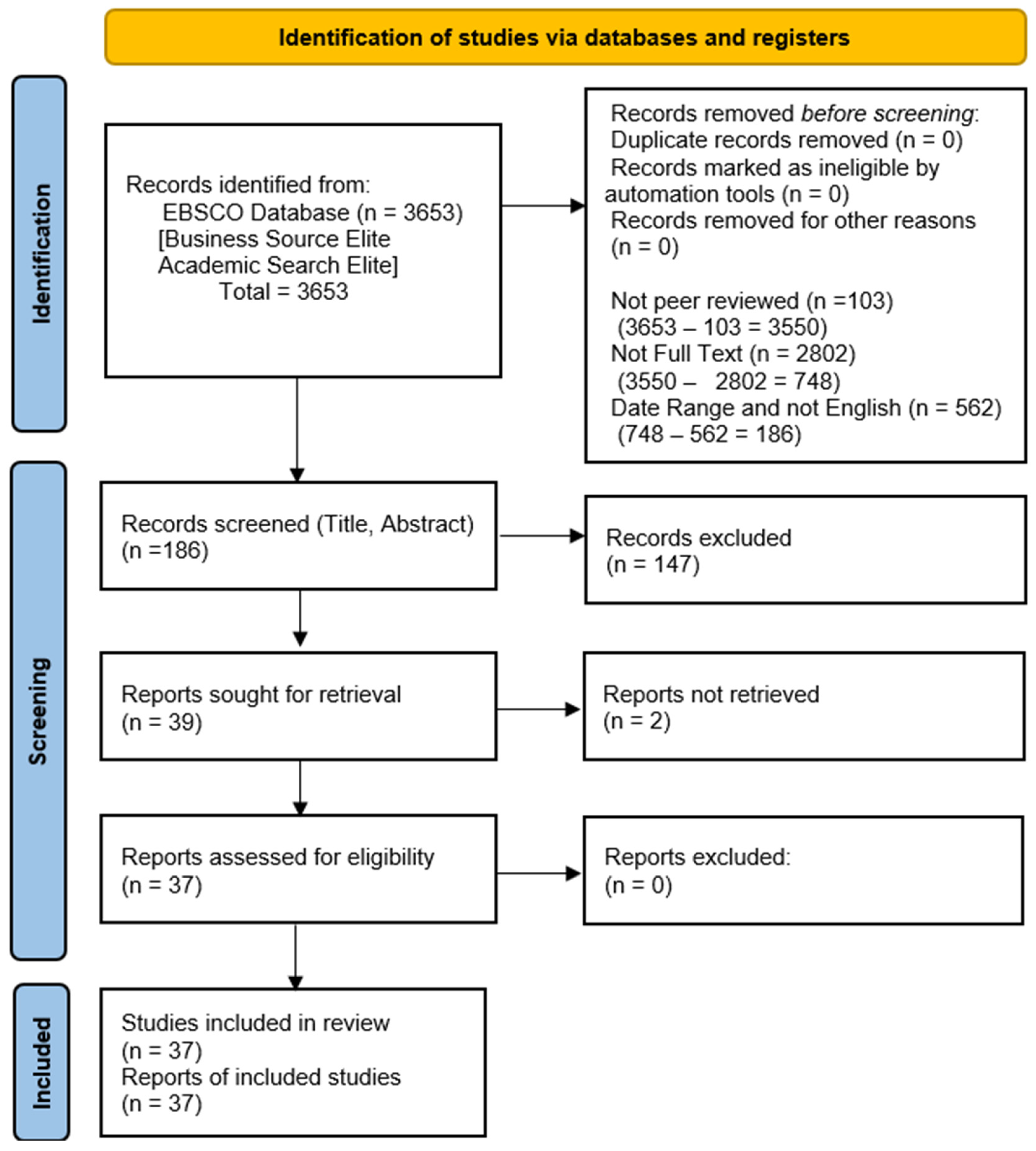
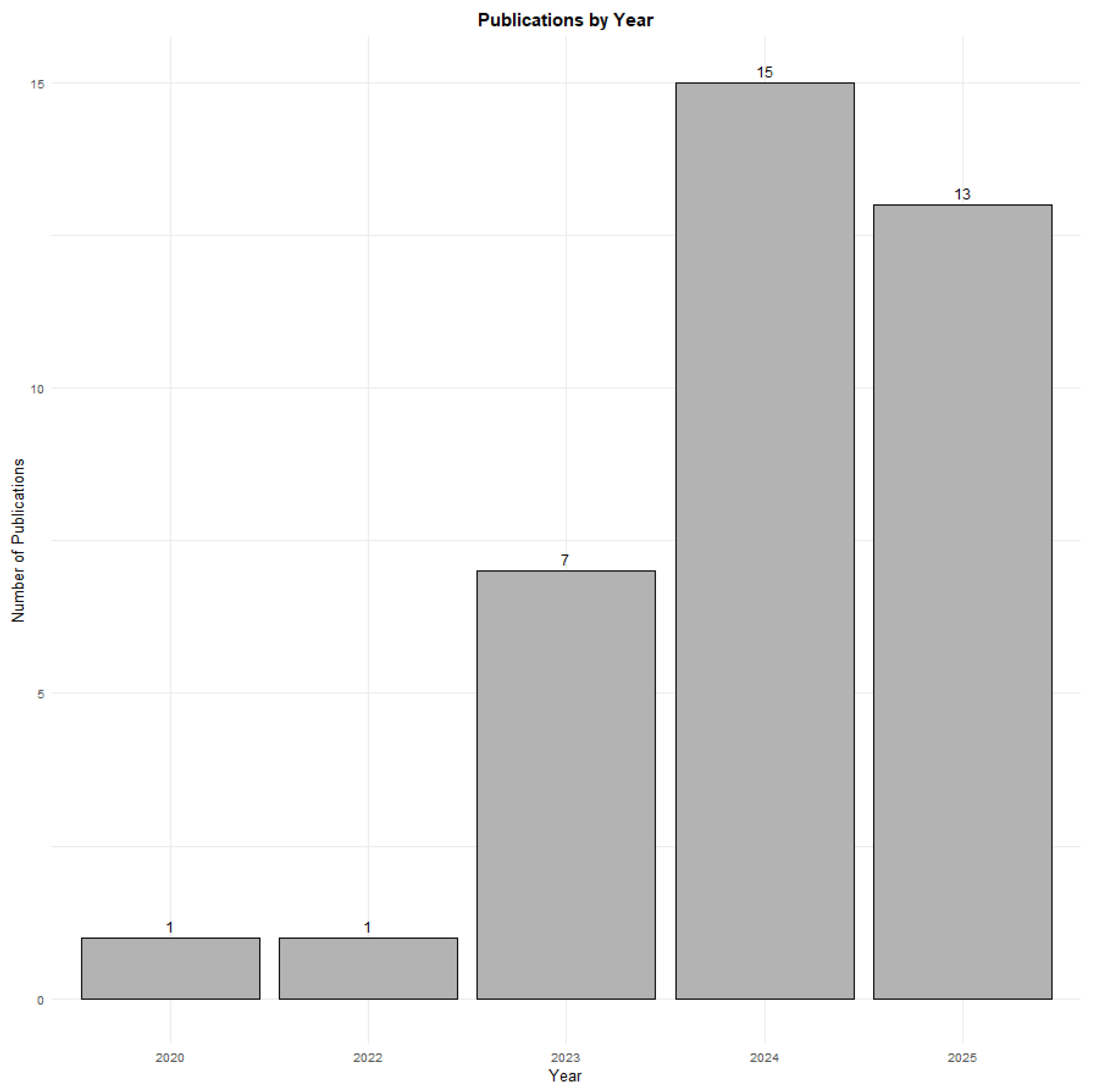
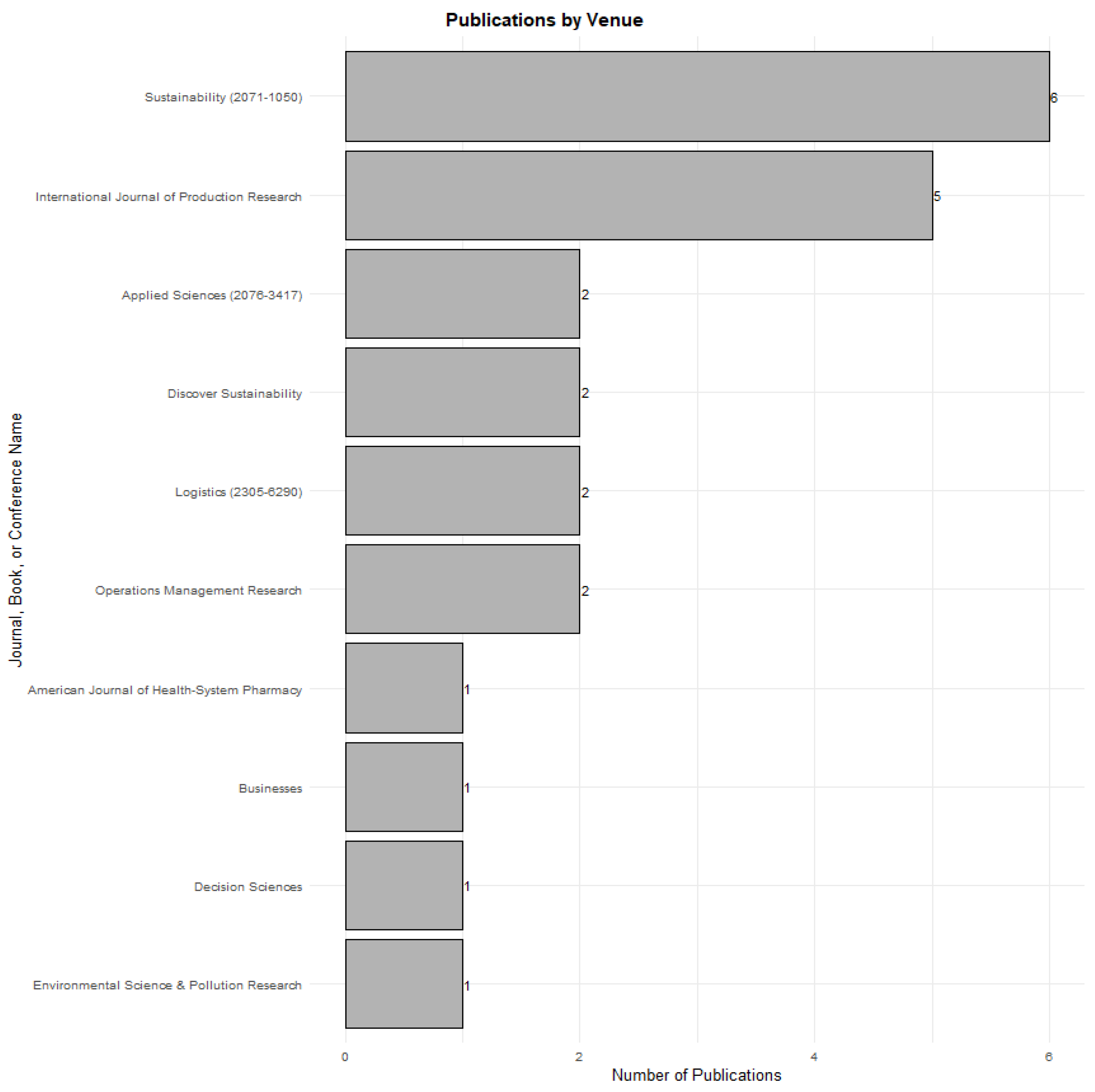
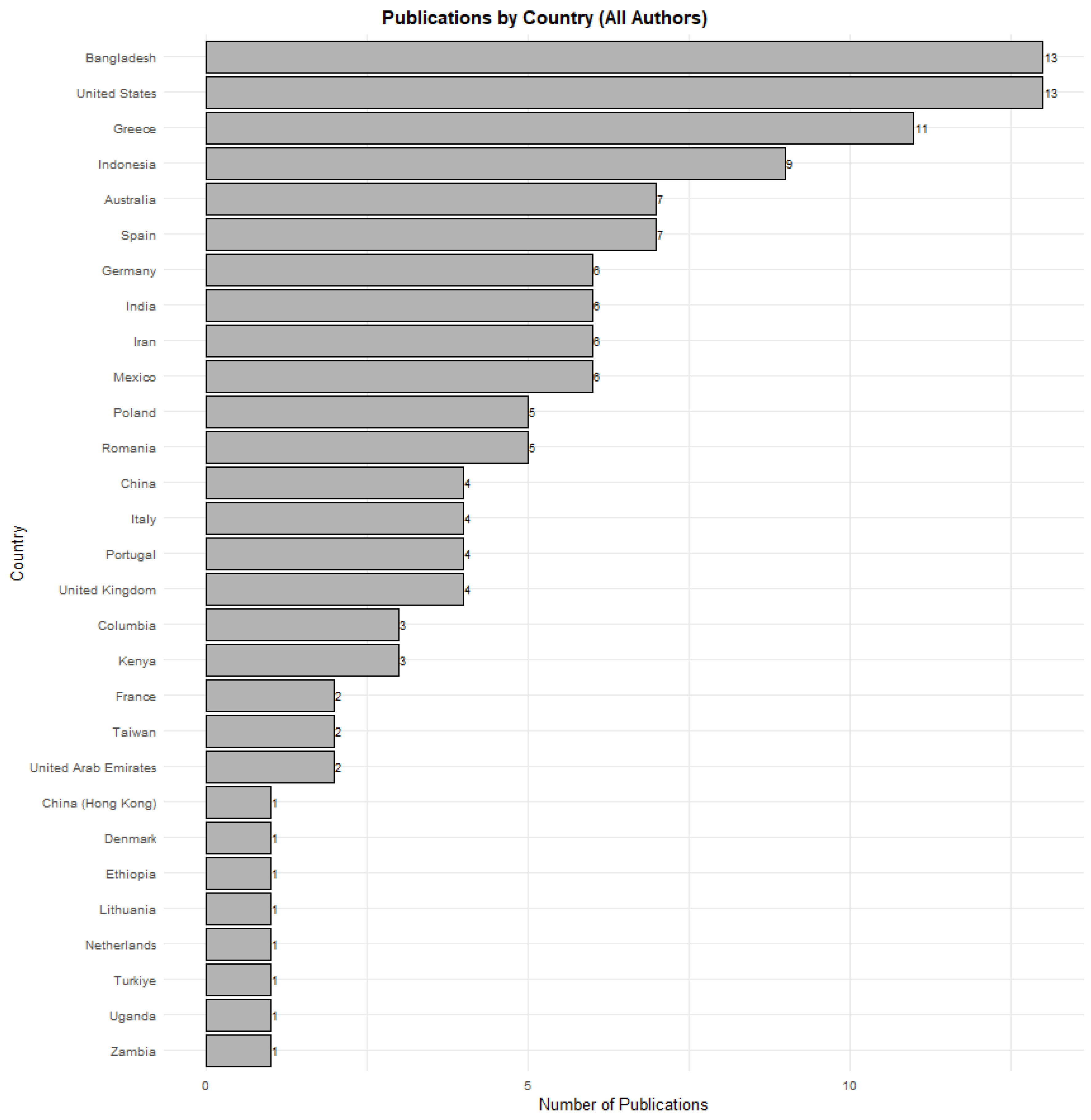
| Criteria Category | Inclusion Criteria | Exclusion Criteria |
|---|---|---|
| Topic Scope | Studies addressing AI applications that enhance supply chain resilience in healthcare (or related industries such as pharma, hospital logistics, med-tech). | Studies unrelated to AI, resilience, or HSCs. |
| Publication Type | Peer-reviewed journal articles. | Gray literature (white papers, reports), conference papers, magazine articles, unpublished work. |
| Time Period | Published between January 2020 and August 2025. | Published prior to 2020. |
| Language | English. | Non-English publications. |
| Methodological Scope | Conceptual, empirical, mixed-methods, simulation, or case study research with sufficient methodological detail. | Studies lacking methodological clarity or rigor, as well as purely theoretical AI papers without practical applications in supply chains. |
| Disciplinary Scope | Supply chain, operations management, healthcare logistics, and industrial engineering. | Disciplines unrelated to supply chain or operational resilience. |
| Quality Appraisal | Studies meeting minimum research quality standards (e.g., clear objectives, methodology, results). | Studies with weak or ambiguous methodology, lacking conceptual or empirical contribution. |
| Theme/Topic | Description |
|---|---|
| Supply Chain Sustainability | Topic 1 centers on sustainability-oriented supply chain management, emphasizing environmental performance, circular economic strategies, and long-term resilience [36,53]. Frequently associated terms point to decarbonization, waste reduction, and lifecycle optimization, reflecting growing scholarly attention to environmentally responsible, resource-minded, and circular supply chain practices [41,45,61]. This topic demonstrates how organizations are increasingly incorporating sustainability principles into supply chain design, planning, and strategic decision-making processes, supported by viable supply chain models, sustainable supplier selection, and Industry 4.0- and Industry 5.0-enabled integration [43,46,54]. |
| Supply Chain Disruptions | Topic 2 represents research on risk, uncertainty, and disruption patterns in global and healthcare supply chains, particularly under conditions of extreme volatility [25,26]. The common high-probability terms relate to pandemic shocks, geopolitical risks, resource constraints, and operational disturbances, reflecting lessons learned from COVID-19 and other systemic disruptions [28,29,33]. The strong emphasis on agility, mitigation tactics, and business continuity planning highlights the growing prioritization of resilience as a strategic capability in the post-pandemic era [16,27,32]. Complementary studies examine risk assessment, reshoring strategies, hazardous material transportation, and adaptive response mechanisms, reinforcing resilience-oriented decision-making across diverse supply chain contexts [30,31,65]. |
| Healthcare Industry Technology | Topic 3 focuses specifically on digital transformation within healthcare supply chains, with prominent terms referencing hospitals, pharmaceuticals, medical supplies, and data-enabled decision tools [35,47]. This cluster highlights how advanced technologies improve forecasting accuracy, patient safety, inventory control, and resource allocation through AI-driven analytics, simulation, and digital health platforms [62,63,66]. The interplay between healthcare operations and digital innovation is especially prominent, emphasizing Industry 5.0 principles such as human-centricity, augmented decision-making, and personalized care delivery [37,38,52]. Collectively, this literature positions digital transformation as a critical enabler of adaptive, data-driven, and resilient healthcare supply chain ecosystems [64]. Prior studies further emphasize the role of digital twins, Industry 4.0 adoption readiness, and resilience-oriented performance metrics in enabling long-term resilience and sustainability outcomes [34,40,44,51,64]. |
Disclaimer/Publisher’s Note: The statements, opinions and data contained in all publications are solely those of the individual author(s) and contributor(s) and not of MDPI and/or the editor(s). MDPI and/or the editor(s) disclaim responsibility for any injury to people or property resulting from any ideas, methods, instructions or products referred to in the content. |
© 2026 by the authors. Licensee MDPI, Basel, Switzerland. This article is an open access article distributed under the terms and conditions of the Creative Commons Attribution (CC BY) license.
Share and Cite
Thiyagarajan, S.; Cudney, E.A.; Chimmani, P.; D’silva, L.H.; Laux, C.M. Leveraging AI to Build Agile and Resilient Healthcare Supply Chains for Sustainable Performance: A Systematic Scoping Review and Future Directions. Sustainability 2026, 18, 1434. https://doi.org/10.3390/su18031434
Thiyagarajan S, Cudney EA, Chimmani P, D’silva LH, Laux CM. Leveraging AI to Build Agile and Resilient Healthcare Supply Chains for Sustainable Performance: A Systematic Scoping Review and Future Directions. Sustainability. 2026; 18(3):1434. https://doi.org/10.3390/su18031434
Chicago/Turabian StyleThiyagarajan, Senthilkumar, Elizabeth A. Cudney, Pranay Chimmani, Lionel Henry D’silva, and Chad M. Laux. 2026. "Leveraging AI to Build Agile and Resilient Healthcare Supply Chains for Sustainable Performance: A Systematic Scoping Review and Future Directions" Sustainability 18, no. 3: 1434. https://doi.org/10.3390/su18031434
APA StyleThiyagarajan, S., Cudney, E. A., Chimmani, P., D’silva, L. H., & Laux, C. M. (2026). Leveraging AI to Build Agile and Resilient Healthcare Supply Chains for Sustainable Performance: A Systematic Scoping Review and Future Directions. Sustainability, 18(3), 1434. https://doi.org/10.3390/su18031434

