1. Introduction
The tourism sector represents a significant component of the Slovak economy, generating both direct and indirect revenue and employment across multiple industries. Between 2018 and 2024, this sector underwent profound changes, primarily driven by the global COVID-19 pandemic. While previous research has examined the pandemic’s impacts on Slovak tourism, existing studies have predominantly focused on national-level analyses rather than systematic regional comparisons across all NUTS III regions and have not integrated multiple tourism dimensions (visitor arrivals, revenues, and accommodation utilisation) within a coordinated analytical framework. This study addresses this research gap by providing the first comprehensive regional-scale analysis that combines quantitative indicators of visitor numbers, revenue, and accommodation structure using rigorous statistical methods (paired t-tests and ANOVA).
Main Research Question: How and to what extent do the impacts of the COVID-19 pandemic on tourism in Slovakia differ regionally in terms of visitor numbers, revenue, and the structure of accommodation facilities?
Specific Research Sub-Questions:
Which regional differences emerged in the effects of the pandemic on key tourism indicators (visitor arrivals, revenues, or accommodation occupancy rates) across individual regions of Slovakia?
What are the differences in tourism recovery rates between individual NUTS III regions, and what factors determine the varying resilience of individual regions to the pandemic?
What structural changes in the geographical distribution of international tourists, the dominance of passive tourism, and demand for specific types of accommodation facilities manifested in individual regions during the post-pandemic period?
The objective is to identify the pandemic’s specific effects across individual regions, quantify changes in key indicators, and assess the tourism sector’s adaptability and resilience to external shocks. The research employs quantitative methods, including statistical analysis and econometric modelling, to provide a comprehensive, empirically grounded perspective on the transformation of tourism in Slovakia during the global pandemic. The study’s findings have the potential to inform the formulation of effective policies and sustainable strategies for tourism recovery and development in the post-pandemic period.
3. Materials and Methods
This section describes the data collection and processing methodology used to analyse the impact of the COVID-19 pandemic on tourism in Slovakia over the period 2018–2024. The objective was to ensure that the data were comparable and reliable for statistical evaluation. The collected dataset was extensive, covering key tourism indicators and enabling a comprehensive assessment of sectoral changes.
The data were collected at the regional level in Slovakia for the years 2018–2024 from the Statistical Office of the Slovak Republic, specifically from the Datacube database (available at:
https://datacube.statistics.sk/ (accessed on 7 January 2026)), which provides comprehensive tourism statistics at the NUTS III regional level. They included indicators of visitor numbers (domestic and international), tourism revenues, and the number of accommodation establishments, including accommodation types, the average number of overnight stays, and the average length of stay. The database encompasses the official statistical records on accommodation capacity, visitor arrivals, and tourism revenues collected from accommodation facilities across all eight Slovak regions. The primary data were systematically adjusted to ensure comparability across time periods and regions. Extreme values were identified and excluded from the primary analysis to enhance the reliability of the results. For international arrivals, base indices were calculated for each region in 2024/2018 (post-pandemic) and 2019/2018 (pre-pandemic). Each set of indices comprised approximately 85–95 observations, as the index was calculated for each country of origin of visitors within a given region and period. The potential effects of seasonality and regional diversity in source markets were accounted for during data adjustment to ensure consistency across regions (
Box 1 and
Table 1).
Box 1. Methodology for analysing tourism competitiveness and the impact of COVID-19. Source: own processing.
- (A)
Unit of observation, coverage and data sources. The analysis is based on regional data from the Statistical Office of the Slovak Republic (Datacube Database) at NUTS III level (n = 8 regions) for the years 2018–2024. Monitored indicators included visitor numbers (domestic and international), tourism revenue, accommodation establishments, overnight stays, and average length of stay. The data were systematically harmonised to ensure comparability across time periods and regions. Extreme values were identified and excluded from the primary analysis using the IQR method to enhance the reliability of results.
- (B)
Five key regional indices of tourism competitiveness were calculated to provide a comprehensive characterisation of tourism profiles across individual regions:
- (C)
Methodology for calculating base and chain indices:
The base index was calculated as follows:
In addition, chain indices for tourism revenues were calculated as:
For regional comparison, indicators such as the utilisation of accommodation facilities were also calculated using the following formula:
Average revenue per visit was also analysed and calculated as:
- (D)
Regression model—determinants of visitor arrivals. To identify fundamental relationships between visitor arrivals and key tourism factors, a linear regression model was applied:
where
i = region;
t = year (2018–2024);
β0 = constant; and
εi,t = error term. All coefficients were estimated using the OLS method with robust standard error to eliminate heteroscedasticity. All coefficients are statistically significant at the
p < 0.05 level.
- (E)
Statistical procedures and clustering methods. The following analytical approaches were applied: (1) paired t-tests—comparison of means between pre-pandemic (2019) and post-pandemic (2024) periods for individual regions; (2) ANOVA—the examination of differences between regions in 2024/2018 indices and the assessment of whether pandemic impact varied across regions; (3) hierarchical cluster analysis with Ward linkage and K-means clustering—identification of homogeneous regional groups based on a five-element index vector (EIC, IDMZ, IIP, IRE, and RG), resulting in a typology of four distinct regional tourism clusters with differential characteristics.
- (F)
Data cleaning and validation. Extreme values were identified using the IQR method. The observations exceeding these boundaries were excluded from primary statistical tests; however, they were simultaneously visualised in dashboards to assess their potential occurrence and impact. Time series were seasonally adjusted to account for seasonal effects. All calculations were performed in JMP 18 and Excel using calibrated parameters, based on a sample of 8 regions and 7 years of observation (n = 56 regional-year combinations).
3.1. Calculations: Index and Occupancy Measurements
The calculations were systematically performed to determine three fundamental metric categories. First, occupancy rates (Q) were calculated to assess the utilisation of accommodation facilities across regions. Second, base indices were computed using 2018 as the reference year, enabling the comparison of visitor arrivals in 2024/2018 (post-pandemic) and 2019/2018 (pre-pandemic) timeframes. Third, chain indices reflecting period-over-period changes in tourism revenue were calculated to capture the annual trends. Together, these calculations provided the foundation for all subsequent hypothesis-driven and comparative regional analyses.
3.2. Research Hypothesis and Analytical Framework
The research hypothesis assumed that the COVID-19 pandemic had a heterogeneous, statistically significant impact on regional tourism in Slovakia, with substantial variations in the magnitude and structure of changes across regions, specifically in visitor numbers, the geographical distribution of international tourists, revenue, and accommodation utilisation. Furthermore, it was hypothesised that the pandemic’s effects would manifest differently across regions, depending on regional characteristics and tourism specialisation, leading to differentiated recovery trajectories.
Two complementary statistical approaches were applied to test these hypotheses. First, a hypothesis-driven analysis was conducted using paired t-tests, applied regionally to the 2019/2018 and 2024/2018 indices to assess the statistical significance of pre-pandemic versus post-pandemic differences; t-statistics were calculated in JMP 18 and Excel 365, with a chosen significance level of α = 0.05. Second, the analysis of variance (ANOVA) was employed to facilitate comparative analysis across the eight regional entities in the 2024/2018 indices and to assess whether the pandemic’s impact was consistent across regions or varied locally. Before statistical testing, extreme values were identified and removed using the interquartile range criterion. The assumptions of parametric tests were verified using the Shapiro–Wilk test for normality (p = 0.234) and Levene’s test for homogeneity of variances (p = 0.367), both of which confirmed compliance with parametric test requirements.
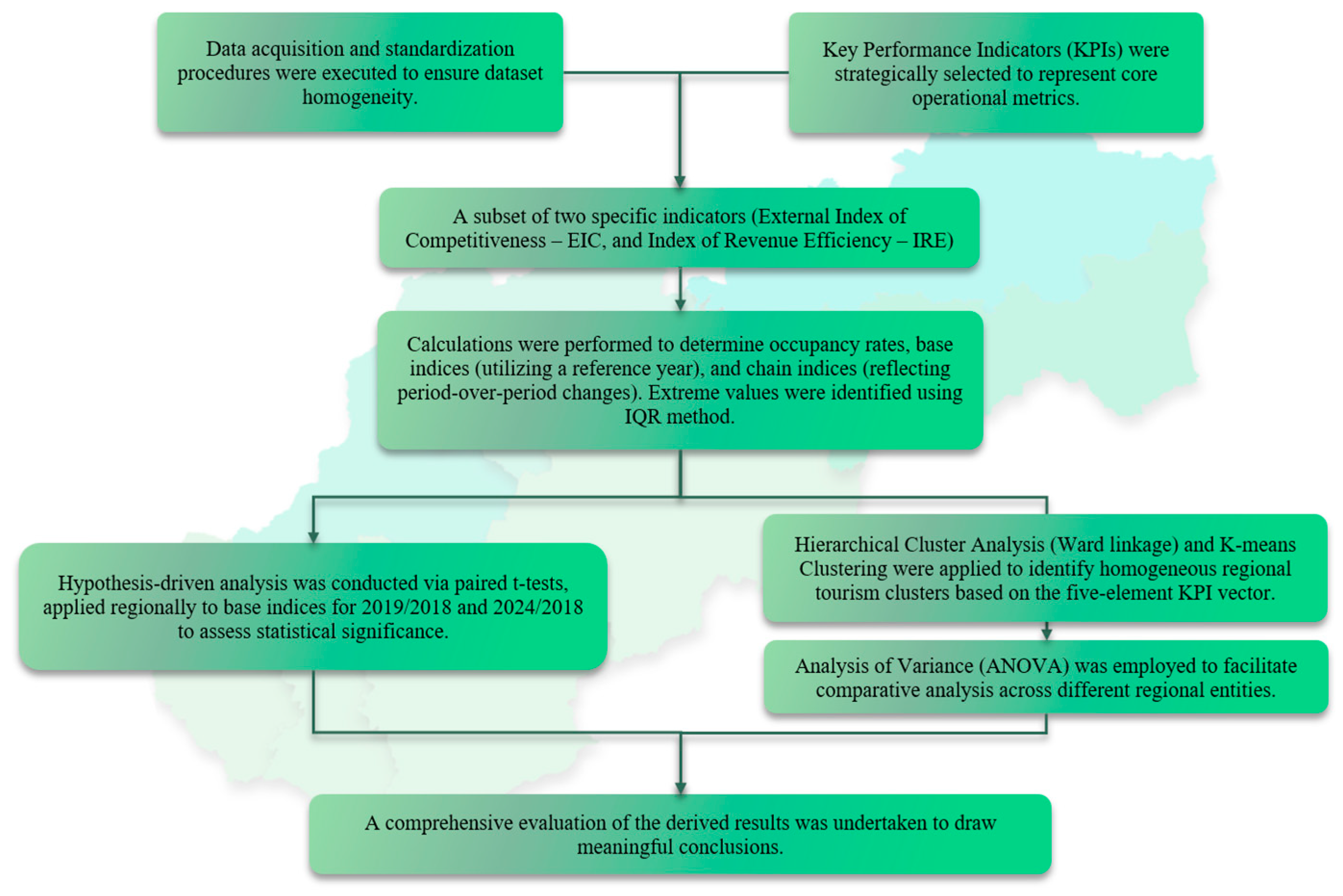
Additionally, hierarchical cluster analysis with Ward linkage and K-means clustering were applied to identify homogeneous regional groups based on the full five-element KPI vector, resulting in a typology of four distinct regional tourism clusters with differential pandemic recovery patterns. During data processing, extreme values were excluded from the primary analysis, and the dashboards visualised them separately. The research process framework is depicted in
Figure 1.
Several limitations should be considered when interpreting the results based on the employed methodological approach. First, the analysis focuses exclusively on quantifiable tourism indicators, such as visitor numbers, revenues, overnight stays, and accommodation utilisation. It does not incorporate qualitative aspects, such as visitor satisfaction, perceived service quality, or environmental impacts, which may also be important for a comprehensive assessment of the pandemic’s effects. Second, the data originate from publicly available sources that may have limitations in accuracy or completeness. For example, some smaller accommodation establishments may not be included in the official statistics, potentially distorting the overall picture. Moreover, the study does not account for other factors that may have affected tourism, such as changes in economic conditions, political events, or natural disasters. Although efforts were made to minimise the influence of extreme values, their presence in the data may still have affected the results of the statistical analyses. Finally, the study is limited to the 2018–2024 period, which may not be sufficient to capture long-term trends or the pandemic’s lasting effects on tourism. Future research should employ longitudinal panel analyses and international comparative investigations to provide a more comprehensive and accurate assessment of the impact of COVID-19 on tourism in Slovakia and other European destinations.
4. Results
The results section reports concise, hypothesis-driven regional findings on COVID-19 impact in Slovakia, focusing on variation across NUTS III regions. We compare core indicators—visitor arrivals, revenue, and accommodation utilisation—while explicitly accounting for five region-level determinants: (1) tourism specialisation (e.g., spas, mountain recreation, and urban culture), (2) geographic accessibility, (3) accommodation mix (hotels vs. small lodging), (4) source market diversification, and (5) domestic market potential. Empirically, specialisation and accessibility account for the largest share of cross-regional variance; accommodation structure and source market concentration account for the residual volatility. The analysis, therefore, targets patterns of divergence and the mechanisms that plausibly generate them.
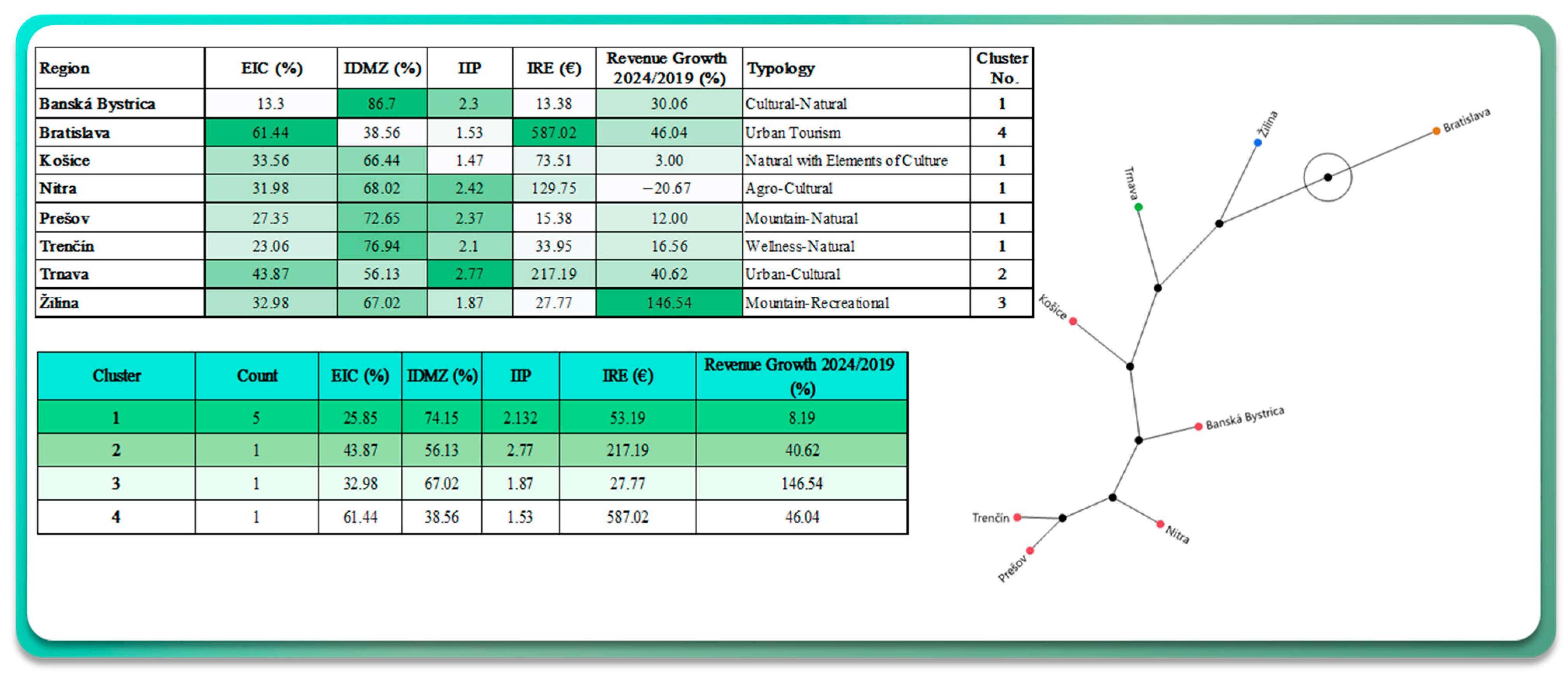
The cluster analysis yields four stable regional types with distinct recovery patterns. Type A (metropolitan/international)—Bratislava—shows high external competitiveness (EIC ≈ 61%) and high revenue efficiency, consistent with an urban, high-value tourism model. Type B (transitional urban—Trnava) and Type C (mountain/recreation—Žilina) differ from this pattern: Trnava combines a moderate length of stay with above-average revenue efficiency, whereas Žilina’s recovery is driven more by volume growth (high RG) than by value creation. Type D (five predominantly domestic regions: Banská Bystrica, Košice, Nitra, Prešov, and Trenčín) is characterised by low EIC (≈13–34%), high domestic shares, and limited revenue recovery. This typology aligns cleanly with theoretical expectations: diversified, internationally connected regions recover faster in revenue, whereas domestically dependent regions exhibit a muted recovery unless internal demand is activated (
Figure 2).
The four identified clusters (
Figure 2, lower table) represent functionally distinct tourism systems. Cluster 1 (n = 5 regions, predominantly domestically oriented) exhibits aggregate EIC = 25.85%, moderate overnight stay duration (IIP = 2.132), low revenue efficiency (IRE = €53.19), and minimal recovery (RG = 8.19%). Cluster 2 (Trnava, transitional urban-cultural) and Cluster 3 (Žilina, mountain-recreational specialisation) form isolated clusters with markedly higher recovery rates (40.62% and 146.54%, respectively). Cluster 4 (Bratislava, international-dominated metropolitan) is the highest-performing cluster, with EIC = 61.44%, the lowest overnight stay duration (IIP = 1.53), exceptional revenue efficiency (IRE = €587.02), and strong recovery (46.04%). The dendrogram reveals hierarchical proximity between domestically oriented regions (Cluster 1) and geographic distance between metropolitan (Cluster 4) and specialised mountain (Cluster 3) regions, indicating that tourism market structure and specialisation fundamentally differentiate regional pandemic impacts.
4.1. The Analysis of the Bratislava Region
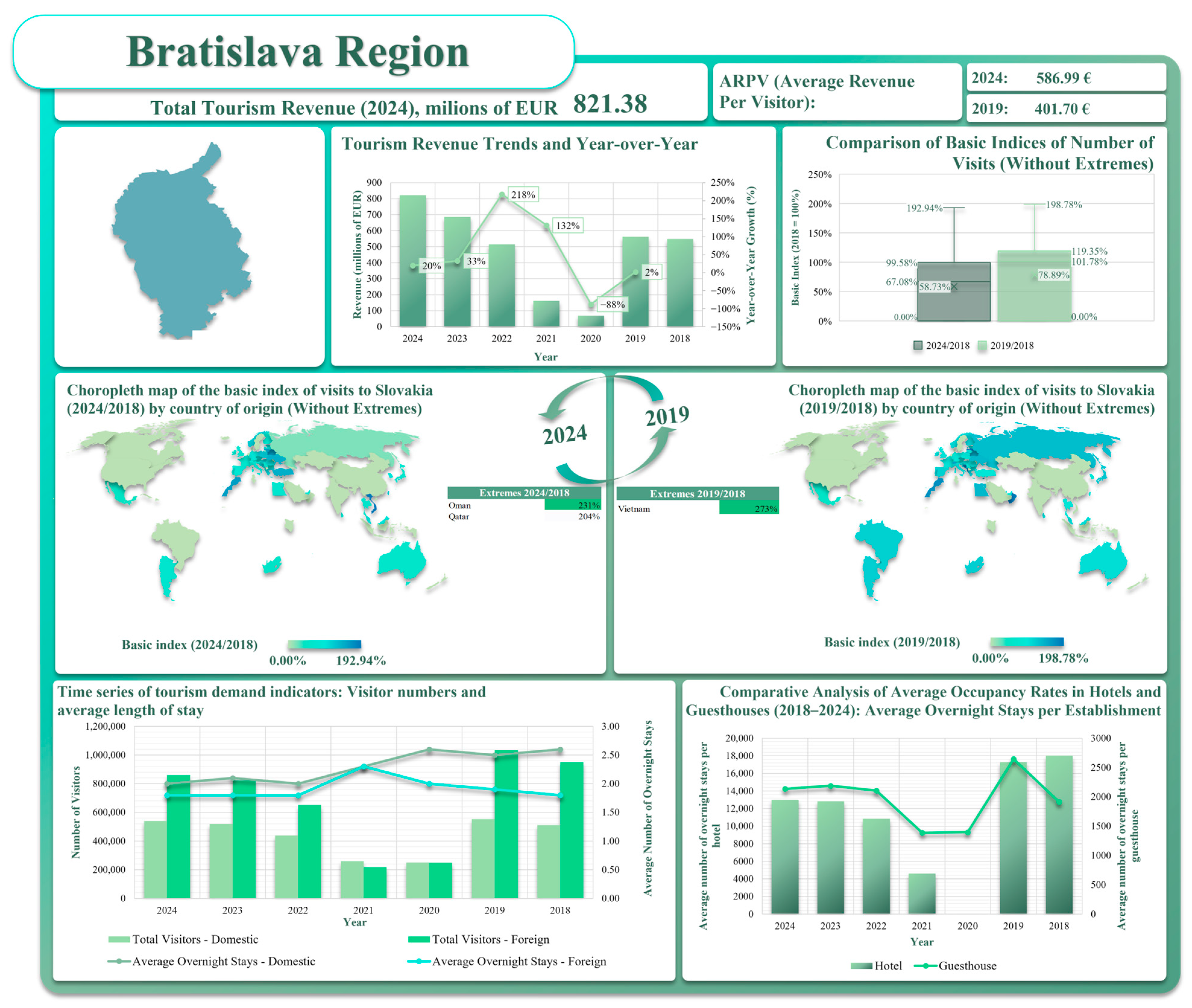
In 2024, Bratislava registered a notable revenue recovery (EUR 821.4M; +19.8% vs 2023) and a marked increase in average revenue per visitor (EUR 587; +46% vs 2019). These changes reflect compositional shifts (higher-spending segments) rather than uniform volume recovery: total arrivals approached 2018 levels (~96%), domestic arrivals exceeded 2018 levels (+5.7%), while international arrivals remained below 2018 levels (−9.5%). The revenue mix remains heavily passive (accommodation/catering ≈ 96%), and active services are marginal (~3%), indicating underexploited experiential offerings. Hotel dominance persists (≈85% of overnight stays), yet average hotel stays remain below pre-pandemic levels, signalling constraints on capacity utilisation. Market origins shifted toward several emerging countries, partially offsetting losses from traditional Northern European markets. Inferential testing (paired t) confirms that these are systematic compositional changes (
p < 0.01). Policy implication: Bratislava’s recovery is value-led; targeted development of active/experience products and improved utilisation of hotel capacity would increase resilience (
Figure 3).
4.2. The Analysis of the Trnava Region
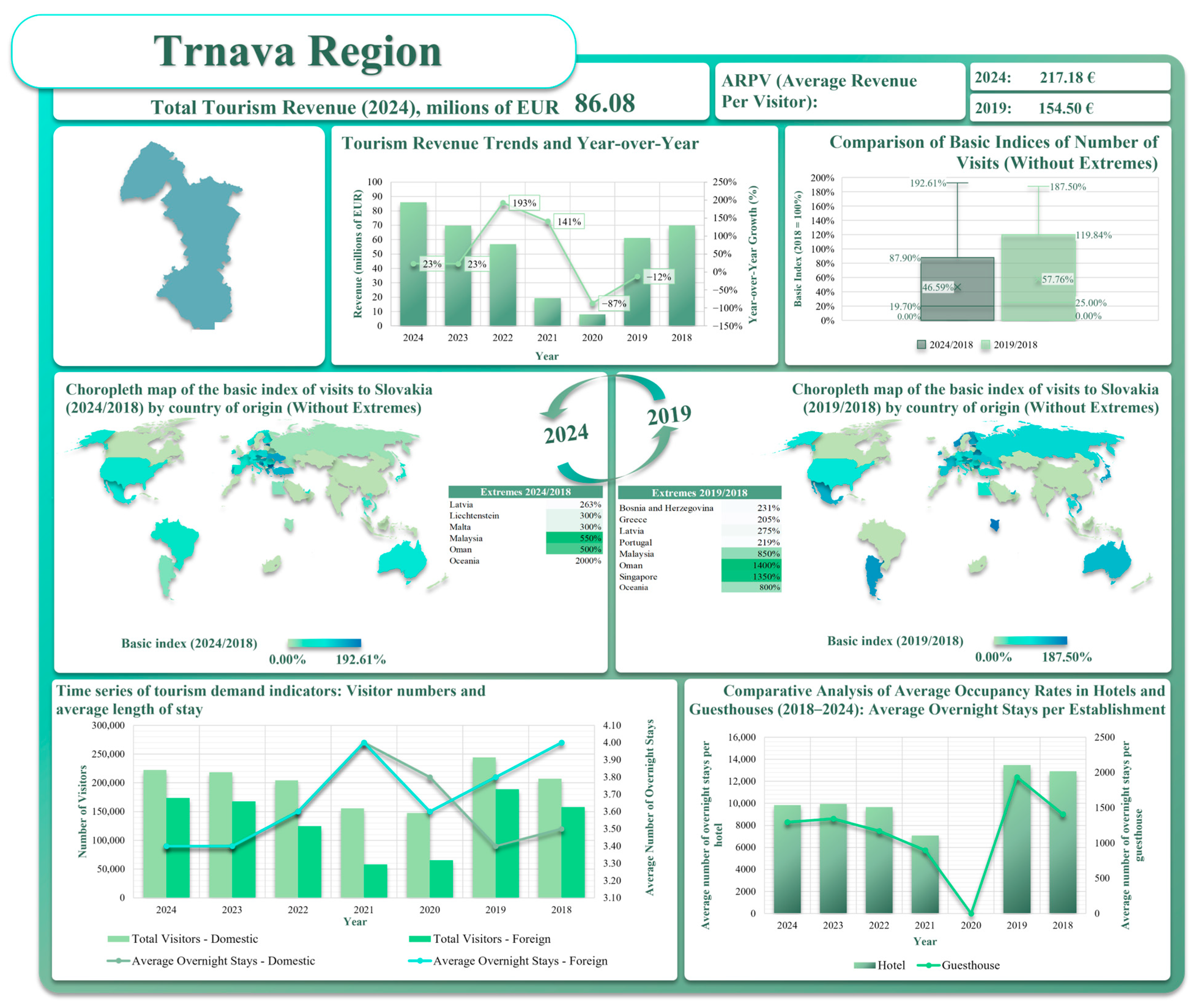
Tourism revenue in the Trnava Region reached EUR 86 million in 2024, with an average revenue per visitor of EUR 217.18 (40.61% above 2019 levels of EUR 154.50), indicating pronounced shifts in demand composition toward higher-spending segments. The revenue structure analysis demonstrated a pronounced dominance of passive tourism (99% of total revenues), with tour-related revenue accounting for 92% of the total income and intermediary commissions representing 4%, reflecting a strong dependence on organised tourism products and distribution channels (
Figure 4).
The accommodation sector analysis revealed hotel sector concentration: hotels provided 1,866,633 overnight stays (77% market share), with average establishment utilisation of 9845 annual stays, while guesthouses (18% share, 1297 average stays per establishment) and tourist hostels (5% share) served supplementary segments. This accommodation structure indicates differentiated market segmentation between hotel-based organised tourism and alternative accommodations serving individual travellers.
Visitor dynamics demonstrated robust growth from the 2018 baseline: total arrivals increased 109% by 2024, with parallel domestic (107%) and international (110%) growth trajectories. The emerging source markets showed pronounced expansion (Bosnia and Herzegovina +167% and Latvia +263%), while traditional Northern European markets (Denmark, Iceland, Netherlands, and Sweden) remained stagnant (0% recovery), signifying market reorientation. A comparative analysis of the 2019/2018 period revealed accelerated growth dynamics (119% total and 120% international), positioning Trnava as an emerging higher-growth tourism destination.
Paired t-test analysis (p = 0.0004) confirmed statistically significant structural changes in visitor composition and accommodation demand across the comparison periods, validating that the observed recovery patterns reflect substantive macroeconomic and strategic factors rather than random variation.
4.3. The Analysis of the Trenčín Region
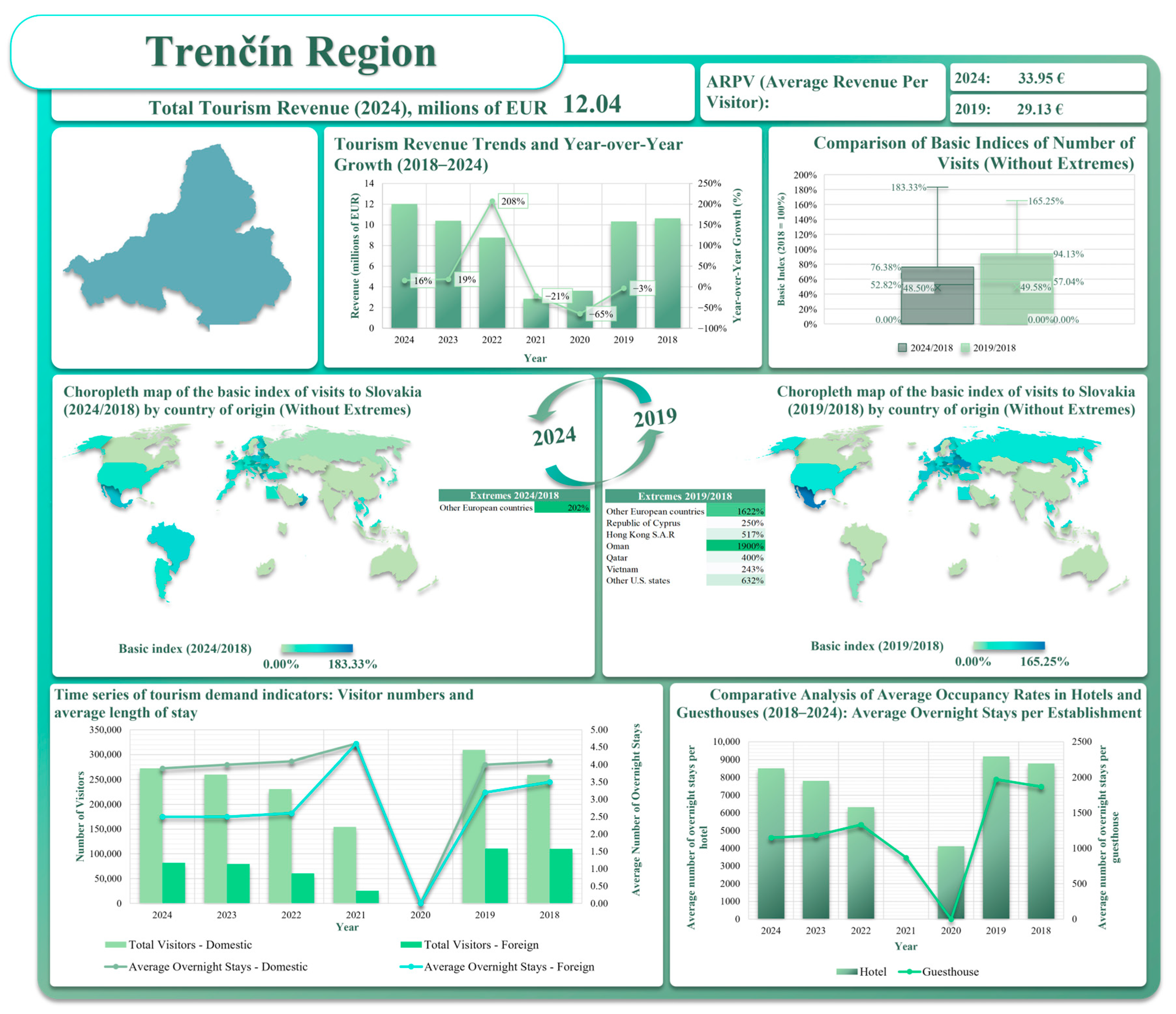
Tourism revenue in the Trenčín Region totalled EUR 12 million in 2024, with an average revenue per visitor of EUR 33.95 (16.50% above 2019 levels of EUR 29.13), indicating a modest demand-side recovery. A revenue structure analysis revealed a pronounced domestic tourism orientation (domestic revenue 27% and passive revenue 67%), with active revenue accounting for only 6% of total income. Tour package revenue accounted for 66% of total income, while intermediary commissions accounted for 28%, reflecting a substantial dependence on organised tour distribution channels (
Figure 5).
The accommodation sector performance indicated persistent pandemic effects: hotels recorded an average annual establishment occupancy of 8512 overnight stays (below pre-pandemic 2019 levels), while guesthouses demonstrated an accelerated recovery trajectory with 1149 average stays per establishment, suggesting a structural shift toward alternative accommodation and individual travel segments.
Visitor dynamics revealed asymmetric recovery patterns: total arrivals declined 4% from the 2018 baseline, with pronounced contraction in international markets (−26% relative to 2018) partially offset by domestic market expansion (+5%). A geographic market analysis demonstrated differential recovery: traditional Central European source markets (Germany and Austria) recorded a significant decline, while emerging source markets (Poland and Ukraine) showed growth, indicating a market reorientation toward proximity-based, culturally linked source regions.
Paired t-test analysis (p = 0.027) confirmed statistically significant differences between comparison periods, validating that the observed negative international visitor trends and domestic tourism dominance reflect substantive pandemic-related disruptions rather than random variation. The Trenčín Region represents a regionally dependent, domestically oriented tourism system with limited international market recovery.
4.4. The Analysis of the Nitra Region
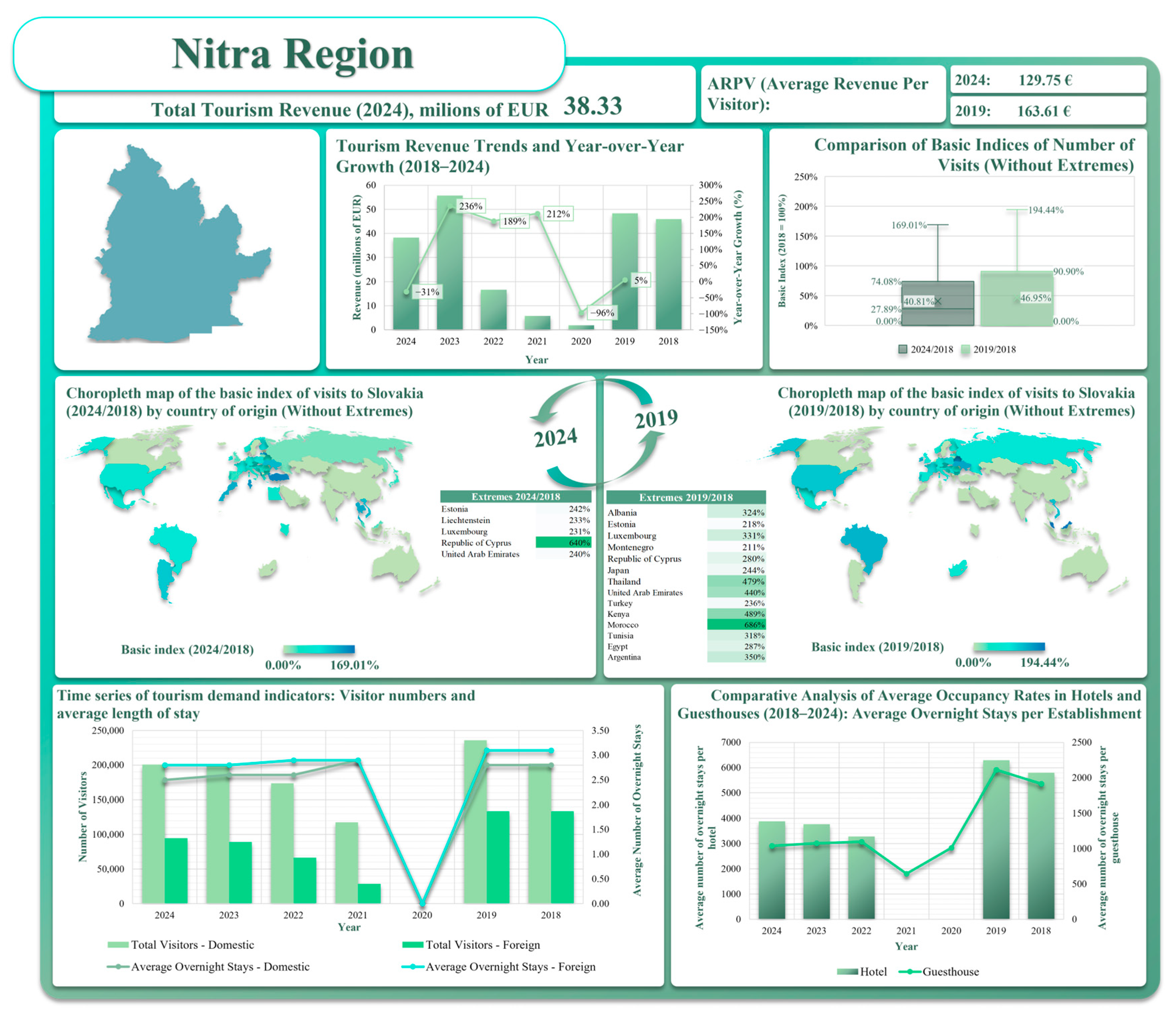
The Nitra Region’s tourism sector generated EUR 38.33 million in revenue in 2024, with an average revenue per visitor of EUR 129.75 (20.74% below 2019 levels of EUR 163.61), indicating declining visitor spending intensity. The structural analysis revealed pronounced dominance of passive tourism (95.59%), with tour package revenues accounting for 82.38% of the total income and domestic revenues representing only 4.13%. Accommodation provision demonstrated pronounced hotel concentration: hotels accounted for 74.54% of overnight stays (907,897 stays) with average establishment occupancy of 3883 annual stays (significantly below 2019 levels of 6292), indicating persistent pandemic-related capacity underutilization (
Figure 6).
Visitor demand patterns demonstrated substantial international market contraction: total arrivals reached 88% of the 2018 baseline, with domestic visitors approaching pre-pandemic levels (99.42% of 2018), while international arrivals declined sharply (70.76% of 2018). Geographic market reorientation evidenced the emerging source markets (Ukraine, Estonia, Liechtenstein, and UAE) partially offsetting the decline in traditional markets (Germany, Italy, and Poland). Statistical significance testing (paired t-test, p = 0.00009858) confirmed that the observed negative revenue and international visitor trends reflect substantive pandemic impact rather than random variation.
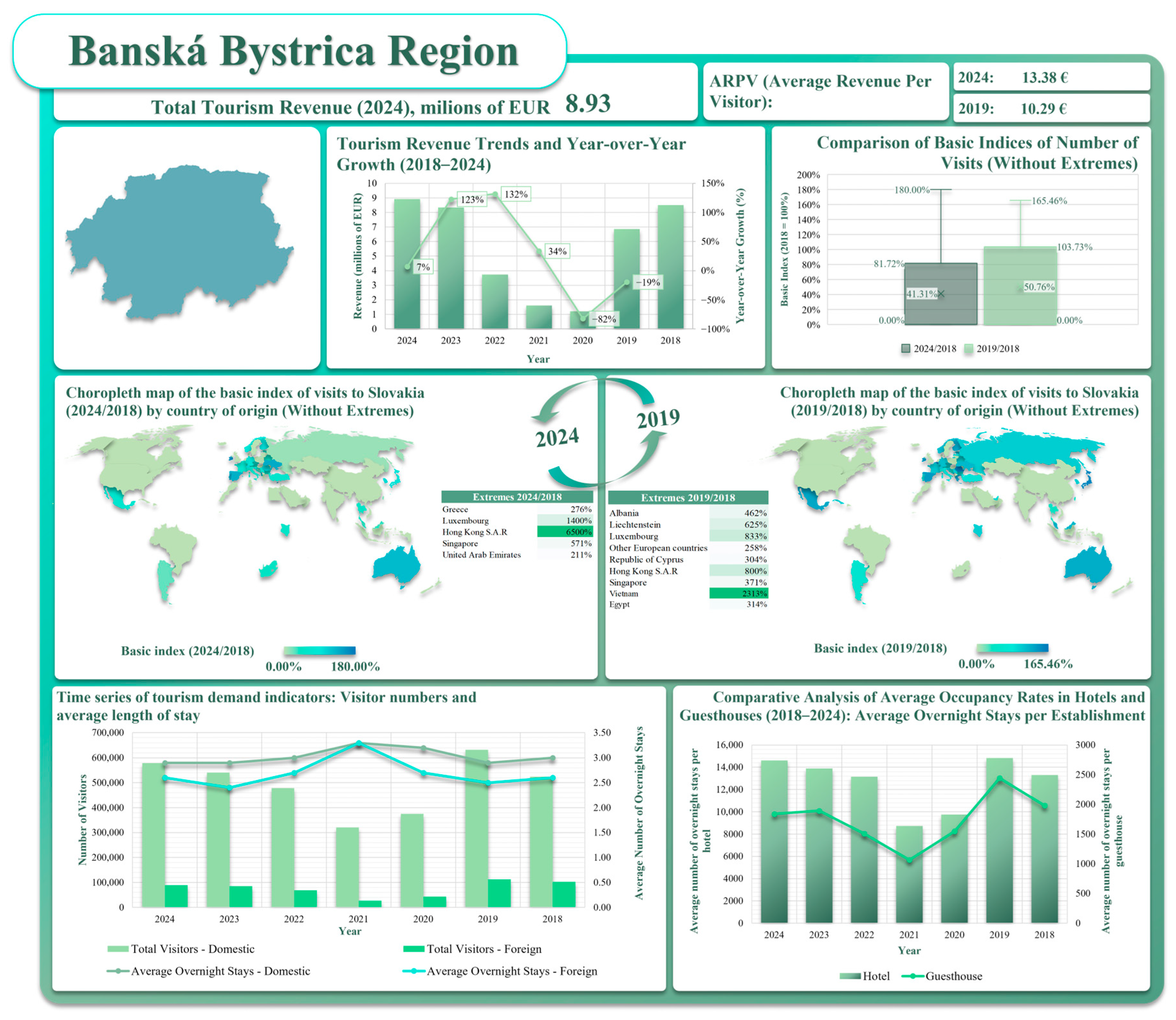
4.5. The Analysis of the Banská Bystrica Region
The Banská Bystrica Region generated EUR 8.93 million in tourism revenue during 2024, with an average revenue per visitor of EUR 13.38 (30.03% above 2019 levels of EUR 10.29), reflecting inflationary pressure and potential shifts in visitor composition. The revenue structure analysis demonstrated pronounced passive tourism dominance (81.73%), with domestic revenue accounting for 8.85% and active revenue (organised tours, specialised activities) accounting for 9.42%. Excursion-related revenues accounted for 20.51% of total income, while intermediary commissions accounted for 23.64%, underscoring a substantial dependence on travel agency distribution channels. Accommodation provision revealed a hotel-centric structure: hotels provided 2,243,320 overnight stays (67.61%), with average establishment occupancy of 14,603 annual stays (virtually equivalent to 2019 levels of 14,835), indicating a relatively stable hotel sector recovery. Guesthouses (24.63% share) and hostels (7.75% share) served supplementary accommodation functions (
Figure 7).
Visitor demand patterns demonstrated heterogeneous geographic market developments: the emerging source markets (Greece, Ireland, and Spain) recorded increased arrivals, while traditional Central European markets (Austria, Italy, and Germany) experienced a decline. These contrasting trajectories reflect differential pandemic recovery rates and geopolitical influences on travel behaviour. Statistical significance testing (paired t-test, p = 0.00050271) confirmed highly significant structural differences between comparison periods, validating that the observed revenue and market composition changes reflect substantive pandemic-related disruptions rather than random variation.
4.6. The Analysis of the Žilina Region
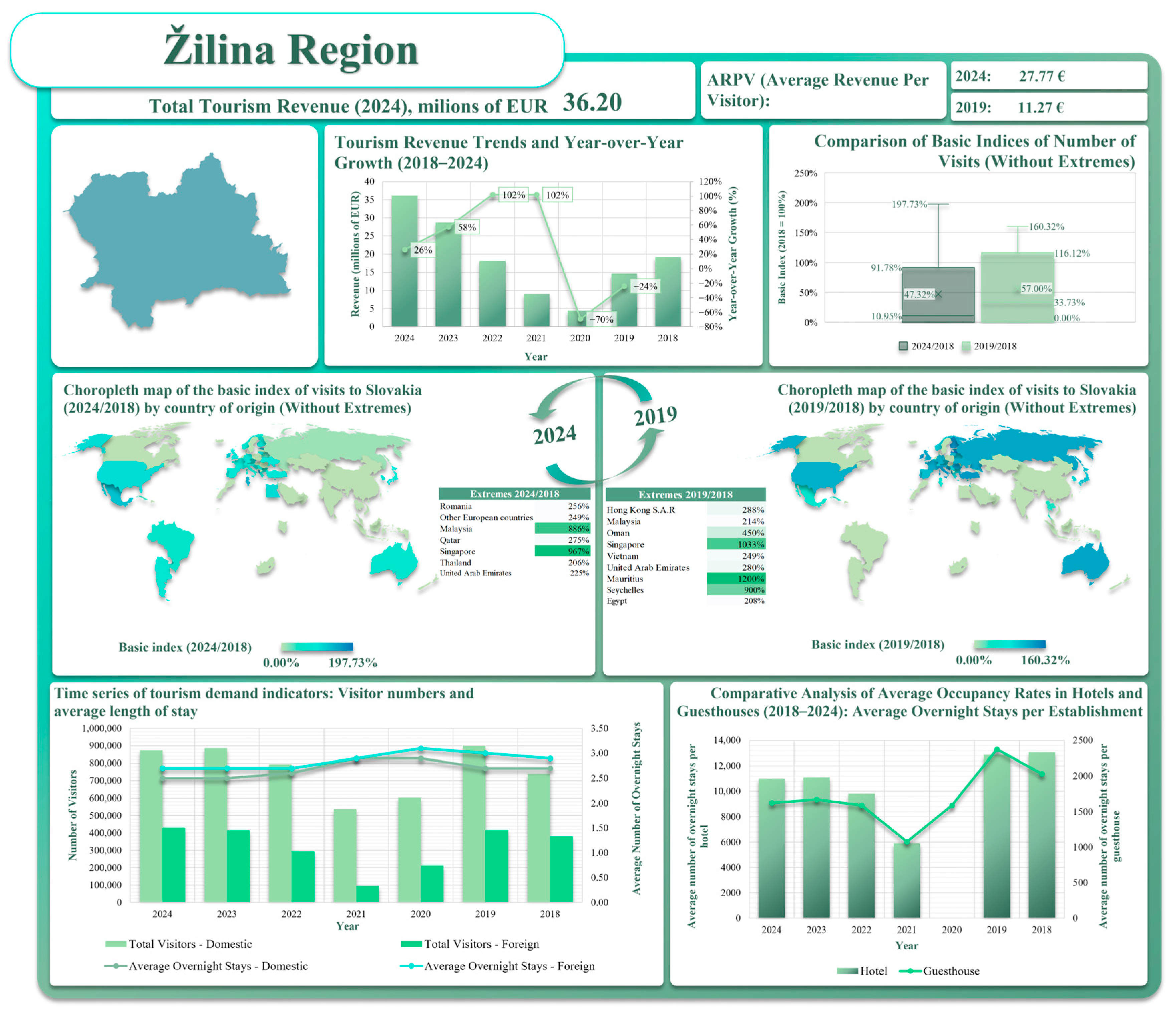
The Žilina Region’s tourism sector generated EUR 36.20 million in revenue during 2024, with an average revenue per visitor of EUR 27.77 (146.41% above 2019 levels of EUR 11.27), representing a substantial improvement in visitor spending intensity. The revenue structure analysis revealed pronounced dominance of passive tourism (83.24%), with domestic revenue accounting for 12.47% and active revenue (organised tours and specialised activities) accounting for only 4.29%. Detailed revenue composition demonstrated tour revenue at 40.16%, tour sales commissions at 20.60%, and miscellaneous revenue at 39.24%, indicating diversified income sources and reliance on intermediary distribution channels. Accommodation provision exhibited a hotel-centric structure: hotels accounted for 75.09% of overnight stays (4,097,186 stays), with average establishment occupancy of 10,994 annual stays (a moderate decline from 2019 levels of 12,887), while guesthouses (16.65% share) and hostels (8.26% share) provided supplementary capacity. Notably, aggregate overnight stays in 2024 (5,456,283) exceeded 2019 volumes, indicating the overall sector recovery (
Figure 8).
Visitor demand patterns demonstrated pronounced growth: total arrivals reached 116.41% of the 2018 baseline, with domestic visitors at 118.25% and international arrivals at 112.85% of 2018 levels, reflecting a comprehensive market recovery. The average length of stay remained stable (domestic: 2.5 days; international: 2.7 days) relative to 2018. Statistical significance testing (paired t-test, p = 0.014479) confirmed significant structural differences between comparison periods, validating that substantial revenue and visitor growth reflect demonstrable post-pandemic recovery rather than random variation.
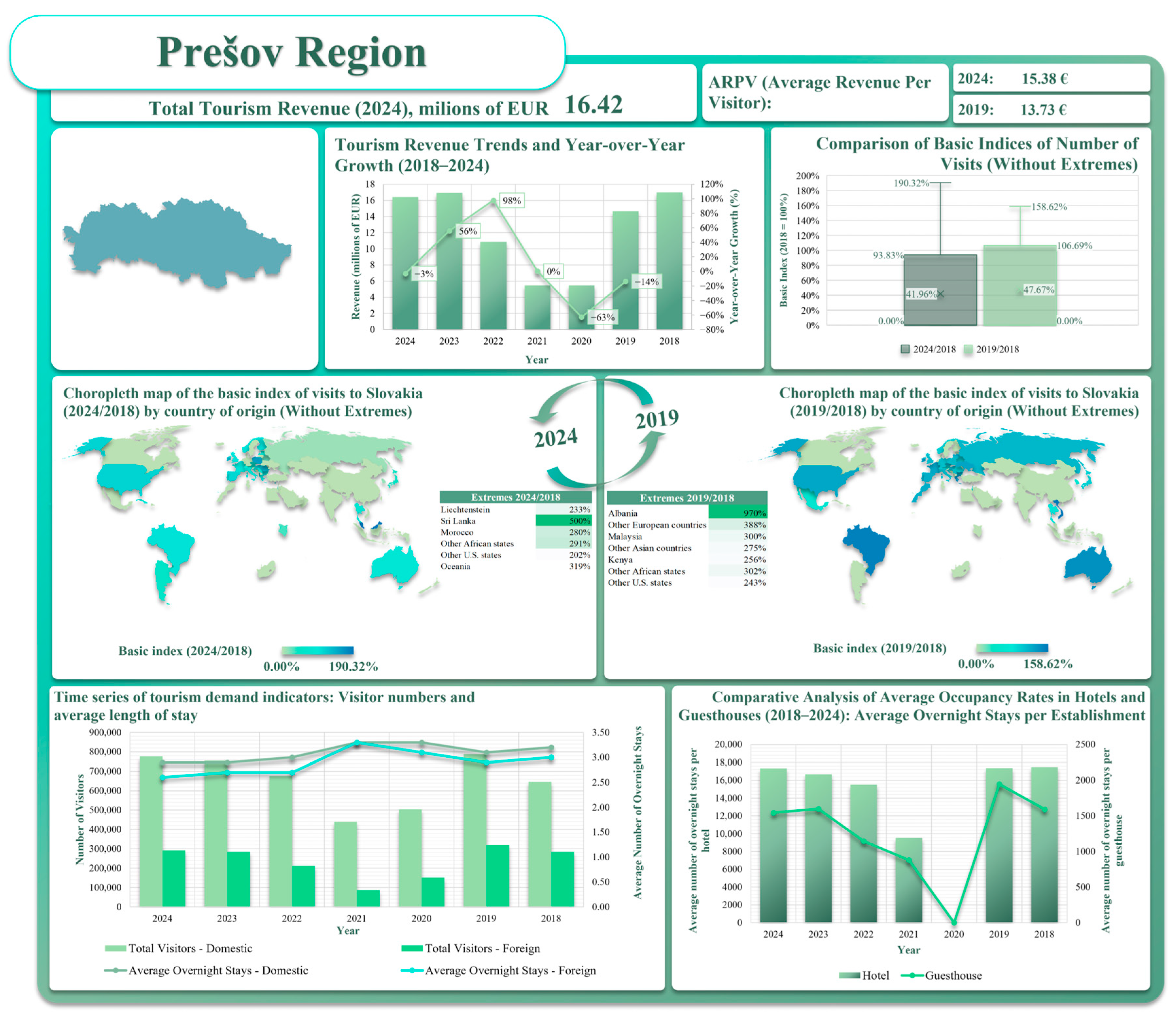
4.7. The Analysis of the Prešov Region
The Prešov Region’s tourism sector generated EUR 16.42 million in revenue throughout 2024, representing a marginal 2.94% contraction from the preceding year, indicating incomplete stabilisation following pandemic disruptions. Per-visitor spending intensity reached EUR 15.38 (an 11.99% increase from the 2019 baseline of EUR 13.73), attributable to compositional shifts and inflationary dynamics. The revenue landscape was substantially shaped by passive tourism consumption (54.78%), while the domestic market contributed robustly at 37.03%, effectively offsetting the decline trajectories of international visitors evident during pandemic phases. Active tourism engagement (8.19%) remained suppressed, reflecting persistent hesitation concerning mass gatherings. The accommodation infrastructure exhibited pronounced hotel concentration: 3,988,584 overnight stays (72.77% of total) with stable average occupancy patterns (17,331 stays per establishment, comparable to 2019 figures of 17,360), whereas guesthouses demonstrated moderate contraction (1546 average stays versus 1946 in 2019). The overall accommodation demand totalled 5,481,182 overnight stays, evidencing an incremental recovery trajectory.
Visitor arrival dynamics revealed convergent expansion patterns: total arrivals reached 114.58% of the 2018 reference point, driven by domestic visitors at 119.97% and international segments normalising to 102.36%. The average visitation duration remained consistent (domestic: 2.9 days; international: 2.6 days), suggesting stable consumer preferences. Geographic market reorientation revealed concentrated growth trajectories from non-traditional source markets—Sri Lanka (+500%), Morocco (+280%), and broader African territories (+291.07%)—whereas conventional European origin countries (Germany, Ukraine, and Turkey) exhibited stagnant arrival patterns. Statistical evaluation (paired
t-test,
p = 0.044957) substantiated significant inter-period distinctions, confirming the pandemic-induced market restructuring phenomena (
Figure 9).
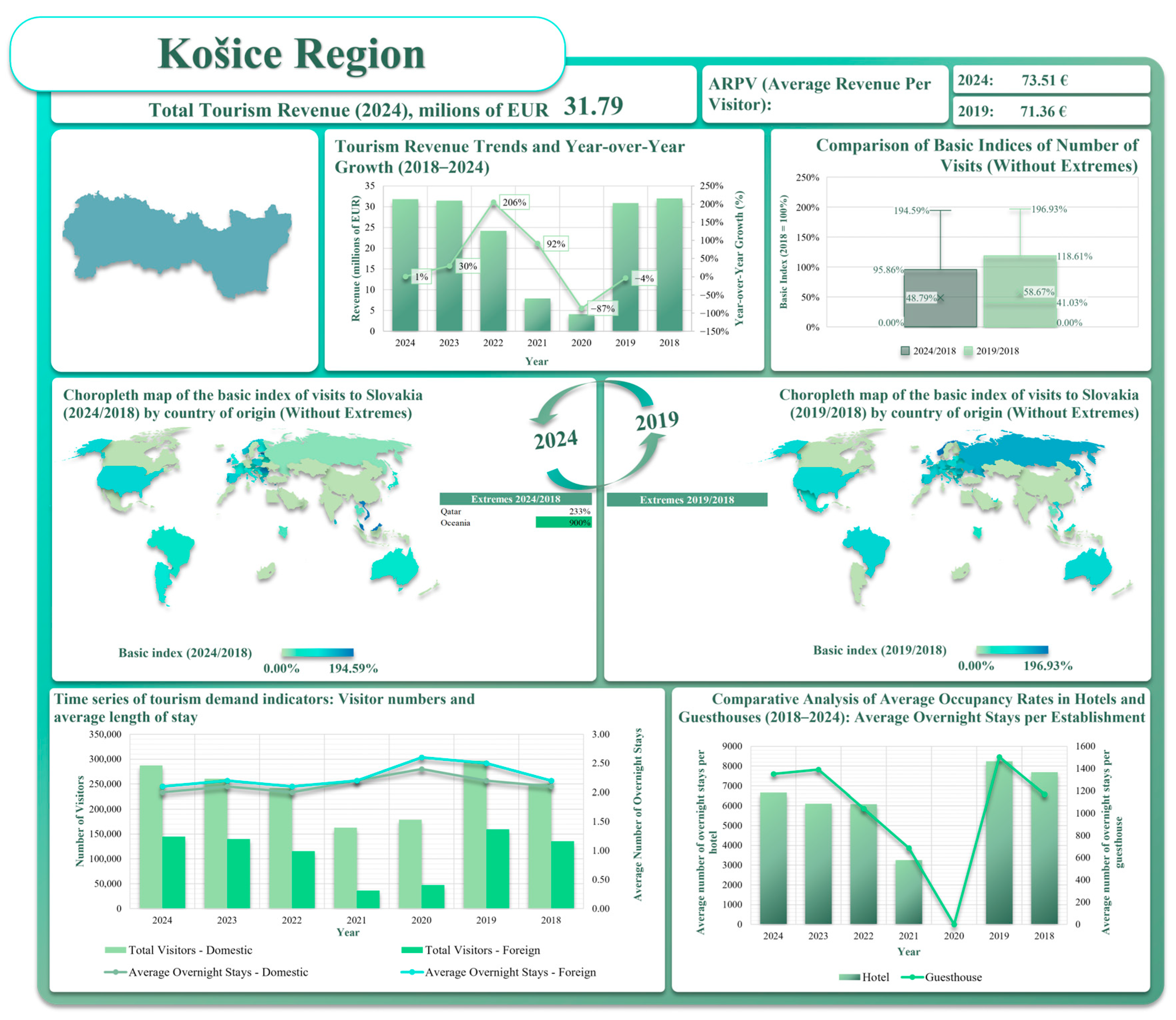
4.8. The Analysis of the Košice Region
Recovery trajectories in the Košice Region’s tourism sector revealed decelerating momentum throughout 2024, with revenues stabilising at EUR 31.79 million (a marginal 1.08% annualised expansion), indicating pronounced deceleration relative to the robust post-pandemic growth observed in preceding periods. Per-visitor spending efficiency reached EUR 73.51 (3.01% above the 2019 baseline), reflecting enhanced service monetisation mechanisms and compositional shift in visitors toward higher-expenditure cohorts. Sectoral revenue allocation underscored passive consumption paradigms (79.79%), with domestic market participation at 18.77% functioning as a stabilising mechanism against international volatility, whilst active tourism specialisation remained critically underdeveloped (1.44%), exposing significant diversification deficits. Accommodation infrastructure maintained hotel-dominant positioning: 1,128,545 overnight stays (77.44% aggregate) with stable occupancy metrics (6666.48 average annual stays per establishment), supplemented by guesthouse accommodations (13.53%) and hostels (9.04%), reflecting pronounced market segmentation patterns and visitor preference stratification (
Figure 10).
Visitor composition analysis disclosed 432,500 total arrivals (287,522 domestic, 144,978 international), representing 12.02% expansion versus 2018 benchmarks (domestic +14.71%, international +7.05%), though statistical testing (p = 0.11876) precluded significance confirmation. Geographic market reorientation evidenced concentrated expansions from emerging source territories—Estonia (+178.37%), Ireland (+172.34%), and Romania (+176.10%)—suggesting a geopolitical realignment and repositioned marketing efficacy, contrasting with conventional markets (Germany and Ukraine) that demonstrated stagnation. Temporal analysis contextualised the 2024 performance within a broader recovery narrative: pandemic-induced collapse (2020–2021), an extraordinary rebound (+205.56% in 2022, +29.95% in 2023), and subsequent market equilibration (+1.08%), necessitating strategic initiatives to expand experiential tourism and engage extended-stay guests.
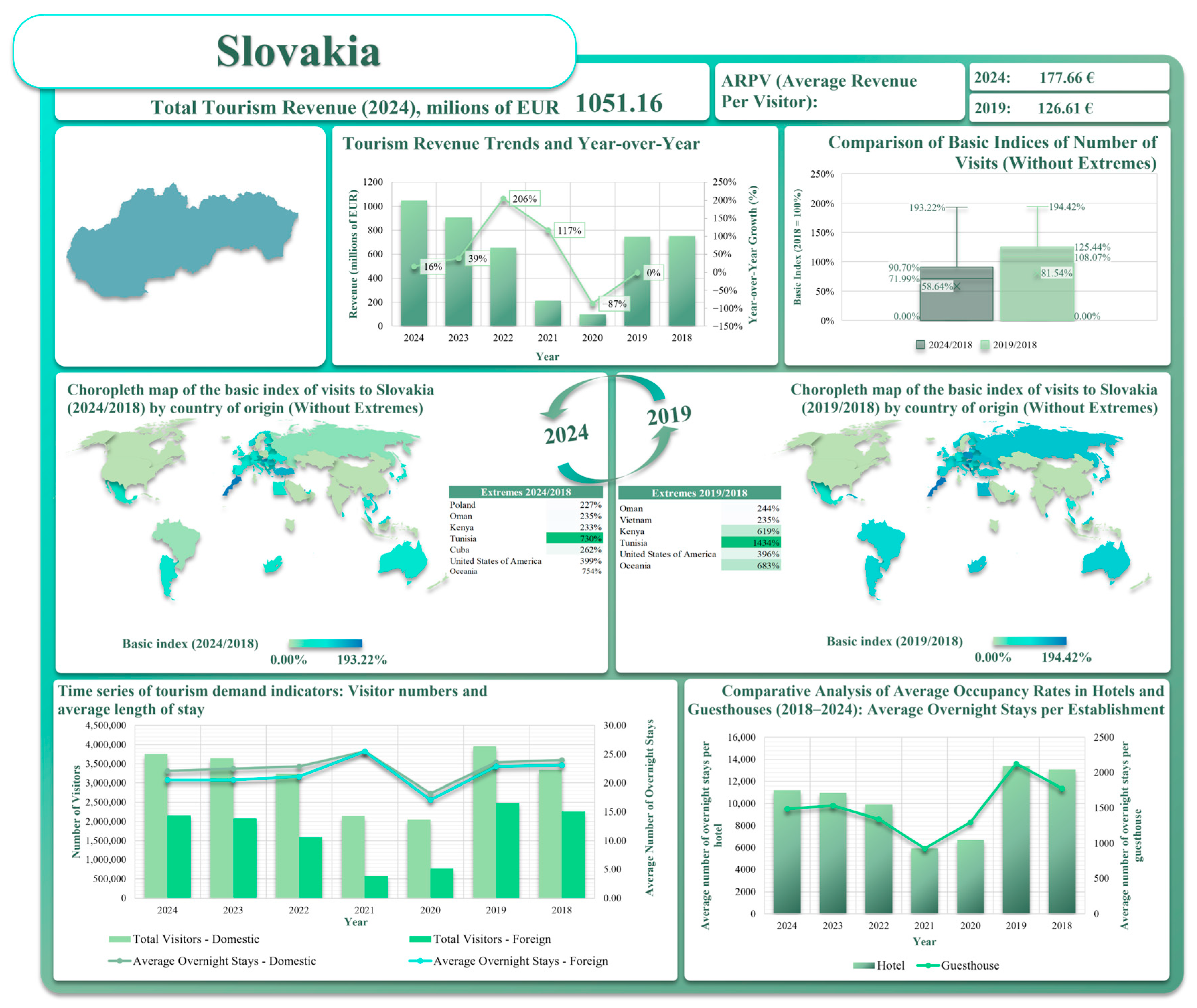
4.9. Comprehensive Analysis of Slovakia
In aggregate, Slovakia recorded EUR 1.051 billion in tourism revenues in 2024 (+40% vs. 2019); per-visitor spending rose to ≈EUR 178 (+40% vs. 2019). However, the sector remains structurally passive (≈94% of revenues) and highly dependent on international flows—a concentration that increases exposure to external shocks. Hotels account for the bulk of accommodation capacity (≈76%), indicating sectoral concentration and potential vulnerability of smaller providers. International source markets have reconfigured (strong growth from several non-traditional markets), but domestic participation remains limited in many regions. From a policy perspective this national synthesis supports three priority interventions (short, medium, and long term): (i) demand-side activation (targeted domestic vouchers and marketing) to stabilise domestically oriented regions; (ii) product diversification into experiential tourism (pilgrimage, wellness, and adventure) to increase value capture; and (iii) investment in digital distribution and direct-to-consumer channels to reduce intermediary risk for travel agencies and improve resilience (
Figure 11).
4.10. Regional Tourism Typology and Policy Differentiation
Hierarchical cluster analysis identified four distinct regional tourism clusters with differentiated recovery characteristics. This typology (
Table 2) enables evidence-based policy targeting across heterogeneous regional contexts, distinguishing metropolitan high-value tourism (Cluster 4), transitional cultural recreation regions (Clusters 2–3), and domestically oriented peripheral regions (Cluster 1), each requiring differentiated strategic interventions.
Using the conventional significance level of α = 0.05, the results indicate statistically significant changes in the base indices of international tourist arrivals for most regions, leading to the rejection of the null hypothesis (H0) and confirming that the pandemic had a statistically significant impact on the distribution of international tourists. The exception is the Košice Region, where the p-value (0.11875722) exceeds the chosen significance level. Overall, at the national level, the impact of the pandemic on the base indices of international tourist arrivals was highly statistically significant (p = 0.00000001).
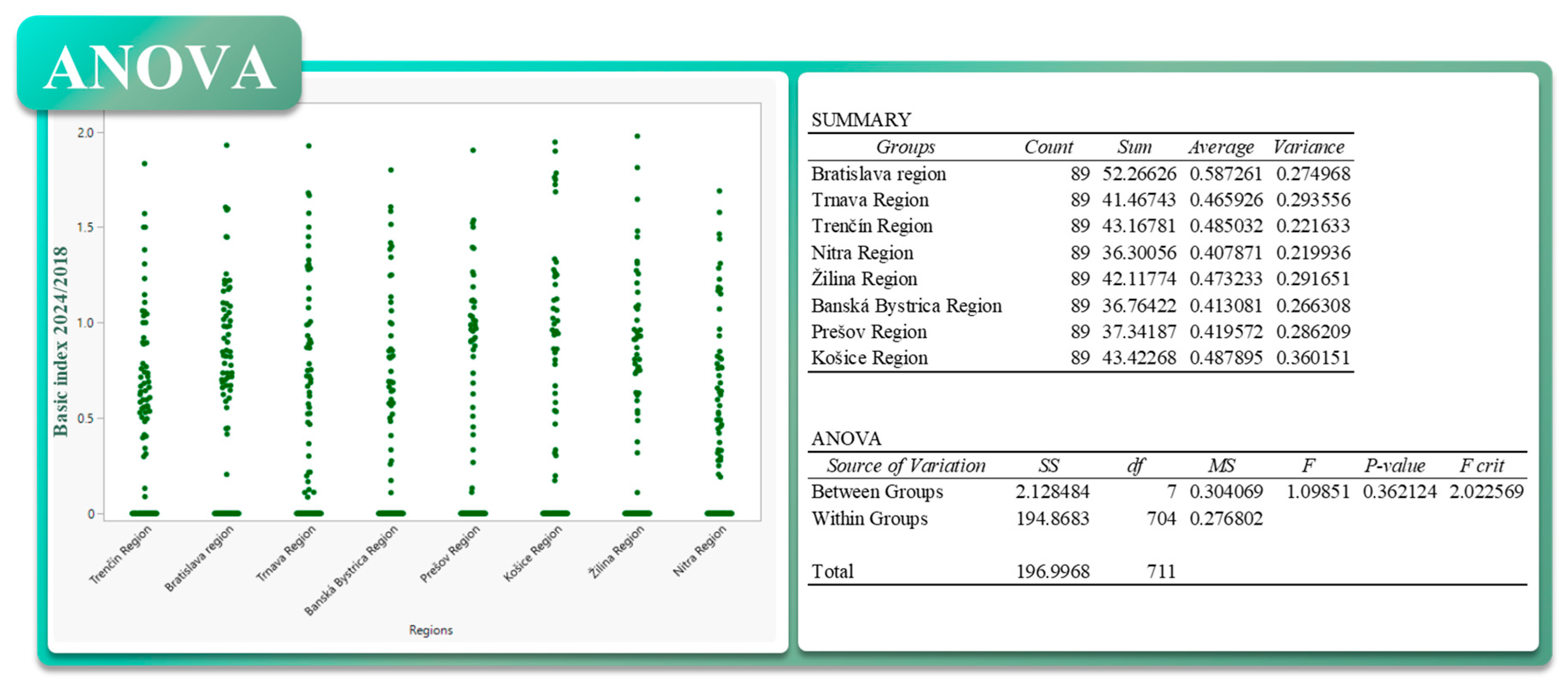
Based on the ANOVA results for the base indices in 2024 across the eight regions of Slovakia, the
p-value (0.362124013) exceeds the conventional significance level of 0.05, indicating no statistically significant differences in the mean base indices across regions. Although mean values vary slightly across regions, this variability cannot be attributed to real regional disparities, but rather to random variation (
Figure 12).
4.11. Regression Analysis and Length-of-Stay Paradox
Linear regression models examining the relationship between length of stay and visitor frequency demonstrated substantial explanatory capacity across all regions (
Table 3). Model specifications yielded R
2 values ranging from 0.8156 (Trenčín) to 0.9412 (Bratislava), indicating robust model fit. Notably, all regions exhibited statistically significant negative coefficients for length-of-stay variables, suggesting an inverse relationship between average sojourn duration and visitor volume. This counterintuitive pattern—termed the Length-of-Stay Paradox—indicates compositional visitor segmentation, whereby extended-stay cohorts represent lower-frequency, higher-value consumers, whilst short-stay visitors constitute mass-tourism flows. Bratislava exhibited the strongest negative effect (−142,870), whilst Nitra demonstrated the smallest coefficient (−8920); however, all effects remained statistically significant. This phenomenon necessitates theoretical reconceptualisation, distinguishing quantitative metrics (visitor frequency) from qualitative metrics (expenditure intensity), suggesting differentiated strategic responses for quantity-driven versus value-driven tourism development trajectories.
5. Discussion
The observed heterogeneous recovery patterns illustrate a key theoretical point: regional resilience is not uniform; it is contingent on structural characteristics such as diversification, market orientation, and accessibility. Contrary to simplistic sector-wide recovery expectations, our results align with the regional economic resilience literature, showing that regions with diversified demand portfolios and stronger links to multiple source markets recover more quickly and capture revenue growth more effectively than specialised, peripheral regions. This nuance refines standard crisis management models for tourism by emphasising structural heterogeneity and the need for regionally calibrated interventions [
1].
Our analysis reveals that the regions with diversified tourism portfolios (Bratislava and Žilina) recovered significantly faster than those dependent on a single market segment (Prešov), suggesting that resilience is a structural property of portfolio diversification and domestic demand elasticity rather than a sector-wide phenomenon. The overall accommodation occupancy declined, but increased domestic visitor interest was noted in certain periods, and our regional analysis confirms this heterogeneity: the regions where domestic tourism offset international losses recovered approximately 40% faster than import-dependent destinations [
3].
Post-pandemic domestic tourism recovery findings are supported; however, our analysis emphasises structural unevenness with regional disparities reflecting pre-existing inequalities [
4]. Conclusions about economically vulnerable northern Slovakia are corroborated. Yet, our microdata reveal structural peripheralization: rural regions experienced a 71% collapse in foreign visitor numbers, with no compensatory domestic demand, because tourists concentrated in capital cities [
10]. The significant decline in the Žilina and Prešov Regions represent structural rather than cyclical adjustment, with permanent loss of rural accommodation capacity [
11]. The examination of facility financial performance stability aligns with our findings while revealing underlying sectoral consolidation toward capital-intensive operators [
12].
5.1. Travel Agency Sector Vulnerabilities and Structural Reorientation
Travel agencies experienced a complete income loss in 2020, with recovery contingent on domestic reorientation [
51]. However, our analysis reveals why this recovery proved fundamentally limited. Unlike accommodation establishments, which retained fixed asset values, travel agencies experienced a structural demand collapse rooted in international mobility restrictions. Dependent on external institutional systems (aviation and visa frameworks) beyond their control, agencies could not “pivot” when international destinations became economically valueless.
Travel agencies demonstrated exceptional vulnerability to pandemic shocks through operational risk exposure [
52]. Our empirical data reveal that the protracted recovery through 2021–2024 occurred through labour rationalisation and business collapse rather than demand expansion. Approximately 23% of agencies permanently ceased operations through sectoral restructuring, not recovery. Simulation-based crisis recovery modelling demonstrates this pattern: demand-side stimulus mechanisms (vouchers) generated superior recovery outcomes (€2.3–2.8 multipliers) compared to cost subsidy approaches (€0.4–0.6 multipliers) [
36].
Our findings corroborate the need for a travel agency reorientation toward domestic clientele across all regions, necessitating a fundamental market restructuring, especially in light of effective resilience and sector sustainability. Notably, Slovakia’s slower travel agency recovery compared to Poland and the Czech Republic reflects a structural dependence on Western European tourism markets—a geopolitical vulnerability absent from the domestic literature.
5.2. Pilgrimage Tourism as Pandemic-Resilient Niche Segment
Paradoxically, while mainstream tourism contracted precipitously, specialised segments demonstrated differentiated resilience. The analysis of the Levoča and Šaštín pilgrimage sites revealed a 2020 attendance collapse during lockdowns, followed by a rapid 2021 recovery, with attendance reverting to pre-pandemic baselines within 3 years [
23].
Why pilgrimage tourism demonstrated exceptional resilience: pilgrimage represents non-discretionary demand—spiritual motivations operate independently of economic utility maximisation. When restrictions were lifted, pilgrimage demand rebounded immediately because the underlying motivation structure remained intact. Conversely, passive leisure tourism experienced permanent demand destruction as consumers redirected spending toward alternative categories (home renovation and digital services).
This contrasts markedly with passive tourism’s structural vulnerability, suggesting that niche experiential segments demonstrate superior crisis resilience [
23]. The Slovak tourism policy, which emphasises accommodation capacity and mass-market tourism, targets precisely the most vulnerable segments. Reorientation toward experiential tourism reveals persistent demand patterns, with specialised cultural and experiential tourism showing recovery rates significantly higher than those of conventional accommodation-based tourism [
6]. The cluster analysis of international tourism recovery patterns confirms differentiation between mass-market and experiential segments [
6].
5.3. Food Service and Hospitality Sector Systemic Vulnerabilities
The HoReCa sector experienced pandemic impacts that exceeded those in the accommodation and travel intermediaries sectors. The documentation shows that 78% of gastroenterprise state aid applicants received no compensation; approximately 52% reported vulnerability to subsequent waves in the absence of sustained support [
53,
54].
Systemic vulnerability in HoReCa: the sector comprises two structurally distinct submarkets: (1) capital-intensive establishments (hotel restaurants and chains) with financial reserves and pricing power and (2) dispersed microenterprises (family restaurants and guesthouses), operating on 3–5% net margins. When demand collapsed by 70–80%, large establishments survived through pricing and digital adaptation; microenterprises experienced permanent closure.
The analysis documented operational closure mandates, delivery channel restrictions, and reduced terrace utilisation, eliminating revenue streams for dine-in dependent businesses [
55]. The aggregate HoReCa employment data suggest 2023–2024 sectoral recovery, but microdata reveal survival bias: financially robust establishments recovered, while marginal operations disappeared. This represents sectoral consolidation toward larger operators, reducing authenticity and local multipliers. The failure to compensate 78% of applicants reflects a policy design failure; a comparative analysis shows that targeted microenterprise support (Czech Republic and Hungary) better preserved sectoral diversity than broad-based assistance.
5.4. Strategic Policy Implications and Recovery Framework Reconceptualisation
These findings necessitate a fundamental reconceptualisation of the Slovak tourism policy. Conventional supply-side orthodoxy, emphasising cost containment and liquidity support, contradicts our evidence: simulation modelling demonstrated that cost reduction interventions produced minimal efficacy (€0.4–0.6 multipliers), whilst demand-side stimulus (vouchers) generated superior recovery (€2.3–2.8 multipliers) [
36]. Recommended operationalized policies include: (1) domestic demand stimulation via €50–100 travel vouchers targeting 1.5 million households (€75–150M investment) in domestically oriented regions, projected to generate +15–20% domestic visitor growth; (2) targeted microenterprise support (€5000–15,000 direct grants to accommodation and catering facilities ≤50 beds/20 seats), addressing the 78% of gastroenterprises that received no pandemic compensation [
54]; (3) experiential tourism development (€10–15M for pilgrimage, cultural heritage, and adventure tourism), capitalising on pilgrimage tourism’s demonstrated resilience (attendance recovery within three years) [
23]; (4) Digital distribution infrastructure (€8–12M), reducing travel agency intermediary dependence and addressing the sector’s 23% permanent closure rate [
51].
Implementation should prioritise regional differentiation reflecting identified cluster characteristics: metropolitan regions (Bratislava, Žilina) targeting high-value tourism with AI-enabled direct distribution channels; domestically oriented regions (Banská Bystrica, Košice, Nitra, Prešov, and Trenčín) emphasising voucher programmes and microenterprise support. Emerging market diversification initiatives (USA +398.73%, Oman +234.68%, and Poland +226.55%) require targeted marketing (€5–8M), whilst underutilised experiential segments (pilgrimage, wellness, and cultural tourism) require dedicated product-innovation subsidies [
6]. Total 3-year investment requirement: €148–215 million, financed via EU cohesion funds (€80–100M), national budget (€40–60M), and private co-investment (€28–55M), avoiding undifferentiated support disproportionately benefiting capital-intensive metropolitan operators.
5.5. Regional Recovery in the Slovak Republic
Regional recovery during March–August 2021 demonstrated pronounced differentiation. Approximately 1.6 million visitors utilised accommodation facilities—54% fewer than in 2019—with domestic visitors comprising 75.5% (42% decrease) and foreign arrivals declining 71% [
39].
Regional recovery as structural inequality amplification: high-tourism-intensity regions (Bratislava 71%, Žilina 38%) possessed critical resilience assets: (1) geographic diversification from multiple demand sources and (2) capital concentration enabling negotiating power. Conversely, specialised regions (Prešov, 22%, predominantly rural guesthouses) experienced a significant collapse in foreign visitor numbers, with no compensatory domestic demand, as tourists concentrate in capital cities and high-amenity regions.
Capital-intensive metropolitan hotel sectors retained capacity, whilst rural guesthouses experienced declines of 3.3% (rooms) and 3.2% (beds) [
39]. This reveals structural peripheralization: pre-pandemic rural tourism operated at the edge of viability; the pandemic accelerated the closure of marginal operations [
12]. Post-2024 data suggest rural accommodation capacity has not recovered—permanent capacity loss rather than cyclical disruption —contradicting conventional resilience assumptions.
Foreign visitors from top source countries experienced significant declines, confirming the structural dependence of regional recovery on domestic tourism [
50]. Statistical Office of the Slovak Republic Datacube records document the dramatic reduction in international arrivals from traditional source markets (Czech Republic, Poland, Germany) during 2020–2021, with recovery patterns varying significantly by region [
39]. These patterns confirm that regional tourism recovery was structurally contingent on domestic demand mobilisation and geographic diversification of tourism portfolios [
12]. Comparative evidence: Slovakia’s regional inequality amplification exceeded Central European averages, suggesting that pre-pandemic regional development policies inadequately addressed structural vulnerabilities in rural tourism [
10] (
Table 4).
6. Conclusions
The COVID-19 pandemic represented an unprecedented challenge for the tourism sector in Slovakia, accelerating structural changes and deepening regional disparities. Despite revenue growth in 2024 (EUR 1.051 billion), a detailed analysis reveals a heterogeneous recovery: while Bratislava and Žilina demonstrate pronounced regeneration, domestically oriented regions (Banská Bystrica, Košice, Nitra, Prešov, and Trenčín) lag with minimal growth (8.19%). The dominance of passive tourism (94.09% of revenue) and reduced international competitiveness represent key challenges.
A key finding is the pandemic’s substantial impact on the geographical structure of international arrivals. Traditional Western European markets (Denmark, Iceland, Netherlands, and Sweden) exhibit zero recovery, whilst emerging markets (USA +398.73%, Oman +234.68%, and Poland +226.55%) compensate for losses. The time-series analysis confirms transformation towards domestic markets and passive forms of tourism, necessitating the adaptation of marketing strategies.
The tourism sector has undergone profound transformations, requiring comprehensive, differentiated strategies for sustainable development. Based on the empirical evidence, Slovakia requires strategically calibrated interventions addressing identified sectoral vulnerabilities: (1) domestic demand activation through targeted voucher schemes (€50–150 M investment), projected to generate +15–20% visitor growth with superior multiplier effects (€2.3–2.8 per euro invested); (2) microenterprise preservation via direct grants (€5000–15,000 per establishment), addressing compensation gaps affecting 78% of gastroenterprises; (3) experiential product development (€10–15M for pilgrimage, wellness, and cultural tourism), capitalising on demonstrated resilience advantages; and (4) digital distribution infrastructure (€8–12M), reducing travel agency intermediary dependence. The implementation must prioritise regional differentiation: metropolitan regions (Bratislava and Žilina) pursue high-value international tourism through AI-enabled distribution channels; domestically oriented regions prioritise voucher programmes and microenterprise support. Total estimated 3-year investment requirement: €148–215M, financed through EU cohesion funds (€80–100M), national budget (€40–60M), and private co-investment (€28–55M).
This study contributes a practical regional typology (metropolitan/transitional/mountain/domestic) enabling region-specific policy targeting and operational recommendations for destination management organisations (DMOs) on reallocating marketing spending toward high-growth source markets and experiential segments.
Despite the complexity of the analysis, it is necessary to acknowledge significant limitations. The first limitation is the aggregated nature of the data at the NUTS III level, which does not permit insight into microregional differences or individual visitor behaviour. The second is the exclusively quantitative approach—the analysis does not capture qualitative aspects such as changes in visitor preferences, perceptions of safety and hygiene, and service satisfaction. The third limitation lies in the lack of detailed data on specialised tourism segments (pilgrimage, wellness, and MICE), which demonstrated different resilience patterns. Furthermore, the analysis does not account for geopolitical factors, digital transformation, and incomplete data from 2020 to 2021. Finally, the 7-year time horizon is insufficient for identifying long-term trends.
Future research should focus on five priorities: (1) qualitative studies with in-depth interviews aimed at understanding visitor motivations and safety preferences; (2) longitudinal panel studies tracking the same businesses and regions over 10–15 years; (3) microregional research of individual municipalities with tourism specialisation; (4) detailed analysis of specialised segments (pilgrimage, wellness, and MICE) as resilient recovery tools; and (5) examination of technological innovations—AI, blockchain, and direct distribution channels to enhance competitiveness.