Article

Designing Sustainable Recreation Corridors Through Spatial Integration of Outdoor Suitability and Ecological Risk: A Case Study of China’s Giant Panda National Park
School of Landscape Architecture, Beijing Forestry University, Beijing 100083, China
*
Author to whom correspondence should be addressed.
Sustainability 2026, 18(6), 2694; https://doi.org/10.3390/su18062694
Submission received: 7 February 2026 / Revised: 6 March 2026 / Accepted: 7 March 2026 / Published: 10 March 2026
(This article belongs to the Special Issue Tourism and Environmental Development: A Sustainable Perspective)

Abstract

Balancing tourism development with ecological integrity remains a central challenge in the management of protected areas. This study proposes a spatial framework that integrates the Outdoor Recreation Suitability Index (ORSI) and the Landscape Ecological Risk Index (ERI) to identify and optimize low-impact recreation corridors within Giant Panda National Park, China. Recreation suitability and ecological risk were modeled using environmental variables and landscape metrics, respectively. The results reveal a clear spatial pattern: high-suitability zones are concentrated in the central and northeastern areas, characterized by gentle terrain and extensive forest cover, while ecological risk is elevated in fragmented, human-disturbed peripheral regions. Although ORSI and ERI exhibit an overall negative spatial correlation, bivariate analysis reveals localized mismatches—areas where high recreation potential coincides with ecological vulnerability—indicating potential conflict zones. These zones are typically located along transitional park boundaries where accessibility intersects with ecological sensitivity. To mitigate such conflicts, a least-cost path analysis was conducted based on a composite resistance surface combining ORSI and inverted ERI values. The resulting corridor network connects 40 core areas while effectively avoiding ecological hotspots. Corridor buffers are predominantly composed of forest and shrubland, suggesting high environmental compatibility, particularly in the Qinling region. By translating spatial trade-offs into practical corridor design, this study provides a replicable approach for harmonizing recreation planning with conservation objectives. The proposed framework offers actionable guidance for evidence-based zoning, visitor flow management, and adaptive tourism development in ecologically sensitive protected landscapes.

1. Introduction

National parks are tasked with a dual mandate: preserving intact ecosystems and biodiversity while simultaneously providing opportunities for public recreation and environmental education [1,2,3,4]. Chinese national policy documents, such as the 2021–2035 Master Plan for Ecosystem Conservation, explicitly emphasize ecological protection as the bottom line, while promoting nature education and ecotourism development—reflecting a broader global trend toward integrating human well-being with biodiversity conservation goals [5,6,7,8]. Rising public demand for outdoor recreation presents both opportunities for sustainable development in national parks and new challenges for ecological protection. Unlike the conventional model that separates conservation from human use, China’s national parks adopt a more integrated approach, where ecological protection and regulated human activities coexist. However, few existing studies have simultaneously addressed landscape ecological risk and outdoor recreation suitability within national park boundaries. Accurately analyzing the spatial coupling between these two dimensions has thus become a pressing issue in national park management [9,10].
Previous research on recreational experiences has largely relied on questionnaires and interviews. While such approaches provide valuable firsthand insights, they are often limited in spatial coverage and scalability, particularly in large and heterogeneous national park systems [5]. With advances in geographic information technologies, remote sensing and spatial modeling have become increasingly important for assessing recreation suitability at broader spatial scales [11,12,13]. For example, Gül et al. (2006) developed a suitability model based on topographic and vegetation factors for Gölcük Nature Park in Turkey [14]; Dağıstanlı et al. (2018) employed GIS-based overlay analysis to evaluate the recreational potential of natural open spaces [15]; and Zhao et al. (2019) applied multi-criteria decision-making methods to support zoning in suburban forest parks in China [16]. More recently, the rapid growth of user-generated content (UGC) from outdoor platforms, combined with spatial machine learning techniques, has opened new avenues for recreation suitability modeling. In this context, the MaxEnt model has been increasingly adopted due to its ability to handle presence-only data and capture complex nonlinear relationships. For instance, Liang et al. (2023) applied MaxEnt to integrate bird habitat distribution with public recreation space in the Yancheng wetlands, demonstrating its effectiveness in supporting sustainable recreation planning in protected areas [17].
Ecological risk assessment refers to the process of evaluating and quantifying the likelihood of ecosystem degradation under external pressures such as natural disturbances or human activities. In multifunctional protected areas like national parks, assessing the ecological risks associated with human interventions is essential to ensure the sustainable use of natural resources and maintain ecological integrity [18]. In recent years, both domestic and international scholars have advanced research on ecological risk concepts, models, and applications, particularly in the context of land-use change [19]. Successful frameworks have been applied in regions such as the Qinghai–Tibet Plateau and the Delhi metropolitan area [20], demonstrating the applicability of landscape metrics to regional risk management. However, studies focusing on ecological risk in protected areas—especially national parks—remain limited, and few have addressed the case of Giant Panda National Park.
Although numerous studies have modeled recreation suitability and ecological risk separately, few have systematically examined the spatial relationship between the two. In practice, however, recreation activities and ecological processes are inherently interconnected, often involving trade-offs between human use and environmental protection. Assessing these dimensions in isolation may therefore lead to incomplete or even misleading conclusions for spatial planning. In the context of national parks, the spatial coupling of recreation suitability and ecological risk remains underexplored [5]. The existing literature tends to focus on governance structures, resource use, environmental impacts, stakeholder participation, and benefit sharing [21,22], but seldom incorporates recreation suitability into sustainable spatial pattern optimization. The construction of ecological security patterns has gradually evolved into a standard framework composed of “ecological sources–resistance surfaces–ecological corridors.” Within this framework, areas with high recreation suitability can be conceptualized as “functional sources” that support human activities, thereby playing a guiding role in balancing ecological protection with recreational development. Ecological recreation corridors serve as essential spatial linkages between these sources and can be identified using the Minimum Cumulative Resistance (MCR) model to establish a network that accommodates both conservation and recreation needs.
This study takes Giant Panda National Park as a case study and develops an integrated spatial framework combining modeling, evaluation, and corridor planning to investigate the spatial coupling between outdoor recreation suitability and ecological risk [23]. As one of China’s flagship national parks, Giant Panda National Park protects critical habitats for the endangered giant panda while simultaneously facing increasing demand for nature-based recreation. Its complex mountainous terrain, high ecological sensitivity, and corridor-like accessibility patterns make it an ideal case for examining the spatial interaction between human recreation and ecological risk. First, location-tagged UGC from outdoor platforms was collected and used to construct a 100 m resolution ORSI using the MaxEnt model. Then, landscape metrics such as Patch Density (PD), Largest Patch Index (LPI), and Landscape Division Index (DIVISION) were extracted to develop the ERI. Spatial correlation between the two indices was assessed using both univariate and bivariate Moran’s I analyses to identify areas of potential conflict. Finally, a composite resistance surface based on ORSI and ERI was generated, and least-cost path analysis was conducted to identify a recreation corridor network across the park.
Although previous studies have explored outdoor recreation suitability or ecological risk in protected areas, most analyses have treated these two dimensions independently. Consequently, the spatial trade-offs and potential synergies between recreation development and ecological vulnerability remain insufficiently understood, particularly when informing spatial planning and corridor design in large national parks. To address this gap, this study takes Giant Panda National Park as a case study and develops an integrated spatial framework that combines modeling, evaluation, and corridor planning to investigate the spatial coupling between outdoor recreation suitability and ecological risk. Specifically, this study aims to (1) evaluate outdoor recreation suitability using location-based user-generated content and the MaxEnt model; (2) assess landscape ecological risk using landscape metrics derived from land-use data; (3) analyze the spatial coupling relationship between recreation suitability and ecological risk; and (4) identify potential ecological recreation corridors that balance conservation and recreational use.
Based on the interaction between human activities and ecological processes in protected landscapes, this study proposes two hypotheses. First, areas with high recreation suitability are more likely to occur in locations with relatively lower ecological risk due to natural accessibility constraints and management guidance. Second, spatial mismatches may occur in specific locations where high recreation suitability overlaps with high ecological risk, potentially leading to ecological pressure hotspots. Testing these hypotheses can provide a scientific basis for spatial governance and recreation planning in multifunctional protected areas.

2. Materials and Methods

Giant Panda National Park is located in western China, spanning Sichuan, Shaanxi, and Gansu provinces (102°11′10″–108°30′52″ E, 28°51′03″–34°10′07″ N), with a total planned area of approximately 27,134 km2 [21]. The park is characterized by complex mountainous terrain with pronounced elevation gradients, forming a distinctive vertical geomorphological system. It experiences a continental monsoon climate transitioning from northern subtropical to warm temperate zones, with annual precipitation ranging from 500 to 1200 mm [22]. As one of the most important biodiversity conservation regions in China, the park protects critical habitats for the giant panda and other endangered species such as the golden snub-nosed monkey and takin [23]. Despite its ecological importance, the region faces increasing human pressures, including road construction, resource-dependent livelihoods, and tourism development, which have contributed to habitat fragmentation and growing human–nature conflicts [24].

2.1. Data Sources

2.1.1. Outdoor Recreation Data

Georeferenced occurrence data of outdoor recreational activities were collected from the 6zufoot GPS trail-sharing platform (www.foooooot.com; accessed on 12 October 2025), a widely used Chinese website for outdoor enthusiasts. By querying the keyword “Giant Panda National Park,” user-uploaded GPS tracks located within the park boundaries were extracted. To reduce sampling bias and spatial autocorrelation, spatial thinning was performed using the “Spatially Rarefy Occurrence Data” tool in SDMtoolbox within ArcGIS 10.8, applying a minimum distance threshold of 1 km between occurrence points. This procedure ensured that only one occurrence point was retained within each threshold distance, thereby reducing spatial clustering of GPS records. Duplicate points, records located outside the park boundary, and tracks lacking valid spatial metadata were further removed using the Select by Location and Delete Identical tools in ArcGIS. After cleaning and filtering, 118 valid occurrence points remained; these were considered representative of outdoor recreation hotspots and were used as presence-only input for the MaxEnt model.

2.1.2. Environmental Variables

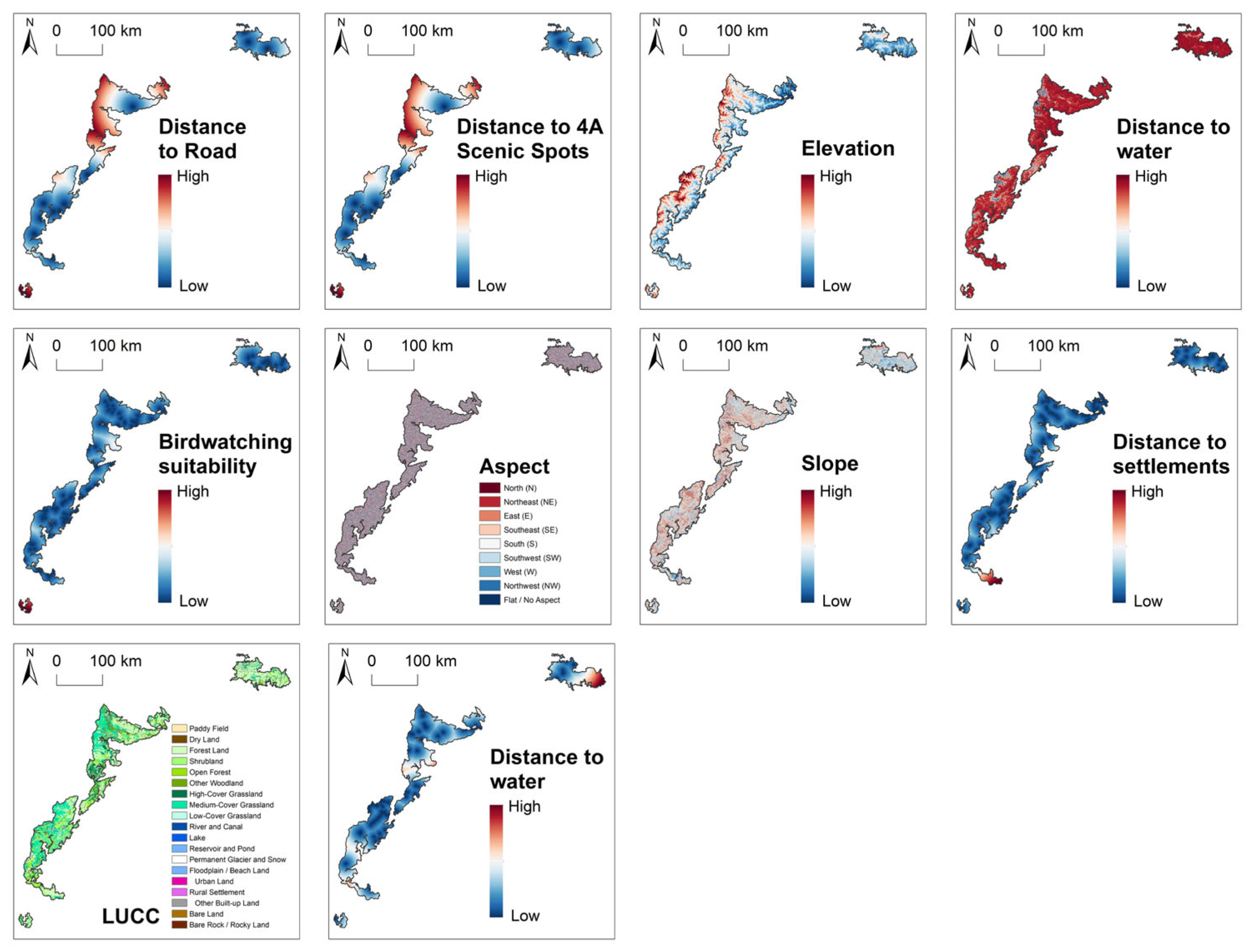
To model the ORSI, ten environmental variables representing topographic, ecological, accessibility, and human-recreational factors were selected (Table 1; Figure A1). The selection was guided by previous studies and adjusted according to data availability in the study area. All spatial datasets were projected to the Krasovsky_1940_Albers coordinate system, clipped to the park boundary, and processed in ArcGIS 10.8. To ensure consistency in spatial resolution and data format among variables, all raster datasets were resampled to a uniform spatial resolution of 100 m. Nearest-neighbor resampling was applied to categorical variables, while bilinear interpolation was used for continuous variables to preserve their data characteristics. Continuous variables were normalized to a 0–1 scale, and categorical variables were converted into binary layers. Finally, all raster layers were exported in ASCII format for compatibility with MaxEnt 3.4.4.

2.1.3. Land Use and Land Cover Data

LULC data were obtained from the Resource and Environmental Science Data Center (RESDC), Chinese Academy of Sciences (https://www.resdc.cn, accessed on 12 October 2025), with a spatial resolution of 30 m. The dataset is derived from Landsat imagery and provides a national-scale land cover classification widely used in ecological and environmental studies in China. The classification scheme includes six land cover types: forest, grassland, farmland, water bodies, built-up land, and unused land. In this study, the LULC data were used as an important input for the ecological risk assessment, particularly for calculating landscape pattern indices [25].

2.2. Outdoor Recreation Suitability Modeling Using MaxENT

We used the MaxENT model (version 3.4.4) to simulate the potential distribution of outdoor recreation suitability across the park. The MaxENT algorithm estimates the probability distribution of suitable conditions for recreational activity presence based on occurrence data and environmental predictors [28,29,30]. Model Setup: 75% of the occurrence data were randomly selected for model training, while the remaining 25% were used for testing. To enhance model robustness, the analysis was repeated ten times, and the final results were obtained by averaging the outputs across iterations. Model Evaluation: Model performance was evaluated using the Area Under the Receiver Operating Characteristic Curve (AUC). The MaxENT model estimates a probability distribution P ( x ) that maximizes entropy under constraints derived from environmental conditions at known occurrence locations. The distribution is defined as follows:
P ( x ) = 1 Z e x p ( i = 1 n λ i f i ( x ) )
where x represents a location in the study area, f i ( x ) is the value of the i -th environmental variable at location x , λ i is the weight assigned to feature i , and Z is a normalization constant ensuring that the total probability sums to one. This formulation ensures that the estimated distribution is as close as possible to uniform (i.e., of maximum entropy), while still respecting the empirical constraints imposed by the input data.

2.3. Landscape Ecological Risk Assessment

This study adopts a landscape ecological risk assessment framework based on two core components: landscape disturbance and landscape vulnerability, to quantify the potential risk of ecological degradation across Giant Panda National Park under human disturbance [31,32,33]. A grid-based GIS method was applied, in which square grids were used as the basic evaluation units. Following previous studies that recommend using grid sizes equivalent to 2–5 times the average patch area, and considering the spatial scale of the study area, the resolution of input datasets, and practical computational feasibility, we selected a 5 km × 5 km square grid as the assessment unit [34,35,36]. This resolution allows for capturing regional spatial heterogeneity while reducing the influence of local spatial noise, making it suitable for large-scale ecological risk assessment. Each grid was assigned a unique ID, and its center point was treated as the representative sampling location, resulting in a total of 2001 sampling points across the park. The ecological risk index of each grid was calculated and assigned to its corresponding sampling point.
This study adopts a landscape ecological risk assessment framework based on two core components—landscape disturbance and landscape vulnerability—to quantify the potential risk of ecological degradation across Giant Panda National Park under human disturbance [31,32,33]. A grid-based GIS method was applied, in which square grids were used as the basic evaluation units. All spatial datasets were first standardized to a 100 m spatial resolution to ensure consistency among multi-source environmental variables and to retain sufficient spatial detail for landscape pattern analysis. This resolution represents a compromise between capturing fine-scale landscape heterogeneity and maintaining computational efficiency for large-area ecological assessment. Following previous studies that recommend using grid sizes equivalent to 2–5 times the average patch area, and considering the spatial scale of the study area, the resolution of input datasets, and practical computational feasibility, we selected a 5 km × 5 km square grid as the assessment unit [34,35,36]. This scale is widely used in regional ecological risk assessments because it effectively reflects landscape structural characteristics while reducing the influence of local spatial noise. Each grid was assigned a unique ID, and its centroid was treated as the representative sampling location, resulting in a total of 2001 sampling points across the park. The ecological risk index of each grid was calculated and assigned to its corresponding sampling point.

2.3.1. Landscape Disturbance Index ( V E i )

The landscape disturbance index reflects the degree to which a landscape type is spatially affected by external disturbances. Based on a review of previous studies, we selected three widely used landscape pattern metrics: Patch Density (PD), Largest Patch Index (LPI), and Landscape Division Index (DIVISION), to represent fragmentation, dominance, and spatial separation, respectively. These indices provide a comprehensive assessment of landscape structure and have been widely applied in ecological risk evaluation. The definitions and calculation formulas of these metrics are presented in Table 2.
The disturbance index was calculated using a weighted linear combination as follows:
V E i = a × V A i + b × V N i + c × V C i
where V A i denotes normalized PD, V N i denotes normalized LPI (dominance index), and V C i denotes normalized DIVISION (separation index). The coefficients a, b, and c are set to 0.4, 0.3, and 0.3, respectively.
All indices were normalized to a 0–1 scale prior to calculation to eliminate unit and scale differences. The metrics were calculated for each grid unit using Fragstats 4.2.

2.3.2. Landscape Vulnerability Index ( V F i )

The landscape vulnerability index reflects the resistance of different land use types to external ecological disturbances. Vulnerability values were assigned based on ecological stability theory and relevant literature, and finalized through expert consultation and normalization to a 0–1 scale for comparability. Specifically, the vulnerability coefficients assigned to different land use types were as follows: farmland was assigned a value of 0.075, forest 0.10, water bodies 0.133, grassland 0.192, unused land 0.267, and built-up land 0.50. These values represent the relative susceptibility of each land type to ecological degradation under external pressure.

2.3.3. Landscape Ecological Risk Index

Landscape ecological risk refers to the likelihood of ecological instability or degradation resulting from the combined effects of land use patterns, landscape fragmentation, and anthropogenic disturbances [31,32,33]. The ERI was calculated for each 5 km × 5 km grid unit by integrating the disturbance level and vulnerability of all land use types within that unit. The ERI reflects the potential risk of ecological degradation caused by landscape fragmentation and land-use instability under human pressure [34,35].
The index was computed using the following formula:
E R I k = i = 1 n ( A k i A k × V E i × V F i )
where E R I k is the ecological risk value of grid cell k; A k i is the area of land use type i within grid k; A k is the total area of grid k (25 km2); V E i is the landscape disturbance index for land use type i; V F i is the landscape vulnerability coefficient for land use type i.

2.3.4. Spatial Autocorrelation and Bivariate Spatial Analysis

To assess the spatial relationship between ORSI and ERI, both global and local spatial autocorrelation analyses were conducted. Prior to analysis, ORSI values (100 m resolution) were aggregated to the 5 km grid by calculating the mean value within each grid cell to ensure consistency with the ERI dataset. Global Moran’s I was used to evaluate the overall spatial autocorrelation of ORSI and ERI individually, identifying whether high or low values exhibit clustering or dispersion across the study area [37,38]. To further explore localized spatial interactions between the two indices, a bivariate Local Indicators of Spatial Association (LISA) analysis was performed. This approach identifies spatial clusters based on the relationship between the value of one variable at a given location and the values of another variable in its surrounding neighborhood. The results were classified into four cluster types: high–high (HH), low–low (LL), high–low (HL), and low–high (LH). Among these, HH clusters—indicating areas with both high recreation suitability and high ecological risk—were interpreted as potential conflict zones. Statistical significance was assessed using permutation tests (p < 0.05), and only significant clusters were used for interpretation.

2.3.5. Recreation Corridor Identification and Risk Assessment

This study integrates outdoor recreation suitability and ecological risk to delineate recreation corridors, aiming to guide the coordinated development of tourism and ecological conservation in Giant Panda National Park. In identifying suitable core source areas, the Ecological Risk Index (ERI) was first normalized and inverted so that higher values represent lower ecological risk. The inverted ERI was then equally weighted and overlaid with the Outdoor Recreation Suitability Index (ORSI) to generate a composite suitability surface. This composite surface was classified using the natural breaks method, and the highest suitability areas were extracted. Patches smaller than 5 km2 were excluded, resulting in the identification of 40 core source areas.
Based on the standardized composite suitability surface, a resistance surface was derived through inverse processing. The corridor modeling was performed using the Linkage Mapper extension in ArcGIS. To assess ecological sensitivity within the corridors, a 1 km buffer was generated along each corridor line, and the ecological risk levels within these buffers were quantified.
All spatial analyses were conducted using GeoDa 1.20.0.8 and ArcGIS 10.8. The analysis was performed on a uniform spatial grid of 5 km × 5 km.

3. Results

3.1. Modeling Results of ORSI and ERI

3.1.1. Model Performance of Outdoor Recreation Suitability

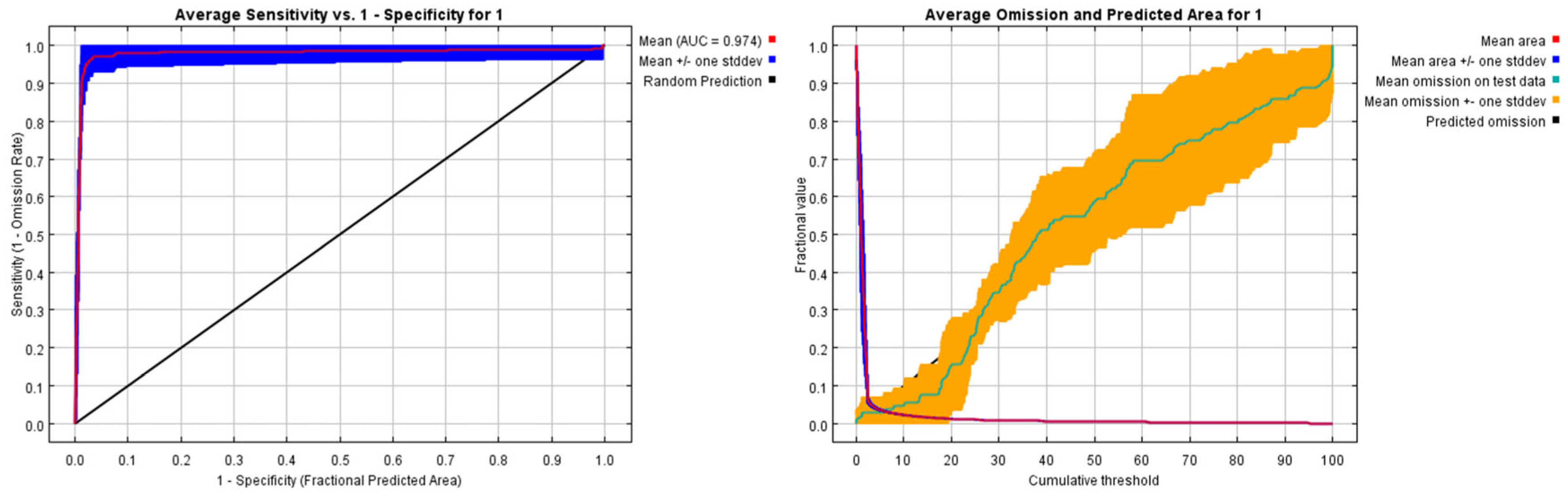
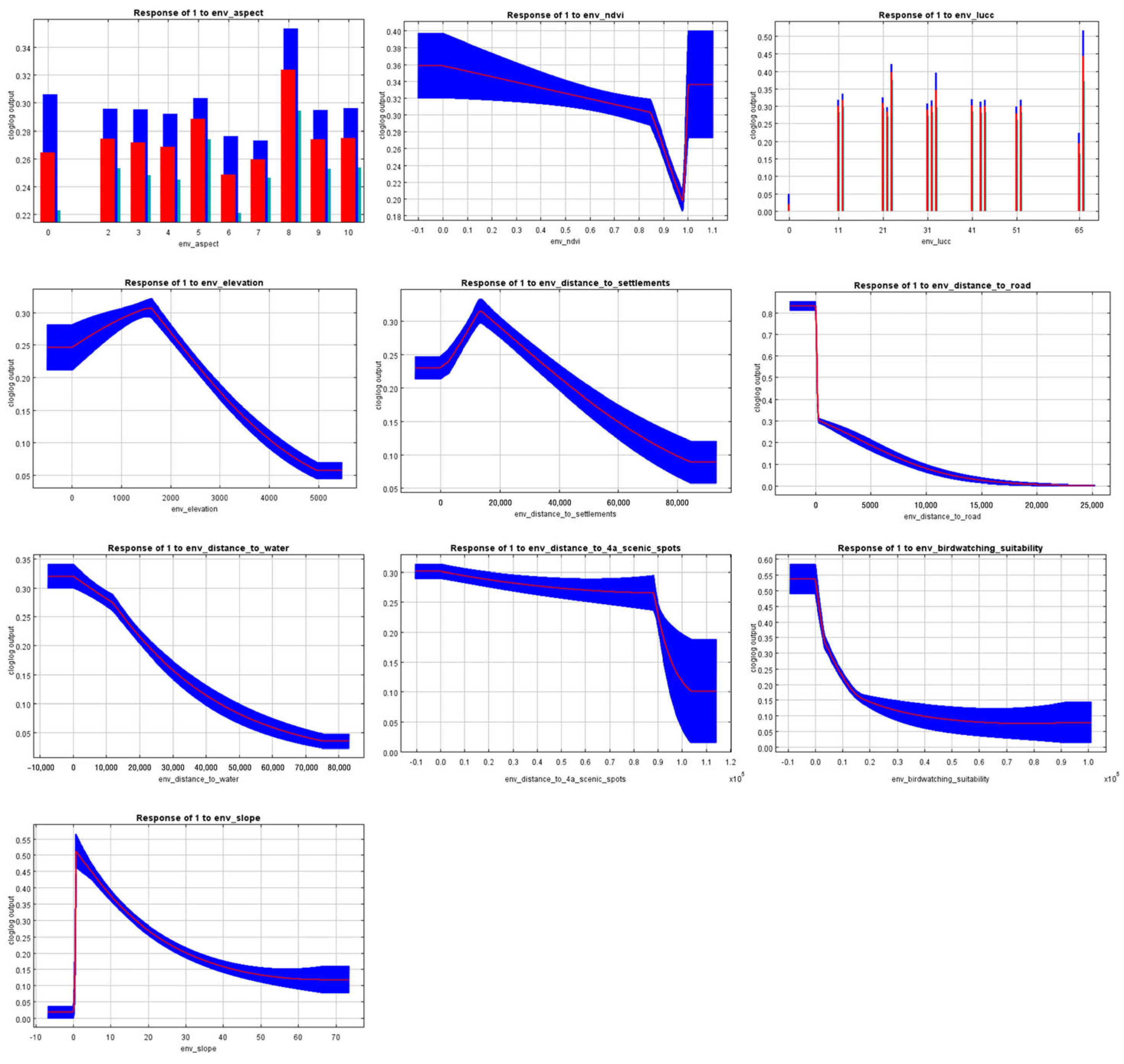
The MaxEnt model used to evaluate outdoor recreation suitability in Giant Panda National Park demonstrated strong predictive performance, with a mean AUC value of 0.976, indicating excellent discrimination between suitable and unsuitable areas (Figure A2). According to the contribution of environmental variables, land use within the park emerged as the most influential factor, accounting for 68% of the total contribution. Forests and grasslands were identified as the most suitable areas for outdoor recreation. Distance to roads ranked second in importance (19%), with ORSI peaking at distances of 500–1000 m before declining. Slope contributed 8.7%, suggesting that flatter areas generally offer higher recreation suitability. Other variables—including birdwatching suitability, elevation, NDVI, distance to water bodies, and distance to scenic spots—each contributed less than 2%. The omission rate curve and predicted area curve further confirmed the model’s reliability, showing low omission error and stable cumulative predictions across iterations. The values reported in Table 3 represent the average contributions across all model iterations. Detailed results are presented in Table 1 and Figure A2 and Figure A3.

3.1.2. Spatial Distribution of Outdoor Recreation Suitability

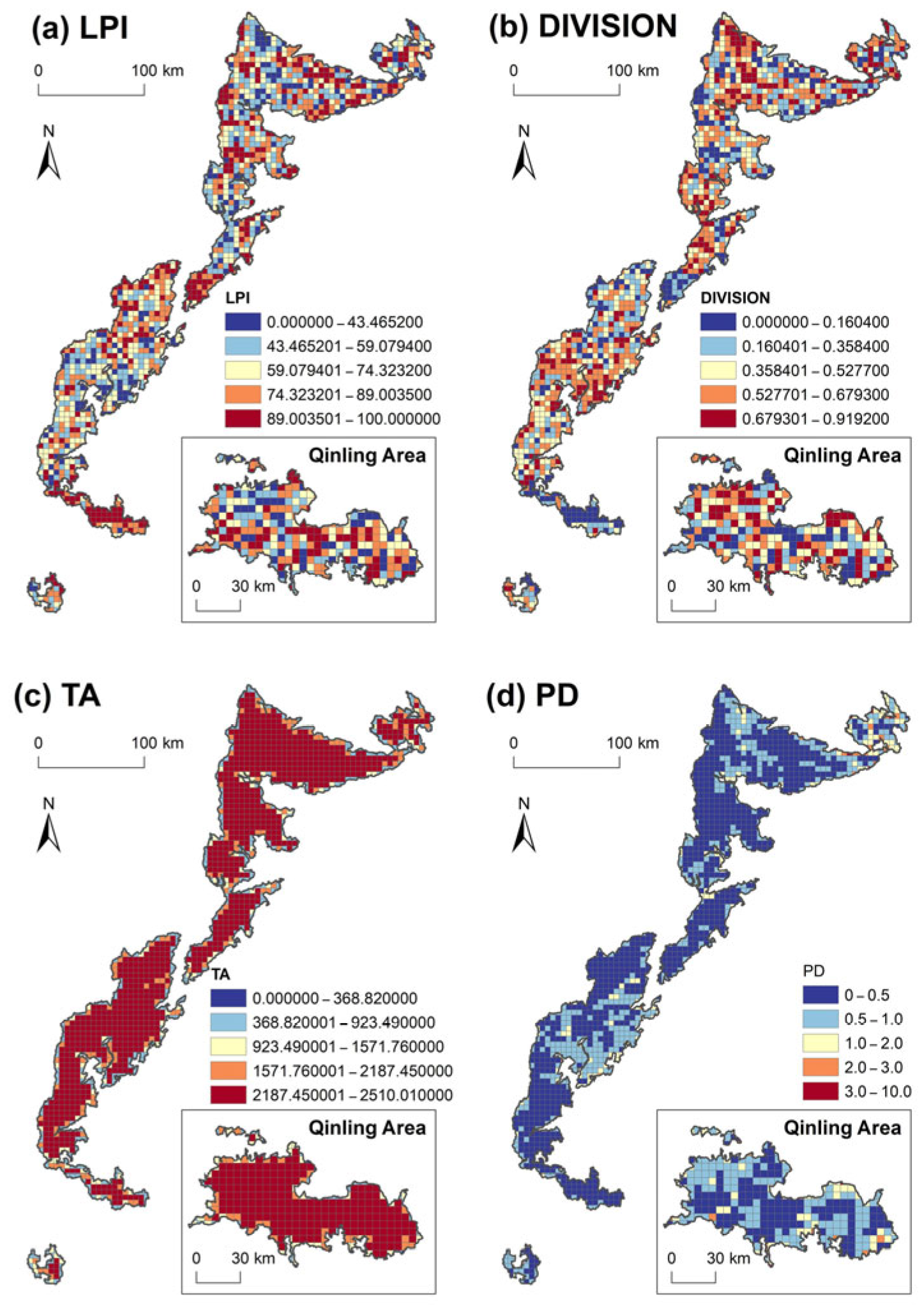
The Largest Patch Index (LPI; Figure 1a) exhibits higher values in the southern and northern regions of Giant Panda National Park, indicating the presence of large, contiguous land cover patches in these areas. The Landscape Division Index (DIVISION; Figure 1b) is elevated in the western and southeastern edge regions, suggesting a higher degree of landscape fragmentation. Patch Density (PD; Figure 1d) is greater in the south-central area and along the northern edge of the park, reflecting increased landscape complexity in these zones.
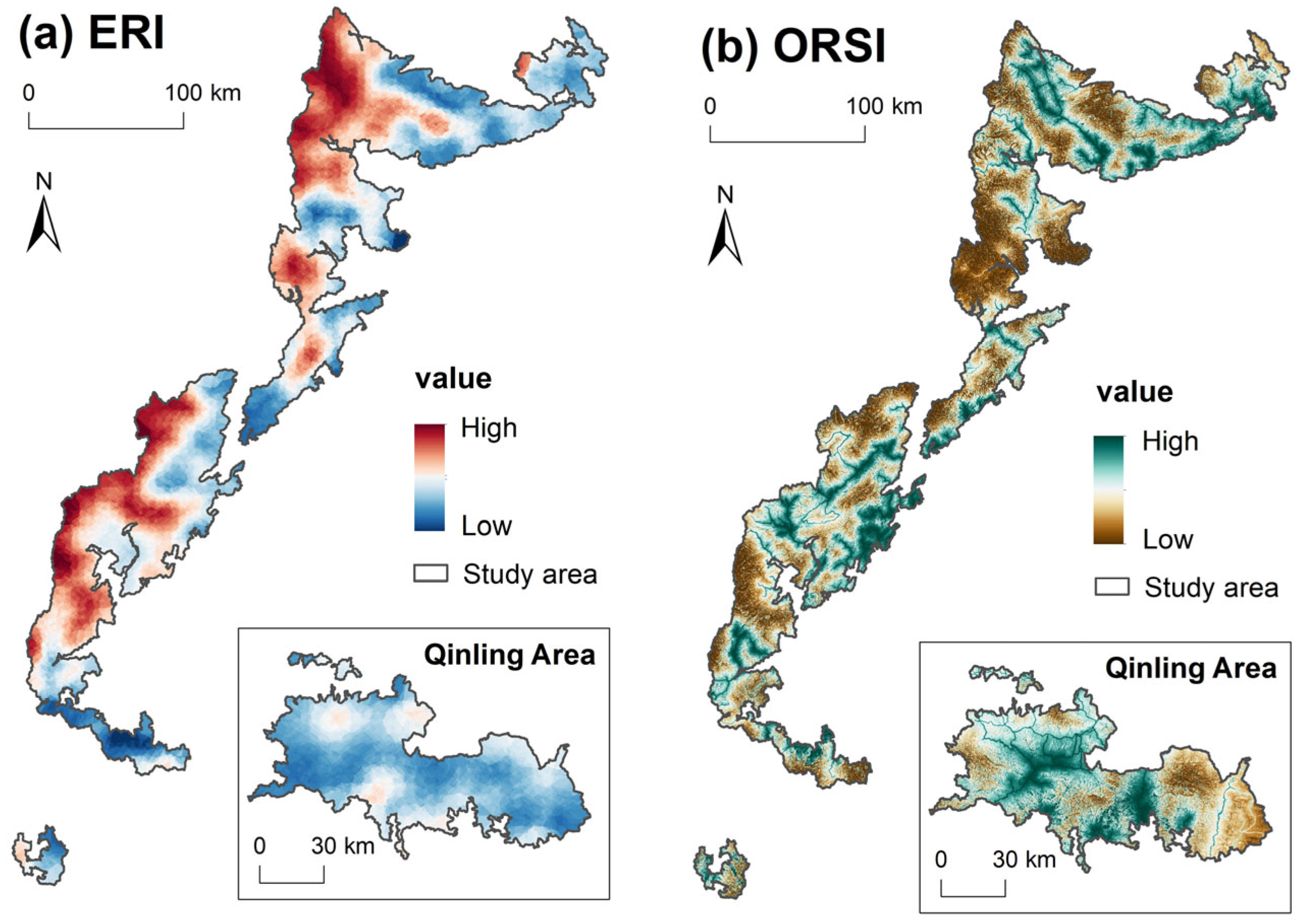
The Outdoor Recreation Suitability Index (ORSI) displays pronounced regional variation across the park (Figure 2b). High-suitability areas are primarily concentrated in the central and northeastern regions, where relatively favorable accessibility conditions and existing tourism infrastructure support outdoor recreation activities. These areas largely align with major road corridors and established scenic sites within the park. In contrast, low-suitability zones are mainly located in the southwestern and southeastern margins, as well as other remote peripheral areas characterized by limited accessibility and more rugged terrain. Many of these areas also correspond to regions with relatively high ecological risk (Figure 2a).
Moderate-suitability zones are generally situated between high- and low-suitability areas, forming transitional belts across the landscape and separating areas of concentrated recreation potential from more ecologically sensitive zones. In the Qinling subregion, the spatial distribution of ORSI appears more fragmented, with high- and low-suitability patches interspersed across the landscape. This pattern indicates a more heterogeneous spatial structure of recreation suitability compared with other subregions of the park.
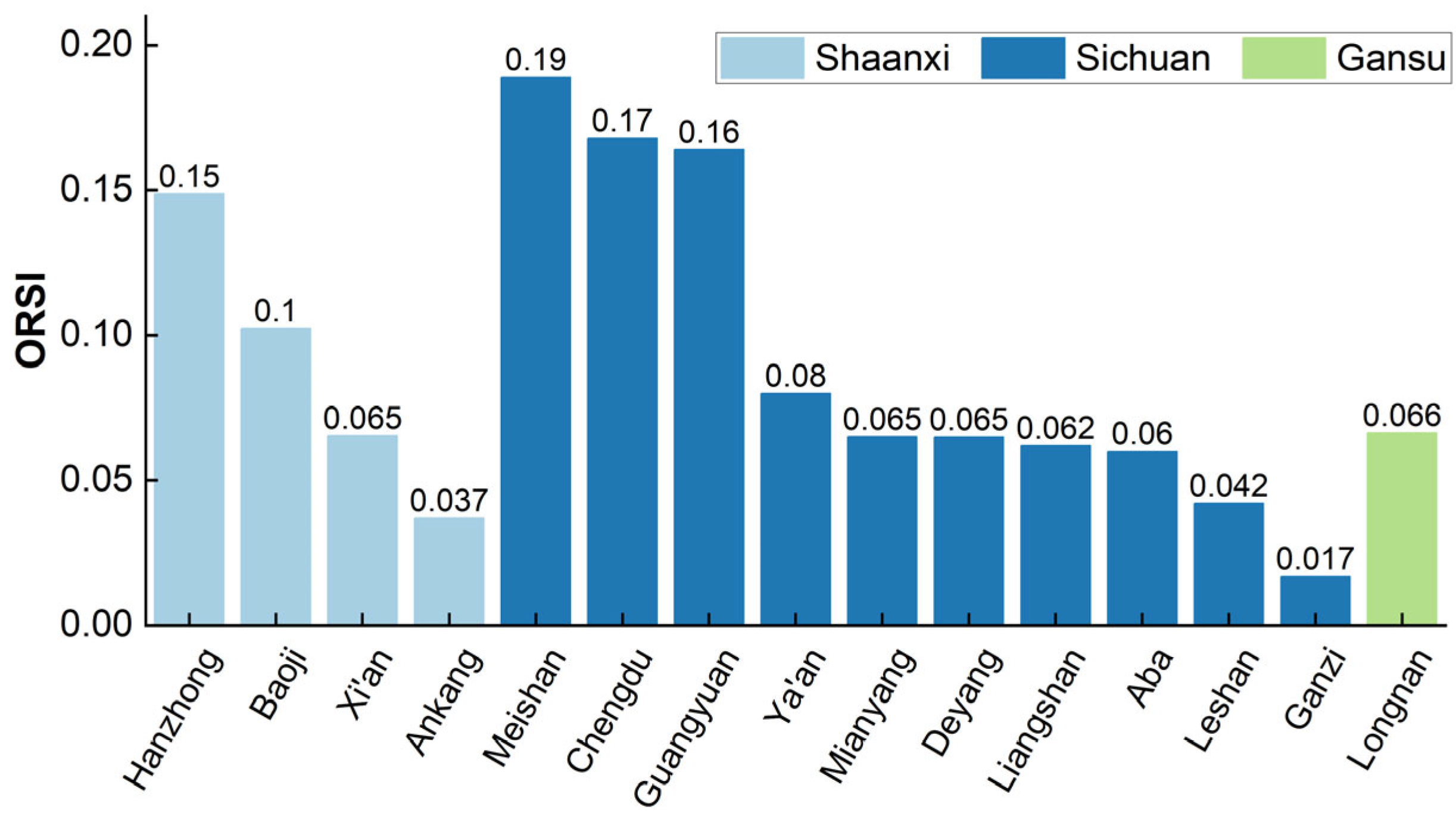
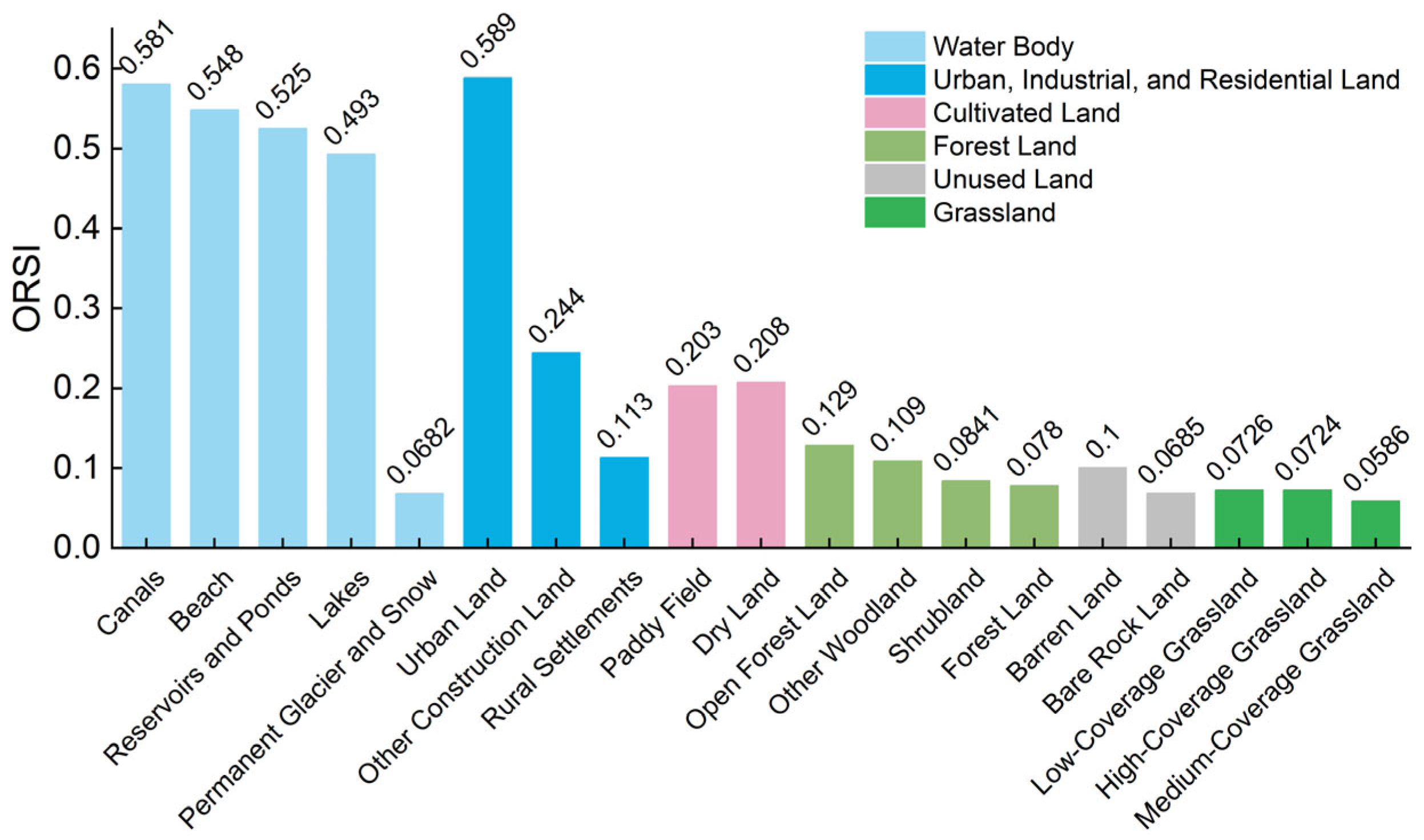
The spatial distribution of the ORSI varies across administrative regions (Figure 3). Overall, Sichuan Province exhibits the highest levels of recreation suitability, with Meishan, Chengdu, and Guangyuan standing out as areas with particularly strong recreation potential. These areas show relatively continuous zones of higher ORSI values. In contrast, most areas in Shaanxi and Gansu provinces display relatively low suitability, with Hanzhong being one of the few areas where moderate to high suitability values appear. ORSI also shows notable variation across different land use types (Figure 4). Water bodies exhibit the highest suitability values (ORSI > 0.5), forming distinct high-value clusters within the study area. Built-up areas also present relatively high values (ORSI > 0.24), largely associated with their superior accessibility and proximity to infrastructure. Conversely, although forest land occupies a large proportion of the park and holds significant ecological value, it tends to have relatively low suitability scores. Grasslands and unused land display the lowest ORSI values (ORSI < 0.1), indicating limited recreation suitability across these land cover types.

3.1.3. Spatial Distribution of Landscape Ecological Risk

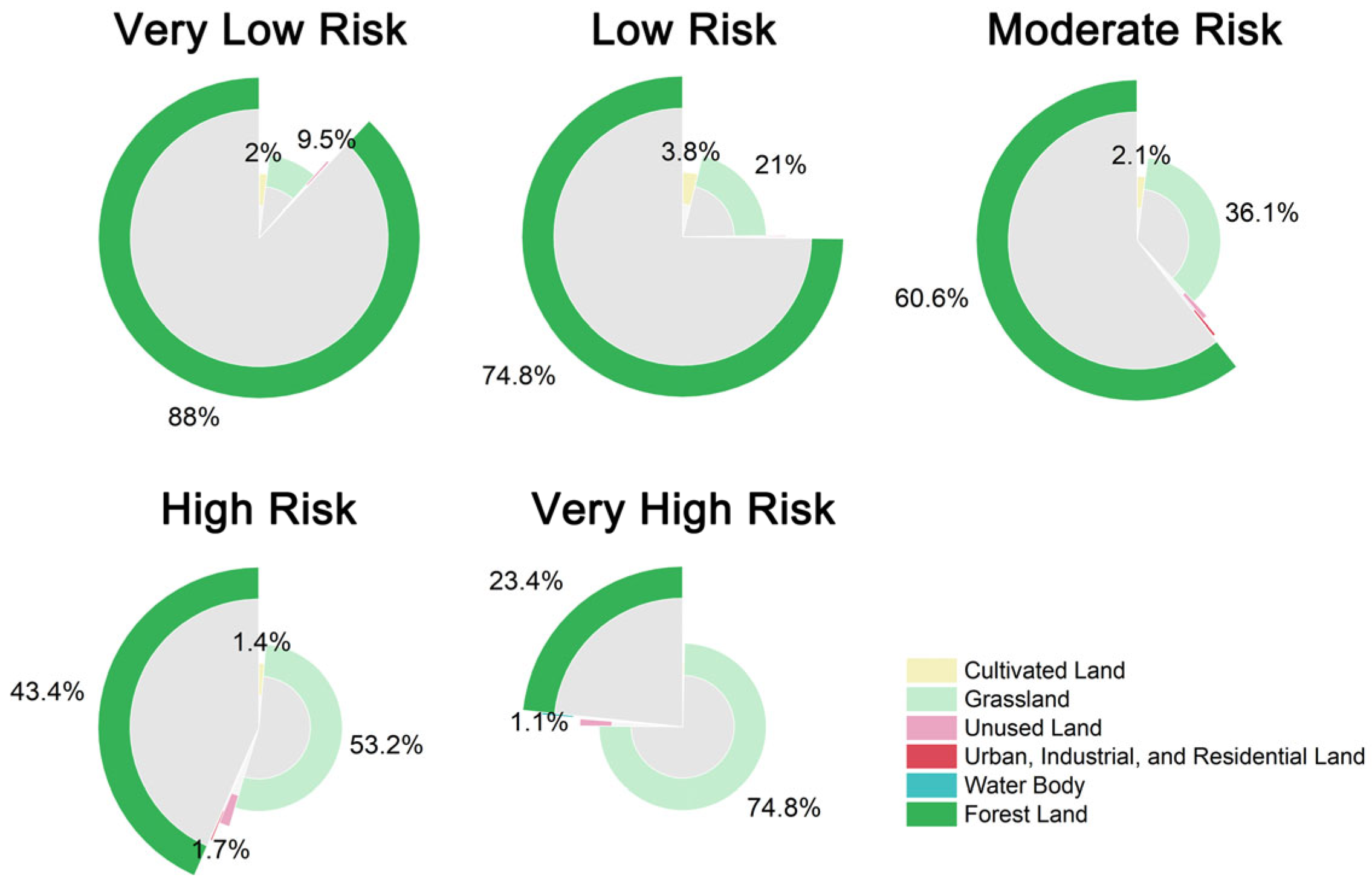
The spatial distribution of the ERI in 2023 reveals pronounced spatial heterogeneity across Giant Panda National Park (Figure 2a). High-risk areas are primarily concentrated along the park’s northwestern and southeastern edges, which typically coincide with regions exhibiting low ORSI values (Figure 2b). In the Qinling subregion, low-risk zones dominate, while high-risk patches are scattered along the periphery. Using the natural breaks classification method, the ERI in the Qinling area was categorized into five levels: very low, low, moderate, high, and very high. Forest land overwhelmingly dominates the very low and low-risk zones, accounting for approximately 88% and 75%, respectively. As ecological risk increases, the proportion of forest land gradually declines, while the share of grassland rises significantly—reaching 53% and 43% in high and very high-risk zones, respectively (Figure 5). Other land use types, including cultivated land, unused land, and built-up areas, occupy relatively small portions of the total area and are primarily distributed in moderate to high-risk zones. Overall, forest land plays a critical role in maintaining ecological stability within the park, whereas grassland and built-up areas are more closely associated with elevated ecological risk levels (Table 4).

3.2. Spatial Autocorrelation of ORSI and ERI

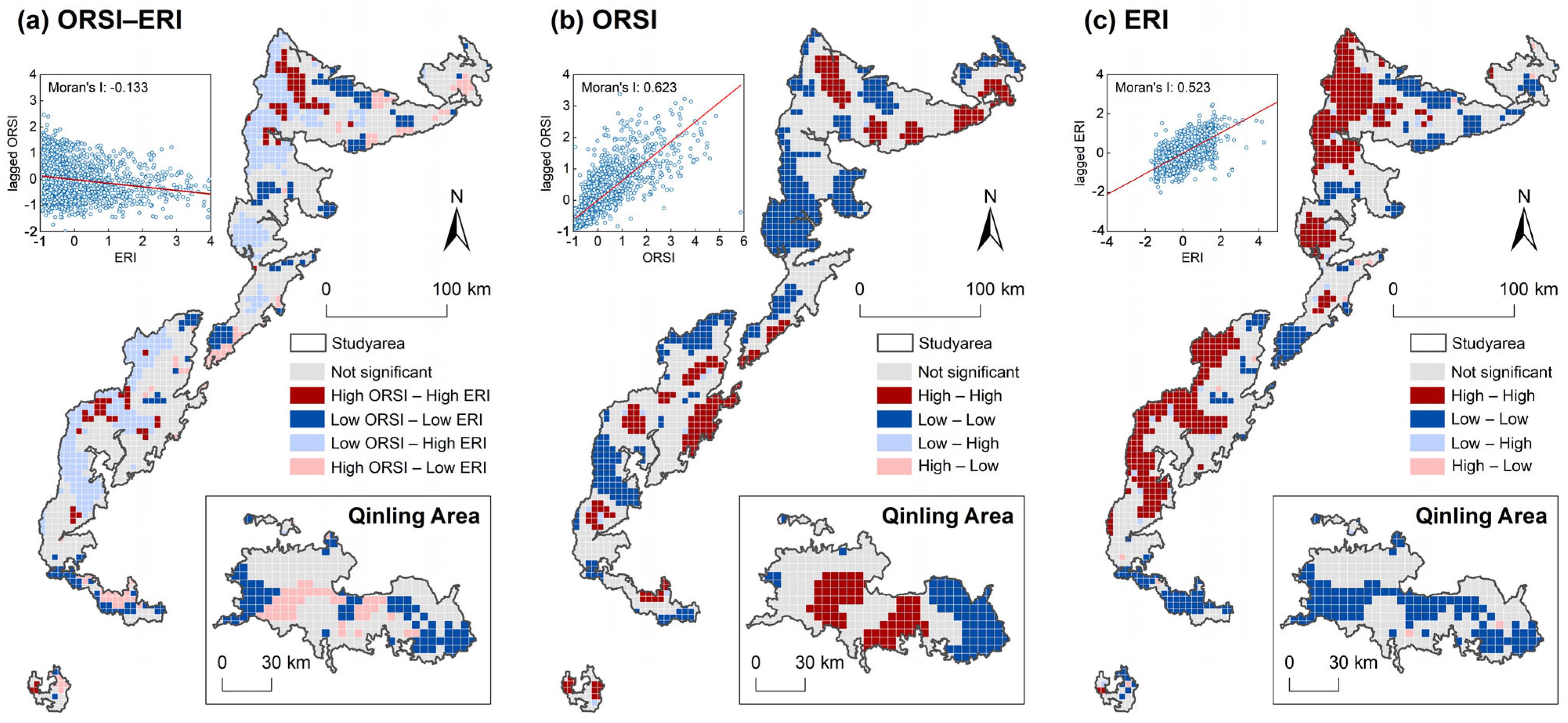
A weak negative spatial autocorrelation was observed between the ORSI and the ERI, with a Moran’s I value of −0.133. Local spatial cluster analysis revealed that high–high clusters of ORSI and ERI are mainly located in the northwestern and southwestern parts of the park, representing potential conflict zones where recreation suitability overlaps with ecological vulnerability. In contrast, low–low clusters, indicating areas of both low recreation suitability and low ecological risk, are widely distributed in the central and northern regions and may provide opportunities for relatively sustainable recreation development.
The most prevalent coupling type—low ORSI and high ERI—is concentrated in the western and central parts of the park and corresponds to areas where recreation activities should be strictly controlled. By contrast, high ORSI and low ERI areas are scattered throughout the park and represent relatively suitable zones for low-impact recreation development due to their high suitability and comparatively low ecological risk.
In terms of individual spatial patterns, ORSI exhibits a strong and significant positive spatial autocorrelation (Moran’s I = 0.623). High–high clusters of ORSI are primarily located in the central and northeastern areas, forming a relatively continuous core of high recreation suitability, whereas low–low clusters are mostly found in peripheral areas with limited recreation potential. ERI also displays a strong positive spatial autocorrelation (Moran’s I = 0.523), with high–high clusters mainly concentrated along the northwestern and southwestern edges of the park, while low–low clusters are predominant in the central and northern regions. In the Qinling subregion, the landscape is largely characterized by low–low ERI clusters.
Overall, these results indicate a distinct spatial differentiation between recreation suitability and ecological risk within the national park, with recreation suitability generally concentrated in areas of comparatively lower ecological risk. The detailed results are shown in Figure 6.

3.3. Corridor Network Structure and Ecological Accessibility

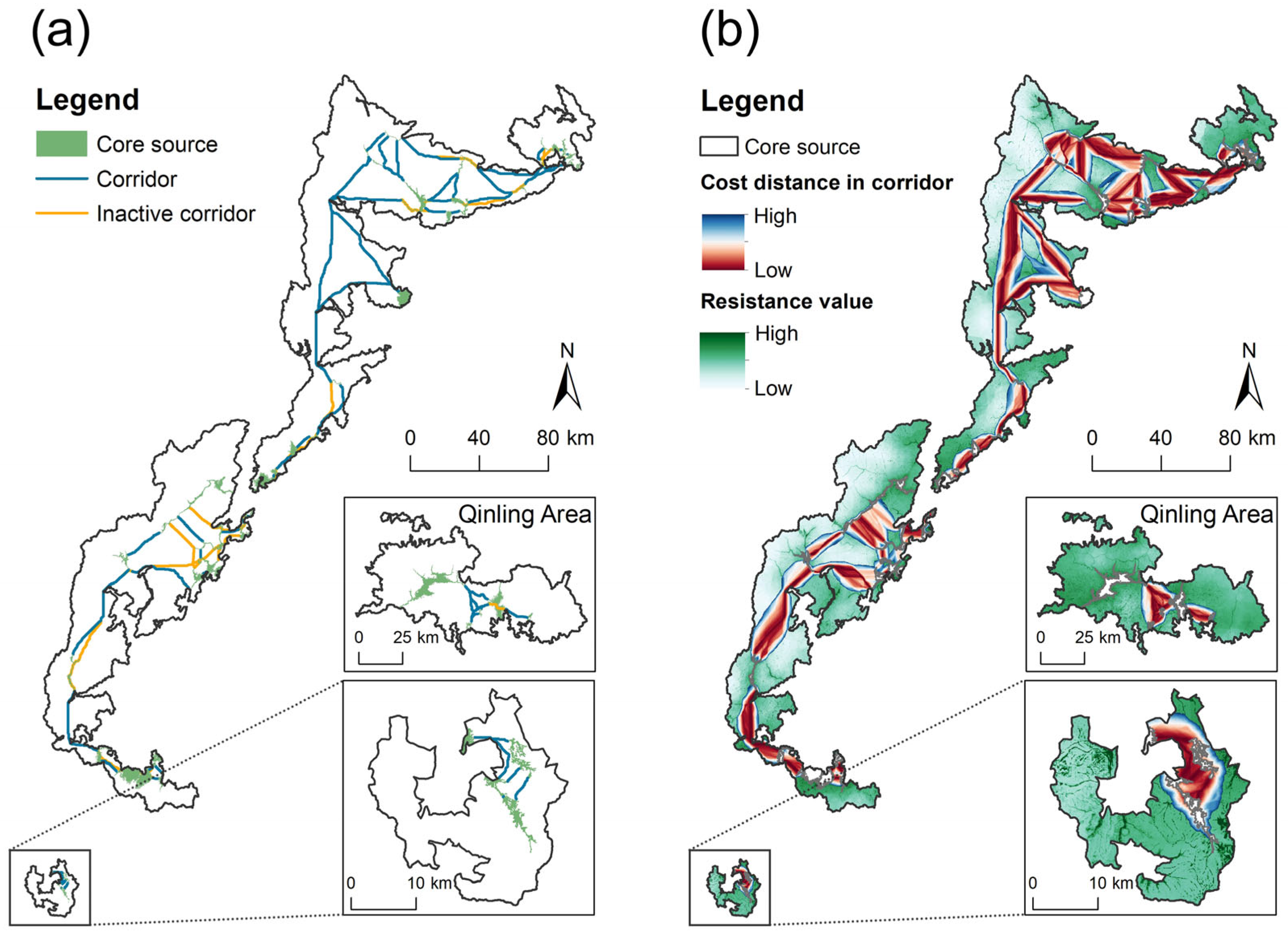
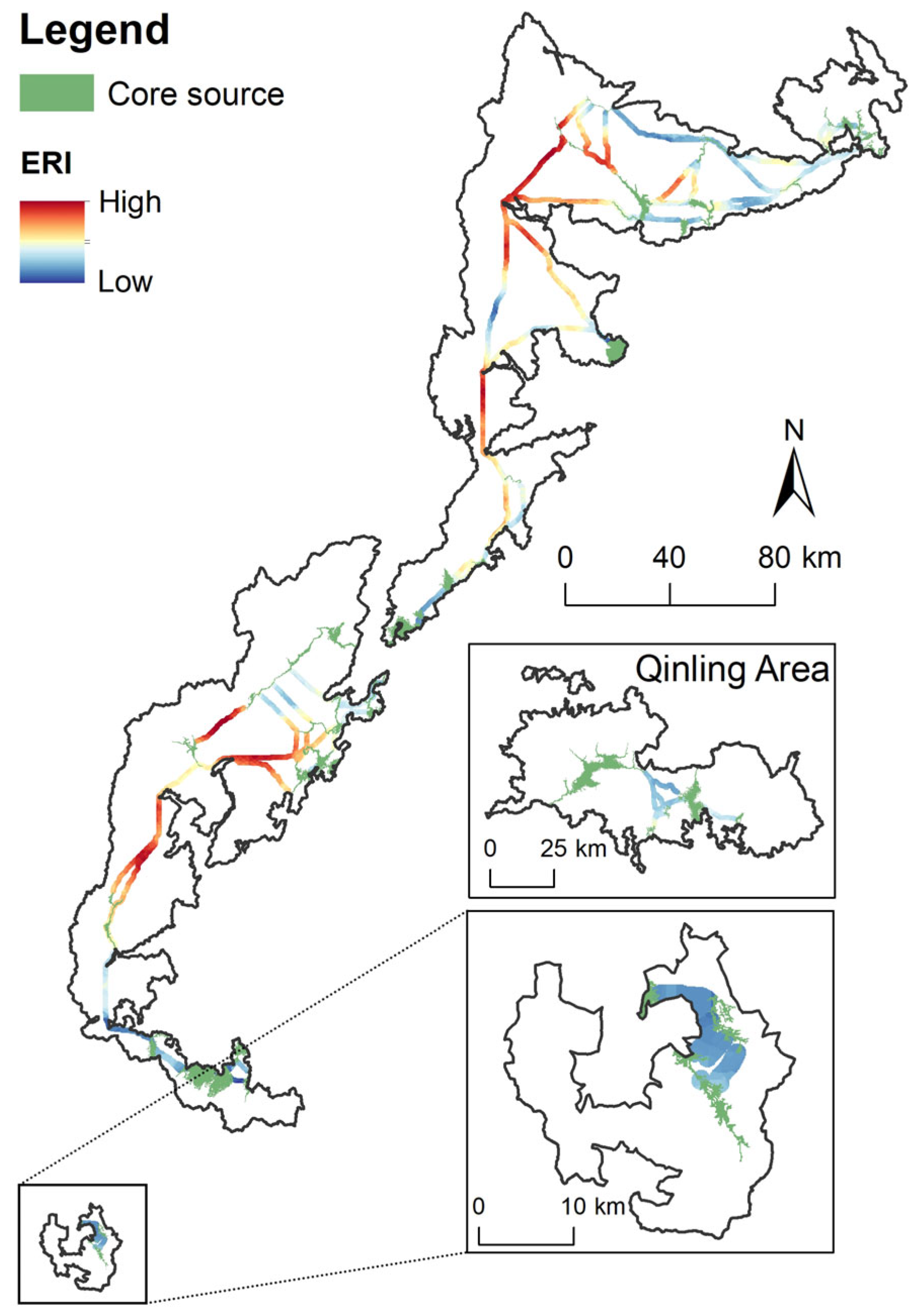
Based on the integration of the ORSI and the ERI, this study constructed a composite resistance surface to identify 40 core source areas (characterized by high ORSI and low ERI values) and delineated an ecological recreation corridor network within Giant Panda National Park (Figure 7a). Spatially, effective corridors are primarily concentrated in the Qinling subregion and the southern part of the park, whereas the central and northern areas are dominated by fragmented or inactive corridors, indicating relatively limited connectivity in these regions.
The corridor network consists of two types: primary corridors (blue) and secondary corridors (orange), as shown in Figure 7a. Primary corridors are mainly located in the Qinling area and northern regions of the park, forming a relatively continuous low-resistance network supported by extensive forest cover. In contrast, secondary corridors are concentrated in the southern and southwestern edges of the park and often traverse ecologically sensitive zones or areas with more complex terrain conditions.
Figure 7b further illustrates the spatial variation in resistance values and travel cost, highlighting how high-resistance zones constrain corridor formation and shape the overall configuration of the corridor network. Overall, the identified corridor system reveals a spatially heterogeneous pattern of ecological recreation connectivity across the national park.
The distribution of ecological risk levels within a 1 km buffer surrounding each corridor is shown in Figure 8, revealing significant variation in ERI values across the entire corridor network. Corridors in the Qinling subregion and the southern part of the park are primarily located in low-risk areas, indicating higher spatial compatibility with recreation development. In contrast, many corridors in the northern and central regions traverse high-risk zones, highlighting the urgent need for ecological restoration in these segments. Future planning of ecological recreation corridors should prioritize avoiding high-risk areas to minimize environmental degradation during corridor construction.
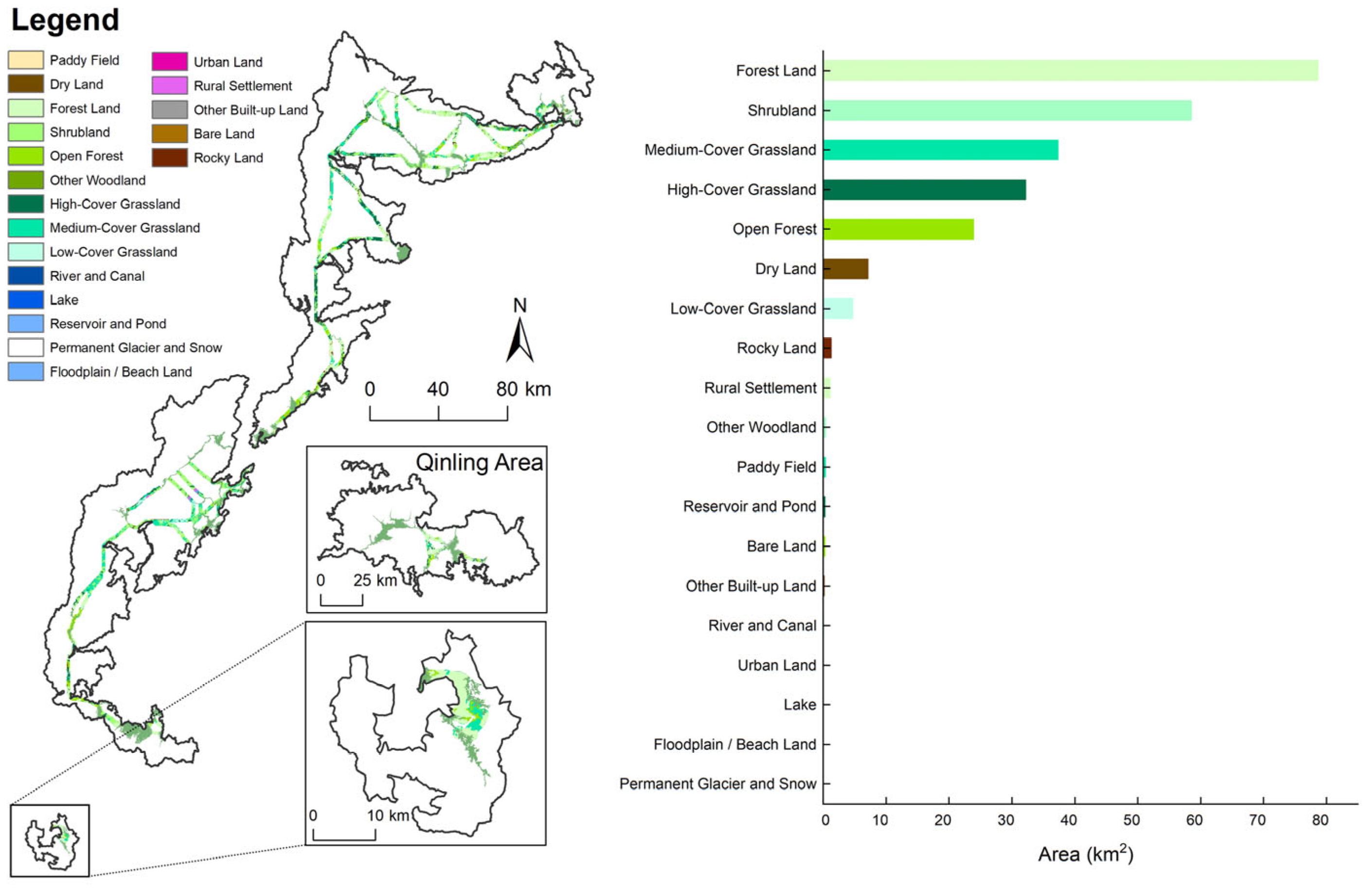
Figure 9 presents the land cover composition within corridor buffer zones. Forest (78.64 km2) and shrubland (58.52 km2) dominate the corridor landscape, indicating strong ecological integrity. Grasslands also contribute significantly, while human-disturbed land types—such as farmland, rural settlements, and built-up areas—occupy only small proportions. This distribution confirms that most corridors align with natural land cover, offering favorable conditions for biodiversity conservation and low-impact recreation. The Qinling area, in particular, contains a high density of forested corridors.

4. Discussion

This study integrates the ORSI and the ERI to identify the complex spatial interactions between human activities and ecological conservation in Giant Panda National Park and further delineates a key ecological recreation corridor network. The results reveal three main patterns. First, outdoor recreation suitability shows strong spatial heterogeneity and is mainly concentrated in areas with convenient accessibility and existing infrastructure. Second, ecological risk is unevenly distributed across the park, with higher risk levels primarily occurring along peripheral and fragmented landscapes. Third, the spatial relationship between ORSI and ERI exhibits partial mismatch, where certain areas with high recreation suitability also coincide with relatively high ecological vulnerability.
Building on these findings, this study proposes a spatial planning framework that integrates recreation suitability and ecological risk to guide the identification of ecological recreation corridors. Unlike previous studies that primarily focus on spatial correlation analysis, this research incorporates outdoor recreation into the ecological risk assessment framework of national parks, thereby providing a new perspective and methodological pathway for promoting sustainable development and refined spatial governance in protected areas.

4.1. Interpretation of Results and Critical Analysis

Compared with previous studies that primarily focused on spatial correlations, an important advancement of this study is the incorporation of recreational activities—one of the core functions of Giant Panda National Park—into the ecological risk assessment framework. The results indicate that visitors’ spatial behavior is largely influenced by the combined effects of accessibility and environmental conditions [39,40], while the spatial pattern of ecological risk is shaped by the joint influence of topographic configuration, landscape structure, and human disturbances [41]. Overall, ORSI and ERI exhibit a significant negative correlation, indicating that areas with higher recreation suitability tend to correspond to lower ecological risk levels. At the regional scale, this pattern can be attributed to the combined effects of natural conditions and management interventions. On the one hand, mountainous national parks generally face strong terrain-related accessibility constraints, where road systems and valley corridors largely determine the spatial distribution of visitor activities [42]. On the other hand, protected-area management typically guides visitor flows toward areas with relatively higher ecological carrying capacity and more mature management conditions through functional zoning, infrastructure layout, and visitor route design [43].
More importantly from a management perspective, however, are the localized spatial mismatches where high recreation suitability overlaps with high ecological risk. These areas are often located in peripheral zones, key access nodes, or near ecologically sensitive patches, where overlapping pressures may arise from visitor entry, route choices, and activity hotspots. Once new roads are constructed, accessibility is improved, or short-term surges in visitor numbers occur, these areas can quickly evolve into hotspots of human–nature conflict. They should therefore be identified as priority areas for monitoring and management intervention. In contrast, areas characterized by high recreation suitability but relatively low ecological risk may appear to have strong short-term development potential; however, this does not imply unlimited expansion. Continuous recreational activities may generate cumulative ecological impacts through processes such as trail erosion, vegetation disturbance, noise interference, and alterations in wildlife behavior [44], thereby increasing ecological risk over time. Consequently, these areas are better suited to development strategies accompanied by dynamic monitoring and intensity regulation, in order to avoid long-term ecological degradation caused by cumulative effects.
From the perspective of spatial risk patterns, high-risk areas are mainly distributed along the park boundaries and in locally vulnerable ecological zones. This suggests that future spatial governance should not rely solely on a single strategy of development restriction but instead adopt zoning regulation based on a comprehensive evaluation of risk levels, ecological carrying capacity, and management controllability. High-risk edge zones may correspond either to ecologically sensitive areas or to regions subject to persistent external disturbances, such as road expansion, surrounding village activities, or tourism facility development. Therefore, strengthening buffer zone construction and boundary governance is essential to reduce the penetration of external pressures into protected areas [45].

4.2. Socio-Ecological Governance Implications

The results of this study indicate that spatial governance in protected areas needs to shift from the traditional logic of static zoning toward a more refined regulatory framework based on risk levels and intensity of use, thereby enabling a more effective balance between recreational utilization and ecological conservation.
First, at the level of spatial zoning, management should move from a single function-oriented approach to differentiated governance based on the coupling of risk and human pressure. Previous studies have shown that conservation effectiveness depends not only on the delineation of protected areas but also on the interaction between ecological sensitivity and human activity pressure [46]. In this context, when recreation suitability and ecological risk are simultaneously high within a given location, such areas are more likely to become potential conflict hotspots, requiring stricter management measures such as visitor quotas, reservation systems, and real-time monitoring [47]. In contrast, areas characterized by high ecological risk but low recreational demand are more suitable to function as ecological buffer zones, helping to reduce external disturbances and strengthen conservation. Meanwhile, areas with low ecological risk and high recreation suitability may possess strong potential for ecotourism development; however, clear carrying-capacity thresholds and long-term monitoring mechanisms remain essential, as sustained recreational activities may generate cumulative ecological impacts through vegetation damage, soil compaction, and disturbances to wildlife [47]. Compared with conventional static zoning approaches, this framework integrates risk levels, human pressure, and management controllability, thereby providing a more adaptive governance pathway for protected areas.
Second, at the level of corridor networks, these structures should be understood as composite spatial configurations embedded within risk constraints rather than simply as outcomes of connectivity optimization. Traditional ecological corridor research has largely emphasized landscape connectivity and species migration processes [48]. However, recent studies suggest that improvements in road infrastructure and accessibility may simultaneously facilitate the spread of human disturbance and increase ecological pressure [49,50]. The recreation corridors identified in this study show significant differences in ecological suitability, indicating that their management should not follow a uniform strategy. Corridors located in areas with high ecological integrity and low risk can be prioritized for implementation; those crossing areas with moderate ecological risk should be accompanied by mitigation measures such as visitor flow control and infrastructure optimization; while corridors involving high-risk areas require stricter feasibility assessments and may need to be adjusted or avoided when necessary. In this sense, corridor planning should no longer be viewed solely as a matter of spatial connectivity, but rather as a dynamic process balancing connectivity optimization with disturbance control.
Finally, in terms of comparability and transferability, the analytical framework proposed in this study shows potential applicability to other mountainous protected areas. Giant Panda National Park exhibits several typical characteristics of mountain protected landscapes, including pronounced topographic variation, corridor-like accessibility patterns, and substantial spatial heterogeneity in ecological sensitivity [51]. Under such conditions, the coupling relationships among recreation suitability, ecological risk, and spatial connectivity are likely to be representative. Therefore, the integrated analytical pathway proposed in this study—linking recreation suitability, ecological risk, and corridor networks—may provide useful insights for identifying conflict hotspots and coordinating development strategies in other multifunctional protected areas. This perspective is also consistent with the growing research trend in protected area governance that emphasizes spatially explicit and adaptive management approaches [52].

4.3. Limitations and Future Research Directions

This study still has several limitations. First, the ORSI represents potential recreation suitability rather than actual visitor flows and their temporal variations; therefore, it cannot fully capture short-term visitor clustering or the dynamic effects of management interventions. Second, as a composite indicator, the ERI does not sufficiently incorporate species-specific responses or the temporal dynamics of ecological processes, which limits its ability to explain detailed ecological mechanisms. In addition, the results of spatial analysis depend to some extent on scale selection and parameter settings, such as neighborhood definition and resistance weighting, which may influence the identification of local spatial patterns and the robustness of corridor results. Future studies could integrate multi-source dynamic datasets to better represent recreation dynamics and improve the realism of recreation modeling. Furthermore, multi-scale and sensitivity analyses should be conducted, and corridor identification results should be refined through field validation.

5. Conclusions

This study examined the spatial relationship between ORSI and ERI in Giant Panda National Park using an integrated framework that combines recreation modeling, ecological risk assessment, spatial coupling analysis, and corridor identification.
The results support the proposed hypotheses. Recreation suitability tends to be concentrated in areas with relatively lower ecological risk, reflecting the influence of accessibility conditions and existing management arrangements. At the same time, localized overlaps between high recreation suitability and high ecological risk reveal potential conflict hotspots that may generate ecological pressure in specific locations.
These findings suggest that the key challenge for protected area governance lies not in addressing a universal trade-off between recreation and conservation, but in managing spatial mismatches at finer scales. Consequently, spatial governance strategies should move beyond static zoning approaches toward adaptive and spatially explicit management that integrates ecological sensitivity, accessibility, and visitor dynamics.
Despite these contributions, the study has limitations related to the representation of recreation dynamics and ecological processes. Future research should incorporate multi-source dynamic datasets and multi-scale analyses to improve the robustness of recreation modeling and corridor identification in protected landscapes.

Author Contributions

Conceptualization, H.L. and K.Y.; methodology, H.L.; software, K.Y.; validation, H.L., K.Y. and D.L.; formal analysis, H.L.; investigation, D.L. and L.Y.; resources, H.L.; data curation, K.Y. and D.L.; writing—original draft preparation, K.Y.; writing—review and editing, H.L. and L.Y.; visualization, K.Y.; supervision, H.L.; project administration, H.L.; funding acquisition, H.L. All authors have read and agreed to the published version of the manuscript.

Funding

This research received no external funding.

Institutional Review Board Statement

Not applicable.

Informed Consent Statement

Not applicable.

Data Availability Statement

The data used in this study include outdoor recreation occurrence points from the 6zufoot platform (www.foooooot.com; accessed on 12 October 2025); land use and land cover data from the Resource and Environment Science Data Center, CAS (http://www.resdc.cn; accessed on 14 October 2025); elevation data from the SRTM DEM provided by NASA Earth Data (https://search.earthdata.nasa.gov; accessed on 14 October 2025); slope and aspect derived from DEM using ArcGIS 10.8; NDVI from MODIS MOD13Q1 products (https://modis.gsfc.nasa.gov; accessed on 15 October 2025); and distance-related variables (to roads, water bodies, settlements, and 4A scenic spots) sourced from OpenStreetMap, CAS land use data, and the Ministry of Culture and Tourism of China. Birdwatching suitability data were obtained from BirdReport.cn (https://www.birdreport.cn; accessed on 22 October 2025).

Conflicts of Interest

The authors declare no conflicts of interest.

Appendix A

Figure A1. Environmental Variables Used for Modeling Outdoor Recreation Suitability Index (ORSI) in the MaxEnt Model.
Sustainability 18 02694 g0a1
Figure A2. Model Performance of Outdoor Recreation Suitability Index (ORSI) in MaxEnt.
Sustainability 18 02694 g0a2
Figure A3. Response Curves of Environmental Variables in MaxEnt Modeling of Outdoor Recreation Suitability. Red lines/bars = mean response; blue shaded areas/bars = ±1 standard deviation.
Sustainability 18 02694 g0a3

References

  1. Wang, J.-H.Z. National parks in China: Parks for people or for the nation? Land Use Policy 2019, 81, 825–833. [Google Scholar] [CrossRef]
  2. Mangold, M.; Schwietering, A.; Zink, J.; Steinbauer, M.J.; Heurich, M. The digitalization of outdoor recreation: Global perspectives on the opportunities and challenges for protected area management. J. Environ. Manag. 2024, 352, 120108. [Google Scholar] [CrossRef] [PubMed]
  3. Morse, W.C.; Stern, M.; Blahna, D.; Stein, T. Recreation as a transformative experience: Synthesizing the literature on outdoor recreation and recreation ecosystem services into a systems framework. J. Outdoor Recreat. Tour. 2022, 38, 100492. [Google Scholar] [CrossRef]
  4. Zhang, W.; Yang, J. Development of outdoor recreation in Beijing, China between 1990 and 2010. Cities 2014, 37, 57–65. [Google Scholar] [CrossRef]
  5. Huang, S.; Sheng, D.; Wang, P.; Xiao, J.; Li, Q.; Liu, H. Assessment of ecotourism suitability in Qilian mountain National park. Sci. Rep. 2025, 15, 19529. [Google Scholar] [CrossRef]
  6. Chen, J.; Wang, S.; Zou, Y. Construction of an ecological security pattern based on ecosystem sensitivity and the importance of ecological services: A case study of the Guanzhong Plain urban agglomeration, China. Ecol. Indic. 2022, 136, 108688. [Google Scholar] [CrossRef]
  7. Li, L.; Tang, H.; Lei, J.; Song, X. Spatial autocorrelation in land use type and ecosystem service value in Hainan Tropical Rain Forest National Park. Ecol. Indic. 2022, 137, 108727. [Google Scholar] [CrossRef]
  8. Zhao, W. Beginning: China’s national park system. Natl. Sci. Rev. 2022, 9, nwac150. [Google Scholar] [CrossRef]
  9. Zhou, D.; Grumbine, R.E. National parks in China: Experiments with protecting nature and human livelihoods in Yunnan province, Peoples’ Republic of China (PRC). Biol. Conserv. 2011, 144, 1314–1321. [Google Scholar] [CrossRef]
  10. Ma, X.-L.; Ryan, C.; Bao, J.-G. Chinese national parks: Differences, resource use and tourism product portfolios. Tour. Manag. 2009, 30, 21–30. [Google Scholar] [CrossRef]
  11. Xu, F.; Fox, D. Modelling attitudes to nature, tourism and sustainable development in national parks: A survey of visitors in China and the UK. Tour. Manag. 2014, 45, 142–158. [Google Scholar] [CrossRef]
  12. Peng, X.; Tang, R.; Li, J.; Tang, H.; Guo, Z. Spatiotemporal Dynamics of Landscape Pattern and Vegetation Ecological Quality in Sanjiangyuan National Park. Sustainability 2025, 17, 373. [Google Scholar] [CrossRef]
  13. Zhong, L.; Zhang, X.; Deng, J.; Pierskalla, C. Recreation ecology research in China’s protected areas: Progress and prospect. Ecosyst. Health Sustain. 2020, 6, 1813635. [Google Scholar] [CrossRef]
  14. Gül, A.; Örücü, M.K.; Karaca, Ö. An approach for recreation suitability analysis to recreation planning in Gölcük Nature Park. Environ. Manag. 2006, 37, 606–625. [Google Scholar] [CrossRef] [PubMed]
  15. Dağıstanlı, C.; Turan, İ.D.; Dengiz, O. Evaluation of the suitability of sites for outdoor recreation using a multi-criteria assessment model. Arab. J. Geosci. 2018, 11, 492. [Google Scholar] [CrossRef]
  16. Zhao, M.; Zhang, J.; Xie, J.; Zhang, M. Empirical study on recreation suitability evaluation of suburban forest park—A case study of Baiyun forest park in Lishui city, China. Appl. Ecol. Environ. Res. 2019, 17, 3499–3512. [Google Scholar] [CrossRef]
  17. Liang, Q.; Zhai, J.; Li, C. From separation to incorporation: Development of a unifying framework that integrated bird habitats with public recreation spaces within the wetland park system. J. Clean. Prod. 2023, 430, 139647. [Google Scholar] [CrossRef]
  18. Abrehe, S.; Girma, A.; Nigusse, A.G. Potential ecotourism site suitability evaluation for sustainable natural resource management in Kafta Sheraro National Park (KSNP), north-western Tigray, Ethiopia. J. Ecotourism 2021, 20, 341–370. [Google Scholar] [CrossRef]
  19. Lin, X.; Wang, Z. Landscape ecological risk assessment and its driving factors of multi-mountainous city. Ecol. Indic. 2023, 146, 109823. [Google Scholar] [CrossRef]
  20. Mondal, B.; Sharma, P.; Kundu, D.; Bansal, S. Spatio-temporal assessment of landscape ecological risk and associated drivers: A case study of Delhi. Environ. Urban. Asia 2021, 12, S85–S106. [Google Scholar] [CrossRef]
  21. Fan, C.; Myint, S. A comparison of spatial autocorrelation indices and landscape metrics in measuring urban landscape fragmentation. Landsc. Urban Plan. 2014, 121, 117–128. [Google Scholar] [CrossRef]
  22. Jia, H.; Luo, P.; Yang, H.; Luo, C.; Li, H.; Wu, S.; Cheng, Y.; Huang, Y.; Xie, W. Exploring the relationship between forest scenic beauty with color index and ecological integrity: Case study of Jiuzhaigou and Giant Panda National Park in Sichuan, China. Forests 2022, 13, 1883. [Google Scholar] [CrossRef]
  23. Xu, Y.; Liu, R.; Xue, C.; Xia, Z. Ecological sensitivity evaluation and explanatory power analysis of the Giant Panda National Park in China. Ecol. Indic. 2023, 146, 109792. [Google Scholar] [CrossRef]
  24. Ma, B.; Cai, Z.; Hou, Y.; Wen, Y. Estimating the household costs of human–wildlife conflict in China’s giant panda national park. J. Nat. Conserv. 2023, 73, 126400. [Google Scholar] [CrossRef]
  25. Xu, X.; Liu, J.; Zhang, S.; Li, R.; Yan, C.; Wu, S. China’s Multi-Period Land Use Land Cover Remote Sensing Monitoring Data Set (CNLUCC); Resource and Environment Data Cloud Platform: Beijing, China, 2018. [Google Scholar] [CrossRef]
  26. Haklay, M.; Weber, P. Openstreetmap: User-generated street maps. IEEE Pervasive Comput. 2008, 7, 12–18. [Google Scholar] [CrossRef]
  27. Hu, R.; Gu, Y.; Luo, M.; Lu, Z.; Wei, M.; Zhong, J. Shifts in bird ranges and conservation priorities in China under climate change. PLoS ONE 2020, 15, e0240225. [Google Scholar] [CrossRef] [PubMed]
  28. Elith, J.; Phillips, S.J.; Hastie, T.; Dudík, M.; Chee, Y.E.; Yates, C.J. A statistical explanation of MaxEnt for ecologists. Divers. Distrib. 2011, 17, 43–57. [Google Scholar] [CrossRef]
  29. Phillips, S.J.; Dudík, M. Modeling of species distributions with Maxent: New extensions and a comprehensive evaluation. Ecography 2008, 31, 161–175. [Google Scholar] [CrossRef]
  30. Merow, C.; Smith, M.J.; Silander, J.A., Jr. A practical guide to MaxEnt for modeling species’ distributions: What it does, and why inputs and settings matter. Ecography 2013, 36, 1058–1069. [Google Scholar] [CrossRef]
  31. Zhang, W.; Chang, W.J.; Zhu, Z.C.; Hui, Z. Landscape ecological risk assessment of Chinese coastal cities based on land use change. Appl. Geogr. 2020, 117, 102174. [Google Scholar] [CrossRef]
  32. O’Neill, R.V.; Krummel, J.R.; Gardner, R.H.; Sugihara, G.; Jackson, B.; DeAngelis, D.; Milne, B.; Turner, M.G.; Zygmunt, B.; Christensen, S. Indices of landscape pattern. Landsc. Ecol. 1988, 1, 153–162. [Google Scholar] [CrossRef]
  33. Jia, Y.; Tang, L.; Xu, M.; Yang, X. Landscape pattern indices for evaluating urban spatial morphology—A case study of Chinese cities. Ecol. Indic. 2019, 99, 27–37. [Google Scholar] [CrossRef]
  34. Zhou, Z.; Li, J. The correlation analysis on the landscape pattern index and hydrological processes in the Yanhe watershed, China. J. Hydrol. 2015, 524, 417–426. [Google Scholar] [CrossRef]
  35. Tang, J.; Wang, L.; Zhang, S. Investigating landscape pattern and its dynamics in Daqing, China. Int. J. Remote Sens. 2005, 26, 2259–2280. [Google Scholar] [CrossRef]
  36. Wu, T.; Zha, P.; Yu, M.; Jiang, G.; Zhang, J.; You, Q.; Xie, X. Landscape pattern evolution and its response to human disturbance in a newly metropolitan area: A case study in Jin-Yi metropolitan area. Land 2021, 10, 767. [Google Scholar] [CrossRef]
  37. Legendre, P. Spatial autocorrelation: Trouble or new paradigm? Ecology 1993, 74, 1659–1673. [Google Scholar] [CrossRef]
  38. Dormann, C.F.; McPherson, J.M.; Araújo, M.B.; Bivand, R.; Bolliger, J.; Carl, G.; Davies, R.G.; Hirzel, A.; Jetz, W.; Daniel Kissling, W. Methods to account for spatial autocorrelation in the analysis of species distributional data: A review. Ecography 2007, 30, 609–628. [Google Scholar] [CrossRef]
  39. Sisneros-Kidd, A.M.; D’aNtonio, A.; Monz, C.; Mitrovich, M. Improving understanding and management of the complex relationship between visitor motivations and spatial behaviors in parks and protected areas. J. Environ. Manag. 2021, 280, 111841. [Google Scholar] [CrossRef]
  40. Tverijonaite, E.; Ólafsdóttir, R.; Thorsteinsson, T. Accessibility of protected areas and visitor behaviour: A case study from Iceland. J. Outdoor Recreat. Tour. 2018, 24, 1–10. [Google Scholar] [CrossRef]
  41. Monz, C.A.; Pickering, C.M.; Hadwen, W. Recent advances in recreation ecology and the implications of different relationships between recreation use and ecological impacts. Front. Ecol. Environ. 2013, 11, 441–446. [Google Scholar] [CrossRef]
  42. Fan, J.; Wang, Y.; Zhou, Z.; You, N.; Meng, J. Dynamic ecological risk assessment and management of land use in the middle reaches of the Heihe River based on landscape patterns and spatial statistics. Sustainability 2016, 8, 536. [Google Scholar] [CrossRef]
  43. Manning, R.E. How much is too much? Carrying capacity of national parks and protected areas. In Monitoring and Management of Visitor Flows in Recreational and Protected Areas. Proceedings of the Conference Held at Bodenkultur University Vienna, Austria; Universität für Bodenkultur Wien: Vienna, Austria, 2002; pp. 306–313. [Google Scholar]
  44. Xu, W.; Wang, J.; Zhang, M.; Li, S. Construction of landscape ecological network based on landscape ecological risk assessment in a large-scale opencast coal mine area. J. Clean. Prod. 2021, 286, 125523. [Google Scholar] [CrossRef]
  45. Gatti, R.C. Ecological Peace Corridors: A new conservation strategy to protect human and biological diversity. Biol. Conserv. 2025, 302, 110947. [Google Scholar] [CrossRef]
  46. Zhao, J.; Yu, L.; Newbold, T.; Chen, X. Trends in habitat quality and habitat degradation in terrestrial protected areas. Conserv. Biol. 2025, 39, e14348. [Google Scholar] [CrossRef]
  47. Xu, N.; Li, H. Towards management of sustainable tourism development in coastal destinations of the Bohai Rim: Insights from a tourism carrying capacity analysis. Discov. Sustain. 2025, 6, 168. [Google Scholar] [CrossRef]
  48. Li, Y.; Chen, K.; Liu, Z.; Cao, G. Short-term impacts of trampling on selected soil and vegetation properties of alpine grassland in Qilian Mountain National Park, China. Glob. Ecol. Conserv. 2022, 36, e02148. [Google Scholar] [CrossRef]
  49. Liang, G.; Niu, H.; Li, Y. A multi-species approach for protected areas ecological network construction based on landscape connectivity. Glob. Ecol. Conserv. 2023, 46, e02569. [Google Scholar] [CrossRef]
  50. Chen, C.; Brodie, J.F.; Kays, R.; Davies, T.J.; Liu, R.; Fisher, J.T.; Ahumada, J.; McShea, W.; Sheil, D.; Agwanda, B.; et al. Global camera trap synthesis highlights the importance of protected areas in maintaining mammal diversity. Conserv. Lett. 2022, 15, e12865. [Google Scholar] [CrossRef]
  51. Peng, X.; Xu, D.; Bai, T.; Li, J.; Zhu, K. Staunch Defender of COP27: A 20-Year Journey of Land Revegetation Projects in China. Land Degrad. Dev. 2025, 36, 1677–1694. [Google Scholar] [CrossRef]
  52. Beger, M.; Metaxas, A.; Balbar, A.C.; McGowan, J.A.; Daigle, R.; Kuempel, C.D.; Treml, E.A.; Possingham, H.P. Demystifying ecological connectivity for actionable spatial conservation planning. Trends Ecol. Evol. 2022, 37, 1079–1091. [Google Scholar] [CrossRef]
Figure 1. Spatial distribution of landscape pattern indices within Giant Panda National Park. (a) Largest Patch Index (LPI) indicates dominance of the largest land cover patch in each grid cell. (b) Landscape Division Index (DIVISION) reflects the degree of landscape fragmentation. (c) Total Area (TA) represents the sum of land cover area per grid cell. (d) Patch Density (PD) shows the number of land cover patches per unit area, indicating landscape complexity.
Sustainability 18 02694 g001
Figure 2. ERI and ORSI spatial patterns in the Qinling Area of Giant Panda National Park. (a) shows the spatial distribution of the Ecological Risk Index (ERI) with red areas indicating higher ecological risk, and (b) shows the spatial distribution of the Outdoor Recreation Suitability Index (ORSI) with green areas indicating higher recreational suitability.
Sustainability 18 02694 g002
Figure 3. ORSI Variation Across Administrative Units in the Giant Panda National Park Region.
Sustainability 18 02694 g003
Figure 4. ORSI Across Different Land Use Types in Giant Panda National Park.
Sustainability 18 02694 g004
Figure 5. Land Use Composition Under Different Ecological Risk Levels in the Qinling Area of Giant Panda National Park.
Sustainability 18 02694 g005
Figure 6. Spatial autocorrelation and coupling patterns between outdoor recreation suitability and ecological risk in the Qinling Area of Giant Panda National Park. (a) shows the bivariate LISA clustering between ORSI and ERI, (b) shows the local spatial autocorrelation of ORSI, and (c) shows the local spatial autocorrelation of ERI.
Sustainability 18 02694 g006
Figure 7. Corridor network integrating landscape ecological risk and recreational suitability. (a) Spatial layout of core sources, effective corridors, and inactive corridors derived from resistance surfaces combining ecological risk and recreational suitability. (b) Cost-distance distribution within corridors overlaid on resistance values, illustrating spatial variation in ecological constraints and accessibility.
Sustainability 18 02694 g007
Figure 8. Spatial distribution of ERI within 1 km buffer zones around ecological corridors in Giant Panda National Park.
Sustainability 18 02694 g008
Figure 9. Land cover composition within ecological corridor buffer zones in Giant Panda National Park.
Sustainability 18 02694 g009
Table 1. Environmental Variables Used in the ORSI Model and Their Data Sources (2023).
Variable NameDescriptionData Source
Land Use/Land Cover [25]Classification into forest, grassland, farmland, water, etc.Resource and Environment Science Data Center, CAS (2023)
ElevationSurface elevation (meters)SRTM Digital Elevation Model (NASA Earth Data)
SlopeDegree of terrain steepness (degrees)Derived from DEM using ArcGIS 10.8
AspectOrientation of terrain surfaceDerived from DEM using ArcGIS 10.8
NDVINormalized Difference Vegetation IndexMODIS MOD13Q1 imagery (cloud-free, 2023)
Distance to Roads [26]Euclidean distance to nearest roadOpenStreetMap and local transportation data (2023)
Distance to Water Bodies [26]Distance to rivers, lakes, and other water featuresExtracted from 2023 LULC and satellite imagery
Distance to Settlements [26]Distance to nearest residential or built-up areaCAS LULC data (2023) and manual digitization from Google Earth imagery
Distance to 4A Scenic Spots [26]Distance to nationally rated 4A scenic attractionsMinistry of Culture and Tourism of China (2023 official listing)
Birdwatching Suitability [27]Habitat suitability index based on real bird observation recordsBirdReport.cn (https://www.birdreport.cn, accessed on 12 October 2025), processed in ArcMap
Table 2. Definitions and Formulas of Selected Landscape Metrics.
MetricFormulaParameters
PD P D = N A × 10,000 N : number of patches
A : total landscape area (m2) multiplied by 10,000 to convert to patches/100 ha
LPI L P I = ( A m a x A ) × 100 A m a x :   area   of   the   largest   patch   A : total landscape area
DIVISION D I V I S I O N = 1 i = 1 n ( a i A ) 2 a i : area of patch I
A : total landscape area
n : number of patches
Table 3. Relative Importance of Environmental Variables in the Outdoor Recreation Suitability Model.
VariablePercent ContributionPermutation Importance
Land Use/Land Cover6847.3
Distance to Roads194.1
Slope8.742.9
Birdwatching Suitability20.8
Elevation0.61.1
Distance to Water Bodies0.40.5
Aspect0.40.1
NDVI0.30.4
Distance to 4A Scenic Spots0.32.4
Distance to Settlements0.30.5
Table 4. Area (km2) of Land Use Categories Across Ecological Risk Levels in the Qinling Area of Giant Panda National Park.
Cultivated LandGrasslandUnused LandUrban, IndustrialWater BodyForest Land
and Residential Land
Very Low Risk195.383 km2943.735 km239.916 km26.983 km23.172 km28746.012 km2
(20.48%)(4.87%)(9.52%)(7.67%)(5.90%)(30.28%)
Low Risk380.436 km22084.942 km222.538 km29.415 km29.1117445.465 km2
(39.87%)(10.76%)(5.37%)(10.34%)(16.95%)(25.77%)
Moderate Risk206.023 km23591.519 km279.652 km238.318 km28.1966035.609
(21.59%)(18.53%)(18.99%)(42.08%)(15.24%)(20.89%)
High Risk136.684 km25309.238 km2166.122 km223.903 km25.07 km24330.581 km2
(14.33%)(27.39%)(39.62%)(26.25%)(9.43%)(14.99%)
Very High Risk35.63 km27453.667 km2111.105 km212.445 km228.217 km22328.872 km2
(3.73%)(38.45%)(26.50%)(13.67%)(52.48%)(8.06%)
Disclaimer/Publisher’s Note: The statements, opinions and data contained in all publications are solely those of the individual author(s) and contributor(s) and not of MDPI and/or the editor(s). MDPI and/or the editor(s) disclaim responsibility for any injury to people or property resulting from any ideas, methods, instructions or products referred to in the content.