Article

Interventions to Motorised Traffic to Promote Sustainable and Low Traffic Neighbourhoods

Department of Engineering Management, Aston University, Birmingham B4 7ET, UK
*
Author to whom correspondence should be addressed.
Sustainability 2026, 18(6), 2693; https://doi.org/10.3390/su18062693
Submission received: 22 December 2025 / Revised: 23 February 2026 / Accepted: 28 February 2026 / Published: 10 March 2026

Abstract

The increasing reliance on motorised traffic has led to significant environmental, health and urban mobility challenges for pedestrians and cyclists. Despite growing awareness of the benefits of active travel, including improved public health, reduced carbon emissions, and enhanced urban liveability, many cities struggle to implement effective interventions that prioritise non-motorised mobility due to inadequate infrastructure, safety concerns and car-oriented policies. It is essential to introduce strategic interventions, such as traffic calming measures, dedicated cycle lanes, pedestrian-friendly infrastructure and policy reforms to encourage sustainable mobility choices. This paper examined the impacts of bicycle and pedestrian infrastructure schemes on sustainability and Low Traffic Neighbourhoods (LTNs) at the Trafford Road corridor in Greater Manchester and Wood Street in Wakefield city centre, respectively. Most of the projected trips from the hypothetical office building will occur on the western and northern leg of the Haden Circus roundabout, with approximately 50% on the inward traffic of the western leg towards the roundabout and approximately 40% going outwards. The bicycle infrastructure scheme in the Trafford Road corridor observed an increase of up to 34% in bicycle traffic flow. On the other hand, the pedestrian infrastructure scheme on Wood Street caused a gradual increase in bicycle traffic on Wood Street from 174 to 356 per hour but had an insignificant influence on the pedestrian flow. Many United Kingdom (UK) councils have proposed traffic calming schemes in the city centre to enhance accessibility for pedestrians and cyclists, improve urban air quality and promote business and economic development. This paper examines how the schemes increase pedestrian and cyclist footfall within the traffic-calming zone while increasing traffic on adjacent roads. Restricting motorised traffic to prioritise cycling and walking improves public health, reduces pollution, enhances road safety, boosts local economies, and creates more liveable urban spaces, all while promoting sustainable and efficient transportation.

1. Introduction

Low Traffic Neighbourhoods (LTNs) depend on interventions to reduce or restrict motorised traffic for achieving sustainable social, environmental and mobility outcomes in local communities [1]. However, LTNs do not function simply as designated areas; they also reorganise traffic distribution to reduce car dependency [2,3]. Reconfiguration of traffic sometimes ultimately diverts through-traffic into residential streets to bypass congestion on main roads. Studies show that such traffic encroachment in neighbourhood streets increases accident risk, reduces pedestrian comfort, elevates noise levels and diminishes neighbourhood cohesion [4]. Thomas and Aldred [4] examined the impact of 46 LTN schemes across 11 London boroughs introduced between May 2020 and May 2021 and estimated that motor traffic was reduced by approximately 46% on internal roads with insignificant change in motor traffic on the boundary roads. The UK government aims to reduce car dependency and promote public transport and active travel. A total of 13% of trips in the England is attributable to daily commuters who are mostly dependent on cars [5].
To accommodate urban sprawl and encourage public transit and active travel, urban planners advocate for compact cities where daily needs such as housing, jobs services and office areas are reachable by short transit trips or active travel. Office areas are characterised by high levels of commuter-oriented traffic, with AM and PM peak-hour traffic. This temporal clustering of traffic demand significantly increases traffic flow at adjacent junctions. The cumulative impact of increased traffic flow at junctions reduces junction efficiency, with spillover effects that can propagate upstream and degrade wider network performance. Efforts have been made by the UK government to promote cycling for commuters. The Cycle to Work scheme, introduced in the Finance Act 1999, allows employers to purchase cycling equipment and allows employees to hire the equipment via a tax-free salary sacrifice transaction. Employees can save up to 40% of the cost of a new bike, and since inception, the scheme has seen year-on-year increases in signups in some demographics [6]. The active travel infrastructure schemes have a twofold impact: improvement of physical health and cost reduction associated with road maintenance. The House of Commons found that 2023/24 local road maintenance exceeded £4.8 bn, with physical inactivity associated to one in six deaths in the UK, with total costs to the UK economy being around £7.4 bn annually [7].
This paper created a hypothetical office site development scenario to understand the traffic impact of a four-storey office building on a busy road network in Birmingham city centre (BCC) in the UK. Birmingham is often ranked high for traffic congestion in the UK, and BCC has been experiencing significant traffic congestion during peak hours, with average speeds in the city centre often dropping to around 12.9 miles per hour. The hypothesis for this scenario is that vehicular traffic will increase due to the implementation of this scheme. To examine the hypothesis, ‘Do Nothing’ and ‘Do Something’ scenarios are designed for the forecasted year of 2040 to see how the scheme will impact the forecasted traffic at nearby junctions. The second part of this paper assesses the impacts of bicycle and pedestrian infrastructure schemes on sustainability and LTNs at Trafford Road corridor in Greater Manchester and Wood Street in Wakefield city centre, respectively. The cities of Birmingham and Manchester both have significant traffic congestion due to being major UK cities with complex road networks, ongoing redevelopment, high commuter volumes, and frequent roadworks, leading to delays, stress, and increased accident risks, with both cities consistently ranking among the UK’s worst for traffic. By analysing the traffic impacts of Cycle Optimised Protected Signal (CYCLOPS) junctions at Trafford Road corridor in Manchester, we may gain a better understanding of traffic impacts of CYCLOPS schemes on major roads in Birmingham. Pedestrianisation schemes often have mixed implications—while they can succeed in tackling accessibility issues and promoting active travel and economic growth, potential conflicts can arise such as traffic being redistributed to other parts of the city centre, and bus services suffering longer journey times [8]. This paper aims to answer this research question: How will restricting motorised traffic on Wood Street influence active travel and modal shift within the pedestrianised zone?

2. Literature Review

Several studies suggest that the spatial location and accessibility of a development can be key determinants of traffic impact. Ewing and Cervero [9] identified that walking is most strongly related to land use diversity, intersection density and the number of destinations within walking distance. The number of passengers using public transport is associated to proximity to transport, route network and land use diversity. Based on their findings, they argued that car trips would significantly decrease if the office development were in an accessible and reasonable location. Nevertheless, when a new office is situated in suburban areas or areas vastly reliant on car usage, commuters are often drawn back to private cars. Boarnet et al. [10] emphasised that car trips could be reduced with coordinated planning to ensure accessibility.
Governments around the world are introducing active travel schemes as part of strategies to reduce car dependency and road maintenance costs and improve population health [11]. Cities such as Amsterdam and Groningen implemented policies and designed infrastructure to protect cyclists from road traffic. Newer junction design such as CYCLOPS junctions prioritises cyclists and allows cyclists to safely cross busy junctions in peak hours. The CYCLOPS reduces the waiting time at signalised junctions and increases safety for cyclists. Rietveld and Daniel [12] found that long wait times at signalised junctions discouraged cyclists. Moreover, commuting cyclists prefer controlled environments, and inclusion of cyclists within the junction design (both signalised and give way junctions) increases the likelihood of using road infrastructure by cyclists [13]. Segregation of cyclists from motorists has also been deemed an important factor to increase bicycle trips [14]. Félix et al. [15] highlighted the successes of cycling infrastructure in Lisbon, Portugal. Expansion of the cycling infrastructure network, along with a bike sharing scheme expansion, resulted in a 3.5 times increase in cycling in the city. Similar results were observed by Buehler and Pucher [16] and Dill & Carr [17]. Dill and Carr [17] observed the effects of such schemes on commuters in the USA. They found that higher provision of bicycle infrastructure had a positive correlation with higher rates of bicycle commuting. However, Smith and Fu [18] observed that bicycle commuting remained low in major cities in New Zealand despite heavy investment in cycle infrastructure. Smith and Fu [18] examined the connectivity, fragmentation and proportion of low-stress infrastructure cycling networks in the major cities of New Zealand using the level of traffic stress framework and graph theory. Smith and Fu [18] identified that the disconnected cycling routes were the main reasons for low bicycle commuting despite having low-stress urban roads in the major cities of New Zealand. The findings advocate for connected and low-stress bicycle routes instead of investment in isolated active travel infrastructure.
Hussein [19] found that pedestrianisation of urban streets could lead to significant increases in walking and cycling, particularly when accompanied by infrastructure improvements. Restricting motorised traffic in city centres has potential to achieve a modal shift towards more sustainable transport modes, assuming that alternative transport options are accessible. Chiquetto [20] analysed a pedestrianisation scheme in Chester, England, that observed a significant increase in pedestrian footfall and cyclist numbers within the restricted zone. However, the scheme also observed a redistribution of traffic on adjacent local roads resulting in an adverse impact on accessibility, air and noise pollution, and queue lengths elsewhere. Similarly, Caris and Cao [21] observed socio-political contestation against neighbourhood-level active travel infrastructure in London due to divergent understandings of sustainability, unequal experiences of participatory decision-making and concerns about socio-spatial impacts such as traffic displacement, exclusion and gentrification. These findings emphasise the importance of assessing impacts on the wider transport network when implementing such schemes, rather than only focusing on impacts within the immediate project boundary. Aldred [22] stated that each city centre had varying dynamics, so the success of a pedestrian or bicycle infrastructure scheme is dependent on area context, built environment, and travel behaviour patterns of that specific location. Policymakers need to evaluate these factors to plan and incorporate tailored policies and measures that complement them to achieve sustainability targets.

3. Methods

3.1. Development Impacts on Existing Traffic

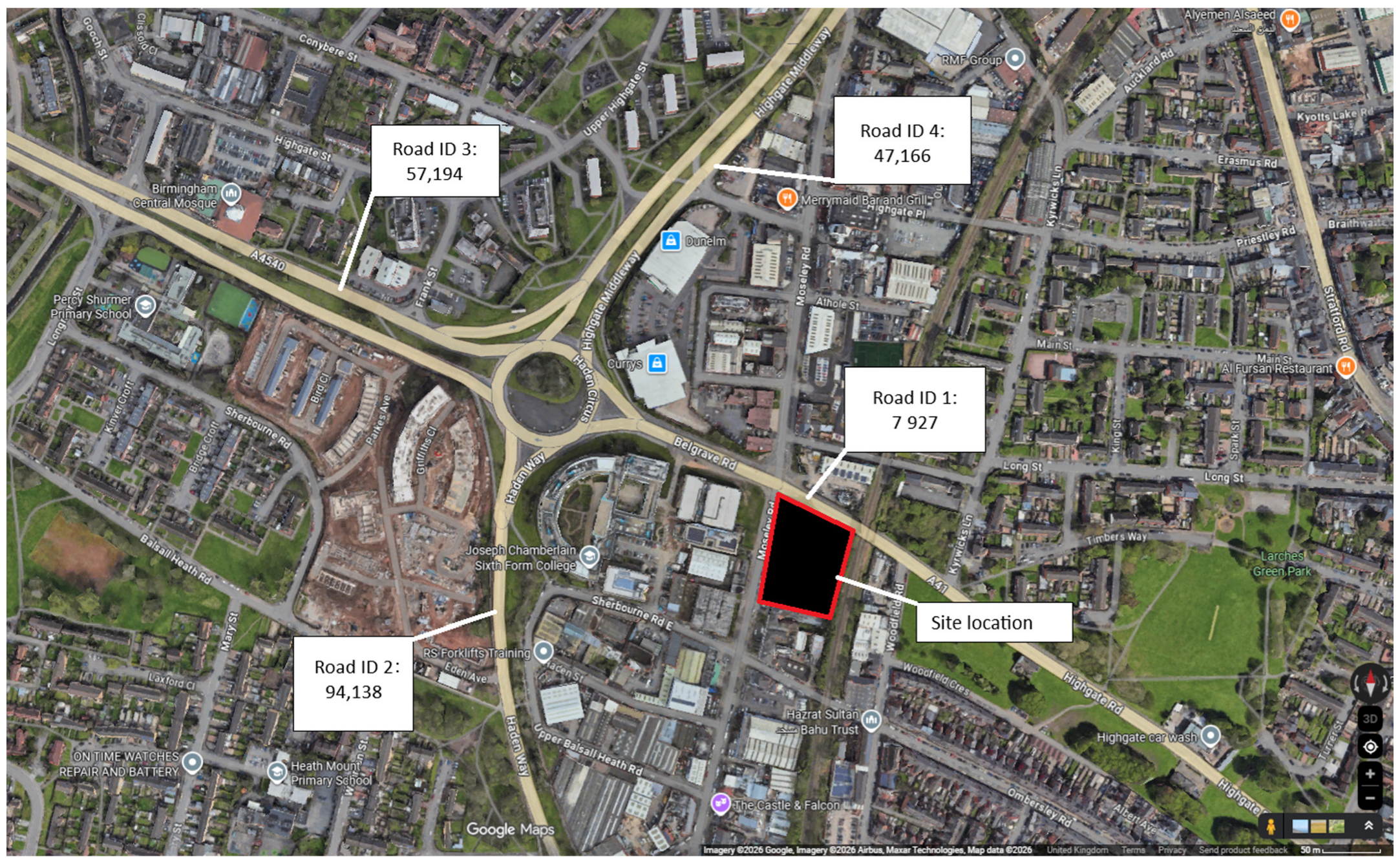
This paper analyses the traffic impact of developing a new 4-storey office building on the nearby roads and junctions on the southern border of Birmingham city centre near the Birmingham ring road (Figure 1). The development proposal comprises an office space of approximately 8200 m2. Traffic data were collected from the Department for Transport’s (DfT’s) road count database. Using traffic count data, further analysis identified AM and PM peaks at 8:00 a.m. and 5:00 p.m., respectively. The total trips both for AM and PM peaks are established as the baseline figures for 2025. To evaluate ‘Do Nothing’ and ‘Do Something’ scenarios, the software applications TEMPro (v8.1) and TRICS (v7.11.4) were used to determine traffic growth and trip rates, with specific parameters ensuring reliability and alignment with the case study. Total number of trips generated from and destined to the newly developed office building were collected from the industry recognised TRICS database (v7.11.4). The representative trip rates for Office land uses, Employment/A—Office, were obtained in TRICS (v7.11.4) assuming that sites are located within the UK (excluding Greater London, Northern Ireland, Scotland areas and Wales), within the edge of town centre locations and surveys were undertaken for weekday periods only.
The traffic growth factors for office development were derived from TEMPro (v8.1) software for the AM and PM peaks. The TEMPro traffic growth factors are the projected traffic growth from the 2025 levels to 2040 based on historic traffic data. The geographical area (E02001909/Birmingham 083), NTM AF15 dataset, urban area characteristics and type of principal road were selected to calculate the forecasted traffic growth factors. The growth factors for the AM-peak and PM-peak traffic were calculated as 1.133 and 1.1327, respectively. The scenarios were established using the TRICs database and traffic growth factors from TEMPro, and a traffic flow network diagram was designed. A traffic flow network diagram is a schematic map of an existing network that illustrates the nodes and their connections [23].

3.2. Bicycle Infrastructure Scheme in the Trafford Road Corridor

The Greater Manchester councils are providing a range of active travel infrastructure options with the goal of connecting every neighbourhood in the region, such as Cycle Optimised Protected Signal (CYCLOPS) junctions. CYCLOPS junctions provide cyclists with a dedicated signal stage at busy junctions to allow for safe crossings.
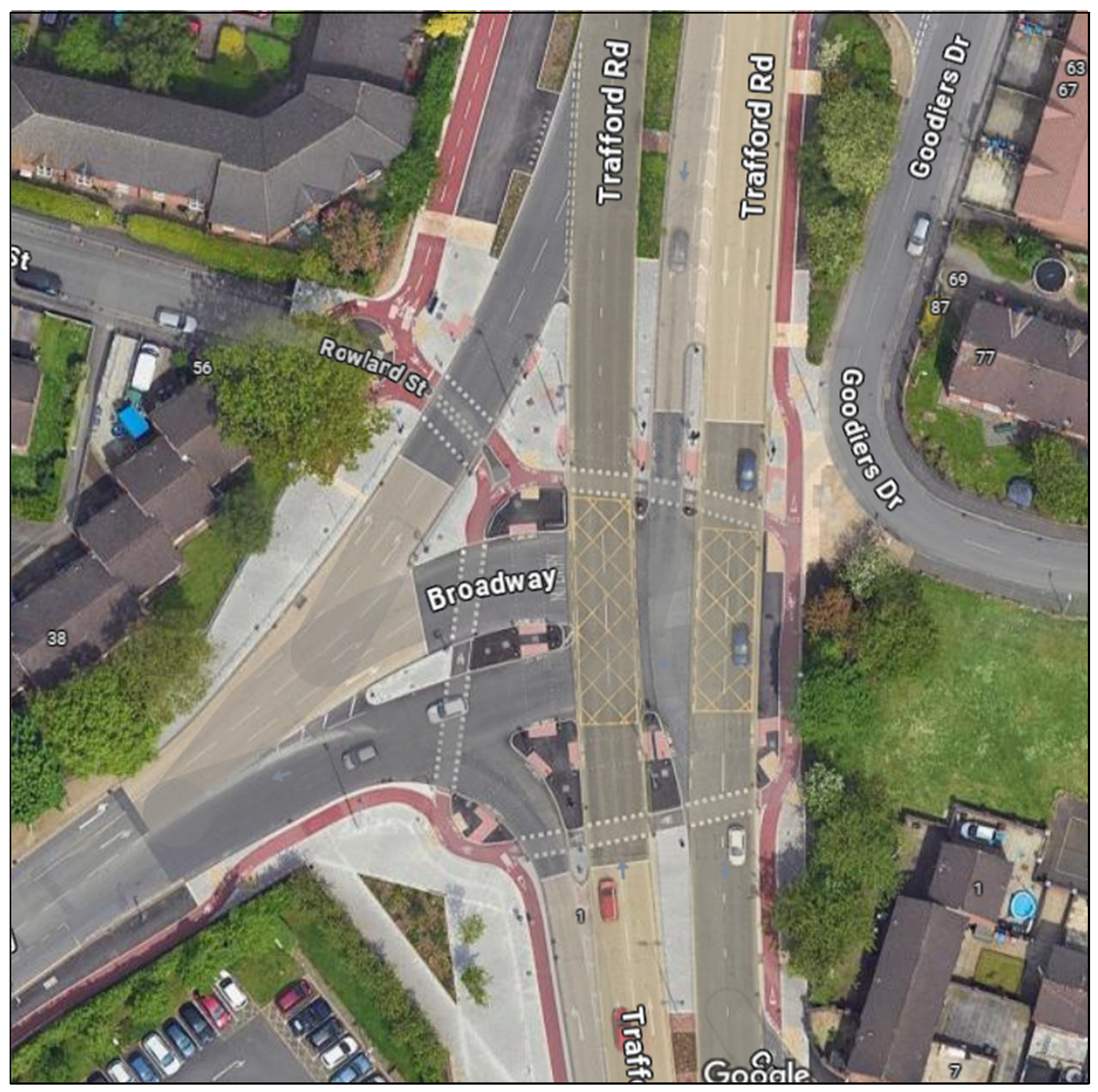
The Trafford Road corridor has multiple CYCLOPS junctions, connected by segregated cycle tracks along both sides of a busy carriageway (Figure 2). The corridors, also described as connector roads by Transport for Greater Manchester (TfGM), connect strategic roads to suburbs, towns and places, and acft as essential routes for commuters [24].
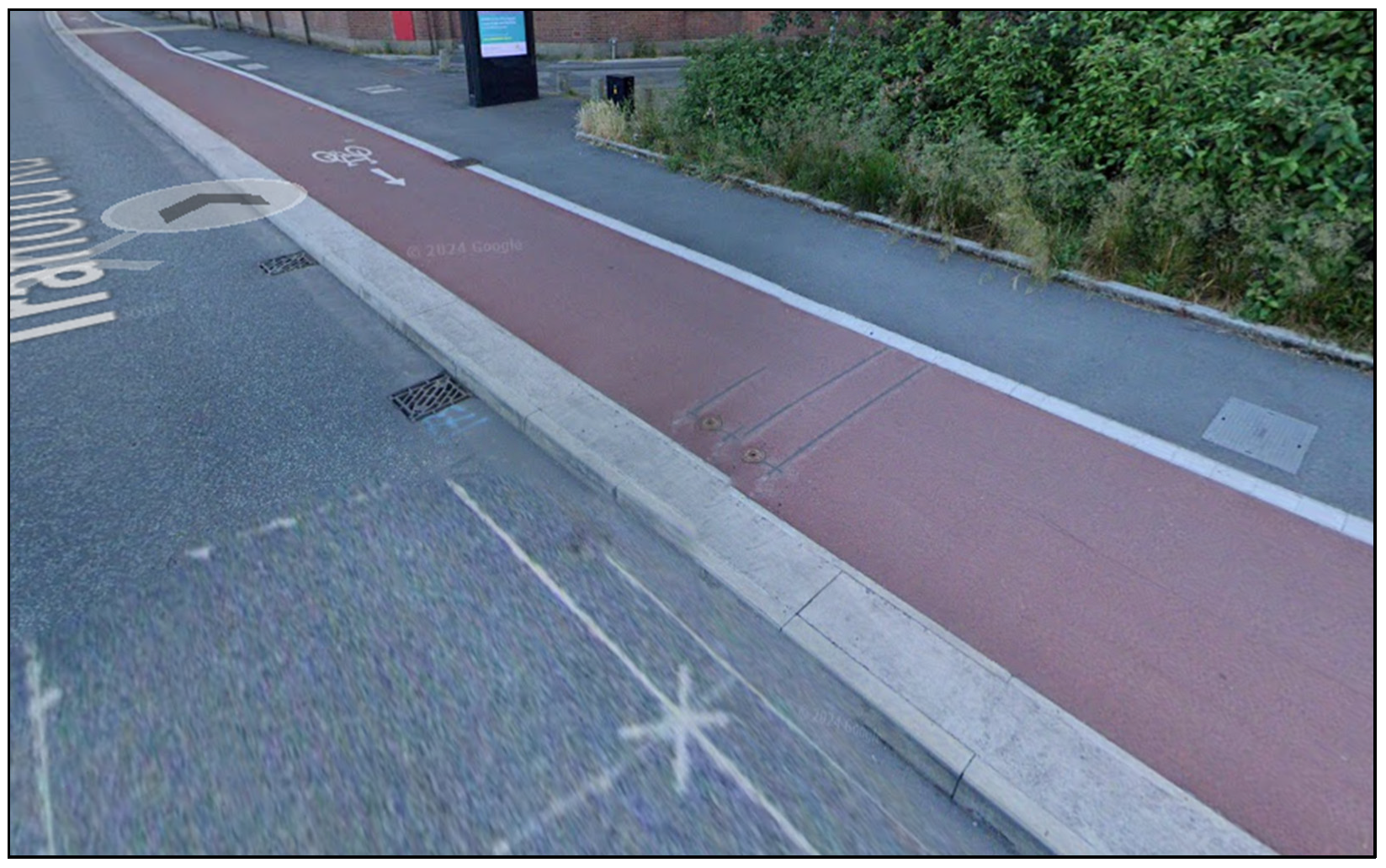
To assess the traffic impacts of the CYCLOPS scheme in Trafford Road, this study analysed sensor data from the bicycle track surface. The automatic sensors are typically embedded into the track surface and count average annual daily traffic (AADT). TfGM have installed sensors along the length of Trafford Road’s bicycle tracks to monitor bicycle volumes. These sensors are also in place at CYCLOPS junctions to record cyclists’ movement (Figure 3). This study analysed the traffic data from Drakewell’s C2 database management system of TfGM. The traffic database covers bicycle flow starting from the scheme opening in 2023 to the end of 2024 to understand the traffic impact of scheme on the cycling rate. The database was filtered to remove data that were beyond the scope of this study. In addition, some variables needed to be standardised (Table 1 and Table 2).

3.3. Pedestrianisation Scheme in Wood Street

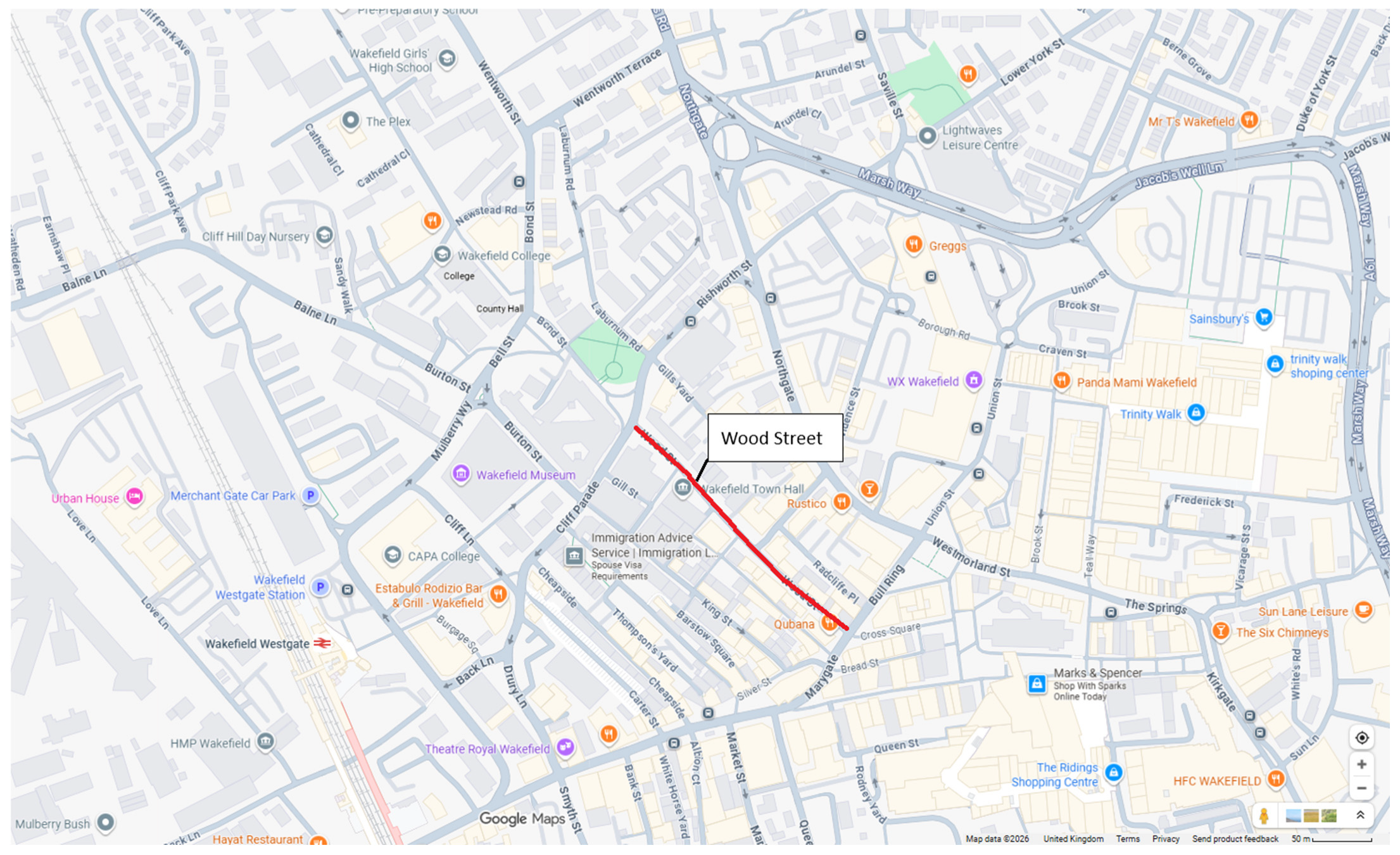
Wood Street is a historic public road in Wakefield city centre comprising numerous hospitality, retail and leisure amenities (Figure 4). Once perceived as the ‘heart’ of Wakefield, Wood Street now suffers from traffic congestion at peak times, poor accessibility for pedestrians and cyclists, lack of desirable amenities with many boarded-up buildings, resulting in low footfall and struggling businesses despite its integral location, linking the city centre to Westgate rail station [25]. Wakefield Council proposed a regeneration scheme for Wood Street, aiming to improve congestion, accessibility and economic growth through constructing new urban residential dwellings, implementing green spaces, and pedestrianising Wood Street. This pedestrianisation scheme is said to align with Wakefield Council’s local transport plan [26] to promote active travel, as well as national sustainability policies such as Net Zero [27].
This study utilises classified vehicle count data gathered from Vivacity AI-driven radar cameras, covering various modes of transport over a prolonged period. Vivacity cameras can differentiate transport modes over a long period of time and be active 24/7 at no extra cost [28]. Wood Street consists of three radar cameras, each focused on different directions to capture all possible vehicle movements on the T-junction north of the road, strategically positioned to monitor both modal shift and motor traffic rerouting. This study extracted data for a 12-month period from 1 April 2024 to 31 March 2025 to analyse current transport conditions and make evidence-based predictions of traffic impact. The datasets include all traffic movements in monthly blocks to understand the mode choice and travel directions. To avoid invalid data results, this study adopted a 95th percentile rule to eliminate any potential outlying anomalies in the dataset [29]. Datasets from Vivacity cameras unable to explain the reasons for transport mode change resulted in the assumption of real-world events and conditions [30]. For example, there was a Christmas event on Wood Street from 12 to 18 November and a Remembrance Day event on 10 November which closed the road to motor vehicles, causing significantly higher pedestrian numbers and very little car flow. Since the data on these days do not represent the average day-to-day traffic conditions, this study replaced average daily traffic for these days with the average traffic counts for the rest of the month. Additionally, a 95% percentile rule was applied to each transport mode for the entire year, eliminating any further values that differ from the typical trends [29]. This method for data cleaning ensures that traffic data represent the average day-to-day traffic conditions on Wood Street.

4. Data Analysis

4.1. Development Impacts on Existing Traffic

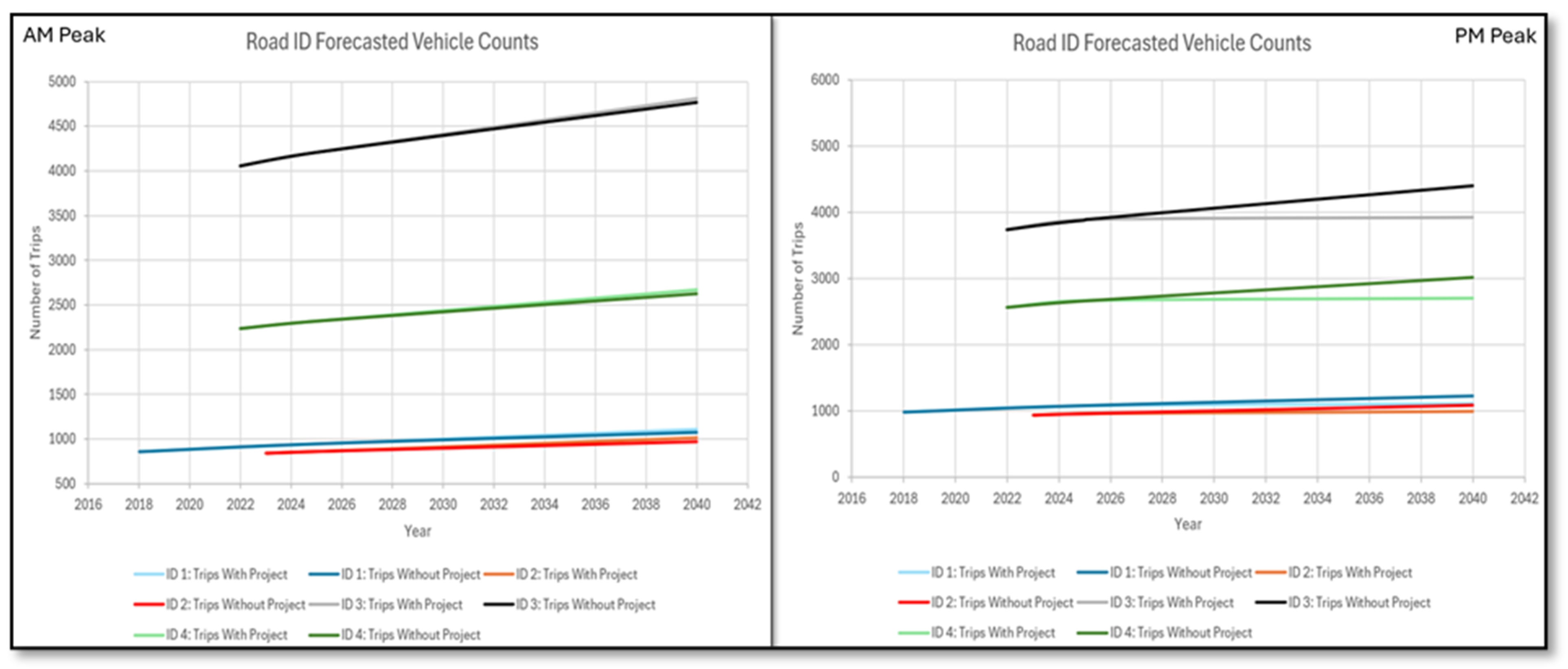
The trip generation models were created for baseline, ‘do nothing’ and ‘do something’ scenarios for the case study. The fluctuation between trip generations can be seen in Figure 5. Figure 5 suggests that traffic on the local road network around the site will substantially increase over the next 15 years due to population growth and increased trip generation. The development site will generate an additional 35 trips based on the TRICs database, indicating that a new development within a mostly built-up area will have minimal impact on the existing traffic of the local road network (Figure 5).
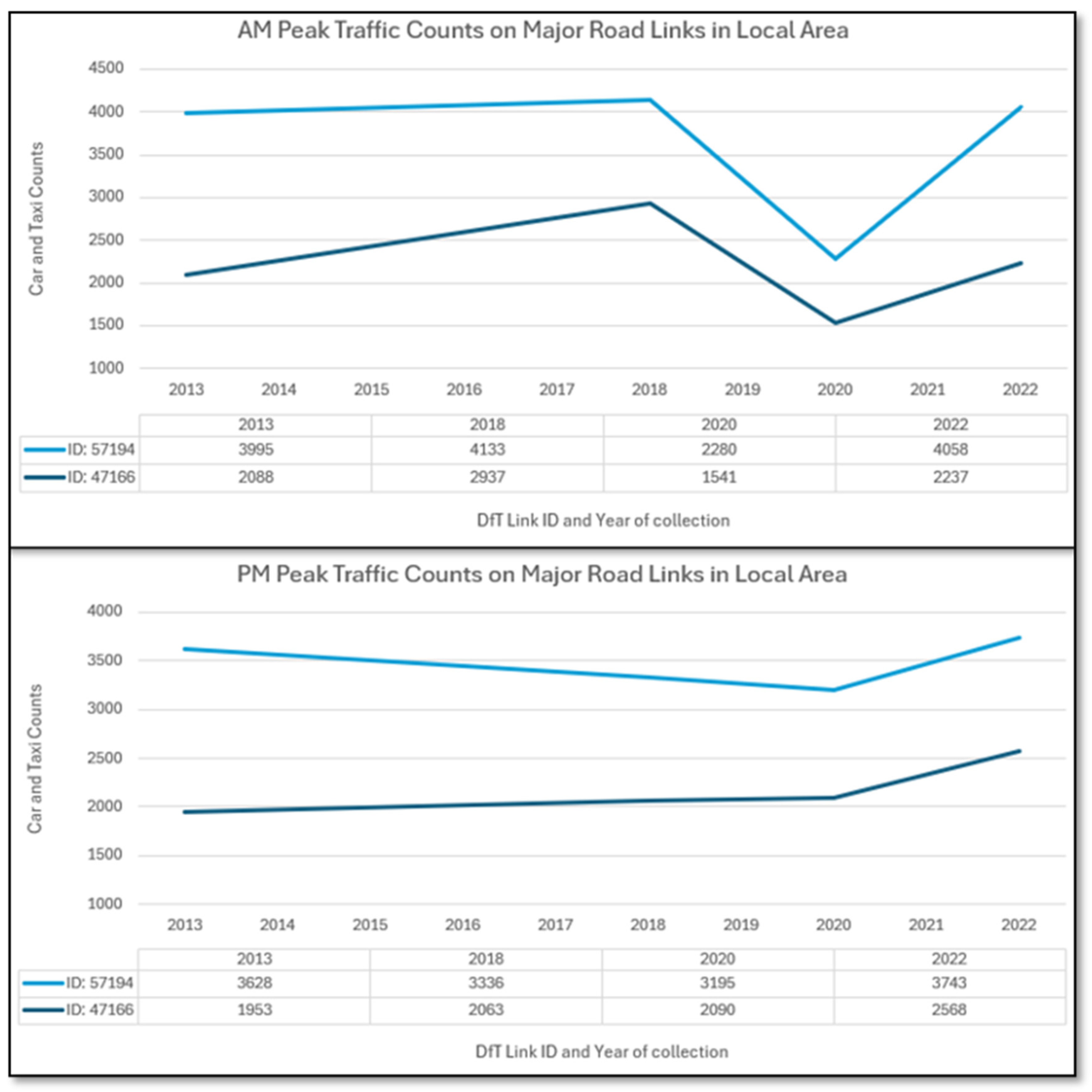
However, traffic increase is observed on selected roads until 2020 when COVID-19 had occurred and caused trip rates to plummet based on traffic counts from local highways (Figure 6). The trip rates were increasing much more rapidly, such that by 2023 they were nearing the levels they were at before the pandemic, surpassing those figures by 2025.
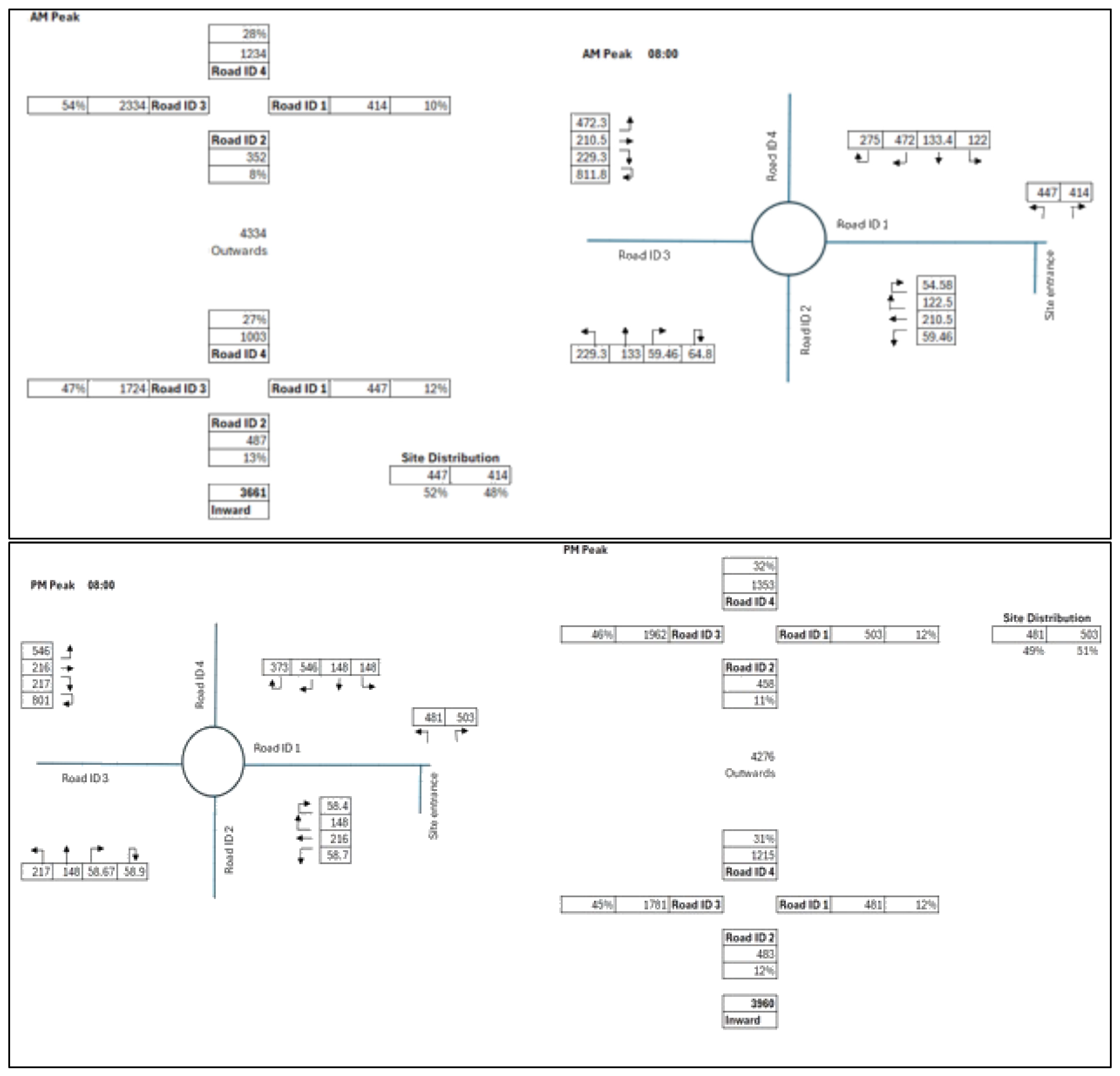
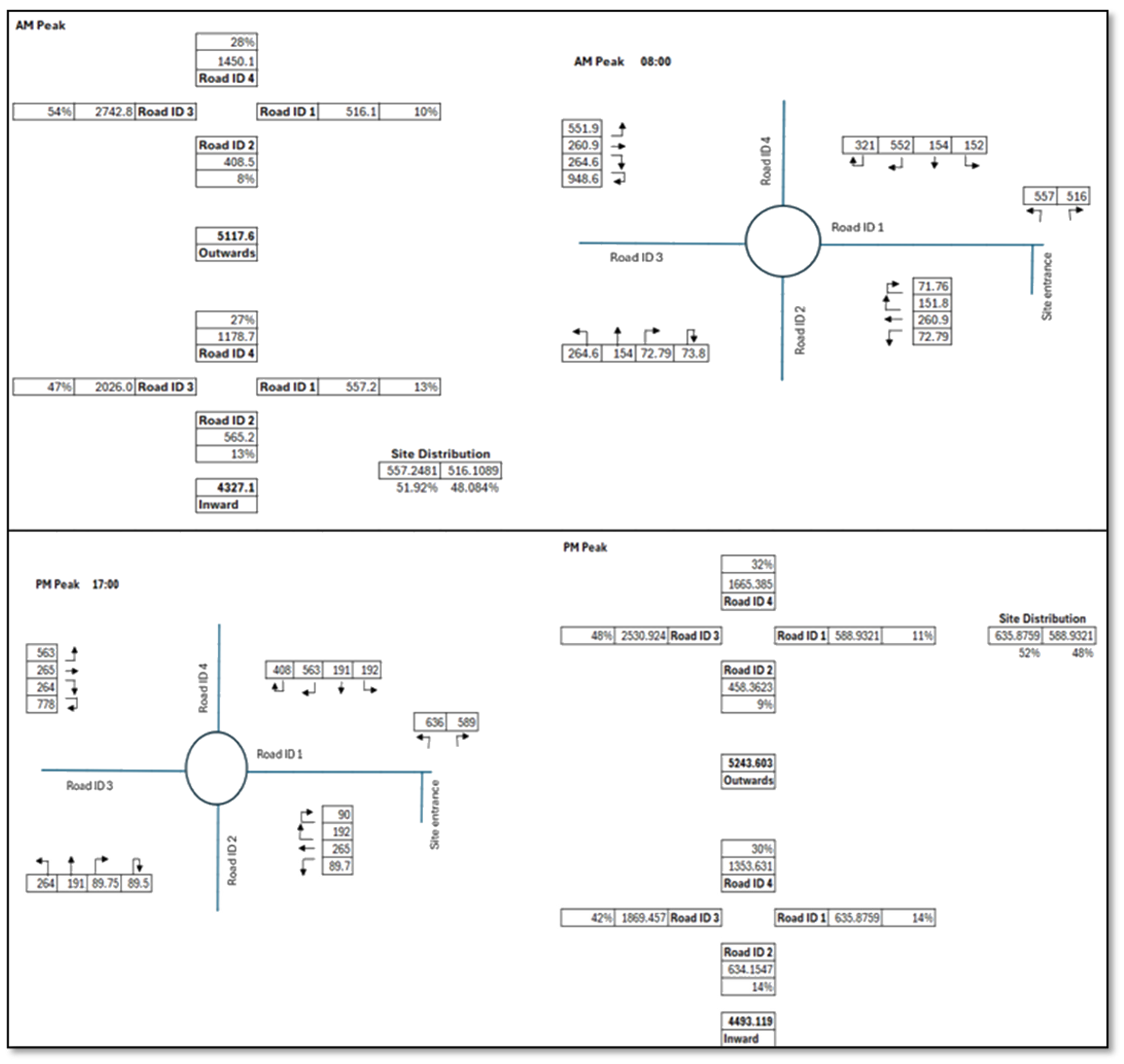
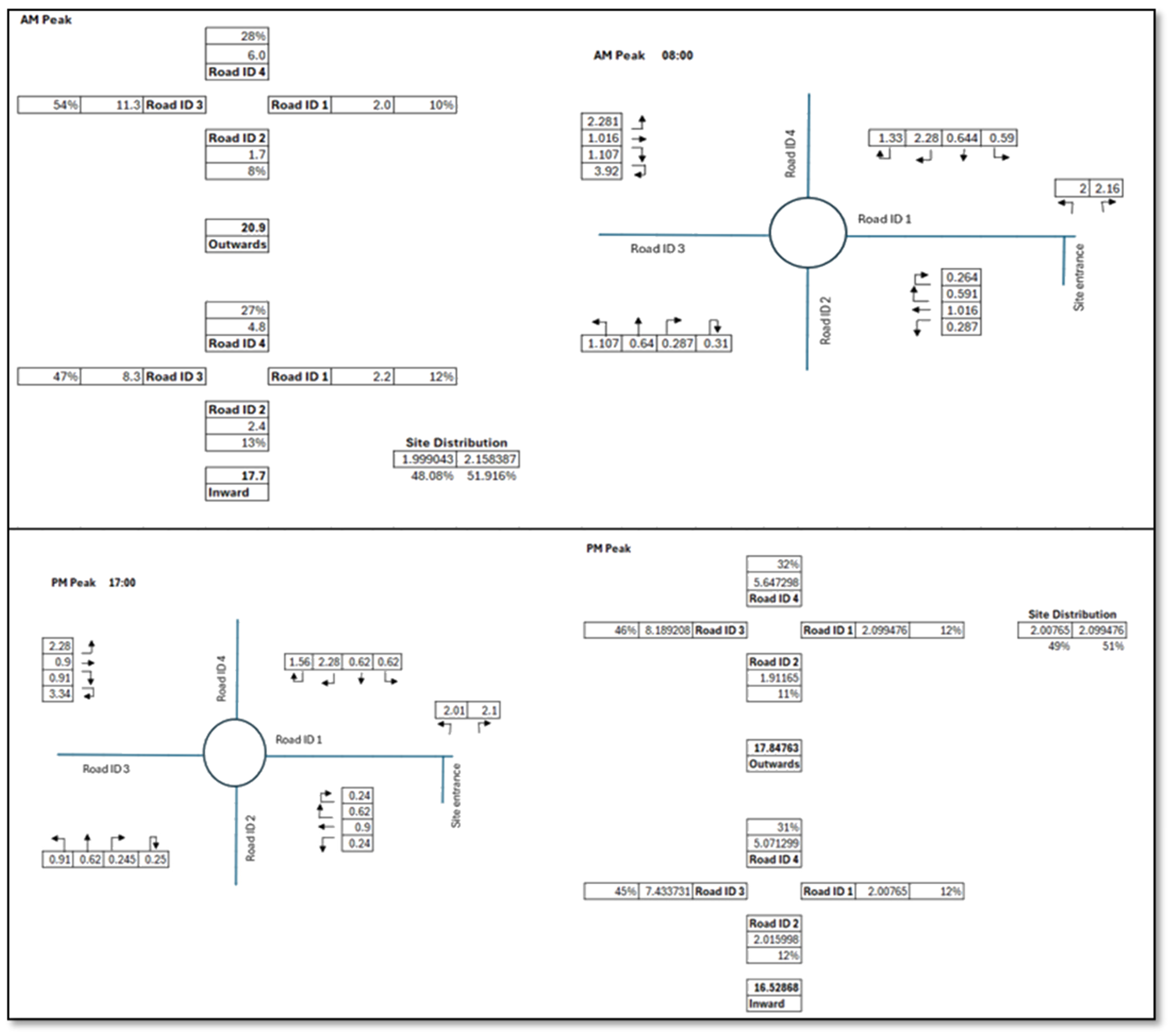
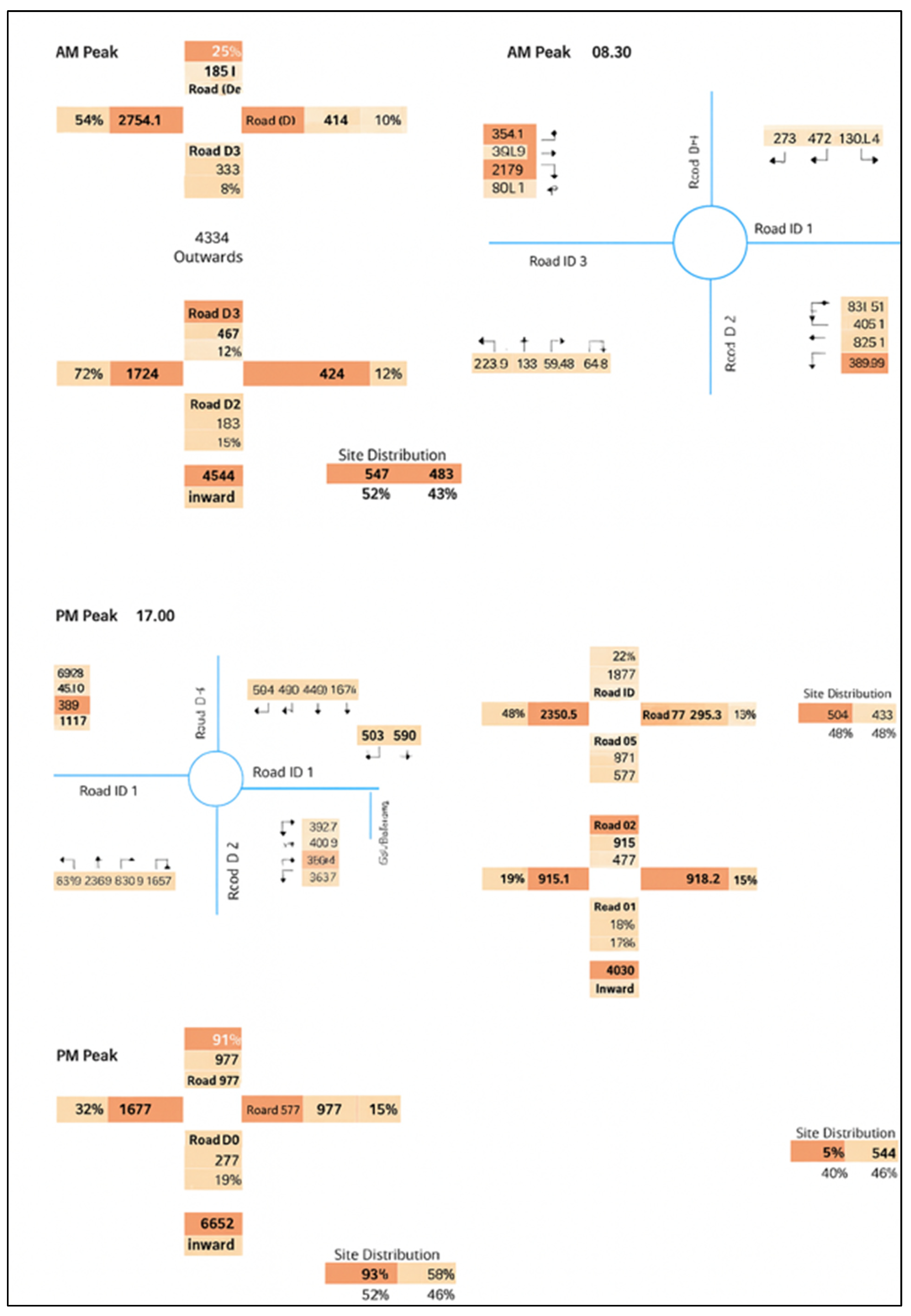
Figure 7 shows the baseline traffic flow diagram. Traffic flow diagrams were projected for the next 15 years for do nothing (Figure 8), office development (Figure 9) and do something (Figure 10) scenarios based on the baseline traffic flow (Figure 7). Most of the projected trips were predicted to occur on the western and northern leg of the Haden Circus roundabout, with approximately 50% occurring on the inward traffic of the western leg towards the roundabout and approximately 40% going outwards. When the projected traffic was spread out across different roads, the expected 38 and 32 morning and evening peak-hour trips would be distributed to minute figures, which would produce insignificant impacts. The models were validated using the traffic projection of DfT.

4.2. Bicycle Infrastructure Scheme in the Trafford Road Corridor

To understand the impact of the bicycle infrastructure scheme in the Trafford Road corridor, an overall increase in bicycle traffic flow was observed across all sensors during the selected period (Table 3). Overall, a 34% increase in bicycle traffic flow was observed since the opening of scheme (Table 3). Despite a significant increase in bicycle traffic between the opening of the scheme in 2023, the third and fourth quarters of the year 2024 presented less bicycle traffic growth (Table 3). There was an increase of 19,350 (23%) in bicycle traffic flow in the second quarter, in May 2024. In contrast, the month of June in 2024 showed a decrease of 7198 (9%) in bicycle traffic flow. The monthly statistics of bicycle traffic flow show a positive outcome of launching the bicycle infrastructure scheme by TfGM that supports the policy objectives outlined by TfGM. However, hourly and daily statistics of cycling give a better understanding of the purposes of trips.
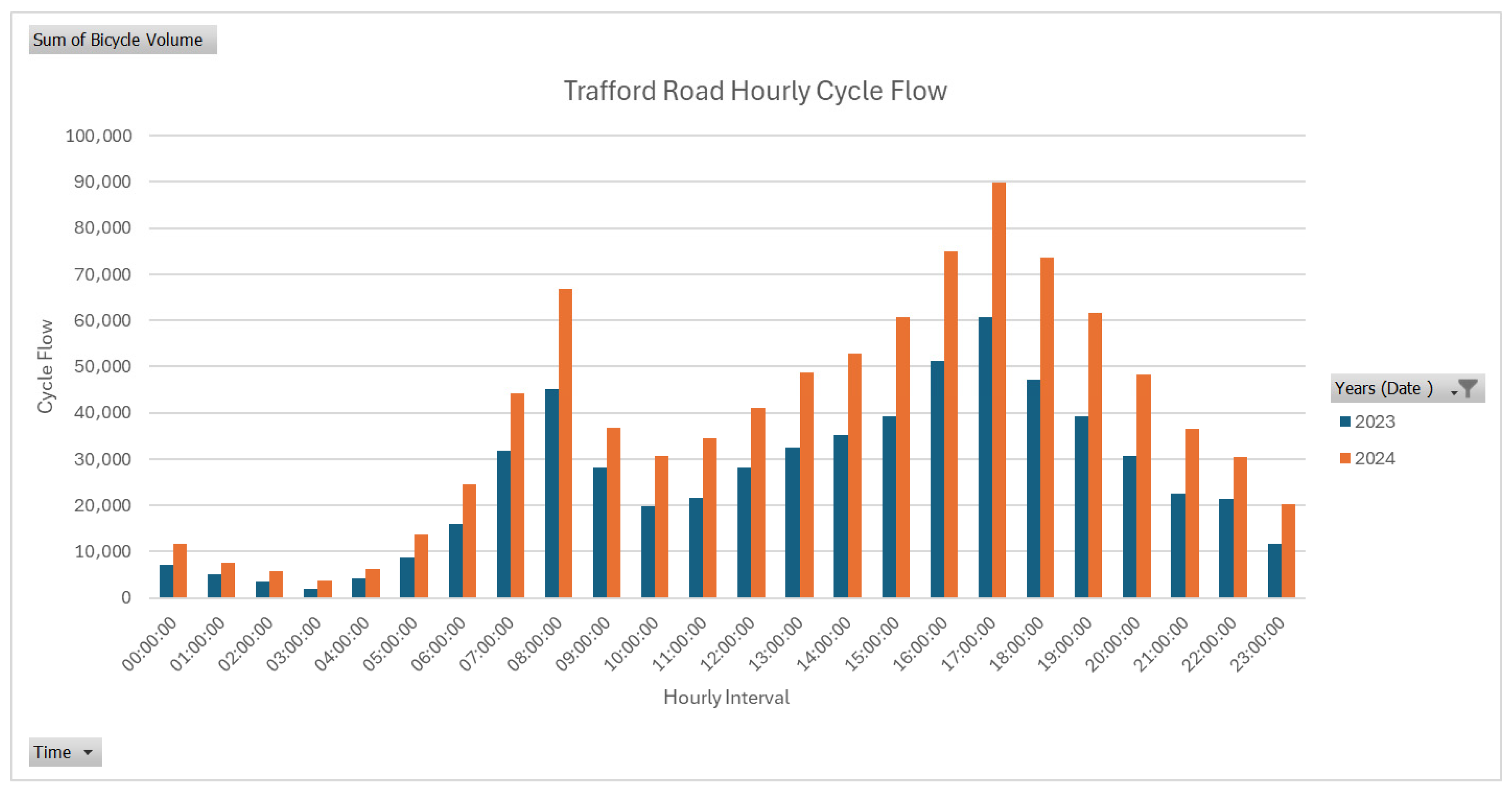
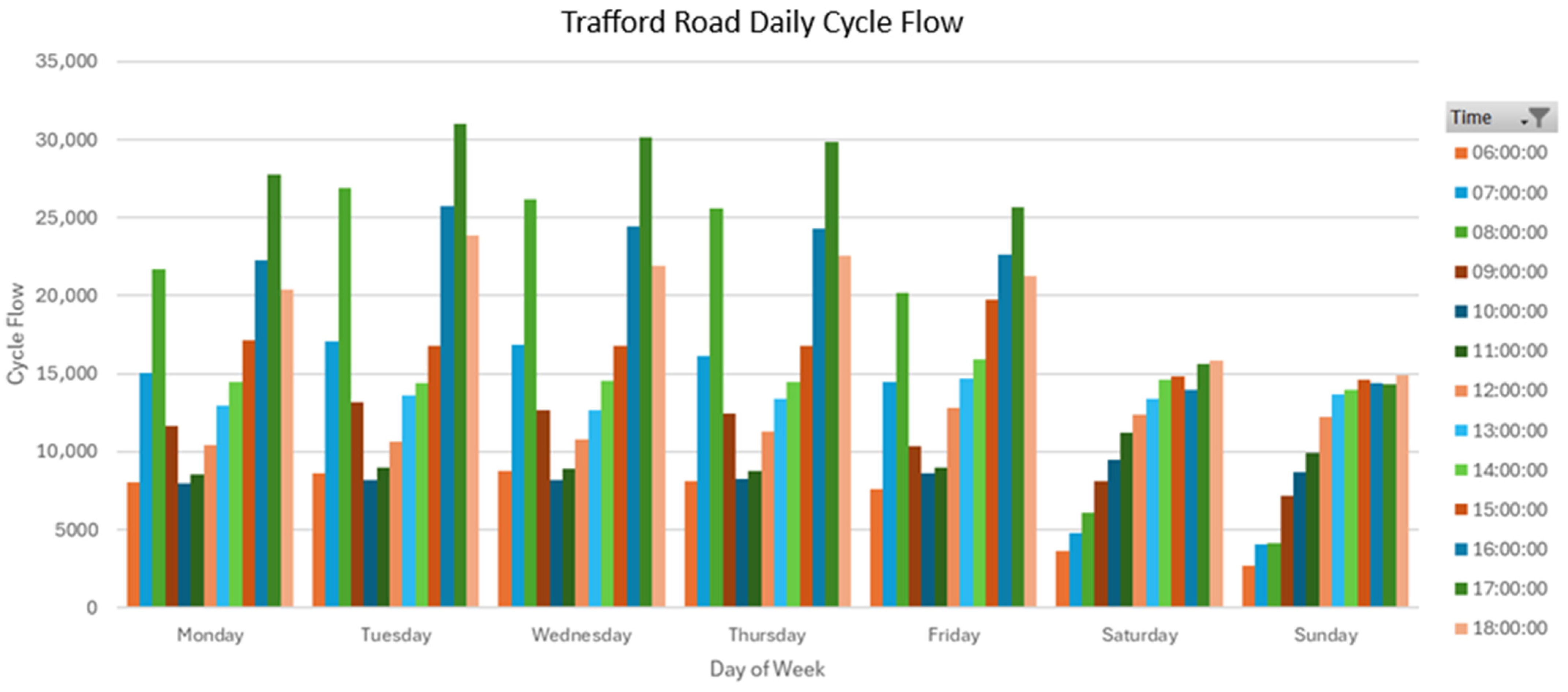
Figure 11 shows that the highest number of bicycle trips were taken during 07:00–09:00 and 13:00–20:00 of a day. Ideally, trips made during peak-hour periods are likely to be work trips. This assumption is justified by Figure 12, which shows the highest amount of bicycle flow occurred during 7:00–8:00, 8:00–9:00, 16:00–17:00, 17:00–18:00 and 18:00–19:00 on weekdays. The weekend bicycle traffic flow was almost the same during the period of 12:00–19:00 (Figure 12).

4.3. Pedestrianisation Scheme in Wood Street

The monthly distribution of vehicles, bicycles and pedestrians in Wood Street is shown in Table 4, where vehicle flow was consistent except for an increase in vehicle flow in the months of September and December. On the other hand, pedestrian flow gradually increased from April to October followed by a dip in the winter months, perhaps where poor weather discouraged walking trips (Table 4). The most notable statistic of the pedestrian scheme over the year is the gradual increase in cyclists in Wood Street, starting at 174 in April and rising to 356 in March, showing a clear shift in travel behaviour and modal shift (Table 4).
To interpret the potential impact of pedestrianisation on modal split, this study analysed the modal share percentage per month of the year, using the sum of all modes (cars, pedestrians and cyclists) as the baseline reference point. This allows us to track how the proportion of active travel modes might change over time in relation to car usage. For example, the total number of movements by all modes was 12,861 in April 2024, of which walking, cycling and driving (car) contributed 4.6%, 1.4% and 94%, respectively. If we use this modal share as the baseline reference point and monthly growth pattern among different modes, the projected modal share in March 2025 will be 4.6%, 2.3% and 93% for walking, cycling and driving (car), respectively. This analysis differs from the initial review of the traffic data, which shows an unchanged share of walking mostly in the whole year. Interestingly, the pedestrian scheme did not contribute any significant increase in walking. However, Wood Street experienced an average 1% increase in bicycle traffic because of the implementation of the pedestrian infrastructure scheme, demonstrating a meaningful shift in travel behaviour because of improved perception of safety and accessibility. The scheme improves traffic calming, prioritising people over vehicles. This improvement lowers the perceived risk of conflicts with motor vehicles, which is one of the barriers to cycling in a mixed traffic environment. This scheme makes Wood Street more predictable and safer for cyclists, encouraging a shift from car use to cycling for short- and medium-distance trips. Increased cyclist presence further reinforces safety through higher visibility and social acceptance, creating a positive feedback loop. The scheme demonstrates how improving pedestrian infrastructure can indirectly but effectively promote cycling by enhancing perceptions of safety, comfort and accessibility across the transport network.

5. Discussion

Birmingham, like other major cities in the UK, has been experiencing new developments. Birmingham has been regarded as a paradigmatic example of an entrepreneurial ‘renaissance’ city and is described as a trendsetter in urban renaissance, having transformed its open spaces into plazas, its arcades into shopping experiences. This suggests that over the next 15 years, many more office buildings and other developments are expected to go up, increasing trip generation and further suggesting that mitigation measures should be identified to reduce cars and traffic congestion. In addition, city centres are facing challenges with limited and costly parking and an accessible public transport system. To reduce private car use, cycle-to-work and car-share schemes should be introduced for offices and industrial developments with high commuter volumes. Alternative transport modes to cars will be made more accessible by constructing active travel infrastructure. The pedestrian infrastructure scheme in Wood Street and bicycle infrastructure scheme in the Trafford Road corridor show an increase in bicycle flow and modal shift from cars to bicycles. These findings suggest that a modal shift from cars to active transport is not only possible but is expected with appropriate infrastructure and policy in place. However, investments in further interventions such as improved lighting, public transport connections, and supporting local businesses to rejuvenate the area accelerate the share of active travel in LTN streets [19].

6. Conclusions

This study aimed to understand the impacts of traffic from new office developments on the existing transport system in the city centre and how investments in active travel infrastructure can reduce traffic congestion and improve the safety and accessibility to public transport and active travel. The transport assessment of hypothetical scenarios for a new office development in the busy city centre of Birmingham resulted in insignificant impacts when the project traffic was spread out across different roads during peak hours. The predicted 38 and 32 morning and evening peak-hour trips will be distributed to minute figures, which will produce insignificant impacts. However, multiple and continuous development sites will have a significant adverse impact on the existing traffic. The active travel infrastructure can offset the traffic congestion and accommodate local economic growth resulting from new developments. The findings on the pedestrian infrastructure scheme in Wood Street and bicycle infrastructure scheme in the Trafford Road corridor justify the necessity of investing in active travel infrastructures to promote sustainable LTNs in city centres. There was an increase of 19,350 (23%) in bicycle traffic flow in the second quarter, in May 2024, because of the bicycle infrastructure scheme in the Trafford Road corridor. Wood Street experienced an average 1% increase in bicycle traffic. In addition, national schemes such as ‘Cycle to Work’ should be promoted in tandem with regional policy, as more investments in active travel infrastructures are ongoing in different councils in the UK. The findings of this study can encourage local councils to invest in active travel infrastructure to meet policy goals of local transport plans, LTNs and national transport strategies.
However, extensive studies are required to understand the spillover effects of active travel infrastructure schemes on the wider network and other neighbourhoods such as traffic redistribution, delays to public transport, and air and noise pollution. It is essential to examine these impacts in ensuring project success and would therefore require multi-modal travel demand modelling [31]. In addition, this paper studied three different case studies to understand the impact of active travel infrastructure schemes on LTNs. A cross-case comparative analysis is required to validate the outcomes of this paper and identify the pattern of travel behaviour and scheme-dependent variations of pedestrians and cyclists.

Author Contributions

Conceptualisation, S.B., M.S., F.M. and S.A.; methodology, S.B., M.S., F.M. and S.A.; software, S.B., F.M. and M.S.; validation, S.B., F.M. and M.S.; formal analysis, S.B., F.M. and M.S.; investigation, S.B., F.M. and M.S.; data curation, S.B., F.M. and M.S.; writing—original draft preparation, S.B., M.S., F.M. and S.A.; writing—review and editing, S.A.; visualisation, S.B., F.M., M.S. and S.A.; supervision, S.A. All authors have read and agreed to the published version of the manuscript.

Funding

This research received no external funding.

Institutional Review Board Statement

Not applicable.

Informed Consent Statement

Not applicable.

Data Availability Statement

Data are available in the TRICS database, census database and Department for Transports website.

Conflicts of Interest

The authors declare no conflicts of interest.

References

  1. VanHoose, K.; Bertolini, L.; Straatemeier, T. Learning through experiments: The case of low-traffic neighborhoods in London. J. Urban Mobil. 2025, 7, 100107. [Google Scholar] [CrossRef]
  2. Aldred, R.; Verlinghieri, E.; Sharkey, M.; Itova, I.; Goodman, A. Equity in new active travel infrastructure: A spatial analysis of London’s new Low Traffic Neighbourhoods. J. Transp. Geogr. 2021, 96, 103194. [Google Scholar] [CrossRef]
  3. Goodman, A.; Rachel, A. The Impact of Introducing a Low Traffic Neighbourhood on Street Crime, in Waltham Forest, London. Findings 2021. [Google Scholar] [CrossRef]
  4. Thomas, A.; Aldred, R. Changes in motor traffic in London’s Low Traffic Neighbourhoods and boundary roads. Case Stud. Transp. Policy 2024, 15, 101124. [Google Scholar] [CrossRef]
  5. Department for Transport. Transport Statistics Great Britain: 2023 Domestic Travel. 2024. Available online: https://www.gov.uk/government/statistics/transport-statistics-great-britain-2024/transport-statistics-great-britain-2023-domestic-travel (accessed on 8 April 2025).
  6. Swift, S.; Green, M.; Hillage, J.; Nafilyan, V. Impact of the Cycle to Work Scheme. Available online: https://www.employment-studies.co.uk/system/files/resources/files/509.pdf (accessed on 11 April 2025).
  7. Gov.UK. Physical Activity: Applying All Our Health. Available online: https://www.gov.uk/government/publications/physical-activity-applying-all-our-health (accessed on 6 April 2025).
  8. Melia, S.; Shergold, I. Pedestrianisation and politics: A case study. Proc. Inst. Civ. Eng. Transp. 2018, 171, 30–41. [Google Scholar] [CrossRef]
  9. Ewing, R.; Cervero, R. Travel and the built environment: A meta-analysis. J. Am. Plan. Assoc. 2010, 76, 265–294. [Google Scholar] [CrossRef]
  10. Boarnet, M.G.; Crane, R. Travel by Design: The Influence of Urban Form on Travel, Online ed.; Oxford University Press: Oxford, UK, 2001. [Google Scholar]
  11. Pucher, J.; Buehler, R. At the frontiers of cycling: Policy innovations in the Netherlands, Denmark, and Germany. World Transp. Policy Pract. 2007, 13, 8–57. [Google Scholar]
  12. Rietveld, P.; Daniel, V. Determinants of bicycle use: Do municipal policies matter? Transp. Res. Part A Policy Pract. 2004, 38, 531–550. [Google Scholar] [CrossRef]
  13. Aultman-Hall, L.; Hall, F.L.; Baetz, B.B. Analysis of bicycle commuter routes using geographic information systems: Implications for bicycle planning. Transp. Res. Rec. J. Transp. Res. Board 1997, 1578, 102–110. [Google Scholar] [CrossRef]
  14. Cleland, B.S.; Walton, D. Why Don’t People Walk and Cycle; Central Laboratories Report No. 528007; Opus International Consultants Limited: Lower Hutt, New Zealand, 2004. [Google Scholar]
  15. Félix, R.; Cambra, P.; Moura, F. Build it and give ‘em bikes, and they will come: The effects of cycling infrastructure and bike-sharing system in Lisbon. Case Stud. Transp. Policy 2020, 8, 672–682. [Google Scholar] [CrossRef]
  16. Buehler, R.; Pucher, J. Cycling to work in 90 large American cities: New evidence on the role of bike paths and lanes. Transportation 2012, 39, 409–432. [Google Scholar] [CrossRef]
  17. Dill, J.; Carr, T. Bicycle commuting and facilities in major US cities: If you build them, commuters will use them. Transp. Res. Rec. 2003, 1828, 116–123. [Google Scholar] [CrossRef]
  18. Smith, M.L.; Fu, X. When bike lanes are not enough: The role of connected low-stress cycling infrastructure on cycle commuting in urban Aotearoa New Zealand. Cities 2025, 156, 105526. [Google Scholar] [CrossRef]
  19. Hussein, N. The pedestrianisation and its relation with enhancing walkability in urban spaces. J. Contemp. Urban Aff. 2018, 2, 102–112. [Google Scholar] [CrossRef]
  20. Chiquetto, S. The environmental impacts from the implementation of a pedestrianization scheme. Transp. Res. Part D Transp. Environ. 1997, 2, 133–146. [Google Scholar] [CrossRef]
  21. Caris, E.; Cao, M. Investigating contestation around neighbourhood scale active travel infrastructure policy. Transp. Policy 2024, 159, 95–107. [Google Scholar] [CrossRef]
  22. Aldred, R. Built environment interventions to increase active travel: A critical review and discussion. Curr. Environ. Health Rep. 2019, 6, 309–315. [Google Scholar] [CrossRef]
  23. Petryschuk, S. Network Diagrams 101: Definitions, Examples & How-To’s. Available online: https://www.auvik.com/franklyit/blog/effective-network-diagrams/ (accessed on 15 April 2025).
  24. Transport for Greater Manchester (TfGM). Streets for All: Part of the GM Transport Strategy 2040. Available online: https://downloads.ctfassets.net/xfhv954w443t/2FGzEJu7z949G1N0BQhceY/d9c52773f81df6c22cf63243aa64697c/Greater_Manchester_Streets_for_All_Design_Guide_v1.1.pdf (accessed on 6 April 2025).
  25. Goodchild, B. Replanning the central area of Wakefield, West Yorkshire: Culture and regeneration, 1990–2021. Plan. Perspect. 2023, 38, 1019–1040. [Google Scholar] [CrossRef]
  26. Wakefield Council. Wakefield Council Transport Policy and Strategy. Available online: https://www.wakefield.gov.uk/roads-and-travel/transport-policy-and-strategy (accessed on 9 April 2025).
  27. Dixon, J.; Bell, K.; Brush, S. Which way to net zero? A comparative analysis of seven UK 2050 decarbonisation pathways. Renew. Sustain. Energy Transit. 2022, 2, 100016. [Google Scholar] [CrossRef]
  28. Alimardani, M.; Aftabi, M.; Dehghani, A. The survey of pedestrainization feasibility in urban spaces and its relationship with the citizens’ vivacity. Case study: The city of Birjand’s Hakim Nazari street. J. Fundam. Appl. Sci. 2016, 8, 1550–1676. [Google Scholar] [CrossRef][Green Version]
  29. Zhong, M.; Sharma, S.; Lingras, P. Genetically designed models for accurate imputation of missing traffic counts. Transp. Res. Rec. 2004, 1879, 71–79. [Google Scholar] [CrossRef]
  30. Gamez, E.A.; Touran, A. A quantitative analysis of the performance of transportation projects in developing countries. Transp. Rev. 2010, 30, 361–387. [Google Scholar] [CrossRef]
  31. Clifton, K.J.; Singleton, P.A.; Muhs, C.D.; Schneider, R.J. Representing pedestrian activity in travel demand models: Framework and application. J. Transp. Geogr. 2016, 52, 111–122. [Google Scholar] [CrossRef]
Figure 1. Site location and road network with road IDs.
Sustainability 18 02693 g001
Figure 2. Example of the scheme in Trafford Road (Google Images).
Sustainability 18 02693 g002
Figure 3. Automatic traffic and cycle counters along Trafford Road.
Sustainability 18 02693 g003
Figure 4. Wood Street, Wakefield city centre.
Sustainability 18 02693 g004
Figure 5. Forecasted traffic volume on selected roads.
Sustainability 18 02693 g005
Figure 6. Peak-hour (both morning and afternoon) traffic counts on major road links.
Sustainability 18 02693 g006
Figure 7. Baseline traffic flow diagram.
Sustainability 18 02693 g007
Figure 8. Traffic flow diagram for ‘Do Nothing’ scenario for the next 15 years.
Sustainability 18 02693 g008
Figure 9. Traffic flow diagram for office development scenario for the next 15 years.
Sustainability 18 02693 g009
Figure 10. Traffic flow diagram for ‘Do Something’ scenario for the next 15 years.
Sustainability 18 02693 g010
Figure 11. Hourly cycle flow at Trafford Road in 2023 and 2024.
Sustainability 18 02693 g011
Figure 12. Daily cycle flow at Trafford Road in 2023 and 2024.
Sustainability 18 02693 g012
Table 1. Variables of bicycle flow database—before filtering.
Variables Variable Type Data Examples Comments
1Sdate8 May 2023 (00:00:00) to 8 April 2025 (00:00:00)Date of count with hourly interval, formatted over one line
2Cosit000000002474
000000002475
000000002476
000000002491
000000002492
000000002493
000000002496
Site reference number
3Lane Number1, 2, 3, 4, etc.Does not denote how many layers there are but acts as a reference to the lane descriptions. Often, there are counters at different phases of signals. This is reflected in the lane description tab.
4Lane
Description
Northbound
Northbound—Phase J SB Eastbound
As mentioned above, this denotes the type of movement which is counted at a signalised junction or over a counter. This included multiple different descriptions for the same movements and had to be standardised.
5Lane Direction1, 2, 3, 4, etc.Similar to the Lane Number, this variable provides a number which correlates to a direction of travel.
6Direction
Description
North, East, South, WestThis variable denotes travel direction
7Volume Number denoting total class volumeTotal volume of all
8Flags 16Number (usually 16) which denotes whether a day is a holiday e.g., bank holiday, national holiday. Also, flag detector faults.
9Flag Text Holiday Text denoting whether a day is a holiday if there are fault in the sensors.
10Avg Speed34,000 mm/sAverage speed of those passing over the counter in each hourly interval. This is automatically formatted to millimetres per second.
11PM|HGV Not used in this database
12Class1 VolumeNumber denoting class volume Not used in this database
13Class2 VolumeNumber denoting class volumeCycle flow/volume
14Class3 VolumeNumber denoting class volumeNot used in this database
15Class4 VolumeNumber denoting class volumeNot used in this database
Table 2. Variables of bicycle flow database—after filtering.
Variables Variable Type Data Examples Comments
1Date1 June 2023Date and time are now separated
2 Time 24-h period
00:00 to 23:00
Date and time are now separated
3 Day of WeekMonday to SundayDay of Week was coded into the data to find what days cycling levels were highest.
4Site Num2475 Denotes which site is being observed
6Avg Speed KMH1, 2, 3, 4, etc.Average speeds of bikes which are now in km/h rather than mm/s.
7Class2 VolumeNumber denoting class
volume
Total volume of bicycle counted
Table 3. Total quarterly change in bicycle traffic flow between 2023 and 2024.
20232024Differences (%)
Quarter 1N/A188,917N/A
Quarter 2152,171232,10534%
Quarter 3247,693263,8046%
Quarter 4213,639240,18111%
Table 4. Monthly traffic distribution in Wood Street.
YearMonthCarsPedestriansCyclists
2023April12,097590174
2023May12,347620208
2023June12,544616222
2023July12,758606209
2023August13,272915233
2023September15,010702281
2023October11,839852212
2023November12,541691278
2023December15,063543504
2024January12,636678213
2024February12,290519342
2024March14,573726356
Disclaimer/Publisher’s Note: The statements, opinions and data contained in all publications are solely those of the individual author(s) and contributor(s) and not of MDPI and/or the editor(s). MDPI and/or the editor(s) disclaim responsibility for any injury to people or property resulting from any ideas, methods, instructions or products referred to in the content.