Article

Perceptions and Potential: How Artisanal Food Businesses View Themselves in the Context of Food Upcycling

by
Henning Schulte
*,
Jevana Röhl
,
Josephina Tralle Scherbanjow
,
Sibylle Mühlbrodt
,
Urte Schleyerbach
and
Sabine Bornkessel
*
Faculty of Agricultural Sciences and Landscape Architecture, Osnabrück University of Applied Sciences, Am Krümpel 31, 49090 Osnabrück, Germany
*
Authors to whom correspondence should be addressed.
Sustainability 2026, 18(5), 2656; https://doi.org/10.3390/su18052656
Submission received: 26 January 2026 / Revised: 16 February 2026 / Accepted: 3 March 2026 / Published: 9 March 2026
(This article belongs to the Special Issue Sustainable Urban Food Systems: Pathways to the Future)

Abstract

This study explores the self-perception of small-scale artisanal food enterprises and their potential for food upcycling as a sustainable strategy to reduce food waste. The primary aim is to identify the characteristics of artisanal food production and to assess innovative uses for waste materials. Semi-structured interviews were conducted with eight enterprises from various sectors (bakeries, breweries, ice cream manufacturers, and dairies) to gain insights into the artisanal food sector and their handling of residual materials. Findings reveal a strong reliance of artisanal food businesses on traditional manufacturing methods and manual labor, resulting in high-quality, unique products. Moreover, there is notable potential for food upcycling, even though most of the enterprises already try to use most of their side streams in different ways. This study indicates that through a combination of tradition and innovation, artisanal food production can contribute to sustainability. The results provide valuable insights for practitioners and policymakers aiming to develop a definition of the food craft sector. Further research is recommended to quantify the economic and environmental benefits of upcycling strategies in artisanal contexts as well as to establish a definition of the food craft.

1. Introduction

In 2022, approximately eleven million tons of food waste were generated in Germany [1]. Private households accounted for the largest share, followed by catering management, with the food processing sector close behind in third place [2]. This indicates that food waste has decreased only slightly, if at all, since 2015, when it was estimated to be between 10.79 and 14.56 million tons. Nearly half of the waste could have been avoided, as the food was still consumable if it had been used earlier or managed better during disposal [3,4]. Within the European Union, the food processing sector ranks second in terms of waste generation, producing almost twice the amount of waste compared to out-of-home consumption [5].
Holistic use of food is also becoming increasingly important in relation to the growing challenge of global food security: since the onset of the COVID-19 pandemic and the associated rise in food prices, the number of people affected by food insecurity has risen by 335 million since 2019 and by 683 million since 2015 to 2.3 billion people [6]. According to one estimate, annual food waste per capita has the potential to meet the daily nutritional needs of 18 people [7]. Therefore, reducing food waste is essential for ensuring food security around the world.
The FAO differentiates between food losses and food waste. Food losses refer to the loss of quality or quantity of food from primary production to immediate contact with the consumer, while food waste refers to disposal at the retail, household, or food service level [8]. In this work, both terms are used synonymously, similar to other studies [4,9], and the term food waste is applied throughout.
Food waste can also be categorized into avoidable, partially avoidable and non-avoidable components. Avoidable waste consists of food that would have been edible if consumed earlier or managed appropriately during disposal. Non-avoidable includes both edible and non-edible components that are normally not consumed. Some waste may be considered avoidable as well as non-avoidable, depending on consumer habits. They are referred to as partially avoidable. This includes mixtures of both types of waste [4]. Avoidable food waste consumes resources without providing any benefit, which contradicts sustainable development [10].

1.1. Food Upcycling

Food upcycling presents an effective strategy to reduce food waste at the production level. Upcycling can be understood as the upgrading of waste materials into environmentally friendly, new products of high quality [11]. One possible definition of food upcycling is provided by the Upcycled Food Association: “Upcycled foods use ingredients that otherwise would not have gone to human consumption, are procured and produced using verifiable supply chains, and have a positive impact on the environment” [12]. However, this definition does not consider the valorization of waste materials, which, according to the eponym of upcycling by Reiner Pilz [13], distinguishes upcycling from recycling. Aschemann-Witzel et al. [14] define three aspects that constitute upcycled products:
(1)
New or different products.
(2)
Use of raw material to reduce food waste.
(3)
Increase in value and positive impact on the environment.
Food upcycling has the potential to reduce both avoidable and non-avoidable waste, depending on how it is applied. Given that partially avoidable waste can be assigned to both categories, food upcycling can also reduce them. Aschemann-Witzel et al. [14] therefore differentiate between two types of food upcycling. Accordingly, upcycled food products are created either by alternative use (use of avoidable food waste) or by novel use (use of non-avoidable food waste). As a sustainable variant of waste utilization, food upcycling is increasingly becoming the focus of science, industry, and artisanal food production, as well as at home. This is also reflected in the growing literature and the products on the global market, as will be seen below.
Table 1 contains up to five examples of companies and start-ups in the field of food upcycling, ranging from industrial to household scale, using publicly available data from various companies in the relevant sector. The information presented is compiled from publicly accessible sources.
By using by-products of food production or foods that do not meet the optical standards of the industries, avoidable waste can be reduced. In product development, “unperfect” fruits and vegetables that do not meet the production requirements (e.g., too crooked, too small) are primarily utilized [22,26,27]. The unavoidable part can be reduced, for example, by processing peels or stalks. Fahmy and Farag [28] explored the use of pomegranate peels as a protective additive in food or pharmaceuticals, emphasizing its various applications due to its rich bioactive compound content. Ben-Othman et al. [29] showed in a review paper the potential of various waste products, such as bananas or potato peels, for the isolation of bioactive compounds. Sileoni et al. [30] investigated the addition of brewers’ spent grain for health enhancement of shortbread and found that adding 30% brewers’ spent grains to shortbread recipes increased the fiber and arabinoxylan content. Szkolnicka et al. [31] investigated the use of buttermilk, a by-product of butter production, to produce curd cheese, showing that buttermilk can be successfully used as a substitute for milk in the production of quark cheese.
The trend toward food upcycling is global. For 2021, the U.S. supermarket chain Whole Foods Market predicted upcycled products as one of the top ten trends in the food sector [32]. The forecast for 2023 included upcycled products made from by-products of vegan dairy production [33]. Although upcycled products are not among Whole Foods Market’s top trend predictions for 2026, the global upcycled food market is expected to grow by 37% between 2024 and 2029 [34,35]. In addition to increasing research, an expanding number of upcycled products are finding their way onto the global and, more specifically, Western food market. The company Ritter Sport uses the pulp and juice of cocoa fruit to make soft drinks in its start-up CacaoVida [36]. Various start-ups and artisanal food producers use discarded fruits and vegetables or unused products such as bread to develop new products [20,22,23,37]. In the food craft sector, it can ensure that residual materials can be further utilized, for example, by using whey for whey drinks or apple peels for tea [38].

1.2. Food Craft

Food craft enterprises contribute to the diversity of regional products, provide jobs, and create proximity between producers and consumers. The distinction between artisanal and industrial products is not legally defined on European level, where the lack of an official definition has led to industrial products being advertised as “artisan” or “crafted”: for example, the “Artisan Grilled Chicken Sandwich” from McDonalds, the “Artisan Pizza” from Domino’s or the “craft soda” from Pepsi in European countries [39]. In Germany, the term “food craft” is not subject to a uniform definition as well [40]. It is the same with the term “craft”. According to the German law Crafts Code (Handwerksordnung), craft businesses are businesses that operate a trade in a craft-like manner that is listed in the annexes of the Crafts Code. What “operate as a craft” means is not specified [41]. Accordingly, the food craft must first be officially defined and its characteristics discussed before it can be clearly distinguished and become the subject of further investigation.
The German Federal Ministry of Agriculture, Food and Regional Identity (BMLEH) lists the following businesses as food craft businesses: butcheries, mills, bakeries/confectioneries, breweries, malt houses, and wineries [42]. Other businesses that manufacture their products by hand, for example, dairies, some chocolateries, or start-ups with new products, are not counted as food craft enterprises.
Product innovation and the associated development of new products are crucial for food companies to create advantages over the competition and to be successful in the market [43]. Food upcycling is seen as a sustainable way to avoid food waste and is increasingly becoming the focus of science and industry [14,20,22,30,44,45], but is also gaining more attention in the food craft sector [38,46].

1.3. Study Aims

The aim of the study is twofold:
Firstly, it seeks to examine how small food enterprises perceive themselves, identifying the unique characteristics that distinguish artisanal food production (Part I). This involves understanding the conditions under which a business can be considered an artisanal food enterprise and what defines an artisanal food product. To this end, interviews will be conducted with various food processing craft businesses in accordance with the BMLEH [42] in order to capture the characteristics of the food craft industry from their perspective.
The results could be used as a basis for policy and for researchers to define craft food enterprises and to establish guidelines for promoting artisan food products. This is intended to make the specialties of artisan food products transparent to consumers. They can serve as a guide for manufacturers in the production of artisan products and help to communicate the product benefits.
Secondly, the paper focuses on food waste materials in food craft enterprises. To gain an overview, it is examined which food waste materials are generated. It is investigated whether and how the waste materials are already being upcycled or reused, for example, as animal feed. In addition, the relationship between waste generation and reuse is examined.
By highlighting the synergies between the artisanal nature of food craft businesses and their innovative approaches to food upcycling, the study shows how these businesses can not only preserve traditional methods but also contribute to sustainable food production through food upcycling. In doing so, the study underscores the importance of combining tradition and innovation in order to promote both sustainability and economic efficiency in the food craft sector.

2. Methods

2.1. Literature Research

To support the development of categories for analyzing the interviews, a literature review was conducted focusing on artisanal food production and related topics. A structured search was carried out using Web of Science as well as through forward and backward citation tracking. The search covered all accessible literature up to 25 April 2024. The search string was defined as follows: Title = (“artisan*”) OR (“craft*”) OR (“Artisan* food production”) OR (“craft food production”) OR (“Lebensmittelhandwerk”) OR (“artisan” and “entrepreneur*”) OR (“craft” AND “entrepreneur*”) AND topic = “food”. The literature review was structured as follows in accordance with the PRISMA flow diagram (see Supplementary Figure S1).
The selected studies were categorized into main topics, which informed the creation of a categorization system for interview evaluation. The primary categories emerged as “Producer,” “Product,” “Production,” and “Place and social aspects”, each with respective subcategories. This structured approach provided a robust foundation for the semantic analysis of the interviews by aligning existing theories and definitions associated with artisanal food production.

2.2. Semi-Structured Expert Interviews

Semi-structured interviews were conducted with employees from small, artisan food businesses to carry out the study. A total of eight interviews were conducted with representatives from various sectors (bakeries, breweries, ice cream manufacturers, and dairies). The interviews were conducted in person using a prepared interview guideline to facilitate a structured yet flexible discussion. The interview was divided into two main parts:
(1)
Requirements and self-image of artisanal food companies and products from a business perspective.
(2)
Food waste generation and the most common methods of reusing this waste.
All interviews were recorded and then transcribed using simple transcription according to Dresing and Pehl to ensure comprehensive data analysis [47]. After transcription, the texts were carefully read and coded according to Mayring and Fenzl to identify recurring themes and patterns [48]. These were then organized into main themes and sub-themes that were significant in terms of production, producer, product, and place and social aspects, as well as in terms of the handling of residual materials and the potential for food upcycling. A deductive approach was also used to specifically address the predefined research questions.
The study is carried out using the example of bakeries, breweries, ice cream manufacturers and dairies. Thus, two business sectors are represented, which, according to the BMLEH, belong to the food craft (bakeries and breweries), one that is counted as a craft-like enterprise (ice cream manufacturers) and one that does not officially belong to food craft (dairies) [42]. Bakeries were chosen because bread and baked goods are an important staple food in Germany and, therefore, can be considered highly valued. Beer is also very popular in Germany, so breweries are chosen as the second area. By including ice cream manufacturers, it is possible to investigate whether the sector of craft-like enterprises differs from other craft enterprises in terms of requirements. In nearly every food sector, some companies could be categorized as craft enterprises if they fulfill the criteria. Especially dairies often see themselves as food craft enterprises and are also represented as such at trade fairs. An overview of the interviewees is provided in the following Table 2:

3. Results

3.1. Part I: How Companies See Themselves

In the following, the companies’ self-conception with regard to the question of what constitutes the food craft and a craft-produced foodstuff will be analyzed and the most important criteria will be drawn from this. The analysis is based on the categories derived from the structured literature review and the semi-structured expert interviews. Using a deductive approach, the primary categories of production, producer, product, and place, and social aspects were identified. These categories allow to systematically explore how businesses see themselves within these dimensions, offering insights into their distinctive characteristics and practices.

3.1.1. Production

The food craft industry is characterized by specific features in its production methods that distinguish it from industrial food production. A key feature is the relatively small size of the businesses (n = 3). The degree of craftsmanship involved in production, i.e., the number of processing steps carried out in-house, underscores the artisanal nature (n = 1).
A high proportion of manual labor characterizes production, with the product being “touched by hand” at every stage of the process (n = 5). This way of working, in turn, leads to a lack of standardization (n = 7). Traditional manufacturing methods are of central importance, with minimal reliance on machine work (n = 5). In addition, their flexibility enables rapid adaptation to changing conditions (n = 2). The associations in the category production can be seen in Table 3.

3.1.2. Producer

Qualified personnel are of central importance in terms of the characteristics of the producer. Not only do they have comprehensive knowledge of the entire production process, but they also have a noticeable passion for the products they manufacture (n = 7). This combination of expertise and enthusiasm meant that both the business and its products bore the individual signature of the artisan and reflect their personality (n = 4). At the same time, the food craft industry stands for innovation, as it develops new products and thus remains creative (n = 2). Another subcategory that was identified in the literature review but was not mentioned in the interviews is “Ownership and independence”. The associations in the category producer can be seen in Table 4.

3.1.3. Product

Compared to industrially manufactured products, the careful selection and processing of ingredients result in higher product quality (n = 6). The increased quality justifies higher, but reasonable prices (n = 4).
In addition, the production of regional products from regional ingredients (n = 5) is highlighted as a key aspect. Handcrafted production and natural variations in raw material quality and environmental conditions result in unique products that stand out for their individuality (n = 7). There is a high degree of tolerance towards the specification of raw materials (n = 2), although unnecessary additives are avoided (n = 6). Another subcategory that was identified in the literature review but was not mentioned in the interviews is “Taste”. The associations in the category product can be seen in Table 5.

3.1.4. Place and Social Aspects

In contrast to the industrial sector, the food craft sector relies less on extensive marketing and focuses more on communicating with customers in a more honest way. This is intended to strengthen customer confidence in the business, as communication is based on actual production processes and does not present an idealized image (n = 3).
Direct proximity to customers is therefore important (n = 6), as it also enables immediate response to customer requests (n = 4). Ideally, this contact should take place via forms of direct marketing (n = 6). In this context, the pronounced regionality of the businesses (n = 4) is also highlighted as a central aspect. Several interview partners link this to sustainable management and support for local agriculture (n = 2). The associations in the category place and social aspects can be seen in Table 6.
In addition to these characteristics, one interviewee emphasized the importance of professional apprenticeship in accordance with the Crafts and Trades Regulation Code (n = 1) and the goal of creating long-term, stable jobs (n = 1). Another interviewee described the ideal skilled trade business as energy self-sufficient and firmly anchored in the local community and society, characteristics that lead to a high degree of integrity and credibility. The training of young talent was also seen as central to passing on knowledge and ensuring that trainees could understand the entire production process in depth (n = 1).

3.1.5. Differences Between Craft-like Enterprises and Craft Enterprises According to the Definition of the BMLEH

The interviews further provide insights into the characteristics of craft-like enterprises, represented by ice cream manufacturers and dairies, and their similarities and differences with official craft enterprises such as bakeries and breweries.
Both craft-like and official craft enterprises emphasize the importance of high product quality (craft-like: n = 3, official craft enterprises: n = 3) and regionality (craft-like: n = 2, official craft enterprises: n = 3). The commitment to working manual (craft-like: n = 4, official craft enterprises: n = 3) and maintaining customer proximity is also a shared attribute (craft-like: n = 4, official craft enterprises: n = 2).
Craft-like enterprises stress the significance of qualified personnel (n = 4). This aligns with the craftsmanship found in official craft enterprises, where manual involvement and personal touch are paramount (n = 3). Their focus on limited mechanization (n = 4) underscores an artisanal approach, emphasizing adaptability to environmental variations and customer requirements.
While craft-like enterprises maintain many foundational principles of craftsmanship, they also exhibit distinctions. Both the ice cream manufacturers and dairies indicate a focus on the economics of small-scale production, emphasizing that higher prices are justified by the quality and uniqueness of the products (n = 4). By contrast, none of the official food artisans mentioned a higher price due to these characteristics.

3.2. Part II: Handling Residual Materials and Potential for Food Upcycling

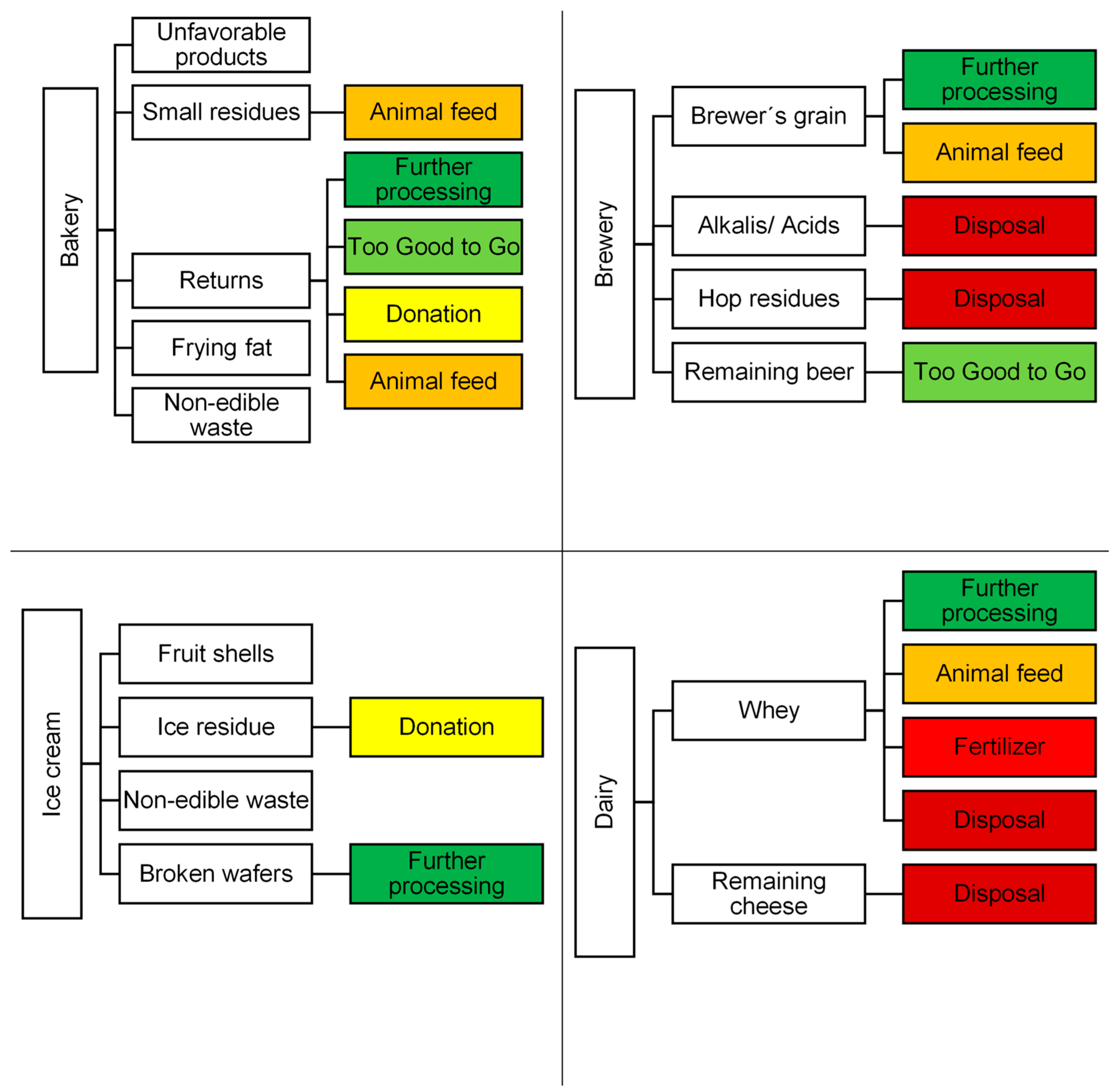
The food businesses were also asked what residual materials are generated during production and how these are used. This information will be used to highlight the potential of food upcycling for artisanal food businesses. Depending on their focus, the businesses produce the following types of residual materials:
As can be seen from Figure 1, a wide variety of residual materials are produced in the food businesses interviewed, with uses ranging from further processing to disposal. The use of food residues as animal feed is particularly noticeable. Both bakeries surveyed (n = 2) stated that they reuse small leftovers as chicken feed, as did both breweries (n = 2), which use spent grain as cattle feed. In the dairy companies (n = 2), whey is partly used as animal feed for chickens and pigs and partly as fertilizer.
A business that has a restaurant takes a pragmatic approach by removing unavailable dishes from the menu or combining recipes to use up all ingredients. The interviews also showed that donations are an established practice: two bakeries (n = 2) and two ice cream manufacturers (n = 2) regularly donate food, while one bakery (n = 1) and one brewery (n = 1) also use the “Too Good To Go” platform.
The use of stale bread and brewer’s grains as ingredients in new products indicates an existing awareness and approaches to minimizing food waste through food upcycling. However, the data also reveals untapped potential, such as in the case of failed baked goods and various production residues, which have not yet been recycled in a sufficiently sustainable manner. The partial disposal of whey (n = 1) also highlights further potential for utilizing this waste. These by-products could be innovatively recycled through new upcycling strategies to further reduce waste and lower the ecological footprint of businesses. In addition, non-edible waste such as strawberry stems (n = 2) or eggshells is also produced, which cannot be further utilized through food upcycling.
A dairy would like to increase the added value of whey in the future, having previously produced ricotta and grilled cheese on a trial basis. However, due to the low whey content and lack of industrial capacity, expansion is currently uneconomical. An interesting approach for the dairy would therefore be to create a regional network of artisanal food producers that could enable further processing of residues such as whey into whey crust bread or whey beer. The free collection of by-products such as whey by other businesses would also be more economical than disposal or spreading as fertilizer on fields. However, implementation would be difficult, as the creation of the necessary infrastructure would exceed the capacity of a single business.

4. Discussion

4.1. Part I: How Companies See Themselves

The results show that artisanal food production relies strongly on traditional methods and manual production. This type of production has a number of advantages, such as the manufacture of individual, high-quality products. At the same time, this awareness of tradition, combined with a strong sense of regional identity, means that customer wishes can be addressed directly and current trends such as regional food can be authentically fulfilled. The “Economy of proximity” with its strong emphasis on regionality not only supports more sustainable food production, but also the local economy. The small size of the businesses and the lack of standardization in production offer flexibility to respond quickly to changing customer needs and market conditions. This enables businesses to develop new products that are unique in the market.
The interviews reveal that craft-like enterprises, represented by ice cream manufacturers and dairies, share several core values with official craft enterprises such as bakeries and breweries. Both types of enterprises emphasize high product quality, regionality, and the importance of manual work, which underscores their commitment to an artisanal approach. Additionally, both types prioritize maintaining close customer relationships. However, craft-like enterprises justify higher product prices by focusing on the uniqueness and quality derived from their small-scale production methods, a factor not prominently mentioned by official craft enterprises.
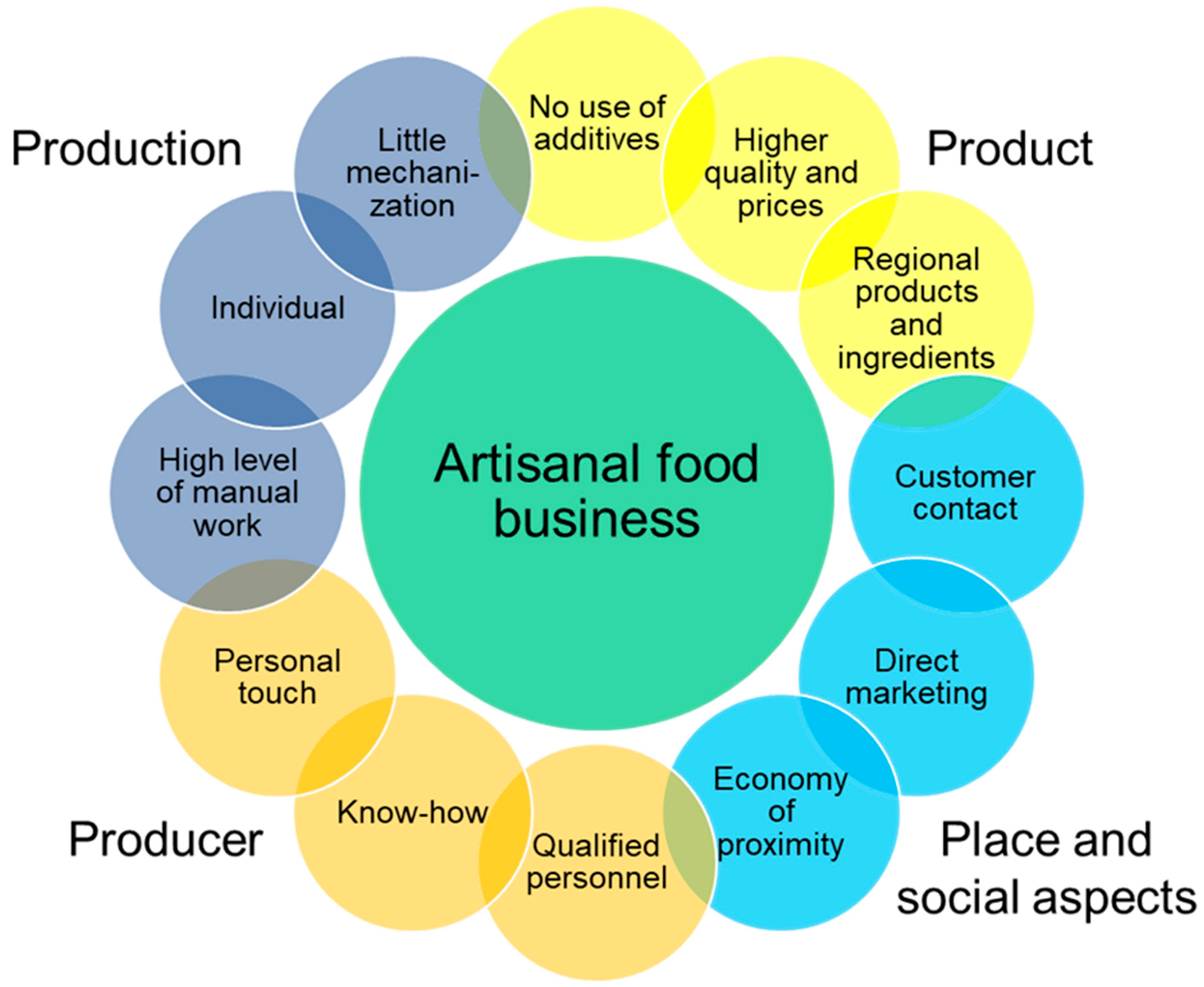
Overall, the interview partners see themself contrary to the food industry. This is evident in the results, where artisanal products are described as high-quality and unique, which should also lead to higher and more appropriate prices compared to the food industry. Production plays an important role here, which, in contrast to the industry, is characterized by low standardization and mechanization and instead features a high degree of manual labor and flexibility. Furthermore, personal customer proximity is characteristic of the food craft industry, leading to more trusting relationships. The combination of the various requirements from the categories of production, product, and producer leads to the following self-image of the food craft industry (Figure 2):
The characteristics highlighted in this study can also be found in the definitions used in the literature and in other countries: Maurice et al. [49], for example, have pointed out that industrial breads tend to contain more ingredients and additives and less saturated fatty acids than artisan and homemade breads. Guideline 29 of the Food Safety Authority of Ireland (FSAI) [50] stipulates that the terms “artisan” or “artisanal” should only be used for foods that meet certain criteria. These include production in limited quantities by qualified artisans and a manufacturing process that is not fully mechanized but follows a traditional method. In addition, production must take place in a micro-enterprise at a single location, and the characteristic ingredients should be locally grown or produced, where seasonally available and practical.
According to Lingham et al. [51], artisanal food is characterized by a combination of location, product, producer personality, and passion. This definition suggests that artisanal food is defined not only by artisanal techniques and local ingredients, but also by the producer’s emotional and cultural connection to their product. McKitterick et al. [52] further emphasize the duality of innovation and tradition in craftsmanship by pointing out that many artisanal foods can incorporate elements of radical innovation while maintaining traditional methods. This international perspective underscores that artisanal food is a dynamic concept that must be tailored to the cultural context and creative processes of each region.

4.2. Part II: Handling Residual Materials and Potential for Food Upcycling

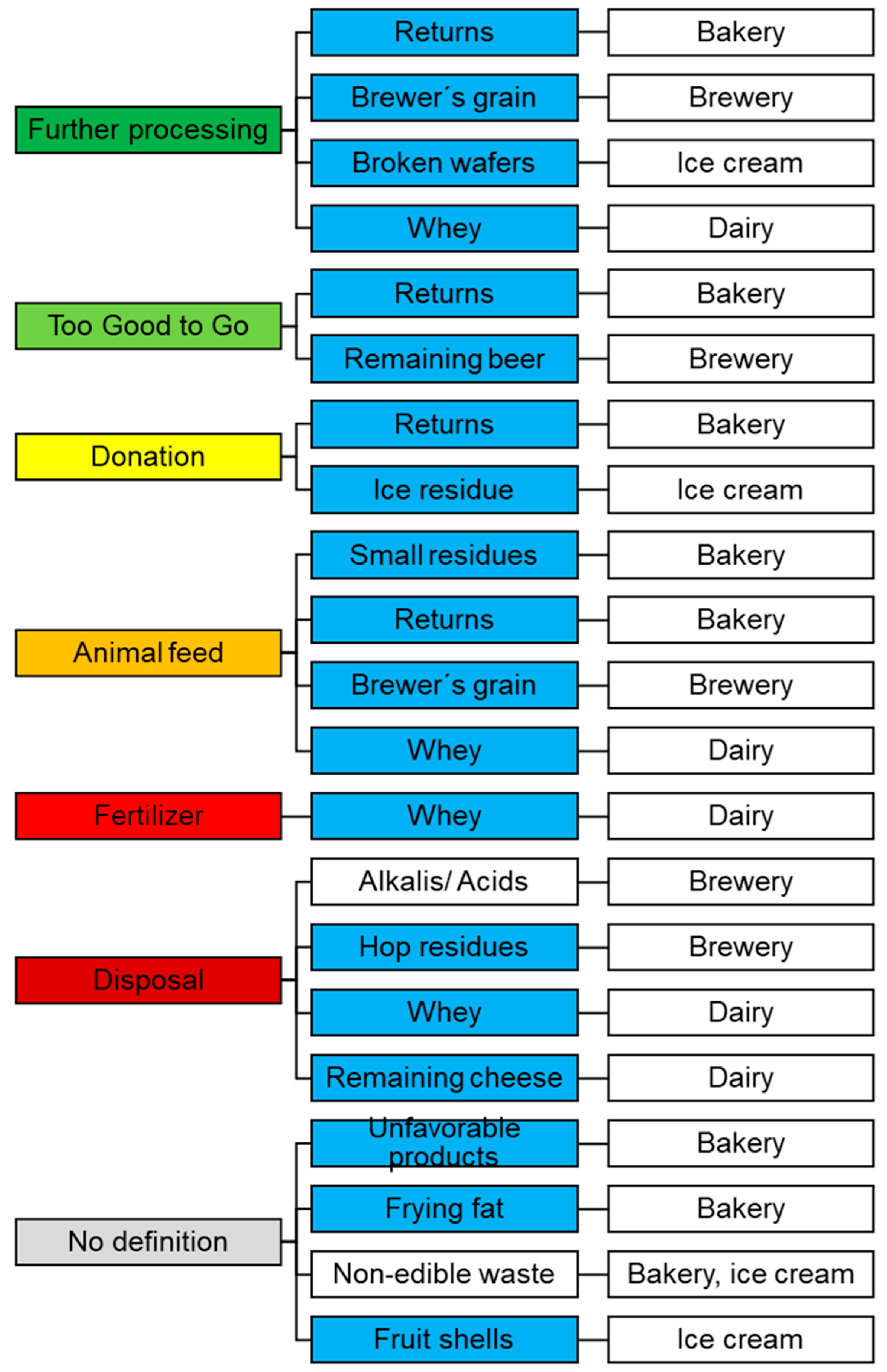
The results from Part II also show potential for the introduction of food upcycling in the food craft sector. Even though the majority of companies indicate that they generally produce little waste and that most of it is already reused, there are still residues that can be reused through food upcycling (marked in blue) (Figure 3).
The concept of food upcycling, as discussed by Aschemann-Witzel et al. [14], categorizes upcycling processes into two types: alternative use, which involves the use of avoidable food waste, and novel use, which pertains to the utilization of non-avoidable food waste. In the context of the studied craft and craft-like enterprises, both approaches to food upcycling can be observed. For instance, bakeries and breweries have reported using residuals, such as stale bread and spent grains, as ingredients in new products like recycled bread, aligning with the ‘alternative use’ category. This practice effectively transforms avoidable waste into valuable resources, reducing overall waste. In contrast, dairies have begun exploring ‘novel use’ opportunities by considering surplus whey as a potential ingredient for innovative products like whey-based bread or beverages. This approach exemplifies the novel use category, turning non-avoidable waste into marketable products and illustrating the potential for broader application of food upcycling strategies [38,54]. overall, however, the interviewees also point out that, in principle, little waste is produced and that they already utilize most of it. Dairies are the exception here, as they describe the high quantities of whey produced as a challenge in these businesses.
The study by Schulte et al. [38] also shows that residues such as apple peels are produced, the potential of which is often overlooked. Cheese dairies in particular see potential in food upcycling and in the formation of a regional network for the transfer of by-products and support for the artisanal food sector due to the large quantities of whey produced. The fact that only two of the eight interviewees were able to quantify the quantities of waste produced supports the assumption that potential often cannot be recorded and assessed.
When implementing food upcycling in artisanal food production, the effects of using the residual materials on sensory and quality properties must be considered. For example, Chetrariu and Dabija [55] have found that consumer acceptance of brewer spent grain content in foods comparable to commercially available products is 20%, while the optimum for sensory properties is 10–15%. With regard to the utilization of whey through fermentation using classic kefir, yogurt, and thick milk cultures, Scherbanjow et al. [56] have found that adding 30% sweet whey to the original milk achieves the best results in terms of consistency and taste.
Moreover, the economic implications must be taken into account. The use of by-products must be economically viable in order to be implemented in food craft businesses [38]. If, on the other hand, processing requires too many resources or is not economically viable, it will not be implemented in practice [54].

5. Limitations

The study provides initial exploratory insights into the potential of food upcycling in artisanal food businesses. Although the results are based on a limited sample size of eight interviews, they shed light on previously under-researched aspects of the interplay between artisanal food production and innovative sustainable practices. This research lays the foundation for further hypothesis-driven studies that could examine the quantitative impact of food upcycling strategies on economic and environmental outcomes in the artisanal food production sector.
Due to the exploratory nature of the study and the limited sample size, caution should be exercised when interpreting these results. Broad generalizations are inappropriate until further research with larger samples confirms these initial observations.

6. Conclusions

This paper has provided key insights into the self-image of the food craft industry by examining the four dimensions of production, producer, product, and place, and social aspects. This self-conception emphasizes the importance of traditional methods, manual production, and high product quality. Equally important is regionality, which is directly linked to the issues of sustainability and customer loyalty. The results also show that artisanal businesses can operate flexibly and respond innovatively to the market while maintaining a strong connection to their customers.
Another key finding concerns the handling and potential of residual materials in the company. While many businesses already deal effectively with residual materials, there is still potential for food upcycling to utilize further unused resources and promote economic efficiency.
The results of the study underscore the importance of artisanal food production as an innovative and sustainable alternative to industrial food production. Moreover, crises such as the COVID-19 pandemic or the war in Ukraine affect food security and, in addition to environmental awareness, changing consumer preferences, and support for the regional economy, make local production essential. In this context, artisanal food production can play a decisive role in increasing the stability of food supplies and thus food security [56].
Based on the interviews, businesses could benefit from a regional network to strengthen their economic viability and contribute to the local economy. The flexible business structure can also be used to develop new products that respond to consumer trends such as the growing demand for regional and environmentally friendly products.
The results show that there is great potential for the food craft industry, particularly in the utilization of residual materials through food upcycling. This not only enables businesses to further reduce their waste, but also to create new and innovative products, as can be seen in the food industry and in the literature [20,36,38,57].

7. Outlook

There are several areas that should be explored further in future studies: a systematic approach to quantitatively recording the amounts of residual materials in artisanal businesses could provide better insights into their potential for food upcycling and support the development of appropriate strategies. Further studies could also explore how regional networks can be effectively established and utilized to enable better utilization of by-products and promote regional economies and cooperation. It would also be useful to analyze in more detail the economic benefits of implementing food upcycling strategies in order to develop models for their economic viability and to understand the extent to which unprocessed food waste contributes to price adjustments during production.
To strengthen the generalizability of findings, future research could include larger and more diverse samples, potentially focusing on businesses producing similar types of products to facilitate direct comparisons. Furthermore, investigating the share of recycled waste in companies with differing income levels could provide insights into how economic status influences waste management practices.
Overall, the results suggest that the food craft sector has great potential to make a positive contribution to the future of food production through a combination of traditional craftsmanship, innovative approaches, and sustainable practices.

8. Ethics Declaration

The interviews conducted for this study involved business-related data rather than personal data. Therefore, formal ethical approval was deemed not applicable by the research team. All participants provided written informed consent, acknowledging that insights from the discussions would be used in published articles. The study was conducted in alignment with ethical research practices and the guidelines of the Declaration of Helsinki regarding informed consent for publication.

Supplementary Materials

The following supporting information can be downloaded at: https://www.mdpi.com/article/10.3390/su18052656/s1, Figure S1: PRISMA flow diagram of the literature research regarding artisanal food production.

Author Contributions

Conceptualization, H.S., J.T.S., S.M., U.S. and S.B.; methodology, H.S., J.R., J.T.S., S.M., U.S. and S.B.; validation, H.S., J.T.S., S.M., U.S. and S.B.; formal analysis, H.S., J.T.S., S.M., U.S. and S.B.; investigation, H.S., J.R., J.T.S., S.M., U.S. and S.B.; resources, H.S., J.T.S., S.M., U.S. and S.B.; data curation, H.S., J.R., J.T.S., S.M., U.S. and S.B.; writing—original draft preparation, H.S., J.T.S., S.M., U.S. and S.B.; writing—review and editing, H.S., J.T.S., S.M., U.S. and S.B.; visualization, H.S., J.T.S., S.M., U.S. and S.B.; supervision, H.S., J.T.S., S.M., U.S. and S.B.; project ad-ministration, S.B.; funding acquisition, S.B. All authors have read and agreed to the published version of the manuscript.

Funding

This research was funded by the Female Professorship Program of Osnabrück University of Applied Sciences grant number 22-76251-99P-1/21.

Institutional Review Board Statement

This study is waived for ethical review as the interviews conducted for this study involved business-related data rather than personal data by Institution Committee.

Informed Consent Statement

Informed consent was obtained from all subjects involved in the study.

Data Availability Statement

The original contributions presented in this study are included in the article/Supplementary Material. Further inquiries can be directed to the corresponding authors.

Acknowledgments

We would like to thank Jevana Röhl for providing and collecting the data that was fundamental to this work. She agreed to the publication of her data but was not involved in the final editing.

Conflicts of Interest

The authors declare no conflict of interest.

References

  1. BMLEH Lebensmittelabfälle in Deutschland: Aktuelle Zahlen zur Höhe der Lebensmittelabfälle Nach Sektoren. Available online: https://www.bmel.de/DE/themen/ernaehrung/lebensmittelverschwendung/studie-lebensmittelabfaelle-deutschland.html (accessed on 15 May 2025).
  2. Destatis Lebensmittelabfälle in Deutschland. Available online: https://www.destatis.de/DE/Themen/Gesellschaft-Umwelt/Umwelt/Abfallwirtschaft/Tabellen/lebensmittelabfaelle.html#fussnote-1-615778 (accessed on 15 October 2025).
  3. Schmidt, T.; Baumgardt, S.; Blumenthal, A.; Burdick, B.; Claupein, E.; Dirksmeyer, W.; Hafner, G.; Klockgether, K.; Koch, F.; Leverenz, D.; et al. Wege zur Reduzierung von Lebensmittelabfällen-Pathways to Reduce Food Waste (REFOWAS): Maßnahmen, Bewertungsrahmen Und Analysewerkzeuge Sowie Zukunftsfähige Ansätze Einen Nachhalti Gen Umgang Mit Lebensmitteln Unter Einbindung-Ökologischer Innovationen; Thünen-Institut für Ländliche Räume: Braunschweig, Germany, 2019. [Google Scholar]
  4. Kranert, M.; Hafner, G.; Barabosz, J.; Schneider, F.; Scherhaufer, S.; Schuller, H.; Leverenz, D. Ermittlung der Weggeworfenen Lebensmittelmengen und Vorschläge zur Verminderung der Wegwerfrate bei Lebensmitteln in Deutschland; Universität Stuttgart Institut für Siedlungswasserbau: Stuttgart, Germany, 2012. [Google Scholar]
  5. Eurostat Food Waste and Food Waste Prevention by NACE Rev. 2 Activity-Tonnes of Fresh Mass. Available online: https://ec.europa.eu/eurostat/databrowser/view/env_wasfw/default/table?lang=en (accessed on 15 October 2025).
  6. FAO; IFAD; UNICEF; WFP; WHO. The State of Food Security and Nutrition in the World 2025–Addressing High Food Price Inflation for Food Security and Nutrition; FAO; IFAD; UNICEF; WFP; WHO: Rome, Italy, 2025. [Google Scholar]
  7. Chen, C.; Chaudhary, A.; Mathys, A. Nutritional and Environmental Losses Embedded in Global Food Waste. Resour. Conserv. Recycl. 2020, 160, 104912. [Google Scholar] [CrossRef]
  8. FAO. The State of Food and Agriculture 2019: Moving Forward on Food Loss and Waste Reduction; FAO: Rome, Italy, 2019. [Google Scholar]
  9. Caldeira, C.; De Laurentiis, V.; Corrado, S.; van Holsteijn, F.; Sala, S. Quantification of Food Waste per Product Group along the Food Supply Chain in the European Union: A Mass Flow Analysis. Resour. Conserv. Recycl. 2019, 149, 479–488. [Google Scholar] [CrossRef] [PubMed]
  10. BMU. Nationales Programm Für Nachhaltigen Konsum. Gesellschaftlicher Wandel Durch Einen Nachhaltigen Lebensstil; BMU: Berlin, Germany, 2019. [Google Scholar]
  11. Vadicherla, T.; Saravanan, D. Textiles and Apparel Development Using Recycled and Reclaimed Fibers. In Roadmap to Sustainable Textiles and Clothing; Springer Science + Business Media: Singapore, 2014. [Google Scholar]
  12. Upcycled Food Association Growing the Upcycled Food Economy. Available online: https://www.upcycledfood.org/ (accessed on 12 August 2025).
  13. Kay, T. Reiner Pilz: Thinking About a Green Future. Salvo Monthly, 11 October 1994; pp. 11–15. Available online: https://www.salvoweb.com/files/sn99sm24y94tk181119.pdf (accessed on 12 August 2025).
  14. Aschemann-Witzel, J.; Asioli, D.; Banovic, M.; Perito, M.A.; Peschel, A.O.; Stancu, V. Defining Upcycled Food: The Dual Role of Upcycling in Reducing Food Loss and Waste. Trends Food Sci. Technol. 2023, 132, 132–137. [Google Scholar] [CrossRef]
  15. Renewal Mill Renewal Mill. Available online: https://www.renewalmill.com/pages/upcycled-ingredients (accessed on 15 October 2025).
  16. Wheycation Wheycation. Available online: https://wheycation.ch/?srsltid=AfmBOoomiL1yVGWgtowC3rxXmdsF958x9IjlFMXf40aHMC5eP3dTDmUU (accessed on 28 October 2025).
  17. Rettergut Rettergut. Available online: https://www.rettergut.de/ (accessed on 28 October 2025).
  18. US. Foods Hilltop Hearth. Available online: https://www.usfoods.com/products-we-offer/exclusive-brands/hilltop-hearth.html (accessed on 28 October 2025).
  19. The Planting Hope Company Inc. Hope and Sesame. Available online: https://www.plantinghopecompany.com/products/hope-and-sesame/ (accessed on 28 October 2025).
  20. Holiroots Holiroots. Available online: https://holiroots.com/ (accessed on 28 October 2025).
  21. ImPASTA! Inc. Available online: https://impastainc.com/ (accessed on 28 October 2025).
  22. Spudsy Spudsy. Available online: https://www.spudsy.com/?srsltid=AfmBOopGjBIUXw4zaOy3KFLFQMNRWr7KAPfgimUv-Qk6fYS8N8ZtXzsA (accessed on 28 October 2025).
  23. Kellers, L. Upcycling–Wenn Aus Brot Bier Wird; Food Hub NRW: Düsseldorf, Germany, 2022. [Google Scholar]
  24. Barnana Barnana. Available online: https://barnana.com/?srsltid=AfmBOopRFXc380LqYPYwoLbx5U72h9ZTrWl4W8rZNeVoAEHyw26TOR3c (accessed on 28 October 2025).
  25. Agrarmarketing Tirol. Food Trend #5-Upcycling; Agrarmarketing Tirol: Innsbruck, Austria, 2023. [Google Scholar]
  26. Chia Smash Chia Smash. Available online: https://eatsmashfoods.com/ (accessed on 15 October 2025).
  27. Matriark Matriark. Available online: https://matriarkfoods.com/?srsltid=AfmBOoqC-l3hidrDmz1S-jnQP2wDv7k1PG3vSx3WHaxUNgZ5H3Zv-rCW (accessed on 28 October 2025).
  28. Fahmy, H.A.; Farag, M.A. Ongoing and Potential Novel Trends of Pomegranate Fruit Peel; a Comprehensive Review of Its Health Benefits and Future Perspectives as Nutraceutical. J. Food Biochem. 2022, 46, e14024. [Google Scholar] [CrossRef] [PubMed]
  29. Ben-Othman, S.; Jõudu, I.; Bhat, R. Bioactives from Agri-Food Wastes: Present Insights and Future Challenges. Molecules 2020, 25, 510. [Google Scholar] [CrossRef] [PubMed]
  30. Sileoni, V.; Alfeo, V.; Bravi, E.; Belardi, I.; Marconi, O. Upcycling of a By-Product of the Brewing Production Chain as an Ingredient in the Formulation of Functional Shortbreads. J. Funct. Foods 2022, 98, 105292. [Google Scholar] [CrossRef]
  31. Szkolnicka, K.; Dmytrów, I.; Mituniewicz-Małek, A. The Characteristics of Quark Cheese Made from Buttermilk during Refrigerated Storage. Foods 2021, 10, 1783. [Google Scholar] [CrossRef] [PubMed]
  32. Business Wire Whole Foods Market Forecasts Top 10 Food Trends for 2021. Available online: https://www.businesswire.com/news/home/20201019005038/en/Whole-Foods-Market-Forecasts-Top-10-Food-Trends-for-2021 (accessed on 15 October 2025).
  33. Business Wire Whole Foods Market Forecasts Top 10 Food Trends for 2023. Available online: https://www.businesswire.com/news/home/20221019005164/en/Whole-Foods-Market-Forecasts-Top-10-Food-Trends-for-2023 (accessed on 15 October 2025).
  34. Business Wire Global Upcycled Food Market Poised for Robust Growth, Forecasted to Reach USD 74.8 Billion by 2029-ResearchAndMarkets.Com. Available online: https://www.businesswire.com/news/home/20250102218497/en/Global-Upcycled-Food-Market-Poised-for-Robust-Growth-Forecasted-to-Reach-USD-74.8-Billion-by-2029---ResearchAndMarkets.com (accessed on 11 December 2025).
  35. Business Wire Whole Foods Market Forecasts the Top Food and Beverage Trends for 2026. Available online: https://www.businesswire.com/news/home/20251008117621/en/Whole-Foods-Market-Forecasts-the-Top-Food-and-Beverage-Trends-for-2026 (accessed on 11 December 2025).
  36. Ritter Sport CacaoVida–Wie Kakaofruchtig Ist Das Denn? Available online: https://blog.ritter-sport.de/2021/07/29/cacaovida/ (accessed on 15 October 2025).
  37. Uglies Snacks Uglies. Available online: https://www.ugliessnacks.com/ (accessed on 28 October 2025).
  38. Schulte, H.; Hartfiel, C.; Maas, J.; Scherbanjow, J.; Mühlbrodt, S.; Schleyerbach, U.; Bornkessel, S. Food Upcycling beyond the Big Players: The Potential of Food Upcycling in Artisanal Food Production Based on New Product Developments. Br. Food J. 2025, 123, 136–151. [Google Scholar] [CrossRef]
  39. Rivaroli, S.; Lindenmeier, J.; Hingley, M.; Spadoni, R. Social Representations of Craft Food Products in Three European Countries. Food Qual. Prefer. 2021, 93, 104253. [Google Scholar] [CrossRef]
  40. Hofreiter, A.; Müller, C.; Tressel, M. Gutes Handwerk Für Frische Lebensmittel Aus Der Region. Mit Einem Starken Regionalen Lebensmittelhandwerk Gutes Essen, Sinnstiftende Arbeitsplätze Und Lokale Lebenswelten Sichern. Autorenpapier Für Bundestagsfraktion Bündnis 90/Die Grünen. Available online: https://markus-tressel.de/wp-content/uploads/2020/01/191203_autorenpapier_lebensmittelhandwerk_fin.pdf (accessed on 19 March 2023).
  41. Haverkamp, K. Das Handwerk–Zur Definitorischen Und Statistischen Abgrenzung Eines Querschnittsbereichs. ZfKE–Z. KMU Entrep. 2019, 67, 67–79. [Google Scholar] [CrossRef]
  42. BMLEH. Ernährungsgewerbe: Struktur Und Wirtschaftliche Bedeutung; BMLEH: Bonn, Germany, 2022. [Google Scholar]
  43. Rudder, A.; Ainsworth, P.; Holgate, D. New Food Product Development: Strategies for Success? Br. Food J. 2001, 103, 657–671. [Google Scholar] [CrossRef]
  44. Thorsen, M.; Skeaff, S.; Goodman-Smith, F.; Thong, B.; Bremer, P.; Mirosa, M. Upcycled Foods: A Nudge toward Nutrition. Front. Nutr. 2022, 9, 1071829. [Google Scholar] [CrossRef] [PubMed]
  45. Difonzo, G.; Grassi, S.; Paciulli, M. Upcycling of Agro-Food Chain By-Products to Obtain High-Value-Added Foods. Foods 2022, 11, 2043. [Google Scholar] [CrossRef] [PubMed]
  46. Scherbanjow, J.; Schleyerbach, U.; Bornkessel, S. Whey-Based Fermented Milk Products as an Alternative to Whey Processing in Artisanal Cheese Dairies. In Proceedings of the 38th EFFoST International Conference, Bruges, Belgium, 12–14 November 2024. [Google Scholar]
  47. Dresing, T.; Pehl, T. Praxisbuch Interview, Transkription & Analyse-Anleitungen Und Regelsysteme Für Qualitativ Forschende [Practice Book Interview, Transkription & Analysis-Instructions and Rule Systems for Qualitative Researchers]. Available online: www.audiotranskription.de/praxisbuch (accessed on 24 November 2025).
  48. Mayring, P.; Fenzl, T. Qualitative Inhaltsanalyse. In Handbuch Methoden der Empirischen Sozialforschung; Springer Fachmedien Wiesbaden: Wiesbaden, Germany, 2019; pp. 633–648. [Google Scholar]
  49. Maurice, B.; Saint-Eve, A.; Pernin, A.; Leroy, P.; Souchon, I. How Different Are Industrial, Artisanal and Homemade Soft Breads? Foods 2022, 11, 1484. [Google Scholar] [CrossRef] [PubMed]
  50. FSAI. Guidance Note No. 29-The Use of Food Marketing Terms; FSAI: Dublin, Ireland, 2015. [Google Scholar]
  51. Lingham, S.; Hill, I.; Manning, L. Artisan Food Production: What Makes Food ‘Artisan’? In Contributions to Management Science; Springer: Cham, Switzerland, 2022. [Google Scholar]
  52. McKitterick, L.; Quinn, B.; McAdam, R.; Dunn, A. Innovation Networks and the Institutional Actor-Producer Relationship in Rural Areas: The Context of Artisan Food Production. J. Rural Stud. 2016, 48, 41–52. [Google Scholar] [CrossRef]
  53. FAO. Toolkit-Reducing the Food Wastage Foodprint; FAO: Rome, Italy, 2013. [Google Scholar]
  54. Yadav, J.S.S.; Yan, S.; Pilli, S.; Kumar, L.; Tyagi, R.D.; Surampalli, R.Y. Cheese Whey: A Potential Resource to Transform into Bioprotein, Functional/Nutritional Proteins and Bioactive Peptides. Biotechnol. Adv. 2015, 33, 756–774. [Google Scholar] [CrossRef] [PubMed]
  55. Chetrariu, A.; Dabija, A. Spent Grain: A Functional Ingredient for Food Applications. Foods 2023, 12, 1533. [Google Scholar] [CrossRef] [PubMed]
  56. Tarasuik, H.; Horshkova, L. Implementing Craft and Local Products in the Hospitality Industry in a Time of Global Challenges. Mark. Infrastructure 2025, 83, 310–314. [Google Scholar] [CrossRef]
  57. Renewal Mill Renewal Mill. Available online: https://www.renewalmill.com/?srsltid=AfmBOorinZXI61qEzfD9W2hrO1mTAtnsx42h2QImgbLPHPP8-6vv4HOh (accessed on 28 October 2025).
Figure 1. Residual materials generated and their use, categorized by the food craft sector. Green: favorable to red: unfavorable.
Sustainability 18 02656 g001
Figure 2. Self-image of the food craft industry.
Sustainability 18 02656 g002
Figure 3. Use of residual materials, left column sorted according to the food waste pyramid [53]. Green: favorable to red: unfavorable.
Sustainability 18 02656 g003
Table 1. Examples of upcycled food products on the Western market (from industry to home scale). Data from: [15,16,17,18,19,20,21,22,23,24,25].
Avoidable Waste MaterialsNon-Avoidable Waste Materials
Industry/Start-up productsIndustry/Start-up products
imPASTA! Inc.
Noodles from rejected squash
Renewal Mill
Baking mixes, flour and cookies from pulp of plant milk production
Holiroots
Cracker from discarded vegetables
Hope and Sesame
Vegan sesame milk from pressed sesame seeds
Spudsy
Fries and Puffs from discarded sweet potatoes
US. Food—Hilltop Hearth
Burger buns from different brewers’ spent grains
Barnana
Banana snacks from ripe bananas
Wheycation
Whey protein powders for shakes
Rettergut
Products from discarded food (fruits, vegetables, chocolate)
Akoua Juice
Juice from cashew apples
Products produced in a smaller scale (home or artisanal food production)Products produced in a smaller scale (home or artisanal food production)
Bread chips made from unsold breadSmoothies made from unused parts of vegetables and fruit (shells, leaves, stalks)
“Der Rebell”
Beer from unused bread
Broccoli stalk soup made from broccoli stalks
Brownies made from coffee grounds
Brewbee
Pizzas, chips, plant-based products, muesli, cornflakes, and birattone from brewery residues
Table 2. Description of the food craft companies interviewed.
Business Sector Number of EmployeesNumber of LocationsNumber of Products
Food craftBakery 114014120
Bakery 230130
Brewery 12113
Brewery 2217
Craft-like enterpriseIce cream manufacturer 116110
Ice cream manufacturer 21806100
Dairy 13130
Dairy 26130
Table 3. Associations with artisan foods: category production.
CategoryDefinition
Small-scale productionSmall company size, high flexibility
Production methodLittle standardization, different production methods compared to the industry
HandmadeHigh degree of craftsmanship, high proportion of manual work, semi-automatic production
Traditional methodTraditional production
Table 4. Associations with artisan foods: category producer.
CategoryDefinition
ControlControl over the machines
CreativityBusiness and products with the craftsman’s individual signature, reflecting the personality of the producer, innovative
Knowledge/skillQualified personnel, comprehensive knowledge of the entire production process, passion for the products
Table 5. Associations with artisan foods: category product.
CategoryDefinition
QualityHigh-quality, regional products
Product specialityProduction of unique products, individuality
IngredientsRegional ingredients, high-quality ingredients, no unnecessary additives, high tolerance in the specification of raw materials
PriceHigher, reasonable prices
Table 6. Associations with artisan foods: category place and social aspects.
CategoryDefinition
NetworksAnchored in the local community and society
Support of the Region and CommunitySupport for regional agriculture
Customer contact/direct marketingMinimal marketing, proximity to customers, and direct marketing
Regional production/referenceRegionality, sustainable business practices
Regional saleHonest communication with customers, responsiveness to customer requests
Disclaimer/Publisher’s Note: The statements, opinions and data contained in all publications are solely those of the individual author(s) and contributor(s) and not of MDPI and/or the editor(s). MDPI and/or the editor(s) disclaim responsibility for any injury to people or property resulting from any ideas, methods, instructions or products referred to in the content.