


Abstract
This study establishes an evaluation index system for the Green Transition Level of resource-based cities in Shanxi Province from four aspects: economy, society, resources, and ecology. It describes the temporal and spatial variations in the Green Transition Level of these cities, reveals the disparities among them, and analyzes the differences and underlying reasons in the changes in the Green Transition Level across different types of resource-based cities based on a reclassification. The research results indicate that economic development is the most significant factor affecting the Green Transition Level of resource-based cities. During the period of 2015–2023, the Green Transition Level of most resource-based cities in Shanxi Province experienced substantial growth, with northern resource-based cities demonstrating faster green development. Furthermore, the overall Green Transition Level of developing, potential, and declining resource-based cities all improved to varying degrees during this period, whereas the Green Transition Level of shrinking resource-based cities showed no improvement.
1. Introduction
Economic growth and urban expansion in resource-based cities are primarily driven by the extraction and processing of natural resources. These cities are key components of the global industrialization and energy security systems. As the world’s largest energy producer and consumer, China has 262 resource-based cities, accounting for over one-third of the total number of cities in the country. They have played a historic role in ensuring national energy security and supporting the industrialization process. However, long-term reliance on an extensive development model characterized by “high extraction, low utilization, and high emissions” has led these cities into multiple dilemmas, including structural decline, ecological environment degradation, and weak social security [1]. Shanxi Province, a typical coal resource-based region in China, produced 29.1% of the nation’s total coal output in 2023, with 10 of its 11 prefecture-level cities classified as resource-based cities. This highly coal-dependent economic structure, while generating enormous wealth, has resulted in Shanxi’s energy consumption per unit of GDP being 2.3 times the national average and its carbon emission intensity ranking among the highest nationally. Under the constraints of the “dual-carbon” goals, resource-based cities in Shanxi face unprecedented pressure and opportunities for green transformation. Scientifically measuring their transformation efficiency, identifying key influencing factors, and achieving sustainable development hold significant theoretical value and practical importance.
The current domestic and international research on resource-based cities mainly focuses on various aspects such as definition and connotation [2,3], transition mechanisms and pathways [4,5], ecological environment evaluation [6,7], and sustainable development [8,9]. Existing studies on the transformation of resource-based cities have expanded into several foundational areas, including ecological environment assessment, urban shrinkage, policy effects, and sustainable development measurement. Specific research includes exploring the synergistic effects between the land surface temperature and carbon emissions [10], constructing new frameworks for the urban quality assessment [11] analyzing challenges and policy responses to urban shrinkage [12], and evaluating the effectiveness of transformation policies [13] and the evolution of economic transition policies [14]. In terms of measurement methods, research has focused on designing multi-dimensional dynamic sustainable development indicator systems [8] and analyzing the spatial characteristics of energy efficiency using models like Super-SBM [15]. Additionally, some studies have concentrated on identification criteria for resource-based cities and spatial strategies for their ecological transformation [16].
However, in terms of concretizing and deepening the research subject, existing studies still show an insufficient systematic empirical investigation into coal-dependent regions, particularly typical provinces like Shanxi where coal is the dominant industry. Although Shanxi is widely recognized as a “microcosm” of China’s resource-based economy and a national pilot zone for a comprehensive energy revolution, bearing the demonstrative mission of exploring transformation pathways for similar regions, academic research has mostly placed it within nationwide samples for macro-comparisons or focused on the transition experiences of resource-based cities in eastern coastal areas (such as Fuxin and Daqing). There is a lack of in-depth, continuous panel-data research specifically addressing the Green Transition Level processes, internal disparities, and driving factors of resource-based urban agglomerations within Shanxi Province. This imbalance in the regional research focus results in insufficient theoretical support for precise policy design targeting coal-resource-based regions—where carbon-lock-in effects are most pronounced and the need for transformation is most urgent.
In specialized research on the Green Transition Level, academic focus centers on performance measurement and driving mechanisms. Performance measurement studies primarily involve constructing comprehensive indicators or multi-dimensional frameworks [17,18,19] for evaluation. Driving mechanisms are examined from multiple perspectives, including technological innovation and introduction [14], environmental regulation [20,21], industrial and financial synergy [22], regional coordinated development strategies [23], digital transformation [24], and industrial planning [25], while also exploring the sources of transition momentum [26] and pathways for sustainable development [27]. Research has also revealed spatial heterogeneity in the Green Transition Level [28] and explored pathways for improving enterprises’ green total factor productivity [29]. It is noteworthy that the Green Transition Level process exhibits distinct spatial attributes, with its efficiency often profoundly influenced by the urban spatial structure, land-use evolution, and regional linkage effects [30]. Furthermore, scholars have noted that the evolution of spatial morphology in mining cities directly impacts their resource utilization efficiency and ecological functions [31]. The interplay between urban spatial expansion patterns, the layout of industrial and mining land, and ecological spaces constitutes a key dimension for understanding their transition resilience [32]. These studies indicate that integrating spatial evolution characteristics into the analytical framework of transition efficiency is crucial; yet, most existing literature on measuring the Green Transition Level performance has not adequately incorporated this perspective. Simultaneously, comparative research also notes that different types of mining cities—such as oil–gas cities versus coal-based cities, and mature versus declining types—exhibit variations in their transition pathways and spatial response patterns due to differences in their resource endowment, industrial structure, and geographical location. Introducing diverse case comparisons can contribute to a more comprehensive understanding of the complexity and context-dependence of resource-based urban transitions. From a global perspective, studies also cover the environmental resilience of energy transitions [33], challenges in enterprise transformation [34], industry sustainability models [35], and an analysis of the macro-driving factors of the energy Green Transition Level [36].
As a subclass of resource-based cities characterized by the highest carbon emission intensity and the deepest path dependence, the study of the Green Transition Level in coal-resource-based cities carries particular importance and urgency. The existing research indicates that such cities face common challenges, including a pronounced “resource curse” effect, rigid industrial structures, and substantial historical ecological restoration deficits. Regarding the efficiency measurement, some scholars have applied methods such as the SBM-DEA model and the global Malmquist–Luenberger (ML) index, confirming that the green total factor productivity of these cities is generally lower than that of non-resource-based cities, with a significant regional heterogeneity observed.
Although research on the Green Transition Level of resource-based cities has yielded fruitful results in the past, the existing literature still suffers from three main shortcomings. First, regarding the construction of evaluation systems, most current studies focus on the single-dimensional efficiency measurement, overlooking the integrity of the Green Transition Level as a synergistic evolutionary process within an economic–social–resource–ecological multi-dimensional system. Second, in terms of the regional focus, academia has paid insufficient attention to coal-dependent regions. Third, in terms of research content, most existing studies tend to treat the measurement of transition levels and the diagnosis of influencing factors as relatively separate, lacking empirical research that precisely measures the transition performance and simultaneously identifies its key drivers within the same analytical framework. Fourth, as mentioned earlier, systematic research on the spatiotemporal differentiation patterns, spatial correlation characteristics, and underlying mechanisms influencing the Green Transition Level of cities within a highly representative coal-resource-based province like Shanxi remains notably scarce.
In light of this, this paper focuses on 10 resource-based cities in Shanxi Province, aiming to contribute marginally in the following aspects: (1) in terms of the study area, it conducts an in-depth analysis of Green Transition Level practices in Shanxi—a core coal-producing region of China—to address the lack of systematic empirical research on high-carbon lock-in areas; (2) in terms of the evaluation framework, it constructs a comprehensive indicator system encompassing four dimensions: economic vitality, social well-being, resource decoupling, and ecological improvement, and innovatively employs a coupled AHP-entropy weight method for weighting, in order to enhance the scientific rigor and robustness of the measurement; and, (3) in terms of the research perspective, it measures the spatiotemporal evolution characteristics of transition levels and identifies the key factors influencing the Green Transition Level of resource-based cities. The study seeks to contribute the Chinese experience to the global carbon-neutrality transition for fossil-fuel-dependent economies.
The subsequent content of this paper is arranged as follows: Section 2 covers the data sources and research methods, systematically elaborating on the overview of the study area, the logic of the indicator system construction, and the selection and setting strategy of the AHP-Entropy Weight Method coupling weighting technique. Section 3 presents the spatiotemporal evolution characteristics of the Green Transition Level, including comprehensive score rankings, dynamic trend analysis, and spatial clustering analysis. Section 4 proposes differentiated policy recommendations based on the empirical findings and points out the research limitations and future prospects.
2. Materials and Methods
2.1. Study Area
Shanxi Province is located in central China, in the middle reaches of the Yellow River Basin. It is a nationally important energy base and heavy industry base, holding an irreplaceable strategic position in the national production layout. As China’s leading coal province, its annual output has long ranked among the top three nationally, with cumulative production exceeding one-quarter of the national total. The study area includes 10 cities designated as resource-based cities in the National Sustainable Development Plan for Resource-Based Cities: Datong, Yangquan, Changzhi, Jincheng, Shuozhou, Jinzhong, Yuncheng, Xinzhou, Linfen, and Lüliang. This region forms the largest cluster of resource-based cities in China. It possesses abundant mineral resources centered on coal, with 120 types of proven minerals, among which reserves of coal, coalbed methane, bauxite, and refractory clay rank among the highest nationally. However, the long-term, high-intensity resource exploitation has led Shanxi to face severe development challenges: the energy consumption per unit of GDP is 2.3 times the national average, and the coal and related industries account for up to 38.5% of the industrial structure, indicating a significantly insufficient economic resilience. To address these challenges, the Chinese government designated Shanxi as the nation’s first pilot province for comprehensive energy revolution reform in 2019, promoting systemic reforms in clean and efficient coal utilization, the cultivation of strategic emerging industries, and ecological restoration compensation [37]. Overall, Shanxi Province serves as a typical case for studying the Green Transition Level of resource-based cities, and the success or failure of its transition directly impacts national energy security and the achievement of the “dual-carbon” goals. Focusing on these cities, this paper constructs an evaluation indicator system for the Green Transition Level, and quantitatively measures and analyzes the dynamic evolution of their transition levels and influencing factors during the period of 2015–2023, providing empirical support for the green transformation of resource-based cities.
2.2. Indicator System Construction
The United Nations Sustainable Development Goals (SDGs) set future development targets from economic, resource, environmental, and other aspects, whose connotations provide important guidance for constructing the Green Transition Level indicator system in this paper. Drawing on existing academic achievements and considering the actual situation of Shanxi Province, and following principles of comprehensiveness, representativeness, and data availability [38], an evaluation indicator system for the Green Transition Level of resource-based cities is constructed from three levels, target level, criterion level, and indicator level [39,40], with economic structure, social development, resources and energy, and ecological environment as the target level [41].
Adhering to the principles of scientificity, hierarchy, operability, and comprehensiveness in indicator selection, and referencing the Global Assessment Report on Biodiversity and Ecosystem Services [42], the 2030 Agenda for Sustainable Development [43], National Ecological Civilization Construction Demonstration Zone Construction Indicators (Revised Edition) [44] Green Development Indicator System [45], Ecological Civilization Construction Assessment Target System [46], and related research findings, this paper constructs an indicator system for measuring the Green Transition Level of resource-based cities using four dimensions—economy, society, resources, and ecology—as the criterion layer, as detailed in Table 1. In the dimension of social well-being, we introduce the “house price-to-income ratio” as a negative indicator. The theoretical rationale is that housing affordability constitutes a core social cost affecting human capital mobility, industrial capital allocation, and social stability. Moderate housing pressure helps cities attract and retain the specialized talent required for Green Transition Level, prevents excessive economic resources from being locked into real-estate dependence, and ensures that residents have sufficient financial capacity to support green consumption and long-term life planning, thereby laying a solid social foundation for the synergistic transformation of economy, resources, and ecology.
Table 1.
Assessment indicators for the Green Transition Level of resource-based cities.
2.3. Data Sources
The study period spans nine years. Most of the raw data for the indicator layer come from official statistics, provincial and municipal statistical yearbooks (2015–2023) [47,48], and municipal environmental status bulletins (2015–2023) [49]. Non-general data such as profits of industrial enterprises above designated size per 10,000 persons, proportion of education expenditure to fiscal expenditure, and number of hospital beds per 1000 persons were obtained through calculation. Economic data including GDP per capita, total retail sales of consumer goods, proportion of tertiary industry added value to regional GDP, GDP per capita, and number of patents granted were sourced from the CNKI statistical database and provincial/municipal statistical yearbooks. Environmental indicators such as annual days with good air quality and per-capita park green area came from municipal environmental status bulletins. A few missing data points, including the comprehensive utilization rate of industrial solid waste and energy consumption per 10,000 yuan of GDP, were filled using the values from adjacent years and the mean value method.
2.4. Method for Determining Indicator Weights (Entropy Weight Method, AHP)
The determination of indicator weights generally includes subjective weighting methods and objective weighting methods. Subjective weighting involves evaluators assigning weights based on their own knowledge and understanding of the research subject, making it difficult to eliminate the influence of subjective factors [50]. In objective weighting methods, weights are derived directly from data processing, which may fail to reflect the perceived importance or acceptance of the indicators [51]. To overcome the respective limitations of subjective and objective weighting approaches, this paper adopts a combined weighting form that integrates the Analytic Hierarchy Process (AHP) and the entropy weight method. Specifically, weights are first calculated separately using the two methods, and then the average of the two sets of weights is taken as the final weight, thereby enhancing the scientific rigor and accuracy of the results.
2.4.1. Objective Weight Determination Method
The coefficient of variation method and the entropy weight method were used to calculate the weights of the 24 indicators for the years 2015 and 2023 separately. The average of these was then taken to determine the final weights.
The coefficient of variation method (CV) directly uses the information on the variation of each indicator to estimate its weight, serving as an objective weighting method. The formulae are as follows:
where is the coefficient of variation of the i-th index; is the standard deviation of the i-th index; is the arithmetic mean of the i-th index; and is the weight of the i-th index.
Entropy is a measure of the disorder degree of a system. That is, the smaller the variation degree of a certain indicator within a system, the less information content it contains, the smaller its entropy value, and, consequently, the smaller its corresponding weight in a multi-indicator comprehensive evaluation system, and, conversely, the larger the weight. The formulae for the entropy weight method are as follows:
Information entropy of the j-th indicator is as follows:
Entropy weight of the j-th indicator is as follows:
where ,, when = 0.
The two methods were applied to calculate the weights for each indicator for the years 2015 and 2023, respectively, and the average was taken.
2.4.2. Subjective Weight Determination Method
In the process of using the Analytic Hierarchy Process (AHP) to calculate the weights of evaluation indicators, it is necessary to conduct pairwise comparisons of elements at the same level from high to low. This is expressed by Equation (4):
Among them, it represents the relative importance of the i-th factor with respect to the j-th factor. By conducting a pairwise comparison of each index at every level, the corresponding weight of each index in the matrix is calculated using the sum-product method. In addition, after the calculation of matrix weights is completed, a consistency test needs to be performed to ensure the rationality of the weights.
2.4.3. Consistency Test Process and Results of the Judgment Matrix (Full Paragraph)
To ensure the rationality and logical consistency of the weight results obtained by the Analytic Hierarchy Process (AHP), this study conducted a strict consistency test on the judgment matrices of the criterion layer (i.e., the four dimensions: Economic, Social, Resource, and Ecological). The specific steps are as follows:
1. Constructing the Judgment Matrix: Based on expert scoring, pairwise comparisons of the importance of the four criteria—Economic (E), Social (S), Resource (R), and Ecological (Env)—were made, constructing the following 4th-order judgment matrix A:
The matrix reflects the following relative importance judgments: economic vitality is considered the most important, followed by ecological improvement and resource decoupling, with social well-being being relatively less important.
2. Calculate the Maximum Eigenvalue (λmax) and the Consistency Index (C.I.):
First, the weight vector of matrix A (i.e., the source of the “Criterion Weight” under the “Analytic Hierarchy Process (AHP)” column in Table 2) is calculated using the Sum-Product Method. The maximum eigenvalue (λmax) of the matrix is then obtained. After computation, the λmax of this judgment matrix is approximately 4.0604.
Table 2.
Indicator weights for Green Transition Level of resource-based cities.
Calculate the Consistency Index (C.I.):
where n = 4 is the order of the matrix.
3. Look up the average random consistency index (R.I.):
For a matrix dimension of 4, the corresponding R.I. is 0.90.
4. Calculate the consistency ratio (C.R.) and make a judgment:
Since C.R. ≈ 0.0224 < 0.1, the consistency of the judgment matrix is considered acceptable, and it passes the consistency test. Therefore, the criterion-level weights derived from this calculation (Economic: 0.4523, Social: 0.1429, Resource: 0.2014, and Ecological: 0.2034) and the subsequent AHP weights of individual indicators are reasonable and valid.
2.4.4. Final Weight Results
The average of subjective and objective weights is taken.
3. Results
The tabular data contains Green Transition Level evaluation indicators for 10 cities in Shanxi Province (Datong, Shuozhou, Xinzhou, Yangquan, Jinzhong, Lüliang, Changzhi, Linfen, Jincheng, and Yuncheng) for the years 2015 and 2023. The evaluation system consists of four primary indicators (economy, society, resources, and ecology) and 21 secondary indicators. The data have been standardized (weighted sum of scores), and the weights for each indicator are provided. Among all the weights, indicators such as the GDP per capita, proportion of secondary industry, and per-capita park green area have a relatively large impact on the final results; indicators such as the year-end urban registered unemployment rate, number of basic pension insurance participants per 10,000 persons, water consumption per 10,000 yuan of GDP, and land consumption per 10,000 yuan of GDP have a relatively small impact on the final results.
3.1. Transformation Level Scores and Spatial Differences
3.1.1. Static Changes in Green Development Level
After nearly a decade of development, resource-based cities in Shanxi Province have shown varying degrees of improvement in the economic development, social development, resource dependence, and ecological environment dimensions, with the overall Green Transition Level demonstrating significant changes. The calculated green development levels for Shanxi’s resource-based cities in 2015 and 2023 are shown in Table 3 and Table 4, respectively.
Table 3.
Green Transition Level of Shanxi Province’s resource-based cities in 2015.
Table 4.
Green Transition Level of Shanxi Province’s Resource-Based Cities in 2023.
From a static perspective, using an interval classification method, the Green Transition Level for both years were divided into four categories: <0.4 indicating a low level, 0.4–0.5 indicating a relatively low level, 0.5–0.6 indicating a relatively high level, and >0.6 indicating a high level. The classification results roughly conform to a normal distribution.
The cities corresponding to each Green Transition Level in 2015 and 2023 are shown in Table 5.
Table 5.
Green Transition Level of cities in 2015 and 2023.
In terms of dynamic changes, the following can be observed: (1) In terms of progress, Shuozhou and Changzhi have shown significant improvement in their Green Transition Levels, with Shuozhou exhibiting the greatest increase, rising from sixth place in 2015 to first place in 2023. Although Jinzhong, Changzhi, and Jincheng showed little change in their scores, they maintained relatively high Green Transition Levels. (2) In terms of regression, Yangquan, Linfen, and Yuncheng have shown a notable decline in their Green Transition Levels. Yuncheng dropped from a relatively low level to a low level, experiencing the largest decline.
3.1.2. Spatial Distribution Characteristics of Green Transition Levels
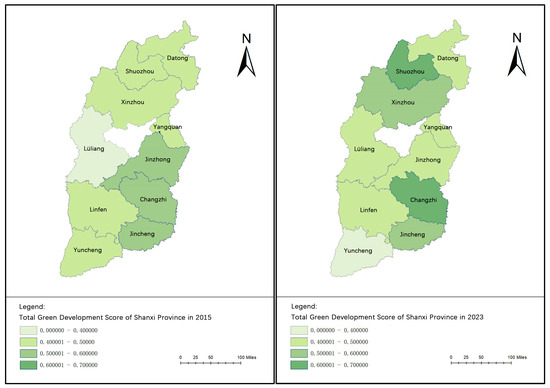
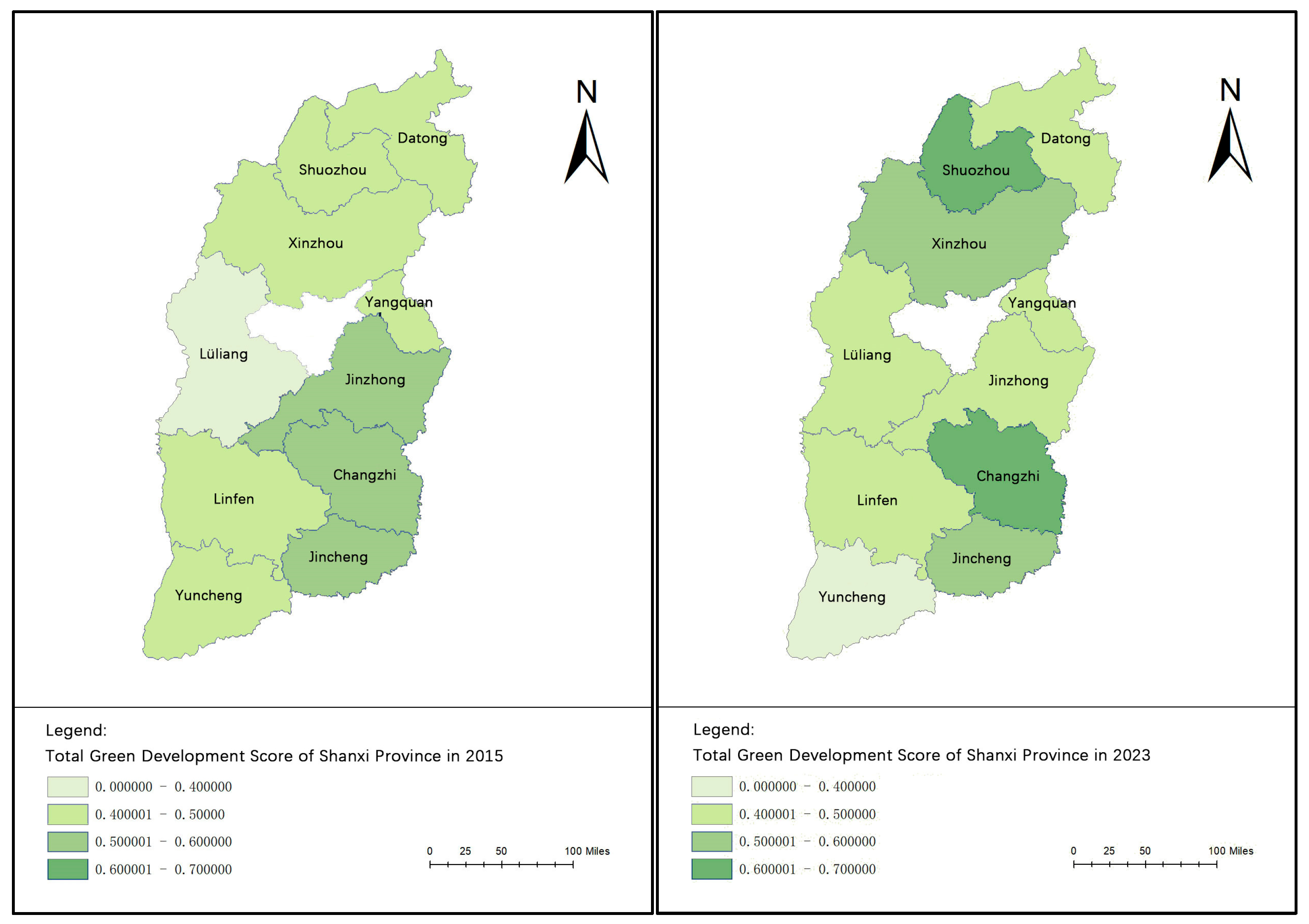
The overall Green Transition Level scores for cities in 2015 and 2023, along with the growth values between these two years, were visualized spatially, as detailed in Figure 1. Whether in 2015 or 2023, cities with higher levels of the Green Transition Level (represented by dark green areas) appear to exhibit certain spatial clustering characteristics, potentially forming “high–high” agglomeration zones centered around the provincial capital, Taiyuan, or other specific regions. Statistically, in 2023, cities in the northern and southeastern regions reached relatively high levels, with the overall Green Transition Level in the northeastern region being higher than that in the southwestern region. Dynamically, the Green Transition Level in the western region generally increased, while it declined more significantly in the northeastern region.
Figure 1.
Spatial distribution of Green Transition Level of resource-based cities in Shanxi Province in 2015 (Left) and 2023 (Right). Figure Source: Created by the authors. Table source: Self-drawn using ArcGIS10.7.
3.2. Dynamic Changes in Green Development Level
3.2.1. Reclassification Based on a Four-Quadrant Development Process
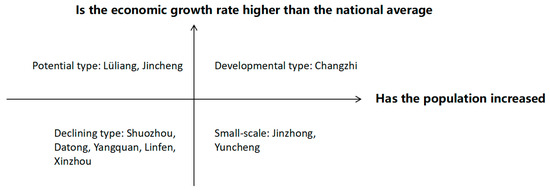
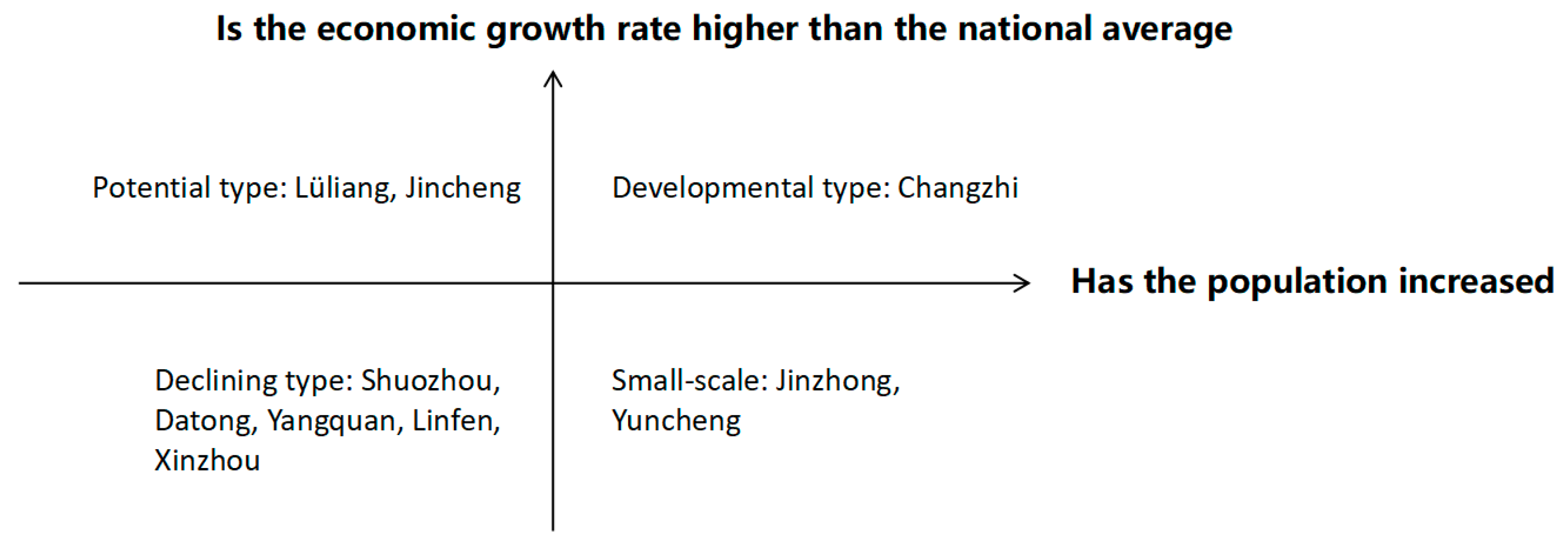
To clarify the development status of Shanxi’s resource-based cities over the past nine years compared to national cities, it is necessary to assess their development state. Based on whether the population of the 10 resource-based cities in Shanxi increased from 2015 to 2023 and whether their economic growth rate exceeded the national level, a four-quadrant judgment framework was established to classify resource-based cities into developing, potential, shrinking, and declining types, as detailed in Figure 2. If the population increased and the economic growth rate exceeded the national level, the city was judged to be developing. If the economic growth rate exceeded the national level but the population decreased, the city still had some economic development potential, classifying it as potential. If the population continued to increase but the economic growth rate was below the national average, it indicated an insufficient development momentum, classifying it as shrinking. If both the population decreased and the economic growth rate was below the national level, it signified a dual lag in economic and social development, classifying it as declining.
Figure 2.
Four-quadrant method for dynamic classification of resource-based cities based on economy and population. Figure Source: Created by the authors.
The “National Sustainable Development Plan for Resource-Based Cities (2013–2020)” [52] classifies resource-based cities into four major categories (growing, mature, declining, and regenerative) based on the resource security and sustainable development capacity. This classification is a static one based on the development status of resource-based cities in 2013. In contrast, the four-quadrant classification described above is a dynamic classification based on the change data of resource-based cities over the nine-year period, aiming to indicate the dynamic change process, as detailed in Table 6.
Table 6.
Comparison of static classification, comprehensive dynamic classification, and economic–population dynamic classification for resource-based cities in Shanxi Province.
3.2.2. Comparison of Changes in Green Transition Level
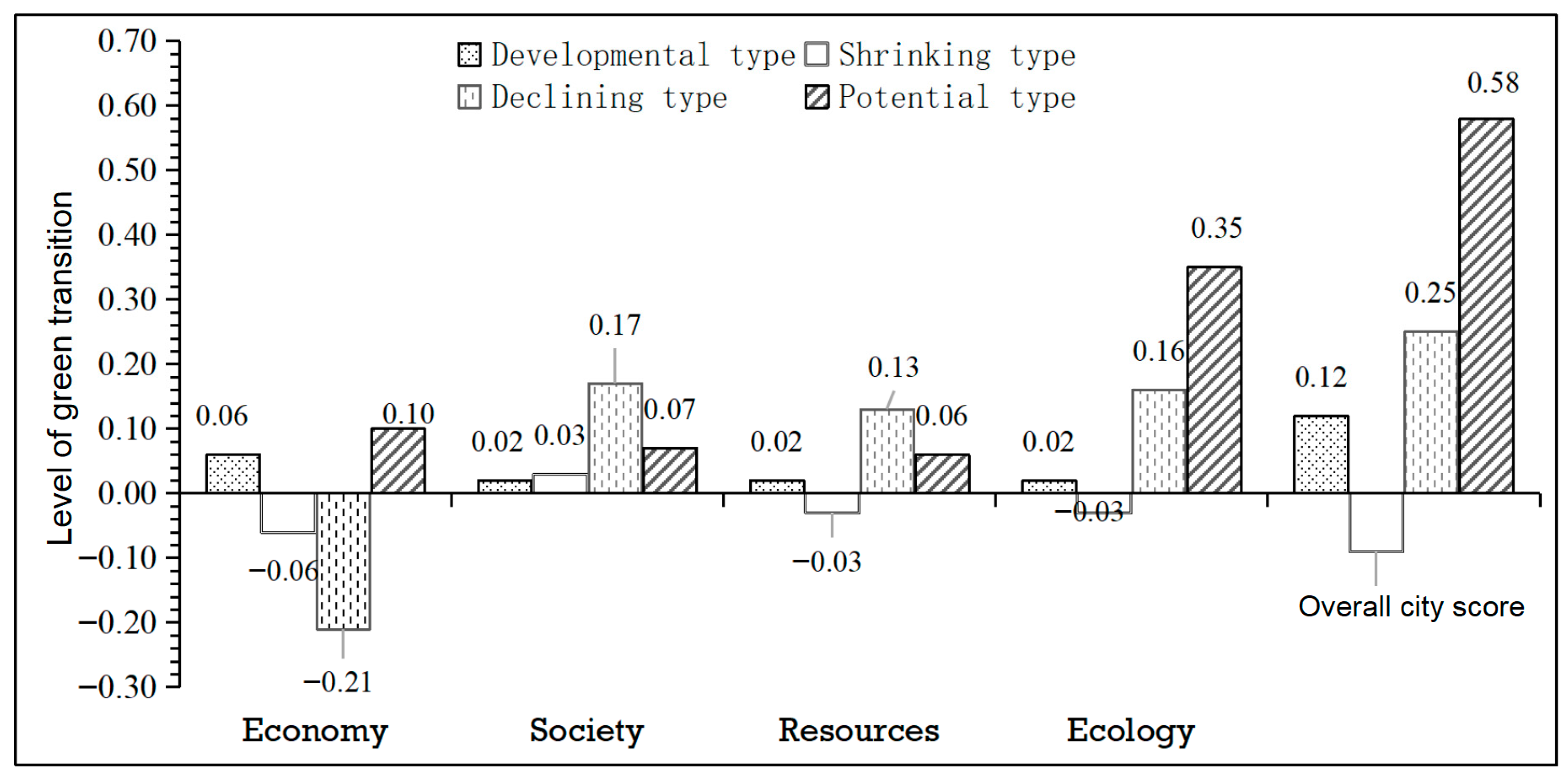
Based on the joint classification method of the four quadrants, Shanxi’s resource-based cities can be divided into developing (Changzhi), potential (Jincheng and Lüliang), shrinking (Jinzhong and Yuncheng), and declining (Shuozhou, Datong, Yangquan, Xinzhou, and Linfen). Looking at the overall dynamic changes from 2015 to 2023, different types of resource-based cities show differentiated development paths and outcomes in the four dimensions of economic development, social services, resource utilization, and ecological protection. Overall, developing cities demonstrate excellence in the comprehensive green transformation process; potential cities possess a relatively good foundation for transformation but show uneven progress; shrinking and declining cities face structural challenges of varying degrees. The specific manifestations are as follows:
- Economic dimension
Economic Dimension: Potential resource-based cities showed the largest increase in the economic green transformation level, followed by developing cities, whereas the economic green transformation level of shrinking and declining resource-based cities declined. Taking the developing city Changzhi as an example, through industrial structure optimization and upgrading and innovation-driven development, its economic growth trend is steady. Its economic dimension score increased from 0.035 in 2015 to 0.042 in 2023, reflecting the initial achievements in its layout of emerging industries such as semiconductor optoelectronics and hydrogen energy. The potential city Jincheng, leveraging the continuous development of clean energy industries like coalbed methane, maintains a high level in both economic scale and quality. In contrast, the shrinking city Yuncheng, affected by factors such as the slow transformation of traditional industries and insufficient cultivation of new growth drivers, lacks economic growth momentum, with some indicators even showing negative growth. The declining city Yangquan, constrained by the dual pressures of traditional coal industry decline and insufficient support from emerging industries, shows a clear decline in its economic dimension score.
- 2.
- Social dimension
Social Dimension: Declining resource-based cities show continuous improvement in social development levels, while social security capabilities in other city types remain relatively stable. However, developing and shrinking cities exhibit noticeable shortcomings. The developing city Changzhi actively invests in social welfare and public services, implementing measures such as education group reform and inclusive medical insurance, leading to steady growth in its social dimension score. The potential city Jincheng also maintains a relatively high level in social services. The declining city Lüliang has long had a weak social security system and scarce quality medical resources, keeping its social dimension score at a low level, which, to some extent, constrains the social stability and human capital accumulation during the transition process.
- 3.
- Resource dimension
Resource Dimension: Potential and declining cities show significant improvement in resource utilization efficiency, while developing and shrinking cities face the dual challenges of resource dependence and declining efficiency. Taking the potential cities Lüliang and Shuozhou as examples, the resource utilization efficiency has been greatly improved through technological upgrades and the promotion of a circular economy. The developing city Changzhi has gradually reduced its dependence on traditional resources during its industrial diversification process. The declining city Yangquan has not fundamentally changed its resource-intensive industrial structure. Emerging industries like big data data centers are, themselves, high-energy-consuming projects, leading to a decline in its resource dimension score. The shrinking city Yuncheng shows a slow improvement in resource utilization efficiency, reflecting that its industrial transformation remains in a difficult stage.
- 4.
- Ecological dimension
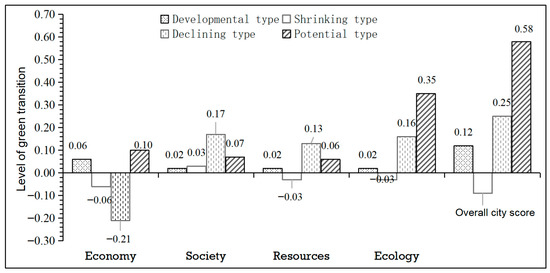
Ecological Dimension: The ecological environment of all city types, except shrinking cities, generally improved, but the internal differences remain significant. Declining and potential cities achieved notable results in ecological construction. For instance, as detailed in Figure 3, Changzhi and Datong continued to increase the investment in air quality governance and green space construction, maintaining leading positions in their ecological dimension scores. However, shrinking and developing cities face greater pressure on ecological protection. For example, Yuncheng’s ecological score declined significantly due to factors like industrial pollution, indicating certain deficiencies in its environmental governance and regulatory system. Overall, during the study period, resource-based cities in Shanxi generally increased their emphasis on the ecological environment, but cities with slow transformation still face significant challenges in balancing economic growth and environmental protection.
Figure 3.
Growth values of Green Transition Level for four types of resource-based cities in Shanxi Province, 2015–2023. Figure Source: Created by the authors.
The comprehensive analysis indicates that developing and potential cities demonstrate stronger systematic and coordinated capabilities in the green transformation process, achieving a synchronous improvement or steady progress across multiple dimensions of economy, society, resources, and ecology. In contrast, shrinking and declining cities exhibit “short-board effects” in different dimensions. Issues such as sluggish economic growth, insufficient social security, low resource efficiency, and increasing ecological pressure intertwine, further intensifying the complexity and difficulty of their transformation. Therefore, future policies should place greater emphasis on classified guidance to help different types of cities overcome the key constraints and promote a balanced development and an overall leap in the green transformation of resource-based cities across the province.
4. Discussion
4.1. Targeting “Developing-Type” Cities: Implement an Innovation-Driven and Industrial Chain Upgrading Strategy to Strengthen Radiating and Leading Effects
Leveraging provincial-level mechanisms like the “Chain Chief System” for key industrial chains (e.g., high-end equipment manufacturing, semiconductors, and new energy), support leading enterprises in establishing local R&D headquarters and taking the lead in undertaking provincial or national-level “Unveiling the List and Taking Command” scientific and technological projects. Using the Shanxi Central Urban Agglomeration construction as a platform, have developing-type cities take the lead in jointly establishing “enclave parks” or industrial collaboration demonstration zones with neighboring cities, integrating their management, technological, and capital advantages with the land and resource advantages of surrounding areas. For example, promote Changzhi and the surrounding areas to jointly build a coal ‘clean and efficient utilization’ and coal-based ‘new materials’ industrial alliance. Incorporate targets such as the proportion of affordable rental housing supply, the green travel rate of residents, and the reduction target for the fine particulate matter (PM2.5) concentration into their performance evaluations to promote the sharing of high-quality development outcomes.
Deeply integrate into Shanxi Province’s the new regional development layout of “One Cluster, Two Zones, Three Circles.” The effectiveness evaluation should focus on the following: the annual increase in the proportion of value added from strategic emerging industries in industrial value added, the growth rate of the technology contract transaction value, and the number and investment amount of cross-city industrial collaboration projects.
4.2. With Resource Revolution as the Core, Consolidate the Sustainable Foundation for Green Transition Level
Mandate the green mining and circular utilization of dominant resources like coal and bauxite, promoting integrated models such as “coal-power–aluminum-materials.” Drawing on the experience of the circular economy pilot in Shuozhou (e.g., “coal–electricity–silicon–aluminum”), incorporate the output value of the bulk solid waste comprehensive utilization into performance assessments. Utilize provincial policies for cultivating specialized characteristic towns, concentrating resources to build 1–2 non-coal industrial clusters with national influence (e.g., Lüliang aluminum–magnesium new materials, and Xinzhou special metal materials). Accelerate the deployment of wind and solar power bases, accompanied by supporting pumped storage and new energy storage projects to enhance the new energy consumption capacity.
Align with Shanxi Province’s upgrade plan for coal power unit retrofits (the “Three Reforms Linkage”) and the special action for comprehensive solid waste utilization. Key evaluation indicators include the following: the annual reduction rate of energy consumption per unit of industrial value added, the comprehensive utilization rate of bulk solid waste, and the average annual growth rate of operating revenue for characteristic industrial clusters.
4.3. Targeting “Mature-Type” Cities: Focus on Characteristic Breakthroughs and Functional Reinforcement Strategies to Achieve Leapfrog Development
Yuncheng should fully align with the strategy for ecological protection and high-quality development in the Yellow River Basin, focusing on modern agriculture, the deep processing of agricultural products, and cultural tourism and health and wellness, aiming to build a renowned tourist destination. Jinzhong should leverage its universities and geographical advantages to develop producer services like smart logistics, vocational education, and an exhibition economy. Promote the transformation and utilization of idle industrial and mining factories and land to develop new business forms like cultural innovation and scientific innovation.
Prioritize the alignment with Shanxi Province’s development plans for the cultural tourism and health and wellness industrial chain and urban renewal actions. The core evaluation indicators are as follows: the proportion of tertiary industry value added, the growth rate of the total tourism revenue, the growth rate of the total retail sales of consumer goods, and the green coverage rate in built-up urban areas.
4.4. Targeting “Declining-Type” Cities: Strengthen Livelihood Safeguarding and Ecological Restoration Strategies to Ensure Stable Transition
Establish a provincial-level special assistance fund for a resource-based city transition, dedicated to relocation and resettlement, employment training, and social security continuity in independent mining areas and coal mining subsidence areas. Develop a number of public welfare jobs to ensure social stability. Treat these cities as a top priority for the “A Surge of Clear Water into the Yellow River” project. Mandate the implementation of mine environmental restoration and governance, incorporating the ecological restoration rate of historical mines as a hard constraint in the performance evaluation of party and government leaders. While ensuring people’s livelihoods and social stability, cultivate labor-intensive green industries suited to local conditions, such as PV/wind power operation and maintenance, and waste material recycling.
Vigorously implement Shanxi Province’s comprehensive treatment plan for coal mining subsidence areas. The core evaluation indicators are as follows: the urban surveyed unemployment rate, the completion rate of shantytown renovations, the annual completion of ecological restoration area for historical mines, and the incidence rate of major social risk events.
4.5. Establish a Province-Wide Collaboration and Dynamic Evaluation Mechanism
Based on the indicator system of this study, establish a dynamic monitoring and evaluation platform for the Green Transition Level of resource-based cities in Shanxi Province. Annually release the four-dimensional indicator scores and rankings for each city, with the results serving as an important basis for provincial fiscal transfer payments and project arrangements. Implement dynamic management: Re-evaluate and adjust city classifications every two years, dynamically optimizing the intensity and focus of the policy support accordingly. Promote transition finance instruments: Encourage financial institutions to innovatively develop green credit and transition bond products tailored to cities of different transition types.
Incorporate the monitoring and evaluation results into Shanxi Province’s comprehensive performance assessment system for high-quality development and the natural resource asset departure audit system for leading cadres, forming a policy closed loop.
5. Conclusions
Currently, as China’s development strategy shifts from focusing on the economic growth rate to high-quality development, the level of green development has become an indispensable element of urban development in China today. As one of China’s most important resource-based provinces, Shanxi’s economy is highly dependent on resource-based industries such as coal mining and power generation. Under the concept of green development, the province has encountered a development bottleneck. Based on the economic development and population mobility data, this paper classifies cities in Shanxi into four types: developed, potential, declining, and stagnant. Using the actual development data from 2015 to 2023, the study finds that developed and potential cities have driven Shanxi’s Green Transition Level, while declining and stagnant cities have become major obstacles. There are significant disparities in green development levels among cities in the province. Therefore, to upgrade the overall level of green development in Shanxi, it is necessary to enhance the demonstration effect of cities with higher green development levels. Through upstream and downstream industrial cooperation and supply chain upgrading, industrial restructuring and upgrading should be achieved while ensuring living standards in mining areas, thereby promoting green development through industrial transformation.
This study still has certain limitations, and future research could deepen the investigation in the following areas:
- (1)
- Indicator system level: Due to data availability constraints, some indicators reflecting emerging factors such as innovation-driven development and the digital economy (e.g., R&D investment intensity, and digital infrastructure coverage) were not fully incorporated. Future work could develop more forward-looking indicators to capture new drivers of transition.
- (2)
- Research methodology level: This paper primarily employs comprehensive evaluation and descriptive statistics, without delving deeper into econometric methods such as spatial econometric models or threshold regression to uncover complex causal relationships and spatial spillover effects among factors. Subsequent studies could build on this foundation to construct econometric models, further examining the contribution and nonlinear relationships of various influencing factors.
- (3)
- Research scale and chain perspective: This study focuses on the macro scale of prefecture-level cities. Future research could delve into micro-level analyses at the county or enterprise level, or expand upward to the urban agglomeration scale, enabling multi-scale comparisons and research on transmission mechanisms. Additionally, a comprehensive assessment of the entire chain of the Green Transition Level—”process–outcome–effect”—warrants in-depth exploration.
- (4)
- Dynamic tracking level: The time span of this study is nine years. Future research could extend the observation period, particularly after the full implementation of the “dual-carbon” goals, to continuously track the changes in transition trajectories under policy impacts, thereby providing a basis for dynamic policy adjustments.
Author Contributions
Conceptualization, writing—original draft, methodology, writing—review and editing, and software, W.L. (Wenao Liu); data curation, writing—review and editing, and methodology, R.Z.; formal analysis, Q.L.; investigation, W.L. (Wenlong Li); resources, Y.L.; resources, L.J. All authors have read and agreed to the published version of the manuscript.
Funding
This research was funded by the Beijing Social Science Foundation Project: No. 24JCC077, the Beijing Municipal Education Science “14th Five-Year Plan” 2025 Annual General Project: No. CDDB25252, and the Subject of Beijing Association of Higher Education: No. MS2022276.
Institutional Review Board Statement
Not applicable.
Informed Consent Statement
Not applicable.
Data Availability Statement
The original contributions presented in this study are included in the article. Further inquiries can be directed to the authors.
Conflicts of Interest
The authors declare no conflicts of interest. The funders had no role in the study’s design; in the collection, analyses, or interpretation of the data; in the writing of the manuscript; or in the decision to publish the results.
References
- Jing, Z.; Wang, J. Sustainable development evaluation of the society–economy–environment in a resource-based city of China: A complex network approach. J. Clean. Prod. 2020, 263, 121510. [Google Scholar] [CrossRef] [Scilit]
- Yu, J.; Li, J.; Zhang, W. Identification and classification of resource-based cities in China. J. Geogr. Sci. 2019, 29, 1300–1314. [Google Scholar] [CrossRef] [Scilit]
- Lantz, H.R. Minetown, Milltown, Railtown, Life in Canadian Communities of a Single Industry; American Sociological Association: Washington, DC, USA, 1973. [Google Scholar]
- Hou, G.; Zou, Z.; Zhang, T.; Meng, Y. Analysis of the Effect of Industrial Transformation of Resource-Based Cities in Northeast China. Economies 2019, 7, 40. [Google Scholar] [CrossRef] [Scilit]
- Sun, T.; Lu, Y.; Cheng, L. Implementation Effect of Resource Exhausted Cities, Supporting Policies, Long-term Mechanism and Industrial Upgrading. China Ind. Econ. 2020, 7, 98–116. [Google Scholar]
- Yang, J.; Chen, F.; Wang, Y.; Mao, J.; Wang, D. Performance evaluation of ecological transformation of mineral resource-based cities: From the perspective of stage division. Ecol. Indic. 2023, 154, 110540. [Google Scholar] [CrossRef] [Scilit]
- Xie, M.; Sun, J.; Liu, T. Evaluation of Ecosystem Service Value of Resource-based Cities in China: Based on the Perspective of Meta Model. Arid Land Geogr. 2022, 45, 1949–1957. [Google Scholar]
- Ruan, F.; Yan, L.; Wang, D. The complexity for the resource-based cities in China on creating sustainable development. Cities 2020, 97, 102571. [Google Scholar] [CrossRef] [Scilit]
- Collados, C.; Duane, T.P. Natural capital and quality of life: A model for evaluating the sustainability of alternative regional development paths. Ecol. Econ. 1999, 30, 441–460. [Google Scholar] [CrossRef] [Scilit]
- Zhang, Y.; Zhang, J.; Chen, W.; Liang, S.; Yi, K.; Liu, S. Synergistic effects of carbon and heat under disturbance of human activities: Evidence from a resource-based city of China. Environ. Pollut. 2025, 366, 125424. [Google Scholar] [CrossRef] [Scilit]
- Carvalho, J.M.S.; Costa, R.V.; Marnoto, S.; Sousa, C.A.A.; Vieira, J.C. Toward a Resource-Based View of City Quality: A New Framework. Growth Change 2018, 49, 266–285. [Google Scholar] [CrossRef] [Scilit]
- He, S.Y.; Lee, J.; Zhou, T.; Wu, D. Shrinking cities and resource-based economy: The economic restructuring in China’s mining cities. Cities 2017, 60, 75–83. [Google Scholar] [CrossRef] [Scilit]
- Fan, F.; Zhang, X. Transformation effect of resource-based cities based on PSM-DID model: An empirical analysis from China. Environ. Impact Assess. Rev. 2021, 91, 106648. [Google Scholar] [CrossRef] [Scilit]
- Li, H.; Long, R.; Chen, H. Economic transition policies in Chinese resource-based cities: An overview of government efforts. Energy Policy 2013, 55, 251–260. [Google Scholar] [CrossRef] [Scilit]
- Yan, D.; Kong, Y.; Ye, B.; Shi, Y.; Zeng, X. Spatial variation of energy efficiency based on a Super-Slack-Based Measure: Evidence from 104 resource-based cities. J. Clean. Prod. 2019, 240, 117669. [Google Scholar] [CrossRef] [Scilit]
- Yu, C.; de Jong, M.; Cheng, B. Getting depleted resource-based cities back on their feet again—The example of Yichun in China. J. Clean. Prod. 2016, 134, 42–50. [Google Scholar] [CrossRef] [Scilit]
- Huang, T.; Yuan, X.; Liu, R. Drivers of Green Transition Efficiency Performance Differences in China’s Resource-Based Cities: A Carbon Reduction–Pollution Control–Greening–Growth Framework. Sustainability 2025, 17, 9262. [Google Scholar] [CrossRef] [Scilit]
- Tan, J.; Zhang, P.; Lo, K.; Li, J.; Liu, S. The Urban Transition Performance of Resource-Based Cities in Northeast China. Sustainability 2016, 8, 1022. [Google Scholar] [CrossRef] [Scilit]
- Li, W.; Cai, Z.; Jin, L. Urban green land use efficiency of resource-based cities in China: Multidimensional measurements, spatial-temporal changes, and driving factors. Sustain. Cities Soc. 2024, 104, 105299. [Google Scholar] [CrossRef] [Scilit]
- Xie, W.; Yan, T.; Xia, S.; Chen, F. Innovation or introduction? The impact of technological progress sources on industrial green transformation of resource-based cities in China. Front. Energy Res. 2020, 8, 598141. [Google Scholar] [CrossRef] [Scilit]
- Sun, J.; Xue, J.; Qiu, X. Has the sustainable energy transition in China’s resource-based cities promoted green technology innovation in firms? Socio-Econ. Plan. Sci. 2023, 87, 101330. [Google Scholar] [CrossRef] [Scilit]
- Song, M.; Zhao, X.; Shang, Y.; Chen, B. Realization of Green Transition Efficiency based on the anti-driving mechanism: An analysis of environmental regulation from the perspective of resource dependence in China. Sci. Total Environ. 2020, 698, 134317. [Google Scholar] [CrossRef] [Scilit]
- Wu, B.; Xu, Y. Towards sustainable development: Can industrial collaborative agglomeration become an accelerator for green and low-carbon transformation of resource-based cities in China? J. Environ. Manag. 2025, 381, 125199. [Google Scholar] [CrossRef] [Scilit]
- Gong, Q. Green transformation paths of resource-based cities in China from the configuration perspective. Reg. Sustain. 2024, 5, 100158. [Google Scholar] [CrossRef] [Scilit]
- Qian, Q.; Luo, S. The dilemma of land green use efficiency in resource-based cities: A perspective based on digital transformation. Front. Environ. Sci. 2024, 12, 1339928. [Google Scholar] [CrossRef] [Scilit]
- Kuai, P.; Li, W.; Cheng, R.; Cheng, G. An application of system dynamics for evaluating planning alternatives to guide a green industrial transformation in a resource-based city. J. Clean. Prod. 2015, 104, 403–412. [Google Scholar] [CrossRef] [Scilit]
- Jue, W.A.N.G. Power Source and Driving Factors of Green Transformation of Resource-Based Cities in China. Econ. Geogr. 2024, 44, 75–83. [Google Scholar]
- Yang, Y.; Cheng, D.; Zhang, B.; Guan, C.; Cheng, X.; Cheng, T. Coal resource-based cities at the crossroads: Towards a sustainable urban future. Cities 2023, 140, 104424. [Google Scholar] [CrossRef] [Scilit]
- Zhai, X.; An, Y.; Shi, X.; Liu, X. Measurement of Green Transition Efficiency and its driving factors: Evidence from China. J. Clean. Prod. 2022, 335, 130292. [Google Scholar] [CrossRef] [Scilit]
- Zhang, B.; Yu, L.; Sun, C. How does urban environmental legislation guide the Green Transition Efficiency of enterprises? Based on the perspective of enterprises’ green total factor productivity. Energy Econ. 2022, 110, 106032. [Google Scholar] [CrossRef] [Scilit]
- Zhang, X.; Huang, X.; Li, J. The Evolution of Green Development, Spatial Differentiation Pattern and Its Influencing Factors in Characteristic Chinese Towns. Sustainability 2023, 15, 5079. [Google Scholar] [CrossRef] [Scilit]
- Ma, R.; Li, M. Assessment of Land Resource Utilization Efficiency, Spatiotemporal Pattern, and Network Characteristics in Resource-Based Regions: A Case Study of Shanxi Province. Sustainability 2025, 17, 2458. [Google Scholar] [CrossRef] [Scilit]
- Ning, L.; Sheng, S.; Meng, Y. The interplay and synergistic relationship between urban land expansion and urban resilience across the three principal metropolitan regions of the Yangtze River Basin. Sci Rep 2024, 14, 31868. [Google Scholar] [CrossRef] [Scilit]
- Lau, C.K.; Gozgor, G.; Mahalik, M.K.; Patel, G.; Li, J. Introducing a new measure of energy transition: Green quality of energy mix and its impact on CO2 emissions. Energy Econ. 2023, 122, 106702. [Google Scholar] [CrossRef] [Scilit]
- Kekkonen, A.; Pesor, R.; Täks, M. Stepping towards the Green Transition Efficiency: Challenges and Opportunities of Estonian Companies. Sustainability 2023, 15, 4172. [Google Scholar] [CrossRef] [Scilit]
- Williams, S.; Robinson, J. Measuring sustainability: An evaluation framework for sustainability transition experiments. Environ. Sci. Policy 2020, 103, 58–66. [Google Scholar] [CrossRef] [Scilit]
- Guo, W.; Xia, W.; Kong, W.; Pan, Y. Policy, innovation, market or behavior driven effects: Energy Green Transition Efficiency and environmental management in Chinese heterogeneous cities. J. Environ. Manag. 2024, 370, 122634. [Google Scholar] [CrossRef] [Scilit] [PubMed]
- Yin, Q.; Wang, Y.; Wan, K.; Wang, D. Evaluation of Green Transition Efficiency Level in Chinese Mineral Resource-Based Cities Based on a Three-Stage DEA Method. Sustainability 2020, 12, 9455. [Google Scholar] [CrossRef] [Scilit]
- Lu, J.; Chang, H.; Wang, Y. Dynamic evolution of provincial energy economy and environment coupling in China’s regions. China Popul. Resour. Environ. 2017, 27, 60–68. [Google Scholar]
- Gai, M.; Nie, C.; Ke, L. Carrying Capacity and Coordinated Development of ERE System in the Coastal Area of Bohai Sea. Econ. Geogr. 2018, 38, 163–172. [Google Scholar] [CrossRef]
- Liu, Y.B.; Li, R.D.; Song, X.F. A grey incidence analysis on the coupling relationship between regional urbanization and eco-environment in China. Acta Geogr. Sin. 2005, 60, 237–247. [Google Scholar] [CrossRef]
- Ren, J.; Yin, S.; Cao, Y. Carrying capacity and coordinated development of the Economy-Resources-Environment system in Shanxi Province, a typical resource-based region. Ecol. Sci. 2020, 39, 146–154. [Google Scholar] [CrossRef]
- IPBES. Global Assessment Report on Biodiversity and Ecosystem Services of the Intergovernmental Science-Policy Platform on Biodiversity and Ecosystem Services; Brondizio, E.S., Settele, J., Díaz, S., Ngo, H.T., Eds.; IPBES Secretariat: Bonn, Germany, 2019; 1148p. [Google Scholar] [CrossRef]
- Sayed, Z. Transforming our world: The 2030 agenda for sustainable development. Ethics Crit. Think. J. 2015, 2015, 112. [Google Scholar]
- Ministry of Ecology and Environment of the People’s Republic of China (MEE). The National Ecological Civilization Construction Demonstration Area Construction Indicators (Revised Edition). Available online: https://www.mee.gov.cn/xxgk2018/xxgk/xxgk05/202402/W020240218557415420802.pdf (accessed on 1 February 2026).
- The National Bureau of Statistics; National Development and Reform Commission; Ministry of Ecology and Environment of China. The Green Development Indicator System to quantify regional ecological progress. Available online: https://www.ndrc.gov.cn/fggz/hjyzy/stwmjs/201612/W020190911455757411312.pdf (accessed on 1 February 2026).
- The General Office of the Communist Party of China Central Committee and the General Office of the State Council. The Target System for Performance Evaluation of Ecological Civilization Construction. Available online: https://www.ndrc.gov.cn/xxgk/zcfb/tz/201612/W020190905516159321631.pdf (accessed on 1 February 2026).
- Shanxi Provincial Bureau of Statistics (Ed.) Shanxi Statistical Yearbook 2016; China Statistics Press: Beijing, China, 2016. [Google Scholar]
- Shanxi Provincial Bureau of Statistics (Ed.) Shanxi Statistical Yearbook 2024; China Statistics Press: Beijing, China, 2024. [Google Scholar]
- Kokangül, A.; Polat, U.; Dağsuyu, C. A new approximation for risk assessment using the AHP and Fine Kinney methodologies. Saf. Sci. 2017, 91, 24–32. [Google Scholar] [CrossRef] [Scilit]
- Žižović, M.; Miljković, B.; Marinković, D. Objective methods for determining criteria weight coefficients: A modification of the CRITIC method. Decis. Mak. Appl. Manag. Eng. 2020, 3, 149–161. [Google Scholar] [CrossRef] [Scilit]
- State Council of the People’s Republic of China. National Sustainable Development Plan for Resource-Based Cities (2013–2020). Available online: https://www.mee.gov.cn/zcwj/gwywj/201811/t20181129_676558.shtml (accessed on 1 February 2026).

Disclaimer/Publisher’s Note: The statements, opinions and data contained in all publications are solely those of the individual author(s) and contributor(s) and not of MDPI and/or the editor(s). MDPI and/or the editor(s) disclaim responsibility for any injury to people or property resulting from any ideas, methods, instructions or products referred to in the content. |
© 2026 by the authors. Licensee MDPI, Basel, Switzerland. This article is an open access article distributed under the terms and conditions of the Creative Commons Attribution (CC BY) license.