Article

Effect of Pore Water Saturation on Stray Current Corrosion of Reinforced Concrete in Urban Rail Transit Systems: An Experimental and Numerical Study


1
School of Mechatronic Engineering, Xuzhou College of Industrial Technology, Xuzhou 221140, China
2
School of Mechanical and Electrical Engineering, China University of Mining and Technology, Xuzhou 221116, China
3
School of Electrical and Control Engineering, Xuzhou University of Technology, Xuzhou 221018, China
4
Jiangsu Provincial Robot Vision Sensing and Cooperative Control Engineering Research Center, Xuzhou 221018, China
5
Northeast Branch of China Resources Power Holdings Co., Ltd., Shenyang 110046, China
*
Author to whom correspondence should be addressed.
Sustainability 2026, 18(5), 2643; https://doi.org/10.3390/su18052643
Submission received: 5 January 2026 / Revised: 28 January 2026 / Accepted: 4 March 2026 / Published: 9 March 2026
(This article belongs to the Section Sustainable Materials)

Abstract

Stray currents pose a significant threat to the structural health and resilience of subway shield tunnels through the destructive effects of electrochemical corrosion, which is broadly recognized as one of the main obstacles to ensuring the sustainability of urban rail transit systems. Environmental humidity can lead to variations in the pore water saturation of concrete structures. In the coupled environment of stray currents and pore water saturation, this condition exacerbates the corrosion of reinforced concrete, shortening its service life and jeopardizing the normal operation of subway systems. Given this, a combined study is carried out to explore the effect of pore water saturation on stray current corrosion of reinforced concrete through FEM-based simulation and experiment tests. The effect of pore water saturation on stray current corrosion is studied by varying applied potential and porosity. The study validates the influence of concrete porosity and voltage on the control ranges of pore water saturation corresponding to the various stages of stray current corrosion in reinforced concrete. Based on the simulation and experimental results, it is concluded that, under the same voltage conditions, an increase in the porosity of the reinforced concrete correlates with a greater severity of corrosion as pore water saturation increases. As the applied voltage increased from 2 V to 10 V, the pore water saturation range for iron oxidation shrank from 0–0.6 to 0–0.4, while the hydrogen evolution range expanded from 0.7–1 to 0.5–1. Pore water saturation influences the control mechanisms of electrochemical corrosion at various stages in reinforced concrete. Moreover, under each control mechanism, the control ranges of pore water saturation corresponding to the corrosion stages demonstrate sequential trends of contraction, movement towards lower saturation regions, and expansion as the applied voltage increases. The findings of the study contribute to the understanding of the intrinsic mechanisms underlying the service life extension of buried foundation structures.

1. Introduction

Shield tunnels play a crucial role in urban rail transit systems by optimizing space utilization and reducing surface disruption in densely populated areas, allowing for the construction of underground rail networks with minimal impact on existing infrastructure [1,2]. Shield tunnels enhance safety and environmental protection by decreasing excavation needs and the potential for soil contamination. Although the initial investment in shield tunneling technology can be high, the long-term cost-effectiveness, highlighted by a reduction in construction time compared to traditional methods, makes it a worthy consideration as urban populations grow [3]. Moreover, cities employing shield tunnels have seen ridership increases, reflecting improved sustainable public transportation efficiency [4]. By enabling deeper, more complex rail networks that integrate seamlessly with existing transport systems, shield tunnels are essential to expanding connectivity and capacity, ultimately contributing to the development of sustainable and connected urban environments [5].
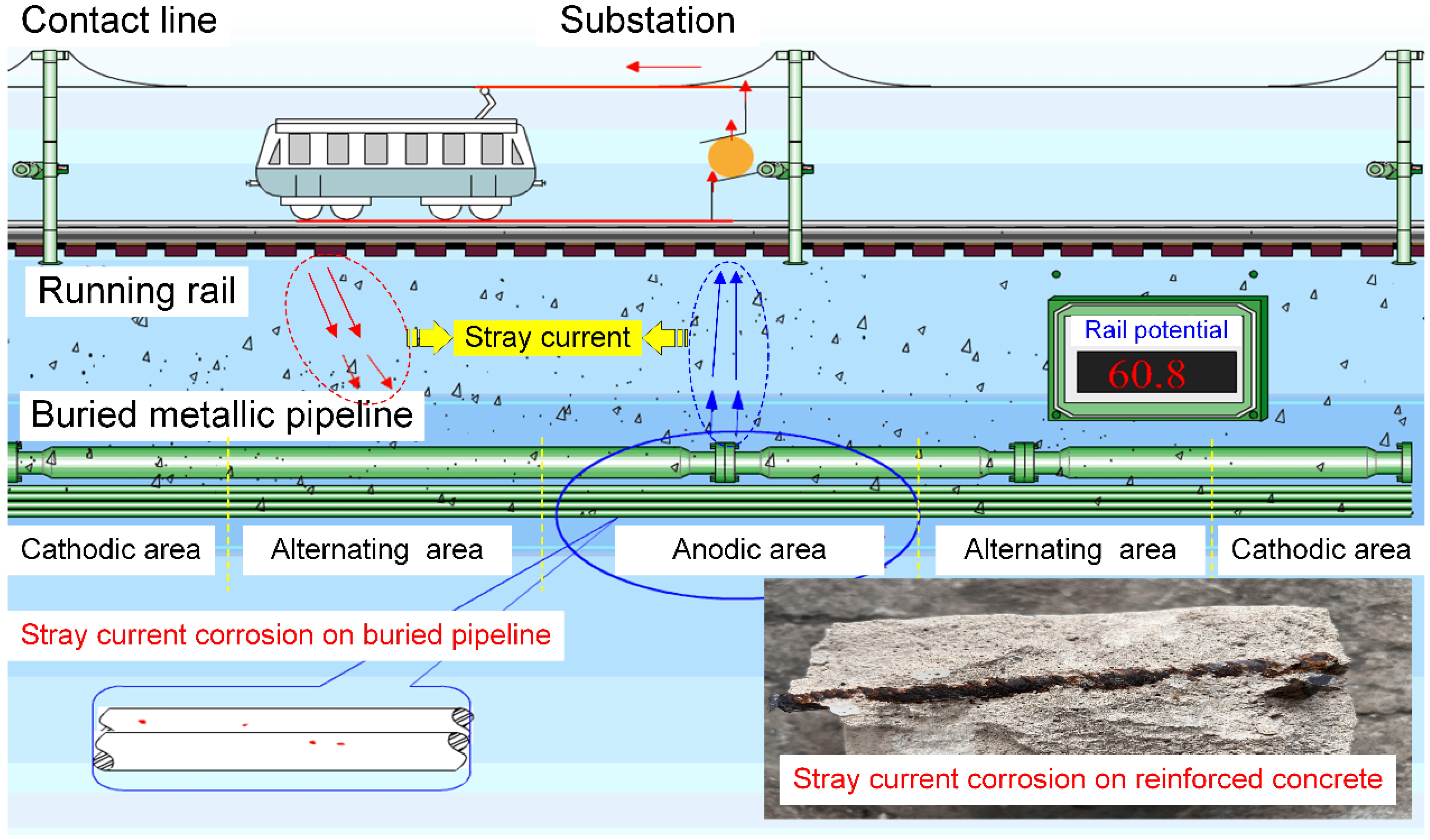
The maintenance of subway shield tunnels is essential to ensuring the safety and resilience of urban transit systems, which is critically significant for the service life extension of reinforced concrete. Regular maintenance is critical to monitoring the structural integrity, inspecting for water ingress, and ensuring the proper functioning of systems like ventilation, lighting, and emergency exits [6,7]. A significant concern during sustainable maintenance is stray current corrosion, which occurs when electrical currents from the subway’s power systems leak into the tunnel structure [8,9], as shown in Figure 1, affecting metallic components such as buried pipelines [10], running rails [11] and linings [12]. This corrosion can lead to accelerated deterioration, compromising safety and resulting in costly repairs. Different from the stray current corrosion of metal materials, the stray current corrosion mechanisms of reinforced concrete are more complex and affected by more factors. Worldwide, scholars focus on this issue in the aspects of microstructural properties [13], steel–mortar interface [14], induced ITZ effect [15], characteristics of stray current signals [16,17], stability of bound chlorides [18], sulfate attack [19], coupling effect of concrete cracks [20], etc. Some special materials such as rubber powder mortar [21] and steel fiber-reinforced concrete [22] have also been studied for the detrimental effects of stray current corrosion.
Among those factors, pore water saturation is extremely special, and significantly influenced by the urban environment. Pore water saturation Sw in reinforced concrete refers to the fraction of pore volume filled with liquid water [23], which governs coupled moisture effects such as the ion transport, electrical resistivity, permeability, capillary suction, shrinkage creep, and corrosion risk of embedded steel [24]. Key influencing factors of Sw include binder composition and hydration, curing, temperature and relative humidity, exposure class, mechanical state, etc. Hence, the effect of pore water saturation on stray current corrosion of reinforced concrete is crucial to systematically revealing the electrochemical mechanism of stray current corrosion for shield tunnel structures, and this has not been fully studied and is usually considered as a stable variable in existing studies. The findings of this study are expected to contribute to the resilience and sustainability of urban buried infrastructure, such as subway shield tunnels.
In view of this, a combined study based on coupled multi-physics simulation and experimental tests is carried out to explore the effect of pore water saturation on the stray current corrosion of reinforced concrete. Synergistic effects of pore water saturation and applied voltage and porosity are fully considered in the finite element method (FEM) calculation and polarization potential measurement. The applied voltage and porosity are controlled individually to study their effects on the stray current corrosion under varying pore water saturation levels. The novelty of this work lies in its integrated and systematic investigation of how pore water saturation dynamically influences stray current corrosion in reinforced concrete structures, an area previously underexplored and often oversimplified in existing research. A novel FEM-based model is developed in this work by integrating the variation in concrete conductivity and the oxygen diffusion coefficient with pore water saturation. The study demonstrates that the applied voltage shifts the pore water saturation thresholds for each corrosion stage (contraction, leftward shift, and expansion of saturation ranges), a relationship not previously quantified in the context of stray current corrosion. In addition, this work also explicitly examines the synergistic effects of concrete porosity and applied voltage, providing a more holistic understanding of corrosion in varying environmental conditions.
The rest of this paper is organized as follows. Section 2 introduces the proposed multi-physics coupled model of reinforced concrete under stray current interference. Section 3 presents the analysis of simulation results. Section 4 introduces the experimental system and prepared specimens of reinforced concrete with different pore water saturation levels. Section 5 presents and analyses the experimental results. Finally, the main findings and conclusions of this work are presented in Section 6.

2. Multi-Physics Coupled Model of Reinforced Concrete Under DC Interference

2.1. Three-Dimensional Topological Model of Reinforced Concrete

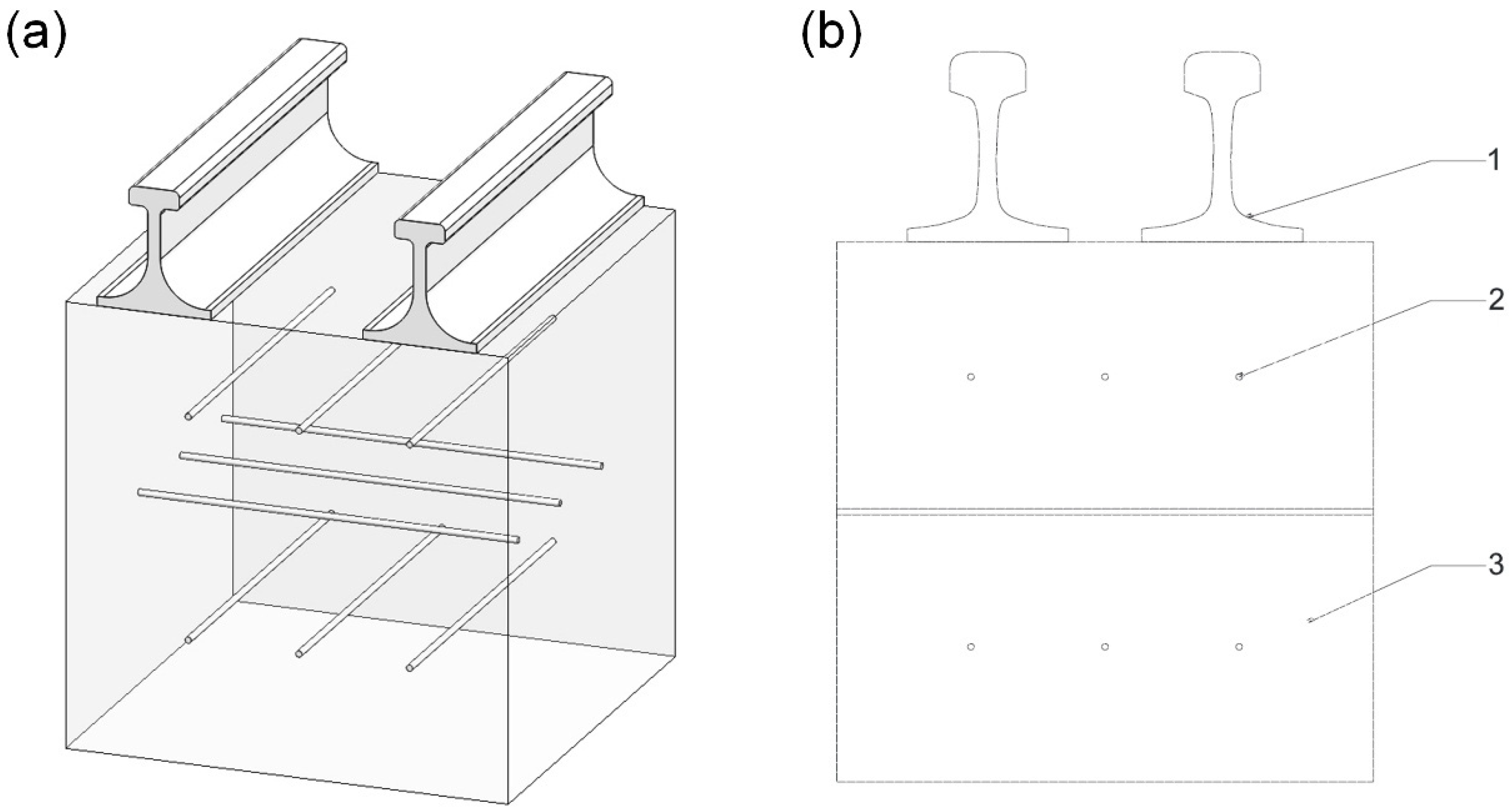
The three-dimensional model depicted in Figure 2 illustrates a rail-reinforced concrete. In this model, two parallel rails are symmetrically distributed across the upper surface of the reinforced concrete, with the spacing between the rails proportionally arranged according to actual rail placement distances in real-world settings. The reinforced concrete specimen is a cubic block, which is evenly divided into three layers parallel to the rail–concrete interface. Each layer contains three evenly distributed steel bars, designed to simulate reinforcement at varying distances from the rail–ground interface. The configuration of the steel bars is such that the axial arrangement of the bars in adjacent layers is orthogonal, and the axial direction of the first layer of steel bars aligns with the length of the rails.
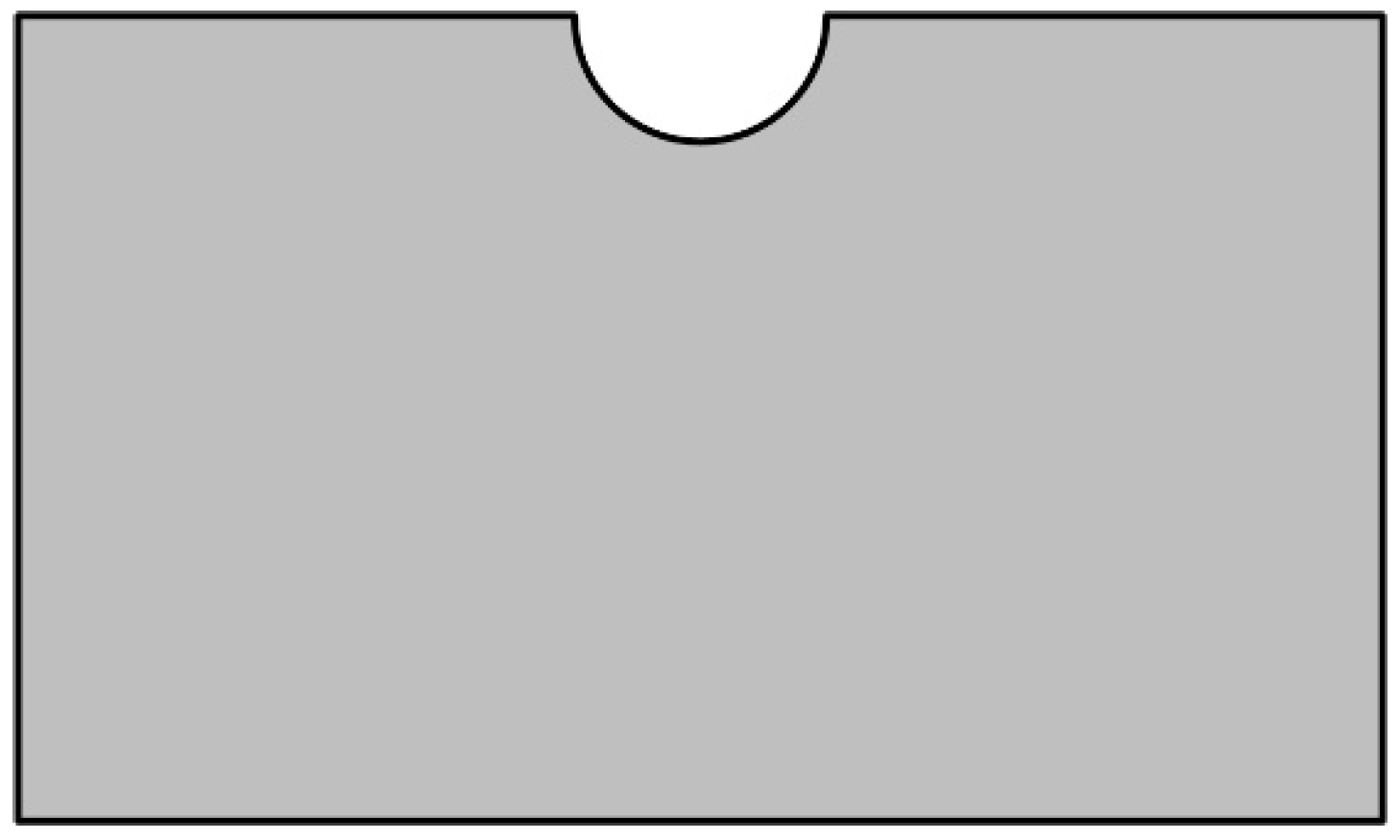
To simplify the simulation process and better present the simulation results, the model focuses on the second layer of reinforcing steel in the rail-reinforced concrete depicted in Figure 2. By using the symmetry plane between the two rails as the cutting plane, the surface contact is simplified to a line contact, thus transforming the three-dimensional model into a two-dimensional visual model. The cross-section is extracted to form the two-dimensional model diagram, as specifically shown in the simplified research model of the reinforced concrete in Figure 3. In this model, the rail-reinforced concrete interface is simplified to the left line boundary, where there exists an oxygen flux relationship with the external environment, while the other boundaries are impermeable to matter flux. The central semicircular arc represents the steel reinforcement interface. Three points are uniformly selected on the surface of the reinforcement to serve as representative locations, designated as the front, middle and back points based on vertical distances from the left boundary. The 2D model captures the primary current distribution, oxygen diffusion, and electrochemical reactions at the steel–concrete interface, which are critical for analyzing stray current corrosion under varying pore water saturation levels. The FEM calculation is conducted for each point under a constant voltage condition to investigate the control mechanisms of pore water saturation on the electrochemical corrosion stages induced by stray currents in the reinforcement.

2.2. Control Equations and Physical Field Descriptions

2.2.1. Distribution of Stray Current in Reinforced Concrete

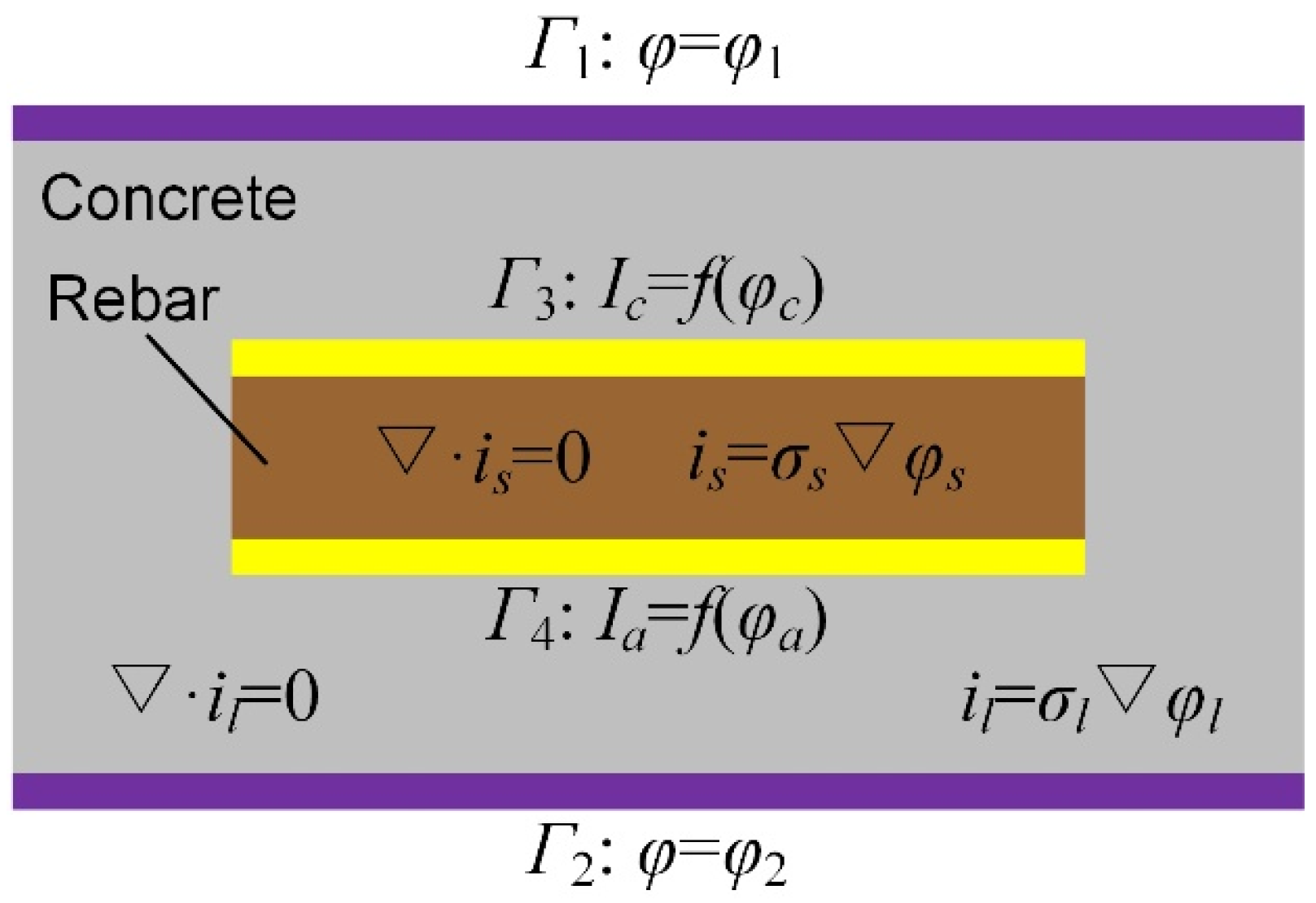
The stray current, distributed in the electrodes and metallic materials, results in potential difference, which will lead to stray current corrosion in anodic areas (Figure 4). The flow of stray currents, whether in electrolytes or metallic materials, adheres to Ohm’s law in the current field [25], which is expressed as follows:
i l = 0
i l = σ l ϕ l
i s = 0
i s = σ s ϕ s

2.2.2. Electrochemical Corrosion of Reinforced Concrete

Under stray current interference, the anode current density and cathode current density of strong polarization can be respectively expressed as [26]
i a = i o exp 2.3 η a A a i 0 10 η a A a
i c = i o exp 2.3 η c A c i 0 10 η c A c
whereas
A a = 2.3 R T 1 α n F
A c = 2.3 R T α n F
Therefore, the kinetic equations governing the electrochemical reactions of the reinforcement, including iron oxidation, redox reactions, and hydrogen evolution, are expressed using the following Tafel equations:
i F e = i 0 , F e 10 η F e A F e
i O 2 = C O 2 C O 2 , r e f i 0 , O 2 10 η O 2 A O 2
i H 2 = i 0 , H 2 10 η H 2 A H 2
The overpotential associated with the electrochemical reaction process of stray current corrosion in reinforced concrete is as follows:
η = ϕ l E e q
The atmospheric oxygen concentration is used as the initial parameter value for the oxygen concentration variable in the rail-reinforced concrete model. It is important to consider that both the diffusion coefficient of oxygen in the concrete and the electrical conductivity of the reinforced concrete are functions related to the degree of pore water saturation in the concrete. The charges required for the electrochemical reactions involving oxygen diffusion are transmitted through the rail-reinforced concrete model. In this process, oxygen diffuses through the porous structure of the concrete to the steel–concrete interface [27], where the reduction reactions occur. The electrochemical corrosion products, exacerbated by stray currents, gradually accumulate and occupy the structural pores of the concrete [28]. Additionally, the rate of oxygen diffusion in the pore water of the concrete structure is significantly lower than its transport rate within the concrete pores [26]. Consequently, the changes in concrete conductivity due to the accumulation of corrosion products over time are neglected [29], and the diffusion of oxygen through the concrete pores and pore water is treated as a state of local equilibrium. Thus, only the diffusion coefficient of oxygen in concrete and the conductivity of concrete as functions of variations in pore water saturation are considered in this work. This assumption is reasonable for steady-state or quasi-steady analyses where pore water saturation changes slowly relative to oxygen diffusion. The relationship between the effective diffusion coefficient and the oxygen concentration gradient in the rail-reinforced concrete model can be described as follows:
D O 2 C O 2 = 0
As a catalyst for electrochemical corrosion reactions, the rate of charge transport governs the overall speed of the electrochemical corrosion process within the structure [30]. When stray currents are present, the electric field generated by potential differences (ϕ) in the concrete necessitates that ions dissolved in the pore solution of the concrete act as charge carriers, ensuring the continuous supply of charge throughout the electrochemical corrosion process. The concentration of dissolved ions in the concrete pore solution is indicative of the concrete’s electrical conductivity, while the pore water saturation in the concrete determines the content of the pore solution [31]. Under a constant dissolution rate, the number of ionic carriers required for charge transport in the pore water depends on the total volume of pore water within the pore structure of the concrete, which is defined by the pore water saturation [32]. Therefore, at steady state, for all spatial points within the rail-reinforced concrete model, it can be assumed that the divergence of the product of concrete conductivity and the electric potential gradient is zero, expressed as follows:
σ c o n ϕ = 0
Considering that there is no transport of ions across the surface of the entire rail-reinforced concrete model, the boundary conditions at the interface of the rail-reinforced concrete can be expressed as follows:
n C O 2 = 0
n ϕ = 0
where C o 2 represents the atmospheric oxygen concentration constant, C o 2 = 8.6 mol/m3.
In the control process of stray current electrochemical corrosion in reinforced concrete under varying pore water saturation levels, corresponding reactions of oxidation, oxygen reduction, and hydrogen evolution occur [33]. Each phase of these reactions impacts the overall current density generated by the electrochemical corrosion process. The current density associated with the iron oxidation reaction can be expressed by the Tafel equation as follows:
i F e x , y = i 0 , F e 10 E F e x , y E F e e q A F e
The reduction in the current density of the redox reaction of steel reinforcement due to a decrease in oxygen concentration can be expressed as follows:
i O 2 x , y = C O 2 C O 2 , r e f i 0 , O 2 10 E F e x , y E O 2 e q A O 2
The current density of the hydrogen evolution reaction at the reinforcement, where oxygen is depleted, can be expressed by the Tafel equation as follows:
i H 2 x , y = i 0 , H 2 10 E F e x , y E H 2 e q A H 2
The total current density at the steel–concrete interface (specifically at the point located at coordinates x and y) can be expressed as follows:
i t o t a l x , y = i O 2 x , y i F e x , y + i H 2 x , y
Then, the potential drop around the entire rebar–concrete structural model is considered to be zero, which is expressed as follows:
ϕ l E e q x , y ϕ x , y = 0
The potential difference at the interface between the steel reinforcement and the concrete, referred to as the polarization potential of the reinforcement, is represented as
E e q x , y = ϕ l ϕ x , y

2.2.3. Effect of Stray Current on Electrochemical Corrosion Process

The corrosion process of the electrode (i.e., the reinforced rebar) in the stray current field is controlled by activation, which is dominated by the amplitude of stray current in the electrolyte and electrode. The above relationship can be mathematically expressed by [34]
i a + i c = n i l
i a + i c = n i s

2.3. Simulation Model of Reinforced Concrete

The multi-physics FEM-based model is generated using COMSOL software, version 6.2. The ‘Electric Currents’ and ‘Secondary Current Distribution’ physics modules in COMSOL have been adopted to describe the rebar, concrete and rebar–concrete interface. The ‘Physics-controlled mesh’ with the element size extra fine was chosen as the sequence type. The electrochemical parameters used for FE simulation are determined through electrochemical test, which will be introduced in detail in Section 2.4. Ohm’s law and current conservation are defined in the physical field coupling, which is achieved through Equations (23) and (24). The kinetics parameters of the reinforced concrete under stray current interferences is given in Table 1.

2.4. Electrochemical Test for Reinforced Concrete Under Stray Current Interference

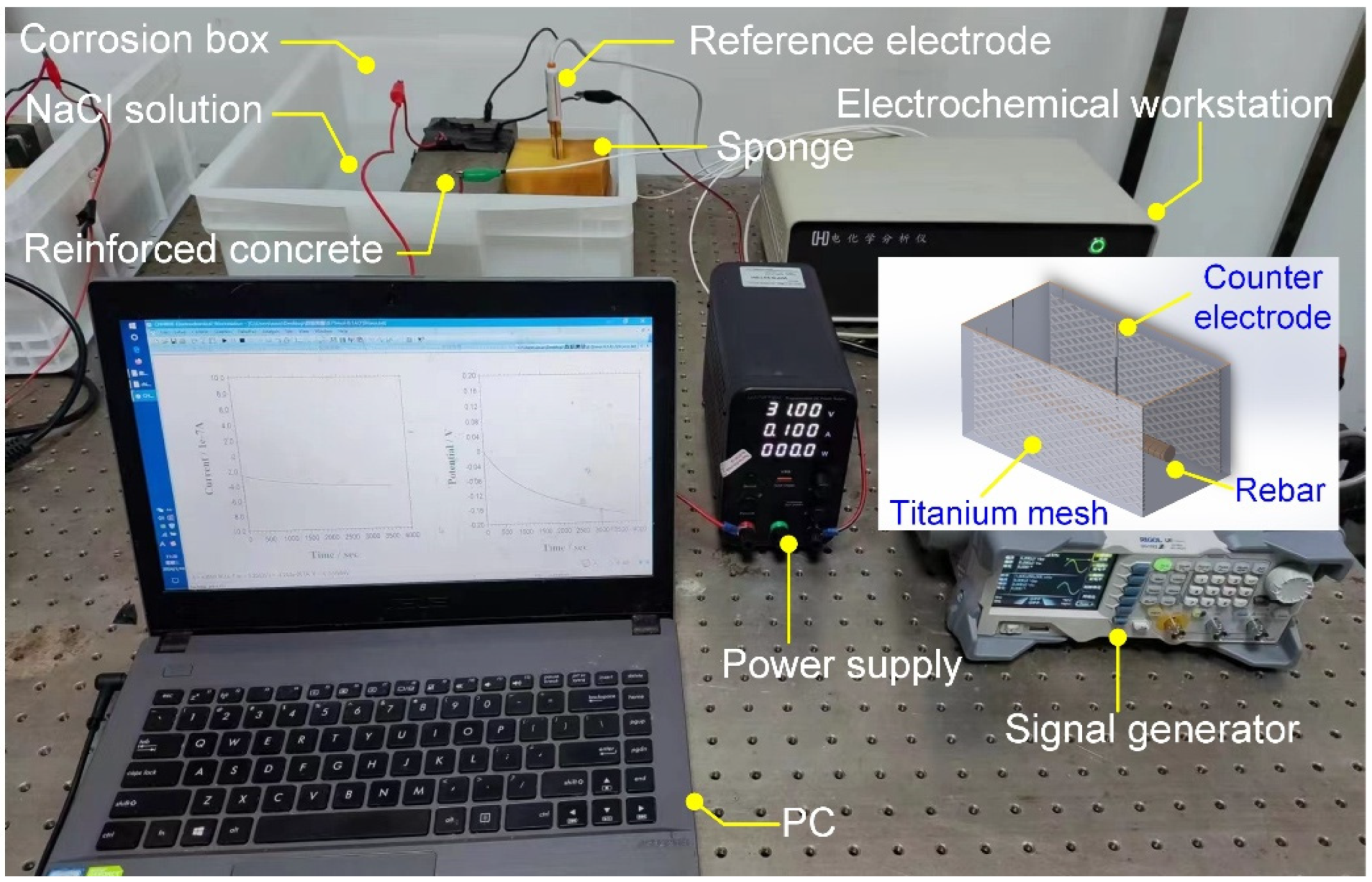
Figure 5 presents the experimental system of reinforced concrete under DC interference. The system consists of a corrosion box, reference electrode, CHI 660e electrochemical workstation, power supply, signal generator, and reinforced concrete. An electrochemical test was conducted through a three-electrode system, in which the graphite electrode was employed as a counter electrode and reference electrode, respectively. A sponge filled with electrolyte solution was used to wrap the reference electrode, simulating the porous environment inside the concrete. Ruthenium–titanium meshes and titanium meshes with a size of 5 mm × 10 mm and dimensions of 50 mm × 200 mm were used as negative and positive electrodes to generate the stray current field in the reinforced concrete. It is well known that rebar suffers from metal loss under the stray current corrosion of reinforced concrete. Hence, a 10 mm diameter threaded steel rebar with a length of 260 mm is used as the reinforced rebar in the concrete specimen. The size of reinforced rebar is chosen according to the dimensions of concrete blocks.

3. FEM-Based Simulation Results

3.1. Effect of Pore Water Saturation on Each Stage of Stray Current Corrosion in Reinforced Concrete

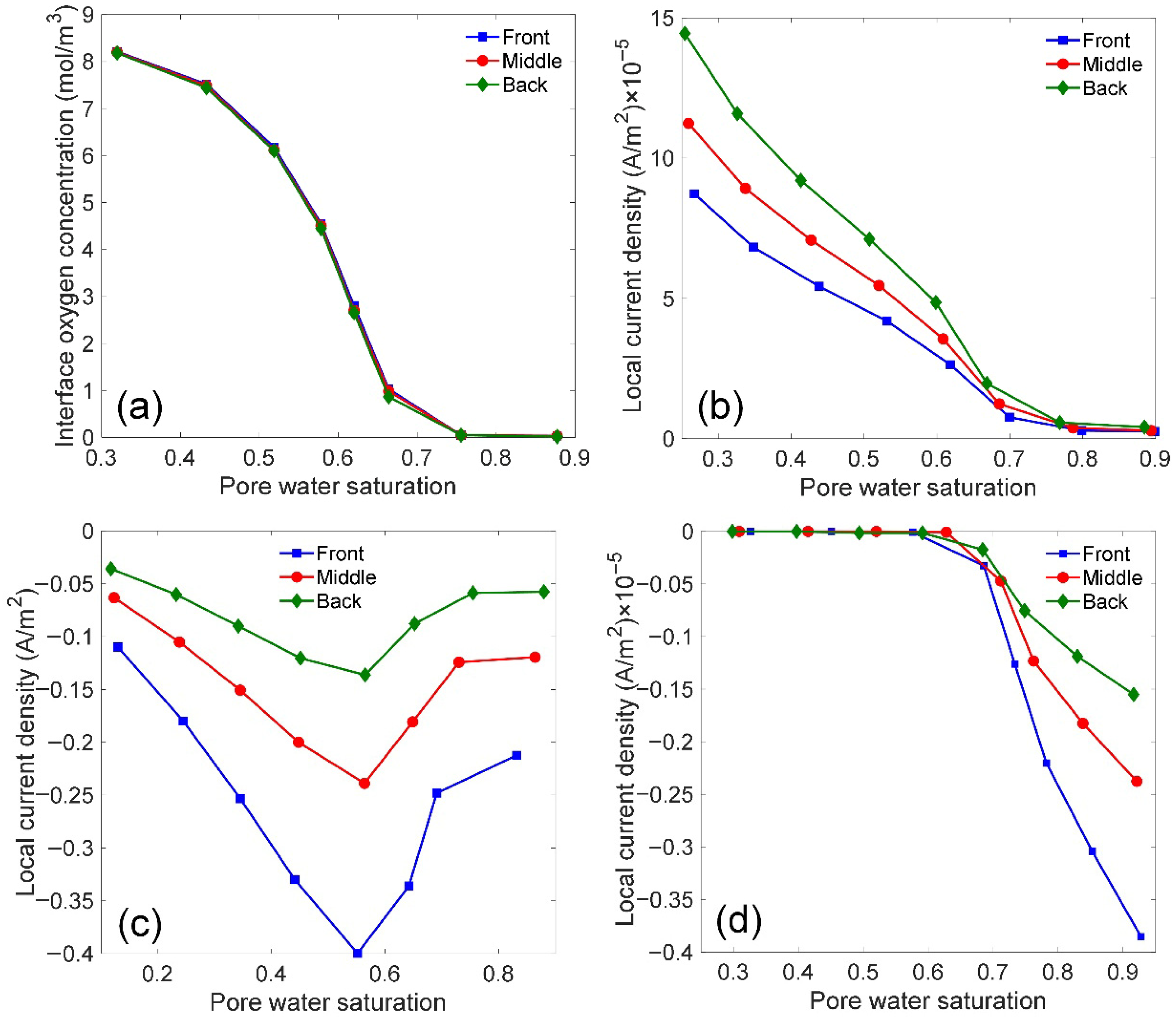
Figure 6a shows the variation in oxygen concentration at reinforcement interface with pore water saturation. When oxygen enters from the left boundary of the model in the external environment, and considering the variation in the diffusion coefficient of oxygen in reinforced concrete as a function of pore water saturation, the concentration of oxygen reaching the surface of the reinforcement also varies under the influence of stray current leakage simulated by a constant voltage source. This variation is attributed to the differences in pore water saturation within the reinforced concrete. It can be seen from Figure 6a that, under a constant voltage of 1 V, the oxygen concentration at the reinforcement interface generally decreases as the pore water saturation increases. Specifically, within the pore water saturation range of 0–0.7, the decrease in oxygen concentration is pronounced, correlating with the significant inhibitory effect on the diffusion coefficient of oxygen within this range. At a pore water saturation of 0.7, the oxygen concentration approaches zero, and within the range of 0.7–1, the oxygen content at the reinforcement interface remains zero. Based on these findings, it can be concluded that when the pore water saturation exceeds 0.7, the electrochemical corrosion phase induced by stray current at the reinforcement interface no longer involves oxygen. Additionally, the oxygen concentrations at the front, middle, and rear points on the reinforcement interface converge towards the same trend in response to changes in pore water saturation, indicating uniform oxygen content across the reinforcement surface [35]. In summary, it can be preliminarily concluded that under the influence of a 1 V voltage, in the pore water saturation range of 0–0.7, iron oxidation and oxygen reduction reactions occur; whereas in the saturation range of 0.7–1, due to near-zero oxygen concentrations, hydrogen evolution reactions take place.
Figure 6b shows the effect of pore water saturation on local current density with iron oxidation. It can be seen that the local current density associated with iron oxidation decreases with increasing pore water saturation and approaches zero at a pore water saturation level of 0.7. This reduction correlates with the absence of oxygen concentration at the reinforcement interface when the pore water saturation reaches 0.7. Consequently, the iron oxidation phase at the reinforcement halts at a pore water saturation of 0.7. Furthermore, due to the varying distances from the voltage source, the current density of iron oxidation decreases more significantly at points further away from the voltage source on the same reinforcement surface as pore water saturation increases. However, the differences in the rates of decrease among the three points diminish with increasing concrete values within the pore water saturation range of 0–0.7, converging towards zero at a saturation of 0.7. This observation indicates that, when a constant voltage of 1 V is applied, the stray current corrosion of the reinforced concrete predominantly facilitates iron oxidation reactions at pore water saturation levels of 0–0.7. Furthermore, on the same reinforcement surface, the greater the distance from the voltage source, the more active are the iron oxidation reactions, while increasing pore water saturation levels exhibit a more pronounced inhibitory effect on the activity of iron oxidation.
Figure 6c shows the effect of pore water saturation on local current density with oxygen reduction. It can be seen that when the pore water saturation is within the range of 0–0.65, initially, the oxidation of iron is not very active, and the insufficient reaction products fail to provide adequate conditions for the reduction of oxygen, resulting in minimal differences in the oxygen reduction rates across the reinforcement interface. However, as the pore water saturation increases and the concentration of oxygen decreases, the corrosion of reinforcement due to stray current transitions gradually from the iron oxidation phase to the oxygen reduction reaction phase. This shift is characterized by an increase in the current density of oxygen reduction as the pore water saturation rises. The electrons supplied by the oxidation of iron, along with the oxidation products, facilitate the activation of the oxygen reduction reaction at the reinforcement interface, reaching its peak activity at a pore water saturation level of 0.65. When the pore water saturation exceeds 0.7, the iron oxidation reaction concludes, leading to a limitation in the reaction products available for the oxygen reduction process. Consequently, the rate of oxygen reduction is also constrained by the increase in pore water saturation, manifested as a decrease in the current density of oxygen reduction. At this point, the corrosion due to stray current in the reinforcement transitions from the oxidation reaction phase into the hydrogen evolution reaction phase. At different positions on the same reinforcement surface, the influence of pore water saturation on the oxygen reduction rate varies significantly with respect to the distance from the voltage source. In the range of pore water saturation from 0 to 0.65, the closer the reinforcement interface is to the voltage source, the greater the pore water saturation, thereby enhancing the rate of oxygen reduction at the concrete–reinforcement interface. Conversely, when the pore water saturation exceeds 0.65, the proximity to the voltage source results in increased pore water saturation, which significantly inhibits the oxygen reduction rate at the reinforcement interface [36]. Thus, it can be concluded that, compared to areas located further from the voltage source, the influence of pore water saturation on the oxygen reduction reactions is more pronounced at the reinforcement interface that is closer to the voltage source.
As illustrated in Figure 6d, within the pore water saturation range of 0–0.65, the presence of certain oxygen conditions at the reinforcement interface allows for the reinforced concrete to undergo active phases of iron oxidation and oxygen reduction reactions in the model simulating stray current from a voltage source. However, as the pore water saturation increases, the content of oxygen at the reinforcement interface decreases and approaches zero. Consequently, when the pore water saturation exceeds 0.65, hydrogen evolution reactions commence at the reinforcement interface. As the pore water saturation increases beyond 0.7, the absence of oxygen conditions enables the hydrogen evolution reaction to enter an active phase. Furthermore, with increased pore water saturation, the reaction current density increases, leading to a more intense reaction. Therefore, within the pore water saturation range of 0.7–1, the primary contributor to stray current corrosion in the reinforced concrete is the hydrogen evolution reaction. Simultaneously, at the same pore water saturation level, the hydrogen evolution reaction is more intense at the reinforcement interface closer to the voltage source compared to that at interfaces further away. Moreover, as pore water saturation increases, the enhancing effect of pore water saturation on the hydrogen evolution reaction becomes increasingly pronounced.
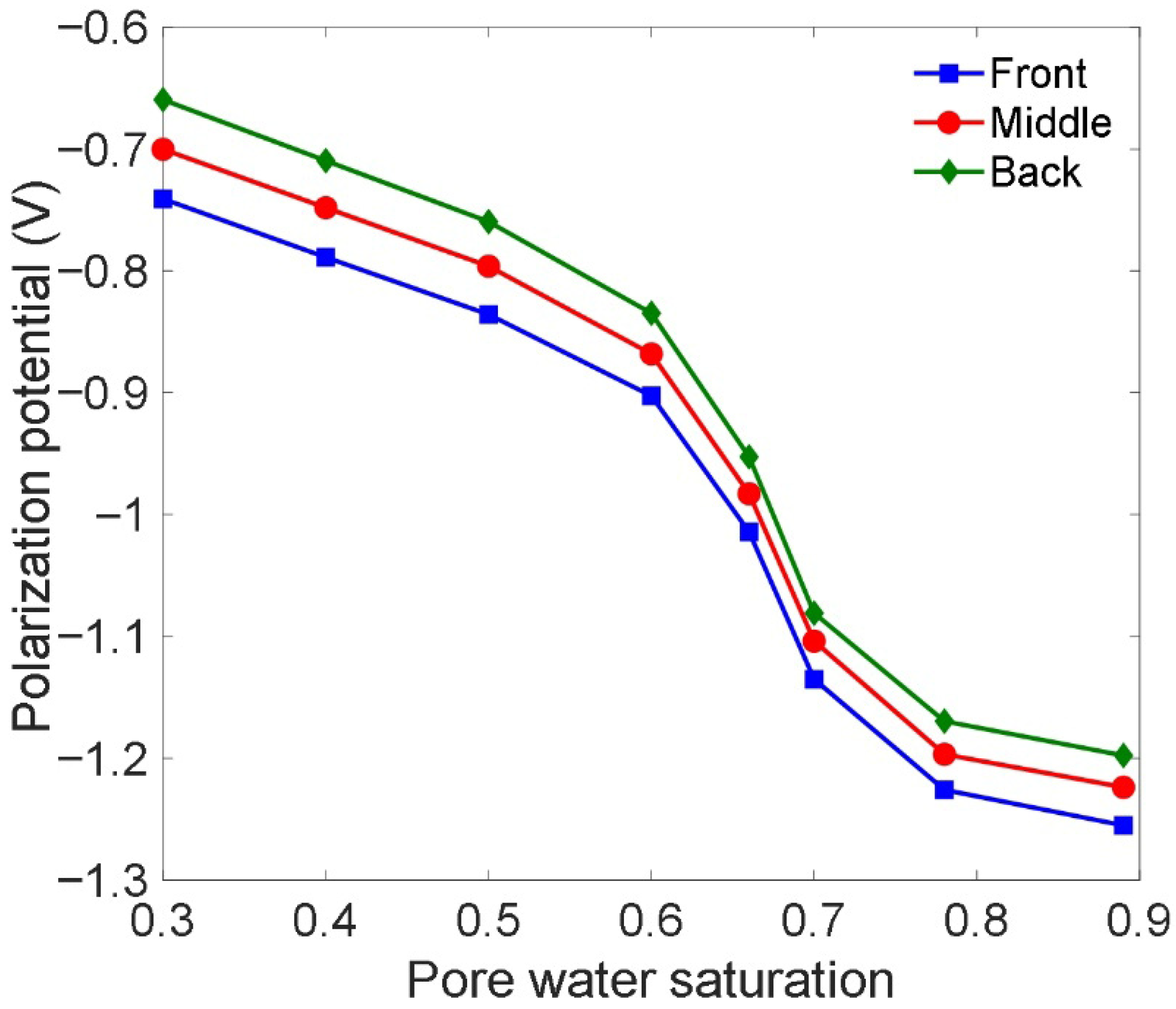
Figure 7 shows the polarization potential of reinforced rebar at different locations. As illustrated in Figure 7, regarding the polarization potential of the steel reinforcement electrodes, when a voltage of 1 V is applied to simulate stray current, the polarization potential at various locations along the reinforcement interface generally exhibits a trend of becoming increasingly negative with the rise in pore water saturation levels. Moreover, the closer the location is to the voltage source, the more pronounced this negative shift becomes. From the changes observed in the polarization potential curves, it can be inferred that the corrosion rate of the reinforcement due to stray current aligns with three levels of pore water saturation ranges: 0–0.6, 0.6–0.7, and 0.7–1. Based on previous analyses of the current density variations with changes in pore water saturation during the stages of iron oxidation, oxygen reduction, and hydrogen evolution reactions, it is evident that within these respective saturation ranges, the dominant reactions are sequentially: iron oxidation, oxygen reduction, and hydrogen evolution.

3.2. Effect of Pore Water Saturation on Stray Current Corrosion Under Varying Applied Voltage

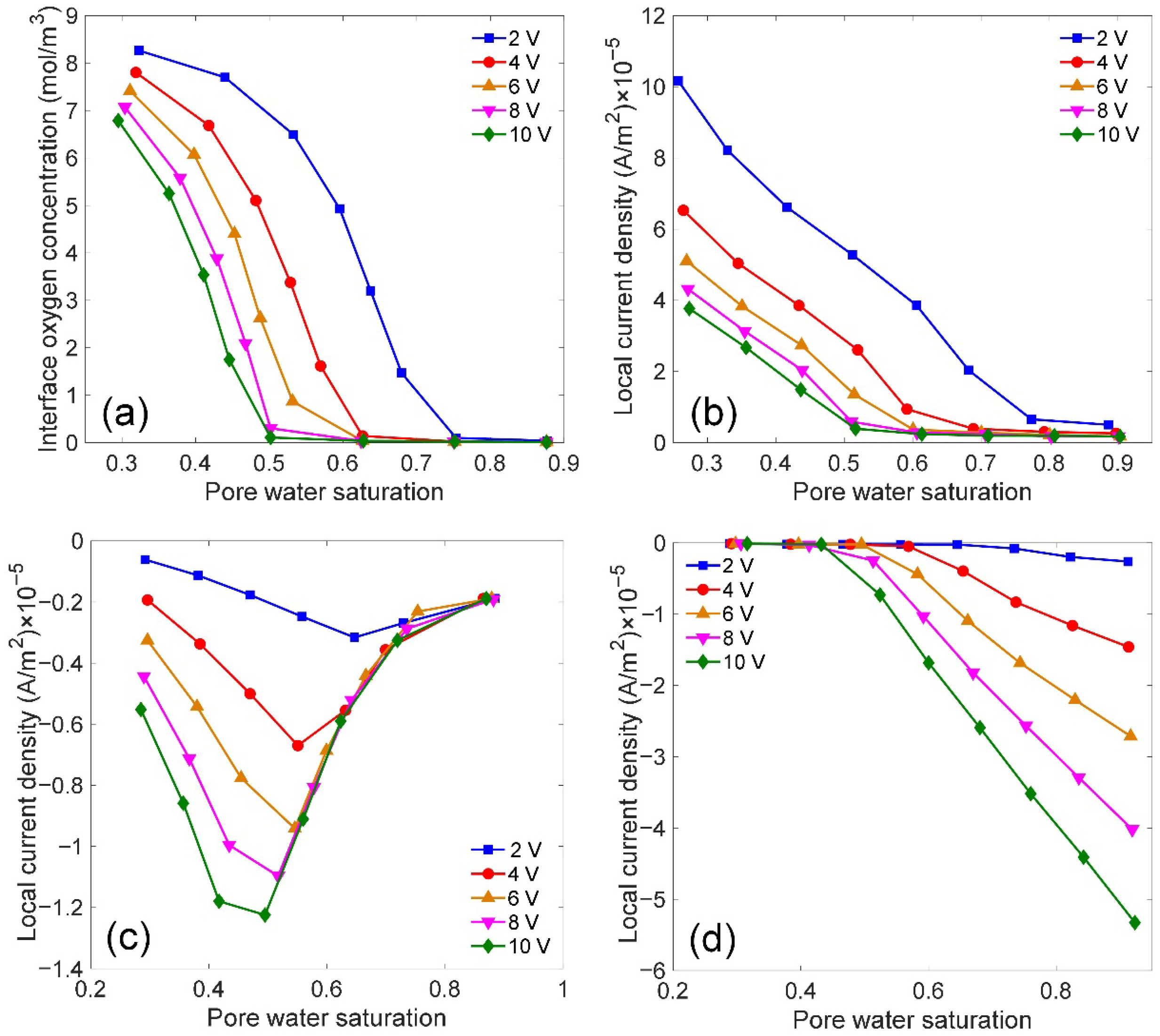
It can be seen from Figure 8a that, as the pore water saturation increases, the trend in oxygen concentration aligns with that observed under a single voltage application. The overall oxygen concentration at the reinforcement interface displays a decreasing trend with additional voltage applications. Once a certain threshold of pore water saturation is reached, the oxygen concentration at the reinforcement interface approaches zero. The difference, however, lies in the fact that, with an increase in the applied voltage, the pore water saturation level at which the oxygen concentration reaches zero decreases. Therefore, it can be concluded preliminarily that within the voltage range of 0 to 10 V applied to reinforced concrete, there exists a certain low range of pore water saturation where the vicinity of the reinforcement remains rich in oxygen. Beyond this range, the reinforced concrete ceases to exchange substances with the external environment, resulting in zero oxygen content. Additionally, as the applied voltage increases, the range of pore water saturation where the reinforcement interface remains rich in oxygen gradually decreases. This implies that the greater the applied voltage, the smaller the pore water saturation value when the oxygen concentration at the reinforcement interface reaches zero [37].
It can be observed from Figure 8b that, under the same pore water saturation conditions, the current density of iron oxidation decreases as the applied voltage increases, influenced by the impact of pore water saturation on the oxygen concentration at the reinforcement interface. When the applied voltage simulating stray current leakage is increased, the pore water saturation at which the iron oxidation reaction current density becomes zero also decreases, matching the pore water saturation value when the oxygen concentration is zero. Thus, the greater the external applied voltage, the smaller the range of pore water saturation where iron oxidation is the dominant phase of the corrosion process, and the threshold pore water saturation controlling the end of the iron oxidation reaction decreases with increasing applied voltage. Consequently, the range of pore water saturation dominated by the hydrogen evolution reaction expands in relative terms. Moreover, under different voltage conditions, the inhibitory effect of pore water saturation on iron oxidation varies, becoming more pronounced with an increase in applied voltage.
Moreover, it can be seen in Figure 8c that within the range of low pore water saturation values, as pore water saturation increases, the reduction current density of oxygen under different applied voltage conditions generally exhibits a gradual increase. Moreover, the greater the externally applied negative voltage, the more rapid the increase in oxygen reduction current density, which is manifested as differences in the activity levels of the oxygen reduction reactions occurring at the reinforcement interface. In the medium range of pore water saturation values, the maximum current density of the oxygen reduction reaction at the reinforcement interface corresponds to different threshold values of pore water saturation under various voltage conditions. As the external voltage increases, the threshold of pore water saturation corresponding to the most active state of the oxygen reduction reaction decreases. Specifically, under the influence of voltage values ranging from 0 to 10 V, the threshold of pore water saturation associated with the most active state of the oxygen reduction reaction falls within the range of 0.45 to 0.65. Furthermore, under each specific voltage condition, within the range from zero pore water saturation to the threshold corresponding to the most active state of the oxygen reduction reaction, the inhibitory effect of pore water saturation on the reduction reaction decreases with increasing voltage. In other words, the larger the voltage, the more pore water saturation promotes the rate of the oxygen reduction reaction. Conversely, within the range from the threshold of pore water saturation corresponding to the most active state of oxygen reduction to 1, the larger the voltage, the more pronounced the inhibitory effect of pore water saturation on the reduction rate, with the oxygen reduction current densities under various voltage conditions converging towards the same curve.
Finally, as illustrated in Figure 8d, when the pore water saturation is below the threshold corresponding to the most active state of the oxygen reduction reaction, the reinforced concrete, under the model simulating stray current from a voltage source, initially undergoes iron oxidation and oxygen reduction reactions due to ample oxygen conditions. This phase is characterized by a transition from predominantly iron oxidation to predominantly oxygen reduction [38]. However, as the pore water saturation increases and the oxygen concentration at the reinforcement interface gradually decreases towards zero, the system enters an active phase. The current density of hydrogen evolution reactions also escalates with increasing pore water saturation, and, with larger applied voltage values, the pore water saturation threshold for initiating the hydrogen evolution reaction diminishes. Within the range of pore water saturation values corresponding to the initiation of hydrogen evolution reactions, under identical pore water saturation conditions, a higher applied voltage results in a greater current density for hydrogen evolution. This phenomenon indicates that within this range, the larger the externally applied voltage, the more pronounced the facilitating effect of pore water saturation on the hydrogen evolution reaction [39]. Consequently, it can be inferred that during this stage of pore water saturation, as the saturation level increases, the rate of hydrogen evolution is increasingly influenced by stray current and pore water saturation. Moreover, with increases in stray current or pore water saturation, the rate of hydrogen evolution also rises.
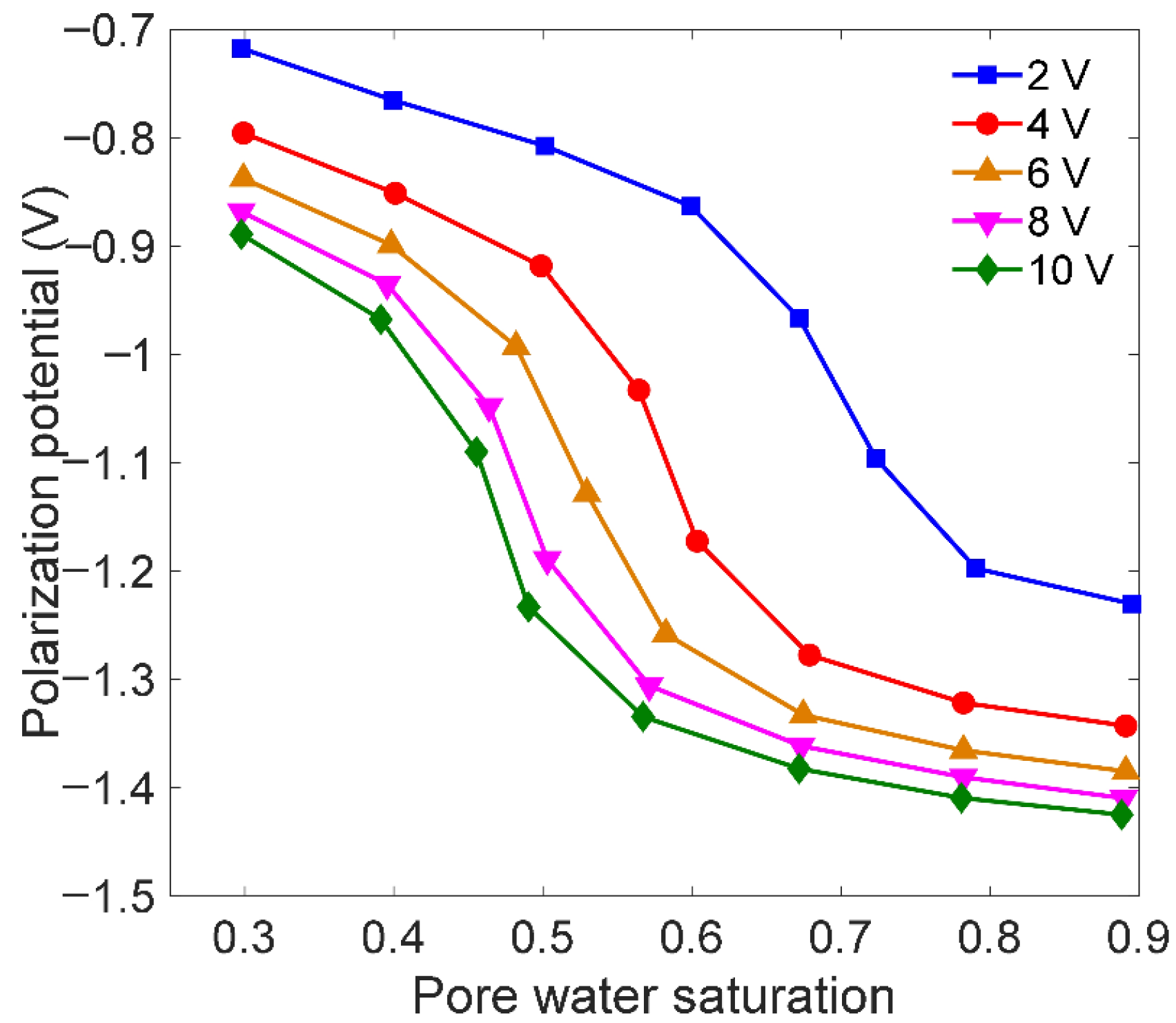
Figure 9 shows the polarization potential with varying pore water saturation values under different applied voltages. It can be observed that as the externally applied voltage increases, the overall potential of the rebar, relative to the reference electrode, increases with the saturation of the pore water. Specifically, the polarization potential of the rebar varies with the degree of pore water saturation and corresponds to three distinct reaction rates. According to the mechanisms of electrochemical corrosion, as the pore water saturation increases, these reaction rates correspond sequentially to the following stages: the resistive control stage, the combined anodic and resistive control stage, and the cathodic control stage [40,41]. Within the voltage range of 0 to 10 V, it is observed that as the voltage increases, there is a leftward shift in the pore water saturation range corresponding to each stage of stray current corrosion control in reinforcements. Specifically, as the applied voltage increases, the pore water saturation range corresponding to the resistive control phase dominated by iron oxidation narrows from 0–0.6 to 0–0.4. The pore water saturation range for the corrosion stage, dominated by oxygen reduction with combined anodic and resistive control, does not contract or expand, but shifts leftward towards lower pore water saturation values as the applied voltage increases. For example, at 2 V, the corresponding pore water saturation range is 0.6–0.7, while at 10 V, it shifts to 0.4–0.5. In contrast to the contraction observed in the pore water saturation range corresponding to the iron oxidation stage, the range for the cathodic-controlled hydrogen evolution reaction stage expands leftward towards lower pore water saturation values as the voltage increases, extending from a range of 0.7–1 at 2 V to 0.5–1 at 10 V.

3.3. Effect of Pore Water Saturation on Stray Current Corrosion with Varying Porosity

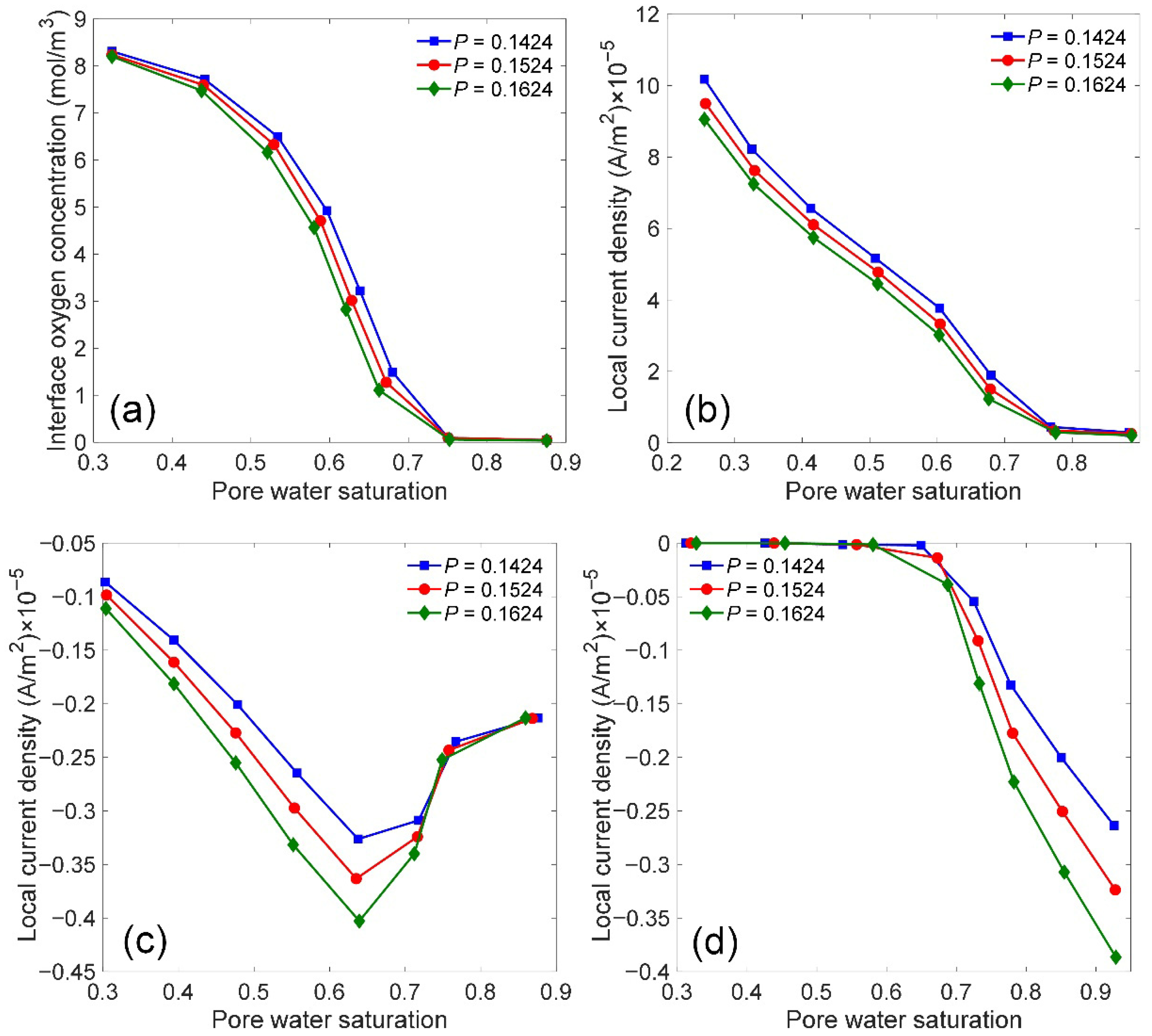
Figure 10a shows the oxygen concentration at the interface of reinforced rebars with the pore water saturation under different porosities. It can be observed that as the value of pore water saturation increases, the oxygen concentration at the rebar interface generally shows a decreasing trend. Specifically, when the pore water saturation is in the range of 0–0.4, the reduction in oxygen concentration at the rebar interface is not significant. However, when the pore water saturation is in the range of 0.4–0.75, the oxygen concentration at the rebar interface decreases at an increasing rate as the saturation increases. In the range of 0.7–1, the oxygen concentration curve ultimately converges to zero with the change in pore water saturation. Additionally, the threshold value of pore water saturation, at which the oxygen concentration curves for different porosities in rebar concrete structural models start to converge, is the same, indicating that porosity has a negligible impact on the convergence threshold value of oxygen concentration [42]. It can be observed from Figure 10b that, within the pore water saturation range of less than 0.75, the overall trend of the current density for the iron oxidation reaction decreases as the pore water saturation increases. This indicates that the higher the pore water saturation, the less active the iron oxidation reaction. Additionally, the larger the porosity, the more significant the inhibitory effect of pore water saturation on the iron oxidation reaction. When the pore water saturation exceeds 0.75, the iron oxidation density curves for different porosity models begin to converge onto a single curve, ultimately approaching zero. Therefore, the impact of porosity is only evident in altering the rate of iron oxidation within the saturation range of less than 0.75, and it does not influence the control threshold of pore water saturation at which the iron oxidation phase terminates.
Similarly to the iron oxidation phase, the oxygen reduction current density increases with the increment of pore water saturation within the range of 0–0.7, as shown in Figure 10c. The larger the porosity, the more active the redox reaction becomes. Moreover, as pore water saturation increases, the promoting effect of pore water saturation on oxygen reduction becomes more pronounced with larger porosity. However, the pore water saturation threshold at which the oxygen reduction phase reaches its most active state does not change with variations in porosity, consistently remaining at a pore water saturation value of 0.7. In addition, it can be observed from Figure 10d that the threshold of pore water saturation at which the hydrogen evolution phase begins does not exhibit significant variation with changes in porosity. When the pore water saturation exceeds 0.7, the corrosion phase dominated by hydrogen evolution reaction commences. This critical saturation point signifies the cessation of the oxygen reduction reaction, which requires dissolved oxygen as a reactant. With oxygen depleted, the cathodic reaction must shift to the hydrogen evolution reaction. The polarization potential of the rebar shows a distinct change in slope or trend around Sw = 0.7–0.75 for the specimens shown in Figure 10a. This inflection point in the potential–saturation curve aligns with the theoretical shift from a mixed control regime to a cathodic-controlled regime governed by hydrogen evolution reaction, as supported by established corrosion mechanisms. As porosity increases, the rate of current density for the hydrogen evolution reaction becomes greater with higher pore water saturation.

4. Specimen Preparation and Testing Equipment

4.1. Preparation of Concrete Specimen

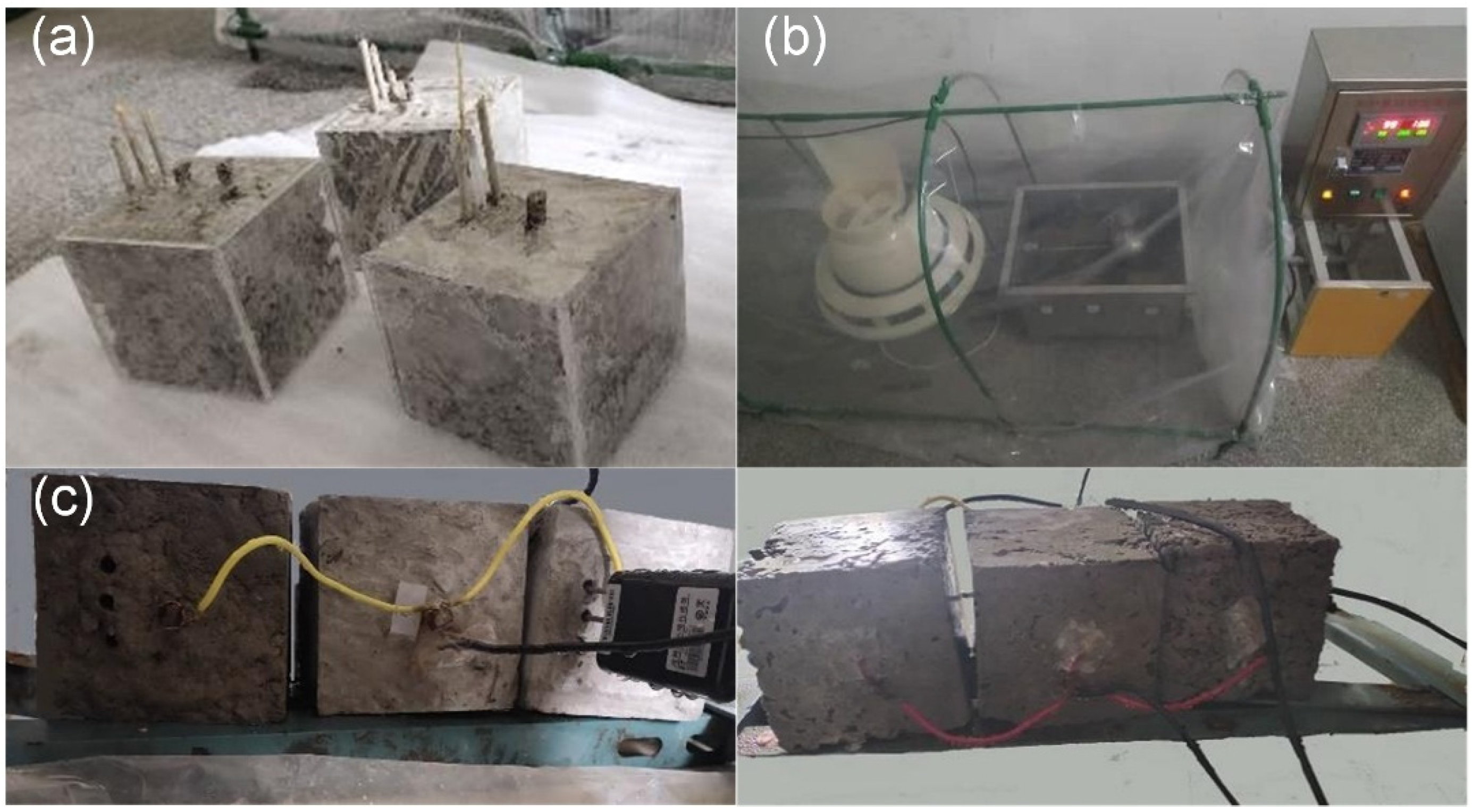
Concrete specimens were prepared in accordance with standard experimental procedures. Figure 11 shows the specimen preparation of reinforced concrete. Three conventional mix designs were employed for the reinforced concrete specimens, with water–cement ratios of 0.40, 0.45, and 0.50; detailed proportions are provided in Table 2. The cement was ordinary Portland cement (P.O 42.5). High-quality natural river sand was used as fine aggregate, and crushed stone with a particle size of 5–10 mm was used as coarse aggregate. Deformed steel bars with a diameter of 8 mm were selected as the working electrode reinforcement in the specimens. In this study, the experimental materials, sand and crushed stone, undergo washing and drying processes to ensure the absence of extraneous impurities. This procedure is crucial to ascertain that the porosity deduced from the distribution of voids within the concrete remains unaffected by foreign materials, thus enabling control over experimental errors. Additionally, prior to the pouring of the reinforced concrete, the reinforcement bars must be cleaned and polished. This step ensures the removal of any surface rust and allows for an accurate weight measurement and recording of the treated bars. The molds, which are essential for shaping the concrete, were selected from PVC materials available online. These are bonded with strong adhesive to form cubes measuring 100 mm × 100 mm × 100 mm. Upon demolding, the reinforced concrete specimens were categorized and labeled based on their water–cement ratios, following the sequence: A0, A1, A2, A3, A4, A5, A6; B0, B1, B2, B3, B4, B5, B6; C0, C1, C2, C3, C4, C5, C6. All labeled specimens were then placed in the apparatus depicted in Figure 11b for standard concrete curing over a period of 28 days. The water reservoir supplies water to the negative ion humidifier, while the temperature and humidity controller manages the standard curing temperature and humidity conditions.
To ensure the accuracy of studies on stray current corrosion in reinforced concrete under varying pore water saturation levels, epoxy resin is used to seal the exposed top and bottom surfaces as well as the side surfaces of the exposed rebar segments in the concrete specimens. The top and bottom ends of the rebar exposure are connected to a constant voltage and constant current source power box, as shown in Figure 11c, to simulate stray current leakage. To determine the parameter values for different pore water saturation levels, a drying oven depicted in Figure 11b is employed. Additionally, multiple specimens with the same pore saturation level are placed in a constant temperature and humidity curing apparatus shown in Figure 11b to stabilize the pore water saturation state. The purpose of the thickened curing enclosure is to prevent moisture evaporation from the environment surrounding the specimens, maintaining consistent temperature and humidity control during the curing process. This setup also ensures the stability of the pore water saturation parameter values, thereby ensuring the stability of the corrosion rate of the reinforced concrete specimens.

4.2. Experimental Monitoring System

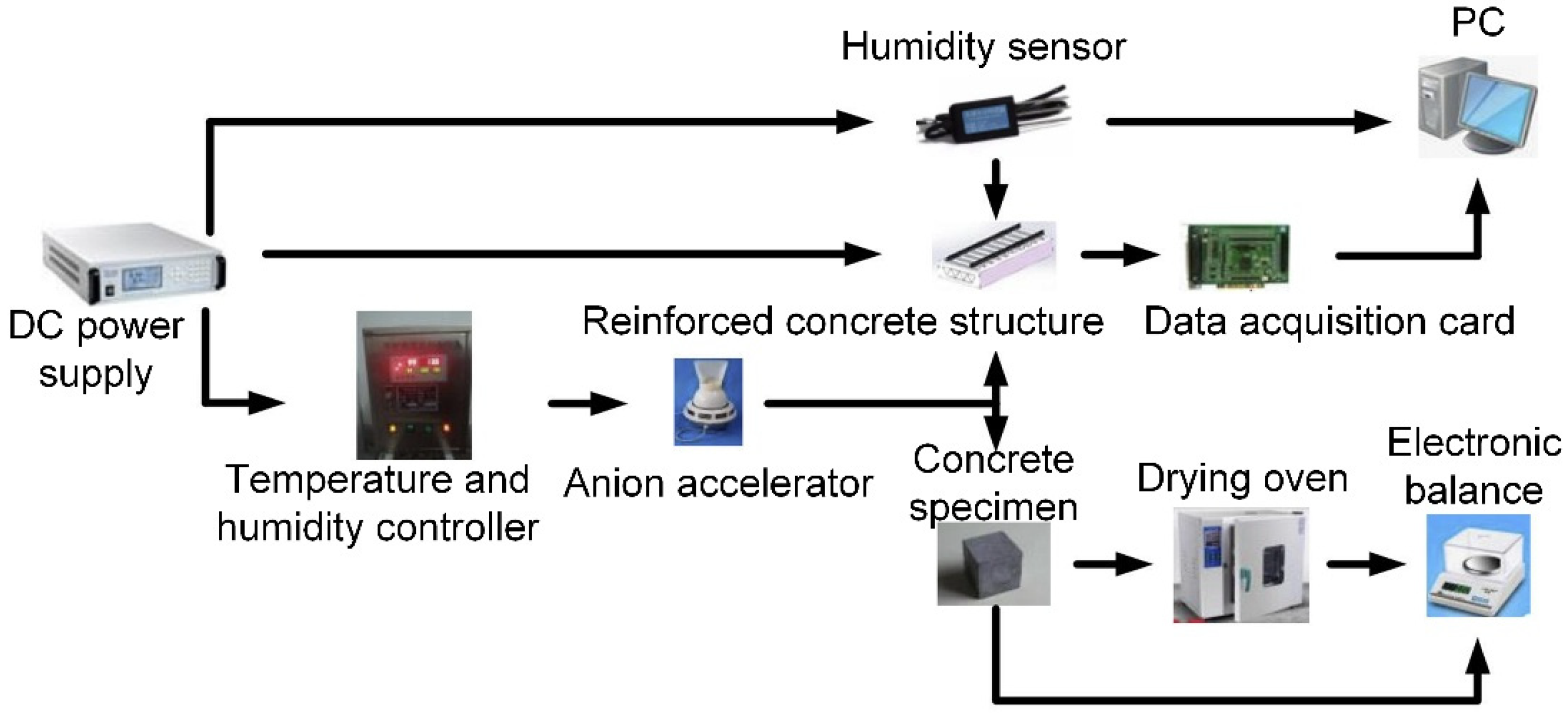
Figure 12 shows the experimental system for stray current corrosion of reinforced concrete with different pore water saturation. In this work, the polarization potential of electrochemical corrosion of reinforced rebars is adopted as the index to measure the electrochemical corrosion polarization potential of specimens in each experimental group after respective temperature and humidity conditions under stray current interference. Five amplitudes of applied voltages, 2 V, 4 V, 6 V, 8 V, and 10 V, are used to simulate different stray current interference levels. The saturated Cu/CuSO4 electrode is used as the reference electrode in the system.

4.3. Experimental Procedures

Experimental procedures are introduced as follows. The cured specimens are grouped as follows: A0, B0, C0—Group 0, A1, B1, C1—Group 1, A2, B2, C2—Group 2, A3, B3, C3—Group 3, A4, B4, C4—Group 4, A5, B5, C5—Group 5, and A6, B6, C6—Group 6. After immersing specimens A0, B0, and C0 in the water tank for full submersion for a duration of 30 d, the saturated weights of specimens A0, B0, and C0 are recorded as Gas, Gbs, and Gcs. The specimens from experimental Groups 1 to 6 were placed in vacuum drying dishes and sequentially positioned in corresponding humidity environments of 20%, 40–50%, 50–60%, 60–70%, 70–80%, and 100% for controlled temperature drying. During the drying process, weight measurements were conducted every 7 days using a high-precision electronic balance. The weight of each specimen in each group was recorded as Gi until the measurement error among the weights of the individual specimens fell below or equaled one one-thousandth. At this point, it can be inferred that the pore water saturation within the concrete structure has reached a relative equilibrium with the corresponding external relative humidity levels. This weighing procedure was repeated until the pore water saturation levels of all experimental specimens in each group balanced with their respective external environmental relative humidity levels. The specimens from experimental Groups 1 to 6 were electrically connected under the respective environmental conditions. After paralleled connections between specimens of the same group, they were linked to the positive and negative terminals of a constant voltage and constant current source. This setup allowed for the application of voltage to simulate stray current leakage by applying a track–ground voltage drop. The electrical connections for each group are illustrated in Figure 11c. Subsequently, the specimens A0, B0, and C0, which had been submerged for 30 days, were placed in a drying oven for 48 h at a temperature of 105 °C. After allowing the specimens to cool completely, their weights were measured using an electronic balance, resulting in weights Ga0, Gb0, and Gc0 for the fully dried specimens. The concrete pore saturation levels for each group of specimens under their respective temperature and humidity conditions were calculated as
S = G i G 0 G s G 0 × 100 %
where S represents the concrete pore water saturation, Gi represents the weight of reinforced concrete specimens in Group i under the corresponding temperature and humidity conditions, G0 represents the weight of the reinforced concrete specimens in Group 0 after complete drying, and Gs represents the weight of reinforced concrete specimens in Group 0 in the state of complete water saturation.

5. Results and Discussion

5.1. Effect of Porosity on the Corrosion Process Controlled by Pore Water Saturation

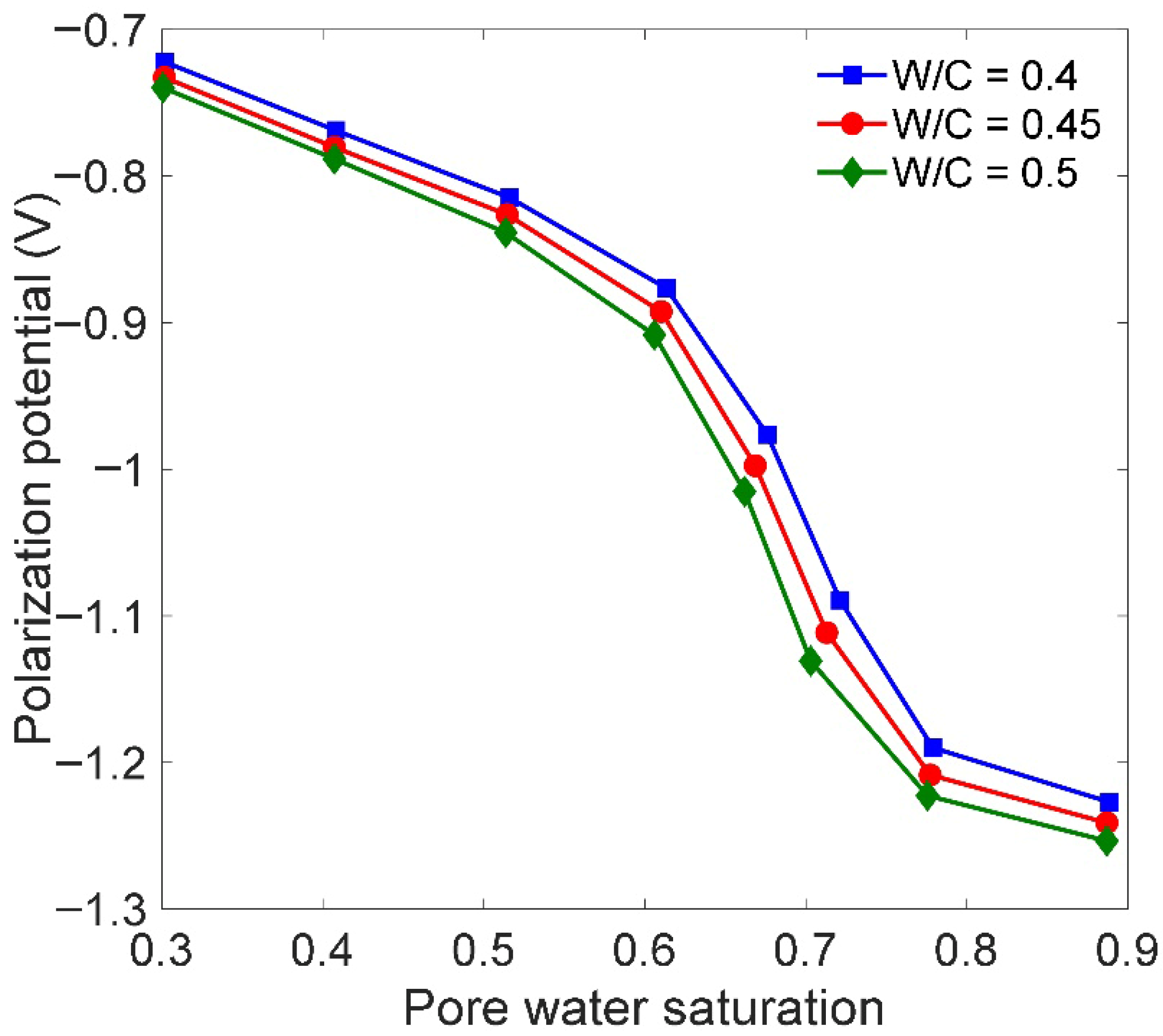
Figure 13 shows the experiments results of polarization potential of reinforced rebar with different porosities. It is clear from Figure 13 that the polarization potential of the reinforced concrete under three different water–cement ratio conditions exhibits a consistent trend with changes in pore water saturation. As pore water saturation increases, the electrode potential of the rebar, relative to the reference electrode, also gradually rises. Furthermore, the rate of change of the polarization electrode potential corresponding to pore water saturation is represented in the figure by the control ranges for the three stages of pore water saturation. The rate of change of the polarization potential is highest within the saturation range of 0.6–0.75; the second highest rate occurs within the saturation range of 0–0.6; and the polarization potential experiences the lowest rate of change in the saturation range of 0.75–1. Additionally, a higher water–cement ratio leads to a greater polarization potential under the influence of pore water saturation, indicating more severe corrosion, which aligns with the patterns observed in the simulation results at a voltage of 2 V.
Under an applied potential of 2 V voltage, the pore water saturation in concrete governs the various stages of electrochemical corrosion in the rebar. This is primarily evident within the pore water saturation range of 0–0.6, where the predominant phase of electrochemical corrosion is the oxidation reaction of iron. During this stage, the rate of iron oxidation is constrained by the concentration of oxygen, resulting in a resistive control. Once the progression of the iron oxidation reaction provides sufficient reactants for the oxygen reduction reaction, active oxygen reduction occurs within the saturation range of 0.6–0.70, characterized by a combination of anodic control and resistive control. As oxygen is consumed, the reduction reaction becomes impeded, leading to the onset of hydrogen evolution at a pore water saturation of 0.70, which enters an active phase at a saturation of 0.75, demonstrating that the electrochemical corrosion is predominantly under cathodic control, driven by the hydrogen evolution reaction. Furthermore, as pore water saturation increases, a higher water–cement ratio in the concrete structure significantly enhances the role of pore water saturation in inhibiting the rate of iron oxidation while promoting the rates of oxygen reduction and hydrogen evolution reactions. Consequently, with increasing pore water saturation, reinforced concrete with a greater water–cement ratio exhibits a more pronounced deviation of the polarization potential from the natural corrosion potential, indicating a more severe corrosion condition.

5.2. Effect of Stray Current on the Pore Water Saturation Threshold Under Rebar Corrosion

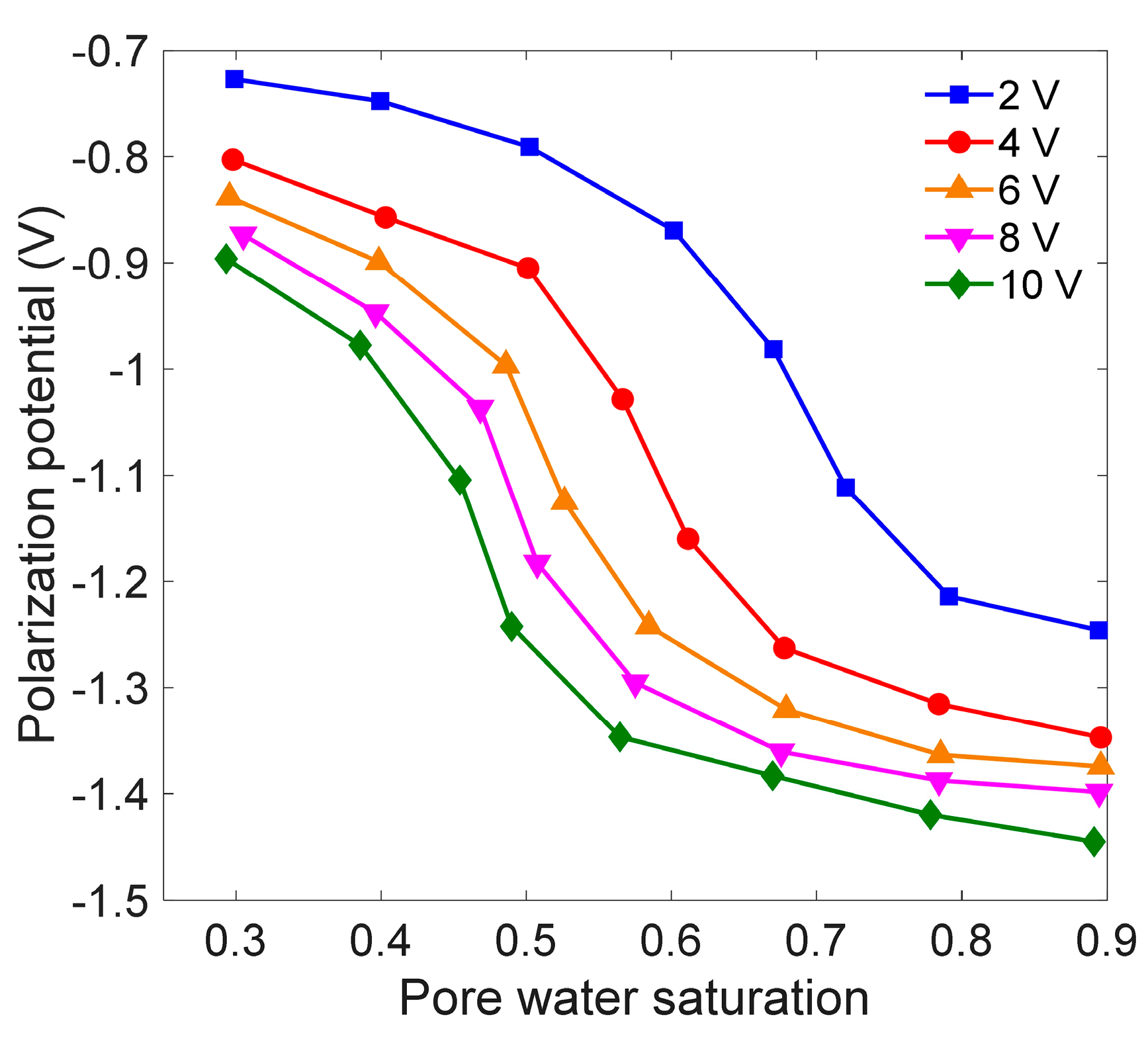
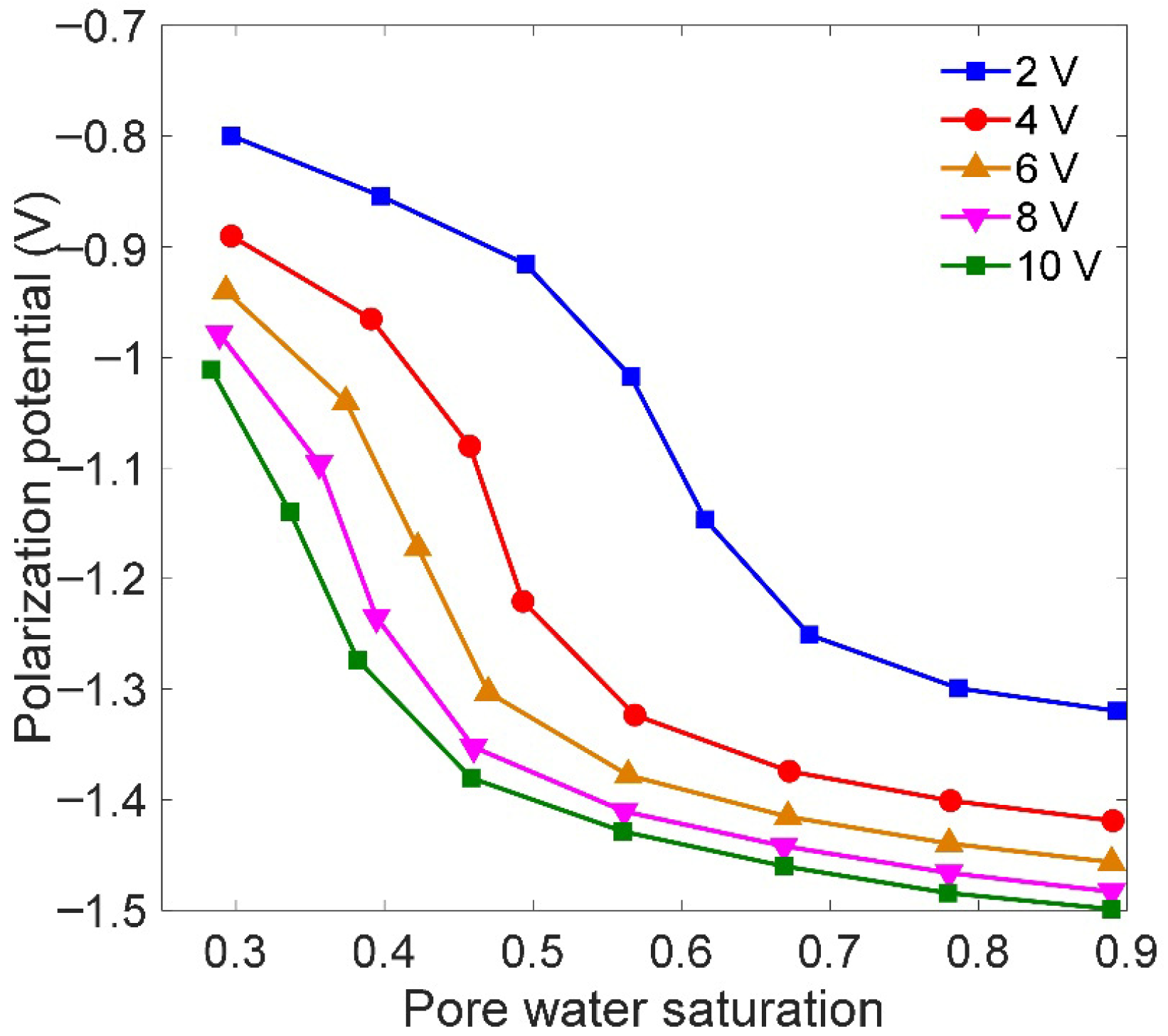
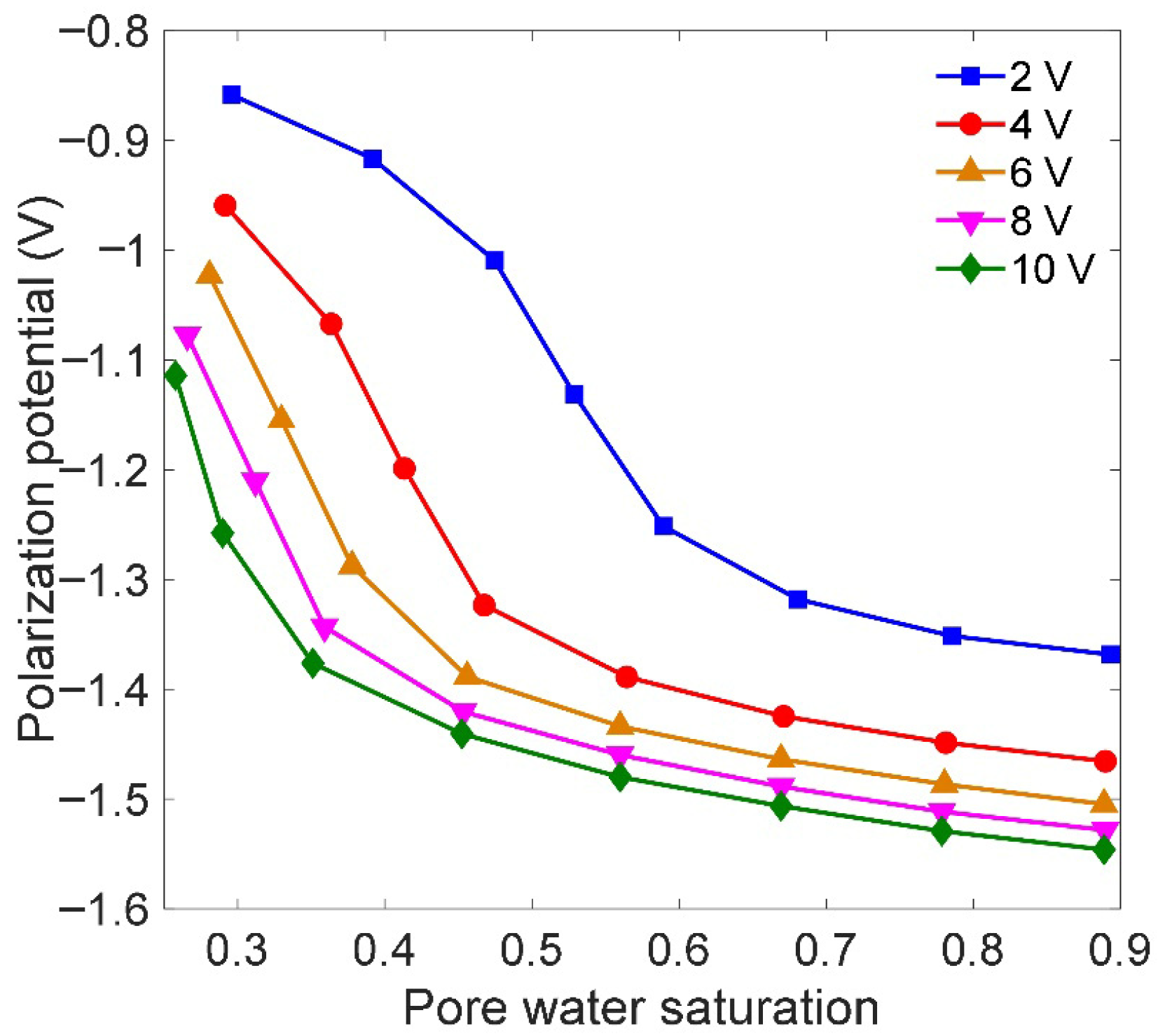
Figure 14, Figure 15 and Figure 16 show the experimental results of the polarization potential of reinforced rebars with different water–cement ratios, with Figure 14 representing group A, Figure 15 representing group B, and Figure 16 representing group C. The results summarized in Figure 14, Figure 15 and Figure 16 indicate that as the voltage increases, the control ranges of pore water saturation corresponding to the three reaction rates progressively decrease, exhibiting both a leftward shift and an expansion trend. Specifically, with the increase in externally applied voltage, the pore water saturation range associated with the iron oxidation-dominated corrosion phase in specimens with three different water–cement ratios begins to contract, with the threshold for pore water saturation at the termination of the iron oxidation process becoming smaller as the voltage rises. Additionally, as the voltage increases, the control range of pore water saturation for the oxygen reduction-dominated corrosion process shifts leftward towards lower pore water saturation values, while maintaining a constant range length. The control range corresponding to the hydrogen evolution-dominated corrosion process is influenced by the pore water saturation ranges of the preceding iron oxidation and oxygen reduction phases, causing the left critical threshold for pore water saturation to expand towards lower saturation levels, thereby increasing the overall control length.

5.3. Discussions

The study demonstrates that pore water saturation directly affects the electrochemical corrosion rates. Understanding these effects can improve design and maintenance strategies, enhancing the resilience of reinforced concrete against stray current corrosion. Variations in applied voltage alter the stages of corrosion control (resistive, anodic, and cathodic), enabling more accurate predictions of corrosion behavior under different conditions, thus improving structural resilience. By adapting infrastructure designs to account for these environmental conditions, resilience can be significantly improved, making structures more robust in varying climates. The use of FEM-based simulations provides predictive insights into corrosion behavior under different saturation levels and voltage conditions. This information enables engineers to anticipate potential vulnerabilities and reinforce those areas, thereby enhancing the overall resilience of the infrastructure. Moreover, it should be pointed out that the 2D simplification neglects three-dimensional edge effects and assumes uniform conditions along the ignored axis. This may underestimate localized corrosion phenomena at rail ends or near structural discontinuities. However, for the central region of the tunnel lining where conditions are relatively uniform, the 2D approach provides a valid and computationally efficient representation of the dominant corrosion mechanisms. In addition to this, the simulation model employs local equilibria, which may not hold in rapidly changing environment or in very low-permeability concrete. Similarly, time-dependent changes in concrete conductivity due to corrosion product accumulation are neglected in this model. This simplification is justified for short- to medium-term simulations where conductivity changes are minimal, but for long-term corrosion assessment, such changes could alter current distribution and corrosion rates. These assumptions allow for a focused analysis on the role of pore water saturation while maintaining model tractability.
The experimental results presented in Section 5.1 and Section 5.2 demonstrate that pore water saturation critically governs the electrochemical corrosion stages of reinforced concrete under stray current interference [43], with both concrete porosity (via water–cement ratio) and applied voltage significantly modulating these effects. As shown in Section 5.1, higher water–cement ratios increase porosity, which intensifies the influence of pore water saturation, leading to more severe corrosion as evidenced by greater polarization potential deviations [44]; specifically, corrosion progresses through distinct controlled saturation stages—iron oxidation (0–0.6 saturation), oxygen reduction (0.6–0.75), and hydrogen evolution (0.75–1)—with porosity enhancing the inhibitory effect on iron oxidation while promoting oxygen reduction and hydrogen evolution. Section 5.2 further reveals that increasing applied voltage shifts these saturation thresholds leftward to lower values, contracting the range for iron oxidation, shifting the oxygen reduction range without length change, and expanding the hydrogen evolution range, thereby accelerating the transition between corrosion mechanisms and exacerbating damage, especially in higher-porosity specimens [45].
Moreover, the identification of saturation thresholds that affect corrosion phases helps in predicting and mitigating damage, thus extending the service life of infrastructure components. Managing pore water saturation levels can significantly control electrochemical corrosion, thereby prolonging the lifespan of reinforced concrete. By controlling pore water saturation, the electrochemical corrosion phases can be managed more effectively, allowing for prolonged durability of the structures. The ability to manage and adjust saturation levels helps in delaying the onset of severe corrosion.

6. Conclusions

In this work, we conducted a study on the effect of pore water saturation on the stray current corrosion of reinforced concrete through simulation and experimental measurement. The objective of this study is to improve the service resilience and extend the service life of subway shield tunnel by understanding the impact of different pore water saturation levels on stray current corrosion processes in reinforced concrete. The main findings and conclusions of this work are as follows.
A FEM-based model was proposed in this work with the structure of rail-reinforced concrete, incorporating the variation laws of concrete conductivity and oxygen diffusion coefficient with respect to pore water saturation. Under certain voltage conditions, pore water saturation affects the control mechanisms of stray current corrosion in reinforcing steel, which include resistive control as the dominant mode, a combination of resistive and anodic control, and cathodic control as the dominant mode. As the applied voltage increased from 2 V to 10 V, the pore water saturation range for iron oxidation shrank from 0–0.6 to 0–0.4, while the hydrogen evolution range expanded from 0.7–1 to 0.5–1. As the water–cement ratio increases, the specimens exhibit greater porosity under the same voltage conditions. With the increase in pore water saturation, the severity of corrosion damage to the reinforced concrete becomes more pronounced.
Under conventional concrete mix conditions, the influence of pore water saturation on the electrochemical corrosion phases of reinforced concrete is generally not affected by the changes in porosity caused by the concrete’s water–cement ratio. However, the threshold values for controlling the reactions at each corrosion phase are significantly impacted by stray currents. Therefore, in areas where stray currents are present, it is imperative to manage pore water saturation levels as much as possible to effectively control the electrochemical corrosion state of the entire reinforced concrete. This approach holds significant importance in reducing the overall damage to the track structure, thereby extending the operational lifespan of the railway and minimizing associated costs.
The FEM model uses a simplified 2D representation derived from a 3D structure, which may not fully capture the complex three-dimensional distribution of stray currents and pore water in real-world shield tunnel environments. In addition, the experiments were conducted under controlled laboratory settings with constant humidity and temperature, which may not fully replicate the dynamic and variable environmental conditions present in actual subway tunnels. Given these limitations, future work will concentrate on the development of advanced 3D multi-physics computing models and the inclusion of real environmental exposure, in which transient diffusion and evolving conductivity will be incorporated to capture long-term degradation more accurately. Given the current limitations of single-indicator evaluation criteria for corrosion assessment, future research will incorporate additional metrics such as corrosion current density and metal loss to supporting the findings of this work.
Based on the findings of this work, monitoring and controlling humidity around tunnel structures should be prioritized in stray current-prone zones. Designers should consider using concrete with optimized porosity and moisture resistance in high-risk sections to delay the onset of hydrogen evolution corrosion. These strategies collectively extend service life, enhance structural safety, and reduce long-term maintenance costs for urban rail transit systems.

Author Contributions

Methodology, C.W.; Software, J.Z. and C.Z.; Validation, S.X. and Y.Z.; Formal analysis, F.X. and Y.Z.; Investigation, Y.W. and J.Z.; Resources, S.X.; Data curation, C.Z.; Writing—original draft, F.X. and C.W.; Writing—review & editing, S.X.; Visualization, Y.W.; Funding acquisition, C.W. All authors have read and agreed to the published version of the manuscript.

Funding

The authors acknowledge the Natural Science Foundation of China (52504175) (52174153), the Project supported by Shanghai Key Laboratory of Rail Infrastructure Durability and System Safety (R202402), the Natural Science Foundation of Jiangsu Province (BK20221120), and the Excellent Young Backbone Teacher Funding Project of ‘Qinglan Project’ in Jiangsu Province’s Universities (Su Teacher Letter [2024] No. 14) for their financial support of this research.

Institutional Review Board Statement

Not applicable.

Informed Consent Statement

Not applicable.

Data Availability Statement

The datasets presented in this article are not readily available because the data are part of an ongoing study.

Conflicts of Interest

Author Chenglin Zhao was employed by the company Northeast Branch of China Resources Power Holdings Co., Ltd. The remaining authors declare that the research was conducted in the absence of any commercial or financial relationships that could be construed as a potential conflict of interest.

References

  1. Lai, Y.; Wang, Y.; Cheng, J.; Chen, X.; Liu, Q. Review of constraints and critical success factors of developing urban underground space. Undergr. Space 2023, 12, 137–155. [Google Scholar] [CrossRef]
  2. Yang, Y.; Liao, S.; Liu, M.; Wu, D.; Pan, W.; Li, H. A new construction method for metro stations in dense urban areas in Shanghai soft ground: Open-cut shafts combined with quasi-rectangular jacking boxes. Tunn. Undergr. Space Technol. 2022, 125, 104530. [Google Scholar] [CrossRef]
  3. Zhu, Y.; Zhu, Y.; Chen, J.E.J.; Zhai, Y.; Min, R.; Tang, B.; Huang, X. Synchronous shield tunnelling technology combining advancement and segment fabrication: Principle, verification and application. Undergr. Space 2023, 13, 23–47. [Google Scholar] [CrossRef]
  4. Ribeiro, J.K.; Borille, G.M.; Caetano, M.; da Silva, E.J. Repurposing urban air mobility infrastructure for sustainable transportation in metropolitan cities: A case study of vertiports in São Paulo, Brazil. Sustain. Cities Soc. 2023, 98, 104797. [Google Scholar] [CrossRef]
  5. Zhang, D.; Gan, B.; Huang, Z.; Zhu, R.; Zhang, W. Resilience of shield tunnel subjected to adjacent construction disturbances: A review. Undergr. Space 2025, 25, 368–386. [Google Scholar] [CrossRef]
  6. Gong, C.; Cheng, M.; Ge, Y.; Song, J.; Zhou, Z. Leakage mechanisms of an operational underwater shield tunnel and countermeasures: A case study. Tunn. Undergr. Space Technol. 2024, 152, 105892. [Google Scholar] [CrossRef]
  7. Wang, S.; Gong, F.; Wang, Z.; Peng, Y.; Zhang, H.; Huang, B.; Zhang, H.; Maekawa, K. Experiment and multi-field simulation on the current efficiency during accelerated corrosion. J. Build. Eng. 2025, 116, 114564. [Google Scholar] [CrossRef]
  8. Wang, C.; Wang, Y.; Xu, S.; Yang, X. Study of Dynamic Half-Cell Potential Signal of Rock Bolt Under Stray Current Interference Based on Probabilistic-Based Method. Constr. Build. Mater. 2022, 335, 127481. [Google Scholar] [CrossRef]
  9. Wang, C.; Li, W.; Wang, Y.; Yang, X.; Xu, S. Development of a novel process of corrosion rate estimation of steel under stray current interference: Q235A pipe steel as an example. Russ. J. Electrochem. 2021, 57, 448–461. [Google Scholar] [CrossRef]
  10. Wang, C.; Xu, S.; Wang, Y.; Song, A.; Ding, W.; Li, W.; Qin, G. Towards understanding hydrogen embrittlement under stray current interference through a quantitative method based on multifractal characteristics. J. Mater. Sci. Technol. 2026, 255, 270–286. [Google Scholar] [CrossRef]
  11. Vranešić, K.; Lakušić, S.; Serdar, M.; Alar, V. Detrimental effect of stray current on rails and fastening systems in urban railway tracks. Constr. Build. Mater. 2023, 400, 132645. [Google Scholar] [CrossRef]
  12. Lapiro, I.; Eid, R.; Kovler, K. Passive protection of reinforced concrete columns against stray currents and chloride attack. Constr. Build. Mater. 2025, 472, 140814. [Google Scholar] [CrossRef]
  13. Susanto, A.; Koleva, D.A.; Copuroglu, O.; van Beek, K.; van Breugel, K. Mechanical, electrical and microstructural properties of cement-based materials in conditions of stray current flow. J. Adv. Concr. Technol. 2013, 11, 119134. [Google Scholar] [CrossRef]
  14. Chen, Z.; Gao, L.; Cai, X.; Zhong, Y.; Zhang, Y. Evolution of steel-mortar interface undergoing stray current. Constr. Build. Mater. 2023, 409, 134117. [Google Scholar] [CrossRef]
  15. Chen, Y.; Chen, M.; Chen, R.; Kang, X. Stray current induced ITZ effect on chloride transport in concrete. Constr. Build. Mater. 2023, 409, 133759. [Google Scholar] [CrossRef]
  16. Liu, H.; Li, K.; Li, Y.; Liu, S.; Dong, Z.; Cui, H.; Liu, W. Corrosion behavior of steel fiber reinforced concrete under ambipolar stray current interference. Constr. Build. Mater. 2024, 411, 134302. [Google Scholar] [CrossRef]
  17. Wang, C.; Li, W.; Xin, G.; Wang, Y.; Yang, X.; Guo, Z. Experimental research examining the stray current corrosion of rock bolts in the DC transit system. Exp. Tech. 2020, 44, 137–148. [Google Scholar] [CrossRef]
  18. Chu, H.; Wang, T.; Guo, M.; Zhu, Z.; Jiang, L.; Pan, C.; Liu, T. Effect of stray current on stability of bound chlorides in chloride and sulfate coexistence environment. Constr. Build. Mater. 2019, 194, 247–256. [Google Scholar] [CrossRef]
  19. Wang, C.; Fang, Z.; Zhuang, X.; Chen, Q.; Han, K.; Zhou, S. External sulfate attack on cement-based materials in underground structures with the stray current. Constr. Build. Mater. 2025, 465, 140284. [Google Scholar] [CrossRef]
  20. Chen, Q.; Zhang, Q.; Zhu, T.; Li, B.; Liu, W.; Yang, H.; Xu, J.; Jiang, Z.; Zhu, H. Coupling effect of concrete cracks and stray current on chloride-induced corrosion of rebar. Constr. Build. Mater. 2024, 449, 138403. [Google Scholar] [CrossRef]
  21. Li, G.; Wang, B.; Panesar, D.K.; Chen, Q. Electrochemical impedance spectroscopy: Effects of stray current and sulfate exposure on rubber powder mortar. Cem. Concr. Compos. 2024, 152, 105615. [Google Scholar] [CrossRef]
  22. Tang, K. Corrosion of discontinuous reinforcement in concrete subject to railway stray alternating current. Cem. Concr. Compos. 2020, 109, 103552. [Google Scholar] [CrossRef]
  23. Bao, H.; Wang, R.; Yang, Y.; Wang, Q.; Xu, G.; Saafi, M.; Ye, J. Effect of pore water saturation on the supercritical carbonation of cementitious materials. Mater. Struct. 2025, 58, 215. [Google Scholar] [CrossRef]
  24. Zhuang, Z.; Mu, S.; Guo, Z.; Liu, G.; Zhang, J.; Miao, C. Diffusion-reaction models for concrete exposed to chloride-sulfate attack based on porosity and water saturation. Cem. Concr. Compos. 2023, 146, 105378. [Google Scholar] [CrossRef]
  25. Wang, S.; Cao, J.; Gong, F.; Peng, Y.; Wang, Z.; Zhao, Y.; Zeng, B. Insights on the multiple ions distribution in concrete under stray current: From experiments to multi-field simulation. J. Build. Eng. 2024, 98, 111502. [Google Scholar] [CrossRef]
  26. Li, S.; Jin, Z.; Chang, H.; Gao, Y. Oxygen diffusion into unsaturated seawater and sea sand concrete and its effect on non-uniform corrosion of steel bars. J. Build. Eng. 2024, 84, 108665. [Google Scholar] [CrossRef]
  27. Wang, C.; Hassanein, M.F.; Li, M. Numerical simulation of oil and gas pipeline corrosion based on single-or coupled-factor modeling: A critical review. Nat. Gas Ind. B 2023, 10, 445–465. [Google Scholar] [CrossRef]
  28. Zhao, P.; Xu, G.; Wang, Q.; Zeng, Z. Corrosion behavior of steel bars in simulated concrete pore solution under the coupling action of chloride salt and DC stray current. Constr. Build. Mater. 2024, 455, 139126. [Google Scholar] [CrossRef]
  29. Cabrera, J.G. Deterioration of concrete due to reinforcement steel corrosion. Cem. Concr. Compos. 1996, 18, 47–59. [Google Scholar] [CrossRef]
  30. Pacheco, J. Best practices for measurement, sensing, and quantifying corrosion in existing reinforced concrete structures. Sustain. Resilient Infrastruct. 2023, 8, 284–291. [Google Scholar] [CrossRef]
  31. Coppens, E.; Phung, Q.T.; Valcke, E. A model to determine the alkali concentration of cement pore solution as a function of the binder composition. Constr. Build. Mater. 2024, 419, 135415. [Google Scholar] [CrossRef]
  32. Miao, L.; Jiao, C.; Ye, H.; Huang, J.; Lu, C.; Wen, M. Quantitative study on the influence of fly ash content, saturation degree and interface transition zone on the permeability of cement-based materials. Case Stud. Constr. Mater. 2023, 19, e02234. [Google Scholar] [CrossRef]
  33. Zhu, W.; Ren, Y.; Tang, F.; Xu, Y.; Yu, L.; Xu, Y. Morphology of Corrosion Pits Induced by Stray Current and Chloride in RC Transportation Infrastructure. J. Mater. Civ. Eng. 2025, 37, 04025136. [Google Scholar] [CrossRef]
  34. Wang, C.; Xu, S.; Li, W.; Wang, Y.; Shen, G.; Wang, S. Multi-physics coupled simulation and experimental investigation of alternating stray current corrosion of buried gas pipeline adjacent to rail transit system. Mater. Des. 2024, 247, 113394. [Google Scholar] [CrossRef]
  35. Lliso-Ferrando, J.P.; Gandía-Romero, J.M.; Soto, J.; Valcuende, M. OC, HPC, UHPC and UHPFRC Corrosion Performance in the Marine Environment. Buildings 2023, 13, 2439. [Google Scholar] [CrossRef]
  36. Hussain, R.R.; Ishida, T. Influence of connectivity of concrete pores and associated diffusion of oxygen on corrosion of steel under high humidity. Constr. Build. Mater. 2010, 24, 1014–1019. [Google Scholar] [CrossRef]
  37. Hageman, T.; Andrade, C.; Martínez-Pañeda, E. Corrosion of metal reinforcements within concrete and localisation of supporting reactions under natural conditions. Electrocheimica Acta 2025, 527, 146203. [Google Scholar] [CrossRef]
  38. Wang, Y.; Mu, X.; Dong, J.; Umoh, A.J.; Ke, W. Insight into atmospheric corrosion evolution of mild steel in a simulated coastal atmosphere. J. Mater. Sci. Technol. 2021, 76, 41–50. [Google Scholar] [CrossRef]
  39. Guo, B.; Qiao, G.; Li, D.; Ou, J. Multi-species reactive transport modeling of electrochemical corrosion control in saturated concrete structures including electrode reactions and thermodynamic equilibrium. Constr. Build. Mater. 2021, 278, 122228. [Google Scholar] [CrossRef]
  40. Tian, Z.; Fu, C.; Ye, H. Mechanisms and kinetic model for steel corrosion in unsaturated cementitious materials. Npj Mater. Degrad. 2024, 8, 20. [Google Scholar] [CrossRef]
  41. Ohno, M.; Limtong, P.; Ishida, T. Multiscale modeling of steel corrosion in concrete based on micropore connectivity. J. Build. Eng. 2022, 47, 103855. [Google Scholar] [CrossRef]
  42. Tong, L.; Cai, Y.; Liu, Q. Carbonation modelling of hardened cementitious materials considering pore structure characteristics: A review. J. Build. Eng. 2024, 96, 110547. [Google Scholar] [CrossRef]
  43. Han, P.; Qiao, G.; Guo, B.; Li, D.; Ou, J. Investigation of the low-frequency stray current induced corrosion on reinforced concrete infrastructure in high-speed rail transit power supply system. Int. J. Electr. Power Energy Syst. 2022, 134, 107436. [Google Scholar] [CrossRef]
  44. Wan, L.S.; Hirata, M.; Oyamoto, T.; Kanda, T.; Tan, K.H. Synergistic impact of temperature and pore saturation on corrosion in carbonated reinforced concrete. Case Stud. Constr. Mater. 2025, 22, e04364. [Google Scholar] [CrossRef]
  45. Li, M.L.L.; Kee, S.H.; Monjardin, C.E.F.; Robles, K.P.V. Numerical and Experimental Correlation Between Half-Cell Potential and Steel Mass Loss in Corroded Reinforced Concrete. Materials 2025, 18, 5238. [Google Scholar] [CrossRef] [PubMed]
Figure 1. Stray current leakage in the shield tunnel of an urban rail transit system.
Sustainability 18 02643 g001
Figure 2. Three-dimensional model of reinforced concrete (1-running rail; 2-reinforced rebar; 3-concrete): (a) 3D view; (b) front view.
Sustainability 18 02643 g002
Figure 3. Simplified simulation model of reinforced concrete.
Sustainability 18 02643 g003
Figure 4. Boundary and control equations in current field generated by stray current.
Sustainability 18 02643 g004
Figure 5. Experimental system of reinforced concrete under stray current interference.
Sustainability 18 02643 g005
Figure 6. Effect of pore water saturation on local current density at different corrosion stages: (a) oxygen concentration; (b) iron oxidation; (c) oxygen reduction; (d) hydrogen evolution.
Sustainability 18 02643 g006
Figure 7. Polarization potential of reinforced rebar at different locations.
Sustainability 18 02643 g007
Figure 8. Local current density of reinforced rebar under different applied voltages: (a) oxygen concentration; (b) iron oxidation; (c) oxygen reduction; (d) hydrogen evolution.
Sustainability 18 02643 g008
Figure 9. Polarization potential of reinforced rebar under different applied voltages.
Sustainability 18 02643 g009
Figure 10. Local current density of reinforced rebar with different porosities: (a) oxygen concentration; (b) iron oxidation; (c) oxygen reduction; (d) hydrogen evolution.
Sustainability 18 02643 g010
Figure 11. Specimen preparation: (a) prepared reinforced concrete; (b) curing device; (c) electrical connection of reinforced concrete.
Sustainability 18 02643 g011
Figure 12. Experimental system for stray current corrosion of reinforced concrete affected by pore water saturation.
Sustainability 18 02643 g012
Figure 13. Experimental results of polarization potential of reinforced rebars with different porosities.
Sustainability 18 02643 g013
Figure 14. Experimental results of polarization potential of reinforced rebars with specimens with a water–cement ratio of 0.4.
Sustainability 18 02643 g014
Figure 15. Experimental results of polarization potential of reinforced rebars with specimens with a water–cement ratio of 0.45.
Sustainability 18 02643 g015
Figure 16. Experimental results of polarization potential of reinforced rebars with specimens with a water–cement ratio of 0.5.
Sustainability 18 02643 g016
Table 1. Kinetics parameters of the simulation model.
Parameter and UnitZnFeO2H2
Equilibrium potential (V)−0.68−0.760.189−1.03
Charge current density (A/m2)-7.1 × 10−57.7 × 10−71.1 × 10⁻²
Tafel slope (V/decade)-0.41−0.18−0.15
Table 2. Parameters of concrete mix proportion design.
Water–Cement RatioNo.HumidityWeight of Cement (kg)Weight of Sand (kg)Weight of Stone (kg)Weight of Water (kg)
0.40A0-6.50110.60418.8652.607
A120%
A240–50%
A350–60%
A460–70%
A570–80%
A6100%
0.45B0-6.50110.60418.8652.926
B120%
B240–50%
B350–60%
B460–70%
B570–80%
B6100%
0.50C0-6.50110.60418.8653.256
C120%
C240–50%
C350–60%
C460–70%
C570–80%
C6100%
Disclaimer/Publisher’s Note: The statements, opinions and data contained in all publications are solely those of the individual author(s) and contributor(s) and not of MDPI and/or the editor(s). MDPI and/or the editor(s) disclaim responsibility for any injury to people or property resulting from any ideas, methods, instructions or products referred to in the content.