1. Introduction
Coal-resource-based cities are crucial carriers of the global industrialization process, serving as the main force for regional economic growth and sustainable social development. However, maintaining the vitality of these cities in the post-industrial era remains a major global challenge, especially in traditional industrial regions that are under pressure from resource depletion and a single industrial structure; for instance, the Ruhr area in Germany once faced a severe predicament of continuous population decline and abandoned space resources due to the structural crisis of its coal industry [
1]. How can a city achieve sustainable development after the disappearance of its core industries? How can the abandoned industrial spaces be reused? How can the diverse needs of residents be met in the context of population loss? These have become key issues that similar cities worldwide must solve.
A people-centered approach constitutes the fundamental strategy of China’s distinctive path of new urbanization [
2]. Current research on the transformation of coal-resource-based cities in China primarily focuses on spatial structure [
3], ecological restoration [
4], and industrial transition [
5]. Moreover, existing urban spatial transformation and planning practices have long overlooked the impact of human needs on urban space [
6]. Under the new urbanization paradigm, research on social dimensions—such as human-space interactions, vitality creation, spatial functional organization, and collective memory reconstruction—has gained increasing prominence [
7]. The research on the correlation between urban space and real urban life and livelihood issues has become an urgent problem to be solved in the spatial planning of coals-resource-based regions. Consequently, research on spatial vitality in coal-resource-based cities dominated by “urban mines” is imperative.
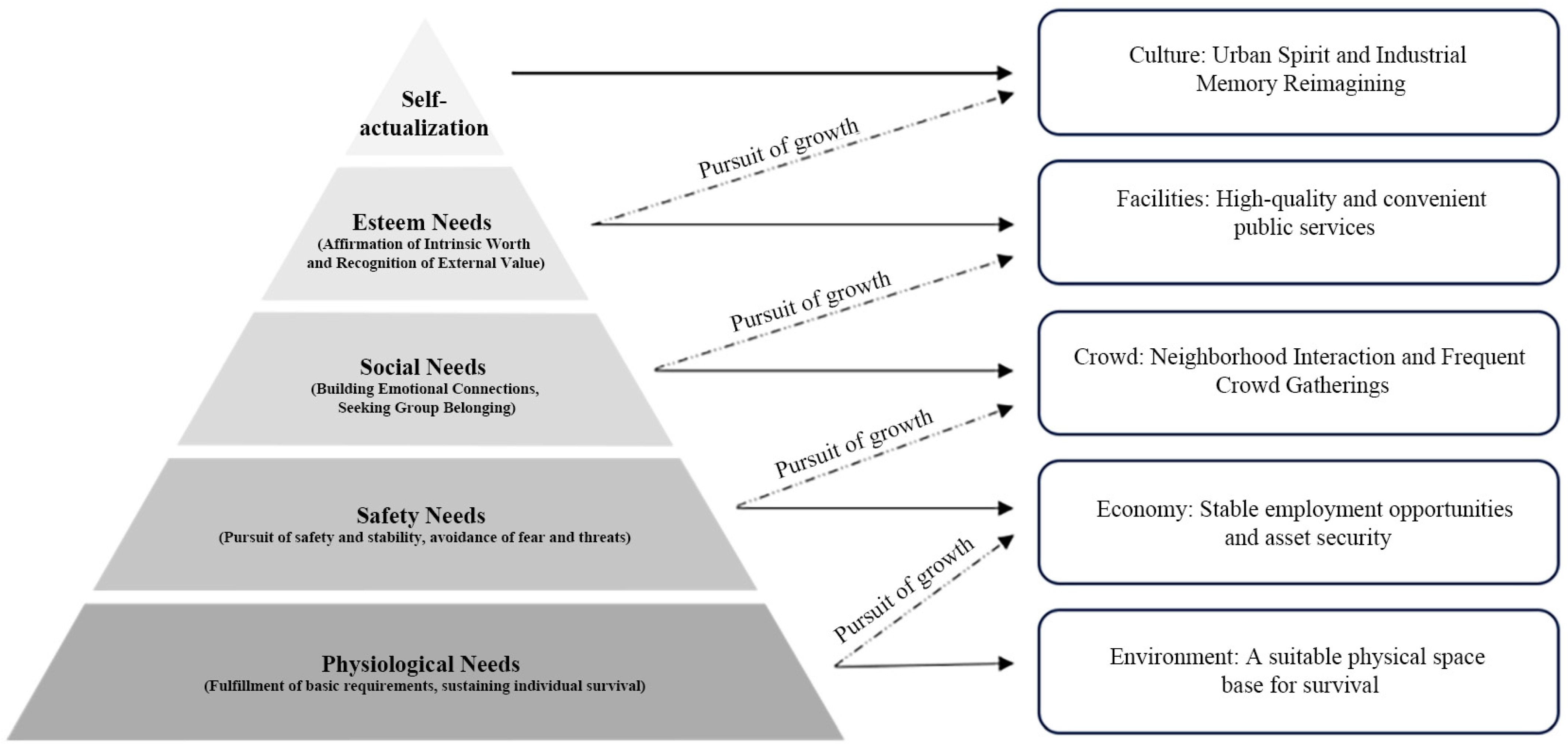
Psychologist Abraham Maslow categorized human needs into five levels: physiological, safety, love/belonging, esteem, and self-actualization. As the standard of living improves, the demand levels of urban residents are also increasing. From this perspective, evaluating the vitality of “urban mines” involves examining people’s needs for urban spaces, which range from basic material space services to higher-level spiritual space fulfillment (
Figure 1).
Urban vitality reflects the diversity and suitability of the internal elements of urban space, as well as the development potential and transformation direction of urban spatial units. Through the analysis of the vitality of the people behind urban space, from the perspective of “people”, the deep social–spatial patterns behind the urban form structure were explored, and the traditional planning methods and research perspectives that use space to explain space in planning were optimized [
8]. Currently, the primary methods for measuring vitality are mostly questionnaire surveys and qualitative research, with subjective conclusions and small sample sizes [
9]. With the rapid development of the economy and society, the phenomenon of digital information interweaving in the complex urban system has become increasingly obvious. The individual’s spatial silence has been broken, and “people” have also become the output party of digital information and the marker of geographical space, such as GPS mobile data, media check-in data, etc. Introducing these types of real human activity trajectories into urban space research and establishing a connection with spatial development has broken the time and space barriers between social–economic activities and urban space, enabling people to explore the operating rules of urban space more profoundly and precisely [
10]. Carlo Ratti and others first proposed the concept of “Mobile Landscapes” in cities in 2006, exploring the characteristics of urban spaces by analyzing the intrinsic logic of residents’ living behaviors and urban spatial forms through mobile phone data [
11]. Following the research of Carlo Ratti and others, urban areas have been identified and measured through POI data and mobile phone signaling data, and dynamic characteristics of the population within the areas have been analyzed to extract the real-time vitality status of the space, expanding the breadth and depth of urban space research [
12,
13].
Since “urban mines” lie between the urban and community dimensions and include spaces such as industrial squares, resource production sites, transportation routes, and ecological wetlands, in addition to residential communities, “urban mines” constitute a complex urban unit. In existing studies, there is still a gap in the measurement of the vitality of spaces such as “urban mines” based on the demand-oriented meso-scale approach. Therefore, this paper addresses the unique characteristics of coal-resource-based cities by drawing on Maslow’s hierarchy of needs to identify influencing factors and establish an evaluation system to measure the vitality of “urban mines.” Furthermore, this paper uses multi-source data to conduct a measurement and analysis of the vitality of “urban mines” in the central urban area of Huaibei, providing a theoretical basis for the spatial transformation of coal-resource-based cities, and also offering theoretical references and practical examples for the sustainable development of similar cities.
2. Materials and Methods
2.1. Research on the Vitality Evaluation of “Urban Mines” in Coal-Resource-Based Cities
2.1.1. Conceptual Definition
With the continuous expansion of coal-resource-based cities, the independent industrial areas that were originally located on the outskirts of the city or outside the central urban area have gradually been surrounded and integrated into the urban built-up area. The internal functions have been constantly reorganized and reconfigured, forming a special space known as “urban mines”.
Based on the concepts of independent mining zones and core urban areas, this study defines “urban mines” as follows: “urban mines” refer to areas located within the urban core constructed due to the extraction and processing of mineral resources. These include closed mining areas, the urban functional areas that have gradually formed around them to serve the mining industry, as well as the urban areas where economic and social functions are closely integrated with the city and where mining and urban spaces develop in a coordinated manner.
2.1.2. Evaluation Framework for Measuring the Vitality of “Urban Mines” in Coal Resource Cities
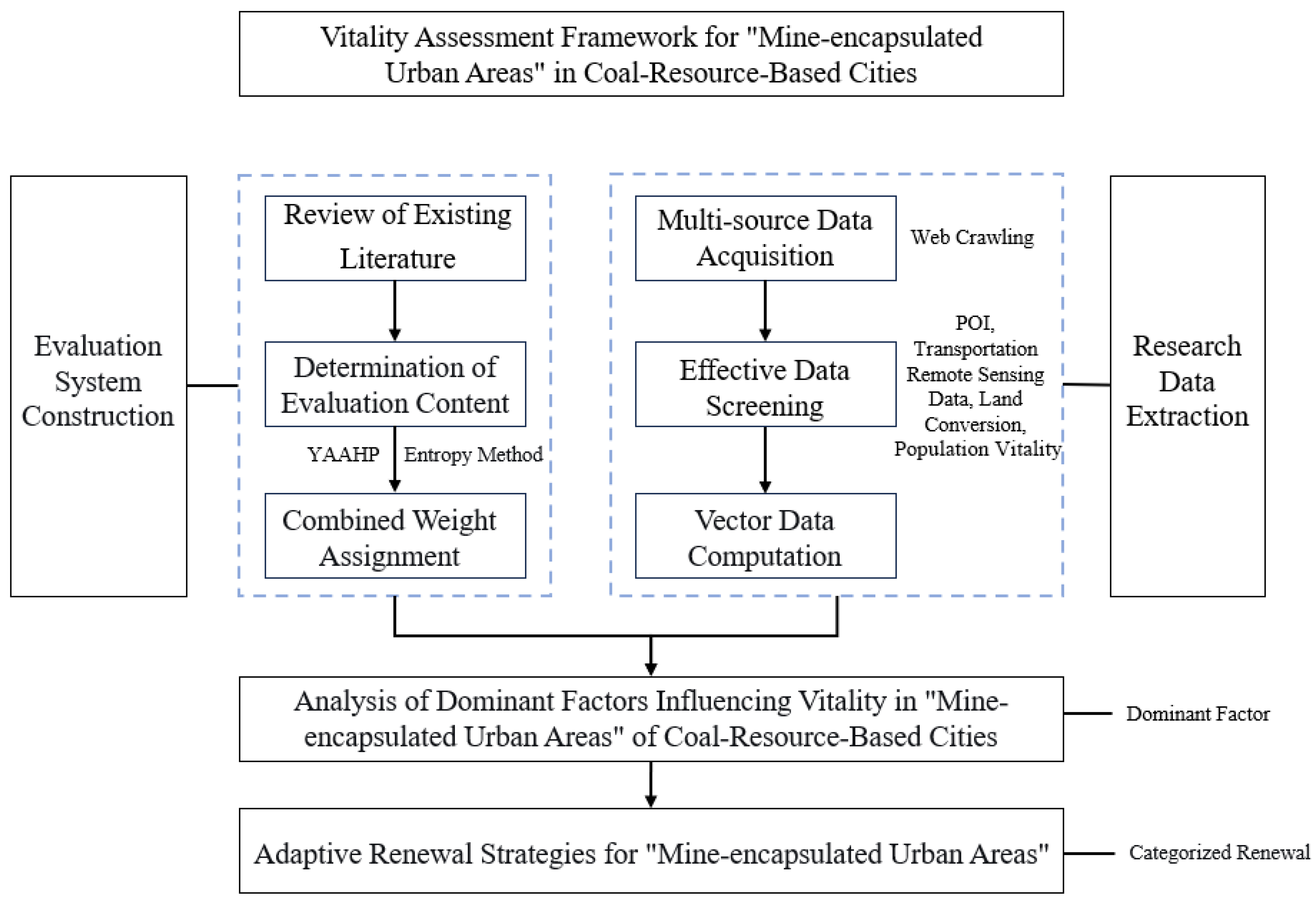
This study starts from human needs and examines the “urban mines” vitality across five dimensions: environmental, economic, facility, crowd, and cultural. It organizes the corresponding measurement methods and components to construct an assessment system for the vitality of “urban mines” in coal-resource-based cities (
Figure 2). By utilizing emerging data such as areas of interest (AOI) and points of interest (POI) obtained through web crawling, the vitality of “urban mines” is evaluated in combination with the acquired content. The dominant factors are summarized, and the renewal strategies for “urban mines” under the influence of different vitality measurement dominant factors are proposed.
2.2. Selection of Research Subjects and Influence Radius Analysis
2.2.1. Selection of Research Subjects
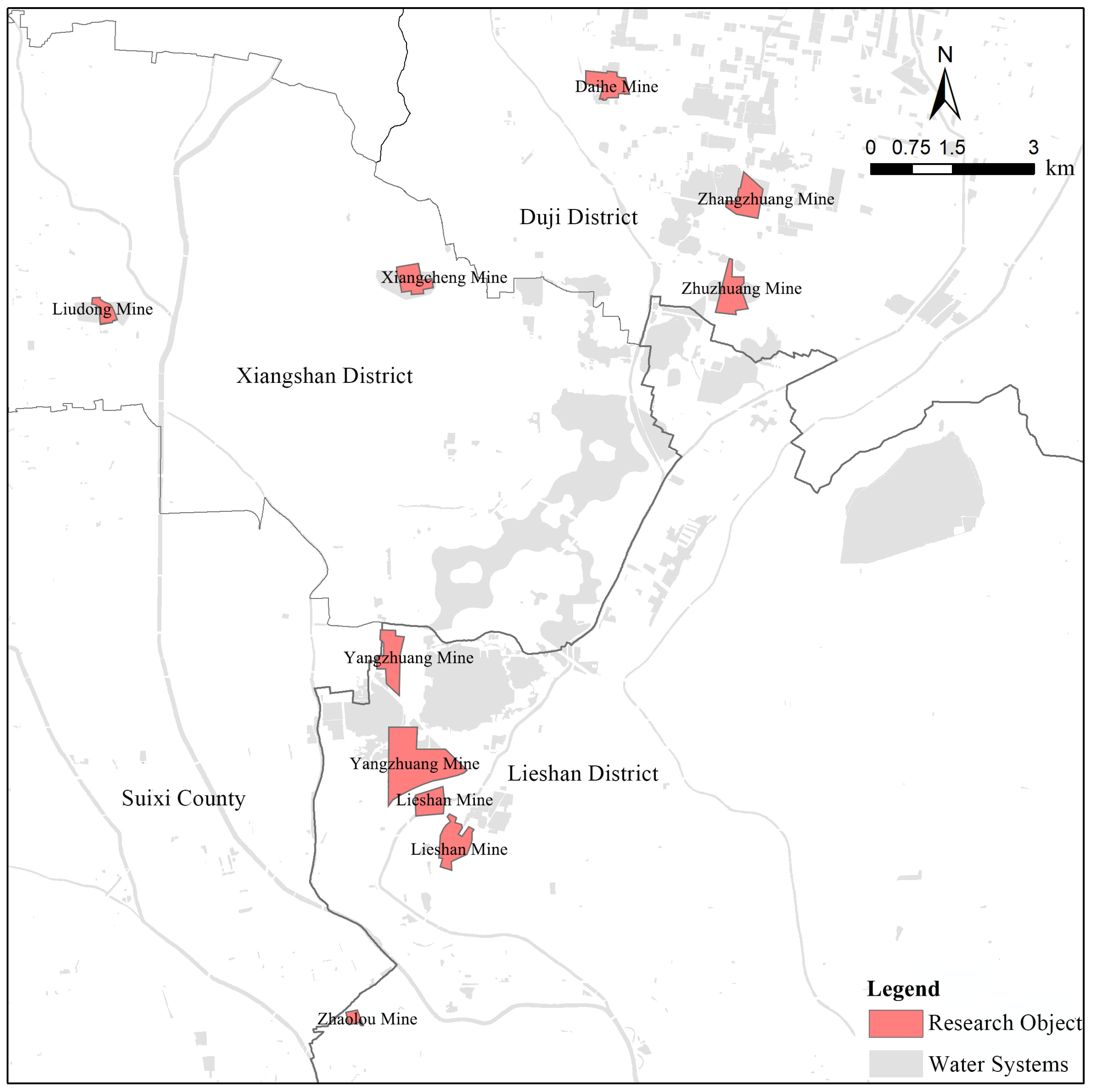
Based on the boundaries delineated in the Huaibei City Territorial Spatial Master Plan (2021–2035), the scope of “urban mines” covered in this study includes: Daihe Mine, Zhangzhuang Mine, Zhuzhuang Mine, Yangzhuang Mine, Lieshan Mine, Xiangcheng Mine, Liudong Mine, and Zhaolou Mine (
Figure 3).
2.2.2. Influence Radius Analysis
The greater the number and diversity of “points of interest” within an area, the stronger its attraction to urban foot traffic. When these points of interest fall within a resident’s comfortable walking distance, the frequency and willingness of residents to use them increase. Therefore, starting from the original boundary of the “urban mines”, the area that can be reached on foot by ordinary residents was determined as the research scope for measuring the vitality of the “urban mines”.
Influenced by transportation conditions and travel purposes, the natural 5 min walking distance for residents is approximately 400 m, while the 10 min walking distance is about 800 m [
14,
15]. Calculations indicate that the 10 min maximum walking distance is approximately 950 m, a distance that can effectively guide project site selection and transportation connectivity [
16]. Therefore, this study delineates the research scope as a 1000 m radius around the perimeter of the original mining area to explore the vitality of the “urban mines”.
2.2.3. Source of Research Data
The foundational data for this study comprises three categories: (1) POI-related data. By scraping POI data within the central urban area of Huaibei City in January 2025, a total of 57,311 point data and transportation station data were obtained and organized according to the vitality measurement system for “urban mines”; (2) “urban mines” population concentration: by using Baidu Maps, the heat distribution of the population during the rest days and working days in May 2024 and January 2026 was extracted; (3) Geographic Information System (GIS) data: Relevant GIS data for Huai’an City’s central urban area.
2.3. Establishing an Evaluation System for Measuring the Vitality of “Urban Mines” in Coal-Resource-Based Cities
2.3.1. Selection of Evaluation Dimensions at the Objective Level
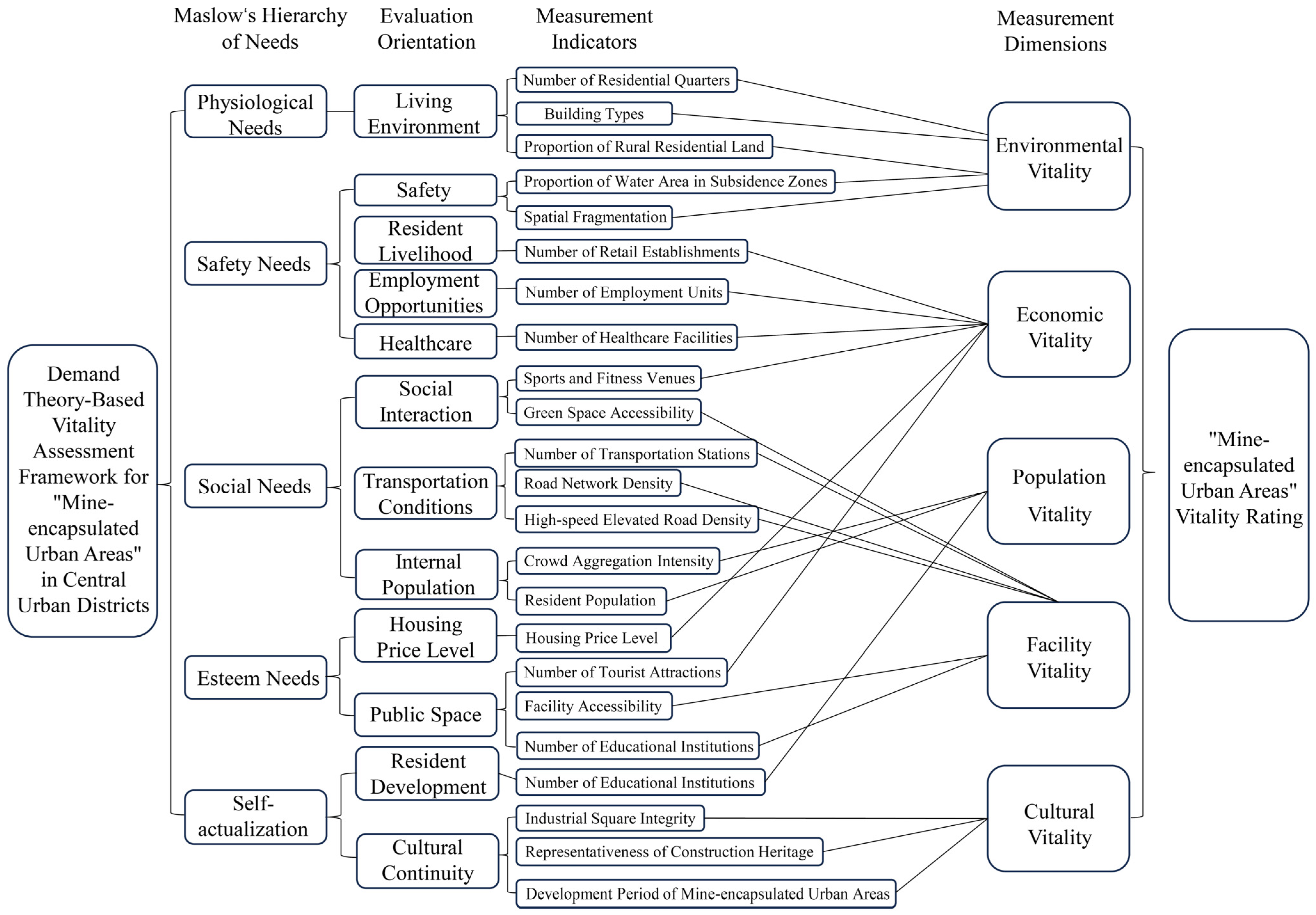
Based on Maslow’s hierarchy of needs theory and a review of the existing literature and theories, we finally selected the following five evaluation dimensions to measure the vitality of “urban mines”. (1) Physiological needs: focusing on people’s basic survival and housing requirements, the delineation of the built environment and land conditions of “urban mines” is regarded as the main content for measuring the vitality based on the living environment. (2) Safety needs: Maslow’s definition of security includes the guarantee of “freedom from scarcity” of resources. In the “urban mine” area, this need is directly reflected in aspects such as housing prices and commercial support. (3) Social needs: indicators encompass nutrition, housing, education, health, and employment, primarily focusing on residents’ satisfaction, comfort, and job opportunities within the “urban mines.” (4) Respecting needs: this pertains to the dignity of life, autonomy, and convenience, and is one of the important indicators for measuring the vitality of “urban mines”. Once basic survival needs are met, residents seek higher-quality public services, including public service facilities and transportation networks, etc. (5) Self-actualization: refine cultural symbols of the “urban mines” area, continue the artistic lineage of coal-resource-based cities, and elevate residents’ spiritual pursuits (
Figure 4).
2.3.2. Selection of Measurement and Evaluation Indicators
The indicators at different dimensions reflect different levels of vitality of “urban mines”. This paper, in combination with relevant vitality measurement literature from China National Knowledge Infrastructure, selects relevant indicators and determines the measurement content of “urban mines” vitality under the demand-oriented approach (
Table 1):
Environmental vitality: This refers to the measurement of the “urban mines” physical space. The number of residential areas and building types is an essential factor influencing the internal living environment of the “urban mines”. This paper, based on the definition of urban physical space for the architectural environment, selects building type and the number of residential areas as influencing factors [
17]. Due to the special location of the mining area, the proportion of rural homesteads within the “urban mines” range is taken as a special indicator for determining environmental vitality.
Infrastructure: Balanced and jointly shared infrastructure plays a role in promoting the vitality of “urban mines”. This paper assesses the infrastructure of “urban mines” using indicators such as service levels of facilities around “urban mines”, public transportation, and facility diversity [
18]. Due to the existence of special subsidence areas within “urban mines”, the proportion of water systems in the subsidence area serves as a special indicator.
Traffic conditions: Traffic is an important factor in determining the vitality of “urban mines”. Good traffic conditions indicate that the area can attract external traffic and are also an important manifestation of the fairness of different spaces within an urban mine in the urban layout [
19]. This paper selects road network density around the “urban mines”, the number of transportation stations, and elevated road density as indicators for measuring traffic conditions. Since mining activities are closely related to railways and railways have a significant impact on urban space during urban spatial evolution, the degree of spatial fragmentation is taken as a special indicator.
Economic Life: The economic life of residents is an important dimension for measuring the vitality of “urban mines” from a demand-oriented perspective. Economic indicators such as housing prices, employment, commercial activity, and sports venues have significant impacts on urban spaces [
20]. This paper selects the housing price levels of “urban mines” and their internal communities, the number of employment units within “urban mines”, and the number of various POIs (points of interest) as the main measures of the “urban mines” economy.
Population vitality: The vitality of space cannot exist without human usage. The actual number of residents in the “urban mines” and the population density represented by the heat map on Baidu Maps were selected as measurement indicators [
21].
Urban Identity: Coal-resource-based cities that have formed due to mining have seen many residents move with the mines and be born as a result of mining. The urban identity generated by “urban mines” is integral to the urban context. Therefore, the integrity of the industrial square, the representativeness of the construction remnants, and the development years of “urban mines” were selected as measurement indicators [
22].
2.3.3. Vitality Evaluation Methodology for “Urban Mines”
The vitality assessment of Huaibei City’s central urban “urban mines” integrates the Yaahp Analytic Hierarchy Process (AHP) and Entropy Weighting Method to maximize measurement precision. As a subjective weighting approach, AHP uses the Yaahp V10.3 software to perform calculations by constructing judgment matrices and combining expert scoring. The Entropy Weighting Method, as an objective weighting approach, evaluates the randomness and disorder of events through entropy values. At the same time, the entropy value is used to determine the degree of dispersion of the influencing factors. The higher the degree of dispersion, the greater the influence of this indicator in the comprehensive evaluation [
22]. Based on inter-factor correlations and referencing mainstream vitality measurement methodologies, 23 evaluation items were identified across five dimensions.
2.4. Analysis of Vitality Influencing Factors for “Urban Mines” in Huaibei City’s Central Urban Area
2.4.1. Environmental Vitality Analysis
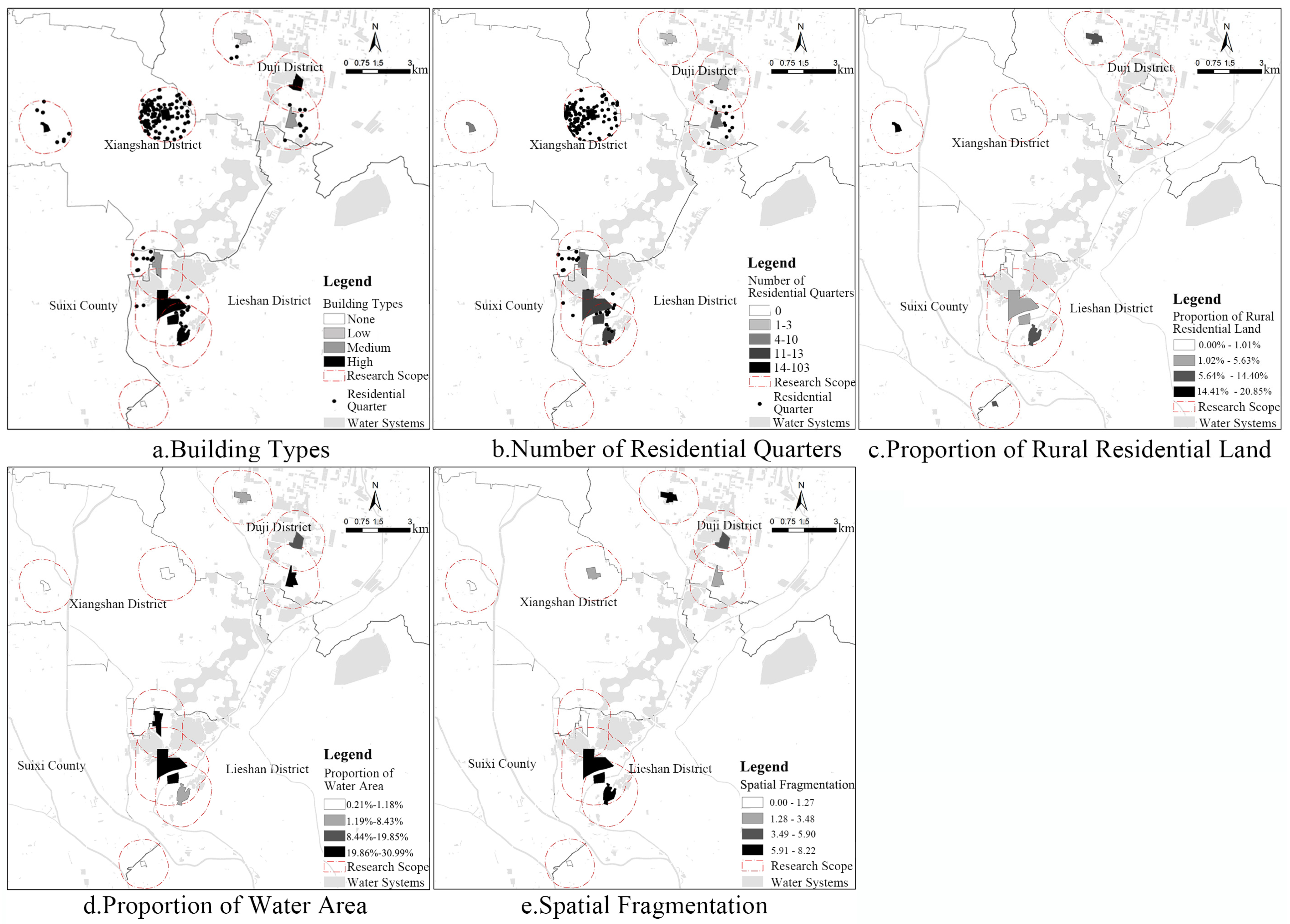
Environmental vitality comprises building types, residential complex counts, rural homestead ratios, water coverage of subsidence areas, and spatial fragmentation within the “urban mines” influence zone (
Figure 5). Analysis of building types reveals that the primary residential structures within the “urban mines” are multi-story buildings. In contrast, low-rise buildings are predominantly found in aging coal-mining villages. Independent mining areas on the periphery of the central urban area exhibit weaker environmental vitality, whereas the Xiangcheng Mine—located near the city center with land rezoned for residential use—demonstrates stronger ecological dynamism.
2.4.2. Economic Vitality Analysis
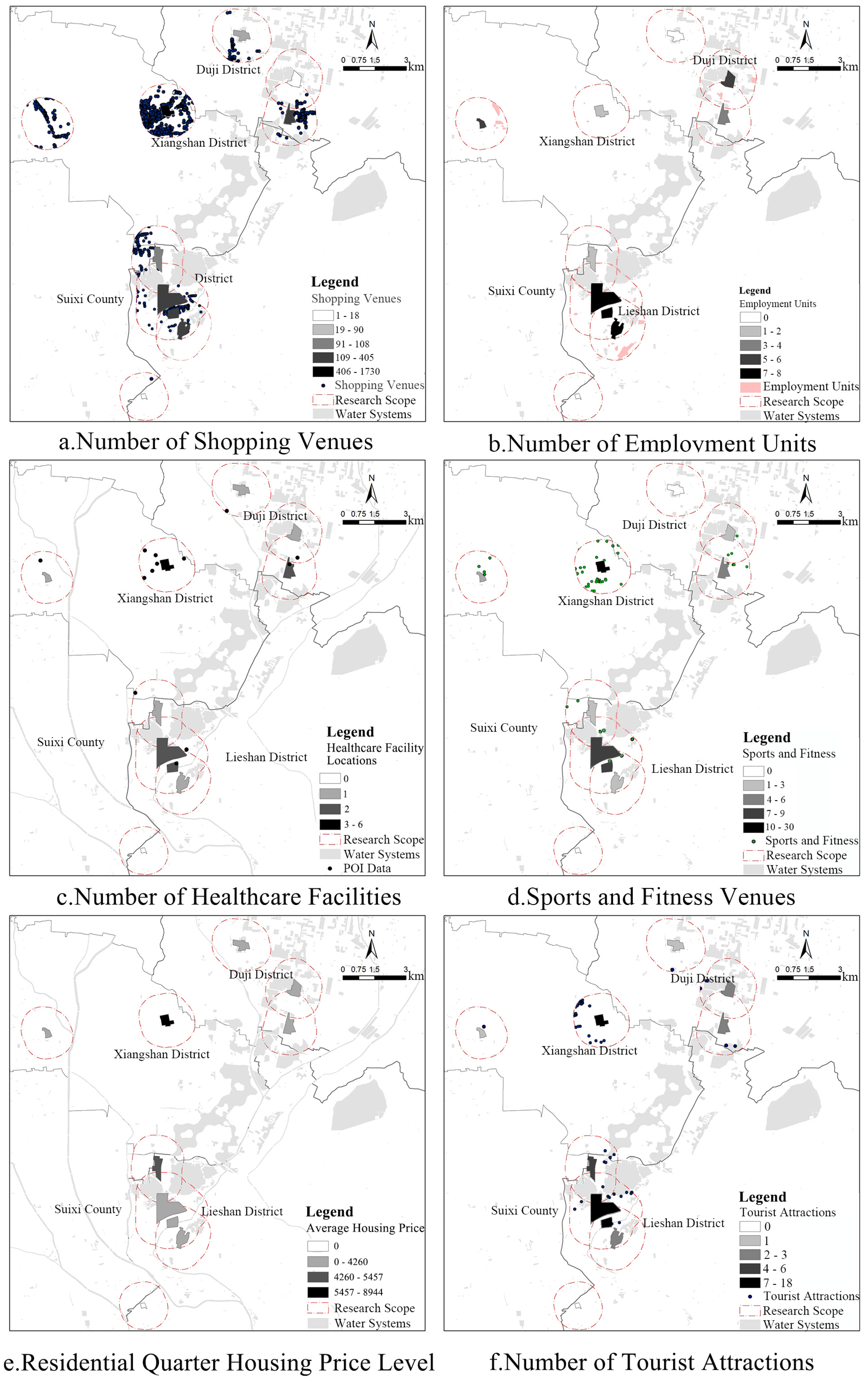
Economic vitality analysis encompasses housing prices, the number of shopping venues, and the number of employment units within the “urban mines” (
Figure 6). Communities within the Xiangcheng Mine area exhibit higher housing prices due to proximity to the urban economic center. Other communities within the “urban mines” generally display lower socioeconomic indices.
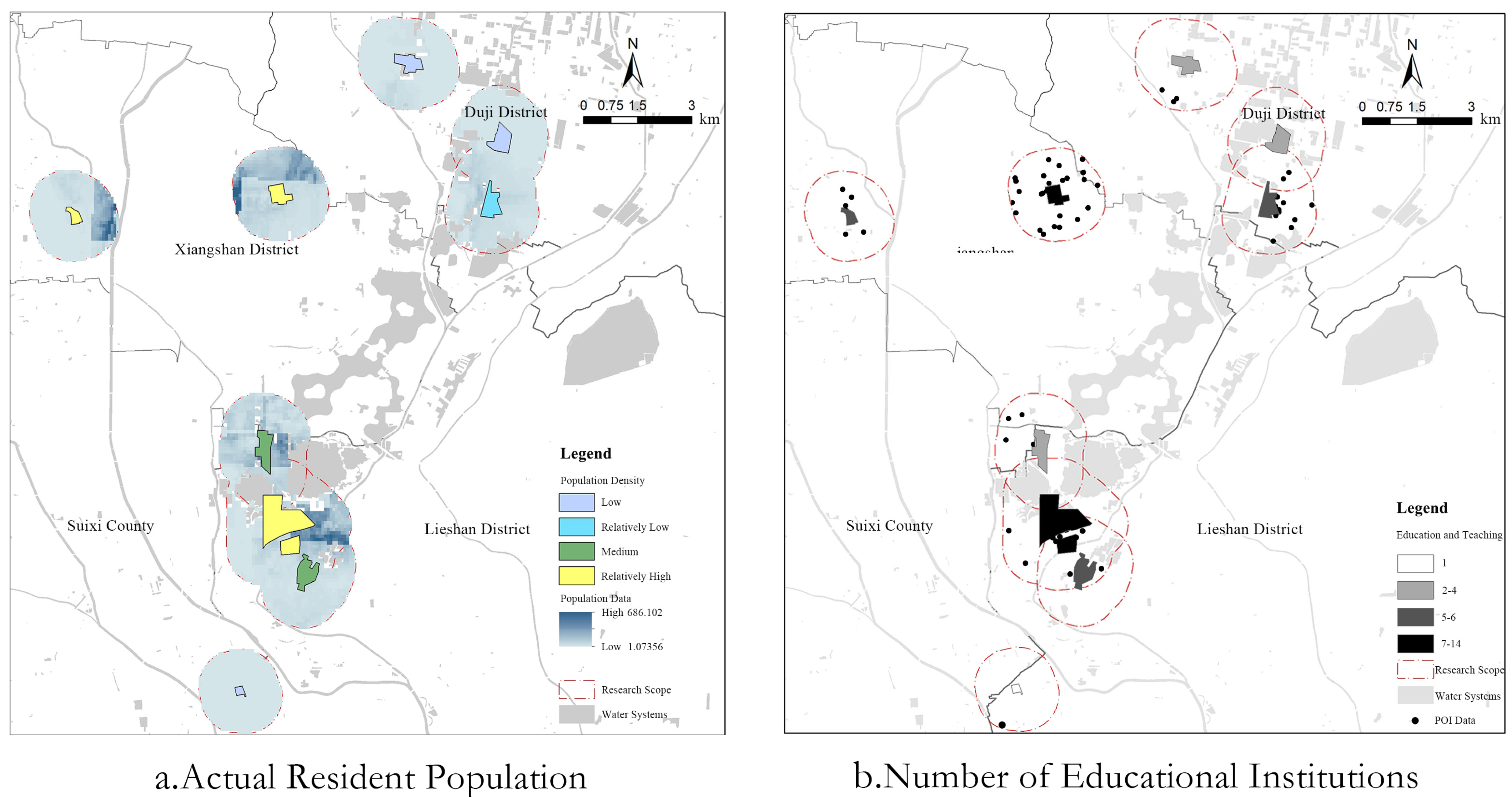
2.4.3. Analysis of Population Vitality
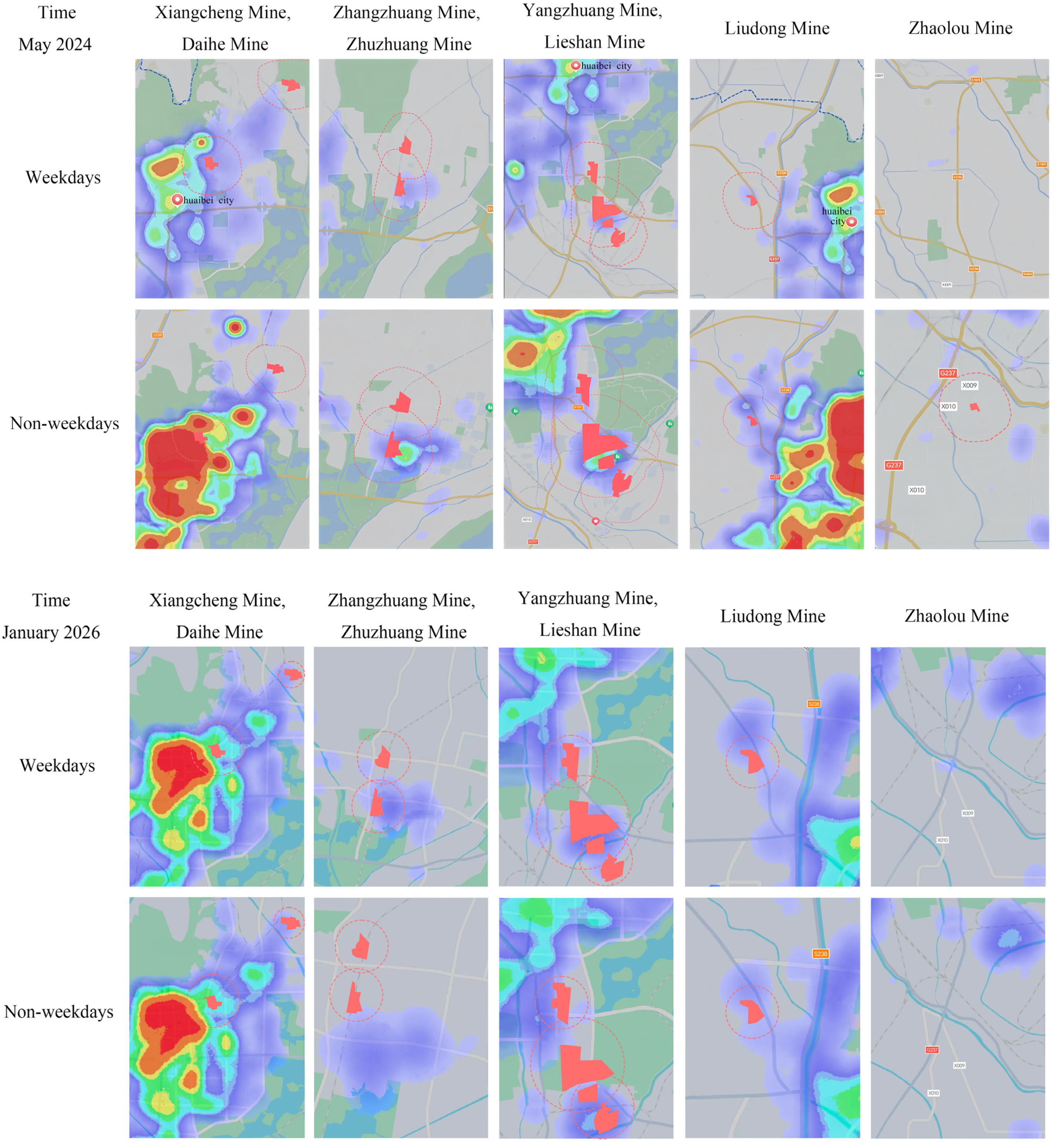
Population vitality analysis comprises population density, residential population, and the number of educational institutions. The heat map, by analyzing the movement data of people in the “urban mines” and those engaged in various activities, can visually represent the vitality of the “urban mines”. Analysis of Baidu heatmaps for weekdays and non-working days reveals significantly higher population density in “urban mines” during non-working hours (
Figure 7). “Urban mines” with larger resident populations, locations of public service facilities with clear appeal to residents, and proximity to commercial centers exhibit stronger vitality (
Figure 8).
2.4.4. Facility Vitality Analysis
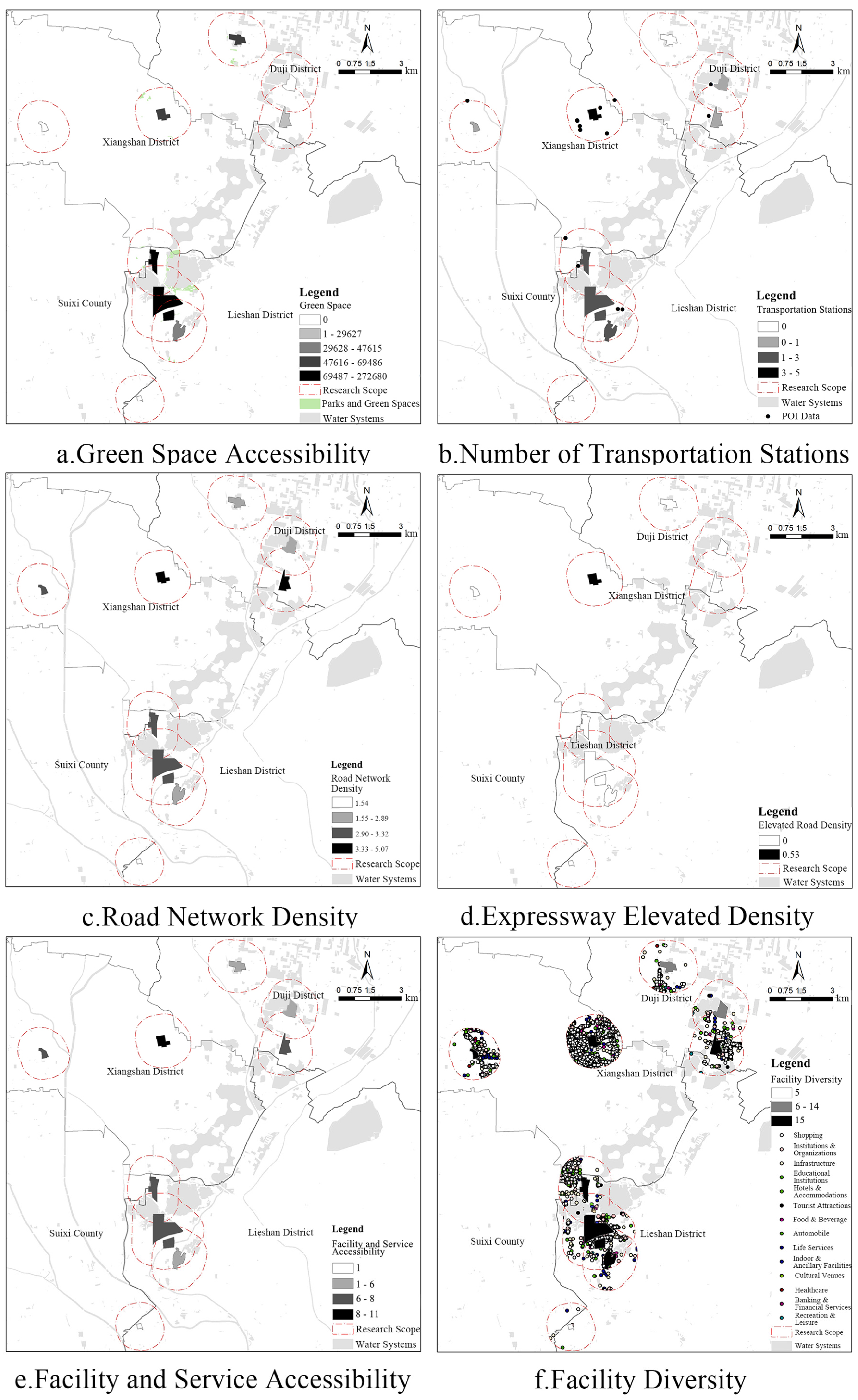
The facility vitality of “urban mines” is composed of green space accessibility, the number of transit stops, and road network density. It is generally recognized that the supply of transportation resources is proportional to the number of roads, transit stops, and the ease of walking. The greater the number of transportation service facilities, the more accessible the “urban mines” become, leading to a higher vitality index. Research indicates that Huaibei City has relatively well-configured public transportation stops, with extensive coverage in “urban mines” and balanced proximity to various facilities; however, parking facilities within “urban mines” near the city center are notably insufficient. While older “urban mines” exhibit high vitality, they often become obstacles to urban development at the facility level. Conversely, mining areas farther from the city center tend to have more convenient urban transportation (
Figure 9). For instance, Xiangcheng Mine and Zhuzhuang Mine have relatively high facility density and strong vitality, yet they lag behind the average level of their respective regions. Although Liu Dong Mine and Zhao Lou Mine are located far from the city center, their facilities are more dynamic than those in the surrounding areas. Instead, they exert a driving force on the development of urban space.
2.4.5. Analysis of Cultural Vitality
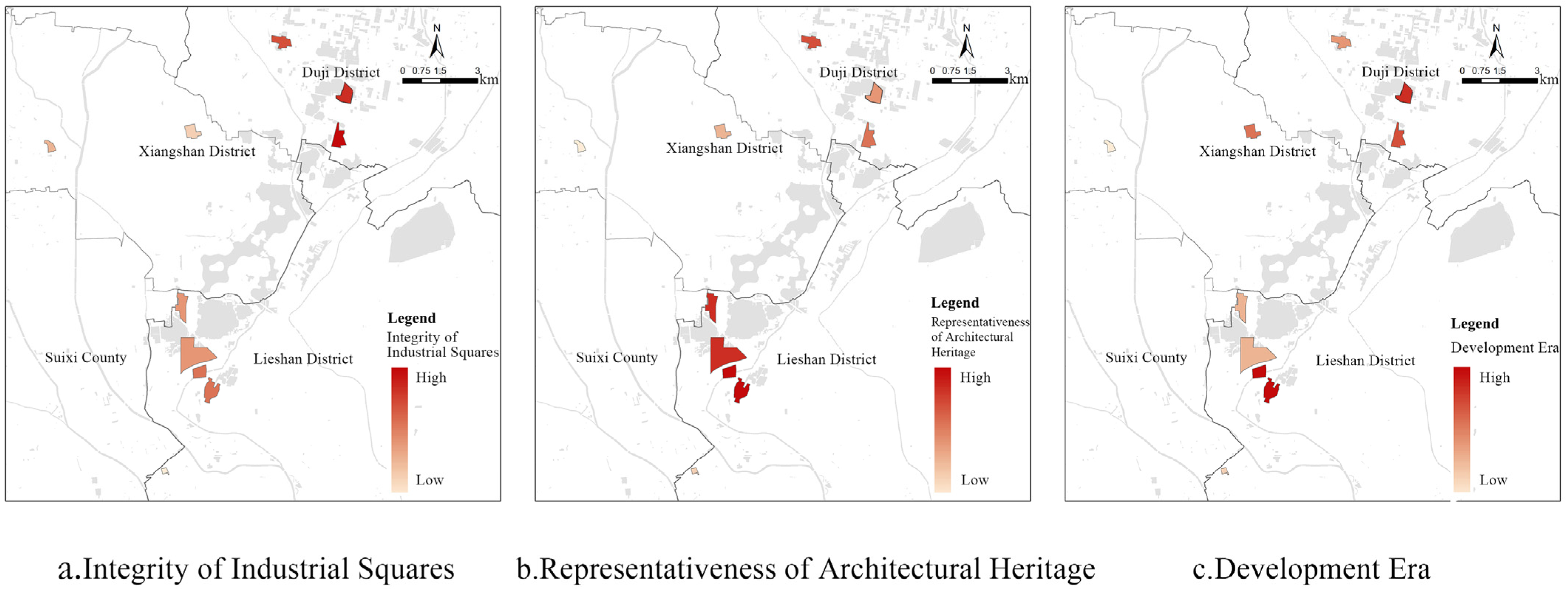
Coal mining has shaped the urban culture of Huaibei City. The industrial remains of “urban mines” document many historical events from the city’s development and construction. The cultural vitality of “urban mines” is a continuation of the city’s cultural heritage. From the integrity of the industrial square, the representativeness of the construction remains, and the age of construction and development, it can effectively reflect that, as industrial remains, “urban mines” play a significant role in enhancing the vitality of “the mines” and continuing the city’s cultural heritage (
Figure 10).
3. Results
3.1. Vitality Assessment and Renewal Strategies for “Urban Mines” in Huaibei City’s Central Urban Area
3.1.1. Weighted Combination Assignment
The individual influencing factors were normalized, the combined weights were calculated, and, by combining the relevant indicator data for each “urban mine”, it can be observed that the dominant factors of different levels of “urban mines” are different. Fixed elements like architectural relics and industrial plazas within the study area are difficult to alter, making vitality enhancement primarily dependent on the rational allocation of population flows and socioeconomic factors. The population density of “urban mines” is a key factor influencing their vitality. At the same time, the proportion of water systems in the collapsed area has a negligible impact on the vitality of “urban mines”. Therefore, in the process of enhancing the vitality of “urban mines”, the spatial transformation of different types of “urban mines” should focus on considering the key factors that dominate the dynamism of “urban mines” (
Table 2).
3.1.2. Research Findings on the Vitality Assessment of “Urban Mines”
Using the natural breakpoint method in GIS, the “urban mines” within Huaibei’s central urban area were classified into three vitality levels. In the central urban area of Huainan City, there are three areas with low activity levels of “urban mines”, two areas with medium activity levels of “urban mines”, and two areas with high activity levels of “urban mines”. Research indicates that “urban mines” located near the main urban area exhibit relatively higher vitality. Studies have shown that while “urban mines” integrated into cities exhibit relatively high vitality, they themselves remain vitality-deprived zones within urban areas. Despite the substantial quantity of infrastructure and public service facilities they possess, their distribution across the urban landscape is marked by significant disparities. As the distance from the core urban center increases, the vitality of “urban mines” declines. While the absolute number of infrastructure and public service facilities is limited, they are concentrated around these “urban mines,” making them distinct drivers of urban development in their respective areas.
3.1.3. Vitality Measurement and Factor Influence Analysis of “Urban Mines”
After classifying and statistically analyzing 23 influencing factors, the overall results show that higher-vitality “urban mines” in Huaibei’s central urban district exhibit a higher proportion of factors categorized at advanced levels, with both economic and population vitality showing relatively stronger performance. The spatial fragmentation of “urban mines” within Huaibei’s central urban district is pronounced, indicating room for improvement in urban spatial planning. Through graded analysis of these areas, this study aims to summarize the advantages of high-vitality zones and identify development potential in low-vitality regions, thereby providing theoretical support for enhancing vitality and informing urban design strategies for mine-encapsulated urban areas in Huaibei.
The “urban mines” with low vitality levels (Daihe Mine, Liudong Mine, and Zhaolou Mine) have relatively low economic and population vitality, and the degree of rural land development is also low. There is limited room for improvement in the short term.
The “urban mines” with medium vitality levels (Zhangzhuang Mine, Zhuzhuang Mine, Lieshan Mine) have relatively fragmented spaces, which have a significant impact on the vitality of urban mines. They have a large number of residents and considerable potential for enhancing economic vitality. However, they are severely aging, which to some extent restricts the development of the tertiary industry.
The “urban mine” at the high-activity level (such as Xiangcheng Mine and Yangzhuang Mine) integrates well with the city. Some of these urban mines even combine to form new metropolitan areas, featuring high population density and community participation.
The vitality of each “urban mine” in the central urban area of Huaibei City varies significantly, and there is considerable room for improvement in economic and population vitality. During the development process, it is necessary to avoid excessive pursuit of the renewal of physical space. At the same time, the shaping of cultural value in coal-resource-based cities should be taken into account. Each “urban mine” must identify the key factors influencing its vitality. In the subsequent transformation and development process, it is essential to fully integrate these key influencing factors, adopt a strategy of leading by example, and enhance the overall vitality of the city through different development paths, thereby promoting the development of urban space.
4. Discussion
Based on the unique advantages and existing problems of different levels of “urban mines”, and in combination with Maslow’s hierarchy of needs theory, a spatial adaptability update strategy for “urban mines” is proposed to optimize space development methods and rebuild residents’ enthusiasm in their communities.
4.1. Improve the Functional and Business Characteristics of the Space, and Shape Urban Cultural Landmarks
The high vitality characteristics of Xiangcheng Mine and Yangzhuang Mine are mainly attributed to their advantageous location close to the urban center and the high-density population base in the surrounding area, rather than the endogenous driving force of the internal spatial quality of the mining area. Therefore, the spatial renewal strategies of the two mines are different.
The production facilities within the “urban mines” of Xiangcheng Mine have been largely dismantled, but the internal facilities lack vitality and do not have high-quality nodes capable of hosting urban activities. The internal road network should be optimized to truly integrate into the urban vitality nodes. Yangzhuang Mine, although retaining some industrial remnants, faces geological constraints from large-scale coal mining subsidence areas, severely limiting the incorporation of high-intensity urban functions. Therefore, the renewal strategy for such “urban mines” should focus on the manifestation of cultural value. Drawing on the governance experience of Pan’an Lake in Jiawan District of Xuzhou, efforts should be made towards ecological restoration and cultural tourism development [
23]. While avoiding geological risks, it aims to provide ecological recreational spaces in high-density urban areas and enhance the region’s overall spatial livability.
4.2. Repair the Damaged Spatial Texture and Improve the Facilities for Elderly Care
The Zhuzhuang Mine, Zhangzhuang Mine, and Lieshan Mine, as mature mining areas, have a large resident population, which ensures a basic level of community vitality. However, these mining areas were built relatively early and are generally subject to dual constraints: first, the internal space is severely fragmented due to dedicated railway lines and coal mining subsidence areas, which hinders community interaction; second, the aging population is prominent, and existing facilities are unable to meet the needs of the elderly. Therefore, the renewal strategy for such mining areas should focus on “social needs” and “respect needs”. At the spatial repair level, in response to the fragmentation caused by railways and coal mining subsidence areas, large-scale demolition and reconstruction should be avoided. Instead, acupuncture-style renewal methods should be adopted, transforming linear leftover spaces into slow-moving greenways connecting communities and converting fragmented and idle plots into pocket parks, thereby mending the broken community fabric and rebuilding the neighborhood social network. At the level of facility improvement, revitalizing idle mining area office buildings or underutilized land should be done, and the living security and convenience of residents should be enhanced through adaptive aging renovations, in order to maintain and sustain the community vitality of the mining areas.
4.3. Revitalize Underutilized Existing Spaces by Injecting Distinctive Industrial Functions
The Daihe Mine, Liudong Mine, and Zhaolou Mine are “urban mines” located far from the urban core. They are unable to receive the resource radiation and functional expansion from the core area of the city. Moreover, the surrounding areas are mostly low-developed villages or farmlands, lacking industrial support. This has led to the loss of both population and resources in both directions. The core issue of their development lies in the low efficiency of resource allocation due to their remote location. Therefore, their regeneration strategy should refocus on addressing “physiological needs” and “safety needs.” On the one hand, specialized functions should be introduced. Leveraging the advantage of ample idle land in the mining areas, tertiary industries that have low dependency on the city center but require substantial space can be implanted. On the other hand, considering that such “urban mines” still retain certain foundational facilities, it is essential to maintain and optimize basic living amenities to ensure residents’ fundamental quality of life and prevent further decline in regional vitality.
In conclusion, the renewal of “urban mines” should be carried out in a dynamic and flexible manner. Each “urban mine” and other special units have their own corresponding renewal methods compatible with their dominant factors. The development of urban space should adhere to the principle of “people-centered”, and through strengthening the participation of residents in urban governance and planning implementation, the quality of people’s lives can be effectively improved.
5. Conclusions
This study used multi-source data to conduct an in-depth analysis of the five dimensions—environmental vitality, cultural vitality, facility vitality, economic vitality, and population vitality of the “urban mine” in the central urban area of Huaibei. By combining the Analytic Hierarchy Process (AHP) and the Entropy Weighting Method, a vitality measurement and evaluation system for the “urban mine” in the central urban area of Huaibei was constructed, and quantitative analysis was carried out. Based on the classification of vitality levels, the dominant factors for the development of different “urban mines” in terms of vitality were extracted, and adaptive spatial optimization strategies were proposed around these dominant factors, providing a quantitative research approach for the detailed spatial design of special units in coal-resource-based cities.
The research has found that the “urban mine” located close to the urban core exhibits relatively high vitality, but its support for urban spatial development is still insufficient. “Urban mines” in peripheral areas, although less vibrant, have a more obvious driving effect on the surrounding areas, becoming the spatial support points for the multi-centered and cluster development of the city. Furthermore, the density of people flow is positively correlated with the activity level of “urban mine”. That is, the more dense the flow of people, the higher the activity level of “urban mine”. To enhance the activity level of “urban mine”, it is necessary to fully consider the uniqueness of the spatial unit where the “urban mine” is located, pay attention to enhancing the economic vitality of the corresponding area, and also base it on the overall spatial planning of the city. At the same time, it is necessary to base the city’s overall spatial planning on introducing new business forms into the “urban mine” to attract more people and make it a potential core area for future urban spatial development.
The research further enriched and improved the assessment and analysis framework for measuring vitality during the renewal process of coal-resource-based cities. The obtained research results have significant guiding and reference value for enhancing the urban vitality of special urban units. Given that the analysis of spatial fragmentation involves various urban land types, future research can further focus on the matching degree between urban spatial structure and spatial functions, especially conducting specialized optimization studies targeting the “urban mine” spaces with higher fragmentation levels, and conducting multi-scenario simulations of spatial evolution within a certain range, thereby promoting the realization of higher-quality urban development.
This study enriches and refines the assessment framework for measuring vitality during the renewal of coal-resource-based cities. The findings provide significant guidance and reference value for enhancing the urban dynamism of special urban units. Given that spatial fragmentation analysis involves multiple urban land types, future research could focus more intently on the alignment between urban spatial structure and spatial functions. Specifically, specialized optimization studies should target highly fragmented “urban mine” spaces, potentially conducting multi-scenario simulations of spatial evolution within defined parameters to drive higher-quality development of urban spaces.
Author Contributions
Y.Y. and J.C. was responsible for the conception and methodology of the research, and designed the research idea; Y.Y. and Y.H. collected and processed the data, completed the calculation and analysis, and wrote the manuscript; F.J. and M.H. conducted research and put forward suggestions for data processing methods; J.C. is responsible for future questions from readers; J.C. is the corresponding author. All authors have read and agreed to the published version of the manuscript.
Funding
This research received no external funding.
Institutional Review Board Statement
Not applicable.
Informed Consent Statement
Not applicable.
Data Availability Statement
The original contributions presented in the study are included in the article; further inquiries can be directed to the corresponding author.
Acknowledgments
The authors are grateful for the support of the National Natural Science Foundation of China. The contents of this paper are solely the responsibility of the authors and do not represent the official views of the institutes and funding agencies.
Conflicts of Interest
The authors declare no conflicts of interest.
References
- Karst, B.; Peter, G.; Arie, S. Industrial heritage in tourism marketing: Legitimizing post-industrial development strategies of the Ruhr Region, Germany. J. Herit. Tour. 2022, 17, 327–341. [Google Scholar] [CrossRef] [Scilit]
- National Development and Reform Commission. Implementation Plan for New Urbanization in the 14th Five-Year Plan Period [EB/OL]. 2022. Available online: http://www.gov.cn/zhengce/zhengceku/2022-07/12/content_5700632.htm (accessed on 1 July 2025).
- Guan, J.; Jiao, H. Evolutionary Process and Coordinated Development Model of Urban-Rural Settlements in Coal Resource Cities: A Case Study of Huaibei City, Anhui Province. Resour. Environ. Yangtze River Basin 2023, 32, 2298–2311. [Google Scholar]
- Li, K.; Zeng, X. Evolution and Driving Mechanisms of Coordinated Development between Coal Mining and Ecosystem Services in Coal-Resource Cities: The Case of Huainan City. Res. Soil Water Conserv. 2023, 30, 460–469. [Google Scholar]
- Zhang, L.; Wang, Q. Research on Green Transformation Pathways for Closed Coal Mines in Coal Resource Cities. Coalf. Geol. Explor. 2022, 52, 9–16. [Google Scholar]
- Zhao, N.; Liu, Y.; Liu, Z. Community Renewal and Governance Model of “Collective Wisdom, Shared Strategies, and Shared Benefits” in the New Era: An Empirical Study on Micro-Renewal in Guangzhou Communities. Urban Dev. Res. 2019, 26, 117–124. [Google Scholar]
- Zhang, Y. Research on the Measurement and Influencing Mechanisms of Urban Block Vitality. Master’s Thesis, Wuhan University, Wuhan, China, 2019. [Google Scholar]
- Yang, J.; Cao, J. Motion, Stasis, Manifestation, and Latent: Four Application Models of Big Data in Urban Design. J. Urban Plan. 2017, 39–46. [Google Scholar] [CrossRef]
- Xu, H.; Hua, C.; Li, Y. Building Youth-Oriented Cities: Planning Pathways for Regenerating Social Vitality in Aging Communities. J. Urban Plan. 2022, 96–101. [Google Scholar]
- Zhen, M.C.; Dang, A.R. A review of big data applications in urban planning. Geogr. Inf. World 2019, 26, 6–12+24. [Google Scholar]
- Ratti, C.; Frenchman, D.; Pulselli, R.M.; Williams, S. Mobile Landscapes: Using Location Data from Cell Phones for Urban Analysis. Environ. Plan. B-Plan. Des. 2006, 33, 727–748. [Google Scholar] [CrossRef] [Scilit]
- Zhu, D.; Liu, Y. Urban Dynamics Research from the Perspective of Multi-source Geospatial Big Data. Inf. Technol. Appl. Sci. Res. 2017, 8, 7–17. [Google Scholar]
- Chen, J.; Li, P.; Wang, H.; Gan, W. Measuring Community Vitality and Formulating Renewal Strategies Based on Multi-source Big Data from a Social Sustainability Perspective: A Case Study of Suzhou’s Central Urban Area. Shanghai Urban Plan. 2023, 119–127. [Google Scholar] [CrossRef]
- Schlossberg, M.; Brown, N. Comparing Transit-oriented Development Sites by Walkability Indicators. Transp. Res. Rec. 2004, 1887, 34–42. [Google Scholar] [CrossRef] [Scilit]
- Wang, N.; Du, Y. Research on Thresholds for Walkable Distances for Community Residents. Transp. Res. 2015, 1, 20–24+30. [Google Scholar]
- Ye, Y. New Possibilities for Urban Design in the Context of New Urban Science. J. West. Hum. Settl. 2019, 34, 13–21. [Google Scholar]
- Dong, Y.; Xiao, Y.; Dong, W.; Fei, Y. Research on Influencing Factors of Social Sustainability in Urban Communities: An Empirical Study of Eight Communities in Harbin. Archit. J. China 2021, 134–139. [Google Scholar] [CrossRef]
- Yang, X.; Wang, X. Study on the Accessibility of Community Public Spaces Based on Behavioral Networks and Road Network Distance Fitting Analysis: A Case Study of Xinghewang Community in Guangzhou. Mod. Urban Res. 2021, 11–17. [Google Scholar]
- Xiong, Z. Spatial Vitality Characteristics and Influencing Factors of Commercial Districts in Hangzhou: An Empirical Study of Hubin Commercial District Based on Multi-source Data. South. Archit. 2024, 11–19. [Google Scholar] [CrossRef]
- Zhang, H.; He, J.; Yang, T.; Cao, S. Study on the Vitality Characteristics and Influencing Factors of Tianjin Parks Based on Perception of Crowd Dynamic Distribution. Landsc. Archit. 2023, 30, 36–42. [Google Scholar]
- Zhao, X.; Li, J.; Zhang, Z.; Wang, L. Research on Revitalization Approaches for Urban Historical Landscapes Based on Collective Memory: A Case Study of Xiangyang. Mod. Urban Res. 2024, 24–30. [Google Scholar] [CrossRef]
- Liu, Y.; Song, H.; Xu, P. A Study on Cost Influencing Factors of Prefabricated Buildings Based on AHP-Entropy Weight Method. Constr. Econ. 2023, 44, 150–154. [Google Scholar]
- Zhu, B.; Tang, Z.; Zhang, T.; Zhu, Y. Research on the Comprehensive Management, Utilization Direction, and Systematic Restoration Strategies for Coal Mining Subsidence Areas in Xuzhou City. Environ. Dev. 2020, 32, 1–3. [Google Scholar] [CrossRef]
| Disclaimer/Publisher’s Note: The statements, opinions and data contained in all publications are solely those of the individual author(s) and contributor(s) and not of MDPI and/or the editor(s). MDPI and/or the editor(s) disclaim responsibility for any injury to people or property resulting from any ideas, methods, instructions or products referred to in the content. |