Fabrication of Acacia-Waste-Charcoal-Printed Cotton Fabric for the Development of Functional Textiles—A Sustainable Approach

 ,
,  ,
,
Abstract
1. Introduction
2. Materials and Methods
2.1. Materials
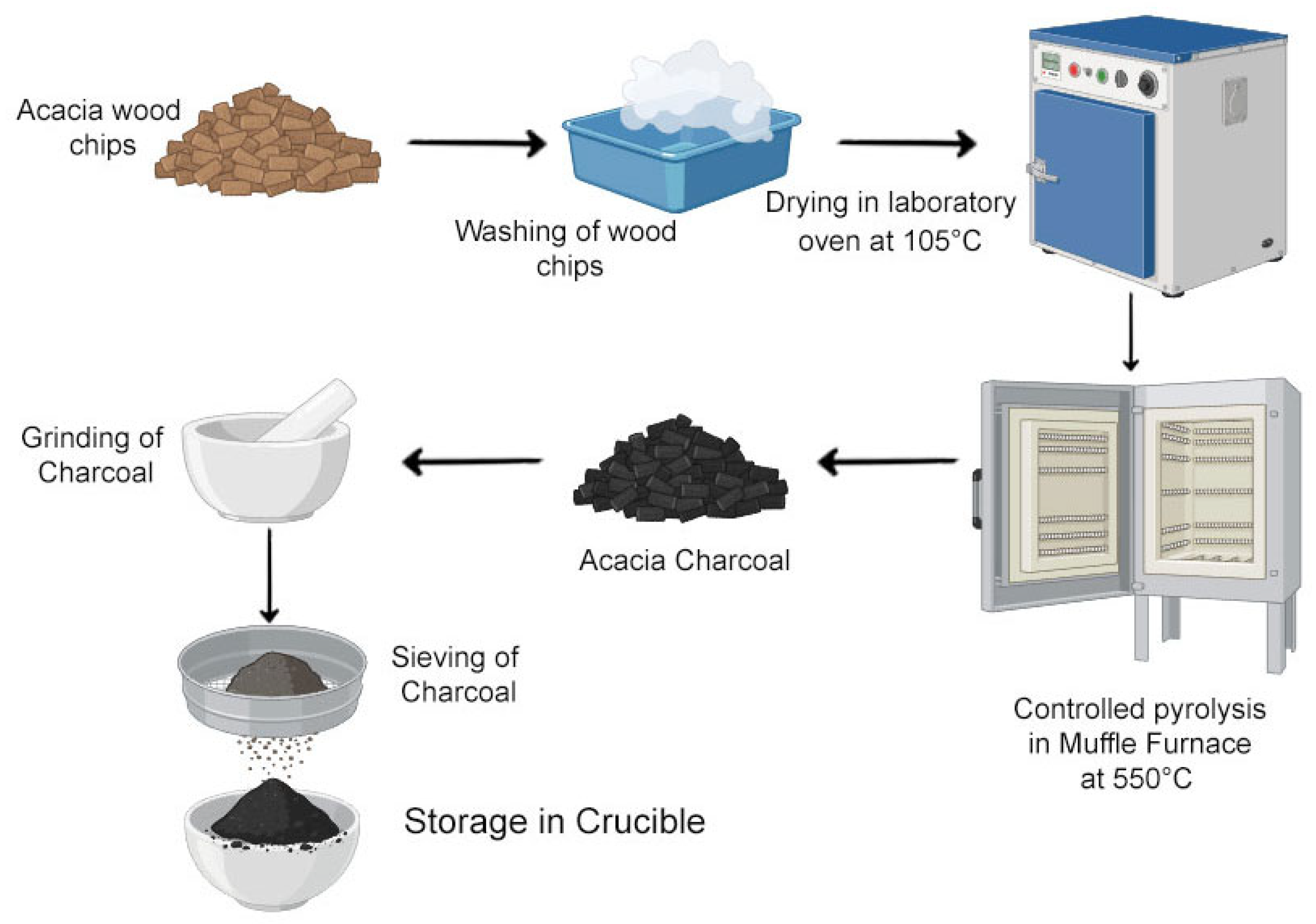
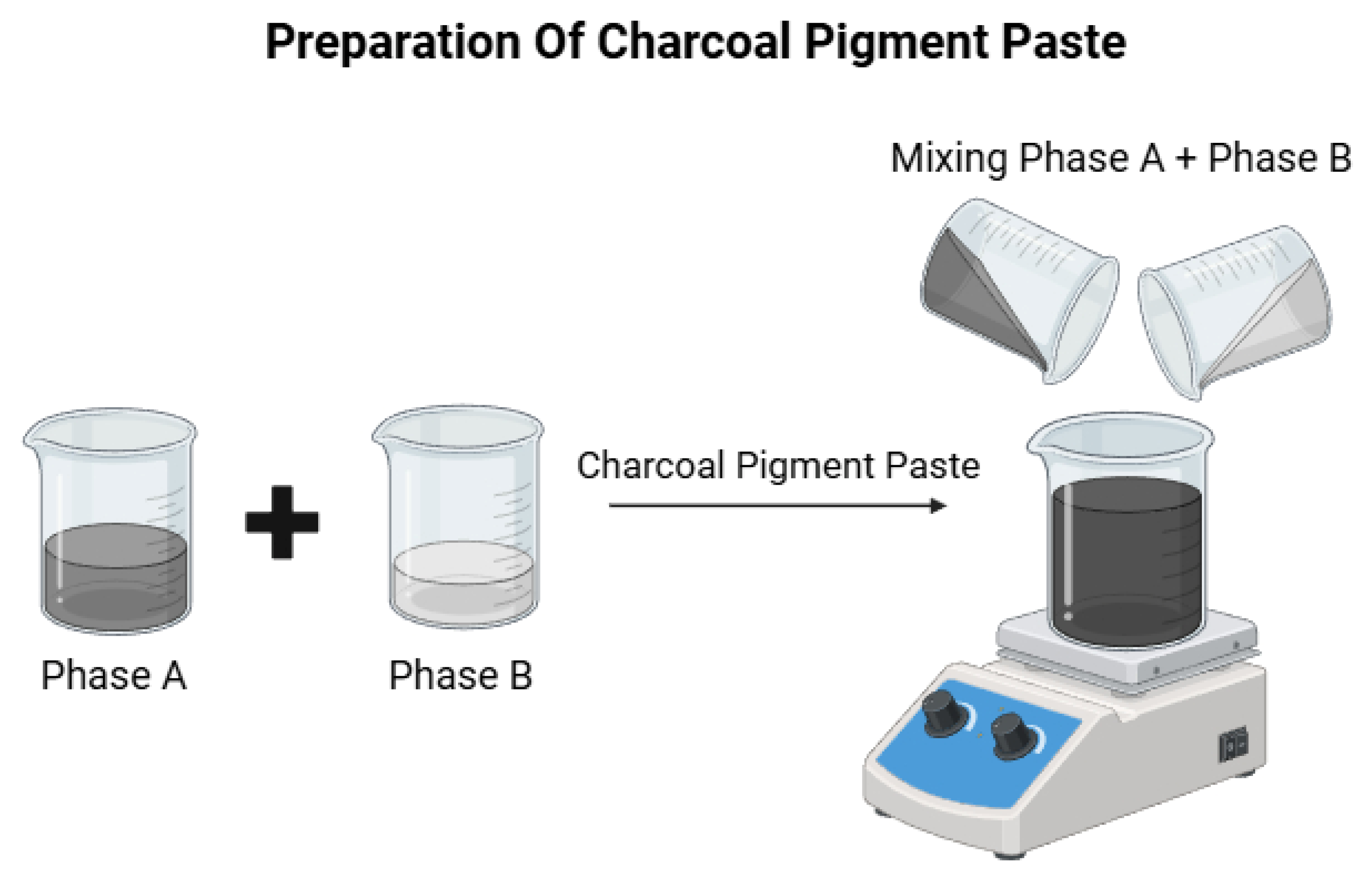
2.2. Preparation of Acacia Charcoal Pigment
2.3. Pyrolysis Process
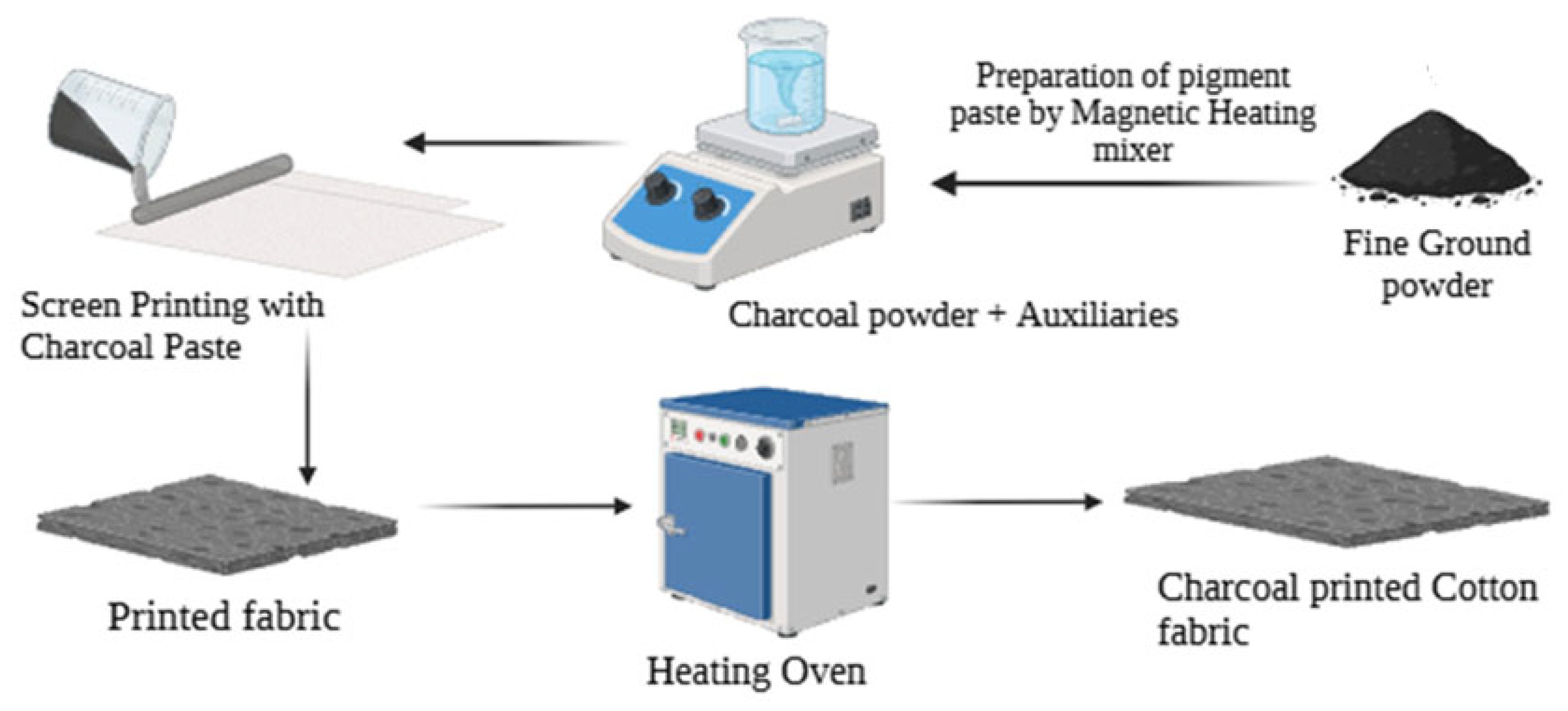
2.4. Printing Process
2.5. Testing
2.5.1. Color-Measurement and Color-Fastness Testing
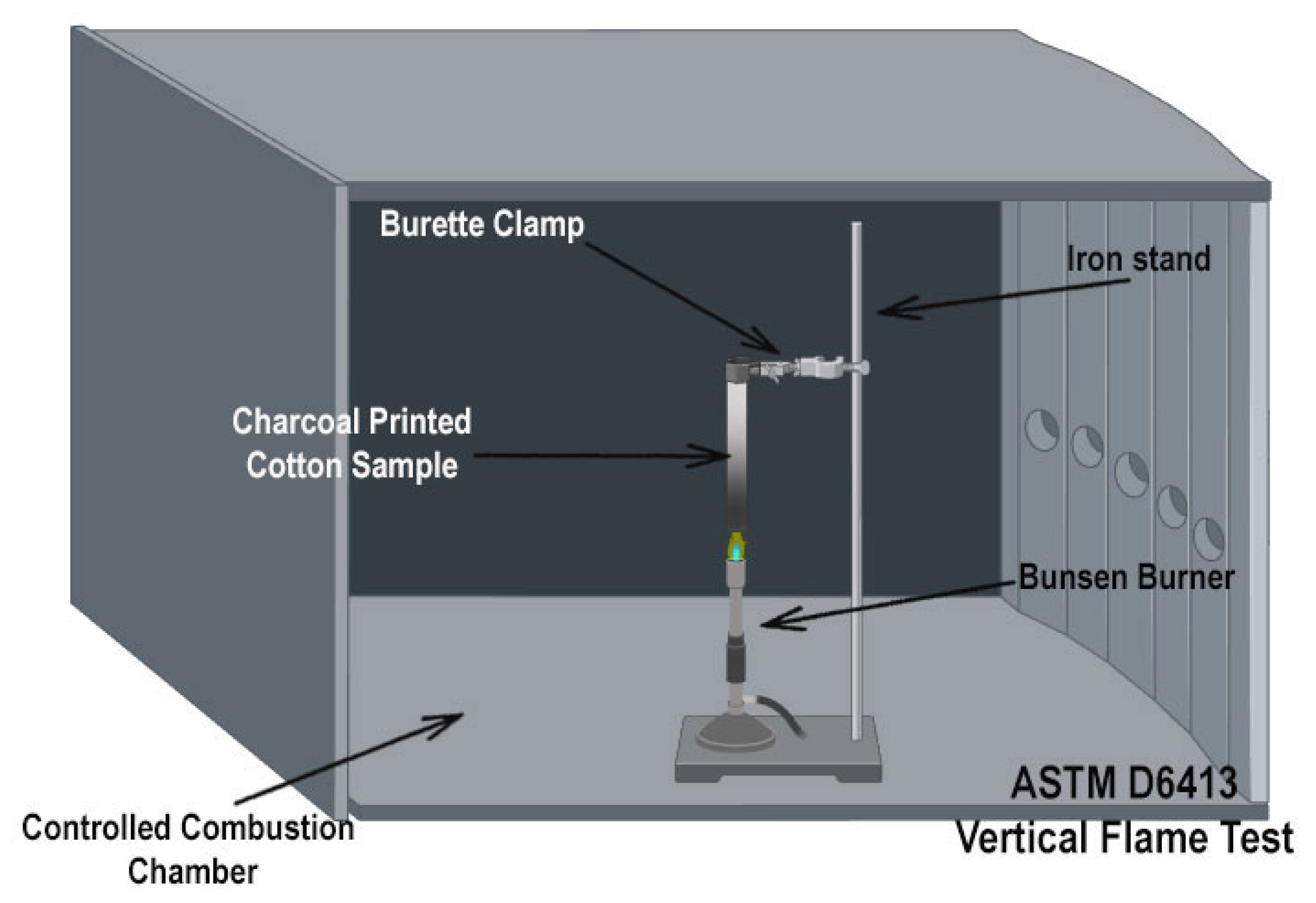
2.5.2. Vertical Flame Resistance Testing
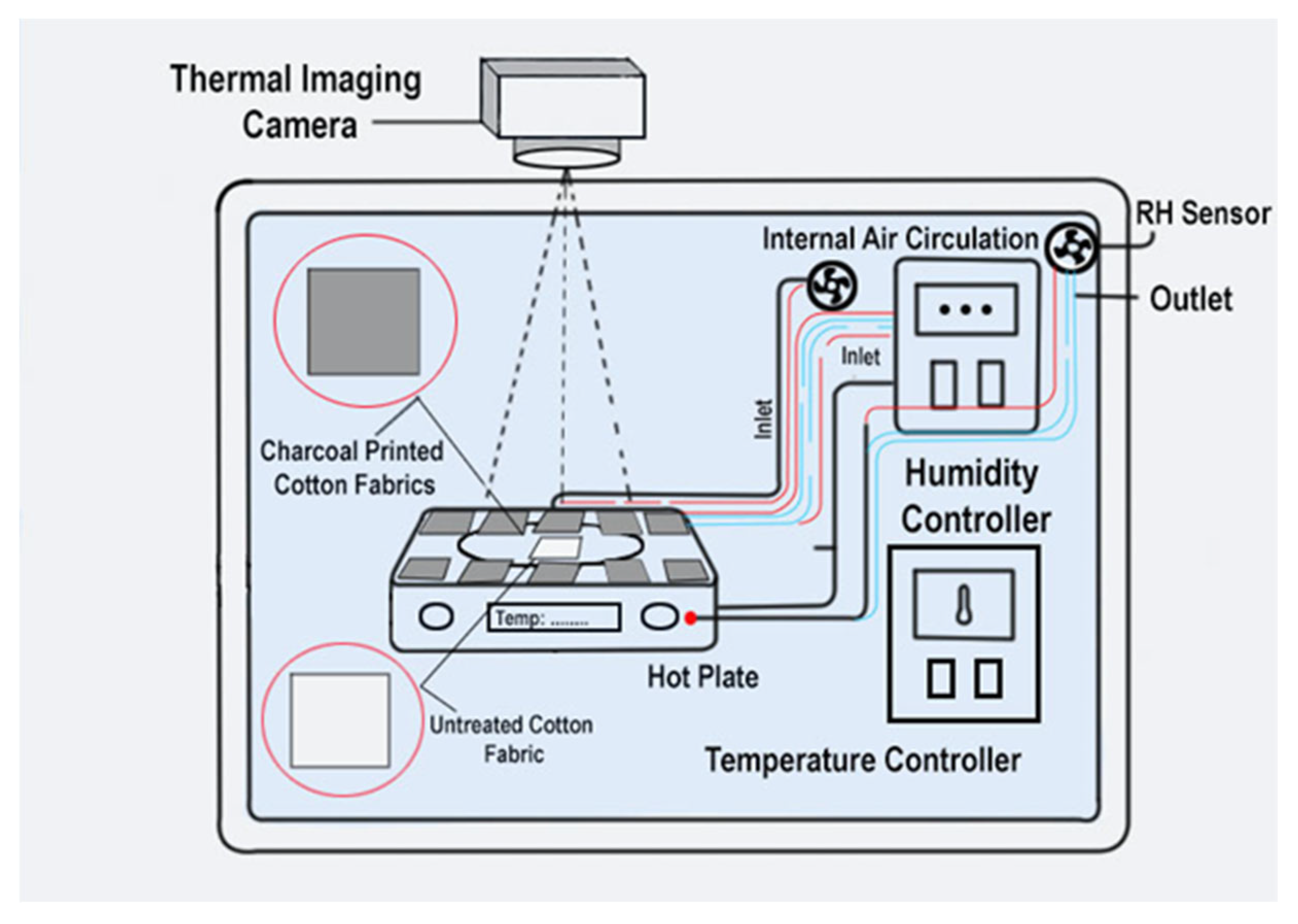
2.5.3. Thermal Insulation Testing
2.5.4. Tensile Strength Testing
2.5.5. Contact Angle Measurement and Water Absorbency (Drop Test)
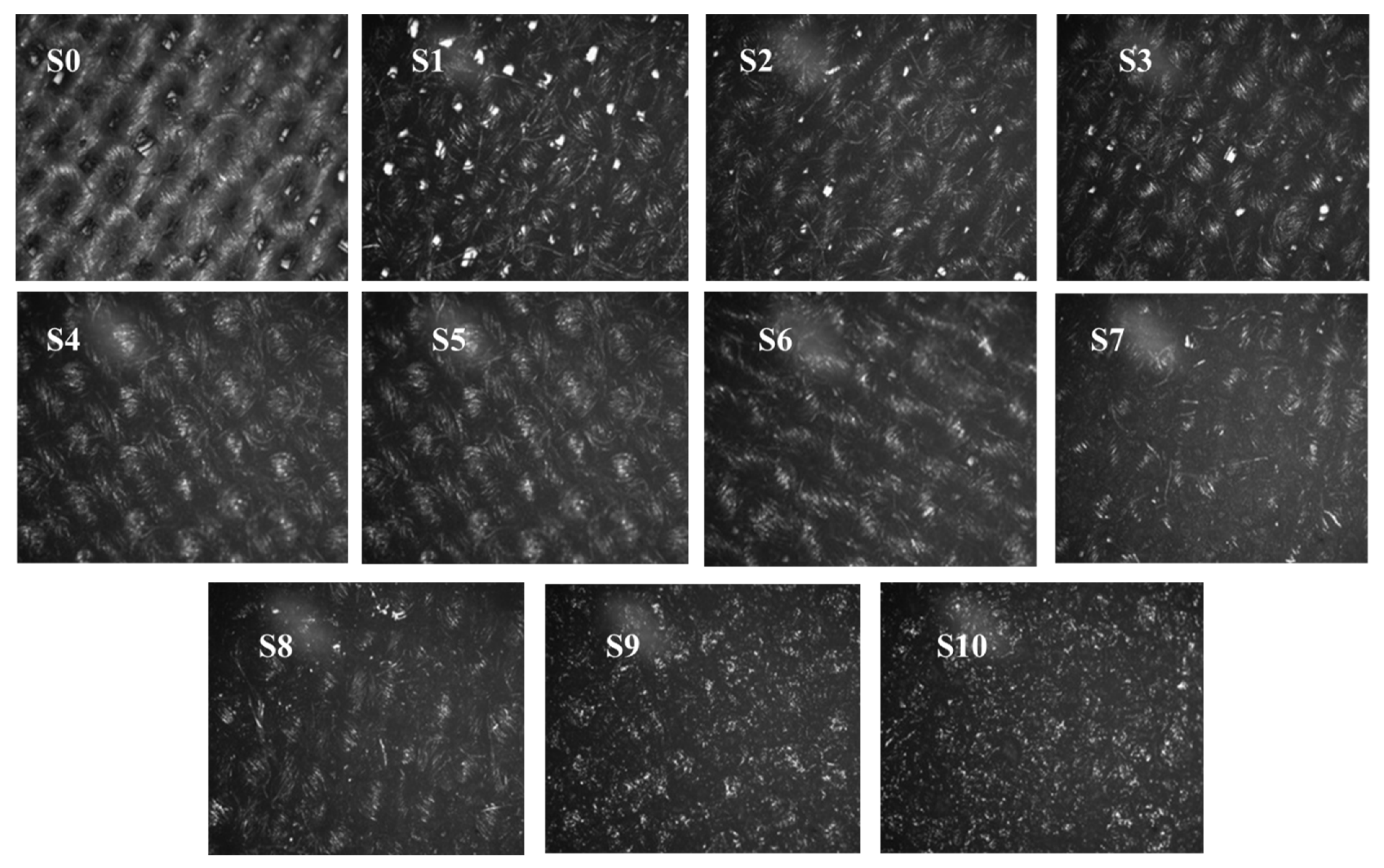
2.5.6. Optical Polarized Microscopy Assessment
2.5.7. Fourier Transform Infrared (FTIR) Spectral Analysis
3. Results and Discussion
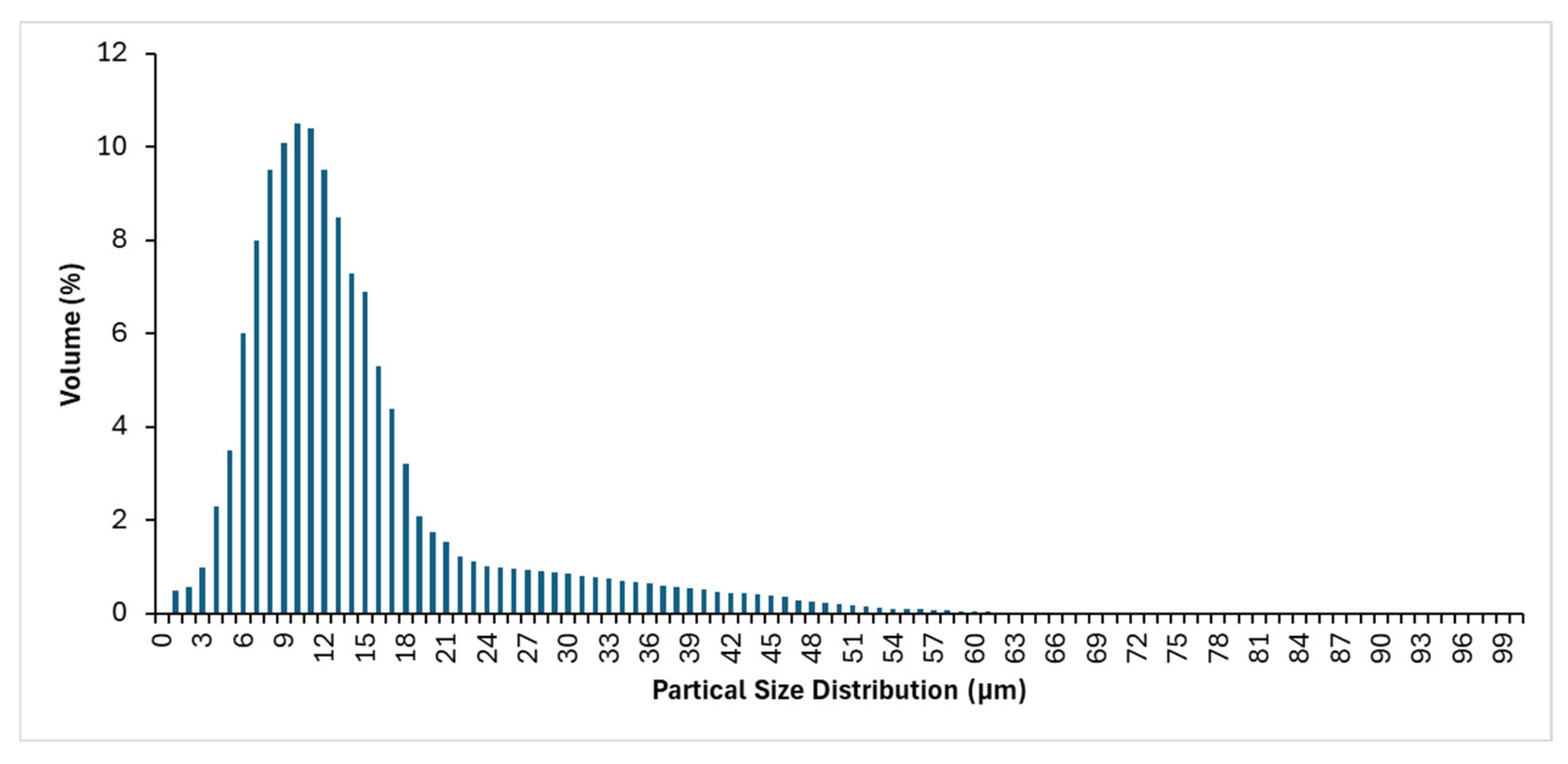
3.1. Partical Size Distrubution of Powdered Material
3.2. Effect of Charcoal Concentration on Color Strength K/S
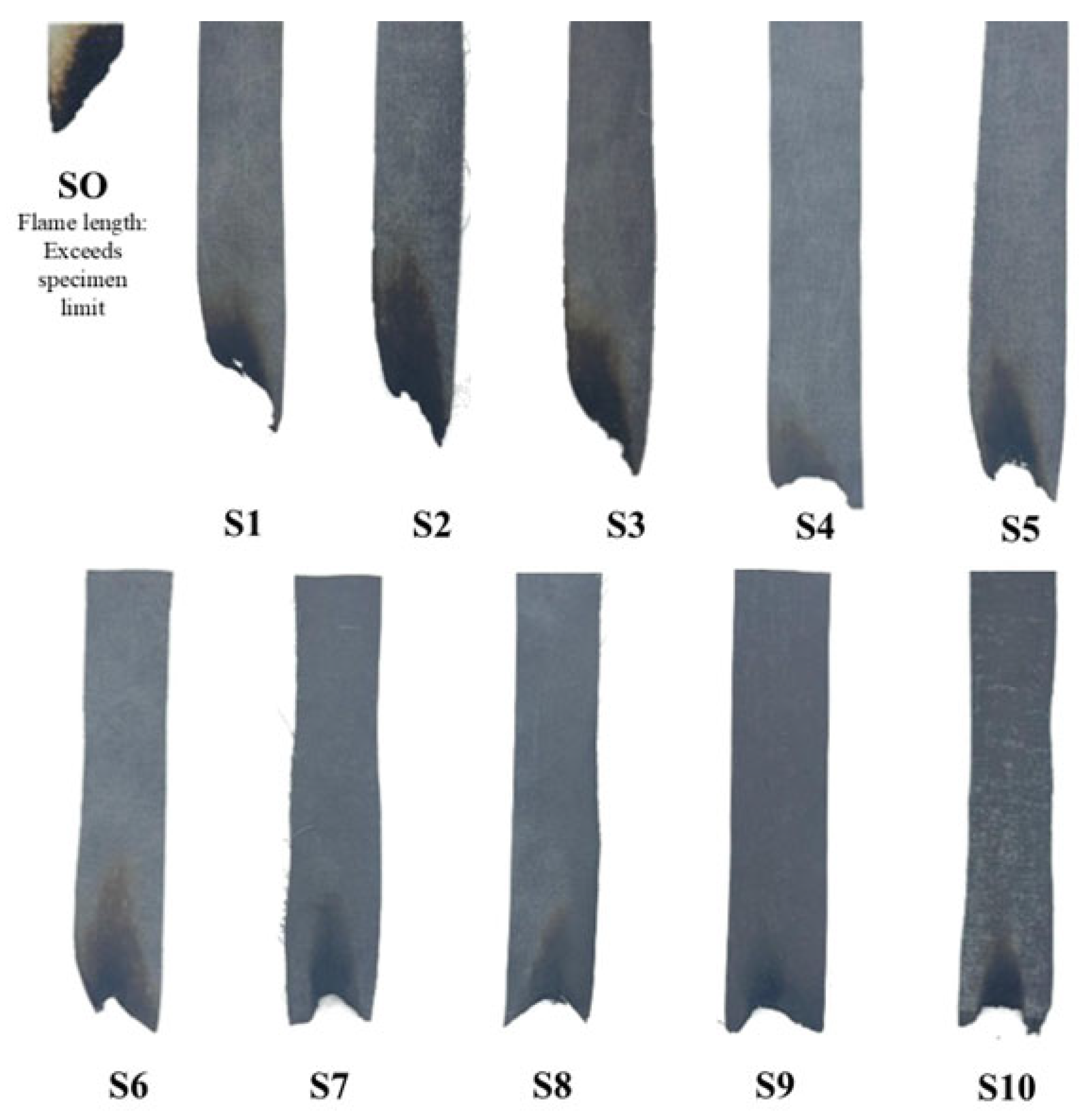
3.3. Flame Retardancy
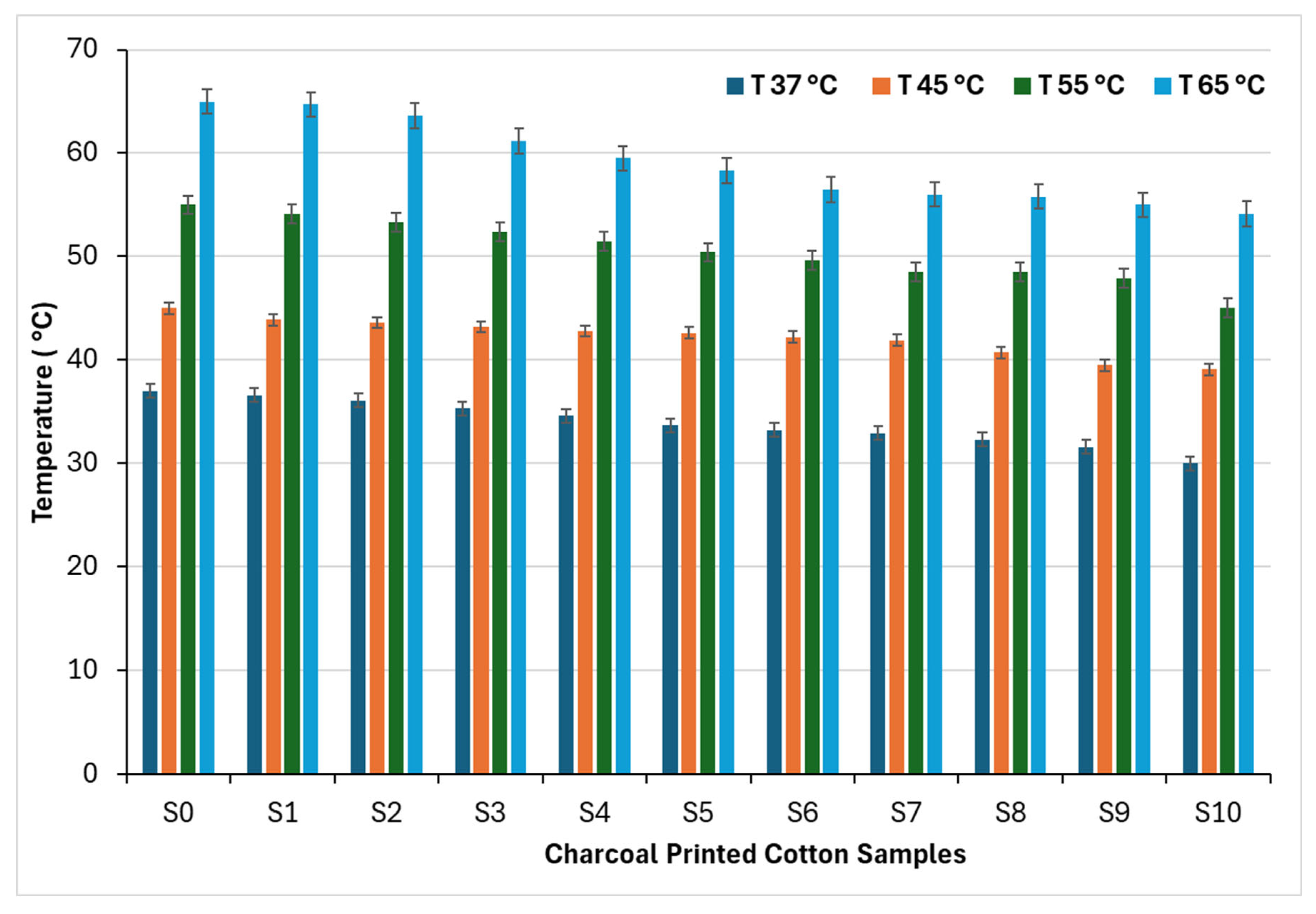
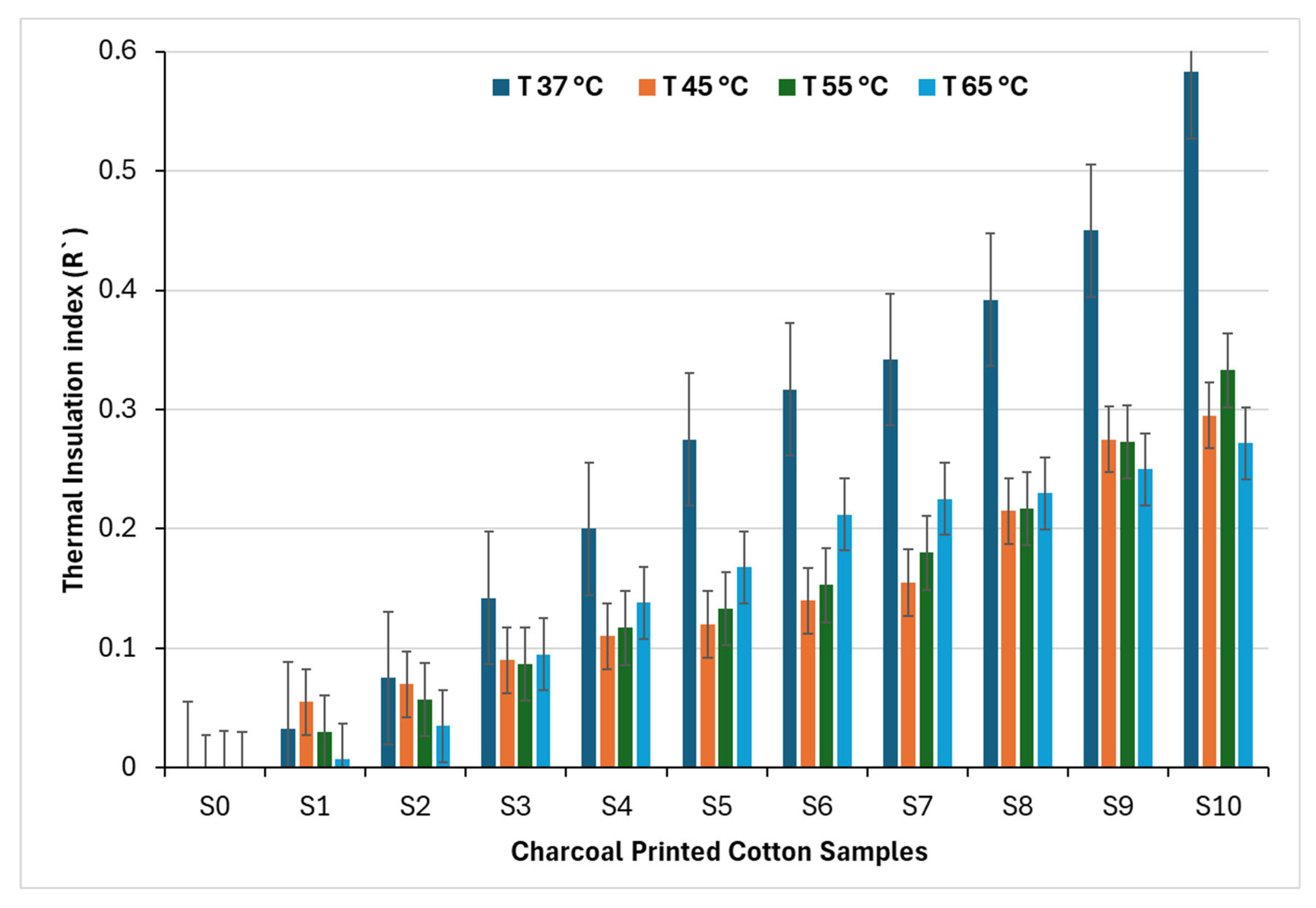
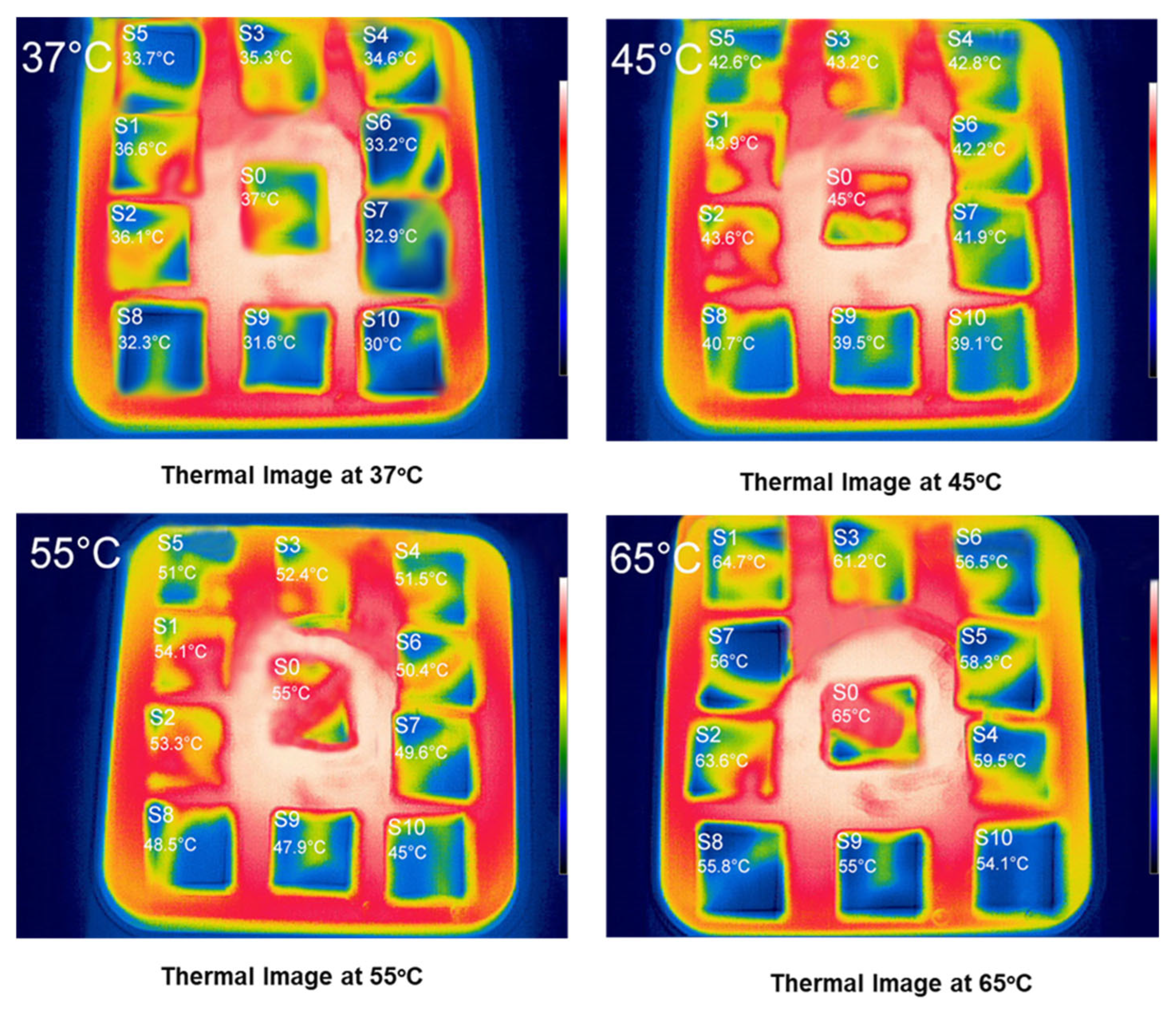
3.4. Effect of Acacia Charcoal Concentration on the Thermal Insulation of Cotton Fabric
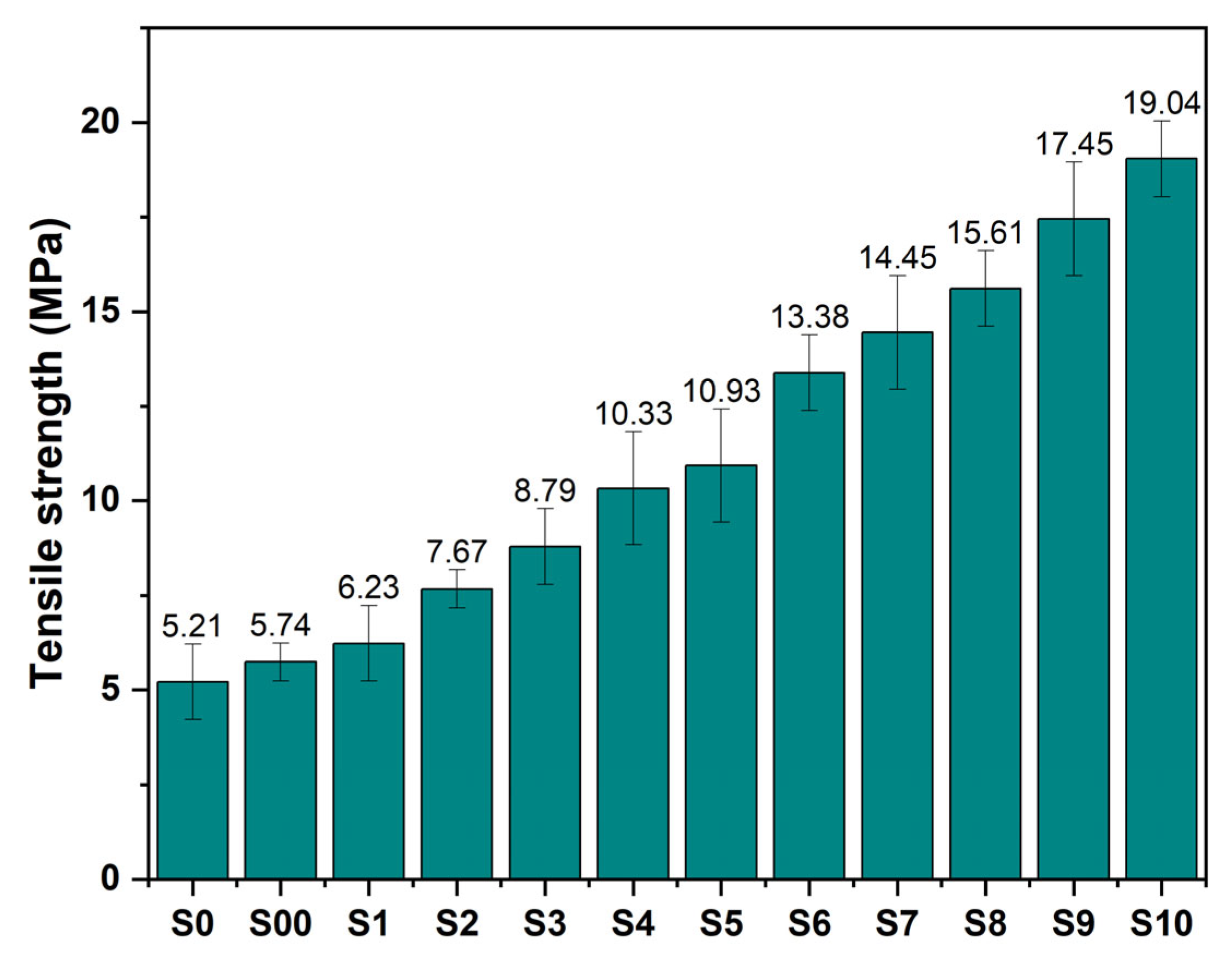
3.5. Effect of Acacia Charcoal Concentration on Tensile Strength
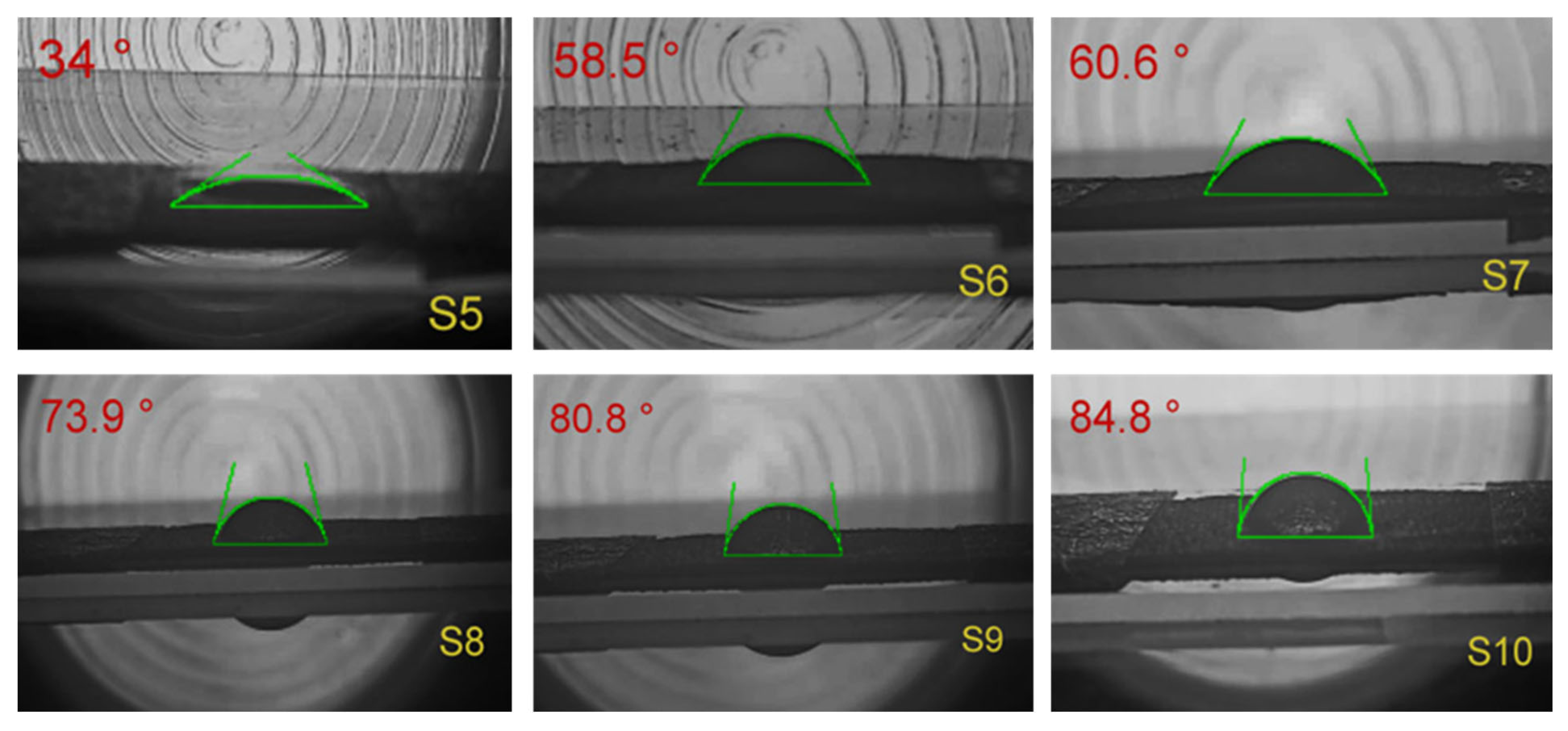
3.6. Effect of Acacia Charcoal Concentration on Surface Hydrophobicity
3.7. Effect of Acacia Charcoal Concentration on Fabric Porosity
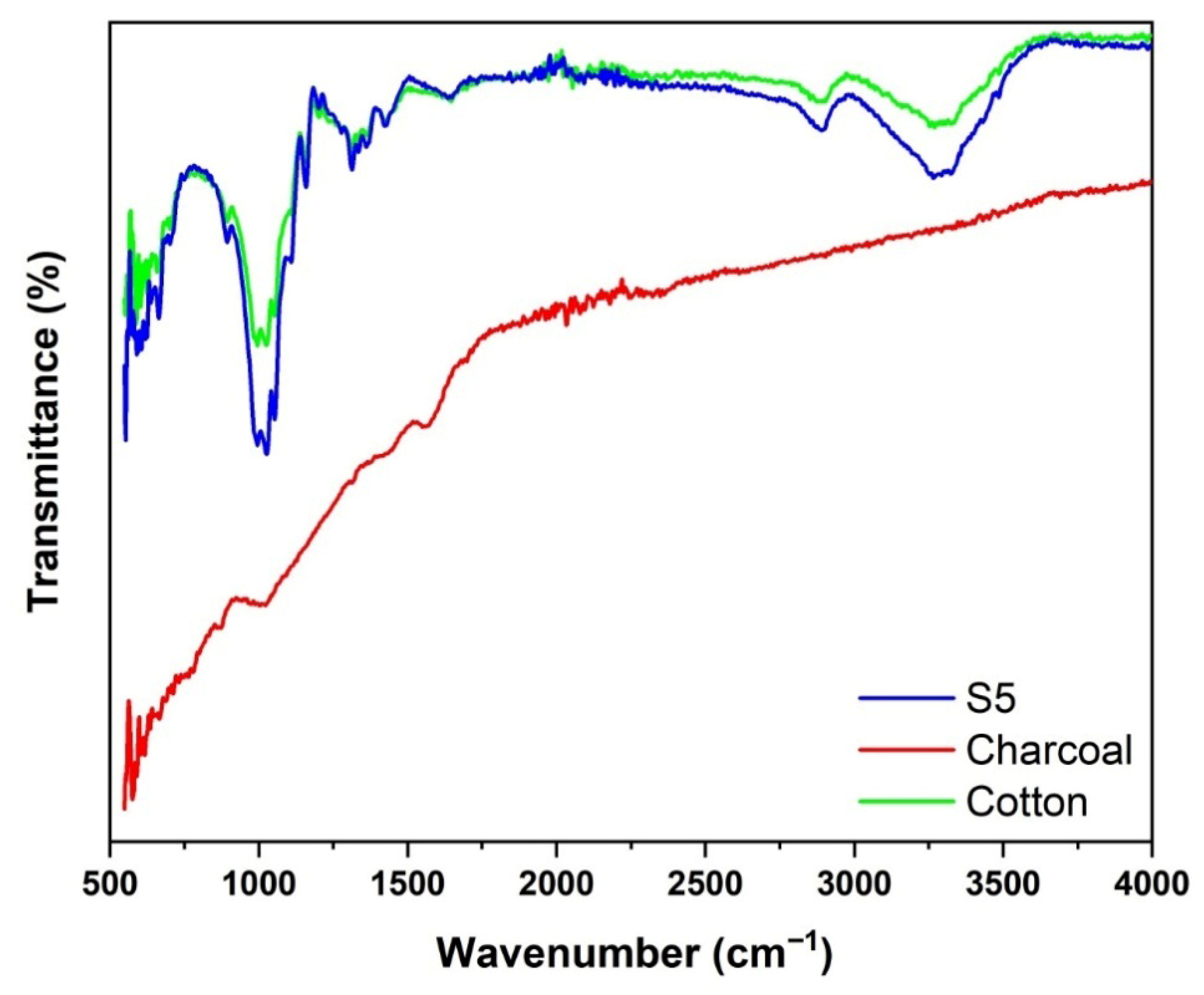
3.8. FTIR Analysis and Interpretation
- ▪
- There are distinctive cellulose absorption peaks in the untreated cotton fabric:
- ▪
- Hydrogen-bonded hydroxyl groups in cotton are indicated by a broad and vigorous O–H stretching band at about ~3330–3400 cm−1.
- ▪
- ~2890 cm−1: aliphatic -CH and -CH2 groups’ C–H stretching vibrations.
- ▪
- ~1640 cm−1: hydrophilic cellulose is characterized by O–H bends of absorbed water molecules.
- ▪
- CH2 bending vibrations at ~1425 and 1365 cm−1.
- ▪
- ~1030–1050 cm−1: the cellulose backbone is represented by the strong C–O–C and C–O stretch peaks of polysaccharide rings.
- ▪
- The predicted functional groups in pure cellulosic cotton are confirmed by these peaks.
- ▪
- The charcoal spectrum has a distinct profile that is typical of carbonaceous materials, with wider features and reduced transmittance:
- ▪
- Weak/broad peak at 3300–3500 cm−1: surface O–H stretching due to adsorbed moisture and residual hydroxyls.
- ▪
- Broad band around 1600 cm−1: pyrolyzed carbon structures are characterized by C=C stretching of aromatic graphitic domains.
- ▪
- There are few or no distinct peaks in the 1000–1200 cm−1 range: the full heat breakdown of cellulose into carbonaceous char is confirmed by the absence of polysaccharide C–O bands.
- ▪
- This spectral pattern confirms that amorphous carbon with low surface oxygenated functionality makes up most of the charcoal.
- ▪
- The S5 sample (cotton printed with charcoal) exhibits a hybrid spectral profile that combines characteristics of charcoal and cotton cellulose, indicating that the surface treatment was successful. In particular:
- ▪
- The C–H stretching peak (~2890 cm−1) linked to cellulose is still visible, indicating cotton structure is intact after printing.
- ▪
- The O–H stretching band (~3330–3400 cm−1) is still present but slightly wider and altered, suggesting that there are bonds (hydrogen bonding or physical adsorption, respectively) between the cellulose hydroxyls and charcoal particles.
- ▪
- Aromatic C=C vibrations from the accumulated charcoal, which are not noticeable in untreated cotton, are represented by an enhanced intensity or breadth about ~1600 cm−1.
4. Conclusions
Supplementary Materials
Author Contributions
Funding
Institutional Review Board Statement
Informed Consent Statement
Data Availability Statement
Acknowledgments
Conflicts of Interest
References
- Ye, Z.; Yu, Z.; Zeng, Y.; Deng, P.; Peng, B.; Kuang, Y.; Wu, K.; Qiao, D.; Jiang, F. Superior Flame Retardancy, Thermal Insulation, and Mechanical Properties of Konjac Glucomannan/Sodium Alginate Biomass Aerogel Modified by Supramolecular Assembled Phytic Acid-Melamine Nanosheet. Int. J. Biol. Macromol. 2024, 282, 37026. [Google Scholar] [CrossRef] [PubMed]
- Islam, T.; Repon, M.R.; Islam, T.; Sarwar, Z.; Rahman, M.M. Impact of Textile Dyes on Health and Ecosystem: A Review of Structure, Causes, and Potential Solutions. Environ. Sci. Pollut. Res. 2023, 30, 9207–9242. [Google Scholar] [CrossRef] [PubMed]
- Dutta, S.; Adhikary, S.; Bhattacharya, S.; Roy, D.; Chatterjee, S.; Chakraborty, A.; Banerjee, D.; Ganguly, A.; Nanda, S.; Rajak, P. Contamination of Textile Dyes in Aquatic Environment: Adverse Impacts on Aquatic Ecosystem and Human Health, and Its Management Using Bioremediation. J. Environ. Manag. 2024, 353, 120103. [Google Scholar] [CrossRef] [PubMed]
- Lin, J.; Ye, W.; Xie, M.; Seo, D.H.; Luo, J.; Wan, Y.; Van der Bruggen, B. Environmental Impacts and Remediation of Dye-Containing Wastewater. Nat. Rev. Earth Environ. 2023, 4, 785–803. [Google Scholar] [CrossRef]
- Periyasamy, A.P. Recent Advances in the Remediation of Textile-Dye-Containing Wastewater: Prioritizing Human Health and Sustainable Wastewater Treatment. Sustainability 2024, 16, 495. [Google Scholar] [CrossRef]
- Dutta, P.; Rabbi, M.R.; Sufian, M.A.; Mahjabin, S. Effects of Textile Dyeing Effluent on the Environment and Its Treatment: A Review. Eng. Appl. Sci. Lett. 2022, 5, 1–17. [Google Scholar] [CrossRef]
- Li, T.; Wei, L.; Fang, Y.; Cui, Y.; Wang, X.; Li, Y. Risk Identification of Human Health, Ecotoxicity, and Degradation Products of Azo Dyes: Development of a Priority Control List. Envr. Pollut. 2025, 386, 127180. [Google Scholar] [CrossRef]
- Sharma, M.; Sharma, S.; Akhtar, M.S.; Kumar, R.; Umar, A.; Alkhanjaf, A.A.M.; Baskoutas, S. Microorganisms-Assisted Degradation of Acid Orange 7 Dye: A Review. Int. J. Environ. Sci. Technol. 2024, 21, 6133–6166. [Google Scholar] [CrossRef]
- Islam, M.M.; Aidid, A.R.; Mohshin, J.N.; Mondal, H.; Ganguli, S.; Chakraborty, A.K. A Critical Review on Textile Dye-Containing Wastewater: Ecotoxicity, Health Risks, and Remediation Strategies for Environmental Safety. Clean. Chem. Eng. 2025, 11, 100165. [Google Scholar] [CrossRef]
- Tounsadi, H.; Metarfi, Y.; Taleb, M.; El Rhazi, K.; Rais, Z. Impact of Chemical Substances Used in Textile Industry on the Employee’s Health: Epidemiological Study. Ecotoxicol. Environ. Saf. 2020, 197, 110594. [Google Scholar] [CrossRef]
- Singh, Z.; Chadha, P. Textile Industry and Occupational Cancer. J. Occup. Med. Toxicol. 2016, 11, 39. [Google Scholar] [CrossRef] [PubMed]
- Islam, M.S.; Rahman, M.S.; Khatun, M.; Hajibeigy, M.; Uddin, M.N.; Khatun, M.M. Extraction of Organic Pigments from Tomato (Solanum lycopersicum L.), Turmeric (Curcuma longa L.) and Red Amaranth (Amaranthus tricolor L.) for Safe Use in Agro-Products. Heliyon 2024, 10, e25278. [Google Scholar] [CrossRef] [PubMed]
- Borah, S.; Bhuyan, P.M.; Sarma, B.; Hazarika, S.; Gogoi, A.; Gogoi, P. Sustainable dyeing of mulberry silk fabric using extracts of green tea (Camellia sinensis): Extraction, mordanting, dyed silk fabric properties and silk-dye interaction mechanism. Ind. Crop. Prod. 2023, 205, 117517. [Google Scholar] [CrossRef]
- Zeng, R.; Jin, G.; He, D.; Zhang, L.; Chen, D.; Zhang, Y.; Zhu, L.; Mei, Y.; Wu, W.; Luo, Y. Oxygen Vacancy Promoted CO2 Activation over Acidic-Treated LaCoO3 for Dry Reforming of Propane. Mater. Today Sustain. 2022, 19, 100162. [Google Scholar] [CrossRef]
- Borah, D.; Rout, J.; Nooruddin, T. Phycoremediation and Water Reuse in Bioenergy Production from Algae and Cyanobacteria in Relevance to Sustainable Development Goals. In Water, the Environment, and the Sustainable Development Goals; Elsevier: Amsterdam, The Netherlands, 2024; pp. 375–406. [Google Scholar] [CrossRef]
- Shawkey, M.D.; D’Alba, L. Interactions between Colour-Producing Mechanisms and Their Effects on the Integumentary Colour Palette. Philos. Trans. R. Soc. B Biol. Sci. 2017, 372, 20160536. [Google Scholar] [CrossRef]
- Suhas; Gupta, V.K.; Singh, L.P.; Chaudhary, M.; Kushwaha, S. A Novel Approach to Develop Activated Carbon by an Ingenious Hydrothermal Treatment Methodology Using Phyllanthus emblica Fruit Stone. J. Clean. Prod. 2021, 288, 125643. [Google Scholar] [CrossRef]
- Liu, Q.; Wang, T.; Wang, C.; Wu, D. Coal Tar Pitch-Derived Porous Carbon Prepared in Deep Eutectic Spinning Solution via Electrospinning for Supercapacitor Electrodes. Chem. Eng. J. 2024, 481, 148292. [Google Scholar] [CrossRef]
- Ip, A.W.M.; Barford, J.P.; Mckay, G. Production and comparison of high surface area bamboo derived active carbons. Bioresour. Technol. 2008, 99, 8909–8916. [Google Scholar] [CrossRef]
- Narakaew, S.; Thungprasert, S.; Janprommin, S.; Chaisena, A. Silver-Nanowire/Bamboo-Charcoal Composite Percolation Network on Nylon Sheet for Improved PM2.5 Capture Efficiency. Appl. Surf. Sci. 2022, 596, 153666. [Google Scholar] [CrossRef]
- Zhang, W.X.; Yuan, Z.P.; Wang, Y.Z.; Cai, Y.M. Preparation and Properties of Bamboo Charcoal Polypropylene Fibers. Gongneng Cailiao/J. Funct. Mater. 2012, 43, 148–151. [Google Scholar]
- Gunasekaran, G.; Prakash, C.; Periyasamy, S. Preparation, Characterisation of Bamboo Charcoal Particles and the Effect of Their Application on Thermo-Physiological Comfort Properties of Woven Fabrics. J. Text. Inst. 2020, 111, 318–325. [Google Scholar] [CrossRef]
- Eza, T.S.M.; Wan Ahmad, W.Y.; Ahmad, M.R.; Omar, K.; Ahmad, M.N. Effectiveness of Activated Carbon Produced from Coconut and Oil Palm Shells as Anti-Odour on Textile Fabrics. Indian J. Fibre Text. Res. 2014, 39, 190–195. [Google Scholar]
- Vuthiganond, N.; Nakpathom, M.; Somboon, B.; Narumol, N.; Mongkholrattanasit, R. Improving the Deodorizing Ability of Cotton Fabric by Printing with Bamboo Charcoal. J. Nat. Fibers 2023, 20, 2181267. [Google Scholar] [CrossRef]
- Gibreel, H.H.; Kordofani, M.A.Y.; Warrag, E.I.; Ashour, A.; Sherif, A.E.; Osman, W.; Ibrahim, S.R.M.; Mohamed, G.A.; Sindi, I.A.; Abulkhair, H.S.; et al. A taxonomic analysis of the Sudanese medicinal plant, Vachellia nilotica L. (syn: Acacia nilotica L.) based on pods, seeds, and vegetative traits. Pak. J. Bot. 2024, 56, 1507–1516. [Google Scholar] [CrossRef] [PubMed]
- Yusop, M.F.M.; Ahmad, M.A.; Rosli, N.A.; Manaf, M.E.A. Adsorption of Cationic Methylene Blue Dye Using Microwave-Assisted Activated Carbon Derived from Acacia Wood: Optimization and Batch Studies. Arab. J. Chem. 2021, 14, 103122. [Google Scholar] [CrossRef]
- Asif, M.J.; Govender, N.T.; Ang, L.H.; Ratnam, W. Growth Performance and Lignin Content of Acacia mangium Willd. and Acacia auriculiformis A. Cunn. Ex Benth. under Normal and Stressed Conditions. J. For. Sci. 2017, 63, 381–392. [Google Scholar] [CrossRef]
- Okoye, C.O.; Zhu, M.; Jones, I.; Zhang, J.; Zhang, Z.; Zhang, D. Preparation and Characterization of Carbon Black (CB) Using Heavy Residue Fraction of Spent Tyre Pyrolysis Oil. J. Environ. Chem. Eng. 2021, 9, 106561. [Google Scholar] [CrossRef]
- Okoye, C.O.; Zhang, Z.; Zhang, D. Carbon black preparation by partial oxidation of spent tyre pyrolysis oil—Influence of temperature, residence time and oxygen to feed ratio. Waste Manag. 2024, 174, 273–281. [Google Scholar] [CrossRef]
- Singh, A.K.; Singh, R.; Sinha, O.P. Characterization of Charcoals Produced from Acacia, Albizia and Leucaena for Application in Ironmaking. Fuel 2022, 320, 123991. [Google Scholar] [CrossRef]
- Li, W.; Zhang, L.; Chai, W.; Yin, N.; Semple, K.; Li, L.; Zhang, W.; Dai, C. Enhancement of Flame Retardancy and Mechanical Properties of Polylactic Acid with a Biodegradable Fire-Retardant Filler System Based on Bamboo Charcoal. Polymers 2021, 13, 2167. [Google Scholar] [CrossRef]
- Lara, L.; Cabral, I.; Cunha, J. Ecological Approaches to Textile Dyeing: A Review. Sustainability 2022, 14, 8353. [Google Scholar] [CrossRef]
- Uddin, F. Environmental Hazard in Textile Dyeing Wastewater from Local Textile Industry. Cellulose 2021, 28, 10715–10739. [Google Scholar] [CrossRef]
- Ragab, M.M.; Othman, H.A.; Hassabo, A.G. An Overview of Printing Textile Techniques. Egypt. J. Chem. 2022, 65, 749–761. [Google Scholar] [CrossRef]
- Dessie, A.; Eshetu, B. The Role of Binders and Its Chemistry in Textile Pigment Printing. Text. Sci. Engr. 2021, 11, 428. [Google Scholar]
- Elshemy, N.S.; Haggage, K.; El-Sayed, H. A Critique on Synthesis and Application of Binders in Textiles Pigment Printing. Egypt. J. Chem. 2022, 65, 539–549. [Google Scholar] [CrossRef]
- Derbali, F.; Hammami, S.T.; Algabr, M.; Elaieb, M.T.; Hamrouni, L. Chemical Composition, Insecticidal and Antifungal Activities of Pinus halepensis Mill. and Acacia cyanophylla Sp. Wood Tars. Heliyon 2024, 10, e27813. [Google Scholar] [CrossRef]
- Fernanda, R.E.; Tjahjanti, P.H.; Fahruddin, A.; Akbar, A.; Ikhsanudin, A.F. Studi Awal Pembuatan Briket Dari Campuran Sampah Botol Jenis PET Dan Bahan Sintesis Dengan Perekat Lumpur Sidoarjo. Justek J. Sains Teknol. 2022, 5, 81. [Google Scholar] [CrossRef]
- Bošnjaković, G.; Kašiković, N.; Vladić, G.; Banjanin, B.; Petrović, S.; Novaković, D. Tactile and Mechanical Investigation of Screen Printed Specimens with Puff Effect. Ind. Textila 2022, 73, 454. [Google Scholar] [CrossRef]
- Manuja, A.; Ojha, I.; Singh, M. Eco-Printing: Domestic Technique of Textile Printing Using the Leaves of Rose Indica. Int. J. Eng. Technol. Manag. Sci. 2023, 7, 116–121. [Google Scholar] [CrossRef]
- Pakdel, E.; Naebe, M.; Kashi, S.; Cai, Z.; Xie, W.; Yuen, A.C.Y.; Montazer, M.; Sun, L.; Wang, X. Functional Cotton Fabric Using Hollow Glass Microspheres: Focus on Thermal Insulation, Flame Retardancy, UV-Protection and Acoustic Performance. Prog. Org. Coat. 2020, 141, 105553. [Google Scholar] [CrossRef]
- Kothari, V.K.; Bal, K. Development of an Instrument to Study Thermal Resistance of Fabrics. Indian J. Fibre Text. Res. 2005, 30, 363. [Google Scholar]
- Koetniyom, S.; Ployphet, S.; Koetniyom, W. Physical Properties of Automotive Textiles and Design for Child Seat in Modified Pick-up Vehicle. AIP Conf. Proc. 2020, 2279, 050008. [Google Scholar] [CrossRef]
- Yu, H.Y.; Qin, Z.Y.; Zhou, Z. Cellulose Nanocrystals as Green Fillers to Improve Crystallization and Hydrophilic Property of Poly(3-Hydroxybutyrate-Co-3-Hydroxyvalerate). Prog. Nat. Sci. Mater. Int. 2011, 21, 478–484. [Google Scholar] [CrossRef]
- Minatre, K.L.; Arienzo, M.M.; Moosmüller, H.; Maezumi, S.Y. Charcoal Analysis for Temperature Reconstruction with Infrared Spectroscopy. Front. Earth Sci. 2024, 12, 1354080. [Google Scholar] [CrossRef]
- Mohsin, A.; Zahid, U. SABZ; Developing a Sustainable, All-Natural, Biodegradable, and Zero-waste Non-woven Textile material. J. Des. Text. 2025, 4, 28–62. [Google Scholar] [CrossRef]
- Wang, S.; Zhang, L.; Semple, K.; Zhang, M.; Zhang, W.; Dai, C. Development of Biodegradable Flame-Retardant Bamboo Charcoal Composites, Part i: Thermal and Elemental Analyses. Polymers 2020, 12, 102217. [Google Scholar] [CrossRef]
- Thota, S.; Somisetti, V.; Kulkarni, S.; Kumar, J.; Nagarajan, R.; Mosurkal, R. Covalent Functionalization of Cellulose in Cotton and a Nylon-Cotton Blend with Phytic Acid for Flame Retardant Properties. Cellulose 2020, 27, 11–24. [Google Scholar] [CrossRef]
- Batool, M.; Shafeeq, A.; Haider, B.; Ahmad, N.M. TiO2 nanoparticle filler-based mixed-matrix pes/ca nanofiltration membranes for enhanced desalination. Membranes 2021, 11, 060433. [Google Scholar] [CrossRef]
- Kasaw, E.; Haile, A.; Getnet, M. Conductive Coatings of Cotton Fabric Consisting of Carbonized Charcoal for E-Textile. Coatings 2020, 10, 579. [Google Scholar] [CrossRef]
- Ferrero, F.; Periolatto, K. Modification of Surface Energy and Wetting of Textile Fibers. In Wetting and Wettability; InTech: London, UK, 2015. [Google Scholar]



| Sample # | Charcoal Powder Concentration (%) | Polyvinyl Alcohol (PVA)(g/L) | Starch (g/L) | Gum Arabic(g/L) | Polyacrylic Binder (g/L) | Fixer (g/L) | Triethylamine (TEA) (g/L) |
|---|---|---|---|---|---|---|---|
| S0 | - | - | - | - | - | - | - |
| S00 | - | 1 | 0.5 | 0.5 | 1 | 0.1 | 0.5 |
| S1 | 0.5 | 1 | 0.5 | 0.5 | 1 | 0.1 | 0.5 |
| S2 | 1 | 1 | 0.5 | 0.5 | 1 | 0.1 | 0.5 |
| S3 | 1.5 | 1 | 0.5 | 0.5 | 1 | 0.1 | 0.5 |
| S4 | 2 | 1 | 0.5 | 0.5 | 1 | 0.1 | 0.5 |
| S5 | 2.5 | 1 | 0.5 | 0.5 | 1 | 0.1 | 0.5 |
| S6 | 3 | 1 | 0.5 | 0.5 | 1 | 0.1 | 0.5 |
| S7 | 3.5 | 1 | 0.5 | 0.5 | 1 | 0.1 | 0.5 |
| S8 | 4 | 1 | 0.5 | 0.5 | 1 | 0.1 | 0.5 |
| S9 | 4.5 | 1 | 0.5 | 0.5 | 1 | 0.1 | 0.5 |
| S10 | 5 | 1 | 0.5 | 0.5 | 1 | 0.1 | 0.5 |
| Acacia Charcoal (%) | K/S | Color Fastness | Color Obtained After Printing with Charcoal | ||
|---|---|---|---|---|---|
| Wash | Crock | ||||
| Dry | Wet | ||||
| 0.5 | 1.85 | 4–5 | 4–5 | 4–5 |  |
| 1 | 3.42 | 4–5 | 4–5 | 4–5 |  |
| 1.5 | 4.91 | 4 | 4–5 | 4–5 |  |
| 2 | 6.28 | 4 | 4–5 | 4 |  |
| 2.5 | 7.54 | 4 | 4–5 | 4 |  |
| 3 | 8.67 | 4 | 4–5 | 4 |  |
| 3.5 | 9.73 | 4 | 4 | 4 |  |
| 4 | 10.68 | 4 | 4 | 4 |  |
| 4.5 | 11.52 | 4 | 4 | 4 |  |
| 5 | 12.31 | 4 | 4 | 4 |  |
| Sample No. | Charcoal Concentration (%) | Observed Flame Height (Inches) |
|---|---|---|
| S0 | 0 | Burnt |
| S00 | 0 | 2.3 |
| S1 | 0.5 | 5.9 |
| S2 | 1 | 6.0 |
| S3 | 1.5 | 5.9 |
| S4 | 2 | 4.5 |
| S5 | 2.5 | 4.8 |
| S6 | 3 | 4.7 |
| S7 | 3.5 | 4.2 |
| S8 | 4 | 3.8 |
| S9 | 4.5 | 3.6 |
| S10 | 5 | 3.2 |
Disclaimer/Publisher’s Note: The statements, opinions and data contained in all publications are solely those of the individual author(s) and contributor(s) and not of MDPI and/or the editor(s). MDPI and/or the editor(s) disclaim responsibility for any injury to people or property resulting from any ideas, methods, instructions or products referred to in the content. |
© 2026 by the authors. Licensee MDPI, Basel, Switzerland. This article is an open access article distributed under the terms and conditions of the Creative Commons Attribution (CC BY) license.
Share and Cite
Rizwan, M.; Khan, I.A.; Javed, K.; Bibi, N.; Sarkar, A.; Morshed, M.; Khan, A.; Shafi, A.; Asif Khan, R.M.; Hussain, F. Fabrication of Acacia-Waste-Charcoal-Printed Cotton Fabric for the Development of Functional Textiles—A Sustainable Approach. Sustainability 2026, 18, 2325. https://doi.org/10.3390/su18052325
Rizwan M, Khan IA, Javed K, Bibi N, Sarkar A, Morshed M, Khan A, Shafi A, Asif Khan RM, Hussain F. Fabrication of Acacia-Waste-Charcoal-Printed Cotton Fabric for the Development of Functional Textiles—A Sustainable Approach. Sustainability. 2026; 18(5):2325. https://doi.org/10.3390/su18052325
Chicago/Turabian StyleRizwan, Maham, Imran Ahmad Khan, Kashif Javed, Nusrat Bibi, Amit Sarkar, Mainul Morshed, Asfandyar Khan, Arslan Shafi, Raja Muhammad Asif Khan, and Fiaz Hussain. 2026. "Fabrication of Acacia-Waste-Charcoal-Printed Cotton Fabric for the Development of Functional Textiles—A Sustainable Approach" Sustainability 18, no. 5: 2325. https://doi.org/10.3390/su18052325
APA StyleRizwan, M., Khan, I. A., Javed, K., Bibi, N., Sarkar, A., Morshed, M., Khan, A., Shafi, A., Asif Khan, R. M., & Hussain, F. (2026). Fabrication of Acacia-Waste-Charcoal-Printed Cotton Fabric for the Development of Functional Textiles—A Sustainable Approach. Sustainability, 18(5), 2325. https://doi.org/10.3390/su18052325