1. Introduction
The process of global urbanization fundamentally transforms the terrestrial water cycle and creates a crucial sustainability dilemma: traditional engineering-based solutions designed to manage stormwater are themselves the major contributors to systemic hydrological and environmental risk. Conventional urban drainage, based on the centralized “gray” networks of pipes and culverts, is based on the fast, efficient removal of surface runoff. This approach severs the natural hydrological cycle by eliminating the key processes of infiltration and evapotranspiration, triggering a series of negative outcomes. These are amplified peak flows and downstream flooding [
1,
2], degradation of receiving water quality due to polluted urban runoff [
3,
4,
5], and the long-term depletion of groundwater recharge. Furthermore, this inflexible and conveyance-focused paradigm makes cities increasingly vulnerable to the heightened rainfall extremes associated with climate change [
5,
6,
7], representing a key pressure on the urban drainage system identified in hydrological state-of-the-art reviews [
8]. As the increase in impervious surfaces keeps changing watershed function, the ecological and hydraulic constraints of this traditional model necessitate a basic paradigm shift in urban water management strategy [
9,
10]. Beyond its traditional roles, water is increasingly recognized as a critical resource in emerging clean energy systems, including hydrogen production [
11], further underscoring the importance of sustainable urban water management.
In direct response to these challenges, the paradigm of low-impact development (LID) has grown to become an essential element of sustainable urban water management. LID, along with other related frameworks such as sponge cities and green infrastructure, promotes decentralized, source-control approaches designed to mimic natural hydrological functions [
12,
13]. This is done through the integration of distributed facilities, which include, but are not limited to, permeable pavements, bioretention cells, green roofs, and infiltration trenches, into the built environment. The basic goal is to restore important elements of pre-development water balance, by promoting infiltration, evapotranspiration, detention and filtering at, or close to, the point of rainfall impact [
14,
15]. Advanced modeling is providing additional support for the design of these systems for future climate resilience [
16]. This is a vital conceptual and practical transition away from a centralized “drain-away” approach, toward a distributed “manage-on-site” approach, with the goal of working toward the re-creation of resilient urban water cycles.
The hydrological performance of low-impact development facilities has been well documented through extensive empirical research and sophisticated computational modeling [
17,
18,
19]. Numerous field studies and simulation analyses confirm that specific LID types—such as bioretention cells, permeable pavements and infiltration trenches—reliably fulfill core stormwater management goals. These include substantial decreases in the overall runoff volume; reduction in the peak flow rates to control the flooding; and the efficient removal of pollutants such as sediments, nutrients, and heavy metals [
20,
21,
22]. This success in terms of proven performance backed by validation in different climatic and urban conditions has provided the required technical basis for adoption on a large scale [
3,
23,
24]. As a result, LID design standards and performance metrics are now integral components of contemporary stormwater regulations and engineering guidelines, establishing their role as necessary infrastructure for regulatory compliance and sustainable urban planning. Optimization studies show their importance in the development of cost-effective urban runoff and combined sewer overflow management strategies [
25,
26,
27,
28].
Beyond basic water management, LID is increasingly accepted as multifunctional green infrastructure with the potential to provide a range of significant and additional co benefits important for urban sustainability. Vegetated systems help in urban ecology, provide habitats, and help in sequestering atmospheric carbon. Their modulation of microclimates, that is, by shading and evaporative cooling, can lower ambient temperatures, which has direct consequences on building energy demands for space cooling and therefore indirect consequences on associated emissions from power generation [
29,
30,
31]. Furthermore, the surfaces of LID facilities can directly intercept and absorb pollutants from the air such as particulate matter (PM10), nitrogen dioxide (NO
2), and sulfur dioxide (SO
2), which contributes to better local air quality and public health outcomes [
32,
33]. In addition, biological processes in LID media, including bioretention soils, are important complex nutrient cycling processes that are critical for long-term water quality function [
34,
35]. This multifunctionality of LID makes it a strategic tool to address interconnected urban challenges of energy, climate, and public health [
36,
37].
Despite the widespread recognition of these co-benefits, there is a large gap between the level of recognition and a lack of methodological and practical approaches. Current research on LID systems tends to be conducted within disciplinary silos, preventing comprehensive assessment. Hydrological modeling studies often have a narrow focus on runoff control metrics without a quantitative relationship with wider environmental or economic consequences [
6,
38]. Conversely, research in urban ecology or building energy efficiency often examines features like green roofs in isolation from their hydrological context and performance. A critical limitation is the lack of consideration of economic feasibility analyses, which typically focus on simplistic trade-offs between costs and hydrology or only account for upfront capital costs and are therefore systematically biased against the much larger monetary value that can be obtained from energy savings, air quality improvements and climate mitigation [
39,
40,
41,
42,
43]. As a result, this fragmented analytical landscape fails to capture the integrated value of LID, leaving no holistic, comparable, and monetized evidence for planners and policymakers. While multiple criteria decision frameworks such as analytic hierarchy process (AHP) offer a structured way of comparing LID alternatives, they generally assign qualitative or non-monetary weights to disparate categories of benefits [
24]. Thus, there is a continuing need for a comprehensive methodology to quantify the entire range of LID benefits on a common monetary basis so that it is directly integrated into cost-benefit analyses and infrastructure investment appraisals.
To address these gaps, this study develops and applies an integrated benefit valuation framework for a comparative analysis of five representative LID facilities—vegetated swale, green roof, infiltration ditch, infiltration trench, and permeable pavement—in the dense urban context of Seoul, South Korea. While foundational studies have effectively quantified the hydrological potential for rainwater harvesting and stormwater management in the Korean context using daily water balance models [
44,
45,
46], a comprehensive framework to assign economic value to the full spectrum of co-benefits from decentralized LID facilities remains lacking. The study is guided by the following research questions: RQ1: How do different types of LID facilities compare in terms of their hydrological, energy, air quality, and climate-related performance? RQ2: What is the monetized value of multifunctional co-benefits provided by each LID type under the Seoul urban context? RQ3: How does the integrated benefit valuation framework demonstrate the multifunctional value of LID facilities across water, energy, air quality, and climate sectors? To answer these questions, the framework quantifies and monetizes co-benefits across four interrelated sectors: (1) water management, including runoff volume reduction and avoided costs of centralized stormwater infrastructure; (2) energy savings, through reduced building cooling and heating requirements; (3) air quality improvement, through direct pollutant removal and indirect emission reductions from lower energy consumption; and (4) climate change response, through direct carbon sequestration and indirect carbon emission avoidance. Using a transparent, spreadsheet-based model incorporating localized Korean valuation data (e.g., regional emission factors and social cost of carbon), this research provides a systematic and reproducible methodology [
47,
48]. The results offer a comprehensive, monetized comparison of the multifunctional performance and economic profiles of various LID types. Ultimately, this work provides urban planners and policymakers with an evidence-based framework to support investment decisions that maximize synergistic returns across urban water security, energy efficiency, environmental quality, and climate resilience.
This study demonstrates that LID facilities function as multifunctional green infrastructure, providing measurable economic benefits beyond stormwater management. By quantifying and monetizing co-benefits across water, energy, air quality, and climate sectors, the findings support a paradigm shift in urban infrastructure planning—from single-purpose drainage solutions to integrated investments that enhance urban resilience, energy efficiency, and environmental quality simultaneously. The remainder of this paper is structured as follows.
Section 2 describes the selected LID facilities and the integrated evaluation methodology used to quantify and monetize multifunctional benefits across four sectors.
Section 3 presents the comparative results of the assessed LID systems, with subsections dedicated to water management, energy savings, air quality improvement, climate change response, cost analysis, and comprehensive benefit valuation. Finally,
Section 4 summarizes the main conclusions, discusses policy implications, and identifies limitations and directions for future research.
2. Materials and Methods
2.1. Description of LID Facilities
Low-impact development (LID) facilities have been widely applied in South Korea to manage urban rainfall-runoff to promote rainwater reuse and enhance water quality by decentralized stormwater control. These systems help to complement conventional drainage infrastructure, by promoting on-site storage, infiltration and controlled release of stormwater at the source.
In this study, five types of LID facilities located in Seoul were chosen as the representative facilities for analysis (vegetated swale, green roof, infiltration ditch, infiltration trench, and permeable pavement). These facilities encompass commonly applied LID practices in urban environments with a high density of development, and examples of these systems are diverse, including surface-based, subsurface and infiltration-oriented systems. The selected facilities vary in physical configuration, contributing drainage area, and functional design, enabling comparison across a range of typical urban applications.
Table 1 provides the technical and economic features of the selected LID facilities such as facility area, contributing catchment area, inflow rainfall volume, storage capacity, infiltration capacity, storage infiltration rate, and storage ratio. Construction and maintenance unit prices are also provided to describe the economic characteristics of each facility. Together, these parameters characterize the physical scale, hydrological function, and implementation attributes of the studied LID systems.
2.2. Evaluation Methodology
This study presents the development of a spreadsheet-based evaluation framework for the systematic quantification of multifunctional benefits provided by five representative low-impact development (LID) facilities: vegetated swales, green roofs, infiltration ditches, infiltration trenches, and permeable pavements. The framework is intended to facilitate transparent, reproducible, and integrated assessment of LID performance across several urban sectors.
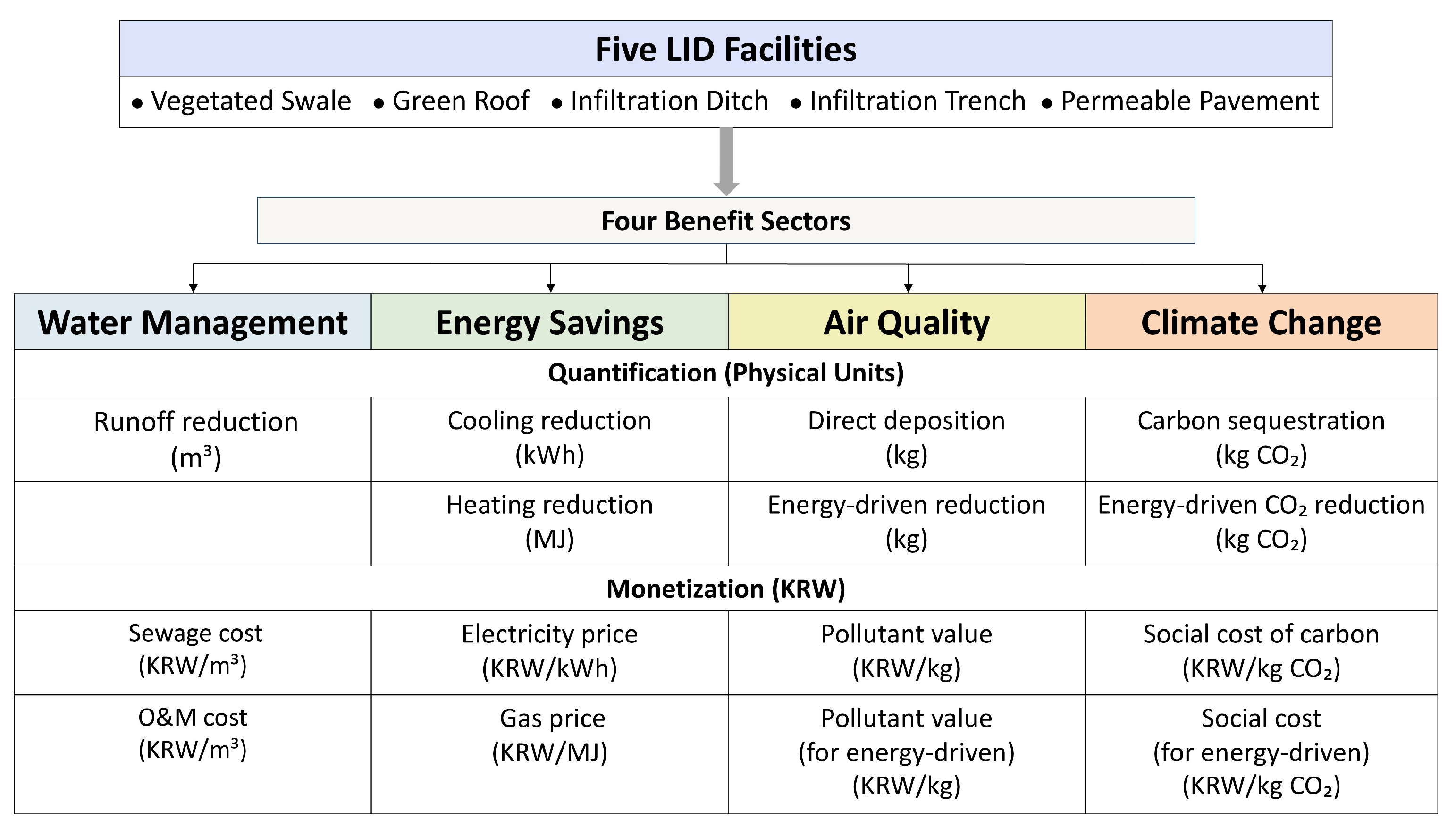
The evaluation focuses on four important areas of benefits where LID practices serve at the same time: water management, energy savings, air quality improvement and climate change response. While stormwater management and regulation form a foundational function of LID, the evaluation clearly acknowledges that the systems provide additional co-benefits that go beyond the control of runoff as they are a multifunctional urban infrastructure.
For each LID facility, the benefits are first quantified in physical and technical terms such as reduction in annual runoff, reduction in building energy demand, removal of pollutants, and sequestration of or reduction in carbon. These technical indicators are then converted into monetized benefit indicators using standardized conversion factors, so that cross-sectoral comparison and aggregation are possible while retaining a clear relationship to the underlying physical processes. This two-step approach ensures transparency regarding methodology and also prevents performance assessment from being conflated with economic interpretation.
The structure based on spreadsheet offers the possibility to ensure consistency in applying assumptions, to better compare scenarios between types of LID, and to incorporate additional indicators flexibly if needed. Detailed equations and values of parameters used in the benefit calculations are shown in the section that follows.
Figure 1 shows the overall methodological workflow that was followed in this study with emphasis on the sequential evaluation of the sector-specific benefits and their integration into a holistic assessment framework. All parameter values used in the quantification and monetization steps were selected from Seoul-specific data sources to ensure geographic representativeness, as detailed in
Table A1,
Table A2,
Table A3 and
Table A4.
2.2.1. Justification of the Benefit Valuation Framework
The benefit valuation framework that was used in this study combines hydrological, energy, air quality and climate-related performance metrics to systematically assess the multifunctional contributions of LID facilities [
9]. All the benefit components were first quantified in physical units according to known engineering principles and environmental assessments methodologies and were then converted into monetary values using unit prices and valuation coefficients from official statistical sources and the peer-reviewed literature. This sequential quantification approach in line with established frameworks and approaches used in ecosystem service valuation [
49] guarantees methodological transparency and dimensional consistency, as well as the reproducibility of results.
The framework explicitly takes both direct and indirect benefit pathways into account, such as rainfall-runoff reduction, avoided demand for centralized water treatment infrastructure, reduction in building energy consumption, associated air pollutant emission reductions, carbon sequestration and mitigation effects. The use of uniform unit-based valuation methods for all types of facilities allows them to be used to robustly compare facilities while reducing the risk of benefit overlap or double counting. Benefit categories for which standardized and widely accepted monetary valuation methods are not available, such as social well-being, visual amenity and recreational value, were purposely excluded to retain a conservative estimation of total benefits.
Overall, the adopted valuation framework offers a structured and defensible methodological basis for the assessment of multifunctional performance of LID facilities in the context of an integrated water–energy–environment nexus. This approach makes sustainable urban infrastructure planning decisions evidence-based by relating physical system performance and economic valuation in a consistent and transparent way.
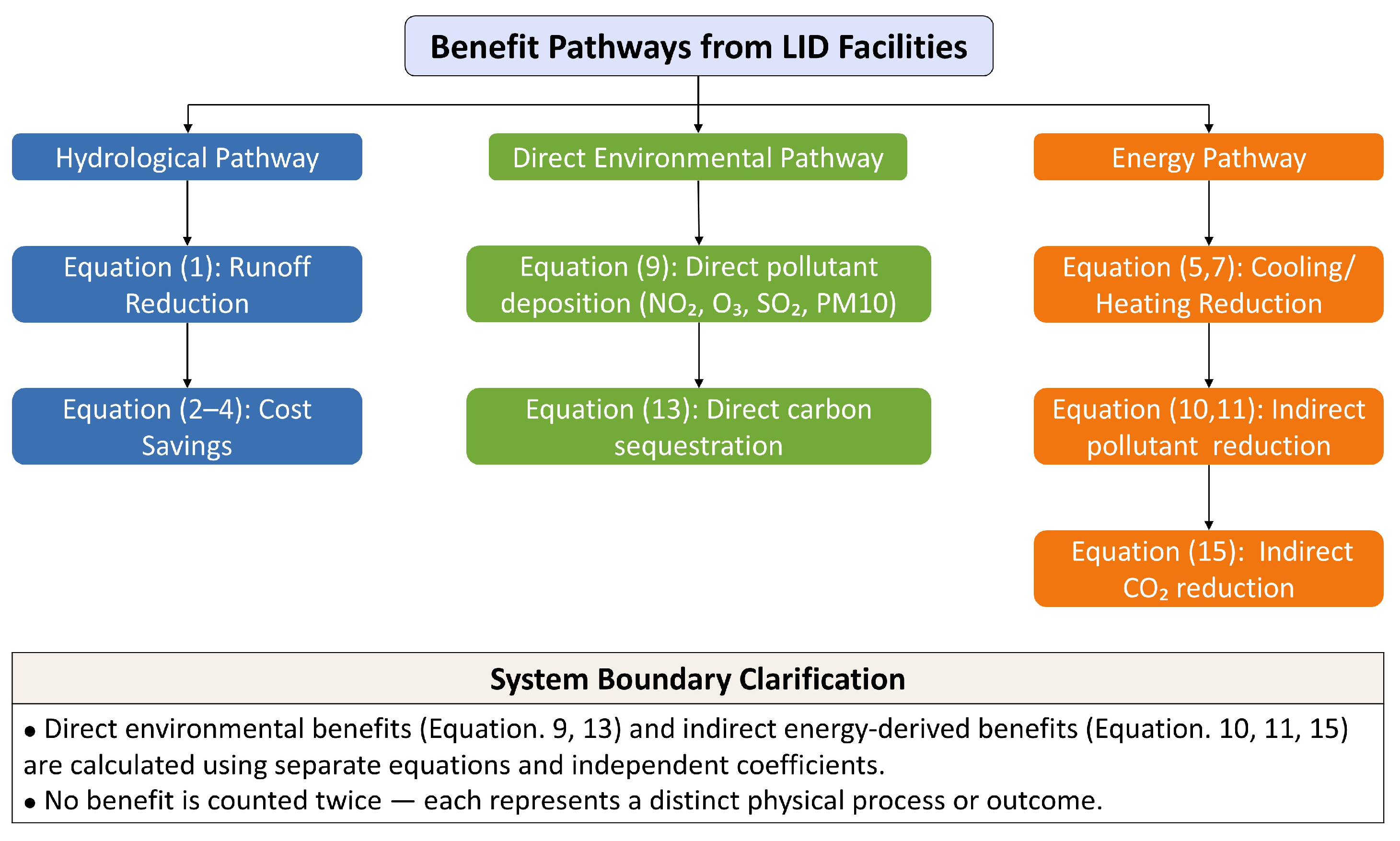
To ensure methodological clarity and avoid potential double counting, benefit categories were structured according to distinct physical pathways, as illustrated in
Figure 2. Direct hydrological benefits were derived from runoff reduction and associated treatment cost savings. Direct environmental benefits included pollutant deposition and carbon sequestration provided by LID vegetation. Indirect benefits were derived from reductions in building energy demand, which were first valued as economic savings and then used to estimate associated reductions in air pollutant emissions and carbon emissions using independent emission factors. These energy-related environmental benefits were calculated separately from direct deposition and sequestration processes and were not aggregated as duplicate values. Qualitative benefits such as social well-being, aesthetics, and recreational value were excluded to maintain conservative and transparent estimates. While these parameters represent the best available localized inputs, inherent uncertainty remains. The results should therefore be interpreted as order-of-magnitude estimates for comparative planning rather than precise empirical measurements.
2.2.2. Evaluation of Water Management Benefits
The rainfall-runoff reduction due to LID facilities is determined using the following equation:
where
is rainfall-runoff reduction (m
3) per year,
is the contributing catchment area (m
2) and
is the cumulative annual rainfall depth for rainfall events less or equal to 5 mm per day, and 0.001 is the unit conversion factor from millimeters to meters. This simplified formulation assumes full capture of events ≤5 mm/day based on Seoul’s rainfall characteristics. However, actual performance may be constrained by facility-specific storage capacity and infiltration rate (
Table 1). Results should therefore be interpreted as comparative planning-level estimates rather than precise hydrological predictions, particularly for storage-limited facilities such as green roofs. Based on the analysis of rainfall events in the Seoul metropolitan area, the value of
is considered to be 200 mm (
Table A1), which is the cumulative depth of frequent and small storms well managed by LID facilities, as used in hydrological assessments for the area [
1].
The benefit of water management related to decreased demand for centralized water treatment services is expressed as:
where
is the annual benefit of reduction in water treatment services (KRW),
is the rainfall-runoff reduction (m
3), and
is the unit value of sewage treatment services (KRW/m
3). The value of
is 727.3 KRW/m
3 (
Table A1), which was based on the average operational cost for wastewater treatment in Seoul, which was reported in local cost-effectiveness analyses of LID facilities [
50].
The avoided need for conventional water treatment infrastructure that can be attributed to LID-caused runoff reduction is estimated as:
where
is the equivalent of the treatment infrastructure demand that is avoided (KRW),
is the catchment area (m
2), and
is the conventional water treatment requirement per unit area (KRW/m
2). The value of
is 29,170 KRW/m
2 (
Table A1).
Similarly, the decrease in operational service demand related to stormwater treatment is calculated as:
where
is the annual operation and maintenance service reduction benefit (KRW),
is the rainfall-runoff reduction (m
3), and
is the unit value of operation and maintenance services (KRW/m
3). The value of
is 812 KRW/m
3 (
Table A1).
2.2.3. Evaluation of Energy Savings Benefits
The savings in cooling energy demand that is achieved annually from the implementation of LID is calculated as:
where
is the annual cooling energy reduction (kWh),
is the LID facility area (m
2), and
is the cooling energy reduction per unit area (kWh/m
2). The value of
is 4.87 kWh/m
2 (
Table A2), which is a coefficient of cooling energy savings obtained from empirical research on the microclimatic effects of green infrastructure [
29].
The energy-saving benefit is estimated as:
where
is the annual cooling energy saving benefit (KRW), and
is the unit electricity price (KRW/kWh), which is valued at 109.80 KRW/kWh (
Table A2).
The annual decrease in the heating energy demand is calculated as:
where
is the annual heating energy reduction (MJ), and
is the heating energy reduction per unit area (MJ/m
2) and is equal to 60.80 MJ/m
2 (
Table A2).
The corresponding benefit in terms of heating energy saving is expressed as:
where
is the annual heating energy saving benefit (KRW), and
is the unit heating energy price (KRW/MJ), which is valued at 15.88 KRW/MJ (
Table A2).
2.2.4. Evaluation of Air Quality Improvement Benefits
The direct annual air pollutant removal related to LID vegetation and surface processes is calculated as:
where
is the direct annual air pollutant reduction (kg),
is the LID facility area (m
2), and AP
u is the pollutant removal rate per unit area (kg/m
2). Values of
for NO
2, O
3, SO
2, and PM
10 are 0.001897, 0.003681, 0.00155, and 0.000603 kg/m
2, respectively (
Table A3), using pollutant deposition models and empirical study of urban vegetation [
51].
The indirect air pollutant reduction resulting from cooling energy savings is calculated as:
where
is the annual pollutant reduction due to cooling energy savings (kg), and
represents the emission reduction factor (kg/kWh). Values of
are 0.000064492 (NO
2) and 0.0000896345 (SO
2) (
Table A3).
Likewise, the pollutant reduction due to the heat energy savings is expressed as:
where
is the reduction in pollutant emissions per year because of the heating energy saving (kg), and
is the emission reduction factor (kg/MJ). Corresponding values are shown in
Table A3.
The sum of all the air quality improvement benefits is estimated as:
where
is the annual air quality improvement benefit (KRW), and
is the pollutant-specific unit value (KRW/kg), where values are presented in
Table A3.
2.2.5. Evaluation of Climate Change Response Benefits
The direct annual amount of carbon sequestration provided by LID vegetation is calculated as:
where
is the annual carbon sequestration (kg CO
2),
is the sequestration rate per unit area (kg C/m
2), and
is the carbon to CO
2 conversion factor (3.67) (
Table A4).
The carbon sequestration benefit corresponding to this is expressed as:
where
is the annual direct carbon sequestration benefit (KRW),
is the annual carbon sequestration (kg CO
2), and
is the social value of carbon (KRW/kg CO
2) that was valued at 50.88 KRW/kg CO
2 (
Table A4), determined according to the standardized methodology for social cost of carbon estimation [
52], with modifications performed according to national economic parameters for Korea.
The indirect carbon emission reduction in cooling and heating energy saving is calculated as:
where
is the annual indirect carbon emission reduction in (kg CO
2),
is the annual cooling energy reduction (kWh),
is the carbon emission reduction factor for electricity use (kg CO
2/kWh),
is the annual heating energy reduction (MJ), and
is the carbon emission reduction factor for heating energy (kg CO
2/MJ) (
Table A4).
The indirect climate change mitigation benefit is given by:
where
is the annual indirect carbon reduction benefit (KRW),
is the indirect carbon emission reduction (kg CO
2), and
is the social value of carbon (KRW/kg CO
2). The value of
is 50.88 KRW/kg CO
2, as adopted from
Table A4.
Finally, the total annual climate change response benefit is calculated as:
where
is the total annual climate change response benefit (KRW),
is the annual direct carbon sequestration benefit (KRW), and
is the annual indirect carbon reduction benefit (KRW).
3. Results and Discussion
3.1. Water Management Benefits
The water management performance of the studied low-impact development (LID) facilities varies depending on their design characteristics and effective catchment area (
Table 2). At the facility level, systems with larger catchment areas have larger reductions in the amount of rainwater runoff, suggesting that catchment area is a key driver of hydrological performance. Facilities such as permeable pavement and infiltration-based systems are particularly effective as they directly handle surface runoff and encourage subsurface infiltration, processes that have been found to be a significant factor in the removal of suspended solids and nutrients as well [
53]. In contrast, green roofs have low runoff reduction because of their low footprint, despite being capable of holding rainfall where it falls. These results indicate that variation in performance is implementation area controlled by scale and hydrological function as opposed to the simple LID type. As a result, LID facility evaluation needs to be done carefully, considering site-specific conditions and management goals to be achieved, and not assume that efficacy of LID technologies is uniform.
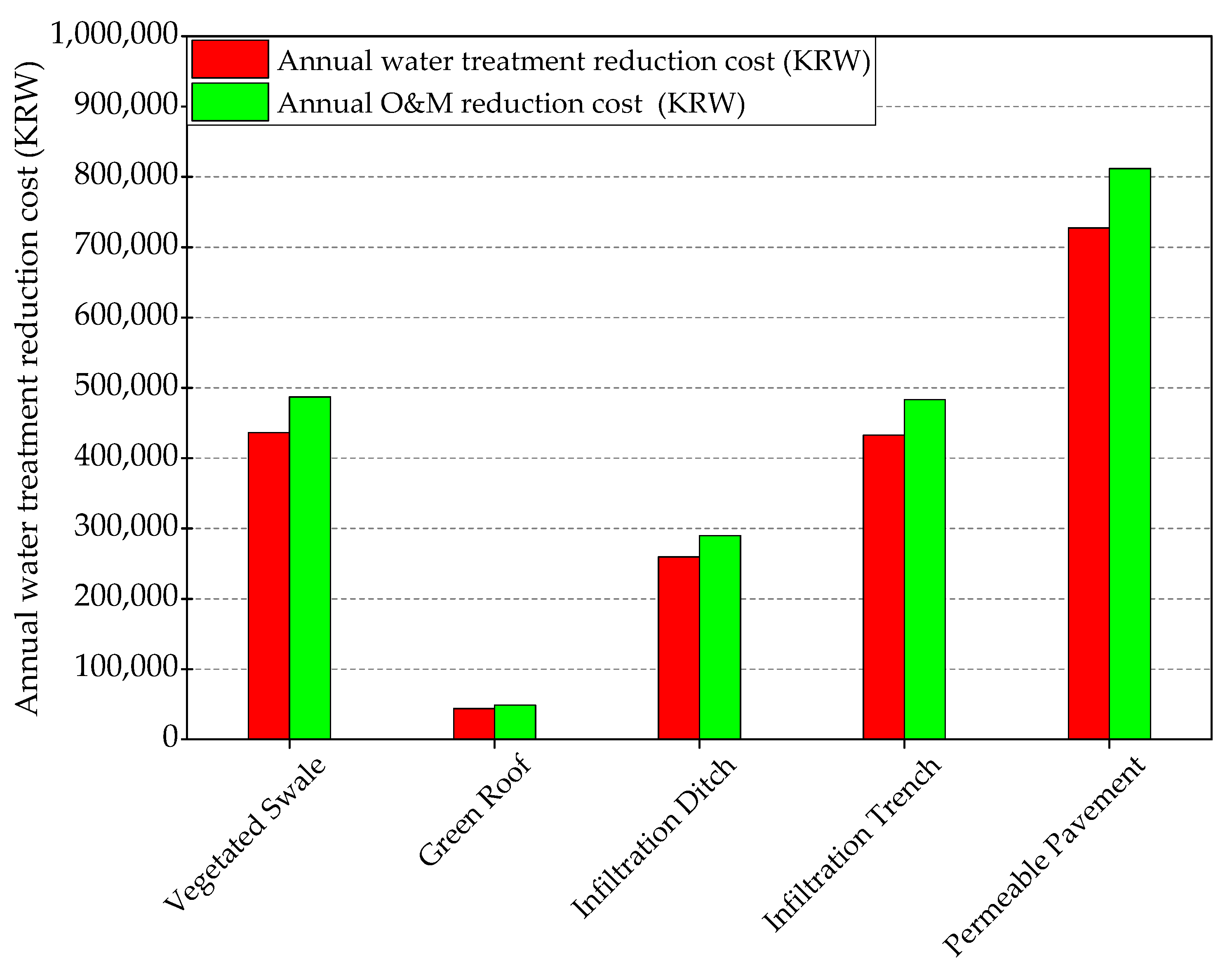
Economic benefits, expressed in terms of reduced water treatment demand and lower operation and maintenance (O&M) requirements, are correlated with hydrological performance (
Figure 3). However, this advantage is accompanied by trade-offs in relation to complexity of the system and intensity of construction. High-performing facilities, such as permeable pavement and infiltration trenches, do require more significant installation efforts, which could restrict their use in some urban settings, especially retrofit situations. Conversely, vegetated swales and green roofs provide more modest but regular benefits and provide greater flexibility for their integration into existing urban environments. These observations suggest that no one LID facility has optimal performance in all criteria. Instead, the most appropriate strategy to achieve sustainable urban stormwater management is best accomplished through a complementary combination of LID facilities that balance hydrological effectiveness, economic efficiency, spatial limitations, and broader environmental benefits. This facility-level analysis is an evidence base that can be used pragmatically to support informed planning and design decisions to increase urban water sustainability. These findings directly address RQ1 by demonstrating how hydrological performance varies across LID facility types based on scale and design characteristics.
3.2. Energy Savings Benefits
The assessed low-impact development (LID) facilities exhibit an energy savings effect by cooling and heating energy demand reduction and other energy savings by reducing water treatment system needs (
Table 3). At the facility level, total energy savings increase with facility area, suggesting that facility area is a key determinant of total energy performance. Permeable pavement has the greatest cumulative energy savings because of its much greater facility area, while smaller facilities like vegetated swales and infiltration ditches have lesser absolute energy savings. This pattern suggests that total energy benefits are largely scale driven and not based on differences in facility type alone. Nevertheless, all LID facilities studied appear to contribute positively to urban energy efficiency, reinforcing their multifunctional role in sustainable stormwater management systems.
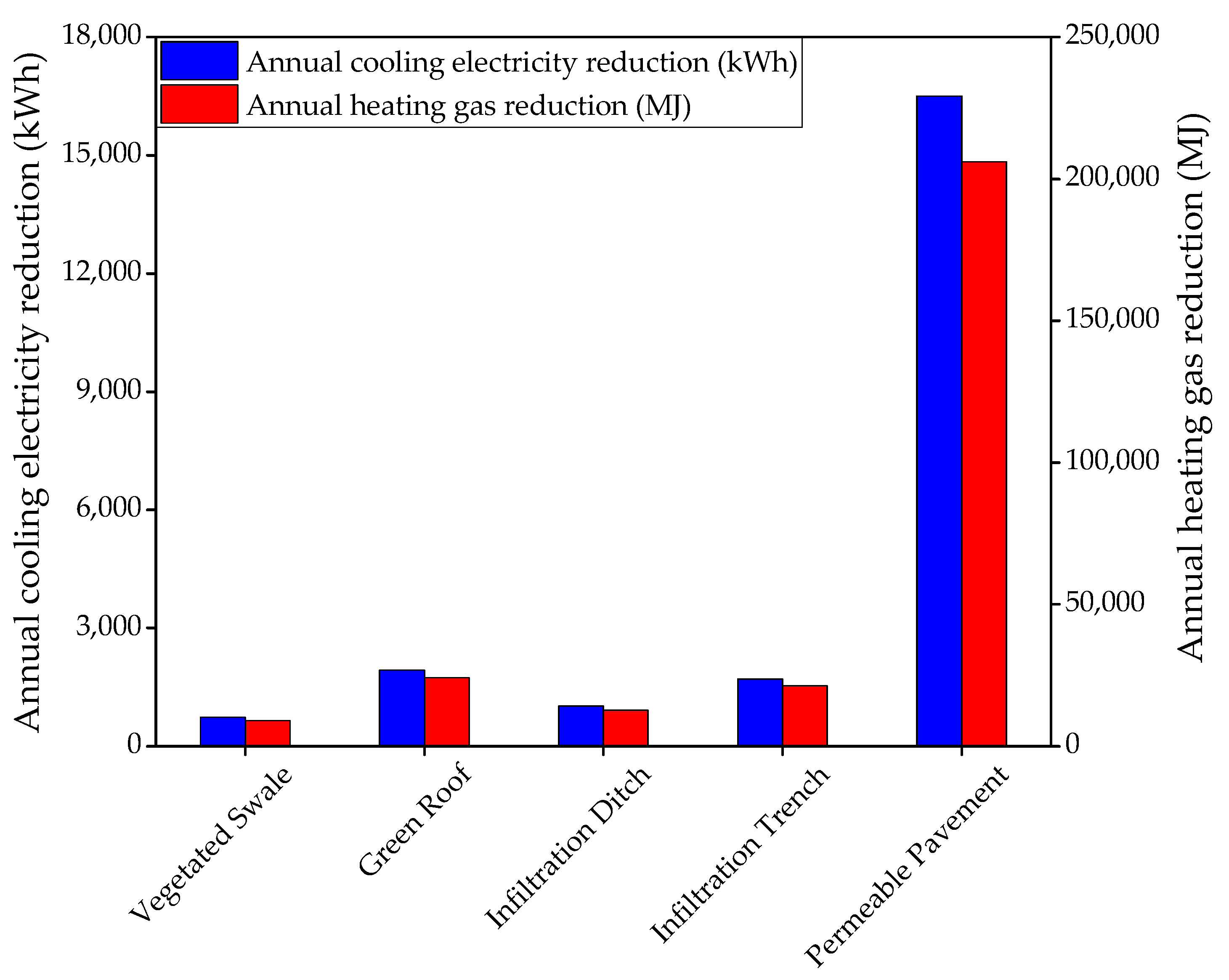
Figure 4 reveals that the amount of cooling and heating energy savings per unit area are similar for the various LID facilities, indicating similar potential for saving energy at the local scale. Cooling energy reductions are related to reduction in heat accumulation on impervious surfaces and to the moderation of local ambient temperatures, while heating energy savings relate to improved thermal stability and reduced energy demand associated with temperature extremes. The similarity in the performance, which is measured in terms of unit area, suggests that energy efficiency gains are relatively uniform across facility types. In addition, energy savings due to less water treatment demand highlight the broader contribution of LID facilities to the integrated management of water and energy systems in cities.
From a sustainability perspective, these findings indicate that the LID facilities increase the energy efficiency of cities by locally regulating microclimates, as well as by decreasing the energy demand from the conventional infrastructure systems. However, facilities that provide higher cumulative benefits tend to require larger implementation areas, which may be limited by land availability and practical feasibility in urban areas. Smaller facilities, while not achieving as large overall savings, provide more flexibility and can be more easily integrated into the existing built environments. Therefore, energy-focused planning of LID systems should be based on a balanced deployment strategy that combines facilities of different sizes and functions. Such an approach allows cumulative energy savings to be maximized for the sake of implementation feasibility, in support of the wider goals of sustainable urban development. These results contribute to RQ1 and RQ2 by quantifying energy savings across facilities and demonstrating their monetized value in the Seoul urban context.
3.3. Air Quality Improvement Benefits
The evaluated low-impact development (LID) facilities demonstrate measurable air quality improvement benefits in the reduction in key air pollutants, including nitrogen dioxide, ozone, sulfur dioxide, and particulate matter (
Table 4). These benefits occur through two main mechanisms, including direct removal of pollutants related to vegetated and permeable surfaces and indirect emission reductions through reduced cooling and heating energy demand. At the facility level, total pollutant reductions increase with facility area, suggesting scale is a dominant factor in determining total air quality benefits. Permeable pavement provides the greatest accumulative pollutant reductions because of the much larger implemented size, and smaller facilities include vegetated swales and infiltration ditches that contribute more modest reductions.
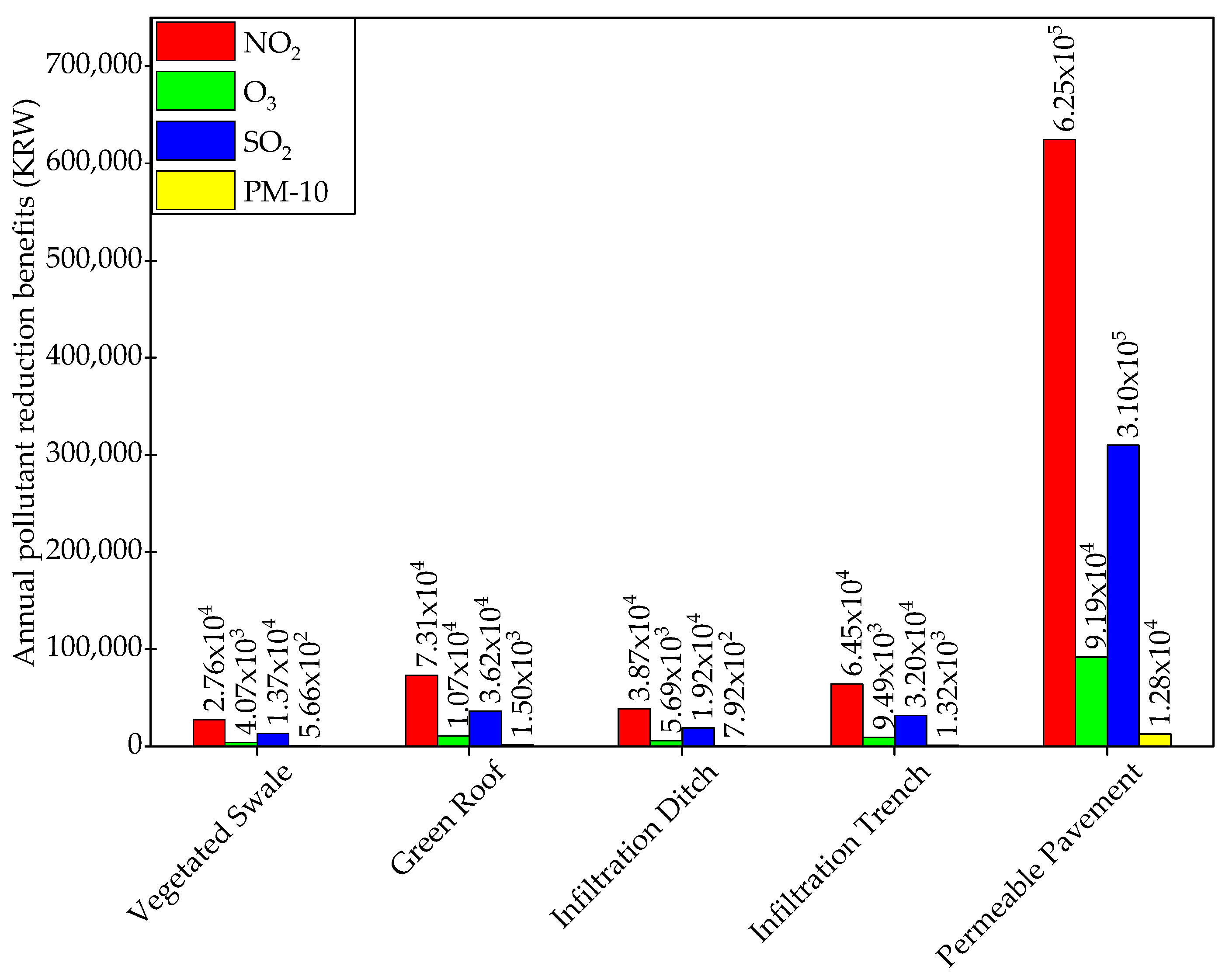
Figure 5 shows that the air quality benefits of energy efficiency from reductions in air pollutant emissions associated with cooling and heating energy savings represent a significant component of total air quality benefits. Emission reductions that are related to reductions in electricity and natural gas use are relatively consistent across facility types, suggesting that the emissions reduction potential is similar on a per-area basis across all facility types. Pollutant reductions linked to energy saving bring complementary reductions in pollutant removal, illustrating the integrated nature of LID performance across environmental domains. These findings indicate that the air quality benefits from LID facilities extend beyond the local capture of pollutants and include emissions reductions from the entire system because of urban energy use.
From the point of view of sustainability, these results suggest that LID facilities contribute to improved urban air quality through direct and indirect pathways. However, facilities that create the most cumulative air quality benefits often need larger land areas, which may reduce their feasibility in space-constrained urban areas. Smaller facilities, while providing less total reduction, provide greater flexibility and can be more easily integrated into existing urban fabric. Therefore, air quality-oriented planning should not be based on one LID solution but on a complementary selection of facility types and sizes. Such an approach opens the possibility of achieving improvements in air quality along with the water and energy benefits in order to support the multifunctional role of LID as a green infrastructure for sustainable urban development. This subsection addresses RQ1 and RQ2 by comparing air quality performance across facility types and providing monetized estimates of both direct and indirect pollutant reduction benefits.
3.4. Climate Change Response Benefits
The evaluated low-impact development (LID) facilities exhibit climate change response benefits by virtue of both direct sequestration of carbon and indirect reductions in greenhouse gas emissions due to lower electricity and gas use (
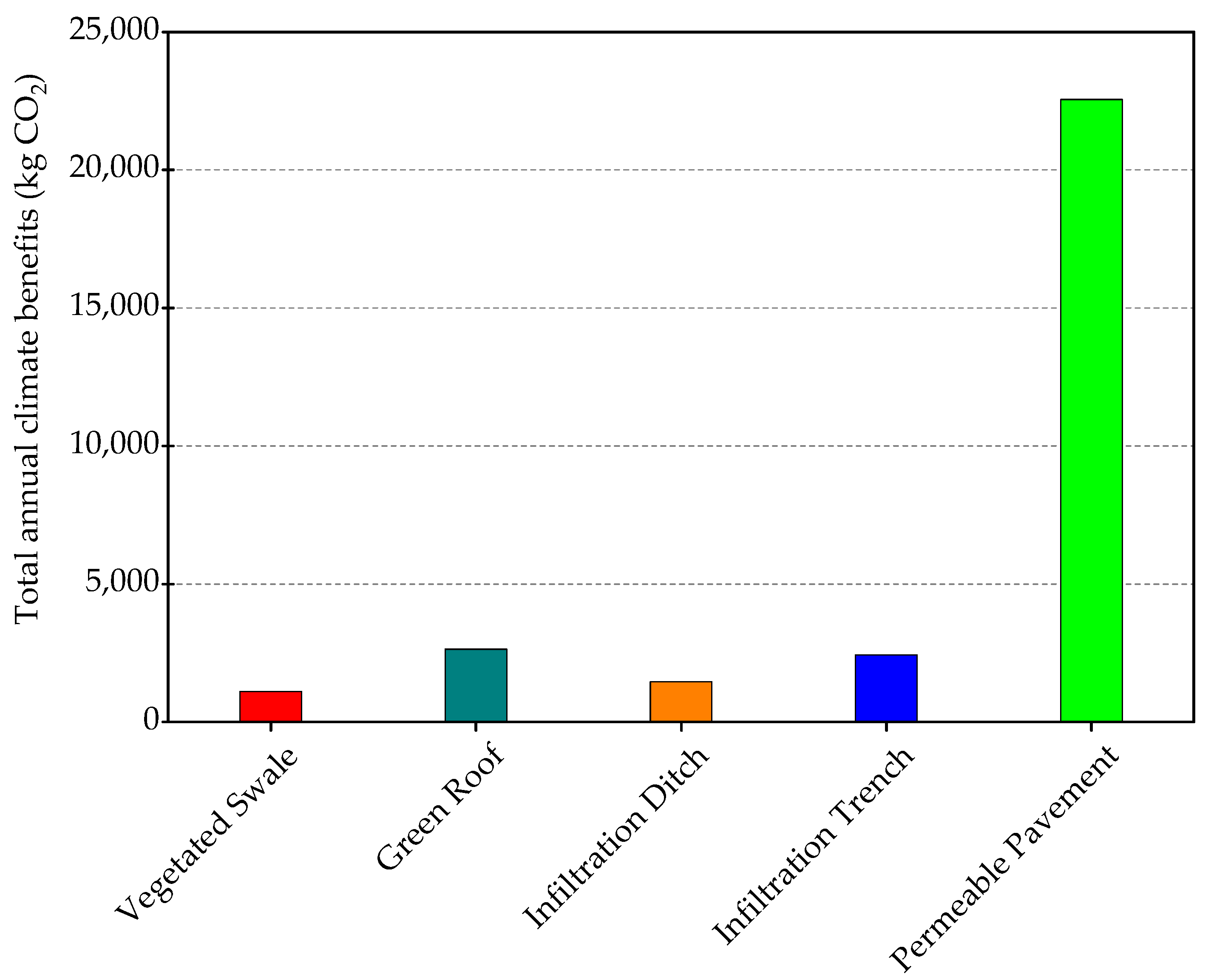
Table 5). At the facility level, there is a significant positive relationship between facility area and total climate benefits, which suggests that implementation scale is an important factor in the overall carbon reduction performance. The total annual climate benefits of each facility are shown in
Figure 6. Permeable pavement has the greatest overall cumulative climate benefits, which is mainly attributed to the large surface area and its contribution to indirect emission reductions. In contrast, smaller-scale facilities like vegetated swales and infiltration ditches offer more limited but significant climate benefits. These results suggest that the total climate mitigation potential is dominated by the scale, with contributions of all types of LID to the overall climate mitigation potential through complementary mechanisms.
Direct carbon sequestration makes up a part of climate benefits that are found mostly in vegetated systems, which reflect the function of biomass and soil processes in capturing carbon from the atmosphere. However, indirect emission reductions that are associated with reduced energy demand emerge as a dominant component of total climate benefits in all facility types. This finding highlights the role of the energy-related pathways in climate change mitigation and is consistent with the multifunctional role of the LID facilities in emission reduction and resource demand reduction. The combined effect of sequestration and avoided emissions suggests that the climate benefits are not limited to local ecological effects but are the result of wider system-level interactions between urban water, energy and climate processes.
From a sustainability point of view, these results indicate that LID installations can be considered as an effective climate responsive infrastructure, which can contribute to emission reduction targets, both directly and indirectly. Smaller facilities, even though they are creating fewer total reductions, provide more adaptability and can be more readily integrated into existing urban settings. Therefore, climate-oriented LID planning should focus on a balanced deployment strategy, with a combination of different scales and functions of facilities. Such an approach can increase the overall climate resilience and make it flexible and feasible for long-term urban sustainability and climate mitigation objectives. These findings respond to RQ1 and RQ2 by quantifying climate benefits through both direct sequestration and energy-driven emission reductions, with clear monetization.
3.5. Construction and Maintenance Unit Costs
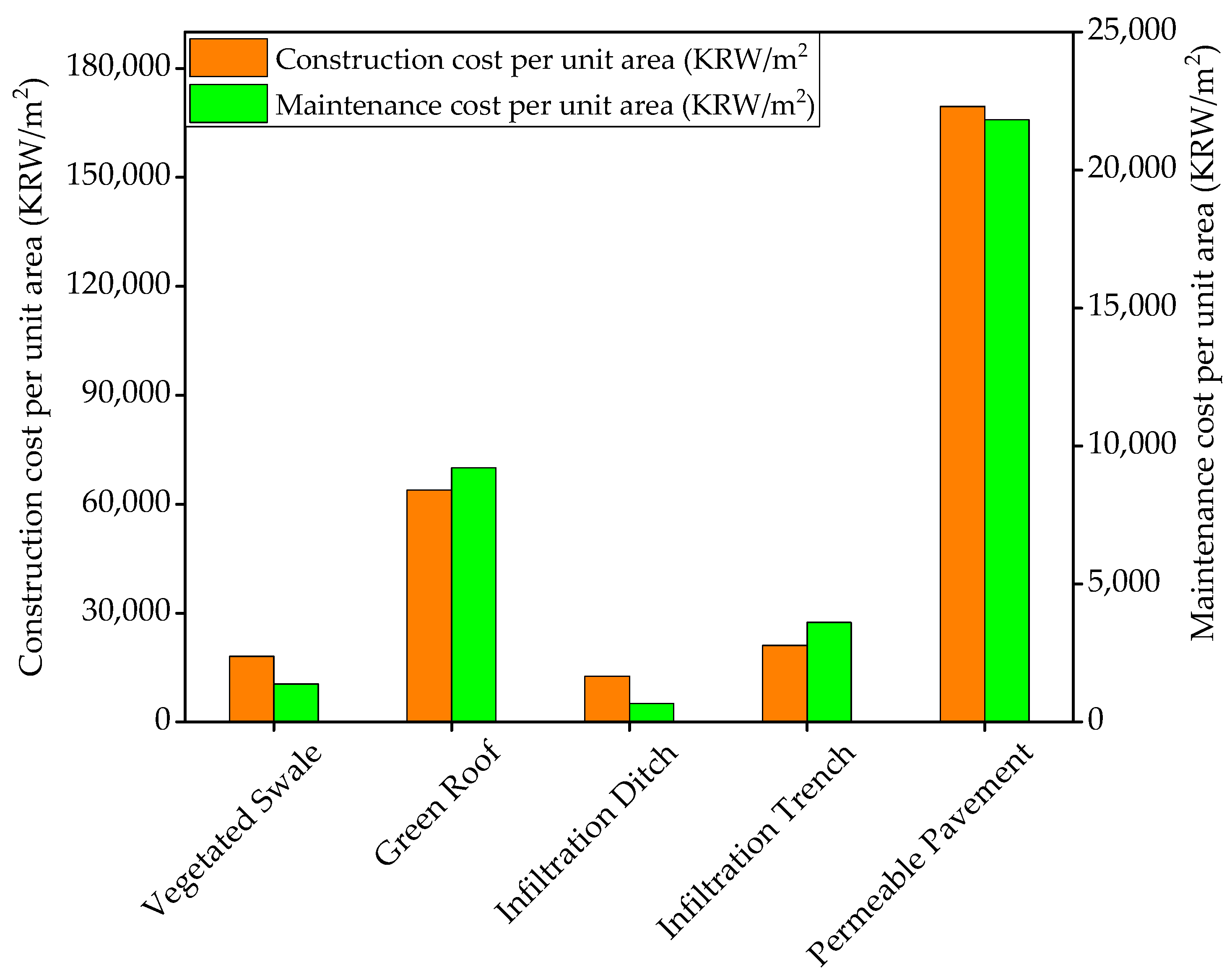
Figure 7 compares construction and maintenance unit costs of the different low-impact development (LID) facilities and shows that there is substantial variation by facility type. Construction costs vary significantly, and this is due to variations in the level of structural complexity, material needs, and installation processes. Permeable pavement has the highest construction cost per unit area, which is partly related to the intensive material consumption and special construction technology. Green roofs are also found to have relatively high construction costs that are related to layered systems, waterproofing requirements and structural considerations. In comparison, vegetated swales and infiltration ditches have much lower construction costs as they are simple in design and use natural or semi-natural components. These differences suggest that the initial investment requirements may have a strong effect on the feasibility of LID implementation, especially in the case of large-scale (or budget-constrained) projects.
Maintenance unit costs exhibit patterns that are similar to those of construction costs with important differences. Facilities that are more complex in construction tend to require more ongoing maintenance efforts to maintain performance (e.g., for permeable pavement and green roofs). These systems require some inspection, cleaning, and maintenance on a regular basis to ensure that the infiltration capacity and functioning integrity is achieved. On the other hand, vegetated swales and infiltration ditches have comparatively low maintenance costs due to the ease of the structure and the passive operation. Infiltration trenches are considered to be an intermediate position, requiring moderate maintenance to ensure they do not become clogged and ensure long-term effectiveness. These results highlight the importance of considering maintenance issues as important as construction costs when assessing the long-term economic sustainability of LID facilities.
From a sustainability and planning standpoint, the differences in costs in
Figure 7 underscore the need to consider LID facilities using life-cycle cost considerations and not simply the initial cost. High-cost facilities are potentially high-benefit in terms of environmental and climate issues but may be difficult to implement at large scale, especially in retrofit situations. Lower-cost facilities, although offering less specific benefits, allow more extensive deployment and incremental implementation across urban areas. Therefore, cost-effective LID planning should focus on diversification of the portfolio of facilities that optimizes building and maintenance costs and performance findings. Such an approach supports financially feasible implementation with maximum long-term sustainability and resilience of urban stormwater management systems. This cost analysis provides essential context for RQ3, illustrating the trade-offs between implementation costs and the multifunctional benefits evaluated in preceding sections. For comprehensive economic assessment, future applications of this framework should incorporate facility-specific lifespan assumptions and discount rates to calculate lifecycle metrics such as net present value.
3.6. Comprehensive Benefit Value Evaluation
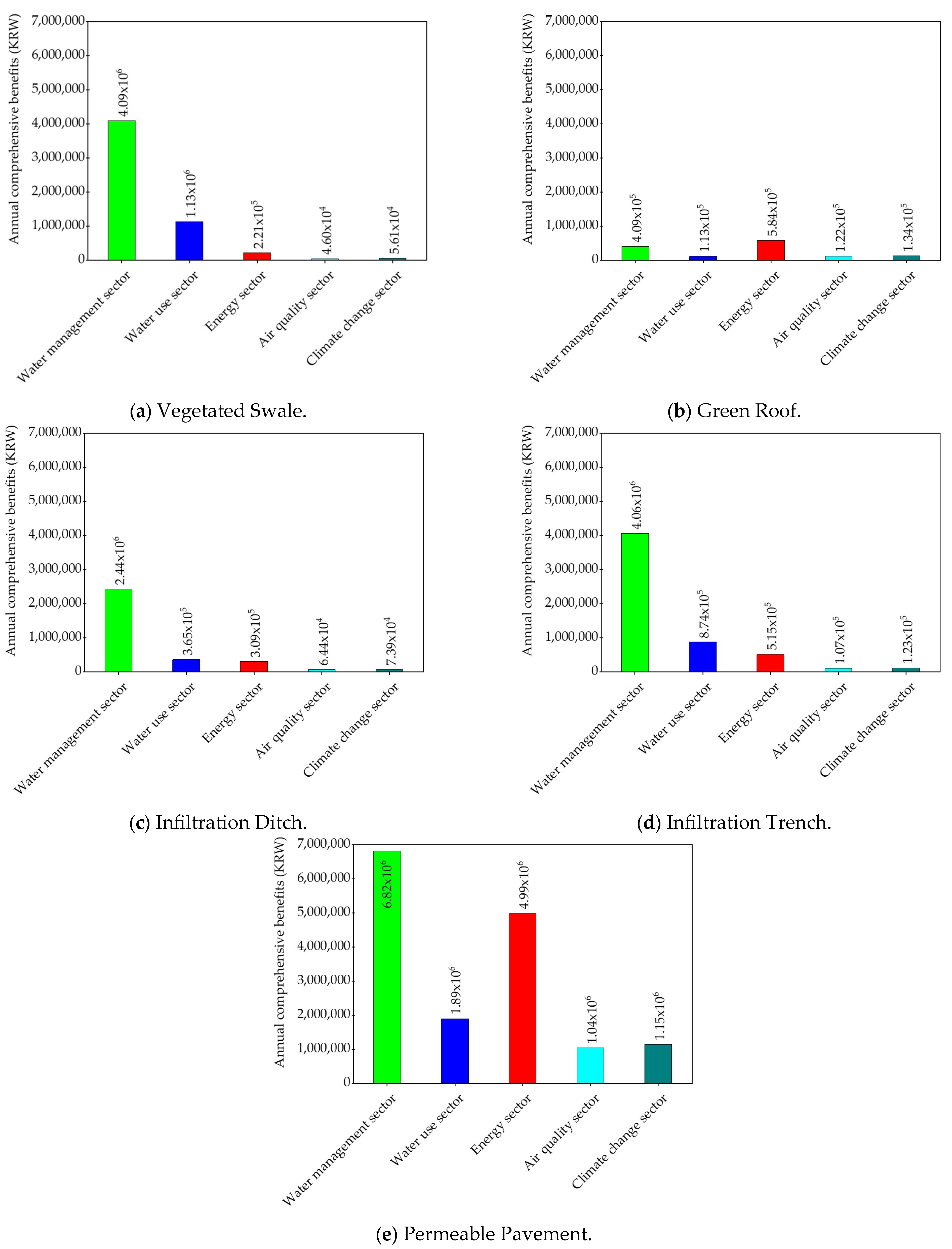
Figure 8 summarizes an in-depth assessment of the benefits provided by the LID facilities considered by combining their contribution across several sectors, namely, water management, water use, energy, air quality and climate change. This whole system representation illustrates the multiple functions of LID systems that provide a wide range of environmental and resource-related benefits in addition to their stormwater management function in the urban landscape.
As a component of the overall benefit profile, water management benefits represent a significant component of the benefits profile for all of the facilities, in line with the fundamental role of LID in runoff regulation and hydrological control. However, the results also demonstrate that water use efficiency, energy savings, air quality improvement and climate change response have a meaningful contribution to total benefits. This distribution suggests that LID facilities are interconnected elements in urban systems that produce co-benefits that go beyond the hydrological performance of such facilities.
Vegetated swales and infiltration-based facilities have good benefit contributions in the water management and water use sectors, as well as significant benefits in the energy, air quality, and climate change sectors. These patterns suggest that decentralized and distributed LID measures can support multiple objectives for sustainability when strategically implemented in urban environments.
Green roofs exhibit a different structure of benefits, with comparatively smaller contributions of the water management and water use sectors and larger benefits related to energy performance, air quality improvement and climate change response. This differentiation highlights the importance of facility type in determining the distribution of benefits and points to the complementary role of building-scale LID measures within integrated urban sustainability strategies.
Permeable pavement has the highest total value of benefits among the facilities evaluated due to its ability to provide large contributions across all sectors that were evaluated. Water management and water use benefits constitute a large component of its overall performance, while energy, air quality and climate-related benefits increase its multifunctional nature. The results suggest that facilities that have been implemented over larger spatial extents can magnify cumulative benefits in more than one sector without having a single predominant pathway.
Overall, the detailed benefit analysis supports the idea that LID facilities deliver synergistic and complementary benefits to urban water, energy, and environmental systems in line with the growing body of research in favor of the integrated valuation of nature-based solutions [
54]. While managing stormwater is a fundamental function, by having more than one pathway for benefits, the overall value of LID implementation is increased dramatically. These findings provide support for diversified portfolios of LID facilities of varying facility types and scales to allow cities to maximize the multifunctional benefits and to further their broader sustainability aims. This integrated evaluation directly answers RQ3 by demonstrating how the framework captures multifunctional value across all sectors, supporting portfolio-based planning decisions.
3.7. Benefits Evaluation Across Different Sectors
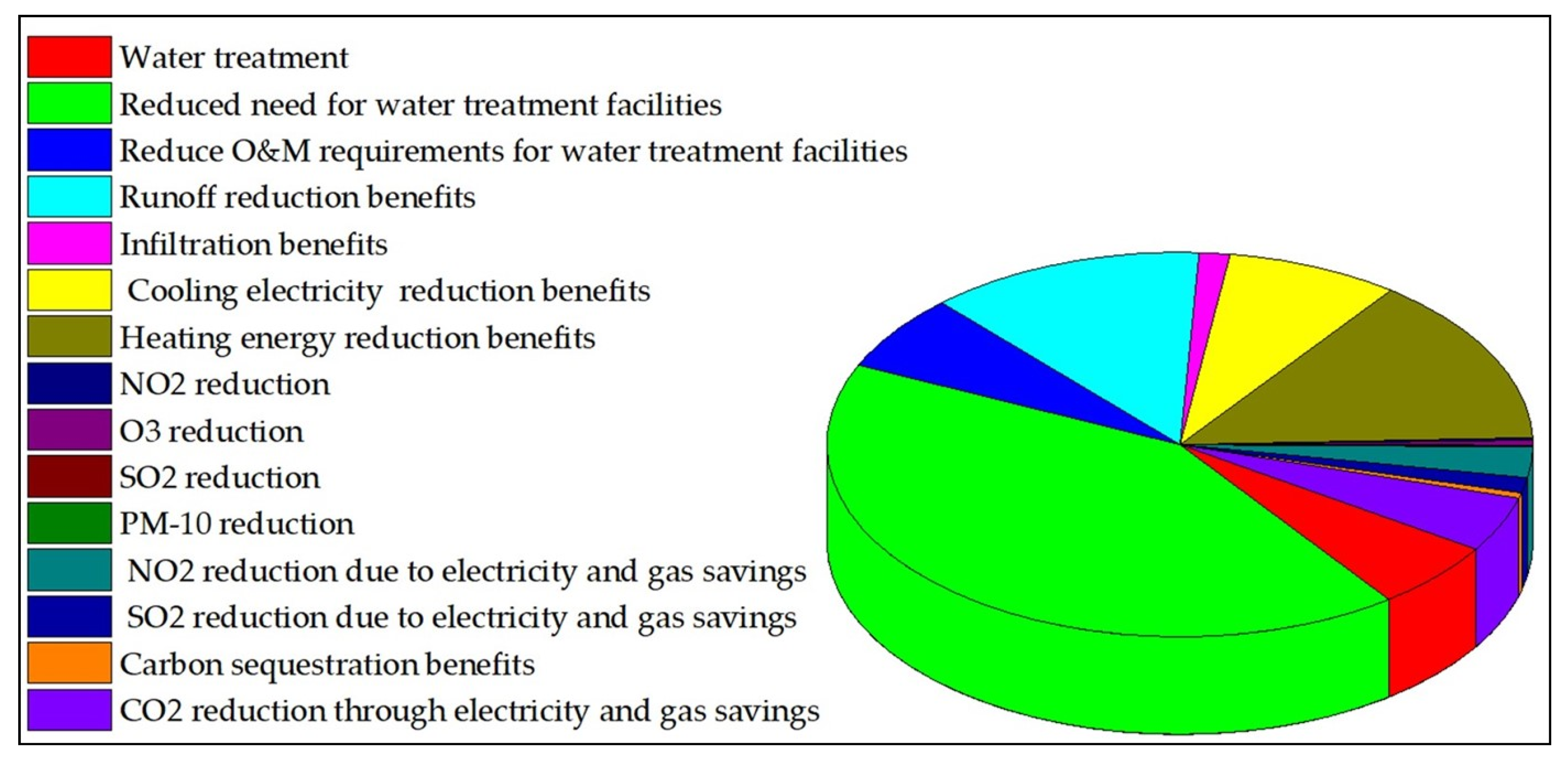
Figure 9 presents the distribution of the annual benefits provided by the LID facilities investigated across several sectors: water treatment, water use efficiency, stormwater runoff management, energy savings, air quality improvement, and climate change mitigation. The figure illustrates the multifunctional character of LID systems by showing that single facilities contribute to environmental, resource and climate-related goals at the same time.
The biggest proportion of benefits of all facilities evaluated are linked to reductions in the water treatment infrastructure needs, highlighting the potential of LID systems to reduce the stress on centralized infrastructure, while creating indirect co-benefits in other sectors. Runoff reduction and infiltration benefits have a meaningful and significant impact on total sectoral performance, as well as reflecting the hydrological functions of LID in managing urban stormwater volumes and encouraging local groundwater recharge.
Energy-related benefits, as well, such as cooling electricity and heating gas reductions, account for a significant percentage of total benefits. These savings show that LID facilities help not only to moderate microclimatic conditions but also to reduce energy demand in urban systems, with other environmental and economic benefits. Correspondingly, NO2, O3, SO2, and PM10 emissions reductions, both directly because of the air quality improvement and indirectly because of reduced energy consumption, provide a further contribution to the multifunctionality of these facilities. Carbon sequestration and CO2 reductions through savings represent additional climate change response benefits, underscoring the potential role of LID systems in greenhouse gas mitigation.
Overall, the sectoral evaluation indicates synergistic benefits offered by LID systems, with inter-linked benefits across water, energy, air quality and climate sectors. This integrated perspective supports strategic implementation of LID portfolios, which maximize multifunctional returns, while simultaneously providing flexibility and resilience in urban sustainability planning.
Table 6 summarizes the yearly benefits of LID facilities in key sectors such as water management, water use, energy, air quality and climate change, relating each sector to its influence characteristics, Triple Bottom Line (TBL) classification and Envision™ framework category.
The data indicate that LID facilities are responsible for generating measurable benefits with respect to economic, environmental, and resource allocation values reflecting the multifunctional contribution of LID facilities in the sustainable development of urban areas. In the water management sector, there are benefits in the form of a reduced water treatment demand and lower operation and maintenance requirements, demonstrating both economic and resource efficiency benefits. Water use benefits such as runoff reduction and infiltration also tend to increase resource allocation, as well as resilience of the environment at the city or river basin scale.
Energy-related benefits, including cooling electricity and heating energy reductions, appear to add economic and climate-related value through the capacity of LID facilities to help improve the energy efficiency of cities while reducing greenhouse gas emissions. Air quality improvements, in terms of reduction in NO2, O3, SO2, and PM10, contribute to environmental and quality of life benefits: indirect climate co-benefits related to reduced energy demand. Climate change benefits, in terms of carbon sequestration and reduction in CO2 emissions from energy savings, go directly into environmental and climate mitigation goals.
A key insight gleaned from
Table 6 is the idea that the LID facilities offer the simultaneous provision of multifunctional benefits across sectors with quantifiable economic and environmental value. While social benefits are known in the TBL and Envision™ frameworks, they are not explicitly quantified here, because of the absence of agreed-upon ways of monetizing social outcomes. This limitation highlights the importance for future research to account for social metrics, which would allow them to fully assess the performance of LID.
Overall,
Table 6 supports the view that LID facilities are not only stormwater management solutions but multifunctional components of urban infrastructure that have the potential to provide synergistic benefits across the water, energy, air quality and climate sectors (which is in line with sustainable urban development goals). The sectoral distribution analysis consolidates the responses to RQ1 and RQ2 by demonstrating how quantified physical benefits translate into measurable economic value across multiple domains. Moreover, the integrated sectoral perspective advances RQ3, supporting strategic decision-making based on multifunctional performance rather than single-sector outcomes.
3.8. Model Limitations and Uncertainty
The findings of this study should be interpreted within the assumptions and limitations of the screening-level framework described in
Section 2. Key inputs such as the 5 mm rainfall threshold, energy-saving coefficients, and valuation factors were derived from Seoul-specific data sources. However, these values are subject to interannual variability, future changes in energy tariffs, and evolving social cost of carbon estimates. Sensitivity to these parameters was not formally quantified, and results should be viewed as indicative rather than predictive. The framework presents annualized benefits alongside one-time capital costs. Full lifecycle analysis incorporating facility lifespan and discount rates was beyond the scope of this study and is recommended for future research.
Furthermore, the simplified hydrological formulation (Equation 1) assumes full capture of rainfall events ≤5 mm/day based on Seoul’s rainfall characteristics, without explicitly accounting for facility-specific storage capacities, infiltration rates, or overflow dynamics. As shown in
Table 1, facilities with limited storage (e.g., green roofs) may be overestimated under this assumption. The analysis also does not consider spatial configuration effects, such as the interaction between multiple LID facilities within a catchment or potential performance degradation over time due to clogging or vegetation changes. These simplifications were necessary to maintain a transparent and comparable screening framework but should be addressed in more detailed assessments using continuous simulation models or field-validated performance data. Despite these limitations, the framework provides a consistent basis for quantifying the multifunctional potential of different LID types and identifying relative magnitudes of co-benefits across sectors.
4. Conclusions
This study developed and applied an integrated framework of benefit valuation to compare five representative low-impact development (LID) facilities in Seoul, South Korea, which are vegetated swale, green roof, infiltration ditch, infiltration trench and permeable pavement. The framework provided a systematic quantification and monetary valuation of co-benefits across four sectors—water, energy, air quality and climate—providing a holistic evidence base for sustainable infrastructure planning, and moves beyond single-domain assessments.
From this analysis, several observations can be made. First, the performance of LID appears to be highly scale dependent. Among all the options, permeable pavement has the greatest area and catchment and shows the greatest total benefits in terms of runoff reduction, avoided infrastructure costs and energy savings. On the other hand, the smaller-scale facilities such as vegetated swales and green roofs provide less in the way of absolute benefit and more flexibility in implementation, suggesting their potential suitability for retrofits and space-constrained sites. This suggests that no single type of LID is optimal in all situations; selection must be in accordance with particular site conditions and objectives.
Second, LID systems can offer substantial multifunctional values. While stormwater management is their primary role, energy savings, air quality improvement, and climate mitigation appear to substantially increase their overall benefit. For green roofs, these co-benefits can even be their largest contribution to the overall value, highlighting their potential as multifunctional building solutions beyond stormwater control.
Third, a trade-off between benefits and costs is observed. High performing facilities like permeable pavement and infiltration trenches have higher construction and maintenance investment. This suggests that decision-making may benefit from a life-cycle cost perspective. The results support the consideration of a diversified portfolio approach, where the strategic combination of high- and low-cost facilities could help maximize city-wide benefits and improve financial feasibility and resilience in different urban settings.
A major contribution of this research is a transparent spreadsheet-based methodology to bridge the gap between physical performance and economic valuation, a common failing in earlier research. Limitations of this work include the conservative omission of social co-benefits, such as aesthetics and recreation, because of the challenges to monetization. Future research should combine these social dimensions and add dynamic variables to the equation such as climate change, changing energy grids and cost fluctuations to further improve the robustness of LID valuation. Extending the analysis to include lifecycle metrics such as payback period and net present value would further enhance the economic rigor and practical applicability of the framework.
Although this study is contextualized for Seoul, the integrated valuation framework is designed for transferability to other urban settings. The methodology—quantifying multifunctional benefits across water, energy, air quality, and climate sectors—can be replicated in any city by substituting local parameters such as rainfall characteristics, energy tariffs, emission factors, and economic valuation coefficients. The five LID facility types evaluated are commonly implemented globally, and the conceptual separation of benefit pathways to avoid double counting is universally applicable. However, absolute benefit magnitudes will vary depending on local climate, energy systems, and economic conditions. From a practical standpoint, the framework offers three key applications for urban decision-makers. First, it provides a replicable methodology to quantify and monetize LID co-benefits, enabling cities to justify green infrastructure investments beyond regulatory compliance. Second, the results illustrate the multifunctional value of different LID types, indicating how each facility contributes uniquely to water management, energy savings, air quality improvement, and climate mitigation. This supports context-sensitive planning by matching facility strengths to local priorities. Third, the framework facilitates portfolio-based strategies by illustrating how combinations of facilities could collectively address multiple urban sustainability goals. These practical insights bridge the gap between academic valuation and real-world infrastructure decision-making. Future applications should therefore prioritize context-specific parameterization to ensure accurate and locally relevant results.
Within the scope and limitations of this study, LID facilities emerge as multifunctional assets that are crucial in urban sustainability. The framework provided serves as an evidence-based tool for planners, engineers and policymakers in Seoul and other dense cities to prioritize investments, optimize combinations of green and gray infrastructure and justify policies that promote decentralized stormwater management. Widespread adoption of such integrated valuation approaches may help realize the potential of LID strategies in supporting resilient, livable and sustainable cities.