1. Introduction
Global food systems are increasingly scrutinised for their role in exceeding planetary boundaries while failing to deliver healthy diets for all. The EAT-Lancet Commission report highlights the urgent need to rebalance food production toward nutritionally adequate and environmentally sustainable sources, emphasising greater reliance on aquatic and plant-based foods [
1]. Within this context, marine food systems are frequently presented as part of the solution; however, their environmental performance is highly dependent on production pathways, processing intensity, and geographic conditions [
2,
3,
4,
5]. Broad sustainability claims therefore require validation through context-specific life cycle assessment (LCA).
In Greenland, seafood production forms a cornerstone of the national economy and food system, with industrial fisheries, particularly shrimp and halibut, dominating exports and infrastructure development [
6]. While these fisheries are economically vital, they are also characterised by dependence on fossil-based energy, long-distance logistics, and limited diversification of marine food production [
5,
6]. Given the high energy intensity and fuel dependence of industrial capture fisheries [
7,
8], questions arise regarding the long-term sustainability and resilience of a seafood sector reliant on a narrow range of capture-based resources [
9,
10], particularly as climate change reshapes Arctic ecosystems and operating conditions.
Seaweed cultivation has increasingly been proposed as a complementary and potentially low-impact marine food production system [
11,
12]. Seaweed farming does not require feed, freshwater, fertilisers, or arable land, and may provide additional ecosystem services such as nutrient uptake and habitat provision [
11,
13]. For Arctic regions, seaweed farming has been suggested as an opportunity to diversify seafood production, support local processing, and contribute to emerging bioeconomies [
14]. Recent work has highlighted seaweed farming as a strategic opportunity for Arctic regions, including Alaska, to support sustainable and locally rooted marine food systems; however, empirical evidence on the environmental performance of such systems under Arctic logistical and energy constraints remains limited [
15]. The environmental sustainability of seaweed cultivation cannot be assumed a priori and must be evaluated within the specific biophysical and infrastructural constraints of Arctic food systems. Further, in Arctic contexts, kelp-based food production is unlikely to be fully localised. While initial post-harvest handling and freezing may occur at the production site, limited processing infrastructure and market access often necessitate export of stabilised biomass to external processing hubs for further preservation and food preparation. As a result, the environmental performance of Arctic seaweed systems depends not only on cultivation practices, but also on the form of biomass transported and on long-distance transport logistics [
16].
Existing LCAs of seaweed production are overwhelmingly based on temperate or sub-Arctic systems, including studies from China, Indonesia, Denmark, and other European regions, and frequently rely on simplified or modelled inventories rather than fully operational data [
11,
14]. For instance, processing stages, particularly post-harvest stabilisation and preservation steps, are often excluded or aggregated, despite being critical in cold-climate food systems. Existing studies rarely resolve the spatial separation between initial stabilisation at remote production sites (e.g., freezing) and subsequent downstream processing and food preparation across different geographic contexts, limiting insight into the environmental implications of interregional transport and energy-system differences. Consequently, cradle-to-food preparation LCAs based on operational data for kelp production under Arctic logistical and energy constraints remain scarce.
This study addresses this gap by presenting a cradle-to-food preparation LCA of kelp cultivated in Greenland, frozen at the production site, and subsequently exported to Denmark for downstream processing and food preparation. The assessment is based on a comprehensive life cycle inventory derived from an operational system, covering hatchery production, offshore farming, harvesting, and on-site freezing in Greenland, followed by salt-pickling, brining, and the preparation of four pilot-validated fermented seaweed food products in Denmark. The analysis extends beyond the farm-gate focus of most existing seaweed LCAs and reflects the full set of production- and consumption-relevant processes required in Arctic contexts. By providing among the first operational cradle-to-food preparation LCAs of Arctic seaweed production that explicitly resolve interregional processing and transport, this work evaluates whether kelp farming can represent an environmentally sustainable complement to existing seafood systems in Greenland and similar Arctic regions. Specifically, the study assesses how yield realisation, preservation strategy, and transport logistics jointly influence life-cycle impacts and identifies the stages and processes that most strongly determine environmental performance.
Specifically, to ensure analytical transparency, the study evaluates predefined scenario parameters through the following research questions:
RQ1: How does biomass yield realisation influence life-cycle environmental impacts? Impacts are assessed across predefined yield scenarios representing conservative, expected, and high production levels derived from operational observations (see
Section 2.1).
RQ2: What is the contribution of preservation energy demand to total life-cycle impacts? Freezing at the production site is modelled as the baseline stabilisation method, and its relative influence is evaluated against downstream processing stages.
RQ3: How do interregional transport requirements affect environmental performance? Transport between Greenland and Denmark is modelled using the dominant maritime freight configuration for commercial export, enabling the assessment of geographically separated production and processing.
2. Materials and Methods
2.1. Goal and Scope
The goal of this study is to assess the environmental impacts associated with offshore kelp cultivation and food production under Arctic conditions. Particular emphasis is placed on discrepancies between expected production yields and actual harvested biomass, and on how such divergence influences environmental performance. The assessment aims to identify environmental hotspots across the production chain and to support early-stage optimisation of Arctic seaweed farming systems using empirically grounded operational data for Arctic cultivation systems and associated downstream processing and logistics.
The scope of the study is defined as an attributional cradle-to-food-preparation LCA, reflecting kelp cultivation as a marine food production system rather than solely a biomass supply activity. System boundaries in LCA should encompass all processes required to deliver the product in its functional form [
17,
18]. For food products, this commonly includes processing and preservation stages when they are integral to supply chains and product usability [
19]. Accordingly, this scope was chosen to capture the operational realities of Arctic food systems, where preservation and processing steps are structurally required due to climatic conditions, limited local markets, and long storage periods. Excluding these stages would therefore risk underestimating the environmental impacts associated with kelp-based food production in Arctic contexts. In this study, ‘food preparation’ refers to pilot-scale, pre-consumer processing and formulation of ready-to-eat fermented seaweed products, including ingredient mixing, fermentation, and stabilisation. Food preparation is modelled as occurring in Denmark following the export of stabilised kelp from Greenland. The system boundary therefore excludes household cooking, consumer handling, or preparation at the point of consumption. The practical endpoint of the system is defined as the factory gate in Denmark, where ready-to-eat fermented products are prepared. Retail distribution, retail refrigeration, consumer transport, storage, preparation, and end-of-life treatment are excluded for both kelp-based and conventional cabbage-based products. These stages were excluded because they are highly context-specific and expected to be broadly comparable across product types and therefore unlikely to materially influence comparative results.
The primary functional unit (FU) is defined as 1 kg of wet harvested seaweed at the farm gate and is used to assess cultivation performance and yield-dependent effects. Functional units in LCA are defined to reflect the quantified performance of the product system [
18]. This reference flow enables direct evaluation of how deviations in biomass output affect impact intensity under otherwise identical infrastructure and operational assumptions. To reflect the food provision function of the system, impacts are additionally expressed per kilogram of wet kelp processed and per kilogram of ready-to-eat seaweed-based food product prepared in Denmark for the downstream processing and food preparation stages. These additional FUs are consistent with established practice in food LCAs [
19] and recent comparative assessments of alternative foods [
20].
Consistent with the attributional modelling approach, the system boundaries (
Table 1) include all processes from sori collection and laboratory cultivation through offshore farming, harvesting, sorting, and on-site freezing in Greenland, followed by export to Denmark for further stabilisation (brining and salt-pickling) and preparation of four pilot-validated fermented seaweed food products [
21]. Distribution to consumers and end-of-life treatment of packaged products are excluded, as these stages are highly context-specific and outside the scope of yield-related and production-focused comparisons addressed in this study.
The analysis is structured in four analytical layers: (i) a cultivation-stage LCA assessing yield-dependent impacts per kilogram of wet harvested kelp; (ii) an assessment of post-harvest stabilisation of harvested biomass, including freezing in Greenland and subsequent processing in Denmark; (iii) a recipe-level comparative LCA of kelp-based and conventional fermented food products; and (iv) a nutritional assessment of recipe-level impacts on protein and iron. Each layer builds on the preceding one while maintaining consistent system boundaries and inventory assumptions.
2.2. System Description and Yield Scenarios
The studied system is based on a modular offshore longline cultivation design, a configuration widely regarded as the industry standard for large-scale kelp production in temperate and cold-water environments (e.g., [
22,
23]). Offshore seaweed cultivation increasingly relies on purpose-engineered and scalable farm structures capable of tolerating substantial hydrodynamic forcing in exposed marine environments, which are a key constraint for deployment at high latitudes (e.g., [
24,
25]). One full-scale cultivation module comprises approximately 16,000 m of seeded grow-out rope, while a half-scale module comprises 8000 m. The farm infrastructure and operational planning were originally dimensioned for an expected annual harvest of 24 tonnes of wet seaweed per full module, based on farm design specifications provided by the technology developer and aligned with reported production ranges for longline kelp cultivation. In practice, harvested biomass was substantially lower under the Arctic operating conditions during the study period.
To represent the consequences of yield variability on life cycle impacts, three yield scenarios were modelled: (i) design yield of 24 tonnes harvested from 16,000 m of seeded rope (based on farm design specifications and production targets), (ii) observed yield of 3.75 tonnes harvested from 16,000 m, and (iii) observed yield of 3.0 tonnes harvested from 8000 m, both derived from empirical harvest data collected during the study period. Across scenarios, the foreground system was assumed to be identical in terms of cultivation infrastructure and core operations; the scenarios differ primarily in the amount of harvested biomass used to normalise inputs and emissions to the FU. As a result, lower yields increase the impact intensity per kilogram of wet seaweed at the farm gate.
2.3. Life Cycle Inventory
Life cycle inventory is based on foreground data collected from an operational offshore kelp cultivation and processing system in Greenland, covering the full production chain from hatchery operations to food preparation. Primary data were obtained from direct observation, farm records, and operator interviews and supplemented with background data from the ecoinvent database (cut-off system model) [
26]. Background data were sourced using the cut-off system model, under which recycled materials carry the environmental burdens associated with recycling processes but are not assigned credits for potential future recycling at end-of-life. Recycled content was modelled according to the default recycled fractions in the respective ecoinvent datasets for major materials, including steel, polymers, and corrugated board packaging, and no additional assumptions regarding recycled content or substitution modelling were introduced. Foreground data are considered representative of current pilot-scale Arctic production conditions. A complete, process-resolved inventory of all material and energy inputs is provided in
Supplementary Material A.
Hatchery and laboratory operations include both capital equipment and consumable inputs required to maintain sterile conditions and support early-stage kelp development. Capital goods such as laminar flow cabinets, microscopes, counting chambers, scales, and pasteurisation units were modelled. Consumables, including disinfectants (e.g., sodium hypochlorite and ethanol), single-use pipettes and tips, culture flasks, beakers, sieves, tissue paper, and replacement containers were also incorporated into the foreground system. Electricity demand for laboratory functions such as laminar airflow, pasteurisation, cooling, and lighting, as well as transport associated with sporophyte development, was explicitly accounted for.
Cultivation infrastructure and harvesting equipment are modelled as capital goods using ecoinvent datasets and distributed over assumed technical lifetimes. Infrastructure impacts are scaled according to seeded rope length, with scaling factors of 1.0 applied to full-scale modules (16,000 m) and 0.5 applied to half-scale modules (8000 m).
Electricity consumption is included for hatchery operations, seeding, sorting, freezing, storage, and harvesting machinery. As no Greenland-specific electricity dataset is available, low-voltage electricity from Iceland is used as a proxy reflecting a renewable-dominated electricity mix. Diesel consumption for offshore vessel operations is modelled based on documented operating hours and fuel use rates, with harvesting-related fuel use normalised per ton of harvested biomass.
Harvested kelp is mechanically collected, sorted, and frozen to ≤−21 °C. Based on observed sorting outcomes, 95% of harvested biomass was determined to be food-grade, with remaining losses modelled as waste. This proportion is based on observed sorting data from pilot-scale harvest operations conducted during the study period and recorded by farm operators. Data were derived from multiple harvest batches and are considered representative of pilot-scale Arctic production conditions. Biomass was classified as non-food-grade when exhibiting excessive biofouling, mechanical damage, or quality degradation inconsistent with food use. Non-food-grade biomass was modelled as organic waste and assumed to be locally disposed without energy recovery; no avoided burdens were credited. Food-grade frozen kelp is packaged in 5 kg corrugated board boxes, with packaging impacts allocated per kilogram of output.
Post-harvest processing includes on-site freezing in Greenland and subsequent brining, salt-pickling, and food preparation in Denmark. Ingredient inputs, processing energy, and packaging are explicitly modelled for both seaweed-based and conventional formulations using identical processing assumptions.
The scaling and allocation are based on physical causality throughout the system. Infrastructure impacts are scaled by rope length and lifetime, the energy use associated with harvesting is normalised to harvested biomass, and packaging is allocated per kilogram of food-grade output. No economic allocation is applied.
2.4. Stabilisation of Kelp: Pilot-Scale Post-Harvest Processing
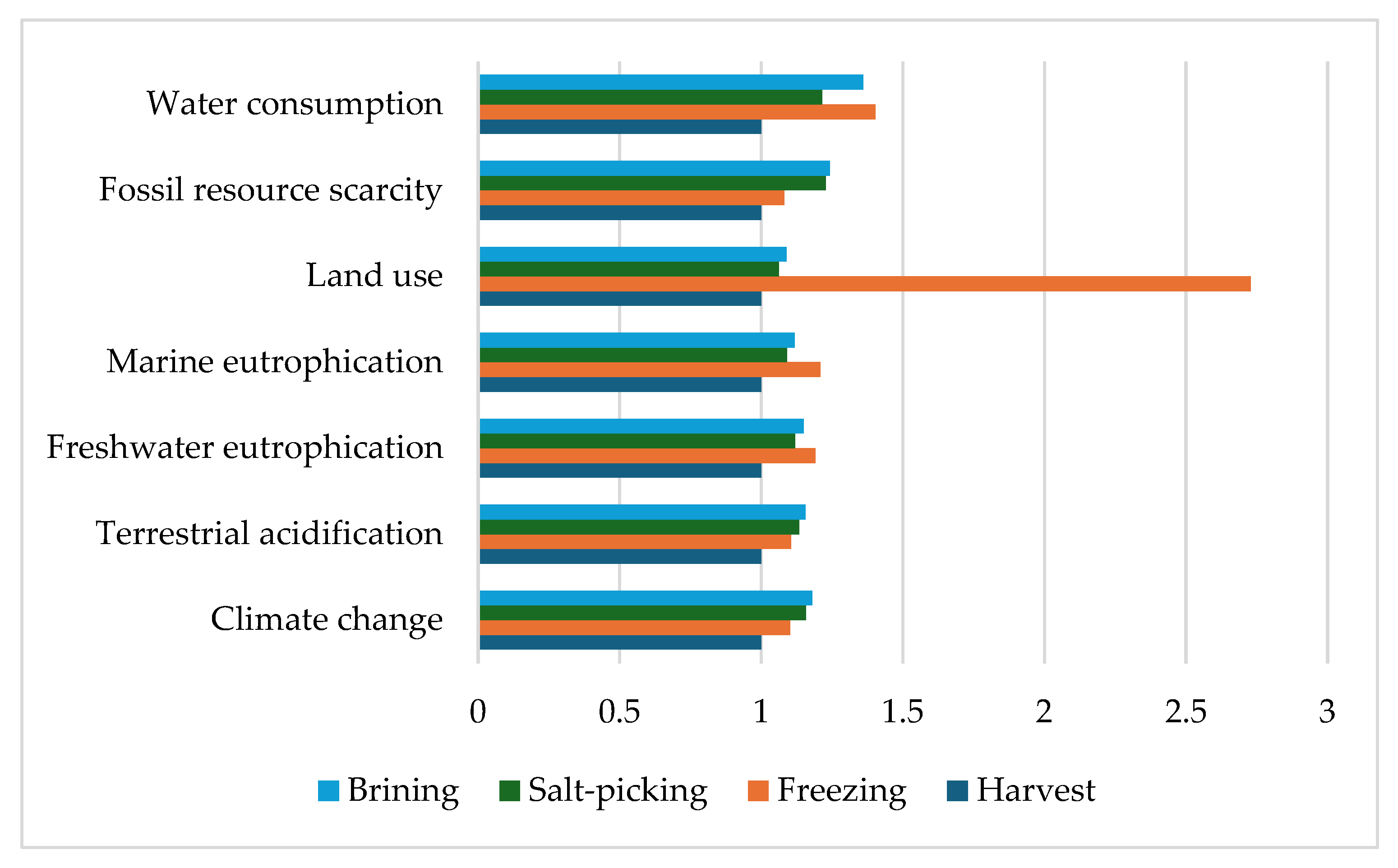
A stabilisation step was included to represent pilot-scale post-harvest handling of food-grade kelp intended for extended storage and long-distance transport. Stabilisation is modelled as an intermediary processing stage and does not represent final consumer product preparation. In the model, initial stabilisation occurs through freezing at the production site in Greenland, while further preservation steps are applied downstream following export. Two alternative routes were assessed based on pilot-scale experiments: salt-pickling and brining (salt and acid).
Both routes are based on experimental data from winged kelp (Alaria esculenta) and sugar kelp (Saccharina latissima) processed manually under laboratory conditions. Salt-pickling and brining are modelled as downstream preservation steps applied in Denmark following the transport of frozen kelp from Greenland. These steps capture additional material, energy, storage, and transport burdens associated with preservation.
In the salt-pickling route, kelp is mixed with sodium chloride corresponding to approximately 10% of the final product mass. In the brining route, kelp is first salted and subsequently combined with a brine solution consisting of vinegar (acetic acid), sodium acetate, potassium sorbate, sodium chloride, and water. Both products are stored under refrigerated conditions (0–4 °C) for up to six months, with inputs and storage energy scaled linearly to the FU.
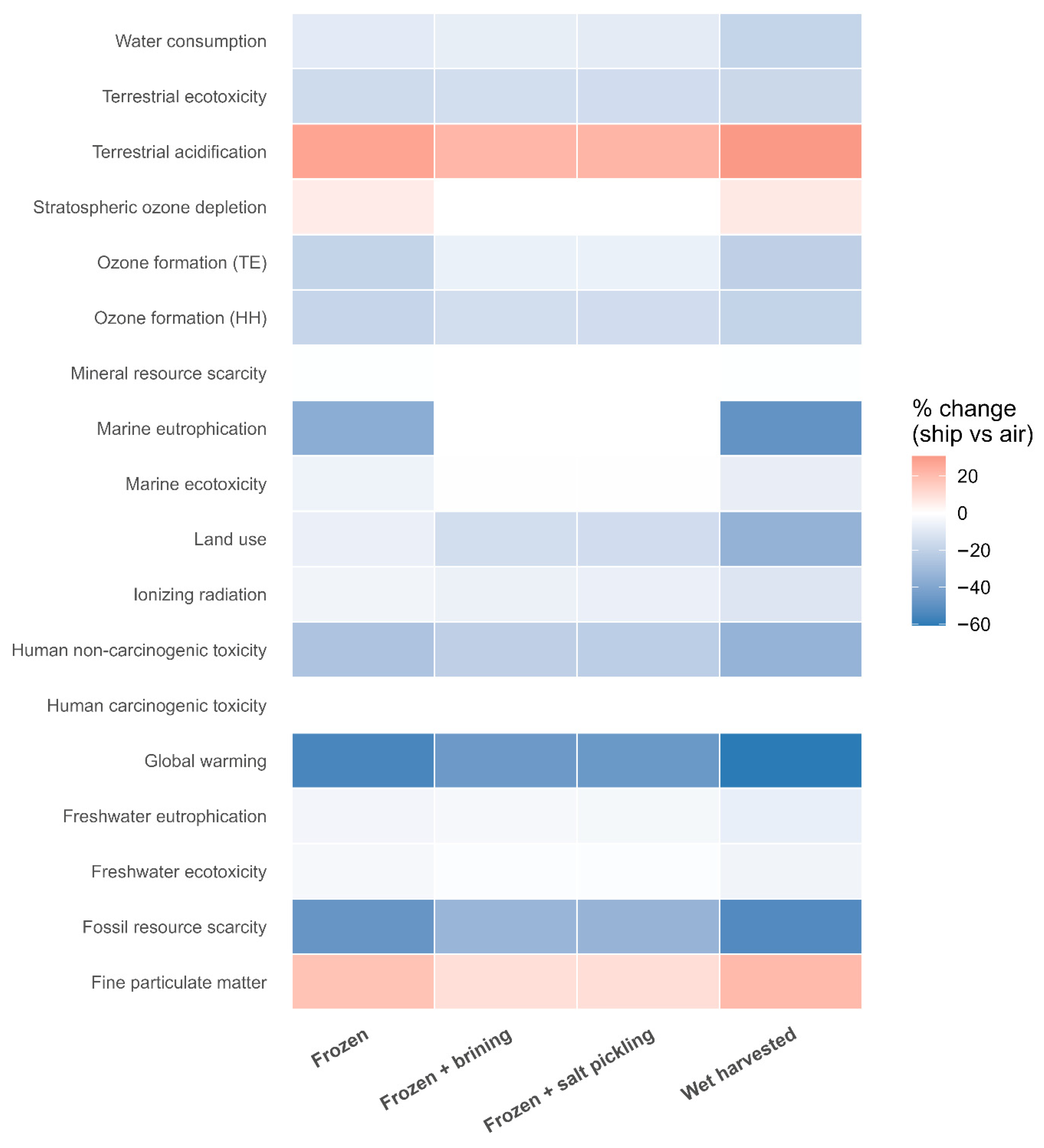
Transport from Greenland to Denmark is modelled as air freight to reflect pilot-scale, temperature-controlled logistics. Transport burdens are calculated using ton–kilometre methodology based on total shipped mass, ensuring that differences in mass between stabilisation routes are reflected in the impact assessment. Transport is modelled for frozen kelp exported from Greenland before downstream salt-pickling or brining in Denmark. The stabilisation step is included within the system boundary as a pilot-scale post-harvest preservation and transfer stage to the food-preparation facility; it is not intended to represent commercial distribution or consumer logistics. In addition, a sensitivity analysis was performed by replacing air freight with cargo ship transport for interregional logistics, while keeping all other system assumptions unchanged, to assess the influence of transport mode on life cycle impacts.
2.5. Seaweed-Based Food Products and Recipe Modelling
To assess the implications of kelp use at the food-preparation stage, four fermented, ready-to-eat seaweed-based snack products were modelled: a Kimchi, a Kraut Rhine style (German-style salad), a Kraut Dijon (French-style salad), and a Kraut Original (neutral fermented). These products were selected to represent diverse yet realistic culinary applications of kelp as a food ingredient, based on already established popular dishes, while maintaining comparable processing intensity and serving context.
Each product was modelled on a per 100 g of ready-to-eat product basis. For each recipe, two formulations were assessed: (i) a seaweed-based version in which kelp partially replaces conventional ingredients, and (ii) a conventional formulation without seaweed. Comparative formulations were designed to be nutritionally and functionally equivalent, differing only in the inclusion of kelp.
Ingredient composition, fermentation inputs, processing energy, and storage requirements were modelled using primary data from pilot-scale food preparation trials and supplemented with secondary data from ecoinvent where required. All recipe-level inventories are fully documented in
Supplementary Material B. Identical processing assumptions were applied to seaweed-based and conventional formulations so that observed environmental differences reflect ingredient substitution. Functional equivalence was defined by product category, serving context, and processing intensity, rather than identical sensory or nutritional profiles.
2.6. Impact Assessment and Data Quality
Life Cycle Impact Assessment (LCIA) was performed using the ReCiPe 2016 Midpoint (H) method. Impact categories assessed include climate change, fossil resource scarcity, freshwater and marine eutrophication, human toxicity, and freshwater and marine ecotoxicity, among other midpoint indicators. All modelling was conducted in SimaPro [
27], using background datasets from ecoinvent (cut-off system model). A complete list of impact categories is provided in
Supplementary Material A.
Foreground inventory data are primarily based on pilot-scale cultivation, harvesting, processing, and stabilisation operations, supported by equipment specifications and direct observations. Secondary data were used where primary data were unavailable and sourced consistently from ecoinvent. The foreground data are representative of current operational conditions in Greenland, while background data reflect global or regional averages as provided in the database.
Key modelling assumptions include linear scaling of material and energy inputs with harvested biomass and uniform operational performance across seeded rope lengths. Yield variability is explicitly addressed through the modelling of expected and observed production scenarios, allowing assessment of the influence of yield discrepancies on impact intensities.
For impact assessment, electricity inputs were regionalised to the Danish context by replacing the default French electricity mix from Agribalyse with the Danish electricity mix in SimaPro, ensuring consistency with the geographic scope of the processing stage.
2.7. Nitrogen and Phosphorus Removal Through Harvest
Nitrogen (
N) and phosphorus (
P) removal was quantified as the mass of nutrients assimilated into harvested kelp biomass. Nutrient removal was calculated for each yield scenario based on measured tissue nutrient concentrations and harvested wet biomass, representing physical export of dissolved nutrients from the marine environment at harvest.
where
is harvested wet biomass (kg) and
or
is nutrient content per unit of wet weight. Nutrient removal is reported independently of LCIA results and is not included as an impact category in the ReCiPe 2016 framework. Full calculation details are provided in
Supplementary Material A.
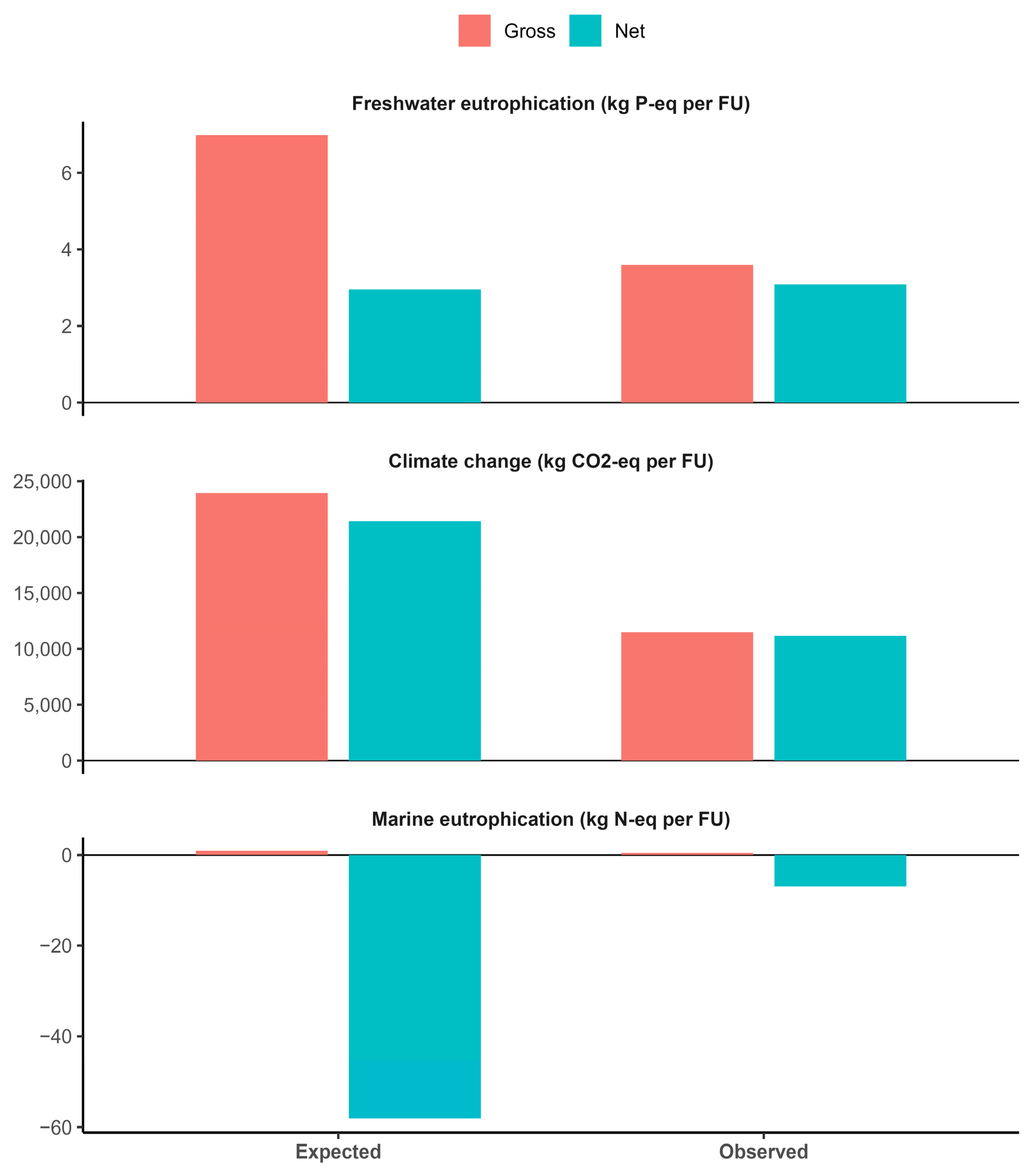
In addition to reporting physical nutrient removal, assimilated carbon, nitrogen, and phosphorus were used to construct an optional scenario in which nutrient uptake was credited as avoided environmental burdens. These credits were applied as negative elementary flows in the life cycle inventory and used to calculate net climate change, freshwater eutrophication, and marine eutrophication impacts. Specifically, assimilated nitrogen and phosphorus were modelled as avoided emissions using the corresponding ReCiPe 2016 characterisation factors, while carbon uptake was treated as biogenic CO2 removal. This scenario represents a maximum potential nutrient removal case because it assumes that all assimilated nutrients translate directly into avoided environmental impacts, without accounting for ecosystem feedback, nutrient limitation, or potential post-harvest nutrient release. It therefore does not constitute an additional impact category within the ReCiPe 2016 framework.
2.8. Nutritional Normalisation and Nutrient-Based Functional Units (Protein and Iron)
To complement the mass-based FU and improve food-system relevance, recipe-level impacts were additionally expressed using a nutrient-based FU for protein and iron. These nutrients were selected due to their nutritional relevance, frequent use in food system assessments, and their role as commonly limiting nutrients in predominantly plant-based diets. This approach represents a nutritional normalisation of conventional life cycle impacts rather than a full nutritional life cycle assessment (nLCA) framework integrating multiple nutrients or health endpoints into LCIA. Nutrient-based FUs were used to test whether comparative conclusions between kelp-based and conventional formulations were sensitive to the choice of FU and to support interpretation in relation to dietary contribution.
Nutrient-based FUs were defined as the amount of ready-to-eat product required to supply 30% of the daily recommended intake (DRI) for (i) protein and (ii) iron, corresponding to the typical nutritional contribution of a single meal within a conventional daily dietary structure, as reflected in European dietary guidance [
28,
29]. DRI values were based on [
28,
29] for a reference adult population; sensitivity to alternative DRI conventions was not assessed. Accordingly, the protein-based FU was set to 15 g protein, and the iron-based FU was set to 4.5 mg Fe (30% of the relevant DRI values). For each product formulation, the total life cycle impacts per kilogram of ready-to-eat product were scaled to the product mass required to meet the protein- or iron-based FU, yielding impacts per 15 g protein and per 4.5 mg Fe, respectively [
20].
Protein and iron contents of recipe ingredients were obtained from literature and/or food composition databases (FRIDA). For kelp, nutrient composition values were estimated on a fresh-weight basis by converting dry-matter concentrations reported for fermented sugar kelp by Bruhn et al. [
30], assuming a kelp base dry-matter content of approximately 10% and applying an N-to-protein conversion factor of 5 recommended for seaweeds [
31]. This resulted in estimated kelp base contents of 1.68 g protein and 2.8 mg iron per 100 g of fresh weight, which were used consistently in all nutrient-based calculations. For cabbage and other recipe ingredients, nutrient values were sourced from standard food composition datasets [
32].
Where processing steps such as freezing, brining, and fermentation were expected to influence nutrient concentrations through water and salt exchange, nutrient values were not analytically re-measured for the processed products; therefore, nutrient-based results should be interpreted as comparative indicators rather than definitive nutrition delivery claims. Because consistent ileal digestibility data were not available across all ingredients and formulations, digestible protein quality metrics (e.g., DIAAS) were not applied, and protein was treated on a gross-content basis.
The nutrient-normalised comparisons were conducted using identical life-cycle inventories and processing assumptions as the mass-based recipe comparisons. Only the reference flow (product mass required to meet the nutrient target) differed between FUs. This ensures that observed differences between kelp-based and conventional formulations reflect differences in ingredient composition and upstream supply chains rather than changes in processing technology or system boundaries.
4. Discussion
The analysis demonstrates that the environmental performance of offshore kelp cultivation is primarily governed by yield realisation rather than by changes in system configuration or operational practice. Because cultivation infrastructure, seeding operations, and logistics are largely invariant to biomass output within a production cycle, deviations from expected yields translate directly into higher environmental burdens per unit of harvested kelp. This structural characteristic has been noted in earlier LCAs of seaweed systems [
33,
34,
35]. In the present study, climate change impacts increased nearly fourfold when realised yields declined from 24 to 3 tons (1.00 vs. 3.83 kg CO
2 eq kg
−1), demonstrating the strong yield-dependent scaling of environmental burdens. This finding suggests that yield effects may be particularly pronounced in offshore and high-latitude contexts, where material intensity and transport requirements remain largely insensitive to production volume.
For early-stage Arctic deployments, this implies that environmental feasibility should be evaluated under conservative yield assumptions and that yield-stabilisation measures may be a prerequisite to sustainability performance. The strong sensitivity of impact intensity to yield has important implications for the interpretation of sustainability claims associated with kelp cultivation. Prospective LCAs frequently rely on optimistic yield assumptions derived from pilot trials or short-term observations, which can underestimate environmental impacts when translated to commercial operation [
36,
37]. The present findings suggest that yield variability should be treated as a core uncertainty parameter rather than a secondary sensitivity factor, particularly for emerging kelp industries operating under challenging environmental conditions. From a system optimisation perspective, improving yield stability may therefore offer greater environmental benefits than incremental reductions in energy use or minor changes in downstream processing. These findings reflect current pilot-scale operational conditions and do not presuppose optimised commercial-scale logistics or energy systems.
At the same time, when interpreted in a comparative food-system context, offshore kelp cultivation exhibited climate change impacts ranging from 1.00 to 3.83 kg CO
2 eq per kilogram of wet harvested biomass (functional unit) in the present study. These values fall within the lower range of reported climate change impacts for food products and are generally lower than those reported for many livestock systems [
19], feed-dependent aquaculture [
2], and many conventional terrestrial crops [
38], although such comparisons should be interpreted cautiously due to differences in functional units, edible fractions, and moisture content across food categories. The results therefore suggest a favourable environmental profile for kelp farming.
Importantly, unlike most marine food production systems, which rarely have the capacity to remove excess nutrients from surrounding waters, seaweed cultivation directly assimilates dissolved inorganic nutrients as part of its growth [
12,
39], a process analogous to harvest-mediated nutrient removal approaches described in other aquatic systems [
40]. The results further show that kelp harvest physically removes assimilated carbon, nitrogen, and phosphorus from the marine environment, indicating that kelp farming can contribute to nutrient export via biomass removal in addition to functioning as a low-emission food source. The primary constraint on sustainability is therefore not the production concept itself, but the ability to consistently achieve and maintain expected biomass yields under Arctic operating conditions. If yield stability is realised, kelp cultivation has substantial potential to become a highly resource-efficient and climate-compatible cornerstone of future Arctic marine food systems. Realising this potential will also depend on consumer acceptance, as seaweed remains an emerging food in many European markets, with adoption influenced by dietary familiarity and perception barriers [
41].
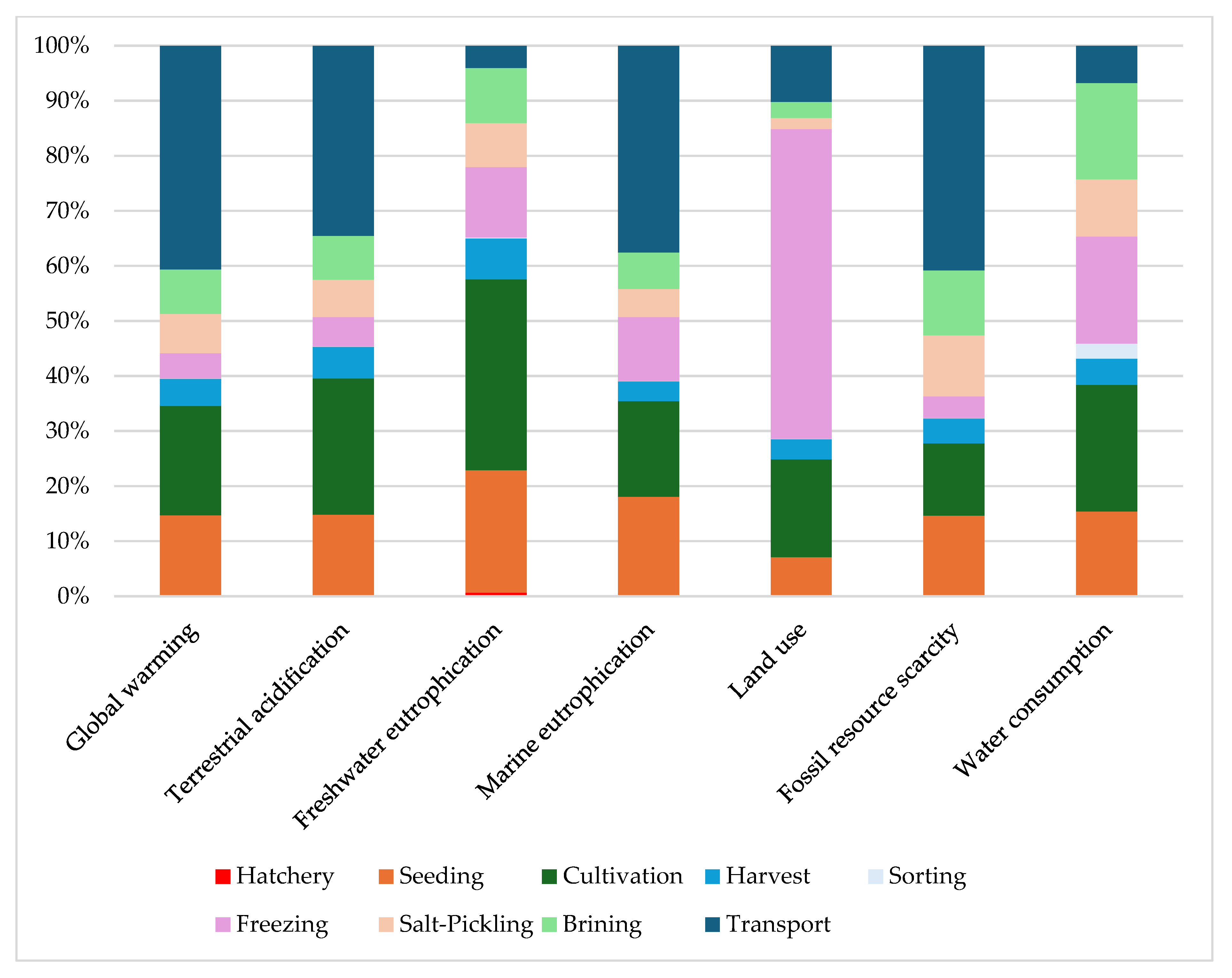
The contribution analysis indicates that environmental burdens are largely driven by upstream cultivation activities and associated logistics, reflecting the material intensity of offshore infrastructure and the energy demands of vessel-based operations. This pattern differs from several nearshore or land-adjacent kelp LCAs, where impacts are more frequently dominated by downstream processing or individual material inputs [
33,
42]. In the present system, the prominence of upstream hotspots can largely be attributed to offshore-specific requirements, including robust anchoring materials, fuel-intensive vessel operations, longer transport distances, and preservation needs associated with Arctic operating conditions. However, it is consistent with recent evidence from large-scale commercial kelp farming in China, where infrastructure components such as ropes and buoys were identified as dominant environmental hotspots despite operational efficiencies associated with scale [
13].
The importance of transport observed here further emphasises the role of geographic context and operating conditions, particularly in remote or Arctic environments where logistics are inherently energy-intensive [
43]. Sensitivity analysis indicates that, beyond biological yield performance, logistical design choices play a decisive role in shaping the environmental profile of Arctic kelp systems. In particular, transport mode selection strongly influences climate change, fossil resource scarcity, and marine eutrophication impacts, while introducing trade-offs for air-pollution-related categories. Together, these findings indicate that sustainability improvements in Arctic seaweed-based food systems depend not only on increasing yield stability, but also on coordinated optimisation of infrastructure use, preservation strategies, and long-distance transport logistics.
In contrast, hatchery and harvesting stages contribute relatively minor shares to overall impacts, suggesting that mitigation potential at these stages is limited compared to improvements targeting cultivation design, material efficiency, and logistical planning. Post-harvest stabilisation introduces additional environmental burdens that are secondary to cultivation but relevant when designing kelp value chains. Energy-intensive preservation pathways increase impact intensity without altering the dominant upstream drivers, whereas lower-energy alternatives impose smaller incremental burdens. Similar trade-offs have been reported in food system LCAs, where cold-chain dependence is a key contributor to land use and water consumption [
44,
45]. These findings emphasise that post-harvest decisions should be evaluated in conjunction with intended product use and market requirements, rather than treated as interchangeable or environmentally neutral steps [
16]. From an Arctic systems perspective, the comparatively lower impacts associated with salting and brining pathways are particularly relevant. Salting-based preservation aligns with long-established fish-processing practices in Greenland and other Arctic regions [
46], where low-temperature storage and energy-intensive cold chains are often constrained by infrastructure and energy availability. The results, therefore, suggest that adopting existing salting and brining practices to kelp-based food products may offer a context-appropriate strategy to reduce post-harvest energy demand while maintaining food safety and shelf life in remote Arctic food systems.
In addition to impacts, kelp cultivation requires the physical uptake and removal of carbon and nutrients from the marine environment; however, this biophysical removal should not be interpreted as an inherent environmental benefit. Nutrient uptake may only translate into eutrophication mitigation under specific local conditions, and carbon assimilation during growth does not constitute climate mitigation unless long-term sequestration or substitution effects are demonstrated across the full life cycle [
36,
47]. This aligns with recent concerns that attributing avoided impacts or carbon credits to seaweed cultivation without robust system-wide accounting can overstate environmental benefits [
48]. While LCA does not support direct mitigation claims from biomass uptake alone, complementary ecosystem-services frameworks suggest that seaweed aquaculture may deliver engineered ecosystem services under appropriate environmental and governance conditions, provided potential disservices are also assessed through adaptive, cross-sectoral management rather than inferred from isolated life-cycle indicators [
11].
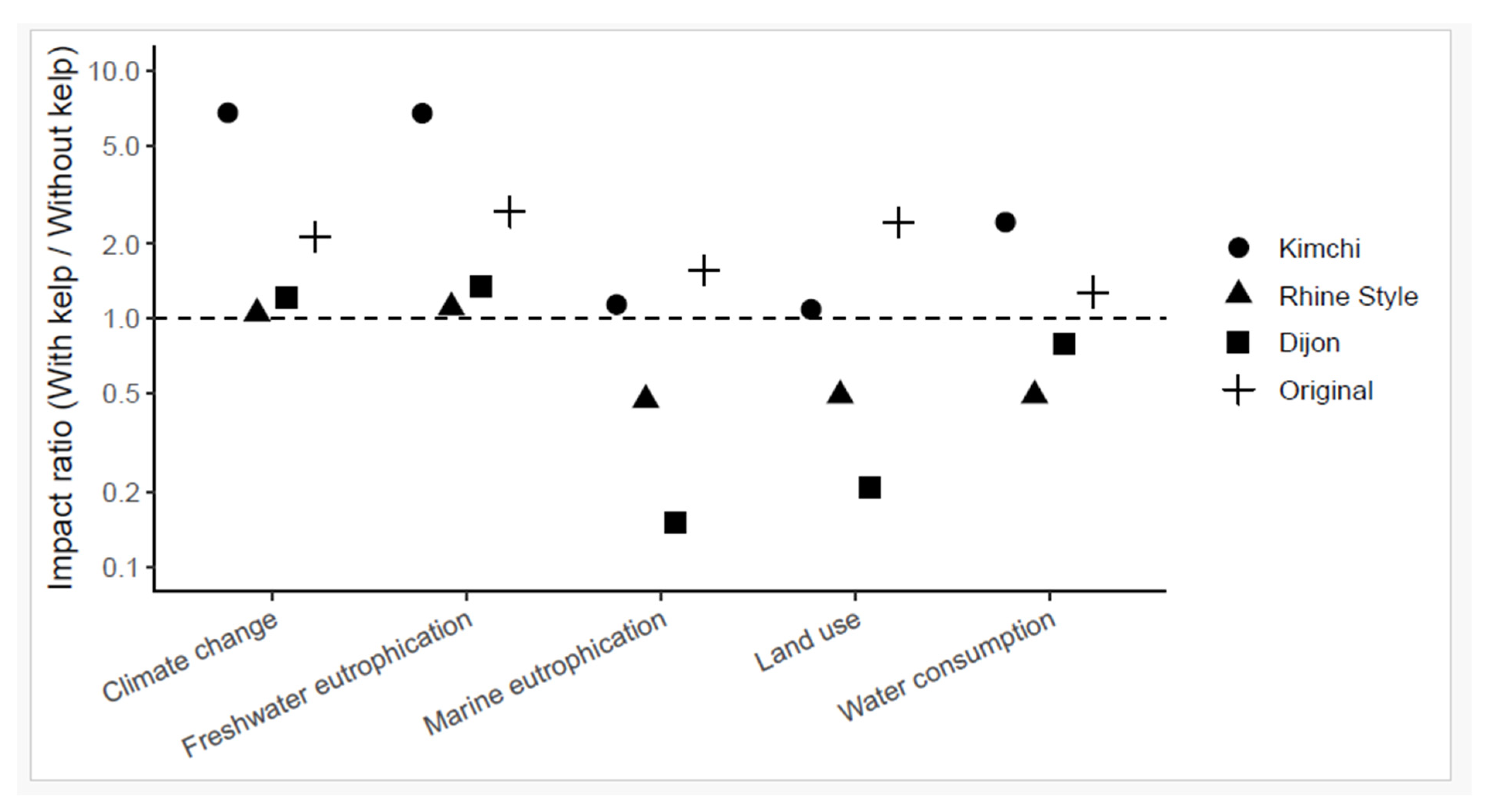
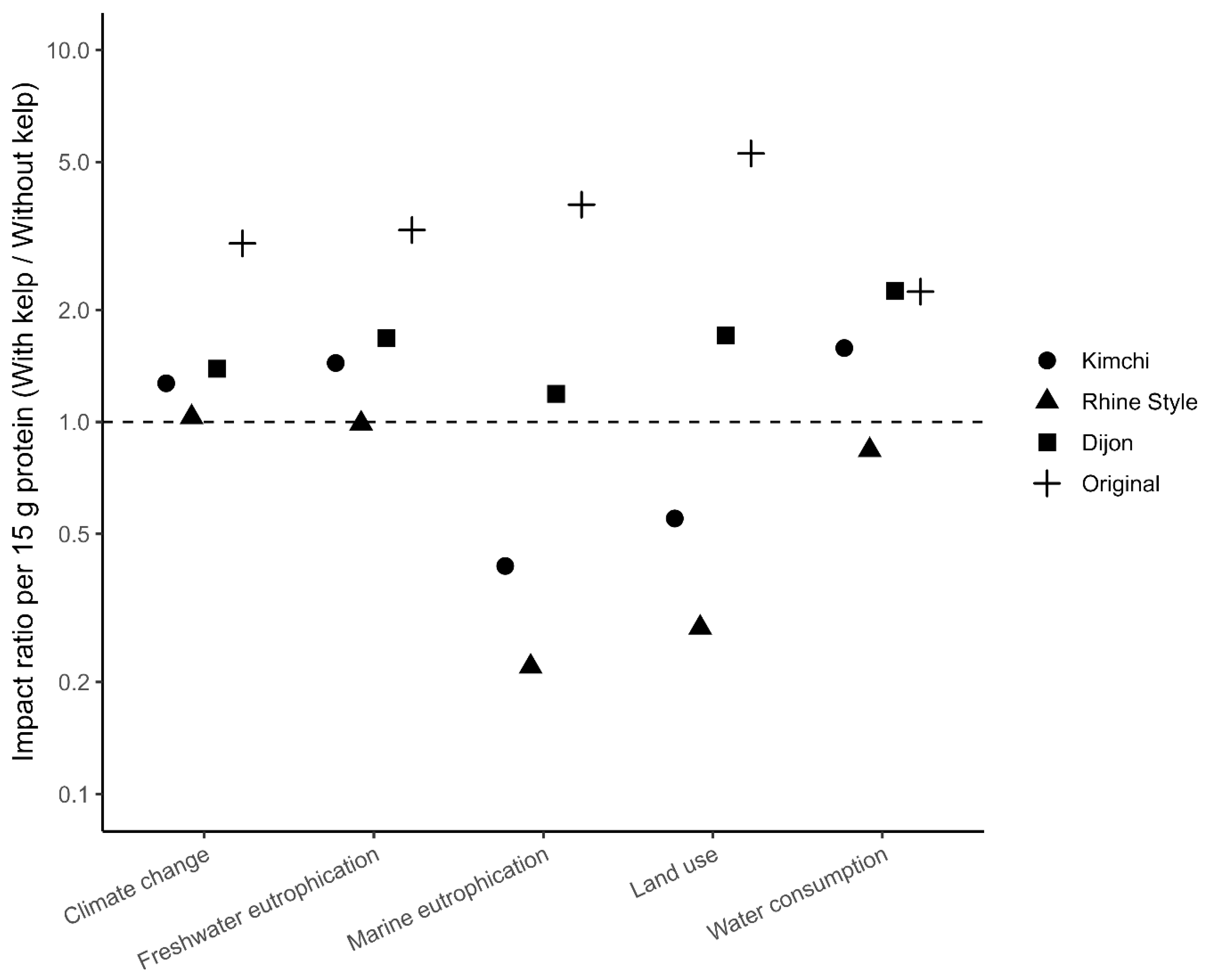
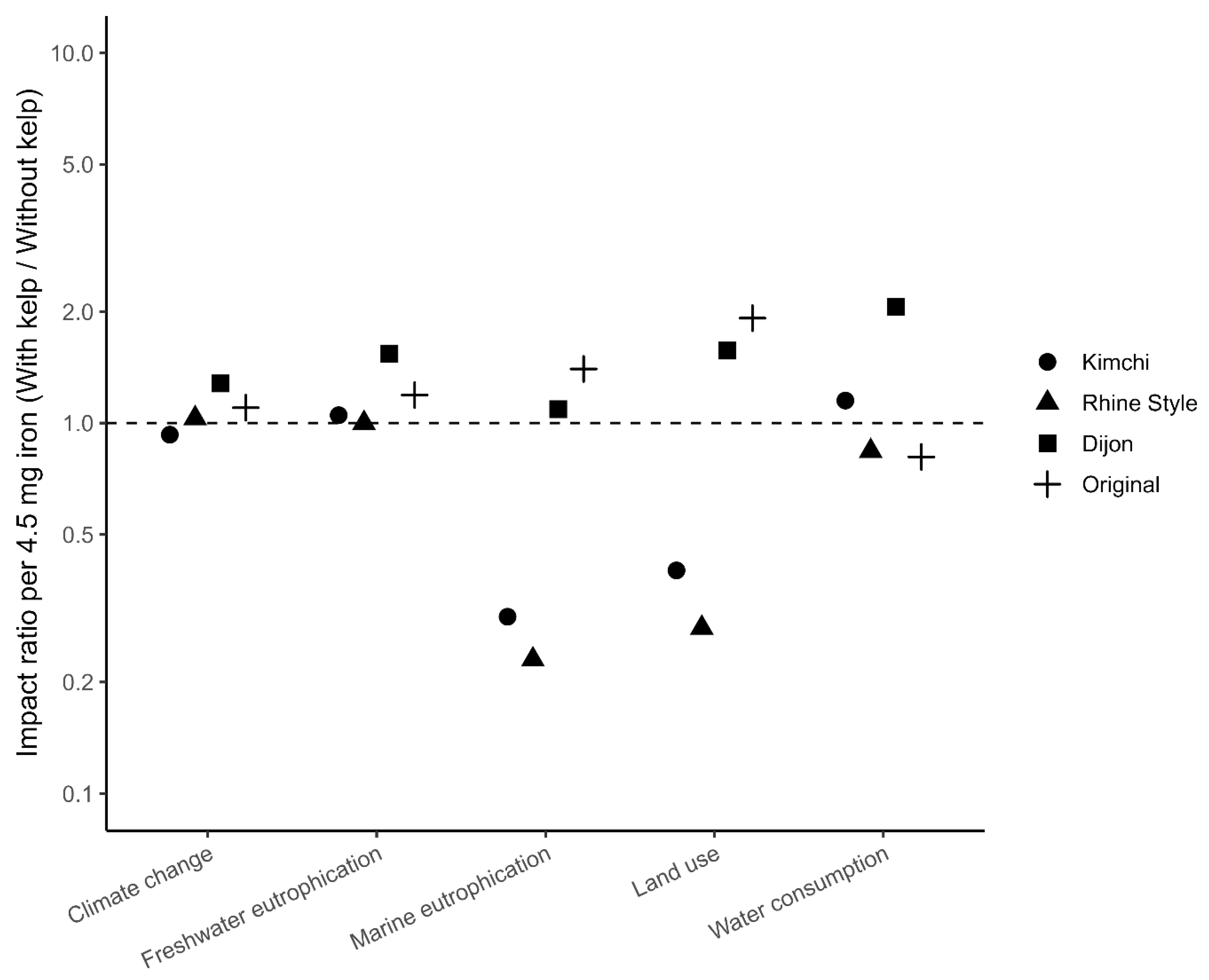
Comparisons across mass- and nutrient-based FUs reveal consistent environmental trade-offs associated with kelp substitution. Higher climate change and freshwater eutrophication impacts for kelp-based products align with previous LCAs of macroalgae, which highlight the energy and input requirements associated with cultivation, processing, and preservation. For example, systematic reviews of seaweed LCA studies identify energy use for drying, fuel for transport, and infrastructure production as recurrent environmental hotspots across seaweed value chains [
16]. Further, drying, infrastructure materials, and processing often dominate environmental impacts in seaweed systems, illustrating how downstream and cultivation stages can elevate climate and eutrophication burdens despite low land and input use [
49,
50]. Conversely, the consistently lower land-use impacts reflect the marine-based production of kelp and the avoidance of arable land use, a well-documented advantage of seaweed systems relative to terrestrial crops [
48]. The smaller differences observed under iron normalisation, compared with protein normalisation, further reflect kelp’s relatively high micronutrient density, particularly for minerals such as iron [
51,
52].
Study Limitations and Future Research
Despite its comprehensive cradle-to-food-preparation scope and reliance on operational data, this study is subject to several limitations that should be considered when interpreting the results. First, the life cycle inventory is based on pilot-scale and early-stage operational data, reflecting current cultivation, harvesting, and processing practices rather than optimised commercial-scale systems. While this strengthens empirical realism under Arctic conditions, it also implies that absolute impact intensities may be higher than those achievable under future large-scale or fully optimised operations. Consequently, the results should be interpreted as representative of present operational performance rather than predictive of mature industry benchmarks. Additionally, the harvesting strategy assessed reflects pilot-scale Arctic operations in which biomass was mechanically harvested in full. Strong seasonality and a restricted growth window may limit the operational advantages of partial or alternative harvesting approaches in high-latitude systems, although multiple-harvest strategies have been explored in offshore kelp cultivation [
53]. Nevertheless, future research should evaluate alternative harvesting strategies as cultivation practices mature and region-specific management frameworks evolve.
Second, environmental impacts are highly sensitive to biomass yield realisation, and yield variability is explicitly modelled rather than treated as an uncertainty parameter. Although this approach provides insight into the structural yield dependence of offshore kelp systems, it does not capture the full range of interannual or site-specific yield variability that may occur under different Arctic environmental conditions. The analysis, therefore, does not constitute a probabilistic uncertainty assessment, and future work should explore yield variability using multi-year datasets.
Third, several contextual proxies and modelling assumptions were required due to data availability constraints. In particular, low-voltage electricity from Iceland was used as a proxy for Greenlandic electricity supply, reflecting a renewable-dominated energy mix but not capturing potential spatial or temporal variation in local energy sources. Similarly, background processes were sourced from the ecoinvent database and represent global or regional averages rather than Greenland-specific supply chains. These assumptions may influence absolute impact values but are unlikely to alter relative comparisons between scenarios or product formulations.
Fourth, nutritional normalisation relies on gross nutrient content values derived from the literature and food composition databases. Potential changes in nutrient concentration or bioavailability due to freezing, brining, fermentation, or matrix effects were not analytically measured. Digestible protein quality metrics were not applied due to limited data availability. As a result, nutrient-based FUs should be interpreted as comparative indicators rather than precise measures of nutritional delivery.
Fifth, large-scale kelp cultivation may also influence local nutrient dynamics through the assimilation and removal of dissolved nitrogen and phosphorus during biomass growth and harvest [
54]. While such uptake is often associated with improved water quality, extensive nutrient removal could theoretically alter primary productivity and trophic interactions if cultivation were deployed at sufficiently large spatial scales [
55]. These ecosystem-level processes were not assessed in the present study, which focuses on production-stage environmental impacts. Future research should therefore evaluate the broader ecological implications of large-scale kelp farming, including potential interactions with phytoplankton dynamics, grazing networks, and higher trophic levels, to support ecosystem-based management of offshore aquaculture systems [
56].
Finally, climate change may further influence both cultivation performance and logistics in Arctic kelp systems. Temperature is a key driver of kelp physiology and seasonality, and warming has been shown to affect growth responses across latitudes and to increase blade erosion/biomass loss in kelp, which could translate into altered yield realisations [
57,
58]. In parallel, changing storm regimes and extreme events represent an operational risk for offshore longline infrastructure [
59]. Logistics may also shift as Arctic sea ice continues to decline, potentially extending navigable periods while introducing uncertainty in accessibility and operational reliability [
60,
61]. Accordingly, future research should integrate climate-sensitive yield and logistics scenarios (e.g., temperature trajectories, storm exposure, and sea-ice accessibility) to evaluate how projected Arctic change could affect life-cycle impacts.
5. Conclusions
This study demonstrates that offshore kelp farming can represent an environmentally feasible component of Arctic marine food systems, but that its sustainability is strongly conditional on biomass yield realisation. Across all assessed life-cycle impact categories, reduced yields substantially increased impact intensities per unit of harvested kelp, indicating that environmental performance is governed primarily by yield-dependent scaling of cultivation inputs rather than by downstream processing choices or recipe formulation. These findings highlight yield stability as a central determinant of sustainability outcomes for emerging kelp production systems operating under high-latitude and offshore conditions.
Importantly, normalising impacts to nutritional functional units did not alter the qualitative trade-offs observed at the recipe level. Consistent patterns across mass-, protein-, and iron-based functional units indicate that kelp substitution is associated with higher climate change and freshwater eutrophication impacts but consistently lower land-use burdens relative to cabbage-based analogues. Differences were more pronounced when impacts were expressed per unit of protein and reduced under iron normalisation, reflecting the comparatively high micronutrient density of kelp. Together, these results demonstrate that the environmental trade-offs associated with kelp incorporation are robust to functional unit choice, although their magnitude depends on whether impacts are evaluated per unit of product mass or nutritional value.
From a systems perspective, these findings suggest that the environmental viability of kelp-based foods depends less on product-level innovation than on achieving reliable and sufficiently high cultivation yields. While kelp farming exhibits intrinsically low land demand and competitive climate performance relative to many terrestrial foods, these advantages may be undermined if yield variability remains high. Consequently, efforts to scale kelp-based food systems in Arctic regions should prioritise agronomic optimisation, site selection, and yield stabilisation alongside downstream product development to ensure that anticipated environmental benefits are realised in practice.