1. Introduction
The global construction sector is one of the most resource-intensive and environmentally impactful industries, largely due to its substantial reliance on Portland cement as the main binding material in concrete. Cement manufacture is energy-intensive and significantly contributes to global greenhouse gas emissions, with estimates that approximately 7% of global anthropogenic GHG emissions [
1,
2]. As the demand for urban infrastructure and housing continues to rise, specifically in developing economies, there is increasing pressure to implement more sustainable construction practices. Pivotal to this transition is the discovery of replacement materials and methods that can both reduce the carbon footprint of concrete and improve its long-term performance [
3,
4].
One of the promising approaches to achieving sustainability in concrete production is the application of industrial byproducts as substitutes for natural resources. Steel slag, a byproduct of the steel manufacturing process, is produced at 10–15 million tons every year in the USA and is often stockpiled or landfilled due to ineffective commercial use [
5,
6]. This not only causes environmental hazards due to leaching of heavy metals, dust generation, and land use concerns, but also results in a loss of potentially valuable material [
7,
8]. Recent studies have recognized steel slag’s potential as an aggregate in concrete and mortar due to its high alkalinity, latent hydraulic reactivity, and granular morphology. Utilizing slag aggregates in mortar aligns with the principles of the circular economy, offering both economic and environmental benefits [
9,
10].
Slag aggregates can be obtained from different stages of steel manufacturing, each with unique chemical and mineralogical compositions, such as calcium oxide percentage, porosity, and chemical reactivity, affecting their behavior in cementitious systems. The performance of these slag aggregates is often limited by characteristic weaknesses such as porosity, variability in composition, and lower binding with the cement matrix compared to traditional aggregates. To overcome these limitations, researchers have evaluated surface treatments and pre-conditioning procedures to enhance their properties [
11,
12,
13,
14].
Among these treatments, mineral carbonation has emerged as a dual-purpose strategy that offers both CO
2 sequestration and performance enhancement of cementitious materials. When exposed to CO
2, calcium-bearing phases in slag react to form stable carbonate phases such as calcium carbonate. These reactions enhance material performance primarily through pore filling and pore refinement within slag particles, densification of the interfacial transition zone between aggregate and paste, and improved particle packing, which collectively increase matrix density, mechanical strength, and durability [
15]. Carbonation thus serves not only as an environmental solution to mitigate CO
2 emissions but also as a performance-modifying mechanism that can make industrial byproducts more viable for construction use [
16,
17,
18].
While mineral carbonation has been extensively studied for cement pastes, supplementary cementitious materials, and carbonation curing of finished mortar or concrete specimens, its application as a pre-treatment of aggregates remains underexplored. In contrast to powder carbonation or carbonation curing, the approach adopted in this study targets the pre-carbonation of slag aggregates before mixing, promoting carbonate formation within aggregate pores and near aggregate surfaces. This upstream treatment enables pore filling and interfacial transition zone densification during subsequent mixing, without altering cement hydration pathways or conventional curing practices. Most existing literature focuses on the carbonation of powdered materials or the carbonation curing of mortar specimens, with limited attention given to the pre-carbonation of aggregates and their subsequent use in mortar mixtures. The effect of carbonation on the microstructure, durability, and mechanical properties of mortar when slag aggregates are carbonated before mixing remains underexplored [
19,
20,
21].
Through rigorous analysis, the study aims to explore correlations between the intensity of carbonation and the enhancements in mortar performance. It is important to understand how the mineral composition and physical characteristics of each slag type affect its carbonation behavior and, subsequently, its influence on mortar strength and durability. The study provides a relative investigation to identify which kind of aggregate slag benefits most from carbonation, thereby offering guidance for practical application in sustainable construction.
The novelty of this research lies in its comprehensive approach to evaluating pre-carbonated slag aggregates as functional components in mortar systems. Unlike previous studies that focus solely on binder modifications or CO
2 curing of finished products, this work investigates the upstream carbonation of aggregates, a concept with significant potential for decentralized carbon capture and materials valorization [
22,
23]. Moreover, by incorporating a range of analytical techniques and slag types, the study offers robust evidence on how carbonation can be used as a sustainability tool and a performance enhancer. The outcomes of this research could inform future material design strategies and encourage the adoption of carbonated industrial byproducts in mainstream construction practices. Based on the identified research gaps, this study is guided by the following research questions: (i) How does the chemical composition of different steel slag aggregates influence their CO
2 uptake under moisture-assisted pre-carbonation conditions? (ii) To what extent does aggregate pre-carbonation affect the mechanical performance and durability indicators of mortar? (iii) Is there a synergistic relationship between carbon sequestration potential and engineering performance, and how is this relationship governed by slag chemistry?
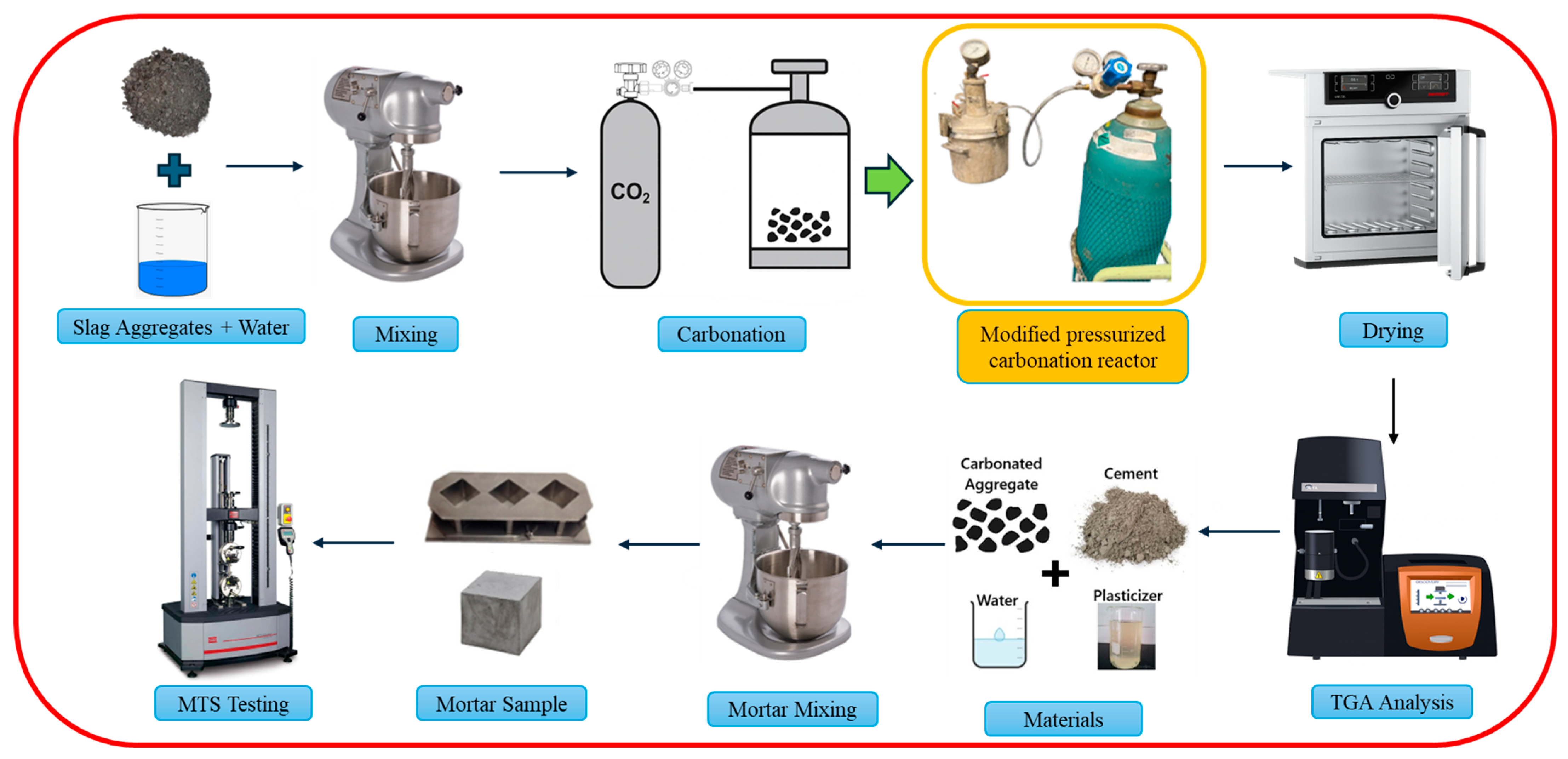
This study addresses the research gap by examining four slag aggregates, Rockport, skim, BOF, and blast-furnace, subjected to a single, controlled pre-carbonation protocol and then used as sand replacements in mortar. Performance was evaluated by compressive strength at multiple ages, ultrasonic pulse velocity, chemical soundness, and thermogravimetric analysis to quantify CO2 uptake. Scanning electron microscopy was used to assess microstructural changes. This study examines how slag type affects CO2 uptake under a fixed pre-carbonation protocol and the resulting compressive strength, how ultrasonic pulse velocity reflects these strength changes, and how SEM features and durability indicators, chemical soundness, and freeze-thaw UPV retention relate to the measured uptake and mechanical performance. These aims frame the composition-process-property relationships evaluated in this work.
Pre-carbonation of aggregates treats the pore network of fine and coarse fractions before mixing. This differs from powder carbonation and from curing finished elements. Carbonate forms within aggregate pores and at the paste-aggregate interface during mixing, improving packing and load transfer without disturbing cement hydration. The method is scalable, as it can be applied to stockpiles or batch drums at ambient temperature, with short cycle times, minimal plant modifications, and straightforward quality control via mass gain or TGA. It also aligns with existing logistics, where aggregates are processed in bulk, stored, and dosed as sand replacements. Focusing on aggregate pre-carbonation isolates composition-process-property relationships that are otherwise confounded when binders or whole specimens are carbonated.
3. Results and Discussion
To facilitate interpretation of the experimental results, a mechanistic framework linking slag chemistry, carbonation behavior, and mortar performance is introduced and subsequently elaborated in
Section 3.7. This framework is referenced throughout the following sections to synthesize the observed trends across CO
2 uptake, mechanical performance, durability, and microstructural evolution. Across all mixtures, carbonation-induced performance changes are primarily governed by microstructural densification through CaCO
3 precipitation within aggregate pores and at the interfacial transition zone. This densification mechanism consistently influences compressive strength, ultrasonic pulse velocity, and durability indicators. Therefore, subsequent sections focus not on reiterating this common mechanism, but on highlighting how differences in slag chemistry and phase composition govern the magnitude and direction of the observed effects.
3.1. Chemical Durability Under Sulfate Exposure
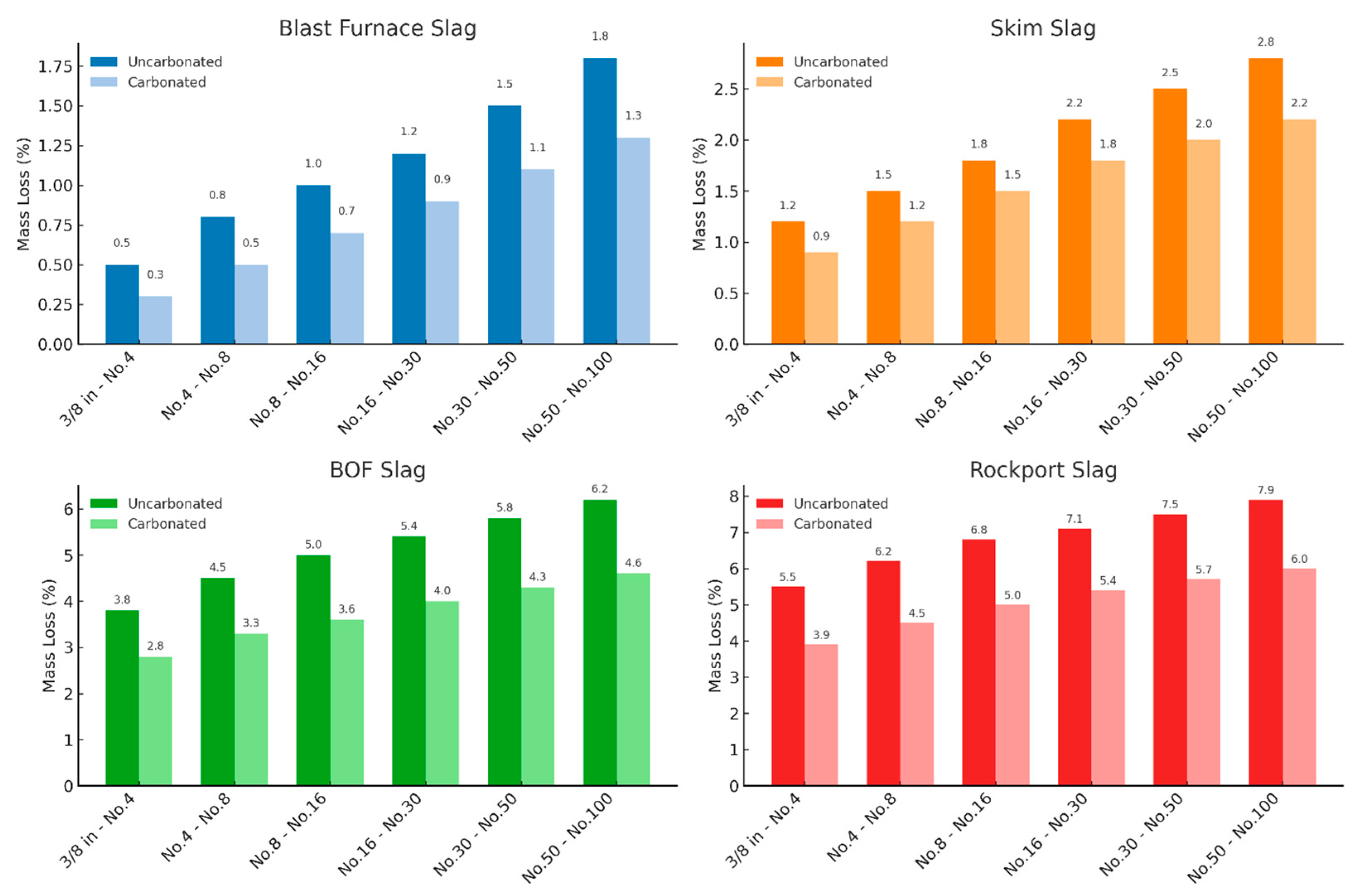
The chemical soundness results shown in the
Figure 4 demonstrate a clear improvement in durability across all slag types following carbonation. In the uncarbonated state, Rockport Slag exhibited the highest mass loss, increasing from 5.5% to 7.9% across the sieve sizes, followed by BOF Slag (3.8–6.2%), Skim Slag (1.2–2.8%), and Blast Furnace Slag (0.5–1.8%). After carbonation, these values decreased noticeably: 3.9–6.0% for Rockport Slag, 2.8–4.6% for BOF Slag, 0.9–2.2% for Skim Slag, and 0.3–1.3% for BFS. The consistent reduction in mass loss indicates enhanced chemical resistance due to carbonation across all four types of slag and their size fractions.
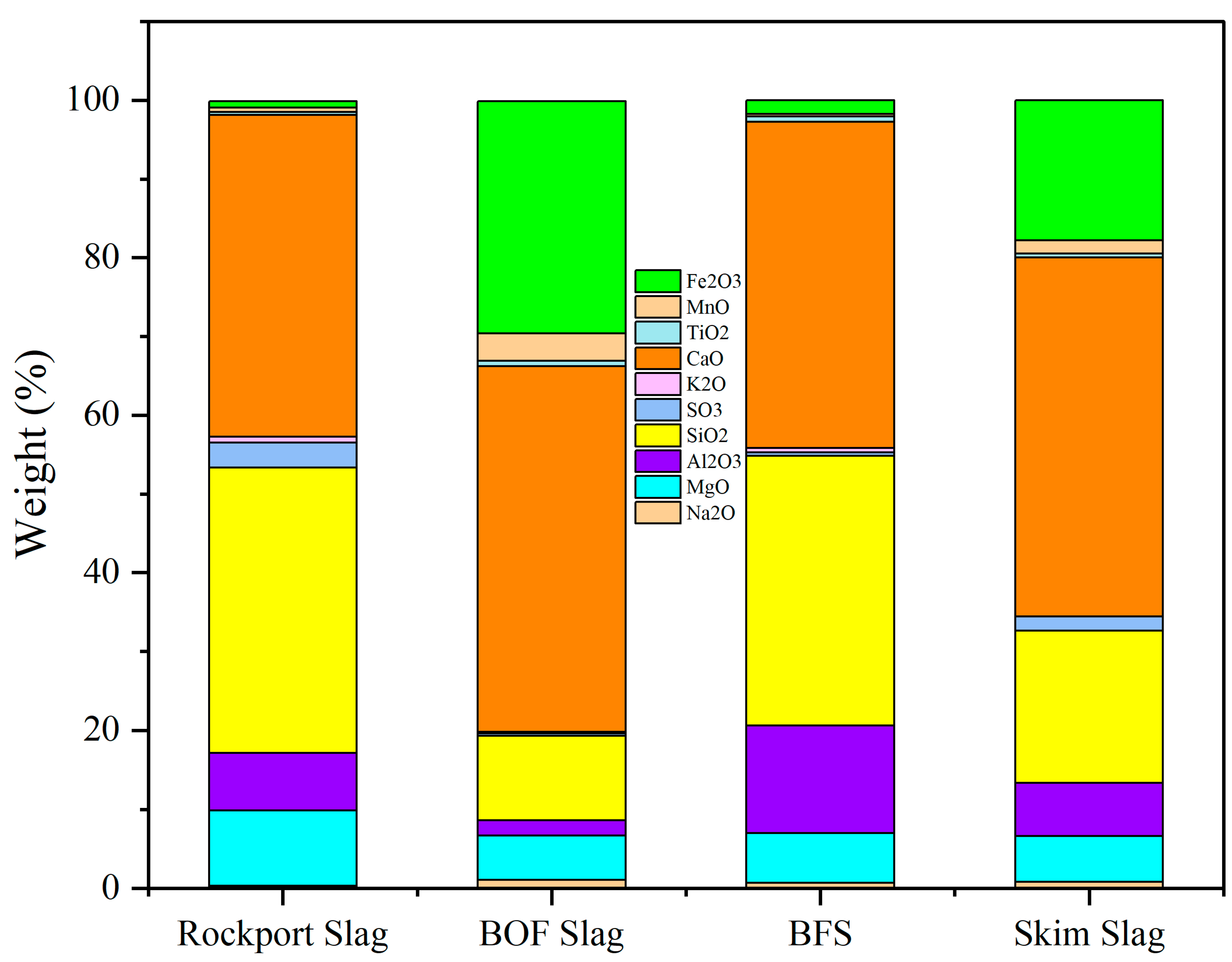
This improvement is primarily due to the formation of stable carbonate phases such as CaCO3, which result from the reaction of CO2 with free calcium and other reactive oxides present in the slag matrix. The carbonation process leads to pore refinement, surface densification, and passivation of reactive sites, thereby limiting the ingress of aggressive ions and reducing dissolution during the chemical soundness test. Slags with higher contents of free lime and periclase, such as Rockport (CaO: 35.25%, MgO: 9.24%) and Blast Furnace (CaO: 54.8%, MgO: 3.56%) Slag, show greater reductions in mass loss, highlighting the more pronounced effect of carbonation in reactive materials.
Finer particles benefit even more due to their larger surface area, which facilitates faster and deeper carbonation. This contributes to a denser outer shell that resists chemical attack more effectively. The reduction in mass loss not only confirms improved resistance to chemical degradation but also suggests greater long-term performance in environments exposed to sulfates or acidic conditions. Overall, carbonation enhances the chemical stability of slag aggregates while also offering environmental benefits through CO2 uptake, making it a promising approach for developing more durable and sustainable construction materials.
3.2. Quantification of CO2 Uptake
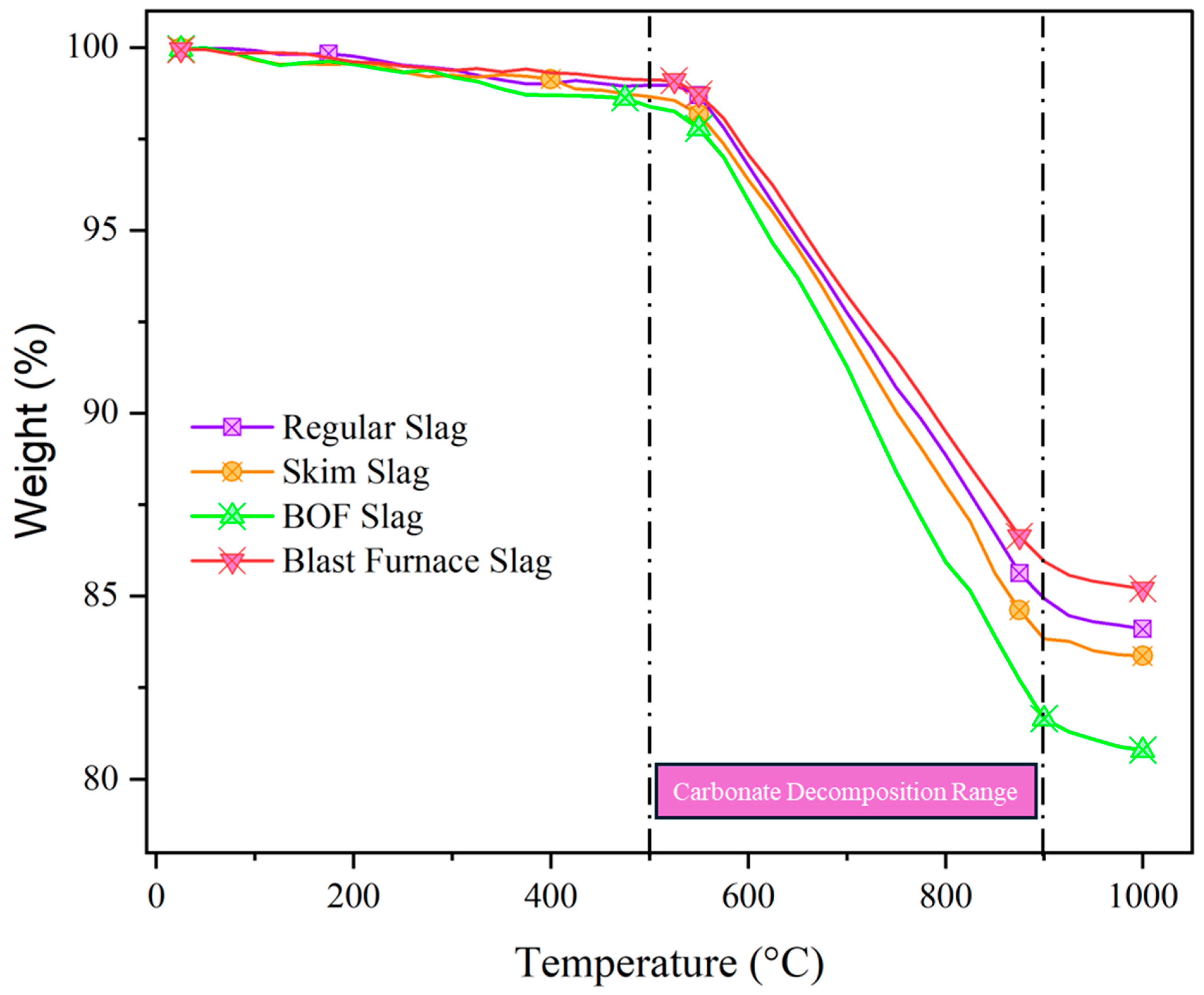
The TGA results shown in
Figure 5 clearly show a significant weight loss between 500 °C and 900 °C in the carbonated slag samples, corresponding to the decomposition of calcium carbonate [
35]. The uncarbonated slags remain thermally stable across the entire temperature range, confirming the absence of pre-existing carbonate phases. In contrast, carbonated samples exhibit distinct weight reductions, reflecting the amount of CO
2 chemically bound during the carbonation process.
Under the specific moisture-assisted pre-carbonation conditions employed in this study. BOF Slag exhibits the highest weight loss in the carbonate decomposition range, indicating the greatest CO2 uptake. This is followed by Skim Slag, then Rockport slag, while Blast Furnace Slag shows the least weight reduction. This ranking reflects relative carbonation efficiency under the controlled laboratory conditions used here and should not be directly extrapolated to other carbonation regimes or processing configurations. This order highlights variations in carbonation efficiency based on slag type and composition.
The thermogravimetric behavior observed in the carbonated slag samples reveals the extent of CO2 uptake through the formation of carbonate phases. The dominant mass loss occurring between 500 °C and 900 °C is associated with the thermal decomposition of CaCO3 into CaO and CO2. The uncarbonated slags show negligible weight change, confirming that carbonation was induced during treatment and not present initially.
BOF Slag demonstrates the highest CO
2 absorption due to its elevated content of free lime and other basic oxides, which actively participate in carbonation reactions. Its relatively crystalline structure also facilitates faster reaction kinetics compared to more vitrified materials [
36,
37]. Skim Slag and Rockport slag also contain reactive phases, but to a lesser extent, resulting in moderate CO
2 uptake. Blast Furnace Slag, being predominantly amorphous and low in free lime, exhibits the least carbonation reactivity, consistent with its minimal mass loss on heating.
Table 1 shows the calculated calcium carbonate and carbon dioxide uptake using Equations (1) and (2).
This trend emphasizes that chemical composition and mineralogy play a critical role in determining the carbonation potential of slag. Slags rich in CaO and MgO offer more reactive sites for carbonate formation, while amorphous, glassy slags limit CO2 uptake. The formation of carbonate compounds not only allows for permanent CO2 sequestration but also enhances the durability and chemical resistance of the material by refining the pore structure and blocking reactive sites.
While TGA quantifies CO2 uptake relative to the dry mass of slag aggregates, it is useful to translate this value into the corresponding carbon storage in mortar mixtures. In this study, slag aggregates replaced natural sand at a binder-to-aggregate ratio of 1:2. Based on the measured CO2 uptake values, the corresponding CO2 sequestration per kilogram of mortar can be estimated by considering the mass fraction of slag within the mixture. For example, assuming approximately 65–70% aggregate content by mass in mortar, and full replacement with carbonated slag, the effective CO2 stored in mortar corresponds to approximately 9–12% of total mortar mass, depending on slag type. This translates to roughly 90–120 kg of permanently bound CO2 per metric ton of carbonated mortar under the present laboratory conditions. These values represent chemically bound CO2 within stable carbonate phases and therefore constitute permanent mineral sequestration rather than temporary storage.
3.3. Compressive Strength Analysis
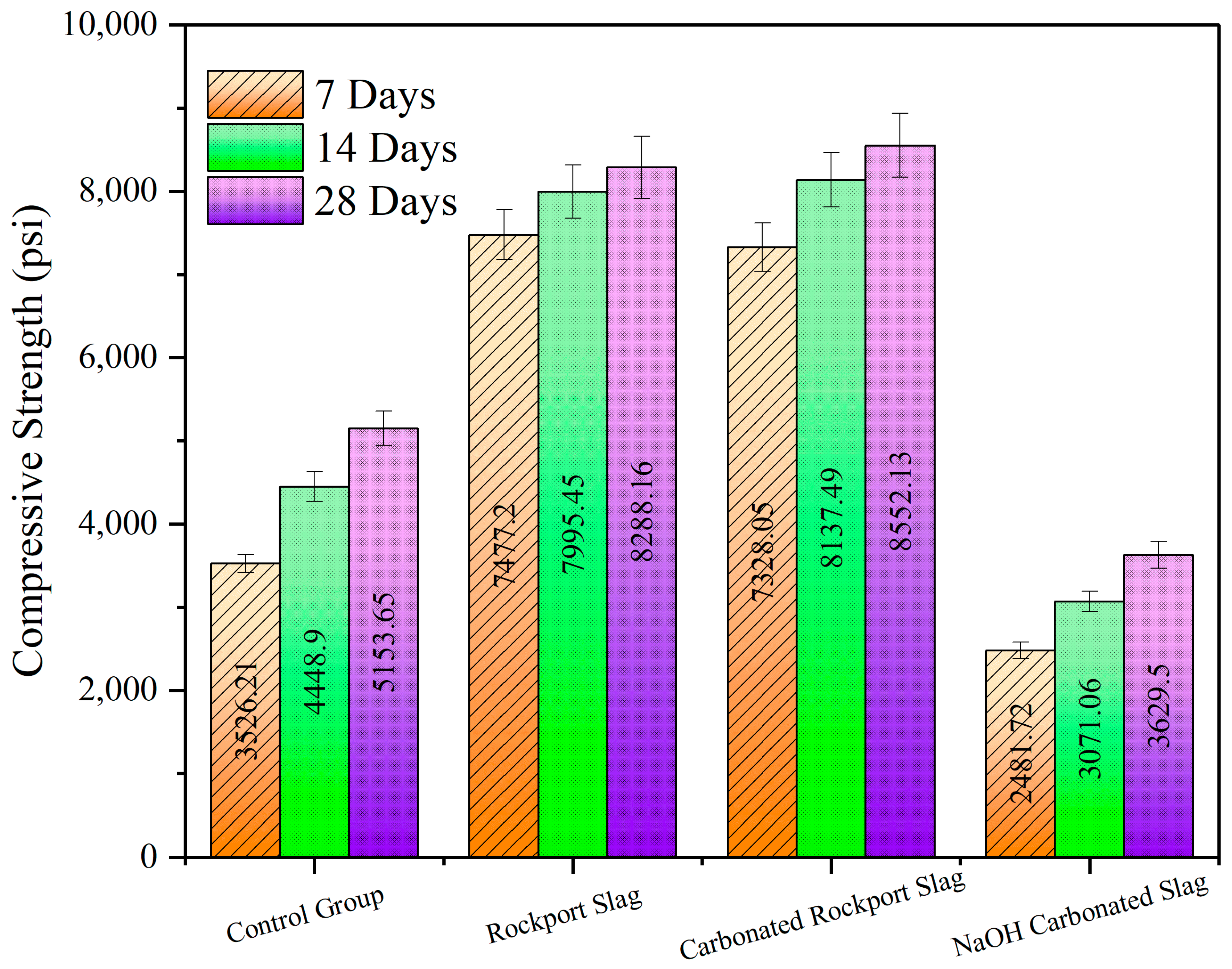
Figure 6 summarizes the compressive strength of mortar made of regular sand, Rockport slag, and Carbonated Rockport Slag at different curing ages. The results showed that mortar specimens made with both Rockport slag and Carbonated Rockport Slag achieved higher strength than the control group at all curing ages. It is noted that for one contrast group, Rockport slag was first alkali-activated using NaOH before carbonation (referred to in the manuscript as ‘NaOH Carbonated Slag’) to evaluate the effect of enhanced chemical activation on CO
2 uptake and mechanical performance. Although NaOH activation of slag aggregates increased CO
2 uptake, the corresponding mortar exhibited reduced compressive strength compared to those using non-activated carbonated slag. Alkali activation may accelerate dissolution of calcium phases, promoting rapid carbonate formation at the aggregate surface. However, excessive alkali exposure can also modify surface chemistry, create unstable reaction layers, or disrupt the balance between carbonation and subsequent cement hydration. Literature on alkali-activated systems indicates that high alkalinity may alter C-S-H structure, increase porosity under certain curing regimes, or induce microcracking due to rapid precipitation [
38,
39]. In the present study, the improved CO
2 uptake by slag aggregates yet reduced mechanical performance of mortar suggests that while chemical activation enhanced carbonation kinetics, it may have compromised interfacial bonding between C-S-H and aggregate or hydration compatibility within the cementitious matrix.
Mortars made of Carbonated Slag achieved the highest average strength at 28 days (8552.13 psi ≈ 59.0 MPa), indicative that carbonation helped to improve the long-term strength of mortar.
This improvement is attributed to the combined effects of slag hydration and carbonation-induced reactions. The inherent hydraulic activity of slag contributes to the formation of calcium silicate hydrate, while carbonation promotes the precipitation of calcium carbonate that refines pore structure and enhances matrix densification. Based on the current experimental evidence, including compressive strength, UPV, and SEM observations, the individual contributions of hydration and carbonation cannot be quantitatively separated. Accordingly, the mechanistic interpretation presented here remains qualitative, reflecting the coupled nature of hydration and carbonation processes under the conditions investigated. The control group, lacking pozzolanic or carbonation-driven reactions, showed the lowest strength, reflecting its reliance solely on cement hydration. In contrast, NaOH Carbonated Slag consistently displayed the lowest strengths among slag mixes, suggesting that the high alkalinity may have disrupted early hydration or inhibited stable C-S-H development. Although it showed strength gain over time, the overall performance remained limited, indicating that excessive chemical activation may compromise mechanical integrity under CO2 curing conditions.
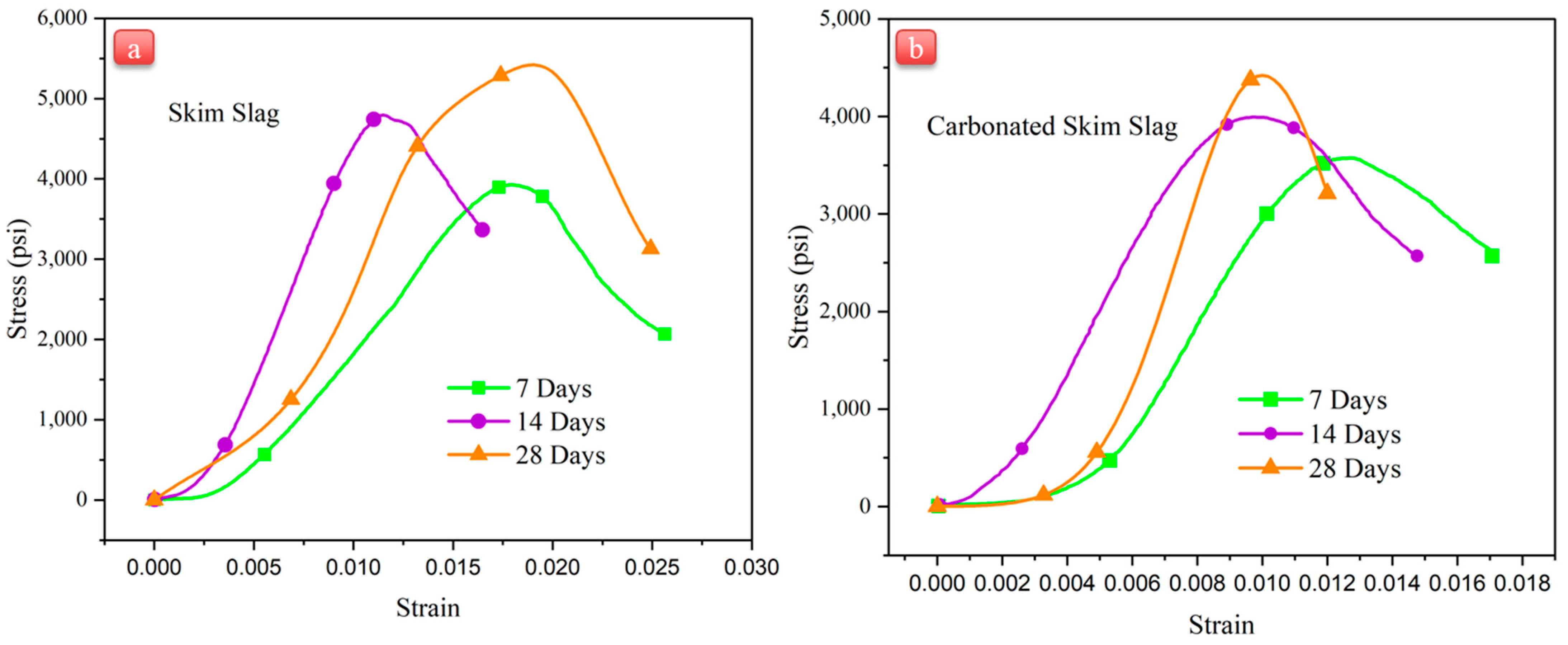
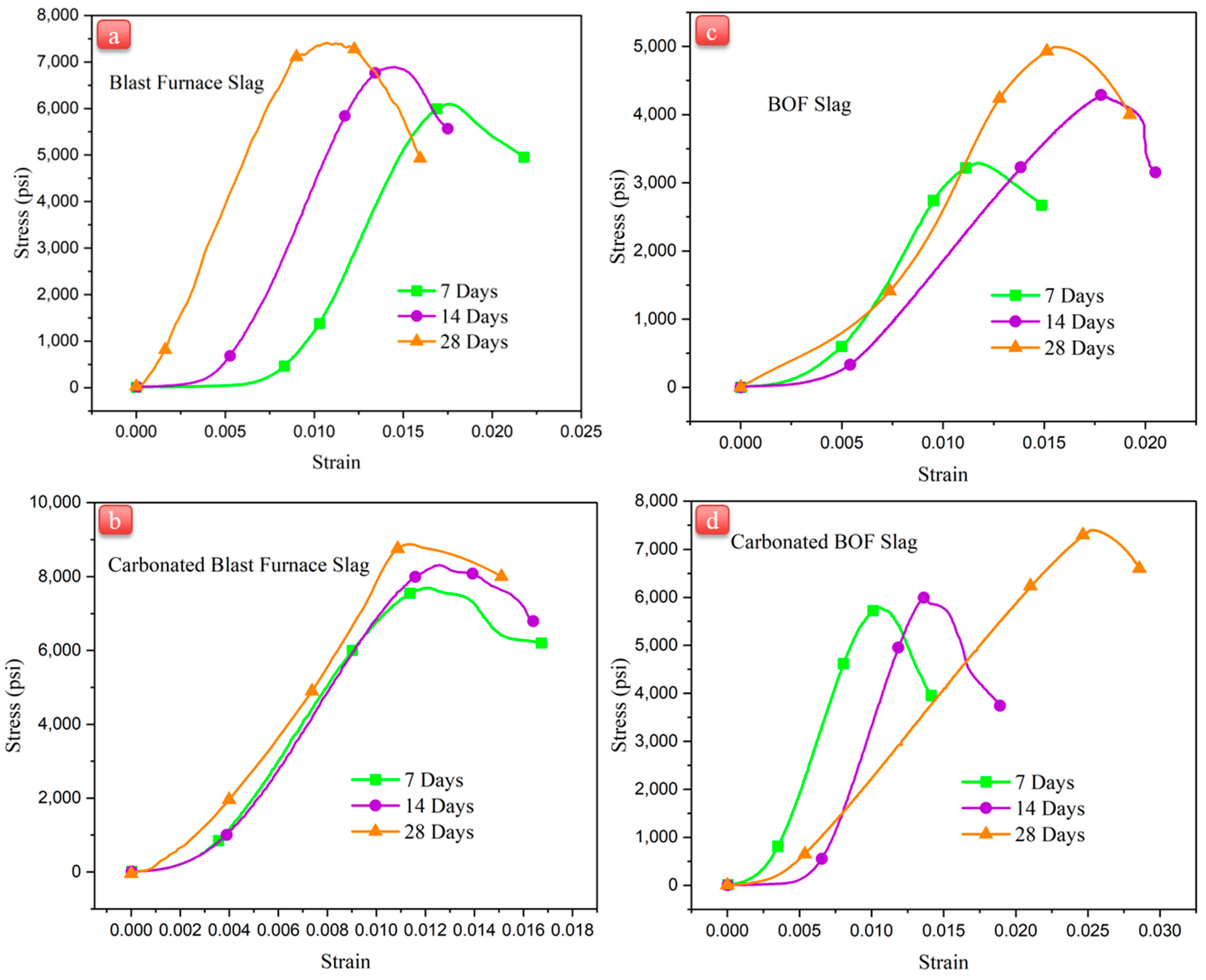
The stress-strain curves of mortar samples made with different types of slag show how their strength and ductility change over time with curing and carbonation, as shown in
Figure 7. Compared to samples without carbonation, the carbonated ones showed higher maximum strength and were also larger strain at peak stress, which mitigates the potential to crack under pressure.
The compressive strength results demonstrate that the effectiveness of carbonation varies significantly with slag type, largely influenced by chemical composition and mineralogical reactivity. Carbonated BFS achieved the highest strength among all mixes, reaching 8842.42 psi at 28 days, reflecting a 19% increase over its uncarbonated form. This gain is primarily due to the carbonation of calcium-bearing phases and the precipitation of CaCO
3 within pores, which densifies the microstructure and enhances load-bearing capacity. The vitrified nature of BFS allows for controlled carbonation without disrupting early hydration, promoting simultaneous strength gain and CO
2 sequestration [
40].
BOF Slag also showed considerable strength enhancement upon carbonation, increasing from 4991.21 to 7396.98 psi at 28 days. This can be attributed to its higher content of free CaO and MgO, which readily react with CO2 to form stable carbonate products. These reactions reduce porosity and refine the pore size distribution, improving mechanical performance. Moreover, the crystalline phases in BOF Slag facilitate carbonation without significantly hindering the hydration of clinker phases, enabling a synergistic contribution from both hydration and carbonation products.
Skim Slag displayed a reduction in compressive strength after carbonation at all curing intervals, as shown in
Figure 8. The carbonated mix peaked at only 4421.40 psi at 28 days, compared to 5328.41 psi in the uncarbonated sample. This reduction may result from the limited availability of reactive calcium phases in Skim Slag or premature carbonation of hydration products, which can impede further C-S-H development. Additionally, the formation of surface carbonates may block moisture ingress, reduce internal hydration, and lead to weaker, less cohesive binding phases.
These findings underscore that carbonation is most effective in slags with a balanced mineral composition, specifically those with sufficient free lime and latent hydraulic phases.
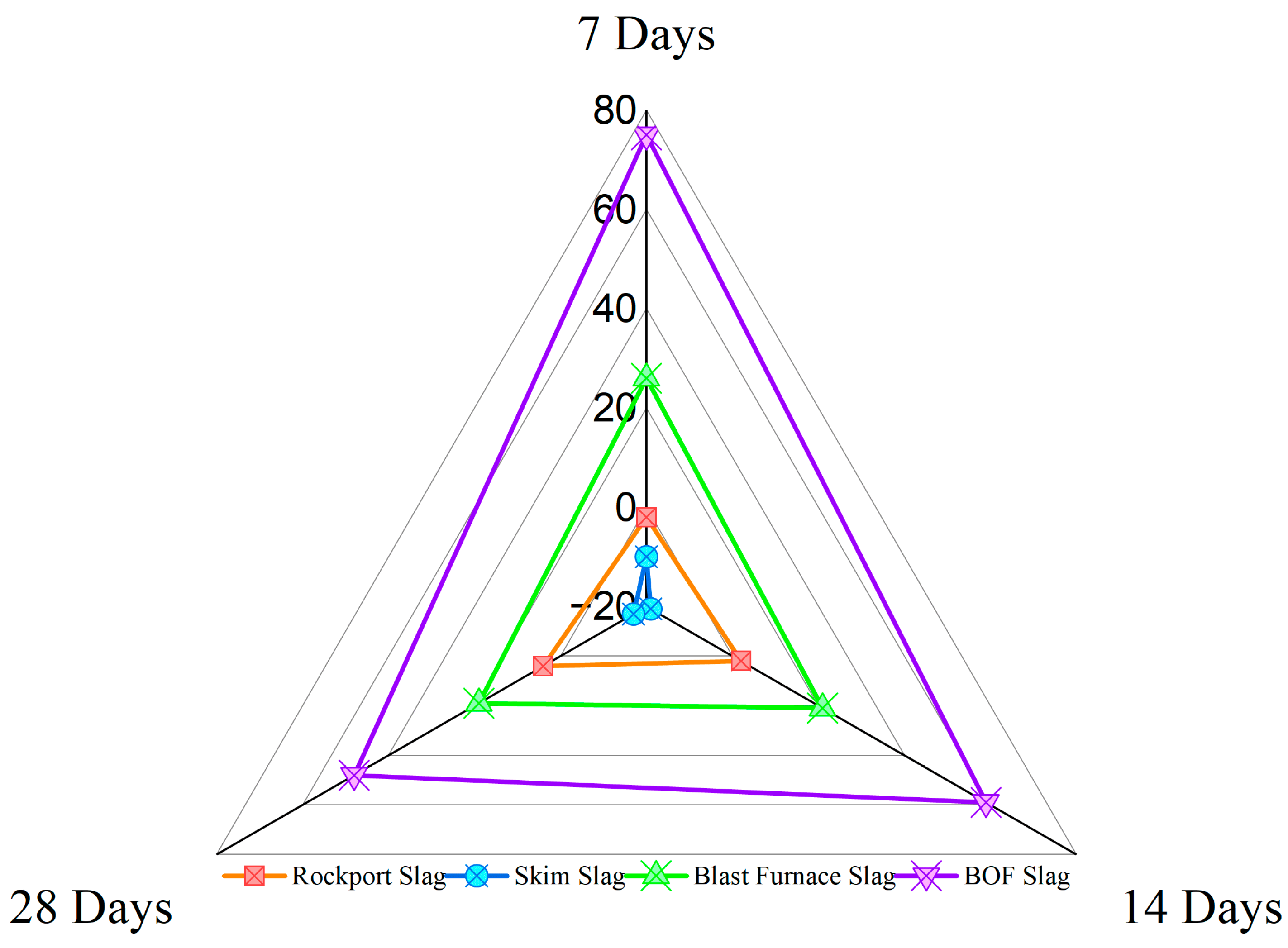
The graph in
Figure 9 summarizes the relative gain of compressive strength of mortar using carbonated slag versus uncarbonated slag. It shows that relative strength gain with carbonated slag is highest at 7 days for all slag types except Rockport slag, where the strength gain increases slightly with curing time. For BOF Slag, the gain is most pronounced, reaching over 75% at 7 days, but gradually declining to below 50% at 28 days. Blast Furnace Slag follows a similar pattern with moderate early gain (~27%) and a steady reduction over time. Skim Slag exhibits negative strength gain throughout, with the greatest reduction observed at 14 days. Rockport slag is the only material showing a marginal increase in strength benefit from carbonation with time, albeit remaining near neutral.
These trends are explained by the interplay between carbonation kinetics, slag reactivity, and hydration progression. In highly reactive slags like BOF and BFS, early carbonation leads to rapid formation of CaCO3, which fills pores and enhances early strength. However, this early densification can restrict moisture transport, limiting further hydration and secondary gel formation, thereby slowing down the marginal strength gain at later stages. The decline over time suggests that initial benefits of carbonation are not sustained unless supported by ongoing hydration, which becomes increasingly hindered, possibly as carbonation products block pore continuity for moisture transfer.
Skim slag exhibited lower carbonation efficiency and reduced mechanical performance after carbonation compared to other slag types. XRF results indicate that skim slag contains comparatively lower free CaO and a higher fraction of secondary phases relative to BOF and blast furnace slag. Lower availability of reactive calcium-bearing phases limits CaCO
3 precipitation during carbonation, reducing pore-filling efficiency. In addition, skim slags produced during secondary refining processes may contain elevated sulfur-bearing phases and complex oxides that can influence hydration and carbonation pathways. Previous studies have shown that slags with reduced basicity or higher sulfate-related phases may exhibit less efficient carbonation and altered hydration kinetics, which can negatively influence strength development [
41,
42].
3.4. Non-Destructive Testing
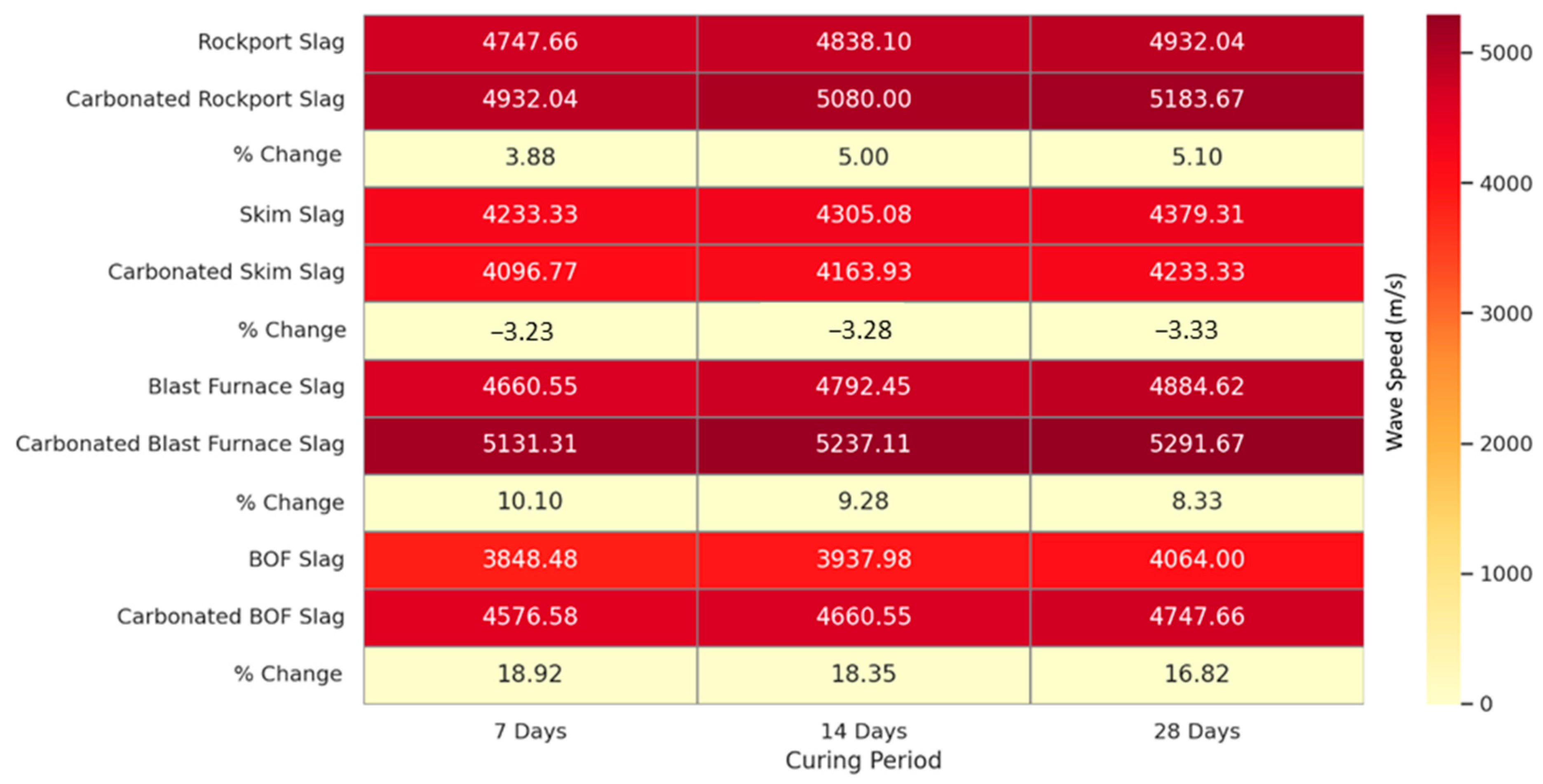
The UPV results shown in
Figure 10 reflect the differences in the internal quality and densification of mortar samples based on slag type and curing condition. In general, higher ultrasonic wave velocities correlate with improved material compactness, continuity, and mechanical performance.
It is noted that for three out of four types of slags studied, mortar made of carbonated slags improved the UPV of mortar at different curing ages compared with the use of the corresponding raw slag. This clearly demonstrates the benefits of carbonation to improve microstructure compactness, continuity, and mechanical performance. Mortar made of carbonated Skim Slag showed lower UPV compared with that made of raw Skim Slag, consistent with the lower compressive strength observed on this type of slag.
Among all samples, mortar made of Carbonated BFS showed the highest wave velocity across all curing periods, reaching 5291.67 m/s at 28 days, indicating a highly dense and uniform microstructure. This can be attributed to the formation of calcium carbonate within pore spaces during carbonation, which enhances stiffness and reduces voids. The steadily increasing values from 7 to 28 days further confirm progressive microstructural development and reduced porosity over time.
The mortar specimens made of Carbonated BOF Slag and Carbonated Skim Slag samples demonstrated moderate UPV values, indicating partial densification through carbonation. These values remained slightly lower than their uncarbonated counterparts, possibly due to incomplete carbonation or differences in mineral composition affecting CO2 uptake efficiency.
For reference, the Rockport Slag and Carbonated Slag groups also maintained high velocities, showing that slag-rich systems develop compact matrices over time even without specialized curing protocols.
The UPV trends confirm that carbonation improves microstructural integrity, particularly in slags with high CaO content. The effectiveness, however, varies with slag type, as mineralogy and reactivity govern the extent of CaCO3 formation and the resulting wave propagation characteristics. The findings align well with compressive strength results, reinforcing the reliability of UPV as a nondestructive indicator of mechanical performance in carbonated cementitious materials.
3.5. Effect of Freeze and Thaw Cycles on UPV
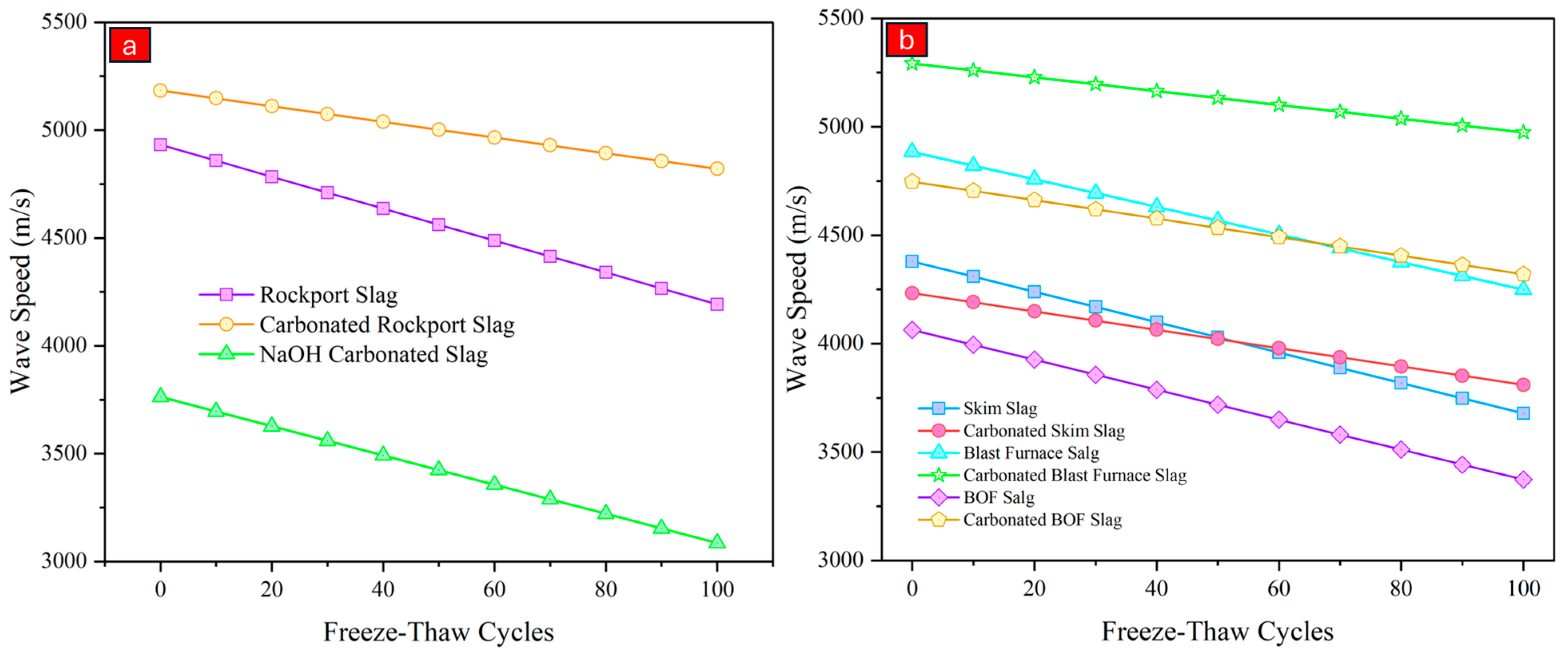
The freeze-thaw resistance of mortar samples was assessed by measuring UPV over 100 cycles.
Figure 11a,b capture the degradation patterns across various slag-based mixes. The UPV reduction with increasing cycles reflects progressive internal damage and microcracking induced by thermal stress and freeze-thaw action.
In
Figure 11a, mortar specimens made of Rockport Slag and NaOH Carbonated Slag exhibited the most significant UPV deterioration. UPV of mortar made of NaOH-activated slags declined from 3762.96 m/s to 3085.63 m/s after 100 cycles, highlighting their lower durability due to potential pore disruption from alkali activation. This indicates enhanced freeze-thaw durability due to the pore refinement effect and denser microstructure induced by carbonation, suggesting carbonation helped to improve long-term durability under cyclic freeze-thaw environmental loading.
Figure 11b further confirms this trend. Among the six types of mortar, mortar made of Carbonated Blast Furnace Slag and Carbonated BOF Slag retained the highest UPV values after 100 cycles. These specimens made of carbonated slag displayed minimal losses of UPV compared to their uncarbonated counterparts. Mortar made of BOF Slag showed a rapid decline of UPV from 4064 m/s to 3373.12 m/s, whereas mortar made of carbonated BOF slag experienced a more gradual drop. Similarly, mortar made of Carbonated Skim Slag outperformed that by Skim Slag, underscoring the role of carbonation in enhancing matrix stability under freeze-thaw cycles.
All results show a consistent pattern, indicating that carbonation leads to better freeze-thaw stability under the present test conditions by reducing porosity, increasing matrix cohesion, and limiting moisture ingress. Carbonated samples across all slag types consistently demonstrated improved retention of UPV, indicative of higher durability under freeze-thaw cycles.
3.6. Microstructure Analyses
It is important to note that SEM observations presented in this study are qualitative and primarily morphological in nature. Phase identification is inferred based on characteristic morphology, known reaction pathways, and consistency with TGA and compositional data.
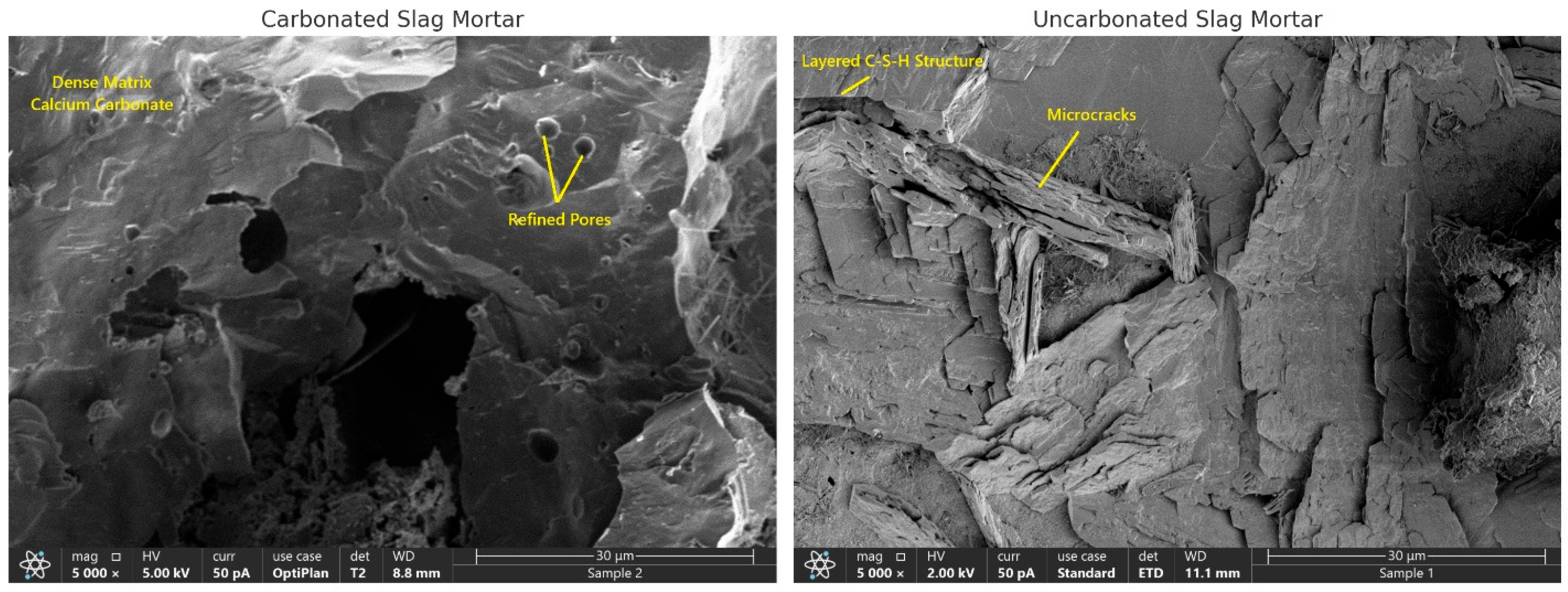
The SEM analysis shown in
Figure 12 provides direct insight into the morphological changes induced by carbonation in slag mortar systems. The microstructure of the uncarbonated slag mortar displays a porous, discontinuous matrix characterized by layered calcium silicate hydrate (C-S-H) formations, angular unreacted slag particles, and a network of microcracks and capillary voids. These features suggest a relatively early stage of hydration, with poor matrix densification and weak interparticle bonding. The abundance of open pores and microcracks compromises the continuity of the load-bearing network, which is consistent with the lower compressive strength observed in the corresponding mechanical tests.
The carbonated slag mortar exhibits a refined and compact microstructure, marked by the formation of dense calcium carbonate (CaCO3) deposits that occupy void spaces and line the surfaces of hydration products. These carbonate formations result from the reaction between CO2 and calcium hydroxide (Ca(OH)2), as well as other reactive alkaline phases in the slag. The precipitated CaCO3 contributes to pore filling and improves microstructural integrity by reducing capillary porosity and minimizing the presence of microcracks. The SEM image reveals a uniform matrix with fewer voids and smoother interfaces, suggesting enhanced particle packing and matrix continuity.
The observed microstructural differences align with the mechanical performance trends in the study. The carbonated sample’s densified microstructure explains the higher early-age compressive strength, as reduced porosity and better contact between particles promote more effective load transfer. Additionally, carbonation enhances dimensional stability and restricts crack propagation by sealing microstructural discontinuities. However, the formation of a dense carbonate layer may limit further hydration by impeding moisture ingress, particularly in low water-to-cement ratio systems. This can result in a plateau in strength development at later ages if internal hydration is not sustained.
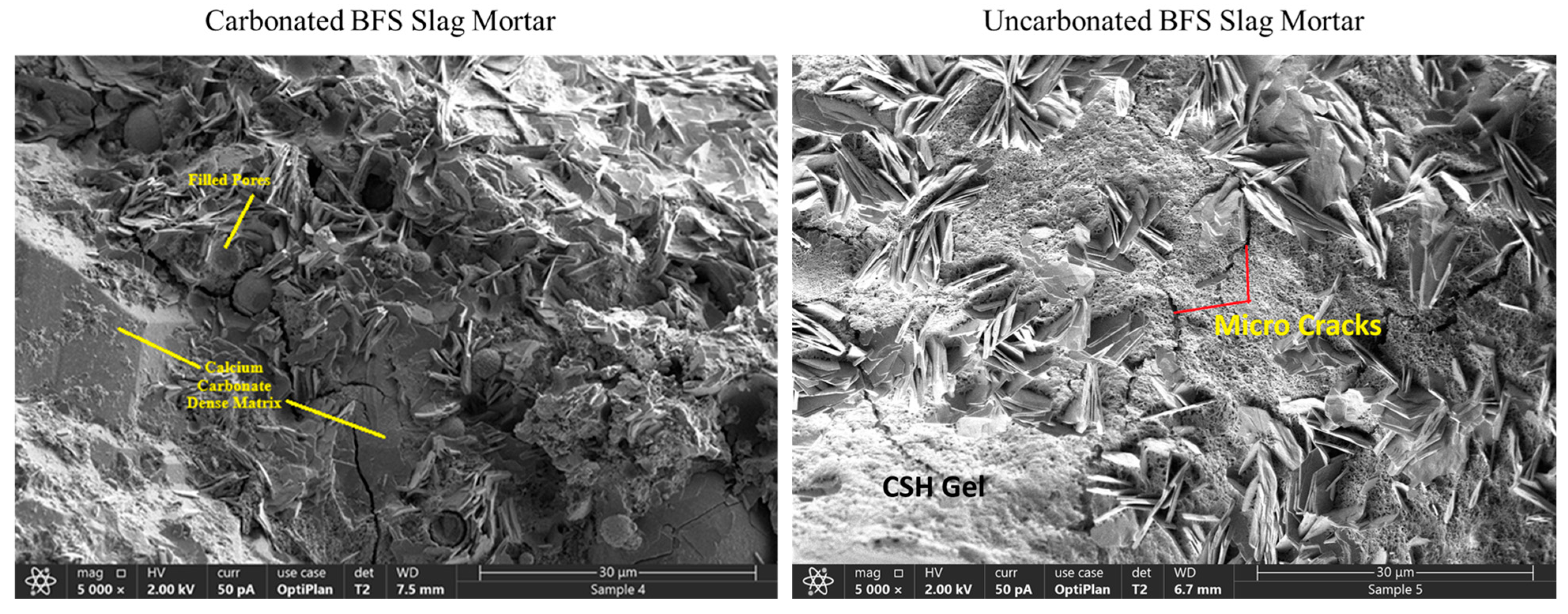
The SEM analysis of the carbonated BFS mortar shown in
Figure 13 reveals a markedly denser and more refined microstructure compared to the uncarbonated sample. The matrix appears more compact, with visible calcium carbonate crystals deposited within former pore spaces and along hydration product surfaces. These formations result from the reaction of CO
2 with calcium hydroxide and other alkaline species in the slag matrix. Several pores appear partially or are filled with carbonates, indicating effective carbonation-induced densification.
In contrast, the uncarbonated BFS mortar displayed a more porous microstructure, with unreacted slag grains, irregular C-S-H gels, and open voids, reflecting slower hydration and less microstructural cohesion. The lack of carbonate formation in this sample leaves the pore network more interconnected, contributing to lower mechanical strength.
The enhanced microstructural development in the carbonated BFS sample correlates with improved compressive strength performance observed experimentally. The densification due to carbonate precipitation not only improves load distribution but also restricts microcrack formation. However, it is important to balance this with sufficient internal moisture to maintain long-term hydration. These findings confirm that carbonation can significantly enhance the early-age microstructure and strength of BFS mortars.
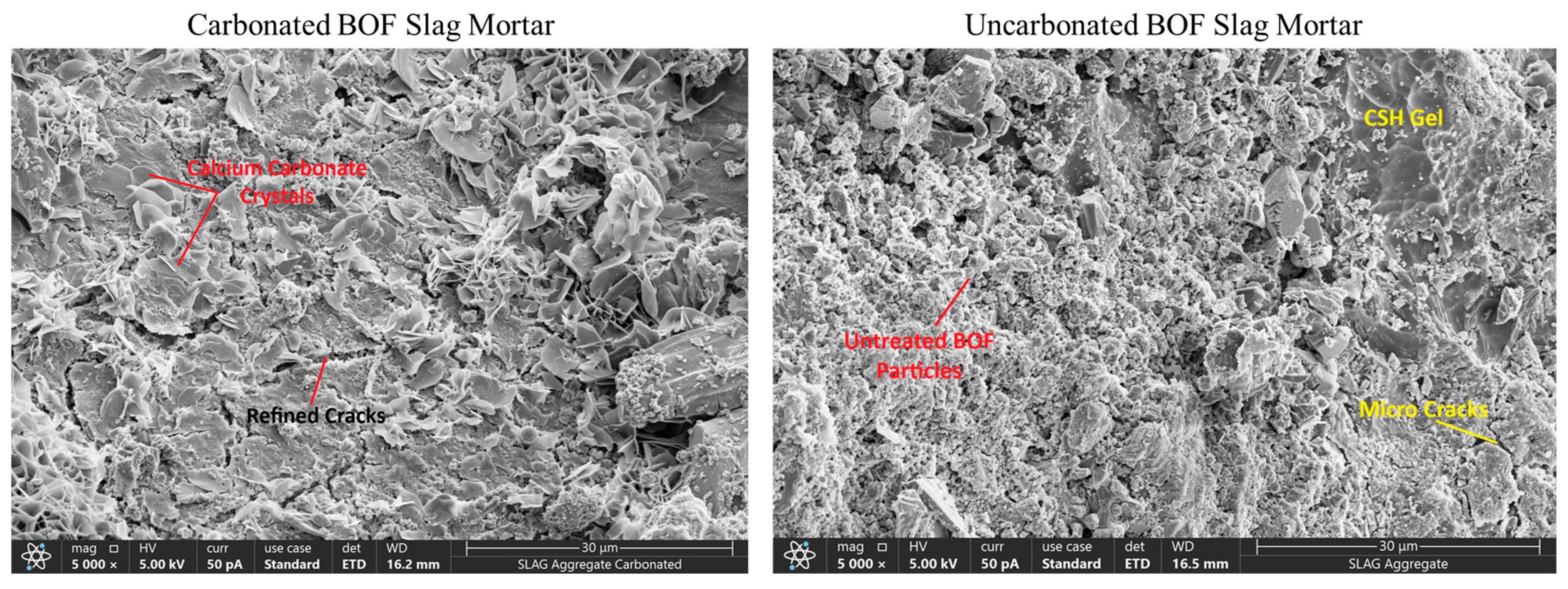
The SEM analysis of the uncarbonated BOF slag mortar shown in
Figure 14 reveals a heterogeneous microstructure with loosely packed hydration products and unreacted BOF particles embedded in a relatively porous matrix. The C-S-H gel appears irregular and poorly developed, indicating limited activation of the BOF slag. The presence of numerous open pores and interfacial gaps further reflects incomplete hydration and a discontinuous binder network, which contributes to the lower mechanical performance observed in the corresponding compressive strength tests.
In contrast, the carbonated BOF slag mortar exhibits a denser and more homogeneous microstructure, marked by the presence of a continuous carbonate layer formed through the reaction of CO2 with available calcium-bearing phases. These carbonate formations, visible as fine crystalline deposits, fill capillary pores and refine the matrix, resulting in fewer voids and a compact binder structure. The densified matrix supports the improved compressive strength seen in the carbonated sample, especially at early curing stages.
The improved microstructure in the carbonated sample can be attributed to the high reactivity of BOF slag, which contains abundant free CaO and MgO. These components rapidly react with CO2 to form stable carbonates, effectively sealing the pore network and enhancing particle bonding. This densification leads to enhanced mechanical performance and potentially improved durability.
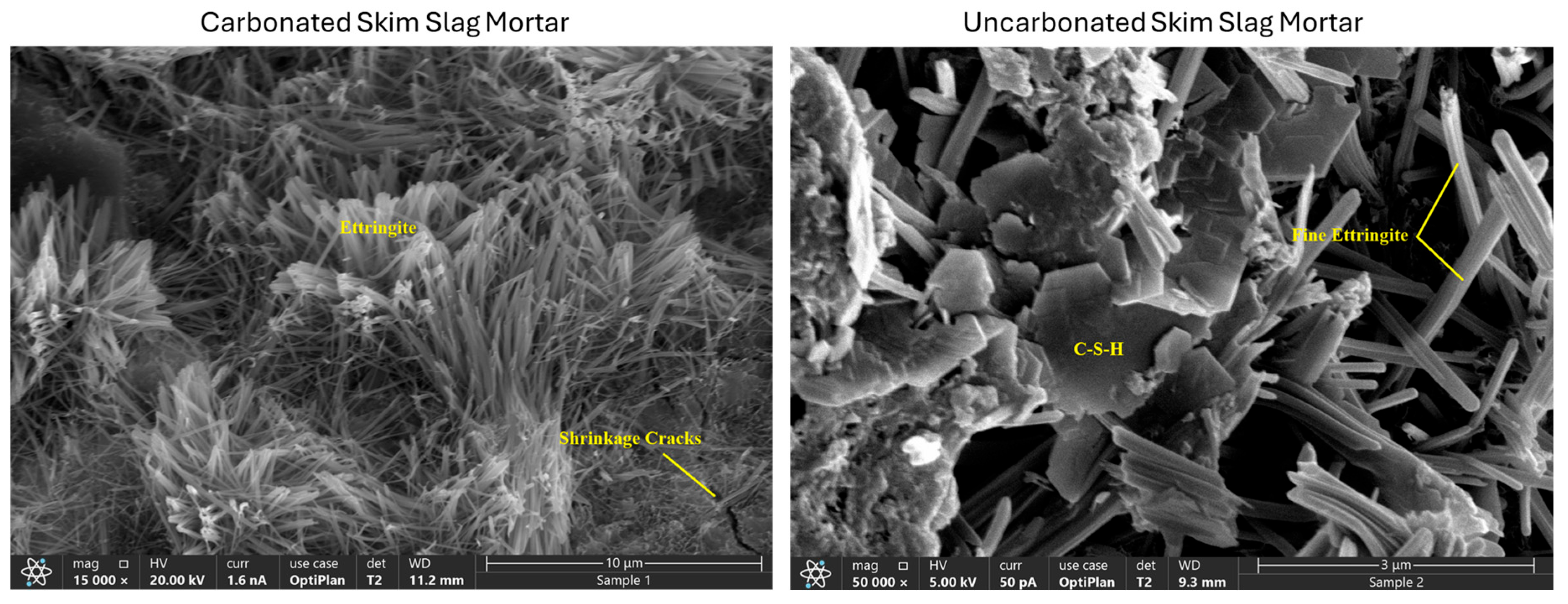
The microstructural analysis of skim slag mortar samples, shown in
Figure 15, provides insight into the unexpected drop in strength observed after carbonation. In the carbonated sample, a large amount of needle-like ettringite crystals was seen, which typically form in the early stages of hydration. While some ettringite can help fill pores and improve strength, excessive formation can be harmful. It may block further hydration, create internal stresses, or lead to weak bonding within the matrix. This seems to be the case here, where carbonation promoted surface reactions but limited deeper hydration, resulting in a less dense structure and lower compressive strength.
In contrast, the uncarbonated sample showed a more uniform microstructure with well-developed C-S-H gel and fewer ettringite crystals. This balanced hydration led to a denser and stronger matrix. These observations suggest that carbonation did not benefit skim slag as it did for other types of slag used in this study. Instead, it caused premature reactions that negatively impacted the mortar’s mechanical performance.
The SEM observations presented in this study are intended to provide qualitative insight into carbonation-induced microstructural changes, including pore filling, matrix densification, and interfacial transition zone refinement. Quantitative image-based metrics such as porosity or pore size distribution were not extracted from the SEM images, as the analyzed fields of view are not statistically representative of the bulk material. Instead, microstructural refinement is supported by independent quantitative indicators, including increases in compressive strength, ultrasonic pulse velocity, and improved durability performance, which collectively reflect reduced porosity and enhanced matrix continuity. Future studies incorporating quantitative image analysis or three-dimensional techniques could further refine pore-scale characterization.
3.7. Mechanistic Framework Linking Slag Chemistry, Carbonation, and Mortar Performance
The collective results of this study support a unified framework linking slag composition, carbonation behavior, microstructural evolution, engineering performance, and carbon sequestration potential. This framework explains why carbonation improves performance in some slags while offering limited or adverse effects in others. Slag chemistry controls the initial carbonation response. Slags rich in calcium oxide and magnesium oxide provide readily available alkaline phases that react efficiently with carbon dioxide. In contrast, slags with lower basicity or high sulfate content show limited carbonation efficiency or undesirable secondary reactions. The balance between reactive phases and inert glassy components, therefore, controls the extent and rate of carbonation. Carbonation kinetics are strongly influenced by phase accessibility and pore connectivity within the slag particles. Slags with open pore networks and accessible calcium bearing phases allow deeper penetration of carbon dioxide and more uniform carbonate formation. The moisture assisted carbonation conditions used in this study promote ion transport and gas diffusion without disrupting subsequent cement hydration, allowing carbonation to proceed primarily within aggregate pores and near the aggregate surface. The morphology and distribution of carbonate products play a critical role in microstructural development. In BOF and blast furnace slags, carbonation leads to finely distributed calcium carbonate that fills internal pores and coats aggregate surface. These carbonate deposits refine the pore structure and improve particle packing without forming a continuous barrier that would inhibit hydration. In contrast, skim slag shows evidence of less favorable reaction pathways, including excessive formation of sulfate related phases, which limit beneficial carbonate precipitation and disrupt matrix continuity. Interfacial transition zone densification emerges as a key outcome of aggregate pre carbonation. Carbonate formation within aggregate pores and at the aggregate paste interface enhances mechanical interlock and reduces microstructural discontinuities. This improved interface facilitates more efficient stress transfer and reduces pathways for moisture ingress, directly contributing to higher compressive strength, improved ultrasonic pulse velocity, and enhanced resistance to chemical and freeze thaw damage. These structure driven improvements translate into measurable gains in strength and durability while simultaneously enabling permanent carbon storage. The carbon dioxide consumed during aggregate carbonation is chemically bound as stable carbonate phases, ensuring long term sequestration. Importantly, these performance benefits are achieved without altering curing conditions or compromising cement hydration, distinguishing aggregate pre carbonation from conventional carbonation curing approaches.
Mineralogical changes associated with carbonation were evaluated using complementary characterization techniques. Thermogravimetric analysis quantified carbonate formation through characteristic mass loss in the CaCO3 decomposition temperature range, while scanning electron microscopy revealed pore filling and interfacial densification consistent with carbonate precipitation within slag particles and at the aggregate paste interface. When combined with systematic trends in compressive strength, ultrasonic pulse velocity, and durability indicators, these observations provide coherent support for the proposed carbonation mechanisms governing performance enhancement. Further phase-level refinement using diffraction-based techniques could complement these findings in future studies, but the evidence presented here is sufficient to support the comparative assessment and main conclusions of this work.
The proposed framework demonstrates that aggregate pre carbonation functions as an upstream material engineering strategy in which slag chemistry dictates carbonation behavior, carbonation controls microstructure, and microstructure governs both mechanical performance and carbon sequestration efficiency. This integrated understanding provides a clear basis for selecting suitable slag types and tailoring carbonation protocols to maximize both structural and environmental benefits.
4. General Discussion and Implications
The findings of this study indicate that aggregate pre-carbonation offers a practical route to combine material performance enhancement with permanent carbon storage. By localizing carbonation within slag aggregates before mixing, the process improves pore structure and interfacial bonding without interfering with cement hydration or conventional curing practices. This distinguishes aggregate pre-carbonation from carbonation curing of finished elements, where strength development and durability can be sensitive to curing conditions.
Beyond laboratory performance, the approach is well suited for scale-up because it can be implemented at the aggregate processing stage using short treatment times, moderate pressures, and ambient temperatures. Slag aggregates are already handled in bulk form, making carbonation compatible with existing material logistics and quality control practices. These features aggregate pre-carbonation as a realistic upstream strategy for carbon capture and utilization within the construction materials supply chain.
On a larger scale of implementation, the potential benefits are significant. The global steel industry produces about 500 million tons of slag each year. Based on our experimental findings, carbonated slag aggregates can sequester approximately 14–19% CO2 of their weight, as determined by TGA analysis. If 25% of slag produced annually is used in concrete and subjected to the proposed carbonation treatment, an estimated 17.5–23.75 million tons of CO2 could be stored each year. This amount is equivalent to removing over 5 million cars from the road or planting more than one billion trees annually, highlighting the significant carbon mitigation potential of this approach in the construction sector.
This method is also environmentally friendly. The carbonation process doesn’t need extra heat or energy, and it avoids the environmental and financial burden of disposing of slag in landfills. The amount of CO2 captured is much more than what’s emitted during processing, making it a highly efficient solution.
From a policy and business angle, this technology fits well with green building programs, carbon credit systems, and sustainability standards. Carbonated slag can be tested for compliance with industry norms like ASTM and CEN, making it ready for use in real construction projects. With proper verification, it may even qualify for carbon credits.
It is noted that the success of carbonation depends on the type of slag. Three of the four slags studied in this program showed improved engineering performance with carbonation. Skim Slag, however, showed less improvement. While the high content of sulfate in Skim Slag might cause the observed behaviors, detailed mechanisms require further investigation. Also, it is desirable to assess the long-term performance of carbonated slag in real-world conditions, such as freeze-thaw resistance or environmental durability. Future research on full life cycle assessment and larger-scale testing will also be helpful for carbonated slag to realize the dual benefits of carbon sequestration and durable construction materials.
From a practical perspective, the translation of aggregate pre-carbonation to industrial scale presents several challenges. These include achieving uniform moisture distribution in large aggregate volumes, ensuring consistent CO2 exposure and reaction uniformity, managing pressure and residence time in continuous or semi-continuous reactors, and integrating carbonation steps into existing aggregate processing workflows. Energy demand associated with gas handling and material drying also requires careful optimization to ensure net environmental benefit. Addressing these challenges will be critical for scaling aggregate carbonation beyond laboratory conditions.
In terms of carbon utilization efficiency, aggregate pre-carbonation should be viewed as a complementary strategy within the broader portfolio of CO2 management approaches. While the absolute CO2 uptake per unit mass may be lower than that of some chemical conversion or geological storage pathways, mineral carbonation offers a permanent, leakage-resistant sink embedded directly within construction materials. Compared with utilization routes that rely on long-term product stability or downstream processing, aggregate carbonation provides durable sequestration coupled with tangible improvements in material performance, highlighting its value as a dual-function decarbonization strategy rather than a stand-alone CO2 mitigation solution.