Article

Diverging Priorities in Multi-Level Governance: Empirical Evidence from China’s Electricity Market Reforms (1985–2023)


1
Business School, Zhengzhou University, Zhengzhou 450001, China
2
School of Management, Zhengzhou University, Zhengzhou 450001, China
3
School of Economics, Zhengzhou University of Aeronautics, Zhengzhou 450015, China
*
Author to whom correspondence should be addressed.
Sustainability 2026, 18(5), 2286; https://doi.org/10.3390/su18052286
Submission received: 27 January 2026 / Revised: 24 February 2026 / Accepted: 24 February 2026 / Published: 27 February 2026
(This article belongs to the Section Development Goals towards Sustainability)

Abstract

China’s electricity market reform has unfolded over several decades within a complex multi-level governance system involving both central and provincial governments. Although prior studies recognize that central–local interactions shape the direction and pace of reform, systematic evidence is limited on whether policy priorities have evolved coherently or diverged across time and regions. To address this gap, we apply the Structural Topic Model (STM) to 13,234 policy documents issued between 1985 and 2023 to identify three core reform agendas and quantify the temporal and spatial evolution of policy attention. Results show that (1) price marketization (P) consistently dominates the central government’s reform agenda, reflecting a long-standing emphasis on market efficiency and institutional restructuring; (2) provincial governments allocate relatively more attention to low-carbon transition (L), often alongside reduced emphasis on price marketization (P), indicating a structured reweighting of priorities across governance levels; (3) comparisons across eight major regulatory zones reveal pronounced spatial heterogeneity: resource-dependent regions emphasize market and pricing reform, renewable-rich areas prioritize low-carbon development, and economically advanced coastal regions focus on service improvement and regulatory modernization. These findings provide systematic empirical evidence that policy coherence in China’s multi-level governance system is dynamic rather than static. Central–local divergence is best interpreted not as policy noncompliance but as structured regional differentiation and adaptive governance in reform implementation.

1. Introduction

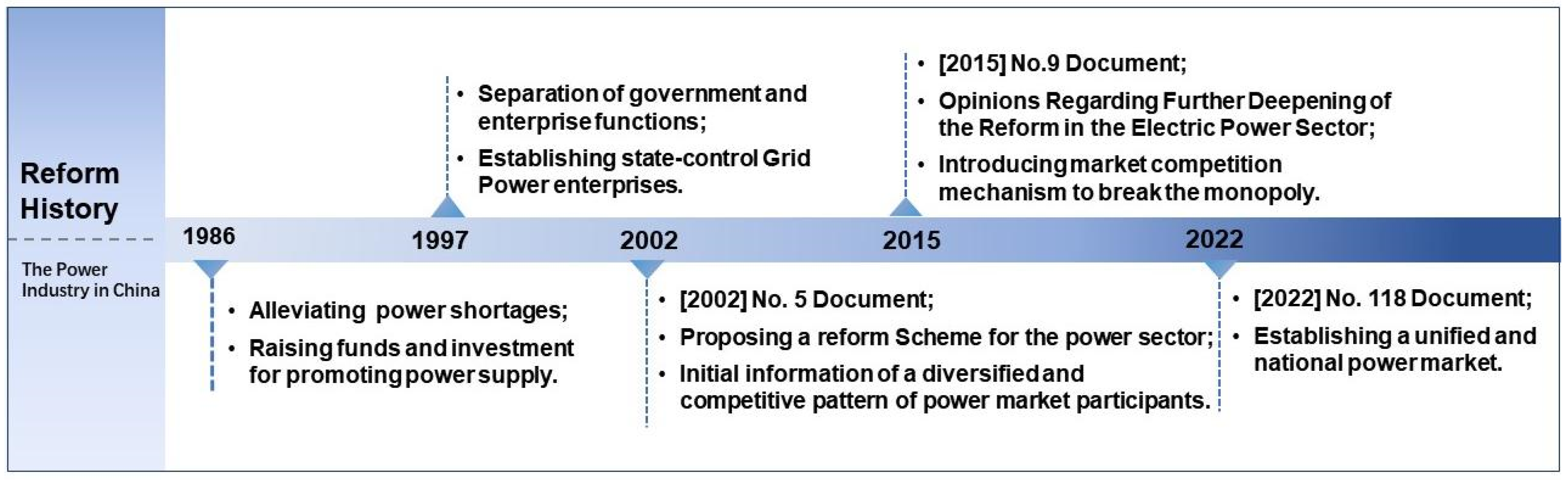
Over the past four decades, China has implemented a series of reform measures in the electricity sector. The reform process has combined restructuring, regulation, commercialization, and privatization. As shown in Figure 1, the central government has introduced several landmark policies, ranging from opening public fundraising and investment in 1986 to separating enterprise and government functions in 1997, introducing competition through Document No. 5 in 2002, further market liberalization via Document No. 9 in 2015, and most recently, promoting a unified national electricity market in 2022. Today, China’s electricity market is one of the largest in the world and is expected to account for approximately 30% of global electricity consumption by 2035 [1]. The energy composition of Chinese electricity production and consumption has also shifted significantly, with renewable energy experiencing explosive growth [2,3]. More importantly, the idea of a competitive, market-based electricity sector has gained increasing acceptance among policymakers [4]. Such achievements would not have been feasible without sustained and iterative reform efforts.
Despite notable achievements, reform has advanced relatively slowly [5,6,7] and at times appeared to stall [8]. Persistent governance and structural bottlenecks are widely noted [9,10], with China’s multi-level governance structure often linked to central–local tensions and fragmented implementation [11,12]. The central government typically leads policy design and sets strategic direction, while provincial governments handle implementation and enforcement [13]. Consequently, major reform measures, such as restructuring, regulation, commercialization, and privatization, are framed by broad central guidelines, with many details of planning and execution delegated to provinces [12].
In practice, tensions and inconsistencies across government levels are widely observed [11,14,15,16]. Power and interest conflicts arise not only between the center and the provinces, but also among other stakeholders, including electricity companies and the private sector [15,17]. These interactions give rise to what some scholars term local implementation bias and fragmented policy execution, which in turn undermine the coherence and effectiveness of national reform initiatives [12]. Against this backdrop, entrenched interests, the dominance of state-owned enterprises, and fragmented regulatory authority have further complicated the reform landscape [18]. As a result, mismatches between policy design and on-the-ground implementation may limit market competition, weaken regulatory oversight, and slow progress toward key reform goals.
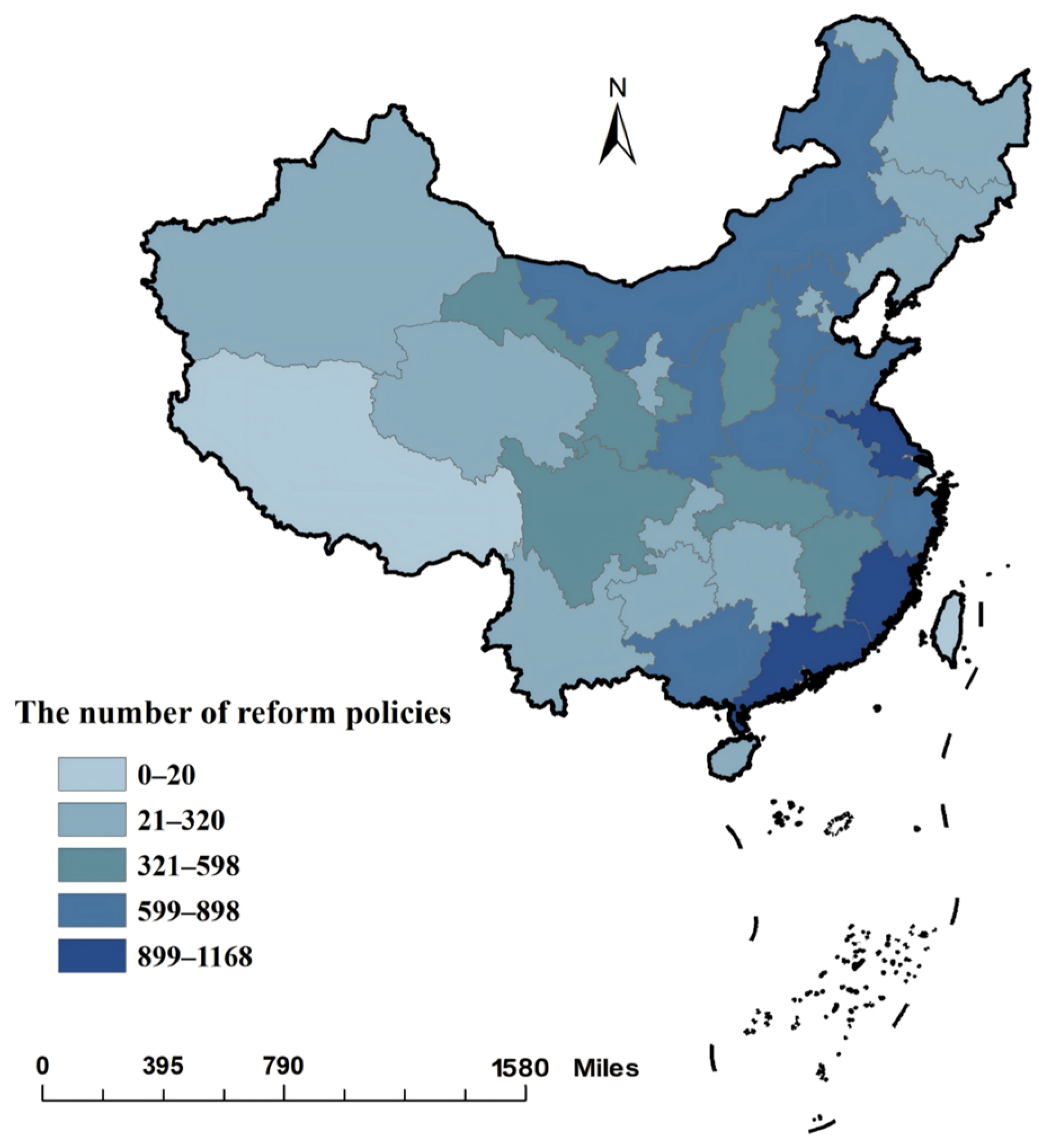
Building on these central–local tensions and implementation frictions, understanding how the center and provinces interact, particularly in agenda-setting and enforcement, is a critical dimension of China’s energy governance. Multiple waves of reform have produced a complex multi-level governance regime spanning national and regional authorities [4]. As Figure 2 shows, provinces have issued markedly different numbers of electricity sector reform policies since 1985. This dispersion signals heterogeneous policy activity and raises questions about whether policy attention is allocated similarly across governance levels. These patterns underscore the need for a content-based assessment of whether policy attention is allocated similarly across governance levels, how any attention gaps evolve over time, and where they are most pronounced.
Scholars have increasingly emphasized intergovernmental coordination and policy coherence [19,20]. The Open Method of Coordination has been proposed as a governance mechanism to enhance integration [21] and related theoretical frameworks have been developed to specify conditions and dimensions for achieving policy alignment [20,22]. Yet the electricity reform literature has not matched this conceptual development with systematic empirical tests: few studies directly compare the agenda-setting tendencies of central and provincial governments in China’s power sector reform, leaving it unclear whether provincial priorities track central agendas or diverge in systematic ways across time and regions. Therefore, this paper aims to explore three linked questions:
  • RQ1: Do central and provincial governments allocate policy attention differently across key reform agendas?
  • RQ2: How do central–provincial attention gaps evolve over time across reform waves?
  • RQ3: Do these patterns vary systematically across regulatory regions with different resource endowments and development conditions?
To address these questions, this study analyzes a longitudinal corpus of 13,234 policy documents issued by central and provincial governments between 1985 and 2023, using a machine-learning-based Structural Topic Model (STM). Treating latent topics as proxies for policy attention, the study first examines the extent to which central and provincial governments differ in their attention to three key reform agendas—price marketization (P), service improvement (S), and low-carbon transition (L). Together, these agendas form the PSL framework, a unified triadic conceptual model that organizes electricity reform priorities into three jointly exhaustive yet competing objectives and provides an organizing structure for translating topic-model estimates of policy attention into a comparable agenda space across government levels, regions, and time. Then it organizes provinces into eight regulatory regions defined by geographic proximity and resource similarity to examine how reform priorities vary spatially. Finally, by tracking the evolution of regional attention at the level of STM-estimated topic shares, the study uncovers time-resolved patterns of reform prioritization that reflect localized adaptations to development constraints and resource endowments and, in return, reveal central–local differences in agenda setting.
This study contributes in three ways. First, drawing on a structured and multi-level perspective, this paper incorporates central–provincial policy issuers, key reform agendas, and regulatory regions into a unified analytical framework. This framework consolidates fragmented signals in government documents into a time-resolved evolution map of policy attention and enables systematic comparison across governments, years and regions. Second, building on this design, this study offers empirical evidence on central–provincial divergence by identifying when and where policy priorities differ and by documenting how these divergences coevolve systematically with provincial resource endowments and developmental conditions. In doing so, it elevates the debate from speculative reasoning to evidence-based assessment. Third, the study specifies a transparent research protocol, covering corpus construction and inclusion criteria, the basis for delineating regulatory regions, and the categorization of core reform agendas and their associated topics. This protocol provides a foundation for subsequent causal analyses on the drivers and consequences of policy attention divergence for China’s electricity market reform performance.
The remainder of this paper is structured as follows. Section 2 reviews the relevant literature on electricity sector reform in China and the application of the Structural Topic Model (STM) in policy attention research. Section 3 analyzes the theoretical foundation and proposes research hypotheses. Section 4 outlines the research methodology, including the research design, material collection, and the application of the STM for topic modeling and interpretation. Section 5 presents the empirical results and discusses the evolution and alignment of policy attention at government levels. Section 6 provides further analysis of regional variations in policy attention, examining the divergence in reform priorities across regions. Finally, Section 7 concludes with key findings, policy implications, and suggestions for future research.

2. Literature Review

2.1. Reform Waves on PSL: The Evolution of Electricity Sector Reform in China

Since the 1980s, driven by the global wave of liberalization, privatization and marketization advocated by Europe and the United States, market-based reforms in the electricity sector have become a global trend [23,24]. It is widely recognized that the electricity sector is particularly challenging to transform [25]. As electricity is considered a quasi-public good, electricity sector reforms must not only establish trading markets and regulations for electricity generation and sales, but also ensure electricity security, maintain affordability, and foster decarbonization [4,26]. How to achieve these competing reform agendas—price marketization (P), service improvement (S), and low-carbon transition (L)—is a great challenge in the electricity sector [27]. Moreover, energy transition may reshape the sector’s organizational model and governance arrangements, implying multiple possible reform pathways rather than a single linear trajectory [23].
Previous studies have extensively explored the evolution of China’s electricity sector reform, often highlighting the way in which governments perform [28,29,30]. Among them, some scholars have mainly focused on how the central government promoted the reform agendas of PSL in China [31], identifying and reflecting on critical moments, and exploring possible explanations of these reform agenda priorities [4,32]. It is commonly accepted that the electricity sector in China has gone through several notable reform stages since 1986 [32]. Service improvement (S) first emerged as a reform policy agenda in 1986 due to the shortage of electricity supply [10]. Economic reform led to increasing demand for electricity consumption. The central government partially decentralized investment authority in 1986 in order to increase electricity generation capacity to keep up with the burgeoning economic growth [4].
The second stage in the late 1990s followed with scientific evidence that price marketization (P) has been slowly but surely emerging as an increasingly urgent policy response to the issue of shortage of market competition after 2002 [30,32,33]. Document No. 5 proposed by the central government in 2002 centered mostly around achieving a market-oriented institutional reform on state-control-enterprises [10], unbundling electricity generation from the grid so that competition can be introduced [32] and establishing the competitive wholesale and retail markets for electricity industry [28].
The third stage emerged around new reform agenda of low-carbon transition (L) when the central government put forth a groundbreaking proposal for an “energy revolution” in 2014. This proposition shed light on the pivotal role played by energy structure concerns in the alarming issue of environmental pollution [34]. The government emphasized the urgent need to approach China’s energy revolution through the lens of environmental economics [35,36], with a more policy attention to the advancement of clean energy. Since then, the proliferation of low-cost wind and solar energy, the deployment of distributed energy resources (DER), and rising degrees of digitalization have all contributed to a rapid reform of China’s electricity sector [37,38]. Consistent with this shift, evidence from China’s electricity generation shows that carbon-intensity reductions are jointly shaped by structural adjustment and technological change, with substantial heterogeneity across provinces [39].
These studies have broadly traced the formation of PSL agenda, explained why the central government prioritized particular items at specific junctures, and describe complementary measures at the provincial level. However, since most studies relies on expert commentary, selective case studies, or qualitative reading of key documents [4,28,30,31,32], they lack scalable and time-resolved metrics of agenda salience. In addition, systematic applications of text-as-data approaches remain limited, which further constrains the development of such metrics. Consequently, no rigorous empirical evidence exists on central–provincial alignment across the PSL triad, and we cannot yet determine whether provincial priorities systematically track central agendas, when and where deviations occur, or how large those gaps are. Although theory anticipates phase-specific and regional heterogeneity [40], the spatiotemporal structure of central–local differences has not been quantitatively identified. More broadly, work on power-sector transitions also highlights that trajectories are shaped by multiple structural drivers and constraints—including renewable deployment, macroeconomic conditions, and financial development—reinforcing the need for systematic, long-horizon evidence rather than isolated readings of landmark documents [18,24].

2.2. STM in Policy Attention Research

Previous studies have primarily measured policy attention through expert-based analysis, such as content summaries, thematic coding, or frequency counts of keywords in official documents [41,42,43]. These traditional approaches offer valuable insights into the thematic focus of policy agendas but also present significant limitations. First, they are often time-consuming and resource-intensive, especially when dealing with large volumes of policy texts across long time horizons [44]. Second, they tend to rely on subjective judgments by analysts or researchers, which can introduce bias and limit replicability [45]. As such, they may fall short in capturing the full spectrum of policy discourse and the dynamic nature of government attention across space and time. For example, recent review work on financial development and energy transition synthesizes mechanisms and research streams largely through narrative integration of dispersed findings, illustrating both the value and labor-intensive nature of expert-driven synthesis [18].
In response to these challenges, a growing number of studies have turned to computational text analysis [46,47], particularly topic modeling methods such as the Structural Topic Model (STM), to analyze policy attention in a more systematic and scalable way. The STM builds on probabilistic topic models like Latent Dirichlet Allocation (LDA) and extends them by incorporating document-level metadata—such as time, location, or institutional source—as covariates that influence topic prevalence and content [48]. This feature makes the STM especially suitable for analyzing variations in policy attention across different levels of government or over time, which aligns well with the goals of this study.
Recent applications of the STM in policy research have demonstrated its versatility and analytical power [49,50]. For instance, it has been employed to trace agenda shifts in climate change discourse, such as in the work of Biesbroek et al. (2022), who used the STM to empirically examine how policy attention on climate change impacts, adaptation, and vulnerability (IAV) evolved across time and regions [51]. Their analysis revealed substantial differences in topic prevalence across six global regions and persistent disparities between Annex I and non-Annex I countries. The STM has also been used to examine regional differences in urban governance strategies. Margherita et al. (2023) applied the STM to smart city project documents in Belgium to show how local actors articulate and prioritize urban sustainability dimensions [52]. In the context of human rights and regime behavior Xia et al. (2022) explored the role of state-controlled media in authoritarian regimes by applying the STM to over 4600 COVID-19-related news reports from seven major Chinese media outlets, illustrating how information control supports regime legitimacy during crises [53]. In energy and environmental policy studies, the STM has been used to reveal temporal dynamics in regulatory focus, including shifts in attention toward renewable energy policy goals, policy costs, market mechanisms, and justice-related narratives [54,55,56]. These studies show that the STM can offer both quantitative and qualitative insights into complex policy landscapes, mapping not only what issues are being emphasized but also how the structure of policy discourse evolves in relation to contextual variables.
Despite this growing literature, the application of the STM to China’s electricity sector reform—especially in comparing central and provincial policy agendas—remains scarce. Given the long policy history, hierarchical institutional structure, and voluminous policy output in China’s electricity sector, the STM provides a unique methodological advantage. It allows for a large-scale and systematic analysis of how policy attention differs across administrative levels and reform themes such as market liberalization, service delivery, and decarbonization. While cross-country econometric studies examine how industrial competitiveness and renewable energy relate to environmental outcomes [3], they do not capture how reform priorities are articulated and reweighted within policy texts across governance levels—an empirical gap that the STM is well positioned to address in China’s electricity reforms. Accordingly, this study applies the STM to a comprehensive corpus of central and provincial electricity sector policy documents from 1985 to 2023 to quantify agenda salience and to examine the temporal and spatial structure of policy attention, thereby strengthening the empirical understanding of governance coordination in China’s electricity market reforms.

3. Theoretical Framework and Research Hypotheses

3.1. Theoretical Foundations for PSL Agenda Dynamics in Multi-Level Governance

In recent years, China’s electricity sector reform has been increasingly influenced by the framework of the “energy trilemma”, which highlights the inherent tension among three primary reform objectives: economic affordability, energy security, and environmental sustainability [57,58]. China, as a major global energy consumer, confronts the dual challenge of sustaining rapid industrialization and progressing towards decarbonization. This requires balancing stable electricity supply, efficient market-based pricing, and carbon mitigation. In response, the central government has prioritized three interrelated reform agendas: price marketization (P), service improvement (S), and low-carbon transition (L).
Electricity sector reform also rests on well-established sectoral economic foundations. First, Natural Monopoly Theory highlights that transmission and distribution networks exhibit strong economies of scale and scope, which historically justified vertical integration and cost-based regulation. Reform therefore requires separating competitive segments from monopoly segments and designing market rules that coordinate transactions under binding network constraints. This distinction has been repeatedly emphasized in international electricity reform experience and in assessments of China’s reform design [28,59]. Second, Market Liberalization and Deregulation Theory explains why governments introduce competition and market-based pricing where feasible: liberalization is expected to improve allocative and productive efficiency, attract investment, and reduce fiscal burdens, but it also creates classic risks in electricity markets—market power, price volatility, and reliability concerns—so deregulation typically proceeds through staged market design, rulemaking, and regulatory strengthening rather than a one-off policy shift [28,60]. Together, these sectoral characteristics help explain why price marketization (P) and service improvement (S) remain persistent and intertwined reform agendas in China’s reform trajectory [59,61].
Third, Environmental Economics and Externality Theory provides the rationale for treating decarbonization as a core reform objective. Electricity production generates environmental externalities—particularly greenhouse-gas and local air-pollution damages—that are not fully reflected in market prices absent policy intervention. Internalizing these external costs through regulatory standards, renewable portfolio requirements, carbon pricing instruments, or support schemes is therefore central to the low-carbon transition (L) agenda. Importantly, the externality-correction logic interacts with market liberalization: as the power system integrates variable renewables and pursues emissions reductions, reforms must reconcile efficiency-oriented pricing and competition with reliability, affordability, and environmental targets, reinforcing the trilemma-based framing of PSL. Empirically, decarbonization progress in the power sector often reflects joint contributions of structural adjustment and technological change, with substantial regional heterogeneity—suggesting that the “L” agenda can be reweighted differently across provinces [39]. More broadly, evidence from power-sector transitions indicates that trajectories are shaped by multiple drivers and constraints—including renewable deployment, macroeconomic conditions, and financial development—highlighting why reform priorities may evolve unevenly across space and time [18,24].

3.2. Hypotheses on Temporal and Regional Variation in PSL Policy Attention

Given these sectoral economic foundations and competing objectives, electricity reform in China is embedded in a vertically integrated multi-level governance system, where the central government sets overarching goals and local governments are tasked with developing pathways and implementing policies [13]. Multi-level governance (MLG) theory emphasizes the intergovernmental dynamics involved in coordination, conflict, and cooperation during policy formulation and implementation [62,63]. This perspective offers a useful framework for understanding the governance structure of China’s electricity market reform. In this structure, the central government directs the agenda-setting process by issuing top-level design documents and establishing reform objectives. Meanwhile, local governments are responsible for aligning national goals with local constraints and converting them into actionable policy instruments [12,64,65]. Key responsibilities, including system operation, infrastructure investment, service provision, and carbon control, depend significantly on local implementation. As a result, the governance of China’s electricity sector exhibits a model of “co-governance” involving both central and local governments. This system exemplifies a hybrid model that integrates vertical policy coordination with horizontal implementation divergence, rather than a rigid hierarchical structure or full decentralization—a pattern consistent with broader analyses of China’s multi-level governance in other policy domains.
Policy alignment theory offers a framework for analyzing the challenges of vertical coordination between central and local governments. This theory focuses on the extent to which different actors in a multi-level system achieve goal congruence and implementation coherence [19]. Policy alignment includes both agenda alignment at the goal-setting phase and operational alignment during implementation, including tool selection and enforcement. Divergence in priority setting, target formulation, or resource allocation between local and central governments frequently leads to policy deviations [20]. Given the significant variation across Chinese regions in resource endowment, economic development, and institutional capacity, local governments—especially under fiscal pressure or weak incentives—may reallocate attention across competing goals [66]. This deviation frequently manifests in differences in policy attention, where local authorities selectively invest in specific reform agendas while avoiding others. Based on this, we propose:
H1. 
Within China’s vertically structured governance system, provincial governments may reweight policy attention across the PSL agendas when faced with local constraints, incentive structures, or external shocks, leading to systematic cross-level differences in reform priorities.
Building on this, local government responsiveness theory elucidates the mechanisms by which subnational actors strategically modify central policy objectives to align with local contexts. The theory underscores that local governments actively respond to local conditions, incentives, and governance capacity rather than simply implementing policies passively [13]. This theory, first introduced by Jean C. O in 1992, has been widely applied in studies of Chinese local governance. Oi’s concept of “local state corporatism” posits that under fiscal decentralization and performance-based incentives, local governments often act as entrepreneurial agents, actively seeking economic development and resource optimization [67]. In the context of electricity sector reform, this responsiveness is particularly salient. On the one hand, the central government’s agendas of PSL are promoted as institutional mandates. On the other hand, local governments implement varied reform strategies influenced by their economic structures, energy demand pressures, resource endowments, fiscal capacities, and cadre evaluation criteria [68]. These choices demonstrate their differentiated responsiveness in prioritizing reforms. The theory of local responsiveness thus provides a strong theoretical foundation to understand systematic cross-regional differentiation in reform priorities and adaptive adjustment during implementation, rather than implying simple noncompliance. We further propose another hypothesis.
H2. 
Cross-regional variation in reform focus reflects how local governments adapt national objectives to local resource endowments and development conditions, resulting in differentiated reform trajectories across regulatory regions.
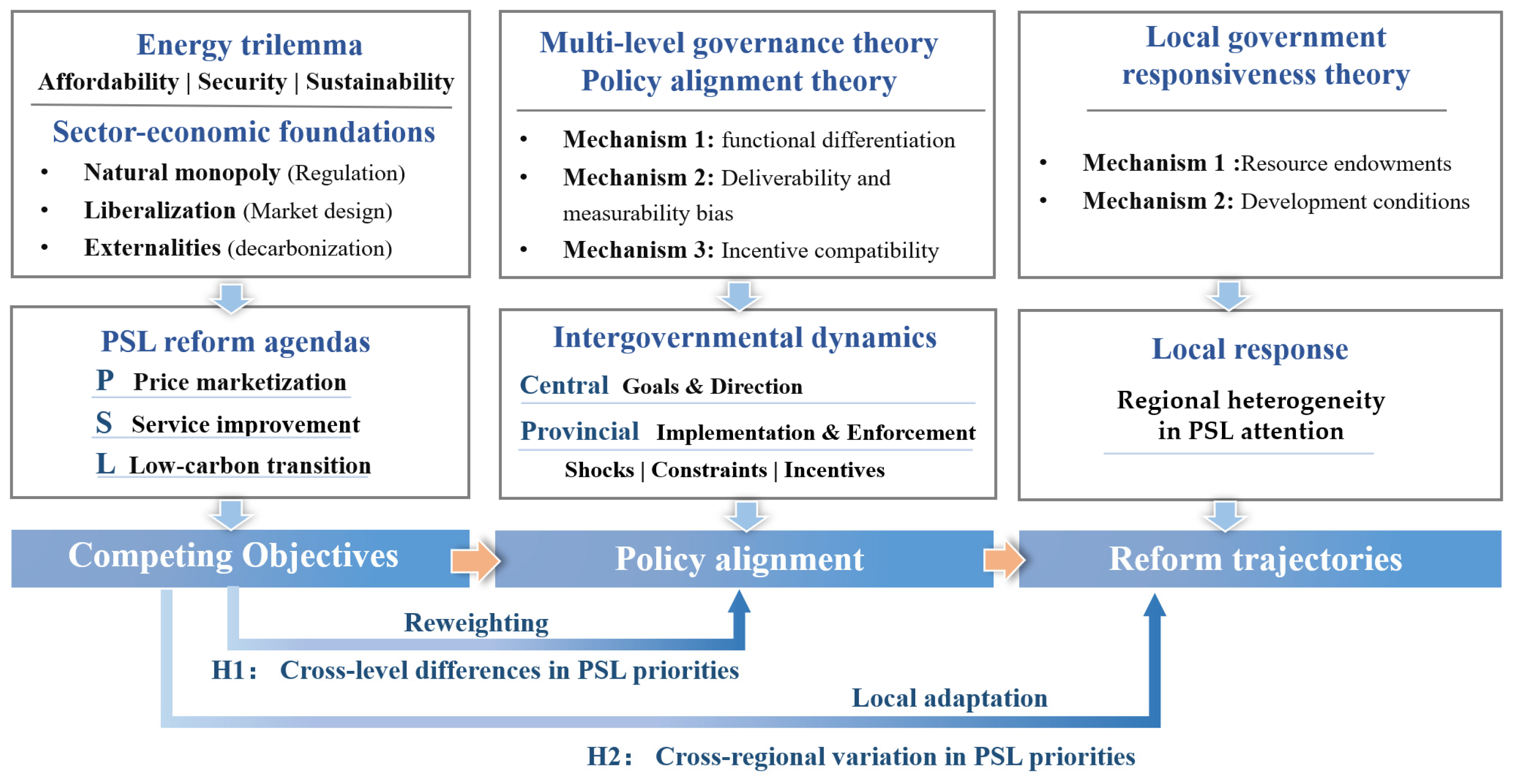
To synthesize the foregoing arguments and to provide a single visual roadmap for the empirical analysis, Figure 3 presents the study’s conceptual framework. It integrates the theoretical foundations with the proposed mechanisms and summarizes the two hypotheses on cross-level and cross-regional variation in PSL policy attention.

4. Methodology

4.1. Research Outline

Drawing on the pioneering work of Roberts et al. (2013) [48], this paper employs the Structural Topic Model (STM) to conduct a comparative analysis of policy attention across central and provincial governments over time and across different reform agendas, aiming to explore how the policy attention of local government differentiates from that of central government and identify local governments’ responsiveness to central policy goals.
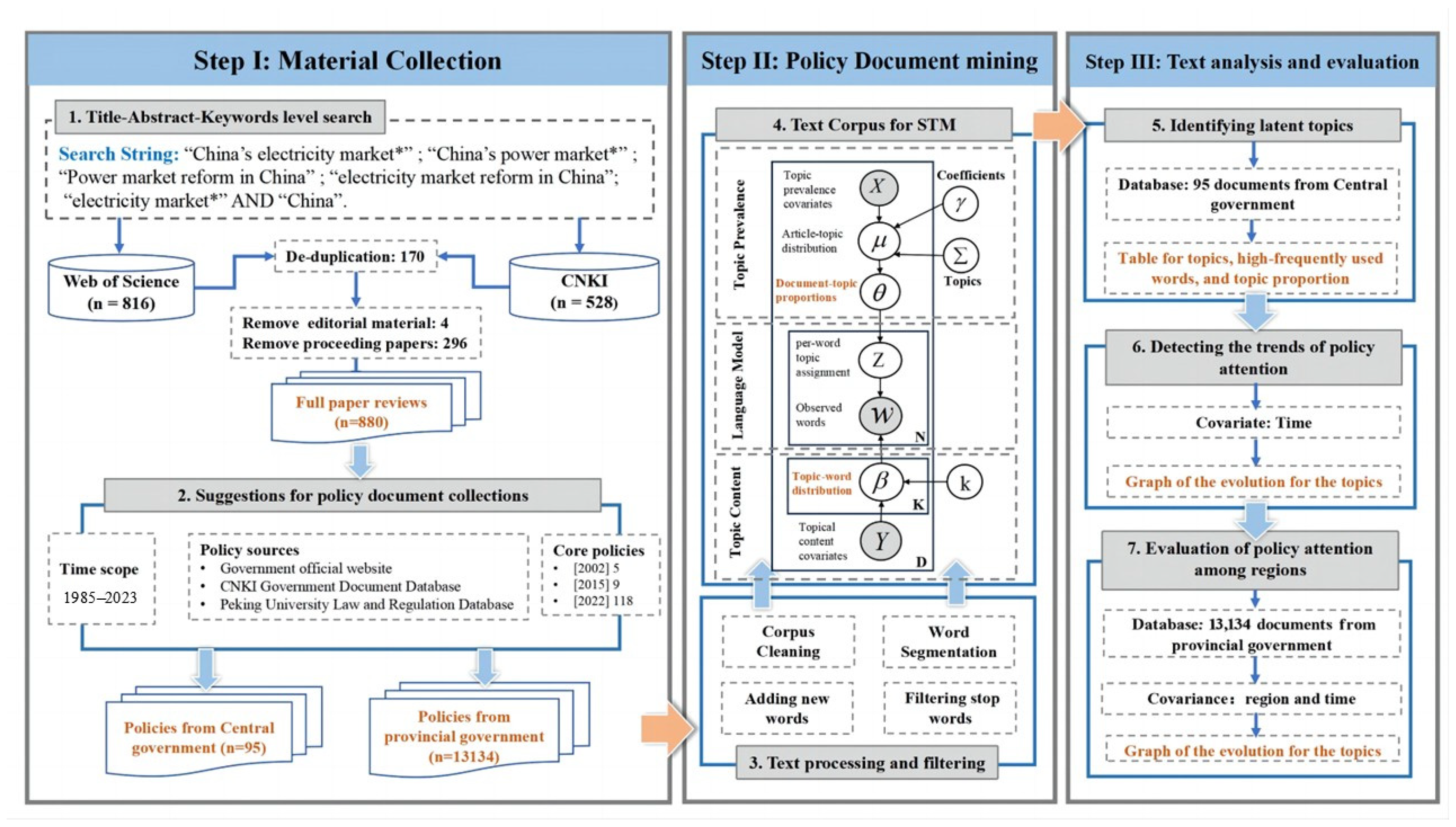
The STM method is particularly well-suited for this study, as it allows for the integration of document-level metadata—such as issuing authority and time of publication—into topic estimation. By using the STM, we are able not only to identify the main policy themes but also to quantitatively assess the differences in emphasis placed on these themes by the central and provincial governments. The methodology for collecting, processing, and analyzing the official documents using topic modeling is shown in Figure 4.

4.2. Material Collection

To build a robust and representative policy text corpus for analysis, this study adopted a two-stage data collection strategy combining literature-informed scoping with systematic retrieval of official documents. The goal was to comprehensively capture the evolution of electricity sector reform policies in China at both the central and provincial levels from 1985 to 2023.
We began by drawing insights from the body of literature already in existence on the study of China’s electricity sector reform, which provided a reliable framework for determining the scope of document collection. These studies offered guidance on the time frame of meaningful reform milestones, credible sources of official policy that should be included—even if not prominently featured in the most widely known documents. Specifically, we retrieved relevant academic papers from databases such as the Web of Science and China National Knowledge Infrastructure (CNKI), using search strings including “China’s electricity market*”, “China’s electricity market*”, “electricity market reform in China”, and “‘electricity market*’ AND ‘China’” after excluding duplicates, editorial material, and conference proceedings. After duplicates, editorial material, and conference papers were removed, a total of 880 core papers were obtained in this stage. These papers helped inform the identification of critical themes and issuing bodies for the next stage of document collection.
Building on this foundation, we then systematically collected official policy texts using subject terms such as “energy system”, “electricity market”, “electricity trading”, and “electricity tariffs” on government portals, including those of the State Council, the National Development and Reform Commission (NDRC), the National Energy Administration (NEA), and other relevant ministries. To expand the coverage of subnational policies, additional searches were conducted through specialized policy databases, such as the CNKI Government Document Database, Peking University Law and Regulation Database, and Peking University Legal Network.
To ensure consistency and relevance, we adopted the following principles for secondary filtering of the collected documents. First, although China’s electricity sector began to undergo reforms in 1978, real changes did not occur until 1985 [28,69]. Therefore, the sample of policy documents for text mining and policy attention assessment was limited to the policies issued since 1985. Second, for documents that only partially addressed electricity market reform, only the clearly relevant articles were extracted for further analysis.
As a result of this procedure, a final corpus of 95 central government policy documents and 13,139 provincial-level policy documents was compiled, covering the period from 1 January 1985 to 1 August 2023. This corpus represents a rich and diverse textual dataset that captures both the top-down directives of central authorities and the policy actions of local governments.

4.3. Topic Modeling Based on the Structural Topic Model

Before topic modeling, all documents were preprocessed using the Quanteda package in R (version 4.0.4) [70] to transform them into a standardized corpus. We then employed the Jieba Chinese word segmentation tool to tokenize the text, followed by the removal of stop words, numerical digits, symbols, and other non-informative content. In addition, to avoid geographic overfitting in the topic identification process, we constructed a customized dictionary that excluded province names. This step allows for the extraction of semantically meaningful topics across regions without letting the model overemphasize regional labels [51]. This multi-stage data preparation process ensured the integrity, comparability, and interpretability of the policy texts, thereby laying the foundation for the Structural Topic Modeling analysis that follows.
The STM estimates a topic proportion vector for each document. We treat these document-level topic proportions as attention weights and aggregate them to obtain agenda- and topic-level attention shares for each issuer, period, and region. Importantly, these shares are derived from the substantive content of the documents rather than from raw document counts. Therefore, according to the instructions in “stm: An R package for Structural Topic Models” [71], the generative process for each document with a vocabulary of size V for an STM with K topics can be summarized as followed [72,73].
Step 1: The article-level attention to each topic is drawn from a logistic-normal generalized linear model, based on a vector of article covariates Xd as presented in Equation (1):
θ d | X d γ , ~   L o g i s t i c N o r m a l ( μ = X d γ , ) ,
where Xd denotes a p b y 1 vector, γ denotes a p b y ( K 1 ) matrix of coefficients, and ∑ is a ( K 1 ) b y ( K 1 ) covariance matrix.
Step 2: Creating the article-specific distribution over terms on behalf of each topic by baseline term distribution m , topic-specific deviation κ k , covariate group deviation κ g , and interaction between the two κ i , as presented in Equation (2):
β d , k exp ( m + κ k + κ gd + κ i = ( k , gd ) ) ,
where m and κ k , κ g , and κ i denote the V-length vectors including one entry per term in the vocabulary.
Step 3: For each term in the document (n ∈ 1, …, Nd), draw the term’s topic assignment, as presented in Equation (3). Then, draw an observed word from a particular topic, as presented in Equation (4).
z d , n | θ d   ~ Multinomial ( θ d ) ,
w d , n | z d , n = z d , n , β d , k = z d , n ~ Multinomial ( β d , k = z d , n )

4.4. Interpretation and Analysis of Topics

To examine the divergence of policy attention across regions, this study aggregates provincial-level policy documents into eight major regional clusters, as detailed in Table 1.
These clusters are defined primarily based on the jurisdictional areas of the three major grid companies (State Grid, China Southern Power Grid, and Inner Mongolia Power), which often reflect historical and institutional boundaries in China’s electricity governance.
However, it is important to clarify that the primary unit of analysis in this study is the provincial government—each region’s policy attention is constructed by aggregating policies issued by the provincial-level governments within the same region. The use of grid company jurisdiction as a basis for regional grouping is only an auxiliary classification tool to facilitate policy comparison across broad regions and does not imply that the study analyzes operational, dispatch, or investment behaviors of the grid companies themselves.
Specifically, in the case of Inner Mongolia, while the region is indeed served by both the State Grid’s Inner Mongolia Eastern Power Company and the locally operated Inner Mongolia Power (Group) Co., Ltd., this study treats Inner Mongolia as a single unit because the policy documents are issued by the provincial-level government of the Inner Mongolia Autonomous Region, not by the grid companies. Therefore, this treatment is consistent with our research objective focused on policy attention at the central and provincial levels.
Finally, the ‘labelTopics’ function in the STM was used to view the most frequent, important and unique keywords, allowing researchers to label each topic. Clustering of the 16 topics was done using a mixed approach: qualitatively using frequent and exclusive keywords for each of the topics, and quantitatively using LDAvis [74] and Topic Correlations to ensure robustness of our qualitative clustering. When clustering the STM-derived topics, we classified them into three overarching reform agendas, forming the PSL framework. This classification was guided by both the output of the topic model (i.e., frequent and exclusive keywords, topic correlations) and the historical evolution of China’s electricity sector reform, as reviewed in Section 2.1.
Moreover, this classification aligns with widely accepted international frameworks. The International Energy Agency outlines three critical goals of modern electricity market reform: improving market efficiency (P), ensuring reliable and affordable service (S), and achieving climate-aligned transitions (L) [26]. Similarly, Joskow (2008) highlights the inherent trade-offs in electricity sector reforms between efficiency, reliability, and environmental objectives [25].
Therefore, our PSL classification provides a theory-informed and empirically grounded framework to interpret policy attention. It facilitates a clearer understanding of how central and provincial governments prioritize different reform objectives, and how structural tensions in multi-level governance manifest in China’s electricity reform trajectory [52].

5. Results and Discussion

5.1. Central Government’s Policy Attention on PSL

This section presents the results of the STM applied to central government policy documents issued between 1986 and 2023, aiming to reveal how reform priorities have evolved over time.
As shown in Table 2, the STM identified 16 latent topics, which were subsequently categorized into three reform agendas of PSL. Specifically, topics related to electricity pricing, market structure, trading mechanisms, and competition are grouped under price marketization (P). Topics concerning service quality, technical innovation, system reliability, and end-user considerations fall into service improvement (S). Topics related to decarbonization, renewable energy, and environmental impact are categorized under low-carbon transition (L). Several salient findings emerge regarding topics of interest in the official documents.
First, pricing marketization (P) is obviously high on the list of the planned reforms, accounting for 52.94% of all the policy attention. Six topics are found, characterized by the labels pricing system (P1, 17.88%), market participants (P2, 11.29%), competition (P3, 8.81%), market rules (P4, 6.69%), trading mechanism (P5, 6.34%), and financial support (P6, 1.66%). What is striking about the figures in this table is the significantly higher attention paid to pricing system (P1) and market participants (P2) relative to other topics, illustrating the central government’s key policy priority is to achieve the reform agenda of pricing marketization (P) mainly by restructuring tariff components and revamping the industry structure. In other words, the central government revamps the way that market participants join the electricity market to increase competition and adjust the composition of electricity tariffs, with the ultimate aim of creating a market-based electricity system [69].
In contrast, service improvement (S) receives 32.32% of policy attention, distributed across five topics: energy efficiency (S1, 10.95%), production diversity (S2, 7.08%), energy supply (S3, 6.80%), System reliability (S4, 4.08%), and economic benefits (S5, 1.41%). Notably, energy efficiency (S1) and production diversity (S2) are given higher priority than energy supply (S3) and system reliability (S4), implying that the central government prioritizes technological innovation and service diversification as key pathways to improving electricity service. This observation is consistent with findings by Jiang et al. (2023) and Wu et al. (2024), who argue that recent reforms in China increasingly emphasize digital upgrades and service-oriented governance in the energy sector [75,76]. Ensuring continuous and safe electricity supply, though still important, appears to be a relatively secondary concern in recent decades.
Regarding the low-carbon transition (L) agenda, the total attention share accounts only for 16.74%, noticeably lower than the other two reform domains. The relevant topics include energy transition (L1, 4.92%), promotion program (L2, 4.11%), green energy (L3, 3.87%), development requirement (L4, 3.04%), and environmental challenges (L5, 0.79%). The obtained results provide statistical evidence that the central government places significant policy emphasis on energy transition (L1) when promoting the electricity sector reform, with the argument that low-carbon transition is either a challenge or an opportunity for the electricity sector reform. While carbon reduction and renewable energy integration have gradually gained policy traction, this category remains underrepresented in the central government’s reform blueprint, particularly regarding long-term environmental challenges (L5). This finding echoes arguments by Zhang et al. (2023), who note that China’s energy policies tend to treat green transition as a supportive, rather than core, reform goal [73].
Taken together, this part provides very important evidence that pricing marketization (P) consistently ranks as the central government’s top reform priority. In other words, how to achieve the market attributes of electricity tariffs is the top reform agenda, followed by service improvement (S) with due consideration given to the low-carbon transition (L). In addition, the aforementioned three reform agendas are primarily executed by the central government, employing a total of 16 policy topics. Among them, pricing system (P1), market participants (P2), and energy efficiency (S1) hold significant importance. These three factors collectively contribute to more than 40% of the total topic distribution. In contrast, financial support (P6), economic benefits (S5), and environmental challenges (L5) receive only 3.86% combined, highlighting potential blind spots in current central policy agendas. These patterns underscore strategic orientation that favors market restructuring and technological upgrading, while still underemphasizing fiscal, socioeconomic, and environmental considerations.

5.2. Landscape of How PSL and Policy Attention from Central Government Evolve

While Section 4.1 revealed the overall distribution of policy attention across the three reform agendas and 16 latent topics, a static snapshot alone cannot capture the dynamic nature of policy prioritization in a reform process spanning nearly four decades. Therefore, this section proceeds to explore how the central government’s policy attention has evolved over time. By tracking topic salience across distinct reform phases, we aim to identify not only enduring policy priorities but also those that have emerged, declined, or shifted in emphasis—thereby providing deeper insight into the trajectories and transitions of China’s electricity sector reform agenda.
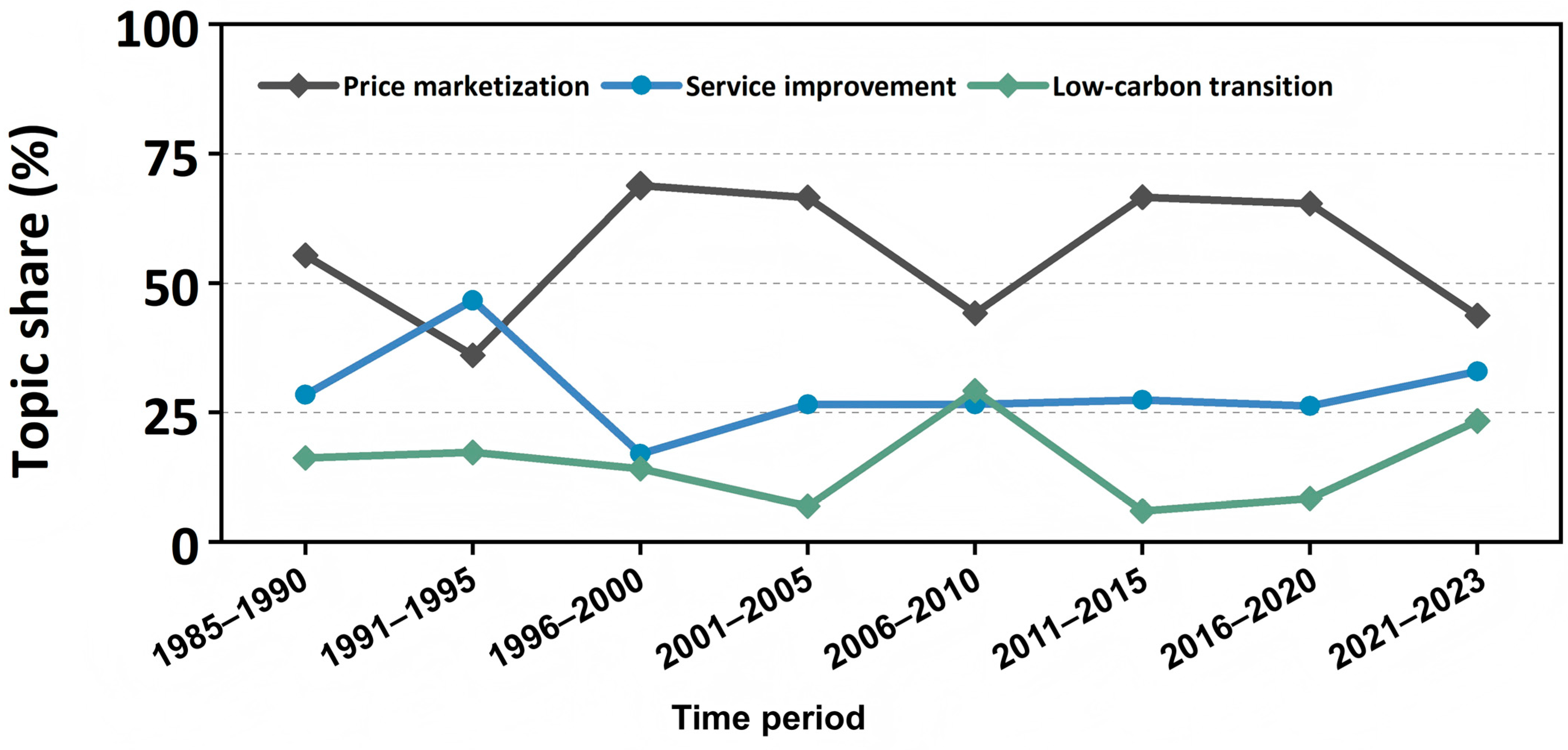
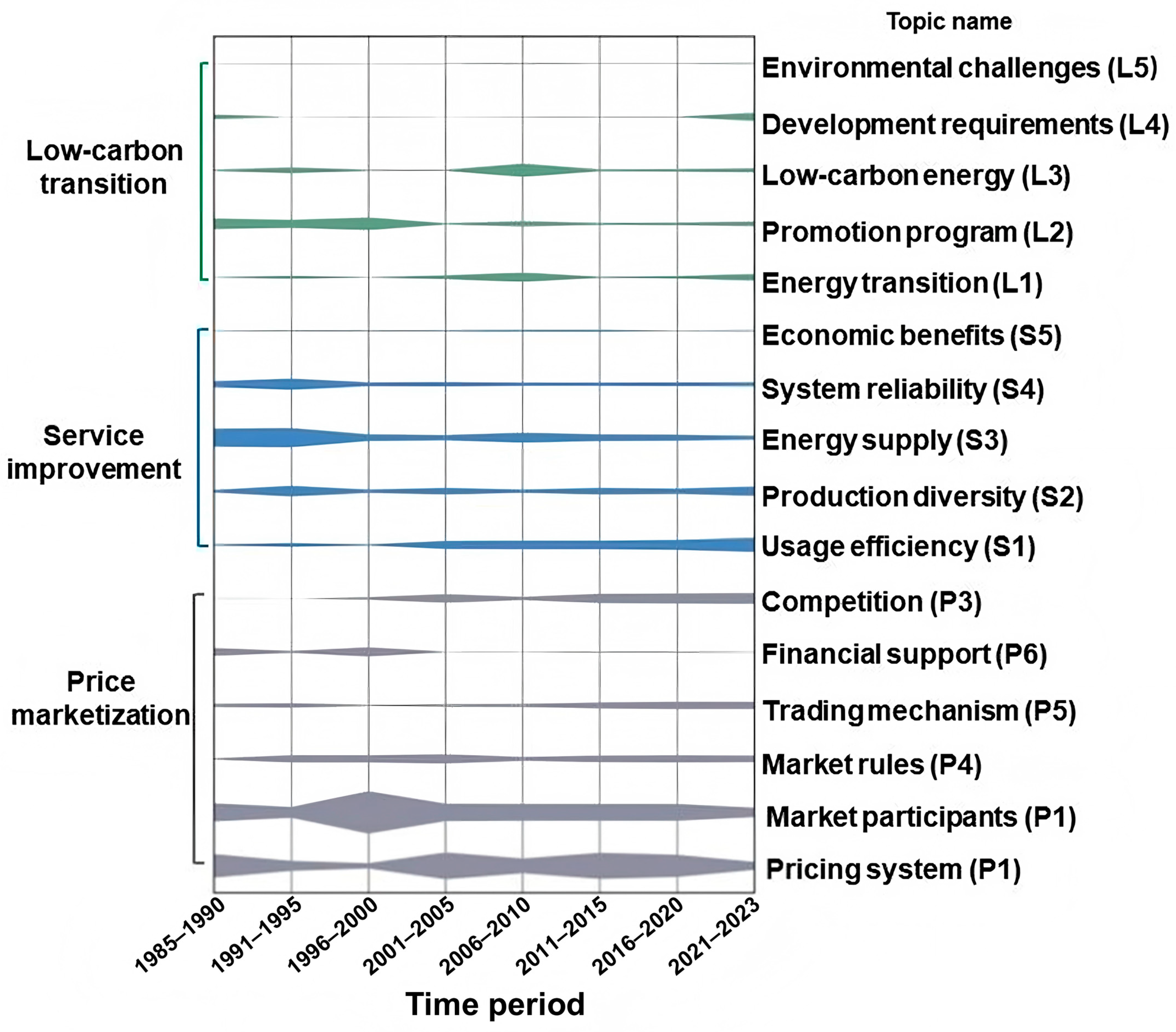
The streamgraph in Figure 5 illustrates the evolution of the 16 topics across eight reform phases from 1986 to 2023, reflecting shifts in magnitude and thematic focus within the three overarching reform agendas—price marketization (P), service improvement (S), and low-carbon transition (L). It can be demonstrated that price marketization (P) consistently dominates in magnitude across most reform phases, although two significant decreases are observed. The first drop occurs between 1991 and 1995, when policy attention shifted toward service improvement (S). This aligns with historical accounts that during the 1990s, the central government emphasized expanding the quantity and improving the quality of electricity supply to support rapid industrialization and economic growth. Key objectives included enhancing technical performance, reducing system costs, and ensuring affordable electricity for consumers. The second notable decline appears between 2006 and 2010, coinciding with a rise in attention to the low-carbon transition (L). The 5 years from 2004 to 2008 were characterized by a dramatic increase in demand for all forms of energy across China. The growing consumption of energy within China was taking the country to the top of the league table of emitters of greenhouse gases (GHGs) as well as increasing the amount of sulfur dioxide emissions. As a consequence, both international and domestic pressures on China’s government were mounting to take steps to constrain these emissions. In response to the growing awareness of China’s contribution to current (not historic) GHG emissions, the State Council approved a national plan to address the challenges posed by climate change at the end of May 2007. This suggests that the central government has provided the most in-depth instructions on price marketization (P), while sometimes placing service improvement (S) and low-carbon transition (L) a little higher on the political agenda at the cost of price marketization (P).
In addition to the aforementioned trends of three reform agendas over time, Figure 6 exhibits a detailed description of evolution trends for all 16 policy topics. Several patterns are worth noting:
First, policy attention to low-carbon transition (L) has fluctuated significantly. Its share ranged from 6.90% in 2001–2005 to a peak of 29.23% in 2006–2010, before declining to 16.73% in the most recent period. Among its five subtopics, energy transition (L1) and green energy (L3) have substantially attracted the most policy attention, rising from a collective topic share of 1.18% in 1985–1990 to a peak topic share of 22.67% in 2006–2010, and then majorly declined to 10.41% in 2021–2023. However, environmental challenges (L5) have remained relatively low throughout the reform period, never exceeding 1.2% of topic share. This reinforces the view that, despite China’s status as a global leader in renewable energy investment since 2010 [4], climate change and environmental challenges have not been a dominant framing in the central government’s electricity sector reform agenda [77]. Instead, low-carbon considerations are more often embedded as supportive objectives alongside market restructuring and system performance [78]. This pattern contrasts with strands of the transition literature that foreground climate mitigation as the primary organizing logic of power-sector change and is consistent with accounts suggesting that low-carbon emphasis in reform narratives tends to surge when emissions and air-pollution constraints become binding, yet recede when reliability and cost pressures regain salience in policy agenda-setting [3,78,79].
Second, service improvement (S) exhibits a relatively stable trend over time, maintaining a topic share between 25% and 32.92%. This stability is underpinned by the enduring relevance of system reliability (S4) and economic benefits (S5). Notably, energy efficiency (S1) and production diversity (S2) have experienced an overall increase in topic share from 4.35% in 1985-1990 to 23.64% in 2021–2023, while energy supply (S3) decreased from 17.74% to 4.06% over the same period. This suggests a strategic shift from securing supply in earlier years toward enhancing efficiency and product diversity in more recent phases, possibly reflecting the increasing maturity of China’s electricity infrastructure. This evolution echoes a recurrent theme in the reform literature that improvements in service quality increasingly rely on efficiency gains and flexibility-enhancing technologies once basic supply adequacy is achieved [78,79,80,81].
Finally, within the domain of price marketization (P), pricing system (P1) and market participants (P2) remain consistently dominant, together accounting for about 40% of all the corpus’s topic share across all reform stages. Meanwhile, market rules (P4) show relatively stable attention, accounting for less than 10% of the topic share, while financial support (P6), once prioritized in earlier reform stages, has gradually ceded space to rising attention on trading mechanism (P5) and competition (P3). This indicates a gradual maturation of the policy framework—from early emphasis on financial facilitation toward more institutionalized market structures. The persistent dominance of pricing institutions and participant design is in line with studies arguing that price liberalization and inter-provincial trading are repeatedly treated as core levers for efficiency improvements and system flexibility in China’s power reform [61,82,83].
In conclusion, the empirical results of the evolution of policy attention allow us to have a full understanding of the key policy objectives proposed by China’s central government throughout different phases of electricity sector reforms. Two important findings should be noticed. First, price marketization (P) has consistently remained the central theme of electricity sector reform, reaffirming the long-standing objective of transitioning to a market-based pricing system. Second, the central government’s policy priorities are neither static nor linear; they shift in response to changing economic, technological, and environmental contexts. For instance, the early reform phases before 2000 prioritized improving system efficiency (S1) and expanding supply (S3) to meet soaring demand [69], whereas the mid-2000s to early 2010s focused more on enhancing transparency within price marketization (P), competition (P3), and market accountability (P4) [4]. Since 2010, growing policy attention has been placed on advancing green energy (L3) and initiating pilot programs (L2) to reduce carbon reliance [17], although this shift has yet to fully rival the prominence of market reforms.
This dynamic perspective enhances our understanding of how China’s electricity sector reform has unfolded in a phased and responsive manner. It also highlights the central government’s evolving priorities in balancing economic efficiency, service quality, and environmental responsibility over time.

5.3. Comparison in Policy Attention Between Central and Provincial Governments

Building on the previous analysis of the overall policy topic landscape and the temporal evolution of central government attention across reform phases, this section turns to a comparative perspective to examine whether and how the policy priorities of provincial governments align with those of the central government.
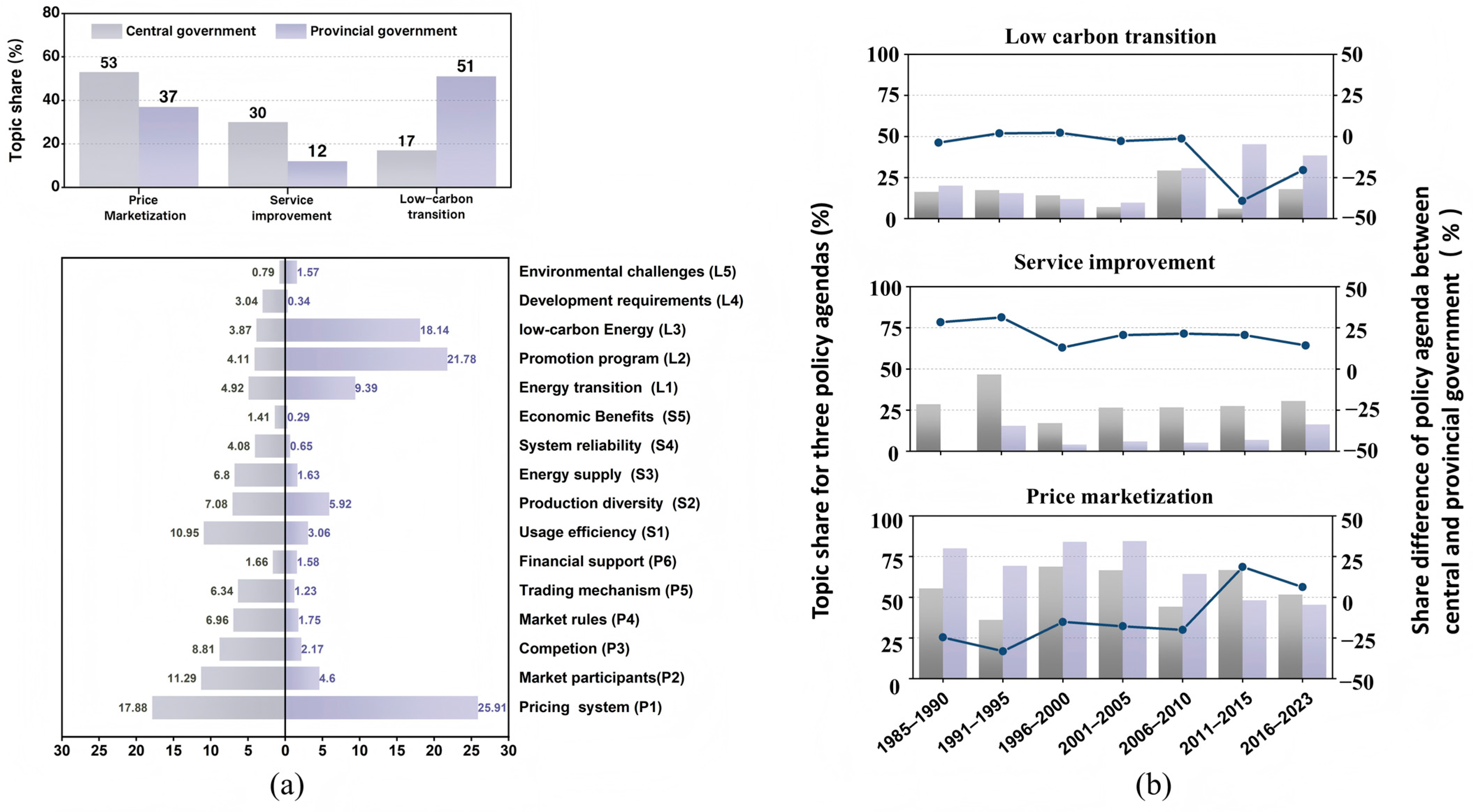
To investigate this issue, we use the province where the policy was released as the covariance of topic popularity and then estimate the relationship between this provincial origin and the average of the topic probability. Figure 7 provides a visual comparison of the proportional distributions of PSL and topic shares within the official documents put forth by both central and provincial governments.
As shown in Figure 7a, a striking divergence is evident in the prioritization of the three main reform agendas. The central government adopts a relatively balanced approach across every aspect of price marketization (P) and service improvement (S) throughout the whole reform process, whereas the provincial governments place the predominant attention on the low-carbon transition (L), which constitutes 51.22% of their policy discourse. Among the 16 topics, provincial documents focus particularly on promotion program (L2) and green energy (L3), with difference values of −17.66% and −14.26%, respectively, compared to the central government. Meanwhile, the topic pricing system (P1) also attracts considerable attention from provincial governments, evidenced by a −8.02% difference. Those findings demonstrate a growing enthusiasm among provincial governments in promoting low-carbon energy system transition while continuing to engage with key pricing issues.
However, are these divergences consistent across time? Figure 7b traces the evolution of topic attention differences over eight time periods and reveals notable shifts.
Interestingly, the year 2011 marked a significant turning point in policy attention alignment, with a noticeable shift in the government’s attention to PSL before and after that point. Hence, some interesting results can be observed: (1) prior to 2011, both the central and provincial governments considered price marketization (P) as a primary concern and showed equal levels of policy attention towards the low-carbon transition (L). However, provincial governments appear to place too much emphasis on price marketization (P) at the expense of service improvement (S); (2) after 2011, policy attention on low-carbon transition (L) and price marketization (P) from the provincial government shifted dramatically. It is reflected in the decrease in differences in topic shares of low-carbon transition (L), which have significantly lowered to −38.22%. This shift in policy attention comes at the cost of price marketization (P). The provincial government seems to reduce a significantly higher proportion, approximately 18.61%, of its policy attention on price marketization (P) compared to the central government.
In brief, the priorities of policy attention from provincial governments have diverged from those from the central government, if we make the data comparison for the whole reform progress. However, if we investigate the evolution of PSL among governments, policy attention seemed to be consistent until 2011 and there was even a phenomenon that the provincial government paid much more attention to price marketization (P) and left less attention to service improvement (S). After 2011, policy attention of the provincial government shifted dramatically to the low-carbon transition (L) after 2011. In the presented analysis in Section 3.2, we highlight that the significance of low-carbon transition (L) in the process of electricity sector reform has been clearly emphasized and greatly enhanced by the central government since 2010. Therefore, we prove that the provincial government is indeed placing low-carbon transition (L) higher on the political agenda in the energy transition stage than before.
Synthesizing these patterns, our findings reveal a temporal pattern of central–provincial divergence in policy attention. Initially, both levels of government emphasized price reforms, but their attention gradually diverged: provincial governments shifted strongly toward the low-carbon agenda after 2011. The post-2011 divergence pattern extends institutional accounts that frame China’s power reform as a multi-level governance process in which accountability arrangements and implementation incentives differ across central and provincial authorities [61,84]. Our evidence is consistent with this line of work in showing that the provincial agenda does not simply mirror the central blueprint [85], but reallocates attention when local constraints and evaluation incentives change [86]. Importantly, Figure 7 indicates that divergence is phase-dependent rather than constant, which helps reconcile why national-level reform directives can coexist with persistent heterogeneity in local reform emphasis.
Against this backdrop, this divergence in policy attention between central and provincial governments can be explained by three main factors. First, provincial governments face stronger performance pressures in green development, as environmental indicators have been integrated into cadre evaluations since the 13th Five-Year Plan. This drives a more active provincial response to low-carbon goals. Second, local governments rely on green investment to boost regional growth, especially in the post-COVID period. In 2021, provinces approved over 800 green energy projects totaling more than 1.2 trillion RMB. Third, price reforms encounter greater resistance at the local level due to institutional inertia and political sensitivity. Despite national efforts like Document No. 9 in 2015, implementation of market-based pricing remains uneven [83]. Together, these factors account for the stronger provincial emphasis on low-carbon transition and the central government’s more balanced focus on price reforms and service quality.
Overall, the evidence in Figure 7 provides a direct assessment of H1, which posits that provincial governments reweight attention across the PSL agendas in response to local constraints, incentive structures, and external shocks, thereby generating systematic cross-level differences in reform priorities.

6. Further Analysis: Exploring Regional Variations in Policy Attention

Section 5 identified a notable divergence between the central and provincial governments in their policy priorities regarding electricity sector reform. While the central government has consistently emphasized price marketization (P) and service improvement (S), provincial governments have displayed greater interest in the low-carbon transition (L), especially since 2011. These differences are not merely anecdotal; they reflect underlying structural and institutional variations across governance levels.
To test H2, Section 6 examines whether this variation is systematic and regionally grounded by tracing how provincial policy attention evolves across regulatory regions over time, given differences in resource endowments, development conditions, energy infrastructure, and environmental pressures.
To proceed, we move beyond the central–provincial distinction and investigate regional-level policy variations. Given China’s vast geographical and developmental heterogeneity, it is plausible that provincial preferences are shaped not merely in response to central directives but also in light of their unique resource endowments, energy infrastructure, and environmental pressures. In this section, we group provinces by their regulatory jurisdictions and explore how the relative importance of PSL and all the 16 topics has evolved across regions.

6.1. The Evolution of PSL Among Regions

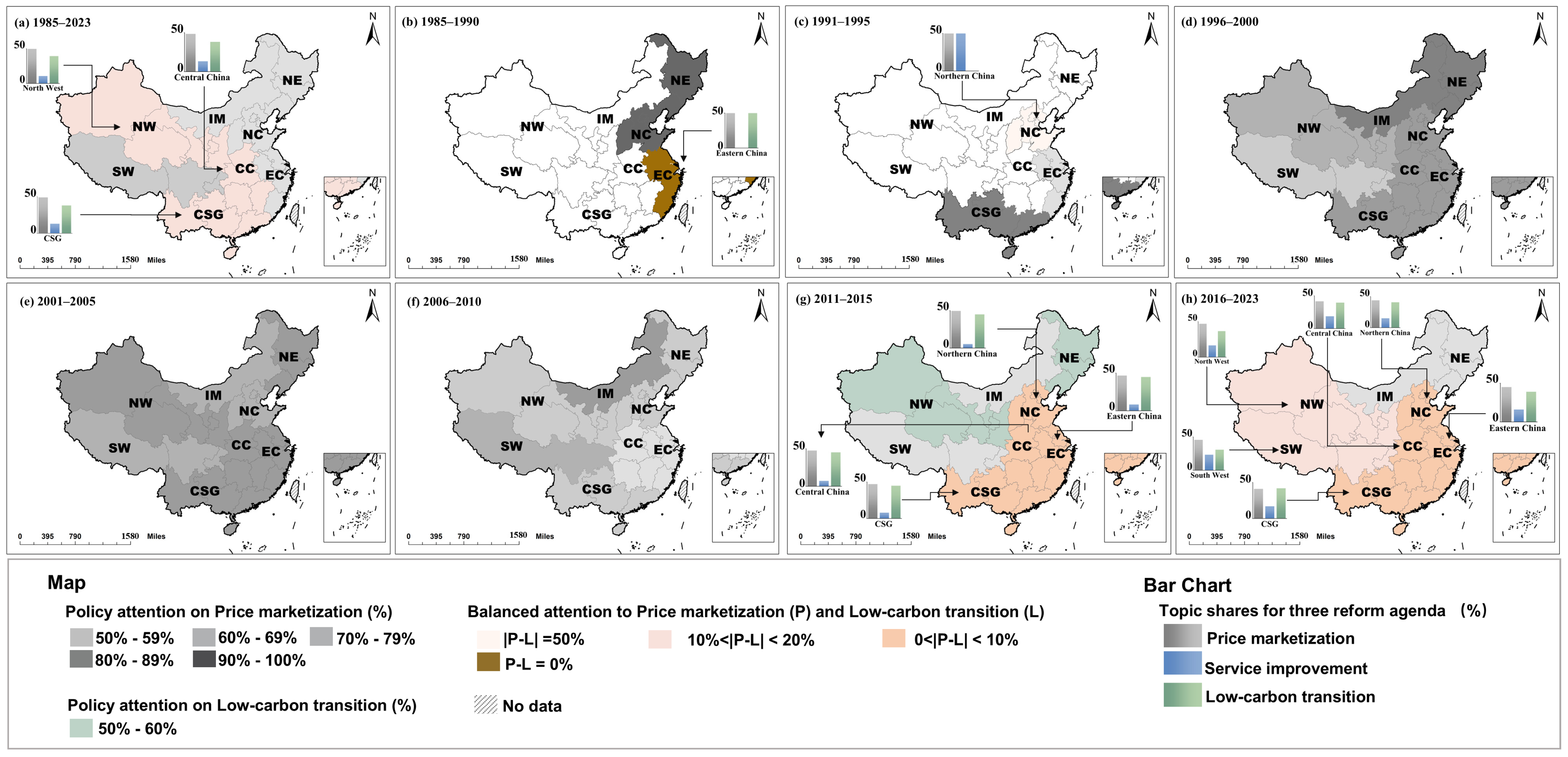
Figure 8 shows a clear picture of how the structure of PSL policy attention evolved among eight major electricity regulatory regions over time in China. The results reveal both commonalities and significant regional differences, reflecting the complex dynamics of electricity sector reform under varied subnational contexts.

6.1.1. Regional Commonality: Price Marketization (P) as a Dominant Early Agenda

From 1985 to 2010, price marketization (P) was the dominant concern across all regions. This period coincides with the early- and mid-stage electricity sector reforms when introducing market-based electricity pricing mechanisms was a national priority. Notably, provinces in Eastern China (EC), North China (NC), and North East (NE) emerged as early reformers, aligning closely with the central government’s P-oriented agenda. In fact, many provincial governments—especially those in economically developed or resource-abundant areas—exhibited even stronger emphasis on price marketization (P) than the central government, with attention levels often exceeding 60–70%.

6.1.2. A Turning Point Around 2011: The Rise in the Low-Carbon Transition (L)

After 2011, the regional pattern began to shift. Low-carbon transition (L) quickly gained prominence in provincial agendas, particularly in the resource-heavy and ecologically vulnerable regions such as North West (NW) and North East (NE), where the L-topic accounted for over 50% of policy attention during 2011–2015. This surge likely reflects growing environmental constraints and pressure to restructure local energy systems.
However, this evolutionary trend is based on the fact that the governments of all regions have reduced their attention to price marketization (P), especially in NE, NC, CC, and CSG regions. In these areas, the reform agenda shifted toward a dual-track focus on low-carbon transition (L) and price marketization (P), marking a transitional stage where climate goals began to compete with market reform priorities.

6.1.3. Post-2016 Adjustment: Toward Balanced Reform Priorities

Since the new round of electricity reform was proposed in 2015, the attention to low-carbon transition (L) has decreased in all regions, and eventually remained between 30.89% and 41.91%. During this process, the North East (NE) and North West (NW) regions shifted all their attention to low-carbon transition (L) significantly to the reform agendas of price marketization (P) and service improvement (S), while other regions not only reduced their attention to the low-carbon transition (L) by an average of 4.26%, but also continued to reduce their attention to the price marketization (P) by 5.69%, resulting in an average of 9.96% attention shifting to the service improvement (S). This suggests that when the low-carbon transition (P) is emphasized in the electricity market reform, there is a tendency for the government to reduce its attention to price marketization (P) in the early stage, but, later on, they will raise its attention to the service improvement (S).

6.1.4. Regional Logic Behind Divergence

This analysis reveals that regional governments did not uniformly follow the central government’s prioritization of electricity reform themes. Instead, regional differences in policy attention reflect the complex interplay between resource endowments, economic development levels, and institutional capacities. Specifically:
First, resource-rich and industrial regions such as the North East (NE) and North West (NW) showed an early focus on low-carbon transition (L), but gradually shifted their attention toward price marketization (P) and service improvement (S) in the post-2016 period. This reflects their practical challenges in sustaining decarbonization under economic pressure and energy security concerns.
Second, economically advanced and reform-mature regions such as Eastern China (EC) and the Southern Grid region (CSG) tended to reduce their attention to both L and P, placing greater emphasis on service improvement (S) to address institutional coordination, consumer-side reforms, and regulatory modernization.
Third, central and transitional regions like Central China (CC) and Inner Mongolia (IM) exhibit hybrid patterns, balancing economic transformation with gradual low-carbon efforts, but with evident divergence in reform emphasis depending on local constraints.
These findings highlight that while all regions participated in the national reform agenda, their paths of policy prioritization were shaped by localized needs and constraints, contributing to differentiated reform dynamics across the country. Therefore, the central–local mismatch observed in Section 5 should be interpreted not as policy misalignment in itself, but as a reflection of territorially embedded reform pathways. This highlights the importance of flexible, region-sensitive policy coordination mechanisms to ensure that national reforms are effectively implemented under diverse local conditions.

6.2. Landscape of How Policy Attention Evolved Among Regions

In Section 6.1 we established that although all regions in China have engaged with the national electricity sector reform agendas, their actual reform trajectories diverge significantly due to regional heterogeneities. These heterogeneities—rooted in distinct economic structures, energy resource endowments, and institutional capacities—shape the prioritization of reform agendas and the reallocation of policy attention over time. To deepen this finding, this section explores the granular dynamics of how each of the 16 policy topics evolved across the eight regulatory regions. By uncovering both convergent and divergent patterns in regional policy focus, we aim to better understand the structural factors behind differentiated reform practices.
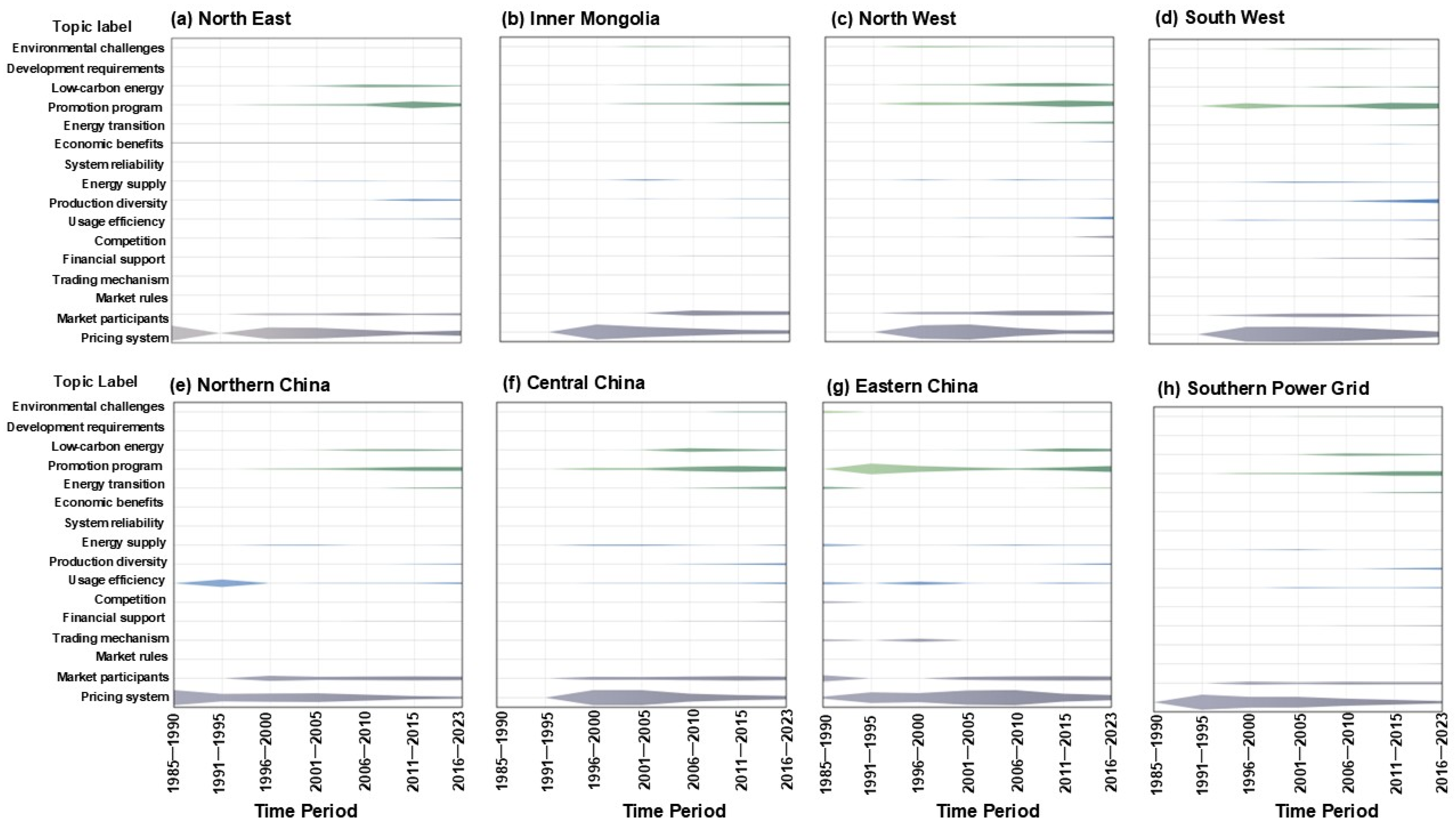
Figure 9 depicts the dynamics of 16 policy topics across eight major regulatory areas.

6.2.1. Core Policy Focus Shared Across Regions

It is evident that seven topics have consistently garnered significant attention across all districts throughout the reform period. These include pricing system (P1), market participants (P2), usage efficiency (S1), product diversification (S2), energy supply (S3), program promotion (L2), and low-carbon energy (L3). Together, these topics account for more than 71.42% of total policy attention, underscoring a shared national agenda that spans price mechanism reform, market construction, service improvement, and low-carbon development. Additionally, since 2005, four emerging topics have risen to prominence in multiple regions: market rules (P4), competition (P3), energy transition (L1), and financial support (P6). These reflect the deepening and broadening of electricity sector reform as regional governments increasingly grapple with more complex institutional and financial dimensions of market liberalization and green transition.

6.2.2. Regional Differentiation in Reform Priorities

While commonalities exist, significant differences in secondary policy topics emerge across regions. This differentiation reflects not only diverse local conditions but also how regions adapt national reform goals to local constraints and demands.
North East (NE) and Inner Mongolia (IM) are illustrative of regions with a long-standing dependence on coal electricity and a declining industrial base. These areas continue to treat price marketization (P) and low-carbon transition (L) as reform priorities, but with distinct focuses: NE places substantial emphasis on pricing system (P1, 33.75%) and balances it with program promotion (L2, 21.37%). IM focuses on pricing system (P1, 25.29%) and market participants (P2, 22.82%), while also giving attention to energy transition (L1, 8.54%), program promotion (L2, 20.85%), and green energy (L3, 8.37%). These patterns align with their economic profiles—coal accounts for 70% to 80% of electricity generation feedstock in northern regions [8]. Reforming pricing structures and introducing more market participants are thus crucial for improving operational efficiency and enabling low-carbon initiatives under tight fiscal constraints.
In contrast, South West (SW), Central China (CC), and Eastern China (EC) exhibit a notable shift from price marketization (P) to service improvement (S), particularly energy supply (S3). The shift is driven by the pressure to meet fast-growing electricity demand and the need to stabilize grid operations in rapidly urbanizing and industrializing zones. It is easy to find that EC, SW, and CC all show a threefold to sixfold increase in attention to energy supply (S3) compared to the previous period. And the SW region especially has redirected its focus, with energy supply (S3) rising to 23.38% of total attention.
Meanwhile, North West (NW), Northern China (NC), and China Southern Grid (CSG) shift their policy emphasis within the service improvement agenda towards usage efficiency (S1) and increasingly, economic benefits (S5), particularly in NW. This reflects their efforts to optimize resource allocation and secure cost-effective supply amid geographic constraints and lower grid interconnectivity.

6.2.3. Heterogeneous Pathways Under a Unified Agenda

In conclusion, regional constraints are the drivers of reform differentiation. While all eight regulatory regions in China share a broad alignment with the central reform agendas, especially across core topics like pricing, participation, and low-carbon development, the detailed distribution of policy attention across the 16 themes varies considerably. These differences stem from a combination of energy resource endowments, industrial structures, and institutional capacity, reflecting deeper institutional and structural constraints. For instance: Coal-dependent regions such as NE and IM prioritize price reform and low-carbon pathways under pressure to reduce losses and improve investment viability. Hydropower-rich but infrastructure-limited regions like SW prioritize supply stability and grid capacity expansion. Market-mature regions like EC and NC focus on refining participant structures and improving user-side services, aligning with their higher degree of market sophistication. These findings confirm the insights from Section 6.1: regional reform priorities are not merely passive reflections of central mandates but are actively shaped by local conditions. As a result, multi-regional heterogeneity emerges as both a feature and a challenge of China’s electricity sector reform, requiring nuanced policy design and adaptive coordination mechanisms at the national level.
Placed in a broader context, the regional heterogeneity documented in Figure 8 and Figure 9 complements the environmental-management and carbon-neutrality literature emphasizing that renewable adoption and decarbonization progress depend on local industrial structures, resource bases, and enabling institutions [87,88,89]. While cross-country evidence links renewable deployment and competitiveness to improved carbon-neutrality outcomes [3], our findings specify a governance channel within China’s power reform: provincial attention shifts toward programmatic promotion and green-energy topics where endowments and constraints make decarbonization politically and economically salient [86,90]. At the same time, the persistence of pricing and participant-structure topics in coal-dependent regions indicates that market-institution building remains a prerequisite for integrating renewables at scale, rather than a parallel agenda [31,91].
Overall, the regional patterns documented in Figure 8 and Figure 9 are consistent with H2, indicating that differentiated reform trajectories are systematically associated with region-specific endowments and development conditions.

7. Conclusions

This study focuses on the divergence of policy priorities between China’s central and provincial governments during the decades-long process of electricity sector reform. Although both levels of government have been deeply involved in the design and implementation of reform policies, whether they have maintained consistent reform priorities, how such priorities have evolved over time, and what institutional and regional factors drive their divergence remain underexplored, to address this gap, we apply Structural Topic Modeling (STM) to 13,234 policy documents issued between 1985 and 2023, systematically identifying and quantifying the evolution of policy attention across three core reform agendas: price marketization (P), service improvement (S), and low-carbon transition (L). The findings offer a nuanced understanding of reform implementation in a multi-level governance context—highlighting both the temporal shifts in national priorities and the divergent focus of provincial governments shaped by regional conditions and pressures. Detailed findings are as follows:
(1)
Overall, while the three agendas—price marketization (P), service improvement (S), and low-carbon transition (L)—have remained central to the reform discourse, their relative salience has shifted significantly over time. Throughout the entire period, the central government has consistently prioritized price marketization (L), which accounted for more than 50% of its policy attention. Service improvement (S) and low-carbon transition (L) followed with approximately 32% and 17%, respectively. Even though the narrative of an energy revolution has become increasingly prominent in China’s national strategy, the low-carbon transition (L) still receives relatively limited policy attention at the central level. However, two critical transitions were observed. In the early 1990s, the central government shifted its attention from price reforms toward service improvement (S)—evidenced by the rising emphasis on system stability (S4) and energy supply (S3), and the corresponding decline in focus on pricing systems (P1), market participants (P2), and market rules (P4). In the mid-2000s, another notable shift occurred as policy attention increasingly turned to energy transition, green energy, and low-carbon program promotion (L1–L3), reflecting the emerging importance of environmental objectives. These findings illustrate that while price marketization (P) remains the backbone of China’s electricity market reform, the internal structure of policy attention has evolved to accommodate changing reform priorities and external pressures.
(2)
Compared with the relatively stable pattern of central government priorities, provincial governments exhibit a markedly different trajectory. Divergences in policy attention between the two levels of government became particularly evident after 2011. Before 2011, both central and provincial governments prioritized price marketization (P), with the latter placing even greater emphasis on it—often at the expense of service improvement (S). However, this pattern experienced a fundamental shift in the subsequent decade. Faced with mounting environmental pressures and development constraints, local governments proactively advanced the low-carbon development agenda by reallocating policy attention toward low-carbon transition (L). As a result, nearly 50% of provincial policy priorities became concentrated on L, while attention to price reform declined significantly. This shift indicates a post-2011 “reversal” in provincial reform priorities, which further intensified the misalignment between central and local reform trajectories. Such divergence poses critical challenges for policy coordination and the consistent implementation of reform within China’s multi-level governance system.
(3)
Regionally, the PSL analysis of eight major electricity regulatory zones further highlights the spatial heterogeneity of reform priorities. Prior to 2011, all regions largely aligned with the central government by prioritizing price marketization (P). However, since 2011, regional variations have become increasingly pronounced. Six out of the eight regions have shifted substantial policy attention toward the low-carbon transition (L), indicating a partial convergence with the evolving national climate agenda. Yet this shift has been neither uniform nor linear. For instance, the launch of a new round of electricity sector reforms in 2015 reignited policy interest in price marketization (P) and service improvement (S) across most regions. These cyclical dynamics reflect both the path-dependent nature of reform and the adaptive strategies of local governments in response to shifting central priorities.
(4)
Beyond the aggregate reform themes, a more granular analysis of the 16 specific policy topics across regions reveals a heterogeneous landscape of reform priorities. Regions with abundant renewable resources and high ecological pressures—such as the North West (NW) and South West (SW)—tend to emphasize the low-carbon transition (L). In contrast, more economically developed regions like East China (EC) prioritize service improvement (S) to meet growing energy demands and governance expectations. Meanwhile, resource-dependent and traditionally coal-based regions—such as North China (NC) and Inner Mongolia (IM)—still assign relatively greater attention to price marketization (P), as they seek to stabilize their electricity markets and protect local interests. These regional disparities suggest that local governments adjust their reform priorities in response to distinct resource endowments and developmental constraints, leading to divergent pathways in implementing national reform objectives.
These findings underscore a critical insight: policy coherence in China’s complex system of multi-level governance is not static, but a process that changes over time. In addition, achieving policy alignment in China’s electricity sector reform depends not only on top-down directives from the central government, but also a deeper institutional understanding of the heterogeneity among local governments in terms of development goals, implementation capacity, and resource endowments. Therefore, to strengthen policy coherence and implementation consistency in China’s electricity sector reform while accommodating cross-provincial heterogeneity, the central government should set up more adaptable and inclusive coordination mechanisms that can respond to the diverse development paths, resource distributions, and socioeconomic pressures faced by different provinces. Then, a viable feedback mechanism should be developed to allow provincial governments to actively participate in the agenda-setting process, thereby enhancing the relevance and feasibility of policy mandates. Finally, the central government should provide differentiated support to regions with limited administrative or technical capacity, including tailored regulatory incentives, capacity-building initiatives, and fiscal transfers.
Despite the valuable insights provided by this study, several limitations warrant consideration. First, the divergence identified in this paper is derived from STM-estimated topic-share allocations and should be interpreted as differences in agenda attention within policy discourse rather than direct evidence of policy misalignment, implementation bias, or substantive disagreement in regulatory stance. More generally, while computational text analysis provides a systematic and scalable approach to summarizing large policy corpora, it cannot fully capture the complexity of policy implementation and may overlook nuanced variation in enforcement intensity, policy effectiveness, and region-specific institutional and socioeconomic contexts. Accordingly, future research could strengthen interpretive validity by triangulating our findings with complementary qualitative evidence, such as close reading of representative documents, expert coding of policy instruments, or case-based process tracing of key reform episodes.
Second, this study focuses on documenting the temporal and spatial structure of policy attention across governance levels and regions, rather than evaluating the consequences of these attention patterns. In particular, we do not directly test how attention divergence relates to the performance of electricity market reforms. An important direction for future research is to build on the measurement framework developed here and examine whether and how variation in agenda attention predicts reform outcomes, including market efficiency, system reliability, and emissions-reduction performance. Such extensions would help establish a more complete causal chain linking multi-level policy coordination, reform implementation, and sectoral transition effectiveness.

Author Contributions

Conceptualization, Y.H. and S.H.; methodology, Y.H. and C.L.; software, Y.H. and C.L.; validation, Y.H.; formal analysis, Y.H. and S.H.; investigation, Y.H.; data curation, Y.H.; writing—original draft, Y.H.; writing—review and editing, C.L., Y.W. and S.H.; visualization, Y.W.; project administration, Y.H. and S.H.; funding acquisition, S.H. All authors have read and agreed to the published version of the manuscript.

Funding

This study is a product of the Youth Program of National Natural Science Foundation of China (Grant No. 72204230) and Decision-Making Consultation Research Program on Science and Technology of Henan Association for Science and Technology (No. SKXJCZX-2026-43C).

Institutional Review Board Statement

Not applicable.

Informed Consent Statement

Not applicable.

Data Availability Statement

The data presented in this study are available on request from the authors.

Conflicts of Interest

The authors declare no conflicts of interest.

References

  1. China Power System Transformation: Assessing the Benefits of Optimized Operations and Advanced Flexibility Options. Available online: https://www.iea.org/reports/china-power-system-transformation (accessed on 24 June 2025).
  2. Han, M.; Sun, R.; Feng, P.; Hua, E. Unveiling Characteristics and Determinants of China’s Wind Power Geographies towards Low-Carbon Transition. J. Environ. Manag. 2023, 331, 117215. [Google Scholar] [CrossRef]
  3. Rasheed, M.Q.; Yuhuan, Z.; Ahmed, Z. Can Enhancing Competitive Industrial Performance and Adopting Renewables Stimulate Progress toward Carbon Neutrality Targets? Evidence from Asian Developing Countries. Energy Environ. 2025, 36, 0958305X251389830. [Google Scholar] [CrossRef]
  4. Wu, D. Accountability Relations and Market Reform in China’s Electric Power Sector. Glob. Transit. 2019, 1, 171–180. [Google Scholar] [CrossRef]
  5. Zhang, S.; Jiao, Y.; Chen, W. Demand-Side Management (DSM) in the Context of China’s On-Going Power Sector Reform. Energy Policy 2017, 100, 1–8. [Google Scholar] [CrossRef]
  6. Shuai, X.; Raufer, R. Behind-the-Meter Energy Storage in China: Lessons from California’s Approach. WIREs Energy Environ. 2021, 10, e394. [Google Scholar] [CrossRef]
  7. Wang, Z.; Liang, F.; Li, C.; Xiong, W.; Chen, Y.; Xie, F. Does China’s Low-Carbon City Pilot Policy Promote Green Development? Evidence from the Digital Industry. J. Innov. Knowl. 2023, 8, 100339. [Google Scholar] [CrossRef]
  8. Sioshansi, F.P. (Ed.) Evolution of Global Electricity Markets: New Paradigms, New Challenges, New Approaches; Academic Press: Waltham, MA, USA, 2013. [Google Scholar]
  9. Xu, S.; Chen, W. The Reform of Electricity Power Sector in the PR of China. Energy Policy 2006, 34, 2455–2465. [Google Scholar] [CrossRef]
  10. Andrews-Speed, P.; Dow, S. Reform of China’s Electric Power Industry Challenges Facing the Government. Energy Policy 2000, 28, 335–347. [Google Scholar] [CrossRef]
  11. Bhattacharyya, S.C. Power Sector Reform in South Asia: Why Slow and Limited so Far? Energy Policy 2007, 35, 317–332. [Google Scholar] [CrossRef]
  12. Davidson, M.R.; Pearson, M.M. Static Electricity: Institutional and Ideational Barriers to China’s Market Reforms. Stud. Comp. Int. Dev. 2022, 57, 385–409. [Google Scholar] [CrossRef]
  13. Landry, P.F. Decentralized Authoritarianism in China: The Communist Party’s Control of Local Elites in the Post-Mao Era; Cambridge University Press: New York, NY, USA, 2008. [Google Scholar]
  14. Dubash, N.K.; Rajan, S.C. Power Politics: Process of Power Sector Reform in India. Econ. Polit. Wkly. 2001, 36, 3367–3390. [Google Scholar]
  15. Victor, D.G.; Heller, T.C. (Eds.) The Political Economy of Power Sector Reform: The Experiences of Five Major Developing Countries; Cambridge University Press: Cambridge, UK; New York, NY, USA, 2007. [Google Scholar]
  16. Ogunleye, E.K. Political Economy of Nigerian Power Sector Reform. In The Political Economy of Clean Energy Transitions; Arent, D., Arndt, C., Miller, M., Tarp, F., Zinaman, O., Eds.; Oxford University Press: Oxford, UK, 2017; pp. 391–409. [Google Scholar]
  17. Fan, J.; Zhao, D.; Wu, Y.; Wei, J. Carbon Pricing and Electricity Market Reforms in China. Clean Technol. Environ. Policy 2014, 16, 921–933. [Google Scholar] [CrossRef]
  18. Fan, S.; Zhao, Y.; Zuo, S. Financial Development and Energy Transition: A Literature Review. Energies 2025, 18, 4166. [Google Scholar] [CrossRef]
  19. Candel, J.J.L.; Biesbroek, R. Toward a Processual Understanding of Policy Integration. Policy Sci. 2016, 49, 211–231. [Google Scholar] [CrossRef]
  20. Trein, P.; Biesbroek, R.; Bolognesi, T.; Cejudo, G.M.; Duffy, R.; Hustedt, T.; Meyer, I. Policy Coordination and Integration: A Research Agenda. Public Adm. Rev. 2021, 81, 973–977. [Google Scholar] [CrossRef]
  21. Prange, H.; Kaiser, R. The Open Method of Coordination in the European Research Area: A New Concept of Deepening Integration? Comp. Eur. Polit. 2005, 3, 289–306. [Google Scholar] [CrossRef]
  22. Lanzalaco, L. Bringing the Olympic Rationality Back In? Coherence, Integration and Effectiveness of Public Policies. World Political Science 2011, 7, 1–27. [Google Scholar] [CrossRef]
  23. Defeuilley, C. Energy Transition and the Future(s) of the Electricity Sector. Util. Policy 2019, 57, 97–105. [Google Scholar] [CrossRef]
  24. Kilinc-Ata, N.; Proskuryakova, L.N. Empirical Analysis of the Russian Power Industry’s Transition to Sustainability. Util. Policy 2023, 82, 101586. [Google Scholar] [CrossRef]
  25. Joskow, P.L. Lessons Learned from Electricity Market Liberalization. Energy J. 2008, 29, 9–42. [Google Scholar] [CrossRef]
  26. Building a Unified National Power Market System in China: Pathways for Spot Power Markets. Available online: https://www.iea.org/reports/building-a-unified-national-power-market-system-in-china (accessed on 30 June 2025).
  27. Li, J.; Liu, S.; Dong, Z.; Lin, Z. Research on the Objective System and Policy Simulation of Power Market Reform for New-Type Power Systems. Coal Econ. Res. 2025, 45, 104–115. [Google Scholar] [CrossRef]
  28. Pollitt, M.G.; Yang, C.-H.; Chen, H. Reforming the Chinese Electricity Supply Sector: Lessons from International Experience; Cambridge Working Papers in Economics; EPRG Working Paper 1704; University of Cambridge: Cambridge, UK, 2017; p. 1713. [Google Scholar]
  29. Urpelainen, J.; Yang, J. Global Patterns of Power Sector Reform, 1982–2013. Energy Strategy Rev. 2019, 23, 152–162. [Google Scholar] [CrossRef]
  30. Guo, H.; Davidson, M.R.; Chen, Q.; Zhang, D.; Jiang, N.; Xia, Q.; Kang, C.; Zhang, X. Power Market Reform in China: Motivations, Progress, and Recommendations. Energy Policy 2020, 145, 111717. [Google Scholar] [CrossRef]
  31. He, S.; Hou, Y.; Dong, Z.; Zhang, J.; Wu, Y.; Liu, S. The Evolution of China’s Electricity Market-Oriented Reform: Pathways to Achieving Marketization and Decarbonization in Response to Climate Policy. J. Environ. Manag. 2025, 389, 126103. [Google Scholar] [CrossRef]
  32. Ngan, H.W. Electricity Regulation and Electricity Market Reforms in China. Energy Policy 2010, 38, 2142–2148. [Google Scholar] [CrossRef]
  33. Timilsina, G.R.; Pang, J.; Yang, X. Macroeconomic Impacts of Power Sector Reforms in China. Energy Policy 2021, 157, 112509. [Google Scholar] [CrossRef]
  34. Wang, J.; Wang, Y.; Zhang, S.; Yi, B. Drivers of Environmental Externality Reduction in China’s Electric Power Industry: A Spatial-Temporal Analysis. J. Environ. Manag. 2025, 373, 123612. [Google Scholar] [CrossRef]
  35. Jiang, P.; Khishgee, S.; Alimujiang, A.; Dong, H. Cost-Effective Approaches for Reducing Carbon and Air Pollution Emissions in the Power Industry in China. J. Environ. Manag. 2020, 264, 110452. [Google Scholar] [CrossRef]
  36. Lin, M.; Huang, C.; Chen, R.; Fujita, H.; Wang, X. Directional Correlation Coefficient Measures for Pythagorean Fuzzy Sets: Their Applications to Medical Diagnosis and Cluster Analysis. Complex Intell. Syst. 2021, 7, 1025–1043. [Google Scholar] [CrossRef]
  37. Zeng, M.; Yang, Y.; Wang, L.; Sun, J. The Power Industry Reform in China 2015: Policies, Evaluations and Solutions. Renew. Sustain. Energy Rev. 2016, 57, 94–110. [Google Scholar] [CrossRef]
  38. Fatras, N.; Ma, Z.; Duan, H.; Jørgensen, B.N. A Systematic Review of Electricity Market Liberalisation and Its Alignment with Industrial Consumer Participation: A Comparison between the Nordics and China. Renew. Sustain. Energy Rev. 2022, 167, 112793. [Google Scholar] [CrossRef]
  39. Zhao, Y.; Cao, Y.; Shi, X.; Zhang, Z.; Zhang, W. Structural and Technological Determinants of Carbon Intensity Reduction of China’s Electricity Generation. Environ. Sci. Pollut. Res. 2021, 28, 13469–13486. [Google Scholar] [CrossRef] [PubMed]
  40. Ikeme, J.; Ebohon, O.J. Nigeria’s Electric Power Sector Reform: What Should Form the Key Objectives? Energy Policy 2005, 33, 1213–1221. [Google Scholar] [CrossRef]
  41. Hollibaugh, G.E. The Use of Text as Data Methods in Public Administration: A Review and an Application to Agency Priorities. J. Public Adm. Res. Theory 2019, 29, 474–490. [Google Scholar] [CrossRef]
  42. Duriau, V.J.; Reger, R.K.; Pfarrer, M.D. A Content Analysis of the Content Analysis Literature in Organization Studies: Research Themes, Data Sources, and Methodological Refinements. Organ. Res. Methods 2007, 10, 5–34. [Google Scholar] [CrossRef]
  43. Quinn, K.M.; Monroe, B.L.; Colaresi, M.; Crespin, M.H.; Radev, D.R. How to Analyze Political Attention with Minimal Assumptions and Costs. Am. J. Polit. Sci. 2010, 54, 209–228. [Google Scholar] [CrossRef]
  44. Krippendorff, K. Content Analysis: An Introduction to Its Methodology, 4th ed.; SAGE Publications: Los Angeles, CA, USA, 2018. [Google Scholar]
  45. Neuendorf, K.A. The Content Analysis Guidebook, 2nd ed.; SAGE Publications: Los Angeles, CA, USA, 2017. [Google Scholar]
  46. Hemphill, L.; Russell, A.; Schöpke-Gonzalez, A.M. What Drives U.S. Congressional Members’ Policy Attention on Twitter? Policy Internet 2021, 13, 233–256. [Google Scholar] [CrossRef]
  47. Fan, Z.; Christensen, T.; Ma, L. Policy Attention and the Adoption of Public Sector Innovation. Public Manag. Rev. 2023, 25, 1815–1834. [Google Scholar] [CrossRef]
  48. Roberts, M.F.; Stewart, B.M.; Tingley, D. The Structural Topic Model and Applied Social Science. In Proceedings of the Advances in Neural Information Processing Systems Workshop on Topic Models: Computation, Application, and Evaluation, Lake Tahoe, NV, USA, 10 December 2013; Volume 4, pp. 1–20. [Google Scholar]
  49. Bagozzi, B.E.; Berliner, D. The Politics of Scrutiny in Human Rights Monitoring: Evidence from Structural Topic Models of US State Department Human Rights Reports. Polit. Sci. Res. Methods 2018, 6, 661–677. [Google Scholar] [CrossRef]
  50. Reber, U.; Fischer, M.; Ingold, K.; Kienast, F.; Hersperger, A.M.; Grütter, R.; Benz, R. Integrating Biodiversity: A Longitudinal and Cross-Sectoral Analysis of Swiss Politics. Policy Sci. 2022, 55, 311–335. [Google Scholar] [CrossRef]
  51. Biesbroek, R.; Wright, S.J.; Eguren, S.K.; Bonotto, A.; Athanasiadis, I.N. Policy Attention to Climate Change Impacts, Adaptation and Vulnerability: A Global Assessment of National Communications (1994–2019). Clim. Policy 2022, 22, 97–111. [Google Scholar] [CrossRef]
  52. Margherita, E.; Escobar, S.; Esposito, G.; Crutzen, N. Exploring the Potential Impact of Smart Urban Technologies on Urban Sustainability Using Structural Topic Modelling: Evidence from Belgium. Cities 2023, 141, 104475. [Google Scholar] [CrossRef]
  53. Xia, S.; Huang, H.; Zhang, D. Framing as an Information Control Strategy in Times of Crisis. J. East Asian Stud. 2022, 22, 255–279. [Google Scholar] [CrossRef]
  54. Kim, S.E.; Urpelainen, J.; Yang, J. State Policy and Lobbying in a Federal System: Evidence from the Production Tax Credit for Renewable Energy, 1998–2012. State Polit. Policy Q. 2021, 21, 1–30. [Google Scholar] [CrossRef]
  55. Dehler-Holland, J.; Okoh, M.; Keles, D. Assessing Technology Legitimacy with Topic Models and Sentiment Analysis—The Case of Wind Power in Germany. Technol. Forecast. Soc. Change 2022, 175, 121354. [Google Scholar] [CrossRef]
  56. Rizzoli, V.; Biddau, F.; Sarrica, M. The Identity-Attitude Nexus in the Representation of Energy Transition in a Coal Region (Sulcis, Italy): An Exploration through the Structural Topic Model. Eur. J. Soc. Psychol. 2023, 54, 118–135. [Google Scholar] [CrossRef]
  57. Khan, I.; Hou, F.; Irfan, M.; Zakari, A.; Le, H.P. Does Energy Trilemma a Driver of Economic Growth? The Roles of Energy Use, Population Growth, and Financial Development. Renew. Sustain. Energy Rev. 2021, 146, 111157. [Google Scholar] [CrossRef]
  58. Khan, I.; Zakari, A.; Dagar, V.; Singh, S. World Energy Trilemma and Transformative Energy Developments as Determinants of Economic Growth amid Environmental Sustainability. Energy Econ. 2022, 108, 105884. [Google Scholar] [CrossRef]
  59. Liesbet, H.; Marks, G. Unraveling the Central State, but How? Types of Multi-Level Governance. Am. Polit. Sci. Rev. 2003, 97, 233–243. [Google Scholar] [CrossRef]
  60. Hooghe, L.; Marks, G. Types of Multi-Level Governance. In Handbook on Multi-Level Governance; Enderlein, H., Wälti, S., Zürn, M., Eds.; Edward Elgar Publishing: Cheltenham, UK; Northampton, MA, USA, 2010. [Google Scholar]
  61. Yu, Z. Beyond the State/Market Dichotomy: Institutional Innovations in China’s Electricity Industry Reform. J. Environ. Manag. 2020, 264, 110306. [Google Scholar] [CrossRef]
  62. Nilsson, M.; Nykvist, B. Governing the Electric Vehicle Transition—Near Term Interventions to Support a Green Energy Economy. Appl. Energy 2016, 179, 1360–1371. [Google Scholar] [CrossRef]
  63. Schreurs, M. Multi-Level Climate Governance in China. Environ. Policy Gov. 2017, 27, 163–174. [Google Scholar] [CrossRef]
  64. Oi, J.C. Fiscal Reform and the Economic Foundations of Local State Corporatism in China. World Polit. 1992, 45, 99–126. [Google Scholar] [CrossRef]
  65. Teng, F.; Wang, P. The Evolution of Climate Governance in China: Drivers, Features, and Effectiveness. Environ. Polit. 2021, 30, 141–161. [Google Scholar] [CrossRef]
  66. Yeoh, B.-S.; Rajaraman, R. Electricity in China: The Latest Reforms. Electr. J. 2004, 17, 60–69. [Google Scholar] [CrossRef]
  67. Benoit, K.; Watanabe, K.; Wang, H.; Nulty, P.; Obeng, A.; Müller, S.; Matsuo, A. Quanteda: An R Package for the Quantitative Analysis of Textual Data. J. Open Source Softw. 2018, 3, 774. [Google Scholar] [CrossRef]
  68. Roberts, M.E.; Stewart, B.M.; Tingley, D. Stm: An R Package for Structural Topic Models. J. Stat. Softw. 2019, 91, 1–40. [Google Scholar] [CrossRef]
  69. Yang, C.; Bu, S.; Fan, Y.; Wan, W.X.; Wang, R.; Foley, A. Data-Driven Prediction and Evaluation on Future Impact of Energy Transition Policies in Smart Regions. Appl. Energy 2023, 332, 120523. [Google Scholar] [CrossRef]
  70. Chen, X.; Zou, D.; Cheng, G.; Xie, H. Detecting Latent Topics and Trends in Educational Technologies over Four Decades Using Structural Topic Modeling: A Retrospective of All Volumes of Computers & Education. Comput. Educ. 2020, 151, 103855. [Google Scholar] [CrossRef]
  71. Sievert, C.; Shirley, K. LDAvis: A Method for Visualizing and Interpreting Topics. In Proceedings of the Workshop on Interactive Language Learning, Visualization, and Interfaces, Baltimore, MD, USA, 27 June 2014. [Google Scholar]
  72. Wang, J.; Dong, X.; Dong, K. How Does ICT Agglomeration Affect Carbon Emissions? The Case of Yangtze River Delta Urban Agglomeration in China. Energy Econ. 2022, 111, 106107. [Google Scholar] [CrossRef]
  73. Zhang, J.; Hou, Y.; Liu, S.; Gong, L. Can the Energy Internet Promote China’s Energy System to Achieve Carbon Emission Peak Goal? J. Clean. Prod. 2023, 417, 138014. [Google Scholar] [CrossRef]
  74. Cheng, Y.S.; Chung, M.K.; Tsang, K.P. Electricity Market Reforms for Energy Transition: Lessons from China. Energies 2023, 16, 905. [Google Scholar] [CrossRef]
  75. Jiang, B.; Raza, M.Y. Research on China’s Renewable Energy Policies under the Dual Carbon Goals: A Political Discourse Analysis. Energy Strategy Rev. 2023, 48, 101118. [Google Scholar] [CrossRef]
  76. Wu, D.; Zhang, Y.; Liu, B.; Wang, K.; Wang, Z.; Kang, J. Optimization of Coal Power Phaseout Pathways Ensuring Energy Security: Evidence from Shandong, China’s Largest Coal Power Province. Energy Policy 2024, 192, 114180. [Google Scholar] [CrossRef]
  77. Li, Y.; Peng, J.; Ni, M.; Bai, Y.; Liu, Q.; Li, C. Air Pollution Control and Carbon Reduction Policies: Assessing Effectiveness in Alleviating PM2.5-Associated Mortality in China. Environ. Int. 2024, 188, 108742. [Google Scholar] [CrossRef]
  78. Jayachandran, M.; Rao, K.P.; Gatla, R.K.; Kalaivani, C.; Kalaiarasy, C.; Logasabarirajan, C. Operational Concerns and Solutions in Smart Electricity Distribution Systems. Util. Policy 2022, 74, 101329. [Google Scholar] [CrossRef]
  79. Palm, J.; Kojonsaari, A.-R.; Öhrlund, I.; Fowler, N.; Bartusch, C. Drivers and Barriers to Participation in Sweden’s Local Flexibility Markets for Electricity. Util. Policy 2023, 82, 101580. [Google Scholar] [CrossRef]
  80. Li, H.; Qiao, Y.; Lu, Z.; Zhang, B. Power System Transition with Multiple Flexibility Resources: A Data-Driven Approach. Sustainability 2022, 14, 2656. [Google Scholar] [CrossRef]
  81. Rahman, M.M.; Dadon, S.H.; He, M.; Giesselmann, M.; Hasan, M.M. An Overview of Power System Flexibility: High Renewable Energy Penetration Scenarios. Energies 2024, 17, 6393. [Google Scholar] [CrossRef]
  82. Liu, Y.; Jiang, Z.; Guo, B. Assessing China’s Provincial Electricity Spot Market Pilot Operations: Lessons from Guangdong Province. Energy Policy 2022, 164, 112917. [Google Scholar] [CrossRef]
  83. Lin, K. The Politics of Ambiguity: Local Strategies in China’s Energy Policy and Governance. Energy Res. Soc. Sci. 2025, 122, 103985. [Google Scholar] [CrossRef]
  84. Xu, J.; Cao, X. Regulatory Institutional Reform of the Power Sector in China. Energy Clim. Change 2022, 3, 100082. [Google Scholar] [CrossRef]
  85. Gohli, H. High-Voltage Steering: China’s Energy Market Reforms, Industrial Policy Tools and the 2021 Electricity Crisis. Energy Res. Soc. Sci. 2022, 93, 102851. [Google Scholar] [CrossRef]
  86. Chen, Y.; Ye, Q. The Last Mile of China’s Low-Carbon Movement: Amplifying Climate Policy through Cadre Performance Evaluation System. Sustainability 2025, 17, 5232. [Google Scholar] [CrossRef]
  87. Zeng, W. Towards Growth-Driven Environmentalism: The Green Energy Transition and Local State in China. Energy Res. Soc. Sci. 2024, 117, 103726. [Google Scholar] [CrossRef]
  88. Zou, Y.; Wang, M. Does Environmental Regulation Improve Energy Transition Performance in China? Environ. Impact Assess. Rev. 2024, 104, 107335. [Google Scholar] [CrossRef]
  89. Chen, B.; He, Y. Local Governments’ Responses to the Environmental Target Responsibility System: Evidence from Chinese Prefectures. J. Clean. Prod. 2023, 421, 138527. [Google Scholar] [CrossRef]
  90. Feng, Y.; Yan, T.; Hu, S.; Zhang, Z. Multi-level Supportive Policy Dataset for China’s Resource-Based Cities (2003 to 2023). Sci. Data 2025, 12, 1730. [Google Scholar] [CrossRef]
  91. Li, J.; Li, G.; Song, F.; Feng, Y. Addressing the Energy Trilemma: Progress and Evaluation of Electricity Market Reform in China. Energy Sustain. Dev. 2025, 88, 101808. [Google Scholar] [CrossRef]
Figure 1. Key official policies in the reform history of China’s electricity sector.
Sustainability 18 02286 g001
Figure 2. The number of electricity market reform policies issued by provinces since 1985.
Sustainability 18 02286 g002
Figure 3. Conceptual framework of diverging policy attention across governance levels and regions in China’s electricity reforms.
Sustainability 18 02286 g003
Figure 4. Research framework. Note: * denotes a wildcard in the search string.
Sustainability 18 02286 g004
Figure 5. Evolution trends of policy attention across time periods.
Sustainability 18 02286 g005
Figure 6. The shifts in the magnitude of the 16 topics across time periods.
Sustainability 18 02286 g006
Figure 7. Comparison in PSL’s evolution and topic attention between central and provincial governments: (a) the topic shares of all the 16 policy topics for central and provincial governments; (b) the share differences in PSL from central and provincial governments over time. The difference value = Topic shares for official documents from central government—those from provincial governments. A positive difference means the central government pays more attention, whereas a negative difference means more policy attention is paid by provincial governments.
Sustainability 18 02286 g007
Figure 8. Evolution of PSL among regions across time periods.
Sustainability 18 02286 g008
Figure 9. The shifts in the magnitude of the 16 topics among 8 regions.
Sustainability 18 02286 g009
Table 1. Regional classification of Chinese provinces based on power grid company jurisdiction.
Grid CompanyRegionProvince or City Name
State Grid Corporation of China
(State Grid)
North East (NE)Liaoning, Jilin, Heilongjiang;
North West (NW)Ningxia, Shaanxi (陕西), Gansu, Qinghai, Xinjiang
South West (SW)Sichuan, Chongqing, Xizang
Northern China (NC)Beijing, Tianjin, Hebei, Shanxi (山西), Shandong
Central China (CC)Henan, Hubei, Hunan, Jiangxi
Eastern China (EC)Shanghai, Jiangsu, Zhejiang, Anhui, Fujian
China Southern Power Grid
(CSG)
South (CSG)Yunnan, Guizhou, Guangxi, Guangdong, Hainan
Inner Mongolia Power (Group)
Co., Ltd.
Inner Mongolia (IM)Inner Mongolia
Note: Hong Kong, Macao, and Taiwan are not included in this study.
Table 2. Topic summary of the central government’s policies on power market reform.
Policy AttentionTopic LabelHigh-Frequency Used TermsTopic
Proportion
Pricemarketization
(P)
52.94%
Pricing system (P1)Transaction, electricity tariffs, bidding, pricing, base price, accounting, cross price, tiered pricing, margin, balance17.88%
Market participants (P2)Institution, market entities, government, power system, electricity supplier, state grid, electricity plant, electricity enterprise11.29%
Competition (P3)Marketization, liberalization, market-oriented, market-driven, market competition, competitive8.81%
Market rules (P4)Market mechanism, market system, structural reform, market supervision, mechanism, plan, rule6.96%
Trading mechanism (P5)Trading platform, trading rules, real-time, time-interval, time-of-use, spot trading, medium and long-term transactions, contract, consumption6.34%
Financial support (P6)Capital, investment, subsidy, loan, income, earn, profit1.66%
Service
improvement
(S)
32.32%
Energy efficiency (S1)Technology, energy storage, regional, ancillary service, priority, cross-region, transmission and distribution, peak valley, flexible10.95%
Production diversity (S2)Service, user, innovation, intelligent, pilot work, promotion and application, key technologies, technological innovation, industrial chain, agency7.08%
Energy supply (S3)Electricity supply, electricity capacity, load, peak shaving, installation, installed capacity, energy supply6.80%
System reliability (S4)Dispatch, safe, supporting facilities, system security4.08%
Economic benefits (S5)Compensation, fair, economic society, public welfare1.41%
Low-carbon
transition
(L)
16.74%
Energy transition (L1)Clean energy, green energy, renewable energy, new energy, electrification, digitalization4.92%
Promotion program (L2)Battery, rural, city, architecture, cross-provincial, program, new energy vehicles, data center, centralized, cycle4.11%
Green energy (L3)Biomass, geothermal, hydrogen, wind energy, solar, nuclear, hydroelectricity3.87%
Development requirements (L4)Save water, save electricity, green, energy consumption, carbon emission, carbon dioxide, electricity consumption, pollutants, waste water3.04%
Environmental challenges (L5)Environmentally friendly, environment, ecology, climate change, energy-intensive0.79%
Note: The first column provides three policy agendas for electricity sector reform in China. The second column of Table 2 shows the label of each topic that aims to summarize the meaning of each topic briefly. The third column presents the top words of each topic. Top words are those that have the highest levels of joint frequency and exclusivity.
Disclaimer/Publisher’s Note: The statements, opinions and data contained in all publications are solely those of the individual author(s) and contributor(s) and not of MDPI and/or the editor(s). MDPI and/or the editor(s) disclaim responsibility for any injury to people or property resulting from any ideas, methods, instructions or products referred to in the content.