1. Introduction
The mortise-and-tenon construction is a core technique of traditional Chinese wooden architecture, embodying sophisticated structural principles and significant cultural value [
1,
2,
3]. With the industrialization of construction practices and the dominance of steel and concrete materials, this traditional craft has gradually declined, facing challenges such as limited conservation investment and weakened transmission pathways. Although digital technologies such as virtual reality (VR) have opened new possibilities for the immersive dissemination of intangible cultural heritage (ICH), empirical research on applied architectural techniques, such as mortise and tenon joints, remains scarce.
A review of the literature shows that research on mortise-and-tenon structures is limited and mainly focuses on product-based applications, such as toy and furniture design. Therefore, few systematic empirical studies address mortise and tenon joints as advanced architectural techniques [
4]. Existing digital and gamified approaches rarely combine VR serious games with systematic user data to evaluate effects on user attitudes toward mortise-and-tenon craftsmanship and ICH inheritance. As a result, skill dissemination relies on traditional, non-immersive media such as static visuals and oral instruction. This gap highlights the need for digital models grounded in empirical data to support the protection and transmission of architectural ICH today [
5,
6].
Gamified learning is a teaching method that transmits knowledge through games and analyzes user feedback through the four-quadrant model, using basic research to detect whether serious games have effective and stable effects in spreading ICH, values, and technical processes. It is also an important theoretical framework supporting the system.
This paper describes a solution for the “mortise-and-tenon structure” that not only has the advantages of digital protection and inheritance but also can overcome the drawbacks of traditional digital forms. The concept of the “VR + game” model is integrated into the work of ICH protection. Focusing on the experience of the VR system, users’ subjectivity is mobilized in immersion and fun to actively understand the “mortise-and-tenon structure”, and the system is used for secondary dissemination of the “mortise-and-tenon structure”. This research emphasizes that user feedback on the use of the system is analyzed through the four-quadrant model. Through analysis, the system is better iterated and upgraded to have better effects in spreading ICH and its values, as well as stronger protection and inheritance capabilities. Specifically, on the one hand, this paper records the design method of the system. Taking the 6-column “Luban lock” in the “mortise-and-tenon structure” as a case, the 6 components of the Luban lock are coded, and the unlocking process of the 6-column Luban lock is programmatically constructed to form a digital restoration of the core craftsmanship of its wood structure construction. On the other hand, it tests users’ direct senses and evaluations of the system. Through this research, it is expected to open up a feasible technical route for the digital transformation of the traditional Chinese wood structure construction technique “mortise-and-tenon structure”. In view of the deficiencies of current research, the authors put forward the following three research questions:
RQ1: How can a VR gamified learning system centered on mortise-and-tenon construction be designed?
RQ2: How does the VR serious game influence user satisfaction and the perceived importance of design features?
RQ3: Are subject selection, game design, and VR format positively associated with the perceived effectiveness of ICH protection and inheritance?
2. Literature Review
The protection and inheritance of ICH have gradually become a research hotspot in academic and industrial circles with the advancement of the global agenda for protecting cultural diversity and the continuous development of emerging digital technologies [
7,
8]. Over the past decade, relevant research has mainly focused on three aspects: theories and strategies for ICH protection [
9,
10], empowerment through digitalization and new media technologies, and exploration of the “VR + game” model in ICH. This paper will systematically sort out existing studies to reveal their development context and shortcomings and provide theoretical references for the digital protection and inheritance of mortise-and-tenon structures [
8,
11].
2.1. Theoretical Basis and Research Progress of ICH Protection
At the traditional level, ICH protection first focuses on the construction of legal frameworks, policy design, and cultural identity. Some studies explored the protection of indigenous peoples’ ICH from the perspective of international law, pointing out that more specific protection mechanisms should be formed at the international level; meanwhile, international humanitarian law has been compared with the traditional Islamic law, arguing that the latter provides more adequate protection for ICH during armed conflicts [
12,
13]. Such studies have demonstrated the significance of cross-legal systems and diverse traditions for ICH protection. Meanwhile, European academic circles have paid attention to the role of ICH in local identity. For example, researchers studied the protection practice of Croatian linguistic heritage, reflecting the close relationship between ICH and national cultural identity. Research in East Asia has strongly emphasized cultural policies and inheritance mechanisms. For instance [
14], someone analyzed the investigation, research, and dissemination paths of Korean folk traditions based on the Cultural Heritage Protection Act [
15,
16].
In the Chinese context, studies have highlighted the integration of ICH with rural revitalization, museum functions, and public cultural services. For example, researchers took Zhuanglang Gaotai as a case to explore the role of ICH in the rural revitalization strategy [
17] and analyzed how museums in Taiwan assume the responsibilities of cultural inheritance and education while preserving and protecting ICH [
18]. Such studies reveal that China’s ICH protection practices mainly revolve around national strategies and social and cultural development [
19,
20].
Although these macro-level policies and identity studies provide a robust theoretical foundation for safeguarding intangible cultural heritage, they often lack technology-driven tools for the practical transmission of technical craftsmanship practices. This limitation motivates research questions focused on the design of immersive VR-based systems to support the hands-on transmission of ICH skills.
2.2. Digitalization and Visualization: The Technical Turn in ICH Protection
With the wave of digitalization, new approaches such as “animation” and “visualization” have emerged in ICH protection research [
21]. Researcher used a convolutional neural network (CNN) to build a database of ethnic costume images, enabling efficient image retrieval and sharing of educational resources [
22], and proposed a sustainable storage and management model for digitalized ICH from the perspective of museums [
22]. This indicates that digitalization has become an important technical foundation for ICH protection.
Chinese academic circles have focused more on cultural communication and artistic expression. Researchers advocated for this using animated films to assist ICH protection, emphasizing the value of animation material selection and character modeling in communication [
23], and analyzed the role of ethnic animated films in spatial narration and ICH inheritance [
24]; from the perspective of new media, researchers believed that animation can solve the problem of a narrow audience in ICH dissemination [
25]. In terms of visualization, researcher proposed the importance of “living” presentation through the visualization research of Yongxin Shield Dance [
26]; Wu Y, based on the video recording of Xiangxi Miao batik, emphasized the inheritance function of documentaries and video works [
27]. Researchers took Dunhuang as an example, proposing to expand inheritance media and strengthen narrativity by means of visualization [
28]. These studies show that China’s ICH digitalization research presents the characteristics of “image-narration-education”. This paradigm in digital research demonstrates the efficacy of visual media. It also highlights the need for more participatory digital models that go beyond passive observation to active, interactive skill simulation.
2.3. “VRization” and “Gamification”: A New Paradigm for ICH Protection
In recent years, virtual reality (VR) and gamification have gradually become new hotspots in ICH research [
29,
30]. Internationally, researchers proposed to build a visualization framework for the Italian Punta Stilo Temple using VR for education and publicity [
31] and designed a VR experience system for the Pukiri Museum in Ecuador under the background of the epidemic, realizing immersive communication with 3D modeling and photogrammetry [
32]; other researchers combined VR with traditional Korean dance, emphasizing the improvement of user participation through interactive narration [
33], and enabled users to learn traditional Chinese musical instruments through VR interaction design [
34]. These studies show that VR is not only a tool for preservation and reconstruction but also an important medium for enhancing participation and education.
In the direction of “gamification”, the EU’s i-Treasures project [
35,
36] established a framework combining ICH teaching with games, integrating dance, pottery making, and music creation into interactive games, emphasizing the value of “serious games” in education and inheritance [
6,
37,
38].
Chinese scholars have also carried out relevant explorations. Researchers took a Xiuyan jade carving as an example, proposing a VR digital model of ICH for “protection-display-communication-education” [
39], and studied somatosensory games through the case of bamboo weaving crafts, exploring the value of immersive experience in handicraft popular science; other researchers emphasized the digital display model with “experience” as the core [
40]. Yang, X. demonstrated the potential of serious games in ICH education and inheritance through the case of the game Nishan Shaman [
41]. While the success of VR and serious games in diverse ICH domains highlights the promise of immersive learning, it also reveals a scarcity of systematic empirical data evaluating their effects on user attitudes and perceived effectiveness in complex technical heritage. This gap leads directly to research questions centered on user attitudes and their relationship with the perceived effectiveness of ICH protection.
2.4. Current Status and Deficiencies of Digital Research on Mortise-and-Tenon Structures
As an important representative of traditional Chinese wooden architecture and furniture craftsmanship, the digital protection research of mortise-and-tenon structures is still in its infancy. Researchers proposed a virtual interactive teaching system based on mortise-and-tenon structures, mainly for handicraft education [
42], and combined gamification thinking to display the mortise-and-tenon craftsmanship of Ming Dynasty furniture through mobile terminal level challenges [
43]; a mobile interactive application was also developed, highlighting the display function [
44]; and mortise-and-tenon structures were combined with board games to expand educational communication channels [
45]. However, current research on mortise-and-tenon structures mainly focuses on furniture and toy design, lacking systematic achievements combining “VR + games”. This gap is especially clear in high-fidelity “VR + gaming” systems used for mortise-and-tenon construction. This construction method is a core architectural technique. Therefore, this study develops research questions on system design, user attitudes, and the effectiveness of a VR gamified learning framework.
2.5. Theoretical Framework and Hypotheses
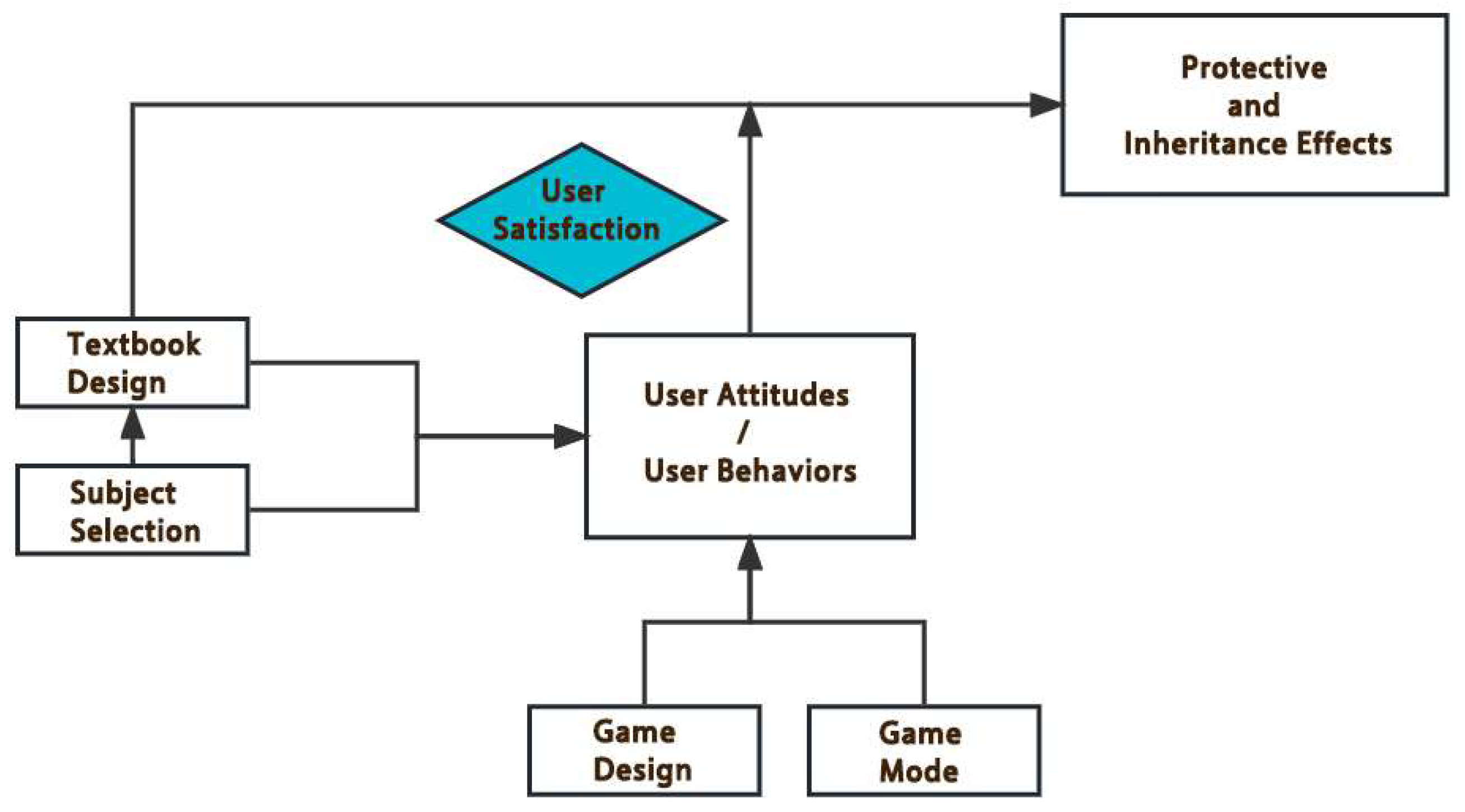
Based on the gamified learning theory, the authors have transformed the “mortise-and-tenon structure” Luban lock into a VR and serious game form and constructed a theoretical framework as shown in
Figure 1. The authors hold that, in the gamified learning and dissemination of intangible cultural heritage through VR serious games [
46], the selection of themes (such as the traditional Chinese wooden structure construction technique: mortise-and-tenon structure in this study) will directly affect the protection and dissemination effect of intangible cultural heritage projects. These two factors, together with game design and game mode, will influence users’ attitudes (satisfaction) and indirectly affect the protection and dissemination effect of intangible cultural heritage projects. Therefore, the authors put forward two hypotheses:
H1: Theme selection, game mode, and game design are positively correlated with users’ attitudes.
H2: Users’ attitudes are positively correlated with the effect of intangible cultural heritage protection and inheritance.
Theme selection, game form (VR format), and game design—including gameplay, level design, immersive and interactive experience, graphics, and auxiliary design—are treated as key design indicators. User attitudes are operationalized through satisfaction and importance ratings, which constitute the empirical basis for the subsequent four-quadrant model analysis.
3. Material and Design
3.1. Study 1: VR System Design and Implementation
In this part of the study, we focus on developing a mortise-and-tenon-based VR serious game prototype of the six-column Luban lock, guided by user needs and functional requirements. This design phase directly addresses RQ1 by defining the structure, functionality, and interaction logic of the VR gamified learning system.
3.1.1. User Demand Analysis
At present, China’s intangible cultural heritage protection and inheritance work is facing a key transformation. According to the statistics of the Ministry of Culture and Tourism, 85.2% of intangible cultural heritage projects still rely on traditional digital records such as graphics, texts and images. However, this one-way communication mode has significant efficiency bottlenecks. The China Intangible Cultural Heritage Protection Center monitors that the average stay time of the audience is less than 90 s, and a study by Tsinghua University confirms that the knowledge conversion rate is only 7.3%. This passive reception mode has been difficult to meet the needs of the new generation of audiences—a survey by China Youth Daily shows that 76.8% of the post-95s group clearly reject one-way information indoctrination. Therefore, in-depth interaction has become a breakthrough to solve this problem.
3.1.2. Functional Demand Analysis of “Mortise-and-Tenon Structure” VR System
The game instructions are the guide for the entire intangible cultural heritage VR game. They inform users of some rules during the operation of the game, such as how to start the game, what the combination rules of the Luban lock are, what the success rules of the game levels are, and how to return to the actual steps. The game instructions, as the user guidebook of the program, reduce the time cost for users to explore the game operation mode from unknowns. It also makes it easier for users to directly establish an interactive relationship with the game program, improving the users’ experience.
This game is designed with the mortise-and-tenon structure as the theme. The Luban lock, a direct embodiment of the mortise-and-tenon structure, is selected as the main body of the game. Therefore, it is necessary to design good and accurate combination rules. Users can successfully combine the Luban lock through the correct combination order. If users fail to combine according to the order and rules, the Luban lock cannot be formed, and users need to disassemble it and recombine.
This game breaks through the form of most existing mobile and PC application games, abandoning the screen touch interaction form and mouse click interaction form. It is expected that users can participate in intangible cultural heritage skills with both hands, use the handle of VR hardware to control the virtual arm, and perform action mapping in the virtual scene [
47]. In addition, a suitable virtual background is created to build the atmosphere of a woodworking workshop, forming a comprehensive interactive experience of visual interaction and operational interaction.
During the combination of the Luban lock, when components are combined with each other, corresponding sound effects and particle effects should appear to prompt users whether the components are successfully combined, so as to enhance the user’s experience feedback.
If users still cannot complete the combination of the Luban lock after being prompted, they need to choose graphic combination tips and instructions. These will help users combine or unlock the Luban lock and assist them in completing the corresponding level and entering a new level.
A concise and clear UI interface and appropriate UI interaction feedback are designed to improve the user’s experience.
3.1.3. Technical Route of Program Development
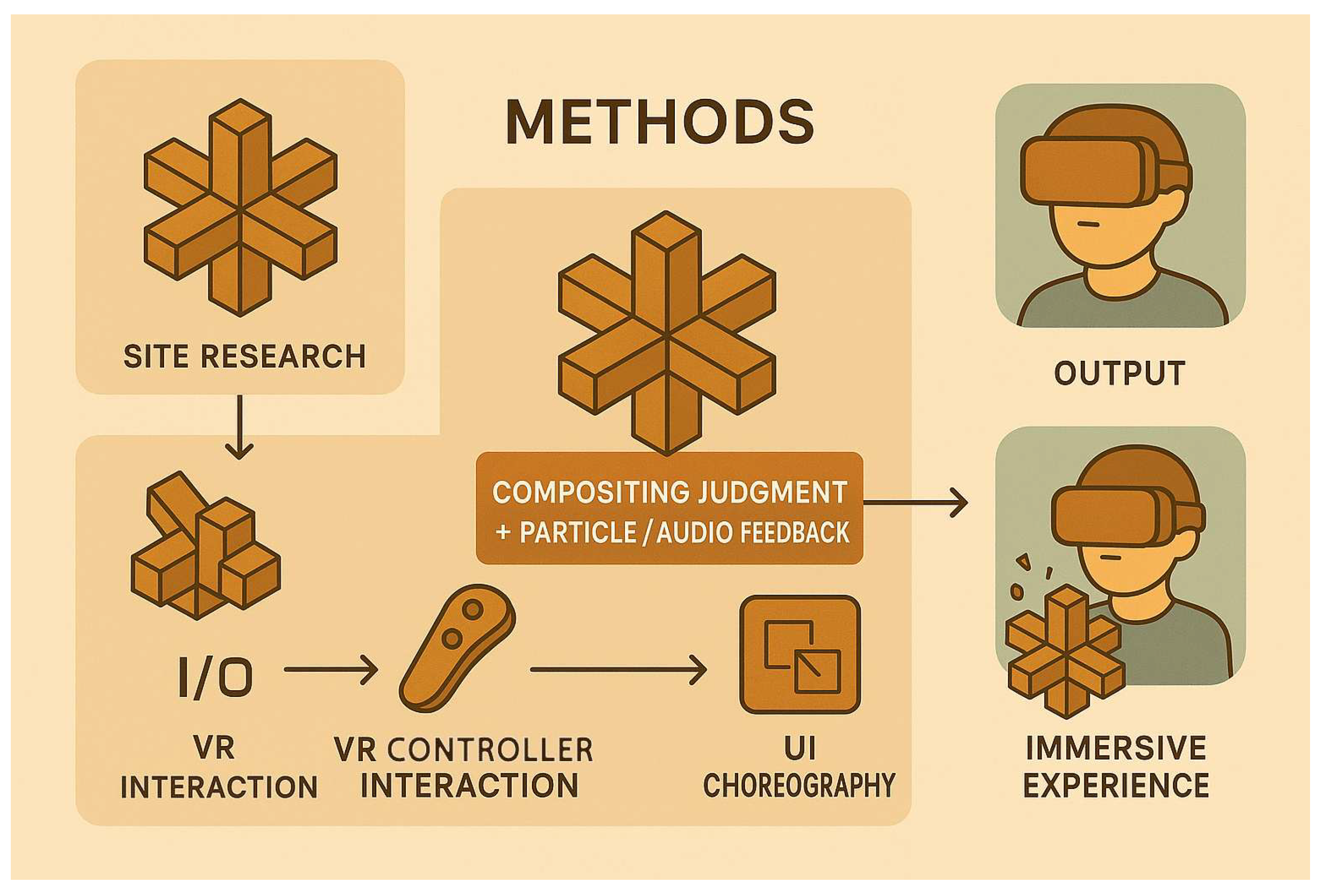
Based on the user requirements and program functional needs, the authors have made a preliminary design for the system blueprint of the “Mortise-and-Tenon Structure” VR application system as shown in
Figure 2.
3.2. Study 2: Participant Recruitment and Data Collection
The objective of this phase of the study is to collect user feedback on the VR serious game’s user experience outcomes through interviews and surveys. The collected data is used to assess user satisfaction and the perceived importance of system design features and to examine the relationships between game design, game format, and the perceived effectiveness of intangible cultural heritage preservation and transmission. This phase directly addresses research questions RQ2 and RQ3.
In this study, participants were recruited through two rounds of recruitment, including online recruitment and on-campus recruitment. All participants in the system test were recruited voluntarily.
3.2.1. Participants
This study strictly adheres to the Ethical Guidelines for Research Involving Human Subjects in the People’s Republic of China. As it involved no harm to participants, no collection of sensitive personal information, and no commercial interests, it met the criteria for ethical review exemption. Voluntary participation and anonymity were ensured for all interviewees and questionnaire respondents.
The inclusion criteria for all participants were as follows: adults aged 18 years or older who voluntarily consented to participate and reported no history of VR-induced motion sickness. All participants were aged between 18 and 50 years. As the questionnaire survey was conducted on a university campus, the sample included both staff and students.
Among the 14 interview participants, 11 were male, and 3 were female. Among the 305 questionnaire respondents, 166 were male, and 139 were female. Regarding educational background, master’s degree candidates constituted the largest proportion of respondents (58%), followed by doctoral candidates (23%), with the remainder being undergraduate students. Further details regarding ethical compliance are provided in the Ethical Statement section.
3.2.2. Investigation and Statistics
The purpose of the two rounds of recruitment is to conduct user testing on the “Mortise-and-Tenon Structure” VR application system. Through interviews and questionnaires, from the two perspectives of “subjective evaluation” and “objective data”, we collected users’ feelings and satisfaction with the system. Through the complementary research of subjective and objective methods, we can scientifically evaluate the effect and value of the “Mortise-and-Tenon Structure” VR application system in digital protection, dissemination, learning and inheritance. It also helps researchers explore a feasible and replicable path for the gamified learning and dissemination of intangible cultural heritage through VR technology.
The first recruitment was a small-scale one, targeting college students, with a total of 14 recruits (N = 14), including 3 females and 11 males. The purpose of recruiting testers in the first round is to conduct structured interviews with users after they use the “Mortise-and-Tenon Structure” VR application system.
In addition to the necessary polite greetings, the interview involves 13 main questions, as shown in
Table 1.
The second recruitment was a random offline recruitment. The authors held a 3-day system exhibition activity on the university campus to randomly recruit passers-by. They were invited to try out the “Mortise-and-Tenon Structure” VR application system and fill in a questionnaire after the trial. A total of 310 questionnaires were distributed, and 305 were recovered, with a recovery rate of 98.4%.
3.2.3. Measuring Tools
The questionnaire comprises two sections totaling 22 items, primarily covering demographic information and core research constructs. The latter module features nine key constructs centered on the VR intangible cultural heritage gamification learning system’s design elements, user experience, and preservation outcomes. Each construct is measured across two dimensions: “satisfaction” and “importance”. All items within the core research construct module employ a 5-point Likert scale for scoring, with corresponding anchor points set according to the respective measurement dimension. Satisfaction dimension: 1 = Extremely dissatisfied, 2 = Somewhat dissatisfied, 3 = Neutral, 4 = Somewhat satisfied, 5 = Extremely satisfied; Importance dimension: 1 = Extremely unimportant, 2 = Somewhat unimportant, 3 = Neutral, 4 = Somewhat important, 5 = Extremely important. For example, “Were you satisfied with the interactive experience in this study?”; “Do you consider the interactive experience important?”.
The data obtained from this questionnaire survey wasused in the four-quadrant model for data analysis. The questionnaire adopts a 5-point Likert scale and is designed from two dimensions: “satisfaction” and “importance”, as shown in
Table 2. Before the official distribution, the questionnaire was distributed on a small scale between the laboratory and the author’s class. The purpose is to test the reliability and validity of the questionnaire and adjust the deficiencies of the questions. A total of 120 questionnaires were distributed this time, and 109 were recovered, with a recovery rate of 90.8%.
4. Data Analysis and Results
4.1. Study 1
4.1.1. Deconstructive Analysis of the 6-Column “Luban” Lock
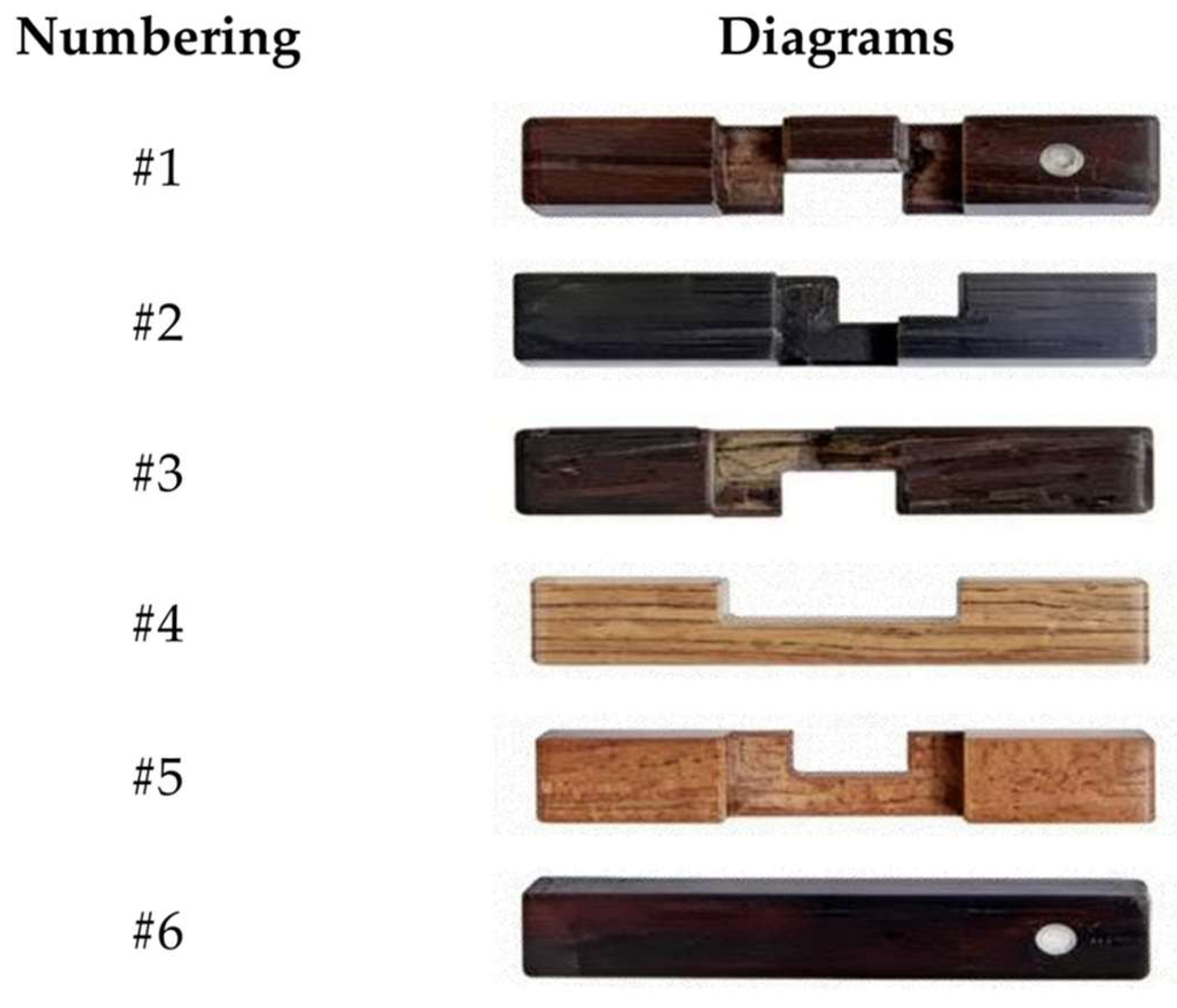
The authors conducted a deconstruction of the 6-column Luban Lock through on-site investigation. According to the unlocking process of the 6-column Luban Lock, the 6 individual components of the 6-column Luban Lock can be numbered, as shown in
Figure 3.
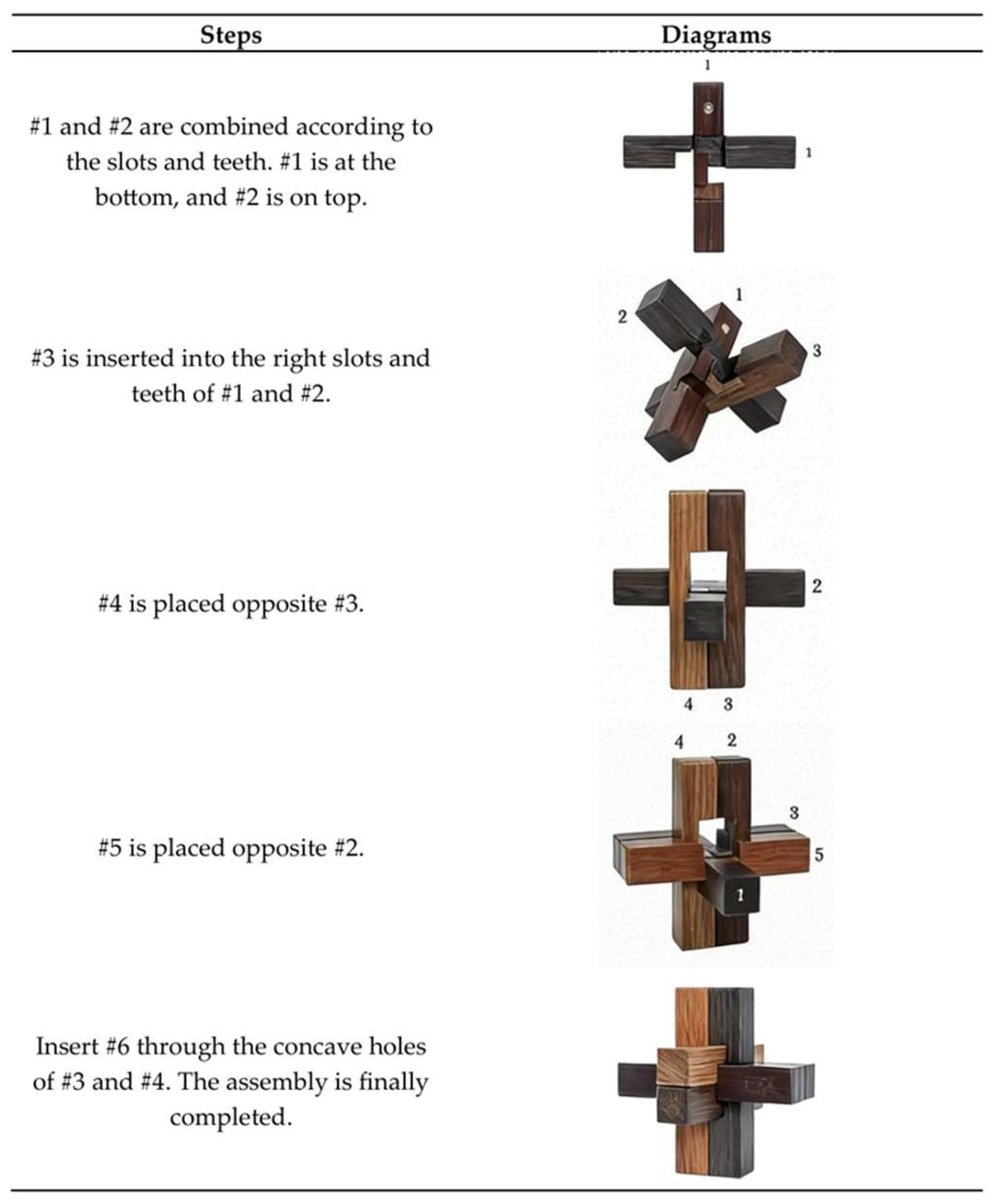
The authors recorded the combination process of the 6-column Luban Lock step by step, as shown in
Figure 4. The recording of this part of the process is an important blueprint for the subsequent program design. The program needs to design the game process and result judgment in accordance with this record.
4.1.2. Digitalization of Materials
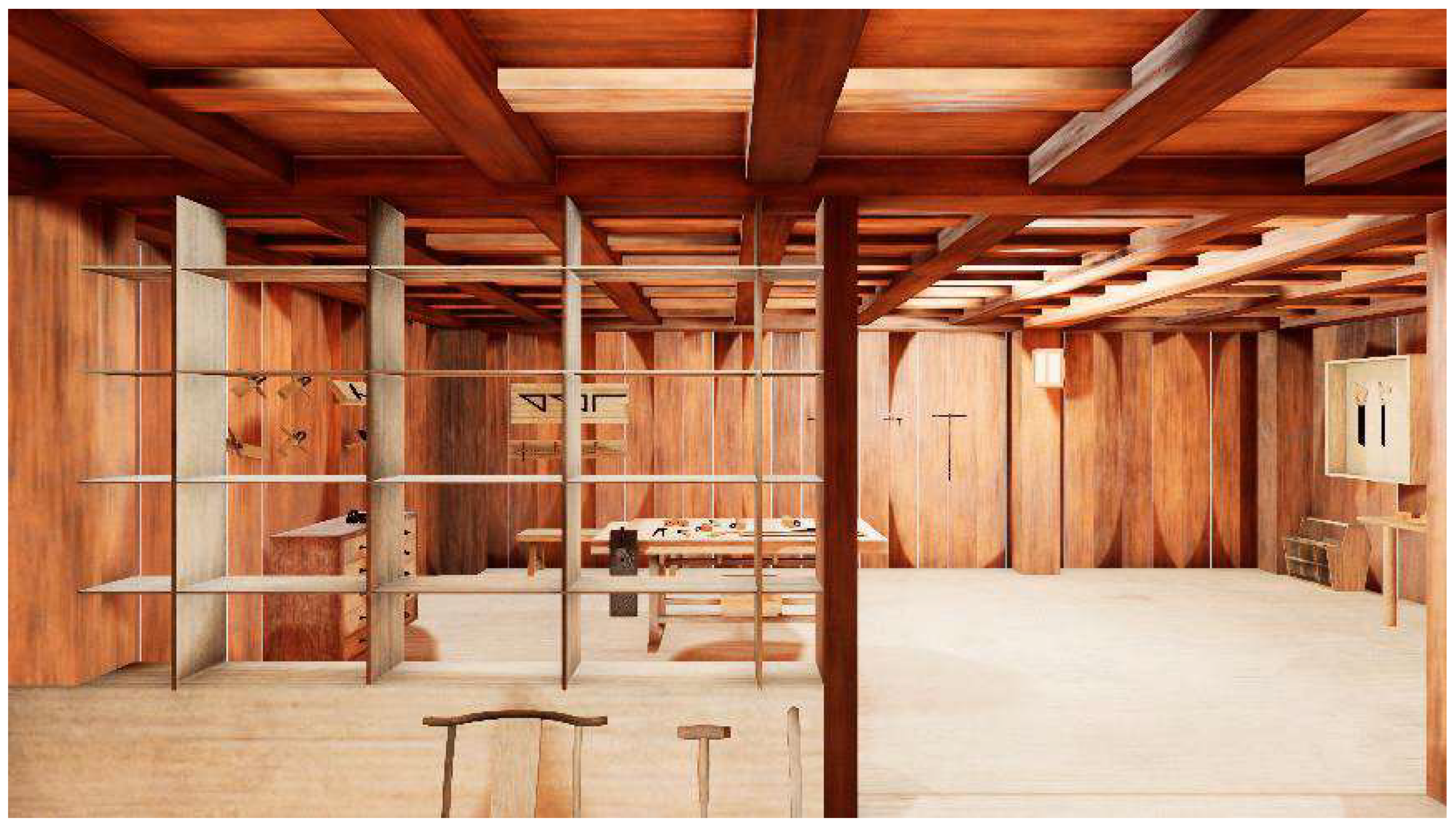
The authors have digitally recreated the 6-column Luban lock and the scene of a woodworking workshop, creating an immersive VR space. Meanwhile, particle effects have been produced as interactive feedback for determining whether the Luban Lock is successfully assembled during the game, as shown in
Figure 5.
4.1.3. Program Design and VR Mapping
Based on the assembly records of the 6-column Luban Lock, the programming design of game rules for mortise and tenon components is carried out through the Blueprint System of Unreal Engine.
Six groups of Actor Blueprints are created, named Component 1 to Component 6. The corresponding component models are imported into the Actor Blueprints. Collision Boxes are added on both sides of the slots and teeth of the components. The compilation rules are as follows: When the Collision Box of #1 overlaps with that of #2, #1 is attached to #2. Meanwhile, it is specified that if the Collision Box of #1 overlaps with a component other than #2, no command will be executed. For another example, the collision boxes on both sides of the slots and teeth of Component #5 are specified, respectively. The right collision box is set such that when the collision box of #5 overlaps with that of #6, #6 is attached to #5; otherwise, no command is executed. The left collision box is specified that if #5 and #6 have been combined, and this collision box overlaps with the collision box of #4, then #5 and #6 are attached to #4. Conversely, if #5 and #6 are not in a combined state, the effect of this side’s collision box is the same as that of the right collision box.
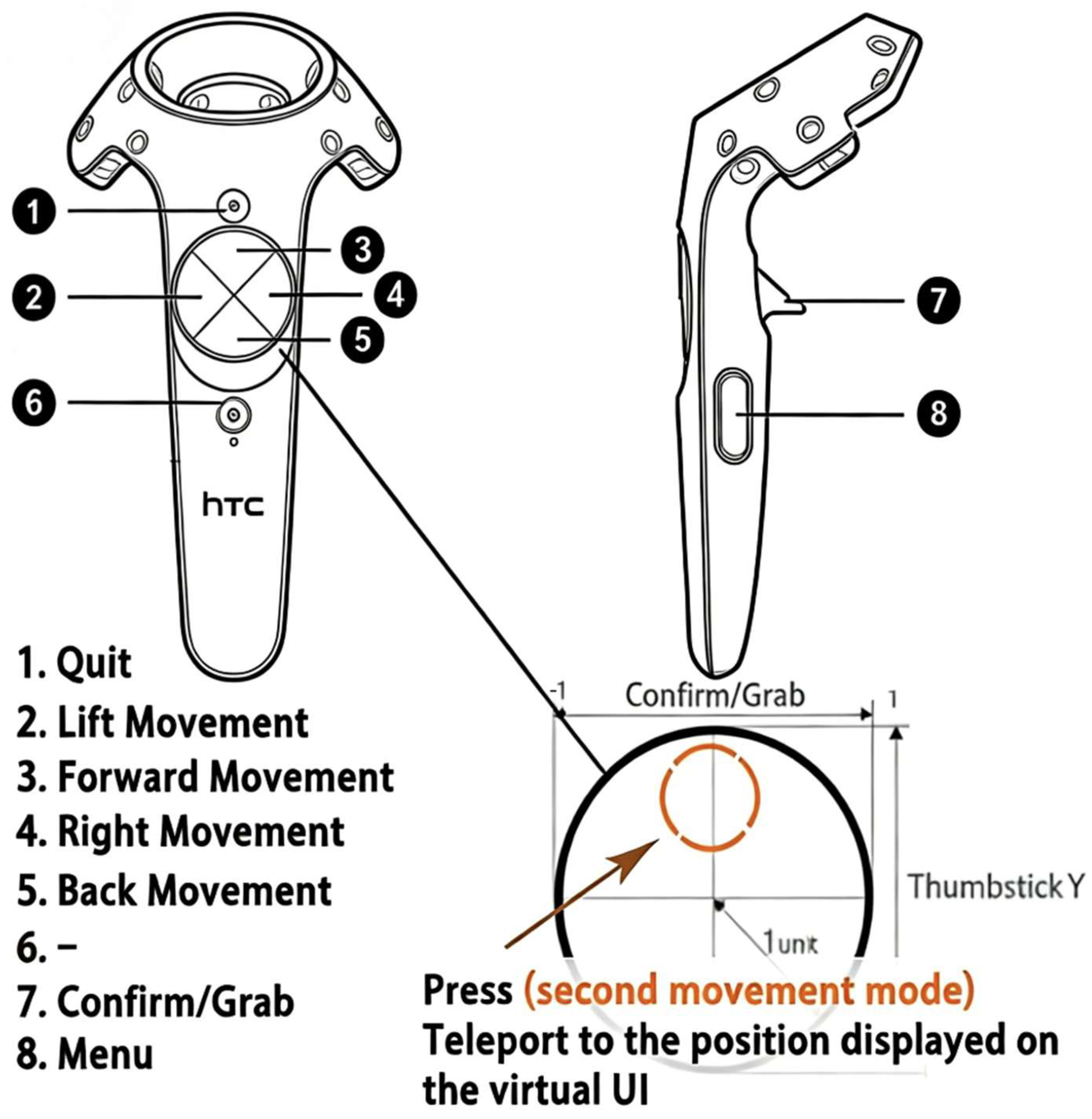
Next, the authors mapped the buttons and triggers of the VR controller. Through the VR controller, users can control their own behaviors such as walking, grabbing, and placing in the VR space, as shown in
Figure 6.
4.2. Study 2
Interview data were analyzed by identifying recurrent themes across participant responses. The prevalence of each theme is reported based on the number of participants who explicitly mentioned the corresponding experience.
4.2.1. Analysis of User Interviews
All interviewees experienced the “Mortise-and-Tenon Structure” VR application system for no less than 5 min.
To break the physical limitations of intangible cultural heritage communication, this study conducts “spatial reconstruction” through VR technology. By means of 3D reproduction of the scenes of Luban locks and woodworking workshops, a highly immersive virtual environment is constructed. Eleven individuals frequently mentioned immersion.
“Every 360-degree view is within this wooden house. The proportions of the tables and tools are very accurate, and I can even see the wood grain, which is very realistic. It makes me feel like I’m really in the workshop, and this experience is great.”
“The images allow me to clearly see the interaction positions of the mortise and tenon joints.”
Among the 14 interview participants, 8 mentioned that the visual and spatial dimensions of the virtual environment felt highly realistic, explicitly stating that the experience eliminated the fragmented sensation associated with traditional tablet displays.
“Staring at a computer or mobile phone, there’s just a screen, which is really uninteresting.”
In this study, the game design of the “Mortise-and-Tenon Structure” VR application system follows a progressive logic of “from simple to difficult”. Subsequent system iterations will include 9-column Luban locks, circular Luban locks, etc. By gradually increasing the difficulty, it ensures that users are always in a state of “challenge”.
“Thegame itself is quite interesting. I have to think carefully to pass the level, which is very appealing. If the order is wrong, it can’t be assembled, which is quite challenging.”
“Thisis a very brain-engaging game. You need to complete a certain task to pass the level. In this game, if you make a mistake in any step, you can’t proceed further.”
The system’s rule design incorporates a trial-and-error correction loop, with operational instructions embedded within the virtual UI for users to consult when encountering difficulties. Among the 14 participants, 5 noted that this rule design rendered task objectives clearer; 7 mentioned that the instructions provided during difficulties both prevented disruption to the experience and preserved scope for autonomous exploration.
“I think I still need to rely on my own ideas to figure it out and try my best to solve it. In the end, if I really can’t solve it, it’s okay to check the instruction manual.”
“When I encounter problems, there is also an instruction manual to give me some guidance.”
As the core embodiment of traditional Chinese wooden structure construction techniques, the “structural” and “logical” nature of mortise-and-tenon structures highly matches the demand for “assembly–disassembly” in gamification.
“The theme is particularly interesting and can attract young people.”
“The game itself is quite interesting and can stimulate thinking.”
Of the 14 participants, 11 indicated they had experienced content on mortise-and-tenon construction through the system and found the format to be interactive.
4.2.2. Analysis of Questionnaire and Four-Quadrant Model
Data analysis followed a predefined, sequential procedure to ensure analytical rigor and reproducibility. This study employed SPSS 26 statistical software for data processing, with the analytical sequence adhering to the logical progression of “reliability testing-validity testing-four-quadrant model validation”. Firstly, reliability analysis was conducted on the core questionnaire items, using Cronbach’s α coefficient ≥ 0.7 as the criterion for assessing internal consistency. Subsequently, KMO sampling adequacy (KMO ≥ 0.7) and Bartlett’s sphericity test (p < 0.05) were employed to validate data suitability for factor analysis, with structural validity assessed using factor loadings ≥ 0.6 and common variance ≥ 0.4 as criteria. Finally, a four-quadrant model was constructed based on the mean values of the satisfaction and importance dimensions from the questionnaire. Proportional thresholds of “80% or more indicators distributed in quadrants A/C/D” and “60% of indicators in the high satisfaction zone” were applied. Combined with the rule that “indicators distributed in quadrants A/D indicate positive correlation”, this approach verified the validity of hypotheses H1 and H2.
After collecting and sorting out the two sets of questionnaire samples, the authors imported the collected data into the SPSS system and conducted data analysis on the two groups of data samples through the SPSS system. As stated in the chapter “Material and Design”, this study carried out two rounds of questionnaire distribution and collection.
For the first questionnaire sample distributed on a small scale, the authors conducted reliability analysis and validity analysis to determine the usability of the questionnaire. The second questionnaire sample, which was filled out by random users after they tried out the experience, provided data support for the analysis of the four-quadrant model.
For the reliability analysis of the first questionnaire, the authors excluded items related to basic information, such as educational background and age, and only retained eight items of satisfaction indicators and eight items of importance indicators for analysis. The analysis results are shown in
Table 3.
Reliability analysis indicated excellent internal consistency for the 16 satisfaction and importance items (Cronbach’s alpha = 0.98; see
Table 3). All corrected item–total correlations exceeded 0.40, and all factor loadings were above 0.60 (see
Table 4). A single factor explained 76.93% of the total variance (KMO = 0.97; Bartlett’s test
p < 0.001; see
Table 4).
This study analyzed the feedback from the second user questionnaire using the four-quadrant (Importance–Performance Analysis) model to assess user satisfaction with the mortise-and-tenon VR application system and to examine support for hypotheses H1 and H2.
To test the research hypotheses, this study established evaluation criteria based on the distribution of indicators within the Importance–Performance Analysis (IPA) quadrant model [
48]. The thresholds were defined as heuristic decision criteria to support the interpretation of overall system performance. For H1, support is indicated when core design indicators—such as theme selection, game format, and game design—are located in Quadrant A (Strength Zone) or Quadrant D (Maintenance Zone), reflecting high user satisfaction across importance levels and indicating a positive association between these design factors and perceived effectiveness in intangible cultural heritage preservation. For H2, support is indicated when a substantial majority (≥80%) of all measured indicators fall within Quadrants A, C, or D, with a high concentration in the high-satisfaction regions (A and D). Conversely, if more than 30% of indicators are located in Quadrant B (improvement zone), indicating unmet user expectations, support for both H1 and H2 is not established.
Through the collection and induction of the data from the second user questionnaire, the authors listed the indicators in
Table 5 along with their corresponding satisfaction and importance scores, providing data support for the four-quadrant model analysis.
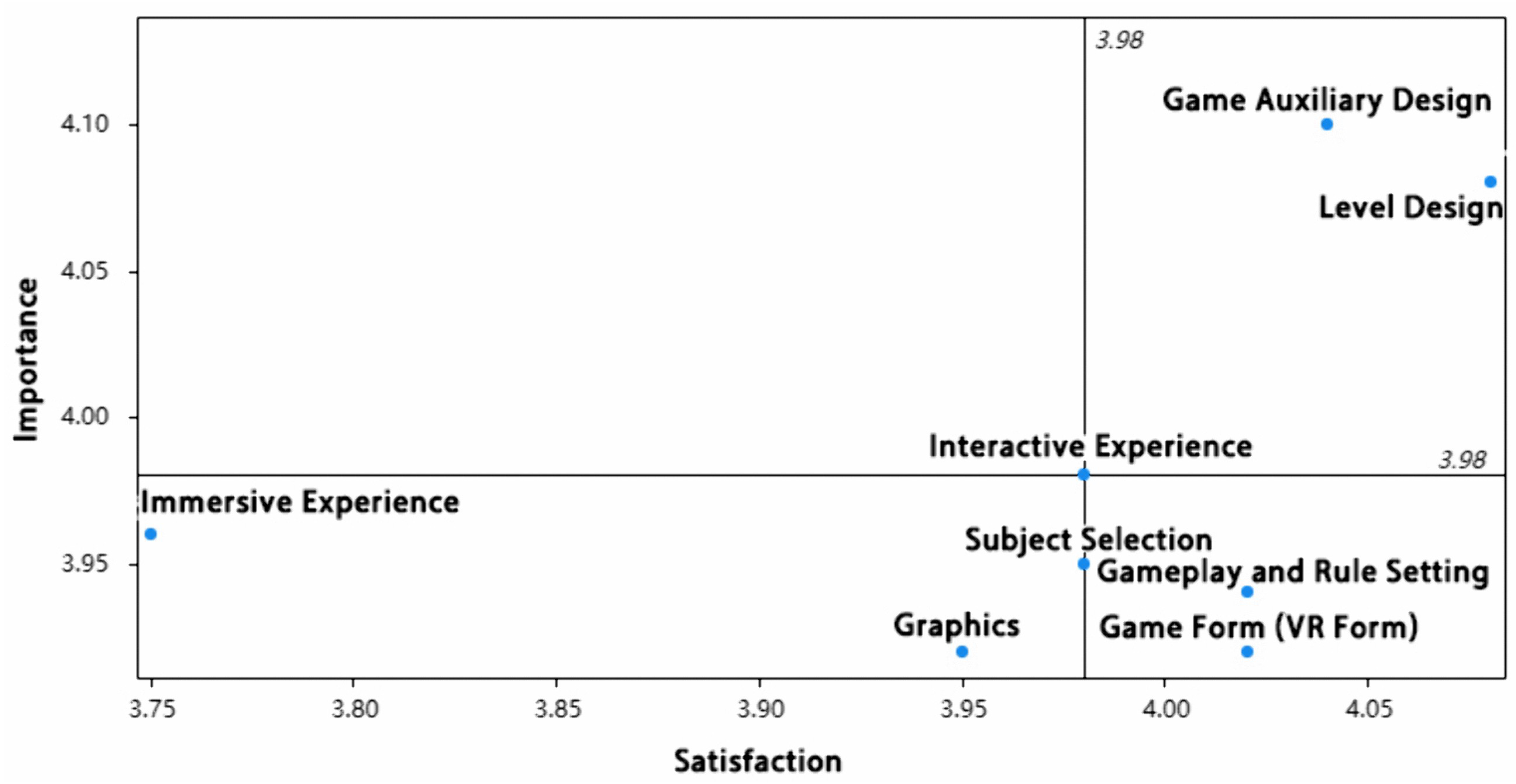
The authors imported the data into the SPSS system, defining the Y-axis as the importance indicator and the X-axis as the satisfaction indicator. The names of each indicator are imported as point data labels. And the four-quadrant model analysis is carried out as shown in
Figure 7.
The questionnaire data were analyzed using the four-quadrant (Importance–Performance Analysis) model, based on the mean satisfaction and importance scores for each indicator. All eight indicators—subject selection, game format (VR format), gameplay and rule setting, level design, immersive experience, interactive experience, graphics, and game auxiliary design—were plotted within the quadrant space.
The results show that 100% of the indicators were distributed across Quadrants A, C, and D, exceeding the predefined threshold of 80%. Specifically, 75% of the indicators were located in the high-satisfaction zones (Quadrants A and D), while the remaining 25% were located in the maintenance zone (Quadrant C). No indicators were located in the improvement zone (Quadrant B).
Regarding hypothesis testing, all core design indicators related to subject selection, game design, and VR format were located in the high-satisfaction quadrants, supporting H1. In addition, the overall distribution pattern of indicators across effective quadrants met the predefined criteria for H2.
4.3. Hypothesis Testing
Based on the predefined evaluation criteria of the Importance–Performance Analysis (IPA) four-quadrant model, this subsection explicitly links the observed distribution of design indicators to the testing of hypotheses H1 and H2.
H1: The core design indicators—subject selection, game design, and VR format—are all located within Quadrants A and D of the four-quadrant model. This shows that these design features consistently achieve high user satisfaction ratings. These results provide empirical support for a positive association between system design characteristics and the perceived effectiveness of mortise-and-tenon-based intangible cultural heritage protection. Thus, the results support H1.
H2: The empirical results show that 100% of the evaluated indicators are distributed across the effective quadrants (A, C, and D), with 75% concentrated in the high-satisfaction regions (Quadrants A and D) and none in the improvement zone (Quadrant B). This pattern of high satisfaction and perceived importance suggests that users’ positive attitudes toward the VR system are closely associated with their perceived effectiveness in protecting and inheriting intangible cultural heritage. These findings provide support for H2.
5. Discussion and Limitations
The results of the four-quadrant model analysis support both H1 and H2. These results also offer insight into how specific design features of VR gamified learning systems help protect and inherit intangible cultural heritage.
Key design indicators—such as level design, auxiliary game design, gameplay rules, VR format, and theme selection—are concentrated in the high-satisfaction quadrants. This suggests that the system’s design supports user engagement and perceived effectiveness. From a gamified learning view, this shows the importance of structured task progression, rule-based interaction, and feedback mechanisms for sustaining motivation and exploratory behavior.
In particular, the immersive reconstruction of the six-column Luban lock and the virtual woodworking environment appear to enhance users’ sense of presence and cognitive involvement. Unlike traditional flat or observational digital media, the spatial and interactive properties of the VR system allow users to actively participate in the assembly process, reinforcing experiential learning and understanding of craftsmanship.
The trial-and-error correction mechanism built into the system aligns with the core principles of gamified learning. It lets users learn through iterative exploration while keeping task objectives clear. This helps explain why many indicators related to game structure and interaction received high satisfaction and importance ratings.
These findings suggest that adding mortise-and-tenon construction techniques to a VR serious game can turn architectural intangible cultural heritage from a passive object into an interactive learning experience. This change supports cultural sharing and the inheritance of skills. It aligns with the positive links between design features, user attitudes, and perceived effectiveness observed in H1 and H2.
As outlined in the literature review section, the digital transformation of intangible cultural heritage has already established a solid foundation. For example, the i-Treasures project focuses on the immersive documentation of traditional music and performance arts, while VR museums primarily emphasize high-fidelity scene reconstruction to support immersive experiences. However, these approaches generally position users in a predominantly sensory or observational role, with limited opportunities for active skill engagement.
By contrast, this study’s contribution lies in foregrounding user agency through task-intensive interaction. Specifically, core mortise-and-tenon joinery techniques are embedded within goal-oriented assembly challenges that require active problem-solving. Through progressively increasing levels of difficulty, users sustain engagement by performing the craft rather than merely observing it as a static exhibit. This approach systematically integrates intangible cultural heritage techniques with gamified learning mechanics. In addition, incorporating a four-quadrant evaluation model provides an operationalized, quantifiable analytical framework for assessing gamified learning applications in mortise-and-tenon joinery, thereby establishing a structured link between game design features and perceived cultural dissemination effectiveness.
Despite these contributions, several methodological limitations should be acknowledged. First, participant recruitment was restricted to campus-based users, resulting in a non-probabilistic sample that may limit generalizability, as university populations often exhibit higher levels of digital literacy and technology acceptance. Second, the empirical period spanned only three days, limiting the assessment of long-term learning outcomes and skill retention. In addition, the novelty effect associated with VR technologies may have temporarily inflated satisfaction and engagement ratings, particularly during initial exposure.
At the same time, since the game is not yet perfect, only the DEMO version was used during the user experience research, so there may still be some deviations between users’ expectations of the game and their actual experience. From user interviews, some people put forward opinions such as “adding sound effects might be better” and “it would be great if fingers could have a sense of touch”, which can also reflect from the side that users have expectations for multi-sensory and multi-modal feedback. It is believed that if the game is further improved and a VR controller supporting finger interaction is adopted, there will be better user feedback results.
Future research should therefore adopt longitudinal designs, such as follow-up surveys conducted over six months or longer, to examine sustained usage patterns, learning retention, and behavioral intentions related to VR-based mortise-and-tenon training. Moreover, controlled comparative studies contrasting VR gamified learning with non-VR or traditional digital approaches would further clarify the specific pedagogical value of immersive and gamified technologies for safeguarding and transmitting intangible cultural heritage across diverse domains.
Through this study, the authors have created a fixed template for VR digital learning. Although the topic of this study is the mortise-and-tenon structure, the authors hope that this designed template can be applied to other intangible cultural heritage skills. The template can be applied repeatedly to form a VR gamified learning process system, which can be more deeply and directly applied to the protection, dissemination, learning and inheritance of intangible cultural heritage, providing an effective tool for it.
Although the digital forms of intangible cultural heritage protection, dissemination, learning and inheritance are becoming increasingly rich, more fresh forces and innovative ideas are still needed to be injected into this work. At the same time, it is crucial to strengthen the discovery of intangible cultural heritage inheritors, as well as protect and expand the market for the use of intangible cultural heritage skills, so that they can regain the way to survive. In addition, combining with other digital intangible cultural heritage protection, dissemination, learning and inheritance techniques such as the VR gamified learning path can provide better ideas and ways for it.
6. Conclusions
The ultimate goal of this study is to explore the digital transformation path for the protection, dissemination, learning and inheritance of intangible cultural heritage. It takes users’ satisfaction feedback as an important measurement indicator to study the differences in effects brought by the VR gamified learning path on the protection, dissemination, learning and inheritance of intangible cultural heritage.
Regarding RQ1, this study demonstrates how a VR gamified learning system centered on mortise-and-tenon construction can be designed to support the preservation, dissemination, learning, and transmission of intangible cultural heritage. By integrating high levels of interactivity, immersive environments, progressive difficulty design, and culturally embedded content, a VR serious game prototype based on the six-column Luban lock was developed. This design clarifies key pathways for implementing VR gamified learning systems within the ICH context and highlights their potential for digital transformation of traditional craftsmanship.
Addressing RQ2, the findings indicate that the VR serious game positively influenced user experience outcomes. Interview results show that immersive spatial design enhanced users’ sense of presence and cognitive engagement during the learning process, while progressive game rules and difficulty structures stimulated active participation. In addition, integrating cultural themes and narrative elements strengthened users’ identification with and emotional connection to mortise-and-tenon craftsmanship.
With respect to RQ3, quantitative analysis based on user satisfaction and perceived importance revealed that core design features—including thematic selection, game design, and VR format—were positively associated with the perceived effectiveness of intangible cultural heritage preservation and transmission. The distribution of these indicators within the high-satisfaction quadrants of the four-quadrant model indicates that favorable user attitudes toward system design are closely linked to perceived effectiveness in supporting ICH learning and inheritance.
Author Contributions
Conceptualization, Z.L., C.F.-M., A.Á.-M. and Y.W.; data curation, Z.L.; formal analysis, Z.L.; investigation, Z.L.; methodology, Z.L.; project administration, C.F.-M. and A.Á.-M.; resources, Z.L.; software, Z.L. and Y.W.; supervision, C.F.-M. and A.Á.-M.; validation, Z.L.; visualization, Z.L.; writing—original draft preparation, Z.L.; writing—review and editing, C.F.-M. and A.Á.-M. All authors have read and agreed to the published version of the manuscript.
Funding
This research received no external funding.
Institutional Review Board Statement
Ethics approval was not required under institutional regulations in China for minimal-risk research involving adult participants participating in non-clinical VR activities and anonymous surveys/interviews. This study involved no medical procedures, no interventions, and no vulnerable populations. All participants provided informed consent before participating through signed written consent for interviews and mandatory digital consent (checkbox) for the online questionnaire. No identifying information was collected, and all data were anonymized before analysis.
Informed Consent Statement
The purpose of this study was specified in the questionnaire. All questionnaire data were processed anonymously, and the submission of a questionnaire was deemed as provision of informed consent. Prior to the interviews, respondents were informed of the research objectives, and written informed consent was obtained from each participant before the interviews were conducted.
Data Availability Statement
The datasets generated during and/or analyzed during the current study are available from the corresponding author on reasonable request.
Acknowledgments
I would like to express my sincere gratitude for the support received during the research process. This dissertation was completed in Madrid, Spain, while the research and testing experiments were conducted in Tianjin, China. I would like to extend my heartfelt thanks to Wang Yifu, my master’s supervisor from the Department of Experimental Art at Tianjin Academy of Fine Arts and the School of Intelligence and Computing at Tianjin University, who provided crucial hardware support and assistance for this research. During the experiments, I am deeply grateful to Mental&Natural (Tianjin) Animation Technology Development Co., Ltd. for granting permission to use VR equipment and other computer devices, as well as providing venue support. At the same time, I wish to convey my sincere appreciation to Yu Hao and Li Jian of Mental&Natural (Tianjin) Animation Technology Development Co., Ltd. for their valuable opinions and guidance on the software design, code compilation, and art design of the system.
Conflicts of Interest
The authors declare no conflicts of interest.
Abbreviations
The following abbreviations are used in this manuscript:
| ICH | Intangible Cultural Heritage |
| VR | Virtual Reality |
References
- Xian, Y. Value Exploration of Intangible Cultural Heritage in Cultural Creative Industries. In Proceedings of the 2015 5th International Conference on Applied Social Science (ICASS 2015), Limassol, Cyprus, 4–5 October 2015; pp. 228–232. [Google Scholar]
- Xue, K.; Li, Y.; Meng, X. An evaluation model to assess the communication effects of intangible cultural heritage. J. Cult. Herit. 2019, 40, 124–132. [Google Scholar] [CrossRef] [Scilit]
- Schreiber, H. Intangible Cultural Heritage and Soft Power—Exploring the Relationship. Int. J. Intang. Herit. 2017, 12, 44–57. [Google Scholar]
- Zhao, Z.; Tao, L. Study on intangible cultural heritage protection of the architectural cultural heritage. In Proceedings of the 3rd International Conference on Civil, Architectural and Hydraulic Engineering (ICCAHE), Hangzhou, China, 30–31 July 2014; pp. 2312–2315. [Google Scholar]
- Stewart, R.; Zhelev, Y.; Monova-Zheleva, M. Development of Digital Collections of Intangible Cultural Heritage Objects—Base Ontology. In Proceedings of the 11th International Conference on Digital Presentation and Preservation of Cultural and Scientific Heritage (DiPP), Burgas, Bulgaria, 23–25 September 2021; pp. 51–56. [Google Scholar]
- Jia, X.; Tan, Y.; Xiong, Q.; Li, Y.; Hai, W. Designing Edutainment Games for Intangible Cultural Heritage: The BNREG Project. In Proceedings of the 9th International Conference on Digital Presentation and Preservation of Cultural and Scientific Heritage (DiPP), Burgas, Bulgaria, 26–28 September 2019; pp. 281–286. [Google Scholar]
- Yi, J. Research on Inheritance of Intangible Cultural Heritage. In Proceedings of the 2017 2nd International Conference on Education, Sports, Arts and Management Engineering (Icesame 2017); Atlantis Press: Dordrecht, The Netherlands, 2017; pp. 1906–1910. [Google Scholar]
- Chen, L.; Wang, B.; Chen, B. Research on digital museum for the intangible cultural heritage. In 2009 IEEE International Symposium on IT in Medicine & Education; IEEE: New York, NY, USA, 2009; pp. 734–737. [Google Scholar]
- Rafiq, A.M. Protection of Intangible Cultural Heritage and Cultural Analysis. Rev. Univ. Soc. 2024, 16, 46–51. [Google Scholar]
- Wang, X. An Analysis of Several Issues Concerning the Standards for the Protection of Intangible Cultural Heritage. Cult. Herit. 2022, 5, 1–9. (In Chinese) [Google Scholar]
- Tao, J. Research on Intangible Cultural Heritage and Traditional Cultural Protection Mechanism. In Proceedings of the International Conference on Humanities, Arts and Language (HUMAL), Yinchuan, China, 9–10 December 2017; pp. 180–183. [Google Scholar]
- Arnal, V. Destructive trends in contemporary armed conflicts and the overlooked aspect of intangible cultural heritage: A critical comparison of the protection of cultural heritage under IHL and the Islamic law of armed conflict. Int. Rev. Red Cross 2020, 102, 539–558. [Google Scholar] [CrossRef] [Scilit]
- Smith, L.; Campbell, G. The Tautology of “Intangible Values” and the Misrecognition of Intangible Cultural Heritage. Herit. Soc. 2017, 10, 26–44. [Google Scholar] [CrossRef] [Scilit]
- Berbic-Kolar, E. Sustainability of the Linguistic Intangible Cultural Heritage of the Republic of Croatia Through the Process of Protection of Local Speeches as Intangible Cultural Assets. Ling. Montenegrina 2022, 27, 127–148. [Google Scholar] [CrossRef] [Scilit]
- Park, Y.-J. Aspects of Protection and Inheritance of North Korean Intangible Cultural Heritage—Focusing on the Field of Traditional Korean Music. J. Natl. Cent. Korean Tradit. Perform. Arts 2021, 43, 43–70. [Google Scholar]
- Stephenson, W. The Play Theory of Mass Communication; Transaction Publishers: Piscataway, NJ, USA, 1967. [Google Scholar]
- Chen, X.; Yang, X. Caught in a Dilemma: Reflections on the Practice of Intangible Cultural Heritage Protection in China. J. Hubei Minzu Univ. (Philos. Soc. Sci. Ed.) 2021, 39, 160–168. (In Chinese) [Google Scholar]
- Jiang, X.; Jiang, Y.; Dang, Y.; Zhang, M. Protection and Inheritance of Intangible Cultural Heritage in Service of the Rural Revitalization Strategy—Taking Zhuanglang Gaotai as an Example. Cult. Ind. 2022, 35, 139–141. (In Chinese) [Google Scholar]
- Wang, X. On the Museum’s Function of Protecting Traditional Culture from the Perspective of Intangible Cultural Heritage—A Case Study of Intangible Cultural Heritage Museums in Taiwan Region. J. Zhangzhou Inst. Technol. 2022, 24, 95–99. (In Chinese) [Google Scholar]
- Liu, Z. Indigenising Intangible Cultural Heritage: Comparison and Interpretation of the Concept of ICH in China. Int. J. Intang. Herit. 2015, 10, 126–134. [Google Scholar]
- Kuryanova, T.S. Museum and Intangible Cultural Heritage. Tomsk. State Univ. J. 2012, 361, 55. [Google Scholar]
- Liu, E. Research on image recognition of intangible cultural heritage based on CNN and wireless network. Eurasip J. Wirel. Commun. Netw. 2020, 1, 240. [Google Scholar] [CrossRef] [Scilit]
- Xiao, Y. Significance and Ideas of Developing Intangible Cultural Heritage Animation Films to Promote the Protection and Inheritance of Intangible Cultural Heritage. J. Xinjiang Arts Univ. 2022, 20, 80–86. (In Chinese) [Google Scholar]
- Zhao, S. Spatial Narrative and Intangible Cultural Heritage Inheritance in Chinese Ethnic Animation Films. Cult. Ind. 2022, 27, 46–48. (In Chinese) [Google Scholar]
- Zhou, Y. Inheritance and Dissemination of Intangible Cultural Heritage through Animation in the Context of New Media. Grand View (Forum) 2021, 11, 77–78. (In Chinese) [Google Scholar]
- Li, Y.; Zhang, Y. An Analysis of the Visual Expression and Dissemination of Traditional Dance “Intangible Cultural Heritage”—Taking Yongxin Shield Dance as an Example. Media Forum 2022, 5, 78–80. (In Chinese) [Google Scholar]
- Wu, Y. Research on the Creation and Dissemination of Intangible Cultural Heritage Visualization—Taking Xiangxi Miao Batik as an Example. Fash. Color 2022, 8, 111–113. (In Chinese) [Google Scholar]
- Cao, X.; Yang, R. A Brief Analysis of the Direction of Visualization Protection and Utilization of Intangible Cultural Heritage—Taking Dunhuang as an Example. Jin Gu Wen Chuang 2021, 25, 66–67. (In Chinese) [Google Scholar]
- Erturk, N. Preservation of digitized intangible cultural heritage in museum storage. Milli Folk. 2021, 16, 100–110. [Google Scholar]
- Plasencia, R.; Herrera, G.; Garces, L.; Espinosa, E. Dissemination of Cultural Heritage: Design and Implementation of a VR environment for the preservation of art and culture in Pujilí—Ecuador. In Proceedings—2021 International Conference on Computers and Automation, CompAuto 2021; Institute of Electrical and Electronics Engineers Inc.: New York, NY, USA, 2021; pp. 61–66. [Google Scholar]
- Fragomeni, P.; Lorè, I. VR as (In)Tangible Representation of Cultural Heritage. Scientific Visualization and Virtual Reality of the Doric Temple of Punta Stilo: Interference Ancient-Modern. In International Symposium; New Metropolitan Perspectives: Reggio Calabria, Italy, 2020; pp. 1851–1861. [Google Scholar]
- Plocher, T.; Rau, P.L.P.; Choong, Y.Y.; Guo, Z. Cross-Cultural Design. Handb. Hum. Factors Ergon. 2021, 252–279. [Google Scholar] [CrossRef] [Scilit]
- Kim, U.; Shin, K. Content Concept for VR-based Interactive Korean Traditional Dance ExperienZone (IKTDEZ). In Proceedings—2017 International Conference on Culture and Computing, Culture and Computing 2017; Institute of Electrical and Electronics Engineers Inc.: New York, NY, USA, 2017; pp. 118–122. [Google Scholar]
- Zhang, J.; Bryan-Kinns, N. QiaoLe: Accessing Traditional Chinese Musical Instruments in VR. In Proceedings—2022 IEEE Conference on Virtual Reality and 3D User Interfaces Abstracts and Workshops, VRW 2022; Institute of Electrical and Electronics Engineers Inc.: New York, NY, USA, 2022; pp. 357–362. [Google Scholar]
- Yilmaz, E.; Uğurca, D.; Şahin, C.; Dagnino, F.M.; Ott, M.; Pozzi, F.; Dimitropoulos, K.; Tsalakanidou, F.; Kitsikidis, A.; Al Kork, S.; et al. Novel 3D Game-like Applications driven by body interactions for learning specific forms of Intangible Cultural Heritage. In Proceedings of the International Conference on Computer Vision Theory and Applications, Marbella, Spain, 9–11 March 2026. [Google Scholar]
- Grammatikopoulou, A.; Laraba, S.; Sahbenderoglu, O.; Dimitropoulos, K.; Douka, S.; Grammalidis, N. An adaptive framework for the creation of exergames for intangible cultural heritage (ICH) education. J. Comput. Educ. 2019, 6, 417–450. [Google Scholar] [CrossRef] [Scilit]
- Dagnino, F.M.; Pozzi, F.; Grammalidis, N.; Dimitropoulos, K.; Tsalakanidou, F.; Yilmaz, E. Designing Serious Games for ICH Education. In 2015 Digital Heritage; IEEE: New York, NY, USA, 2016; pp. 11–23. [Google Scholar]
- Guo, L.; Licai, G. An Immersive Experience Perspective on Popular Science and Handicraft Kinesthetic Games- The Case of Bamboo Weaving Techniques. Master’s Thesis, Zhejiang Sci-Tech University, Zhejiang, China, September 2022. (In Chinese) [Google Scholar]
- Ji, Y. Research on the Application of Virtual Reality Technology in the Inheritance and Dissemination of Intangible Cultural Heritage. Master’s Thesis, Liaoning University of Science and Technology, Anshan, China, 2020. (In Chinese) [Google Scholar]
- Wang, X. Research on Digital Display Design of “Intangible Cultural Heritage” Based on the Concept of Experience. Master’s Thesis, Shantou University, Shantou, China, 2021. (In Chinese) [Google Scholar]
- Yang, X. Research on Serious Games and Digital Protection of Intangible Cultural Heritage. Master’s Thesis, Huazhong University of Science and Technology, Wuhan, China, 2020. (In Chinese) [Google Scholar]
- Zou, Z. Design and Implementation of a Virtual Interactive Teaching System for Mortise and Tenon Structure Furniture. Master’s Thesis, Beijing University of Technology, Beijing, China, 2016. (In Chinese) [Google Scholar]
- Xia, M.; Mengmeng, X. Application of Gamification Thinking in Mobile Display of Traditional Crafts. Master’s Thesis, Shanghai University of Engineering Science, Shanghai, China, June 2021. (In Chinese) [Google Scholar]
- Ma, L. Research on the Application of Interaction Design in the Assembly and Display of Virtual Ming—Style Furniture. Master’s Thesis, Beijing University of Technology, Beijing, China, 2017. (In Chinese) [Google Scholar]
- Zhou, L.; Hu, Y. Application of Mortise and Tenon Structure in the Design of Educational Board Games. Pop. Stand. 2021, 18, 235–237. (In Chinese) [Google Scholar]
- Chen, J.; Hu, Y. Starting from Stephenson: New Progress in Communication Game Theory. J. Hist. 2019, 6, 82–88. (In Chinese) [Google Scholar]
- Carroll, J.M. Human-computer interaction: Psychology as a science of design. Int. J. Hum.-Comput. Stud. 1997, 46, 501–522. [Google Scholar] [CrossRef] [Scilit]
- Martilla, J.A.; James, J.C. Importance-performance analysis. J. Mark. 1977, 41, 77–79. [Google Scholar] [CrossRef] [Scilit]
| Disclaimer/Publisher’s Note: The statements, opinions and data contained in all publications are solely those of the individual author(s) and contributor(s) and not of MDPI and/or the editor(s). MDPI and/or the editor(s) disclaim responsibility for any injury to people or property resulting from any ideas, methods, instructions or products referred to in the content. |