1. Introduction
Binder stabilization is one of the most frequently utilized solutions for geotechnical engineering problems, and cement is conventionally the main material used in this method. Due to its environmental drawbacks, we investigated the applicability of alkali-activated by-products as alternative binder materials.
Binder stabilization techniques generally improve soil volume, supporting the foundation by increasing the bearing capacity and/or reducing settlement [
1]. These techniques can also be applied to liquefaction mitigation and impermeable barriers. Grouting, jet grouting, and deep soil mixing (DSM) are widely used binder stabilization methods [
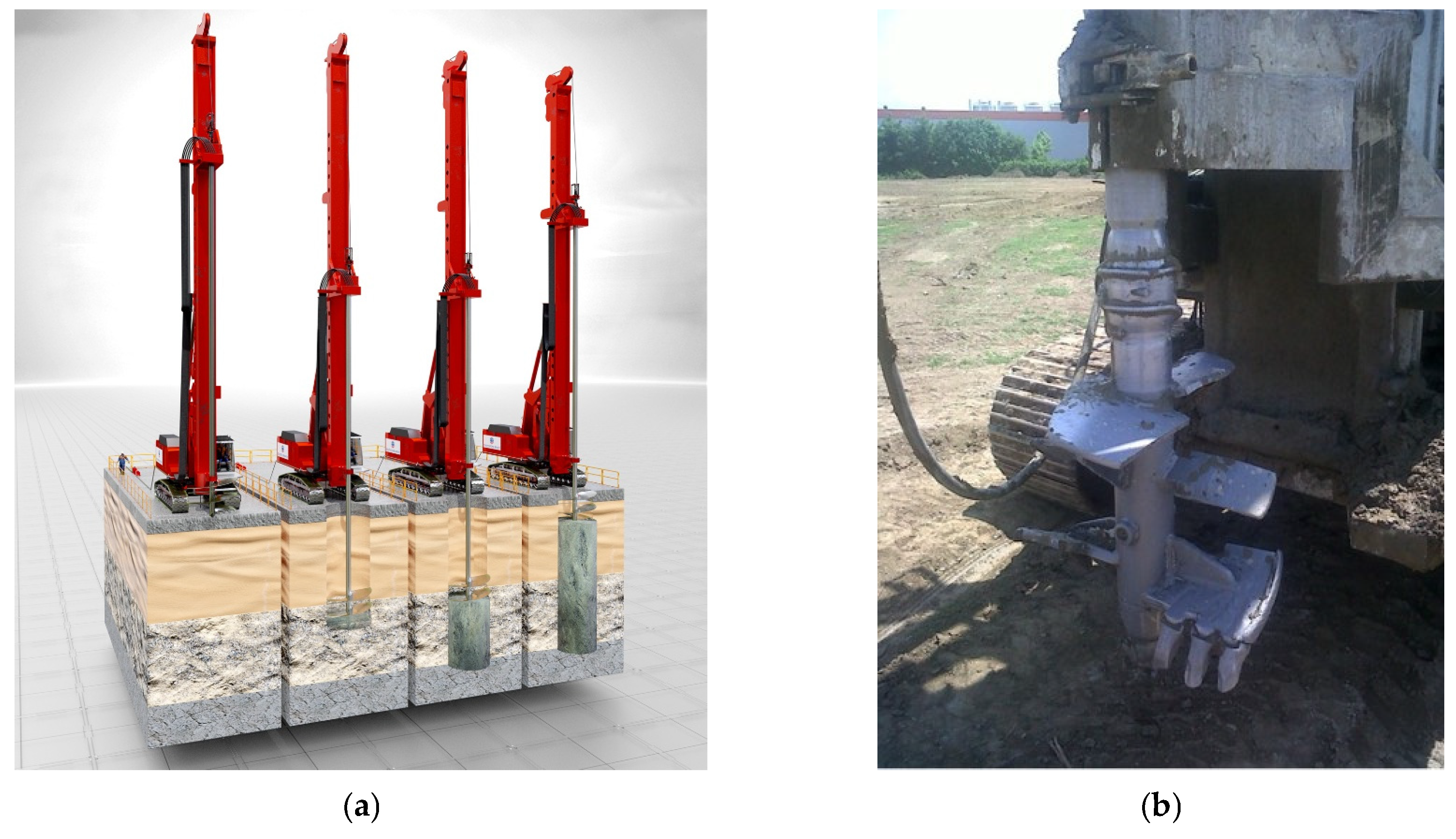
2]. DSM, or the deep mixing method (DMM), is a common ground improvement technique where soil is blended in place with cement or cementitious binder slurry using specially designed blades (
Figure 1).
Base rig equipment rotates the blades, which penetrate the soil to the desired depth, with water injected to ease the process when necessary. Rotating blades can be single, double, or triple, based on the selected rig equipment. Cement or cementitious binder slurry is injected as the blades rotate during retrieval, ensuring the column’s uniformity. To ensure sufficient mixing and uniformity, a blade rotation number (BRN) is calculated, which is intended to be higher than the limit value. This number is calculated as mixing blade rotations per meter of shaft movement [
2]; the number of blades and the rotation and retrieval speed are important when calculating this value. Higher fine content generally ensures the DSM method’s superiority over jet grouting. Since it is applicable to various soil types, DSM was selected for this research on the applicability of alkali-activated by-products as alternative binders.
A binding agent is mixed with soil, and its strength increases during the curing period. Cement is the most common binder used in geotechnical engineering applications, and lime, slag, and fly ash are generally used in combination with cement. Cement has a direct binding ability when used alone in these applications. Hydrating calcium silicates and aluminates forms calcium silicate hydrate (C-S-H) gel, which strongly binds particles and fills gaps with a crystalline product [
5]. However, alternative binder powders such as lime, silica fume, basalt fiber, slag, and fly ash cannot provide comparable strength when used alone [
5,
6,
7,
8]. Therefore, they are typically used with a portion of cement to activate the blend’s binding ability.
Cement is extensively used in the construction industry, and the geotechnical engineering market is one of the biggest branches. Apart from ready-mix concrete production for piling works, cement is also utilized in ground improvement projects, such as grouting, jet grouting, and deep mixing. However, it is also one of the key contributors to global greenhouse gas (GHG), representing 7–8% of emissions [
9]. Process emissions during calcination and energy-related emissions due to clinker production are the main contributors to cement’s carbon footprint. Furthermore, depletion of natural resources, high energy consumption, waste generation, water consumption, and air and water pollution are also significant environmental downsides. Over 4 billion metric tons of cement is produced per year globally, and Turkey is the fifth-largest country in terms of production at 82 million metric tons [
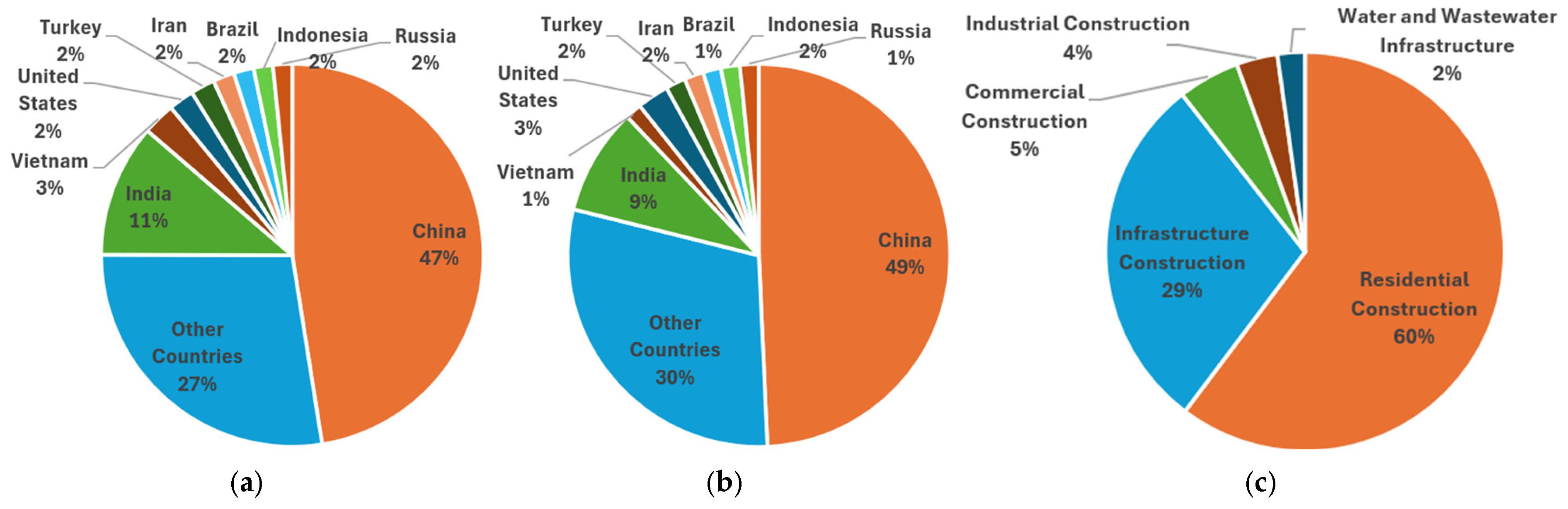
10], while the country with the greatest cement consumption and production is China, representing almost half of the global total. Distribution of cement production (estimation for 2024) and consumption (for 2023) [
11] per country is illustrated in
Figure 2a and
Figure 2b, respectively. As illustrated in
Figure 2c, cement is expected to be used extensively in residential and infrastructure construction, and alkali-activated binder utilization in these markets will bring significant environmental benefits [
12]. With this high degree of cement production, environmental concerns increase due to significant carbon dioxide emissions. Therefore, this high dependence on conventional cement must be questioned, and more research on alternative binder materials is necessary.
Utilizing industrial by-products instead of manufactured cement material provides an opportunity to reduce reliance on this material, and this can even reintegrate waste materials back into the industry. As potential replacements for traditional cement, fly ash (FA) and ground granulated blast-furnace slag (GGBS) materials have been commonly investigated in the literature over the last few decades. Some of the shared qualities of these materials are that both are industrial by-products that need to be stockpiled.
Apart from economic benefits, the reuse of these materials in construction can lead to significant environmental benefits, such as reducing CO
2 emissions [
13,
14,
15]. FA is one of the most frequently used aluminosilicate precursors. This material is industrial waste collected from thermal power plants. According to a USEPA report [
16], it is classified as a non-hazardous waste. This waste is generated after the combustion of pulverized coal [
17]. It is classified under two major sub-categories based on its CaO content, per ASTM C618-2015. Fly ash is classified as Class-F when its CaO content is less than 10%. This type is frequently used to enhance resistance and durability and to reduce the permeability of concrete. The other type is Class-C, where CaO content is over 20%. Class-C is not as commonly used as Class-F due to its rapid setting [
18,
19] and limited availability [
20]. Renewable energy sources are becoming more common globally, and conventional energy sources using fossil fuels are decreasing. However, thermal power plants are still active and important contributors to energy supply in developing economies. In Turkey, the total annual fly ash output is over 20 million tons [
21]; however, only 30% of this material can be re-utilized by the industry. Therefore, reusing by-products is a significant advantage from an environmental point of view, decreasing the demand for their storage. In addition, using fly ash as a construction material brings substantial economic advantages to projects. All of these aspects have motivated researchers to find new application areas for this material [
22].
Slag is a waste material generated in steel mills during various production processes, including basic oxygen furnace (BOF) slag, electric arc furnace (EAF) slag, and ladle furnace slag (LS) [
23]. EAF slag was used as a precursor in this study. Turkey is one of the largest steel manufacturing countries and has numerous steel plant furnaces. Zonguldak, İskenderun, Çanakkale, Bursa, and Kocaeli are the most important locations, with most production from EAFs. In EAFs, the furnace uses electric arcs to melt and purify metals, especially steel. Turkey’s total annual steel production capacity is over 35 million tons, which also leads to high slag by-product output, estimated as 4.8 million tons each year [
24]. As in fly ash, GGBS by-product materials are an important candidate to replace traditional concrete due to their rich aluminosilicate content.
Alkali-activated by-products provide comparable binding properties to traditional cement while minimizing environmental impacts [
25,
26]. This technique also offers more durable and chemically resilient columns when applied [
14]. Regarding sustainability, resilience, and socio-economic benefits, alkali-activated soil stabilization is superior to ordinary cement material in geotechnical infrastructure applications [
27]. Thus, researchers have grown significantly more interested in alkali-activated by-products in recent years.
Alkali activation is a chemical sequence where aluminosilicate content is activated in an alkaline environment create a strong binder. Commonly used aluminosilicates are fly ash, slag, and metakaolin. These materials react with alkaline solutions such as sodium hydroxide (NaOH), potassium hydroxide (KOH), and sodium silicate (Na
2SiO
3). This chemical reaction dissolves reactive silica (Si) and alumina (Al) elements in the precursor material and restructures them as a strong binder. As a result, this reaction produces C-(A)-S-H gels (if calcium-rich precursors are used, such as ground granulated blast-furnace slag) or N-A-S-H gels (if low-calcium precursors are used, such as fly ash or metakaolin) [
28].
With growing interest in this topic, the number of studies on alkali-activated by-products has increased over the last few decades. Some studies have focused on the geopolymerization [
29] of low-calcium precursors, which can be considered under alkali-activation subject [
30]. Some researchers claim that this technique may date back to the construction of the pyramids [
29], but the general opinion is that the history of the modern method starts in the early 1940s with Purdon’s studies on the slag activated with sodium hydroxide [
31]. The by-product utilization in geotechnical engineering, especially in ground improvement, began in the 2010s, and the number of studies on this topic has rapidly increased [
28].
The beginning of the alkali activation process involves [
28] the dissolution and hydrolysis of mineral aluminosilicates in the alkaline activator; as a result, covalent bonds between Si, Al, and O atoms are broken. Then, dissolved raw materials are transported, oriented, and formed as silica–alumina oligomers [SiO
4]
−4 and [AlO
4]
−5 in a strong alkaline solution [
32]. Al and Si components condensate and stabilize into cross-linked networks and form three-dimensional amorphous Si-O-Al and Si-O-Si mineral structures [
28]. Then, the C-S-H (CaO-SiO
2-H
2O)/C-A-S-H (CaO-Al
2O
3-SiO
2-H
2O) phases are replaced with the Mn[-(Si-O)z-Al-O]n.wH
2O phase, where M is the alkali cation, which can be K, Na, or Ca, and the degree of geopolymerization is
n.
Two alkali activation models can be considered based on Ca content, which deeply influences the material’s binding process [
33]. If Ca content is significant, then C-A-S-H/C-S-H chains are generated by a Si + Ca precursor (mainly in ground granulated blast-furnace slag, lime, or cement) with a mild alkaline solution. In systems with high Ca content, C-A-S-H gels form a disordered Tobermorite-like structure and have a more ordered nanostructure than low-Ca systems (N-A-S-H) due to a high Ca/(Si + Al) ratio [
34].
If Ca is not significant or absent (e.g., metakaolin or fly ash), the Ca requirement is bypassed, and activation generates a polymeric structured material in high-alkaline solutions, such as NaOH or KOH [
28]. In low-calcium materials, the principal binder is the N-A-S-H system, which forms a disordered chain, such as a cross-linked aluminosilicate gel [
35].
Calcium-rich precursors such as blast-furnace slag and calcium-poor ones such as fly ash enhance different properties of the binder when used as a blend. N-A-S-H-type gels (geopolymer networks) offer high chemical and thermal resistance; this provides better workability but requires a longer setting time to produce high-strength materials after a sufficient curing duration. When these gels are supported with C-(A)-S-H chains, provided by calcium-rich aluminosilicates, strength development becomes faster, and high strength values can be reached for shorter curing durations [
36].
Research on the utilization of industrial by-products in geotechnical applications has increased since the beginning of the 2010s. Fly ash and GGBS are generally preferred as waste materials because of the environmental impact of their stockpiling. In 2011 and 2013, Cristelo et al. [
25,
37] investigated the use of F-type fly ash (which is a Ca-poor source for binders) in geotechnical applications in sandy clay with low plasticity. In 2013, Sargent et al. [
38] investigated the possibility of utilizing slag and fly ash materials in alkali activation. Another comprehensive study on alkali-activated by-products was published in 2016 by Singhi et al. [
39]. Unlike previous studies, clay samples were used in this research. Rios et al. [
40] studied alkali activation in fly ash with clay samples in 2016. Compression strength values were investigated, and the results revealed the potential of this technique in clay soils. In another study, researchers investigated the secant modules of alkali-activated samples [
41]. The samples were instrumented, and axial deformations were measured during tests. Another study examined the improvement of unpaved roads with alkali-activated low-calcium fly ash [
42]. In 2018, Arulrajah et al. [
26] investigated alkali activation on silty clay samples with high plasticity and with different water contents; slag and fly ash mix, cement, cement and lime mix, and lime materials were tested. In 2019, Mohammadinia et al. [
14] studied sand samples, activated slag, and F-class fly ash with sodium hydroxide and sodium silicate solutions. In 2020, Abdullah et al. [
43] studied clay improvement with fly ash-based geopolymers. In 2023, Wang et al. [
44] investigated the potential of sodium hydroxide-activated fly ash in expansive soil stabilization. In 2023, Yıldırım et al. [
45] presented a study on clay stabilization with alkali-activated slag and cement blends. In 2024, Al-Sumaiday et al. [
46] performed compression and indirect tensile tests on clay soil with an activated MgO-rich olivine precursor. In 2024, Nouhi et al. [
47] improved clayey soils with alkali-activated uncalcined clays. In 2024, Souayfan et al. [
48] also investigated metakaolin and slag activated with sodium silicate solution to improve soils with different clay contents. In 2024, Wu et al. [
49] presented a study on the effects of curing conditions on alkali activation and evaluated the results in terms of microstructure, performance, and economic aspects. In 2024, Wu et al. [
8] investigated the effects of basalt fibers and silica fume on alkali activation. Finally, in 2025, Pourakbar et al. [
50] investigated the potential of sewage sludge as a precursor in alkali activation and presented promising results regarding clay soil improvement.
These studies generally demonstrate the strong performance output of the alkali-activated binders, but there are some limitations. A high rate of carbonation is one of these issues [
51]. A portion of the alkali binder that does not participate in the reaction leaches out and reacts with carbon dioxide in the atmosphere. Efflorescence can also be encountered when the material comes into contact with air and water, such as through white powder, nodules, or floccules on the sample’s surface if it is porous [
27,
52,
53]. This effect can decrease the durability of the application, especially if freeze and thaw cycles are significant. In deep ground improvement application, columns are usually buried in the soil and can be considered protected from this effect; however, additional precautions can be considered if permeable soils exist and there is a risk of contact with acidic environments [
14]. The effects of efflorescence can be decreased by controlling the curing conditions or adding a secondary aluminum source to ensure a sufficient reaction [
36].
Alkali-activated by-products have been investigated in many studies for their potential to replace traditional cement in ground improvement applications. These mostly comprise laboratory studies and very limited site applications. The complexity of the process and safety risks with alkaline activator materials require a comprehensive planning stage for site applications. This study summarizes the laboratory investigation phase for a site application using the DSM technique in silty sands. Local precursor materials were used to evaluate the suitability of this technique. Alkali-activated binders were studied with by-product materials collected from domestic sources in Turkey. We present the results of the compression tests performed on the prepared samples with different precursor ratios. We aimed to investigate the effects of the alkali-activated by-product ratio on the strength and stiffness values, as the number of studies describing the relationship between these values in silty sands is limited in the literature. As a result, the potential to reuse these waste materials in DSM applications was investigated.
2. Materials and Methods
As explained in the previous section, there are many precursor alternatives; however, fly ash and ground granulated blast-furnace slag are the most frequently used.
We used fly ash supplied by a thermal power plant in Zonguldak Province of Turkey, located on the northern coast of Anatolia. The type of fly ash was reported as Class-F, which was confirmed with XRF tests. Class-F fly ash was preferred since it is a CaO precursor and can provide N-A-S-H-type geopolymers, which increase control over rheology and provide better long-term durability. In addition, due to its widespread production, it is more readily available on the market.
The other component of the precursor was ground granulated blast-furnace slag, which is collected from furnace waste material in the steel industry. The GGBS material used in this study was supplied by the Iskenderun Province of Turkey, on the southern coast. The Blaine value of the ground powder materials was 5990 cm2/g, and it supplied approximately 1.25 tons.
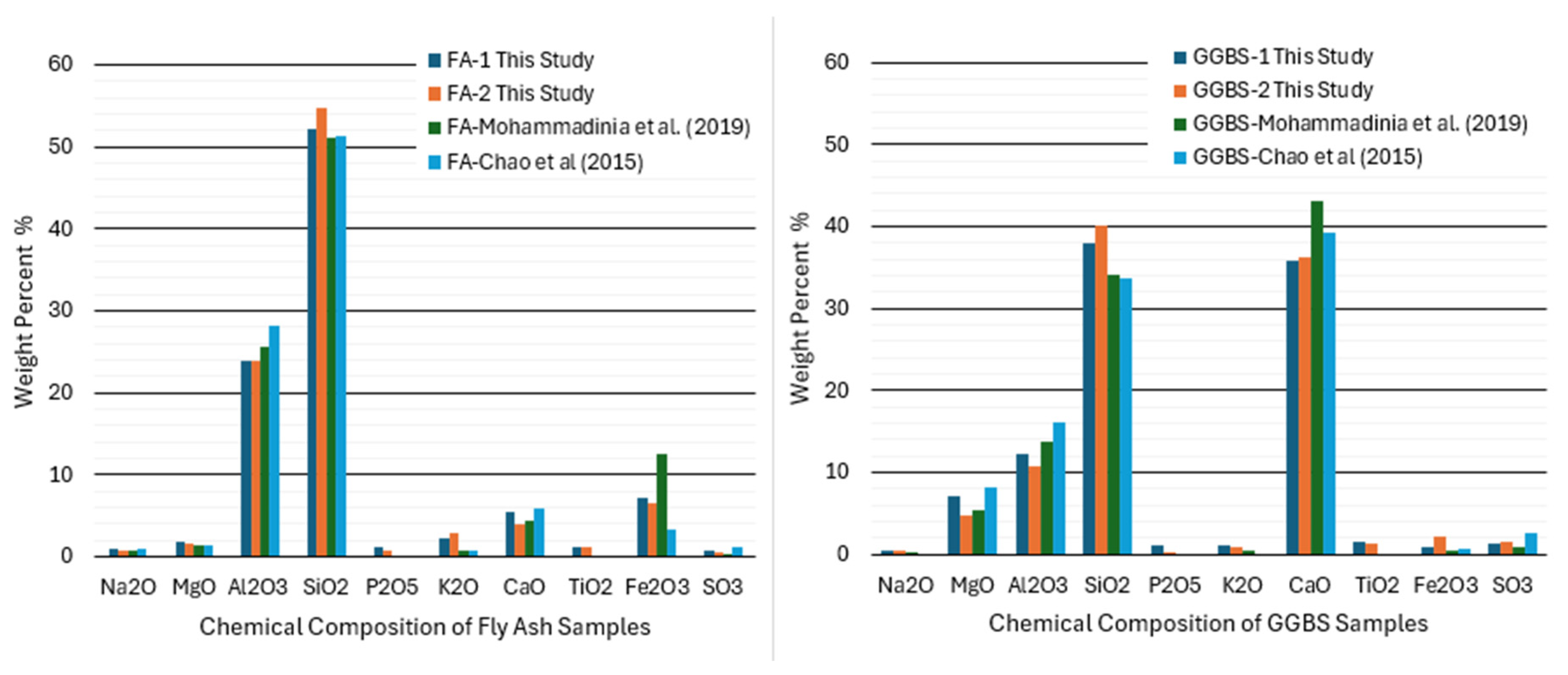
The chemical composition of the precursor plays an important role in alkali activation. As explained above, CaO content is particularly influential in the formation of polymeric chains and is an important parameter in the development of binding properties. Samples collected from local plants were subjected to XRF (X-Ray Fluorescence) analysis at the Istanbul Technical University Faculty of Mining Geochemistry Research Laboratory, confirming the fly ash class. Inorganic compounds observed in these samples are listed in
Table 1.
Fly ash sample 1 was obtained at the preliminary stage as a five-kilogram batch that had been stored long before procurement in the plant’s warehouse. Conversely, fly ash sample 2 was collected later from the 1.5-ton batch, which had been stockpiled outdoors in open-air conditions. The chemical compositions of these samples were close to each other, apart from some components with a few percentage differences. This data showed that stockpiling conditions do not have a major impact on the chemical conditions of fly ash material. However, the chemical composition of stockpiled material should always be tested, and the strength development of waste material samples needs to be investigated before each project to ensure performance. The table above shows that the CaO values of the fly ash samples are below 10%, indicating Class-F properties.
The chemical compositions of the used materials are compared with those of similar materials used in previous studies. In
Figure 3, the chemical compositions of the fly ash and GGBS materials used by Mohammadinia et al. [
14] and Chao et al. [
54] are compared with those used in this study. Although the distributions are similar, the contents of some components (like CaO in GGBS and Fe
2O
3 in FA) in Mohammadinia et al. [
14], who used local sources from Australia, are slightly higher than those of others. Conversely, SiO
2 contents in both FA and GGBS gathered from Turkey are slightly lower than those of others. Despite these small deviations, the materials utilized in these studies can be evaluated as having similar chemical compositions.
This study was conducted to investigate the potential of by-product materials in ground improvement projects as replacements for cement, especially for DSM applications. Prior to the site application, the properties of the alkali-activated binder were investigated in the laboratory with prepared samples. The soil type was determined to be one of the most common profiles in local projects. Since most of Turkey lies atop highly seismic zones, liquefiable loose sands generally stand out among common problematic soils. DSM is one of the most common soil improvement methods for mitigating liquefaction potential.
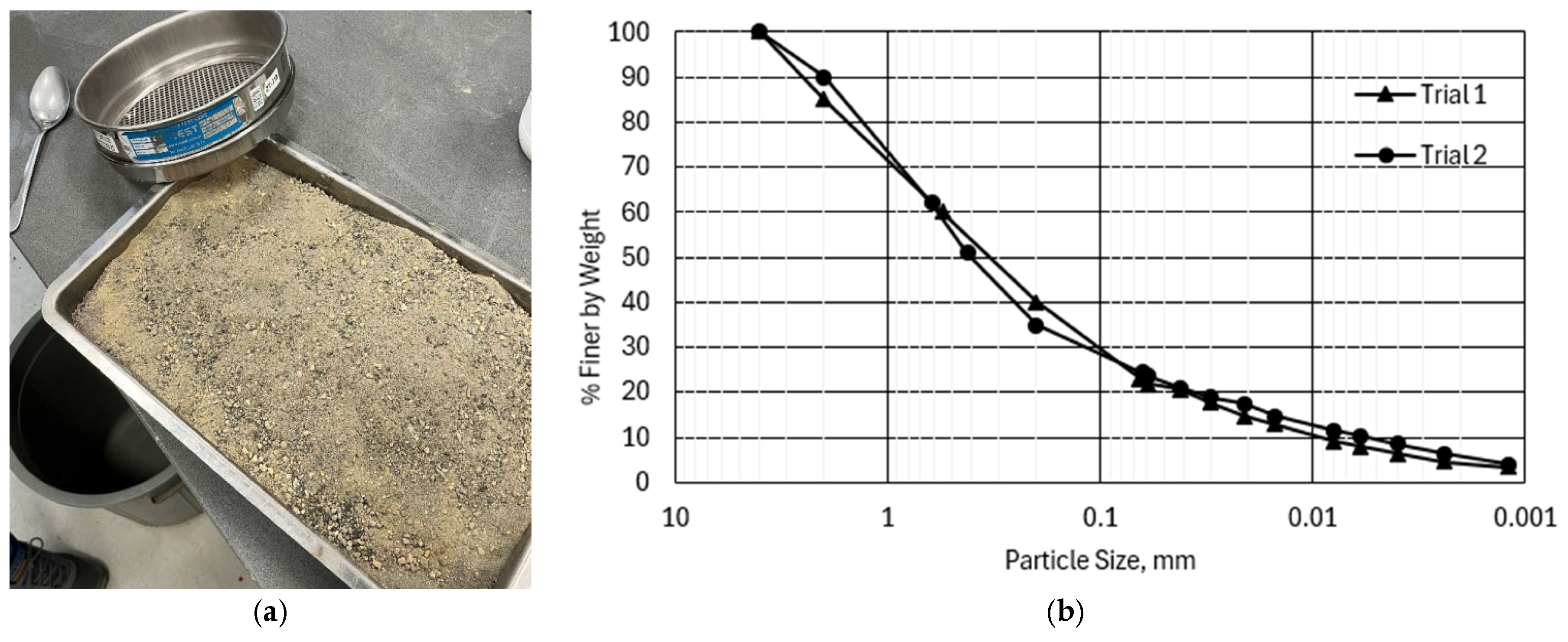
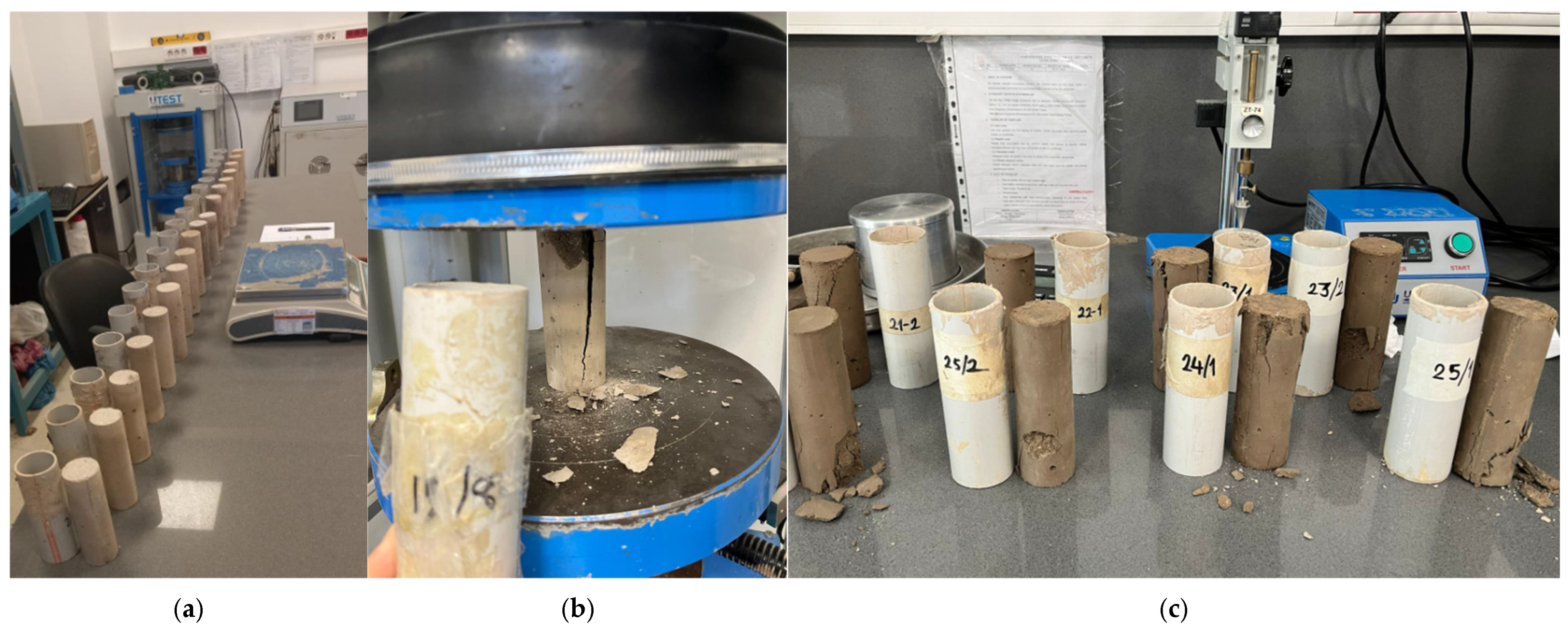
Soil samples improved with alkali-activated binders were prepared to investigate the potential of fly ash and slag in DSM applications. To represent natural soil conditions, instead of pure sand, a batch with approximately 25 percent fine content was used. Soil samples were gathered from the soil investigation boreholes of an industrial plant project in northwestern Turkey. The soil (ASTM D2487-17) was classified as SM (silty sand) with approximately 25% non-plastic fines. To determine the strength of the specimens, UCS tests were used. Thus, the diameter of the molded soil-binder cylinders was planned as 44 mm, and the maximum particle size of the soil component needed to be limited according to the ASTM D1633-17 standard. Therefore, material passed through a No.4 sieve was used in this study; see
Figure 4a. Atterberg limits and grain size distribution were determined according to the ASTM D 4318 and ASTM D 422 standards. Grain size distribution was determined with hydrometer testing. Sieve and hydrometer analysis results for the soil samples are presented in
Figure 4b. The samples did not exhibit plasticity during the Atterberg limit tests.
Given the high alkalinity (pH > 13) of the binder slurry, appropriate safety measures were applied. These materials pose risks of skin and eye irritation during operations, so personal protective equipment is essential for occupational health. These precautions must be evaluated again before site application, considering the methodology and procedure.
To reproduce the site conditions, soil samples were first dried in an oven for a minimum of 24 h, and water was then added to obtain a target water content value of 20%, which is the most common in nature. Water was added in two steps; first, 16% was added directly to the soil sample, and then, 4% was added to the binder to increase its mobility for applicability purposes.
Alkali-activated binders can be prepared with different methods, and the technique applied can play a significant role in the performance of the mix [
2,
55]. Preparations generally start with alkaline solutions such as NaOH or KOH. These solutions can be supplied directly or prepared by dissolving alkaline beads in the water. The concentration of the alkali base is important, and the bead dosage should be accurately calculated before mixing. Water and sodium hydroxide reactions are exothermic, and when dissolving beads in water, the container can become very hot, so a suitable material should be used. Instead of using it directly after, the solution should be cooled to room temperature. The other part of the activator is sodium silicate. This can be supplied in different module ratios, M
s (SiO
2/Na
2O). Studies in the literature have generally been conducted with sodium silicate solutions in module ratios between 1.0 and 3.5.
Precursor materials were blended in a container. As a low-calcium precursor, fly ash can provide high chemical and thermal resistance but needs to be supported by high-calcium precursors such as furnace slag to increase the material’s strength-gaining rate [
36]. To take advantage of both C-(A)-S-H and N-A-S-H chain generation, these two precursors have different CaO contents, equally mixed. Sodium hydroxide solution was prepared in a 10 M concentration with NaOH beads and utilized after cooling to room temperature. The concentration of the sodium hydroxide solution was between 8 M and 12 M, and 10 M was the average value [
14,
26,
39]. The M
s value of the sodium silicate solution is 3.0, as this ratio generally ranges between 2.0 and 3.0 in the literature. Water at room temperature was added to the mix to increase flowability.
The activator was mixed with the soil sample in a steel container. A mixing device was then used to make the mix uniform, and the mixed soil–binder samples were placed in molds layer by layer. During this process, samples were tapped to remove entrapped air inside the mold. Samples were stored in molds with a 44 mm diameter and approximately 150 mm height. During curing, they were kept under humid conditions to reproduce the site conditions. Research [
49] shows that curing conditions have significant effects on strength and porosity, with solubility and degree of reaction increasing from 28.3% to 14.6–69.9% and 63.7%, respectively, in autoclaved curing conditions under high temperatures and pressurized environments.
The concentration or dosage of precursor materials in a mix is a major parameter in strength development. Many studies have investigated an optimum precursor-to-soil weight ratio. The unconfined compression strength (UCS) development of samples has been recorded in previous research [
14,
26,
38]. UCS is one of the major mechanical performance parameters of binder-stabilized soils. To evaluate the impact of the precursor ratio on strength, we investigated different mixing ratios, and samples were prepared with different precursor-to-soil weight ratio groups. To determine the strength values with different dosages, P/W
s (precursor-to-soil weight), values between 0.1 and 0.35 were used. In addition, to determine the relationship between strength gain and time, samples were subjected to UCS tests after 1, 4, 16, and 54 weeks, with 2 or 4 samples to evaluate their repeatability. A summary of the test program and the number of planned samples is provided in
Table 2.
4. Results and Evaluation
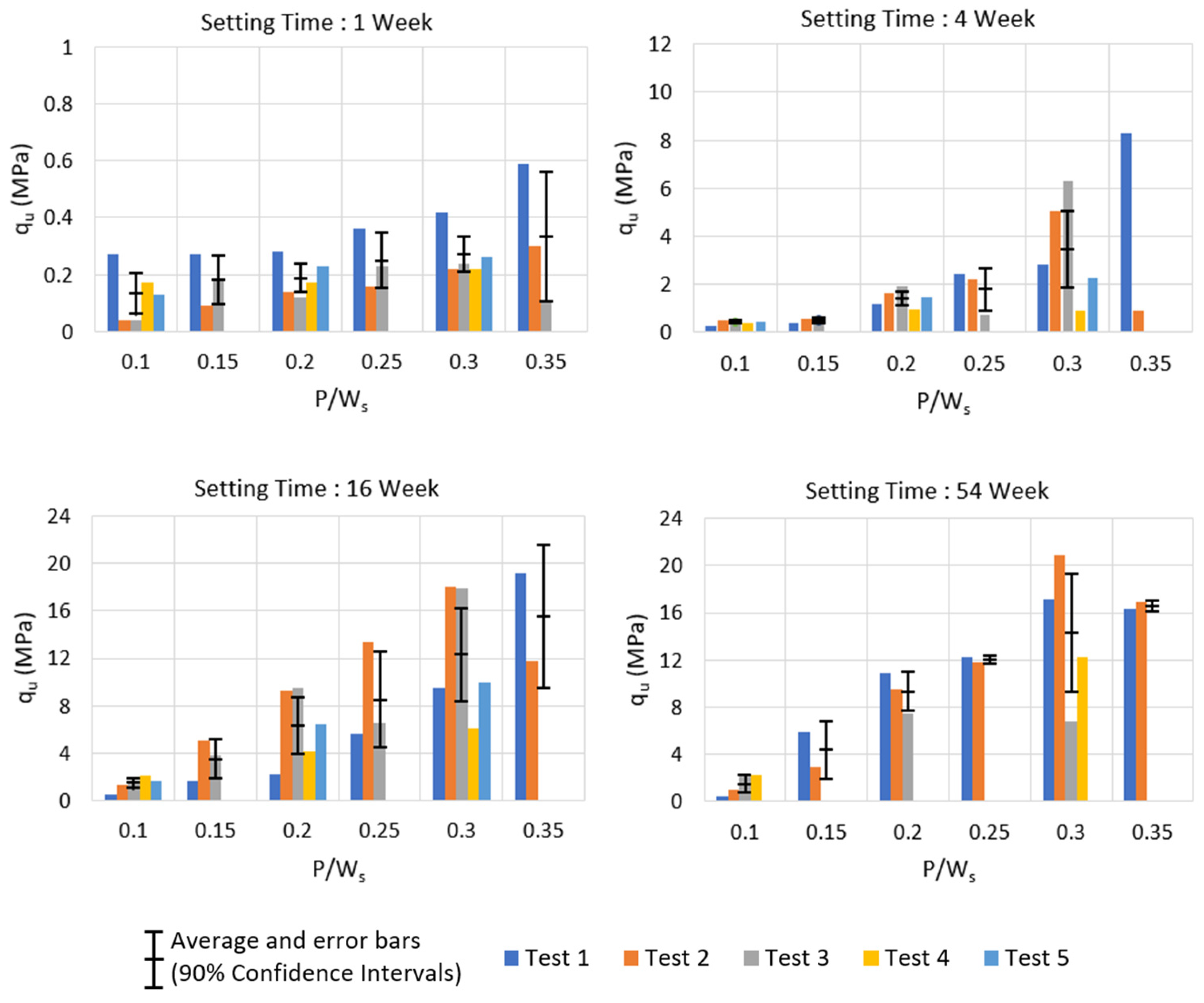
UCS tests were performed on the prepared alkali-activated binder samples in the laboratory, and the results are listed in
Figure 8.
Tests were repeated after 1, 4, 16, and 54 weeks of curing. The figure illustrates the distribution of unconfined compression strength (q
u) values with variable precursor ratios (P/W
s) and setting times. Note that the preliminary results were presented in a conference paper [
56]. Error bars representing 90% confidence intervals were given on the figures to provide an approximate indication. Each bar corresponds to an individual specimen result. For the P/W
s = 0.35 dosage in 4 weeks a noticeable variability was observed. The reason for this discrepancy can be considered to be associated with the heterogeneity and local discontinuities in some samples. Therefore, an error bar was not added to the related dosage in 4 weeks curing time. However, individual test results were given again to enable independent evaluation.
The figure shows that increasing strength values are significantly associated with the quantity of the precursor. Tests were repeated several times for each precursor-to-soil weight ratio (P/Ws) in each curing period. For a comprehensive evaluation of the increasing trend shown in these results, average values are also provided separately in the next section.
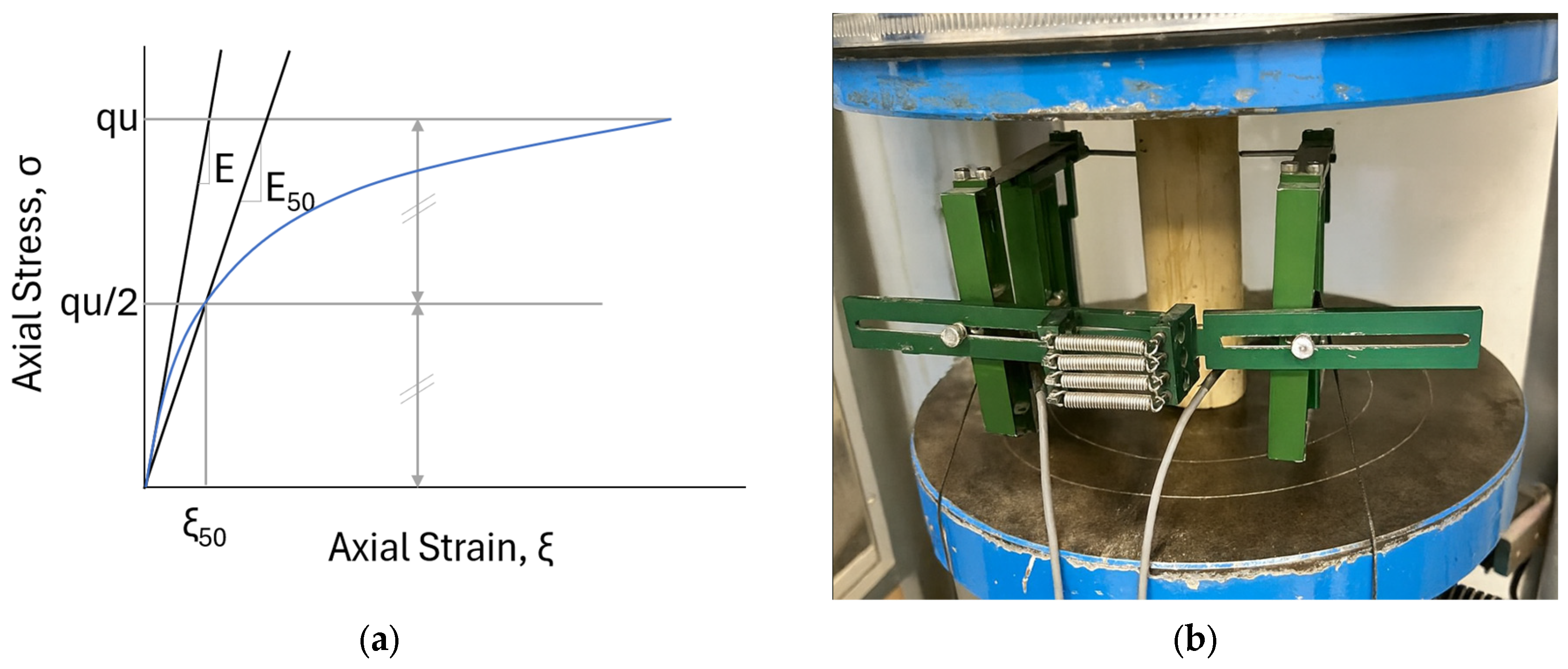
During the UCS tests, some of the samples were equipped with an axial extensometer, and strain values were monitored. The tangent and secant modulus of elasticity of the samples were also calculated. An axial extensometer, also referred to as a compressometer, was attached to the center of each sample. In some tests, in addition to the axial extensometer, a lateral extensometer was also attached to measure the lateral/radial strains and determine Poisson’s ratio (ν).
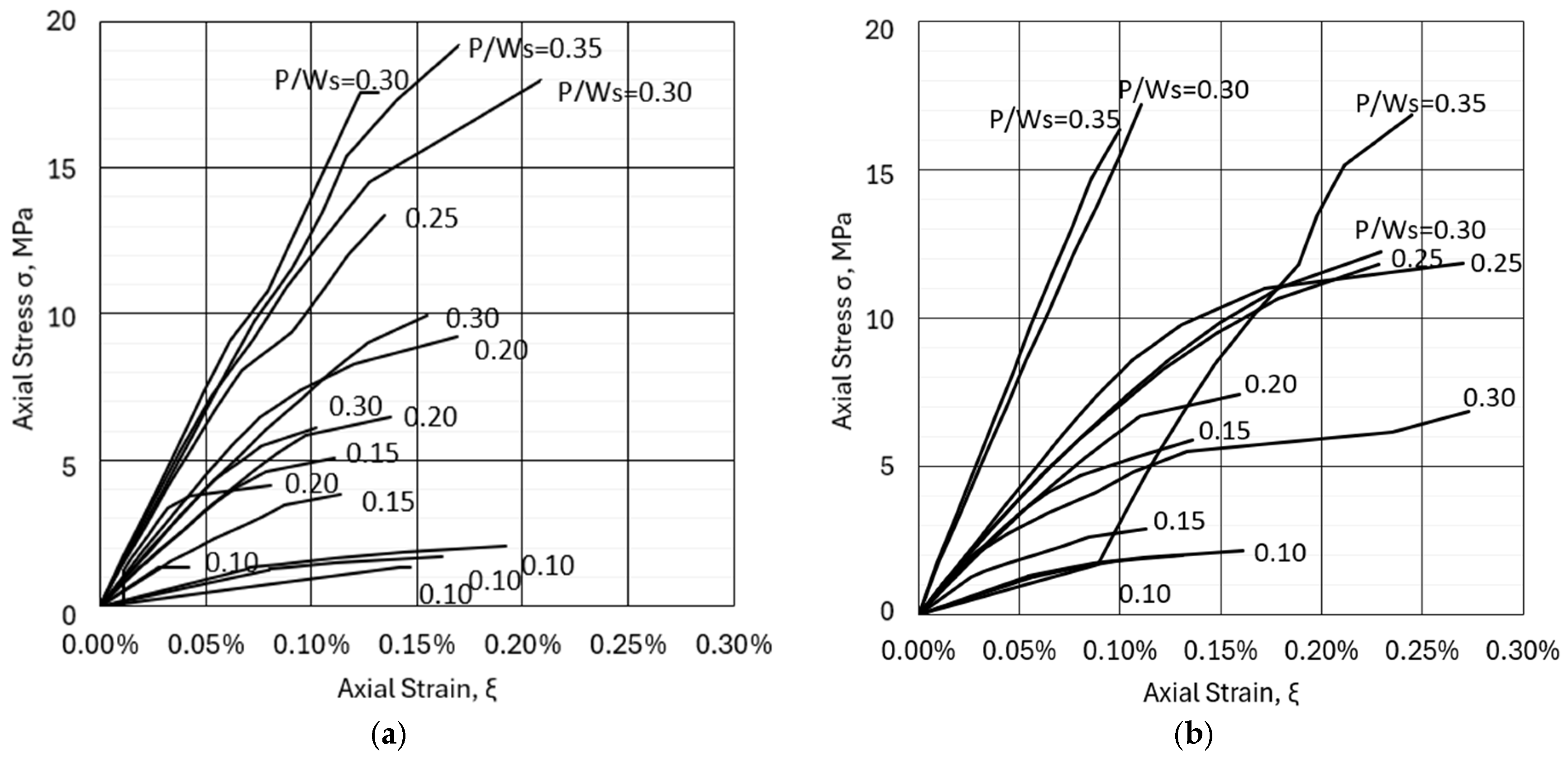
The axial stress–strain curves of the samples were monitored with an extensometer, and the results are shown in
Figure 9. The curves of the samples tested after 16 weeks are shown on the left, and those of the samples tested after 54 weeks are shown on the right. The P/W
s ratios of the samples are also shown beside each curve to evaluate the effect of dosage on the stiffness of the sample. The samples with high P/W
s ratios exhibited brittle failure, as can be seen in the figures.
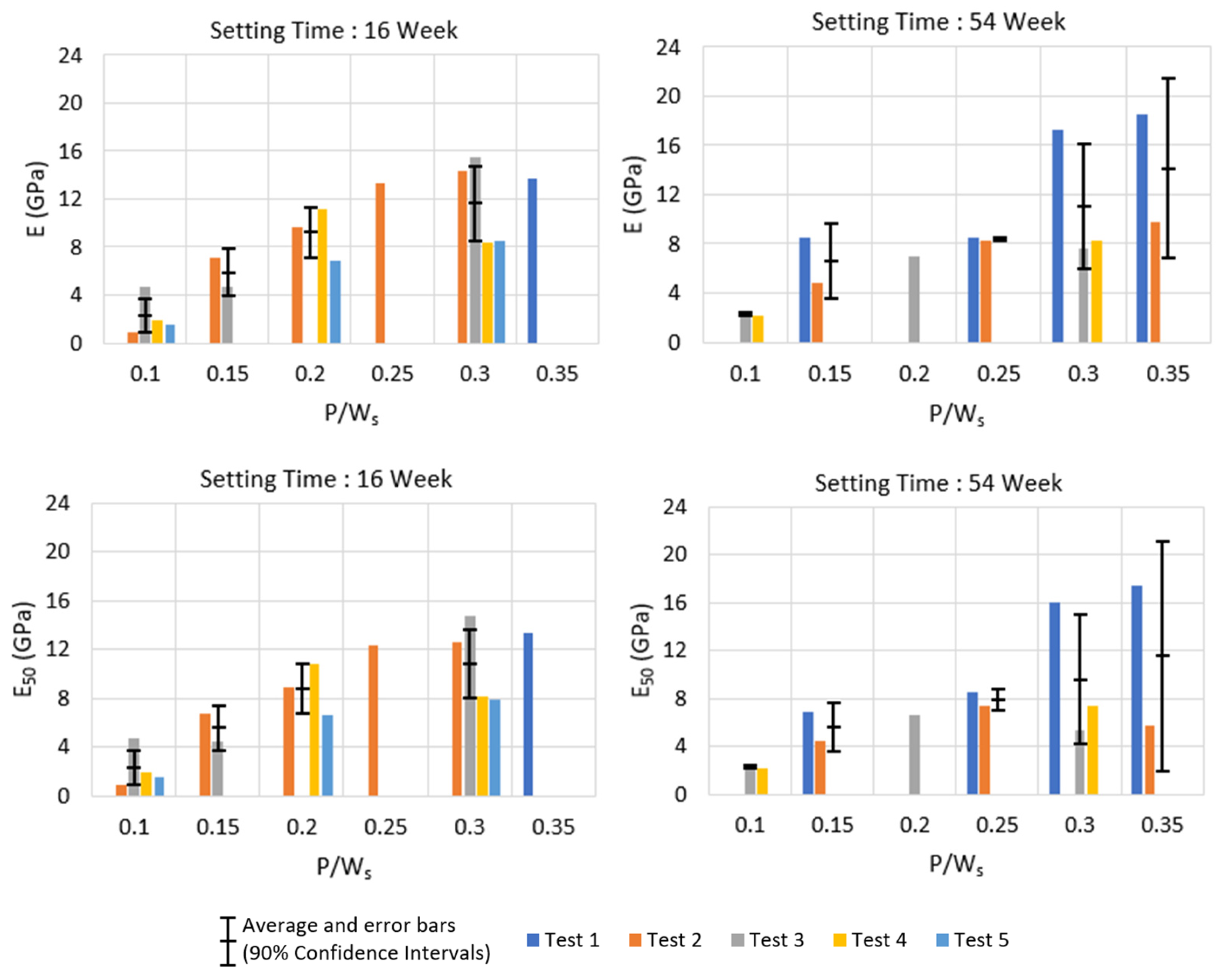
As described above, the E and E
50 moduli of the samples were calculated, and they are shown in
Figure 10. Values were grouped under each precursor ratio and listed in different tables for different setting times. Notably, the stiffness values of the samples increased with the precursor ratio in the mix; however, this increase is not as evident between the groups with 16- and 54-week setting times.
In addition to the modulus of elasticity calculations, Poisson’s ratios of the samples were calculated using the measured lateral/radial strain. Values were calculated between 0.14 and 0.26 for the samples monitored with the lateral/radial extensometers.
UCS tests were performed on the prepared samples, and q
u values were recorded for each precursor-to-soil ratio based on weight (P/W
s) and different setting durations. The average q
u values listed in the previous section are illustrated in
Figure 11.
The compression strength of the samples after a 1-week setting duration was very low, varying between 40 and 590 kPa according to the increasing precursor ratios. After 4 weeks, the compression strength values of the samples with 0.10 and 0.15 P/Ws ratios were still below 560 kPa. However, the samples with higher dosages showed higher strength, reaching up to 8.3 MPa. The maximum of the average strength values for each precursor ratio group was approximately 4.5 MPa. Tests performed after 16 weeks revealed that strength development was not finalized after 4 weeks, and there was a significant increase. The average strength value of the 0.10 precursor ratio group was approximately 1.4 MPa, which increased with dosage; an approximately 15.5 MPa average was reached at 0.35. Given these results, it became more important to determine the strength development trends of the 54-week alkali-activated binders, which showed similar results with a smaller increase. The average of the precursor ratio groups was between 1.4 and 16.6 MPa, and the maximum observed strength value was approximately 21 MPa.
For each setting time, we observed that the compression strength increased with the precursor ratio of the mixture. The FHWA recommends [
2] compression strength values of over 2.1 MPa (300 psi) for high-load-bearing columns in ground improvement projects employing the DSM method, and the preliminary laboratory results of this study prove that industrial by-products—fly ash and GGBS—can serve as sufficiently strong binders after being activated under alkali conditions in suitable dosages.
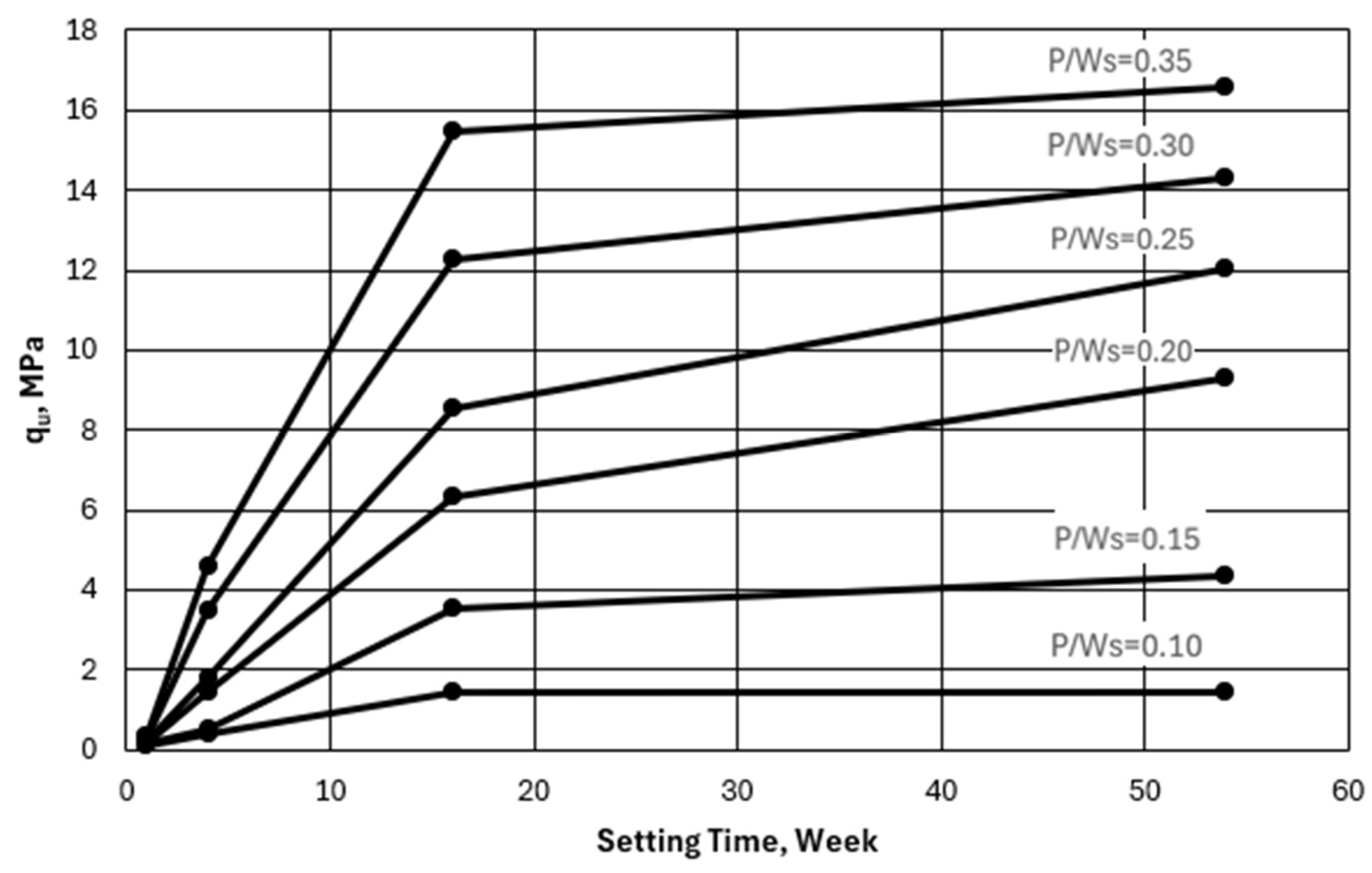
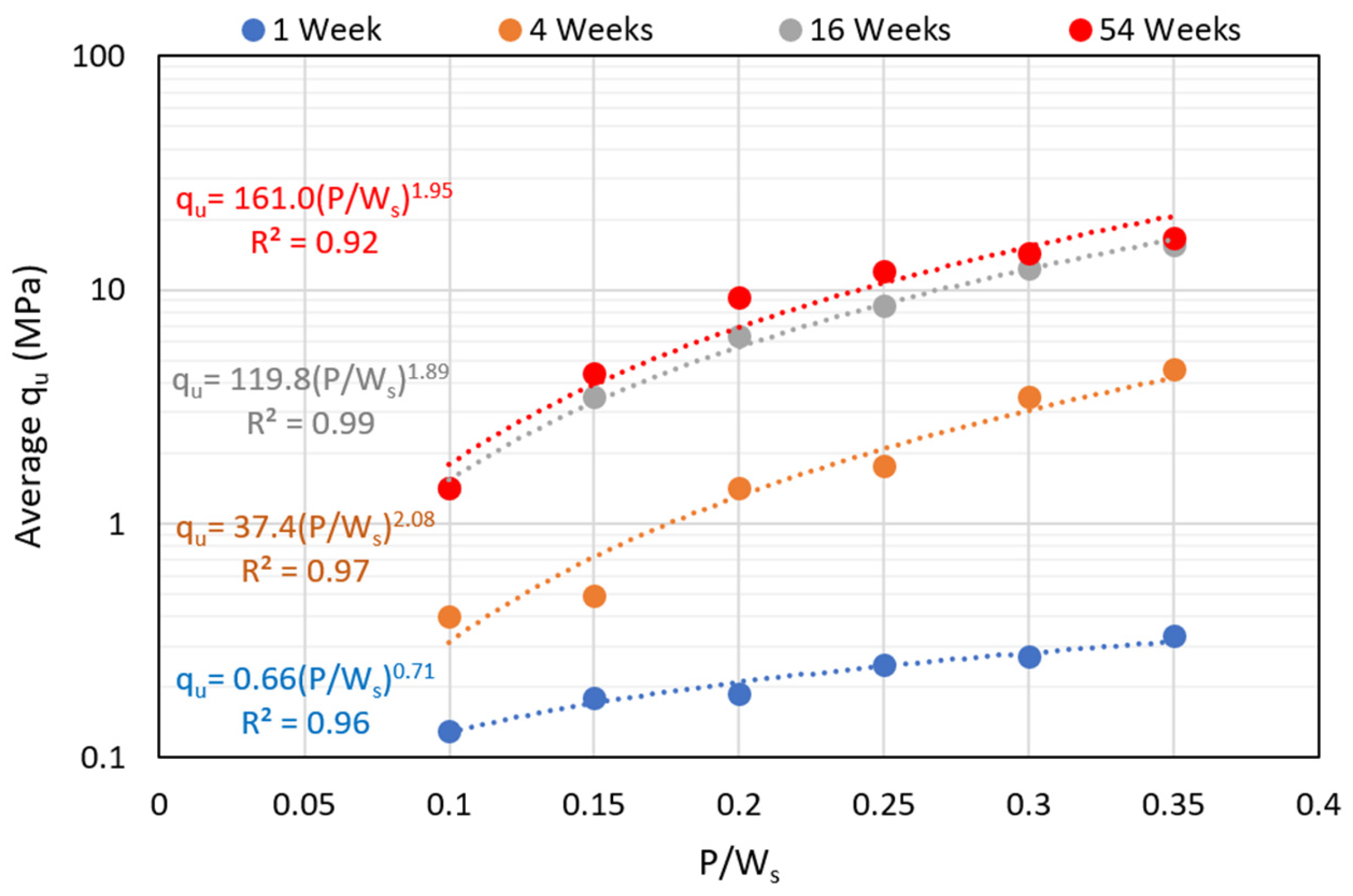
To provide a different perspective and simplify the evaluation, calculated average q
u values are provided according to the setting durations in
Figure 12.
Samples were tested after 1, 4, 16, and 54 weeks to determine the impact of setting time on compression strength and evaluate strength development based on time. In each precursor ratio, the setting development lasted for more than 4 weeks in relation to the average strength values. However, after 16 weeks, strength development was not as significant as between 4 and 16 weeks. The average strength gain rate was between 0.25 and 0.73 from 4 to 16 weeks, with an average of approximately 0.50 MPa per week. The average strength gain rate then decreased between 16 and 54 weeks; this value was between 0.02 and 0.08, with an average of approximately 0.05 MPa per week.
Mohammadinia et al. [
14] investigated the improvement of clean sands without fine content with alkali-activated F-Class fly ash and GGBS supplied by local sources in Australia. To simulate the more complicated soil properties that can be encountered at a site, sand samples with 25% fine content were used in this study, which was a major difference from the value used by Mohammadinia et al. In addition, we evaluated the applicability of the local Turkish sources. The results were compared with those of [
14], where clean sands were mixed with alkali-activated binders. The corresponding results for the tested groups with the same slag-to-fly ash ratio (1.0) were considered. The same sodium hydroxide molarity was also considered (10M), but the sodium silicate module ratio differed (M
s = 2.0). Precursor-to-total mix values were revised to represent precursor-to-soil ratios, and equivalent dosages were compared.
Compression strength values after a 4-week setting time were significantly higher than those listed above. Compression strength ratios were calculated as 2.86 and 3.37 for the results of [
14] and the laboratory tests performed after 4 weeks of curing with corresponding precursor ratios of 0.30 and 0.35, respectively. Furthermore, strength values were measured similarly after 16 weeks of curing. The ratios between the two studies decreased to 0.87 and 1.05 for corresponding precursor ratios of 0.30 and 0.35, respectively. Although the compression strength values were similar, the setting times of the alkali-activated binders were affected by differences in fine content and local material properties. The results of tests after 28 days of curing were close to the peak values recorded by Sargent et al. [
38], who were also working with silty sand. This comparison emphasized the necessity of a preliminary investigation with accessible local materials before the design stage.
The results were also compared with the study by Cristelo et al. [
25] on alkali-activated fly ash with low-plasticity sandy clay soil. A very high activator/precursor ratio of 2.5 was used, compared with the 0.5 value used in this study. The results for 10 molar concentration solutions of equivalent P/W
s ratio samples (0.25) were compared. The 4-week curing time compression strength results were slightly lower, with a ratio of 0.95; the 16-week strength results were also lower than those in this study, with a ratio of 0.47. However, a significant strength increase was reported up to a curing time of at least one year [
25], with the ratio between strength values approximately 1.75. The high-strength values after 16 weeks could be due to the sand soil and slag content of the mixture. However, in this study, the strength gain rate did not decrease after 16 weeks with high amounts of activator fly ash precursor in the mix.
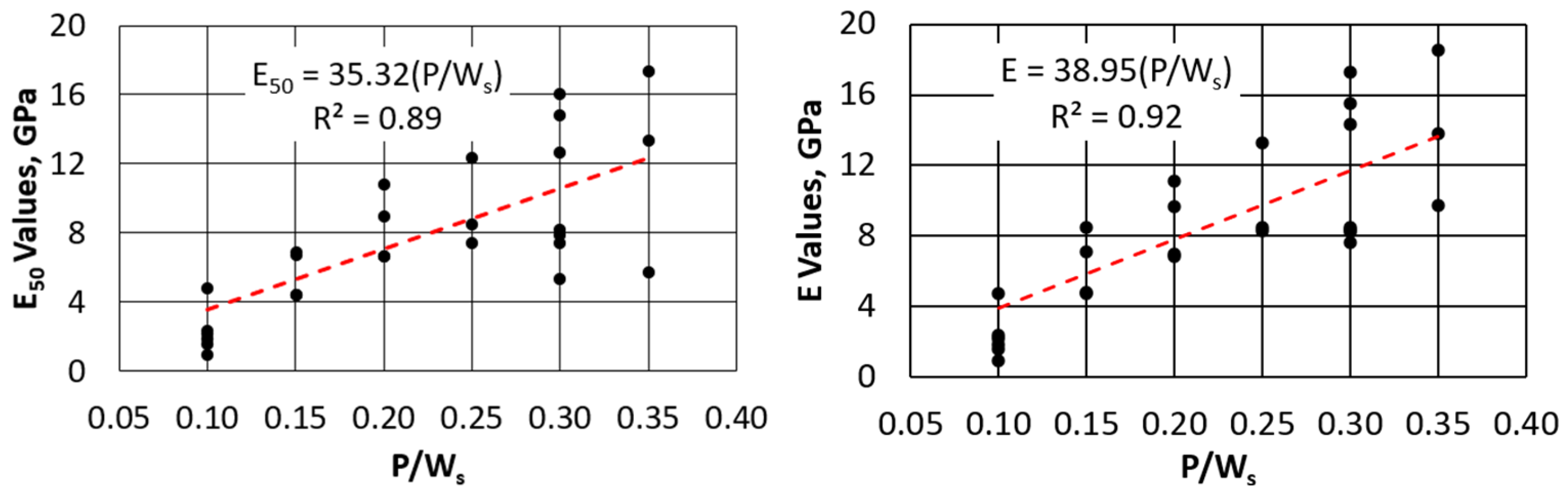
Since strength development was unlikely to be complete before 16 weeks had elapsed, the 16- and 54-week results were used in the evaluation. Furthermore, some of the test results were discarded at this stage due to irregularities in the axial stress–strain curve, possibly due to discontinuities inside the sample. The E and E
50 values of the different precursor ratios (P/W
s) are shown in
Figure 13. The average values of each precursor ratio are calculated and illustrated in the figure. The E (or E
50) value—that is, the axial stiffness of the samples—increases with a higher precursor ratio.
Average E
50 values were approximately 2 MPa for a 0.10 precursor ratio on average, and this increased with the precursor ratio, which was 12 GPa with a value of 0.35. The ratios between the E/q
u or E
50/q
u and q
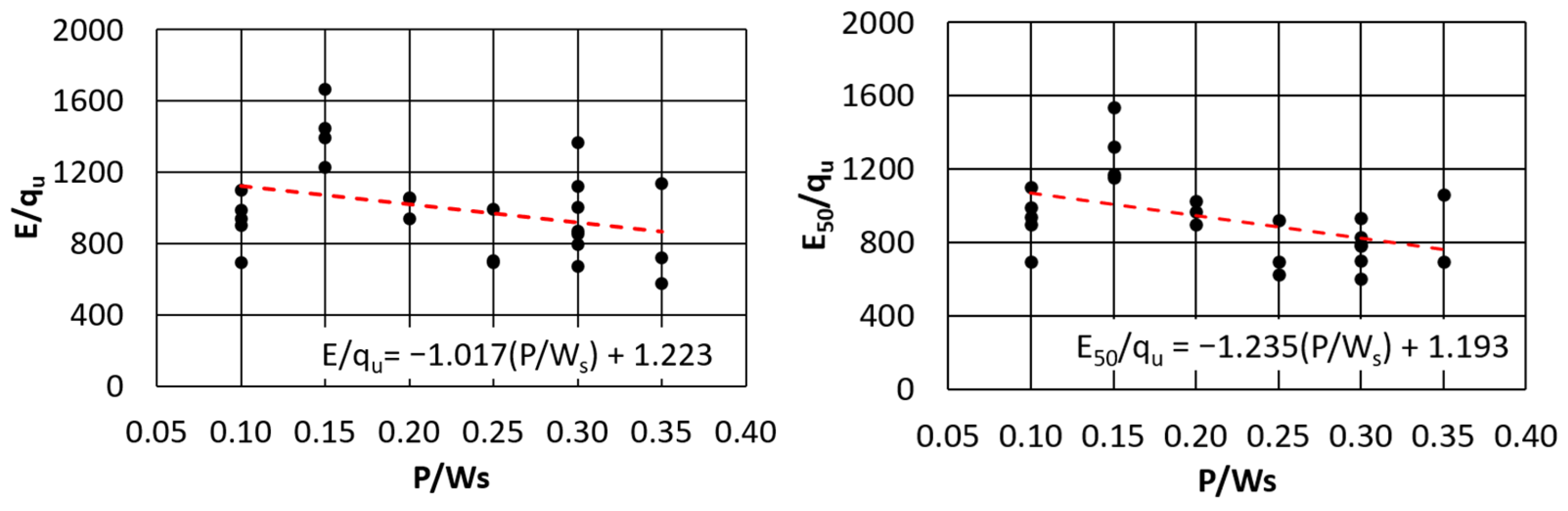
u values were also compared with the results for the alkali-activated samples prepared in this study. The ratios are shown in
Figure 14 with the average values for each precursor-to-soil ratio by weight. The average values for these ratios were higher in lower precursor dosages; however, a reduction was noted with the higher dosages.
The decrease in the E/q
u and E
50/q
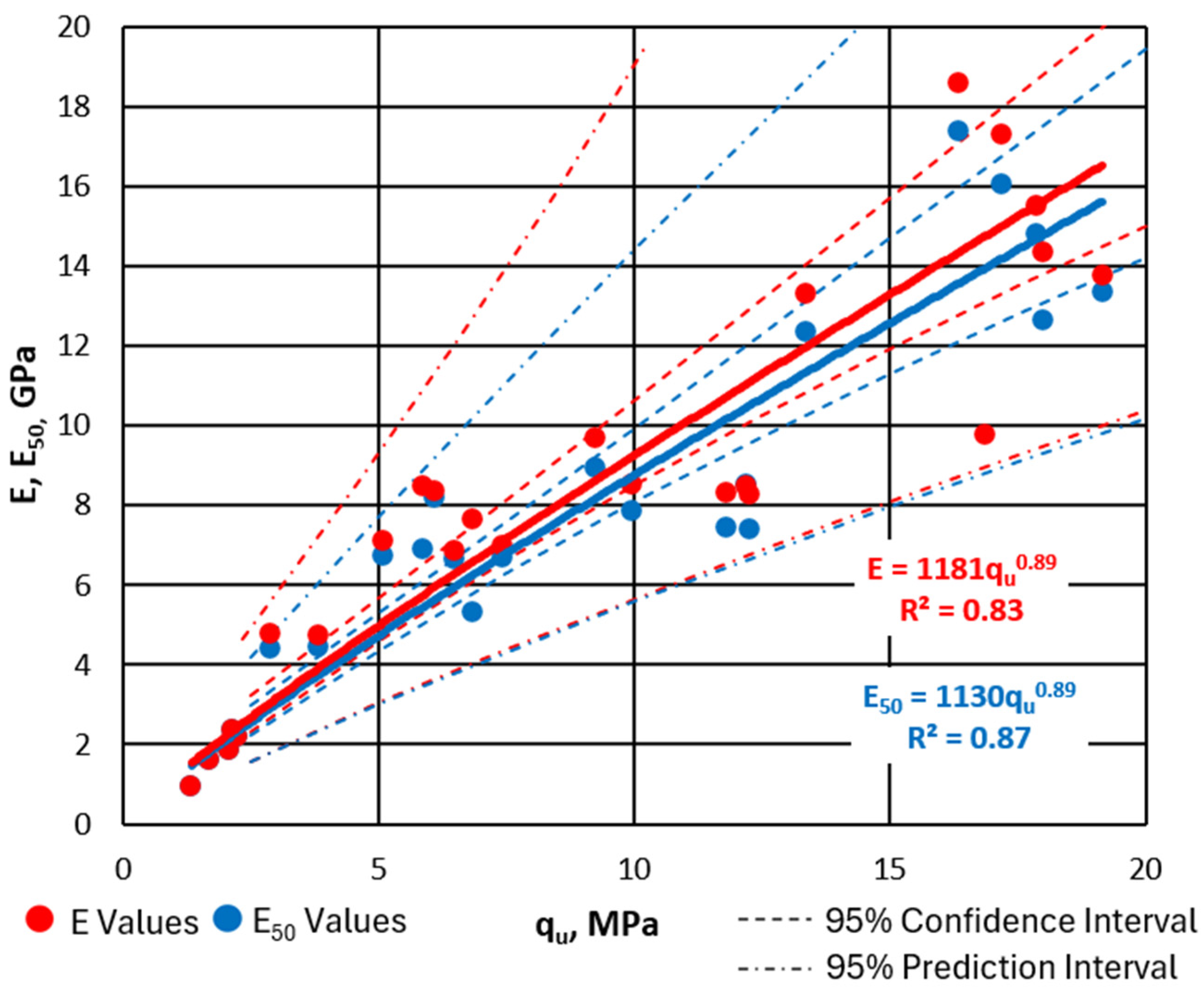
u ratios with the high precursor dosages indicates the necessity for a more detailed investigation. Therefore, each secant modulus (E
50) value for each compression strength (q
u) value was evaluated, as shown in
Figure 15.
The relationship between the strength and stiffness parameters is non-linear; instead of a constant coefficient, an empirical correlation should be used to improve sandy soils, as shown in the figure. This relationship should be considered an empirical trend. Coefficients of determination and confidence intervals are shown on the figure to indicate the level of reliability. Error metrics are calculated as RMSE = 2.100 and MAE = 1.624 for E-qu and RMSE = 1.713 and MAE = 1.341 for the E50-qu curve.
This relationship has been investigated mainly in clayey samples [
26,
57]. For slag and fly ash precursors after 28 days, the E/q
u ratio was proposed as a value of “54” by Arulrajah et al. [
26]. Abdullah and Shahin [
57] used only fly ash in clay samples. UCS test results showed that the E/q
u ratio decreases to “13–15” if only fly ash is used after 28 days of curing. The non-linear relationship shown in
Figure 15 suggests a method to evaluate the modulus of the elasticity ratio over the q
u value. Within this scope, an empirical equation for this ratio is presented for silty sands with GGBS and fly ash precursors for a longer term, such as 54 weeks.
Concrete or improved soils with binders (cement or alkali-activated by-products) are not composed of a single component; on the contrary, they are composites, specifically mixtures of aggregate or soil and binders. Neville [
58] demonstrated this for concrete, as the increasing binder quantity or strength of the paste influences the strength of the composite material; however, the overall stiffness is more dependent on the stiffness of the aggregate or soil component proportion and stiffness. In some ground improvement research, with low strength value ranges, a linear correlation has been proposed between stiffness and compression strength [
59,
60,
61]. However, with the high strength value range, this correlation becomes more dependent on soil particle stiffness, and overall stiffness does not increase in parallel with stiffness, as shown by Neville [
58]. In this study, silty sand samples were mixed with alkali-activated by-product materials in laboratory conditions, as well as using a wide range of dosages. Both high and low strength values were demonstrated, and a more realistic non-linear correlation is possible.
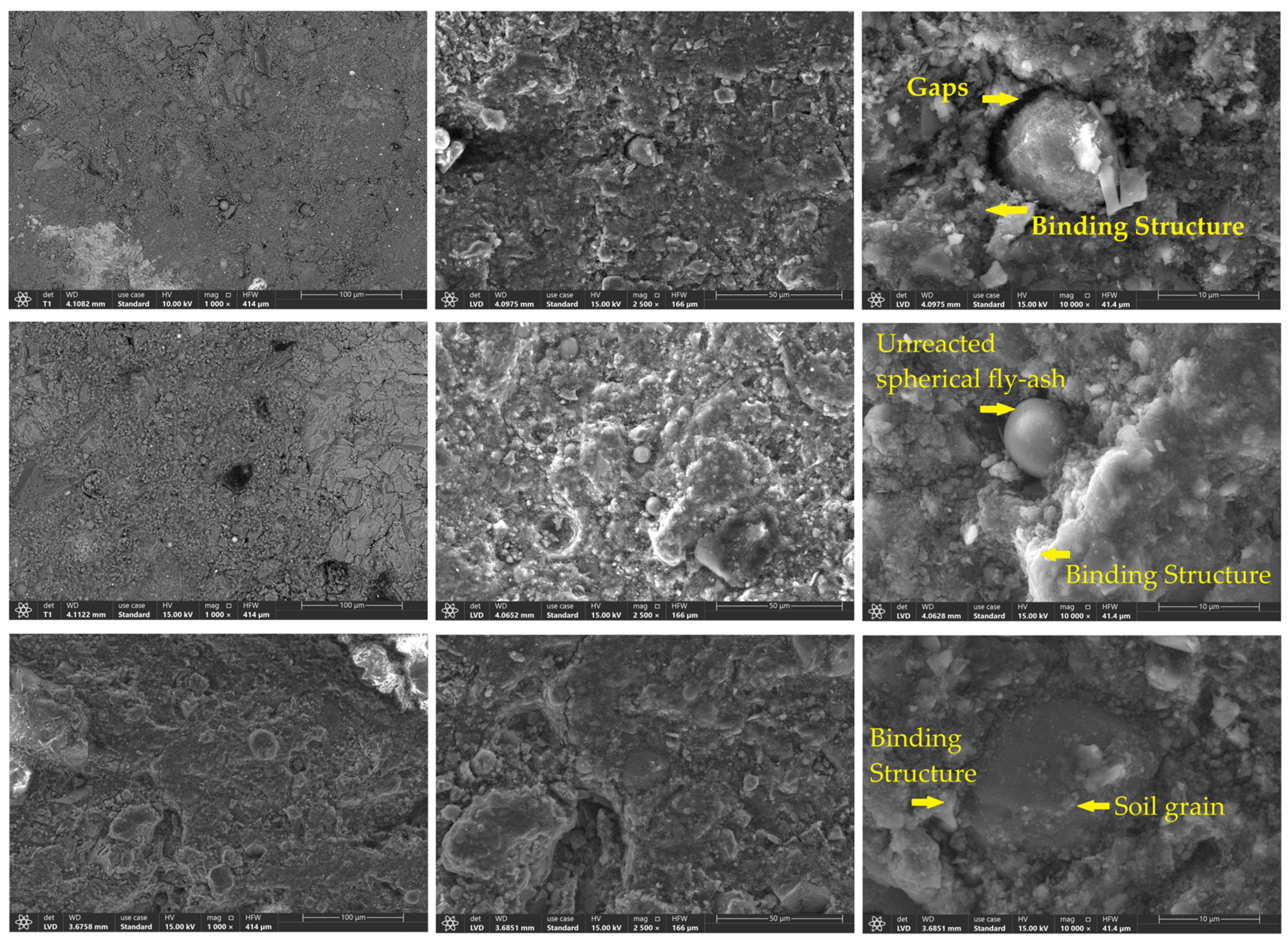
The results revealed that early strength development lasts for a few weeks. Between 4 and 16 weeks, a high strength development rate indicates ongoing microstructural densification, which parallels the literature on studies using 16-week durations [
62,
63]. Although the rate was lower, strength development was still observed after 16 weeks, demonstrating continuous reactions. A change in the average E/q
u and E
50/q
u ratios was also demonstrated with the curing duration. These ratios are increased slightly between 16 and 54 weeks of curing. The increase rate was 2% for the E/q
u ratio and 4% for the E
50/q
u ratio. This increasing trend could indicate increasing or at least stable rigidity, thus ensuring serviceability in the long term and decreasing the possibility of creep behavior [
2].
5. Environmental and Cost Impact
Turkey is located in a seismic region where numerous destructive earthquakes have occurred throughout its history. Its geological conditions are very complex, and extensive alluvial deposits exist within deep, liquefiable, saturated sands. Therefore, the DSM method has extensively applied to soil improvement projects where cement is conventionally the primary required material. Utilizing sustainable materials such as alkali-activated by-products has become increasingly important in Turkey. Due to a lack of reliable centralized reporting systems, a precise projection of global DSM application is not available. However, in this study, the environmental impacts of conventional cement and alkali-activated by-products, GGBS, and fly ash, have been compared considering their unit consumption in an example of deep-soil mixing applications.
To demonstrate the superiority of the alkali-activated by-products compared with cement usage, a carbon footprint evaluation was performed by comparing these alternative binders. Life-cycle-based GHG emissions were calculated in accordance with the ISO14025 [
64] and EN 15804 [
65] standards, which comprise core rules for environmental product declarations (EPDs). Emission values of modules A1–A3 were compared, which can be defined as cradle to gate, from extraction to factory gate; these are typically applied to raw material supply, transport, and manufacturing. In the comparison, emissions due to transportation to the site, stockpiling, and application were the same. As carbon footprint indicators, we considered CO
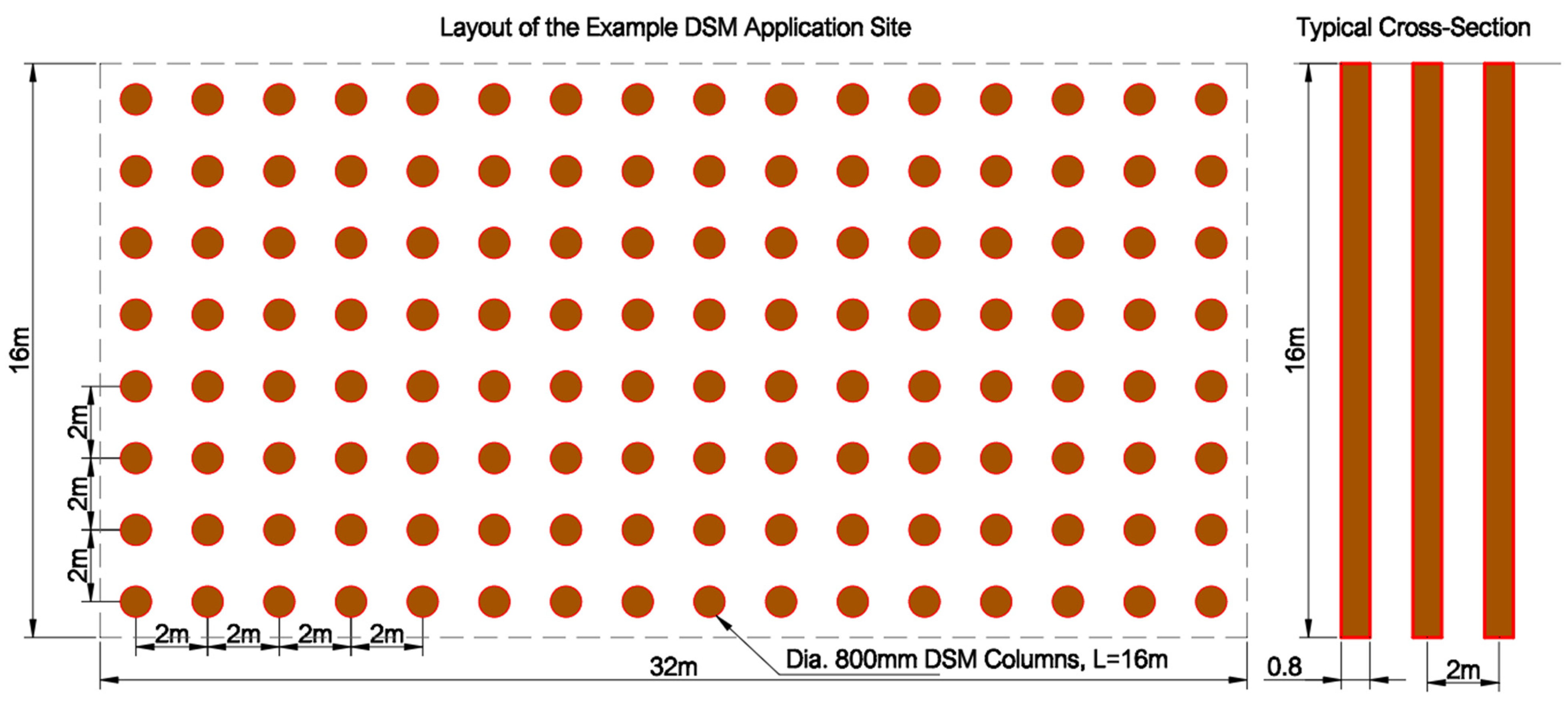
2 -eq values to take other GHGs into account. In these coefficients, other gases were considered by multiplying their quantities by emission coefficients. The comparison was made by considering an example DSM application under a 512 m
2 area, as illustrated in
Figure 16.
The cement dosage was 400 kg/m
3. The alkali-activated binder was also calculated by considering a 400 kg/m
3 precursor (GGBS and fly ash) dosage. The ratio between the GGBS and fly ash components was 50:50. The liquid activator-to-precursor ratio was 0.5, and the sodium silicate-to-sodium hydroxide ratio was 2 for the emission calculations. Calculated carbon footprints, emission values, and a cost comparison are shown in
Table 3.
Since the impact of site operations using both materials was similar, only cradle-to-gate (A1–A3) emissions were compared between conventional cement and alkali-activated by-products. These are waste materials collected from the energy and steel industries, and their carbon footprints are significantly lower than cement, as expected. Notably, end-of-life disposal credits were not included in this comparison. Although alkali activators have a significant impact, their emissions are not higher than those of cements due to their smaller quantities.
Overall, as a result of using alkali-activated by-products instead of cement, the carbon footprint decreased to approximately one-third, demonstrating the environmental potential of these waste materials when reused in ground improvement projects. Although the given market prices may vary on a large scale in different regions, and it is not possible to make a global judgment, alkali-activated binder alternatives may provide a comparable alternative solution to conventional cement in terms of costs.