Spatiotemporal Evolution Analysis and Optimization Strategy Development for Ecological Carbon-Sink Security Patterns: A Case Study of Zhengzhou, China




Abstract
1. Introduction
2. Literature Review
2.1. Research Progress on Carbon Storage
2.2. Research Progress on Ecological Security Pattern
3. Materials and Methods
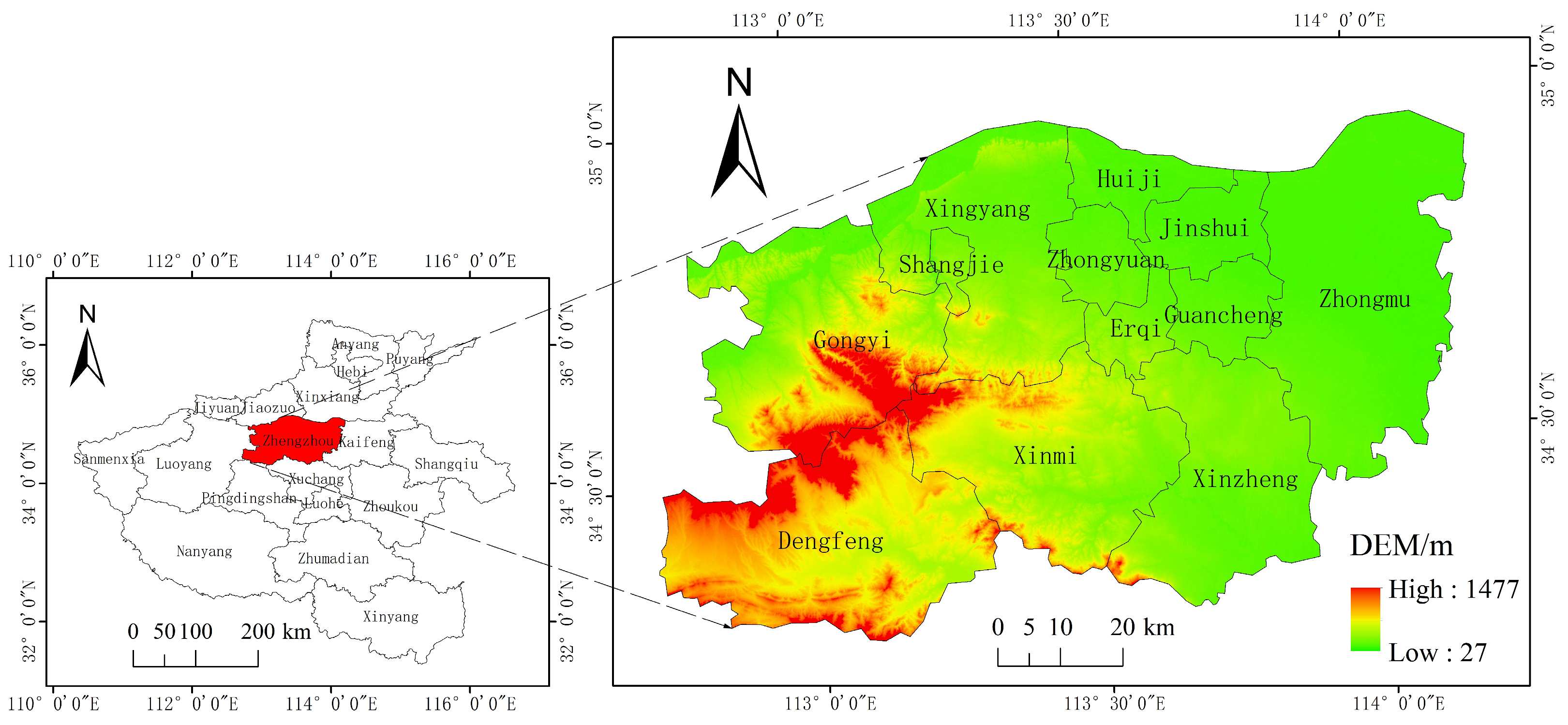
3.1. Study Area
3.2. Data Sources and Preparation
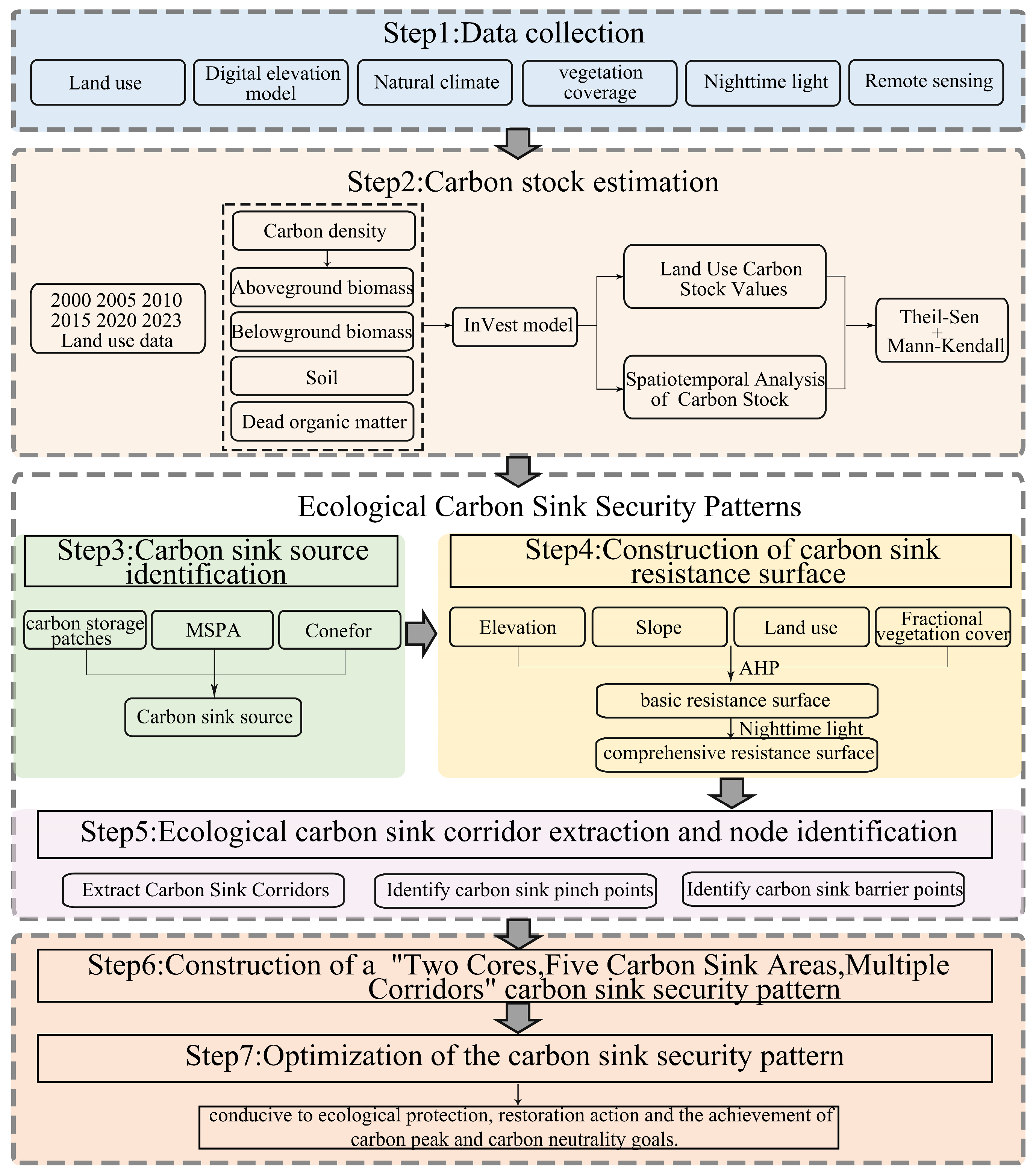
3.3. Methods
3.3.1. Carbon Density Correction
3.3.2. InVEST Model to Estimate Carbon Storage
3.3.3. Theil–Sen Trend
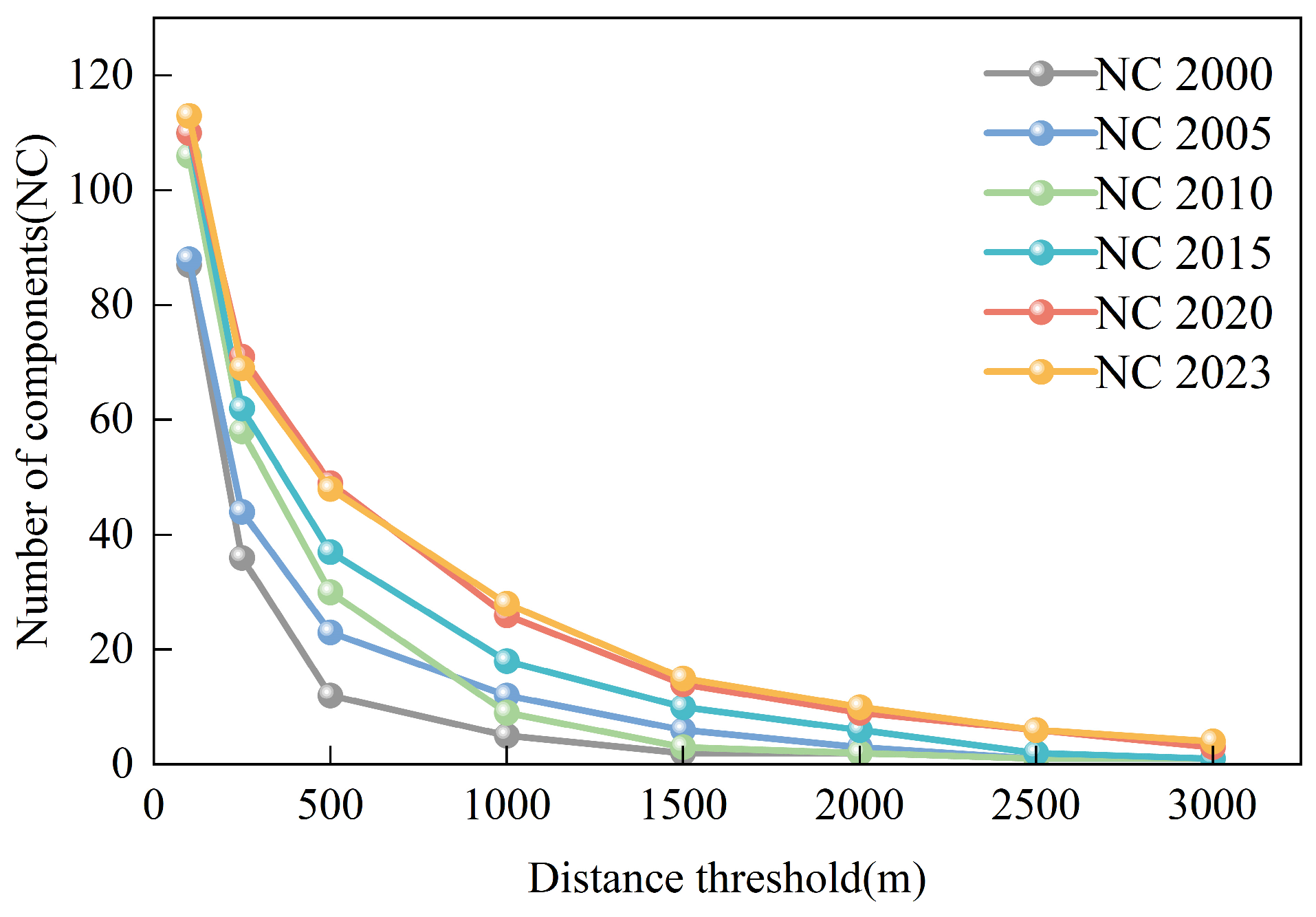
3.3.4. Ecological Carbon-Sink Source Identification
3.3.5. Ecological Carbon-Sink Resistance Surface Construction
3.3.6. Ecological Carbon-Sink Corridor Extraction and Node Identification
4. Results
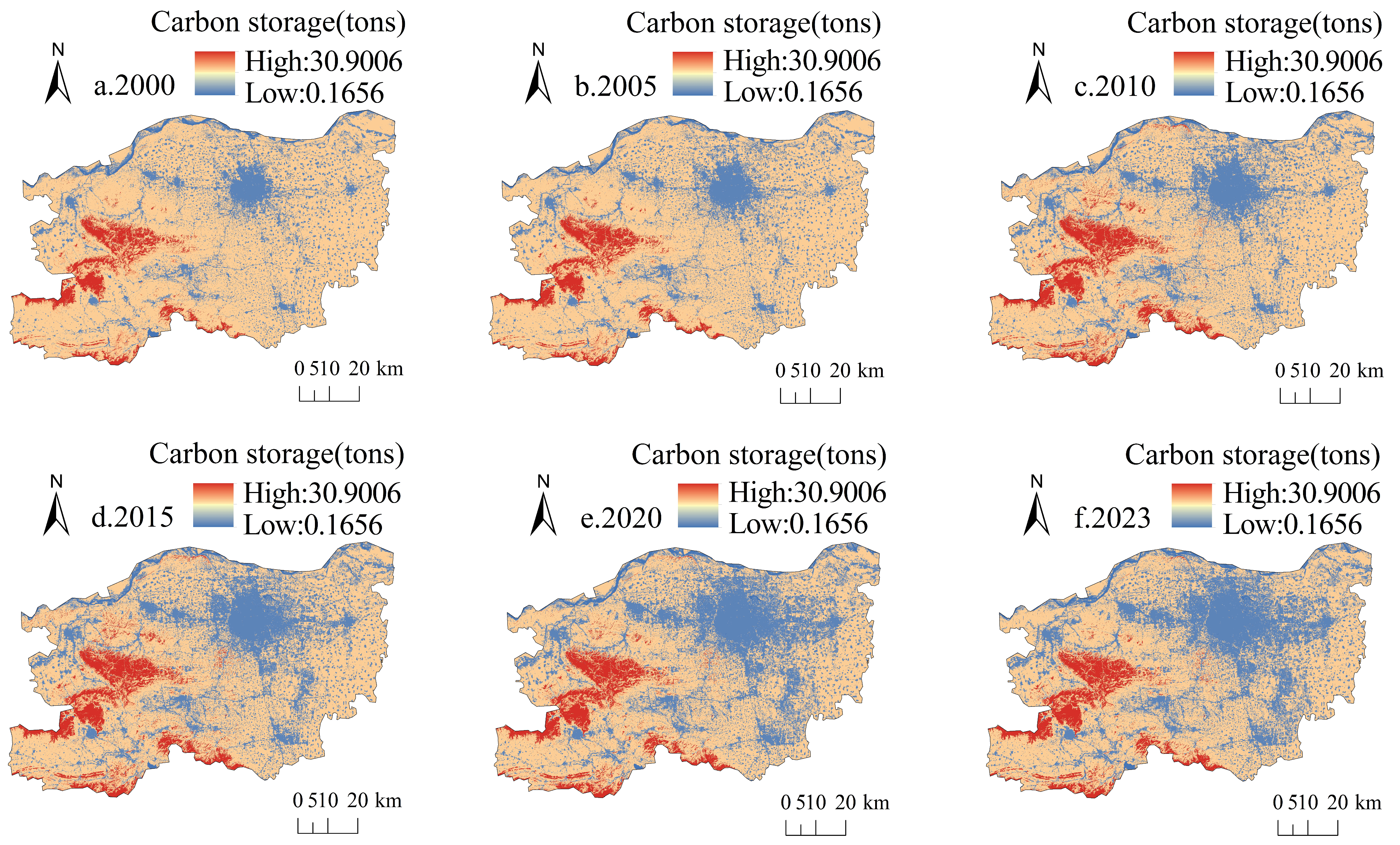
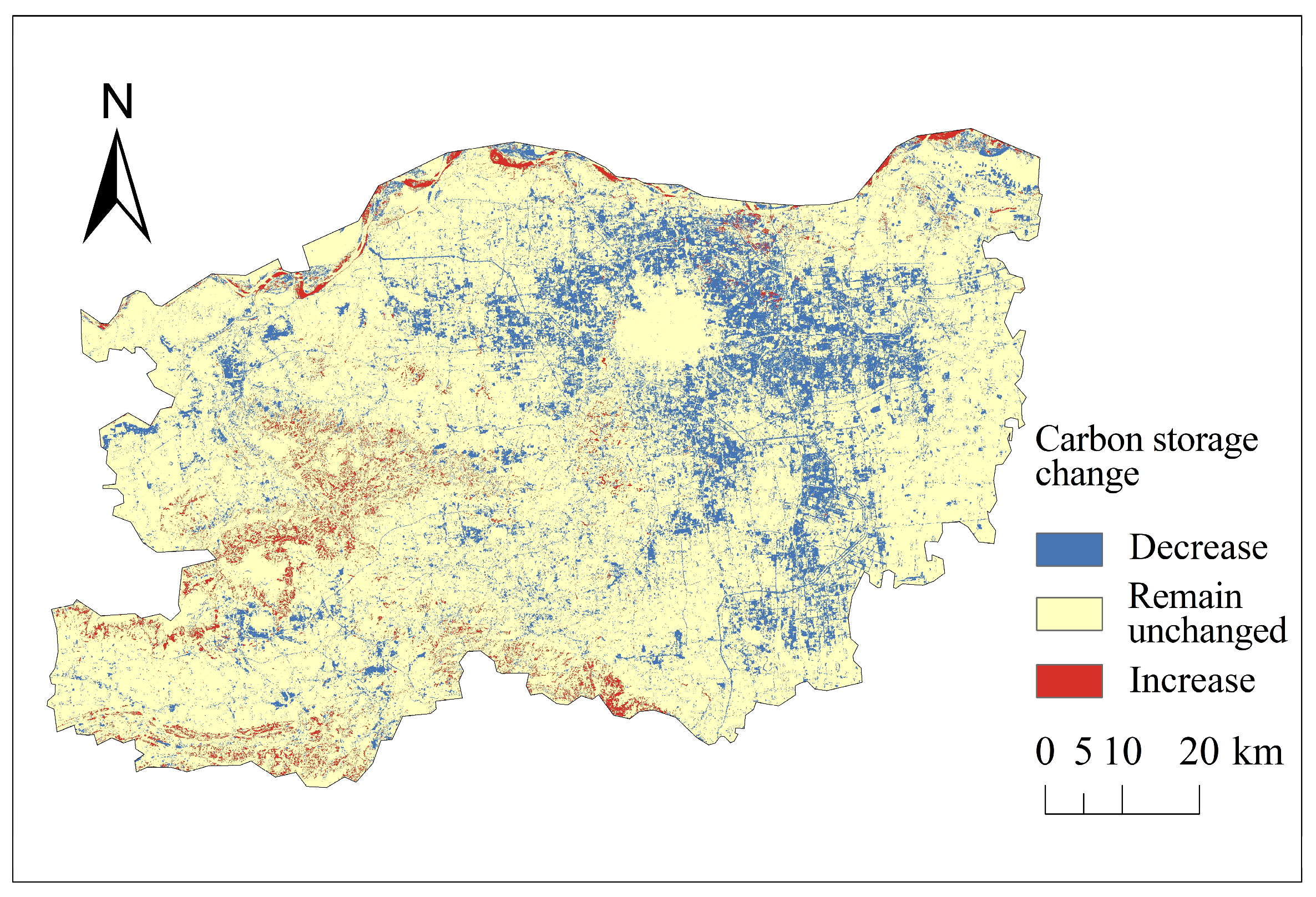
4.1. Spatiotemporal Evolution Analysis of Carbon Storage
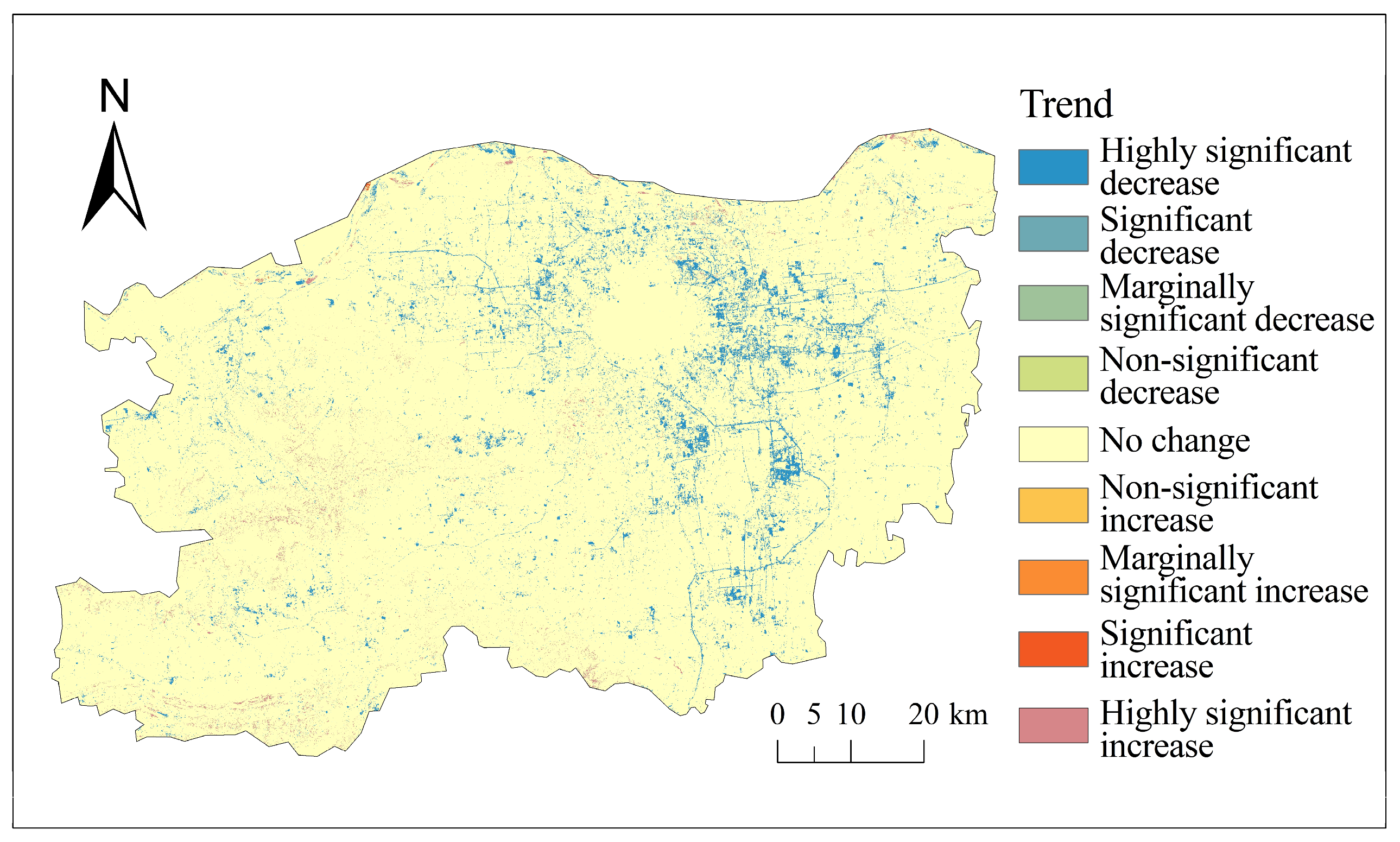
4.2. Carbon Storage Trend Analysis
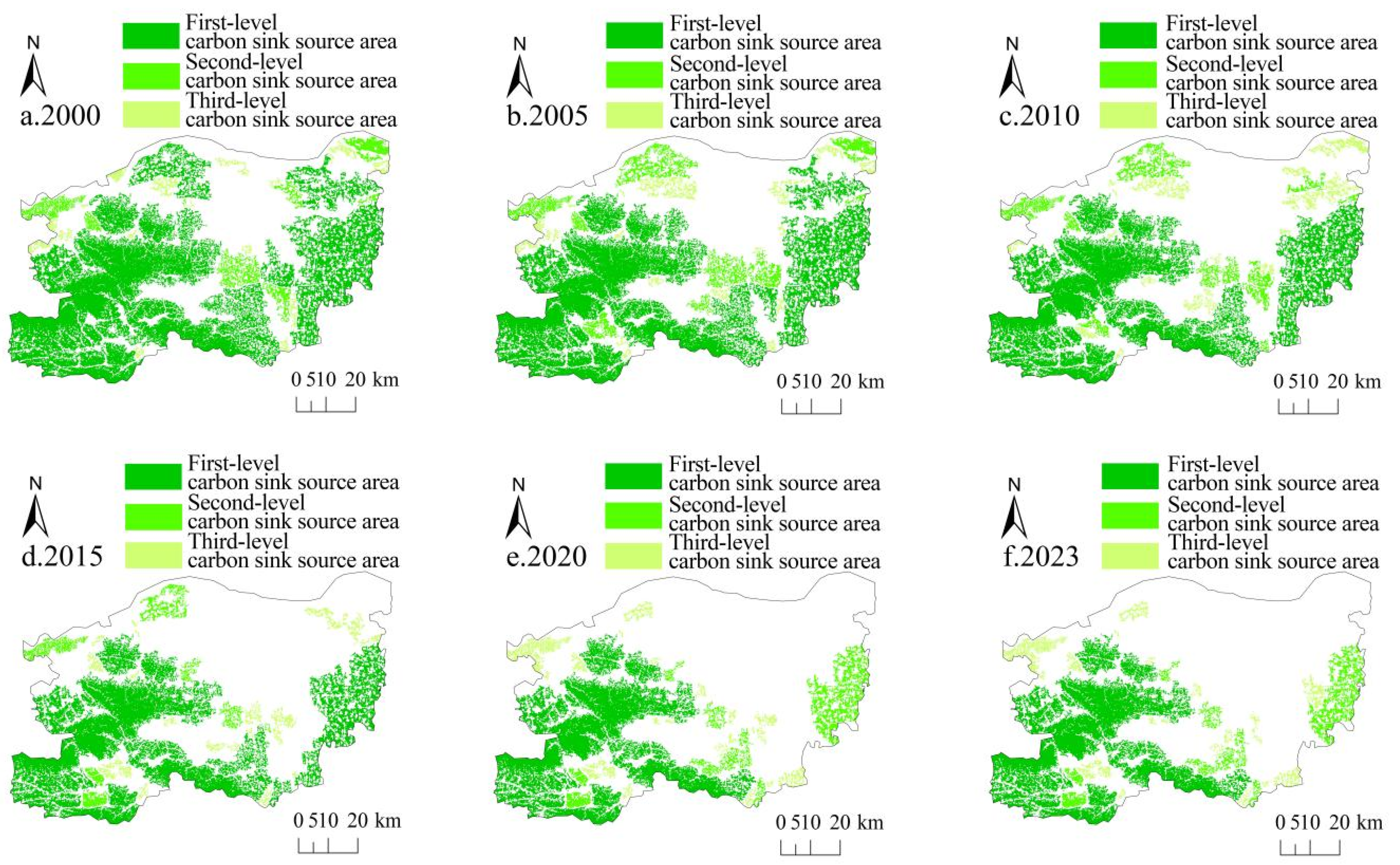
4.3. Results of Carbon-Sink Source Identification
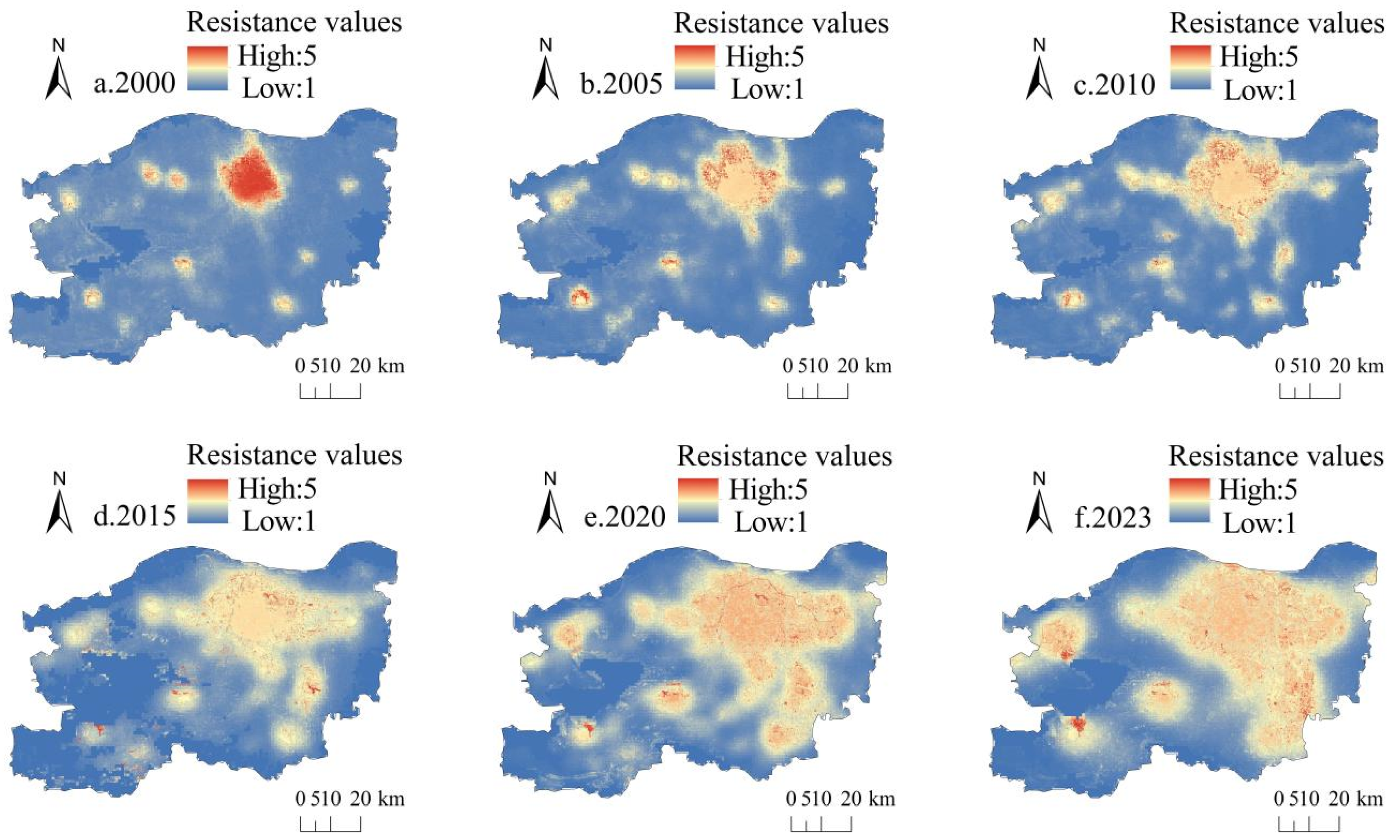
4.4. Results of Carbon-Sink Resistance Surface Construction
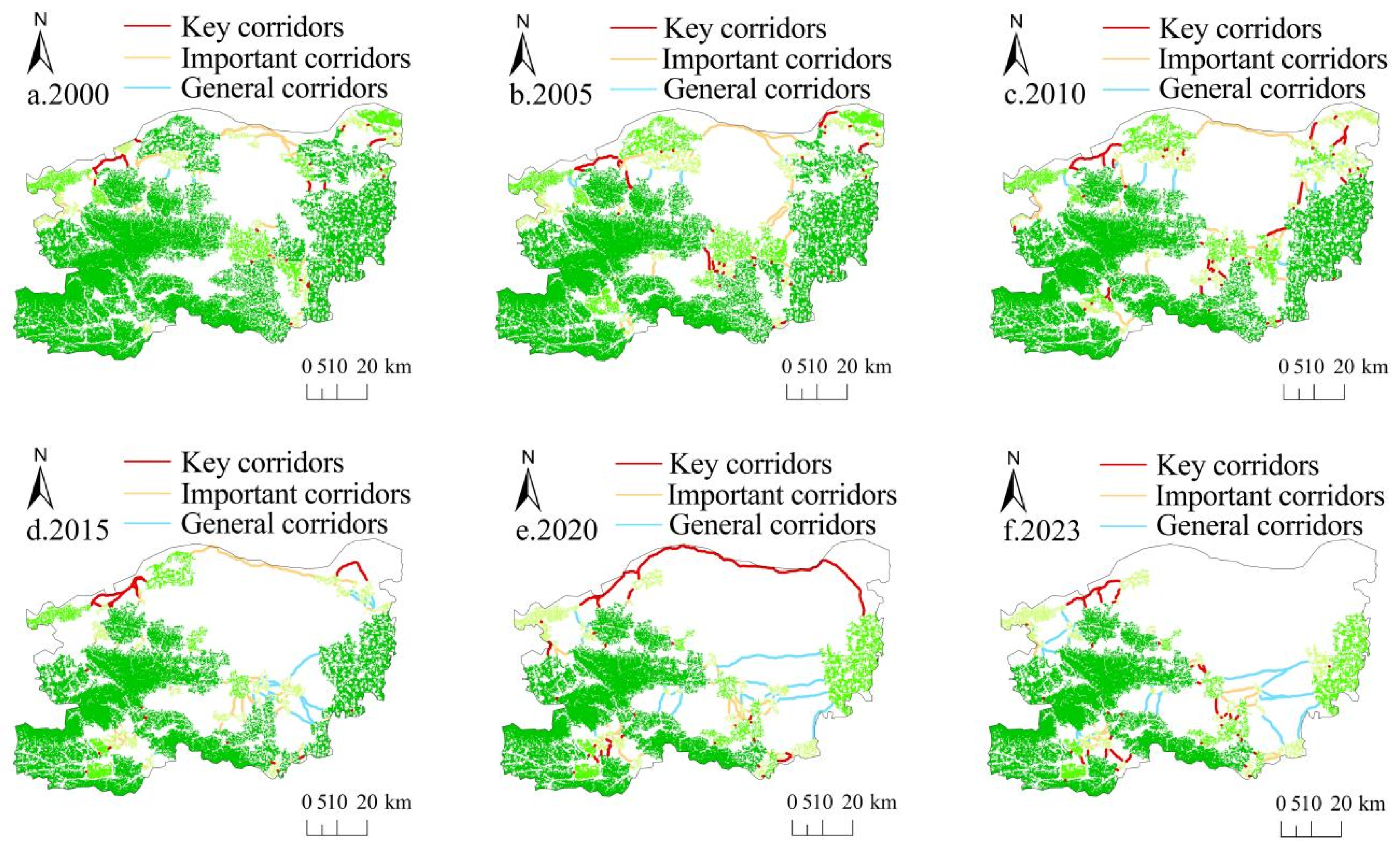
4.5. Results of Carbon-Sink Corridor Extraction
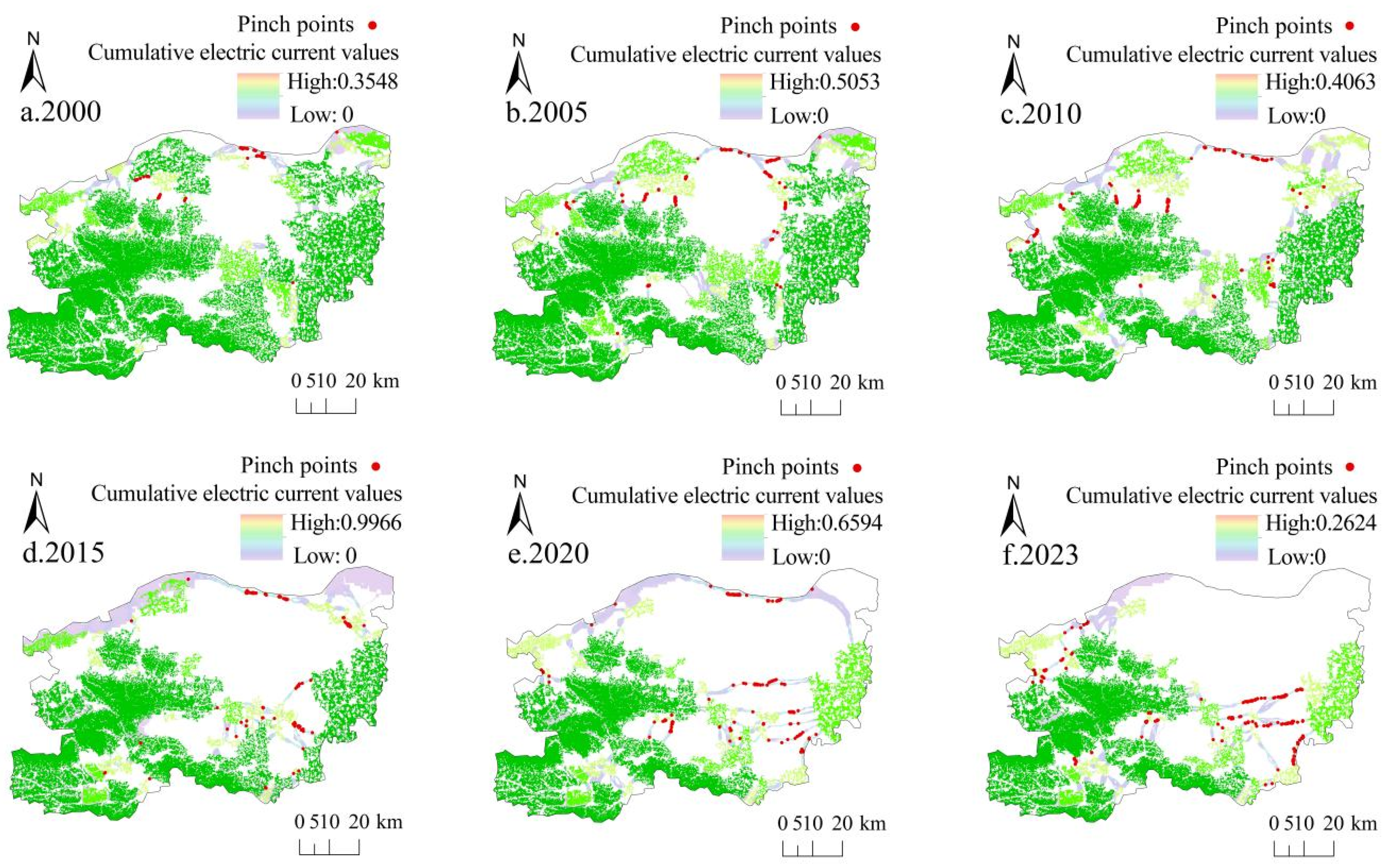
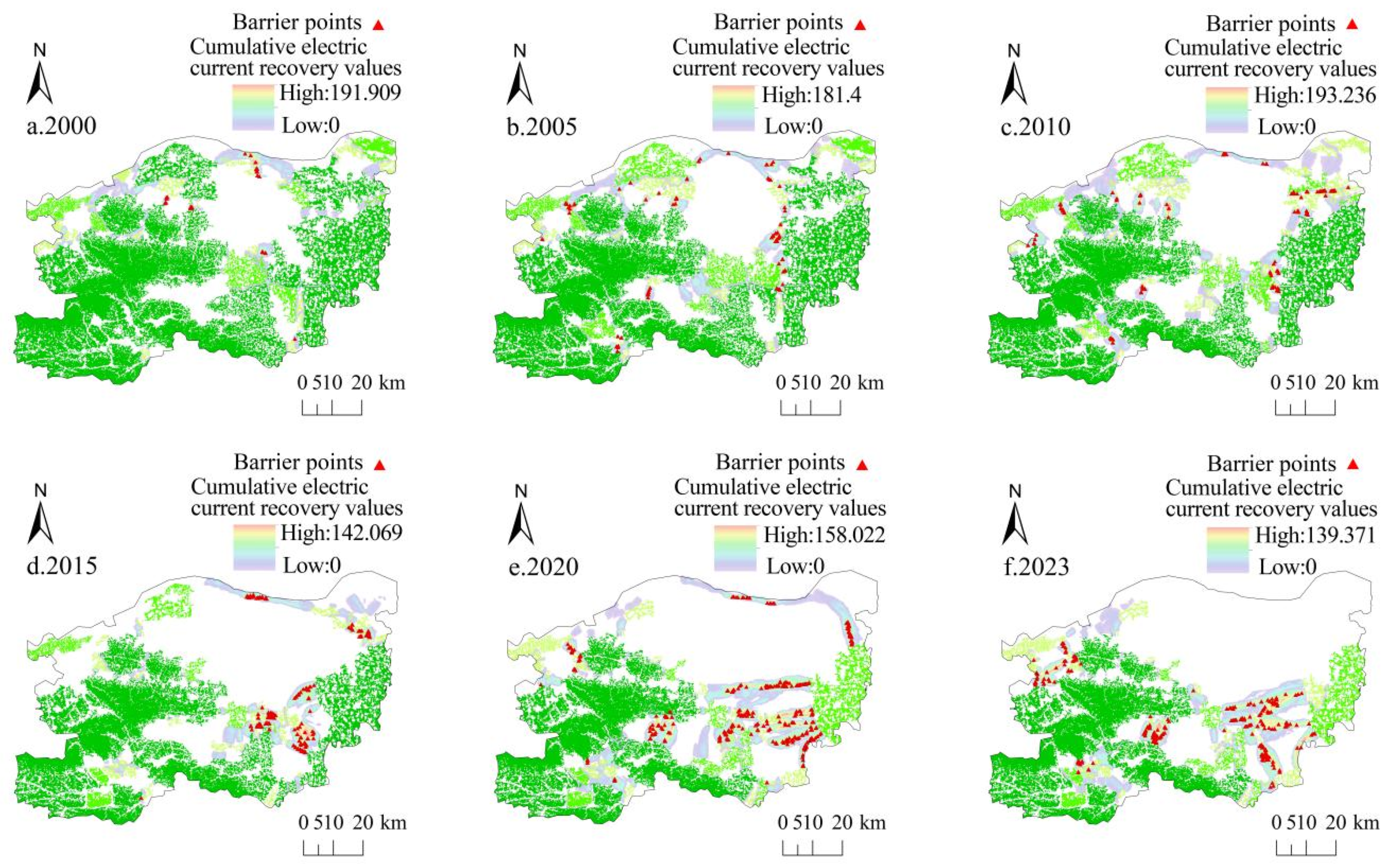
4.6. Results of Carbon-Sink Pinch Points and Barrier Points Identification
5. Discussion
5.1. The Impact of Rapid Urbanization on Carbon Storage
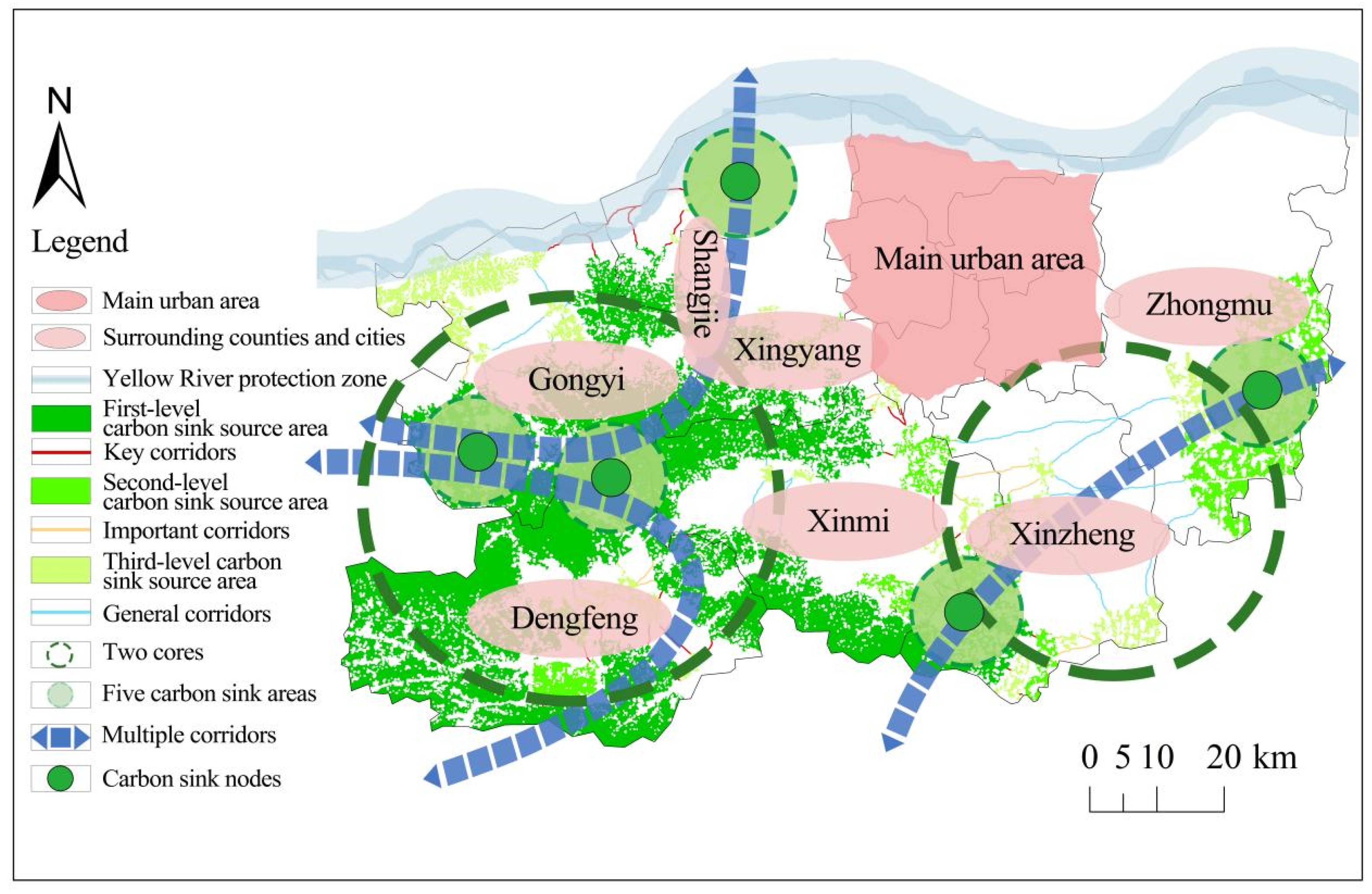
5.2. Construction of a Carbon-Sink Security Pattern
5.3. Optimization of the Carbon-Sink Security Pattern
6. Conclusions
Author Contributions
Funding
Institutional Review Board Statement
Informed Consent Statement
Data Availability Statement
Conflicts of Interest
Abbreviations
| InVEST | Integrated Valuation of Ecosystem Services and Trade-offs |
| SDGs | Sustainable Development Goals |
| LUCC | Land Use/Cover Change |
| ESP | Ecological Security Pattern |
| MSPA | Morphological Spatial Pattern Analysis |
| MCR | Minimum Cumulative Resistance |
| IPCC SRES | Intergovernmental Panel on Climate Change Special Report on Emissions Scenarios |
| UGB | Urban Growth Boundaries |
| EN | Ecological Networks |
| GI | Green Infrastructure |
| CLCD | China Land Cover Dataset |
| NOAA | National Oceanic and Atmospheric Administration |
| NC | Number of Components |
| CWD | Cost-weighted Distance |
| LCPL | Least-cost Path Length |
| LULC | Land Use and Land Cover |
References
- Zhou, M.; Ma, Y.; Tu, J.; Wang, M. SDG-Oriented Multi-Scenario Sustainable Land-Use Simulation under the Background of Urban Expansion. Environ. Sci. Pollut. Res. 2022, 29, 72797–72818. [Google Scholar] [CrossRef]
- Li, Y.; Wei, L.; Zeng, E. Research on the Associations and Indicative Thresholds of Urban Density on Carbon Performance: A Case Study of Chengdu-Chongqing Urban Agglomeration. Urban Build. Sci. 2026, 2, 6. [Google Scholar] [CrossRef]
- Huang, L.; Wang, J.; Fang, Y.; Zhai, T.; Cheng, H. An Integrated Approach towards Spatial Identification of Restored and Conserved Priority Areas of Ecological Network for Implementation Planning in Metropolitan Region. Sustain. Cities Soc. 2021, 69, 102865. [Google Scholar] [CrossRef]
- Bateman, I.J.; Harwood, A.R.; Mace, G.M.; Watson, R.T.; Abson, D.J.; Andrews, B.; Binner, A.; Crowe, A.; Day, B.H.; Dugdale, S.; et al. Bringing Ecosystem Services into Economic Decision-Making: Land Use in the United Kingdom. Science 2013, 341, 45–50. [Google Scholar] [CrossRef] [PubMed]
- Usman, B.M.; Johl, S.K.; Khan, P.A. Transitioning to Green Governance: A Pathway to Sustainability. Transp. Res. Procedia 2025, 84, 633–640. [Google Scholar] [CrossRef]
- Cheng, C.; Fang, Z.; Zhou, Q.; Jiang, Y.; Xue, S.; Zhao, S.; Wang, W.; Zhuang, Y.; Ding, T.; Tang, Y.; et al. Nature’s Hand in Megacity Cluster Progress: Integrating SDG11 with Ecosystem Service Dynamics. Sustain. Cities Soc. 2024, 108, 105471. [Google Scholar] [CrossRef]
- Li, X.; Han, Q.; Wang, J.; Xu, W. Harnessing Big Data to Track Progress towards SDG 15: Life on Land. Int. J. Digit. Earth 2023, 16, 4597–4600. [Google Scholar] [CrossRef]
- Song, S.; Wang, S.; Du, J.; Zhang, X. Karst Restoration Zoning Based on Fracture-Modified Minimum Cumulative Resistance Model and Ecological Network Resilience Assessment: A Case Study in Guizhou, China. Ecol. Eng. 2026, 223, 107842. [Google Scholar] [CrossRef]
- Zhang, R.; Zhang, Q.; Zhang, L.; Zhong, Q. Impact of Spatial Structure on the Functional Connectivity of Urban Ecological Corridors Based on Quantitative Analysis. Urban For. Urban Green. 2023, 89, 128121. [Google Scholar] [CrossRef]
- Miller, M.A.; Taylor, D. A Transboundary Agenda for Nature-Based Solutions across Sectors, Scales and Disciplines: Insights from Carbon Projects in Southeast Asia. Ambio 2024, 53, 534–551. [Google Scholar] [CrossRef]
- Chinese Magazine Browse Decision of the Standing Committee of the National People’s Congress on the Ratification of the Paris Agreement. Available online: http://www.npc.gov.cn/npc/c12434/c16114/c16115/201905/t20190521_280193.html (accessed on 28 December 2025).
- Xinhua News Agency Opinions of the Central Committee of the Communist Party of China and the State Council on Complete, Accurate and Comprehensive Implementation of the New Development Concept and Doing a Good Job in Carbon Peak and Carbon Neutrality. Available online: https://www.gov.cn/zhengce/2021-10/24/content_5644613.htm (accessed on 3 January 2026).
- State Council The State Council on Printing and Distributing Carbon Peaking Before 2030 Notification of Action Plan. Available online: https://www.gov.cn/zhengce/content/2021-10/26/content_5644984.htm (accessed on 3 January 2026).
- Chikhi, F.; Li, C.; Ji, Q.; Zhou, X. Advancing Sponge City Implementation in China: The Quest for a Strategy Model. Water Resour. Manag. 2024, 38, 2251–2277. [Google Scholar] [CrossRef]
- Zhou, Y.; Zhang, G.; Yi, X.; Lun, F.; Zhou, H.; Wen, G.; Hu, X. Balancing Cooling Benefits and Costs: Determining a Moderate Park Scale in 24 Chinese Cities. Urban For. Urban Green. 2025, 107, 128772. [Google Scholar] [CrossRef]
- Hou, L.; Hu, H.; Liu, T.; Ma, C. Ecological Security Pattern Construction for Carbon Sink Capacity Enhancement: The Case of Chengdu Metropolitan Area. Sustainability 2025, 17, 4483. [Google Scholar] [CrossRef]
- Wang, T.; Yue, W.; Wu, T.; Xiong, J.; Xia, H.; Huang, B. The Carbon Sink Conservation Areas (CSCAs) as a Land Use Strategy for Climate Change Mitigation. Sustain. Horiz. 2025, 15, 100141. [Google Scholar] [CrossRef]
- Qi, J.J.; Dauvergne, P. China’s Rising Influence on Climate Governance: Forging a Path for the Global South. Glob. Environ. Change 2022, 73, 102484. [Google Scholar] [CrossRef]
- Wang, S.; Tan, S.; Xu, J. Evaluation and Implication of the Policies towards China’s Carbon Neutrality. Sustainability 2023, 15, 6762. [Google Scholar] [CrossRef]
- Cai, E.; Bi, Q.; Lu, J.; Hou, H. The Spatiotemporal Characteristics and Rationality of Emerging Megacity Urban Expansion: A Case Study of Zhengzhou in Central China. Front. Environ. Sci. 2022, 10, 860814. [Google Scholar] [CrossRef]
- Guoyi, L.; Liu, J.; Shao, W. Urban Flood Risk Assessment under Rapid Urbanization in Zhengzhou City, China. Reg. Sustain. 2023, 4, 332–348. [Google Scholar] [CrossRef]
- Zhengzhou Municipal Bureau of Statistics Statistical Bulletin on National Economic and Social Development of Zhengzhou City in 2000. Available online: https://tjj.zhengzhou.gov.cn/tjgb/3101476.jhtml (accessed on 6 February 2026).
- Zhengzhou Municipal People’s Government Announcement from Zhengzhou Municipal People’s Government Regarding the Scale of Zhengzhou’s Urban Built-Up Area in 2023. Available online: https://public.zhengzhou.gov.cn/D0104X/8731886.jhtml (accessed on 6 February 2026).
- Gilliam, F.S. Forest Ecosystems of Temperate Climatic Regions: From Ancient Use to Climate Change. New Phytol. 2016, 212, 871–887. [Google Scholar] [CrossRef]
- Moktan, L.; Hofmeister, J.; Oulehle, F.; Urban, O.; Petritan, I.C.; Petritan, A.M.; Bosela, M.; Keith, H.; Jaloviar, P.; Kucbel, S.; et al. Not Only Aboveground Biomass: Soil of Undisturbed Carpathian Beech Forests Also Stores Substantial Carbon. For. Ecol. Manag. 2025, 597, 123140. [Google Scholar] [CrossRef]
- Schimel, D.S. Terrestrial Ecosystems and the Carbon Cycle. Glob. Change Biol. 1995, 1, 77–91. [Google Scholar] [CrossRef]
- Houghton, R.A.; Hackler, J.L. Sources and Sinks of Carbon from Land-Use Change in China. Glob. Biogeochem. Cycles 2003, 17, 1034. [Google Scholar] [CrossRef]
- Wang, R.-Y.; Cai, H.; Chen, L.; Li, T. Spatiotemporal Evolution and Multi-Scenario Prediction of Carbon Storage in the GBA Based on PLUS–InVEST Models. Sustainability 2023, 15, 8421. [Google Scholar] [CrossRef]
- Rachid, L.; Elmostafa, A.; Mehdi, M.; Hassan, R. Assessing Carbon Storage and Sequestration Benefits of Urban Greening in Nador City, Morocco, Utilizing GIS and the InVEST Model. Sustain. Futures 2024, 7, 100171. [Google Scholar] [CrossRef]
- Yang, X.; Wang, C.; Liu, C.; Liu, Z.; Liu, B.; Xu, C. Assessing the Spatio Evolution of Carbon Sequestration and Optimizing Ecological Restoration Strategies Using the InVEST Model: A Case Study of the Yellow River Estuary, China. Mar. Environ. Res. 2025, 209, 107204. [Google Scholar] [CrossRef]
- Fang, J.; Liu, G.; Xu, S. Biomass and Net Productivity of My Country’s Forest Vegetation. Acta Ecol. Sin. 1996, 16, 497–508. [Google Scholar]
- Woodall, C.W.; Heath, L.S.; Smith, J.E. National Inventories of down and Dead Woody Material Forest Carbon Stocks in the United States: Challenges and Opportunities. For. Ecol. Manag. 2008, 256, 221–228. [Google Scholar] [CrossRef]
- Wang, N.; Chen, X.; Zhang, Y.; Pang, J.; Long, Z.; Chen, Y.; Zhang, Z. Integrated Effects of Land Use and Land Cover Change on Carbon Metabolism: Based on Ecological Network Analysis. Environ. Impact Assess. Rev. 2024, 104, 107320. [Google Scholar] [CrossRef]
- Yang, H.; Huang, J.; Liu, D. Linking Climate Change and Socioeconomic Development to Urban Land Use Simulation: Analysis of Their Concurrent Effects on Carbon Storage. Appl. Geogr. 2020, 115, 102135. [Google Scholar] [CrossRef]
- Wang, Y.; Zhang, F.; Li, X.; Johnson, V.C.; Tan, M.L.; Kung, H.-T.; Shi, J.; Bahtebay, J.; He, X. Methodology for Mapping the Ecological Security Pattern and Ecological Network in the Arid Region of Xinjiang, China. Remote Sens. 2023, 15, 2836. [Google Scholar] [CrossRef]
- Forman, R.T.T. Some General Principles of Landscape and Regional Ecology. Landsc. Ecol. 1995, 10, 133–142. [Google Scholar] [CrossRef]
- Yu, K. Security Patterns and Surface Model in Landscape Ecological Planning. Landsc. Urban Plan. 1996, 36, 1–17. [Google Scholar] [CrossRef]
- Dong, J.; Jiang, H.; Gu, T.; Liu, Y.; Peng, J. Sustainable Landscape Pattern: A Landscape Approach to Serving Spatial Planning. Landsc. Ecol. 2022, 37, 31–42. [Google Scholar] [CrossRef]
- Tang, H.; Peng, J.; Jiang, H.; Lin, Y.; Xu, D. Trade-off between Comprehensive and Specific Ecosystem Characteristics Conservation in Ecological Security Pattern Construction. Glob. Ecol. Conserv. 2024, 49, e02776. [Google Scholar] [CrossRef]
- Mathur, S. Impact of an Urban Growth Boundary across the Entire House Price Spectrum: The Two-Stage Quantile Spatial Regression Approach. Land Use Policy 2019, 80, 88–94. [Google Scholar] [CrossRef]
- Opdam, P.; Steingröver, E.; Rooij, S. van Ecological Networks: A Spatial Concept for Multi-Actor Planning of Sustainable Landscapes. Landsc. Urban Plan. 2006, 75, 322–332. [Google Scholar] [CrossRef]
- Canzonieri, C. M.E. Benedict and E.T. McMahon, Green Infrastructure: Linking Landscapes and Communities. Landsc. Ecol. 2007, 22, 797–798. [Google Scholar] [CrossRef]
- Peng, J.; Zhao, H.; Liu, Y.; Wu, J. Research Progress and Prospect on Regional Ecological Security Pattern Construction. Geogr. Res. 2017, 36, 407–419. [Google Scholar] [CrossRef]
- McClure, M.L.; Hansen, A.J.; Inman, R.M. Connecting Models to Movements: Testing Connectivity Model Predictions against Empirical Migration and Dispersal Data. Landsc. Ecol. 2016, 31, 1419–1432. [Google Scholar] [CrossRef]
- Xiao, S.; Wu, W.; Guo, J.; Ou, M.; Pueppke, S.G.; Ou, W.; Tao, Y. An Evaluation Framework for Designing Ecological Security Patterns and Prioritizing Ecological Corridors: Application in Jiangsu Province, China. Landsc. Ecol. 2020, 35, 2517–2534. [Google Scholar] [CrossRef]
- Mestre, F.; Silva, B. Lconnect R Package: A Versatile Tool for Evaluating Landscape Connectivity and Prioritizing Habitat Patches in Conservation Research. Ecol. Model. 2023, 484, 110489. [Google Scholar] [CrossRef]
- Vogt, P.; Riitters, K.H.; Estreguil, C.; Kozak, J.; Wade, T.G.; Wickham, J.D. Mapping Spatial Patterns with Morphological Image Processing. Landsc. Ecol. 2007, 22, 171–177. [Google Scholar] [CrossRef]
- Fang, J.; Xu, L.; Lu, Q. Ecological Security Patterns of Chinese Lakes Based on Ecosystem Service Values Assessment and Human Threat Factors Evaluation. Ecol. Inform. 2024, 82, 102754. [Google Scholar] [CrossRef]
- Gong, D.; Huang, M.; Lin, H. Construction of an Ecological Security Pattern in Rapidly Urbanizing Areas Based on Ecosystem Sustainability, Stability, and Integrity. Remote Sens. 2023, 15, 5728. [Google Scholar] [CrossRef]
- Feng, X.; Zeng, F.; Loo, B.P.Y.; Zhong, Y. The Evolution of Urban Ecological Resilience: An Evaluation Framework Based on Vulnerability, Sensitivity and Self-Organization. Sustain. Cities Soc. 2024, 116, 105933. [Google Scholar] [CrossRef]
- Wei, W.; Zhang, Y.; Wei, X.; Xie, B.; Ma, Z.; Liu, C.; Yu, L.; Zhou, J.; Shi, W.; Liu, T.; et al. Construction and Optimization of Ecological Security Patterns Based on Ecosystem Service Function and Ecosystem Sensitivity in the Important Ecological Functional Area—A Case Study in the Yellow River Basin. Ecol. Eng. 2025, 215, 107609. [Google Scholar] [CrossRef]
- Qian, M.; Huang, Y.; Cao, Y.; Wu, J.; Xiong, Y. Ecological Network Construction and Optimization in Guangzhou from the Perspective of Biodiversity Conservation. J. Environ. Manag. 2023, 336, 117692. [Google Scholar] [CrossRef]
- Sannigrahi, S.; Zhang, Q.; Joshi, P.K.; Sutton, P.C.; Keesstra, S.; Roy, P.S.; Pilla, F.; Basu, B.; Wang, Y.; Jha, S.; et al. Examining Effects of Climate Change and Land Use Dynamic on Biophysical and Economic Values of Ecosystem Services of a Natural Reserve Region. J. Clean. Prod. 2020, 257, 120424. [Google Scholar] [CrossRef]
- Jiang, X.; Mao, D.; Zhen, J.; Wang, J.; Van de Voorde, T. Exploring the Conservation of Historic Avian Corridors under Urbanization Threats in China: A Case Study of Egrets in the Greater Bay Area. Sci. Total Environ. 2024, 948, 174921. [Google Scholar] [CrossRef]
- Dong, J.; Peng, J.; Liu, Y.; Qiu, S.; Han, Y. Integrating Spatial Continuous Wavelet Transform and Kernel Density Estimation to Identify Ecological Corridors in Megacities. Landsc. Urban Plan. 2020, 199, 103815. [Google Scholar] [CrossRef]
- Peng, J.; Yang, Y.; Liu, Y.; Hu, Y.; Du, Y.; Meersmans, J.; Qiu, S. Linking Ecosystem Services and Circuit Theory to Identify Ecological Security Patterns. Sci. Total Environ. 2018, 644, 781–790. [Google Scholar] [CrossRef] [PubMed]
- Pavlacky, D.C., Jr.; Goldizen, A.W.; Prentis, P.J.; Nicholls, J.A.; Lowe, A.J. A Landscape Genetics Approach for Quantifying the Relative Influence of Historic and Contemporary Habitat Heterogeneity on the Genetic Connectivity of a Rainforest Bird. Mol. Ecol. 2009, 18, 2945–2960. [Google Scholar] [CrossRef] [PubMed]
- Chen, X.; Kang, B.; Li, M.; Du, Z.; Zhang, L.; Li, H. Identification of Priority Areas for Territorial Ecological Conservation and Restoration Based on Ecological Networks: A Case Study of Tianjin City, China. Ecol. Indic. 2023, 146, 109809. [Google Scholar] [CrossRef]
- Liu, X.; Su, Y.; Li, Z.; Zhang, S. Constructing Ecological Security Patterns Based on Ecosystem Services Trade-Offs and Ecological Sensitivity: A Case Study of Shenzhen Metropolitan Area, China. Ecol. Indic. 2023, 154, 110626. [Google Scholar] [CrossRef]
- Cao, C.; Luo, Y.; Xu, L.; Xi, Y.; Zhou, Y. Construction of Ecological Security Pattern Based on InVEST-Conefor-MCRM: A Case Study of Xinjiang, China. Ecol. Indic. 2024, 159, 111647. [Google Scholar] [CrossRef]
- Hashemi, R.; Darabi, H.; Hashemi, M.; Wang, J. Graph Theory in Ecological Network Analysis: A Systematic Review for Connectivity Assessment. J. Clean. Prod. 2024, 472, 143504. [Google Scholar] [CrossRef]
- Nie, H.; Zhao, Y.; Zhu, J.; Ning, A.; Zheng, W. Ecological Security Pattern Construction in Typical Oasis Area Based on Ant Colony Optimization: A Case Study in Yili River Valley, China. Ecol. Indic. 2024, 169, 112770. [Google Scholar] [CrossRef]
- Liu, Y.; Jing, Y.; Zhao, S.; Lu, P.; Han, S. Ecological Security Pattern and Simulation Prediction Based on Circuit Theory: A Case Study of the Nansi Lake Basin in China. J. Nat. Conserv. 2026, 89, 127137. [Google Scholar] [CrossRef]
- Liu, H.; Wang, Z.; Zhang, L.; Tang, F.; Wang, G.; Li, M. Construction of an Ecological Security Network in the Fenhe River Basin and Its Temporal and Spatial Evolution Characteristics. J. Clean. Prod. 2023, 417, 137961. [Google Scholar] [CrossRef]
- Liu, J.; Yin, H.; Kong, F.; Li, M. Structure Optimization of Circuit Theory-Based Green Infrastructure in Nanjing, China. Acta Ecol. Sin. 2018, 38, 4363–4372. [Google Scholar] [CrossRef]
- Yin, F.; Chen, H.; Huang, F.; Chen, Q. Construction of a Blue-Green Ecological Network in the Luoyuan Bay Area in Southeast China via the Identification of Important Habitats. Ocean Coast. Manag. 2025, 261, 107541. [Google Scholar] [CrossRef]
- Zhang, L.; Liu, Q.; Wang, J.; Wu, T.; Li, M. Constructing Ecological Security Patterns Using Remote Sensing Ecological Index and Circuit Theory: A Case Study of the Changchun-Jilin-Tumen Region. J. Environ. Manag. 2025, 373, 123693. [Google Scholar] [CrossRef] [PubMed]
- Han, M.; Zhang, S.; Xu, Q.; Dai, J.; Huang, G. Construction of Cross-Basin Ecological Security Patterns Based on Carbon Sinks and Landscape Connectivity. Environ. Sci. 2024, 45, 5844–5852. [Google Scholar] [CrossRef]
- Wu, S.; Shi, S.; Zhang, J. Evolution Analysis of Ecological Security Pattern in Forest Areas Coupling Carbon Storage and Landscape Connectivity: A Case Study of the Xiaoxing’an Mountains, China. Forests 2025, 16, 331. [Google Scholar] [CrossRef]
- Lu, H.; Wang, R.; Ye, R.; Fan, J. Monitoring Long-Term Spatiotemporal Dynamics of Urban Expansion Using Multisource Remote Sensing Images and Historical Maps: A Case Study of Hangzhou, China. Land 2023, 12, 144. [Google Scholar] [CrossRef]
- Zhang, P.; Kohli, D.; Sun, Q.; Zhang, Y.; Liu, S.; Sun, D. Remote Sensing Modeling of Urban Density Dynamics across 36 Major Cities in China: Fresh Insights from Hierarchical Urbanized Space. Landsc. Urban Plan. 2020, 203, 103896. [Google Scholar] [CrossRef]
- Fan, L.; Cai, T.; Wen, Q.; Han, J.; Wang, S.; Wang, J.; Yin, C. Scenario Simulation of Land Use Change and Carbon Storage Response in Henan Province, China: 1990–2050. Ecol. Indic. 2023, 154, 110660. [Google Scholar] [CrossRef]
- Wang, S.; Zhao, X.; Zhou, S. Exploring the Impact of Future Multi-Scenario Land Use Change on Henan Province Regional Carbon Storage. Environ. Sci. 2025, 46, 3830–3845. [Google Scholar] [CrossRef]
- Yang, J.; Xie, B.; Zhang, D. Spatio-Temporal Evolution of Carbon Stocks in the Yellow River Basin Based on InVEST and CA-Markov Models. Chin. J. Eco-Agric. 2021, 29, 1018–1029. [Google Scholar] [CrossRef]
- Raich, J.W.; Nadelhoffer, K.J. Belowground Carbon Allocation in Forest Ecosystems: Global Trends. Ecology 1989, 76, 1346–1354. [Google Scholar] [CrossRef]
- Alam, S.A.; Starr, M.; Clark, B.J.F. Tree Biomass and Soil Organic Carbon Densities across the Sudanese Woodland Savannah: A Regional Carbon Sequestration Study. J. Arid Environ. 2013, 89, 67–76. [Google Scholar] [CrossRef]
- Giardina, C.P.; Ryan, M.G. Evidence That Decomposition Rates of Organic Carbon in Mineral Soil Do Not Vary with Temperature. Nature 2000, 404, 858–861. [Google Scholar] [CrossRef] [PubMed]
- Chen, G.; Yang, Y.; Liu, L.; Li, X.; Zhao, Y.; Yuan, Y. Research Review on Total Belowground Carbon Allocation in Forest Ecosystems. J. Subtrop. Resour. Environ. 2007, 2, 34–42. [Google Scholar] [CrossRef]
- Zhang, J.; Yang, K.; Wu, J.; Duan, Y.; Ma, Y.; Ren, J.; Yang, Z. Scenario Simulation of Carbon Balance in Carbon Peak Pilot Cities under the Background of the “Dual Carbon” Goals. Sustain. Cities Soc. 2024, 116, 105910. [Google Scholar] [CrossRef]
- Chen, W.; Shi, L. Study on the Driving Mechanisms of Spatiotemporal Nonstationarity of Vegetation Dynamics in Heilongjiang Province. Sci. Rep. 2025, 15, 28844. [Google Scholar] [CrossRef] [PubMed]
- Vogt, P.; Riitters, K.; Rambaud, P.; d’Annunzio, R.; Lindquist, E.; Pekkarinen, A. GuidosToolbox Workbench: Spatial Analysis of Raster Maps for Ecological Applications. Ecography 2022, 2022, e05864. [Google Scholar] [CrossRef]
- Guo, J.; Hu, Z.; Li, H.; Liu, J.; Zhang, X.; Lai, X. Construction of Municipal Ecological Space Network Based on MCR Model. Trans. Chin. Soc. Agric. Mach. 2021, 52, 275–284. [Google Scholar] [CrossRef]
- Zeng, W.; Xie, M.; Wang, Q. The Impact of Road Network on Ecological Patterns and Networks at a Regional Scale: A Case Study of the Chengdu Chongqing Urban Agglomeration. J. West China For. Sci. 2023, 52, 132–141, 158. [Google Scholar] [CrossRef]
- Saura, S.; Vogt, P.; Velázquez, J.; Hernando, A.; Tejera, R. Key Structural Forest Connectors Can Be Identified by Combining Landscape Spatial Pattern and Network Analyses. For. Ecol. Manag. 2011, 262, 150–160. [Google Scholar] [CrossRef]
- Taylor, P.D.; Fahrig, L.; Henein, K.; Merriam, G. Connectivity Is a Vital Element of Landscape Structure. Oikos 1993, 68, 571–573. [Google Scholar] [CrossRef]
- Jin, A.; Zhang, S.; Wang, X. Spatial-temporal Pattern and Optimization of the Green Space Ecological Networks in the Ningshao Plain. J. Ecol. Rural Environ. 2022, 38, 1415–1426. [Google Scholar] [CrossRef]
- Chen, J.; Zhao, C.; Zhao, Q.; Xu, C.; Lin, S.; Qiu, R.; Hu, X. Construction of Ecological Network in Fujian Province Based on Morphological Spatial Pattern Analysis. Acta Ecol. Sin. 2023, 43, 603–614. [Google Scholar] [CrossRef]
- Qiao, Q.; Zhen, Z.; Liu, L.; Luo, P. The Construction of Ecological Security Pattern under Rapid Urbanization in the Loess Plateau: A Case Study of Taiyuan City. Remote Sens. 2023, 15, 1523. [Google Scholar] [CrossRef]
- Wang, L.; Zhao, J.; Lin, Y.; Chen, G. Exploring Ecological Carbon Sequestration Advantage and Economic Responses in an Ecological Security Pattern: A Nature-Based Solutions Perspective. Ecol. Model. 2024, 488, 110597. [Google Scholar] [CrossRef]
- Zhang, X.; Cai, Z.; Song, W.; Yang, D. Mapping the Spatial-Temporal Changes in Energy Consumption-Related Carbon Emissions in the Beijing-Tianjin-Hebei Region via Nighttime Light Data. Sustain. Cities Soc. 2023, 94, 104476. [Google Scholar] [CrossRef]
- Chen, B.; Zhai, Y. Construction of Ecological Security Pattern in Qamdo City Based on MSPA and Circuit Theory. J. Henan Sci. Technol. 2024, 51, 105–110. [Google Scholar] [CrossRef]
- He, X.; Xu, Y.; Fan, X.; Geng, Q.; Tian, Z. Temporal and Spatial Variation and Prediction of Regional Carbon Storage in Zhongyuan Urban Agglomeration. China Environ. Sci. 2022, 42, 2965–2976. [Google Scholar] [CrossRef]
- Carlier, J.; Moran, J. Landscape Typology and Ecological Connectivity Assessment to Inform Greenway Design. Sci. Total Environ. 2019, 651, 3241–3252. [Google Scholar] [CrossRef]
- Sadick, A.-M.; Kamardeen, I. Enablers for Accelerating Biophilic Design Adoption in Australian Buildings. J. Build. Eng. 2024, 83, 108464. [Google Scholar] [CrossRef]
- Mitchell, M.E.; Emilsson, T.; Buffam, I. Carbon, Nitrogen, and Phosphorus Variation along a Green Roof Chronosequence: Implications for Green Roof Ecosystem Development. Ecol. Eng. 2021, 164, 106211. [Google Scholar] [CrossRef]
- Montesino Pouzols, F.; Toivonen, T.; Di Minin, E.; Kukkala, A.S.; Kullberg, P.; Kuusterä, J.; Lehtomäki, J.; Tenkanen, H.; Verburg, P.H.; Moilanen, A. Global Protected Area Expansion Is Compromised by Projected Land-Use and Parochialism. Nature 2014, 516, 383–386. [Google Scholar] [CrossRef]
- Fan, F.; Tian, G.; Liu, H.; Wang, H.; Li, H. Identification of Critical Areas for Ecological Restoration of Territorial Space in Zhengzhou City. Bull. Soil Water Conserv. 2024, 44, 267–276. [Google Scholar] [CrossRef]
- Joye, Y.; Dewitte, S. Nature’s Broken Path to Restoration. A Critical Look at Attention Restoration Theory. J. Environ. Psychol. 2018, 59, 1–8. [Google Scholar] [CrossRef]
- Yang, G.; Zhang, P.; Yu, F.; Zhu, X. A Review on Resilient Cities Research from the Perspective of Territorial Spatial Planning: A Bibliometric Analysis. Front. Ecol. Evol. 2023, 11, 1300764. [Google Scholar] [CrossRef]



| Data Name | Resolution | Data Source |
|---|---|---|
| Land-use data | 30 m | China Land Cover Dataset of Wuhan University (annual China Land Cover Dataset, CLCD) |
| Digital elevation model | 30 m | Geographical spatial data cloud (www.gscloud.cn) |
| Slope data | 30 m | Elevation data extraction |
| Landsat remote sensing image | 30 m | Google Earth Engine (https://earthengine.google.com/) |
| Average annual temperature | 1000 m | National Tibetan Plateau Scientific Data Center (https://data.tpdc.ac.cn/) |
| Average annual precipitation | 1000 m | National Tibetan Plateau Scientific Data Center (https://data.tpdc.ac.cn/) |
| Normalized difference vegetation index for the years 2000, 2005, 2010, 2015, 2020 | 30 m | National Ecological Science Data Center (https://www.nesdc.org.cn/) |
| Normalized difference vegetation index for 2023 | 30 m | Calculated by the Landsat remote sensing image |
| Fractional vegetation cover | 30 m | Calculated by the normalized difference vegetation index |
| Nighttime light data | 30 m | NOAA (https://www.ngdc.noaa.gov) |
| Land-Use Type | Ci-above | Ci-below | Ci-soil | Ci-dead |
|---|---|---|---|---|
| Farmland | 12.47 | 83.42 | 106.15 | 9.35 |
| Woodland | 46.84 | 119.8 | 163.26 | 13.44 |
| Grassland | 39.01 | 89.41 | 97.84 | 6.93 |
| Water | 1.84 | 0.00 | 0.00 | 0.00 |
| Construction land | 2.76 | 20.03 | 0.00 | 0.00 |
| Unused land | 1.45 | 0.00 | 17.29 | 0.00 |
| |Z| * | Trend Category | Trend Characteristics | |
|---|---|---|---|
| < 0 | |Z| > 2.58 | −4 | Highly significant decrease |
| 1.96 < |Z| ≤ 2.58 | −3 | Significant decrease | |
| 1.65 < |Z| ≤ 1.96 | −2 | Marginally significant decrease | |
| |Z| ≤ 1.65 | −1 | Non-significant decrease | |
| = 0 | |Z| = 0 | 0 | No change |
| > 0 | |Z| ≤ 1.65 | 1 | Non-significant increase |
| 1.65 < |Z| ≤ 1.96 | 2 | Marginally significant increase | |
| 1.96 < |Z| ≤ 2.58 | 3 | Significant increase | |
| |Z| > 2.58 | 4 | Highly significant increase |
| Resistance Factor | Resistance Value | Resistance Factor Weight | ||||
|---|---|---|---|---|---|---|
| 10 | 20 | 40 | 80 | 100 | ||
| Elevation | <159 m | 159~293 m | 293~464 m | 464~712 m | >712 m | 0.095 |
| Slope | <5° | 5~10° | 10~18° | 18~29° | >29° | 0.129 |
| Land-use type | Woodland | Water | Grassland | Farmland | Unused land Construction land | 0.372 |
| Fractional vegetation cover | >0.85 | 0.65~0.85 | 0.45~0.65 | 0.2~0.45 | <0.2 | 0.404 |
| Land-Use Type | Carbon Storage | |||||
|---|---|---|---|---|---|---|
| 2000 | 2005 | 2010 | 2015 | 2020 | 2023 | |
| Farmland | 120.08 | 116.40 | 108.42 | 100.48 | 95.46 | 95.38 |
| Woodland | 13.63 | 14.54 | 19.21 | 20.21 | 19.11 | 18.43 |
| Grassland | 3.14 | 2.92 | 3.01 | 3.10 | 2.53 | 1.43 |
| Water | 0.02 | 0.02 | 0.02 | 0.02 | 0.02 | 0.02 |
| Construction land | 2.87 | 3.17 | 3.69 | 4.53 | 5.18 | 5.36 |
| Unused land | 0.00 | 0.00 | 0.00 | 0.00 | 0.00 | 0.00 |
| Trend Category | Trend Characteristics | Area | Proportion |
|---|---|---|---|
| −4 | Highly significant decrease | 340.72 | 4.50% |
| −3 | Significant decrease | 1.67 | 0.02% |
| −2 | Marginally significant decrease | 0.01 | 0.00% |
| −1 | Non-significant decrease | 0 | 0.00% |
| 0 | No change | 7167.66 | 94.71% |
| 1 | Non-significant increase | 0 | 0.00% |
| 2 | Marginally significant increase | 0.02 | 0.00% |
| 3 | Significant increase | 2 | 0.03% |
| 4 | Highly significant increase | 56.26 | 0.74% |
| Carbon-Sink Source Level | Carbon-Sink Source Area | |||||
|---|---|---|---|---|---|---|
| 2000 | 2005 | 2010 | 2015 | 2020 | 2023 | |
| First-level source | 3058.59 | 2674.31 | 2367.94 | 2057.12 | 1551.62 | 1525.30 |
| Second-level source | 276.93 | 427.83 | 319.18 | 210.83 | 359.40 | 321.93 |
| Third-level source | 144.42 | 176.77 | 248.77 | 172.46 | 213.23 | 220.04 |
| Aggregate total | 3479.94 | 3278.91 | 2935.89 | 2440.41 | 2124.25 | 2067.28 |
| Type of Corridors | 2000 | 2005 | 2010 | 2015 | 2020 | 2023 | ||||||
|---|---|---|---|---|---|---|---|---|---|---|---|---|
| Qty | Len | Qty | Len | Qty | Len | Qty | Len | Qty | Len | Qty | Len | |
| Key corridors | 25 | 38.76 | 37 | 65.54 | 49 | 105.44 | 21 | 127.11 | 31 | 193.74 | 37 | 82.94 |
| Important corridors | 32 | 93.51 | 34 | 121.85 | 26 | 106.30 | 41 | 93.90 | 32 | 50.61 | 21 | 44.10 |
| General corridors | 4 | 4.02 | 10 | 14.16 | 14 | 27.83 | 24 | 63.05 | 20 | 123.47 | 27 | 155.72 |
| Total | 61 | 136.29 | 81 | 201.55 | 89 | 239.57 | 86 | 284.06 | 83 | 367.82 | 85 | 282.76 |
Disclaimer/Publisher’s Note: The statements, opinions and data contained in all publications are solely those of the individual author(s) and contributor(s) and not of MDPI and/or the editor(s). MDPI and/or the editor(s) disclaim responsibility for any injury to people or property resulting from any ideas, methods, instructions or products referred to in the content. |
© 2026 by the authors. Licensee MDPI, Basel, Switzerland. This article is an open access article distributed under the terms and conditions of the Creative Commons Attribution (CC BY) license.
Share and Cite
Xiao, Z.; Xing, X.; Hao, L.; Li, H.; Xu, G. Spatiotemporal Evolution Analysis and Optimization Strategy Development for Ecological Carbon-Sink Security Patterns: A Case Study of Zhengzhou, China. Sustainability 2026, 18, 2117. https://doi.org/10.3390/su18042117
Xiao Z, Xing X, Hao L, Li H, Xu G. Spatiotemporal Evolution Analysis and Optimization Strategy Development for Ecological Carbon-Sink Security Patterns: A Case Study of Zhengzhou, China. Sustainability. 2026; 18(4):2117. https://doi.org/10.3390/su18042117
Chicago/Turabian StyleXiao, Zhetao, Xiaobing Xing, Lijun Hao, Hao Li, and Genyu Xu. 2026. "Spatiotemporal Evolution Analysis and Optimization Strategy Development for Ecological Carbon-Sink Security Patterns: A Case Study of Zhengzhou, China" Sustainability 18, no. 4: 2117. https://doi.org/10.3390/su18042117
APA StyleXiao, Z., Xing, X., Hao, L., Li, H., & Xu, G. (2026). Spatiotemporal Evolution Analysis and Optimization Strategy Development for Ecological Carbon-Sink Security Patterns: A Case Study of Zhengzhou, China. Sustainability, 18(4), 2117. https://doi.org/10.3390/su18042117