Parameterization of Sports Playground Experiments Applying a Hybrid Method to Analyze Microclimate and Outdoor Thermal Comfort


Abstract
1. Introduction
1.1. Outdoor Thermal Comfort (OTC) in Sports Playgrounds
1.2. The Hybrid Method of Parametric Simulation
1.3. Research Gaps and Objectives
2. Materials and Methods
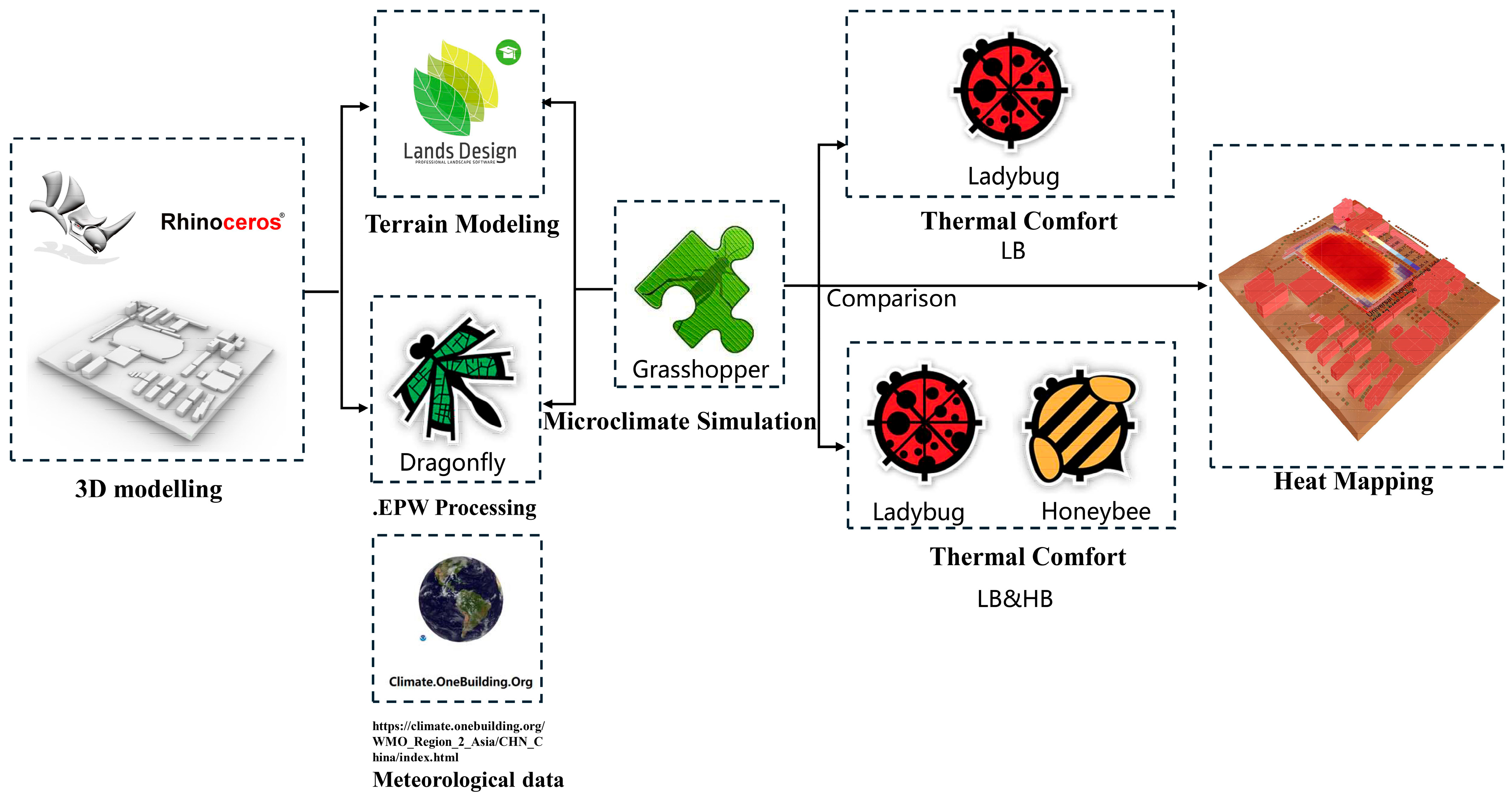
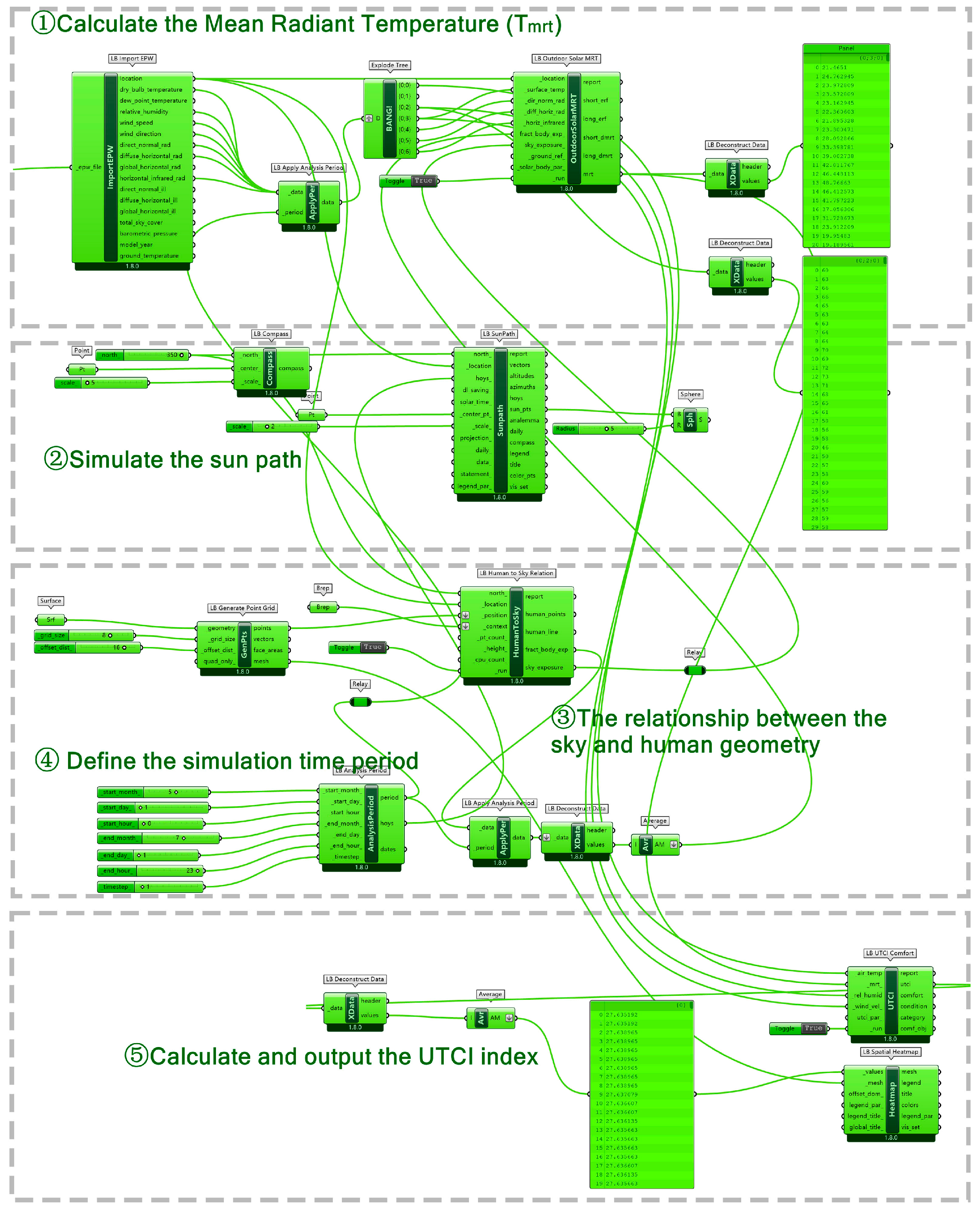
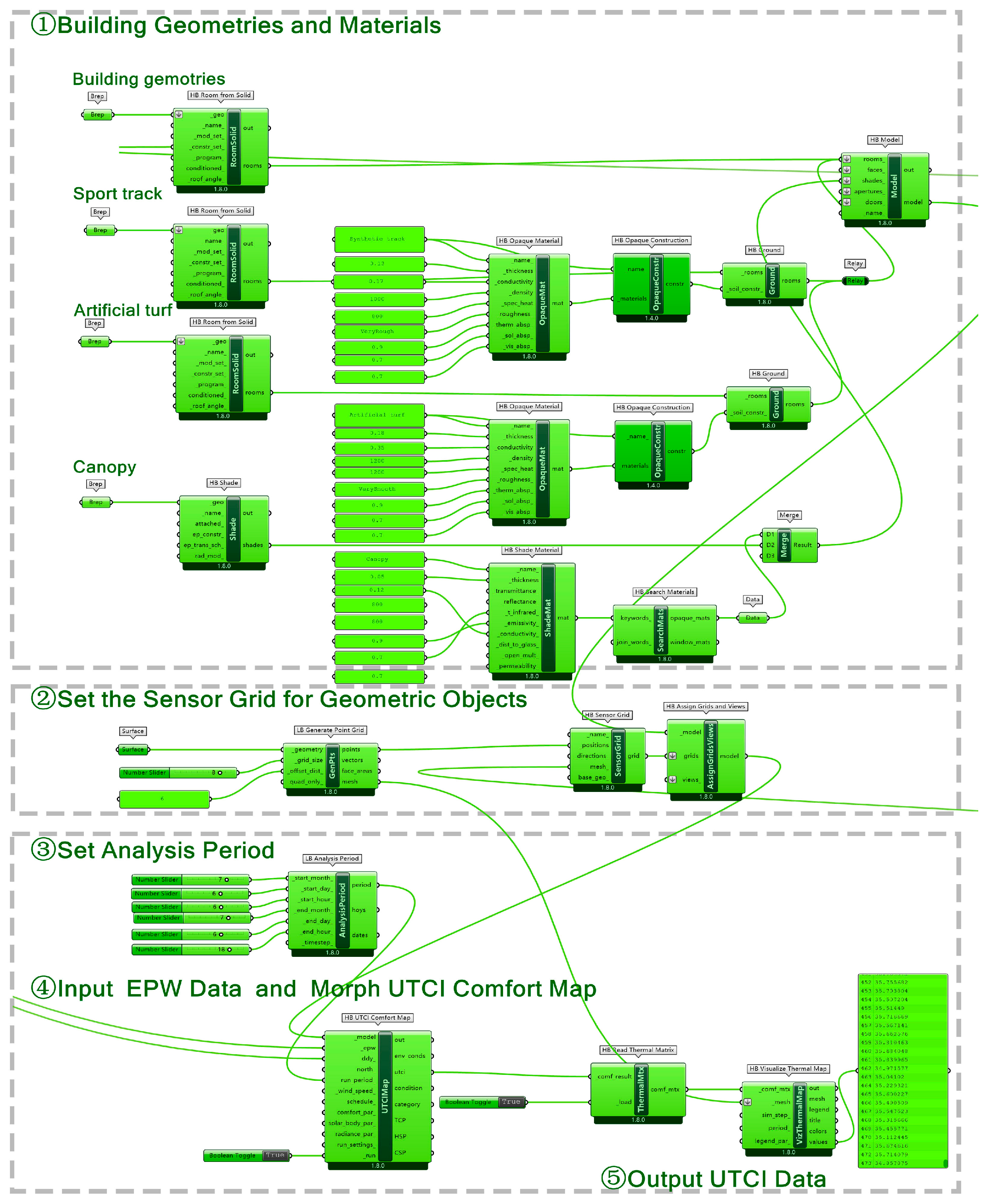
2.1. Grasshopper Parametric Simulation
2.2. Grasshopper Synergistic Plugin Tools
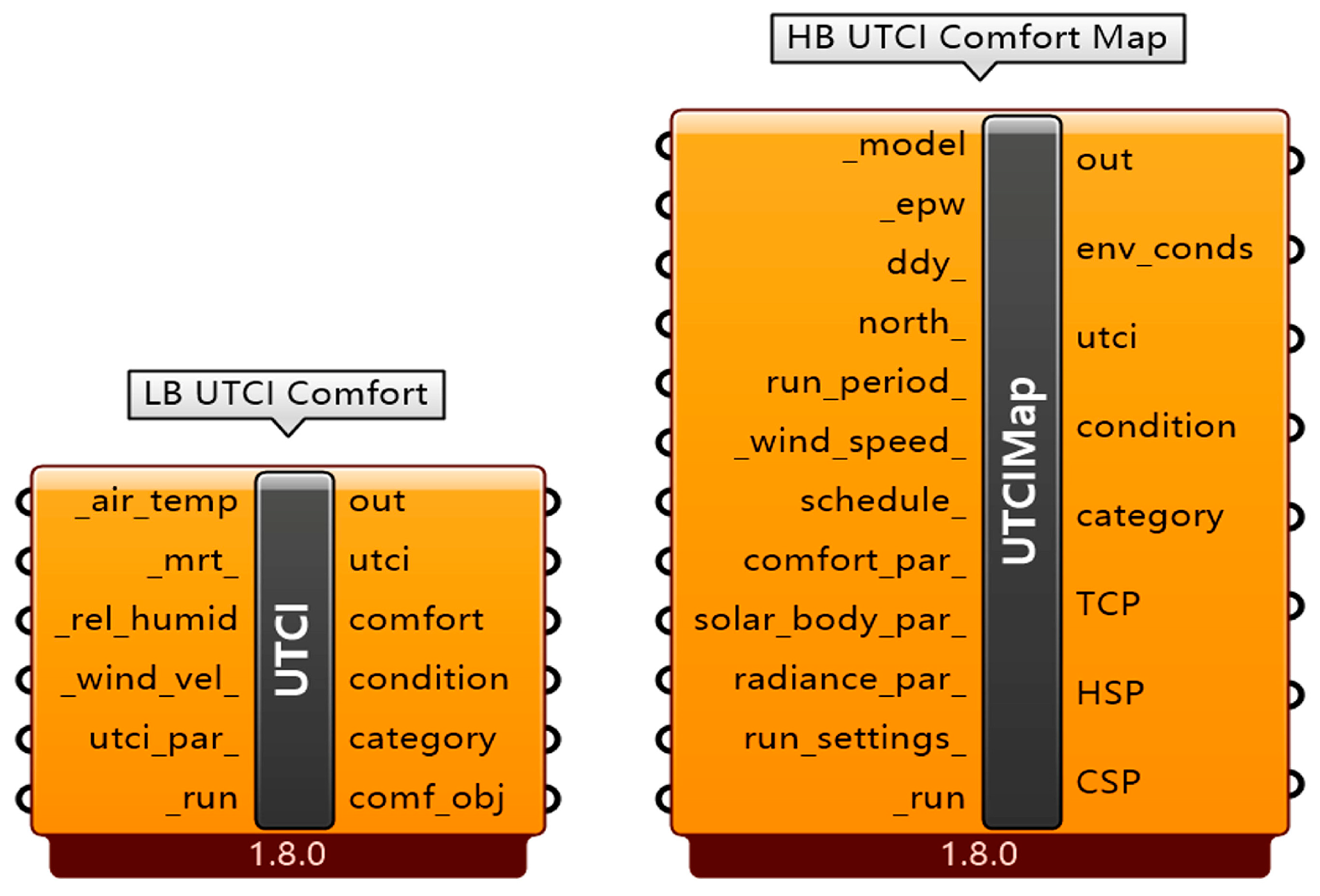
2.3. Universal Thermal Climate Index (UTCI)

| UTCI Range | UTCI Interval Value (°C) | Thermal Press Level Classification |
|---|---|---|
| −5 | UTCI < −40 | Extreme cold stress |
| −4 | −40 ≤ UTCI < −27 | Very strong cold stress |
| −3 | −27 ≤ UTCI < 13 | Strong cold stress |
| −2 | −12 ≤ UTCI < 0 | Moderate cold stress |
| −1 | 0 ≤ UTCI < 9 | Slight cold stress |
| 0 | 9 ≤ UTCI < 26 | No thermal stress |
| +1 | 26 ≤ UTCI < 28 | Slight heat stress |
| +2 | 28 ≤ UTCI < 32 | Moderate heat stress |
| +3 | 32 ≤ UTCI < 38 | Strong heat stress |
| +4 | 38 ≤ UTCI < 46 | Very strong heat stress |
| +5 | 46 < UTCI | Extreme heat stress |
2.4. Validation of the Microclimate Parameters and Thermal Indices
3. Case Study and Experimental Settings
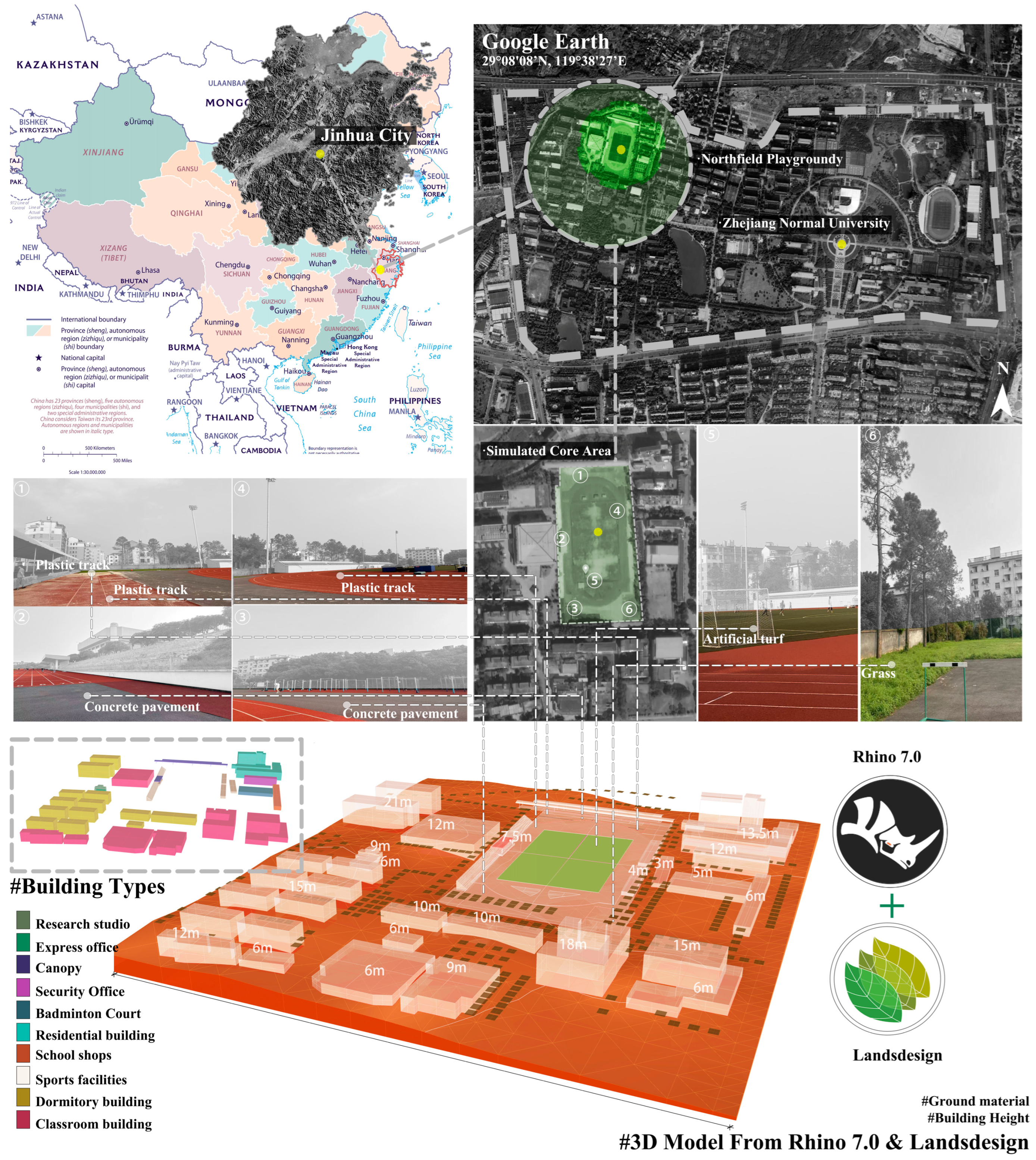
3.1. Study Site and Simulation Objectives
3.2. Experimental Settings and Analysis Variables
| UWG of Dragonfly | Urban Context Parameter | Setting Values |
|---|---|---|
| User’s input and default | Building typology | Midrise apartment; small office; warehouse; strip mall, college; retail |
| Climate zones | Mixed | |
| Simple window ratio | 0.6 | |
| Terrain albedo | 0.1 | |
| Terrain conductivity (W/m⋅k) | 1 | |
| Traffic parameters (W/m2) | 10 | |
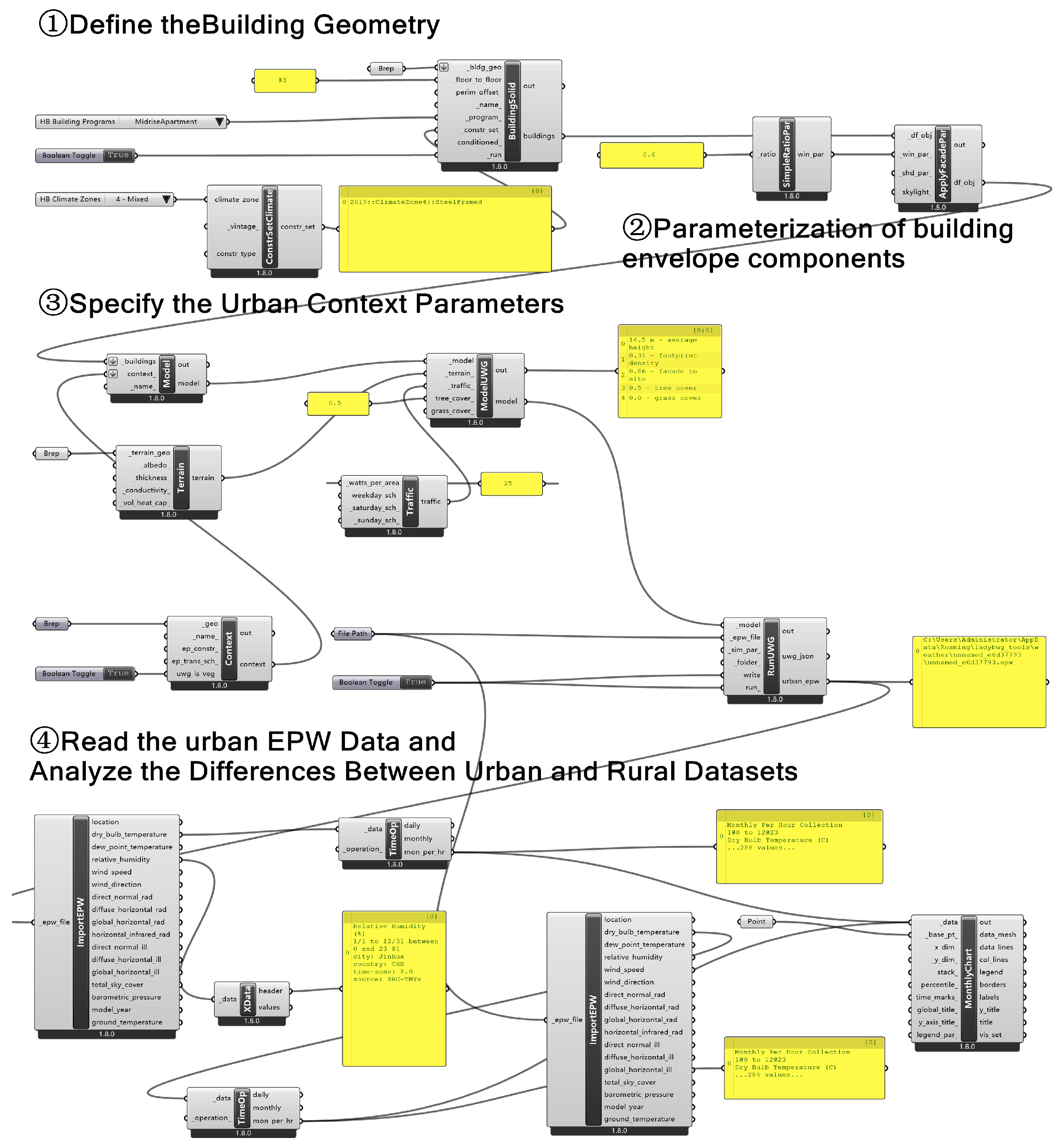
| Calculated by Dragonfly | Average building height (m) | 11.1 |
| Site coverage ratio | 0.16 | |
| Façade-to-site ratio | 0.28 | |
| Tree coverage ratio | 0.5 | |
| Grass coverage ratio | 0.3 |
| Workflow Types | Urban Context Parameter | Setting Values |
|---|---|---|
| Calculated by Ladybug (LB) simulation processing | Compass direction (°) | 350 |
| Scale of compass | 5 | |
| Sphere radius | 5 | |
| Scale of sun’s path | 2 | |
| Grid size | 8 | |
| Offset distance | 6 | |
| Calculated by Ladybug and Honeybee (LB&HB) simulation processing | Material types | Grass; shrub; wall; plastic track; canopy; concrete pavement; sand; artificial turf |
| Grid size | 8 | |
| Offset distance | 6 | |
| Simulation Period | Start of simulation time | 6:00 AM on 6 July; 6:00 AM on 6 August |
| End of simulation time | 18:00 PM on 18 July; 18:00 PM on 18 August |
| Urban Context Parameter | Wall | Plastic Track (Rubber) | Canopy | Concrete Pavement | Sand | Artificial Turf | |
|---|---|---|---|---|---|---|---|
| Opaque materials/Shade material | HB construction types | Mass | - | - | - | - | - |
| Material thickness (m) | 0.24 | 0.6 | 0.02 | 0.01 | 0.15 | 0.06 | |
| Material conductivity (W/m⋅k) | 0.93 | 0.25 | 45 | 1.6 | 0.7 | 0.5 | |
| Material density (kg/m3) | 1800 | 1200 | 800 | 2220 | 835 | 980 | |
| Specific heat (J/(kg⋅k)) | 1080 | 1800 | 4800 | 850 | 1500 | 1800 | |
| Material roughness | Medium rough | Very rough | Very smooth | Medium rough | Medium rough | Very smooth | |
| Thermal absorption /Transmittance | 0.9 | 0.9 | 0 | 0.5 | 0.9 | 0.9 | |
| Solar absorption /Reflectance | 0.7 | 0.7 | 0.8 | 0.7 | 0.7 | 0.7 | |
| Visible absorption /Emission | 1 | 1 | 0.1 | 1 | 1 | 1 | |
| Vegetation material | Vegetation parameter | Grass | Shrub | - | - | - | - |
| Plant height (m) | 0.25 | 1 | - | - | - | - | |
| Leaf area index | 0.075 | 2.5 | - | - | - | - | |
| Leaf reflect | 0.2 | 0.2 | - | - | - | - | |
| Leaf emissivity | 0.97 | 0.97 | - | - | - | - | |
| Soil reflective | 0.2 | 0.2 | - | - | - | - | |
| Soil emission | 0.9 | 0.9 | - | - | - | - | |
| Stomatal resistance | 180 | 180 | - | - | - | - | |
| Soil thickness | 0.1 m | 0.1 m | - | - | - | - | |
| Soil conductivity | 0.35 | 0.35 | - | - | - | - | |
| Soil density | 1100 | 1100 | - | - | - | - | |
| Specific heat of soil | 1200 | 1200 | - | - | - | - |
4. Results and Discussion
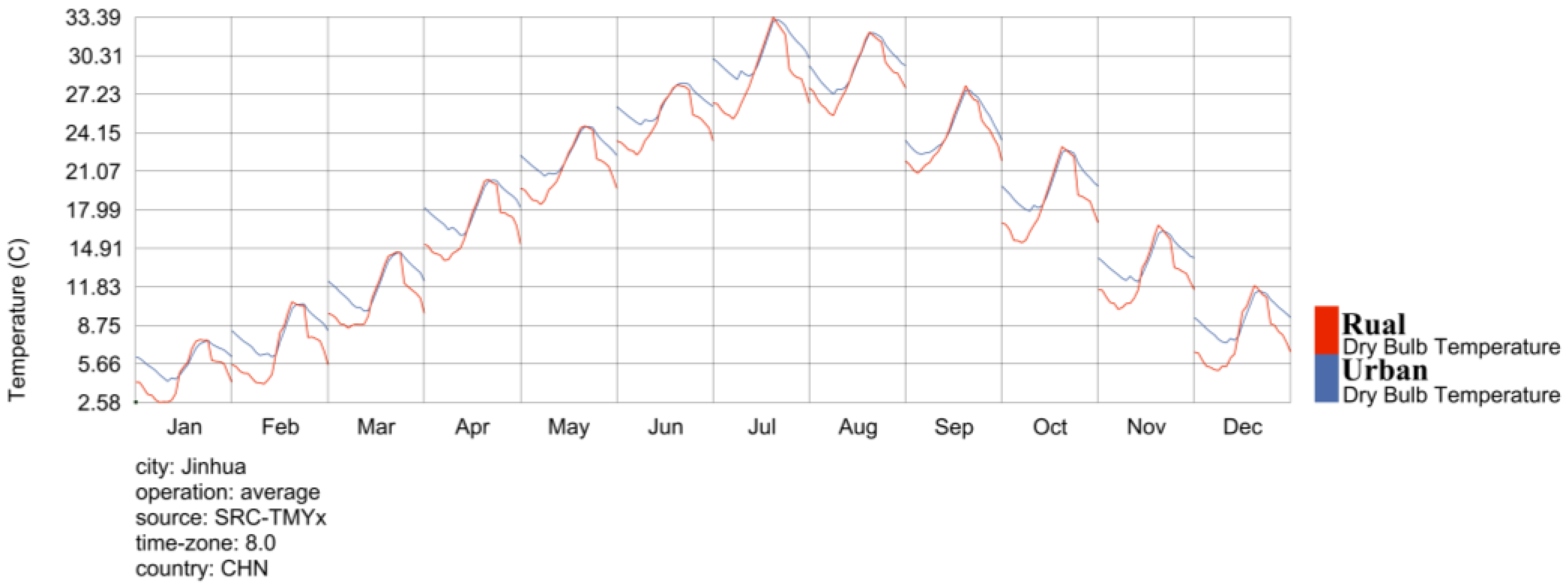
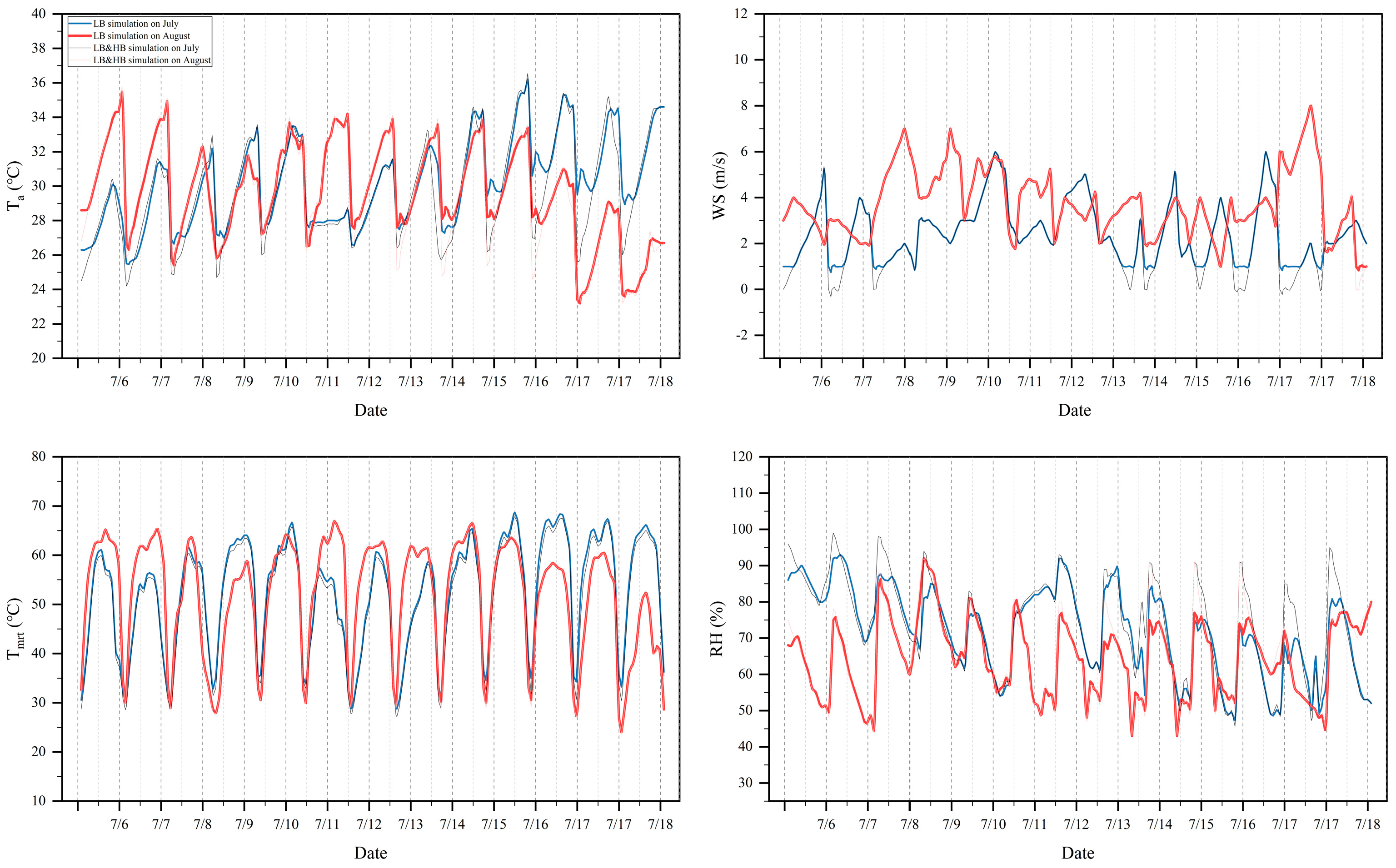
4.1. Simulated Microclimatic Parameters Comparison
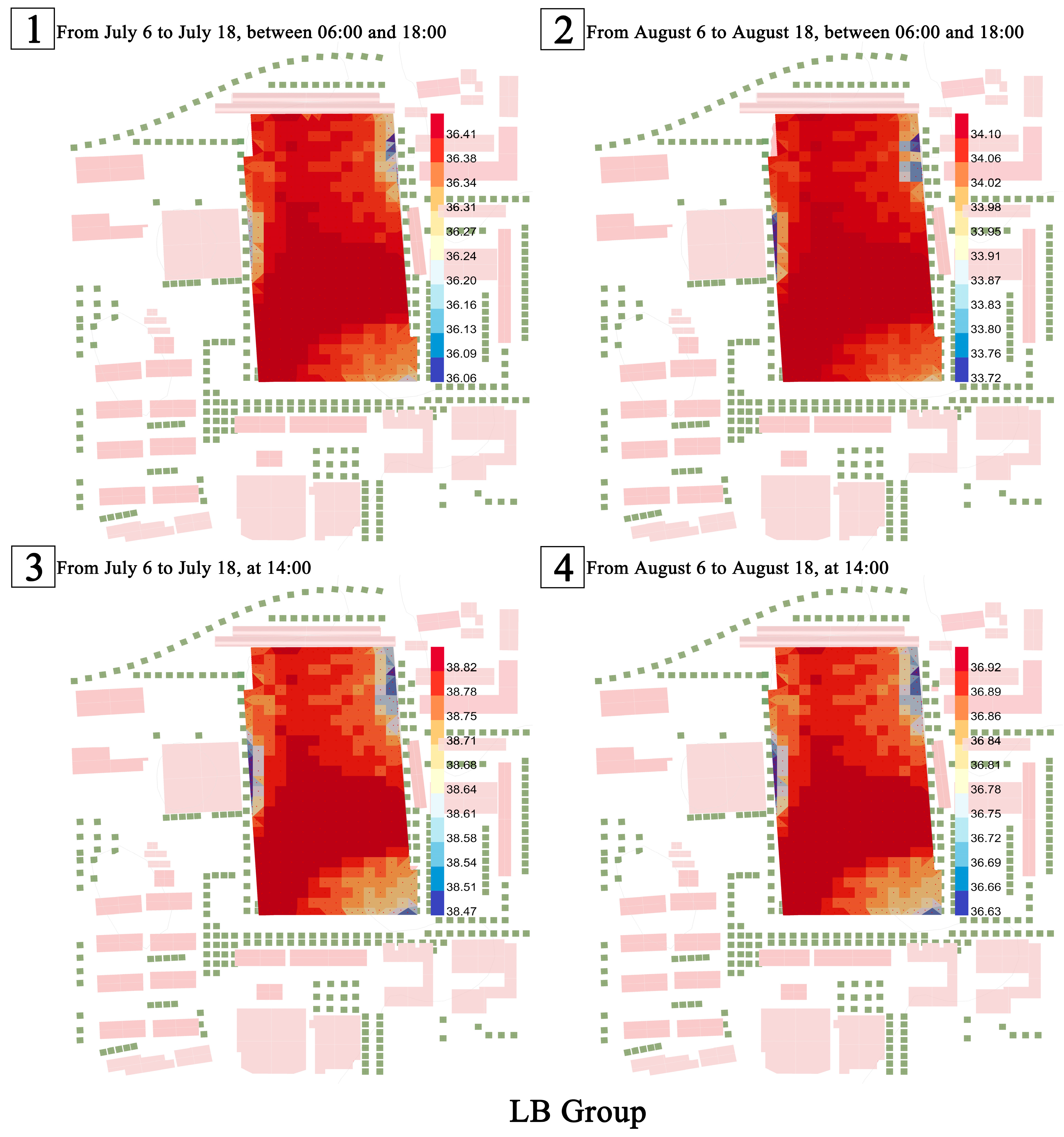
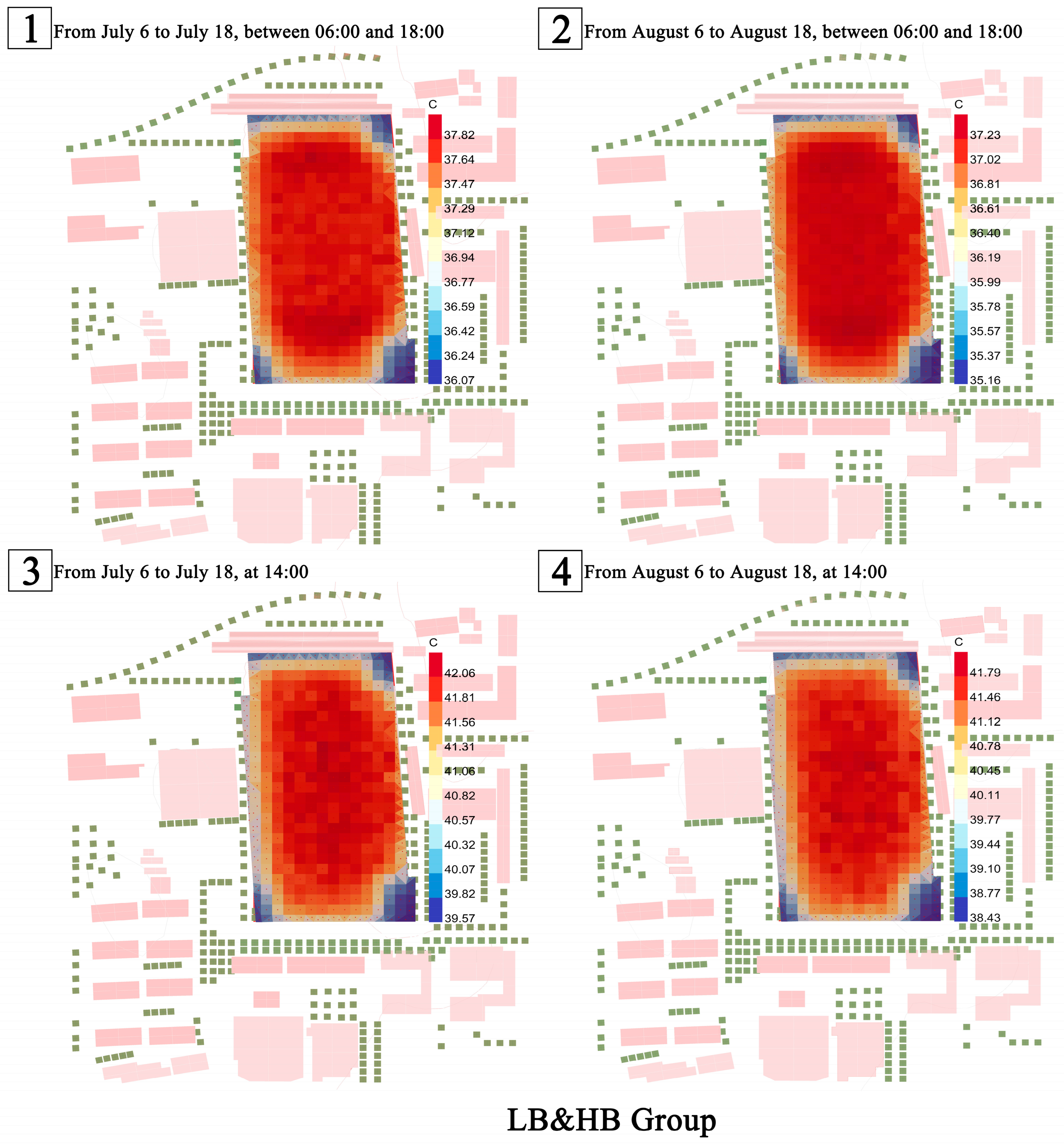
4.2. UTCI Maps Evaluation in the Sports Playground
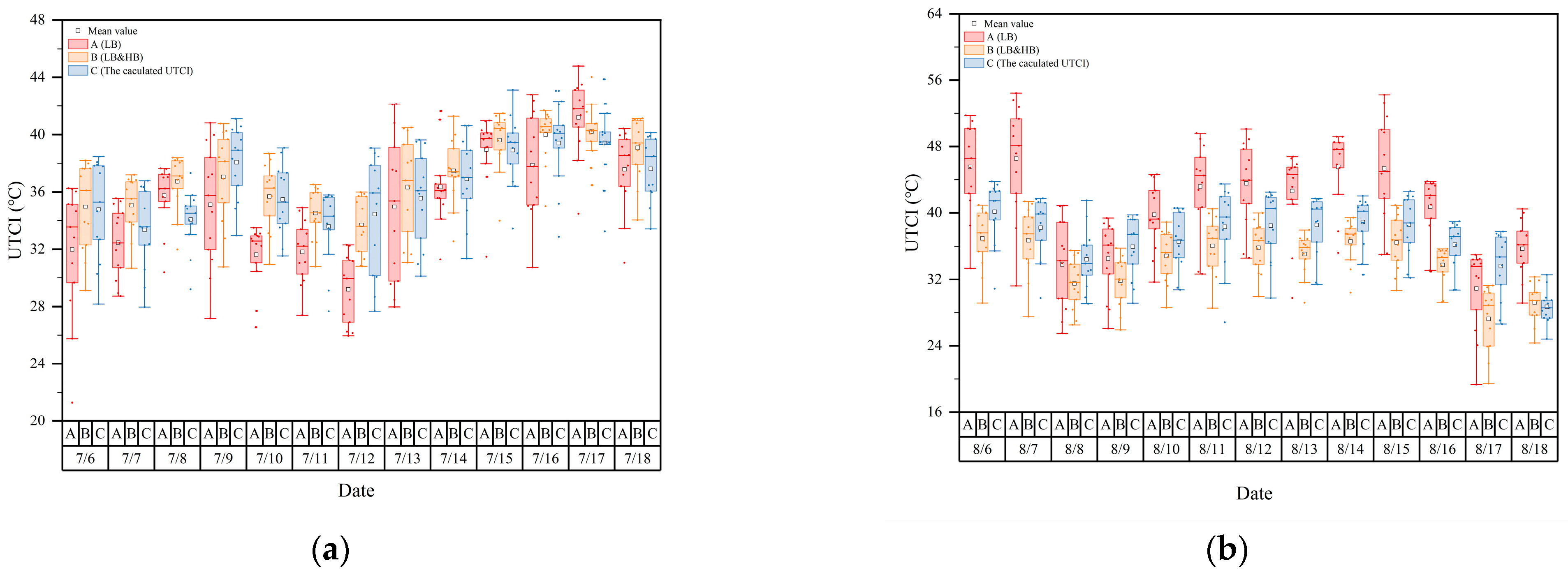
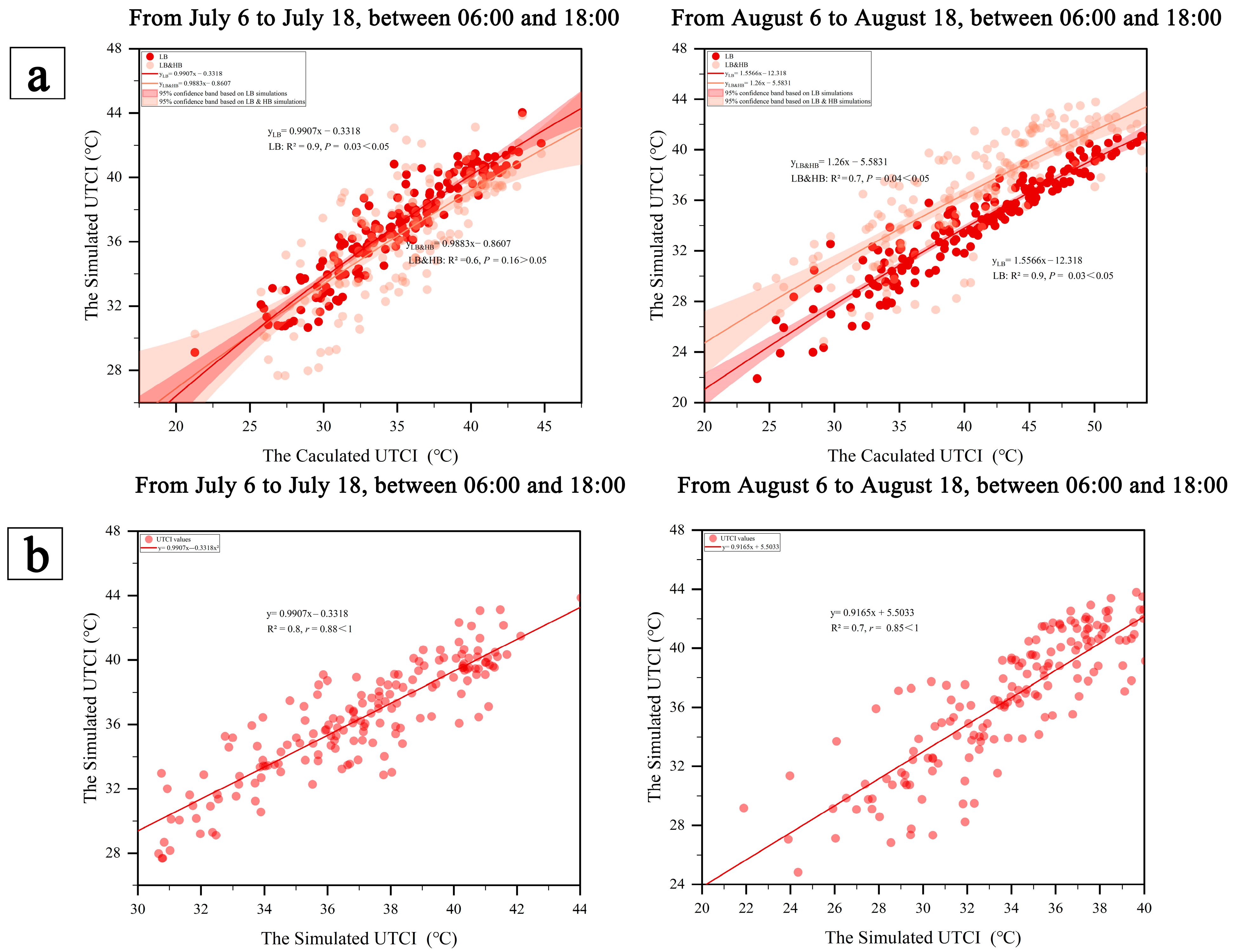
4.3. Comparison of UTCI with LB and LB&HB
4.4. Limitations of the Hybrid Workflows
- Both workflows rely on simplified assumptions and cannot resolve local ventilation effects or accurately model wind fields, which are particularly significant in stadium environments [60].
- UWG introduces deviations in relative humidity and evapotranspiration effects, particularly when irrigating lawns or under high humidity conditions, leading to bias in UTCI calculations [44].
- The quality and representativeness of EPW data are still limiting factors, as discrepancies between meteorological station data and field conditions can affect the reliability of the output results [26].
- HB improves radiation prediction accuracy; its results depend heavily on the precise optical properties of surfaces and shading geometry, parameters often uncertain in early design stages [27,36]. In addition, Honeybee’s higher computational cost limits its applicability in large-scale parametric analyses [46].
- Without calibration against field measurements, the simulation results in this case should be interpreted as relative scenario comparisons rather than absolute predictions [29].
5. Conclusions
Author Contributions
Funding
Institutional Review Board Statement
Informed Consent Statement
Data Availability Statement
Conflicts of Interest
Abbreviations
| UHI | Urban Heat Island |
| OTC | Outdoor Thermal Comfort |
| UWG | Urban Weather Generator |
| LB | Ladybug-Only |
| LB&HB | Ladybug&Honeybee |
| EBMs | Energy Balance Models |
| WS | Wind Speed |
| Ta | Air Temperature |
| RH | Relative Humidity |
| Tmrt | Mean Radiant Temperature |
| PoT | Potential Temperature |
| TSur | Surface Temperature |
| EPW | EnergyPlus Weather files |
| PMV | Predicted Mean Vote |
| HB | Honeybee |
| UTCI | Universal Thermal Climate Index |
| SET | Standard Effective Temperature |
| PET | Physiological Equivalent Temperature |
| TMY | Typical Meteorological Year |
| STDE | Standard Deviation of Errors |
| MAE | Mean Absolute Error |
| MBE | Mean Bias Error |
References
- Ghaffarianhoseini, A.; Berardi, U.; Ghaffarianhoseini, A.; Al-Obaidi, K. Analyzing the Thermal Comfort Conditions of Outdoor Spaces in a University Campus in Kuala Lumpur, Malaysia. Sci. Total Environ. 2019, 666, 1327–1345. [Google Scholar] [CrossRef]
- Zhang, A.; Bokel, R.; van den Dobbelsteen, A.; Sun, Y.; Huang, Q.; Zhang, Q. An Integrated School and Schoolyard Design Method for Summer Thermal Comfort and Energy Efficiency in Northern China. Build. Environ. 2017, 124, 369–387. [Google Scholar] [CrossRef]
- Li, J.; Zhai, Z.; Ding, Y.; Li, H.; Deng, Y.; Chen, S.; Ye, L. Effect of Optimal Allocation of Urban Trees on the Outdoor Thermal Environment in Hot and Humid Areas: A Case Study of a University Campus in Guangzhou, China. Energy Build. 2023, 300, 113640. [Google Scholar] [CrossRef]
- Qi, Y.; Chen, L.; Xu, J.; Liu, C.; Gao, W.; Miao, S. Influence of University Campus Spatial Morphology on Outdoor Thermal Environment: A Case Study from Eastern China. Energy Built Environ. 2023, 6, 43–56. [Google Scholar] [CrossRef]
- Guo, T.; Lin, Z.; Zhao, Y.; Fang, Z.; Fan, Y.; Zhang, X.; Yang, J.; Li, Y. Investigation and Optimization of Outdoor Thermal Comfort in Elementary School Campuses: Example from a Humid-Hot Area in China. Build. Environ. 2024, 248, 111055. [Google Scholar] [CrossRef]
- Tarpani, E.; Pigliautile, I.; Pisello, A.L. On Kids’ Environmental Wellbeing and Their Access to Nature in Urban Heat Islands: Hyperlocal Microclimate Analysis via Surveys, Modelling, and Wearable Sensing in Urban Playgrounds. Urban Clim. 2023, 49, 101447. [Google Scholar] [CrossRef]
- Lu, Z.; Li, Z.; Mao, C.; Tan, Y.; Zhang, X.; Zhang, L.; Zhu, W.; Sun, Y.; Lu, Z.; Li, Z.; et al. Correlation between Campus-Built Environment and Physical Fitness in College Students in Xi’an—A GIS Approach. Int. J. Environ. Res. Public Health 2022, 19, 7948. [Google Scholar] [CrossRef]
- Dong, Z.; Zhao, K.; Ren, M.; Ge, J.; Chan, I.Y.S. The Impact of Space Design on Occupants’ Satisfaction with Indoor Environment in University Dormitories. Build. Environ. 2022, 218, 109143. [Google Scholar] [CrossRef]
- Zhang, Q.; Li, Y.; Lin, C.; Zhang, Q.; Li, Y.; Lin, C. A Study on Outdoor Thermal Comfort of College Students in the Outdoor Corridors of Teaching Buildings in Hot and Humid Regions. Buildings 2024, 14, 2756. [Google Scholar] [CrossRef]
- Wen, J.; Guo, T.; Yang, J.; Yang, J.; Zhang, H.; Zhao, Y. Investigation of the Thermal Safety of University Students on Outdoor Sports Fields in Hot and Humid Areas during Summer: A Combination of Physiological and Psychological Indicators. Energy Build. 2025, 346, 116211. [Google Scholar] [CrossRef]
- Zhang, Y.; Zhou, X.; Zheng, Z.; Oladokun, M.O.; Fang, Z. Experimental Investigation into the Effects of Different Metabolic Rates of Body Movement on Thermal Comfort. Build. Environ. 2020, 168, 106489. [Google Scholar] [CrossRef]
- Hybrid Method—An Overview|ScienceDirect Topics. Available online: https://www.sciencedirect.com/topics/engineering/hybrid-method?utm_source=chatgpt.com (accessed on 18 January 2026).
- Sun, B.; Zhang, H.; Zhao, L.; Qu, K.; Liu, W.; Zhuang, Z.; Ye, H. Microclimate Optimization of School Campus Landscape Based on Comfort Assessment. Buildings 2022, 12, 1375. [Google Scholar] [CrossRef]
- Shata, R.O.; Mahmoud, A.H.; Fahmy, M. Correlating the Sky View Factor with the Pedestrian Thermal Environment in a Hot Arid University Campus Plaza. Sustainability 2021, 13, 468. [Google Scholar] [CrossRef]
- Zhang, Q.; Li, Y.; Lin, C.; Qiao, L.; Yan, X. Analysis of Thermal Comfort under Different Exercise Modes in Winter in Universities in Severe Cold Regions. Sustainability 2022, 14, 15796. [Google Scholar] [CrossRef]
- Austin, D.; Solano, T.; Austin, M.C. Synergistic Effects of Bioclimatic Strategies on Microclimate Improvement: A Numerical–Experimental Study at University Campus Scale. Sustainability 2025, 17, 8867. [Google Scholar] [CrossRef]
- Hyun, C.; Jo, S.; Park, S. Influence of Playground Land Covers on the Human Thermal Sensation. J. Korean Inst. Landsc. Archit. 2019, 47, 12–21. [Google Scholar] [CrossRef]
- Wei, C.; Zhao, L.; Chang, H.; Xumo, P. Thermal Comfort Analysis and Improvement of Outdoor Sports Spaces in Universities: A Case Study of Xi’an Jiaotong University. Environ. Sci. Pollut. Res. 2023, 30, 76575–76594. [Google Scholar] [CrossRef] [PubMed]
- Singh, G.; Peterson, B.; Jay, O.; Stevens, C.J. The Effect of Synthetic Grass Sports Surfaces on the Thermal Environment: A Systematic Review. Int. J. Biometeorol. 2024, 68, 1235–1252. [Google Scholar] [CrossRef]
- Xiao, J.; Li, R.; Li, L.; Liu, C. A Grasshopper-Based Parametric Simulation of Microclimate and Thermal Comfort in a Cfa-Climate Campus Playground. In IBPSA-Asia; International Building Performance Simulation Association: Verona, WI, USA, 2024; Volume 5, pp. 143–150. [Google Scholar]
- Binabid, J.; Alymani, A.; Alammar, A. Optimizing Outdoor Thermal Comfort for Educational Buildings: Case Study in the City of Riyadh. Buildings 2024, 14, 3568. [Google Scholar] [CrossRef]
- Zheng, Y.; Han, Q.; Keeffe, G. An Evaluation of Different Landscape Design Scenarios to Improve Outdoor Thermal Comfort in Shenzhen. Land 2024, 13, 65. [Google Scholar] [CrossRef]
- Roudsari, M.S.; Pak, M. LADYBUG: A Parametric Environmental Plugin for Grasshopper to Help Designers Create an Environmentally-Conscious Design. In Building Simulation; International Building Performance Simulation Association: Verona, WI, USA, 2013. [Google Scholar]
- Bedra, K.B.; Zheng, J.; Li, J.; Sun, Z.; Zheng, B.; Bedra, K.B.; Zheng, J.; Li, J.; Sun, Z.; Zheng, B. Automating Microclimate Evaluation and Optimization during Urban Design: A Rhino–Grasshopper Workflow. Sustainability 2023, 15, 16613. [Google Scholar] [CrossRef]
- Satpal, V.V. Parametric Sustainability: Optimizing Building Performance; School of Fine Arts, Architecture and Fashion Technology Mizoram University: Tanhril, Mizoram, India, 2024; p. 322. [Google Scholar]
- Elwy, I.; Ibrahim, Y.; Fahmy, M.; Mahdy, M. Outdoor Microclimatic Validation for Hybrid Simulation Workflow in Hot Arid Climates against ENVI-Met and Field Measurements. Energy Procedia 2018, 153, 29–34. [Google Scholar] [CrossRef]
- López-Cabeza, V.P.; Diz-Mellado, E.; Rivera-Gómez, C.; Galán-Marín, C.; Samuelson, H.W. Thermal Comfort Modelling and Empirical Validation of Predicted Air Temperature in Hot-Summer Mediterranean Courtyards. J. Build. Perform. Simul. 2022, 15, 39–61. [Google Scholar] [CrossRef]
- Kamel, T.M. A New Comprehensive Workflow for Modelling Outdoor Thermal Comfort in Egypt. Sol. Energy 2021, 225, 162–172. [Google Scholar] [CrossRef]
- Perini, K.; Chokhachian, A.; Dong, S.; Auer, T. Modeling and Simulating Urban Outdoor Comfort: Coupling ENVI-Met and TRNSYS by Grasshopper. Energy Build. 2017, 152, 373–384. [Google Scholar] [CrossRef]
- Albaik, M.; Muhsen, R. Optimizing Building Performance: A Grasshopper Modeling Case Study of the King Hussein Mosque. IEEE Access 2025, 13, 47244–47259. [Google Scholar] [CrossRef]
- Wai, C.Y.; Tariq, M.A.U.R.; Chau, H.-W.; Muttil, N.; Jamei, E. A Simulation-Based Study on the Impact of Parametric Design on Outdoor Thermal Comfort and Urban Overheating. Land 2024, 13, 829. [Google Scholar] [CrossRef]
- Rashtian, Z.; Tabatabaei Manesh, M.; Tahsildoost, M.; Zomorodian, Z.S. Data-Driven Real-Time Visualization of Urban Heat Islands Using Mean Radiant Temperature for Urban Design. Energy Build. 2025, 333, 115470. [Google Scholar] [CrossRef]
- Soflaei, F.; Shokouhian, M.; Tabadkani, A.; Moslehi, H.; Berardi, U. A Simulation-Based Model for Courtyard Housing Design Based on Adaptive Thermal Comfort. J. Build. Eng. 2020, 31, 101335. [Google Scholar] [CrossRef]
- Lin, H.; Ni, H.; Xiao, Y.; Zhu, X. Couple Simulations with CFD and Ladybug + Honeybee Tools for Green Façade Optimizing the Thermal Comfort in a Transitional Space in Hot-Humid Climate. J. Asian Archit. Build. Eng. 2023, 22, 1317–1342. [Google Scholar] [CrossRef]
- Evola, G.; Costanzo, V.; Magrì, C.; Margani, G.; Marletta, L.; Naboni, E. A Novel Comprehensive Workflow for Modelling Outdoor Thermal Comfort and Energy Demand in Urban Canyons: Results and Critical Issues. Energy Build. 2020, 216, 109946. [Google Scholar] [CrossRef]
- Palme, M.; Salvati, A. (Eds.) Urban Microclimate Modelling for Comfort and Energy Studies; Springer International Publishing: Cham, Switzerland, 2021. [Google Scholar]
- Nicholson, S.; Nikolopoulou, M.; Watkins, R.; Löve, M.; Ratti, C. Data Driven Design for Urban Street Shading: Validation and Application of Ladybug Tools as a Design Tool for Outdoor Thermal Comfort. Urban Clim. 2024, 56, 102041. [Google Scholar] [CrossRef]
- Lyu, Y.; Zhang, L.; Liu, X.; Ma, X. Microclimate-Adaptive Morphological Parametric Design of Streets and Alleys in Traditional Villages. Buildings 2024, 14, 152. [Google Scholar] [CrossRef]
- Ibrahim, Y.; Kershaw, T.; Shepherd, P.; Elwy, I. A Parametric Optimisation Study of Urban Geometry Design to Assess Outdoor Thermal Comfort. Sustain. Cities Soc. 2021, 75, 103352. [Google Scholar] [CrossRef]
- Roudsari, M.S.; Mackey, C. Ladybug-Tools. Available online: https://www.ladybug.tools/ (accessed on 13 April 2024).
- Ou, H.-Y.; Lin, T.-P. Effects of Orientation and Dimensions of Shading Structures on Thermal Comfort. Build. Environ. 2023, 243, 110715. [Google Scholar] [CrossRef]
- Chokhachian, A.; Hiller, M. PANDO: Parametric Tool for Simulating Soil-Plant-Atmosphere of Tree Canopies in Grasshopper. In Proceedings of the 11th Annual Symposium on Simulation for Architecture and Urban Design, San Diego, CA, USA, 25–27 May 2020; pp. 1–8. [Google Scholar]
- Naboni, E.; Meloni, M.; Coccolo, S.; Kaempf, J.; Scartezzini, J.-L. An Overview of Simulation Tools for Predicting the Mean Radiant Temperature in an Outdoor Space. Energy Procedia 2017, 122, 1111–1116. [Google Scholar] [CrossRef]
- Verde, S.; Dell’Acqua, F.; Losasso, M. Environmental Data, Modeling and Digital Simulation for the Evaluation of Climate Adaptation and Mitigation Strategies in the Urban Environment. Sustainability 2024, 16, 2179. [Google Scholar] [CrossRef]
- Vurro, G.; Carlucci, S. Contrasting the Features and Capabilities of Urban Microclimate Simulation Tools. Energy Build. 2024, 311, 114042. [Google Scholar] [CrossRef]
- Lam, C.K.C.; Lee, H.; Yang, S.-R.; Park, S. A Review on the Significance and Perspective of the Numerical Simulations of Outdoor Thermal Environment. Sustain. Cities Soc. 2021, 71, 102971. [Google Scholar] [CrossRef]
- (PDF) Mapping of UTCI in Local Scale (the Case of Warsaw). Available online: https://www.researchgate.net/publication/232302103_Mapping_of_UTCI_in_local_scale_the_case_of_Warsaw (accessed on 30 August 2025).
- Wang, S.; Yang, L.; Meng, X.; Lyu, K.; Cao, Q.; Liu, Y. Can the ASHRAE Standard 169 Zoning Method Be Applied to Country-Level Energy-Efficient Building Design in China? Build. Simul. 2023, 16, 1041–1058. [Google Scholar] [CrossRef]
- GB 50189-2005; Design Standard for Energy Efficiency of Public Buildings. China Architecture & Building Press: Beijing, China, 2005.
- Diao, R.; Sun, L.; Yang, F. Thermal Performance of Building Wall Materials in Villages and Towns in Hot Summer and Cold Winter Zone in China. Appl. Therm. Eng. 2018, 128, 517–530. [Google Scholar] [CrossRef]
- U-Value Calculator|Ubakus.De. Available online: https://www.ubakus.de/en/r-value-calculator/index.php? (accessed on 26 November 2025).
- Bruse, M.; Fleer, H. ENVI-met 5.1.1 [Software]. 2025. Available online: https://www.envi-met.com/ (accessed on 26 November 2025).
- Liu, Y.; Chu, C.; Zhang, R.; Chen, S.; Xu, C.; Zhao, D.; Meng, C.; Ju, M.; Cao, Z. Impacts of High-Albedo Urban Surfaces on Outdoor Thermal Environment across Morphological Contexts: A Case of Tianjin, China. Sustain. Cities Soc. 2024, 100, 105038. [Google Scholar] [CrossRef]
- Antoniadis, D.; Katsoulas, N.; Papanastasiou, D.Κ. Thermal Environment of Urban Schoolyards: Current and Future Design with Respect to Children’s Thermal Comfort. Atmosphere 2020, 11, 1144. [Google Scholar] [CrossRef]
- Pfautsch, S.; Wujeska-Klause, A.; Walters, J. Outdoor Playgrounds and Climate Change: Importance of Surface Materials and Shade to Extend Play Time and Prevent Burn Injuries. Build. Environ. 2022, 223, 109500. [Google Scholar] [CrossRef]
- Abualigah, L.; Diabat, A. A Comprehensive Survey of the Grasshopper Optimization Algorithm: Results, Variants, and Applications. Neural Comput. Appl. 2020, 32, 15533–15556. [Google Scholar] [CrossRef]
- Ibrahim, Y.I.; Kershaw, T.; Shepherd, P. A Methodology For Modelling Microclimate: A ladybug-tools and ENVI-met verification study. In Proceedings of the 35th PLEA Conference Sustainable Architecture and Urban Design, A Coruña, Spain, 1–3 September 2020. [Google Scholar]
- Cascone, S.; Leuzzo, A. Thermal Comfort in the Built Environment: A Digital Workflow for the Comparison of Different Green Infrastructure Strategies. Atmosphere 2023, 14, 685. [Google Scholar] [CrossRef]
- Zhu, S.; Ma, C.; Wu, Z.; Huang, Y.; Liu, X. Exploring the Impact of Urban Morphology on Building Energy Consumption and Outdoor Comfort: A Comparative Study in Hot-Humid Climates. Buildings 2024, 14, 1381. [Google Scholar] [CrossRef]
- Hashemi, F.; Mills, G.; Poerschke, U.; Iulo, L.D.; Pavlak, G.; Kalisperis, L. A Novel Parametric Workflow for Simulating Urban Heat Island Effects on Residential Building Energy Use: Coupling Local Climate Zones with the Urban Weather Generator a Case Study of Seven U.S. Cities. Sustain. Cities Soc. 2024, 110, 105568. [Google Scholar] [CrossRef]




| Simulation Parameter | Ta (°C) | Tmrt (°C) | RH (%) | WS (m/s) | ||||||||
|---|---|---|---|---|---|---|---|---|---|---|---|---|
| Max | Min | Mean | Max | Min | Mean | Max | Min | Mean | Max | Min | Mean | |
| Urban weather in July | 35.7 | 25.5 | 30.1 | 68.7 | 28.8 | 52.4 | 93 | 49 | 72 | 6 | 1 | 2.4 |
| Urban weather in August | 34.7 | 23.5 | 29.7 | 66.9 | 25.4 | 51.8 | 92 | 43 | 64.6 | 8 | 1 | 3.8 |
| Rural weather in July | 35.7 | 24.2 | 29.7 | 67.9 | 27.2 | 51.1 | 99.0 | 48.0 | 73.8 | 6.0 | 0.0 | 2.3 |
| Rural weather in August | 34.9 | 23.2 | 29.5 | 67.0 | 25.1 | 51.8 | 92.0 | 43.0 | 65.4 | 8.0 | 0.0 | 3.7 |
| Statistical Metrics | Ta (°C) | Tmrt (°C) | RH (%) | WS (m/s) | ||||||||
|---|---|---|---|---|---|---|---|---|---|---|---|---|
| STDE | MAE | MBE | STDE | MAE | STDE | MAE | MBE | STDE | MAE | MBE | STDE | |
| July | 0.22 | 2.49 | 0.26 | 0.87 | 7.30 | −0.64 | 1.03 | 11.91 | 8.40 | 0.11 | 2.02 | −1.44 |
| August | 0.20 | 2.50 | 0.46 | 0.85 | 7.40 | 0.56 | 0.93 | 11.14 | 7.44 | 0.10 | 1.87 | −1.30 |
Disclaimer/Publisher’s Note: The statements, opinions and data contained in all publications are solely those of the individual author(s) and contributor(s) and not of MDPI and/or the editor(s). MDPI and/or the editor(s) disclaim responsibility for any injury to people or property resulting from any ideas, methods, instructions or products referred to in the content. |
© 2026 by the authors. Licensee MDPI, Basel, Switzerland. This article is an open access article distributed under the terms and conditions of the Creative Commons Attribution (CC BY) license.
Share and Cite
Xiao, J.; Li, R. Parameterization of Sports Playground Experiments Applying a Hybrid Method to Analyze Microclimate and Outdoor Thermal Comfort. Sustainability 2026, 18, 2104. https://doi.org/10.3390/su18042104
Xiao J, Li R. Parameterization of Sports Playground Experiments Applying a Hybrid Method to Analyze Microclimate and Outdoor Thermal Comfort. Sustainability. 2026; 18(4):2104. https://doi.org/10.3390/su18042104
Chicago/Turabian StyleXiao, Jing, and Ruixuan Li. 2026. "Parameterization of Sports Playground Experiments Applying a Hybrid Method to Analyze Microclimate and Outdoor Thermal Comfort" Sustainability 18, no. 4: 2104. https://doi.org/10.3390/su18042104
APA StyleXiao, J., & Li, R. (2026). Parameterization of Sports Playground Experiments Applying a Hybrid Method to Analyze Microclimate and Outdoor Thermal Comfort. Sustainability, 18(4), 2104. https://doi.org/10.3390/su18042104