1. Introduction
Architecture and urban planning are disciplines which are required to act within complex and dynamic systems while addressing pressing environmental, social and governance (ESG) challenges. Similarly, there is a symbiotic and complex relationship between theory and practice in architectural disciplines which integrates technical aspects with intellectual, sensorial, and ethnographic approaches to create places that generate social responses and contribute to long-term urban resilience.
Based on the literature, ESG in urban planning represents an integrated framework for sustainable city development that addresses three interconnected dimensions. The environmental (E) dimension focuses on climate resilience, resource efficiency, circular economy principles that move beyond linear consumption models, green infrastructure, and reducing carbon footprints in the built environment The social (S) dimension emphasises community engagement, inclusive design, equitable access to urban spaces and services, social cohesion, and addressing the needs of diverse populations to ensure no one is left behind in urban development processes [
1]. The governance (G) dimension establishes accountable partnerships among stakeholders, including municipalities, academia, private sectors, and communities, ensuring participatory decision-making processes, ethical management of public resources and institutional capacity to implement long-term sustainable strategies [
2,
3]. Together, these three pillars create a holistic approach to urban planning that balances ecological integrity, social equity and institutional accountability, moving cities toward resilient, just, and sustainable futures.
In contemporary urban scenarios, a shift away from industrial sectors and the growth of the tertiary sector have led to various urban and architectural changes in modern cities, resulting in diverse spatial patterns. The emergence of unused, vacant, or deserted urban areas (as described for example by Nogueira and Wallig [
4]) is increasingly becoming the backdrop against which sustainable urban strategies can unfold. Often, developers persist in implementing programmes to construct buildings on any vacant plot in the city, promoting this development for its economic benefits within a linear economic model. Yet, this approach inadvertently leads to developments that fail to consider human factors and scales and do not allow for spontaneous appropriations, thereby undermining social equity and environmental sustainability.
In many European cities [
5], urban evolution has led to complexity which has generated phenomena of obsolescence, presenting both challenges and opportunities for ESG-aligned regeneration. Thus, any analysis underpinning city regeneration projects and the design approaches suitable for these environments must address not only technical aspects but also governance structures, social inclusivity, and environmental responsibility.
2. Research Themes
‘
Theory without practice is empty; practice without theory is blind’ (quotation often attributed to Immanuel Kant, [
6]. Understanding this relationship is crucial for effective and meaningful application in real scenarios. Testing and applying principles that inform effective practice can offer a broader understanding of context and help anticipate outcomes aligned with ESG goals. The complex urban phenomena of contemporary cities require interpretations and solutions delivered by numerous parties drawing on multidisciplinary expertise and shared governance frameworks. This highlights the necessity of closer collaboration between different actors from both academic and professional environments to embed sustainable practices.
Previous research has shown that academic engagement with research is perceived by students as helping them to deepen their own understanding of a subject, and can increase awareness of the problems and issues faced in their subject areas [
7] therefore, the authors argue, that theories generated by extensive academic research, particularly those addressing ESG principles, can be transferred into architectural design studio teaching and further tested through ad hoc forms of collaboration, such as partnerships, knowledge exchange, workshops, and participatory design delivered with local authorities. In this way, theory informs practice with ESG-driven principles while practical application grounds and validates challenges and hypotheses within real urban contexts. The main research question underpinning this research was: Can cross-organisational collaboration (academic research and teaching, local authorities, clients) be applied to help instigate, develop and apply positive ESG-aligned changes in urban settings?
Defining what constitutes the discrepancies and similarities between academic and professional processes offers the possibility to explore the development of solid, longer and more engaging interactions between drivers. This is particularly relevant for projects of urban regeneration where collaborative, systematic and multi-sector partnerships can embed environmental, social and governance considerations at various scales of the city, creating replicable models for sustainable urban development [
8,
9].
3. Theoretical Concept of Workshops
Although various forms of collaboration could have been applied in this study, the authors selected design workshops to fulfil the objectives established at the outset of the collaboration between Aberdeen City Council and local academic institutions. Furthermore, student involvement and the learning-by-doing approach were better suited to a workshop format, where sessions are typically structured around topic-specific inputs and incorporate training, educational discussions, and feedback. Unlike rapid ideation methods like Design Charrettes, workshops enable sustained engagement to address interconnected environmental, social and governance urban challenges.
This choice was also influenced by the research context of Aberdeen itself and the need for ESG-aligned regeneration strategies. Known for its maritime centre and industrial base, the city’s economy was traditionally centred on fishing, textiles, shipbuilding, and paper production until the rapid growth of the oil and gas sector in the 1970s. This economic shift led to strong dependence on the energy industry, accompanied by contested and insufficient urban management policies that failed to address social equity and environmental resilience. Aberdeen was already impacted by declining oil prices before the pandemic, and the current proliferation of vacant spaces has only intensified a long-standing process of urban decline, presenting both challenges and opportunities for circular economy approaches and socially sustainable regeneration. Against this complex environment, the local authorities aimed at longer-term visions for the city masterplan which required academic research, hypotheses and various outputs and ideas that could be produced by design studio students to embed ESG frameworks.
In this sense, the choice of workshops over other collaborative methods seemed most relevant in addressing complex, interconnected urban issues such as Aberdeen’s unique challenges while advancing social sustainability goals, including community empowerment, inclusive design, and equitable access to urban spaces [
1]. The workshop format was also most appropriate given its interdisciplinary approach and historical essence of collaborative, shared work that aligns with contemporary governance models emphasising multi-stakeholder engagement [
2].
The historical meaning of workshop can be traced to the Renaissance, where it was commonly associated with artistic and craft productions and embodied profound interdisciplinary collaboration, encapsulating a holistic work approach reminiscent of the Latin term cum laborare, which means “working together with others” [
10]. Despite the evolution in our understanding of the interplay between constructed and natural environments, the relevance of this collaborative ethos persists, particularly in contexts requiring integrated solutions to environmental and social challenges. This paper advocates for connecting theoretical frameworks with practical applications. It does so by revitalising the historical interpretation of collaboration applied to collaborative process between authorities and academia. In urban and architectural contexts, this approach enriches theoretical discourse and facilitates pragmatic outcomes that advance sustainability goals, suggesting a pathway from conceptual understanding to tangible implementations that benefit both communities and ecosystems.
A workshop functions as a collaborative laboratory where participants from diverse backgrounds engage actively on a specific topic, fostering the co-production of knowledge essential for addressing wicked problems in urban sustainability. Unlike traditional educational settings with a singular mentor–participant dynamic, workshops foster a bidirectional exchange of ideas, involving all participants in the process [
11]. The essence of a workshop lies in the active participation of all attendees, who engage through debates, discussions, and mutual influence, forming a foundation for practical outcomes that can integrate multiple perspectives and values, which is a critical requirement for socially sustainable urban development.
This intense moment of communication represents, on one hand, a way for parties to relate with one another and, on the other, a way to intensify the resulting communications and build the trust and shared understanding necessary for effective governance [
12]. Thus, it facilitates the generation and sharing of reciprocal knowledge within a practical framework while establishing transparent, accountable relationships between institutions.
In the context of urban and architectural regeneration, it can be deemed appropriate to integrate both academic scholars and local authorities into the workshop configuration, as these stakeholders play critical roles in shaping sustainable urban futures [
13]. This multi-stakeholder approach aligns with contemporary understanding that sustainable urban development requires collaborative governance arrangements that bring together diverse actors to address environmental limits, social justice, and institutional capacity [
3].
Alain and Melluso [
14] argued that both academia and municipalities are intricately engaged with urban contexts, which are currently facing two predominant crises. The first crisis is related to the architectural education sector and its failure to redefine its role within urban settings, evidenced by the lack of systematic relationships between universities and city councils. This gap limits the integration of sustainability research into practical planning [
7]. The second crisis involves local authorities’ inability to adapt city planning methodologies to accommodate the transition from a focus on urban expansion in the 1960s to urban regeneration initiatives that began in the 1980s, and now to ESG-driven sustainable development that addresses adaptive reuse for climate resilience, social equity and circular economy principles.
These considerations have been raised by other authors to propose a more consolidated collaboration between university research and Municipal Authorities. A notable example is the city of Parma, Italy, where, from 2014, summer workshops organised for projects of urban regeneration were transformed through a longer process of collaboration between the local university and Parma city [
14]. Parma Città Futura is a long-term urban planning programme where concepts and innovations/interventions are first discussed within the university, involving several disciplines and studios. They experimented over the years, recognising new opportunities and employing innovative methods to respond to the needs of new urban interventions while embedding principles of environmental responsibility and social inclusion. For this programme, the university and council established a stable union to improve the quality of city plans and to offer better services for communities. The collaboration is seen as a resource for society that they call the “third mission,” where the potential of academic methodology and cultural richness are used to elaborate valuable urban projects that advance public good [
15]. This model demonstrates how academia–authority partnerships can create governance structures that support sustainable, socially equitable urban development.
Similarly, University College London’s Urban Laboratory has documented several case studies of university-led urban regeneration, including Newcastle University’s Science Central partnership with the city council, which combined sustainability research with social innovation to transform a former industrial site into a mixed-use district emphasising environmental performance and community benefit. These examples illustrate how workshop-based collaborations can address ESG principles in practice.
As supported by the literature, workshops are seen as informal and essential components of the educational process, where students benefit from experiential learning and collaborative relationships [
16,
17,
18]. Workshops provide a space outside the traditional classroom setting where students can develop critical skills, including the ability to integrate environmental, social and governance considerations into design thinking and act as active learners who gain knowledge by doing and collaborating [
19]. Workshops serve as an effective framework for thinking, making, and acquiring implicit knowledge while developing the reflexive capacities necessary for addressing complex sustainability challenges. These concepts are corroborated by Quiroga [
16] through the use of collaborative workshops between students and industrial partners, with two experimental workshops used as strategic pedagogical tools and a project-based approach to strengthen collaborations. The author also highlights the importance of using and organising theoretical sessions and frameworks to add value and impact. Theoretical principles are equally applicable when frameworks address sustainability and ESG goals rather than solely business objectives.
In the UK, experimental workshops between academic institutions and local authorities are also gradually emerging. Architecture students from Kingston School of Art collaborated with Kingston Council to establish a pilot urban room at Market House, located in the centre of Kingston’s Market Place [
20]. This initiative aims to foster a communal space where local communities can convene and engage in discussions about future developments within the borough, embodying the social dimension of ESG by promoting inclusive participation and community empowerment. From the perspective of preparing students for practice, this sits well with the work of Luck [
21], who noted that a participatory approach to design as “future making” would better recognise pluralism in terms of the participants, their goals, and values. Acknowledging diversity is essential for socially sustainable outcomes that respect various communities’ needs. This engagement with communities to embrace complexity within the design process is at once challenging and rewarding yet requires an approach to architectural pedagogy which deviates from tradition and embraces transdisciplinary collaboration for sustainability [
22]).
Workshops foster reciprocal learning by integrating student research and planners’ feasibility assessments to co-create knowledge for applying ESG principles in urban development.
‘
Planners and architects need to recover their confidence and re-engage in political debates on how we can build a better society, as we chose to after the Second World War. Professional education and professional institutions should be about identifying common ground, rediscovering the multidisciplinary spirit of the Bauhaus, working and training together, not about defending territory or the purity of professional practice’ [
23].
This call for collaborative, politically engaged practice resonates strongly with ESG frameworks that require architects and planners to address aesthetic, functional concerns and environmental responsibility, social justice, and accountable governance.
The literature highlights the multifaceted nature of collaborations between public authorities and academic institutions, illustrating how such partnerships provide students with ongoing interdisciplinary and practical feedback while also offering professionals enhanced theoretical and research-driven perspectives [
24]. When grounded in ESG principles, these collaborations can become vehicles for systemic change, embedding sustainability into both educational curricula and municipal planning processes, thereby creating lasting impacts that extend beyond individual projects to influence broader urban development trajectories [
25,
26].
4. Research Design
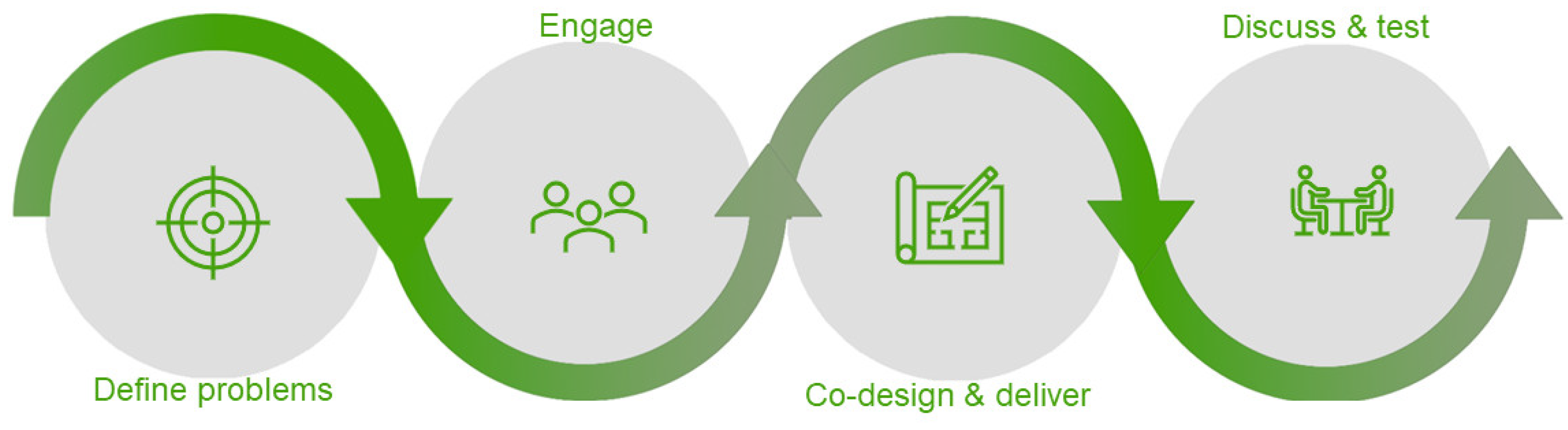
This study adopted a Participatory Action Research (PAR) approach to merge academic research, active student learning and local urban planning activities through iterative cycles of collaborative research, reflection and enhancement [
27,
28]. PAR was considered appropriate for ESG-aligned workshops as it builds trust among diverse stakeholders, integrates qualitative and quantitative research methods, maintains flexibility in implementation and documents findings throughout the process. This methodology (
Figure 1) facilitated discussions in the planning process while enabling the co-creation of knowledge between academia, local authorities and communities.
Data collection employed multiple methods across all three workshop iterations to ensure systematic documentation and triangulation. Primary data sources included: (1) structured observation notes recorded by facilitators during all workshop sessions; (2) audio recordings and transcripts of community interviews and stakeholder discussions; (3) photographic documentation of design outputs, group work processes and presentation materials; (4) student design submissions including sketches, proposals and written rationale documents; and (5) post-workshop evaluation completed by students, planners and community participants. Secondary data comprised city planning documents, site assessment reports and archival materials provided by local historians. All qualitative data were coded thematically to identify recurring patterns across environmental, social and governance dimensions.
4.1. Stakeholder Mapping and Engagement Strategy
The collaborative framework encompassed multiple stakeholders in order to better evaluate factors that are essential for sustainable urban regeneration. Key participants included academic researchers and lecturers (facilitators); design studio-based students; city council planners and policymakers; local community members and residents; local archivists and historians; and additional academic staff (various disciplines—keynotes).
Stakeholder engagement (
Figure 2) varied in intensity across different phases, ranging from consultation to active collaboration and shared ownership of outcomes [
29]. This multi-stakeholder approach aligned with contemporary understanding that sustainable urban development requires collaborative governance arrangements bringing together diverse actors to address environmental limits, social justice and institutional capacity [
3].
4.2. Site Selection and Design Objectives
The selection of urban areas in Aberdeen to be considered for the collaborative activities was guided by local master planning objectives and academic research, ensuring alignment with ESG principles embedded in the city’s longer-term vision. In preparing the briefs, academics and planners engaged in discussions to refine the selection criteria and establish clear design objectives for the sites, addressing environmental sustainability, social equity and governance considerations.
5. Workshop Framework and Objectives
The workshops were established by four main facilitators, lecturers, researchers and planners, representing both academic institutions and Aberdeen City Council.
Each workshop iteration followed a structured analytical framework. Data analysis occurred in three phases: (1) during-workshop analysis, where facilitators held daily debriefing sessions to document emerging themes and adjust activities; (2) post-workshop analysis, where all collected data were systematically coded and categorised according to predetermined ESG criteria and emergent themes; and (3) comparative analysis across the three-year period, examining how stakeholder engagement, design quality and ESG integration evolved longitudinally. Evaluation criteria were established a priori based on ESG indicators identified through the Delphic Hierarchy Process, enabling consistent assessment of outcomes across iterations. Findings were validated through member checking with participating planners and community representatives.
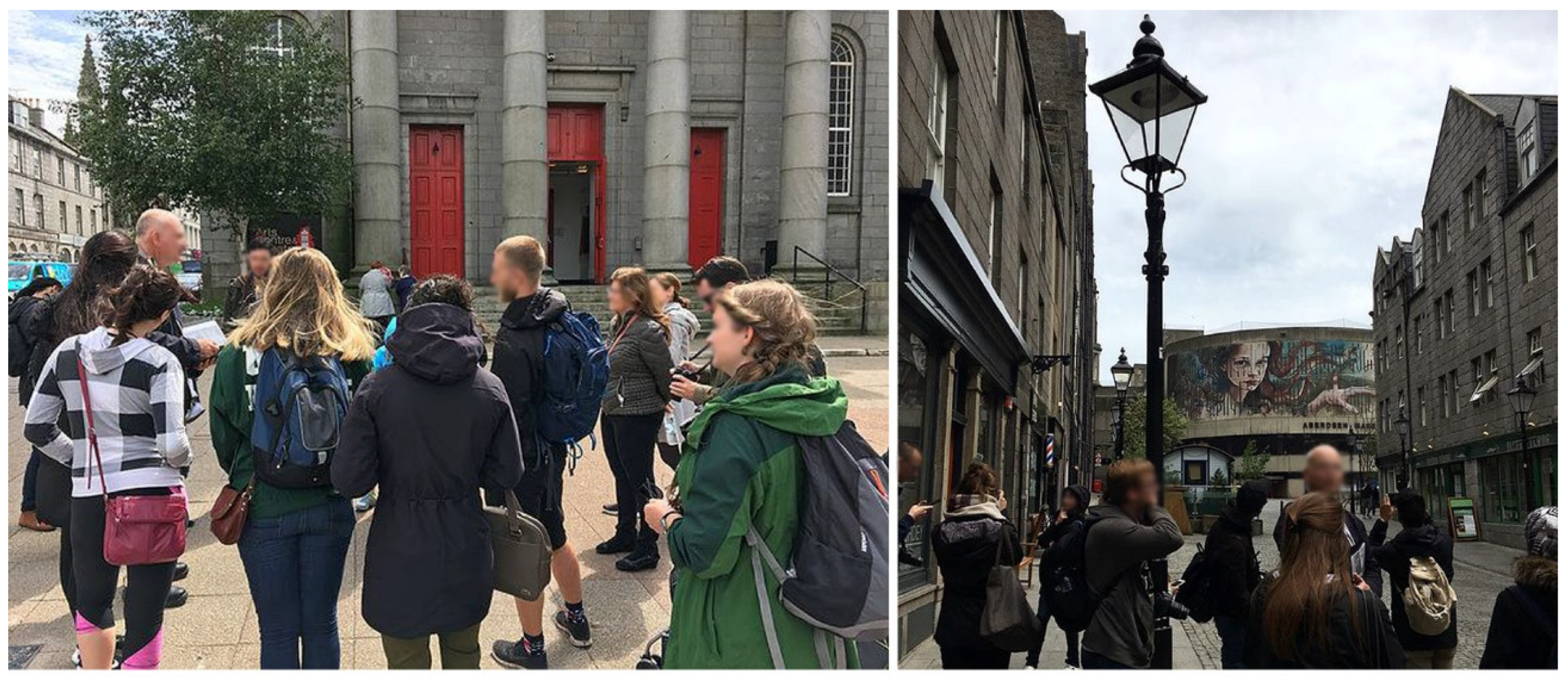
Following an iterative action research cycle, the collaborative activities were implemented through three consecutive summer workshops over three years (2017–2019), representing the genesis and essence of the collaborative path named ‘Aber-Net.’ This longitudinal approach enabled participants to create plans based on ongoing projects, take action, share experiences and reflections in subsequent workshops and acquire new knowledge to modify plans for further actions. All workshops were designed to last ten working days, during which meetings and discussions with the community, local archivists, historians and various university members were scheduled and organised to highlight the features of the city’s identity and gather ecological wisdom and local knowledge that informed regeneration planning. During the workshop activities, participants critically discussed current urban issues, barriers and potentials, as well as design proposals, through structured consultation and negotiation processes that promoted co-action between government, academia, and the public.
The purpose of this exploration was to investigate possible forms of contact and cooperation between architecture schools and local authorities to:
Evaluate the effectiveness of academic and professional interaction and influence in the urban regeneration decision-making process, establishing transparent governance mechanisms.
Provide a structured mechanism for discussions, negotiations and refinements of the design process that integrates ESG criteria.
Provide students with hands-on experience by working and understanding the practical implications of theoretical frameworks, including environmental responsibility, social equity and governance principles, preparing them for future careers.
Build long-term relationships between educational institutions and local governments that support sustained community development and raise the quality of university education through research-informed teaching.
Test hypotheses and connect research theories with pragmatic activities that influence decision-making, creating replicable models for ESG-aligned urban regeneration.
The research partners organised each workshop by preparing maps, writing the workshop brief in advance, and selecting topics for various interventions, including theoretical lectures and prompts, presentations, tours, design jams and design review days. This preparatory phase incorporated elements of the Delphic Hierarchy Process (DHP), where facilitators, acting as expert panels, evaluated sustainability criteria and ESG sub-dimensions to inform workshop briefs and assessment frameworks [
30]. Multiple preparatory rounds refined indicators across environmental (circular economy, adaptive reuse), social (community engagement, equity) and governance (transparency, accountability) dimensions.
The workshops, implemented in a series of three over consecutive summers, were based on a combined theoretical and practical approach, as outlined in the following preparatory steps:
Student participants were informed before the workshop about a background reading list concerning Aberdeen City and relevant ESG frameworks, provided by the facilitators.
During the workshop, students received theoretical presentations and provocations about the importance of engaging with the community, the meaning of urban regeneration and ESG principles in urban planning. Activities such as tours, meetings, and presentations were also delivered by practitioners and facilitators to expose students to concrete challenges and opportunities.
Students were encouraged to form groups of 4–5 members through a speed dating-style format, encouraging effective and rapid exchange of perceptions, ideas and interests while fostering interdisciplinary collaboration.
The workshop process was designed to facilitate the exchange of reflections, ideas and experiences of the city as well as foster creativity and involve all stakeholders in the design process. Following participatory research methodologies, the workshops employed concept mapping and planning support tools to structure process and content, enabling visual representation of stakeholder ideas and collaborative decision-making [
31,
32].
One key aspect of the process of creative engagement was the design of specific sessions for both understanding current limitations and barriers within the urban environment and proposing potential design solutions aligned with ESG goals.
The activities included the following exercises:
(1) One Word to Describe the Urban Space
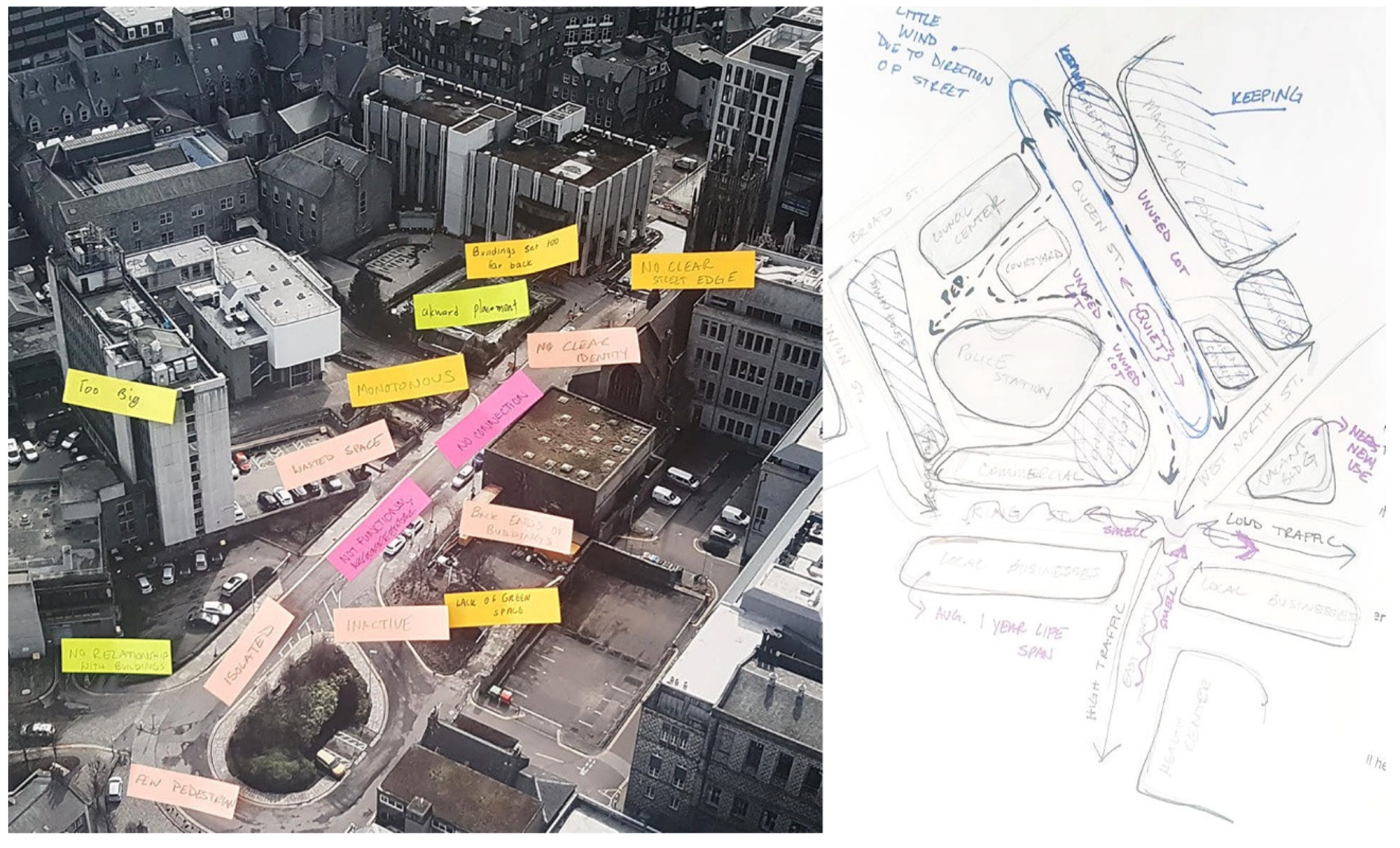
Students were encouraged to engage with the community by carrying out in-depth interviews, observations and walk-along techniques. These are participatory methods essential for gathering diverse perspectives on social sustainability. Conceptualisations and thematic analysis were developed in the form of semantic choice, where students were asked to describe their engagement findings by listing only one or a maximum of two words (
Figure 3). This semantic exercise helped frame and described the current conditions of the areas and community considerations, raising awareness of community perception and shaping potential design principles of regeneration that addressed social equity and inclusive design.
(2) Design Jam
This event involved all workshop participants (students, researchers and planners) and focused on design challenges raised during the previous city urban analysis. Participants engaged in intensive brainstorming, prototyping and creative problem-solving sessions and were encouraged to develop innovative thinking and teamwork. Design jams served as collaborative laboratories where ESG criteria were tested and refined through iterative design exploration.
(3) What is Your Idea?
The workshops culminated with various proposal presentations and pitches where students presented their outcomes to a wider cohort of planners, professionals and the community. This presentation format embodied principles of transparent governance by making the design process visible and accountable to multiple stakeholders, enabling feedback and negotiation of design solutions.
6. Evaluation and Knowledge Transfer
Following each workshop iteration, a comprehensive evaluation framework was applied to assess outcomes across ESG dimensions (
Table 1).
The iterative nature of the three-year workshop series enabled continuous monitoring, adaptive coordination and refinement of both process and outcomes, creating a feedback loop between theoretical frameworks developed in academia and practical implementation by local authorities. This approach facilitated systemic change by embedding ESG principles into both educational pedagogy and municipal planning practices, extending impacts beyond individual projects to influence future, sustainable urban development.
The three-year iterative workshop series demonstrated progressive refinement in applying ESG principles to urban regeneration challenges in Aberdeen. Across the workshops, students engaged with multiple urban areas, ranging from city centre spaces to public parks, through Participatory Action Research methods including community interviews, ethnographic observations and collaborative design development with planners.
Environmental outcomes included proposals addressing circular economy principles, green infrastructure enhancement and climate-responsive design strategies informed by precedent studies and site-specific analysis.
Social outcomes were achieved through extensive community engagement, where students conducted in-depth interviews and walk-along techniques that informed inclusive design proposals reflecting local needs, aspirations and the city’s historical identity. The semantic analysis exercise, where students distilled community perceptions into single descriptive words, proved particularly effective in translating ethnographic findings into design principles that promoted equitable access and social cohesion.
Governance outcomes evolved significantly across iterations: initial workshops revealed the need for clearer briefs and centralised workspaces, leading to subsequent integration of planners directly into student working groups and dedicated council-based working sessions that established transparent, accountable partnerships. The final presentations to diverse audiences comprising council departments, community associations and elected officials embodied principles of participatory decision-making and institutional accountability. The iterative process enabled adaptive management: Workshop A’s challenges with dispersed sites and ambitious scope informed Workshop B’s focus on two areas, while Workshop C’s concentration on a single area with embedded planners’ participation yielded the most focused outcomes and feasible proposals. This progression demonstrated how sustained academia-authority collaboration creates institutional capacity for ESG-aligned urban development, with knowledge transfer occurring bidirectionally; students gained practical implementation experience while planners benefited from research-driven perspectives and innovative community engagement methodologies that enriched municipal planning processes.
7. Reflections on ESG-Aligned Collaboration
The Aber-net experience revealed several critical insights for establishing effective academia–authority partnerships that embed ESG principles in urban regeneration practice. The governance dimension proved foundational: multi-stakeholder collaboration involving students, council members, planners and citizens ensured diverse perspectives and democratic participation in decision-making processes [
2]. However, initial logistical challenges, including dispersed work locations and managing multiple groups simultaneously, underscored the necessity of explicit governance structures, including detailed written briefs co-developed by academics and authorities to articulate shared ESG objectives and ensure institutional alignment. The evolution toward centralised workspaces and focused site selection in later iterations demonstrated adaptive governance, where lessons learned informed process refinements that enhanced transparency and accountability.
Particularly, the governance effectiveness was assessed through documented decision-making outcomes. Regular steering committee meetings across three years recorded strong consensus on process modifications, with major adjustments such as workspace centralisation and focused site selection receiving unanimous approval. Student evaluations showed significant learning gains, indicating that the vast majority reported improved understanding of ESG principles in practice, compared to their knowledge before the workshops.
From a social sustainability perspective, direct student engagement with communities through interviews and ethnographic methods fostered inclusive participation and ensured proposals reflected lived experiences rather than imposed solutions [
1]. This approach exemplifies research-informed teaching that integrates academic knowledge with practical applications, preparing students for professional careers while simultaneously advancing social equity goals. The positive reception of student proposals, which balanced historical preservation with innovative functions, indicated potential for enhanced community identity and social cohesion.
Post-workshop participants’ reflections across three years revealed measurable shifts in public space perception. Most participants, including those ones from the community, reported increased awareness of regeneration opportunities and expressed greater confidence in their ability to influence local planning decisions. Comparative analysis of the semantic mapping exercise (‘One Word to Describe the Urban Space’) demonstrated evolving sentiment from negative descriptors to potential opportunities, while community-generated design priorities such as accessibility, safety and cultural programming were consistently incorporated into final student proposals, evidencing genuine co-creation rather than tokenistic consultation.
Partnering with educational institutions provided the council access to research methodologies and active community engagement capacity essential for unpacking complex urban challenges, demonstrating how academia-authority collaboration can address social justice concerns more comprehensively than either sector alone.
The environmental dimension benefited from the integration of previous studies, providing theoretical foundations for sustainable design interventions. Students applied sustainability principles, translating abstract environmental concepts into tangible environmental analysis and context-sensitive proposals that could meaningfully address urban space resilience and resource efficiency.
Evaluation against predetermined environmental indicators showed progressive improvement across workshop iterations using circular economy integration, climate resilience and resource efficiency. Analysis of design submissions revealed that the majority incorporated adaptive reuse strategies, many addressed climate resilience through green infrastructure and many student groups proposed measurable resource efficiency improvements. Council planners reported that several student proposals directly informed subsequent masterplan revisions, with multiple concepts advancing to feasibility studies, demonstrating tangible translation of academic work into planning practice.
The iterative workshop model demonstrated that effective ESG implementation requires temporal depth: one-off collaborations cannot establish the trust, shared understanding and institutional capacity necessary for systemic change [
12]. The three-year commitment enabled progressive refinement of governance structures, deepening of social engagement methods and more sophisticated environmental strategies. This longitudinal approach created lasting institutional partnerships extending beyond individual projects to influence broader planning trajectories, embedding sustainability into both educational curricula and municipal processes. The Aber-net model suggests that replicable ESG-aligned frameworks for academia–authority collaboration must prioritise sustained engagement, adaptive management based on iterative learning, co-developed governance mechanisms ensuring accountability, and integration of all three ESG dimensions rather than privileging one over others. These partnerships become vehicles for systemic change when they create feedback loops between research-driven innovation and practical implementation, ultimately advancing resilient, equitable and environmentally responsible urban futures [
25,
26].
8. Reflections on Pedagogical Outcomes and Professional Development
The Aber-net workshops offered architecture students a transformative educational experience that cultivated professional confidence while rigorously challenging their understanding of architecture through direct engagement with practitioners and real-world planning contexts. As demonstrated by Robbins and Giaccardi [
33], academic-professional collaborations generate mutual benefits extending well beyond knowledge dissemination, with collaborative design activities shaping and enhancing both personal and organisational learning outcomes [
34]. Working within council offices and engaging directly with planners provided students with comprehensive exposure to the social and environmental relevance of architectural practice, understanding not only technical design processes but also governance structures, community engagement methodologies and the complexities of implementing theoretical frameworks in practice.
Strategic design of studio culture within architectural education, as noted by Park [
35], can cultivate both explicit and tacit learning benefits [
36], preparing students for collaborative and team-based professional practices [
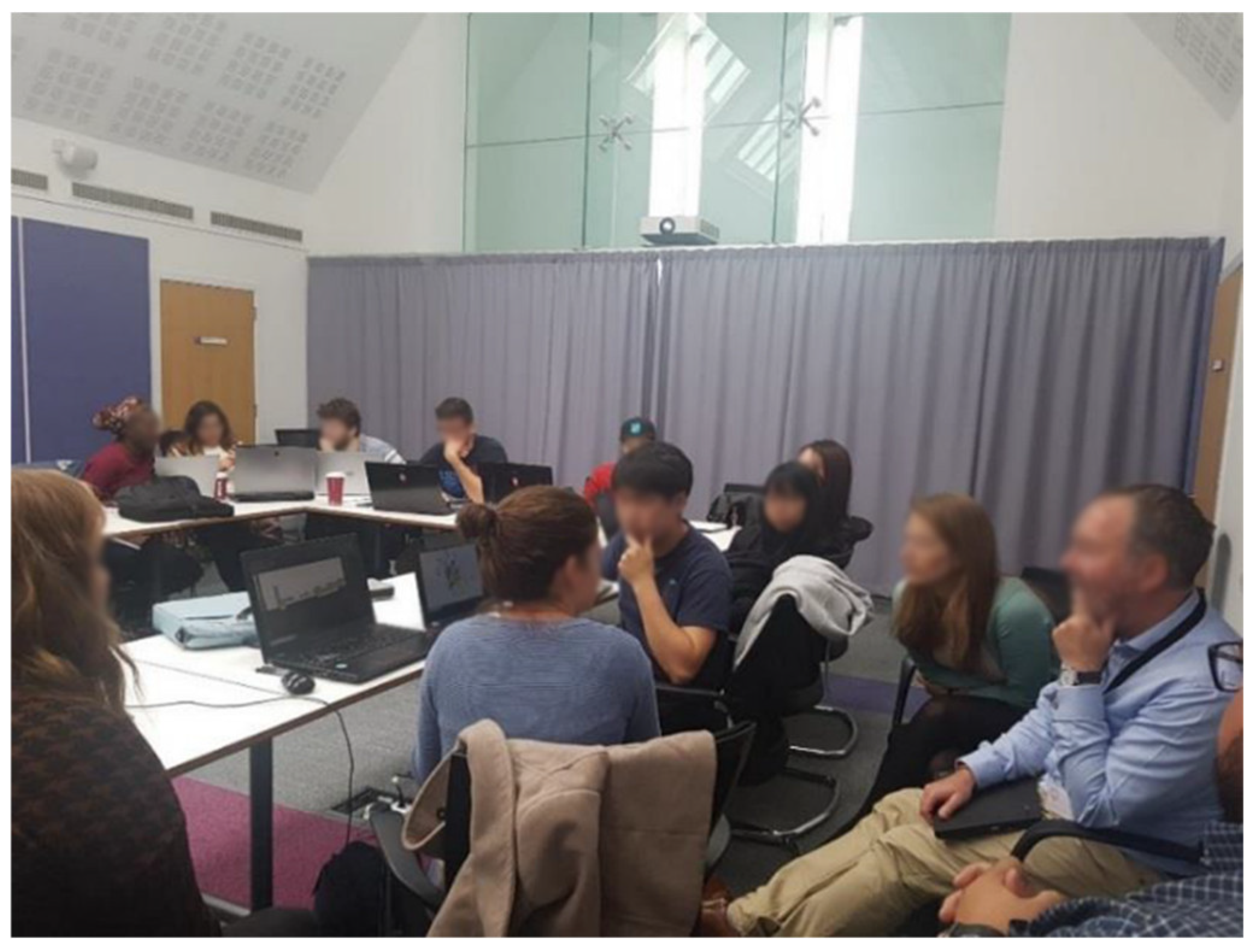
37]. The Aber-net model demonstrates how deliberate pedagogical structuring of cross-organisational collaboration creates a learning environment distinct from traditional classroom settings, where students develop critical competencies, including stakeholder negotiation, contextual analysis and design synthesis, through authentic engagement rather than simulated exercises (
Figure 4).
For students, the workshops represented a distinctive professional apprenticeship, bridging academic theory with practical application. For planners, the collaboration offered systematic opportunities to analyse urban contexts through research-based design methodologies and student-generated innovation, accessing academic rigour and community engagement perspectives that enhance municipal planning capacity. This reciprocal knowledge exchange proved particularly valuable when addressing complex urban themes such as heritage preservation, cultural identity and urban regeneration, where the convergence of diverse viewpoints from academia, communities and authorities enriched design solutions and broadened professional perspectives.
The combination of academic and municipal expertise created a powerful model for addressing the persistent discrepancy between theoretical education and professional practice. By merging institutional competencies and perspectives within a shared pedagogical space, the workshops generated theoretically rooted design solutions that transcend traditional boundaries between academic work and professional work. This approach represents a reframing of architectural education toward applied experience embedded within public organisations, where students learn not only design skills but also governance, collaboration and the institutional dynamics essential for implementing sustainable urban development. The resulting pedagogical framework, grounded in participatory research principles and situated learning, offers a replicable model for architectural education that prepares graduates for the collaborative, multi-stakeholder contexts they will encounter throughout their careers.
9. Conclusions
This study investigated whether cross-organisational collaboration can instigate positive urban change while generating research-informed teaching materials. The Aber-net project, comprising three iterative summer workshops (2017–2019) engaging academic researchers, architecture students, and Aberdeen City Council, demonstrates that sustained academia-authority partnerships create mutually beneficial outcomes for urban regeneration, institutional capacity building and professional education.
Aberdeen’s economic vulnerability, historically dependent on oil and gas, manifested spatially as vacant plots, empty units and underutilised areas. Market-driven masterplanning often prioritises developer interests over coherent and participatory urban vision. Aber-net addressed this gap by embedding academic rigour, community voice and municipal expertise within a collaborative design process grounded in environmental, social and governance (ESG) principles.
The workshops yielded substantive outcomes across all three ESG dimensions. Environmental outcomes included design proposals addressing circular economy principles, green infrastructure and climate-responsive strategies. Social outcomes emerged through participatory methods, community interviews, ethnographic analysis and semantic exercises, that ensured regeneration proposals reflected local needs, cultural identity and equity considerations. Governance outcomes evolved iteratively: multi-stakeholder engagement, transparent decision-making, integrated planner-student collaboration and co-developed briefs established accountable institutional frameworks for sustainable planning.
Methodologically, Aber-net used Participatory Action Research (PAR) principles, integrating theory and practice through repeated cycles of reflection and refinement. The progression from dispersed multi-site workshops to focused single-area collaboration demonstrated that depth of engagement ensures more meaningful ESG outcomes than rapid, broad-based interventions. The integration of planners into student working groups and council-based sessions established the transparent governance structures central to ESG frameworks, transforming workshops from academic exercises into genuine co-creation laboratories.
While the Aber-net experience emerged from Aberdeen’s specific institutional, cultural and economic context, the collaborative framework comprises both context-specific and transferable elements.
Context-specific factors include Aberdeen’s particular spatial manifestation of economic vulnerability (vacant plots, empty units), UK planning system governance structures and pre-existing institutional trust enabling formalised partnerships.
Transferable methodological elements include the PAR iterative structure applicable across diverse settings [
27,
29]; the ESG analytical framework universally relevant to urban regeneration; co-development of briefs by academics and planners; integration of practitioners into student groups; ethnographic community engagement methods; and transparent stakeholder presentations. These components have demonstrated applicability in comparable initiatives in Parma [
15], Newcastle, and Kingston [
20].
Pedagogically, students developed critical professional competencies, stakeholder negotiation, contextual analysis and design synthesis, through authentic engagement. Planners accessed research-based methodologies and community insights that enhanced municipal planning capacity. This reciprocal knowledge exchange created a replicable model for architectural education that prepares graduates for the collaborative, multi-stakeholder contexts of contemporary practice.
The research suggests that ostensibly abstract sustainability theories become tangible and actionable when translated through collaborative design processes involving diverse stakeholders. Aber-net demonstrates that when academia, local authorities and communities engage in sustained, ESG-aligned collaboration, the results extend beyond individual projects to influence institutional practices and broader urban development trajectories. By bridging intellectual rigour with practical application, the model offers pathways for cities to address complex regeneration challenges while advancing environmental stewardship, social equity and accountable governance, which are the foundational pillars of sustainable urban futures.
This study acknowledges limitations conditioning a broader applicability. The three-year timeframe, while demonstrating iterative learning, remains limited for assessing long-term impacts on practical outcomes and policy implementation. Community engagement may be enhanced through fully co-creative sessions. Future research should investigate comparative case studies applying the methodology across different governance systems, economic conditions and cultural contexts to clarify which elements are universally transferable and which require adaptations.
In this specific context, future applications of the Aber-net methodology could establish permanent institutional frameworks enabling annual community engagement cycles, longitudinal research partnerships and systematic integration of ESG criteria into municipal masterplans. This approach positions universities as essential partners in sustainable urban development, equipping future professionals to shape resilient, equitable and environmentally responsible cities.