Spatiotemporal Evolution and Influencing Factors of Municipal Rural Revitalization Development Levels in China


Abstract
1. Introduction
2. Literature Review
3. Evaluation System and Methodology
3.1. Rural Revitalization
3.2. Methodology
3.2.1. Entropy Weight-Coupling Coordination Model
3.2.2. LISA Spatiotemporal Data Analysis
3.2.3. Multi-Scale Geographically Weighted Regression Model
3.3. Control Variables and Data Sources
4. Spatiotemporal Distribution Characteristics of Rural Revitalization Development Level
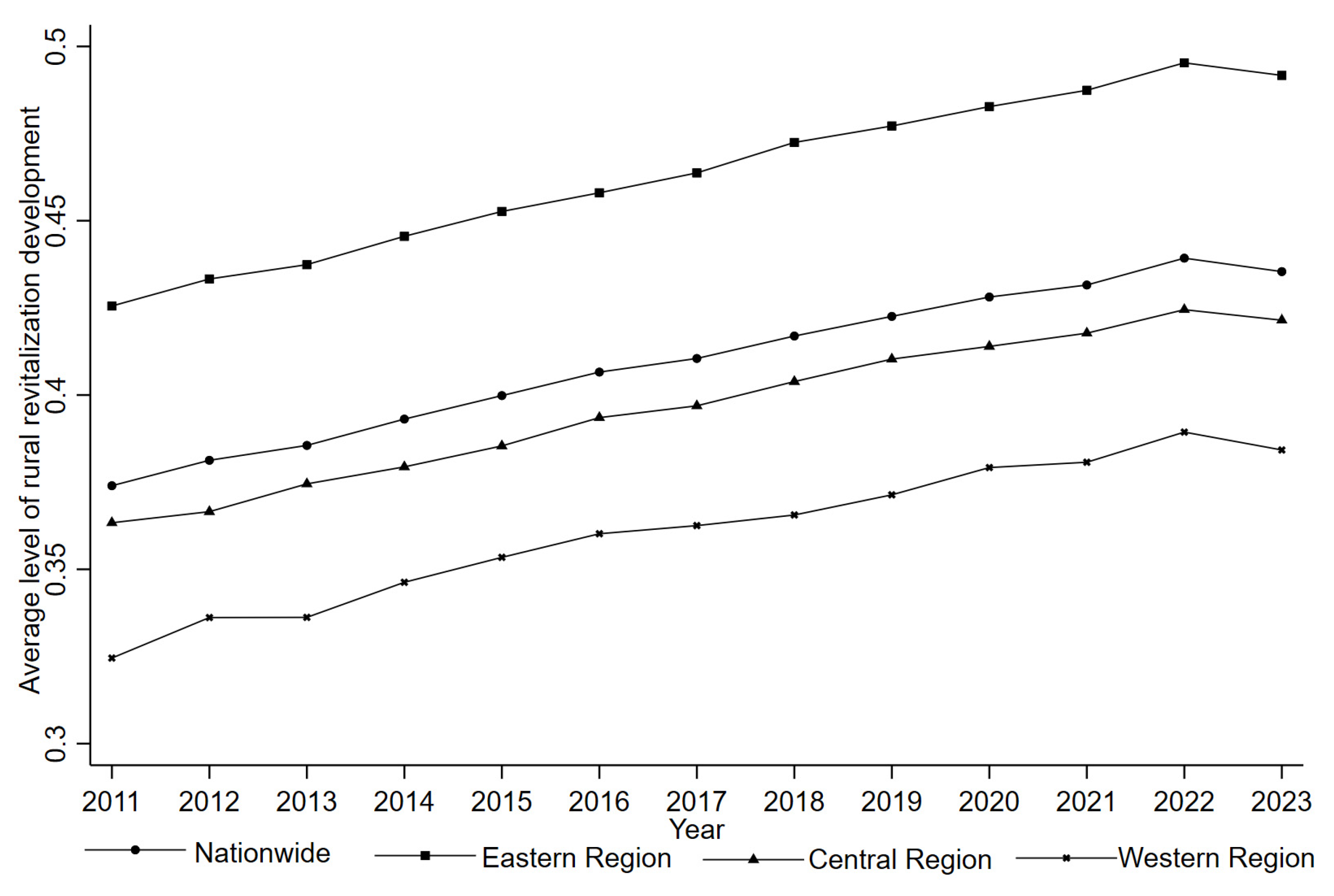
4.1. Temporal Characteristic Analysis
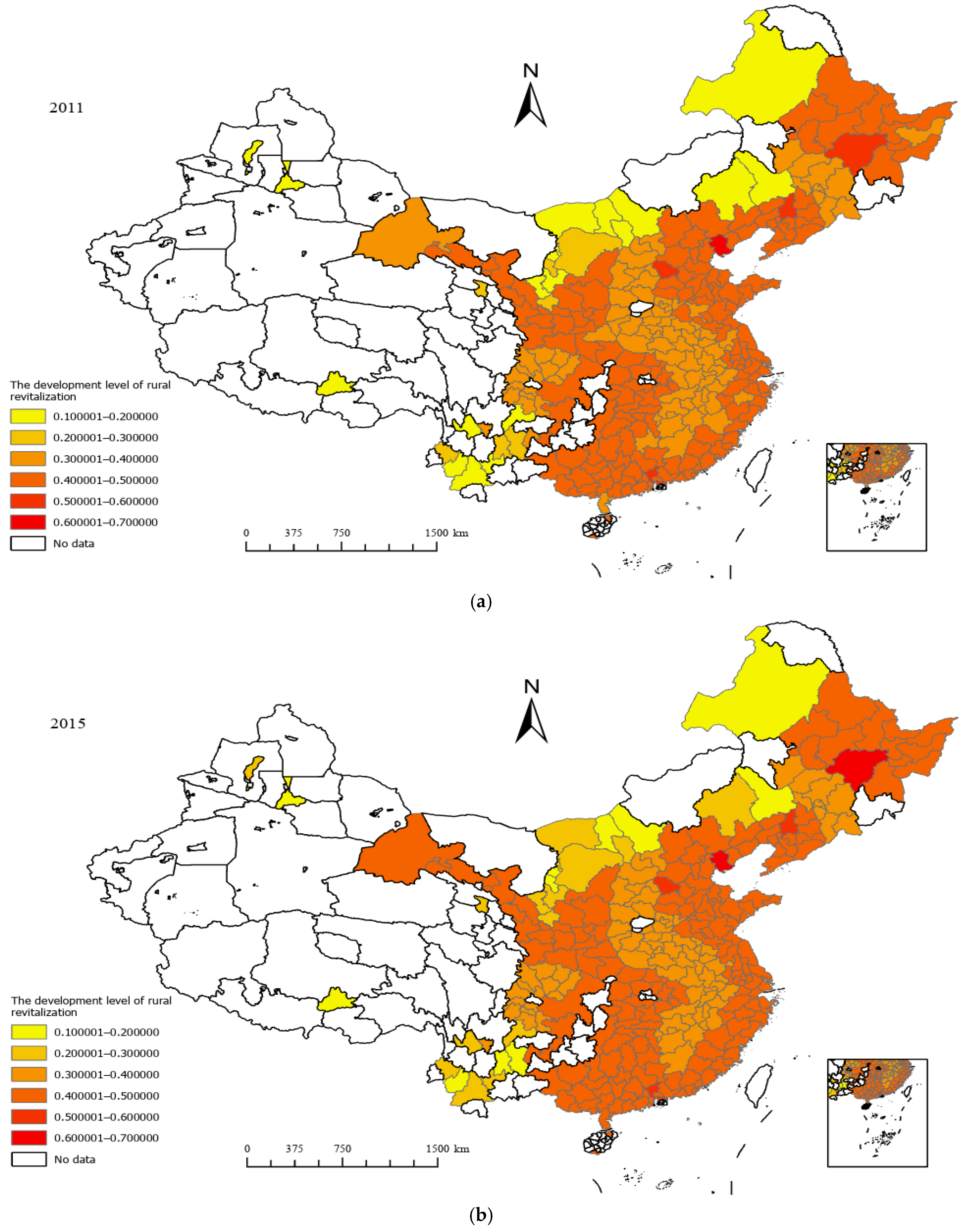
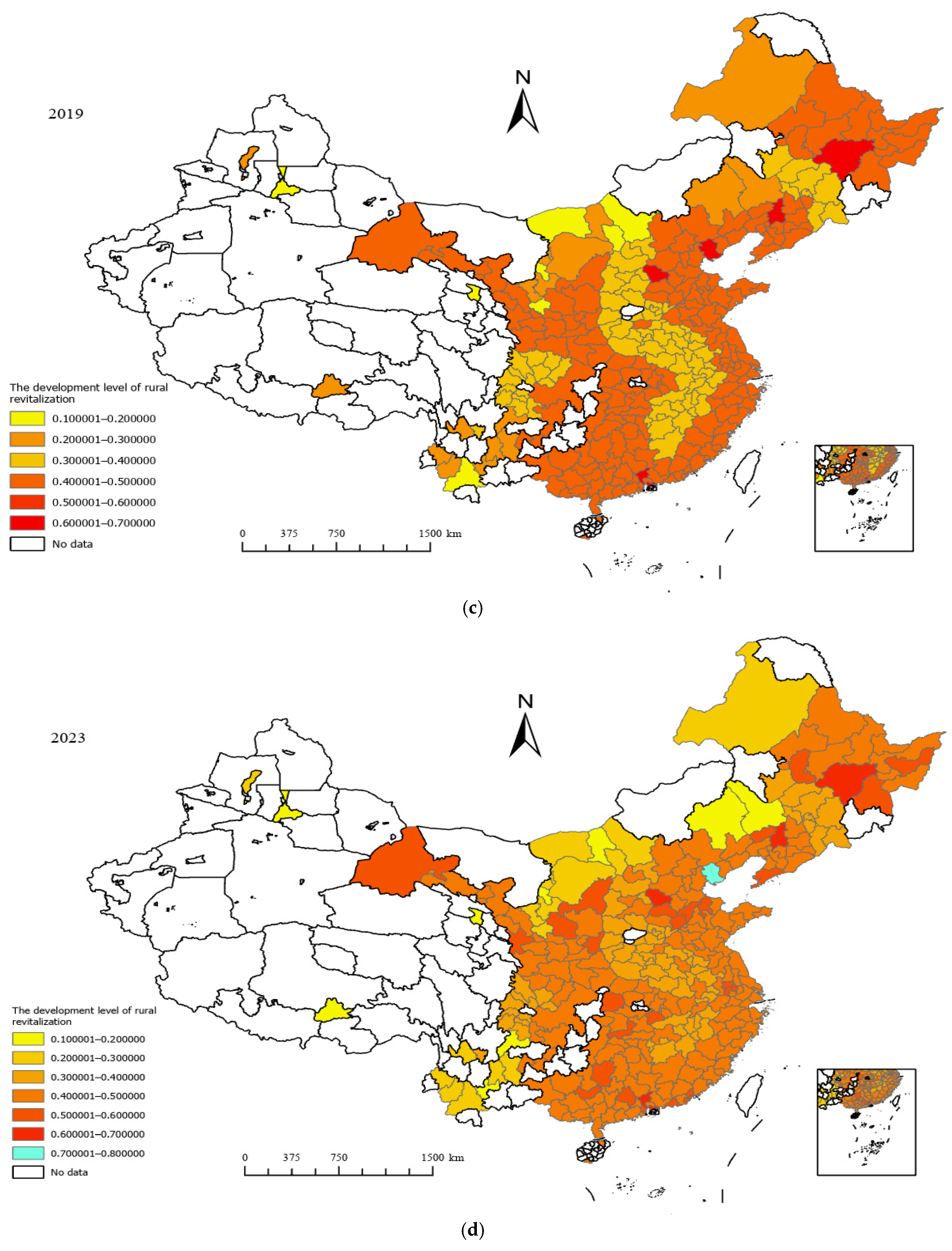
4.2. Spatial Characteristic Analysis
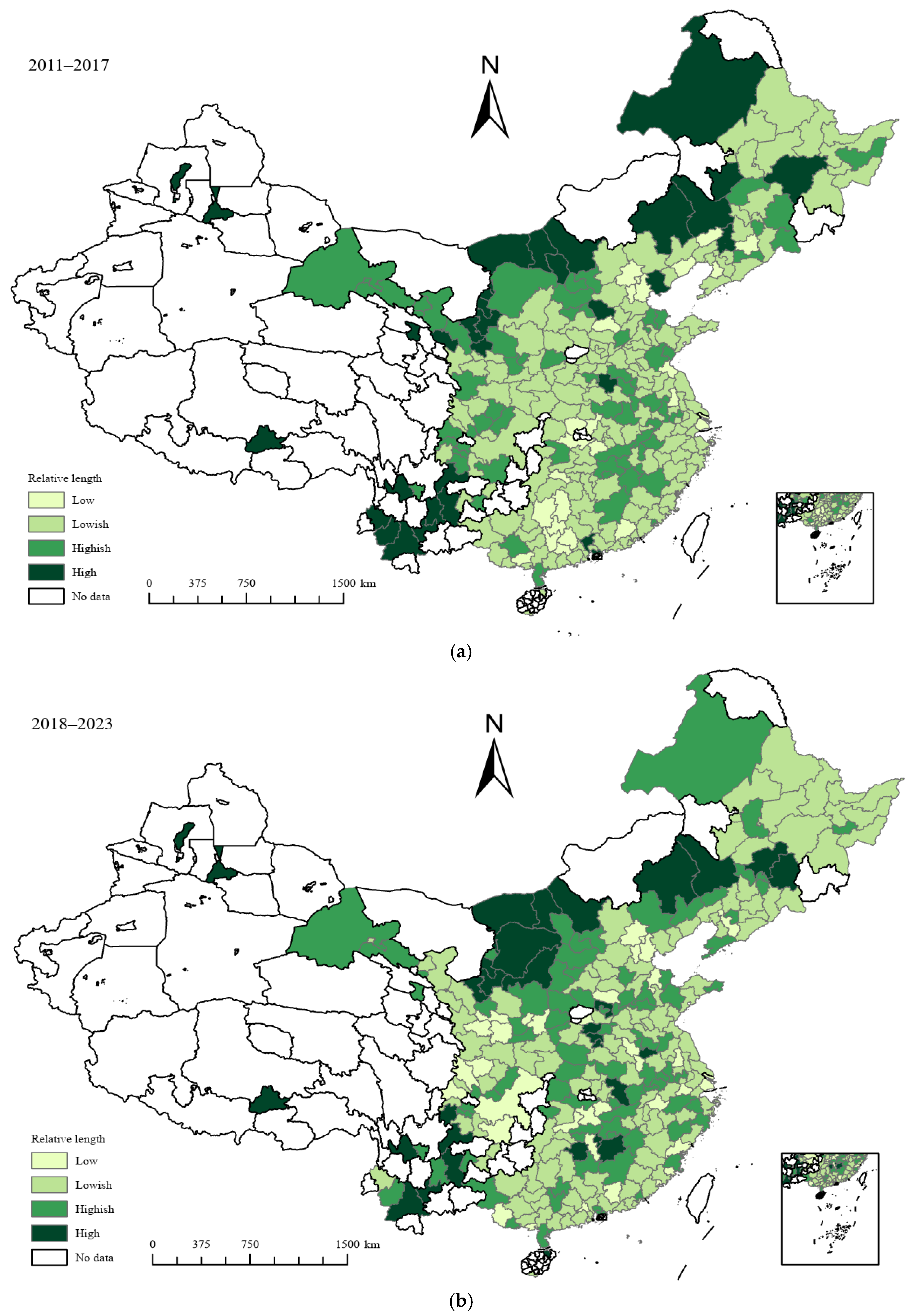
4.3. Spatiotemporal Transition Analysis
5. Analysis of Influencing Factors on Rural Revitalization Development Level
5.1. Overall Analysis
5.2. Factor-Specific Analysis
6. Discussion
6.1. Theoretical Implications: The “Driving Potential–Transformation Conditions” Framework and Sustainable Development
6.2. Policy and Governance Implications: From Uniformity to Differentiated Spatial Governance
6.3. Methodological Reflection and Future Research Directions
7. Conclusions and Recommendations
7.1. Conclusions
- (1)
- Overall Trend and Spatial Pattern. The rural revitalization level across the nation and its eastern, central, and western regions shows an overall upward trend. The national average exhibited sustained growth, except for a slight decrease of 0.91% in 2023. The period 2011–2014 was characterized by the Mild Disorder stage, transitioning into the On the Verge of Disorder stage from 2015 to 2023. The eastern region consistently exceeded the national average, with no significant narrowing of its internal disparity. The central and western regions were successively below the national average. Within the central region, areas with high values gradually converged toward the average, while the western region was dragged down by its low-value areas. The spatial pattern closely aligns with the “Two Vertical and Three Horizontal” regional framework and has remained stable over the long term. This reflects that the Rural Revitalization Strategy has not exacerbated regional imbalances and has played a demonstrative role in the development of typical areas.
- (2)
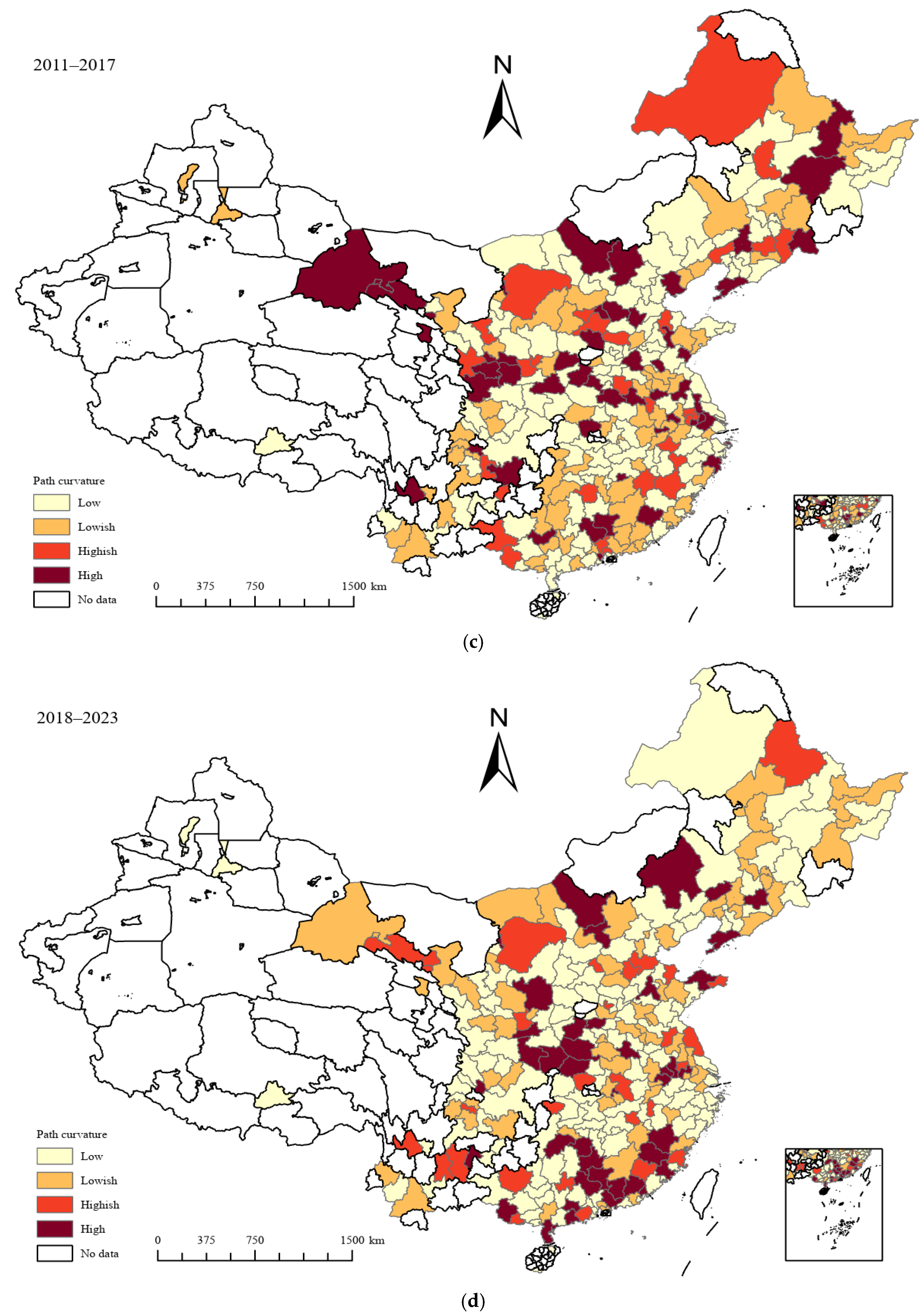
- Spatiotemporal Synergistic Evolution. LISA spatiotemporal path analysis reveals significant regional differences in the dynamics of local spatial structures for rural revitalization. Northeastern and southwestern China exhibit higher relative lengths and path curvature, indicating more volatile and turbulent spatial structural changes. In contrast, developed coastal regions like Beijing–Tianjin–Hebei and the Yangtze River Delta display high stability. Following the implementation of the Rural Revitalization Strategy, the overall spatial dependency relationship across the country has tended towards stability, indicating the initial manifestation of policy effects.
- (3)
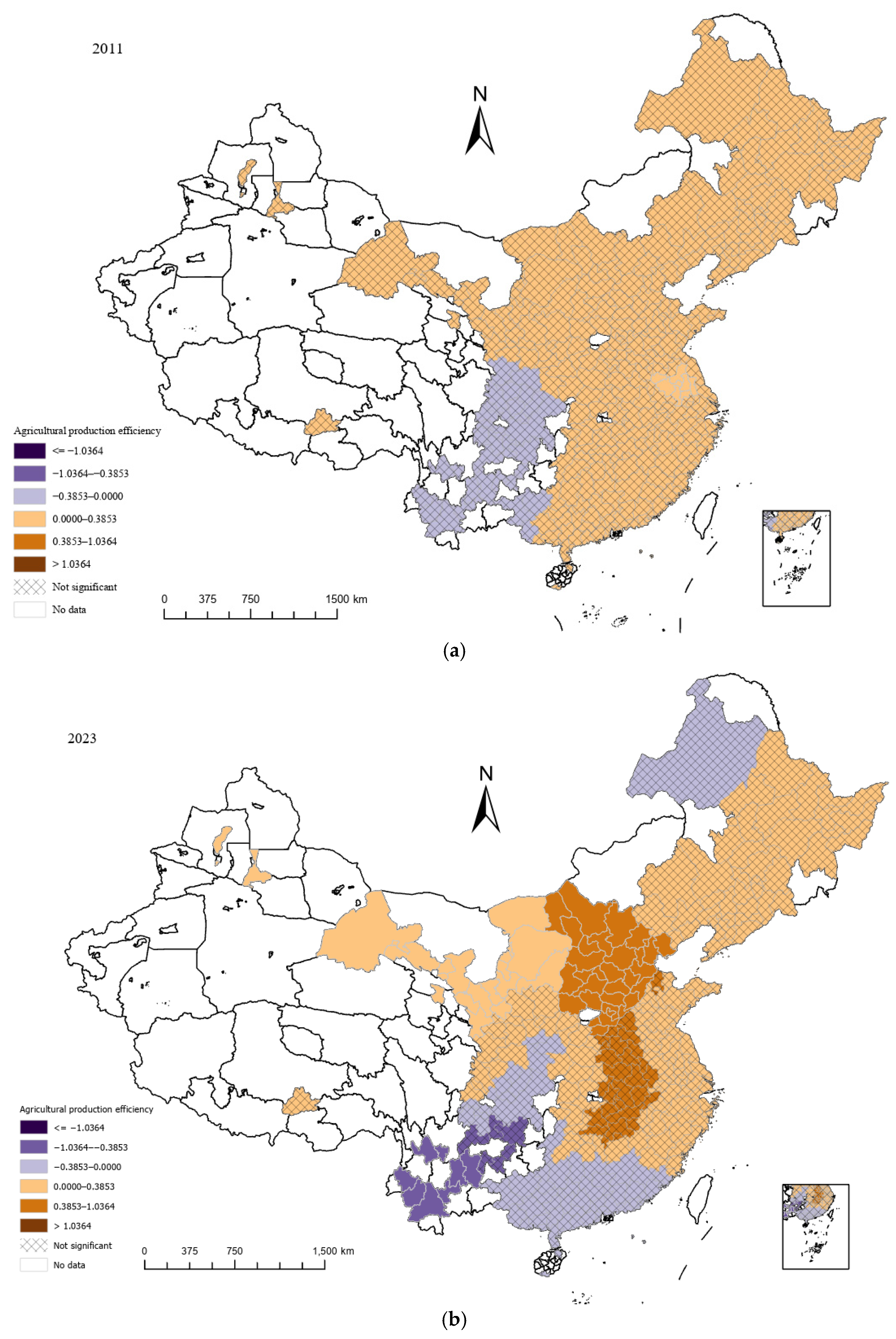
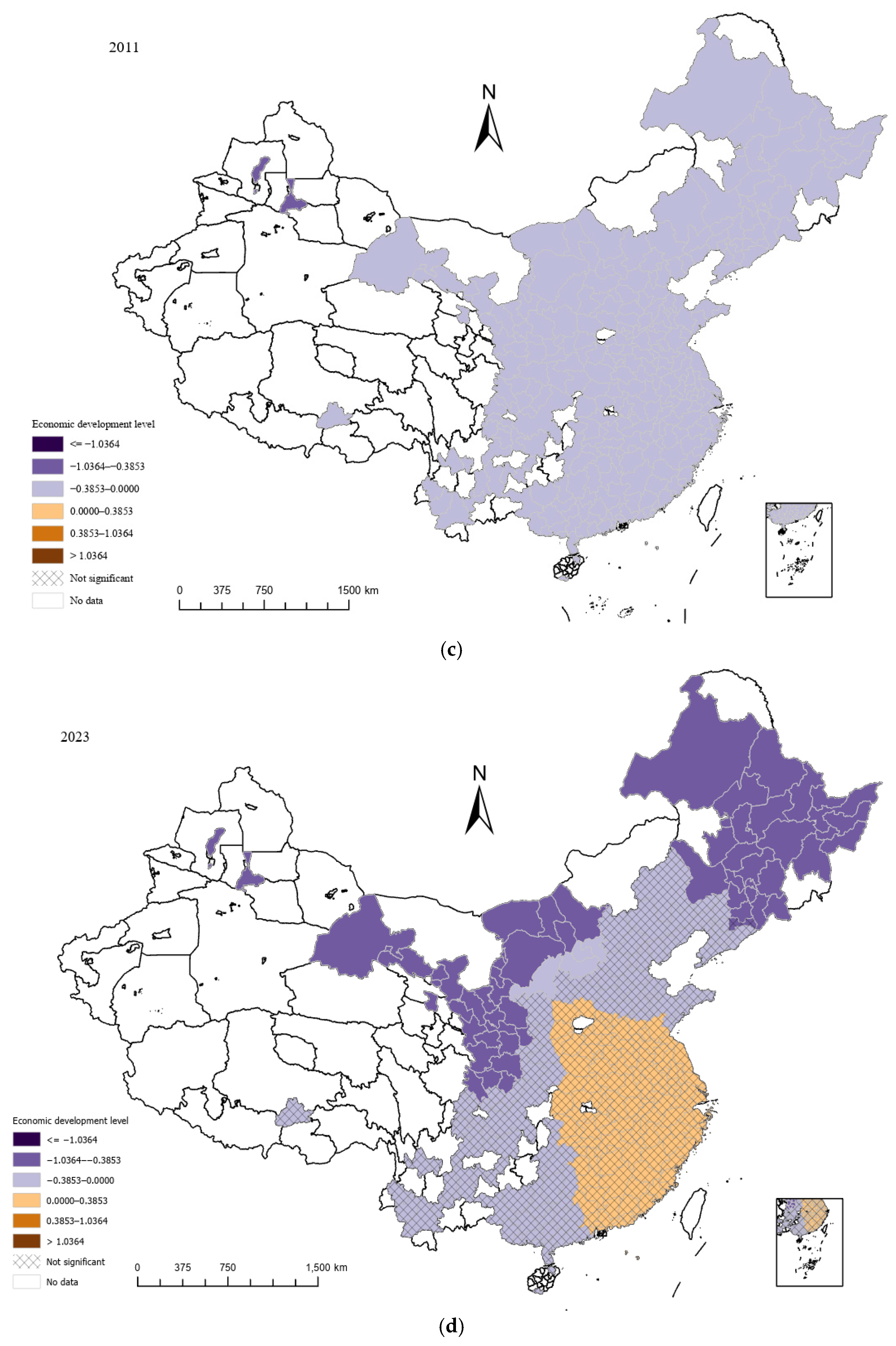
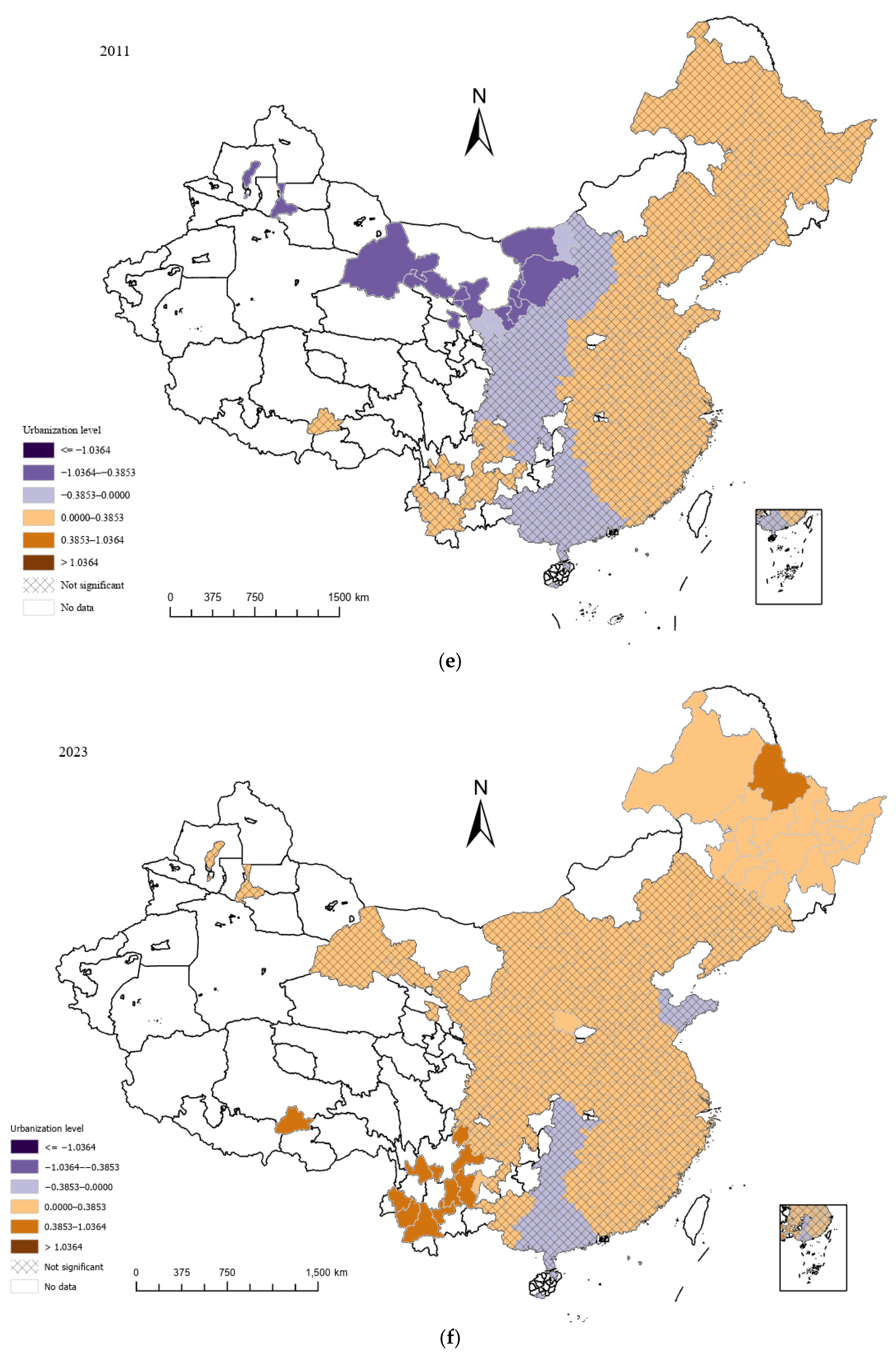
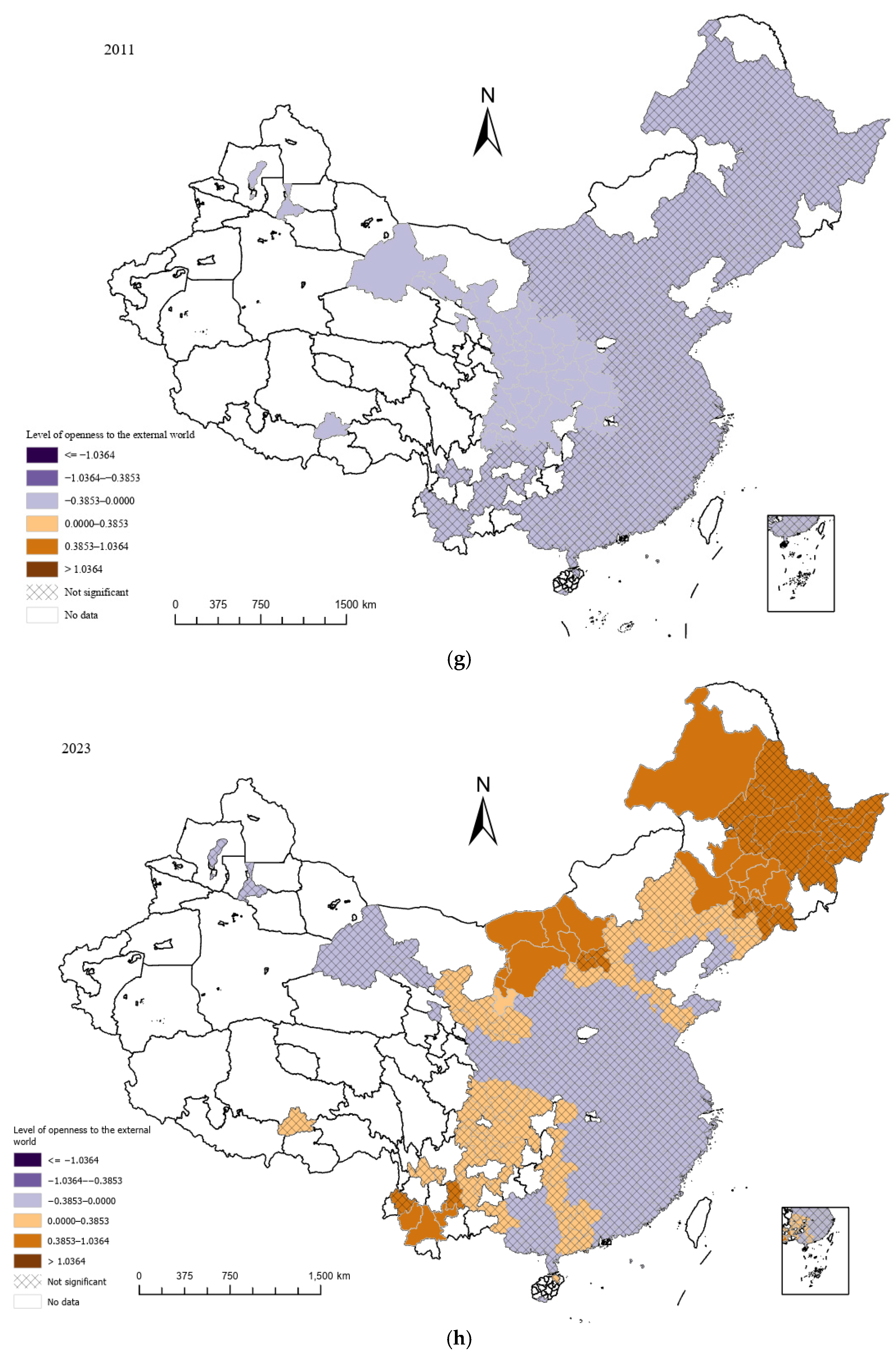
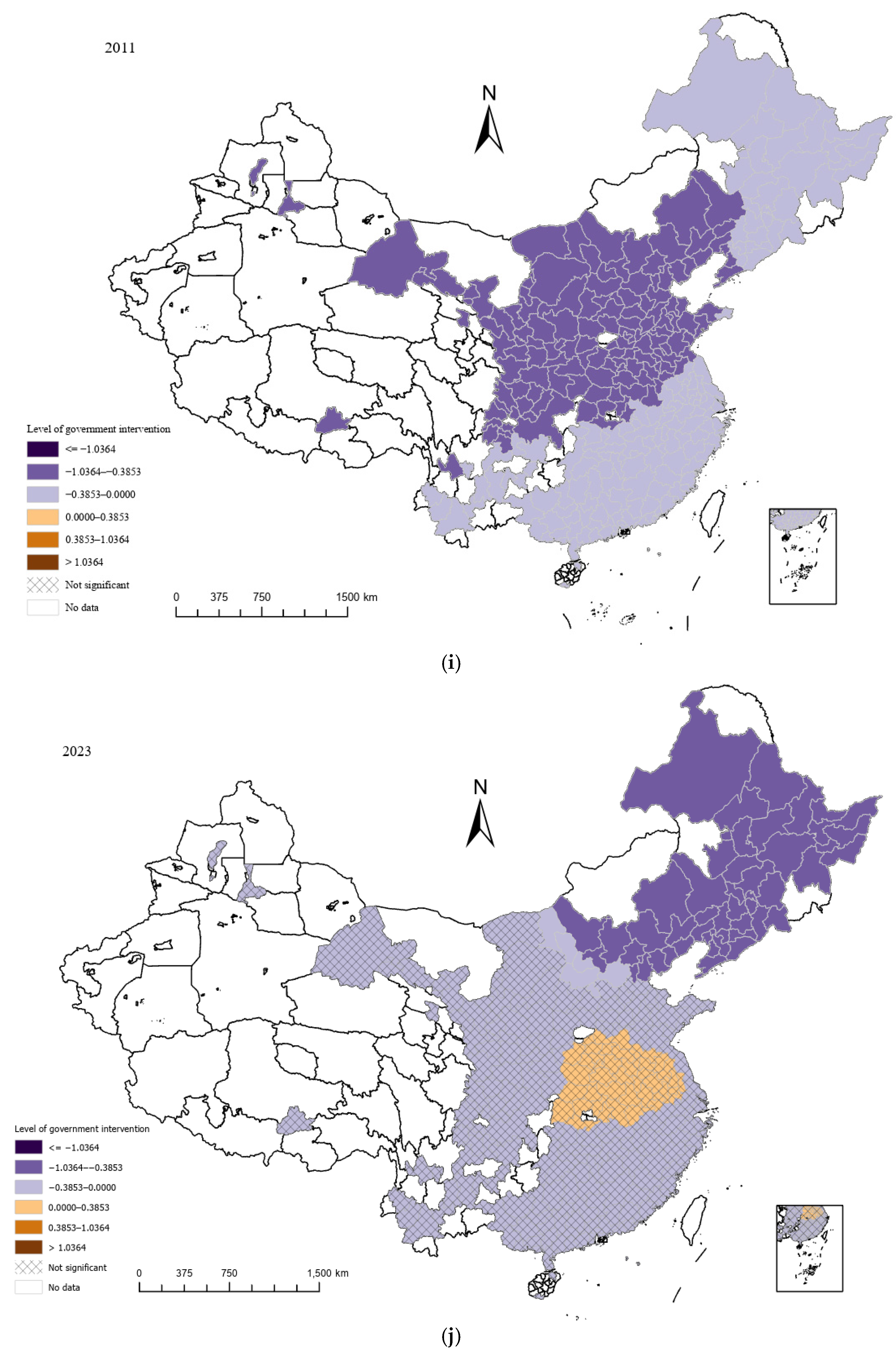
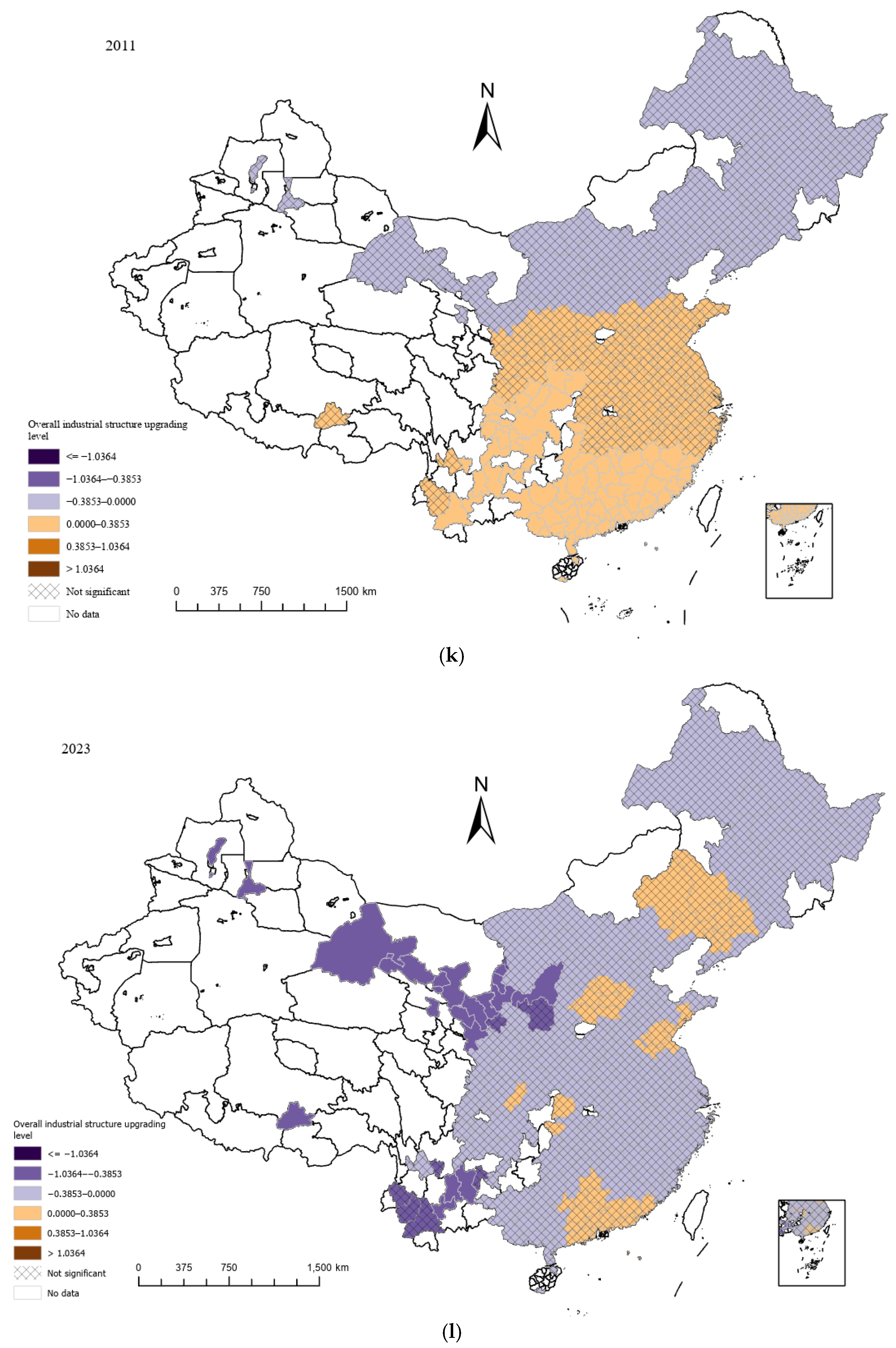
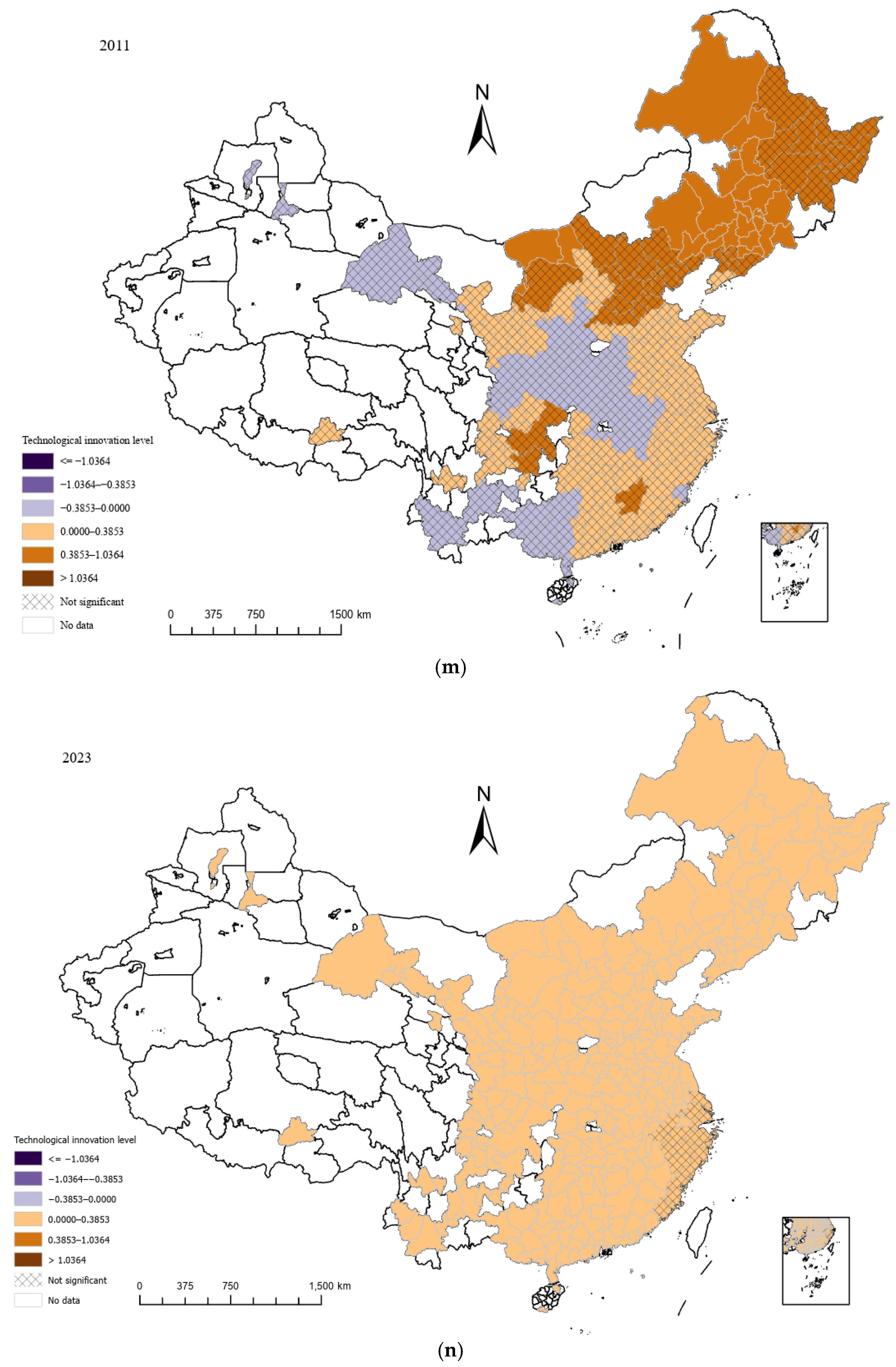
- The impact of various factors on rural revitalization exhibits distinct spatiotemporal heterogeneity. The 2023 results indicate that agricultural production efficiency has a significant promoting effect in North China. Economic development level shows a significant inhibitory effect in Northeast and Central-Western China. Urbanization level has a significant promoting effect in areas like Heilongjiang and Yunnan. The level of openness to the external world has a significant promoting effect in some border regions of Inner Mongolia and Yunnan. The level of government intervention shows a significant inhibitory effect in Northeast China. Overall industrial structure upgrading level has a significant inhibitory effect in areas like Gansu, Ningxia, and Xinjiang. Technological innovation level has a significant promoting effect in most regions except the Yangtze River Delta.
7.2. Recommendations
- (1)
- Formulate differentiated regional policies to synergistically advance rural revitalization. In regions with “institutional lock-in,” such as Northeast China, the focus should be on breaking the negative “growth-intervention” cycle: Shift fiscal expenditures from maintaining traditional structures towards investments in rural human capital, business environment optimization, and market system development. Simultaneously, deepen market-oriented reforms of production factors to promote equitable exchange of resources between urban and rural areas. In regions with “weak transformation conditions,” such as Northwest China, the policy emphasis should be placed on building organic linkages between rural industries and the regional economy: support the development of characteristic industrial chains suited to local ecological resources and ethnic cultures, and improve connective infrastructure like port logistics and digital networks, rather than merely pursuing metrics of industrial structure sophistication. In eastern and other advantaged regions, their function of cultivating “enabling-driven” forces and “transformation interfaces” should be strengthened: On one hand, increase the R&D, promotion, and application of core agricultural technologies and inclusive digital platforms. On the other hand, encourage the exploration of “transformation” models that integrate urban and rural areas and link domestic and international markets (e.g., smart agricultural parks and cross-border e-commerce empowerment bases), forming replicable institutional experiences.
- (2)
- Innovate spatial governance mechanisms to promote the dynamic alignment between driving potential and transformation conditions. Attention should be paid to the spatial interconnections and structural fluctuations in rural revitalization, leveraging the radiating and driving role of high-value areas. In high-value agglomeration areas (such as the southeastern coast), establish demonstration zones for systematic innovation in rural revitalization, focusing on exploring synergy mechanisms among driving factors and models for sharing dividends, while preventing internal siphoning effects. For low-value locked-in areas (such as some contiguous regions in the southwest and northwest), implement a combined strategy of “targeted assistance and capacity building,” introducing external resources through cross-regional partnerships and enclave economies, while strengthening the cultivation of local grassroots organizations and leaders. For volatile active areas (such as parts of the northeast and southwest), establish risk early-warning and adaptive intervention mechanisms to proactively address external shocks and internal transformation risks. Ultimately, through the innovation of spatial governance mechanisms, promote a higher-level dynamic alignment between the “transformation conditions” of various regions and their different “driving potentials,” systematically breaking the dilemma of “low-level lock-in” in rural revitalization.
- (3)
- Implement targeted policies to unleash the spatial effects of influencing factors. For “enabling-driven” factors (such as technological innovation level), consistent, foundational, and nationwide investment should be maintained. Establish long-term support funds to continuously promote the research, development, and application of suitable technologies in grassroots scenarios. For “structural drivers” (such as agricultural production efficiency, economic development level, urbanization level, level of openness to the external world, and overall industrial structure upgrading level), the key to policy lies in establishing incentive mechanisms that foster urban–rural industrial linkages and factor mobility. Through measures like tax incentives, joint park development, and talent return programs, guide the effective connection of urban capital, technology, and talent with rural industries. For “institutional drivers” (such as level of government intervention), the core is to promote a transformation in governance models. Building on a negative list management approach, widely implement a “performance-based funding allocation” evaluation system to incentivize local governments to shift from being “administrators” to “service providers” and “enablers”.
- (4)
- Theoretical and Practical Contributions to Global Sustainable Development. The core findings of this study extend beyond China’s context, offering substantive contributions to sustainability science. First, it provides a robust methodological template, coupling multidimensional evaluation (entropy weight-coupling model) with spatially explicit mechanism analysis (MGWR), for diagnosing the synergy and trade-offs within sustainable development systems elsewhere. Second, it delivers critical empirical evidence that the universality of sustainability drivers (e.g., technology and economic growth) is a myth; their efficacy is contingent on local “transformation conditions.” This empirically grounds the imperative for place-based solutions in global SDG implementation. Finally, China’s experience underscores a governance insight: navigating the tension between top-level strategic design and local empowerment is paramount for translating sustainability potentials into outcomes. This offers a vital reference for global efforts in governing large-scale, complex sustainability transitions.
Author Contributions
Funding
Institutional Review Board Statement
Informed Consent Statement
Data Availability Statement
Conflicts of Interest
References
- Qu, X.; Zhang, Y.; Li, Z. Is China’s Rural Revitalization Good Enough? Evidence from Spatial Agglomeration and Cluster Analysis. Sustainability 2024, 16, 4574. [Google Scholar] [CrossRef]
- Li, X.; Hu, X. Municipal-Level Analysis of Peer Effects in China’s Sustainable Rural Development: Mechanisms and Imitation Patterns. Sustainability 2025, 17, 11122. [Google Scholar] [CrossRef]
- Liu, Y. Research on the Urban-Rural Integration and Rural Revitalization in the New Era in China. Acta Geogr. Sin. 2018, 73, 637–650. [Google Scholar]
- Liu, Y.; Zang, Y.; Yang, Y. China’s Rural Revitalization and Development: Theory, Technology and Management. J. Geogr. Sci. 2020, 30, 1923–1942. [Google Scholar] [CrossRef]
- Han, J. Prioritizing Agricultural, Rural Development and Implementing the Rural Revitalization Strategy. China Agric. Econ. Rev. 2020, 12, 14–19. [Google Scholar] [CrossRef]
- Pe’er, G.; Bonn, A.; Bruelheide, H.; Dieker, P.; Eisenhauer, N.; Feindt, P.H.; Hagedorn, G.; Hansjürgens, B.; Herzon, I.; Lomba, Â. Action Needed for the Eu Common Agricultural Policy to Address Sustainability Challenges. People Nat. 2020, 2, 305–316. [Google Scholar] [CrossRef]
- Reimer, A.P.; Prokopy, L.S. Farmer Participation in U.S. Farm Bill Conservation Programs. Environ. Manag. 2014, 53, 318–332. [Google Scholar] [CrossRef]
- Kostyukov, A.V.; Pritula, O.D.; Davydova, S.G. Regional Aspects of Integrated Development of Rural Areas. IOP Conf. Ser. Earth Environ. Sci. 2021, 852, 012053. [Google Scholar] [CrossRef]
- Krawchenko, T.; Hayes, B.; Foster, K.; Markey, S. What Are Contemporary Rural Development Policies? A Pan-Canadian Content Analysis of Government Strategies, Plans, and Programs for Rural Areas. Can. Public. Policy 2023, 49, 252–266. [Google Scholar] [CrossRef]
- Yamamoto, M. Overview of the Special Issue:“A Regional Analysis of Strategies for Sustaining and Developing Agriculture in Japan”. J. Geogr. (Chigaku Zasshi) 2019, 128, 155–162. [Google Scholar] [CrossRef]
- Nkonya, E.M.; Rosegrant, M.W. World Social Report 2021: Reconsidering Rural Development; United Nations: New York, NY, USA, 2021. [Google Scholar]
- Colglazier, W. Sustainable Development Agenda: 2030. Science 2015, 349, 1048–1050. [Google Scholar] [CrossRef] [PubMed]
- Xiong, Z.; Huang, Y.; Yang, L. Rural Revitalization in China: Measurement Indicators, Regional Differences and Dynamic Evolution. Heliyon 2024, 10, e29880. [Google Scholar] [CrossRef]
- Wang, J. Digital Inclusive Finance and Rural Revitalization. Financ. Res. Lett. 2023, 57, 104157. [Google Scholar] [CrossRef]
- Zhao, M.; Chen, Q.; Zhang, J.; Xu, Q.; Li, P. Spatial Characteristics and Factors Influencing the Rural Development Level of Chinese Counties on the Basis of Point Data. Land 2025, 14, 522. [Google Scholar] [CrossRef]
- Chen, Y.; Zhu, L.; Du, J.; Hong, W. Evaluation of Rural Comprehensive Development Level and Obstacle Factors in Various Countries around the World. PLoS ONE 2025, 20, e0317282. [Google Scholar] [CrossRef]
- Zhang, D.; Yu, L.; Wang, W. Promoting Effect of Whole-Region Comprehensive Land Consolidation on Rural Revitalization from the Perspective of Farm Households: A China Study. Land 2022, 11, 1854. [Google Scholar] [CrossRef]
- Jia, J.; Li, X.; Shen, Y. Indicator System Construction and Empirical Analysis for the Strategy of Rural Vitalization. Financ. Econ. 2018, 11, 70–82. [Google Scholar]
- Tao, Y.; Wu, Y. An Empirical Study on the Evaluation of the Implementation Effect of the Rural Revitalization Strategy in Chongqing Municipality, China. Iran. J. Sci. Technol. Trans. Civ. Eng. 2024, 48, 561–576. [Google Scholar] [CrossRef]
- Guo, X.; Hu, Y. Construction of Evaluation Index System of Rural Revitalization Level. Agric. Econ. Manag. 2020, 5, 5–15. [Google Scholar]
- Liu, J. Measuring Rural Revitalization Performance across Chinese Provinces. Econ. Bus. Manag. 2025, 1, 181–188. [Google Scholar] [CrossRef]
- Qiu, S. Rural Revitalization Evaluation of Resource-Based Counties in Anhui Province under Entropy Weight-Topsis Methods—A Case Study of Coal-Based Counties. In Economic Management and Big Data Application; World Scientific Publishing Co Pte Ltd.: Singapore, 2024; pp. 33–45. [Google Scholar]
- Stoyanets, N.; Hu, Z.; Chen, J.; Niu, L. Managing Sustainability Development of the Agricultural Sphere Based on the Entropy Weight Topsis Model. Int. J. Technol. Manag. Sustain. Dev. 2020, 19, 263–278. [Google Scholar] [CrossRef]
- Mo, W.; Xiao, S.; Li, Q. Ahp–Entropy Method for Sustainable Development Potential Evaluation and Rural Revitalization: Evidence from 80 Traditional Villages in Cantonese Cultural Region, China. Sustainability 2025, 17, 9582. [Google Scholar] [CrossRef]
- Wang, C.; Zhang, G.; Zhai, Y. Integrating Ahp-Entropy and Ipa Models for Strategic Rural Revitalization: A Case Study of Traditional Villages in Northeast China. Buildings 2025, 15, 2475. [Google Scholar] [CrossRef]
- Zhang, Q.; Kim, E.; Yang, C.; Cao, F. Rural Revitalization: Sustainable Strategy for the Development of Cultural Landscape of Traditional Villages through Optimized Ipa Approach. J. Cult. Herit. Manag. Sustain. Dev. 2021, 13, 66–86. [Google Scholar] [CrossRef]
- Zhang, R.; Ma, C.; Wu, D.; Wu, Y.; Wang, K. The Evaluation and Optimization Methods of Villages in China: In the Background of a Rural Revitalization Strategy. Comput. Intell. Neurosci. 2022, 2022, 7314446. [Google Scholar] [CrossRef] [PubMed]
- Shi, J.; Yang, X. Sustainable Development Levels and Influence Factors in Rural China Based on Rural Revitalization Strategy. Sustainability 2022, 14, 8908. [Google Scholar] [CrossRef]
- Geng, Y.; Liu, L.; Chen, L. Rural Revitalization of China: A New Framework, Measurement and Forecast. Socio-Econ. Plan. Sci. 2023, 89, 101696. [Google Scholar] [CrossRef]
- Cheng, H.; Sun, N.; Fu, M. Research on the Measurement of Rural Revitalization Development Level in Anhui Urban Agglomeration under the Background of Yangtze River Delta Integration. In Proceedings of the 2025 IEEE 12th Joint International Information Technology and Artificial Intelligence Conference (ITAIC), Chongqing, China, 23–25 May 2025; pp. 1126–1130. [Google Scholar]
- Yang, X.; Li, W.; Zhang, P.; Chen, H.; Lai, M.; Zhao, S. The Dynamics and Driving Mechanisms of Rural Revitalization in Western China. Agriculture 2023, 13, 1448. [Google Scholar] [CrossRef]
- Gao, J.; Wu, B. Revitalizing Traditional Villages through Rural Tourism: A Case Study of Yuanjia Village, Shaanxi Province, China. Tour. Manag. 2017, 63, 223–233. [Google Scholar] [CrossRef]
- Zhou, Z.; Zheng, X. A Cultural Route Perspective on Rural Revitalization of Traditional Villages: A Case Study from Chishui, China. Sustainability 2022, 14, 2468. [Google Scholar] [CrossRef]
- Wang, Y.; Wang, L. New-Type Urbanization and Rural Revitalization: A Study on the Coupled Development of the Yangtze River Economic Belt, China. PLoS ONE 2025, 20, e0314724. [Google Scholar] [CrossRef] [PubMed]
- Zhang, P.; Zhang, S. Measurement and Analysis of Regional Disparities in Rural Revitalization in China. Adv. Soc. Sci. Manag. 2023, 1, 37–49. [Google Scholar]
- Wang, Y.; Lei, Y.; Shah, M.H. Coupling and Coordination Analysis of High-Quality Agricultural Development and Rural Revitalization: Spatio-Temporal Evolution, Spatial Disparities, and Convergence. Sustainability 2024, 16, 9007. [Google Scholar] [CrossRef]
- Yang, Z.; Wang, S.; Hao, F.; Ma, L.; Chang, X.; Long, W. Spatial Distribution of Different Types of Villages for the Rural Revitalization Strategy and Their Influencing Factors: A Case of Jilin Province, China. Chin. Geogr. Sci. 2023, 33, 880–897. [Google Scholar] [CrossRef]
- Li, G.; Zhang, X. The Spatial–Temporal Characteristics and Driving Forces of the Coupled and Coordinated Development between New Urbanization and Rural Revitalization. Sustainability 2023, 15, 16487. [Google Scholar] [CrossRef]
- Liu, S.; Zhang, H.; Jiang, G. Spatiotemporal Coupling and Regional Differences Analysis between Agricultural Land Use Efficiency and Rural Revitalization in the Yellow River Basin. Sci. Rep. 2025, 15, 11348. [Google Scholar] [CrossRef] [PubMed]
- Xiang, H.; Zhai, B.; Yang, Y. The Realization Logic of Rural Revitalization: Coupled Coordination Analysis of Development and Governance. PLoS ONE 2024, 19, e0305593. [Google Scholar] [CrossRef]
- Han, J. How to Promote Rural Revitalization Via Introducing Skilled Labor, Deepening Land Reform and Facilitating Investment? China Agric. Econ. Rev. 2020, 12, 577–582. [Google Scholar] [CrossRef]
- Xue, E.; Li, J.; Li, X. Sustainable Development of Education in Rural Areas for Rural Revitalization in China: A Comprehensive Policy Circle Analysis. Sustainability 2021, 13, 13101. [Google Scholar] [CrossRef]
- Liu, Y.; Qiao, J.; Xiao, J.; Han, D.; Pan, T. Evaluation of the Effectiveness of Rural Revitalization and an Improvement Path: A Typical Old Revolutionary Cultural Area as an Example. Int. J. Environ. Res. Public Health 2022, 19, 13494. [Google Scholar] [CrossRef]
- Xu, Q.; Zhong, M.; Dong, Y. Digital Finance and Rural Revitalization: Empirical Test and Mechanism Discussion. Technol. Forecast. Soc. Change 2024, 201, 123248. [Google Scholar] [CrossRef]
- Luo, G.; Yang, Y.; Wang, L. Driving Rural Industry Revitalization in the Digital Economy Era: Exploring Strategies and Pathways in China. PLoS ONE 2023, 18, e0292241. [Google Scholar] [CrossRef]
- Tian, Y.; Liu, Q.; Ye, Y.; Zhang, Z.; Khanal, R. How the Rural Digital Economy Drives Rural Industrial Revitalization—Case Study of China’s 30 Provinces. Sustainability 2023, 15, 6923. [Google Scholar] [CrossRef]
- Bin, M.; Qiong, H. Research on the Rural Revitalization Process Driven by Human Capital: Based on Farmers’ Professionalization Perspective. SAGE Open 2024, 14, 21582440241249252. [Google Scholar] [CrossRef]
- Duan, B.; Liu, S. Impact of Fiscal Poverty Alleviation Funds on Poverty Mitigation and Economic Expansion: Evidence from Provincial Panel Data in China. China Agric. Econ. Rev. 2024, 17, 114–130. [Google Scholar] [CrossRef]
- Tan, X.; Wang, Z.; An, Y.; Wang, W. Types and Optimization Paths between Poverty Alleviation Effectiveness and Rural Revitalization: A Case Study of Hunan Province, China. Chin. Geogr. Sci. 2023, 33, 966–982. [Google Scholar] [CrossRef]
- Ren, Y.-S.; Kuang, X.; Klein, T. Does the Urban–Rural Income Gap Matter for Rural Energy Poverty? Energy Policy 2024, 186, 113977. [Google Scholar] [CrossRef]
- Jiang, H. The Impact of Rural Revitalization on Urban Rural Income Gap. Front. Soc. Sci. Technol. 2023, 5, 118–124. [Google Scholar] [CrossRef]
- Tan, X.; Kamaruddin, R.B.; Hu, S.; Peng, L.; Que, Y.; Cai, W. Rural Revitalization and Urban-Rural Income Gap: A Perspective from Land Transfer Scale. Financ. Res. Lett. 2025, 83, 107705. [Google Scholar] [CrossRef]
- Li, B.; Qiao, Y.; Yao, R. What Promote Farmers to Adopt Green Agricultural Fertilizers? Evidence from 8 Provinces in China. J. Clean. Prod. 2023, 426, 139123. [Google Scholar] [CrossRef]
- Liu, H.; Xiao, H.; Liu, H. Measurement of Rural Revitalization Level and Its Driving Factors Based on Green Development. J. Cent. South Univ. For. Technol. 2023, 43, 202–210. [Google Scholar] [CrossRef]
- Chen, J.; Zeng, H.; Gao, Q. Using the Sustainable Development Capacity of Key Counties to Guide Rural Revitalization in China. Int. J. Environ. Res. Public Health 2023, 20, 4076. [Google Scholar] [CrossRef] [PubMed]
- Yin, X.; Chen, J.; Li, J. Rural Innovation System: Revitalize the Countryside for a Sustainable Development. J. Rural. Stud. 2022, 93, 471–478. [Google Scholar] [CrossRef]
- Mensah, J. Sustainable Development: Meaning, History, Principles, Pillars, and Implications for Human Action: Literature Review. Cogent Soc. Sci. 2019, 5, 1653531. [Google Scholar] [CrossRef]
- Zhou, W. The Challenges and Practical Pathways of Empowering Rural Cultural Revitalization through Local Rural Culture. J. Thai-Chin. Soc. Sci. (JTCSS) 2025, 2, 1–16. [Google Scholar]
- Lei, M.; Yu, S.; Lu, M. Analysis on the Theoretical Basis of Rural Revitalization Strategy. Front. Econ. China 2023, 18, 75. [Google Scholar]
- Zhang, R.; Bao, Q. Evolutionary Characteristics, Regional Differences and Spatial Effects of Coupled Coordination of Rural Revitalization, New-Type Urbanization and Ecological Environment in China. Front. Environ. Sci. 2024, 12, 1510867. [Google Scholar] [CrossRef]
- Guo, C.; Zhang, Y.; Liu, Z.; Li, N. A Coupling Mechanism and the Measurement of Science and Technology Innovation and Rural Revitalization Systems. Sustainability 2022, 14, 10343. [Google Scholar] [CrossRef]
- Fotheringham, A.S.; Yang, W.; Kang, W. Multiscale Geographically Weighted Regression (Mgwr). Ann. Am. Assoc. Geogr. 2017, 107, 1247–1265. [Google Scholar] [CrossRef]
- Du, Y.; Xu, Z. Spatiotemporal Evolution and Influencing Factors of China’s Rural Revitalization Level. Stat. Decis. 2025, 41, 108–113. [Google Scholar] [CrossRef]
- Sarfo, I.; Qiao, J.; Lingyue, L.; Qiankun, Z.; Darko, G.; Yeboah, E.; Alriah, M.A.A.; Gagakuma, D.; Amara, D.B. Why Is Rural Revitalization Difficult to Achieve? An in-Context Discussion of Conceptual Barriers to China’s 2018–2022 Strategic Plan. Environ. Dev. Sustain. 2024, 1–36. [Google Scholar] [CrossRef]
- Guoguang, P. Research on the Measurement and Influencing Factors of Rural Revitalization Development Level—An Empirical Analysis Based on China’s Provincial Panel Data from 2013 to 2020. Acad. J. Bus Manag. 2023, 5, 46–50. [Google Scholar]
- Wang, X.; Liu, S.; Sykes, O.; Wang, C. Characteristic Development Model: A Transformation for the Sustainable Development of Small Towns in China. Sustainability 2019, 11, 3753. [Google Scholar] [CrossRef]
- Golusin, M.; Munitlak Ivanović, O. Definition, Characteristics and State of the Indicators of Sustainable Development in Countries of Southeastern Europe. Agric. Ecosyst. Environ. 2009, 130, 67–74. [Google Scholar] [CrossRef]



| Target Variable | Primary Indicators | Secondary Indicators | Specific Indicators | Influence Direction |
|---|---|---|---|---|
| Rural Sustainable Development | Prosperous Industries | Agricultural Production Capacity Foundation | Total farm machinery power per person | + |
| Integrated grain production | + | |||
| Agricultural Production Efficiency | Productivity of agricultural labor (primary industrial output/per head of GDP) | + | ||
| Level of Industrial Integration | Main revenue of large-scale agricultural products processing enterprises | + | ||
| Livable Ecology | Green Development in Agriculture | Pesticide and fertilizer application intensity | − | |
| Utilization ratio of animal and poultry manure | + | |||
| Rural Living Environments | Percentage of administrative villages treated with domestic wastewater | + | ||
| Percentage of administrative villages treated with household waste | + | |||
| Rural sanitation toilet coverage | + | |||
| Rural Ecological Conservation | Green cover rate in rural areas | + | ||
| Civilized Rural Customs | Educational Attainment of Farmers | Share of household spending in education, culture and recreation in rural areas | + | |
| Proportion of qualified teachers in rural compulsory education schools with bachelor’s degrees or above | + | |||
| Average years of schooling among rural residents | + | |||
| Transmission of Traditional Culture | Comprehensive population coverage of television programming (while acknowledging that in the digital era, information channels have diversified, this indicator retains critical significance in the context of rural revitalization. First, it represents the baseline infrastructure for the accessibility of public cultural services and mainstream discourse in rural areas, ensuring that even populations affected by the digital divide (such as the elderly) are included. Second, in China’s policy framework, the television network has evolved beyond mere entertainment. It functions as a crucial platform for disseminating agricultural technology, policy announcements, emergency broadcasts, and culturally enriching content, directly supporting the construction of rural spiritual civilization. Thus, it captures the pervasiveness and equity of foundational cultural and information services, a core component of “Civilized Rural Customs.”) | + | ||
| Proportion of administrative villages with internet broadband access | + | |||
| Rural Public Cultural Development | Number of rural cultural stations | + | ||
| Effective Governance | Governance Capabilities | Proportion of villages where the same person holds village chief and party secretary positions (this institutional arrangement, mandated by national policies such as the Regulations on the Work of Rural Grassroots Organizations of the Communist Party of China, is not merely an organizational characteristic. It fundamentally aims to reduce internal friction within the village “two committees”, enhance decision-making and execution efficiency, and ensure the coherent implementation of national strategies like rural revitalization at the grassroots level.) | + | |
| Governance Initiatives | Proportion of administrative villages with completed village planning | + | ||
| Proportion of administrative villages where village revitalization projects have been implemented | + | |||
| Affluent Life | Farmers’ Income Levels | Farmers’ per capita net income | + | |
| Per capita income growth rate in rural areas | + | |||
| Urban–rural income ratio | − | |||
| Rural poverty rate | − | |||
| Farmers’ Consumption Structure | Rural Engel coefficient | − | ||
| Farmers’ Living Conditions | Number of vehicles per 100 households | + | ||
| Per capita residential area of rural residents | + | |||
| Infrastructure Development Level | Village road hardening rate | + | ||
| Per capita road area | + | |||
| Basic Public Service Coverage Level | Number of health technicians per 1000 rural residents | + | ||
| The popularization rate of safe drinking water | + |
| The Value Range of | Subtype | The Value Range of | Subtype | |
|---|---|---|---|---|
| Acceptable Interval | [0.9, 1] | High-Quality Coordination | [0.7, 0.8) | Intermediate Coordination |
| [0.8, 0.9) | Good Coordination | |||
| Transitional Interval | [0.6, 0.7) | Primary Coordination | [0.5, 0.6) | Barely Coordination |
| Unacceptable Interval | [0.4, 0.5) | On the Verge of Disorder | [0.1, 0.2) | Severe Disorder |
| [0.3, 0.4) | Mild Disorder | [0, 0.1) | Extreme Disorder | |
| [0.2, 0.3) | Moderate Disorder |
| Year | Minimum Value | Maximum Value | Mean Value | Year | Minimum Value | Maximum Value | Mean Value |
|---|---|---|---|---|---|---|---|
| 2011 | 0.114 (Hohhot) | 0.611 (Tangshan) | 0.374 | 2018 | 0.167 (Chifeng) | 0.695 (Tangshan) | 0.417 |
| 2012 | 0.151 (Yuxi) | 0.616 (Tangshan) | 0.381 | 2019 | 0.170 (Xining) | 0.695 (Tangshan) | 0.423 |
| 2013 | 0.132 (Urumqi) | 0.642 (Tangshan) | 0.386 | 2020 | 0.173 (Xining) | 0.715 (Tangshan) | 0.428 |
| 2014 | 0.143 (Shizuishan) | 0.618 (Tangshan) | 0.393 | 2021 | 0.170 (Tongliao) | 0.710 (Tangshan) | 0.432 |
| 2015 | 0.149 (Ulanqab) | 0.650 (Tangshan) | 0.400 | 2022 | 0.182 (Yuxi) | 0.737 (Tangshan) | 0.439 |
| 2016 | 0.160 (Karamay) | 0.655 (Tangshan) | 0.407 | 2023 | 0.172 (Tongliao) | 0.718 (Tangshan) | 0.435 |
| 2017 | 0.157 (Lhasa) | 0.611 (Tangshan) | 0.410 |
| Variable | 2011 | 2023 | 2011 | 2023 | 2011 | 2023 | ||
|---|---|---|---|---|---|---|---|---|
| GWR | MGWR | GWR | MGWR | Optimal Bandwidth (Units) | Significance Ratio (%) | |||
| 0.654 | 0.731 | 0.562 | 0.777 | |||||
| Adjusted | 0.511 | 0.651 | 0.430 | 0.677 | ||||
| AICc | 673.807 | 600.974 | 695.232 | 634.931 | ||||
| 0.489 | 0.349 | 0.570 | 0.323 | |||||
| Sigma-Squared MLE | 0.347 | 0.270 | 0.438 | 0.223 | ||||
| NY | 223 | 55 | 2.48 | 20.92 | ||||
| JJ | 282 | 63 | 100 | 21.28 | ||||
| CZ | 67 | 61 | 6.38 | 10.64 | ||||
| DW | 245 | 10 | 18.79 | 6.74 | ||||
| ZF | 282 | 126 | 100 | 18.44 | ||||
| CY | 98 | 30 | 29.43 | 7.09 | ||||
| JS | 30 | 268 | 8.51 | 92.55 | ||||
Disclaimer/Publisher’s Note: The statements, opinions and data contained in all publications are solely those of the individual author(s) and contributor(s) and not of MDPI and/or the editor(s). MDPI and/or the editor(s) disclaim responsibility for any injury to people or property resulting from any ideas, methods, instructions or products referred to in the content. |
© 2026 by the authors. Licensee MDPI, Basel, Switzerland. This article is an open access article distributed under the terms and conditions of the Creative Commons Attribution (CC BY) license.
Share and Cite
Li, X.; Song, M. Spatiotemporal Evolution and Influencing Factors of Municipal Rural Revitalization Development Levels in China. Sustainability 2026, 18, 2073. https://doi.org/10.3390/su18042073
Li X, Song M. Spatiotemporal Evolution and Influencing Factors of Municipal Rural Revitalization Development Levels in China. Sustainability. 2026; 18(4):2073. https://doi.org/10.3390/su18042073
Chicago/Turabian StyleLi, Xiao, and Mingyang Song. 2026. "Spatiotemporal Evolution and Influencing Factors of Municipal Rural Revitalization Development Levels in China" Sustainability 18, no. 4: 2073. https://doi.org/10.3390/su18042073
APA StyleLi, X., & Song, M. (2026). Spatiotemporal Evolution and Influencing Factors of Municipal Rural Revitalization Development Levels in China. Sustainability, 18(4), 2073. https://doi.org/10.3390/su18042073