Article

Techno-Economic and Environmental Evaluation of Building Retrofit Strategies Toward NZEB Targets in Hot Climatic Contexts

by
Mohanad M. Ibrahim
1,2,*,
Micheal A. William
3,
Aly M. Elharidi
1,
Ahmed A. Hanafy
1 and
María José Suárez-López
2
1
Mechanical Engineering Department, College of Engineering & Technology, Arab Academy for Science, Technology & Maritime Transport, Alexandria 1029, Egypt
2
EDZE (Energía), Campus de Viesques, Universidad de Oviedo, 33204 Gijon, Asturia, Spain
3
Mechanical Engineering Department, College of Engineering & Technology, Arab Academy for Science, Technology & Maritime Transport, Smart Village Campus, Giza 12577, Egypt
*
Author to whom correspondence should be addressed.
Sustainability 2026, 18(4), 1991; https://doi.org/10.3390/su18041991
Submission received: 25 November 2025 / Revised: 26 January 2026 / Accepted: 11 February 2026 / Published: 14 February 2026
(This article belongs to the Section Sustainable Engineering and Science)

Abstract

In response to growing energy demands and climate pressure in hot regions, this study presents an integrated techno-economic and environmental assessment of building envelope retrofit strategies aimed at facilitating the transition of existing buildings toward Nearly Zero-Energy Building (NZEB) targets. Three advanced retrofit solutions—radiative coatings (RC), glazing-integrated photovoltaic (GIPV) systems, and solar green roofs—are evaluated using a validated building performance simulation framework across four representative climatic zones in Egypt. The results demonstrate that radiative coatings provide the most favorable economic performance, achieving return on investment (ROI) values between 12.37% and 21.72% and payback periods ranging from 3.5 to 6.2 years. Solar green roofs and GIPV systems deliver substantial reductions in annual electricity consumption and operational CO2 emissions, with their performance strongly influenced by climatic conditions and cooling demand intensity. Solar green roofs achieve ROI values of 5.15–6.54% with payback periods of 11.7–14.9 years, while GIPV systems yield ROI values of 4.0–5.24% and payback periods between 14.6 and 17.1 years. Overall, the findings indicate that climate-adapted envelope retrofit strategies can significantly enhance building energy performance while providing measurable economic and environmental benefits. This study offers a robust, data-driven basis for retrofit prioritization and policy formulation in hot regions.

1. Introduction

A significant global energy crisis is currently occurring. The extrinsic traits listed below significantly affect numerous individuals, enterprises, and entire economies. Governments have reacted promptly, and there is increased discourse on mitigating future disruptions. The present challenges were preceded by economic strains. Nevertheless, the global economy has suffered due to significant uncertainty in energy markets resulting from these steps, which has impeded post-pandemic recovery efforts [1,2].
In the ever-changing world of energy, the top priority is to shift away from using fossil fuels and towards a low-carbon energy system. The long-term goal is to reach a sustainable energy era where renewable energy (RE) sources are the main source of power [3,4,5,6]. Therefore, renewable energy presents a viable solution to this problem by maximizing power efficiency and minimizing carbon emissions [7]. Additionally, it contributes to enhancing energy security, preserving the environment, and generating employment opportunities in various nations. Some governments perceive renewable energy as the most important aspect of a new era in energy technology, and they have set ambitious goals for renewable energy as part of their strategy [8,9,10,11].
Egypt, the most populous nation in the Middle East, faces rising energy demands driven by rapid population growth and economic development. This creates major challenges in ensuring a stable and continuous energy supply while also limiting opportunities for sector expansion [12,13]. According to the International Renewable Energy Agency (IRENA), expanding renewable energy resources offers Egypt a viable pathway to meet its growing energy demands, support sustainable economic development, create new employment opportunities, and advance progress toward the UN climate and sustainable development goals [14]. The International Finance Corporation (IFC) projects that Egypt’s energy sector will need approximately EGP 2 trillion in climate-smart investments by 2030. Furthermore, forecasts indicate that within the next decade, Egypt is likely to overtake South Africa to become the largest electricity market on the African continent [12,15].
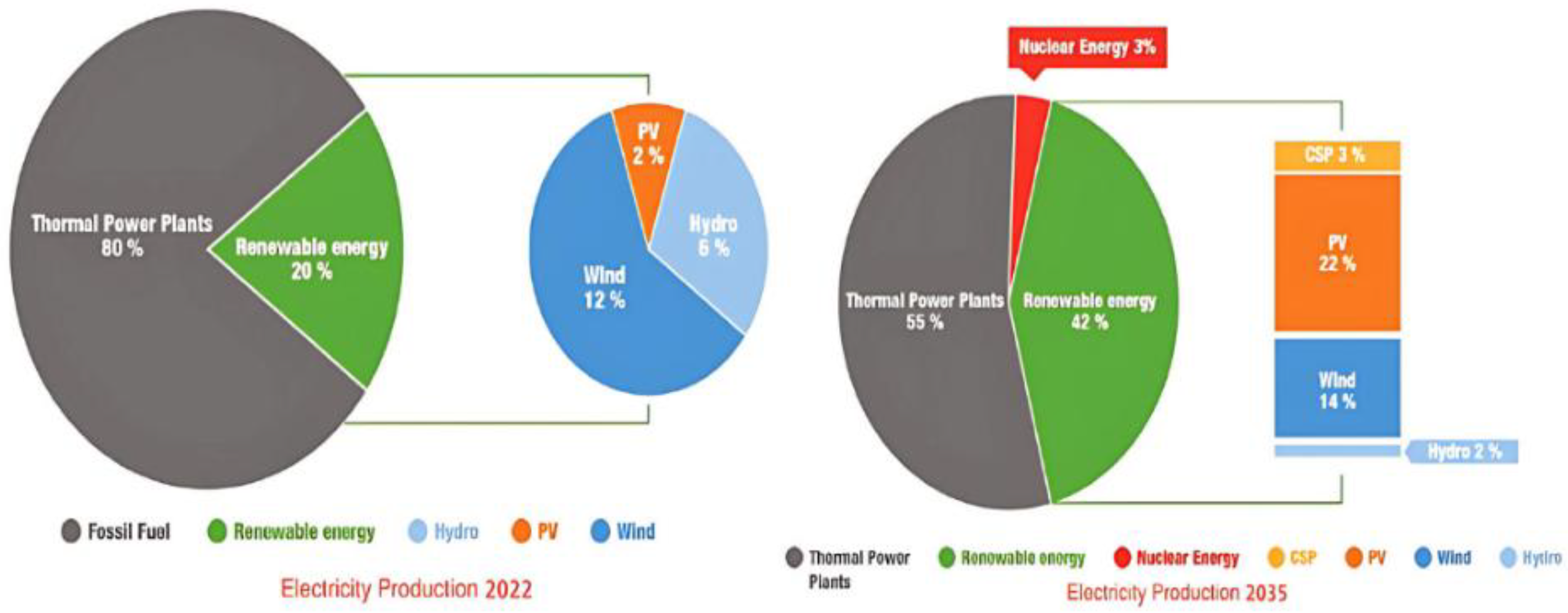
The Ministry of Electricity and Renewable Energy’s ISES 2035 strategy identifies key measures for advancing renewable energy deployment through coordinated cross-sector efforts, consistent with Egypt’s broader vision of establishing itself as a regional energy hub linking Europe, Asia, and Africa. The strategy also emphasizes strengthening grid interconnections within the Arab region and internationally. As illustrated in Figure 1, the plan targets raising the contribution of renewable energy to 20% by 2022 and 42% by 2030 [16,17].
Egypt has already exceeded the global threshold for water scarcity and is moving toward a state of “absolute water scarcity,” compounded by rising temperatures across the MENA region. Desertification is accelerating at an alarming rate, with approximately 3.5 feddans (3.6 acres) of land lost every hour, undermining agricultural productivity and heightening drought risk. With less than 3% of Egypt’s territory classified as arable, these trends pose a significant threat to national food security and the livelihoods of vulnerable populations. Addressing Egypt’s escalating climate vulnerability and reducing its associated impacts is therefore essential for safeguarding the country’s long-term economic stability [19,20].
Climate-related challenges affecting economically vulnerable populations in Egypt are strongly associated with the nation’s greenhouse gas emissions. In 2018, Egypt was positioned 28th among 193 countries, contributing approximately 0.67% of total global carbon dioxide emissions, corresponding to 329.4 million tons. Moreover, the national electricity sector remains heavily reliant on fossil fuels, which currently supply nearly 91% of total power generation [21]. Achieving the mitigation targets set forth in the 2015 Paris Climate Agreement necessitates sustained and substantially strengthened governmental action to curtail carbon emissions at the global level [19].
The global building sector is facing mounting pressure as its consumption of energy and natural resources continues to rise, driven by population growth, improved living conditions, and intensifying climate impacts [22,23]. In response, many countries, including Egypt, have increasingly adopted energy-efficient design practices within high-performance and nearly zero-energy buildings over the past decade. However, major challenges persist across the MENA region. Forecasts indicate that regional energy demand may increase by nearly 50% by 2040 as a result of rapid urban expansion, strains on existing energy systems, and the dominant use of highly energy-dependent air-conditioning and inefficient cooling technologies. Emissions are further amplified by the continued reliance on refrigerants with substantial global warming potential. Without sustained mitigation actions, emissions from cooling and refrigeration independently are projected to rise by as much as 90% above 2017 levels by 2050 [24,25].
The building sector represents one of the highest energy-consuming segments within Egypt. At the global scale, buildings account for approximately 20.1% of total energy use, whereas in high-income countries, energy consumption associated with buildings approaches nearly 40% of overall national demand [11,26,27]. Across the MENA region, the building sector is undergoing accelerated growth, with Egypt identified as the largest consumer of building-related energy among the five principal MENA countries [28].
Furthermore, data from the Ministry of Electricity’s annual report reveal that the building sector in Egypt is responsible for over 51% of total national energy consumption. The pronounced increase in electricity demand within the residential sector is largely attributable to the rapid expansion of housing developments and the escalating use of domestic electrical appliances, particularly air-conditioning systems, rather than growth in industrial or other consumption categories [29,30]. Within the residential sector, space cooling and refrigeration collectively account for approximately 26% of total electricity consumption. In non-residential buildings, air-conditioning and associated HVAC systems constitute a dominant energy demand, representing roughly 35–40% of overall energy use [31].
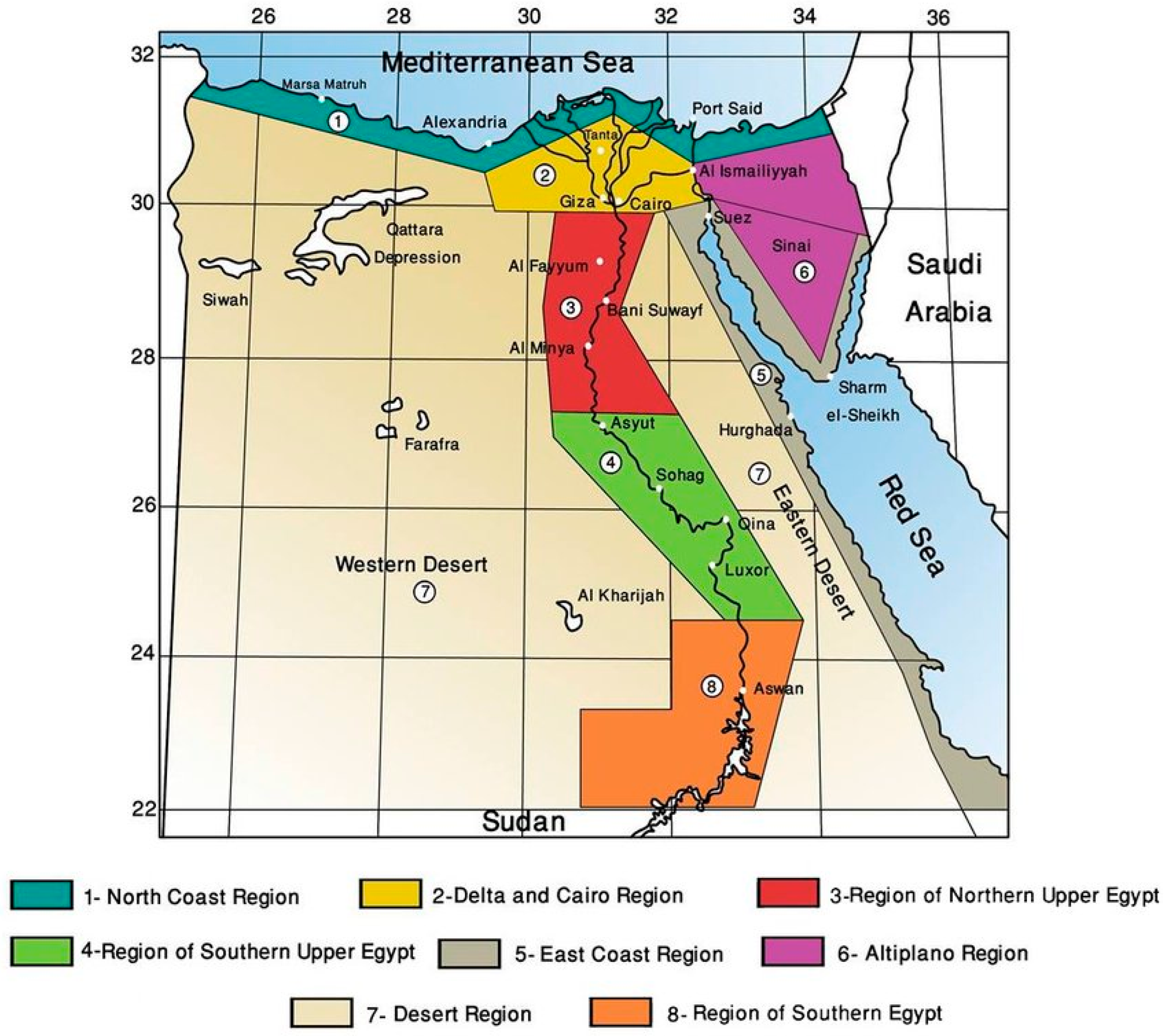
Egypt spans an area exceeding one million square kilometers and exhibits considerable climatic diversity, leading the Housing and Building Research Center (HBRC) to classify the country into eight distinct environmental design regions. Based on the Köppen climate classification system, the central and southern areas are predominantly characterized by a hot desert climate (BWh), whereas the coastal regions are identified as having a hot semi-arid steppe climate (BSh) [32,33]. By 2050, Egypt is projected to experience a rise in mean annual temperatures by two to three degrees Celsius, with higher warming anticipated in inland areas, according to World Bank research. Additionally, precipitation levels near coastal regions are expected to decline by 7% [32]. Consequently, energy consumption in buildings has steadily risen in recent years due to the extended operating hours of HVAC systems. In hot and humid climates, elevated temperatures combined with high humidity levels significantly increase thermal discomfort. According to William et al. [34], it is essential to reduce energy consumption and promote the adoption of renewable energy sources.
In this context, a wide range of international building assessment frameworks has emerged in recent years to quantify and benchmark building sustainability performance. To promote sustainable construction practices and facilitate the comparative evaluation of green buildings, many countries have established national Green Building Rating Systems (GBRSs). While some countries have localized and adapted existing international rating schemes, others have developed new assessment frameworks specifically designed to reflect regional environmental, economic, and regulatory conditions [35].
To promote environmentally responsible building practices, the Egyptian Green Building Council (GBC-Egypt) was established in 2009. In April 2011, the Green Pyramid Rating System (GPRS) was introduced, with an enhanced version released in 2017 that further expanded upon LEED principles. Developed by the Housing and Building National Center (HBRC), the GPRS is specifically tailored to Egypt’s unique environmental and socioeconomic conditions and aligns with the nation’s Vision 2030 objectives [36]. The level of certification awarded under the system depends on achieving a designated percentage of points across various sustainability criteria. However, several studies have highlighted challenges in the effective implementation of the GPRS. While some buildings have successfully obtained certification, others, despite meeting key sustainability requirements, have failed to accumulate sufficient points to qualify for official recognition [37].
Furthermore, it has been noted that the national Egyptian building code does not explicitly reference the GPRS framework, and several criteria within the rating system show only partial alignment with the code’s requirements [38]. Recommendations have been advanced to adjust the GPRS rating criteria to more accurately capture Egypt’s national priorities, particularly those related to socioeconomic development and environmental stewardship. These recommendations underscore the critical need to harmonize the GPRS with prevailing local building regulations to ensure regulatory coherence and strengthen institutional support for the implementation of green building practices. Additional proposals advocate for enhancing the national building code through the incorporation of internationally recognized standards for high-performance and sustainable buildings. Such integration would promote greater alignment between mandatory regulatory requirements and voluntary sustainability rating frameworks, thereby facilitating a more unified and effective approach to sustainable building development [39,40].
In response to Egypt’s mounting environmental and social challenges, the World Green Building Council has encouraged the government to place greater emphasis on sustainable architecture and green construction practices as a strategic pathway for addressing these issues while advancing national economic development [41,42]. Furthermore, the EPBD underscores the central role of NZEBs within modern sustainable building practices, highlighting their superior energy performance and reliance on onsite renewable energy generation. This emphasis aligns with the recommendations of the council and reinforces the rationale for a coherent, integrated strategy to advance sustainable development within the built environment [43].
In pursuit of reducing energy consumption and transitioning toward Nearly Zero Energy Building (NZEB) performance, numerous studies have explored the retrofit of existing buildings through the application of advanced simulation tools and renewable energy technologies [44,45]. These investigations span a variety of building typologies and employ diverse methodological approaches to enhance energy efficiency. Table 1 synthesizes the principal findings of these research efforts, illustrating the effectiveness of different interventions in lowering energy demand and assessing the feasibility of achieving NZEB benchmarks. This review seeks to provide a comprehensive overview of the current research landscape and to identify successful strategies for transforming conventional buildings into NZEBs.
Building on the reviewed literature and the identified gaps in existing retrofit studies, this work develops an integrated assessment framework to comparatively evaluate radiative coatings, glazing-integrated photovoltaic systems, and solar green roofs as envelope retrofit strategies for Nearly Zero Energy Buildings in hot climatic regions. By applying a consistent simulation, economic, and environmental evaluation approach across multiple representative climate zones, this study provides climate-responsive insights that extend current knowledge and support informed retrofit decision-making.

1.1. Research Gap Assessment

The development of nearly zero-energy buildings (NZEBs) represents a significant achievement in sustainable building design. This achievement is particularly noteworthy in developing countries like Egypt [55].
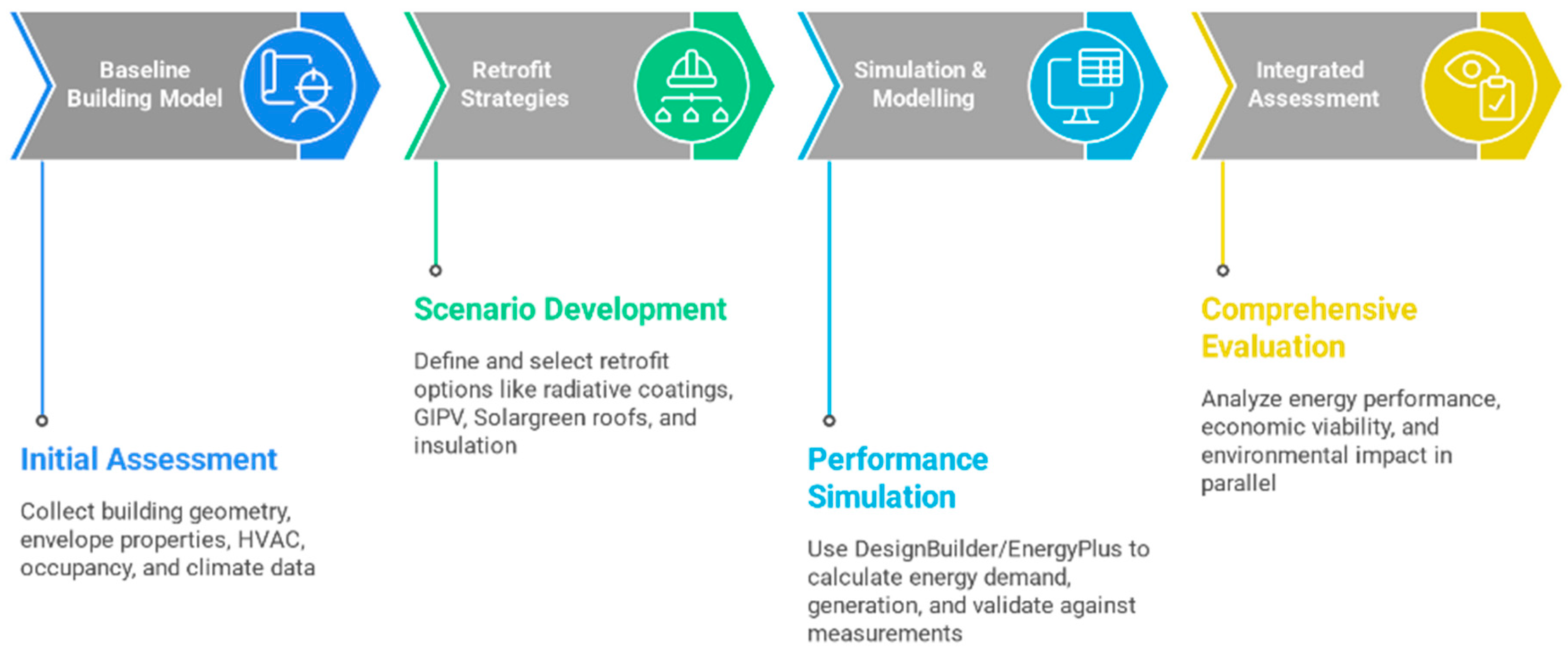
As shown in Figure 2, an extensive gap analysis identifies crucial areas of concern, primarily concentrating on HVAC energy usage and onsite energy production. Oversized HVAC systems, specifically built to manage maximum loads, frequently function with low efficiency during normal conditions, resulting in excessive energy use. Insufficient building envelopes, characterized by inadequate insulation and air leakage, exacerbate this problem by increasing energy consumption for heating and cooling to maintain a comfortable indoor environment. Moreover, obsolete and ineffective lighting systems exacerbate the workload of HVAC operations by augmenting the overall electricity usage.
The insufficient incorporation of renewable sources, such as photovoltaic (PV) systems, in energy production impedes the advancement towards achieving NZEB targets. Although there have been advancements in PV technology, it is crucial to enhance its efficiency in order to optimize the energy balance in buildings.
Based on the gap study analysis, this study will concentrate on enhancing the performance of the building envelope as a crucial element in decreasing building energy usage and progressing towards achieving Nearly Zero Energy Building (NZEB) goals. This study seeks to provide a valuable contribution to the advancement of a more sustainable built environment, specifically in locations such as Egypt, by focusing on key areas like insulation, radiative coatings, and the incorporation of renewable energy sources.
Figure 2. Research gap assessment and branched methodological framework of this study.
Sustainability 18 01991 g002

1.2. Scope, Objectives, and Novelty

This study presents a comprehensive evaluation of advanced building envelope retrofit strategies, including radiative coatings, solar green roofs, glazing-integrated photovoltaic (GIPV) systems, and thermal insulation, aimed at improving building energy performance across Egypt’s diverse climatic zones. Given the country’s heavy reliance on cooling-driven electricity demand, particularly in hot and arid regions, there is a critical need for retrofit solutions that simultaneously address energy efficiency, economic feasibility, and environmental impact to support the transition toward Nearly Zero Energy Buildings (NZEBs).
Previous research has extensively examined individual retrofit measures or assessed building performance under isolated climatic conditions. However, many existing studies remain limited in scope by focusing on single technologies, singular locations, or energy performance alone, without systematically integrating economic and environmental dimensions within a unified framework. Moreover, comparative analyses that evaluate the combined effects of passive envelope enhancements and onsite renewable energy systems across multiple hot climatic zones remain relatively scarce.
In this context, the integration of solar green roofs represents a particularly underexplored strategy, as it combines onsite renewable electricity generation with vegetative systems that can reduce urban heat stress and enhance building thermal performance. While prior studies have addressed photovoltaic systems or green roofs independently, their combined application and interaction with other envelope-based measures under different climatic conditions have received limited attention.
To address these gaps, this study develops an integrated evaluation framework that simultaneously assesses passive envelope retrofitting, façade-integrated photovoltaic systems, and solar green roofs within a single, validated building performance model. Unlike existing studies that typically examine isolated retrofit options or single performance indicators, the present work delivers a comparative techno-economic and environmental assessment across four representative hot climatic zones in Egypt. The novelty of this research lies in the consistent coupling of energy performance, economic feasibility, and operational CO2 emission reductions under uniform modeling and market assumptions, providing a robust and transferable basis for retrofit decision-making in hot and arid regions. The findings offer practical insights to support policy formulation and the large-scale deployment of sustainable retrofit strategies in Egypt and similar climatic contexts.

2. Materials and Methods

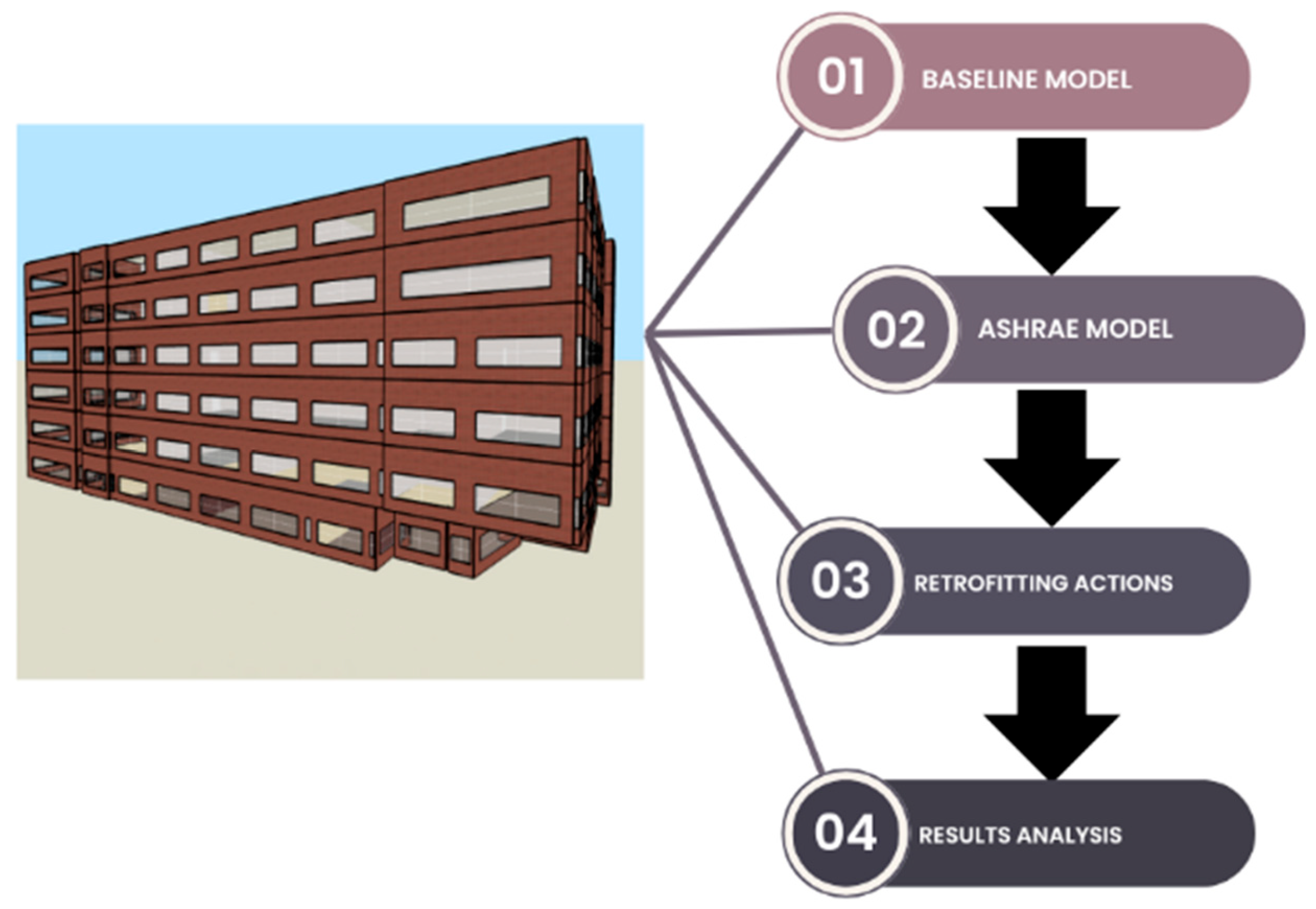
This study examines different retrofitting measures aimed at improving the energy efficiency of building envelopes, specifically focusing on walls, roofs, and glazing. This study was conducted on an educational facility situated in Alexandria, Egypt, and subsequently assessed in several climatic locations. as depicted in Figure 3. The approach includes the following stages:

2.1. Baseline Model Development

A preliminary model of the educational building has been developed using DesignBuilder software (version 7). This model included comprehensive parameters of the building’s current energy use, thermal characteristics, and overall efficiency. To guarantee precision, the baseline model was verified using onsite energy consumption data, establishing a dependable basis for later study and comparison of different retrofitting measures.

Model Description

This study examines an educational facility encompassing approximately 6020 m2 distributed across five floors. The building has been carefully designed to accommodate a wide range of functional needs, including classrooms, laboratories, storage areas, faculty offices, meeting rooms, a prayer space, and a coffee shop. The comprehensive floor layout ensures that each zone is organized to effectively support its designated function.
A key feature of the building is its air-conditioning system, which provides cooling to numerous critical spaces. The climate-controlled areas include staff offices, the students’ union, laboratories, the copy center, server rooms, computer labs, classrooms, the drawing hall, the mechanical laboratory, and research rooms. Collectively, these zones constitute a conditioned area of 3848.24 m2, with each contributing a different proportion to the overall cooled space.
The building’s technical specifications include a wall U-value of 1.924 W/m2·K, a roof U-value of 2.264 W/m2·K, and single clear 6 mm glazing with a window-to-wall ratio of 30%. The HVAC system currently in operation is a Fan Coil Unit (FCU) system, operating with an average cooling thermostat set point of 24 °C and without any provision for fresh air ventilation. The installed lighting power density is 15 W/m2. These characteristics form the basis for conducting a comprehensive assessment of the building’s energy performance and evaluating its overall efficiency.
The selected educational building represents a common public university typology in Egypt, characterized by reinforced concrete construction, moderate window-to-wall ratios, single clear glazing, and conventional HVAC systems. Its occupancy density and operational schedules are consistent with typical academic buildings operating year-round. The extrapolation to multiple climatic zones is therefore intended to isolate the impact of climate variation on retrofit performance while maintaining consistent building characteristics, rather than to imply full statistical representation of the national educational building stock.
Detailed building characteristics, simulation input parameters, occupancy schedules, and internal load profiles used in the simulations are provided in Supplementary Table S1.

2.2. Model Validation

The reliability of the developed baseline model was validated by comparing simulated energy consumption with actual metered electricity data collected over a full year of operation. Monthly electricity consumption records were obtained from the building facility management and used as the primary reference for validation.
To ensure accurate representation of the real building conditions, construction drawings and as-built documentation were provided by the facility management and used to define building geometry, envelope assemblies, glazing characteristics, and HVAC system specifications within the simulation environment. These documents were verified through onsite inspections conducted by the research team to confirm material types, glazing configuration, and the presence and condition of insulation layers. Where minor discrepancies between drawings and observed conditions were identified, the simulation inputs were adjusted accordingly to reflect actual building conditions.
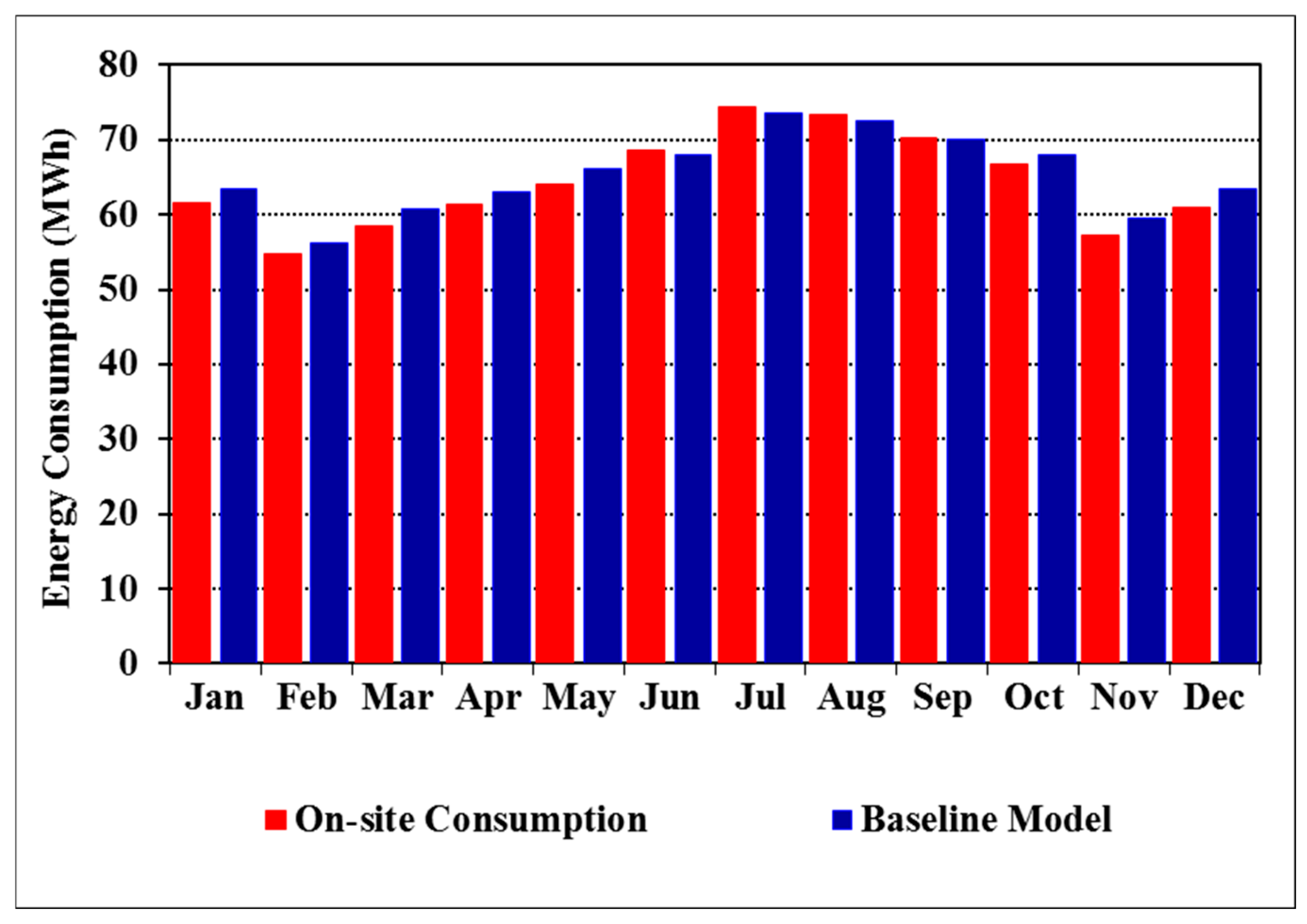
Operational parameters, including occupancy schedules, lighting usage, HVAC operating hours, and thermostat set points, were defined based on facility operation records and further refined through an iterative calibration process. This calibration aimed to minimize deviations between simulated and measured energy consumption while maintaining physically realistic input values. The predictive performance of the developed model was evaluated using the root mean square error (RMSE) as the primary statistical indicator. As illustrated in Figure 4, the comparison between simulated outputs and measured monthly energy consumption reveals the magnitude and distribution of prediction deviations throughout the validation period. The calculated RMSE was approximately 1.63, reflecting the mean scale of monthly prediction error. In addition, the coefficient of variation in the RMSE (CVRMSE) was determined to be 2.54%. Notably, both accuracy indicators fall within the acceptable thresholds defined by ASHRAE Guideline 14, thereby confirming that the baseline model satisfies established calibration and validation requirements [53,56,57], demonstrating the model’s satisfactory performance in capturing the building’s energy consumption patterns.
In addition, the calculated MBE of +1.06 MWh/month, corresponding to a normalized bias of +1.65%, indicates a slight overestimation of energy consumption by the model. Both the CVRMSE (2.54%) and MBE values fall well within the acceptable limits specified by ASHRAE Guideline 14 for monthly calibration, confirming the reliability and robustness of the developed baseline model.

ASHRAE Model

To ensure full compliance, the baseline model was modified to satisfy the requirements of ASHRAE Standards 62.1 and 90.1, consistent with the procedures outlined in ASHRAE guidelines [58,59]. These enhancements involved adjustments to lighting and ventilation rates to improve energy efficiency while maintaining appropriate indoor air quality. In addition, the central air-conditioning system of the educational facility was upgraded from a Fan Coil Unit (FCU) configuration to a Variable Air Volume (VAV) system, ensuring compliance with the recommended fresh air requirements [58,60]. The primary motivation for this modification was to enhance indoor air quality and increase the provision of fresh air within educational facilities. Such improvements are particularly critical for reducing the spread of infectious diseases, especially in the post–COVID-19 context. The implemented changes align with recommendations from ASHRAE and NREL, both of which emphasize the importance of improved ventilation and indoor environmental quality in occupied spaces [61].

2.3. Retrofitting Actions

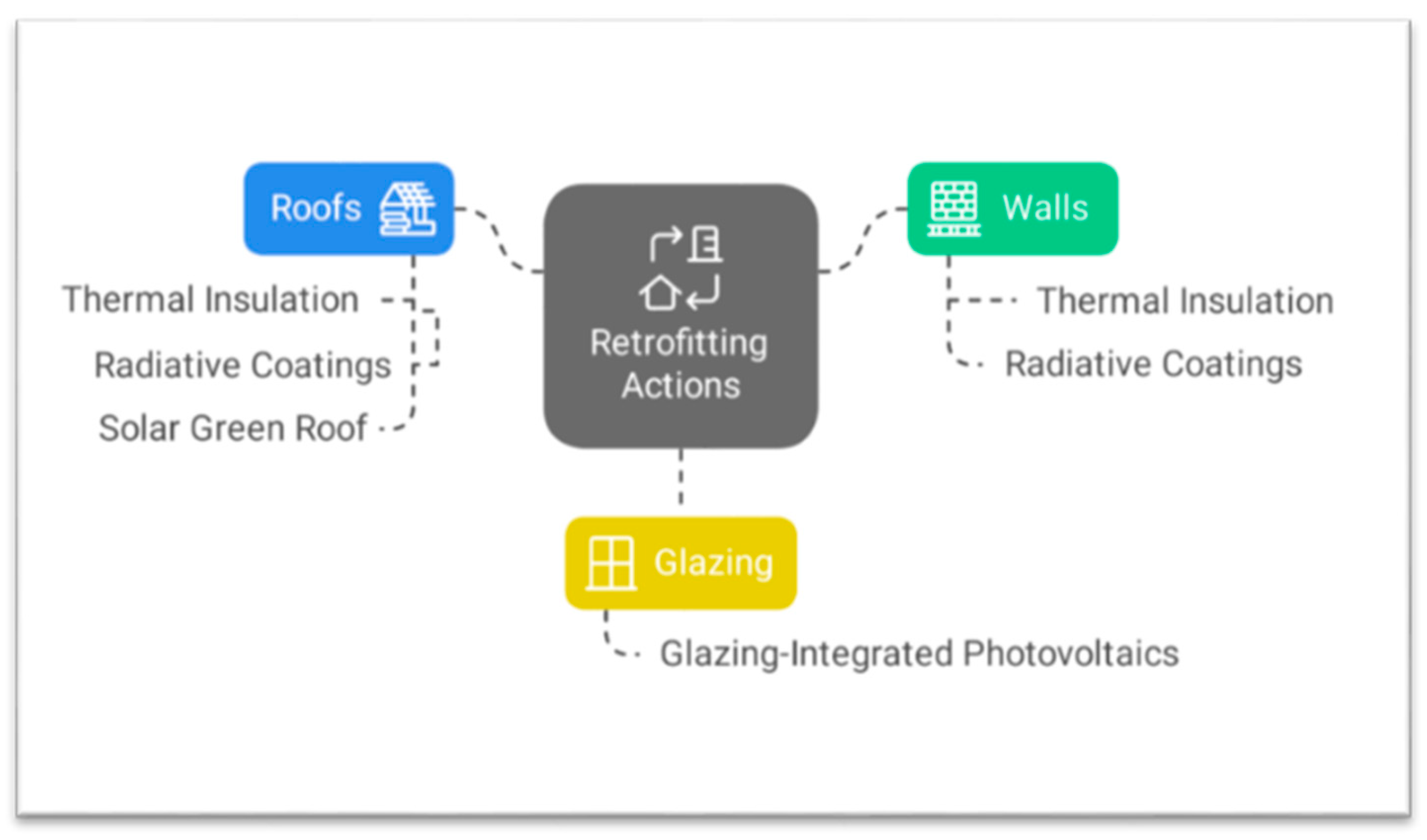
A gap research analysis was performed to determine the optimal retrofitting measures for improving building energy efficiency, as shown in Figure 5, particularly in areas with varying climatic conditions. This analysis aims to assess several ways to enhance the building exterior, particularly by implementing thermal insulation and radiative coatings. This study investigates the effects of these approaches on walls, roofs, and glazing to comprehend their efficacy in decreasing energy usage and progressing NZEB. In addition, this study investigates the incorporation of glazing-integrated photovoltaics (GIPV) as a cutting-edge approach to further improve sustainability. To clarify the sequence of simulation, validation, and assessment steps applied in this study, Figure 5 presents a schematic of the methodological workflow used for scenario evaluation.
As illustrated in Figure 5, the methodology builds upon the baseline model and branches into multiple retrofit scenarios, which are subsequently evaluated using energy, economic, and environmental performance indicators.

2.3.1. Walls

  • Polyurethane-based thermal insulation was applied to all external wall assemblies to reduce conductive heat transfer and improve the overall thermal performance of the building envelope.
  • Radiative coating layers were applied to all wall surfaces to enhance solar reflectance, leading to a reduction in cooling demand and overall building energy consumption.
The properties of both materials are summarized in Table 2.

2.3.2. Roof

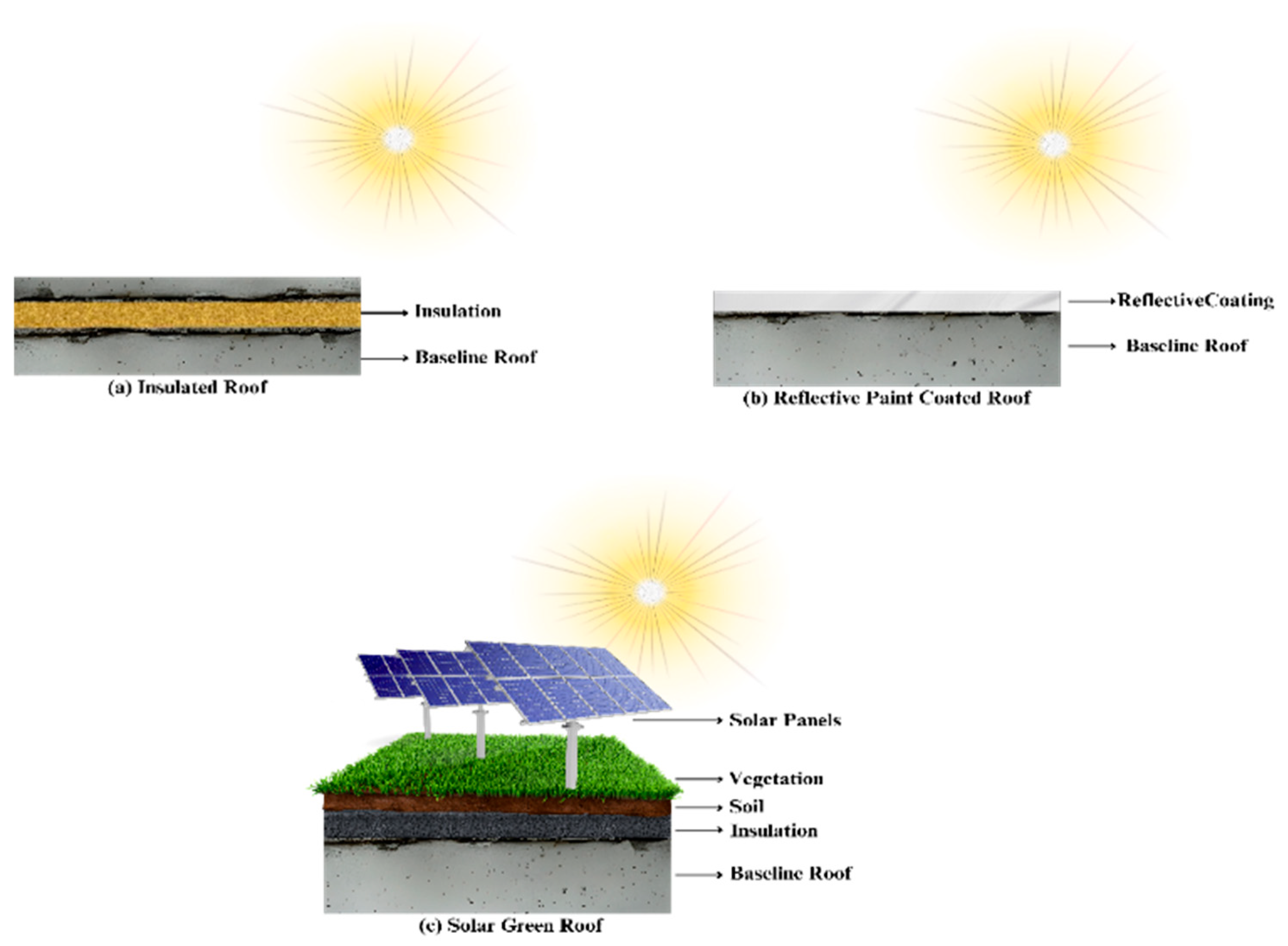
Roof evaluations of radiative coatings, thermal insulation, and solar green roof, as shown in Figure 6, were conducted to determine their efficacy in ameliorating energy usage.
Figure 6. Diagrammatic Representation of Roof Types and Main Functional Layers: (a) Insulated Roof; (b) Reflective Coated Roof; (c) Solar Green Roof.
Sustainability 18 01991 g006
Thermal insulation is the application of a 25 mm coating of polyurethane to the existing roof, thereby diminishing heat transfer and subsequently decreasing heating and cooling requirements. The application of reflective paint on the roof diminishes solar radiation absorption, enhancing sunlight reflection to lower roof temperature and cooling requirements. Finally, a solar green roof combines a solar panel array with a vegetative roofing system, resulting in a synergistic design that enhances both energy production and plant growth for superior energy efficiency [62].

2.3.3. Glazing

Glazing-integrated photovoltaics (GIPV) were installed to both generate renewable energy and improve the building’s overall energy efficiency.

2.4. Comparative Analysis

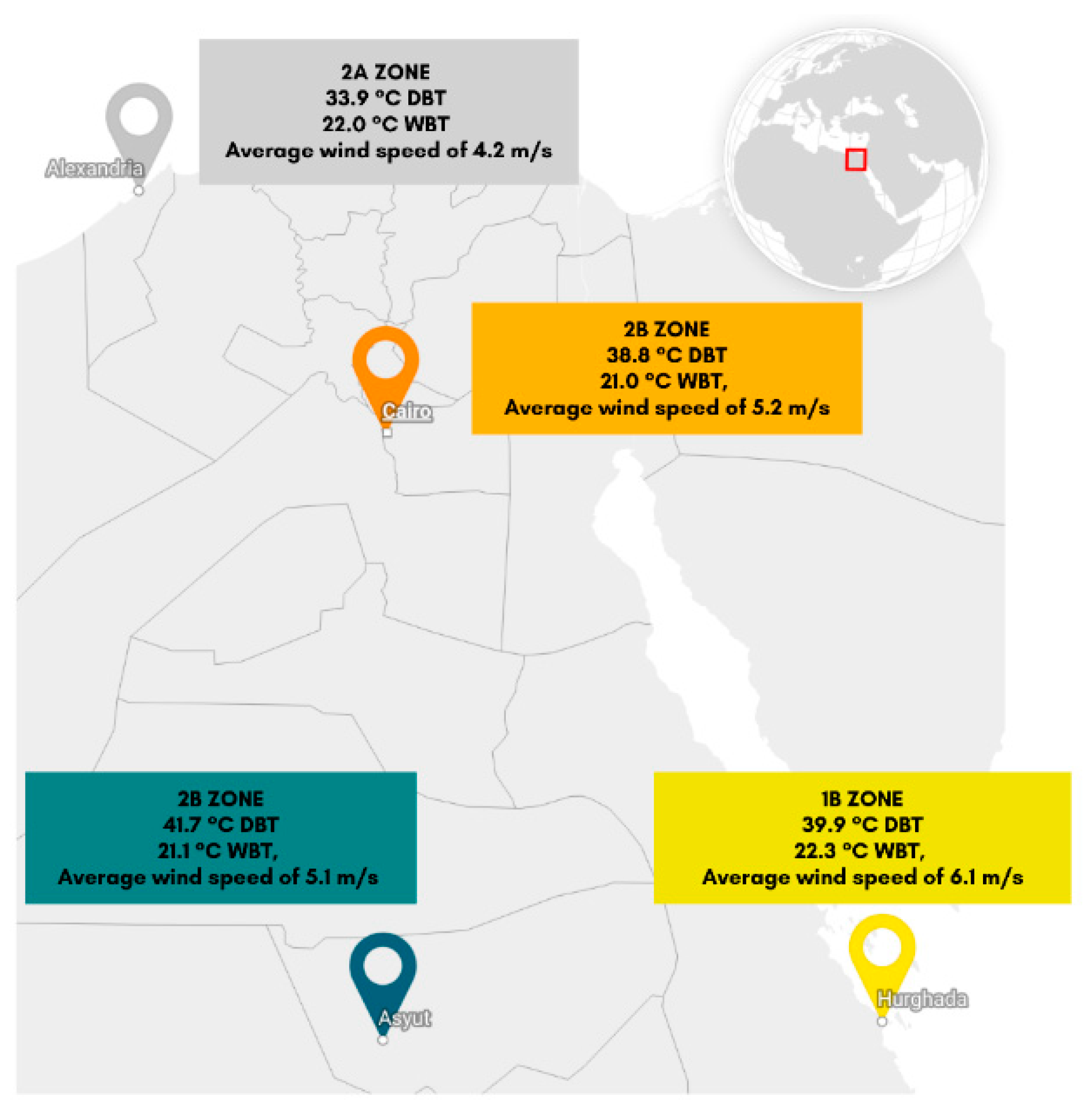
The simulation analysis was conducted for four Egyptian locations, Hurghada, Asyut, Cairo, and Alexandria, selected to represent the country’s range of climatic zones. As illustrated in Figure 7, the deliberate selection of these sites allows for a comprehensive evaluation of the proposed retrofit strategies under diverse environmental and climatic conditions. This approach allows for a robust evaluation of the effectiveness of the recommended enhancements across multiple climate contexts.
To enhance the generalizability of the study outcomes, Figure 8 compiles key meteorological data for the selected Egyptian locations, including their respective ASHRAE climate zone classifications and critical design parameters such as mean wind speed, dry-bulb temperature (DBT), and wet bulb temperature (WBT). This information is essential for contextualizing the results within the distinct climatic characteristics of each region. Associating each site with its corresponding ASHRAE climate zone facilitates a more rigorous interpretation of local environmental conditions, which is crucial for evaluating building energy performance and developing climate-responsive design and retrofit strategies.

2.5. Cost Analysis

A comprehensive cost analysis was conducted to evaluate the economic feasibility of the proposed retrofit measures under projected market conditions in Egypt for the year 2025. These conditions reflect anticipated trends in electricity pricing, capital costs of retrofit technologies, and prevailing financial parameters relevant to investment decision-making in the building sector.
The analysis considered the initial investment costs associated with each retrofit strategy, including radiative coatings, glazing-integrated photovoltaic (GIPV) systems, and solar green roofs. Cost data were derived from recent local market prices, supplier quotations, and published reports relevant to the Egyptian construction and renewable energy sectors. All costs were normalized to ensure consistency across the evaluated scenarios.
Projected electricity tariffs for 2025 were adopted based on national energy pricing trends and planned tariff adjustments, reflecting the gradual reduction in energy subsidies and increasing electricity prices in Egypt. These tariff projections were applied uniformly across all locations to ensure comparability of results.
Economic performance indicators, including return on investment (ROI) and payback period, were calculated over the system lifetime of each retrofit option. A discount rate consistent with anticipated national interest rates for 2025 was applied to account for the time value of money. Operation and maintenance costs were included where applicable, particularly for active systems such as GIPV and solar green roofs, while passive measures such as radiative coatings were assumed to incur minimal maintenance costs.
This methodological framework provides a transparent and consistent basis for the economic results presented in Section 4 and enables meaningful comparison of retrofit strategies under realistic future market conditions in Egypt.
The economic evaluation is conducted using projected market conditions in Egypt for the year 2025, including electricity tariffs, discount rates, and system lifetimes, which are assumed to remain constant throughout the analysis period. This approach enables a consistent comparison of retrofit strategies across different climatic regions. Accordingly, the reported ROI and payback period values should be interpreted as scenario-based indicators rather than precise forecasts, as real market conditions may vary over time. Future studies may extend this work by incorporating sensitivity analyses of key economic parameters, such as electricity prices, discount rates, and inflation, to further assess economic robustness.

3. Results and Discussions

The building model, along with the proposed retrofitting enhancements, is simulated for all selected locations. For each scenario, energy consumption and other key performance indicators are examined to assess the influence of different retrofit strategies. The simulated outputs are then benchmarked against the baseline case to determine how effectively the proposed measures mitigate the environmental pressures associated with urbanization. The resulting data are interpreted with attention to how each strategy performs across the various geographic contexts. These comparative assessments provide valuable insights into the potential benefits that each retrofit option can offer in terms of improving overall building energy efficiency.

3.1. Location-Based Analysis of ASHRAE Model Performance

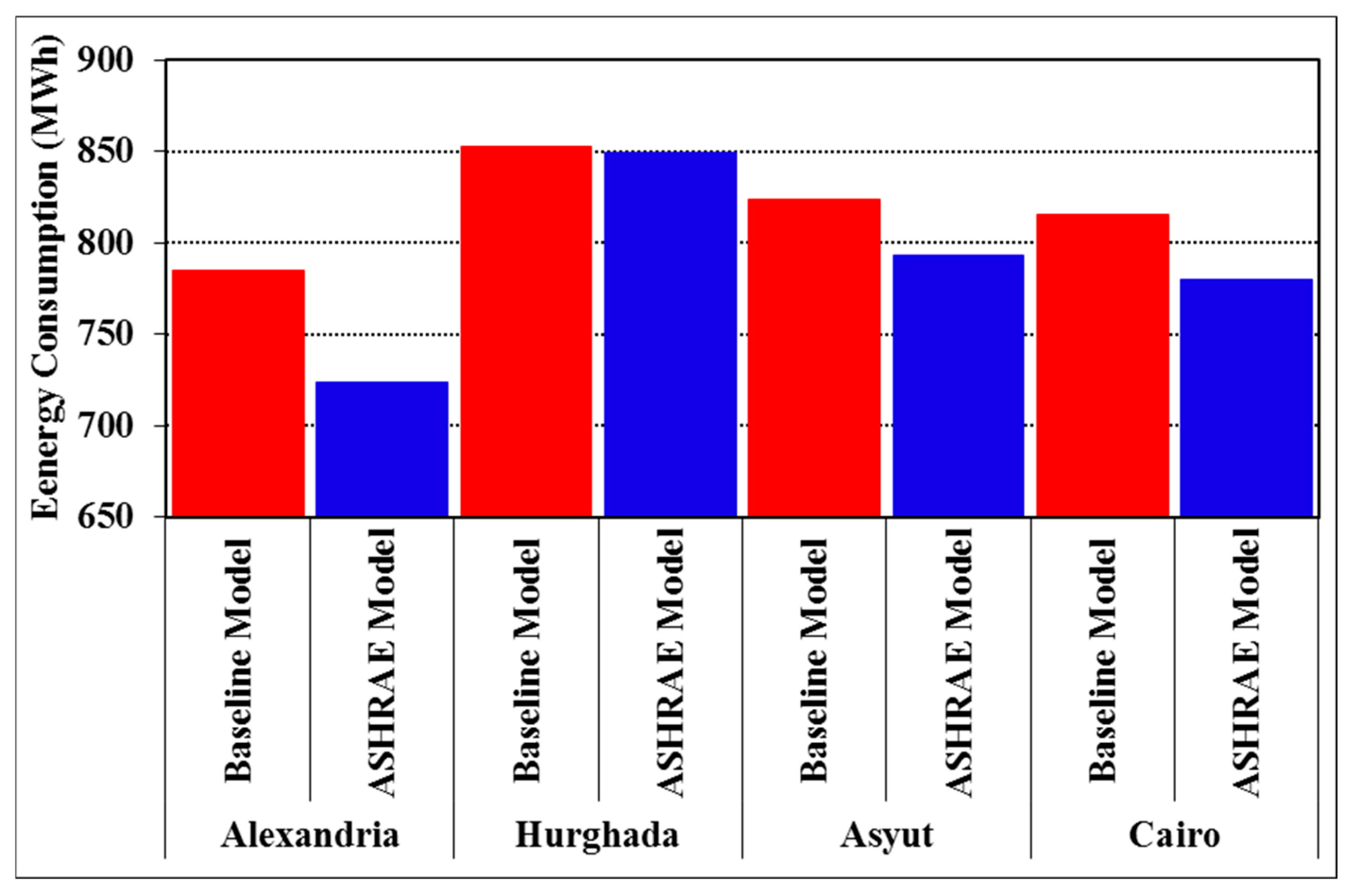
The influence of applying ASHRAE standards on reducing energy consumption was examined across four climatic regions in Egypt, as shown in Figure 9. In Alexandria, the implementation of ASHRAE guidelines resulted in an 8% reduction in energy use, decreasing from 784.70 MWh to 723.54 MWh. In Hurghada, the change was minimal, with consumption dropping by less than 0.4%, from 852.51 MWh to 849.50 MWh, mainly due to the city’s specific climatic conditions. Asyut recorded a moderate improvement, where energy usage declined by 3.6%, from 823.46 MWh to 793.67 MWh. Cairo experienced a more notable decrease of 4.3%, reducing energy consumption from 815.90 MWh to 780.47 MWh.
The outcomes presented in Figure 9 indicate that applying ASHRAE standards [44] generally enhances energy efficiency across different climates, although the level of improvement varies. While Alexandria and Cairo achieved substantial reductions, the very small change observed in Hurghada highlights the need for location-specific adjustments to better address unique climatic challenges. Overall, the findings emphasize the importance of developing tailored energy-efficient strategies, especially in regions with distinct environmental conditions.

3.2. Retrofitting Actions

This section investigates how several enhancement techniques, including wall and roof insulation, the application of radiative coatings (RC), and improvements to glazing systems, affect building energy efficiency. It delivers a detailed analysis of the extent to which these measures help reduce energy demand and bolster building performance across varying climatic zones.

3.2.1. Walls and Roof

The implementation of various retrofitting strategies has yielded substantial insights into their influence on building energy demand and overall operational performance. This study undertakes a comprehensive evaluation of the effectiveness of thermal insulation and radiative coatings applied to different building components, in addition to assessing the performance of GIPV systems across multiple climatic contexts. The subsequent sections present a detailed analysis of the achieved reductions in energy consumption and the corresponding enhancements in building efficiency, underscoring the capacity of these retrofit measures to support significant energy conservation and advance progress toward NZEB goals.
Alexandria
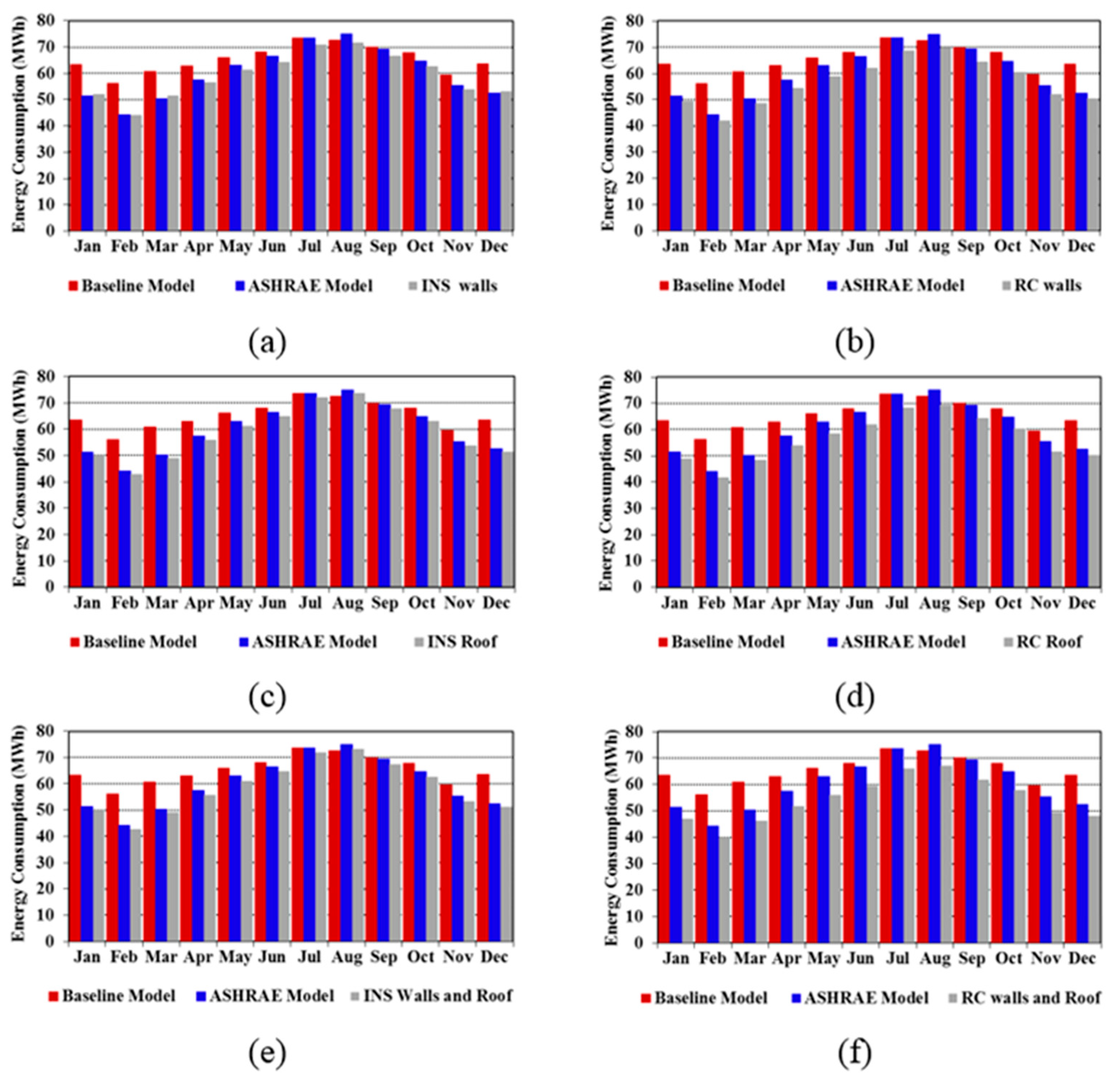
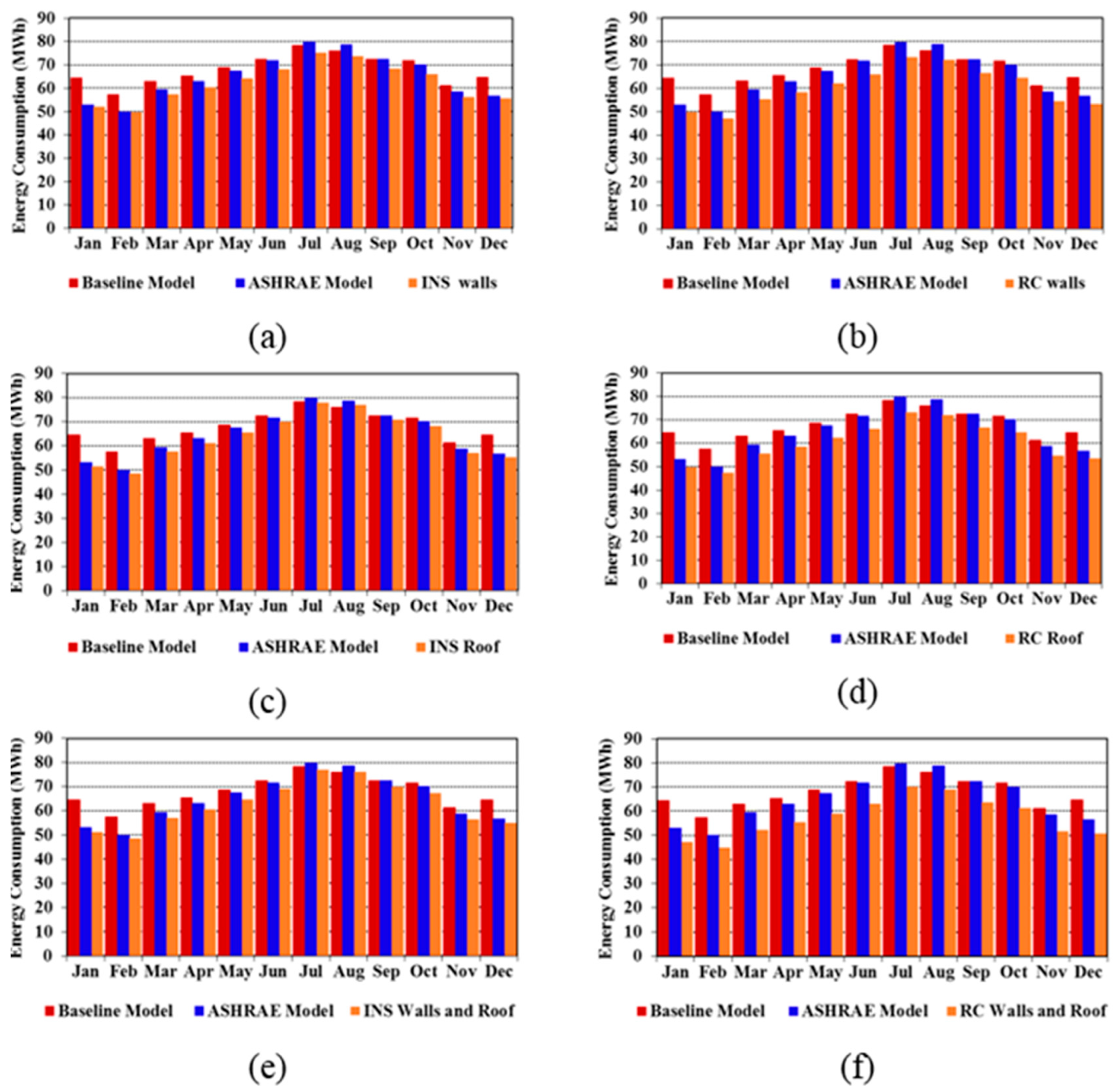
An evaluation of the energy consumption patterns shows that applying thermal insulation to all external walls leads to a notable decrease in total energy demand, as illustrated in Figure 10a, compared with both the baseline and ASHRAE-compliant models. The baseline case records an annual consumption of 784.70 MWh, which decreases to 723.54 MWh (a reduction of 7.8%) under the ASHRAE model. Implementing insulated walls achieves an even greater reduction, lowering consumption to 709.43 MWh, equivalent to a 9.6% decrease.
Monthly comparisons further highlight the significant energy savings associated with insulated walls, particularly during the colder periods of the year (January to March and October to December), demonstrating the strong influence of insulation on improving thermal performance. The baseline model exhibits nearly identical energy consumption values in December and January, resulting in a secondary, smaller peak in the annual profile shown in Figure 10. This behavior is not related to space heating, as the building does not employ heating systems. Instead, winter electricity demand is dominated by constant internal loads and limited cooling operation required to maintain indoor comfort under milder outdoor conditions, leading to comparable energy use in these two months.
An examination of Figure 10b, which illustrates the impact of radiative coatings (RC) applied to wall surfaces, reveals marked reductions in energy consumption relative to both reference cases. The baseline scenario, with an annual energy demand of 784.70 MWh, is reduced to 723.54 MWh under the ASHRAE-compliant model, corresponding to a 7.8% decrease. When radiative-coated walls are implemented, annual energy use is further lowered to 681.95 MWh, representing a total reduction of 13.1% compared to the baseline. While energy savings are evident throughout the year, the most pronounced effects occur during the peak cooling season between June and September, when cooling loads are at their highest. Specifically, reductions of 6.6% in July and 4.1% in August are observed relative to the baseline case. These findings substantiate the effectiveness of radiative coatings in mitigating cooling energy demand by enhancing solar reflectance, thereby improving overall building energy performance.
After assessing the influence of insulation and radiative coatings on wall performance, their impact on roof components was subsequently examined, as depicted in Figure 10c,d. The insulated roof (INS Roof) scenario reduces annual energy usage to 706.68 MWh, representing a 10% reduction compared to the baseline and a clear improvement over the ASHRAE model. Among all evaluated roof configurations, the RC Roof model demonstrates the greatest energy savings, reducing annual consumption to 678.62 MWh, which corresponds to a 13.5% decrease relative to the baseline. This model also consistently outperforms the ASHRAE-compliant case, exhibiting the lowest energy use across all months, with the most distinct advantage occurring during the hottest summer period, further demonstrating its superior capacity to mitigate heat gains.
Figure 10e,f illustrate the energy performance outcomes resulting from the combined application of insulation and radiative coatings to both wall and roof assemblies. The configuration employing insulated walls and roof records an annual energy consumption of 703.46 MWh, reflecting a substantial reduction when compared with the baseline model (784.70 MWh) and the ASHRAE-compliant scenario (723.54 MWh). By contrast, the configuration incorporating radiative coatings on both walls and roof demonstrates the lowest annual energy demand at 650.36 MWh, corresponding to a 17% reduction relative to the baseline and a 10% decrease compared with the ASHRAE model. Monthly consumption profiles consistently indicate that the RC Walls and Roof configuration achieves the minimum energy use throughout the year, with particularly pronounced reductions during peak summer conditions. These results highlight the superior effectiveness of radiative coatings, especially when deployed across the entire building envelope, in minimizing energy demand and enhancing overall thermal performance.
Hurghada
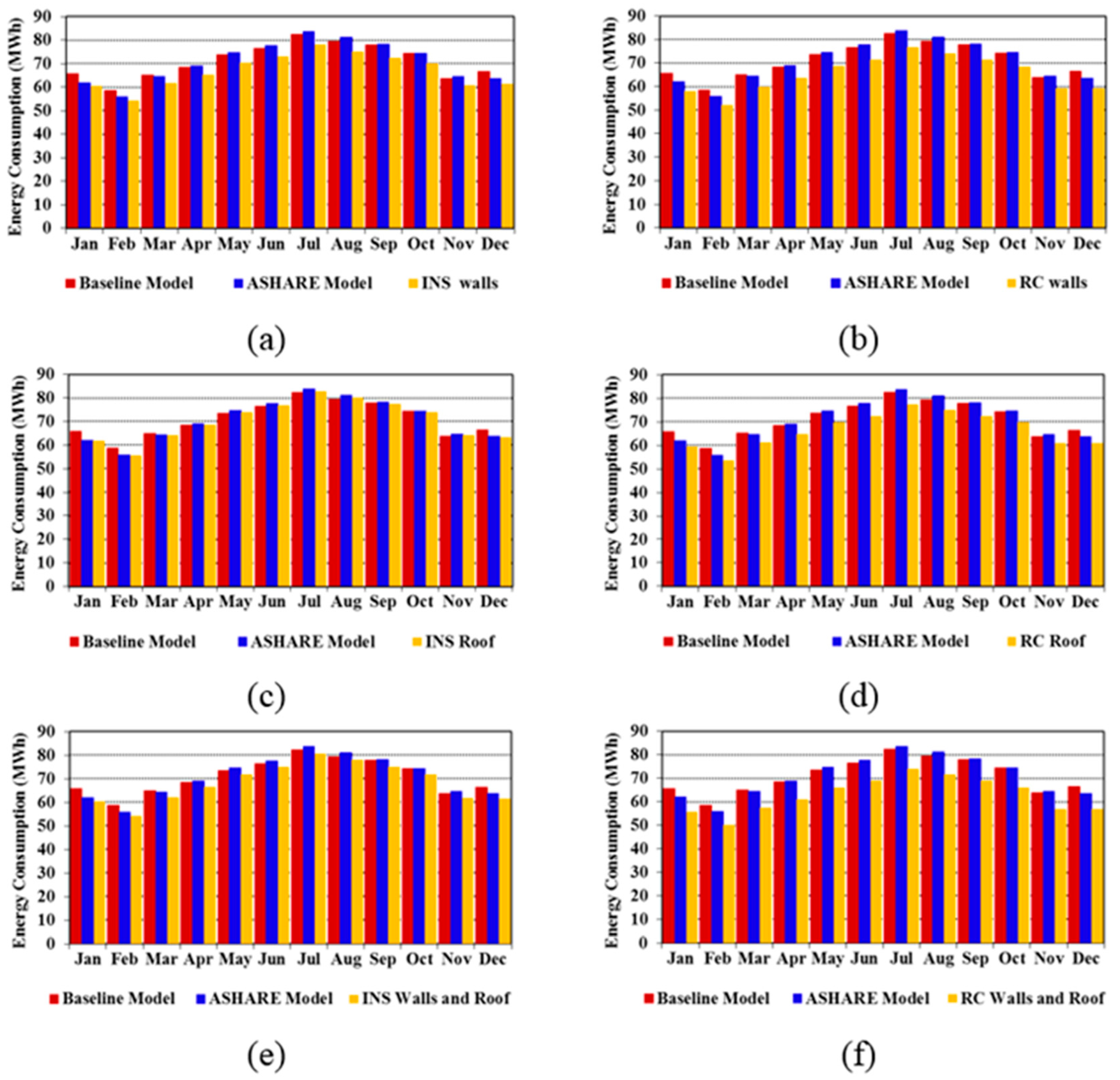
In Hurghada, the baseline scenario records an annual energy demand of 852.51 MWh. The ASHRAE-compliant model achieves only a marginal reduction, lowering consumption to 849.50 MWh. As presented in Figure 11a, introducing wall insulation decreases annual usage to 802.74 MWh. However, Figure 11b shows that applying radiative coatings (RC) to the walls yields an even greater reduction, lowering total consumption to 783.64 MWh—equivalent to an 8% decrease relative to the baseline and a 7.8% reduction compared with the ASHRAE case. Monthly profiles consistently reveal that both insulated (INS) and RC wall configurations reduce energy use in comparison with the baseline and ASHRAE models, with RC Walls demonstrating superior performance, particularly during the high cooling demand months of summer. Consequently, radiative wall coatings deliver the greatest energy-saving potential in hot climates, with wall insulation offering secondary, but still meaningful, benefits.
The influence of insulation and radiative coatings on roof performance in Hurghada is shown in Figure 11c,d. Roof insulation leads to a small decrease in annual consumption, reducing total energy use to 842.66 MWh, corresponding to a 1.2% reduction from the baseline. In contrast, the RC Roof configuration achieves a more substantial decline, lowering annual consumption to 797.48 MWh, a 6.5% reduction relative to the baseline model. Monthly data further confirm that the RC Roof model consistently maintains lower energy use throughout the year, with the most pronounced benefits occurring during peak summer, underscoring its enhanced effectiveness in hot climatic conditions.
The combined impact of applying insulation and radiative coatings to both walls and roofs was also assessed for Hurghada, with the outcomes shown in Figure 11e,f. The INS Walls and Roof configuration reduces annual consumption to 819.90 MWh, representing a 3.8% decrease relative to the baseline. The RC Walls and Roof model demonstrates an even stronger effect, achieving a reduction to 754.36 MWh, equivalent to an 11.5% decrease from the baseline. Monthly analyses indicate that the RC Walls and Roof scenario consistently results in the lowest energy use throughout the year, especially during periods of extreme summer temperatures. While the insulated configuration provides continuous reductions, its performance remains less effective than that of the radiative coating-based approach. Overall, the findings confirm that, in hot regions, applying radiative coatings to both walls and roofs is the most effective strategy for maximizing energy efficiency and achieving substantial reductions in annual energy consumption.
Asyut
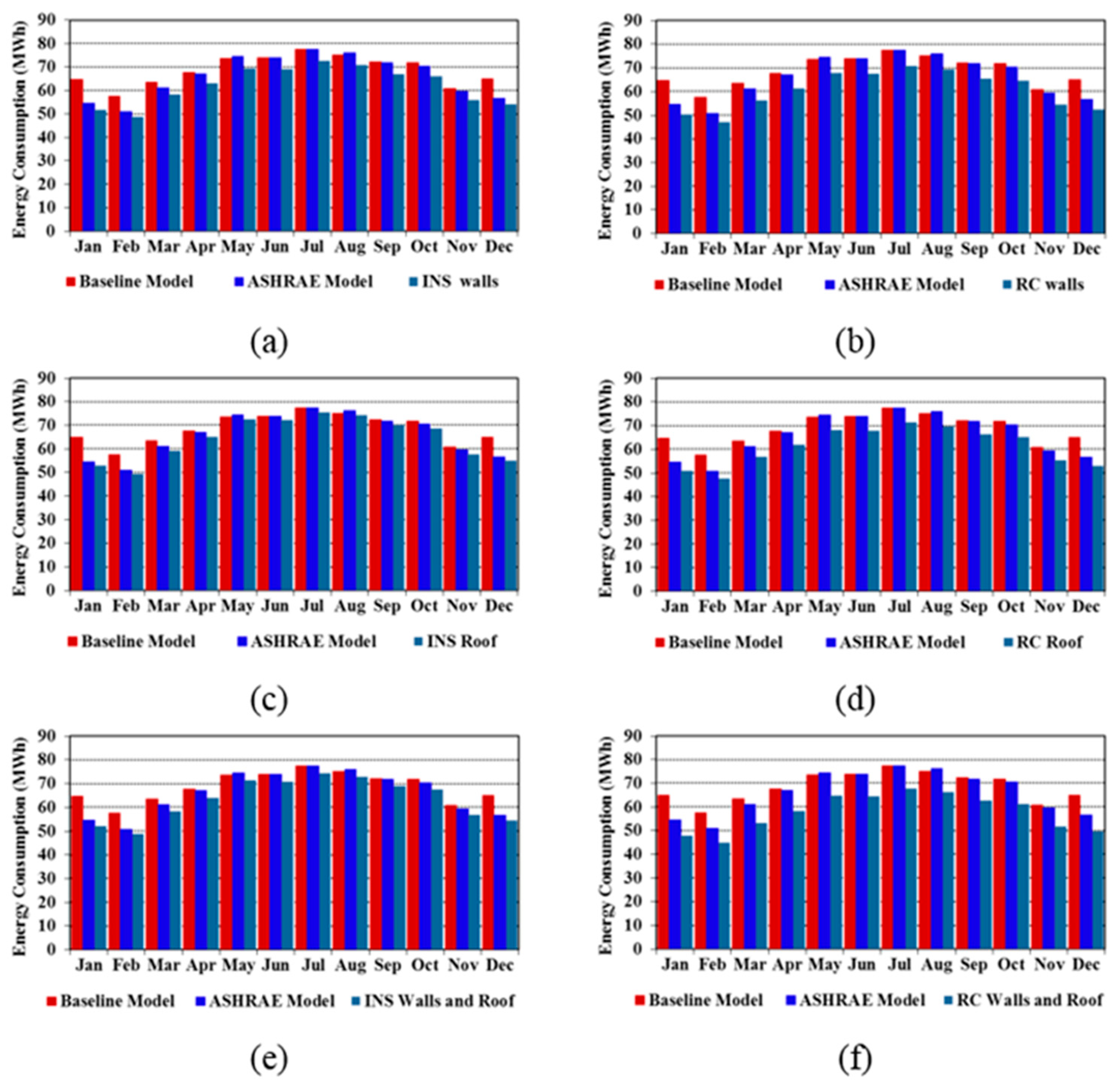
Figure 12a,b illustrate the annual energy use profile for Asyut and demonstrates that both wall insulation and radiative coatings lead to notable reductions when compared with the baseline and ASHRAE models. Incorporating wall insulation decreases yearly consumption by 9.3%, lowering it to 746.45 MWh. The application of radiative coatings to the walls yields an even greater improvement, cutting annual energy use by 11.7% to 727.48 MWh.
Following the evaluation of wall-related interventions, the analysis was subsequently expanded to assess roof-level retrofit measures, as illustrated in Figure 12c,d. The insulated roof configuration achieves an annual energy demand of 772.74 MWh, corresponding to a 6.2% reduction relative to the baseline consumption of 823.46 MWh and a 2.6% decrease compared with the ASHRAE-compliant model (793.67 MWh). In comparison, the application of radiative coatings to the roof yields greater energy savings, reducing annual consumption to 733.97 MWh. This represents a 10.9% reduction relative to the baseline case and a 7.5% decrease when compared with the ASHRAE scenario.
A further assessment examined the combined implementation of insulation and radiative coatings across both wall and roof components. The results, illustrated in Figure 12e,f, indicate significant reductions in annual energy demand. The configuration incorporating insulated walls and roof achieves an annual consumption of 760.48 MWh, corresponding to a 7.6% decrease relative to the baseline case (823.46 MWh) and a 4.2% reduction compared with the ASHRAE-compliant model (793.67 MWh). The most pronounced improvement is observed for the configuration applying radiative coatings to both walls and roof, which reduces annual energy use to 692.65 MWh, representing a 15.9% reduction relative to the baseline and a 12.7% decrease compared with the ASHRAE scenario.
The monthly results further highlight that the RC Walls and Roof configuration consistently achieves the lowest energy use, particularly during the high-temperature summer months. These findings underscore the superior effectiveness of radiative coatings in lowering cooling-related energy demand in hot climatic regions.
Cairo
In the context of Cairo’s climatic conditions, retrofitting strategies involving thermal insulation (INS) and radiative coatings (RC) applied to wall surfaces yield considerable improvements in building energy performance, as illustrated in Figure 13a,b. The baseline scenario records an annual energy consumption of 815.90 MWh, which decreases by 4.3% to 780.47 MWh under the ASHRAE model. Incorporating thermal insulation into the walls provides an additional reduction, lowering consumption by 8.4% to 747.32 MWh. The greatest reduction, however, is achieved through the use of radiative coatings, which bring annual consumption down to 722.96 MWh, corresponding to an 11.4% decrease compared with the baseline.
Similar benefits are observed when applying insulation and radiative coatings to the roof, as shown in Figure 13c,d. The baseline model indicates an annual consumption of 815.90 MWh. Introducing roof insulation reduces this to 760.53 MWh, representing a 6.8% reduction relative to the baseline and a 2.6% decrease compared with the ASHRAE value of 780.47 MWh. The RC Roof configuration performs even more effectively, lowering annual energy use to 724.62 MWh, an 11.2% decrease from the baseline and a 7.2% reduction relative to the ASHRAE model. These findings highlight the strong impact of roof-focused retrofitting, particularly radiative coatings, in enhancing energy efficiency under Cairo’s hot climatic conditions.
Figure 13e,f illustrate the energy performance resulting from the simultaneous application of insulation and radiative coatings to both wall and roof assemblies. The baseline scenario exhibits an annual energy consumption of 815.90 MWh, whereas the ASHRAE-compliant model records a reduced demand of 780.47 MWh. When thermal insulation is implemented on both envelope components, annual energy use declines to 752.39 MWh, corresponding to a 7.8% reduction relative to the baseline and a 3.6% decrease compared with the ASHRAE case. The configuration incorporating radiative coatings on both walls and roof achieves the most significant improvement, reducing annual consumption to 688.25 MWh. This outcome represents a 15.7% reduction compared with the baseline and an 11.8% decrease relative to the ASHRAE model. Collectively, these results demonstrate that the integrated application of insulation and radiative coatings across multiple building envelope elements offers substantial potential for lowering energy demand and enhancing overall building performance in hot urban climates.

3.2.2. Envelope Retrofit Strategies: Thermal Insulation and Radiative Coatings

This subsection presents the performance results of thermal insulation and radiative coatings as parallel envelope retrofit strategies.

3.2.3. Thermal Insulation

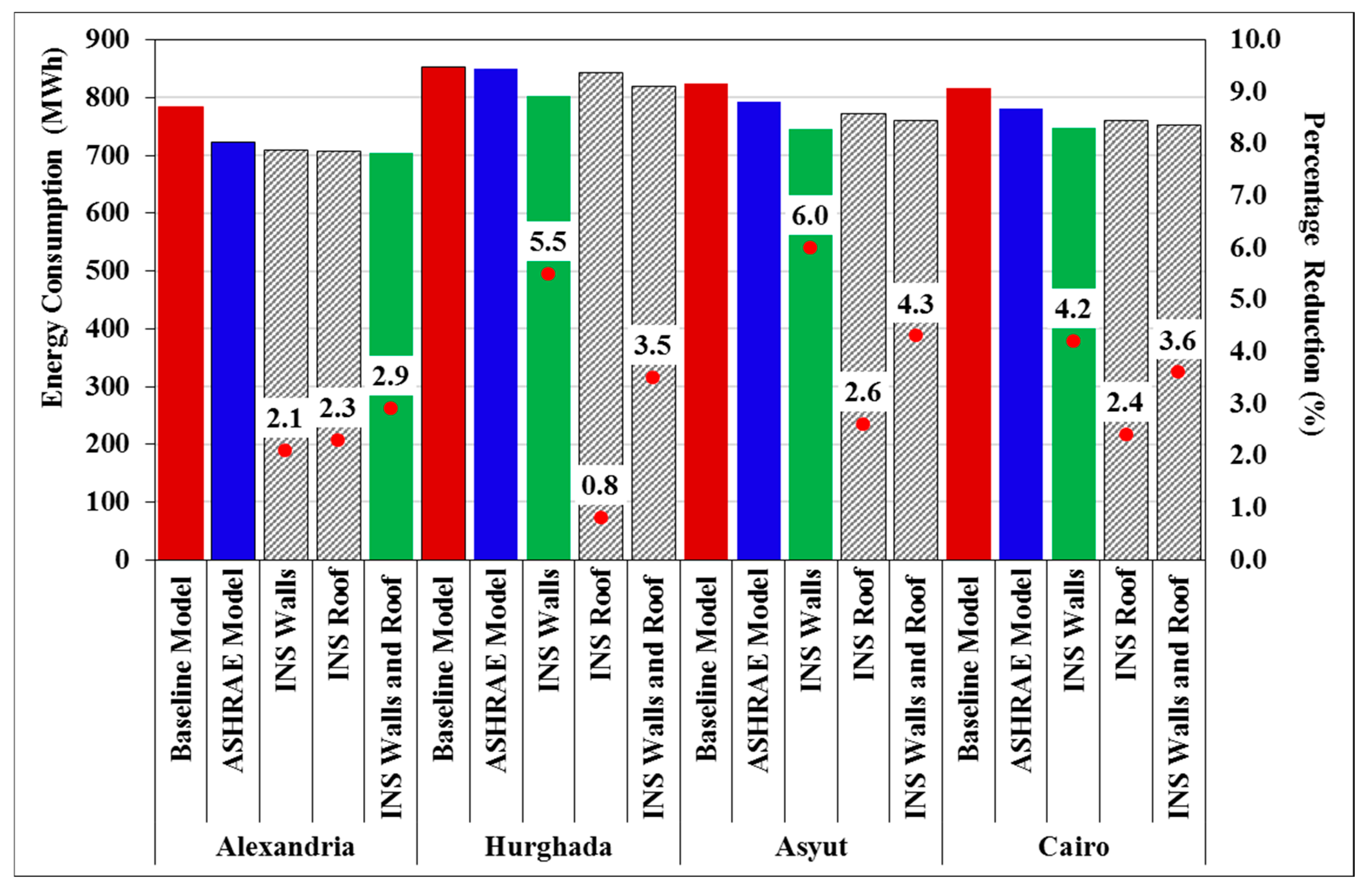
As depicted in Figure 14, the comparative results demonstrate that the effectiveness of different insulation strategies varies according to the specific environmental conditions of each location. In Alexandria’s moderate climate, the combined insulation of both walls and roof produced the highest reduction in energy consumption, achieving a 2.9% decrease. This outcome suggests that in regions where heat gains are more uniformly distributed across the building envelope, a comprehensive approach that addresses both walls and roof is necessary to achieve optimal energy efficiency.
In contrast, wall insulation alone yielded the most substantial energy savings in Hurghada, reaching 5.5% in a climate characterized by extreme heat and aridity. This indicates that in such environments, walls act as the dominant pathway for heat gain. Roof insulation contributed minimally to reducing energy use, and the combined strategy resulted in a smaller reduction, likely because wall surfaces experience significantly higher heat loads than the roof.
A similar pattern emerges in Asyut, another location with very high temperatures, where wall insulation again proved the most effective measure, reducing energy consumption by 6.0%. The improvements observed from roof insulation and the combined approach were comparatively limited, underscoring the importance of prioritizing wall insulation in regions where heat gain is predominantly transmitted through vertical surfaces.
In Cairo, wall insulation also provided the greatest reduction in energy demand, amounting to 4.2%. Although combining wall and roof insulation produced additional savings, it did not outperform the wall-only intervention, suggesting that walls constitute the principal contributor to thermal loads under Cairo’s varied climatic conditions.
Overall, the findings confirm the central role of wall insulation across all locations, particularly in regions exposed to strong solar radiation and substantial heat transfer through vertical surfaces. However, in temperate environments such as Alexandria, simultaneously addressing both walls and roof becomes essential for achieving maximum energy performance. This analysis highlights the importance of tailoring retrofit strategies to local climatic conditions to ensure effective energy savings and support progress toward NZEB objectives.

3.2.4. Radiative Coating

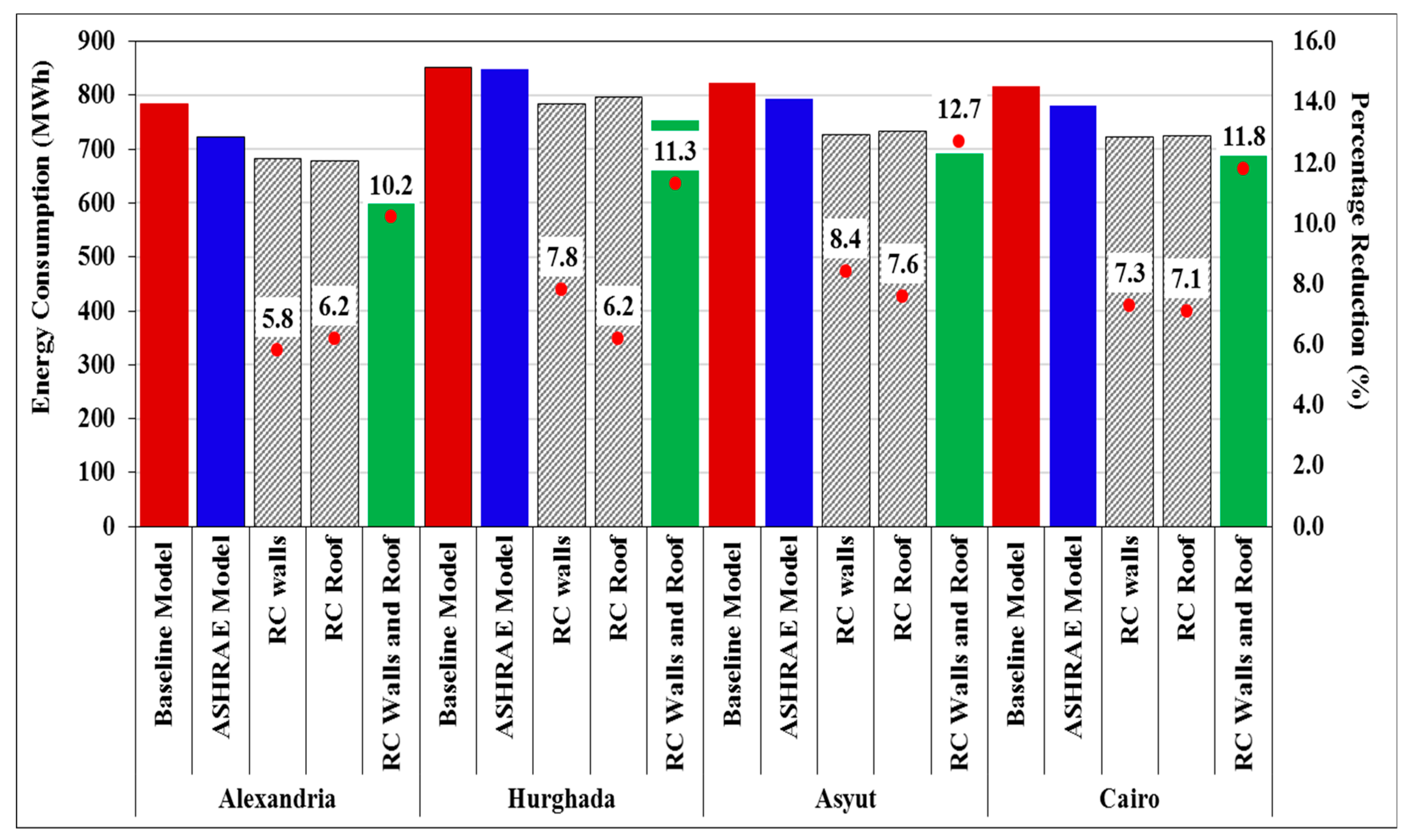
In Alexandria, applying radiative coatings (RC) to the walls produces an additional 6.2% reduction in annual energy consumption, lowering usage to 682 MWh. A similar reduction of 6.2% is achieved when RC is applied to the roof, resulting in a total consumption of 679 MWh. The most notable improvement occurs when RC is applied to both walls and roof simultaneously, yielding a 10.2% decrease and reducing total energy use to 650 MWh. Hurghada demonstrates a similar trend, though with different magnitudes of improvement. The RC Walls and RC Roof configurations reduce consumption by 8.1% and 6.6%, respectively, while the combined approach achieves a more substantial reduction of 11.6%, lowering energy use to 754 MWh.
For Asyut, the baseline model records 823 MWh, which decreases by 3.5% to 794 MWh under the ASHRAE configuration. Radiative coatings on walls and roof provide significantly greater improvements, achieving reductions of 11.7% and 10.8%, respectively. When both RC walls and roofs are applied, energy consumption decreases by 15.8%, resulting in an annual total of 693 MWh.
In Cairo, using RC Walls lowers energy consumption by 10.7%, reducing the total to 723 MWh. A comparable improvement is observed with the RC Roof configuration, which results in an 11.1% reduction. The combined RC Walls and Roof strategy delivers the most substantial benefit, decreasing energy use by 15.7% to 688 MWh.
Overall, the results presented in Figure 15 clearly indicate that radiative coatings applied to both walls and roofs substantially enhance energy efficiency across all four cities. The combined application consistently produces the highest energy savings. These findings highlight the effectiveness of radiative coatings as a retrofit measure in regions exposed to intense solar radiation, offering a practical pathway for reducing energy demand and supporting sustainable building performance.

3.3. Onsite Energy Generation

3.3.1. Building-Integrated Glazing Photovoltaic Systems

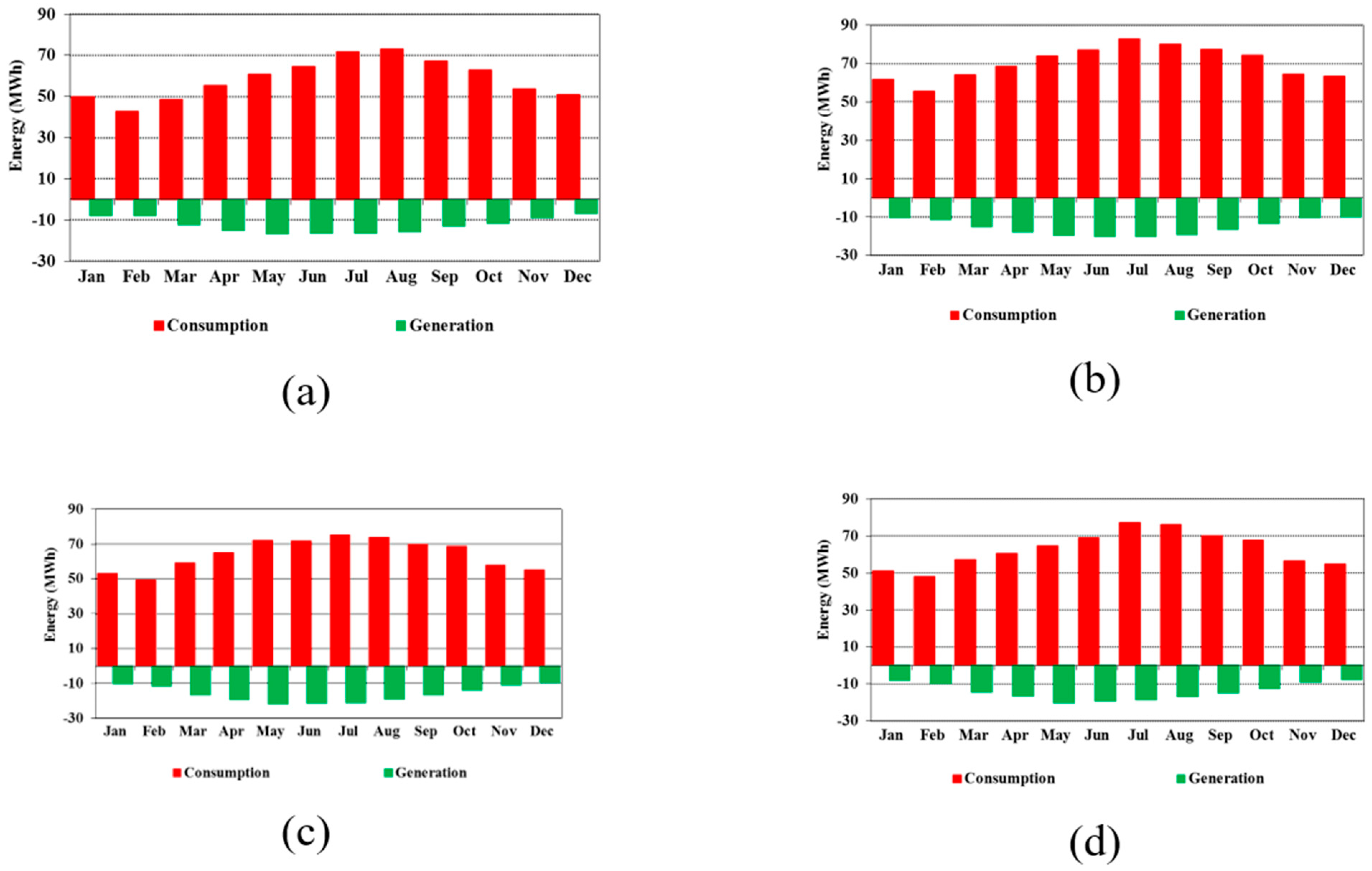
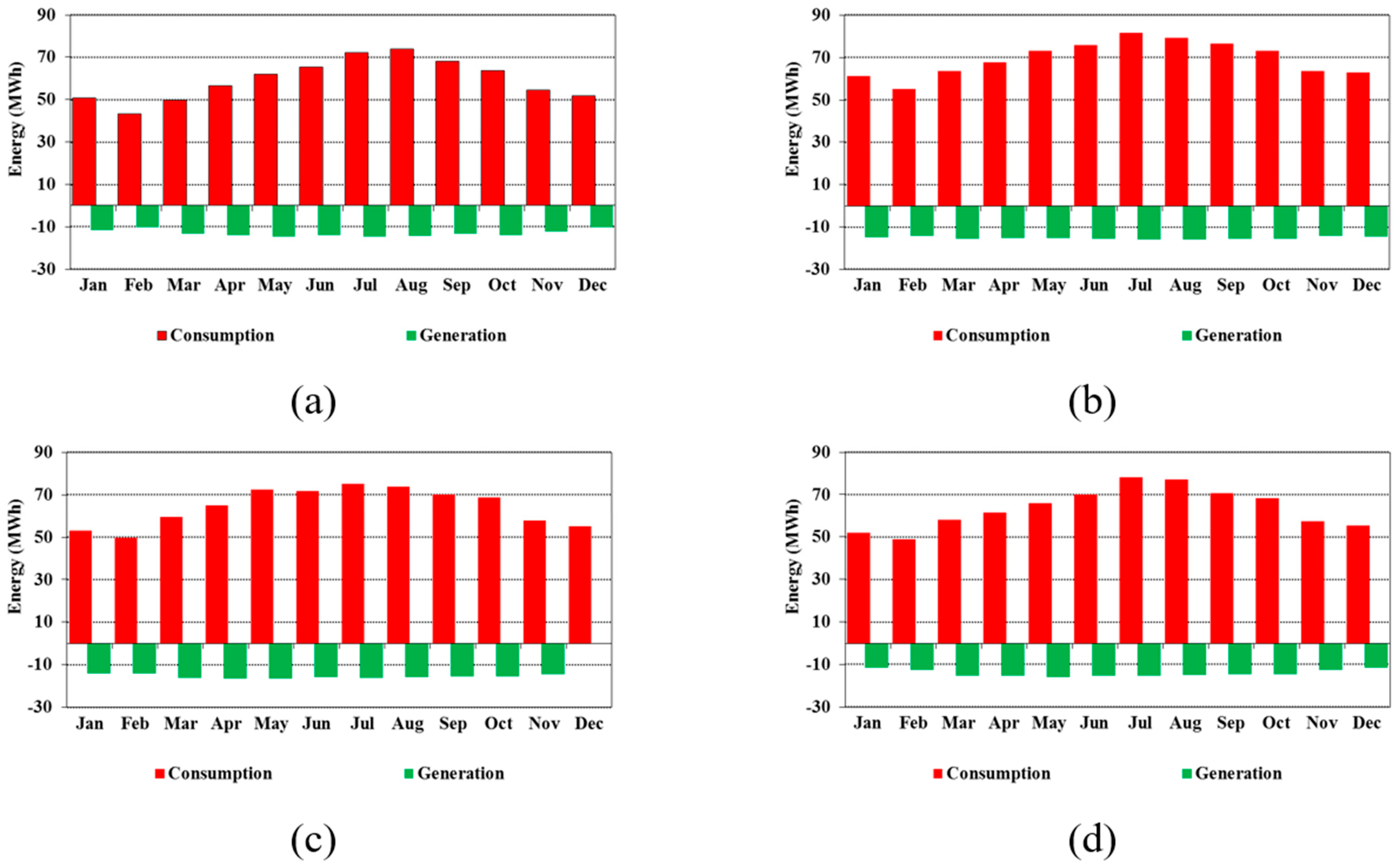
Figure 16a–d collectively demonstrate that the deployment of Glazing-Integrated Photovoltaics (GIPV) across the distinct climatic settings of Alexandria, Hurghada, Asyut, and Cairo yields pronounced reductions in net energy consumption relative to their corresponding baseline scenarios.
In Alexandria, the baseline annual energy demand of 712.07 MWh is substantially reduced when GIPV is introduced. With an energy generation output of 156.59 MWh from the GIPV system, the net consumption decreases to 555.48 MWh, indicating an approximate reduction of 22%. A similar level of improvement is observed in Hurghada, where GIPV offsets 182.06 MWh of energy use, lowering the baseline value of 833.72 MWh to 651.66 MWh, equivalent to a 22% reduction.
Asyut exhibits the most notable improvement among all locations examined. The initial consumption of 772.69 MWh is reduced to 588.21 MWh due to the generation of 184.48 MWh through GIPV integration, reflecting a significant 23.8% decline in net energy use. In Cairo, the baseline energy requirement of 763.56 MWh decreases to 594.27 MWh after incorporating 169.28 MWh of electricity produced by GIPV, resulting in a 22.2% reduction.
These findings underscore the substantial potential of GIPV systems to diminish net energy demand across various climatic regions, reaffirming their effectiveness as a robust strategy for enhancing building energy performance and supporting sustainable energy objectives.
These findings underscore the capability of GIPV systems to substantially lower energy consumption across Egypt’s diverse climatic regions, thereby supporting progress toward the realization of nearly zero-energy buildings.

3.3.2. Solar Green Roof

Figure 17a–d illustrate the energy-saving impacts of solar green roofs, which combine vegetated roofing systems with integrated photovoltaic (PV) modules. The magnitude of these impacts differs across Egypt’s climatic regions, influenced by local solar exposure, temperature conditions, and seasonal weather variations.
In Alexandria, the solar green roof system generated 148.4 MWh annually, covering approximately 21.2% of the building’s total energy demand. The highest production aligns with the spring and summer cooling periods, during which the combined effects of vegetation and PV panels substantially reduce heat transfer through the roof, thereby improving overall energy performance.
Hurghada, characterized by high solar irradiance, achieved an annual generation of 183.8 MWh from the solar green roof, meeting around 21.8% of the building’s yearly energy needs. The integration of PV generation with the inherent thermal insulation provided by the green roof delivers notable cooling benefits during peak summer months, easing the load on mechanical cooling systems and enhancing energy efficiency.
In Asyut’s hot and arid climate, the system produced 191.7 MWh per year, the highest among all studied locations, equivalent to 24.9% of total energy demand. This substantial contribution results from both strong solar resource availability and the pronounced cooling effect of the vegetative layer, which becomes especially critical during Asyut’s prolonged and intense summer season.
In Cairo, where urban heat island effects intensify energy requirements, the solar green roof generated 167.6 MWh annually, offsetting 22.2% of the building’s overall energy consumption.
This configuration helps to relieve urban heat stress while simultaneously meeting a portion of the energy demand in Egypt’s most densely populated metropolitan region. Across all examined climatic zones, solar green roofs demonstrate a multifaceted impact: they enhance onsite solar energy production, moderate heat loads associated with urban environments, and significantly lower net energy consumption, particularly in areas characterized by high solar availability and substantial cooling needs [62].
The simulated electricity generation from the GIPV and solar green roof systems incorporates standard system losses and inverter efficiencies as implemented within the DesignBuilder/EnergyPlus simulation framework. Shading effects resulting from the building’s own geometry and orientation are inherently represented in the simulation environment, and these modeling assumptions are applied consistently across all climatic locations to ensure a robust comparative assessment of retrofit performance. In hot and arid climates such as Asyut, the superior performance of the solar green roof is driven by climate-responsive physical mechanisms. High solar irradiance enhances photovoltaic electricity generation, directly offsetting grid consumption, while the vegetative layer reduces roof heat gains through shading and moderation of roof surface temperatures. Under conditions of elevated ambient temperatures and a prolonged cooling season, mitigating roof heat transfer yields a greater marginal reduction in cooling demand, which explains the higher energy savings and CO2 emission reductions observed for the solar green roof strategy in Asyut relative to other regions.

4. Assessment of Economic Feasibility

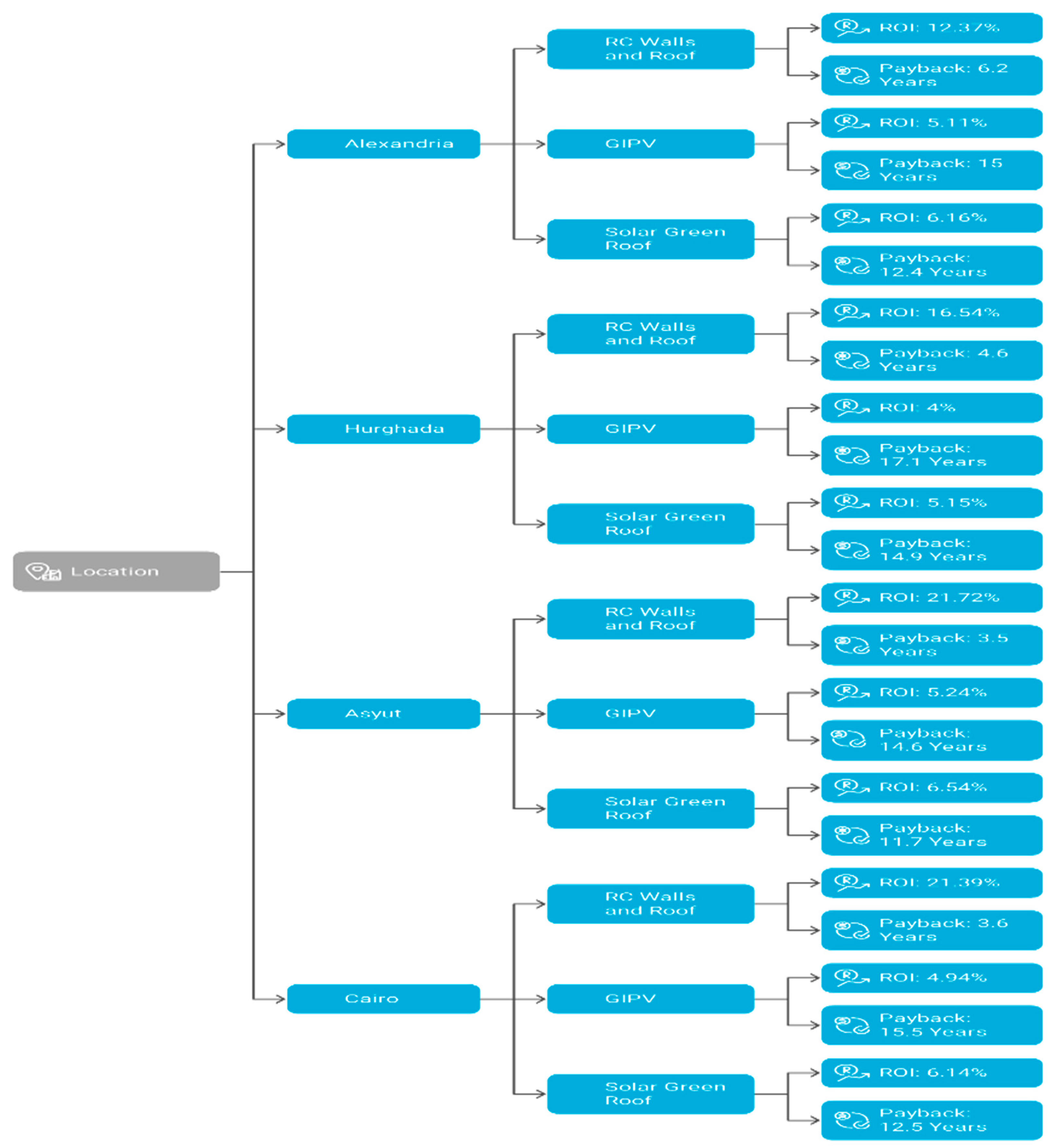
An economic assessment of the proposed retrofit interventions under anticipated 2025 market conditions, defined by rising electricity tariffs and reduced national interest rates, demonstrates substantial investment potential across all analyzed Egyptian regions, as illustrated in Figure 18. Among the evaluated measures, Radiative Coating (RC) systems applied to the building envelope exhibit the strongest financial performance, achieving Return on Investment (ROI) values of 21.72% in Asyut, 21.39% in Cairo, 16.54% in Hurghada, and 12.37% in Alexandria. The corresponding payback periods, ranging between 3.5 and 6.2 years, further emphasize the economic viability of these passive retrofit strategies for mitigating solar heat gains and reducing cooling-related energy demand in both inland and coastal climatic contexts.
Glazing-Integrated Photovoltaic (GIPV) systems, which integrate onsite renewable electricity generation with enhanced façade performance, achieve Return on Investment (ROI) values of 5.24% in Asyut, 5.11% in Alexandria, 4.94% in Cairo, and 4.00% in Hurghada. The corresponding payback periods range from 14.6 to 17.1 years. While these systems are associated with comparatively longer cost-recovery durations, the findings indicate a growing economic justification for GIPV as a long-term investment in building-integrated renewable energy solutions.
Solar green roof systems, which combine photovoltaic modules with vegetated roof structures, demonstrate moderate yet favorable economic performance, with Return on Investment (ROI) values ranging from 5.15% to 6.54% and payback periods between 11.7 and 14.9 years. Beyond their direct financial returns, these systems offer additional co-benefits, including enhanced thermal insulation of the roof, onsite renewable energy generation, and mitigation of urban heat island effects. These attributes make solar green roofs particularly advantageous for application in high-density urban environments.
Overall, the findings substantiate the economic feasibility of implementing advanced building retrofit technologies across Egypt’s varied climatic zones. The observed Return on Investment values and corresponding payback periods confirm that energy-efficient and renewable-integrated building systems constitute financially viable interventions, while simultaneously delivering environmental benefits under both present and forecasted market conditions.

5. Integrated Energy and Environmental Analysis

Electricity generation from petroleum-based fuels inherently emits greenhouse gases due to the combustion process. As electricity demand increases, fuel consumption rises accordingly, intensifying the existing energy challenges. Moreover, substantial inefficiencies within power generation and transmission systems mean that nearly 3 kilowatt hours (kWh) of primary energy are required to deliver just 1 kWh of usable electrical output [64].
In addition, CO2 emissions associated with electricity consumption were estimated using a grid emission factor representative of Egypt’s national electricity generation mix during the study period. The same factor was applied consistently across all retrofit scenarios and climatic locations to enable a comparative evaluation of environmental performance.
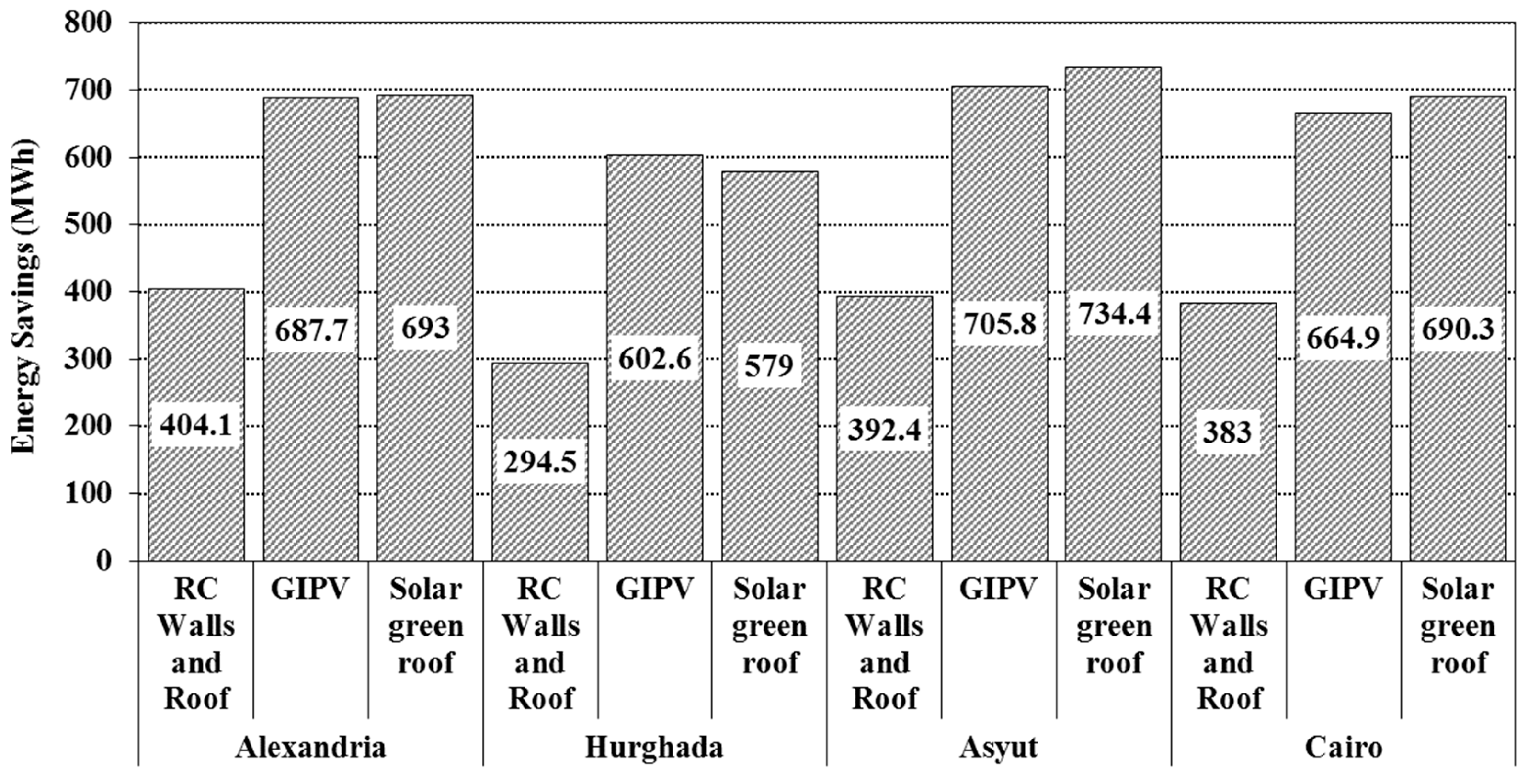
The results presented in Figure 19 indicate that solar green roofs provide the highest levels of energy savings across Egypt’s varied climatic regions, with GIPV systems offering comparable performance in several locations. In Alexandria, solar green roofs achieve energy savings of 693 MWh, slightly exceeding the 687.7 MWh obtained from GIPV and considerably surpassing the 404.1 MWh reduction achieved through radiative coating (RC) applications. In Hurghada, where solar intensity is particularly strong, GIPV delivers the greatest energy savings at 602.6 MWh, followed by solar green roofs at 579 MWh and RC at 294.5 MWh. Asyut, which experiences high cooling loads, similarly benefits from advanced systems: solar green roofs reduce consumption by 734.4 MWh, while GIPV contributes 705.8 MWh in savings. A comparable pattern appears in Cairo, where solar green roofs reduce energy use by 690.3 MWh, GIPV systems achieve 664.9 MWh, and RC result in savings of 383 MWh. Collectively, these findings highlight the exceptional effectiveness of solar green roofs in dense urban and high-demand environments, whereas GIPV exhibits strong performance in areas with elevated solar exposure.
The observed reductions in annual electricity consumption and seasonal peak demand at the building level suggest potential benefits for the broader power system, including improved load profiles and reduced pressure on peak generation capacity. Beyond building-scale savings, widespread adoption of such retrofitting strategies can generate indirect cost benefits within electricity production systems by enabling power plants to operate closer to their optimal efficiency range. Reduced peak load stress lowers fuel consumption per unit of electricity generated and decreases operational expenditure. At the same time, peak demand mitigation improves the overall load factor, allowing generation assets to operate more consistently at a rated capacity and distributing fixed costs, such as maintenance, staffing, and equipment depreciation, over a larger electricity output, thereby reducing unit generation costs.
Furthermore, decreasing total electricity demand can delay or eliminate the need to construct new generation facilities or expand existing capacity, both of which require substantial capital investment. These avoided costs translate into significant long-term savings for the electricity sector. From a thermodynamic perspective, higher plant efficiency arises from operation under stable, optimized temperature and pressure conditions. From an economic viewpoint, improved load factors and reduced capital expenditure contribute to lower overall production costs, consistent with economies of scale. Moreover, demand elasticity principles suggest that reduced electricity consumption may influence market pricing and overall system expenditures.
In summary, integrating energy-efficient retrofit measures not only enhances building performance but also improves the operational efficiency of power plants, thereby achieving substantial reductions in the financial and environmental costs associated with electricity generation.
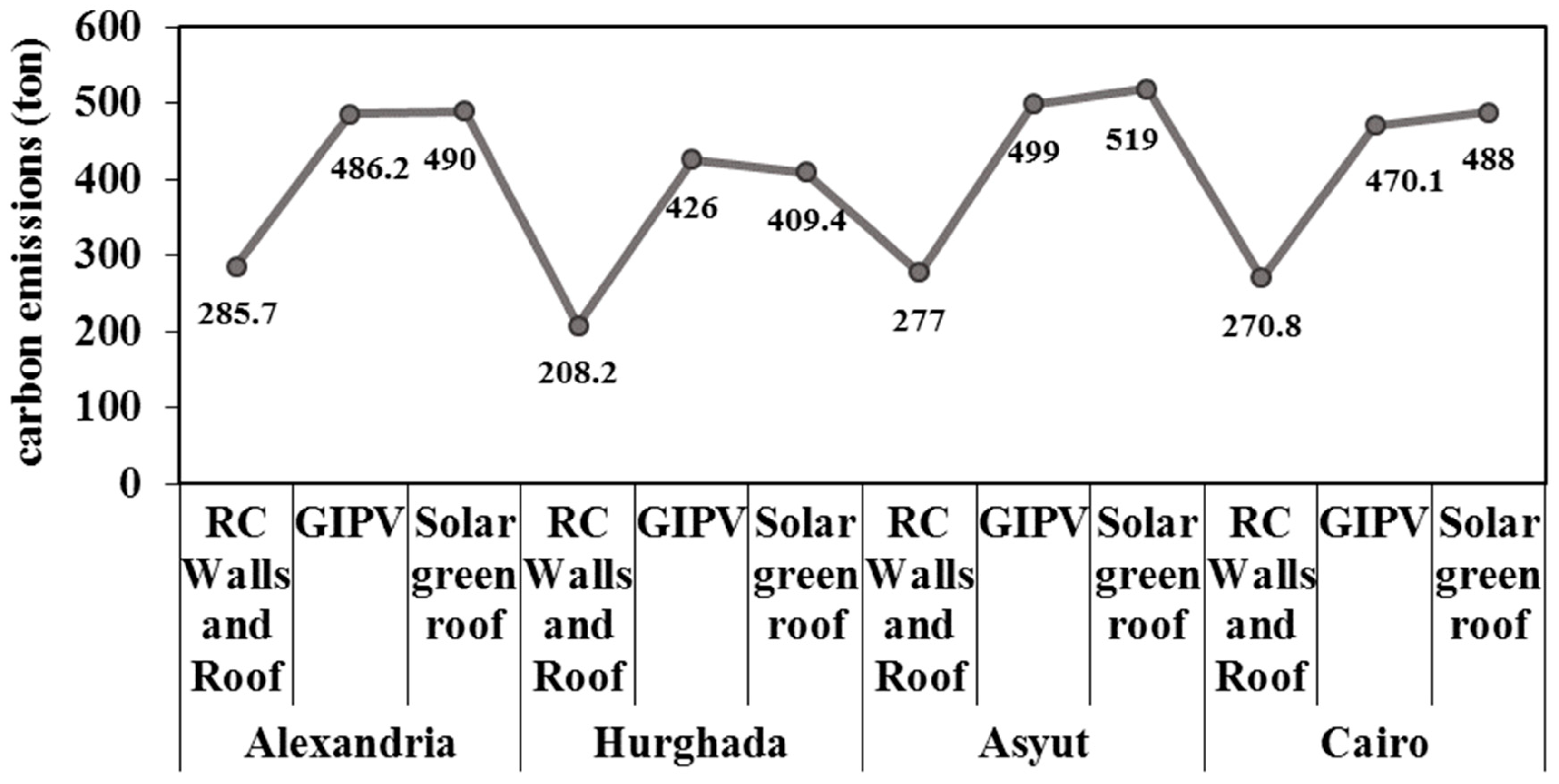
Figure 20 provides a clear depiction of the substantial CO2 mitigation potential associated with various retrofitting strategies, including RC treatments for walls and roofs, GIPV installations, and solar green roof systems. In Alexandria, solar green roofs achieve the highest reduction, lowering emissions by 490 tons, followed closely by GIPV systems at 486.2 tons, while RC applications result in a 285.7-ton decrease. Hurghada exhibits a similar hierarchy of effectiveness, with GIPV yielding the largest reduction at 426 tons, followed by solar green roofs at 409.4 tons and RC at 208.2 tons.
In Asyut, solar green roofs again demonstrate the most pronounced effect, achieving a 519-ton reduction in CO2 emissions, compared with 499 tons from GIPV and 277 tons from RC. Cairo shows a comparable pattern, where solar green roofs reduce emissions by 488 tons, GIPV systems by 470.1 tons, and RC by 270.8 tons.
Overall, these results underscore the significant role that advanced retrofit measures can play in lowering the carbon footprint of the built environment. By reducing the energy demand placed on power generation infrastructure, these interventions contribute meaningfully to national emissions reduction targets and advance the broader transition toward a more sustainable, low-carbon energy future.

6. Conclusions

This study presents an integrated techno-economic and environmental evaluation of key building retrofit strategies, such as radiative coatings (RC), glazing-integrated photovoltaic (GIPV) systems, and solar green roofs, aimed at supporting the transition of existing buildings toward Nearly Zero Energy Building (NZEB) targets across Egypt’s major climatic zones. The results demonstrate that envelope-based and onsite renewable retrofit solutions can deliver substantial and climate-responsive improvements in building performance when assessed under consistent modeling and market assumptions.
From an economic perspective, radiative coatings emerge as the most financially attractive option across all studied locations, achieving return on investment values between 12.37% and 21.72% and payback periods ranging from 3.5 to 6.2 years. Solar green roofs and GIPV systems exhibit longer payback periods but provide meaningful long-term value, particularly when energy savings and environmental benefits are jointly considered. Their performance is especially pronounced in regions with high solar availability and cooling demand, such as Asyut and Cairo.
The energy analysis indicates that solar green roofs and GIPV systems yield the highest reductions in annual electricity consumption, driven by the combined effects of onsite electricity generation and mitigation of cooling loads. In parallel, these strategies deliver significant operational CO2 emission reductions across all climatic zones, reinforcing their role in advancing national decarbonization objectives and improving the environmental performance of the building sector.
Overall, the findings highlight the importance of climate-adapted integrated retrofit strategies as an effective pathway for enhancing energy efficiency, reducing emissions, and improving the economic performance of existing buildings in hot and arid regions. This study provides a robust comparative basis to inform retrofit prioritization and policy development in Egypt and in regions facing similar climatic and energy challenges.

6.1. Study Limitations

The present study evaluates retrofit performance using a validated educational building model across four representative hot climatic zones, providing robust comparative insights under consistent assumptions. While absolute outcomes may differ for other building typologies or long-term market conditions, the adopted framework enables a reliable assessment of relative energy, economic, and environmental performance. Environmental impacts are assessed at the operational level using representative grid conditions, and photovoltaic performance is evaluated using standardized simulation assumptions. The analysis focuses on building-scale impacts, offering a sound basis for comparative evaluation while highlighting opportunities for further system-level and long-term investigations.

6.2. Future Research Directions

Future work may extend this analysis to additional building typologies and occupancy profiles to further assess generalizability. Incorporating sensitivity analyses of key economic parameters, dynamic grid emission factors, and life cycle assessment methodologies would enhance long-term sustainability evaluation. Further integration of indoor thermal comfort, indoor air quality metrics, and building–grid interaction modeling would provide a more comprehensive understanding of retrofit impacts in hot and arid climates.


Supplementary Materials

The following supporting information can be downloaded at: https://www.mdpi.com/article/10.3390/su18041991/s1, Table S1: Key Building and Simulation Input Parameters.
Author Contributions

Conceptualization, M.M.I., M.A.W., A.A.H. and M.J.S.-L.; Methodology, M.M.I., M.A.W., A.A.H. and M.J.S.-L.; Software, M.M.I.; Validation, M.M.I. and M.A.W.; Formal analysis, M.A.W., A.A.H. and M.J.S.-L.; Investigation, M.M.I. and A.M.E.; Resources, M.M.I.; Writing—original draft, M.M.I.; Writing—review and editing, M.M.I., M.A.W., A.M.E., A.A.H. and M.J.S.-L.; Visualization, M.J.S.-L.; Supervision, M.A.W., A.M.E., A.A.H. and M.J.S.-L. All authors have read and agreed to the published version of the manuscript.

Funding

This research received no external funding.

Institutional Review Board Statement

Not Applicable.

Informed Consent Statement

Not Applicable.

Data Availability Statement

The original contributions presented in this study are included in the article. Further inquiries can be directed to the corresponding author.

Conflicts of Interest

The authors declare no conflicts of interest.

Abbreviations

BPSBuilding Performance Simulation
GIPVGlazing Integrated Photovoltaics
GHGGreenhouse Gas
INSInsulation
NZEBNearly Zero Energy Buildings
RCRadiative Coating
RERenewable Energy

References

  1. Wright, V.P. World Energy Outlook 2022; International Energy Agency (IEA): Paris, France, 2022. [Google Scholar]
  2. Ibrahim, M.M.; William, M.A.; Hanafy, A.A.; Moussa, M.F.; Suarez-Lopez, M.J. Boosting Energy Efficiency in Educational Buildings: The Role of Electrochromic Glazing and ASHRAE Standard Integration. AIP Conf. Proc. 2025, 3395, 060002. [Google Scholar] [CrossRef]
  3. Kankam, S.; Boon, E.K. Energy Delivery and Utilization for Rural Development: Lessons from Northern Ghana. Energy Sustain. Dev. 2009, 13, 212–218. [Google Scholar] [CrossRef]
  4. Dizdaroglu, D. The Role of Indicator-Based Sustainability Assessment in Policy and the Decision-Making Process: A Review and Outlook. Sustainability 2017, 9, 1018. [Google Scholar] [CrossRef]
  5. Nfah, E.M.; Ngundam, J.M.; Tchinda, R. Modelling of Solar/Diesel/Battery Hybrid Power Systems for Far-North Cameroon. Renew. Energy 2007, 32, 832–844. [Google Scholar] [CrossRef]
  6. Li, G.; Luo, J.; Liu, S. Performance Evaluation of Economic Relocation Effect for Environmental Non-Governmental Organizations: Evidence from China. Economics 2024, 18, 20220080. [Google Scholar] [CrossRef]
  7. Yang, Y.; Li, X.; Yao, Z.; Yu, A.; Wang, M. Impact of Facade Photovoltaic Retrofit on Building Carbon Emissions for Residential Buildings in Cold Regions. Buildings 2025, 15, 3762. [Google Scholar] [CrossRef]
  8. Sen, S.; Ganguly, S. Opportunities, Barriers and Issues with Renewable Energy Development—A Discussion. Renew. Sustain. Energy Rev. 2017, 69, 1170–1181. [Google Scholar] [CrossRef]
  9. Martinot, E.; Dienst, C.; Weiliang, L.; Qimin, C. Renewable Energy Futures: Targets, Scenarios, and Pathways. Annu. Rev. Environ. Resour. 2007, 32, 205–239. [Google Scholar] [CrossRef]
  10. Martinot, E.; Dienst, C.; Weiliang, L.; Qimin, C.; Petrović-Ranđelović, M.; Kocić, N.; Stojanović-Ranđelović, B.; Li, L.; Lin, J.; Wu, N.; et al. Review and Outlook on the International Renewable Energy Development. Energy Built Environ. 2022, 3, 139–157. [Google Scholar] [CrossRef]
  11. Ibrahim, M.; Shehata, A.; Elharidi, A.; Hanafy, A. Effect of Pv Shadow on Cooling Load and Energy Consumption of Zone Toward Achieving NZEB. IOP Conf. Ser. Earth Environ. Sci. 2021, 801, 012027. [Google Scholar] [CrossRef]
  12. Report, M. Egypt Energy Sector. 2022. Available online: https://logic-consulting.com/wp-content/uploads/pdf/LOGIC_Egypt-Energy-Outlook-Report-2022_Light-3-1.pdf (accessed on 2 November 2025).
  13. William, M.A.; Suárez-López, M.J.; Soutullo, S.; Hanafy, A.A. Techno-Economic Evaluation of Building Envelope Solutions in Hot Arid Climate: A Case Study of Educational Building. Energy Rep. 2021, 7, 550–558. [Google Scholar] [CrossRef]
  14. IRENA. Renewable Energy Outlook: Egypt; IRENA: Abu Dhabi, United Arab Emirates, 2018; ISBN 9789292600693. [Google Scholar]
  15. The Country Climate and Development Report. 8 November 2022. Available online: https://www.worldbank.org/en/country/egypt/publication/egypt-country-and-climate-development-report (accessed on 2 November 2025).
  16. Renewable Energy Targets at NREA. Available online: http://nrea.gov.eg/test/en/About/Strategy (accessed on 21 September 2024).
  17. Egypt-Electricity and Renewable Energy. Available online: https://www.trade.gov/country-commercial-guides/egypt-electricity-and-renewable-energy (accessed on 22 November 2022).
  18. Moharram, N.A.; Tarek, A.; Gaber, M.; Bayoumi, S. Brief Review on Egypt’s Renewable Energy Current Status and Future Vision. Energy Rep. 2022, 8, 165–172. [Google Scholar] [CrossRef]
  19. Fieles, W.; Stedman, H.; Burghes, A.; Ray, P.; Worton, R.; Fischbeck, K.H. The Road to Cop 27: Shifting Behaviors to Address Climate Change in Egypt. 2022, 1058. Available online: https://www.unicef.org/egypt/media/9321/file/The%20Road%20to%20COP27_%20Shifting%20Behaviors%20to%20Address%20Climate%20Change%20in%20Egypt.pdf (accessed on 19 April 2025).
  20. Egypt’s Desertification Is Ruining Fields, Cutting Crops and Displacing Farmers|OpenDemocracy. Available online: https://www.opendemocracy.net/en/north-africa-west-asia/egypts-desertification-is-ruining-fields-cutting-crops-and-displacing-farmers/ (accessed on 6 January 2025).
  21. How Each Country’s Emissions and Climate Pledges Compare|Financial Times. Available online: https://www.ft.com/content/9dfb0201-ef77-4c05-93cd-1e277c7017cf (accessed on 8 November 2025).
  22. Faraji, H.; Benkaddour, A.; Oudaoui, K.; El Alami, M.; Faraji, M. Emerging Applications of Phase Change Materials: A Concise Review of Recent Advances. Heat Transf. 2021, 50, 1443–1493. [Google Scholar] [CrossRef]
  23. Chen, Y.; Sha, A.; Jiang, W.; Jiao, W.; Cao, Y.; Li, X.; Du, X.; Hu, K.; Lu, Q. Sustainable Thermochromic Coatings for Pavement Cooling and Carbon Offset under Climate Change. Transp. Res. Part D Transp. Environ. 2025, 148, 104995. [Google Scholar] [CrossRef]
  24. Emil, F.; Diab, A. Energy Rationalization for an Educational Building in Egypt: Towards a Zero Energy Building. J. Build. Eng. 2021, 44, 103247. [Google Scholar] [CrossRef]
  25. Cooling Sector Status Report Egypt; Guidehouse Germany GmbH: Berlin, Germany, 2022.
  26. Waseem Ahmad, M.; Mourshed, M.; Yuce, B.; Rezgui, Y. Computational Intelligence Techniques for HVAC Systems: A Review. Build. Simul. 2016, 9, 359–398. [Google Scholar] [CrossRef]
  27. William, M.A.; Suárez-López, M.J.; Soutullo, S.; Fouad, M.M.; Hanafy, A.A. Enviro-Economic Assessment of Buildings Decarbonization Scenarios in Hot Climates: Mindset toward Energy-Efficiency. Energy Rep. 2022, 8, 172–181. [Google Scholar] [CrossRef]
  28. Energy Efficiency Handbook Environmental Housekeeping Handbook for Office Buildings in the Arab Countries; Arab Green Economy Initiative (AGEI): Beirut, Lebanon, 2012.
  29. Schimschar, S.; Schröder, J.; Bhar, R.; Comaty, F.; Petersdorff, C.; Pohl, A.; Schäfer, M.; Steinbacher, K. Accelerating Zero-Emission Building Sector Ambitions in the MENA Region (BUILD_ME) Report on Activities in Egypt from the First Project Phase of BUILD_ME (2016–2018); Prepared on Behalf of the German Federal Ministry for the Environment, Nature Conservation and Nuclear Safety under the International Climate Initiative in Cooperation with IDG and HBRC; Guidehouse Germany GmbH: Berlin, Germany, 2020. [Google Scholar]
  30. Albadry, S. Feasibility of Converting Existing Residential Buildings to Net Zero-Energy Buildings in Egypt. QScience Proc. 2016, 2016, 26. [Google Scholar] [CrossRef]
  31. GEE 05, M.E. and N.A. Trace 2.0 Improving Energy Efficiency in Egypt Energy Efficiency. 2017. Available online: https://documents1.worldbank.org/curated/en/578631498760292189/pdf/Final-Output-Summary.pdf (accessed on 12 October 2025).
  32. Abdollah, M.A.F.; Scoccia, R.; Filippini, G.; Motta, M. Cooling Energy Use Reduction in Residential Buildings in Egypt Accounting for Global Warming Effects. Climate 2021, 9, 45. [Google Scholar] [CrossRef]
  33. Saleem, A.A.; Abel-Rahman, A.K.; Ali, A.H.H.; Ookawara, S. An Analysis of Thermal Comfort and Energy Consumption within Public Primary Schools in Egypt. IAFOR J. Sustain. Energy Environ. 2016, 3. [Google Scholar] [CrossRef]
  34. William, M.; El-Haridi, A.; Hanafy, A.; El-Sayed, A. Assessing the Energy Efficiency and Environmental Impact of an Egyptian Hospital Building. Proc. IOP Conf. Ser. Earth Environ. Sci. 2019, 397, 012006. [Google Scholar] [CrossRef]
  35. Assefa, S.; Lee, H.Y.; Shiue, F.J. Sustainability Performance of Green Building Rating Systems (GBRSs) in an Integration Model. Buildings 2022, 12, 208. [Google Scholar] [CrossRef]
  36. Ismaeel, W.S.E.; Touliabah, E. To Be or Not to Be: The National Green Pyramid Rating System. In Proceedings of the Green Heritage Conference, Al Shorouk, Egypt, 6–8 March 2018. [Google Scholar]
  37. Attia, S.; Dabaieh, M. The Usability of Green Building Rating Systems in Hot Arid Climates: A Case Study in Siwa, Egypt. In Proceedings of the 4th Biennial Subtropical Cities Conference, Braving a New World: Design Interventions for Changing Climates, Fort Lauderdale, FL, USA, 17–19 October 2013. [Google Scholar]
  38. Ayyad, K.M.; Gabr, M. Greening Building Codes in Egypt. In Proceedings of the Sustainable Futures: Architecture and Urbanism in the Global South, Kampala, Uganda, 27–30 June 2012. [Google Scholar]
  39. AbdelAzim, A.I.; Ibrahim, A.M.; Aboul-Zahab, E.M. Development of an Energy Efficiency Rating System for Existing Buildings Using Analytic Hierarchy Process—The Case of Egypt. Renew. Sustain. Energy Rev. 2017, 71, 414–425. [Google Scholar] [CrossRef]
  40. Arafat, M.Y.; Faggal, A.A.; Khodeir, L.; Refaat, T. Customizing the Green Pyramid Rating System for Assessing University Buildings’ Sustainability: A Stakeholder-Involved Weighting Approach. Alex. Eng. J. 2023, 82, 446–458. [Google Scholar] [CrossRef]
  41. What Is Green Building?|World Green Building Council. Available online: https://www.gbca.au/about/what-is-green-building#:~:text=Green%20building%20meets%20the%20needs%20of%20the,for%20people%20to%20live%20and%20work%20in (accessed on 15 January 2021).
  42. Hui, Y.; Tang, Y.; Yang, Q.; Mochida, A. Numerical Study on Influence of Surface Vegetation on Aerodynamics of High-Rise Buildings. Sustain. Cities Soc. 2024, 107, 105407. [Google Scholar] [CrossRef]
  43. Nearly Zero-Energy Building—An Overview (Pdf)|ScienceDirect Topics. Available online: https://www.sciencedirect.com/topics/engineering/nearly-zero-energy-building (accessed on 5 October 2025).
  44. William, M.A.; Suárez-López, M.J.; Soutullo, S.; Hanafy, A.A. Building Envelopes toward Energy-Efficient Buildings: A Balanced Multi-Approach Decision Making. Int. J. Energy Res. 2021, 45, 21096–21113. [Google Scholar] [CrossRef]
  45. Yang, X.; Gai, J.; Zheng, X.; Xie, Y.; Yu, X.; Gong, R.; Meng, Z.; Zhai, S.; Zhao, X. Analysis of Thermal Wave Scattering and Temperature Distribution in Sub-Surface, Defects of Gradient Construction Materials. Sci. Rep. 2025, 15, 22381. [Google Scholar] [CrossRef]
  46. Garde, F.; Bentaleb, D.; Bastide, A.; Ottenwelter, E. The Construction of a Zero Energy Building in Reunion Island: Presentation of a New Approach to the Design Studies. ASME Int. Mech. Eng. Congr. Expo. 2006, 47640, 199–207. [Google Scholar] [CrossRef]
  47. Irulegi, O.; Ruiz-Pardo, A.; Serra, A.; Salmerón, J.M.; Vega, R. Retrofit Strategies towards Net Zero Energy Educational Buildings: A Case Study at the University of the Basque Country. Energy Build. 2017, 144, 387–400. [Google Scholar] [CrossRef]
  48. Maheshwari, S.; Chauhan, P.; Tandon, S.; Sagar, S. A Review Study on Net Zero Energy Building. Int. Res. J. Eng. Technol. 2017, 4, 1567–1570. [Google Scholar]
  49. El-Gendy, R.A.; Saad, M.N. A Study to Enhance the Performance of Historical Buildings in Alexandria, Egypt [Case Study: Faculty of Engineering Administration Building]. Int. J. Adv. Mech. Civ. Eng. 2016, 3, 11–15. [Google Scholar]
  50. Elgendy, R.; Mekkawi, G. Simulation-Based Studies to Reach the Net Zero Energy Target for a Housing Prototype in Alexandria, Egypt. In Proceedings of the 4th IASTEM International Conference, Amsterdam, The Netherlands, 12 November 2015; pp. 1–6. [Google Scholar]
  51. Krarti, M.; Ihm, P. Evaluation of Net-Zero Energy Residential Buildings in the MENA Region. Sustain. Cities Soc. 2016, 22, 116–125. [Google Scholar] [CrossRef]
  52. Albadry, S.; Tarabieh, K.; Sewilam, H. Achieving Net Zero-Energy Buildings through Retrofitting Existing Residential Buildings Using PV Panels. Energy Procedia 2017, 115, 195–204. [Google Scholar] [CrossRef]
  53. Ibrahim, M.M.; William, M.A.; Hanafy, A.A.; Moussa, M.F.; Suarez-Lopez, M.J. Multi-Pronged Strategies for Enhancing Building Envelopes toward Nearly-Zero Energy in Hot Climatic Regions. Eng. Res. Express 2024, 6, 045532. [Google Scholar] [CrossRef]
  54. Attia, S.; Evrard, A.; Gratia, E. Development of Benchmark Models for the Egyptian Residential Buildings Sector. Appl. Energy 2012, 94, 270–284. [Google Scholar] [CrossRef]
  55. Ibrahim, M.M.; Suarez-Lopez, M.J.; Hanafy, A.A.; William, M.A. Optimizing NZEB Performance: A Review of Design Strategies and Case Studies. Results Eng. 2025, 25, 103950. [Google Scholar] [CrossRef]
  56. ASHRAE. Guideline 14-2014—Measurement of Energy, Demand, and Water Savings; ASHRAE: Peachtree Corners, GA, USA, 2014; Volume 4. [Google Scholar]
  57. Shailza, S. Energy Modeling of Multi-Storied Residential Buildings—A Manual Calibration Approach. In Proceedings of the ASHRAE IBPSA-USA Building Simulation Conference, Chicago, IL, USA, 26–28 September 2018; pp. 550–557. [Google Scholar]
  58. Hedrick, R.L.; Thomann, W.R.; Aguilar, H.; Damiano, L.A.; Darwich, A.K.H.; Gress, G.; Habibi, H.; Howard, E.P.; Petrillo-groh, L.G.; Smith, J.K.; et al. Ventilation for Acceptable Indoor Air Quality; ANSI: Washington, DC, USA, 2013; Volume 8400. [Google Scholar]
  59. Erbe, D.; Culp, T.; Beilman, S.; Boldt, J.; Conrad, E.; Cottrell, C.; Hanson, S.; Heinisch, R.; Hintz, S.; Hogan, J.; et al. Energy Standard for Buildings Except Low-Rise Residential Buildings; ANSI: Washington, DC, USA, 2016. [Google Scholar]
  60. Guidance for HVAC Systems; British Columbia Ministry of Education and Child Care: Victoria, BC, Canada, 2022.
  61. ASHRAE. ASHRAE Fundamentals Handbook SI; ASHRAE: Peachtree Corners, GA, USA, 2017; ISBN 678539218. [Google Scholar]
  62. Ibrahim, M.M.; William, M.A.; Elharidi, A.M.; Hanafy, A.A.; Suarez-lopez, M.J. Do Solar Green Roofs Contribute to SDGs, Fostering Energy Efficiency and Environmental Conservation ? Renew. Energy Sustain. Dev. 2024, 10, 258–278. [Google Scholar] [CrossRef]
  63. ASHRAE Climatic Design Conditions 2009/2013/2017/2021. Available online: https://ashrae-meteo.info/v2.0/ (accessed on 2 May 2024).
  64. William, M.A.; Elharidi, A.M.; Hanafy, A.A.; Attia, A.; Elhelw, M. Energy-Efficient Retrofitting Strategies for Healthcare Facilities in Hot-Humid Climate: Parametric and Economical Analysis. Alex. Eng. J. 2020, 59, 4549–4562. [Google Scholar] [CrossRef]
Figure 1. Evaluation of Current (2022) and Projected (2035) Energy Generation Trends in Egypt [18]. Note: Values are reproduced from the cited Egypt Energy Outlook and are rounded to the nearest whole percent; therefore, the aggregated renewable share (42%) may differ by ±1% from the sum of its individually rounded com-ponents.
Sustainability 18 01991 g001
Figure 3. Overall methodological framework adopted for evaluating building retrofit strategies across different climatic zones.
Sustainability 18 01991 g003
Figure 4. Comparison between simulated and measured monthly energy consumption for baseline model validation [53].
Sustainability 18 01991 g004
Figure 5. Modeling workflow illustrating the evaluated retrofit measures applied to building envelope components.
Sustainability 18 01991 g005
Figure 7. HBRC-Based Classification of Egypt’s Climatic Zones [33].
Sustainability 18 01991 g007
Figure 8. ASHRAE Climate Zone Categorization and Key Climatic Design Criteria for the Selected Sites [63].
Sustainability 18 01991 g008
Figure 9. Annual energy consumption comparison between baseline and ASHRAE-compliant models across the selected climatic locations.
Sustainability 18 01991 g009
Figure 10. Monthly energy consumption profiles for baseline, ASHRAE-compliant, and enhanced envelope retrofit scenarios in Alexandria: (a) insulated walls, (b) radiative-coated walls, (c) insulated roof, (d) radiative-coated roof, (e) insulated walls and roof, and (f) radiative-coated walls and roof.
Sustainability 18 01991 g010
Figure 11. Monthly energy consumption profiles for baseline, ASHRAE-compliant, and enhanced envelope retrofit scenarios in Hurghada: (a) insulated walls, (b) radiative-coated walls, (c) insulated roof, (d) radiative-coated roof, (e) insulated walls and roof, and (f) radiative-coated walls and roof.
Sustainability 18 01991 g011
Figure 12. Monthly energy consumption profiles for baseline, ASHRAE-compliant, and enhanced envelope retrofit scenarios in Asyut: (a) insulated walls, (b) radiative-coated walls, (c) insulated roof, (d) radiative-coated roof, (e) insulated walls and roof, and (f) radiative-coated walls and roof.
Sustainability 18 01991 g012
Figure 13. Monthly energy consumption profiles for baseline, ASHRAE-compliant, and enhanced envelope retrofit scenarios in Cairo: (a) insulated walls, (b) radiative-coated walls, (c) insulated roof, (d) radiative-coated roof, (e) insulated walls and roof, and (f) radiative-coated walls and roof.
Sustainability 18 01991 g013
Figure 14. Location-based comparison of annual energy consumption for different insulation retrofit strategies across the selected climatic regions.
Sustainability 18 01991 g014
Figure 15. Location-based comparison of annual energy consumption for different radiative coating retrofit strategies across the selected climatic regions.
Sustainability 18 01991 g015
Figure 16. Monthly Energy Consumption and GIPV Generation by Location: (a) Alexandria; (b) Hurghada; (c) Asyut; (d) Cairo.
Sustainability 18 01991 g016
Figure 17. Monthly Energy Consumption and Solar Green Roof Generation by Location: (a) Alexandria; (b) Hurghada; (c) Asyut; (d) Cairo.
Sustainability 18 01991 g017
Figure 18. Comparative Economic Metrics of Retrofit Strategies in Various Regions.
Sustainability 18 01991 g018
Figure 19. Annual Source Energy Savings.
Sustainability 18 01991 g019
Figure 20. Annual Reduction in Carbon Emissions.
Sustainability 18 01991 g020
Table 1. Summary of selected NZEB-related studies on building retrofit strategies and energy performance improvements.
ResearcherMethodology/ToolsKey Findings
William et al. [27]Environmental and economic evaluation via parametric analysis of building façade solutions in arid climatesThe study reported CO2 emission reductions of 9–31% and thermal discomfort reductions of 10–25%, with reflective paint combined with glazing-integrated PV identified as the most cost-effective solution, achieving IRR values of 26.45%, 21.6%, and 16.85% for Aswan, Cairo, and Alexandria, respectively.
Gardel et al. [46]Simulation toolsA reduction of 66% in building energy consumption was achieved compared to a standard reference building, with only a marginal 2% increase in construction cost.
Irulegia et al. [47]Survey among students, Simulation tool (LIDER)Building retrofitting resulted in approximately 58% energy savings, and occupant surveys indicated a preference for cooler indoor temperatures than those predicted by theoretical comfort models.
Maheshwari et al. [48]Case study, Renewable energy (solar panels)Photovoltaic solar panels were identified as the optimal onsite energy generation solution and were implemented on the building’s rear façade to maximize performance.
El-Gendy et al. [49]Simulation tools (Diva-for-Rhino, Autodesk Vasari)Energy consumption was reduced by 39.2% through optimized window height, glazing type selection, and the integration of shading devices.
Mekkawi et al. [50]Simulation tools (DesignBuilder, Diva-for-Rhino)Modifications to design parameters combined with photovoltaic integration resulted in total energy savings of 38.2%.
Krarti
[51]
Modeling and optimizationThe study demonstrated that photovoltaic systems with capacities ranging from 2.5 to 3.0 kW are required to achieve NZEB performance, with building orientation and insulation identified as critical influencing factors.
Albadry
[52]
Simulation programNZEB performance was achieved through the application of thermal insulation and photovoltaic panels, which were shown to be economically feasible for residential retrofitting.
Ibrahim et al. [53]Evaluation of GIPV, thermal insulation, and radiative coatings in comparison in hot and humid regionsRadiative coatings achieved energy savings of 13.1%, while glazing-integrated photovoltaics yielded savings of up to 34.9%, with radiative coatings demonstrating the lowest levelized cost of savings among evaluated solutions.
Attia et al. [54]Simulation models (EnergyPlus)Baseline energy consumption models were developed for Egyptian residential buildings, enabling evaluation of the impact of national energy efficiency standards.
Emil et al.
[24]
Energy Plus simulationRetrofit measures applied to walls, roofs, and windows resulted in approximately 29% energy savings, while HVAC system upgrades achieved more than a 50% reduction in annual energy consumption.
Table 2. Thermophysical and radiative properties of insulation and radiative coating materials used in the retrofit simulations.
MaterialPropertyValue
PolyurethaneHeat Transfer Conductivity
(w/m·k)
0.026
Material Specific Heat (J/kg·k)1590
Solar Absorptance0.6
Radiative coatingHeat Transfer Conductivity
(w/m·k)
0.0913
Material Specific Heat (J/kg·k)1423
Solar Absorptance0.148
Disclaimer/Publisher’s Note: The statements, opinions and data contained in all publications are solely those of the individual author(s) and contributor(s) and not of MDPI and/or the editor(s). MDPI and/or the editor(s) disclaim responsibility for any injury to people or property resulting from any ideas, methods, instructions or products referred to in the content.