


Abstract
This study assesses the maturity level of environmental sustainability reporting among major publicly listed companies in Romania, in line with the Corporate Sustainability Reporting Directive (CSRD) and the European Sustainability Reporting Standards (ESRSs). Based on a sample of ten representative companies, the analysis covers five environmental dimensions defined by ESRSs E1–E5. Using a weighted indicator-based maturity framework, the results reveal a high level of reporting maturity in climate change, while substantial gaps persist in biodiversity and ecosystems reporting. The findings highlight key challenges in ESRS implementation in a transition economy context and provide a replicable methodological framework for future sustainability reporting assessments.
Keywords:
CSRD; ESRS; environmental reporting; reporting maturity; corporate sustainability; Romania 1. Introduction
The European Corporate Sustainability Reporting Directive (CSRD) represents a major step in strengthening corporate transparency and accountability within the European Union. Its primary objective is to standardize and improve sustainability reporting across Member States, thereby enhancing the comparability, reliability, and auditability of non-financial information [1,2,3,4,5]. The CSRD was adopted on 21 April 2021, and subsequently transposed into national legislation starting in July 2024, significantly expanding the number of companies required to report sustainability-related information [6,7,8,9].
Under the CSRD, large companies already subject to the Non-Financial Reporting Directive (NFRD) must comply with the new governance and reporting requirements from 1 January 2025 [10,11]. Listed small and medium-sized enterprises (SMEs) will be required to comply from 1 January 2026, while non-listed SMEs may participate on a voluntary basis. By 2028, all listed SMEs in the European Union will fall within the scope of the directive, resulting in a substantial increase in the number of reporting entities.
Sustainability disclosures under the CSRD must be prepared in accordance with the European Sustainability Reporting Standards (ESRSs), which were officially adopted by the European Commission in July 2023 following their development by EFRAG. The ESRS framework currently comprises twelve standards, including two cross-cutting standards applicable to all companies and ten topical standards addressing environmental, social, and governance aspects, subject to the outcome of a materiality assessment [1,4,12,13]. Within this framework, companies are required to disclose detailed information on environmental, social, and governance matters as part of their management reports.
A core concept introduced by the CSRD is that of double materiality, which combines impact materiality and financial materiality [14,15,16,17,18]. Sustainability issues are considered material when they have a significant impact on people and the environment and/or a material financial impact on the company. Accordingly, companies must assess sustainability topics from two complementary perspectives: the “outside-in” perspective, which considers how sustainability issues affect corporate performance, position, and development, and the “inside-out” perspective, which examines how corporate activities impact society and the environment [19,20,21].
Failure to comply with CSRD requirements may lead to administrative sanctions and exclusion from investment portfolios [22]. In addition, insufficient or low-quality sustainability reporting may result in the loss of investor confidence and reduced access to capital, particularly as sustainability information becomes increasingly integrated into the financial system through regulatory initiatives aimed at promoting sustainable investments [23,24,25,26,27]. At the same time, transparent and quantifiable sustainability disclosures are gaining importance among consumers and other stakeholders, who are increasingly attentive to corporate sustainability performance [1,28,29]. Beyond compliance, non-financial performance indicators can also generate strategic benefits for companies, including operational efficiency improvements, cost reductions through lower energy consumption, and innovation driven by resource efficiency and waste valorization [30].
In this context, the main objective of the present study is to assess the maturity level of key environmental indicator reporting by companies in Romania in accordance with the CSRD. The analysis aims to identify the current stage of environmental reporting, as well as the opportunities and challenges associated with the implementation of ESRS requirements. The environmental indicators examined correspond to the ESRS environmental standards E1 to E5, covering climate change, pollution, water and marine resources, biodiversity and ecosystems, and resource use and circular economy [31,32,33].
The research hypothesis focuses on evaluating the current state of environmental performance reporting in order to assess the degree of understanding and engagement of companies in aligning with legal requirements and rising societal expectations related to environmental protection and decarbonization. A low level of environmental reporting maturity among Romanian companies may lead to significant consequences, including regulatory non-compliance, financial penalties, reduced investor trust, and negative impacts on long-term corporate performance, in the context of the global transition towards more sustainable business practices.
2. Literature Review
Previous research on the Corporate Sustainability Reporting Directive and related sustainability reporting frameworks emphasizes the role of European legislation in promoting corporate responsibility through transparent, standardized, and auditable reporting obligations [1,2,6,7]. While non-compliance with sustainability reporting requirements entails the risk of sanctions, several studies highlight the potential benefits of CSRD implementation, including increased investor attractiveness, improved access to finance, and greater comparability of sustainability information across companies and sectors [3,4,5,8].
The academic literature on sustainability and ESG reporting has expanded considerably in recent years, with many studies focusing on the disclosure of environmental, social, and governance indicators [28,34,35,36,37,38,39,40,41,42,43]. However, a substantial share of this research concentrates on disclosure quantity or aggregated ESG scores, often relying on composite indices or third-party ratings [44,45,46,47,48]. Such approaches, while useful for benchmarking purposes, tend to provide limited insight into the actual maturity of sustainability reporting practices and the extent to which companies are prepared to meet detailed regulatory requirements [29,49,50,51,52,53].
Maturity models and indicator-based frameworks have been increasingly applied to assess the evolution of sustainability reporting and environmental management practices [41,42,43,44]. Such models typically conceptualize reporting development as a progression from basic compliance to advanced strategic integration. While these approaches offer valuable analytical structure, existing applications frequently rely on expert judgment for indicator selection and weighting, which may introduce subjectivity and limit cross-study comparability [45,46,47]. Moreover, only a limited number of studies explicitly align maturity assessments with regulatory frameworks such as the ESRS.
Empirical research on environmental reporting has predominantly focused on climate change disclosures, reflecting the prominence of climate policy within the European Green Deal and related regulatory initiatives [48,49,50]. In contrast, other environmental dimensions—including pollution prevention, water and marine resources, biodiversity and ecosystems, and circular economy practices—have received comparatively less empirical attention, despite their growing relevance under the ESRS environmental standards [51,52,53]. This imbalance suggests a need for more comprehensive assessments that capture the full spectrum of environmental reporting requirements.
Another notable limitation in the literature concerns geographical coverage. While sustainability reporting has been extensively studied in Western Europe and at the global level, empirical evidence from Central and Eastern European countries remains relatively scarce [1,2,21]. Existing studies indicate that companies in transition economies often face additional challenges, such as limited data availability, lower institutional capacity, and evolving regulatory enforcement, which may affect both the quality and maturity of sustainability disclosures [54,55,56,57,58,59].
In summary, although prior research provides important insights into sustainability and ESG reporting, several gaps remain. These include the limited application of maturity assessment frameworks explicitly aligned with the ESRSs, insufficient differentiation across the five ESRS environmental standards (E1–E5), and the lack of empirical studies focusing on Central and Eastern European contexts. The present study addresses these gaps by proposing an ESRS-based maturity assessment model and applying it to Romanian companies, thereby contributing to the literature on sustainability reporting, regulatory implementation, and environmental performance assessment [31,32,33].
3. Materials and Methods
The proposed methodology differs from existing approaches in the scientific literature by assessing the maturity of environmental indicator reporting in an integrated manner, strictly aligned with ESRS requirements and the concept of double materiality. It goes beyond a purely quantitative analysis of disclosure levels by providing insights into the quality, coherence, and degree of strategic integration of environmental reporting within the analyzed companies.
The study examines the top ten companies listed on the Romanian stock exchange (Table 1). To assess the maturity level of environmental reporting among the selected companies, data published by Romanian companies [34,35,36,37,38,39,40,41,42,43] on key environmental performance indicators were collected and organized into five main categories. The collected data were stored and analyzed, and based on this analytical exercise a composite score reflecting the degree of environmental information reporting was generated for each company. This score indicates the company’s position along a maturity scale classified as advanced, moderate, or low.
Table 1.
The top ten companies listed on the Romanian stock exchange.
The sample was intentionally limited to ten major publicly listed companies to ensure data consistency, comparability, and analytical depth. These companies were selected based on their market relevance, reporting obligations, and availability of detailed sustainability disclosures. Given the manual and indicator-level data collection required by the ESRS framework, a focused sample allows for a more rigorous and transparent assessment of reporting maturity.
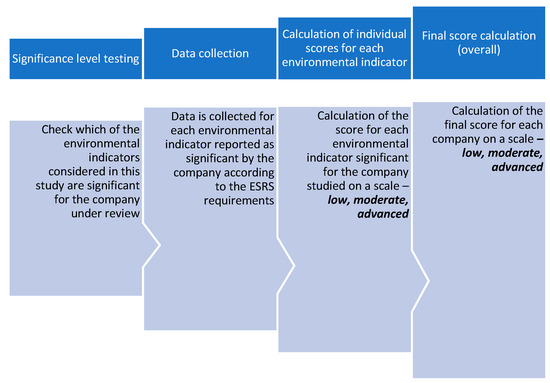
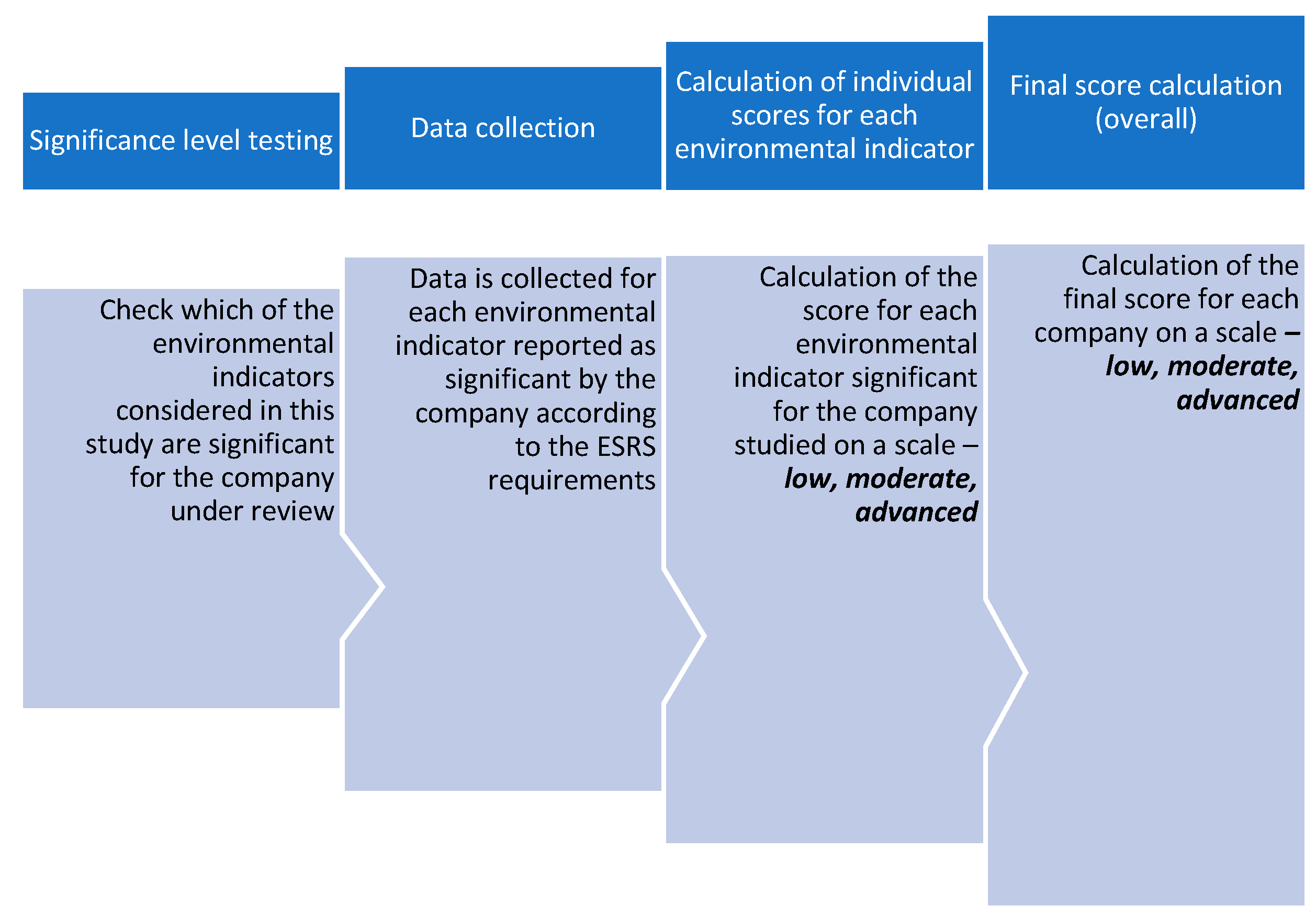
The following steps describe how the data are collected and processed prior to being used for the assessment (Figure 1):
Figure 1.
Stages of data collection for each company included in the study.
- The data identified for the present study are manually collected from the companies’ published reports and stored as source documents to allow for subsequent verification.
- Based on these data, an environmental information reporting score is calculated across five main categories, using the weighting scheme detailed in the section below.
- A final evaluation score is then generated and used to draw conclusions regarding the maturity level of environmental indicator reporting by companies in Romania, classified as advanced, moderate, or low.
In establishing the methodology for assessing the degree of environmental information reporting by the companies selected in this study, the following steps were followed:
Step 1: Define the criteria and questions to identify a set of reporting requirements that are aligned with legal obligations, while also ensuring a credible approach to reporting and addressing environmental issues.
Step 2: Assign weights to the criteria and questions included in the set of indicators.
Step 3: Define thresholds for the created intervals in order to assign a score and interpret the results on a scale of advanced, moderate, and low, with respect to the maturity of environmental performance indicator reporting by companies in Romania.
3.1. Determination of the Environmental Categories Forming the Basis of the Study
The indicators selected for evaluating the environmental performance reporting of publicly listed companies in Romania are divided into five main categories, as also outlined by the Corporate Sustainability Reporting Directive: (1) climate change; (2) pollution; (3) water and marine resources; (4) biodiversity and ecosystems; (5) circular economy and resource use.
Within each main category, a series of sub-indicators is defined, encompassing the key components necessary for a sufficient and credible level of reporting. To determine these components, the European regulatory framework ESRS, which underpins the CSRD, was used as a reference. Using this reference approach, the main indicators were identified. Alignment with legal requirements facilitates the retrieval and verification of these data in companies’ publicly available reports.
For each main environmental indicator category, four components are identified: (1) data and metrics; (2) targets and commitments/objectives; (3) action plan; (4) strategy and governance (applicable only to climate change).
3.2. Defining the Weights of the Criteria That Are Part of the Set of Indicators
Based on the considerations presented below, a different weight was assigned to each component of the set of indicators under analysis. Table 2 presents the weights along with an explanation for their assignment. Since companies are still in the process of understanding and deepening their obligations regarding the reporting of environmental elements, the weights assigned here reflect the current stage of implementation of these standards. These weights may be adjusted in future studies as companies’ reporting practices mature and they have had more time to develop their forward-looking corporate plans.
Table 2.
Defining the weights of the criteria included in the set of indicators.
3.3. Defining the Weights of the Criteria Included in the Set of Indicators
The weighting of criteria across the five environmental categories defined by ESRSs E1–E5 is presented in Supplementary Materials and was designed to reflect their differentiated relevance to corporate sustainability performance and reporting maturity. Each category was assigned specific weights based on its relative environmental impact, regulatory emphasis within the ESRS framework, and the degree of complexity involved in data collection and disclosure. This approach allows the assessment to capture both cross-cutting sustainability aspects and category-specific challenges, ensuring a balanced and policy-relevant evaluation of environmental reporting maturity.
In addition, particularly in the Romanian context, the sustainability reporting journey for many companies is still at an early stage, as some companies are disclosing sustainability data and initiatives for the first time. Consequently, organizations will need additional time to establish the necessary structures, processes, and capabilities for a fully compliant sustainability disclosure. Nevertheless, data collection and reporting constitute the foundational pillar of sustainability reporting. For this reason, this component has been assigned a higher weight (e.g., 35%) within the current assessment framework. The definition and public disclosure of sustainability targets and commitments are equally critical, as they signal a clear strategic intent and ambition to transition toward more sustainable business models and operational practices. The remaining components—such as the development of action plans, the integration of sustainability into corporate strategy, and the establishment of robust data governance—should be regarded as longer-term processes. These elements typically require at least two to three years of consistent data collection and organizational learning, which justifies their allocation of a comparatively lower weight compared to the other components of the framework.
The evaluation of environmental indicators reported by the selected companies is finalized by calculating a score for each company, classified into intervals—Advanced, Moderate, or Low—which reflects the maturity of each company’s environmental information reporting according to the methodology used in this study:
Advanced: A company in the Advanced category scores 60% or higher. This indicates that the company’s reports demonstrate a strong transition plan, including a commitment supported by a reporting framework, short- and long-term targets, and an action plan underpinned by governance.
Moderate: A company in the Moderate category scores 30% or higher. This indicates that the company’s reporting shows a reference point to build upon and includes at least one concrete commitment or target for a long-term objective.
Low: A company in the Low category scores below 30%. This is considered a weak score for the current stage of environmental indicator reporting. It may indicate that the company has outlined a transition pathway, but significant work remains to develop a credible and robust plan regarding environmental elements.
The thresholds defining Advanced, Moderate, and Low maturity levels were established based on commonly used benchmarking practices in sustainability assessment frameworks and maturity models [44]. The 60% threshold indicates a consolidated and systematic integration of sustainability indicators, while the 30–60% range reflects partial implementation and transitional maturity. Scores below 30% indicate an early or fragmented stage of indicator adoption. This classification facilitates interpretability and comparability across organizations and reporting dimensions [45].
3.4. Limitations and Additional Methodological Considerations
The data collection was based on publicly available reports corresponding to financial activity of year 2024 published by companies throughout year 2025 (annual reports, sustainability reports, etc.). This approach was chosen for the following reasons:
- It avoids requesting the sampled companies to complete questionnaires regarding information that has already been disclosed.
- It prevents the creation of informational barriers and ensures that companies and readers can access and verify the sources of the collected data.
- It increases the utilization of data that are already publicly available.
It is well known that not all companies disclose such information publicly. Therefore, for future extensions of this study, it is recommended to also collect information through questionnaires or interviews with private companies or those that have not yet begun environmental reporting in the public domain.
To enhance the insights generated by the evaluation methodology of this study over time, the following recommendations are suggested:
- Measuring progress over time: The implementation of a credible transition plan over time will contribute to a company’s decarbonization. Therefore, tracking progress to quantify how a company responds to and positions itself regarding long-term environmental responsibility is important. Ambitious plans and the complexity of data reported in a single year only demonstrate the company’s ambition to comply with legislation and environmental responsibilities for that year. Sustained effort and commitment over multiple years, however, truly indicate whether a company is serious about its environmental impact and the effects of environmental factors on its operations.
- Collecting private information: Since not all companies disclose their data and transition plans publicly, it is recommended to include information from private companies as well.
- Adding new categories: For a more comprehensive assessment, it is recommended to incorporate additional elements from the broader sustainability spectrum, such as social or governance considerations, into the final score.
4. Results
4.1. Results for the Environmental Category: Climate Change
The research shows that 6 of the top 10 publicly listed companies in Romania exhibit an advanced level of reporting on climate change, with scores ranging from 60% to 88%, while 4 companies demonstrate a moderate level of reporting, with scores between 45% and 58% (Table 3). None of the companies fall into the low reporting category for climate change.
Table 3.
Results for the Environmental Category: Climate Change.
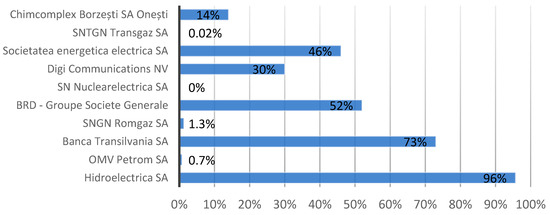
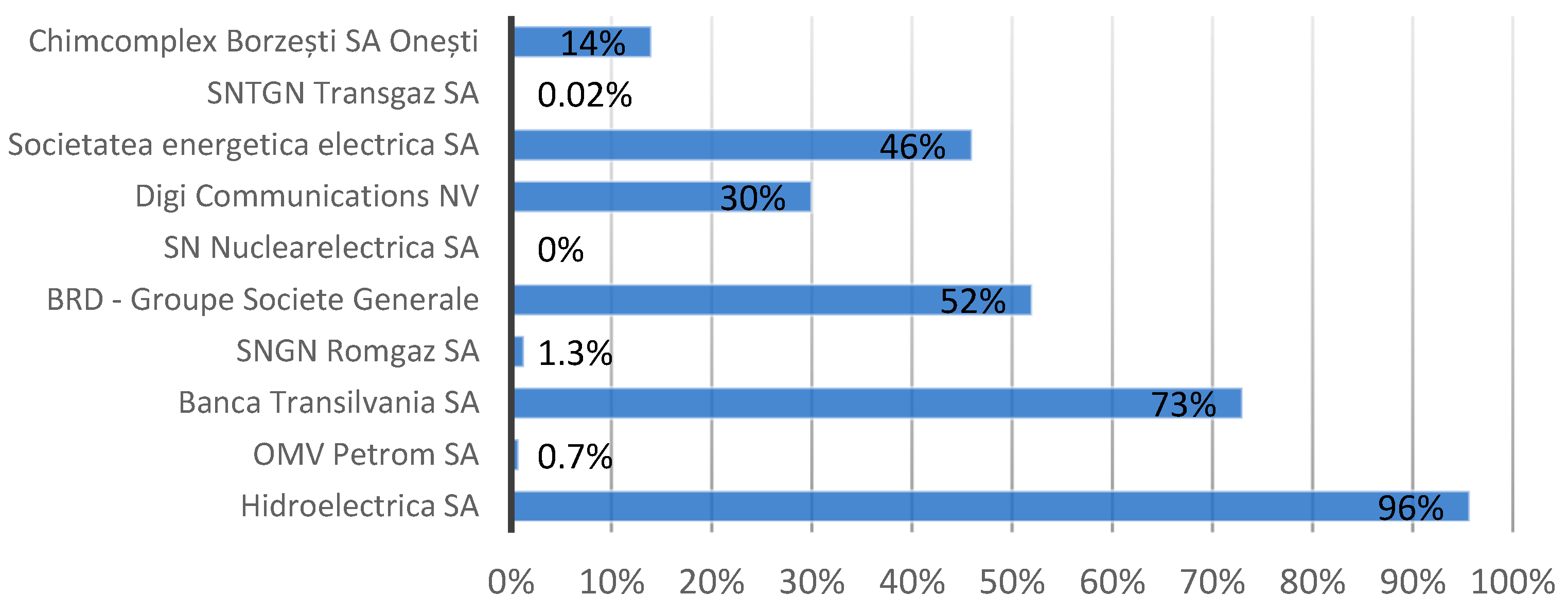
Data and Indicators: Regarding climate-related data and indicators, all 10 companies in the sample report Scope 1, 2, and 3 greenhouse gas emissions in accordance with the Greenhouse Gas Protocol. This demonstrates a high level of understanding of climate change issues and the company’s impact both within its own operations (Scopes 1 and 2) and across its value chain (Scope 3). Furthermore, the majority of companies report their energy consumption and the percentage of renewable energy used in their energy mix (Figure 2).
Figure 2.
Share of renewable sources in total energy consumption (%).
Targets: Although the companies report climate-related data and indicators at an advanced level, only one company (OMV Petrom SA) has a net-zero commitment, four companies have short-term reduction targets (up to 2030), and two companies have long-term emission reduction targets (beyond 2030). The remaining companies in the study have not set any commitments or targets regarding climate change.
Action Plans: Most companies have reported, within their action plans, various climate-related measures and policies, both general and specific, including budgets for planned projects over a defined time horizon. A few examples are provided below:
In the energy and oil extraction sector, companies report a wide range of strategic initiatives aimed at reducing carbon intensity and supporting the energy transition. OMV Petrom SA plays a central role in this process through the development of the Neptun Deep natural gas project in the Black Sea, which is intended to progressively replace oil and coal and to increase the share of natural gas to approximately 70% of total hydrocarbon production. In parallel, the company is expanding its renewable energy portfolio by investing in solar and wind projects with a planned installed capacity of 2.5 GW by 2030, supported by total investments of around €3 billion. Additional efforts include the gradual reduction of fossil fuel sales, the expansion of biofuel and renewable energy production, and the development of the national electric vehicle charging network. Technological innovation is further reflected in the testing and investment in carbon capture and utilization technologies at the Petrobrazi refinery, as well as in operational efficiency improvements through electrification, on-site green electricity generation from photovoltaic systems, and heat and cooling recovery from waste. Measures targeting methane emissions, such as reduced flaring and routine venting, leak detection, and improved asset integrity, complement these actions. At the portfolio level, OMV Petrom has implemented strategic adjustments through acquisitions, divestments, decommissioning, and optimization of oil and gas assets, with natural gas positioned as a transitional fuel.
In the banking sector, sustainability efforts are primarily reflected in the integration of ESG considerations into core financial activities. Banca Transilvania monitors ESG factors through structured client questionnaires and analytical tools, assigning ESG scores and risk levels ranging from very low to very high. BRD Group reports the mobilization of €2.4 billion in sustainable financing by 2027 by embedding ESG criteria into investment decisions and supporting projects with long-term environmental and social benefits. In addition, BRD has integrated a Corporate Climate Vulnerability Indicator (CCVI) into its transition risk analysis for portfolio clients. Operational measures complement these financial initiatives, including the procurement of 100% renewable electricity for internal operations and a 50% reduction in employee transport-related emissions through the adoption of lower-emission vehicles.
Within the electricity generation and natural gas extraction sector, companies focus on infrastructure modernization and emission reduction. SNGN Romgaz SA reports the modernization of the CTE Iernut thermal power plant, alongside the installation of solar panels for on-site renewable energy generation to supply operational needs. The company has also invested in equipment for detecting and quantifying methane emissions and in the modernization of lighting systems. Similarly, Nuclearelectrica SA has upgraded existing facilities to reduce consumption of gas, water, and energy, supported by total investments of approximately €9 million.
The telecommunications sector demonstrates a strong emphasis on energy efficiency and demand reduction. Digi has installed photovoltaic systems at telecommunications sites for self-consumption and has progressively replaced outdoor lighting with energy-efficient LED solutions. Additional measures include the installation of timers on outlets powering water dispensers and purifiers, the implementation of cold aisle systems in data centers to optimize targeted cooling of server racks, and the deployment of efficient electric heat pump systems to reduce energy consumption and emissions in buildings. Thermal insulation improvements in shelters further contribute to lowering heating and cooling energy demand.
In the electricity distribution sector, Societatea Energetică Electrică SA focuses on digitalization and renewable energy integration. The company reports the optimization of energy consumption through the use of artificial intelligence, as well as the installation and commissioning of photovoltaic power plants for self-consumption. Furthermore, investment levels across all three voltage levels are expected to increase during the 2024–2030 period, supported by a structured framework for the analysis and prioritization of investments related to sustainable activities.
For the pipeline transportation sector, SNTGN Transgaz SA highlights infrastructure adaptation as a key priority for the energy transition. This includes the preparation of pipelines, compressor stations, and measurement and regulation facilities to enable the transport of alternative fuels such as biomethane and hydrogen. The company has also commissioned a wind turbine at SRM Năvodari and plans to install additional turbines at other suitable locations. Further measures include the procurement of certified renewable electricity, the installation of photovoltaic panels, and the implementation of gas recompression technologies that prevent venting during maintenance and construction works.
In the petrochemical industry, Chimcomplex Borzești SA Onești reports substantial investments in low-carbon and circular economy technologies. These include the implementation of on-site cogeneration facilities using natural gas and hydrogen, the commissioning of a new specialty polyol production unit with energy efficiency approximately 30% higher than previous installations, and the construction of a new 68 MW cogeneration plant at the Râmnicu Vâlcea site to supply thermal energy to local communities. The installation of photovoltaic panels at the Onești, Someș-Dej, and Râmnicu Vâlcea sites contributes to an annual reduction of approximately 17,000 tons of CO2 emissions from electricity consumption. In addition, the POLIEPOXIZI project represents a strategic investment in sustainable chemistry, producing epoxy resins based on epichlorohydrin derived from vegetable glycerin and hydrochloric acid, thereby supporting circular economy principles and advanced chlorine processing. Product diversification efforts further include CO2 capture in methanol production, the development of green polyols, the use of green hydrogen in chemical processes and energy generation, and the utilization of natural resources in silicate production.
Regarding products and services, nine out of the ten analyzed companies report intentions to expand their portfolios toward less polluting solutions. These plans include the expansion and diversification of renewable electricity generation through new or acquired hydro, solar, and wind capacities by Hidroelectrica SA. OMV Petrom plans to increase biofuel production by an additional 50,000 tons per year, reaching 300,000 tons annually by 2030, including sustainable aviation fuel and hydrotreated vegetable oil starting in 2028, as well as the production of approximately 15,000 tons per year of green hydrogen by 2030. In the financial sector, Banca Transilvania aims to provide green loans totaling 5 billion RON between 2025 and 2027, while BRD Group offers green, social, sustainable, and sustainability-linked financing solutions aligned with its internal Green Financing Framework. In the energy sector, Nuclearelectrica SA targets a 133% increase in nuclear energy production capacity by 2030–2031 through the life extension of Unit 1, while Societatea Energetică Electrică SA plans to expand renewable energy generation to 1000 MW and electricity storage to 900 MWh by 2030. Transgaz SA continues to prepare infrastructure for alternative fuel transport, and Chimcomplex Borzești SA Onești expands its sustainable product portfolio with cashew oil-based and CO2-integrated polyols.
Strategy and Governance: Regarding corporate governance and strategy, 7 out of the 10 companies studied have designated individuals or structures within their governing bodies specifically responsible for mitigating the effects of climate change. Typically, these take the form of committees, such as the Governance and Sustainability Committee within the Supervisory Board (Hidroelectrica SA), the Sustainability–ESG Committee chaired by the Bank’s CEO (BRD Group), or the Climate Governance and Public Policy Committee (Societatea Energetică Electrică SA), which functions as a permanent decision-making body with an advisory role.
However, only 4 of the 10 companies have fully integrated climate change considerations into their business strategy. These companies have developed a clear short- and medium-term (2030) strategy that includes a financial framework and adapts their business model to incorporate new low-carbon and net-zero business activities.
4.2. Results for the Environmental Category: Pollution
Only 4 of the 10 companies studied identified pollution as a material category following the double materiality assessment. Of these, 3 companies demonstrate a moderate level of pollution reporting, with scores ranging from 33% to 56%, while 1 company achieves an advanced level of reporting with a score of 71% (Table 4).
Table 4.
Results for the Environmental Category: Pollution.
Data and Indicators: All four companies reported information on pollutants released into water, air, or soil. The reported pollutants include, for example, sulfur oxides (SOx), nitrogen oxides (NOx), particulate matter (PM), non-methane volatile organic compounds (NMVOCs), heavy metals from methane extraction and combustion, radioactive emissions from nuclear energy production, and chlorine or hydrochloric acid emissions from petrochemical processes or the incineration of chlorinated organic residues. However, none of the companies disclosed data related to microplastics used or generated.
Targets: Only 2 of the 4 companies have set pollution reduction targets for air and water, while none have established targets for soil pollution, as soil pollution is not considered significant relative to air and water pollution within the companies’ operational scope.
Action Plans: Regarding action plans, 3 of the 4 companies have identified clear measures and policies to reduce pollution, such as proactive detection and remediation of leaks, modernization of refinery tanks through retrofitting closure systems, and technical improvements to ensure the integrity of oil and gas production facilities (OMV Petrom SA). Other measures include the installation of filters and flue gas desulfurization systems, use of heat recovery steam generators (HRSG) to convert excess thermal energy into electricity, and elimination of uncontrolled condensate losses (SNGN Romgaz SA).
Additionally, 3 of the 4 companies have implemented plans for hazardous substances, such as methane gas or used oil, which include operational control measures, emission measurement and monitoring, personnel training, resealing of containment systems, selective collection of used oil in closed, shock- and heat-resistant containers labeled in a visible location, and spill prevention.
4.3. Results for the Environmental Category: Water and Marine Resources
Only 4 of the 10 companies studied identified water and marine resources as a material category following the double materiality assessment. Of these, 3 companies demonstrate an advanced level of reporting, with scores ranging from 65% to 100%, while 1 company has a moderate reporting level with a score of 35% (Table 5).
Table 5.
Results for the Environmental Category: Water and Marine Resources.
Data and Indicators: All four companies reported information related to water consumption, including the volume of water extracted from underground, marine, or surface sources, the volume of recycled and reused water, and the volume of water discharged.
Targets: Only 2 of the 4 companies have set targets for reducing water consumption and/or mitigating negative impacts on marine resources. These targets include either reducing overall water consumption or achieving specific water quality standards.
Action Plans: Regarding action plans, 3 of the 4 companies have implemented clear policies and measures to reduce water-related impacts, such as:
- Increasing water recirculation rates, using desalinated seawater instead of freshwater, installing cooling systems with recirculation, and employing alternative cooling agents (air or glycol) instead of water; continuous modernization and maintenance of equipment to reduce water losses, and optimization of water supply pipeline routes (OMV Petrom SA).
- Installation of oil recovery basins to prevent accidental oil spills and the use of absorbent materials for managing accidental leaks of hazardous substances (SNGN Romgaz SA).
- Neutralization of wastewater generated from ion exchange resin regeneration in demineralization plants, collection and decontamination of radioactively contaminated water (Nuclearelectrica SA).
4.4. Results for the Environmental Category: Biodiversity and Ecosystems
Only 4 of the 10 companies studied identified biodiversity and ecosystems as a significant category following the double materiality assessment. All four companies exhibit a low reporting maturity, with scores of 10% or 20% (Table 6).
Table 6.
Results for the Environmental Category: Biodiversity and Ecosystems.
Data and Indicators: None of the 4 companies reported biodiversity indicators.
Targets: None of the 4 companies set objectives to reduce the negative impact on ecosystems and biodiversity.
Action Plan: All 4 companies identified specific actions and policies regarding the protection of ecosystems and biodiversity, including: conducting assessment studies to determine potential impacts on each species and habitat of community interest in compliance with current legal requirements; monitoring biodiversity with periodic ecosystem status reports; creating fish ladders to ensure ecological connectivity, as established by regulatory acts (environmental agreements, water management permits); constructing structures to ensure longitudinal connectivity (Hidroelectrica); using the LEAP for Biodiversity framework, developed by the Taskforce on Nature-related Financial Disclosures (TNFD), in four stages (Locate, Evaluate, Assess, Prepare), which helps organizations identify, evaluate, manage, and report dependencies, impacts, risks, and opportunities related to nature and biodiversity (OMV Petrom); and monitoring soil, water, and air parameters and controlling water discharge temperatures into the Danube to avoid affecting biodiversity (SN Nuclearelectrica SA).
Products and Services: Only one of the 4 companies identified future products or services that are less harmful to ecosystems and biodiversity through a specific objective of achieving a net positive impact in new projects in sensitive areas, with a commitment to restore used land to its initial state at the end of the company’s operations (OMV Petrom).
Strategy and Governance: None of the 4 companies has integrated biodiversity aspects into their business strategy.
4.5. Results Related to the Environment Category: Circular Economy and Resource Use
Our research shows that 5 of the 10 companies studied identified circular economy and resource use as a significant category following the double materiality analysis. Of these 5 companies, 2 have a moderate reporting level, with scores of 30% and 35%, while 3 have an advanced reporting level, with scores ranging from 65% to 100% (Table 7).
Table 7.
Results related to the environment category: Circular economy and resource use.
Data and Indicators: 4 out of the 5 companies reported data and indicators such as resource inputs and outputs or the amount of waste disposed by category.
Targets: Only 2 out of the 5 companies established specific targets related to resource consumption and the transition to a circular economy, such as reducing the amount of non-incinerable waste (SN Nuclearelectrica SA) or valorizing at least 90% of recoverable waste each year (Chimcomplex Borzești SA Onești).
Action Plan: 4 out of the 5 companies have identified actions, policies, and resources dedicated to minimizing resource consumption and transitioning to a circular economy. Examples include: purchasing higher-quality materials that ensure a longer lifespan; reusing products (drilling mud) that have not changed their properties (composition, density) in operations within the same activity that require the use of that product; purchasing rechargeable batteries instead of single-use ones; monitoring the recovery rate of used oil generated in compression sections to ensure the highest possible recovery and subsequent valorization and to identify potential losses in the process; preventing the generation of shavings and metal waste from maintenance through employee training (SNGN Romgaz SA); valorizing waste from other industries, such as spent hydrochloric acid and sludge crusts to produce ferric chloride used as a coagulant in water treatment; recycling polyurethane waste to recover rigid polyols; PET waste to extract TPA used in plasticizers (terephthalic acid for plasticizers); and use of rubber waste to produce pyrolysis oil (Chimcomplex Borzești SA Onești).
4.6. Overall Results
The final results indicate that 5 of the top 10 companies listed on the Romanian stock exchange exhibit an advanced level of environmental reporting, achieving overall scores (across all five components) ranging between 60% and 73%, while the remaining 5 companies show a moderate level of reporting, with scores between 30% and 51% (Table 8). None of the companies fall into the low reporting category according to the final aggregated score.
Table 8.
Overall results.
Regarding the environmental categories analyzed, climate change is the only category identified as significant for all companies in the sample, while the other four categories are considered significant only for some companies, depending on their core activities and industry, in accordance with the double materiality assessment.
Differences in maturity levels across environmental dimensions can be partly explained by regulatory pressure, data availability, and sector-specific exposure. Climate change reporting benefits from longer regulatory history and established measurement practices, particularly in energy-intensive sectors. In contrast, biodiversity-related disclosures remain less mature due to methodological complexity and weaker enforcement mechanisms.
5. Discussion
The results of this study contribute to the growing body of literature on sustainability reporting maturity by providing an ESRS-aligned, indicator-based assessment framework. Compared to previous studies that focus primarily on disclosure completeness or qualitative compliance [1,8,28], the proposed approach integrates weighted indicators and maturity levels, offering a more scalable evaluation of environmental reporting performance. Although environmental disclosure in corporate annual reports has been widely studied, prior research has largely focused on the United States, Canada, Africa, Asia, Australia, and Western Europe, with Eastern European countries such as Romania remaining underexplored [46,47,48,49]. As 2025 marks the first sustainability reporting cycle for Romanian companies under the phased implementation of the CSRD, this study provides timely initial evidence on its application in Romania.
Overall, a clear tendency can be observed among the companies analyzed to appoint dedicated persons or organizational structures within their governance bodies responsible for environmental, social, or governance (ESG) matters under the CSRD. A relevant example is the ESG Working Group for ESG Management established in 2024 by Nuclearelectrica SA.
The double materiality assessment conducted in accordance with the CSRD may reveal that a topic can generate both positive impacts—through the identification of opportunities enabling the company to leverage certain aspects (e.g., optimization of resource reuse through recycling) [10,50]—and negative impacts (e.g., hazardous waste posing risks to the environment or human health, which requires adequate monitoring and treatment) [51,52].
Several companies reported greenhouse gas (GHG) emissions for the first time in 2024 and committed to adopting future targets and commitments, using 2024 as the baseline year. In this context, the CSRD plays a significant role in placing the monitoring of climate-related indicators and the adoption of climate targets (and beyond) on companies’ strategic agendas [53,54,55].
Even though some companies have not yet set specific GHG emission reduction targets, most of the analyzed companies have implemented general measures and actions aimed at reducing energy consumption and improving energy efficiency [56,57], which indirectly contribute to emission reductions and the decarbonization of corporate operations [58,59].
Opportunities for financing energy infrastructure modernization projects through the European Union’s Modernisation Fund (MF) have also been identified [60]. The Fund is financed from revenues generated by auctioning 2% of greenhouse gas emission allowances for the 2021–2030 period, with Romania allocated 11.98%, corresponding to a budget exceeding EUR 15 billion available until 2030. In this context, projects aimed at strengthening natural gas transmission infrastructure (hydrogen-ready), preparing infrastructure for hydrogen and ammonia, as well as other modernization projects, could benefit from the funds allocated to Romania. One of the companies analyzed, Transgaz, submitted eight investment projects in 2023 through the Ministry of Energy, requesting non-reimbursable funding from the MF amounting to EUR 571.7 million. The opportunity for other Romanian companies to apply for and access such funds on a broader scale is therefore highlighted [61,62].
Further opportunities for project financing through green bonds or other sustainable, green, or sustainability-linked financing instruments have been identified [63]. Green bonds are debt instruments similar to conventional bonds, with the crucial distinction that the funds raised are exclusively allocated to projects with environmental benefits (e.g., renewable energy, energy efficiency, clean transport). These instruments are strictly regulated, including under the European Green Bond Standard (EUGBS), to ensure transparency and prevent greenwashing. A prerequisite for accessing this type of financing is the availability of robust climate and environmental data, along with the establishment of clear targets at the company or project level in cooperation with financial institutions. For example, Electrica became the first company in the Romanian market to issue green bonds worth EUR 500 million to finance projects related to the expansion of renewable energy generation and storage capacity. This highlights the potential for other Romanian companies to access financing through green bond issuance [63].
Environmental protection considerations are increasingly integrated into the corporate lending process by Romanian banks, following the model adopted by international financial institutions, through ESG assessment frameworks [64]. These aspects are incorporated into banks’ risk analysis processes (e.g., Banca Transilvania, BRD Group) and play a significant role in financing decisions [65]. ESG risk analysts assess the measures implemented by companies, as well as their historical environmental performance, and may adjust the risk rating accordingly [66]. Specifically, if a company has recorded sanctions for non-compliance with environmental legislation, operates with outdated technological equipment, or lacks adequate measures for preventing pollution, climate change impacts, ecosystem degradation, and biodiversity loss, the analyst may increase the risk classification by at least one level (e.g., from medium to medium-high or higher). Conversely, if a company has implemented effective pollution prevention measures, holds a certified ISO environmental management system, demonstrates a positive environmental compliance record, and operates with modern, energy-efficient technologies, the analyst may decide to reduce the risk classification (e.g., from medium to medium-low or lower) [67,68,69]. Consequently, companies with a high level of environmental reporting and robust environmental management practices may find it easier to access financing in the Romanian market.
An important innovative aspect of this research lies in the operationalization of the ESRSs’ E1–E5 categories into a practical maturity assessment tool. This allows for a structured comparison across environmental dimensions and supports decision-making for both reporting entities and policymakers [70,71]. The findings highlight areas where organizations demonstrate advanced performance, as well as critical gaps requiring targeted improvements.
6. Conclusions
All the companies analyzed exhibit an advanced level of reporting with regard to climate change. The lowest level of reporting is observed in the area of biodiversity and ecosystems. Although the biodiversity and ecosystems category is identified as material for four companies, none of them has yet established or disclosed metrics to measure their impacts on biodiversity and ecosystems within their activities. A lack of knowledge and quantification of corporate impacts on biodiversity and ecosystems is therefore evident, highlighting the need to develop appropriate metrics that can underpin specific objectives and actions aimed at mitigating negative impacts in this area.
A significant positive impact of the CSRD on the level of environmental indicator reporting is identified, particularly with regard to the designation of dedicated persons or structures within companies’ governance bodies responsible for environmental, social, or governance matters, as well as the first-time reporting of greenhouse gas emissions, which lays the foundation for the future adoption of targets and commitments. Nevertheless, gaps remain in terms of available indicators and data, the definition of specific targets, and the establishment of commitments, especially in the areas of water and marine resources, pollution, and biodiversity and ecosystems.
From a theoretical perspective, the study contributes to the sustainability disclosure and institutional theory literature by demonstrating how regulatory pressure under the CSRD shapes differentiated reporting maturity across environmental domains. The methodology developed in this study can be replicated, extended to larger samples, or applied in cross-country comparative studies, thus providing a scalable tool for future research.
The conclusions drawn from this study demonstrate that the proposed maturity assessment framework effectively links theoretical sustainability concepts with practical reporting requirements under the ESRSs. The results provide actionable insights into how organizations can progressively enhance the quality and consistency of their environmental disclosures.
The findings of this research are particularly relevant for corporate sustainability managers, policymakers, standard-setters, and researchers interested in sustainability reporting, ESG performance assessment, and ESRS implementation.
This study has several limitations. First, the assessment relies on publicly available sustainability reports, which may vary in quality and completeness. Second, the weighting system, while theoretically grounded, involves a degree of judgment that could be further refined in future research.
Supplementary Materials
The following supporting information can be downloaded at: https://www.mdpi.com/article/10.3390/su18041990/s1, File S1: Determining the specific criteria associated with a sufficient and credible level of reporting.
Author Contributions
Conceptualization, T.M.R.; methodology, T.M.R.; software, T.R.; validation, A.C.M.O., L.P. and T.R.; formal analysis, T.M.R.; investigation, T.M.R.; resources, T.R.; data curation, T.M.R.; writing—original draft preparation, T.M.R.; writing—review and editing, A.C.M.O.; visualization, L.P.; supervision, L.P. and T.R.; project administration, A.C.M.O.; funding acquisition, L.P. All authors have read and agreed to the published version of the manuscript.
Funding
This research received no external funding.
Institutional Review Board Statement
Not applicable.
Informed Consent Statement
Not applicable.
Data Availability Statement
The data that support the findings of this study are available from the corresponding author upon reasonable request.
Conflicts of Interest
The authors declare no conflicts of interest.
Abbreviations
The following abbreviations are used in this manuscript:
| CSRD | Corporate Sustainability Reporting Directive |
| ESRSs | European Sustainability Reporting Standards |
| EFRAG | European Financial Reporting Advisory Group |
| CAEN | Classification of Activities in the National Economy |
| ESG | Environmental, Social and Governance |
| LEAP | Locate–Evaluate–Assess–Prepare |
| TNFD | Taskforce on Nature-related Financial Disclosures |
References
- Rusu, T.M.; Odagiu, A.; Pop, H.; Paulette, L. Sustainability Performance Reporting. Sustainability 2024, 16, 8538. [Google Scholar] [CrossRef] [Scilit]
- Dobre, C.; Baba, C.M.; Anton, C.E.; Zamfirache, A.; Aldea, D. Sustainability Reporting and Environmental Responsibility: The Case of Romania. Adm. Sci. 2025, 15, 103. [Google Scholar] [CrossRef] [Scilit]
- Hummel, K.; Jobst, D. An Overview of Corporate Sustainability Reporting Legislation in the European Union. Account. Eur. 2024, 21, 320–355. [Google Scholar] [CrossRef] [Scilit]
- Azevedo, G.; Oliveira, J.; Sousa, I.; Borges, M.F.; Tavares, M.C.; Vale, J. Disclosure of Sustainability Information Under the Corporate Social Responsibility Directive: The Degree of Compliance of Portuguese Stock Index Companies. Int. J. Financ. Stud. 2025, 13, 13. [Google Scholar] [CrossRef] [Scilit]
- Yang, Q.; Kong, C.; Jin, S. Digital Transformation and Corporate Carbon Emissions: The Moderating Role of Corporate Governance. Systems 2025, 13, 217. [Google Scholar] [CrossRef] [Scilit]
- Glavič, P.; Levičnik, H.; Szilagyi, A.; Zugasti, I.; Schönfelder, T.; Rosicki, M.; Ruzicka, P.; Hajná, V. Smart Education for Corporate Sustainability Reporting. Standards 2025, 5, 3. [Google Scholar] [CrossRef] [Scilit]
- Krasteva-Hristova, R.; Papradanova, D.; Vechev, V. Mapping the Landscape of Sustainability Reporting: A Bibliometric Analysis Across ESG, Circular Economy, and Integrated Reporting with Sectoral Perspectives. J. Risk Financ. Manag. 2025, 18, 416. [Google Scholar] [CrossRef] [Scilit]
- Papafloratos, T.; Pantazi, T. A Systematic Review of the Effects of Mandatory Corporate Sustainability Reporting. Sustainability 2025, 17, 5336. [Google Scholar] [CrossRef] [Scilit]
- Sánchez-Vázquez, M.; Saitua-Iribar, A.; Peña-Miguel, N.; Corral-Lage, J. Analysis of ICT Energy Efficiency Disclosure to Improve Business Management Practices and Its Contribution to the SDGs. Adm. Sci. 2025, 15, 30. [Google Scholar] [CrossRef] [Scilit]
- Macuda, M.; Kobiela-Pionnier, K. The Double Materiality Principle and the Sustainability Reporting Practices of Polish Listed Companies from the WIG30 Index. Zesz. Teoretyczne Rachun. 2025, 49, 63–97. [Google Scholar] [CrossRef] [Scilit]
- Vezyroglou, K.; Siokis, F. ESG Compliance in Greek Real Estate: Current Gaps and Future Directions. J. Risk Financ. Manag. 2025, 18, 571. [Google Scholar] [CrossRef] [Scilit]
- Tőzsér, D.; Lakner, Z.; Sudibyo, N.A.; Boros, A. Disclosure Compliance with Different ESG Reporting Guidelines: The Sustainability Ranking of Selected European and Hungarian Banks in the Socio-Economic Crisis Period. Adm. Sci. 2024, 14, 58. [Google Scholar] [CrossRef] [Scilit]
- de Medeiros, J.M.; Waisenberg Dicezare, A.C.; Bertassini, A.C.; Ribeiro Carpinetti, L.C.; Zanon, L.G. Leadership Discourse and Sustainability Reporting in Fast Fashion: A Longitudinal Topic Modelling and KPI Analysis. Standards 2025, 5, 22. [Google Scholar] [CrossRef] [Scilit]
- Filtikaki, E.; Vastardi, M.; Adam, K. Sustainability Reporting in the Raw Materials Industry. Mater. Proc. 2023, 15, 46. [Google Scholar] [CrossRef] [Scilit]
- Gomes, M.; Albuquerque, F.; Rodrigues, M.A.B. Explanatory Factors of Materiality Disclosure in the Non-Financial Reporting of European Listed Companies. Account. Audit. 2025, 1, 12. [Google Scholar] [CrossRef] [Scilit]
- Casciani, D.; D’Itria, E. Fostering Directions for Digital Technology Adoption in Sustainable and Circular Fashion: Toward the Circular Fashion-Tech Lab. Systems 2024, 12, 190. [Google Scholar] [CrossRef] [Scilit]
- De Cristofaro, T.; Gulluscio, C. In Search of Double Materiality in Non-Financial Reports: First Empirical Evidence. Sustainability 2023, 15, 924. [Google Scholar] [CrossRef] [Scilit]
- Zhou, Y.; Lamberton, G.; Charles, M.B. An Explanatory Model of Materiality in Sustainability Accounting: Integrating Accountability and Stakeholder Heterogeneity. Sustainability 2023, 15, 2700. [Google Scholar] [CrossRef] [Scilit]
- Ostojic, S.; Backes, J.G.; Kowalski, M.; Traverso, M. Beyond Compliance: A Deep Dive into Improving Sustainability Reporting Quality with LCSA Indicators. Standards 2024, 4, 196–246. [Google Scholar] [CrossRef] [Scilit]
- Delegkos, A.-E.; Skordoulis, M.; Kalantonis, P. Business Strategies and Corporate Reporting for Sustainability: A Comparative Study of Materiality, Stakeholder Engagement, and ESG Performance in Europe. Sustainability 2025, 17, 8814. [Google Scholar] [CrossRef] [Scilit]
- Lungu, C.I.; Caraiani, C.; Bojan, A.M.; Dascălu, C.; Achim, R.A. Double Materiality in Sustainability Reporting: Revealing ESG–SDGs Connections for Businesses’ Awareness. Amfiteatru Econ. 2025, 27, 939–956. [Google Scholar] [CrossRef] [Scilit]
- Ahfeeth, A.M.J.; Çelebi, A. Environmental Fines and Corporate Sustainability: The Moderating Role of Governance, Firm Size, and Institutional Ownership. Sustainability 2025, 17, 9252. [Google Scholar] [CrossRef] [Scilit]
- Misiuda, M.; Lachmann, M. Investors’ Perceptions of Sustainability Reporting—A Review of the Experimental Literature. Sustainability 2022, 14, 16746. [Google Scholar] [CrossRef] [Scilit]
- Santos, A.; Bandeira, A.; Ramos, P. The Impact of Research and Development Investment on the Performance of Portuguese Companies. Risks 2024, 12, 126. [Google Scholar] [CrossRef] [Scilit]
- Zúñiga, F.; Pincheira, R.; Dimter, M.; Quinchel, B. Integrated Reporting and Assurance in Emerging Economies: Impacts on Market Liquidity and Forecast Accuracy. Account. Audit. 2025, 1, 2. [Google Scholar] [CrossRef] [Scilit]
- Mutua, K.; Powell-Turner, J.; Spiers, M.; Callaghan, J. An In-Depth Analysis of Barriers to Corporate Sustainability. Adm. Sci. 2025, 15, 161. [Google Scholar] [CrossRef] [Scilit]
- Țăran, A.-M.; Noja, G.-G.; Ionașcu, A.; Diaconu, M.; Lobonț, O.-R. Towards Green Transition: Sustainable Energy Future and Its Effects on Companies’ Financial Strategies. Energies 2026, 19, 277. [Google Scholar] [CrossRef] [Scilit]
- Erben Yavuz, A.; Kocaman, B.E.; Doğan, M.; Hazar, A.; Babuşcu, Ş.; Sutbayeva, R. The Impact of Corporate Governance on Sustainability Disclosures: A Comparison from the Perspective of Financial and Non-Financial Firms. Sustainability 2024, 16, 8400. [Google Scholar] [CrossRef] [Scilit]
- Soussi, J.C.; Aljaaidi, K.S.; Alwadani, N.F. Sustainable Environmental Governance and Corporate Environmental Performance: Empirical Evidence from Saudi Companies. J. Risk Financ. Manag. 2025, 18, 616. [Google Scholar] [CrossRef] [Scilit]
- Subačienė, R.; Arbidane, I.; Mietule, I.; Kotane, I.; Auzina-Emsina, A.; Lace, N. System of Non-Financial Performance Indicators in the Manufacturing Sector. Adm. Sci. 2026, 16, 17. [Google Scholar] [CrossRef] [Scilit]
- European Parliament; Council of the European Union. Directive (EU) 2022/2464 of the European Parliament and of the Council of 14 December 2022 Amending Regulation (EU) No 537/2014, Directive 2004/109/EC, Directive 2006/43/EC and Directive 2013/34/EU, as Regards Corporate Sustainability Reporting (CSRD). Off. J. Eur. Union 2022, L322, 15–80. [Google Scholar]
- European Financial Reporting Advisory Group (EFRAG). European Sustainability Reporting Standards (ESRS): General Requirements and Environmental Standards (ESRS E1–E5); EFRAG: Brussels, Belgium, 2023. [Google Scholar]
- European Commission. Commission Delegated Regulation (EU) 2023/2772 of 31 July 2023 Supplementing Directive 2013/34/EU as Regards Sustainability Reporting Standards. Off. J. Eur. Union 2023, L277, 1–185. [Google Scholar]
- Hidroelectrica SA. Rapoarte Anuale 2020–2024. Available online: https://www.hidroelectrica.ro/article/26 (accessed on 12 December 2025).
- OMV Petrom SA. 2024. Available online: https://www.omvpetrom.com/en/investors/news-and-events (accessed on 12 December 2025).
- Banca Transilvania SA. Raport de Sustenabilitate, 2024. Available online: https://www.bancatransilvania.ro/files/app/media/relatii-investitori/environmental-social-governance/rapoarte/2024/Raport-Sustenabilitate.pdf (accessed on 15 December 2025).
- SNGN Romgaz SA. Raportarea Consolidate Privind Durabilitatea, 2024. Available online: https://www.romgaz.ro/sites/default/files/2025-04/Raportarea%20Consolidat%C4%83%20privind%20Durabilitatea%202024.pdf (accessed on 15 December 2025).
- BRD—Groupe Societe Generale. Annual Board of Director’s Report, 2024. Available online: https://www.brd.ro/sites/default/files/_files/pdf/BoD%20Report%202024%20EN%20-%2014.03.2025_FINAL_SIGNED_opinie%20PwC.pdf#64 (accessed on 18 December 2025).
- SN Nuclearelectrica SA. SNN Group Consolidated Sustainability Report 2024, March 2025. Available online: https://nuclearelectrica.ro/ir/wp-content/uploads/sites/3/2025/05/MACHETAT-SNN-Raport-de-sustenabilitate-2024_EN_20250530_pt-pdf.pdf (accessed on 18 December 2025).
- Digi Communications NV. ANNUAL REPORT for the Year Ended December 31, 2024. Available online: https://www.digi-communications.ro/en/see-file/DIGI_2024-Annual-report-approved-by-GSM.pdf (accessed on 18 December 2025).
- Societatea Energetică Electrica SA. Raportare Privind Durabilitatea Privind Anul 2024. Available online: https://www.electricafurnizare.ro/app/uploads/2025/07/Declaratia-de-Sustenabilitate-ELSA-2024-si-opinia-auditorului.pdf (accessed on 18 December 2025).
- SNTGN Transgaz SA. Transgaz 2024 Raportare Consolidate Privind Durabilitatea. Available online: https://www.romgaz.ro/sites/default/files/2025-04/Raport%20anual%202024.pdf (accessed on 20 December 2025).
- Chimcomplex Borzești SA Onești. Raport de Sustenabilitate Grupul Chimcomplex SA 2024. Available online: https://chimcomplex.com/wp-content/uploads/Raport-de-sustenabilitate-2024-RO.pdf (accessed on 20 December 2025).
- Werner-Lewandowska, K.; Wiecek-Janka, E.; Pawłowski, G. Determinants of Sustainability Maturity in Family Businesses. Sustainability 2025, 17, 1818. [Google Scholar] [CrossRef] [Scilit]
- ING. Assessing Climate Transition Plan Disclosures, ING’s Client Transition Plan Assessment Methodology, Whitepaper, 2025. Available online: https://ing.com/sustainability/our-progress/sustainability-publications (accessed on 20 December 2025).
- Uwuigbe, U.; Egbide, B.C. Corporate Social Responsibility Disclosures in Nigeria: A Study of Listed Financial and Non-Financial Firm. J. Manag. Sustain. 2012, 2, 160–169. [Google Scholar] [CrossRef] [Scilit]
- Bednárová, M.; Klimko, R.; Rievajová, E. From Environmental Reporting to Environmental Performance. Sustainability 2019, 11, 2549. [Google Scholar] [CrossRef] [Scilit]
- Girón, A.; Kazemikhasragh, A.; Cicchiello, A.F.; Panetti, E. Sustainability Reporting and Firms’ Economic Performance: Evidence from Asia and Africa. J. Knowl. Econ. 2021, 12, 1741–1759. [Google Scholar] [CrossRef] [Scilit]
- Bosi, M.K.; Lajuni, N.; Wellfren, A.C.; Lim, T.S. Sustainability Reporting through Environmental, Social, and Governance: A Bibliometric Review. Sustainability 2022, 14, 12071. [Google Scholar] [CrossRef] [Scilit]
- Vázquez Harkivi, M. Double Materiality in CSRD reporting: Challenges and Opportunities in a Complex Sustainability Regulatory Landscape. HAMK Unltd. J. 2025. Available online: https://urn.fi/URN:NBN:fi-fe2025041527037 (accessed on 20 December 2025).
- Glaveli, N.; Alexiou, M.; Maragos, A.; Daskalopoulou, A.; Voulgari, V. Assessing the Maturity of Sustainable Business Model and Strategy Reporting under the CSRD Shadow. J. Risk Financ. Manag. 2023, 16, 445. [Google Scholar] [CrossRef] [Scilit]
- Titova, N.; Cherepovitsyna, A.; Guseva, T. Meeting the UN’s Sustainable Development Goals in the Decarbonization Agenda: A Case of Russian Oil and Gas Companies. Resources 2023, 12, 121. [Google Scholar] [CrossRef] [Scilit]
- Zrnic, A.; Pekanov, D.; Borozan, D. Assessing the Sustainability Reporting Transparency and Engagement of European Energy Companies. Energies 2024, 17, 4934. [Google Scholar] [CrossRef] [Scilit]
- Ashbee, E.M.; Bardecki, M.J. Strategic Adoption of Voluntary Sustainability Standards: Business Implications of ANSI/NSI 373 in the Dimension Stone Industry. Businesses 2025, 5, 37. [Google Scholar] [CrossRef] [Scilit]
- Oliveira, H.C.; Gomes, M.; Maldonado, I.; Bastos, S.; Silva, P. Integrating the SDGs into Corporate Strategy: A Case Study of EDP Group. Adm. Sci. 2025, 15, 253. [Google Scholar] [CrossRef] [Scilit]
- Lewandowski, S.; Ullrich, A. Measures to reduce corporate GHG emissions: A review-based taxonomy and survey-based cluster analysis of their application and perceived effectiveness. J. Environ. Manag. 2023, 325, 116437. [Google Scholar] [CrossRef] [Scilit]
- Budde, F.; Kohl, H. Corporate Climate Protection Measures to Improve the Carbon Footprint in Production: A Systematic Development of a Toolbox with Climate Protection Actions for the Reduction of Greenhouse Gas Emissions in Small and Medium-Sized Enterprises. In Sustainable Manufacturing as a Driver for Growth; Lecture Notes in Mechanical Engineering; Kohl, H., Seliger, G., Dietrich, F., Mur, S., Eds.; Springer: Cham, Switzerland, 2025. [Google Scholar] [CrossRef] [Scilit]
- Magazzino, C.; Mele, M.; Leogrande, A. Regional Disparities and Strategic Implications of Hydrogen Production in 27 European Countries. Reg. Sci. Environ. Econ. 2024, 1, 3–30. [Google Scholar] [CrossRef] [Scilit]
- Bloj, M.D.; Ripeanu, R.G.; Diniță, A.; Oprea, V.O.; Tănase, M. Comprehensive review of hydrogen-natural gas blending: Global project insights with a focus on implementation and impact in Romanian gas networks. Heliyon 2025, 11, e43090. [Google Scholar] [CrossRef] [Scilit]
- Bostan, I.; Moroşan, A.-A.; Hapenciuc, C.-V.; Stanciu, P.; Condratov, I. Are Structural Funds a Real Solution for Regional Development in the European Union? A Study on the Northeast Region of Romania. J. Risk Financ. Manag. 2022, 15, 232. [Google Scholar] [CrossRef] [Scilit]
- Panait, M.; Cibu, B.R.; Teodorescu, D.M.; Delcea, C. European Fund Absorption and Contribution to Business Environment Development: Research Output Analysis Through Bibliometric and Topic Modeling Analysis. Businesses 2025, 5, 45. [Google Scholar] [CrossRef] [Scilit]
- Błażejowska, M.; Czarny, A.; Gee-Milan, E.; Kowalska, I.; Stępień, P. The Role of the European Investment Bank in Financing Renewable Energy Sources in Selected European Union Countries. Energies 2025, 18, 6173. [Google Scholar] [CrossRef] [Scilit]
- Rodrigues Loiola, R.; Kimura, H.; Melo Souza, L.d. Sustainable Finance, Green Bonds and Financial Performance—A Literature Review. Int. J. Financ. Stud. 2025, 13, 233. [Google Scholar] [CrossRef] [Scilit]
- Norocel, I.-I.; Vierescu, E.-M. The Relationship between Environmental, Social and Governance Factors, Economic Growth, and Banking Activity. J. Risk Financ. Manag. 2024, 17, 285. [Google Scholar] [CrossRef] [Scilit]
- Tudor, C. Investors’ Trading Activity and Information Asymmetry: Evidence from the Romanian Stock Market. Risks 2021, 9, 149. [Google Scholar] [CrossRef] [Scilit]
- Jagrič, T.; Mumel, D.; Skaza, A. Evaluation of Environmental, Social, and Governance Risks? A Critical Literature Review with Practical Implications. Sustainability 2025, 17, 8451. [Google Scholar] [CrossRef] [Scilit]
- Toha, M.A.; Johl, S.K.; Khan, P.A. Firm’s Sustainability and Societal Development from the Lens of Fishbone Eco-Innovation: A Moderating Role of ISO 14001-2015 Environmental Management System. Processes 2020, 8, 1152. [Google Scholar] [CrossRef] [Scilit]
- Ociepa-Kubicka, A.; Deska, I.; Ociepa, E. Organizations towards the Evaluation of Environmental Management Tools ISO 14001 and EMAS. Energies 2021, 14, 4870. [Google Scholar] [CrossRef] [Scilit]
- Bal-Domańska, B.; Stańczyk, E.; Szewczyk, M. Empirical Evidence on Pro-Environmental Activities of Companies in Times of Energy Transformation: A Case Study of Poland. Energies 2025, 18, 2703. [Google Scholar] [CrossRef] [Scilit]
- Du, Z.; Lv, G. Can Digital Finance Unleash the Potential for Household Consumption? A Comparison Based on the Inconsistency Between Income and Consumption Classes. J. Theor. Appl. Electron. Commer. Res. 2025, 20, 275. [Google Scholar] [CrossRef] [Scilit]
- Li, Z.; Xu, Y.; Du, Z. Valuing financial data: The case of analyst forecasts. Financ. Res. Lett. 2025, 75, 106847. [Google Scholar] [CrossRef] [Scilit]

Disclaimer/Publisher’s Note: The statements, opinions and data contained in all publications are solely those of the individual author(s) and contributor(s) and not of MDPI and/or the editor(s). MDPI and/or the editor(s) disclaim responsibility for any injury to people or property resulting from any ideas, methods, instructions or products referred to in the content. |
© 2026 by the authors. Licensee MDPI, Basel, Switzerland. This article is an open access article distributed under the terms and conditions of the Creative Commons Attribution (CC BY) license.