Polyvinylpyrrolidone-Modified Construction Materials for Enhanced Durability and Environmental Resilience: A Critical Review


Abstract
1. Introduction
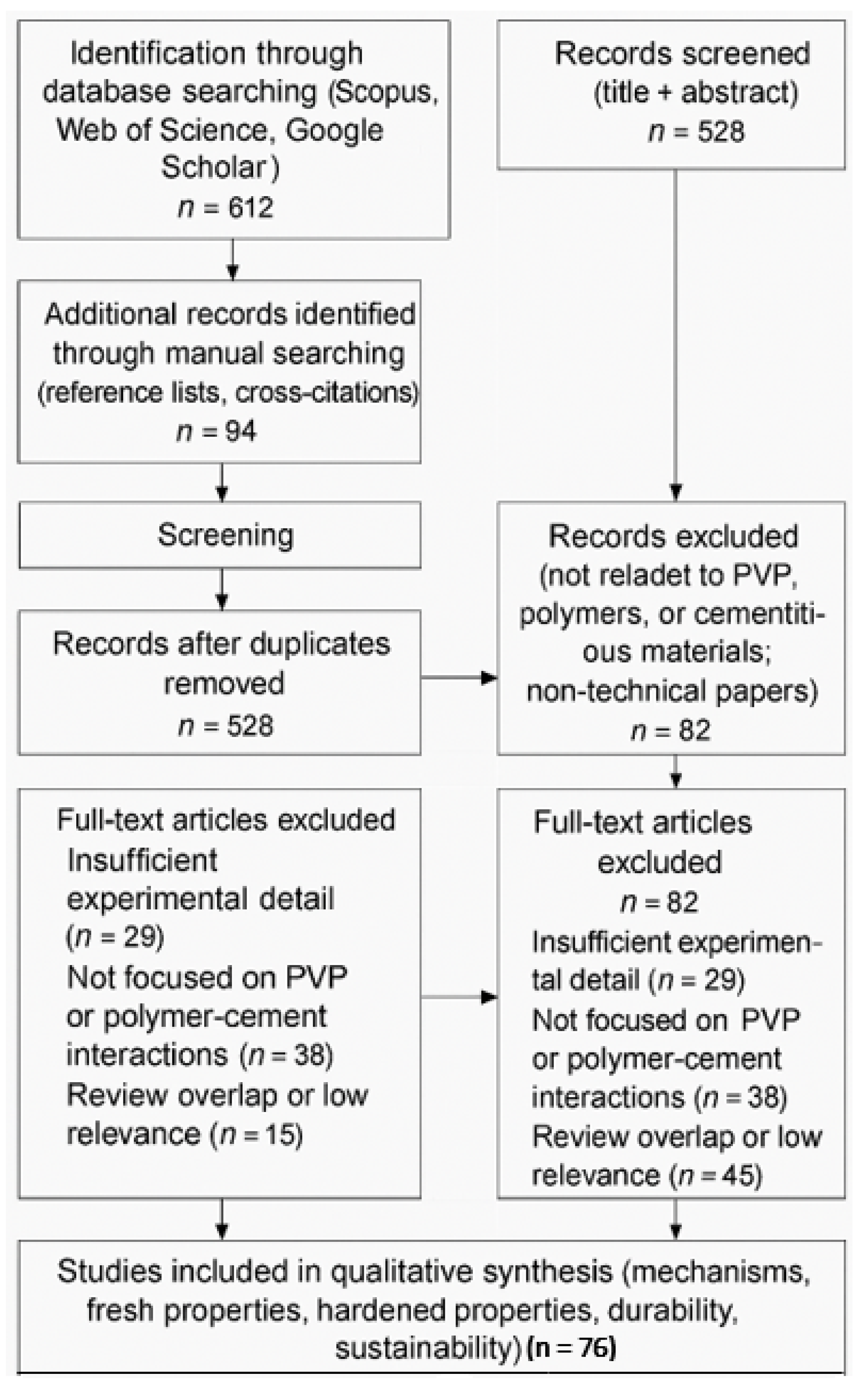
Review Methodology
2. PVP: A Profile of Its Key Properties
2.1. Molecular Structure and Chemical Nature
2.2. Physical and Solubility Characteristics
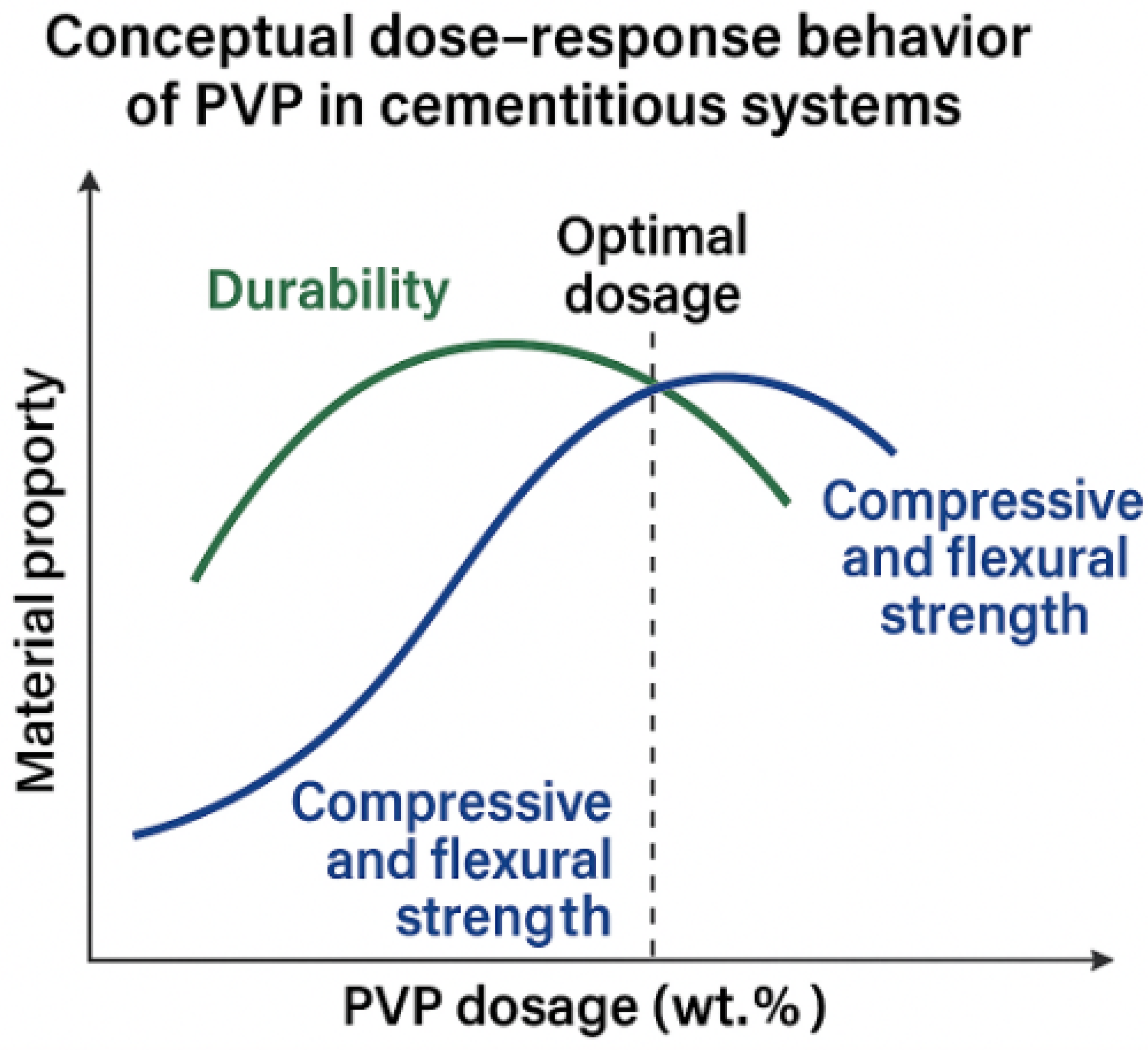
- Low-molecular-weight PVP (e.g., <50,000 g/mol) primarily functions as a dispersant or secondary plasticizer. Its short polymer chains readily adsorb onto cement particle surfaces, providing steric stabilization that reduces interparticle friction and enhances fluidity (workability) without significantly increasing pore solution viscosity. However, because of their limited chain length, low-molecular-weight PVP is less capable of forming continuous polymer films or effective crack-bridging networks; consequently, its contribution to mechanical strength enhancement and long-term durability is relatively limited.
- High-molecular-weight PVP (e.g., 50,000 to 1,000,000 g/mol) functions as a balanced rheology modifier, thickener, and effective film-former. Its longer polymer chains moderately increase pore solution viscosity while still maintaining reasonable fluidity at appropriate dosages. These chains readily entangle and form continuous polymer networks within the pore structure, which are critical for pore filling and microstructural refinement, thereby enhancing durability. Simultaneously, this network enables effective crack bridging, leading to improved flexural strength and fracture toughness. As a result, this molecular weight range often provides an optimal balance between workability, mechanical performance, and long-term durability.
- Ultra-high-molecular-weight PVP (e.g., >1,000,000 g/mol) strongly increases pore solution viscosity due to extensive chain entanglement, which can significantly reduce fluidity and workability if not carefully controlled. However, it markedly enhances toughness, ductility, and crack resistance by forming highly entangled, continuous polymer networks that enable effective crack bridging and pore structure refinement, thereby reducing permeability and improving long-term durability. At excessive dosages, the pronounced viscosity increase may promote entrapped water and early-age porosity, potentially reducing compressive strength. In addition, the strong gel-forming capability of ultra-high-molecular-weight PVP contributes to shrinkage mitigation and internal curing by retaining water within the cementitious matrix.
2.3. Solution Rheology and Film-Forming Ability
2.4. Thermal Stability
3. Mechanism of PVP Interaction in Cementitious Systems
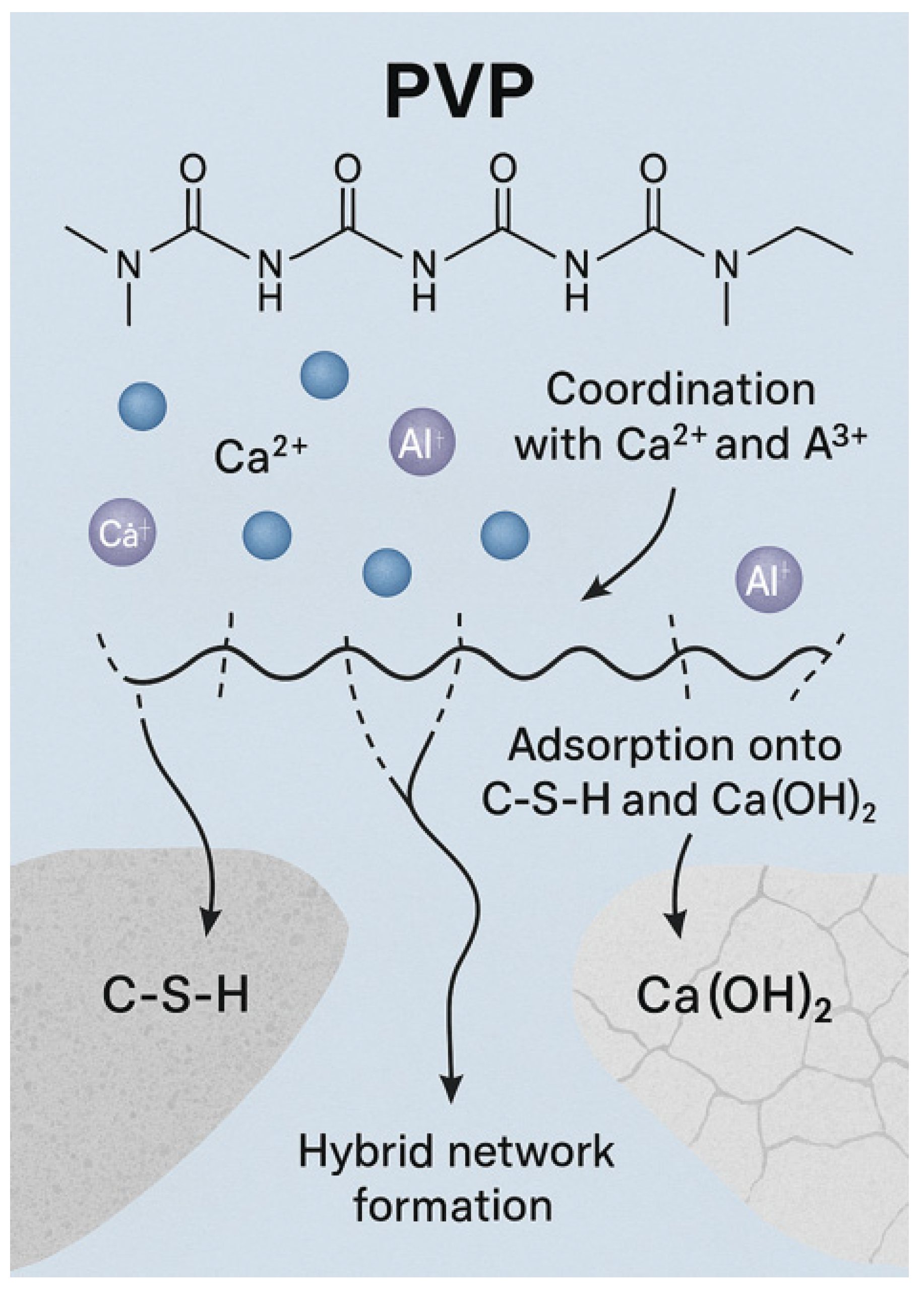
3.1. Dominant Chemical Interaction: Ion Coordination and Network Formation
3.2. Multifaceted Physical Mechanisms
- Reduced total porosity;
- Refinement of pore size distribution;
- Decreased connectivity of capillary pores.
- Absorbs fracture energy;
- Slows crack propagation;
- Increases the energy required for crack extension.
3.3. Synergistic Effects
- Chemical adsorption of PVP onto C-S-H surfaces anchors the polymer chains, enhancing the effectiveness of physical crack-bridging.
- Steric hindrance in the fresh state improves particle dispersion and packing, which complements the pore-filling effect during hardening.
- The hybrid organic–inorganic network formed through ion coordination provides a structural backbone that supports the densification and toughening mechanisms.
3.4. Factors Governing the Variability of PVP Performance Across Studies
4. Effect of PVP on Fresh Properties
4.1. Workability and Flowability
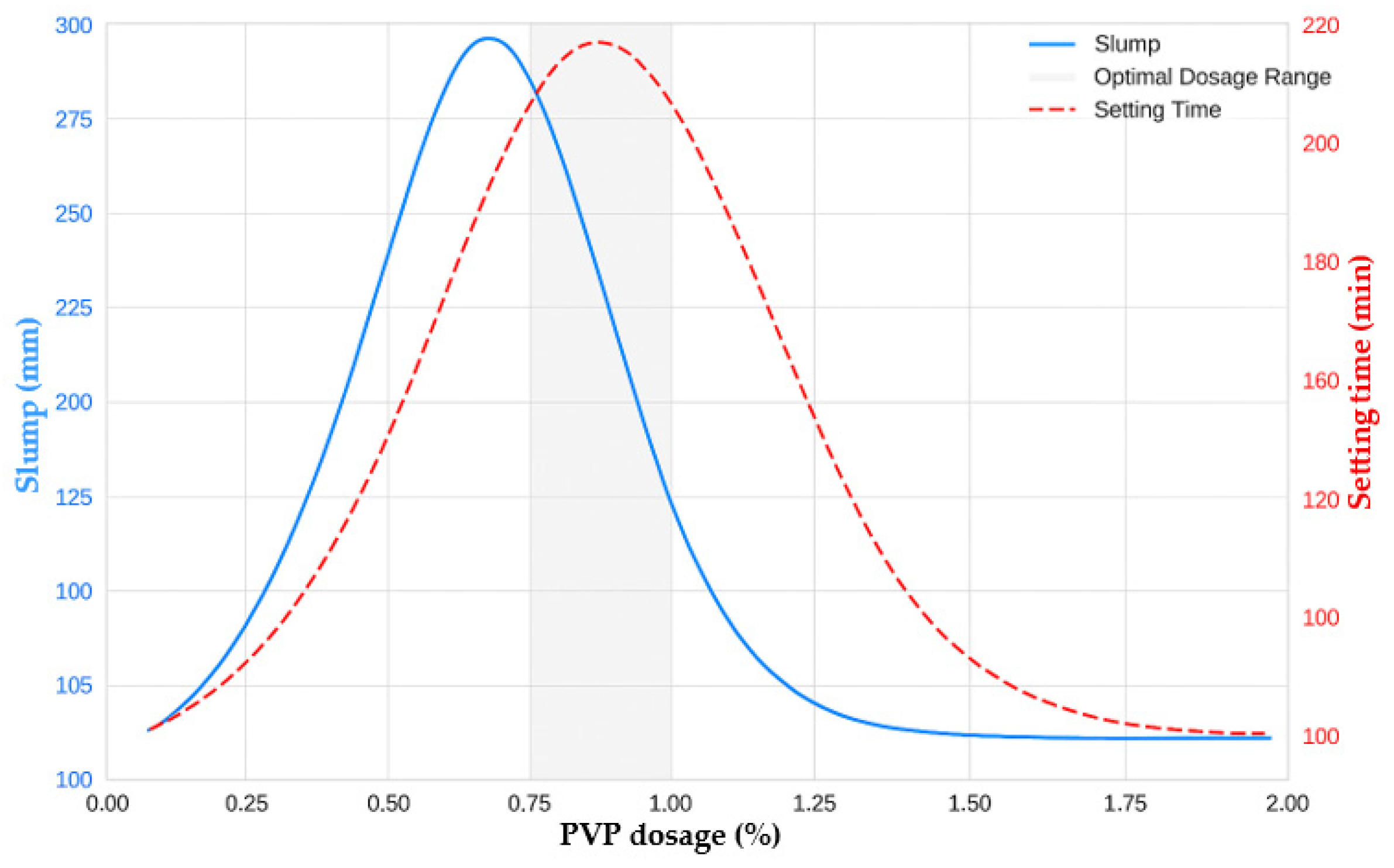
4.2. Setting Time and Early Hydration Behavior
- Low PVP dosage: Polymer adsorption dominates, leading to steric stabilization, reduced interparticle friction, and the formation of a diffusion barrier around cement grains. Hydration kinetics are slowed, resulting in extended setting times.
- Intermediate PVP dosage: Retardation reaches a maximum as surface coverage increases and hydration inhibition becomes most effective.
- High PVP dosage: Polymer–ion interactions become increasingly significant. The high density of PVP chains promotes complexation with Ca2+ ions, locally modifying ionic concentrations and supersaturation conditions. This may facilitate the precipitation of certain hydration products, partially accelerating setting and offsetting the physical barrier effect.
4.3. Interaction with Other Admixtures and Practical Considerations
- Interaction with superplasticizers: Both PVP and polycarboxylate-based superplasticizers (PCEs) function via adsorption onto cement grains. This can lead to competitive adsorption, where one admixture may reduce the effectiveness of the other. Some studies suggest that the presence of a polymer like PVP may require an adjustment in the superplasticizer dosage to achieve the target workability. This interaction is complex and depends on the molecular architecture of both polymers.
- Impact on air entrainment: As a surfactant-like polymer, PVP can influence air content in the mix. While it is not a dedicated air-entraining agent, it can stabilize air bubbles, potentially increasing the air content. This could be beneficial for frost resistance but may require adjustments to the dosage of a primary air-entraining agent to avoid excessive air content, which would reduce compressive strength.
- Bleeding: By increasing the viscosity of the mix water, high-molecular-weight PVP can be highly effective at reducing bleeding and improving the overall stability of the fresh paste, which is particularly beneficial in SCC and grouting applications.
5. Effect of PVP on Hardened Microstructure
5.1. Primary Effect: Pore Structure Refinement and Matrix Densification
5.2. Influence on Hydration Products and Polymer Phase Distribution
5.3. Micro-Level Reinforcement and Interfacial Modification
6. Effect of PVP on Hardened Mechanical Properties
6.1. Compressive Strength: The Role of Densification
6.2. Flexural Strength: The Dominance of Crack-Bridging
6.3. Fracture Toughness and Ductility Enhancement
6.4. Hardness
7. Effect of PVP on Durability
7.1. Resistance to Chemical Attack and Ion Ingress
7.1.1. Physical Barrier and Transport Inhibition
- Chloride resistance: Chloride ingress is the dominant cause of steel reinforcement corrosion in reinforced concrete. Gürten et al. [2] demonstrated via electrochemical measurements that PVP-modified concrete exhibited markedly improved resistance to chloride-induced corrosion. The reduced permeability delayed chloride arrival at the steel surface, effectively prolonging the corrosion initiation period.
- Sulfate and acid resistance: Sulfate ions react with calcium aluminate phases to form expansive products such as ettringite, inducing internal stresses and cracking, while acidic solutions directly dissolve alkaline hydration products (e.g., Ca(OH)2). By limiting solution penetration, PVP substantially reduces the extent and rate of these reactions. Ref. [1] quantified this effect by measuring weight loss in PVP-modified mortars exposed to HCl, H2SO4, and seawater. Specimens containing 3% PVP consistently exhibited the lowest mass loss, indicating superior chemical stability. These findings were further corroborated by [3], who observed enhanced sulfate resistance in PVP-modified systems.
7.1.2. Chemical Shielding and Ion Interaction
7.2. Enhanced Frost Resistance
- Reduced water absorption: The densified microstructure of PVP-modified cementitious materials significantly lowers water absorption and capillary suction, thereby reducing the volume of freezable water within the matrix [1].
- Refined pore structure: By decreasing the proportion of large capillary pores and promoting smaller, less interconnected pores, PVP shifts the freezing behavior of pore water. Water confined in finer pores freezes at lower temperatures and generates lower internal pressures, mitigating freeze–thaw damage.
7.3. Improved Resistance to Reinforcement Corrosion
- Macro-level: Reduced permeability: The refined pore network significantly limits the ingress of chlorides, oxygen, and moisture, three essential components for electrochemical corrosion, thereby extending the time to corrosion initiation.
- Micro-level: Blocking of capillary pathways: Gürten et al. [3] emphasized that PVP effectively blocks capillary channels that otherwise serve as rapid transport pathways for ions, forcing diffusion to proceed through the much slower C-S-H gel network.
- Nano-level: Interfacial film formation (potential mechanism): There is strong evidence that PVP may also contribute to corrosion inhibition at the steel–concrete interface. Owing to its affinity for metal ions, PVP may form a thin, adsorbed polymer layer on the steel surface, acting as a passivating barrier to electrochemical reactions. Electrochemical impedance spectroscopy (EIS) results reported by Gürten et al. [2,3] revealed significantly higher polarization resistance values for steel embedded in PVP-modified concrete, indicative of a more stable and less corrosive interfacial environment.
7.4. Long-Term Stability and Potential Limitations
8. Advanced Applications and PVP in Composite Systems
8.1. PVP as a High-Performance Dispersant for Nanomaterials in Smart Composites
8.2. PVP as a Structural Carrier and Reinforcement in Nanofiber Composites
8.3. PVP as an Interfacial Coupling Agent in Fiber-Reinforced Composites
8.4. Practical Implementation Challenges and System-Level Considerations
9. PVP in Specialty Cements and Other Building Materials
9.1. Specialty Cements: Biomedical and Oil Well Applications
9.2. Geopolymers, Functional Coatings, and Asphalt Materials
10. Sustainability and Life Cycle Considerations
- Embodied carbon and production: The synthesis of N-vinylpyrrolidone monomer and its subsequent polymerization into PVP is an energy-intensive process with an associated carbon footprint. However, this upfront environmental cost must be weighed against its use at very low dosages (typically 1–3% by cement weight). The primary sustainability benefit arises from its ability to dramatically extend the service life of the entire concrete structure.
- Service life extension and life cycle impact: The most significant contribution of PVP to sustainability is through enhanced durability. By reducing permeability and increasing resistance to corrosion and frost, PVP can extend the functional service life of a concrete structure by years or even decades. This delays the need for costly repairs or complete replacement, thereby avoiding the massive material consumption and embodied carbon associated with new construction. For example, if a 20% increase in service life is achieved, the life cycle embodied carbon per year of service for the structure is effectively reduced.
- End-of-life, degradability, and recycling: At the end of a structure’s life, the concrete is typically crushed for use as recycled aggregate. Within this context, the small amount of PVP present is chemically bound and physically locked within the cement matrix. It is inert and poses no significant leaching risk. If the concrete waste is incinerated or used in cement kilns, the PVP will safely decompose. While not biodegradable in the conventional sense, its non-toxic nature means it does not contribute to environmental pollution in the same way as other plastics. When compared with other polymer modifiers commonly used in cementitious systems, such as styrene, butadiene latexes, acrylic emulsions, epoxy resins, and redispersible polymer powders, PVP offers several environmental advantages. These alternative polymers often require organic solvents, surfactants, or energy-intensive processing steps, and they are typically used at higher dosages to achieve comparable functional effects. In contrast, PVP is water-soluble, non-toxic, and effective at very low addition rates, which reduces both material intensity and upstream environmental burden. Although PVP is not inherently biodegradable, its immobilization within the cement matrix and its low required dosage make its life cycle impact more favorable than many conventional polymer modifiers.
11. Conclusions and Future Outlook
11.1. Synthesis of Key Findings
11.2. Future Outlook and Research Directions
Author Contributions
Funding
Institutional Review Board Statement
Informed Consent Statement
Data Availability Statement
Conflicts of Interest
References
- Singh, V.; Singh, R. Effect of polyvinyl pyrrolidone on strength and some other properties of cement. Trans. Indian Ceram. Soc. 2006, 65, 41–48. [Google Scholar] [CrossRef]
- Gürten, A.; Erbil, M.; Kayakırılmaz, K. Effect of polyvinylpyrrolidone on the corrosion resistance of steel. Cem. Concr. Compos. 2005, 27, 802–808. [Google Scholar] [CrossRef]
- Gürten, A.A.; Bayol, E.; Kayakirilmaz, K.; Erbil, M. Influence of polyvinylpyrrolidone on rebar corrosion in sulphate solution. Steel Compos. Struct. 2009, 9, 77–87. [Google Scholar] [CrossRef]
- Nguyen, T.N.; Han, T.H.; Park, J.K.; Kim, J.J. Microstructural and mechanical properties of cement blended with TEOS/PVP nanofibers containing CNTs. Appl. Sci. 2023, 13, 714. [Google Scholar] [CrossRef]
- Knapen, E.; Van Gemert, D. Polymer film formation in cement mortars modified with water-soluble polymers. Cem. Concr. Compos. 2015, 58, 23–28. [Google Scholar] [CrossRef]
- Stepanova, K.; Lytkina, D.; Sadykov, R.; Shalygina, K.; Khojazoda, T.; Mahmadbegov, R.; Kurzina, I. Composite cement materials based on β-tricalcium phosphate, calcium sulfate, and a mixture of polyvinyl alcohol and polyvinylpyrrolidone intended for osteanagenesis. Polymers 2022, 15, 210. [Google Scholar] [CrossRef]
- Xing, G.; Xu, Y.; Zhao, Z.; Chen, S. Piezoresistive properties of well-dispersed carbon nanotubes (CNTs) modified cement paste. J. Build. Eng. 2024, 95, 110364. [Google Scholar] [CrossRef]
- Tapdiqov, S.Z.; Malikov, E.Y.; Humbatova, S.F.; Ahmed, F.F.; Kazımova, S.S.; Gulamirov, A.M.; Mammadova, S.M.; Guliyeva, J.E. The physical-mechanical behavior and chemical bonding nature of poly-N-vinylpyrrolidone modified cement concrete. Heliyon 2024, 10, e26039. [Google Scholar] [CrossRef]
- Lin, H.; Zhang, W.; Guo, S.; Zhang, X.; Wang, L.; Zhang, J. Study on the energy evolution mechanism and fractal characteristics of coal failure under dynamic loading. ACS Omega 2025, 10, 54710–54719. [Google Scholar] [CrossRef] [PubMed]
- Wang, W.; Li, Z.; Du, F.; Cao, Z.; Shi, J.; Zhai, M.; Liu, M. Study on the evolution law of failure depth of large mining height and ultra-wide working surface. Sci. Rep. 2026, 16, 665. [Google Scholar] [CrossRef]
- Ohama, Y. Polymer-based admixtures. Cem. Concr. Compos. 1998, 20, 189–212. [Google Scholar] [CrossRef]
- Siddique, R.; Mehta, A. Effect of carbon nanotubes on properties of cement mortars. Constr. Build. Mater. 2014, 50, 116–129. [Google Scholar] [CrossRef]
- Liu, J.; Huang, L.; Li, J.; Sun, B.; Guo, X. Performance investigation on graphene reinforced recycled rubber asphalt binder: Adhesion strength, emission characteristics, and healing efficiency. Constr. Build. Mater. 2025, 498, 144009. [Google Scholar] [CrossRef]
- Zhao, D.; Wang, F.; Liu, P.; Hu, S.; Hu, C.; Yang, L. Enhanced mechanical properties of polymer-modified cementitious materials via organosilane fly ash hybrid–polyvinyl pyrrolidone crosslink network. Constr. Build. Mater. 2022, 330, 127119. [Google Scholar] [CrossRef]
- Zhagifarov, A.M.; Akhmetov, D.A.; Suleyev, D.K.; Zhumadilova, Z.O.; Begentayev, M.M.; Pukharenko, Y.V. Investigation of Hydrophysical Properties and Corrosion Resistance of Modified Self-Compacting Concretes. Materials 2024, 17, 2605. [Google Scholar] [CrossRef] [PubMed]
- Chen, L.; Zheng, K.; Liu, Y. Geopolymer-supported photocatalytic TiO2 film: Preparation and characterization. Constr. Build. Mater. 2017, 151, 63–70. [Google Scholar] [CrossRef]
- Liu, J.; Hao, P.; Jiang, W.; Sun, B. Rheological properties of SBS modified asphalt incorporated polyvinylpyrrolidone stabilized graphene nanoplatelets. Constr. Build. Mater. 2021, 298, 123850. [Google Scholar] [CrossRef]
- Mao, T.; Lu, G.; Xu, C.; Yu, H.; Yu, J. Preparation and properties of polyvinylpyrrolidone-cuprous oxide microcapsule antifouling coating. Prog. Org. Coat. 2020, 141, 105317. [Google Scholar] [CrossRef]
- Zhang, X.; Du, M.; Fang, H.; Yao, X.; Zhao, P.; Du, X.; Li, B.; Shi, M. Development of a sprayable PVA-fiber-enhanced cement mortar with high acid-corrosion resistance for pipeline rehabilitate. J. Mater. Res. Technol. 2024, 29, 4607–4621. [Google Scholar] [CrossRef]
- Men, P.; Wang, X.-m.; Liu, D.; Zhang, Z.; Zhang, Q.; Lu, Y. On use of polyvinylpyrrolidone to modify polyethylene fibers for improving tensile properties of high strength ECC. Constr. Build. Mater. 2024, 417, 135354. [Google Scholar] [CrossRef]
- Liu, Q.; Ming, X.; Wang, M.; Li, Z.; Sun, G.; Liang, R. Improved mechanical strength of cement paste by polyvinylpyrrolidone and in situ polymerized acrylic acid. J. Mater. Civ. Eng. 2023, 35, 04023096. [Google Scholar] [CrossRef]
- Morlat, R.; Orange, G.; Bomal, Y.; Godard, P. Reinforcement of hydrated portland cement with high molecular mass water-soluble polymers. J. Mater. Sci. 2007, 42, 4858–4869. [Google Scholar] [CrossRef]
- Tripathi, B. Effects of polymers on cement hydration and properties of concrete: A review. ACS Omega 2024, 9, 2014–2021. [Google Scholar] [CrossRef]
- Zhang, J.; Pei, X.; Wang, W.; He, Z. Hydration process and rheological properties of cementitious grouting material. Constr. Build. Mater. 2017, 139, 221–231. [Google Scholar] [CrossRef]
- Matsushita, T.; Hoshino, S.; Maruyama, I.; Noguchi, T.; Yamada, K. Effect of curing temperature and water to cement ratio on hydration of cement compounds. In Proceedings of the 12th International Congress Chemistry of Cement, Montreal, QC, Canada, 8–13 July 2007. [Google Scholar]
- Woyciechowski, P. Effect of curing regime on polymer-cement concrete properties. Arch. Civ. Eng. 2020, 66, 143–160. [Google Scholar]
- Hatungimana, D.; Mardani-Aghabaglou, A. Effect of Polymer/Cement Ratio and Curing Regime on Polymer Modified Mortar Properties. J. Green Build. 2020, 15, 177–193. [Google Scholar] [CrossRef]
- Idrees, M.; Ekincioglu, O.; Sonyal, M.S. The hydration behavior of polymer-incorporated calcium aluminate cement mortars at different curing temperatures. J. Therm. Anal. Calorim. 2022, 147, 13201–13215. [Google Scholar] [CrossRef]
- Ahmad, F.; Jamal, A.; Iqbal, M.; Alqurashi, M.; Almoshaogeh, M.; Al-Ahmadi, H.M.; Hussein, E. Performance evaluation of cementitious composites incorporating nano graphite platelets as additive carbon material. Materials 2021, 15, 290. [Google Scholar] [CrossRef]
- Ahmad, Z.; Qureshi, M.I.; Ahmad, F.; El Ouni, M.H.; Asghar, M.Z.; Ghazouani, N. Effect of macro synthetic fiber (MSF) on the behavior of conventional concrete and the concrete containing e-waste aggregates. Mater. Struct. 2025, 58, 234. [Google Scholar] [CrossRef]





| Property | Description | Relevance to Construction and Building Materials |
|---|---|---|
| Molecular structure | Amphiphilic: Hydrophilic lactam ring and hydrophobic vinyl backbone. Non-ionic. | Interaction & Dispersion: Enables interaction with both inorganic (cement) and organic (asphalt, fibers) phases. Excellent as a dispersant for nanomaterials (carbon nanotubes, CNTs, graphene). |
| Solubility | High solubility in water and a wide range of polar organic solvents. | Ease of use: Can be easily and homogeneously incorporated into water-based systems like concrete and mortar mixes without special equipment. |
| Chemical reactivity | The carbonyl (C=O) group acts as a Lewis base, forming coordination complexes with metal ions (e.g., Ca2+, Al3+). | Bonding: Forms a strong chemical link between the polymer and the cement matrix, creating a robust organic–inorganic network that enhances strength. |
| Solution rheology | Acts as a viscosity modifier (thickener) in solution; viscosity is dependent on concentration and molecular weight. | Workability control: Functions as a plasticizer and set retarder, improving the flow of fresh concrete/mortar and extending the open time for placement. |
| Film-forming ability | Forms a continuous, adhesive, and flexible film upon solvent evaporation. | Microstructure & toughness: Fills and blocks capillary pores, reducing permeability and enhancing durability. Bridges microcracks, increasing flexural strength and fracture toughness. |
| Thermal stability | Stable up to high temperatures (decomposition > 350 °C). | Processing stability: Withstands the heat from cement hydration’s exothermic reaction and hot-mixing processes (e.g., asphalt) without degrading. |
| Biocompatibility & non-toxicity | Physiologically inert and environmentally safe. | Specialty applications: Essential for its use in biomedical materials like bone cements. Makes it a “green” and safe additive for general construction use. |
| Property | PVP | PVA | PEG | Acrylics |
|---|---|---|---|---|
| Water solubility | Very high | Moderate | Very high | Low–moderate |
| Ion coordination | Strong (Ca2+, Al3+) | Weak | Moderate | None |
| Film-forming ability | Elastic, transparent | Brittle | Soft | Rigid |
| Rheology control | Strong shear-thinning | Newtonian | Shear-thinning | Variable |
| Crack bridging | Excellent | Moderate | Poor | Good |
| Environmental safety | High | Moderate | High | Variable |
| Interaction Type | Mechanism | Scale of Action | Evidence | Primary Consequence | References |
|---|---|---|---|---|---|
| Chemical | Ion-dipole coordination between PVP’s C=O group and Ca2+/Al3+ ions. | Molecular | FTIR (peak shifts), TGA (altered thermal decomposition). | Formation of a hybrid organic-inorganic network improved cohesion. | [1,8] |
| Physical | Steric hindrance and lubrication by polymer chains around cement grains. | Micro (particle level) | Rheology measurements (increased flow), set time analysis (retardation). | Enhanced workability and prolonged open time. | [8,15,18] |
| Physical | Pore-filling and pore-blocking with a continuous polymer/hydrogel phase. | Microstructural (pore level) | SEM (denser matrix), MIP (reduced porosity), and water absorption tests. | Significantly improved durability (lower permeability, chemical resistance). | [1,16,19] |
| Physical | Crack-bridging by ductile polymer chains across microcracks. | Micro/Meso (crack level) | Mechanical testing (increased flexural strength and toughness). | Enhanced ductility, fracture toughness, and resistance to crack propagation. | [1,20] |
| PVP Dosage (%) | Slump (mm) | Initial Setting Time (min) | Final Setting Time (min) | Flow Spread (%) | References |
|---|---|---|---|---|---|
| 0.00 | 120 | 90 | 180 | 65 | [1,8] |
| 0.40 | 190 | 110 | 200 | 80 | [1,8] |
| 0.65 | 300 | 130 | 220 | 95 | [8] |
| 1.00 | 210 | 120 | 210 | 75 | [1,8] |
| Property | Effect of PVP Addition | Underlying Mechanism | References |
|---|---|---|---|
| Workability | Increased flowability at optimal dosages (typically <1%). | Lubricating effect and steric hindrance of adsorbed polymer chains. | [8,15] |
| Setting time | Generally, a retarder. It can show non-monotonic behavior (retardation peaks at an optimal dose) in specific systems. | Retardation: Adsorption of PVP on cement grains, creating a hydration barrier. Acceleration (at high doses): Potential acceleration via intense ion interaction and complexation. | [1,8] |
| Mechanism | Observed Effect | Evidence | Performance Impact |
|---|---|---|---|
| Pore filling | Reduced porosity | MIP, SEM | Lower permeability |
| Crack bridging | Increased ductility | Flexural tests, SEM | Higher toughness |
| Ion coordination | Hybrid network formation | FTIR, XRD | Enhanced cohesion |
| Microstructural Feature | Effect of PVP Addition | Underlying Mechanism | Evidence/Measurement |
|---|---|---|---|
| Porosity & pore size | Significantly reduced total porosity; refined pore size distribution; denser ITZ. | Physical filling of pores and ITZ by the interspersed polymer phase; improved particle packing. | Water absorption tests, MIP analysis, and SEM. |
| Matrix morphology | Denser, more homogeneous, “glassier” appearance. | Interspersion of the polymer network throughout the C-S-H gel matrix. | SEM imaging. |
| Hydration products | No fundamental change in phase composition, but morphology is altered. May promote a higher degree of long-term hydration. | Polymer is integrated with, not a replacement for, C-S-H and CH. Retains water for continued hydration. | XRD, FTIR, TGA. |
| Reinforcement mechanism | Acts as a ductile reinforcement at the micro- and nano-scale, dissipating energy. | Crack-bridging by polymer chains/films; viscoelastic deformation of the polymer network. | Mechanical testing (flexural, fracture toughness, fatigue). |
| Interfacial modification | Acts as a compatibilizer/coupling agent for fibers and nanomaterials. | Improves the bond strength at the interface between the reinforcing phase and the cement matrix. | Single-fiber pull-out tests, SEM of fracture surfaces. |
| Property | Effect of PVP Addition (at Optimal Dosages) | Underlying Mechanism & In-Depth Discussion | References |
|---|---|---|---|
| Compressive strength | Moderate increase (up to 44%). Non-monotonic, with an optimum around 3% PVP. | Primary: Microstructural densification and pore-filling, which reduces stress-concentrating voids. Limiting Factor: At high doses, the softer polymer phase becomes a weak link under compression. | [1,2,3] |
| Flexural & tensile strength | Significant increase (e.g., ~30%). More pronounced than compressive strength gains. | Primary: Crack-bridging by ductile polymer chains, which absorbs fracture energy and “stitches” microcracks. This directly counters the primary failure mode in flexure. | [1,20] |
| Fracture toughness & ductility | Substantial increase (e.g., ~47% in toughness; >100% in tensile strain in ECC). | Primary: Energy dissipation at the crack tip via polymer chain stretching and viscoelastic deformation. Synergistic: Acts as an interfacial coupling agent, improving fiber-matrix bond and unlocking ductility in composites. | [1,4,20] |
| Hardness | Increased, correlating with compressive strength trends. | Primary: Increased surface density due to the pore-filling effect, providing greater resistance to indentation. | [1] |
| Durability Mechanism | Observed Effect | Analytical/Experimental Evidence | Performance Impact | References |
|---|---|---|---|---|
| Transport property reduction | Lower sorptivity, reduced water absorption | Sorptivity tests, water uptake curves | Improved resistance to ingress | [1,2,3] |
| Chemical stability enhancement | Reduced leaching, stabilized hydrates | XRD, TGA, and ion leaching tests | Improved long-term chemical durability | [1] |
| Crack-related durability improvement | Reduced microcracking, enhanced toughness | Flexural tests, SEM crack morphology | Better resistance to crack propagation | [1,4,20] |
| Category | Performance Indicator | Optimal Dosage (wt%) | Direction of Change | Magnitude of Effect | Primary Controlling Factors & Mechanisms | References |
|---|---|---|---|---|---|---|
| Fresh properties | Workability/flowability | 0.5–1.0% | ↑ (Increase) | High | Mechanism: Steric hindrance and lubrication. Factors: PVP Molecular Weight, w/c ratio, cement fineness. | [8,15] |
| Setting time | 1.0–4.0% | ↑ (Increase/Retardation) | High | Mechanism: Adsorption barrier on cement grains. Can be non-monotonic in some systems. Factors: Dosage, cement type (e.g., oil-well vs. OPC). | [1,8] | |
| Mechanical properties | Compressive strength | 1.0–4.0% | ↑ (Increase, non-monotonic) | Moderate (~5–44% increase) | Mechanism: Pore-filling/densification vs. introduction of a weaker phase. Factors: Dosage is critical. | [1,2,3] |
| Flexural strength | 2.0–4.0% | ↑↑ (Significant Increase) | High (~30% increase) | Mechanism: Crack-bridging by ductile polymer films. Factors: PVP Molecular Weight (longer chains are better). | [1,20] | |
| Fracture toughness/ductility | 2.0–4.0% | ↑↑ (Significant Increase) | Very high (~47% in paste; >100% in ECC) | Mechanism: Energy dissipation at the crack tip. Synergistic with fibers. Factors: Interfacial bond modification. | [1,4,20] | |
| Durability properties | Permeability/water absorption | >2.0% | ↓↓ (Significant Decrease) | Very high (>35% reduction) | Mechanism: Pore-filling and blocking of the capillary network. Factors: Dosage, curing conditions. | [1,2] |
| Chloride & sulfate resistance | >2.0% | ↑↑ (Significant Improvement) | High | Mechanism: Reduced permeability (transport inhibition). Factors: Matrix density is key. | [1,2,3] | |
| Freeze–thaw resistance | >2.0% | ↑↑ (Significant Improvement) | High | Mechanism: Reduced water absorption and refined pore structure. Factors: Overall porosity. | [15] |
| Durability Aspect | Effect of PVP Addition | In-Depth Mechanism & Discussion | Key Evidence |
|---|---|---|---|
| Permeability (general) | Significantly reduced. | Primary: Pore-filling and pore-blocking by the interspersed polymer phase, creating a denser and more tortuous pore network. | Water absorption tests [1], MIP analysis. |
| Chemical resistance (acids, sulfates) | Substantially improved; lower mass loss and degradation. | Primary: Reduced permeability prevents aggressive solutions from reaching reactive cement hydrates. Secondary: Polymer film may provide a protective coating on hydrated surfaces. | Immersion tests (weight loss) [1,3], visual inspection. |
| Frost resistance | Dramatically improved; higher number of freeze–thaw cycles endured. | Primary: Reduced water absorption and capillary suction limit the amount of freezable water. Secondary: Refined pore structure minimizes the internal pressures generated by ice formation. | Freeze–thaw cycling tests (mass loss) [15]. |
| Rebar corrosion resistance | Significantly enhanced protection against chloride and sulfate-induced corrosion. | Macro: Reduced permeability of the concrete cover to ions, oxygen, and water. Micro: Blocking of capillary channels. Nano: Potential formation of an inhibitive polymer film on the steel surface. | Electrochemical tests (EIS, polarization resistance) [2,3]. |
| Application Area | Role of PVP | Mechanism & Discussion | Key Outcome |
|---|---|---|---|
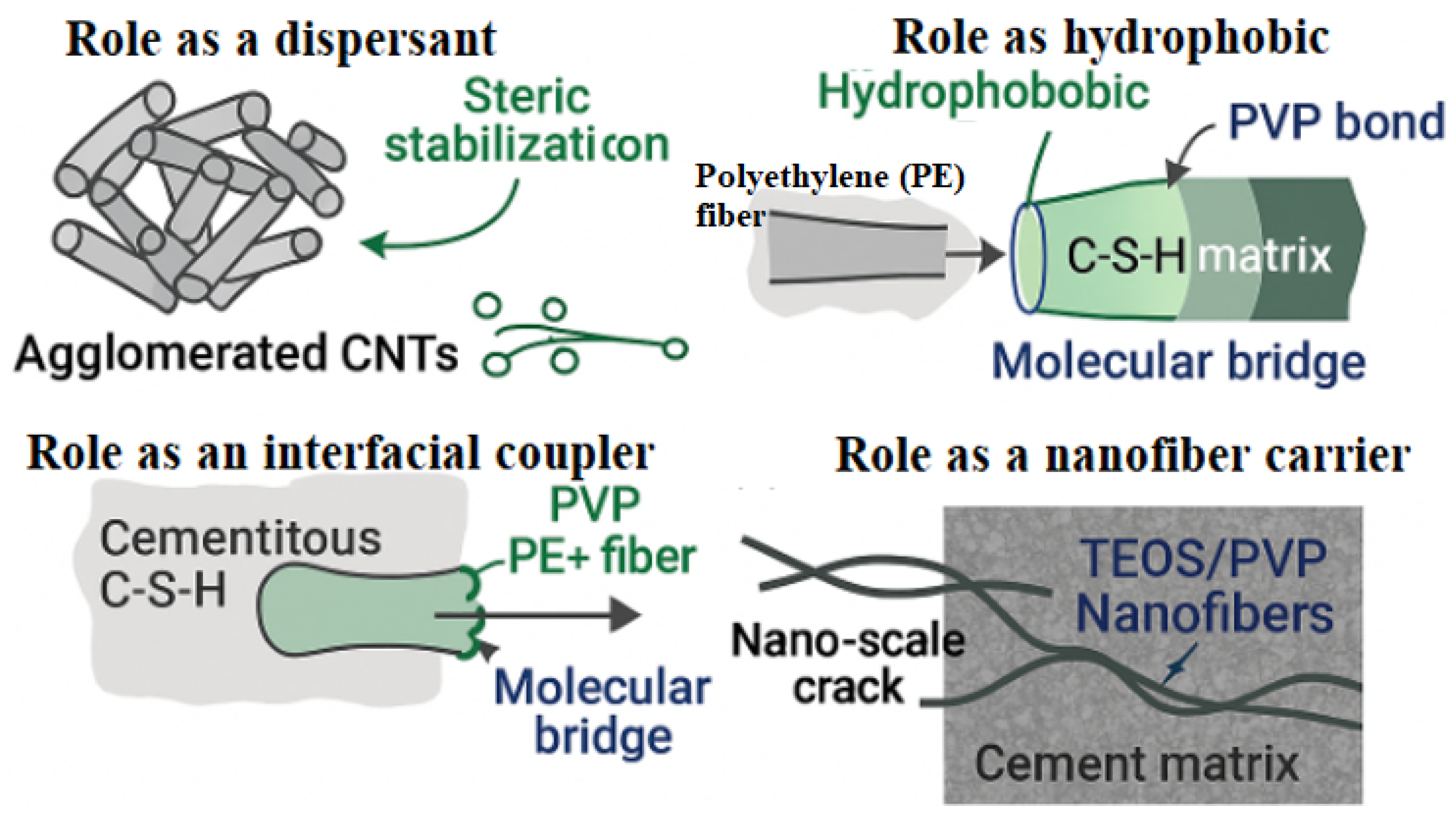
| Nanomaterial dispersion (smart composites) | Non-covalent surface functionalizer and steric stabilizer. | Adsorbs onto CNTs/graphene via hydrophobic/π-π interactions, while hydrophilic groups project outwards, creating a steric barrier that prevents re-agglomeration in the high-ionic-strength pore solution. | Uniform dispersion, enabling the formation of a percolated conductive network essential for high-performance piezoresistive (self-sensing) properties. |
| Nanofiber reinforcement | Structural carrier matrix for precursors (e.g., TEOS) in the electrospinning process. | Forms a continuous polymer jet that solidifies into nanofibers. These fibers are then integrated into the cement matrix, acting as a highly efficient, nanoscale reinforcing web. | Creates a powerful micro-level crack-bridging network, leading to extraordinary increases in compressive strength and, particularly, fracture toughness. |
| Fiber-matrix interface modification (ECC) | Interfacial coupling agent; molecular bridge. | Adsorbs onto hydrophobic fibers, presenting a hydrophilic and chemically reactive (C=O) surface to the cement matrix. This creates a strong chemical bond at the interface. | Transforms a weak, frictional fiber–matrix bond into a strong, chemical one. This enables efficient stress transfer, dramatically increasing the ductility and performance of fiber-reinforced composites. |
| Application/Material System | Primary Function of PVP | Underlying Mechanism | Key Outcome/Performance Gain | References |
|---|---|---|---|---|
| Self-sensing concrete (with CNTs) | High-performance dispersant and stabilizer. | Non-covalent functionalization and steric stabilization prevent nanoparticle agglomeration in the alkaline, high-ionic-strength environment. | Creation of a stable, percolated conductive network, leading to high piezoresistive sensitivity, repeatability, and low hysteresis. | [7] |
| High-ductility ECC (with PE fibers) | Interfacial coupling agent/molecular bridge. | Adsorbs onto hydrophobic fibers, transforming their surface to hydrophilic and enabling chemical bonding with the cement matrix via C=O groups. | Transforms a weak, frictional fiber–matrix bond into a strong, chemical one. Unlocks unprecedented ductility (e.g., >100% strain capacity increase). | [20] |
| Nanofiber-reinforced cement | Structural carrier matrix for electrospinning. | Acts as the polymer host for functional precursors (e.g., TEOS), forming continuous nanofibers that are integrated into the cement matrix. | Creates a powerful nanoscale crack-bridging network, resulting in extraordinary increases in fracture toughness (e.g., +66%). | [4] |
| Functional coatings (on geopolymers) | Stress-relieving agent in sol–gel film formation. | Mitigates shrinkage-induced stresses during the drying and annealing of TiO2 films, preventing cracking and ensuring film continuity. | Enables the fabrication of uniform, crack-free, and functional photocatalytic surfaces on thermally stable substrates. | [18] |
| High-performance asphalt | Stabilizer and dispersant for graphene nanoplatelets (GNPs). | Prevents the restacking of GNP layers in the hot asphalt matrix, ensuring uniform dispersion and the formation of a reinforcing network. | Significantly enhances rheological properties, rutting resistance, and fatigue damage tolerance of the asphalt binder. | [13,14] |
Disclaimer/Publisher’s Note: The statements, opinions and data contained in all publications are solely those of the individual author(s) and contributor(s) and not of MDPI and/or the editor(s). MDPI and/or the editor(s) disclaim responsibility for any injury to people or property resulting from any ideas, methods, instructions or products referred to in the content. |
© 2026 by the authors. Licensee MDPI, Basel, Switzerland. This article is an open access article distributed under the terms and conditions of the Creative Commons Attribution (CC BY) license.
Share and Cite
Rashad, A.M.; ElMoied, S.A. Polyvinylpyrrolidone-Modified Construction Materials for Enhanced Durability and Environmental Resilience: A Critical Review. Sustainability 2026, 18, 1982. https://doi.org/10.3390/su18041982
Rashad AM, ElMoied SA. Polyvinylpyrrolidone-Modified Construction Materials for Enhanced Durability and Environmental Resilience: A Critical Review. Sustainability. 2026; 18(4):1982. https://doi.org/10.3390/su18041982
Chicago/Turabian StyleRashad, Alaa M., and Sara A. ElMoied. 2026. "Polyvinylpyrrolidone-Modified Construction Materials for Enhanced Durability and Environmental Resilience: A Critical Review" Sustainability 18, no. 4: 1982. https://doi.org/10.3390/su18041982
APA StyleRashad, A. M., & ElMoied, S. A. (2026). Polyvinylpyrrolidone-Modified Construction Materials for Enhanced Durability and Environmental Resilience: A Critical Review. Sustainability, 18(4), 1982. https://doi.org/10.3390/su18041982