Photocatalytic Performance of Ag3PO4/BiVO4 P-N Type Heterojunction for Treatment of Landfill Leachate Tailwater

 ,
,
Abstract
1. Introduction

| Leachate Type | Young | Intermediate | Mature |
|---|---|---|---|
| Landfill time (year) | <5 | 5–10 | >10 |
| pH | 6.6–7.5 | 7.0–8.0 | >7.5 |
| COD (mg·L−1) | 10,000–30,000 | 3000–10,000 | <3000 |
| BOD5/COD | 0.4–0.6 | 0.2–0.4 | <0.2 |
| C/N | 5–10 | 3–4 | <3 |
| Organic Components | 80%VFA | 5–30%VFA, Humic, fulvic acids | Humic, fulvic acids |
| Biodegradability | easy | middle | low |
| Parameter | Analytical Method | Standard Method |
|---|---|---|
| pH | Glass electrode method | CJ/T 428-2013 [25] |
| COD | Fast digestion-spectrophotometric method | HJ 924-2017 [26] |
| TN | Alkaline potassium persulfate digestion UV spectrophotometric method | HJ 636-2012 [27] |
| NH4+-N | Nessler’s reagent spectrophotometric method | HJ 535-2009 [28] |
| TP | Ammonium molybdate spectrophotometric method | GB 11893-89 [29] |
2. Experimental Section
2.1. Photocatalytic Reactor Setup
2.2. Synthesis of BiVO4 and Ag3PO4/BiVO4
2.3. Standard Photocatalytic Procedure for the Ag3PO4/BiVO4/PMS/Vis System
2.4. Two-Stage Photocatalytic Treatment
2.4.1. First-Stage Photocatalytic Conditions
2.4.2. Second-Stage Photocatalytic Conditions
2.5. Analytical Methods and Activity Assessment
2.5.1. Photocatalytic Activity Assessment
2.5.2. Radical Scavenging Experiment
2.5.3. Photocatalyst Stability and Recycling Tests
2.6. Investigation of Degradation Mechanism
2.6.1. Electron Paramagnetic Resonance (EPR)
2.6.2. Gas Chromatography-Mass Spectrometry (GC-MS)
Qualitative and Quantitative Methods:
3. Results and Discussion
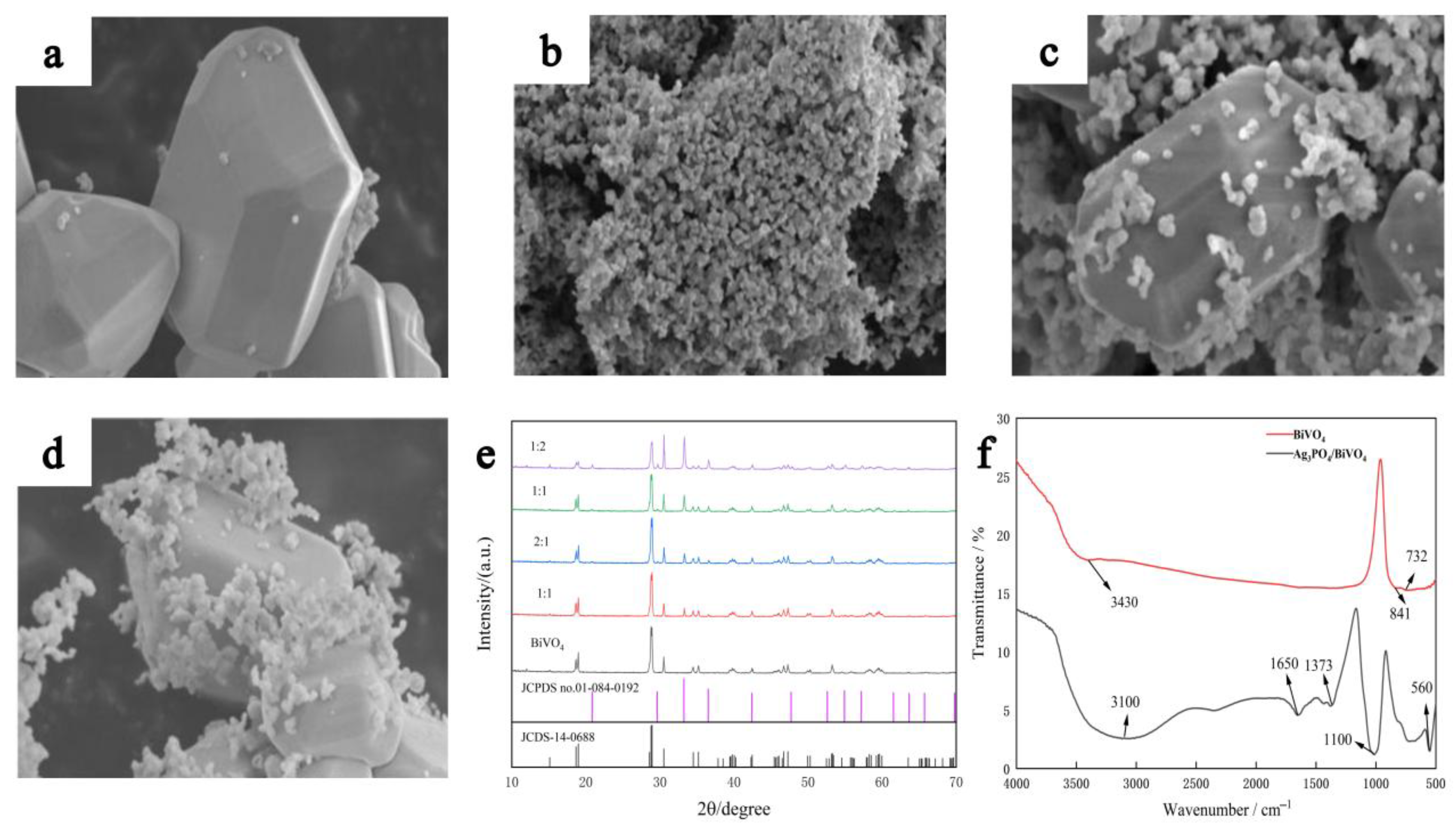
3.1. Characterization
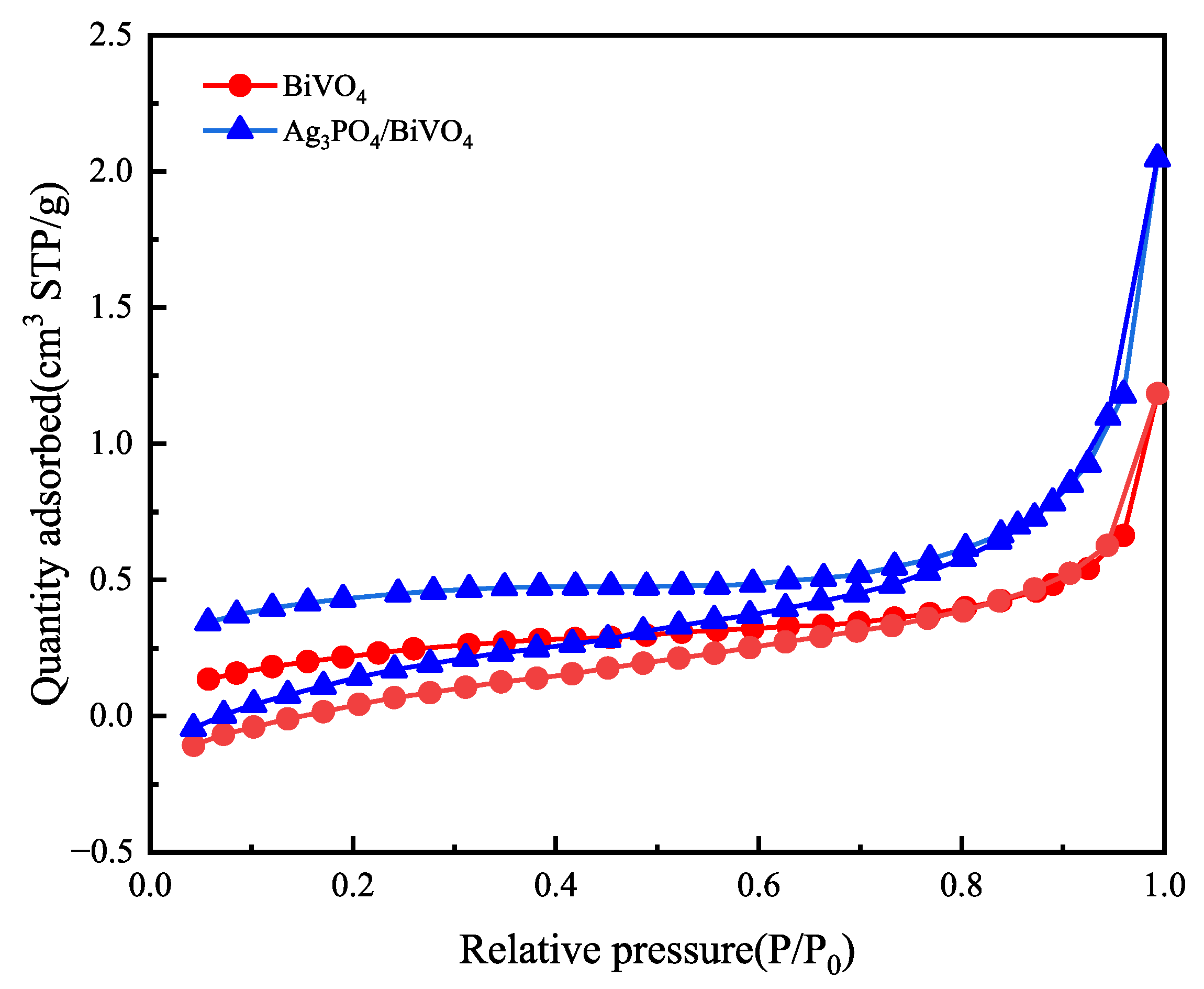
3.2. Textural Properties (BET Analysis)
3.3. X-Ray Photoelectron Spectroscopy (XPS) Analysis
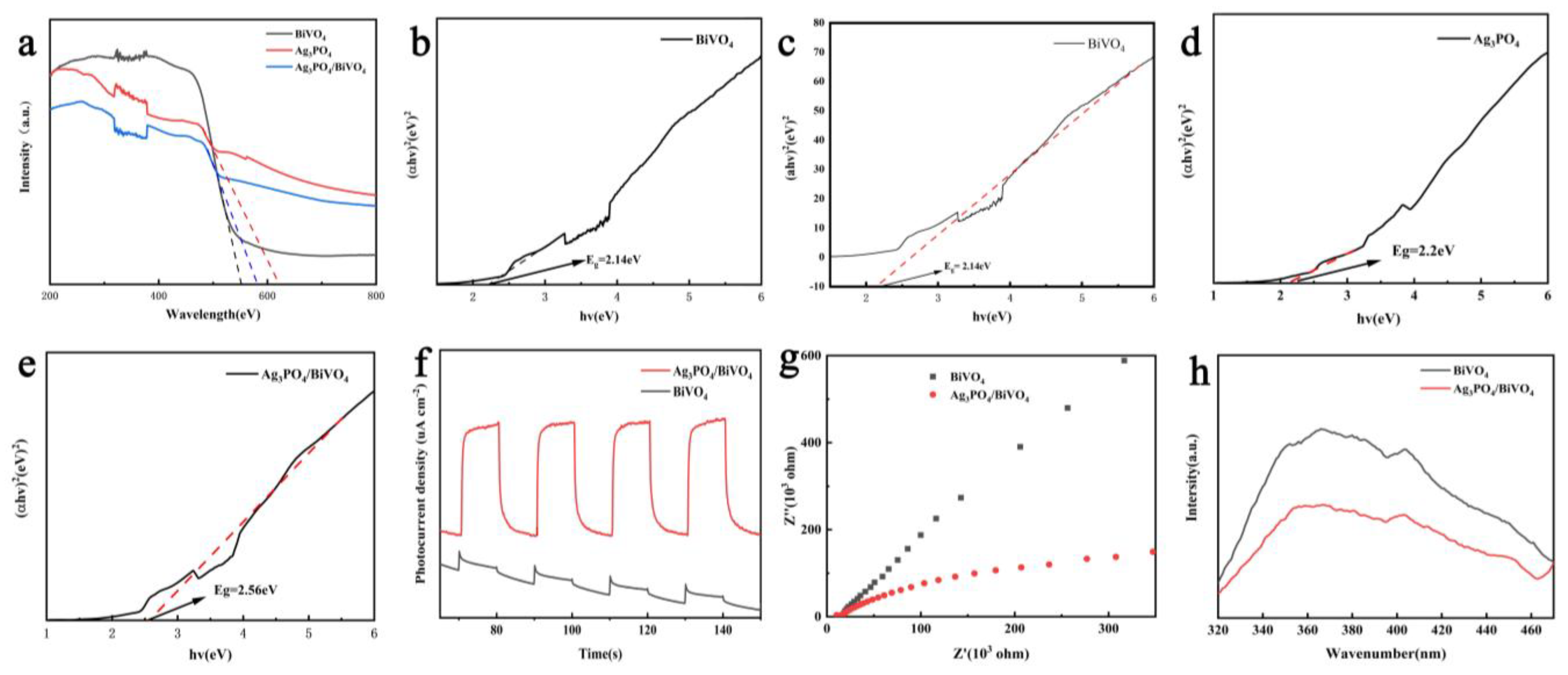
3.4. Optical and Photoelectrochemical Properties
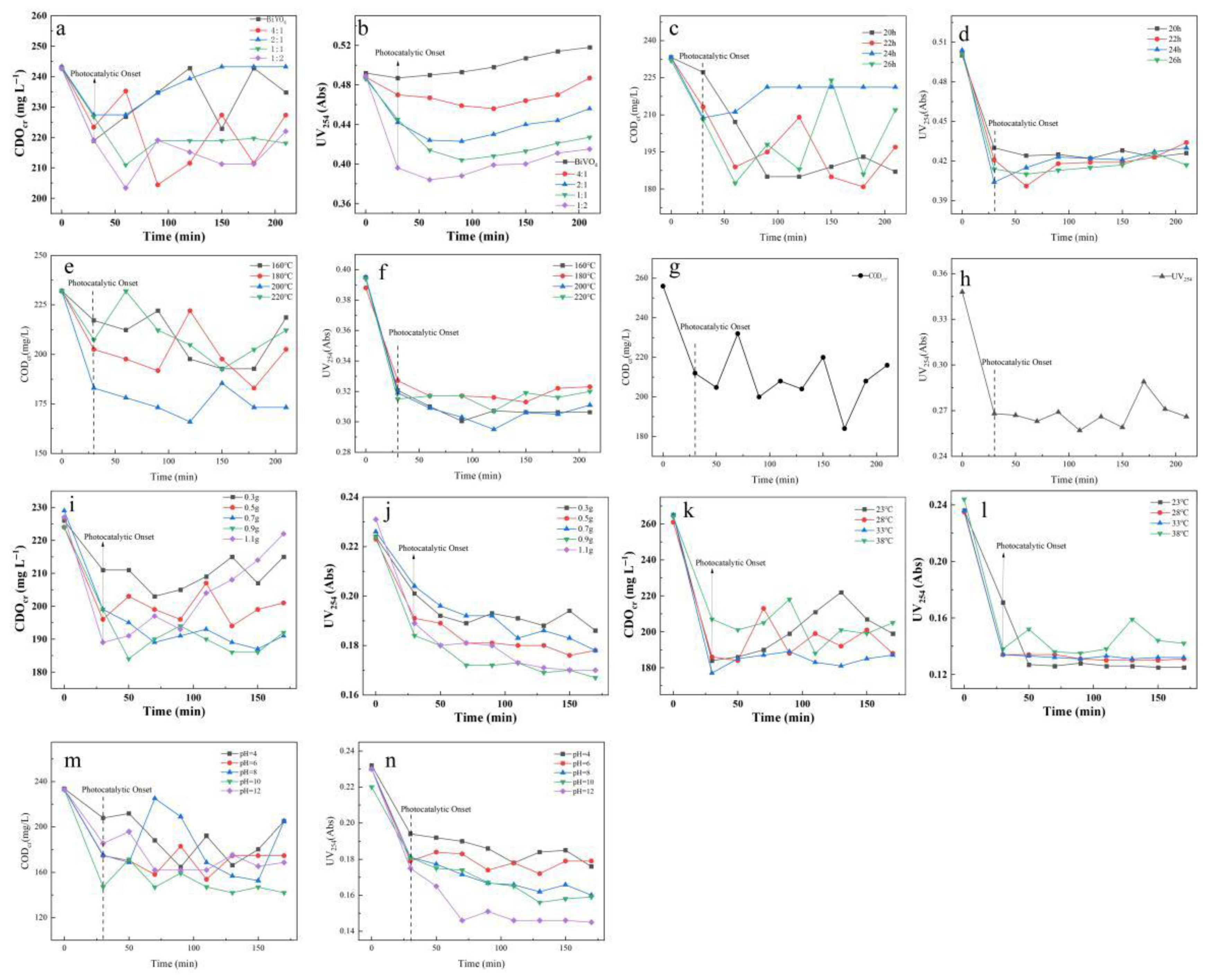
3.5. Optimization of Synthesis Conditions for Ag3PO4/BiVO4
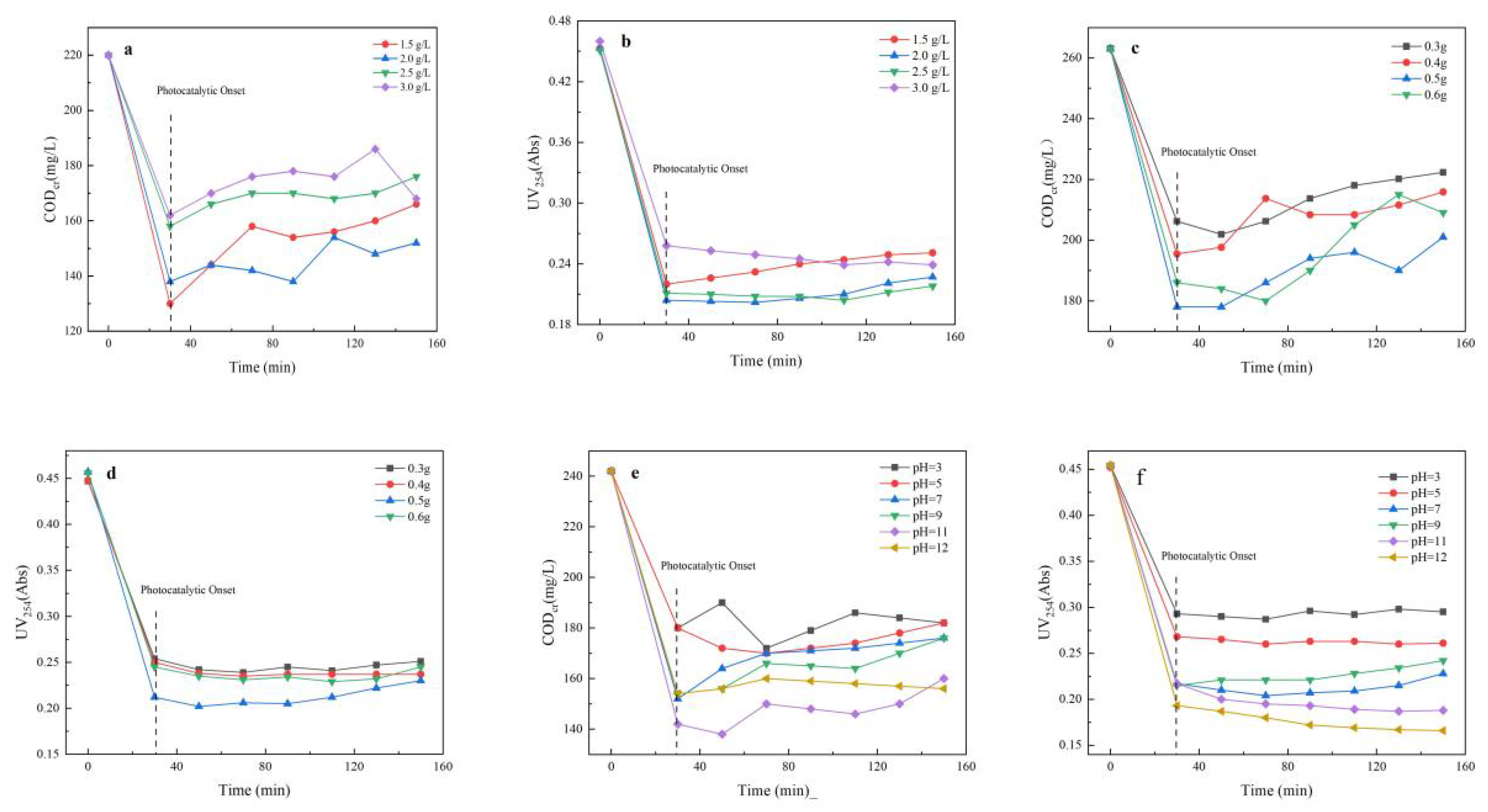
3.6. Optimization of the Ag3PO4/BiVO4/PMS/Vis
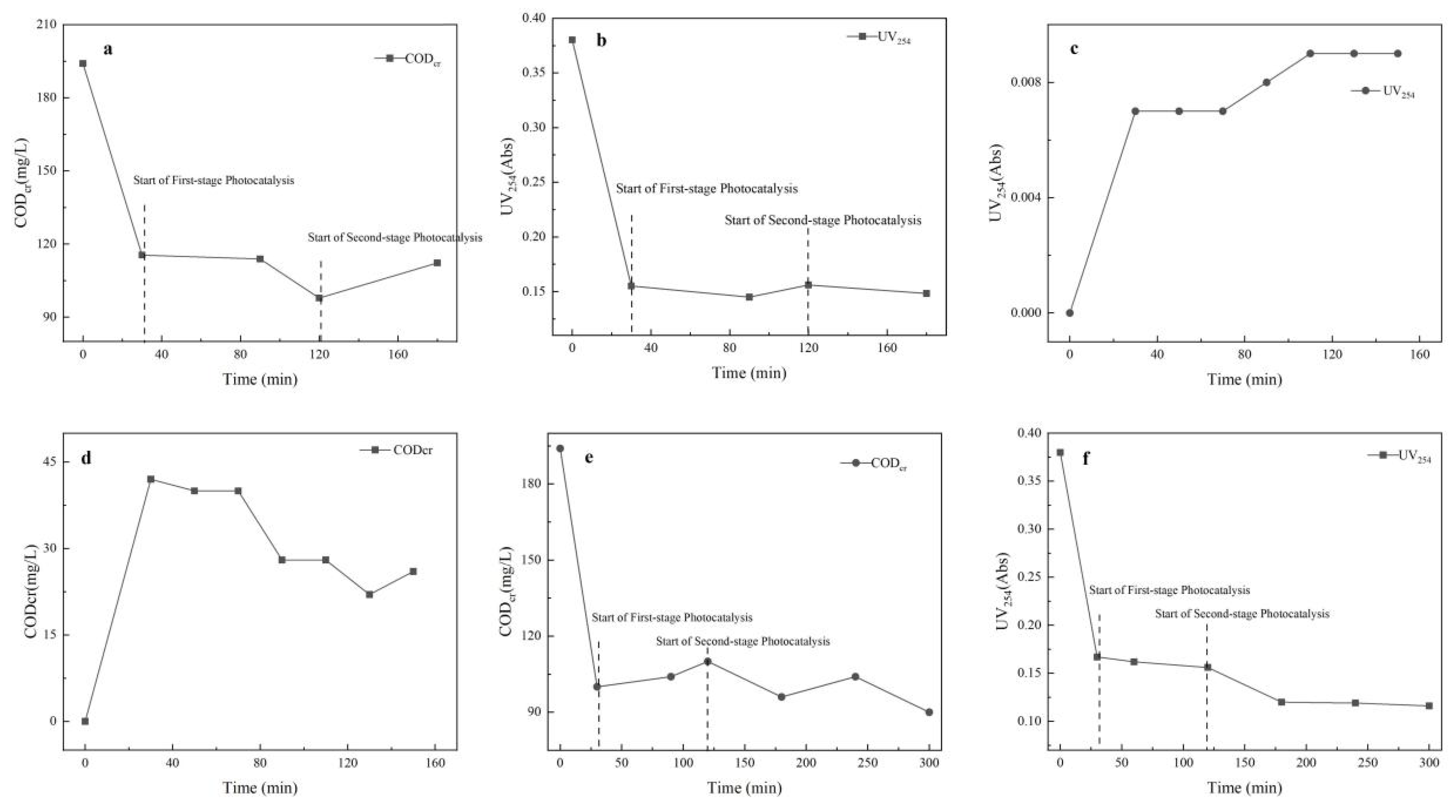
3.7. Two-Stage Photocatalytic Treatment
3.8. Kinetic Analysis
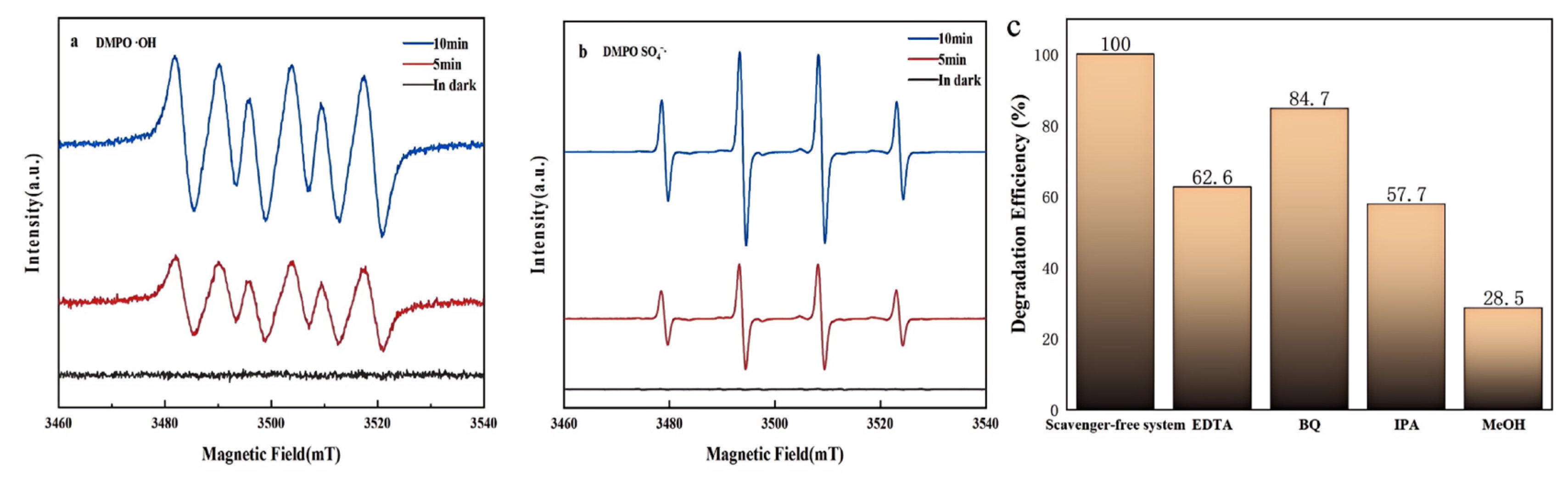
3.9. Mechanism Analysis of Ag3PO4/BiVO4/PMS/Vis Photocatalysis
4. Conclusions
Author Contributions
Funding
Institutional Review Board Statement
Informed Consent Statement
Data Availability Statement
Acknowledgments
Conflicts of Interest
References
- Chu, D.; Zhang, Z.; Ye, Z.-L.; Zhang, H.; Meng, X.; Chen, X.; Lin, Y.; Chen, S. Molecular insights into transformation of dissolved organic matter in landfill leachate nanofiltration concentrate during Fe2+/HClO electrochemical Fenton-type process. Sep. Purif. Technol. 2023, 311, 123328. [Google Scholar] [CrossRef]
- Gong, H.; Hu, J.; Rui, X.; Wang, Y.; Zhu, N. Drivers of change behind the spatial distribution and fate of typical trace organic pollutants in fresh waste leachate across China. Water Res. 2024, 263, 122170. [Google Scholar] [CrossRef]
- Pasalari, H.; Farzadkia, M.; Gholami, M.; Emamjomeh, M.M. Management of landfill leachate in Iran: Valorization, characteristics, and environmental approaches. Environ. Chem. Lett. 2019, 17, 335–348. [Google Scholar] [CrossRef]
- Qiao, M.; Zhao, X.; Wei, X. Characterization and treatment of landfill leachate membrane concentrate by Fe(2+)/NaClO combined with advanced oxidation processes. Sci. Rep. 2018, 8, 12525. [Google Scholar] [CrossRef]
- Fernandes, A.; Pacheco, M.J.; Ciríaco, L.; Lopes, A. Review on the electrochemical processes for the treatment of sanitary landfill leachates: Present and future. Appl. Catal. B Environ. 2015, 176–177, 183–200. [Google Scholar] [CrossRef]
- Wang, G.; Chen, Y.; Lv, W.; Jia, Z.; Chen, H.; Chen, X. Rapid and in-situ preparation COFs coated capillary by adsorption method for the separation and determination of phthalate ester using CEC. Talanta 2024, 270, 125617. [Google Scholar] [CrossRef]
- Biniaz, P.; Rahimpour, E.; Basile, A.; Rahimpour, M.R. Chapter 1—Fundamentals of membrane technology. In Current Trends and Future Developments on (Bio-) Membranes; Basile, A., Ghasemzadeh, K., Iulianelli, A., Eds.; Elsevier: Amsterdam, The Netherlands, 2022; pp. 1–23. [Google Scholar] [CrossRef]
- Tews, I.J.; Terrell, E.; Mood, S.H.; Garcia-Perez, M. Wet oxidation of thermochemical aqueous effluent utilizing char catalysts in microreactors. J. Clean. Prod. 2022, 351, 131222. [Google Scholar] [CrossRef]
- Li, Y.; Duan, Y.; Wang, S.; Zhang, F.; Li, J.; Dai, Z.; Li, Z.; Zhang, Y.; Wang, Y. Supercritical water oxidation for the treatment and utilization of organic wastes: Factor effects, reaction enhancement, and novel process. Environ. Res. 2024, 251, 118571. [Google Scholar] [CrossRef]
- Yu, N.; Zeng, X.; Ma, X.; Sun, Y.; Wang, Y.; Chen, B.; Luo, Z.; Dong, C.; Shen, K.; Wu, J. Preparation of Ce-Fe2O3/Al2O3 catalyst for simultaneous degradation of benzodiacetone and reduction of Cr(VI) by electro-Fenton process: Performance, mechanism, degradation pathways. J. Alloys Compd. 2025, 1045, 184745. [Google Scholar] [CrossRef]
- Huang, J.; Zong, Z.; Wang, P.; Zhou, H.; Zhang, Y.; Li, Z. Atomic-level steering of charge flow from type-II to S-scheme in In2O3/BiOCl via vacancy–metal pairs for CO2 photoreduction. Chem. Eng. J. 2026, 528, 172537. [Google Scholar] [CrossRef]
- Huang, J.; Zong, Z.; Wang, P.; Zhang, Y.; Diab, M.A.; Li, Z. N/P dual-doped niobium carbide MXene enhances ion transport kinetics for high-performance sodium-ion batteries. J. Alloys Compd. 2026, 1051, 185966. [Google Scholar] [CrossRef]
- Zhang, E.; Meng, C.; Qu, J.; Zhu, Z.; Niu, J.; Wang, L.; Song, N.; Yin, Z. Dual effects of Caragana korshinskii introduction on herbaceous vegetation in Chinese desert areas: Short-term degradation and long-term recovery. Plant Soil 2025, 1–19. [Google Scholar] [CrossRef]
- Chi, S.; Tian, Y.; Tu, Y.; Liu, Y.; Jin, T.; Li, X.; Fang, D.; Wang, J. Design and construction of a novel immobilized Z-scheme-Type II-heterojunction ZnO/ZnCo2O4–Co3O4|Co photocatalyst composite film for efficient norfloxacin degradation with simultaneous hydrogen evolution. Mater. Sci. Semicond. Process. 2024, 171, 108041. [Google Scholar] [CrossRef]
- Lotfi, S.; Assani, A.; Saadi, M.; Ait Ahsaine, H. Synthesis, structural and microstructural properties of Bismuth Vanadate BiVO4. Mater. Today Proc. 2023. [Google Scholar] [CrossRef]
- Zhang, Q.; Li, Y.; Zhong, J.; Li, J. Photocatalytic performance of Ag3PO4/BiOBr heterojunctions induced by effective interfacial charge separation. Desalination Water Treat. 2023, 300, 230–236. [Google Scholar] [CrossRef]
- Ke, D.; Peng, T.; Ma, L.; Cai, P.; Dai, K. Effects of Hydrothermal Temperature on the Microstructures of BiVO4 and Its Photocatalytic O-2 Evolution Activity under Visible Light. Inorg. Chem. 2009, 48, 4685–4691. [Google Scholar] [CrossRef]
- Kaur, G.; Sharma, S.; Bansal, P. Visible light responsive heterostructured α-Bi2O3/ZnO doped β-Bi2O3 photocatalyst for remediation of organic pollutants. Desalination Water Treat. 2020, 201, 349–355. [Google Scholar] [CrossRef]
- Zhu, P.; Chen, Y.; Duan, M.; Liu, M.; Zou, P. Structure and properties of Ag3PO4/diatomite photocatalysts for the degradation of organic dyes under visible light irradiation. Powder Technol. 2018, 336, 230–239. [Google Scholar] [CrossRef]
- Bi, Y.; Ouyang, S.; Umezawa, N.; Cao, J.; Ye, J. Facet effect of single-crystalline Ag3PO4 sub-microcrystals on photocatalytic properties. J. Am. Chem. Soc. 2011, 133, 6490–6492. [Google Scholar] [CrossRef]
- Liang, Q.; Ma, W.; Shi, Y.; Li, Z.; Yang, X. Hierarchical Ag3PO4 porous microcubes with enhanced photocatalytic properties synthesized with the assistance of trisodium citrate. CrystEngComm 2012, 14, 2966–2973. [Google Scholar] [CrossRef]
- Wang, L.; Zhai, H.; Jin, G.; Li, X.; Dong, C.; Zhang, H.; Yang, B.; Xie, H.; Sun, H. 3D porous ZnO–SnS p–n heterojunction for visible light driven photocatalysis. Phys. Chem. Chem. Phys. 2017, 19, 16576–16585. [Google Scholar] [CrossRef] [PubMed]
- Zheng, X.; Zhang, X.; Cai, Y.; Zhao, S.; Wang, S. Efficient degradation of bisphenol A with MoS2/BiVO4 hetero-nanoflower as a heterogenous peroxymonosulfate activator under visible-light irradiation. Chemosphere 2022, 289, 133158. [Google Scholar] [CrossRef] [PubMed]
- Wang, L.; Zhang, J.-G.; Sha, H.-Y.; Wang, Y.-R.; Wang, H.-Y.; Zhu, G.-C.; Lu, Y.-Z. Lanthanum-quaternized chitosan-modified zeolite for long-lasting operation of constructed wetland: A bifunctional strategy for simultaneous phosphorus removal and microbial clogging mitigation. Water Res. 2026, 288, 124688. [Google Scholar] [CrossRef] [PubMed]
- CJ/T 428-2013; Technical Specification for Inspection and Evaluation of Urban Drainage Pipelines. Ministry of Housing and Urban-Rural Development: Beijing, China, 2013.
- HJ 924-2017; Self-Monitoring Technical Guidelines for Pollutant Discharge Units—Textile Printing and Dyeing Industry. Ministry of Ecology and Environment: Beijing, China, 2017.
- HJ 636-2012; Water Quality—Determination of Total Nitrogen—Alkaline Potassium Persulfate Diges-tion UV Spectrophotometric Method. Ministry of Environmental Protection: Beijing, China, 2012.
- HJ 535-2009; Water Quality—Determination of Ammonia Nitrogen—Nessler’s Reagent Spectrophotometric Method. Ministry of Environmental Protection: Beijing, China, 2009.
- GB 11893-89; Water Quality—Determination of Total Phosphorus—Ammonium Molybdate Spectro-photometric Method. State Environmental Protection Administration, State Bureau of Technical Supervision: Beijing, China, 1989.
- Silva, T.F.C.V.; Vieira, E.; Lopes, A.R.; Nunes, O.C.; Fonseca, A.; Saraiva, I.; Boaventura, R.A.R.; Vilar, V.J.P. How the performance of a biological pre-oxidation step can affect a downstream photo-Fenton process on the remediation of mature landfill leachates: Assessment of kinetic parameters and characterization of the bacterial communities. Sep. Purif. Technol. 2017, 175, 274–286. [Google Scholar] [CrossRef]
- Müller, G.T.; Giacobbo, A.; dos Santos Chiaramonte, E.A.; Rodrigues, M.A.S.; Meneguzzi, A.; Bernardes, A.M. The effect of sanitary landfill leachate aging on the biological treatment and assessment of photoelectrooxidation as a pre-treatment process. Waste Manag. 2015, 36, 177–183. [Google Scholar] [CrossRef]
- Iskander, S.M.; Zhao, R.; Pathak, A.; Gupta, A.; Pruden, A.; Novak, J.T.; He, Z. A review of landfill leachate induced ultraviolet quenching substances: Sources, characteristics, and treatment. Water Res. 2018, 145, 297–311. [Google Scholar] [CrossRef]
- Xu, L.S.; Sun, X.B.; Hong, J.M.; Zhang, Q. Peroxymonosulfate activation by α-MnO2/MnFe2O4 for Norfloxacin degradation: Efficiency and mechanism. J. Phys. Chem. Solids 2021, 153, 110029. [Google Scholar] [CrossRef]
- Ma, Z.; Huang, X.; Xu, N.; Li, J.; Zhou, C.; Deng, L.; He, Y. An effective strategy for boosting photoinduced charge separation of Ag3PO4 by BiVO4 with enhanced visible light photodegradation efficiency for levofloxacin and methylene blue. Spectrochim. Acta Part. A Mol. Biomol. Spectrosc. 2020, 229, 117986. [Google Scholar] [CrossRef]
- Dey, U.; Sen, S.; Kumar, C.S.; Jacob, C. Path planning of micromanipulators inside an SEM and 3D nanomanipulation of CNTs for nanodevice construction. Mechatronics 2024, 101, 103196. [Google Scholar] [CrossRef]
- Lai, W.; Chen, Z.; Ye, S.; Xu, Y.; Xie, G.; Kuang, C.; Li, Y.; Zheng, L.; Wei, L. BiVO4 prepared by the sol–gel doped on graphite felt cathode for ciprofloxacin degradation and mechanism in solar-photo-electro-Fenton. J. Hazard. Mater. 2021, 408, 124621. [Google Scholar] [CrossRef]
- Chen, Z.; Li, X.; Wu, Y.; Zheng, J.; Peng, P.; Zhang, X.; Duan, A.; Wang, D.; Yang, Q. S-scheme Cs2AgBiBr6/Ag3PO4 heterojunction with efficient photocatalysis performance for H2 production and organic pollutant degradation under visible light. Sep. Purif. Technol. 2022, 295, 121250. [Google Scholar] [CrossRef]
- Shen, Y.; Wang, X.; Zuo, G.; Li, F.; Meng, Y. Influence of Heat Treatment on Photocatalytic Performance of BiVO4 Synthesized by Hydrothermal Method. High Temp. Mater. Process. 2016, 35, 853–856. [Google Scholar] [CrossRef]
- Chen, S.; Huang, D.; Zeng, G.; Xue, W.; Lei, L.; Xu, P.; Deng, R.; Li, J.; Cheng, M. In-situ synthesis of facet-dependent BiVO4/Ag3PO4/PANI photocatalyst with enhanced visible-light-induced photocatalytic degradation performance: Synergism of interfacial coupling and hole-transfer. Chem. Eng. J. 2020, 382, 122840. [Google Scholar] [CrossRef]
- Zhang, G.; Meng, Y.; Xie, B.; Ni, Z.; Lu, H.; Xia, S. Precise location and regulation of active sites for highly efficient photocatalytic synthesis of ammonia by facet-dependent BiVO4 single crystals. Appl. Catal. B Environ. 2021, 296, 120379. [Google Scholar] [CrossRef]
- Lin, X.; Li, H.; Yu, L.; Zhao, H.; Yan, Y.; Liu, C.; Zhai, H. Efficient removal rhodamine B over hydrothermally synthesized fishbone like BiVO4. Mater. Res. Bull. 2013, 48, 4424–4429. [Google Scholar] [CrossRef]
- Qi, X.; Gu, M.; Zhu, X.; Wu, J.; Wu, Q.; Long, H.; He, K. Controlled synthesis of Ag3PO4/BiVO4 composites with enhanced visible-light photocatalytic performance for the degradation of RhB and 2, 4-DCP. Mater. Res. Bull. 2016, 80, 215–222. [Google Scholar] [CrossRef]
- Wang, J.; Tang, L.; Zeng, G.; Deng, Y.; Liu, Y.; Wang, L.; Zhou, Y.; Guo, Z.; Wang, J.; Zhang, C. Atomic scale g-C3N4/Bi2WO6 2D/2D heterojunction with enhanced photocatalytic degradation of ibuprofen under visible light irradiation. Appl. Catal. B Environ. 2017, 209, 285–294. [Google Scholar] [CrossRef]
- Lin, Y.; Wu, S.; Yang, C.; Chen, M.; Li, X. Preparation of size-controlled silver phosphate catalysts and their enhanced photocatalysis performance via synergetic effect with MWCNTs and PANI. Appl. Catal. B Environ. 2019, 245, 71–86. [Google Scholar] [CrossRef]
- Chen, X.; Li, L.; Yi, T.; Zhang, W.; Zhang, X.; Wang, L. Microwave assisted synthesis of sheet-like Cu/BiVO4 and its activities of various photocatalytic conditions. J. Solid. State Chem. 2015, 229, 141–149. [Google Scholar] [CrossRef]
- Cao, D.; Wang, Y.; Qiao, M.; Zhao, X. Enhanced photoelectrocatalytic degradation of norfloxacin by an Ag3PO4/BiVO4 electrode with low bias. J. Catal. 2018, 360, 240–249. [Google Scholar] [CrossRef]
- Gao, X.; Liang, C.; Gao, K.; Li, X.; Liu, J.; Li, Q. Z-scheme heterojunction Ag3PO4/BiVO4 with exposing high-active facets and stretching spatial charge separation ability for photocatalytic organic pollutants degradation. Appl. Surf. Sci. 2020, 524, 146506. [Google Scholar] [CrossRef]
- Ji, W.; Rui, Z.; Ji, H. Z-scheme Ag3PO4/Ag/SrTiO3 Heterojunction for Visible-Light Induced Photothermal Synergistic VOCs Degradation with Enhanced Performance. Ind. Eng. Chem. Res. 2019, 58, 13950–13959. [Google Scholar] [CrossRef]
- Li, Y.; Xiao, X.; Ye, Z. Fabrication of BiVO4/RGO/Ag3PO4 ternary composite photocatalysts with enhanced photocatalytic performance. Appl. Surf. Sci. 2019, 467–468, 902–911. [Google Scholar] [CrossRef]
- Guo, J.; Yang, C.; Sun, Z.; Yang, Z.; Wang, L.; Lu, C.; Ma, Z.; Guo, F. Ternary Fe3O4/MoS2/BiVO4 nanocomposites: Novel magnetically separable visible light-driven photocatalyst for efficiently degradation of antibiotic wastewater through p–n heterojunction. J. Mater. Sci. Mater. Electron. 2020, 31, 16746–16758. [Google Scholar] [CrossRef]
- Zhang, Z.; Shao, S.; Dang, J.; Lu, C.; Qin, F.; Guan, W. Synthesis of ZnWO4/Ag3PO4 p–n heterojunction photocatalyst and enhanced visible-light photocatalytic applications. Water Sci. Technol. 2017, 77, 1204–1212. [Google Scholar] [CrossRef]
- Zhao, W.; Li, J.; Dai, B.; Cheng, Z.; Xu, J.; Ma, K.; Zhang, L.; Sheng, N.; Mao, G.; Wu, H.; et al. Simultaneous removal of tetracycline and Cr(VI) by a novel three-dimensional AgI/BiVO4 p-n junction photocatalyst and insight into the photocatalytic mechanism. Chem. Eng. J. 2019, 369, 716–725. [Google Scholar] [CrossRef]
- Zhang, X.; Chen, Z.; Li, X.; Wu, Y.; Zheng, J.; Li, Y.; Wang, D.; Yang, Q.; Duan, A.; Fan, Y. Promoted electron transfer in Fe2+/Fe3+ co-doped BiVO4/Ag3PO4 S-scheme heterojunction for efficient photo-Fenton oxidation of antibiotics. Sep. Purif. Technol. 2023, 310, 123116. [Google Scholar] [CrossRef]
- Yin, Z.; Tian, Y.; Gao, P.; Feng, L.; Liu, Y.; Du, Z.; Zhang, L. Photodegradation mechanism and genetic toxicity of bezafibrate by Pd/g-C3N4 catalysts under simulated solar light irradiation: The role of active species. Chem. Eng. J. 2020, 379, 122294. [Google Scholar] [CrossRef]
- Li, Q.; Xie, L.; Jiang, Y.; Fortner, J.D.; Yu, K.; Liao, P.; Liu, C. Formation and stability of NOM-Mn(III) colloids in aquatic environments. Water Res. 2019, 149, 190–201. [Google Scholar] [CrossRef]
- Mohtar, S.S.; Aziz, F.; Nor, A.R.M.; Mohammed, A.M.; Mhamad, S.A.; Jaafar, J.; Yusof, N.; Salleh, W.N.W.; Ismail, A.F. Photocatalytic degradation of humic acid using a novel visible-light active α-Fe2O3/NiS2 composite photocatalyst. J. Environ. Chem. Eng. 2021, 9, 105682. [Google Scholar] [CrossRef]
- Shen, Q.; Song, X.; Fan, J.; Chen, C.; Guo, Z. Degradation of humic acid by UV/PMS: Process comparison, influencing factors, and degradation mechanism. RSC Adv. 2024, 14, 22988–23003. [Google Scholar] [CrossRef] [PubMed]
- Feng, C.; Zhang, J.; Lang, R.; Jin, Z.; Wu, Z.; Zhang, Z. Unusual photo-induced adsorption–desorption behavior of propylene on Ag/TiO2 nanotube under visible light irradiation. Appl. Surf. Sci. 2011, 257, 1864–1870. [Google Scholar] [CrossRef]
- Tian, J.; Qian, F.; Zhang, Y.; Li, W.; Li, J.; Chen, S.; Wang, L. Z-Scheme membrane CdZnS/TiO2 heterojunction photocatalyst for efficient photocatalytic removal of Microcystis aeruginosa under simulated sunlight: Adjustable suspended depth and flexible assembly. J. Mater. Sci. Technol. 2025, 217, 70–79. [Google Scholar] [CrossRef]
- Wang, X.; Wu, L.; Huang, G.; Gao, S.; Tian, Z.; Zhang, Q.; Yang, C. Research progress in Fenton process for treating landfill leachate. J. Environ. Eng. Technol. 2021, 11, 942–950. [Google Scholar] [CrossRef]
- Peng, C.; Jiang, L.; Jiang, B.; Ning, X. Modified activated carbon catalytic wet oxidation of the membrane filtration concentrate of landfill leachate. Ind. Water Treat. 2022, 42, 169. [Google Scholar]
- Herrmann, J.-M. Heterogeneous photocatalysis: Fundamentals and applications to the removal of various types of aqueous pollutants. Catal. Today 1999, 53, 115–129. [Google Scholar] [CrossRef]
- Zhang, J.; Yan, M.; Yuan, X.; Si, M.; Jiang, L.; Wu, Z.; Wang, H.; Zeng, G. Nitrogen doped carbon quantum dots mediated silver phosphate/bismuth vanadate Z-scheme photocatalyst for enhanced antibiotic degradation. J. Colloid. Interface Sci. 2018, 529, 11–22. [Google Scholar] [CrossRef]
- Roy, D.; Neogi, S.; De, S. Visible light assisted activation of peroxymonosulfate by bimetallic MOF based heterojunction MIL-53(Fe/Co)/CeO2 for atrazine degradation: Pivotal roles of dual redox cycle for reactive species generation. Chem. Eng. J. 2022, 430, 133069. [Google Scholar] [CrossRef]
- Cho, S.P.; Hong, S.C.; Hong, S.-I. Study of the end point of photocatalytic degradation of landfill leachate containing refractory matter. Chem. Eng. J. 2004, 98, 245–253. [Google Scholar] [CrossRef]
- Modin, H.; Persson, K.M.; Andersson, A.; van Praagh, M. Removal of metals from landfill leachate by sorption to activated carbon, bone meal and iron fines. J. Hazard. Mater. 2011, 189, 749–754. [Google Scholar] [CrossRef]
- Ghaly, M.Y.; Farah, J.Y.; Fathy, A.M. Enhancement of decolorization rate and COD removal from dyes containing wastewater by the addition of hydrogen peroxide under solar photocatalytic oxidation. Desalination 2007, 217, 74–84. [Google Scholar] [CrossRef]
- Nan, Z.; Zhongyi, L.; Xin, X.; Jialin, W.; Hongzhi, Z.; Fei, L. Removal of COD in groundwater contaminated by landfill leachate by ferrous-activated sodium percarbonate. Chin. J. Environ. Eng. 2023, 17, 103–112. [Google Scholar]
- Manz, K.E.; Adams, T.J.; Carter, K.E. Furfural degradation through heat-activated persulfate: Impacts of simulated brine and elevated pressures. Chem. Eng. J. 2018, 353, 727–735. [Google Scholar] [CrossRef]
- Ma, B.; Zha, Y.; Shi, H.; Qin, Y.; Zhao, M.; Li, J.; Wang, S.; Yan, B.; Zhao, B.; Ma, Y.; et al. Enhanced photocatalysis-Fenton degradation of levofloxacin by Fe doped BiOCl microspheres with rich surface oxygen vacancies: The accelerated redox cycle of ≡Fe(III)/≡Fe(II). Sep. Purif. Technol. 2025, 354, 129086. [Google Scholar] [CrossRef]
- Leng, W. Comment on “Platinized WO3 as an Environmental Photocatalyst that Generates OH Radicals under Visible Light”. Environ. Sci. Technol. 2011, 45, 3181–3182. [Google Scholar] [CrossRef]
- Cheng, H.; Huang, B.; Dai, Y.; Qin, X.; Zhang, X. One-Step Synthesis of the Nanostructured AgI/BiOI Composites with Highly Enhanced Visible-Light Photocatalytic Performances. Langmuir 2010, 26, 6618–6624. [Google Scholar] [CrossRef]
- Li, D.; Zhou, Y.; Tan, Y.; Pathak, S.; Majid, M.B.A.; Ng, W.J. Alkali-solubilized organic matter from sludge and its degradability in the anaerobic process. Bioresour. Technol. 2016, 200, 579–586. [Google Scholar] [CrossRef]
- Huang, W.; Xiao, S.; Zhong, H.; Yan, M.; Yang, X. Activation of persulfates by carbonaceous materials: A review. Chem. Eng. J. 2021, 418, 129297. [Google Scholar] [CrossRef]
- Xiao, Y.; Zhang, T.; Hao, Y.; Ye, J.; Wang, Y.; Zhou, Y.; Liu, C.; Feng, Q.; Xu, L. Outstanding Performance of Composite Co3O4@ Y Molecular Sieve/Carbon Cloth Anode Microbial Fuel Cell in Treating the Mixture of Aged Landfill Leachate and Shale Gas Flowback Wastewater. Available online: https://papers.ssrn.com/sol3/papers.cfm?abstract_id=4970430 (accessed on 25 December 2025).
- Chen, F.; Yang, Q.; Sun, J.; Yao, F.; Wang, S.; Wang, Y.; Wang, X.; Li, X.; Niu, C.; Wang, D.; et al. Enhanced Photocatalytic Degradation of Tetracycline by AgI/BiVO4 Heterojunction under Visible-Light Irradiation: Mineralization Efficiency and Mechanism. ACS Appl. Mater. Interfaces 2016, 8, 32887–32900. [Google Scholar] [CrossRef]
- Amiri, M.; Dashtian, K.; Ghaedi, M.; Mosleh, S.; Jannesar, R. Bi2WO6/Ag3PO4–Ag Z-scheme heterojunction as a new plasmonic visible-light-driven photocatalyst: Performance evaluation and mechanism study. New J. Chem. 2019, 43, 1275–1284. [Google Scholar] [CrossRef]
- Kim, J.; Lee, C.W.; Choi, W. Platinized WO3 as an Environmental Photocatalyst that Generates OH Radicals under Visible Light. Environ. Sci. Technol. 2010, 44, 6849–6854. [Google Scholar] [CrossRef]
- Zhang, B.; Zhang, M.; Zhang, L.; Bingham, P.A.; Tanaka, M.; Li, W.; Kubuki, S. BiOBr/MoS2 catalyst as heterogenous peroxymonosulfate activator toward organic pollutant removal: Energy band alignment and mechanism insight. J. Colloid. Interface Sci. 2021, 594, 635–649. [Google Scholar] [CrossRef]
- Sun, N.; Ren, Z.; Chen, P.; Yue, M.; Wu, J.; Fu, Y.; Ma, J. Highly stretchable TPU/g-C3N4 composite nanofiber film for enhancing the piezo-photocatalytic sewage treatment by electrospinning-induced pretension. NPJ Clean. Water 2025, 8, 19. [Google Scholar] [CrossRef]
- Fu, Y.; Lu, Q.; Wang, J.; Sun, N.; Gao, J.; Chen, P.; Wu, J.; Ma, J. Pulsed laser synthesis of free-standing Pt single atoms in an ice block for enhancing photocatalytic hydrogen evolution of g-C3N4. Nanoscale Adv. 2025, 7, 2474–2482. [Google Scholar] [CrossRef] [PubMed]
- Liu, S.; Huang, B.; Zheng, G.; Zhang, P.; Li, J.; Yang, B.; Chen, Y.; Liang, L. Nanocapsulation of horseradish peroxidase (HRP) enhances enzymatic performance in removing phenolic compounds. Int. J. Biol. Macromol. 2020, 150, 814–822. [Google Scholar] [CrossRef] [PubMed]
- Tugelbay, S.; Bakbolat, B. Visible-light-responsive Ag3PO4-based photocatalysts for water treatment and wastewater remediation: Advances, challenges, and future directions. J. Environ. Chem. Eng. 2025, 13, 120339. [Google Scholar] [CrossRef]
- Wang, J.; Lu, Q.; Sun, N.; Su, H.; Chen, P.; Wu, J.; Fu, Y.; Ma, J. Giant improvement in piezo-photocatalytic capability of colloidal g-C3N4 quantum dots. Prog. Nat. Sci. Mater. Int. 2025, 35, 737–751. [Google Scholar] [CrossRef]







| Parameter | pH | COD (mg·L−1) | TN (mg·L−1) | TP (mg·L−1) | NH4+-N (mg·L−1) |
|---|---|---|---|---|---|
| Value | 7.3–8.0 | 200–270 | 1467–1563 | 21–27 | 302–349 |
| RhB | Catalyst Dosage | Scavenger | Target Species | Scavenger Dosage |
|---|---|---|---|---|
| 100 mL | 0.025 g B1A2 + 0.02 gPMS | EDTA-Na2 | h+ | 0.01 g |
| BQ | ·O2− | 0.05 g | ||
| IPA | ·OH | 0.5 mL | ||
| MeOH | SO4−· | 0.5 mL |
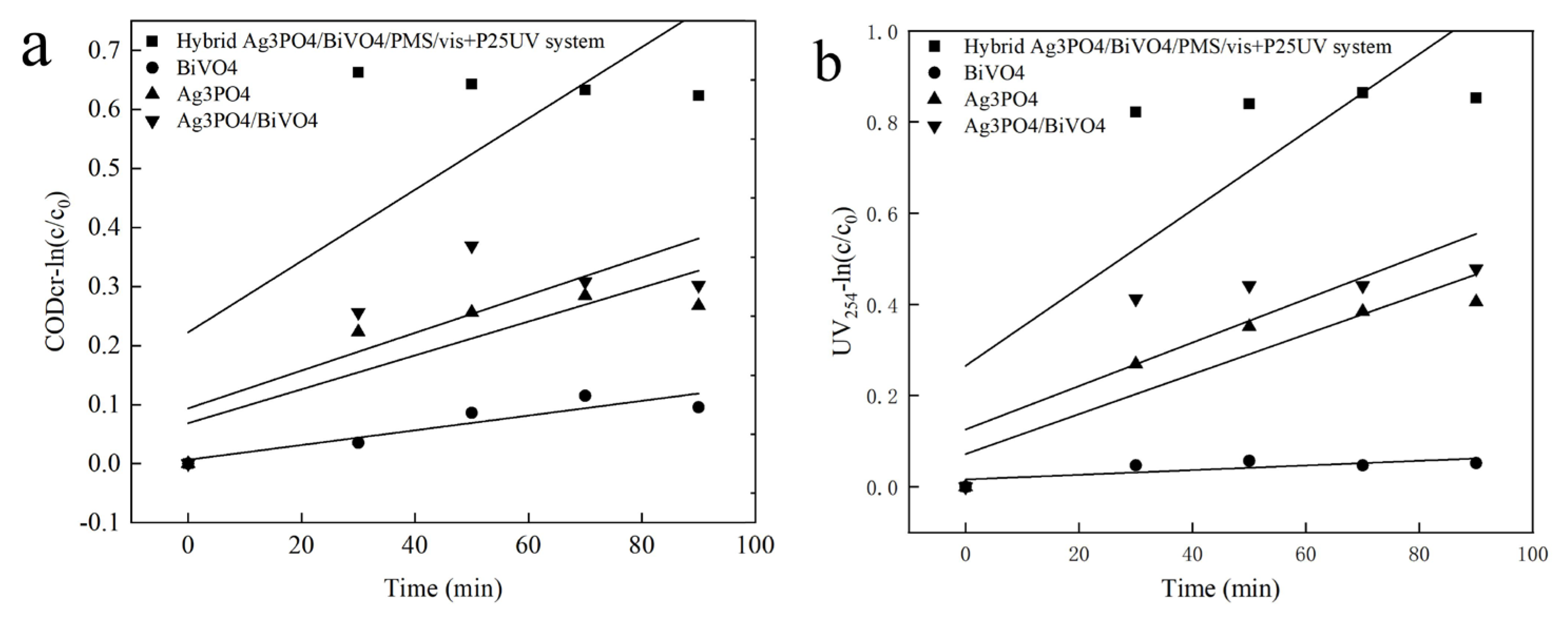
| Catalyst System | CODcrkobs min−1 | R2 | UV254kobs min−1 | R2 |
|---|---|---|---|---|
| Two-stage catalytic system | 0.00314 | 1.000 | 0.00855 | 0.623 |
| Ag3PO4/BiVO4 | 0.00152 | 0.567 | 0.00477 | 0.695 |
| Ag3PO4 | 0.00120 | 0.446 | 0.00438 | 0.847 |
| BiVO4 | 0.000657 | 0.868 | 0.000512 | 0.595 |
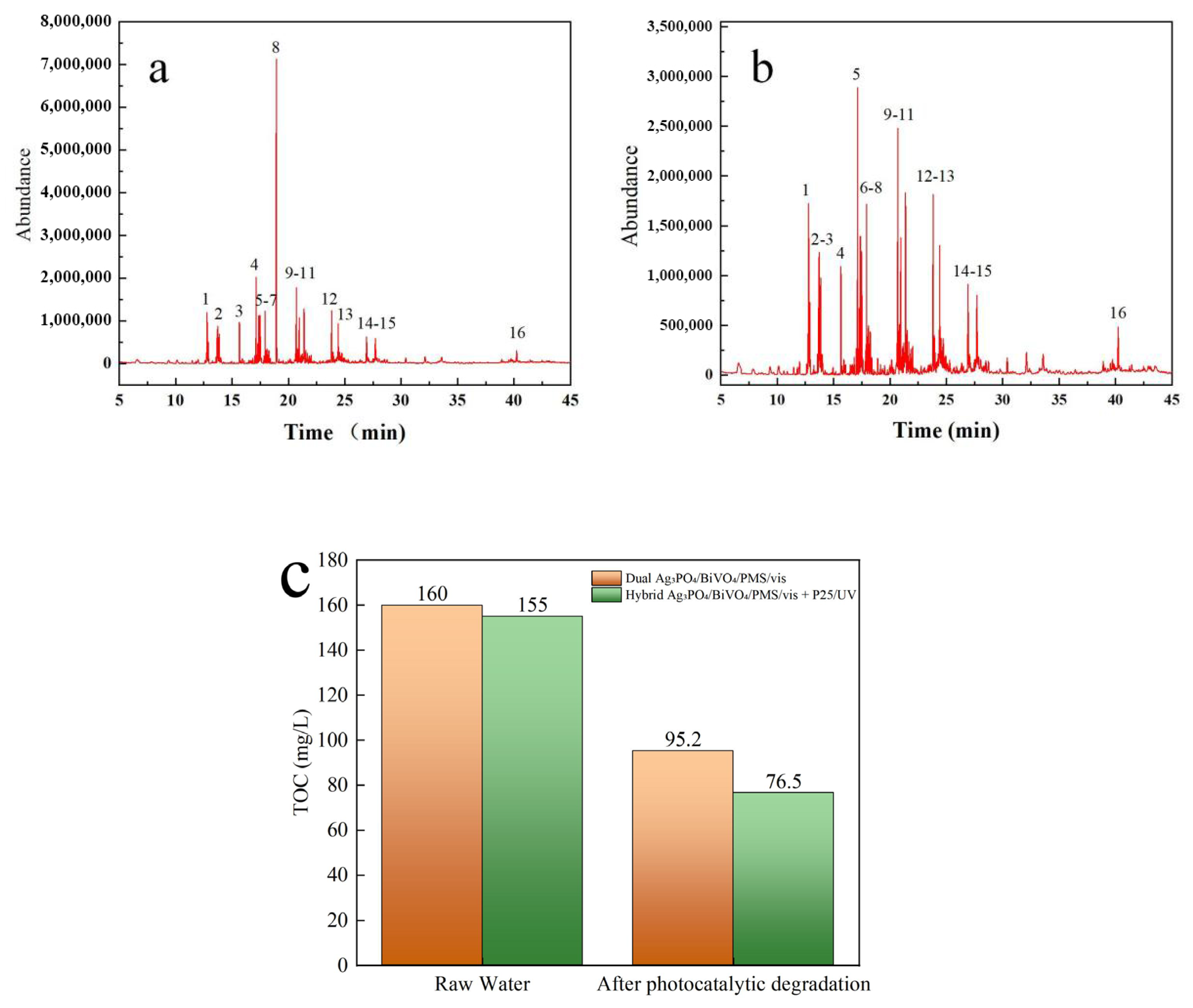
| Serial Number | Retention Time (min) | Organic Compound | Match Factor | Relative Content (%) |
|---|---|---|---|---|
| 1 | 12.78 | 3,3-Dimethylhexane | 78 | 2.81 |
| 2 | 13.73 | 3,6-Dimethyldecane | 72 | 1.8 |
| 3 | 15.66 | Dodecane | 95 | 1.64 |
| 4 | 17.13 | 2,6,11-Trimethyldodecane | 81 | 3.32 |
| 5 | 17.38 | 4-tert-Butylphenol | 96 | 1.93 |
| 6 | 17.48 | Tridecane | 96 | 1.86 |
| 7 | 17.93 | 2,6,11-Trimethyldodecane | 90 | 2.18 |
| 8 | 18.94 | Biphenyl | 95 | 12.77 |
| 9 | 20.7 | 2,-Methyl-6-propyldodecane | 78 | 3.22 |
| 10 | 20.96 | 2,4-Diethylphenol | 96 | 2.03 |
| 11 | 21.38 | Hexadecane | 90 | 2.44 |
| 12 | 23.83 | 2-Bromododecane | 86 | 2.84 |
| 13 | 24.41 | Heneicosane | 91 | 2.08 |
| 14 | 26.93 | 2-Bromododecane | 91 | 1.78 |
| 15 | 27.7 | Dibutyl phthalate | 68 | 2.12 |
| 16 | 40.23 | 2,2-Diethylphenol | 96 | 0.87 |
| Serial Number | Retention Time (min) | Organic Compound | Match Factor | Relative Content (%) |
|---|---|---|---|---|
| 1 | 12.78 | 4,7-dimethylundecane | 83 | 3.32 |
| 2 | 13.73 | 3,7-dimethyldecane | 64 | 2.10 |
| 3 | 13.86 | 1H-Benzotriazole | 47 | 1.86 |
| 4 | 15.65 | Dodecane | 95 | 1.49 |
| 5 | 17.13 | 2,6,11-trimethylhexadecane | 81 | 3.88 |
| 6 | 17.38 | 4-tert-Butylphenol | 96 | 1.95 |
| 7 | 17.47 | Tridecane | 96 | 1.66 |
| 8 | 17.93 | 2,6,11-trimethylhexadecane | 91 | 2.51 |
| 9 | 20.7 | 1-Bromotetradecane | 78 | 3.71 |
| 10 | 20.96 | 2,4-Dimethylphenol | 96 | 2.16 |
| 11 | 21.38 | Heneicosane | 90 | 2.85 |
| 12 | 23.83 | Hexadecane | 91 | 3.09 |
| 13 | 24.41 | Heneicosane | 90 | 2.44 |
| 14 | 26.93 | Heneicosane | 86 | 2.06 |
| 15 | 27.7 | Heptadecane | 89 | 2.37 |
| 16 | 40.23 | 2,2′-Methylenebis(phenol) | 89 | 1.18 |
| Comparison Items | Reported Ag3PO4/BiVO4-Based Photocatalytic Systems | This Study |
|---|---|---|
| Target Pollutants | Simulated dyes (e.g., methylene blue MB, reactive blue KN-R), simple phenols (4-chlorophenol, 4-nitrophenol), single antibiotics (levofloxacin) and other model organic pollutants [42,49,82] | Mature actual landfill leachate tailwater (complex components: humic substances, refractory organic matter, ammonia nitrogen, salts, microbial metabolites, etc.), not a simulated pollutant system |
| Reaction System | Mainly simple photocatalytic systems; a few are coupled with H2O2, enzyme catalysis or photoelectrocatalysis, no relevant reports on coupling with peroxymonosulfate (PMS) activation [82]; mainly rely on active species such as ·OH, h+, and O2− to degrade pollutants [34,42,49,82] | Ag3PO4/BiVO4 heterojunction photocatalysis + peroxymonosulfate (PMS) activation synergistic system, which combines the heterojunction with PMS activation for the first time to synergistically generate strong oxidizing species and improve degradation efficiency |
| Application Scenarios | Laboratory simulated wastewater and simple water distribution systems with few environmental interference factors; no application cases of complex actual wastewater treatment [34,42,49] | Real, high chroma, high organic matter, high salinity landfill leachate advanced treatment scenarios with complex working conditions, which are consistent with actual engineering application needs |
| Performance Evaluation Indicators | Mainly decolorization rate, degradation rate of single model pollutants, first-order kinetic constants, and catalyst cycle stability; no key compliance indicators for actual wastewater are involved [34,42,49] | COD removal rate, stable effluent COD compliance value (≤90 mg·L−1), mineralization degree, process stability, and improvement of biodegradability of actual tailwater, focusing on the compliance requirements of actual wastewater advanced treatment |
| Treatment Process | Single-stage batch photocatalytic process, with the core goal of “improving the degradation efficiency of model pollutants” and no clear process design optimization [34,42,49] | Two-stage synergistic catalytic process, with the engineering goal of “up-to-standard discharge of actual tailwater”, and the process concept is reported for the first time in similar studies |
| Core Objectives | Verify the synthesis feasibility, photocatalytic activity, carrier separation efficiency and catalytic mechanism of Ag3PO4/BiVO4 heterojunction [34,42,49] | Achieve stable compliance of effluent COD ≤ 90 mg·L−1 for actual landfill leachate tailwater, solve the problem of advanced treatment of complex actual wastewater, and promote the engineering application of the heterojunction system |
| Main Findings | The construction of Ag3PO4/BiVO4 heterojunction can effectively promote the separation of photogenerated carriers, improve the visible light absorption efficiency and photocatalytic degradation activity; some composite systems can improve the cycle stability of catalysts [34,42,49,83] | Ag3PO4/BiVO4 heterojunction can efficiently activate PMS to generate strong oxidizing species; the two-stage process can significantly improve the pollutant mineralization efficiency and system stability under complex matrix, and achieve strict compliance discharge |
| Research Limitations | Only applicable to simulated wastewater, difficult to directly use for complex actual wastewater treatment; no engineering compliance process design; some systems have problems such as catalyst activity attenuation and difficult recovery [34,42,49] | Scale-up tests and long-term operation verification are still needed; the free radical competition mechanism in complex matrix needs further optimization; the large-scale preparation and recovery process of catalysts needs subsequent improvement |
Disclaimer/Publisher’s Note: The statements, opinions and data contained in all publications are solely those of the individual author(s) and contributor(s) and not of MDPI and/or the editor(s). MDPI and/or the editor(s) disclaim responsibility for any injury to people or property resulting from any ideas, methods, instructions or products referred to in the content. |
© 2026 by the authors. Licensee MDPI, Basel, Switzerland. This article is an open access article distributed under the terms and conditions of the Creative Commons Attribution (CC BY) license.
Share and Cite
Wang, Y.; Zhang, M.; Wang, Y.; Hong, Z.; Wang, Z.; Sun, X.; Zhang, H.; Song, Y.; Li, Y.; Zhu, H. Photocatalytic Performance of Ag3PO4/BiVO4 P-N Type Heterojunction for Treatment of Landfill Leachate Tailwater. Sustainability 2026, 18, 1962. https://doi.org/10.3390/su18041962
Wang Y, Zhang M, Wang Y, Hong Z, Wang Z, Sun X, Zhang H, Song Y, Li Y, Zhu H. Photocatalytic Performance of Ag3PO4/BiVO4 P-N Type Heterojunction for Treatment of Landfill Leachate Tailwater. Sustainability. 2026; 18(4):1962. https://doi.org/10.3390/su18041962
Chicago/Turabian StyleWang, Yan, Muxi Zhang, Yabo Wang, Zhi Hong, Zitong Wang, Xiaojie Sun, Hongxia Zhang, Yu Song, Yapan Li, and Hongxiang Zhu. 2026. "Photocatalytic Performance of Ag3PO4/BiVO4 P-N Type Heterojunction for Treatment of Landfill Leachate Tailwater" Sustainability 18, no. 4: 1962. https://doi.org/10.3390/su18041962
APA StyleWang, Y., Zhang, M., Wang, Y., Hong, Z., Wang, Z., Sun, X., Zhang, H., Song, Y., Li, Y., & Zhu, H. (2026). Photocatalytic Performance of Ag3PO4/BiVO4 P-N Type Heterojunction for Treatment of Landfill Leachate Tailwater. Sustainability, 18(4), 1962. https://doi.org/10.3390/su18041962