1. Introduction
Climate change represents one of the most pressing challenges of our time, with profound impacts on ecosystems and human societies [
1,
2,
3]. In this context, environmental education plays a crucial role in fostering awareness, understanding, and sustainable behaviors, particularly among younger generations [
4,
5,
6,
7]. Recent research highlights the potential of experiential and digitally enhanced learning approaches to increase student engagement and support the comprehension of complex climate-related phenomena [
8,
9,
10,
11,
12,
13].
Integrating climate change education within formal education systems is widely recognized as a key strategy for developing the knowledge and competencies needed to address climate-related challenges [
14,
15,
16]. Moreover, climate education can generate multiplier effects, as students often transfer acquired knowledge and attitudes to their families and wider communities, contributing to broader mitigation and adaptation capacities [
17,
18,
19].
Previous research has identified several recurring principles underpinning effective environmental education, notably the importance of personal relevance and the adoption of active, engaging pedagogical approaches [
20]. In the context of complex and contested issues such as climate change, additional elements become particularly relevant, including opportunities for discussion and debate, interaction with experts, and engagement with real-world problems through school- or community-based activities. Together, these strategies have been shown to support student engagement, critical thinking, and conceptual understanding.
At the same time, there is increasing recognition that traditional, content-focused or “business-as-usual” teaching approaches are insufficient to address the complexity and urgency of climate change [
21]. Educational pathways are therefore encouraged to move beyond passive knowledge transmission and to promote deeper exploration, dialogue, and reflection on actionable responses [
14].
From this perspective, climate change education benefits from flexible and holistic pedagogical approaches that connect learning with personal experience and action [
22]. Learning environments that promote inquiry, reflection, and participation can support the development of transferable competencies, enabling learners to engage with complex and uncertain challenges through active exploration and informed decision-making [
23]. In this context, digital and interactive tools (such as web-based applications that make the environmental impacts of everyday choices visible and quantifiable) offer a concrete way to operationalize these pedagogical principles within formal education settings [
24,
25,
26].
Recent reviews emphasize the growing relevance of experiential and digitally enhanced approaches in climate change education, highlighting the need for transformative practices that integrate cognitive, socio-emotional, and behavioral dimensions [
27,
28,
29,
30,
31,
32,
33,
34,
35]. In parallel, research on fast fashion consumption among young people consistently documents a pronounced awareness–behavior gap: although many students recognize the environmental impacts of fast fashion, only a limited proportion translate this awareness into more sustainable purchasing choices [
36,
37,
38,
39,
40,
41]. This gap underscores the importance of behavior-oriented educational tools capable of linking scientific knowledge to everyday decision-making and personal responsibility.
This study presents an integrated educational program implemented within the Pathways for Transversal Skills and Orientation (PCTO) framework with upper secondary school students in Lombardy (Northern Italy), developed as part of the public engagement activities of the University of Milan.
Building on previous editions of the project [
42], the 2024/2025 program introduced two behavior-oriented web-based applications developed by the research team (one focused on individual carbon footprint estimation [
43] and one on the environmental impacts of fast fashion consumption [
16]). These tools were combined with immersive virtual experiences [
44] and GIS-based exercises, allowing a comparative, perception-based assessment of students’ engagement, perceived learning, and self-reported behavioral intentions across different instructional approaches.
The main objective of this study is to explore students’ perceptions of an integrated educational approach combining immersive, GIS-based, and behavior-oriented digital tools within climate change education. Specifically, the analysis examines differences in students’ reported engagement, perceived learning, and self-reported intentions toward behavioral change across interactive, technology-enhanced formats and more traditional instructional approaches.
Beyond existing PCTO experiences (e.g., [
45,
46,
47,
48]) and immersive climate change education initiatives [
8], the originality of this study lies in the integration of data-driven, behavior-oriented digital tools within an experiential learning framework. While previous programs have primarily focused on visualizing climate change impacts or enhancing engagement through immersive technologies [
42], this project explicitly connects global environmental processes with students’ everyday behaviors through quantitative, awareness-oriented assessments of individual carbon footprints and fast fashion consumption. In particular, the inclusion of a web-based fast fashion footprint tool represents a novel contribution, as consumption-related topics are rarely addressed through scientific, data-based approaches in secondary school climate education. By combining immersive experiences, geospatial analysis, and behavior-focused web applications within the same educational pathway, this study offers a comparative, exploratory perspective on how different pedagogical formats are perceived in terms of engagement, learning, and behavioral reflection.
This study addresses the following questions:
RQ1: How do upper secondary students perceive engagement and learning across different educational formats (immersive, GIS-based, web-based, and theory-oriented) in climate change education?
RQ2: To what extent are interactive and behavior-oriented modules associated with students’ self-reported intentions to adopt more environmentally responsible behaviors?
RQ3: How do students perceive the adequacy of time allocation and other contextual constraints associated with different learning formats?
2. Methods
Between November 2024 and January 2025, a series of dual learning and working activities (PCTO) were carried out involving three upper secondary schools in Northern Italy: Istituto di Istruzione Superiore “Altiero Spinelli” (Sesto San Giovanni, Milan), Liceo Statale Virgilio (Milan), and Liceo Don Lorenzo Milani (Romano di Lombardia, Bergamo). A total of approximately 180 students from the 3rd, 4th, and 5th year of high school took part in the program.
Training topics included (i) glaciers (definition, global distribution, inventories, monitoring methods, and climate change impacts) as indicators of climate change, (ii) causes of climate change (greenhouse effect, atmospheric composition, rising GHG concentrations), and (iii) individual mitigation strategies. A dedicated section explored the environmental impacts of fast fashion, highlighting its significant ecological footprint (especially from e-commerce) and discussing mitigation strategies.
The training was organized into five thematic modules (
Table 1): (i) glaciers and immersive experience, (ii) glaciers and image analysis, (iii) glaciers—theory only, (iv) climate change and carbon footprint, and (v) environmental impact of fast fashion. Each module combined theoretical and practical activities (i.e., hands-on laboratory), except for the “Glaciers—theory only” module, which was purely theoretical. However, even the theoretical sessions were not traditional frontal lectures but were designed to be interactive, incorporating multimedia content (e.g., videos) and guided discussions initiated by instructors through questions aimed at stimulating critical thinking among students.
For module 1, students were engaged in an immersive virtual field trip to the Forni Glacier (Italian Alps) through 360° videos experienced using VR headsets (Oculus™ and Pico™ models, [
49]). These videos were developed by UNIMI researchers to simulate real-life scientific expeditions on a glacier, and were designed to be perceptually convincing and highly immersive [
50]. Each video presented researchers (glaciologists, climatologists, and ecologists) addressing the viewer directly and explaining monitoring activities such as ablation measurements, automatic weather station data retrieval, and sampling procedures. Ambient sounds (e.g., wind, running water, crunching ice) were recorded in high fidelity to increase the sense of presence. This immersive experience aimed to overcome common barriers to real fieldwork such as geographical inaccessibility, safety constraints, and weather-related limitations, while maximizing inclusiveness and emotional engagement [
44]. Students were able to virtually explore the glacier landscape while being part of a simulated scientific team. The videos were filmed using an 8-sensor 360° camera and were accessible both through dedicated VR headsets and on a UNIMI’s public educational platform by means of common e-device (e.g., smartphone and tablet without installing apps). Recent studies showed that more than 90% of users found VR a useful tool to understand environmental issues, and over 70% would recommend the experience to others [
49].
During the second module activities, students worked with satellite imagery and orthophotos using GIS platforms, particularly the Lombardy Geoportal (
https://www.geoportale.regione.lombardia.it/ (accessed on 10 February 2026)). For module 4, students used a dedicated web application to estimate their individual carbon footprint, based on transport choices, energy use, diet, and waste behavior. This tool, previously developed and validated by the research team, was designed both for educational and assessment purposes, enabling users to quantify the environmental impact of daily life choices and reflect on mitigation strategies [
43]. For module 5, another interactive web-based tool was used to evaluate the carbon and plastic footprint of fast fashion consumption [
51]. This application estimates GHG emissions and microfiber release associated with shopping behavior (online vs. in-store), garment disposal, and laundry frequency [
52]. In addition to numerical outputs, the tool provided real-time feedback and awareness-raising prompts. The methodology underlying the tool includes parcel-based CO
2 emissions calculations and synthetic fiber-based estimates of plastic waste. During the fast fashion module, students were asked to interact with the web-based tool by entering information related to their clothing consumption habits (e.g., frequency of purchases, type of garments, online versus in-store shopping, and disposal practices). The tool generated quantitative estimates of carbon emissions and plastic pollution associated with these behaviors, which were then discussed collectively with guidance from instructors. The activity was designed to prompt reflection rather than to prescribe specific behavioral changes.
The modules were delivered during full-day or half-day sessions, depending on the group, with each school receiving between 4 and 5 h of training. For example, students from Liceo Don Milani participated in two full sessions (5 h each) with all modules except the immersive VR, while students from Liceo Virgilio completed sessions totaling 4 h including the immersive glacier visit. Each session included a carbon footprint web app, both as an educational tool and for evaluation purposes.
To assess the program’s effectiveness, a final questionnaire was administered to all participants at the end of each session. The questionnaire included module-specific Likert-scale items assessing students’ satisfaction, perceived learning, and self-reported intention to change behavior. Example items included: “How satisfied were you with the activities proposed?”; “Did you learn something new from the topics addressed during the PCTO activities”; and “Did this experience encourage you to change your lifestyle in order to reduce your environmental impact?”. Additional items assessed students’ perceived adequacy of prior knowledge (“Were your prior knowledge and skills sufficient to understand the topics addressed during the activities?”) and perceived adequacy of time allocation (“Do you think the number of hours dedicated to the activities was adequate to cover all topics?”). All items were rated on five-point Likert scales ranging from “Not at all” to “Extremely”, with an additional option indicating non-participation in specific modules. It should be noted that the questionnaire assessed self-reported perceptions and intentions, not objectively measured learning outcomes or observed behavioral change. Responses were collected anonymously from 181 participants (62% male, age from 16 to 18 years old). For each item, students were encouraged to reflect on their engagement, clarity of content, and perceived relevance to real-world environmental issues. This structure enabled a comparative evaluation of different teaching strategies (e.g., immersive, hands-on, theoretical), and provided insights into which formats were most effective in promoting climate awareness and motivation to act especially among young people.
The questionnaires used in this study were specifically designed for exploratory evaluation purposes and were informed by the authors’ prior experience in climate change and geoscience education research. Although the questionnaire was not formally piloted as a standalone instrument, similar questionnaire structures and items have been employed in previous peer-reviewed educational studies conducted by the same research group in both secondary and higher education contexts, including international and transnational training programs, supporting its clarity and suitability for exploratory, perception-based evaluation (e.g., [
53,
54]. Item formulation was guided by established constructs commonly used in environmental education research, such as student engagement, perceived learning, satisfaction, and behavioral intention, and drew conceptual inspiration from widely adopted evaluation frameworks (e.g., Kirkpatrick’s model, Course Experience Questionnaire, SPESS [
55,
56,
57,
58,
59]). While the instrument was not subjected to formal psychometric validation, this iterative use across multiple educational settings supported its suitability for capturing students’ perceptions in applied, practice-oriented contexts.
All educational activities were formally authorized by the participating schools and implemented as part of the official PCTO curriculum. Participation was mandatory within students’ educational pathways. Informed consent was obtained from families in accordance with institutional regulations, and all questionnaire data were collected anonymously. Participation in the survey was voluntary, and students could decline to answer any question.
Quantitative analyses were performed on the 181 post-activity questionnaires. For each module (i.e., immersive VR experience, GIS/image analysis, theory-only, carbon footprint, fast fashion) and for each evaluation dimension (i.e., perceived learning, intention to change behavior, adequacy of prior knowledge, adequacy of time), we calculated the proportion of responses rated at least “Moderately”, excluding the option “I did not attend this activity” from the denominator. Responses rated “Moderately” or higher were grouped to identify students reporting at least a meaningful level of engagement, learning, or intention. This threshold was chosen to distinguish neutral-to-positive perceptions from low or negative evaluations, while maintaining interpretability across modules with different participation rates.
Proportions (
, where
k is the number of positive responses and
n the number of participants) were reported together with 95% confidence intervals computed using the Wilson score method, which provides more accurate coverage than the normal approximation, especially for small samples or proportions near 0 or 1. The Wilson interval is defined as:
where
z = 1.96 for a 95% confidence level.
To compare modules, we estimated differences between independent proportions using Newcombe’s method, which constructs the confidence interval for the difference by combining the Wilson intervals of each proportion without continuity correction:
where
and
are the lower and upper Wilson limits for the two proportions. The point estimate of the difference is:
This approach avoids the limitations of traditional z-based intervals and ensures robust inference for categorical data. All analyses were conducted using reproducible scripts, and full counts (n, k).
Because Wilson score intervals and Newcombe’s method are defined for binary outcomes, Likert-scale responses were dichotomized only for the purpose of inferential comparison between modules. Full Likert-scale distributions are reported in
Section 3, ensuring that no information is lost at the descriptive level.
3. Results
The post-activity questionnaire provided insights into students’ engagement and perceptions across the five educational modules. In addition to module-specific evaluations, the questionnaire included a general item assessing students’ pre-existing interest in environmental topics. Results show that 56% of students reported being moderately interested in environmental issues, while 22% declared a high level of interest and 4% described themselves as extremely interested. Conversely, 12% of respondents indicated low interest and 6% reported no interest at all.
3.1. Satisfaction Analysis
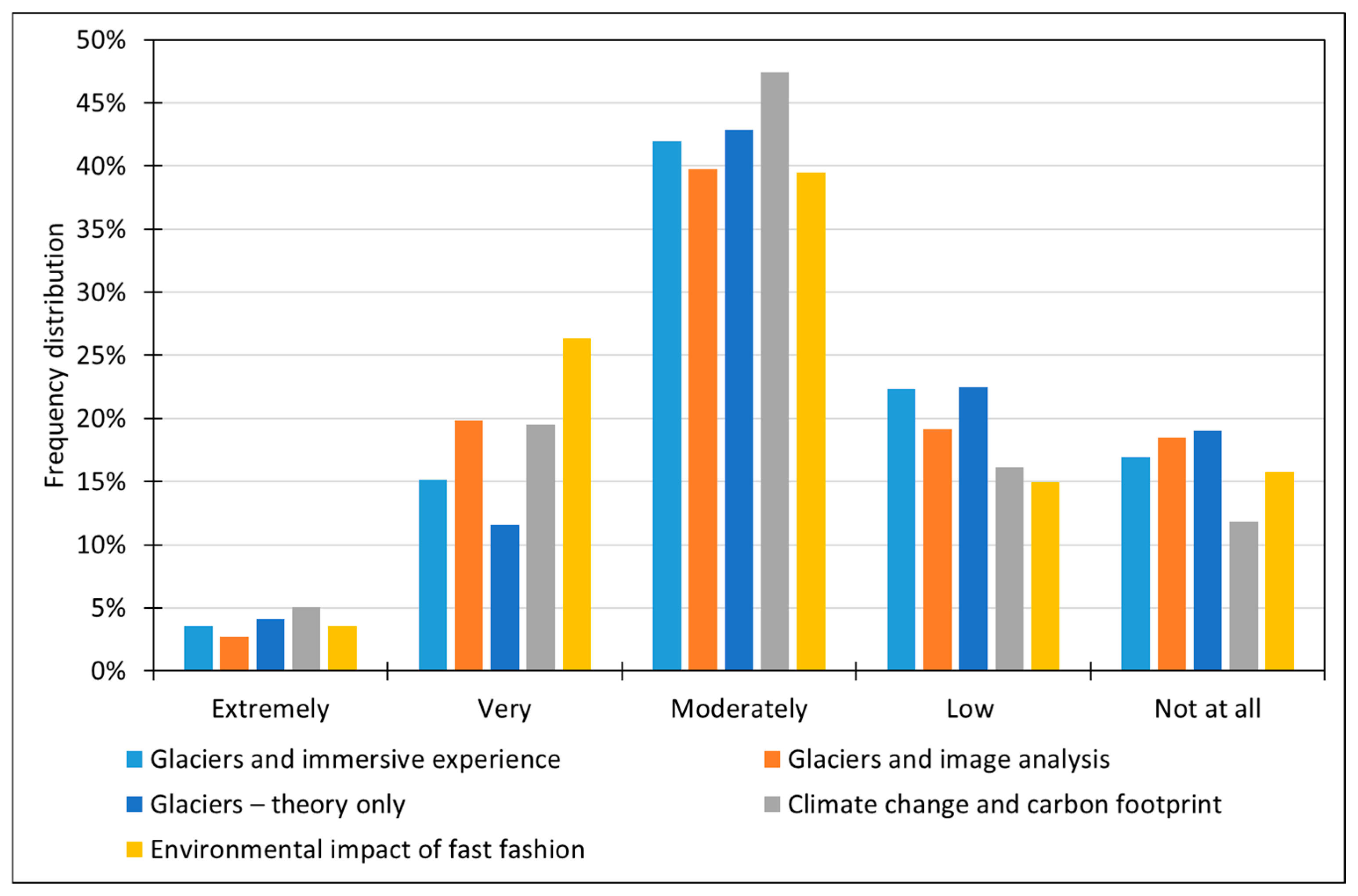
Students’ satisfaction with the different modules was evaluated through a dedicated question in the final questionnaire, using a Likert scale ranging from “Not at all” to “Extremely satisfied” (
Figure 1). Only responses from students who actually participated in each module were included in the percentage analysis.
The highest satisfaction levels were recorded for the “Glaciers and immersive experience” and “Geoportal and glacier image analysis” modules. Specifically, 54% of participants in the immersive module declared themselves “Extremely” or “Very satisfied”, while 48% of respondents reported the same levels of satisfaction for the geoportal module. The climate change and carbon footprint module showed moderate but consistent satisfaction, with 77% of students selecting “Moderately” or “Very satisfied”, and only 7% reporting negative evaluations (“Not at all”).
The fast fashion module showed a more polarized distribution of responses: 60% of students reported at least moderate satisfaction, while 37% indicated low or no satisfaction.
The “Glaciers—theory only” module displayed lower satisfaction levels, with 20% of participants expressing high satisfaction (“Very” or “Extremely”), 50% reporting moderate satisfaction, and 30% indicating low or no satisfaction.
Participation varied across modules due to scheduling and logistical constraints. The immersive module was not attended by 35% of students, while approximately one-third of the sample did not participate in the fast fashion and carbon footprint modules.
3.2. Perceived Learning Outcsomes
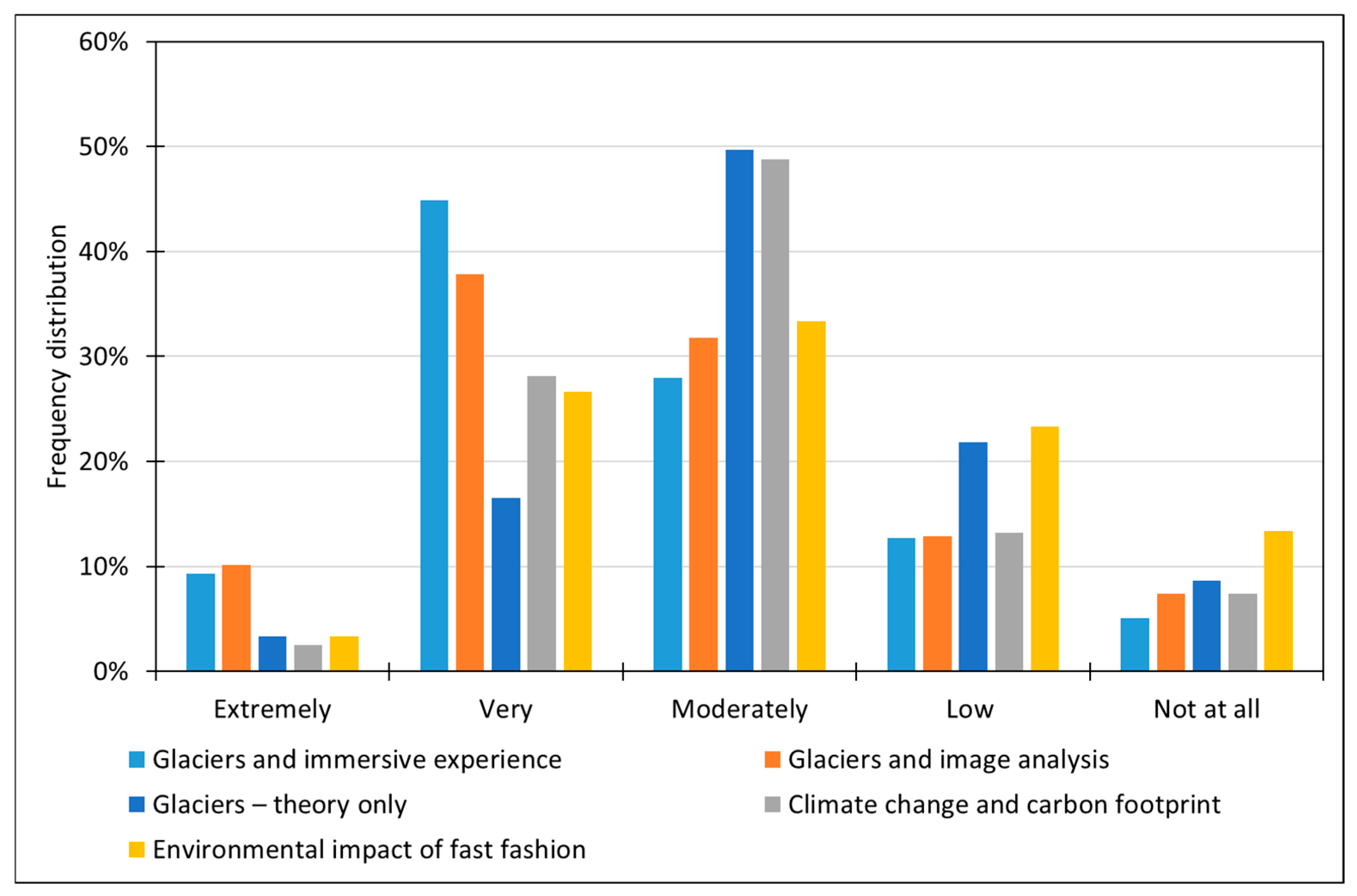
To evaluate the educational impact of the program, students were asked whether they had learned something new from each of the proposed modules (
Figure 2). Responses reflect the degree of perceived learning, ranging from “Not at all” to “Extremely”.
The “Glaciers and image analysis” and “Climate change and carbon footprint” modules showed the highest proportions of reported learning, with 84% of students indicating at least moderate learning (“Moderately”, “Very much”, or “Extremely”). For the “Glaciers and image analysis” module, 36% of students selected “Moderately”, 39% “Very much”, and 10% “Extremely”, while corresponding values for the “Climate change and carbon footprint” module were 53%, 25%, and 6%, respectively.
The “Immersive experience” module also showed high levels of reported learning, with 82% of students indicating at least moderate learning.
When focusing on the “Extremely” category, the highest proportions were observed for the “Glaciers and image analysis” (10%) and “Glaciers and immersive experience” (8%) modules.
The “Glaciers—theory only” module reached 80% overall positive responses but also showed a relatively higher proportion of students reporting limited learning experiences (20%).
The “Environmental impact of fast fashion” module reached 68% overall positive learning responses, while 32% of students reported low or no learning.
3.3. Intention to Change Environmental Behavior
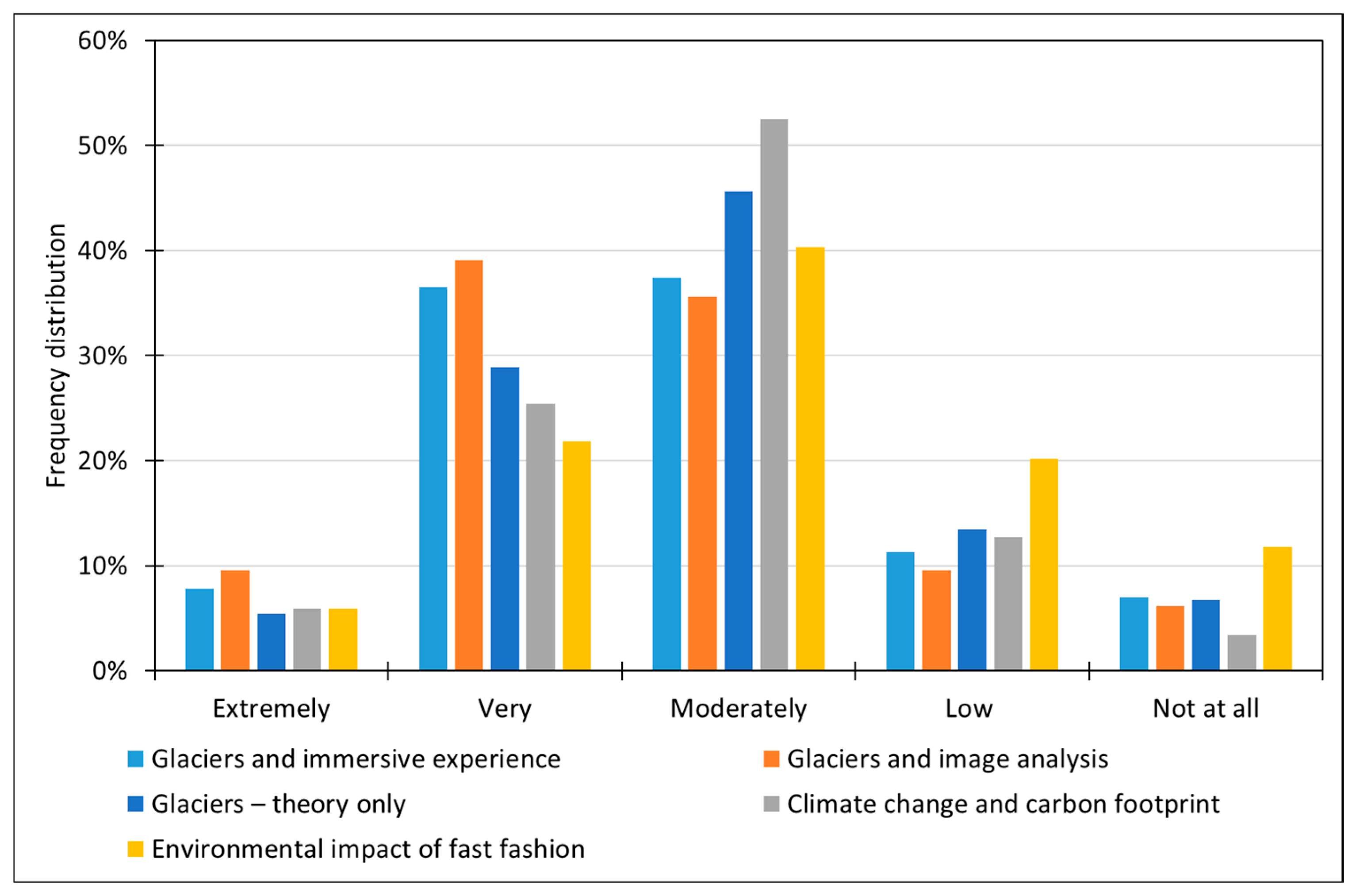
Students were asked whether participation in each module encouraged them to change aspects of their daily life in order to reduce their environmental impact (
Figure 3). Responses were recorded on a five-point Likert scale ranging from “Not at all” to “Extremely”.
The “Climate change and carbon footprint” and “Environmental impact of fast fashion” modules showed the highest proportions of reported intention to change behavior. Specifically, 72% and 69% of students, respectively, indicated at least a moderate influence on their lifestyle choices. For these modules, 5% and 4% of respondents selected “Extremely”, while 19% and 26% selected “Very”.
The “Glaciers and image analysis” and “Glaciers and immersive experience” modules also showed substantial proportions of reported intention to change, with 62% and 61% of students, respectively, indicating a moderate to high influence.
The “Glaciers—theory only” module showed lower proportions of reported intention to change, with 59% of participants indicating a moderate to high influence and 41% reporting low or no influence.
3.4. Perceived Adequacy of Prior Knowledge
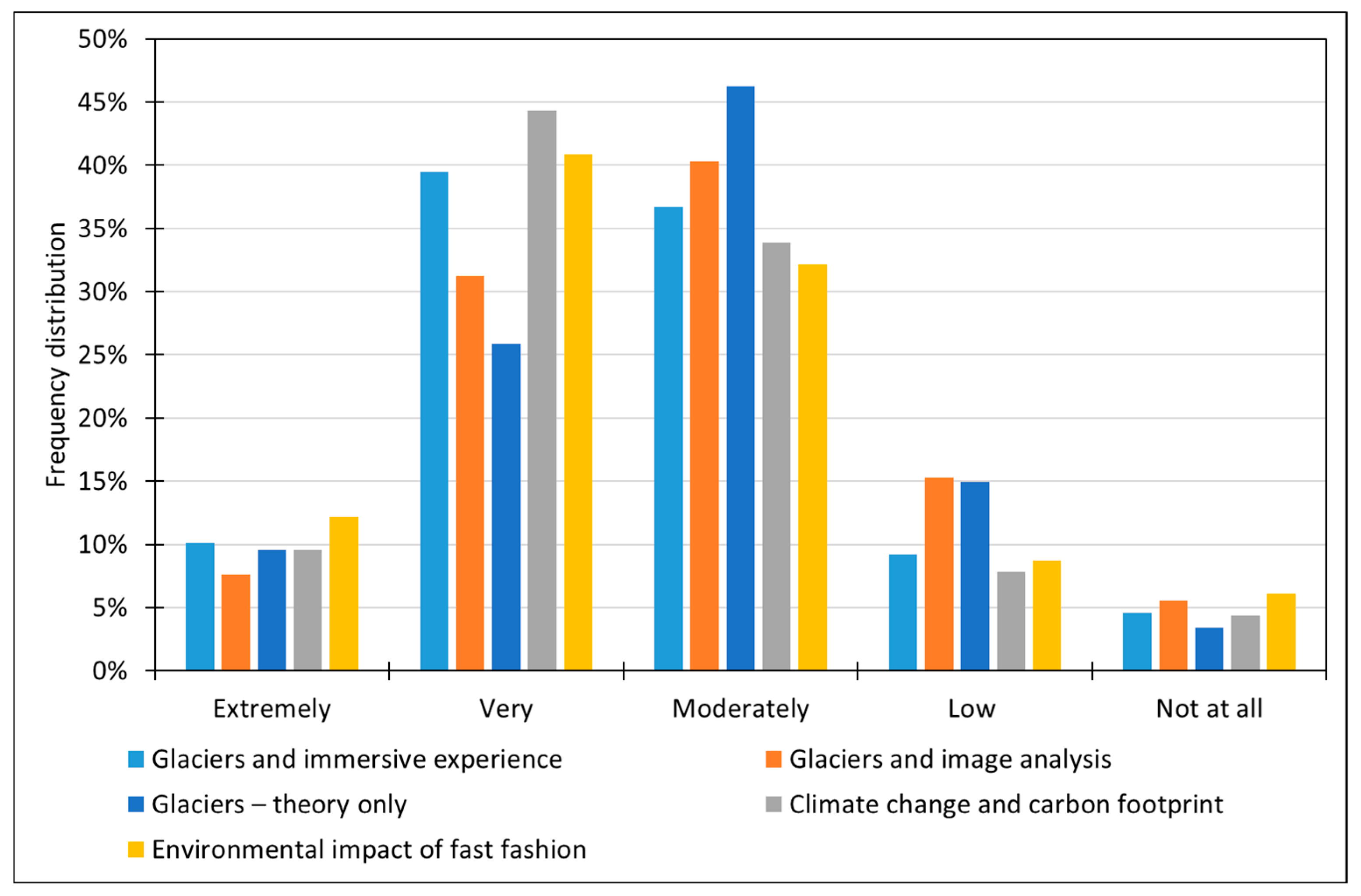
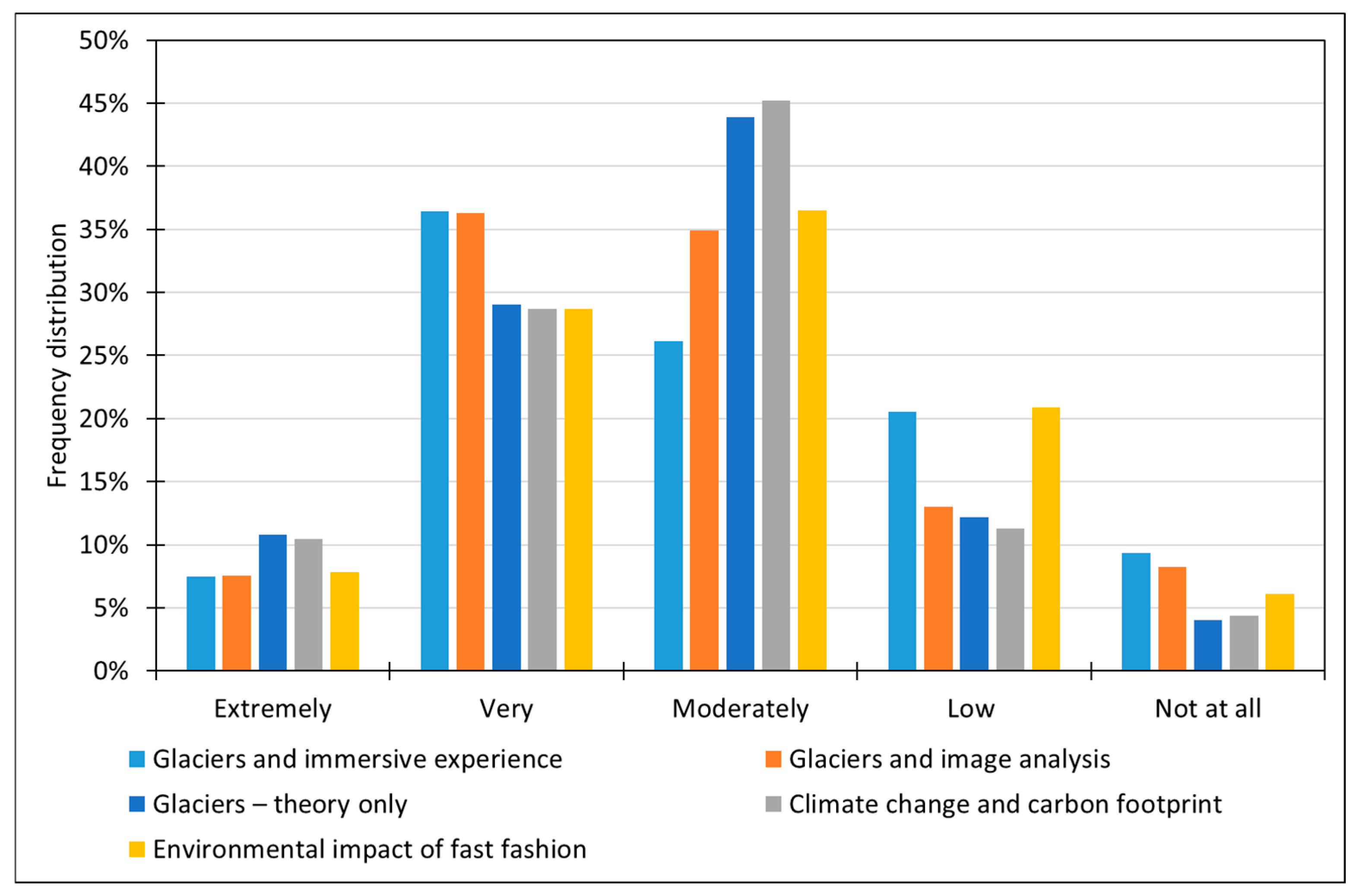
Students were asked whether they considered their prior knowledge sufficient to understand the content covered in each module (
Figure 4). Responses were collected on a five-point Likert scale ranging from “Not at all” to “Extremely”.
The “Climate change and carbon footprint” and “Environmental impact of fast fashion” modules received the highest perceived adequacy ratings, with 88% and 85% of students, respectively, indicating that their prior knowledge was at least “Moderately” sufficient. For these modules, 44% and 41% of students selected “Very”, while 10% and 12% selected “Extremely”.
Among the three glacier-focused modules, perceived adequacy levels were similar across formats. The “Glaciers—theory only” module received 82% positive responses (“Moderately” or higher), compared to 86% for the “Glaciers and immersive experience” module and 79% for the “Glaciers and image analysis” module.
The “Glaciers and image analysis” module showed a higher proportion of “Low” or “Not at all” responses (21%) compared to the other glacier-focused modules.
3.5. Perceived Adequacy of Time Allocation
Students were asked whether they considered the number of hours dedicated to each module sufficient to effectively cover the proposed content (
Figure 5). Responses were collected on a five-point Likert scale ranging from “Not at all” to “Extremely”.
The “Climate change and carbon footprint” and “Glaciers—theory only” modules received the highest adequacy ratings, with 84% of students selecting “Moderately”, “Very”, or “Extremely”. The “Environmental impact of fast fashion” module followed with 73% of responses in these categories.
The modules with a strong experiential component, namely “Glaciers and immersive experience” and “Glaciers and image analysis”, also received predominantly positive evaluations, with 70% and 79% of students, respectively, indicating at least moderate adequacy of time allocation. However, these modules showed higher proportions of “Low” or “Not at all” responses, particularly for the immersive experience module (30%).
The “Glaciers—theory only” module showed the highest proportion of “Extremely” positive responses (11%).
3.6. Inferential Analysis
A total of 181 questionnaires were analyzed. For each module and evaluation dimension, we calculated the proportion of responses rated at least “Moderately”, excluding “I did not attend this activity”.
Table 2 reports full counts (
n,
k) and 95% Wilson confidence intervals for each proportion.
Perceived learning was highest for the GIS/image analysis module (84.2%, 95% CI: 77.5–89.3) and the climate change and carbon footprint module (83.9%, 95% CI: 76.2–89.4), followed by the immersive VR experience (81.7%, 95% CI: 73.7–87.7) and the theory-only module (79.9%, 95% CI: 72.7–85.5). The environmental impact of fast fashion module showed the lowest proportion of perceived learning (68.1%, 95% CI: 59.2–75.8). The difference between the GIS/image analysis and fast fashion modules was statistically significant (+16.2 percentage points; 95% CI: +1.7 to +30.0).
Intention to change behavior was most frequently reported for the climate change and carbon footprint module (72.0%, 95% CI: 63.3–79.3), followed by the fast fashion module (69.3%, 95% CI: 60.3–77.0). The theory-only module reached 58.5% (95% CI: 50.4–66.2). The difference between the carbon footprint and theory-only modules was +13.5 percentage points (95% CI: −2.8 to +28.9), indicating a non-significant trend.
Adequacy of prior knowledge was perceived as sufficient by over 85% of participants in the climate change and carbon footprint (87.8%, 95% CI: 80.6–92.6), immersive VR (86.2%, 95% CI: 78.5–91.5), and fast fashion (85.2%, 95% CI: 77.6–90.6) modules, while the theory-only and GIS/image analysis modules showed slightly lower proportions (81.6% and 79.2%, respectively).
Adequacy of time allocation was highest for the theory-only module (83.8%, 95% CI: 77.0–88.9) and the climate change and carbon footprint module (84.3%, 95% CI: 76.6–89.9), followed by the GIS/image analysis (78.8%) and fast fashion (73.0%) modules. The immersive VR module showed the lowest proportion of adequate time allocation (70.1%, 95% CI: 60.8–77.9). The difference between the theory-only and immersive VR modules was +13.7 percentage points (95% CI: −0.9 to +28.0).
As a sensitivity check, the full Likert-scale response distributions (
Figure 1,
Figure 2,
Figure 3,
Figure 4 and
Figure 5) were inspected. These distributions show patterns consistent with those observed in the dichotomized analysis, indicating that the inferential results are not driven by the choice of threshold.
4. Discussion
4.1. Synthesis of Key Findings
This study offers an exploratory, perception-based comparison of different pedagogical formats within a secondary school climate change education program. Overall, students reported higher levels of engagement, perceived learning, and behavioural intention in modules incorporating interactive, experiential, and behavior-oriented elements, compared to more traditional, theory-focused formats.
Modules integrating immersive experiences, GIS-based activities, and digital tools were consistently associated with more positive student perceptions across multiple evaluation dimensions. In particular, activities explicitly connected to everyday behaviors (such as carbon footprint estimation and fast fashion consumption) were more frequently associated with self-reported reflection on personal responsibility and lifestyle choices.
At the same time, differences across modules were observed in relation to perceived adequacy of prior knowledge and time allocation. While most students felt adequately prepared to engage with the proposed topics, modules involving more complex digital tools showed slightly higher proportions of reported difficulty. Similarly, experiential and technology-intensive activities were more often associated with perceptions of insufficient time compared to theory-based sessions.
Taken together, the findings suggest that students perceived the greatest educational value in learning formats that combine scientific content with personal relevance and active engagement. However, these patterns should be interpreted in light of the exploratory design and the perception-based nature of the data.
4.2. Pedagogical Interpretation
From a pedagogical perspective, the observed patterns are broadly consistent with established theories emphasizing the potential of active, experiential, and immersive approaches in environmental and climate change education. Laboratory-based activities, GIS-supported analysis, immersive virtual field trips, and data-driven web applications can be understood as forms of field-oriented learning, including virtual fieldwork and virtual field trips. Such approaches are often considered particularly relevant in climate education, as they can support spatial understanding, contextualization of abstract processes, and emotional engagement with environmental change [
8,
20,
53].
At the same time, alternative explanations should be considered when interpreting the higher levels of engagement and perceived learning reported for immersive and digital modules. One relevant factor is the potential novelty effect associated with emerging technologies such as virtual reality and interactive web applications. Novelty can temporarily increase curiosity, attention, and emotional involvement, particularly in short-term educational interventions, potentially inflating self-reported evaluations without necessarily corresponding to stable or long-term learning gains.
Another important consideration concerns social desirability bias. Students may have felt inclined to report positive experiences or intentions to change behavior, especially within a school-based context and when activities were delivered by external researchers. Although questionnaires were anonymous, self-reported measures of engagement, learning, and behavioral intention remain susceptible to overestimation and should therefore be interpreted with caution.
Differences between modules may also reflect factors beyond pedagogical format alone. Modules explicitly addressing everyday behaviors and consumption patterns (such as carbon footprint estimation and fast fashion impacts) may have elicited stronger responses because of their immediate personal relevance, rather than because of the digital tools themselves. Conversely, the comparatively lower engagement reported for the theory-only module may be influenced by reduced interactivity, but also by students’ expectations or prior exposure to similar instructional formats.
Taken together, these considerations suggest that the observed patterns are best interpreted as reflecting differences in students’ perceived educational value across formats, rather than definitive evidence of pedagogical effectiveness. Integrating cognitive, emotional, and behavioral dimensions remains a promising direction for climate change education, but future research should disentangle the relative contributions of technological novelty, content relevance, and instructional design.
4.3. Practical Implications
The findings of this study suggest several practical implications for different stakeholders, which should be interpreted in light of the exploratory and perception-based nature of the evidence.
From the perspective of schools, students’ reported engagement and perceived educational value indicate that the integration of digital and immersive tools (such as web-based applications, GIS platforms, and virtual reality experiences) may represent a promising direction for addressing complex environmental topics, particularly when aiming to enhance motivation and inclusivity. However, the perceived benefits observed in this study should not be interpreted as evidence of effectiveness, but rather as indications of how students experience different instructional formats.
For designers and coordinators of PCTO programs, the results highlight the importance of careful planning when implementing experiential and technology-intensive activities. In particular, students’ perceptions point to the need for adequate time allocation, technical support, and pedagogical scaffolding, especially for modules involving GIS and immersive technologies. Attention to these organizational factors may help reduce cognitive and technical barriers and improve the overall learning experience.
At the policy level, the study underscores the potential relevance of educational approaches that explicitly connect scientific knowledge with personal relevance and action-oriented reflection, as perceived by students. Such approaches are consistent with broader international frameworks, including the United Nations 2030 Agenda for Sustainable Development, which emphasizes the role of education in fostering informed citizenship and sustainable behaviors [
60]. Within this context, the present findings may inform the design of future educational initiatives, while highlighting the need for more robust evaluation frameworks.
4.4. Limitations of the Study
Despite its contributions, this study presents several limitations that should be acknowledged when interpreting the findings. First, the sample was limited to three upper secondary schools in Lombardy, within the specific institutional framework of the Italian PCTO program. This contextual specificity may limit the generalizability of the results to other educational systems, age groups, or socio-cultural settings, particularly outside the Italian context.
Second, the evaluation relied exclusively on post-activity, self-reported measures of engagement, perceived learning, and behavioral intention. The absence of pre-test measures, control or comparison groups, and objective assessments of learning outcomes precludes causal inferences regarding the effectiveness of the different pedagogical formats. The findings should therefore be interpreted as exploratory and perception-based, rather than as evidence of demonstrated learning gains or behavioral change.
In addition, self-reported data are inherently susceptible to response biases, including social desirability bias. Students may have been inclined to provide positive evaluations or express intentions to change behavior in a school-based context and in the presence of external researchers, even though questionnaires were administered anonymously.
An additional limitation concerns uneven participation across modules. Due to logistical constraints, not all students attended all activities, particularly the immersive VR, carbon footprint, and fast fashion modules. As a result, module-to-module comparisons are based on partially overlapping groups of students. Observed differences may therefore reflect differences in participant composition rather than the instructional format alone, and should be interpreted with caution.
A further consideration concerns the potential novelty effect associated with immersive and digital tools, such as virtual reality and interactive web applications. We hypothesize that an initial exposure to innovative technologies may temporarily enhance interest, emotional engagement, and perceived learning, potentially inflating short-term evaluations without necessarily reflecting sustained or long-term educational impact.
While perceived adequacy of time allocation was directly assessed through questionnaire items, other logistical and technological constraints related to immersive activities (e.g., device availability or session organization) were not measured through specific survey questions and are therefore discussed as contextual observations rather than empirical findings.
Finally, access to technological resources was not uniform across participants, particularly with regard to immersive VR experiences, which may have influenced both participation rates and students’ evaluations of specific modules. Future research should address these limitations by adopting longitudinal designs, integrating objective and pre/post assessments, and testing the proposed educational model across diverse educational contexts.
4.5. Future Perspectives
Future research may address the limitations of the present study by extending the program to a larger and more diverse set of schools and socio-cultural contexts, enabling comparative analyses across different educational environments. The integration of objective assessment tools (such as pre- and post-tests, longitudinal follow-ups, or behavioral indicators) would provide a more robust basis for evaluating learning outcomes and longer-term impacts beyond students’ immediate perceptions.
In addition, the fast fashion module represents a promising area for further development. Future iterations could benefit from enhanced pedagogical scaffolding, guided discussion, or complementary classroom activities aimed at supporting students in interpreting the quantitative outputs of the data-driven web application. Such refinements may help students translate numerical information into more structured reflections on consumption patterns, environmental consequences, and personal decision-making.
5. Conclusions
This study explored students’ perceptions of an integrated, technology-enhanced educational program designed to address climate change impacts and human–environment interactions among upper secondary school students. By combining immersive virtual experiences, GIS-based activities, and data-driven web applications with more traditional instructional formats, the program offered an opportunity to compare how different pedagogical approaches were perceived within the same educational framework.
Overall, students reported higher levels of engagement and perceived learning in interactive and experiential learning pathways compared to theory-only approaches, particularly when addressing complex and abstract environmental phenomena. Modules explicitly connecting global climate change processes to students’ everyday behaviors (such as carbon footprint estimation and fast fashion consumption) were more frequently associated with self-reported reflection on personal responsibility and intentions toward behavioral change. These findings suggest the relevance of linking scientific knowledge with personal experience and action-oriented learning in climate change education, while remaining within the limits of perception-based evidence.
At the same time, the study draws attention to the role of practical and organizational factors (such as time allocation and access to digital technologies) in shaping students’ learning experiences, as reported by participants. Students’ perceptions suggest that immersive and technology-intensive activities are valued, but also highlight the importance of adequate logistical planning, technical support, and pedagogical scaffolding to ensure inclusive and meaningful engagement.
From a broader perspective, this work adds to the growing literature examining experiential and digitally enhanced approaches in climate change education within formal schooling contexts [
9,
10,
11,
61]. The PCTO framework adopted in this study illustrates one possible way to connect schools and universities through public engagement initiatives aimed at promoting scientific literacy, transferable skills, and environmental awareness among young people. While the present findings are exploratory and context-specific, they suggest that integrating experiential learning with behavior-oriented reflection may be a promising direction for action-oriented climate education, consistent with the objectives of SDG 4 (Quality Education) and SDG 13 (Climate Action) [
62].
In conclusion, the findings of this study suggest that students perceive greater educational value in climate change education approaches that combine scientific content with experiential, interactive, and personally meaningful learning experiences. While the evidence presented here is exploratory and perception-based, it indicates that integrated educational models may represent a promising direction for supporting students’ engagement and reflection on climate challenges. Further research is needed to assess how such approaches can be adapted, evaluated, and sustained across different educational contexts and to examine their longer-term educational and societal impacts.




 ,
,