1. Introduction
Researchers commonly adopt destination choice modeling to analyze individual spatial interactions within urban environments [
1,
2,
3,
4]. Destination choice describes the individual process of selecting locations for activities such as work, leisure, or shopping [
5]. Scholars across various fields utilize diverse techniques and data sources to explore spatial patterns of urban destinations, identify key factors influencing destination choice [
6], and explore the implications of these choices across multiple domains [
1,
7,
8,
9]. Although destination choice modeling is commonly applied, certain researchers contend it has developed into a multifaceted framework with untapped aspects [
8,
9,
10,
11]. Recent changes in daily travel patterns reflect a shift from focusing on a single destination to considering multi-locality destinations, have challenged traditional destination choice models [
11]. These complex behaviors emphasize several key concepts: (1) the relative location of destinations within the urban network, as competing destinations serve distinct daily functions across specific time periods [
9,
10]; (2) spatiotemporal dynamics, where mobility patterns evolve throughout the day rather than remaining static; (3) spatial competition and agglomeration effects among proximate destinations [
12,
13]; (4) emerging destination choice from the complex interplay of multiple, interdependent motivational influences operating within dynamic spatial-temporal contexts [
13].
Although several studies have examined multi-locality destinations [
11,
14], significant gaps persist in current modeling approaches that hinder their practical utility for urban transportation planning [
7,
15,
16]. Existing models inadequately integrate diverse motivational factors—including individual self-selection behaviors, social attributes, built-environment characteristics, and travel constraints—into unified frameworks, often treating them in isolation [
12,
17]. Moreover, static linear approaches fail to capture the non-linear behavioral dynamics—for instance, those emerging from interdependent individual preferences, real-time environmental feedback such as congestion, and spatiotemporal scheduling constraints—that fundamentally shape destination choices over time [
12,
17]. While some studies examine temporal patterns [
1,
11,
13], their reliance on coarse peak-period snapshots neglects the full-day spatiotemporal dynamics of chained multi-locality trips [
9]. Finally, destination choice models typically produce quantitative numeric outputs that lack intuitive visual analytics frameworks, limiting planners’ ability to derive actionable insights from complex results.
This study addresses these gaps through a novel ABM-GIS integrated framework that simultaneously overcomes all four limitations. GIS provides motivational factors by supplying built environment characteristics (density/diversity from BEM), transportation networks (TNM), operational tracking (TZM), individual self-selection behaviors (ISSS), and travel generation data (TGD) directly into agent decision utilities [
18]. ABM captures non-linear behavioral emergence, as it allows individuals to adapt their choices in response to other agents, environment forces, changing conditions, and constraints, leading to complex spatial and temporal patterns of destination choice. Fine temporal resolution in ABM captures complete daily activity chains, from morning concentration through midday dispersion to evening localization, revealing the full spatiotemporal evolution of multi-locality destination choices.
GIS-based visual analytics transform complex ABM outputs into actionable pattern recognition insights for planners through clustering techniques that identify destination typologies, 3D spatiotemporal mapping that reveals temporal concentration patterns, and hotspot analysis that pinpoints statistically significant high-demand locations [
19].
Unlike prior static destination models, our integrated ABM-GIS framework reveals emergent spatiotemporal typologies that provide planners with precise intervention leverage points rather than opaque numeric matrices. This approach delivers actionable ordinal outcomes—destination hierarchies, peak timing patterns, congestion hotspots—directly informing infrastructure investment and policy design decisions.
However, incorporating multiple motivational factors and complex agent-environment interactions complicates the modeling process, necessitating validation by comparing simulated outputs against empirical data [
18]. Model validation poses a major challenge during ABM [
16,
18]. To address these challenges, traffic count data obtained from Automatic Number Plate Recognition Cameras (ANPRCs) (Jenoptik, Monheim am Rhein, Germany) were used to validate the ABM [
20].
The paper proceeds as follows:
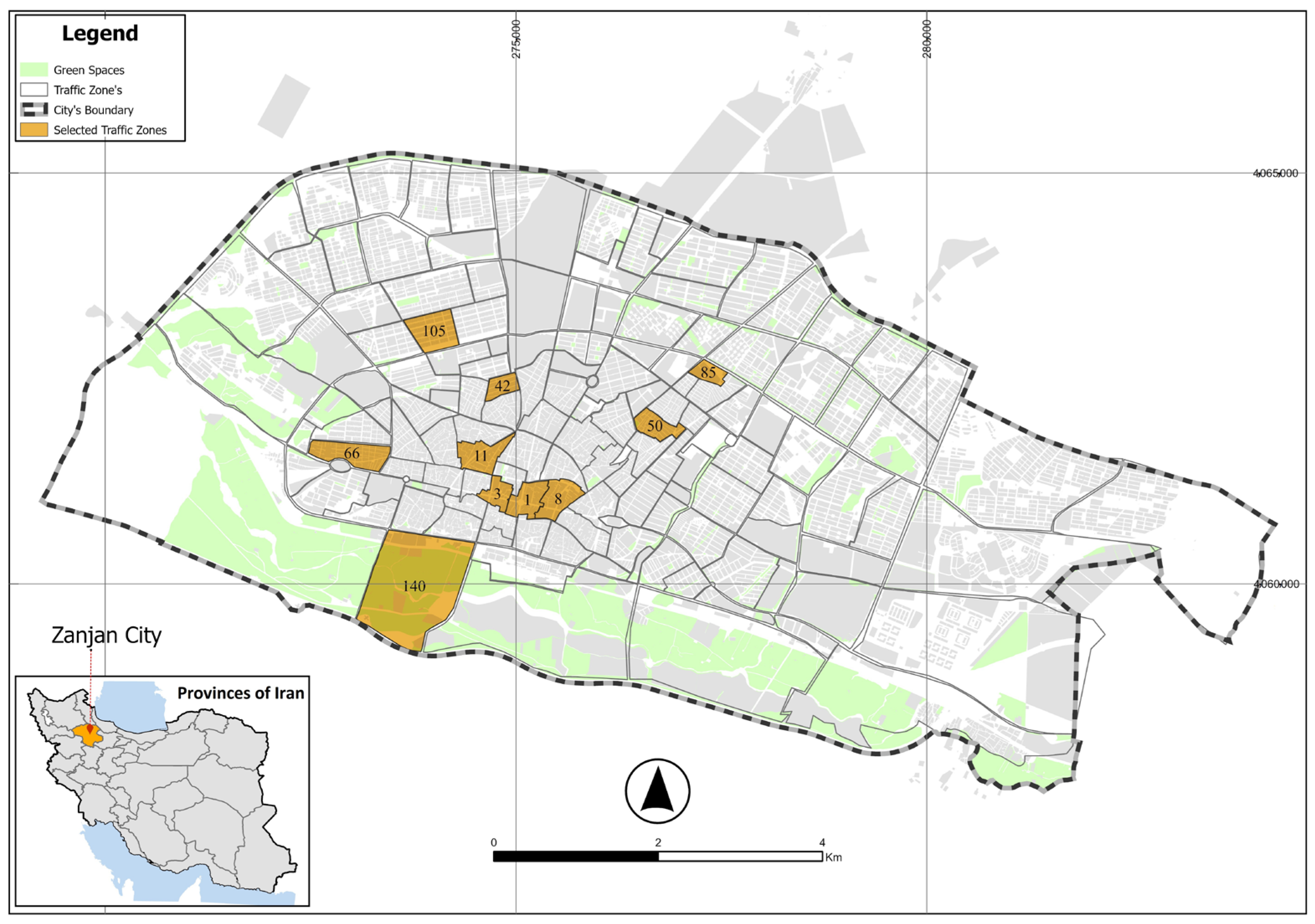
Section 2 outlines the Zanjan case study, including data collection and preparation.
Section 3 describes the applied ABM methodology.
Section 4 analyzes spatiotemporal patterns in daily destination choices derived from the ABM.
Section 5 discusses the findings, and finally,
Section 6 provides the conclusion, including limitations and recommendations for future research.
2. ABM-GIS in Travel Behavior Analysis
ABMs portray agents as independent decision-makers who interact with their environment based on established behavioral rules, leading to emergent system-wide patterns [
18,
21,
22]. ABMs comprise four core components that generate emergent urban patterns from individual behaviors [
18,
21,
22]: autonomous agents (e.g., travelers, households) making decisions within a spatiotemporal environment (GIS networks, temporal constraints), governed by behavioral rules (utility functions, heuristics), and shaped through agent-agent interactions (competition, learning) and agent-environment exchanges. These models simulate key urban dynamics, including land-use changes [
23], travel behaviors [
3], social interactions [
24], ecological management [
25], and policy scenario testing [
26]. In transportation specifically, ABMs widely address traffic flow, travel demand modeling [
27], mode and route choices [
28,
29], policy impacts [
30], and tourist destination choice [
31]. In destination choice modeling for intra-urban transportation, each agent represents an individual who selects a travel destination based on personal preferences, non-linear behavioral outputs, interpersonal interactions, trip scheduling, and environmental factors [
27]. Prior ABM studies have addressed destination choice for specific activities [
3], mode choice to preferred destinations [
28,
29], and travel demand generation toward desired locations [
27]. However, few integrate destination choice with spatiotemporal congestion dynamics in the desired destination. This study examines how destination selection influences urban congestion patterns across time and space through a comprehensive analysis of destination choice.
Also, a growing body of transportation and travel behavior research has integrated GIS with ABM to simulate, analyze, and optimize urban travel systems. Existing studies can be broadly classified into three main categories according to the role GIS plays within the modeling framework.
First, several studies employ GIS primarily as a data input environment for ABM. In this category, GIS is used to construct spatially explicit model inputs such as road networks, land-use patterns, and population distributions. For example, Jafari, Singh [
32] developed a GIS-based database—including road networks, census travel surveys, and a synthetic population—to support an agent-based simulation of mode choice and travel patterns in Melbourne. Similarly, Zare, Leao [
33] incorporated GIS layers representing street networks and land-use types to investigate how the built environment influences route choice and modal behavior.
Second, a number of studies use GIS to visualize and map the spatial distribution of ABM outputs, particularly agent-generated trips and activity locations. In this stream of research, GIS-based density maps, heatmaps, or hotspot analyses are commonly applied to identify frequently visited locations or areas of high travel demand. For instance, Crooks and Castle [
34] generated density maps of agent visits to reveal emergent spatial patterns and frequently visited nodes within simulated mobility systems.
Third, several widely used ABM transportation toolkits, such as MATSim and TRANSIMS, integrate GIS to represent transportation networks and support large-scale travel simulations. These platforms allow detailed road and transit networks to be incorporated into agent-based simulations of mode choice and routing behavior. GIS is further employed to visualize simulated traffic flows, congestion intensity, and travel times across urban networks [
32,
35]. However, the focus of these applications is predominantly on network performance and traffic dynamics, rather than on the evolution of destination choice or individual activity patterns over time.
Despite these advances, important limitations remain in the integration of GIS and ABM for travel behavior simulation. First, most existing studies rely on a relatively limited set of GIS inputs, typically focusing on agent locations, origins and destinations, land-use categories, or network geometry. The use of richer and more heterogeneous GIS datasets remains limited. Second, GIS-based visualization of ABM outputs has largely focused on single-dimensional or static representations, such as point densities or aggregated visit frequencies. As a result, the spatiotemporal dynamics of destination choice and the high-resolution temporal evolution of individual travel behavior are rarely explored.
This study addresses these gaps by proposing a comprehensive ABM–GIS framework that integrates a diverse set of GIS datasets to enhance behavioral realism and employs advanced spatial–temporal visualization techniques to capture the evolution of destination choice at fine temporal resolutions. By explicitly modeling and visualizing the space–time dynamics of agent behavior, the proposed approach advances existing GIS–ABM integrations from static spatial representations toward a more dynamic and behaviorally grounded understanding of urban travel systems.
4. Methodology
The proposed framework integrates an ABM for multi-locality destination choice modeling with GIS for spatial data provision and visual analytics. Implemented in AnyLogic (JavaScript-based, GIS-compatible) [
45], the ABM simulates
agents over 17 hourly time steps (
7:00 to 24:00), excluding low-activity night hours. Agents maximize perceived utility
for origin
to destination zone
, subject to individual time scheduling for each activity, congestion feedback, and environmental constraints. The flowchart illustrating the structure of the proposed model is shown in.
4.1. Input Data and Setup
Key GIS layers include: Built-Environment Map (BEM; land-use [LU] density , diversity ), Traffic Zone Map (TZM; operational tracking), Transportation Network Map (TNM; arcs/nodes), Travel Generation Data (TGD; ), and Individual Self-Selection Survey (ISSS; demographics, initial preferences ).
The complete pathway (
Figure 2) proceeds from data setup to TZM exports, calibrated via RMSE minimization on ISSS/TGD holdout data (
Table 1). Calibration converges when
after ~50 iterations.
4.2. Initialize Environment
Within the ABM, the environment captures the spatial and functional context in which agents interact and make destination choice decisions. This environment is constructed using three primary GIS layers, including:
BEM: Detailed land-use (LU) attributes (density , diversity ) via kernel and focal statistics for agent decisions.
TZM: Operational space activating agents, recording attributes.
TNM: Multi-layer network (node layer: intersections/signals/pedestrian crossings w/police-record delays; network layer: arcs)
The arc cost and travel time were calculated using the below formula (adapted from Zhang & Levinson):
(current flow), (capacity), (length), (free-flow speed). This models congestion effects on realistic TNM networks.
Destination attractiveness (
) from BEM land use was computed as:
(LU density), (LU diversity).
4.3. Create Agents
In the developed ABM, agents are independent decision-makers who navigate a dynamic urban environment to reach preferred destinations. The population of agents assigned to each TZ is determined based on the TGD. Each agent is defined by a set of demographic characteristics—such as gender (
gen), age, occupation (
occ), and education (
Edu) level—sourced from ISSS datasets. Additionally, agents acquire their initial self-selection behaviors through learning patterns derived from the ISSS data. Agent state
was defined as:
where
is the time-varying destination probability and
is the current position at time t.
4.4. Simulation Loop
The core of the ABM operates through a 17-step hourly simulation loop (7:00 to 24:00, omitting low-activity nighttime), driven by Java-implemented discrete departure events that trigger agent activations from the “ReadyToTrip” pool. This loop models the full lifecycle of agent trips—from generation and selection to execution, adaptation, and chaining—while incorporating real-time environmental feedback for behavioral evolution. Agents stochastically enter based on TGD rates, navigate TNM paths constrained by ISSS-derived parameters, and interact dynamically with congestion and LU attractiveness, producing emergent multi-locality patterns validated against Zanjan’s empirical data.
4.4.1. Agent Selection and Trip Generation
Agents are randomly drawn from the ReadyToTrip pool to initiate primary actions, with trip requests generated from origin TZ (O) to potential destination TZ (D) following a negative exponential distribution rooted in gravitational principles. Trip rates incorporate TZ-specific generation scaled by observed probabilities, ensuring alignment with daily rhythms.
Trip rates between zones were generated using the gravitational model below:
where
represents trips generated at origin
during hour t;
is the selection probability for destination j;
scales with TGD means.
4.4.2. Self-Selection and Destination Choice
Upon activation, agents evaluate destinations via perceived utility, balancing BEM land-use appeal against TNM distances, with probabilities computed stochastically to reflect individual variability and ISSS-informed preferences.
Perceived utility and choice probability were calculated as:
where
(destination attractiveness from BEM);
(network distance); decay coefficient 0.05; Gumbel error
for logit.
4.4.3. Network Placement and Traversal
Selected agents are positioned on initial network paths derived from ISSS movement opportunities, traversing TNM arcs while observing evolving conditions like delays at nodes (intersections, signals from police records).
4.4.4. Environmental Interaction and Congestion Feedback
During traversal, agents dynamically acquire congestion information from TZM aggregates, refining perceptions of routes and destinations. This interaction mirrors real urban feedback loops, where flow-dependent costs (from
Section 3.2) influence ongoing choices.
4.4.5. Adaptation and Learning Mechanism
Post-journey, agents update preferences based on experienced versus expected performance, enabling behavioral evolution across the day through a reinforcement mechanism that rewards successful outcomes.
Agent preferences were updated via reinforcement learning using:
Learning rate η = 0.1; indicator success if actual time ≤ expected +10 min threshold.
4.4.6. Destination Arrival, Activity Stay, and Scheduling
Upon arrival, stay duration is determined by trip purpose (e.g., official activities like banking follow schedules; others from ISSS), intersected with blackout restrictions. TZM records real-time metrics: visiting agents, purpose, arrival time, congestion. Agents then assess individual time scheduling (total daily cap ~960 min from ISSS patterns): if remaining allowance permits, initiate new trip (return to ReadyToTrip); otherwise, return home or conclude daily activities. This prevents unrealistic chaining, yielding authentic multi-locality trajectories.
4.5. Visual Analytics Framework
Visual analytics is employed in this study as a structured, multi-stage analytical pipeline to support the interpretation of ABM and to reveal patterns of multi-locality destination choice. Rather than applying visualization techniques independently, the framework integrates clustering, spatial association analysis, and spatiotemporal mapping. The GIS analysis is centered on the proposed integrated visual analytics approach that combines k-means clustering, hotspot analysis, and 3D mapping.
K-means clustering is an unsupervised machine learning method commonly employed to detect underlying groupings in data by evaluating similar patterns and differences between data [
46].
Hotspot analysis using Local Indicators of Spatial Association (LISA) is a key method for identifying preferred destinations and examining the spatial clustering of visit volumes [
47].
3D mapping, implemented using ArcScene, integrates both spatial and temporal dimensions to capture the dynamic of mobility destinations.
In this study, each step serves a distinct analytical purpose and informs subsequent stages.
In the first step, k-means clustering is applied to classify urban destinations based on their total visit volumes aggregated over the entire simulation day. The objective of this step is to identify overall destination importance and to distinguish between primary, secondary, and low-importance destinations within the urban system. The clustering is intentionally non-temporal, relying solely on cumulative visit volume as the clustering variable. The number of clusters (k) is selected based on interpretability and stability of the resulting groups, ensuring a clear separation between highly preferred destinations and those with marginal influence on overall mobility patterns.
In the second step, hotspot analysis based on LISA is employed to examine the spatial concentration and statistical significance of visit volumes across TZs. The LISA analysis is conducted using aggregated daily visit volumes without temporal segmentation. This technique classifies urban destinations into five main categories: areas with high visit volumes (hotspots), clusters of low visit volumes (cold spots), high-volume outliers surrounded by low-volume areas, low-volume outliers surrounded by high-volume zones, and locations exhibiting neither significant clustering nor outlier characteristics [
47]. The ArcGIS 10.8.2 software platform was employed to calculate LISA statistics and conduct spatial analysis. This step enables the identification of crowded and preferred destinations that function as urban mobility hubs, as well as an assessment of their relative contribution to overall city-wide mobility. ArcGIS is used to compute LISA statistics and to map the resulting spatial patterns.
In the final step, 3D GIS visualization is used to examine the spatiotemporal dynamics of destination choice. Unlike the previous steps, this stage explicitly incorporates hourly simulation outputs. Based on the results of the temporal analysis of visit volumes (
Section 5.4.1), only the primary and secondary destination clusters are retained for spatiotemporal visualization, while low-importance clusters are excluded to enhance clarity and analytical focus. Peak-hour periods are selected according to observed temporal demand patterns. Using 3D mapping, the intensity of visit volumes at selected destinations during peak hours is represented by vertical extrusion. This approach facilitates comparison of peak-hour destination intensity across TZs, identification of temporal shifts in destination dominance, and interpretation of hierarchical and dynamic destination structures.
4.6. Model Calibration and Experiments
Calibration is critical for ensuring the simulation accuracy to and its capacity to generate reliable simulation results. The calibration process began with a progressive demand initialization, starting with 500 agents at 7:00 AM, progressively increasing to 10,000 agents by the afternoon peak hours to simulate escalating demand.
Early calibration iterations employed agents with uniform behavioral profiles, governed by simplified assumptions such as fixed trip rates of TZs, static departure schedules, and a constrained spatial environment limited to five TZs. Comparison between simulated and observed destination choice distributions revealed systematic discrepancies, particularly in the concentration of visits to major destinations and the temporal dispersion of trips. These deviations indicated that key behavioral mechanisms—such as preference heterogeneity, adaptive rescheduling, and environmental feedback—were insufficiently represented, motivating successive model refinements. Calibration underwent twelve iterative cycles, with parameter adjustments driven by sensitivity analyses. The primary calibrated parameters included:
Destination preference weights, controlling the relative influence of built-environment characteristics, travel time, and interpersonal effects;
Trip rescheduling thresholds, defining agents’ tolerance to congestion-induced delays before adapting departure times or destinations;
Inter-agent influence strength, governing the magnitude of social and information-based interactions;
Feedback intensity from built-environment constraints (BECs), regulating how environmental capacity limits affect destination attractiveness.
Each parameter was explored within predefined ranges derived from empirical studies and domain knowledge. Sensitivity analysis evaluated the effect of parameter variation on aggregate outcomes such as total number of trips, spatial distribution of visit volumes, peak-hour congestion intensity, and average travel time.
Once convergence was achieved, the parameter set yielding the lowest overall deviation from observed aggregate patterns and the highest temporal consistency was selected as the final model configuration.
Following calibration, the final model configuration integrated optimized parameter sets derived from the most accurate calibration iterations, enabling full-scale simulation of individual destination choice behavior. Post-calibration, the model consistently reproduced calibrated behaviors while effectively scaling to capture city-wide complexity.
5. Results
5.1. Model Validation
Model validation was performed by comparing simulated visit volumes with observed data using the coefficient of determination (R
2) and root mean square error (RMSE).
Table 2 presents the validation results for ten representative TZs across selected time periods.
At the aggregate level, the model demonstrates strong overall performance, with an average RMSE of 15.86% and an R2 value of 0.90, indicating a high correlation between modeled and observed visit volumes. These results suggest that the model captures the general magnitude and temporal structure of urban travel demand.
Disaggregated analysis reveals variability in model accuracy across TZs. High-volume central TZs, including TZ1, TZ3, and TZ8, exhibit consistently high accuracy, with an average RMSE of approximately 9.6% and an overall RMSE of 10.3% for TZ3. In contrast, lower-volume TZs show higher relative RMSE values, despite small absolute deviations in visit volumes.
Temporal validation further indicates that model accuracy varies across the day. The morning peak period (09:00–10:00) exhibits the highest average RMSE (23.0%), whereas the evening period (19:00–20:00) demonstrates the lowest average RMSE (10.6%). These results highlight systematic temporal differences in model performance.
5.2. Clustering Urban Destinations
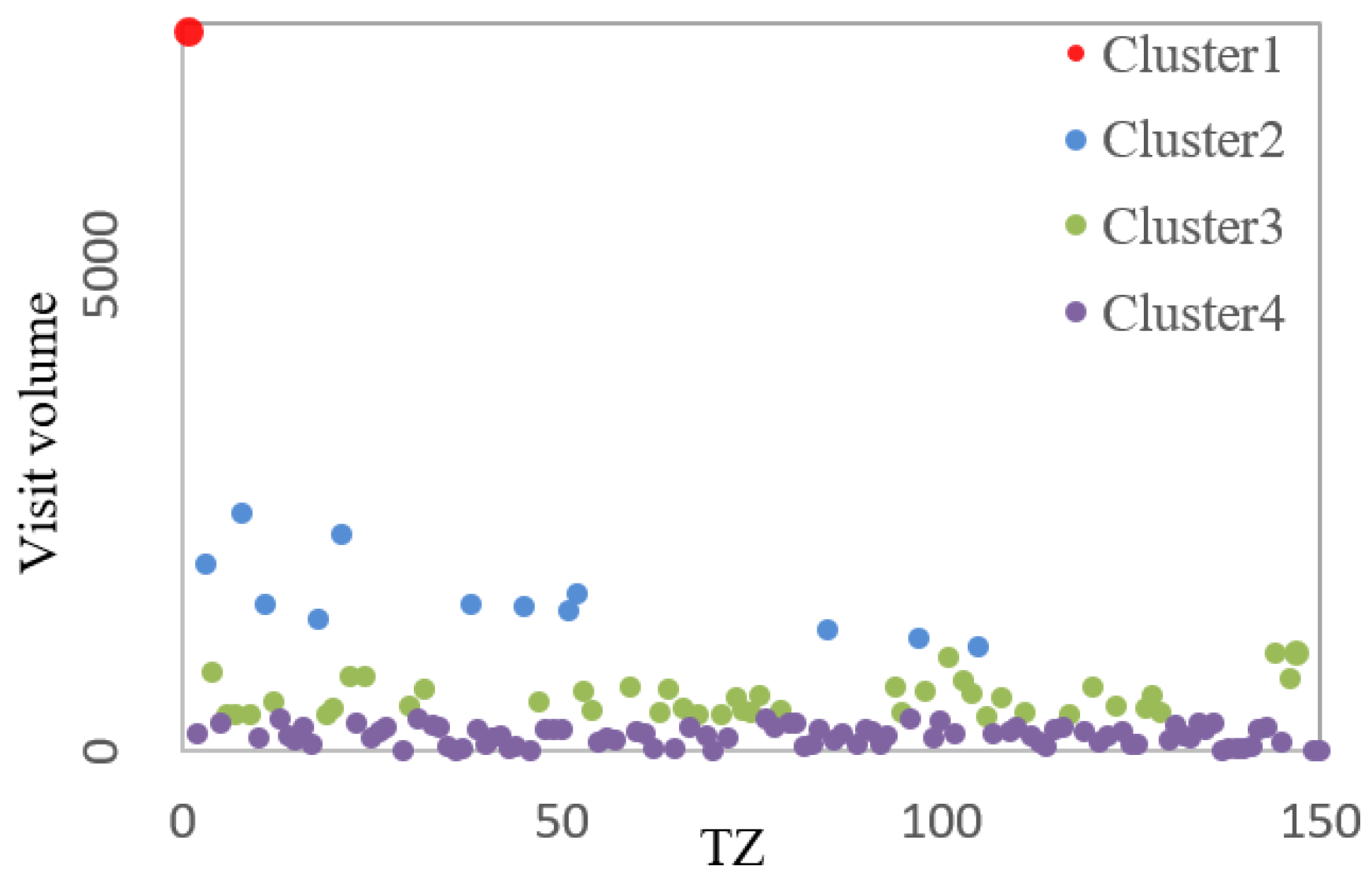
From 66,743 simulated visits across 150 TZs over 17 h, we applied k-means clustering to identify destination roles based on three standardized input variables: (i) total visit volume, (ii) peak-hour intensity (max hourly visits/mean), and (iii) temporal dispersion (coefficient of variation in hourly visits). These capture volume hierarchy, temporal concentration, and activity spread—key dimensions of multi-locality destinations.
Optimal k was determined through Silhouette analysis (k = 2–10), where the Silhouette coefficient—measuring intra-cluster cohesion relative to inter-cluster separation—peaked at 0.62 for k = 4, indicating well-separated, compact clusters (
Table 3). This was corroborated by the elbow method at 94.65% variance explained. Cluster stability was confirmed via 100 random initializations, yielding 96% zone reassignment consistency across runs, ensuring robust results.
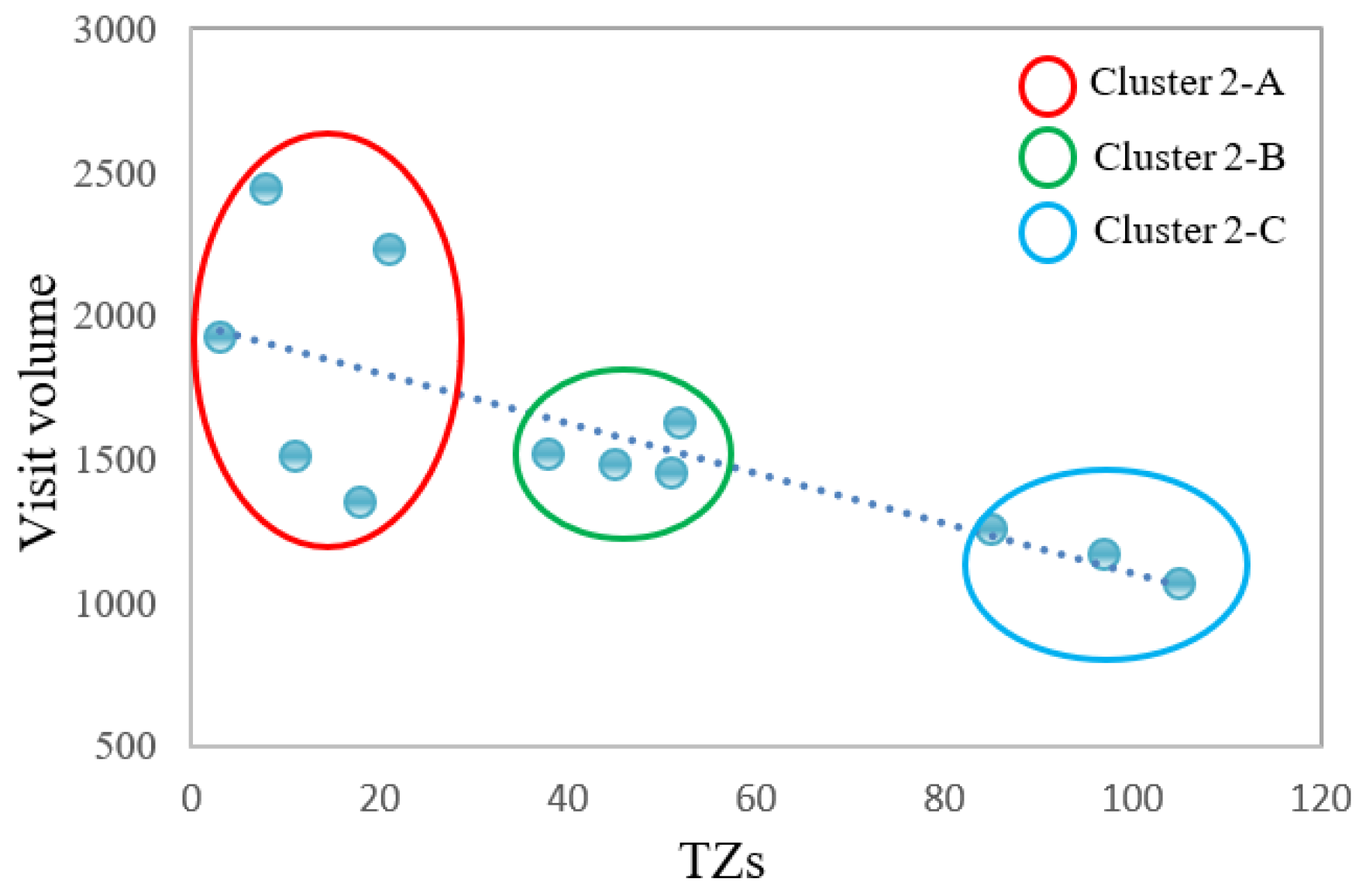
Figure 3 reveals a clear hierarchy of destination roles emerging from agent behaviors. Cluster 1 (red, TZ1) represents the singular CBD core hub, capturing 11% of all 66,743 visits despite comprising just 0.7% of zones—an extreme concentration validated by its 2.8 peak intensity and low temporal variation (0.45), confirming its role as the primary all-day attractor. Cluster 2 (blue, 12 TZs) identifies secondary destinations accounting for 30% of visits with moderate peaking (2.1); these sub-hubs subdivide spatially into outskirts (2A), official areas (2B), and suburban development (2C) following a strong distance-decay gradient from the CBD (r = −0.87) (
Figure 4). Cluster 3 (green, 43 TZs) captures neighborhood-scale local destinations (37% visits) with moderate concentration (1.6 peaks), while Cluster 4 (purple, 89 TZs) represents hyper-local dispersed destinations (21% visits) exhibiting the most uniform temporal patterns (1.3 peaks, temporal dispersion = 0.89). This behavioral typology—4% of zones attracting 41% of visits—quantifies the multi-locality structure for targeted urban interventions.
5.3. Identifying Preferred Destinations
As shown in
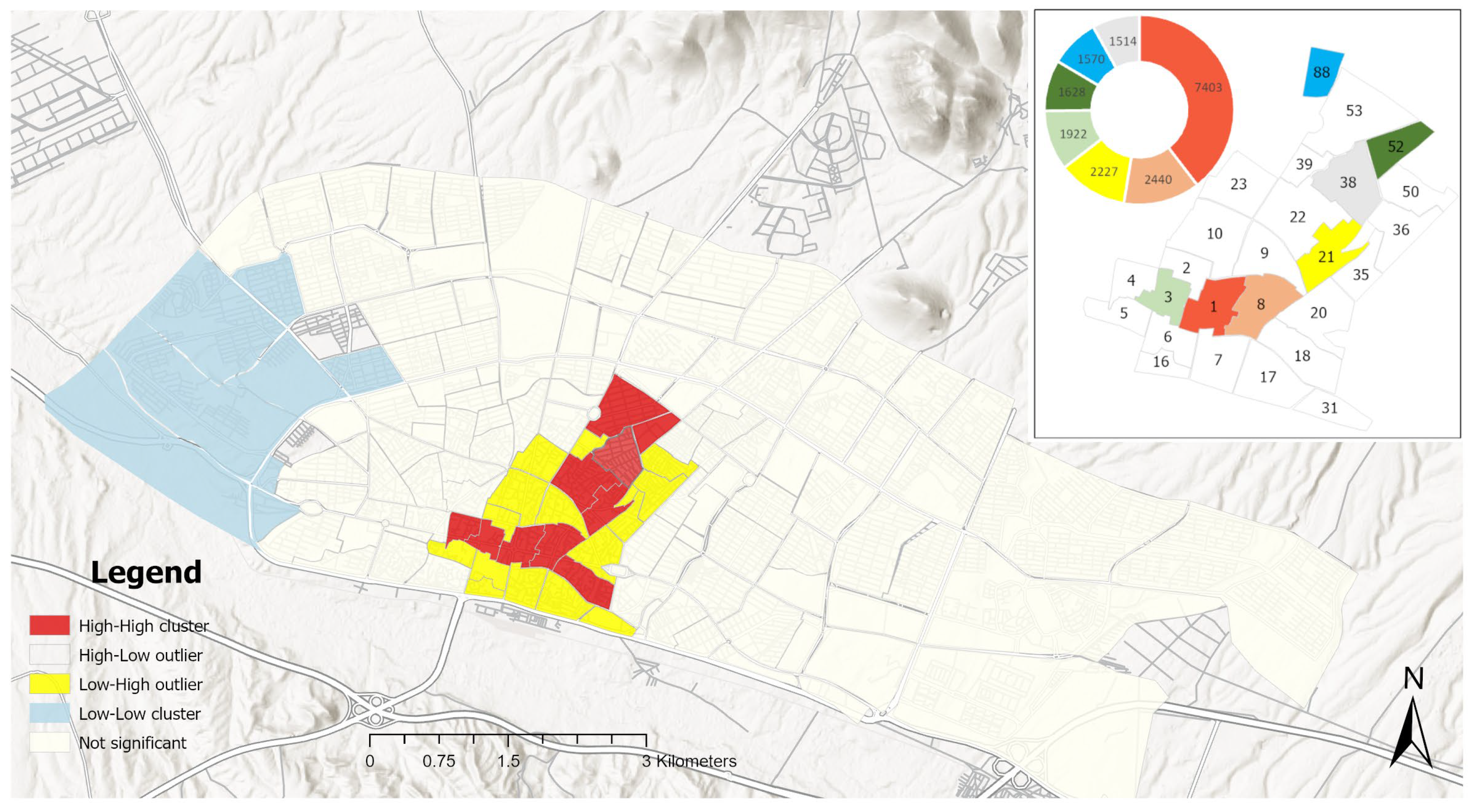
Figure 5, this study employs hotspot analysis according to the LISA index to identify urban preferred destinations. In the
Figure 5, different colors represent various cluster types: the high-high clustering type (red) highlights TZs with high visit volumes, surrounded by neighboring TZs exhibiting similarly high volumes, thus marking these areas as hotspots for preferred destinations. Conversely, the low-low clustering type (light blue) indicates TZs with low visit volumes, bordered by other low-volume TZs, representing cold spots. TZs shown in white exhibit no significant spatial clustering.
The hotspot analysis reveals that urban preferred destinations are mainly clustered within a small number of TZs. As illustrated by the pie chart on the right side of
Figure 5, approximately 7403 visitors prefer TZ1 as their destination. Despite TZ1 covering only about 0.14% of the city’s land area (around 10 hectares), it draws roughly 11% of total travelers. TZ1 is surrounded by TZ8 and TZ3, which rank second and fourth in visitor numbers, drawing 2440 and 1922 visitors respectively. This spatial distribution underscores a monocentric pattern of attraction within the urban area.
Furthermore, within the LISA framework, low-high outlier zones are defined as areas with low visit volumes that are surrounded by neighboring zones exhibiting high visit volumes. These zones stand out as outliers because their relatively low values sharply contrast with the high-value surrounding TZs. This contrast is clearly illustrated between TZ1 and neighboring TZs, including TZ9, TZ10, TZ2, TZ6, and TZ7.
5.4. Visualizing Spatiotemporal Dynamics of Preferred Destinations
Four distinct types of urban destinations were identified using k-means clustering (
Section 4.3). This section focuses on the spatiotemporal dynamics of the primary urban destination (Cluster 1, TZ1) and the secondary destinations (Cluster 2), which together account for the vast majority of simulated visits (>85% of total visit volumes). Clusters 3 and 4 exhibit consistently low visitation levels and limited temporal variability and are therefore excluded from detailed analysis.
5.4.1. Temporal Dynamics of Visit Volumes
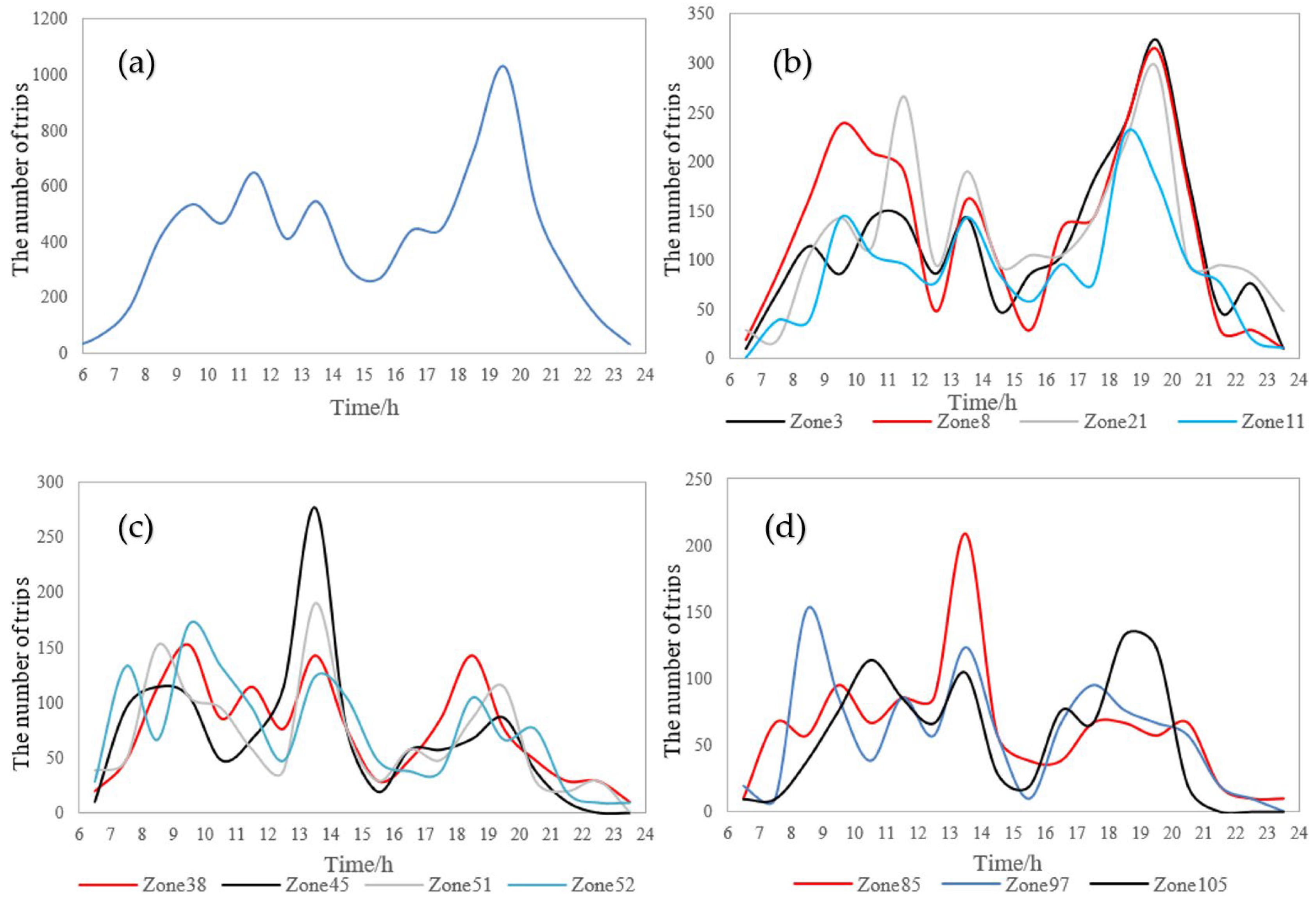
Figure 6a presents the hourly visit volume profile for the primary destination (Cluster 1). Quantitatively, TZ1 exhibits a clear bimodal-to-trimodal temporal structure, with pronounced peaks during the morning (9:00–11:00), midday (12:00–14:00), and evening (18:30–21:00) periods. The evening peak is dominant, reaching approximately 1.7–2.0 times the average daytime volume, indicating a strong post-work and leisure-oriented demand concentration. In contrast, visit volumes decline sharply during the 14:00–16:00 interval, reaching levels comparable to the early-morning baseline (before 7:00), representing a clear intra-day lull.
Temporal persistence is another defining feature of the primary destination. More than 60% of visits to TZ1 occur after 17:00, and a non-negligible share continues beyond 21:00, with activity tapering off gradually toward midnight. This temporal extension distinguishes TZ1 from secondary destinations and reflects the presence of late-operating retail, entertainment, and service activities concentrated in the CBD.
Secondary destinations (Cluster 2) are further subdivided into three spatially coherent sub-clusters (2-A, 2-B, and 2-C), whose temporal profiles are shown in
Figure 6b–d. Compared with TZ1, Cluster 2 exhibits greater temporal heterogeneity and lower peak-to-off-peak ratios, indicating more dispersed and context-dependent travel demand.
Cluster 2-A, located adjacent to the primary destination, shows a strong temporal coupling with TZ1. Evening visit volumes between 18:30 and 20:30 reach up to 75–85% of the TZ1 peak intensity, while morning demand is spread across a wider set of zones. A distinct midday rebound (around 13:00) reflects return or secondary trips linked to CBD activities. However, a pronounced low activity “blackout” period between 14:30 and 17:30 is consistently observed, during which visit volumes drop by more than 40% relative to the daily mean.
Cluster 2-B, situated farther from the CBD, exhibits a more balanced temporal structure, with its highest relative consistency occurring around midday. The coefficient of variation in hourly visits in this sub-cluster is lower than in Cluster 2-A, indicating less extreme peaks. Visit volumes decrease markedly between 15:00 and 17:00, confirming a spatially extensive lull that aligns with the temporal dip observed in TZ1.
Cluster 2-C, representing inner suburban destinations, displays the largest relative variability among the secondary clusters. While a stable midday peak persists, activity levels between 12:00 and 13:00 are noticeably suppressed, suggesting functional differences in land use (e.g., residential or education-oriented zones). Evening activity remains present but is less concentrated than in Cluster 2-A, with peak values reaching only 50–60% of the primary destination’s peak.
5.4.2. Spatial Concentration and Intensity Patterns
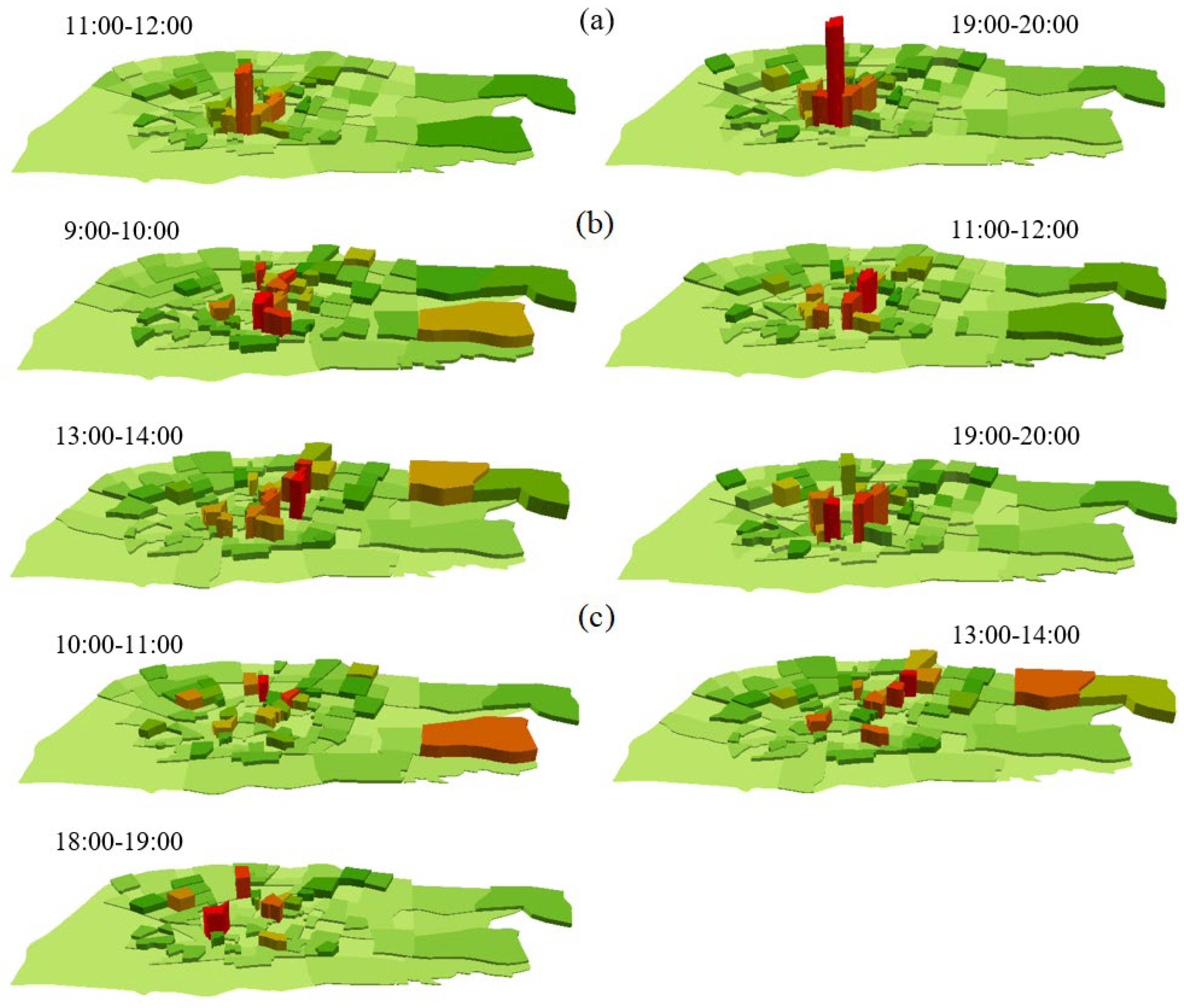
To complement the temporal analysis,
Figure 7 provides three-dimensional visualizations of visit volumes across time, where column height represents the intensity of visits per TZ. To improve interpretability, the primary destination is omitted from
Figure 7b,c, allowing secondary destination dynamics to be assessed independently.
Quantitatively, spatial concentration can be assessed by examining the distribution of visit volumes across zones within each cluster. Cluster 1 shows extreme spatial concentration, with a small number of zones accounting for a disproportionate share of total visits during peak hours. In contrast, Cluster 2-A displays moderate spatial dispersion in the morning, followed by increasing centralization in the evening, indicating a temporal tightening of destination choice toward zones adjacent to the CBD.
Clusters 2-B and 2-C remain spatially dispersed throughout the day, with no single zone consistently dominating visit volumes. This spatial diffusion explains their lower peak intensities and greater sensitivity to time-of-day effects observed in the
Figure 6.
Taken together, these results demonstrate that proximity to the CBD is the primary driver of both visit intensity and temporal persistence, but its influence varies markedly by time of day. The primary destination functions as a temporal anchor for evening activities, absorbing a large share of post-work travel demand and sustaining activity well into the night. Secondary destinations closer to the CBD partially replicate this role but exhibit sharper intra-day troughs, while more distant destinations peak earlier and display weaker evening demand.
6. Discussion
6.1. Methodological Contributions
Daily travel is a fundamental aspect of urban life, with individuals undertaking diverse trips to various activity destinations [
2,
8,
11,
13,
48]. It is widely documented that destination choice is influenced by a complex interaction of factors, resulting in distinctive spatiotemporal patterns throughout the day [
7,
12,
15,
16]. While prior research has acknowledged these dynamics, they have typically been addressed in a limited or aggregated manner [
12,
17]. This study advances destination choice modeling by explicitly linking agent decision-making processes, spatial heterogeneity, and temporal dynamics through a tightly integrated ABM–GIS framework. Consistent with previous studies [
3,
18,
48], this research exploits the flexibility of ABM to incorporate GIS-based spatial data into travel behavior simulation. However, a key methodological advancement lies in how GIS information is used within the ABM. In most existing studies, GIS data are employed primarily as static inputs to define the spatial environment—such as agent locations, origin–destination zones, land-use categories, or network geometries [
32,
33]. In contrast, the proposed framework integrates spatially analyzed GIS indicators directly into agent decision rules, thereby allowing agents to interact dynamically with their spatial context rather than merely occupying it.
Specifically, spatial metrics derived from GIS analyses—such as land-use density, land-use diversity, and accessibility measures—are incorporated as explicit drivers of destination attractiveness. These indicators directly influence agents’ utility evaluations when selecting destinations, leading to differentiated destination choices across time periods and urban zones.
Similarly, the transportation network is not represented solely by its geometric structure. Instead, a behaviorally enriched network representation is constructed in GIS, incorporating intersections, traffic signals, pedestrian crossings, speed limits, route widths, and link lengths. These attributes affect route choice, travel time estimation, and congestion feedback, which in turn shape agents’ temporal decisions and rescheduling behavior. This detailed network representation contributes directly to the observed peak-hour congestion patterns and spatial concentration of trips in the simulation results.
In terms of pattern recognition, the study also advances prior GIS-based analyses of destination choice [
32,
34,
35]. Whereas earlier research typically relied on aggregated visit volumes over coarse temporal scales (e.g., daily or monthly totals) to identify preferred destinations [
1,
11,
13], the present framework disaggregates travel behavior into high-resolution temporal intervals. This temporal decomposition enables the detection of time-specific destination prominence, peak-hour intensification, and midday or evening shifts in activity centers.
This methodological capability represents a significant conceptual and analytical advancement. Rather than treating destinations as static entities with fixed importance, the model conceptualizes destination choice as relative and time-dependent, where the attractiveness of locations evolves throughout the day. Consequently, most urban zones exhibit the potential to function as preferred destinations under specific temporal conditions.
6.2. Interpretation of Results
The validation results indicate that model accuracy varies across both space and time. Higher accuracy in central, high-demand TZs reflects more stable and predictable destination choice patterns. In these zones, performance benefits from the strong gravitational attraction of major activity centers (Equation (5)) as well as feedback effects associated with land-use density and diversity (Equation (3)), which together reinforce consistent travel behavior. In contrast, lower accuracy in low-volume TZs suggests greater sensitivity to localized conditions and stochastic variability, where small absolute deviations translate into larger relative errors. In such areas, limitations in representing distance decay effects for remote accessibility may further contribute to reduced accuracy.
Temporally, decreased performance during the morning peak highlights the difficulty of capturing highly directional, work-oriented travel behavior, which is often characterized by tight scheduling constraints and limited destination flexibility. Improved accuracy during the evening period, by contrast, suggests stronger alignment with residential self-selection and more dispersed activity patterns. Collectively, these findings underscore the importance of interpreting aggregate validation metrics alongside disaggregated spatial and temporal analyses when evaluating agent-based destination choice models.
The results indicate that daily destination choice patterns in Zanjan exhibit distinct spatiotemporal clustering, reflecting a pronounced monocentric urban structure dominated by the CBD. The observed concentration of preferred destinations around the CBD can largely be attributed to the high density and diversity of land-uses in this area, including upscale shopping malls, recreational facilities, and specialized medical services [
3,
49]. These land-use characteristics make the CBD particularly attractive, prompting significant numbers of residents to travel considerable distances from peripheral neighborhoods to access these amenities [
11]. Notably, despite the CBD’s traditional urban fabric—characterized by narrow streets and dilapidated BECs—its attractiveness for destination choice appears to be driven more by land-use density and diversity than by factors such as modern urban design or accessibility [
49]. This finding is consistent with prior research showing that destinations with high land-use density and diversity tend to attract more visitors, sometimes outweighing the effects of accessibility or urban form [
7,
16,
40].
Temporal analysis further reveals a pronounced evening peak in travel to the CBD, resulting in oversaturation during several time intervals. This temporal congestion can be attributed to the aggregation of multiple trip purposes, a phenomenon also noted in the literature [
44,
50]. Non-work activities—such as shopping, recreational pursuits, and medical appointments—significantly contribute to increased afternoon and evening activity in the CBD [
3].
In contrast, as distance from the CBD increases (notably in clusters 2-B and 2-C), the volume of visits declines. In these peripheral zones, educational and administrative activities become more prominent [
3], leading to synchronized surges in travel demand typically centered around midday. Interestingly, even in these areas, which often feature better urban design and improved accessibility [
49], the peak travel patterns remain closely linked to the land-use activities. This further underscores that, in Zanjan, destination choice is influenced more by the density and diversity of land uses than by urban design or accessibility alone. This pattern aligns with findings from other urban contexts, such as institutional corridors in London, Tel Aviv [
51], and Guiyang [
52], where midday congestion has been attributed to the concentration of educational and administrative activities.
6.3. Practical and Policy Implications
This study offers several important contributions that can directly support urban transportation planning and policymaking in Zanjan and similar mid-sized cities. Firstly, the findings highlight the critical role of BECs in shaping sustainable travel behavior. Understanding and strategically enhancing these factors enable planners to foster travel patterns that promote livability, reduce congestion, and support sustainable urban mobility goals.
Secondly, the integrated spatiotemporal analysis of destination choice behavior provides a rich, multidimensional perspective for urban traffic management. Temporal insights reveal the timing and intensity of travel flows throughout the day, identifying peak demand periods and underlying urban rhythms. When combined with spatial distribution analysis, this approach facilitates a comprehensive assessment of urban mobility dynamics, informing targeted interventions to optimize traffic flow and resource allocation.
Thirdly, the visualization of model results through interpretable, dynamic maps offers a powerful practical tool for urban transportation planning. By leveraging advanced mapping techniques, this study translates complex mobility model outputs into clear, actionable insights. These visual tools equip planners and policymakers with an intuitive grasp of both individual and aggregate mobility patterns, facilitating the identification of critical congestion points, underutilized transport infrastructure, and temporal peaks in travel demand citywide.
Specifically, in the context of Zanjan, these visualizations not only pinpoint where and when travel occurs but also highlight key nodes and corridors. This evidence-based spatial and temporal knowledge supports the design and implementation of targeted policies that enhance urban mobility efficiency and overall livability.
7. Conclusions
This research introduces a novel integrated ABM–GIS framework that overcomes key limitations in conventional destination choice modeling by explicitly capturing the emergent, non-linear, and spatiotemporal nature of daily travel behavior. Unlike traditional models that treat destination choice as static or pre-defined, the agent-based approach enables destinations to evolve dynamically as agents adapt their choices in response to interpersonal interactions, built-environment constraints, transportation network conditions, and time-varying activity demands. This process generates complex spatiotemporal and multi-locality travel patterns that cannot be reproduced by aggregate or equilibrium-based methods.
From a methodological perspective, this study advances prior ABM applications by systematically integrating GIS-based information, including built-environment attributes, residential self-selection effects, transport network characteristics, and travel generation data. Rather than focusing on a limited subset of explanatory factors, the proposed framework synthesizes multiple forces shaping destination choice within a unified modeling environment. The use of high temporal resolution (hourly simulation) further enables the model to capture intra-day variability in travel behavior, producing detailed and robust representations of daily movement dynamics. In addition, the incorporation of a pattern-recognition and visual analytics pipeline translates complex simulation outputs into actionable insights for identifying congestion hotspots, peak demand periods, and spatial shifts in destination intensity.
Beyond methodological contributions, this work proposes a conceptual redefinition of travel destinations. Existing studies typically conceptualize daily destinations as static locations, characterized by aggregate attraction levels over an entire day. In contrast, this study demonstrates that destinations are inherently dynamic, with their desirability and functional role shifting across short temporal intervals. Within this spatiotemporal perspective, destinations are no longer fixed endpoints but relative constructs, whose importance varies according to visit volume, peak-hour intensity, and temporal dispersion. Consequently, most urban zones possess the potential to function as desired destinations, albeit with differing temporal signatures and degrees of influence.
By explicitly modeling both individual-level destination choice dynamics and the relative spatiotemporal importance of urban zones, the proposed framework offers valuable insights for policymakers and transportation planners. These insights are particularly relevant for travel demand management, behavioral interventions, and the design of sustainable urban mobility strategies, where understanding when, where, and why destinations gain or lose prominence is critical for effective policy formulation.
The proposed framework can be transferred to other urban contexts, provided it is recalibrated with local time-use data and key components such as trip generation, travel behavior, and BECs. In addition, the proposed ABM currently relies on simplified and readily available drivers to train agents and configure the model environment for simulating individual destination choice behavior; future work should incorporate more complex spatial drivers and self-selection mechanisms. This extension should also be reflected in the validation datasets. The availability of big data—most notably anonymized cell phone records—offers a promising avenue for capturing real-world travel patterns and providing accurate data for validation. However, in the present study, limited access to such data represented a major constraint. Where available, integrating richer data sources, such as mobile phone records, could substantially strengthen both model estimation and validation.