Article

Achieving Sustainable Performance Through Digital Knowledge Integration: The Roles of Green Knowledge Sharing and Digital Leadership in the Hospitality Industry

1
Department of Business Administration, Cyprus International University, Hapolat, Nicosia 99138, Turkey
2
Ünal Çağıner School of Tourism and Culinary Arts, Final International University, Kyrenia, Girne 99320, Turkey
*
Author to whom correspondence should be addressed.
Sustainability 2026, 18(4), 1813; https://doi.org/10.3390/su18041813
Submission received: 27 December 2025 / Revised: 24 January 2026 / Accepted: 27 January 2026 / Published: 10 February 2026
(This article belongs to the Special Issue Knowledge Management and Digital Transformation in Sustainability)

Abstract

Sustainable performance in today’s digital world relies on understanding how technology supports sustainability through organisational processes and leadership. This study applies the Knowledge-Based View and Dynamic Capabilities Theory. It assesses how digital knowledge integration impacts sustainable performance in the hospitality sector. The study examines whether green knowledge sharing mediates the link between digital knowledge integration and sustainable performance. It also explores whether digital leadership strengthens this link. The research team collected data from 373 hotel and restaurant managers in Jordan and analysed the results using SmartPLS version 4. The analysis shows that digital knowledge integration enhances both sustainable performance and green knowledge sharing. Green knowledge sharing strongly associates with sustainable performance. Mediation analysis shows that green knowledge sharing partly explains the effect of digital knowledge integration on sustainable performance. Moderation analysis reveals that digital leadership amplifies the link between digital knowledge integration and sustainable performance. However, digital knowledge integration does not significantly affect the relationship between green knowledge sharing and sustainable performance. These findings clarify how digital knowledge integration, green knowledge sharing, and digital leadership interact to affect sustainable performance. The study provides practical and theoretical implications for hospitality managers aiming to leverage digital transformation and leadership to achieve sustainability goals.

1. Introduction

Sustainable performance has emerged as a significant challenge for service-oriented enterprises, particularly in the hospitality sector, which is resource-intensive and highly visible to the public. Sustainable performance in hospitality transcends immediate financial outcomes to encompass environmental stewardship, social responsibility, and long-term viability [1]. Hotels and other hospitality operations consume substantial amounts of water and energy, generate significant amounts of waste, and rely on interpersonal relationships. This renders sustainability both a corporate imperative and a reputational concern. As sustainability concerns escalate, hospitality enterprises are expected to deliver quality service, generate profit, and uphold environmental responsibility simultaneously [2].
To address these limits, firms across sectors are investing significantly in digital transformation to enhance operational efficiency, transparency, and decision-making. Digital technology enables hospitality enterprises to monitor resource utilisation, enhance operational efficiency, and deliver quality service [3]. Nevertheless, the mere use of digital technologies does not guarantee an immediate enhancement in performance. The primary issue is determining how businesses utilise, disseminate, and implement digitally generated information to achieve tangible sustainability outcomes [4,5]. This issue is particularly pertinent to the hospitality sector, as the outcomes of sustainability depend more on employee collaboration than on automated systems alone.
Integrating knowledge management with digital transformation directly advances sustainability [6,7]. Digital systems generate extensive data on energy use, waste, supply chains, and customer behaviour. Yet, researchers do not yet fully understand how organisations convert this data into sustainable performance. Most research focuses on technology adoption or operational efficiency. These studies do not explain how knowledge-based mechanisms from digital transformation drive sustainability, especially in service industries [8,9]. This gap remains in both theory and empirical research.
This study asserts that digital knowledge integration alone is insufficient for promoting sustainable organisational performance. Instead, its effective translation into shared understanding and collective action, guided by the Knowledge-Based View and Dynamic Capabilities Theory, is essential [10]. Digital knowledge integration refers to systematically applying and integrating insights from digital technologies across sectors within a company [11]. Sustainability is achieved when this knowledge is disseminated and utilised through green knowledge sharing, which entails the exchange of environmentally relevant information, practices, and experiences among organisational members [12]. By positioning green knowledge sharing as a mediating mechanism, this study goes beyond technology-focused explanations and highlights how the application of integrated knowledge enables sustainability-driven digital transformation.
The effectiveness of these knowledge-based processes is also influenced by leadership. Digital leadership is crucial for ensuring that digital initiatives align with sustainability objectives. This is due to the provision of strategic direction, resource allocation, and the establishment of a culture that encourages innovation and fact-based decision-making [13]. Even though prior studies such as [14,15], have acknowledged the importance of leadership in digital transformation there remains a dearth of empirical knowledge about how digital leadership affects the sustainability outcomes of digital knowledge integration, particularly in its interactions with knowledge-sharing processes. This study investigates the role of digital leadership as a moderating boundary condition that either amplifies or constrains the sustainability effects of digital knowledge integration.
The Jordanian hotel industry presents a notably relevant and inadequately explored context for to understand these connections. The hospitality sector in Jordan faces several sustainability challenges [16]. For instance, there is persistent water scarcity, rising energy costs, and increasing demand from both the government and the public to implement sustainable practices. The industry needs to simultaneously facilitate tourism and economic development nationwide. Despite these challenges, a few empirical research for instance [17,18] address digital transformation for sustainability in the Jordanian hospitality sector. Most existing studies such as [19,20] focus on advanced economies or manufacturing, leaving gaps in knowledge about how digital information, leadership, and sustainability interact in service-oriented, resource-limited settings. Examining this context allows us to test and expand theories rather than just replicate them, and to ascertain how they apply to urgent, complex sustainability challenges.
Therefore, this study addresses a specific research gap by examining how digital knowledge integration affects sustainable performance in Jordan’s hospitality sector. It considers green knowledge sharing as a mediator between digital knowledge integration and sustainable organizational performance, and considers digital leadership as a factor that shapes this relationship. This approach distinctly enhances the Knowledge-Based View by characterising green knowledge sharing as a mechanism for transforming knowledge into environmentally beneficial outcomes, while also refining Dynamic Capabilities Theory by demonstrating that the efficacy of digital knowledge integration for sustainability depends on leadership.
The research attempts to answer the following questions:
  • How does digital knowledge integration affect sustainable performance and green knowledge sharing?
  • What impact does green knowledge sharing have on sustainable performance?
  • How does green knowledge sharing shape the effect of digital knowledge integration on sustainable performance?
  • What is the moderating effect of digital leadership in these relationships?
This model presents a novel environment, along with a process-oriented, conditional framework, for elucidating how digital transformation produces sustainable outcomes in hospitality organisations.
This study contributes to the literature by assessing the necessity of theory-driven, context-sensitive research on sustainability and digitalisation, focusing on sustainable performance in the hospitality industry in the Middle East. This study focuses on Jordan, addressing a specific geographical and sectoral gap while assessing the proposed theoretical frameworks in a context marked by pressing sustainability demands and institutional constraints, thereby improving the model’s explanatory power and external relevance. The study explains the mechanisms and boundary conditions that enable sustainability-oriented digital transformation. The subsequent section elucidates the study’s hypothesis and conceptual framework.
The findings are relevant to broader sustainability aims, especially SDG 9 (Industry, Innovation, and Infrastructure) and SDG 12 (Responsible Consumption and Production). They show how digital knowledge practices help hospitality enterprises in developing nations generate innovative concepts and use resources more sustainably. The next section elaborates on the study’s concepts and recommendations.

2. Literature Review and Hypothesis Development

2.1. Theoretical Foundation

This research integrates the Knowledge-Based View and Dynamic Capabilities Theory to clarify how digital knowledge integration, green knowledge sharing, digital leadership, and sustainable organisational performance interrelate in Jordan’s hospitality sector. These frameworks explain how digital knowledge resources are transformed into sustainability outcomes and identify variables that enhance this process. The Knowledge-Based View states that knowledge is the firm’s most strategically vital resource and that organisations exist to integrate, apply, and cultivate knowledge for competitive advantage [21,22]. In this view, knowledge has value only when effectively utilised and disseminated within the organisation. The integration of digital knowledge from big data analytics, the Internet of Things (IoT), and digital platforms is a crucial asset for sustainability-oriented decision-making [23].
This research uses the Knowledge-Based View to clarify the mediating role of green knowledge sharing. Digital knowledge integration provides sustainability information, but organisations transform it into environmental action only through collective sharing, interpretation, and application. Thus, disseminating sustainable information enables digitally integrated knowledge to support long-term business success [24]. In the Jordanian hospitality sector, which is marked by water scarcity, energy constraints, and environmental vulnerability, digital data on resource consumption enhances sustainability only if employees at all levels understand and apply this knowledge in their daily practices, such as minimising energy use or reducing waste [25,26]. The Knowledge-Based View elucidates digital knowledge as a strategic resource and the mechanisms that activate it through green knowledge sharing.
The Knowledge-Based View explains how knowledge is transformed into action at the micro-level, while Dynamic Capabilities Theory extends this understanding by focusing on strategic adaptation. Dynamic Capabilities Theory highlights that firms must identify opportunities, capitalise on them, and adjust resource use in response to environmental shifts [27,28]. In this framework, digital information integration is not only a dynamic capability but also a mechanism that enables hospitality firms to adapt operations and address new sustainability demands. The Jordanian hotel sector, experiencing rapid changes in travel patterns, environmental pressures, and stricter sustainability rules [24], benefits from leveraging digital capabilities. Thus, Dynamic Capabilities Theory suggests that organisations using digital knowledge creatively are better positioned to meet challenges by developing new ideas and practices [29].
Dynamic Capabilities Theory underpins the role of digital leadership by recognising that capabilities need managerial direction to be effective. The impact of dynamic capacities depends on leadership decisions that shape resource mobilisation and allocation [30]. Digital leadership becomes a key factor influencing how digital knowledge integration and green knowledge sharing drive long-term outcomes. Especially in the Jordanian hospitality sector, where hierarchical structures and functional silos hinder collaboration [31], strong digital leaders help bridge these gaps, create safe environments, promote communication, and align digital strategies with sustainability aims [32,33].
Digital leadership enhances the organisation’s ability to convert digital and knowledge resources into sustainable practices by fostering a shared digital vision, building employee digital competencies, and promoting sustainability-focused innovation. The Dynamic Capabilities Theory clarifies that digital knowledge integration and green knowledge sharing depend on leadership, rather than occurring automatically. Effective digital leaders transform knowledge assets into routines that support sustainable performance [34].
The Knowledge-Based View shows how sharing green knowledge turns digital knowledge resources into sustainable outcomes, while Dynamic Capabilities Theory explains how digital leadership enables and strengthens this process. This study brings together these perspectives to clarify the mechanisms and contexts that drive digital transformation and improve sustainability in the Jordanian hospitality sector.

2.2. The Influence of Digital Knowledge Integration on Sustainable Organisational Performance and Green Knowledge Sharing

The growing convergence of digital transformation and sustainability has stimulated scholarly attention on how businesses leverage digitally produced knowledge to achieve sustainable outcomes. Digital knowledge integration is frequently characterised in scholarly literature as the organisational process that amalgamates, interprets, and translates knowledge derived from digital technology into decision-making and operational practices [6,8]. Prior research emphasises that digital knowledge integration extends beyond simple technology adoption; it represents the organisation’s ability to coordinate and synthesise diverse digital information sources—such as operational data, customer analytics, and environmental indicators—across organisational functions [13].
The Knowledge-Based View posits that integration enables firms to recombine diverse knowledge to create value. Dynamic Capabilities Theory stresses the role of digital knowledge in recognising environmental challenges and adjusting processes. In hotels, the use of digital technologies improves energy, water, and waste management—promoting sustainable practices [7]. Digitally integrated knowledge also enhances efficiency through dynamic pricing, inventory optimisation, and predictive maintenance, thereby fostering financial sustainability [35]. Integrating customer and employee data helps personalise services and improve workflows, boosting satisfaction for both groups [36].
This study defines digital knowledge integration as an organisation’s ability to methodically assimilate and use digitally generated knowledge across business areas. Digital knowledge integration is a complex process that combines knowledge from multiple digital domains, rather than relying on a single technological capability [37]. This approach highlights the complexity of using digital knowledge in hospitality businesses, consistent with studies that stress the multifaceted nature of digitally integrated knowledge assets. Sustainability research emphasises achieving long-term organisational success by integrating social welfare, environmental stewardship, and economic performance [7]. In hospitality, sustained performance depends on efficient resource use, environmental sustainability, service quality, and employee satisfaction.
This study characterises sustainable organisational performance as a multidimensional construct spanning environmental, economic, and social dimensions [38]. This perspective highlights the interconnections among these aspects of sustainability in the hospitality sector. Environmental initiatives, financial stability, and human-centred policies together shape the company’s long-term outcomes [39]. Thus, organisations that effectively integrate digital knowledge into their strategic and operational frameworks are expected to achieve stronger, sustainable performance.
Transitioning to sustainable operations requires extensive information. This underscores the importance of knowledge sharing among all members of the organisation. Green knowledge sharing refers to the exchange of environmental knowledge, practices, and experiences to promote pro-environmental behaviour [8,40]. Prior research suggests that green knowledge sharing enables staff to collaboratively assess sustainability challenges and incorporate environmental goals into everyday procedures [41].
Digital technologies play a pivotal role in green knowledge sharing. Intranets, collaboration platforms, and data visualisation tools increase access and transparency, helping spread sustainable practices and performance metrics [9]. Integrating digital knowledge clarifies sustainability challenges and fosters shared accountability, offering real-time, data-driven insights into resource use and ecological effects.
This study characterises green information sharing as the extent to which employees communicate sustainability-related knowledge within the organisation, considering it as a unidimensional construct consistent with prior empirical studies. This unidimensional approach captures the overall tendency of employees to share green knowledge, without distinguishing among sub-dimensions [42]. Within the proposed framework, green knowledge sharing acts as a conduit that transforms digitally integrated knowledge into environmentally beneficial behaviours and outcomes.
Despite increasing scholarly interest in digitisation, knowledge management, and sustainability, existing research still exhibits significant gaps. A considerable amount of empirical research has originated from Western or industrialised economies [43,44], leading to an under-representation of the hospitality industries in emerging economies. Moreover, while prior research has examined digital transformation and sustainability independently [35,40], there is a scarcity of studies that simultaneously investigate the direct impact of digital knowledge integration on sustainable organisational performance and the indirect role of internal knowledge-sharing mechanisms.
This study answers calls for integrative, theory-driven models [6,8]. It offers a coherent framework that connects digital knowledge integration to sustainable organisational performance through green knowledge sharing, and clearly defines the conceptualisation and dimensionality of each construct. By making these relationships explicit, the research clarifies how digitally enabled knowledge processes contribute to the sustainability of hospitality enterprises. From the discussion above, we hypothesised that:
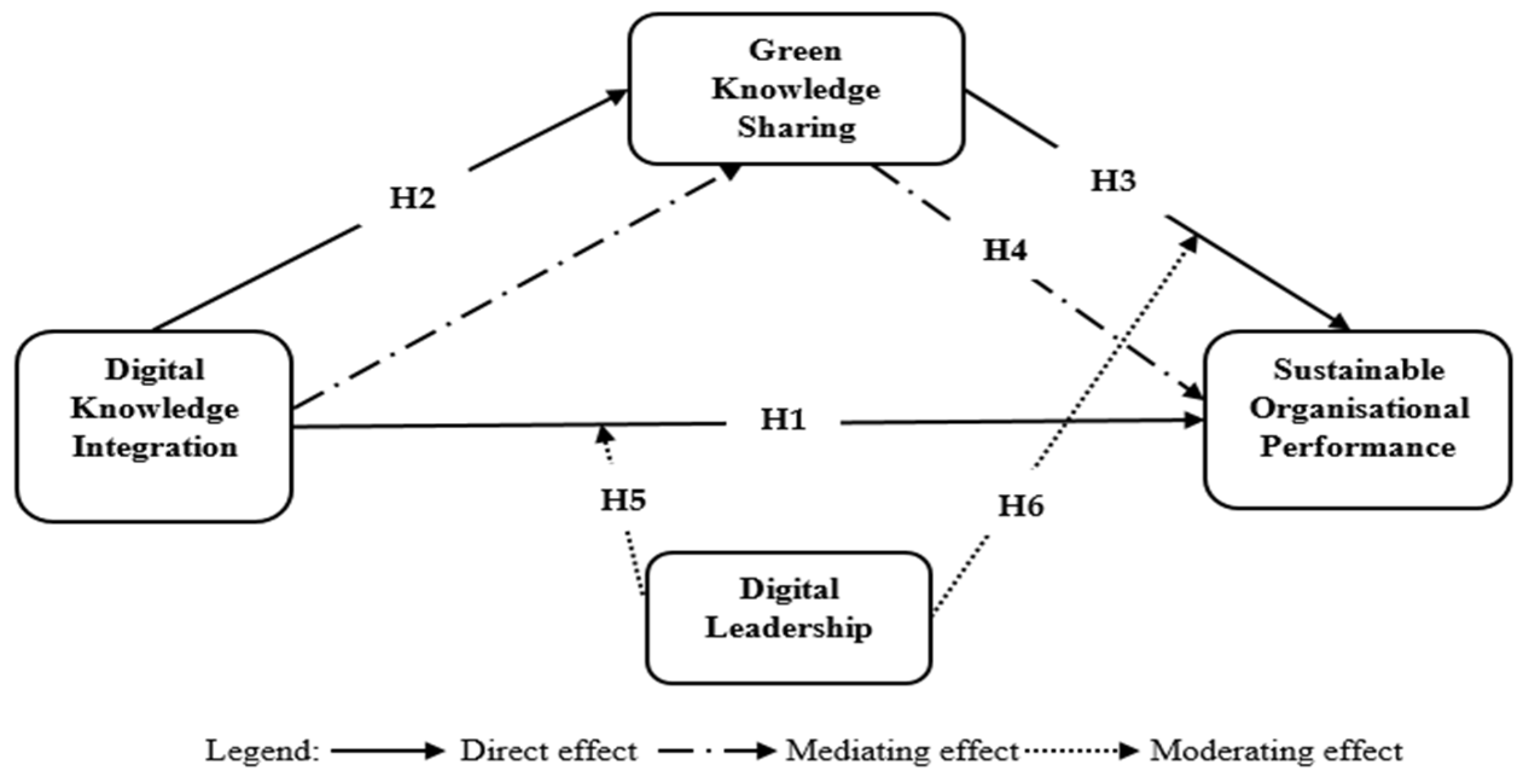
H1: 
Digital Knowledge Integration significantly and positively influences sustainable organisational performance.
H2: 
Digital Knowledge Integration significantly and positively influences green knowledge sharing.

2.3. Influence of Green Knowledge Sharing on Sustainable Organisational Performance

The relationship between green knowledge sharing and sustainable organisational performance is a significant strategy for achieving sustainability objectives. Green knowledge sharing enables organisations to exchange information on environmental concerns, technological expertise, and innovative methods to enhance sustainability [12,45]. From a Knowledge-Based View perspective, disseminating knowledge transforms dispersed individual expertise into a collective organisational competence. This transforms awareness into synchronised actions that benefit the environment. Integrating best practices for energy conservation, waste reduction, and water management into the company’s culture and daily operations enables organisations to systematically diminish their environmental impact, rather than confining these practices to specific departments [12,46]. Green knowledge sharing facilitates collaborative efforts to enhance understanding of environmental issues, resulting in continuous progress and innovative concepts that would be challenging to conceive independently.
An empirical study shows that green knowledge sharing promotes economic sustainability alongside environmental benefits. Studies indicate that leveraging collective intelligence enhances operational efficiency and reduces costs, hence improving economic performance [47]. When employees openly disseminate knowledge on sustainability, organisations are more inclined to discover innovative ways to reduce costs, expedite processes, and achieve enduring financial benefits [48]. These findings align with Dynamic Capabilities Theory, which posits that shared information enables organisations to modify their resources and processes to address sustainability challenges.
Green knowledge sharing strengthens the social aspect of sustainable organisational performance. When employees exchange knowledge about sustainability, they develop a sense of purpose, take responsibility toward one another, and commit to environmentally sustainable practices [9]. In hospitality enterprises, where employee behaviour and mindset significantly influence service quality, green knowledge sharing delivers three key benefits: boosting worker morale, enhancing workplace well-being, and improving the customer experience. Additionally, employees who internalise and share environmental information are more likely to advocate for sustainable practices during service encounters, increasing the company’s reputation and building customer loyalty [49].
Despite the increasing recognition of these benefits, several gaps remain in the existing research. The established relationship between green knowledge sharing and sustainability outcomes is well-documented [38,42], yet its role as an internal mechanism linking digital knowledge integration to sustainable organisational performance remains insufficiently examined. Prior research suggests that digital technologies often yield significant amounts of sustainability-related data; nevertheless, the mere availability of green knowledge does not automatically result in improved sustainability outcomes without effective transmission and utilisation [8,50]. This suggests that green knowledge sharing may be crucial for transforming digitally integrated knowledge into tangible outcomes for the environment, the economy, and society.
Empirical data supporting this relationship is limited, especially in information-intensive service sectors like hospitality and in emerging economies. This study directly examines green knowledge sharing as a mediator. It responds to calls for more process-oriented and theory-driven explanations of how digital transformation supports sustainability. In doing so, it strengthens the conceptual link between digital knowledge integration and sustainable organisational performance. From the discussion above, the following hypothesis was developed:
H3: 
Green knowledge sharing significantly and positively influences sustainable organisational performance.

2.4. Mediating Role of Green Knowledge Sharing

A significant association exists between digital knowledge integration and sustainable organisational performance; however, previous research suggests that this correlation is unlikely to be solely direct [6,8]. Studies indicate that green knowledge sharing functions as a crucial intermediary mechanism for converting digitally integrated knowledge into sustainable results [51]. Studies further suggest that digital knowledge is a latent resource within an organisation, with its worth for sustainability materialising only when organisational members understand, internalise, and apply it [10,52]
The integration of digital expertise equips environmental managers and policymakers with timely, accurate information on resource consumption and environmental impacts [53]. Nevertheless, empirical research indicates that merely collecting data on energy, water, or waste use does not inherently lead to enhanced operational efficiency or sustained performance [7]. Through green knowledge sharing, digitally generated data transforms into collective understanding, synchronised action, and collaborative problem-solving. Disseminating and discussing integrated digital knowledge via shared dashboards, interdisciplinary meetings, and organised training sessions enhances organisational awareness of environmental impacts and fosters collaboration to address sustainability challenges [8]. Thus, green knowledge sharing functions as the primary mechanism for implementing digital knowledge integration across organisational levels.
The Knowledge-Based View significantly endorses this mediating rationale. An organisation’s advantage derives from its efficacy in using and disseminating knowledge, rather than merely possessing it [53]. In this context, digital knowledge integration refers to the development of a strategic informational asset, whereas green knowledge sharing pertains to the utilisation of that asset to achieve sustainability objectives. The integration of digital knowledge creates a repository of real-time insights into environmental performance [54]; however, the distribution and collective interpretation of this knowledge determine specific actions, including the adoption of eco-friendly practices and sustainability-driven innovations that enhance sustainable organisational performance [9]. Green knowledge sharing effectively links knowledge acquisition to the implementation of environmentally beneficial actions.
Despite a strong theoretical explanation, significant gaps remain in the literature. While prior research has separately examined the effects of digital technologies and knowledge sharing on sustainability [55], few empirical studies quantitatively evaluate green knowledge sharing as a mediating factor linking digital knowledge integration to sustainable organisational performance [8]. This limitation is particularly significant in the hotel sector, where frontline personnel must convert key digital information into standardised service operations to achieve sustainable results. Otherwise, digital investments may be squandered and disconnected from daily sustainability practices if green knowledge sharing is inadequately executed.
Therefore, without efficient green knowledge sharing, digital investments may not translate into improved sustainability outcomes. Organisations may deploy intricate digital systems to monitor their environmental performance; however, if individuals do not understand, interpret, and act on the information from these systems, genuine progress toward sustainability is unattainable. Green knowledge sharing is thus vital for maximising the sustainability benefits of digital information integration. This study experimentally validates the mediating role, enriching the literature by clarifying the connection between digital transformation and sustainable organisational performance, and offering a more pragmatic, process-focused approach to sustainability management. From the discussion above, the following hypothesis was developed
H4: 
Green knowledge sharing mediates the relationship between digital knowledge integration and sustainable organisational performance.

2.5. Moderating Role of Digital Leadership

The effectiveness of the relationship between digital resources and sustainable organisational performance is not intrinsic [56]; it depends on leadership skills that guide the strategic execution of digital initiatives. Digital leadership is characterised in the literature as a leadership approach that encompasses a progressive digital vision, the capacity to spearhead digital transformation, and the ability to foster an organisational culture that embraces innovation and promotes cooperation [57]. Prior studies emphasise that leadership is crucial for aligning digital initiatives with broader corporate objectives, including sustainability targets [35].
This study defines digital leadership as comprising strategic vision, digital competency, and transformative direction, building on current research. This highlights the vital role of leaders in guiding how digital knowledge is understood, prioritised, and used within business. In this context, digital leadership is positioned as a moderating variable that influences two linked relationships: (i) between digital knowledge integration and sustainable organisational performance, and (ii) between green knowledge sharing and sustainable organisational performance.
From a Dynamic Capabilities perspective, digital leadership serves as an advanced capability that enables businesses to recognise sustainability-related opportunities, leverage them through data-informed decision-making, and reallocate resources to improve long-term performance. In the absence of strategic digital leadership, efforts to integrate digital technology may be fragmented or misaligned, resulting in insufficient or inconsistent sustainability outcomes [32]. Digital leaders examine complex data streams and offer a unified vision that links digital proficiency to the creation of environmental, social, and economic value [58]. Digital leadership enhances the effectiveness of digital knowledge integration by strategically prioritising, allocating resources, and developing capabilities, thereby strengthening its positive influence on sustainable organisational performance.
Digital leadership is crucial for the effectiveness of green knowledge sharing. The dissemination of knowledge regarding sustainability can generate value; however, this value can only be actualised when leadership frameworks and cultural contexts facilitate its use [59]. Digital leaders provide facilitating frameworks, such as cross-functional teams, digital collaboration platforms, and innovation protocols that transform collective green knowledge into synchronised action across the entire firm [60]. Digital leadership fosters an environment where employees are more willing to share, enhance, and implement sustainable ideas by establishing a secure space for innovation, promoting experimentation, and normalising sustainability-oriented initiatives [12]. Digital leadership strengthens the positive relationship between green knowledge sharing and sustainable organisational performance by ensuring that shared knowledge drives practical, lasting improvements.
Despite this robust theoretical foundation, significant gaps persist in the empirical research. Although leadership is acknowledged as a vital determinant of organisational performance, prior research has primarily focused on broad leadership styles, such as transformational or ethical leadership [61], neglecting the specific digital competencies required for effective leadership. Thus, there is a dearth of empirical studies examining the impact of digital leadership on the critical links between digital knowledge integration and green knowledge sharing on sustainable organisational performance. This gap is particularly evident in developing economies such as Jordan, where leadership plays a crucial role in influencing technology utilisation, knowledge dissemination, and the adoption of sustainable practices.
This study challenges universalistic ideas by adopting a situational approach, asserting that digital resources do not intrinsically lead to lasting solutions. It asserts that the beneficial effects of integrating digital and green knowledge-sharing are significantly amplified by effective digital leadership. In organisations with a defined digital strategy, robust leadership dedication to sustainability, and proactive facilitation of knowledge sharing, digital and green knowledge resources are more likely to foster tangible advancements in sustainability. Conversely, in the absence of robust digital leadership, these resources may not be fully utilised, hence limiting their influence on the organisation’s long-term performance. From the discussion above, the following hypothesis was developed:
H5: 
Digital leadership moderates the relationship between digital knowledge integration and sustainable organisational performance.
H6: 
Digital leadership moderates the relationship between green knowledge sharing and sustainable organisational performance.
The formulation of the hypothesis and the literature review (Figure 1) established the study model presented below:

3. Materials and Methods

3.1. Research Design, Context, and Participants

A quantitative, cross-sectional design was used to assess the proposed model at a single point in time. This approach aligns with a positivist paradigm and is common in sustainability and digital transformation research for examining theoretical links among latent variables [62]. The research focuses on the Jordanian hospitality industry, a key driver of economic development and jobs. The sector’s selection is conceptually and empirically justified. Reports indicate that hospitality enterprises in Jordan face pressure to adopt sustainable practices [24,63]. Water scarcity, rising energy costs, reliance on imported energy, and stakeholder demands for sustainability contribute to this [5]. The industry offers a relevant context for examining how integrating digital knowledge and leadership affects sustainable performance, given ongoing digital transformation projects aimed at efficiency and service quality amid sector-specific constraints.
This study examines the hospitality sector, focusing on hotels and restaurants. Both subsectors share core operational features: high resource intensity, a focus on customer service, and growing reliance on digital technologies for reservations, supply chain management, energy optimisation, and customer analytics. Despite different operations, hotels and restaurants face similar sustainability and digital transformation challenges [64,65]. This makes them important when seeking sustainable solutions at the organisational level in hospitality. The methodology aligns with previous research that views hotels and restaurants as key service sectors facing comparable environmental and technical challenges. The organisation, not the individual, is the unit of analysis. The research focused on senior managers, department heads, and operational managers with the expertise to assess digital practices, leadership, and organisational sustainability.

3.2. Sampling and Data Collection Procedure

The study focused on managers of licensed hotels and restaurants in Jordan’s main tourist regions. Convenience sampling was chosen because there was no comprehensive, publicly available list of potential participants, which, along with challenges in securing participant involvement, informed the sampling approach. Heuristic methods then determined the PLS-SEM sample size; following the recommendations of [66] a minimum of 340 (34 indicators times 10) was set. To compile potential participants, lists of organisations were obtained from hospitality networks and the Jordan Ministry of Tourism and Antiquities.
The inclusion of an organisation in the final sample is contingent upon its interest and the availability of its managers. Hotel and restaurant management served as organisational gatekeepers and helped identify appropriate respondents. The survey invitation was first sent to these managers via professional email. Afterwards, they sent the survey link to eligible management staff using official communication channels. This method enabled distribution of the survey to managers, department heads, operational managers, and Maître d’hôtel engaged in digital operations, sustainability, and service provision.
The survey was distributed to 393 potential participants using Computer-Aided Web Interviewing (CAWI), enabling managers to participate at their convenience without disrupting daily tasks. Email invitations were combined with internal organisational communication channels to reach participants, an approach that aligns with the hospitality sector, where managers regularly use digital messaging to oversee operations. To further increase response rates, reminder messages were sent every two weeks via the same channels. Data were collected from various managerial respondents at different hotels and restaurants over three months, from 1 February to 30 April 2025. This approach captured organisation-wide perspectives on digital knowledge integration, digital leadership, green knowledge sharing, and sustainable performance. Multiple companies responded, and each response was treated as an independent observation, in line with PLS-SEM organisational research practices. Respondents provided informed electronic consent before participating, in accordance with ethical guidelines. The study was approved by the Ethics Board of Cyprus International University. Human Resources managers at participating hotels and restaurants assisted with distribution after management approval. A total of 373 valid responses were obtained, yielding a response rate of about 95%.
The demographic profile of respondents (see Table 1) accurately reflects the Jordanian hospitality workforce [67], with 86.9% male and 13.1% female, consistent with industry reports of a gender imbalance. Most respondents were aged 26 to 45, representing individuals in their prime working years engaged in operational and managerial roles. This age distribution supports the assessment of organisational practices related to digital knowledge integration and sustainability.
The majority of respondents held a high school diploma or a bachelor’s degree, while a smaller proportion held a master’s degree. This distribution corresponds with the educational requirements typically observed in hotel management and supervisory roles in developing countries. The findings regarding job tenure indicate that most respondents have been employed at their current employer for 2 to 10 years. This indicates their familiarity with the company’s procedures, leadership methodologies, and sustainability initiatives. The demographic characteristics indicate that the sample is suitable for examining the interrelationships among digital knowledge integration, green knowledge sharing, digital leadership, and sustainable organisational performance.

3.3. Mitigation of Sampling Biases

Convenience sampling may introduce selection bias if the sample mostly includes digitally advanced or easily accessible firms. Similarly, voluntary response bias may arise if primarily sustainability-interested managers participate. To address these concerns, we used Human Resources managers and restaurant managers as gatekeepers. This approach provided structured access to a broader sample of internal managers rather than relying on public channels. The resulting 95% response rate helps reduce non-participation bias. With 373 responses, the sample exceeds the PLS-SEM minimum sample size, enhancing power and validity. These steps strengthen the reliability of our results and clarify our sample selection process.

3.4. Measurements

We selected measurement instruments from established scales to ensure validity and reliability. Respondents used a 5-point Likert scale, where 1 = ‘strongly disagree’ and 5 = ‘strongly agree’ [68]
Digital knowledge integration was assessed with the multidimensional scale developed by [69], providing a basis for evaluating how digital knowledge contributes to organisational outcomes. Sustainable organisational performance was measured using the multidimensional instrument developed by [38], which captures the economic, environmental, and social aspects related to sustainability objectives. Green knowledge sharing was evaluated using the one-dimensional scale developed by [42], which reflects the exchange of environmentally relevant knowledge within organisations. Digital leadership was measured using the multidimensional scale developed by [57], which links leadership behaviours to digital transformation and performance.
Several reasons support the use of these tools in Jordan. Each measure has been tested in international business and management research. These tools have proved useful across different cultures and organisations. Earlier research has shown these scales are reliable [70]. The hospitality sector in Jordan faces challenges, including digital transformation and growth. This makes it a good setting for using these trusted methods to better understand key connections.

3.5. Data Analysis Tools

IBM SPSS Statistics (Version 24) and SmartPLS (Version 4) were used for data analysis. SPSS, a statistical analysis software, facilitated initial data screening. This included descriptive statistics (summarising data trends), data cleaning (removing or correcting inaccurate data), and assessing common-method bias (checking for errors arising from using the same method to collect all data). SmartPLS 4, for variance-based structural equation modelling (SEM—a method for analysing complex relationships among variables), then evaluated the measurement model for reliability (consistency of results) and validity (accuracy of measurement). It also tested the structural model for hypothesised relationships, mediating effects (how one variable influences the relationship between others), and boundary conditions (situations where results may change) [47,48]. These tools were selected because the study emphasises prediction and incorporates both mediation and moderation (where another variable affects the strength or direction of a relationship).

4. Results

4.1. Descriptive Statistics and Matrix Correlation

Table 2 presents the descriptive statistics and correlation matrix of the construct. The descriptive statistics indicate that the mean values for all constructs are moderate. The majority of respondents perceived their businesses as possessing adequate levels of digital knowledge integration, sustainable organisational performance, green knowledge exchange, and digital leadership. The relatively low standard deviations indicate that the data points are closely clustered around the means, suggesting an agreement among the respondents. This enhances the reliability of the data for further analysis. The correlation matrix indicates that all main constructs are statistically significant and positively correlated. Digital knowledge integration has a strong positive correlation with sustainable organisational performance (r = 0.653, p < 0.01) and green knowledge sharing (r = 0.759, p < 0.01), providing first confirmation for the proposed direct and mediated relationships. Green knowledge sharing exhibits a positive correlation with sustainable organisational performance (r = 0.604, p < 0.01), signifying a robust relationship between the exchange of information regarding environmental practices and sustainability results. Digital leadership exhibits favourable yet somewhat weaker correlations with the other aspects. This indicates that although leadership is significant, it may not be the primary catalyst for change; rather, it could be an enabling component for change to occur. The correlation outcomes are predominantly aligned with anticipated trends and remain below recommended thresholds [71]. This indicates that there are no pressing concerns regarding multicollinearity, and the data is appropriate for subsequent structural model testing.

4.2. Common Method Bias

Harman’s single-factor test (refer Appendix A) was initially utilised as a preliminary evaluation for common method bias (CMB). The results of the unrotated exploratory factor analysis employing principal axis factoring indicate that the first factor accounted for 38.04% of the total variance. This is below the commonly accepted criterion of 50%, indicating that no one factor influences the covariance structure of the data. This finding provides initial indication that common method bias is unlikely to be a substantial concern.
Recent studies have highlighted that Harman’s single-factor test is insufficient for detecting subtle or latent method effects and should not be employed as a standalone diagnostic instrument [72,73,74,75]. Consequently, scholars are progressively endorsing the enhancement of Harman’s test by the incorporation of more stringent approaches, particularly in variance-based structural equation modelling.
This study also examined common method bias with the collinearity technique proposed by [76]. This method evaluates variance inflation factor (VIF) values by analysing both vertical and lateral collinearity, so providing a full assessment of any common method effects. Prior research suggests that VIF values below 3.3 imply an absence of substantial common method bias, whereas values under 5.0 are considered acceptable in empirical research contexts [66,76,77].
The majority of the indicator-level VIF values were well below the conservative threshold of 3.3, as illustrated in Table 3. A few indicators (COM7 = 3.563; SO2 = 3.078; TR1 = 3.006) marginally exceeded this conservative criterion, although all VIF values remained below the essential threshold of 5.0. This indicates that neither multicollinearity nor common method bias poses a significant threat to the validity of the findings. The absence of significantly higher VIF values suggests that common method variance does not typically inflate the correlations between constructs. The results of Harman’s single-factor test and the full collinearity VIF analysis provide consistent and further evidence suggesting that common method bias is unlikely to compromise the study’s findings. This study employs the entire collinearity technique alongside Harman’s test, according to current best practices in PLS-SEM research and directly addressing recent critiques on the limitations of traditional CMB diagnostics.

4.3. Validity and Reliability

The measurement model’s validity and reliability were checked with standard methods (see Table 3). Reliability was measured with Cronbach’s alpha and Composite Reliability (CR). All constructs were consistent, as both numbers were above 0.70 [65]. Validity was checked using Average Variance Extracted (AVE) and standardised loadings. Convergent validity was established because all indicator loadings were above 0.70 and each AVE was above 0.50, indicating that the constructs explain their indicators well [78,79]. So, the measurement model is both reliable and valid for studying structural relationships.

Discriminant Validity

The Heterotrait–Monotrait (HTMT) ratio of correlations was employed to assess discriminant validity (refer to Table 4), as it is considered more stringent and sensitive than the [78,79] criterion and other known benchmarks. HTMT values were evaluated using established procedures, employing the widely accepted thresholds of 0.85 (strict criterion) and 0.90 (less stringent nevertheless acceptable criterion) [66,80,81].
Table 4 indicates that all HTMT ratios fall below the conservative threshold of 0.90, with the majority also below the stricter limit of 0.85. The highest HTMT value (0.826) is seen between green knowledge sharing and digital knowledge integration. This value remains below the stringent criterion of 0.85, indicating sufficient discriminant validity between these two conceptually related items. All remaining HTMT values range from 0.020 to 0.777, further substantiating that the constructs differ in reality. Table 4 indicates that the interaction constructs (digital leadership × digital knowledge integration and digital leadership × green knowledge sharing) have low HTMT values relative to their core constructs. This finding indicates that the interaction terms differ from one another in a manner distinct from their constituent variables, hence justifying their inclusion in the structural model.

4.4. Structural Model Assessment

4.4.1. Model Fit Assessment

Standardised fit indices were used to evaluate the model’s fit. As shown in Table 5, the model demonstrates a strong fit, with a Standardized Root Mean Square Residual (SRMR) of 0.031 and a Normed Fit Index (NFI) of 0.954. The SRMR, which quantifies the difference between observed and predicted correlations, is substantially below the 0.08 cutoff [82], and the NFI exceeds the 0.90 threshold [83,84], both indicating a robust model fit. These results provide strong evidence for the validity of the proposed model.

4.4.2. Predictive Relevance (Q2) and Explanatory Power (R2)

Table 6 presents the coefficient of determination (R2) and predictive relevance (Q2 predict). These assess the model’s explanatory and predictive abilities. The R2 values indicate that the model accounts for a substantial proportion of the variance in the endogenous constructs. Specifically, the independent variables explain 57.4% of the variance in green knowledge sharing and 74.9% of the variance in sustainable organisational performance. Studies consider these values significant [65]. The Q2 predictive values from blindfolding were well above zero (green knowledge sharing = 0.572; sustainable organisational performance = 0.698). This provides strong evidence for predictive validity [85]. Overall, the model effectively explains the constructs and has predictive power beyond the sample.

4.4.3. Effect Size and Collinearity

Table 7 presents the effect sizes (f2) and inner variance inflation factor (VIF), which together assess the structural model’s strength and potential collinearity. According to [86,87], f2 values of 0.02, 0.15, and 0.35 represent small, medium, and large effects, respectively. Digital knowledge integration shows a strong effect on Green Knowledge Sharing (f2 = 1.348), which is much larger than the effects of green knowledge sharing or digital leadership alone. For sustainable organisational performance, digital knowledge integration has a moderate effect both independently (f2 = 0.243) and, when combined with digital leadership, a comparatively stronger effect (f2 = 0.505). By comparison, green knowledge sharing and digital leadership individually yield smaller effects for this outcome. Notably, the highest inner VIF is 2.555, staying below the conservative threshold of 3.3 [88,89], indicating that collinearity does not threaten the validity or reliability of the model estimates.

4.4.4. Hypothesis Testing

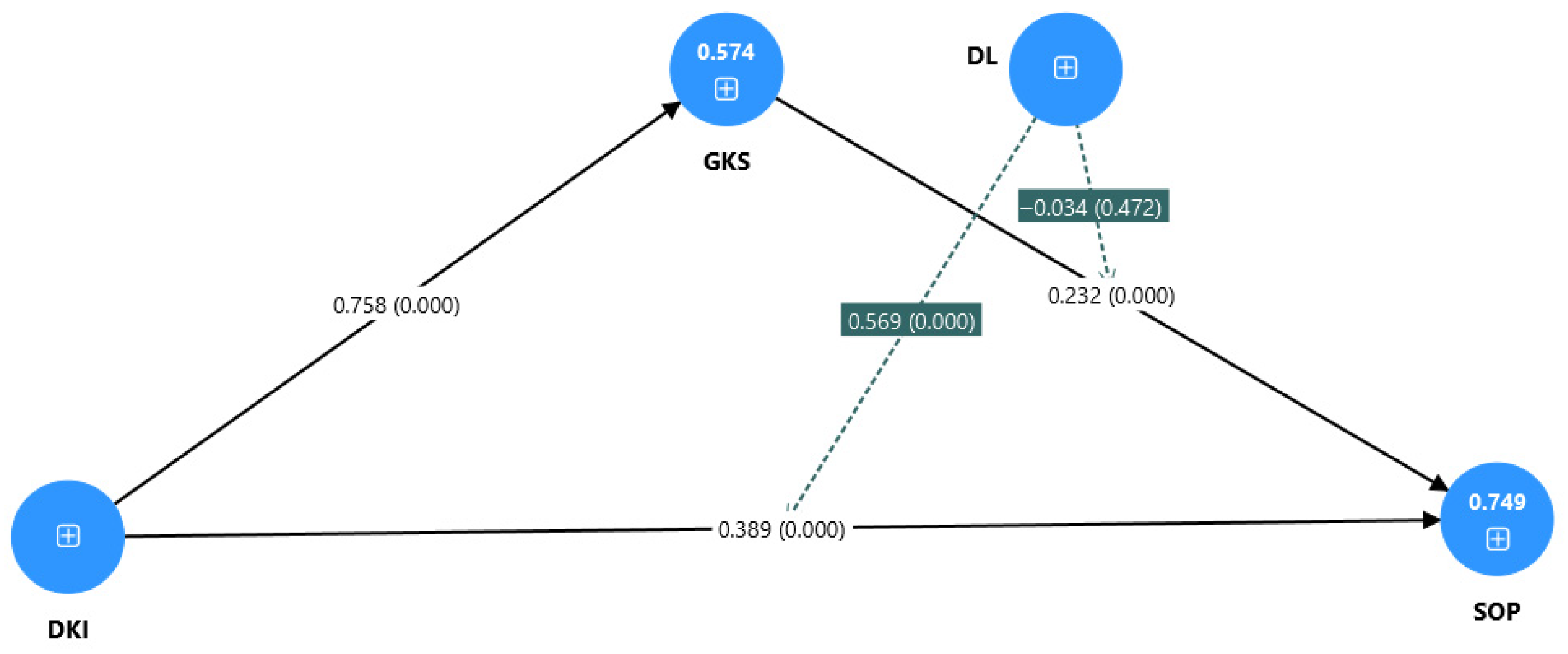
The structural model was evaluated using bootstrapping with 5000 resamples at a 5% confidence level to test the direct and mediation relationships. Results are presented in Table 8 and Figure 2. Six hypotheses were examined, each showing varying statistical significance. H1 indicates a positive and significant relationship between digital knowledge integration and sustainable organisational performance (β = 0.389, t = 8.429, p < 0.001). This suggests that improved digital knowledge integration is associated with better sustainability in hospitality organisations. Digital knowledge integration also significantly affects green knowledge sharing (β = 0.758, t = 33.529, p < 0.001), confirming H2. This means that integrating digital expertise increases the chance that employees will share environmental knowledge. Regarding H3, green knowledge sharing has a positive and significant effect on sustainable organisational performance (β = 0.232, t = 5.889, p < 0.001). Organisations that promote environmental knowledge sharing tend to achieve higher sustainability.
H4 tests if green knowledge sharing mediates the link between digital knowledge integration and sustainable organisational performance. The mediation is supported (β = 0.176, t = 5.670, p < 0.001), showing that greater green knowledge sharing indirectly improves sustainability through digital knowledge integration.
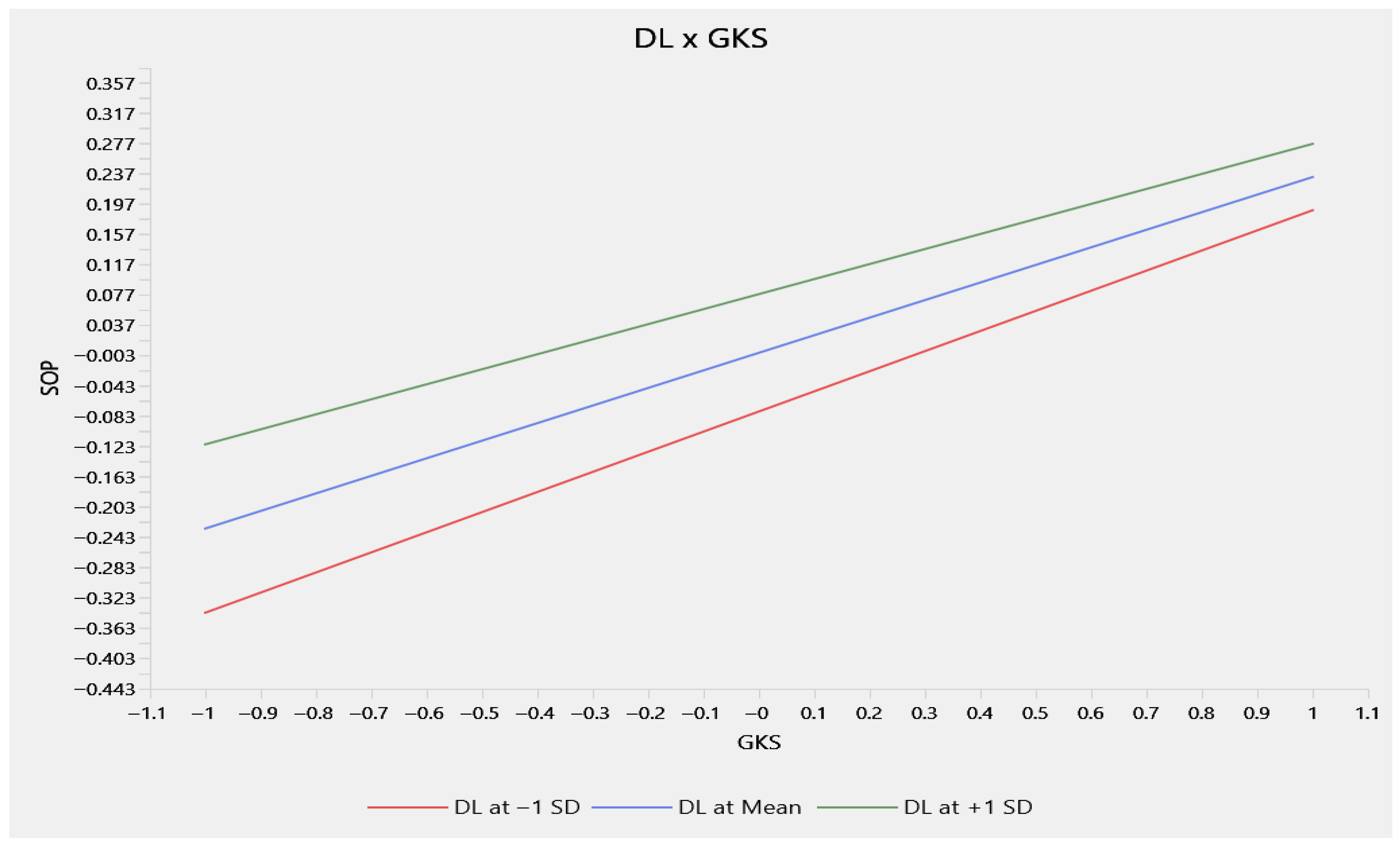
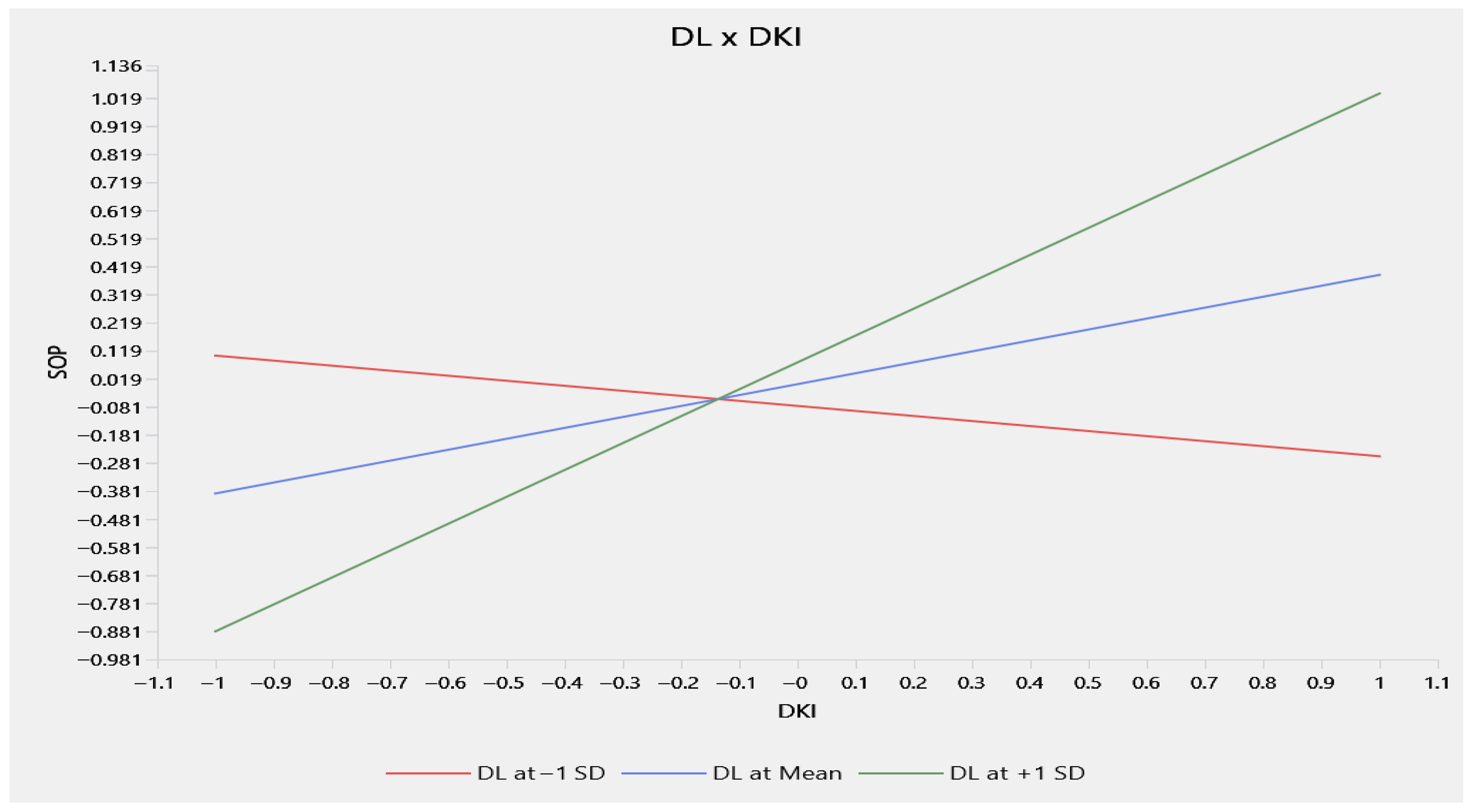
Moderation effects were analysed in SmartPLS using the two-stage interaction method. Statistical significance was assessed via bootstrapping with 5000 resamples. The relationship between digital leadership and digital knowledge integration on sustainable organisational performance was positive and statistically significant (H5: β = 0.569, t = 11.453, p < 0.001). This demonstrates that digital leadership enhances the integration of digital knowledge and sustainable organisational performance. Slope analysis (refer Figure 3) shows that, at high levels of digital leadership, the slope representing the relationship between digital knowledge integration and sustainable organisational performance is steeper, indicating a stronger positive effect. In contrast, this relationship is weaker at low levels of digital leadership. This difference in slopes confirms the moderating effect. The relationship between digital leadership and green knowledge sharing in relation to sustainable organisational performance was not statistically significant (H6: β = −0.034, t = 0.719, p = 0.472). Slope analysis (refer Figure 4) indicates that the lines representing green knowledge sharing’s relationship with sustainable organisational performance remain largely parallel across levels of digital leadership, indicating no meaningful change in effect strength. As a result, H6 is unsupported. Moderation analysis indicates that digital leadership significantly influences the relationship between digital knowledge integration and sustainable organisational performance; however, it does not affect the association between green knowledge sharing and sustainable organisational performance.

5. Discussion

The findings strongly support the proposed hypothesis, revealing that digital capabilities enhance organisational performance over time through both direct impacts and underlying knowledge-based mechanisms, specifically through the integration and exchange of organisational knowledge. This finding supports earlier research suggesting that digital transformation creates sustainability value only when included in organisational knowledge processes, rather than viewed as a simple technological investment [6,8,90]. The findings, therefore, clarify the specific knowledge-based conditions—such as effective knowledge integration and exchange—that enable the transformation of digital projects into sustainable outcomes.
Digital knowledge integration improves sustainable performance, as studies in manufacturing and service industries show that integrated digital systems boost resource efficiency, environmental management, and process transparency [7]. These results add to past work by showing that digital knowledge, especially in hospitality, supports sustainability, where collaboration and staff actions matter more than automation. This clarifies how digital knowledge integration advances sustainability in service sectors, which prior research has rarely addressed [48].
The findings show that adding digital knowledge to daily operations makes sustainability a core business practice, not just a goal. When managers and employees use data from tools such as energy management systems, inventory controls, or demand forecasting, they embed sustainability into everyday choices. This extends earlier research [5] by showing that digital systems directly shape daily practices focused on sustainability.
The significant link between digital knowledge integration and green knowledge sharing indicates that digital platforms turn sustainability goals into actionable, shareable data for collaborative use [4,9]. These findings highlight digital knowledge integration as a key enabler in hospitality organisations, where sustainability depends on coordination and frontline engagement.
This study highlights the social and knowledge-oriented dimensions of sustainability in service organisations, in contrast to research in industrial or technology-centric contexts that frequently attribute sustainability advancements to process automation or system optimisation [91]. By conceptualising green knowledge sharing as a mechanism for transforming digital knowledge into collective action, the findings clarify how digital transformation promotes sustainability in human-centred service environments.
These factors impact sustainability beyond mere organisational functionality. Effectively disseminating digital and environmental knowledge fosters responsible consumption patterns, reduces waste, and enhances the utilisation of scarce resources such as water and power. The results directly support SDG 9 by demonstrating how digital infrastructures facilitate sustainability-oriented innovation, and SDG 12 by illustrating how knowledge-driven practices promote responsible and efficient resource utilisation. Significantly, hospitality organisations operate at the intersection of enterprises, clientele, and local communities. This indicates that sustainable practices can spread beyond individual enterprises, leading to greater acceptance of sustainability standards within the tourism sector [24].
The findings shift the focus from digital technologies alone to the role of digitally integrated knowledge in driving sustainability through organisational knowledge processes. This study details how digital knowledge integration, eco-friendly information sharing, and sustainable performance are linked in the hospitality industry.
The dissemination of green knowledge is a primary driver of sustainable organisational performance. Integrating sustainability into daily business operations rather than treating it as a strategic objective is fundamental. This research shows that sustainability outcomes depend on how effectively organisations share, interpret, and act on environmental knowledge—not simply on possessing environmental awareness. These findings reinforce prior evidence that the flow of information and knowledge is a critical source of competitive advantage, enabling better organisational coordination and adaptive solutions [9,21].
Empirical studies in manufacturing, logistics, and energy-intensive industries show that green knowledge sharing boosts both environmental and economic performance by driving process innovation and efficiency [92,93]. This study sharpens this understanding by demonstrating that these benefits are equally significant in service-oriented, human-centred sectors like hospitality, where sustainability depends more on coordinated employee behaviour than automation. Unlike prior research, which focuses on technological or structural solutions, these findings reveal the unique importance of shared understanding and collective sense-making for sustainability in service organisations.
Green knowledge sharing enables sustainability operationally significant when shared across all organisational levels. Collaborative analysis of sustainability data produces adaptable, innovative solutions compared to top-down or isolated approaches. This confirms that collective knowledge processes improve sustainability initiatives by widening perspectives [8,40]. This study shows green knowledge sharing not only assists but also directly enhances performance, especially in environments with frequent human interaction.
Unlike in technology-driven industries, where systems drive sustainability, the hotel industry relies on social processes. Frontline workers embed sustainability in daily practices, such as saving energy, reducing waste, and using resources responsibly. Green knowledge sharing helps workers align with the organisation’s goals, reinforcing routines that support long-term success. This finding adds to the literature by showing sustainable outcomes come from group behavioural alignment, not just technology.
This relationship influences broader sustainability objectives that extend beyond the organisation’s limits. Specifically, disseminating ecological information effectively results in enhanced resource utilisation, less waste, and environmentally beneficial services [94]. This is particularly crucial in areas with constrained resources. Furthermore, these systems directly facilitate SDG 12 by fostering behaviours that reduce waste and inefficiency, and SDG 9 by stimulating innovation through shared information and continuous development. In the hospitality sector, where consumers and local communities can readily observe ecologically sustainable practices, disseminating ecological knowledge may influence behaviour and establish benchmarks for the entire industry. As a result, this can significantly influence sustainability beyond merely the business level.
This study demonstrates that green knowledge sharing is a central mechanism for achieving sustainable organisational performance. By shifting the focus from leadership or technology-driven approaches to communal knowledge processes, it identifies collective commitment and coordination as primary drivers of sustainability—especially in service sectors. The findings clarify that embedding green knowledge sharing into routine business processes is essential to achieving significant, scalable sustainability outcomes.
The finding of a partial mediation effect strongly supports integrating the Knowledge-Based View, which treats knowledge as a key resource, with Dynamic Capabilities Theory, which considers an organisation’s ability to adapt, to explain sustainability-focused digital transformation. This study shows that integrating digital knowledge—the firm’s ability to acquire, process, and use knowledge from digital sources—significantly influences long-term success. This effect is greater when the organisation actively shares, understands, and uses digitally generated knowledge in its routine operations. In response to recent calls, this study views digital transformation (the adoption of digital technologies) and knowledge management (systematic organisational knowledge handling) as interconnected, highlighting their combined impact on sustainable outcomes [6,8].
The findings reinforce the view that knowledge is a strategic asset, valuable not in possession but in use [21]. Digital knowledge integration means organising and making sustainability information accessible, while ‘green knowledge sharing’ is the exchange and transformation of this information into actionable, performance-improving insights. Prior studies show that companies often struggle to convert digital investments into sustainable outcomes due to fragmented information or its confinement to technical departments [91,95,96,97]. This study builds on past research by showing that digital knowledge delivers immediate benefits, though broader, lasting sustainability depends on social transmission and collaboration.
Partial mediation, as contrasted to total mediation, represents significant progress in the existing body of research. Whereas prior studies focused either on the direct impacts of digitalisation or on the autonomous role of knowledge sharing, this nuance builds on their insights. It asserts that sustainability-oriented digital transformation is neither simply technology-driven nor exclusively dependent on social knowledge processes; instead, it emerges from their interaction. Both paths, therefore, coexist and collaborate to influence sustainability performance. Through these findings, the functioning of Knowledge-Based View mechanisms within a dynamic capability framework becomes clear, particularly in response to criticisms that these views are frequently utilised in isolation [98,99,100].
The results further support Dynamic Capabilities Theory, suggesting that turning digital information into sustainable outcomes requires ongoing changes in organisational practices rather than a one-time technology implementation [28]. Green knowledge sharing, as a micro-level process, enables organisations to regularly adapt digital knowledge to new sustainability challenges, especially in service contexts where coordinated human behaviour shapes outcomes. Unlike research in manufacturing or automated settings that focused on system optimisation, this study highlights how hospitality businesses achieve sustainability through daily interactions and customary practices.
The identified mechanisms have broader implications for sustainability beyond just organisational achievement. Integrating digital knowledge with green knowledge-sharing yields tangible sustainability outcomes that advance SDG 9 and SDG 12. Enhanced resource utilisation, reduced waste, and encouragement of environmentally responsible conduct drive these outcomes. As these practices become more prevalent—especially in hospitality environments—they influence customer reactions and help disseminate sustainability concepts across the industry, affecting more than individual enterprises.
Rather than seeing digital systems as standalone tools, businesses that turn data into collaborative dialogue, operational changes, and joint problem-solving are more likely to achieve sustainability. These daily practices foster ongoing use and understanding of digital knowledge, maintaining its capacity to boost performance. The partial mediation finding adds a process-based explanation of how digital transformation promotes sustainability, showing that combining digital and green knowledge works together—not separately—to enhance sustainable performance.
The significant moderating effect of digital leadership on the relationship between digital knowledge integration and sustainable organisational performance validates the fundamental principles of Dynamic Capabilities Theory. This study shows that digital knowledge, while advantageous, yields more substantial sustainability results when effectively overseen by leadership that can integrate digital initiatives with strategic objectives. Prior empirical studies across diverse sectors, such as manufacturing, public administration, and high-technology industries, have consistently shown that leadership is crucial for coordinating resources, fostering learning, and enhancing adaptive capabilities [28,30,101]. This study’s findings enhance the existing literature by demonstrating that leadership-driven arrangements are equally essential in service-oriented sectors, such as hospitality, where sustainability outcomes depend on individuals’ interpretation and application of digital knowledge rather than merely on automation.
Digital leaders influences sustainability outcomes by advocating the use of digital knowledge, normalising data-driven decision-making, and directing the organisation’s attention to sustainability-relevant insights. This finding adds to existing literature by showing that digital leadership not only promotes technology adoption but also significantly enhances the sustainability value of integrated digital knowledge through strategic counsel and capability enhancement. Routine managerial practices, such as supporting data-driven initiatives, allocating time and resources for analysis, and acknowledging efforts that enhance the environment or society, integrate sustainability into ordinary decision-making. These practices foster an environment in which digital knowledge is consistently applied to address sustainability-related challenges, thereby enhancing organisational flexibility.
The non-significant moderating effect of digital leadership on the relationship between green knowledge sharing and sustainable performance constitutes a notable theoretical advancement. This study challenges the dominant belief in leadership literature that leadership invariably improves all knowledge-performance connections. Previous studies have shown the importance of leadership in establishing and legitimising knowledge-sharing activities [102,103,104]. Nevertheless, this study’s findings suggest that once green knowledge sharing is integrated into organisational routines, its impact on performance may become less dependent on leadership engagement.
This finding corresponds with studies on emergent strategy and distributed agency, which assert that organisational outcomes often stem from cumulative, bottom-up actions rather than continuous top-down control [105,106]. In this context, green knowledge sharing may function as a self-sustaining mechanism, with common standards, peer learning, and standardised procedures guiding behaviour regardless of leadership intensity. Comparable findings have been reported in studies in knowledge-intensive and service contexts, suggesting that leadership plays a more significant role in promoting knowledge generation and integration than in shaping the outcomes of existing knowledge [8,9].
This finding is noteworthy for asserting that digital leadership has a selective, rather than universal, impact on sustainability processes. Leadership is crucial for transforming digital knowledge into strategic capabilities [107], but its role appears to wane as green knowledge becomes widely shared and integrated into standard practices. This finding advances existing research by defining a boundary condition for leadership-oriented sustainability models and highlighting the importance of process design, employee empowerment, and resource availability in sustaining performance enhancements.
These findings affect sustainability more broadly than merely at the organisational level. Leadership facilitates the integration of digital knowledge, fostering innovative ideas that optimise resource utilisation, enhance process transparency, and conserve energy. This contributes to achieving SDG 9. Simultaneously, integrating green knowledge sharing into the workplace routine advances SDG 12 by establishing environmentally sustainable practices as the norm among employees and shaping service behaviours that influence consumers and local communities. In the hospitality sector, where sustainability policies are well-defined, these strategies can influence not just individual enterprises but also reshape customer expectations, prompting the entire industry to adopt responsible practices.
The results reveal a clear difference in managerial emphasis on daily operations. Leaders should remain engaged in digital knowledge integration by spearheading analysis, prioritising sustainability-focused digital projects, and ensuring that decisions are grounded in empirical evidence. Conversely, when green knowledge sharing is established, leaders may enhance effectiveness by minimising operational obstacles, promoting staff autonomy, and ensuring access to necessary tools, rather than exerting direct control. This equitable strategy facilitates sustained performance enhancement while allowing knowledge-based processes to develop organically.
This finding elucidates the significance of digital leadership for sustainability, including its timing and application. Digital leadership significantly influences the enhancement and proliferation of digital skills; however, its impact diminishes once sustainability-oriented knowledge processes are institutionalised. By clarifying these specific functions, the study advances existing knowledge and directly addresses the need for more nuanced, contextually informed analyses of leadership effects in sustainability research.

6. Theoretical Implications

This study advances theory by clarifying how the Knowledge-Based View and Dynamic Capabilities Theory work together in digital transformation for sustainability. Findings show these frameworks operate in tandem and sequentially to clarify sustainability objectives, not as stand-alone or interchangeable approaches.
The results clarify the conceptual distinction and interplay between the Knowledge-Based View and Dynamic Capabilities Theory. While the Knowledge-Based View highlights the strategic significance of organisational knowledge, the findings stress that solely possessing digital knowledge does not ensure sustainable performance [108,109,110]. The dissemination and utilisation of green knowledge highlight the value and application of digital knowledge, reinforcing the importance of social and organisational processes for achieving sustainable outcomes.
The identified partial mediation effect makes a significant theoretical contribution by showing that digital knowledge integration has both direct and indirect effects on sustainable performance. This dual-pathway outcome enhances existing theoretical frameworks by demonstrating that digital knowledge serves as both a significant resource (Knowledge-Based View) and a catalyst for dynamic capability development. This study empirically illustrates the connection between digital knowledge integration and green knowledge sharing in the development of a layered capacity structure, rather than a linear or isolated causal chain.
This research clarifies how digital leadership shapes dynamic capabilities for sustainability. Digital leadership significantly moderates the link between digital knowledge integration and sustainability outcomes, highlighting its role in identifying opportunities, organizing resources, and enabling change. This shows dynamic capabilities depend on managerial action, not just available resources.
A key theoretical advance is that digital leadership does not significantly moderate the link between green knowledge sharing and sustainable performance. This challenges the view that leadership always enhances the links between capability and performance. When green knowledge sharing becomes routine, the impact on performance relies less on leadership, revealing boundaries in Dynamic Capabilities Theory and underscoring the shift to collective practice.
By identifying this distinction, the study improves a more dynamic and temporally nuanced understanding of capabilities development. It suggests that leadership is essential during the initiation and integration of new digital knowledge resources, but becomes less critical once knowledge-sharing systems settle into a self-sustaining state. This insight enriches both the Knowledge-Based View and Dynamic Capabilities Theory by demonstrating that the role of managerial action varies across different stages of capability development rather than remaining steady.
Finally, validating this integrated theoretical framework in the Jordanian hotel industry strengthens the contextual significance of both theories. The findings demonstrate that the synergistic explanatory power of the Knowledge-Based View and Dynamic Capabilities Theory transcends technologically advanced or developed economies, maintaining relevance in service-oriented and emerging market contexts characterised by resource constraints and substantial human interaction. The research bolsters the relevance and modern applicability of these theories for understanding sustainability-focused digital transformation across diverse organisational settings by demonstrating how digital knowledge resources are transformed into sustainability outcomes through dynamic, knowledge-driven processes.

7. Practical Implications

This study gives managers and policymakers practical insights. It supports those improving sustainability in hospitality through digital transformation and knowledge-driven practices. Results show that integrating digital knowledge into daily operations yields greater sustainability benefits than treating it as a stand-alone technology project.
In practice, organisations can benefit from integrated digital platforms that consolidate data from guest services, operations, and energy management systems. These allow managers to access real-time sustainability insights organisation-wide and facilitate operational improvements. For instance, integrating smart meter data with property management systems optimises energy use during low occupancy, conserving resources and minimising waste. Such measures embed sustainability goals into daily decisions, ensuring long-term adherence.
The effectiveness of these systems improves when individuals from multiple departments actively share their environmental knowledge. Management can provide organised yet adaptable methods for staff to disseminate environmental knowledge. These may encompass cross-departmental sustainability teams, concise operational briefings on environmental performance, and internal digital forums for staff to discuss successes and failures. Consistently addressing sustainability metrics such as energy use, water usage, or waste reduction at departmental meetings helps normalise talks on sustainability and motivate collaboration in seeking solutions.
The findings highlight the importance of digital leadership in boosting the sustainability of digital knowledge integration. Organisations can invest in leadership development programs. These programs build skills in digital literacy, data-driven decision-making, and sustainability-focused change management. Managers can practice these skills by using digital dashboards or endorsing pilot projects that test data-driven sustainability solutions. They can also commend teams that clearly improve social or environmental performance. These actions foster a culture where digital evidence guides sustainability.
The findings suggest that when green knowledge-sharing practices are in place, direct leadership intervention becomes less important for sustainability outcomes. In these situations, organisations can support frontline staff by offering user-friendly digital tools, clear guidelines, and enough autonomy to act on sustainability initiatives within their roles. Removing procedural barriers and encouraging staff to implement sustainable practices turn shared knowledge into concrete benefits, such as waste reduction and optimal resource utilisation.
The findings show public authorities and tourism regulators can help spread digital sustainability practices in hospitality. They may develop strategies to promote eco-friendly digital technology in the sector. They can also set universal digital standards and support information exchange between hospitality organisations. Adding digital capability and sustainability criteria to hotel classifications may motivate firms. This aligns digital transformation with national sustainability goals.
In summary, these practical implications underscore the importance of acting now: managers and policymakers should prioritise deploying integrated digital platforms, establish proactive knowledge-sharing practices, and actively implement leadership strategies that empower employees at every level. Commitment to these specific approaches will drive tangible sustainability outcomes through digital and knowledge-based competencies.


8. Limitations and Direction for Future Studies

This study provides valuable insights, but several limitations direct future research. Relying on self-reported data from a single time point creates potential common-method bias. The cross-sectional design also prevents clear causal conclusions. Future research should use longitudinal designs and draw on multiple data sources. For example, combining manager surveys and objective organisational metrics would better support causal inferences and validate findings.
The use of convenience sampling made data collection easier but limited the extent to which the findings can be generalized to all hospitality businesses in Jordan. The sample size was adequate for analysis, but it was determined using a general guideline rather than a power analysis. Future studies should use stratified random sampling and conduct power analyses in advance. These measures will improve representativeness, reliability, and support cross-country comparisons.
This study provides valuable insights into Jordan’s hospitality sector, but the model may not apply to other industries or cultures. Future research should test the model across different sectors and countries to examine how culture and institutions affect outcomes.
The model in this study uses a focused set of variables. For future research, it is important to systematically address omitted variables, such as organisational culture, technological advancements, and external regulations. Future studies could achieve this by incorporating these factors, collecting appropriate data, and analysing their influence. This broader approach will enhance the model and clarify the determinants of sustainable performance in the digital era.

9. Conclusions

The findings indicate that relying solely on digital technology does not achieve sustainable performance in Jordan’s hospitality sector, while an integrated approach is more effective. Developing digital knowledge is a critical resource that directly enhances sustainability and helps disseminate green knowledge. Additionally, effective digital leadership is essential, as transforming digital resources into sustainable outcomes requires a clear strategy and robust organisational capabilities. This study underscores the importance of integrating technology, adaptable knowledge processes, and strong leadership to address the challenges of sustainable development in the digital environment.

Author Contributions

Conceptualization, original draft, methodology, analysis, conclusion, and project administration, N.K.M.B.; Conceptualization, original draft, methodology, and project administration, and supervision, C.T.; Conceptualization, original draft, methodology, and project administration, and supervision, M.Y. All authors have read and agreed to the published version of the manuscript.

Funding

This research received no external funding.

Institutional Review Board Statement

The study was conducted in accordance with the Declaration of Helsinki, and approved by the Ethics Committee of Cyprus International University (protocol code Ref No.: EKK23-24/012/02 and 24 July 2024 of approval).

Informed Consent Statement

Informed consent was obtained from all subjects involved in the study.

Data Availability Statement

The original contributions presented in this study are included in the article. Further inquiries can be directed to the corresponding author.

Conflicts of Interest

The authors declare no conflict of interest.

Abbreviations

The following abbreviations are used in this manuscript:
CFA Confirmation Factor Analysis
AVEAverage Variance Extracted
R2Coefficient of Determination
CRComposite Reliability
PLS-SEMPartial least square-structural equation modelling
αCronbach’s alpha
f2Effect size
HTMHeterotrait–Monotrait
Q2Predictive relevance
CMBCommon Method Bias
VIFVariation inflation factor
DKIDigital Knowledge Integration
SOPSustainable Organizational Performance
GKSGreen Knowledge Sharing
TEATourist Environmental Awareness
DLDigital Leadership

Appendix A. Common Method Bias—Harman’s Single-Factor Test

Total Variance Explained
FactorInitial EigenvaluesExtraction Sums of Squared Loadings
Total% of VarianceCumulative %Total% of VarianceCumulative %
127.55238.80638.80627.01138.04338.043
211.32615.95254.758
33.7225.24360.000
41.2401.74761.747
50.9211.29763.045
60.8371.17864.223
70.7691.08365.306
80.7601.07066.376
90.7501.05767.433
100.7261.02268.455
110.7030.98969.445
120.6850.96470.409
130.6530.91971.328
140.6370.89872.226
150.6190.87373.098
160.6030.85073.948
170.5860.82574.773
180.5770.81275.585
190.5650.79676.381
200.5600.78877.169
210.5380.75777.926
220.5280.74478.670
230.5150.72579.395
240.5080.71680.111
250.4990.70280.814
260.4870.68681.499
270.4660.65782.156
280.4640.65382.809
290.4470.63083.439
300.4430.62484.063
310.4320.60984.672
320.4180.58885.260
330.4000.56485.824
340.3930.55486.378
350.3900.54986.927
360.3820.53887.465
370.3740.52787.992
380.3710.52388.515
390.3620.51089.025
400.3520.49589.520
410.3460.48890.008
420.3370.47590.483
430.3330.46990.952
440.3270.46191.413
450.3160.44591.858
460.3080.43492.292
470.3050.42992.721
480.2900.40893.129
490.2850.40193.530
500.2770.39193.921
510.2710.38194.302
520.2620.36994.671
530.2580.36395.034
540.2440.34495.378
550.2400.33995.716
560.2380.33696.052
570.2350.33196.383
580.2270.32096.702
590.2240.31697.018
600.2160.30597.323
610.2110.29797.621
620.1960.27697.897
630.1930.27298.169
640.1840.25998.428
650.1820.25698.684
660.1730.24498.927
670.1660.23499.162
680.1610.22699.388
690.1540.21699.604
700.1420.20099.804
710.1390.196100.000
Extraction Method: Principal Axis Factoring.

References

  1. Mu, Z.; Li, Y.; Hussain, H. Sustainability Beyond Profits: Assessing the Impact of Corporate Social Responsibility on Strategic Business Performance in Hospitality Small and Medium Enterprises. Sustainability 2024, 16, 10224. [Google Scholar] [CrossRef]
  2. Thakur, M.; Sharma, S.; Kumar, T. Sustainable Spatial Design in Religious Tourism: Influences on Tourist Behaviour, Satisfaction, and Environmental Integrity. In Sustainable Approaches in Spatial Design; IGI Global Scientific Publishing: Hershey, PA, USA, 2026; pp. 49–92. [Google Scholar]
  3. Gupta, V.; Arora, M.; Chakrabarti, D. Technology Adoption and Sustainable Development in the Hotel Industry: Implications for human resource practices. In Strategies for Sustainable Growth in Modern Organizations; Routledge: Milton Park, UK, 2026; pp. 15–34. [Google Scholar]
  4. Awan, U.; Sroufe, R. Sustainability in the circular economy: Insights and dynamics of designing circular business models. Appl. Sci. 2022, 12, 1521. [Google Scholar] [CrossRef]
  5. Baiocco, S.; Leoni, L.; Paniccia, P.M. Entrepreneurship for sustainable development: Co-evolutionary evidence from the tourism sector. J. Small Bus. Enterp. Dev. 2023, 30, 1521–1546. [Google Scholar] [CrossRef]
  6. Del Giudice, M.; Scuotto, V.; Papa, A. Knowledge Management and AI in Society 5.0; Routledge: Milton Park, UK, 2023. [Google Scholar]
  7. Di Vaio, A.; Palladino, R.; Pezzi, A.; Kalisz, D.E. The role of digital innovation in knowledge management systems: A systematic literature review. J. Bus. Res. 2021, 123, 220–231. [Google Scholar] [CrossRef]
  8. Leoni, L.; Ardolino, M.; El Baz, J.; Gueli, G.; Bacchetti, A. The mediating role of knowledge management processes in the effective use of artificial intelligence in manufacturing firms. Int. J. Oper. Prod. Manag. 2022, 42, 411–437. [Google Scholar] [CrossRef]
  9. Smuts, H.; Van der Merwe, A. Knowledge management in society 5.0: A sustainability perspective. Sustainability 2022, 14, 6878. [Google Scholar] [CrossRef]
  10. Osafo, V.A.; Sarfo, P.A.; Bonzo, J.K.; Gyimah, J.; Amenyawu, V.E.; Chitacumbi, L.K. Examining the Nexus between Knowledge Management Processes and Firm Sustainability: The Mediating Role of Innovation among SMEs in Ghana. J. Emerg. Mark. Manag. 2025, 1, 63–85. [Google Scholar] [CrossRef]
  11. Motamedimoghadam, M.; Mira da Silva, M.; Amaral, M. Organizational capabilities for digital innovation: A systematic literature review. Eur. J. Innov. Manag. 2025, 28, 3024–3048. [Google Scholar] [CrossRef]
  12. Khan, R.U.; Saqib, A.; Abbasi, M.A.; Mikhaylov, A.; Pinter, G. Green Leadership, environmental knowledge Sharing, and sustainable performance in manufacturing Industry: Application from upper echelon theory. Sustain. Energy Technol. Assess. 2023, 60, 103540. [Google Scholar]
  13. Müller, S.D.; Zaggl, M.; Svangaard, R.; Jakobsen, A.M. Digital Transformation Toward Data-Driven Decision-Making: Theorizing Action Strategies in Response to Transformation Challenges. Commun. Assoc. Inf. Syst. 2025, 56, 39. [Google Scholar] [CrossRef]
  14. Amadoru, M.; Van Osch, W.; Gosselin, L. The missing link in digital transformation leadership: Unpacking the role of knowledge. Inf. Syst. J. 2025. [Google Scholar] [CrossRef]
  15. Yusuf, M.; Satia, M.R.; Bernardianto, R.B.; Nurhasanah, N.; Irwani, I.; Kurniasih, D.; Setyoko, P.I. Exploring the role of digital leadership and digital transformation on the performance of the public sector organizations. Int. J. Data Netw. Sci. 2023, 7, 1983–1990. [Google Scholar] [CrossRef]
  16. Yousef, M. Tourism in Jordan’s Economy: Growth, Challenges, and Future Prospects. Int. Multilingual Acad. J. 2024, 1. [Google Scholar] [CrossRef]
  17. ALmasoodi, M.F.; Rahman, S.; Basendwah, M.; ALfarra, A.N. Leveraging Digital Transformation to Enhance Quality Tourism Services in Babylon City, Iraq. Int. J. Sustain. Dev. Plan. 2023, 18, 3195–3211. [Google Scholar] [CrossRef]
  18. Albahrat, F.; Farhan, I.; Mahafdah, M.S.; Khawaldeh, B.; Hidmi, T. Digital transformation for Petra tourism: Overcoming challenges and seizing opportunities in southern Jordan. Cogent Soc. Sci. 2024, 10, 2426701. [Google Scholar] [CrossRef]
  19. Pencarelli, T. The digital revolution in the travel and tourism industry. Inf. Technol. Tour. 2020, 22, 455–476. [Google Scholar] [CrossRef]
  20. Bozhuk, S.; Pletneva, N.; Maslova, T.; Evdokimov, K. Problems of transformation in the tourism industry in the digital economy. In SHS Web of Conferences; EDP Sciences: Les Ulis, France, 2020; Volume 73, p. 01003. [Google Scholar]
  21. Grant, R.M. Toward a knowledge-based theory of the firm. Strateg. Manag. J. 1996, 17, 109–122. [Google Scholar] [CrossRef]
  22. Gupta, S.T.; Joshi, P.; Kaur, A.; Kumar, P. Digital Tools and Technologies: Enabling Knowledge Sharing and Collaborative Business Culture. In Knowledge Sharing and Fostering Collaborative Business Culture; IGI Global Scientific Publishing: Hershey, PA, USA, 2025; pp. 297–328. [Google Scholar]
  23. Gheorghe, S.D. Towards the Smart Digital Circular Economy–Integrating Internet of Things and Digital Product Passports for Sustainability Innovation. Inform. Econ. 2025, 29, 50–75. [Google Scholar]
  24. Holopainen, M.; Saunila, M.; Rantala, T.; Ukko, J. Striving for Sustainability Performance Through Digital Platforms and Advanced Collaboration in Digital Transformation. Bus. Strategy Environ. 2025, 35, 665–680. [Google Scholar] [CrossRef]
  25. Al-Abbadi, L.H. The effect of sustainable hrm practices on employee job outcomes of service industry in Jordan. J. Manag. Inf. Decis. Sci. 2021, 24, 1–5. [Google Scholar]
  26. Alhawamdeh, H.; Al-Saad, S.A.; Almasarweh, M.S.; Al-Hamad, A.A.; Ahmad, A.Y.; Ayasrah, F.T. The role of energy management practices in sustainable tourism development: A case study of Jerash, Jordan. Int. J. Energy Econ. Policy 2023, 13, 321–333. [Google Scholar] [CrossRef]
  27. Teece, D.J.; Pisano, G.; Shuen, A. Dynamic capabilities and strategic management. Strateg. Manag. J. 1997, 18, 509–533. [Google Scholar] [CrossRef]
  28. Teece, D.J. Business models and dynamic capabilities. Long Range Plan. 2018, 51, 40–49. [Google Scholar] [CrossRef]
  29. Bağış, M.; Adiguzel, Z.; Dhar, B.K.; Yolcu, T.; Kurutkan, M.N. Green creativity and business sustainability: The influence of dynamic capabilities, technology adoption, business strategies and knowledge management. Bus. Process Manag. J. 2025, 32, 316–343. [Google Scholar] [CrossRef]
  30. Kowalski, M.; Bernardes, R.C.; Gomes, L.; Borini, F.M. Microfoundations of dynamic capabilities for digital transformation. Eur. J. Innov. Manag. 2025, 28, 3717–3746. [Google Scholar] [CrossRef]
  31. Al Hawamdeh, N.; Al-edenat, M. Determinants of barriers to knowledge sharing in the Jordanian hospitality industry. Int. Bus. Res. 2019, 12, 121–132. [Google Scholar] [CrossRef]
  32. Zada, M.; Zada, S.; Dhar, B.K.; Ping, C.; Sarkar, S. Digital Leadership and Sustainable Development: Enhancing Firm Sustainability Through Green Innovation and Top Management Innovativeness. Sustain. Dev. 2025, 33, 6704–6716. [Google Scholar] [CrossRef]
  33. Senadjki, A.; Au Yong, H.N.; Ganapathy, T.; Ogbeibu, S. Unlocking the potential: The impact of digital leadership on firms’ performance through digital transformation. J. Bus. Socio-Econ. Dev. 2024, 4, 161–177. [Google Scholar] [CrossRef]
  34. Aftab, J.; Stan, M.R.; Srivastava, M.; Wei, F.; Abid, N. The Impact of Digital Leadership on Performance: Examining the Roles of Big Data Analytical Capabilities, Green Innovation, and AI Change Readiness in Italian SMEs. Bus. Strategy Environ. 2025, 34, 6864–6884. [Google Scholar] [CrossRef]
  35. Baber, R. Digital Transformation and Sustainability in the Age of Industry 5.0: A Strategic Framework for Business Success. In Practical Frameworks for New-Age Digitalization Business Strategy; IGI Global Scientific Publishing: Hershey, PA, USA, 2026; pp. 163–206. [Google Scholar]
  36. Gupta, S.; Tuunanen, T.; Kar, A.K.; Modgil, S. Managing digital knowledge for ensuring business efficiency and continuity. J. Knowl. Manag. 2023, 27, 245–263. [Google Scholar] [CrossRef]
  37. Yao, Y.; Patterson, E.A.; Taylor, R.J. The influence of digital technologies on knowledge management in engineering: A systematic literature review. IEEE Trans. Knowl. Data Eng. 2023, 36, 854–867. [Google Scholar] [CrossRef]
  38. Nazarian, A.; Shahzad, M.; Ding, X.; Appolloni, A. Do TQM instigate sustainable development: Identifying the key role of green innovation and knowledge management. J. Knowl. Econ. 2024, 15, 2499–2524. [Google Scholar] [CrossRef]
  39. Butlewski, M. A non-utopian approach to human-centred organisations: A conceptual framework for ergonomics-driven enterprises. Saf. Sci. 2026, 195, 107061. [Google Scholar] [CrossRef]
  40. Hellemans, I.; Porter, A.J.; Diriker, D. Harnessing digitalization for sustainable development: Understanding how interactions on sustainability-oriented digital platforms manage tensions and paradoxes. Bus. Strategy Environ. 2022, 31, 668–683. [Google Scholar] [CrossRef]
  41. Fadillah, M.I.; Hadijah, H.S.; Gunawan. Navigating Green Knowledge Management: A Systematic Literature Review on Implementation, Challenges and Best Practices. J. Inf. Knowl. Manag. 2025, 2550113. [Google Scholar] [CrossRef]
  42. Rubel, M.R.; Kee, D.M.; Rimi, N.N. The influence of green HRM practices on green service behaviors: The mediating effect of green knowledge sharing. Empl. Relat. Int. J. 2021, 43, 996–1015. [Google Scholar] [CrossRef]
  43. Sharma, R.; Fantin, A.R.; Prabhu, N.; Guan, C.; Dattakumar, A. Digital literacy and knowledge societies: A grounded theory investigation of sustainable development. Telecommun. Policy 2016, 40, 628–643. [Google Scholar] [CrossRef]
  44. Li, Y.; Zhao, X.; Liu, C.; Zhang, Z. Applications of Digital Technologies in Promoting Sustainable Construction Practices: A Literature Review. Sustainability 2025, 17, 487. [Google Scholar] [CrossRef]
  45. Jalil, M.F.; Md Isa, A.H.B.; Awang Marikan, D.A.B.; Jais, M.B. Sharing is caring: Exploring digital knowledge sharing and SMEs’ green innovative performance through the mediating role of green technology dynamism. Int. J. Eng. Bus. Manag. 2025, 17, 18479790251359378. [Google Scholar] [CrossRef]
  46. Sahoo, S.; Kumar, A.; Upadhyay, A. How do green knowledge management and green technology innovation impact corporate environmental performance? Understanding the role of green knowledge acquisition. Bus. Strategy Environ. 2023, 32, 551–569. [Google Scholar] [CrossRef]
  47. Jin, S. The application of collective intelligence in the construction industry: A review of the current state, challenges, and opportunities. Archit. Eng. Des. Manag. 2025, 1–26. [Google Scholar] [CrossRef]
  48. Rahman, I.; Reynolds, D. The influence of values and attitudes on green consumer behavior: A conceptual model of green hotel patronage. Int. J. Hosp. Tour. Adm. 2019, 20, 47–74. [Google Scholar] [CrossRef]
  49. Sarath Chandran, M.C. Eco-friendly finance: The role of green CSR, processes, and products in enhancing brand trust and image. Environ. Dev. Sustain. 2025, 27, 29019–29046. [Google Scholar] [CrossRef]
  50. Zhang, Y.; Chabay, I. How “green knowledge” influences sustainability through behavior change: Theory and policy implications. Sustainability 2020, 12, 6448. [Google Scholar] [CrossRef]
  51. Hakim, R.; Risal, Z.; Retnoningsih, D.; Pipatrapa, A.; Pawar, A. Enhancing Business Sustainability Through Organizational Resilience and Green Supply Chain Integration: A Mixed-Methods Approach. J. Apl. Manaj. 2025, 23. [Google Scholar] [CrossRef]
  52. Martíinez-Martínez, A.; Navarro, J.G.; Garcia-Perez, A. (Eds.) Knowledge Management, Organisational Learning and Sustainability in Tourism; Routledge: Milton Park, UK, 2025. [Google Scholar]
  53. Qalati, S.A. Linking managerial ties and organizations sustainability outcomes via knowledge management and business model innovation: The role of environmental turbulence. Int. Stud. Manag. Organ. 2025, 55, 388–414. [Google Scholar] [CrossRef]
  54. Rahman, M.M. Halal Industry 4.0 and Knowledge Management: Technological Integration and Sustainability. In Innovative Ventures and Strategies in Islamic Business; IGI Global Scientific Publishing: Hershey, PA, USA, 2025; pp. 221–246. [Google Scholar]
  55. Martínez-Navalón, J.G.; Gelashvili, V.; DeMatos, N.; Herrera-Enríquez, G. Exploring the impact of digital knowledge management on technostress and sustainability. J. Knowl. Manag. 2023, 27, 2194–2216. [Google Scholar] [CrossRef]
  56. Koh, L.Y.; Chua, C.; Wang, X.; Yuen, K.F. Green Technology Innovation and Sustainable Performance: The Role of Digital Resources and Information Coordination. Corp. Soc. Responsib. Environ. Manag. 2025. [Google Scholar] [CrossRef]
  57. Sacavém, A.; de Bem Machado, A.; dos Santos, J.R.; Palma-Moreira, A.; Belchior-Rocha, H.; Au-Yong-Oliveira, M. Leading in the digital age: The role of leadership in organizational digital transformation. Adm. Sci. 2025, 15, 43. [Google Scholar] [CrossRef]
  58. Jhawar, N.; Vyas, N.; Kushwaha, V.S. Digital Leadership Skills and Qualities Needed to Drive Organizational Change. In Corporate Management in the Digital Age; IGI Global Scientific Publishing: Hershey, PA, USA, 2025; pp. 101–132. [Google Scholar]
  59. Alemu, B.A. Cultivating a Culture of Sustainability: The Role of Organizational Values and Leadership in Driving Sustainable Practices. Bus. Ethics Leadersh. 2025, 9, 79–94. [Google Scholar] [CrossRef]
  60. Ahmad, F.; Hossain, M.B.; Mustafa, K.; Ejaz, F.; Khawaja, K.F.; Dunay, A. Green HRM practices and knowledge sharing improve environmental performance by raising employee commitment to the environment. Sustainability 2023, 15, 5040. [Google Scholar] [CrossRef]
  61. Anderson, M.H.; Sun, P.Y. Reviewing leadership styles: Overlaps and the need for a new ‘full-range’ theory. Int. J. Manag. Rev. 2017, 19, 76–96. [Google Scholar] [CrossRef]
  62. Obeng, H.A. Exploring the correlation between philosophy of science and business administration, with a focus on organisational behaviour and human resource management. Int. J. Innov. Sci. Res. Technol. 2023, 8, 1927–1937. [Google Scholar]
  63. Mahmoud, R.M. The impact of sustainability practices on environmental performance: A Study of the Restaurant Industry in Jordan. Minia J. Tour. Hosp. Res. MJTHR 2025, 19, 21–51. [Google Scholar] [CrossRef]
  64. Shafiee, S.; Ghatari, A.R. Tourism 4.0: Unveiling the Digital Transformation and Sustainable Development of the Tourism Industry. J. Tour. Sustain. Well-Being 2025, 13, 159–188. [Google Scholar]
  65. Birinci, H.; Esenyel, I.; Obeng, H.A. Sustainable destination management in luxury tourism: Balancing economic development and environmental responsibility. Sustainability 2025, 17, 6815. [Google Scholar] [CrossRef]
  66. Hair, J.F., Jr.; Hult, G.T.; Ringle, C.M.; Sarstedt, M.; Danks, N.P.; Ray, S. Partial Least Squares Structural Equation Modeling (PLS-SEM) Using R: A Workbook; Springer Nature: Berlin/Heidelberg, Germany, 2021. [Google Scholar]
  67. Ministry of Tourism and Antiquities (MoTA). Jordan’s Tourism Sector Analysis and Strategy for Sectoral Improvement. 2019. Available online: https://www.giz.de/en/downloads/giz2019-0123en-tourism-sector-anaysis-strategy-jordan.pdf (accessed on 23 January 2026).
  68. Atan, T.; Obeng, H.A. An empirical exploration of psychological well-being’s mediating influence on work-life balance and employee performance in Ghanaian public hospitals. Asian J. Bus. Account. 2024, 17, 169–205. [Google Scholar] [CrossRef]
  69. Fischer, C.; Gugerell, K.; Laa, U.; Jacobsen, J.; Penker, M. Evaluating transdisciplinary methods: A new scale for measuring knowledge integration. Humanit. Soc. Sci. Commun. 2025, 12, 1395. [Google Scholar] [CrossRef]
  70. Arhinful, R.; Attabra, F.K.; Mensah, L.; Obeng, H.A. The mediating role of talent management in the relationship between project manager competencies and sustainable competitive advantage in the Ghanaian construction industry. Constr. Manag. Econ. 2026, 44, 119–142. [Google Scholar] [CrossRef]
  71. Edonomokumor, T.; Arhinful, R.; Mensah, L.; Obeng, H.A. The mediating role of creative behavior in the relationship between transformational leadership and turnover intention. Future Bus. J. 2025, 11, 139. [Google Scholar] [CrossRef]
  72. Podsakoff, P.M.; MacKenzie, S.B.; Lee, J.Y.; Podsakoff, N.P. Common method biases in behavioral research: A critical review of the literature and recommended remedies. J. Appl. Psychol. 2003, 88, 879. [Google Scholar] [CrossRef]
  73. Podsakoff, P.M.; MacKenzie, S.B.; Podsakoff, N.P. Sources of method bias in social science research and recommendations on how to control it. Annu. Rev. Psychol. 2012, 63, 539–569. [Google Scholar] [CrossRef] [PubMed]
  74. Asare Obeng, H.; Atan, T. The public hospital exodus: Unraveling the interplay of turnover intentions and organizational politics. SAGE Open 2025, 15, 21582440251337902. [Google Scholar] [CrossRef]
  75. Fuller, C.M.; Simmering, M.J.; Atinc, G.; Atinc, Y.; Babin, B.J. Common methods variance detection in business research. J. Bus. Res. 2016, 69, 3192–3198. [Google Scholar] [CrossRef]
  76. Kock, N.; Mayfield, M. PLS-based SEM algorithms: The good neighbor assumption, collinearity, and nonlinearity. Inf. Manag. Bus. Rev. 2015, 7, 113–130. [Google Scholar] [CrossRef]
  77. Obeng, H.A.; Atan, T. Understanding Turnover Intentions: The Interplay of Organizational Politics, Employee Resilience, and Person-Job Fit in Ghana’s Healthcare Sector. Sustainability 2024, 16, 9980. [Google Scholar] [CrossRef]
  78. Fornell, C.; Larcker, D.F. Evaluating structural equation models with unobservable variables and measurement error. J. Mark. Res. 1981, 18, 39–50. [Google Scholar] [CrossRef]
  79. Obeng, H.A.; Atan, T.; Arhinful, R. Exploring organizational politics, psychological well-being, work-life balance, and turnover intentions in Ghanaian hospitals: A conservation of resource theory perspective. BMC Health Serv. Res. 2025, 25, 1053. [Google Scholar] [CrossRef]
  80. Henseler, J.; Ringle, C.M.; Sarstedt, M. A new criterion for assessing discriminant validity in variance-based structural equation modeling. J. Acad. Mark. Sci. 2015, 43, 115–135. [Google Scholar] [CrossRef]
  81. Asare Obeng, H.; Arhinful, R.; Mensah, L.; Teneng, R.C. Harmonizing growth: Leadership competencies’ mediation in SMEs’ organizational culture and structure through schein’s model. SAGE Open 2025, 15, 21582440251364954. [Google Scholar] [CrossRef]
  82. Hu, L.T.; Bentler, P.M. Cutoff criteria for fit indexes in covariance structure analysis: Conventional criteria versus new alternatives. Struct. Equ. Model. A Multidiscip. J. 1999, 6, 1–55. [Google Scholar] [CrossRef]
  83. Bentler, P.M.; Bonett, D.G. Significance tests and goodness of fit in the analysis of covariance structures. Psychol. Bull. 1980, 88, 588. [Google Scholar] [CrossRef]
  84. Asare Obeng, H.; Sarwar, A.; Arhinful, R.; Mensah, L. Translating sustainability into customer-perceived value: A social exchange theory perspective on pro-environmental work behavior in ghana’s hospitality sector. Tour. Hosp. 2025, 6, 229. [Google Scholar] [CrossRef]
  85. Shmueli, G.; Sarstedt, M.; Hair, J.F.; Cheah, J.H.; Ting, H.; Vaithilingam, S.; Ringle, C.M. Predictive model assessment in PLS-SEM: Guidelines for using PLSpredict. Eur. J. Mark. 2019, 53, 2322–2347. [Google Scholar] [CrossRef]
  86. Cohen, J. Statistical Power Analysis for the Behavioral Sciences; Routledge: Milton Park, UK, 2013. [Google Scholar]
  87. Arhinful, R.; Attabra, F.K.; Obeng, H.A.; Mensah, L. Assessing how project management knowledge drives project sustainability in Ghana. Eng. Constr. Archit. Manag. 2026, 1–36. [Google Scholar] [CrossRef]
  88. Kalnins, A.; Praitis Hill, K. The VIF score. What is it good for? Absolutely nothing. Organ. Res. Methods 2025, 28, 58–75. [Google Scholar] [CrossRef]
  89. Asare Obeng, H.; Gyamfi, B.A.; Arhinful, R.; Mensah, L. Unlocking Performance Potential: Workforce Diversity Management and Gender Diversity as Drivers of Employee Performance in Ghana’s Public Healthcare Sector. Societies 2025, 15, 132. [Google Scholar] [CrossRef]
  90. Obeng, H.A.; Arhinful, R.; Mensah, L.; Owusu-Sarfo, J.S. Assessing the influence of the knowledge management cycle on job satisfaction and organizational culture considering the interplay of employee engagement. Sustainability 2024, 16, 8728. [Google Scholar] [CrossRef]
  91. Ordieres-Meré, J.; Prieto Remon, T.; Rubio, J. Digitalization: An opportunity for contributing to sustainability from knowledge creation. Sustainability 2020, 12, 1460. [Google Scholar] [CrossRef]
  92. Mensah, L.; Arhinful, R.; Obeng, H.A.; Gyamfi, B.A. Analyzing the impact of operating leverage on sustainable performance in Japanese firms using contingency theory. Sustain. Dev. 2025, 34, 1267–1281. [Google Scholar] [CrossRef]
  93. Nureen, N.; Sun, H.; Irfan, M.; Nuta, A.C.; Malik, M. Digital transformation: Fresh insights to implement green supply chain management, eco-technological innovation, and collaborative capability in manufacturing sector of an emerging economy. Environ. Sci. Pollut. Res. 2023, 30, 78168–78181. [Google Scholar] [CrossRef]
  94. Zhao, X.; Guo, Y.; Feng, T. Towards green recovery: Natural resources utilization efficiency under the impact of environmental information disclosure. Resour. Policy 2023, 83, 103657. [Google Scholar] [CrossRef]
  95. De Bem Machado, A.; Secinaro, S.; Calandra, D.; Lanzalonga, F. Knowledge management and digital transformation for Industry 4.0: A structured literature review. Knowl. Manag. Res. Pract. 2022, 20, 320–338. [Google Scholar] [CrossRef]
  96. Broccardo, L.; Zicari, A.; Jabeen, F.; Bhatti, Z.A. How digitalization supports a sustainable business model: A literature review. Technol. Forecast. Soc. Change 2023, 187, 122146. [Google Scholar] [CrossRef]
  97. Obeng, H.A.; Arhinful, R.; Mensah, L.; Osei, D.A. Investigating the influence of green human resource management practices on employee behavior and organizational commitment in Ghana’s tourism sector. J. Tour. Manag. Res. 2024, 11, 75–97. [Google Scholar] [CrossRef]
  98. Einsenhardt, K.; Martin, J.A. Dynamic capabilities: What are they. Strateg. Manag. J. 2000, 21, 1105–1121. [Google Scholar] [CrossRef]
  99. Schilke, O.; Hu, S.; Helfat, C.E. Quo vadis, dynamic capabilities? A content-analytic review of the current state of knowledge and recommendations for future research. Acad. Manag. Ann. 2018, 12, 390–439. [Google Scholar] [CrossRef]
  100. Tessema, D.H.; Yesilada, F.; Obeng, H.A.; Ahmed, J.N. Effect of customer orientation on customer retention through the mediating role of satisfaction and service quality. Manag. J. Contemp. Manag. Issues 2025, 30, 19–32. [Google Scholar] [CrossRef]
  101. Warner, K.S.; Wäger, M. Building dynamic capabilities for digital transformation: An ongoing process of strategic renewal. Long Range Plan. 2019, 52, 326–349. [Google Scholar] [CrossRef]
  102. Carmeli, A.; Gelbard, R.; Reiter-Palmon, R. Leadership, creative problem-solving capacity, and creative performance: The importance of knowledge sharing. Hum. Resour. Manag. 2013, 52, 95–121. [Google Scholar] [CrossRef]
  103. Goswami, A.K.; Agrawal, R.K. It’s a knowledge centric world! Does ethical leadership promote knowledge sharing and knowledge creation? Psychological capital as mediator and shared goals as moderator. J. Knowl. Manag. 2023, 27, 584–612. [Google Scholar] [CrossRef]
  104. Donate, M.J.; de Pablo, J.D. The role of knowledge-oriented leadership in knowledge management practices and innovation. J. Bus. Res. 2015, 68, 360–370. [Google Scholar] [CrossRef]
  105. Buzogány, A.; Pülzl, H. Top-down and bottom-up implementation. In Handbook of Public Policy Implementation; Edward Elgar Publishing: Cheltenham, UK, 2024; pp. 116–126. [Google Scholar]
  106. Mahmoodi, K.; Hazy, J.K. Complexity Control in Artificial Self-Organizing Systems: The Case of Bottom-Up versus Top-Down Intervention When Managing Pandemic Contagion. Nonlinear Dyn. Psychol. Life Sci. 2025, 29, 135. [Google Scholar]
  107. Arhinful, R.; Obeng, H.A.; Mensah, L.; Asante-Darko, E. The mediating role of racial discrimination in the relationship between authentic leadership and job commitment in Ghanaian Public Organizations. Future Bus. J. 2025, 11, 118. [Google Scholar] [CrossRef]
  108. Mai, B.; Nguyen, P.; Vo, N.; Zafar, A.; Stokes, P. Government policy, IT, infrastructure, business model innovation, digital transformation and dynamic capability catalysts for firm’s performance enhancement. Dyn. Relatsh. Manag. J. 2024, 13, 674–698. [Google Scholar]
  109. Arraya, M. The relationship between distinctive capabilities system, learning orientation, leadership and performance. Eur. J. Manag. Stud. 2022, 27, 205–227. [Google Scholar] [CrossRef]
  110. Obeng, H.; Atan, T.; Nuhu, J.A.; Tessema, D.H.; Tucker, J.J. Enhancing job performance: Exploring the impact of employee loyalty and training on quality human resources practices. Uluslararası Anadolu Sosyal Bilimler Dergisi 2024, 8, 244–266. [Google Scholar] [CrossRef]
Figure 1. Conceptual model. Source: Authors Own construct.
Sustainability 18 01813 g001
Figure 2. Structural model. Source: Authors’ own construct.
Sustainability 18 01813 g002
Figure 3. Moderating effect (DL × GKS). Source: Authors’ own construct.
Sustainability 18 01813 g003
Figure 4. Moderating effect (DL × DKI). Source: Authors’ own construct.
Sustainability 18 01813 g004
Table 1. Demographic Features of respondents.
Category Group Count Percentage (%)
GenderMale32486.9%
Female4913.1%
Age25 years and below5414.5%
26–35 years14238.1%
36–45 years9625.7%
46–55 years5815.5%
56 years and above236.2%
Educational levelSecondary school or below4612.3%
Diploma/Higher Diploma9826.3%
Bachelor’s degree18148.5%
Master’s degree4812.9%
Job Tenure (Current Organisation)Less than 2 years8823.6%
2–5 years10127.1%
6–10 years7921.2%
11–15 years5615.0%
More than 15 years4913.1%
Table 2. Descriptive statistics and Matrix Correlation Results.
Descriptive StatisticsMatrix Correlation
ConstructNMean SD1234
Digital Knowledge Integration (1)3733.05460.566011
Sustainable Organisational Performance (2)3732.99240.508270.653 **1
Green Knowledge Sharing (3)3732.90150.637780.759 **0.604 **1
Digital Leadership (4)3733.01970.619770.285 **0.231 **0.199 **1
**. Correlation is significant at the 0.01 level (2-tailed).
Table 3. Validity and Reliability Assessment.
ConstructStandardised LoadingsVIFCronbach AlphaCRAVE
Digital Knowledge Integration
CE10.8502.5560.9050.9250.637
CE20.7751.919
CE30.7992.115
CE40.7691.888
CE50.7942.048
CE60.7691.903
CE70.8272.331
COM10.8022.2910.9380.9480.669
COM20.8222.834
COM30.8152.469
COM40.8673.166
COM50.7511.915
COM60.8132.417
COM70.8823.563
COM80.7882.223
COM90.8132.448
EM10.7972.190.9260.9390.659
EM20.8192.483
EM30.8412.615
EM40.7832.151
EM50.8452.672
EM60.7942.154
EM70.8492.739
EM80.7631.955
SO10.7932.2580.9370.9470.666
SO20.8613.078
SO30.8172.588
SO40.8102.441
SO50.8162.332
SO60.8262.471
SO70.8222.507
SO80.8042.515
SO90.7922.299
Sustainable Organisational Performance
ECS10.7661.8590.8390.8930.676
ECS20.8681.587
ECS30.8592.794
ECS40.7902.221
ENS10.8191.7860.8350.8900.669
ENS20.8212.089
ENS30.8191.778
ENS40.8131.802
SS10.8512.3090.8720.9070.662
SS20.8642.452
SS30.7761.765
SS40.7871.81
SS50.7861.816
Green Knowledge sharing
GKS10.8722.2870.8660.9080.713
GKS20.8482.128
GKS30.8552.124
GKS40.8021.797
Digital Leadership
EUA10.8722.0040.8420.9050.760
EUA20.8782.042
EUA30.8661.963
GM10.8551.8820.8290.8980.746
GM20.8752.019
GM30.8591.823
PA10.8491.7860.8200.8930.735
PA20.8491.821
PA30.8741.903
PS10.8551.7720.8060.8860.721
PS20.8591.782
PS30.8321.693
SA10.8651.9680.8440.9060.762
SA20.8541.913
SA30.8992.278
TA10.8922.2320.8480.9080.767
TA20.8501.872
TA30.8842.140
TR10.9233.0060.8880.9310.817
TR20.9062.695
TR30.8832.273
Table 4. HTMT ratio.
ConstructDKIDLGKSSOPDL × DKIDL × GKS
DKI
DL0.295
GKS0.8260.217
SOP0.6890.2430.670
DL × DKI0.1280.0200.1210.642
DL × GKS0.1200.0660.0950.4890.777
Table 5. Model Fit Assessment Results.
MetricsEstimated Model
SRMR0.031
NFI0.954
Table 6. Coefficient of determination (R2) and Predictive relevance (Q2) Results.
MetricsR2Q2
Green knowledge sharing0.5740.572
Sustainable organizational performance 0.7490.698
Table 7. Effect size (f2) and Collinearity (Inner VIF) analysis.
Path/Metricsf2VIF
Digital knowledge integration → Green knowledge sharing1.3481.000
Digital knowledge integration → Sustainable organisational performance0.2432.480
Digital leadership → Sustainable organisational performance0.0221.104
Digital leadership × Digital knowledge integration → Sustainable organisational performance0.5052.540
Digital leadership × Green knowledge sharing → Sustainable organisational performance0.0022.555
Green knowledge sharing → Sustainable organisational performance0.0912.355
Table 8. Hypotheses test results.
HypothesisPathβStandard Deviation T Statistics p ValuesDecision
H1DKI → SOP0.3890.0468.4290.000Supported
H2DKI → GKS0.7580.02333.5290.000Supported
H3GKS → SOP0.2320.0395.8890.000Supported
H4DKI → GKS → SOP0.1760.0315.6700.000Supported
H5DL × DKI → SOP0.5690.05011.4530.000Supported
H6DL × GKS → SOP−0.0340.0470.7190.472Not supported
Disclaimer/Publisher’s Note: The statements, opinions and data contained in all publications are solely those of the individual author(s) and contributor(s) and not of MDPI and/or the editor(s). MDPI and/or the editor(s) disclaim responsibility for any injury to people or property resulting from any ideas, methods, instructions or products referred to in the content.