Article

Assessment of Seasonal Patterns of Apparent Heat Stress in Oman Using ERA5 Climatic Data

by
Mohamed E. Hereher
1,2
1
Geography Department, College of Arts and Social Sciences, Sultan Qaboos University, Muscat 123, Oman
2
Department of Environmental Sciences, Faculty of Science, Damietta University, New Damietta 34517, Egypt
Sustainability 2026, 18(4), 1800; https://doi.org/10.3390/su18041800
Submission received: 31 December 2025 / Revised: 3 February 2026 / Accepted: 6 February 2026 / Published: 10 February 2026
(This article belongs to the Section Air, Climate Change and Sustainability)

Abstract

Apparent heat stress is usually expressed as Heat Index (HI), which reflects the combined impact of both temperatures and relative humidity upon human thermal tolerance. In the present study, the objectives were mainly to map the seasonal variations in HI across Oman and to investigate the environmental factors affecting their distribution. Seasonal HI calculations were applied using empirical equations, employing skin temperatures and relative humidity reanalysis data for Oman. These climatic datasets were acquired from the fifth-generation atmospheric reanalysis of global climate and weather (ERA5) produced by the European Copernicus Climate Change Services. Seasonal HI maps were produced using spatial interpolation techniques. Results showed that significant parts of the country fall into the high HI category, particularly in summer, where outdoor work is particularly vulnerable due to prevailing severe thermal stress. During fall and spring, considerable regions exert high HI values, while winter exhibits the lowest HI values throughout the country. Particularly, solar radiation was found to positively correlate with the HI for all of seasons, which eventually amplifies thermal stress, while the wind speed and topography exhibit negative and reducing influences upon HI. Climate change could exacerbate the severity of heat stress, particularly during spring, when the frequency of abnormal heatwaves is maximum. Maps of the seasonal pattern of heat stress could be beneficial in urban planning and sustainable development in this region.

1. Introduction

Over the past twenty years, the world has witnessed a series of deadly heatwaves, which are extended abnormalities of climatic events occurring for about a few days to a week and are accompanied by extraordinary excess in temperatures over a specific geographical region [1]. For instance, during the summer of 2003, some of the European countries were exposed to an unprecedented fatal heatwave resulting in thousands of casualties as the temperatures increased 6 °C above the average. Specifically, in France, more than 14,000 deaths were recorded from this heatwave [2]. During the summer of 2010, the earth was subjected to one of the hottest years on record [3]. Similar extreme events occurred in Russia in 2010, Texas (USA) in 2011, and South Asia in 2015, where temperatures exceeded 45 °C, resulting in thousands of fatalities [4,5,6]. On the other hand, heat stress is a biophysiological condition occurring when both temperature and relative humidity are so high that the body fails to control its internal temperature and is unable to get rid of excess heat [7]. These conditions may lead to distress and could adversely affect work efficiency and workplace safety. With the heat stress approaching human tolerance limits, chances of getting heat-related diseases increase [8,9]. Both heatwaves and heat stress are closely related, where heatwaves usually lead to pronounced heat stress.
The heat index (HI) is an empirical metric used to measure the degree of human body comfort. Many heat stress indices have been developed and used [10]. Anderson et al. [7] highlighted and described more than twenty different heat index algorithms used in environmental research. The National Weather Service, NWS [11], of the National Oceanographic and Atmospheric Administration (NOAA), USA, proposed an online heat index portal that directly calculates the heat index (https://www.wpc.ncep.noaa.gov/html/heatindex.shtml (accessed on 24 December 2023)) using temperatures and relative humidity data.
Quantifying the heat stress in a given region is important for occupational and environmental health conditions, as many occupations involve significant outdoor work, where workers can be susceptible to exposure to heat-related illness [12]. The heat index can work not only for human safety but also for the environment and ecosystems. This environmental health indicator is used by public health departments, labor safety officials, educational institutions, and sports organizations. Recent global warming could also trigger heat stress either through increased temperatures and/or humidity [13]. According to the National Weather Service, NWS [13], the HI could be classified into the following risk categories (Table 1).
The Gulf Cooperation Council (GCC) countries, including Oman, are good example for hotspot regions of heat stress, given that the region is experiencing tremendous developmental activities, where significant portions of workers are involved in outdoor occupations, and they feel the “apparent temperatures” rather than the absolute temperatures. Despite numerous studies focused on global and regional warming trends [14,15], there is a lack of research addressing the seasonal spatial distribution of thermal stress in the GCC region. Moreover, these studies focus on temperature rise, but the human exposure at high spatial resolution was not highlighted. In Oman, most affected people are working in the construction, agricultural, and fishing sectors. The construction sector is one of the most blooming beneficiaries, from oil production to exports [16], where more than 516,000 persons work in this sector compared to 119,000 in agriculture and fishing, and 50,000 in mining and quarrying [17]. The labor law in Oman bans working in construction sites and open areas at noon times (12:30–03:30 p.m.) during June, July, and August.
Highlighting the pattern of heat index is of paramount importance to planners and urban developers. As Oman plans to implement new urban development across the country in parallel with achieving its 2040 Vision, Hereher [18] suggested three promising locations for new urban development in Ad-Duqum (Al-Wusta Governorate), Salalah (Dhofar Governorate), and Sohar (Al-Batinah North Governorate). The HI can, thus, serve as an effective criterion for prioritizing favorable locations among suggested sites. Although the NWS [13] designed the algorithms for the assessment of HI to yield one value at a time, the present study determines the spatial and temporal variability of the index using a continuous raster dataset covering the entire country. Because Oman is witnessing accelerated development synchronized with oil and gas explorations, outdoor work is spreading in several sectors, powered by both Omani and expatriate workers, and exposure to different levels of thermal stress is inevitable. Therefore, it is important to understand the spatial and temporal changes in heat stress. The present study thus answers the question pertaining to the patterns of spatial and seasonal changes in heat index across Oman. The novelty and objectives of this work lie in (i) mapping seasonal spatial pattern of HI at the governorate level, (ii) investigating the effects of environmental variables, such as the topography, wind energy, and solar intensity upon the distribution of heat stress, (iii) quantifying population exposure to different levels of HI, and (iv) highlighting the impacts of the climate change in terms of the number of heat waves upon the severity of the heat stress in Oman. Output maps of the seasonal pattern of heat stress could be beneficial in urban planning and sustainable development in this fast-growing region.

2. Materials and Methods

2.1. Study Area

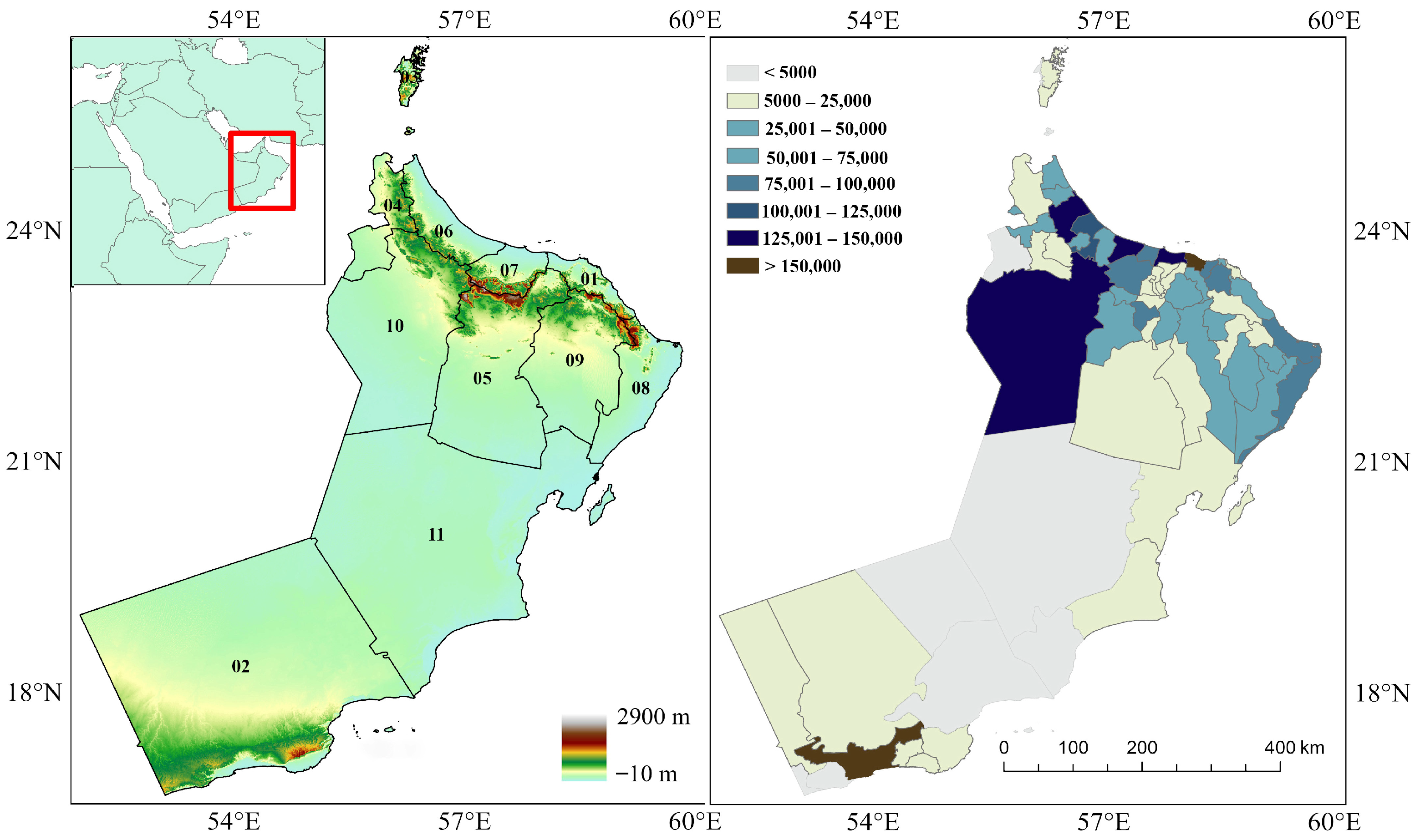
Oman is located at the sub-tropical belt of the world, covering 309,500 km2 and facing three water bodies: The Arabian Gulf in the northwest, the Sea of Oman in the north, and the Arabian Sea in the south and east (Figure 1). It has hot summers, where air temperatures attain about 40 °C, and the winter temperatures rarely fall below 10 °C [15]. Annual relative humidity (%RH) exceed 42% along coastal areas, whereas the other inland desert regions experience lower annual relative humidity, generally below 21% [18]. The region is also arid with annual precipitation less than 100 mm except for the mountains in the Dhofar region in the south, where precipitation exceeds 250 mm/year [19].
Northern Oman is mainly occupied by rugged mountainous ranges called Al-Hajar Mountains, running parallel to the Sea of Oman, and bordering a coastal plain known as the Al-Batinah Plain. The remaining parts of the country are expanses covered by plateau lands, sand dunes, and coastal plains. Regions of low elevations (<100 m) (asl) account for about 17% of the country, 36% of the landmass is above 250 m, and the remaining landmass (47%) has an elevation ranging between 100 and 250 m [18].
Administratively, Oman is divided into 11 governorates, including 63 districts called Wilayat. Names of these governorates are given in Figure 1. The capital of Oman is Muscat, and major cities are Sohar, Salalah, Nizwa, Ibri, Rustaq, and Sur. The largest governorate is Dhofar in the south (#2 in Figure 1), occupying almost one third of the total country’s area, while the smallest governorate is Musandam (#3 in Figure 1) in the north with a total area of about 1700 km2. The total population of Oman exceeded 5.2 million in 2024, with 57% nationals and the remaining (43%) are expatriates [17]. The majority of the country lives in the Muscat Governorate (29%), Al-Batinah North Governorate (18%), Ad-Dakhliah Governorate (11%), Al-Batinah South Governorate (11%), and Dhofar Governorate (10%). The majority of the expatriate population (68%) is mostly distributed in three governorates: Muscat (about 1 million), the Al-Batinah North Governorate (about 330,000), and the Dhofar Governorate (about 300,000). The expatriate population significantly fosters the country’s economic and infrastructure development.

2.2. Dataset

Temperatures and relative humidity (%RH) data were downloaded from the European Center for Medium-Range Weather Forecasts (ECMWF), through the Copernicus Climate Change Service (C3S) Climate Data Store (CDS). These datasets are part of the ERA5 reanalysis, the latest (fifth generation) global atmospheric reanalysis products [20]. For heat index (HI) calculations, the skin temperature instead of the standard air temperature data was selected because the skin temperatures are influenced by solar radiation, wind speed, surface soil moisture, and land cover type, which are good surrogates for outdoor sun-exposed conditions. In contrast, air temperatures are usually measured at shaded and standard heights. In addition, the traditional air temperature data are provided by sparse ground meteorological stations, while skin temperatures are spatially continuous, gridded datasets reflecting the diverse landscape and topographic variations. Skin temperature data were acquired for the last five years (2020–2024) as monthly averaged reanalysis in a 9 km spatial resolution dataset. Relative humidity data, known as AgERA5, are daily records acquired at 0.1° spatial resolution for the same period. ERA5 datasets have been widely used for climatic assessment [14,15,16,17,18,19,20,21]. Solar radiation (kJ m−2 day−1) and surface wind speed (m s−1) data were downloaded as gridded datasets from the WorldClim, V2.1 platform [22]. Monthly average raster images were provided in 10 min spatial resolution. These data represent records of 22 years acquired between 1979 and 2000. WorldClim gridded data have also been used in climatic applications [23]. The topography of the region was extracted from digital elevation models (DEM) presented in 30 m spatial resolution and downloaded from the Application for Extracting and Exploring Analysis-Ready Samples, USA (https://appeears.earthdatacloud.nasa.gov (accessed on 5 February 2026)) center. All the data have originally been georeferenced to the Geographical Coordinate System (GCS). Annual trends and seasonal anomalies of heatwaves for 85 years (1940–2024) were downloaded from the Thermal Trace portal of the Copernicus Climate Change Services (C3S) (https://thermaltrace.climate.copernicus.eu/ (accessed on 10 December 2025)) for investigating the change in decadal thermal conditions in terms of the number of days where temperatures exceeded 38 °C and 46 °C at the seasonal and annual levels.

2.3. Analysis

1—All raster datasets were converted to the American Standard Code for Information Interchange (ASCII) format to encode the digital number of each pixel to the corresponding numerical value, while keeping the geographic location of this pixel. ASCII format facilitates subsequent pixel-wise numerical analysis outside a standard GIS environment, particularly if complex equations are applied to multiple factors at the same time without affecting the precision or resolution of the data. The resulting tabulated data were used to reserve the dataset for subsequent analysis for HI. Furthermore, these ASCII files were used to provide consistent seasonal thematic maps for skin temperatures, relative humidity, solar radiation, elevation, and wind speed for Oman. 2—The seasonal HI in Oman was produced using the following equations proposed by the NWS [13], incorporating temperatures (°F) and relative humidity (%RH) records into these equations.
In conditions where the temperatures (T) are above 79 °F and the relative humidity (%RH) values are above 13%, the following equation is used to calculate the HSI:
HSI = −42.379 + 2.04901523 × T + 10.14333127 × RH − 0.22475541 × T × RH − 0.00683783 × T2 − 0.05481717 × RH2 + 0.00122874 × T2 × RH + 0.00085282 × T × RH2 − 0.00000199 × T2 × RH2
For conditions where the temperatures are between 80 and 112 °F, and the relative humidity values are less than 13%, the following adjustment is subtracted from the HSI:
Adjs = ([13 − RH]/4) × ([17 − |T − 95|]/17)0.5
3—Seasonal HI maps were generated using the ArcGIS Pro, V 3.40 Software package by kriging interpolation technique to produce spatially continuous surfaces from gridded HI values. As the HI analysis exhibits spatial dependence, this algorithm is one of the most suitable methods operated by geoscientists and geographers for geospatial analysis and climate studies, and it is well-suited for environmental variables [24]. Additionally, it facilitates the assessment of HI values across different geographical locations, providing a comprehensive visual illustration and unbiased estimates of these variables.
4—The resulting maps were classified into four HI categories (Very Warm, Hot, Very Hot, and Extremely Hot). 5—The HI maps were overlaid at the governorate-level in order to investigate the seasonal spatial variations in HI at both the national and governmental levels. 6—The population exposure to high levels of heat index was determined using the “Zonal Statistics” tools in the ArcGIS Pro, V. 3.40 package by correlating the total population of each governorate with the HI categories in this governorate. The vector map of population was converted to a raster dataset. The total number of people was extracted for HI classes using the raster population map and the seasonal maps.
7—In order to investigate the influence of environmental factors, such as the topography, solar radiation, and wind speed, upon the seasonal HI pattern, a statistical analysis was conducted. The correlation coefficient was determined by the linear regression analysis using the Mann–Kendall test, allowing for exploring the correlation between these specific environmental variables and the outdoor seasonal HI, and the statistical significance of the regression slope was evaluated at the 95% confidence level following the standard statistical procedures [25]. Moreover, 8—the chronological profile of the heat waves for the period (1940–2024) was plotted to delineate a future trend of HI, considering the number of days above 38 °C and 46 °C during all seasons and as annual profiles. Similarly, the statistical significance was calculated for the annual trend, the annual number of days, and the seasonal number of days of heat waves above 38 °C and 46 °C for Oman during the period from 1940 to 2024.

3. Results

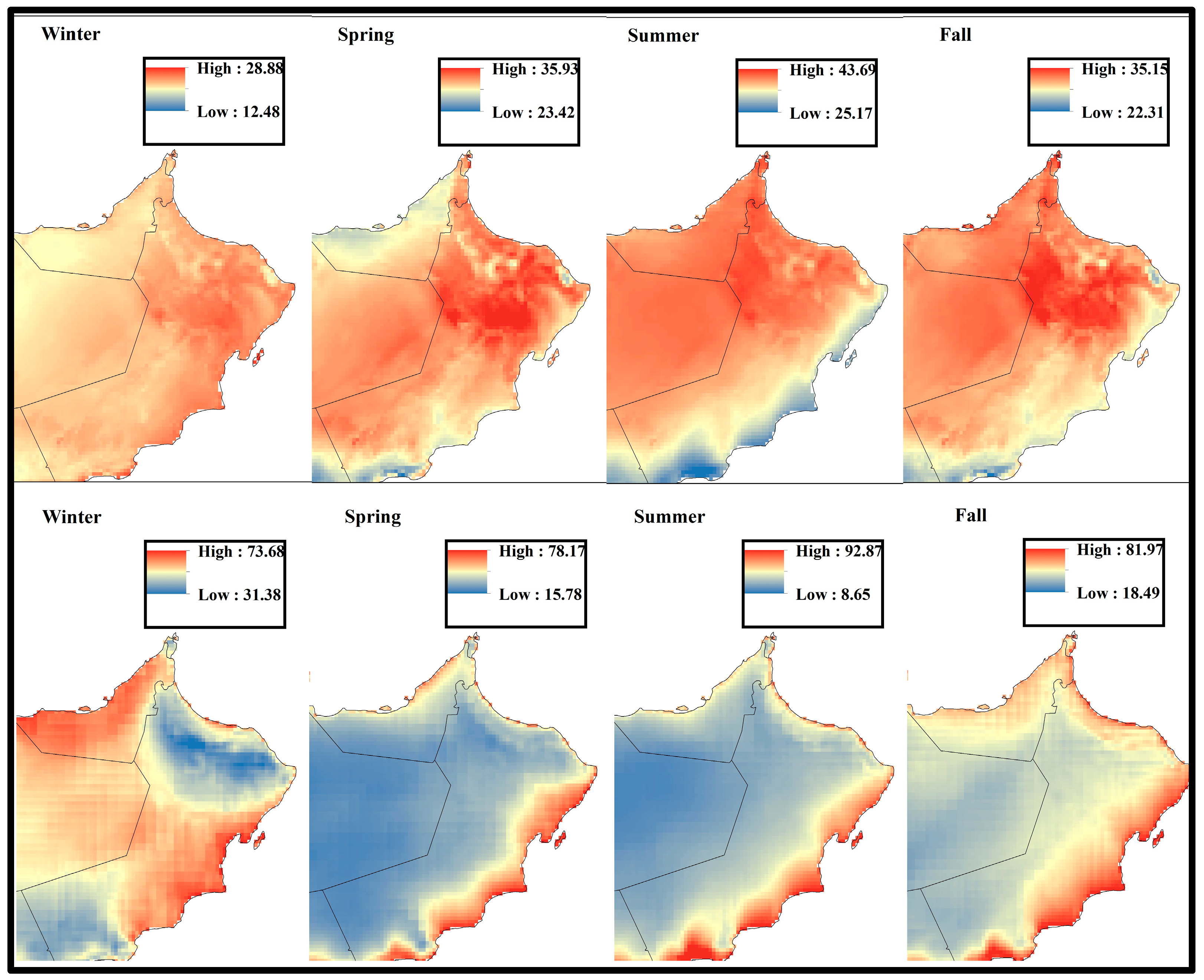
Figure 2 (top) shows distinct seasonal variations in skin surface temperatures over Oman. Generally, the temperatures are hot with summers exhibiting extremely high temperatures, reaching up to 43 °C, mostly in interior regions. Conversely, minimum temperatures are recorded during winters, mostly at the highlands of the Al-Hajar Mountains in the north. Average winter skin temperatures fall to 12.4 °C across the coastal zone at Salalah in the south. Spring and fall temperatures reveal comparable spatial distribution and records, approaching 35 °C. The spatial pattern of the skin temperatures reflects the variations in the physiography of the region, where interior inland regions of bare rocks, paved desert, or sandy terrains without vegetation cover exhibit the maximum skin temperatures. In contrast, coastal regions under the maritime influence and other elevated mountains show the minimum skin temperatures of the country.
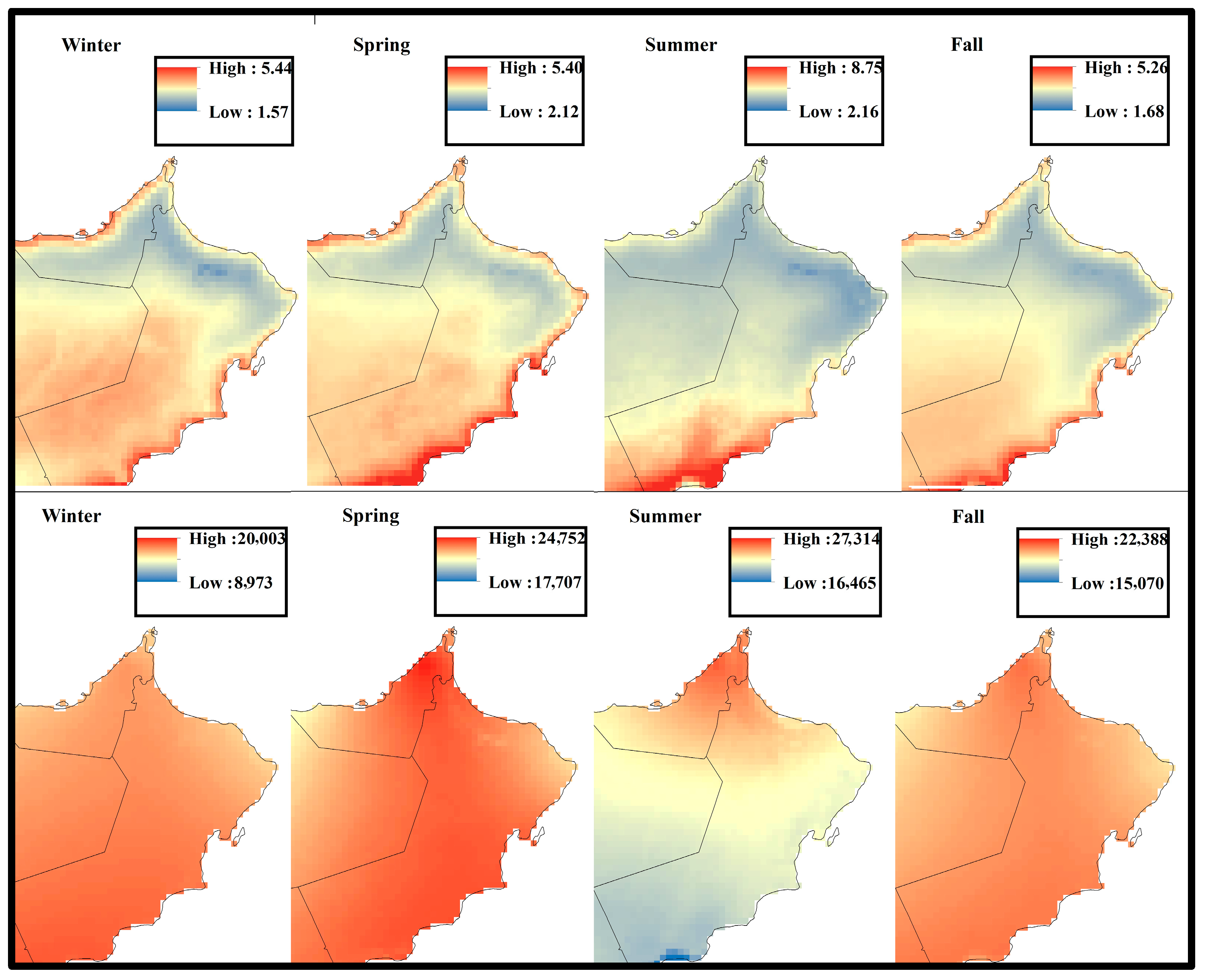
Due to their proximity to major water bodies, coastal areas generally experience high relative humidity during all seasons compared to inland desert regions (Figure 2, bottom). The highest seasonal relative humidity is observed along the coasts of Oman, with maximum values during summer (>90%). Considerably higher values of %RH (up to 73%) are also observed during winter. Conversely, seasonal %RH decreases significantly in inland deserts with values of less than 9% during summer and 15% during spring. Interestingly, the northern and southern parts of Oman reveal a dipole spatial pattern of low %RH during winter, while other seasons reveal spatial coincidence of high %RH along the coasts and lower values in interior landmasses.
The distribution of the seasonal wind speed (Figure 3 top) demonstrates a considerably strong wind pattern (>8 m/s), particularly during summer in the southern region of Oman under the influence of the monsoons in the Arabian Sea. During other seasons, coastal areas along the Sea of Oman and the Arabian Sea experience relatively higher wind speeds than inland regions. Lowest wind speeds are recorded along the mountainous regions of Oman and along the vast expanses of the deserts in the north. On the other hand, seasonal solar radiation (Figure 3, bottom) reveals high intensity in Oman for the majority of seasons. However, the maximum solar intensity approaches more than 27 MJ m−1 day−1 in summer, mostly in northern Oman. The minimum values are observed during winter.
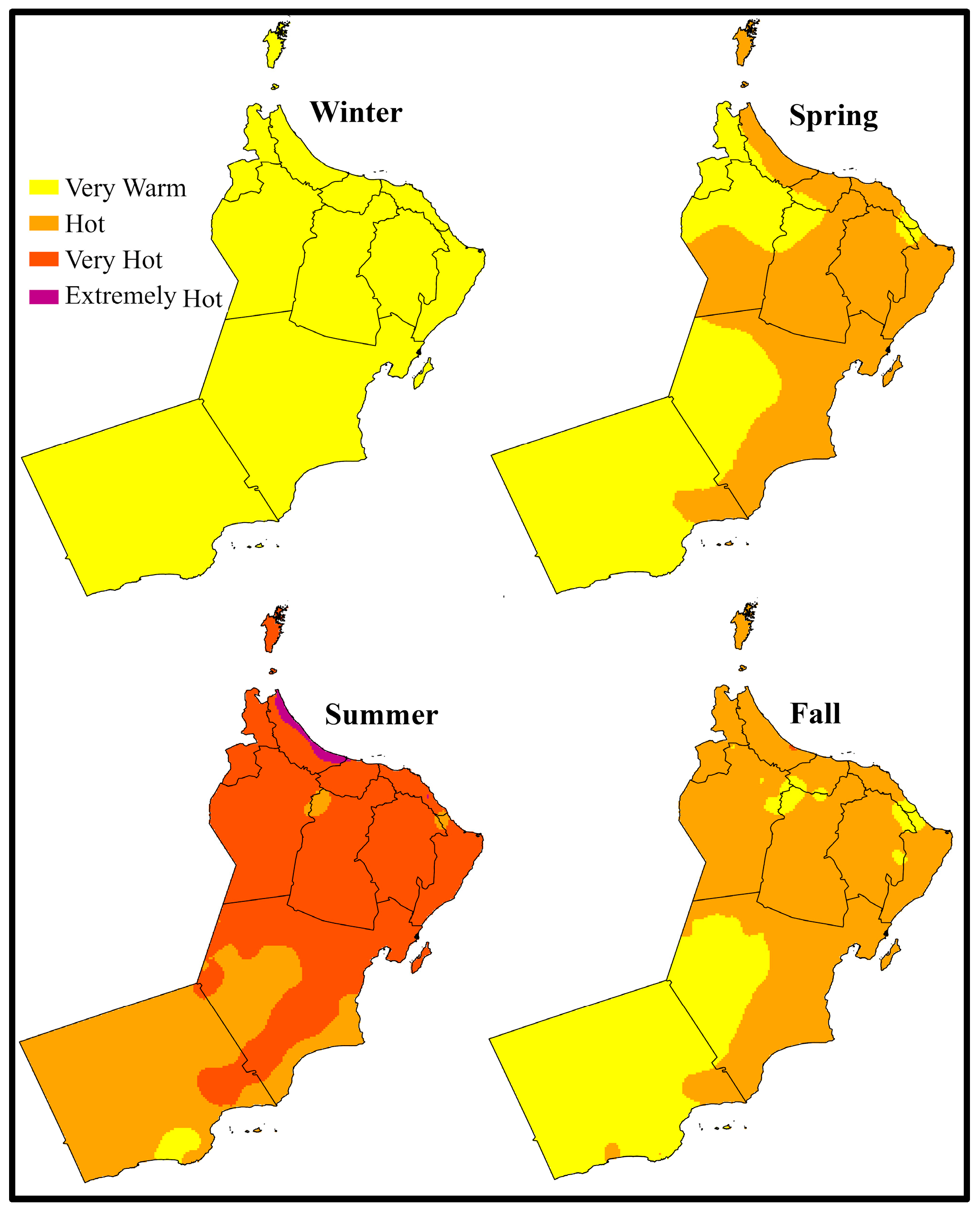
The seasonal calculated heat index (HI) demonstrates “Very Warm” conditions (80–90 °F or 27–32 °C) during winter for all regions of Oman (Figure 4). In spring, higher HI values with “Hot” conditions (90–103 °F or 32–39 °C) prevail in considerable areas (52% of the country). Some governorates, such as Al-Burayimi, Adh Dhahirah, Al-Wusta, and Dhofar, have totally or partially “Very Warm” conditions. In summer, the entire country turns into considerably harsh thermal conditions with “Very Hot” or dangerous HI category (103–124 °F or 39–51 °C) occurring at 60% of the total area, while the “Hot” category occupies 39% of the country. Remarkably, a coastal strip in the Al-Batinah North Governorate of about 100 km (0.7% of the total area) experiences extraordinary hot conditions with “Extremely Hot” or extremely dangerous HI category, where HI values exceed 125 °F (52 °C). Interestingly, a localized small pocket in Salalah at Dhofar Governorate in the south reveals cooler HI, while highlands in the Al-Hajar Mountains in the north reveal less HI values in summer than the surroundings. During fall, the HI decreases again, but it is distinguished by “Hot” conditions for the entire northern part of the country (58%). In addition, a very small location is observed to have “Very Hot” or dangerous HI category at the Al-Batinah North Governorate (0.1%). Generally, the southern section of Oman exhibits relatively lower HI than the middle and northern sections for all seasons.
According to the World Health Organization [26], rising heat stress places increasing strain on humans, ranging from thermal discomfort and reduced work capacity to elevated risks of heat exhaustion, strokes, and excess mortality. The public health relevance of these categories is further amplified when extreme HI conditions coincide with high population exposure. In this context, localized extremes observed in regions, such as Al-Batinah North, are of particular concern due to the high temperatures and %RH and the presence of densely populated settlements, leading to significant heat-related issues.
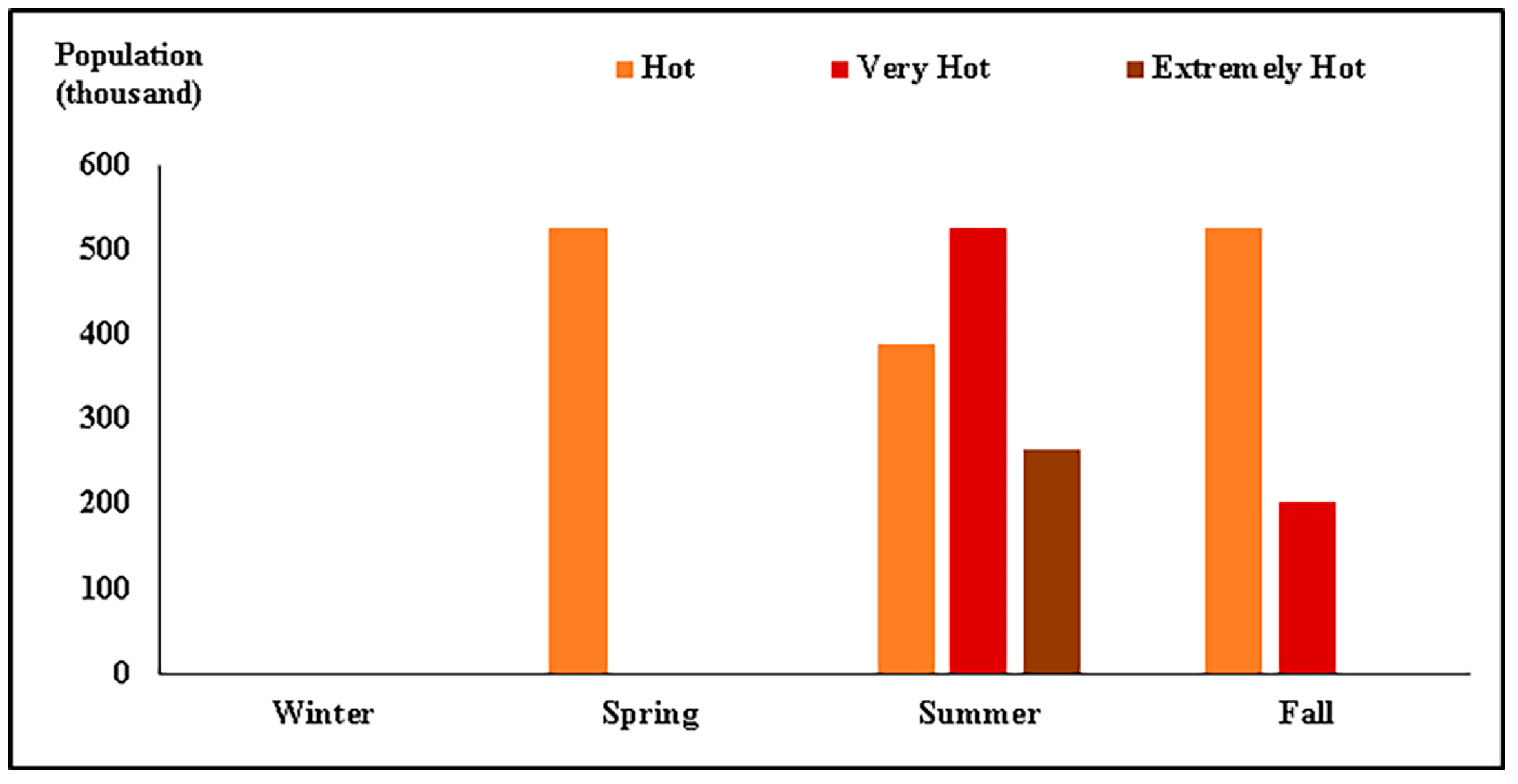
Zonal statistics (Figure 5) show that during spring, about half a million people are susceptible to “hot” conditions. In summer, the number becomes 390,000 persons compared to 524,000 persons exposed to “very hot” conditions, mostly occurring in northern Oman. The “extremely dangerous” hot category affects 264,000 persons, mostly in the Al-Batinah North Governorate. During the fall, about half a million people are exposed to “hot” conditions, while about 200,000 people live in very hot conditions, particularly in Al-Batinah North.
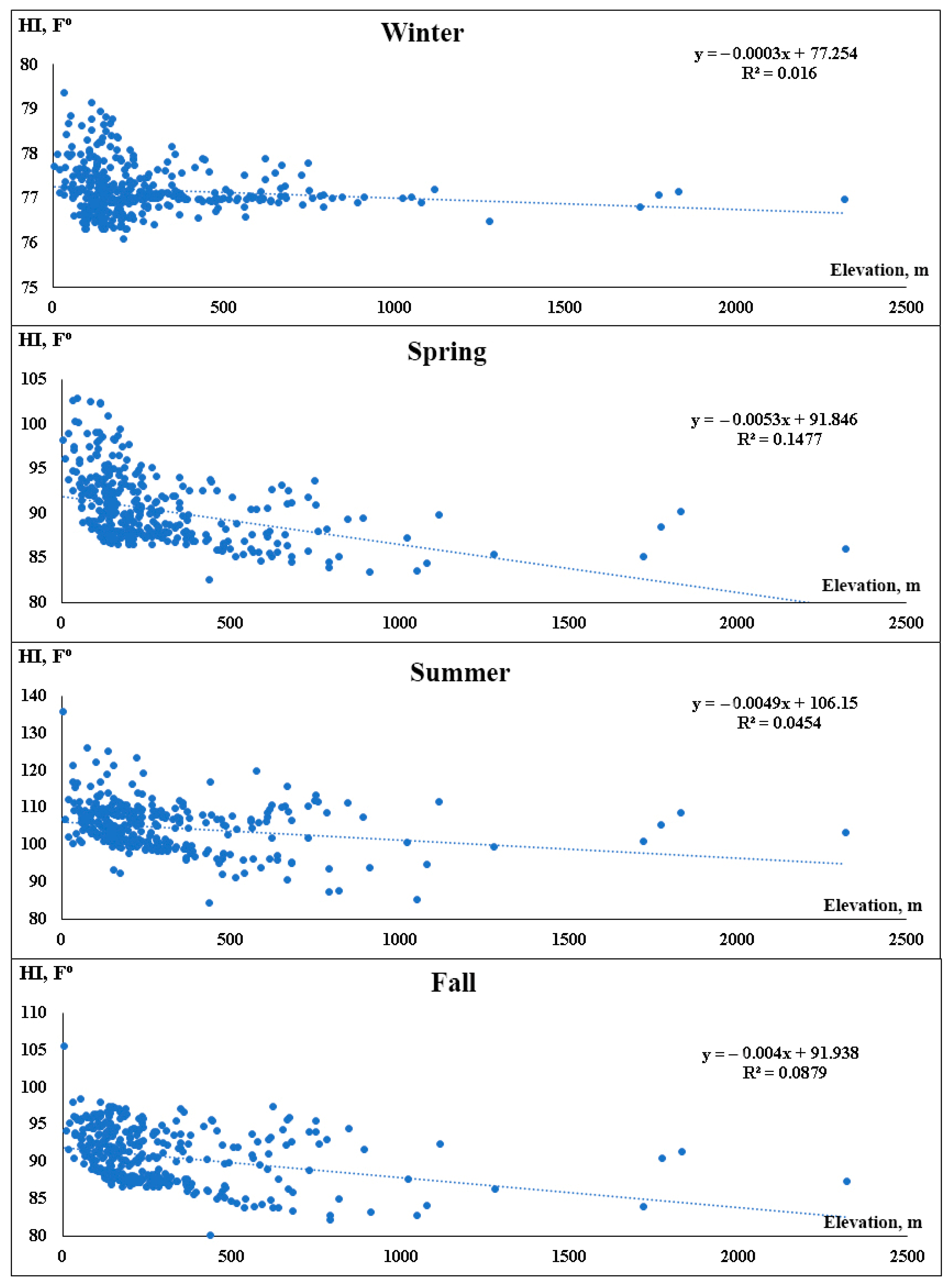
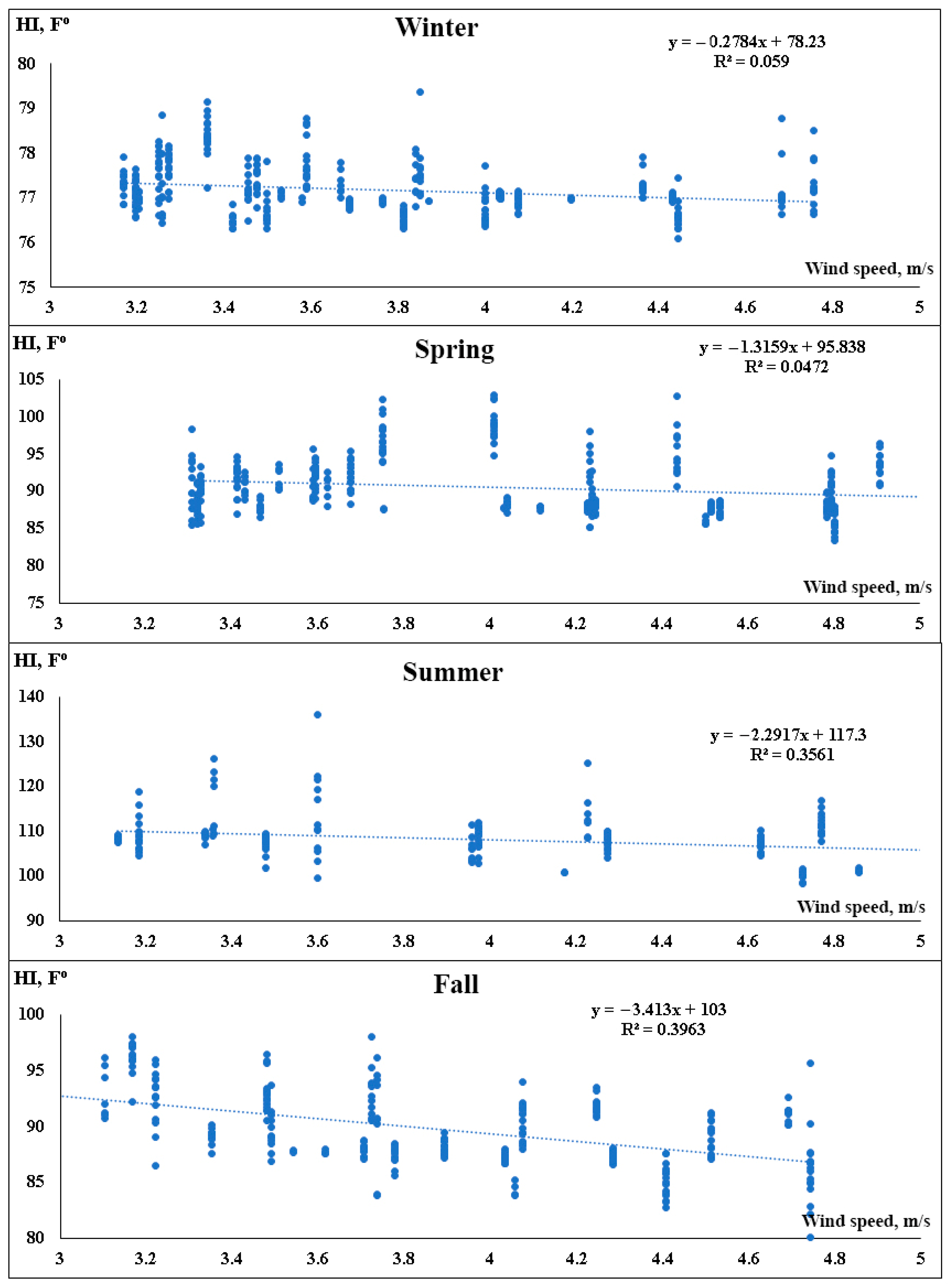
Figure 6, Figure 7 and Figure 8 illustrate the statistical relationships between the seasonal HI and the key environmental factors influencing their distribution, notably the topography, wind speed, and solar intensity. It is noteworthy that the topography and wind speed exert a negative relationship with the HI for all seasons. For topographic influence, although the correlation with HI is generally low, the strongest influence is observed in spring, because during transition seasons, atmospheric stability becomes generally high, giving greater influence of topography upon HI. Notably, both summer and fall have a greater influence of wind on HI than winter and spring, because the monsoons predominate during these seasons, which alleviates the impact of HI during these windy periods.
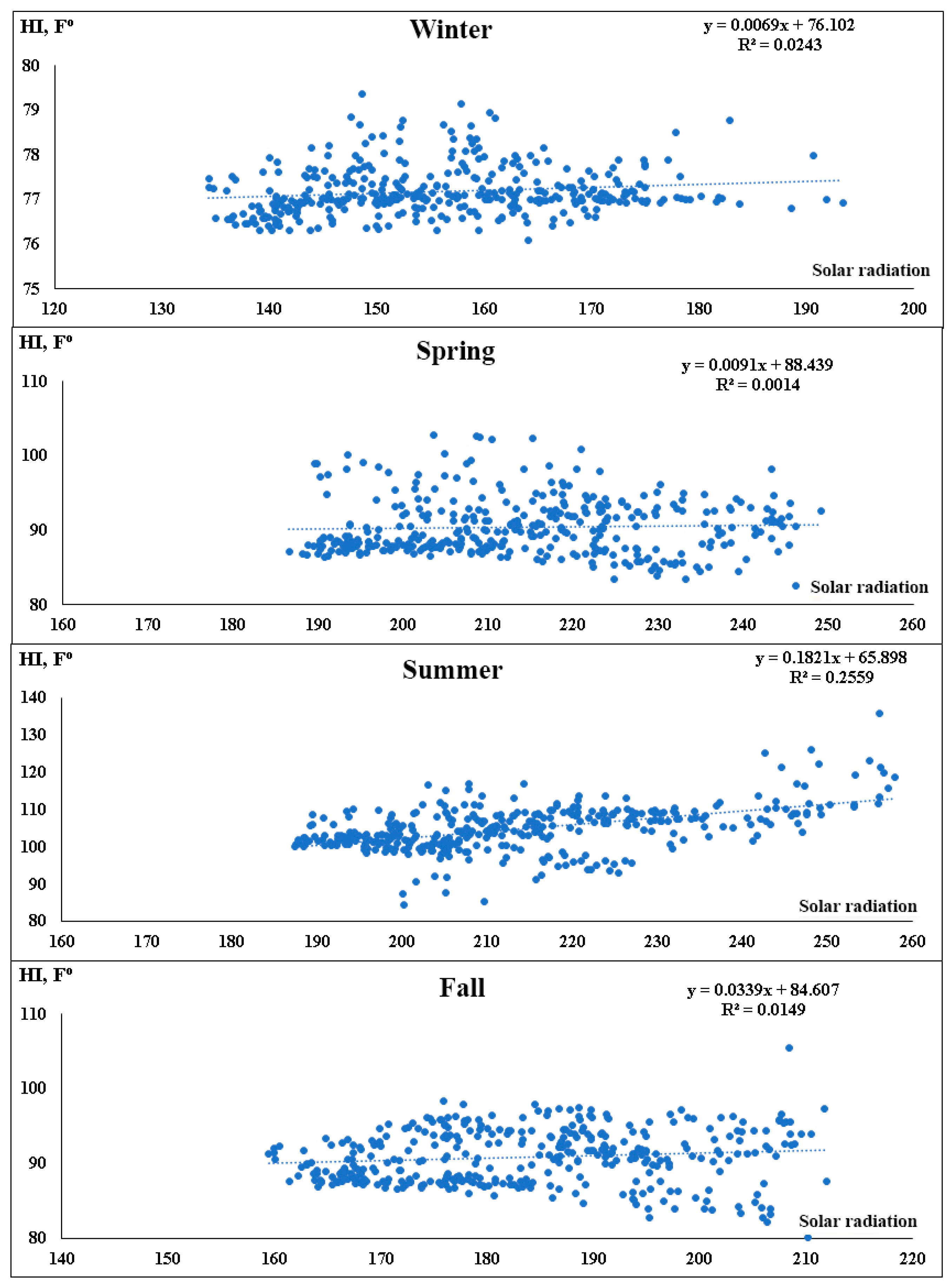
In contrast to topography and wind influence on the seasonal distribution of HI, solar radiation exerts a positive influence on the heat stress for all seasons. The maximum influence of solar radiation is observed during summer, because at this time solar energy has more control and influence on skin temperatures and evaporation conditions than in other seasons.
Interestingly, the highest solar intensity in Oman, which occurs during summer in Al-Batinah North Governorate, is synchronized with the maximum HI in the same location. Meanwhile, the higher wind speed was observed to dominate during summer at the southern parts of Oman, particularly in Salalah. The significance test reveals that HI has significant correlations at 95% (p < 0.05) with all parameters for all seasons. The only exception was for the spring solar intensity with the HI during spring, which showed insignificant correlation.
Heat stress across Oman shows clear seasonal and spatial variability controlled by radiative, atmospheric, and geographic factors. In spring, the HI is strongly influenced mainly by topography, while the summer HI is mainly influenced by solar radiation. On the other hand, fall and winter seasons exhibit reduced HI and weaker HI-environmental relationships.
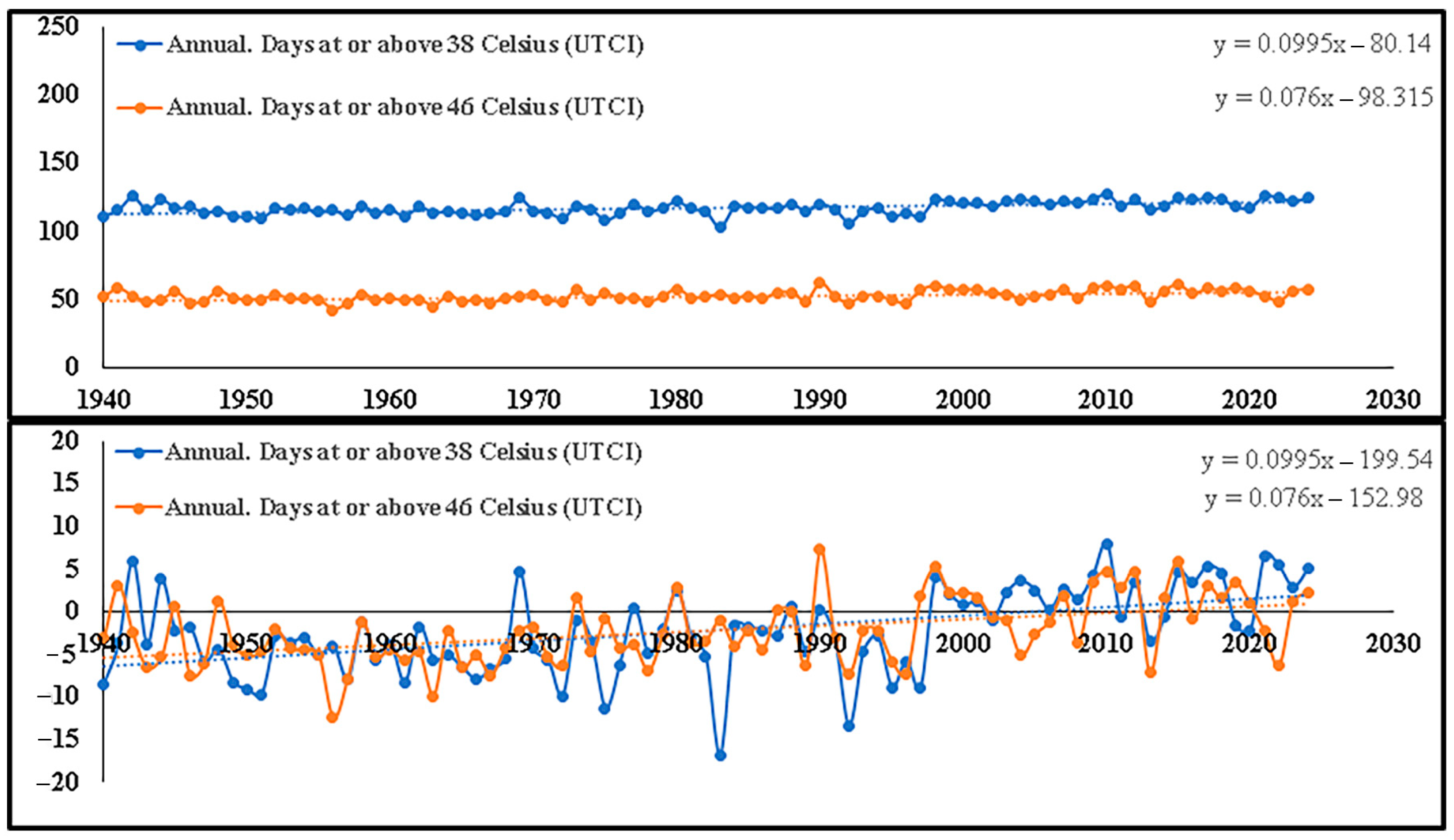
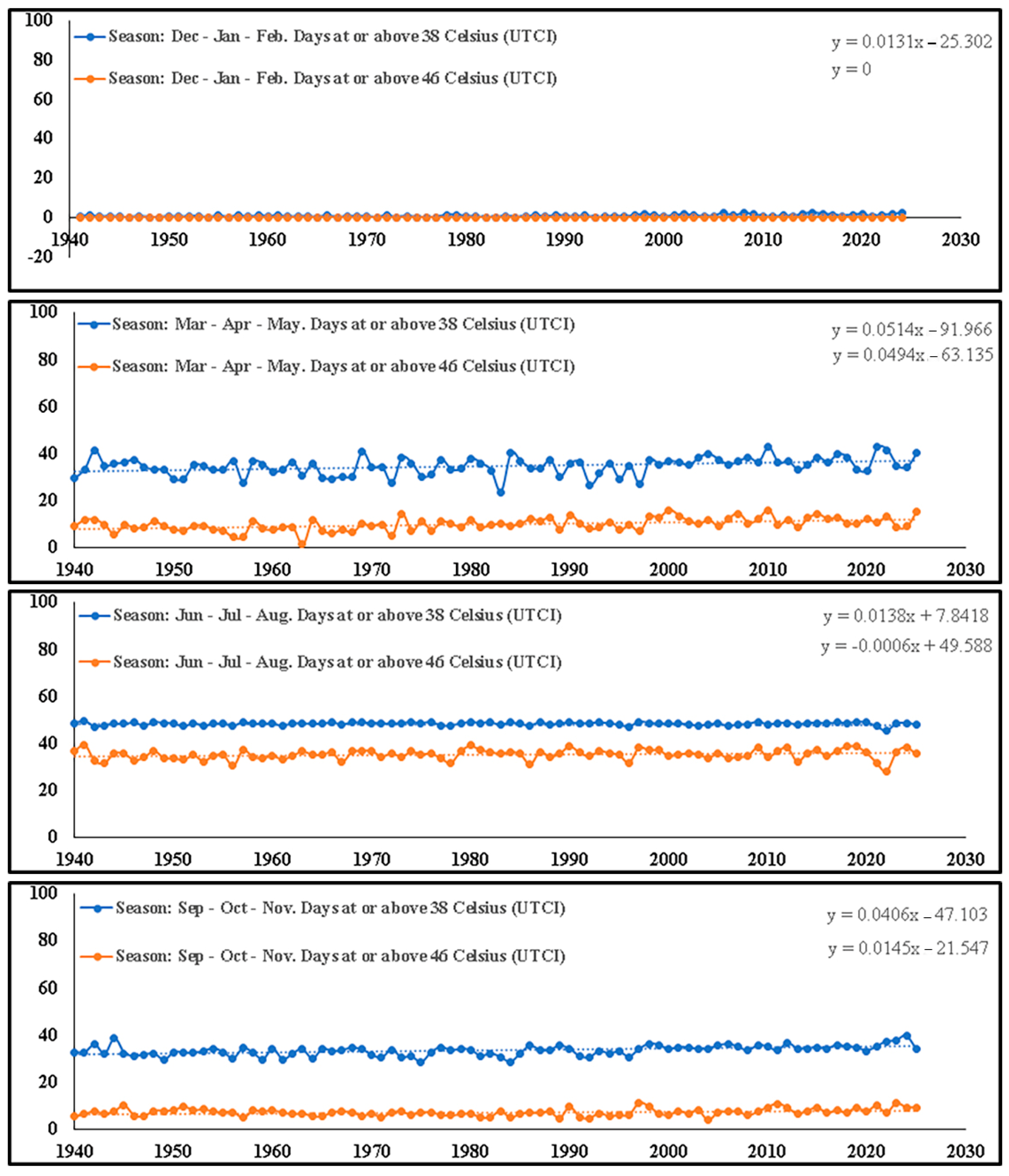
Figure 9 shows the annual trend of the Universal Thermal Climate Index (UTCI), which is a measure combining temperature, %RH, wind, sunshine, and human physiological response (https://thermaltrace.climate.copernicus.eu/ (accessed on 10 December 2025)). It is obvious that the decadal trend is positive, revealing an increase in the number of days above 38 °C and 46 °C (Figure 9 top). The slope of the trend indicates that between 1940 and 2024, the total number of days where temperatures exceeded 38 °C was 9.9 days, compared to 7.6 days where temperatures exceeded 46 °C. It is also clear that from Figure 9 (bottom), the number of anomaly days above 38 °C and 46 °C is getting above the mean since 1997, while before that, the majority of years had anomaly temperatures below the mean. This trend points to a warming trend in the climate of Oman, which will impact the intensity of heat stress. Figure 10 illustrates the seasonal trend of heatwaves. The slope reveals that the number of days in which temperatures above 38 °C is maximum for spring and fall, while minimum values are seen in winter. On the other hand, the maximum number of days above 46 °C is recorded for the spring season. The p-values were found to be statistically significant (p < 0.05) for all trends, except for summer, where the number of days of temperatures above 38 °C and 46 °C were not significant (p > 0.05).

4. Discussion

Heat stress expressed as HI is an environmental metric used to characterize human feelings of combining temperatures and %RH. Therefore, it is not only how warm it is but also how humid the air is. Oman reveals considerable spatial variations in temperatures and %RH driven by differences in latitude, elevation, incoming solar radiation, and proximity to water bodies [27,28,29]. Winter is the only season when the country is under favorable thermal conditions, making outdoor occupations most suitable. During spring, the entire northern part of Oman is exposed to hot conditions, except for limited locations of the desert region near the UAE, due to the low levels of %RH. Thermal stress becomes severe during summer, since more than 98% of the country is exposed to hot, very hot, and extremely hot conditions, except for a small region in Salalah. The highest vulnerable zone (0.7% of the country’s area) is located along the coastal strip in the Al-Batinah North Governorate, where the apparent heat reaches 125 °F (52 °C). This extreme heat affects more than 260,000 people. Prolonged exposure to extreme heat stress is associated with an increased risk of heatstroke, dehydration, cardiovascular stress, and excess mortality, particularly among vulnerable populations such as the elderly, children, and outdoor workers [26]. Notably, this region constitutes the major cultivated region of all Oman [30]. In addition, high HI values could cause crop heat stress and increase irrigation demand.
Summer is also characterized by the widespread dominance of very hot conditions in a considerable area of the country (59%). Living and working in indoor environments are tolerable and manageable, due to the availability of energy resources from oil and gas for air-conditioning [31]. In contrast, outdoor work during this season can pose remarkable thermal heat risk issues, confirming El-Kenawy et al.’s [32] observation of intense summer heat hotspots across most of the GCC capitals, where lack of vegetation cover, drought, and clear sky are the main environmental factors in this region [33,34]. During the fall, the heat conditions significantly dropped again for the majority of the country. Northern Oman generally continues to experience hot conditions, while southern Oman tends to be less hot, i.e., very warm conditions. It is worth noting that southern Oman, particularly the Salalah region, reveals a comfortable thermal regime during both summers and falls. Ideally, Salalah is a major destination for internal and international visitors enjoying the misty and cool climate, which turns the region into lush green forests forced by monsoonal winds from the Arabian Sea during summer [35].
The observed seasonal variability of the HI across Oman reveals a positive relationship with solar intensity and negative relationships with both wind speed and topography. Northern coastal regions such as Al-Batina North, characterized by low elevation and direct exposure to the Sea of Oman, experience persistently high HI values due to the combined effects of intense heating and high %RH from adjacent water bodies. In southern Oman, particularly at Salalah, the influence of the southwest monsoon during summer introduces cooler marine air, which moderates temperatures and limits extreme HI. These interacting geographic and climatic factors explain the spatial regional differences in heat stress across the country. Moreover, regions of high elevation in the Al-Hajar and Salalah Mountains, tend to face relatively lower HI compared to the hotter surrounding terrains.
Despite GCC labor regulations prohibiting outdoor work during midday hours, particularly from June to August or even September, cases of injuries and heat-related mortality due to heat stress have been reported [36]. For instance, Hajat et al. [37] reported an annual heat related deaths in the UAE to reach 78 compared to 19 cases in Oman. In addition, temperatures can remain extremely high even during non-restricted hours [38]. Although Oman has the lowest number of heat-related mortality in the MENA region, strengthening existing protective polices and implementing strict guidelines are crucial to ensure that workers in construction (85% of workers are expatriates) and agriculture (60% of workers are expatriates) sectors obtain adequate breaks during heat stress times. In a regional context, the relatively high HI across the GCC countries underscores that the observed HI represents a broader regional-wide occupational health challenge and supports the need for resilient workforce planning, particularly during months of high HI. Moreover, proper urban planning is critical in lowering heat stress issues in the GCC region [39].
Although variations in solar radiation are known to influence the Earth’s climate system, it is important to emphasize that recent global warming is primarily attributed to greenhouse gas emissions rather than the change in solar radiation [40]. This suggests that human-induced warming is likely to have a stronger influence on regional heat stress than the natural factors, particularly considering that Oman is among the largest contributors to greenhouse gas emissions worldwide [19]. In this context, Hereher [15] reported a warming trend in the GCC region ranging from 1.5 °C/decade to 2.0 °C/decade. Furthermore, the intensity and frequency of heat waves have also considerably increased, particularly since the 1990s, as illustrated in Figure 9 and supported by previous studies [41,42,43]. Therefore, climate change is likely to substantially exacerbate the extent of the heat stress in Oman. Although heat stress is currently evident and pronounced in summer and fall, the frequency of heat waves in terms of the number of days above 38 °C and 46 °C is maximum during spring. This indicates that heat issues will extend to include spring, as driven by the trend of future thermal stresses.

5. Conclusions

The present study focused on producing seasonal heat index maps for Oman, calculated using the NWS methodology based on monthly averaged skin temperatures and relative humidity data. Seasonal maps reveal severe thermal conditions during summers, with apparent heat reaching up to 125 °F (52 °C) in some northern parts of Oman. More than 250,000 people are exposed to the highest levels of heat stress. Oman is also exposed to high levels of HI during the fall. The spatial pattern of seasonal HI in Oman is influenced by climatic, topographic, and geographic drivers. The long coastal face sustains moisture most of the year. Although indoor environments are favorable for living and work, due to air conditioning, outdoor occupations are highly vulnerable during the summer. The majority of outdoor work in this region occurs in the construction and agricultural sectors, with the majority of employees being expatriates, who are most prone to thermal issues, particularly in the HI seasons. Results also showed that the frequency of heat waves and anomalous temperatures is getting higher than average, pushing the region toward more heat stress, particularly in spring and fall seasons.
It is recommended to limit outdoor work hours for regions of high HI, actively enforcing regulations mandating companies to adopt safety precautions during times of heat stress, and to involve HI considerations in future urban plans in Oman. The study has the following limitations that should be considered when interpreting the results. Although the ERA5 reanalysis datasets are widely used worldwide, they may not capture microclimatic variability. In addition, the study focused on the climatic and geographic drivers of heat stress and does not incorporate socio-economic factors and land use characteristics. Future research could address these limitations to support more localized risk assessment.

Funding

No funding was received for this research.

Institutional Review Board Statement

Not applicable.

Informed Consent Statement

Not applicable.

Data Availability Statement

The original contributions presented in this study are included in the article. Further inquiries can be directed to the corresponding author.

Conflicts of Interest

The author declares no conflicts of interest.

References

  1. Beniston, M. The 2003 heat wave in Europe: A shape of things to come? An analysis based on Swiss climatological data and model simulations. Geophys. Res. Lett. 2004, 31, L02202. [Google Scholar] [CrossRef]
  2. Pirard, P.; Vandentorren, S.; Pascal, M.; Laaidi, K.; Le Tertre, A.; Cassadou, S.; Ledrans, M. Summary of the mortality impact assessment of the 2003 heat wave in France. Eurosurveillance 2005, 10, 153–156. [Google Scholar] [CrossRef]
  3. Hansen, J.; Ruedy, R.; Sato, M.; Lo, K. Global surface temperature change. Rev. Geophys. 2010, 48, RG4004. [Google Scholar] [CrossRef]
  4. Trenberth, K.E.; Fasullo, J.T. Climate extremes and climate change: The Russian heat wave and other climate extremes of 2010. J. Geophys. Res. Atmos. 2012, 117, D17103. [Google Scholar] [CrossRef]
  5. Wehner, M.; Stone, D.; Krishnan, H.; AchutaRao, K.; Castillo, F. The Deadly Combination of Heat and Humidity in India and Pakistan in Summer 2015. Bull. Am. Meteorol. Soc. 2016, 97, S81–S86. [Google Scholar] [CrossRef]
  6. Zhang, K.; Chen, T.-H.; Begley, C.E. Impact of the 2011 heat wave on mortality and emergency department visits in Houston, Texas. Environ. Health 2015, 14, 11. [Google Scholar] [CrossRef]
  7. Anderson, G.B.; Bell, M.L.; Peng, R.D. Methods to calculate the heat index as an exposure metric in environmental health research. Environ. Health Perspect. 2013, 121, 1111–1119. [Google Scholar] [CrossRef]
  8. Kovats, S.; Hajat, S. Heat stress and public health: A critical review. Annu. Rev. Public Health 2008, 29, 41–55. [Google Scholar] [CrossRef] [PubMed]
  9. Sylla, M.B.; Faye, A.; Giorgi, F.; Diedhiou, A.; Kunstmann, H. Projected heat stress under 1.5 C and 2 C global warming scenarios creates unprecedented discomfort for humans in West Africa. Earth’s Future 2018, 6, 1029–1044. [Google Scholar] [CrossRef]
  10. Ghalhari, G.; Dehghan, S.F.; Shakeri, F.; Ghanadzadeh, M.J.; Asghari, M. Assessing the monthly changes of heat stress indices in outdoor environment during a 15-year period: Case of study in a dry and warm climate. Urban Clim. 2020, 31, 100538. [Google Scholar] [CrossRef]
  11. National Weather Service, NWS. Meteorological Conversions and Calculations: Heat Index Calculator. 2011. Available online: http://www.hpc.ncep.noaa.gov/html/heatindex (accessed on 24 December 2023).
  12. McInnes, A.; Akram, M.; MacFarlane, M.; Keegel, T.; Sim, R.; Smith, P. Association between high ambient temperature and acute work-related injury: A case-crossover analysis using workers’ compensation claims data. Scand. J. Work Environ. Health 2017, 43, 86–94. [Google Scholar] [CrossRef]
  13. Hoang, T.L.T.; Dao, H.N.; Cu, P.T.; Tran, V.T.T.; Tong, T.P.; Hoang, S.T.; Vuong, V.V.; Nguyen, T.N. Assessing heat index changes in the context of climate change: A case study of Hanoi (Vietnam). Front. Earth Sci. 2022, 10, 897601. [Google Scholar] [CrossRef]
  14. Wang, Y.-R.; Hessen, D.O.; Samset, B.H.; Stordal, F. Evaluating global and regional land warming trends in the past decades with both MODIS and ERA5-Land land surface temperature data. Remote. Sens. Environ. 2022, 280, 113181. [Google Scholar] [CrossRef]
  15. Hereher, M.E. Climate Change during the Third Millennium—The Gulf Cooperation Council Countries. Sustainability 2022, 14, 14181. [Google Scholar] [CrossRef]
  16. Saleh, M.S.; Alalouch, C. Towards Sustainable Construction in Oman: Challenges & Opportunities. Procedia Eng. 2015, 118, 177–184. [Google Scholar] [CrossRef]
  17. The National Center for Statistics and Information of Oman. The Statistical Year Book of Oman for 2024. 2025. Sultanate of Oman. Available online: https://www.ncsi.gov.om (accessed on 15 December 2025).
  18. Hereher, M.E. Integrated Assessment for Optimal Urban Development in Oman: A Multi-Criteria Decision Analysis of Physical and Socioeconomic Factors. Sustainability 2026, 18, 60. [Google Scholar] [CrossRef]
  19. Al-Maamary, H.M.; Kazem, H.A.; Chaichan, M.T. Climate change: The game changer in the Gulf Cooperation Council Region. Renew. Sustain. Energy Rev. 2017, 76, 555–576. [Google Scholar] [CrossRef]
  20. Muñoz, J.; Dutra, E.; Agustí, A.; Albergel, C.; Arduini, G.; Balsamo, G.; Boussetta, S.; Choulga, M.; Harrigan, S.; Hersbach, H. ERA5-Land: A state-of-the-art global reanalysis dataset for land applications. Earth Syst. Sci. Data Discuss. 2021, 13, 4349–4383. [Google Scholar] [CrossRef]
  21. Crowhurst, D.; Dadson, S.; Peng, J.; Washington, R. Contrasting controls on Congo Basin evaporation at the two rainfall peaks. Clim. Dyn. 2021, 56, 1609–1624. [Google Scholar] [CrossRef]
  22. Fick, S.E.; Hijmans, R.J. WorldClim 2: New 1-km spatial resolution climate surfaces for global land areas. Int. J. Climatol. 2017, 37, 4302–4315. [Google Scholar] [CrossRef]
  23. Poggio, L.; Simonetti, E.; Gimona, A. Enhancing the WorldClim data set for national and regional applications. Sci. Total Environ. 2018, 625, 1628–1643. [Google Scholar] [CrossRef] [PubMed]
  24. Bargaoui, Z.K.; Chebbi, A. Comparison of two kriging interpolation methods applied to spatiotemporal rainfall. J. Hydrol. 2009, 365, 56–73. [Google Scholar] [CrossRef]
  25. Montgomery, D.C.; Peck, E.A.; Vining, G.G. Introduction to Linear Regression Analysis; John Wiley & Sons: Hoboken, NJ, USA, 2021. [Google Scholar]
  26. World Meteorological Organization and World Health Organization. Heatwaves and Health: Guidance on Warning-System Development; WMO-No. 1142; World Meteorological Organization and World Health Organization: Geneva, Switzerland, 2015. [Google Scholar]
  27. Kotwicki, V.; Al Sulaimani, Z. Climates of the Arabian Peninsula—Past, present, future. Int. J. Clim. Change Strat. Manag. 2009, 1, 297–310. [Google Scholar] [CrossRef]
  28. Navarro-Serrano, F.; López-Moreno, J.I.; Azorin-Molina, C.; Alonso-González, E.; Aznarez-Balta, M.; Buisán, S.T.; Revuelto, J. Elevation Effects on Air Temperature in a Topographically Complex Mountain Valley in the Spanish Pyrenees. Atmosphere 2020, 11, 656. [Google Scholar] [CrossRef]
  29. Khan, N.; Shahid, S.; Chung, E.-S.; Kim, S.; Ali, R. Influence of Surface Water Bodies on the Land Surface Temperature of Bangladesh. Sustainability 2019, 11, 6754. [Google Scholar] [CrossRef]
  30. Hereher, M.; El-Kenawy, A. Assessment of land degradation in northern Oman using geospatial techniques. Earth Syst. Environ. 2021, 6, 469–482. [Google Scholar] [CrossRef]
  31. BP. Statistical Review of World Energy, June 2008; BP: London, UK, 2008; Available online: https://www.bp.com/en/global/corporate/energy-economics/statistical-review-of-world-energy.html (accessed on 15 January 2024).
  32. El Kenawy, M.; Aboelkhair, H.; Kamal, M.; Gaber, I.; Duque, F.; Angulo, P.; Abdelaal, M. Modes of summertime thermal urban stress over major cities in the Middle East: A comprehensive assessment of heat exposure risks. Sustain. Cities Soc. 2024, 102, 105236. [Google Scholar] [CrossRef]
  33. Baldinelli, G.; Bonafoni, S. Analysis of albedo influence on surface urban heat island by space borne detection and airborne thermography. In New Trends in Image Analysis and Processing ICIAP, 2015 Workshops; Murino, V., Puppo, E., Sona, D., Cristani, M., Sansone, C., Eds.; Springer International Publishing: Cham, Switzerland, 2015; pp. 95–102. [Google Scholar]
  34. Norris, J.R.; Allen, R.J.; Evan, A.T.; Zelinka, M.D.; O’dell, C.W.; Klein, S.A. Evidence for climate change in the satellite cloud record. Nature 2016, 536, 72–75. [Google Scholar] [CrossRef]
  35. Galletti, C.S.; Turner, B.L.; Myint, S.W. Land Changes and Their Drivers in the Cloud Forest and Coastal Zone of Dhofar, Oman, Between 1988 and 2013. Reg. Environ. Change 2016, 16, 2141–2153. [Google Scholar] [CrossRef]
  36. Alahmad, B.; Shakarchi, A.F.; Khraishah, H.; Alseaidan, M.; Gasana, J.; Al-Hemoud, A.; Koutrakis, P.; Fox, M.A. Extreme temperatures and mortality in Kuwait: Who is vulnerable? Sci. Total Environ. 2020, 732, 139289. [Google Scholar] [CrossRef] [PubMed]
  37. Hajat, S.; Proestos, Y.; Araya-Lopez, J.-L.; Economou, T.; Lelieveld, J. Current and future trends in heat-related mortality in the MENA region: A health impact assessment with bias-adjusted statistically downscaled CMIP6 (SSP-based) data and Bayesian inference. Lancet Planet. Health 2023, 7, e282–e290. [Google Scholar] [CrossRef]
  38. Acharya, P.; Boggess, B.; Zhang, K. Assessing Heat Stress and Health among Construction Workers in a Changing Climate: A Review. Int. J. Environ. Res. Public Health 2018, 15, 247. [Google Scholar] [CrossRef] [PubMed]
  39. Patel, S.; Indraganti, M.; Jawarneh, R.N. Comparative analysis of land cover changes on outdoor thermal comfort in Doha, Dubai, Kuwait City, Manama, Muscat, and Riyadh. Ann. GIS 2025, 31, 163–180. [Google Scholar] [CrossRef]
  40. Ammann, C.M.; Joos, F.; Schimel, D.S.; Otto-Bliesner, B.L.; Tomas, R.A. Solar influence on climate during the pastmillennium: Results from transient simulations with the NCAR Climate System Model. Proc. Natl. Acad. Sci. USA 2007, 104, 3713–3718. [Google Scholar] [CrossRef]
  41. Meehl, A.; Tebaldi, C. More intense, more frequent, and longer lasting heat waves in the 21st century. Science 2004, 305, 994–997. [Google Scholar] [CrossRef]
  42. Ullah, S.; Aldossary, A.; Ullah, W.; Al-Ghamdi, S.G. Augmented human thermal discomfort in urban centers of the Arabian Peninsula. Sci. Rep. 2024, 14, 3974. [Google Scholar] [CrossRef] [PubMed]
  43. Hamed, M.M.; Kyaw, A.K.; Nashwan, M.S.; Shahid, S. Spatiotemporal changes in Universal Thermal Climate Index in the Middle East and North Africa. Atmospheric Res. 2023, 295, 107008. [Google Scholar] [CrossRef]
Figure 1. The left map shows the topography of Oman acquired from a 30 m spatial resolution DEM (https://appeears.earthdatacloud.nasa.gov (accessed on 5 February 2026)). Numbers refer to governorates of Oman: 1—Muscat, 2—Dhofar, 3—Musandam, 4—Al-Burayimi, 5—Ad-Dakhiliya, 6—Al-Batinah North, 7—Al-Batinah South, 8—Ash Sharqiya South, 9—Ash Sharqiya North, 10—Adh Dhahirah, and 11—Al-Wusta. The right map shows the distribution of population within 63 Willayat in 2024 [17].
Sustainability 18 01800 g001
Figure 2. The spatial distribution of seasonal skin temperatures (°C) (top) and relative humidity (%RH) (bottom) in Oman.
Sustainability 18 01800 g002
Figure 3. The spatial distribution of seasonal wind speed (m/s) (top) and solar radiation (KJ m−1 day−1) (bottom) in Oman.
Sustainability 18 01800 g003
Figure 4. The seasonal HI of Oman based on the skin temperatures and relative humidity data.
Sustainability 18 01800 g004
Figure 5. The number of populations exposed to heat stress.
Sustainability 18 01800 g005
Figure 6. The statistical relationship between the seasonal HI and topography (m), (p-value < 0.05).
Sustainability 18 01800 g006
Figure 7. The statistical relationship between the seasonal HI and wind speed (m/s), (p-value < 0.05).
Sustainability 18 01800 g007
Figure 8. The statistical relationship between the seasonal HI and the solar radiation (KJ m−1 day−1), (p-value < 0.05, except for spring).
Sustainability 18 01800 g008
Figure 9. The annual trend of the UTCI above 38 °C and 46 °C from 1940 to 2024 (top) and the number of anomaly days above 38 °C and 46 °C from 1940 to 2024 (bottom), (p-values < 0.05).
Sustainability 18 01800 g009
Figure 10. The seasonal number of days, where temperatures were above 38 °C and 46 °C from 1940 to 2024 (p-values < 0.05, except for summer curves).
Sustainability 18 01800 g010
Table 1. Classification of risk degree on humans based on the HI value. The colors were selected to align the table with the official heat index classification defined by the NWS [13].
Apparent TemperaturesHeat
Index
ClassificationEffect on the Body
Very Warm80–90 °FCautionFatigue is possible with prolonged exposure and/or physical activity
Hot90–103 °FExtreme
Caution
Heat stroke, heat cramps, or heat exhaustion are possible with prolonged exposure
Very Hot103–124 °FDangerHeat cramps or heat exhaustion likely, and heat stroke possible with prolonged exposure
Extremely Hot125 °F or higherExtreme
Danger
Heat stroke highly likely
Disclaimer/Publisher’s Note: The statements, opinions and data contained in all publications are solely those of the individual author(s) and contributor(s) and not of MDPI and/or the editor(s). MDPI and/or the editor(s) disclaim responsibility for any injury to people or property resulting from any ideas, methods, instructions or products referred to in the content.