


Abstract
The global shift toward sustainable food packaging has renewed interest in bio- and plant-derived materials as alternatives to conventional plastics. Leaf-based packaging, a long-standing practice in many regions, represents a low-technology and culturally embedded option that is gaining attention, particularly in low- and middle-income countries. Despite this interest, evidence on its functional suitability, safety, regulatory alignment, and real-world adoption remains scattered and uneven. This systematic review synthesises current knowledge on leaf-based food packaging to determine where, how, and under what conditions it may be viable. Following PRISMA-ScR 2020 guidelines, peer-reviewed studies published between 1997 and 2025 were identified from major scientific databases and assessed using study-type-appropriate quality appraisal tools. Evidence was organised through a thematic framework addressing consumer awareness and willingness to pay, practical adoption and cultural patterns, economic trade-offs, and functional co-benefits alongside microbial and toxicological risks within existing regulatory and end-of-life systems. Comparative analysis considered differences between low- and middle-income and high-income contexts. The findings show that leaf-based packaging is most suitable for short shelf-life and low-risk foods, especially within traditional food service settings. Adoption is encouraged by cultural familiarity and environmental perceptions but limited by performance variability, hygiene concerns, compliance requirements, and infrastructure constraints. Scalability remains restricted by cost-effectiveness and compatibility with formal packaging and waste systems. Leaf-based materials should therefore be viewed as a context-specific sustainability option rather than a universal replacement for plastics, requiring targeted and risk-informed integration into appropriate food systems.
1. Introduction
Since the 1950s, global plastic production has increased from approximately 2 million tonnes per year to over 460 million tonnes in 2020 [1], with China accounting for around 40% of total global plastic output [2,3]. In the European Union, packaging waste reached 188 kg per capita in 2021, of which plastic constituted the largest and fastest-growing fraction [4]. Despite improvements in collection systems, only 42.1% of plastic packaging waste is effectively recycled into secondary materials, with the remainder primarily incinerated or landfilled [5]. These geographically and temporally anchored data illustrate that plastic packaging remains a critical sustainability challenge, driven not simply by material choice but by consumption intensity, short use cycles, and structural end-of-life limitations [2,6,7,8,9,10]. Fast-food establishments, online retailers, and cosmetic industries are major contributors to this waste burden, with fast-food and retail packaging accounting for over 88% of packaging waste and cosmetic packaging contributing up to 70% in specific waste streams [11]. Plastics entering the environment clog drainage systems, foster disease vectors, cause wildlife entrapment, and release toxic substances into food chains [12]. Within European and international waste hierarchies, composting is a legally recognised recycling route for biodegradable and compostable materials (Directive 2008/98/EC; Reg. PPWR 2025/40), supporting biological recycling and nutrient recovery [13,14]. Packaging is regulated both as a functional product component and as an independent market object (Reg. PPWR 2025/40), requiring sustainability assessments to be situated within legal, technical, and infrastructural constraints [14,15,16,17]. Within this regulatory landscape, two sustainability paradigms are particularly relevant. The circular economy refers to an economic system that minimises waste and pollution by keeping materials, components, and products in use at their highest value for as long as possible while regenerating natural systems [18,19,20,21]. In contrast, the bioeconomy focuses on converting waste streams into renewable biological resources and products that enhance material value and reduce dependence on fossil-based resources [22,23].
These paradigms have accelerated interest in bio-based and plant-derived packaging materials, including leaf-based systems, as renewable alternatives to fossil-based plastics [24]. However, such materials do not provide universal functional equivalence [25]. Many leaf-based materials lack the mechanical strength, barrier properties, and thermal resistance required for high-performance packaging applications (e.g., hot-fill, pasteurisation, MAP) [18,26]. Their relevance, therefore, lies in defined, low-risk, culturally embedded food service contexts rather than universal substitution [17]. Bio-based packaging is typically derived from renewable plant feedstocks such as sugarcane bagasse, coconut husk, cornstarch, and plant leaves [15]. Adoption is strongly shaped by consumer behaviour and business-model innovation [23,26,27], with consumer endorsement influencing market penetration [28,29]. Surveys indicate that 72% of European consumers are willing to invest in sustainable food packaging materials [30], although willingness-to-pay remains highly context-dependent [31,32]. Despite this, existing research remains fragmented, often addressing material performance, consumer attitudes, or policy instruments in isolation. In particular, leaf-based packaging remains under-represented in systematic reviews, despite its continued use across Africa, Asia, and South America and its emerging relevance in low-impact food service contexts [33]. Existing studies have not consolidated evidence on (i) functional suitability, (ii) legal and end-of-life compatibility, and (iii) consumer acceptance across different income contexts. This systematic review, therefore, synthesises current evidence on leaf-based and bio-based food packaging to critically evaluate where, how, and under what conditions such materials can deliver legally compliant, functionally appropriate, and environmentally meaningful sustainability benefits, rather than positioning them as universal substitutes for plastic packaging.
The Aim
This study aims to review the literature systematically on how consumers perceive bio-based packaging material and their willingness to pay for alternative or bio-based solutions, and acknowledge the sustainability of using leaves as food packaging globally. Furthermore, this systematic review aims to provide a comprehensive evaluation of the literature on leaves typically used for food packaging. It examines the rationale for their usage and assesses their perceived cost-effectiveness. Through this review, the study hopes to answer the following research questions about consumer behaviour:
- How do store location and consumer travel behaviour impact market uptake of plant-based packaging?
- How do pricing strategies affect consumer willingness to pay for plant-based packaging solutions?
- What role can plant-based packaging play in national or global sustainability goals?
- Are regulatory or fiscal incentives necessary to drive mainstream adoption of plant-based food packaging?
2. Methods
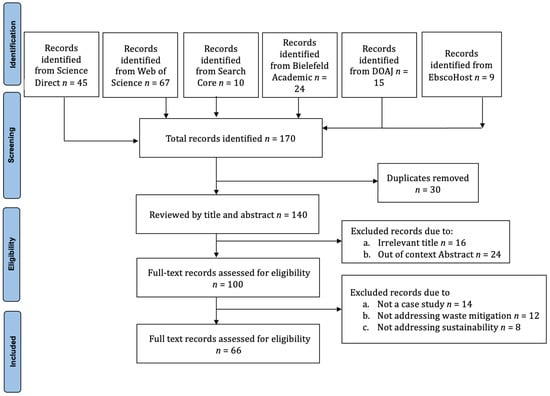
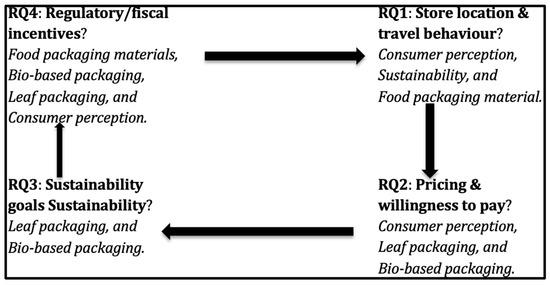
This review was conducted as a structured scoping evidence synthesis and reported in line with Preferred Reporting Items for Systematic Reviews and Meta-Analysis for Scoping Reviews (PRISMA-ScR 2020) guidelines. This review workflow included (i) database searching, (ii) deduplication, (iii) title/abstract screening, (iv) full-text eligibility assessment, (v) data extraction, (vi) quality appraisal/risk-of-bias assessment, and (vii) narrative/thematic synthesis. The study selection process is summarised using a PRISMA-ScR 2020 flow diagram (Figure 1).
Figure 1.
PRISMA-ScR 2020 flow diagram of the literature selection process.
2.1. Information Sources, Search Dates, and Search Strategy
A replicable and transparent systematic search was conducted to identify peer-reviewed journal literature published between 1997 and 2025. The following electronic databases were formally searched and closed, namely: Web of Science, EBSCOhost (Academic Search Complete, GreenFILE, CINAHL), and the Directory of Open Access Journals (DOAJ). The final search was executed on 24 December 2025. Searches were mostly limited to English-language publications. Search terms were constructed around three concept blocks using some Boolean logic:
- Food packaging/materials: “food packaging”, packaging material *, “bio-based packaging”, “bio-based packaging”, biodegradable packaging.
- Leaf/plant-based packaging: leaf *, “leaf-based”, “leaf packaging”, “plant-based packaging”, “banana leaf”, cornstarch, bagasse.
- Sustainability/consumer outcomes: sustainability, “waste mitigation”, waste management, recycle *, compost *, “circular economy”, consumer perception, accept *, willingness to pay (WTP) attitude *.
Boolean operators were used to combine terms (AND/OR), and quotation marks were applied to refine phrase searching (e.g., “leaf-based packaging”, “willingness to pay”). Full Boolean search strings were developed and executed for each database and are reported in full in Supplementary Tables S1 and S2 (per-database search strings).
An example structure used across databases was “food packaging” OR “packaging material *” OR “bio-based packaging” OR “bio-based packaging” OR “biodegradable packaging” AND leaf * OR “leaf-based” OR “leaf packaging” OR “plant-based packaging” OR “banana leaf” OR “consumer perception” OR accept * OR “willingness to pay” OR WTP OR attitude *. All records were imported into RefWorks for record management, deduplication, and screening traceability.
2.2. Eligibility Criteria (Inclusion and Exclusion)
2.2.1. Inclusion Criteria
Studies were included if they met all of the following:
- Publication type: peer-reviewed journal article (including empirical study or review article)
- Analytical scope: clear focus on leaf-based packaging or plant-derived packaging formats with direct functional or conceptual relevance to leaf-based applications
- Topical relevance: addressed at least one of the following themes within a food packaging context: sustainability or waste mitigation/waste management/end-of-life pathways, and/or consumer perception/acceptability/willingness to pay/behavioural intention, and/or functional feasibility relevant to food packaging use (e.g., safety, performance, shelf life, compliance).
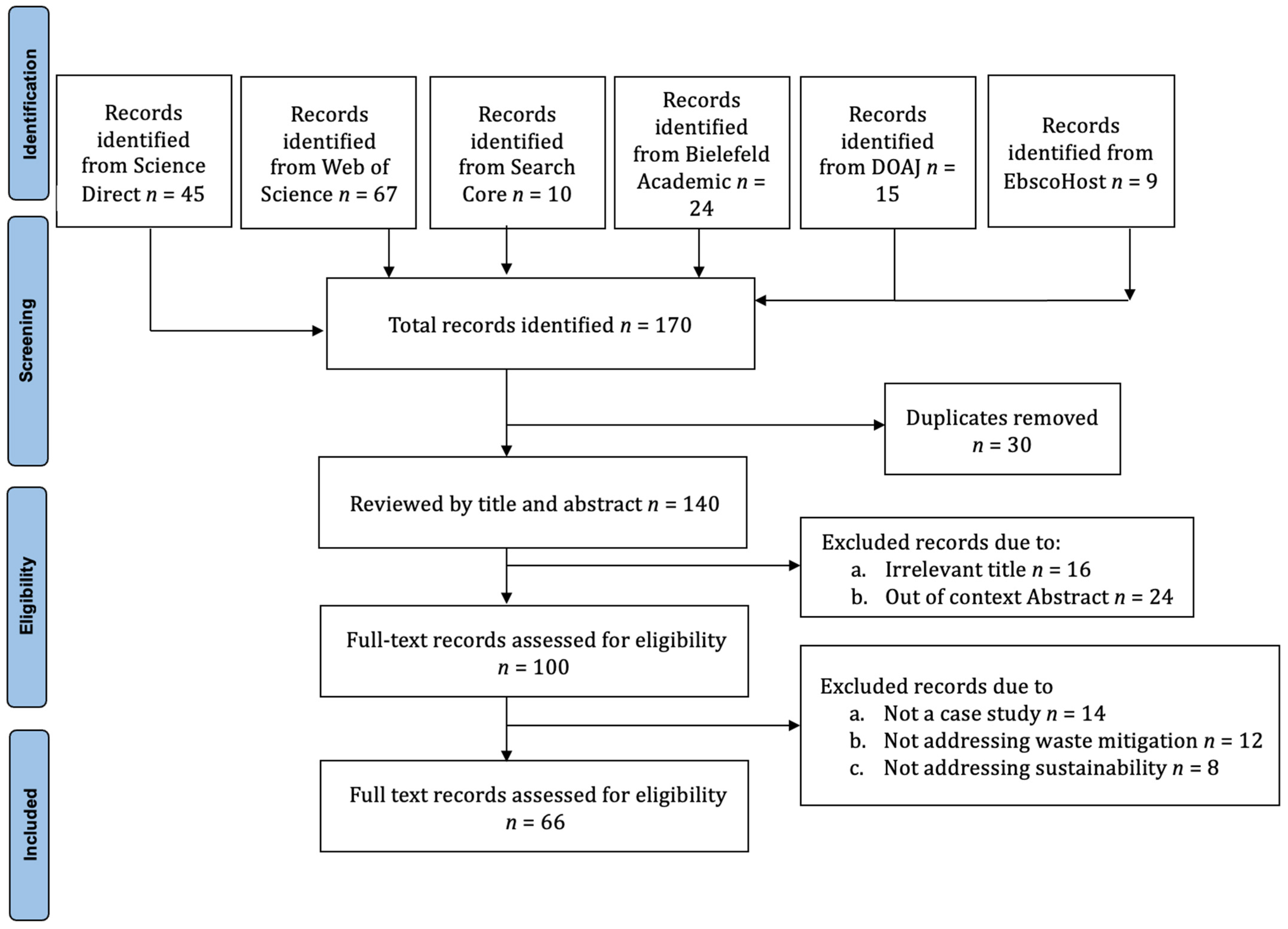
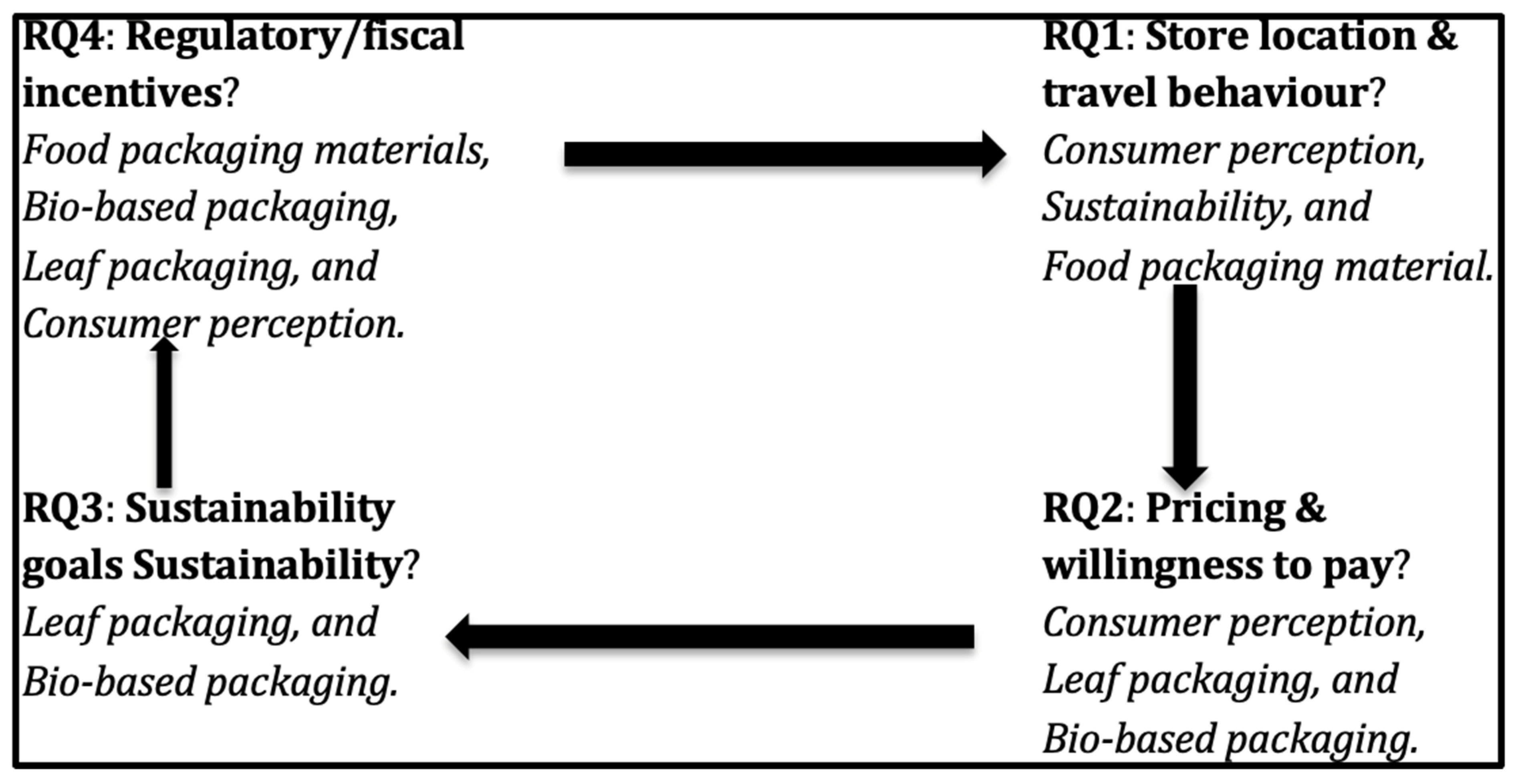
These thematic areas were derived directly from the study’s research questions (see Figure 2 for the search terms relating to the research questions). Full-text inclusion decisions were documented and summarised in the PRISMA-ScR 2020 flow diagram (Figure 1).
Figure 2.
Keyword search relating to the research questions.
2.2.2. Exclusion Criteria
Records were excluded at different stages of screening if:
- The title/abstract/full text did not relate to the review focus (leaf-based/plant-based/bio-based food packaging).
- The study used an irrelevant study design for this review (e.g., commentary/editorial only, non-analytical opinion piece, or format not meeting the review’s evidence needs).
- The study did not address sustainability and/or waste mitigation in a meaningful way.
- The publication was not peer-reviewed (e.g., thesis, report, excluding conference abstract).
- The full text could not be accessed.
2.3. Data Extraction (Data Charting) and Management of Interpretation
A structured data extraction template was developed and applied to each included full-text study. Extracted fields included:
- Bibliographic details (author/year).
- Country/region (and context).
- Study aim and design (qualitative/quantitative/mixed/review).
- Packaging material(s) assessed (most of which relate to bio-based types, with few results relating to leaf-based types and comparators, e.g., bio-based bottles).
- Product/use case and supply chain assumptions (e.g., short shelf life, migration, food service, etc., where reported).
- Outcomes reported (consumer acceptance/WTP; sustainability framing; end-of-life route; waste mitigation relevance).
- Key findings and conclusions.
2.4. Quality Assessment and Risk of Bias
Quality appraisal and risk-of-bias assessment were conducted using a structured, study-type-appropriate framework:
- Primary empirical studies were assessed for: clarity of research objectives, methodological appropriateness, sampling adequacy, data transparency, and coherence between results and conclusions.
- Review studies were assessed for: transparency of search strategy, reproducibility of methods, and rigour of evidence synthesis.
Quality assessment outcomes were documented for each study and used to inform interpretive weighting during synthesis rather than exclusion. Studies with methodological limitations were retained where they contributed relevant contextual or conceptual insight, with limitations explicitly acknowledged in interpretation.
2.5. Data Synthesis and a Low- and Middle-Income vs. High-Income Countries Comparison Approach
Studies were grouped by: (i) packaging type/material category (leaf-based vs other plant-derived formats where relevant), (ii) study design, and (iii) geographic and economic context. To support cross-context comparison, country context was implied using a transparent classification approach (e.g., World Bank income grouping, where applicable) and interpreted through a consistent analytical lens, focusing on, for example:
- Regulatory and food-contact compliance considerations (where discussed in studies).
- Functional performance requirements linked to product type and distribution chain (e.g., barrier, sealing, heat resistance, shelf life).
- Consumer norms, affordability constraints, and market structures shaping acceptance and adoption.
Where cultural interpretations or explanations were offered, the synthesis clearly indicated whether these were (a) directly supported by included studies or (b) reasoned inferences made by the authors of this review.
2.6. Limitations
Several limitations should be considered when interpreting the findings of this review. Bio-based packaging comprises a broad and heterogeneous group of materials, including biodegradable and non-biodegradable plastics, paper-based packaging, and diverse plant-derived materials. Some materials commonly described as “plant-based”, such as leaves used for food wrapping, are not consistently classified as packaging within regulatory or industrial frameworks. In addition, materials often grouped as “sustainable plastic substitutes” (e.g., bio-based bottles, plant-based takeaway containers) may show context-dependent sustainability profiles influenced by production routes and end-of-life management. They are not automatically green or sustainable just because they are bio-based or come from plants. Comprehensive and harmonised sustainability assessment criteria for these materials and recycling technologies are still evolving, with further regulatory clarification expected from the European Commission in the coming years. This definitional and regulatory uncertainty may have influenced the interpretation of sustainability claims across the included studies. The review was limited to English-language publications, which may introduce language bias and limit the inclusion of evidence from non-English-speaking regions. In addition, some degree of subjectivity is inherent in study selection and thematic interpretation, although this was mitigated through predefined inclusion criteria and systematic extraction procedures. These limitations should be considered when assessing the robustness and transferability of the findings.
3. Results and Discussion
Table 1 detail summary of included literature. Across the included studies, evidence clustered around four consolidated themes: (A) awareness and acceptance of bio-based packaging, (B) adoption of leaf-based packaging in practice (cultural and regional contexts), (C) constraints and “value for money” trade-offs, and (D) functional co-benefits and safety risks. Where studies discussed “bio-based packaging”, this review treats the term as a broad umbrella (e.g., bio-based plastics, paper-based packaging, and other plant-derived materials). Leaf-based wrapping is reported where it performs packaging-like functions in food handling and distribution.
Table 1.
Summary of included literature.
3.1. Theme A—Consumer Awareness, Acceptance, and Willingness-to-Pay
Fourteen studies addressed consumer understanding and acceptance of bio-based packaging and consistently reported limited familiarity with the concept. For example, bio-based options such as cornflour-derived packaging [85] were described as not being as widely understood or adopted as fossil alternatives. Gaffey et al. [69], using qualitative survey approaches in Ireland and the Netherlands (18–75 years), found constrained consumer understanding of bio-based packaging. Similarly, Sijtsema et al. [29], using focus groups across five EU countries (n = 89), concluded that participants were unfamiliar with “biobase” as a concept. Cook et al. [70] reported that consumers prefer environmentally friendly products but expect clearer labelling, based on a large multi-country survey of participants not involved in the bioeconomy sector. Willingness-to-pay appeared conditional rather than uniform. Delioglamnis et al. [75], surveying 530 participants across EU countries (aged 25–65), found that 41% were willing to pay a premium for bio-based products when functionality and quality were comparable to fossil-based alternatives and when environmental benefit claims were trusted. Pfau et al. [71], reviewing 17 studies (2009–2017), reported that 50–64% of consumers were inclined to pay a premium for bio-based products; however, Pfau et al. [71] did not detail cost–benefit reasoning or income constraints, limiting conclusions about affordability effects. Across this theme, consumer motivations were frequently linked to perceived environmental and health benefits [27,72,73,76,77], but scepticism toward business motives could reduce willingness-to-pay [53]. Environmental professionals (e.g., ecologists and recyclers) were reported as more accepting of higher prices [53], whereas general consumers could be more price-sensitive and less trusting. Plastic packaging’s low cost and lightweight advantages were repeatedly noted [12,20,54,55,56,57,58,86]. Some studies also reported consumer ambivalence or dissatisfaction with bio-based goods [74]. Furthermore, several studies report consumer interest in items commonly framed as “sustainable substitutes”, including recycled or bio-based plastic bottles and plant-based takeaway containers [59,78,79,87]. These results were considered as consumer-perceived sustainable options and not as evidence that the material or composite is inherently sustainable across all end-of-life systems.
A critique of the literature in this theme is that consumer acceptance and willingness-to-pay are frequently interpreted through broad and sometimes conceptually unstable definitions of “bio-based” and “sustainable” packaging. Several studies group together heterogeneous materials, including recycled plastics, bio-based plastics, and plant-derived composites, as “sustainable substitutes” without consistent regulatory or life-cycle qualification. This limits the comparison of findings and may overstate the sustainability attributes attached to materials that are context-dependent and not yet comprehensively assessed. In addition, few studies consider income constraints, regional waste-management infrastructure, or evolving European sustainability criteria for recycling technologies, which restricts the perspective of willingness-to-pay conclusions across socio-economic and regulatory contexts.
3.2. Theme B—Leaf-Based Packaging Adoption in Practice: Cultural Use, Regional Patterns, and Scalability
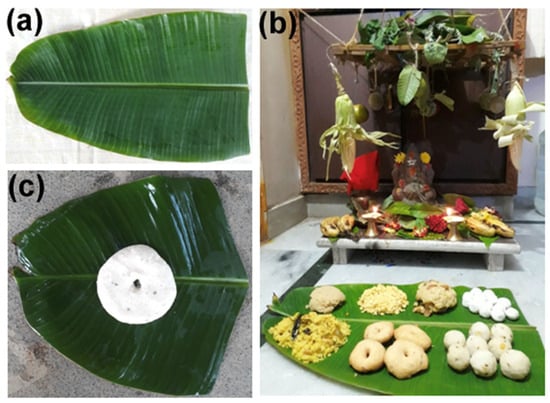
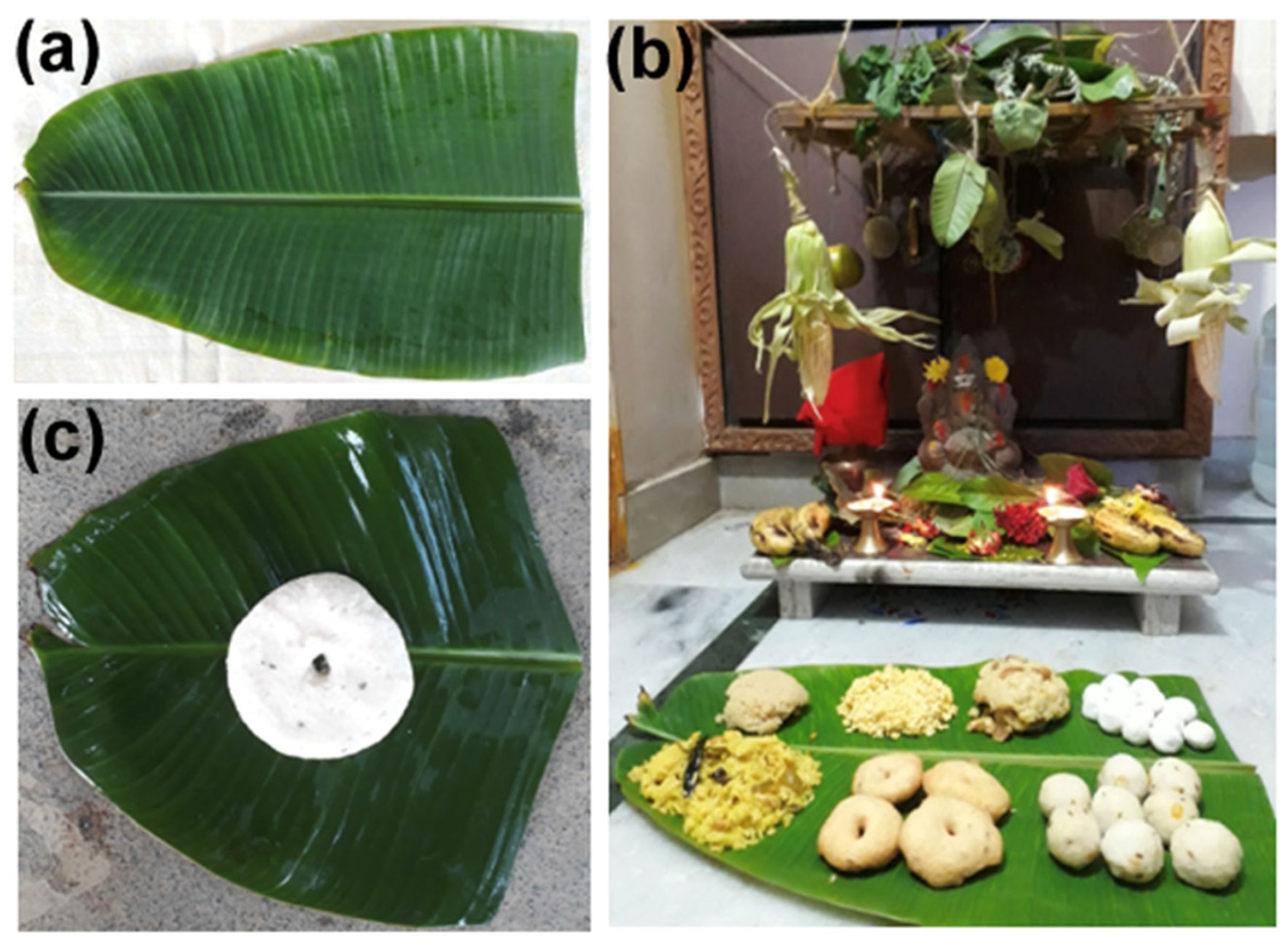
Fifteen studies contributed evidence on leaf-based packaging practices and species used, with a larger set (twenty-one studies) documenting leaf-wrapping traditions across Africa, Asia, and South America [34,35,36,48,49,50,60,88]. These studies describe leaf-based packaging as a culturally embedded practice for wrapping solid or semi-solid foods and often link its use to perceived naturalness, convenience, or local tradition. Evidence on why certain plant species are preferred is more limited. Hounsou et al. [35] mapped over 250 plant species across 50 botanical families and documented regional usage patterns (e.g., Poaceae in parts of China, Japan, and Malaysia; Marantaceae in Honduras; Arecaceae across several Asian and African contexts). However, the study did not systematically explain consumer motivations behind species popularity (e.g., familiarity, aesthetics, availability), which remains a gap in the evidence base. Motivation findings were mixed. Sijtsema et al. [29] reported both a preference for packaging perceived as entirely bio-based and low familiarity with the concept. Choi et al. [89] found a stated preference for packaging described as entirely bio-based using a contingent valuation approach. Kumar et al. [90] describe bio-based plastics as renewable-source plastics that can function like conventional plastics, but the included consumer studies did not consistently explain the basis of preferences, and in some cases, motivations were described as nonconcrete [29]. Where interpretations are offered (e.g., education/awareness driving preference), they are treated as inferences unless clearly reported in the primary studies. Cultural and religious practices were also reported, such as leaf use in Hindu rituals [37], such as puja (Figure 3), which may reinforce acceptance and perceived value.
Figure 3.
(a) Banana leaf, M. paradisiaca; (b) naivedyam offered to god Ganesha on a banana leaf during the festival of Ganesh Chaturthi; and (c) spreading the batter of gaare before frying in oil. Materials from source: [37] (p. 6).
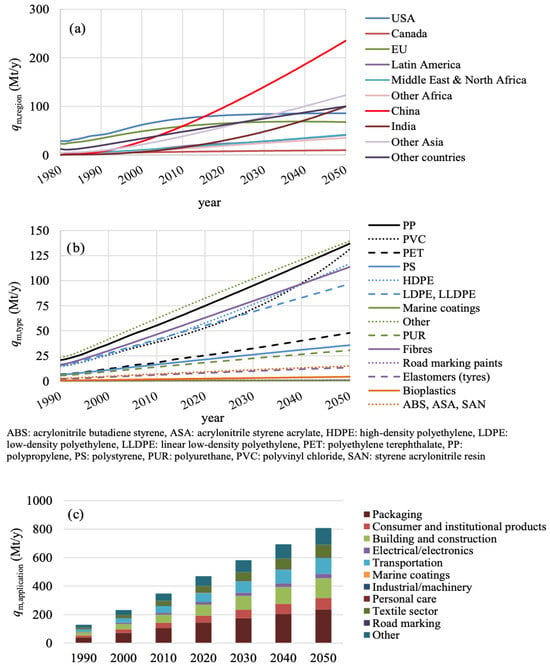
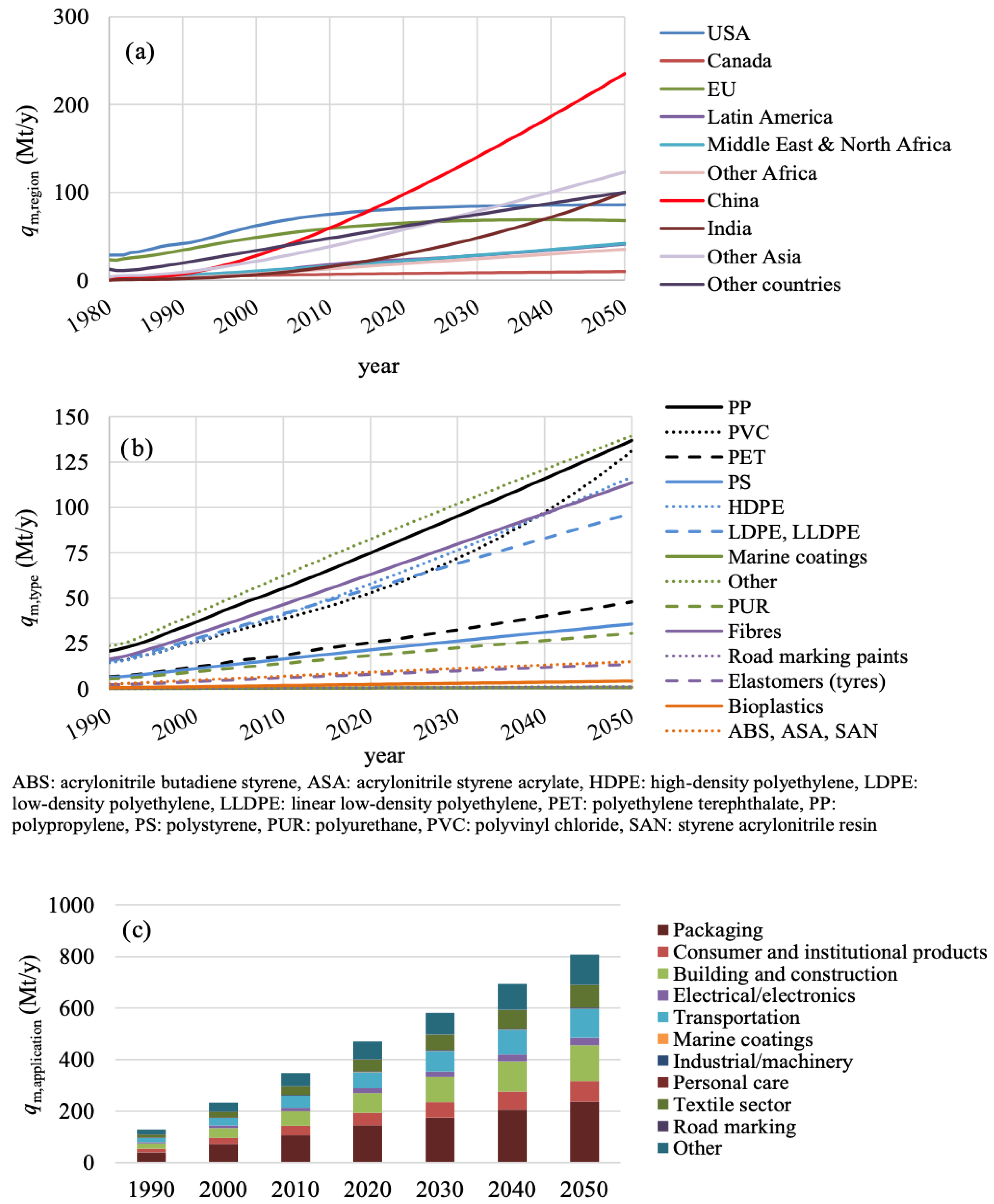
Several studies suggest that scaling leaf-based packaging beyond traditional, local uses may be limited by labour-intensive preparation and higher costs relative to mass-produced plastics [3,61,62,80]. In addition, the current evidence base does not consistently compare consumer behaviour across low- and middle-income countries (LMICs) and high-income countries (HICs) in a structured way, which limits firm conclusions about how adoption drivers differ by context. Table 2 and Figure 4 indicate that Asia plays a substantial role in global plastics production and projected plastics consumption [2,10]. On this basis, it could be suggested that increasing the uptake or scaling up of plant-based packaging in Asia could contribute to meaningful reductions in greenhouse gas (GHG) emissions associated with plastic manufacture under favourable assumptions. However, these projections are not packaging-specific and do not, on their own, demonstrate achievable substitution rates or quantified emissions reductions. Any potential benefit would depend on practical feasibility, including affordability, consumer access (e.g., travel distance and availability), and whether plant-based solutions can meet functional requirements at scale. The references to Table 2 and Figure 4 are therefore used as contextual background only. Table 2 summarises regional shares of global plastic production across all sectors [10], not packaging-specific consumption or packaging waste. Figure 4 presents projections of plastic consumption by region, polymer type, and application through 2050 [2] and is similarly broad because plastics are used across multiple industries. Table 2 and Figure 4 are used as contextual background only; neither independently substantiates packaging-specific substitution or emissions-reduction claims.
Table 2.
Regional shares of global plastic production (all sectors) are included as contextual background rather than packaging-specific evidence. Adapted from source: [10] (p. 3) *.
Figure 4.
Projection of plastic consumption by (a) region, (b) polymer type, and (c) application (all sectors, not packaging only). Included as a contextual background to illustrate the scale of projected plastic demand rather than as direct evidence of packaging-specific trends. Adapted from source: [2]. Because plastics are used across many industries, these projections should not be interpreted as packaging-only forecasts.
A critique of the literature in this theme is that leaf-based packaging is frequently discussed as an inherently sustainable solution without consistent regulatory classification or life-cycle qualification. Leaves used for food wrapping are not uniformly defined as “packaging” within formal regulatory frameworks, which limits comparability across studies. In addition, sustainability claims are rarely supported by quantified life-cycle evidence, and consumer motivations are often inferred rather than directly measured. The evidence base also lacks structured cross-context comparisons between LMICs and HICs and provides limited assessment of scalability constraints such as labour intensity, affordability, and integration into modern waste-management systems, limiting how the conclusions could be transferred beyond traditional use settings.
3.3. Theme C—Adoption Constraints and “Value for Money” Trade-Offs
Fifteen studies identified barriers and enabling factors that shape adoption beyond stated environmental concern. Evidence indicates that while many consumers express pro-environmental attitudes [81,91], these intentions often do not translate into consistent purchasing behaviour [91]. Eurobarometer data suggests high stated concern for environmental protection and moral endorsement of green purchasing [92], yet demand for sustainable products may remain constrained by practical barriers such as time, travel reluctance, limited accessibility, cost, and weak communication [63,83]. Cost and scale were recurring constraints for plant-based solutions. Hounsou et al. [35] and related work suggest that preparatory steps (e.g., cleaning, washing, boiling or blanching, roasting, toasting, and drying) used to enhance cleanliness by eliminating impurities and dirt from leaves, making them pliable, and limited production volumes can increase costs. Wensing et al. [80] and Filho et al. [61] discuss how scale and demand dynamics can influence pricing. Carus et al. [93] describe the “green premium” concept, and studies such as Delioglamnis et al. [75] show willingness-to-pay is conditional on perceived equivalence in quality and function. A key recurring point is that adoption depends on the perceived trade-off between price, convenience, trust in claims, and functional performance, rather than on sustainability messaging alone [53,64,74].
A critique of the literature in this theme is that “value for money” and cost barriers are frequently discussed without consistent differentiation between bio-based plastics, recycled plastics, paper-based materials, and plant-derived packaging, despite their substantially different cost structures, performance limits, and end-of-life pathways. Willingness-to-pay is often interpreted using broad “sustainable” or “green premium” framings, with limited integration of evolving regulatory sustainability criteria and local waste-management infrastructure. In addition, affordability and accessibility are rarely examined through structured socio-economic or regional lenses, restricting the possible adoption of the conclusions across different regulatory and market contexts.
3.4. Theme D—Functional Co-Benefits and Safety Risks (Sensory, Microbial, and Toxicological Considerations)
Sixteen studies report sensory and preservation-related effects associated with foods wrapped in leaves. Reported organoleptic attributes (aroma, taste, and colour) are frequently cited in contexts where leaves are in direct contact with foods and are culturally embedded in preparation and presentation practices [35,36,38,39,49,50,51,65], including examples in Malaysia and China [36,40] and perceived branding value associated with traditional presentation aesthetics [94]. In these contexts, leaves may serve both as food wrapping and packaging and as culinary or cultural elements, and therefore, the reported sensory effects are not interpreted as general packaging performance requirements. For example, Thaumatococcus daniellii is widely used as a wrapping medium in Nigeria and other West African countries (Figure 5), where it is culturally valued for the visual appearance and flavour imparted to enclosed foods [38,88]. Similarly, laboratory studies on Tilia tuan used in zongzi wrapping report enhanced sweetness and spongy texture [48]. These effects support traditional beliefs that certain leaves can influence sensory qualities of food; however, within this review, they are classified as context-specific, culturally embedded, and potentially “active packaging-like” functions, rather than core packaging functions required for mainstream food-packaging systems.
Figure 5.
Moin Moin (Nigerian steamed bean cake in Thaumatococcus daniellii Leaf). Adapted from source: [95].
Several studies also report microbial stability and antimicrobial properties associated with specific leaves or extracts [35,41,42,43,48,66,67,96], with shelf life described as sensitive to storage conditions [44,45,68,88,96]. While such properties may provide functional co-benefits in certain traditional food systems, the evidence does not remove the need for formal hygiene, handling, and safety controls. Leaf-based wrapping can introduce food safety risks when leaves carry contaminants or are handled unhygienically, and antimicrobial activity should therefore be interpreted as supplementary rather than substitutive to formal food safety requirements.
Regulatory framing and toxicology evidence: Food-contact safety is framed within applicable regulatory boundaries. Commission Regulation (EU) No. 10/2011 applies specifically to plastic food-contact materials, while the overarching EU safety framework for all food-contact materials is governed by Regulation (EC) No. 1935/2004. The European Commission further regulates the migration of inks, colourants, and nanoparticles into primary food packaging because of safety concerns, acknowledging that although migration may be infrequent and slow, potential risks remain [46]. Consequently, studies examining the migration of undesirable or harmful substances into packaged foods are central to the development and authorisation of new primary packaging materials [19,35]. However, existing migration limits defined in Commission Regulation (EU) No. 10/2011, including the overall migration limit of 10 mg/dm2 specified in Article 12, apply only to plastics and do not clearly cover bio-based or plant-derived packaging materials. Within this regulatory context, evidence in the reviewed literature describes selected leaves as non-toxic [49,50], and toxicity testing has been reported for specific plant species used as food packaging in Benin [46,47,52]. Indigenous leaves such as Musa paradisiaca, Zea mays husk, and Thespesia populnea have been extensively examined and reported as non-toxic [49,50], and no documented associations between leaf-packaged foods and adverse health outcomes have been reported [49]. Toxicity testing on ten plant species commonly used for food packaging in Benin, West Africa (Agyrea nervosa, Ampelocissu sleonensis, Cytrosperma senegalense, Daniellia oliveri, Icacina trichantha, Isoberlini adoka, Sarcocephaluslati folius, Siphonochilus aethiopicus, Sterculia tragacantha, and Thalia geniculate) found lethal concentration thresholds beyond 0.1 mg/mL, indicating low acute toxicity under test conditions [39,47,52]. Lin et al. [48] further note that Corchorus capsularis and Vernicia fordii, used in wrapping zongzi, may present potential health hazards, although no acute poisoning cases have been documented, and that thermal processing may reduce toxicity by degrading active compounds. These findings are reported as study-based evidence and are interpreted with clear caution that natural appearance does not imply inherent safety. Potential contamination pathways, including pesticide residues, heavy metals, parasites, and other organic and inorganic contaminants, remain relevant considerations when leaves are used in packaging-like roles, and the current lack of specific migration regulation for plant-based packaging highlights the need for further safety evaluation within formal regulatory frameworks.
A critique of the literature in this theme is that functional and safety claims for leaf-based packaging are frequently derived from culturally embedded or laboratory-based contexts and are often extrapolated beyond their original use settings. Many studies treat sensory enhancement and antimicrobial properties as indicators of packaging performance without consistent differentiation between culinary functions and formal food-contact material requirements. In addition, toxicological and migration evidence remains fragmented, and current EU migration limits apply primarily to plastics, leaving plant-derived packaging without harmonised regulatory thresholds, which also limits how the safety conclusions can be translated to mainstream, regulated food-packaging systems.
3.5. Discussion
This review consolidates evidence on consumer perceptions, market dynamics, and socio-environmental consequences related to plant-based food packaging, while keeping leaf-based packaging as the central focus. Broader “bio-based” literature is used only where it directly informs leaf-based adoption (e.g., how consumers interpret “bio-based”, what drives willingness to pay, and what builds trust through labelling). Overall, the literature indicates rising interest in alternatives to conventional plastics, but uptake is moderated by uneven awareness, cultural differences, cost constraints, and infrastructure limitations [29,48,87]. A consistent starting point across studies is that consumers often lack a stable understanding of what “bio-based” means and are even less familiar with leaf-based packaging outside contexts where it is culturally embedded [29,48,69]. This matters because it links directly to how people shop: when sustainability claims are unclear, consumers rely on habit, convenience, and price cues rather than environmental intentions. The repeated call for clear, accurate, and culturally relevant labelling [69,73] therefore speaks not only to awareness but also to the practical barriers that shape market uptake.
Those practical barriers are most visible when considering store location and travel behaviour (RQ1). Even where attitudes toward sustainable choices are positive, the evidence shows that time constraints, reluctance to travel, limited accessibility, and weak in-store communication reduce purchasing [83]. This aligns with the intention–behaviour gap described in consumer research, where expressed pro-environmental concern does not reliably translate into action [81,82,91]. Collectively, the studies imply that travel distance and store availability act as “friction costs” that interrupt adoption. For leaf-based packaging, this helps explain why uptake is most evident where it is already integrated into everyday food systems and local supply chains, reducing the need for consumers to seek it out [35,37]. The same evidence base also clarifies how pricing strategies influence willingness to pay (RQ2). Willingness to pay a premium is repeatedly described as conditional; consumers are more willing to pay when quality and functionality are comparable and when claims are trustworthy [71,75]. At the same time, affordability constraints and perceived risk limit mainstream uptake, reflecting the persistent “green premium” problem [93]. Evidence also points to a scale mechanism; if demand increases and production scales, costs may fall, and the premium may narrow [61,80]. For leaf-based packaging specifically, this dynamic is complicated by labour-intensive preparation and variability in shelf life and durability, which increase costs and constrain distribution into high-volume supply chains [10]. The implication is that pricing strategies alone are unlikely to succeed unless they are paired with clearer value propositions (e.g., function, trust, convenience) and feasible use cases where leaf materials can reliably perform.
These adoption realities frame the role plant-based packaging can play in national or global sustainability goals (RQ3). The literature supports the idea that plant-based options can contribute to sustainability aims by reducing reliance on fossil-based materials and aligning packaging practices more closely with renewable resources and, in some contexts, biodegradation pathways [35,37]. However, the evidence does not support treating plant-based packaging as a uniform solution. Sustainability contributions are presented as use-case dependent, shaped by functional demands, hygiene controls, supply chain length, and end-of-life management. This is particularly relevant for leaf-based packaging, where some studies report antimicrobial properties and potential preservation effects [41,48,90,96], but these effects vary by species and handling conditions and should not be generalised. In other words, the sustainability contribution arises not from “impulse”, but from whether leaf-based materials can be implemented safely and consistently within real packaging functions. Strong claims about emissions reductions (relating to the uptake or scaling up of plant-based packaging in Asia) are best interpreted as scenario-based and sensitive to assumptions about substitution rates, population density, consumption patterns, and end-of-life outcomes [10]. The preceding patterns also explain why regulatory or fiscal incentives may be necessary for mainstream adoption (RQ4). Evidence repeatedly shows that trust and clarity are prerequisites for uptake, which is why studies emphasise accurate labelling and culturally relevant communication [47,97]. Front-of-pack models such as the UK “traffic light” system are relevant here as a mechanism: Simplified cues can reduce decision fatigue and potentially communicate end-of-life pathways (e.g., biodegradability claims, decomposition timelines) more credibly. Incentives and regulation also interact with the green premium and infrastructure constraints. They can reduce cost barriers (directly or via scale), standardise claims to reduce scepticism, and support end-of-life systems that make plant-based solutions meaningful rather than symbolic [61,80,93]. This is especially relevant for leaf-based packaging, where variability in durability and microbiological outcomes makes standardisation and hygiene oversight central to consumer trust and industry uptake [10].
Across contexts, the evidence suggests two different adoption pathways. In many LMIC settings, leaf-based packaging is already normalised through culinary practice and cultural meaning [35,37], which can reduce travel friction (RQ1) and create a strong value proposition that is not purely price-driven (RQ2). In many HIC settings, adoption appears more dependent on retail availability, price parity, and trust in formal labelling systems [29,69,70], which elevates the importance of incentives and standardised claims (RQ4) and makes sustainability outcomes contingent on infrastructure (RQ3). Commercially, leaf-based packaging aligns with health-oriented marketing narratives such as “natural” and “minimally processed”, but claims (e.g., taste retention due to leaf wrapping) require evidence and oversight to avoid misleading communication [70]. Frameworks analogous to those governing nutrition and health claims (REG [EC] No 1924/2006) may help here by setting boundaries for what can be claimed and by improving comparability across products. Therefore, the evidence indicates that mainstreaming leaf-based packaging requires coordinated attention to convenience and access (RQ1), pricing and perceived value (RQ2), context-dependent sustainability performance (RQ3), and supportive regulation or incentives (RQ4), rather than reliance on any single lever.
4. Conclusions and Recommendations
This review indicates that leaf-based food packaging materials can be a culturally embedded and potentially valuable plant-based packaging solution, particularly in parts of Africa, Asia, and South America, where it is integrated into everyday food systems [35,37]. At the same time, the evidence shows that wider uptake is constrained by limited consumer understanding of “bio-based” concepts in some settings [42,48,77], by practical access barriers that shape shopping behaviour [83,91], and by affordability pressures linked to the green premium [93]. Leaf-based packaging also faces performance and safety constraints, including deterioration, labour-intensive preparation, variable durability and shelf life, and microbiological variability across species [10,89]. Based on these patterns, four evidence-led recommendations follow. First, adoption efforts should prioritise feasible use cases and retail formats that minimise travel friction and normalise access (RQ1), rather than positioning leaf-based packaging as niche or difficult to obtain [83]. Second, pricing strategies (RQ2) should be paired with measures that reduce perceived risk and improve value perception, recognising that willingness-to-pay depends on function, trust, and affordability [71,75]. Third, sustainability contributions (RQ3) should be evaluated contextually; while some studies show pro-sustainability preferences and willingness-to-pay for sustainable packaging [77], and life cycle assessments (LCAs) can show lower emissions for some bio-based materials compared to fossil comparators [10], leaf-based packaging benefits remain dependent on safe handling, functional performance, and end-of-life realities [10]. Fourth, regulatory and fiscal incentives (RQ4) appear important for mainstreaming because they can reduce the green premium, standardise claims, build trust through labelling oversight, and support enabling infrastructure [61,70,80].
Further research is required to evaluate the technological viability and consumer acceptance of leaf-based packaging and the risk associated with its use, particularly with respect to hygiene control, tensile strength, visual appeal, and durability under real distribution conditions. In addition, future studies should clearly examine how cultural and ethical meanings attached to certain plant species, including their sacred or ceremonial status, influence perceptions of appropriateness, willingness-to-pay, and acceptance of large-scale commercial use. Such ethical considerations may constrain material sourcing, limit scalable supply chains, and shape purchasing decisions in both local and export markets. Clarifying how regulatory standards, sourcing governance, and incentive mechanisms can accommodate these cultural boundaries will be essential for any safe and socially acceptable scaling of leaf-based packaging solutions.
Supplementary Materials
The following supporting information can be downloaded at: https://www.mdpi.com/article/10.3390/su18041798/s1. Table S1: Database Search Strategies; Table S2: Search Field Abbreviation Key.
Author Contributions
Writing—Original Draft Preparation, S.O.; Supervision, P.P. and A.A.; Review and Editing, D.O. All authors have read and agreed to the published version of the manuscript.
Funding
The authors received no funding from an external source.
Institutional Review Board Statement
Not applicable.
Informed Consent Statement
Not applicable.
Data Availability Statement
The original contributions presented in this study are included in the article/Supplementary Material. Further inquiries can be directed to the corresponding author.
Conflicts of Interest
The authors declare no conflicts of interest.
References
- Gautam, B.P.S.; Qureshi, A.; Gwasikoti, A.; Kumar, V.; Gondwal, M. Global Scenario of Plastic Production, Consumption, and Waste Generation and Their Impacts on the Environment and Human Health. In Advanced Strategies for Biodegradation of Plastic Polymers, 1st ed.; Soni, R., Debbarma, P., Suyal, D.C., Goel, R., Eds.; Springer Nature: Cham, Switzerland, 2024; Volume VI, pp. 1–34. [Google Scholar] [CrossRef] [Scilit]
- Dokl, M.; Copot, A.; Krajnc, D.; Van Fan, Y.; Vujanović, A.; Aviso, K.B.; Čuček, L. Global Projections of Plastic Use, End-of-Life Fate and Potential Changes in Consumption, Reduction, Recycling and Replacement with Bioplastics to 2050. Sustain. Prod. Consum. 2024, 51, 498–518. [Google Scholar] [CrossRef] [Scilit]
- Houssini, K.; Li, J.; Tan, Q. Complexities of the Global Plastics Supply Chain Revealed in a Trade-Linked Material Flow Analysis. Commun. Earth Environ. 2025, 6, 257. [Google Scholar] [CrossRef] [Scilit]
- Eurostat. EU Packaging Waste Generation with Record Increase. 2023. Available online: https://ec.europa.eu/eurostat/web/products-eurostat-news/w/ddn-20231019-1 (accessed on 24 December 2025).
- European Commission. Plastic Packaging Waste in the EU: 35.3 kg per Person. 2025. Available online: https://ec.europa.eu/eurostat/web/products-eurostat-news/w/ddn-20251022-1 (accessed on 24 December 2025).
- Archer, D. Global Warming: Understanding the Forecast; Wiley-Blackwell: Oxford, UK, 2007. [Google Scholar]
- Geyer, R.; Jambeck, J.R.; Law, K.L. Production, use, and fate of all plastics ever made. Sci. Adv. 2017, 3, e1700782. [Google Scholar] [CrossRef] [Scilit]
- Kweku, D.W.; Bismark, O.; Maxwell, A.; Desmond, K.A.; Danso, K.B.; Oti-Mensah, E.A.; Quachie, A.T.; Adormaa, B.B. Greenhouse effect: Greenhouse gases and their impact on global warming. J. Sci. Res. Rep. 2018, 17, 1–9. [Google Scholar] [CrossRef] [Scilit]
- Ojinnaka, D.; Aw, M. Micro- and nanoplastics: A consumer perception study on the environment, food safety threat and control systems. Biomed. J. Sci. Tech. Res. 2020, 32, 23998–24012. [Google Scholar] [CrossRef] [Scilit]
- Shen, M.; Huang, W.; Chen, M.; Song, B.; Zeng, G.; Zhang, Y. (Micro)plastic crisis: Un-ignorable contribution to global greenhouse gas emissions and climate change. J. Clean. Prod. 2020, 254, 120138. [Google Scholar] [CrossRef] [Scilit]
- Business Waste. Packaging Waste Facts and Statistics. Business Waste 2025. Available online: https://www.businesswaste.co.uk/your-waste/packaging-waste-recycling/packaging-waste-facts-and-statistics/ (accessed on 12 June 2025).
- Ncube, L.K.; Ude, A.U.; Ogunmuyiwa, E.N.; Zulkifli, R.; Beas, I.N. An overview of plastic waste generation and management in food packaging industries. Recycling 2021, 6, 12. [Google Scholar] [CrossRef] [Scilit]
- Du, L.; Huang, X.; Li, Z.; Qin, Z.; Zhang, N.; Zhai, X.; Shi, J.; Zhang, J.; Shen, T.; Zhang, R.; et al. Application of Smart Packaging in Fruit and Vegetable Preservation: A Review. Foods 2025, 14, 447. [Google Scholar] [CrossRef] [Scilit] [PubMed]
- Farrell, R.; Cortese, Y.J.; Devine, D.M.; Gately, N.; Rueda, M.; Rodriguez, L.; Pezzoli, R. The function and properties of common food packaging materials and their suitability for reusable packaging: The transition from a linear to circular economy. Curr. Res. Green Sustain. Chem. 2024, 9, 100429. [Google Scholar] [CrossRef] [Scilit]
- de Jong, E.; Goumans, I.; Visser, R.; Puente, Á.; Gruter, G.-J. The opportunities and challenges of biobased packaging solutions. Polymers 2025, 17, 2217. [Google Scholar] [CrossRef] [Scilit]
- D’Almeida, A.P.; de Albuquerque, T.L. Innovations in Food Packaging: From Bio-Based Materials to Smart Packaging Systems. Processes 2024, 12, 2085. [Google Scholar] [CrossRef] [Scilit]
- Grafia, A.L.; Gonzalez, N.; Pacheco, C.; Razuc, M.F.; Acebal, C.C.; López, O.V. Eco-Friendly Packaging for Functional Food. Processes 2025, 13, 2027. [Google Scholar] [CrossRef] [Scilit]
- Padmini, G.; Vidya, P. From Plastics to Plants: A Journey towards Sustainable Food Packaging. Ceylon J. Sci. 2025, 54, 481–490. [Google Scholar] [CrossRef] [Scilit]
- British Standards Institution (BSI). BS 8001: Framework for Implementing the Principles of the Circular Economy in Organizations; BSI: London, UK, 2017; Available online: https://cfsd.org.uk/wp-content/uploads/2016/10/BS%208001%20FLYER%20v4.pdf (accessed on 25 October 2025).
- MacArthur, D.E.; Waughray, D.; Stuchtey, M.R. The New Plastics Economy: Rethinking the Future of Plastics; Ellen MacArthur Foundation and McKinsey & Company: London, UK, 2016. [Google Scholar]
- Zuluaga, S.; Saxe, S.; Karney, B.W. Circular economy strategies in cities as a value-driven approach to infrastructure management. J. Ind. Ecol. 2025, 29, 1821–1832. [Google Scholar] [CrossRef] [Scilit]
- European Bioplastics e.V. Frequently Asked Questions on Bioplastics; European Bioplastics: Berlin, Germany, 2023; Available online: https://docs.european-bioplastics.org/publications/EUBP_FAQ_on_bioplastics.pdf (accessed on 12 June 2024).
- D’Amato, D.; Veijonaho, S.; Toppinen, A. Towards sustainability? Forest-based circular bioeconomy business models in Finnish SMEs. For. Policy Econ. 2020, 110, 101848. [Google Scholar] [CrossRef] [Scilit]
- Gotowska, M.; Jakubczak, A. Sustainable Biodegradable Waste Management for Circular Economy: Comparative Assessment of Composting Technologies. Sustainability 2025, 17, 8978. [Google Scholar] [CrossRef] [Scilit]
- Kardung, M.; Cingiz, K.; Costenoble, O.; Delahaye, R.; Heijman, W.; Lovrić, M.; van Leeuwen, M.; M’barek, R.; van Meijl, H.; Piotrowski, S. Development of the circular bioeconomy: Drivers and indicators. Sustainability 2021, 13, 413. [Google Scholar] [CrossRef] [Scilit]
- Westlake, J.R.; Tran, M.W.; Jiang, Y.; Zhang, X.; Burrows, A.D.; Xie, M. Biodegradable Biopolymers for Active Packaging: Demand, Development and Directions. Sustain. Food Technol. 2023, 1, 50–72. [Google Scholar] [CrossRef] [Scilit]
- Morone, P.; Caferra, R.; D’Adamo, I.; Falcone, P.M.; Imbert, E.; Morone, A. Consumer willingness to pay for biobased products: Do certifications matter? Int. J. Prod. Econ. 2021, 240, 108248. [Google Scholar] [CrossRef] [Scilit]
- Zwicker, M.V.; Nohlen, H.U.; Dalege, J.; Gruter, G.-J.M.; van Harreveld, F. Applying an attitude network approach to consumer behaviour towards plastic. J. Environ. Psychol. 2020, 69, 101433. [Google Scholar] [CrossRef] [Scilit]
- Sijtsema, S.J.; Onwezen, M.C.; Reinders, M.J.; Dagevos, H.; Partanen, A.; Meeusen, M. Consumer perception of biobased products—An exploratory study in 5 European countries. NJAS Wagening. J. Life Sci. 2016, 77, 61–69. [Google Scholar] [CrossRef] [Scilit]
- Packaging Europe. Consumer Purchases Most Influenced by Recyclability Claims, Amcor Research Suggests. Packaging Europe 2023. Available online: https://packagingeurope.com/news/consumer-purchases-most-influenced-by-recyclability-claims-amcor-research-suggests/12687.article (accessed on 12 June 2025).
- Lin, J.; Jaiswal, A.K.; Jaiswal, S. A critical review of consumer perception and environmental impacts of bioplastics in sustainable food packaging. Sustainability 2025, 17, 1358. [Google Scholar] [CrossRef] [Scilit]
- Russo, I.; Confente, I.; Scarpi, D.; Hazen, B.T. From trash to treasure: The impact of consumer perception of bio-waste products in closed-loop supply chains. J. Clean. Prod. 2019, 218, 966–974. [Google Scholar] [CrossRef] [Scilit]
- Romaric, O.; Déley, S.D.; Générose, V.; Abadjayé, F.S.; Akouavi, B.F.; Menouwesso, H.H.; Djidjoho, J.H.; Paulin, A. Bio-based packaging used in food processing: A critical review. Afr. J. Food Sci. 2021, 15, 131–144. [Google Scholar] [CrossRef] [Scilit]
- Harijati, N.; Azrianingsih, R.; Prawaningtyas, E.A. The study of anatomy and banana leaf as a potential wrapping. Am. J. Plant Sci. 2013, 4, 7. [Google Scholar] [CrossRef]
- Hounsou, M.; Dabadé, D.S.; Götz, B.; Hounhouigan, M.H.; Honfo, F.G.; Albrecht, A.; Dresch, L.C.; Kreyenschmidt, J.; Hounhouigan, D.J. Development and use of food packaging from plant leaves in developing countries. J. Consum. Prot. Food Saf. 2022, 17, 315–339. [Google Scholar] [CrossRef] [Scilit]
- Lascurain, M.; López-Binnqüist, C.; Avendaño, S.; Covarrubias, M. The plant leaves are used to wrap tamales in the Mexican state of Veracruz. Econ. Bot. 2017, 71, 374–379. [Google Scholar] [CrossRef] [Scilit]
- Kora, A.J. Leaves as dining plates, food wraps and food packing material: Importance of renewable resources in Indian culture. Bull. Natl. Res. Cent. 2019, 43, 205. [Google Scholar] [CrossRef] [Scilit]
- Ayodeji, O.I.; Adeleye, O.; Dada, O.; Adeyemi, O.; Anyasor, G.N. Phytochemical constituent and antioxidant activity of Thaumatococcus daniellii Benn (Benth.) leaves (food wrapper). Int. J. Pharmacol. Phytochem. Ethnomed. 2016, 2, 55–61. [Google Scholar] [CrossRef] [Scilit]
- Onzo, C.F.; Adjatin, A.; Assogba, F.; Ndtoungou, H.A.; Djengue, H.W.; Azokpota, P.; Dansi, A.; Gbenou, J. Potentiel de domestication des espèces de feuilles végétales utilisées comme emballages alimentaires au Bénin. Int. J. Innov. Appl. Stud. 2016, 18, 539. [Google Scholar]
- Zakariah, M.A.; Malaka, R.; Laga, A.; Ako, A. Effect of banana leaf and plastic material packaging on microbial contamination of dangke fresh white cheese. Int. J. Eng. Adv. Technol. 2019, 8, 204–206. [Google Scholar]
- Asuquo, E.G.; Udobi, C.E. Antibacterial and toxicity studies of the ethanol extract of Musa paradisiaca leaf. Cogent Biol. 2016, 2, 1219248. [Google Scholar] [CrossRef] [Scilit]
- Karuppiah, P.; Mustaffa, M. Antibacterial and antioxidant activities of Musa sp. leaf extracts against multidrug-resistant clinical pathogens causing nosocomial infection. Asian Pac. J. Trop. Biomed. 2013, 3, 737–742. [Google Scholar] [CrossRef] [Scilit] [PubMed]
- Laurent, J.; Wardana, A.A.; Setiarto, R.H.B. Propolis Edible Coating Improves Antibacterial Feature of Banana Leaf-Based Traditional Packaging. Macromol. Symp. 2025, 414, 2400151. [Google Scholar] [CrossRef] [Scilit]
- Chitranshi, S.; Verma, A.; Agrahari, P.R. Storage and Shelf-Life Evaluation of Indian Spinach Beet (Beta vulgaris cv. Pusa Bharati) Employing Various Packaging Materials. J. Appl. Nat. Sci. 2025, 17, 992–1002. [Google Scholar] [CrossRef] [Scilit]
- Forero-Cabrera, N.M.; Gutiérrez-Pacheco, S.; Rivera-Acosta, J.; Silva-Dimaté, A.F.; Sánchez-Sáenz, C.M. Banana Leaf as Packaging of Lulo for Different Storage Temperatures and the Effects on Postharvest Characteristics. Agron. Colomb. 2017, 35, 107–115. [Google Scholar] [CrossRef] [Scilit]
- Seref, N.; Cufaoglu, G. Food packaging and chemical migration: A food safety perspective. J. Food Sci. 2025, 90, e70265. [Google Scholar] [CrossRef] [Scilit]
- Adeogun, O.O.; Adekunle, A.A.; Adongbede, E.M. Effects of leaf extracts of selected plants on quality of stored Citrus sinensis (sweet orange) juice. Not. Sci. Biol. 2017, 9, 256–262. [Google Scholar] [CrossRef] [Scilit]
- Lin, F.; Luo, B.; Long, B.; Long, C. Plant leaves for wrapping zongzi in China: An ethnobotanical study. J. Ethnobiol. Ethnomed. 2019, 15, 63. [Google Scholar] [CrossRef] [Scilit]
- Mensah, J.K.; Adei, E.; Adei, D.; Ashie, M.D. Perceptions of the use of indigenous leaves as packaging materials in the ready-to-eat cornmeals. Int. J. Biol. Chem. Sci. 2012, 6, 1051–1068. [Google Scholar] [CrossRef] [Scilit]
- Ng, C. Plant leaves in food preparation and packaging. UTAR Agric. Sci. J. 2015, 1, 4. [Google Scholar]
- Boko, M.; Heideveld, A.; Elsen, A. Introducing Leaf Packaging in the Netherlands; UNB/UvA/UNEP WG-SPD Collaborative Project; National University Benin (UNB): Benin, Nigeria, 1997. [Google Scholar]
- Onzo, C.F.; Azokpota, P.; Agbani, P.; Gbaguidi, F.; Hounhouigan, J.D.; Kossou, D. Caractéristiques physico-chimiques, phytochimiques et toxicité des espèces végétales utilisées comme emballages alimentaires en Afrique de l’Ouest. Int. J. Biol. Chem. Sci. 2014, 8, 1504–1516. [Google Scholar] [CrossRef] [Scilit]
- Mehta, N.; Cunningham, E.; Roy, D.; Cathcart, A.; Dempster, M.; Berry, E.; Smyth, B.M. Exploring perceptions of environmental professionals, plastic processors, students and consumers of bio-based plastics: Informing the development of the sector. Sustain. Prod. Consum. 2021, 26, 574–587. [Google Scholar] [CrossRef] [Scilit]
- Al-Salem, S.M.; Lettieri, P.; Baeyens, J. Recycling and recovery routes of plastic solid waste (PSW): A review. Waste Manag. 2009, 29, 2625–2643. [Google Scholar] [CrossRef] [Scilit] [PubMed]
- Horodytska, O.; Cabanes, A.; Fullana, A. Plastic waste management: Current status and weaknesses. In Plastics in the Aquatic Environment—Part I: Current Status and Challenges; Springer: Berlin/Heidelberg, Germany, 2019; pp. 289–306. [Google Scholar] [CrossRef] [Scilit]
- Papadopoulou, E.L.; Paul, U.C.; Tran, T.N.; Suarato, G.; Ceseracciu, L.; Marras, S.; d’Arcy, R.; Athanassiou, A. Sustainable active food packaging from poly(lactic acid) and cocoa bean shells. ACS Appl. Mater. Interfaces 2019, 11, 31317–31327. [Google Scholar] [CrossRef] [Scilit] [PubMed]
- Payne, J.; McKeown, P.; Jones, M.D. A circular economy approach to plastic waste. Polym. Degrad. Stab. 2019, 165, 170–181. [Google Scholar] [CrossRef] [Scilit]
- Rahimi, A.; García, J.M. Chemical recycling of waste plastics for new materials production. Nat. Rev. Chem. 2017, 1, 0046. [Google Scholar] [CrossRef] [Scilit]
- Friedrich, D. Consumer behaviour towards wood-polymer packaging in convenience and shopping goods: A comparative analysis to conventional materials. Resour. Conserv. Recycl. 2020, 163, 105097. [Google Scholar] [CrossRef] [Scilit]
- Adejumo, B.A.; Ola, F.A. The appraisal of local food packaging materials in Nigeria. Contin. J. Eng. Sci. 2008, 3, 13–20. [Google Scholar]
- Filho, W.L.; Barbir, J.; Abubakar, I.R.; Paço, A.; Stasiskiene, Z.; Hornbogen, M.; Fendt, M.T.C.; Voronova, V.; Klõga, M. Consumer attitudes and concerns with bioplastics use: An international study. PLoS ONE 2022, 17, e0266918. [Google Scholar] [CrossRef] [Scilit]
- Ahmed, M.M.; Nabi, M.H.B.; Mia, M.S.; Ahmad, I.; Zzaman, W. Valorisation of Plant-Based Agro-Waste into Sustainable Food Packaging Materials: Current Approaches and Functional Applications. Appl. Food Res. 2025, 5, 101368. [Google Scholar] [CrossRef] [Scilit]
- Jiang, H.; Guo, P.; Ju, H.; Li, Z.; Chen, L.; Mo, H.; Liu, X. Lotus-Leaf-Bioinspired Biomass-Based Films for Intelligent/Active Packaging. Food Chem. 2025, 496, 146843. [Google Scholar] [CrossRef] [Scilit]
- Sethulakshmi, A.G.; Saravanakumar, M.P. Sustainable Papaya Plant Waste and Green Tea Residue Composite Films Integrated with Starch and Gelatin for Active Food Packaging Applications. Int. J. Biol. Macromol. 2024, 260, 129153. [Google Scholar] [CrossRef] [Scilit] [PubMed]
- Bilecen Şen, D.; Güleç, A. Effect of Edible Film Prepared with Plasma-Activated Water and Olive Leaf Extract (Olea europaea L.) as a Potential Packaging in Cooked Meat Product. Food Sci. Nutr. 2024, 12, 9227–9237. [Google Scholar] [CrossRef] [Scilit]
- Dhalsamant, K.; Dalai, A.; Pattnaik, F.; Acharya, B. Biodegradable Carbohydrate-Based Films for Packaging Agricultural Products—A Review. Polymers 2025, 17, 1325. [Google Scholar] [CrossRef] [Scilit] [PubMed]
- Ojo, O.T.; Ayodeji, S.P.; Azeez, N.A. Modelling and Optimising the Integrity of an Automated Vegetable Leaf Packaging Machine. J. Food Process Eng. 2024, 47, e14775. [Google Scholar] [CrossRef] [Scilit]
- Kuchaiyaphum, P.; Amornsakchai, T.; Chotichayapong, C.; Saengsuwan, N.; Yordsri, V.; Thanachayanont, C.; Batpo, P.; Sotawong, P. Pineapple Stem Starch-Based Films Incorporated with Pineapple Leaf Carbon Dots as Functional Filler for Active Food Packaging Applications. Int. J. Biol. Macromol. 2024, 282, 137224. [Google Scholar] [CrossRef] [Scilit]
- Gaffey, J.; McMahon, H.; Marsh, E.; Vehmas, K.; Kymäläinen, T.; Vos, J. Understanding consumer perspectives of biobased products—A comparative case study from Ireland and The Netherlands. Sustainability 2021, 13, 6062. [Google Scholar] [CrossRef] [Scilit]
- Cook, B.; Costa Leite, J.; Rayner, M.; Stoffel, S.; van Rijn, E.; Wollgast, J. Consumer Interac-tion with Sustainability Labelling on Food Products: A Narrative Literature Review. Nutrients 2023, 15, 3837. [Google Scholar] [CrossRef] [Scilit]
- Pfau, S.; Vos, J.; Dammer, L.; Arendt, O. Public Perception of Biobased Products; RoadToBio Deliverable D2; European Commission: Ispra, Italy, 2017. [Google Scholar]
- Nejadrezaei, N.; Henchion, M.; O’Neill, E. Consumers’ perspectives on biobased products: A scoping review. Clean. Prod. Lett. 2024, 7, 100073. [Google Scholar] [CrossRef] [Scilit]
- Ruf, J.; Emberger-Klein, A.; Menrad, K. Consumer response to biobased products—A systematic review. Sustain. Prod. Consum. 2022, 34, 353–370. [Google Scholar] [CrossRef] [Scilit]
- Meeusen, M.; Peuckert, J.; Quitzow, R. Acceptance Factors for Biobased Products and Related Information Systems; Open-Bio Deliverable D9; Wiley: Hoboken, NJ, USA, 2015. [Google Scholar]
- Delioglanis, I.; Tzagkaraki, E.; Karachaliou, E. Public Perception of Bio-Based Products and the Bioeconomy: Findings from BIOWAYS Project Public Survey. J. Biotechnol. 2018, 280, S9–S10. [Google Scholar] [CrossRef] [Scilit]
- De Marchi, E.; Pigliafreddo, S.; Banterle, A.; Parolini, M.; Cavaliere, A. Plastic packaging goes sustainable: An analysis of consumer preferences for plastic water bottles. Environ. Sci. Policy 2020, 114, 305–311. [Google Scholar] [CrossRef] [Scilit]
- Sandra, N.; Alessandro, P. Consumers’ preferences, attitudes and willingness to pay for bio-textile in wood fibres. J. Retail. Consum. Serv. 2021, 58, 102304. [Google Scholar] [CrossRef] [Scilit]
- Gill, M.; Jensen, K.L.; Upendram, S.; Labbé, N.; English, B.C.; Lambert, D.M.; Jackson, S.W.; Menard, R.J. Tennessee consumer willingness to pay for disposable dinnerware moulded from wheat straw. J. Food Distrib. Res. 2020, 51, 19–39. [Google Scholar] [CrossRef]
- Zwicker, M.V.; Brick, C.; Gruter, G.M.; van Harreveld, F. (Not) doing the right things for the wrong reasons: An investigation of consumer attitudes, perceptions, and willingness to pay for biobased plastics. Sustainability 2021, 13, 6819. [Google Scholar] [CrossRef] [Scilit]
- Wensing, J.; Caputo, V.; Carraresi, L.; Bröring, S. The effects of green nudges on consumer valuation of bio-based plastic packaging. Ecol. Econ. 2020, 178, 106783. [Google Scholar] [CrossRef] [Scilit]
- Rausch, T.M.; Kopplin, C.S. Bridge the gap: Consumers’ purchase intention and behaviour regarding sustainable clothing. J. Clean. Prod. 2021, 278, 123882. [Google Scholar] [CrossRef] [Scilit]
- Steenis, N.D.; van der Lans, I.A.; van Herpen, E.; van Trijp, H.C. Effects of sustainable design strategies on consumer preferences for redesigned packaging. J. Clean. Prod. 2018, 205, 854–865. [Google Scholar] [CrossRef] [Scilit]
- Barbarossa, C.; Pastore, A. Why environmentally conscious consumers do not purchase green products: A cognitive mapping approach. Qual. Mark. Res. 2015, 18, 188–209. [Google Scholar] [CrossRef] [Scilit]
- Manea, E.E.; Bumbac, C.; Dinu, L.R.; Bumbac, M.; Nicolescu, C.M. Composting as a Sustainable Solution for Organic Solid Waste Management: Current Practices and Potential Improvements. Sustainability 2024, 16, 6329. [Google Scholar] [CrossRef] [Scilit]
- Hussain, S.; Akhter, R.; Maktedar, S.S. Advancements in sustainable food packaging: From eco-friendly materials to innovative technologies. Sustain. Food Technol. 2024, 2, 1297–1364. [Google Scholar] [CrossRef] [Scilit]
- European Bioplastics e.V. Bioplastics Facts and Figures. 2022. Available online: https://docs.european-bioplastics.org/publications/EUBP_Facts_and_figures.pdf (accessed on 12 April 2025).
- Magnier, L.; Mugge, R.; Schoormans, J. Turning ocean garbage into products—Consumers’ evaluations of products made of recycled ocean plastic. J. Clean. Prod. 2019, 215, 84–98. [Google Scholar] [CrossRef] [Scilit]
- Onzo, F.C.; Azokpota, P.; Akissoe, N.; Agbani, O.P. Biodiversité des emballages-feuilles végétales utilisées dans l’artisanat agroalimentaire au Sud du Bénin. J. Appl. Biosci. 2013, 72, 5810–5821. [Google Scholar] [CrossRef] [Scilit]
- Choi, Y.; Chen, K.; Marsh, T.L. Consumer preference for bio-based batteries. J. Consum. Behav. 2020, 19, 382–396. [Google Scholar] [CrossRef] [Scilit]
- Kumar, V.; Ram, D.K.; Sahu, G.; Sahu, N.K.; Verma, S.K. Sustainable modifications in food packaging: A comprehensive review of biodegradable material revolutions. Appl. Food Res. 2025, 5, 101385. [Google Scholar] [CrossRef] [Scilit]
- Office for National Statistics. Ethical Consumerism Report; The Co-Operative Bank PLC: Manchester, UK, 2010. Available online: https://www.ethicalconsumer.org/sites/default/files/inline-files/ethical-consumerism-report-2010.pdf (accessed on 12 May 2024).
- Eurobarometer. Europeans’ attitudes towards the issue of sustainable consumption and production. Flash Eurobarometer 2009, 256, 1–18. [Google Scholar]
- Carus, M.; Eder, A.; Beckmann, J. GreenPremium prices along the value chain of biobased products. Ind. Biotechnol. 2014, 10, 83–88. [Google Scholar] [CrossRef] [Scilit]
- Ardhianto, P.; Hardjana, A.C. SMEs’ traditional packaging technology as a part of building the brand soul of product. Int. J. Comput. Eng. Res. 2016, 6, 10–15. [Google Scholar]
- Moin Moin (Nigerian Steamed Bean Cake): A Tender Cake of Black-Eyed Peas That Can Be Steamed in Ramekins or Packages Formed out of Sturdy Moin Moin Leaves. Serious Eats, 2025. Available online: https://www.seriouseats.com/moin-moin-nigerian-steamed-bean-cake-7091498 (accessed on 12 May 2025).
- Onzo, C.F.; Azokpota, P.; Dah-Nouvlessounon, D.; Lehmane, T.H.; Adjatin, A.; Baba-Moussa, L. Évaluation de l’activité antimicrobienne de quatre feuilles utilisées comme emballages dans l’artisanat agroalimentaire au Bénin. J. Appl. Biosci. 2015, 95, 9015–9027. [Google Scholar] [CrossRef] [Scilit]
- Smith-Spark, J.H.; Katz, H.B.; Marchant, A.; Wilcockson, T.D. Label-checking strategies to adapt behaviour to design. In Proceedings of the European Conference on Cognitive Ergonomics 2015; ACM: New York, NY, USA, 2015; pp. 1–6. [Google Scholar]

Disclaimer/Publisher’s Note: The statements, opinions and data contained in all publications are solely those of the individual author(s) and contributor(s) and not of MDPI and/or the editor(s). MDPI and/or the editor(s) disclaim responsibility for any injury to people or property resulting from any ideas, methods, instructions or products referred to in the content. |
© 2026 by the authors. Licensee MDPI, Basel, Switzerland. This article is an open access article distributed under the terms and conditions of the Creative Commons Attribution (CC BY) license.