1. Introduction
The nexus between solid waste and the environment has been discussed extensively in the literature [
1,
2,
3]. Additionally, many studies [
4,
5,
6] that focus on e-waste and address the issue using environmental degradation (ED) indicators like CO
2 and EF for various countries and country groups; nonetheless, not as many as waste due to advancements in technology and transformation. Yet, no study has been found to address the issue through ED indicators such as CO
2 and EF [
7,
8] and environmental quality (EQ) indicators such as Load Factor Capacity (LCF) for e-waste and e-waste recycling rates. In this regard, this paper seeks to contribute to the literature in three significant ways.
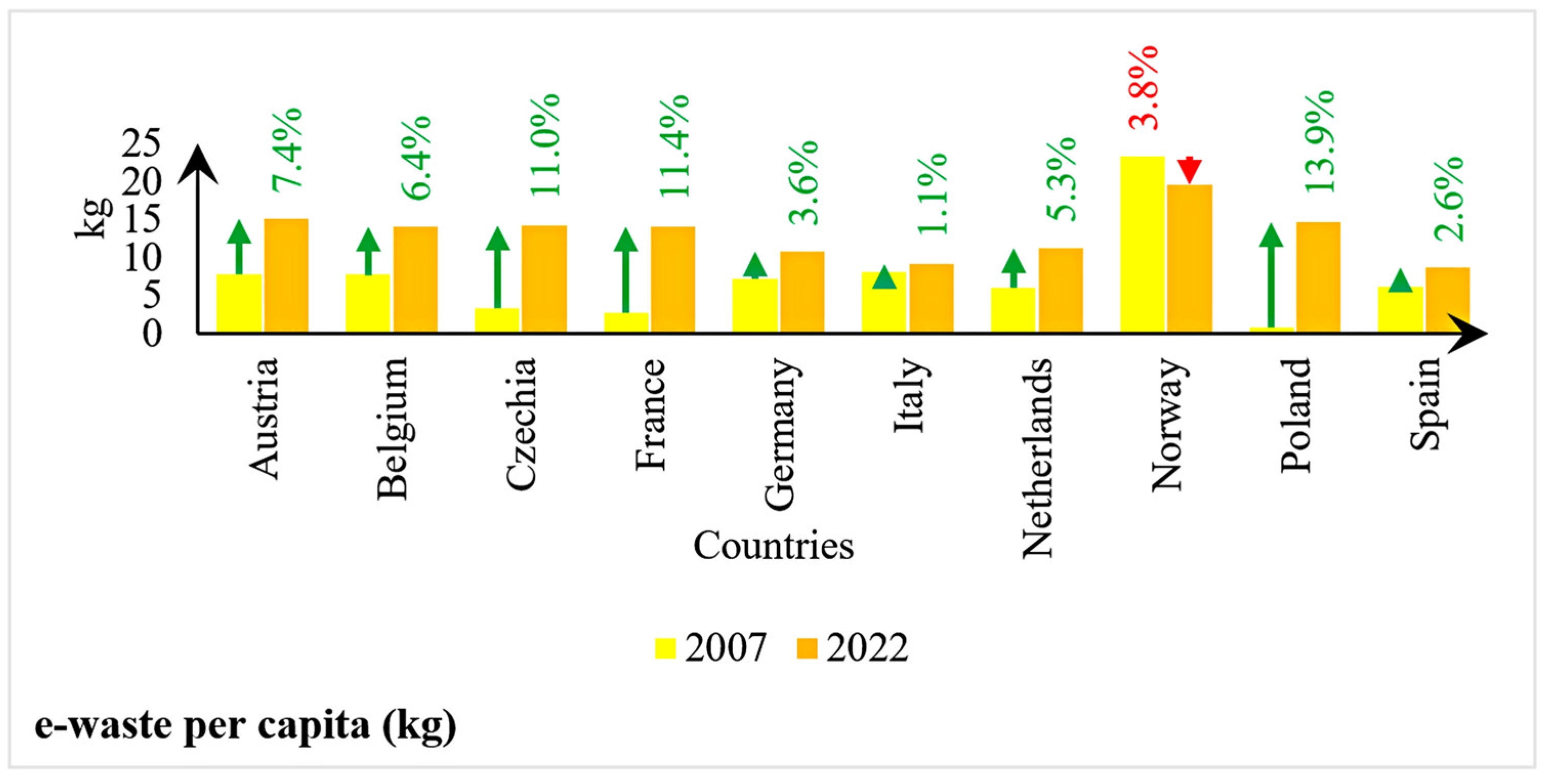
(i) Alongside the advancement of technology, the European continent has been one of the regions that has seen the fastest shifts and alterations in consumer habits. From this standpoint, the study focuses on the top ten EU countries with the highest levels of e-waste as of 2022. To provide broader insights, the sample comprises countries that dominate Europe in terms of population and development, such as France, Germany, Spain, and Italy. The study aims to reveal the findings in countries where environmental sensitivities are at the forefront with such a sample. (ii) This study investigates the EKC
h developed by [
9] over the ED indicators EF and CO
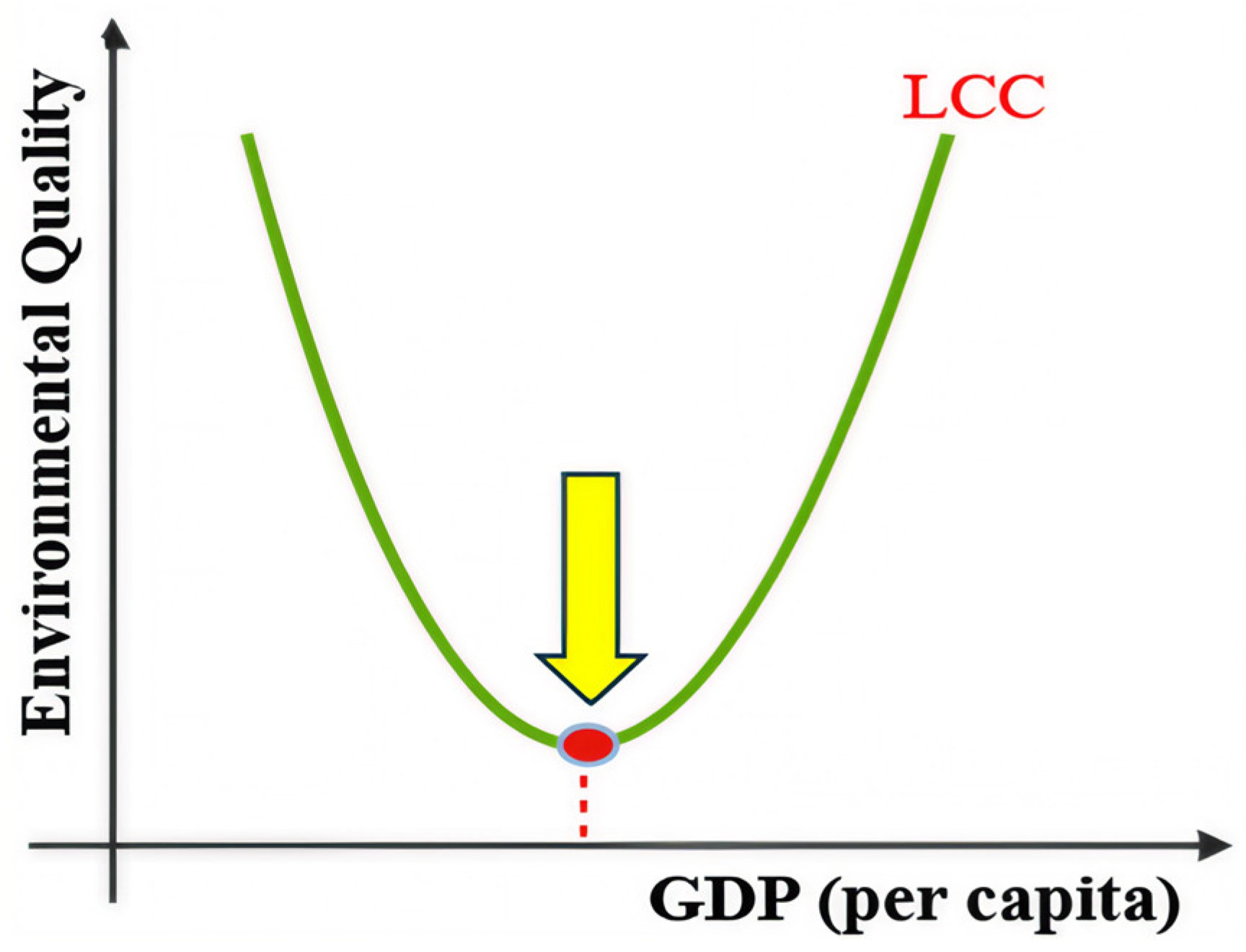
2, and the LCC
h proposed by [
10] over the LCF variable suggested by [
11], which serves as an EQ indicator.
No study has been found in the literature that evaluates e-waste in terms of the LCC
h. The novelty of this study lies in its being the first to address e-waste through the LCC
h. (iii) Due to the concern that including income squared in the same model along with income in testing the EKC
h and LCC
h may cause multicollinearity problems, the present study adopts the approach of [
12] based on the comparison of short-run and long-run elasticities of GDP per capita. Hence, the study seeks to conduct a comprehensive sustainability analysis of e-waste management by considering the environmental impacts of e-waste volumes and e-waste recycling rates. To this end, along with CO
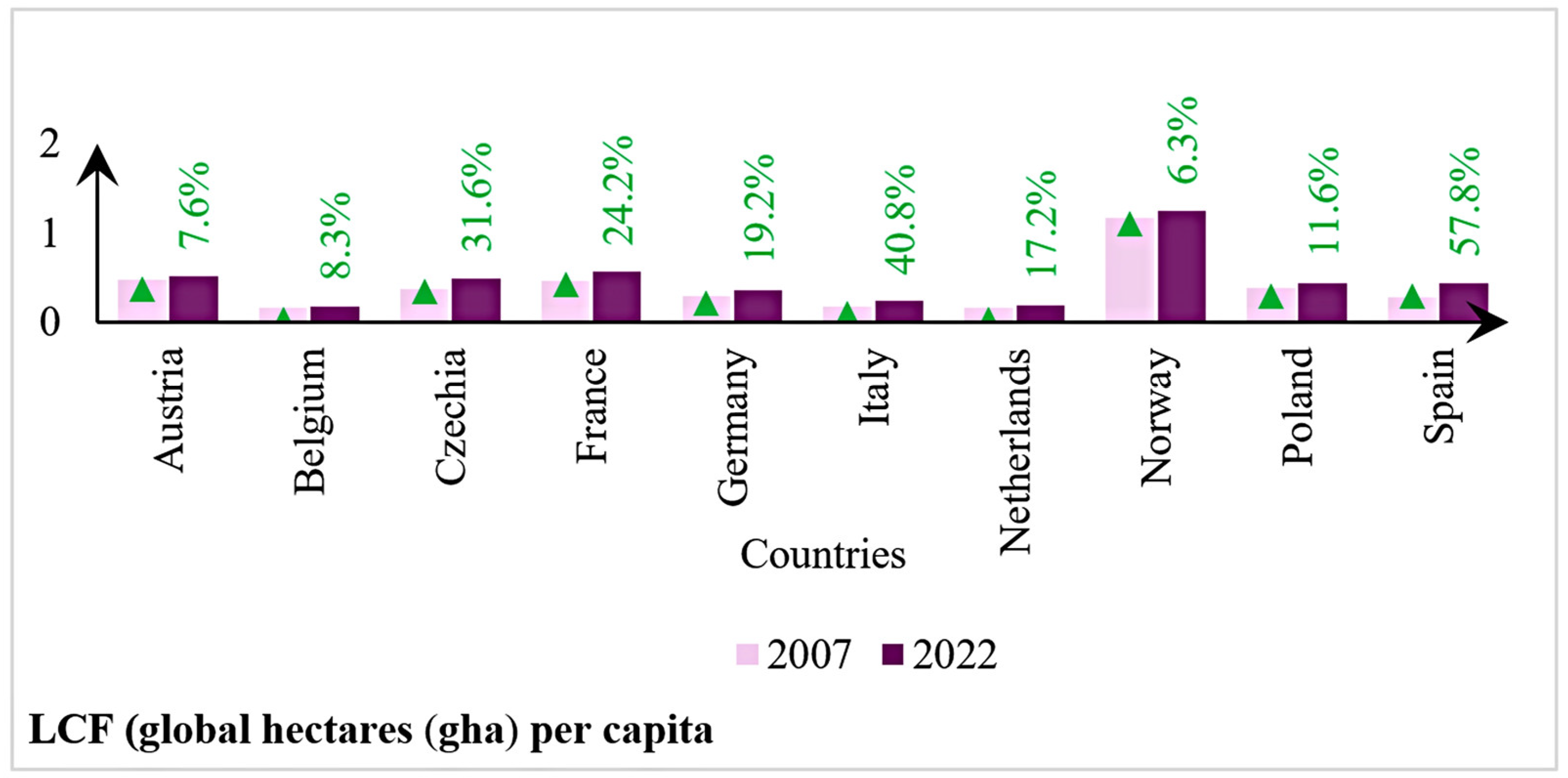
2 emissions and EF indicators, a relatively newer and more comprehensive indicator, LCF, which considers both the demand and supply sides of the environment [
13], is utilised to achieve the study’s target. In light of this, incorporating e-waste indicators into models using an innovative approach will provide valuable information for establishing the EU e-waste policy framework and for evaluating the success of e-waste management in the context of the SDGs for EU countries.
In the remainder of the paper,
Section 2 presents the study’s theoretical background, including the empirical literature on the environmental impact of e-waste quantity and recycling. This section also identifies a gap in the existing literature.
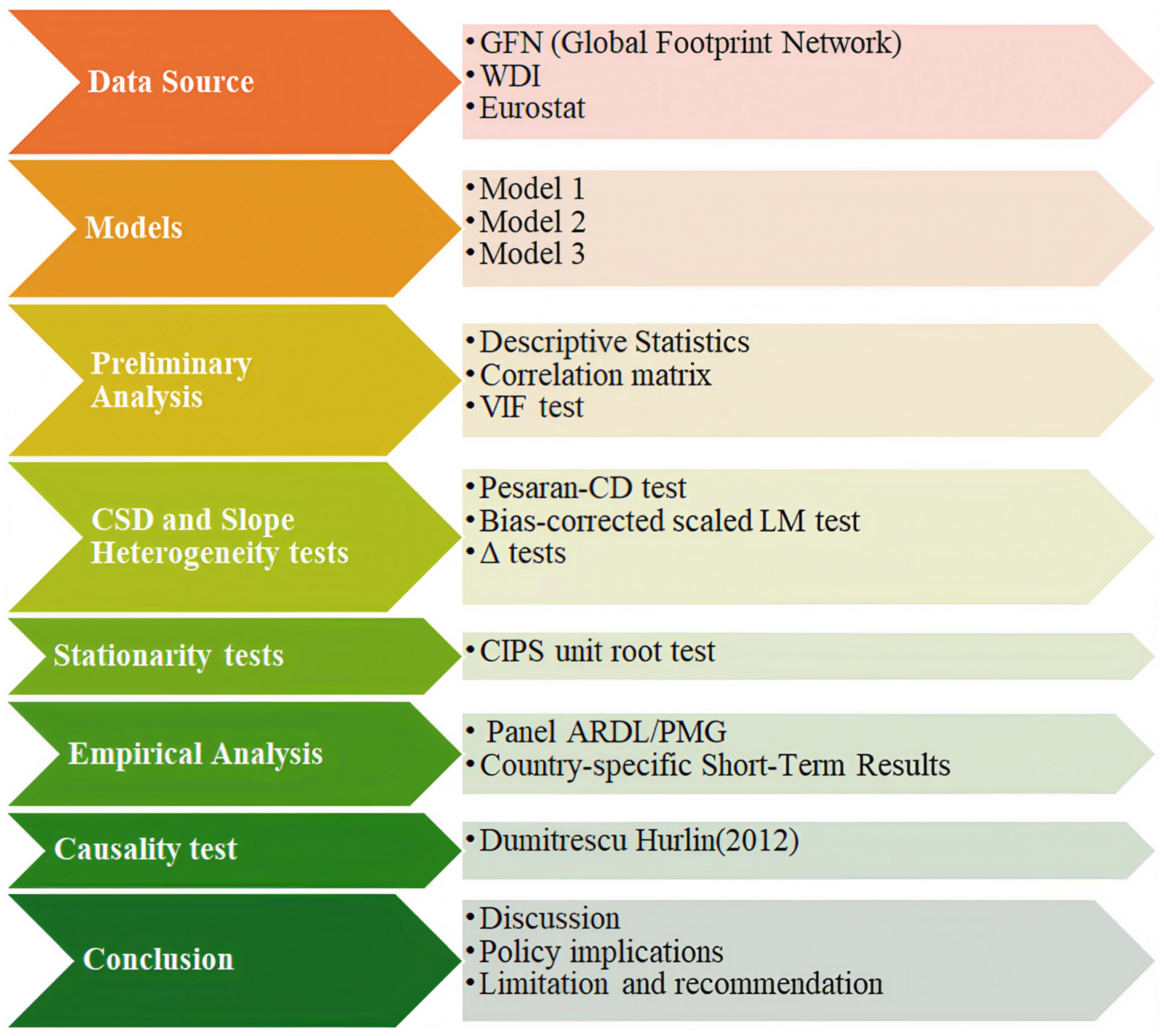
Section 3 provides detailed information on the data, models, and methodology.
Section 4 includes the empirical results and discussion, while
Section 5 concludes with specific policy recommendations on e-waste management based on the findings.
4. Results and Discussion
The descriptive statistics are shown in
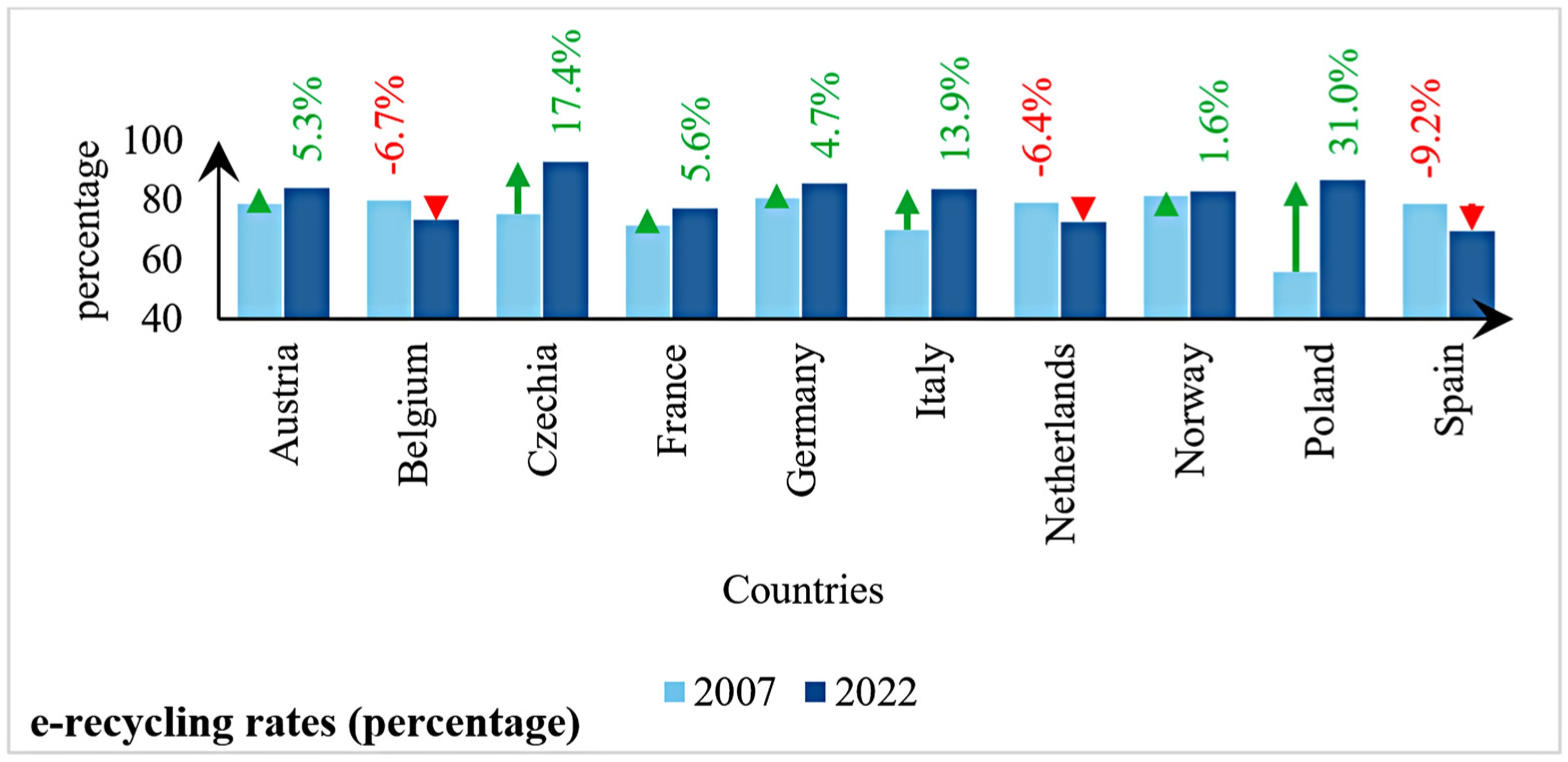
Table 2. These values offer important insights into the environmental, economic, and e-waste conditions in the top ten EU countries that generate the most e-waste. When the average values of the environmental indicators are assessed, it becomes clear that countries with the highest e-waste production experience significant environmental pressures. The highest average values are found in the GDP per capita and energy intensity variables. In addition, although the average e-recycling rate is high, this variable shows high skewness and excessive kurtosis, suggesting that some countries have very low e-waste recycling rates. This finding reveals that EU recycling policies are heterogeneous, and countries exhibit significant disparities in their e-waste recycling performance.
When the correlation matrix results in
Table 3 are examined, one striking finding is that the coefficients between e-recycling and other environmental indicators are very low. This result reveals that the effect of EU e-waste recycling policies on environmental indicators has not yet been fully reflected. The low correlation among the independent variables in the study indicates that there is no multicollinearity. VIF is applied to check the robustness of the findings. The VIF values of all variables range from 1.1 to 4.78. These values are well below the generally accepted limit of 10 [
43]. Therefore, these findings again suggest that there is no multicollinearity among the independent variables, indicating that their relationships do not mask their effects on the dependent variable.
CSD offers informative guidance on the appropriate choice of generation unit root tests and estimation methods.
Table 4 reflects the CSD and homogeneity test results. The applied tests clearly support CSD. This result implies a strong interaction among the top 10 EU countries with the highest e-waste density, suggesting that shocks in one of these countries can have a significant impact on others. In addition, it requires the use of second-generation unit root tests and estimation methods that consider CSD. In addition, the slope coefficients are homogeneous.
Based on the CIPS test results from the second-generation unit root tests presented in
Table 5, all the remaining variables, except the lne-recy variable, are I(1). lne-recy is I(0). Therefore, the variables are stationary at different levels, and none is I(2). As a result, while the dependent variable is I(1), the panel ARDL procedure can be run since the independent variables are I(0) or I(1).
In this study, which focuses on the effects of e-waste density and recycling on environmental indicators, coefficient estimates were obtained using the panel ARDL method. These results cover both short- and long-term effects and are presented in
Table 6. The fact that the independent variables have different integration degrees, provided that the dependent variables are I(1), and that this method is the best-fitted in capturing long-term relationships, even in small samples [
44], supports the choice of this approach. The preference between the PMG and MG estimators is evaluated using the Hausman test [
41]. The results showed that the Hausman test statistics for all three models had
p-values greater than 0.05. Therefore, the PMG method is more suitable than the MG method. Since the error-correction term coefficients are negative and statistically significant in all three models, a long-term relationship exists among the variables in each model. As indicated by the error-correction term coefficient in Model 1, approximately 60% of the imbalances that occur in one year are corrected in the following year, and the system returns to balance after approximately 1.5 years. The results are similar for Model 2, but the period to reach equilibrium is approximately six months shorter. In Model 3, the period to reach equilibrium is approximately five years, as only approximately 20% of the imbalances that occur in one year are corrected in the following year.
The study adopts the approach of Narayan and Narayan [
12], which involves comparing the short- and long-term elasticities of the GDP per capita variable to test the EKC
h and LCF hypotheses. The dependent variable is LCF in Model 1; the short-term and long-term elasticities of the GDP per capita variable are negative and statistically significant. A 1% increase in the GDP per capita variable will decrease the LCF variable representing EQ by approximately 0.70% in the long term, and by approximately 0.72% in the short term. Therefore, the long-term coefficient of GDP per capita is greater than the short-term coefficient of GDP per capita. We interpret this result as indicating that the long-term effect of GDP per capita on EQ is greater than the short-term effect. Hence, the LCC
h is valid for Model 1. In Model 2, the dependent variable is EF, an indicator of ED; the long-term coefficient for GDP per capita is greater than the short-term coefficient. A 1% increase in the GDP per capita variable will result in an approximately 0.87% increase in the EF variable representing ED in the long term. In comparison, it will increase it by approximately 0.83% in the short term. We interpret this result as indicating that the effect of GDP per capita on ED is more dominant in the long term. Thus, the EKC
h is not valid for Model 2.
The short- and long-term elasticities of the GDP per capita variable in Model 3, where the dependent variable is CO2 as another indicator of ED, are positive and statistically significant. The long-term coefficient of GDP per capita is smaller than the short-term coefficient of GDP per capita. A 1% increase in the GDP per capita variable will result in a 0.63% increase in the CO2 variable in the long term, while it will result in a 1.02% increase in the short term. We interpret this result as indicating that the long-term effect of GDP per capita on ED is reduced. Accordingly, the EKCh is valid for Model 3.
The coefficient for the e-recycling variable is statistically significant in all models and is positive in Model 1 and negative in Models 2 and 3. This result shows that as the e-recycling rate increases, EQ increases and ED decreases. For Model 1, a 1% increase in e-recycling rates results in a 0.61% increase in the LCF variable representing EQ. For Models 2 and 3, a 1% increase in e-recycling rates reduces the EF and CO2 variables reflecting ED by approximately 0.36% and 0.49%, respectively. The variable for e-waste per capita is statistically significant in Models 2 and 3 but not in Model 1. This positive coefficient in Models 2 and 3 indicates that ED deepens as e-waste per capita increases. Because a 1% increase in e-waste density for Models 2 and 3 increases the EF and CO2 variables by approximately 0.18% and 0.30%, respectively. The energy intensity variable has the most tremendous impact on ED indicators. A 1% increase in energy intensity increases the EF and CO2 variables by approximately 1.61% and 1.96%, respectively. It decreases the LCF variable by 0.55%. Parallel to literature, as energy intensity increases, EQ deteriorates, and ED increases. Similarly, in the long term, a 1% increase in natural resource rents reduces LCF and EF by roughly 0.04%, while increasing CO2 emissions by 0.02%. In the short term, however, the effect of this variable on environmental indicators is generally statistically insignificant. Therefore, it appears that the increase in natural resource rents weakens countries’ long-term ecological carrying capacity, negatively affects environmental sustainability, and puts pressure on EQ, particularly through carbon-intensive production structures. This situation poses serious threats to environmental sustainability and contradicts the SDGs.
When the country-based short-term results in
Table A2,
Table A3 and
Table A4 are assessed overall, the countries with a statistically significant coefficient on the error correction term across all models are Austria, Czechia, Norway, and Germany. These results indicate a long-term balance relationship, suggesting that short-term imbalances will be corrected over time. For Model 3, which considers ED over CO
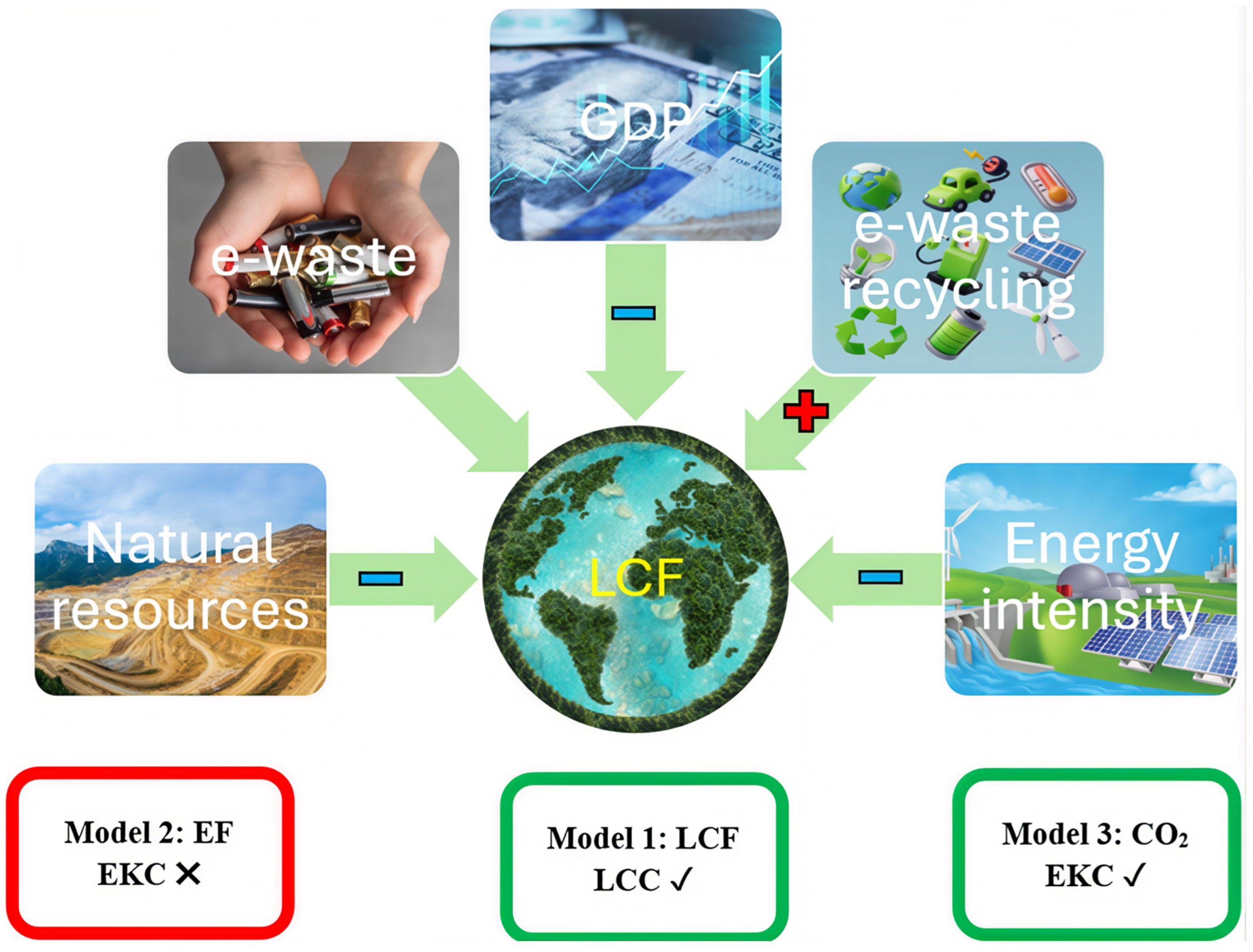
2, the coefficient on the error correction term is significant for all countries except Belgium and the Netherlands. The same coefficients are significant for all countries except Belgium and France for Model 2, where we consider ED over EF. For Model 1, the coefficients are predominantly significant. The shortest period for the imbalances to reach balance is Belgium in Model 1, Spain in Model 2, and Czechia in Model 3. The short-term e-waste recycling rate coefficients are positive for Belgium and Spain, indicating that increases in this variable are associated with higher EQ in these countries. For the remaining countries, the coefficient is either negative or statistically insignificant. Therefore, we construe that e-waste recycling policies in these countries are not yet sufficiently developed or have not yet fully realised their results. Short-term e-waste density coefficients are negative for Poland and Spain, indicating that increases in this variable are associated with reductions in EQ in these countries. For the rest countries, this coefficient is either positive or statistically insignificant. Norway is where all coefficients are statistically significant in the short term, while Czechia and Spain are the countries for Models 2 and 3. The overall findings are visually summarised in
Figure 6 below.
The PMG estimator does not provide inferences regarding the causality relationship between variables. According to the D-H panel causality test results presented in
Table 7, a bidirectional causality relationship is detected between GDP per capita and environmental indicators. This finding demonstrates that, just as economic growth impacts environmental indicators. Environmental indicators also influence the sustainability of economic activities. A one-way causality relationship exists between the energy intensity variable and environmental indicators. The direction of the relationship is from energy intensity to LCF and EF in Models 1 and 2, whereas it is from CO
2 to energy intensity in Model 3. The bidirectional causal relationship between e-waste intensity and EF indicates that these variables mutually influence one another. The causal relationship between ED indicators and the e-waste recycling rate indicates that society or policymakers respond to e-waste recycling policies in the face of ED. The absence of any causal relationship between e-waste recycling rates and ED indicators may indicate that e-waste recycling rates are insufficient.
When the Dumitrescu–Hurlin panel causality results are reviewed, it is generally observed that environmental indicators are primarily shaped by economic structure, energy use, and waste management policies. The strong, unidirectional causal effect of energy intensity on LCF demonstrates that energy efficiency policies play a critical role in EQ. In contrast, the lack of a significant causal relationship between e-recycling rate and e-waste intensity and LCF suggests that the intensity and recycling rates of electronic waste are insufficient to improve EQ on a scale or with sufficient effectiveness. The bidirectional causality between EF and e-waste intensity shows that environmental pressures shape e-consumption behaviour, while increasing e-waste further expands EF. Causal relationships from CO2 emissions to e-waste intensity and energy intensity reveal that carbon-intensive production structures both increase energy use and accelerate e-waste generation. Thereby, it is evident that environmental sustainability cannot be achieved solely through policies based on increasing e-recycling rates. The study concludes that structural transformations to reduce energy intensity, a shift away from carbon-based production, and policies to prevent e-waste must be implemented simultaneously.
5. Conclusions
Today, rapid technological development and transformation make our lives easier and help prevent time loss by accelerating processes. The emergence of a new technological product every day reduces the use of other products, leading some to be withdrawn from circulation. As technology continues to develop rapidly, the amount of worldwide e-waste also increases. These wastes are also one of the factors contributing to environmental degradation. This issue, which falls within the scope of the SDGs, forms the backbone of the study. In furtherance of this objective, this paper is the first to evaluate the impact of e-waste consumption and recycling on EQ across the top 10 EU countries with the highest e-waste density within the LCCh. The lack of a study specifically examining the impact of e-waste consumption and recycling on LCF highlights an important research gap in the literature. In this regard, the study aims to fill this research gap by testing the LCCh alongside the EKCh using panel data analysis techniques, with a focus on e-waste variables. The overall findings and inferences obtained from the Panel ARDL/PMG method are as follows: The LCCh is valid for EU countries. In contrast, the EKCh varies depending on the dependent variable. While the EKCh is invalid for Model 2, where the dependent variable is EF, the EKCh is valid for Model 3, where the dependent variable is CO2. In the long term, the e-waste recycling rate has encouraging effects on EQ and improving effects on ED. Similar results hold for Models 2 and 3 regarding e-waste per capita, but not for Model 1. As e-waste density increases, ED increases. In line with the literature, as energy density increases, EQ decreases, while ED increases. The most significant adverse effect on ED is attributed to this variable. Since the effects and magnitudes of the short-term country-specific coefficients differ across countries, this implies that the effects of EU general environmental policies vary across countries.
The findings clearly demonstrate that e-waste management is a critical policy area for achieving environmental sustainability in EU countries. The analysis results show that increases in e-waste volumes lead to higher CO2 emissions and EF indicators. Conversely, e-waste recycling rates play a limiting role in environmental pressures and support the LCF indicator, especially in the long term. These findings indicate that e-waste policies should focus not only on reducing waste volumes but also on increasing the efficiency of recycling infrastructure. In this vein, reassessing EU electronic waste policy sets, taking into account the LCF indicator, which reflects EQ more holistically, will make valuable contributions to achieving the SDGs.
Digitalisation and increasing reliance on technology harm the environment by increasing energy consumption and posing environmental risks, such as e-waste. Given the dependence of human beings on electrical and electronic devices, suggestions to reduce their use are unlikely to be very realistic at this point. Thus, specific policy suggestions for EU countries could be summarised as follows: Based on the analyses, it has been concluded that the long-term use of e-devices and their recycling into the economy are both economically and environmentally crucial. Proper recycling of lithium-ion batteries and electronic devices such as mobile phones, white goods, and computers will improve countries’ welfare. Additionally, it will undertake valuable tasks to support the SDG-3 health and quality of life target by isolating harmful substances that should not be released into the air, water, or soil. From this standpoint, within the scope of SDG-13 climate action, countries should enhance the capacities of existing recycling facilities that collect, separate, and process e-waste, and establish new ones. Furthermore, easy financing tools could be developed for e-waste recycling investments, and tax advantages might be provided. As outlined in SDG-12’s responsible production and consumption target, when the life of an electronic device ends for any reason, the manufacturer might be obliged to take it back and recycle it at scrap value. On the consumption front, applications could be developed to encourage the return of old products, such as mobile phones, computers, televisions, and white goods, which are frequently replaced. To illustrate, discounts or coupons might be offered to consumers who return old products. In addition, consumers who do not return old products and want to buy the new model, except those buying a product for the first time, might be penalised with an additional e-waste tax. Furthermore, to reduce negative externalities, these policy recommendations will make e-waste management a strategic tool for achieving sustainable development goals, thereby securing a fair and sustainable future for future generations. Consequently, we consider the effective management of e-waste not only an economic or environmental necessity, but also a development strategy directly related to many SDGs targets.
Limitations
Notwithstanding that it is the first paper to address the relationship between e-waste and LCF, it has several important limitations. We see the time dimension as a remarkable limitation. Specifically, the lack of recent data on “Total Natural Resources Rents” weakens the study’s timeliness. Additionally, since the analyses are applied to a relatively homogeneous country group, such as the EU, results from countries with different levels of development should be compared. Complementarily, the asymmetric effects of e-waste variables were not considered, and it was assumed that the effects of increases and decreases in these variables were equal. However, the effects of increases and decreases in these variables on environmental indicators may differ. From this point forward, future studies could provide meaningful insights into the relationships between LCF and e-waste by accounting for the asymmetric effects of e-waste-related variables across a broader, more heterogeneous country group.