Article

Drivers of Farmers’ Willingness to Recycle Pesticide Packaging Waste: A Configurational Analysis
School of Humanities and Public Administration, Jiangxi Agricultural University, Nanchang 330045, China
*
Author to whom correspondence should be addressed.
Sustainability 2026, 18(4), 1708; https://doi.org/10.3390/su18041708
Submission received: 22 December 2025 / Revised: 23 January 2026 / Accepted: 5 February 2026 / Published: 7 February 2026

Abstract

A mix of internal and external factors affect farmers’ recycling practices with regarding pesticide packaging waste. However, most of the research that has been done so far has concentrated on the individual effects of these elements rather than providing a clear explanation of the intricate mechanisms by which a variety of internal and environmental factors work together to drive recycling behavior. This study builds an integrated “internal–external” factor analysis framework based on Lewin’s Behavior Model, integrating Organizational Support Theory and the Theory of Planned Behavior to close this gap. We examine the many configurational pathways influencing farmers’ willingness to recycle pesticide packaging debris using fuzzy-set Qualitative Comparative Analysis (fsQCA). The results showed that there are four different configurational approaches that lead to a high readiness to recycle: the information–norm interaction-driven path, the capability–belief-driven path, the norm–emotion endogenous-driven path, and the psychology-driven dominant path. Farmers’ attitudes toward recycling were found to be a key component in all four routes, indicating that it is essential to attaining high recycling willingness. The findings of this study offered policy insights for encouraging recycling behavior and assisted in identifying the intricate causal processes of multi-factor synergy impacting farmers’ propensity to recycle pesticide packaging trash.

1. Introduction

The 20th National Congress of the Communist Party of China explicitly proposed the initiative of building beautiful, harmonious and livable rural communities. This is not only the core tenet of comprehensively advancing rural revitalization and an inherent requirement for accelerating the development of a strong agricultural sector [1], but also a crucial measure to fulfill the people’s aspirations for a better life. To achieve this goal, it is imperative to strengthen the management of the recycling and disposal of pesticide packaging waste. As a country with a large population, China relies heavily on pesticides in agricultural production to boost crop yields [2], increase farmers’ incomes, and secure a stable supply of agricultural products. Consequently, this practice has generated a substantial volume of pesticide packaging waste, which has emerged as a primary source of environmental pollution in rural regions. Statistics show that China’s pesticide consumption reached approximately 1.155 million metric tons in 2023 [3]. Based on estimates of standard pesticide packaging capacity, this has generated approximately 1.155 billion to 11.55 billion units of pesticide packaging waste [4]. Yet, the actual recycling performance remains far from satisfactory, with the overall recycling rate consistently below 15% [5]. Empirical data further underscores this predicament: In 2020, despite proactive initiatives launched by local agricultural authorities—including over 4500 training programs on the recycling and disposal of pesticide packaging waste, which benefited 364,700 participants—the outcomes achieved nationwide remained modest. Specifically, a total of 28,700 tons of packaging waste was collected, of which 22,700 tons were disposed of (including a partial carry-over from 2019), leaving approximately 7400 tons of collected waste untreated [3]. This demonstrates that although regulatory advocacy and training initiatives are ongoing, a considerable disparity persists between waste collection and final disposal, resulting in persistently low overall recycling efficiency.
Vast volumes of non-degradable pesticide packaging waste are haphazardly discarded in farmlands, ditches, and watercourses. This practice not only severely compromises rural environmental sanitation and visual appeal, clogs watercourses, and inhibits plant growth, but also degrades soil structure, diminishes soil fertility, and impairs ecological functions [6,7]. Furthermore, the 2–5% of pesticide residues left in the packaging leach into soil and water bodies via rainfall, contaminating the surrounding ecological environment. Such contamination then enters the food chain, endangering human health and even triggering cases of poisoning in both humans and livestock [8]. Therefore, exploring effective recycling mechanisms for pesticide packaging waste is of profound significance for environmental conservation and the advancement of sustainable agricultural development.
As key stakeholders in the recycling of pesticide packaging waste, farmers’ recycling behaviors not only directly determine the efficacy of waste management practices, but also exert a profound impact on the sustainable development of the rural ecological environment [9]. Yet, farmers’ willingness to participate in pesticide packaging waste recycling remains generally low at present [10], which has become a critical bottleneck restricting the progress of rural ecological civilization construction. Farmers’ recycling willingness acts as the intrinsic driver of pesticide packaging waste recycling initiatives, directly influencing the translation of their recycling intentions into actual behaviors [11]. Therefore, clarifying the mechanisms underlying the factors that influence farmers’ recycling willingness is of profound significance for enhancing recycling efficiency and advancing the green development of agriculture.
The factors influencing farmers’ willingness to recycle pesticide packaging waste can be categorized into two dimensions: internal driving factors and external environmental factors. With regard to internal factors, existing studies have systematically analyzed the internal driving mechanisms from the following perspectives: (1) the psycho-cognitive dimension, including social trust [10], environmental awareness [12], and perceived value [13,14]; (2) the individual literacy dimension, encompassing ecological literacy [15] and environmental responsibility [10]; and (3) the behavioral attitude dimension, involving supportive attitudes [16] and perceived behavioral control [17], among others. As for external factors, scholars have conducted empirical analyses on the impacts of social norms [18], economic incentives [19], policy interventions [20], and household resource endowments [21] on pesticide packaging recycling behavior. While existing studies have deepened our understanding of the factors affecting such recycling behavior, notable research gaps persist. Firstly, most studies focus on either internal or external factors in isolation, with few integrating both into a unified analytical framework. Recycling behavior is a complex process co-determined by internal and external factors [22]; thus, examining only their independent effects constrains a deeper understanding of the multiple concurrent factors and pathways influencing recycling decisions. Secondly, prevailing studies predominantly rely on traditional regression methods, which typically assume a symmetric linear relationship between influencing factors and recycling willingness, and focus on identifying the “net effects” of individual variables. However, within the specific context of rural China, pesticide packaging recycling behavior is often shaped by the complex interactions of multiple internal and external factors. For instance, economic incentives (an external factor) may substantially boost recycling willingness in certain regions, yet their effectiveness is constrained in areas characterized by low levels of social trust (an internal factor) or inadequate infrastructure (an external factor); similarly, the role of social norms (an internal factor) may also vary according to the degree of village cohesiveness. Traditional regression methods struggle to capture such asymmetric, condition-dependent complex causal relationships, and thus fail to uncover the heterogeneous driving pathways generated by different combinations of internal and external factors. Therefore, a configurational analysis of internal and external factors is crucial for uncovering the synergistic mechanisms through which multiple factors jointly shape farmers’ willingness to recycle pesticide packaging waste. Accordingly, drawing on Lewin’s Behavior Model, this study aims to explore the complex driving mechanisms generated by the coupling of multiple factors underlying farmers’ recycling willingness.
Compared to existing studies, this research makes two key theoretical and methodological contributions from a causal complexity perspective. First, beyond merely assembling three established theories, this study integrates Lewin’s Behavior Model, the Theory of Planned Behavior, and Organizational Support Theory into a dynamic, multi-level configurational framework. This framework conceptualizes six antecedent conditions—internal beliefs (attitudes, perceived control, subjective norms) and external support (informational, instrumental, emotional)—as interdependent and substitutable elements. These elements can combine in various nonlinear ways to jointly drive farmers’ willingness to recycle. Such a perspective moves beyond the “net-effect” logic of traditional linear models, responds to the call for “integrative research” on the antecedents of recycling behavior [23], and contributes to a deeper understanding of the drivers and pathways for recycling, thereby offering more targeted guidance for promoting farmers’ participation. Second, by adopting a configurational perspective and employing the Fuzzy-Set Qualitative Comparative Analysis (fsQCA) method, this study holistically identifies the diverse driving pathways underlying farmers’ willingness to recycle pesticide packaging waste. This enables a more systematic analysis of the antecedents of high recycling willingness and serves as a valuable reference for a deeper comprehension of its formation mechanism.

2. Theoretical Analysis and Model Development

This study integrates Lewin’s Behavior Model, the Theory of Planned Behavior (TPB), and Organizational Support Theory (OST) to construct the theoretical analytical framework of this paper. These three theories are neither randomly selected nor simply combined as discrete variables; instead, their integration is grounded in their theoretical complementarity and explanatory power in the specific context of this study. Lewin’s Behavior Model provides a meta-framework for the “internal–external” interaction, emphasizing that behavior is the outcome of the combined influence of individual characteristics and environmental conditions [24]. This provides a theoretical foundation for integrating internal psychological factors with external support factors, overcoming the limitations of prior studies that examined internal and external factors in isolation. The Theory of Planned Behavior (TPB) systematically elucidates the intrinsic psychological mechanisms underlying the formation of behavioral intentions. Its three core dimensions—attitude, subjective norms, and perceived behavioral control—encompass multiple psychological levels involving cognition, emotion, and social norms, rendering it well-suited for analyzing the psychological processes of farmers in making recycling decisions. Organizational Support Theory (OST), from the perspective of external systems, articulates the structural conditions that underpin behavioral support—consisting of informational, emotional, and instrumental support—which align precisely with the three key practical barriers farmers encounter in the recycling process: inadequate knowledge, low willingness, and operational inconvenience, thereby laying a theoretical foundation for targeted external intervention measures.
This study adopts a configurational perspective, with the core premise that farmers’ willingness to recycle pesticide packaging waste is not determined by a single factor independently and linearly, but rather jointly shaped by different configurational combinations of multiple internal and external factors. In other words, the principle of equifinality applies here—distinct combinations of antecedent conditions may yield the same outcome of high recycling willingness. On this basis, Lewin’s Behavior Model provides an integrated meta-framework for the interaction between internal and external factors; the Theory of Planned Behavior (TPB) elucidates the intrinsic psychological components of behavioral intention (attitude, subjective norms, and perceived behavioral control); and Organizational Support Theory (OST) articulates the structural elements of external support systems (informational, instrumental, and emotional support). The relationships among these elements are not merely additive; instead, they may form distinct causal configurations through complementary, substitutive, or synergistic interactions, which jointly shape farmers’ recycling willingness. Accordingly, the core theoretical proposition of this study is that there exist multiple equally effective driving pathways consisting of internal and external factors, rather than a single optimal pathway.

2.1. Internal Factors: TPB Configuration Dimensions

The Theory of Planned Behavior (TPB) is recognized as one of the most influential and widely applied psychological frameworks for exploring the internal psychological factors that underpin pro-environmental behaviors [25]. This theory posits that an individual’s behavioral decisions are significantly shaped by three core factors of the framework: attitude, subjective norms, and perceived behavioral control [26]. As micro-level operators engaged in green agricultural production, farmers’ recycling decision-making is jointly shaped by these three core dimensions of the Theory of Planned Behavior (TPB). From a configurational perspective, the three dimensions of the Theory of Planned Behavior (TPB) are regarded as potential psychological antecedents that constitute high recycling willingness, and their effectiveness hinges on the manner of their mutual combination as well as the alignment with external conditions.
Attitude refers to an individual’s emotional inclination and value judgment toward engaging in a specific behavior. In the context of pesticide packaging waste recycling, if farmers hold a positive attitude toward such recycling behavior, they are more inclined to perceive it as a moral responsibility or environmental obligation, which thus renders it a key driving factor in certain configurational combinations. Existing research has shown that attitude consistently emerges as a critical psychological antecedent across a variety of pro-environmental behaviors [27,28].
Subjective norm reflects an individual’s perception of social pressure exerted by family members, neighbors, and other referents to engage in or refrain from a specific behavior. In other words, when individuals perceive that people significant to them hold a positive attitude toward such behavior, this perception can shape their own positive behavioral intention [29]. Existing research has also demonstrated that within the domain of waste recycling, subjective norm acts as a key predictor of recycling intention [30,31]. In rural China, where collectivist culture exerts a strong influence, subjective norms not only act as a reference for individual decision-making but may also evolve into a normative driver of behavioral intentions—particularly in the absence of external incentives, where they can serve as a substitutive condition for other factors in configurational combinations. It is worth noting that within the integrated theoretical framework of this study, subjective norms assume a unique cross-boundary role. Although their intrinsic meaning is rooted in external social expectations and pressures, in the specific context of the “acquaintance society” in rural China, close interpersonal networks, a strong collectivist tradition, and the emphasis on “face” and community reputation enable such external social pressures to be rapidly and deeply internalized. Therefore, this study categorizes subjective norms into internal psychological factors while highlighting their key role as a channel for the “internalization of external social pressure”. This internalization process vividly reflects the complex interaction between individuals and the environment at the micro-psychological level, which aligns with the core proposition of Lewin’s Behavior Model.
Perceived behavioral control refers to an individual’s perception of the ease or difficulty of performing a target behavior. In the context of pesticide packaging waste recycling, if farmers perceive the recycling process to be convenient and feasible, they are more likely to maintain a high level of recycling willingness even in the absence of instrumental support. Existing research has shown that perceived behavioral control exerts a significant influence on individuals’ willingness to engage in pro-environmental behaviors [27,32]. Perceived behavioral control often forms a complementary or substitutive relationship with external support conditions (e.g., informational and instrumental support), which jointly ensures the behavioral feasibility of pesticide packaging waste recycling.

2.2. External Factors: Organizational Support Configuration Dimension

The three dimensions of the organizational support system are also regarded as combinable external conditional factors, which function in distinct configurational combinations to address the practical obstacles that farmers encounter in the pesticide packaging waste recycling process—namely, inadequate knowledge, low willingness, and operational inconvenience. As a crucial external driver for motivating farmers to engage in pro-environmental behaviors, organizational support provides a viable pathway to address the challenge of internalizing the positive externalities inherent in pesticide packaging waste recycling. According to the economic externality theory, farmers’ recycling behavior generates significant positive externalities, which leads to insufficient intrinsic motivation for their participation. Therefore, it is essential to establish effective incentive and restraint mechanisms through the synergistic efforts of both formal and informal organizations. This approach aims to boost farmers’ enthusiasm for participating in green agricultural production and contribute to the construction of a beautiful countryside. Organizational Support Theory (OST) further posits that the diverse forms of support provided by organizations to farmers are key factors in motivating them to contribute to organizational goals. When farmers perceive care and support from relevant organizations, they tend to display more positive extra-role behaviors and a higher willingness to cooperate and comply [33,34]. Following the research approach of Hou, G.J. et al. [35], this study classifies organizational support into three dimensions: informational support, emotional support, and instrumental support. These three dimensions are interdependent and mutually indispensable, which together constitute a key mechanism influencing farmers’ pesticide packaging waste recycling willingness and behavior.
Informational support refers to the clear, accurate, and practical knowledge delivered to farmers by relevant organizations through diverse channels. This specifically includes disseminating recycling-related policies and regulations, raising awareness of the hazards associated with improper disposal, clarifying recycling procedures and collection locations, providing training on safe rinsing and temporary storage methods, and publicizing the outcomes of recycling initiatives. Its core function is to eliminate cognitive uncertainty and foster a rational understanding of pesticide packaging waste recycling among farmers. First, informational support helps elevate farmers’ cognitive levels and foster their pro-environmental attitudes. A key reason why farmers casually discard pesticide packaging waste is their inadequate understanding of its long-term environmental hazards (e.g., soil and groundwater pollution) and proper disposal methods. Informational support delivered through training sessions, informational materials, and new media campaigns can effectively improve farmers’ environmental knowledge and risk awareness. This can shift their passive mindset of “this is not my concern” and gradually cultivate a positive attitude that “recycling is the right and necessary course of action”. Second, informational support helps clarify behavioral norms for farmers. Through clear and specific operational guidance, informational support informs farmers of “how to proceed”—for instance, how to apply the “triple-rinsing method” for the preliminary cleaning of pesticide bottles, how to sort plastic bottles, glass bottles, and packaging bags, where to return the packaging waste, and the specific collection schedules. Such clear guidelines effectively eliminate confusion and anxiety arising from “not knowing how to act”, thereby enhancing the feasibility of pesticide packaging waste recycling and farmers’ participation in it. In configurations, informational support often serves as a fundamental cognitive element, paving the way for the effective functioning of other supporting conditions, such as emotions and tools.
Emotional support refers to the approaches—such as care, respect, recognition, and encouragement—adopted by relevant organizations to meet farmers’ emotional needs and alleviate their psychological burdens. Specifically, this is manifested in publicly commending farmers for their participation in recycling, establishing environmental protection point systems and honor rolls, promptly responding to farmers’ doubts and complaints, and fostering a community atmosphere where “environmental protection is everyone’s responsibility”. Its core function is to stimulate intrinsic motivation and cultivate behavioral identification. First, emotional support serves as an important channel for enhancing farmers’ sense of belonging and identification. When village cadres or cooperative leaders proactively solicit farmers’ opinions through home visits or seminars and emphasize statements such as “this is our shared homeland that requires collective efforts”, farmers can perceive the respect and care from the organization, which in turn strengthens their sense of belonging to the collective. Such emotional bonds help translate “organizational-level recycling goals” into “individual-level responsibility identification”, effectively motivating farmers to participate in pesticide packaging waste recycling on a voluntary and consistent basis. Second, emotional support helps alleviate farmers’ psychological burdens and negative emotions. In the process of pesticide packaging waste recycling, some farmers may perceive the behavior as an “additional burden”. Emotional support provided through organizational expressions of gratitude, praise, and public recognition (e.g., selecting “Model Farmers for Environmental Protection”) can effectively dispel such negative sentiments. This makes farmers feel that their efforts are acknowledged and valued, thereby enhancing their sense of accomplishment and honor [36]. Finally, emotional support helps strengthen farmers’ sense of moral obligation. Such support is often integrated with moral appeals rooted in local sentiments and a sense of responsibility for future generations, thereby forging an intrinsic driving force for recycling behavior. Through emotional mobilization, organizations link the act of pesticide packaging waste recycling to positive social identities such as “a good villager” or “a responsible producer”. By leveraging moral norms and the concept of “face” (social prestige), this form of support effectively boosts farmers’ willingness to participate in recycling. In specific paths, emotional support can form an emotion–norm coupling with subjective norms, compensating for the absence of instrumental support.
Instrumental support refers to the provision of necessary material resources, infrastructure, and convenient conditions by relevant organizations to reduce the behavioral costs incurred by farmers participating in recycling. This specifically includes setting up accessible collection points in farmlands, providing special recycling bags or containers, establishing an efficient logistics system, and implementing economic incentives such as deposit-refund schemes and old-for-new exchange programs. Its core function is to remove external behavioral barriers and improve the feasibility of recycling behavior. In the practice of pesticide packaging waste recycling, instrumental support serves as a key measure to reduce farmers’ behavioral costs. Currently, the primary barriers to farmers’ participation in recycling often stem from time, labor, and transportation costs. To effectively mitigate these barriers, relevant organizations can significantly reduce the practical burdens that farmers encounter in the recycling process by establishing easily accessible collection points (e.g., at village shops or agricultural cooperatives), providing door-to-door collection services, and distributing standardized recycling bags or containers [37]. This facilitates the smoother conversion of recycling willingness into actual behavior. For pesticide packaging waste recycling facilities, their availability and accessibility are critical factors influencing farmers’ willingness to participate. Existing research has shown that the spatial accessibility and temporal convenience of collection networks directly shape farmers’ perception of convenience. When collection points are sparsely distributed, remotely located, or have irregular operating hours, the time and labor costs for farmers increase significantly, often leading to a decline in their recycling willingness. Conversely, a densely distributed recycling system that is close to farmers’ production and living areas and operates on a stable schedule conveys a positive signal of “recycling being easy to implement” through “readily available” services, thereby effectively boosting farmers’ participation. As a guarantee for the economic feasibility of pesticide packaging waste recycling, instrumental support plays a pivotal role. Substantive economic incentive measures—such as establishing clear exchange standards (e.g., how many containers are equivalent to a bag of salt or a bottle of shampoo)—can directly compensate farmers for their labor input in the recycling process. This creates a positive feedback loop of “more recycling, more benefits”. Such incentive measures are particularly crucial in the initial stage of establishing a recycling system, as they help guide farmers to develop recycling habits and enhance their willingness to participate. In some combinations, tool support can serve as a factor of convenience, complementing perceived behavioral control; in other combinations, its absence may be compensated by emotional or normative conditions.

2.3. Dynamic Interaction and Configurational Logic: The Synergistic Path of TPB Elements, Organizational Support Dimensions, and Recycling Behavior

Traditional research often examines the impact of individual factors on farmers’ behaviors in isolation. However, farmers’ decision-making regarding pesticide packaging waste recycling constitutes a complex and systematic behavioral process. The configurational perspective emphasizes that no single factor alone determines behavior; instead, multiple antecedent conditions combine in diverse ways to jointly produce behavioral outcomes. These conditions are interrelated and interdependent, forming a system characterized by “multiple conjunctural causality”. By integrating the Theory of Planned Behavior (TPB) and Organizational Support Theory (OST), this study aims to explore in depth how these internal and external factors are “bundled” to dynamically drive or inhibit farmers’ pesticide packaging waste recycling behaviors. Under configurational logic, there is no fixed linear relationship between the three components of the Theory of Planned Behavior (TPB) and the three dimensions of Organizational Support Theory (OST); instead, they form a dynamically reconfigurable factor pool.
The core elements of the Theory of Planned Behavior (TPB)—attitude, subjective norms, and perceived behavioral control—and the three dimensions of Organizational Support Theory (OST)—informational support, emotional support, and instrumental support—do not operate in isolation. Instead, they interact through diverse combinations to achieve synergy, compensation, or substitution effects, collectively forming the “causal recipe” that drives recycling behavioral intention. Complementary, reinforcing, or substitutive relationships may exist among these elements. Specifically, organizational support comprehensively reinforces the three psychological constructs central to the Theory of Planned Behavior (TPB). Informational support helps shape a positive behavioral attitude; instrumental support enhances an individual’s perceived behavioral control; and emotional support not only further consolidates a positive attitude (e.g., by elevating the sense of honor associated with recycling behavior) but also strengthens subjective norms (e.g., by making individuals perceive recycling as a socially encouraged norm within the collective). Correspondingly, once farmers develop strong recycling intentions and engage in recycling behaviors, this can in turn further motivate organizations to provide more sustained and improved support.
In the context of pesticide packaging waste recycling, the three elements of the Theory of Planned Behavior (TPB) are not independent of one another but form a complex, dynamic, and interactive system through mutual influence. When farmers perceive recycling as easy to implement (i.e., high perceived behavioral control)—for example, after obtaining tangible rewards for their recycling efforts—this successful experience enhances their positive evaluation and emotional response toward the behavior, thereby improving their behavioral attitude. Conversely, repeated failures in recycling attempts are likely to foster a negative attitude toward recycling. Furthermore, through social learning and information dissemination processes, farmers may adopt and internalize the recycling norms advocated by important reference groups (e.g., village cadres, peers, or agricultural cooperatives). This, in turn, can transform their personal attitudes from passive compliance (“I am told to recycle”) to active identification (“I want to recycle”). Farmers with positive attitudes or those who perceive strong social pressure are often more proactive in seeking relevant information and solutions to overcome behavioral barriers, thereby enhancing their level of perceived behavioral control. For example, they may take the initiative to inquire about the specific locations of collection points or collaborate with other farmers to address transportation challenges. In summary, when explaining pesticide packaging waste recycling behavior, the three elements of the Theory of Planned Behavior (TPB) form a multi-layered and dynamically interactive network structure. Here, perceived behavioral control serves as an “enabler” of the behavior, subjective norms function as both an “ignition switch” and a “stabilizer”, and attitude constitutes the “endogenous driving force” for the sustainability of the behavior. Therefore, any policy or management strategy aimed at promoting recycling behavior should holistically consider the synergistic effects of all three elements, avoiding an over-reliance on a single one. For instance, relying solely on awareness-raising campaigns (to influence attitude) or legislative constraints (to strengthen norms) while neglecting the convenience of the recycling system (which affects perceived behavioral control) is unlikely to achieve the desired results. These three elements are mutually reinforcing and evolve dynamically, collectively driving recycling behavior from passive compliance to active and conscious adoption.
Within the organizational support system for pesticide packaging waste recycling, there exists a close dynamic interaction among emotional support, instrumental support, and informational support. Informational support, firstly, acts as the foundation and prerequisite, “paving the way” for emotional and instrumental support. Clear, accurate, and transparent information is a prerequisite for building trust and alleviating resistance. When farmers, through informational support, fully understand the hazards posed by pesticide packaging residues and waste to soil, water sources, and their own health, and comprehend the long-term significance of recycling work, they often shift from a state of “passive obedience” to one of “active responsibility”, fostering a sense of environmental mission and moral identification. This value resonance, rooted in enhanced cognition, is itself a potent form of emotional support. Conversely, if information is opaque, it is likely to breed suspicion and distrust among farmers, rendering any form of emotional support potentially ineffective due to a lack of credibility. Furthermore, the effective implementation of instrumental support also hinges on informational support. Organizations must first, through information dissemination, clarify to farmers “where to take the waste, how to submit it, and what happens to it” to ensure the full realization of instrumental support. For instance, even if a collection point is established, it will remain underutilized if farmers are unaware of its location and operating hours. Thus, informational support guarantees the accessibility and usability of instrumental support.
Secondly, instrumental support acts as the vehicle and safeguard, “grounding” the effects of emotional and informational support in practical action. Convenient and efficient instrumental support is, in itself, a potent form of emotional support. When farmers find the recycling process straightforward, collection points easily accessible, and even receive economic incentives, they perceive the organization as “genuinely attending to their needs” rather than imposing an additional burden. This sense of being understood and respected strengthens their sense of belonging to the organization and their enthusiasm for participation, thereby amplifying the efficacy of emotional support. At the same time, instrumental support provides the tangible means for informational support to be verified and translated into practice. For instance, information on safe rinsing methods requires corresponding tools (e.g., cleaning brushes, protective gloves) to enable its concrete implementation. When farmers successfully complete the safe rinsing process using these tools, they truly trust and internalize the information they previously received. In this way, instrumental support drives information from mere “cognition” to tangible “action and practice”, thus consolidating the credibility of the disseminated information.
Finally, emotional support serves as the bond and catalyst, “empowering” informational and instrumental support. In an atmosphere characterized by trust and positive affect, farmers are more inclined to accept and trust the information conveyed by relevant organizations. When they perceive the organization’s care and recognition, they tend to view such information as a “well-intentioned reminder” rather than a “rigid directive”. This affective trust significantly enhances the dissemination efficiency of informational support. Conversely, in the absence of emotional support, even the most scientifically rigorous information may be met with skepticism. Furthermore, positive affect can motivate farmers to make fuller use of instrumental support and exhibit stronger cooperative intentions. Farmers who feel a sense of honor will not only actively participate in recycling but may also proactively encourage their neighbors to join, thereby improving the overall operational efficiency of the recycling network. Thus, emotional support transforms instrumental support from “cold infrastructure” into an integral part of a “warm community”, enhancing both the utilization efficiency of the supporting tools and their synergistic effects.
In summary, the above theoretical analysis revealed the complex and dynamic interactions between the core elements of the TPB and the dimensions of organizational support. Nevertheless, traditional analytical approaches based on linear thinking assumptions—such as regression analysis—proved inadequate in capturing the potential asymmetries and equivalences among these factors. Specifically, in the actual context of driving farmers’ recycling willingness, multiple distinct combinations of antecedent conditions (i.e., ‘configurations’) could yield the same outcome of high recycling willingness. Within each configuration, core conditions acted synergistically and complementarily to produce a combined effect; across different equivalent configurations, the absence of one peripheral condition could be compensated for by the presence of another. This “multiple conjunctural causation” constituted the core concern of the configurational perspective and the fsQCA method. Therefore, this study aimed not only to verify the theoretical relationships among these factors but also to apply fsQCA to explore how these factors jointly drove high recycling willingness through specific configurations with substitution and complementary effects. This moved beyond the examination of the net effects of individual variables, enabling a deeper understanding of the diverse yet equally effective complex causal pathways that facilitated farmers’ recycling behavior in heterogeneous rural contexts.
Based on the core theoretical framework of Lewin’s Behavior Model, this study further integrates the Theory of Planned Behavior and Organizational Support Theory, and adopts the fuzzy-set qualitative comparative analysis (fsQCA) method to systematically explore the combined driving paths through which three internal factors—recycling attitude, perceived behavioral control, and subjective norms—and three external factors—informational support, instrumental support, and emotional support—jointly influence farmers’ willingness to recycle pesticide packaging waste.
Accordingly, this study constructed a theoretical model of the configurational paths driving farmers’ willingness to recycle pesticide packaging waste (Figure 1).

3. Research Design

3.1. Choice of Method

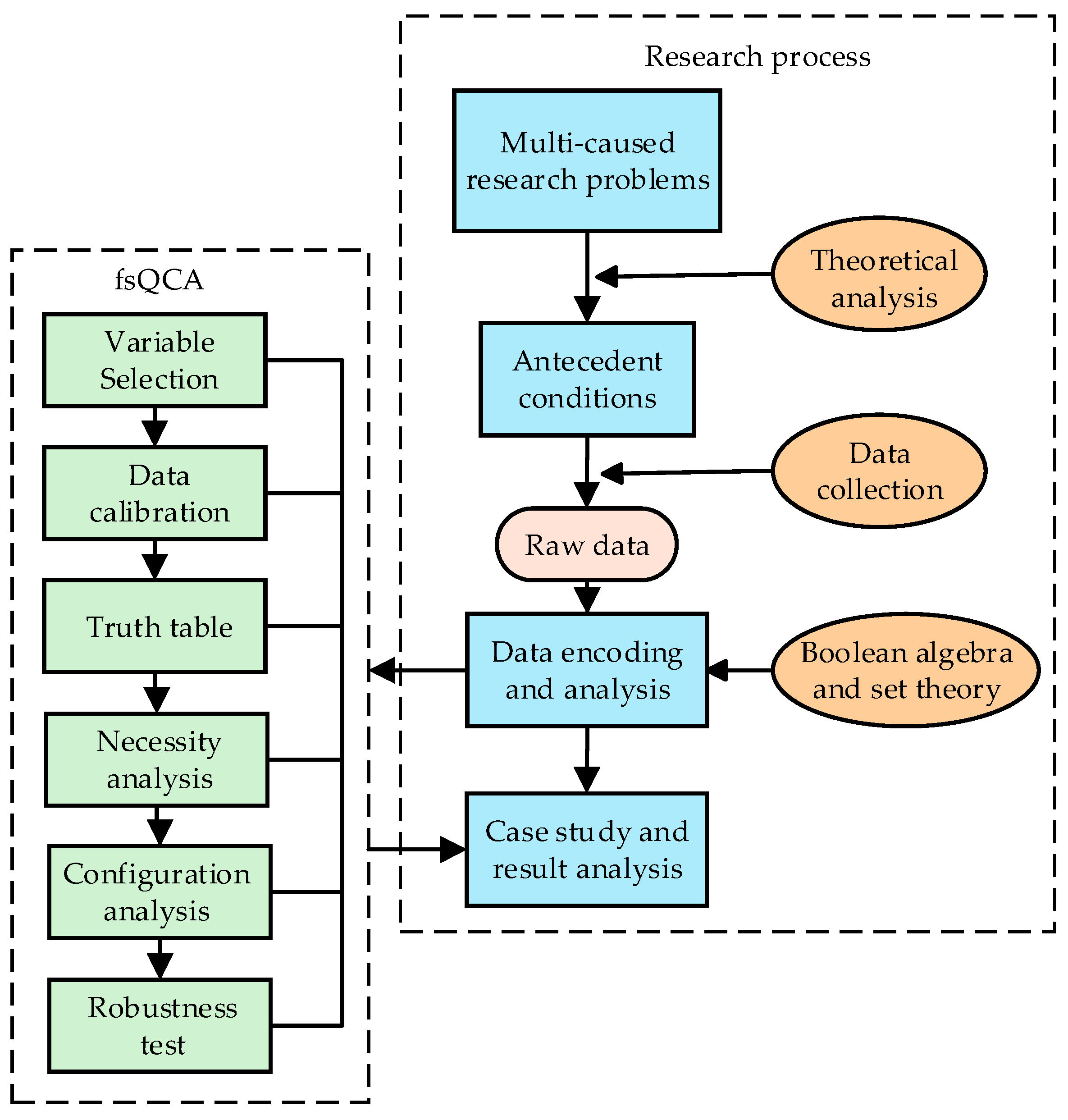
From a configurational perspective, this study employed the fsQCA method to investigate the synergistic effects of factors influencing farmers’ willingness to recycle pesticide packaging waste. The rationale for this methodological choice was twofold: (1) The fsQCA method is well-suited for analyzing the impact of configurations formed by multiple conditions on an outcome, moving beyond the examination of independent effects of single factors [38]. This study focused on six internal and external factors—attitude toward recycling, perceived behavioral control, subjective norm, informational support, instrumental support, and emotional support—aiming to reveal how they jointly drive farmers’ recycling willingness through a mechanism of “multiple conjunctural causality”. The fsQCA method thus provides a novel approach and methodological support for studying such complex causal relationships [39]. (2) The fsQCA method offers flexibility regarding sample size requirements. It is applicable not only to small or medium-sized samples but also effectively handles large-scale samples [40]. The 381 samples used in this study aligned well with the fsQCA method, which helped enhance the external validity of the research. fsQCA can be divided into five steps: “data calibration → obtaining the truth table → testing of necessary conditions → sufficiency analysis of condition configuration → robustness analysis of results”. Figure 2 shows the process.

3.2. Data Sources

The data analyzed in this study were derived from a farmer questionnaire survey conducted by the research team in Jiangxi Province in 2023. The field survey in rural areas of Jiangxi Province was carried out by undergraduate students from Jiangxi Agricultural University. To ensure the representativeness of the sample, the accuracy of the survey content, and the authenticity and reliability of the data, students from different regions within Jiangxi Province were selected as interviewers. They received standardized training prior to the formal survey, which included a detailed explanation of the questionnaire design and relevant considerations. The survey was conducted by leveraging the opportunity of students returning to their hometowns during the summer vacation. It adopted a one-on-one interview format with farmers, and the survey personnel completed the questionnaires based on the interview responses. A total of 400 questionnaires were collected. After sorting and excluding invalid questionnaires, 381 valid questionnaires were obtained, resulting in an effective response rate of 95.25%. The specific composition of the sample is presented in Table 1.
Explanation of Sample Representativeness: The education level of the sample in this study (86.88% have a high school education or above) is higher than the national average for farmers. This may reflect the relatively higher education levels of farmers in certain areas of Jiangxi Province and is also related to the younger age structure of the sample (30–49 years old accounting for 64.57%). In addition, the term “farmers” in this study includes traditional smallholders, household farm operators, and cooperative members, the latter of whom generally have higher educational levels and incomes. Although efforts were made to enhance sample representativeness through multi-region sampling and standardized training, the survey conducted by returning students may have introduced some convenience sampling bias. Therefore, caution should be exercised when generalizing the conclusions of this study to farmer groups with lower educational levels or different socioeconomic backgrounds.

3.3. Variables and Calibration

Measurement of Antecedent and Outcome Variables

Drawing upon theoretical analysis and existing literature, the formation of farmers’ willingness to recycle pesticide packaging waste is posited to be influenced by a combination of internal and external factors. Internal factors encompass attitude toward recycling, perceived behavioral control, and subjective norm, while external factors include informational support, instrumental support, and emotional support.
Attitude toward Recycling. Adapted from the scale by Knussen et al. [41], this variable was assessed using three items. A sample item is: “Recycling pesticide packaging waste helps protect the agricultural environment”. The Cronbach’s α coefficient for this construct was 0.880, indicating good reliability.
Perceived Behavioral Control. Adapted from the scale by Knussen et al. [41], this variable was measured using four items. A sample item is: “I can easily recycle pesticide packaging waste”. The Cronbach’s α coefficient for this construct was 0.803, demonstrating acceptable reliability.
Subjective Norm. Adapted from the scale by Knussen et al. [41], this variable was evaluated with four items. A sample item is: “Most people who are important to me think I should recycle pesticide packaging waste”. The Cronbach’s α coefficient for this construct was 0.910, reflecting excellent reliability.
Informational Support. Adapted from scales by Issock et al. [42] and Wang et al. [43], this variable was measured using three items. A sample item is: “Providing information on how to recycle pesticide packaging waste would motivate me to participate in recycling”. The Cronbach’s α coefficient for this construct was 0.820, indicating good reliability.
Instrumental Support. Adapted from the scale by Chen and Gao [44], this variable was measured using three items. A sample item is: “Organizations such as the government, industry associations, and professional service agencies provide subsidies or other financial support for your recycling of pesticide packaging waste”. The Cronbach’s α coefficient for this construct was 0.921, indicating excellent reliability.
Emotional Support. Adapted from scales by Eisenberger et al. [45] and Zhang et al. [34], this variable was measured using three items. A sample item is: “Organizations such as the government, industry associations, and professional service agencies show full concern for your recycling of pesticide packaging waste”. The Cronbach’s α coefficient for this construct was 0.916, reflecting excellent reliability.
Willingness to recycle pesticide packaging waste. Farmers’ willingness was measured using a single item: “Are you willing to recycle pesticide packaging waste?” (1 = very unwilling, 2 = unwilling, 3 = neutral, 4 = somewhat willing, 5 = very willing). While single-item measures may have limitations in capturing the multidimensionality of a concept, this approach was adopted because the wording is clear, aligns with farmers’ cognitive habits, and demonstrated good face validity and comprehensibility in the pilot survey.
The meanings and descriptive statistics of the above variables are presented in Table 2.

3.4. Variable Calibration

Prior to conducting the fsQCA analysis, the data for both the antecedent conditions and the outcome variable needed to be calibrated to convert them into fuzzy-set membership scores [46]. Considering the specific context of this study and the distributional characteristics of the original data, a direct calibration approach was adopted. This method transformed the six antecedent conditions and the outcome variable into fuzzy-set membership scores ranging from 0 to 1. Specifically, the 95th, 50th, and 5th percentiles of the sample data were selected as anchor points, corresponding to “full membership”, “crossover point”, and “full non-membership”, respectively [38]. The specific calibration thresholds for each variable are detailed in Table 3.

4. Empirical Analysis and Results

4.1. Analysis of Necessary Conditions for Individual Antecedents

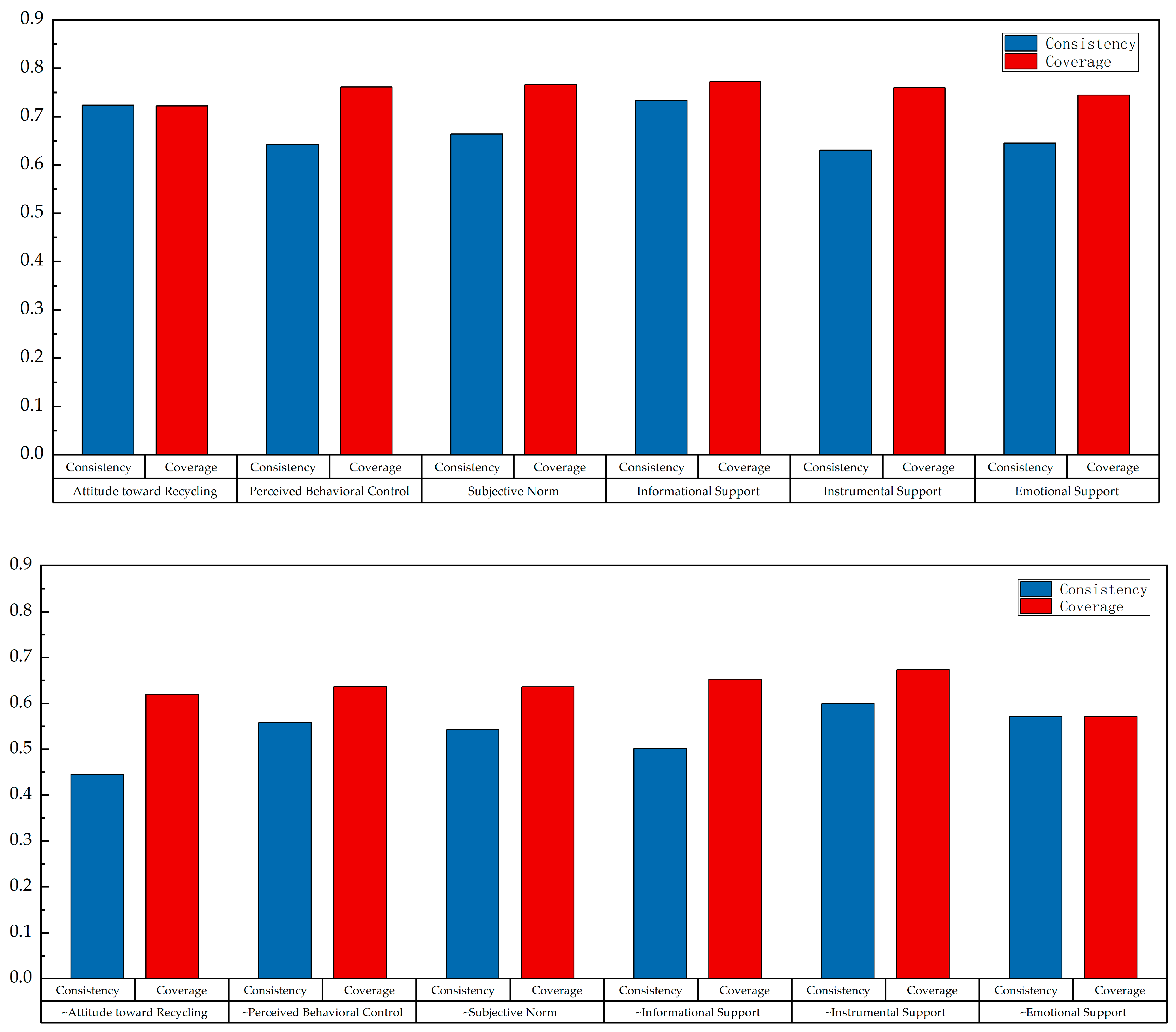
Prior to conducting the configurational analysis, it was first necessary to test whether each antecedent condition constitutes a necessary condition for the outcome. A condition is deemed a necessary condition if it is consistently present when the outcome occurs and its consistency index exceeds 0.9 [46]. This study employed fsQCA 3.0 software to assess the necessity of the six antecedent conditions: attitude toward recycling, perceived behavioral control, subjective norm, informational support, instrumental support, and emotional support. The specific results, presented in Table 4 and Figure 3, indicate that the consistency levels for all six conditions were below 0.9. This suggests that no single condition alone constitutes a necessary condition for farmers’ high willingness to recycle pesticide packaging waste. Consequently, a sufficiency analysis was conducted to further explore the configurational paths that effectively enhance recycling willingness.

4.2. Configurational Sufficiency Analysis

Utilizing fsQCA 3.0 software, a configurational analysis was performed on the six condition variables. In constructing the truth table, three key parameters were specified: a consistency threshold of 0.8, a case frequency threshold of 1, and a Proportional Reduction in Inconsistency (PRI) threshold of 0.7. The standard analysis yielded three types of solutions: complex, parsimonious, and intermediate. In accordance with established research practices [40], the intermediate solution was adopted as the primary basis for interpretation, supplemented by the parsimonious solution. Antecedent conditions present in both the intermediate and parsimonious solutions were classified as core conditions, whereas those appearing exclusively in the intermediate solution were deemed peripheral conditions. Based on these criteria, the configurational paths leading to a high willingness to recycle pesticide packaging waste were delineated. As presented in Table 5, a total of six configurations (H1, H2, H3a, H3b, H4a, H4b) were identified. The model’s overall solution consistency was 0.86, with each causal configuration exceeding 0.85. The overall solution coverage reached 0.532, indicating that the model exhibits good explanatory power and satisfies the sufficiency requirement. Based on the consistency of their core conditions, configurations H3a and H3b were grouped into one category, and H4a and H4b into another, forming two second-order equivalent configurations. Consequently, four distinct configurational paths were summarized that effectively enhance farmers’ high willingness to recycle pesticide packaging waste: the psychology-driven dominant path, the norm–emotion endogenous-driven path, the capability–belief-driven path, and the information–norm internalization-driven path.
(1) The Psychology-Driven Dominant Path. Configuration H1 features a combination of high attitude toward recycling, high perceived behavioral control, high subjective norm, and the absence of high emotional support as core conditions, which is termed the “psychology-driven dominant path.” This configuration has a consistency of 0.875 and a raw coverage of 0.296, accounting for approximately 29.6% of the sample cases. The logical relationship of this path can be formally expressed as: High Attitude toward Recycling * High Perceived Behavioral Control * High Subjective Norm * ~High Emotional Support → High Recycling Willingness. Specifically, when farmers cognitively endorse recycling behavior (high attitude toward recycling), perceive themselves as capable of engaging in it (high perceived behavioral control), and recognize the expectations of significant others (e.g., family members, friends, village cadres) regarding their participation in recycling (high subjective norm), they can still develop strong recycling willingness even without sufficient emotional care and encouragement (~high emotional support). Under this specific psychologically driven mechanism, providing substantive support (e.g., specific information or recycling tools) is not a necessary condition for stimulating recycling willingness. This indicates that for farmer groups with fully internalized moral identity, the formation mechanism of their recycling willingness exhibits distinct endogenous characteristics. Their behavioral motivation primarily stems from an intrinsic moral drive derived from integrating environmental responsibility into their self-concept, as well as from internalized social normative pressure they have accepted, while their sensitivity to changes in external conditions (e.g., emotional care or specific convenience facilities) is relatively low. Therefore, the psychology-driven dominant path identifies a type of highly autonomous and stable farmer behavior pattern: when positive value beliefs (attitude), sufficient efficacy perceptions (perceived behavioral control), and internalized normative pressure (subjective norm) synergize to collectively catalyze a stable moral identity, farmers’ willingness to participate in recycling demonstrates strong psychological resilience and behavioral persistence. This willingness, anchored by endogenous moral identity, significantly reduces its dependence on external emotional support and immediate convenience conditions, thereby laying a key behavioral foundation for building a low-cost, sustainable rural environmental governance system.
To further understand the characteristics of farmers adhering to the H1 pathway, we conducted a post hoc analysis. By comparing the H1 configuration cases in the sample with other cases, we found that this group achieved slightly higher mean scores than the overall sample average in terms of educational attainment (H1 group: 3; H2 group: 3; H3 group: 2.98; H4 group: 2.97) and self-rated environmental awareness (H1 group: 6.56; H2 group: 6.43; H3 group: 6.35; H4 group: 6.32) (overall sample averages: educational attainment: 2.96; environmental awareness: 6.29). This finding aligns with the theoretical perspective of “moral identity internalization”, suggesting that higher levels of cognition and awareness may facilitate the internalization of environmental norms.
(2) The Norm–Emotion Endogenous-Driven Path. Path H2 indicates that high attitude toward recycling, high subjective norm, high emotional support, and the absence of high instrumental support together constitute the core conditions, termed the “norm–emotion endogenous-driven path”. Here, “endogenously driven” refers to a driving force primarily derived from farmers’ internal psychological factors (e.g., attitude toward recycling) and the soft constraints and support within their social networks (including subjective norms and emotional support), rather than relying on external hardware conditions. “Norm and emotion” emphasize the central role of two key social factors: high subjective norm and high emotional support. The absence of high instrumental support, a key feature of this path, indicates that even without sufficient “hard conditions” (e.g., convenient facilities, recycling tools, or economic incentives), farmers can still develop high recycling willingness as long as they perceive normative pressure and emotional support. This path has a consistency of 0.900 and a raw coverage of 0.272, accounting for 27.2% of the sample cases. Its logical relationship can be formally expressed as: High Attitude toward Recycling * High Subjective Norm * High Emotional Support * ~High Instrumental Support → High Recycling Willingness. Path H2 identifies a unique mechanism driving farmers’ willingness to engage in environmental governance within the context of rural China. While the traditional Theory of Planned Behavior (TPB) emphasizes the combined effects of attitude, subjective norm, and perceived behavioral control, this path shows that in this context, the importance of perceived behavioral control is substituted by emotional support and subjective norm. This suggests that in rural communities characterized by a strong collectivist culture, individual considerations of behavioral control may be subordinated to conformity with collective will and the fulfillment of a sense of community belonging. Farmers’ decisions reflect more “social rationality” than “individual economic rationality”. Meanwhile, this path clearly illustrates the role of “social capital” in environmental governance: subjective norms reflect the normative dimension of social capital, institutionalizing and normalizing recycling behaviors through village regulations and meetings to form a soft constraint. Emotional support reflects the relational dimension of social capital, fostering an atmosphere of trust, reciprocity, and community through grassroots organizations and neighborly interactions, thereby enhancing farmers’ sense of identification and willingness to participate. This governance model, led by village collectives and based on social capital, to some extent alleviates or compensates for the temporary insufficiency of instrumental support, revealing a resilient adaptation mechanism in farmer behavior under resource constraints. However, it should be noted that the long-term sustainability of this ‘low-cost’ approach based on social norms may rely on the intensive maintenance of community networks, and the prolonged absence of instrumental support could ultimately increase the behavioral burden on farmers. Therefore, this approach does not imply that social factors can permanently replace instrumental support; rather, it emphasizes the compensatory role that social capital can play in situations where instrumental support is initially insufficient.
(3) The Capability–Belief-Driven Path. Path H3 indicates that high attitude toward recycling, high perceived behavioral control, and high informational support constitute the core conditions, summarized as the “capability–belief-driven path”. Here, the “capability” dimension is reflected in high perceived behavioral control and high informational support, while the “belief” dimension corresponds to high attitude toward recycling. This path comprises two equivalent sub-paths (H3a and H3b) with consistency scores of 0.873 and 0.887, and raw coverage of 0.312 and 0.378, accounting for approximately 31.2% and 37.8% of the sample cases, respectively. The logical relationship of sub-path H3a can be formally expressed as: High Attitude toward Recycling * High Perceived Behavioral Control * High Informational Support * ~High Instrumental Support → High Recycling Willingness. This sub-path indicates that when the foundational “capability–belief” conditions are met, the addition of emotional support (e.g., care, encouragement, and recognition) can further strengthen farmers’ recycling willingness, representing a “value-added” driving mechanism. The logical relationship of sub-path H3b can be formally expressed as: High Attitude toward Recycling * High Perceived Behavioral Control * High Informational Support * High Emotional Support → High Recycling Willingness. This sub-path demonstrates that, with a solid “capability–belief” foundation, farmers can maintain high recycling willingness even without sufficient instrumental support (e.g., door-to-door collection services or provision of recycling equipment), reflecting a “self-reliant” behavioral pattern. Since farmers already possess a positive attitude, sufficient information, and high perceived behavioral control, they are more inclined to actively utilize existing conditions or seek alternative ways to engage in recycling behavior rather than relying on external support.
(4) The Information–Norm Internalization-Driven Path. Path H4 indicates that high attitude toward recycling, high subjective norm, and high informational support form the core condition set, termed the “information–norm internalization-driven path.” Here, “information” emphasizes the crucial role of high informational support in this path, serving as an important external resource for promoting recycling behavior. “Norm internalization” refers to the coexistence of high attitude toward recycling (individual internal moral identification) and high subjective norm (external social expectation pressure), reflecting that environmental norms have transformed from external constraints into individuals’ internal beliefs and behavioral standards. This path comprises two equivalent sub-paths (H4a and H4b) with consistency scores of 0.882 and 0.892, and raw coverage of 0.322 and 0.387, accounting for approximately 32.2% and 38.7% of the sample cases, respectively. The logic of sub-path H4a can be expressed as: high attitude toward recycling * high subjective norm * high informational support * ~high instrumental support → high recycling willingness. The logic of sub-path H4b can be expressed as: high attitude toward recycling * high subjective norm * high informational support * emotional support → high recycling willingness. This path emphasizes the combination of external information input and internalized social norms to jointly shape behavioral intentions. Here, information acts as a “catalyst,” transforming external norms into personal cognition.
Based on the above analysis, this study identifies four configurational paths that can effectively enhance farmers’ willingness to recycle pesticide packaging waste: the psychology-driven dominant path, the norm–emotion endogenous-driven path, the capability–belief-driven path, and the information–norm internalization-driven path. It is worth noting that while attitude toward recycling is a core condition in all configurations leading to high recycling willingness, it does not meet the consistency threshold in the necessary condition analysis and thus is not a necessary condition. This reflects the logic of “multiple conjunctural causality” in QCA: high recycling willingness can be driven by various combinations of conditions, rather than relying on any single factor. Although attitude plays a key role across different paths, its effect often needs to be combined with other conditions (e.g., subjective norm, informational support, perceived behavioral control) to stimulate high recycling willingness. This “core but not necessary” phenomenon further confirms the complexity and diversity of pathways in farmers’ recycling behavior, suggesting that policy interventions should systematically consider the synergistic effects among conditions rather than focusing solely on a single factor.

4.3. Robustness Test

To assess the reliability of the research findings, a robustness test was conducted by adjusting the consistency threshold. Specifically, while keeping all other analytical conditions unchanged, the consistency threshold was increased from 0.80 to 0.85, and the configurational analysis was rerun. The results showed that the configurations obtained after adjusting the threshold were largely consistent with the original configurations, with no significant discrepancies. This outcome further confirms the robustness of the conclusions drawn in this study.

5. Conclusions and Recommendations

5.1. Research Conclusions

By introducing Lewin’s Behavior Model, integrating the Theory of Planned Behavior (TPB) and Organizational Support Theory (OST), and employing the fsQCA method, this study systematically analyzed the multiple configurational paths through which attitude toward recycling, perceived behavioral control, subjective norm, informational support, instrumental support, and emotional support promote farmers’ willingness to recycle pesticide packaging waste. The following conclusions are drawn:
(1) The non-necessity of any single factor and the dominance of concurrent causality were confirmed. Among the six antecedent conditions, none alone constituted a necessary condition for driving high recycling willingness among farmers. This finding strongly supports the core premise of Lewin’s Behavior Model and the configurational perspective: farmers’ recycling willingness is not independently determined by any single internal or external factor but emerges from the concurrent interaction and combination of multiple conditions. The enhancement of farmers’ recycling willingness is thus the result of the joint effect of multiple antecedent conditions, thereby confirming that in complex rural contexts, there exist “multiple concurrent causal relationships” behind pro-environmental behaviors.
(2) Identification of Four Equivalent Configurational Paths. The study identified four configurational paths that can effectively drive high levels of recycling willingness: the psychologically driven dominant path, the norm–emotion endogenous drive path, the capability–belief drive path, and the information–norm internalization drive path. These paths demonstrate equivalence—that is, different combinations of antecedent conditions can lead to the same high-willingness outcome. This empirical result validates the theoretical proposition based on our integrated framework: there exist multiple and equivalent driving paths composed of internal and external factors, rather than a single optimal or universal formula.
(3) The Universal Role of Attitude as a Core but Not Necessary Condition. In all four configurational paths, recycling attitude consistently appears as a core condition. This highlights the crucial role of farmers’ intrinsic evaluation and emotional orientation toward recycling behavior (as posited by the Theory of Planned Behavior). However, attitude does not reach the threshold of a necessary condition, which reinforces configurational logic: although attitude is a key component, its effectiveness is context-dependent and must be combined with other conditions (such as subjective norms, informational support, or perceived behavioral control) to trigger high willingness. This pattern reveals the conditional and complementary nature of psychological drivers in behavioral configurations.
In summary, the research conclusions of this paper first confirm the underlying logic of Lewin’s Behavior Model, namely the “person–environment” interaction framework. The identified pathways concretely demonstrate how internal psychological factors (“person”) and external organizational supports (“environment”) interact through complementary, substitutive, or synergistic means to jointly shape behavioral intention. This transcends previous studies that examined internal or external factors in isolation, providing empirical evidence for understanding behavior as a product of dynamic interaction between individuals and their environment.
Second, the study deepens and contextualizes the Theory of Planned Behavior from a configurational perspective. The research finds that the relative importance and operational pathways of the three TPB core elements—attitude, subjective norms, and perceived behavioral control—depend on the presence or absence of specific organizational support conditions. For example, in the “norm–emotion endogenous–driven path”, perceived behavioral control is absent, while emotional support and subjective norms play compensatory roles. This suggests that in the collectivist context of rural China, social and emotional factors can substitute for individual efficacy perceptions, thereby refining the applicability of TPB in non-Western, community-oriented contexts.
Third, Organizational Support Theory is operationalized and validated in a new context. By demonstrating that informational, emotional, and instrumental supports are not simply additive but interdependent, the study enables Organizational Support Theory to move beyond traditional organizational environments. Its application to research on farmers’ pro-environmental behaviors expands the theoretical boundaries of this framework. Furthermore, the substitutability observed in certain paths (for instance, emotional support compensating for the absence of instrumental support) highlights the dynamic and compensatory nature of organizational support systems in motivating extra-role behaviors such as recycling.
Finally, by employing the fsQCA method, we move beyond linear and symmetric causal assumptions to reveal the equifinal pathways leading to high recycling willingness. This reinforces the value of the configurational perspective in studying complex socioecological behaviors, namely that multiple causal recipes can lead to the same outcome. The study thereby responds to the call within environmental behavior research for more integrative and nuanced theoretical models.

5.2. Policy Recommendations

Based on the above analysis of the antecedent conditions and configurational paths influencing farmers’ willingness to recycle pesticide packaging waste, the following recommendations are proposed to enhance their recycling willingness, promote the green and sustainable development of agriculture, and support the construction of a beautiful countryside.
(1) Given that farmers’ willingness to recycle pesticide packaging waste is influenced by multidimensional antecedent conditions, comprehensive guidance measures are needed. On the one hand, awareness-raising and guidance should be strengthened by not only disseminating knowledge through technical training and information brochures but also by emphasizing emotional appeals and role-model influence. For instance, short videos or posters illustrating the impact of pesticide packaging pollution on their hometowns and future generations could be produced to arouse farmers’ local attachment and environmental awareness. Meanwhile, positive examples should be actively highlighted, such as establishing an “Environmental Protection Advanced Household” honor roll in villages and publicizing their practices through village broadcasting systems and WeChat groups. Leveraging the influence within rural acquaintance networks can gradually foster an atmosphere that values recycling. In addition, recycling competitions among families or village groups can be organized to link recycling behavior with collective honor, turning environmental action into a new rural trend. On the other hand, a long-term mechanism involving the joint participation of the government, enterprises, cooperatives, and farmers should be established, with clear responsibilities for all parties to form a synergistic force. The government is responsible for formulating policies, providing funding, building recycling facilities, and overseeing the entire process. Pesticide manufacturers must fulfill their environmental responsibilities by funding recycling initiatives and implementing deposit systems. Cooperatives and village committees should focus on organization, mobilization, publicity, education, and creating a supportive atmosphere. Through systematic support, farmers’ primary role in the recycling process can be fully realized.
(2) Given that multiple paths drove farmers’ willingness to participate in pesticide packaging waste recycling, and not all farmers are suited to the same path, it is necessary to adopt differentiated and targeted measures based on the decision-making drivers of different types of farmers.
For farmers who follow the “psychologically driven dominant path”, their behavior is primarily motivated by internal beliefs. Jiangxi Province can draw on the successful experience of the “River Chief System” implemented by the Chinese government, which features clear administrative accountability, and innovatively establish honorary roles such as “Ecological Field Chief” or “Environmental Model Household” within village collectives by appointing “civilian river chiefs” or “enterprise river chiefs”. Led by the village committee, farmers with strong environmental awareness and a high willingness to recycle can be publicly selected and authorized as “ecological field chiefs”, integrating them into the village-level environmental governance support system and giving them certain responsibilities in promotion, supervision, and neighborhood influence. By granting social roles and public honors, their internal beliefs can be transformed into community influence, leveraging the role model effect in rural “acquaintance societies” to motivate surrounding farmers.
For farmers who follow the “norm–emotion endogenous drive” path, social norms and emotional support are key. Jiangxi Province can draw on the successful experience of the “River Chief System” implemented by the Chinese government, which features clear administrative accountability, and innovatively establish honorary roles such as “Ecological Field Chief” or “Environmental Model Household” within village collectives by appointing “civilian river chiefs” or “enterprise river chiefs”. It can be explicitly required that village-level forest chiefs and forest rangers, while fulfilling their responsibility for forest resource patrols, also increase inspections and guidance regarding the random disposal of pesticide packaging waste along farmland areas. At the same time, the effectiveness of recycling should be incorporated into the annual assessment indicators for village-level forest/river chiefs, using the existing, proven accountability system to convey pressure and solidify responsibility, thereby ensuring that environmental protection norms are effectively implemented through a combination of administrative and community approaches. It should be emphasized that policies based on this approach should be seen as an effective auxiliary strategy in the early stages of building a recycling system, while their long-term effectiveness still fundamentally depends on convenient and stable recycling service facilities.
For farmers who follow the “capability–belief-driven path”, convenient facility support is needed. It is recommended to integrate and utilize the management and patrol stations and other infrastructure that have been widely established in rural areas under official governance frameworks such as the “Forest Chief System” and “River Chief System”, add temporary pesticide packaging waste collection functions, hang standardized signs, and transform them into “Ecological Management and Protection Service Points”. This approach can not only quickly set up a collection network and save costs, but also leverage the existing management systems and personnel at these stations (such as forest rangers and river patrol officers) to provide fixed-point collection or regular home collection services, effectively addressing the convenience issue of the “last mile”.
For farmers who follow the “information–norm internalization-driven path”, continuous and reliable information is crucial. It is recommended that the Jiangxi Provincial Forestry Department, the Department of Water Resources (Office of the River Chief System), the Department of Agriculture and Rural Affairs, and other relevant functional departments jointly formulate the “Guidelines for the Recycling and Disposal of Pesticide Packaging Waste”. Utilize the existing official training systems and work meeting mechanisms under the “Forest Chief System” and “River Chief System” (such as forest chief meetings and river chief training) to provide specialized training for grassroots forest chiefs, river chiefs, and related personnel. Subsequently, through their forest and river patrols, as well as channels such as village notice boards and WeChat groups, continuous and authoritative policy explanations and knowledge dissemination can be carried out to ensure the accuracy and coverage of information transmission, thereby consolidating farmers’ cognitive internalization.
(3) Given that attitudes toward recycling have a universal influence on farmers’ willingness to recycle pesticide packaging waste, incentive methods such as “point redemption” or small cash subsidies can be implemented to boost their enthusiasm. These measures not only provide economic compensation to farmers but also offer timely positive feedback, strengthening their motivation to participate in recycling and helping to cultivate environmental habits.

6. Research Limitations and Future Prospects

This study integrated Lewin’s Behavioral Model, the Theory of Planned Behavior, and Organizational Support Theory, and employed the fsQCA method to systematically explore the multiple concurrent causal pathways influencing farmers’ willingness to recycle pesticide packaging waste, providing new insights for understanding and guiding farmers’ recycling behavior. However, this study has several limitations, and future research could build on these findings to further advance the field:
First, regarding measurement methods, the dependent variable in this study—farmers’ recycling intention—was measured using a single-item scale. Although this approach is concise, straightforward, and easy to understand in surveys targeting farmers, and its clarity was confirmed through a pre-survey, it may not fully capture the multidimensional nature of the complex construct of “recycling intention” (e.g., situational intention, behavioral commitment), and its reliability is generally lower than that of multi-item scales. Moreover, all antecedent conditions were measured using multi-item scales, creating an asymmetry with the dependent variable that may introduce systematic bias into the analysis. Future research could develop and validate a multidimensional recycling intention scale suitable for rural China, with higher reliability and validity, to enhance measurement accuracy.
Second, the data for this study were collected from a 2023 survey of farmers in Jiangxi Province. The educational level and income structure of these farmers may differ from the national average, so the generalizability of the findings needs to be tested in regions with different geographical, cultural, and agricultural development characteristics. Future research could expand the sample nationwide or conduct cross-regional comparative studies to verify the robustness and generalizability of the findings.
Third, this study uses cross-sectional data to identify the configurational paths driving high recycling willingness but does not dynamically track changes in farmers’ willingness and behavior over time. The development of a pesticide packaging waste recycling system and the cultivation of farmers’ recycling behavior are long-term processes. Future research could adopt longitudinal tracking or case study methods to explore the role of each driving factor at different stages and the dynamic evolution of the configurational paths.
Finally, this study focuses primarily on individual-level psychological and perceptual factors of farmers, as well as village-level organizational support factors. Future research could further incorporate additional macro-level factors, such as institutional factors (e.g., cross-regional collaborative governance policies, market-based recycling mechanisms), technological factors (e.g., digital recycling platforms), and supply chain responsibilities (e.g., the specific implementation of extended producer responsibility systems), to develop a more systematic and multidimensional analytical framework for advancing the sustainable management of pesticide packaging waste.

Author Contributions

L.Z.: Conceptualization, investigation, writing—review and editing, funding acquisition. S.H.: Software, formal analysis, data curation, writing—original draft preparation. All authors have read and agreed to the published version of the manuscript.

Funding

This research was funded by the National Natural Science Foundation of China (Grant Numbers: 72264013 and 42467067), the Ministry of Education of China Humanities and Social Sciences Foundation (Grant Number: 22YJA790094), and the Jiangxi Provincial Social Science Foundation (Grant Number: 25SH05).

Institutional Review Board Statement

Ethical review and approval were waived for this study due to the following reason: This study, conducted in 2023, involved an anonymous questionnaire survey on farmers’ willingness to recycle pesticide packaging waste. In accordance with the national departmental regulation of the People’s Republic of China, the “Ethical Review Measures for Life Sciences and Medical Research Involving Humans” (effective 1 February 2023), specifically Item (2) of Article 32 which stipulates exemption for research “using anonymized information data,” this study was exempt from ethical review. All data in this study were strictly anonymized at the point of collection, with no personally identifiable information recorded, thus meeting the aforementioned statutory exemption criteria. The research process adhered to the principles of the Declaration of Helsinki. All participants were informed of the research purpose, data usage, and their right to withdraw voluntarily before participation, and provided verbal informed consent.

Informed Consent Statement

Verbal informed consent was obtained from the participants. The rationale for utilizing verbal consent is that, considering the actual conditions in rural areas and the anonymity of the study, oral informed consent was a more appropriate and feasible approach.

Data Availability Statement

The original contributions presented in this study are included in the article. Further inquiries can be directed to the corresponding author.

Conflicts of Interest

The authors declare no conflicts of interest.

References

  1. Zhang, H.; Zhou, E. Building a Beautiful and Harmonious Countryside That Is Desirable to Live and Work in: Realistic Basis and Implementation Path. Chin. Rural Econ. 2023, 39, 36–37. [Google Scholar]
  2. Zhang, L.; Li, X.; Yu, J. Toward cleaner production: What drives farmers to adopt eco-friendly agricultural production? J. Clean. Prod. 2018, 184, 550–558. [Google Scholar] [CrossRef]
  3. National Bureau of Statistics of China. China Rural Statistical Yearbook 2024; China Statistics Press: Beijing, China, 2024. [Google Scholar]
  4. Qi, Y.; Li, T. The Influence of Social Capital and Value Cognition on Farmers’ Willingness to Participate in Pesticide Packaging Compensation: Based on the Evidence of Anhui Province. J. Anhui Agric. Univ. (Soc. Sci.) 2021, 30, 67–75. [Google Scholar]
  5. Ding, J.; Song, K.; Zhang, K.; Deng, X. Impact of farm size on farmers’ recycling of pesticide packaging waste: Evidence from rural China. Land 2025, 14, 465. [Google Scholar] [CrossRef]
  6. Zhu, D.; Song, X.; Zhu, Y.; Li, Y.; Jia, J. Practice of Recycling and Disposal of Pesticide Packaging Waste in Heilongjiang Province. Chin. Plant Prot. 2023, 43, 95–97. [Google Scholar]
  7. Huang, Z.; Yuan, G.; Zong, G.; Xue, J. Exploring the Direction of Reform in the Management of Pesticide Waste in China: A Typological Comparative Study Based on Foreign Management Models. Issues Agric. Econ. 2013, 34, 104–109. [Google Scholar]
  8. Jiao, S.; Dan, Z.; Cai, D.; Xu, H. Beware of ‘Trash in Farmlands’—Recommendations for the Prevention and Management of Pesticide Packaging Waste Pollution. Environ. Prot. 2012, 18, 42–44. [Google Scholar]
  9. Xie, Y.; Li, G.; Gu, X. Current Situation and Countermeasure Suggestions for the Recycling and Disposal of Pesticide Packaging Waste in Changping District, Beijing. Chin. Plant Prot. 2024, 44, 96–99. [Google Scholar]
  10. Zhao, Y.; Zhou, H. Can social trust and reward-punishment policies promote farmers’ participation in the recycling of pesticide packaging waste? J. Arid Land Resour. Environ. 2021, 35, 17–23. [Google Scholar]
  11. Zhang, J.; Fei, F.; Wen, Z. Factors influencing household waste classification behaviors of small-medium cities’ residents: A case study of Zhangjiagang. China Environ. Sci. 2022, 42, 4946–4953. [Google Scholar]
  12. Cishahayo, L.; Yang, Q.; Zhu, Y.; Wang, F. Learning behavior, environmental awareness, and agricultural waste management of banana farmers in China. Soc. Behav. Pers. 2022, 50, 1–11. [Google Scholar] [CrossRef]
  13. Li, M.; Wang, J.; Chen, K.; Wu, L. Willingness and behaviors of farmers’ green disposal of pesticide packaging waste in Henan, China: A perceived value formation mechanism perspective. Int. J. Environ. Res. Public Health 2020, 17, 3753. [Google Scholar] [CrossRef]
  14. Zhou, Y.; Rao, F. Sowing the seeds of sustainability: A deep dive into farmers’ recycling practices of pesticide packaging waste in China. Front. Sustain. Food Syst. 2025, 9, 1453656. [Google Scholar] [CrossRef]
  15. Song, Y.; Cui, H.; Zong, Y.; Yan, Y. Impact of Ecological Literacy and Environmental Regulation on Farmers’ Participation in Pesticide Packaging Waste Management: Evidence from 1118 Households in Hebei Province. Issues Agric. Econ. 2025, 46, 124–144. [Google Scholar]
  16. Abadi, B. Impact of attitudes, factual and causal feedback on farmers’ behavioral intention to manage and recycle agricultural plastic waste and debris. J. Clean. Prod. 2023, 424, 138773. [Google Scholar] [CrossRef]
  17. Yan, L.; Zhao, X.; Zhang, D.; Deng, J.; Yuan, Z. Associated factors of pesticide packaging waste recycling behavior based on the theory of planned behavior in Chinese fruit farmers. Sustainability 2022, 14, 10937. [Google Scholar] [CrossRef]
  18. Zhang, Y.; Zhang, M.; Weng, Z.; Gao, X.; Liao, W. The influence of social norms and environmental regulations on rural households’ pesticide packaging waste disposal behavior. Sustainability 2023, 15, 15938. [Google Scholar] [CrossRef]
  19. Xu, X.; Zhang, Z.; Kuang, Y.; Li, C.; Sun, M.; Zhang, L.; Chang, D. Waste pesticide bottles disposal in rural China: Policy constraints and smallholder farmers’ behavior. J. Clean. Prod. 2021, 316, 128385. [Google Scholar] [CrossRef]
  20. Huang, S.; Elahi, E. Farmers’ preferences for recycling pesticide packaging waste: An implication of a discrete choice experiment method. Sustainability 2022, 14, 14245. [Google Scholar] [CrossRef]
  21. Li, S.; Huo, X. Estimating the effects of joining cooperatives on farmers’ recycling behaviors of pesticide packaging waste: Insights from apple farmers of China. Ciência Rural. 2022, 53, e20220229. [Google Scholar] [CrossRef]
  22. Ataei, P.; Karimi, H.; Hallaj, Z.; Menatizadeh, M. Agricultural waste recycling by farmers: A behavioral study. Sustain. Futur. 2025, 9, 100443. [Google Scholar] [CrossRef]
  23. Du, Y.; Fujiwara, T. Optimizing cell phone recycling process: Unraveling rational and emotional drivers of consumer recycling participation using PLS-SEM and fs-QCA. Process. Saf. Environ. Prot. 2024, 191, 218–233. [Google Scholar] [CrossRef]
  24. Yan, B. Research on Information Literacy, Government Promotion and E-Commerce Adoption of Agricultural Products by Apple Growers. Ph.D. Thesis, Northwest A&F University, Xianyang, China, 2022. [Google Scholar]
  25. Ma, J.; Li, J.; Chang, F. Research on the Influence Path of Rural Tourists’ Low-Carbon Tourism Behavior Under the Goal of “Carbon Peaking and Carbon Neutrality”: Based on the Mixed Method Analysis of SEM and fsQCA. Hum. Geogr. 2024, 39, 171–181. [Google Scholar]
  26. Ajzen, I. The theory of planned behavior. Organ. Behav. Hum. Decis. Process. 1991, 50, 179–211. [Google Scholar] [CrossRef]
  27. Aboelmaged, M. E-waste recycling behaviour: An integration of recycling habits into the theory of planned behaviour. J. Clean. Prod. 2021, 278, 124182. [Google Scholar] [CrossRef]
  28. Jain, S.; Singhal, S.; Jain, N.K.; Bhaskar, K. Construction and demolition waste recycling: Investigating the role of theory of planned behavior, institutional pressures and environmental consciousness. J. Clean. Prod. 2020, 263, 121405. [Google Scholar] [CrossRef]
  29. Khan, F.; Ahmed, W.; Najmi, A. Understanding consumers’ behavior intentions towards dealing with the plastic waste: Perspective of a developing country. Resour. Conserv. Recy. 2019, 142, 49–58. [Google Scholar] [CrossRef]
  30. Dong, B.; Ge, J. What affects consumers’ intention to recycle retired EV batteries in China? J. Clean. Prod. 2022, 359, 132065. [Google Scholar] [CrossRef]
  31. Tang, Y.; Zhang, Q.; Liu, B.; Li, Y.; Wang, Y. What influences residents’ intention to participate in the electric vehicle battery recycling? Evidence from China. Energy 2023, 276, 127563. [Google Scholar] [CrossRef]
  32. Chen, C.; Liang, W. Behavioral Drivers of Waste Cooking Oil Recycling in China’s Catering Industry: An Economic Perspective. Environ. Chall. 2025, 20, 101235. [Google Scholar] [CrossRef]
  33. Eisenberger, R.; Stinglhamber, F.; Vandenberghe, C. Perceived supervisor support: Contributions to perceived organizational support and employee retention. J. Appl. Psychol. 2002, 87, 565–573. [Google Scholar] [CrossRef]
  34. Zhang, T.; Lang, L.; Lu, Q. Effects and Paths of Organizational Support to Stimulate Conservation Tillage Technology Adoption: An Empirical Study of Fruit Farmers. J. Agrotech. Econ. 2023, 42, 124–144. [Google Scholar]
  35. Hou, G.; Hou, W.; Gao, J.; Xue, C. Social Support, Psychological Resilience and Farmers’ Sustainable Protection Behavior of Farmland Quality. Sci. Technol. Manag. Res. 2023, 43, 210–218. [Google Scholar]
  36. Yang, L.; Zhu, Y.; Ren, Y. Influence of social trust and organizational support on the performance of farmers’ participation in the management and maintenance of small-scale farmland water conservancy. Resour. Sci. 2018, 40, 210–218. [Google Scholar]
  37. Kumar, A. Exploring young adults’e-waste recycling behaviour using an extended theory of planned behaviour model: A cross-cultural study. Resour. Conserv. Recy. 2019, 141, 378–389. [Google Scholar] [CrossRef]
  38. Ragin, C.C. Redesigning Social Inquiry: Fuzzy Sets and Beyond; University of Chicago Press: Chicago, IL, USA, 2009. [Google Scholar]
  39. Du, Y.; Li, J.; Liu, Q.; Zhao, S.; Chen, K. Configurational Theory and QCA Method from a Complex Dynamic Perspective: Research Progress and Future Directions. J. Manag. World. 2021, 37, 180–197+12–13. [Google Scholar]
  40. Du, Y.; Jia, L. Configurational Perspective and Qualitative Comparative Analysis (QCA): A New Path in Management Research. J. Manag. World. 2017, 33, 155–167. [Google Scholar]
  41. Knussen, C.; Yule, F.; MacKenzie, J.; Wells, M. An analysis of intentions to recycle household waste: The roles of past behaviour, perceived habit, and perceived lack of facilities. J. Environ. Psychol. 2004, 24, 237–246. [Google Scholar] [CrossRef]
  42. Issock Issock, P.B.; Roberts-Lombard, M.; Mpinganjira, M. Understanding household waste separation in South Africa: An empirical study based on an extended theory of interpersonal behaviour. Manag. Environ. Qual. Int. J. 2020, 31, 530–547. [Google Scholar] [CrossRef]
  43. Wang, Z.; Guo, D.; Wang, X.; Zhang, B.; Wang, B. How does information publicity influence residents’ behaviour intentions around e-waste recycling? Resour. Conservs. Recy. 2018, 133, 1–9. [Google Scholar] [CrossRef]
  44. Chen, L.; Gao, M. A new learning interaction rule for municipal household waste classification behavior based on multi-agent-based simulation. Clean. Prod. 2020, 271, 122654. [Google Scholar] [CrossRef]
  45. Eisenberger, R.; Huntington, R.; Hutchison, S.; Sowa, D. Perceived organizational support. J. Appl. Psychol. 1986, 71, 500. [Google Scholar] [CrossRef]
  46. Zhang, M.; Du, Y. Qualitative Comparative Analysis (QCA) in Management and Organization Research: Position, Tactics, and Directions. Chin. J. Manag. 2019, 16, 1312–1323. [Google Scholar]
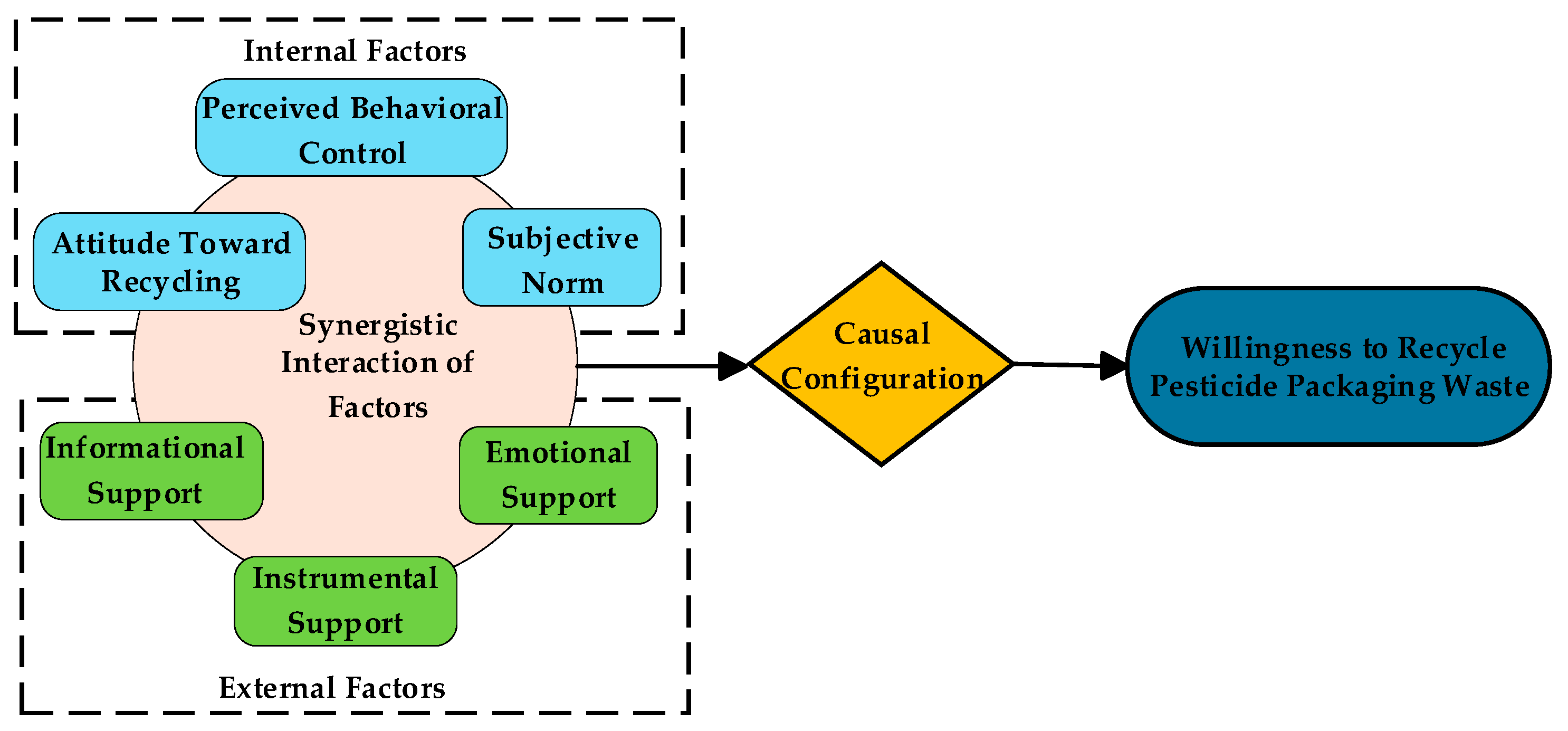
Figure 1. Theoretical Model of the Configurational Paths Driving Willingness to Recycle Pesticide Packaging Waste.
Sustainability 18 01708 g001
Figure 2. Flowchart of fsQCA.
Sustainability 18 01708 g002
Figure 3. Necessity test results of single variable for high-level Willingness to Recycle Pesticide Packaging Waste.
Sustainability 18 01708 g003
Table 1. Sample Characteristics.
Variable and DefinitionFrequencyPercentage (%)Variable and DefinitionFrequencyPercentage (%)
Age (years)Under 307720.21Annual Household Income Per Capita (yuan)Below 200013034.12
30~3911630.452001~50004110.76
40~4913034.125001~10,0004712.34
50~595614.70Above 10,00016342.78
60 and above20.52Agricultural Income (10,000 yuan)5 or less22559.06
Educational levelPrimary school
or below
20.526~5013936.48
Junior high school4812.6051~8082.10
Senior high school or above33186.88Above 8092.36
Total Household Size (persons)≤251.31Whether a Family FarmNo23461.42
3~412332.28Yes14738.58
5~618648.82Whether Participating in Agricultural CooperativeNo20152.76
≥76717.59Yes18047.24
Data source: Field survey and data collation by the research team.
Table 2. Variable Descriptions and Descriptive Statistics.
Factor TypeVariable TypeVariable DefinitionMeanStandard Deviation
Outcome VariableWillingness to Recycle Pesticide Packaging WasteAre you willing to recycle pesticide packaging waste? 1 = Strongly Unwilling, 2 = Reluctant, 3 = Neutral, 4 = Somewhat Willing, 5 = Very Willing.3.8041.327
Antecedent ConditionsAttitude toward RecyclingRecycling pesticide packaging waste helps protect the agricultural environment. 1 = Strongly Disagree, 2 = Disagree, 3 = Somewhat Disagree, 4 = Neutral, 5 = Somewhat Agree, 6 = Agree, 7 = Strongly Agree.6.3360.994
Recycling pesticide packaging waste helps reduce agricultural waste. 1 = Strongly Disagree, 2 = Disagree, 3 = Somewhat Disagree, 4 = Neutral, 5 = Somewhat Agree, 6 = Agree, 7 = Strongly Agree.6.4150.838
Recycling pesticide packaging waste can create a better environment for future generations. 1 = Strongly Disagree, 2 = Disagree, 3 = Somewhat Disagree, 4 = Neutral, 5 = Somewhat Agree, 6 = Agree, 7 = Strongly Agree.6.4130.833
Perceived Behavioral ControlI can easily recycle pesticide packaging waste. 1 = Strongly Disagree, 2 = Disagree, 3 = Somewhat Disagree, 4 = Neutral, 5 = Somewhat Agree, 6 = Agree, 7 = Strongly Agree.5.0701.514
I have many opportunities to recycle pesticide packaging waste 1 = Strongly Disagree, 2 = Disagree, 3 = Somewhat Disagree, 4 = Neutral, 5 = Somewhat Agree, 6 = Agree, 7 = Strongly Agree.4.9791.493
Recycling pesticide packaging waste is very inconvenient. 1 = Strongly Disagree, 2 = Disagree, 3 = Somewhat Disagree, 4 = Neutral, 5 = Somewhat Agree, 6 = Agree, 7 = Strongly Agree.4.4853.916
I know how to recycle pesticide packaging waste. 1 = Strongly Disagree, 2 = Disagree, 3 = Somewhat Disagree, 4 = Neutral, 5 = Somewhat Agree, 6 = Agree, 7 = Strongly Agree.4.4991.605
Subjective NormMost people who are important to me think I should recycle pesticide packaging waste. 1 = Strongly Disagree, 2 = Disagree, 3 = Somewhat Disagree, 4 = Neutral, 5 = Somewhat Agree, 6 = Agree, 7 = Strongly Agree.4.8861.565
Most people who are important to me would approve of me recycling pesticide packaging waste. 1 = Strongly Disagree, 2 = Disagree, 3 = Somewhat Disagree, 4 = Neutral, 5 = Somewhat Agree, 6 = Agree, 7 = Strongly Agree.5.1601.428
My family members think I should recycle pesticide packaging waste. 1 = Strongly Disagree, 2 = Disagree, 3 = Somewhat Disagree, 4 = Neutral, 5 = Somewhat Agree, 6 = Agree, 7 = Strongly Agree.5.2291.388
My friends think I should recycle pesticide packaging waste. 1 = Strongly Disagree, 2 = Disagree, 3 = Somewhat Disagree, 4 = Neutral, 5 = Somewhat Agree, 6 = Agree, 7 = Strongly Agree.5.1651.388
Informational SupportProviding information on how to recycle pesticide packaging waste would prompt me to participate in recycling. 1 = Strongly Disagree, 2 = Disagree, 3 = Somewhat Disagree, 4 = Neutral, 5 = Somewhat Agree, 6 = Agree, 7 = Strongly Agree.5.8081.143
Providing information that recycling pesticide packaging waste contributes to environmental protection would prompt me to participate in recycling. 1 = Strongly Disagree, 2 = Disagree, 3 = Somewhat Disagree, 4 = Neutral, 5 = Somewhat Agree, 6 = Agree, 7 = Strongly Agree.5.8261.185
Increasing environmental awareness can promote pesticide packaging waste recycling behavior. 1 = Strongly Disagree, 2 = Disagree, 3 = Somewhat Disagree, 4 = Neutral, 5 = Somewhat Agree, 6 = Agree, 7 = Strongly Agree.6.0481.068
Instrumental SupportThe government, industry associations, professional service agencies, and similar organizations provide you with training and technical guidance on pesticide packaging waste recycling. 1 = Strongly Disagree, 2 = Disagree, 3 = Somewhat Disagree, 4 = Neutral, 5 = Somewhat Agree, 6 = Agree, 7 = Strongly Agree.5.5011.354
The government, industry associations, professional service agencies, and similar organizations provide you with subsidies or other financial support for recycling pesticide packaging waste. 1 = Strongly Disagree, 2 = Disagree, 3 = Somewhat Disagree, 4 = Neutral, 5 = Somewhat Agree, 6 = Agree, 7 = Strongly Agree.5.5091.390
The government, industry associations, professional service agencies, and similar organizations provide you with pesticide packaging waste recycling facilities. 1 = Strongly Disagree, 2 = Disagree, 3 = Somewhat Disagree, 4 = Neutral, 5 = Somewhat Agree, 6 = Agree, 7 = Strongly Agree.5.5071.424
Emotional SupportThe government, industry associations, professional service agencies, and similar organizations show full concern for your recycling of pesticide packaging waste. 1 = Strongly Disagree, 2 = Disagree, 3 = Somewhat Disagree, 4 = Neutral, 5 = Somewhat Agree, 6 = Agree, 7 = Strongly Agree.5.5801.392
The government, industry associations, professional service agencies, and similar organizations show full respect for your recycling of pesticide packaging waste. 1 = Strongly Disagree, 2 = Disagree, 3 = Somewhat Disagree, 4 = Neutral, 5 = Somewhat Agree, 6 = Agree, 7 = Strongly Agree.5.6831.307
The government, industry associations, professional service agencies, and similar organizations show full recognition for your recycling of pesticide packaging waste. 1 = Strongly Disagree, 2 = Disagree, 3 = Somewhat Disagree, 4 = Neutral, 5 = Somewhat Agree, 6 = Agree, 7 = Strongly Agree.5.7551.297
Table 3. Calibration Function Statistics.
IndicatorFull Membership PointCrossover PointFull Non-Membership Point
(95%)(50%)(5%)
Attitude toward Recycling7.006.675.12
Perceived Behavioral Control7.005.002.67
Subjective Norm7.005.253.09
Informational Support7.006.004.00
Instrumental Support7.006.003.12
Emotional Support7.006.003.67
Willingness to Recycle Pesticide Packaging Waste5.004.001.00
Table 4. Results of the Necessity Test for Antecedent Conditions.
Antecedent ConditionsHigh Willingness to Recycle Pesticide Packaging WasteAntecedent ConditionsHigh Willingness to Recycle Pesticide Packaging Waste
ConsistencyCoverageConsistencyCoverage
Attitude toward Recycling0.72330.7219Informational Support0.73380.7719
~Attitude toward Recycling0.44550.6203~Informational Support0.50230.6529
Perceived Behavioral Control0.64190.7612Instrumental Support0.63050.7598
~Perceived Behavioral Control0.55830.6367~Instrumental Support0.59990.6738
Subjective Norm0.66380.7659Emotional Support0.64510.7445
~Subjective Norm0.54270.6359~Emotional Support0.57100.5710
Note: “~” denotes logical negation (“absence of”). This notation is maintained throughout the manuscript.
Table 5. Configurations Leading to High Willingness to Recycle Pesticide Packaging Waste.
Causal ConfigurationH1H2H3H4
H3aH3bH4aH4b
Attitude toward Recycling
Perceived Behavioral Control
Subjective Norm
Informational Support
Instrumental Support
Emotional Support
Consistency0.8750.9000.8730.8870.8820.892
Raw Coverage0.2960.2720.3120.3780.3220.387
Unique Coverage0.0190.0060.0100.0210.0120.021
Solution Consistency0.858
Solution Coverage0.532
Note: ● indicates the presence of a core condition; ⊗ indicates the absence of a core condition; ◉ indicates the presence of a peripheral condition; ◎ indicates the absence of a peripheral condition.
Disclaimer/Publisher’s Note: The statements, opinions and data contained in all publications are solely those of the individual author(s) and contributor(s) and not of MDPI and/or the editor(s). MDPI and/or the editor(s) disclaim responsibility for any injury to people or property resulting from any ideas, methods, instructions or products referred to in the content.