1. Introduction
Pastures represent one of the most significant ecological components of Mediterranean landscapes, occupying large areas and providing ecosystem functions of primary importance—from carbon sequestration to the regulation of the hydrological cycle, to the maintenance of biodiversity, and to the mitigation of fire risk [
1,
2]. The importance of pastoral activities in Mediterranean regions is widely recognized by many authors [
3,
4,
5,
6,
7,
8,
9]. In Mediterranean silvo-pastoral systems, the coexistence of trees, shrubs, and herbaceous layers creates a complex ecological mosaic in which grazing activity plays a crucial role in controlling dry biomass and, consequently, preventing forest fires [
2,
10,
11]. Extensive grazing management is a crucial and long-established practice in Mediterranean regions, having a decisive influence on the ecological configuration, biodiversity and resilience of Mediterranean mountains and forest communities, with effects that vary depending on the geographical context and intensity of use [
12,
13]. Furthermore, the extent and health of pastures directly influence the availability and quality of food resources for human and animal populations. Productive and well-conserved grasslands ensure a continuous supply of high-quality forage, supporting livestock systems that constitute a fundamental link in the agri-food chain and contribute to food security at regional and global levels [
14,
15]. Conversely, pasture degradation not only reduces the carrying capacity of ecosystems but also compromises the nutritional value of forage, with cascading effects on animal performance and the overall productivity of silvo-pastoral systems.
In this framework, understanding the ongoing transformations affecting Mediterranean pastures is essential for identifying the main degradation processes and their ecological implications.
The abandonment of traditional agro-pastoral practices, observed in many internal areas of southern Europe, primarily in the Mediterranean Basin, has led to a progressive accumulation of biomass, an increase in shrub cover and a consequent increase in vulnerability to fire [
16,
17,
18]. At the same time, in areas still managed, increasing intensification or overgrazing has triggered phenomena of soil degradation, loss of herbaceous cover, and a decrease in forage quality [
15]. These dynamics, accentuated by climate change and the increasing frequency and intensity of extreme drought events, are altering the structure and function of pastures, reducing their capacity to provide key ecosystem services, including the natural fuel-break function [
19].
These complex, interacting dynamics require innovative approaches to monitoring and assessment that integrate ecological, climatic, and management variables across large spatial and temporal scales.
In this regard, remote sensing (RS) technologies represent a powerful and cost-effective tool for quantifying vegetation dynamics, identifying degradation patterns, and supporting sustainable management decisions.
RS is based on the quantitative measurement of electromagnetic energy reflected or emitted by Earth’s surfaces, recorded by passive (i.e., optical and microwave) or active (i.e., radar, light detection and ranging—LiDAR) sensors mounted on satellite, aerial, or uncrewed aerial vehicle (UAV) platforms [
1,
20]. Spectral information, expressed as reflectance percentages, is a function of vegetation’s biophysical and biochemical properties and serves as the basis for indirect estimation of variables such as water content, chlorophyll, proteins, fiber, and leaf area index (LAI) using radiative models or statistical algorithms [
15,
21].
The first multispectral sensors, such as those of the Landsat series launched since 1972, enabled the calculation of spectral indices, such as the Normalized Difference Vegetation Index (NDVI), paving the way for quantitative monitoring of plant cover. Landsat sensors provide multispectral bands (visible, NIR, SWIR) at 30 m resolution, supporting robust NDVI computations for vegetation dynamics [
22]. Starting from the first decade of 2000 technological advances characterized by the advent of hyperspectral sensors (e.g., Hyperion, PRISMA, EnMAP) enhanced spectral resolution (≤10 nm) and the new generation of multispectral sensors (e.g., Sentinel-2), increased spatial resolution (≤10 m), thus enabling detailed analysis of biochemical and structural features of grasslands [
23,
24,
25].
Hyperion (EO-1, 2000–2017) provides 220 hyperspectral bands characterized by 10 nm of band width, 400–2500 nm of spectral range, and 30 m of spatial resolution, ideal for grassland biochemical mapping. PRISMA provides 239 bands between 400 and 2500 nm via pushbroom for precise species discrimination. EnMAP provides 242 spectral bands ranging between 420 and 2450 nm at 30 m of spatial resolution for advanced ecosystem retrievals. Sentinel-2, with a spatial resolution ranging between 10 m for visible and near infrared, 20 m for red-edge and shortwave infrared, and 60 m for coastal blue and water vapor analysis, excel in high-resolution multispectral monitoring [
23,
24,
25]. LiDAR, as active sensor, emits laser pulses that can be used to measure canopy heights and 3D structures, integrating optical data for precise biomass and LAI estimates in pastures. UAV-LiDAR offers high resolutions (cm-level), ideal for topographic variations detection [
20].
The current availability of high-frequency time series and the rapidity of data acquisition and processing make RS an operational tool for early diagnosis of vegetative stress and for assessment of fodder quantity and quality [
15,
21,
26]. The integration of multi-source data (i.e., satellite, aerial, and UAV) and machine- and deep-learning algorithms today enables Mediterranean pastures to be characterized in a synoptic, continuous, and objective way, responding to the new needs of sustainable management and monitoring of environmental risk [
1,
20].
Therefore, combining RS data with ecological and management frameworks creates new research opportunities for evaluating pasture condition, productivity, and quality in Mediterranean ecosystems.
The following section summarizes the rationale and objectives of this review, outlining how technological advances in RS can contribute to a better understanding of pasture dynamics and to the development of adaptive management strategies.
After the advent of high-resolution satellite imagery, the evolution of terrestrial observation technologies and the integration of geomatic, ecological, and management approaches have transformed the way pastures are analyzed and managed in the Mediterranean [
1,
15,
21]. The availability of multispectral and hyperspectral satellite time series, combined with the use of proximal sensors and UAV imagery, enables high-resolution spatial and temporal characterization of productivity, forage quality, and pasture degradation [
2,
20]. Such tools, in addition to improving the understanding of ecological processes, constitute a fundamental knowledge base for the adoption of adaptive management strategies, founded on the control of biomass and the conservation of ecosystem services [
27,
28].
In this context, this review aims to summarize the most recent scientific evidence on the role of Mediterranean pastures as elements of ecological regulation and fire risk mitigation, while highlighting the potential of RS as a quantitative monitoring and decision support tool [
2,
15,
21]. The analysis integrates ecological, agronomic, and technological aspects, with the aim of outlining an updated picture of knowledge and identifying prospects for sustainable and resilient management of Mediterranean pastoral landscapes [
20,
28].
2. Materials and Methods
A review of the existing literature was conducted to identify and analyze peer-reviewed scientific articles on the application of RS to the study of Mediterranean pastures, with particular attention to estimating the extent of pasture areas and evaluating productivity (biomass) and nutritional quality.
While previous reviews have examined the application of RS to pasture monitoring from a broad, global perspective [
16], comprehensive syntheses focused explicitly on the Mediterranean basin remain limited. This review aims to address that gap by focusing on Mediterranean pastures, where interactions among climate, land use, and traditional pastoral practices create unique ecological and management dynamics. By applying tailored inclusion criteria, our analysis aims to provide a context-specific overview that highlights both the methodological advances and the distinctive challenges of Mediterranean pastoral systems. This methodological approach was designed to identify the most significant contributions in the fields of land monitoring, precision agriculture, and sustainable management of Mediterranean pastoral systems.
The analysis was performed considering the period 2000 ÷ 2025 (October 2025 is the last considered month because the search has been conducted in the beginning of November), by querying the Scopus (Elsevier,
www.scopus.com, access 4 November 2025) and Web of Science (Clarivate Analytics,
www.webofscience.com, access 4 November 2025) databases, both recognized for their high degree of reliability and complete thematic coverage in the agronomic, ecological and geospatial fields. This choice ensured access to publications of proven scientific quality, avoiding sources that were not indexed or lacked academic validation.
The search queries used, applied to the Title, Abstract, and Keywords fields, were formulated as follows:
(TITLE-ABS-KEY (“remote sensing”) AND TITLE-ABS-KEY (pasture* OR pastor* OR grazing OR rangeland*) AND TITLE-ABS-KEY (Mediterrane* OR Italy OR France OR Spain OR Portugal OR Morocco OR Algeria OR Tunisia OR Libya OR Egypt OR Gaza OR Israel OR Lebanon OR Syria OR Cyprus OR Turkey OR Greece OR Albania OR Montenegro OR Croatia OR Bosnia OR Slovenia)) AND PUBYEAR > 1999 AND PUBYEAR < 2026 AND (LIMIT-TO (DOCTYPE, “ar”) OR LIMIT-TO (DOCTYPE, “re”)) AND (LIMIT-TO (LANGUAGE, “English”)).
Refine results for “remote sensing” (Topic) AND pasture* OR pastor* OR grazing OR rangeland* (Topic) AND Mediterrane* OR Italy OR France OR Spain OR Portugal OR Morocco OR Algeria OR Tunisia OR Libya OR Egypt OR Gaza OR Israel OR Lebanon OR Syria OR Cyprus OR Turkey OR Greece OR Albania OR Montenegro OR Croatia OR Bosnia OR Slovenia (Topic) and Article or Review Article (Document Types) and Article or Review Article (Document Types) and English (Languages).
The use of Boolean operators and truncations has enabled broader search results, including similar and synonymous terms. To ensure that the adopted queries were as comprehensive as possible, several keywords were used, such as “pasture,” “rangeland,” and “grazing”. These terms, although characterized by specific conceptual distinctions, converge in the same thematic context. Furthermore, the list of countries bordering the Mediterranean basin plus Portugal, according to FAO (Food and Agriculture Organization of the United Nations) official documentation about Mediterranean region [
29], was appended to the term “Mediterrane*,” thus enhancing the efficiency of the search. Finally, a random check of the references cited for each article retrieved was carried out to ensure that all the most relevant articles had been considered. Articles not relevant to the agri-environmental context or referring to non-Mediterranean ecosystems were excluded.
2.1. Screening and Inclusion/Exclusion Criteria
The selection of articles followed a protocol divided into three phases: initial analysis of titles and abstracts for thematic screening, removal of duplicates, and full reading of the texts to verify methodological and geographical coherence. The inclusion criteria focused on studies conducted in regions within the Mediterranean basin, considered the main biogeographical area for research, as it represents a homogeneous yet ecologically complex climate environment.
Only articles that utilize RS techniques—such as satellite, UAV, aerial, or proximal sensing—for monitoring natural pastures or silvo-pastoral systems have been included. These articles cover quantitative analyses of vegetation parameters, like vegetation indices (VIs), or nutritional metrics, such as protein content, raw fiber, dry matter, metabolizable energy, and overall biomass nutritional value, supported by appropriate methodological and statistical references. Only publications in English were considered. Conversely, studies that do not involve RS data or that focus on climatic and biogeographical contexts outside the Mediterranean environment were excluded. Conference proceedings, book chapters, and non-peer-reviewed publications were also excluded.
2.2. Data Extraction and Analysis
The data from the retrieved articles were organized into a structured database to ensure comparability between different sources and facilitate quantitative analysis. Information management and processing were conducted using specialized software: Microsoft Excel was used for data systematization and normalization, while R [
30] was employed for removing duplicates, statistical processing, both descriptive and inferential analysis, and graphical representation of results. For each article, metadata and variables of interest related to the study area, detection techniques, spectral parameters, and VIs used, as well as the validation strategies applied, were collected. This approach enabled a cross-sectional and comparative examination of methodological trends, as well as the spatial and temporal scales discussed in the recent literature, providing a synthetic and coherent picture of the potential and limitations of RS in the quantitative and qualitative characterization of Mediterranean pastures.
The variables considered for the classification of selected papers include the following:
Title—full bibliographic reference for contribution traceability;
Year of publication—time location to analyze the evolution of the methodologies and technologies employed;
Aim of the survey—scientific or application objective of the study (e.g., seasonal monitoring, degradation analysis, management evaluation, etc.);
Survey type—scale and approach adopted (i.e., satellite, UAV, aircraft or proximal sensing-based sensors);
Type of dataset—nature and source of data (e.g., multispectral, hyperspectral, radar, etc.);
Spectral Bands—wavelength ranges used for vegetational characterization;
Vegetation indices (VIs)—spectral indices adopted (e.g., NDVI, Normalized Difference Water Index—NDWI, Enhanced Vegetation Index—EVI, etc.);
Study Area—geographical location and environmental characteristics of the analyzed sites;
Geographical affiliation of the research team—institutional context and location of the scientific groups involved.
To deepen the thematic dynamics and the identification of emerging trends in the literature considered, the methodology adopted included the integrated use of the
bibliometrix package [
31] in R environment. Data collection was based on exporting bibliographic metadata from the Scopus and Web of Science databases. Subsequently, the two datasets were harmonized by means of the function
mergeDbSources, which systematically combines the bibliographic collections, automatically removing duplicate records by comparing DOI identifiers and normalizing the main metadata. The resulting database was further refined by including highly cited papers from the references analyzed and removing papers not fully focused on the topic. The analysis of the final database can be summarized in the following two steps.
(a) The initial phase of the exploratory analysis involved generating a word cloud providing a visual representation of the relative frequency of terms in the manuscripts. The most common words appear larger, offering a quick overview of the main conceptual themes in the literature.
(b) The second step is the analysis of keyword frequency over time is based on calculating the annual occurrences of the selected terms using the KeywordGrowth function. This method highlights the trends of key themes during the period studied, providing a diachronic view of the evolution of the scientific debate.
Taken together, these analysis techniques enable the exploration and quantification of the main lexical and thematic patterns present in the analyzed scientific literature, facilitating the interpretation of their internal dynamics and temporal evolution. This organization allows outlining an overview of the methodologies applied and identifying recurring patterns in recent work, with particular reference to the potential and limitations of using RS for the quantitative and qualitative monitoring of the Mediterranean pastures.
3. Results and Discussion
The adopted methodology ensures the consistency and reproducibility of the collected data and permits the identification of the main dynamics and trajectories of the literature on Mediterranean pastures.
The initial two queries returned 141 papers, which were subsequently subjected to a qualitative and thematic filtering process aimed at ensuring complete coherence with the objectives of the review, as described in the previous sections. After this process, the original number of papers was filtered to 91.
The scientific literature on RS applied to Mediterranean pastures has progressively evolved, with a marked acceleration over the last decade.
Table 1 shows the number of papers according to the adopted acquisition platform and spectral acquisition of the selected papers.
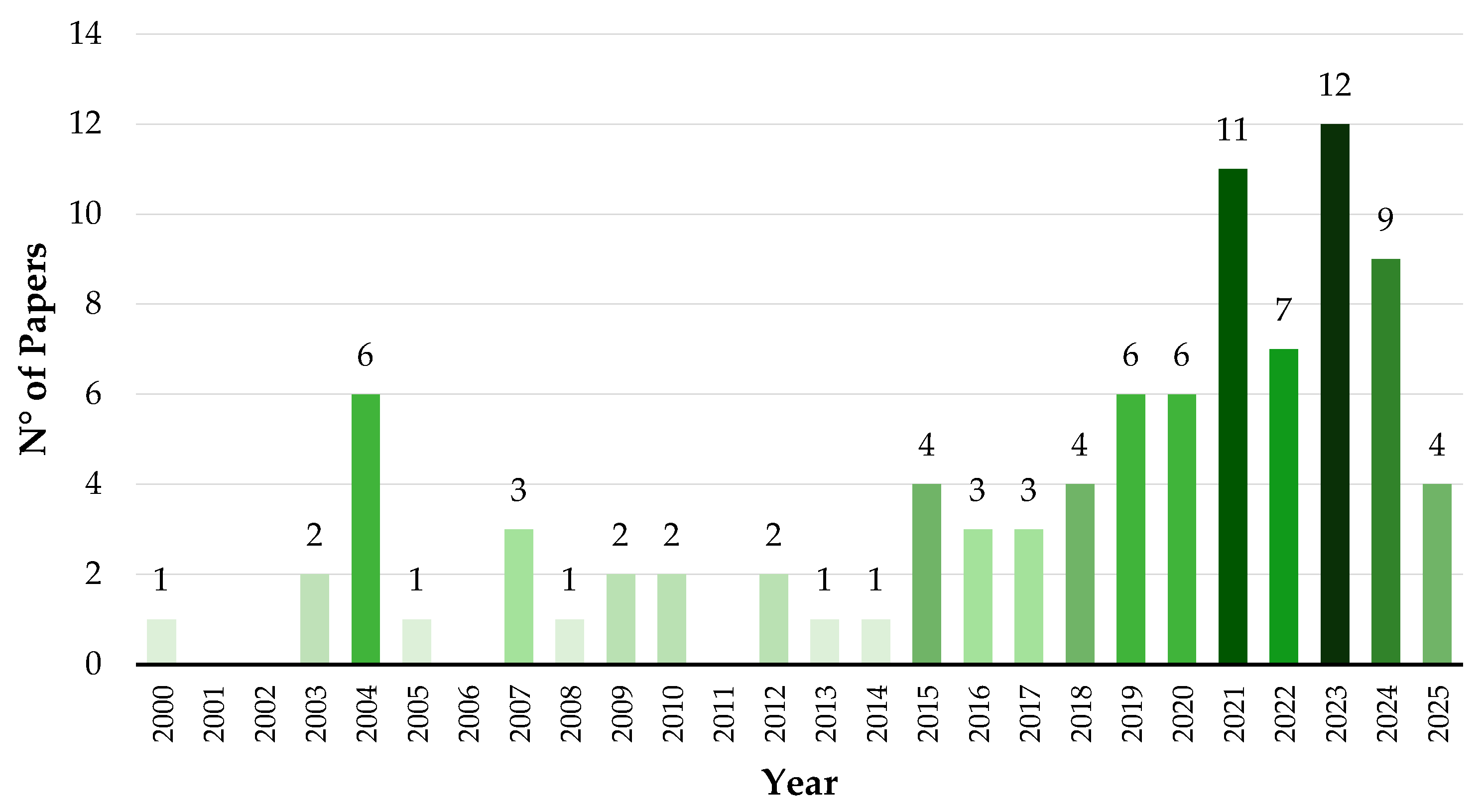
Academic production has grown steadily since the first pioneering studies in the mid-2000s, progressively developing methodologies based on VIs and advanced optical sensors. The growth trend in the number of articles published per year, as highlighted in the graph (
Figure 1), shows a significant increase, suggesting a positive projection also for the future. This trend is supported by factors such as the growing interest in agri-food sustainability, the large-scale diffusion of RS platforms, and the greater accessibility of technologies even for non-scholars in rural contexts [
1,
32]. Recent literature attributes the strengthening of this growth to the introduction of machine learning (ML) techniques for data classification and the emergence of interdisciplinary projects and transnational collaborations between the main Mediterranean research centers [
21,
32].
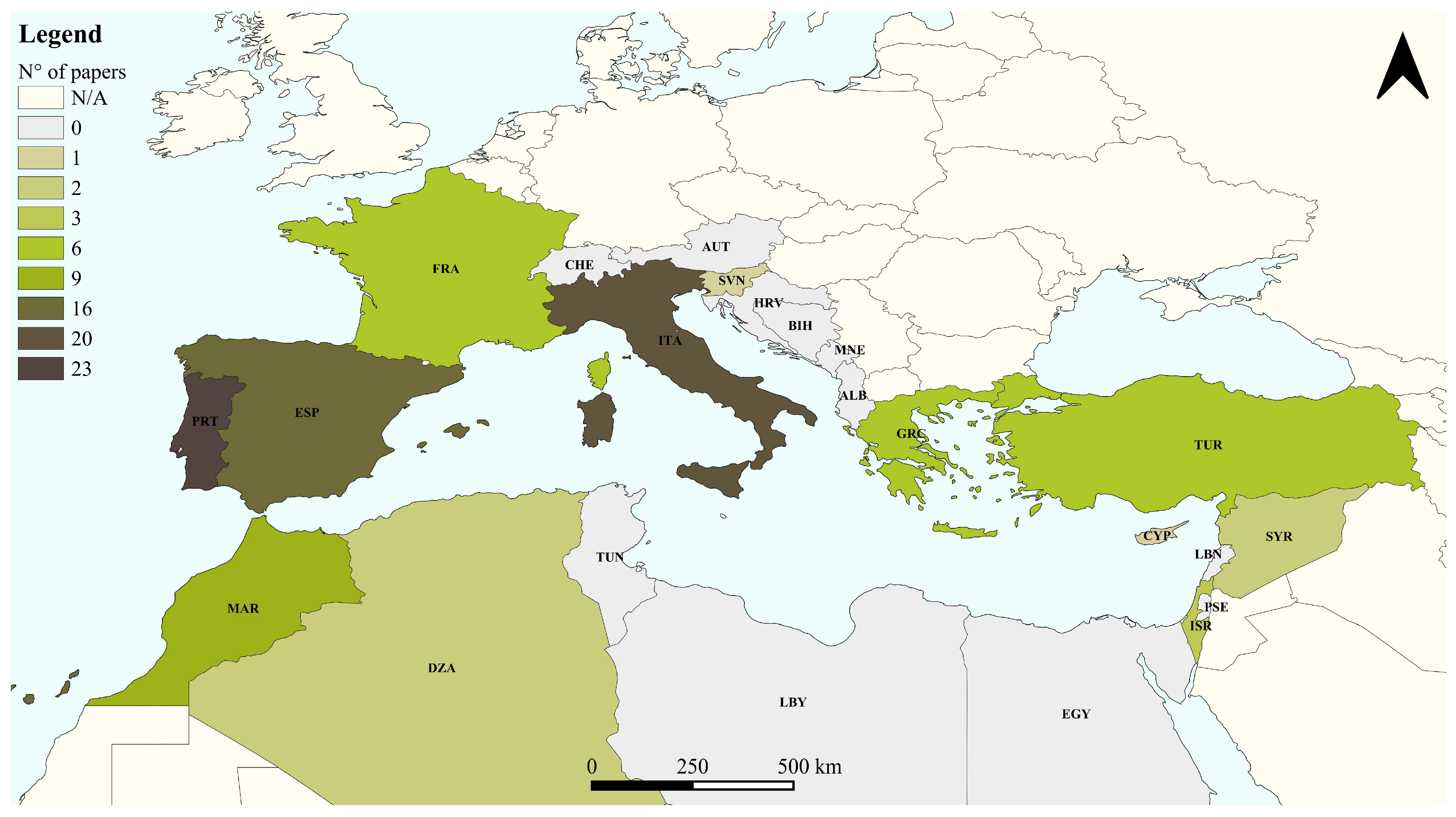
The analysis of the localization of the study areas (
Figure 2) highlights the lack of studies in some Mediterranean countries. The largest number of contributions for single country was detected for areas located in the Italian peninsula with 20 studies [
16,
17,
27,
33,
34,
35,
36,
37,
38,
39,
40,
41,
42,
43,
44,
45,
46,
47,
48,
49], documenting large-scale land use transitions and grassland mosaic shifts in mountainous and insular contexts [
16,
17] and also considering advanced quantitative modeling approaches for pasture dynamics [
33]. Further efforts have explored the integration of high-resolution satellite time series with crop growth models to estimate biomass and evapotranspiration [
34], as well as the use of Bidirectional Reflectance Distribution Function (BRDF) and albedo products for refining temporal trajectories of vegetation reflectance [
35], thereby strengthening both process-based understanding and operational monitoring capacities.
The second region for the number of papers concerning the study areas is the Iberian Peninsula, considering the papers published in Spain and Portugal countries [
1,
2,
14,
20,
21,
50,
51,
52,
53,
54,
55,
56,
57,
58,
59,
60,
61,
62,
63,
64,
65,
66,
67,
68,
69,
70,
71,
72,
73,
74,
75,
76,
77,
78,
79,
80,
81], with particular relevance for Alentejo in Portugal [
53,
56,
69,
73] and the areas of Extremadura and Cordoba in southwestern Spain [
2,
50,
57,
69]. In these areas, research has demonstrated the effectiveness of NDVI time series in analyzing the spatio-temporal evolution of Mediterranean pasture quality, highlighting the seasonal dynamics typical of silvo-pastoral systems [
1]. More recent studies validated the correlations between Sentinel-2 derived NDVI and forage quality parameters, such as protein and water content, confirming the reliability of RS for the early diagnosis of pasture quality [
21].
In both Italy and the Iberian Peninsula, pastoral and silvo-pastoral landscapes (ranging from Alpine Italian summer pastures to Spanish Dehesas and Spanish–Portuguese Montados) function as pivotal model areas for the study of RS applications. Moreover, these landscapes have historically served as the foundation for rural economies and cultural heritage, having been shaped by long-standing traditional livestock practices that, in turn, have structured local territories over the course of centuries [
2,
50,
82].
Morocco, with nine papers [
83,
84,
85,
86,
87,
88,
89,
90,
91], is the most representative country of the North-Africa, followed only by Algeria [
92,
93], highlighting a gap in research for the Mediterranean-based African context. In Europe, France is present with six papers [
94,
95,
96,
97,
98,
99] with specific experiences in the South of the country, mainly oriented towards the application of integrated agroecological models, while Turkey and Greece emerge as growing cases with a total number of six papers for each [
38,
82,
100,
101,
102,
103,
104,
105,
106,
107,
108,
109]. This demonstrates a gradual expansion of the contexts investigated and greater attention to ecological transitions and to the climatic challenges, analyzing grazing-induced land degradation and linking livestock policies and grazing gradients to vegetation change in mountain rangelands [
101,
103,
106].
Other countries, such as Slovenia [
43], Syria [
110,
111], and Israel [
15,
112,
113], show a limited number of studies, but in some cases of recent publication, suggesting a recent entry into the RS applied to pastures monitoring.
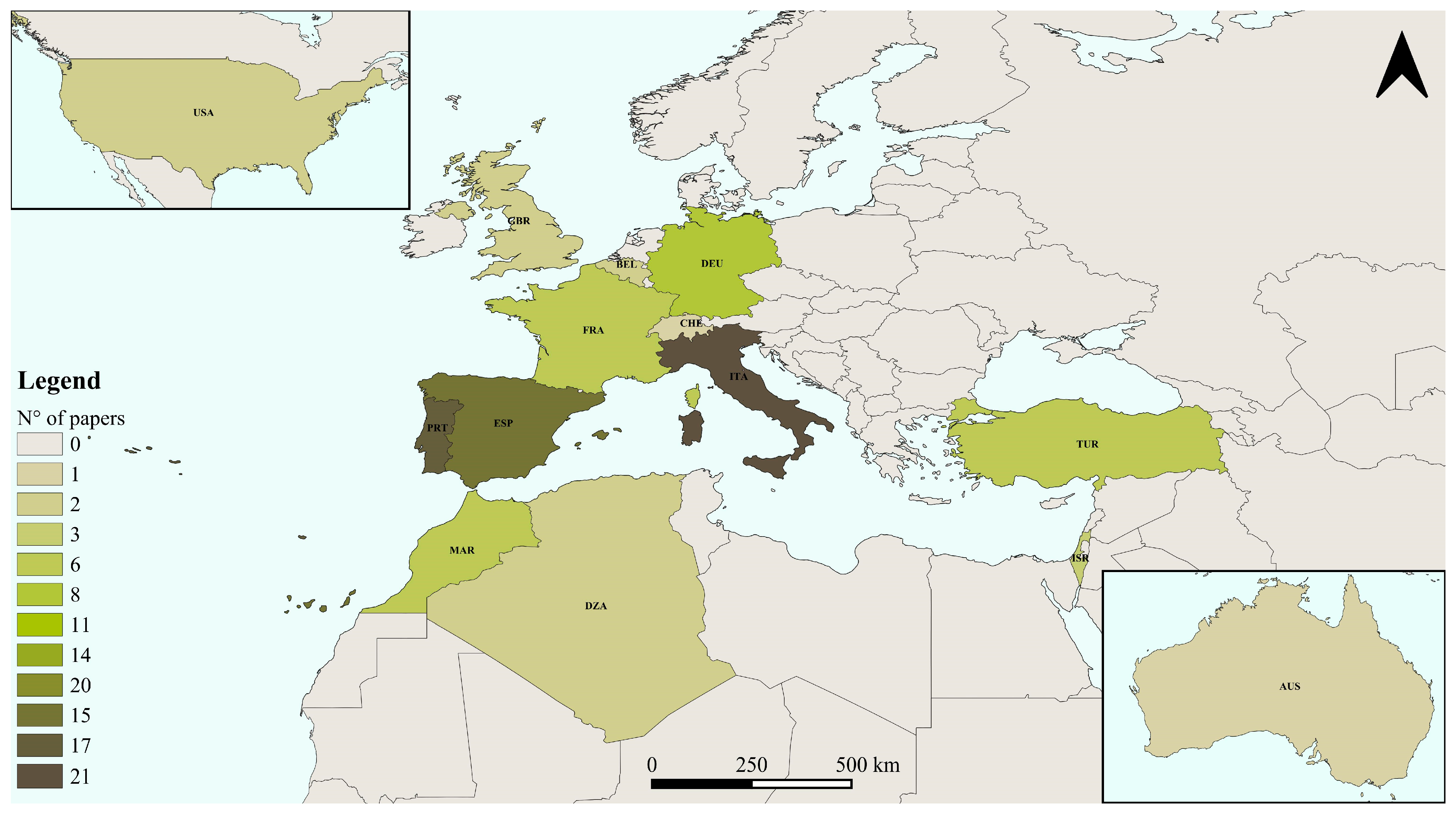
In continuity with the investigation of the study areas, the in-depth analysis of the geographical affiliations of the research teams (
Figure 3) offers a fundamental key to understanding not only the distribution of scientific production but also the structure of the networks and collaborations that animate the Mediterranean scenario. This analysis provides a picture of strong internationalization and integration among different Mediterranean scientific realities, including countries not directly linked to the Mediterranean basin. It should be specified that, in the presence of groups with multinational affiliations, for statistical purposes, the affiliation of the corresponding author was considered as the main reference for the geolocation of the article.
The data highlighted a prevalent concentration of Italian, Portuguese, and Spanish affiliations, confirming the role of these countries as a driving force in regional research.
The participation of research groups from countries that, although not directly bordering the Mediterranean basin, contribute to research in the investigated area. In this framework, the countries most represented were Germany with eight papers [
19,
47,
57,
100,
101,
102,
103,
104]; the United Kingdom [
56,
72] and Belgium [
87,
104] both with two papers; and Switzerland [
55]; these are also joined by non-European teams from the United States of America [
110,
111] and Australia [
86].
Italy’s higher scientific production reflects the presence of a deep-rooted scientific network with solid international partnerships and supported by universities and public and private bodies. The Portuguese and Spanish teams, on the other hand, consolidate the Iberian Peninsula’s vocation as a reference laboratory for experimenting with RS techniques, also involving partners of excellence in shared projects at the European scale.
The gradual entry of groups from Israel and Turkey responds to a trend of progressive internationalization and valorization of ecological and management contexts that are still poorly represented but are particularly promising for the comparison between Mediterranean systems [
15,
105,
113].
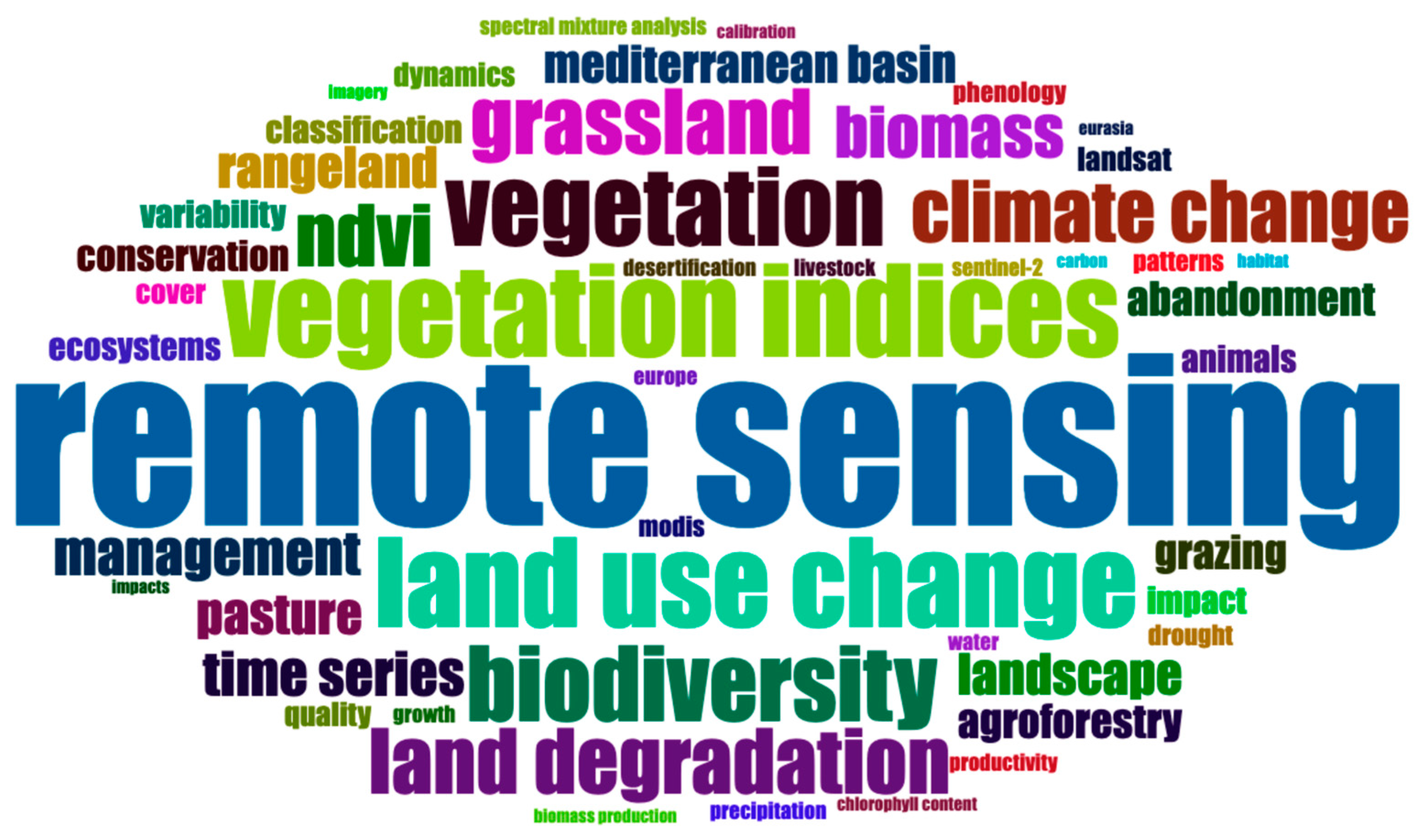
Bibliometric analysis constitutes a fundamental tool for reconstructing the directions, conceptual evolution, and priorities of the literature on Mediterranean pastures and RS. To provide an immediate and structured overview of the main keywords of the analyzed literature, the keyword word cloud has been used.
Figure 4 displays the occurrence of the most frequent words in the literature examined. The size of each term is proportional to its recurrence as a keyword in the analyzed works.
The term remote sensing represents the central topic of the research and is, therefore, as expected, the one with the largest dimension. This term has been retained in the word cloud in order to visually compare the relevance of the other terms identified with it. Words like “biodiversity”, “land use change”, “vegetation indices”, “climate-change”, and “biomass” are notable in size. These words draw the interlinking of the main challenges faced by research, such as the conservation of biological diversity, the sustainable management of pastoral ecosystems, the response to climate change, and the quantitative monitoring of productivity, impacts, and adaptation strategies. Terms such as “pasture”, “grassland”, “rangeland”, and “grazing”, although characterized by specific conceptual distinctions, converge in the same thematic context; they are therefore reported separately in the graph in order to highlight the different frequencies of use in the analyzed papers. The robust presence of keywords such as “vegetation”, “NDVI”, “phenology”, “agroforestry”, “land degradation”, and “abandonment” highlights both the methodological quantitative approach adopted (i.e., the use of spectral indices, phenological monitoring, and integrated agriculture approaches) and the interest towards the environmental and management implications linked to rural abandonment and degradation phenomena. Smaller words such as “chlorophyll content”, “management”, “decision making”, and “canopy” instead represent emerging themes and possible future developments towards the integration of advanced data into management processes and planning.
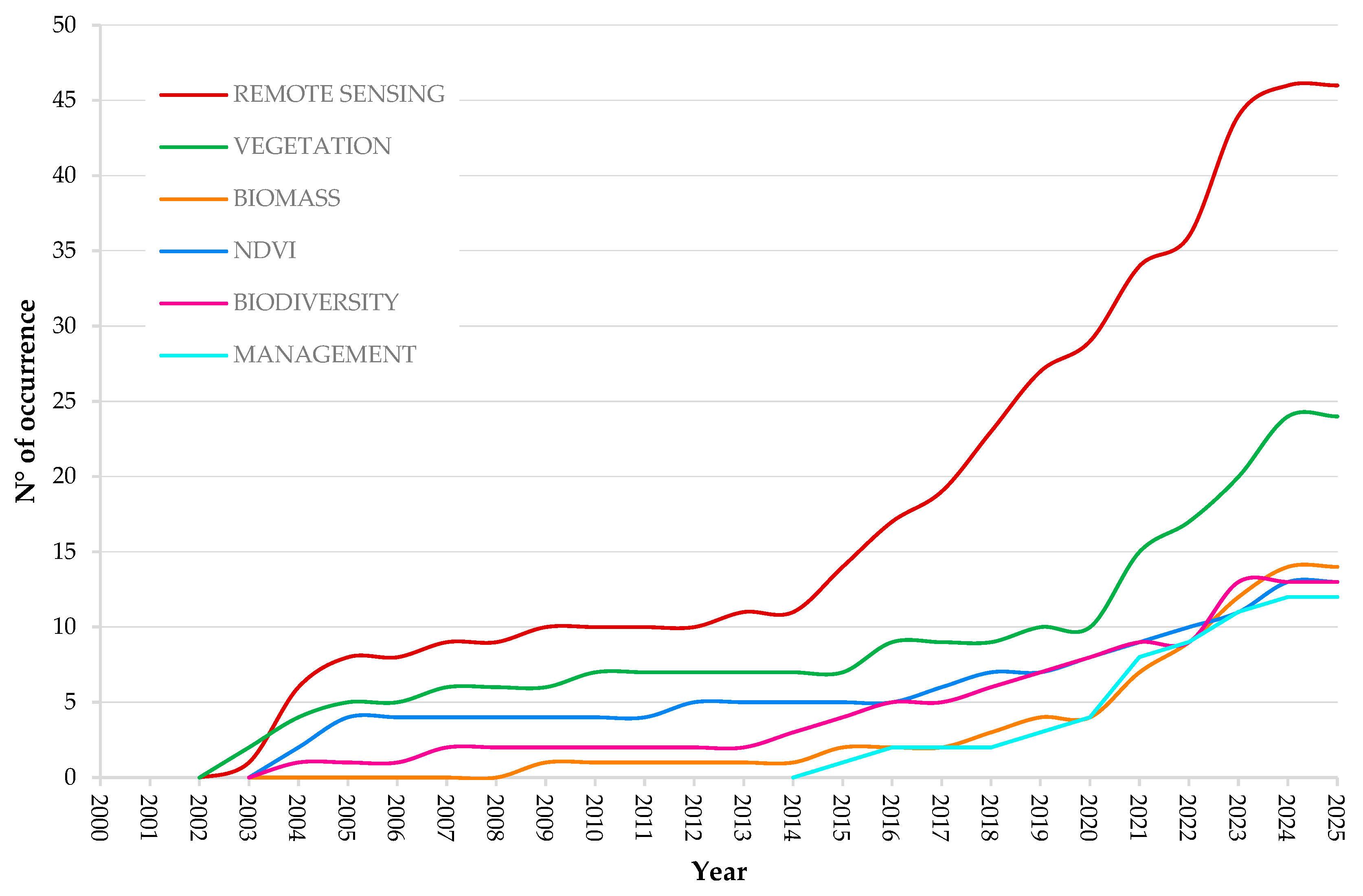
After the above mentioned analyses, a further level of investigation is proposed by means of the dynamic analysis of keywords over the timespan chosen, displayed in the form of a graph (
Figure 5). This representation, based on the calculation of the annual occurrences of the main terms through the
KeywordGrowth [
114] function, allows us to evaluate in a historical–diachronic key the emergence, stabilization, or decline of the most relevant themes in the literature examined. The time-series approach offers an evolutionary view of the scientific debate, allowing both established trends and emerging or regressive trajectories to be grasped.
The exponential growth of the keyword “Remote Sensing” not only reflects the adoption of new technologies but also indicates a paradigm shift in the monitoring and assessment of Mediterranean pastures. Since 2015, the curve has shown a marked acceleration, a sign that RS has become the main paradigm for monitoring and modeling, gradually integrating new platforms (e.g., Sentinel-2 and UAV) and by broadening the range of applications from descriptive analysis to real-time decision support tools. In this framework, the trajectory of the keyword “Management” is particularly indicative: absent in the early 2000s, it begins to rise around 2014, reflecting the progressive shift from purely diagnostic uses of RS to applications explicitly aimed at supporting grazing management, adaptive planning, and decision-making in Mediterranean pastoral systems. The other keywords show a constant linear growth, symptom of a progressive specialization developed in the dialogue between agronomy, ecology, and management of pastoral systems. The trend of “Biodiversity” also reveals a dynamic clearly influenced by paradigm shifts in ecology and territorial management. The marked increase in scientific production since 2014 testifies to a turning point in the perception of the value of biodiversity, which evolves from an accessory parameter to an indicator of state and functionality of agro-silvo-pastoral systems. This is related to both integration into international conservation frameworks and the role of biodiversity as a filter for ecological resilience processes. The trend of “Biomass” shows a recent acceleration, with an evident peak after 2020. This reflects, on one hand, the growing importance attributed to quantitative productivity metrics (fundamental for the bioeconomy, carbon sink studies, and food security) and, on the other hand, the boosting due to the refinement of spectral indices and the integration with growth models and eco-physiological simulation.
The conducted analysis allowed us to explore the literature on RS applied to Mediterranean pastures from multiple angles, highlighting the historical progression of the publications, the main geographical areas protagonists of the research, the international network of the scientific institutions involved, as well as the evolution and intertwining of recurring themes. The results highlight research that has been progressively enriched thanks to the evolution of technological and analytical tools, ranging from the characterization of pasture productivity to the implications of rural abandonment and land use changes, to the challenges related to climate resilience and the protection of biodiversity. At the same time, structural critical issues have emerged, such as the saturation of spectral indices or the underrepresentation of some geographical contexts, which suggest a need to overcome current limits through the integration of multi-source data and advanced ML techniques. At this point, the analytical path achieved does not end in outlining the state of the art but naturally leads to the need for a broader interpretative reflection and a critical synthesis addressing both consolidated findings and aspects still unexplored or marginal, offering a forward-looking perspective on future research directions in this field.
Following the previous analyses, a deeper explanatory phase has been made grouping the selected papers according to their main aim.
3.1. Dynamics of Land Use, Abandonment, and Succession
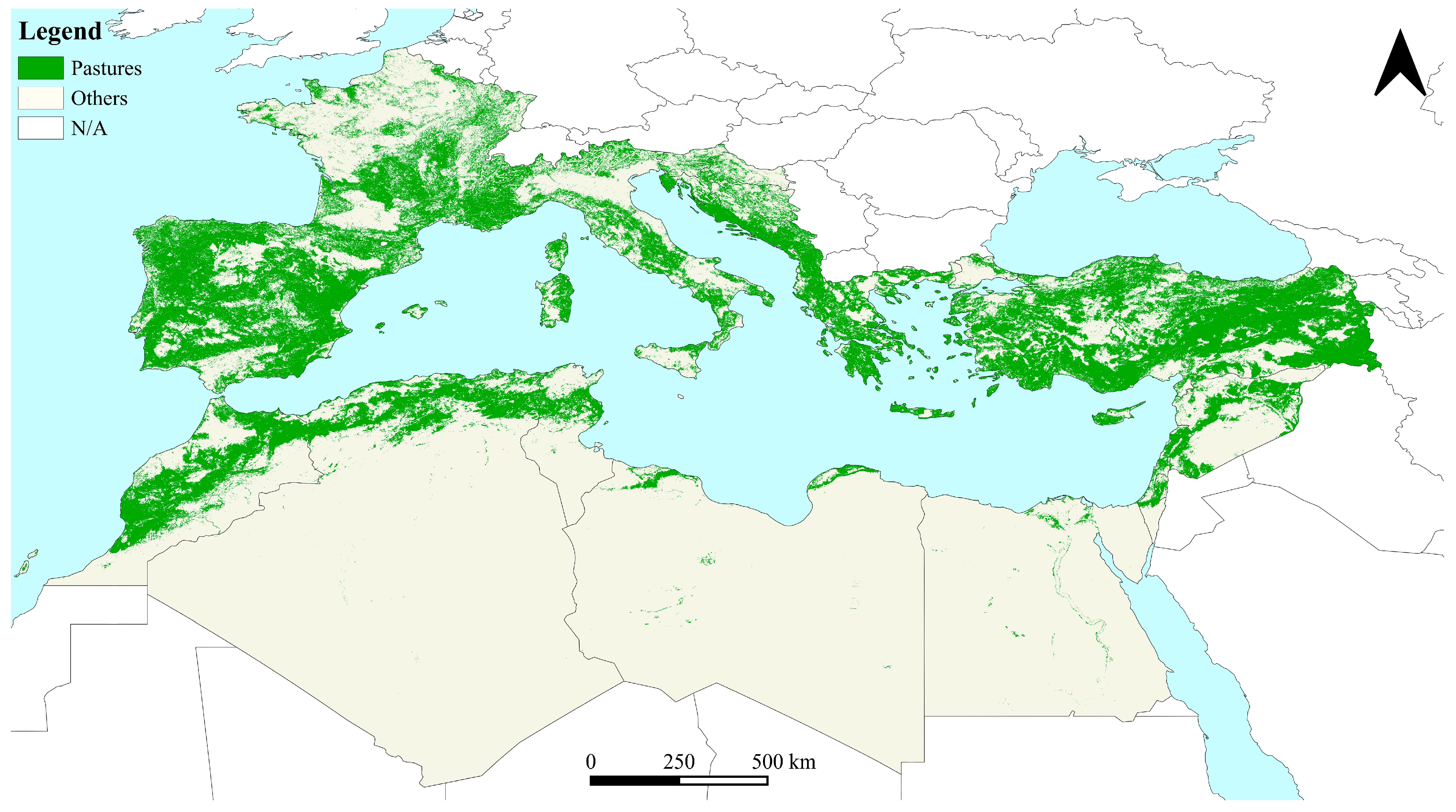
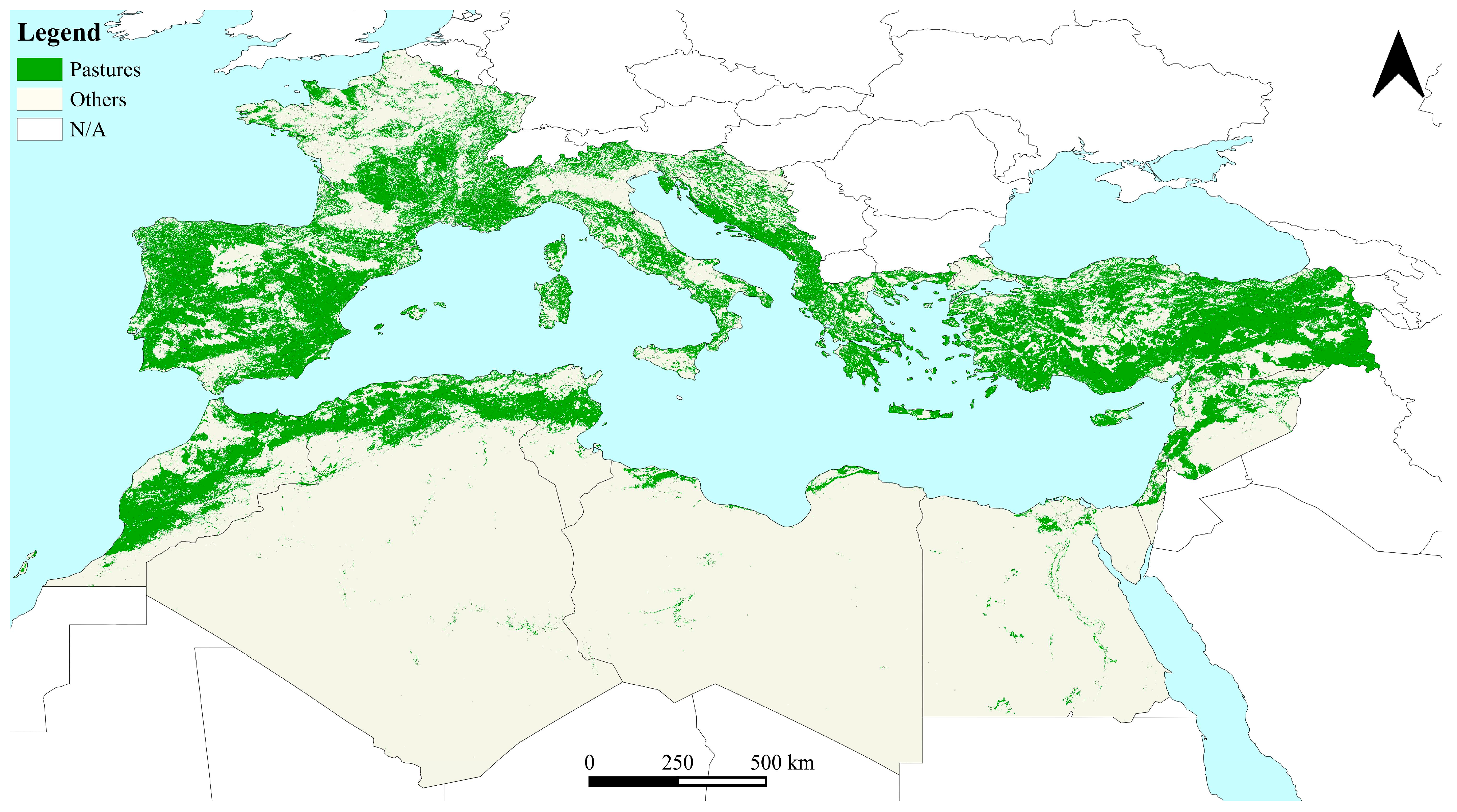
Several studies adopted a multitemporal approach to analyze the change dynamics in pastures of the Mediterranean area, highlighting the relationship between rural abandonment, secondary succession, and large-scale ecological variations. To help understanding the findings presented in the following lines, a general pasture map obtained from MODIS satellite data for both the extreme years of the analyzed period has been provided (
Figure 6 and
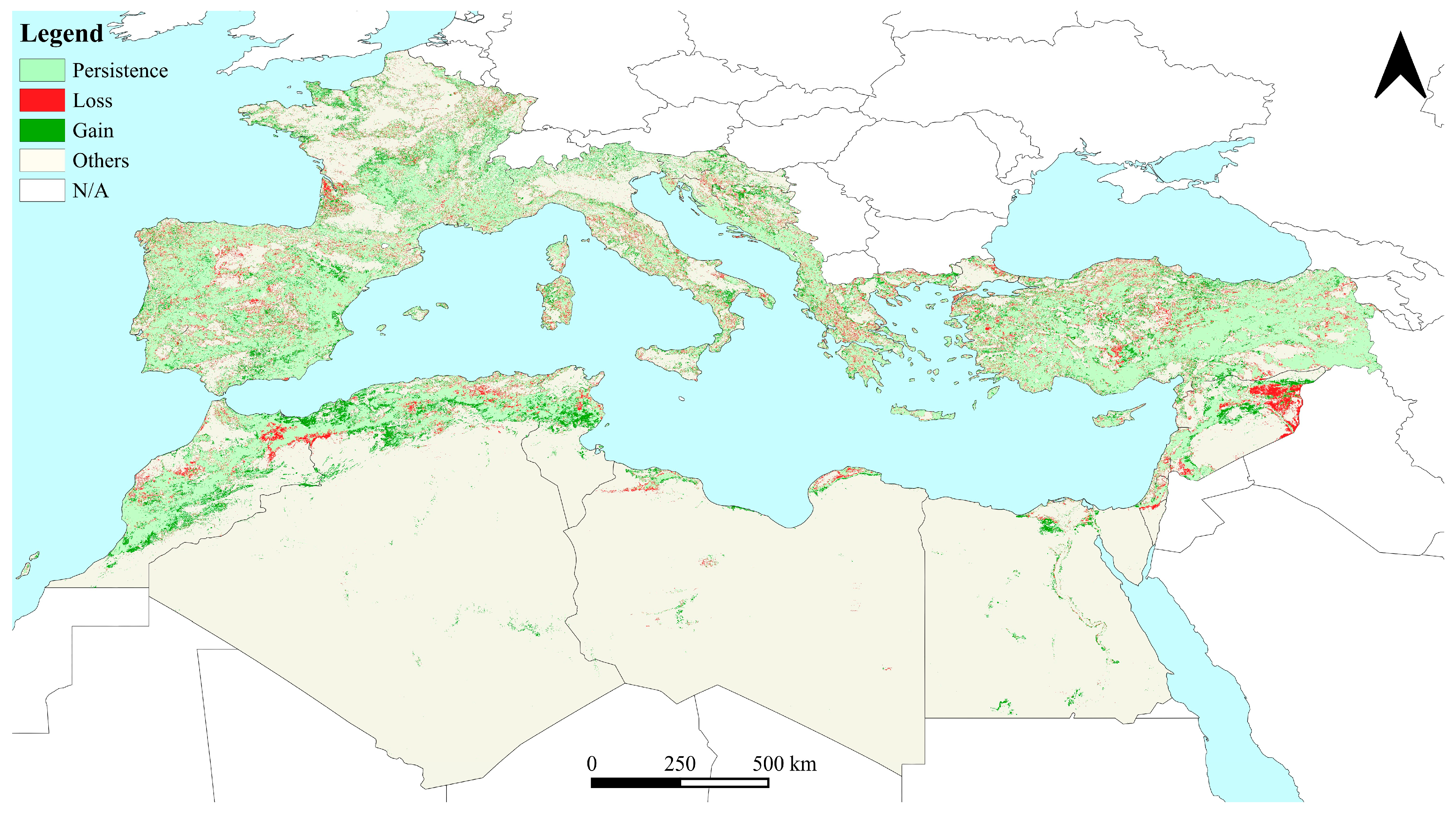
Figure 7). Moreover, a map highlighting the changes that occurred in terms of persistence, loss, and gain of pastures during the analyzed timespan has been created (
Figure 8).
In central Spain, Romero-Calcerrada and Perry [
50] demonstrated, via Landsat TM imagery and landscape metrics, the progressive replacement of pastures and crops with dense
Quercus ilex (L.) forests, emphasizing how agricultural abandonment increases fire risks and reduces the structural diversification of the ecosystem. Falcucci et al. [
35] showed a 14% increase in forest cover in Italy in the face of a drastic decline in pastures, with an inverse relationship with respect to population density. This reduction in pastoral activities favored natural recolonization but also the loss of specialized habitats with high biodiversity. Analyses conducted on the Sierra de Albarracín (Spain) by [
52] highlighted the dynamics of reforestation and landscape homogenization through the integration of remote sensing and Geographic Information System (GIS) data. In this study, land cover changes were mapped, quantifying the loss of open habitats through spatial and temporal analyses of satellite data. Malatesta et al. adopted the same methodology in the area of the Sibillini Mountains (Italy) [
16] to evaluate the reduction in landscape variety caused by forest advancement, documenting the progressive disappearance of grassland mosaics and the associated loss of biodiversity. Analyses performed in montane landscape of northern Portugal [
81] highlighted the feasibility of land cover types’ characterization using RS data combined with a surface energy balance model improving the monitoring tools for montane pastures health and sustainability. For the Island of Pianosa (Italy), however, statistical methods were applied on multi-temporal series of Landsat images with the aim of reconstructing the transformation trajectories of the plant cover; these tools made it possible to identify the main reforestation and habitat homogenization processes, similar to those observed in continental contexts [
17]. RS has also been employed in reconstructing the historical dimension of Mediterranean pastoral systems. Transhumance routes in Southern Italy have been analyzed through geospatial tools, highlighting their cultural and ecological legacy and offering new perspectives for landscape requalification and conservation management [
34]. Satellite RS and GIS-based analyses allowed a precise mapping of the historical pathways, quantifying landscape features and degradation risks along the routes. These satellite-based approaches, integrated with field surveys and cultural-historical data, provide objective frameworks for conserving and valorizing transhumance routes supporting new strategies for landscape planning and sustainable tourism development. In the arid rangelands of southern Hodna (Algeria), Landsat imagery time-series revealed pronounced vegetation loss and soil exposure along grazing gradients, linking land degradation to stocking pressure and climatic variability [
93]. In the Middle Atlas Mountains (Morocco), the integration of field biomass measurements with multispectral satellite data enabled the reconstruction of standing crop dynamics and the detection of zones with declining forage productivity [
111]. Across the oriental region of Morocco, time-series of NDVI and rainfall indices have been used to quantify interannual fluctuations in rangeland production and delineate areas most vulnerable to drought-induced degradation [
87], while long-term Landsat analyses in the Feija Basin documented the shift from traditional pastoral use to rainfed agriculture and the associated expansion of shrub cover and bare soil [
86]. Similar retrospective satellite-based approaches in the central area of the island of Crete and northern Greece have reconstructed grazing-induced land-degradation trajectories, clarifying the roles of livestock subsidies, stocking density, and topographic constraints in driving vegetation decline [
103,
104].
3.2. Monitoring of Pasture Productivity and Quality via Spectral Indices
VIs represent a methodological constant for the rapid and non-destructive estimation of the biophysical and qualitative variables of pasture biomass. Early applications of proximal sensing techniques, such as Near Infrared Reflectance Spectroscopy (NIRS), demonstrated the potential of optical methods to assess forage quality parameters at the biochemical level, including protein and fiber content, thus anticipating the subsequent developments of RS-based spectral indices [
51]. Considering hyperspectral approaches, Fava et al. [
48] demonstrated that specific narrow-band combinations, such as the Simple Ratio between NIR (ρ770 ÷ ρ930 nm) and Red Edge (ρ720 ÷ ρ740 nm), can explain a large proportion of the variability in biomass and nitrogen content, providing a more sensitive alternative to conventional NDVI. For nitrogen concentration, the best results were obtained using NIR bands and the longer wavelengths of the Red Edge. In addition, methodological advances in crop and pasture mapping based on very high-resolution multispectral imagery have proven effective in refining land cover classifications. Beyond VIs, MODIS-derived BRDF and albedo products have also been employed to characterize temporal trajectories of surface reflectance in agricultural landscapes [
99]. RS has also been successfully combined with ecological indicators to monitor the sustainability of mountain pastures. In Italy, Landsat imagery was integrated with bioindicator-based metrics such as the Auchenorrhyncha Quality Index (AQI) and the soil arthropod index (QBS-ar), providing a multidisciplinary framework for assessing stocking sustainability and ecological quality [
41]. These datasets provide complementary insights into ecosystem functioning by linking radiative balance with vegetation dynamics in Mediterranean contexts [
99]. Comparative approaches between data-driven and parcel-based smoothing techniques significantly enhanced the accuracy of agricultural landscape monitoring in Mediterranean contexts [
105]. The integrated approach of FORMOSAT-2 images and crop modeling [
97] enabled accurate biomass and evapotranspiration estimates with reduced errors, useful for water and production management of stable Mediterranean meadows. MODIS-based NDVI series, coupled with climate and pedology data, proved to be critical in monitoring large-scale grazing conditions, also enabling the identification of degradation hotspots and the assessment of climate impacts [
49]. Water-related processes have also been investigated through RS, as evapotranspiration represents a key variable linking vegetation dynamics with ecosystem services. In Mediterranean oak dryland pastures, the combined use of MODIS and Landsat data allowed multi-scale estimation of evapotranspiration, providing critical insights for water resource management in pastoral landscapes, influencing the pasture biomass quality [
61]. At the regional scale, time-series approaches have been applied to model pastoral dynamics in Mediterranean contexts. In Sardinia (Italy), the integration of NDVI AVHRR and MODIS data has made it possible to characterize seasonal fluctuations and long-term trends in grassland productivity [
33]. In the last decade, Sentinel-2 platforms, with their high spatial and temporal resolution, have become the primary tool for detailed monitoring, showing strong correlations between NDVI and forage quality parameters such as protein content (R > 0.75) and water content (R > 0.72), although limitations due to saturation under high biomass conditions persist [
21]. These correlations were further reinforced by comparative studies combining proximal spectroscopy and satellite imagery. In Mediterranean shrubland ecosystems, NIR bands together with Sentinel-2 data proved effective in estimating forage quality parameters, confirming its role in integrating field- and RS-based approaches [
59]. This evidence is consistent with earlier findings from the same ecosystems, where proximal sensing methods, such as NIRS and RS platforms, including Sentinel-2 and NDVI time-series, were systematically compared. The studies tracked seasonal variations in pasture quality by directly measuring biochemical parameters like protein and fiber content on field and validating them with spectral indices derived from satellite imagery. This integrated approach confirmed that spectral indices (e.g., NDVI and more advanced hyperspectral ratios) are reliable tools for detecting temporal dynamics and degradation of forage quality in Mediterranean shrubland and silvo-pastoral systems, ensuring robust cross-validation between ground and satellite observations [
14]. Complementary evidence has also emphasized the role of nutrient stoichiometry and below-ground processes in shaping pasture quality. Furthermore, a negative correlation has been detected for the ratio between NIR and green bands with grasslands species richness (i.e., the lower the value of the NIR/green ratio, the higher the species richness of the analyzed parcels) [
79]. In Mediterranean shrubland systems, NDVI time-series have been validated through studies that combined satellite observations with ground-based soil sampling and nutrient analysis. These works applied spatiotemporal models to NDVI data, correlating seasonal and interannual changes in spectral VIs with direct measurements of soil N/P ratios, root growth dynamics, and organic carbon content. The analyses revealed that pasture dynamics, including periods of decline and recovery, are closely modulated by both management intensity (i.e., grazing pressure and fertilization regimes) and climate variability, making NDVI a practical tool for tracking environmental responses in these complex agroecosystems [
1].
In Mediterranean savanna systems, N/P ratios were shown to influence seasonal root dynamics, providing insights into the links between soil fertility, forage availability, and spectral responses of vegetation [
57]. RS has also been applied to transitional ecosystems strongly connected to Mediterranean pastoral systems, such as riparian corridors. In these contexts, integrating Landsat multispectral imagery with airborne and terrestrial LiDAR data has enabled the three-dimensional characterization of riparian forest structure and the quantification of key attributes, including canopy height, biomass quantity and quality, and tree species composition, across entire river networks. Prez-Silos et al. [
58] used aerial LiDAR data and Landsat 8 satellite imagery to model the structural and compositional characteristics of vegetation in the entire river network of a large Iberian basin. The analysis of LiDAR data made it possible to accurately estimate the coverage, height, and width of riparian formations, including grazing areas, while the developed models spatially quantified the distribution, abundance, and composition of the main vegetation units. The results show that the approach allows mapping pasture areas with a goodness of adaptation equal to R
2 = 0.57 for biomass and distinguishing the different physiognomic formations, providing essential information on both the quantity and quality of the pastoral resource set along the riparian corridors. In Mediterranean national parks, such as Gran Paradiso (Italy), multi-annual NDVI time-series have further been used to distinguish between management units with contrasting grazing regimes, linking spectral trajectories of pasture productivity to ground indicators of forage availability and conservation status [
36].
Finally, the quality of pasture areas, in terms of the possible presence of harmful microorganisms such as
Pithomyces chartarum, has been tested combining proximal sensing and Sentinel-2-derived vegetation indices and meteorological variables [
74]. The authors found that meteorological variables are good to predict the sporulation of the microorganism but the combined proximal and remotely sensed approach was not able to detect changes in the spectral behaviors of vegetation with and without spores.
Effects of Pastoral Management and Climate Variability
The management of stocking rate, fertilization, and grazing strategies are among the main drivers of production variability in pastoral systems. In this framework, case studies have shown that regulating the stocking rate to the actual availability of pastoral resources is essential to prevent overgrazing and to preserve Mediterranean forestlands, highlighting the key role of grazing management in sustaining ecosystem balance [
40]. Catorci et al. [
27] showed how management practices explain up to 40% of the interannual variation in NDVI, modulating rangeland resilience to weather patterns. Pulina et al. [
2] documented that rotational grazing increases NDVI, uniformity, and duration of the growing season compared to continuous systems. Green manure of legume mixtures, analyzed on Landsat time series [
2], produced lasting increases in productivity and stability, demonstrating the importance of innovative practices. The positive effects of rotational grazing have also been confirmed in Iberian silvo-pastoral systems, where NDVI time-series analyses documented significant improvements in both forage availability and seasonal stability compared to continuous grazing regimes. Specifically, average NDVI values in rotationally grazed pastures reached 0.7 ÷ 0.8 in spring, indicating higher herbaceous biomass cover, whereas continuous-grazed areas showed substantially lower NDVI values, typically 0.5–0.6 during the same period. Seasonal NDVI variability was also reduced in rotational systems, with intra-seasonal ranges generally under 0.15, reflecting greater resilience and steadier forage production [
69]. In water stress contexts, the integration between RS and climate data allows us to highlight synergies or trade-offs induced by extreme droughts, as evidenced by Buras et al. [
19] and Adar et al. [
113], with pastures proving more vulnerable than forests and spring precipitation exerting a decisive influence on interannual productivity. In addition to management, recent analyses have disentangled the role of climatic drivers in determining forage quantity and quality. By integrating Sentinel-2 and VENµS satellite data, researchers have quantitatively correlated fluctuations in pasture productivity with anomalies in seasonal rainfall and the occurrence of extreme temperatures. This approach leverages the high spatial and temporal resolution of multispectral imagery, enabling detailed monitoring of grassland dynamics over several years and across heterogeneous Mediterranean landscapes [
19,
113]. These studies report that dry years, especially those marked by low spring precipitation and prolonged heatwaves, are associated with reductions in NDVI values of up to 20 ÷ 30% compared to average years, directly reflecting declines in forage biomass and pasture quality. The documented link between climatic drivers and VIs highlights how Mediterranean pastures respond disproportionately to climatic extremes, confirming the urgent need for adaptive management under future climate scenarios [
113]. In central Crete, retrospective analyses of Landsat imagery combined with detailed records of livestock subsidies showed that periods of policy-driven herd expansion coincided with persistent NDVI declines and increasing bare-soil cover, underscoring how economic incentives can amplify the sensitivity of Mediterranean pastures to drought events [
104].
3.3. Use of Machine Learning Techniques
The use of proximal sensing technologies and the growing synergy between satellite data like Sentinel, MODIS, and Landsat, joined with UAV data and advanced sensors, is broadening the field of observation and precision in the assessment of forage quality and soil conditions. In this context, object-based approaches applied to multispectral imagery have proven particularly effective for multitemporal pasture monitoring in agroforestry landscapes, enhancing classification accuracy and supporting fine-scale management decisions [
20]. Multidisciplinary approaches integrating field surveys, multivariate analyses and ML algorithms such as Random Forest (RF), Support Vector Machine (SVM), Cubist, Partial Least Squares (PLS) regression, convolutional neural network (CNN), and Extreme Gradient Boosting (XGB) have been successfully applied to the analysis of both plant and edaphic variables in Mediterranean pastures, exploiting proximal and satellite remote sensing data. Morais et al. [
75,
78] achieved high accuracies (0.93 and 0.94) detecting the permanent pasture class using Sentinel-2 multispectral time series and sawn biodiverse pastures combining night-light spectral data and Landsat-7 images. For the estimation of qualitative parameters of herbaceous communities (such as crude protein—CP and neutral fiber detergent—NDF), studies based on hyperspectral field spectroscopy highlight that PLS regression reaches average values of R
2 = 0.82 (range 0.68 ÷ 0.90) and a mean square error (RMSE) of 2.23 for CP, parameters judged to be of good accuracy (RPD = 2.47), while RF stands at moderate accuracies (average R
2 equal to 0.68, RMSE = 3.00 for CP). As regards NDF, PLS achieves moderate accuracy (R
2 = 0.62), while Random Forest is less performing (R
2 = 0.47), underlining the predictive critical issues on pastures with high structural heterogeneity [
64]. Morais et al. [
77] obtained good results (R
2 = 0.85) estimating four pasture characteristics (i.e., fraction of legumes, above ground biomass, and nitrogen and phosphorus content) using RF and Sentinel-2-derived data. Recent advances have also extended spectral approaches to edaphic variables, also in a multi-source key. In pastures in the Iberian Peninsula, models based on Sentinel-1 and Sentinel-2 data, tested with different ML algorithms, accurately estimated soil organic carbon (SOC). In particular, XGB achieved the best performance (average of RMSE = 2.77 ÷ 2.78 g/kg and R
2 = 0.68 on cross-validation at 10 folds), while RF showed comparable results (RMSE = 2.83 g/kg, R
2 = 0.64), and Cubist and MLR had lower performance (R
2 ≈ 0.5). The most relevant satellite variables were the VV band of Sentinel-1 and, secondarily, VIs and climatic and topographic information [
68]. Multi-scale and multi-platform approaches enhance cross-validation, reduce uncertainty, and improve the transferability of application models, setting the stage for increasingly reliable and contextualized decision support systems [
21].
3.4. Implications for Biodiversity, Connectivity, and Conservation
The biodiversity component is investigated both from the perspective of landscape integrity and ecosystem resilience. In silvo-pastoral landscapes, tree cover has been shown to strongly influence both soil properties and pasture quality. Proximal and satellite sensing in shrubland ecosystems revealed that tree cover modulates forage availability and nutritional value, thereby linking canopy structure with biodiversity and ecosystem functionality [
53]. In the Alentejo (Portugal) region, biodiversity modeling supported by RS has highlighted long-term trends in community composition and habitat structure, underlining the sensitivity of wooded pastures to both management practices and land use transitions [
56]. Falcucci et al. [
35] demonstrated that changes in land use and vegetation cover in Italy from 1960 to 2000 caused increasing habitat fragmentation, with a significant loss of connectivity and negative consequences on fauna and biodiversity. Courault et al. [
97] illustrate how the combination of remote sensing data and agricultural models allows an analysis of the spatial dynamics of Mediterranean pasture vegetation, only marginally addressing issues related to ecological connectivity and habitat fragmentation. Studies on the effectiveness of traditional grazing and transhumance practices [
44] demonstrated that active management prevents habitat closure, promoting superior floristic and faunal richness. The contribution of RS to the identification and monitoring of conservation hotspots, both in terms of habitat and risk assessment [
47], represents a key advancement in Mediterranean conservation planning.
3.5. Pastures in Protected Areas
In the contributions reviewed, mountain and Mediterranean rangelands within national parks, Natura 2000 sites, and other protected landscapes emerge as key elements for biodiversity, cultural landscapes, and ecosystem services, but also as systems particularly vulnerable to climate and land use change. In the Gran Paradiso National Park (Italy) [
36], 8022 ha of pastures have been identified, but only 4596 ha are grazable after excluding portions that are inaccessible due to the presence of rocks, extreme slopes, dense bushes, and other elements. The majority of polygons, corresponding to grazing units derived from GIS, each representing homogeneous grazing areas, have non-grazable areas between 20% and 50% and only about 21% of the mapped pastures consist of open grasslands used by domestic animals. The harmonized classification identified 13 pastoral typologies, dominated by poor thermophilic grasslands (approximately 38% of the grazing area), nerdettes (20%), and intermediate alpine grasslands (18%), with differentiated potential load values reflecting both altitudinal gradients and microclimatic conditions, in line with what was observed in other alpine pastures. In the Mediterranean landscape of the Coa valley and Alto Minho (Portugal) [
72], where over a third of the land is designated as a Natura 2000 site or national park, fires affected approximately 32% of the area between 2001 and 2020, with the highest proportion of burned area in shrubland, followed by forests and agricultural areas. Taking into account land cover, the probability of large-scale fire occurring is on average approximately 15% lower within protected areas than in external areas, but over 40% of the scrublands within protected boundaries were still affected by fire at least once during the period studied. Higher sheep densities are associated with a higher likelihood of fire, while cattle density shows no clear relationship with fire risk, indicating that livestock grazing cannot be regarded as a stand-alone strategy for mitigating wildfire risk; however, when integrated within a broader, systemic land-management framework, it may contribute to a reduction in fire occurrence under extreme drought conditions [
72].
In the Turkish Mediterranean mountains protected areas [
82], along four goat transhumance routes crossing an altitudinal corridor ranging approximately 700 ÷ 2000 m a.s.l., the number of transhumant herders decreased by 89.8% between 1990 and 2019, with a simultaneous reduction of approximately 10% in grasslands and 13% in scrubland, while forests, agricultural lands, and urban areas increased by 24%, 13%, and 37%, respectively. The decrease in mobile grazing pressure in the intermediate and high altitudinal bands is associated with strong secondary succession processes, with over 15,000 ha of shrub converted to forest between 1000 and 1500 m and over 1500 m, while in the most accessible areas conversions to agricultural and settlement uses are observed. Studies on mountain pastures in Greece (i.e., the protected areas of Pindo, Vermio, Lagadas) [
103] confirm the co-occurrence of overgrazing and degradation nuclei near settlements and infrastructure, and of jamming or afforestation in peripheral or inaccessible sectors, with loss of grassland habitats of community interest and changes in the risk of erosion and fire.
In the Alentejo (Portugal) protected landscape, agro-silvo-pastoral areas are recognized as habitats of community interest. Diachronic analysis 1984 ÷ 2009 [
40,
80] shows an overall increase in shrubland mosaics of approximately 19%, with a significant growth of “core” surfaces and an improvement in structural connectivity, while some types of shrubland lose connectors and show greater local fragmentation. These systems, which integrate pastures, shrublands, and scattered tree formations, host assemblages rich in birds, butterflies, and vascular flora, as well as flag species such as Iberian lynx (
Lynx pardinus, Temmink) and black vulture (
Aegypius monachus, L.), for which ecotones between open and closed habitats constitute preferential hunting and travel areas. The maintenance of a heterogeneous mosaic of arboreal pastures, scrublands, and open fields, supported by extensive pastoral practices and ecological corridor management measures, emerges as an essential condition for reconciling livestock production, conservation objectives, and fire resilience in these protected landscapes [
72].
3.6. Assessing the Consequences of Stop Grazing
The cessation or reduction in extensive grazing in Mediterranean pastoral systems mostly leads to the beginning of a secondary succession characterized by landscape closure due to progressive shrub and forest encroachment. In Turkey’s Taurus Mountains, transhumance decline (−89% goat herders, 1990–2019) led to grassland loss (−9.96%), shrubland contraction (−13.19%), and forest expansion (+23.81%), including 15,952 ha shrub-to-forest above 1000 m due to lowered grazing pressure [
82]. This shift disrupts traditional silvo-pastoral mosaics, modifying habitat composition, reducing biodiversity for open-habitat birds such as
Anthus campestris (L.) and
Emberiza hortulana (L.), and favoring more generalist forest species like
Phylloscopus collybita (Vieillot) [
98]. Moreover, some ecosystem services, like fire prevention and plant diversity could be adversely affected by the cessation of such activities [
82,
98]. Controlled grazing helps prevent fires by reducing the accumulation of dry, highly flammable biomass, while maintaining a mosaic of open and semi-open habitats that provide important ecosystem services, which instead tend to disappear in contexts of severe agricultural intensification or total abandonment of grazing [
98]. In the French Causses, the transition from extensive grazing to intensive farming with hays and cereals has caused grasslands to convert into shrublands and forests, with a marked decline in European grassland species [
115]. Moderate grazing in the eastern Pyrenees increases herbaceous biomass (mean LAI 0.66 vs. 0.55 in sparsely grazed areas) and grass protein content (13.5% vs. 12% under high grazing) without harming shrubs like
Calluna vulgaris (Hull), while null grazing drops production to 111 g/m
2 from 590 g/m
2 under high grazing, favoring dominant competitors and curbing carbon sequestration [
65]. Rotational grazing in Iberian silvo-pastoral systems improves forage phenology, reduces NDVI variability under low densities, and sustains productivity compared to continuous systems [
69].
On the other hand, areas characterized by overgrazing activities have demonstrated how grazing pressure can be considered as one of the main forces driving to the increase in land degradation and desertification of drylands [
116], adversely affecting the physical properties of the soil. All things considered, policymakers need to aim to promote sustainable grazing practices in suitable areas while ensuring that protection zones are established in less suitable areas where grazing does not take place [
116].
3.7. Methodological Limitations and Future Perspectives
Even with the progress achieved by the reviewed literature, several methodological limitations could be highlighted. The initial observation to be made is that document selection is influenced by the query created by the authors. It is important to note that changes to the variables used will result in alterations to the outcomes. Other limitations concern the operational use of RS for Mediterranean pasture monitoring. A first, recurrent issue is the saturation of widely used VIs, especially NDVI, under high biomass conditions, which lowers their sensitivity to changes in forage productivity and quality during peak growth stages [
49,
62]. This problem has been highlighted both in extensive systems and in intensively managed grasslands, where rapid canopy closure generates spectral plateaus that mask fine-scale variability in biomass and nutritive value [
1,
65]. Hyperspectral approaches and narrow-band-based indices partially overcome this problem by more accurately capturing biochemical and structural properties, but their application remains largely confined to experimental contexts because of high data dimensionality, complex calibration requirements, and substantial computational costs when scaled up to regional levels [
48,
64].
A second issue concerns the limited integration between spectral information and ground-based data on management soils and micro-climate variables, which reduces the explanatory and predictive capacity of RS-based products. Some studies still interpret VIs as proxies of “condition” or “degradation” without explicitly linking them to grazing pressure, stocking rates, fertilization regimes, and socio-economic drivers, even though several works have demonstrated that grazing intensity and management decisions strongly modulate spectral trajectories in Mediterranean rangelands [
40,
60]. In this context, Frongia et al. [
69] showed that NDVI time series can detect differences in phenology and spatial variability between rotational and continuous grazing in Iberian silvo-pastoral systems, but only when detailed information on paddock use and stocking was integrated into the analysis. Similarly, Catorci et al. [
27] documented how the interplay between interannual climate variability and management explains a significant share of NDVI variance in sub-Mediterranean grasslands. However, it is important to note that such coupled frameworks do not represent yet the prevailing standard.
The bibliometric analysis also revealed marked geographical asymmetries. Italy and the Iberian Peninsula account for a large share of the scientific output, with numerous case studies from Sardinia, central Apennines, Alentejo (Portugal), and Extremadura, whereas the Balkans, North-East Africa, and parts of Eastern and Southern Mediterranean remain comparatively under-represented. This imbalance risks reinforcing knowledge gaps in areas where pastoral systems are undergoing rapid and poorly monitored transformations, such as Moroccan [
84,
86] and Algerian [
85] rangelands or Turkish mountain pastures [
82], and it limits the ability to generalize monitoring protocols to the entire Mediterranean basin. In North Africa, for instance, most works focus on biomass estimation and land-degradation mapping using SPOT, Landsat, or MODIS imagery and rainfall indices [
87,
88,
90], but long time-series explicitly linking spectral change, grazing regimes, and policy drivers are still scarce.
A further limitation concerns the still marginal and fragmentary use of UAV data. Most UAV-based applications are restricted to small experimental plots or single farms, frequently limited to one or two seasons, and concentrate on point estimates of biomass or nutritive parameters rather than on continuous monitoring [
20,
71]. Nevertheless, several studies demonstrate the potential of UAV platforms for capturing fine-scale heterogeneity and supporting model calibration. Adar et al. [
15,
113] validated innovative pasture quality indices in semiarid Mediterranean grasslands by combining multispectral and hyperspectral UAV images with ML models and field sampling, showing that UAV-derived metrics can accurately predict CP and fiber, revealing micro-spatial variability that is invisible to medium-resolution satellites. Other contributions used UAV multispectral data to quantify the effects of clearing and grazing on fuel loads in Mediterranean oak forests, underlining the value of high-resolution imagery for fire risk-oriented pasture management [
71]. At present, however, the operational transfer of UAV-based methods to wider Mediterranean landscapes is hampered by fragmented datasets, heterogeneous acquisition protocols, and regulatory constraints that limit systematic multi-season surveys.
These limitations are particularly evident in wooded and mountain pastures, where the coexistence of trees, shrubs, and herbaceous layers poses specific challenges for RS-based applications. In silvo-pastoral systems such as montados and dehesas, or in subalpine and alpine grasslands with scattered tree cover, satellite optical sensors predominantly sample the overstorey, underestimating the biomass and quality of the herb layer and dampening the spectral response to grazing or management changes occurring in the understory. Proximal sensing and LiDAR-based studies have shown that tree cover strongly modulates soil moisture, pasture productivity, and forage quality, and that structural metrics such as canopy height, cover, and vertical heterogeneity are essential to interpret spectral signals correctly [
28,
53]. For instance, Serrano et al. [
14] used ground sensors and high-resolution imagery in Portuguese montados to demonstrate how tree density and canopies’ size affect both pasture yield and nutritional value, evidencing the need to jointly characterize woody and herbaceous layers in these mosaics. Similarly, LiDAR surveys in mountain grasslands have proven effective in separating shrub, tree, and grass components, improving the estimation of available forage and habitat structure [
43]. However, such approaches are still rare in routine monitoring frameworks.
Future research should therefore prioritize multi-source data integration and methodological standardization to overcome the above-mentioned constraints. Combining optical and radar data (e.g., Sentinel-2 and Sentinel-1) offers promising avenues to mitigate atmospheric limitations, derive soil-moisture proxies, and better characterize vegetation structure, especially in partially wooded or cloudy regions [
23,
28]. The exploitation of long and harmonized time-series from public missions, together with gap-filling and compositing techniques, can enhance the detection of interannual trends and abrupt shifts linked to climate extremes, land use change, or policy interventions [
22,
46]. At the same time, systematic integration of UAV- and proximal-based sensing with satellite observations and field measurements would allow building multi-scale calibration/validation frameworks, improving model robustness across diverse agro-ecological contexts [
59,
68].
On the modeling side, the growing adoption of advanced ML and deep-learning algorithms represents an effective way for reducing uncertainty and extracting more information from rich, multi-dimensional datasets. Studies that have coupled multispectral or hyperspectral imagery with random forest, support vector machines, or neural networks already show clear gains in predicting biomass, protein content, and other quality metrics compared with traditional regression approaches [
15,
64]. However, these methods require careful attention to overfitting, transferability, and interpretability, which calls for transparent workflows, independent validation, and the publication of open benchmark datasets for Mediterranean pastures. Expanding collaborative data infrastructures, such as regional databases on pasture parameters and management histories, would further support the development of robust, generalizable models [
73].
Concluding, the main methodological challenges identified by this review concern spectral saturation under high biomass, incomplete coupling between spectral signals, and management–environmental drivers, geographical and thematic gaps, limited representativeness of UAV applications, and difficulties in resolving understory dynamics in wooded and mountain pastures. Addressing these issues will require coordinated efforts to develop new indices and modeling strategies tailored to Mediterranean conditions, integrate structural information from LiDAR and radar, standardize UAV and proximal sensing protocols, and strengthen long-term, multi-country monitoring networks. Such advances would significantly enhance the capacity of remote sensing to support adaptive, climate-resilient and biodiversity-friendly management of Mediterranean pastoral systems.
4. Conclusions
This review analyzed the state of the art of RS applied to the study of Mediterranean pastures, with the aim of providing an updated picture of its potential and critical issues in monitoring the productivity, quality, and sustainable management of pastoral systems in this area. In a context of rapid climate change and rural areas’ abandonment, RS is confirmed as a strategic tool for environmental sustainability, since it allows an objective and continuous observation of vegetation dynamics. These observation techniques, in fact, offer the possibility of evaluating the ecosystem services of pastures, from carbon sequestration to water regulation and biodiversity conservation, supporting adaptive and resilient management policies and promoting the transition towards agro-ecological models compatible with climate change mitigation and adaptation. The sustainability of Mediterranean pastoral systems, strongly linked to maintaining the balance between productivity and ecological conservation, is based on the efficient use of natural resources and the ability to preserve the functionality of soils, reduce emissions, and encourage local cycles of circular economy. In this context, information derived from RS constitutes an indispensable support for monitoring environmental impacts and for the development of low-impact grazing practices, promoting integrated management scenarios that combine production efficiency and ecosystem protection.
Among the main strengths that have emerged, we highlight a significant and constant growth in scientific production in the last decade, driven by the diffusion of high-resolution multispectral and hyperspectral sensors (e.g., Sentinel-2, PRISMA) and by employing ML algorithms for data processing.
The diversification of RS uses is highlighted by the application of a diverse range of spectral indices and derived metrics, not only to estimate biomass and vegetation cover, but also to assess qualitative parameters such as protein content, water, and soil–plant relationships. The integration between RS, proximal sensing, and field surveys has strengthened the capacity for multi-scale and multi-temporal analysis, making these techniques an essential knowledge base for the sustainable management of pastoral systems. Traditional indices such as the NDVI show their limitations under high biomass conditions, while the variety of forage-quality-specific indices is still limited. Furthermore, the lack of integration between management, climate, and pedological indicators reduces the predictive capacity of the models. In this perspective, closing the current geographical and thematic gap, in North-Eastern African rangelands and Balkans and Turkish mountain pastures, emerges as a key priority to make RS-based monitoring protocols truly representative of the whole Mediterranean areas and to turn methodological advances into operational tools for climate-resilient and sustainable management strategies.
The future increase in the use of UAVs represents one of the most promising prospects for bridging the current gap in spatial and management representativeness in Mediterranean pastoral monitoring, allowing the acquisition of data at very high spatial and temporal resolution, improving the characterization of microenvironmental heterogeneities and the early diagnosis of stress and deficiencies in pastures. The ability to quickly integrate UAV-based data with satellite observations and field measurements offers peculiar potential for the calibration and validation of predictive models at multifunctional and multi-seasonal scales. Furthermore, the systematic application of these technologies would facilitate the construction of shared multi-locality datasets and the standardization of operational protocols, increasing robustness and transferability of decision support models for sustainable pasture management. Fostering investment in technological and infrastructural capabilities for UAV surveying would ultimately strengthen the resilience of Mediterranean pastoral systems to the challenges of climate change and anthropogenic pressure.
Finally, research opportunities emerge such as the development of new indices sensitive to the nutritional and structural quality of pastures, the integrated use of optical and radar data for the estimation of humidity and biomass, and the adoption of predictive models based on deep learning techniques to support the sustainable planning of pastoral practices. The integration of multi-source approaches, together with a strengthening of international scientific cooperation, represents the most promising way to promote adaptive, resilient, and sustainable management of Mediterranean pastures, capable of harmonizing productivity, conservation, and ecological stability in the long term.