Article

Marine Megafauna Interactions with Offshore Solar Infrastructure: First Ecological Observations from the North Sea


by
Melina Nalmpanti
1,
Laura van den Heuvel
1,2,
Frans van Helvert
1 and
Brigitte Vlaswinkel
1,*
1
Oceans of Energy, Warmonderweg 3, 2171 AH Sassenheim, The Netherlands
2
Department of Geosciences, Utrecht University, 3584 CB Utrecht, The Netherlands
*
Author to whom correspondence should be addressed.
Sustainability 2026, 18(3), 1646; https://doi.org/10.3390/su18031646
Submission received: 15 December 2025 / Revised: 19 January 2026 / Accepted: 31 January 2026 / Published: 5 February 2026

Abstract

The global demand for renewable energy is rapidly increasing in response to efforts to reduce greenhouse gas emissions, driving the development of novel technologies. Offshore solar energy is an emerging renewable technology with the potential to contribute to the energy transition and decarbonization of electricity generation. Although offshore solar projects are developing at an increasing pace, their ecological implications are not yet well-understood, including interactions with marine megafauna. Given the central ecological roles of birds and marine mammals, assessing and monitoring these interactions is essential before large-scale deployment. Despite extensive research on marine megafauna interactions with offshore wind farms, no studies have yet examined offshore interactions with solar installations. This study uses year-round time-lapse imagery and bird pellet analyses to record species presence, abundance, juvenile occurrence, and behavioral use of these structures in the southern North Sea. Seagulls, as well as grey and harbor seals, were frequently observed resting on the floating solar installations. Bird occurrence showed seasonal variation, likely reflecting breeding and migration patterns. The results indicate offshore solar structures may serve as temporary resting grounds for marine megafauna. These findings emphasize the importance of long-term ecological monitoring to ensure the sustainable co-existence of offshore renewable energy and marine biodiversity.

1. Introduction

As renewable energy demand continues to rise and available land becomes increasingly limited, innovative solutions are needed to expand solar power generation beyond terrestrial environments. Offshore floating solar photovoltaic (PV) systems offer such an opportunity, enabling large-scale clean energy production at sea, while avoiding land-use conflicts and creating synergies with offshore wind. By utilizing shared infrastructure and concession zones, offshore solar can support a more integrated and spatially efficient marine energy landscape [1,2,3].
In European and Dutch energy transition scenarios, offshore solar is therefore considered an important complementary technology, with expectations of infrastructure for generating tens of gigawatts possibly being deployed within existing wind farm zones by mid-century. Integrating solar alongside wind could add substantial carbon-free electricity without occupying additional sea space, underscoring the strategic role of offshore solar for national energy independence and in long-term decarbonization pathways.
While the technological development of offshore solar is advancing rapidly, much less is known about how these installations affect marine life, particularly higher trophic levels. Most ecological work to date has focused on underwater processes. The addition of hard substrate, for example, can promote colonization by benthic organisms and the formation of upside-down reefs [4,5,6], while early modeling indicates limited effects on phytoplankton dynamics in the North Sea environment [7]. Although these studies offer an initial understanding of underwater processes, they do not address how mobile species interact with offshore solar; for marine megafauna, empirical field observations are needed as a first step before any meaningful modeling can be undertaken. A key consideration for mobile wildlife is the extensive horizontal structure introduced at the sea surface. These low-profile floating platforms could interact with marine megafauna, though these potential effects have yet to be explored.
Birds and mammals receive particular attention by playing multiple critical roles in marine and coastal ecosystems [8,9]; as apex predators, they help regulate populations of fish and invertebrates, contributing to the stability of marine food webs. Through feeding and nesting behaviors, birds facilitate nutrient cycling by transporting key elements such as nitrogen and phosphorus across marine and terrestrial environments. This makes them a vital ecological link between land and sea. Additionally, birds and mammals are considered important bioindicator species due to their sensitivity to environmental changes [10,11]. Variations in their presence, behavior, or population trends can reflect shifts in fish stocks, levels of pollution, and broader climate-related impacts, providing early warning signs of deteriorating ecosystem health.
Given the role of marine megafauna within ecosystems, it is essential to study how these animals interact with emerging renewable technologies to ensure that conservation priorities are integrated into sustainable energy development. The introduction of manmade structures can affect birds in different ways, including collision risk, avoidance or attraction [12]. Avoidance behavior can lead to higher energy expenditure or longer flight times, which is particularly important when crossing ecological barriers, where birds must complete their flights in a single go [13]. It can also lead to decreased reproductive output and changes in immigration or emigration [14], as well as deprivation from suitable breeding, roosting, and feeding habitats [12]. On the other hand, attraction to manmade structures could be a result of new roosting grounds or increased food resources, such as those created at turbine bases and fishing restrictions near these sites [15].
Regarding marine mammals, it has been observed that energy structures in the marine environment can cause both avoidance and attraction. They may cause noise disturbance and trigger avoidance behavior. Avoidance is most likely during the construction phase, particularly during pile-driving for fixed wind installations, which produces intense underwater noise [16]. Such noise can interfere with foraging and communication, leading to the temporary or long-term displacement of individuals. Displacement may, in turn, reduce access to key feeding or breeding habitats and increase energy expenditure if animals must travel farther to forage. In contrast, attraction often occurs during the operational phase, when turbine foundations become colonized by benthic organisms, supporting higher fish abundances and creating new foraging opportunities [17]. Another factor of concern is the electromagnetic fields generated by submarine power cables, which may influence marine mammal behavior, although the extent and significance of these effects remain uncertain [16].
This study examined the interactions between marine megafauna and an offshore solar installation in the southern North Sea over the course of one year through the analysis of images and bird pellets. The North Sea is a rich feeding ground for different species of indigenous seabirds, while it is traversed annually by tens of millions of migratory birds [18,19]. Meanwhile, this region also supports populations of harbor porpoises (Phocoena phocoena), grey seals (Halichoerus grypus), and harbor seals (Phoca vitulina), as well as occasional occurrences of other cetacean species [20]. Both globally and within the North Sea, marine bird and mammal populations, including species of high conservation concern, are already under pressure from numerous threats [21,22]. Consequently, assessing the interactions between marine megafauna and emerging offshore technologies, such as offshore solar, is critical for informing conservation strategies and developing targeted mitigation measures where necessary. Following the key interaction pathways described for offshore renewable structures (collision risk, avoidance and attraction), we document the presence and use of offshore solar platforms by seabirds and marine mammals and assess any evidence of bird collision risk, as well as factors that may shape visitation patterns. The study specifically addresses the following questions:
(1)
Was there any evidence of bird collisions with the solar farm during the study period?
(2)
Do marine birds and/or mammals visit the farm? If so, which species are observed?
(3)
Are juvenile birds present at the farm, and if so, when?
(4)
How do season, time of day, daylight conditions and sea state (e.g., significant wave height) relate to observed platform use/visitation patterns?
(5)
Which dietary components can be identified from collected pellets, and is there any evidence consistent with feeding on organisms associated with the underside of the solar farm?

2. Materials and Methods

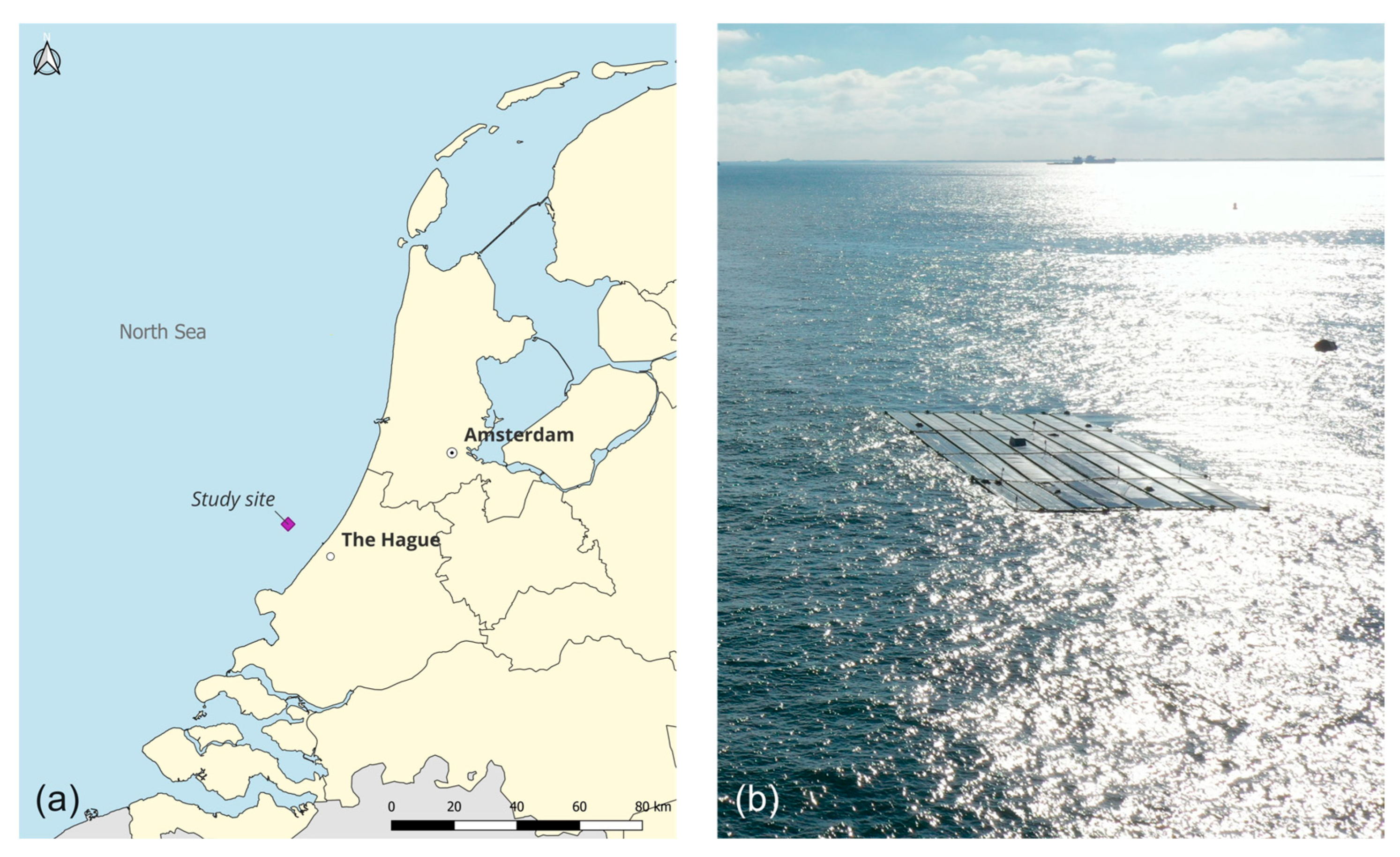
The study was conducted from May 2022 to April 2023 at the offshore solar farm operated by Oceans of Energy, located at the Offshore Test Site, 12 km off the coast of The Hague, the Netherlands, at a water depth of 20 m (Figure 1a,b). The farm consists of flexibly interconnected floating platforms that move with the waves while they remain floating on the sea surface and are held in place by anchors on the seabed.
Initially, the horizontal footprint of the solar farm was 47 × 19 m, and expanded to 47 × 38 m in December 2022 due to an increase in the number of floating platforms.
The sample consisted of images taken by daytime time-lapse cameras that were mounted on poles elevated approximately 1.5 m above the floating platforms. The cameras were oriented slightly downward and captured images hourly. Still images were analyzed over a one-year period. The analysis included four to eight randomly selected days per month, and six daily time points: 07:00, 10:00, 13:00, 16:00, 19:00, and 21:00. Seasonal variations in daylight resulted in differing numbers of usable images across months; for instance, during the winter months, fewer images per day were usable than during the other seasons. For each time point, three to four cameras were selected to ensure optimal coverage of the solar farm and to avoid overlapping floaters. While this sampling scheme captures general patterns of bird and marine mammal presence, the limited temporal resolution and number of sampling days means that short-term events, such as brief landings or rapid departures, may not have been detected. Consequently, the results primarily reflect broader, day-scale behavioral patterns rather than all individual events.
For each image, the bird and mammal species and the number of individuals per species on the farm were recorded, along with the birds’ age class (juvenile or adult). Because juvenile birds were often difficult to identify, only some could be classified to species level; therefore, juveniles were not distinguished to species level in the analysis. Species abundance at each time point was expressed as the number of individuals per m2. This was calculated by summing the total number of individuals observed across all images for a given time point and dividing by the total area of floating platforms (in m2) captured in those images. Some birds remained unidentified due to challenges such as poor visibility caused by intense sunlight, and flying birds were not included in the analysis.
Pellet analysis was performed with the aim to determine whether the food available on and around the platforms plays a role in the attraction of marine megafauna towards the solar farm. Bird pellets are compact masses of indigestible material that certain birds regurgitate after eating. It was assumed that the pellet contents represented part of what the seabirds had eaten over the past 24 h [23]. Pellets were collected at the solar farm between October and December 2022, using a spatula and sealed individually in labelled plastic bags. The pellets were later dried at room temperature for 48–72 h on paper towels and were stored in a dry place. Afterwards, the pellets were analyzed at the Royal Netherlands Institute for Sea Research (NIOZ) on Texel. The food item identification was based on the manual ‘Larus fuscus and Larus argentatus: pellet and bolus Analysis’ [24] and the book ‘North Sea fish and their remains’ [25].
Blue mussel (Mytilus edulis) represents the dominant species in terms of biomass colonizing the undersides of the floaters [4,6]. Given that one of the study’s hypotheses was that avian presence at the farm may be influenced by food availability, the size distribution of blue mussels colonizing the underside of the farm was examined. A total of 60 mussels were randomly collected from the undersides of the structures, with five individuals sampled from each of 12 floaters. The shell length of each specimen was subsequently measured.
Bird and mammal abundances were analyzed in relation to several factors, including month, daylight, time of day, and significant wave height. Significant wave height (hereafter referred to as wave height) represents the average height of the highest one-third of waves and provides an ecologically relevant measure of sea state, capturing conditions most likely to influence floating structures and associated fauna while minimizing the impact of short-term variability in individual wave measurements. The size of the farm was not included in the analysis due to partial collinearity with month, and results should therefore be interpreted in the context of this limitation.
Light availability throughout the day was categorized into daylight and twilight based on the average sunrise and sunset times for each month at the study site’s latitude. Daylight was defined as the period when the sun was above the horizon, whereas twilight referred to periods when the sun was below the horizon but still provided some ambient light. Images were not collected during full darkness.
Significant wave height data were obtained from the Rijkswaterstaat monitoring station “Eurogeul E13”, which is the nearest available station providing measurements corresponding to each time point in the analysis (https://waterinfo.rws.nl/ (accessed on 15 January 2026).
Statistical analysis was performed using R statistical software [26], version 4.3.3. Data were tested for normality using the Shapiro–Wilk test. Non-normally distributed data were compared using the non-parametric Kruskal–Wallis test, followed by post hoc pairwise comparisons using a permutation-based approach in the coin package. p-Values were calculated by randomly permuting group labels across observations and recalculating test statistics for each permutation, thereby generating an empirical distribution of the test statistic (10,000 resamples). To account for multiple testing, p-values were adjusted using the Benjamini–Hochberg method.
For juvenile birds, grey seals, and harbor seals, monthly counts contained an excessive number of zeros, and therefore post hoc comparisons were not conducted.
Differences in abundance between the two seal species were assessed using a paired Wilcoxon signed-rank test due to lack of normality in the data.
To assess the relationship between significant wave height and bird or seal abundance, we performed a Spearman’s rank correlation test. This non-parametric test was chosen due to the presence of non-normal distributions and tied ranks in the data. The correlation coefficient (ρ) and associated p-value were calculated using the cor.test() function. LOESS smoothing was used to visualize trends in the scatterplot.
Bird and seal abundance (individuals m−2) was modeled using a generalized additive model (GAM) from the mgcv package with the aim of quantifying the relative importance and shape of the effects of environmental and temporal predictors on their abundances. Tweedie distribution with a log link function was used to account for zero-inflation and the positively skewed distribution of the data. Wave height was modeled as a smoothed continuous predictor, while month, time of day, and light conditions were included as categorical predictors.

3. Results

3.1. Birds

In total, 1131 pictures taken from May 2022 to April 2023 were analyzed. All identified seabirds observed visiting the solar farm belonged to the Larus genus (gulls) and are considered Least Concern in the IUCN Red List of Threatened Species. The species were the lesser black-backed gull (Larus fuscus), the great black-backed gull (Larus marinus), and the herring gull (Larus argentatus). All birds were alive, roosting and showed no foraging behavior.
Overall, the predominant species present on the farm was the lesser black-backed gull, followed by the herring gull, and smaller numbers of the great black-backed gull (Kruskal–Wallis: p value < 0.001, adjusted p < 0.01 for all three).
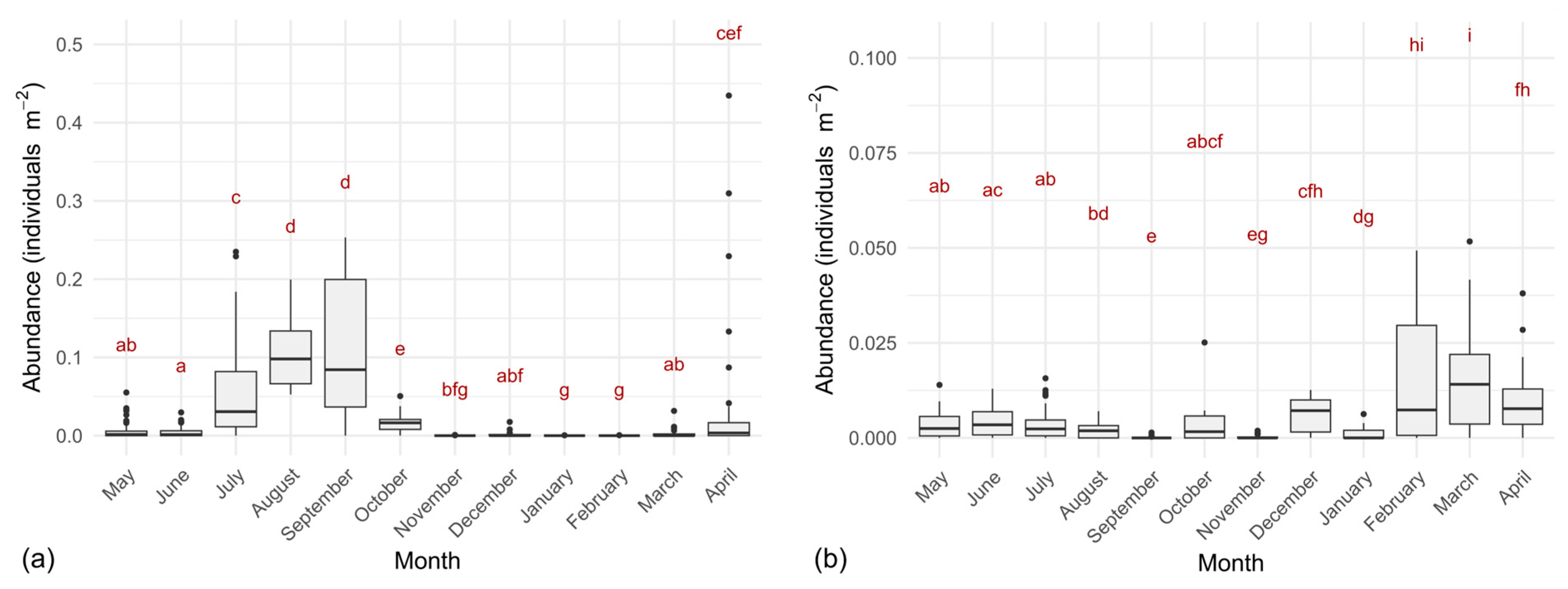
Birds were present on the farm throughout the year, though their abundances varied significantly (Kruskal–Wallis: χ211 = 189.23, p < 0.001). The highest abundances were recorded in August and September, followed by July (Figure 2a). April did not differ significantly from July and October (p = 0.42 and p = 0.44, respectively), although it exhibited numerous outliers. In contrast, bird numbers were lowest in November, January, and February, with birds nearly absent during these months.
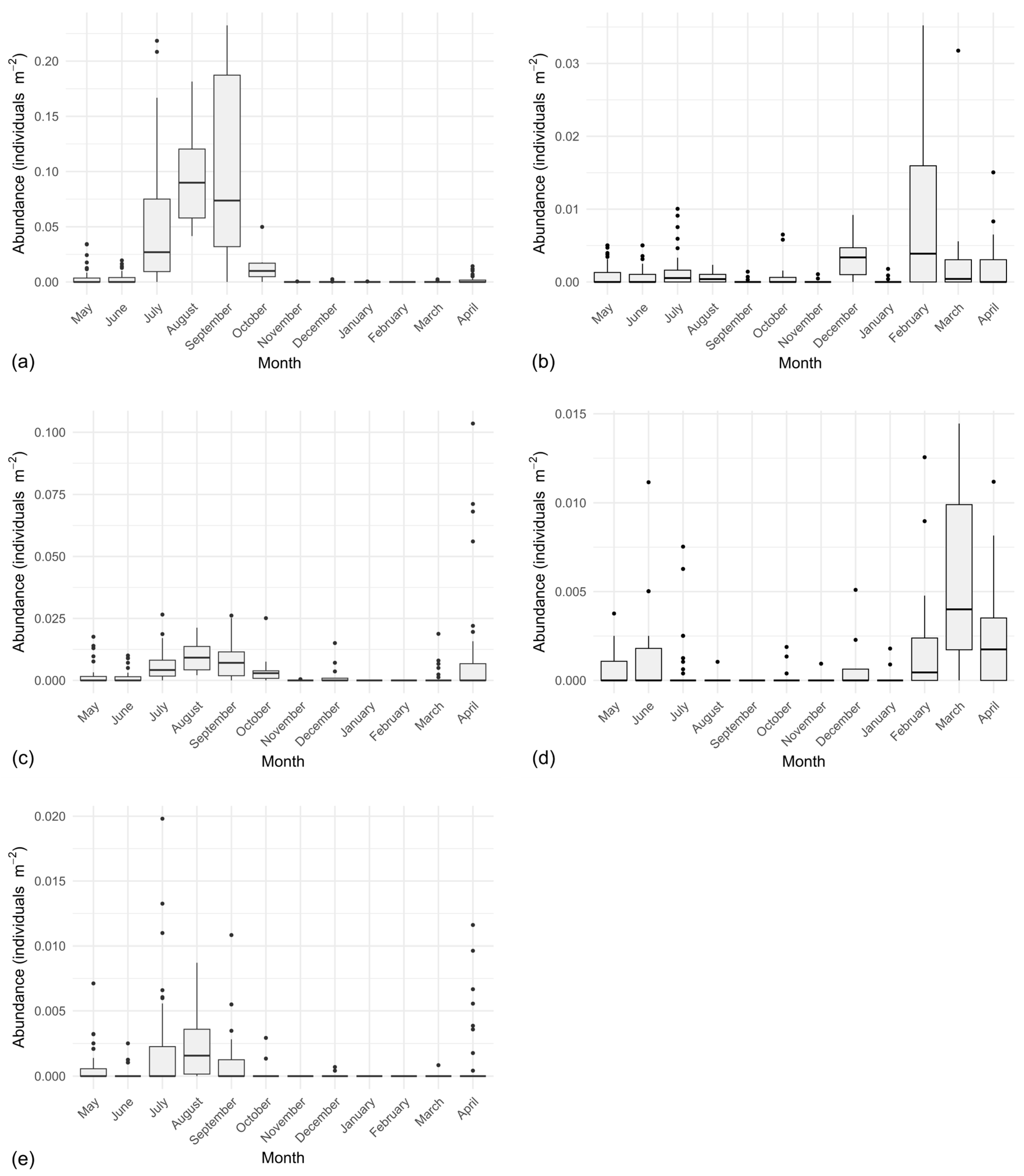
The lesser black-backed gull was present at the solar farm year-round, except in February. The herring gull was absent only in January and February, while the great black-backed gull was not recorded in November, January, or February (Figure A2a,c,e). As a result, February was the only month without any gulls visiting the solar farm.
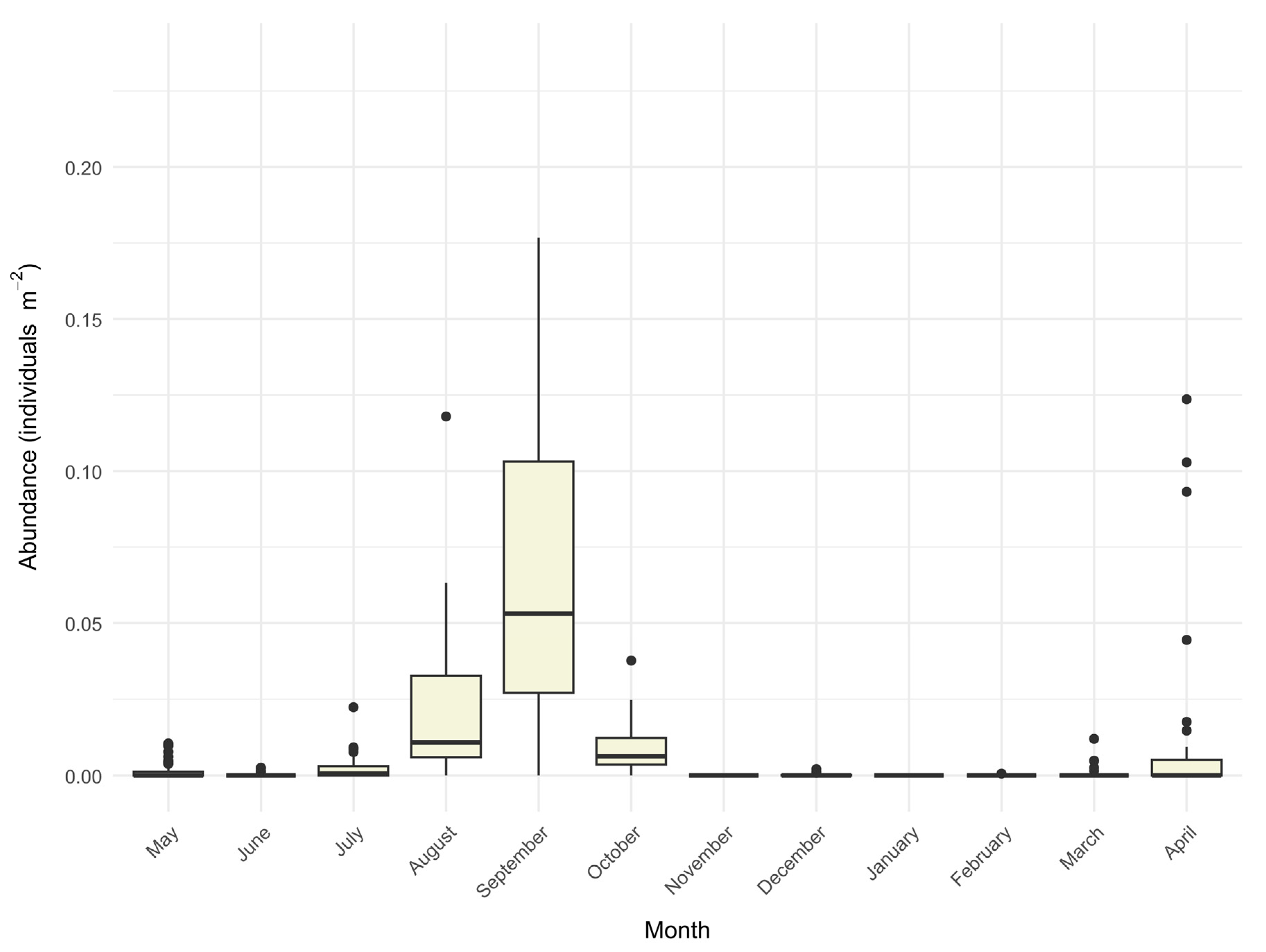
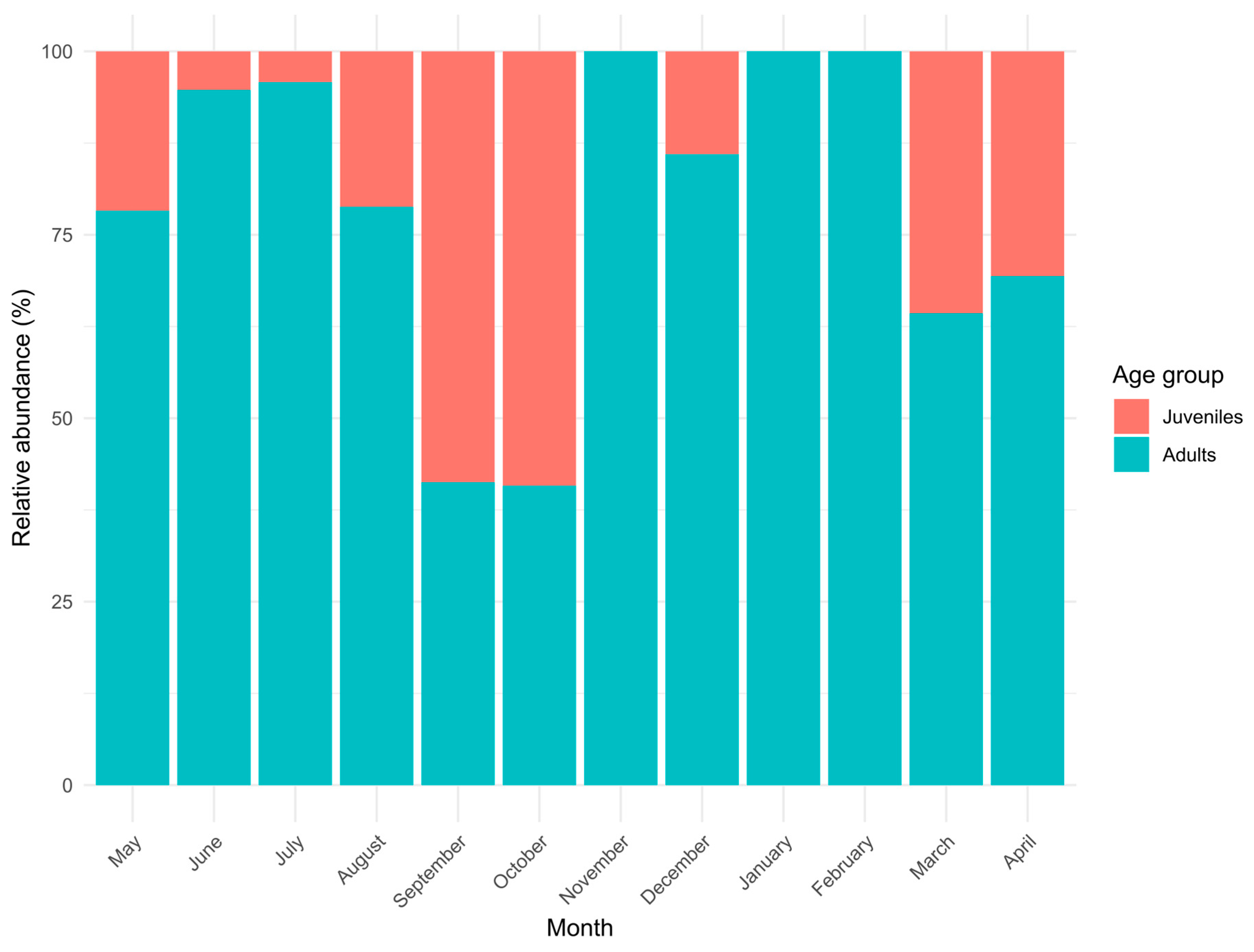
Juveniles were not identified to species level due to difficulties in identification, though all were gulls. Most juveniles were observed during the summer months, particularly in August, September, and October, while none were recorded in November, January, or February (Figure 3). Notably, juveniles accounted for more than half of the observed individuals in September and October (Figure A1). Statistical analyses were not possible for juveniles due to the large number of zero observations.
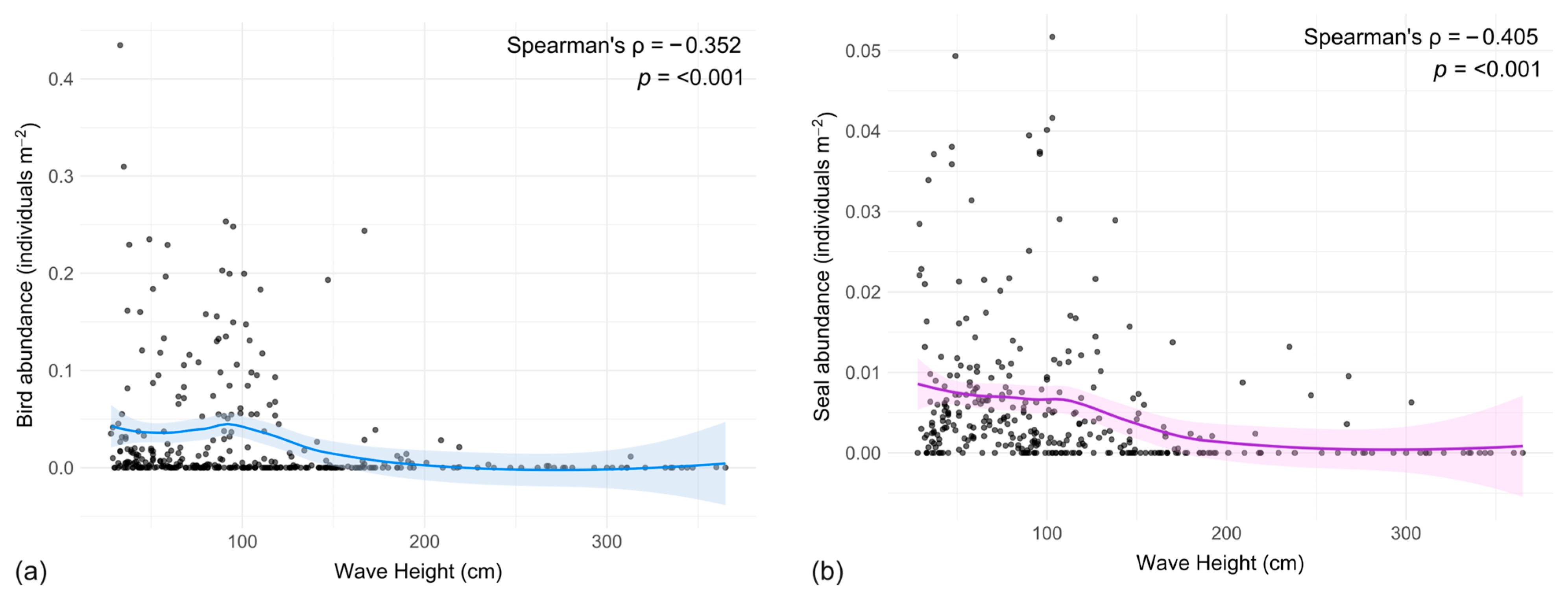
There was a significant weak to moderate negative correlation between wave height and bird abundance (Spearman’s ρ = −0.352, p < 0.001), indicating that as wave height increased, the total bird density tended to decrease (Figure 4a). Visually, the slope dropped more sharply after approximately 95 cm wave height and beyond about 200 cm wave height, bird abundance remained close to zero.
When wave height was below 100 cm, only 26% of observations recorded zero bird abundance. However, this proportion increased to 61% for wave heights above 100 cm, and further raised to 74% at 200 cm, indicating a strong negative relationship between wave height and bird presence.
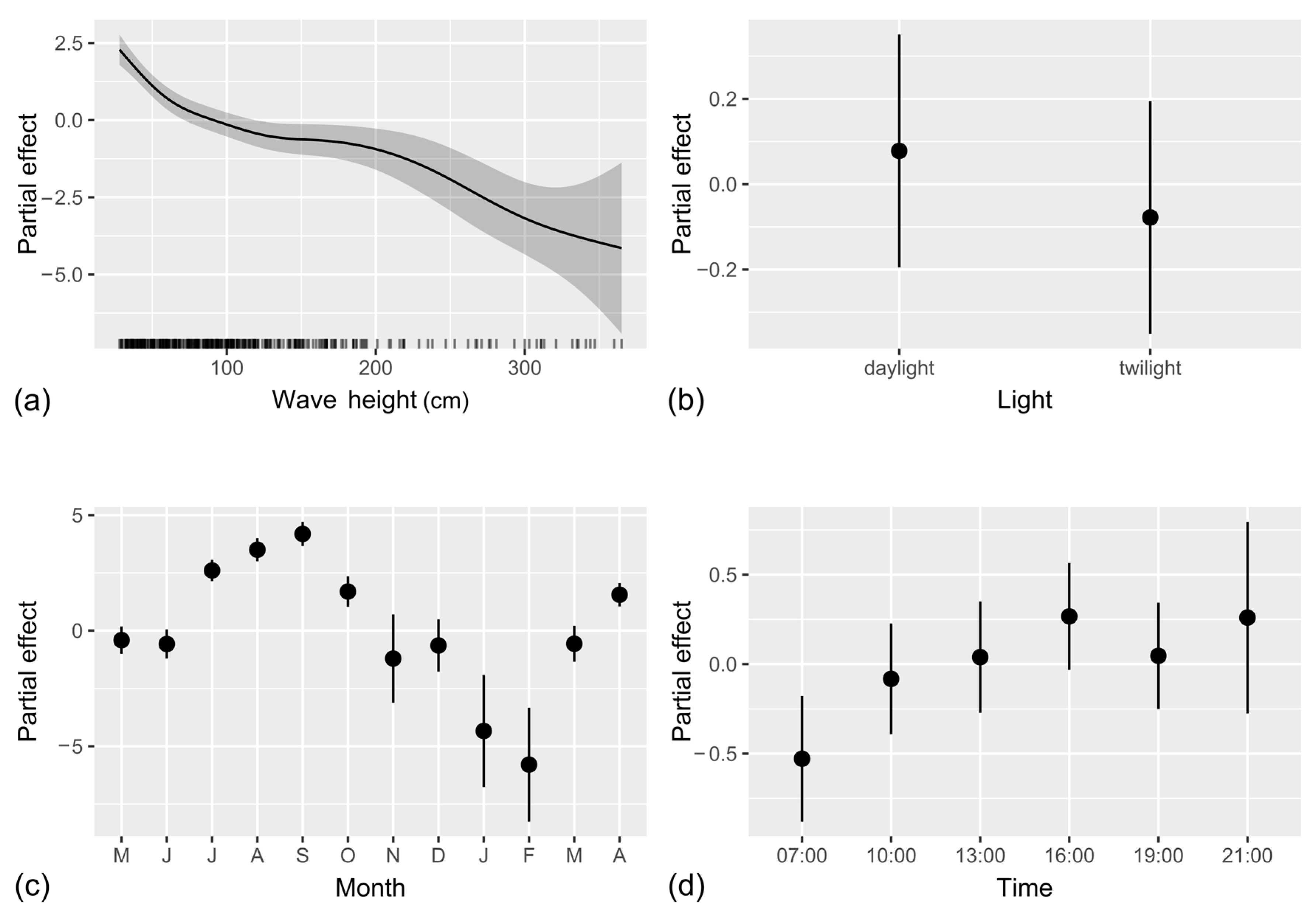
Modeling of bird abundance as a function of wave height, month, time of day, and light conditions showed that wave height significantly explained variation in bird abundance, with a non-linear effect (smooth term for wave height edf = 4.63, F = 27.7, p < 0.001) especially, from around 100 cm onwards, bird abundance quickly dropped (Figure 5a). Several months demonstrated significant deviations from the annual mean bird abundance. In particular, abundance was significantly higher from July through October, whereas January and February showed significantly lower values relative to the overall monthly mean. Regarding the time of the day (Figure 5d), only 07:00 showed a significant deviation (estimate = −0.53, p = 0.003), indicating lower bird densities in that time period compared to the average across all times. Finally, no significant effect of light was detected (p > 0.5 for daylight and twilight), suggesting light conditions had a minimal influence on bird abundance. With 73.7% of the variation explained, the variables tested captured most of the observed variation in bird abundance.
The analysis of 20 bird pellets collected from the solar farm, serving as a qualitative reference of the diet of visiting birds, revealed that the most frequent prey species was the flying crab (Table 1), followed by the European plaice, whiting, and common dab. One blue mussel of 2.5 cm and sheep pellets were each detected in only a single sample.
To assess whether birds might have consumed blue mussels from the underside of the farm, 60 mussels were collected and measured. The shell lengths of these mussels ranged from 4.1 to 6.4 cm, with an average length of 4.9 ± 0.4 cm.

3.2. Seals

The marine mammals observed at the offshore solar farm, identified through both photographic analysis and from sightings during maintenance works at the farm, were the grey seal (Halichoerus grypus) and the harbor seal (Phoca vitulina). Individuals were frequently seen resting on the floating structures.
Seals were present on the farm year-round, but their abundance differed significantly among months (Kruskal–Wallis test: χ211 = 97.50, p < 0.001). The highest abundances were observed in February, March, and April, whereas September and November showed the lowest numbers (Figure 2b). Notably, harbor seals were completely absent in September (Figure A2d).
When comparing the two species, total abundance did not differ significantly between grey and harbor seals (paired Wilcoxon signed-rank test: V = 6348.5, p = 0.191). Seasonality was broadly similar for both species (Figure A2b,d), with grey seals reaching peak abundance in February, followed by March and April, while harbor seals peaked in March, followed by April and February. The lowest numbers of visits by grey seals were recorded in September, November, and January, while harbor seals showed similarly low visitation in these months as well as in August.
There was a significant moderate negative correlation between wave height and seal abundance (Spearman’s ρ = −0.405, p < 0.001), indicating that higher wave heights led to decreased seal abundance (Figure 6b). Visually, the slope appeared to drop more sharply after approximately 110 cm wave height. When wave height was below 100 cm, only 10% of observations recorded zero seal abundance. This proportion increased to 50% for wave heights above 100 cm, and further raised to 80% at 200 cm, indicating a strong negative relationship between wave height and bird presence.
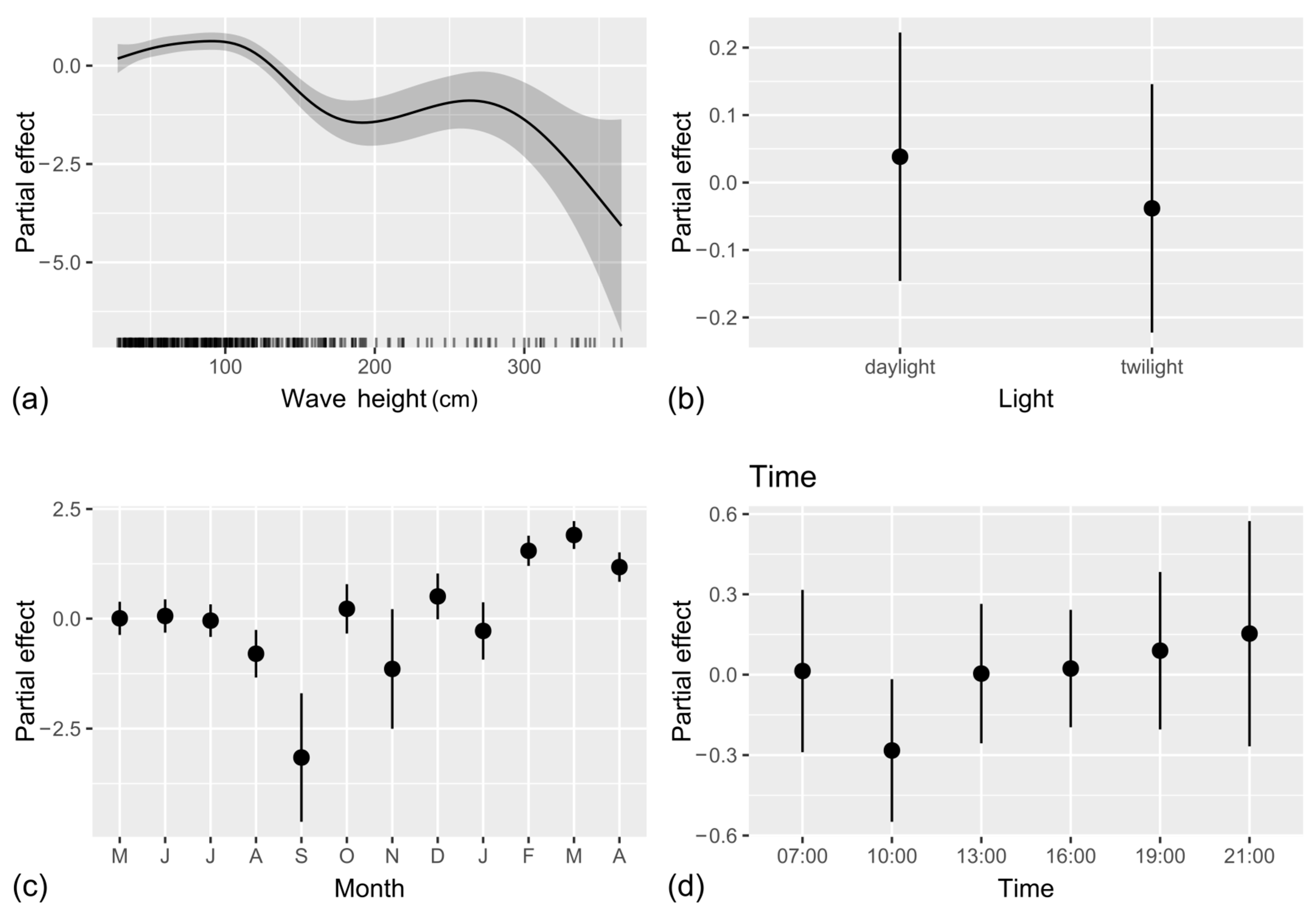
GAM results showed that wave height had a significant non-linear effect on seal abundance (edf = 5.83, F = 12.56, p < 0.001), indicating that seal presence varied strongly across the range of sea conditions (Figure 6). At low wave heights (up to ~130 cm), the partial effect was slightly positive, indicating a small increase in predicted seal abundance. Beyond this point, the effect declined, becoming negative at higher wave heights, suggesting substantially lower predicted abundance under rougher conditions. Among the categorical predictors, several months showed significant differences compared to the mean value of seal abundance across all months. Seal abundance was significantly higher than the yearly average in February, March and April, while it was substantially lower in September. Most time periods did not differ from the overall mean, except 10:00, which showed a slight but significant decrease (estimate = −0.28, p <0.05), while light conditions had no effect (all p > 0.05). The final model explained approximately 54% of the deviance, indicating that about half of the variation in seal abundance was captured by the included predictors.

4. Discussion

This study aimed to investigate the interactions of marine megafauna with offshore solar in the southern North Sea by means of image analysis over the course of one year and bird pellet analysis.
The results indicated that gulls and seals used the offshore installation, with sea state (wave height) and season being associated with variation in marine megafauna occurrence. This use pattern aligns with previous findings showing that both birds and seals utilize offshore energy structures [17,27,28]. Nevertheless, because the mid-study increase in farm size was not explicitly accounted for in the analysis, these results should be interpreted with caution. This further underscores the value of continued field monitoring across deployment stages to support evidence-based conclusions.

4.1. Birds

The offshore solar farm was visited by three bird species: the lesser black-backed gull (Larus fuscus), the great black-backed gull (Larus marinus), and the herring gull (Larus argentatus). Additionally, no bird carcasses were found at the solar farm, indicating no collision incidents. Finally, no definitive conclusion can be drawn regarding whether the visiting birds fed on fauna growing on the floating structure.
Regular visits by the three gull species, along with the absence of bird carcasses, suggest a low vulnerability to displacement and collision [29]. The floating solar platforms provide above-water surfaces that birds appear to use as resting and roosting sites, similar to what has been observed for offshore oil and gas structures, thereby reducing their energy expenditure [30]. In a recent study on a smaller-sized solar farm at a small distance from the Dutch shore, terns (Sterninae) and waders (Charadriiformes) were also observed in addition to seagulls [31]. These offshore solar installations could be particularly valuable for resting when co-located with offshore wind farms, as birds may expend more energy to avoid wind turbines [32]. However, such attraction could inadvertently increase their exposure to nearby turbines, thereby elevating the risk of collision. Conversely, species known to exhibit avoidance behavior toward wind farms [33] might also avoid adjacent solar installations, reducing any potential interactions altogether.
Collision risk associated with offshore wind developments has been a major environmental concern for birds [34], but this risk is expected to be very low with offshore solar installations. Unlike wind farms, which operate in three-dimensional space with actively rotating blades, solar farms are two-dimensional, static structures that do not pose direct obstacles to birds in flight. Many bird species have limited frontal binocular vision and primarily downward-focused fields of view while foraging, which increases their susceptibility to collisions with rotating turbine blades [35]. Offshore solar structures remain within the birds’ visual field during flight and therefore pose a substantially reduced risk of collision.
Collision risk associated with solar energy has been documented in onshore installations, where waterbirds may perceive solar panels as water bodies, a phenomenon described as the “lake effect” [36,37]. On land, certain bird species are believed to mistake photovoltaic panels for lakes or wetlands, potentially resulting in collisions. However, the absence of any recorded collision incidents over the one-year duration of this study suggests that such risks may be less relevant in offshore environments. Notably, observations of birds landing on the offshore solar installation indicate that they most likely can distinguish between the constantly moving sea surface, shaped by wind and wave activity, against the smooth, static surface of photovoltaic panels.
In addition to serving as resting grounds, solar farms may attract birds due to increased food availability, similar to observations at offshore wind installations [38]. The underside of floating solar structures provides a substrate for marine organism growth, effectively creating an artificial reef [4], which in turn attracts fish and crustaceans and other potential prey for birds. The small sample of bird pellet contents did not confirm this trophic link, but a larger, seasonally distributed sample size could provide more robust conclusions. Additionally, foraging behavior was not observed in any of the pictures analyzed.
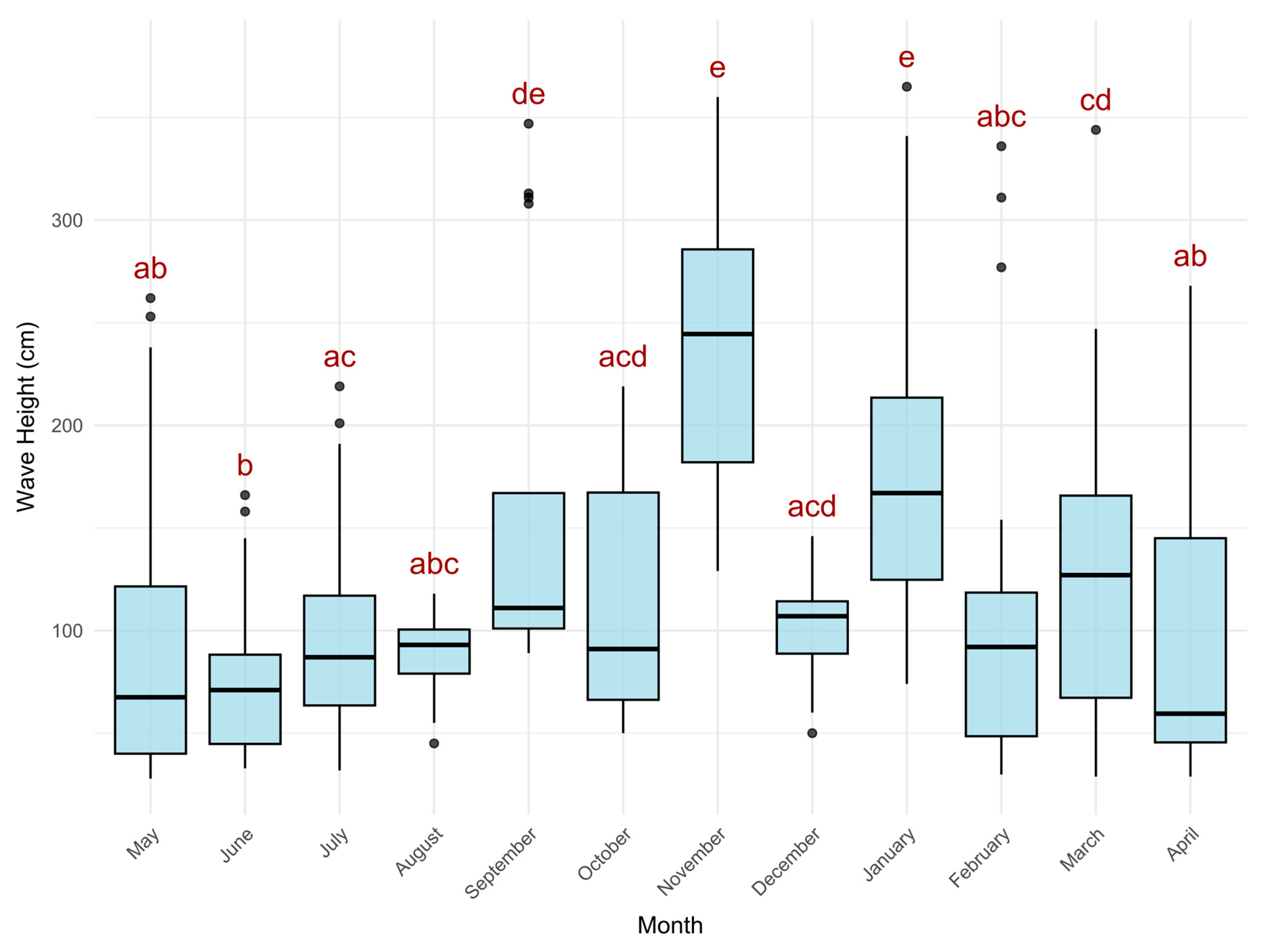
In this study, the observed seasonal variation in bird abundance, with highest abundance in August, September, and July, and lowest in February, January, and November, could reflect their breeding cycle during which it is known that they forage in large numbers within a small distance from their nests [39]. For example, in the lesser black-backed gull, offshore movement typically decreases during the incubation period and peaks during the early chick-rearing phase, which could explain the observed large presence of birds during the summer months and also the large presence of juveniles during that period [40]. In other months of the year, April showed unexpectedly high bird abundances, which may be attributed to particularly low wave heights, as it was the month with the lowest median wave height across all months in that year (Figure A3). Similarly, November had almost no birds and was the month with the highest waves.
Sea state, particularly wave height, appeared to be an important factor influencing bird visits. Our results suggest a potential threshold: visits were frequent up to approximately 100 cm of wave height but declined sharply beyond this level. No diurnal pattern of visitation was detected, aside from fewer visits at 07:00, which could possibly reflect daily movement patterns and/or changing light conditions, although this cannot be resolved with the present dataset.
The lack of diurnal pattern is somewhat surprising, given that gulls are known to exhibit distinct flight and feeding activity patterns [41]. When the day was further divided according to light availability, which could be more ecologically meaningful than human-defined hours, no clear effect on visitation was again observed. Nighttime conditions could not be assessed in this study, but their inclusion would be highly relevant, as seabird behavior varies by species: some engage in nocturnal migration or feeding [42,43,44], while others typically return to terrestrial roosts after dark [45]. Detection of such species would require alternative monitoring approaches, such as bird radar or night-vision cameras. Finally, additional environmental parameters, such as weather conditions, particularly wind, which is known to influence bird flight height [46], could possibly improve the description of our data.
Regarding the interspecific variation in bird presence, the lesser black-backed gull was the most abundant species, followed by the herring gull, while the great black-backed gull occurred in much lower numbers. However, some individuals could not be identified to species level, and flying birds were excluded from the analysis, potentially influencing relative abundance patterns.
The lesser black-backed gull was observed at the solar farm throughout the year, with the exception of February. The highest average numbers were recorded from July to September, a period that follows the breeding and hatching season and overlaps with chick-rearing. During the breeding season, this species is known to concentrate around its breeding colonies, primarily located in the Delta region and on the Wadden Islands, where the largest colonies are found [47]. It is known to forage over distances of several tens of kilometers from their colonies, placing the study site within their potential foraging range. This suggests that the gulls may use the solar farm platforms as resting areas following the energetically demanding breeding and hatching period [48].
Typically, the lesser black-backed gull is most numerous along the Dutch coast in July, and beginning around September, it migrates southwards to overwinter [49]. Adult birds begin returning to their breeding colonies around February or March, while a smaller number of immature individuals follow later in the spring; the majority remain in the wintering areas until reaching sexual maturity [47]. The strong presence of this species in September could likely overlap with its migration period, with individuals visiting the farm during their journey from northern regions.
The herring gull is present year-round in the North Sea, with slightly higher numbers typically observed during the autumn months [47]. Our findings support this pattern, as herring gulls were recorded at the solar farm throughout the year, except in January and February, with the highest numbers observed between July and September.
Great black-backed gulls were present on the platform in relatively low numbers throughout the year, with peak abundances observed from July to September. This pattern contrasts with expectations, as the North Sea is an important migration and wintering area for birds from northern regions [50], and great black-backed gulls typically arrive in September and remain until early March [51].
Juvenile gulls were most frequently observed on the solar farm in August and September, with smaller numbers also recorded in October and July. These peaks align with the general breeding cycle of these gull species, which typically hatch from late May to late June and fledge about 40–55 days later, corresponding to mid-July through mid-August [52,53,54].
Regarding the trophic aspect of the study, it should be noted that food remains encountered in pellets on the solar farm do not necessarily represent organisms actually caught at the farm, even when the respective species are known to occur there. The small sample of analyzed pellets showed that part of the main prey species of seabirds included the flying crab, one of the most prevalent brachyuran species in the North Sea [55], followed by fish species: common dab, European plaice and whiting, and finally a blue mussel in one pellet.
Swimming crabs, the family to which the flying crab belongs, are a known prey of lesser black-backed gulls [49,56] and are occasionally taken by herring gulls [49,57]. The Oceans of Energy offshore crew observed swimming crabs near and on the floating solar platform, indicating potential foraging opportunities. However, lesser black-backed gulls primarily forage on swimming crabs in more nearshore areas [56], and no foraging behavior was observed in the images collected during the study period.
The mussel-containing pellet may have originated from a herring gull, as shellfish, particularly blue mussels, are part of their diet, especially in younger birds that were present at the time [58]. This single blue mussel encountered in one pellet did not correspond in size to that of the mussels randomly sampled from the solar farm. However, that does not exclude that it originated from the farm, as the bird that ate it might have picked a smaller specimen.
Fish species found in the pellets (European plaice, common dab, and whiting) most likely originated from fisheries discards [41,59,60], as gulls commonly follow fishing vessels and feed on waste [61]. This is consistent with their ecology, as plaice and dab are demersal and whiting is benthopelagic, meaning that these species are not typically accessible to gulls in their natural habitats. Nevertheless, as benthic communities develop on the underside of the solar farm, increasing food and shelter availability could potentially attract other fish species, which ultimately could become prey for gulls.
While this study confirmed the attraction of the lesser black-backed gull, herring gull, and great black-backed gull, the response of other species to offshore solar farms remains a knowledge gap. The orientation of the cameras optimizing coverage of the top surface of the farm restricts observations of the sky, thus preventing the measurement of bird fluxes. Consequently, it is not possible to estimate the proportion of seagulls using the installation or to detect other species that may have been present in the area. Additionally, expanding the field of view to include the surrounding water could also help detect foraging birds.
The findings of our study at this solar farm provide insights into potential bird responses at other North Sea sites. Nevertheless, species composition and abundance are expected to vary among sites. Bird distribution patterns in the North Sea are strongly influenced by distance from shore and proximity to breeding or natal colonies [62,63]. Migratory routes in particular follow predominantly coastal corridors, with birds using shorelines and nearshore waters as navigational corridors and stopover areas. As with other offshore structures then, bird responses are expected to change with increasing distance from shore [64].

4.2. Seals

The grey seal (Halichoerus grypus) and the harbor seal (Phoca vitulina) are common marine mammal species in the North Sea and were also frequent visitors at the solar farm, which appears to attract these species year-round.
Seals haul out typically on shore or on ice. Hauling out serves multiple purposes, including rest and thermoregulation, and patterns can vary seasonally depending on sex, molting, pupping, nursing, as well as diurnal and tidal cycles and prey availability [65,66,67]. The presence on the solar farm could have multiple effects on the energy expenditure of the seals; not only do they rest, but they can save further energy by avoiding the need to travel to shore for this purpose. Additionally, hauling out on the structures allows seals to avoid the prolonged exposure to cold water, thereby reducing thermoregulatory costs.
Besides resting, seals could also use the solar farm area to feed, as some species are known to forage near anthropogenic structures [68]. Although direct evidence of feeding was not observed in this study, marine growth develops on the underside of the farm already within the first year [6], potentially also enhancing secondary production in the surrounding seabed [69]. This increase in food availability could make the farm more attractive to seals, and given that both grey and harbor seals are generalist feeders, it may ultimately contribute to a local shift in their diet [70].
Finally, hauling out in highly trafficked areas may represent a coping mechanism in response to noise disturbance [71]. Elevated hauling out activity has been documented in seals during pile-driving operations [72]. Although noise emissions from offshore solar farms have not yet been studied and are expected to be less intense than those produced by pile driving, the North Sea is a highly industrialized and heavily trafficked marine environment, where cumulative anthropogenic pressures may amplify potential impacts. The possible influence of these pressures on seal behavior should therefore be further investigated [73].
Overall, no species was consistently more frequent, although a substantial number of observations were recorded as ‘unknown’ due to difficulties in identification, as clear distinguishing characteristics were often not visible on the camera footage.
With the exception of September, when only grey seals were observed at the solar farm, both seal species were present year-round. Harbor seals were abundant in February, March, and April, preceding their pupping season, but also in June when it is already pupping season, contrary to other studies in which hauling out peaks during pupping season and molting season [74,75]. Very low numbers of visits in August, September, November, and January may be related to the peak in food intake by harbor seals, which typically follows the breeding and molting seasons [76]. At the same time, November and January, followed by September, experienced the highest wave activity, with significant wave heights often exceeding 100 cm (Figure A3), coinciding with markedly lower seal observations at the farm (Figure 6a). Similarly to birds, the doubling of the farm size was not accounted for in the analysis.
Grey seal visits peaked in February, followed by March and April, while significantly fewer visits were recorded in September, November, and January. Their breeding cycle may help explain the observed increase in their numbers at the solar farm during the winter months, as grey seals breed from September to December and undergo molting later on [77], and are generally known to be more present at haul-out sites during these periods compared to the summer [78].
Beyond seasonal effects, sea conditions appear to influence seal presence at the farm. Similar to birds, higher wave heights were associated with reduced seal abundance; however, unlike birds, seals showed greater tolerance and began avoiding the farm at wave heights exceeding approximately 110 cm.
Diurnal patterns reported in previous studies were not detected in this study [66,79]. However, time of day may be relevant at haul-out sites influenced by tides [80] and its effect may also vary seasonally [67]. This is not the case at the solar farm, which remains above water at all times.
Overall, it is important to consider that seal haul-out behavior on a solar farm is likely not directly comparable to haul-out on shores; given that a solar farm is an offshore structure, seals may use it in different ways than natural haul-out sites, for instance, during seasons when they are already predominantly offshore.
Although this study documented the use of the offshore solar farm by grey and harbor seals, it remains unclear how other marine mammals respond beneath the water. For instance, the harbor porpoise (Phocoena phocoena), an abundant North Sea species, is known to be attracted to anthropogenic structures [27]. To assess potential behavioral responses, such as attraction or avoidance, of harbor porpoises and other cetaceans, additional methods such as hydrophone monitoring would be required.
Finally, as with birds, seal behavior is expected to vary across different offshore solar farm locations, reflecting differences in their spatial distribution, particularly relative to distance from shore [81]. For example, a study at a smaller solar farm located nearshore in the Dutch North Sea recorded just a few individual seals over nearly two years [31]. In addition to natural distribution patterns, haul-out behavior exhibits seasonal variation that differs by location [77].

5. Conclusions

This study provides the first empirical observations of seabirds and marine mammals at an offshore solar installation in the southern North Sea. Multiple species (lesser black-backed gull, great black-backed gull, herring gull, as well as the grey and harbor seal) were observed resting on the floating platforms, demonstrating that offshore solar structures can be used by marine megafauna. Their presence fluctuates throughout the year, likely influenced by breeding and migration. The observed use appears primarily related to resting/haul-out behavior, although feeding cannot be ruled out. Sea state also largely influences their presence, with visits declining sharply for birds above wave heights of 1 m and slightly higher waves for seals.
The reduction in global climate change impacts is essential for the conservation of marine ecosystems, and offshore solar can play an important role in achieving international carbon-reduction targets [82]. By lowering CO2 emissions, offshore solar may contribute positively to biodiversity conservation in the long-term, reducing large-scale climate-driven threats such as ocean warming, habitat loss, and extreme events. However, the immediate ecological impacts of offshore solar remain difficult to predict and quantify. Beyond the effects of individual solar farms on marine megafauna, it is also necessary to assess cumulative effects in combination with other anthropogenic activities, such as offshore wind. For birds, these cumulative assessments are especially relevant, as wind turbines pose collision risks, while co-located solar farms may influence local use patterns and habitat utilization.
Continuous monitoring, supported by close collaboration among developers, scientists, and policymakers, will therefore be essential as offshore renewable energy expands, ensuring that mitigation measures are implemented where necessary and that optimal development locations with minimal ecological impact are identified. The findings presented here provide an initial ecological baseline that can inform environmental assessments, guide future monitoring and modeling studies, and support the design of nature-inclusive offshore solar systems.

Author Contributions

Conceptualization, B.V.; methodology, L.v.d.H.; formal analysis, L.v.d.H., M.N.; investigation, L.v.d.H., M.N.; resources, F.v.H.; writing—original draft preparation, M.N., L.v.d.H.; writing—review and editing, M.N., L.v.d.H., F.v.H., B.V.; project administration, F.v.H., B.V.; funding acquisition, B.V. All authors have read and agreed to the published version of the manuscript.

Funding

This research was funded by an RVO grant (Rijksdienst voor Ondernemend Nederland) under the project title ‘North Sea Two Offshore Solar Project’ (Project number: DEI121027) as part of the DEI+ subsidy.

Institutional Review Board Statement

Not applicable.

Informed Consent Statement

Not applicable.

Data Availability Statement

The raw data supporting the conclusions of this article will be made available by the authors on request.

Acknowledgments

In this section, we would like to thank Kees Camphuysen and Henko de Stigter at the Royal Netherlands Institute for Sea Research, NIOZ, and Pauline Roos, who was employed at Oceans of Energy during the study period, for their valuable contributions to this work.

Conflicts of Interest

Authors Melina Nalmpanti, Frans van Helvert, and Brigitte Vlaswinkel were employed by the company Oceans of Energy during the study. Author Laura van den Heuvel undertook this work at the company Oceans of Energy during her Master’s thesis at the University of Utrecht. The authors declare no conflicts of interest.

Appendix A

Figure A1. Ratio of juvenile to adult bird abundance observed at the offshore solar farm during one year.
Sustainability 18 01646 g0a1
Figure A2. Abundance (individuals m−2) per month at the offshore solar farm of (a) lesser black-backed gull, (b) grey seal, (c) herring gull, (d) harbor seal, and (e) great black-backed gull. Each data point represents one time point.
Sustainability 18 01646 g0a2
Figure A3. Monthly distribution of wave heights for the selected time points from which images were analyzed at the offshore solar farm location. Each point denotes an individual observation. Boxplots labeled with the same letter do not differ significantly based on pairwise comparisons (p < 0.05).
Sustainability 18 01646 g0a3

References

  1. Golroodbari, S.Z.; Ayyad, A.W.A.; van Sark, W. Offshore Floating Photovoltaics System Assessment in Worldwide Perspective. Prog. Photovolt. Res. Appl. 2023, 31, 1061–1077. [Google Scholar] [CrossRef]
  2. Vasuki, S.S.; Levell, J.; Santbergen, R.; Isabella, O. A Technical Review on the Energy Yield Estimation of Offshore Floating Photovoltaic Systems. Renew. Sustain. Energy Rev. 2025, 216, 115596. [Google Scholar] [CrossRef]
  3. Meit, J.B.L.; Negri, A.; Van Der Pol Nguyen, R.; Van Es, L. Hybrid Offshore Solar & Wind Parks in the Mediterranean—Cost Sharings Accelerate Business Cases for Offshore Renewable Rollout in Mediterranean. In Proceedings of the 17th OMC Med Energy Conference and Exhibition, Ravenna, Italy, 8–10 April 2025. [Google Scholar]
  4. Mavraki, N.; Bos, O.G.; Vlaswinkel, B.M.; Roos, P.; de Groot, W.; van der Weide, B.; Bittner, O.; Coolen, J.W.P. Fouling Community Composition on a Pilot Floating Solar-Energy Installation in the Coastal Dutch North Sea. Front. Mar. Sci. 2023, 10, 1223766. [Google Scholar] [CrossRef]
  5. Nalmpanti, M.; Dinandra, T.; Maar, M.; Larsen, J.; Vlaswinkel, B. Offshore Solar Farms as Habitats for Mytilus Edulis: A Preliminary Modelling Study on Mussel Growth, Distribution, Chlorophyll-a Uptake and Bio-Deposition in the North Sea. Mar. Environ. Res. 2025, 211, 107372. [Google Scholar] [CrossRef]
  6. Mavraki, N.; Bos, O.G.; van der Weide, B.; Bittner, O.; Vlaswinkel, B.M.; Nalmpanti, M.; Coolen, J.W.P. Inventory of the Biofouling Community on the First Offshore Solar Energy Farm in the North Sea. J. Sea Res. 2025, 208, 102627. [Google Scholar] [CrossRef]
  7. Karpouzoglou, T.; Vlaswinkel, B.; Van Der Molen, J. Effects of Large-Scale Floating (Solar Photovoltaic) Platforms on Hydrodynamics and Primary Production in a Coastal Sea from a Water Column Model. Ocean Sci. 2020, 16, 195–208. [Google Scholar] [CrossRef]
  8. Whelan, C.J.; Wenny, D.G.; Marquis, R.J. Ecosystem Services Provided by Birds. Ann. N. Y. Acad. Sci. 2008, 1134, 25–60. [Google Scholar] [CrossRef] [PubMed]
  9. Mariyappan, M.; Rajendran, M.; Velu, S.; Johnson, A.D.; Dinesh, G.K.; Solaimuthu, K.; Kaliyappan, M.; Sankar, M. Ecological Role and Ecosystem Services of Birds: A Review. Int. J. Environ. Clim. Change 2023, 13, 76–87. [Google Scholar] [CrossRef]
  10. Plön, S.; Andra, K.; Auditore, L.; Gegout, C.; Hale, P.J.; Hampe, O.; Ramilo-Henry, M.; Burkhardt-Holm, P.; Jaigirdar, A.M.; Klein, L.; et al. Marine Mammals as Indicators of Anthropocene Ocean Health. NPJ Biodivers. 2024, 3, 24. [Google Scholar] [CrossRef] [PubMed]
  11. Mekonen, S. Birds as Biodiversity and Environmental Indicator. J. Nat. Sci. Res. 2017, 7, 27–34. [Google Scholar]
  12. Garthe, S.; Markones, N.; Corman, A.M. Possible Impacts of Offshore Wind Farms on Seabirds: A Pilot Study in Northern Gannets in the Southern North Sea. J. Ornithol. 2017, 158, 345–349. [Google Scholar] [CrossRef]
  13. Ward, M.P.; Benson, T.J.; Deppe, J.; Zenzal, T.J.; Diehl, R.H.; Celis-Murillo, A.; Bolus, R.; Moore, F.R. Estimating Apparent Survival of Songbirds Crossing the Gulf of Mexico during Autumn Migration. Proc. R. Soc. B Biol. Sci. 2018, 285, 20181747. [Google Scholar] [CrossRef]
  14. Croll, D.A.; Ellis, A.A.; Adams, J.; Cook, A.S.C.P.; Garthe, S.; Goodale, M.W.; Hall, C.S.; Hazen, E.; Keitt, B.S.; Kelsey, E.C.; et al. Framework for Assessing and Mitigating the Impacts of Offshore Wind Energy Development on Marine Birds. Biol. Conserv. 2022, 276, 109795. [Google Scholar] [CrossRef]
  15. Dierschke, V.; Garthe, S. Literature Review of Offshore Wind Farms with Regard to Seabirds. In Ecological Research on Offshore Wind Farms: International Exchange of Experiences. PART B: Literature Review of Ecological Impacts; Zucco, C., Wende, W., Merck, T., Köchling, I., Köppel, J., Dierschke, V., Garthe, S., Eds.; BfN Skripten 186: Bonn, Germany, 2006; pp. 131–198. [Google Scholar]
  16. Bergström, L.; Kautsky, L.; Malm, T.; Rosenberg, R.; Wahlberg, M.; Åstrand Capetillo, N.; Wilhelmsson, D. Effects of Offshore Wind Farms on Marine Wildlife—A Generalized Impact Assessment. Environ. Res. Lett. 2014, 9, 034012. [Google Scholar] [CrossRef]
  17. Russell, D.J.F.; Brasseur, S.M.J.M.; Thompson, D.; Hastie, G.D.; Janik, V.M.; Aarts, G.; McClintock, B.T.; Matthiopoulos, J.; Moss, S.E.W.; McConnell, V. Marine Mammals Anthropogenic at Sea. Curr. Biol. 2014, 24, R638–R639. [Google Scholar] [CrossRef]
  18. Bradarić, M.; Kranstauber, B.; Bouten, W.; van Gasteren, H.; Baranes, J.S. Drivers of Flight Altitude during Nocturnal Bird Migration over the North Sea and Implications for Offshore Wind Energy. Conserv. Sci. Pract. 2024, 6, e13114. [Google Scholar] [CrossRef]
  19. Exo, K.-M.; Hüppop, O.; Garthe, S. Birds and Offshore Wind Farms: A Hot Topic in Marine Ecology. Wader Study Group Bull. 2003, 100, 50–53. [Google Scholar]
  20. Geelhoed, S.C.V.; Janinhoff, N.; Lagerveld, S.; Verdaat, H. Marine Mammal Surveys in Dutch North Sea Waters in 2019; Wageningen Marine Research: Den Helder, The Netherlands, 2020. [Google Scholar]
  21. Blanchet, M.A.; Vincent, C.; Womble, J.N.; Steingass, S.M.; Desportes, G. Harbour Seals: Population Structure, Status, and Threats in a Rapidly Changing Environment. Oceans 2021, 2, 41–63. [Google Scholar] [CrossRef]
  22. Phillips, R.A.; Fort, J.; Dias, M.P. Chapter 2—Conservation Status and Overview of Threats to Seabirds. In Conservation of Marine Birds; Young, L., VanderWerf, E., Eds.; Academic Press: Cambridge, MA, USA, 2023; pp. 33–56. [Google Scholar]
  23. Barrett, R.T.; Camphuysen, K.; Anker-Nilssen, T.; Chardine, J.W.; Furness, R.W.; Garthe, S.; Hüppop, O.; Leopold, M.F.; Montevecchi, W.A.; Veit Barrett, R.R. Diet Studies of Seabirds: A Review and Recommendations. ICES J. Mar. Sci. 2007, 64, 1675–1691. [Google Scholar] [CrossRef]
  24. Hunt, V. Larus fuscus and Larus argentatus: Pellet and Bolus Analysis Guide. 2006. Available online: https://gull-research.org/papers/papers3/Larus%20fuscus%20and%20Larus%20argentatus%20Pellet%20and%20Bolus%20Analysis%20Guide.pdf (accessed on 30 January 2026).
  25. Camphuysen, K.; Henderson, P. North Sea Fish and Their Remains; Pisces Conservation Ltd. & NIOZ: Texel, The Netherlands, 2017. [Google Scholar]
  26. R Core Team. R: A Language and Environment for Statistical Computing; R Foundation for Statistical Computing: Vienna, Austria, 2024; Available online: https://www.R-project.org/ (accessed on 30 January 2026).
  27. Delefosse, M.; Rahbek, M.L.; Roesen, L.; Clausen, K.T. Marine Mammal Sightings around Oil and Gas Installations in the Central North Sea. J. Mar. Biol. Assoc. U. K. 2017, 98, 993–1001. [Google Scholar] [CrossRef]
  28. Wiese, F.; Montevecchi, W. Marine Bird and Mammal Surveys on the Newfoundland Grand Banks from Offshore Supply Boats 1999–2000; Unpublished Husky Oil Contract Report: Newfoundland, NF, Canada, 2000. [Google Scholar]
  29. Goodale, W.M.; Stenhouse, I.J. A Conceptual Model to Determine Vulnerability of Wildlife Populations to Offshore Wind Energy Development. Hum.-Wildl. Interact. 2016, 10, 53–61. [Google Scholar] [CrossRef]
  30. Ronconi, R.A.; Allard, K.A.; Taylor, P.D. Bird Interactions with Offshore Oil and Gas Platforms: Review of Impacts and Monitoring Techniques. J. Environ. Manage. 2015, 147, 34–45. [Google Scholar] [CrossRef] [PubMed]
  31. Vlaswinkel, B.; Roos, P.; Nelissen, M. Environmental Observations at the First Offshore Solar Farm in the North Sea. Sustainability 2023, 15, 6533. [Google Scholar] [CrossRef]
  32. Band, B. Using a Collision Risk Model to Assess Bird Collision Risks for Offshore Windfarms; British Trust for Ornithology: Norfolk, UK, 2012. [Google Scholar]
  33. Masden, E.A.; Haydon, D.T.; Fox, A.D.; Furness, R.W.; Bullman, R.; Masden, M.D.; Haydon, E.A.; Fox, D.T.; Bullman, R.W.; Masden, E.A.; et al. Barriers to Movement: Impacts of Wind Farms on Migrating Birds. ICES J. Mar. Sci. 2009, 4, 746–753. [Google Scholar] [CrossRef]
  34. Marques, A.T.; Batalha, H.; Rodrigues, S.; Costa, H.; Pereira, M.J.R.; Fonseca, C.; Mascarenhas, M.; Bernardino, J. Understanding Bird Collisions at Wind Farms: An Updated Review on the Causes and Possible Mitigation Strategies. Biol. Conserv. 2014, 179, 40–52. [Google Scholar] [CrossRef]
  35. Martin, G.R. Understanding Bird Collisions with Man-Made Objects: A Sensory Ecology Approach. IBIS 2011, 153, 239–254. [Google Scholar] [CrossRef]
  36. Walston, L.J.; Rollins, K.E.; LaGory, K.E.; Smith, K.P.; Meyers, S.A. A Preliminary Assessment of Avian Mortality at Utility-Scale Solar Energy Facilities in the United States. Renew. Energy 2016, 92, 405–414. [Google Scholar] [CrossRef]
  37. Kosciuch, K.; Riser-Espinoza, D.; Moqtaderi, C.; Erickson, W. Aquatic Habitat Bird Occurrences at Photovoltaic Solar Energy Development in Southern California, USA. Diversity 2021, 13, 524. [Google Scholar] [CrossRef]
  38. Dierschke, V.; Furness, R.W.; Garthe, S. Seabirds and Offshore Wind Farms in European Waters: Avoidance and Attraction. Biol. Conserv. 2016, 202, 59–68. [Google Scholar] [CrossRef]
  39. Orians, G.; Pearson, N. On the Theory of Central Place Foraging. In Analysis of Ecological Systems; Horn, D., Mitchell, R., Stairs, G., Eds.; Ohio State University Press: Columbus, OH, USA, 1979. [Google Scholar]
  40. Thaxter, C.B.; Ross-Smith, V.H.; Bouten, W.; Clark, N.A.; Conway, G.J.; Rehfisch, M.M.; Burton, N.H. Seabird-Wind Farm Interactions during the Breeding Season Vary within and between Years: A Case Study of Lesser Black-Backed Gull Larus fuscus in the UK. Biol. Conserv. 2015, 186, 347–358. [Google Scholar] [CrossRef]
  41. Schwemmer, P.; Garthe, S. At-Sea Distribution and Behaviour of a Surface-Feeding Seabird, the Lesser Black-Backed Gull Larus fuscus, and Its Association with Different Prey. Mar. Ecol. Prog. Ser. 2005, 285, 245–258. [Google Scholar] [CrossRef]
  42. Klaassen, R.H.G.; Ens, B.J.; Shamoun-Baranes, J.; Exo, K.M.; Bairlein, F. Migration Strategy of a Flight Generalist, the Lesser Black-Backed Gull Larus fuscus. Behav. Ecol. 2012, 23, 58–68. [Google Scholar] [CrossRef]
  43. Garthe, S.; Hüppop, O. Nocturnal Scavenging by Gulls in the Southern North Sea. Waterbirds 1996, 19, 232–241. [Google Scholar] [CrossRef]
  44. Fijn, R.; Govers, L.; Lutterop, D.; Middelveld, R.; van Bemmelen, R. Evidence of Nocturnal Migration over Sea and Sex-Specific Migration Distance of Dutch Black-Headed Gulls. Ardea 2022, 110, 15–29. [Google Scholar] [CrossRef]
  45. Hüppop, O.; Wurm, S. Effects of Winter Fishery Activities on Resting Numbers, Food and Body Condition of Large Gulls Larus argentatus and L. marinus in the South-Eastern North Sea. Mar. Ecol. Prog. Ser. 2000, 194, 241–247. [Google Scholar] [CrossRef]
  46. Liechti, F. Birds: Blowin’ by the Wind? J. Ornithol. 2006, 147, 202–211. [Google Scholar] [CrossRef]
  47. Fijn, R.; van Bemmelen, R.; de Jong, J.; Arts, F.; Beuker, D.; Bravo Rebolledo, E.; Engels, B.; Hoekstein, M.; Jonkvorst, R.J.; Lilipaly, S.; et al. Verspreiding, Abundantie En Trends van Zeevogels En Zeezoogdieren Op Het Nederlands Continentaal Plat in 2019–2020; RWS-Centrale Informatievoorziening BM 20.22. Bureau Waardenburg Rapportnr. 20-324; Bureau Waardenburg & Deltamilieu Projecten, Culemborg: Culemborg, The Netherlands, 2020. [Google Scholar]
  48. Camphuysen, K.; van Donk, S.C.; Shamoun-Baranes, J.; Kentie, R. The Annual Cycle, Breeding Biology and Feeding Ecology of the Lesser Black-Backed Gull Larus fuscus. Ardea 2023, 112, 31–61. [Google Scholar] [CrossRef]
  49. Camphuysen, C.J.; van Dijk, J.; Witte, H.; Spaans, N. De Voedselkeuze van Kleine Mantelmeeuwen En Zilvermeeuwen En Andere Indicaties Die Aanwijzingen Geven over Het Ruimtegebruik van Deze Vogelsoorten in de Noord Hollandse Kustwateren; NIOZ: Texel, The Netherlands, 2008. [Google Scholar]
  50. Skov, H.; Durinck, J.; Leopold, M.; Tasker, M. Important Bird Areas for Seabirds in the North Sea, Including the Channel and the Kattegat; BirdLife International: Cambridge, UK, 1995. [Google Scholar]
  51. Bergman, M.J.N.; Leopold, M.F. De Ecologie van de Kustzone van Vlieland En Terschelling; NIOZ: Texel, The Netherlands, 1992. [Google Scholar]
  52. Mcgill, P.A.; Richmond, M.E. Hatching Success of Great Black-Backed Gull Eggs Treated with Oil. Bird Band. 1979, 50, 108–113. [Google Scholar] [CrossRef]
  53. Butler, R.G.; Trivelpiece, W. Nest Spacing, Reproductive Success, and Behavior of the Great Black-Backed Gull (Larus marinus). Auk 1981, 98, 99–107. [Google Scholar]
  54. Camphuysen, C. A Historical Ecology of Two Closely Related Gull Species (Laridae): Multiple Adaptations to a Man-Made Environment. Ph.D. Thesis, University of Groningen, Groningen, the Netherlands, 2013. [Google Scholar]
  55. Callaway, R.; Engelhard, G.H.; Dann, J.; Cotter, J.; Rumohr, H. A Century of North Sea Epibenthos and Trawling: Comparison between 1902–1912, 1982–1985 and 2000. Mar. Ecol. Prog. Ser. 2007, 346, 27–43. [Google Scholar] [CrossRef]
  56. Schwemmer, H.; Schwemmer, P.; Ehrich, S.; Garthe, S. Lesser Black-Backed Gulls (Larus fuscus) Consuming Swimming Crabs: An Important Link in the Food Web of the Southern North Sea. Estuar. Coast. Shelf Sci. 2013, 119, 71–78. [Google Scholar] [CrossRef]
  57. Enners, L.; Schwemmer, P.; Corman, A.M.; Voigt, C.C.; Garthe, S. Intercolony Variations in Movement Patterns and Foraging Behaviors among Herring Gulls (Larus argentatus) Breeding in the Eastern Wadden Sea. Ecol. Evol. 2018, 8, 7529–7542. [Google Scholar] [CrossRef] [PubMed]
  58. van Donk, S.; Camphuysen, K.C.J.; Shamoun-Baranes, J.; van der Meer, J. The Most Common Diet Results in Low Reproduction in a Generalist Seabird. Ecol. Evol. 2017, 7, 4620–4629. [Google Scholar] [CrossRef]
  59. Tyson, C.; Shamoun-Baranes, J.; Van Loon, E.E.; Camphuysen, K.C.J.; Hintzen, N.T. Individual Specialization on Fishery Discards by Lesser Black-Backed Gulls (Larus fuscus). ICES J. Mar. Sci. 2015, 72, 1882–1891. [Google Scholar] [CrossRef]
  60. Walter, U.; Becker, P. Occurrence and Consumption of Seabirds Scavenging on Shrimp Trawler Discards in the Wadden Sea. ICES J. Mar. Sci. 1997, 54, 684–694. [Google Scholar] [CrossRef][Green Version]
  61. Camphuysen, C.J. Fourageermogelijkheden Voor Zeevogels in de Boomkorvisserij: Een Verkennend Onderzoek. Sula 1993, 7, 81–104. [Google Scholar]
  62. Camphuysen, C.J.; Leopold, M.F. Atlas of Seabirds in the Southern North Sea; IBN research report 94/6, NIOZ report 1994–1998; INB, NIOZ & NZG: Texel, The Netherlands, 1994. [Google Scholar]
  63. Camphuysen, C.J.; Vercruijsse, H.J.P.; Spaans, A.L. Colony- and Age-Specific Seasonal Dispersal of Herring Gulls Larus argentatus Breeding in The Netherlands. J. Ornithol. 2011, 152, 849–868. [Google Scholar] [CrossRef]
  64. Lamb, J.; Gulka, J.; Adams, E.; Cook, A.; Williams, K.A. A Synthetic Analysis of Post-Construction Displacement and Attraction of Marine Birds at Offshore Wind Energy Installations. Environ. Impact Assess. Rev. 2024, 108, 107611. [Google Scholar] [CrossRef]
  65. Hayward, J.L.; Henson, S.M.; Logan, C.J.; Parris, C.R.; Meyer, M.W.; Dennis, B. Predicting Numbers of Hauled-out Harbour Seals: A Mathematical Model. J. Appl. Ecol. 2005, 42, 108–117. [Google Scholar] [CrossRef]
  66. Watts, P. The Diel Hauling-out Cycle of Harbour Seals in an Open Marine Environment: Correlates and Constraints. J. Zool. 1996, 240, 175–200. [Google Scholar] [CrossRef]
  67. Thompson, P.M.; Fedak, M.A.; McConnell, B.J.; Nicholas, K.S. Seasonal and Sex-Related Variation in the Activity Patterns of Common Seals (Phoca vitulina). J. Appl. Ecol. 1989, 26, 521. [Google Scholar] [CrossRef]
  68. Arnould, J.P.Y.; Monk, J.; Ierodiaconou, D.; Hindell, M.A.; Semmens, J.; Hoskins, A.J.; Costa, D.P.; Abernathy, K.; Marshall, G.J. Use of Anthropogenic Sea Floor Structures by Australian Fur Seals: Potential Positive Ecological Impacts of Marine Industrial Development? PLoS ONE 2015, 10, e0130581. [Google Scholar] [CrossRef]
  69. Dannheim, J.; Beermann, J.; Coolen, J.W.P.; Vanaverbeke, J.; Degraer, S.; Birchenough, S.N.R.; Garcia, C.; Lacroix, G.; Fiorentino, D.; Lindeboom, H.; et al. Offshore Wind Turbines Constitute Benthic Secondary Production Hotspots on and around Constructions. J. Environ. Manag. 2025, 393, 126922. [Google Scholar] [CrossRef]
  70. Kappa, F.; Härkönen, T.; Freitas, C.; Carroll, D.; Harding, K.C. Shifting Harbor Seal (Phoca vitulina) Diet May Reflect Ecosystem Changes in Skagerrak. Mar. Mammal Sci. 2026, 42, e70069. [Google Scholar] [CrossRef]
  71. Skeate, E.R.; Perrow, M.R.; Gilroy, J.J. Likely Effects of Construction of Scroby Sands Offshore Wind Farm on a Mixed Population of Harbour Phoca vitulina and Grey Halichoerus grypus Seals. Mar. Pollut. Bull. 2012, 64, 872–881. [Google Scholar] [CrossRef]
  72. Edrén, S.M.C.; Andersen, S.M.; Teilmann, J.; Carstensen, J.; Harders, P.B.; Dietz, R.; Miller, L.A. The Effect of a Large Danish Offshore Wind Farm on Harbor and Gray Seal Haul-out Behavior. Mar. Mammal Sci. 2010, 26, 614–634. [Google Scholar] [CrossRef]
  73. Russell, D.J.F.; Hastie, G.D.; Thompson, D.; Janik, V.M.; Hammond, P.S.; Scott-Hayward, L.A.S.; Matthiopoulos, J.; Jones, E.L.; McConnell, B.J. Avoidance of Wind Farms by Harbour Seals Is Limited to Pile Driving Activities. J. Appl. Ecol. 2016, 53, 1642–1652. [Google Scholar] [CrossRef]
  74. Granquist, S.M.; Hauksson, E. Seasonal, Meteorological, Tidal and Diurnal Effects on Haul-out Patterns of Harbour Seals (Phoca vitulina) in Iceland. Polar Biol. 2016, 39, 2347–2359. [Google Scholar] [CrossRef]
  75. Huber, H.R.; Jeffries, S.J.; Brown, R.F.; Delong, R.L.; Vanblaricom, G. Correcting Aerial Survey Counts of Harbor Seals (Phoca vitulina richardsi) in Washington and Oregon. Mar. Mammal Sci. 2001, 17, 276–293. [Google Scholar] [CrossRef]
  76. Renouf, D.; Noseworthy, E. Feeding Cycles in Captive Harbour Seals (Phoca vitulina): Weight Gain in Spite of Reduced Food Intake and Increased Thermal Demands. Mar. Behav. Physiol. 1990, 17, 203–212. [Google Scholar] [CrossRef]
  77. Vincent, C.; Huon, M.; Caurant, F.; Dabin, W.; Deniau, A.; Dixneuf, S.; Dupuis, L.; Elder, J.F.; Fremau, M.H.; Hassani, S.; et al. Grey and Harbour Seals in France: Distribution at Sea, Connectivity and Trends in Abundance at Haulout Sites. Deep Sea Res. 2 Top. Stud. Oceanogr. 2017, 141, 294–305. [Google Scholar] [CrossRef]
  78. Leeney, R.H.; Broderick, A.C.; Mills, C.; Sayer, S.; Witt, M.J.; Godley, B.J. Abundance, Distribution and Haul-out Behaviour of Grey Seals (Halichoerus grypus) in Cornwall and the Isles of Scilly, UK. J. Mar. Biol. Assoc. U. K. 2010, 90, 1033–1040. [Google Scholar] [CrossRef]
  79. Sjöberg, M.; McConnell, B.; Fedak, M. Haulout Patterns of Grey Seals Halichoerus grypus in the Baltic Sea. Wildl. Biol. 1999, 5, 37–47. [Google Scholar] [CrossRef]
  80. Patterson, J.; Acevedo-Gutiérrez, A. Tidal Influence On the Haul-Out Behavior of Harbor Seals (Phoca vitulina) At A Site Available At All Tide Levels. Northwestern Nat. 2008, 89, 17. [Google Scholar] [CrossRef]
  81. Aarts, G.; Cremer, J.; Kirkwood, R.; van der Wal, J.T.; Matthiopoulos, J.; Brasseur, S. Spatial Distribution and Habitat Preference of Harbour Seals (Phoca vitulina) in the Dutch North Sea; Wageningen Marine Research: Den Helder, The Netherlands, 2016. [Google Scholar]
  82. McElwee, P.; Smith, P.; Ballal, V.; Cherubini, F.; Harrison, P.A. The Trade-Offs between Needed Renewable Energy Transitions and Biodiversity Can Be Overcome. Nat. Rev. Biodivers. 2025, 1, 561–562. [Google Scholar] [CrossRef]
Figure 1. (a) Location of the offshore solar farm, 12 km from the coast of the Hague, the Netherlands, where the marine megafauna study was conducted. (b) Aerial view of the offshore solar farm placed at the Offshore Test Site.
Sustainability 18 01646 g001
Figure 2. (a) Bird and (b) seal abundance (individuals m−2) per month at the offshore solar farm. Each data point represents one time point. Boxplots sharing the same letter indicate groups that are not significantly different from each other (p adjusted < 0.05 from pairwise permutation tests).
Sustainability 18 01646 g002
Figure 3. Bird juvenile abundance (individuals m−2) per month at the offshore solar farm.
Sustainability 18 01646 g003
Figure 4. Bird (a) and seal (b) abundance (individuals m−2) at the solar farm as a function of significant wave height (cm) over the whole year. Blue and purple lines indicate the locally estimated scatterplot smoothing curve, with shaded areas indicating 95% confidence intervals.
Sustainability 18 01646 g004
Figure 5. Partial effects on bird abundance (individuals m−2) of (a) significant wave height, (b) light, (c) months, and (d) time during the day estimated using a generalized additive model (GAM) with a log-linked Tweedie distribution. For the continuous variable, tick marks on the x-axis show observed datapoints, the black line indicates the model’s predicted partial effect and the shaded area indicates 95% confidence intervals. For the categorical variables, points show the estimated coefficients for each level of the factor variable and error bars indicate 95% confidence intervals.
Sustainability 18 01646 g005
Figure 6. Partial effects on seal abundance (individuals m−2) of (a) significant wave height, (b) light, (c) months and (d) time during the day estimated using a generalized additive model (GAM) with a log-linked Tweedie distribution. For the continuous variable, tick marks on the x-axis show observed datapoints, the black line indicates the model’s predicted partial effect and the shaded area indicates 95% confidence intervals. For the categorical variables, points show the estimated coefficients for each level of the factor variable and error bars indicate 95% confidence intervals.
Sustainability 18 01646 g006
Table 1. Items in food pellets of birds collected at the offshore solar farm.
Species NameCommon NameFound in Number of Samples
Polybius holsatusFlying crab19
Pleuronectes platessaEuropean plaice5
Merlangius merlangusWhiting4
Limanda limandaCommon dab2
Plaice/dab 1
Mytilus edulisBlue mussel 1
Disclaimer/Publisher’s Note: The statements, opinions and data contained in all publications are solely those of the individual author(s) and contributor(s) and not of MDPI and/or the editor(s). MDPI and/or the editor(s) disclaim responsibility for any injury to people or property resulting from any ideas, methods, instructions or products referred to in the content.