Review

Sustainable Livestock Farming in Chile: Challenges and Opportunities

by
Rodrigo Morales
1,*,
María Eugenia Martínez
2,
Marion Rodríguez
3,
Ignacio Beltrán
3 and
Christian Hepp
4
1
Instituto de Investigaciones Agropecuarias INIA Ururi, Magallanes 1865, Arica 1001219, Chile
2
Instituto de Investigaciones Agropecuarias INIA Butalcura, O’Higgins 670, Castro 5701098, Chile
3
Instituto de Investigaciones Agropecuarias INIA Remehue, Ruta 5 km 8, P.O. Box 24-0, Osorno 5290000, Chile
4
Instituto de Investigaciones Agropecuarias INIA Tamelaike, Km 4,5 Camino Coyhaique Alto, Coyhaique 5950739, Chile
*
Author to whom correspondence should be addressed.
Sustainability 2026, 18(3), 1626; https://doi.org/10.3390/su18031626
Submission received: 22 December 2025 / Revised: 21 January 2026 / Accepted: 29 January 2026 / Published: 5 February 2026
(This article belongs to the Special Issue Sustainable Animal Production and Livestock Practices)

Abstract

Chile’s livestock industry faces growing demands for emissions reduction, animal welfare, and value creation, while continuing to play a key role in rural food security and pasture-based production systems. In light of Chile’s varied agroclimatic conditions, a diminishing national herd, and shifting market signals, such as alternative proteins and distinctive meat products, this narrative review explores four complementary transition pathways: sustainable intensification, organic and agroecological systems, heritage livestock, and regenerative practices. We map the structural challenges, including grazing dairy and beef herds, fragmented producer organization, and the absence of unified, farm-scale greenhouse-gas measurements. We assess the management strategies that have the strongest support; viz., efficiency gains at the animal/herd level, adaptive grazing and silvopastoral designs, nutrient cycling via manure management and local by-products, and welfare frameworks that are aligned with national law and World Organisation for Animal Health guidance. Heritage systems (e.g., Chilota sheep breed in the Chiloé archipelago) provide resilience, cultural identity, and low-input baselines for stepwise transitions. Regenerative procedures can improve soil function and drought buffering but require context-specific designs and credible outcome-based verification to avoid greenwashing. Key enabling policies include coordinated certification and labeling covering animal welfare and origin. Additional elements are cooperative and territorial governance, targeted R&D and extension services for smallholders, and a transparent, standardized greenhouse-gas measurement framework linking farm-level actions to national inventories. Chile’s pathway is not a single model but a practical combination shaped by regional conditions that can deliver long-term economic sustainability, ecosystem services, and nutrition.

1. Introduction

Animal-source foods such as beef and milk are essential for human nutrition, particularly given global population growth. Essential amino acids and micronutrients from meat support immune, neurological, and hematological functions and are essential for vulnerable groups; therefore, reducing meat intake demands careful planning [1,2,3]. In Chile, per capita beef consumption has remained stable at 22.1 kg per year, but annual consumption of lamb, goat, and horsemeat averages only 900 g. Milk consumption has been 149 L per capita/year. Although global production of beef and milk have been forecasted to increase by 9% and 17%, respectively [4], and the global demand for animal protein has been projected to double by 2050 [5], the livestock population in Chile has declined. Between agricultural surveys in 2007 and 2017, cattle numbers fell by one million [6], and the trends among other ruminants was similar.
Meat imports have been a major cause of those decreases, e.g., in 2021, >90% of Chile’s beef imports came from Paraguay, Brazil, and Argentina [7], as have climate-driven shifts toward more profitable activities such as real estate, horticulture, and fruit production [8]. Exports sustain meat processing, and China has purchased 69% of exported Chilean beef, mostly as whole carcasses, but national brands have supplied premium meats to high-value markets [7].
Most imported milk products have been cheese, particularly from Argentina, the USA, Germany, Mexico, and the Netherlands. On the other hand, most milk exports consist of powdered milk shipped to Colombia and Brazil.
In Chile, the consumption of red meat has decreased, and projections suggest that, by 2030, alternative proteins will reach 10% of the market, which will represent growth from USD 2.2 billion to USD 150 billion [9,10]. In several regions, beef consumption is expected to decrease as consumption of plant-based proteins increases because of health and environmental reasons [11]. Insects have been investigated as a potential source of food and feed [12], and the development of cultured meat has attracted >USD 3 billion investment since 2019, with >170 companies involved. In Chile, moderate consumer interest suggests the potential for early adoption if regulations and awareness improve [13].
The consumption of alternative proteins addresses environmental, ethical, and health concerns but faces scaling and cost barriers [14]. Evidence has shown that well-managed, pasture-based systems can align with sustainability, animal welfare, and nutritional goals and provide carbon sequestration and ecosystem services [15,16]; however, economic and political interests might bias research and policy on livestock sustainability, which makes transparency essential for credible evaluations [17].
Plant-based proteins represent the most advanced segment in terms of market presence, whereas insect-based proteins and cultivated meat remain at the experimental or early regulatory stages [18]. Available evidence suggests that any medium- to long-term impacts are more likely to affect highly industrialized livestock systems, rather than extensive, pasture-based, heritage, or agroecological systems where animal production is closely linked to territorial management, ecosystem services, and cultural identity.
At the same time, emerging dietary frameworks in high-income countries emphasize the need to increase the availability of high-quality protein overall, rather than replacing one protein source with another. For example, the Dietary Guidelines for Americans 2025–2030 introduce a renewed visual and conceptual emphasis on protein adequacy and food quality within healthy dietary patterns [19]. In this context, alternative proteins—particularly plant-based products—are better understood as complementary components within diversified food systems rather than as direct substitutes for livestock-derived foods.
Moreover, interactions between livestock systems and alternative protein industries should not be framed exclusively in terms of competition. Potential synergies include circular economy approaches, such as the valorization of livestock by-products, shared infrastructure, and diversified protein portfolios to meet growing nutritional demands. Accordingly, references to alternative proteins in this review are intended to frame external pressures and emerging dynamics, rather than to predict specific market substitutions or species-specific impacts in Chile.
Chile has shown strong potential for developing a livestock industry that is aligned with global sustainability objectives. Primarily, production has been led by small- and medium-scale farmers who have deep cultural roots and have used local breeds [20,21]. Livestock has contributed to food security in rural areas by providing essential proteins and fats [22]. Most systems are pasture-based and are associated with grasslands and forests that act as carbon sinks, although more research is needed [23]. Grass-fed meat delivers higher nutritional quality than does feedlot meat because they have more healthful fatty acid profiles [24,25,26]. Differentiated markets have been expanding, and the production of organic meat and regenerative meat have been projected to reach USD 29.71 billion by 2029 and USD 3.83 billion by 2032, respectively, while the demand for natural meat in Asia has been growing strongly [27,28]. Chile’s livestock sector can address these challenges by transitioning toward sustainable models that integrate research, innovation, and knowledge transfer, which will require coordinated efforts across multiple sectors.
The objective of this review was to examine pathways towards sustainable livestock production in Chile, including alternatives that have been implemented by livestock producers in Chile, such as sustainable intensification, organic/agroecological systems, heritage livestock, and regenerative practices. In addition, the review provides an integrated framework to inform and discuss research, policy, and public debate on the future of livestock sustainability in Chile.

2. Context and Challenges for Sustainable Livestock in Chile

2.1. Livestock, Climate, and Pasture Characterization in Chile

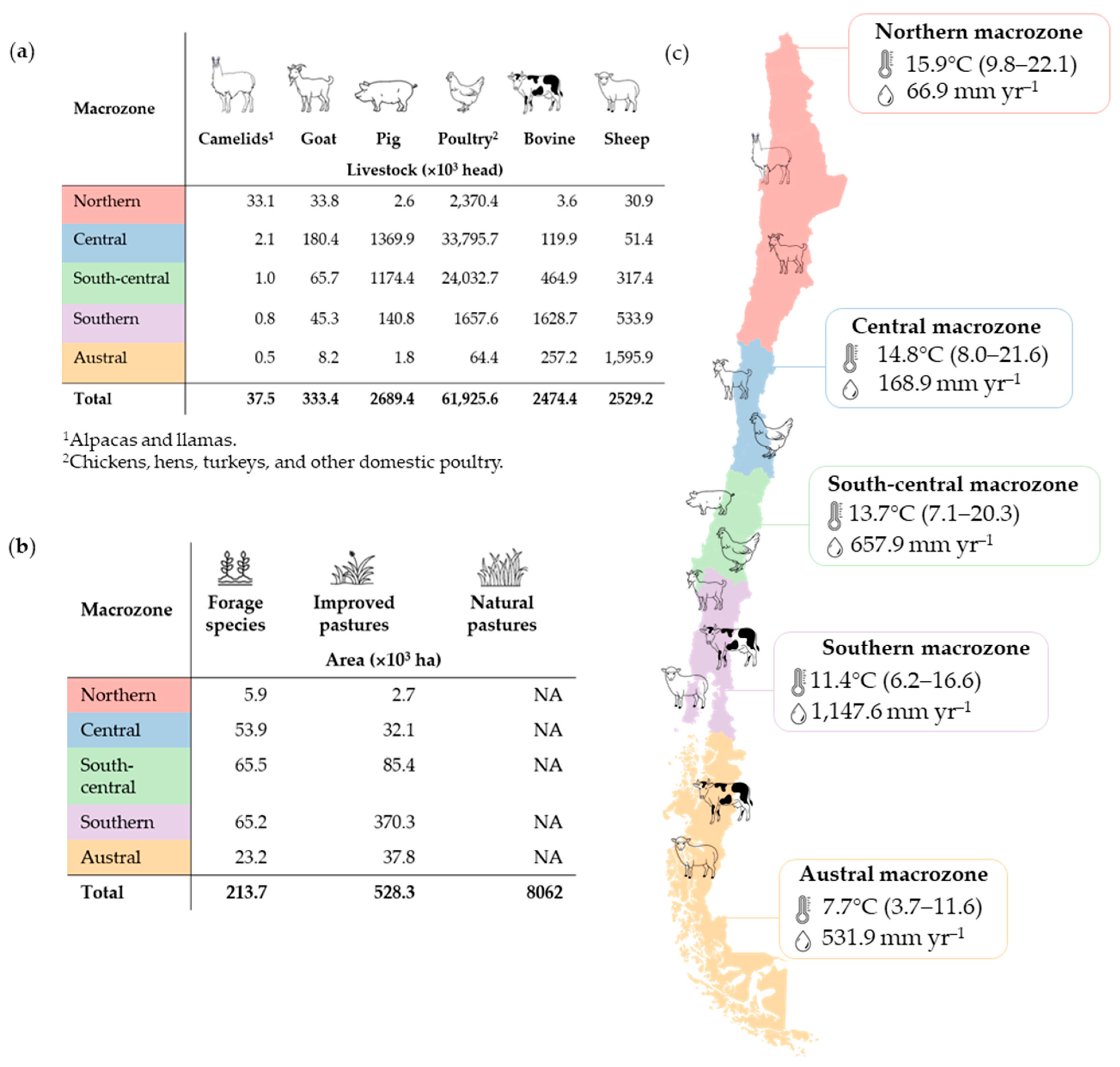
Chile has a wide range of climatic zones (Figure 1), which range from arid deserts in the north and semi-arid conditions in the central regions to temperate, rainy zones in the south and tundra-like climates in the far south [23]. Under those differing conditions, livestock farming in Chile has been highly diverse and shaped by the country’s agroclimatic conditions. In the arid northern macrozone, camelid livestock farming has been predominantly associated with Indigenous communities. In the sub-arid north-central region, goat farming has been primarily dedicated to dairy production. South of the Metropolitan Region, cattle farming has predominated, e.g., >57% of national beef production and 92% of milk production has come from between the humid Araucanía and Los Lagos regions, mainly under grazing systems [7,29]. Farther south, in the much colder extreme south of the country, in the Magallanes region, almost 90% of sheep farming has been carried out under extensive production systems, primarily supplying the export market with frozen sheep carcasses. Elsewhere in the southern macrozone, sheep farming has been mainly oriented towards self-consumption, local markets, and traditional practices, with various initiatives aimed at adding value through geographical indications such as Cordero Chilote lamb from the Chilota sheep breed [30], which is a unique heritage breed.

2.2. Pathways for the Transition to Sustainable Livestock Systems

Although no agreed upon definition of sustainable livestock production has appeared in the literature, it is commonly understood to be a system that integrates the economic viability of producers with the conservation of the environment and the ecosystems in which production occurs. Furthermore, sustainable livestock systems are resilient, which allows producers and their families to maintain their livelihoods over time [31]. To achieve sustainability, Chile has to transition from conventional livestock production to a system based on sustainable principles, which will require changes in approaches and practices among producers and consumers, extending beyond farms to the broader community and society.
A stepwise framework can guide the transition from conventional livestock production to a sustainable model. The initial step involves bringing animal welfare practices into alignment with existing legislation and obtaining relevant certifications that will allow producers to explore business models that support the shift toward sustainable livestock production.

2.3. Animal Welfare in Chilean Livestock Systems

Animal welfare is the physical and mental state of animals and is influenced by the conditions in which they live and die [32]. The Five Freedoms framework, which was established in the 1960s, has remained a global reference that includes freedom from hunger or thirst, discomfort, pain, disease, and fear or distress, and the freedom to express normal behavior [33]. More recently, the Five Domains model has expanded that framework by emphasizing an animal’s mental state and identifying both positive and negative experiences [34]. In practice, good welfare requires health, comfort, adequate nutrition, veterinary care, appropriate shelter, and humane handling and slaughter, and terms such as animal care or husbandry refer to the practices that influence the animal overall [35]. In Chile, consumer attitudes toward farm animal welfare have changed over time, as they have elsewhere [31]. Consumers have been concerned about animal welfare and environmental impacts [36], and they have indicated that they would consider reducing their beef consumption if livestock systems do not meet animal welfare standards [37].
In Chile, most livestock are pasture-raised, a high-quality market segment that adds value through reduced environmental impact and enhanced animal welfare [38]. The transition to sustainable livestock production will require animal welfare to be a core principle that ensures that ethical standards are met and must align with national regulations and international recommendations [39]. Since 2009, Chile has developed several regulations that address animal welfare in various livestock production activities. For example, the Animal Protection Act No. 20,380 established the legal framework for animal welfare within livestock systems, which has been complemented by three regulations—Decrees No. 28, 29, and 30—that govern animal slaughter, industrial production, marketing, and animal transport. Those regulations were developed to align with the guidelines outlined in Title 7 on Animal Welfare of the Terrestrial Animal Health Code by the World Organization for Animal Health [35].
Key requirements of Law 20.380 include prohibiting the permanent tethering of animals, except temporarily for health or welfare reasons, and maintaining group housing to respect their natural social behavior. In addition, farm owners, managers, and workers should receive formal training in animal welfare and protection, which helps to ensure the implementation of best practices across production systems. Those considerations should extend beyond livestock to include working and companion animals, which are regulated under separate legislation (Chilean Law 21,020).
The incorporation of animal welfare indicators is a challenge for transforming livestock systems to be sustainable. In this regard, some companies, primarily those involved in milk, pork, and poultry production, have voluntarily certified their processes in animal welfare, which have ranged from auditing production practices to displaying animal welfare labels on commercial products. Examples include internationally and locally recognized labels such as “Certified Humane” “https://certifiedhumane.org/ (accessed on 2 October 2025)”, “Welfair®https://www.animalwelfair.com/ (accessed on 2 October 2025)”, and “Welf Cert®https://fst.cl/categoria-servicios/certificacion-bienestar-animal (accessed on 2 October 2025)”.
Animal welfare concerns extend to urban and peri-urban areas, where abandoned companion animals can form feral populations that pose threats to livestock, wildlife, and public safety. In particular, feral dog packs pose an economic risk and an animal welfare issue because they often inflict severe injuries on livestock and native fauna [40,41]. Several studies have documented the negative impacts of free-ranging dog packs and identified them as the leading cause of livestock losses on farms in Chile [40,42]. Packs of feral dogs are the main predators of wild camelids in Chile and, for domestic and wild animals, injuries from dog attacks have often caused very poor welfare to the animal attacked or even its death [41,43].
Free-ranging dogs should be regarded as a pressing environmental justice concern in the arena of public debates and policy-making processes. In Chile, livestock producers cannot directly control those animals, although legislative discussions have been ongoing. Dog activists strongly resist plans to kill feral or housed dogs that kill livestock, wildlife or other pets. Sterilization of a high proportion of such dogs can reduce but will not solve welfare and conservation problems. Although individuals are not responsible for the actions of wild animals (unless they are caused by human actions), they are wholly responsible for the actions of owned dogs and their offspring [44]. In sum, integrating animal welfare into livestock systems is an ethical imperative and a fundamental requirement for achieving truly sustainable and socially accepted animal production.

3. Models and Strategies for Achieving Sustainable Livestock Production

3.1. Sustainable Intensification of Livestock Production

In the current discourse on food system transformation, sustainable intensification (SI) is widely acknowledged as an important goal, especially in light of the pressures of population growth, climate change, and rising natural resource demand [45]. SI was first defined as creating “more with less,” but it has since expanded to include more general goals like lessening the effects on the environment, protecting biodiversity, and enhancing the standard of living for food producers [46,47]. SI encourages a more comprehensive and adaptable approach, in contrast to conventional intensification, which has frequently placed yield maximization at the expense of ecosystem health. This strategy offers a more balanced route for agricultural development by taking into consideration ecological limits, cultural contexts, and financial constraints [48].
In livestock systems, particularly those that involve ruminants, SI is especially relevant because ruminants can convert fibrous biomass into high-quality animal protein and essential nutrients, even in marginal areas that are unsuitable for crop production [49]. Well-managed grazing systems contribute to ecosystem services such as carbon sequestration, fire prevention, nutrient cycling, and landscape biodiversity [50,51]. Furthermore, in countries like Chile, where extensive pasture-based systems predominate in livestock production, SI can be a viable strategy to reconcile productivity goals with environmental stewardship and socio-territorial equity [52,53].
The challenge, however, lies in putting sustainable intensification into practice in ways that are flexible and adapted to local realities, rather than following rigid or overly technical approaches. SI should be seen as a guiding goal and not as a rigid method [46]. SI can be adapted to work across ecological zones and production models, from high-tech dairy operations to community-based grazing systems, and integrate other principles into a coherent framework that can scale sustainability transitions. The dimensions for SI in Chile are as follows:
(a)
Efficiency at the animal and herd levels
Improving productivity per animal is a foundational component of SI in ruminant systems. Key strategies include enhancing feed conversion efficiency, reducing perinatal and disease-related mortality, and optimizing reproductive performance. Those practices reduce the number of animals needed to meet production targets, which reduces the emission intensity per kilogram of meat or milk produced [49,51].
In addition, genetic selection should prioritize both yield-related traits and resistance to endemic diseases, heat tolerance, and the ability to thrive on local forage resources, which is particularly valuable in low-input or climate-exposed systems [54]. In Chile, such approaches have been included in some initiatives, where attention to animal welfare and biological performance go hand in hand with ecological goals. These approaches are discussed in depth elsewhere in this review.
(b)
Sustainable management of forage and landscapes
Forage quality and availability are limiting factors in many pasture-based systems. Sustainable intensification requires an increase in biomass productivity and improvements in the resilience and ecological function of grazing lands. Rotational grazing, rest periods, the inclusion of nitrogen-fixing legumes, and the adoption of silvopastoral systems can enhance soil structure, increase water retention, and boost long-term forage production [50,55]. In addition, these practices have co-benefits for biodiversity, especially if tree cover and native species are preserved.
In southern Chile, pasture degradation caused by overgrazing and a lack of management planning has been a persistent challenge [56]. Sustainable intensification strategies that are adapted to these landscapes can be implemented without large capital investments, which makes them suitable for smallholders and heritage systems alike.
Evidence from the Los Ríos region underscores the importance of adapting forage species in response to climatic stress. To identify species best suited to stressful climatic conditions, research conducted at the Institute of Agricultural Research (INIA) between 2010 and 2013 compared Lolium perenne (the most commonly used forage species in southern Chile) and more drought-tolerant alternatives such as Festuca arundinacea and Dactylis glomerata [57]. These alternatives exhibited higher yields, better heat and water stress tolerance, and greater persistence than did L. perenne. Research carried out on livestock farms in various localities in the region has investigated the effects of adjusting seeding densities and leaf-stage grazing criteria (e.g., 2–4 leaves per tiller), which has helped to identify practical guidelines for optimizing forage utilization and resilience under changing climatic conditions. The results from this region have reinforced the need for integrating species selection, grazing management, and farmer education in the development of sustainable forage-livestock systems.
(c)
Nutrient recycling and the transition to a circular system
The integration of livestock systems into broader territorial cycles is critical for reducing external input dependence and minimizing environmental impacts. SI promotes the efficient use of agro-industrial by-products such as fruit pomace, brewery waste, and vegetable trimmings, which can serve as alternative feed resources [58]. If properly formulated, these by-products can reduce feed costs, diversify animal diets, and reduce methane emissions by increasing digestibility [51]. In addition, composting manure and reapplying it as a soil amendment helps restore organic matter and improve soil fertility in degraded areas [50].
Recent research has confirmed the importance of efficient nutrient management within agricultural systems. Studies on nitrogen management in potato–oat rotations in southern Chile have demonstrated that adjusting nitrogen fertilization rates can significantly reduce nitrous oxide (N2O) emissions without compromising crop yields, which promote environmental sustainability and economic viability [59]. Similarly, field trials involving legume–grass mixtures, including species such as Lotus corniculatus, have shown that these mixtures can enhance soil nitrogen content through biological fixation, which reduces the need for synthetic fertilizers and lowers greenhouse gas emissions from grazing systems [60]. Further innovation is seen in the use of nanofertilizers, which have been investigated by INIA in Chile as a means of improving the efficiency of nitrogen use in grasslands. These advanced formulations reduce nitrogen losses through leaching or volatilization, which provides a more controlled nutrient supply to plants [32].
The inclusion of brewer’s spent grain (BSG) in ruminant diets is an example of nutrient recycling under circular economy principles. A study in Chilean Patagonia found that substituting 20% of alfalfa hay with BSG in winter increased daily weight gain in steers by 0.2 kg day−1, reduced the daily cost of feed by 16%, and provided a productive use for a local agro-industrial waste product [61]. These results illustrate the potential of locally sourced by-products to improve animal performance, reduce feeding costs, and enhance circularity in livestock production. In addition, comprehensive datasets such as the DATAMAN global database provide emission factors for the nitrous oxide and ammonia that is associated with manure management, which has provided more accurate inventories and informed decision-making to optimize nutrient cycling and reduce greenhouse gas emissions [62].
(d)
Innovation and technology
Often, technological innovation has been viewed as a key driver of intensification, yet its potential role in sustainable livestock transitions remains underutilized, especially in small- and medium-scale systems. In the context of SI, technology can contribute to better resource management, the early detection of animal health issues, and the improvement of decision-making through real-time data collection and analysis [48].
Although its application is still uneven, precision livestock farming equipment has been included into pasture-based systems in Chile. These tools include GPS collars for rotational grazing, automated weighing systems, body condition score software, and thermographic cameras for early detection of mastitis or metabolic stress [63]. Additionally, robotic milking systems improve herd management by continuously monitoring the milk supply, animal health, and behavior [64]. Robotic technology has been used in pasture-based dairies in southern Chile despite its original design for restricted settings. This adaptation has brought to light opportunities including increased labor productivity and animal welfare, as well as difficulties with data administration, grazing design, and investment costs [52]. When producers access these technologies through cooperatives or extension programs, they gain practical tools to better monitor grazing pressure, nutritional balance, and animal welfare [48,65]. An illustrative case is the Regenerative Livestock Center in Pirque (Central Chile), which was established with support from several foundations. It has operated as a living laboratory in which grazing plans have been co-designed with farmers and technicians, and has combined remote sensing, satellite-based forage monitoring, and participatory workshops to adapt management practices to local conditions [65].
Another example is the use of Near Infrared Spectroscopy (NIRS) for assessments of forage and meat quality, which has been piloted in the southern macrozone as part of INIA-led research. This technology allows for the rapid evaluation of nutritional parameters in fresh or preserved forage, which can contribute to improvements in diet formulation and pasture evaluation [66]. Similarly, on-farm digital traceability systems, such as those that have been developed for value-differentiated meat chains, e.g., the CL-P collective brand, have enabled smallholders to access premium markets that require transparency in origin, feeding practices, and welfare standards [52]. Note, however, that technology can only support sustainable intensification effectively if it is developed and applied in collaboration with farmers and tailored to local circumstances. Digital tools should complement, not substitute, the practical knowledge of farmers, and their value lies in being used collaboratively to create strategies that incorporate local ecosystems and cultural realities.
Chile’s experience has shown that innovation hubs and learning networks can act as bridges between science, farmers, and institutions. In addition, scaling technological solutions in SI will require institutional coordination. Public agencies such as INDAP (a state institution that supports small farmers), SAG (Chile’s agricultural authority), and regional governments (GORE), play a critical role in financing, disseminating, and adapting technologies to diverse production systems and regional contexts. Without such support, there is a risk that technological intensification might benefit well-capitalized operations only, which would perpetuate existing asymmetries in the livestock industry [67].
(e)
Territorial integration and institutional support
Beyond farm-level interventions, SI must be territorially embedded, i.e., a recognition of the interdependence between livestock systems, local economies, social networks, and governance structures. Strengthening cooperatives, creating value-added chains, and scaling up participatory certification schemes such as the Chile Livestock Product (CL-P) brand, a collective label for pasture-based beef that has met recognized nutritional and welfare standards, or the Cordero Chilote Geographical Indication are essential for translating productivity gains into social value [52,53].
In addition, institutional coordination is required. Policy frameworks should support producers who adopt SI practices through differentiated incentives, technical assistance, and investment in local infrastructure. Chile’s experience with peasant-oriented programs such as INDAP or the Globally Important Agricultural Heritage Systems (GIAHS) Networks provide an institutional background that can be reoriented or enhanced to support the adoption of SI principles in a culturally and ecologically relevant way.
The Chile Origen Consciente (ChOC), a program led by the Office of Agricultural Studies and Policies (ODEPA) with the support of the Inter-American Institute for Cooperation on Agriculture (IICA), has become a flagship initiative for promoting sustainability in Chile’s agro-food sector. The program awards a sustainability certification for products that meet high environmental, social, and economic standards, and supports producers through a self-assessment platform (Sustainability Map) that provides them with the resources to monitor and improve their sustainability performance.
Similarly, the Consorcio Lechero, a national collective for dairy farmers, has developed the First National Sustainability Standard for Dairy Farms in Chile, which is a voluntary tool that has been designed to guide dairy producers toward sustainable practices. The standard encompasses 156 actions within 10 thematic areas including water management, soil health, biodiversity, animal welfare, and greenhouse gas emissions. Producers can evaluate their performance, implement improvements, and achieve certification at basic, intermediate, or advanced levels. As of 2024, more than 135 dairy farms have been certified under this standard, which reflects the sector’s commitment to sustainability. In addition, the standard provides access to technical resources, training, and a digital self-assessment platform [68].
FEDECARNE, the national federation of beef cattle producers in Chile, in partnership with ODEPA and IICA, has developed sustainability guidelines for the beef sector that emphasize responsible grazing, animal welfare, and efficient nutrient management. Producers receive technical assistance and access to sustainability assessment tools, increasing their capacity to meet market demand for sustainable beef products.
Despite the importance of cooperatives and producer organizations in Chile, the livestock sector has remained highly traditional, fragmented, and aging, particularly among small-scale farmers, who have had limited success in cooperative business models. With few exceptions, such as Colun, Chile’s first producer of milk and dairy products, most cooperative initiatives have struggled to achieve commercial viability; however, this trend has begun to shift because new cooperatives have emerged that have strengthened the economic sustainability of the sector. In Chile, recent examples include Ganacoop, which holds the collective brand CL-P for grass-fed and free-range meats, and Coopcarne, a livestock cooperative in southern Chile that has successfully launched its own meat brand, “Carnes de Los Ríos,” achieving vertical integration and promoting locally sourced, pasture-raised beef with added value.
Those initiatives have demonstrated the importance of a coordinated approach to sustainability in livestock systems. By integrating technical support, certification schemes, and value-added branding, they ensure that sustainable practices are recognized and rewarded, which creates incentives for producers to adopt more responsible production methods. Furthermore, they provide a model of how public and private institutions can collaborate to support sustainability at a territorial scale.
(f)
Social inclusiveness, generational renewal, and technology adoption
Organizational fragmentation and the aging of producers constitute the most directly observable social bottlenecks in Chilean livestock systems. Although the analytical focus of this review is primarily product-territorial, the combination of the transition pathways discussed here should also consider key social dimensions, in line with the cutting-edge orientation toward social inclusiveness in contemporary sustainable agriculture, as structural opportunities to advance inclusion.
In particular, context-appropriate technological innovation can reduce adoption barriers among smallholders if tools are designed to be accessible to older users and are supported by hybrid extension models that combine digital and in-person assistance. Likewise, heritage and value-differentiated systems can enhance the visibility and economic recognition of women’s roles in livestock production, on-farm processing, and knowledge transmission [69]. Finally, linking sustainable livestock practices with innovation, entrepreneurship, and territorial identity may improve the attractiveness of rural livelihoods for younger generations and support generational renewal [70].
Although these dimensions are not analyzed in depth in this paper, making their interaction with product-territorial strategies explicit is essential to avoid interpreting sustainability transitions as purely technical or environmental processes and to ensure that they do not inadvertently reinforce existing social inequalities.
(g)
Current challenges
Although sustainable intensification is an attractive concept, it has faced criticism because it has lacked a clear definition and is at risk of being misused. Some environmental organizations have warned that the term might be exploited to legitimize intensive, high-input livestock systems by labeling them “sustainable” [46,47]. Others have pointed out that, without clear guidelines and monitoring, SI might reinforce existing inequalities in access to resources and technology.
One way forward is to disaggregate SI into complementary intensification logics [71], i.e., genetic, ecological, and market intensification, which would help clarify the diverse means through which sustainable intensification can be achieved. Importantly, it allows for the inclusion of agroecological and heritage strategies that do not rely on capital-intensive inputs but rather on knowledge, biodiversity, and territorial rootedness. Implementing SI in livestock systems requires robust metrics that go beyond productivity and emissions. To avoid greenwashing and guide genuine transformation, indicators of animal welfare, ecosystem function, carbon balance, social equity, and cultural resilience must be incorporated into monitoring systems [51].
One of the most urgent and complex challenges has been the transition to carbon neutrality, as defined by Chile’s Climate Change Framework Law (Law 21.455), which mandates net-zero emissions by 2050. The livestock sector must implement quantifiable mitigation strategies at the farm level that account for on-farm (intrapredial) and supply chain (extrapredial) emissions, including those from manure management systems, enteric fermentation, fertilization, crop residue, urine and dung that is deposited directly on pastures by grazing animals, food importation, feed transport, soil use, etc.
To achieve this, the development of a national tool that enables farmers to estimate GHG emissions accurately and consistently is essential. Although >80 farm-level GHG estimation tools have been made available worldwide [72], they have often produced inconsistent results for the same farm or dataset, which has posed a challenge for countries that have aimed to establish a standardized national inventory framework. For instance, a study in the United Kingdom reported that the estimated total GHG emissions on a single farm differed substantially among the tools evaluated [72].
The Chilean Agricultural Research Institute (INIA) has been developing a standardized tool for quantifying farm-level GHG emissions in beef and dairy production systems that is based on a unified methodological framework designed to ensure comparability and transparency among farms. A preliminary version [73] has been tested on pilot farms, and INIA has been working toward releasing a free, open-access version for use by farmers nationwide. The tool considers a Scope 1 boundary, encompassing the main emission sources reported in the National Greenhouse Gas Inventory for the Agriculture sector [74], enteric fermentation, manure management, agricultural soils, field burning of agricultural residues, and the application of urea and lime. In addition, fossil fuel consumption associated with on-farm activities is included.
The tool was developed in accordance with the 2006 IPCC Guidelines for National Greenhouse Gas Inventories [75], applying a Tier 2 approach for the estimation of emissions from enteric fermentation, manure management, and synthetic nitrogen fertilization (urea). In this case, the country-specific emission factor developed by Chile for N2O emissions from synthetic fertilization (0.25%) is used, which is substantially lower than the default value of 1% proposed by the IPCC (2006) and reaffirmed in the 2019 Refinement [76]. For the remaining categories, a Tier 1 approach was applied, using the default emission factors reported by the [75].
Carbon sequestration in the forestry sector is estimated following the methodological framework of the Chilean National Greenhouse Gas Inventory for the Land Use, Land-Use Change, and Forestry sector (LULUCF), based on the IPCC (2006) Guidelines [75]. This approach is based on the estimation of annual changes in carbon stocks, calculated as the balance between annual carbon gains and losses. Carbon gains are primarily associated with annual forest growth, whereas carbon losses result from harvesting, pruning, and other silvicultural activities.
The tool was validated by the technical teams of the National Greenhouse Gas Inventory for both the Agriculture and LULUCF sectors and was subsequently subjected to an international review by consultants with expertise in GHG inventories.
Currently, INIA is implementing a project in collaboration with public and private stakeholders to develop an open-access tool for dairy and beef producers. This tool will enable the estimation of farm-level carbon balances using the IPCC (2019) Guidelines [76], in alignment with the requirements of the GHG Protocol. The tool is expected to be available by 2028 and will represent the first national initiative to harmonize the quantification of carbon emissions and sequestration in Chilean livestock systems.
Although dietary strategies for livestock, such as improved forage quality and concentrate supplementation, can reduce methane intensity (g CH4/kg product), absolute emissions often increase with intensification. However, research has begun into developing methanogenesis inhibitors such as 3-NOP and Asparagopsis spp. [77], which have shown promise but have faced cost, regulation, and acceptability barriers that could prevent widespread adoption. Most of these studies have been conducted in dairy cattle; however, since 2024, Chile has initiated efforts to reduce GHG emissions in beef production systems through circular economy approaches. Within this framework, grape marc, a by-product of the wine industry that presents environmental and economic challenges, has emerged as a potential feed supplement. The residue contains secondary compounds that can reduce methane emissions [78] from enteric fermentation and nitrous oxide emissions from urine. In 2025, INIA carried out an experiment with Angus heifers under grazing conditions that was the first to measure methane emissions in beef production systems that had incorporated grape marc as a mitigation strategy within a circular economy framework. Achieving carbon neutrality will require locally adapted, multisectoral approaches that integrate GHG accounting, biodiversity protection, social equity, and innovation.

3.2. Organic and Agroecological Livestock Farming

Organic agriculture and agroecology are converging approaches to sustainable production that propose agricultural systems that preserve the ecological, social, and economic integrity of the rural environment. According to the FAO (2018) [79], organic systems promote agroecosystem health, biodiversity, biological cycles, and soil activity, and minimize the use of synthetic inputs. In livestock farming, this requires a comprehensive approach that includes food production, animal welfare, social equity, and system resilience [80]. In addition to ensuring animal welfare and soil health, these systems contribute to mitigating climate change. Recent studies have shown that, on average, organic farms capture 1082 kg CO2 ha−1 year−1 because of the use of organic amendments and the absence of synthetic nitrogen fertilizers, which significantly reduces nitrous oxide (N2O) emissions [81]. Furthermore, biodiversity on organic farms tends to be higher than it is in conventional systems. Research in Europe has shown that organic farms had 34% more flora and fauna species than did conventional farms, especially wild birds and pollinating insects [82]. This biological richness is fostered by the use of native pastures, hedgerows, and the exclusion of pesticides, which strengthens ecosystem services such as biological pest control.
Agroecology has evolved into a sociopolitical paradigm that is aimed at transforming food systems. Several agroecological principles have been identified that are applicable to livestock farming, such as diversity, efficiency, resilience, recycling, knowledge co-creation, and social justice [83,84]. Agroecological silvopastoral systems enhance water retention and nutrient cycling. The integration of trees and legumes into grasslands facilitates nitrogen fixation, mitigates soil erosion, and improves soil water-holding capacity, which increases resilience to drought [85].

3.2.1. Organic Livestock

Chile has a consolidated regulatory framework for organic livestock production. Law No. 20,089 and Supreme Decree No. 2/2016 established the National Certification System for Organic Agricultural Products, administered by the Agricultural and Livestock Service (SAG), which recognizes the terms “organic,” “ecological,” and “biological” as equivalents (SAG, n.d.; European External Action Service, 2022 [86]). The certification of organic livestock products in Chile remains limited. Very few certification bodies have been registered in Chile for organic products, of which only one (ECOCERT Chile) is accredited for livestock products (SAG, n.d.)
Organic production requires management that prioritizes animal health and well-being and promotes access to pastures, natural behaviors, and feeds based on local products. Preventive antibiotics and growth promoters are prohibited and alternative/complementary treatments to allopathic medicine such as phytotherapy are favored [87]. Although these systems can reduce chronic diseases, they face challenges in controlling acute diseases [88]. The selection of rustic breeds adapted to the environment is essential, and the use of local or rustic breeds suitable for extensive systems is favored. Converting to these practices entails significant changes in farm management, e.g., pasture rotation, preventive health monitoring, and productive diversification [67].
The use of bioinputs in organic production (e.g., biofertilizers, biopesticides, and probiotics) aligns with agroecological principles and strengthens productive autonomy. Produced locally, they reduce dependence on external inputs [83]. In livestock farming in Chile, examples include the use of bacteriophages for mastitis [89] and entomopathogenic fungi or the subterranean pest caused by the caterpillar Dalaca pallens [90]. Furthermore, bioinputs act as a bridge between certified systems and non-certified agroecological approaches, which improves ecological performance without compromising food safety or traceability [91], especially in regions where formal certification is difficult to implement.

3.2.2. Agroecological Livestock

Organic certification emphasizes regulatory compliance, but agroecology seeks a more thorough transformation of the food system, including gender equality, food sovereignty, and intergenerational justice. Not all organic systems are agroecological and not all agroecological systems are organic (certified), but there is significant overlap [92]. In Chile, most agroecological producers engage in extensive livestock farming without formal certification. This is largely due to high certification costs, stringent requirements, the lack of schemes tailored to extensive systems, and limited awareness of existing mechanisms. The integration of both models through participatory certification or transition schemes can expand the reach and impact of sustainable livestock farming [93].

3.3. Heritage Livestock Farming

Heritage livestock farming encompasses production systems that preserve ancestral practices, local breeds, and peasant and indigenous ways of life that have been developed with consideration of the environment. These systems are essential for the resilience of rural communities in diverse, often marginal, regions [94], and their value is more than economic because they fulfill fundamental ecological, social, and cultural functions.
The principles of heritage livestock farming largely coincide with those of sustainability, e.g., use of hardy breeds, low dependence on external inputs, integration with the landscape, and transmission of local knowledge; however, it faces challenges such as the aging of producers, land loss, and generational disconnection [95]. From a technical perspective, these systems offer a solid foundation for moving toward sustainability. Animal hardiness, pastoral resilience, and farm multifunctionality facilitate a gradual and low-cost transition. For example, on Chiloé Island, Chilota sheep, unlike other breeds, have shown higher resistance to food scarcity and disease, rusticity, and high cultural and sensory value for its products [20,96]. The valorization of heritage livestock can be enhanced through participatory certifications, rural tourism, short marketing circuits, and locally based science projects that recognize the active role of communities in the conservation of livestock heritage [97,98].
In Chile, heritage livestock farming occurs in regions such as Chiloé, the Nahuelbuta mountain range, and the northern Andes, where communities have historically developed strong cultural and productive relationships with cattle, sheep, camelids, goats, and horses. This has contributed to a biocultural heritage that has not been sufficiently recognized in public policy [99,100]. Since 2011, the Chiloé Archipelago has been recognized as a GIAHS, which is a FAO-led program that identifies agricultural systems that combine biodiversity, ecological resilience, traditional knowledge, and cultural landscapes [101]. Although most of the focus has been on agriculture, the Chiloé GIAHS system has been distinguished by the conservation of native breeds, such as the Chilota sheep, and by the integration of livestock farming with native forests and traditional agroforestry. In addition, GIAHS are initiatives that identify and value systems such as Pehuenche transhumance (seasonal livestock movements practiced by the Pehuenche, an Indigenous group from the southern Andes that has traditionally been linked to Araucaria forests), camelid livestock systems in the Altiplano, and the integration of livestock farming with sclerophyllous forests [102].
In addition, instruments such as origin certifications have begun to include traditional livestock farming as part of the rural cultural and economic heritage [103,104,105]. Chile has made progress in the creation of origin labels and in private and participatory certifications. Examples include the Geographical Indication for “Cordero Chilote”, the brand “ÓVEJAK”, the INDAP “Manos Campesinas” (hands of family farmers) seal, and pilot projects in regenerative certification and fair trade. These instruments still have limited institutional coordination, however, and limited presence in mass marketing channels [104]. These certifications and registries have contributed to adding value to products that are part of the productive heritage of the regions where they originate. By officially recognizing their historical and traditional roots, they help differentiate these goods in the market, strengthen local identity, and support rural economies. Such products are seen not only as commodities but as carriers of cultural meaning and longstanding agricultural practices.
Heritage systems are notable for their ecological multifunctionality. Various studies have shown that traditional practices such as seasonal rotation, the use of local breeds, and the integration of crops and livestock favor carbon sequestration and biodiversity conservation in agroecosystems [106]. The coexistence of grasslands, trees, and vegetation mosaics generates valuable habitats for birds, pollinators, and soil microorganisms. For example, in the Chiloé archipelago, traditional crop rotation and extensive livestock farming integrated with natural grasslands contributes to soil fertility, carbon sequestration, and natural pest control [107]. The combination of agrobiodiversity, local knowledge, and minimal chemical intervention has promoted high resilience to environmental disturbances. Another example is sustainable camelid livestock farming in the highlands (recognized by the GIAHS Network), which involves regulation of stocking rates based on seasonal forage availability, and wetland conservation (e.g., bofedales), which are key ecosystems for carbon sequestration and water regulation [102]. Pehuenche transhumance maintains rotational land use that prevents overgrazing and protects sensitive watersheds.

3.4. Regenerative Livestock Practices

The term “regenerative agriculture” was coined in the early 1980s by the Rodale Institute [108], but there has been no universally accepted definition of regenerative livestock practices. Instead, the latter encompasses a variety of practices that aim to restore soil health, enhance ecosystem function, and reduce the environmental impacts of animal production systems. Although interpretations have differed among regions and organizations, typically, regenerative livestock farming has emphasized practices that go beyond sustainability and include active improvement of the ecological and social conditions of the farm. Common principles include adaptive grazing management, soil cover preservation, the promotion of biodiversity, and minimal reliance on synthetic inputs. In this way, regenerative livestock farming aims to conserve agricultural ecosystems and actively improve them through planned grazing and the restoration of key ecological processes. Unlike purely conservationist approaches, regeneration seeks to restore soil functionality, increase water infiltration and retention, improve soil and aboveground biodiversity, and strengthen biogeochemical cycles [109,110]. Its principles include permanent vegetation cover, efficient nutrient recycling, the integration of livestock as an ecological tool, and minimization of tillage and external inputs [111]. Producers shift their focus from individual performance to managing processes at the landscape level, which strengthens resilience to climate change [112].
Approaches to regenerative livestock farming include various methods such as Holistic Management, developed by Allan Savory, which promotes adaptive decisions that include ecological, social, and economic variables. It involves intensive grazing over short periods, followed by long rest periods that regenerate the soil [113]. Another well-known method is Voisin Rational Grazing (VRG), formulated by André Voisin, which is based on four laws that regulate grazing and rest periods. It aims to maximize photosynthesis and forage regrowth, with high efficiency and without degradation [114]. In addition, a more flexible approach has been developed, combining elements of Holistic Management and VRG. This approach typically includes high stocking rates over short periods, long rest periods, frequent rotations, and monitoring of soil indicators. Recent studies have shown that regenerative practices improve soil health and increase microbial biomass, water infiltration, and organic matter content [115].
Regenerative livestock systems have contributed to the sustainability of livestock farming activities worldwide and, although regenerative practices are commonly applied in some countries such as Australia and the USA, they have not become common in others, where awareness, research, and institutional support have been limited. Some Latin American countries, such as Uruguay, Brazil, Colombia, and Mexico, have made progress in the scientific validation and institutional adoption of these models. In Chile, pilot studies have reported improvements in forage regeneration and increased soil cover, water retention capacity, and enhanced carbon sequestration within just a few years [65]. Productively, regenerative systems tend to stabilize production and reduce costs by reducing the use of inputs and, although they require gradual learning, they have demonstrated increased resilience to drought, fire, and price fluctuations [116]. It should be noted that, in Chile, quantitative data on soil carbon sequestration and soil health outcomes under regenerative livestock systems remain limited, heterogeneous, and strongly dependent on soil type, climatic conditions, baseline management, and the duration of implementation. Most available evidence derives from short- to medium-term pilot studies and on-farm trials, which report directional improvements in soil cover, infiltration capacity, forage recovery, and indicators of soil biological activity, rather than standardized percentage changes in soil organic carbon stocks.
Given this context, reporting isolated quantitative metrics may risk conveying a false sense of robustness or comparability across systems. As a result, the evidence presented here emphasizes qualitative trends and process-level responses observed in Chilean case studies, while acknowledging that longer-term monitoring and standardized measurement frameworks are still required to generate comparable, nationally representative datasets. International studies provide quantitative benchmarks for regenerative practices; however, their direct extrapolation to Chilean conditions would be inappropriate.
In addition, INIA Chile has supported projects that have investigated value-added strategies for regenerative beef cattle farming in the southern macro-region; however, results have indicated that regenerative grazing systems, such as the modified Voisin Rational Grazing (PRVm), might not always be superior to continuous grazing with stocking adjustment [117]. Specifically, the PRVm showed greater reductions in vegetation cover in some areas and lower forage production in certain conditions than did continuous grazing. These findings emphasize the importance of carefully adapting regenerative practices to the local conditions to ensure their effectiveness. Organizations such as the NGO Regenerativa (https://www.regenerativa.cl/ accessed on 2 October 2025) and Efecto Manada (https://efectomanada.cl/ accessed on 2 October 2025) promote learning networks, participatory monitoring, and training.
Chile has not established a specific official standard or seal for regenerative livestock farming. Internationally, notable examples include Land to Market™ and Regenerative Organic Certified® (ROC), which combine metrics associated with soil health, animal welfare, and social justice (Savory Institute, 2023 [118]). One of the main risks is the superficial appropriation of the concept by companies that engage in greenwashing. Therefore, it is important to move toward schemes that are based on standards and measurable results such as biodiversity, soil carbon, and hydrological functionality [119]. To prevent this model from becoming restricted to niche markets, it is important to build alliances among science, public policy, and social movements. Its potential lies in scaling up as a national strategy for resilient and restorative livestock production. Some beef producers founded the Chilean Association of Regenerative Livestock Producers (ACHIGANAR) and have begun to market beef produced under regenerative practices in Chile, which has operated under the Ecological Outcome Verification (EOV) certification, which provides a common standard for measuring ecosystem health and land regeneration [118]. In addition, regenerative livestock systems pursue economic outcomes and emphasize strict control of income and expenditures and a significant reduction in external inputs. Effective regenerative management requires the continuous monitoring of production factors and periodic system adjustments, which likely limits large-scale adoption because it depends on complete record-keeping and the use of data from real farms, which is uncommon for most livestock farming in Chile.
Although regenerative grazing systems have been reported to substantially reduce net greenhouse gas emissions, the potential to reach carbon neutrality has differed based on farm size, land use composition, and management intensity. In southern Chile, where farms typically have included only 15–20% forest cover, achieving full neutrality is unlikely under intensive grazing systems. Nevertheless, multi-species regenerative livestock systems can enhance soil carbon sequestration and reduce emissions compared to conventional models [120], which underscores the importance of context-specific evaluations.
Resilience to climate change is one of the greatest contributions of regenerative livestock farming. Carbon-enriched soils retain more water, which allows them to better cope with droughts or extreme rainfall. Vegetation cover, tree shade, and a diversity of forage species protect livestock and stabilize production under adverse conditions.
Traditional practices revived by regenerative-like approaches, such as rotational grazing and the use of adapted breeds, increase the system’s capacity to adapt to climate variability. Increasingly, farmers in Chiloé and Patagonia have been selecting animals not only for their growth rate but for their hardiness under low-input systems and harsh climatic conditions [96], which links traditional knowledge and modern performance evaluation tools.

4. Cross-Cutting Elements and Conclusions

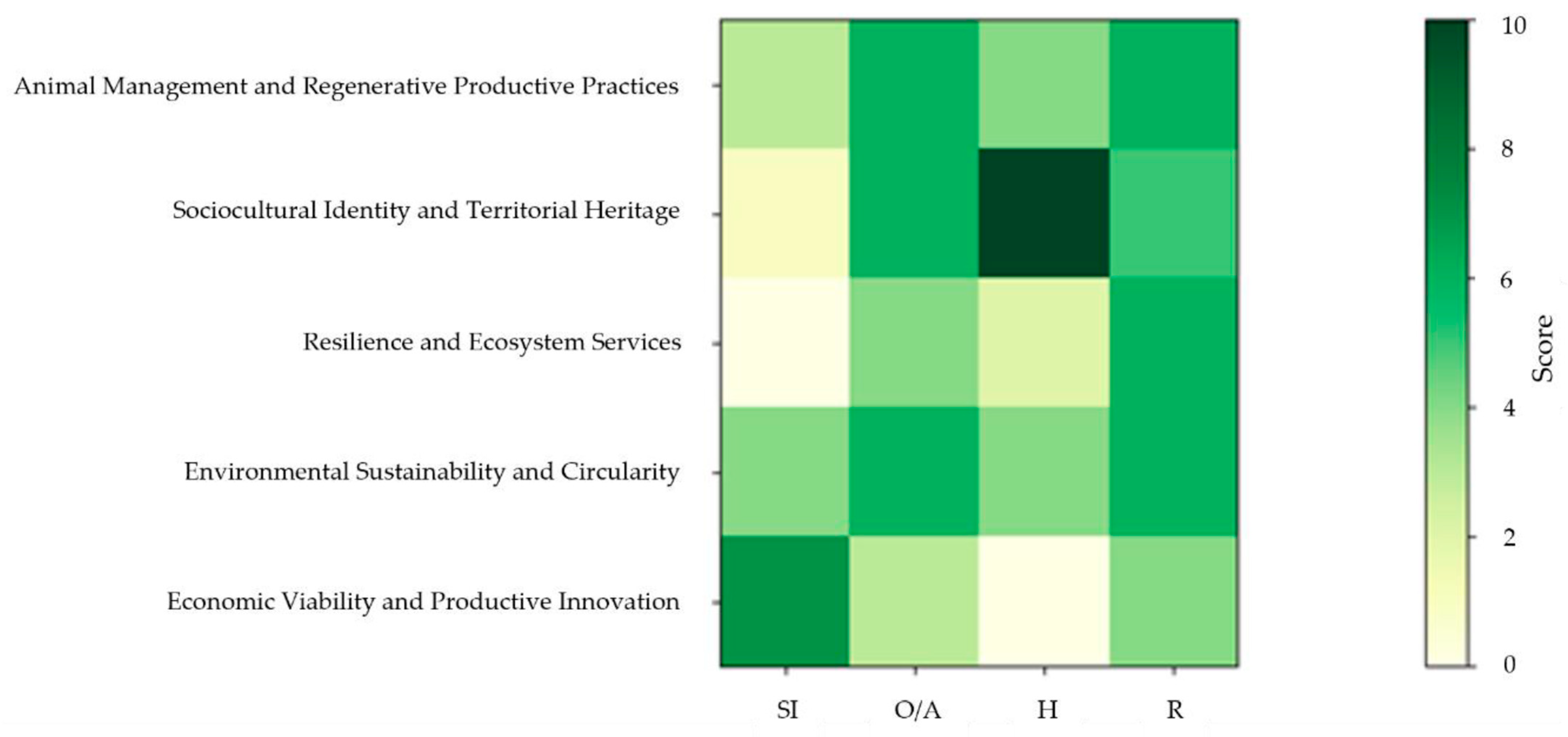
The agroecological/organic, heritage, regenerative, and sustainable intensification strategies discussed here have differences and commonalities. Precisely because they are often discussed separately, it is important to identify the common aspects that they share and to understand how these shared principles can be leveraged to design transition pathways for livestock systems. Figure 2 shows the intersections beyond the conceptual and regulatory differences among productive, environmental, sociocultural, resilience, and economic dimensions. These approaches converge around rational land use, reduced reliance on external inputs, animal welfare, and the integration of production with the landscape (Figure 2). At the same time, each model has its own emphasis, e.g., cultural identity in heritage systems, ecological restoration in regenerative livestock farming, and efficiency in sustainable intensification. Making these overlaps explicit is useful not only to clarify conceptual debates but also to inform public policy and innovation agendas where fragmented approaches have been a challenge. Our objective has been to provide a perspective on the complementarities and tensions involved in shaping livestock systems that are territorially adapted but are aligned with global sustainability goals. The transition to more sustainable livestock production systems opens opportunities for product differentiation and value-added strategies, contributing to long-term economic and environmental sustainability. Importantly, producers are not required to fully and rapidly transition; rather, the goal is to assess how far they can or should advance within this framework. In this process, technical support and scientific guidance will be essential in ensuring informed decision-making that is tailored to the specific realities of each production system.

Author Contributions

Conceptualization, R.M., M.R., and M.E.M.; Methodology, R.M., M.R., and M.E.M.; Software, M.R.; Validation, I.B. and C.H.; Formal Analysis, R.M., M.R., and M.E.M.; Investigation, R.M., M.R., and M.E.M.; Resources, R.M.; Data Curation R.M., M.R., and M.E.M.; Writing—Original Draft Preparation, M.E.M. and M.R.; Writing—Review and Editing, I.B., R.M., and C.H.; Visualization, M.R. and M.E.M.; Supervision, R.M.; Project Administration, R.M.; Funding Acquisition, R.M. All authors have read and agreed to the published version of the manuscript.

Funding

Instituto de Investigaciones Agropecuarias: 220110-70.

Institutional Review Board Statement

Not applicable.

Informed Consent Statement

Not applicable.

Data Availability Statement

The original contributions presented in this study are included in the article. Further inquiries can be directed to the corresponding author.

Acknowledgments

The authors thank Rodrigo Bravo for his contribution to the climatic database derived from AGROMETEOROLOGÍA of the INIA network. Special thanks to Bruce MacWhirter for his help with the manuscript.

Conflicts of Interest

The authors declare no conflicts of interest.

Abbreviations

The following abbreviations are used in this manuscript:
OECDOrganisation for Economic Co-operation and Development
INEInstituto Nacional de Estadística—National Institute of Statistics
ODEPAOficina de Estudios y Políticas Agrarias—Office of Agricultural Studies and Policies
USDUnited States Dollar
FAOFood and Agriculture Organization of the United Nations
SOFOCHSociedad de Fomento Ovejero de Chiloé—Chiloé Sheep Breeders Development Society
SISustainable Intensification
INIAInstituto de Investigaciones Agropecuarias—Agricultural Research Institute
N2ONitrous oxide
BSGBrewers’spent grain
DATAMANDatabase of greenhouse gas emissions from manure management
GPSGlobal Positioning System
NIRSNear Infrared Spectroscopy
INDAPInstituto de Desarrollo Agropecuario—Agricultural Development Institute
GOREGobierno Regional—Regional Government
ChOCChile Origen Consciente—Chile Conscious Origin
IICAInter-American Institute for Cooperation on Agriculture
FEDECARNEFederación Nacional de Productores de Ganado Bovino—National Federation of Cattle Producers
GHGGreenhouse gas
CH4Methane
CO2Carbon dioxide
IFOAMInternational Federation of Organic Agriculture Movements
INAPIInstituto Nacional de Propiedad Industrial—National Institute of Industrial Property
VRGVoisin Rational Grazing
GIAHSGlobal Important Agricultural Heritage Systems
NGONon-governmental organization

References

  1. Ling, Z.-N.; Jiang, Y.-F.; Ru, J.-N.; Lu, J.-H.; Ding, B.; Wu, J. Amino acid metabolism in health and disease. Signal Transduct. Target. Ther. 2023, 8, 345. [Google Scholar] [CrossRef] [PubMed]
  2. Richter, M.; Baerlocher, K.; Bauer, J.M.; Elmadfa, I.; Heseker, H.; Leschik-Bonnet, E.; Stangl, G.; Volkert, D.; Stehle, P.; Society, G.N. Revised reference values for the intake of protein. Ann. Nutr. Metab. 2019, 74, 242–250. [Google Scholar] [CrossRef]
  3. Ruxton, C.; Gordon, S. Animal board invited review: The contribution of red meat to adult nutrition and health beyond protein. Animal 2024, 18, 101103. [Google Scholar] [CrossRef] [PubMed]
  4. OECD/FAO. OECD-FAO Agricultural Outlook 2025–2034; OECD Publishing, Aris/FAO: Rome, Italy, 2025. [Google Scholar]
  5. Henchion, M.; Moloney, A.; Hyland, J.; Zimmermann, J.; McCarthy, S. Trends for meat, milk and egg consumption for the next decades and the role played by livestock systems in the global production of proteins. Animal 2021, 15, 100287. [Google Scholar] [CrossRef]
  6. Instituto Nacional de Estadísticas (INE) Datos del Censo Agropecuario: Años 2007 y 2021. Available online: http://www.ine.gob.cl/estadisticas/economia/agricultura-agroindustria-y-pesca/censos-agropecuarios (accessed on 11 August 2025).
  7. Oficina de Estudios y Políticas Agrarias (ODEPA). Boletín de Carne Bovina, Enero 2025; Ministerio de Agricultura, Gobierno de Chile: Santiago, Chile, 2025.
  8. Instituto Nacional de Estadísticas (INE). VIII Censo Nacional Agropecuario y Forestal 2021: Resultados Nacionales; Instituto Nacional de Estadísticas: Madrid, Spain, 2022. [Google Scholar]
  9. Medeiros, F.; Aleman, R.S.; Gabríny, L.; You, S.W.; Hoskin, R.T.; Moncada, M. Current status and economic prospects of alternative protein sources for the food industry. Appl. Sci. 2024, 14, 3733. [Google Scholar] [CrossRef]
  10. Troya, M.; Kurawadwala, H.; Byrne, B.; Dowdy, R.; Weston, Z. Plant-Based Meat: Anticipating 2030 Production Requirements; Good Food Institute: Washington, DC, USA, 2022. [Google Scholar]
  11. Willett, W.; Rockström, J.; Loken, B.; Springmann, M.; Lang, T.; Vermeulen, S.; Garnett, T.; Tilman, D.; DeClerck, F.; Wood, A. Food in the Anthropocene: The EAT–Lancet Commission on healthy diets from sustainable food systems. Lancet 2019, 393, 447–492. [Google Scholar] [CrossRef]
  12. Van Huis, A. Insects as food and feed, a new emerging agricultural sector: A review. J. Insects Food Feed. 2020, 6, 27–44. [Google Scholar] [CrossRef]
  13. Escobar, M.I.R.; Han, S.; Cadena, E.; De Smet, S.; Hung, Y. Cross-cultural consumer acceptance of cultured meat: A comparative study in Belgium, Chile, and China. Food Qual. Prefer. 2025, 127, 105454. [Google Scholar] [CrossRef]
  14. Tavan, M.; Smith, N.W.; McNabb, W.C.; Wood, P. Reassessing the sustainability promise of cultured meat: A critical review with new data perspectives. Crit. Rev. Food Sci. Nutr. 2025, 65, 7201–7209. [Google Scholar] [CrossRef]
  15. Mottet, A.; De Haan, C.; Falcucci, A.; Tempio, G.; Opio, C.; Gerber, P. Livestock: On our plates or eating at our table? A new analysis of the feed/food debate. Glob. Food Secur. 2017, 14, 1–8. [Google Scholar] [CrossRef]
  16. Norton, L.; Maskell, L.; McVittie, A.; Smith, L.; Wagner, M.; Waterton, C.; Watson, C. Learning from innovative practitioners: Evidence for the sustainability and resilience of pasture fed livestock systems. Front. Sustain. Food Syst. 2022, 6, 1012691. [Google Scholar] [CrossRef]
  17. Lang, T.; Barling, D. Nutrition and sustainability: An emerging food policy discourse. Proc. Nutr. Soc. 2013, 72, 1–12. [Google Scholar] [CrossRef]
  18. FactMR 10 Years Historical Data, Analysis and Forecast; 2025; p. 170. Available online: https://www.factmr.com/report/meat-substitutes-market (accessed on 16 October 2025).
  19. U.S. Department of Health and Human Services; U.S. Department of Agriculture. Dietary Guidelines for Americans, 2025–2030; U.S. Department of Health and Human Services: Washington, DC, USA; U.S. Department of Agriculture: Washington, DC, USA, 2025.
  20. Martínez, M.E. Valorización del Cordero Chilote IG: Historia, Calidad Nutritiva y Gastronomía de los Cortes de Carne del Primer Cordero con Denominación de Origen en Chile; Capítulo 1: Ganadería Ovina en san Juan de la Costa y Chiloé, (Boletín INIA 364); Instituto de Investigaciones Agropecuaria: Santiago, Chile, 2017. [Google Scholar]
  21. Rojas-Cofre, C. Comportamiento y Caracterización de la Producción de Ganado Bovino en Chile; Instituto Nacional de Estadística: Santiago, Chile, 2019. [Google Scholar]
  22. Food and Agriculture Organization of the United Nations. The Future of Food and Agriculture–Drivers and Triggers for Transformation; Food and Agriculture Organization of the United Nations: Rome, Italy, 2025. [Google Scholar]
  23. Toro-Mujica, P.; Vera-Infanzón, R. Evolving Dairy Cattle Systems in Chile: Structural Shifts and Adaptation Strategies. Animals 2024, 14, 2245. [Google Scholar] [CrossRef]
  24. Morales, R.; Folch, C.; Iraira, S.; Teuber, N.; Realini, C.E. Nutritional quality of beef produced in Chile from different production systems. Chil. J. Agric. Res. 2012, 72, 80–86. [Google Scholar] [CrossRef]
  25. Rodríguez-Pereira, R.; Subiabre, I.; Moscoso, C.J.; Realini, C.E.; Morales, R. Forage Turnip (Brassica rapa L.) as a Dietary Supplement to Improve Meat Quality. Animals 2025, 15, 1277. [Google Scholar] [CrossRef]
  26. Subiabre, I.; Rodríguez, R.A.; Aldai, N.; Allende, R.; Morales, R. Pasture type effects over beef quality: A comparison. Chil. J. Agric. Res. 2024, 84, 620–631. [Google Scholar] [CrossRef]
  27. Intelligence, M. Tamaño y Participaciòn del Mercado de Carne Orgánica-Tendencias de Crecimiento y Pronóstico (2025–2030). Available online: http://www.mordorintelligence.com/es/industry-reports/organic-meat-market (accessed on 16 October 2025).
  28. Polaris Market Research Regenerative Meat Market Size, Share, Trends & Industry Analysis Report, by Product/Beef, Venison, Pork, Others); By Sales Channel; By Region; Segment Forecast, 2025–2034. Available online: http://www.polarismarketresearch.com/industry-analysis/regenerative-meat-market (accessed on 2 October 2025).
  29. López, I.; Oficina de Estudios y Políticas Agrarias (ODEPA). Boletín de la Leche: Avance de Recepción y Elaboración de la Industria Láctea, Diciembre 2024 (Información a Noviembre 2024); Oficina de Estudios y Políticas Agrarias (ODEPA): Santiago, Chile, 2024.
  30. SOFOCH. Reglamento de Uso y Control de la Indicación Geográfica “Cordero Chilote”; Sociedad de Fomento Ovejero de Chiloé (SOFOCH A.G.): Castro, Chile, 2014. [Google Scholar]
  31. Garnett, T.; Godfray, C. Sustainable Intensification in Agriculture. Navigating a Course Through Competing Food System Priorities; Food climate research network and the Oxford Martin programme on the future of food; University of Oxford: Oxford, UK, 2012. [Google Scholar]
  32. Mellor, D.J. Updating animal welfare thinking: Moving beyond the “Five Freedoms” towards “a Life Worth Living”. Animals 2016, 6, 21. [Google Scholar] [CrossRef] [PubMed]
  33. McCausland, C. The five freedoms of animal welfare are rights. J. Agric. Environ. Ethics 2014, 27, 649–662. [Google Scholar] [CrossRef]
  34. Mellor, D.J.; Beausoleil, N.J.; Littlewood, K.E.; McLean, A.N.; McGreevy, P.D.; Jones, B.; Wilkins, C. The 2020 five domains model: Including human–animal interactions in assessments of animal welfare. Animals 2020, 10, 1870. [Google Scholar] [CrossRef] [PubMed]
  35. WOAH, World Organisation for Animal Health. Terrestrial Animal Health Code—Chapter 7.1: Introduction to the Recommendations for Animal Welfare; World Organisation for Animal Health: Paris, France, 2016. [Google Scholar]
  36. Estévez-Moreno, L.X.; Miranda-de la Lama, G.C.; Miguel-Pacheco, G.G. Consumer attitudes towards farm animal welfare in Argentina, Chile, Colombia, Ecuador, Peru and Bolivia: A segmentation-based study. Meat Sci. 2022, 187, 108747. [Google Scholar] [CrossRef] [PubMed]
  37. de la Fuente, V.M.; Hötzel, M.J.; Teixeira, D.L.; Larraín, R.E.; Enriquez-Hidalgo, D. Citizen attitudes towards present and future beef consumption before and after the COVID-19 pandemic. Meat Sci. 2024, 212, 109467. [Google Scholar] [CrossRef]
  38. Stampa, E.; Schipmann-Schwarze, C.; Hamm, U. Consumer perceptions, preferences, and behavior regarding pasture-raised livestock products: A review. Food Qual. Prefer. 2020, 82, 103872. [Google Scholar] [CrossRef]
  39. Del Campo, M.; Montossi, F.; de Lima, J.M.S.; Brito, G. Future cattle production: Animal welfare as a critical component of sustainability and beef quality, a South American perspective. Meat Sci. 2025, 219, 109672. [Google Scholar] [CrossRef] [PubMed]
  40. Montecino-Latorre, D.; San Martín, W. Evidence supporting that human-subsidized free-ranging dogs are the main cause of animal losses in small-scale farms in Chile. Ambio 2019, 48, 240–250. [Google Scholar] [CrossRef]
  41. Pacheco-Curie, J.I.; Machaca-Sillo, C.J.; Luque-Machaca, H.A. Lesiones fatales causadas por depredadores nativos y no nativos sobre camélidos sudamericanos. Rev. Investig. Vet. Perú 2025, 36, e31286. [Google Scholar] [CrossRef]
  42. Maldonado, I.S.F.; Morales, L.; Yévenes, J.C.; Cornejo, F. Estudio para la Incorporación del Seguro Ganadero Ovino (Ovis aries) al Programa de Seguro Agrícola: Informe Final; Instituto de Investigaciones Agropecuarias (INIA): Santiago, Chile, 2014. [Google Scholar]
  43. Root-Bernstein, M.; Svenning, J.-C. Prospects for rewilding with camelids. J. Arid. Environ. 2016, 130, 54–61. [Google Scholar] [CrossRef]
  44. Broom, D.M. Sentience and animal welfare: New thoughts and controversies. Anim. Sentience 2016, 1, 11. [Google Scholar] [CrossRef]
  45. Rockström, J.; Williams, J.; Daily, G.; Noble, A.; Matthews, N.; Gordon, L.; Wetterstrand, H.; DeClerck, F.; Shah, M.; Steduto, P. Sustainable intensification of agriculture for human prosperity and global sustainability. Ambio 2017, 46, 4–17. [Google Scholar] [CrossRef]
  46. Godfray, H.C.J.; Garnett, T. Food security and sustainable intensification. Philos. Trans. R. Soc. B Biol. Sci. 2014, 369, 20120273. [Google Scholar] [CrossRef]
  47. Pretty, J.; Bharucha, Z.P. Sustainable intensification in agricultural systems. Ann. Bot. 2014, 114, 1571–1596. [Google Scholar] [CrossRef]
  48. Cassman, K.G.; Grassini, P. A global perspective on sustainable intensification research. Nat. Sustain. 2020, 3, 262–268. [Google Scholar] [CrossRef]
  49. Tedeschi, L.O.; Muir, J.P.; Riley, D.G.; Fox, D.G. The role of ruminant animals in sustainable livestock intensification programs. Int. J. Sustain. Dev. World Ecol. 2015, 22, 452–465. [Google Scholar] [CrossRef]
  50. Dubeux, J.C.B., Jr.; Sollenberger, L.E.; Muir, J.P.; Tedeschi, L.O.; dos Santos, M.V.; da Cunha, M.V.; de Mello, A.C.; DiLorenzo, N. Sustainable intensification of livestock production on pastures. Arch. Latinoam. De Prod. Anim. 2017, 25, 97–111. [Google Scholar]
  51. Singh, R.; Maiti, S.; Garai, S. Sustainable Intensification–Reaching Towards Climate Resilience Livestock Production System–A Review. Ann. Anim. Sci. 2023, 23, 1037–1047. [Google Scholar] [CrossRef]
  52. Aviléz Ruiz, J.; Meyer, P.; Luis Meyer, J. Comparison of the Conventional and Robotic Milking System for the Parameters of Composition and Quality of Milk, in Grazing System; ITEA-Informacion Tecnica Economica Agraria: Zaragoza, Spain, 2021. [Google Scholar]
  53. Melo, O.; Quiñones, N.B.; Acuña, D. Towards sustainable agriculture in Chile, reflections on the role of public policy. Int. J. Agric. Nat. Resour. 2021, 48, 186–209. [Google Scholar] [CrossRef]
  54. Pal, A.; Chakravarty, A. Genetics and Breeding for Disease Resistance of Livestock; Academic Press: Cambridge, MA, USA, 2019. [Google Scholar]
  55. Michalk, D.L.; Kemp, D.R.; Badgery, W.B.; Wu, J.; Zhang, Y.; Thomassin, P.J. Sustainability and future food security—A global perspective for livestock production. Land Degrad. Dev. 2019, 30, 561–573. [Google Scholar] [CrossRef]
  56. Crovo, O.; Aburto, F.; da Costa-Reidel, C.; Montecino, F.; Rodríguez, R. Effects of livestock grazing on soil health and recovery of a degraded Andean Araucaria forest. Land Degrad. Dev. 2021, 32, 4907–4919. [Google Scholar] [CrossRef]
  57. Moscoso, C.; Torres, A.; Iraira, S.; Guarda, P.; Villagra, M.; Icarte, J. Fertilización Integral de Praderas y Uso de Especies Forrajeras en la Región de Los Lagos; Instituto de Investigaciones Agropecuarias: Santiago, Chile, 2023. [Google Scholar]
  58. Shah, A.M.; Zhang, H.; Shahid, M.; Ghazal, H.; Shah, A.R.; Niaz, M.; Naz, T.; Ghimire, K.; Goswami, N.; Shi, W. The Vital Roles of Agricultural Crop Residues and Agro-Industrial By-Products to Support Sustainable Livestock Productivity in Subtropical Regions. Animals 2025, 15, 1184. [Google Scholar] [CrossRef]
  59. Alfaro, M.; Hube, S.; Salazar, F.; Beltrán, I.; Ramírez, L.; Saggar, S. Optimising Nitrogen Fertilisation in a Potato–Oat Rotation and Implications for Nitrous Oxide Emissions in Volcanic Soils. Agronomy 2024, 14, 2202. [Google Scholar] [CrossRef]
  60. Alfaro, M.; Hube, S.; Salazar, F.; Beltrán, I.; Rodriguez, M.; Ramírez, L.; Saggar, S. Soil greenhouse gas emissions in different pastures implemented as a management strategy for climate change. Agronomy 2022, 12, 1097. [Google Scholar] [CrossRef]
  61. Daza, J.; Beltrán, I.; González, V.; Estroz, D.; Reyes, C.; Urrejola, J.; Moldenhauer, R. Efecto de la inclusión del bagazo cervecero sobre el rendimiento productivo y parámetros económicos de terneras en la Patagonia Chilena. Cienc. Vet. Prod. Anim. 2025, 2, 40–50. [Google Scholar] [CrossRef]
  62. Beltran, I.; Van der Weerden, T.J.; Alfaro, M.A.; Amon, B.; de Klein, C.A.; Grace, P.; Hafner, S.; Hassouna, M.; Hutchings, N.; Krol, D.J. DATAMAN: A global database of nitrous oxide and ammonia emission factors for excreta deposited by livestock and land-applied manure. J. Environ. Qual. 2021, 50, 513–527. [Google Scholar] [CrossRef]
  63. Sales, F. Hacia una Ganadería 4.0 en Sistemas Extensivos de Magallanes: Fortaleciendo la Gestión Inteligente y Sustentable del Ganado; Instituto de Investigaciones Agropecuarias: Santiago, Chile, 2021. [Google Scholar]
  64. Caja, G.; Castro-Costa, A.; Knight, C.H. Engineering to support wellbeing of dairy animals. J. Dairy Res. 2016, 83, 136–147. [Google Scholar] [CrossRef]
  65. Larraín, R.; Mansky, V.; Mayol, M.; Melo, Ó. Cambios Económicos y Productivos de la Ganadería Regenerativa en Chile; Pontificia Universidad Católica de Chile; Fundación para la Innovación Agraria (FIA): Santiago, Chile, 2022. [Google Scholar]
  66. Lobos, I.; Moscoso, C.J.; Pavez, P. Calibration models for the nutritional quality of fresh pastures by nearinfrared reflectance spectroscopy. Int. J. Agric. Nat. Resour. 2019, 46, 234–242. [Google Scholar] [CrossRef]
  67. Santibáñez Quezada, F.; Martín, F.; Callejas Rodríguez, R. Cambio Climático: Informe: Taller “Modernización del Agro: Adaptación al Cambio Climático en la Agricultura Familiar Campesina”; INDAP: Santiago, Chile, 2021.
  68. Lechero, C. Estándar de Sustentabilidad para Predios Lecheros; Ministerio de Agricultura: Madrid, Spain, 2022.
  69. Oficina de Estudios y Políticas Agrarias (ODEPA). Mujer y Biodiversidad en la Agricultura Chilena; Oficina de Estudios y Políticas Agrarias (ODEPA): Santiago, Chile, 2013.
  70. Fernández, F.E.G. El desafío del relevo generacional en el sector agrario. Desarro. Rural. Sosten. 2021, 10–11. Available online: http://hdl.handle.net/10261/260713 (accessed on 2 October 2025).
  71. Timmer, C.P. One Billion Hungry: Can We Feed the World? Wilson Q. 2012, 36, 130. [Google Scholar]
  72. Limited, R.A. Harmonisation of Carbon Accounting Tools for Agriculture; UK Department for Environment, Food & Rural Affairs: London, UK, 2023.
  73. Beltrán, G.; Salazar, S.; Rojas Ponce, Y.; Alfaro, V.; Bahamóndez, V.; Molina Rademacher, E.; Iraira, H.; Panichini, P. Guía Metodológica para la Estimación del Balance de Carbono Predial en Sistemas Agropecuarios; INIA Remehue: Los Lagos, Chile, 2023. [Google Scholar]
  74. Basoa, K.; Martínez, R.; Carrasco, P.; Guzmán, R.; Soto, I.; González, M.D.; Beltrán, I.; Salazar, F.; Ricciardi, C.; Cornejo, P. Documento del Inventario Nacional de Gases de Efecto Invernadero Serie 1990–2022; Ministerio del Medio Ambiente: Santiago, Chile, 2024.
  75. IPCC. 2006 IPCC Guidelines for national Greenhouse gas Inventories; IPCC: Geneva, Switzerland, 2006. [Google Scholar]
  76. IPCC. 2019 Refinement to the 2006 IPCC Guidelines for National Greenhouse Inventories; IPCC: Geneva, Switzerland, 2009. [Google Scholar]
  77. Muñoz, C.; Muñoz, I.; Rodríguez, R.; Urrutia, N.; Ungerfeld, E. Effect of combining the methanogenesis inhibitor 3-nitrooxypropanol and cottonseeds on methane emissions, feed intake, and milk production of grazing dairy cows. Animal 2024, 18, 101203. [Google Scholar] [CrossRef] [PubMed]
  78. Suescun-Ospina, S.T.; Vera, N.; Astudillo, R.; Yunda, C.; Williams, P.; Allende, R.; Ávila-Stagno, J. Effects of País grape marc inclusion in high and low forage diets: Ruminal fermentation, methane production and volatile fatty acids. Ital. J. Anim. Sci. 2022, 21, 924–933. [Google Scholar] [CrossRef]
  79. FAO. The 10 Elements of Agroecology: Guiding the Transition to Sustainable Food and Agricultural Systems. 2018. Available online: https://www.fao.org/3/i9037es/i9037es.pdf (accessed on 25 March 2024).
  80. Scialabba, N.E.-H.; Müller-Lindenlauf, M. Organic agriculture and climate change. Renew. Agric. Food Syst. 2010, 25, 158–169. [Google Scholar] [CrossRef]
  81. Europe, I.O. Organic Agriculture and Its Benefits for Climate and Biodiversity; IFOAM Organics Europe: Brussels, Belgium, 2022. [Google Scholar]
  82. Kremen, C.; Merenlender, A.M. Landscapes that work for biodiversity and people. Science 2018, 362, eaau6020. [Google Scholar] [CrossRef]
  83. Altieri, M.A.; Nicholls, C.I. The adaptation and mitigation potential of traditional agriculture in a changing climate. Clim. Change 2017, 140, 33–45. [Google Scholar] [CrossRef]
  84. Wezel, A.; Herren, B.G.; Kerr, R.B.; Barrios, E.; Gonçalves, A.L.R.; Sinclair, F. Agroecological principles and elements and their implications for transitioning to sustainable food systems. A review. Agron. Sustain. Dev. 2020, 40, 40. [Google Scholar] [CrossRef]
  85. Poudel, S.; Pent, G.; Fike, J. Silvopastures: Benefits, past efforts, challenges, and future prospects in the United States. Agronomy 2024, 14, 1369. [Google Scholar] [CrossRef]
  86. European External Action Service. Characterization of organic Agriculture in Chile and the European Union. 2022. Available online: https://www.chileagricola.cl/wp-content/uploads/2022/12/Libro-agricultura-orga%CC%81nica-_NOV-2022_0.pdf (accessed on 25 May 2025).
  87. International, I.O. The IFOAM Norms for Organic Production and Processing; IFOAM-Organics International: Bonn, Germany, 2014. [Google Scholar]
  88. Fernandes, J.N.; Hemsworth, P.H.; Coleman, G.J.; Tilbrook, A.J. Costs and benefits of improving farm animal welfare. Agriculture 2021, 11, 104. [Google Scholar] [CrossRef]
  89. Carvajal, R.; Pizarro, A.; Sanhueza, C.; Ulloa, M.T. Nuevas Herramientas Biotecnológicas para el Manejo de la Mastitis Bovina; Instituto de Investigaciones Agropecuarias: Santiago, Chile, 2025. [Google Scholar]
  90. Maldonado, A.; Merino, L.; France, A. Selection of Entomopathogenic Nematodes Against Dalaca Pallens (Lepidoptera: Hepialidae); Instituto de Investigaciones Agropecuarias, INIA: Santiago, Chile, 2012. [Google Scholar]
  91. Kurniawati, A.; Toth, G.; Ylivainio, K.; Toth, Z. Opportunities and challenges of bio-based fertilizers utilization for improving soil health. Org. Agric. 2023, 13, 335–350. [Google Scholar] [CrossRef]
  92. DeLonge, M.S.; Miles, A.; Carlisle, L. Investing in the transition to sustainable agriculture. Environ. Sci. Policy 2016, 55, 266–273. [Google Scholar] [CrossRef]
  93. Astier, M.; García-Barrios, L.; Galván-Miyoshi, Y.; González-Esquivel, C.E.; Masera, O.R. Assessing the sustainability of small farmer natural resource management systems. A critical analysis of the MESMIS program (1995–2010). Ecol. Soc. 2012, 17, 25. [Google Scholar] [CrossRef]
  94. Koohafkan, P.; Altieri, M.A. Globally Important Agricultural Heritage Systems: A Legacy for the Future; Food and Agriculture Organization of the United Nations: Rome, Italy, 2011. [Google Scholar]
  95. Castillo, O.; Rodríguez, U. The rural generational gap: A complex phenomenon with global implications. J. Humanit. Soc. Sci. 2023, 28, 36–48. [Google Scholar]
  96. Martínez, M.; Calderón, C.; Uribe, H.; Barra, R.d.l. Effect of management practices in the productive performance of three sheep breeds in the Chiloé Archipelago, Chile. J. Livest. Sci. 2012, 3, 57–66. [Google Scholar]
  97. NU. CEPAL. Encadenamientos Productivos y Circuitos Cortos: Innovaciones en Esquemas de Producción y Comercialización para la Agricultura Familiar. Análisis de la Experiencia Internacional y Latinoamericana; CEPAL: Santiago, Chile, 2016. [Google Scholar]
  98. Garín Contreras, A.L.; Martínez Riquelme, P.C.; Espinosa Sepúlveda, A.R. De la agricultura tradicional al turismo rural: Carahue, Chile. Mundo Agrar. 2023, 24, 6. [Google Scholar] [CrossRef]
  99. Allen, K.E.; Ortiz-Przychodzka, S.; Coelho-Junior, M.G.; Herrmann, T.; Atchley, M.; Benra, F.; Chavez, V.; Darvin, E.; McCabe, J.; Nahuelhual, L. Grassroots relational approaches to agricultural transformation in Latin America. Ecosyst. People 2024, 20, 2390470. [Google Scholar] [CrossRef]
  100. Toledo, V.M.; Barrera-Bassols, N. La Memoria Biocultural: La Importancia Ecológica de las Sabidurías Tradicionales; Icaria Editorial: Barcelona, Spain, 2008; Volume 3. [Google Scholar]
  101. (FAO), Food and Agriculture Organization of the United Nations. Globally Important Agricultural Heritage Systems (GIAHS)-Latin America and the Caribbean. Available online: http://www.fao.org/giahs/regions/latin-america-and-the-caribbean/en (accessed on 2 October 2025).
  102. (FAO), Food and Agriculture Organization of the United Nations. GIAHS Proposal: The Integrated System of Agriculture and Camelid Livestock of the High Andean Regions of Chile; Águila Puquios Consultora; FAO; Ministerio de Agricultura: Santiago, Chile, 2024.
  103. (INDAP), Instituto de Desarrollo Agropecuario. Catastro del Patrimonio Agroalimentario Chileno; Ministerio de Agricultura de Chile: Santiago, Chile, 2025.
  104. Belmar, G.C. Las denominaciones de origen en Chile: Desarrollo y perspectivas futuras. Rev. Iberoam. De Vitic. Agroind. Y Rural. 2016, 3, 253–266. [Google Scholar]
  105. (INAPI), Instituto Nacional de Propiedad Industrial. Sello de Origen. Available online: http://www.inapi.cl/sello-de-origen (accessed on 29 May 2025).
  106. Altieri, M.A.; Toledo, V.M. The agroecological revolution in Latin America: Rescuing nature, ensuring food sovereignty and empowering peasants. J. Peasant. Stud. 2011, 38, 587–612. [Google Scholar] [CrossRef]
  107. Meneses, F.; Montenegro, N.; Schapheer, C.; Perez-Quezada, J.F. Historical changes in agricultural systems and the current greenhouse gas emissions in Southern Chile. Agronomy 2023, 13, 240. [Google Scholar] [CrossRef]
  108. Rodale, R. Breaking new ground: The search for a sustainable agriculture. Futurist 1983, 17, 15–20. [Google Scholar]
  109. Burgess, P.J.; Harris, J.; Graves, A.R.; Deeks, L.K. Regenerative Agriculture: Indentifying the Impact; Enabling the Potential; Cranfield University: Bedfordshire, UK, 2019. [Google Scholar]
  110. Rhodes, C.J. The imperative for regenerative agriculture. Sci. Prog. 2017, 100, 80–129. [Google Scholar] [CrossRef] [PubMed]
  111. Richard, W.T.; Apfelbaum, S.; Lal, R.; Rowntree, J.; Conser, R.; Rasmussen, M.; Hatfield, J.; Wang, T.; Wang, F.; Byck, P. The role of ruminants in reducing agriculture’s carbon footprint in North America. J. Soil Water Conserv. 2016, 71, 156–164. [Google Scholar]
  112. Stanley, P.L.; Rowntree, J.E.; Beede, D.K.; DeLonge, M.S.; Hamm, M.W. Impacts of soil carbon sequestration on life cycle greenhouse gas emissions in Midwestern USA beef finishing systems. Agric. Syst. 2018, 162, 249–258. [Google Scholar] [CrossRef]
  113. Savory, A.; Butterfield, J. Holistic Management: A Commonsense Revolution to Restore Our Environment; Island Press: Washington, DC, USA, 2016. [Google Scholar]
  114. Pinheiro Machado Filho, L.C.; Seó, H.L.; Daros, R.R.; Enriquez-Hidalgo, D.; Wendling, A.V.; Pinheiro Machado, L.C. Voisin rational grazing as a sustainable alternative for livestock production. Animals 2021, 11, 3494. [Google Scholar] [CrossRef] [PubMed]
  115. LaCanne, C.E.; Lundgren, J.G. Regenerative agriculture: Merging farming and natural resource conservation profitably. PeerJ 2018, 6, e4428. [Google Scholar] [CrossRef] [PubMed]
  116. Toensmeier, E. The Carbon Farming Solution: A Global Toolkit of Perennial Crops and Regenerative Agriculture Practices for Climate Change Mitigation and Food Security; Chelsea Green Publishing: Hartford, VT, USA, 2016. [Google Scholar]
  117. Ordóñez, V.; Sales, Z. Efecto del Pastoreo Regenerativo (PRV Modificado) y un Pastoreo Continuo con Ajuste de Carga Sobre la Relación Suelo-Planta-Animal; Instituto de Investigaciones Agropecuarias: Santiago, Chile, 2024. [Google Scholar]
  118. Institute, S. Ecological Outcome Verification (EOV)—Chapter 1: Summary; Savory Institute: Boulder, CO, USA, 2021. [Google Scholar]
  119. Gosnell, H.; Gill, N.; Voyer, M. Transformational adaptation on the farm: Processes of change and persistence in transitions to ‘climate-smart’regenerative agriculture. Glob. Environ. Change 2019, 59, 101965. [Google Scholar] [CrossRef]
  120. Rowntree, J.E.; Stanley, P.L.; Maciel, I.C.; Thorbecke, M.; Rosenzweig, S.T.; Hancock, D.W.; Guzman, A.; Raven, M.R. Ecosystem impacts and productive capacity of a multi-species pastured livestock system. Front. Sustain. Food Syst. 2020, 4, 544984. [Google Scholar] [CrossRef]
Figure 1. (a) National livestock abundance in Chile by animal species and climatic macrozones. Values correspond to total number of head. Animal symbols are used to visually represent each livestock species [8]. (b) Distribution of forage crops and improved pastures by climatic macrozone in Chile. Improved pastures exclude natural grasslands. (Natural grasslands are reported only at the national level in the agricultural census). (c) Climatic macrozones of Chile (Chilean Agricultural Census, 2021). Animal icons indicate livestock species that are relatively more important in each macrozone, based on a location quotient (LQ), calculated as LQ = (species share in macrozone/total livestock in macrozone) ÷ (species share at the national level/total national livestock). Species with LQ > 1 were included as animal symbols. NA: Data not available.
Sustainability 18 01626 g001
Figure 2. Heatmap showing the relative presence (0–10) of five sustainability components and their cross-cutting elements (Animal Management and Regenerative Productive Practices, Sociocultural Identity and Territorial Heritage, Resilience and Ecosystem Services, Environmental Sustainability and Circularity, and Economic Viability and Productive Innovation) among four livestock production systems (Sustainable Intensification, Organic/Agroecological, Heritage, and Regenerative) in Chile. Scores represent a semi-quantitative, expert-based assessment, where 0 indicates absence and 10 indicates strong and systematic integration of each component within the production system; values reflect relative positioning rather than measured indicators and are intended for comparative and interpretative purposes.
Sustainability 18 01626 g002
Disclaimer/Publisher’s Note: The statements, opinions and data contained in all publications are solely those of the individual author(s) and contributor(s) and not of MDPI and/or the editor(s). MDPI and/or the editor(s) disclaim responsibility for any injury to people or property resulting from any ideas, methods, instructions or products referred to in the content.