1. Introduction
Intangible cultural heritage (ICH) is widely recognized as a vital driver of sustainable development, particularly in relation to cultural sustainability and regional development. Transmitted across generations, ICH embodies the accumulated civilization, wisdom, and historical continuity of human society. Beyond its cultural significance, ICH also possesses artistic, scientific, and economic value and reflects distinctive regional characteristics [
1]. In 2021, China issued
Several Measures on Further Promoting the Development of Cultural and Creative Products in Cultural Heritage Units, which explicitly encourage the development of artistic and practical cultural creative products that align with modern lifestyles and market-oriented consumption demands [
2]. As public attention to ICH continues to grow [
3], the revitalization of traditional culture has become increasingly intertwined with shifts in contemporary consumption patterns. This process not only facilitates the dissemination of cultural symbols but also reflects the combined influence of market demand, consumer psychology, and the broader social environment, giving rise to an emerging cultural consumption system that links heritage preservation with modern economic activities [
4].
Within this context, ICHPs have emerged as an important material carrier of intangible culture and a key component of the heritage tourism economy [
5]. ICHPs often integrate traditional crafts, performing arts, and folk practices, enabling consumers to engage more deeply with local cultural values and experiential environments. The Bashu region—encompassing Sichuan Province and Chongqing Municipality in southwestern China—is historically known as the “Land of the Heavenly Capital” and has nurtured a rich array of ICHs with profound historical significance. Its cultural characteristics are shaped by relative historical isolation, ethnic diversity, and distinctive craftsmanship traditions [
6]. In contrast to regions where ICH is dominated by imperial or court art, Bashu ICH places greater emphasis on folk crafts, local esthetics, and practical functionality rooted in everyday life [
7,
8]. Numerous traditional handicrafts from this region have been inscribed on China’s National ICH List, including Shu brocade weaving techniques, silver jewelry-making techniques, Chengdu lacquerware, and traditional fan-making techniques [
9]. These products function not only as tourism commodities but also as integral nodes within a regional cultural system that supports cultural transmission, creative industries, and sustainable tourism development [
10].
Most existing studies on consumer behavior related to ICHPs focus either on macro-level consumption patterns or on specific product categories. Representative research has examined the effects of cultural identity, consumer perception, and manufacturing type on purchase intention toward ICHPs [
11], the influence of media exposure on purchase intention [
12], and the determinants of online purchase intention based on ABC attitude theory [
13]. As a region with deep cultural roots, Sichuan’s ICH handicrafts have attracted increasing scholarly attention; however, research has largely concentrated on development strategies, design practices, and cultural protection. For example, prior studies have explored the application of NFT technology for the digital preservation and dissemination of Shu brocade patterns [
14] and employed modal theory combined with AIGC technology to guide color design in Shu brocade cultural creative products [
15]. While these studies contribute to technological and design innovation within the ICH system, they offer limited insight into the consumer-side behavioral mechanisms that underpin long-term sustainability.
At present, the core consumer market and sustainable development practices of Bashu ICHPs remain largely concentrated within the domestic market [
16]. Understanding the psychological mechanisms of local consumers therefore represents a critical first step toward achieving effective cultural transmission and market innovation [
17]. Nevertheless, relatively few studies have examined consumer behavior toward ICHPs from a regional perspective. Although research in hospitality and tourism management has investigated factors influencing consumer behavioral intentions in service environments [
18], and thus provides a useful foundation for extending behavioral models such as the Theory of Planned Behavior to cultural consumption contexts, regional variations in cultural background and economic development suggest that the determinants of purchase intention are unlikely to be uniform. Consequently, findings derived from macro-level analyses of ICHPs may not be directly applicable to localized or region-specific consumption contexts, where consumer behavior emerges from the interaction of cultural, social, and market subsystems.
Previous research has shown that the widespread dissemination of traditional crafts contributes significantly to the preservation of cultural values across many countries and regions [
19]. At the same time, rapid technological innovation has transformed production methods [
20], while mechanized manufacturing has gradually eroded the popularity of traditional handcrafted products [
21,
22,
23]. Against this backdrop, there is a growing need to understand how consumers perceive and respond to ICHPs in contemporary markets characterized by the dual pressures of cultural value preservation and efficiency-oriented production systems. Accordingly, this study seeks to identify the key factors influencing consumers’ purchase intention toward Bashu ICHPs from a consumer behavior perspective. The central research questions guiding this study are as follows:
- (1)
What factors influence consumers’ intention to purchase Bashu ICHPs?
- (2)
How do these factors affect purchase intention through attitudes, subjective norms, and perceived behavioral control?
To address these questions, this study adopts the TPB, which posits that behavioral intention is jointly determined by three core components: attitudes toward the behavior, subjective norms, and perceived behavioral control [
24,
25,
26]. Cultural identity, deeply rooted in the historical experience of collectivist societies, shapes individuals’ sense of cultural belonging and exerts a substantial influence on identity-based consumption behavior. As carriers of cultural value, ICHPs embody personal, cultural, and social meanings that jointly shape consumers’ purchase intentions. In addition, consumer knowledge and product scarcity represent important contextual factors embedded within the cultural consumption system, as they influence consumers’ cognitive evaluations of products and their perceived feasibility of purchase.
Building on the TPB framework, this study develops a theoretical model to examine the determinants of purchase intention toward ICHPs in the Bashu region. Specifically, it investigates how cultural identity, consumer knowledge, and product scarcity influence purchase intention through the mediating mechanisms of attitudes, subjective norms, and perceived behavioral control. From a systems perspective, the consumption of Bashu ICHPs is not an isolated individual act but rather part of a broader regional cultural consumption system. This system integrates cultural value transmission, consumer cognition, social influence, market constraints, and tourism service environments. Consumers’ purchase intentions thus emerge from interactions among multiple subsystems rather than from a single psychological factor. In this way, the present study provides both a theoretical foundation and practical guidance for the marketing, promotion, and sustainable preservation of Bashu ICHPs.
The remainder of this paper is organized as follows.
Section 2 reviews the relevant literature and develops the research hypotheses based on the Theory of Planned Behavior, cultural identity, consumer knowledge, and product scarcity.
Section 3 describes the research design, including questionnaire development, measurement items, data collection procedures, and sample characteristics.
Section 4 presents the data analysis and empirical results, including reliability and validity assessments, model fit evaluation, moderating effect analysis, and hypothesis testing.
Section 5 discusses the main findings by integrating the empirical results with existing theories and highlights their theoretical implications. Finally,
Section 6 concludes the study by summarizing the key findings, outlining the theoretical and practical implications, and suggesting directions for future research.
2. Literature Review and Hypothesis Development
2.1. Theories of Planned Behavior
The TPB was developed as an extension of the Theory of Reasoned Action (TRA) [
24,
27]. It provides a systematic framework for explaining and predicting individual behavior by identifying behavioral intention as the most immediate determinant of actual behavior. Within the TPB framework, behavioral intention is jointly shaped by attitudes toward the behavior, subjective norms, and perceived behavioral control. Scoping reviews of TPB applications indicate that extending the original model by incorporating additional predictors can substantially enhance its explanatory power and address limitations in explained variance [
28]. Owing to its strong predictive validity and adaptability across diverse consumption contexts, TPB has been widely applied in consumer behavior research, particularly in studies of sustainable and value-driven consumption.
Within TPB, attitudes refer to an individual’s overall positive or negative evaluation of performing a specific behavior. Subjective norms capture perceived social pressure from important referent groups—such as family members, friends, or significant others—regarding whether a given behavior should be performed. Perceived behavioral control reflects an individual’s perception of the ease or difficulty of performing the behavior and is influenced by the availability of resources, opportunities, and perceived self-efficacy. Collectively, these three components account for both internal psychological evaluations and external social and situational constraints, forming a comprehensive decision-making mechanism that reflects the interaction between individual cognition and the broader consumption system.
Research in tourism and related consumption contexts suggests that behavioral intention is shaped not only by internal beliefs but also by external contextual factors, including service system characteristics, institutional environments, and experiential stimuli. This perspective aligns with extended TPB frameworks that integrate psychological determinants with system-level variables [
29]. For instance, prior research applying TPB to organic product consumption found that limited consumer awareness constrained actual purchasing behavior, highlighting the role of informational systems in shaping sustainable consumption [
30]. Similarly, studies on green consumption report that young consumers’ purchase intentions can be effectively predicted by attitudes, subjective norms, and perceived behavioral control, alongside environmental concern and environmental knowledge [
31]. Moreover, empirical evidence from healthy food consumption indicates that perceived behavioral control often emerges as the strongest predictor of behavioral intention, underscoring the importance of perceived access and feasibility within consumption systems [
32].
In the context of cultural and heritage-related consumption, TPB has increasingly been employed to explain consumer decision-making processes involving symbolic and value-laden products. For example, previous research incorporated cultural identity as an antecedent variable within the TPB framework and demonstrated its indirect effect on purchase intention through attitudes and subjective norms, using Suzhou Kunqu as a case study [
33]. Likewise, extended TPB models have shown that traditional cultural symbols significantly influence consumers’ purchase intentions through emotional value and cultural identity, both directly and indirectly [
34]. These findings suggest that TPB is particularly well suited for analyzing consumption behavior embedded in cultural systems, where social recognition, identity construction, and value transmission play critical roles.
ICHPs are characterized by strong cultural symbolism, emotional meaning, and social recognition, making them highly compatible with the TPB framework. Consumers’ intentions to purchase ICHPs are not driven solely by functional utility but are also shaped by social approval, cultural belonging, and perceived feasibility of acquisition within specific market and tourism systems. When consumers perceive positive social endorsement, hold favorable consumption attitudes, and believe that they possess sufficient resources and opportunities, their intention to purchase ICHPs is correspondingly strengthened, thereby supporting the sustainable circulation of ICH through market-based mechanisms.
Based on the theoretical logic of TPB and prior empirical evidence, this study proposes that attitudes, subjective norms, and perceived behavioral control play decisive roles in shaping consumers’ purchase intention toward Bashu ICHPs. Accordingly, the following hypotheses are proposed:
H1. Consumers’ subjective norms positively influence their purchase intention toward Bashu ICHPs.
H2. Consumers’ attitudes toward Bashu ICHPs positively influence their purchase intention.
H3. Consumers’ perceived behavioral control positively influences their purchase intention toward Bashu ICHPs.
2.2. Cultural Identity
Cultural identity refers to the shared beliefs, values, norms, and behavioral patterns that individuals develop as members of a social group [
35]. It reflects collectively constructed meanings that are transmitted across generations and serve as a foundation for social cohesion, cultural reproduction, and long-term cultural continuity [
36]. As a core component of both national and regional identity, cultural identity shapes how individuals perceive themselves in relation to a broader cultural community and influences value-based judgments, preferences, and behavioral tendencies [
37].
Research on sustainable production and consumption emphasizes the importance of incorporating broader contextual and systemic influences into traditional behavioral models. Unlike classic TPB applications that focus primarily on individual-level cognitive predictors, sustainability-oriented research argues that culturally embedded values and production–consumption systems play a critical role in shaping intention formation and behavior maintenance [
38]. This perspective provides a strong theoretical justification for extending the TPB framework in the present study by incorporating cultural identity as a culturally grounded and system-level antecedent. In collectivist societies, cultural identity assumes particular significance in guiding individual behavior, as personal decision-making is closely intertwined with social relationships, shared norms, and collective expectations. Accordingly, individuals’ cultural identity is highly sensitive to influences from close social networks and the surrounding sociocultural environment [
39]. When consumers strongly identify with a specific cultural context, they are more likely to internalize culturally prescribed norms and values, which in turn systematically shapes their consumption-related evaluations and intentions.
From a consumer behavior perspective, cultural identity functions as an important psychological driver of product-related attitudes. Consumers’ evaluations of products are not based solely on functional attributes but are deeply rooted in cultural background, symbolic meanings, and socially constructed interpretations [
40]. Products that embody culturally significant symbols, narratives, and craftsmanship are more likely to evoke emotional resonance, foster a sense of belonging, and generate favorable attitudinal responses. In the context of ICHPs, cultural identity enables consumers to perceive such products as extensions of their cultural self, thereby strengthening positive attitudes toward their acquisition and use and supporting the sustainable transmission of cultural values through consumption practices.
Moreover, strong cultural identification may enhance individuals’ perceived behavioral control. By internalizing cultural norms and values, consumers may experience greater social support, normative legitimacy, and reduced psychological uncertainty when engaging in culturally aligned consumption behaviors [
41]. This perceived cultural legitimacy and collective endorsement can increase consumers’ confidence in their ability to access, purchase, and utilize culturally symbolic products within existing market and tourism systems. As a result, cultural identity is expected to influence not only consumers’ attitudes and subjective norms but also their perceived behavioral control within the TPB framework, reflecting the systemic facilitation of culturally sustainable consumption.
Based on the above theoretical reasoning, this study posits that cultural identity positively affects all three core components of the Theory of Planned Behavior—subjective norms, attitudes, and perceived behavioral control—in the context of Bashu ICHPs. Accordingly, the following hypotheses are proposed:
H4a. Cultural identity positively influences consumers’ subjective norms toward Bashu ICHPs.
H4b. Cultural identity positively influences consumers’ attitudes toward Bashu ICHPs.
H4c. Cultural identity positively influences consumers’ perceived behavioral control toward purchasing Bashu ICHPs.
2.3. Consumer Knowledge
Consumer knowledge refers to the information and understanding that consumers possess about a product, which enhance their ability to evaluate its attributes and perceived value. It is commonly conceptualized as comprising two dimensions: familiarity, which reflects accumulated experience and recognition, and expertise, which denotes a deeper understanding of product-related information, cultural meaning, and usage [
42]. Through repeated exposure, learning, and interaction, consumers gradually develop stable cognitive structures that guide product perception, evaluation, and decision-making processes.
Consumers typically assess products based on knowledge stored in memory, which shapes familiarity, emotional attachment, and perceived relevance. This effect is particularly pronounced for products closely associated with specific places or cultural contexts, as consumers’ experiential knowledge of a destination can strengthen both cognitive and affective connections to local products [
43]. In the context of ICHPs, consumer knowledge related to historical origins, craftsmanship techniques, and symbolic meanings facilitates more informed, meaningful, and culturally grounded evaluations of product value. Such knowledge not only enhances individual appreciation but also supports the sustainable transmission of ICH through informed consumption.
A growing body of empirical research has demonstrated the positive role of consumer knowledge in shaping consumption behavior across diverse domains. Prior studies indicate that consumer knowledge significantly influences purchasing decisions in food consumption [
44], apparel consumption [
45], health-related behaviors [
46], and industrial product adoption [
47]. Collectively, these findings suggest that consumer knowledge enhances evaluative competence, reduces perceived uncertainty, and improves decision quality, particularly in contexts characterized by information asymmetry or symbolic complexity.
Within the framework of the Theory of Planned Behavior, consumer knowledge is expected to influence behavioral intention indirectly by shaping attitudes, subjective norms, and perceived behavioral control. Knowledgeable consumers are more likely to develop favorable attitudes toward culturally meaningful products because they are better equipped to recognize both functional attributes and embedded cultural value. In addition, consumer knowledge may heighten sensitivity to social expectations by increasing awareness of culturally endorsed consumption norms, thereby strengthening the influence of subjective norms. Furthermore, by reducing information asymmetry and cognitive ambiguity, consumer knowledge can enhance perceived behavioral control, as consumers feel more confident in their ability to access, evaluate, and purchase culturally symbolic products within existing market and tourism systems.
Based on the above reasoning, this study proposes that consumer knowledge positively influences the three core components of planned behavior in the context of Bashu ICHPs. Accordingly, the following hypotheses are formulated:
H5a. Consumer knowledge positively influences consumers’ subjective norms toward Bashu ICHPs.
H5b. Consumer knowledge positively influences consumers’ attitudes toward Bashu ICHPs.
H5c. Consumer knowledge positively influences consumers’ perceived behavioral control toward purchasing Bashu ICHPs.
2.4. Product Scarcity
Product scarcity is a defining characteristic of many ICHPs, arising from their unique production processes, the limited number of skilled artisans, and their irreplaceable cultural meanings. Unlike mass-produced goods, ICHPs are typically handcrafted, time-intensive, and deeply embedded in cultural traditions, which inherently constrains supply and prevents it from fully adjusting to fluctuations in market demand. From both classical and contemporary marketing perspectives, scarcity enhances perceived value and desirability, thereby increasing consumers’ motivation to acquire scarce products [
48]. In the context of cultural heritage, scarcity also reflects the finite nature of cultural skills and traditions, highlighting the inherent tension between market expansion and sustainable cultural preservation.
Prior research has demonstrated that product scarcity significantly influences consumers’ perceptions, evaluations, and decision-making processes [
49]. Scarcity cues often signal exclusivity, authenticity, and cultural legitimacy, prompting consumers to assign higher symbolic, emotional, and social value to products. For ICHPs, scarcity is not merely a market-driven phenomenon but a culturally embedded attribute that embodies craftsmanship, historical continuity, and non-replicability. As such, scarcity functions simultaneously as an economic signal and a cultural indicator, shaping how consumers interpret the meaning and value of heritage products.
From a consumer psychology perspective, cultural identity and consumer knowledge primarily operate as internal factors formed through self-concept, cognitive evaluation, and accumulated experience. Product scarcity, by contrast, functions as an external situational cue that can amplify or constrain the influence of these internal drivers on consumption-related judgments [
50]. When ICHPs are perceived as scarce, consumers with strong cultural identification or higher levels of knowledge are more likely to experience heightened emotional attachment, stronger social recognition, and increased perceived value. Under such conditions, scarcity intensifies the alignment between personal values and consumption behavior. Conversely, when scarcity is weak or absent, the motivating effects of cultural identity and consumer knowledge may be attenuated, as products are perceived as less distinctive or culturally significant.
Product scarcity is inherently context-dependent, emerging within specific products, locations, and temporal conditions [
51]. This situational and conditional nature renders scarcity particularly suitable as a moderating variable rather than a direct predictor of behavioral intention. Within the Theory of Planned Behavior framework, scarcity does not independently generate purchase intention; instead, it shapes the strength and direction through which cultural identity and consumer knowledge are translated into attitudes, subjective norms, and perceived behavioral control. From a systems perspective, scarcity represents a market- and culture-based constraint that regulates consumption intensity and supports the sustainable circulation of ICH by preventing excessive commodification.
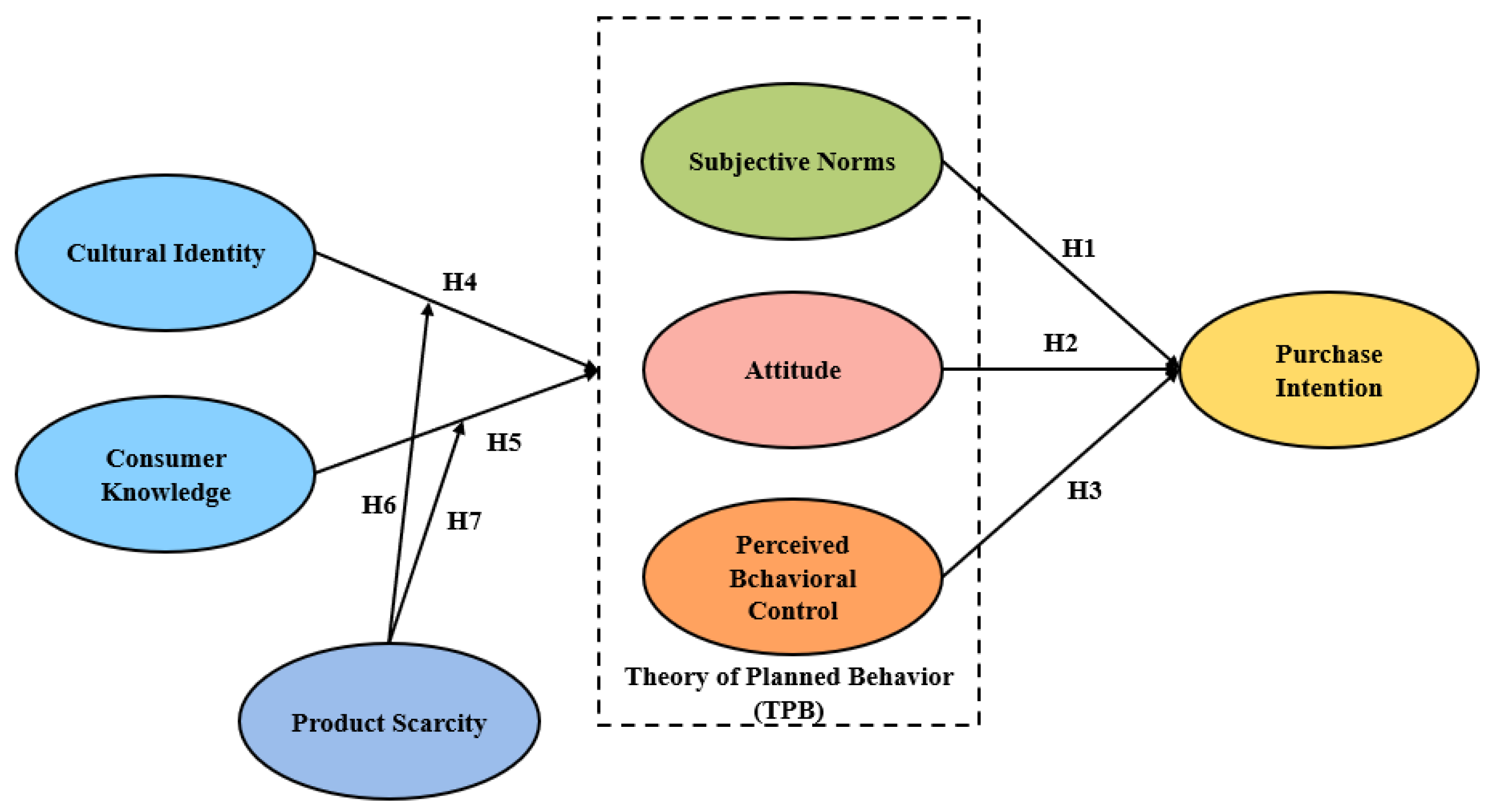
Based on the foregoing theoretical arguments, this study posits that product scarcity moderates the positive relationships between cultural identity, consumer knowledge, and the three core components of planned behavior. Accordingly, the following hypotheses are proposed:
H6a. Product scarcity positively moderates the relationship between cultural identity and subjective norms toward Bashu ICHPs.
H6b. Product scarcity positively moderates the relationship between cultural identity and attitudes toward Bashu ICHPs.
H6c. Product scarcity positively moderates the relationship between cultural identity and perceived behavioral control toward Bashu ICHPs.
H7a. Product scarcity positively moderates the relationship between consumer knowledge and subjective norms toward Bashu ICHPs.
H7b. Product scarcity positively moderates the relationship between consumer knowledge and attitudes toward Bashu ICHPs.
H7c. Product scarcity positively moderates the relationship between consumer knowledge and perceived behavioral control toward Bashu ICHPs.
The overall research framework is presented in
Figure 1.
4. Analysis
4.1. Data Analysis Procedure
Data analysis was conducted using IBM SPSS Statistics 25 (SPSS 25) and AMOS 24.0. SPSS was used to perform descriptive statistical analyses and preliminary assessments of the psychometric properties of the measurement scales, including reliability and validity. Confirmatory factor analysis was then conducted to evaluate the measurement model. Finally, SEM was employed to examine the relationships among the hypothesized variables and to test the proposed hypotheses.
4.2. Reliability and Validity Analyses
To evaluate the quality of the measurement model, this study examined factor loadings, Cronbach’s alpha coefficients, composite reliability (CR), and average variance extracted (AVE), along with overall model fit indices [
69,
70]. These indicators are widely used to assess internal consistency, convergent validity, and construct reliability in structural equation modeling. The results of the reliability and validity analyses are presented in
Table 3.
Cronbach’s alpha (α) was used to assess the internal consistency and reliability of the measurement scales. Values of Cronbach’s alpha range from 0 to 1, with values exceeding 0.70 generally considered acceptable for research purposes [
69]. CR, which takes into account standardized factor loadings and error variances, provides a more accurate estimate of internal consistency in structural equation modeling contexts [
70]. In addition, AVE was used to assess convergent validity, with AVE values of 0.50 or higher indicating adequate convergent validity [
71].
As shown in
Table 3, Cronbach’s alpha and composite reliability values for all constructs ranged from 0.780 to 0.854, exceeding the recommended thresholds and indicating satisfactory internal consistency and reliability. The AVE values ranged from 0.507 to 0.602, demonstrating adequate convergent validity across all constructs.
Discriminant validity was assessed using the Fornell–Larcker criterion. As reported in
Table 4, the square root of the AVE for each construct (diagonal elements) exceeded the corresponding inter-construct correlation coefficients, indicating adequate discriminant validity among the constructs [
72].
4.3. Model Fit Evaluation
After establishing the reliability and validity of the measurement model, the overall fit of the structural model was evaluated using multiple goodness-of-fit indices, including the chi-square to degrees of freedom ratio (CMIN/df), goodness-of-fit index (GFI), adjusted goodness-of-fit index (AGFI), root mean square error of approximation (RMSEA), incremental fit index (IFI), Tucker–Lewis index (TLI), comparative fit index (CFI), parsimonious normed fit index (PNFI), and parsimonious comparative fit index (PCFI) [
73].
As shown in
Table 5, all model fit indices met or exceeded commonly recommended threshold values, indicating an acceptable overall fit between the proposed model and the observed data. These results suggest that the structural model adequately represents the underlying relationships among the constructs.
4.4. Results of Moderating Effects
To examine the moderating effects proposed in this study, hierarchical regression analysis was employed to test the interaction effects among the independent variables, the moderating variable, and the dependent variables [
74]. This approach enables an assessment of whether product scarcity alters the strength or direction of the relationships between cultural identity, consumer knowledge, and the core components of the Theory of Planned Behavior.
The results of the moderating effect analyses are presented in
Table 6, which reports the interaction effects involving product scarcity.
“B,” “SE,” “t,” “β,” and “p” represent the unstandardized regression coefficients, standard errors, t-values, standardized coefficients, and significance levels for each interaction path, respectively. Statistical significance was determined based on 95% confidence intervals (LLCI and ULCI), with effects considered significant when the interval did not include zero.
As shown in
Table 6, product scarcity exhibited significant moderating effects on the relationships between cultural identity and subjective norms (H6a), cultural identity and attitudes (H6b), consumer knowledge and subjective norms (H7a), consumer knowledge and attitudes (H7b), and consumer knowledge and perceived behavioral control (H7c). Among these interaction paths, H6a, H6b, H7a, and H7b were significant at the 0.05 level, whereas H7c reached significance at the 0.01 level. In contrast, the moderating effect of product scarcity on the relationship between cultural identity and perceived behavioral control (H6c) was not statistically significant, as its confidence interval included zero.
Overall, these results indicate that product scarcity plays a positive moderating role in most of the proposed relationships, strengthening the effects of cultural identity and consumer knowledge on key components of the Theory of Planned Behavior.
4.5. Hypothesis Testing
The results of the structural model and hypothesis testing are presented in
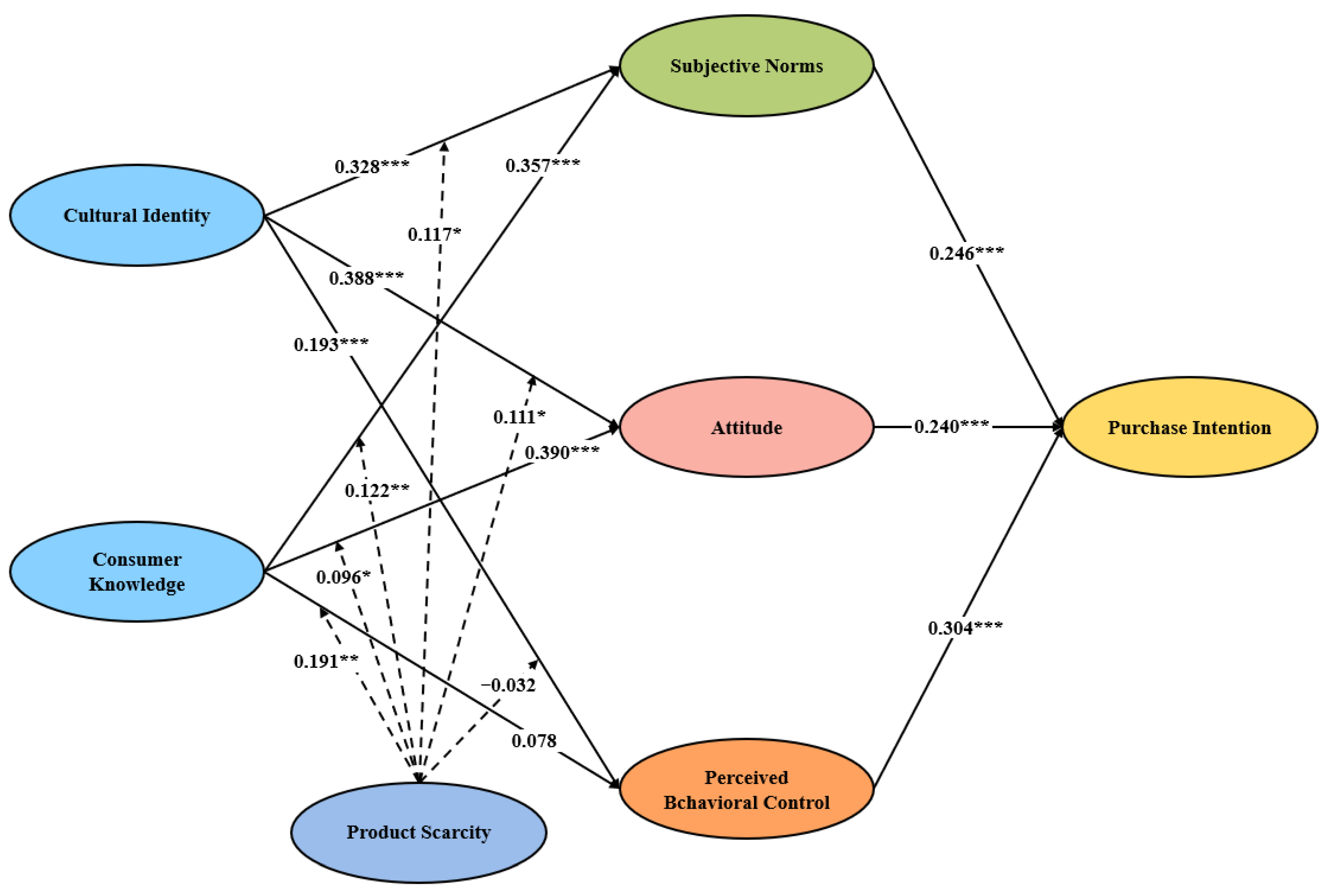
Table 7. Consistent with the Theory of Planned Behavior, subjective norms (β = 0.246,
p < 0.001), attitudes toward Bashu ICHPs (β = 0.240,
p < 0.001), and perceived behavioral control (β = 0.304,
p < 0.001) exert significant and positive effects on consumers’ purchase intention. These findings support hypotheses H1, H2, and H3, confirming that the three core components of TPB play a critical role in shaping purchase intention toward Bashu ICHPs.
With respect to the antecedent variables, cultural identity exhibits significant positive effects on subjective norms (β = 0.328, p < 0.001), consumer attitudes (β = 0.388, p < 0.001), and perceived behavioral control (β = 0.193, p < 0.001). Accordingly, hypotheses H4a, H4b, and H4c are supported, indicating that stronger cultural identification enhances normative influence, favorable attitudes, and perceived behavioral control in the context of Bashu ICHPs.
Consumer knowledge also shows significant positive effects on subjective norms (β = 0.357, p < 0.001) and consumer attitudes toward Bashu ICHPs (β = 0.390, p < 0.001), providing support for Hypotheses H5a and H5b. However, the effect of consumer knowledge on perceived behavioral control is not statistically significant (β = 0.078, p > 0.05), leading to the rejection of Hypothesis H5c. This result indicates that although consumer knowledge enhances social and attitudinal evaluations, it does not necessarily translate into stronger perceptions of behavioral feasibility.
5. Discussion
This study investigates the key drivers of consumers’ purchase intention toward Bashu ICHPs by extending the Theory of Planned Behavior. Based on 429 valid questionnaires collected from Chinese consumers aged 18 years and above, the empirical findings reveal the primary psychological pathways underlying the consumption of Bashu ICHPs within a shared cultural context. Overall, the results indicate that the Bashu ICHP consumption system operates through the coordinated interaction of cultural, cognitive, social, and market-related subsystems.
Within this system, perceived behavioral control functions as a critical bottleneck that determines whether cultural appreciation and symbolic recognition can be effectively translated into actual purchase intention. When system-level support—such as product accessibility, affordability, or service convenience—is insufficient, even strong cultural identity and high levels of consumer knowledge may fail to generate purchasing behavior. This mechanism highlights the pivotal role of perceived feasibility in culturally embedded consumption and is illustrated in
Figure 2.
5.1. The Role of TPB in Explaining ICHP Purchase Intention
The findings confirm that attitudes, subjective norms, and perceived behavioral control exert significant and positive effects on purchase intention toward Bashu ICHPs. This result supports the applicability of the Theory of Planned Behavior in the context of cultural and heritage-related consumption and is consistent with prior studies that emphasize the central role of these three psychological components in shaping behavioral intention [
5,
33]. When consumers hold favorable attitudes toward ICHPs, perceive social approval from important reference groups, and believe that they possess sufficient resources and opportunities, their willingness to purchase Bashu ICHPs is substantially enhanced.
Notably, perceived behavioral control emerges as the strongest predictor of purchase intention, highlighting the decisive role of practical considerations such as accessibility, time availability, financial affordability, and purchasing convenience. This finding reinforces existing conceptualizations of perceived behavioral control as a reflection of system-level feasibility rather than merely individual self-confidence [
5,
33,
75,
76]. From a systems perspective, perceived behavioral control represents the point at which cultural value transmission intersects with market and service conditions. When this intersection is weak, the cultural and emotional motivations embedded in ICHPs cannot be effectively converted into sustainable consumption behavior.
5.2. Cultural Identity as a Core Psychological Driver
Consistent with theoretical expectations, cultural identity is found to exert significant positive effects on subjective norms, attitudes, and perceived behavioral control. This finding corroborates prior research identifying cultural identity as a fundamental driver of culturally embedded consumption behavior [
33]. When consumers emotionally resonate with Bashu culture and perceive a strong sense of regional belonging, they are more likely to internalize socially endorsed norms, develop favorable consumption attitudes, and feel psychologically empowered to engage in culturally aligned purchasing behavior.
These findings underscore the role of cultural identity in strengthening social cohesion and legitimizing consumption choices associated with ICH. In the Bashu context, cultural identity functions not only as a symbolic or emotional driver but also as a stabilizing force within the cultural consumption system. By reinforcing collective recognition and cultural legitimacy, cultural identity facilitates the sustainable circulation of ICHPs and contributes to the long-term preservation of regional cultural values through market-based participation.
5.3. The Dual Role of Consumer Knowledge
The results indicate that consumer knowledge significantly influences subjective norms and consumption attitudes but does not exert a significant effect on perceived behavioral control. This pattern suggests that knowledge related to the history, craftsmanship, and cultural significance of ICHPs primarily operates through cognitive and affective pathways. Knowledgeable consumers are better equipped to recognize the cultural value of ICHPs and to interpret socially endorsed meanings, thereby strengthening normative pressure and fostering favorable attitudinal evaluations.
However, the absence of a significant relationship between consumer knowledge and perceived behavioral control indicates that cultural and informational awareness alone may be insufficient to overcome objective constraints. In other words, knowledge itself is not a sufficient condition for action formation, as consumers’ perceptions of prices, available resources, and time costs may continue to constrain their behavior. Even consumers who possess extensive knowledge of ICHPs may remain hesitant to purchase due to perceived economic or situational barriers. This finding contrasts with some prior studies that report a direct association between knowledge and perceived behavioral control [
74,
77,
78,
79,
80], highlighting the context-specific nature of heritage-related consumption. In ICHP contexts, symbolic appreciation and cognitive understanding do not automatically translate into perceptions of purchasing feasibility.
From a practical perspective, these findings suggest that marketers cannot rely solely on education or informational guidance to stimulate purchasing behavior [
81]. The key to converting culturally interested consumers into actual buyers lies in reducing practical barriers that affect purchasing decisions by enhancing product accessibility and optimizing pricing strategies [
82]. Such efforts may include developing tiered product portfolios that range from high-end handcrafted items to more affordable derivative products, expanding multi-channel distribution through online platforms, cultural tourism venues, and retail partnerships, and simplifying the purchasing process to reduce perceived effort and cost. By actively strengthening perceived behavioral control, practitioners can bridge the gap between cultural appreciation and feasible consumption behavior.
5.4. The Moderating Role of Product Scarcity
The results further demonstrate that product scarcity positively moderates the relationships between cultural identity and subjective norms, cultural identity and attitudes, consumer knowledge and subjective norms, and consumer knowledge and attitudes. These findings suggest that scarcity amplifies the social visibility, symbolic meaning, and emotional salience of ICHPs. When products are perceived as scarce, consumers with strong cultural identity or higher levels of knowledge are more likely to experience intensified social recognition and cultural value affirmation, thereby strengthening normative influence and favorable attitudinal responses.
However, product scarcity does not significantly moderate the relationship between cultural identity and perceived behavioral control. This result indicates that although scarcity enhances symbolic and emotional appeal, it does not necessarily alleviate practical constraints related to accessibility, time availability, or financial affordability. In other words, scarcity primarily activates cultural and social cues rather than directly reducing objective barriers to consumption.
By contrast, although consumer knowledge alone does not significantly influence perceived behavioral control, product scarcity positively moderates the relationship between consumer knowledge and perceived behavioral control. This finding suggests that scarcity can partially compensate for the limitations of knowledge by increasing perceived value and urgency. The handcrafted and customized nature of ICHPs makes scarcity an inherent attribute, which, in line with classical economic theory, enhances perceived value [
83]. From a practical standpoint, this effect can be further amplified through strategic digital media applications, such as live streaming and augmented or virtual reality (AR/VR), which make scarcity and craftsmanship authenticity more tangible to consumers [
84,
85]. For example, live broadcasts of the real-time production process by ICH inheritors allow viewers to directly observe the time-intensive, unique, and non-replicable nature of handcrafted production, thereby reinforcing perceptions of scarcity. Similarly, AR technologies enable consumers to visualize layers of craftsmanship by interacting with products via smartphones, while VR can create immersive handmade production scenarios that transform abstract notions of “handmade value” into vivid experiential perceptions.
Under conditions of scarcity [
86,
87,
88], knowledgeable consumers may be more willing to justify higher costs or greater purchasing effort, thereby strengthening their perceived ability to complete the purchase. In this sense, product scarcity functions as a bridging mechanism that links cultural cognition with perceived purchasing feasibility, contributing to a more sustainable balance between cultural preservation and market participation.