Middle Eastern Agrivoltaics: Technologies, Sustainability, and Economic Effects


Abstract
1. Introduction
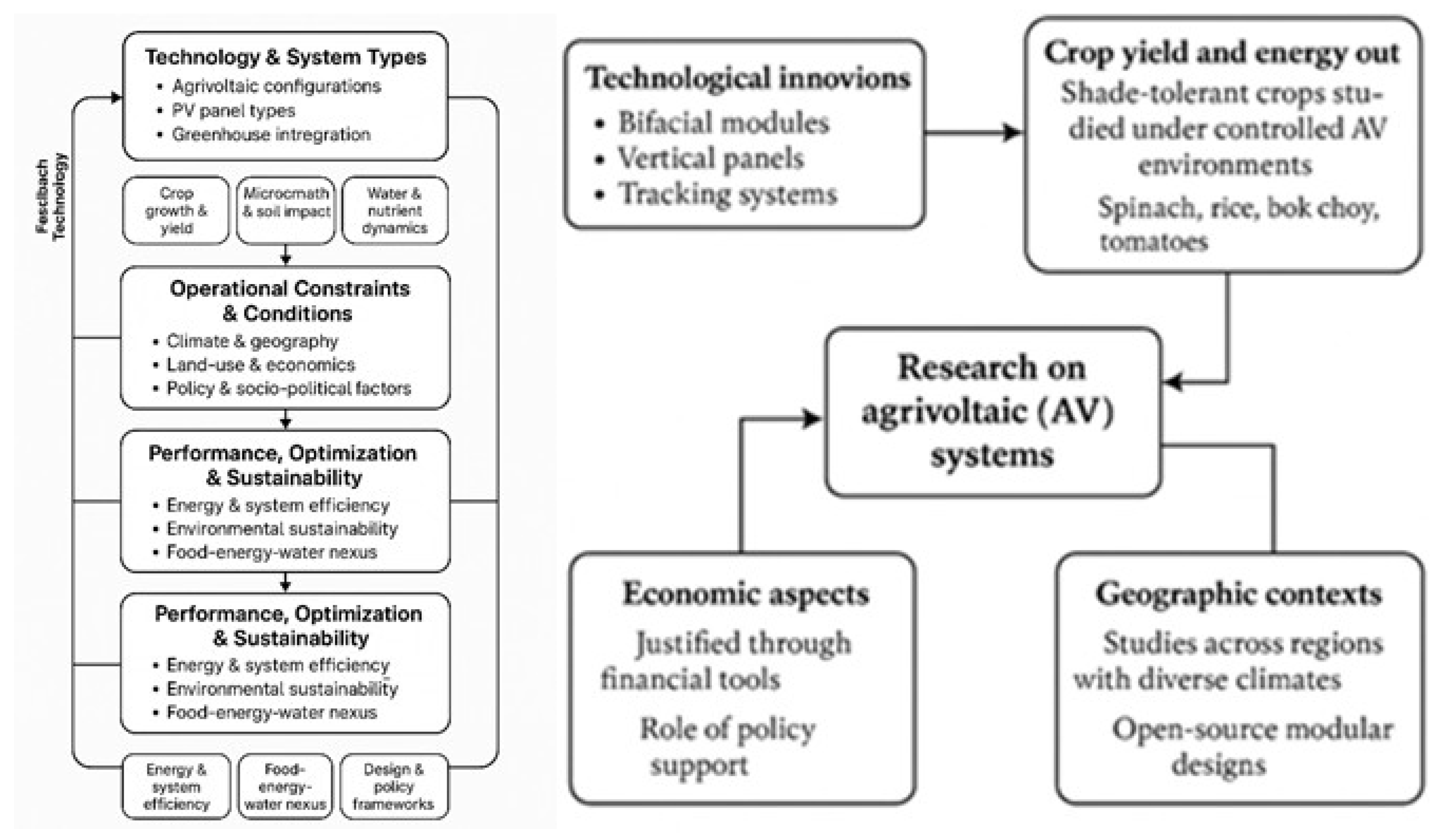
2. Literature Review
- Climate zone: Arid, semi-arid, temperate, or humid.
- Technology–crop combination: PV configuration (elevated, semi-transparent, bifacial, and vertical) and crop type (shade-tolerant, heat-sensitive, and perennial).
- Sustainability dimension: Environmental (water and energy efficiency), economic (ROI and irrigation savings), and social/policy (land tenure and adoption).


- Availability of agricultural resources (land and water);
- Access to capital for development;
- The degree of need for agricultural development.
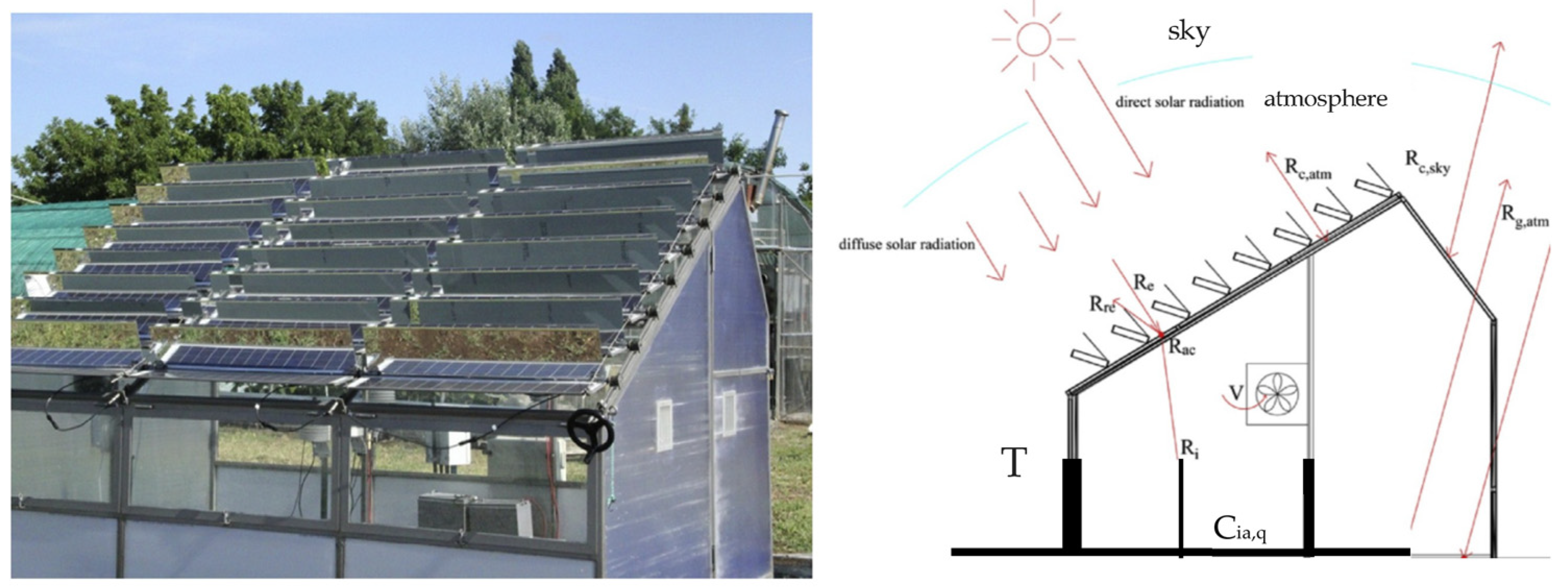
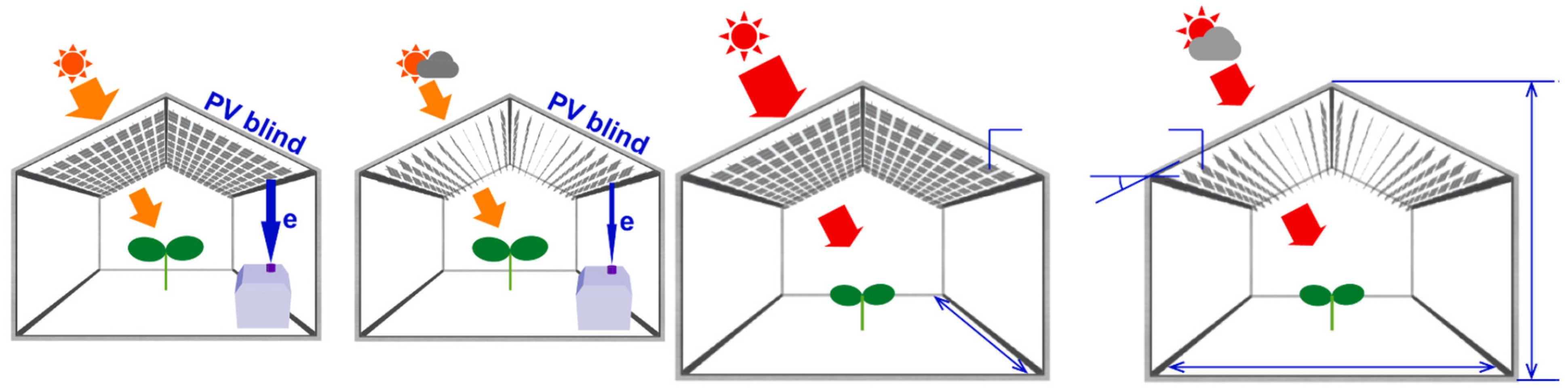
- Rotating PV panels can be aligned based on site latitude and local climate, optimizing both solar energy capture and light availability for crops.
- The system enhances the energy balance by producing electricity while maintaining a favorable light environment for plant growth.
- Shading levels can be adjusted dynamically to suit different crop types and cultivation stages, improving agricultural productivity and energy efficiency simultaneously.


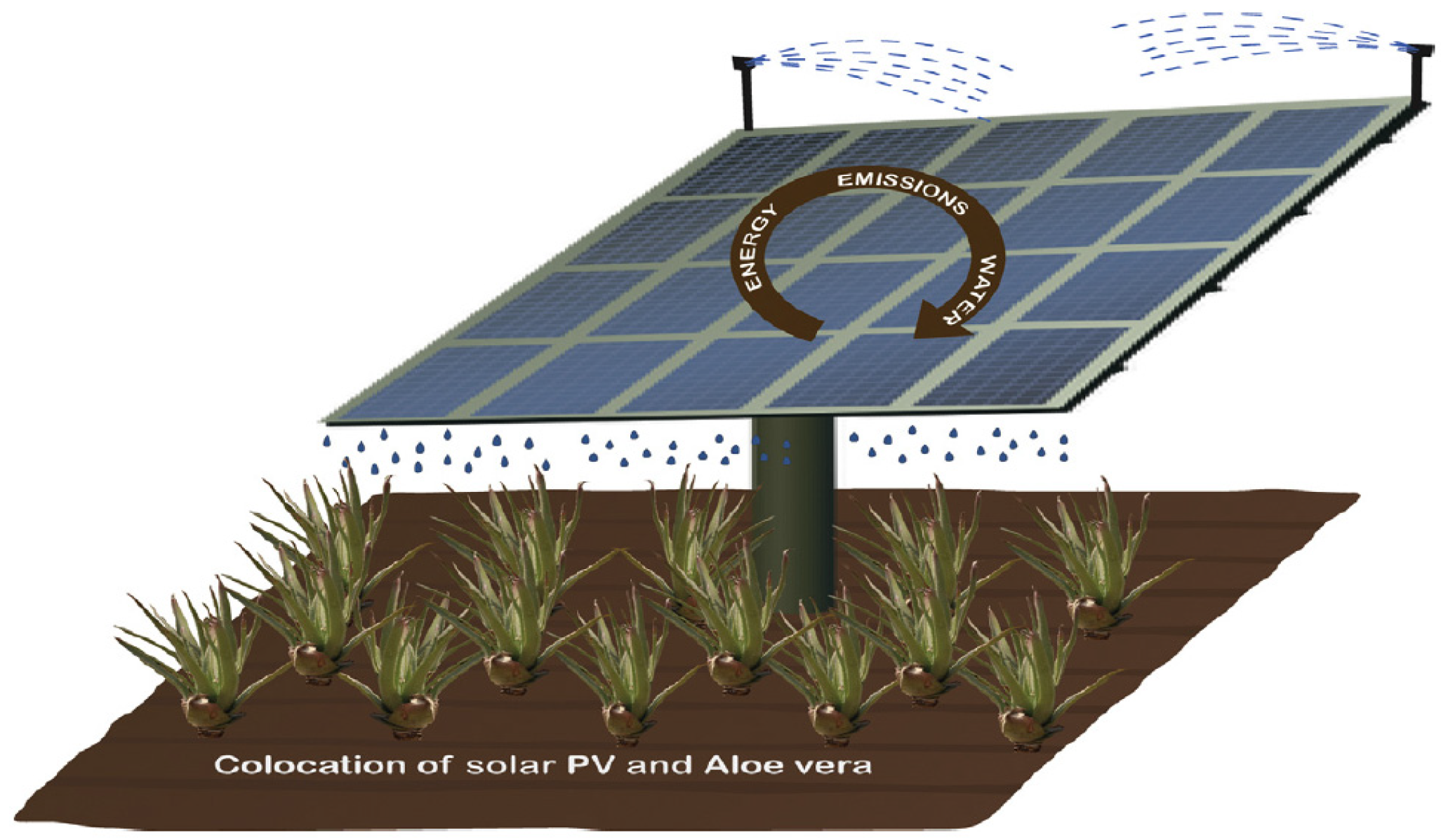
- The study compares solar energy systems with aloe vera cultivation, analyzing land-use efficiency, water use, energy inputs/outputs, GHG emissions, and economic returns.
- Results suggest that co-locating solar panels and crops can enhance overall resource efficiency, offering environmental and economic co-benefits.
- Aloe vera, a drought-tolerant and economically viable crop, is shown to be compatible with dual-use solar farming systems in arid regions.



| Ref | Year | Technology | System Under Study | Characteristics | Operating Condition/Constraints |
|---|---|---|---|---|---|
| [17] | 1976 | Biomass Production | Energy budget for crop-based solar energy | Analyzed the entire farming cycle, land use, and vegetation selection | Techno-economic comparison between direct combustion and gasification; energy plantation viability. |
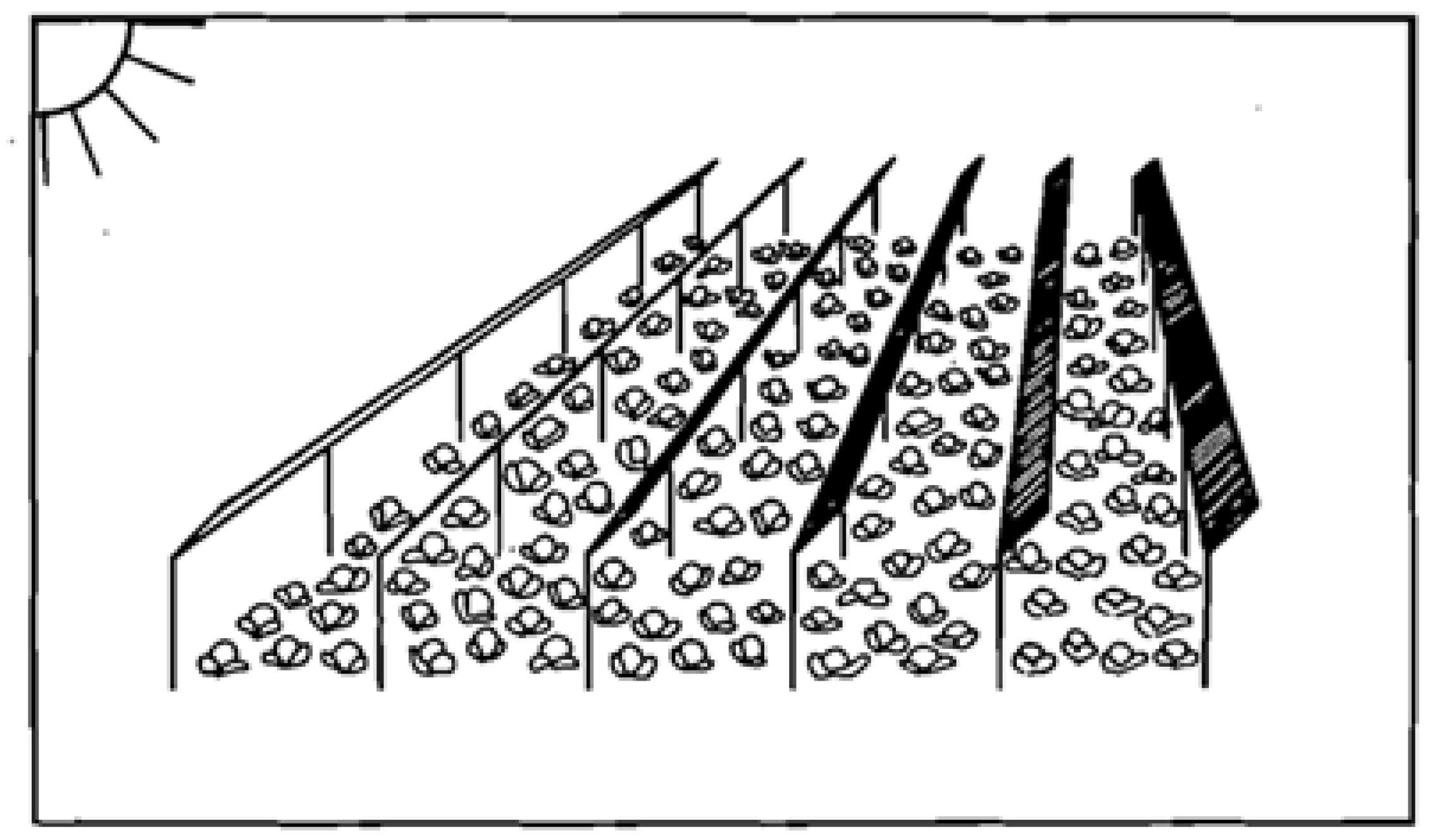
| [18] | 1982 | PV-Agro Co-Use | Elevated solar collectors for agriculture | Uniform radiation is achievable with elevated panels and spacing | Design optimized for dual use; limitations on scale and grid connection. |
| [19] | 1997 (Oct) | PV Feasibility | Large-scale PV in deserts | Cost assessment at different sites, optimized sub-units | Reply on global solar resource and local costs, optimized at 100 MW. |
| [20] | 1997 (Oct) | PV Grid Integration | Spatial fluctuation analysis of PVs | Used cross-correlation to estimate output volatility | Fluctuations persist even with a wide PV distribution; impact on utility stability |
| [21] | 1998 | Plant Growth under Shade | Experimental shading on crops | MDW (Mean Dry Weight) varies by species and shade | Warm-season grasses are more sensitive; statistical analysis via Tukey’s test. |
| [22] | 1999 | Passive/Active Solar Design | Solar-integrated buildings | Various integration models are discussed | Design must follow a holistic, energy-efficient strategy. |
| [23] | 2004 | PV + Biomass | Land use comparison in rich vs. poor regions | Biomass is more land-intensive; PV is favorable for land savings | PV adoption is constrained by infrastructure needs. |
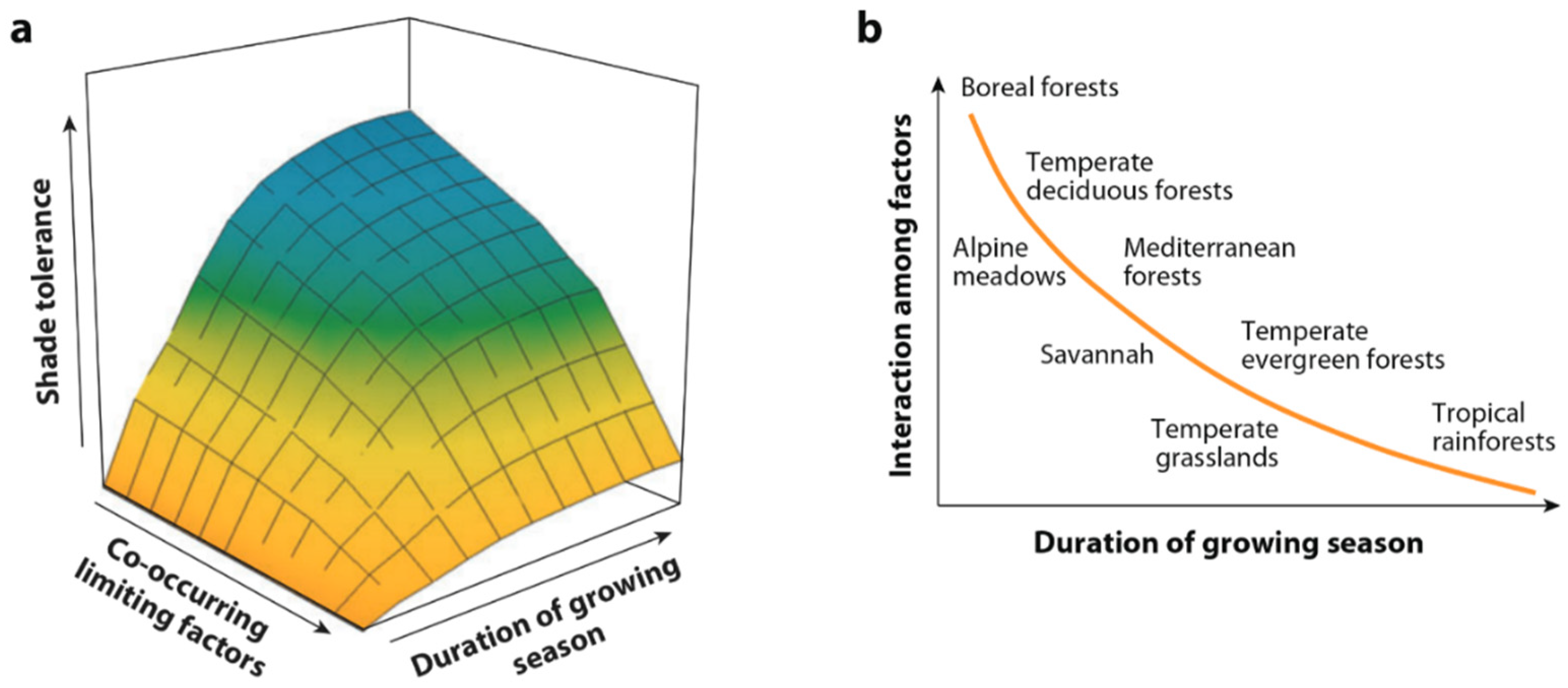
| [24] | 2006 | Stand-alone PV Greenhouse | PV-driven ventilators | High energy usage by the control circuit | Energy use needs optimization to reduce costs and increase reliability. |
| [25] | 2008 | Shade Tolerance | Morphological plasticity in low light | Variation in species’ shade response and adaptation | Influenced by plant stage and environment, critical for predicting ecosystem resilience. |
| [26] | 2009 | Land Use for Energy | Life cycle land demand analysis | Compared land needs for renewables vs. conventional | PV has the lowest land footprint; biomass has the highest. |
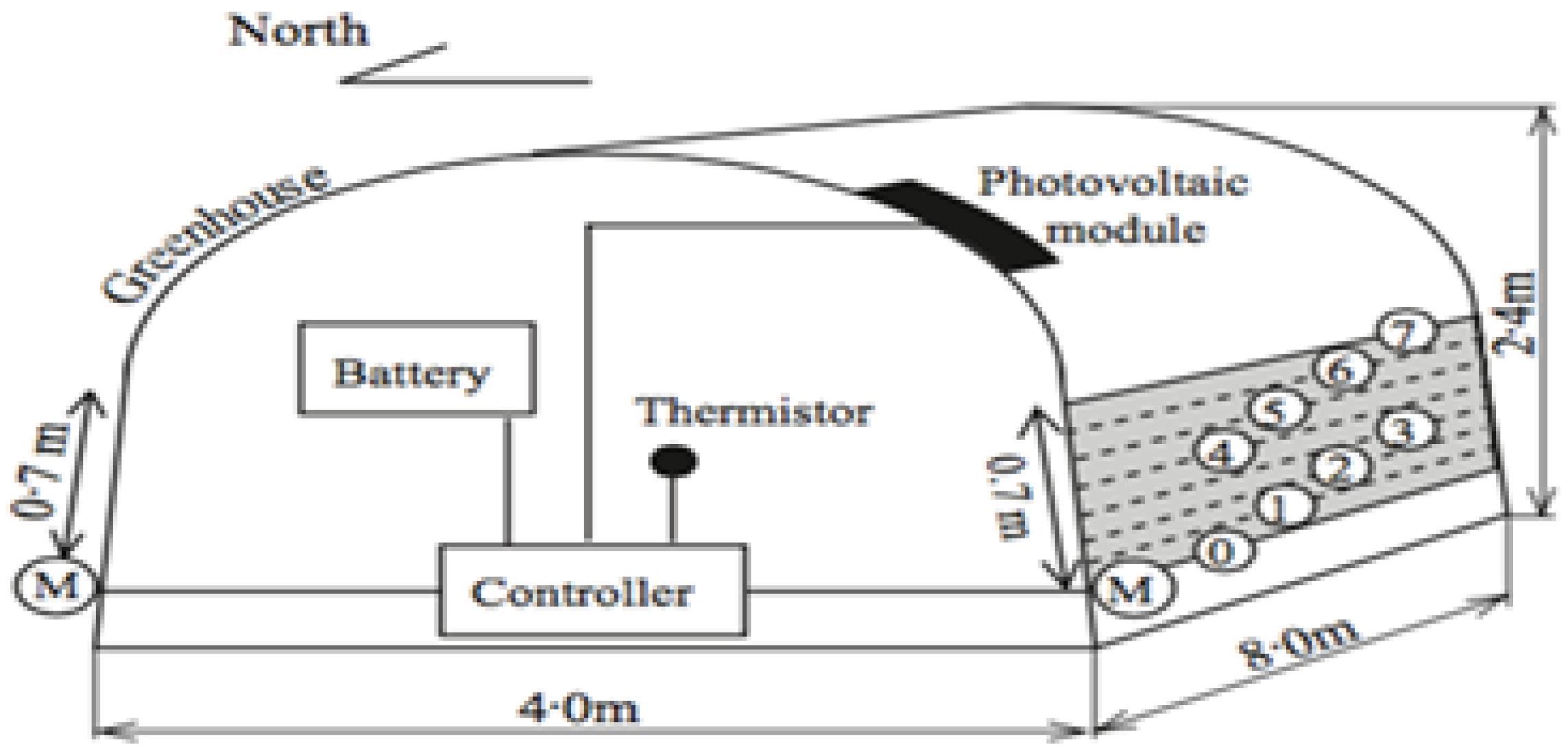
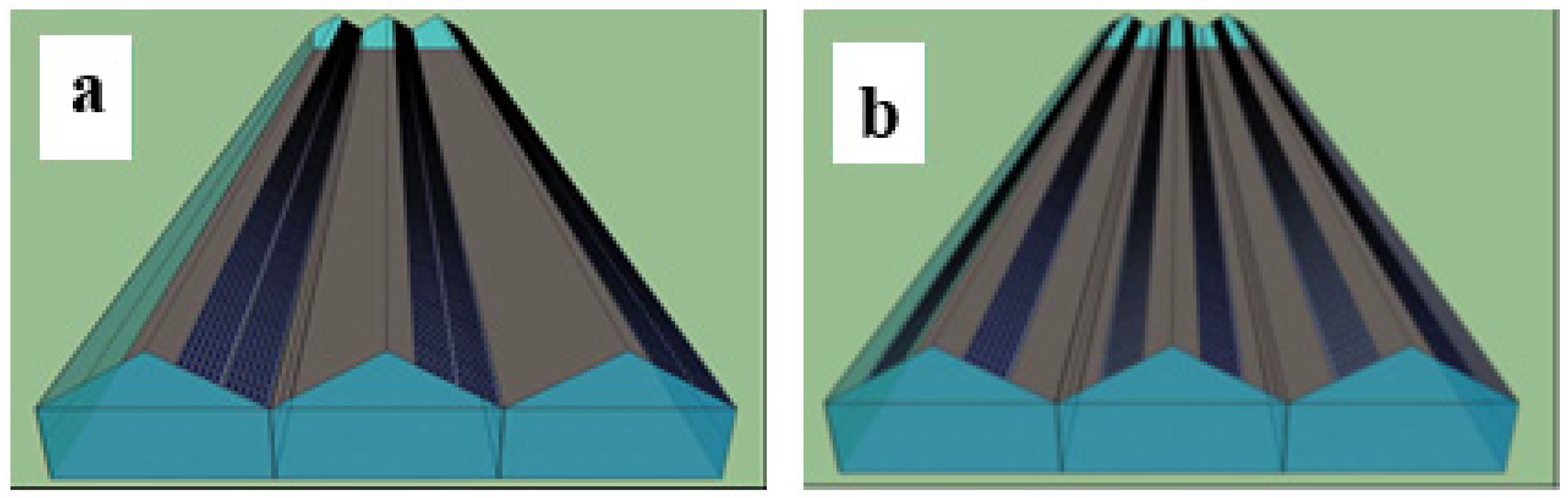
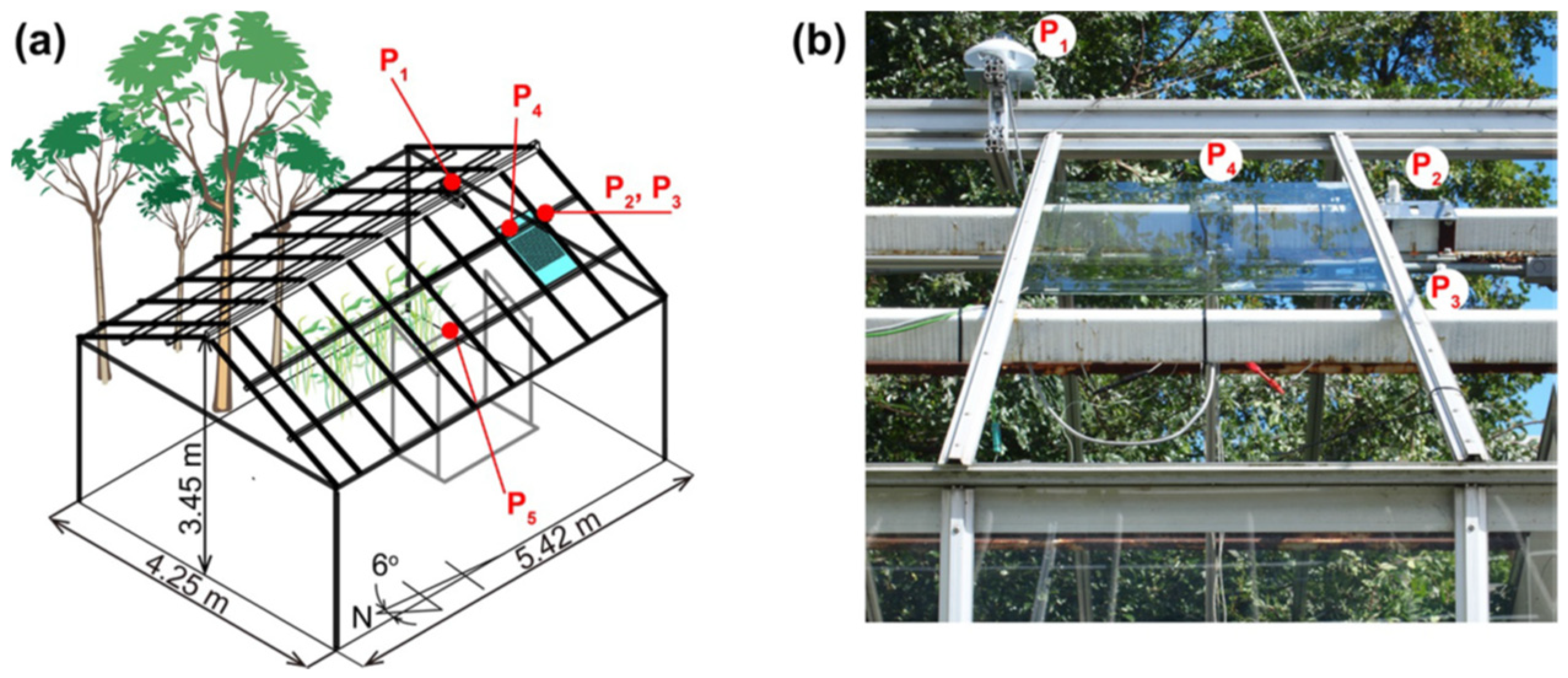
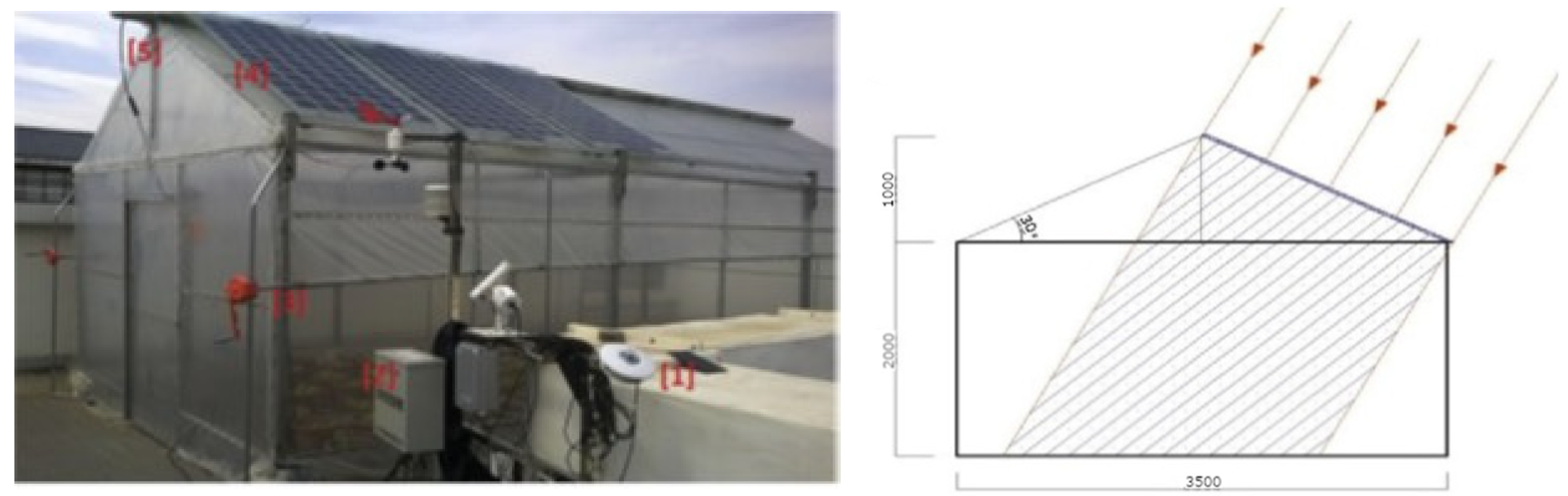
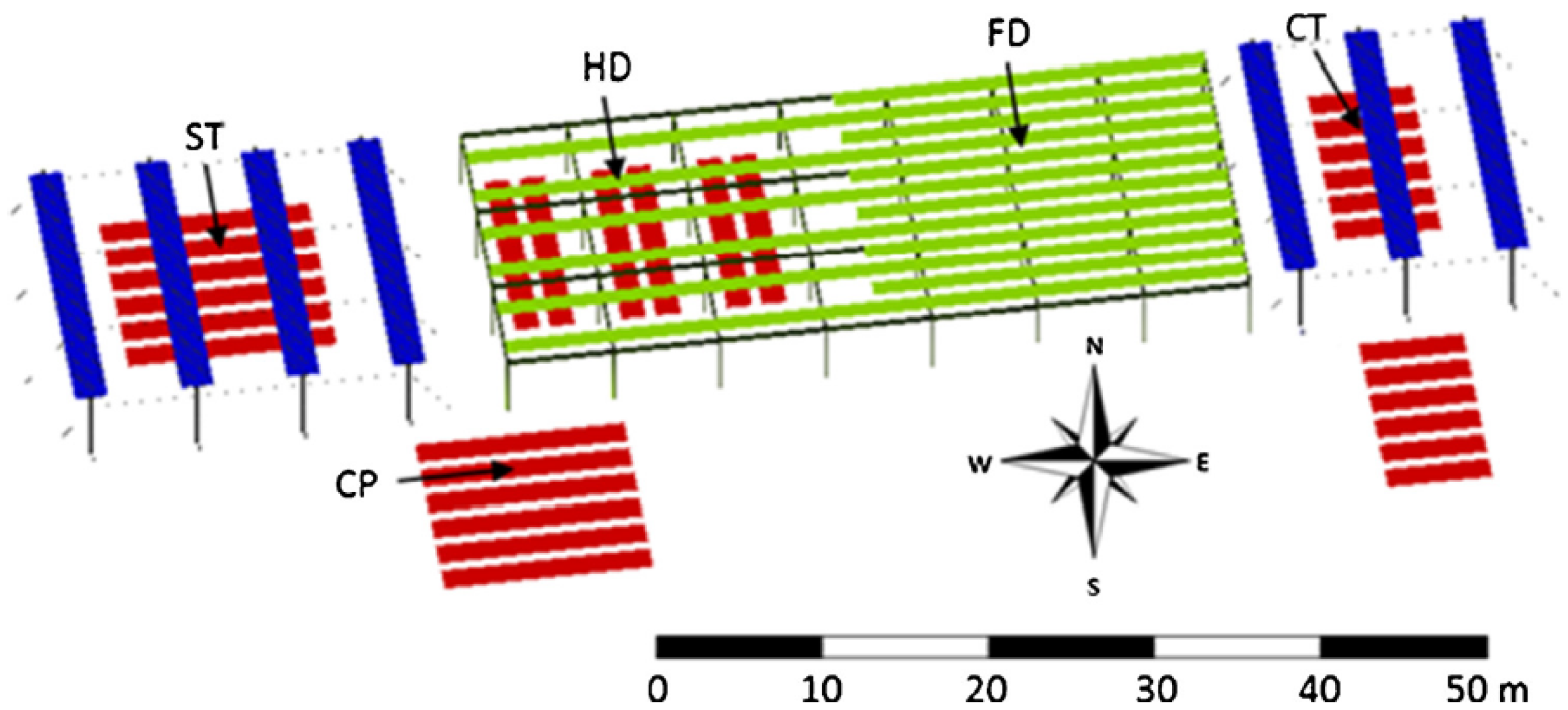
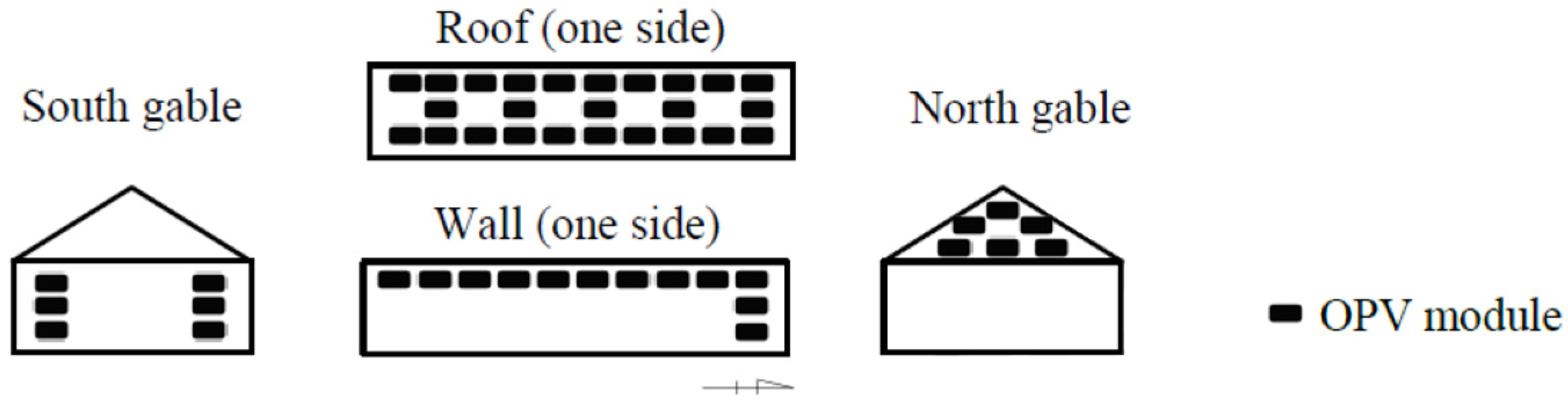
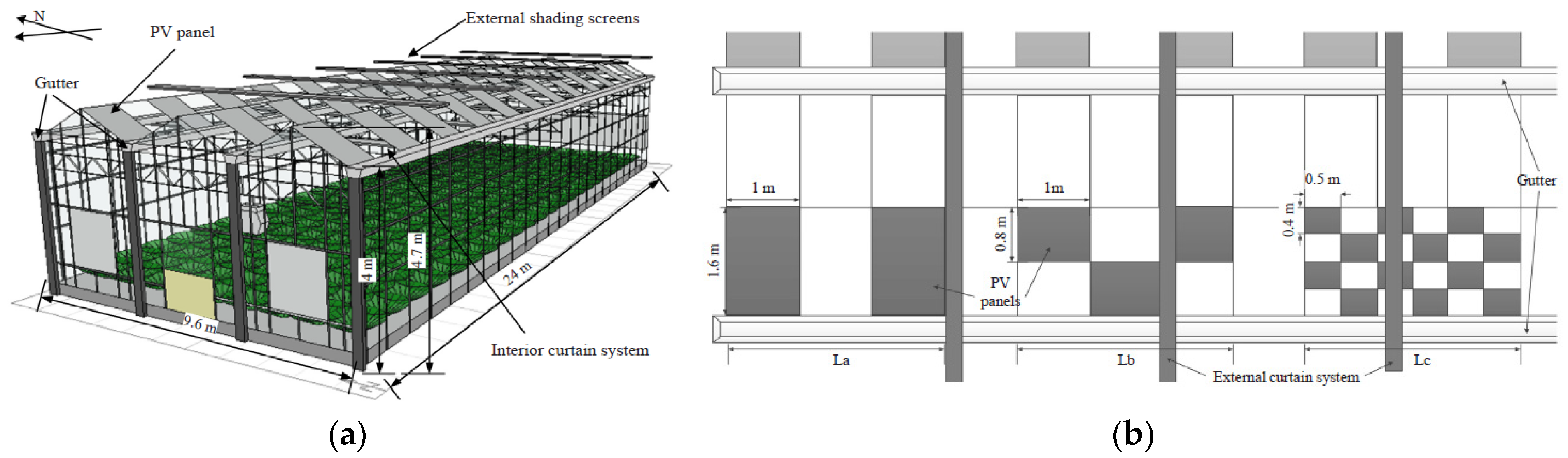
| [27] | 2010 (Aug) | PV + Greenhouse | PV array integration in Gothic-arch greenhouse | Studied shadow patterns and long-term irradiance | A checkerboard array distributes the shadow better, with similar energy output. |
| [28] | 2010 (Sep) | Renewable Farming Systems | On-farm renewable energy integration | Retrofit farm systems; energy as a co-product | Must be clean, risk-free; it requires affordable and efficient tech. |
| [29] | 2010 | PV Land-use Efficiency | CPV vs. flat-plate shading | Tracker optimization reduces shading losses | Shadow and spectral mismatch affect performance; efficient layout is crucial. |
| [30] | 2010 | Semi-Transparent PV | Greenhouse-integrated PV panels | PV modules replace glass panes; dual electricity–agriculture use | Generates electricity + enables crop growth; tied to farm revenue model. |
| [31] | 2011 (July) | PV + GSM Automation | GSM-enabled solar pump | Autonomous, remotely operable, and low maintenance | Ideal for off-grid irrigation; includes inverter and sensor control loop. |
| [32] | Oct 2011 | Agrivoltaic Systems | AV systems combine PV panels and crops on the same land unit | The Land Equivalent Ratio (LER) is used to measure efficiency. Predicted high productivity | Potential solution for land scarcity; prototype validation needed. |
| [33] | Nov 2011 | AutoCAD Model | Orientation evaluation of even-span greenhouse | 3D shadow analysis with AutoCAD; better than classical geometry, but time-consuming | Used for modeling solar radiation transmittance; E-W orientation at 0° is considered. |
| [34] | Jan 2012 | DC Photovoltaic Water Pumping System | LLPs, STWs, DTWs, and HTWs powered by solar | Integration of DC-DC buck converter; mass solar tracking improves efficiency | Direct Coupled System (no PCU); measurements taken over one day for pump performance. |
| [35] | Feb 2012 | Agrivoltaics | Integration of PV with agricultural systems | Emphasizes system reliability, adaptability, and comfort for users | Future innovation is needed for greenhouse designs, transparent PV panels, and suitable crops. |
| [36] | Mar 2012 | PV Greenhouse | Checkerboard vs. straight-line PV array on 12.9% of the roof | Welsh onion under intermittent shading; reduced growth offset by similar power generation | Checkerboard shading diminishes negative plant growth impact; maintains energy output. |
| [37] | Apr 2012 | Solar-powered Irrigation | BLDC motor with solar panel for dwarf cherry trees | 3.84 kW system with 48 panels; drip irrigation for efficient water use | Sensor-based automation reduces irrigation labor, weed growth, and salinization. |
| [38] | May 2012 | Solar Agro Sprayer | Rural spraying application using solar panels | Lead–acid battery stores energy for pesticide spraying | Low O&M costs; easy installation; no greenhouse gas emissions; supports rural prosperity. |
| [39] | Aug 2012 | PV-integrated Greenhouse | Commercial Raspa y Amagado greenhouse | 9.8% roof PV coverage; tomato growth unaffected in market value | Minor differences in fruit size; no commercial impact; maintains product class. |
| [40] | Sept 2012 | Artificial Neural Network | Greenhouse with 9.79% roof PV coverage | Annual normalized power output: 8.25 kWh/m2 | Suitable for complex, nonlinear PV system configurations in greenhouses/buildings. |
| [41] | Nov 2012 | PV Pumping System | Comparison of two similar SPV arrays | Regular cleaning and temperature control enhance efficiency | The DC-PVPS system described is a battery buffer system used for voltage stabilization. |
| [42] | Dec 2012 | Flexible PV Film (EVA) | Laminated flexible PV film for greenhouses | 0.5 mm film; fits curved greenhouse surfaces | Low PAR transmittance limits plant growth but enhances power generation. |
| [43] | Jan 2013 | PV Water Pumping System | 24-module system for rural water needs | Flow rate: 1.3 m3/min; 702 m3/day output | 12-month assessment; reliable in remote areas; low maintenance. |
| [44] | Jan 2013 | Agrivoltaics | Experimental AV with microclimate and crop monitoring | Enhanced shade radiation blocking improves foliar traits | Traits help select crops suitable for AV systems; optimize productivity. |
| [45] | Aug 2013 | Agrivoltaic Cropping System | Two systems with different PV densities across seasons | Temperature patterns and growth rates are mostly unaffected by PVs | Requires minimal adaptation; focus on efficient radiation use of crops. |
| [46] | Oct 2013 | Evapotranspiration Under PV | Theoretical and empirical evapotranspiration analysis | Reduced ETR in shade due to reduced demand | Higher WUE is possible by selecting fast-cover crops, improving light capture, and reducing transpiration. |
| [47] | Mar 2014 | Fuzzy Logic-Controlled MPPT-Assisted PV-FC Power Generation | Simulink model of hybrid PV/FC feeding induction motor pump | Validated simulation model; analyzed PV, FC, DC/DC, and DC/AC converters, and IM pump load; power quality analysis | I–V and P–V characteristics of PVs at various temperatures/radiation levels; minimum rule base FLC used; whole system found satisfactory for IM pump load. |
| [48] | Mar 2014 | Solar Cell-Powered Drip Irrigation | Solar drip irrigation in a sugarcane field | Avg. dripper flow rate 0.82 L/h; EU 76.83%; rainfall rate 2.73 mm/h; irrigates 300 m2 | The battery can power the pump for 6–8 h without recharging; performance degrades after 6 h; cost and operational efficiency are analyzed. |
| [49] | Apr 2014 | PV Technology | Solar pump for crop irrigation | Water area per crop calculated; long-term (10-year) cost comparison with diesel and PDB | Study supports transition to solar irrigation with pilot initiatives; financial and technical support recommended. |
| [50] | May 2014 | Solar Greenhouse with PV | Small experimental greenhouse with roof-mounted PV modules | Hydroponic lettuce under 50% light transmittance; seasonal study | Diffused light improved irradiation uniformity; studied the effect of light condition on lettuce morphology, yield, and photosynthesis. |
| [51] | Jun 2014 | Two PV System Prototypes for Greenhouse Roofs | Semi-transparent bifacial PV modules for greenhouses | PV1 had 3× more cell density than PV2; output compared to greenhouse energy demands | PV1 and PV2 are suitable in high-irradiation areas; they need module surface cleaning, design optimization, and manufacturing automation. |
| [52] | Aug 2014 | CMOS Solar Power Monitoring | Solar power to frequency converter with calibration circuit | Voltage-to-current converter; digitized output; solar power: 37.86–380.67 W/m2 → 1.39–2.1 MHz frequency | Calibration reduced error from 15.11% to 0.72%; validated through SPICE simulation; compatible with many transmission media (e.g., IR and radio). |
| [53] | Aug 2014 | Fuzzy Logic for Energy Management | Off-grid PV irrigation for tomato cultivation | Load control algorithm via microcontroller; uses off-the-shelf components | Battery use minimized; PV meets water demand; simulation confirms energy management feasibility in tomato irrigation (Tunisia). |
| [54] | Sep 2014 | PV with Multi-Sensor System | Soil water content measurement for irrigation | Measures soil moisture, humidity, and precipitation; tested for farmer-acceptable metrics | Early experimental stage: further sensor calibration needed (especially humidity and precipitation sensors). |
| [55] | Nov 2014 | Greenhouse with PV System and Inverter | PV greenhouse with tomato crop | 8% thermal energy loss via back cover; microclimate impacts transpiration and crop uniformity | Requires differentiated crop management; solar variability affects mineral solution distribution among crop lines. |
| [56] | Dec 2014 | Daylighting and Insolation Analysis | Various PV greenhouse models | Simulation of insolation and daylight distribution across greenhouse sections | Shadowing depends on the sun’s position and roof PV configuration; it encourages correlation of models with field data to refine greenhouse PV designs. |
| [57] | Jun 2014 | Socio-economic Assessment | Agricultural and sectoral linkage in the Middle East | Rural sectors linked by labor and trade | Highlights regional interconnectivity through agricultural labor and trade rather than isolated PV systems. |
| [58] | 2015 | Conventional PVs | Java Tea cultivation under PV arrays | Cultivation of herbal crops in a large PV farm space (95W mono PV array) | Demonstrated at University Putra Malaysia, addresses the economic feasibility of combining herbal crops with solar PV installations. |
| [59] | 2015 | PV-Equipped Greenhouses | Asymmetric and Venlo greenhouses with rooftop PVs | CFD simulation of solar radiation, heat, and vapor fields | Simulated environmental boundary conditions; useful for greenhouse energy optimization. |
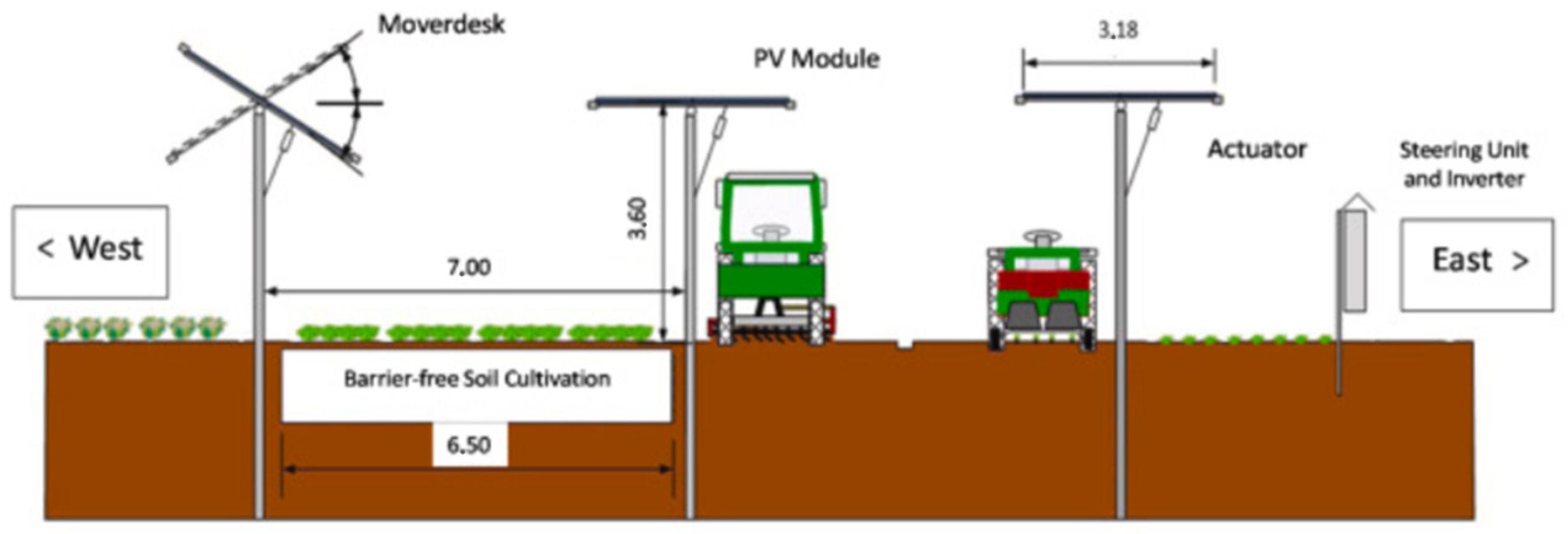
| [60] | 2016 | Dynamic Photovoltaic Greenhouse | Rotatable PV panels on greenhouse prototype | Longitudinal panel rotation; optimized solar capture during clear sky in hot season | Aims to maximize energy capture without sacrificing crop growth conditions. |
| [61] | 2016 | Semi-transparent PVs | Micro solar cell-based modules for greenhouse roofs | New prototype with STM-based roof; 12.87 V, 36 mA under STC | Tested under 1 kW/m2, 25 °C, AM 1.5; effective for greenhouse integration. |
| [62] | 2016 | PVSyst and STICS Coupled Model | Agrivoltaic system for lettuce in the U.S. | Coupled simulation of PV energy and crop yield (lettuce); crop model STICS | Optimal PV density depends on tilt, spacing, area, and crop shade tolerance. |
| [63] | 2016 | PVs and Water Use | Solar panels and crops in India | Examined co-location of PV and crops for efficient land and water use | Explores water-efficient strategies and socio-economic implications, e.g., aloe cultivation in arid zones. |
| [64] | 2016 | Conventional PVs | Crop integration with PV in Italy | Spatial-based open-source model used to evaluate feasibility | Considers landscape preservation, crop morphology, and the land specialization index. |
| [65] | 2017 | Photovoltaic Greenhouses | Radiation estimation model | Developed an algorithm to estimate global radiation in PV greenhouses | Under various light/shadow scenarios, applicable for optimizing light inside PV greenhouses. |
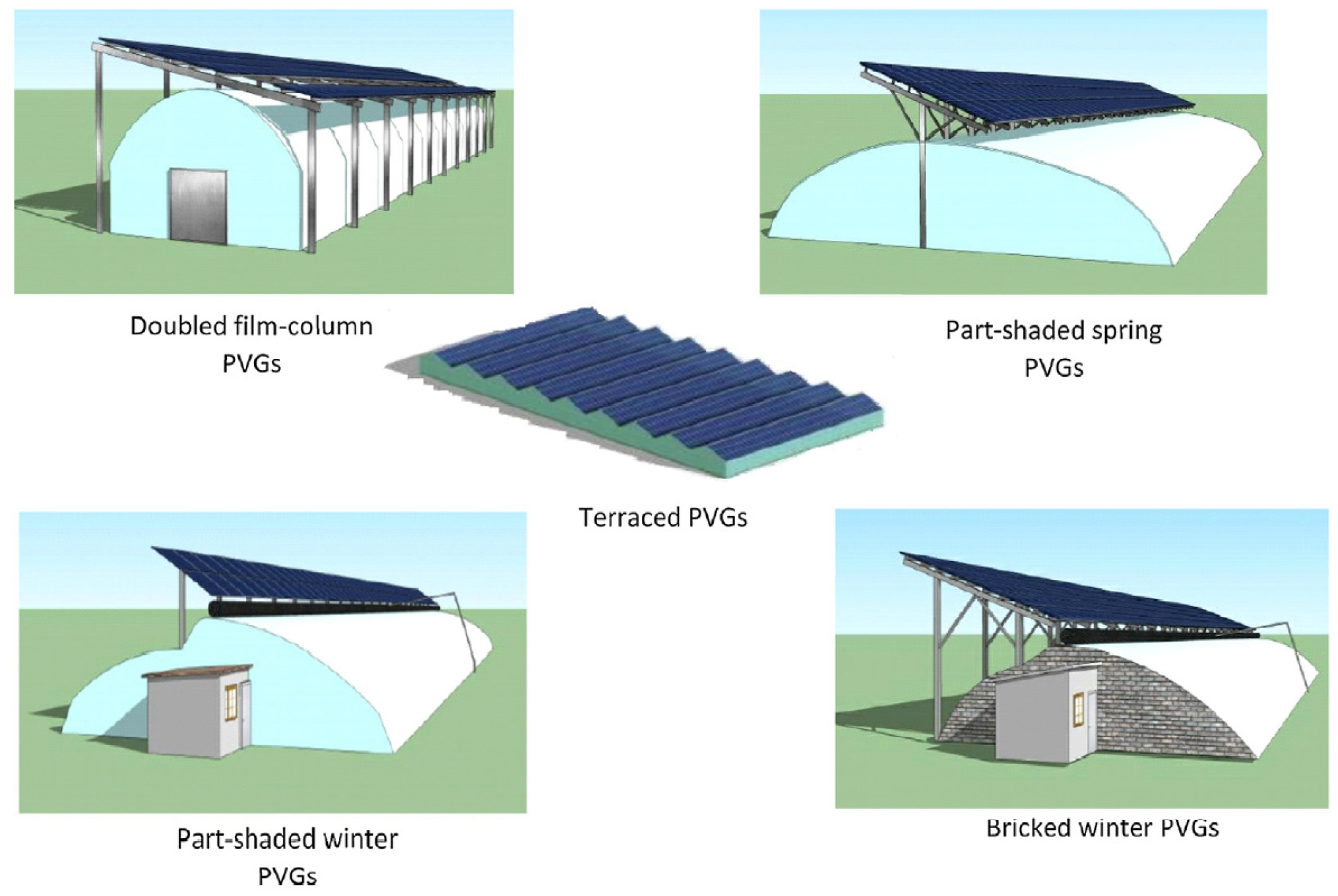
| [66] | 2017 | Integrated PV Agricultural Greenhouses (PVGs) | Five PVG case studies in China | Studies performance, economics, and social benefits | Climate-dependent performance provides insight for wider deployment in China. |
| [67] | 2017 | Agrivoltaics | Agricultural land in China | Optimize electric power generation and agricultural land use | China climate. |
| [68] | 2017 | PV modules (Trina Solar 310 W TSM-310-PD14 polycrystalline silicon) | Grape farms in India | Techno-economic analysis for installing PV between trellises considering grape shade tolerance | Dual land use. |
| [69] | 2017 | PV-covered Greenhouse | PV-covered greenhouse | Analysis of the installed PV panels’ effect on energy production and plant growth | Fixed and sun-tracking PV panels on greenhouses. |
| [70] | 2017 | Semi-transparent PVs | Opaque PV-based greenhouse | State-of-the-art overview | |
| [71] | 2017 | Solar Tracking PVs | Solar trackers beside stationary agrivoltaic systems in Montpellier | Introducing dynamic agrivoltaics systems with orientable PVPs | European Union climate. |
| [72] | 2018 | PV and Wind Power Deployment | European Union | Review of PV and wind power deployment and policy drivers | European Union climate. |
| [73] | 2018 | PV Modules | Greenhouses | Discusses the growth of PV-based greenhouses and shading effects | Shading variation. |
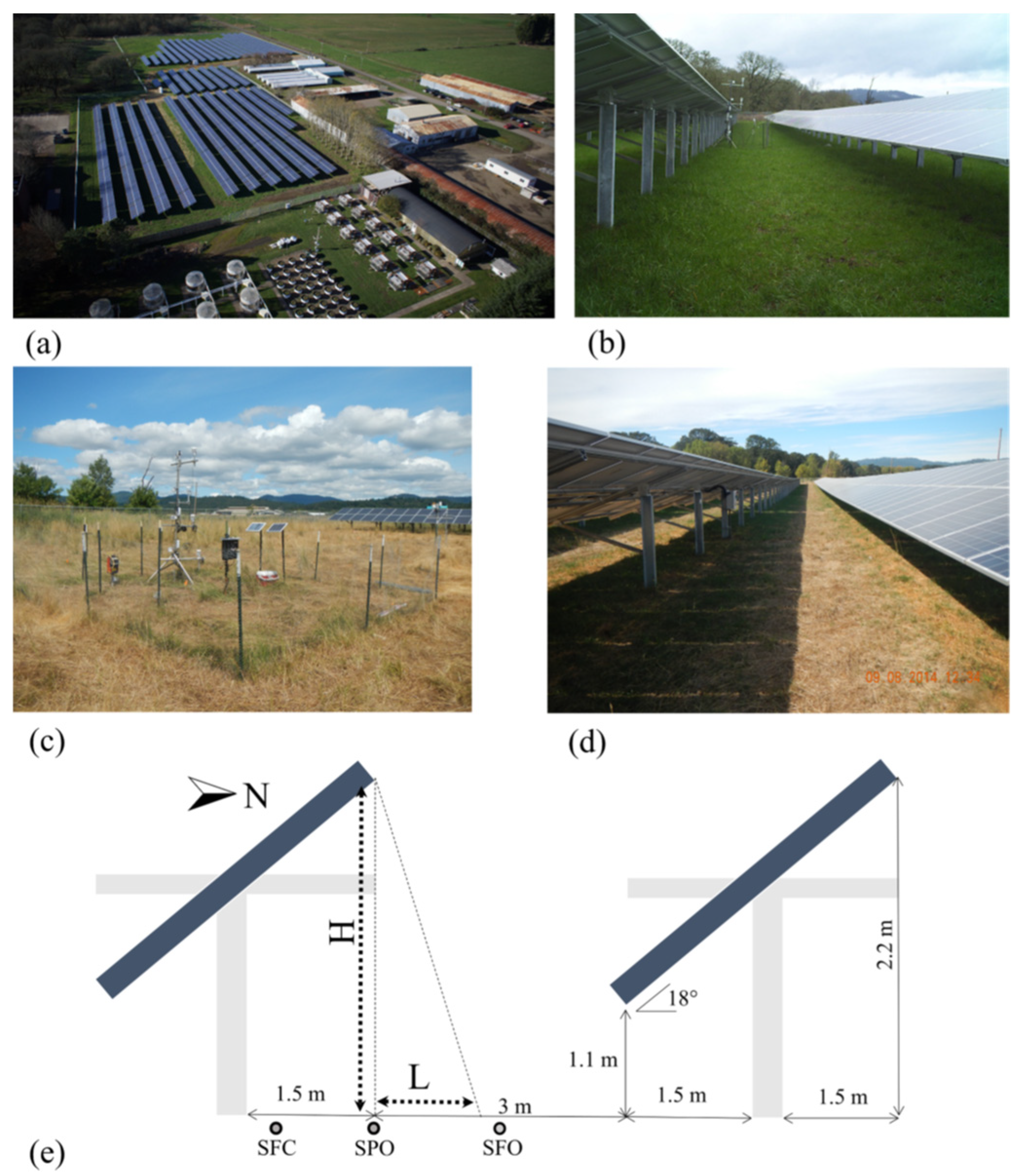
| [74] | 2018 | PV Modules | Phoenix Metropolitan Statistical Area, USA | Dual use of agricultural land | Constraints: cost and land. |
| [75] | 2018 | Semi-transparent PVs | Greenhouses | Examines the impact of semi-transparent PVs on power generation and tomato growth | Tomato plant shading effects. |
| [76] | 2018 | Flexible PV panels on a Canarian Greenhouse | Tomato production under photovoltaic greenhouses | Evaluates microclimate and crop quality under PV shading | Weather conditions. |
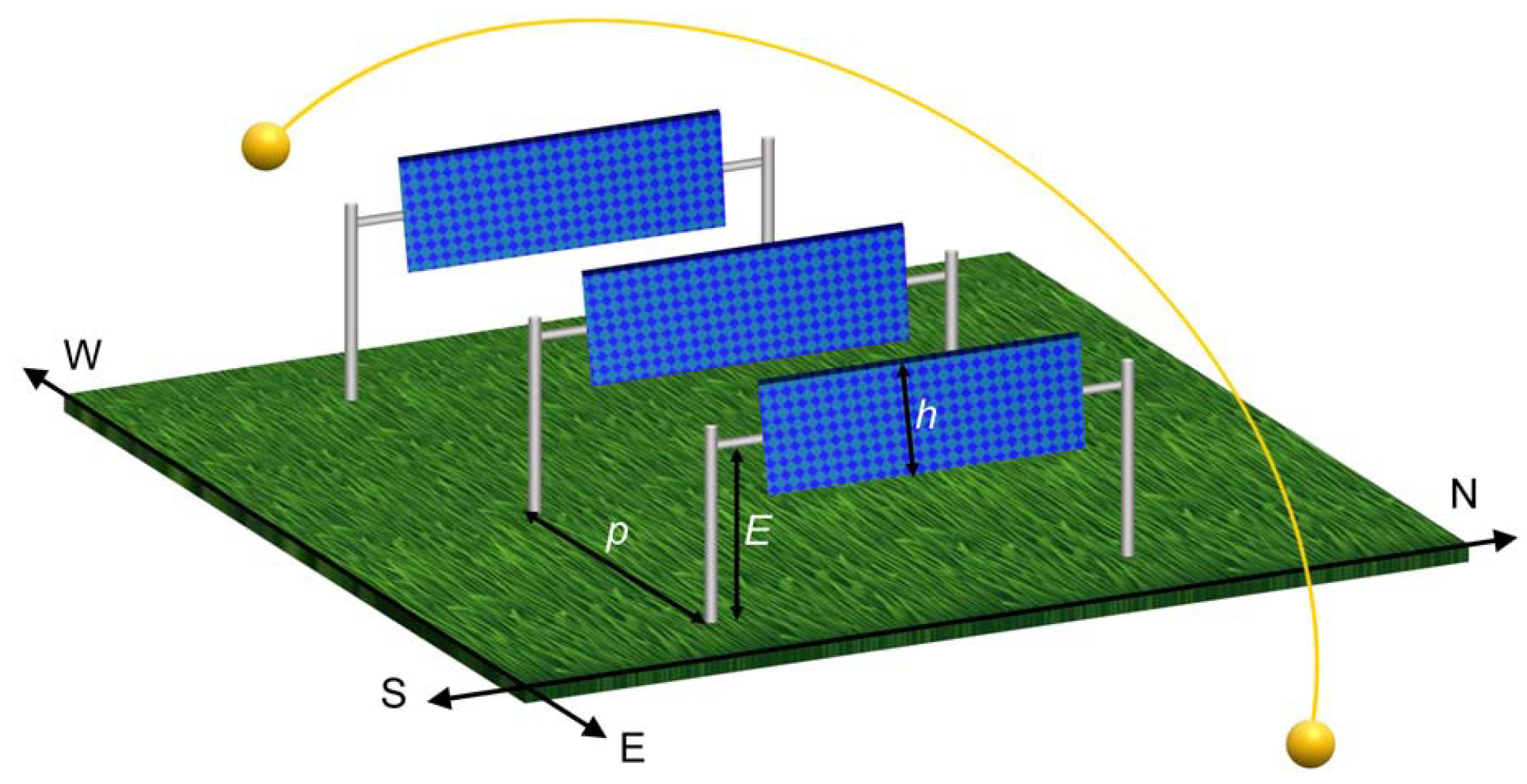
| [77] | 2018 | 0.8 × 1.6 m PV rows (4 m above ground) | Lavalette platform of IRSTEA, Montpellier, France | Water budget and crop growth modeling for irrigated lettuces with PV tilt strategies | Influenced by stomatal behavior. |
| [78] | 2018 | Ground-mounted PV Modules | Modified and monetary-based Functional Units (FU) | Proposals for new FUs for agrivoltaics | Weather conditions. |
| [79] | 2018 | Semi-transparent and Transparent PV Panels | Introduction of organic photovoltaics | Transparent and semi-transparent PV systems | Solar energy allocation. |
| [80] | 2018 | PV Panels | Unirrigated pasture | Quantifies PV impact on soil moisture and biomass under water stress | Microclimate changes; water usage. |
| [81] | 2018 | Greenhouse | All solar energy systems | Efficiency analysis of greenhouses in urban land-sharing for energy and crops | Weather conditions. |
| [82] | 2018 | Agrivoltaic | Grape farms in Xinjiang, China | Reviews agrivoltaics in China | Optimal tilt angle with local sunshine conditions. |
| [83] | 2019 | PV Panels | Greenhouses | Simulation models of PV-based greenhouses with high (1/2 roof) and low (1/3, 1/4 roof) density | Netherlands climate. |
| [84] | 2019 | Photovoltaics | Agricultural lands | Investigation of technical potential for utility-scale solar PV projects (>1 MW) | Évora (Portugal) climate. |
| [85] | 2019 | Semi-transparent Photovoltaics | Greenhouses | Demonstrates the economic non-viability of STPVs due to shading, causing extra electricity to use for lighting | Extra electricity consumption for lighting. |
| [86] | 2019 | PV panels | Greenhouses | Frameworks for optimal energy efficiency combining PV-cladded greenhouse roof designs | Heating cost. |
| [87] | 2019 | Stilt-mounted Photovoltaic Panels | Agrivoltaic systems for corn | Evaluation of agrivoltaic system performance using stilt-mounted PV panels | Weather conditions. |
| [88] | 2019 | CFD simulation | PV-based greenhouses | Investigation of microclimate behavior and dynamics of transparent PV greenhouses | Greenhouse microclimate. |
| [89] | 2019 | Semi-transparent Photovoltaic, Flexible Organic Photovoltaic (OPV) | PV-based greenhouses | Economic viability evaluation of semi-transparent; flexible OPV modules for greenhouse shading | Greenhouse shading. |
| [90] | 2019 | Agrivoltaic | Japanese rural areas | Investigation of sector-wide social impact scoping (SSIS) for agrivoltaic dissemination policy | Preliminary social impact assessment. |
| [91] | 2019 | Thermal Model Simulation | PV-based greenhouse | Design and implementation of a thermal simulation model for PV panels on greenhouse roofs to evaluate energy production | Energy yield from PVs. |
| [92] | 2020 | PV Panels | Greenhouses | Investigation of shading effects and the positive environmental impact of PV panels providing electric power | Shading. |
| [93] | 2020 | Bifacial PV Panels | Tilt bifacial solar panels | Optimization of PV array row density for fixed-tilt bifacial PV based on crop and food–energy productivity | Fixed-tilt bifacial solar panels. |
| [94] | 2020 | Solar Technology | U.S., EU, and Asian countries | Review of PV integration into agriculture for sustainability and growth | Weather conditions. |
| [95] | 2020 | Paris Agreement Mechanisms | Tracking progress on PA’s targets | Analysis of the effectiveness of the Paris Agreement (PA) | Global climate. |
| [96] | 2020 | PVG Types | Greenhouses | Identification of PVG types existing in southern Europe | European climate. |
| [97] | 2020 | Flexible and Semi-transparent Organic Photovoltaic (OPV) | Greenhouse tunnel with a tomato crop | Clarification of shading using flexible and semi-transparent OPV modules | Summer climate conditions. |
| [98] | 2020 | PV Combined with Information and Communications Technology (ICT) | Normal, semi-transparent, and bifacial PVs | 1300 × 520 mm PV module mounted to create 30% shading on grape crops, combined with ICT to study agrivoltaic impact | Open sun condition, weather conditions. |
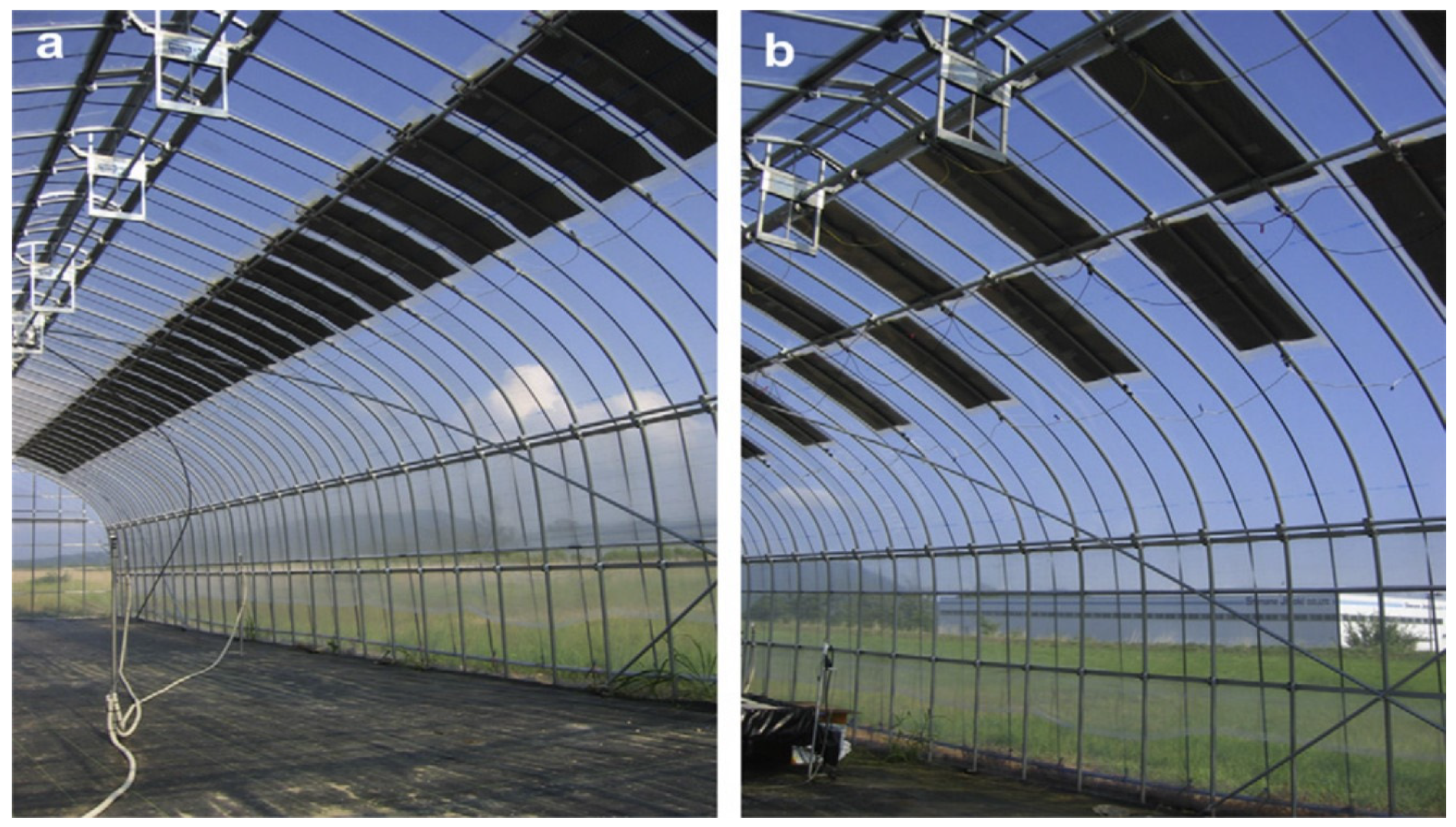
| [99] | 2020 | Rotating semi-transparent photovoltaic (PV) | Greenhouse | Feasibility design and performance evaluation of blind-type shading regulator-based rotating semi-transparent PV blades on greenhouse roof | Sunlight penetration |
| [100] | 2021 | Energy Plus Dynamic Model | Smart Agro-Manufacturing Laboratory (SamLab) | High-efficiency greenhouse modeled with the Energy Plus dynamic model located in Albenga, Italy | Mediterranean climate. |
| [101] | 2021 | Agrovoltaico (agrivoltaic system on tensile structures) | Po Valley | Modeling environmental and economic performance of agrivoltaic system constructed on tensile structures (Agrovoltaico®) | Human land appropriation and climate change. |
| [102] | 2021 | Solar Thermal, Solar Photovoltaic (PV), Photovoltaic–Thermal (PVT), Geothermal, and Biomass | Greenhouses | Net-zero energy greenhouses and adapted thermal energy storage systems | Indoor heat increases. |
| [103] | 2021 | Vertical Bifacial vs. Tilted Monofacial PVs | Titled north/south monofacial farms and vertical east/west bifacial farms | Performance comparison of traditional N/S monofacial and vertical E/W bifacial farms | Open sun condition. |
| [104] | 2021 | Agrivoltaic | Celeriac cultivated underneath an agrivoltaic system | Summary of effects of agrivoltaic (AV) systems on celeriac farming in Central Europe | Under AV systems. |
| [105] | 2021 | Agrivoltaics | Agricultural lands | Promotion of agrivoltaic technologies for simultaneous electric power generation and crop cultivation | Socio-political dimensions of agrivoltaics. |
| [106] | 2021 | CFD simulation | Mono-span greenhouse | CFD simulation investigating the shading effects of south-oriented PV panels on climate and plant growth | Summer and winter conditions. |
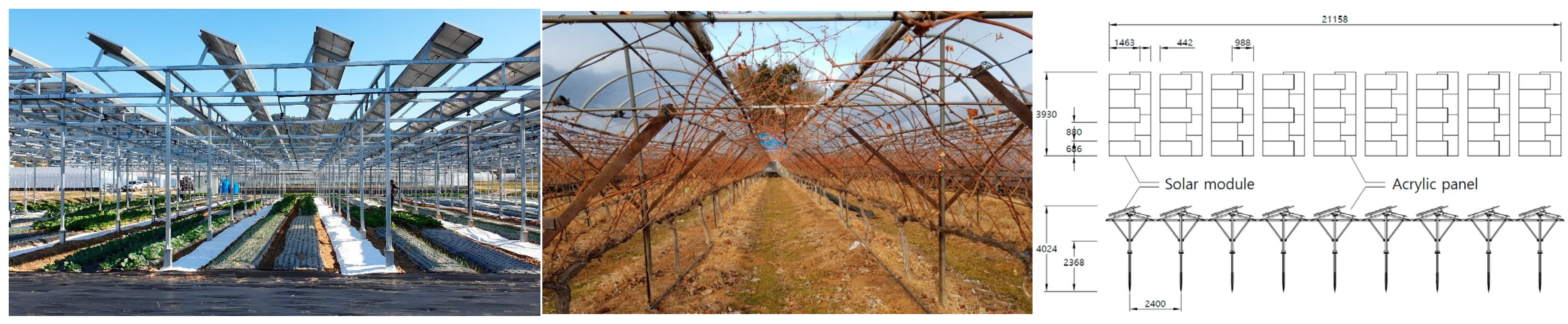
| [107] | 2021 | Mono-crystalline PV Arrays and Single-axis Sun-tracking System | Structure 4 m above ground | Optimal design and planning with APV system 3.3 m off the ground, tilt 32°, and 1 m spacing between PV rows | |
| [108] | 2021 | The Adoption Potential of Dual Land-Use Systems (FEADPLUS) | Dual land-use systems (FEADPLUS) | Novel analytical framework assessing economic benefits | Standard test conditions; installed at 20° angle and 52.2° azimuth. |
| [109] | 2021 | PV Panels | Farming land | Design considerations and performance indicators of agrivoltaics; economically justified for energy–food sustainability | Food–energy constraints. |
| [110] | 2021 | Conventional PV Plants | Agrivoltaic system in Turkey | Evaluation of agrivoltaic potential in Turkey | Mediterranean, Black Sea, and Marmara climates. |
| [111] | 2021 | Solar Panels and Trackers | Kale, chard, broccoli, peppers, tomatoes, and spinach yield | Identification of the economic viability of sun-tracking PV for crop production | Partial shading, adequate PAR, and moderate temperature extremes. |
| [112] | 2021 | Wooden Boards Imitating Solar Panels | Photovoltaic systems installed above rice crops | Analysis of how rice crops are influenced by agrivoltaic systems | Weather temperature. |
| [113] | 2021 | Using DRAM to Fabricate a POSCAS | Open-source cold-frame agrivoltaic system (POSCAS) | Design and implementation of a testing framework for partially transparent solar PV called POSCAS | Weather conditions. |
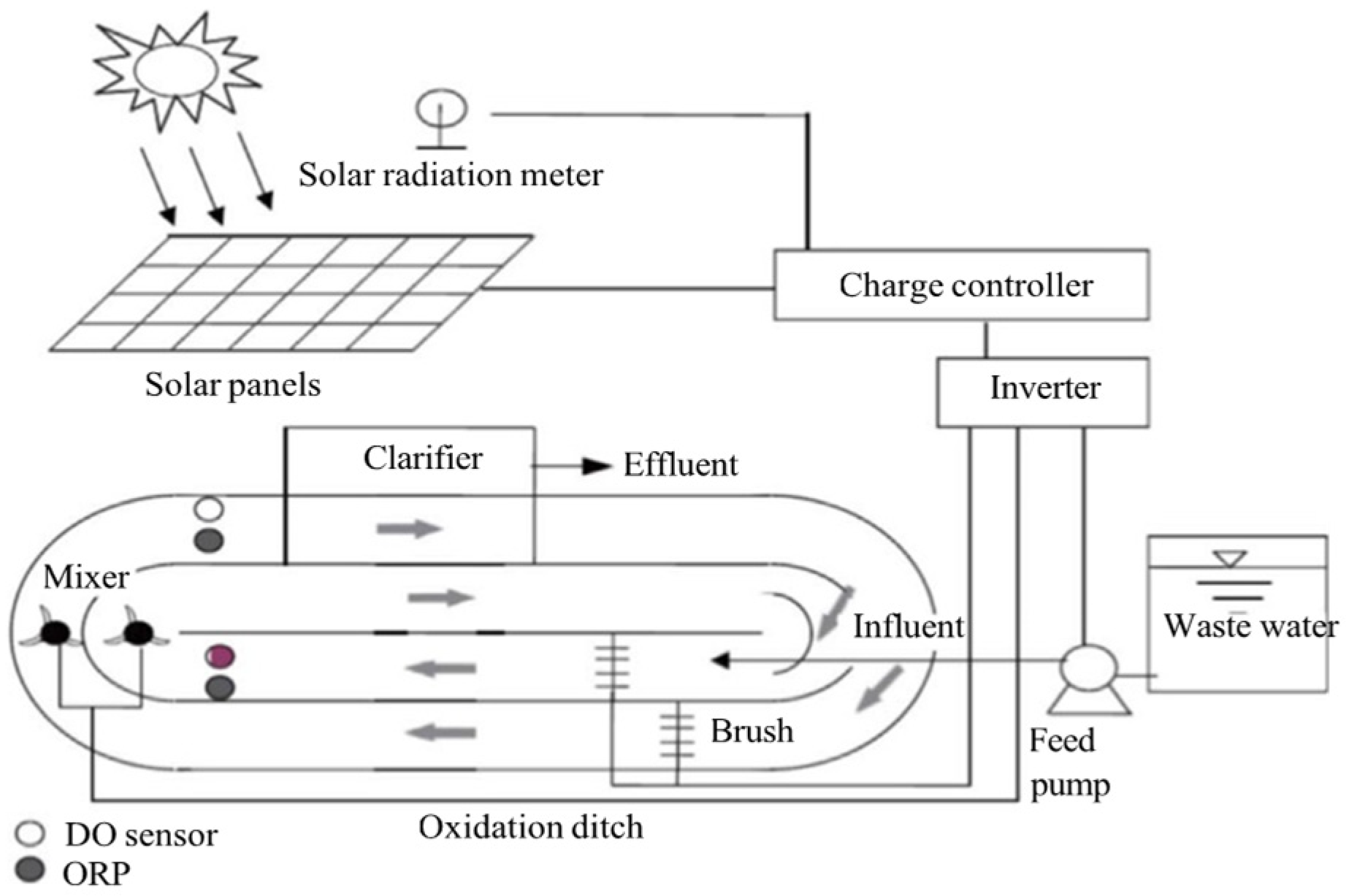
| [114] | 2021 | SWOT Analysis | Rural electrification, water conservation | Reviews agrivoltaics in India as climate-smart agriculture (CSA) using SWOT analysis | Shading and lighting conditions. |
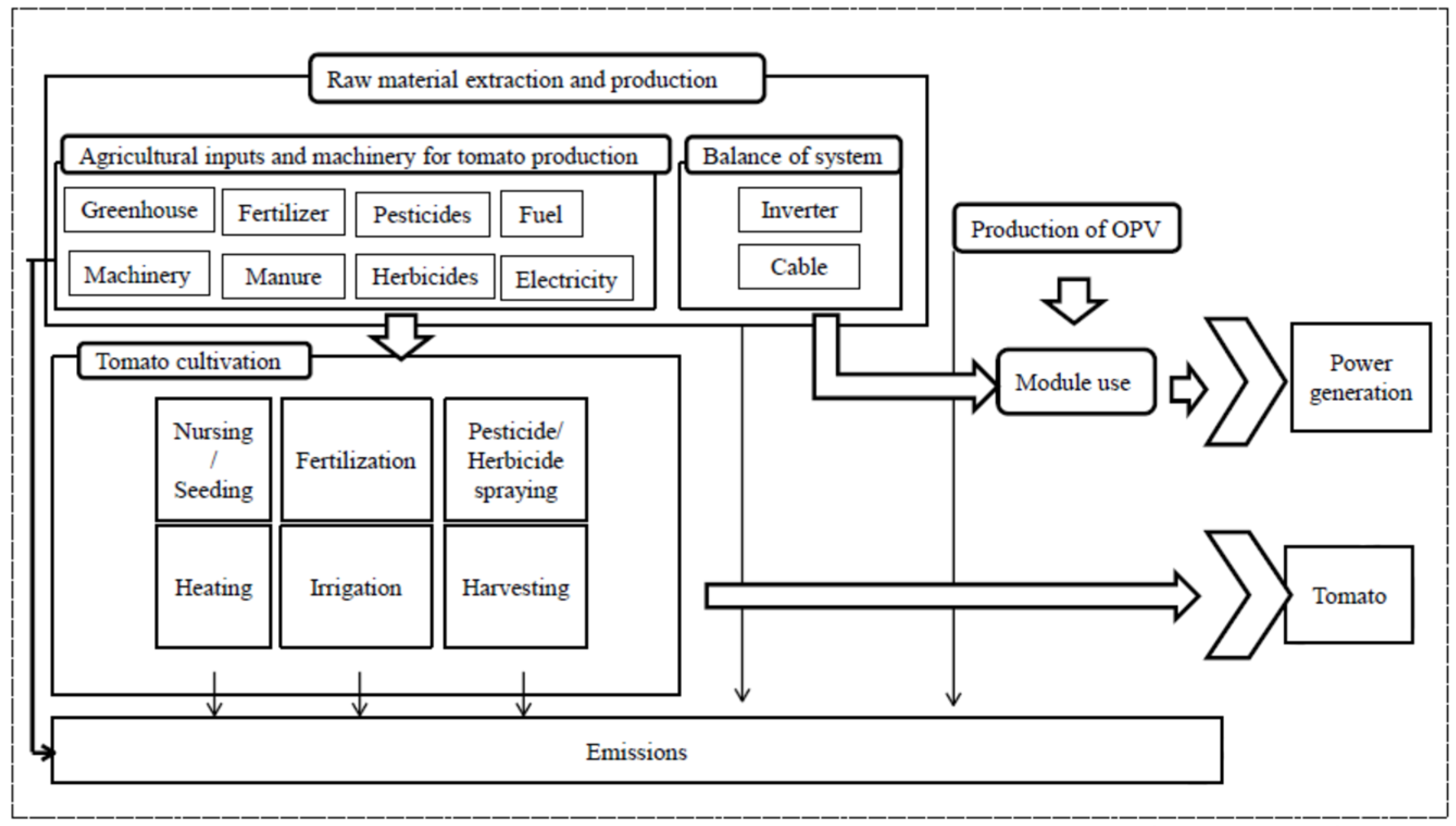
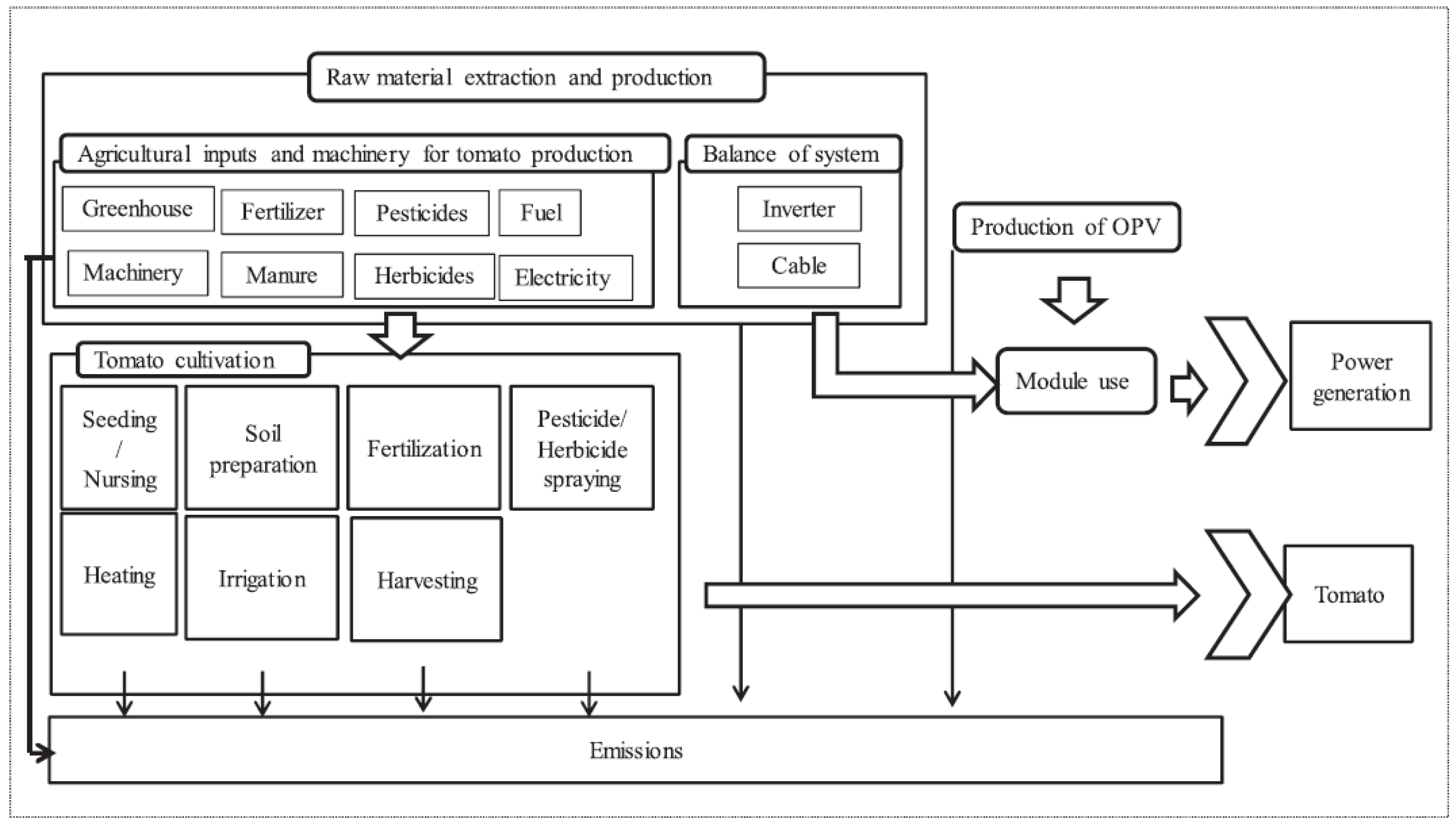
| [115] | 2021 | Off-grid Solar PV | Greenhouse | Land use, energy, GHG emissions, economic feasibility, and environmental co-benefits of off-grid solar PV combined with high-value crops | Land use. |
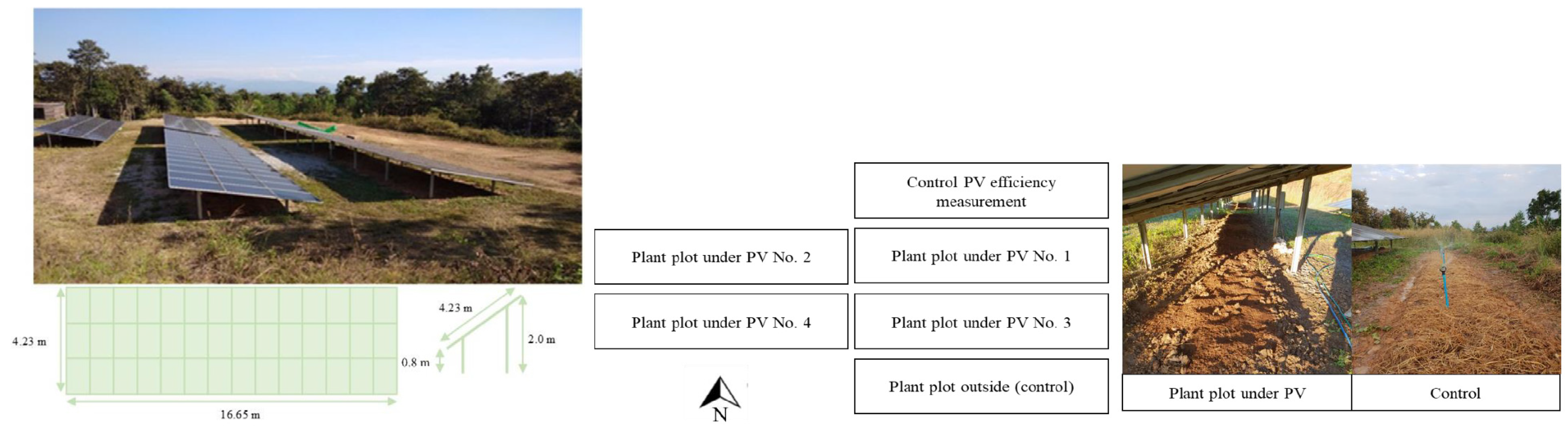
| [116] | 2022 | Ground-mounted Solar Power Generation | Plant with 5 PV arrays in 25 kWp AC micro grid-connected PV system | 225 amorphous PV modules installed at 2.0 m and 0.8 m height on north and south sides, total panel area 352.15 m2 | Bok choy tolerates 35 °C to −3 °C and prefers slightly acidic sandy soil. |
| [117] | 2022 | 3D Computational Fluid Dynamic Model | Vertical bifacial photovoltaic module | Evaluates temperature distribution and energy performance of vertical bifacial PV module for agrivoltaics | Different operating conditions/temperature effects. |
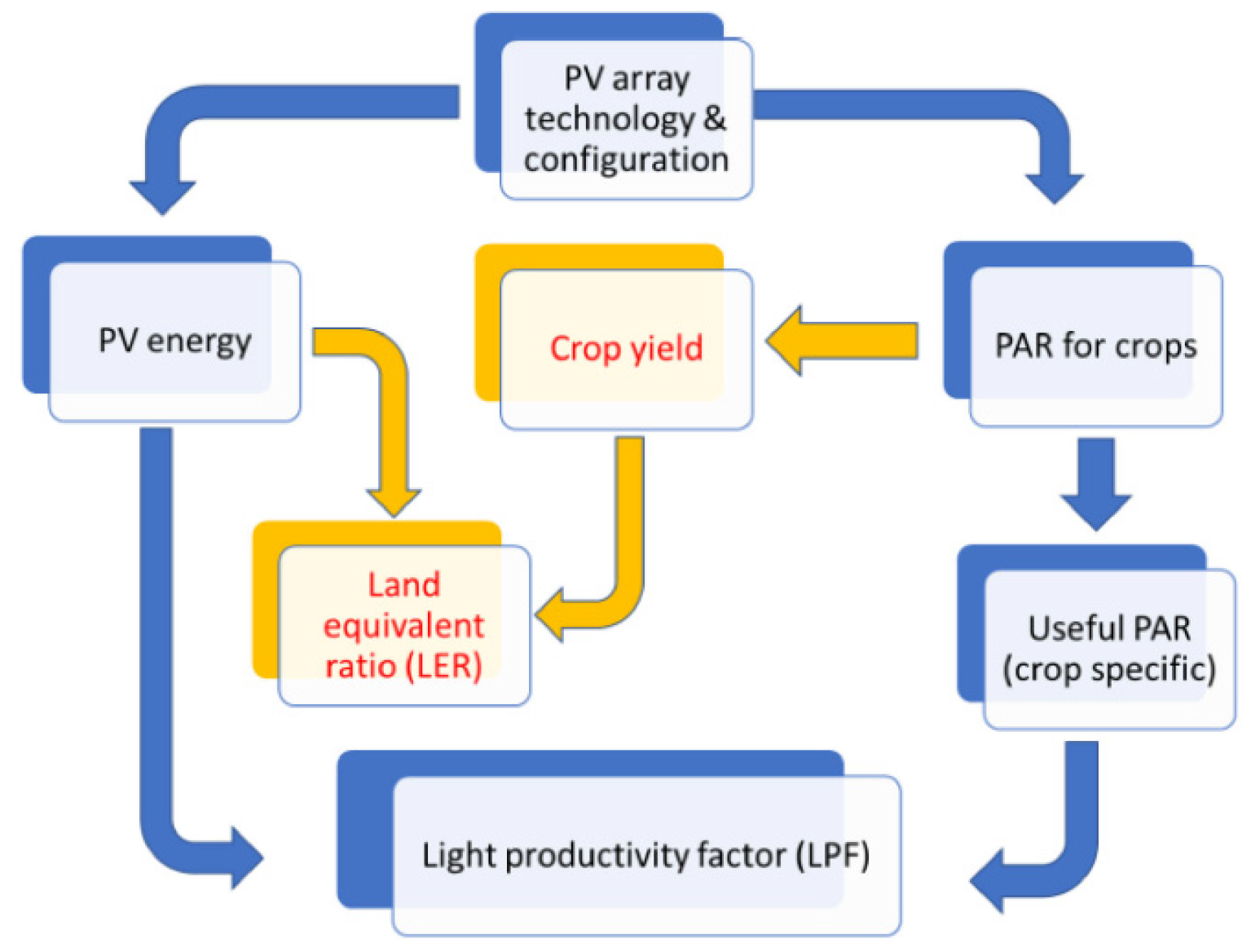
| [118] | 2022 | East/West-faced Bifacial Vertical Solar Farms | Crop type and PV array design | Light productivity factor (LPF) assessment | Open farm, clear sky conditions; maximize LPF subject to max allowed loss. |
| [119] | 2022 | Agrivoltaic | Community perception study | 81.8% of public support for agrivoltaics; preference for economic benefit, local protection, fair benefit sharing | Emphasizes the need to address local concerns for project success. |
| [120] | 2022 | Bifacial PV in Agrivoltaics | Multi-scale modeling of APV topologies | E-W wings layout best balances shading and yield, land productivity increases by 50%, energy decreases by 33% | Tested in the Boston climate; optimized for shade-tolerant crops. |
| [121] | 2022 | Agrivoltaic | Ecosystem services review | Agrivoltaics can support SDGs: energy, food, biodiversity, and climate regulation | Highlights research gaps, especially in regulating services. |
| [122] | 2022 | Agrivoltaic | Systematic review (98 studies) | Focused on engineering aspects, lacking financial and large-scale livestock-integrated studies | Emphasizes the need for economic models for >1 MW systems. |
| [123] | 2022 | Portable Agrivoltaic | 0.675 kWp, Odisha, India | Land Equivalent Ratio: 1.73, B/C ratio: 1.71, and payback: 9.49 yrs; 1.5 kg turmeric yield | Decreased temperature by 1–1.5 °C, tested with DC microgrid. |
| [124] [125] | 2022 | Agrivoltaic | 6 kWp system, India | Revenue: USD 2308.9, LER: 1.42, and payback: 7.6 yrs; B/C ratio for turmeric: 1.86 | Supports socio-economic feasibility and rural development. |
| [126] | 2022 | STPV (c-Si, OPVs, DSSCs, CPVs, LSCs) | Global AV system review | c-Si STPV is most common (cost-effective, efficient); OPVs/DSSCs enable selective transparency | Needs more research on efficiency, cost, and plant response. |
| [127] | 2022 | Agrivoltaic with Grid Optimization/Battery Storage | Rice paddy deployment, large-scale AV integration in rural Japan | Linear programming optimization: spatial distribution, rice paddies are more effective for AV; combined battery + transmission, most cost/CO2 efficient | Requires spatial planning and region-specific design. Requires transmission expansion and storage; dependent on crop types and location. |
| [128] | 2022 | Retrofitted and Co-designed AV Systems | Retrofitting crops under PV and purpose-built AV systems | Agrivoltaics improve energy output, land-use efficiency, and farmer income. However, the potential of underutilized land beneath existing PV systems remains a key research gap. | Highlights the lack of research on retrofitting and site-specific feasibility. Provides implementation guidance and policy support. |
| [129] | 2023 | Various AV Configurations | Global AV system types | Vertical, elevated, ground-mounted, and orchard-integrated PV setups | Shade-tolerant crops; policy-dependent deployment. |
| [130] | 2023 | Agriphotovoltaics (APVs) | Global APV review | Panel spacing for crop equipment access; schematic design tools | Need for crop-specific PV designs and stakeholder coordination. |
| [131] | 2023 | Agrivoltaics with Circularity Focus | Dutch AV systems | Evaluate landscape visibility and regional economic support | Weak integration of landscape features; public acceptance challenge. |
| [132] | 2023 | Smart Tracking AV System | U.S. ACRE Farm model | Anti-tracking during key crop growth; 86.71% annual energy output retained | Sacrifices peak solar gain; balancing energy–food trade-offs. |
| [133] | 2023 | Bifacial PV (N/S vs. E/W) | AV vs. GMPV economic modeling | Crop type, array density, and ML ratio affect feasibility | High ML (>25) and low density (<60%) are favorable for AV; sensitive to FIT rates. |
| [134] | 2024 | Crop-based AV | UK AV systems with overhead-tilted/vertical PV | LER up to 1.52; profit increases by 210%; strong NPV despite high cost | Regional variation in profitability; tilted systems are most efficient. |
| [135] | 2023 | Concentrator PV (CPV) | AV systems with CPV and spectral control | Dichroic films, sun-tracking lenses for PAR/NIR control | CPV cost and complexity; requires plant-specific spectral optimization. |
| [136] | 2023 | Bibliometric Analysis | Global AV research trends | 121 SCOPUS articles; focus on short-term AV outcomes | Lacks evaluation standards; emphasizes conferences as key knowledge sources. |
| [137] | 2023 | Agrivoltaics | Integrated food–water–energy system in the UAE using semi-transparent PV panels | Dual-use of land for crop growth and energy generation; improved land efficiency, crop yield, and energy output; reduced panel dust; includes PV-based livestock shade, elevated panels for vegetables, solar trees for water pumping, and agrivoltaic date farms | Arid climate conditions; need for elevated and transparent PV structures; suitable for desert agriculture. |
| [138,139,140,141,142,143,144,145] | 2023& 2024 | Solar-powered Aquaponics | Aquaponics system integrated with PV at Sharjah Men’s Campus | Closed-loop system growing fish and plants; 19 PV modules (53 m2); LED grow lights; soil-free; water-saving | Operates within a Mobile Learning Unit; desert climate; limited water and no soil. |
| [146] | 2024 | Agrivoltaics (AVs) | General review on AV potential and limitations | AV improves land use, protects crops, conserves water, and boosts solar efficiency; shading effects vary | Most projects are early stage; need for site-specific designs, economic analysis, and policy support. |
| [147] | 2024 | Agrivoltaic Systems (AVSs) | Comprehensive AVS review | Enhances land/water use, crop yield, clean energy, dual income; up to 56% economic gain | High initial cost, shading, regulatory barriers; needs site-specific design and inclusive policy. |
| [148] | 2024 | Solar-powered Irrigation with AV | Tomato farming in Botswana | Low/high-density AV with solar irrigation; offsets 16% yield loss via electricity generation | Payback: 3–3.6 yrs (AV) vs. 17.5 yrs (control); AV is profitable and diesel-free. |
| [149] | 2024 | Agrivoltaic Systems (AVSs) | Fruit crops under different AV designs | Examines static, sun-tracking, and agronomic tracking on fruit yield/quality | Microclimate control critical; <30% shading advised; more research needed in semi-arid areas. |
| [150] | 2024 | Agrivoltaics in Arid Climates | AV potential in Jordan | 9.5% of land suitable; tomato fields under AV could meet 50% RE targets and save 8.6% water | Needs economic viability research; climate-appropriate deployment important. |
| [151] | 2025 | Floating, AV, and Ground-mounted PV | Tech comparison for energy and environment | Floating PV optimizes land use; AV resolves land conflict; holistic sustainability review | Addresses PV degradation, economics, and long-term design improvements. |
| [152] | 2025 | AV with Shading in Water-stressed Agriculture | Chicory under PV shade and variable irrigation | AV reduces heat/water stress, ↑ biomass, and maintains quality; 50% less water use | Benefits stem from reduced light and cooler air, not just soil moisture. |
| [153] | 2025 | Reused PV in AV Systems | Sustainable tomato horticulture | Reused PV provides close-to-new energy performance; supports the circular economy | Shading improves yield; reduces raw material and e-waste impact. |
| [154] | 2025 | Orientation-based AV (WPV, EPV, NPV) | Mungbean genotypes in tropical Nigeria | EPV offers better photosynthesis, humidity, and yield; the microclimate improved | Shading config crucial; EPV > WPV in performance. |
| [155] | 2025 | Global AV Land-use Modeling | Global synergy of PV and agriculture | 22–35% of rainfed crops are compatible with AV; high-resolution suitability maps | AV can alleviate food–energy land conflict; up to 16% of cropland is already displaced by PV. |
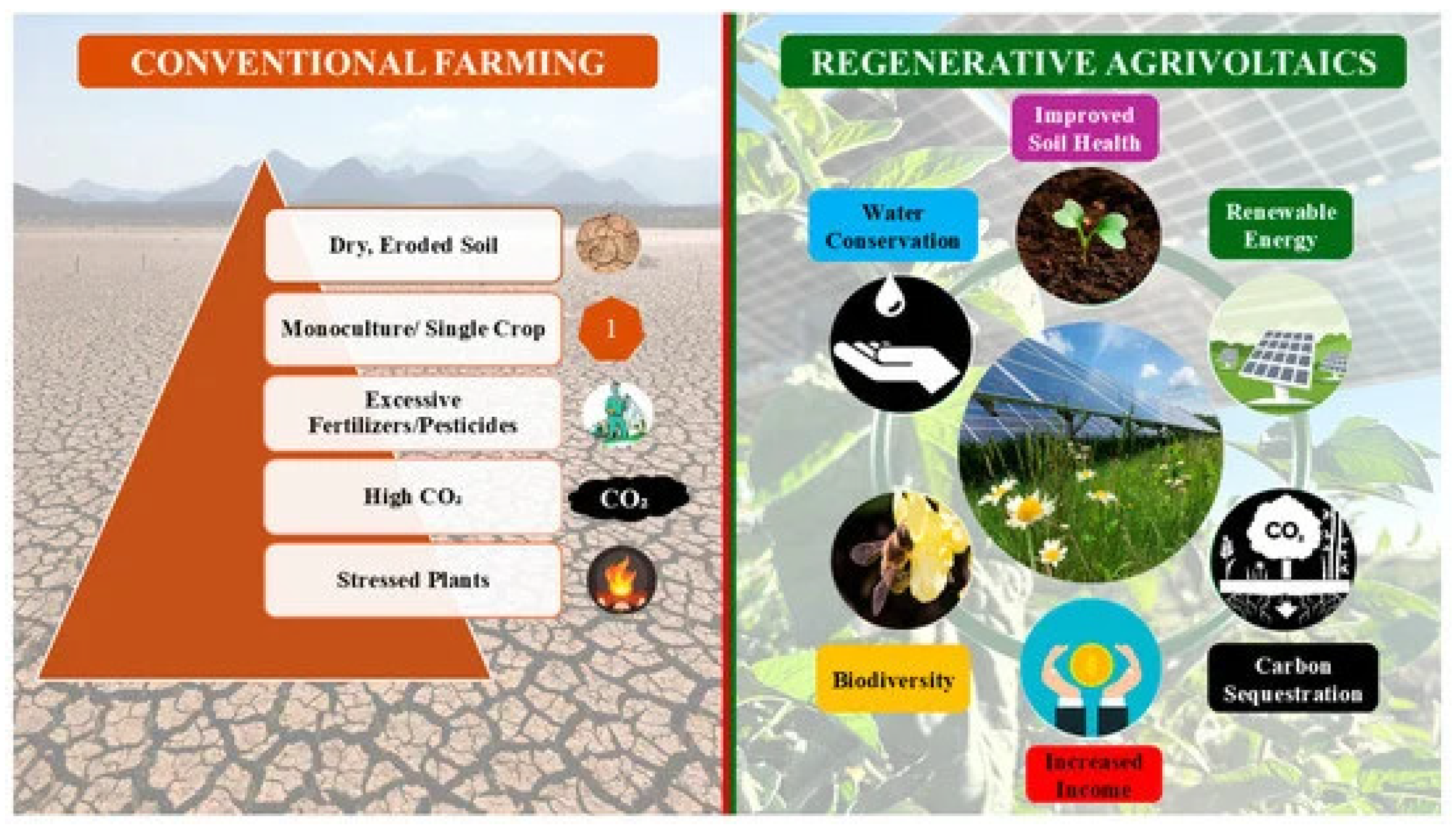
| [156] | 2025 | Regenerative Agrivoltaics | Regenerative farming + AV | Improves soil, biodiversity, carbon sequestration, and water-use efficiency | Needs policies and R&D in soil health, microbial impact, and economic viability. |
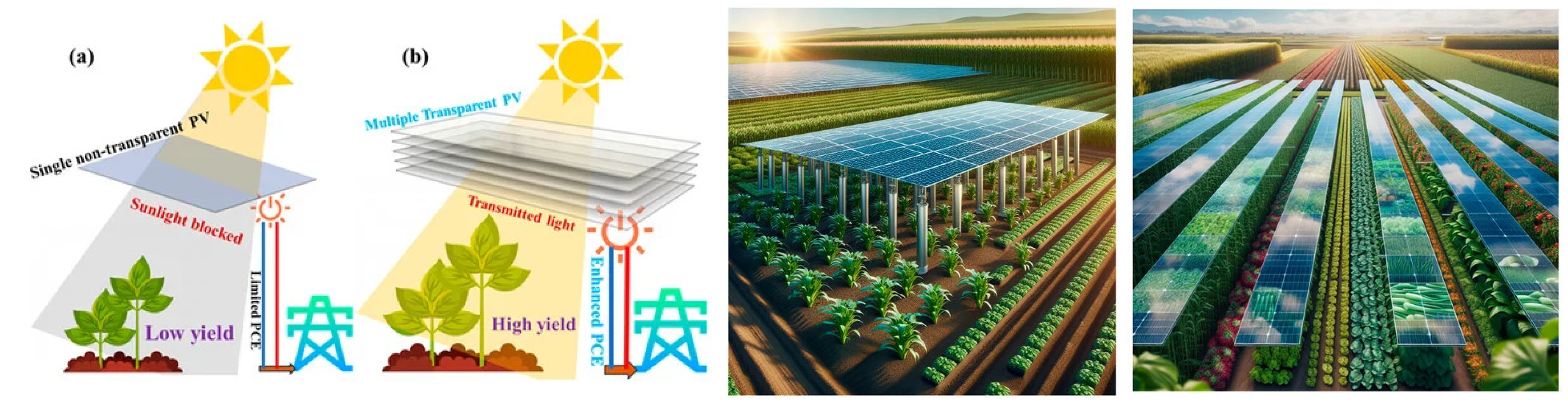
| [157] | 2025 | 3D Transparent AV | 3D solar harvesting with DSSCs | Transparent PVs allow light for crops; multi-layered design boosts area and efficiency | Solves crop shading from opaque panels; enhances yield and energy gain. |
| [158] | 2025 | AV for Arid Horticulture | Cucumber farming in the UAE | Shade from monofacial PV ↑ yield, ↓ mortality, and reused PV cleaning water | PVs at 25°, 1.5 m height; best results closest to panel shade. |
3. Discussion, Relationships, and Thematic Flow Among the Studies
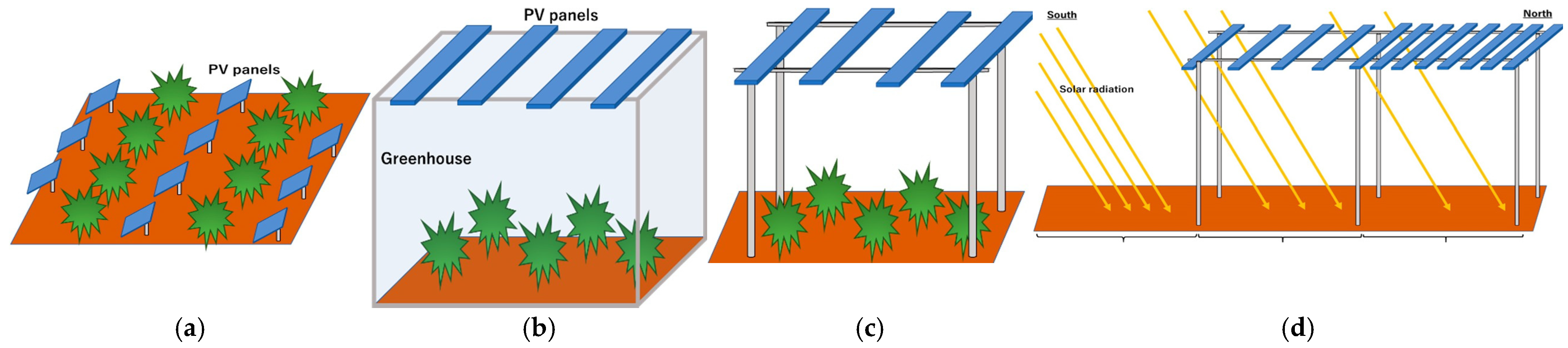
- Agrivoltaic System Designs: Includes open-field setups, stilt-mounted arrays, and tensile structures tailored for dual land use.
- PV Module Innovations: Deployment of semi-transparent, bifacial, flexible organic panels, and solar tracking systems to balance light sharing and energy production.
- Greenhouse Integration: Use of covered roofs, PV tunnels, and thermal control models to incorporate photovoltaics into protected agriculture.
- Advanced Modeling and Simulation: Application of CFD, Energy Plus, and 3D dynamic modeling tools to optimize thermal performance and system efficiency.
- Agronomic Impact: Studies assess yield and growth across various crops like grapes, lettuce, rice, tomatoes, and celeriac under shaded conditions.
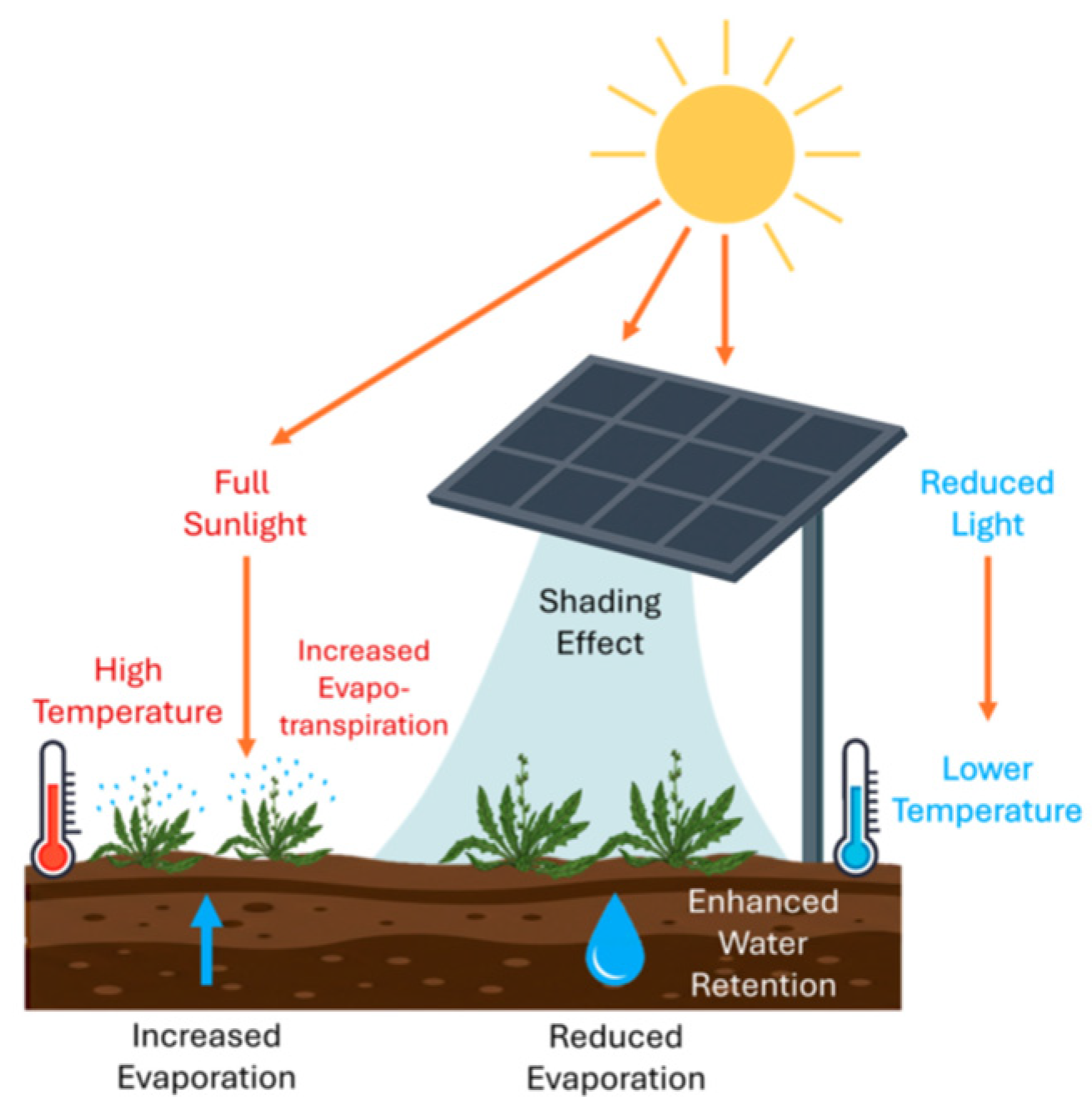
- Microclimate Regulation: PV structures influence temperature, humidity, and stomatal activity, creating favorable growing conditions.
- Water and Soil Interaction: Changes in soil moisture and irrigation demand highlight improved water-use efficiency.
- Ecosystem Feedback: Microclimate and biomass productivity are consistently linked to system configuration and shading levels.
- Climatic and Regional Factors: Research spans diverse locations—China, India, Europe, USA, and tropical/Mediterranean zones—demonstrating context-specific outcomes.
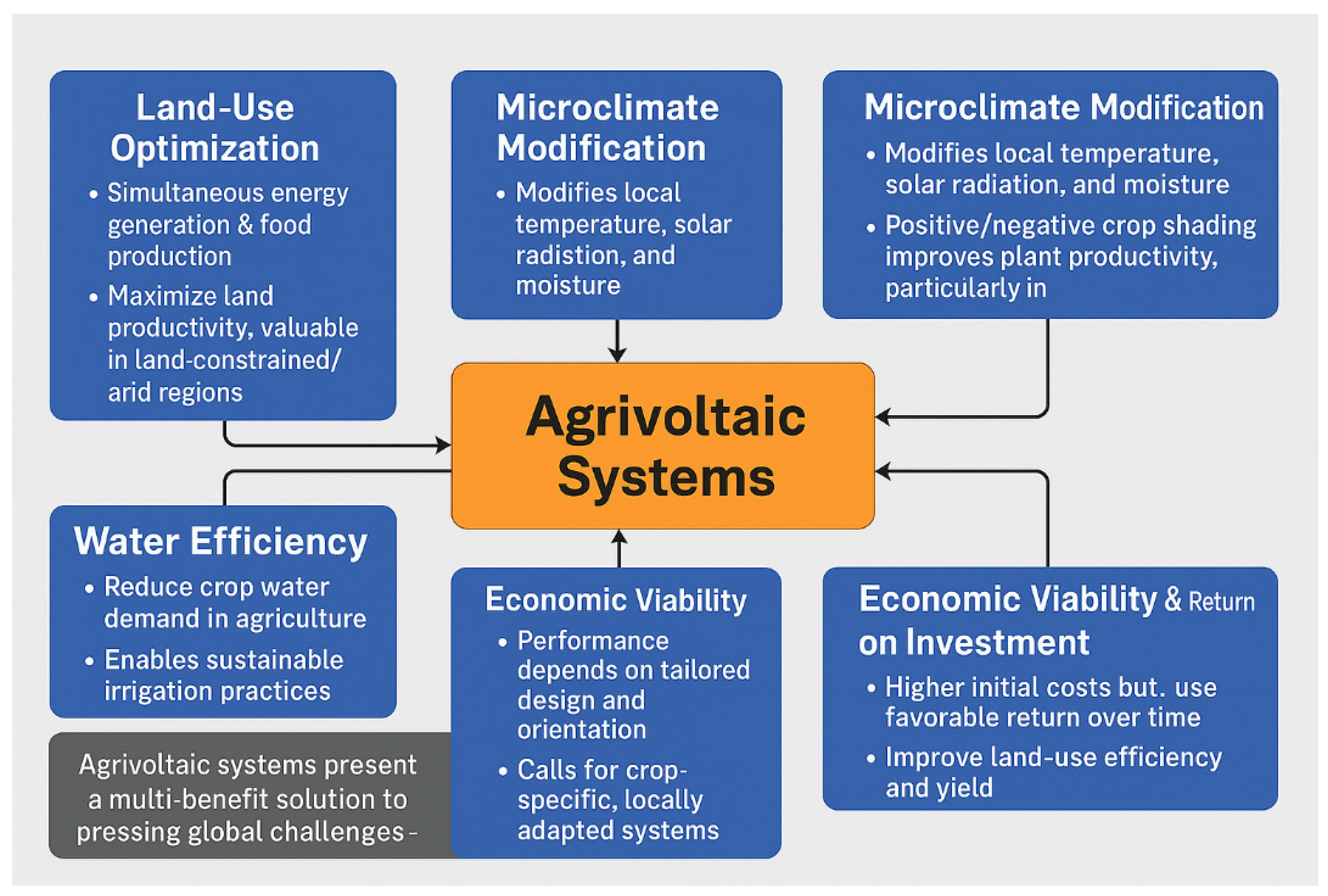
- Land-Use Optimization: AVSs offer solutions for minimizing food–energy trade-offs, especially in land-scarce or arid regions.
- Techno-Economic Viability: Cost-effectiveness, shading tolerance, and feasibility are explored through comprehensive economic modeling.
- Policy and Social Dimensions: Adoption potential is influenced by climate targets (e.g., Paris Agreement), socio-political support, and stakeholder engagement.
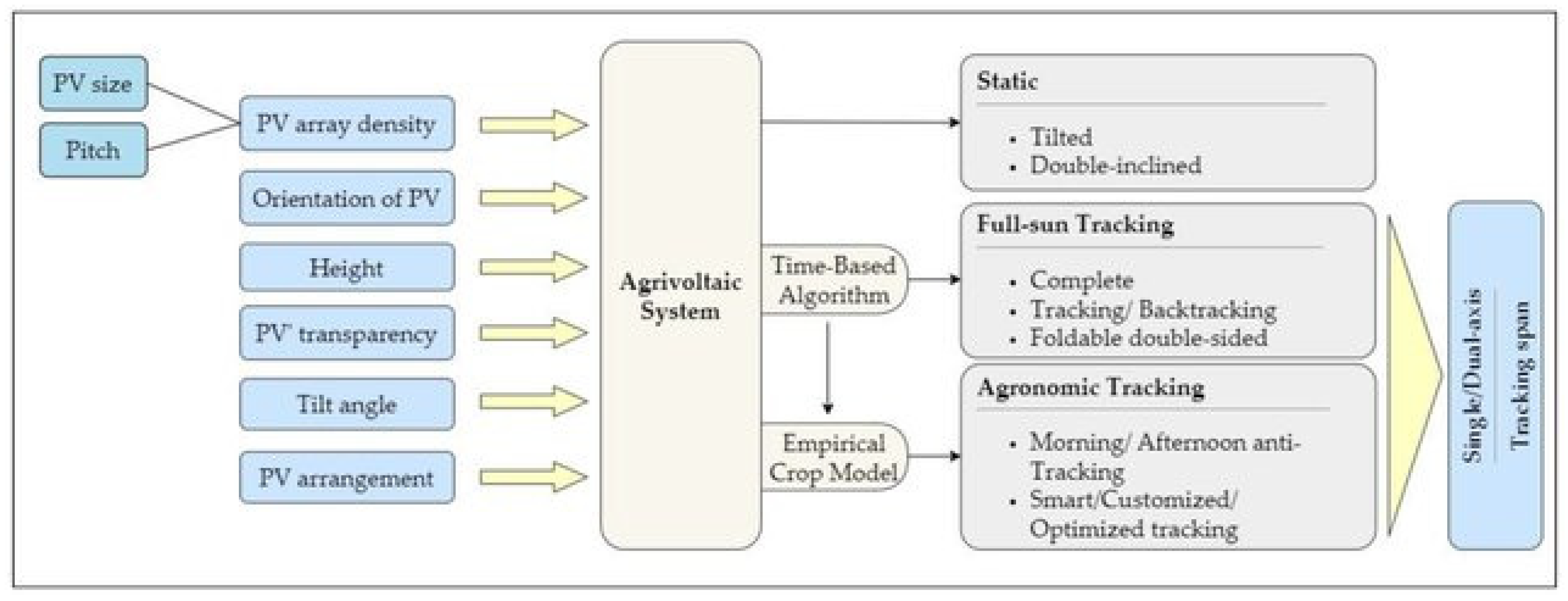
- Energy Yield Optimization: System performance is influenced by design parameters such as tilt angles, panel spacing, and tracking mechanisms.
- Environmental Benefits: AV systems contribute to reduced greenhouse gas emissions, better water management, and improved ecosystem resilience.
- Integrated Resource Frameworks: Alignment with food–energy–water nexus principles enhances systemic sustainability.
- Future Prospects: Research points toward innovations in design, regulation, and cross-sector policy for scaling AV solutions.
4. Agrivoltaic Applications, Constraints, and Opportunities in the Middle East and North Africa (MENA)
4.1. Climatic and Agricultural Context
4.2. Regional Constraints Affecting Agrivoltaic Design
- Extreme solar irradiance and heat: Crop heat stress and reduced photosynthetic efficiency require elevated PV structures, semi-transparent modules, or shading strategies that balance energy generation with crop light requirements.
- Water scarcity and salinity: Crop selection and irrigation management are critical. Integration with solar-powered irrigation or desalination systems can improve water-use efficiency and maintain productivity under limited freshwater availability.
- Economic and policy considerations: Water pricing, energy subsidies, and electricity tariffs influence the financial feasibility of AV systems. Although subsidized irrigation energy may reduce immediate financial incentives, long-term sustainability can be achieved through improved water efficiency and reduced cooling costs.
- Labor availability and land access: Elevated or vertical PV structures facilitate mechanized farming, harvest operations, and maintenance.
- Land tenure and regulations: Policies governing dual land use, permitting, and renewable energy integration affect where AV systems can be deployed.
- Crop portfolios: Shade-tolerant and heat-sensitive crops (e.g., leafy vegetables, certain fruits, and forage crops) are most compatible, while perennial crops such as date palms can coexist with elevated PV structures without compromising yield.
4.3. Existing Pilots and Demonstration Projects/Case Studies from the Middle East
- UAE: Semi-transparent greenhouse PVs with leafy vegetables reduced heat stress and improved water-use efficiency.
- Saudi Arabia: Elevated PV structures over irrigated forage crops demonstrated dual land-use potential aligned with Vision 2030 objectives.
- Jordan: PV-integrated irrigation systems enhanced energy efficiency for smallholder farmers.
- Morocco: Pilot initiatives combining PV with irrigated agriculture supported sustainable land use and rural electrification.
4.4. Opportunities and Future Directions
- While agrivoltaic systems have been widely studied in temperate regions, their relevance in the Middle East is shaped by unique constraints and opportunities. Techno-economic models suggest that AV systems can provide strong economic and environmental benefits when combined with solar-powered irrigation, desalination, or off-grid rural electrification. Successful implementation will depend on region-specific economic incentives, land tenure regulations, and farmer acceptance, highlighting the need for localized pilot projects and policy alignment.
- Integrating global AV knowledge with these regional considerations supports climate-resilient agricultural practices, efficient land use, and renewable energy generation, providing a pathway for scalable deployment across MENA agricultural landscapes.
5. Agrivoltaic Applications and Feasibility in the Middle East and North Africa (MENA)
- Climatic and Agricultural Context of the MENA Region
- Existing Agrivoltaic Pilots and Demonstration Projects
- Technology Choices and System Configurations
- Crop Compatibility and Agronomic Performance
- Policy, Land Tenure, and Economic Considerations
- Implications for Regional Deployment
6. Thematic Synthesis of Review Findings
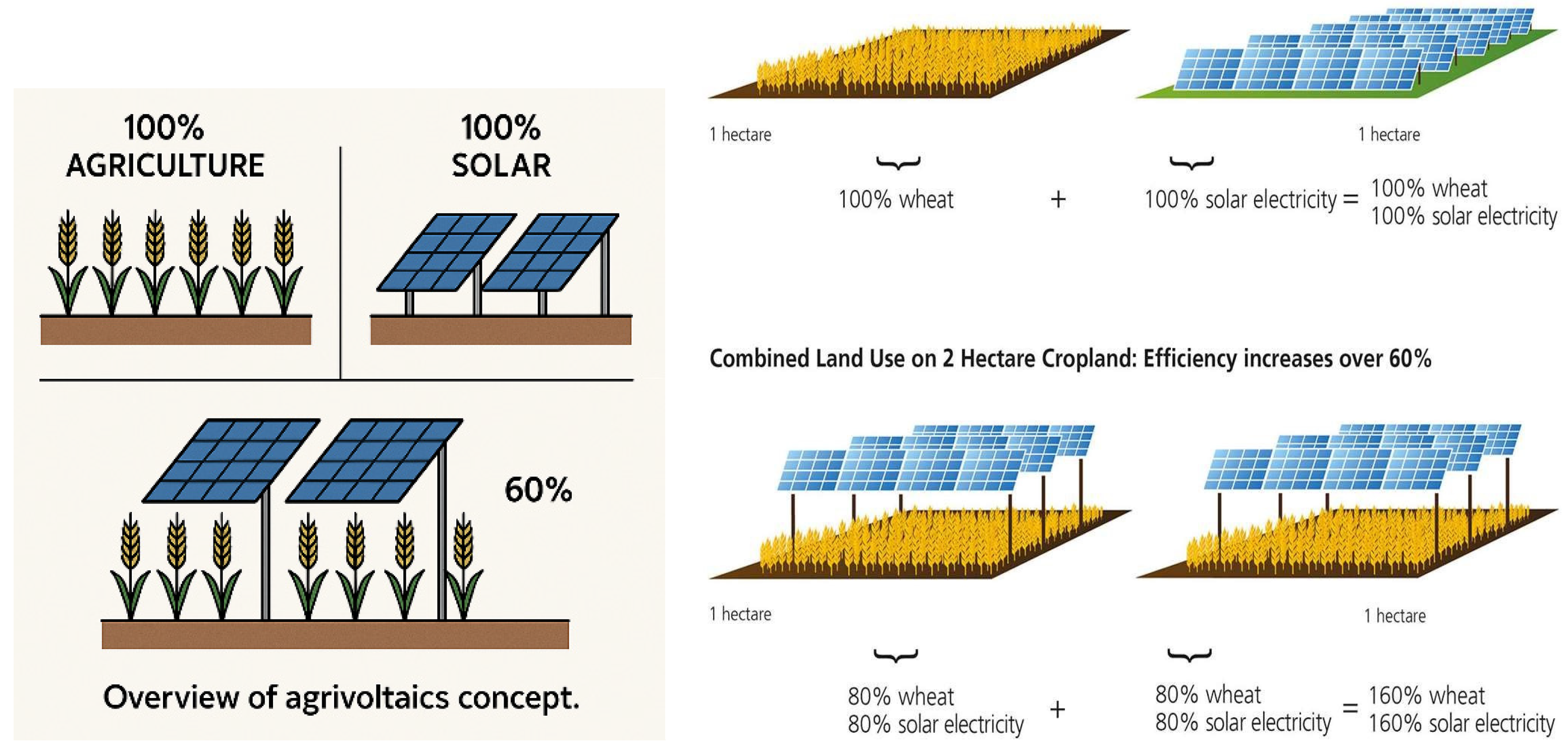
6.1. Central Paradigm: Dual Land Use for Food and Energy
6.2. Methodological Breadth
- Field studies assess crop response under varied PV setups.
- Simulation tools (e.g., EnergyPlus and SolidWorks) explore energy–microclimate interactions.
- Economic assessments use cost–benefit models, SWOT analysis, and frameworks like FEADPLUS.
- Design metrics like the Light Productivity Factor (LPF) to inform optimization strategies.
6.3. Geographic and Climatic Diversity
- Europe: Leadership in infrastructure integration and sustainability.
- Asia: Emphasis on crop-specific outcomes and climate-smart farming.
- Africa/Mediterranean: Focus on resilience and water efficiency via modeling.
- North America: Strength in public engagement and open-source tools.
- Tropics: Prioritization of off-grid and rural electrification applications.
6.4. Crop Suitability and Microclimate Effects
- Shade-tolerant crops (e.g., spinach, tomatoes, and rice) thrive under moderate shading.
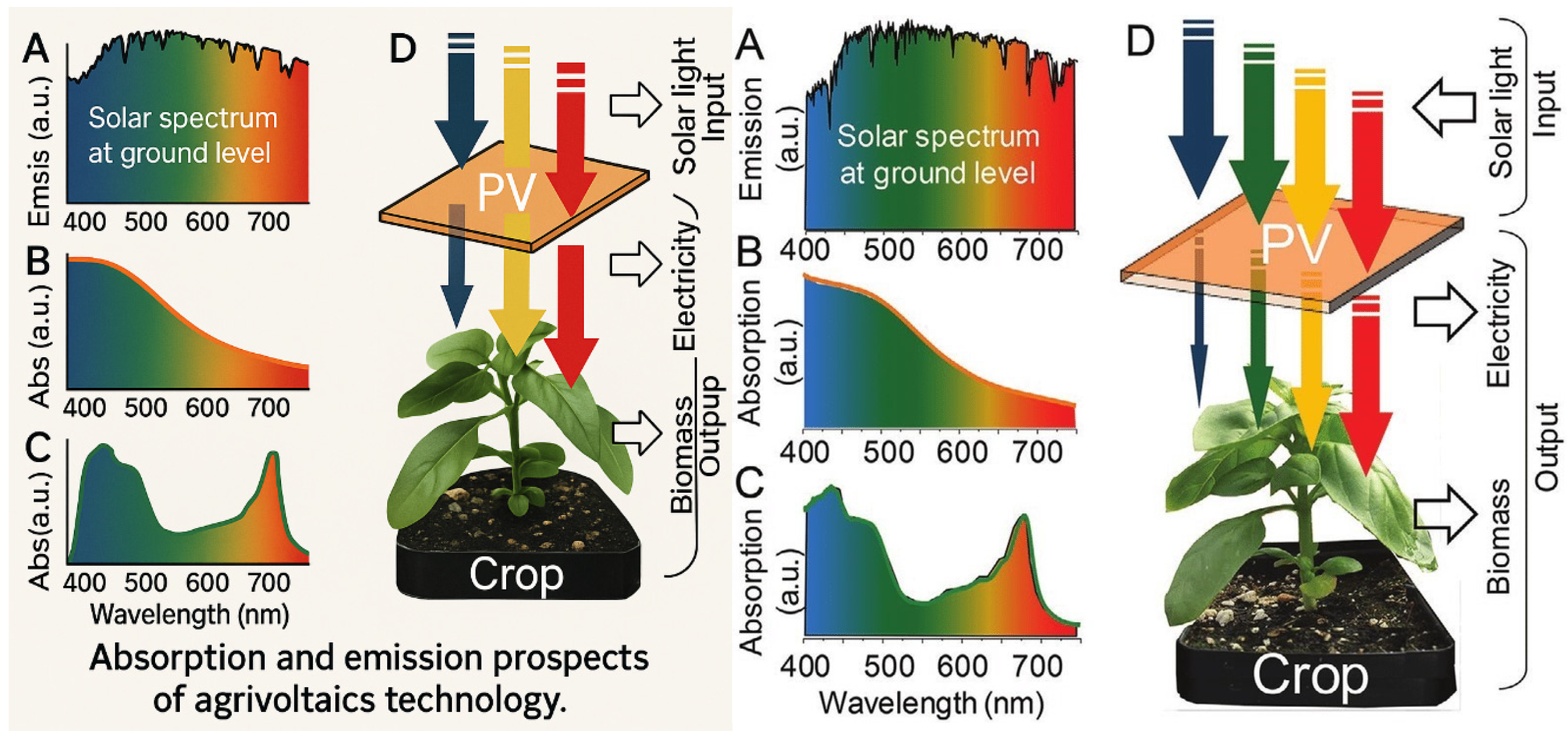
- Technologies like rotating panels and diffuse covers enhance microclimate management.
6.5. Technological Innovation and System Design
- Incorporation of bifacial, semi-transparent, and organic PV modules balances energy capture with light transmission.
- Comparative studies assess trade-offs among fixed, tracking, and vertical configurations.
- Scalable systems and platforms (e.g., POSCAS) promote modular, flexible deployment.
- Conclusion: Customized designs aligned with local conditions are vital. Interdisciplinary innovation and standardized testing will drive further advancement.
6.6. Economic Viability and Policy Alignment
- Dual revenue from crops and electricity shortens payback periods.
- Broader benefits include rural development, emissions reduction, and water savings.
6.7. Climate and Energy Transition Role
- Support SDGs, carbon neutrality, and ecosystem preservation.
- Landscape integration, livestock co-location, and esthetic considerations support public acceptance.
7. Final Reflection: Interdisciplinary Integration
- Locally tailored system design;
- Supportive policy mechanisms;
- Technological and agronomic innovation;
- Evaluation standardization;
- Inclusive stakeholder engagement.
8. Relevance to Middle Eastern Sustainability Goals
9. Conclusions
- Localized, crop-specific design that accounts for microclimatic and agronomic conditions.
- Supportive policy frameworks and financial incentives tailored to regional contexts.
- Continued technological innovation in PV materials, system configurations, and irrigation integration.
- Standardized metrics and long-term field validation to guide best practices and impact assessments.
- Inclusive stakeholder engagement, particularly farmers and local communities, to ensure social acceptance and co-benefit realization.
Author Contributions
Funding
Institutional Review Board Statement
Informed Consent Statement
Data Availability Statement
Conflicts of Interest
References
- Abdulmouti, H. Innovative Approach of Concentrated Solar Sphere to Generate Electrical Power. Energies 2024, 17, 1956. [Google Scholar] [CrossRef]
- Abdulmouti, H.; Skaf, Z.; Alnajjar, F.; Ali, L.; Mehiar, D.; Abousamra, R. Towards Renewable Urban Landscapes: Exploring Photovoltaic Panel Integration—A Case Study. Int. J. Energy Clean Environ. 2025, 26, 77–93. [Google Scholar] [CrossRef]
- Abdulmouti, H. Innovative Environment Friendly Systems for a Modern Town. In Proceedings of the 12th International Conference on Sustainable Energy & Environmental Protection (SEEP’19), Sharjah, United Arab Emirates, 18–21 November 2019; pp. 18–21. [Google Scholar]
- Abdulmouti, H.; Skaf, Z.; Alnajjar, F.; Abousamra, R. Design a Solar Photovoltaic Tracking System for a Sustainable Approach to Electricity Production. In Proceedings of the 4th International Conference on Mathematics and Computers in Science & Engineering (MACISE), Barcelona, Spain, 30 January–1 February 2024. [Google Scholar]
- Abdulmouti, H.; Skaf, Z.; Alblooshi, S. Smart Green Campus: The Campus of Tomorrow. In Proceedings of the 2022 Advances in Science and Engineering Technology International Conferences (ASET), Dubai, United Arab Emirates, 21–24 February 2022. [Google Scholar] [CrossRef]
- Abdulmouti, H.; Alnajjar, F. The Effect of Solar Sphere Thickness on the Fluid to Generate Power. In Proceedings of the 9th World Congress on Mechanical, Chemical, and Material Engineering (MCM’23), London, UK, 6–8 August 2023. [Google Scholar] [CrossRef]
- Abdulmouti, H.; Almarzooqi, M.A.; Almulla, A.A.; Khair, M.J.; Alyasi, H.H.; Aljasmi, A.A.; Almulla, Y.M. Generating Power from Solar Sphere Design. In Proceedings of the 2019 Advances in Science and Engineering Technology International Conferences (ASET), Dubai, United Arab Emirates, 26 March–10 April 2019. [Google Scholar]
- Abdulmouti, H.; Alnajjar, F. The Effect of Fluid Type and Volume on Concentrated Solar Sphere Power Generation. In Proceedings of the 9th World Congress on Mechanical, Chemical, and Material Engineering (MCM’23), London, UK, 6–8 August 2023. [Google Scholar] [CrossRef]
- Abdulmouti, H.; Alblooshi, S.; Skaf, Z.; Abdulnaser, S. Exploring the Flow of Solar Sphere Using PIV. In Proceedings of the 2023 Advances in Science and Engineering Technology International Conferences (ASET), Dubai, United Arab Emirates, 20–23 February 2023. [Google Scholar] [CrossRef]
- Abdulmouti, H. PIV of Flow Convection Induced by Solar Sphere to Generate Power. In Proceedings of the ENERGY 2023: The Thirteenth International Conference on Smart Grids, Green Communications, and IT Energy-Aware Technologies, (ICNS 2023), Barcelona, Spain, 13–17 March 2023; pp. 5–12. [Google Scholar]
- Abdulmouti, H. Producing Electricity by Concentrated Solar Energy. In Proceedings of the 2nd International Conference on Advances in Energy Research and Applications (ICAERA’21), Seoul, Republic of Korea, 24–26 November 2021. [Google Scholar] [CrossRef]
- Abdulmouti, H.; Skaf, Z.; Alnajjar, F.; Abousamra, R.; Alex, A.F. Designing an Efficient Solar Photovoltaic Tracking System for Sustainable Electricity Generation. In Computational Problems in Science and Engineering II; Mastorakis, N.E., Rudas, I.J., Shmaliy, Y.S., Eds.; Springer: Cham, Switzerland, 2025; pp. 51–69. [Google Scholar]
- Abdelrahim, M.; Salameh, M.; Abdulmouti, H.; Mushtaha, E. Proposal for Promoting Sustainable Architecture through Energy Efficiency Education in the UAE. J. Archit. Eng. 2025, 31, 05025002. [Google Scholar] [CrossRef]
- Abdulmouti, H.; Hajjawi, M. PIV Measurement and Simulating Flow in Solar Spheres for Power Generation. In Proceedings of the International Conference on Resource Sustainability (ICRS24), Bangkok, Thailand, 5–8 November 2024. [Google Scholar]
- Abdulmouti, H. Passive Cooling Module to Improve the Solar Photovoltaic (PV) Performance. WSEAS Trans. Power Syst. 2023, 18, 11–17. [Google Scholar] [CrossRef]
- Abdulmouti, H. Enhancing Power Generation: PIV Analysis of Flow Structures’ Impact on Concentrated Solar Sphere Parameters. Energies 2025, 18, 3162. [Google Scholar] [CrossRef]
- Alich, J.A.; Inman, R.E. Energy from Agriculture-the Most Economic Method of Large Scale Solar Energy Conversion; Pergamon Press: Oxford, UK, 1976. [Google Scholar]
- Goetzberger, A.; Zastrow, A. On the Coexistence of Solar-Energy Conversion and Plant Cultivation. Int. J. Sol. Energy 1982, 1, 55–69. [Google Scholar] [CrossRef]
- Kurokawa, K.; Takashima, T.; Hirasawa, T.; Kichimi, T.; Imura, T.; Nishioka, T.; Iitsuka, H.; Tashiro, N. Case studies of large-scale PV systems distributed around desert area of the world. Sol. Energy Mater. Sol. Cells 1997, 47, 189–196. [Google Scholar] [CrossRef]
- Otani, K.; Minowa, J.; Kurokawa, K. Study on areal solar irradiance for analyzing areally-totalized PV systems. Sol. Energy Mater. Sol. Cells 1997, 47, 281–288. [Google Scholar] [CrossRef]
- Lin, C.H.; McGraw, R.L.; George, M.F.; Garrett, H.E. Shade effects on forage crops with potential in temperate agroforestry practices. Agrofor. Syst. 1998, 44, 109–119. [Google Scholar] [CrossRef]
- Hestnes, A.G. Building Integration of Solar Energy Systems. Solar Energy 1999, 67, 181–187. [Google Scholar] [CrossRef]
- Nonhebel, S. Renewable energy and food supply: Will there be enough land? Renew. Sustain. Energy Rev. 2005, 9, 191–201. [Google Scholar] [CrossRef]
- Yano, A.; Tsuchiya, K.; Nishi, K.; Moriyama, T.; Ide, O. Development of a Greenhouse Side-ventilation Controller driven by Photovoltaic Energy. Biosyst. Eng. 2007, 96, 633–641. [Google Scholar] [CrossRef]
- Valladares, F.; Niinemets, Ü. Shade tolerance, a key plant feature of complex nature and consequences. Annu. Rev. Ecol. Evol. Syst. 2008, 39, 237–257. [Google Scholar] [CrossRef]
- Fthenakis, V.; Kim, H.C. Land use and electricity generation: A life-cycle analysis. Renew. Sustain. Energy Rev. 2009, 13, 1465–1474. [Google Scholar] [CrossRef]
- Yano, A.; Kadowaki, M.; Furue, A.; Tamaki, N.; Tanaka, T.; Hiraki, E.; Kato, Y.; Ishizu, F.; Noda, S. Shading and electrical features of a photovoltaic array mounted inside the roof of an east-west oriented greenhouse. Biosyst. Eng. 2010, 106, 367–377. [Google Scholar] [CrossRef]
- Nnadi, J. 58 Solar Energy Applications for Agriculture. J. Agric. Vet. Sci. 2010, 2, 58–62. [Google Scholar]
- Araki, K.; Akisawa, A.; Kumagai, I.; Nagai, H. Analysis of shadow by HCPV panels for agricilture applications. In Proceedings of the Conference Record of the IEEE Photovoltaic Specialists Conference, Honolulu, HI, USA, 20–25 June 2010; pp. 2994–2997. [Google Scholar] [CrossRef]
- Cossu, M.; Murgia, L.; Caria, M.; Pazzona, A. Economic feasibility study of semitransparent photovoltaic technology integrated on greenhouse covering structures. In Proceedings of the International Conference Ragusa SHWA2010, Ragusa, Italy, 16–18 September 2010; pp. 648–655. [Google Scholar] [CrossRef]
- Pradeep, E.; Ganeshmurthy, R.; Sekar, K.; Arun, E. Automation of PV farmers pump. IET Conf. Publ. 2011, 2011, 163–166. [Google Scholar] [CrossRef]
- Dupraz, C.; Marrou, H.; Talbot, G.; Dufour, L.; Nogier, A.; Ferard, Y. Combining solar photovoltaic panels and food crops for optimising land use: Towards new agrivoltaic schemes. Renew. Energy 2011, 36, 2725–2732. [Google Scholar] [CrossRef]
- Gupta, R.; Tiwari, G.N.; Kumar, A.; Gupta, Y. Calculation of total solar fraction for different orientation of greenhouse using 3D-shadow analysis in Auto-CAD. Energy Build. 2012, 47, 27–34. [Google Scholar] [CrossRef]
- Khan, M.T.A.; Ahmed, M.R.; Ahmed, S.I.; Khan, S.I. Design and performance analysis of water pumping using solar PV. In Proceedings of the 2nd International Conference on the Developments in Renewable Energy Technology (ICDRET 2012), Dhaka, Bangladesh, 5–7 January 2012; pp. 48–51. [Google Scholar]
- Poncet, C.; Muller, M.M.; Brun, R.; Fatnassi, H. Photovoltaic Greenhouses, Non-Sense or a Real Opportunity for the Greenhouse Systems? In Proceedings of the XXVIII International Horticultural Congress on Science and Horticulture for People (IHC2010): International Symposium on Greenhouse 2010 and Soilless Cultivation, Lisbon, Portugal, 28 February 2012; Available online: https://www.actahort.org/books/927/927_7.htm (accessed on 25 January 2026).
- Kadowaki, M.; Yano, A.; Ishizu, F.; Tanaka, T.; Noda, S. Effects of greenhouse photovoltaic array shading on Welsh onion growth. Biosyst. Eng. 2012, 111, 290–297. [Google Scholar] [CrossRef]
- Dursun, M.; Ozden, S. Application of Solar Powered Automatic Water Pumping in Turkey. Int. J. Comput. Electr. Eng. 2012, 4, 161–164. [Google Scholar] [CrossRef]
- Karthik, M.; Jothibasu, M.; Pradeep, E.; Ganeshmurthy, R.; Kumar, N.A. Design and development of solarised agro sprayer for rural applications. In Proceedings of the 2012 International Conference on Computing, Electronics and Electrical Technologies (ICCEET), Nagercoil, India, 21–22 March 2012; pp. 389–393. [Google Scholar] [CrossRef]
- Ureña-Sánchez, R.; Callejón-Ferre, Á.J.; Pérez-Alonso, J.; Carreño-Ortega, Á. Greenhouse tomato production with electricity generation by roof-mounted flexible solar panels. Sci. Agric. 2012, 69, 233–239. [Google Scholar] [CrossRef]
- Pérez-Alonso, J.; Pérez-García, M.; Pasamontes-Romera, M.; Callejón-Ferre, A.J. Performance analysis and neural modelling of a greenhouse integrated photovoltaic system. Renew. Sustain. Energy Rev. 2012, 16, 4675–4685. [Google Scholar] [CrossRef]
- Mandal, R.; Naskar, R. A Comparative Study and Performance Analysis of Two Similar Solar Photovoltaic Irrigation Systems; One with SPV Panel Cleaning Mechanism and another One, without Cleaning Mechanism. Int. J. Adv. Altern. Energy Environ. Ecol. 2012, 1, 15–35. [Google Scholar]
- Marucci, A.; Monarca, D.; Cecchini, M.; Colantoni, A.; Manzo, A.; Cappuccini, A. The semitransparent photovoltaic films for Mediterranean greenhouse: A new sustainable technology. Math. Probl. Eng. 2012, P.42. [Google Scholar] [CrossRef]
- Al-Hamdani, A.H.; Hassan, M.; Ahmad, R.T. Optimal Sizing of Photovoltaic Irrigation Water Pumping System in Samara. Eng. Technol. J. 2013, 31, 3067–3077. [Google Scholar] [CrossRef]
- Marrou, H.; Wery, J.; Dufour, L.; Dupraz, C. Productivity and radiation use efficiency of lettuces grown in the partial shade of photovoltaic panels. Eur. J. Agron. 2013, 44, 54–66. [Google Scholar] [CrossRef]
- Marrou, H.; Guilioni, L.; Dufour, L.; Dupraz, C.; Wery, J. Microclimate under agrivoltaic systems: Is crop growth rate affected in the partial shade of solar panels? Agric. For. Meteorol. 2013, 177, 117–132. [Google Scholar] [CrossRef]
- Marrou, H.; Dufour, L.; Wery, J. How does a shelter of solar panels influence water flows in a soil-crop system? Eur. J. Agron. 2013, 50, 38–51. [Google Scholar] [CrossRef]
- Pachauri, R.K.; Chauhan, Y.K. Fuzzy logic controlled MPPT assisted PV-FC power generation for motor driven water pumping system. In Proceedings of the 2014 IEEE Students’ Conference on Electrical, Electronics and Computer Science, Bhopal, India, 1–2 March 2014. [Google Scholar] [CrossRef]
- Tangwongkit, B.; Tangwongkit, R.; Chontanaswat, P. Drip irrigation powered by solar cell for dry rainfed and no electricity area. In Proceedings of the 2014 International Conference and Utility Exhibition on Green Energy for Sustainable Development (ICUE), Pattaya, Thailand, 19–21 March 2014. [Google Scholar]
- Pathik, B.B.; Khan, M.T.A.I.; Hye, A.M. An approach for the economical evaluation of solar irrigation in Bangladesh. In Proceedings of the 2014 International Conference on Intelligent Green Building and Smart Grid (IGBSG), Taipei, Taiwan, 23–25 April 2014. [Google Scholar] [CrossRef]
- Tani, A.; Shiina, S.; Nakashima, K.; Hayashi, M. Improvement in lettuce growth by light diffusion under solar panels. J. Agric. Meteorol. 2014, 70, 139–149. [Google Scholar] [CrossRef]
- Yano, A.; Onoe, M.; Nakata, J. Prototype semi-transparent photovoltaic modules for greenhouse roof applications. Biosyst. Eng. 2014, 122, 62–73. [Google Scholar] [CrossRef]
- Chiang, C.T.; Liu, L. A CMOS solar power to frequency converter with calibration circuits for monitoring sunlight intensity of crops. In Proceedings of the 2014 IEEE International Conference on Mechatronics and Automation, Tianjin, China, 3–6 August 2014; pp. 32–36. [Google Scholar] [CrossRef]
- Yahyaoui, I.; Chaabene, M.; Tadeo, F. Energy Management for Photovoltaic Irrigation with a Battery Bank. Int. J. Energy Optim. Eng. 2015, 4, 18–32. [Google Scholar] [CrossRef]
- Codreanu, N.; Varzaru, G.; Ionescu, C. Solar powered wireless multi-sensor device for an irrigation system. In Proceedings of the 2014 37th International Spring Seminar on Electronics Technology, Dresden, Germany, 7–11 May 2014; pp. 442–447. [Google Scholar] [CrossRef]
- Cossu, M.; Murgia, L.; Ledda, L.; Deligios, P.A.; Sirigu, A.; Chessa, F.; Pazzona, A. Solar radiation distribution inside a greenhouse with south-oriented photovoltaic roofs and effects on crop productivity. Appl. Energy 2014, 133, 89–100. [Google Scholar] [CrossRef]
- Castellano, S. Photovoltaic greenhouses: Evaluation of shading effect and its influence on agricultural performances. J. Agric. Eng. 2014, 45, 168–175. [Google Scholar] [CrossRef]
- East, M. Middle east institute. Prof. Geogr. 1963, 15, 24. [Google Scholar] [CrossRef]
- Othman, N.; Ya’Acob, M.; Abdul-Rahim, A.; Othman, M.S.; Radzi, M.; Hizam, H.; Wang, Y.; Ya’Acob, A.; Jaafar, H. Embracing new agriculture commodity through integration of Java Tea as high Value Herbal crops in solar PV farms. J. Clean. Prod. 2015, 91, 71–77. [Google Scholar] [CrossRef]
- Fatnassi, H.; Poncet, C.; Bazzano, M.M.; Brun, R.; Bertin, N. A numerical simulation of the photovoltaic greenhouse microclimate. Sol. Energy 2015, 120, 575–584. [Google Scholar] [CrossRef]
- Marucci, A.; Cappuccini, A. Dynamic photovoltaic greenhouse: Energy balance in completely clear sky condition during the hot period. Energy 2016, 102, 302–312. [Google Scholar] [CrossRef]
- Cossu, M.; Yano, A.; Li, Z.; Onoe, M.; Nakamura, H.; Matsumoto, T.; Nakata, J. Advances on the semi-transparent modules based on micro solar cells: First integration in a greenhouse system. Appl. Energy 2016, 162, 1042–1051. [Google Scholar] [CrossRef]
- Dinesh, H.; Pearce, J.M. The potential of agrivoltaic systems. Renew. Sustain. Energy Rev. 2016, 54, 299–308. [Google Scholar] [CrossRef]
- Ravi, S.; Macknick, J.; Lobell, D.; Field, C.; Ganesan, K.; Jain, R.; Elchinger, M.; Stoltenberg, B. Colocation opportunities for large solar infrastructures and agriculture in drylands. Appl. Energy 2016, 165, 383–392. [Google Scholar] [CrossRef]
- Sacchelli, S.; Garegnani, G.; Geri, F.; Grilli, G.; Paletto, A.; Zambelli, P.; Ciolli, M.; Vettorato, D. Trade-off between photovoltaic systems installation and agricultural practices on arable lands: An environmental and socio-economic impact analysis for Italy. Land Use Policy 2016, 56, 90–99. [Google Scholar] [CrossRef]
- Cossu, M.; Ledda, L.; Urracci, G.; Sirigu, A.; Cossu, A.; Murgia, L.; Pazzona, A.; Yano, A. An algorithm for the calculation of the light distribution in photovoltaic greenhouses. Sol. Energy 2017, 141, 38–48. [Google Scholar] [CrossRef]
- Li, C.; Wang, H.; Miao, H.; Ye, B. The economic and social performance of integrated photovoltaic and agricultural greenhouses systems: Case study in China. Appl. Energy 2017, 190, 204–212. [Google Scholar] [CrossRef]
- Xue, J. Photovoltaic agriculture—New opportunity for photovoltaic applications in China. Renew. Sustain. Energy Rev. 2017, 73, 1–9. [Google Scholar] [CrossRef]
- Malu, P.R.; Sharma, U.S.; Pearce, J.M. Agrivoltaic potential on grape farms in India. Sustain. Energy Technol. Assess. 2017, 23, 104–110. [Google Scholar] [CrossRef]
- Trypanagnostopoulos, G.; Kavga, A.; Souliotis, Μ.; Tripanagnostopoulos, Y. Greenhouse performance results for roof installed photovoltaics. Renew. Energy 2017, 111, 724–731. [Google Scholar] [CrossRef]
- Allardyce, C.S.; Fankhauser, C.; Zakeeruddin, S.M.; Grätzel, M.; Dyson, P.J. The influence of greenhouse-integrated photovoltaics on crop production. Sol. Energy 2017, 155, 517–522. [Google Scholar] [CrossRef]
- Valle, B.; Simonneau, T.; Sourd, F.; Pechier, P.; Hamard, P.; Frisson, T.; Ryckewaert, M.; Christophe, A. Increasing the total productivity of a land by combining mobile photovoltaic panels and food crops. Appl. Energy 2017, 206, 1495–1507. [Google Scholar] [CrossRef]
- Lacal Arantegui, R.; Jäger-Waldau, A. Photovoltaics and wind status in the European Union after the Paris Agreement. Renew. Sustain. Energy Rev. 2018, 81, 2460–2471. [Google Scholar] [CrossRef]
- Marucci, A.; Zambon, I.; Colantoni, A.; Monarca, D. A combination of agricultural and energy purposes: Evaluation of a prototype of photovoltaic greenhouse tunnel. Renew. Sustain. Energy Rev. 2018, 82, 1178–1186. [Google Scholar] [CrossRef]
- Majumdar, D.; Pasqualetti, M.J. Dual use of agricultural land: Introducing ‘agrivoltaics’ in Phoenix Metropolitan Statistical Area, USA. Landsc. Urban Plan. 2018, 170, 150–168. [Google Scholar] [CrossRef]
- Hassanien, R.H.E.; Li, M.; Yin, F. The integration of semi-transparent photovoltaics on greenhouse roof for energy and plant production. Renew. Energy 2018, 121, 377–388. [Google Scholar] [CrossRef]
- Ezzaeri, K.; Fatnassi, H.; Bouharroud, R.; Gourdo, L.; Bazgaou, A.; Wifaya, A.; Demrati, H.; Bekkaoui, A.; Aharoune, A.; Poncet, C.; et al. The effect of photovoltaic panels on the microclimate and on the tomato production under photovoltaic canarian greenhouses. Sol. Energy 2018, 173, 1126–1134. [Google Scholar] [CrossRef]
- Elamri, Y.; Cheviron, B.; Lopez, J.M.; Dejean, C.; Belaud, G. Water budget and crop modelling for agrivoltaic systems: Application to irrigated lettuces. Agric. Water Manag. 2018, 208, 440–453. [Google Scholar] [CrossRef]
- Leon, A.; Ishihara, K.N. Assessment of new functional units for agrivoltaic systems. J. Environ. Manag. 2018, 226, 493–498. [Google Scholar] [CrossRef]
- Leon, A.; Ishihara, K.N. Influence of allocation methods on the LC-CO2 emission of an agrivoltaic system. Resour. Conserv. Recycl. 2018, 138, 110–117. [Google Scholar] [CrossRef]
- Adeh, E.H.; Selker, J.S.; Higgins, C.W. Remarkable agrivoltaic influence on soil moisture, micrometeorology and water-use efficiency. PLoS ONE 2018, 13, e0203256. [Google Scholar] [CrossRef]
- Boopathi, P. The Application of Solar Energy in Agricultural Systems. Int. J. Trend Sci. Res. Dev. 2018, 3, 553–557. [Google Scholar] [CrossRef]
- Chen, N.; Wu, P.; Gao, Y.; Ma, X. Review on Photovoltaic Agriculture Application and Its Potential on Grape Farms in Xinjiang, China. Adv. Sci. Eng. 2018, 10, 73–81. [Google Scholar]
- Gao, Y.; Dong, J.; Isabella, O.; Santbergen, R.; Tan, H.; Zeman, M.; Zhang, G. Modeling and analyses of energy performances of photovoltaic greenhouses with sun-tracking functionality. Appl. Energy 2019, 233–234, 424–442. [Google Scholar] [CrossRef]
- Dias, L.; Gouveia, J.P.; Lourenço, P.; Seixas, J. Interplay between the potential of photovoltaic systems and agricultural land use. Land Use Policy 2019, 81, 725–735. [Google Scholar] [CrossRef]
- Bambara, J.; Athienitis, A.K. Energy and economic analysis for the design of greenhouses with semi-transparent photovoltaic cladding. Renew. Energy 2019, 131, 1274–1287. [Google Scholar] [CrossRef]
- Ahamed, M.S.; Guo, H.; Tanino, K. Energy saving techniques for reducing the heating cost of conventional greenhouses. Biosyst. Eng. 2019, 178, 9–33. [Google Scholar] [CrossRef]
- Sekiyama, T.; Nagashima, A. Solar sharing for both food and clean energy production: Performance of agrivoltaic systems for corn, a typical shade-intolerant crop. Environments 2019, 6, 65. [Google Scholar] [CrossRef]
- Saberian, A.; Sajadiye, S.M. The effect of dynamic solar heat load on the greenhouse microclimate using CFD simulation. Renew. Energy 2019, 138, 722–737. [Google Scholar] [CrossRef]
- Peretz, M.F.; Geoola, F.; Yehia, I.; Ozer, S.; Levi, A.; Magadley, E.; Brikman, R.; Rosenfeld, L.; Levy, A.; Kacira, M.; et al. Testing organic photovoltaic modules for application as greenhouse cover or shading element. Biosyst. Eng. 2019, 184, 24–36. [Google Scholar] [CrossRef]
- Irie, N.; Kawahara, N.; Esteves, A.M. Sector-wide social impact scoping of agrivoltaic systems: A case study in Japan. Renew. Energy 2019, 139, 1463–1476. [Google Scholar] [CrossRef]
- Chen, J.; Xu, F.; Ding, B.; Wu, N.; Shen, Z.; Zhang, L. Performance analysis of radiation and electricity yield in a photovoltaic panel integrated greenhouse using the radiation and thermal models. Comput. Electron. Agric. 2019, 164, 104904. [Google Scholar] [CrossRef]
- Maia, A.S.C.; Culhari, E.d.A.; Fonsêca, V.d.F.C.; Milan, H.F.M.; Gebremedhin, K.G. Photovoltaic panels as shading resources for livestock. J. Clean. Prod. 2020, 258, 120551. [Google Scholar] [CrossRef]
- Riaz, M.H.; Imran, H.; Butt, N.Z. Optimization of PV Array Density for Fixed Tilt Bifacial Solar Panels for Efficient Agrivoltaic Systems. In Proceedings of the 2020 47th IEEE Photovoltaic Specialists Conference (PVSC), Calgary, AB, Canada, 15 June–21 August 2020; pp. 1349–1352. [Google Scholar] [CrossRef]
- Sani Ibrahim, M.; Kumari, R. Emerging Solar Energy Technologies for Sustainable Farming: A Review. J. Xi’an Univ. Archit. Technol. 2020, XII, 5328–5336. [Google Scholar]
- Raiser, K.; Kornek, U.; Flachsland, C.; Lamb, W.F. Is the Paris Agreement effective? A systematic map of the evidence. Environ. Res. Lett. 2020, 15, 083006. [Google Scholar] [CrossRef]
- Cossu, M.; Yano, A.; Solinas, S.; Deligios, P.A.; Tiloca, M.T.; Cossu, A.; Ledda, L. Agricultural sustainability estimation of the European photovoltaic greenhouses. Eur. J. Agron. 2020, 118, 126074. [Google Scholar] [CrossRef]
- Friman-Peretz, M.; Ozer, S.; Geoola, F.; Magadley, E.; Yehia, I.; Levi, A.; Brikman, R.; Gantz, S.; Levy, A.; Kacira, M.; et al. Microclimate and crop performance in a tunnel greenhouse shaded by organic photovoltaic modules—Comparison with conventional shaded and unshaded tunnels. Biosyst. Eng. 2020, 197, 12–31. [Google Scholar] [CrossRef]
- Cho, J.; Park, S.M.; Park, A.R.; Lee, O.C.; Nam, G.; Ra, I.H. Application of photovoltaic systems for agriculture: A study on the relationship between power generation and farming for the improvement of photovoltaic applications in agriculture. Energies 2020, 13, 4815. [Google Scholar] [CrossRef]
- Li, Z.; Yano, A.; Yoshioka, H. Feasibility study of a blind-type photovoltaic roof-shade system designed for simultaneous production of crops and electricity in a greenhouse. Appl. Energy 2020, 279, 115853. [Google Scholar] [CrossRef]
- Chahidi, L.O.; Fossa, M.; Priarone, A.; Mechaqrane, A. Energy saving strategies in sustainable greenhouse cultivation in the mediterranean climate—A case study. Appl. Energy 2021, 282, 116156. [Google Scholar] [CrossRef]
- Agostini, A.; Colauzzi, M.; Amaducci, S. Innovative agrivoltaic systems to produce sustainable energy: An economic and environmental assessment. Appl. Energy 2021, 281, 116102. [Google Scholar] [CrossRef]
- Gorjian, S.; Ebadi, H.; Najafi, G.; Chandel, S.S.; Yildizhan, H. Recent advances in net-zero energy greenhouses and adapted thermal energy storage systems. Sustain. Energy Technol. Assess. 2021, 43, 100940. [Google Scholar] [CrossRef]
- Riaz, M.H.; Imran, H.; Younas, R.; Alam, M.A.; Butt, N.Z. Module Technology for Agrivoltaics: Vertical Bifacial Versus Tilted Monofacial Farms. IEEE J. Photovolt. 2021, 11, 469–477. [Google Scholar] [CrossRef]
- Weselek, A.; Bauerle, A.; Zikeli, S.; Lewandowski, I.; Högy, P. Effects on crop development, yields and chemical composition of celeriac (Apium graveolens L. var. rapaceum) cultivated underneath an agrivoltaic system. Agronomy 2021, 11, 733. [Google Scholar] [CrossRef]
- Pascaris, A.S.; Schelly, C.; Burnham, L.; Pearce, J.M. Integrating solar energy with agriculture: Industry perspectives on the market, community, and socio-political dimensions of agrivoltaics. Energy Res. Soc. Sci. 2021, 75, 102023. [Google Scholar] [CrossRef]
- Amara, H.B.; Bouadila, S.; Fatnassi, H.; Arici, M.; Guizani, A.A. Climate assessment of greenhouse equipped with south-oriented PV roofs: An experimental and computational fluid dynamics study. Sustain. Energy Technol. Assess. 2021, 45, 101100. [Google Scholar] [CrossRef]
- Toledo, C.; Scognamiglio, A. Agrivoltaic systems design and assessment: A critical review, and a descriptive model towards a sustainable landscape vision (three-dimensional agrivoltaic patterns). Sustainability 2021, 13, 6871. [Google Scholar] [CrossRef]
- Feuerbacher, A.; Laub, M.; Högy, P.; Lippert, C.; Pataczek, L.; Schindele, S.; Wieck, C.; Zikeli, S. An analytical framework to estimate the economics and adoption potential of dual land-use systems: The case of agrivoltaics. Agric. Syst. 2021, 192, 103193. [Google Scholar] [CrossRef]
- Jain, P.; Raina, G.; Sinha, S.; Malik, P.; Mathur, S. Agrovoltaics: Step towards sustainable energy-food combination. Bioresour. Technol. Rep. 2021, 15, 100766. [Google Scholar] [CrossRef]
- Coşgun, A.E. The potential of Agrivoltaic systems in TURKEY. Energy Rep. 2021, 7, 105–111. [Google Scholar] [CrossRef]
- Hudelson, T.; Lieth, J.H. Crop production in partial shade of solar photovoltaic panels on trackers. AIP Conf. Proc. 2021, 2361, 080001. [Google Scholar] [CrossRef]
- Gonocruz, R.A.; Nakamura, R.; Yoshino, K.; Homma, M.; Doi, T.; Yoshida, Y.; Tani, A. Analysis of the rice yield under an agrivoltaic system: A case study in Japan. Environments 2021, 8, 65. [Google Scholar] [CrossRef]
- Pearce, J.M. Parametric open source cold-frame agrivoltaic systems. Inventions 2021, 6, 71. [Google Scholar] [CrossRef]
- Mahto, R.; Sharma, D.; John, R.; Putcha, C. Agrivoltaics: A Climate-Smart Agriculture Approach for Indian Farmers. Land 2021, 10, 1277. [Google Scholar] [CrossRef]
- Choi, C.S.; Ravi, S.; Siregar, I.Z.; Dwiyanti, F.G.; Macknick, J.; Elchinger, M.; Davatzes, N.C. Combined land use of solar infrastructure and agriculture for socioeconomic and environmental co-benefits in the tropics. Renew. Sustain. Energy Rev. 2021, 151, 111610. [Google Scholar] [CrossRef]
- Kumpanalaisatit, M.; Setthapun, W.; Sintuya, H.; Jansri, S.N. Efficiency improvement of ground-mounted solar power generation in agrivoltaic system by cultivation of bok choy (Brassica rapa subsp. chinensis L.) under the panels. Int. J. Renew. Energy Dev. 2022, 11, 103–110. [Google Scholar] [CrossRef]
- Johansson, F.; Gustafsson, B.E.; Stridh, B.; Campana, P.E. 3D-thermal modelling of a bifacial agrivoltaic system: A photovoltaic module perspective. Energy Nexus 2022, 5, 100052. [Google Scholar] [CrossRef]
- Riaz, M.H.; Imran, H.; Alam, H.; Alam, M.A.; Butt, N.Z. Crop-Specific Optimization of Bifacial PV Arrays for Agrivoltaic Food-Energy Production: The Light-Productivity-Factor Approach. IEEE J. Photovolt. 2022, 12, 572–580. [Google Scholar] [CrossRef]
- Pascaris, A.S.; Schelly, C.; Rouleau, M.; Pearce, J.M. Do agrivoltaics improve public support for solar? A survey on perceptions, preferences, and priorities. Green Technol. Resil. Sustain. 2022, 2, 8. [Google Scholar] [CrossRef]
- Katsikogiannis, O.A.; Ziar, H.; Isabella, O. Integration of bifacial photovoltaics in agrivoltaic systems: A synergistic design approach. Appl. Energy 2022, 309, 118475. [Google Scholar] [CrossRef]
- Walston, L.J.; Barley, T.; Bhandari, I.; Campbell, B.; McCall, J.; Hartmann, H.M.; Dolezal, A.G. Opportunities for agrivoltaic systems to achieve synergistic food-energy-environmental needs and address sustainability goals. Front. Sustain. Food Syst. 2022, 6, 932018. [Google Scholar] [CrossRef]
- Al Mamun, M.A.; Dargusch, P.; Wadley, D.; Zulkarnain, N.A.; Aziz, A.A. A review of research on agrivoltaic systems. Renew. Sustain. Energy Rev. 2022, 161, 112351. [Google Scholar] [CrossRef]
- Giri, N.C.; Mohanty, R.C. Agrivoltaic system: Experimental analysis for enhancing land productivity and revenue of farmers. Energy Sustain. Dev. 2022, 70, 54–61. [Google Scholar] [CrossRef]
- Giri, N.C.; Mohanty, R.C. Design of agrivoltaic system to optimize land use for clean energy-food production: A socio-economic and environmental assessment. Clean Technol. Environ. Policy 2022, 24, 2595–2606. [Google Scholar] [CrossRef]
- Giri, N.C.; Mohanty, R.C.; Pradhan, R.C.; Abdullah, S.; Ghosh, U.; Mukherjee, A. Agrivoltaic system for energy-food production: A symbiotic approach on strategy, modelling, and optimization. Sustain. Comput. Inform. Syst. 2023, 40, 100915. [Google Scholar] [CrossRef]
- Gorjian, S.; Bousi, E.; Özdemir, Ö.E.; Trommsdorff, M.; Kumar, N.M.; Anand, A.; Kant, K.; Chopra, S.S. Progress and challenges of crop production and electricity generation in agrivoltaic systems using semi-transparent photovoltaic technology. Renew. Sustain. Energy Rev. 2022, 158, 112126. [Google Scholar] [CrossRef]
- Gonocruz, R.A.; Uchiyama, S.; Yoshida, Y. Modeling of large-scale integration of agrivoltaic systems: Impact on the Japanese power grid. J. Clean. Prod. 2022, 363, 132545. [Google Scholar] [CrossRef]
- Kumpanalaisatit, M.; Setthapun, W.; Sintuya, H.; Pattiya, A.; Jansri, S.N. Current status of agrivoltaic systems and their benefits to energy, food, environment, economy, and society. Sustain. Prod. Consum. 2022, 33, 952–963. [Google Scholar] [CrossRef]
- Schweiger, A.H.; Pataczek, L. How to reconcile renewable energy and agricultural production in a drying world. Plants People Planet 2023, 5, 650–661. [Google Scholar] [CrossRef]
- Ghosh, A. Nexus between agriculture and photovoltaics (agrivoltaics, agriphotovoltaics) for sustainable development goal: A review. Sol. Energy 2023, 266, 112146. [Google Scholar] [CrossRef]
- Sirnik, I.; Sluijsmans, J.; Oudes, D.; Stremke, S. Circularity and landscape experience of agrivoltaics: A systematic review of literature and built systems. Renew. Sustain. Energy Rev. 2023, 178, 113250. [Google Scholar] [CrossRef]
- Grubbs, E.K.; Gruss, S.M.; Schull, V.Z.; Gosney, M.J.; Mickelbart, M.V.; Brouder, S.; Gitau, M.W.; Bermel, P.; Tuinstra, M.R.; Agrawal, R. Optimized agrivoltaic tracking for nearly-full commodity crop and energy production. Renew. Sustain. Energy Rev. 2024, 191, 114018. [Google Scholar] [CrossRef]
- Alam, H.; Alam, M.A.; Butt, N.Z. Techno Economic Modeling for Agrivoltaics: Can Agrivoltaics Be More Profitable Than Ground Mounted PV? IEEE J. Photovolt. 2023, 13, 174–186. [Google Scholar] [CrossRef]
- Garrod, A.; Hussain, S.N.; Ghosh, A. The technical and economic potential for crop based agrivoltaics in the United Kingdom. Sol. Energy 2024, 277, 112744. [Google Scholar] [CrossRef]
- Gorjian, S.; Jamshidian, F.J.; Gorjian, A.; Faridi, H.; Vafaei, M.; Zhang, F.; Liu, W.; Campana, P.E. Technological advancements and research prospects of innovative concentrating agrivoltaics. Appl. Energy 2023, 337, 120799. [Google Scholar] [CrossRef]
- Chalgynbayeva, A.; Gabnai, Z.; Lengyel, P.; Pestisha, A.; Bai, A. Worldwide Research Trends in Agrivoltaic Systems—A Bibliometric Review. Energies 2023, 16, 611. [Google Scholar] [CrossRef]
- Abdulmouti, H.; Bourezg, A.; Ranjan, R. Exploring the Applicability of Agrivoltaic System in UAE and Its Merits. In Proceedings of the 2023 Advances in Science and Engineering Technology International Conferences (ASET), Dubai, United Arab Emirates, 20–23 February 2023. [Google Scholar] [CrossRef]
- Abdulmouti, H.A.; Skaf, Z.; Minhas, W.; Almheiri, S. Aquaponics System Display at Sharjah Campuses—The Campus of Tomorrow. In Proceedings of the 2023 Advances in Science and Engineering Technology International Conferences (ASET), Dubai, United Arab Emirates, 20–23 February 2023. [Google Scholar]
- Abdulmouti, H.; Minhas, W.; Skaf, Z.; Saleh, M. Enhancing Sharjah Campus Aquaponics’s Performance for Sustainable Food Security. In Proceedings of the International Conference on Resource Sustainability (ICRS24), Bangkok, Thailand, 5–8 November 2024. [Google Scholar]
- Abdulmouti, H.; Minhas, W.; Skaf, Z.; Abousamra, R.; Alex, A. The Applicability of the Solar Powered Aquaponics Mobile Unit at Sharjah Campus for Sustainable Perspective of Food Security. Des. Constr. Maint. 2023, 3, 237–252. [Google Scholar] [CrossRef]
- Minhas, W.; Abdulmouti, H.; Skaf, Z.; Saleh, M. The sustainable university: Creating societal impact, the next step! J. Appl. Res. High. Educ. 2025, 18, 462–477. [Google Scholar] [CrossRef]
- Skaf, Z.; Abdulmouti, H.; Ibrahim, N.; Alnuaimi, A. Enhancing the Efficiency of Solar Panels Using a Cooling System. In Proceedings of the The 7th International Conference on Applied Sciences, Engineering, Technology, and Management, Jakarta, Indonesia, 21–22 October 2024. [Google Scholar]
- Skaf, Z.; Minhas, W.; Abdulmouti, H.; Saleh, M. Integrating Sustainability into Curricula and Research through Smart Solar-Powered Aquaponics. In Proceedings of the The International Higher Education Teaching and Learning Association Conference (HETL-2025), Dubai, United Arab Emirates, 16–18 December 2025. [Google Scholar]
- Skaf, Z.; Nezif, F.; Beyene, E.; Abdulmouti, A.W.H.; Minhas, W. Enhancing Aquaponics Efficiency through IoT Automation and Renewable Energy in Sustainable Agriculture. In Proceedings of the AEE-2025 ASET—Advances in Science & Engineering Technology (ASET), Dubai, United Arab Emirates, 15–18 September 2025. [Google Scholar]
- Abdulmouti, H.; Minhas, W.; Skaf, Z.; Saleh, M.; Ibrahim, N.I. Compact and Mobile Educational Aquaponics for Food Security and Sustainability. In Proceedings of the 8th International Conference on Numerical Modelling in Engineering (NME 2025), Ghent, Belgium, 31 July 2025. [Google Scholar]
- Asa’A, S.; Reher, T.; Rongé, J.; Diels, J.; Poortmans, J.; Radhakrishnan, H.; van der Heide, A.; Van de Poel, B.; Daenen, M. A multidisciplinary view on agrivoltaics: Future of energy and agriculture. Renew. Sustain. Energy Rev. 2024, 200, 114515. [Google Scholar] [CrossRef]
- Chopdar, R.K.; Sengar, N.; Giri, N.C.; Halliday, D. Comprehensive review on agrivoltaics with technical, environmental and societal insights. Renew. Sustain. Energy Rev. 2024, 197, 114416. [Google Scholar] [CrossRef]
- Rabasoma, K.; Jenkins, N.; Ekanayake, J. Economic feasibility of using agrivoltaics for tomato farming. Food Energy Secur. 2024, 13, e5486. [Google Scholar] [CrossRef]
- Magarelli, A.; Mazzeo, A.; Ferrara, G. Fruit Crop Species with Agrivoltaic Systems: A Critical Review. Agronomy 2024, 14, 722. [Google Scholar] [CrossRef]
- Ayadi, O.; Al-Bakri, J.T.; Abdalla, M.E.B.; Aburumman, Q. The potential of agrivoltaic systems in Jordan. Appl. Energy 2024, 372, 123841. [Google Scholar] [CrossRef]
- Khoja, I.-U.; Saand, A.S.; Jamali, M.I.; Koondhar, M.A.; Kaloi, G.S.; Albasha, L.; Aoudia, M.; Touti, E. A Comparative Review: Floating Photovoltaic, Agrivoltaics, and Ground-Mounted PV Systems. IEEE Access 2025, 13, 45853–45873. [Google Scholar] [CrossRef]
- Scarano, A.; Curci, L.M.; Semeraro, T.; Calisi, A.; Lenucci, M.S.; Santino, A.; Basset, A.; De Caroli, M. Agrivoltaics as a Sustainable Strategy to Enhance Food Security Under Water Scarcity. Horticulturae 2025, 11, 401. [Google Scholar] [CrossRef]
- Nieto-Morone, M.-B.; Muñoz-García, M.-Á.; Pérez López, D.; Bernal-Basurco, C.; García Rosillo, F.; Alonso-García, M.d.C. Agrivoltaics: Integration of Reused PV Modules. Agronomy 2025, 15, 730. [Google Scholar] [CrossRef]
- Ukwu, U.N.; Muller, O.; Meier-Grüll, M.; Uguru, M.I. Agrivoltaics shading enhanced the microclimate, photosynthesis, growth and yields of vigna radiata genotypes in tropical Nigeria. Sci. Rep. 2025, 15, 1190. [Google Scholar] [CrossRef]
- Curioni, M.; Galli, N.; Manzolini, G.; Rulli, M.C. Global Land-Water Competition and Synergy Between Solar Energy and Agriculture. Earth’s Futur. 2025, 13, e2024EF005291. [Google Scholar] [CrossRef]
- Jamil, U.; Pearce, J.M. Regenerative Agrivoltaics: Integrating Photovoltaics and Regenerative Agriculture for Sustainable Food and Energy Systems. Sustainability 2025, 17, 4799. [Google Scholar] [CrossRef]
- Shi, D. Three-Dimensional Solar Harvesting with Transparent Spectral Selective Photovoltaics in Agrivoltaics. Energies 2025, 18, 1788. [Google Scholar] [CrossRef]
- Al Ali, A.; El-Keblawy, A.; Zhang, D.; Tabet, N. Use of Agrivoltaics to Enhance Cucumber Production in the Hot and Arid Climate of UAE: A Sustainable Approach for Food and Clean Energy Security. In Proceedings of the 2023 Middle East and North Africa Solar Conference (MENA-SC), Dubai, United Arab Emirates, 15–18 November 2023. [Google Scholar] [CrossRef]
- Abdulmouti, H. The Applicability of Concentrated Solar Energy Design to Generate Power. In Proceedings of the 4th International Conference on Energy Harvesting, Storage, and Transfer (EHST’20), Ottawa, ON, Canada, 18–19 November 2020. [Google Scholar]


| Country | Climate | PV Configuration | Crops | Policy/Feasibility | Key Findings |
|---|---|---|---|---|---|
| UAE | Hyper-arid, extreme summer heat | Elevated fixed-tilt, semi-transparent greenhouse PV | Vegetables, leafy greens | National solar targets, food security programs | Shading reduced heat stress and cooling demand; improved water-use efficiency |
| Saudi Arabia | Arid desert | Elevated PV; bifacial PV | Forage, irrigated desert crops | Vision 2030 renewable and agricultural strategies | Reduced evapotranspiration; enabled dual land use |
| Jordan | Semi-arid, water-scarce | Fixed-tilt PV; solar-powered irrigation | Vegetables, cereals | Emphasis on cost-efficient irrigation | Lowered energy costs; improved farm economic resilience |
| Morocco | Semi-arid | Fixed-tilt/tracking PV | Irrigated crops, cereals | Renewable energy policies; rural electrification | Improved land-use efficiency; enhanced irrigation sustainability |
| Egypt | Arid, irrigated Nile Valley | PV-integrated irrigation | Vegetables, cereals, forage | Solar expansion and agricultural land protection | Potential for energy–water synergies; regulatory clarity needed |
| Tunisia | Semi-arid Mediterranean | Elevated PV | Horticulture, cereals | Emerging AV interest | AV projected to enhance land-use efficiency and income diversification |
| Oman | Arid | Pilot-scale AV; elevated PV | Forage, vegetables | Water conservation focus | Shading reduces water stress and heat exposure |
| Influencing Variable | Description | Impact on Crop Performance | Impact on Energy Performance | Explanation of Discrepant Outcomes |
|---|---|---|---|---|
| Climatic Conditions | Ambient temperature, solar irradiance, humidity, and wind regime | Positive yield response in hot/arid regions due to reduced heat stress and evapotranspiration; neutral or negative effects in cooler climates | High irradiance regions favor high PV output; thermal losses are possible at extreme temperatures | Identical crops show yield gains in arid zones but yield reductions in temperate regions due to differing radiation and heat stress levels |
| Shading Ratio | Fraction of incoming solar radiation blocked by PV panels | Moderate shading benefits shade-tolerant crops; excessive shading reduces photosynthesis in light-demanding crops | Higher shading ratios generally increase PV density and energy yield | Conflicting crop yield results arise when shading exceeds crop-specific tolerance thresholds |
| PV Configuration | Panel height, tilt angle, spacing, orientation, and tracking | Elevated, well-spaced, or tracking systems improve light distribution and crop growth | Optimized configurations enhance energy yield without excessive shading | Studies using fixed, dense arrays report poorer crop outcomes than those using dynamic or elevated systems |
| PV Technology | Bifacial, semi-transparent, organic, or opaque modules | Semi-transparent and bifacial modules improve diffuse light availability | Bifacial modules enhance energy yield via rear-side irradiance | Different module technologies alter the light quality and quantity reaching crops |
| Crop Type and Physiology | Shade tolerance, growth stage sensitivity, and photosynthetic pathway | Shade-tolerant crops (e.g., lettuce, tomatoes, and rice) perform better under AVSs | Indirect effect via crop-driven system design | The same crop exhibits different responses depending on variety and phenological stage |
| Growth Stage Timing | Sensitivity during flowering, fruiting, or vegetative stages | Yield losses occur if shading coincides with critical growth phases | Minimal direct impact | The timing of shading explains yield inconsistencies even within the same crop |
| Water Availability and Irrigation | Irrigation method, water scarcity, and evapotranspiration control | Water savings often offset reduced radiation in arid regions | Enables solar-powered irrigation and energy self-consumption | Yield gains were observed in water-limited systems but not in water-abundant regions |
| Soil Characteristics | Soil texture, fertility, and moisture retention | Enhanced moisture retention under shaded conditions improves yield in sandy soils | No direct impact | Soil variability explains differing agronomic responses under similar AVS designs |
| Experimental Scale | Plot-scale vs. commercial-scale systems | Small-scale trials may overestimate or underestimate yield impacts | Larger systems capture realistic energy performance | Scale-dependent effects lead to inconsistent conclusions across studies |
| Study Duration | Short-term vs. long-term experiments | Long-term studies reveal crop adaptation and microclimate stabilization | Long-term improvements in economic metrics | Short-term trials may miss adaptive or cumulative benefits |
| Management Practices | Crop spacing, fertilization, pruning, and rotation | Optimized management mitigates shading impacts | Indirect | Differences in agronomic practices contribute to outcome variability |
| Regional Policy Context | Energy pricing, water subsidies, and land-use regulations | Influences adoption and system design choices | Determines economic feasibility | Policy environments shape both technical and economic performance |
| Middle Eastern Environment | Dominant Geographical and Climatic Characteristics | Key Constraints | Recommended Agrivoltaic Configuration | Suitable PV Technologies | Primary Performance Advantages |
|---|---|---|---|---|---|
| Hyper-arid desert regions (e.g., interior Arabian Peninsula) | Extremely high solar irradiance, high temperatures, and low precipitation | Severe water scarcity, heat stress, and dust accumulation | Elevated, widely spaced open-field AVS with high ground clearance | Bifacial, dust-resistant, and single- or dual-axis tracking PV modules | Heat stress mitigation, reduced evapotranspiration, maximized energy yield |
| Semi-arid agricultural zones | High irradiance and seasonal rainfall variability | Periodic water stress and crop sensitivity to radiation | Fixed-tilt or single-axis tracking AVS with moderate shading ratios | Bifacial or semi-transparent PV modules | Balanced crop productivity and electricity generation |
| Irrigated oasis and river-based farming systems | Intensive irrigation and high-value crop cultivation | High water and energy demand for pumping | Elevated AVS integrated with solar-powered irrigation systems | High-efficiency bifacial or monofacial PV modules | Reduced irrigation energy costs and improved farm energy self-sufficiency |
| Mediterranean-climate regions (e.g., Levant, coastal North Africa) | Moderate temperatures and seasonal solar variation | Seasonal mismatch between crop demand and irradiance | Adjustable-tilt or seasonally optimized AVS | Semi-transparent or bifacial PV modules | Seasonal optimization of light sharing and energy production |
| Greenhouse-dominated agricultural systems | Controlled microclimate and high crop sensitivity | Light spectrum control, thermal regulation | Greenhouse-integrated AVS with roof-mounted or semi-transparent PV | Semi-transparent, organic, or thin-film PV modules | Improved microclimate control, dual food–energy production |
| Smallholder and rural off-grid farming systems | Limited grid access and small land parcels | Capital constraints, infrastructure limitations | Modular, low-cost AVS with fixed mounting structures | Standard monofacial or bifacial PV modules | Rural electrification, income diversification, and low system complexity |
Disclaimer/Publisher’s Note: The statements, opinions and data contained in all publications are solely those of the individual author(s) and contributor(s) and not of MDPI and/or the editor(s). MDPI and/or the editor(s) disclaim responsibility for any injury to people or property resulting from any ideas, methods, instructions or products referred to in the content. |
© 2026 by the authors. Licensee MDPI, Basel, Switzerland. This article is an open access article distributed under the terms and conditions of the Creative Commons Attribution (CC BY) license.
Share and Cite
Abdulmouti, H.; Bourezg, A.; Ranjan, R. Middle Eastern Agrivoltaics: Technologies, Sustainability, and Economic Effects. Sustainability 2026, 18, 1596. https://doi.org/10.3390/su18031596
Abdulmouti H, Bourezg A, Ranjan R. Middle Eastern Agrivoltaics: Technologies, Sustainability, and Economic Effects. Sustainability. 2026; 18(3):1596. https://doi.org/10.3390/su18031596
Chicago/Turabian StyleAbdulmouti, Hassan, Abdrabbi Bourezg, and Ranjeet Ranjan. 2026. "Middle Eastern Agrivoltaics: Technologies, Sustainability, and Economic Effects" Sustainability 18, no. 3: 1596. https://doi.org/10.3390/su18031596
APA StyleAbdulmouti, H., Bourezg, A., & Ranjan, R. (2026). Middle Eastern Agrivoltaics: Technologies, Sustainability, and Economic Effects. Sustainability, 18(3), 1596. https://doi.org/10.3390/su18031596