Article

Adoption Determinants of Sustainable Climate Adaptive Strategies in Arid and Semi-Arid Agro-Ecozones of Kenya: Smallholder Maize Farmers’ Perspectives

1
Department of Agricultural Science and Technology, Kenyatta University, Nairobi P.O. Box 43844-00100, Kenya
2
Kenya Agriculture and Livestock Research Organization, Nairobi P.O. Box 57811-00200, Kenya
3
Forum for Agricultural Research in Africa, 7 Flower Avenue, New Achimota, Mile 7, PMB CT 173, Cantonments, Accra, Ghana
4
Koppert Biological Systems, Nairobi P.O. Box 41852-00100, Kenya
*
Author to whom correspondence should be addressed.
Sustainability 2026, 18(3), 1591; https://doi.org/10.3390/su18031591
Submission received: 3 September 2025 / Revised: 31 October 2025 / Accepted: 28 January 2026 / Published: 4 February 2026

Abstract

Ensuring household food security through climate resilient and sustainable crop production continues to be a central challenge for rural farming households in Kenya. Therefore, the adoption of adaptation strategies to a changing climate is crucial in maize-growing regions. A multivariate probit model was deployed to understand determinants of the adoption of climate adaptation strategies and drought-tolerant maize varieties among 819 smallholder farmers in arid and semi-arid areas. The survey was conducted in four major maize-growing counties in Kenya. Results show that most climate change adaptation strategies implemented by maize-dependent smallholders are complementary. Multivariate logistic coefficients showed a significant inverse relationship between marital status and the adoption of soil and water conservation strategy in Machakos (−2.321; p = 0.01). Secondary education was significantly associated with the adoption of water harvesting in Machakos (2.538; p = 0.001), while it was associated with soil and water conservation in Homa Bay (2.208; p = 0.0001) and Migori (1.538; p = 0.01), respectively. Unemployment was positively (21.726; p = 0.01) linked with the adoption of water harvesting in Machakos, with the probability of a farmer adopting water harvesting strategies in Machakos (1.460; p = 0.01). Remarkably, soil and water conservation strategies in Machakos (1.807; p = 0.001) and Migori (2.458; p = 0.0001) positively correlated with food insecurity. Incidentally, only farmers in Migori County had a significant (1.024; p = 0.01) likelihood of adopting drought-tolerant maize varieties with increasing land size. In the same county, the source of maize variety was positively associated with the adoption of drought-tolerant varieties. There is a need to promote policies like informal and formal education and awareness creation to enhance smallholder farmers’ capacity to adopt multiple sustainable climate-smart adaptation strategies that can promote the continued adoption of drought-tolerant maize varieties.

1. Introduction

The impact of climate change among smallholder farmers in the sub-Saharan Africa (SSA) subcontinent is profound, especially for those within arid and semi-arid regions (ASALs) [1,2]. SSA continues to be significantly impacted by climate change and variability such as unreliable and unpredictable rainfall, droughts, flash floods, and high temperatures that directly or indirectly affect major crops [3]. The continued inability among smallholder households (HHs) to sustain food security is one of the striking indictments of climate change [4].
Maize is a vital cereal crop that addresses food security and fodder needs worldwide. It is also becoming an important source of alternative, clean, safe, and sustainable energy in the form of biofuels around the world [5,6]. The crop is the second most important staple crop grown globally after wheat and contributes to more than 42% of global and 20% of Sub-Saharan’s human calories [7]. According to Djurfeldt and Wambugu, it is the most important staple crop in Africa [8]. It is also the most preferred food crop among households in Kenya, with an estimated annual per capita consumption of 98 kg [9]. Nevertheless, households (HHs) in SSA whose staple food is represented by maize are specifically vulnerable to several environmental conditions associated with climate change, such as degraded and fragile land, declining soil moisture, and fertility [10]. Fang et al. reported a reduction in maize yield by 20–85% due to soil moisture scarcity [11].
Maize will continue to play a major role in global and regional food and fodder dynamics [7], because it is grown in diverse agroecological zones due to its many adaptable cultivars. However, smallholder maize growers are confronted with multi-dimensional challenges such as the impact of climate change, HH social and economic complexities, and access to farm inputs like fertilizers, seeds, and pesticides, among others. These factors combined lead to maize yield variability among farmers [4]. In light of the numerous challenges faced by maize growers, the farmers themselves, governments, international and local donors, private agencies, and agricultural extension providers are adopting and promoting strategies to adapt to climate change among the maize-dependent HH farmers.
Most of the efforts from extension and other stakeholders are more inclined toward technological packages like fertilizers, improved maize varieties that are drought-tolerant, disease-resistant, and high-yielding crops [12,13], while also trying to deal with climate change risks [14,15]. Yet, these packages are promoted among farmers without considering alternatives that are context-specific and farmers’ innovative capacities to harness resources, develop, and adopt several strategies at once. Consequently, most studies have overlooked the fact that smallholder farmers endowed differently have the innovative acumen to coordinate the resources for enhanced adaptability and resilience capacities [16]. Climate change adaptation strategies can be interdependent, where the adoption of one strategy instantaneously or sequentially promotes the adoption of another strategy [17,18,19].
Despite smallholder farmers being endowed differently and confronted with a disparity in farming and livelihood circumstances [20,21], most adoption studies have put less emphasis on household farm and socioeconomic determinants that can significantly influence the simultaneous adoption of strategies among smallholder maize farmers. Closing this study gap can provide crucial information for formulating location and context-specific adaptation policies that boost adaptive capacity among maize-dependent HH farmers in the SSA [22] and enhance sustainable maize production among the farmers. We, therefore, hypothesized that household farm and socioeconomic determinants significantly influence the adoption of climate change adaptation strategies and drought-tolerant maize varieties among smallholder farmers in Homa Bay, Kitui, Machakos, and Migori, Kenya.

2. Materials and Methods

2.1. Study Area

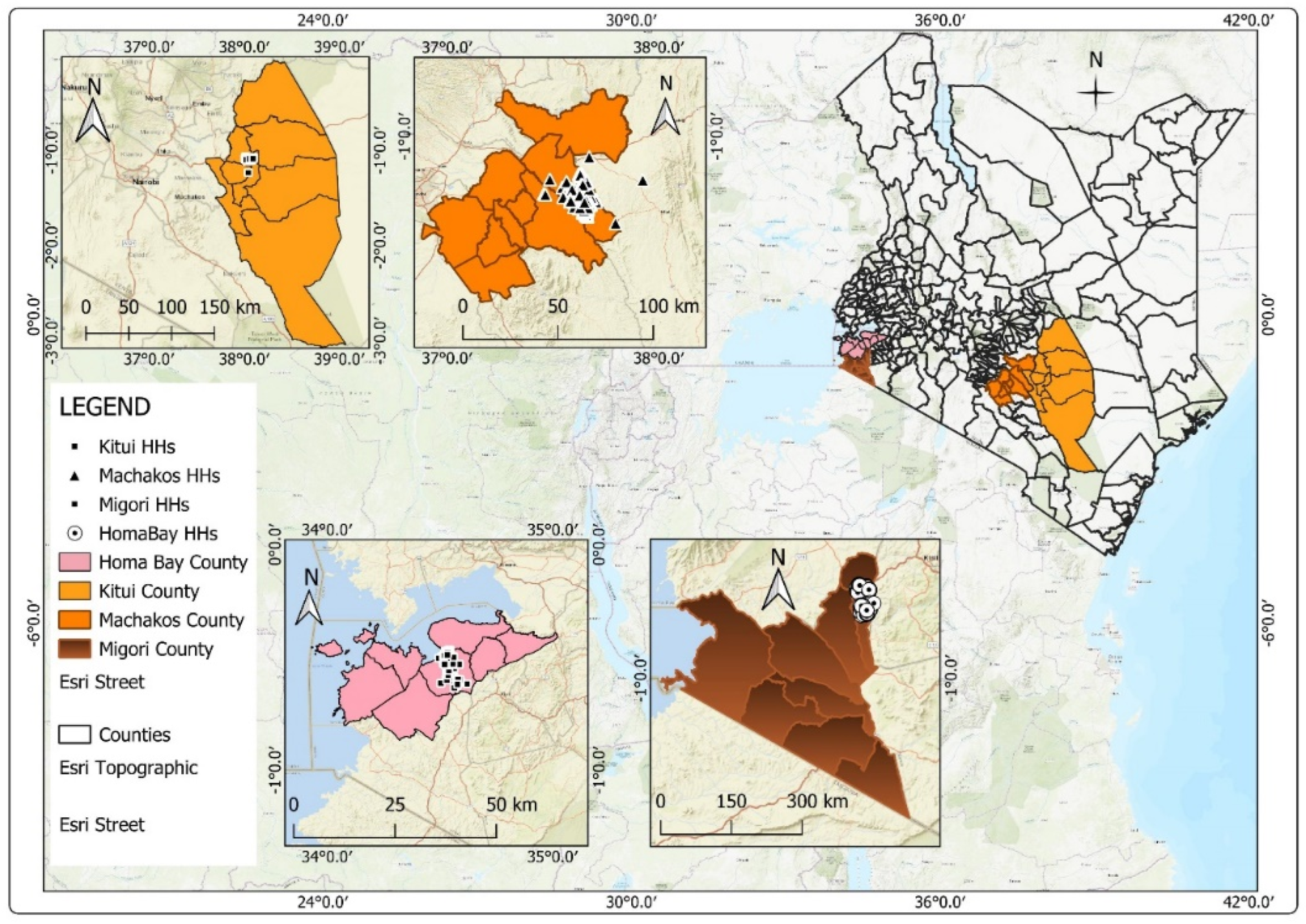
The study was conducted in four counties (Homa Bay, Kitui, Machakos, and Migori), representing different agroecological zones in which maize is widely grown as a staple food crop (Figure 1). The counties represent areas with high and low agricultural potential and high inherent soil fertility and relatively higher rainfall. Moreover, the study sites also included areas that receive low rainfall amounts and less fertile soils. Apart from Machakos County, which has slightly over 1.4 million people, the population in the remaining three counties was estimated to be 1.1 million persons [23]. Homa Bay and Migori counties are located in the western parts of Kenya and border Lake Victoria. Homa Bay County occupies 3154.7 km2 with a population density of 359 people per km2 [23]. Migori County sits on 2613 km2 of land with 427 persons per square kilometer [23]. The county is thus highly densely populated, which can be attributed to the 3.1% growth rate it experiences.
Approximately 90% of the population lives in rural areas and depends on farming and fishing as their mainstay [24]. Kitui and Machakos counties border each other and are situated in the eastern parts of Kenya. These counties experience scanty and unreliable rainfall coupled with low soil fertility, and thus, they experience cyclic food scarcity [25]. Kitui County is 30,430 km2 and has a sparse population density of 37 people per km2 [23]. It is estimated that 80% of the Kitui residents rely on agriculture for livelihood, depending on livestock and diverse crops [25]. Machakos County rests on 6037 km2 where 236 persons occupy a km2 [23]. This county has undergone deforestation with a devastating impact on water supply and food productivity [26]. The rainfall pattern is bimodal in Homa Bay, Machakos, and Migori, but generally unimodal in Kitui County. The bimodal rains fall in two distinct seasons: long rains (LR) from mid-March to June and short rains (SR) from late October to December. Long rains in Kitui fall from October to December.

2.2. Sampling Strategy

The four counties were purposively selected based on their suitability for drought-tolerant maize varieties and the representation of distinct agroecological zones. A cluster sampling technique was adopted, where all wards in each county were clustered. The wards, therefore, formed distinct clusters. The counties are administratively organized in smaller electoral units called wards. Two clusters (wards) per county were then randomly selected, and all maize farmers within a cluster were selected for the study (Table 1). Sampling frames for each cluster were obtained from local administrative offices from which households (HHs) were randomly sampled.

2.3. Survey Design and Strategies

A cross-sectional survey design was adopted to collect one-time data [27,28], among smallholder farmers across four counties. A pretested questionnaire coded in an Open Data Kit (ODK) was administered to the sampled HHs during face-to-face interviews, with the aid of researcher-trained enumerators. The questionnaire was pretested in all four counties, involving a third of the total sample size per county. An expert panel meeting between the researchers (authors) and the enumerators was held after conducting the pretest study. The objective of the meeting was to evaluate the content and internal validity of the results of the pretest and to make appropriate adjustments to the questionnaire. The households involved in the pretests were eventually excluded from the actual survey. The interviews were conducted between May and July 2022. The enumerators were recruited within the respective counties to ensure they were proficient in the local languages. They were trained by the researchers to promote the consistency of the data collected, enhance the data quality and validity, and reduce the sampling errors.
Data were collected on the HHs’ demographic and socioeconomic characteristics, including age, gender, level of education, HH size, marital status, employment status, monthly income, and land size. Semi-structured questions were asked about common types of food consumed and the most important crops among the respondents. Additionally, food insecurity questions were asked, including questions about members of the HHs going without eating because of a lack of food, source of the food consumed, meals consumed per day, and food inadequacy in the past 12 months. The respondents were also asked about their perception of common pests and plant nutrition challenges and the control strategies they adopted. Perception of the maize production trends and the most appropriate plant were also assessed. Moreover, data on the factors influencing maize varietal choice were collected. Lastly, the study collected data on the climate-smart technologies adopted by maize farmers.

2.4. Statistical Data Analysis

All the statistical data analyses were performed using Statistical Package for Social Sciences (SPSS) version 22 (IBM Corp, 2020—Armonk, NY, USA). The data were summarized using descriptive statistics like frequencies and percentages (%). Cross-tabulations were adopted to determine the relations between variables. Binary logistic regression models were adopted to estimate the effects of HHs characteristics and farm factors effects on the adoption of climate-smart strategies (water harvesting, organic farming, conservation agriculture, and soil and water conservation) and drought-tolerant maize varieties. Table 2 shows parameter descriptors for the regression models, while the multivariate logistic regression specifications are shown in the equation below.
I n P 1 P = β 0 + β 1 x 1 + β 2 x 2 + + β j x j
where In is the natural logarithm, p is the probability of an HH adopting a strategy, and 1−p was the probability of not adopting a strategy. β0 is the intercept, β1, β2 … βj denoted the regression coefficients of independent variables, and x1, x2 … xj represented the household explanatory variables.

3. Results and Discussion

3.1. Household Demographic Characteristics

Table 3 shows the demographic and socioeconomic characteristics of farmers’ households (HHs) in Homa Bay, Kitui, Machakos, and Migori. There were significant variations amongst study sites, which could be explained by the economic and cultural differences among the counties [29]. The variations were also recorded in all the HH demographic and socioeconomic characteristics, save for HH size. Generally, the HHs across the counties were male-dominated (62%), while females only accounted for 36% of the respondents. This finding is attributed to the patriarchal nature of Kenyan households and could impact the type of technology adopted. The results corroborate the findings of Dormal [30] and Nyberg et al. [31], who reported male dominance among smallholder farmers. There were a few HHs headed by 1.5% male youth and only 0.5% female youth. The proportion of males was higher in Machakos (72%), whereas they constituted 70, 64, and 40% in Kitui, Homa Bay, and Migori, respectively. There were more female HH heads in Migori (48%), while they accounted for only 34, 29, and 28% of HHs in Homa Bay, Kitui, and Machakos. The higher female-headed households in Migori County could be due to deaths among men. The county is among the counties with higher HIV/AIDs prevalence [32]. Gender and its role had an impact on the adoption of various climate adaptation strategies in the four countries. This is in line with the findings of other researchers who have demonstrated gender differences in the adoption of agricultural strategies [33,34]. Gebre et al. found significant differences in the adoption intensity of improved maize varieties among female, male, and joint decision-making households [35].
The majority of the respondents were married (74%), whereas widows/widowers composed 14% of the total HHs. Twelve (12%) of the HHHs were single (unmarried). The number of married HHHs was nearly equal in all the counties, with Migori counties having a slightly lower number. However, Migori and Homa Boy had a higher proportion of widows/widowers (21 and 17%) compared to Kitui (10%) and Machakos (5%). On the other hand, Machakos and Kitui counties had slightly higher single HHHs (16%) than in Migori (11%) and Homa Bay (7%). The marital status could have an implication for agricultural technology adoption. Similar findings have been reported in other studies [36,37].
The educational attributes across the counties revealed that the majority of the farmers had acquired primary (34%) and secondary education (34%), with 12 and 6% having attained postgraduate degrees and artisan training certificates. Nevertheless, 14% of the respondents had no formal education. Machakos had the highest (43%) number of farmers with primary education when compared to Kitui (39%), Homa Bay (36%), and Migori (25%). Migori county had the highest proportion (59%) of respondents who had acquired post-primary training (secondary education, artisan training, and postgraduates) than Kitui (53%), Homa Bay (48%), and Machakos (43%). Farmers who have attained either formal or informal education were more likely to adopt drought-tolerant maize varieties and other adaptation strategies. This finding is supported by Hirpa et al., who found that more educated farmers had adopted improved varieties of soybeans than less educated farmers in Malawi [38]. Additionally, it was reported that education exposed the farmers to information exchange channels and knowledge exposure that were significantly associated with the adoption of agricultural strategies in Uganda [39].
A majority (58%) of the smallholder farmers in the three study sites were not formally employed, with those in formal employment by government and private sectors only constituting 7% of the respondents (Table 3). Eighteen percent (18%) of the farmers were wage laborers, 11% were skilled workers, 5% were businesspersons, and 2% were retirees. Migori county had the highest proportion (13%) of farmers with formal employment (government and private sector employees), compared to Homa Bay (6%), Machakos (5%), and Kitui (2%). The proportion of unemployed farmers was higher in Kitui (74%) and Migori (63%) counties and relatively lower in Machakos and Homa Bay counties (50%). The fraction of skilled workers was higher (19%) in Homa Bay than in Migori (8%), Machakos (5%), and Kitui (5%) counties. Available livelihood assets could affect the adoption of sole or multiple climate adaptation strategies. Aryal et al. opine that farmers’ preference for climate adaptation strategies is dictated by the availability of livelihood assets [40]. Employment provides disposable income that the farmers could use to invest in adaptation strategies. For instance, in concurrence with the findings of the current study, Martey et al. reported that the adoption of drought-tolerant maize varieties was influenced by the economic status of the farmers [12].
The average age of the smallholder farmers across the counties was 49 years (Table 3). However, the average age of the farmers in Kitui and Machakos was 52 years, whereas Migori and Homa Bay counties had comparatively younger farmers averaging 46 and 47 years in age. The age of the potential strategy adopters can facilitate or retard the adoption of climate adaptation strategies, as has been shown in various studies [36,37]. The average monthly income of the smallholder farmers across the counties was USD 151. Farmers in Migori had a higher monthly average income of USD 200 than those in Kitui, Machakos, and Homa Bay who had a monthly average income of USD 175, USD 115, and USD 114, respectively. Farmers with higher incomes are likely to adopt capital-intensive technologies than their counterparts with lower incomes. There current findings are in concurrence with those of Feng and Zailani [41] who reported an increased willingness to pay for climate-smart agricultural technologies among cooperatives.
The average land size per HH across the counties was 2.4 acres. But farmers in Machakos County hold larger pieces of land on average (5 acres) than in the other counties. Land is an emotive asset that may affect the adoption trend of drought-tolerant maize varieties and other adaptation strategies in the study areas. In agreement with this study, HH land endowment influenced the farmers’ willingness to adopt straw incorporation in China [20]. The small landholding sizes could be due to land inheritance, where the aged have a moral obligation to divide land among their offspring [4]. The demographic information in this study is consistent with past studies. Several studies have shown the influence of socioeconomic demographics on adoption patterns [19,22].

3.2. Common Types of Food Consumed and the Most Important Crops Among Smallholder Farmers

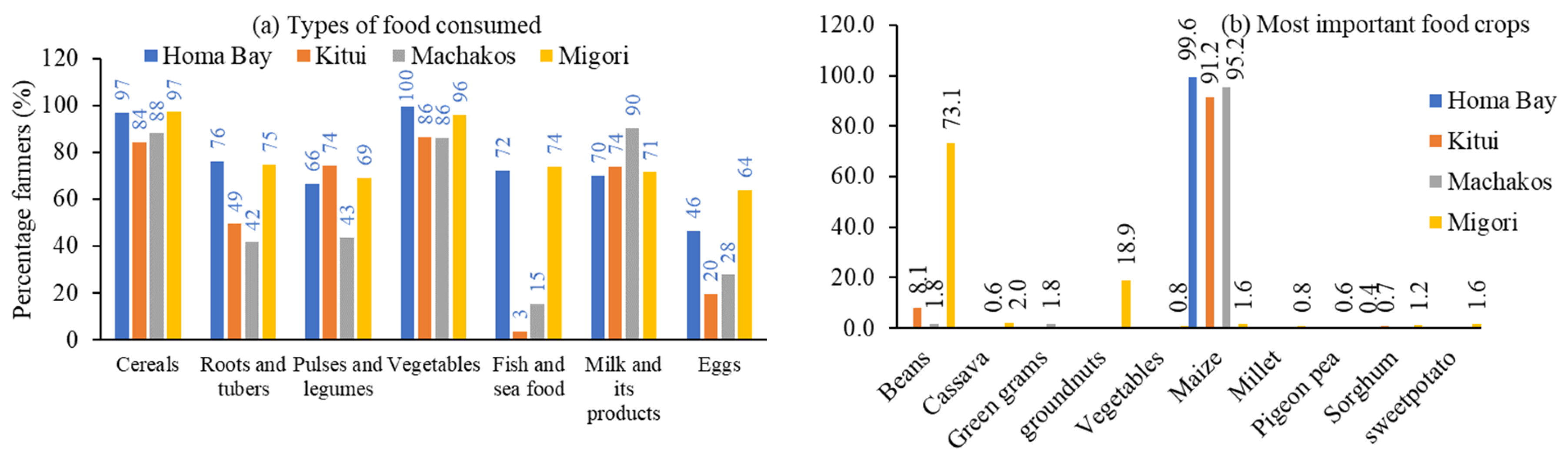
Vegetables and cereals were the most consumed by over 80% of smallholder households across the counties (Figure 2a). Milk and its products were consumed by about 76% of the respondents, while roots and tubers were consumed by roughly 61%. Fish and eggs were only popular with 41 and 40% of the farmers, respectively. Maize was the most important (>90%) food crop among Homa Bay, Machakos, and Kitui counties (Figure 2b). Surprisingly, it was considered the most important crop by just 1.6% of respondents in Migori county. The importance of a crop or enterprise to the HHs in Machakos and Kitui counties could have favored the adoption of adaptation strategies to improve maize productivity. This result corroborates the findings of Lunduka et al. [13] and Sinyolo [42] who reported a positive link between the importance of a crop to an HH and the adoption of improved maize varieties in Zimbabwe and South Africa, respectively.

3.3. Food Security Indicators

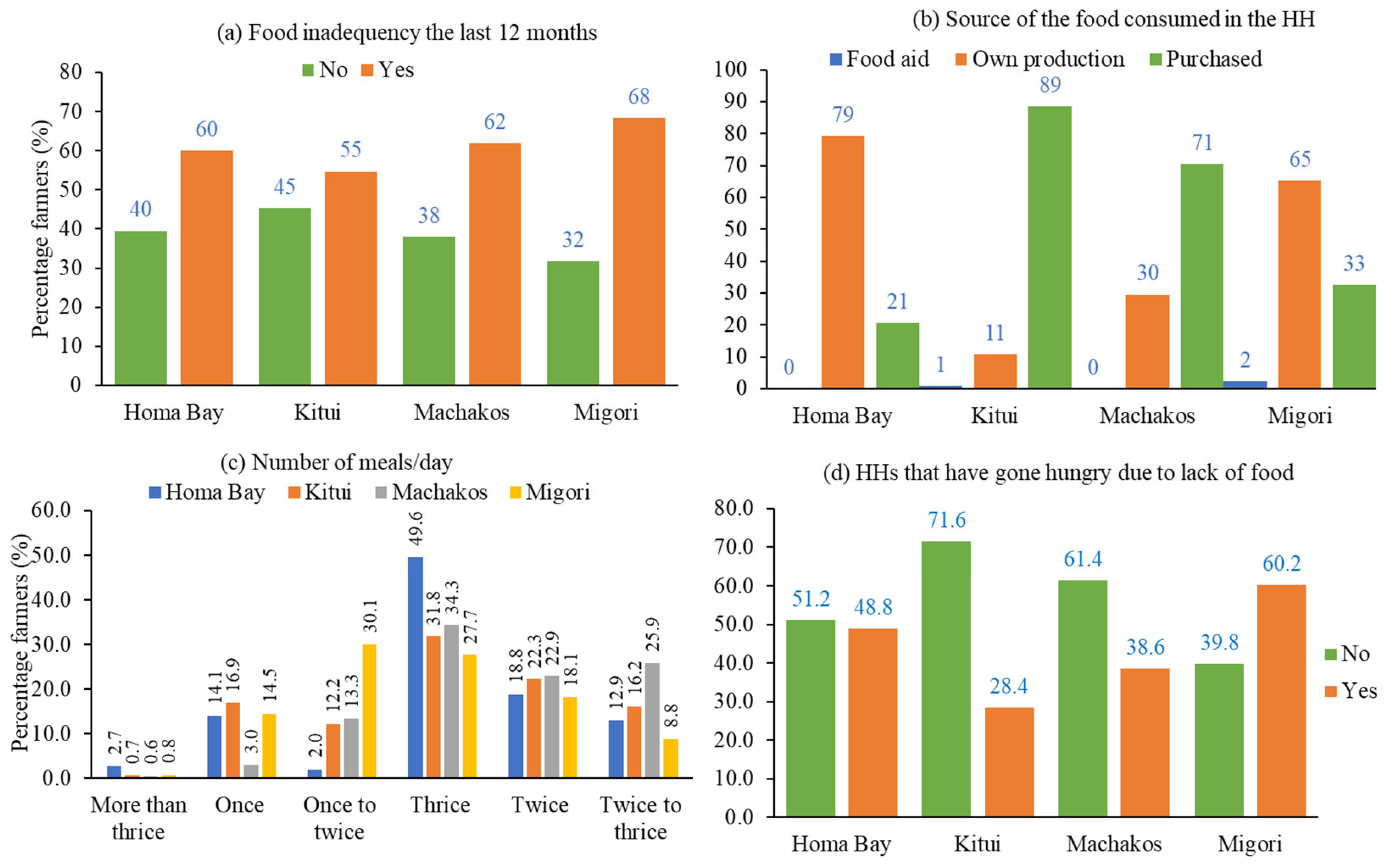
Food inadequacy did not vary significantly (χ2 = 0.052) among the farmers across the counties (Figure 3a). The majority of the respondents (>60%) across the counties were food insecure in the last 12 months, while roughly 39% of them had enough food. However, the sources of foods consumed by farmers differed significantly (χ2 < 0.0001) among the counties (Figure 3b). The majority of farmers in Kitui (89%) and Machakos (71%) counties purchased food they consumed, and only 11% and 30%, respectively, relied on their production. Comparatively, 79% and 65% of smallholder farmers in Homa Bay and Migori counties relied on their production, with only 21% and 33% of them dependent on purchased food. The variation in food inadequacy could be explained by the difference in agroecological zones. Whereas Kitui and Machakos are in arid and semi-arid zones, Homa Bay and Migori are largely in sub-humid agroecological zones [43].
The number of meals consumed per day varied significantly (χ2 < 0.0001) among the counties (Figure 3c). A substantial proportion (approximately 36%) of the farmers took three meals per day; the majority (50%) were those in Homa Bay compared to 34, 32, and 28% of their counterparts in Machakos, Kitui, and Migori, respectively. However, 17, 15, 14, and 3% of the respondents in Kitui, Migori, Homa Bay, and Machakos, respectively, were taking only one meal per day. Similarly, chi-square regression showed significant (χ2 < 0.0001) variation between the counties and going without food (Figure 3d). Migori county had the highest proportion (60%) of respondents who went without eating food compared to 28, 39, and 49% in Kitui, Machakos, and Homa Bay counties. Within the same period, most HHs in Kitui (72%) had not gone hungry due to lack of food compared to 40, 51, and 61% in Migori, Homa Bay, and Machakos counties, respectively. Food insecurity among the farmers could have been the driving factor in the adoption of drought-tolerant maize varieties and adaptation strategies, as supported by similar findings of Sinyolo [42]. The desire to be food secure drove farmers in Ethiopia to adopt improved potato varieties [44].

3.4. Common Diseases and Their Control Strategies

The control strategies showed variabilities with the common maize pests within the study areas (Table 4). Fall armyworm (FAW) was reported as a menace in Migori and Homa Bay by 79% and 67% of farmers, respectively. It was, though, reported as a common pest in Kitui and Machakos by just 36% and 37% of respondents, respectively. Fall armyworm is a common pest in maize farms [45]. According to Lemessa et al. [44], 98% of communities in Kenya had encountered FAW in their farmers by the year 2017. Maize stalk borer was a common problem in Machakos and Kitui counties, reported by nearly 55% of the smallholder farmers, and it was only mentioned by 11% and 17% of the farmers in Homa Bay and Migori counties. On the other hand, the African armyworm was considered a menace by only 1, 2, 9, and 22% of respondents in Migori, Machakos, Kitui, and Homa Bay. Variations in FAW, Maize stalk borer, and African armyworm spread could be due to differences in agroecological zones [46]. The prevalence of the pests in these sites has been attributed to the changing climate [47].
Chemical application was the most preferred pest control strategy, popular with 41, 44, 78, and 83% of farmers in Migori, Homa Bay, Machakos, and Kitui, respectively. Cultural strategies were only adopted by 10, 10, 25, and 39% of HHs in Kitui, Machakos, Migori, and Homa Bay. Adoption of biological control and integrated pest management (IPM) strategies is still low, as they were utilized by only 10% and 34% of the farmers. The preference for chemical pesticides as a control strategy could be due to their availability and ease of application. This finding agrees with several studies that have reported the dominance of chemical pesticides in the control of major pests [48,49]. The low preference of IPM as a control strategy could be a result of challenges associated with its implementation, as pointed out by Bueno et al. [50].

3.5. Farmers’ Perception of Common Plant Nutrition Challenges and Their Control Strategies

The nutrition challenges affecting farmers significantly varied per county (Table 5). A considerably higher percentage of the respondents in all the counties noted that N is a nutritional challenge to maize production. However, it was cited by more farmers (73%) in Machakos relative to 64, 43, and 41% in Homa Bay, Migori, and Kitui. Phosphorus (P), on the other hand, was a production constraint for 18–36% farmers across the study areas. Conversely, it was a problem for more respondents in Migori (36%) and Homa Bay (24%), compared to 22% and 18% of their counterparts in Kitui and Machakos counties, respectively. In addition, a substantial fraction of the farmers in Kitui and Migori noted K as a nutritional challenge, since it was pinpointed by 32% and 21% HHs compared to 11% and 7% of farmers in Kitui and Homa Bay. Very few (0.4–6%) felt that they had no plant nutritional problems in their farming. Soil fertility gradients vary from one farm to another and from one community to another [51], hence, the variations in N, P, and K distributions among farmers and counties in this study. Similar to this study, farmers’ perception of soil quality parameters along fertility gradients is more likely to influence improvement strategies, as was the case in Rwanda [52].
The farmers in the different counties adopted one or more strategies to replenish soil fertility (Table 5). This finding is supported by the results of Bedeke et al. [4], who reported that smallholder farmers often adopted several strategies at the farm level. Compared to the other strategies, a high percentage of farmers in Homa Bay and Migori adopted inorganic fertilizers (42% and 41%), which could be due to a lack of awareness of the adverse environmental effects related to the use of such inputs. Farmers in Kitui and Machakos utilized organic fertilizers (44%), and integrated inorganic and organic fertilizers (48%) to a larger extent, which could be attributed to the need to increase productivity and income per unit of land while maintaining the sustainability of the fragile ecosystem [53]. Generally, inorganic fertilizers (35%), organic fertilizers (31%), and integrated approaches (27%) were the widely adopted fertility management strategies across the counties. Biological fertility replenishment strategies are not adopted to any large extent by farmers in the study areas. In agreement with the findings of this study, integrated soil fertility management approaches are adopted by farmers as a climate adaptation strategy [54].

3.5.1. Farmers’ Perception of Maize Production Trend

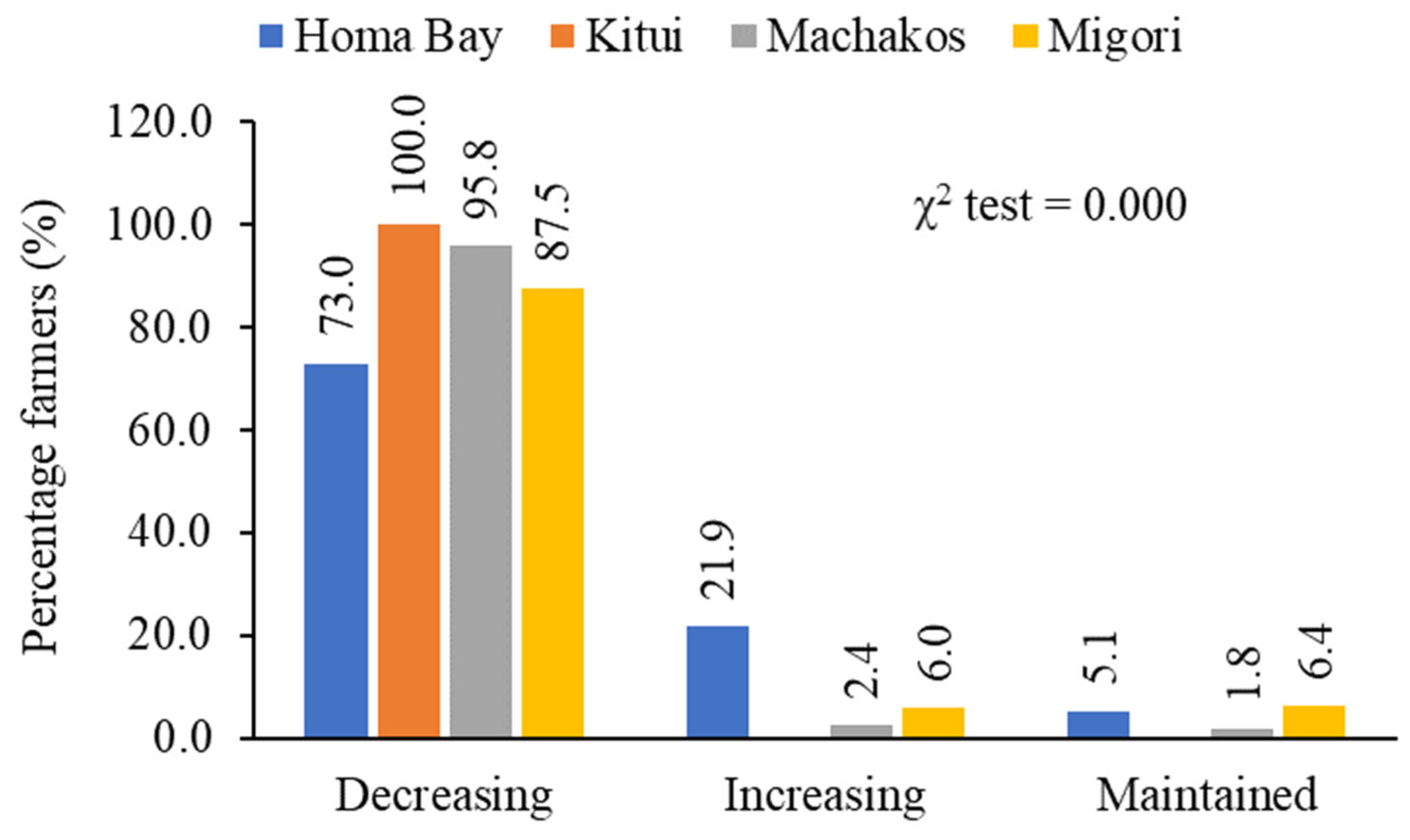
Farmers’ perceptions of the trend of maize production in the counties varied significantly (χ2 < 0.0001) across the categories (Figure 4). Most of the farmers (>70%) perceived maize production as declining, while a few others thought that the production is increasing (8% of the respondents on average). Only about 3% believed that maize production is maintained. All the respondents in Kitui and 96% in Machakos perceived production as on a decreasing trajectory. Seventy percent (73%) and 88% of farmers in Homa Bay and Migori counties felt that their production was reducing. None of the respondents in Kitui or Machakos classified maize production as either maintained or increasing. However, a small proportion of HHs in Machakos, Migori, and Homa Bay felt that their maize production trends were increasing (2, 6, and 22%, respectively), or maintained (2, 6, and 5%, respectively). The perceived reduction in maize yield could trigger farmers to seek remedial measures like the adoption of improved varieties, soil fertility, pest, and disease control measures as illustrated in this study. The same finding was evident with farmers in Uganda who adopted drought-tolerant maize varieties when they perceived a reduction in yield [55].

3.5.2. Farmers’ Perception of the Best Time to Plant Maize

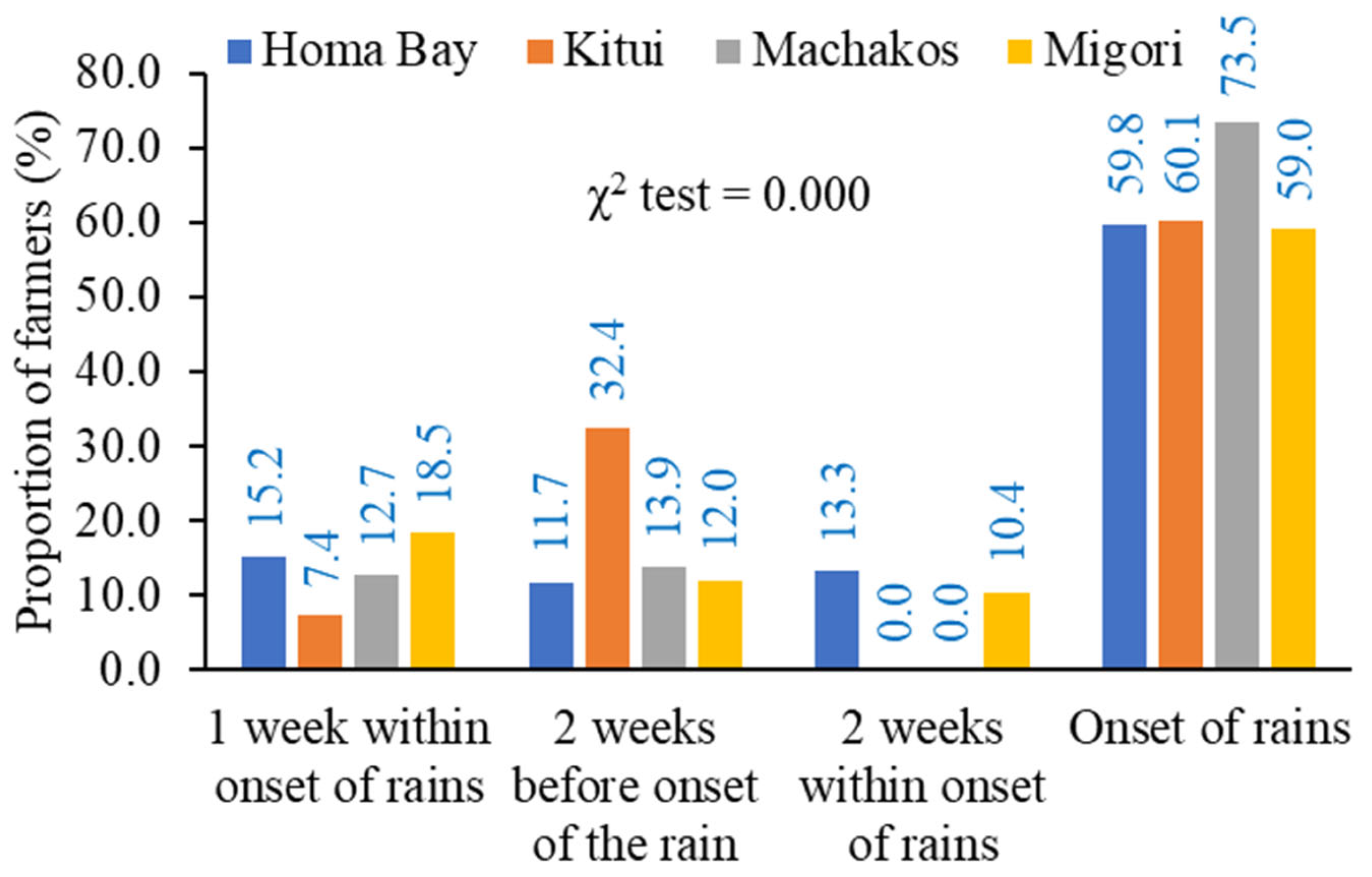
The perception of the best time to plant maize varied significantly (χ2 < 0.0001) among the farmers per site (Figure 5). The majority of the farmers (59–74%) noted planting on the onset of rains as the most suitable time. Consistent with this finding, Ngetich et al. [56] found that the majority of smallholder farmers in the arid agro-ecozones of Upper Eastern Kenya planted at the onset of rains. Planting 1 week after the onset of rains was favored by 7–19% of farmers. Dry planting (2 weeks before the onset of rains) was suggested by 12–34% of the respondents. The majority of those who proposed planting 2 weeks before the onset of rains were from Kitui (32%) and Machakos (14%), with just 12% of respondents supporting the timing in Homa Bay and Migori counties. The farmers who considered 2 weeks within the onset of rains as the most suitable time were few and only reside in Migori (10%) and Homa Bay (13%). These findings are in line with various studies that advocate varying planting dates as one of the climate change adaptation strategies [57,58].

3.6. Climate-Smart Technologies Adopted by Maize Farmers

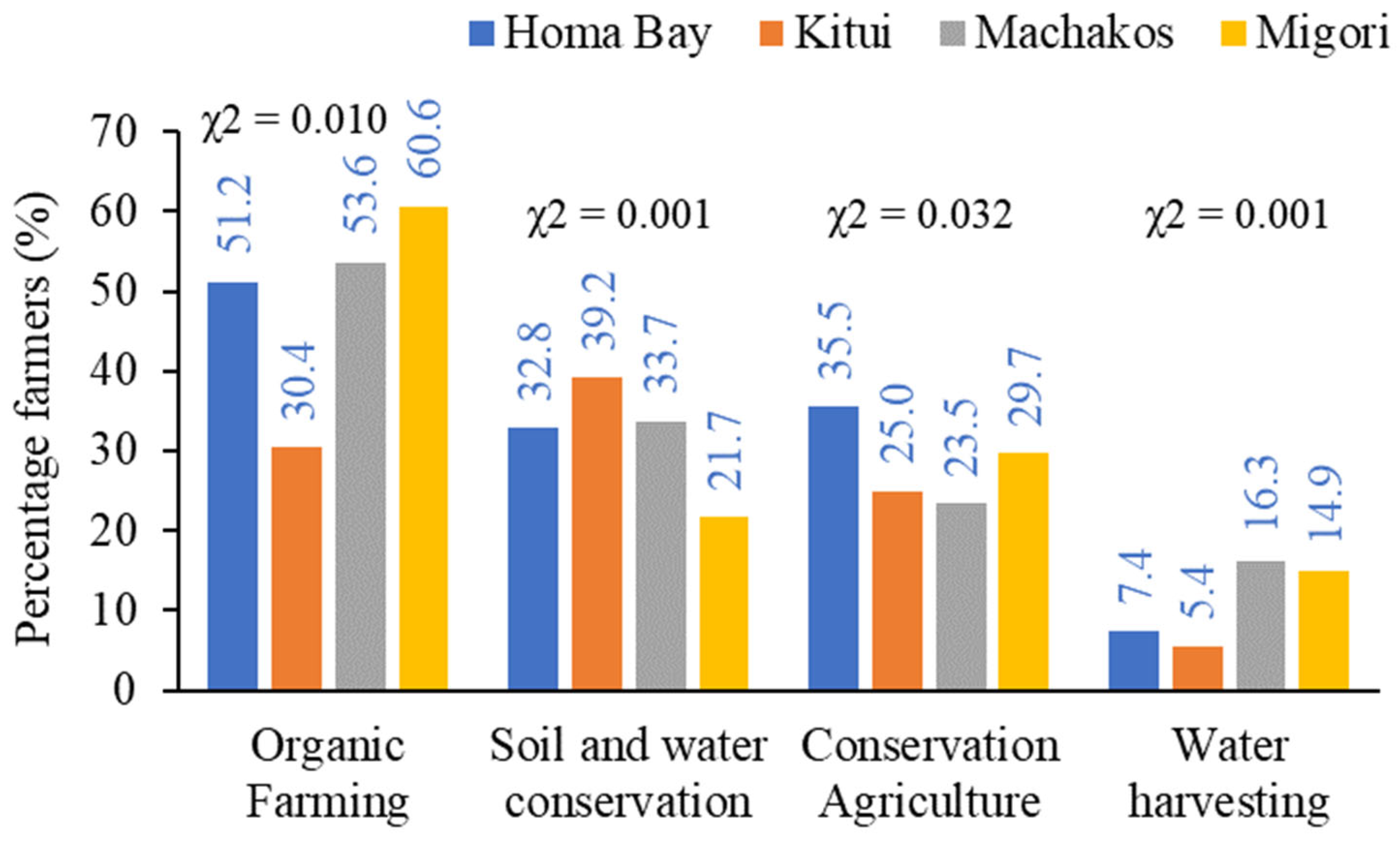
Smallholder farmers adopted a range of climate-smart technologies (CSTs) in the study areas (Figure 6). This finding agrees with Ngetich et al. [56], who posit that farmers often concurrently adopt different strategies. The CSTs adopted, however, differed significantly across the counties. Organic farming was adopted widely by 61, 54, and 51 respondents. However, it was not so popular with HHs in Kitui County (only 30% of respondents adopted the technology). Additionally, the farmers adopted soil and water conservation strategies (22–39%), with farmers in Kitui leading in the adoption as compared to the proportion of those in Machakos (34%), Homa Bay (33%), and Migori (22%). Conservation agriculture (CA) was adopted by just 36, 30, 25, and 24% of smallholder respondents in Homa Bay, Migori, Kitui, and Machakos counties, respectively. Unexpectedly, water harvesting was adopted by very low proportions of farmers in Kitui (5%), Homa Bay (7%), Migori (15%), and Machakos (16%) counties. The variations in the CSTs adopted by farmers in different counties in this study could be because of differences in location specificities, as was also reported by Takahashi et al. [59].

3.6.1. Farm-Level Predictors for Climate-Smart Strategies

The multivariate logistic regression model shows the relationship between factors of adoption and climate-smart strategies (Table 6). The model indicated that farmers who had attained secondary education had a significant propensity to adopt water harvesting strategies in Machakos and soil and water conservation in Homa Bay and Migori counties. This could be because these strategies are knowledge-intensive, which is in agreement with the findings of Bagheri et al., Belachew et al., and Marie et al. [60,61,62]. Adoption of soil and water conservation strategies is negatively but significantly related to the marital status (single or married) of the respondents in Migori County. There was a positive and significant association between unemployment and water harvesting among respondents in Machakos County. Food inadequacy is positively and significantly related to water harvesting and soil and water conservation strategies in Machakos county. Additionally, families facing food insecurity were more likely to adopt soil and water conservation strategies in Migori County. This finding could be related to the need for farmers to reduce/eliminate food insecurity at the farm level by improving land productivity, as was also observed in Ethiopia by Sileshi et al. [63].
The perception of N deficiency significantly and positively influenced the adoption of soil and water conservation in Kitui. Farmers who perceived P to be a plant nutrition challenge were more likely to be influenced to adopt organic farming in Machakos and Migori counties and soil and water conservation in Kitui and Migori counties. This finding is corroborated by Bagheri and Teymouri [64], who reported a positive correlation between soil fertility perception and the adoption of soil and water conservation strategies. The age of the farmers was a positive and significant determinant of the adoption of water harvesting in Machakos. However, it was a deterrent to the adoption of organic farming in Kitui and Machakos counties. This finding was probably because older farmers are not in formal employment and utilize indigenous water harvesting knowledge relative to the younger cohorts. This is consistent with the findings of Belachew et al. [60] who reported similar results in Ethiopia. Water harvesting was significantly and negatively impacted by the HH size in Machakos. Households with higher monthly income were more likely to adopt water harvesting in Machakos and organic farming in Kitui county which could have been due to their high capital-intensive nature.

3.6.2. Farm-Level Predictors for Drought-Resistant Maize Varieties

The multivariate logistic model illustrates associations between drought-tolerant maize variety and factors of adoption (Table 7). A positive and significant relationship existed between the adoption of drought-tolerant maize varieties and land size in Migori County. The same finding was reported in Benin by Houeninvo et al. [65]. Similarly, HHs in Migori county that obtained maize seeds from fellow farmers, agro-dealers, farmers’ groups, and local traders were highly likely to utilize drought-tolerant varieties. Nevertheless, farmers’ socioeconomic attributes, problematic plant nutrients, and sources of maize seeds insignificantly influenced the adoption of drought-tolerant maize varieties in Homa Bay, Kitui, and Machakos counties.


4. Conclusions

The findings of this study partially support the hypothesis that household farm and socioeconomic determinants influence the adoption of climate adaptive strategies but vary across strategies and locations. The results from the multivariate logistic regression indicate that marital status negatively influenced the adoption of soil and water conservation strategy in Kitui and Machakos. Secondary education was positively associated with the adoption of water harvesting in Machakos and soil and water conservation in Homa Bay and Migori. Unemployed farmers in Machakos County were highly likely to adopt water harvesting strategies. The probability of a farmer adopting water harvesting strategies in Machakos and soil and water conservation strategies in Machakos and Migori counties increased with food insecurity. From the logistic coefficients, a farmer in Kitui County had a high prospect of adopting soil and water conservation strategies when N and P were perceived as deficient. Additionally, the perception of declining P encouraged the adoption of organic farming in Machakos and Migori counties and soil and water conservation strategies in Kitui county. Land size was only a significant negative determinant in the adoption of organic farming in Migori County.
Similarly, the results of the multivariate logistic analysis partially concurred with our hypothesis of significant associations between socioeconomic determinants and the adoption of drought-tolerant maize varieties. Determinants of adoption also differed according to strategies and across the counties. Only farmers in Migori County had a significant likelihood of adopting drought-tolerant maize varieties with increasing land size. In the same county, the source of maize variety is positively associated with the adoption of drought-tolerant maize varieties.
Policy interventions that enhance both formal and informal education, formal and informal seed accessibility, and localized adaptation support by developing location-specific climate adaptation framework will be instrumental in promoting the capacity of smallholder maize farmers to adopt and sustain multiple climate-resilient strategies.

Author Contributions

J.P.G.-O.: Conceptualization, Data curation, Formal analysis, Methodology, Writing—original draft, Writing—review and editing. E.O.O.: Writing—review and editing. V.W.: Supervision, Writing—review and editing. H.M.: Methodology, Writing—review and editing. K.A.: Resources, Writing—review and editing. G.O.: Data curation, Methodology, Project administration, Supervision, Writing—review and editing. All authors have read and agreed to the published version of the manuscript.

Funding

This study was supported by OACPS R&I Programme, which was an initiative implemented by the Secretariat of the Organization of African, Caribbean and Pacific States (OACPS) and funded by the European Union (EU): ACP AIRTEA FUNDING AGREEMENT/FED/2020 421-369.

Institutional Review Board Statement

This study is waived for ethical review as the work did not involve the use of human samples and during survey the researchers/authors had full disclosure to the respondents and respectfully sought they consent before proceeding with the interview by Institution Committee.

Informed Consent Statement

Informed consent for participation was obtained from all subjects involved in the study.

Data Availability Statement

Data available in a publicly accessible repository.

Conflicts of Interest

Geoffrey Ongoya was employed by the Koppert Biological Systems. The remaining authors declare that the research was conducted in the absence of any commercial or financial relationships that could be construed as a potential conflict of interest.

References

  1. Talukder, B.; van Loon, G.W.; Hipel, K.W.; Chiotha, S.; Orbinski, J. Health impacts of climate change on smallholder farmers. One Health 2021, 13, 100258. [Google Scholar] [CrossRef] [PubMed]
  2. MacCarthy, D.S.; Adam, M.; Freduah, B.S.; Fosu-Mensah, B.Y.; Ampim, P.A.Y.; Ly, M.; Traore, P.S.; Adiku, S.G.K. Climate change impact and variability on cereal productivity among smallholder farmers under future production systems in west africa. Sustainability 2021, 13, 5191. [Google Scholar] [CrossRef]
  3. Abdisa, T.B.; Diga, G.M.; Tolessa, A.R. Impact of climate variability on rain-fed maize and sorghum yield among smallholder farmers. Cogent Food Agric. 2022, 8, 2057656. [Google Scholar] [CrossRef]
  4. Bedeke, S.; Vanhove, W.; Gezahegn, M.; Natarajan, K.; Van Damme, P. Adoption of climate change adaptation strategies by maize-dependent smallholders in Ethiopia. NJAS-Wagening. J. Life Sci. 2019, 88, 96–104. [Google Scholar] [CrossRef]
  5. Maitra, S.; Singh, V. Invited review on ‘maize in the 21st century’ Emerging trends of maize biorefineries in the 21st century: Scientific and technological advancements in biofuel and bio-sustainable market. J. Cereal Sci. 2021, 101, 103272. [Google Scholar] [CrossRef]
  6. Zhang, X.; Reddy, A.D.; Philip, G. The greenhouse gas intensity and potential biofuel production capacity of maize stover harvest in the US Midwest. Bioenergy 2017, 9, 1543–1554. [Google Scholar] [CrossRef]
  7. Erenstein, O.; Jaleta, M.; Sonder, K.; Mottaleb, K.; Prasanna, B.M. Global maize production, consumption and trade: Trends and R&D implications. Food Secur. 2022, 14, 1295–1319. [Google Scholar] [CrossRef]
  8. Djurfeldt, A.A.; Wambugu, S.K. In-kind transfers of maize, commercialization and household consumption in Kenya. J. East. Afr. Stud. 2011, 5, 447–464. [Google Scholar] [CrossRef]
  9. Kilonzo, R.M.; Imungi, J.K.; Muiru, W.M.; Lamuka, P.O.; Njage, P.M.K. Household dietary exposure to aflatoxins from maize and maize products in Kenya. Food Addit. Contam. Part A 2014, 31, 2055–2062. [Google Scholar] [CrossRef]
  10. Cook, S.; Gichuki, F.; Turral, H. Water productivity: Measuring and mapping in benchmark basins. In Basin Focal Project Working Paper no. 2, Estimation at Plot, Farm and Basin Scale; International Water Management Institute: Colombo, Sri Lanka, 2018. [Google Scholar]
  11. Fang, Q.; Ma, L.; Yu, Q.; Ahuja, L.R.; Malone, R.W.; Hoogenboom, G. Irrigation strategies to improve the water use efficiency of wheat–maize double cropping systems in North China Plain. Agric. Water Manag. 2010, 97, 1164–1173. [Google Scholar] [CrossRef]
  12. Martey, E.; Etwire, P.M.; Kuwornu, J.K.M. Economic impacts of smallholder farmers’ adoption of drought-tolerant maize varieties. Land Use Policy 2020, 94, 104524. [Google Scholar] [CrossRef]
  13. Lunduka, R.W.; Mateva, K.I.; Magorokosho, C.; Manjeru, P. Impact of adoption of drought-tolerant maize varieties on total maize production in south Eastern Zimbabwe. Clim. Dev. 2019, 11, 35–46. [Google Scholar] [CrossRef] [PubMed]
  14. Masikati, P.; Descheemaeker, K.; Crespo, O. Understanding the Role of Soils and Management on Crops in the Face of Climate Uncertainty in Zimbabwe: A Sensitivity Analysis. In The Climate-Smart Agriculture Papers; Springer: Berlin/Heidelberg, Germany, 2019. [Google Scholar] [CrossRef]
  15. Simtowe, F.; Amondo, E.; Marenya, P.; Rahut, D.; Sonder, K.; Erenstein, O. Impacts of drought-tolerant maize varieties on productivity, risk, and resource use: Evidence from Uganda. Land Use Policy 2019, 88, 104091. [Google Scholar] [CrossRef]
  16. Pichlak, M. The innovation adoption process: A multidimensional approach. J. Manag. Organ. 2015, 22, 476–494. [Google Scholar] [CrossRef]
  17. Zegeye, M.B.; Fikire, A.H.; Meshesha, G.B. Determinants of multiple agricultural technology adoption: Evidence from rural Amhara region, Ethiopia. Cogent Econ. Financ. 2022, 10, 23–35. [Google Scholar] [CrossRef]
  18. Toufaily, E.; Zalan, T.; Dhaou, S.B. A framework of blockchain technology adoption: An investigation of challenges and expected value. Inf. Manag. 2021, 58, 103444. [Google Scholar] [CrossRef]
  19. Kassie, M.; Teklewold, H.; Jaleta, M.; Marenya, P.; Erenstein, O. Understanding the adoption of a portfolio of sustainable intensification practices in eastern and southern Africa. Land Use Policy 2015, 42, 400–411. [Google Scholar] [CrossRef]
  20. Lu, H.; Hu, L.; Zheng, W.; Yao, S.; Qian, L. Impact of household land endowment and environmental cognition on the willingness to implement straw incorporation in China. J. Clean. Prod. 2020, 262, 121479. [Google Scholar] [CrossRef]
  21. Issahaku, G.; Abdulai, A. Adoption of climate-smart practices and its impact on farm performance and risk exposure among smallholder farmers in Ghana. Aust. J. Agric. Resoure Econ. 2020, 64, 396–420. [Google Scholar] [CrossRef]
  22. Fisher, M.; Abate, T.; Lunduka, R.W.; Asnake, W.; Alemayehu, Y.; Madulu, R.B. Drought tolerant maize for farmer adaptation to drought in sub-Saharan Africa: Determinants of adoption in eastern and southern Africa. Clim. Change 2015, 133, 283–299. [Google Scholar] [CrossRef]
  23. KNBS. Distribution of Population by Administrative Units; Kenya National Bureau of Statistics: Nairobi, Kenya, 2019; Volume II, Available online: http://www.knbs.or.ke (accessed on 23 May 2025).
  24. Starnes, J.R.; Wamae, J.; Okoth, V.; Ressler, D.J.; Were, V.; Were, L.P.O.; Moon, T.D.; Wamai, R. Population-based socio-demographic household assessment of livelihoods and health among communities in Migori County, Kenya over multiple timepoints (2021, 2024, 2027): A study protocol. PLoS ONE 2021, 16, e0256555. [Google Scholar] [CrossRef]
  25. Mutie, F.M.; Rono, P.C.; Kathambi, V.; Hu, G.W.; Wang, Q.F. Conservation of wild food plants and their potential for combatting food insecurity in kenya as exemplified by the drylands of Kitui county. Plants 2020, 9, 1017. [Google Scholar] [CrossRef] [PubMed]
  26. Mutegi, J.G.; Gido, E.O.; Mathenge, M.; Karanja, D. Consumption frequency for precooked bean products among households in Machakos County, Kenya. Cogent Food Agric. 2023, 9, 2247676. [Google Scholar] [CrossRef]
  27. Makate, C.; Wang, R.; Makate, M.; Mango, N. Crop diversification and livelihoods of smallholder farmers in Zimbabwe: Adaptive management for environmental change. SpringerPlus 2016, 5, 1135. [Google Scholar] [CrossRef]
  28. McEachan, R.R.C.; Conner, M.; Taylor, N.J.; Lawton, R.J. Prospective prediction of health-related behaviours with the theory of planned behaviour: A meta-analysis. Health Psychol. Rev. 2011, 5, 97–144. [Google Scholar] [CrossRef]
  29. Kinyanjui, K.D.; Josephine, M. Socio-Economic Status and Participatory Development in Kenya. Int. J. Humanit. Soc. Sci. 2013, 3, 20–38. Available online: www.ijhssnet.com (accessed on 23 May 2025).
  30. Dormal, W.A.C. Masculine authority and climate adaptation in pastoralist Kenya. Soc. Identities 2025, 4630, 29–56. [Google Scholar] [CrossRef]
  31. Nyberg, Y.; Mackay, H.; Wilson, M.; Samkunde, M.; Wetterlind, J. Supporting access and implementation of agricultural extension services for female smallholder farmers–a systematic review. Int. J. Agric. Sustain. 2025, 23, 2505387. [Google Scholar] [CrossRef]
  32. Makokha, V.; Ramadhani, H.O.; Amadi, E.; Ngeno, C.; Onkware, R.; Katiku, E.; Owino, E.; Musingila, P.; Wafula, S.; Koech, E. Impact of a structured return-to-care support package on loss to follow-up among re-engaged HIV clients in rural Western Kenya. J. Glob. Health Econ. Policy 2025, 5, e2025020. [Google Scholar] [CrossRef]
  33. Park, C.W.; Kim, D.G.; Cho, S.; Han, H.J. Adoption of multimedia technology for learning and gender difference. Comput. Human. Behav. 2019, 92, 288–296. [Google Scholar] [CrossRef]
  34. Teklewold, H.; Adam, R.I.; Marenya, P. What explains the gender differences in the adoption of multiple maize varieties? Empirical evidence from Uganda and Tanzania. World Dev. Perspect. 2020, 18, 100206. [Google Scholar] [CrossRef] [PubMed]
  35. Gebre, G.G.; Isoda, H.; Rahut, D.B.; Amekawa, Y.; Nomura, H. Gender differences in the adoption of agricultural technology: The case of improved maize varieties in southern Ethiopia. Women’s Stud. Int. Forum 2019, 76, 102264. [Google Scholar] [CrossRef]
  36. Kipkogei, S.; Han, J.; Mwalupaso, G.; Tanui, J.; Brenya, R. The synergistic effects of microcredit access and agricultural technology adoption on maize farmer’s income in Kenya. PLoS ONE 2025, 20, 0316014. [Google Scholar] [CrossRef] [PubMed]
  37. Ojo, I.E.; Kolawole, A.E.; Adeyonu, A.G.; Owolabi, A.O.; Akerele, D.; Awe, T.E.; Chike, I.; Ogunsuyi, D.P.; Ogundele, A.A. Extension agents’ attitudes and participation in disseminating climate-smart agricultural practices in North-Central, Nigeria. Front. Nutr. 2025, 12, 1663720. [Google Scholar] [CrossRef]
  38. Tufa, A.H.; Alene, A.D.; Manda, J.; Akinwale, M.G.; Chikoye, D.; Feleke, S.; Wossen, T.; Manyong, V. The productivity and income effects of adoption of improved soybean varieties and agronomic practices in Malawi. World Dev. 2019, 124, 104631. [Google Scholar] [CrossRef]
  39. Shikuku, K.M. Information exchange links, knowledge exposure, and adoption of agricultural technologies in northern Uganda. World Dev. 2019, 115, 94–106. [Google Scholar] [CrossRef]
  40. Aryal, J.P.; Sapkota, T.B.; Krupnik, T.J.; Rahut, D.B.; Jat, M.L.; Stirling, C.M. Factors affecting farmers’ use of organic and inorganic fertilizers in South Asia. Environ. Sci. Pollut. Res. 2021, 28, 51480–51496. [Google Scholar] [CrossRef]
  41. Feng, X.; Zailani, S. The Antecedents of the Willingness to Adopt and Pay for Climate-Smart Agricultural Technology Among Cooperatives in China. Sustainability 2025, 17, 19. [Google Scholar] [CrossRef]
  42. Sinyolo, S. Technology adoption and household food security among rural households in South Africa: The role of improved maize varieties. Technol. Soc. 2020, 60, 101214. [Google Scholar] [CrossRef]
  43. Jaetzold, R.; Schmidt, H.; Hornetz, B.; Shisanya, C. Farm Management Handbook of Kenya. Natural Conditions and Farm Management Information. Part C—East Kenya. Subpart C1—Eastern Province; Ministry of Agriculture: Nairobi, Kenya, 2007; Volume II.
  44. Lemessa, S.D.; Watebaji, M.D.; Yismaw, M.A. Climate change adaptation strategies in response to food insecurity: The paradox of improved potato varieties adoption in eastern Ethiopia. Cogent Food Agric. 2019, 5, 1640835. [Google Scholar] [CrossRef]
  45. Banson, K.E.; Asare, D.K.; Dery, F.D.; Boakye, K.; Boniface, A.; Asamoah, M.; Awotwe, L.E. Impact of Fall Armyworm on Farmer’s Maize: Systemic Approach. Syst. Pract. Action Res. 2020, 33, 237–264. [Google Scholar] [CrossRef]
  46. Cokola, M.C.; Mugumaarhahama, Y.; Noël, G.; Kazamwali, L.M.; Bisimwa, E.B.; Mugisho, J.Z.; Aganze, V.M.; Lubobo, A.K.; Francis, F. Fall Armyworm Spodoptera frugiperda (Lepidoptera: Noctuidae) in South Kivu, DR Congo: Understanding How Season and Environmental Conditions Influence Field Scale Infestations. Neotrop. Entomol. 2021, 50, 145–155. [Google Scholar] [CrossRef]
  47. Kinyanjui, G.; Mawcha, K.T.; Malinga, L.N.; Soobramoney, K.; Ṋethononda, P.; Assefa, Y.; Okonkwo, C.O.; Ndolo, D. Managing African Armyworm Outbreaks in Sub-Saharan Africa: Current Strategies and Future Directions. Insects 2025, 16, 645. [Google Scholar] [CrossRef]
  48. Tambo, J.A.; Day, R.K.; Lamontagne-Godwin, J.; Silvestri, S.; Beseh, P.K.; Oppong-Mensah, B.; Phiri, N.A.; Matimelo, M. Tackling fall armyworm (Spodoptera frugiperda) outbreak in Africa: An analysis of farmers’ control actions. Int. J. Pest. Manag. 2020, 66, 298–310. [Google Scholar] [CrossRef]
  49. Kumela, T.; Simiyu, J.; Sisay, B.; Likhayo, P.; Mendesil, E.; Gohole, L.; Tefera, T. Farmers’ knowledge, perceptions, and management practices of the new invasive pest, fall armyworm (Spodoptera frugiperda) in Ethiopia and Kenya. Int. J. Pest. Manag. 2019, 65, 1–9. [Google Scholar] [CrossRef]
  50. Bueno, A.F.; Panizzi, A.R.; Hunt, T.E.; Dourado, P.M.; Pitta, R.M.; Gonçalves, J. Challenges for Adoption of Integrated Pest Management (IPM): The Soybean Example. Neotrop. Entomol. 2021, 50, 5–20. [Google Scholar] [CrossRef]
  51. Caulfield, M.E.; Fonte, S.J.; Tittonell, P.; Vanek, S.J.; Sherwood, S.; Oyarzun, P.; Borja, R.M.; Dumble, S.; Groot, J.C.J. Inter-community and on-farm asymmetric organic matter allocation patterns drive soil fertility gradients in a rural Andean landscape. Land Degrad. Dev. 2020, 31, 2973–2985. [Google Scholar] [CrossRef]
  52. Kuria, A.W.; Barrios, E.; Pagella, T.; Muthuri, C.W.; Mukuralinda, A.; Sinclair, F.L. Farmers’ knowledge of soil quality indicators along a land degradation gradient in Rwanda. Geoderma Reg. 2019, 16, e00199. [Google Scholar] [CrossRef]
  53. Selejio, O.; Lasway, J.A. Economic analysis of the adoption of inorganic fertilisers and improved maize seeds in Tanzania. Afr. J. Agric. Resour. Econ. 2019, 14, 310–330. [Google Scholar]
  54. Bayu, T. Review on contribution of integrated soil fertility management for climate change mitigation and agricultural sustainability. Cogent Environ. Sci. 2020, 6, 29–45. [Google Scholar] [CrossRef]
  55. Simtowe, F.; Marenya, P.; Amondo, E.; Worku, M.; Rahut, D.B.; Erenstein, O. Heterogeneous seed access and information exposure: Implications for the adoption of drought-tolerant maize varieties in Uganda. Agric. Food Econ. 2019, 7, 15–24. [Google Scholar] [CrossRef]
  56. Ngetich, F.K.; Mairura, F.S.; Musafiri, C.M.; Kiboi, M.N.; Shisanya, C.A. Smallholders’ coping strategies in response to climate variability in semi-arid agro-ecozones of Upper Eastern Kenya. Soc. Sci. Humanit. Open 2022, 6, 100319. [Google Scholar] [CrossRef]
  57. Kogo, B.K.; Kumar, L.; Koech, R. Climate change and variability in Kenya: A review of impacts on agriculture and food security. Environ. Dev. Sustain. 2021, 23, 23–43. [Google Scholar] [CrossRef]
  58. Van Leeuwen, C.; Destrac-Irvine, A.; Dubernet, M.; Duchêne, E.; Gowdy, M.; Marguerit, E.; Pieri, P.; Parker, A.; de Rességuier, L.; Ollat, N. An update on the impact of climate change in viticulture and potential adaptations. Agronomy 2019, 9, 514. [Google Scholar] [CrossRef]
  59. Takahashi, K.; Muraoka, R.; Otsuka, K. Technology adoption, impact, and extension in developing countries’ agriculture: A review of the recent literature. Agric. Econ. 2020, 51, 31–45. [Google Scholar] [CrossRef]
  60. Belachew, A.; Mekuria, W.; Nachimuthu, K. Factors influencing adoption of soil and water conservation practices in the northwest Ethiopian highlands. Int. Soil Water Conserv. Res. 2020, 8, 80–89. [Google Scholar] [CrossRef]
  61. Marie, M.; Yirga, F.; Haile, M.; Tquabo, F. Farmers’ choices and factors affecting adoption of climate change adaptation strategies: Evidence from northwestern Ethiopia. Heliyon 2020, 6, e03867. [Google Scholar] [CrossRef]
  62. Sileshi, M.; Kadigi, R.; Mutabazi, K.; Sieber, S. Impact of soil and water conservation practices on household vulnerability to food insecurity in eastern Ethiopia: Endogenous switching regression and propensity score matching approach. Food Secur. 2019, 11, 797–815. [Google Scholar] [CrossRef]
  63. Sileshi, M.; Kadigi, R.; Mutabazi, K.; Sieber, S. Determinants for adoption of physical soil and water conservation measures by smallholder farmers in Ethiopia. Int. Soil Water Conserv. Res. 2019, 7, 354–361. [Google Scholar] [CrossRef]
  64. Bagheri, A.; Teymouri, A. Farmers’ intended and actual adoption of soil and water conservation practices. Agric. Water Manag. 2022, 259, 107244. [Google Scholar] [CrossRef]
  65. Houeninvo, G.H.; Quenum, C.V.C.; Nonvide, G.M.A. Impact of improved maize variety adoption on smallholder farmers’ welfare in Benin. Econ. Innov. New Technol. 2020, 29, 831–846. [Google Scholar] [CrossRef]
Figure 1. Map of study counties of Kenya showing the distribution of sampled households (HHs).
Sustainability 18 01591 g001
Figure 2. Percentage number of farmers consuming different types of food (a) and the most important crops (b) in different counties.
Sustainability 18 01591 g002
Figure 3. Selected food insecurity indicators: food inadequacy (a), source of food consumed in the household (HH) (b), number of meals per day (c), and number of HH that have gone without eating due to lack of food (d) among farmers in Homa Bay, Kitui, and Machakos.
Sustainability 18 01591 g003
Figure 4. Farmers’ perceptions of maize production trend in Homa Bay, Kitui, Machakos, and Migori counties. Values are percentages calculated based on county sample sizes.
Sustainability 18 01591 g004
Figure 5. Farmers’ perception of the most suitable maize planting dates in Kitui, Kitui, Machakos, and Migori. Values are percentages calculated based on county sample sizes.
Sustainability 18 01591 g005
Figure 6. Climate-smart technologies adopted by maize farmers in Homa Bay, Kitui, Machakos, and Migori counties. Values are percentages calculated based on county sample sizes.
Sustainability 18 01591 g006
Table 1. Sample size distribution in counties and wards.
CountyWardTotal
KochiaWest GemMigwaniIkombeCentral KamagamboSouth Kamagambo
Homa Bay130126----256
Kitui--148---148
Machakos---166--166
Migori----128121249
Table 2. Description of factors influencing the adoption of drought-tolerant maize varieties and climate-smart strategies among farmers.
ParameterDescriptionMeasureReference Group
Dependent variableAdoption of drought-tolerant maize varietyBinary: 0 = Not adopted; 1 = If adopted
Adoption of CS strategiesBinary: 0 = Not adopted; 1 = If adopted
Independent variable
Gender of HHHGender of household headBinary: 0 = Female; 1 = Male0 = Female
Marital statusMarital status of household headNominal: 0 = Single; 1 = Married; 2 = Widow/widower; 3 = Separated0 = Single
Level of education Education level of household headOrdinal: 0 = No formal education; 1 = Primary education; 2 = Secondary school; 3 = Artisan training; 4 = Postgraduate0 = No formal education
Formal employmentFormal employment of household headNominal: 0 = Unemployed; 1 = Service: Government; 2 = Service: Private; 3 = Wage laborer; 4 = Skilled worker; 5 = Retired; 6 = Business0 = Unemployed
HH food insecurity statusWhether HH has gone without foodBinary: 0 = No; 1 = Yes
Perception of maize production trendHow the farmer perceives the trend of maize productionNominal: 0 = Decreased; 1 = Maintained; 2 = Increased0 = Decreased
Source of maize varietyWhere the farmer gets his/her seeds fromNominal: 1 = Own production; 2 = Fellow farmer; 3 = Agro-dealer; 4 = Government; 5 = Farmer group; 6 = Seed company; 7 = Local trader; 8 = Seed distributor1 = Own production
Reason for the choice of maize varietyWhy the farmer chose the grown varietyNominal: 1 = Cost of buying certified seed; 2 = Tolerant to drought; 3 = Early maturing; 4 = Taste and preferences; 5 = Availability in the market; 6 = High yielding; 7 = Tolerant to pest and diseases1 = Cost of buying certified seed
Common deficient plant nutrient Major nutrient affecting productivityOrdinal: 0 = None; 1 = Nitrogen; 2 = Phosphorus0 = None
Average age of HHHAge of household headNumeric (years)
Average HH sizeNumber of people in the HHNumeric
Average monthly incomeMonthly HH incomeNumeric (Ksh)
Farm size Land size owned by the HHNumeric (acres)
Table 3. Household characteristics of Homa Bay, Kitui, Machakos, and Migori Counties.
ParameterCountyTotalχ2, t-Test Sig
Homa BayKituiMachakosMigori
Gender of HHH
   Female86 (33.6)43 (29.1)46 (27.7)119 (47.8)294 (35.9)0.00
   Female youth2 (0.8)0 (0.0)0 (0.0)2 (0.8)4 (0.5)
   Male164 (64.1)104 (70.3)119 (71.7)122 (49.0)509 (62.1)
   Male youth4 (1.6)1 (0.7)1 (0.6)6 (2.4)12 (1.5)
Marital status
   Single18 (7.0)23 (15.5)27 (16.3)28 (11.2)96 (11.7)0.00
   Married194 (75.8)111 (75.0)130 (78.3)170 (68.3)605 (73.9)
   Widow/Widower44 (17.2)14 (9.5)9 (5.4)51 (20.5)118 (14.4)
Level of education
   No formal education43 (16.8)12 (8.1)23 (1.2)40 (16.1)118 (14.4)0.00
   Primary education91 (35.5)57 (38.5)71 (42.8)62 (24.9)281 (34.3)
   Secondary school81 (31.6)67 (45.3)45 (27.1)87 (34.9)280 (34.2)
   Artisan training11 (4.3)4 (2.7)9 (5.42)22 (8.8)46 (5.6)
   Postgraduate30 (11.7)8 (5.4)18 (10.8)38 (15.3)94 (11.5)
Formal employment
   Service Government9 (3.5)2 (1.4)3 (1.8)17 (6.8)31 (3.8)0.00
   Service Private7 (2.7)1 (0.7)5 (3.0)15 (6.0)28 (3.4)
   Wage laborer56 (21.9)23 (15.5)54 (32.5)11 (4.4)144 (17.6)
   Skilled worker49 (19.1)7 (4.7)9 (5.4)21 (8.4)86 (10.5)
   Retired1 (0.4)2 (1.4)1 (0.6)12 (4.8)16 (2.0)
   Unemployed129 (50.4)109 (73.6)83 (50.0)156 (62.7)477 (58.2)
   Business5 (2.0)4 (2.7)11 (6.6)17 (6.8)37 (4.5)
Average age of HHH46.5 ± 0.952.4 ± 1.252.3 ± 1.145.5 ± 0.948.5 ± 0.50.00
Average HH size5.7 ± 0.15.0 ± 0.25.5 ± 0.25.4 ± 0.25.4 ± 0.10.40
Average monthly income (USD$)114.1 ± 5.8175.0 ± 31.9114.9 ± 9.7200.4 ± 11.9151.5 ± 7.40.00
Farm size (acre)1.9 ± 0.12.0 ± 0.14.7 ± 0.31.7 ± 0.12.4 ± 0.10.00
Values in parenthesis are column percentages calculated within counties. Means ± are followed by standard errors of means.
Table 4. Nonparametric relationship between main common pest control strategies and common pests and diseases among farms in Homa Bay, Kitui, Machakos, and Migori counties.
Common DiseasesControl StrategiesTotalχ2 Test
Biological ControlChemicalsCultural MethodsIPM *Mechanical MethodsNone
Homa BayAAW 1537364055 (21.5)<0.0001
FAW 2558941014172 (67.2)
MSB 3117317029 (11.3)
Total11 (4.3)112 (43.8)100 (39.1)17 (6.6)12 (4.7)4 (1.6)256 (100)
KituiAAW 1 7600114 (9.5)0.001
FAW 2 47300353 (35.8)
MSB 3 69600681 (54.7)
Total0 (0.0)123 (83.1)15 (10.1)0 (0.0)0 (0.0)10 (6.8)148 (100)
MachakosAflatoxin09100010 (6.1)<0.0001
AAW 10210003 (1.8)
FAW 203510170062 (37.3)
MSB 3084601091 (54.8)
Total0 (0.0)130 (78.3)18 (10.8)17 (10.2)1 (0.6)0 (0.0)166 (100)
MigoriAAW 10002002 (0.8)0.004
FAW 213725637181197 (79.1)
MSB 3224439143 (17.3)
MLND 40610007 (2.8)
Total15 (6.0)102 (41.0)61 (24.5)42 (16.9)27 (10.8)2 (0.8)249 (100)
Values in parenthesis are percentages calculated within columns for control strategies and across rows for common pests. * Integrated pest management. 1 African armyworm, 2 Fall armyworm, 3 Maize stalk borer, 4 Maize lethal necrotic disease.
Table 5. Popular plant nutrition challenges and their replenishment strategies among farmers in Homa Bay, Kitui, Machakos, and Migori counties.
Common Deficient Plant Nutrient Fertility Replenishment StrategiesTotalχ2 Test
No InputsOrganic FertilizerInorganic FertilizerBiological MethodsCultural MethodsIntegrated Inorganic and Organic
Homa Bay N5288501234164 (64.1)<0.0001
None0000101 (0.4)
P0818192662 (24.2)
K018502429 (11.3)
Total5 (2.0)54 (21.0)108 (42.2)1 (0.4)24 (9.4)64 (25.0)256 (100)
Kitui N2312400360 (40.5)0.041
None1620009 (6.1)
P1121401432 (21.6)
K51614001247 (31.8)
Total9 (6.1)65 (43.9)54 (36.5)0 (0.0)1 (0.7)19 (12.8)148 (100)
MachakosWhat are the current nutrition issues on the maize cropN146190649121 (72.9)0.005
None0110114 (2.4)
P213012229 (17.5)
K01301712 (7.2)
Total3 (1.8)49 (29.5)26 (15.7) 9 (5.4)79 (47.6)166 (100)
Migori N12965308106 (42.6)<0.0001
None0010001 (0.4)
P14430001590 (36.1)
K0126003452 (20.9)
Total2 (0.8)85 (34.1)102 (41.0)3 (1.2)0 (0.0)57 (22.9)249 (100)
Values in parenthesis are percentages calculated within columns and across rows for fertility replenishment strategies and deficient plant nutrient, respectively.
Table 6. Multivariate logistic model of factors influencing adoption of climate-smart strategies in Homa Bay, Kitui, Machakos, and Migori counties.
Household ParametersClimate-Smart Strategies
Water HarvestingOrganic FarmingSoil and Water Conservation
Homa BayKituiMachakosMigoriHoma BayKituiMachakosMigoriHoma BayKituiMachakosMigori
Gender of HHH
Female−2.408−1.4920.753−0.5812.8721.5441.7871.1131.1141.968−1.8811.484
Male−2.700−2.6511.654−1.0221.0121.7521.893−1.5521.4121.682−1.9761.559
Marital status
Single1.290−1.321−1.4830.533−0.3200.446−0.807−0.433−0.515−1.547−2.321 *1.189
Married0.8520.986−1.2050.579−0.8520.573−0.450−0.808−0.257−1.273−2.313 *0.567
Level of education
No formal education−0.897−0.253−0.489−1.159−0.0450.0420.4230.6290.6240.274−0.5050.122
Primary education0.612−1.0050.8220.536−0.1620.6410.2070.1700.5120.125−0.886−0.350
Secondary school0.6400.6132.538 **−0.955−0.369−1.116−0.513−0.7152.208 ***−1.1080.0541.538 *
Artisan training−0.757−0.779−0.283−0.8340.3110.282−1.176−0.2900.6340.1130.2470.084
Formal employment
Service Government0.985−2.332−0.7432.5751.8811.761−0.1430.3320.17920.564−0.0640.495
Service Private0.0981.5691.2322.8560.6761.856−1.513−0.7941.1051.894−1.578−0.249
Wage laborer0.2861.6690.311−1.651−0.6290.617−2.703−0.049−0.3191.8430.427−2.600
Skilled worker1.801−1.913−0.7752.8720.8570.74−0.99320.7180.58020.742−0.1790.889
Retired0.881−1.0010.1462.942−1.0181.511−1.8521.5730.2751.651−0.9761.544
Unemployed−1.2260.9970.065 *4.427−0.0870.346−1.057−1.5640.3351.8920.956−1.542
Food inadequacy−0.772−1.0231.460 *−0.546−0.024−0.622−0.2380.480−0.479−0.1971.807 **2.458 ***
Common deficient plant nutrient
Nitrogen−1.85849.734−0.2160.5690.4981.0701.444−0.327−0.4212.637 ***−23.2280.191
None−1.162−1.7611.5790.8760.680−1.0641.543−1.327−0.1592.111−0.874−1.162
Phosphorus−0.7750.4270.4410.0160.0081.0752.072 *1.195 *0.2553.585 ***−0.884−1.298 *
Average age of HHH−0.0203.0820.042 *0.033−0.134−0.043 *−0.033 *−0.0140.0190.0260.002−0.010
Average HH size0.046−1.884−0.224 *−0.2420.0000.0850.1000.0180.025−0.0750.0250.048
Average monthly income 0.0000.0000.000 *0.000−0.1340.000 *0.0000.0000.0000.0000.0000.000
Farm size (acre)−0.487−3.535−0.0470.0000.0180.180−0.067−0.380 *0.080−0.111−0.004−0.239
Nagelkerke R233.632.437.125.319.138.426.935.722.444.749.141.2
Percentage correct (Yes)10.580.140.710.861.846.780.984.8100100100100
Values with *, **, and *** were significant at p = 0.01, 0.001, and <0.0001, respectively.
Table 7. Multivariate logistic model of factors influencing adoption of drought-tolerant maize varieties in Homa Bay, Kitui, Machakos, and Migori counties.
Household ParameterCounty
Homa BayKituiMachakosMigori
Gender of HHH
Female−1.346−0.0340.4572.133
Male−1.341−0.7640.1021.066
Marital status
Single0.201−0.4550.4101.413
Married−0.189−0.7691.218−0.245
Level of education
No formal education0.002−1.124−0.0010.493
Primary education0.4161.4171.3860.181
Secondary school1.9361.5240.3250.832
Artisan training0.324−0.5270.869−1.005
Formal employment
Service Government−0.2430.2111.397−0.219
Service Private−1.1020.4321.547−0.390
Wage laborer−0.7542.127−3.018−0.870
Skilled worker0.5682.5470.8190.175
Retired0.0921.7660.2981.471
Unemployed−0.5261.1161.212−1.010
Food inadequacy0.080−2.1980.061−0.365
Common deficient plant nutrient
Nitrogen−1.3881.391−0.953−0.937
None1.2241.344−0.00417.864
Phosphorus−0.2020.494−0.483−1.044
Average age of HHH−0.009−0.0060.005−0.004
Average HH size0.0180.3270.0220.219
Average monthly income 0.0000.0000.0000.000
Farm size (acre)0.5050.7470.1041.024 *
Source of maize variety
Own production−1.442−1.942−1.1682.716 *
Fellow farmer−1.213−1.542−0.08522.904
Agro-dealer−1.632−10.4550.5983.433 **
Farmer group−1.015-2.4543.684 *
Local trader−1.276- 3.679 *
Perception of maize production trend
Decreased0.5960.669−1.6461.696
Increased0.2870.339−1.020.347
Access to extension services (Yes)0.702−0.980−0.6200.150
Nagelkerke R257.167.151.233.0
Percentage correct (Yes)95.096.895.599.1
Values with * and ** were significant at p = 0.01 and p = 0.001, respectively.
Disclaimer/Publisher’s Note: The statements, opinions and data contained in all publications are solely those of the individual author(s) and contributor(s) and not of MDPI and/or the editor(s). MDPI and/or the editor(s) disclaim responsibility for any injury to people or property resulting from any ideas, methods, instructions or products referred to in the content.