Article

Cognitive Misalignment Among Stakeholders and Governance Strategies in the Li River Karst Scene–Village System: A Q Methodology Study


by
Bing Lin
,
Jiani Chen
,
Guoshu Bin
* and
Lisha Zhu
College of Tourism & Landscape Architecture, Guilin University of Technology, Guilin 541004, China
*
Author to whom correspondence should be addressed.
Sustainability 2026, 18(3), 1569; https://doi.org/10.3390/su18031569
Submission received: 1 January 2026 / Revised: 25 January 2026 / Accepted: 2 February 2026 / Published: 4 February 2026

Abstract

This study addresses the intensifying conflict between conservation and tourism development in global natural World Heritage sites by exploring how cognitive misalignments among stakeholders obstruct scene–village symbiosis and by proposing governance strategies grounded in cognitive coordination to enhance sustainable governance effectiveness. Focusing on three representative villages located in the overlapping area of the Li River World Heritage protection zone and the scenic tourism area, which represent the consolidation/maturity, emerging incubation, and potential cultivation stages of tourism development, the study employs Q methodology to identify stakeholder cognitive clusters and their interactive logics. Four cognitive clusters are revealed: utilitarian landscape instrumentalism, livelihood entitlement-oriented, nostalgic disciplinary gaze, and institutional risk aversion. Their presence and combinations vary across different development stages, forming distinct cognitive configurations. These clusters exhibit both couplings and tensions in value preferences, benefit claims, and action logic, which shape rule acceptance and willingness to collaborate. By overcoming the limitations of conventional surveys in capturing latent perceptions, this study proposes an integrated “cognitive differences—strategic interactions—policy mechanisms” framework. The findings offer transferable insights for managing multi-stakeholder heritage destinations, particularly in ecologically fragile areas facing overtourism pressures and sustainability challenges.

1. Introduction

Balancing heritage conservation with local development has long been a central concern in global tourism governance [1,2]. In human-inhabited World Heritage Sites (WHSs), the institutional boundaries between conservation and local livelihood practices generate persistent tensions over land use, landscape maintenance, and resource allocation [3,4].
Such tensions are pronounced in the Lijiang Karst World Heritage Site in Guangxi, China. Renowned for its world-class karst landscapes, the Lijiang Scenic Area still contains active villages in its core scenic corridor, leaving virtually no spatial buffer between human living and protected landscapes. The karst terrain itself, marked by shallow soils and long geomorphic evolution, is highly vulnerable to ecological disturbance [5]. This combination of spatial overlap and ecological fragility has led to stringent measures imposed to safeguard ecological integrity and scenic quality.
However, such strict protection essentially prohibits the use of any undeveloped land, thereby constraining not only the development of villages within the area but also the potential of the tourism industry, paradoxically yielding little economic benefit from the abundant resources. To complicate matters, this site is characterized by multilayered governance and the presence of various interest groups. Responsibilities and interests overlap across authorities at national, provincial, municipal, and county levels, as well as village collective economic organizations, enterprises, and individuals [6]. Within such an institutional environment, conservation practice is frequently affected by stakeholders’ conflicting perceptions [7,8]. For example, competing views on the definitions of “appropriate conservation” and “acceptable development” range from safeguarding private property rights or maximizing economic returns [9] to preserving cultural authenticity [10] or prioritizing administrative risk avoidance [11]. These discrepancies shape policy acceptance, collaboration readiness, and the potential for conflict resolution.
Although heritage tourism research has extensively addressed the conservation–development nexus, most studies have approached governance tensions primarily through institutional arrangements, policy instruments, or economic performance. As a result, comparatively less attention has been paid to how heterogeneous stakeholder cognitions shape the formation, spatial expression, and interaction of governance disputes, particularly in ecologically fragile and spatially intertwined contexts such as karst World Heritage landscapes. Moreover, while community participation and co-governance are frequently emphasized, the cognitive foundations through which stakeholders interpret conservation legitimacy, development entitlements, and governance risks remain weakly differentiated and rarely operationalized in empirical analysis.
Against this background, this study employs Q methodology to identify and interpret typical cognitive clusters among key stakeholders in the Lijiang Karst World Heritage Site, where scenic conservation and village livelihoods are deeply interwoven. By examining the spatial distribution and interactive relationships of these cognitive groups across villages at different stages of tourism development, the main contributions of this study lie in three aspects. First, it identifies representative stakeholder cognitive clusters embedded in governance disputes in scenic villages and clarifies how these cognitive patterns vary across different stages of tourism development. Second, it advances the concept of scene–village symbiosis by proposing stage-specific strategies that reconcile heritage conservation objectives with community livelihood demands. Third, it develops an integrated “Cognitive Differences—Strategic Interaction—Strategy Mechanism” analytical framework, linking micro-level cognitive structures with meso-level governance arrangements, thereby providing a transferable approach for understanding and managing multi-stakeholder dynamics in ecologically sensitive heritage tourism destinations.

2. Theoretical Background

2.1. Heritage Tourism Governance and Scene–Village Symbiosis System

The interaction between tourism development and community livelihoods in WHSs and other ecologically sensitive areas has long been a much-studied research topic. For example, protective settlements in mountainous regions, rural communities on national park peripheries, and the relationships between local residents and tourists at heritage sites [12,13,14]. These regions generally feature a “strict protection—community livelihood—tourism market” triangle and thus face three challenges: regulatory compression of industrial flexibility [15], landscape alienation brought by capital intervention [16], and governance inefficiency due to multistakeholder conflict [17]. In karst areas, these conflicts are particularly pronounced owing to their fragile geological structures and ecological environments [18].
In this light, this paper proposes the concept of “scene–village symbiosis system”, referring to the dynamic interactive process in which high-value scenery and village settlements, under the dual forces of tourism driving and conservation constraints, engage in resource sharing, functional complementarity, and interest coordination [19,20]. This symbiosis concerns spatial and cultural continuity and also manifests as sustained negotiation and rebalancing in institutions, utilization, and benefit [2,21]. It develops in a cycle of “collaboration—conflict—re-collaboration” [22], ultimately producing an adaptive governance pattern that balances conservation and development. Compared to existing concepts, this new term highlights interaction mechanisms and evolutionary logic, providing an alternative interpretive framework for understanding conflict and cooperation in ecologically sensitive areas with multi-stakeholders [23].
While the scene–village symbiosis system emphasizes interaction, complementarity, and adaptive balance between scenic resources and village settlements, its operation is not mechanically determined by spatial or institutional arrangements alone. Rather, the stability or disruption of symbiosis is mediated by how different stakeholders cognitively interpret conservation legitimacy, development entitlements, and governance risks within shared spaces. Divergent understandings of what constitutes “appropriate use,” “acceptable transformation,” or “fair benefit distribution” shape actors’ strategic choices and responses to regulation, thereby influencing whether scene–village relations evolve toward cooperation, conflict, or rebalancing. In this sense, stakeholder cognition constitutes a key internal mechanism through which scene–village symbiosis is enacted, contested, and transformed over time.

2.2. The Impact of Stakeholder Cognitive Differences on Heritage Tourism

Stakeholder theory and social exchange theory suggest that variations in value orientations, interest demands, and risk perceptions among different actors directly shape their attitudes toward governance arrangements and patterns of interaction [24,25]. In the context of scene–village symbiosis, such cognitive differences influence how stakeholders position themselves within shared scenic and residential spaces, interpret conservation and development objectives, and engage in coordination or resistance. Empirical studies, including the “resident perception–support” model and the “political economy–trust” framework, demonstrate that differences in perceived fairness, reciprocity, and legitimacy significantly affect policy acceptance and willingness to collaborate [26,27,28]. These findings indicate that stakeholder cognition is not merely an attitudinal outcome but a structuring force that conditions the functioning of symbiotic governance systems in heritage tourism settings.
Such cognitive differences have been approached from three major perspectives: (1) economic dependency, i.e., differences in perceived benefits and costs of tourism [29,30]; (2) local identity and cultural values, i.e., divergent understandings of cultural authenticity and landscape integrity [31,32,33]; and (3) institutional trust and procedural justice, i.e., variations in trust toward governments and enterprises [34]. In WHSs and other ecologically sensitive protected areas, these cognitive differences often exacerbate the inherent tension between conservation and development, undermining the sustainability of tourism [35,36].
However, most studies remain focused on macro-level policies or behavioral outcomes while neglecting the systematic delineation of cognitive types. Researchers often treat communities and tourists as homogeneous groups, overlooking internal heterogeneity and latent cognitive structures [37,38]. In addition, governance strategies explicitly grounded in cognitive typologies are still limited. Therefore, systematically identifying stakeholders’ cognitive types and uncovering their interactive relationships can facilitate context-specific benefit-sharing mechanisms and enhance the effectiveness and sustainability of governance policies. This approach holds both pressing practical significance and theoretical value for tourism governance in Heritage Sites and protected areas.
Therefore, systematically identifying stakeholder cognitive types and uncovering their interactive relationships is essential for diagnosing why scene–village symbiosis stabilizes in some contexts but fragments in others, and for designing governance strategies that are cognitively compatible with local development stages and spatial constraints.

2.3. Q Methodology in Heritage Tourism Stakeholder Research

Q methodology, developed in 1935 by British physicist and psychologist William Stephenson [39], is a mixed-methods approach that combines qualitative interpretation with quantitative rigor. It centers on individual values and subjective viewpoints, allowing cognitive types to emerge inductively through sorting rather than being imposed by predefined categories, thereby revealing latent orientations [40]. Compared with structured questionnaires, Q methodology is better suited to capturing implicit, complex, and even conflicting preferences, which can be visualized through factor analysis [41,42,43]. It is therefore particularly useful in multi-actor contexts, where tensions among conflict, consensus, and divergence are central to governance processes. In tourism research, Q methodology has been widely applied to examine community attitudes [44,45,46], visitor preferences [47,48], policy divergences [49], and collaborative governance arrangements [50,51].
Most existing applications of Q methodology focus on single stakeholder groups, such as residents or tourists, or on isolated issues of preference and policy disagreement. However, governance conflicts in heritage settings often arise from the coexistence and interaction of multiple stakeholder cognitive types across shared spatial and institutional arrangements. In such contexts, the key analytical challenge is not only to identify individual attitudes but also to distinguish representative cognitive configurations and to compare how they vary across different development stages and governance settings. Q methodology is particularly suitable for this purpose because it enables the inductive identification of cognitive clusters and allows systematic comparison among them. Accordingly, this study applies Q methodology to the Li River Scenic Area to identify heterogeneous stakeholder cognitive types, examine their distribution across villages at different stages of tourism development, and relate micro-level cognition to meso-level governance arrangements.

3. Methodology

3.1. Research Design

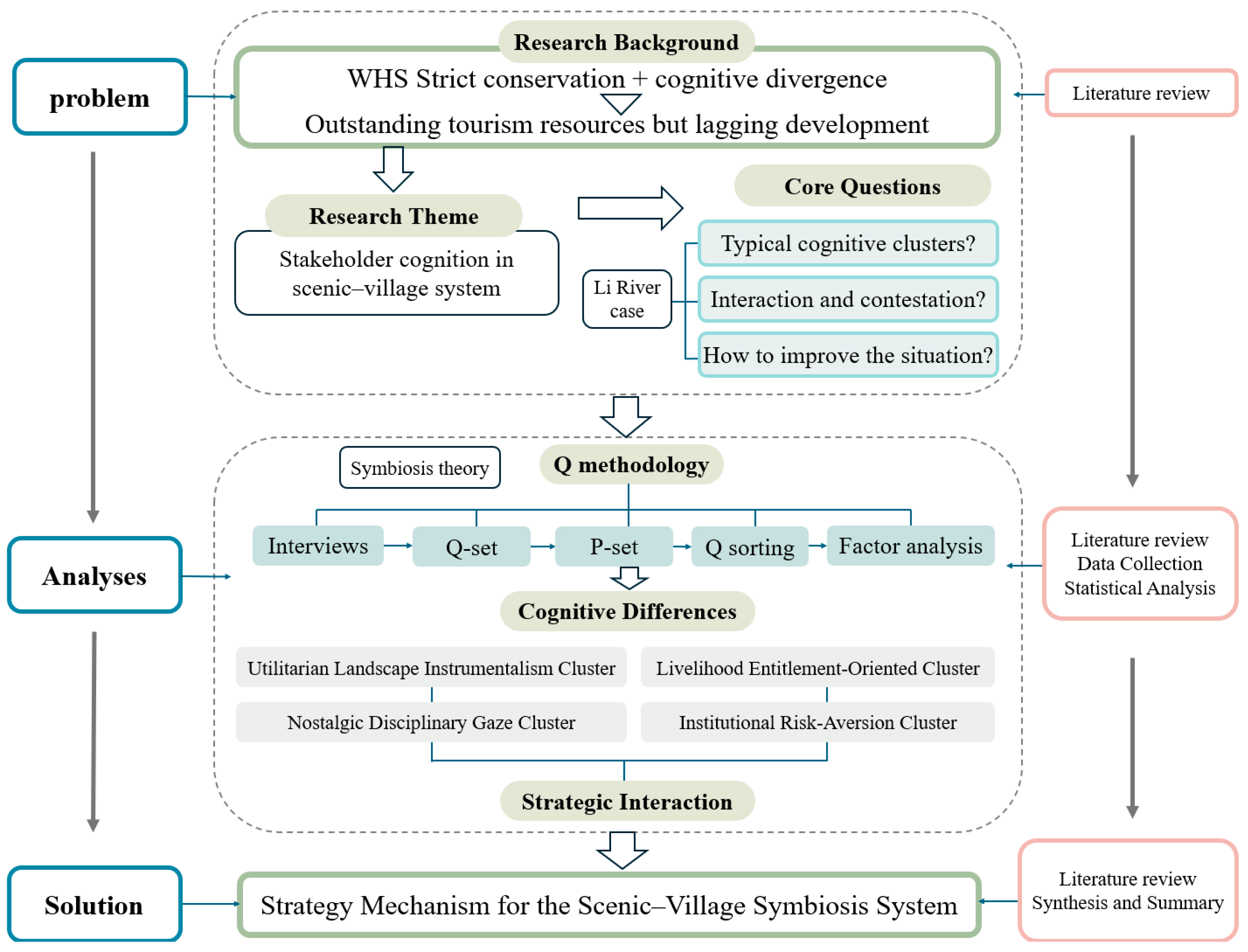
The research design follows a progressive logic from problem identification to cognitive extraction and strategy development. First, grounded in stakeholder theory and symbiosis theory, the study focuses on the conservation–development dilemma in scenic villages within the Li River Scenic Area. Second, Q methodology was employed to identify heterogeneous stakeholder cognitions by combining in-depth interviews with factor analysis of Q-sorting results. Factor analysis, as the core statistical technique in Q methodology, enables the extraction of shared patterns of subjective viewpoints while preserving the qualitative meaning of individual judgments and supporting comparison across stakeholder groups. Third, the resulting factor structures were triangulated with field notes and interview materials to deepen the interpretation of interaction logics and governance conflicts. Finally, the analytical results were translated into actionable coexistence strategies, allowing the research design to move beyond descriptive diagnosis toward explanatory insights and practical implications (Figure 1).

3.2. Study Area

The Li River Scenic Area, located in Guangxi Zhuang Autonomous Region, China, constitutes a rare WHS where terrestrial karst formations, riverine landscapes, and cultural heritage are integrated. Since being designated in 1982 as one of China’s first national-level scenic and historic interest areas, the region has been governed by stringent measures of landscape protection, ecological management, and tourism regulation. In 2014, it was formally inscribed on the World Heritage List by UNESCO as an important component of the “South China Karst (Phase II)”.
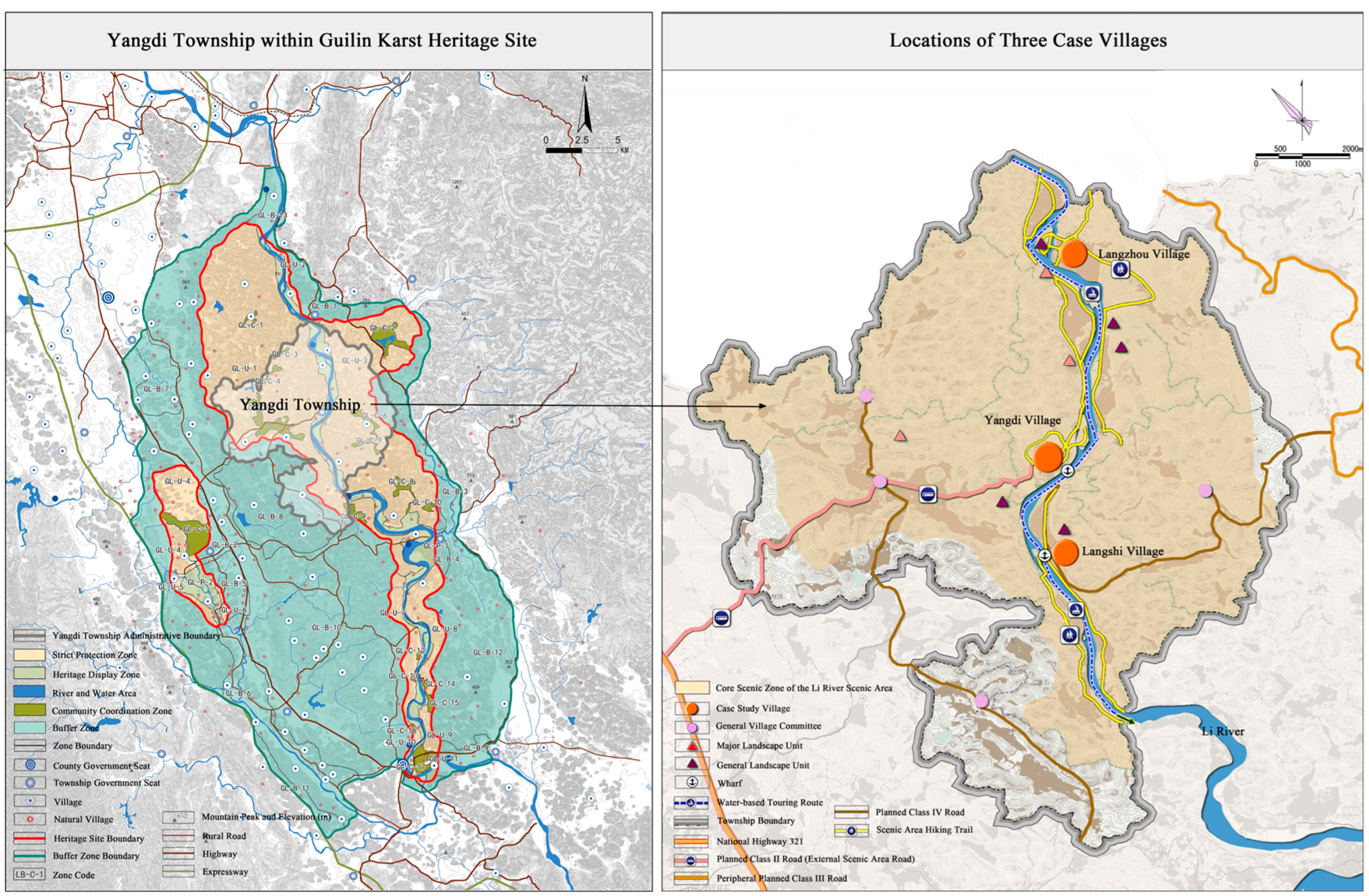
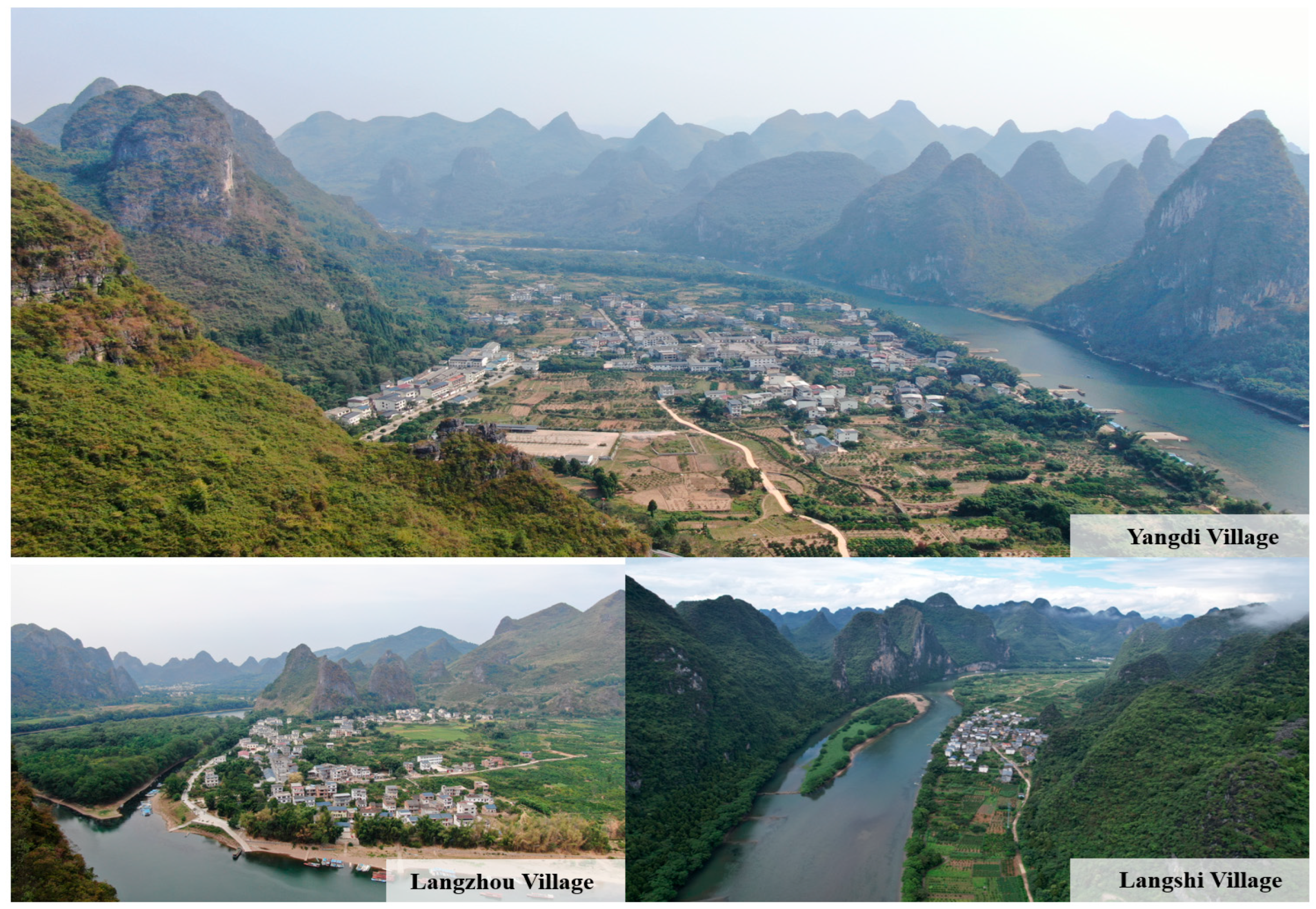
This study examines three villages within Yangdi Township: Yangdi, Langshi, and Langzhou, all located in the prime core area of the scenic zone (Figure 2). Consequently, they feature acute preservation-development tensions and act as representative cases for examining scenic-village symbiosis under intensive regulatory contexts such as WHSs and national parks (Figure 3).
To determine the tourism development stage of a region, this study draws on the Tourism Area Life Cycle (TALC) model, which posits that destinations evolve through a sequence of stages—exploration, involvement, development, consolidation, stagnation, and decline or rejuvenation—each characterized by distinct patterns in visitor numbers, infrastructure, economic reliance on tourism, and local engagement. This model is widely used in tourism research to conceptualize and operationalize destination development stages [52], providing the categories and criteria adopted in our analyses. Based on comparisons of demographic structure, industrial characteristics, and tourism intensity, the three villages are discovered to represent distinct stages of the tourism development cycle (Table 1).
Yangdi is in the consolidation or maturity stage, with a relatively well-established tourism reception system and market foundation. It enjoys a stable tourist flow and emerging agglomeration effects. However, resources and revenues are increasingly concentrated among leading enterprises, leaving ordinary villagers with limited opportunities to benefit from asset appreciation. Homogeneous low-end competition becomes intense, constraining overall quality improvement, while increasingly stringent regulations have restricted the emergence of small-scale innovative enterprises.
Langshi is in the stage of incubation. It preserves relatively intact clusters of Qing-dynasty architecture and has witnessed several successful micro-renewal projects. Nevertheless, weaknesses persist in financial capital, technical capacity, and tourism knowledge, and the village has not yet developed a systematic tourism industry.
Langzhou is in the stage of potential cultivation. Tourism has not yet become a defining feature of the local economy, which remains dominated by agriculture. Infrastructure remains underdeveloped, and the village has limited capacity to accommodate visitors. Its advantages include a well-preserved ecological environment and an intact rural landscape. However, endogenous development momentum is weak, and villagers’ awareness of tourism participation remains limited.

3.3. Q Statements—Formation of Q-Set

The Q-set was developed through a three-step screening process grounded in symbiosis theory and standard Q methodological practice. First, guided by the ternary structure of symbiosis theory, namely symbiotic environment, symbiotic unit, and symbiotic pattern [53,54], the symbiotic environment was mapped onto observable elements such as architectural character, landscape configuration, and infrastructure; the symbiotic unit was deconstructed into stakeholder behavior [55], while the symbiotic pattern was embodied as institutional rules [56]. Based on this mapping, a four-dimensional spatial rights measurement system was constructed, including appearance rights, land-use rights, facility rights, and behavioral rights, which provided the structural basis for Q statement design. Second, an initial statement concourse was generated through systematic review of academic literature, policy documents, and public reports, and was refined through field interviews and document analysis in Yangdi Township to ensure contextual relevance. Third, the preliminary statements were screened through expert review to ensure structural correspondence, cognitive distinctiveness, and suitability for forced-choice sorting. Three experts with backgrounds in urban and rural planning and heritage governance participated in the review process. Through iterative refinement, a final set of 40 Q statements was established for subsequent Q sorting and factor analysis (see Table A1).

3.4. Q Participants—Formation of P-Set

This study employs a stratified purposive sampling approach to capture the key actors and stakeholders involved in the spatial practices of Yangdi Township. Data collection for the Q methodological study was carried out between July and September 2025, including face-to-face interviews and Q sorting conducted during multiple field visits to the three villages and relevant institutions. An equal-allocation principle was applied across the three case villages, with 16 Q-sorting participants selected from each village to ensure cross-village comparability. Within each village, participants were stratified by spatial action roles, including resident villagers, local tourism operators, village-level governance actors, and on-site users, with four participants selected for each role category. In addition, seven external actors with long-term involvement in scenic-area governance, planning, or related professional practice were included. In total, 55 valid Q sorts were obtained and entered into factor analysis. Sampling followed the principle of variation saturation, consistent with Q methodology, whereby participant selection aims to exhaust qualitatively distinct viewpoints and is considered sufficient once additional participants no longer introduce new cognitive positions [40,42]. The demographic characteristics of the P-set are summarized in Table 2.

3.5. Q Sorting

A forced “±5” normal-distribution structure was used: Q statements were sorted into three categories—“disagree,” “neutral,” and “agree”—and distributed according to a predetermined quasi-normal pattern (Figure 3). Prior to sorting, respondents were required to read through and comprehend all statements to ensure the validity of their sorting and enhance interpretation during subsequent interviews.

4. Results

This study employs the Q-methodology software KADE version 1.2.1. Principal components analysis (PCA) was first performed on the correlation matrix, followed by Varimax rotation; KADE automatically retained the eight factors with the largest eigenvalues. The Kaiser criterion (eigenvalue > 1) was used as a screener [40], but factor retention also considered cumulative explained variance, loading stability, and interpretability [42]. When cumulative explained variance reaches 60–70% and the factors have clear, nameable themes, additional factors will introduce noise [41]. The results of the factor extraction are shown in Table 3.
In this study, the first four factors jointly explain 69% of the total variance and exhibit stable loading patterns with coherent thematic interpretations, reflecting differentiated stakeholder cognitions of spatial rights. The remaining factors each explain less than 4% of the variance and lack thematic stability, and thus are excluded from further analysis (Table 2). The four retained clusters include Utilitarian Landscape Instrumentalism (F1, 29%), Livelihood Entitlement-Oriented (F2, 20%), Institutional Risk-Aversion (F3, 11%), and Nostalgic Disciplinary Gaze (F4, 9%). The factor scores corresponding to the respective rankings are shown in Table 4.

4.1. Utilitarian Landscape Instrumentalism Cluster

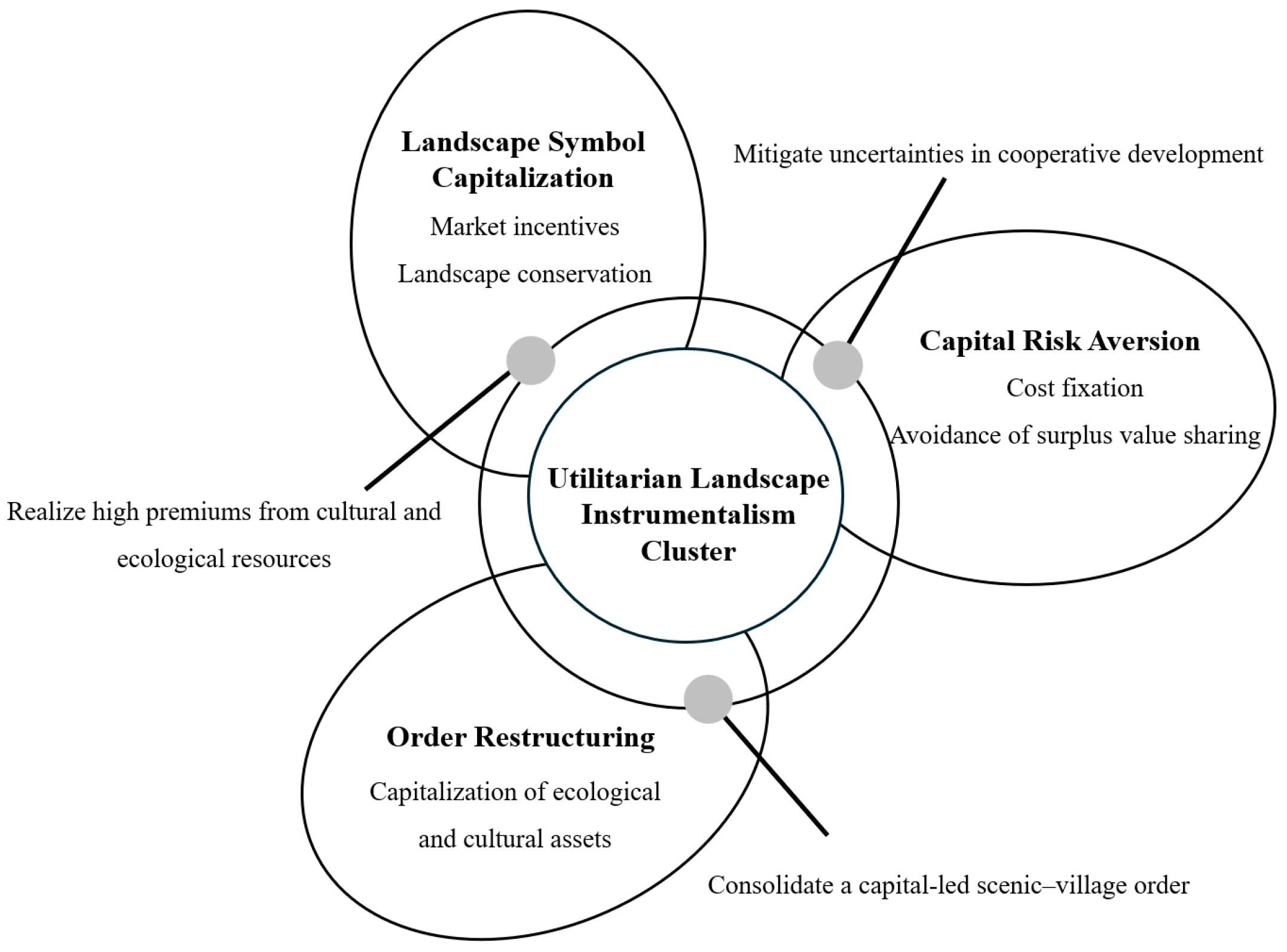
The Utilitarian Landscape Instrumentalism Cluster associates vernacular landscape elements with market gains, regarding landscape preservation as a tool to improve commercial values realized through curated presentation and tourism operation.
In practice, stakeholders of this cluster favor highly recognizable traditional symbols, such as pitched roofs (Q1, Z = +2.25), coarse-textured finishes (Q5, Z = +1.91), and gray-beige façades (Q9, Z = +1.88). They believe these features elevate visitor experience and contribute to spatial value premiums. Regarding property rights, they support a “homestead-leasing-only” model (Q32, Z = +1.81) to reduce partnership risks and secure exclusive profits, while firmly opposing “equity-share dividends” (Q31, Z = −2.12) to avoid profit distribution across the community (Table 5).
Examples of this cluster include tourism enterprises and individual homestay/farm-stay operators, typically found in the highly vibrant homestay cluster of Langshi Village and the waterside tourism belt of Yangdi Village. These stakeholders typically instrumentalize landscape preservation as a market enhancement tool and favor cooperative models with controllable risks. They have the negative potential to diminish communal public space, stratify tourism experiences benefiting high-spending visitors, exclude local residents from benefit chains, and over-commercialize landscape symbols, distorting cultural authenticity and ecological integrity (Figure 4).

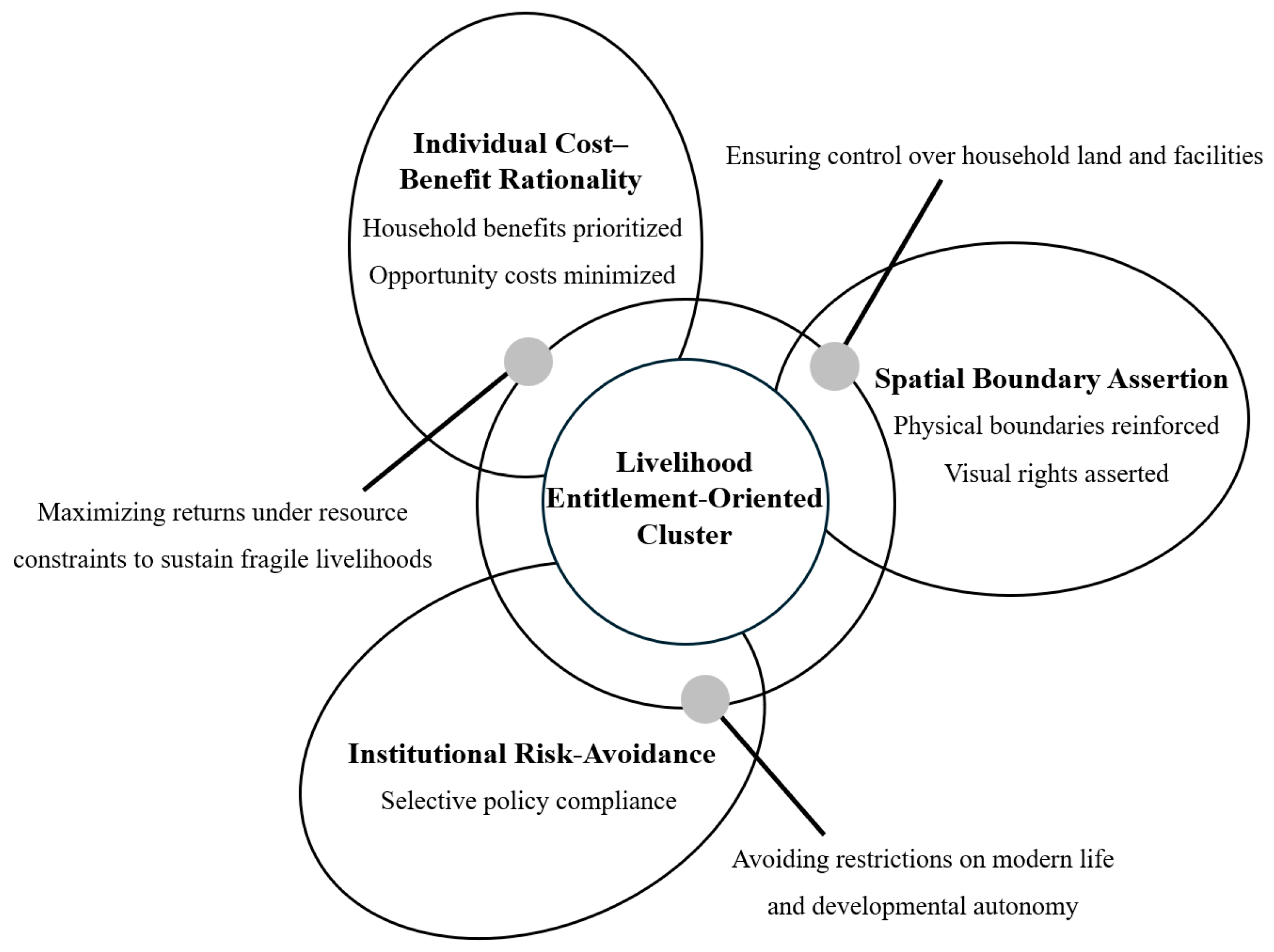
4.2. Livelihood Entitlement-Oriented Cluster

The Livelihood Entitlement-Oriented Cluster prioritizes private property rights and household livelihoods, treating homestead land as essential for intergenerational inheritance and economic security. Stakeholders in this group tend to avoid public governance actions that do not yield direct benefits and strategically maximize individual advantages within institutional frameworks.
In practice, they resist modifications that increase economic burden. For example, they oppose concealing water tanks in attics (Q11, Z = −1.78) because they believe it raises leak risks and maintenance complexity. They disapprove of installing standardized septic tanks (Q21, Z = −2.11), considering these “non-productive” expenditures that do not increase household income. Conversely, they strongly support vertical expansion by adding building stories (Q8, Z = +2.20) and rebuilding on the original footprint (Q30, Z = +1.47). They also tend to circumvent approval procedures (Q29, Z = −1.79) as a way to improve land-use efficiency within existing regulations (Table 6).
Typical examples are native farming households not engaged in tourism, mostly located in the inland area of Yangdi Village and in traditional agricultural communities such as Langzhou Village. These households mainly earn income from agriculture and migrant labor. They usually (1) emphasize exclusive use of homestead land and intergenerational security; (2) apply a “rational smallholder” cost–benefit logic that rejects public governance measures without direct returns [57,58]; and (3) show a tendency to avoid regulatory constraints. The risks associated with such behaviors include (1) weakening collective engagement in public infrastructure and ecological governance; (2) hindering the implementation of governance norms at the grassroots level; and (3) marginalizing resident farmers during regional transformation driven by tourism due to limited access to tourism benefits (Figure 5).

4.3. Institutional Risk-Aversion Cluster

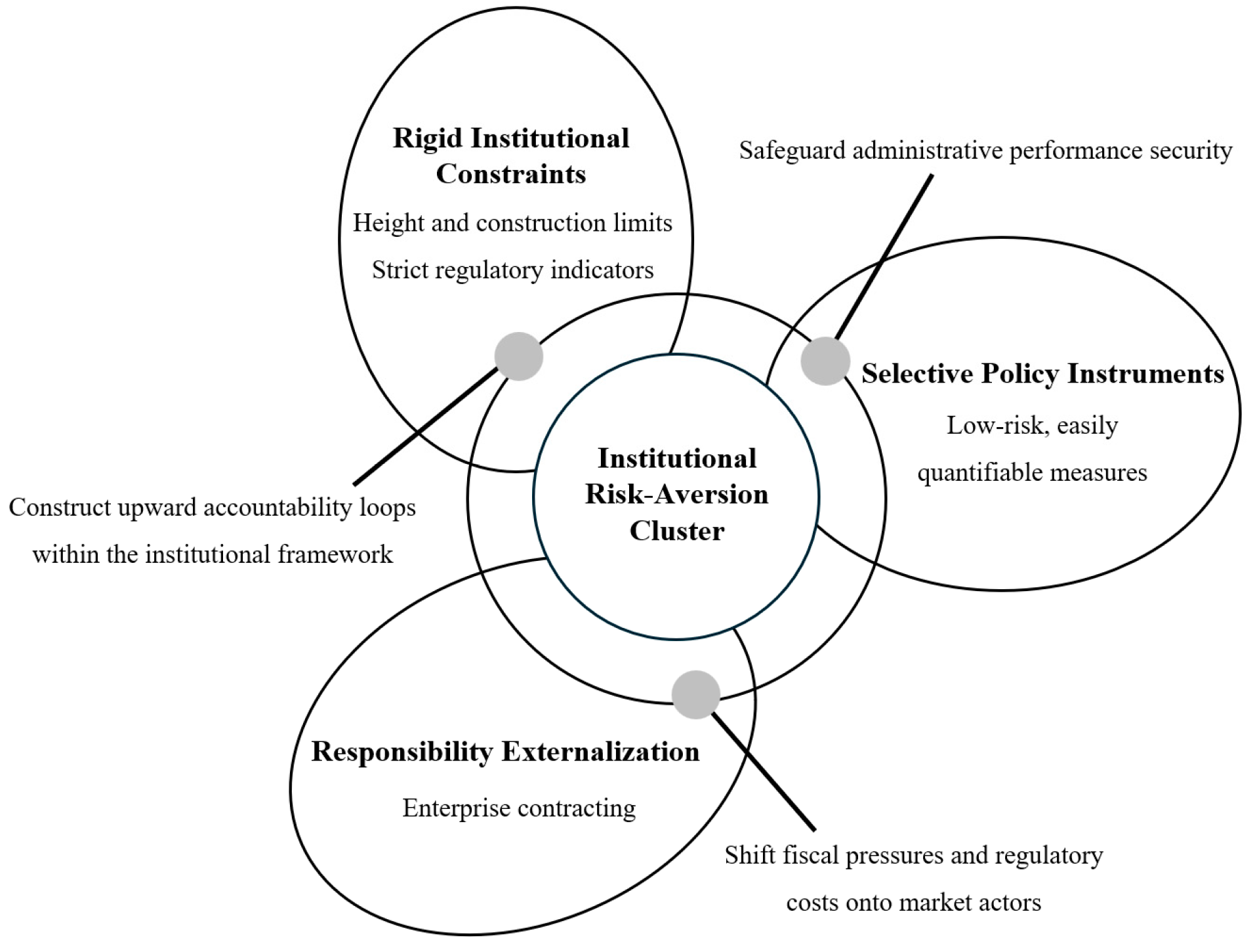
The Institutional Risk-Aversion Cluster relies on policy instruments and administrative regulations to reduce governance uncertainty, prioritizing administrative security and accountability avoidance over developmental benefits.
In practice, stakeholders of this cluster prefer governance measures that are highly controllable and demonstrable. For instance, they support the promotion of pitched roofs (Q1, Z = +1.73) to visibly showcase governance effectiveness; endorse ecological compensation based on business revenue (Q33, Z = +1.43) as a way to shift environmental governance costs through fiscal mechanisms; and strongly advocate for strict approval procedures (Q29, Z = +2.15) and government-led consultations (Q35, Z = +1.72). In contrast, they explicitly oppose relaxing building restrictions (Q8, Z = −1.97) and decentralizing supervision (Q40, Z = −1.42) due to concerns over policy disorder (Table 7).
Representative participants of this cluster include officials from the Li River Scenic Area Management Committee, township government personnel, and village committee members. They tend to: (1) place administrative security as the foremost priority; (2) favor “low-risk, easily quantifiable” policy tools; and (3) rely on rigid institutional constraints to maintain order. Put another way, they hold the ideology of “keeping the Li River in a safe” that eliminates developmental uncertainty. While the mindset protects ecological and safety baselines, it diminishes villagers’ initiative and undermines community dynamism (Figure 6).

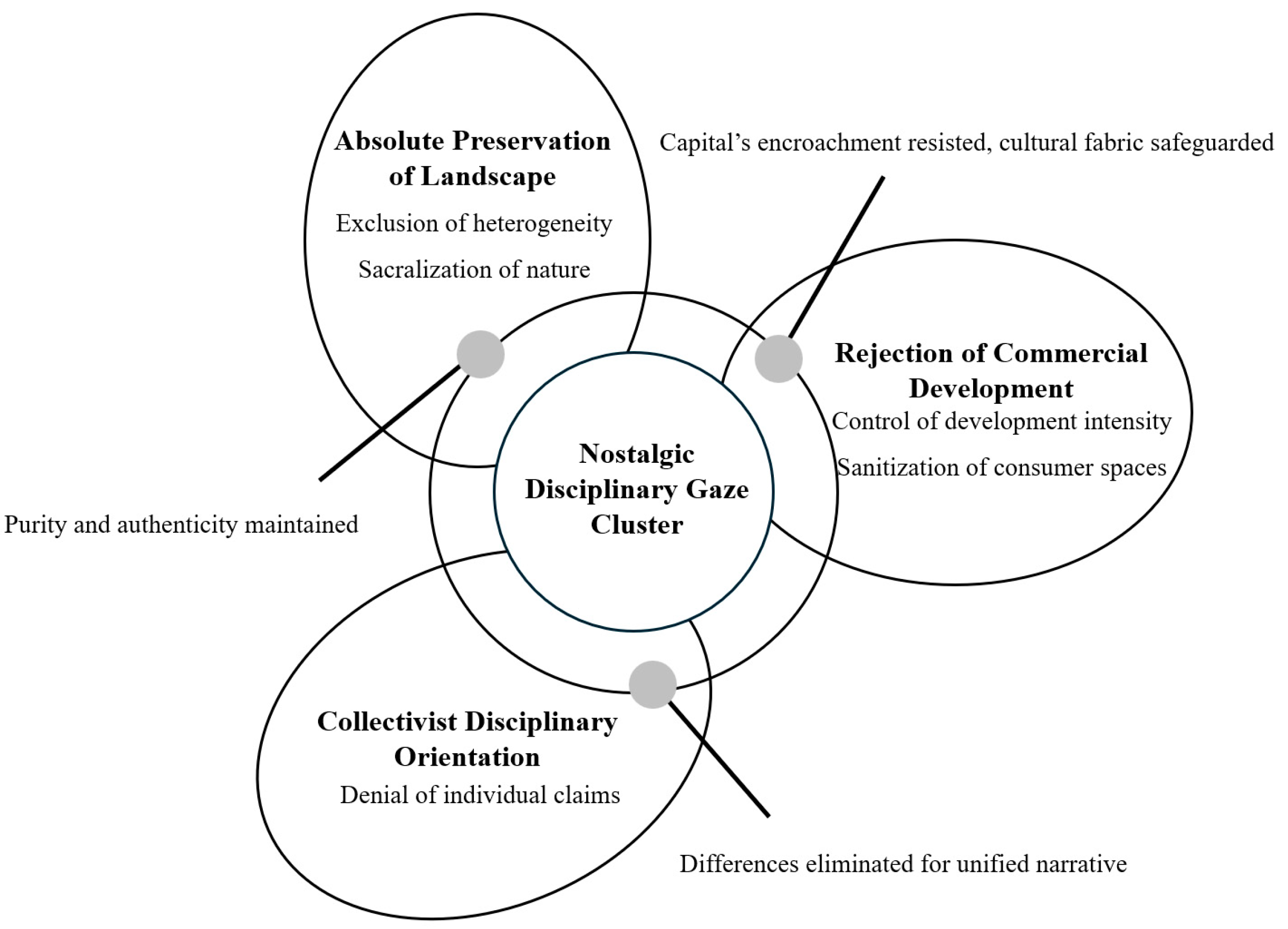
4.4. Nostalgic Disciplinary Gaze Cluster

The Nostalgic Disciplinary Gaze Cluster perceives authentic rural landscapes as sacred cultural and mnemonic entities. This group emphasizes safeguarding purity and integrity by excluding modernization and commercialization, while upholding a normative spatial order through cultural discipline and prescriptive esthetics.
In practice, stakeholders of this cluster endorse the preservation of traditional architectural elements and materials, such as pitched roofs (Q3, Z = +2.09), coarse-textured finishes (Q5, Z = +1.68), and original timber paneling (Q13, Z = +1.48). They also strongly favor preserving native vegetation in its original state (Q17, Z = +1.50). In contrast, they oppose holistic commercial operation models (Q37, Z = −2.05), multi-story buildings (Q8, Z = −1.74), and highly personalized architectural expression (Q10, Z = −1.63). These preferences frequently put this cluster in conflict with commercial developers and villagers engaged in independent construction (Table 8).
Representative participants include study tourists, long-term stayers, humanities scholars, and planning professionals. They tend to: (1) sacralize authentic rural landscapes as cultural specimens; (2) reject modernization and commercialization to safeguard landscape purity; (3) maintain spatial order through external cultural discipline and esthetic judgment. Such behavior risks generating tension between elite external narratives and villagers’ self-built practices, thereby limiting community adaptability and undermining innovation (Figure 7).

4.5. Spatial Distribution of Cognitive Clusters

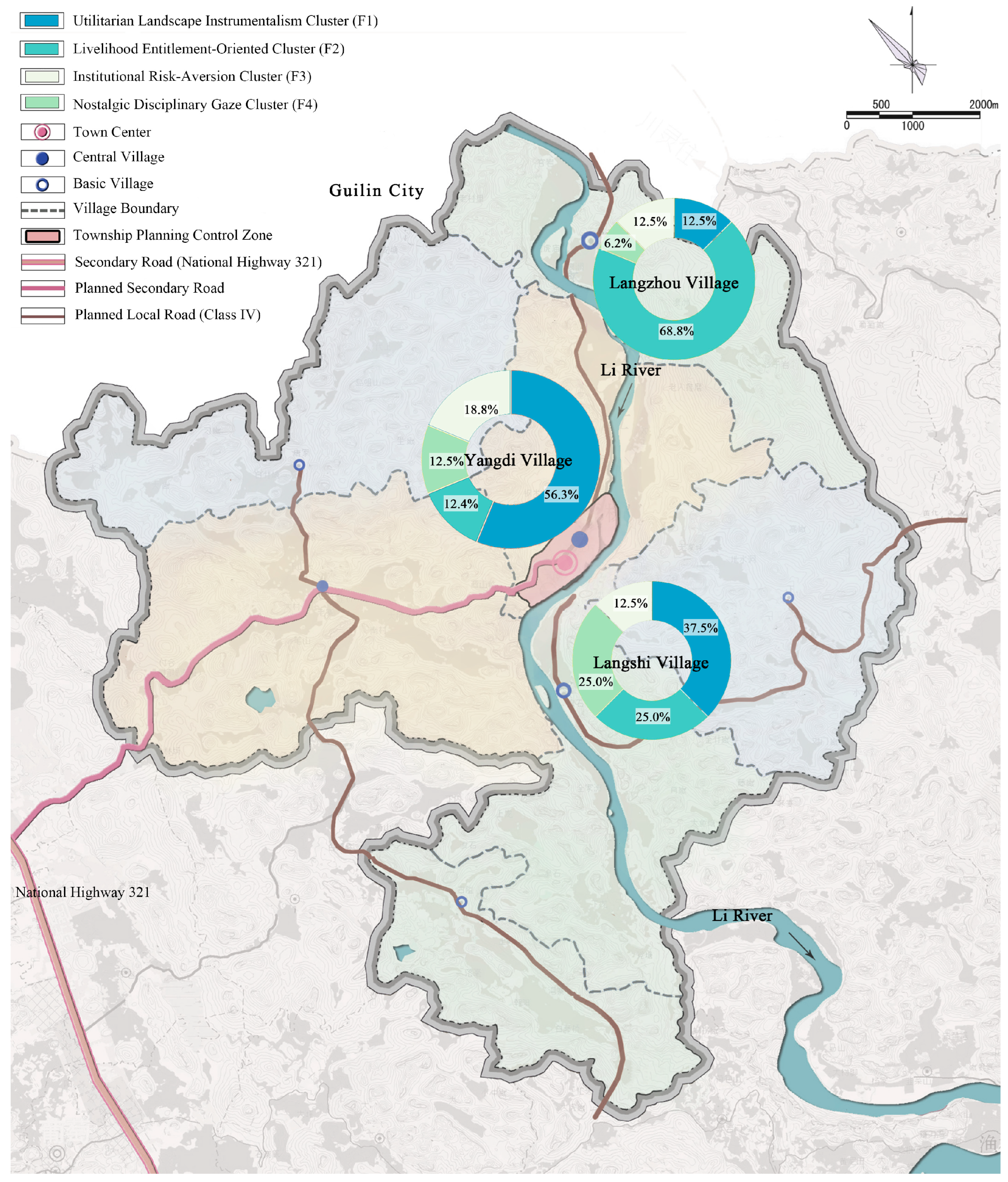
All four cognitive clusters are manifested in each of the three villages, but their relative proportions differ markedly due to differences in location, economic base, and dependence on tourism (Figure 8).
In Yangdi Village, the Utilitarian Landscape Instrumentalism cluster dominates (56.3%), followed by Institutional Risk-Aversion (18.8%). This distribution is derived from Yangdi’s locational advantage and its strict governance environment. As a core gathering node on the Li River route, Yangdi has a well-established tourism service system. Under economic incentives, local operators convert natural scenery and traditional architectural elements into marketable symbols in order to attract visitors and enhance spatial value. However, Yangdi lies in the portion of the scenic zone subject to the most stringent control; pier operation, raft navigation, construction and façade renovation are all subject to intensive regulation. That regulatory regime reinforces the ideology of compliance and risk avoidance, producing a cognitive structure in which capital efficiency and institutional constraint coexist.
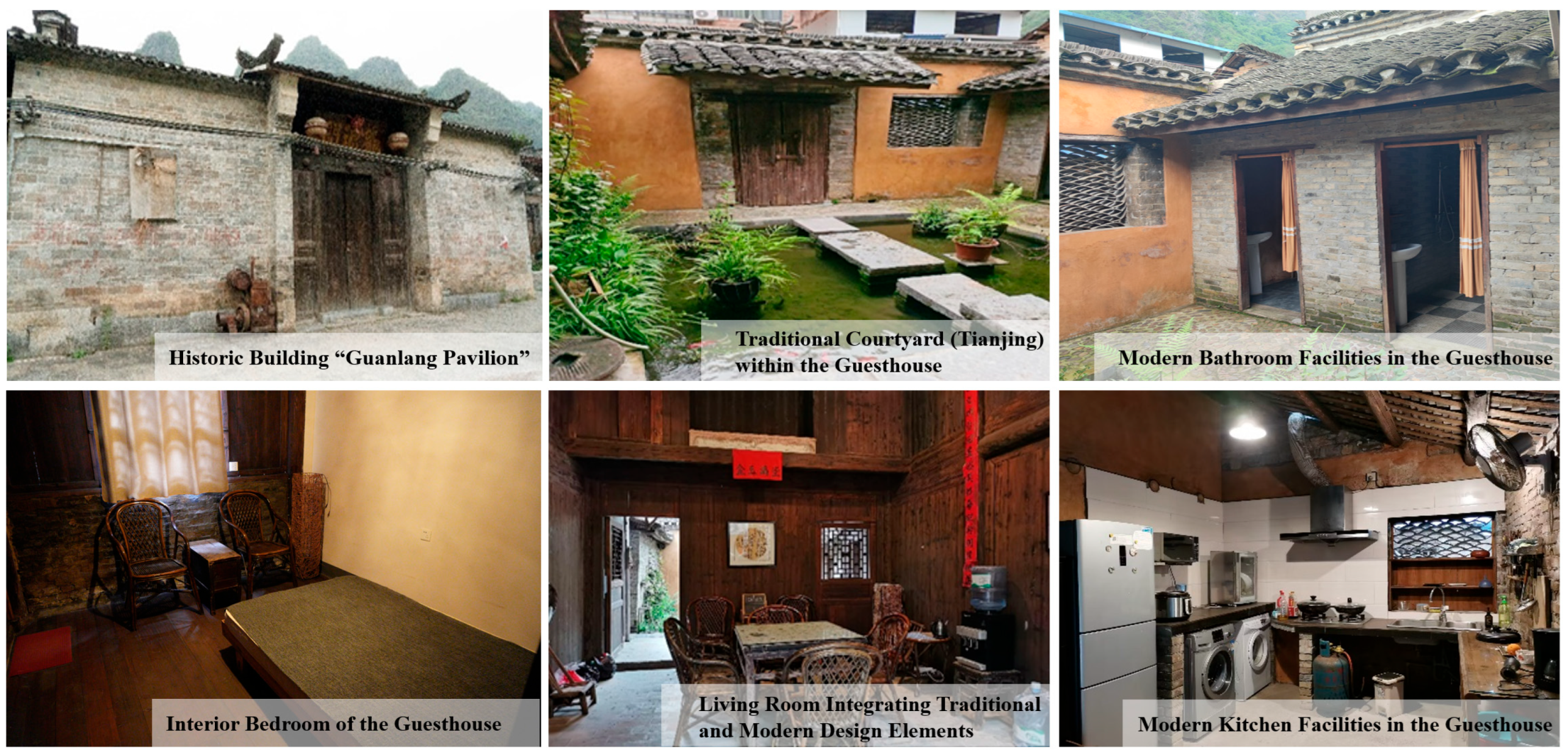
In Langshi Village, the Utilitarian Landscape Instrumentalism (37.5%) and the Nostalgic Disciplinary Gaze (25.0%) clusters are prominent. The village—named for its distinctive rock formations—retains more than twenty Qing-era dwellings, stone alleys, and ancestral halls; these heritage resources have prompted tourists and scholars alike to emphasize authenticity protection. Meanwhile, some successful cases of historic houses transformed into guesthouses have shown how preservation and economic use can reach a point of balance, thereby stimulating more villagers to engage in tourism entrepreneurship. Nevertheless, due to limited funds and technical capacity, most residents remain cautious or reticent about deeper tourism involvement. Figure 9 illustrates the adaptive reuse of a historic building into a guesthouse in Langshi Village.
In Langzhou Village, the Livelihood Entitlement-Oriented cluster holds an absolute majority (68.8%), a result of Langzhou’s stable agricultural base. The village cultivates over 33 hectares of mandarins and raises livestock, gaining stable revenue and thereby reinforcing reliance on agriculture. Although the village retains heritage elements such as ancient Ming/Qing roads, dwellings and wells, these assets have not been converted into sustainable economic opportunities, and tourism remains marginal.
The spatial distribution of these cognitive clusters suggests that effective scenic-village symbiosis strategies must fully consider and respond to the stakeholder cognition differences shaped by local contexts, and such an understanding should serve as the realistic starting point for subsequent conflict mediation and consensus building.

4.6. Coupling and Tension Among Cognitive Clusters

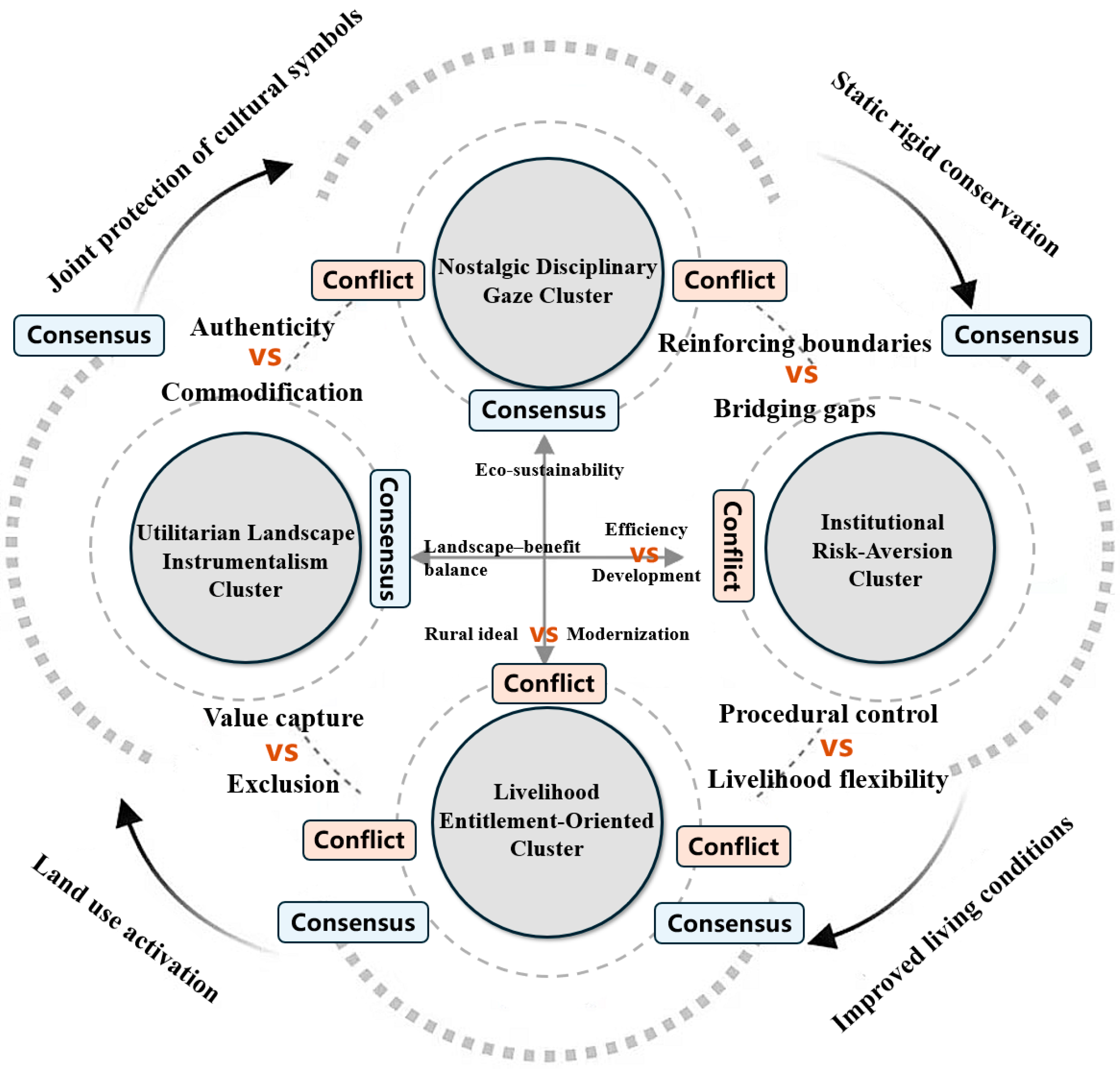
The four cognitive clusters are not isolated entities; rather, across the dimensions of landscape preservation, land use, conservation orientation, and developmental orientation, they form a multidimensional web of coupling and tension (Figure 10).
In landscape preservation, both the Nostalgic Disciplinary Gaze Cluster and the Utilitarian Landscape Instrumentalism Cluster emphasize the safeguarding of natural and cultural scenery. Yet their motives diverge: the former insists on authenticity and purity, while the latter is driven by economic rationality, treating restoration and beautification as instruments for tourism appeal and spatial premiums.
In land use, the Utilitarian Instrumentalism Cluster and the Livelihood-Entitlement Cluster share an aspiration to enhance homestead efficiency and land value. However, the market-oriented approach of the former frequently compresses the benefit space of the latter through mechanisms such as rent fixation and surplus appropriation.
In conservation orientation, the Risk-Aversion Cluster and the Nostalgic Gaze Cluster both lean toward rigid forms of protection. But the former focuses on bridging urban-rural disparities, while the latter reinforces their separation. At times, the Risk-Aversion Cluster and the Utilitarian Cluster temporarily align around “landscape enhancement plus economic growth,” but the structural tension between market efficiency and administrative risk avoidance remains unresolved.
In development orientation, both the Livelihood-Entitlement Cluster and the Nostalgic Gaze Cluster acknowledge the importance of ecological sustainability. However, the former favors modernization to improve living conditions, whereas the latter clings to an idealized rural form. Likewise, livelihood households and risk-averse administrators share a consensus on safety and welfare, yet the rigidity of institutional frameworks restricts the flexibility and autonomy of residents.
Taken together, these interactions create a cycle of “partial consensus—structural conflict.” This dynamic explains why even world-class heritage destinations such as the Li River Scenic Area, despite their distinctive locational and scenic advantages, repeatedly encounter developmental dilemmas in tourism. The central challenge lies in constructing more resilient coordination mechanisms across divergent cognitions. This is precisely the logical starting point for the scenic–village symbiosis strategies discussed in the following section. Figure 10 illustrates the coupling–tension network of stakeholders in the scenic–village symbiosis.

5. Discussion

This chapter interprets the findings by centering on stakeholder cognition and situating the four identified cognitive clusters in direct dialog with international research, particularly Q-method studies, on rural sustainability in World Heritage contexts.

5.1. Cognitive Plurality and Governance Tension

The findings indicate that governance tension arises less from a simple conservation–development dichotomy than from the coexistence of multiple cognitive clusters. The four clusters identified in this study, namely Utilitarian Landscape Instrumentalism, Livelihood Entitlement-Oriented cognition, Nostalgic Disciplinary Gaze, and Institutional Risk-Aversion, reflect divergent interpretations of legitimacy, acceptable change, and benefit entitlement.
This result is consistent with international Q-method studies that identify cognitive incompatibility as a key source of heritage governance conflict [45,59]. However, this study extends existing research by showing that competing cognitive logics often operate simultaneously within the same governance system. This coexistence helps explain why strong regulation and shared conservation objectives do not necessarily translate into stable governance outcomes.
International community-based tourism research provides a useful point of comparison. Studies from Tuscany, Italy show that community participation in eco-tourism planning can foster more symbiotic relationships between tourism development and local livelihoods [60], while research from Sarawak, Malaysia demonstrates that local involvement and empowerment are associated with improved social, cultural, economic, and environmental outcomes [61]. In contrast to the implicit assumption that participation automatically enhances legitimacy, the present findings suggest that participation is cognitively mediated, and its effects depend on how different cognitive clusters interpret participation. Similarly, benefit-sharing mechanisms highlighted in international research reduce conflict only when they align with dominant cognitive configurations [62].

5.2. Capacity Mediation in Heritage Activation

A second theme concerns the relationship between cognition and capacity conditions. Although support for heritage protection and activation is widely expressed, its translation into practice is often constrained by technical skills, organizational capacity, and financial continuity.
International research on heritage adaptive reuse indicates that pilot demonstration projects help clarify feasible pathways [63], skills shortages remain a major barrier [64], and stable financing mechanisms are essential for long-term viability [65]. Compared with these cases, the present study shows that supportive cognition toward heritage activation is frequently conditional, underscoring capacity as a key mediator between cognitive orientation and governance outcomes.

5.3. Livelihood Rationality and Stage-Sensitive Cognition

The prominence of Livelihood Entitlement-Oriented cognition reflects rational concerns with income stability and risk avoidance. This pattern aligns with international research showing that incremental environmental improvement and diversified economic integration contribute to rural sustainability [66], and that cooperative models can stabilize incomes by extending value chains [67].
Tourism development stages matter not as deterministic trajectories, but because they reshape the relative dominance and interaction of cognitive clusters. The findings indicate that transitions toward diversified tourism systems depend on institutional credibility and perceived distributive fairness across cognitive groups.

6. Recommendations

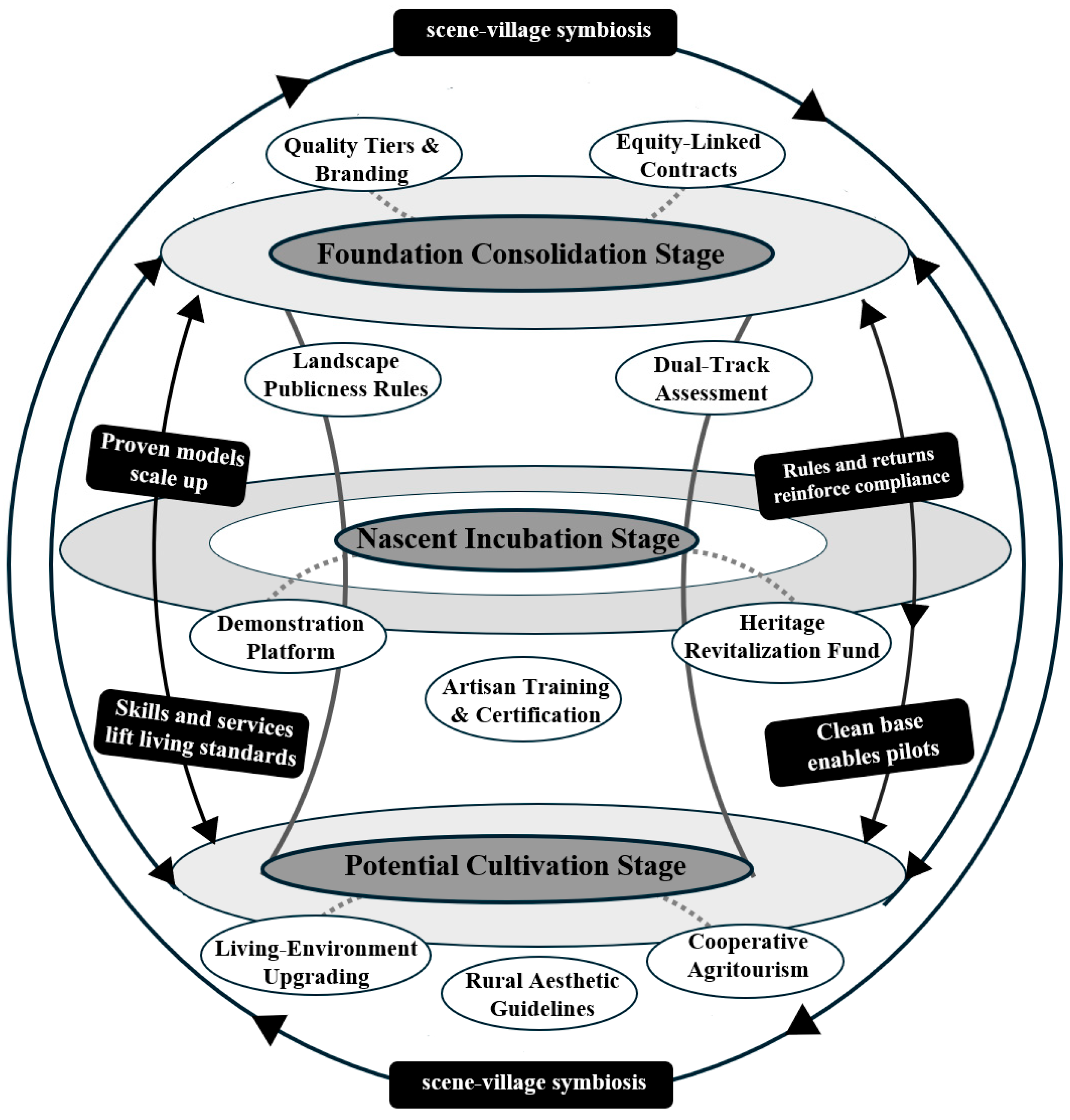
Building on the preceding analysis, the three villages exhibit distinct cognitive structures shaped by their developmental stages and spatial contexts. Yangdi, in the consolidation stage, combines strong tourism infrastructure and strict regulation, producing an efficiency- and compliance-oriented cognition. While this ensures order and resource conversion, it limits inclusiveness and innovation; thus, a shift toward value co-governance and public space sharing is required. Langshi, in the incubation stage, reflects both conservation and development motives derived from its rich heritage assets and emerging adaptive reuse cases. Its potential for quality upgrading is evident but constrained by weak capacity and coordination; hence, simultaneous cultivation of skills and institutional mechanisms is essential. Langzhou, in the potential-cultivation stage, remains livelihood-oriented under an agricultural economy, ensuring stability yet lacking participation and initiative. It therefore calls for a gradual approach that improves living environments and organizational readiness to enable future integration (Figure 11).

6.1. Yangdi Village: Quality Enhancement and Value Sharing in Consolidation Stage

To address the low-end drift caused by the instrumentalization of landscape symbols and a bias toward short-term monetization among some utilitarian actors, tiered standards and a brand certification system for hotels and guesthouses, food and beverage, and retail should be established. Traffic allocation, tax preferences, and credit support should be linked to grades. Competition would thereby be shifted from volume-for-price to value-through-quality, superficial consumption of natural scenery and traditional imagery would be avoided, and overall service levels and quality would be raised.

6.1.1. Tiered Quality and Brand Development Mechanism: From Price to Quality

To address the low-end drift caused by the instrumentalization of landscape symbols and short-term monetization among some utilitarian actors, tiered standards and a brand certification system for hotels and guesthouses, food and beverage, and retail should be established. The provision of traffic allocation, tax preferences, and credit support should be contingent upon the assigned grades. The nature of competition would thereby shift from volume-through-price to value-through-quality. Consequently, superficial consumption of natural scenery and traditional imagery would be avoided, and overall service levels and quality would improve.

6.1.2. Equity-Linked Contracting: Resolving Abundant-Resources-but-Limited-Returns Dilemma

To address the exclusion of livelihood-oriented households from value chains, collective equity clauses and auditable dividend arrangements should be incorporated in core projects. Operating gains should be returned to village collectives and residents according to project performance, while operating incentives are retained and third-party review is introduced. Through contract- and performance-based profit sharing, rules will become transparent and indicators verifiable, leading to coordinated capital efficiency and community equity.

6.1.3. Public Landscape Regulation: Preventing Enclosure and Maintaining Connectivity and Fairness

To counter the privatization of waterfronts and field-edge landscape resources by utilitarian actors, binding obligations for the openness of key waterfront corridors, view corridors, and access nodes should be specified in statutory planning and approvals. Openness should be conditionally linked to concession renewal and capacity determinations so that stratified segmentation of public space is curbed and fair access together with continuity of experience is protected.

6.1.4. Assessment for Protection and Development: From Rigid Prohibitions to Guided Correction

Given that risk-averse administrators tend to avoid governance risk, while utilitarian and livelihood-oriented actors tend toward spontaneous expansion, development indicators such as resident satisfaction, coverage of alternative livelihoods, and conflict-resolution rates should be taken into account in addition to ecological and safety baselines. Household surveys and third-party audits should support evaluation and corrective action so that control can shift from prohibition to guidance.

6.2. Langshi Village: Heritage Activation and Capacity Building in Incubation Stage

Given the coexistence of protection and development orientations amid capacity deficits, the strategies focus on capacity building. Endogenous momentum is to be activated through external capacity support so that tensions are converted into resilience.

6.2.1. Demonstration-Led Participation: Using Support and Educational Functions to Broaden Entry

To address the difficulties of livelihood-oriented households in entering tourism under conditions of limited finance, unclear pathways, and low confidence, a mixed-ownership cultural-tourism platform should be created. Two or three benchmark adaptive-reuse projects should be selected. Integrated support should include surveying, design guidance, approval coordination, light-asset operations, and market access. Demonstration projects should be open for public viewing and financial transparency, accompanied by join-in training and channels for shareholding, thereby guiding early entrepreneurs toward standardized and replicable operations.

6.2.2. Local Craftspeople Training System: Regenerating In-Place Building Capacity and Ensuring Delivery of Desired Character

To remedy insufficient technical capacity among in-place builders, a complete system should be established that covers transmission of intangible heritage techniques, courses on modern construction codes and materials, graded examinations and credentialing, preferential hiring and subsidies for certified artisans, and eligibility to undertake government projects. The operability of repair and renewal would thereby be improved while local employment is increased.

6.2.3. Heritage Conservation and Adaptive-Reuse Fund: Stabilizing Finance and Recycling Incentives

To resolve unstable funding and limited maintenance continuity, a long-term fund supported by government subsidies, corporate donations, and social capital should be established. Revenues from ticketing, cultural-creative products, and operating premiums should be returned to the fund under explicit rules to finance subsequent repairs and public services, thereby forming a sustainable loop from capital supply to project implementation and benefit recycling.

6.3. Langzhou Village: Living-Environment Safeguards and Gradual Introduction in Potential-Cultivation Stage

Given the absolute predominance of livelihood-oriented cognition, a gradualist approach is followed. Improvements to the living environment are taken as the foundation, and the conditions for future tourism development are cultivated in a measured way.

6.3.1. Comprehensive Living-Environment Upgrading: Using Foundational Works to Support Ordered Development

To respond to pragmatic concerns about function and cost, basic conditions should be improved first so that accessibility, cleanliness, and safety are ensured. Lightweight, expandable upgrades to roads and wastewater systems, optimized wayfinding and lighting, and pocket public spaces should be adopted to lower management costs and lay the groundwork for subsequent uses.

6.3.2. Cooperative-Led Agritourism Integration: Extending the Chain and Consolidating the Industrial Base

Although agricultural incomes are stable at this stage, room for value addition is limited. A mixed-ownership cooperative should therefore integrate farmers, village collectives, and enterprises to convert leading crops and local intangible-heritage techniques into combined offerings of products, demonstrations, and experiences. Connections should be made to upstream visitor nodes and pass systems. The industrial chain would be extended and per-unit value raised without weakening agricultural cash flows.

6.3.3. Local Esthetics Cultivation: Raising Residents’ Aesthetic Awareness and the Quality of Self-Built Housing

To bridge the gap between cost- and function-driven self-building practices and requirements for coordinated village character, esthetic education should be provided. Localized design guidelines, pattern books, and model displays should be issued, supplemented with on-site advice so that residents understand what constitutes coherence, attractiveness, and utility. Participation by nostalgic-gaze advocates in guideline preparation and explanation should be encouraged. An internal aesthetic consensus can then be formed gradually, providing a more coordinated environmental base for future tourism development.

7. Conclusions

This study identifies four cognitive clusters among key stakeholders in the Li River World Heritage Site and shows that their distributions differ across villages at different stages of tourism development. The findings indicate that each development stage is associated with a distinct cognitive orientation that shapes how conservation, livelihood, and tourism interests are understood and negotiated. Based on this analysis, the study proposes stage-specific and village-based strategies to respond to dominant cognitive patterns and ease tensions in spatial governance, benefit sharing, and heritage conservation.

7.1. Methodological and Practical Implications

Methodologically, this study demonstrates the usefulness of Q methodology for examining stakeholder cognition in rural heritage governance. By linking cognitive clusters to tourism development stages and governance issues, the analysis offers a clear way to translate subjective viewpoints into insights relevant to planning and management.
Practically, the findings suggest that governance challenges and planning priorities vary across development stages in rural World Heritage Sites. Rather than relying on uniform conservation or tourism policies, a cognition-sensitive and stage-adaptive approach can improve policy acceptance, reduce governance conflicts, and better align heritage protection with community livelihoods.

7.2. Limitations and Future Research

This study still has certain limitations that suggest directions for future research. First, the empirical analysis is based on a specific World Heritage Site; future studies could extend the framework to other ecologically fragile heritage contexts to further examine its robustness and applicability. Second, the analysis is based on cross-sectional Q-sorts and therefore captures stakeholder cognition at a single point in time; future research could incorporate longitudinal follow-up to explore how cognitive structures evolve over time. In addition, this study does not differentiate stakeholders by age. Given that experience and expectations may vary across age groups, future research could explicitly integrate age-based distinctions to provide a more nuanced understanding of cognitive diversity in scene–village governance.

Author Contributions

Conceptualization, B.L. and J.C.; methodology, B.L.; software, J.C.; validation, J.C. and B.L.; formal analysis, J.C.; investigation, J.C.; resources, B.L.; data curation, J.C.; writing—original draft preparation, J.C.; writing—review and editing, G.B. and L.Z.; visualization, J.C.; supervision, G.B.; project administration, B.L.; funding acquisition, B.L. All authors have read and agreed to the published version of the manuscript.

Funding

This research was funded by the Guangxi Key Research and Development Plan Project (Grant No. AB23026053); the National Natural Science Foundation of China (Grant No. 52268010); and the Guangxi Philosophy and Social Science Research Program (Grant No. 23FSH018).

Institutional Review Board Statement

Not applicable.

Informed Consent Statement

Not applicable.

Data Availability Statement

The data supporting the findings of this study, comprising interview transcripts and Q-sort data, are not publicly available due to their containing identifiable information that could compromise the privacy of the interviewees. However, the data are available from the corresponding author upon reasonable request and execution of a confidentiality agreement for verification purposes only.

Acknowledgments

The authors gratefully acknowledge the support received during the completion of this study.

Conflicts of Interest

The authors declare no conflicts of interest.

Appendix A

Table A1. Summary of Q statements.
No.Q-Statement Content
Symbiotic EnvironmentQ1Buildings with pitched roofs are esthetically pleasing and practical, providing drainage, ventilation, and equipment concealment while maintaining the traditional rhythm of the landscape.
Q2Flat roofs are preferred because they are easier to construct and more cost-efficient.
Q3European-style components such as Roman columns and vase railings should be avoided to maintain rural landscape harmony.
Q4European-style components may be freely adopted to reflect villagers’ diverse modern esthetic preferences.
Q5Coarse-textured finishes on exterior walls are preferred, as they fit the rustic and natural character.
Q6Glazed tiles on exterior walls are desirable because they resist stains and are easy to clean.
Q7Building heights should be limited to three stories to reduce visual intrusion.
Q8Buildings may exceed four stories to make intensive use of homestead land.
Q9Main building colors should be gray-white or brown to integrate with the misty ambience of the Li River.
Q10Exterior wall colors may be individualized, with bright tones bringing vitality and liveliness.
Q11Water tanks and solar equipment should be hidden in the attic to avoid breaking the roofline.
Q12Roof equipment may be externally installed for easier maintenance and lower costs.
Q13Permeable paving should be used for the ground, as it is rustic, natural, and reduces flood risks.
Q14Solid concrete paving is preferred because it is smooth, durable, and suitable for vehicles.
Q15Centralized parking lots should be built to avoid expanding internal roads and to maintain village openness.
Q16Private garages within courtyards are desirable for convenience and time-saving.
Q17Riverside trees should be left to grow naturally to safeguard biodiversity.
Q18Riverside trees may be regularly trimmed to ensure visual continuity of the landscape corridor.
Symbiotic UnitsQ19Household waste should be transported to township treatment stations for centralized disposal by the government.
Q20Household waste should be sorted and treated within the village, managed by villagers themselves.
Q21Livestock manure must be collected in standardized storage facilities.
Q22Small-scale free-range households may continue traditional composting practices.
Q23“Authentic rural” experiences are preferred, such as traditional houses, farming, and orchards.
Q24“Convenient” tourist facilities are needed, such as star-rated homestays, supermarkets, take-out services, and full Wi-Fi coverage.
Q25Farmland should be retained for traditional agricultural use.
Q26Field ridges and marginal plots may be developed into flower-viewing landscapes.
Q27Shallow wetlands should be restored for ecological functions.
Q28Shallow wetlands may be moderately developed, for example, as camping bases.
Q29House extensions must be officially approved before land use.
Q30Reconstruction of old houses may follow the boundaries of the original homestead.
Symbiotic ModesQ31Villagers may contribute homestead use rights as shares in exchange for dividends.
Q32Homestead land may only be leased, not shared, to secure fixed income.
Q33Ecological compensation funds should be drawn from enterprises’ revenues (market-based mechanism).
Q34Ecological compensation funds should be allocated by the government (administrative mechanism).
Q35Major development projects should be decided jointly by the government and enterprises, with villagers attending as observers.
Q36Major development projects should be approved through votes in the villagers’ assembly.
Q37The “Wuzhen model” of holistic commercial operation may be adopted, relocating villagers to resettlement areas.
Q38The “Azheke plan” may be adopted, with village collectives leading development and villagers operating businesses themselves.
Q39Waste generated by tourists should be collected by scenic enterprises, with costs included in ticket prices (socialized corporate responsibility).
Q40Tourists should take away their own waste, with villagers supervising and charging an environmental management fee (monetized individual responsibility plus community oversight).

References

  1. Bramwell, B.; Lane, B. Critical Research on the Governance of Tourism and Sustainability. J. Sustain. Tour. 2011, 19, 411–421. [Google Scholar] [CrossRef]
  2. Saarinen, J. Wilderness Use, Conservation and Tourism: What Do We Protect and for and from Whom? Tour. Geogr. 2016, 18, 1–8. [Google Scholar] [CrossRef]
  3. Hall, C.M. Constructing Sustainable Tourism Development: The 2030 Agenda and the Managerial Ecology of Sustainable Tourism. J. Sustain. Tour. 2019, 27, 1044–1060. [Google Scholar] [CrossRef]
  4. Jamal, T.; Stronza, A. Collaboration Theory and Tourism Practice in Protected Areas: Stakeholders, Structuring and Sustainability. J. Sustain. Tour. 2009, 17, 169–189. [Google Scholar] [CrossRef]
  5. Bai, X.; Xiong, K.; Liu, Z.; Chen, Y.; Zhang, Y.; Liu, Q. The Scientometric Analysis of Karst Ecosystem Structure and Stability: Insights for Sustainable Protection of World Heritage Sites. npj Herit. Sci. 2025, 13, 203. [Google Scholar] [CrossRef]
  6. Guo, Y.; Li, S. Multi-Level Governance of Low-Carbon Tourism in Rural China: Policy Evolution, Implementation Pathways, and Socio-Ecological Impacts. Front. Environ. Sci. 2025, 12, 1482713. [Google Scholar] [CrossRef]
  7. Huq, S.A.; Puthuvayi, B. Stakeholders’ Satisfaction Assessment in Heritage Conservation: Case Study of a Project Performance Model for Thiruvananthapuram Fort Area, Kerala, India. Front. Archit. Res. 2024, 13, 285–304. [Google Scholar] [CrossRef]
  8. Govender, M.; Poti, M.; Nijamdeen, T.W.G.F.M.; Sunanda Kodikara, K.A.; Dahdouh-Guebas, F.; Hugé, J. Mapping Conservation Conflicts by Integrating Social Network Analysis and Q Methodology: A Sea Turtle Case from Sri Lanka. Sci. Rep. 2025, 15, 16658. [Google Scholar] [CrossRef]
  9. Peng, L.; He, L.; Shen, M.; Zhao, M.; Armatas, C.A. Understanding Stakeholder Perceptions of Environmental Justice: A Study of Tourism in the Erhai Lake Basin, Yunnan Province, China. Ecol. Soc. 2023, 28, 1. [Google Scholar] [CrossRef]
  10. Xu, X.; Le, T.H.; Kwek, A.; Wang, Y. Exploring Cultural Tourist Towns: Does Authenticity Matter? Tour. Manag. Perspect. 2022, 41, 100935. [Google Scholar] [CrossRef]
  11. Buurman, M.; Delfgaauw, J.; Dur, R.; Van den Bossche, S. Public Sector Employees: Risk Averse and Altruistic? J. Econ. Behav. Organ. 2012, 83, 279–291. [Google Scholar] [CrossRef]
  12. Matović, S.; Lović Obradović, S.; Gajić, T. Sustainable Tourism in Protected Areas: Comparative Governance and Lessons from Tara and Triglav National Parks. Sustainability 2025, 17, 7048. [Google Scholar] [CrossRef]
  13. Nyaupane, G.P.; Poudel, S.; York, A. Governance of Protected Areas: An Institutional Analysis of Conservation, Community Livelihood, and Tourism Outcomes. J. Sustain. Tour. 2022, 30, 2686–2705. [Google Scholar] [CrossRef]
  14. Phoonjampa, R.; Srirattanaporn, S.; Phumanee, W.; Pierrefeu, C.; Singh, R.; Ong, E.J. Exploring Local Communities’ Perceptions of Protected Area Authorities: A Case Study from Khlong Lan National Park and Mae Wong National Park in Thailand. Front. Conserv. Sci. 2023, 4, 1298768. [Google Scholar] [CrossRef]
  15. Pérez-Calderón, E.; Miguel-Barrado, V.; Prieto-Ballester, J.M. Tourism in Protected Areas in Spain: Perception of Sustainable Development in Protected Areas with Different Levels of Protection. Geoheritage 2024, 16, 17. [Google Scholar] [CrossRef]
  16. Gocer, O.; Boyacioglu, D.; Karahan, E.E.; Shrestha, P. Cultural Tourism and Rural Community Resilience: A Framework and Its Application. J. Rural Stud. 2024, 107, 103238. [Google Scholar] [CrossRef]
  17. Vandermale, E.A.; Mason, C.W. Sustainable Tourism Development and Indigenous Protected and Conserved Areas in Sub-Arctic Canada. Front. Sustain. Tour. 2024, 3, 1397589. [Google Scholar] [CrossRef]
  18. Zhang, Y.; Xiong, K.; Chen, Y.; Bai, X. Spatiotemporal Changes and Driving Factors of Ecological Vulnerability in Karst World Heritage Sites Based on SRP and Geodetector: A Case Study of Shibing and Libo-Huanjiang Karst. npj Herit. Sci. 2025, 13, 65. [Google Scholar] [CrossRef]
  19. Borrini-Feyerabend, G.; Dudley, N.; Lassen, B.; Pathak, N.; Sandwith, T. Governance of Protected Areas from Understanding to Action—Draft for Comments; Convention on Biological Diversity (CBD): Montreal, QC, Canada, 2012. [Google Scholar]
  20. Ostrom, E. A General Framework for Analyzing Sustainability of Social-Ecological Systems. Science 2009, 325, 419–422. [Google Scholar] [CrossRef] [PubMed]
  21. Plummer, R.; Fennell, D.A. Managing Protected Areas for Sustainable Tourism: Prospects for Adaptive Co-Management. J. Sustain. Tour. 2009, 17, 149–168. [Google Scholar] [CrossRef]
  22. Folke, C.; Hahn, T.; Olsson, P.; Norberg, J. Adaptive Governance of Social-Ecological Systems. Annu. Rev. Environ. Resour. 2005, 30, 441–473. [Google Scholar] [CrossRef]
  23. Armitage, D.R.; Plummer, R.; Berkes, F.; Arthur, R.I.; Charles, A.T.; Davidson-Hunt, I.J.; Diduck, A.P.; Doubleday, N.C.; Johnson, D.S.; Marschke, M.; et al. Adaptive Co-Management for Social–Ecological Complexity. Front. Ecol. Environ. 2009, 7, 95–102. [Google Scholar] [CrossRef]
  24. Ap, J. Residents’ Perceptions on Tourism Impacts. Ann. Tour. Res. 1992, 19, 665–690. [Google Scholar] [CrossRef]
  25. Freeman, R.E. Strategic Management: A Stakeholder Approach; Cambridge University Press: Cambridge, UK, 2010; ISBN 978-0-521-15174-0. [Google Scholar]
  26. Gursoy, D.; Jurowski, C.; Uysal, M. Resident Attitudes: A Structural Modeling Approach. Ann. Tour. Res. 2002, 29, 79–105. [Google Scholar] [CrossRef]
  27. Nunkoo, R.; Smith, S.L.J. Political Economy of Tourism: Trust in Government Actors, Political Support, and Their Determinants. Tour. Manag. 2013, 36, 120–132. [Google Scholar] [CrossRef]
  28. Waligo, V.M.; Clarke, J.; Hawkins, R. Implementing Sustainable Tourism: A Multi-Stakeholder Involvement Management Framework. Tour. Manag. 2013, 36, 342–353. [Google Scholar] [CrossRef]
  29. Andereck, K.L.; Valentine, K.M.; Knopf, R.C.; Vogt, C.A. Residents’ Perceptions of Community Tourism Impacts. Ann. Tour. Res. 2005, 32, 1056–1076. [Google Scholar] [CrossRef]
  30. Teng, H.-Y. Residents’ Perceptions of Tourism Conflict with Chinese Tourists: Does Economic Dependence Matter? Asia Pac. J. Tour. Res. 2019, 24, 978–991. [Google Scholar] [CrossRef]
  31. Hernández, B.; Carmen Hidalgo, M.; Salazar-Laplace, M.E.; Hess, S. Place Attachment and Place Identity in Natives and Non-Natives. J. Environ. Psychol. 2007, 27, 310–319. [Google Scholar] [CrossRef]
  32. Lee, T.H. Influence Analysis of Community Resident Support for Sustainable Tourism Development. Tour. Manag. 2013, 34, 37–46. [Google Scholar] [CrossRef]
  33. Ramkissoon, H.; Graham Smith, L.D.; Weiler, B. Testing the Dimensionality of Place Attachment and Its Relationships with Place Satisfaction and Pro-Environmental Behaviours: A Structural Equation Modelling Approach. Tour. Manag. 2013, 36, 552–566. [Google Scholar] [CrossRef]
  34. Perren, C.; Boley, B.B.; White, E.M.; Green, G.T.; Woosnam, K.M. Protected Area Influence over Resident Attitudes towards Tourism in Gateway Communities. J. Sustain. Tour. 2025, 33, 436–456. [Google Scholar] [CrossRef]
  35. Walde, J.F.; Huy, D.T.; Tappeiner, U.; Tappeiner, G. A Protected Area between Subsistence and Development. Int. J. Commons 2019, 13, 175–204. [Google Scholar] [CrossRef]
  36. Li, L.; Feng, R.; Xi, J.; Huijbens, E.H.; Gao, Y. Distinguishing the Impact of Tourism Development on Ecosystem Service Trade-Offs in Ecological Functional Zone. J. Environ. Manag. 2023, 342, 118183. [Google Scholar] [CrossRef]
  37. Rasoolimanesh, S.M.; Ringle, C.M.; Jaafar, M.; Ramayah, T. Urban vs. Rural Destinations: Residents’ Perceptions, Community Participation and Support for Tourism Development. Tour. Manag. 2017, 60, 147–158. [Google Scholar] [CrossRef]
  38. Ribeiro, M.A.; Pinto, P.; Silva, J.A.; Woosnam, K.M. Residents’ Attitudes and the Adoption of pro-Tourism Behaviours: The Case of Developing Island Countries. Tour. Manag. 2017, 61, 523–537. [Google Scholar] [CrossRef]
  39. Stephenson, W. Technique of Factor Analysis. Nature 1935, 136, 297. [Google Scholar] [CrossRef]
  40. Brown, S.R. A Feeling for the Organism: Understanding and Interpreting Political Subjectivity. Operant. Subj. 1989, 12, 81–97. [Google Scholar] [CrossRef]
  41. Webler, T.; Danielson, S.; Tuler, S. Using Q Method to Reveal Social Perspectives in Environmental Research; Social and Environmental Research Institute: Greennfield, MA, USA, 2009. [Google Scholar]
  42. Watts, S.; Stenner, P. Doing Q Methodological Research: Theory, Method & Interpretation; SAGE: Thousand Oaks, CA, USA, 2012; ISBN 978-1-84920-415-6. [Google Scholar]
  43. Stergiou, D.P.; Airey, D. Q-Methodology in Tourism. In Encyclopedia of Tourism; Springer: Cham, Switzerland, 2023; pp. 1–2. ISBN 978-3-319-01669-6. [Google Scholar]
  44. Hunter, W.C. Understanding Resident Subjectivities toward Tourism Using Q Method: Orchid Island, Taiwan. J. Sustain. Tour. 2013, 21, 331–354. [Google Scholar] [CrossRef]
  45. Zawilińska, B.; Nestorová Dická, J.; Matei, E.; Švajda, J.; Łapczyński, M.; Majewski, K.; Megyeri, B.; Cosmin Călin, A.; Gessert, A. Applying Q-Methodology to Investigate the Perception of the Social and Economic Role of the National Park by Local Stakeholders. Cases of National Parks in the Carpathians. J. Nat. Conserv. 2023, 75, 126459. [Google Scholar] [CrossRef]
  46. Lin, B.; Lee, W.; Wang, Q. Residents’ Perceptions of Tourism Gentrification in Traditional Industrial Areas Using Q Methodology. Sustainability 2023, 15, 15694. [Google Scholar] [CrossRef]
  47. Fairweather, J.R.; Swaffield, S.R. Visitor Experiences of Kaikoura, New Zealand: An Interpretative Study Using Photographs of Landscapes and Q Method. Tour. Manag. 2001, 22, 219–228. [Google Scholar] [CrossRef]
  48. Shen, Y.; Choi, H.C.; Joppe, M.; Yi, S. What Motivates Visitors to Participate in a Gamified Trip? A Player Typology Using Q Methodology. Tour. Manag. 2020, 78, 104074. [Google Scholar] [CrossRef]
  49. He, J.; Zhou, W. Conservation versus Development: Uncovering Divergent Viewpoints of Conservationists on National Parks System by Q Methodology in China. Glob. Ecol. Conserv. 2022, 40, e02343. [Google Scholar] [CrossRef]
  50. Niedziałkowski, K. Analysis Discourses on Public Participation in Protected Areas Governance: Application of Q Methodology in Poland. Ecol. Econ. 2019, 145, 401–409. [Google Scholar] [CrossRef]
  51. Usher, E.M.; Church, S.P.; Getson, J.M.; Prokopy, L. The Use of Q Methodology as a Participatory Tool in Natural Resources Management. Soc. Nat. Resour. 2023, 36, 879–890. [Google Scholar] [CrossRef]
  52. Butler, R. The Tourism Area Life Cycle: Conceptual and Theoretical Issues; Channel View Publications: Bristol, UK, 2006; ISBN 978-1-84541-028-5. [Google Scholar]
  53. Paracer, S.; Ahmadjian, V. Symbiosis: An Introduction to Biological Associations; Oxford University Press: Oxford, UK, 2000; ISBN 978-0-19-511807-0. [Google Scholar]
  54. Sun, Y.; Wang, N. An Evaluation Framework for Industrial Ecology Based on the Symbiosis Theory-Taking the π-Shaped Curve Area in the Yellow River of China as an Example. Ecol. Indic. 2023, 154, 110468. [Google Scholar] [CrossRef]
  55. Villamor, G.B.; Palomo, I.; Santiago, C.A.L.; Oteros-Rozas, E.; Hill, J. Assessing Stakeholders’ Perceptions and Values towards Social-Ecological Systems Using Participatory Methods. Ecol. Process. 2014, 3, 22. [Google Scholar] [CrossRef]
  56. Anderies, J.; Janssen, M.; Ostrom, E. A Framework to Analyze the Robustness of Social-Ecological Systems from an Institutional Perspective. Ecol. Soc. 2004, 9, 18. [Google Scholar] [CrossRef]
  57. Cook, B.; Touch, V.; Finlayson, C.; Tran, T.; Harrigan, N.; Read, N.; Bannan, L.-A.; Hainzer, K. Smallholder Decision-Making and Its Misalignment with Sustainable Development Goal 2 (Zero Hunger). Agric. Hum. Values 2025, 42, 2689–2710. [Google Scholar] [CrossRef]
  58. van Etten, J. Revisiting the Adequacy of the Economic Policy Narrative Underpinning the Green Revolution. Agric. Hum. Values 2022, 39, 1357–1372. [Google Scholar] [CrossRef]
  59. Siangulube, F.S. The Role of Multistakeholder Platforms in Environmental Governance: Analyzing Stakeholder Perceptions in Kalomo District, Zambia, Using Q-Method. Environ. Manag. 2024, 74, 13–30. [Google Scholar] [CrossRef]
  60. Turčinović, M.; Vujko, A.; Stanišić, N. Community-Led Sustainable Tourism in Rural Areas: Enhancing Wine Tourism Destination Competitiveness and Local Empowerment. Sustainability 2025, 17, 2878. [Google Scholar] [CrossRef]
  61. Fong, S.-F.; Lo, M.-C. Community Involvement and Sustainable Rural Tourism Development: Perspectives from the Local Communities. Eur. J. Tour. Res. 2015, 11, 125–146. [Google Scholar] [CrossRef]
  62. Krittayaruangroj, K.; Suriyankietkaew, S.; Hallinger, P. Research on Sustainability in Community-Based Tourism: A Bibliometric Review and Future Directions. Asia Pac. J. Tour. Res. 2023, 28, 1031–1051. [Google Scholar] [CrossRef]
  63. Vafaie, F.; Remøy, H.; Gruis, V. Adaptive Reuse of Heritage Buildings; a Systematic Literature Review of Success Factors. Habitat Int. 2023, 142, 102926. [Google Scholar] [CrossRef]
  64. Zhang, Q.; Ali, Z.M.; Abidin, N.Z. Sustainable Adaptive Reuse of Historic Buildings: Development of a Framework from Systematic Review. npj Herit. Sci. 2025, 13, 619. [Google Scholar] [CrossRef]
  65. Park, M.; Kim, S. Tourism Cooperatives and Adaptive Reuse: A Comparative Case Study of Circular Economy Practices in Rural South Korea. Land 2025, 14, 2145. [Google Scholar] [CrossRef]
  66. Lin, S.; Zhang, H.; Lam, J.F.I. Assessing Agritourism-Integrated Rural Human Settlement Environment under the “Dual-Carbon” Goal: Evidence from Zhejiang, China. J. Asian Archit. Build. Eng. 2025, 24, 5981–6003. [Google Scholar] [CrossRef]
  67. Turtureanu, A.-G.; Crețu, C.-M.; Pripoaie, R.; Marinescu, E.Ș.; Sîrbu, C.-G.; Talaghir, L.-G. Sustainable Development Through Agritourism and Rural Tourism: Research Trends and Future Perspectives in the Pandemic and Post-Pandemic Period. Sustainability 2025, 17, 3998. [Google Scholar] [CrossRef]
Figure 1. Research framework of the study (Source: Authors).
Sustainability 18 01569 g001
Figure 2. Locations of Yangdi township and three case villages (Source: Authors).
Sustainability 18 01569 g002
Figure 3. Scenery of Yangdi township and three case villages (Source: Authors).
Sustainability 18 01569 g003
Figure 4. Cognitive map of factor 1 (Source: Authors).
Sustainability 18 01569 g004
Figure 5. Cognitive map of the factor 2 (Source: Authors).
Sustainability 18 01569 g005
Figure 6. Cognitive map of the factor 3 (Source: Authors).
Sustainability 18 01569 g006
Figure 7. Cognitive map of the factor 4 (Source: Authors).
Sustainability 18 01569 g007
Figure 8. Spatial distribution of cognitive clusters (Source: Authors).
Sustainability 18 01569 g008
Figure 9. Adaptive reuse of a historic building into a guesthouse in Langshi village (Source: Authors).
Sustainability 18 01569 g009
Figure 10. Coupling–tension network of stakeholders in scenic–village symbiosis (Source: Authors).
Sustainability 18 01569 g010
Figure 11. Strategic mechanism of scenic–village symbiosis (Source: Authors).
Sustainability 18 01569 g011
Table 1. Comparison of core Characteristics and tourism development stages in case villages.
CategoryIndicatorYangdiLangshiLangzhou
Demographics & AreaPopulation (people)233718171635
Area (ha)1262.41466.41287.9
Economic Structure & IncomeTourism Self-employment (people)400360300
Migrant Workers (people)956767634
Per Capita Agricultural Income (CNY/year)800010,00012,000
Per Capita Tourism Income (CNY/year)26,00020,00020,000
Tourism IntensityAnnual Visitors (people)90,00040,00025,000
Number of Homestays/Hotels1782
Village Collective Income (CNY/year)250,000250,000250,000
Spatial Resources & ConstructionTraditional Structures Retained02012
Number of Restored Structures080
New Construction Applications (2024)667
Illegal Building Cases (2024)210
Major ChallengesCapital is concentrated in leading enterprises; low-end homogeneous business types; strict regulationDiscrepancy between resource endowment and development capacity; limitations in capital and tourism awarenessLack of development momentum; lagging infrastructure
Stage IdentificationConsolidationNascent IncubationPotential Cultivation
Source: Data provided by the Yangdi Township People’s Government; compiled by the authors.
Table 2. Basic Information of the P-set.
Basic CategoryVariableClassificationFrequencyPercentage
Demographic characteristicsGenderMale3461.8%
Female2138.2%
Age≤30 years610.9%
31–40 years1323.6%
41–50 years1934.5%
≥51 years1730.9%
Spatial origin and identity attributesSpatial originYangdi Village1629.1%
Langshi Village1629.1%
Langzhou Village1629.1%
External actors712.7%
Identity attributeLocal permanent residents2850.9%
Local mobile or returnee residents1221.8%
External long-term workers712.7%
Tourists or short-term stayers814.6%
Length of residence of local actors Years of residence≤5 years512.5%
6–10 years922.5%
11–20 years1332.5%
≥20 years1332.5%
Occupation and livelihood backgroundMain livelihood sourceAgriculture or aquaculture1832.7%
Individual business or tourism-related operation1629.1%
Public administration or public institutions1221.8%
Freelance or other916.4%
Spatial and governance participationParticipation in tourism operationYes2443.6%
No3156.4%
Involvement in housing construction or renovationYes3054.5%
No2545.5%
Participation in village-level governance or approval processesYes2341.8%
No3258.2%
Table 3. Results of factor extraction.
F1F2F3F4F5F6F7F8
Eigenvalue16.136911.02776.03844.75352.33881.83291.57921.3699
Explained Variance (%)29201194332
Cumulative Explained Variance (%)2949606973767981
Table 4. Factor scores and corresponding rankings.
Statement No.F1
Z-Score
F1
Rank
F2
Z-Score
F2
Rank
F3
Z-Score
F3
Rank
F4
Z-Score
F4
Rank
12.251−0.13251.7221.285
2−1.65380.758−0.3228−0.3724
3−0.3527−0.9330.79102.091
4−1.72390.5515−0.2624−0.4728
51.9120.1190.72121.682
60.17161.195−0.2826−0.2522
70.95−1341.0660.998
8−0.76302.191−1.9740−1.7439
91.883−0.3260.33160.889
10−0.23260.749−0.2122−1.6338
110.4214−1.78370.35150.711
12−0.96350.6511−0.1921−0.3725
130.669−0.77320.9771.484
14−1.52371.334−0.5631−0.7731
15023−0.731−0.1420−0.0118
160.1217−0.6730−0.2725−1.4137
170.33150.1118−0.24231.53
180.4513−0.0924−0.55290.6313
190.06200.8270.938−0.9534
20−0.7831−1.0435−0.0218−0.1921
21−0.8932−2.11400.77110.6912
22−0.42281.016−0.04190.614
230.697−0.5228−1.18361.046
24−0.91340.6412−0.3127−0.5429
25−0.21250.0820−0.7932−0.8333
260.51120.0621−1.5137−0.4326
27−0.5229−0.3827−1.17350.8410
280.6880.7110−1.7439−0.0920
29−1.1536−1.79392.151−1.0936
300.1191.4730.46131.017
31−2.1240−0.5929−1.0234−0.3123
321.8141.6320.89−1.0835
330.8260.56141.434−0.4527
340.01220230.23170.4415
350.62110.13171.7230.3717
36−0.933−1.7838−133−0.7430
370.0321−1.22361.195−2.0540
380.11180.48160.4140.4116
390.65100.0222−0.5530−0.0719
40−0.09240.5713−1.7238−0.7932
Table 5. Q-statements with the highest and lowest scores in factor 1.
CategoryNo.Q-Statement ContentZ
Highest Scores1Buildings should adopt pitched roofs, continuing the traditional rhythm of mountain–water contours+2.246
5Exterior walls should use coarse-textured finishes, resonating with vernacular and natural character+1.908
9Primary façade colors should be gray-white or beige, blending into the misty ambience of the Li River+1.880
32Homestead-use rights should be leased but not shared as equity, ensuring stable returns+1.812
Lowest Scores31Villagers should contribute homestead-use rights as equity shares in exchange for dividends−2.118
4European-style components may be freely adopted to reflect villagers’ modern and diverse esthetic preferences−1.720
2Buildings should adopt flat roofs, as they are cost-saving in construction−1.650
14Ground surfaces should be fully paved with solid slabs to support vehicular access−1.523
Table 6. Q-Statements with highest and lowest scores in factor 2.
CategoryNo.Q-Statement ContentZ
Highest Scores8Building height should allow more than four stories, to intensively utilize homestead land.+2.195
32Homestead-use rights should only be leased, not shared, to ensure stable returns.+1.628
30Reconstruction of old houses should be allowed to follow original homestead boundaries.+1.47
14Ground paving should adopt solid slabs, durable and suitable for vehicle access.+1.332
Lowest Scores21Livestock and poultry waste should be collected in standardized storage tanks.−2.114
29Villagers should apply for approval when expanding housing and using land.−1.788
36Major development projects should be subject to voting by the villagers’ assembly.−1.783
11Water tanks and solar equipment should be hidden in attics to preserve roof contours.−1.775
Table 7. Q-Statements with highest and lowest scores in factor 3.
CategoryNo.Q-Statement ContentZ
Highest Scores29Villagers must apply for land-use approval when expanding their houses+2.152
1Buildings should adopt pitched roofs+1.731
35Major development projects should be decided through government–enterprise consultation, with villagers attending as observers+1.721
33Ecological compensation funds should be levied based on enterprise turnover (market mechanism)+1.433
Lowest Scores8Building height should allow four stories or more to maximize homestead efficiency−1.965
28Shallow wetlands may be moderately developed (e.g., for camping bases)−1.742
40Tourists must take away their own garbage, with villagers supervising and charging fees−1.421
26Field ridges can be developed into landscape flower fields−1.507
Table 8. Q-Statements with highest and lowest scores in factor 4.
CategoryNo.Q-Statement ContentZ
Highest Scores3Ban the use of Roman columns and other European-style components+2.090
5Exterior walls should adopt coarse-textured finishes+1.677
17Riverside trees should be preserved in their natural growth state+1.495
13Ground surfaces should adopt permeable paving, simple and natural, reducing flood risk+1.478
Lowest Scores37“Wuzhen Model” of holistic commercialized operation−2.052
8Building heights may reach four stories or more−1.742
10Exterior wall colors of houses may be personalized−1.625
16Private garages should be built within residential courtyards for convenience−1.408
Disclaimer/Publisher’s Note: The statements, opinions and data contained in all publications are solely those of the individual author(s) and contributor(s) and not of MDPI and/or the editor(s). MDPI and/or the editor(s) disclaim responsibility for any injury to people or property resulting from any ideas, methods, instructions or products referred to in the content.