


Abstract
This paper investigates the relationship between sustainability performance, measured through environmental, social, and governance (ESG) indicators, and the stock performance of Saudi-listed firms from 2015 to 2022. The aim is to assess whether firms with higher ESG scores exhibit stronger stock returns within the Saudi market context. The analysis relies on panel data and employs pooled ordinary least squares, fixed-effects, and random-effects models to ensure a robust estimation. Across all specifications, the empirical results indicate a consistent positive association between ESG performance and stock returns, suggesting that sustainability-related practices are increasingly reflected in market valuations. The findings contribute to the expanding literature on sustainable finance in emerging markets by illustrating the developments within Saudi Arabia, a market undergoing rapid transformation under Vision 2030. This paper enhances understanding of the financial relevance of ESG performance in the region and offers timely insights for investors and market participants monitoring the integration of sustainability within Saudi Arabia’s capital market.
1. Introduction
The nexus between sustainability and corporate financial performance has emerged as a central theme in academic discourse and professional practice since the 1990s [1,2]. Sustainability, defined as the ability to satisfy current needs without compromising the capacity of future generations to meet their own [3], is particularly significant for emerging economies that aim to improve their global status and competitiveness [4]. Despite widespread recognition of the importance of sustainable practices, the intricate relationship between these practices and financial performance continues to be a complex and debated topic. To address this gap, this paper seeks to contribute to a comprehensive understanding of how sustainable practices impact corporations’ financial performance, with a specific focus on the Kingdom of Saudi Arabia.
The sustainability framework encompasses multiple dimensions, with social and environmental governance representing critical components [5]. Social governance involves the management of a company’s relationships with stakeholders, promoting ethical behavior, diversity and inclusion, and human rights [6]. Similarly, environmental governance in sustainability addresses a company’s impact on the natural environment, including reducing emissions, conserving resources, and minimizing waste. Both social and environmental governance are integral to achieving long-term success, attracting increasing interest from stakeholders and investors in the form of Environmental, Social, and Governance (ESG) considerations [7].
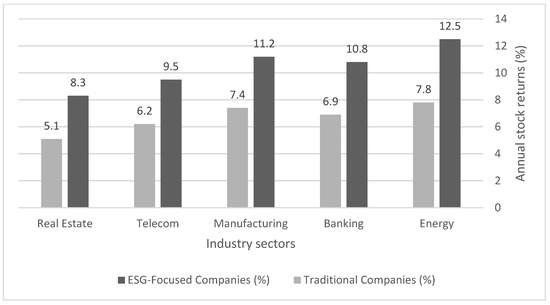
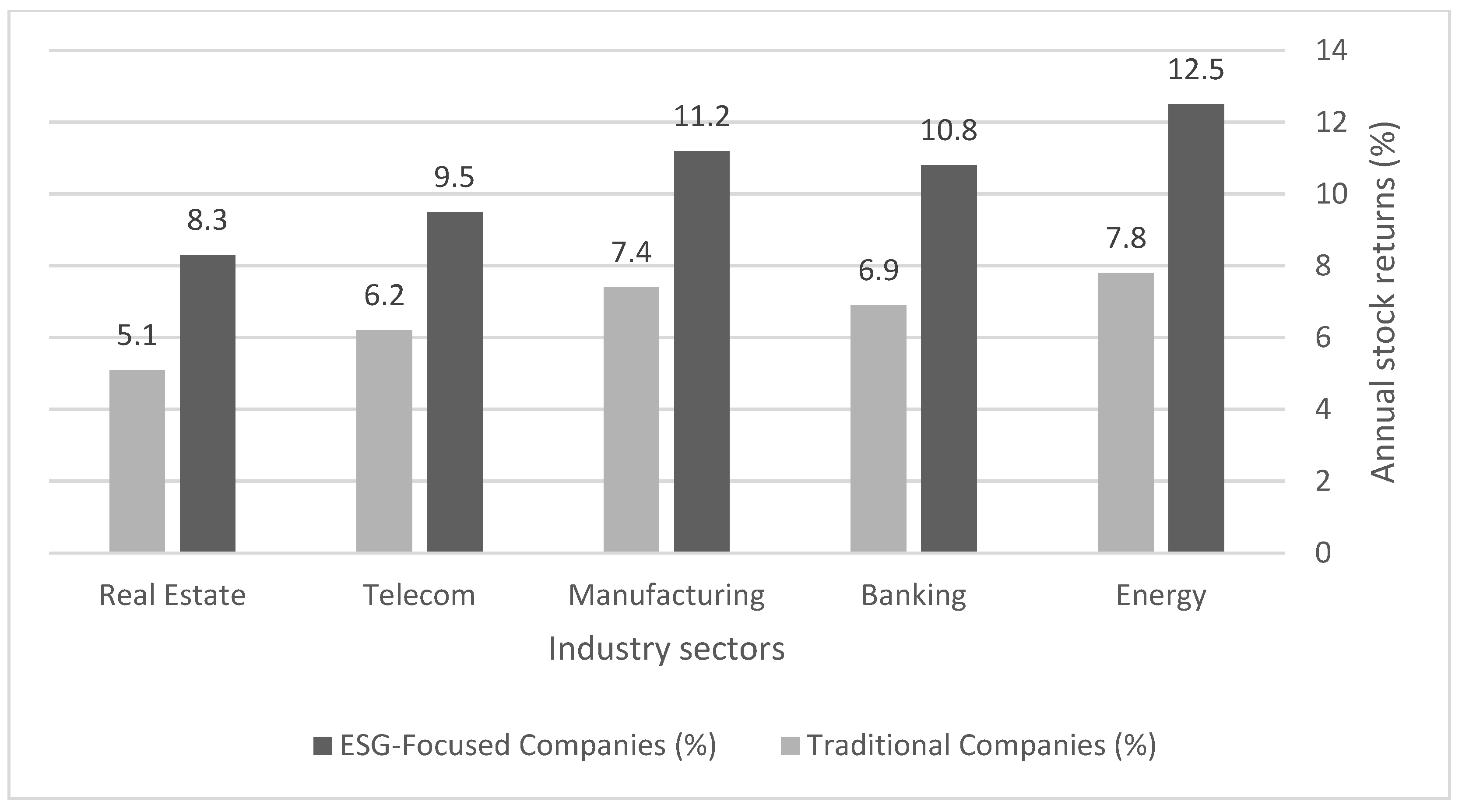
The regulatory environment plays a crucial role in the adoption of sustainability by establishing standards and regulatory frameworks that encourage sustainable business practices [5]. This paper acknowledges the regulatory landscape as a key factor in promoting sustainability at the national and international levels, shaping companies’ strategies and operations. The empirical evidence for the sustainability–performance relationship in Saudi Arabia demonstrates clear patterns that justify systematic investigation. As illustrated in Figure 1, analysis of stock performance data from 2020 to 2024 across five major Saudi industrial sectors reveals that ESG-focused companies consistently outperform traditional companies by an average of 3.8 percentage points annually [8]. This performance differential is most pronounced in the energy sector, where ESG-focused companies achieve 12.5% annual returns compared to 7.8% for traditional companies—a substantial 4.7 percentage point premium [9]. This outsized premium reflects converging pressures: increased scrutiny from global investors regarding carbon-intensive industries, Saudi Arabia’s commitment to achieving net-zero emissions by 2060, and the strategic necessity to showcase readiness for transition [10]. The ESG premium in the energy sector probably includes both risk mitigation benefits and strategic positioning benefits that align with Vision 2030 diversification goals.
Figure 1.
ESG impact on stock performance in Saudi Arabia (average annual returns, 2020–2024). Source: Saudi Exchange annual reports [8].
The manufacturing sector also shows a significant impact from ESG initiatives, with ESG-focused companies achieving returns of 11.2%, compared to 7.4% for their traditional counterparts, resulting in a difference of 3.8 percentage points [11]. This could be due to environmental management systems making operations more efficient, making the supply chain more resilient, and making it easier to get into export markets with strict ESG requirements. Even in more conservative sectors such as real estate and telecommunications, ESG-focused companies maintain meaningful performance advantages of 3.2 and 3.3 percentage points, respectively [12]. The stability of these differentials from 2020 to 2024, which includes both the recovery from COVID-19 and changes in the economy as a whole, suggests that ESG premiums are more of a structural than a cyclical phenomenon. This means that ESG integration has gone from being a reputational consideration to a fundamental value driver that affects the cost of capital, operational efficiency, and market access. These patterns across sectors show that ESG integration has become a major value driver in the Saudi market, which is in line with the Kingdom’s Vision 2030 goals for sustainability and economic diversification [10].
This paper investigates the relationship between sustainability practices and stock market performance in the context of Saudi Arabia. A comprehensive review of existing literature reveals a notable research gap, as no prior studies have systematically examined this relationship within the country. This gap in scholarly understanding highlights the need for empirical research to clarify the connection between sustainability initiatives and stock performance in this significant emerging market. The Kingdom of Saudi Arabia’s capital market, recognized as one of the region’s largest and most influential financial markets, exerts substantial influence on the national economy through the performance of its publicly listed corporations. The primary objective of this paper is to contribute to the existing body of knowledge by empirically examining the impact of sustainability practices on stock performance among companies listed on the Saudi Exchange (Tadawul).
This paper offers important contributions to both academic literature and the practical understanding of the relationship between sustainability and performance. First, it addresses a critical empirical gap by providing a comprehensive analysis of the sustainability-stock performance nexus in the Saudi Arabian market, thereby extending the geographical scope of existing research. Second, the research contributes methodologically by developing a robust analytical framework that accounts for the unique institutional, regulatory, and cultural characteristics of the Saudi business environment, which can serve as a template for similar investigations in other Gulf Cooperation Council (GCC) countries and emerging markets. Third, from a theoretical perspective, this paper enhances our understanding of how sustainability practices translate into financial value creation within the context of Vision 2030 and Saudi Arabia’s economic transformation initiatives. Fourth, the findings provide practical contributions by offering evidence-based guidance to Saudi corporations seeking to optimize their sustainability investments for enhanced stock market performance. Fifth, this research contributes to policy discourse by providing empirical evidence that can inform regulatory frameworks and sustainability reporting standards in Saudi Arabia. Finally, this paper contributes to the broader sustainability literature by exploring the relationship within a rapidly evolving economy that is undergoing significant government-led diversification efforts. It provides insights into how macroeconomic transitions affect the relationship between sustainability practices and performance at the micro level.
To achieve these objectives, this paper is systematically organised into five interconnected sections. Following this introduction, Section 2 provides a comprehensive literature review that synthesises existing theoretical frameworks and empirical findings on sustainability and financial performance, establishing the conceptual foundation while identifying key research gaps that justify the current investigation. Section 3 details the research methodology, including data collection procedures and analytical techniques employed to test the proposed hypotheses. Section 4 presents the empirical findings, including descriptive statistics, correlation analyses, and regression results, followed by a comprehensive discussion in Section 5. Finally, Section 6 concludes by summarising key findings and proposing avenues for future research that can further advance understanding of sustainability–performance relationships in emerging market contexts.
2. Literature Review
2.1. Sustainability and Financial Performance: Theoretical and Empirical Foundations
The relationship between sustainability and corporate financial performance has become one of the most thoroughly examined topics in contemporary business and finance literature. The conceptual foundation of sustainability originates from the 18th century, when early economic theorists such as Adam Smith acknowledged environmental constraints on economic activities, subsequently evolving through the formal introduction of sustainable development at the 1972 United Nations Conference on the Human Environment [4,13]. Klarin [14] emphasises sustainability’s temporal and intergenerational dimensions by promoting the satisfaction of present needs without jeopardising the ability of future generations to address their own. Conversely, Barbosa et al. [15] define sustainability as the production, distribution, and consumption of resources in an economically efficient and ecologically sound manner. Business sustainability is the strategic need to align economic objectives with environmental conservation and social accountability via effective management of environmental and social resources [16,17].
Empirical studies investigating the link between sustainability and financial success have yielded significant data, albeit the conclusions are varied, highlighting the complexity of this relationship in different contexts. A substantial body of research suggests positive correlations between sustainability initiatives and financial performance. Reddy and Gordon [18] identified positive correlations between sustainability reporting and financial success in Australian and New Zealand companies, while Ameer and Othman [16] demonstrated direct links between sustainable practices and stock performance across 3000 companies spanning developed and emerging markets. Subsequent research has validated these findings, including Rahmanti and Hayatun [13], who established robust positive correlations between corporate performance and sustainability reporting; Garg [19], whose investigation of Indian enterprises revealed enduring positive effects; and Deng and Cheng [17], who noted significant positive correlations between ESG indices and stock market performance in China. A recent study by Keskin, Dincer and Dincer [2] demonstrated that financially sustainable enterprises surpass their non-sustainable counterparts in Turkey, whilst Pham et al. [20] identified favourable relationships in Sweden. Regional studies provide valuable contextual insights, as evidenced by Alsahlawi, Chebbi and Ammer [3], who illustrate that financial constraints influence the relationship between environmental sustainability disclosure and stock returns in Saudi listed companies, while AlHawaj and Buallay [21] establish that sustainability reporting consistently enhances business performance across various industries and countries.
Nonetheless, contrasting findings challenge the general application of favourable sustainability–performance connections. Aggarwal [22] found no discernible relationship between sustainability and financial performance among listed Indian companies, while Atan et al. [23] revealed no significant correlation between ESG components and firm value or profitability in Malaysian firms. Xie et al. [24] employed data envelopment analysis and found no clear association between ESG transparency and increased profitability. Meta-analytical research by Huang [25] indicates a statistically significant but economically weak correlation between financial and ESG performance, suggesting that while relationships exist, their practical significance may be limited. These divergent findings underscore the importance of contextual factors, including institutional environments, regulatory frameworks, cultural considerations, and methodological approaches.
Traditional sustainability research has mainly concentrated on direct relationships between ESG performance, whereas recent literature highlights the essential function of market mechanisms—such as transparency, liquidity, information asymmetry, and risk pricing—as intermediary channels through which sustainability practices affect stock performance. Murray et al. [26] demonstrate that reducing informational frictions through enhanced transparency significantly improves market quality. The Australian Stock Exchange revealed that when market participants possess timely and comprehensive information, price discovery becomes more efficient, resulting in narrower bid-ask spreads. Pham and Westerholm [27] enhance this comprehension by analysing the impact of market transparency on liquidity, volatility, and depth in international markets, illustrating that greater transparency results in improved liquidity provision, diminished volatility, and increased market depth. Liu et al. [28] illustrate that political risk at the firm level substantially diminishes liquidity in corporate bond markets, indicating that uncertainty at this level leads to decreased market liquidity and potentially elevated capital costs. Wasi et al. [29] examine bank systemic risk via sovereign rating downgrades, illustrating the cascading effects of hazards within linked financial systems and highlighting sustainability.
The convergence of climate risk and financial markets is a critical aspect for energy-dependent economies such as Saudi Arabia. Adeabah and Pham [30] investigate the asymmetric tail risk spillover between climate risk and international energy markets, demonstrating the direct influence of environmental sustainability on financial markets. Furthermore, Bui and Pham [31] illustrate that financial and labour restrictions restrict business employment and growth, suggesting that robust ESG policies might alleviate these constraints.
2.2. Theoretical Framework: Universal Theories and Saudi-Specific Contextualization
Stakeholder theory, originally developed by Freeman (1984), posits that companies must consider the interests of all stakeholders rather than focus solely on shareholder value maximization [32]. This theory suggests that sustainable practices enhance stakeholder relationships, leading to improved reputation, customer loyalty, and operational efficiency, which ultimately translate into superior financial performance. The Resource-Based View (RBV), articulated by Barney [33], complements this perspective by arguing that sustainability practices can create valuable, rare, inimitable, and non-substitutable resources. Under RBV, ESG initiatives can develop intangible assets such as organizational culture, employee commitment, and innovative capabilities that are difficult for competitors to replicate. Institutional Theory, as conceptualised by DiMaggio and Powell [34], provides the contextual lens through which regulatory environments, cultural norms, and market expectations shape organisational behaviour and performance outcomes. This theory is particularly relevant in the Saudi Arabian context, where Vision 2030 sustainability goals, Islamic finance principles, and emerging market characteristics create unique institutional pressures that influence how sustainability practices are adopted and valued by market participants.
Although these universal theories offer core insights, their implementation in the Saudi Arabian context necessitates considerable modification to accommodate distinct institutional, cultural, and economic attributes. The religious-ethical framework establishes a natural congruence between Islamic financial principles and ESG issues, especially in the social and governance aspects [35,36]. The principles of Islamic finance necessitate the consideration of social welfare, environmental stewardship, and ethical corporate practices, which significantly align with modern ESG frameworks. Concentrated ownership arrangements, marked by a substantial presence of family-owned enterprises and government ownership interests, characterise the Saudi corporate environment [37,38]. Family-controlled enterprises may have distinct ESG goals, perhaps prioritising long-term sustainability and stakeholder engagement while exhibiting less governance transparency due to their ownership [39,40]. Effective ESG practices, especially strong governance structures, can operate as reliable indicators of minority shareholder protection, thus diminishing agency costs and improving stock prices.
Saudi Arabia’s economy is characterised by significant government ownership of major corporations and strategic sectors, coupled with the ambitious Vision 2030 transformation agenda, which explicitly prioritises economic diversification and sustainability [41,42,43]. The government’s dual role as major shareholder and policy architect creates unique institutional pressures for ESG adoption. Companies aligning with Vision 2030 sustainability objectives may receive preferential treatment in government contracts, regulatory approvals, and access to sovereign wealth fund investments [34]. Saudi Arabia’s culture prioritises communal welfare, social cohesion, and collective accountability based on tribal customs and Islamic principles [44,45]. ESG practices that align with these cultural values can cultivate increased stakeholder support, strengthen legitimacy, and enhance reputation, thereby benefiting stock performance through operational improvements. Saudi Arabia’s historical reliance on oil earnings engenders distinct dynamics regarding environmental sustainability issues [46,47]. The rapid acceleration of the global energy transition and the increasing prominence of climate concerns are increasing pressure on companies to exhibit environmental accountability and preparedness for change. This establishes a risk-mitigation framework in which environmental ESG factors act as safeguards against transition risks and legislative alterations, especially pertinent in light of Saudi Arabia’s pledge to attain net-zero emissions by 2060 [48].
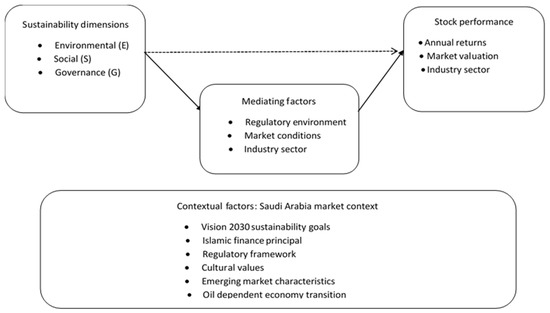
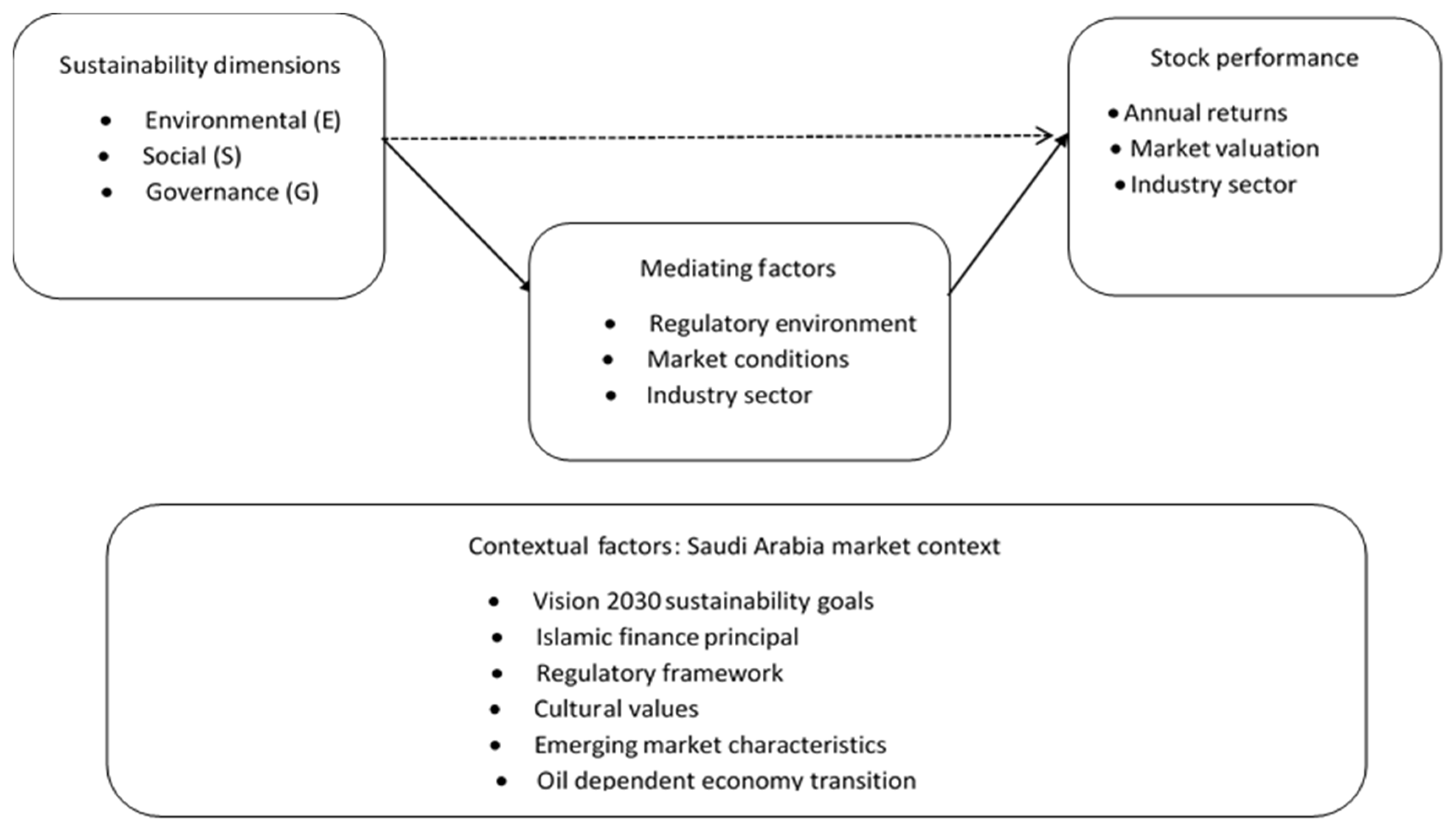
Figure 2 demonstrates that the theoretical framework of this paper combines universal theories with Saudi-specific contextual factors, resulting in an integrated framework that elucidates the various transmission mechanisms by which ESG practices affect stock performance in the Saudi market. First, ESG practices aligned with Islamic principles and Saudi cultural values enhance stakeholder legitimacy, strengthen community relationships, and improve corporate reputation, leading to increased customer loyalty, improved employee retention, and enhanced operational efficiency through both instrumental stakeholder value creation [32] and normative institutional pressures [34]. Second, sustainability initiatives create RBV resources, including organisational capabilities for environmental management, human capital development aligned with Saudisation objectives and governance systems [33]. Third, the adoption of ESG indicates conformity with Vision 2030 priorities and governmental sustainability goals, regulatory endorsements, and investments from sovereign wealth funds [10,34,43]. Fourth, robust ESG practices mitigate regulatory, transition, governance, and reputational risks, thereby enhancing market liquidity, lowering capital costs, and stabilising stock prices [28,29]. Fifth, thorough ESG disclosure diminishes information asymmetry between controlling shareholders and minority investors, enhances price discovery, improves market liquidity, and lowers information costs, particularly relevant in the Saudi context [26,27].
Figure 2.
Integrated Theoretical framework: Sustainability–Stock Performance Relationship in Saudi Context. Source: Adapted from Stakeholder Theory [32], Resource-Based View [33], Institutional Theory [34], integrated with Saudi-specific contextual factors.
2.3. Research Gap and Hypothesis Development
Despite substantial studies on the links between sustainability and performance worldwide, significant gaps persist that hinder a thorough understanding of these dynamics, especially within the Saudi Arabian context and developing economies more generally. Most of the available literature has concentrated on developed markets, characterised by sophisticated institutional frameworks, transparent governance systems, and dispersed ownership arrangements. The relevance of results from these contexts to emerging markets marked by concentrated ownership, government-driven economies, and developing regulatory frameworks is uncertain. Saudi Arabia, the preeminent economy in the Middle East, possesses unique institutional attributes such as Islamic finance principles, concentrated family ownership, government-driven economic transformation, and an oil-dependent economic framework, which constitute a distinctive institutional context that has garnered insufficient systematic research scrutiny.
While isolated studies have examined specific aspects of sustainability practices in Saudi firms [3,49], no comprehensive analysis has systematically investigated how sustainability practices across multiple ESG dimensions simultaneously impact stock performance while accounting for the unique transmission mechanisms operating in the Saudi context. Current research concentrated on Saudi Arabia has often analysed isolated aspects of sustainability or certain sectors, constraining generalisability and hindering a comprehensive understanding of the ESG–performance relationship.
The theoretical frameworks employed in current sustainability research have mostly relied on universal theories without sufficient contextualisation for the institutional realities of emerging markets. The distinctive interaction of Islamic finance principles, cultural values, government-driven economic transformation, and oil-dependent economic traits establishes transmission mechanisms through which ESG practices impact performance, potentially differing fundamentally from those in Western markets. Recent advancements in comprehending market mechanism channels as mediating pathways through which sustainability practices affect stock performance [26,27,28] have not been incorporated into emerging market sustainability research. Market microstructure viewpoints are especially pertinent in emerging markets, characterised by significant information asymmetries, stringent liquidity limitations, and evolving institutional investor activity.
This paper overcomes these gaps by conducting a thorough analysis of the correlation between sustainable practices and stock performance in the Saudi Arabian market, specifically considering context-specific institutional, cultural, and economic attributes. This research formulates and evaluates a comprehensive theoretical framework that elucidates the various transmission mechanisms by which ESG practices affect stock performance within the distinct institutional context of Saudi Arabia by amalgamating universal theoretical frameworks with Saudi-specific contextual factors and incorporating market mechanism perspectives. The hypothesis of the study posits a positive correlation between sustainable practices and stock performance in Saudi-listed businesses, as derived from the theoretical framework and identified research gaps.
ESG is a multidimensional construct that encompasses various environmental, social, and governance components. The initial sub-hypothesis asserts that environmental performance correlates positively with stock performance, hypothetically based on the risk reduction mechanism through which environmental ESG practices diminish transition risks [30]. The second hypothesis posits that social performance correlates positively with stock success, based on stakeholder legitimacy and resource development mechanisms, as social ESG practices match with Saudi cultural norms [44]. The third hypothesis posits that governance performance correlates positively with stock performance, based on information transparency and institutional conformity mechanisms, as robust governance practices align with the objectives of the Vision 2030 governance reform [10,37]. These hypotheses facilitate the empirical investigation of dimension-specific effects and their comparative magnitudes.
3. Data and Methodology
3.1. Data
The data used in this study consist of sustainability metrics and firm characteristics obtained from Bloomberg, a highly credible and widely used platform renowned for its comprehensive sustainability data coverage. Notably, Bloomberg’s ESG scores for Saudi-listed firms exhibit relatively limited variation, reflecting the gradual and recent adoption of ESG disclosure practices in the Saudi market and the use of a normalized ESG scale rather than the conventional 0–100 scoring range. Bloomberg serves as the primary source for ESG scores, which constitute the core independent variable in this investigation. The analysis relies on the composite ESG score rather than separate environmental, social, and governance subdimensions, as disaggregated E, S, and G scores are not consistently available for all firms and years in the sample. Stock price data were systematically collected from Yahoo Finance, a well-established and trustworthy platform that provides extensive financial market information. Annual stock performance was computed as the percentage change in the firm’s closing share price between year and year , ensuring a consistent measure of stock returns across all firms. The use of these reputable data sources enhances the consistency and credibility of the dataset and ensures the availability of standardised sustainability and financial indicators commonly used in empirical research.
The sample selection process involved careful screening of companies listed on the Saudi stock exchange between 2015 and 2022. Initially, 174 firms were excluded due to the absence of ESG disclosure in Bloomberg. While this step improves internal data consistency, it may also introduce sample selection bias, as ESG-reporting firms are typically larger and more transparent than non-reporting firms. Following this exclusion process, the final sample comprises 40 firms for which ESG and financial data were consistently available over the study period.
Bloomberg ESG scores for 2023–2024 were not fully available at the time of data extraction; therefore, the study period is limited to 2015–2022. The study deliberately refrains from imputing missing ESG scores for later years to avoid introducing additional estimation noise into the main sustainability measure. This timeframe reflects the most consistent and complete ESG data available for Saudi-listed firms. Table 1 shows the source of each variable included in the analysis.
Table 1.
Variable sources.
3.2. Methodology
The research design employs established statistical techniques and is suitable for analysing relationships across firms and over time. These methodological approaches are appropriate for examining relationships within economic panel data, as evidenced by their widespread use in recent academic literature [4,50]. The establishment of a precise measurement model and accurate identification of relevant variables constitute fundamental components of this analytical framework. The fundamental regression model structure employed in this study is based on a linear panel-data framework.
Building upon this foundation, a linear panel-regression model is specifically designed to explore the influence of sustainability initiatives on stock performance. The primary objective centers on establishing and analysing these relationships through systematic hypothesis testing. The dependent variable, designated as stock performance (Y), is measured using annual stock returns for the sample firms. The stock return is calculated as the annual percentage change in the firm’s closing price, providing a direct indicator of market valuation and investor sentiment regarding corporate performance.
The independent variable (X) represents a comprehensive measure of corporate sustainability performance, operationalized through ESG scores sourced directly from the Bloomberg database. This comprehensive sustainability metric encompasses the environmental, social, and governance dimensions, offering a holistic assessment of corporate sustainability performance. To ensure robust analysis and control for potential confounding factors, three firm characteristic variables are included in the regression models.
Firm size (SIZE) is measured as the logarithm of total assets, providing a scaled measure of company size that accounts for the wide variation in firm sizes within the sample. Return on assets (ROA) is a financial measure that shows how profitable a company is by looking at how well it can make money from its assets. Firm leverage (LVRG) is measured using the Debt-to-Equity ratio, which evaluates the proportion of company debt relative to its equity, thereby capturing the financial risk profile of each firm. Additionally, the model includes lagged stock performance, which is the lag of stock returns, to account for momentum effects and time dependencies.
The complete econometric specification is expressed as:
where represents the constant term, coefficients capture the effects of ESG performance, ROA, leverage, and firm size, and ε represents the error term.
To ensure the reliability of the estimated relationships, the analysis applies standard diagnostic checks, including tests for heteroskedasticity and multicollinearity. This comprehensive research design thoroughly examines the relationship between sustainability initiatives and stock performance, employing robust statistical techniques and suitable control mechanisms to guarantee reliable and valid empirical results.
4. Results
This section presents empirical findings from the analysis of the relationship between sustainability practices and stock performance among Saudi-listed companies. The analysis includes descriptive statistics, correlation analysis, and regression results that collectively illuminate the sustainability–performance nexus within the Saudi Arabian market. The descriptive statistics presented in Table 2 summarise characteristics of the dataset comprising 213 firm-year observations representing 40 Saudi-listed firms during the period 2015–2022. The dependent variable, stock performance, exhibits a mean of 0.104 and a median of 0.080. The variable demonstrates considerable variability, ranging from a minimum of −0.603 to a maximum of 1.620, with a standard deviation of 0.330, indicating substantial dispersion around the mean. These descriptive statistics offer insights into the central tendency and dispersion of stock performance, which are useful for understanding the overall distribution and trends in the dataset.
Table 2.
Descriptive results.
The ESG variable, representing sustainability scores, has a mean of 1.473, indicating moderate variation in sustainability scores across the dataset. With a low standard deviation of 0.185, the ESG scores exhibit moderate dispersion, reflecting differences in sustainability reporting practices among the observed firms. ROA has a mean of 3.648 and a standard deviation of 7.028, indicating variability in firms’ asset utilization efficiency.
The leverage (LVRG) variable has a mean of 4.185 and a standard deviation of 2.467, indicating meaningful variation in financial leverage across firms. The SIZE variable, representing the logarithm of total assets, has a mean of 1.390 and a standard deviation of 0.026, indicating limited variation in firm size across the sample. These nuanced details enhance understanding of the diverse landscape of environmental, financial, and operational characteristics within the dataset, setting the stage for more sophisticated analyses and interpretations.
This table presents the descriptive statistics for the variables used in the study. The sample consists of 213 firm-year observations representing 40 Saudi-listed firms during the period 2015–2022. Stock performance (Y) is measured using annual stock returns. ESG score represents the total environmental, social, and governance performance. SIZE, a firm’s size, is measured as the logarithm of total assets. ROA, profitability, is calculated using the return on assets ratio. Firm leverage (LVRG) is measured using the Debt-to-Equity Ratio, which evaluates the proportion of a company’s debt to its equity. Stock performance for prior periods is measured using annual stock returns.
The correlation analysis presented in Table 3 provides an initial overview of the relationships between the dependent variable, stock performance, and various independent variables. The positive correlation coefficient of 0.129 for ESG indicates a weak positive association with stock performance. The positive correlation of 0.202 for ROA indicates that higher returns on assets are associated with better stock performance. Conversely, the negative correlations for leverage 0.081 and SIZE 0.047 indicate weak positive associations, while the slightly negative correlation for Stock P-1 (−0.034) suggests mild mean reversion in returns. These findings provide preliminary insights; however, given the complexities of financial data, additional analyses such as regression modeling and diagnostic checks are necessary to validate and interpret these correlations more accurately. Addressing potential outliers and ensuring proper scaling are important steps for refining the accuracy of these correlation results.
Table 3.
Correlation matrix.
To investigate the main hypothesis of this research, which aims to examine possible connections between different aspects of sustainability and stock performance, linear regression analysis was conducted. Three panel regression techniques were employed to assess the assumptions of the study. Pooled Ordinary Least Squares (OLS) were estimated using cluster-robust standard errors at the firm level to address heteroskedasticity. Subsequently, the Hausman test did not reject the random-effects model, indicating that the random-effects estimator is statistically consistent for this dataset. To scrutinise the hypothesis, pooled OLS was initially employed, followed by fixed-effects and random-effects regressions to account for time-invariant firm-specific effects. The interpretations are primarily based on the random-effects model, as it is considered the most appropriate specification following the Hausman test.
Table 4 examines the impact of ESG factors on stock performance using three regression models: pooled OLS, random-effects, and fixed-effects. Across the three models, the coefficients vary in magnitude, yet the general patterns remain consistent, particularly regarding the direction of the ESG effect. The lagged stock performance variable is negative across all models, with significance levels differing between specifications. Notably, the coefficient of ESG is positive and statistically significant across all models, indicating a consistent association between higher ESG scores and improved stock performance. LVRG also does not exhibit a statistically significant effect on stock performance in any of the models. However, the logarithm of total assets SIZE does not appear statistically significant in predicting stock performance.
Table 4.
The impact of ESG on stock performance.
ROA shows a positive and statistically significant effect on stock performance in the pooled OLS and random-effects models, while it becomes insignificant under the fixed-effects specification. The overall model fit is moderate, as reflected in the F-statistics and adjusted R-squared values reported for the pooled OLS and fixed-effects models. The sample size for all models was 213. The regression equation derived from the analysis is as follows:
The Hausman test results do not reject the random-effects model, supporting its use as the preferred specification for this dataset. However, further details or significance levels associated with this value are not provided, necessitating additional information for precise interpretation. In summary, highlight ESG as a consistent and significant predictor of stock performance across all models, while ROA shows partial significance depending on the specification. Leverage and firm size do not exhibit statistically significant effects.
As an additional robustness check, the paper estimates a dynamic panel specification using the Difference GMM estimator [51]. The results, reported in Table 5, confirm the robustness of the baseline findings, with ESG remaining positively and statistically associated with stock performance.
Table 5.
Robustness check—Difference GMM.
5. Discussion
The empirical findings of this study provide evidence for the positive relationship between sustainability practices and stock performance among Saudi-listed firms. The analysis of data spanning eight years from2015 to 2022 from 40 firms, employing ESG scores as independent variables regressed against stock performance, reveals a positive and statistically supported association. This finding aligns with the substantial previous research conducted across diverse global contexts, including the studies of Ameer and Othman [16], Keskin, Dincer and Dincer [2], and Pham, Do, Doan, Nguyen and Pham [20], which also find a positive effect of sustainable practices on financial performance.
The significance of these findings becomes clearer when contextualized within the Saudi Arabian market. This study contributes meaningfully to the existing literature by offering additional evidence of Alsahlawi, Chebbi and Ammer [3] and Bhatti and Sulaiman [4], highlighting its relevance to the Saudi market within the Kingdom of Saudi Arabia’s evolving stock market landscape. While Alsahlawi, Chebbi and Ammer [3] offered new perspectives on the moderating role of financial restrictions on the association between environmental sustainability disclosures and stock returns, our investigation extends the analytical scope to encompass the broader spectrum of sustainability practices captured by comprehensive ESG elements. The positive relationship identified between ESG scores and stock performance in our analysis provides further evidence of the relevance of sustainability considerations within the Saudi market context.
Furthermore, the findings are consistent with Bhatti and Sulaiman [4] emphasis on the interconnectedness between sustainability and stock performance, particularly within emerging market contexts. By focusing specifically on the Saudi market, this study offers insights that reflect the characteristics of the Saudi capital market and highlight the relevance of sustainability practices within this context. This contextual perspective is particularly relevant given the policy direction of Saudi Arabia’s Vision 2030, which emphasizes the growing role of sustainability within the capital market.
The study’s findings regarding financial variables provide useful indications about the determinants of stock performance in the Saudi context. However, financial leverage has no statistically significant effect on stock performance, suggesting that differences in capital structure may not play a major role in explaining return variation within the Saudi market. This relationship suggests that Saudi firms employing moderate levels of financial leverage may benefit from the tax advantages and disciplining effects of debt while maintaining optimal capital allocation efficiency.
Moreover, the study highlights the pivotal roles of ROA as critical determinants of stock performance, with its positive effect appearing significant in the pooled OLS and random-effects models. This counterintuitive relationship may reflect market expectations and valuation dynamics specific to the Saudi market, where investors may prioritize growth potential and strategic positioning over immediate equity returns. Conversely, the positive association between ROA and stock performance supports the view that firms with more efficient asset utilization tend to achieve stronger market outcomes, although this effect appears only in the pooled OLS and random-effects models.
The empirical findings provide useful policy insights for regulators, policymakers, and market participants within the Saudi Arabian financial system. The findings indicate to regulatory bodies, especially the Capital Market Authority, that improved ESG disclosure and more explicit sustainability reporting guidelines could foster increased transparency and alignment with the Kingdom’s Vision 2030 goals. The demonstrated positive relationship between ESG practices and stock performance suggests that mandatory sustainability reporting can enhance market efficiency while supporting the Kingdom’s Vision 2030 objectives [9,10]. For policymakers, the results may help inform the development of clearer ESG guidance that reflects the specific institutional and cultural characteristics of the Saudi market.
For corporate governance frameworks, the findings suggest that integrating sustainability considerations into board oversight responsibilities and executive compensation structures could enhance long-term value creation [52]. The findings also highlight that the relevance of ESG factors may differ across industries, suggesting that future regulatory efforts could benefit from considering sector-specific variations within the Saudi market. From a capital market development perspective, the findings may encourage greater interest in sustainability-oriented investment approaches within the Saudi market. The positive sustainability–performance relationship provides a foundation for developing green bonds, sustainability-linked loans, and ESG-focused mutual funds that can support the Kingdom’s economic diversification efforts while offering attractive risk-adjusted returns to investors.
From a policy perspective, the findings suggest that ESG implementation in Saudi Arabia would benefit from a phased and industry-specific regulatory approach aligned with the ESG disclosure framework issued by the Capital Market Authority (CMA). In particular, mandatory ESG disclosure may be prioritized for high-impact sectors such as energy and financial institutions, where sustainability-related risks are more pronounced, while other sectors may transition gradually toward enhanced ESG reporting requirements.
6. Conclusions
This comprehensive investigation into the relationship between sustainability practices and stock performance among Saudi-listed firms yields significant insights that contribute to both academic understanding and practical decision-making within the Kingdom’s evolving capital markets. The study’s central finding—a positive and statistically significant relationship between ESG scores and stock performance—provides robust empirical evidence supporting the business case for sustainability in the Saudi Arabian context.
The analysis of 213 firm-year observations spanning 2015–2022 demonstrates that companies with higher ESG scores consistently achieve superior stock market performance, with this relationship remaining stable across multiple econometric specifications, including pooled OLS, random-effects, and fixed-effects models. The ESG coefficient of approximately 10.94 across all model specifications indicates that a one-unit increase in ESG scores is associated with substantial improvements in stock performance, highlighting the material impact of sustainability practices on investor returns.
These findings carry profound implications for multiple stakeholder groups within the Saudi Arabian financial ecosystem. For investors, the results provide empirical justification for incorporating ESG considerations into investment decision-making processes, suggesting that sustainability-focused investment strategies can deliver competitive financial returns while supporting broader societal objectives. The demonstrated positive relationship between ESG practices and stock performance indicates that sustainable investing does not require sacrificing financial returns, thereby supporting the growth of responsible investment practices in the Saudi market.
For corporate managers and board members, the findings underscore the strategic importance of integrating sustainability considerations into core business strategies and operational frameworks. The positive ESG–performance relationship suggests that investments in environmental stewardship, social responsibility, and governance excellence can create tangible shareholder value while supporting stakeholder interests and regulatory compliance. This connection between sustainability and financial performance provides a compelling business case for corporate sustainability initiatives in Saudi Arabia.
For policymakers and regulatory authorities, the study’s findings provide empirical support for the continued development and enhancement of sustainability reporting requirements and ESG disclosure frameworks [53]. The positive relationship between sustainability practices and market performance suggests that regulatory initiatives promoting ESG transparency and accountability can simultaneously support market efficiency and the Kingdom’s broader economic transformation objectives outlined in Vision 2030 [10].
The contextual significance of these findings is amplified by the regulatory mandate imposed by the Capital Market Authority on listed companies to enhance sustainability reporting and disclosure practices. As Saudi Arabia continues its economic diversification efforts and positions itself as a regional leader in sustainable development, the demonstrated link between ESG practices and financial performance provides crucial evidence supporting the alignment of economic and sustainability objectives [49]. The study’s contribution to the academic literature is particularly noteworthy given the limited empirical research examining sustainability–performance relationships within GCC markets. By providing the first comprehensive analysis of this relationship in the Saudi context, the study extends the geographical scope of sustainability research while offering insights into how cultural, institutional, and regulatory factors may influence the sustainability–performance nexus in emerging markets [54].
Despite the significant contributions of this study, several limitations must be acknowledged that provide opportunities for future research enhancement. In particular, the exclusion of firms without ESG disclosure may introduce sample selection bias, as ESG-reporting firms tend to be larger and more transparent than non-reporting firms. First, the sample size of 40 companies, while representative of major sectors, may limit the generalizability of findings across the entire Saudi stock market. The exclusion of 174 companies due to insufficient sustainability data may introduce selection bias, potentially overrepresenting firms with more advanced ESG practices and stronger financial performance. The study period 2015–2022 encompasses significant macroeconomic volatility, including oil price fluctuations, the COVID-19 pandemic, and geopolitical tensions that may confound the sustainability–performance relationship. While the analysis includes control variables and fixed effects, unmeasured time-varying factors may influence the observed relationships. Future research could enhance robustness by employing alternative ESG rating systems (e.g., MSCI) to validate the consistency of ESG performance relationships.
The paper focusses on stock performance as the primary outcome measure, which, while appropriate for capital market analysis, does not capture broader measures of firm performance such as operational efficiency, innovation capacity, or stakeholder satisfaction that sustainability practices may influence. Finally, the cross-sectional nature of the ESG data restricts the ability to definitively establish causal relationships. While the study employs lagged variables and panel data techniques, it cannot entirely eliminate the possibility of reverse causality—where better-performing firms invest more in sustainability—without instrumental variable approaches or natural experiments.
Looking toward future research directions, scholars are encouraged to extend the temporal scope of analysis by incorporating more recent data that captures the evolving sustainability landscape and the impact of Vision 2030 initiatives. Additionally, the incorporation of diverse variables and alternative sustainability measurement approaches could provide a more holistic exploration of the factors influencing the interplay between sustainability practices and corporate performance in the Saudi context. Future research might also explore sector-specific variations in the sustainability–performance relationship and examine the mediating roles of governance quality, regulatory compliance, and stakeholder engagement in driving these associations.
Future studies should consider expanding the sample size to include smaller and medium-sized enterprises listed on the Saudi Exchange to enhance the generalizability of findings. Furthermore, future research could investigate the temporal dynamics of the sustainability–performance relationship by examining how the strength and significance of this association have evolved, particularly in response to regulatory changes and Vision 2030 implementation. Cross-country comparative studies within the GCC region could offer helpful information about how institutional and cultural factors influence the sustainability–performance nexus across similar emerging market contexts.
In conclusion, this paper provides compelling evidence that sustainability practices and financial performance are positively correlated within the Saudi Arabian market context, offering valuable insights for investors, corporate managers, policymakers, and academic researchers interested in understanding the evolving landscape of sustainable finance in emerging markets. The results support the ongoing incorporation of ESG factors into investment and corporate decision-making processes, while also enhancing the global comprehension of how sustainability practices generate economic value across various institutional and cultural settings.
Author Contributions
Conceptualization, R.A. and J.B.; methodology, R.A.; software, R.A.; validation, R.A. and J.B.; formal analysis, R.A.; investigation, R.A. and J.B.; resources, R.A.; writing—original draft preparation, R.A. and J.B.; writing—review and editing, R.A. and J.B.; funding acquisition, J.B. All authors have read and agreed to the published version of the manuscript.
Funding
This research was funded by Princess Nourah bint Abdulrahman University Researchers Supporting Project number (PNURSP2026R540), Princess Nourah bint Abdulrahman University, Riyadh, Saudi Arabia.
Institutional Review Board Statement
Not applicable.
Informed Consent Statement
Not applicable.
Data Availability Statement
The data that support the findings of this study were obtained from the Bloomberg enterprise data through an institutional license.
Acknowledgments
The authors extend their appreciation to Princess Nourah bint Abdulrahman University Researchers Supporting Project number (PNURSP2026R540), Princess Nourah bint Abdulrahman University, Riyadh, Saudi Arabia.
Conflicts of Interest
The authors declare no conflicts of interest.
References
- Shamil, M.M.M.; Shaikh, J.M.; Ho, P.L.; Krishnan, A. The Relationship between Corporate Sustainability and Corporate Financial Performance: A Conceptual Review. In Proceedings of USM-AUT International Conference 2012 Sustainable Economic Development: Policies and Strategies; School of Social Sciences, Universiti Sains Malaysia: Pulau Pinang, Malaysia, 2012. [Google Scholar]
- Keskin, A.İ.; Dincer, B.; Dincer, C. Exploring the Impact of Sustainability on Corporate Financial Performance Using Discriminant Analysis. Sustainability 2020, 12, 2346. [Google Scholar] [CrossRef] [Scilit]
- Alsahlawi, A.M.; Chebbi, K.; Ammer, M.A. The Impact of Environmental Sustainability Disclosure on Stock Return of Saudi Listed Firms: The Moderating Role of Financial Constraints. Int. J. Financ. Stud. 2021, 9, 4. [Google Scholar] [CrossRef] [Scilit]
- Bhatti, U.; Sulaiman, N. The Impact of Sustainability Practices on Share Performance with Mediation of Board Members Experience: A Study on Malaysian Listed Companies. Int. J. Financ. Stud. 2023, 11, 4. [Google Scholar] [CrossRef] [Scilit]
- Alshehhi, A.; Nobanee, H.; Khare, N. The Impact of Sustainability Practices on Corporate Financial Performance: Literature Trends and Future Research Potential. Sustainability 2018, 10, 494. [Google Scholar] [CrossRef] [Scilit]
- Mrabure, K.O.; Abhulimhen-Iyoha, A. Corporate Governance and Protection of Stakeholders Rights and Interests. Beijing Law Rev. 2020, 11, 292–308. [Google Scholar] [CrossRef]
- Taskin, D.; Sariyer, G.; Acar, E.; Cagli, E.C. Do Past ESG Scores Efficiently Predict Future ESG Performance? Res. Int. Bus. Financ. 2024, 74, 102706. [Google Scholar] [CrossRef] [Scilit]
- Saudi Exchange Annual Reports. Saudi Tadawul Group Annual Reports. 2020–2024. Available online: https://www.tadawulgroup.sa/wps/portal/tadawulgroup/hidden/report-listing (accessed on 25 July 2025).
- Capital Market Authority. Annual Report. 2024. Available online: https://www.cma.gov.kw/en/web/cma/annual-reports (accessed on 25 July 2025).
- Vision 2030. Saudi Vision 2030 Annual Report. 2024. Available online: https://www.vision2030.gov.sa/media/25042025ev1/En-Annual%20Report-Vision2030-2024.pdf (accessed on 25 July 2025).
- Saudi Exchange. Tadawul Market Data. Available online: https://www.tadawulgroup.sa/wps/portal/saudiexchange/newsandreports/reports-publications/market-reports (accessed on 25 July 2025).
- Saudi Tadawul Group. Saudi Stock Exchange Reports. 2024. Available online: https://www.tadawulgroup.sa/wps/wcm/connect/b82c4ade-c3fa-4391-b9c6-157c929e11f9/20251007+STG+AR24-English.pdf?MOD=AJPERES&CVID=pD97i2g (accessed on 28 August 2025).
- Burhan, A.H.N.; Rahmanti, W. The Impact of Sustainability Reporting on Company Performance. J. Econ. Bus. Account. Ventur. 2012, 15, 257–272. [Google Scholar] [CrossRef] [Scilit]
- Klarin, T. The Concept of Sustainable Development: From its Beginning to the Contemporary Issues. Zagreb Int. Rev. Econ. Bus. 2018, 21, 67–94. [Google Scholar] [CrossRef] [Scilit]
- Drach, P. A Conceptual Review of the Terms Sustainable Development and Sustainability. J. Soc. Sci. 2014, 3, 1. [Google Scholar]
- Ameer, R.; Othman, R. Sustainability Practices and Corporate Financial Performance: A Study Based on the Top Global Corporations. J. Bus. Ethics 2012, 108, 61–79. [Google Scholar] [CrossRef] [Scilit]
- Deng, X.; Cheng, X. Can ESG Indices Improve the Enterprises’ Stock Market Performance?—An Empirical Study from China. Sustainability 2019, 11, 4765. [Google Scholar] [CrossRef] [Scilit]
- Reddy, K.; Gordon, L. The Effect of Sustainability Reporting on Financial Performance: An Empirical Study Using Listed Companies. J. Asia Entrep. Sustain. 2010, 6, 19–42. [Google Scholar]
- Garg, P. Impact of Sustainability Reporting on Firm Performance of Companies in India. Int. J. Mark. Bus. Commun. 2015, 4, 38–45. [Google Scholar] [CrossRef] [Scilit]
- Pham, D.C.; Do, T.N.A.; Doan, T.N.; Nguyen, T.X.H.; Pham, T.K.Y. The impact of sustainability practices on financial performance: Empirical evidence from Sweden. Cogent Bus. Manag. 2021, 8, 1912526. [Google Scholar] [CrossRef] [Scilit]
- Al Hawaj, A.Y.; Buallay, A.M. A Worldwide Sectorial Analysis of Sustainability Reporting and Its Impact on Firm Performance. J. Sustain. Financ. Invest. 2022, 12, 62–86. [Google Scholar]
- Aggarwal, P. Impact of Sustainability Performance of Company on Its Financial Performance: A Study of Listed Indian Companies. Glob. J. Manag. Bus. Res. Financ. 2013, 13, 11. [Google Scholar]
- Atan, R.; Alam, M.M.; Said, J.; Zamri, M. The Impacts of Environmental, Social, and Governance Factors on Firm Performance:Panel Study of Malaysian Companies. Manag. Environ. Qual. Int. J. 2018, 29, 182–194. [Google Scholar]
- Xie, J.; Nozawa, W.; Yagi, M.; Fujii, H.; Managi, S. Do Environmental, Social, and Governance Activities Improve Corporate Financial Performance? Bus. Strat. Environ. 2019, 28, 286–300. [Google Scholar]
- Huang, D.Z.X. Environmental, Social and Governance (ESG) Activity and Firm Performance: A Review and Consolidation. Account. Financ. 2021, 61, 335–360. [Google Scholar]
- Murray, H.; Pham, T.P.; Singh, H. Latency reduction and market quality: The case of the Australian Stock Exchange. Int. Rev. Financ. Anal. 2016, 46, 257–265. [Google Scholar]
- Pham, T.P.; Westerholm, P.J. An International Trend in Market Design: Endogenous Effects of Limit Order Book Transparency on Volatility, Spreads, Depth and Volume. J. Int. Financ. Mark. Inst. Money 2013, 27, 202–223. [Google Scholar] [CrossRef] [Scilit]
- Liu, Y.; Yang, J.; Pham, T.P. The Hidden Cost of Firm-Level Political Risk: Impairing Liquidity in Corporate Bond Markets. Finance Res. Lett. 2025, 85, 108058. [Google Scholar] [CrossRef] [Scilit]
- Wasi, A.; Pham, T.P.; Zurbruegg, R. Bank Systemic Risk: An analysis of the Sovereign Rating Ceiling Policy and Rating Downgrades. J. Bus. Financ. Account. 2023, 50, 411–440. [Google Scholar] [CrossRef] [Scilit]
- Adeabah, D.; Pham, T.P. Asymmetric Tail Risk Spillover and Co-Movement Between Climate Risk and the International Energy Market. Energy Econ. 2025, 141, 108122. [Google Scholar] [CrossRef] [Scilit]
- Bui, A.T.; Pham, T.P. Financial and Labour Obstacles and Firm Employment: Evidence from Europe and Central Asia Firms. Sustainability 2021, 13, 8650. [Google Scholar] [CrossRef] [Scilit]
- Freeman, R.E. Strategic Management: A Stakeholder Approach; Cambridge University Press: Cambridge, UK, 2010. [Google Scholar]
- Barney, J.B. Firm Resources and Sustained Competitive Advantage. J. Manag. 1991, 17, 99–120. [Google Scholar] [CrossRef] [Scilit]
- DiMaggio, P.J.; Powell, W.W. The Iron Cage Revisited: Institutional Isomorphism and Collective Rationality in Organizational Fields. Am. Sociol. Rev. 1983, 48, 147–160. [Google Scholar] [CrossRef] [Scilit]
- Platonova, E.; Asutay, M.; Dixon, R.; Mohammad, S. The Impact of Corporate Social Responsibility Disclosure on Financial Performance: Evidence from the GCC Islamic Banking Sector. J. Bus. Ethics 2018, 151, 451–471. [Google Scholar] [CrossRef] [Scilit]
- Azmi, W.; Hassan, M.K.; Houston, R.; Karim, M.S. ESG Activities and Banking Performance: International Evidence from Emerging Economies. J. Int. Financ. Mark. Inst. Money 2021, 70, 101277. [Google Scholar] [CrossRef] [Scilit]
- Al-Ghamdi, M.; Rhodes, M. Family Ownership, Corporate Governance and Performance: Evidence from Saudi Arabia. Int. J. Econ. Financ. 2015, 7, 78–89. [Google Scholar] [CrossRef] [Scilit]
- Albassam, W.M.; Ntim, C.G. The Effect of Islamic Values on Voluntary Corporate Governance Disclosure: The Case of Saudi-Listed Firms. J. Islam. Account. Bus. Res. 2017, 8, 182–202. [Google Scholar] [CrossRef] [Scilit]
- Berrone, P.; Cruz, C.; Gomez-Mejia, L.R.; Larraza-Kintana, M. Socioemotional Wealth and Corporate Responses to Institutional Pressures: Do Family-Controlled Firms Pollute Less? Adm. Sci. Q. 2010, 55, 82–113. [Google Scholar] [CrossRef] [Scilit]
- Gomez-Mejia, L.R.; Cruz, C.; Berrone, P.; De Castro, J. The Bind That Ties: Socioemotional Wealth Preservation in Family Firms. Acad. Manag. Ann. 2011, 5, 653–707. [Google Scholar] [CrossRef] [Scilit]
- Habbash, M. Corporate Governance and Corporate Social Responsibility Disclosure: Evidence from Saudi Arabia. Int. J. Corp. Strategy Soc. Responsib. 2017, 1, 161–178. [Google Scholar]
- Ebaid, I.E.-S. Corporate Governance Mechanisms and Corporate Social Responsibility Disclosure: Evidence from an Emerging Market. J. Glob. Responsib. 2022, 13, 396–420. [Google Scholar] [CrossRef] [Scilit]
- Grand, S.R.; Wolff, K. Assessing Saudi Vision 2030: A 2020 Review; Atlantic Council: Washington, DC, USA, 2022. [Google Scholar]
- Mellahi, K.; Wood, G. Desperately Seeking Stability: The Making and Remaking of the Saudi Arabian Petroleum Growth Regime. Compet. Change 2002, 6, 345–362. [Google Scholar]
- Alshahrani, M.S.A.; Alsadiq, M.A.J. Economic Growth and Government Spending in Saudi Arabia: An Empirical Investigation; International Monetary Fund: Washington, DC, USA, 2014. [Google Scholar]
- Alshuwaikhat, H.M.; Mohammed, I. Sustainability Matters in National Development Visions—Evidence from Saudi Arabia’s Vision for 2030. Sustainability 2017, 9, 408. [Google Scholar]
- Luomi, M. The Gulf Monarchies and Climate Change: Abu Dhabi and Qatar in an Era of Natural Unsustainability; Oxford University Press: Oxford, UK, 2014. [Google Scholar]
- Al-harbi, A. ESG in the Kingdom of Saudi Arabia: Opportunities and Challenges. 2025. Available online: https://ssrn.com/abstract=5531980 (accessed on 28 August 2025).
- Alharbi, M.A.; Mgammal, M.H.; Al-Matari, E. Sustainability Report Publication and Bank Share Price: Evidence from Saudi Arabia Stock Markets. J. Asian Financ. Econ. Bus. 2021, 8, 41–55. [Google Scholar]
- Khamis, S.; Ibrahim, Y.; Moubarak, H. Sustainability Practices and Financial Performance: A Meta-Analysis Approach. J. Financ. Rep. Account. 2025. ahead-of-print. [Google Scholar]
- Hansen, L.P. Large Sample Properties of Generalized Method of Moments Estimators. Econometrica 1982, 50, 1029. [Google Scholar] [CrossRef] [Scilit]
- Ghardallou, W. Corporate Sustainability and Firm Performance: The Moderating Role of CEO Education and Tenure. Sustainability 2022, 14, 3513. [Google Scholar] [CrossRef] [Scilit]
- Diwan, H.; Sreeraman, B.A. From Financial Reporting to ESG Reporting: A Bibliometric Analysis of the Evolution in Corporate Sustainability Disclosures. Environ. Dev. Sustain. 2024, 26, 13769–13805. [Google Scholar] [CrossRef] [Scilit]
- Osei, M.B.; Ofori, D. Cultural Drivers of Sustainability Performance in Emerging Economies: Understanding the Effect of Supply Chain Learning. J. Bus. Logist. 2025, 46, e70036. [Google Scholar] [CrossRef] [Scilit]

Disclaimer/Publisher’s Note: The statements, opinions and data contained in all publications are solely those of the individual author(s) and contributor(s) and not of MDPI and/or the editor(s). MDPI and/or the editor(s) disclaim responsibility for any injury to people or property resulting from any ideas, methods, instructions or products referred to in the content. |
© 2026 by the authors. Licensee MDPI, Basel, Switzerland. This article is an open access article distributed under the terms and conditions of the Creative Commons Attribution (CC BY) license.