Article

Green Marketing in Real Estate and Its Influence on Purchasing Intentions Among Young Adults: A Structural Analysis of Perceived Value and Greenwashing

by
Izzet Mertekci
* and
Dilber Çağlar Onbaşioğlu
Faculty of Business, Girne American University (GAU), University Drive, Kyrenia P.O. Box 10, Cyprus
*
Author to whom correspondence should be addressed.
Sustainability 2026, 18(3), 1444; https://doi.org/10.3390/su18031444
Submission received: 5 December 2025 / Revised: 15 January 2026 / Accepted: 16 January 2026 / Published: 1 February 2026

Abstract

The current real estate market is in disarray, implying that reforms and incorporation of sustainable and green elements are crucial, especially for younger generations. This becomes more vivid for the case of developing countries and the Middle East as there is a growing interest in green living concepts. This study focuses on Turkish young adults and their purchasing intentions of green real estate options in line with the sustainability agenda for Turkish development goals. In this sense, the indirect impacts of greenwashing and perceived value are examined to address the underlying determinants of purchasing intentions. The theoretical setting of the research combines the stimulus–organism–response model and the theory of planned behavior. Through combined purposive and convenience sampling methods and using partial least squares structural equation modeling (PLS-SEM), a total of 203 surveys were analyzed. The results highlight that a well-established green marketing campaign can uplift perceived value, which in turn enhances purchasing intentions during the evaluation process among potential buyers. Greenwashing is a major diminisher for consumers’ intentions as it creates doubt, distrust, and negative emotions, thus creating a mental barrier for forming intentions towards purchasing green housing options. The findings of this research provide both theoretical and practical implications for improving housing options for young adults through empirical analysis of marketing and consumer behavior mechanisms.

1. Introduction

Green marketing is a topic of interest for both scholars and practitioners in various fields and industries. There are reports stating that green marketing elements can drive sales through influencing customers’ intentions and attitudes towards purchasing green housing options [1,2,3]. The notion of the green living concept (GLC) has been gaining attraction in recent years with the increasing awareness of environmental responsibilities and the purchase of green products and services (e.g., housing) [4]. Under the GLC, sustainability, quality, and overall performance of housing units are considered major aspects of the green agenda [5]. Under this concept, environmental impacts along with detrimental effects of construction are emphasized, which contribute to economic stability [4]. Green housing options vary greatly from their traditional counterparts, where resilience, social cohesion, environmental sustainability, walkability, and overall better quality of life are key features [6]. This study focuses on real estate and construction organizations in Turkey through the lens of green marketing and its impact on young adults’ purchasing intentions. With the rise of green construction projects in the country [7], a shift towards green marketing is expected to achieve positive uplift in the market [8]. This context-specific setting enables the study to address how relying on modern tools for green marketing communication highlights eco-friendly e-commerce aspects.
Green alternatives resonate with this audience as they provide environmental sustainability, modern property development, and enhanced energy efficiency (e.g., water, heating insulation, and electricity) by providing niche options to prospective customers. Hence, exposure to adequate green marketing in the housing sector can be a major driver for sales through improvements in customers’ perceptions and intentions [9,10]. As purchasing housing and property is challenging for younger generations on a global scale and in Turkey specifically [11], provision of green opportunities can showcase value and thus gravitate the intentions of potential buyers. In the current study, green marketing acts as a driver of purchasing intentions in the housing market of Turkey, especially since urbanization and demand for sustainable living options have gained momentum in recent years [12,13]. Green marketing can be described as the strategic integration of environmental aspects into marketing facets such as design, packaging, production, promotion, and distribution [14]. This implies a focus and effort to reduce harm and damage to the environment while ensuring that the needs of customers are met and the pillars of sustainable development—the triple bottom line (TBL)—are taken into consideration (i.e., economic, social, and environmental) [15]. Therefore, the notion of green marketing is employed as a holistic strategy entailing tactical and operational aspects of the business.
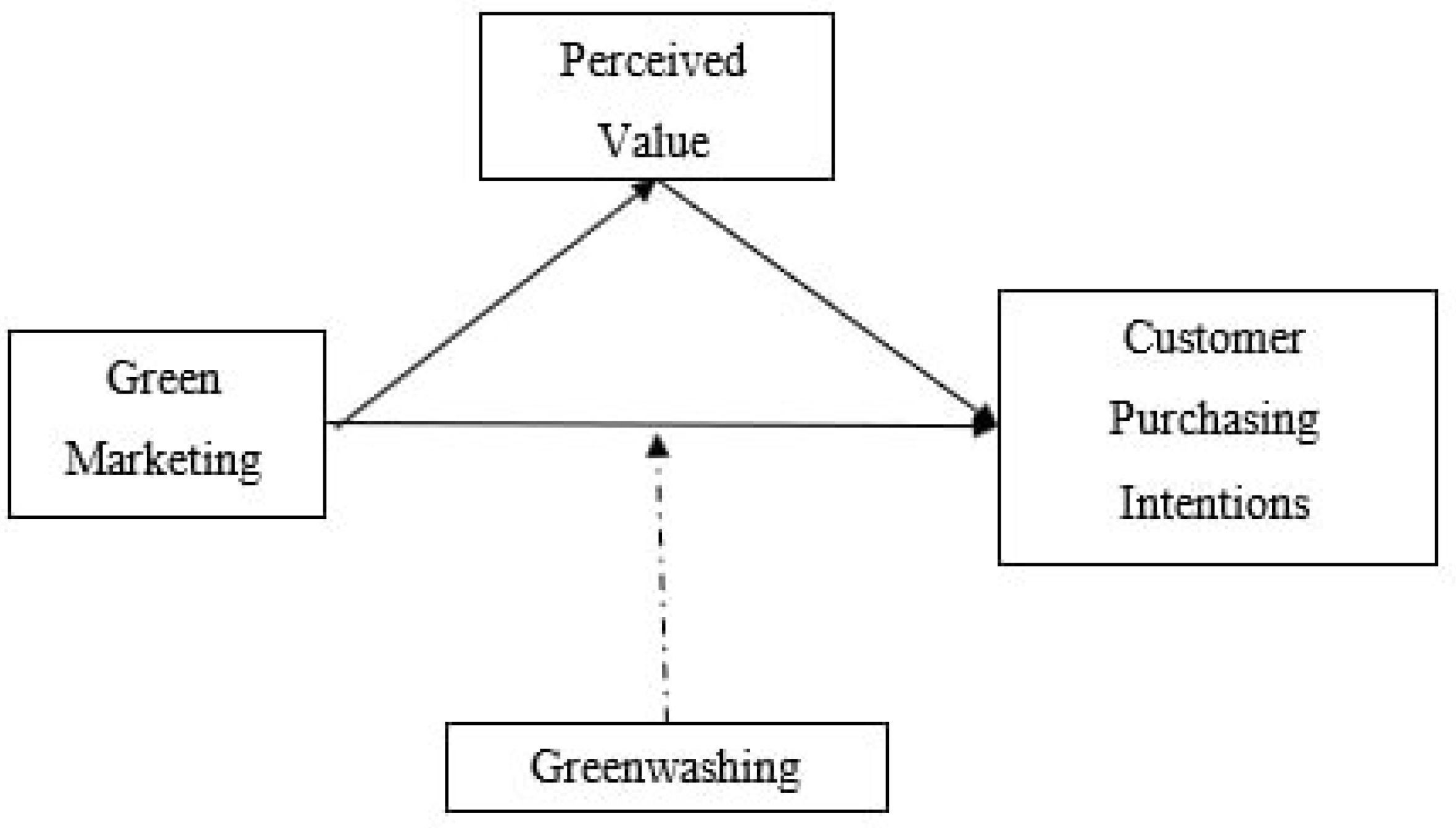
Understanding intentions (i.e., purchasing in this case) among humans is a complex matter by nature regardless of the industry [16]. There are various gaps in the literature of the green housing domain, especially when it comes to developing nations (e.g., Turkey) and the region of the Middle East and Northern Africa (MENA) when compared to developed nations [7,17]. Studies have shown that green marketing and purchasing intentions among customers have a significant link that can be observed in different contexts [18]. Purchasing intentions are shaped by consumers’ evaluations of product attributes, trust in the brand, and perceived authenticity [19,20]. According to [6], when consumers perceive real benefits from green initiatives, their willingness to purchase increases. A balance between what customers gain (e.g., savings on energy costs and quality of life) and the costs (e.g., higher initial costs) [21,22,23] determines the formation of positive or negative intentions. The economic aspect in developing countries such as Turkey and in the real estate sector suffers from inflation, market fluctuations, household income levels, and other macroeconomic factors [7,11]. Furthermore, greenwashing is included in the current model (see Figure 1), which is regarded as exaggerated performance in the environmental domain and a lack of truthful and proper communication in terms of the eco-friendliness of products or services [24]. The oil crisis and growing environmental concerns on a global scale have attracted scholars who reported that corporations along with consumers are increasingly interested in green consumerism [25,26], which is the main theme of this study. Environmental concerns responding to the demand for eco-friendly products have led to the development of green marketing strategies across numerous businesses that align corporate strategies for a positive image, reputation, and social responsibility [24]. Reports have shown that some companies tend to overpromise or overrate their environmental efforts to enhance their reputation and/or image among consumers. However, this can cause backlash, as consumers can perceive greenwashing tactics [27]. Environmentally conscious customers expect that companies adopt green initiatives to improve their processes and better align themselves with sustainable development and the TBL [24]. Legal compliance, competition, and leadership initiatives can reduce greenwashing and better affect customers’ decision making regarding their products. Greenwashing undermines the authenticity of green claims made by organizations. Consumers become skeptical of “green” branding when they perceive that environmental benefits are overstated or fabricated. Reports suggest that greenwashing negatively affects consumer trust, which directly impacts purchasing intentions, attitudes, and decisions [28].
Although green marketing is essential for targeting environmentally conscious consumers, some environmental claims made by companies lack transparency and credibility [24]. It is crucial for green claims to be accurate, reliable, and truthful to maintain consumer trust [29]. Recent research has concentrated on the types, antecedents, and consequences of greenwashing [25]. It has been noted that greenwashing has a substantial negative impact—both directly and indirectly—through green word-of-mouth on green purchase intention. In the extant literature, studies mainly focus on various effects of greenwashing and its relation to green purchasing intentions. However, its moderating effect that can enhance/diminish behavioral outcomes is less examined, especially regarding the housing industry [5,30]. In addition to what was noted, the intersection between marketing efforts and young adults’ purchasing intentions in this context as a developing economy can be beneficial for understanding both green marketing and customer behaviors in high-involvement and versatile housing sectors [21,22,31,32]. The limited and underexplored literature on this subject further drives the conduct of the current research. This further aligns with the broader sustainability agenda for the Turkish development goals which contribute to social, economic, and environmental pillars of the nation, especially with limited studies addressing this notion in the Middel Eastern region generally and Turkey in particular [1,2,33,34,35,36]. The following sections present a theoretical framework, hypotheses, design, and procedures. This is followed by measurement specifications and analyses, and discussions and a conclusion are presented in the final sections. A summary of the theoretical and practical implications along with conclusions and limitations are also presented.
Particularly the combination of the stimulus–organism–response model and the theory of planned behavior enables this study to tackle a highly volatile sector. While the former addresses multidimensional elements (e.g., perceived value), which pertain to cost, quality, status, and green aspects (i.e., social, functional, and emotional), the latter encompasses the link between shifting attitudes and features that stem from subjective norms (alignment with group values) and perceived behavioral control (e.g., verification of financial or performance outcomes). This combined premise opens a pathway for conceptualizing credibility, quality, transparency, and unbiased green marketing in the real estate market of Turkey. The following section presents a detailed explanation of this theoretical framework Table 1 shows the contextualization of the included variables.

2. Hypothesis Development

2.1. Theoretical Foundation

This study acknowledges that the urbanization trend, along with policies that favor densification, has diminished green spaces and resources. According to the stimulus–organism–response (S-O-R) theory and specifically for the current research, the GLC can reflect consumers’ inclinations through the external stimulus (i.e., marketing) which influences the intentions of organisms (i.e., young adults in this case) and triggers a response (i.e., positive intentions towards the GLC) [37]. Based on this premise, green marketing is operationalized with environmental advertisements and green brand positioning as stimuli triggering attitudes towards environmental responsibility among consumers (organism), which ultimately yields positive responses in their decision making when investing in properties (response) [4,38]. In the context of consumer behavior and conscious housing, this theory provides sufficient explanation for how marketing efforts can generate positive behavioral outcomes regarding purchasing green housing options when it comes to young adults in Turkey. This is relevant due to the increased demand for eco-friendly houses (GLC) and the issues surrounding investments in the housing sector. Green marketing can play an essential role in shaping the intentions of young adults and steering their preferences towards green housing [39,40]. Most studies tend to focus on psychological aspects in the green domain by addressing modest investments (e.g., consumption of goods, recycling practices, energy-efficient appliances, and organic food choices) [39], which further drives this research to examine the real estate industry of Turkey as a less explored subject.
The literature shows that several theories can be applied to the context of purchasing intentions regarding sustainable housing initiatives, such as values, beliefs, the values–beliefs–norms theory, the technology acceptance model, and the norm activation model [40]. The current research benefits from the commonly used theory of planned behavior (TPB) [41], in which personal evaluations (attitude), influence of others (subjective norms), and the ability to effectively perform the behavior (perceived behavioral control) can explain how a young adult makes decisions regarding green housing, especially considering its high value [42,43]. Factors such as price sensitivity, environmental consciousness, perceived value, and environmental awareness are addressed using the premises of the TPB [40,44]. Green marketing in this research can have positive influences on how young adults evaluate sustainable housing options while aligning modern economic, social, and environmental values as norms and provision of flexible purchasing options to trigger perceived behavioral control. Thus, the TPB can elaborate on the linkage between marketing efforts and the intention to purchase sustainable houses [45]. As the decision-making process is intricate, this theory provides an adequate basis for addressing purchasing intentions in the pro-environmental context, and the two S-O-R [37] and TPB [41] theories are integrated to provide a better understanding of the intricate relationships among the variables included in the current model (see Figure 1). The combined premises of these theories bypass the concern of scholars regarding the sufficiency of the TPB when analyzing purchasing intentions [42,46,47]. This theoretical setting advances existing research on green marketing and greenwashing, as most studies examined greenwashing as a unidimensional source of doubt that reduces trust. This research conceptualizes these variables as distinct but concurrent stimuli that jointly affect purchasing intentions. Furthermore, integration of the S-O-R model and the TPB enables the model to move beyond direct effects into a more dynamic psychological mechanism with specific value dimensions (emotional, social, and functional). This operates on an individual level which translates the impact of green marketing on behavioral intentions. Moreover, this research extends the greenwashing literature into a domain which remains underexplored (i.e., real estate) in an emerging market (i.e., Turkey).
Green marketing explains the claims and dynamics of how customers process green signals and their translation (or failure) to purchasing intentions. This becomes more vivid with the presence of conditional elements (e.g., greenwashing and perceived value). In the current context, information is asymmetric, as green marketing is an external stimulus that forms internal evaluations of consumers and triggering responses (e.g., purchasing intentions) [44]. Combined with the TPB, the organism state is regarded as an antecedent of the intention pathway, particularly with green marketing and greenwashing signals that shape attitudes and establish/negate trust. This integration is consistent with emerging evidence that greenwashing in real estate can have dire impacts on credibility by increasing perceived risks [44]. This implies that greenwashing is more than a communicative error but a mechanism that actively weakens psychological pathways for purchasing intention in this context.

2.2. Hypotheses Development

2.2.1. Green Marketing and Purchasing Intentions

Green marketing is a broad subject entailing various initiatives with a focus on integrating economic, social, and environmental pillars into the messaging of the company [14]. In this sense, green marketing can play a major role in how consumers’ perceptions are shaped if promotions are adequate and consistent with the firm’s performance [48]. When consumers perceive authenticity in the company’s commitment to green initiatives, they are more likely to form positive purchasing intentions [49]. This aligns with the dimensions of green marketing as operationalized in this research as environmental advertising and green brand positioning [48]. This becomes more vital for the real estate industry where energy-efficiency, waste management, lighting, and usage of space are appealing elements for eco-friendly customers valuing sustainability in their investments [2,3]. The younger generation is more responsive to green and environmental initiatives, as these values are in line with their goals and visions. Thus, this population is fit for understanding the green housing market and their purchasing intentions [50]. Green marketing can be considered as a setting where environmental messaging presented to potential customers influences how their intentions are formed, which is explained under the premises of the S-O-R model [37]. While environmental advertising can be described as promotional initiatives that focus on environmental issues and/or benefits from the provided services/products [48], green brand positioning can be described as appropriate placement of the brand and its services to improve legitimacy and credibility and enhance alignment between marketing communications and sustainability values to the targeted audience [38,51]. Environmental advertising can increase awareness while highlighting the appeal of green housing through appropriate communication strategies. This can be reinforced through adequate positioning of the brand so that the targeted audience can interact with the brand and its messages [51].
Following what was noted, the theory of planned behavior [41] aligns with the dimensions of green marketing as operationalized in this research (i.e., environmental advertising and green brand positioning). In this respect, attitudes, beliefs, and behaviors of young adults (as potential consumers of green housing) which shape their purchasing intentions are influenced by the extent to which green marketing is employed adequately. Sustainable practices in the real estate market in terms of advertising and branding are crucial for establishing legitimacy and credibility while ensuring enhanced performance in this highly competitive sector. This has been observed on a worldwide scale [42,52,53] and more specifically in Turkey [35,54]. Cognitive and affective stimuli, when placed effectively, can be tools for marketers to highlight the positivity and desirability of green housing options while steering the mindset of the younger generation towards purchasing through the GLC [38,55]. Furthermore, purchasing intentions in this context can manifest as affective commitment as well as cognitive assessment of the brand along with its marketing efforts that are aligned with sustainable development goals (i.e., environmental, social, and economic) [15]. Under the premises of the TPB, it can be stated that the intentions of individuals are under the influence of subjective norms, perceived behavioral control, and their attitudes [41], which influence the dynamics between green marketing and intentions of young adults towards purchasing green housing. In this study, awareness, investment, search behavior, and preferences regarding conventionality, perceived sustainability, and green efficiency of the house are considered as elements that the TPB highlights as influential in this context [56]. Notably, these elements address attitudes, subjective norms, and perceived behavioral control, which are also included in the designed survey for this research.
Strategic advertising with a focus on environmental aspects and a consistent framework with the branding, positioning, and communication of the company can resonate with customers through affective elements, perception of feasibility, and provision of value [19,52,53]. Through such strategies, green values of the brand align with its offerings (i.e., green houses). This further stimulates the response component of the S-O-R model [37]. In this sense, conscious green marketing can be a major tool for triggering positive responses (e.g., purchasing intentions) [42,57]. Green marketing can present trustworthiness and a good brand image which can further build positive purchasing behavior. It has been noted that purchasing products becomes more likely when brands adequately communicate green values in their marketing [54,58]. Arguably, in the Turkish real estate market, firms can greatly benefit from integrating green marketing as a strategy through showcasing green features of the GLC (e.g., renewable energy usage, waste reduction, heating efficiency, and green materials), which better positions the brand with the values of younger adults. Therefore, it can be stated that green marketing can promote positive intentions through the creation of shared responsibility (environmental preservation, economic viability, and socially valued investments) that motivates potential customers to invest in green housing projects. The S-O-R model provides a framework for addressing the dynamics between external marketing efforts and their influence on customers’ behaviors, especially for the context of young consumers in the housing market [59]. In this research, green marketing acts as the stimuli which can initiate internal cognitive and emotional changes in the organisms (customers), subsequently triggering a positive behavioral response (purchase intention) [42,52]. Accordingly, both environmental advertisements and green brand positioning can serve as such stimuli, contributing to internalization and formation of positive attitudes towards environmental responsibility, obligation, and affinity towards such behaviors. Hence, this study addresses Turkish young adults’ exposure to green marketing in the context of green housing and enhances their perceptions towards green housing options. Green marketing can influence internal perceptions of young adults which can drive positive responses. This has led to the formation of the following hypothesis:
Hypothesis 1.
Green marketing positively affects young Turkish adults’ purchasing intentions towards green housing options.

2.2.2. Mediating Role of Perceived Value

Perception of value among consumers is a crucial and decisive matter when it comes to purchasing intentions, as it shows the extent to which an individual perceives a balance between what is offered and its costs [59]. Perceived value integrates emotional and functional assessments of a product, which impacts purchasing decisions [60,61]. Evaluation of green properties by young adults entails not only environmental concerns but economic aspects (e.g., reduced costs and energy savings) and social elements (subjective norms in favor of sustainable investments) which add to the value and attractiveness of GLC options. Green marketing strategies with emphasis on these benefits can improve how prospective consumers perceive the value of these offerings, aiding the process of forming positive purchase intentions. This is aligned with the premises of the TPB [41,59], which explains the mechanisms through which attitudes can be influenced to improve perceptions and consequently lead to actions [62]. Based on this, the current research argues that perceived value can have an indirect effect on the linkage between green marketing and purchasing intentions in the real estate market, as it is associated with assessments regarding purchasing decisions. Being exposed to green marketing elements can yield positive emotional satisfaction, perception, and commitment attitudes, particularly when the purchase incorporates social, economic, and environmental benefits in both the short and long terms through optimizing energy consumption and cost reduction. As noted, social approval and status (subjective norms) can play major roles in how individuals perceive their purchasing intentions in this context [38,42,63].
Perceived value in this context also links to the S-O-R model, where responses towards marketing communication (i.e., green marketing) are under the influence of evaluation processes of the product/service and its monetary and non-monetary values [51,64]. Perceived value fosters trust and loyalty behaviors which can increase the effectiveness of green marketing on purchasing behaviors. It has been noted that when the perceived value of green products is high, individuals are more likely to develop favorable attitudes, increasing their willingness to purchase [65]. For the case of Turkish young adults, perceived value for green housing options can be a major element, as it entails cost efficiency along with significant contributions to environmental sustainability. Hence, green marketing with its value proposition can leverage a higher perception of value which can bridge into green intentions and, ultimately, actual purchases. Environmental advertising and green brand positioning are triggers that can impact one’s attitudes towards green responsibility under the S-O-R model [54,59]. Due to the high costs of properties along with the challenges of green and efficient houses, the previously noted psychological elements can yield positive attitudes for purchasing intentions by including beneficial aspects of this decision from social, economic, and environmental aspects [38,57]. Consumer assessment of properties (as organisms) (i.e., perceived value) is an internal and individual process [37]. Perceived value pertains to emotional, functional, and social values [66]. Emotional values are in alignment with ethics and a sense of self-empowerment [56,67], while functional values are more closely related to cost-effectiveness and the utilization of the product under evaluation. Social values address the societal aspect and the involvement of status, peers’ influence, and approval of social groups on the decision-making process of individuals. These evaluations occur internally and have the capacity to bridge and translate branding messages (e.g., green marketing) into usable information that can shape the intention of target audiences.
In accordance with what was noted, the bridging influence of perceived value on the green marketing–purchasing intention linkage can be argued as a perceived value that serves as an internal component. When consumers are exposed to a stimulus such as green marketing, the internal process works closely with their perceived value due to the integration of economic, functional, social, and emotional evaluations, which closes the gap between external stimuli and internal responses (i.e., purchasing intentions) [51,62,63]. The noted benefits of green housing can be highly attractive for young Turkish adults, as they entail economic, social, and environmental aspects. The internal evaluation processes can foster positive attitudes towards green housing options, as they can better translate positive attitudes into actual intentions and behaviors. Hence, the S-O-R model along with the TPB framework support the notion that an indirect influence is based on the green marketing–purchasing intention linkage that is proposed as a hypothesis in this study:
Hypothesis 2.
Perceived value mediates the relationship between green marketing and young Turkish adults’ purchasing intentions.

2.2.3. Moderating Role of Greenwashing (Diminisher)

While green marketing uses adequate and conscious aspects of a green product through clear advertising and positioning, greenwashing acts as an opposing force with false claims and overstated performance. The growing consciousness of environmental protection has led to the emergence of greenwashing as a deceptive form of practice and a misrepresentation of the environmental performance of a brand. There are firms who fabricate the ecological benefits of their products or services, which can include the use of selective information to improve brand image while hiding negative aspects [65,68]. Under the umbrella of green marketing, the targeted audience is environmentally conscious consumers. In this sense, lack of clarity, credibility, and unreal claims can be among the tactics for greenwashing that are in contrast with truthfulness, accuracy, and trustworthiness [24,29]. Greenwashing can be described as false and misleading green claims that undermine the green marketing efforts and diminish customers’ purchasing intentions due to the false claims [69]. Skepticism, distrust, and a sense of being deceived are among the elements that can arise by exaggerating green performance, which can further diminish the overall perception of individuals towards such products and/or services [29]. The younger generation is more technologically savvy, which, for the case of the Turkish housing market, enables the audience to identify greenwashing tactics [70]. When customers are skeptical, they are less likely to engage with the brand and may even question the authenticity of its environmental claims. Greenwashing is widely examined in fast-moving consumer goods and the energy and technical industries, while the real estate sector remains underexplored despite its green claims in project branding and sales. This leads to hesitation regarding investing in the GLC, as the external and contextual variables (i.e., greenwashing) act as stimuli that provoke a negative response under the premises of the S-O-R model [71,72]. Similarly, the TPB supports this notion, as individuals can have their attitudes negatively influenced by tactics that are unacceptable in society (subjective norms) and limit the perceived behavioral control of potential customers [30,46]. This becomes more vivid for the cases where young adults tend to invest on a relatively larger scale (e.g., housing and property options) [73]. Hence, greenwashing can cause damage to the reputation and image of the brand while distancing the potential customers in both the short and long terms, thus lowering the effectiveness of marketing strategies. When exposed to greenwashing, individuals are more likely to disengage from the brand and are more likely to share negative feedback, leading to devastating effects for the company as community groups share the value of the firm or lack thereof, which amplifies the adverse effects of greenwashing tactics [74]. Due to a lack of technical knowledge among young buyers regarding housing performance, this group is more vulnerable to predatory claims. Thus, greenwashing can have strong and lasting consequences for the buyers and the legitimacy of the market [73,74].
With the high intensity of the real estate market, greenwashing is a major risk for the credibility, image, and overall marketing strategy of a firm. However, it remains a recurring element in this sector, specifically in Turkey [75]. The importance of this subject is intensified due to the higher sensitivity of young adults to ethical performance and green decision making [24]. In the current context, greenwashing can diminish purchasing intentions as it intersects with green marketing strategies as a false or deceptive stimulus (under the S-O-R model), which can lead to avoidance and/or spread of negative word-of-mouth as a response [76]. This research operationalizes greenwashing with two distinct dimensions (i.e., deceptive environmental claims and exaggerated green benefits) which incorporate various tactics within the context of green marketing strategies, such as false and misleading advertising and promotions, hidden flaws, and false claims of performance and eco-friendliness [65]. When green capabilities are misrepresented, various factors can be at risk, namely, service quality, business impact and ethical policies, legitimacy, authenticity, and negative perceptions (e.g., lack of control and financial loss), which manifest higher risks associated with the purchase [38,42,71]. Greenwashing yields cognitive distrust, which can significantly dampen acceptance of a certain service/product as it generates doubt and negative internalization as a response.
In line with what was noted, the TPB provides a complementary premise to attitudes, subjective norms, and the perception of behavioral control, which are undermined under the concept of greenwashing. Through eroding trust and the generation of negative perceptions among individuals exposed to greenwashing (when detected), positive attributes can be diluted as the evaluations are formed in a less legitimate manner [73]. Therefore, young adults who perceive greenwashing are less likely to develop positive intentions (i.e., purchase), not only towards the services provided by the brand but also towards the overall performance of products (e.g., green housing options), further reducing their purchasing intentions [77]. This is combined with a negative association with perceived social approval among peers and their acceptance of this purchase, which for the case of young adults is more prevalent due to their engagement with various communities both online and off [30]. The ambiguities that occur upon being exposed to greenwashing can lower the confidence of individuals regarding their skills for detection of facts and monetary risks for premium pricing options that lack credibility. This leads to a reduction in the significance of existing favorable attitudes or subjective norms, supporting the argument of the current study for taking greenwashing into account as a moderating factor consistent with the noted theoretical setting. It is also important to note that there have been reports in contrast to what was mentioned, where in the absence of greenwashing, adequate green marketing strategies can yield desirable psychological outcomes among the targeted audience (e.g., young adults) [21,26]. This has been a major influence on the conduct of the current research to address the existing gaps in the literature [75,78]. Arguably, Turkish young adults who are critical of misleading environmental claims are more susceptible to have their confidence diminished in terms of purchasing GLC options, leading to a reduced likelihood of a future purchase [69,78]. Accordingly, the following hypothesis is formed:
Hypothesis 3.
Greenwashing moderates (diminishes) the relationship between green marketing and young Turkish adults’ purchasing intentions.

3. Design and Procedures

The current research employs a quantitative approach to examine Turkish young adults and their purchasing intentions towards green housing and green marketing in the housing industry. This method is derived from the available findings in the extant literature [4,8,79]. It is important to note that quantitative approaches in research provide objectivity in terms of measuring the parameters, as numerical data enables researchers to generalize findings to larger populations and similar contextual settings [80]. This study employs a questionnaire that addresses each variable, which not only embeds the theories but also extends their applicability in various contextual settings [81]. A cross-sectional design [82] was used, enabling the collection of necessary data at a single point with a high response rate [83]. It should be noted that this method poses limitations in terms of generalizability of findings due to self-reporting bias. This aspect is highlighted as a limiting factor for the current research. Lastly, the analytical technique partial least squares structural equation modeling (PLS-SEM) was deemed appropriate for this research using Smart-PLS software version 4, which is in line with similar studies in the literature and inclusion of latent effects that disregard normality of distribution while handling a relatively small sample size [39,84,85]. Based on the theoretical framework and the specific context of this study, a combination of two sampling procedures, namely, convenience and purposive sampling, was used [84]. Initially, the purposive sampling method was used to sample several real estate companies in Istanbul and Ankara (two major cities in Turkey), who were contacted and permission from the managers (using personal contacts) was obtained. Istanbul and Ankara are the two largest metropolitan cities in the country, and the selection of these cities was due to (1) the representation of large cities with dynamic and concentrated residential projects and intensive usage of green branding by developers; (2) both cities having a substantial young adult citizen population with the potential to be first-time buyers; and (3) both cities being urbanized with green challenges such as air quality, access to green areas, and environmental issues, which make them particularly relevant for this context [7,8]. The surveys were distributed across several areas in both cities (e.g., Eminonu, Cankaya, Aviclar, and Etimesgut). The coordinates of Istanbul are latitude 41°00′35.28″ N, longitude 28°57′54.72″ E, and the coordinates of Ankara are 39.9334° N, 32.8597° E.
The managers provided controlled access to their communication systems, through which the researchers sent the surveys without the need for personal information of the participants (young adults aged from 20 to 35 years). This method enables the researchers to select a sampling group that is adequate and well-fitted for the scope of the research [86]. This was followed by providing detailed information regarding the aims, objectives, and scope of the study to the potential participants. Those who agreed to take part in the survey were informed of the details of the research as well as confidentiality and anonymity. Participants were given an option to withdraw at any point. These measures increase the willingness to participate among respondents and convey a sense of providing honest answers to the survey, which leads to a decrease in common method bias (CMB) [87]. Upon this stage, participants were contacted using a convenience sampling method through which those who were willing to participate and were available for the research were selected. This combined approach of the sampling procedure enabled the researcher to ensure that the participants fit in the desired criteria (i.e., young Turkish adults, in the process of decision making regarding purchasing a house, and green aware and conscious) [88]. To calculate the sample size necessary for the current study to maintain a satisfactory statistical robustness, G*Power Software was used (version 3.1), where the statistical power was above 80% and alpha was 0.05 with a medium effect size, which resulted in a minimum of 86 data points to be collected. However, through a review of the recommendations of [84,85], the sample size was calculated to be 137. To ensure that the final data for analysis remained in this threshold, 250 questionnaires were distributed through company initiatives (SMS or email), and participants were given three days to complete and return the survey. A total of 203 surveys qualified for final analyses after the removal of incomplete answers.
To refine the method and identify potential errors in the survey before implementing it on a larger scale, a pilot test was employed [89] to reduce the bias of the researcher while preventing errors [90]. A total of 15 samples were gathered, which showed that no items should be removed and that the questionnaire was readable and easy to understand for participants. Importantly, the 15 samples were excluded from the final analysis.
Respondents’ demographics were 107 male and 96 female, which does not vary significantly; the majority of participants were between 20 and 25 years old (51%) followed by those 26–30 years old (27%) and 31–35 years old (22%), which fits the selection criteria noted earlier. Regarding education level, the majority reported a diploma (48%), with undergraduate closely following (43%) and followed by higher education (9%), showing further alignment with the context of the research.

4. Measurements

Age, gender, and education level have been defined as control variables, as their effects can have impacts on the outcomes of the analyses and thus, their effects are controlled [91]. To measure the items of green marketing, the green human resource management practices scale developed by [48] was employed, which is commonly used among scholars and incorporates environmental practices (i.e., marketing). A sample item is “The marketing campaigns of this company emphasize environmental benefits”. Moreover, to analyze the customers’ green purchasing behaviors with regards to green housing and under the premises of the TPB model, determinants of consumers’ green purchase behaviors in a developing nation [55] were used as the measurement scale (e.g., I am likely to invest in green housing in the near future). To address greenwashing, the scale developed and used by [65] was employed, which pertains to both dimensions, namely, deceptive environmental claims and exaggerated green benefits (e.g., The company overstates the benefits of its green initiatives), under greenwashing and green word-of-mouth contexts. Lastly, to measure perceived values and their dimensions (i.e., emotional value, functional value, and social value), the consumer perceived value scale based on the work of [66] was used (e.g., I believe green housing provides value for money).

5. Analysis and Results

The reliability and validity measures analyzed through measurement model assessment are presented in Table 2. As can be observed, the outer loading values are within the threshold (0.7–0.9 range) [84]; Rho A, alpha, and composite reliability (CR) are satisfactory [85,92,93,94]. Lastly, average variance extracted (AVE) values are above 0.5 [84], further confirming convergent validity for the measurement model.
The Heterotrait–Monotrait (HTMT) ratio values in Table 2 further align with the results in Table 3 and the adequacy of measures is confirmed, as values remain below the threshold of 0.85 [95].
The variance inflation factor (VIF) is examined due to the inclusions of reflective–formative variables. The results presented in Table 4 state no concern for multicollinearity, as the VIF values remain below 3 [96].
Table 5 shows the results of structural model assessment, which support the hypotheses of this research. As can be observed in Table 5, the model fit indices are acceptable, as the standardized root mean square residual (SRMR) is below 0.08 (0.032) and the normal fit index (NFI) and comparative fit index (CFI) are above 0.90 (0.923) [85,96]. Both predictive power (R2) and predictive relevance (Q2) are evaluated in PLS-SEM, where purchasing intentions show the highest explanatory power (R2 = 0.716) and predictive relevance (Q2 = 0.543), implying the appropriateness of the structural model. Perceived value similarly shows a high predictive power (R2 = 0.589) and predictive relevance (Q2 = 0.538) [85,97]. Lastly, the root mean squared error (RMSE) and mean absolute error (MAE) are acceptable, as the values are near 0 [98], implying the robustness of the current model.
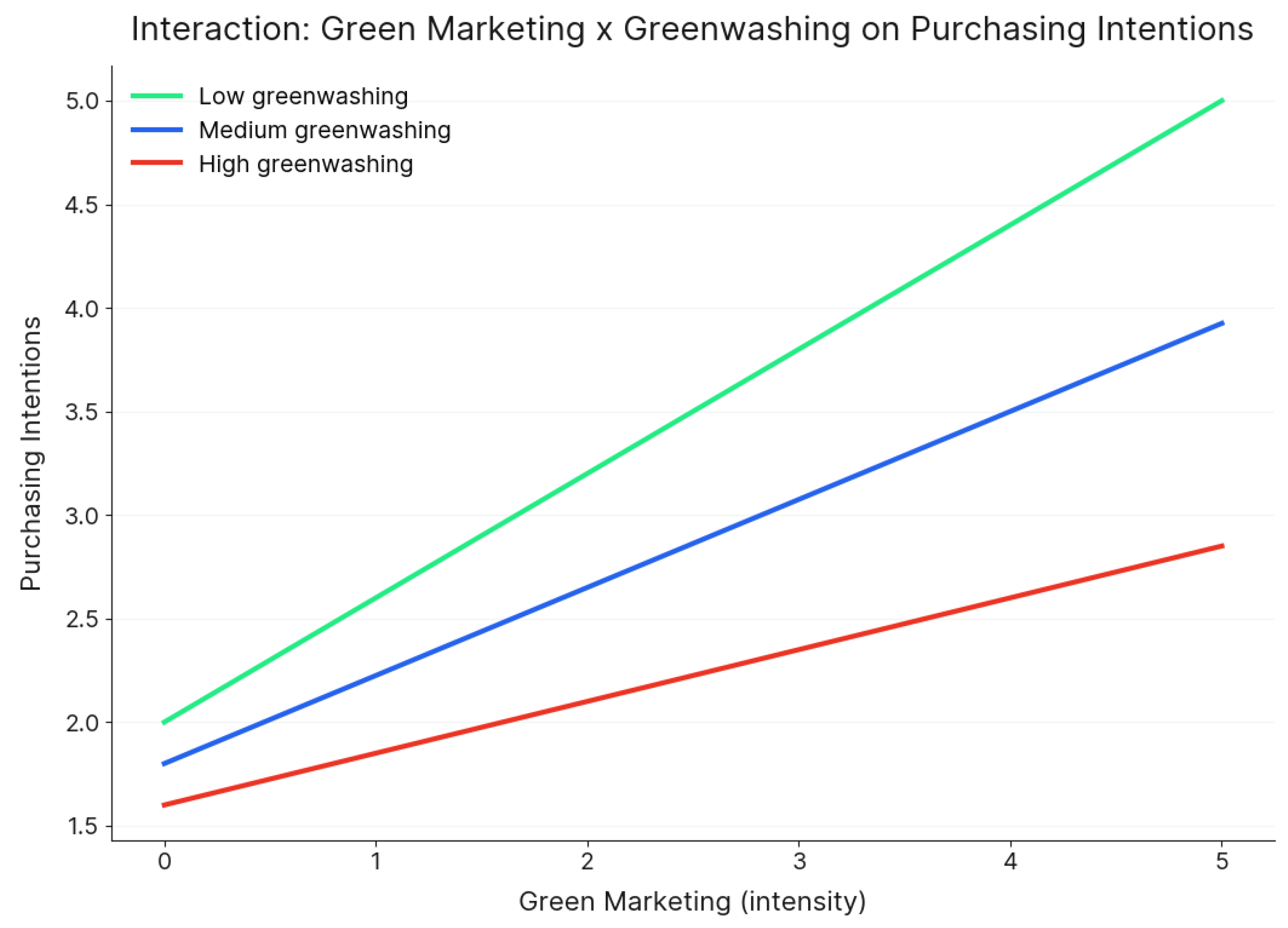
The interaction shown in Figure 2 suggests that high levels of greenwashing can have a dire impact on purchasing intentions, as they reduce the effectiveness of green marketing. In contrast, when greenwashing is minimized, it can act as a protective barrier for the firm, uplifting purchasing intentions even when green marketing efficiency is low.

6. Discussion

6.1. General Discussion

Based on the obtained results, it can be stated that green marketing (operationalized as environmental advertising and green brand positioning) can have a major impact on young Turkish adults’ intentions towards purchasing green real estate options (hypothesis 1). This highlights the premises of the S-O-R model with the logic of consistent, credible, and truthful sustainable communication as a stimulus to trigger eco-friendly cognitive responses that are approach-centric (i.e., purchasing intentions) [42,52,53]. Similarly, through the lens of the TPB, a well-established green marketing strategy can shift attitudes toward purchasing the offered products/services as it strengthens perceptions (e.g., perceived normative approval) [44,45], reinforcing the formation of positive intentions. This builds upon the existing literature regarding the real estate market intricacies especially when it comes to consumer behavior, especially in the MENA region and Turkey in particular. Purchasing intentions for the case of housing as a highly volatile market are combined with high involvement and associated with high costs, calling for a strategic positioning for brands surrounding the benefits of GLC options. Environmental stewardship, energy efficiency, lifecycle savings, and waste management can be elements of attractiveness for young adults. Within the emerging market context (e.g., Turkey) [1,38,51], this suggests that sustainable initiatives are essential value propositions that can shape customers’ tendencies if applied saliently, consistent, and adequately.
Furthermore, the results support hypothesis 2, which demonstrates that perceived value across social, functional, and emotional dimensions is a bridging factor that can better translate the efforts of green marketing into usable information for the audience to evaluate its values. Lower operation costs, better indoor environmental quality, cost-sensitive utilities, and regulatory risk hedging can be among the functions of a sustainable claim. From the social aspect, pro-environmental norms create a sense of identity which can signal a strong social value payoff regarding the purchase as a decision. Lastly, green narratives can focus on pride, the empowerment of green actions, and a sense of a better future, which can reduce uncertainty when it comes to purchasing intentions in the real estate market and for first-time purchasers [61,62,63]. The conjunction of these value channels explains how green marketing can act as a stimulus for steering persuasion towards intention in a high-risk and highly volatile category. Abstract green claims can be translated into concrete values that can be evaluated in trade-off and internalization processes [59,64]. As a core psychological element, perceived value can shift green marketing from abstract to practical traction with young adults in Turkey’s real estate sector [7,11].
The results also support the third hypothesis pertaining to the moderating (diminishing) effect of greenwashing, which can dampen the positive effects of green marketing that were previously noted. The moderation analysis demonstrates how greenwashing can be a critical boundary condition. This aligns with S-O-R terms as consumers detect exaggeration as well as ambiguity, which are negative stimuli that trigger negative responses (distrust, illegitimacy, doubt, and lowered confidence) [24,74]. This also links to the premises of the TPB where the strength of attitudes decreases injunctive norms along with perceived behavioral control, which raises doubt regarding the decision and its outcomes [68]. This is behaviorally meaningful, as can be seen in the interaction plot in Figure 2. Greenwashing instills distrust, skepticism, and frustration, which can further erode the existing desirable elements. This implies that such strategies should be omitted from marketing tactics in practice to ensure return on advertising and reduction in credibility threats. Certifications, transparency, and socially responsible communication should be prioritized, especially where regulatory oversight is not strict, such as in Turkey [12,13,75].
For information-savvy buyers, authenticity and credible messaging as well as honest value propositions are key determinants of their purchasing intentions, especially when it comes to investments that are volatile and are associated with financial loss, among others. The results provide a nuanced insight into the green communication functionalities in the real estate market of Turkey that is consistent with the theoretical framework of the research. Young adults’ perceptions shape their value appraisals, which in turn form their behavioral intentions (i.e., purchasing). The strong paths found in the results underscore the crucial nature of the included variables in the housing decision-making process. While perceived value (and its dimensions) translates green claims into internalized decisions, the perception of greenwashing demonstrates a notable impact, as green marketing is unable to compensate for the perceived deception. This highlights the fragile and delicate notion of trust when the purchasing intention entails a high-involvement subject such as property. The confirmed mediation and moderation effects demonstrate that the hypotheses are not independent and fragmented but are components of a process that describes how young adults perceive, interpret, and act upon green marketing in the real estate market of Turkey. Green marketing can be interpreted as a market cue that decreases asymmetrical information in real estate through delivering expected quality, efficiency, and economic savings (e.g., utility cost and resale savings) in the long run. This dynamic improves perceived value, which contributes to forming positive purchasing intentions. However, greenwashing negates the credibility of the cues, which discourages purchasing intentions. This particularly can be more vivid in emerging markets, where verifications, trust, and institutional consistency are less.

6.2. Theoretical Implications

The current research substantiates the S-O-R model in a high-involvement and highly volatile category of real estate under the concept of green marketing as a stimulus which influences internal states of individuals as organisms via multidimensional factors (e.g., perceived value) that incorporate cost, quality (function), identity and status (social), and pride and eco-friendly effectiveness (emotional). These dynamics lead to an improved purchasing intention that can ultimately drive actual behavior. The mediating effect of perceived value confirms that abstract sustainability claims in green marketing can be turned into insight that provide multi-faceted value to young adults for their evaluation processes. Furthermore, the results highlight greenwashing as a negative stimulus that is bound to service quality, legitimacy, and performance aspects. Perceived promotional stimuli lacking credibility (i.e., greenwashing) dampen the value formation process of organisms, leading to a diminished response overshadowing positive aspects. This suggests that the stimulus–intention link is not merely peripheral but is a condition for effectively creating value in the eco-friendly real estate market. Architecture, moral signaling, identity fit, cost-effectiveness, and health/comfort benefits can be among the attributes that are prone to greenwashing that reduce the formation of positive purchasing intentions, and vice versa.
The premises of the TPB are embedded in the current research and explain the dynamic between green marketing and shifting attitudes towards purchasing green housing. Functional savings, comfort, and similar features reinforce subjective norms which align with sustainability-oriented community/peer values. This leads to an enhanced perception of behavioral control, which can contribute to decision-making processes regarding verifiable financial and performance pathways due to improved intentions through these antecedents. The negative effect of greenwashing as a moderator demonstrates how attitudes can be negated when credibility is threatened, which further weakens injunctive norms as peer endorsements will no longer be aligned with the decision. This also generates doubt regarding the individual’s ability to identify true marketing messages, which reduces their perceived behavioral control. The TPB demonstrates how sensitivity towards credible, high quality, and transparent information can link to intention formation, especially when it comes to the concept of green marketing in real estate in Turkey. By avoiding greenwashing, real estate companies can reverse this effect and thus obtain legitimacy, market share, and a sustainable brand image that aligns with norms and values of young adults.

6.3. Practical Implications

Considering the results and the previously mentioned implications, there are several practical avenues that are derived from the current findings. Developers should design their marketing campaigns in a manner that maximizes green verifiability and value creation. Disclosing certificates and scope of performance metrics (modeled vs. actual) (water and energy savings, insulation specifications, and HVAC and indoor air quality measures) can remove doubts regarding greenwashing. This ensures that the audience can rely on the firm and internalize its messages to form intentions. Transparent cost of ownership, bundling green features with financing and partnerships (especially for first-time buyers), and utility-savings options highlight the functional aspect (greening, recycling, and electric vehicle charging stations) that further improves the attractiveness of GLC options. Developers and real estate companies can amplify social value (norms and identity) to engage with the locals by featuring young owners to showcase authentic purchasing benefits. Messaging and on-site experiences of buyers should align with emotional values such as a sense of pride, security, comfort, health, and an interactive lifestyle. From the social aspect, highlighting social norms can help identify features appreciated by real buyers to emphasize peer examples and improve the framing of green housing options as a socially respected choice to enhance the perceptions of buyers through mortgage options, documentation support, and reduced entry barriers. In addition, having a trained sales force and installation of post-occupancy incentives can act as positive stimuli for young adults in the process of purchasing a house. Companies in this sector should elevate their green marketing communications through online e-commerce methods that provide data-driven evidence for both the company (e.g., optimization) and customers (e.g., transparency).

7. Conclusions

The current research demonstrates that a well-designed green marketing strategy (that leverages environmental advertising along with coherent green brand positioning) can increase the purchasing intentions of young adults in the highly competitive and high-risk sector of housing. Dynamics that are in play in this context entail perceived value across functional, social, and emotional domains as a bridging element, aiding organizations in delivering their messages to young adults. Notably, greenwashing (when detected) can greatly dampen the green marketing–purchasing intention linkage, as value construction falters and formation of positive intentions diminishes. The convergent evidence provided from this analysis suggests a dire need for authenticity as a necessary condition for green communication in the real estate market when it comes to intention formation. Anchoring campaigns that are verifiable and clearly outline the values of green housing options combined with anti-greenwashing measures can be strategic tactics for gaining credibility, trust, and prospective customers. Self-reported scope and performance reports may trigger negative responses due to the high level of financial constraints among younger generations. Ambiguity regarding post-purchase performance can be another element in this context which highlights the boundary conditions that developers and real estate companies should consider when engaging in green marketing initiatives. Evidently, this can yield positive purchasing intentions among young buyers in the emerging market of Turkey.

Limitations and Recommendations

This research is limited by several aspects that can be addressed in future studies to expand and build upon these findings. First, the research has a small sample size, which can limit the representativeness and generalizability of the obtained results. This can be addressed by expanding the sample size. Second, the cross-sectional nature of this study limits the assessment of changes through time, which can be addressed by longitudinal studies. Third, the issue of representativeness pertains to the data collected from two cities. Inclusion of more cities can avoid this concern. Fourth, qualitative studies can obtain a more in-depth understanding of how young adults perceive green marketing and its value proposition along with greenwashing elements. Fifth, cultural and social elements are not included in the current model, which can be addressed in future studies examining this subject. Lastly, neighboring countries in the MENA region in general can be examined in this context to provide the literature with empirical and cross-cultural evidence. The survey captures perceptions of greenwashing instead of objectively verified instances of misleading communication. As perceptions are critical to understanding consumer responses, future studies can include measures to address objective truth, complementing the current findings with content analysis (developers’ marketing materials and regulatory records of greenwashing) in this sector through triangulation. It should also be noted that econometric causalities and associations are not assessed in this study, as the context pertains to psychological and economic mechanisms (e.g., risk reduction). Causal inference of economic effects should be interpreted limitedly, and future studies can address this limitation.

Author Contributions

Conceptualization, D.Ç.O. and I.M.; methodology, I.M.; software, I.M.; validation, D.Ç.O.; formal analysis, I.M.; investigation, I.M.; resources, I.M.; data curation, I.M.; writing—original draft preparation, I.M.; writing—review and editing, I.M.; visualization, I.M.; supervision, D.Ç.O.; project administration, D.Ç.O. All authors have read and agreed to the published version of the manuscript.

Funding

This research received no external funding.

Institutional Review Board Statement

The study was conducted in accordance with the Declaration of Helsinki and approved by the Institutional Review Board of Girne American University, Business Faculty Research Ethics Committee (protocol code 2023-2024-Spring-012 and 17 May 2024).

Informed Consent Statement

Informed consent was obtained from all subjects involved in the study.

Data Availability Statement

The data used in this study can be made available upon request from the corresponding author.

Conflicts of Interest

The authors declare no conflict of interest.

References

  1. Armutcu, B.; Zeqiri, J.; Ibahrine, M.; Gleason, K.; Alserhan, B.A. The relationship between digital marketing and product purchase behaviour in Turkey: A structural equations modelling approach. J. Mark. Commun. 2024, 31, 1–31. [Google Scholar] [CrossRef] [Scilit]
  2. Selvi, M.S.; Pajo, A.; Çakir, C.; Demir, E. Housing sales of real estate developers in Turkey. Int. J. Hous. Mark. Anal. 2021, 14, 39–54. [Google Scholar] [CrossRef] [Scilit]
  3. Armutcu, B.; Zuferi, R.; Tan, A. Green product consumption behaviour, green economic growth and sustainable development: Unveiling the main determinants. J. Enterprising Communities People Places Glob. Econ. 2024, 18, 798–819. [Google Scholar] [CrossRef] [Scilit]
  4. Zhang, X.; Dong, F. Why do consumers make green purchase decisions? Insights from a systematic review. Int. J. Environ. Res. Public Health 2020, 17, 6607. [Google Scholar] [CrossRef] [Scilit] [PubMed]
  5. Ali, S.; Zahid, R.A.; Battisti, E.; Vincurova, Z. Environmental innovation and corporate financial performance: The moderating role of greenwashing. Int. J. Emerg. Mark. 2025, 21, 535–557. [Google Scholar] [CrossRef] [Scilit]
  6. Alamsyah, D.P.; Othman, N.A. Consumer awareness towards eco-friendly product through green advertising: Environmentally friendly strategy. In IOP Conference Series: Earth and Environmental Science, Proceedings of the 6th International Conference on Climate Change 2021, Surakarta, Indonesia (Virtual), 25 May 2021; IOP Publishing: Bristol, UK, 2021; Volume 824, p. 012043. Available online: https://iopscience.iop.org/article/10.1088/1755-1315/824/1/012043/meta (accessed on 1 December 2025).
  7. Kader, S.A.; Zayed, N.M.; Faisal-E-Alam, M.; Salah Uddin, M.; Nitsenko, V.; Klius, Y. Factors affecting demand and supply in the housing market: A study on three major cities in Turkey. Computation 2022, 10, 196. [Google Scholar] [CrossRef] [Scilit]
  8. Genoveva, G.; Syahrivar, J. Green lifestyle among Indonesian millennials: A comparative study between Asia and Europe. J. Environ. Account. Manag. 2020, 8, 397–413. [Google Scholar] [CrossRef] [Scilit]
  9. Errichiello, O.; Zschiesche, A. Green consumption. In Green Branding: Basics, Success Factors and Instruments for Sustainable Brand and Innovation Management; Springer Fachmedien Wiesbaden: Wiesbaden, Germany, 2022; pp. 17–57. [Google Scholar] [CrossRef] [Scilit]
  10. Yigitcanlar, T.; Kamruzzaman, M.; Teriman, S. Neighborhood sustainability assessment: Evaluating residential development sustainability in a developing country context. Sustainability 2015, 7, 2570–2602. [Google Scholar] [CrossRef] [Scilit]
  11. Kartal, M.T.; Kılıç Depren, S.; Depren, Ö. Housing prices in emerging countries during COVID-19: Evidence from Turkey. Int. J. Hous. Mark. Anal. 2023, 16, 598–615. [Google Scholar] [CrossRef] [Scilit]
  12. Kamali, M.; Hewage, K.; Sadiq, R. Economic sustainability benchmarking of modular homes: A life cycle thinking approach. J. Clean. Prod. 2022, 348, 131290. [Google Scholar] [CrossRef] [Scilit]
  13. Zhang, S.; Adam, M.; Ghafar, N.A. How Satisfaction Research Contributes to the Optimization of Urban Green Space Design—A Global Perspective Bibliometric Analysis from 2001 to 2024. Land 2024, 13, 1912. [Google Scholar] [CrossRef] [Scilit]
  14. Dangelico, R.M.; Vocalelli, D. “Green Marketing”: An analysis of definitions, strategy steps, and tools through a systematic review of the literature. J. Clean. Prod. 2017, 165, 1263–1279. [Google Scholar] [CrossRef] [Scilit]
  15. Yahya, A.A.; Zargar, P. Achieving corporate sustainability through green human resource management: The role of CSR in the banking industry of a developing country. Sustainability 2023, 15, 10834. [Google Scholar] [CrossRef] [Scilit]
  16. Roslin, P.; Davidson, B.G.J.; George, J.P.; Muttungal, P.V. Role of Egoistic and Altruistic Values on Green Real Estate Purchase Intention Among Young Consumers: A Pro-Environmental, Self-Identity-Mediated Model. Real Estate 2025, 2, 13. [Google Scholar] [CrossRef] [Scilit]
  17. Kaswan, M.S.; Rathi, R. Green Lean Six Sigma for sustainable development: Integration and framework. Environ. Impact Assess. Rev. 2020, 83, 106396. [Google Scholar] [CrossRef] [Scilit]
  18. Skackauskiene, I.; Vilkaite-Vaitone, N. Green marketing and customers’ purchasing behavior: A systematic literature review for future research agenda. Energies 2022, 16, 456. [Google Scholar] [CrossRef] [Scilit]
  19. de Oliveira Lima, L.A.; da Silva, J.M.S.; de Oliveira Santos, A.; Marques, F.R.V.; da Silva Leāo, A.P.; Carvalho, M.D.C.L.; Estevam, S.M.; Ferreira, A.B.S. The influence of green marketing on consumer purchase intention: A systematic review. Rev. Gestão Soc. Ambient. 2024, 18, e05249. [Google Scholar] [CrossRef] [Scilit]
  20. Ratten, V. (Ed.) Driving Entrepreneurship in Southeast Asia (No. 271001); Routledge: London, UK, 2022. [Google Scholar] [CrossRef] [Scilit]
  21. Nguyen, T.L.; Tran, N.P.; Nguyen, T.K.T.; Huynh, T.C.T.; Nguyen, T.K.L.; Thach, L.P.N.; Thai, G.N.; Tran, T.T.S. Consumer perceptions and consumer behavior toward bio-based products: An empirical study in Vietnam. J. Asian Financ. Econ. Bus. 2021, 8, 211–222. [Google Scholar] [CrossRef]
  22. Nguyen, T.N.; Lobo, A.; Greenland, S. Pro-environmental purchase behaviour: The role of consumers’ biospheric values. J. Retail. Consum. Serv. 2016, 33, 98–108. [Google Scholar] [CrossRef] [Scilit]
  23. Zhang, Y.; Yuan, J.; Li, L.; Cheng, H. Proposing a value field model for predicting homebuyers’ purchasing behavior of green residential buildings: A case study in China. Sustainability 2019, 11, 6877. [Google Scholar] [CrossRef] [Scilit]
  24. Iqbal, A.I.; Iqbal, M.S.; Athar, A.; Khan, S.A. Impact of green marketing on consumer purchase intention: The moderating role of environmental knowledge. J. Soc. Organ. Matters 2023, 2, 43–58. [Google Scholar] [CrossRef] [Scilit]
  25. Low, S.; Ullah, F.; Shirowzhan, S.; Sepasgozar, S.M.; Lin Lee, C. Smart digital marketing capabilities for sustainable property development: A case of Malaysia. Sustainability 2020, 12, 5402. [Google Scholar] [CrossRef] [Scilit]
  26. Zhang, L.; Li, D.; Cao, C.; Huang, S. The influence of greenwashing perception on green purchasing intentions: The mediating role of green word-of-mouth and moderating role of green concern. J. Clean. Prod. 2018, 187, 740–750. [Google Scholar] [CrossRef] [Scilit]
  27. Gałecka-Drozda, A.; Wilkaniec, A.; Szczepańska, M.; Świerk, D. Potential nature-based solutions and greenwashing to generate green spaces: Developers’ claims versus reality in new housing offers. Urban For. Urban Green. 2021, 65, 127345. [Google Scholar] [CrossRef] [Scilit]
  28. Khan, S.; Khan, S.D. Greenwashing in Emerging Economies: How Consumers in Developing Countries Respond to Misleading Sustainability Claims. Stud. Sci. Sci. 2025, 43, 318–332. [Google Scholar]
  29. Tarabieh, S.M.Z.A. The impact of greenwash practices over green purchase intention: The mediating effects of green confusion, Green perceived risk, and green trust. Manag. Sci. Lett. 2021, 11, 451–464. [Google Scholar] [CrossRef] [Scilit]
  30. Quoquab, F.; Sivadasan, R.; Mohammad, J. “Do they mean what they say?” Measuring greenwash in the sustainable property development sector. Asia Pac. J. Mark. Logist. 2022, 34, 778–799. [Google Scholar] [CrossRef] [Scilit]
  31. Shabbir, M.S.; Bait Ali Sulaiman, M.A.; Hasan Al-Kumaim, N.; Mahmood, A.; Abbas, M. Green marketing approaches and their impact on consumer behavior towards the environment—A study from the UAE. Sustainability 2020, 12, 8977. [Google Scholar] [CrossRef] [Scilit]
  32. Dirgayasa, I.M.; Darma, G.S. Analyzing the Impact of Social Media Marketing, Green Marketing, and Developer Reputation on Property Purchase Intention. J. Ecohumanism 2024, 3, 1250–1260. [Google Scholar] [CrossRef] [Scilit]
  33. Assadiki, R.; Merlin, G.; Boileau, H.; Buhé, C.; Belmir, F. Status and prospects of green building in the Middle East and North Africa (MENA) region with a focus on the Moroccan context. Sustainability 2022, 14, 12594. [Google Scholar] [CrossRef] [Scilit]
  34. Taufique, K.M.R.; Islam, S. Green marketing in emerging Asia: Antecedents of green consumer behavior among younger millennials. J. Asia Bus. Stud. 2021, 15, 541–558. [Google Scholar] [CrossRef] [Scilit]
  35. Tuz, A.; Sertyesilisik, B. Investigating green marketing implementation with the hedonic price model in residential projects: The case of Istanbul. Crit. Hous. Anal. 2021, 8, 85–100. [Google Scholar] [CrossRef] [Scilit]
  36. Tuz, A.; Sertyeşilışık, B. Modelling a New Marketing Strategy in the Real Estate Market: Lean and Green Mass Marketing Mix Tools. Period. Polytech. Soc. Manag. Sci. 2022, 30, 186–200. [Google Scholar] [CrossRef] [Scilit]
  37. Mehrabian, A.; Russell, J.A. An Approach to Environmental Psychology; MIT Press: Cambridge, MA, USA, 1974. [Google Scholar]
  38. Amaya Rivas, A.; Liao, Y.K.; Vu, M.Q.; Hung, C.S. Toward a comprehensive model of green marketing and innovative green adoption: Application of a stimulus-organism-response model. Sustainability 2022, 14, 3288. [Google Scholar] [CrossRef] [Scilit]
  39. Omrane, A.; Bag, S. Determinants of customer buying intention towards residential property in Kolkata (India): An exploratory study using PLS-SEM approach. Int. J. Bus. Innov. Res. 2022, 28, 119–139. [Google Scholar] [CrossRef] [Scilit]
  40. Zhao, S.; Chen, L. Exploring residents’ purchase intention of green housings in China: An extended perspective of perceived value. Int. J. Environ. Res. Public Health 2021, 18, 4074. [Google Scholar] [CrossRef] [Scilit]
  41. Ajzen, I. The theory of planned behavior. Organ. Behav. Hum. Decis. Process. 1991, 50, 179–211. [Google Scholar] [CrossRef] [Scilit]
  42. Azmi, A.; Ibrahim, R.; Abdul Ghafar, M.; Rashidi, A. Smarter real estate marketing using virtual reality to influence potential homebuyers’ emotions and purchase intention. Smart Sustain. Built Environ. 2022, 11, 870–890. [Google Scholar] [CrossRef] [Scilit]
  43. Tan, W.L.; Goh, Y.N. The role of psychological factors in influencing consumer purchase intention towards green residential building. Int. J. Hous. Mark. Anal. 2018, 11, 788–807. [Google Scholar] [CrossRef] [Scilit]
  44. Li, T.; Shu, X.; Liao, G. Does Corporate Greenwashing Affect Investors’ Decisions? Financ. Res. Lett. 2024, 67, 105877. [Google Scholar] [CrossRef] [Scilit]
  45. Khamis, W.M.E. The Influence of Sustainable Construction Practices on the Performance of Real Estate Development Firms in Urban Areas of the Middle East. Doctoral Dissertation, International Business Academy of Switzerland, Thalwil, Switzerland, 2024. [Google Scholar]
  46. Judge, M.; Warren-Myers, G.; Paladino, A. Using the theory of planned behaviour to predict intentions to purchase sustainable housing. J. Clean. Prod. 2019, 215, 259–267. [Google Scholar] [CrossRef] [Scilit]
  47. Masukujjaman, M.; Wang, C.K.; Alam, S.S.; Lin, C.Y.; Ho, Y.H.; Siddik, A.B. Green home buying intention of Malaysian millennials: An extension of theory of planned behaviour. Buildings 2022, 13, 9. [Google Scholar] [CrossRef] [Scilit]
  48. Tang, G.; Chen, Y.; Jiang, Y.; Paillé, P.; Jia, J. Green human resource management practices: Scale development and validity. Asia Pac. J. Hum. Resour. 2014, 52, 31–55. [Google Scholar] [CrossRef] [Scilit]
  49. Cherian, J.; Jacob, J. Green marketing: A study of consumers’ attitude towards environment friendly products. Asían Soc. Sci. 2012, 8, 117. [Google Scholar] [CrossRef] [Scilit]
  50. Suki, N.M.; Azman, N.S. Impacts of Corporate Social Responsibility on the Links Between Green Marketing Awareness and Consumer Purchase Intentions. Procedia Econ. Finance 2016, 37, 262–268. [Google Scholar] [CrossRef] [Scilit]
  51. Neiba, N.; Singh, N.T. Effect of green marketing, green consumption values and green marketing approaches on organic purchase intention: Evidence from the Manipur. Int. Rev. Manag. Mark. 2024, 14, 18–31. [Google Scholar] [CrossRef] [Scilit]
  52. Chanda, R.C.; Vafaei-Zadeh, A.; Hanifah, H.; Thurasamy, R. Modeling eco-friendly house purchasing intention: A combined study of PLS-SEM and fsQCA approaches. Int. J. Hous. Mark. Anal. 2025, 18, 123–157. [Google Scholar] [CrossRef] [Scilit]
  53. Kumar, J.; Rani, V.; Rani, G.; Rani, M. Understanding purchase behaviour towards green housing among millennials: The mediating role of purchase intention. Int. J. Hous. Mark. Anal. 2025, 18, 987–1004. [Google Scholar] [CrossRef] [Scilit]
  54. Han, M.S.; Hampson, D.P.; Wang, Y.; Wang, H. Consumer confidence and green purchase intention: An application of the stimulus-organism-response model. J. Retail. Consum. Serv. 2022, 68, 103061. [Google Scholar] [CrossRef] [Scilit]
  55. Yadav, R.; Pathak, G.S. Determinants of consumers’ green purchase behavior in a developing nation: Applying and extending the Theory of Planned Behavior. Ecol. Econ. 2018, 134, 114–122. [Google Scholar]
  56. Sivadasan, R.; Quoquab, F.; Mohammad, J.; Basiruddin, R. Residential properties with green living concept: What drives consumers to buy? Int. J. Ethics Syst. 2020, 36, 427–447. [Google Scholar] [CrossRef] [Scilit]
  57. Akar, E. Digital consumerism in times of crisis: Exploring the shift in online shopping behaviour. Br. Food J. 2024, 126, 3441–3462. [Google Scholar] [CrossRef] [Scilit]
  58. Jacob, J.; Chully, A.A.; Godwin, B.J.; George, J.P. Young consumers’ green marketing orientation: Role of customer citizenship behaviour in determining real estate purchase intention in India. Int. J. Hous. Mark. Anal. 2024, 17, 1086–1103. [Google Scholar] [CrossRef] [Scilit]
  59. Taufique, K.M.R. Integrating environmental values and emotion in green marketing communications inducing sustainable consumer behaviour. J. Mark. Commun. 2020, 28, 272–290. [Google Scholar] [CrossRef] [Scilit]
  60. Taufique, K.M.R.; Vocino, A.; Polonsky, M.J. The influence of eco-label knowledge and trust on pro-environmental consumer behaviour in an emerging market. J. Strat. Mark. 2016, 25, 511–529. [Google Scholar] [CrossRef] [Scilit]
  61. Giantari, I.G.A.K.; Sukaatmadja, I.P.G. Effects of environmental orientation, green marketing mix and social capital on the competitive advantage of real estate developers in Bali. Prop. Manag. 2021, 39, 193–209. [Google Scholar] [CrossRef] [Scilit]
  62. Wang, G.; Musa, R. Does Green Advertising Always Effectiveness? A Multidimensional Perceived Value Analysis Based on the SOR Model. J. Promot. Manag. 2024, 30, 1293–1321. [Google Scholar] [CrossRef] [Scilit]
  63. Sultan, P.; Wong, H.Y.; Azam, M.S. How perceived communication source and food value stimulate purchase intention of organic food: An examination of the stimulus-organism-response (SOR) model. J. Clean. Prod. 2021, 312, 127807. [Google Scholar] [CrossRef] [Scilit]
  64. Nguyen, T.N.; Phan, T.T.H.; Le, T.H.N. Green consumption: Closing the intention-behavior gap. J. Retail. Consum. Serv. 2020, 52, 101900. [Google Scholar] [CrossRef] [Scilit]
  65. Chen, Y.S.; Lin, C.L.; Chang, C.H. The influence of greenwash on green word-of-mouth (green WOM): The mediation effects of green perceived quality and green satisfaction. Qual. Quant. 2014, 48, 2411–2425. [Google Scholar] [CrossRef] [Scilit]
  66. Sweeney, J.C.; Soutar, G.N. Consumer perceived value: The development of a multiple item scale. J. Retail. 2001, 77, 203–220. [Google Scholar] [CrossRef] [Scilit]
  67. Chen, H.; Bernard, S.; Rahman, I. Greenwashing in hotels: A structural model of trust and behavioral intentions. J. Clean. Prod. 2019, 206, 326–335. [Google Scholar] [CrossRef] [Scilit]
  68. Daga, S.; Yadav, K.; Singh, D.; Pamucar, D.; Simic, V. Unveiling Greenwashing: Analyzing the interaction of factors discouraging ESG Greenwashing through TISM and MICMAC. J. Environ. Manag. 2025, 380, 124850. [Google Scholar] [CrossRef] [Scilit] [PubMed]
  69. Erden, O.; Erkartal, P.Ö. Greenwashing in Turkey: Sustainability as an advertising strategy in architecture. A+ Arch Des. Int. J. Archit. Des. 2019, 5, 1–13. [Google Scholar]
  70. Fang, Z. Greenwashing versus green authenticity: How green social media influences consumer perceptions and green purchase decisions. Sustainability 2024, 16, 10723. [Google Scholar] [CrossRef] [Scilit]
  71. Tan, L.L. A stimulus-organism-response perspective to examine green hotel patronage intention. Asia Pac. J. Mark. Logist. 2023, 35, 1552–1568. [Google Scholar] [CrossRef] [Scilit]
  72. Rahman, S.U.; Nguyen-Viet, B. Towards sustainable development: Coupling green marketing strategies and consumer perceptions in addressing greenwashing. Bus. Strategy Environ. 2023, 32, 2420–2433. [Google Scholar] [CrossRef] [Scilit]
  73. Isac, N.; Javed, A.; Radulescu, M.; Cismasu, I.D.L.; Yousaf, Z.; Serbu, R.S. Is greenwashing impacting on green brand trust and purchase intentions? Mediating role of environmental knowledge. Environ. Dev. Sustain. 2024, 27, 21329–21346. [Google Scholar] [CrossRef] [Scilit]
  74. Sun, Y.; Shi, B. Impact of Greenwashing Perception on Consumers’ Green Purchasing Intentions: A Moderated Mediation Model. Sustainability 2022, 14, 12119. [Google Scholar] [CrossRef] [Scilit]
  75. Özen, H.; Avtepe, A.B. Extending Theory of Planned Behavior with Green Marketing: An Application. In Marketing and AI: Shaping the Future Together; Springer: Berlin/Heidelberg, Germany, 2024; p. 94. [Google Scholar]
  76. Sajid, M.; Zakkariya, K.A.; Suki, N.M.; Islam, J.U. When going green goes wrong: The effects of greenwashing on brand avoidance and negative word-of-mouth. J. Retail. Consum. Serv. 2024, 78, 103773. [Google Scholar] [CrossRef] [Scilit]
  77. Szabo, S.; Webster, J. Perceived greenwashing: The effects of green marketing on environmental and product perceptions. J. Bus. Ethics 2021, 171, 719–739. [Google Scholar] [CrossRef] [Scilit]
  78. Margariti, K.; Hatzithomas, L.; Boutsouki, C. Elucidating the gap between green attitudes, intentions, and behavior through the prism of greenwashing concerns. Sustainability 2024, 16, 5108. [Google Scholar] [CrossRef] [Scilit]
  79. Yadav, R.; Dokania, A.K.; Pathak, G.S. The influence of green marketing functions in building corporate image: Evidences from hospitality industry in a developing nation. Int. J. Contemp. Hosp. Manag. 2016, 28, 2178–2196. [Google Scholar] [CrossRef] [Scilit]
  80. Adler, R.H. Trustworthiness in qualitative research. J. Hum. Lact. 2022, 38, 598–602. [Google Scholar] [CrossRef] [Scilit]
  81. Pandey, J. Deductive approach to content analysis. In Qualitative Techniques for Workplace Data Analysis; IGI Global: Hershey, PA, USA, 2019; pp. 145–169. [Google Scholar]
  82. Casula, M.; Rangarajan, N.; Shields, P. The potential of working hypotheses for deductive exploratory re-search. Qual. Quant. 2021, 55, 1703–1725. [Google Scholar] [CrossRef] [Scilit]
  83. Hornik, R.; Woolf, K.D. Using cross-sectional surveys to plan message strategies. Soc. Mark. Q. 1999, 5, 34–41. [Google Scholar] [CrossRef] [Scilit]
  84. Hair, J.F., Jr.; Matthews, L.M.; Matthews, R.L.; Sarstedt, M. PLS-SEM or CB-SEM: Updated guidelines on which method to use. Int. J. Multivar. Data Anal. 2017, 1, 107–123. [Google Scholar] [CrossRef] [Scilit]
  85. Hair, J.F.; Risher, J.J.; Sarstedt, M.; Ringle, C.M. When to use and how to report the results of PLS-SEM. Eur. Bus. Rev. 2019, 31, 2–24. [Google Scholar] [CrossRef] [Scilit]
  86. Campbell, S.; Greenwood, M.; Prior, S.; Shearer, T.; Walkem, K.; Young, S.; Bywaters, D.; Walker, K. Purposive sampling: Complex or simple? Research case examples. J. Res. Nurs. 2020, 25, 652–661. [Google Scholar] [CrossRef] [Scilit]
  87. Podsakoff, P.M.; Podsakoff, N.P.; Williams, L.J.; Huang, C.; Yang, J. Common method bias: It’s bad, it’s complex, it’s widespread, and it’s not easy to fix. Annu. Rev. Organ. Psychol. Organ. Behav. 2024, 11, 17–61. [Google Scholar] [CrossRef] [Scilit]
  88. Golzar, J.; Noor, S.; Tajik, O. Convenience sampling. Int. J. Educ. Lang. Stud. 2022, 1, 72–77. [Google Scholar]
  89. Van Teijlingen, E.; Hundley, V. The importance of pilot studies. Nurs. Stand. (Through 2013) 2002, 16, 33. [Google Scholar] [CrossRef] [Scilit] [PubMed]
  90. Connelly, L.M. Pilot studies. Medsurg Nurs. 2008, 17, 411. [Google Scholar] [PubMed]
  91. Wang, H.; Ma, B.; Bai, R. How does green product knowledge effectively promote green purchase intention? Sustainability 2019, 11, 1193. [Google Scholar] [CrossRef] [Scilit]
  92. Diamantopoulos, A.; Sarstedt, M.; Fuchs, C.; Wilczynski, P.; Kaiser, S. Guidelines for choosing between multi-item and single-item scales for construct measurement: A predictive validity perspective. J. Acad. Mark. Sci. 2012, 40, 434–449. [Google Scholar] [CrossRef] [Scilit]
  93. Dijkstra, T.K.; Henseler, J. Consistent partial least squares path modeling. MIS Q. 2015, 39, 297–316. [Google Scholar] [CrossRef] [Scilit]
  94. Jöreskog, K.G. Simultaneous factor analysis in several populations. Psychometrika 1971, 36, 409–426. [Google Scholar] [CrossRef] [Scilit]
  95. Henseler, J.; Ringle, C.M.; Sarstedt, M. A new criterion for assessing discriminant validity in variance-based structural equation modeling. J. Acad. Mark. Sci. 2015, 43, 115–135. [Google Scholar] [CrossRef] [Scilit]
  96. Henseler, J.; Ringle, C.M.; Sinkovics, R.R. The use of partial least squares path modeling in international marketing. In New Challenges to International Marketing; Emerald Group Publishing Limited: Leeds, UK, 2009; pp. 277–319. [Google Scholar] [CrossRef] [Scilit]
  97. Shmueli, G.; Ray, S.; Estrada, J.M.V.; Chatla, S.B. The elephant in the room: Predictive performance of PLS models. J. Bus. Res. 2016, 69, 4552–4564. [Google Scholar] [CrossRef] [Scilit]
  98. Purwanto, A.; Sudargini, Y. Partial least squares structural squation modeling (PLS-SEM) analysis for social and management research: A literature review. J. Ind. Eng. Manag. Res. 2021, 2, 114–123. [Google Scholar]
Figure 1. Research Model.
Sustainability 18 01444 g001
Figure 2. Interaction plot—greenwashing as a moderator.
Sustainability 18 01444 g002
Table 1. Constructs, Abbreviations, and Theoretical Embeddedness.
Abbrev.ConstructDimensionRole in Model
GMGreen MarketingEnvironmental AdvertisingStimulus (S)—marketing-related cues in the environment/TBP = perceived behavioral control and subjective norms
GMGreen MarketingGreen Brand PositioningStimulus (S)—positioning cues shaping initial input/TBP = perceived behavioral control and subjective norms
PVPerceived ValueEmotional ValueOrganism (O)—internal affective value/TBP = behavioral control and attitudes
PVPerceived ValueFunctional ValueOrganism (O)—cognitive/evaluative utility/TBP = attitude and behavioral control
PVPerceived ValueSocial ValueOrganism (O)—social–relational value/TBP
GWGreenwashingDeceptive Environmental ClaimsStimulus (S)—misleading environmental information/TBP—subjective norms and perceived behavioral control
GWGreenwashingExaggerated Green BenefitsStimulus (S)—overstated green claims/TBP—subjective norms and perceived behavioral control
PIPurchasing IntentionsResponse (R)/TPB behavioral intention/S–O–R outcome
Table 2. Measurement Model Assessment.
FactorsDimensionsIndicatorsOuter LoadingsAlphaRho ACRAVE
Purchasing Intentions-PI10.7210.8120.7780.8160.701
PI20.714
PI30.720
PI40.712
PI50.713
Green MarketingEnvironmental AdvertisingEA10.7110.8130.7740.8190.704
EA20.717
EA30.714
Green Brand PositioningGB10.7100.8140.7700.8180.703
GB20.713
GB30.716
Perceived ValueEmotionalPVE10.7320.8160.7710.8140.684
PVE20.723
PVE30.721
FunctionalPVF10.7300.8090.7640.8120.678
PVF20.724
PVF30.725
SocialPVS10.7180.8080.7680.8160.683
PVS20.726
PVS30.721
GreenwashingDeceptive Environmental ClaimsDEC10.7540.8130.7800.8240.706
DEC20.749
DEC30.757
Exaggerated Green BenefitsEGB10.7410.8110.7790.8260.708
EGB20.756
EGB30.742
Table 3. Heterotrait–Monotrait (HTMT) Ratio.
PIEAGBPVEPVFPVSDEC
PI-
EA0.573-
GB0.6010.613-
PVE0.6020.6240.631-
PVF0.6120.6210.6440.651-
PVS0.5890.5930.6110.6010.597-
DEC0.5870.5940.6130.6290.6380.641-
EGB0.6110.6170.6330.6280.6250.6330.638
PI = Purchasing Intentions; EA = Environmental Advertising; GB = Green Brand Positioning; PVE = Emotional Value; PVF = Functional Value; PVS = Social Value; DEC = Deceptive Environmental Claims; EGB = Exaggerated Green Benefits.
Table 4. Reflective–Formative Assessment.
ConstructItemsConvergent ValidityWeightsVIFt-Statistics
Green MarketingEA0.7160.3221.9033.101
GB0.3231.8903.032
Perceived ValueEmotional0.7140.3271.9142.944
Functional0.3341.9182.932
Social0.3361.9132.919
GreenwashingDEC0.7180.3371.9212.964
EGB0.3391.9232.966
Table 5. Structural Model Assessment.
EffectsRelationsβt-Statisticsp-ValueHypothesis
Direct
H1GM → PI0.3313.263 ***0.001Supported
Mediation
H2GM → PV → PI0.3122.891 **0.009Supported
Moderation
H3GM × GW → PI−0.323−3.022 *0.013Supported
Control Variables
Gender → PI0.1122.121 *
Age → PI0.1142.143 *
Education → PI0.1172.056 *
R2PI = 0.716/Q2PI = 0.543/RMSE = 0.661/MAE = 0.518
R2PV = 0.589/Q2PV = 0.538/RMSE = 0.663/MAE = 0.528
SRMR: 0.032; NFI: 0.923; CFI: 0.931
GM = Green Marketing; PV = Perceived Value; GW = Greenwashing; PI = Purchasing Intentions. * 0.05, ** 0.01, *** 0.001.
Disclaimer/Publisher’s Note: The statements, opinions and data contained in all publications are solely those of the individual author(s) and contributor(s) and not of MDPI and/or the editor(s). MDPI and/or the editor(s) disclaim responsibility for any injury to people or property resulting from any ideas, methods, instructions or products referred to in the content.