1. Introduction
Soil stabilization plays a central role in geotechnical engineering, particularly when natural soils do not exhibit the mechanical strength and deformation characteristics required for civil construction. Classical stabilizing agents—especially commercial limestone-derived lime—have long been recognized for their ability to reduce soil plasticity, enhance workability, and improve strength through flocculation and the development of pozzolanic reaction products such as calcium silicate hydrates (C–S–H) and calcium aluminate hydrates (C–A–H) [
1,
2,
3]. Despite these advantages, lime production requires high calcination temperatures and results in significant CO
2 emissions, releasing approximately 0.9 tons of CO
2 per ton of lime produced [
4,
5]. This environmental burden has stimulated global efforts to seek low-carbon alternatives aligned with circular-economy frameworks and sustainable construction practices [
6,
7].
Within this context, waste-based have gained considerable attention as environmentally responsible substitutes or supplements to traditional binders. Fly ash (FA), a by-product of coal combustion, has been extensively studied for soil stabilization due to its pozzolanic activity, fine particle size distribution, and capacity to improve strength, durability, and volumetric stability of clayey soils [
8,
9]. More recently, Di Sante et al. [
10] demonstrated that the combined use of FA and lime yields substantial mechanical and microstructural improvements while reinforcing its classification as a “sustainable and promising approach” in geotechnical applications. In the sustainability literature, several contributions have highlighted the potential of integrating industrial or agricultural residues into soil stabilization strategies, offering both environmental and economic advantages [
11,
12].
Parallel to the use of pozzolanic by-products, increasing attention has been directed to alternative calcium-rich materials capable of partially or completely replacing conventional limestone resources. Eggshell waste, produced in large quantities by the food-processing industry, is composed of more than 90% calcium carbonate and therefore represents a viable precursor for producing lime of high purity [
13,
14]. Recent studies have demonstrated promising results for eggshell-derived lime (EHL) in soil stabilization and agricultural soil amendment, showing chemical behavior and liming effects comparable to or better than those of commercial lime [
15]. For example, Sebonela et al. [
16] reported that ground eggshells exhibit liming efficiency similar to agricultural lime in sandy and clay loam soils, while Yang et al. [
17] found improvements in soil strength and pH when substituting lime with eggshell-derived materials. Consolidating this trend, Consoli et al. [
18] demonstrated the mineralogical and chemical suitability of eggshell-produced limes for geotechnical stabilization, reinforcing their potential as circular and renewable alternatives to conventional binders.
Moreover, recent investigations have highlighted the importance of understanding microstructural and mineralogical processes that may arise from the use of calcium-based binders, particularly the formation of expansive phases such as ettringite, which can influence long-term stability in chemically treated sediments and soils [
19]. These findings underscore the need to evaluate not only the mechanical performance of sustainable binders but also their potential chemical interactions and durability implications.
Despite the growing body of literature supporting the feasibility of eggshell-derived lime as a stabilizing agent, most existing studies have focused on either conventional soils or the isolated use of eggshell-based materials. Limited attention has been given to the combined application of eggshell-derived lime and fly ash from a performance-based perspective, particularly in tropical residual soils, which exhibit distinct mineralogical heterogeneity, fabric, and weathering-induced porosity. In addition, systematic and controlled comparisons between eggshell-derived lime and commercial hydrated lime under identical experimental conditions remain scarce in the literature. Residual soils from the decomposition of granitic rocks, such as those present in the Florianópolis–SC region, exhibit heterogeneous microstructure, variable clay content, and high porosity, which influence their response to stabilization techniques [
20]. These unique characteristics highlight the need for experimental studies that evaluate the performance of sustainable binders in regional geotechnical contexts.
Accordingly, this study is guided by the following research questions:
(i) Does eggshell-derived hydrated lime provide mechanical performance comparable to or superior to commercial hydrated lime when applied under identical stabilization conditions?
(ii) How does the incorporation of fly ash influence the relative mechanical performance of soils stabilized with eggshell-derived lime and commercial hydrated lime in a tropical residual soil?
It is hypothesized that the finer particle size and higher chemical purity of eggshell-derived hydrated lime promote enhanced early-age cementation and strength development compared to commercial hydrated lime, while the addition of fly ash may differentially affect highly reactive and conventional limes.
Therefore, this study investigates the effects of incorporating eggshell-derived lime and fly ash—individually and in combination—on the mechanical behavior of a granite residual soil, supported by qualitative microstructural observations. The research includes geotechnical characterization, mineralogical analyses, and unconfined compressive strength (UCS) tests after 28 days of curing, enabling a robust comparison with commercial lime. Beyond contributing to the understanding of stabilized tropical soils, this work promotes sustainable construction practices by valorizing eggshell waste, reducing the environmental impacts associated with lime production, and encouraging the reuse of industrial by-products such as fly ash. The findings support broader strategies for low-carbon material development, resource conservation, and circular-economy-driven geotechnical engineering.
2. Materials and Methods
2.1. Experimental Program
The experimental program comprised three main phases. In the first phase, the eggshell hydrated lime (EHL) was produced under controlled laboratory conditions. The second phase involved the physical, chemical, and mineralogical characterization of all materials used: the residual soil, fly ash, EHL, and commercial hydrated lime (CHL). In the third phase, unconfined compressive strength (UCS) tests were performed on soil–lime–fly ash mixtures prepared according to a full factorial experimental design specifically conceived to isolate and quantify the effects of lime type, lime content, fly ash content, and dry unit weight on soil strength development. This performance-based approach enabled a controlled and systematic comparison between EHL and CHL under identical experimental conditions.
2.2. Materials
2.2.1. Soil
The soil used in this study is a granite residual soil collected in Florianópolis, Santa Catarina, Southern Brazil.
Table 1 presents its physical properties. Based on Atterberg limits, the material was classified as a fat clay (CH) according to the Unified Soil Classification System [
21]. Standard Proctor compaction tests [
22] indicated a maximum dry unit weight of 17.2 kN/m
3 and an optimum molding water content of 19.0%.
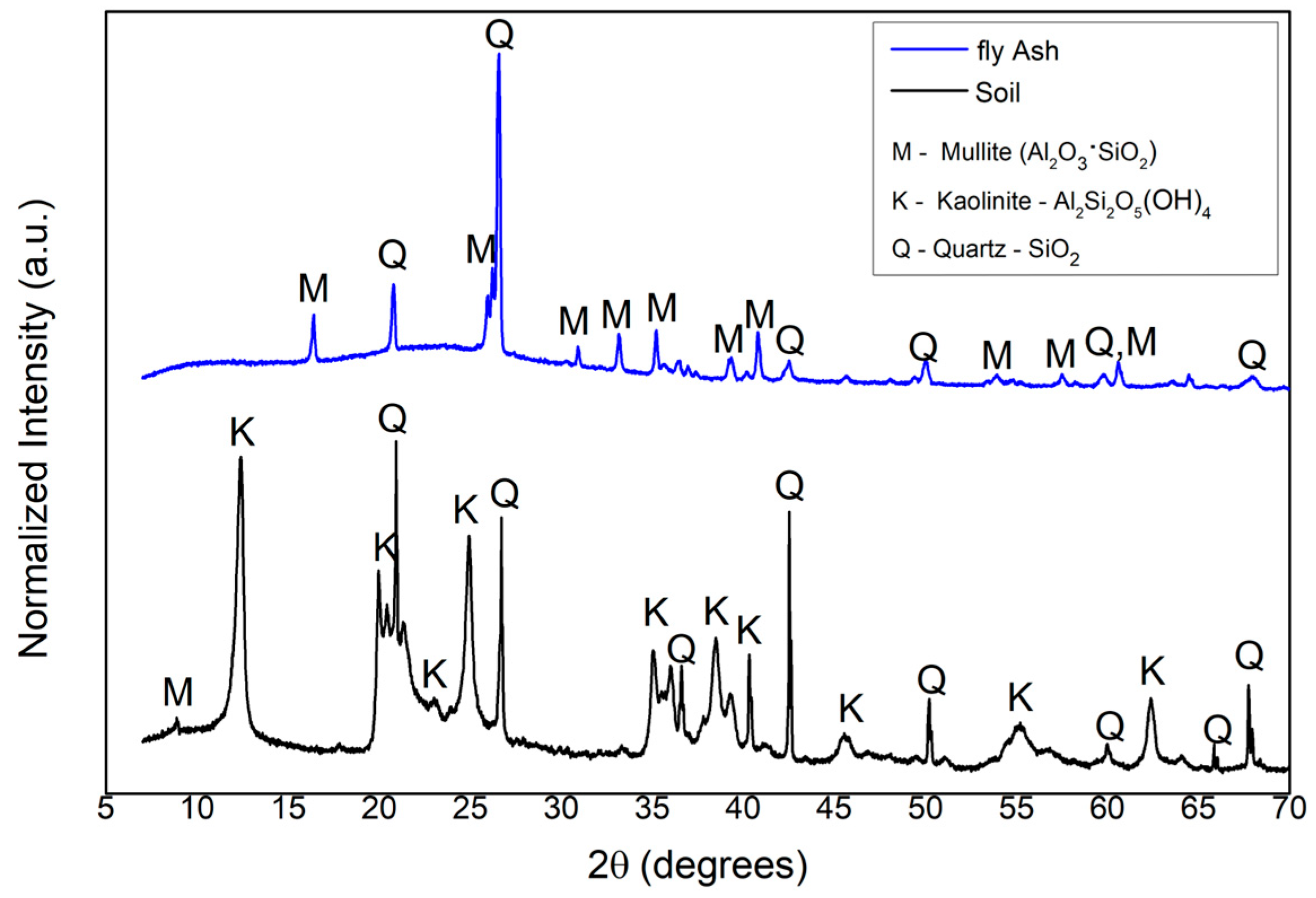
Mineralogical analysis using X-ray diffraction (XRD) revealed the presence of kaolinite and quartz, with a weak amorphous band characteristic of weathered granitic soils (
Figure 1). The particle-size distribution shows significant fractions of fine gravel, sand, silt, and clay, consistent with the heterogeneous structure of tropical residual soils.
2.2.2. Lime
Two types of hydrated lime were evaluated:
Commercial hydrated lime (CHL): A dolomitic lime with a specific gravity of 2.55, commonly used in soil stabilization practices in Brazil;
Eggshell hydrated lime (EHL): EHL was produced in the laboratory using discarded eggshells. Cleaned and ground shells (D90 = 1.65 mm) were calcined at 900 °C for 4 h to obtain quicklime (CaO). The quicklime was hydrated with distilled water at a mass ratio of 1:3 to ensure adequate heat dissipation and complete hydration. The resulting material was oven-dried at 60 °C for 48 h and subsequently milled in a ball mill for 12 h. The final product exhibited a specific gravity of 2.55, comparable to the CHL.
This process follows established techniques for converting eggshell CaCO
3 into high-purity lime as reported in previous studies [
16,
18].
In addition to chemical and mineralogical characterization, the particle size distribution of both CHL and EHL was determined by laser granulometry, allowing a quantitative comparison of their granulometric characteristics and assessment of the influence of particle fineness on stabilization performance.
2.2.3. Fly Ash
The fly ash used in this research originates from the Jorge Lacerda Thermoelectric Power Plant, located in Santa Catarina, Brazil. Its pozzolanic properties and suitability for cementitious and geotechnical reactions have been documented in previous Brazilian studies involving coal-derived FA from the same region [
23,
24]. The FA characterization is summarized in
Table 1, including particle-size distribution and specific gravity. Silt-size particles predominate (50%), with the remaining fraction corresponding to fine sand. The X-ray diffraction (XRD) analysis of the fly ash, presented in
Figure 1 together with the soil diffractogram, confirms the presence of mullite and quartz as the main crystalline phases. These minerals are characteristic of coal combustion by-products and are associated with the thermal transformation of clay minerals during burning, further supporting the material’s pozzolanic potential.
2.3. Experimental Design
Specimen preparation followed a full factorial experimental design with the following factors:
Lime type: CHL and EHL;
Lime content: 3%, 5%, and 7%;
Fly ash content: 0%, 12.5%, and 25%;
Dry unit weight: 15, 16, and 17 kN/m3.
The lime contents were selected based on the results from the Initial Consumption of Lime (ICL) test proposed by Rogers et al. [
25], which indicated values of 2% for the EHL and 5% for the CHL, in conjunction with findings from previous studies that identified similar reactive thresholds for soils stabilized with both conventional lime and alternative Ca-rich binders [
16,
18,
26].
Following previous studies that identified 25% as an optimum level for strength development and pozzolanic activation in lime–fly ash mixtures [
8,
9,
10], fly ash contents of 0%, 12.5%, and 25% were selected.
Dry unit weights were chosen based on the maximum dry unit weight obtained from Standard Proctor compaction tests. In addition to testing the natural soil, a compaction test was also performed on the soil–25% fly ash mixture to evaluate the influence of FA on compaction behavior. This mixture exhibited a reduction in maximum dry unit weight, reaching 16.6 kN/m3, while the optimum water content remained approximately unchanged relative to the natural soil. These compaction results were used to define the dry unit weights adopted in the experimental matrix, ensuring that all mixtures could be properly molded under realistic field-like conditions. A constant molding water content of 20% was used for all specimens.
A total of 54 mixture combinations were generated. Each was tested in triplicate, resulting in 162 UCS tests. The mean UCS value of the three specimens was used as the response variable.
2.4. Specimen Molding and Curing
Specimens were molded as cylindrical samples with a diameter of 50 mm and a height of 100 mm. The dry components (soil, lime, and fly ash) were first homogenized, after which distilled water was added gradually to achieve uniform mixing.
Specimens were prepared by static compaction in a split cylindrical mold using a hydraulic press. Compaction was applied gradually until the target height and dry unit weight were achieved. All molding procedures were conducted at laboratory ambient temperature (approximately 23–25 °C), and no external heating or curing pressure was applied during specimen preparation. The mixture was compacted in three equal layers, with each layer compacted individually, and its surface lightly scarified prior to adding the next layer to ensure interlayer bonding.
Different dry unit weights were obtained by controlling the mass of dry material placed in the mold while maintaining constant specimen dimensions and molding water content. The required mass for each target dry unit weight was calculated based on the mold volume and desired γd, and compaction was adjusted accordingly. After removal from the mold, mass and dimensions were measured, and molding water content was verified from representative samples.
Acceptance criteria required:
Specimens meeting these tolerances were sealed in plastic bags to prevent moisture loss and cured at 25 ± 2 °C in a humid room for 28 days. No significant volumetric changes were observed during curing.
Porosity (η) was calculated for each specimen based on its dry unit weight and the weighted average specific gravity of the soil, lime, and fly ash constituents, considering their respective proportions in each mixture. This approach allows consistent comparison between mixtures with different binder contents.
2.5. Unconfined Compressive Strength Tests
UCS tests were performed according to ASTM D5102/D5102M [
27]. To minimize suction effects, specimens were submerged in water for 24 h prior to testing (day 27).
Tests were conducted using an automated loading press (50 kN capacity) with two interchangeable load cells: 5 kN (0.005 kN resolution) and 50 kN (0.023 kN resolution) (Florianópolis, SC, Brazil). A constant vertical displacement rate of 1.14 mm/min was applied until failure. Stress–strain curves were recorded for all specimens.
2.6. Scanning Electron Microscopy
Microstructural evaluation was conducted using Scanning Electron Microscopy (SEM) (PANalytical X’Pert, Cambridge, MA, USA) on five selected conditions:
Samples were collected at 28 days of curing, oven-dried at low temperature to avoid microstructural damage, mounted on aluminum stubs, and gold-coated prior to imaging. SEM observations focused on identifying hydration products, bonding patterns, microcracks, and structural differences associated with lime reactivity and the presence of fly ash.
2.7. Statistical Analysis
A multifactor ANOVA (α = 0.05) was performed to determine the significance of lime type, lime content, fly ash content, and dry unit weight on the UCS values. Normality and variance homogeneity were verified through residual analysis, and the mean UCS from triplicate specimens was used as the response variable. All statistical analyses were conducted using Microsoft Excel®.
3. Results
3.1. Comparison Between Limes
The commercial hydrated lime (CHL) and the eggshell hydrated lime (EHL) present markedly different physical characteristics. The CHL exhibits a coarser granulometry, with a mean particle diameter (
D50) of 0.025 mm and a uniformity coefficient (
Cu) of 10.1, indicating a wide particle-size distribution. In contrast, the EHL is substantially finer and more uniform, with a
D50 of 0.0036 mm and
Cu of 1.7. This higher fineness implies a larger specific surface area, which is expected to enhance the dissolution and reaction kinetics of Ca(OH)
2 during soil stabilization, favoring more efficient pozzolanic activity [
16,
18].
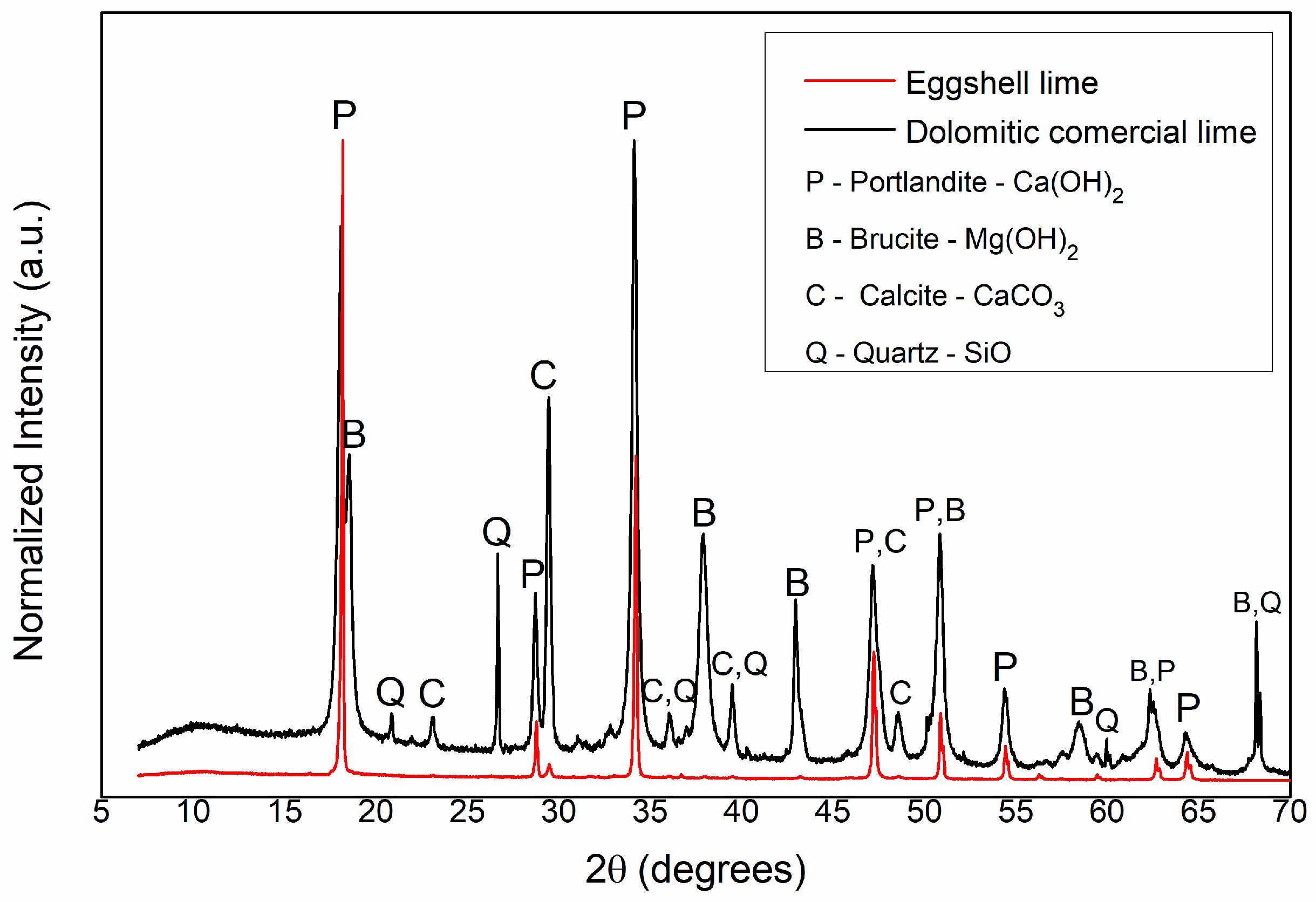
Figure 2 presents the X-ray diffractograms for both lime types. The CHL spectrum reveals portlandite and brucite peaks, consistent with its dolomitic nature, along with strong calcite peaks, indicating incomplete calcination or carbonation during industrial handling. The presence of quartz reflects mineral impurities in the raw material. In contrast, the EHL diffractogram shows dominant portlandite peaks with negligible calcite, demonstrating its high purity. This result aligns with the ICL test performance: EHL required only 2% lime content to achieve pH stabilization, whereas CHL required 6%.
3.2. Effects of Lime Type, Lime Content, and Dry Unit Weight
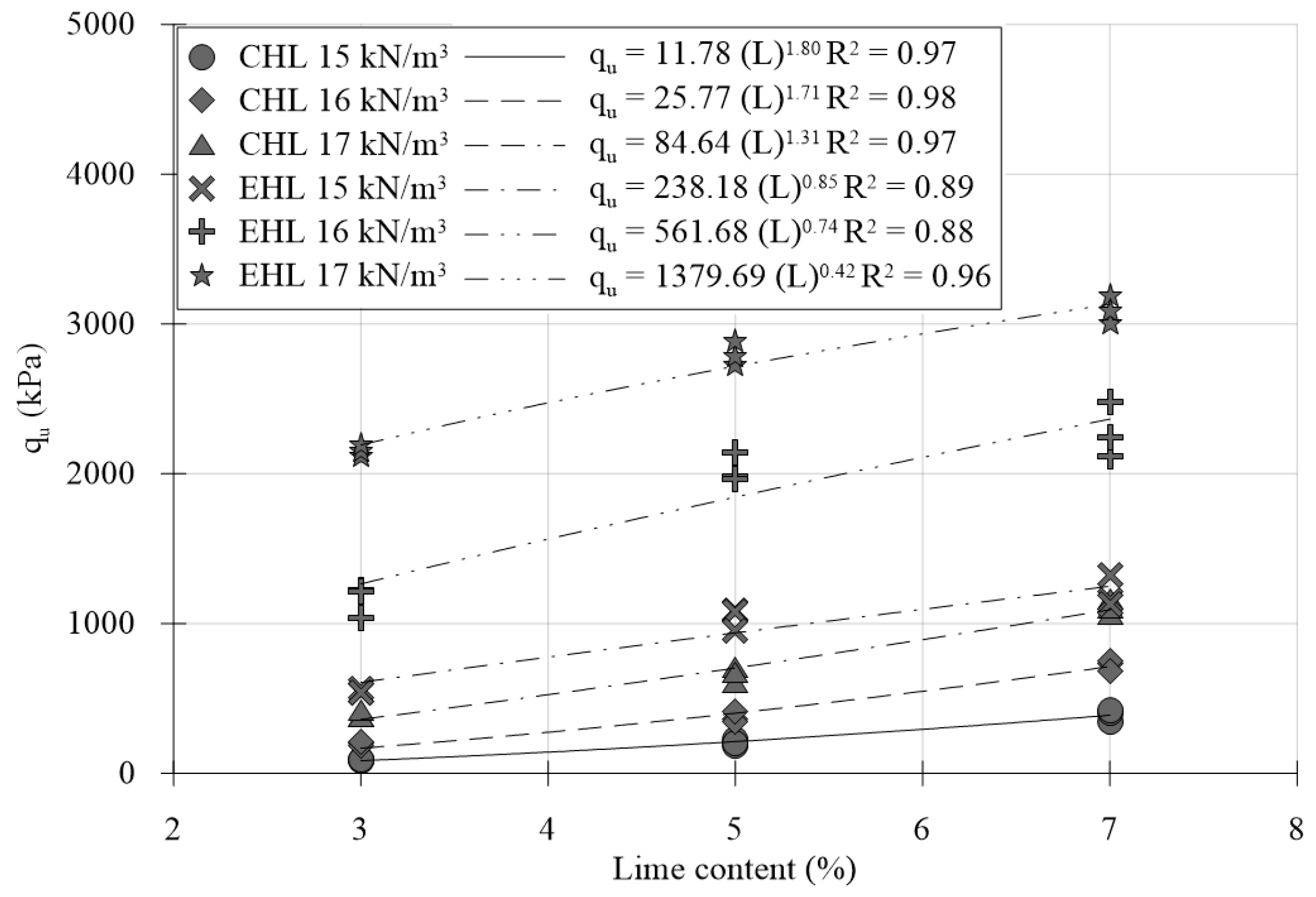
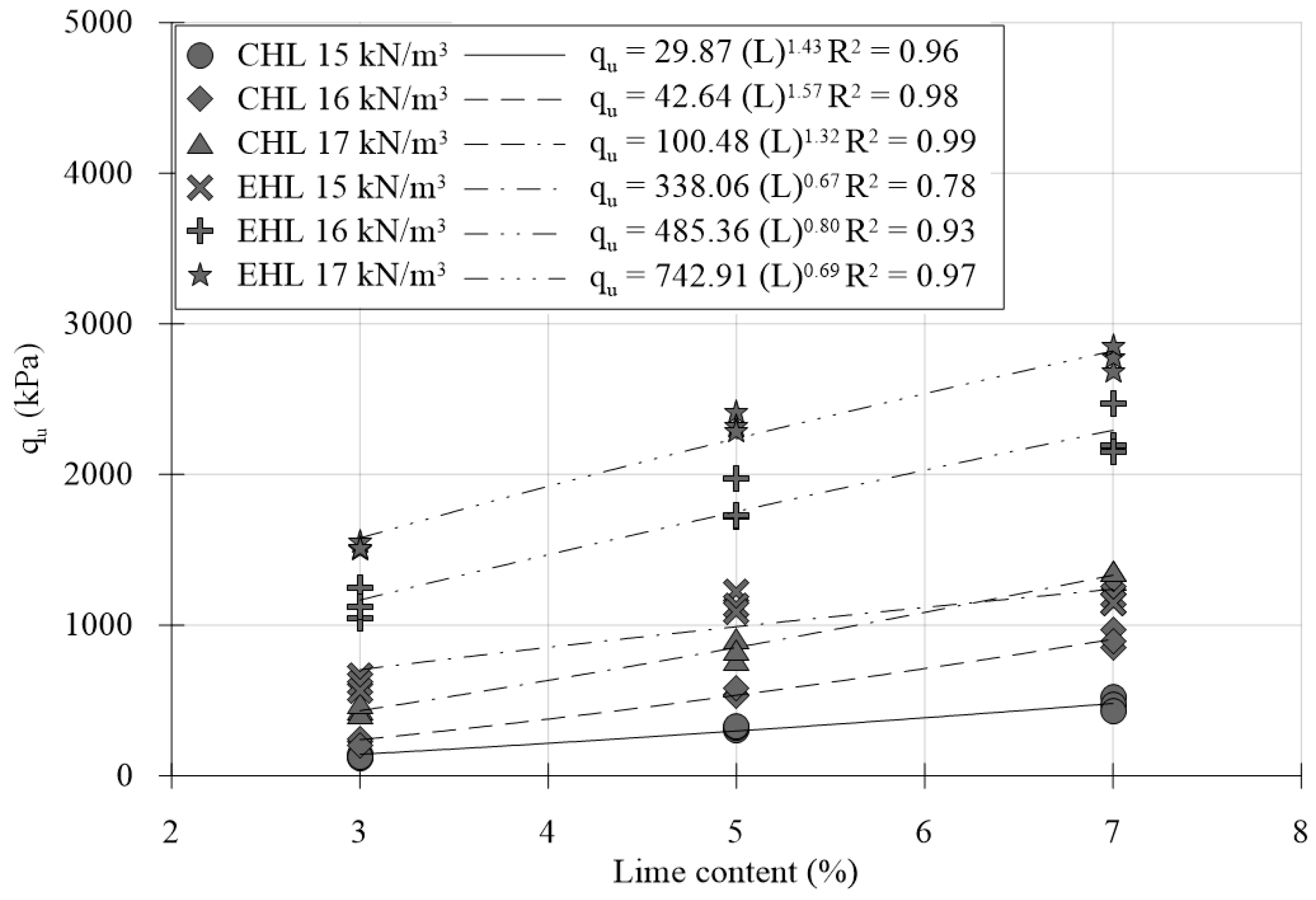
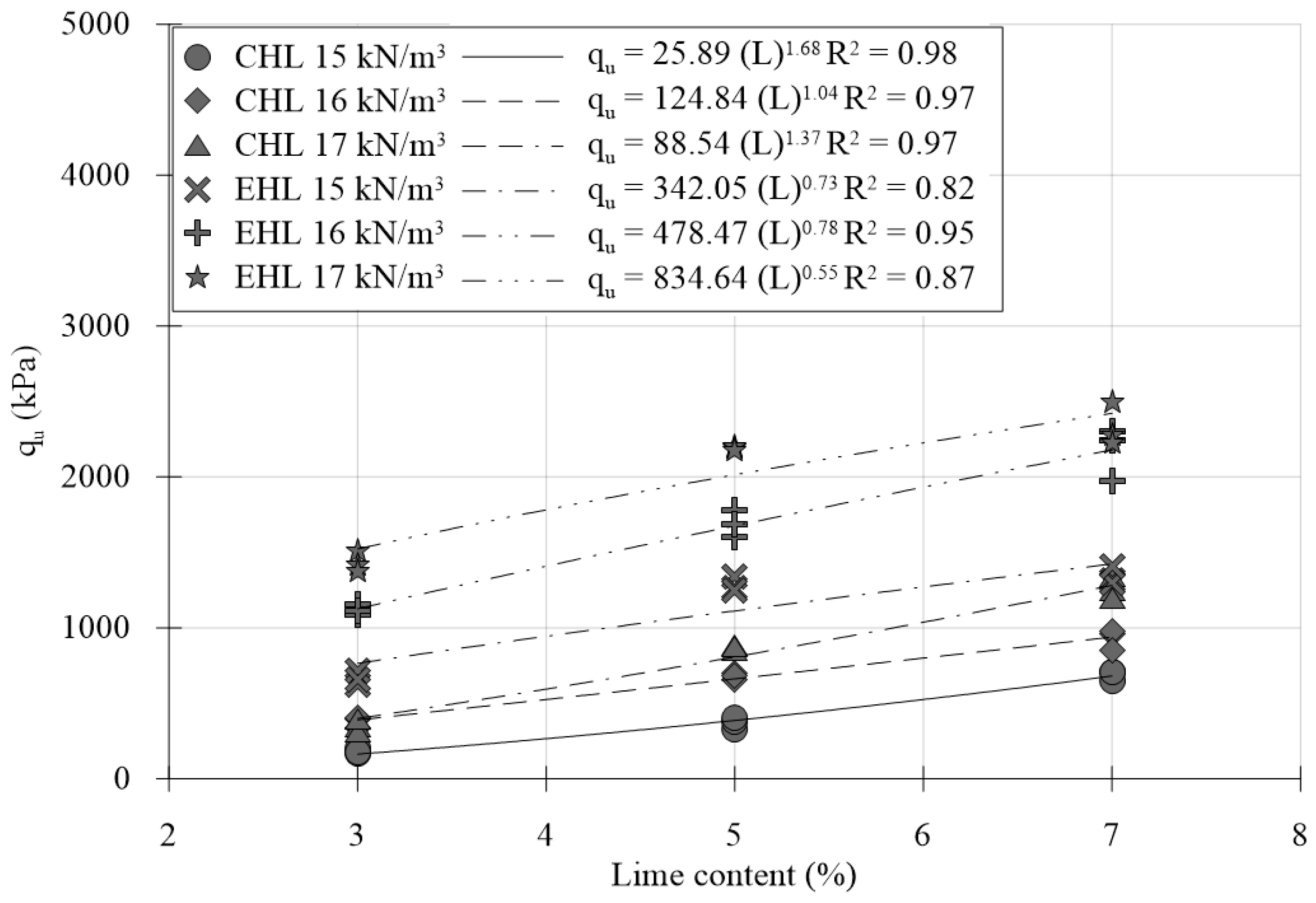
Figure 3,
Figure 4 and
Figure 5 illustrates the relationship between unconfined compressive strength (
qu) and lime content (
L) for mixtures containing 0%, 12.5%, and 25% fly ash, respectively. For both lime types,
qu increased consistently with lime content, in agreement with classical studies on lime-stabilized soils [
2] and recent works involving alternative limes derived from eggshells or agricultural wastes [
11,
16,
18]. Higher lime contents increase the availability of Ca
2+ ions and enhance the formation of cementitious compounds (C–S–H and C–A–H), promoting greater interparticle bonding and soil flocculation.
Dry unit weight (
γd) also exhibited a positive influence on strength. As shown in
Figure 3,
Figure 4 and
Figure 5 higher
γd values produced upward shifts in the best-fit curves. This behavior agrees with previous findings [
3,
18], which attribute the increased strength of denser specimens to reduced void ratios, improved particle packing, and more efficient bridging of interparticle contacts by lime-generated cementitious gels.
A direct comparison between CHL and EHL reveals a consistent superiority of EHL across all tested lime contents, fly ash dosages, and dry unit weights. This trend is supported by literature reporting improved reactivity and cementation efficiency for eggshell-derived or high-calcium limes [
17]. The improved performance of EHL is primarily associated with its finer granulometry and higher chemical purity, which promote faster hydration, increased Ca(OH)
2 dissolution rates, and more effective pozzolanic reactions.
At the same time, for a given lime content, EHL-stabilized specimens exhibited greater variability in UCS compared to CHL-treated mixtures. This increased scatter is interpreted as a consequence of the high reactivity of EHL, which amplifies the sensitivity of strength development to local variations in compaction energy, particle arrangement, and early-age cementation, resulting in more heterogeneous microstructural bonding when compared to the more gradual and uniform response observed for CHL.
3.3. Effects Analyzed by the Porosity/Volumetric Lime Content Ratio
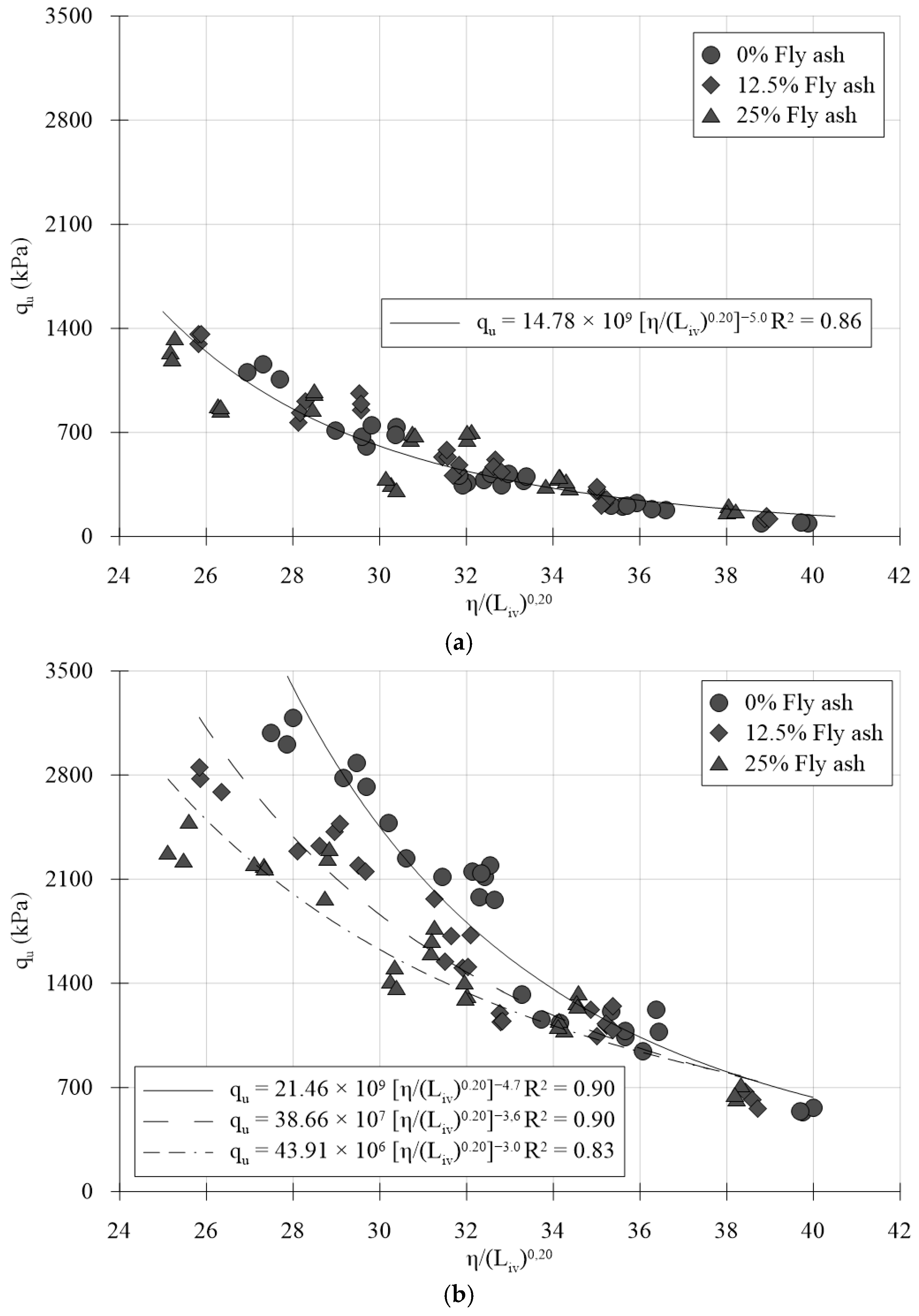
Figure 6 presents the lime dosage curves for CHL and EHL using the
η/(
Lv)
0.20 index, where
η is porosity and
Lv is the volumetric lime content. The exponent 0.20 was selected to account for the combined influence of porosity and lime concentration. This exponent lies within the range (0.15–0.26) commonly used in previous research to model mechanical properties of fine-grained soils treated with binders [
10,
28,
29].
A key distinction arises between the two lime types. For CHL (
Figure 6a), all data points collapse into a single relationship regardless of fly ash content, producing a consistent model with R
2 = 0.86. This indicates that, for the CHL, fly ash does not significantly modify the dominant stabilization mechanisms within the tested range.
For EHL (
Figure 6b), the dosage curves exhibit systematic downward shifts with increasing fly ash content, indicating a reduction in strength at lower
η/(
Lv)
0.20 values. This behavior suggests that partial replacement of EHL by fly ash limits the availability of Ca(OH)
2 for hydration and early pozzolanic reactions, particularly in highly reactive systems, a trend also reported for mixtures incorporating high-calcium limes [
30]. At higher
η/(
Lv)
0.20 values (above approximately 33), the curves converge, indicating a transition to a regime in which the mechanical response is governed primarily by the cemented soil skeleton, thereby reducing the relative influence of fly ash.
3.4. Statistical Analysis (ANOVA)
Table 2 and
Table 3 show the analysis of variance (ANOVA) results for CHL and EHL specimens, respectively. All main factors—fly ash content (FA), lime content (
L), and dry unit weight (
γd)—exhibited statistically significant effects on
qu at
α = 0.05, consistent with experimental trends and with prior studies on multi-variable soil stabilization [
10,
18].
For CHL-stabilized specimens, the sum of squares indicates that lime content is the most influential factor, followed by γd and FA.
For EHL-stabilized specimens, γd exerts the strongest effect, followed by L and FA. These findings agree with the physical mechanisms identified in the dosage curve analysis: CHL performance depends primarily on CaO availability, whereas EHL performance is more sensitive to compaction state due to its finer particle size and higher reactivity.
Interactions between factors were also significant for most cases, particularly those involving γd. This highlights the importance of considering compaction conditions in stabilization design, especially when using highly reactive lime sources.
3.5. Scanning Electron Microscopy
SEM analyses were performed to elucidate the microstructural mechanisms responsible for the strength improvement observed in mixtures stabilized with commercial hydrated lime (CHL), eggshell hydrated lime (EHL), and fly ash. All specimens analyzed were molded at a dry unit weight of 1.6 g/cm
3.
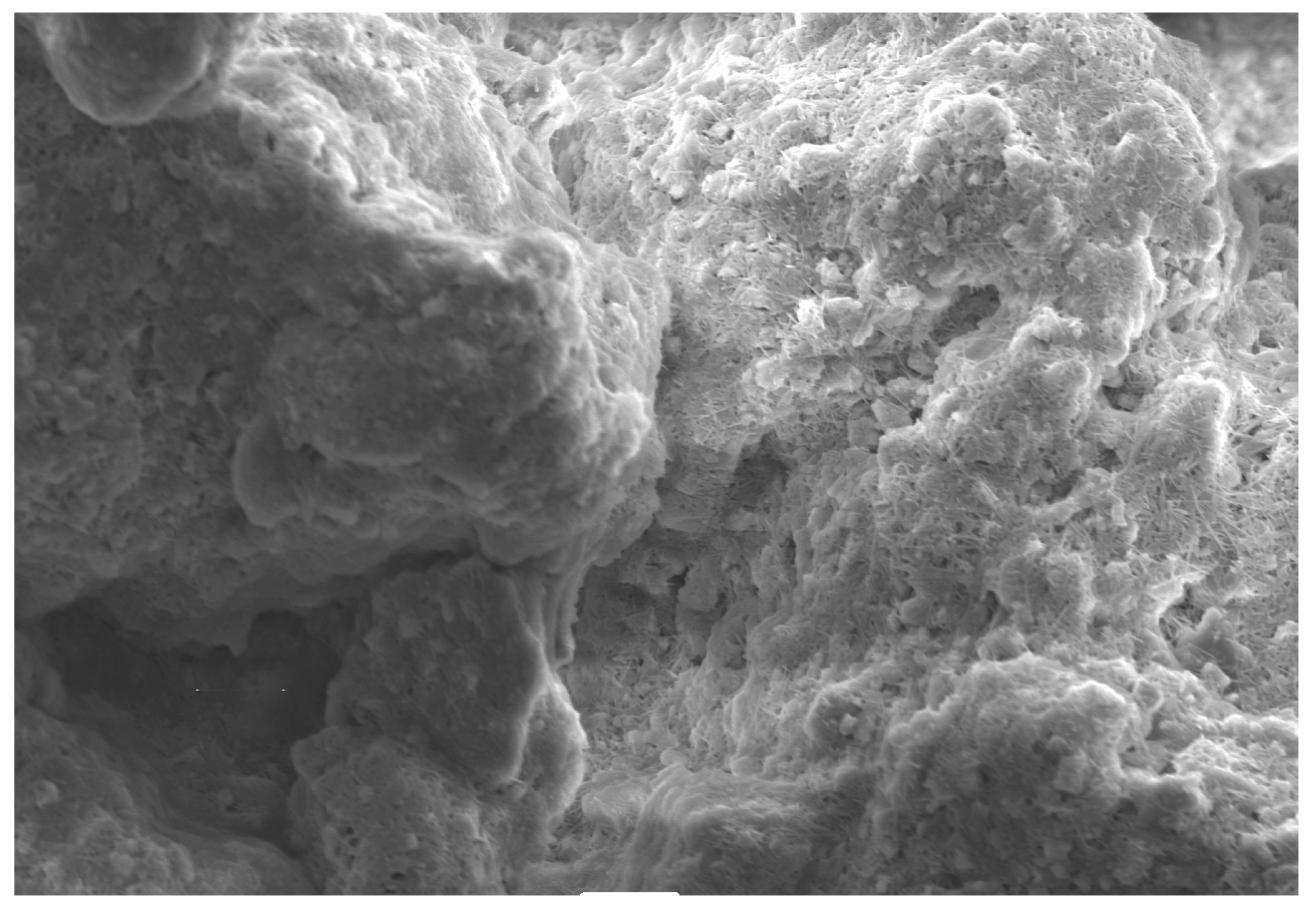
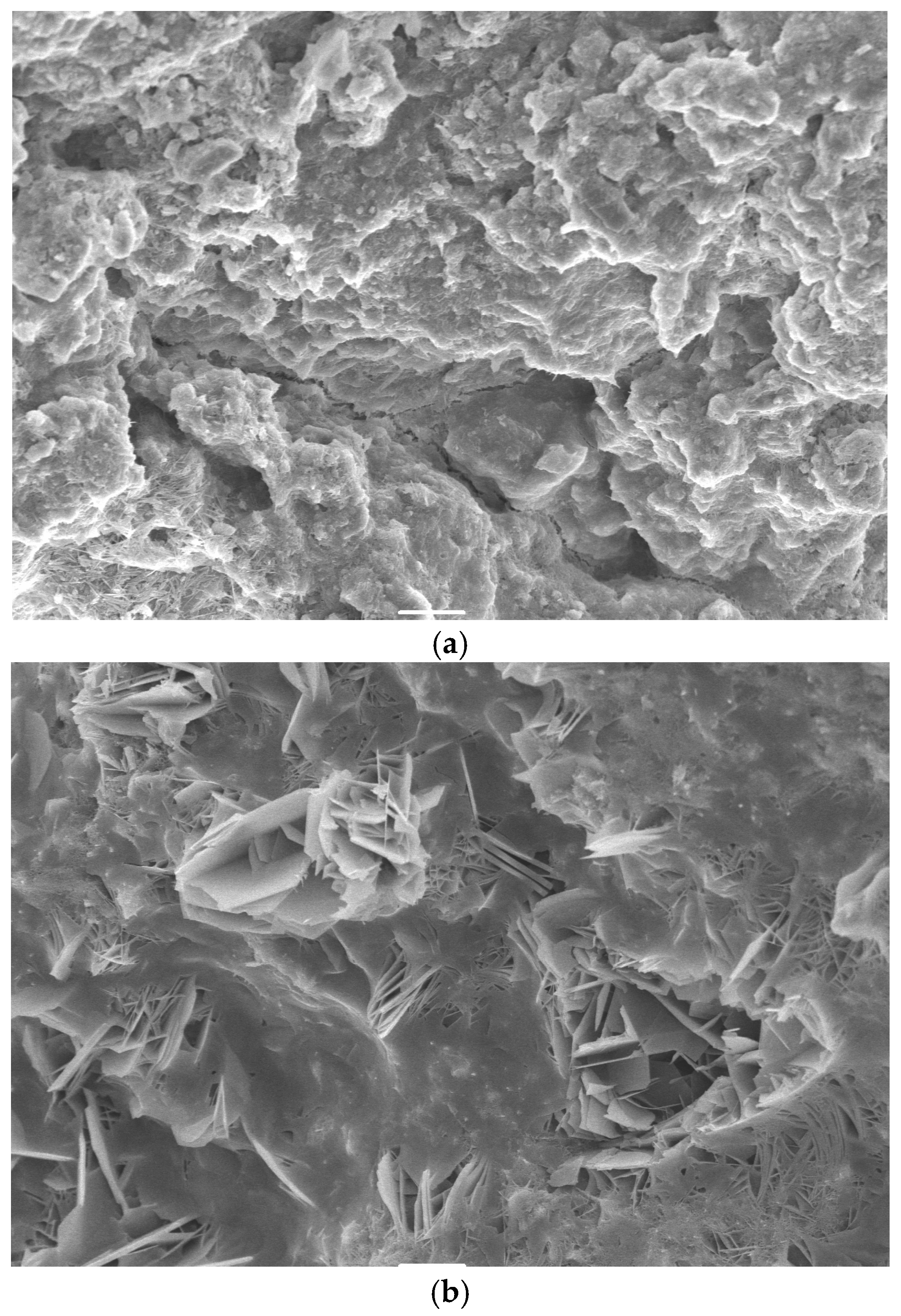
Figure 7 displays SEM images (1000×) of specimens without fly ash. The unstabilized soil shows a loose structure with limited contact between particles. Lime-treated specimens (
Figure 8a,b) exhibit clear textural changes associated with flocculation of clay minerals and cementitious bonding. In particular, the microstructure of EHL-treated samples shows a markedly higher degree of cementation, characterized by abundant C–S–H needle-like formations bridging particles, which is consistent with the superior UCS values obtained for these mixtures [
18].
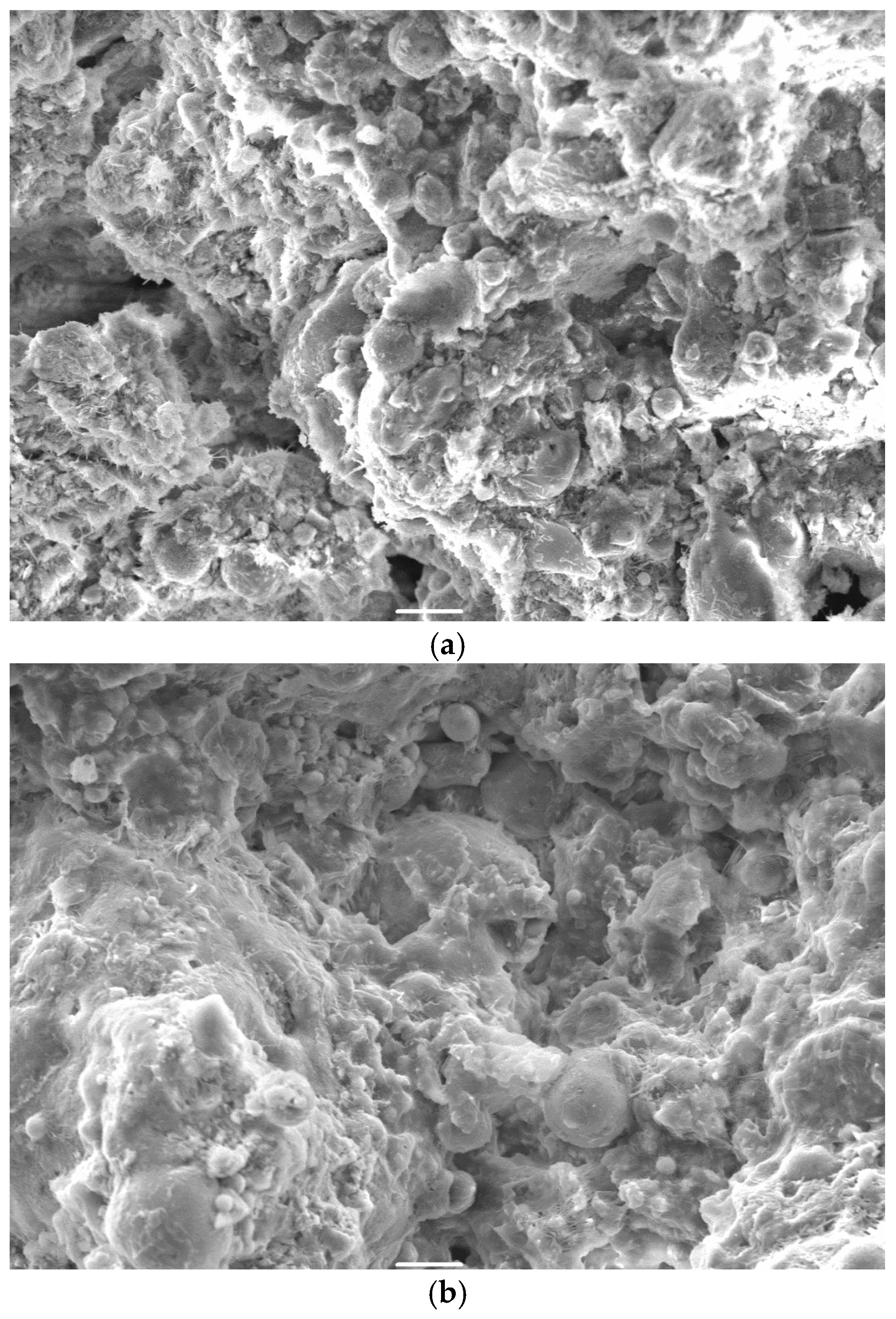
Figure 9a,b present SEM images for mixtures containing 25% fly ash. In CHL-treated samples, the microstructure displays partial cementation zones embedded within an FA-rich matrix. In contrast, EHL-treated samples exhibit a denser and more continuous cementitious network, with finer C–S–H structures filling interparticle spaces. This observation supports the hypothesis that the finer granulometry and higher reactivity of EHL promote faster hydration kinetics and stronger bonding, even in the presence of fly ash.
When interpreting the SEM images, it is important to note that mineralogical phases identified by XRD do not necessarily appear as distinct crystalline features at the microscale. Although XRD analysis indicated a higher quartz content in CHL, quartz particles may be finely dispersed, embedded within hydration products, or masked by the cementitious matrix formed during stabilization, and therefore are not necessarily visible as well-defined crystalline morphologies in SEM images. This apparent discrepancy between XRD and SEM observations reflects differences in scale and detection principles between the two techniques, rather than inconsistencies in material composition.
4. Discussion
4.1. Factors Contributing to the Superior Performance of Eggshell-Derived Lime
The experimental results demonstrate that eggshell-derived hydrated lime (EHL) consistently outperforms commercial hydrated lime (CHL) in terms of strength development across all tested conditions. This superior performance is associated with the physical and chemical characteristics of EHL, notably its significantly finer particle size and higher calcium purity. The lower D50 of EHL increases its specific surface area, which is expected to facilitate faster dissolution in the pore fluid and promote earlier availability of calcium ions, thereby enhancing the efficiency of lime–soil reactions. These conditions favor the formation of cementitious products, such as calcium silicate hydrates (C–S–H) and calcium aluminate hydrates (C–A–H), as evidenced by the observed mechanical response.
Microstructural observations support this interpretation at a qualitative level. SEM images revealed a denser and more continuous cementitious matrix in EHL-treated specimens, with the original clay fabric largely replaced by hydration products. In contrast, CHL-treated mixtures exhibited more localized cementation and partial preservation of the original soil structure. These findings align with previous studies reporting that high-calcium, fine-grained limes tend to produce more effective soil stabilization due to enhanced reactivity and improved particle bonding [
30].
4.2. Influence of Fly Ash on the Comparative Performance of Lime Types
The incorporation of fly ash influenced the stabilized systems differently depending on the lime type. In CHL-treated mixtures, fly ash generally contributed to strength enhancement, which may be attributed to a combination of gradual pozzolanic reactions and improved particle packing effects. The spherical morphology of fly ash particles promotes void filling and improved granulometric distribution, particularly in systems characterized by moderate lime reactivity. In contrast, the addition of fly ash to EHL-stabilized mixtures resulted in reduced strength at equivalent lime contents. This behavior suggests a performance trade-off rather than a distinct chemical interaction mechanism, in which the highly reactive lime–clay system dominates early-age strength development, while the comparatively slower pozzolanic contribution of fly ash does not fully compensate within the curing period considered. SEM observations support this interpretation, as fly ash particles remained largely intact and weakly bonded within the cementitious matrix of EHL-treated specimens. These findings indicate that the effectiveness of supplementary pozzolanic materials depends on their relative contribution within the overall reactivity hierarchy of the stabilization system.
4.3. Role of Porosity and Volumetric Lime Content
The use of the porosity-to-volumetric lime content ratio provided a useful framework to unify the mechanical response of the stabilized soils. The selected exponent of 0.20 yielded the best correlation across mixtures and aligns with values previously reported for cemented and lime-treated soils. The convergence of strength trends at higher η/(Lv)0.20 values indicates a transition toward a mechanical response dominated by the cemented soil skeleton, thereby reducing the relative influence of fly ash content. At lower ratios, greater microstructural heterogeneity and incomplete reactions contribute to increased dispersion, particularly in highly reactive EHL systems.
4.4. Implications for Tropical Residual Soils and Engineering Practice
The findings of this study are particularly relevant for tropical residual soils, which are characterized by heterogeneous mineralogy, high porosity, and weathering-induced fabric. The enhanced performance of EHL suggests that alternative high-calcium binders may be especially advantageous in such environments, where rapid chemical stabilization and extensive cementation are desirable.
From a practical standpoint, the strength levels achieved in EHL-stabilized mixtures are compatible with typical requirements for applications such as subgrade improvement and embankment construction. Nevertheless, field implementation would require additional evaluation of construction procedures, curing conditions, durability, and long-term performance under environmental loading. Accordingly, the present results should be interpreted as laboratory-scale evidence of feasibility rather than direct design prescriptions.
4.5. Sustainability Considerations and Study Limitations
From a sustainability perspective, the valorization of eggshell waste as a lime precursor supports circular-economy principles by reducing reliance on virgin limestone extraction and diverting biogenic waste from landfills. However, it must be acknowledged that eggshell calcination still requires thermal energy and generates CO2 emissions. The environmental benefits of EHL are therefore context-dependent and are expected to be maximized when low-carbon energy sources or waste-heat recovery systems are employed. Importantly, the higher reactivity observed for EHL indicates that lower binder contents may be sufficient to achieve comparable or superior performance, potentially offsetting part of the environmental burden associated with its processing.
Finally, the conclusions of this study are based primarily on unconfined compressive strength testing and qualitative microstructural analysis. While these methods provide valuable insight into early-age mechanical behavior and cementation mechanisms, they do not capture other relevant aspects such as hydraulic performance, volumetric stability, or long-term durability. Future studies incorporating these factors, as well as field-scale validation, are necessary to fully assess the long-term sustainability and engineering applicability of eggshell-derived lime.
5. Conclusions
This study evaluated the mechanical and microstructural behavior of a granite residual soil stabilized with commercial hydrated lime (CHL) and eggshell hydrated lime (EHL), with and without fly ash (FA). The results demonstrated that the performance of the stabilizers is strongly influenced by their physical, chemical, and mineralogical characteristics. Compared to the dolomitic CHL, the EHL exhibited substantially finer particles and higher purity, with XRD analyses showing dominant portlandite peaks and negligible calcite content. These attributes translated into enhanced reactivity and significantly greater strength gains across all curing and compaction conditions investigated.
Unconfined compressive strength systematically increased with lime content and dry unit weight for both lime types, confirming the combined influence of binder availability and density on cementation efficiency. However, EHL consistently produced higher strength levels than CHL, reinforcing its potential as a technically superior alternative lime source. The analysis of the η/(Lv)0.20 index revealed distinct behaviors: while CHL-stabilized mixtures could be described by a single dosage curve irrespective of fly ash content, EHL-treated mixtures showed a clear sensitivity to FA addition, with dosage curves shifting downward at increasing FA levels. This finding indicates that FA may partially reduce the effectiveness of highly reactive limes by moderating Ca(OH)2 availability and early-stage pozzolanic kinetics.
Microstructural observations confirmed the macroscopic trends. SEM images showed that EHL promotes the formation of denser cementitious networks, characterized by abundant C–S–H needle-like structures bridging soil particles. Conversely, CHL-treated specimens exhibited less uniform bonding and more heterogeneous microstructural patterns, explaining the superior mechanical response observed for EHL-stabilized mixtures.
From a sustainability perspective, the valorization of eggshell waste as a lime precursor represents a promising strategy to reduce reliance on virgin limestone resources and to support circular-economy practices. In addition to its environmental advantages, EHL demonstrated technical feasibility and strong performance, even surpassing a conventional commercial lime under the conditions evaluated.
It should be noted that the conclusions of this study are primarily based on unconfined compressive strength tests and qualitative microstructural observations. While these methods provide valuable insight into early-age strength development and cementation mechanisms, they do not capture other relevant aspects of stabilized soil behavior, such as long-term durability, hydraulic conductivity, volumetric stability, or performance under cyclic or environmental loading. Accordingly, the results should be interpreted as laboratory-scale evidence of feasibility rather than as direct prescriptions for field design.
Overall, the findings confirm that EHL is a viable and effective stabilizing agent for tropical residual soils, offering both engineering and environmental benefits. The strength levels achieved are compatible with typical requirements for applications such as subgrade improvement and embankment construction, indicating practical potential in geotechnical works. Future studies should focus on long-term durability, hydraulic behavior, and field-scale validation, as well as on alternative curing conditions and blended binder systems, to further advance sustainable soil stabilization practices.





 ,
,