1. Introduction
As urbanization accelerates globally, cities are increasingly challenged to optimize transportation systems to mitigate traffic congestion, environmental pollution, and prolonged commuting times. Conventional ground-based transportation modes are progressively inadequate to address the complex mobility demands of modern urban environments. In response, innovative solutions such as drone taxi services have emerged as a potential paradigm shift in urban mobility. Drone taxis, which employ unmanned aerial vehicles (UAVs) for passenger transport, offer the promise of reduced travel times, alleviation of surface traffic congestion, and more sustainable mobility alternatives [
1]. While significant advances have been achieved in the technical feasibility of Electric Vertical Take-off and Landing (eVTOL) systems, a critical research gap persists in understanding societal and psychological readiness for
passenger-grade autonomous aerial mobility.
Existing research has largely concentrated on public acceptance of small-scale drone delivery services or ground-based autonomous vehicles [
2]. However, the behavioral and psychological barriers associated with
human transportation via unmanned aerial systems differ substantially from those related to ground mobility. Concerns surrounding perceived
operational chaos,
insecurity, and the need for
personal control are particularly salient in aerial contexts and remain insufficiently explored, especially within the socio-cultural and regulatory environment of the United Arab Emirates (UAE). As the UAE positions itself at the forefront of smart city initiatives and advanced mobility solutions, examining these unique perceptual factors becomes both timely and necessary.
Traditional technology adoption frameworks such as the Technology Acceptance Model (TAM) and the Unified Theory of Acceptance and Use of Technology (UTAUT) have been extensively validated across a wide range of digital and information systems [
3,
4]. These models emphasize constructs such as perceived usefulness, effort expectancy, social influence, and facilitating conditions as key determinants of behavioral intention. While robust in established technology domains, TAM and UTAUT in their original form may not fully capture the dual psychological responses—namely
innovation-driven optimism and
risk-induced insecurity—that characterize user perceptions of disruptive aerospace technologies such as drone taxis.
To address this limitation, the present study adopts a context-sensitive approach by operationalizing technology readiness and service experience constructs that are conceptually aligned with TAM and UTAUT, rather than directly replicating their original measurement instruments. Constructs such as optimism, innovation readiness, privacy assurance, and perceived control represent enabling perceptions, whereas discomfort, insecurity, inefficiency, and perceived operational chaos capture deterrence-based concerns. This approach enables a more holistic behavioral profiling of users in the pre-deployment phase of drone taxi services.
Accordingly, this study addresses the following research gaps:
- 1.
Contextualizing technology adoption analysis for the UAE’s pre-deployment and pilot implementation phase of drone taxi services.
- 2.
Extending established adoption theory through the inclusion of technology readiness and risk-oriented service experience constructs that are particularly relevant to autonomous aerial mobility.
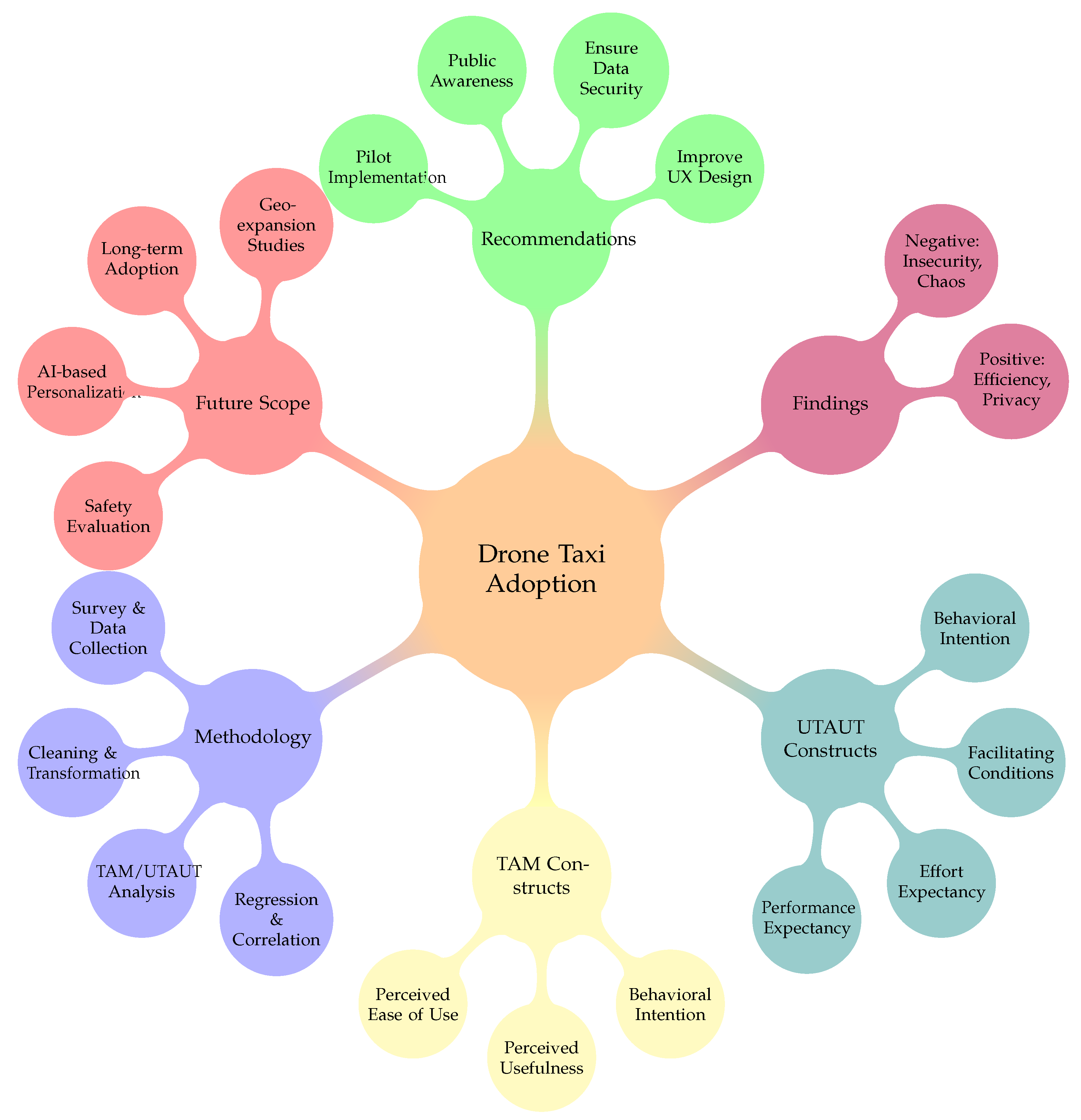
As the UAE prepares for pilot operations and early commercial trials of drone taxi services, understanding these behavioral drivers is essential for policy makers, regulators, and service providers. Insights into public perceptions can inform regulatory communication strategies, safety assurance mechanisms, and user-centered system design. Beyond commercial adoption, such understanding has broader implications for shaping governance frameworks, enhancing public trust, and ensuring socially acceptable integration of drone taxis into urban airspaces. The graphical summary of the proposed framework is presented in
Figure 1.
This study investigates the adoption of drone taxi services by examining technology readiness and service experience factors, interpreted through conceptual alignment with TAM and UTAUT. Rather than directly measuring original TAM/UTAUT constructs, the analysis focuses on empirically validated dimensions such as efficiency, privacy, and perceived control, and evaluates their influence on behavioral intention to adopt drone taxi services. While the study is subject to limitations related to survey scope and regional specificity, it provides an important empirical foundation for understanding early-stage adoption dynamics of urban air mobility technologies.
The following research objectives guide this study:
- 1.
To quantify the behavioral intention of UAE consumers to adopt drone taxi services using validated technology readiness and service experience constructs.
- 2.
To identify and estimate the influence of enabling factors such as efficiency, privacy assurance, perceived control, optimism, and innovation readiness on adoption intention.
- 3.
To examine the role of adverse perceptions, including discomfort, insecurity, inefficiency, and perceived operational chaos, as potential barriers to adoption.
- 4.
To derive data-driven recommendations for policy makers and service providers aimed at enhancing user readiness, mitigating perceived risks, and supporting the sustainable deployment of drone taxi services in the UAE.
The rest of the paper is organized as follows:
Section 2 surveys the existing works and examines the identified literature gaps.
Section 3 discusses the theoretical fundamentals needed for the researchers to understand the theme of our work.
Section 4 and
Section 5 provide insights into the dataset used for experimentation and a detailed view of presented work proposed methodology respectively.
Section 6 provides a detailed discussion on the results obtained, their analyses, and interpretation, identifying the cause, effect, and impact of Taxi drone adoption in the UAE.
Section 7 concludes the presented work and gives research direction for the researchers to pursue.
2. Background and Related Work
The rapid emergence of drone taxis as part of the broader urban air mobility (UAM) ecosystem has attracted growing interest from both academia and industry. However, the successful integration of such technologies into existing transportation systems depends not only on technical feasibility but also on societal acceptance, regulatory preparedness, and infrastructural readiness. To frame this study, it is essential to review the theoretical foundations of technology adoption models alongside empirical evidence from prior research on autonomous mobility and drone-based services. This section consolidates insights from established adoption frameworks such as TAM and UTAUT, evaluates recent applications in the context of drones and aerial mobility, and critically interprets the policy and infrastructural efforts undertaken in the UAE. By synthesizing existing contributions and highlighting unresolved challenges, the literature review provides a structured basis for identifying research gaps and motivating the proposed work.
2.1. Technology Adoption Models
Technology adoption research has long been anchored in foundational models such as the TAM and the unified UTAUT. The TAM, introduced by Davis [
5,
6], emphasizes the roles of perceived usefulness (PU) and perceived ease of use (PEOU) in shaping user behavioral intention (BI). Building on this, the UTAUT model by [
3,
7] integrates additional constructs such as Performance Expectancy, Effort Expectancy, Social Influence, and Facilitating Conditions, thus offering a more comprehensive framework to explain user acceptance of emerging technologies. These models have been extensively applied across domains and continue to guide empirical studies on the adoption of novel mobility solutions.
2.2. Smart Services and E-Government
Beyond mobility, previous studies in the UAE have examined technology adoption in adjacent domains such as AI-based services and e-government, offering valuable parallels for drone taxi adoption research. Ref. [
8] investigated determinants that influence the intention to use AI-based customer services, highlighting factors such as perceived efficiency, trust, and quality of service. Their findings reinforce the importance of user-centric constructs, similar to those of TAM and UTAUT, in predicting adoption behavior in technologically mediated services.
Previously, Almuraqab [
9] emphasized the critical success factors for the adoption of e-government in the context of emerging smart city technologies. The study demonstrated how governance, infrastructure readiness, and stakeholder engagement collectively shape user acceptance in smart urban ecosystems. These insights are directly transferable to urban air mobility, where regulatory alignment, infrastructure availability, and citizen trust are equally pivotal.
Together, these works extend the understanding of technology adoption in the UAE by situating drone taxi adoption within a broader digital transformation narrative. They underline the necessity of aligning technological innovation with governance frameworks, service efficiency, and user trust—factors that remain central to sustainable adoption of drone-based transport.
2.3. Adoption of Autonomous and Aerial Mobility
In the context of autonomous and aerial mobility, Hafiz [
10,
11] provided a systematic review of human acceptance factors, while [
2] validated the UTAUT-based model for autonomous vehicles in the GCC region. Their findings underscore the critical influence of efficiency, safety, and social trust in shaping adoption. Almuraqab et al. [
9,
12] further highlighted the public’s nuanced perception of drones in the UAE, noting both enthusiasm for efficiency gains and concerns about risks. Similarly, Madi and Madi [
13,
14] discussed Dubai’s pioneering initiatives to integrate flying taxis into urban transport, reinforcing the importance of aligning technological deployment with public acceptance.
2.4. Driverless and Robo-Taxi Adoption Research
Although the field of autonomous mobility and transportation by drones has been studied in the existing body of literature, recent literature on driverless taxi services (also known as Robo-Taxes) is another significant neighboring area that directly applies to research on drone taxi adoption. The article by [
15,
16] utilized an extended TAM model to determine user acceptance of Robo-Taxi services in China and revealed that the perceived usefulness, trust, and technology readiness have a significant influence on behavioral intention. In the same spirit, Ref. [
17] introduced next-generation transportation technologies among people with disabilities and found crucial issues in their adoption in terms of accessibility, perceived risk, and ease-of-use factors, which echo our constructs of discomfort, insecurity, and perceived chaos. To support these views, Ref. [
18] offered an informative review of the emerging mobility technologies, such as autonomous vehicles, drones, and micromobility services, and highlighted the need to combine behavioral, regulatory, and infrastructural determinants to adopt them in a sustainable manner.
By adding the knowledge gained in the studies, it is possible to state that most of the previous research concentrated on the autonomous movement of the rovers in the terrestrial habitat and the implementation of Robo-Taxi, prioritizing the movement efficiency on the ground and its availability to the customers. But our research is different in two aspects:
This research work examines autonomous mobility in the air, i.e., drone taxi.
This research combines the TAM, UTAUT, and technology readiness constructs into a single behavioral model, which will result in a more holistic explanatory model of early-stage adoption in the UAE
This difference not only makes drone taxis a new technological paradigm, but also shows that we need to re-evaluate the pre-existing behavioral constructs in the process of moving towards a state where land-based autonomy is substituted by aerial passenger mobility.
2.5. Regulatory and Infrastructural Readiness in the UAE
The UAE has emerged as a test bed for advanced air mobility, supported by regulatory and infrastructural efforts. The General Civil Aviation Authority (GCAA) has issued CAR Airspace Part U-space for drone navigation [
19], while the Abu Dhabi Advanced Technology Research Council (ATRC) has initiated the mapping of dedicated air corridors for air taxis [
20]. Complementing these, commercial vertiport approvals near Dubai International Airport [
21] and media coverage of air taxi trials [
22] demonstrate institutional readiness for early adoption phases. Barman and Sipos [
23] also emphasize the role of airport governance in facilitating these developments.
2.6. Technological Enablers for Drone Operations
From a technological standpoint, the evolution of electric vertical take-off and landing vehicles (eVTOLs) presents both opportunities and challenges. Saifudeen et al. [
24] examined the dual dimensions of urban transport potential and security implications, while Govinda et al. [
25] surveyed deep reinforcement learning applications in autonomous systems, underscoring AI’s role in optimizing aerial mobility. Studies such as Krichen et al. [
26] and Al-Darraji et al. [
27] point toward lightweight AI and digital twin integration as key enablers for scalable drone operations. Moreover, Alsaedi et al. [
28] demonstrated the potential of AI-driven autonomous decision-making in drone search and rescue, which can translate to safety enhancements in passenger mobility.
2.7. Societal and Legal Considerations
Beyond technical dimensions, societal and legal considerations remain pivotal. Hutto and Rogers [
29] framed the global “drone debate,” while Daoud et al. [
30] identified barriers to drone implementation in construction, ranging from regulatory ambiguity to public skepticism. Sotoudehfar et al. [
31] cautioned against the unintended humanitarian risks of low-tech drone misuse, stressing the importance of legal frameworks. These perspectives highlight the need for balanced governance that promotes innovation while safeguarding social trust.
2.8. Urban and Infrastructural Transformations
The future of aerial mobility in the UAE also intersects with broader urban and infrastructural transformations. Konar [
32] discussed the interplay between mega-tall buildings and new mobility infrastructure, while Talib et al. [
33] explored the implications of emerging technologies on aviation jobs and competencies. Environmental sustainability further adds complexity, with O’Connell [
34] examining ecological challenges in the airline industry. Heritage preservation studies, such as Abu Raed et al. [
35], also point to the integration of advanced mobility solutions into culturally sensitive environments.
Table 1 overviews the existing body of research, capturing a spectrum of perspectives—from theoretical models (TAM, UTAUT) and empirical validations in GCC contexts, to regulatory readiness and infrastructural pilots in the UAE. Critically, while early frameworks emphasize user-centric variables such as usefulness, ease of use, and social influence, regional studies highlight unique socio-cultural factors including privacy, security concerns, and governance gaps. Furthermore, while infrastructure and regulatory frameworks in the UAE are advancing rapidly, barriers around public trust, safety assurance, and sustainable integration remain unresolved. This underscores the necessity of a holistic adoption strategy that unifies technological advancement, regulatory clarity, and user acceptance.
3. Theoretical Foundations and Hypothesis Development
Technology adoption in emerging mobility systems is commonly examined using established behavioral frameworks such as the Technology Acceptance Model (TAM) and the Unified Theory of Acceptance and Use of Technology (UTAUT). These models have been widely applied to explain why individuals accept or reject new technologies by linking user perceptions to behavioral intention. TAM emphasizes perceived usefulness and perceived ease of use as primary drivers of intention [
5], while UTAUT extends this perspective by incorporating performance expectancy, effort expectancy, social influence, and facilitating conditions [
3].
In this study, TAM and UTAUT are employed as conceptual reference frameworks to guide the interpretation of adoption behavior, rather than as directly operationalized measurement models. This distinction is important given the pre-deployment nature of drone taxi services, where user perceptions are shaped not only by expected utility and usability, but also by broader readiness and risk considerations that are not fully captured by the original TAM/UTAUT instruments.
To tailor the theoretical foundation to the context of disruptive urban air mobility, the present work integrates technology readiness and service experience constructs that have been validated in recent adoption literature. Positive readiness dimensions, such as optimism and innovation, reflect individuals’ predisposition toward embracing novel technologies, while service-related constructs, such as efficiency, control, and privacy, capture perceived benefits associated with drone taxi usage. Conversely, risk-oriented perceptions, including discomfort, insecurity, inefficiency, and perceived chaos, represent concerns related to safety, reliability, and uncertainty, which are particularly salient in passenger-grade autonomous aerial transport. Prior studies in high-uncertainty and safety-critical domains suggest that such readiness and risk perceptions play a decisive role in early-stage adoption decisions.
Hypothesis Development and Mathematical Formulation
The hypotheses proposed in this study are grounded in the conceptual principles of TAM and UTAUT, while being operationalized through empirically measurable technology readiness and service experience constructs. This approach enables theoretical comparability with established adoption models while ensuring measurement validity in a novel application context.
Performance-related perceptions are central to technology adoption theory and are commonly represented by perceived usefulness or performance expectancy [
3,
5]. In the context of drone taxi services, this dimension is captured by the construct
efficiency, which reflects perceived time savings and commuting effectiveness. Empirical evidence from autonomous mobility studies in the Gulf region indicates that perceived operational benefits are a primary driver of adoption intention [
2]. Accordingly, the following hypothesis is proposed:
H1. Perceived efficiency of drone taxi services positively influences behavioral intention to adopt.
User autonomy and perceived control align conceptually with facilitating conditions and perceived behavioral control in UTAUT, representing users’ confidence in their ability to access and utilize a system without constraints [
3]. In this study, the construct
control captures flexibility and freedom in commuting choices, which are expected to enhance user confidence in adopting drone taxi services.
H2. Perceived control over the use of drone taxi services positively influences behavioral intention.
Technology readiness reflects individuals’ positive orientation toward new technologies and corresponds conceptually to effort expectancy and perceived ease of use in TAM and UTAUT. This readiness is operationalized through the construct’s optimism and innovation, which captures favorable beliefs about technology benefits and personal innovativeness. Prior research consistently shows that individuals with higher optimism and innovativeness are more inclined to adopt disruptive technologies at early stages.
H3. Optimism toward drone taxi technology positively influences behavioral intention.
H4. Innovation readiness positively influences behavioral intention to adopt drone taxi services.
Conversely, risk- and uncertainty-related perceptions are particularly influential in autonomous aerial mobility contexts, where concerns about safety, reliability, and system failures may deter adoption. Constructs such as discomfort, insecurity, inefficiency, and perceived chaos capture these negative perceptions and are expected to exert an adverse effect on behavioral intention.
H5. Discomfort negatively influences behavioral intention to adopt drone taxi services.
H6. Insecurity negatively influences behavioral intention.
H7. Perceived inefficiency negatively influences behavioral intention.
H8. Perceived operational chaos negatively influences behavioral intention.
Based on the above hypotheses, behavioral intention (
) is modeled as a linear function of technology readiness and service experience constructs:
where
denotes standardized path coefficients estimating the strength and direction of each predictor, and
represents the error term capturing unexplained variance in behavioral intention.
4. Research Methodology and Data Collection
This study adopts a quantitative, survey-based methodology to examine the behavioral intention to adopt drone taxi services in the UAE. The methodological design emphasizes measurement validity, construct-level reliability, and transparency in the analytical pipeline. Rather than directly operationalizing the original TAM or UTAUT measurement instruments, the study measures technology readiness and service experience constructs and subsequently interprets the findings through conceptual alignment with TAM and UTAUT.
4.1. Survey Design and Instrumentation
Data were collected using a structured, self-administered online questionnaire developed in English, which is widely used in higher education, business, and government communication in the UAE. The questionnaire comprised two main sections:
Part 1: Demographic information, including age, gender, marital status, education level, sector of occupation, and monthly income.
Part 2: Psychological and behavioral constructs capturing technology readiness and service experience perceptions related to drone taxi services.
The second section consisted of thirty-four Likert-scale items grouped into ten constructs:
optimism,
innovation,
discomfort,
insecurity,
efficiency,
control,
privacy,
inefficiency,
chaos, and
behavioral intention. Each construct was measured using three or four items, phrased in clear, non-technical language and rated on a five-point agreement scale (1 = strongly disagree, 5 = strongly agree). The full list of survey items and their construct classification is presented in
Table 2.
4.2. Data Collection Procedure
The questionnaire link was disseminated through university mailing lists, professional networks, and social media channels to reach adult residents of the UAE. A total of 412 responses were received. After screening for completeness and response quality, such as removing responses with extensive missing values or evident straight-lining behavior, 409 valid responses were retained for analysis. The cleaned dataset was consolidated into a single spreadsheet and imported into Python 3 for statistical processing.
4.3. Data Preparation and Analysis Pipeline
The data analysis followed a structured, multi-stage pipeline. First, item responses were examined for coding consistency. Negatively worded items were reverse coded so that higher scores uniformly reflected stronger endorsement of the intended construct. Descriptive statistics were computed to summarize respondent demographics and item-level distributions.
Second, the measurement quality of the instrument was evaluated prior to hypothesis testing. Internal consistency reliability was assessed using Cronbach’s alpha, while convergent validity was examined through Composite Reliability (CR) and Average Variance Extracted (AVE). Discriminant validity was assessed using the Heterotrait–Monotrait (HTMT) ratio, following standard guidelines [
36,
37]. All measurement evaluation results are reported in
Section 6 to avoid redundancy and ensure a single consolidated presentation of measurement evidence.
Third, construct-level scores were computed by aggregating item responses within each construct to form ten construct measures. These construct-level measures were then used for the regression-based structural (SEM-style) model, with multicollinearity evaluated using Variance Inflation Factors (VIF) and practical importance assessed using Cohen’s effect size.
Finally, results were interpreted through conceptual alignment with TAM and UTAUT to contextualize the identified drivers and barriers of drone taxi adoption.
5. Proposed Framework
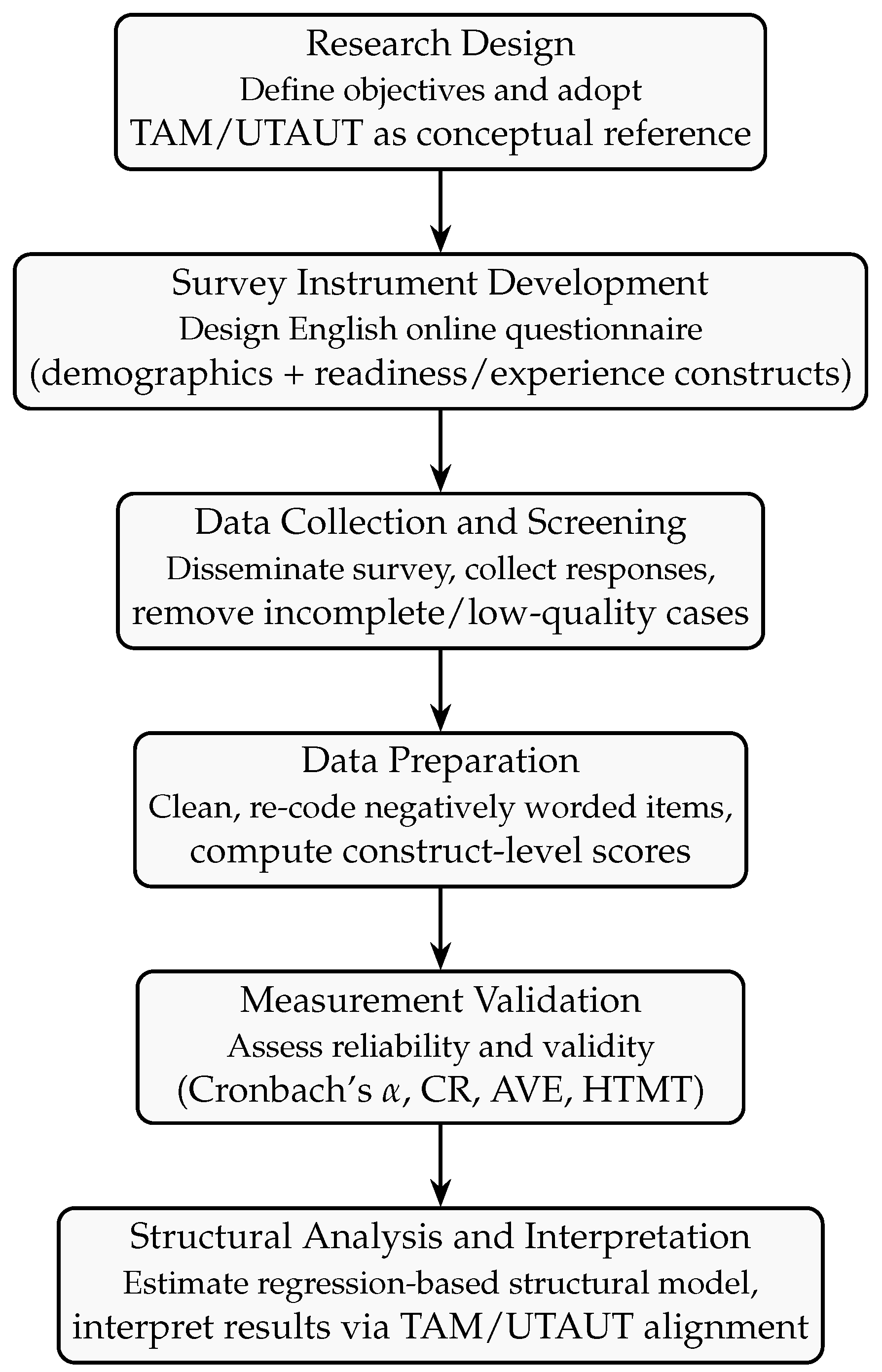
Figure 2 illustrates the overall framework of the proposed research. The methodology follows a systematic, multi-stage process designed to assess the adoption of drone taxi services in the UAE through technology readiness and service experience perspectives, interpreted using TAM and UTAUT as conceptual reference frameworks.
The first stage involves survey design and data collection. A structured questionnaire was developed to capture respondents’ perceptions related to technology readiness and service experience, including constructs such as efficiency, control, optimism, innovation, privacy, discomfort, insecurity, inefficiency, and perceived chaos, along with behavioral intention to adopt drone taxi services. Although TAM and UTAUT inform the theoretical grounding of the study, the questionnaire does not directly operationalize their original measurement scales; instead, it incorporates context-specific constructs suitable for the pre-deployment stage of drone taxi services. The survey was distributed to a diverse group of adult residents in the UAE to collect perceptual and behavioral responses.
Following data collection, the dataset underwent preprocessing to ensure accuracy and consistency. This step included screening for incomplete responses, handling missing values, identifying response patterns indicative of low data quality, and standardizing item coding so that higher scores consistently reflected stronger endorsement of the underlying constructs. The cleaned data were then transformed into a format suitable for statistical analysis, including the computation of construct-level scores.
In the subsequent stage, measurement reliability and validity were assessed using Cronbach’s alpha, composite reliability, average variance extracted, and discriminant validity criteria. After establishing measurement adequacy, a regression-based structural (SEM-style) model was estimated to examine the positive and negative influences of technology readiness and service experience factors on behavioral intention. Finally, the empirical findings were interpreted through conceptual comparison with TAM and UTAUT to identify the most influential drivers and barriers shaping users’ intention to adopt drone taxi services. The complete analytical procedure is summarized in Algorithm 1.
| Algorithm 1 Proposed methodology for drone taxi adoption analysis |
- 1:
Step 1: Research Design and Instrument Development - 2:
Define research objectives related to drone taxi adoption in the UAE. - 3:
Adopt TAM and UTAUT as conceptual reference frameworks. - 4:
Design an English online questionnaire comprising: - 5:
(a) six demographic items, and - 6:
(b) thirty-four Likert-scale items mapped to ten constructs (optimism, innovation, discomfort, insecurity, efficiency, control, privacy, inefficiency, chaos, and behavioral intention). - 7:
Step 2: Data Collection and Screening - 8:
Disseminate the survey through academic, professional, and social networks. - 9:
Collect responses from adult residents of the UAE. - 10:
Screen responses for completeness and response quality. - 11:
Retain valid cases for analysis. - 12:
Step 3: Data Preparation - 13:
Encode Likert-scale responses on a 1–5 scale. - 14:
Re-orient negatively worded items so that higher values reflect stronger endorsement. - 15:
Compute construct-level scores by aggregating corresponding items. - 16:
Step 4: Measurement Model Evaluation - 17:
Assess internal consistency using Cronbach’s alpha. - 18:
Evaluate convergent validity using Composite Reliability (CR) and Average Variance Extracted (AVE). - 19:
Assess discriminant validity using the Heterotrait–Monotrait (HTMT) ratio. - 20:
Step 5: Structural Analysis - 21:
Estimate a regression-based structural (SEM-style) model with behavioral intention as the dependent variable through Equation ( 1) - 22:
Examine coefficient significance, model fit (), multicollinearity (VIF), and effect sizes (). - 23:
Step 6: Interpretation and Implications - 24:
Interpret empirical results through conceptual alignment with TAM and UTAUT. - 25:
Identify dominant drivers and barriers influencing behavioral intention. - 26:
Derive implications for user-centered design, safety communication, privacy assurance, and policy planning for drone taxi deployment in the UAE.
|
6. Results and Structural Analysis
Following the validation of the measurement instrument and construct reliability in
Section 4, this section presents the inferential results of the study. The analysis is conducted in three complementary stages: (i) evaluation of the measurement model, (ii) estimation of the structural relationships using an OLS-based SEM-style model, and (iii) comparative interpretation of findings through the lenses of the Technology Acceptance Model (TAM) and the Unified Theory of Acceptance and Use of Technology (UTAUT).
All statistical analyses were implemented in Python using standard scientific libraries (pandas, numpy, scikit-learn, and statsmodels).
6.1. Measurement Model Evaluation
Prior to structural hypothesis testing, the measurement model was evaluated to confirm internal consistency, convergent validity, and discriminant validity. Internal consistency was assessed using Cronbach’s alpha, while convergent validity was evaluated using Composite Reliability (CR) and Average Variance Extracted (AVE).
Table 3 illustrates the Construct-level reliability and convergent validity assessment.
All constructs exceed the recommended thresholds (Cronbach’s , CR , AVE ), indicating strong internal consistency and convergent validity.
Discriminant validity was examined using the Heterotrait–Monotrait (HTMT) ratio.
Table 4 reports the lower triangular HTMT matrix.
All HTMT values are within acceptable limits, confirming that the constructs are empirically distinct.
6.2. Structural Model Estimation (SEM-Style OLS)
To test the proposed hypotheses, an OLS regression model was estimated with behavioral intention as the dependent variable and nine predictors: optimism, innovation, discomfort, insecurity, efficiency, control, privacy, inefficiency, and chaos.
The structural model explains a substantial proportion of variance in behavioral intention (
, adjusted
). The overall model is highly significant (
,
). OLS regression results for the structural model (DV: intention) is illustrated in the
Table 5.
Interpretation. Behavioral intention to adopt drone taxi services is primarily driven by:
Privacy and control, which exhibit the strongest standardized effects, emphasizing the importance of data protection and perceived autonomy.
Optimism and innovation, reflecting technology readiness and openness to emerging mobility solutions.
Efficiency, indicating that perceived time savings and performance benefits positively influence adoption.
Risk-oriented constructs (discomfort, insecurity, inefficiency, and chaos) do not exert statistically significant direct effects, suggesting that anticipated benefits outweigh perceived risks in the pre-deployment stage.
Multicollinearity and Effect Size
Variance Inflation Factors (VIF) range between 3.59 and 5.25, indicating no severe multicollinearity concerns. Cohen’s effect sizes show that Privacy and Control have the largest practical contributions, while other predictors exhibit small effects.
6.3. TAM-Based Interpretation
To provide theoretical grounding, the findings were interpreted through the Technology Acceptance Model (TAM). In TAM, perceived usefulness (PU) and perceived ease of use (PEOU) are the principal determinants of behavioral intention.
In this study (Refer to
Appendix A), PU is conceptually approximated by performance- and benefit-related constructs (efficiency, control, and privacy), while PEOU aligns with technology readiness constructs (optimism and innovation). Regression analysis shows that both PU and PEOU significantly predict behavioral intention, with PU exerting a stronger influence. This indicates that users prioritize functional value and perceived benefits over ease-of-use considerations when evaluating drone taxi services.
6.4. UTAUT-Based Interpretation
Similarly, the Unified Theory of Acceptance and Use of Technology (UTAUT) was used as a comparative interpretive framework. Performance Expectancy (PE) and Effort Expectancy (EE) are both significant predictors of intention, whereas Facilitating Conditions (FC) are not significant.
This pattern suggests that, in the UAE’s pre-deployment context, users form adoption intentions primarily based on expected performance gains and personal readiness rather than on the perceived availability of infrastructure or institutional support (Refer to
Appendix A).
6.5. Comparative Insights: SEM vs. TAM vs. UTAUT
Across all three analytical perspectives, a consistent pattern emerges:
Performance- and benefit-related perceptions dominate adoption decisions;
Technology readiness plays a supportive but secondary role;
Risk-related concerns do not significantly inhibit intention at this stage;
Facilitating Conditions become relevant only after deployment maturity.
Overall, the findings confirm that classical technology adoption theories remain robust when applied to emerging urban air mobility services, if constructs are appropriately contextualized. The proposed SEM framework offers a richer and more nuanced explanation of drone taxi adoption by integrating technology readiness, service experience, and risk perceptions within a unified behavioral model.
7. Conclusions and Future Scope
This study examined the determinants of drone taxi adoption in the UAE by integrating a regression-based Structural Equation Modeling (SEM) framework with TAM and UTAUT as theoretical reference models. Using reliability-validated constructs (Cronbach’s for all dimensions) and construct-level analysis, the proposed model demonstrated strong explanatory power, accounting for approximately 68% of the variance in behavioral intention (BI). Across all analytical perspectives, performance-related perceptions emerged as the dominant drivers of adoption. Constructs associated with efficiency, control, and privacy exerted the strongest positive influence on intention, underscoring the importance of functional benefits, user autonomy, and trust in data protection for emerging urban air mobility services.
Technology readiness dimensions, namely optimism and innovation, also contributed positively to adoption intention, indicating that favorable attitudes toward new technologies support early acceptance. In contrast, risk-oriented constructs, such as discomfort, insecurity, inefficiency, and perceived chaos, did not exhibit statistically significant direct effects. This pattern suggests that, in the current pre-deployment stage, anticipated benefits outweigh concerns related to uncertainty or operational risk. Moreover, facilitating conditions were found to be insignificant, reinforcing the view that infrastructural readiness becomes salient only after services transition from pilot phases to full-scale deployment.
From a practical standpoint, these findings offer clear guidance for policy makers, service providers, and technology developers in the UAE. Efforts to accelerate societal readiness for drone taxi services should prioritize communicating tangible performance benefits, ensuring strong privacy safeguards, and reinforcing users’ sense of control over the travel experience. Public engagement strategies that emphasize safety assurance, transparent data governance, and operational reliability are likely to be more effective than those focused solely on technological novelty or ease of use.
Future Research Directions
The findings of this study open several promising avenues for future research. First, as the present analysis focuses on behavioral intention in a pre-deployment context, longitudinal studies conducted during and after commercial deployment are needed to examine actual usage behavior (UB) and to validate the intention–behavior relationship proposed in UTAUT. Such studies would enable a deeper understanding of how adoption intentions translate into sustained use over time.
Second, while demographic variables were used primarily for sample profiling in this study, future work may extend the framework using multi-group SEM or moderation analysis to investigate whether adoption drivers differ across age groups, gender, income levels, or educational backgrounds. This would support more targeted and inclusive policy and service design.
Third, the strong influence of privacy and control, coupled with the relatively weak impact of Insecurity and Inefficiency, suggests that future research should explore the mediating role of communication strategies, regulatory transparency, and safety certification mechanisms. Examining how these factors evolve as public exposure to drone taxi services increases would provide valuable insights into trust formation over time.
Fourth, future research may directly operationalize the original TAM and UTAUT measurement instruments in post-deployment settings to enable strict model-to-model comparisons.
Finally, as urban air mobility ecosystems mature, future studies should re-examine the role of Facilitating Conditions once vertiports, air traffic management systems, and operational infrastructure are fully established. Extending the current model to integrated multimodal mobility scenarios—where drone taxis operate alongside metro, bus, and shared micromobility services—would further enhance understanding of system-level adoption dynamics.
Taken together, these future directions provide a coherent pathway for advancing theory and practice in the domain of urban air mobility, supporting evidence-based deployment of drone taxi services in the UAE and comparable smart city contexts.
Author Contributions
N.A.S.A. conceptualized the study, coordinated the survey deployment in the UAE, and contributed to drafting and revising the manuscript. S.M. provided methodological guidance, supervised the research framework, and contributed to critical revisions of the manuscript. R.A.R. designed the survey questionnaire, managed data preprocessing, and contributed to literature synthesis and analysis. P.B.S. contributed to the technical interpretation of results, algorithm design, and assisted in drafting the discussion and conclusion sections. M.K.M.V. performed the statistical modeling and hypothesis testing, including SEM analysis and visualization. All authors have read and agreed to the published version of the manuscript.
Funding
This research received no external funding.
Institutional Review Board Statement
Ethical review and approval were waived for this study by Institution Committee due to UAE institutional and national research ethics frameworks—specifically the Ethical Policy of Human Research at RAK Medical and Health Sciences University (RAKMHSU, UAE) [RAK Medical and Health Sciences University (RAKMHSU). Ethical Policy of Human Research. Defines categories of research that may be exempt from full ethics review, including educational tests, surveys, and interviews without personally identifiable data.
https://www.rakmhsu.ac.ae/downloads/research/Ethical-Policy-of-Human-Research-at-RAKMHSU.pdf (accessed on 24 August 2025)] and the Mohammed Bin Rashid University (MBRU) IRB Exempt Review Policy [Mohammed Bin Rashid University of Medicine and Health Sciences (MBRU). IRB Form for Exempt Review. Clarifies that studies classified as exempt (minimal risk) do not require continuing IRB oversight or a final study report.
https://www.mbru.ac.ae/wp-content/uploads/MBRU-IRB-FORM-FOR-EXEMPT-REVIEW.pdf (accessed on 24 August 2025)]—survey-based studies posing minimal risk and not involving identifiable data are classified as exempt from formal Ethics Committee or IRB approval. Furthermore, the Department of Health—Abu Dhabi’s Standard on Human Subject Research [Department of Health—Abu Dhabi. Standard on Human Subject Research. Provides overarching ethical and procedural requirements for human subjects research in the UAE and acknowledges institutional authority to determine exemptions for minimal-risk studies.
https://www.doh.gov.ae/-/media/C07A10ADB6504312A601E3A514D43084.ashx) (accessed on 24 August 2025).] acknowledges that institutions may designate minimal-risk behavioral studies as exempt from full review.
Informed Consent Statement
Informed consent for participation was obtained from all subjects involved in the study.
Data Availability Statement
The datasets used and/or analyzed during the current study are available from the corresponding author, Manoj Kumar M V, upon reasonable request.
Acknowledgments
The authors would like to express their sincere gratitude to their respective institutions for providing continuous support and resources throughout this research. Special thanks to Dubai Business School, University of Dubai, for facilitating access to participants and promoting data collection in the UAE, and Nitte Meenakshi Institute of Technology (NMIT), Nitte DU for providing technical assistance with the data analysis and modeling.
Conflicts of Interest
The authors declare that the research was conducted in the absence of any commercial or financial relationships that could be construed as a potential conflict of interest.
Appendix A. Supplementary TAM and UTAUT Analyses
This appendix presents a supplementary analysis conducted using the Technology Acceptance Model (TAM) and the Unified Theory of Acceptance and Use of Technology (UTAUT) as interpretive and robustness frameworks. Consistent with the methodological stance adopted in the main body of the paper, TAM and UTAUT are not treated as primary measurement models. Instead, this analysis serves to examine whether the observed behavioral patterns remain theoretically consistent when the validated technology readiness and service experience constructs are conceptually aligned with established adoption theories.
The latent variables employed in this appendix are derived from the principal component analysis (PCA) of the survey constructs described in
Section 4 and
Section 6. No original TAM or UTAUT measurement items were directly operationalized.
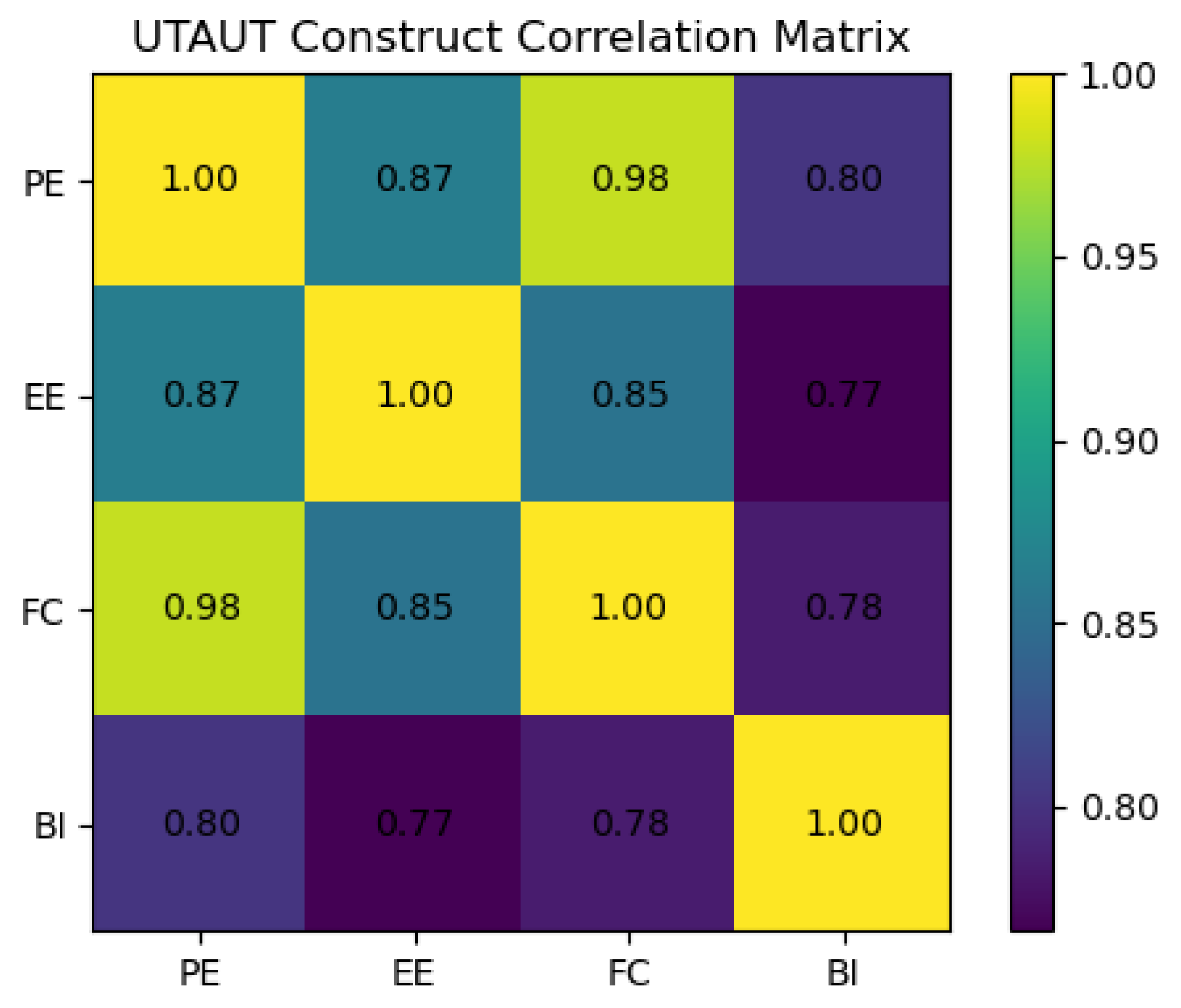
Appendix A.1. Correlation Structure of TAM- and UTAUT-Aligned Constructs
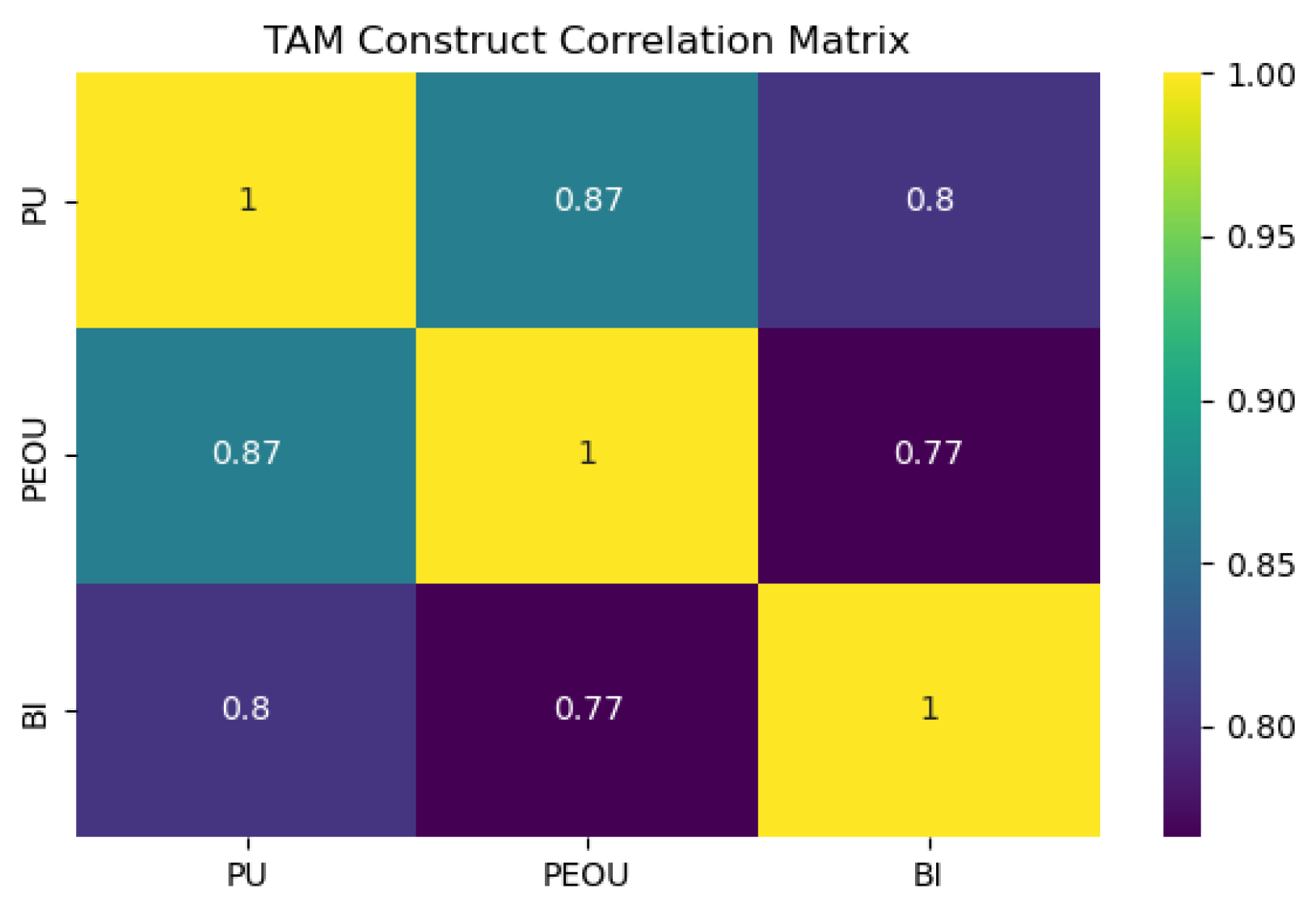
Figure A1 and
Figure A2 present the correlation matrices for the UTAUT- and TAM-aligned constructs, respectively. These matrices illustrate the associations among the conceptually grouped latent variables and provide preliminary insight into the expected directional relationships with behavioral intention.
Figure A1.
Correlation matrix for UTAUT-aligned latent constructs.
Figure A1.
Correlation matrix for UTAUT-aligned latent constructs.
Figure A2.
Correlation matrix for TAM-aligned latent constructs.
Figure A2.
Correlation matrix for TAM-aligned latent constructs.
Appendix A.2. Regression Results for TAM and UTAUT Models
Table A1 summarizes the regression results for the TAM- and UTAUT-aligned models. Behavioral intention (BI) is treated as the dependent variable in both specifications.
Table A1.
Supplementary regression results for TAM- and UTAUT-aligned models.
Table A1.
Supplementary regression results for TAM- and UTAUT-aligned models.
| Model/Predictor | Coefficient () | Std. Error | t-Value | p-Value |
|---|
| TAM-aligned model: |
| Perceived Usefulness (PU) | 0.1768 | 0.018 | 9.64 | <0.001 |
| Perceived Ease of Use (PEOU) | 0.1169 | 0.023 | 4.98 | <0.001 |
| Intercept | ≈0 | 0.045 | ≈0 | 1.000 |
| 0.664 |
| Adj. | 0.662 |
| N | 409 |
| UTAUT-aligned model: |
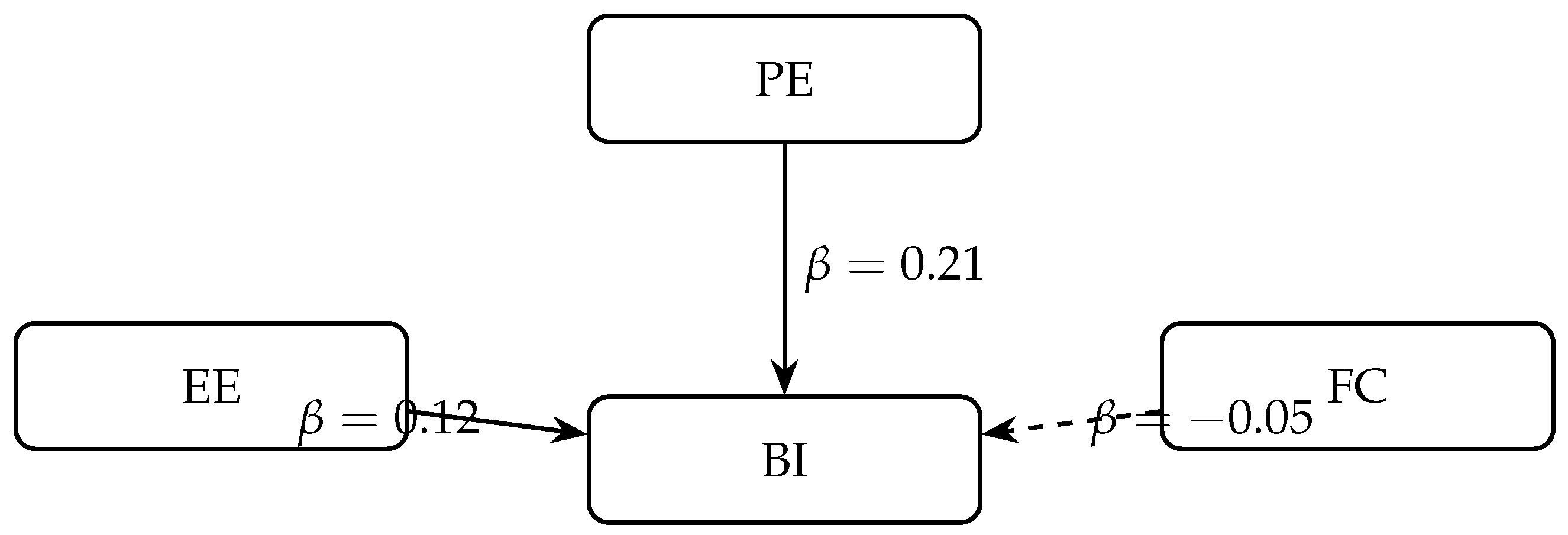
| Performance Expectancy (PE) | 0.2079 | 0.048 | 4.36 | <0.001 |
| Effort Expectancy (EE) | 0.1180 | 0.024 | 5.02 | <0.001 |
| Facilitating Conditions (FC) | −0.0476 | 0.067 | −0.71 | 0.480 |
| Intercept | ≈0 | 0.045 | ≈0 | 1.000 |
| 0.664 |
| Adj. | 0.662 |
| N | 409 |
Appendix A.3. Structural Path Visualizations (Supplementary)
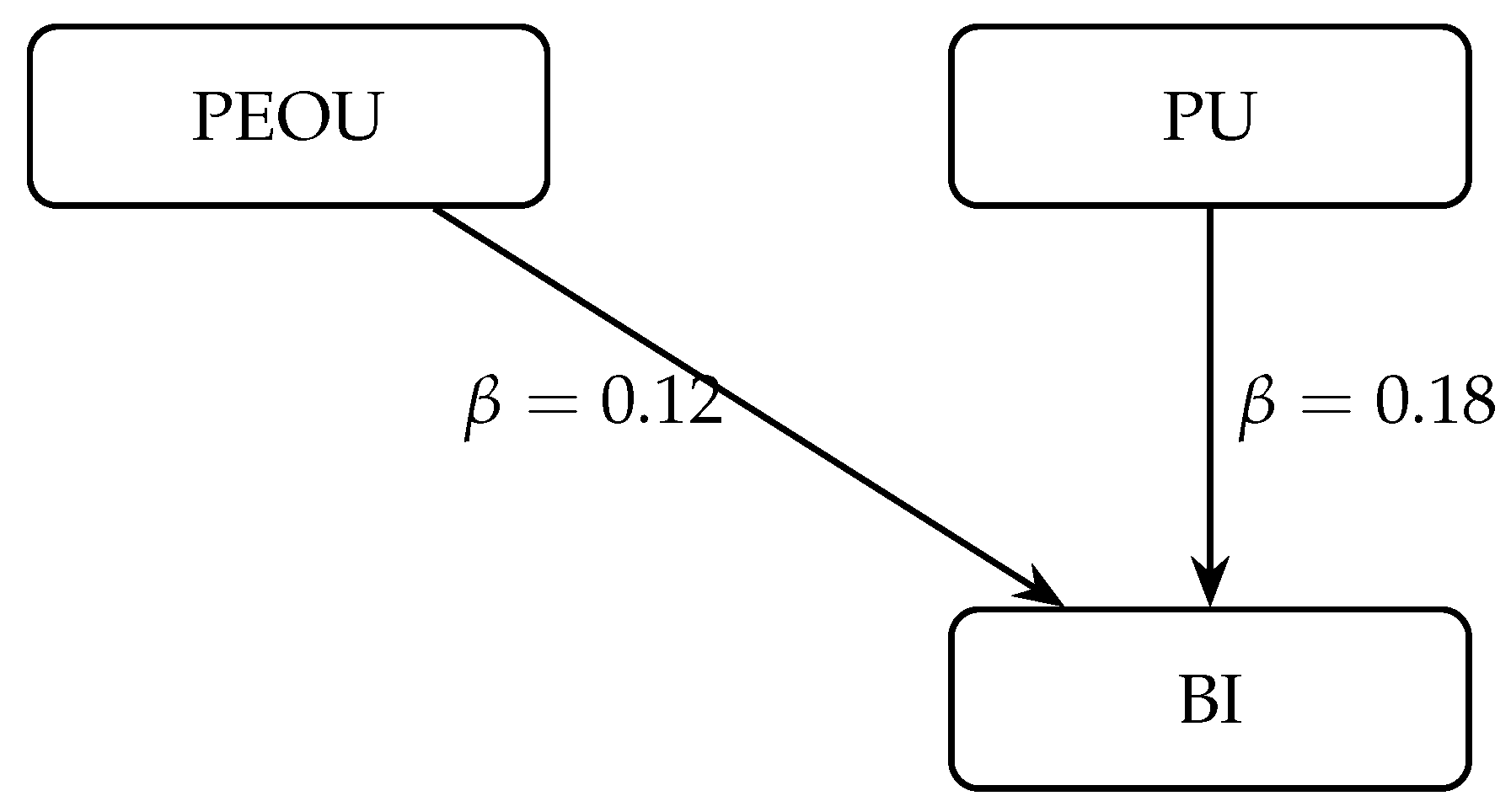
Figure A3 and
Figure A4 illustrate the structural relationships implied by the TAM- and UTAUT-aligned regressions. These diagrams are provided solely for visualization and comparative interpretation and are not used as primary analytical models.
Figure A3.
Supplementary TAM-aligned structural paths.
Figure A3.
Supplementary TAM-aligned structural paths.
Figure A4.
Supplementary UTAUT-aligned structural paths.
Figure A4.
Supplementary UTAUT-aligned structural paths.
Appendix A.4. Comparative Interpretation
Table A2 compares the relative contributions of TAM- and UTAUT-aligned predictors. The results corroborate the main findings reported in
Section 6: performance- and benefit-related perceptions dominate adoption intentions, while facilitating conditions and deterrence-oriented factors remain insignificant in the pre-deployment context.
Table A2.
Supplementary comparison of TAM- and UTAUT-aligned predictors of behavioral intention.
Table A2.
Supplementary comparison of TAM- and UTAUT-aligned predictors of behavioral intention.
| Model | Construct | Conceptual Alignment | Effect on BI | Interpretation |
|---|
| TAM | PU | Efficiency, Control, Privacy | *** | Dominant TAM-aligned driver |
| | PEOU | Optimism, Innovation | *** | Secondary but significant |
| UTAUT | PE | Efficiency, Control | *** | Strongest UTAUT-aligned driver |
| | EE | Optimism, Innovation | *** | Positive and significant |
| | FC | Infrastructure perception | Not significant | Insignificant pre-deployment |
References
- d’Orey, P.M.; Hosseini, A.; Azevedo, J.; Diermeyer, F.; Ferreira, M.; Lienkamp, M. Hail-a-Drone: Enabling teleoperated taxi fleets. In Proceedings of the 2016 IEEE Intelligent Vehicles Symposium (IV), Gothenburg, Sweden, 19–22 June 2016; IEEE: Piscataway, NJ, USA, 2016; pp. 774–781. [Google Scholar]
- Hafeez, F.; Mas’ ud, A.A.; Al-Shammari, S.; Sheikh, U.U.; Alanazi, M.A.; Hamid, M.; Azhar, A. Autonomous vehicles perception, acceptance, and future prospects in the GCC: An analysis using the UTAUT-Based model. World Electr. Veh. J. 2024, 15, 186. [Google Scholar] [CrossRef]
- Venkatesh, V.; Morris, M.G.; Davis, G.B.; Davis, F.D. User acceptance of information technology: Toward a unified view. MIS Q. 2003, 27, 425–478. [Google Scholar] [CrossRef]
- Wu, Q.; Huang, L.; Zong, J. User interface characteristics influencing medical self-service terminals behavioral intention and acceptance by Chinese elderly: An empirical examination based on an extended UTAUT model. Sustainability 2023, 15, 14252. [Google Scholar] [CrossRef]
- Davis, F.D. Technology acceptance model: TAM. In Information Seeking Behavior and Technology Adoption; Al-Suqri, M.N., Al-Aufi, A.S., Eds.; IGI Global: Hershey, PA, USA, 1989; Volume 205, p. 5. [Google Scholar]
- Choi, J.S.; Hwang, H.W. A study on the development status and economic impacts of drone taxis. J. Korean Soc. Aviat. Aeronaut. 2020, 28, 132–140. [Google Scholar] [CrossRef]
- Hamdi, A.; Alkouz, B.; Shahzaad, B.; Bouguettaya, A.; Neiat, A.G.; Salim, F.; Kim, D.Y. Drone-as-a-Service: Research Challenges and Directions. Proc. IEEE 2025, 113, 416–442. [Google Scholar] [CrossRef]
- Almuraqab, N.A.S. Introduction to the critical success factors of E-government adoption of the utilization of emerging smart cities technologies. In Solving Urban Infrastructure Problems Using Smart City Technologies; Elsevier: Amsterdam, The Netherlands, 2021; pp. 3–15. [Google Scholar]
- Almuraqab, N.A.S.; Miniaoui, S.; Jasimuddin, S. People’s Perceptions of the Benefits, Risks, and Acceptance of Services Delivered by Drones in the United Arab Emirates. In The AI Revolution: Driving Business Innovation and Research: Volume 1; Springer: Amsterdam, The Netherlands, 2024; pp. 453–463. [Google Scholar]
- Hafiz, D. Human Acceptance of Autonomous Mobility: A Literature Review. In Proceedings of the 2024 2nd International Conference on Unmanned Vehicle Systems-Oman (UVS), Muscat, Oman, 12–14 February 2024; IEEE: Piscataway, NJ, USA, 2024; pp. 1–8. [Google Scholar]
- Sun, K.A.; Moon, J. Exploring the Existence of Moderated Mediation of Attitudes Between Privacy Risk and the Intention to Use Drone Delivery Services. Sustainability 2025, 17, 2585. [Google Scholar] [CrossRef]
- Zhao, Y.; Feng, T. Commuter choice of UAM-friendly neighborhoods. Transp. Res. Part A Policy Pract. 2025, 192, 104338. [Google Scholar] [CrossRef]
- Madi, R.; Madi, N. Integrating Flying Taxis: Dubai’s Pioneering Efforts. In Proceedings of the Global Congress on Emerging Technologies (GCET-2024), Gran Canaria, Spain, 9–11 December 2024; IEEE: Piscataway, NJ, USA, 2024; pp. 191–194. [Google Scholar]
- Pascarella, D.; Gigante, G.; Vozella, A.; Bieber, P.; Dubot, T.; Bellostas, A.R.; Carrasco, J.C. A Preliminary Concept for a Resilience Service to Manage Drone Cyber-Physical Attacks. In Proceedings of the 2024 IEEE International Workshop on Technologies for Defense and Security (TechDefense), Naples, Italy, 11–13 November 2024; IEEE: Piscataway, NJ, USA, 2024; pp. 351–356. [Google Scholar]
- Liu, M.; Wu, J.; Zhu, C.; Hu, K. Factors Influencing the Acceptance of Robo-Taxi Services in China: An Extended Technology Acceptance Model Analysis. J. Adv. Transp. 2022, 2022, 8461212. [Google Scholar] [CrossRef]
- Cunietti, S.; Sammarco, C.; Ferrando, I.; Tejedor, J.V.B.; Sguerso, D. Drone Infrastructures Planning on Large-Scale for Passenger Transport. In Proceedings of the 1st International Conference on Drones and Unmanned Systems (DAUs’ 2025), Granada, Spain, 19–21 February 2025; p. 195. [Google Scholar]
- Sharma, S.; Woodman, R.; Elliott, M.T. Key factors influencing adoption of next-generation transportation technologies among people with disabilities. Travel Behav. Soc. 2026, 42, 101124. [Google Scholar] [CrossRef]
- Zhang, Y.; Kamargianni, M. A review on the factors influencing the adoption of new mobility technologies and services: Autonomous vehicle, drone, micromobility and mobility as a service. Transp. Rev. 2023, 43, 407–429. [Google Scholar] [CrossRef]
- General Civil Aviation Authority (GCAA). GCAA Issues CAR Airspace Party Uspace for Drone Navigation, 2025. Available online: https://www.gcaa.gov.ae/en/Pages/Home.aspx (accessed on 21 September 2025).
- Abu Dhabi Advanced Technology Research Council (ATRC). UAE Begins Mapping Air Corridors for Air Taxis and Cargo Drones to Transform Urban Transportation, 2025. Available online: https://tinyurl.com/23fammwm (accessed on 21 September 2025).
- DRONELIFE. UAE Commercial Vertiport Approval Skyports—DRONELIFE, 2025. Available online: https://tinyurl.com/kc85kec2 (accessed on 21 September 2025).
- The National News. The National—Latest World News, Sport & Opinion, 2025. Available online: https://tinyurl.com/mrxuvvf2 (accessed on 21 September 2025).
- Barman, H.; Sipos, A. Airport Governance in the United Arab Emirates: Latest Facilities and Future Developments. In Aerodrome Governance in Asia: Legal and Managerial Perspectives; Springer: Berlin/Heidelberg, Germany, 2025; pp. 185–209. [Google Scholar]
- Saifudeen, O.A.; Harrison, J.; Teo, H.L.; Charnoff, E. The ongoing evolution of EVTOLs: Urban transport potential and the security dimension. Urban Plan. Transp. Res. 2025, 13, 2551837. [Google Scholar] [CrossRef]
- Govinda, S.; Brik, B.; Harous, S. A Survey on Deep Reinforcement Learning Applications in Autonomous Systems: Applications, Open Challenges, and Future Directions. IEEE Trans. Intell. Transp. Syst. 2025, 26, 11088–11113. [Google Scholar] [CrossRef]
- Krichen, M.; Abdalzaher, M.S.; Shaaban, M.; Aburukba, R. Lightweight AI for Drones: A Survey. In Proceedings of the 2025 7th International Youth Conference on Radio Electronics, Electrical and Power Engineering (REEPE), Moscow, Russia, 8–10 April 2025; IEEE: Piscataway, NJ, USA, 2025; pp. 1–6. [Google Scholar]
- Al-Darraji, I.; Khan, F.Q.; Salim, T.T.; Tsaramirsis, G.; Jerbi, H.; Kakei, A.A.; Ismaeel, A.G. Integrating drones with digital twins for aerial remote sensing. Radio Sci. 2025, 60, 1–11. [Google Scholar] [CrossRef]
- Alsaedi, N.; Alomari, E.; Alseiari, H.; Ahmed, M.; Al Kaabi, L.; Bayrak, A.; Habuza, T. Smart Drones in Search and Rescue: Leveraging AI for Autonomous Decision-Making. In Proceedings of the 2025 International Conference on Activity and Behavior Computing (ABC), Al Ain, United Arab Emirates, 21–25 April 2025; IEEE: Piscataway, NJ, USA, 2025; pp. 1–10. [Google Scholar]
- Hutto, J.W.; Rogers, J.P. The drone revolution: Towards a synthesis in the drone debate. Eur. J. Int. Secur. 2025, 1–21. [Google Scholar] [CrossRef]
- Daoud, A.O.; Kineber, A.F.; Chileshe, N.; Elmansoury, A.; Abdel Aziz, K.M. Investigating barriers to drones implementation in sustainable construction using PLS-SEM. Sci. Rep. 2025, 15, 19623. [Google Scholar] [CrossRef]
- Sotoudehfar, S.; Sarkin, J.J.; Chaari, M.Z. Cheap drones, costly consequences: The legal and humanitarian risks and outcomes of low-tech drone warfare. Def. Secur. Anal. 2025, 1–28. [Google Scholar] [CrossRef]
- Konar, T. Mega-tall buildings: Current trends, challenges and future prospects. Discov. Civ. Eng. 2025, 2, 1–24. [Google Scholar] [CrossRef]
- Talib, M.A.; Nasir, Q.; Dakalbab, F.; Saud, H. Future Aviation Jobs: The Role of Technology in Shaping Skills and Competencies. J. Open Innov. Technol. Mark. Complex. 2025, 11, 100517. [Google Scholar] [CrossRef]
- O’Connell, J.F. Environmental Impact and Sustainability in the Airline Industry. In The Airline Industry–A Comprehensive Overview; Routledge: New York, NY, USA, 2026; pp. 513–561. [Google Scholar]
- Abu Raed, A.; Quist, W.; Pottgiesser, U. Preserving Modern Heritage in the Emirate of Dubai: A Digital Documentation and Semantic HBIM Approach. Heritage 2025, 8, 263. [Google Scholar] [CrossRef]
- Hair, J.F.; Risher, J.J.; Sarstedt, M.; Ringle, C.M. When to use and how to report the results of PLS-SEM. Eur. Bus. Rev. 2019, 31, 2–24. [Google Scholar] [CrossRef]
- Fornell, C.; Larcker, D.F. Evaluating structural equation models with unobservable variables and measurement error. J. Mark. Res. 1981, 18, 39–50. [Google Scholar] [CrossRef]
| Disclaimer/Publisher’s Note: The statements, opinions and data contained in all publications are solely those of the individual author(s) and contributor(s) and not of MDPI and/or the editor(s). MDPI and/or the editor(s) disclaim responsibility for any injury to people or property resulting from any ideas, methods, instructions or products referred to in the content. |



 ,
,