Monitoring the Sustained Environmental Performances of Nature-Based Solutions in Urban Environments: The Case Study of the UPPER Project (Latina, Italy)




Abstract
1. Introduction
Objectives and Novelty of the Study
2. The Case Study Context and Approach
3. Materials and Methods
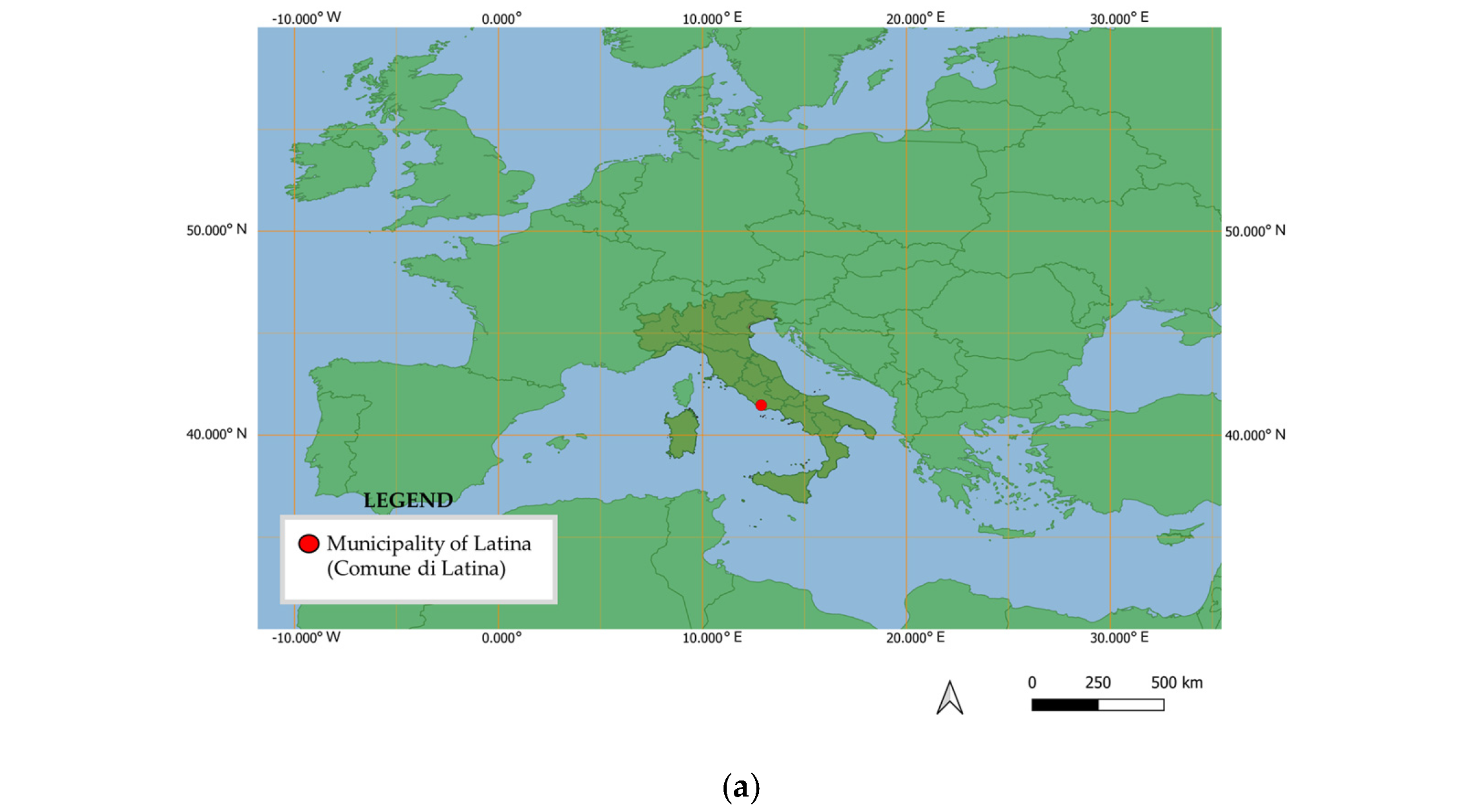
3.1. Areas of Study and Interventions
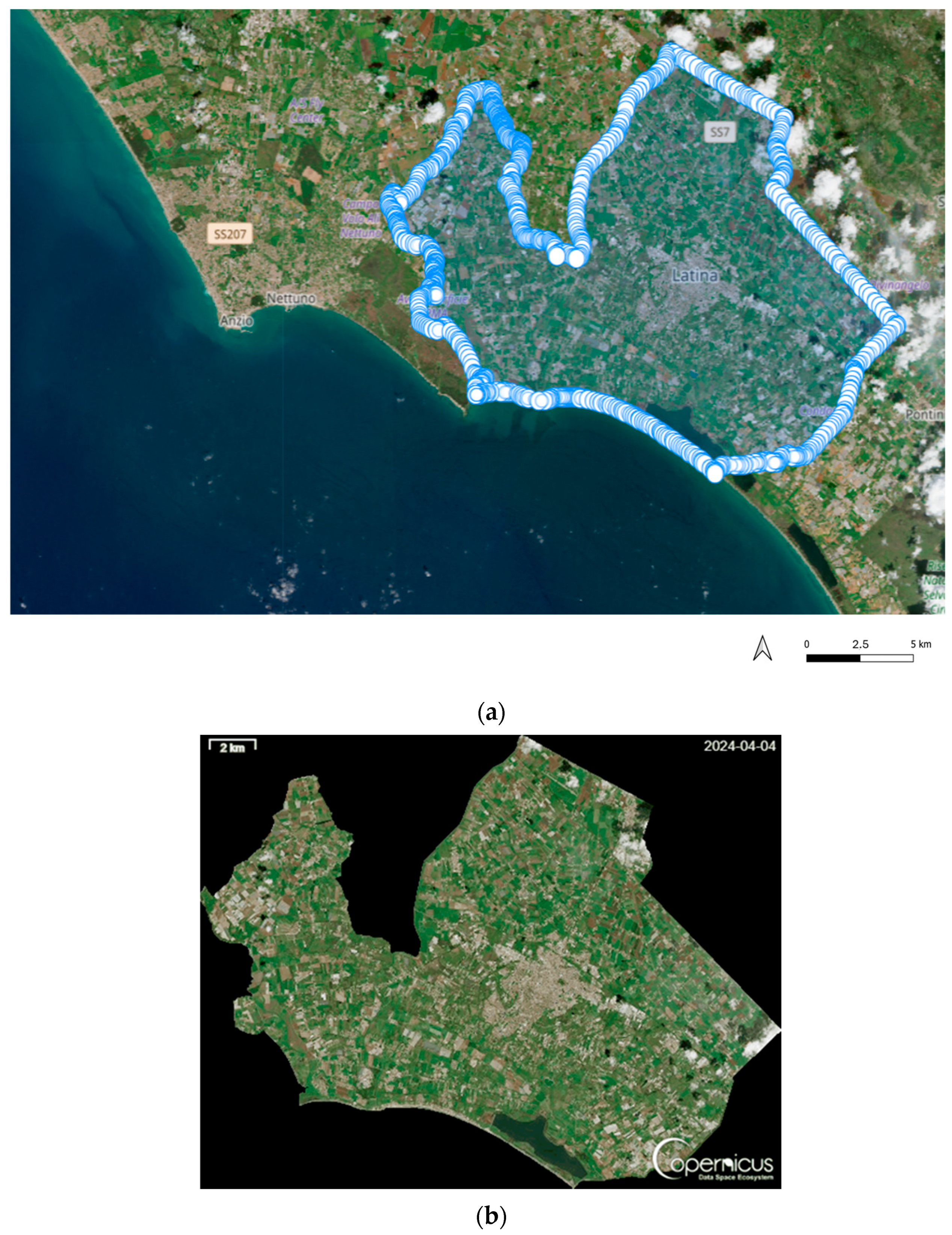
3.2. Analysis of Satellite Data and Indices Derived from Remote Sensing
3.3. Proximal Sensing Monitoring
3.3.1. Meteo-Climatic and Air Quality Data
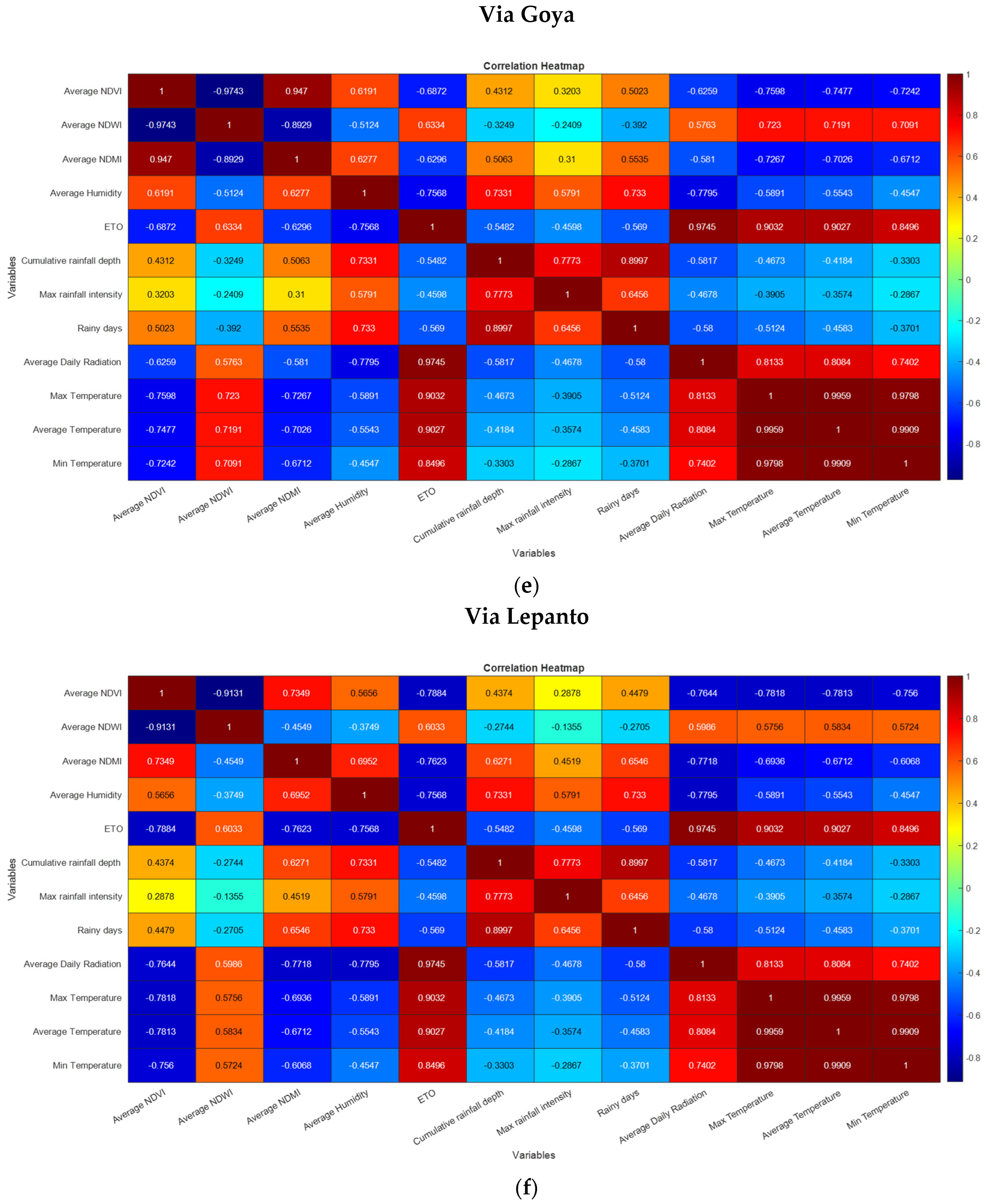
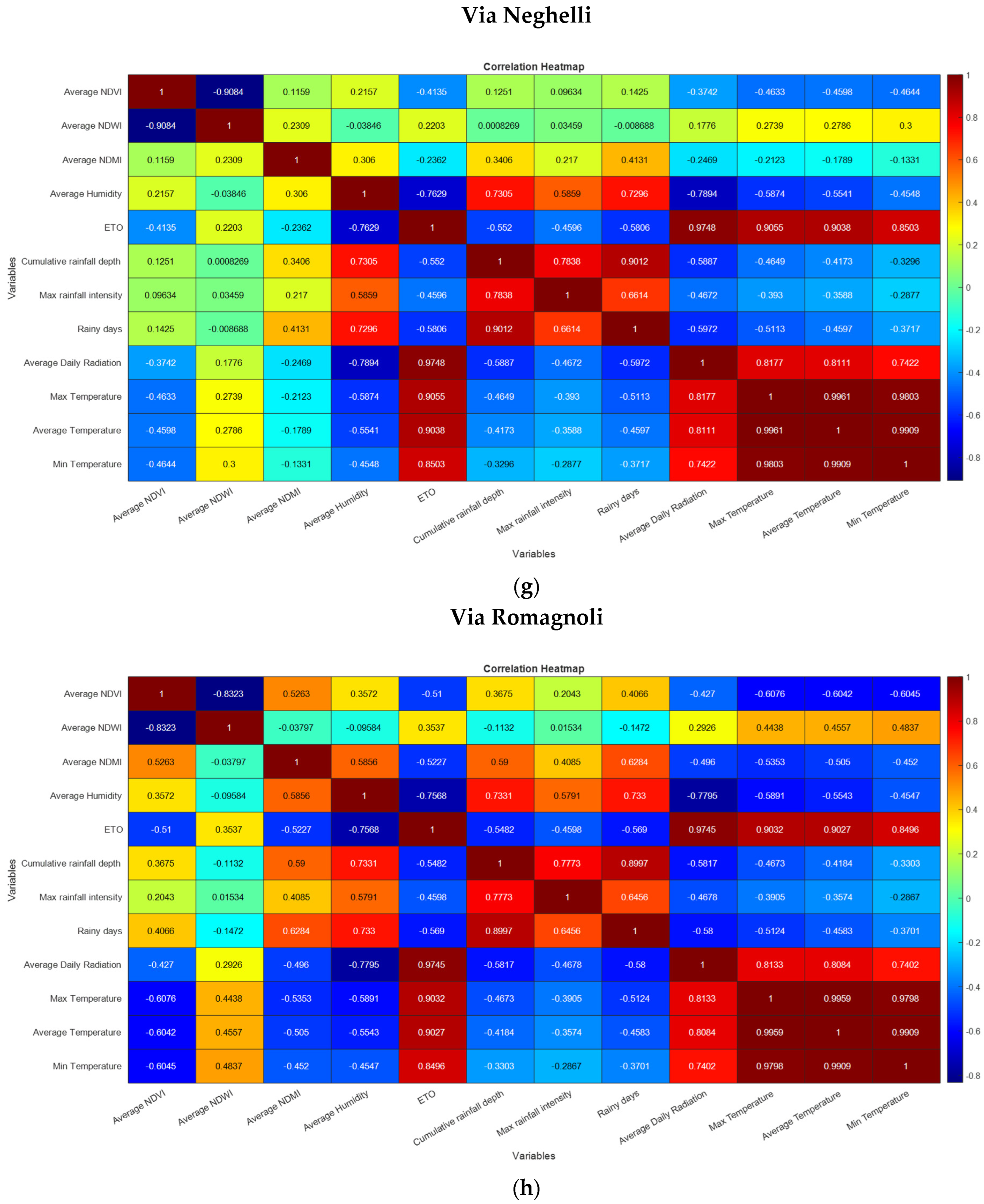
3.3.2. Exploratory and Correlation Analyses
4. Results and Discussion
4.1. Remote Sensing Index Variations
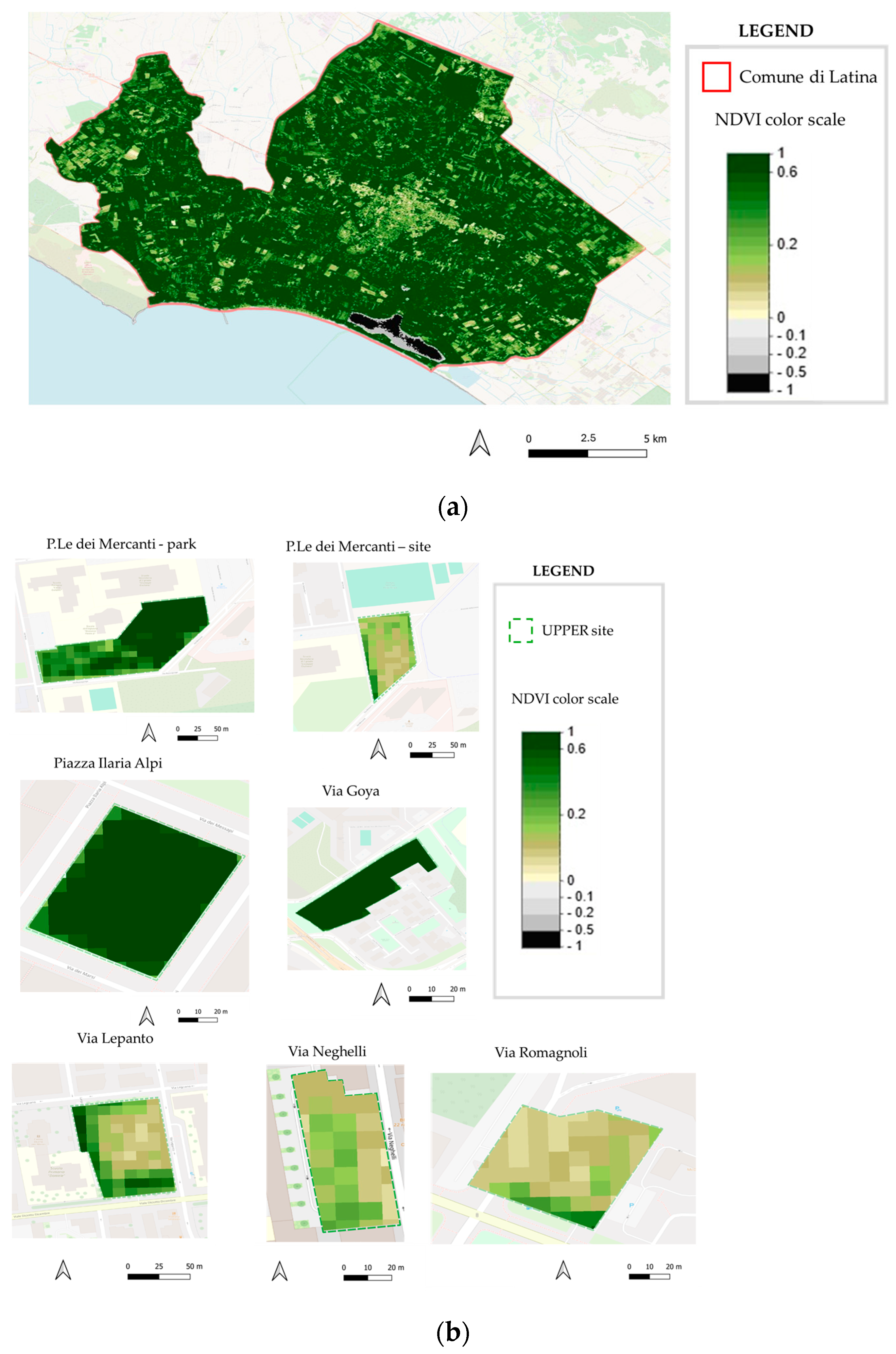
4.1.1. NDVI Mapping for 2024
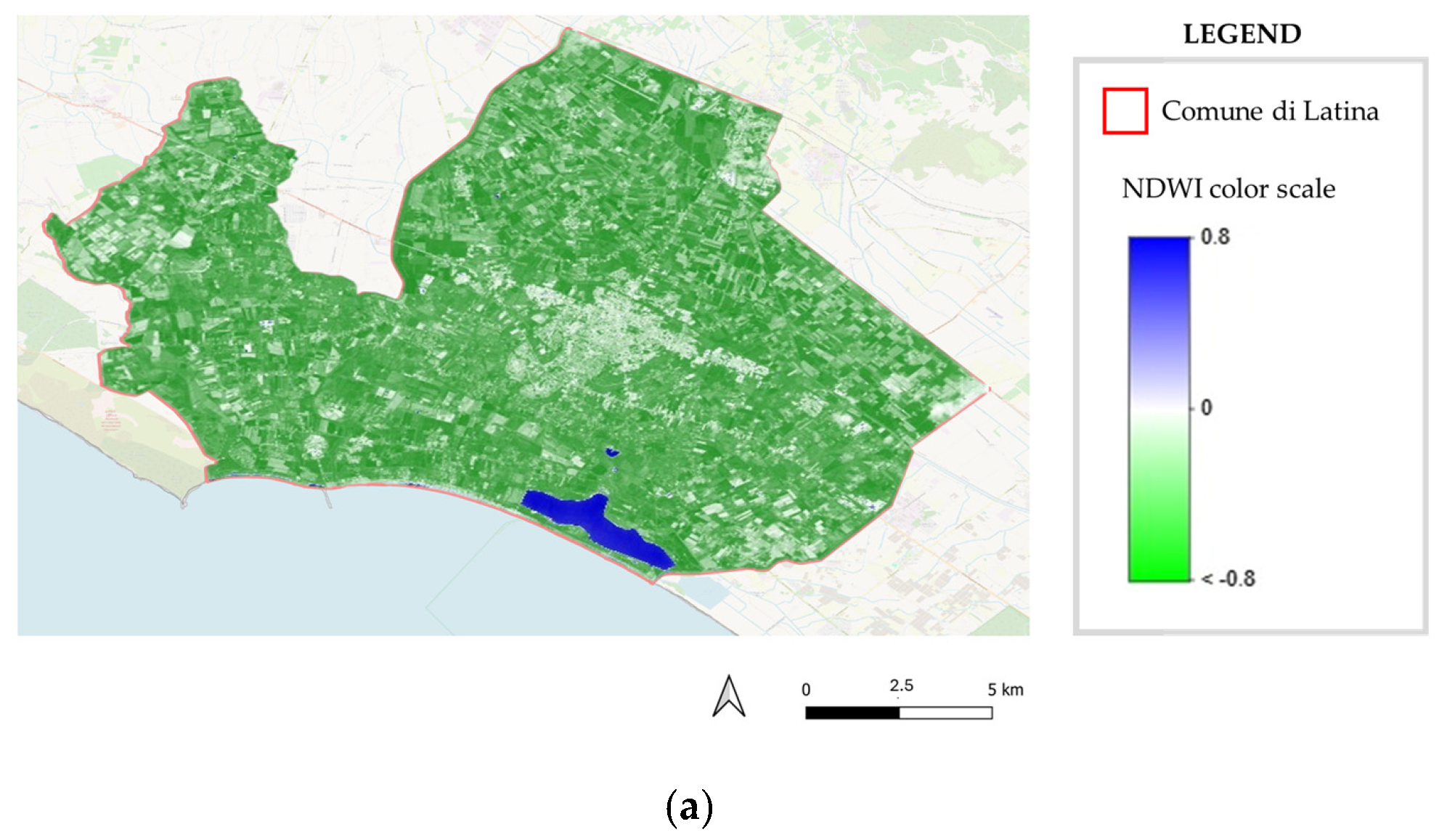
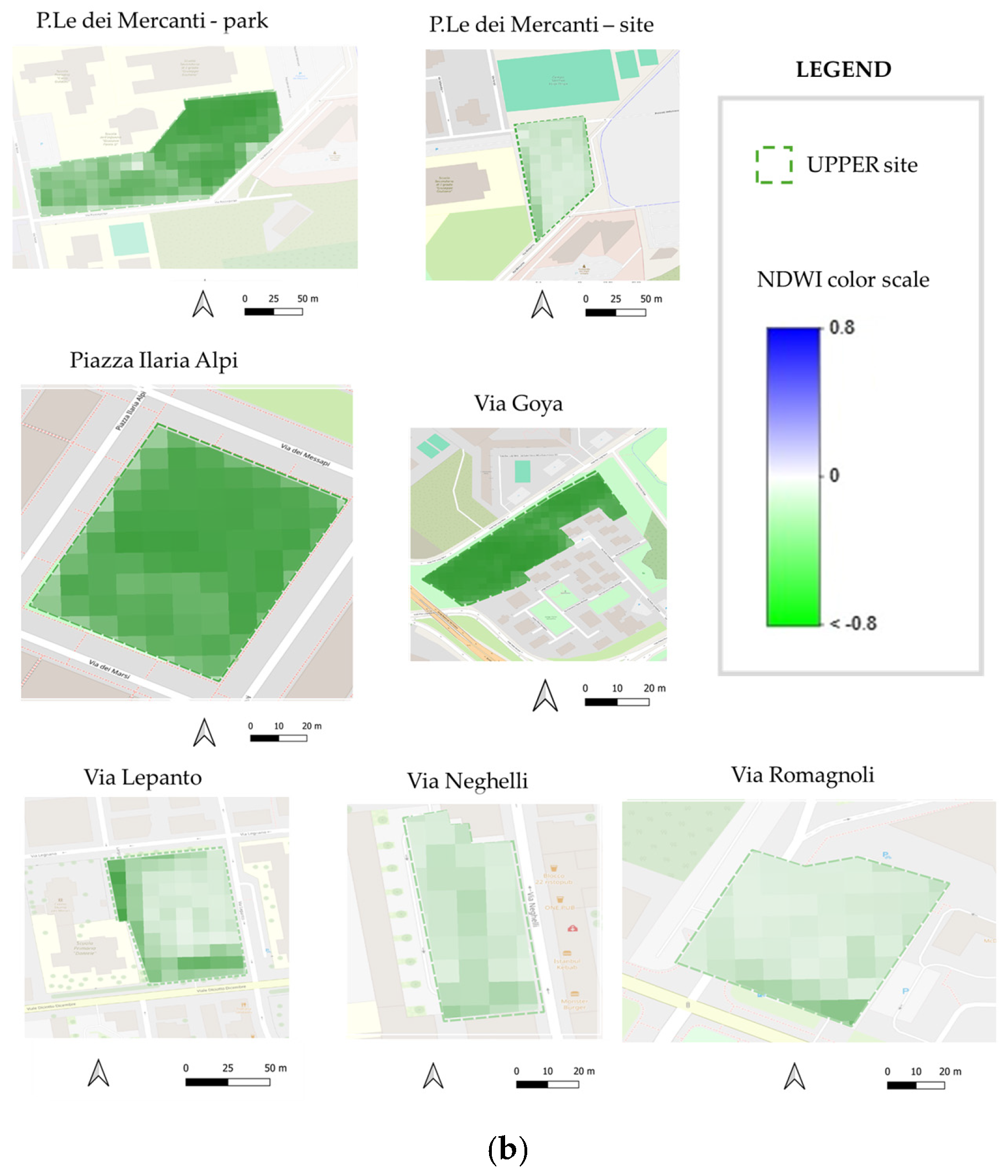
4.1.2. NDWI Mapping for 2024
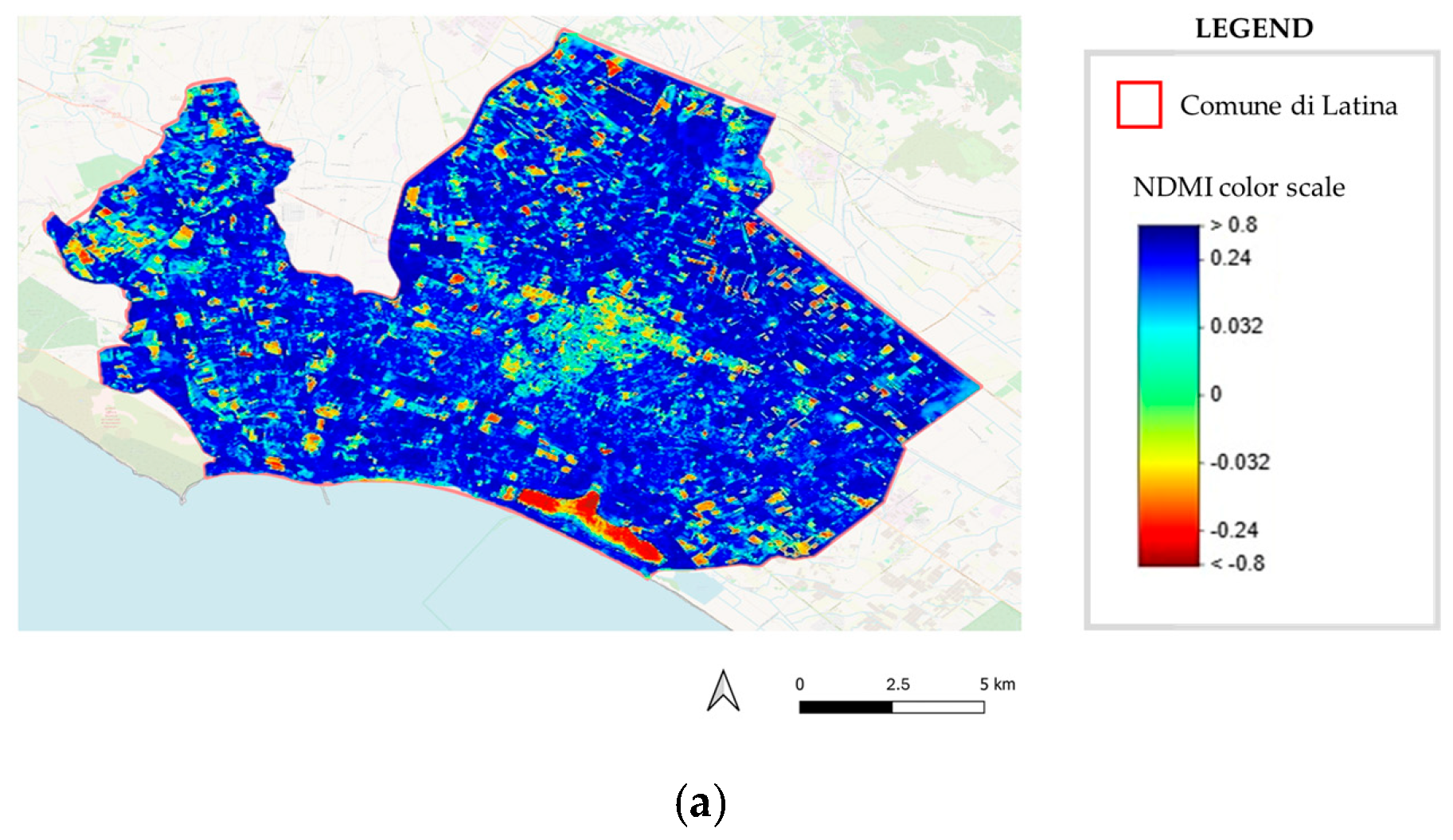
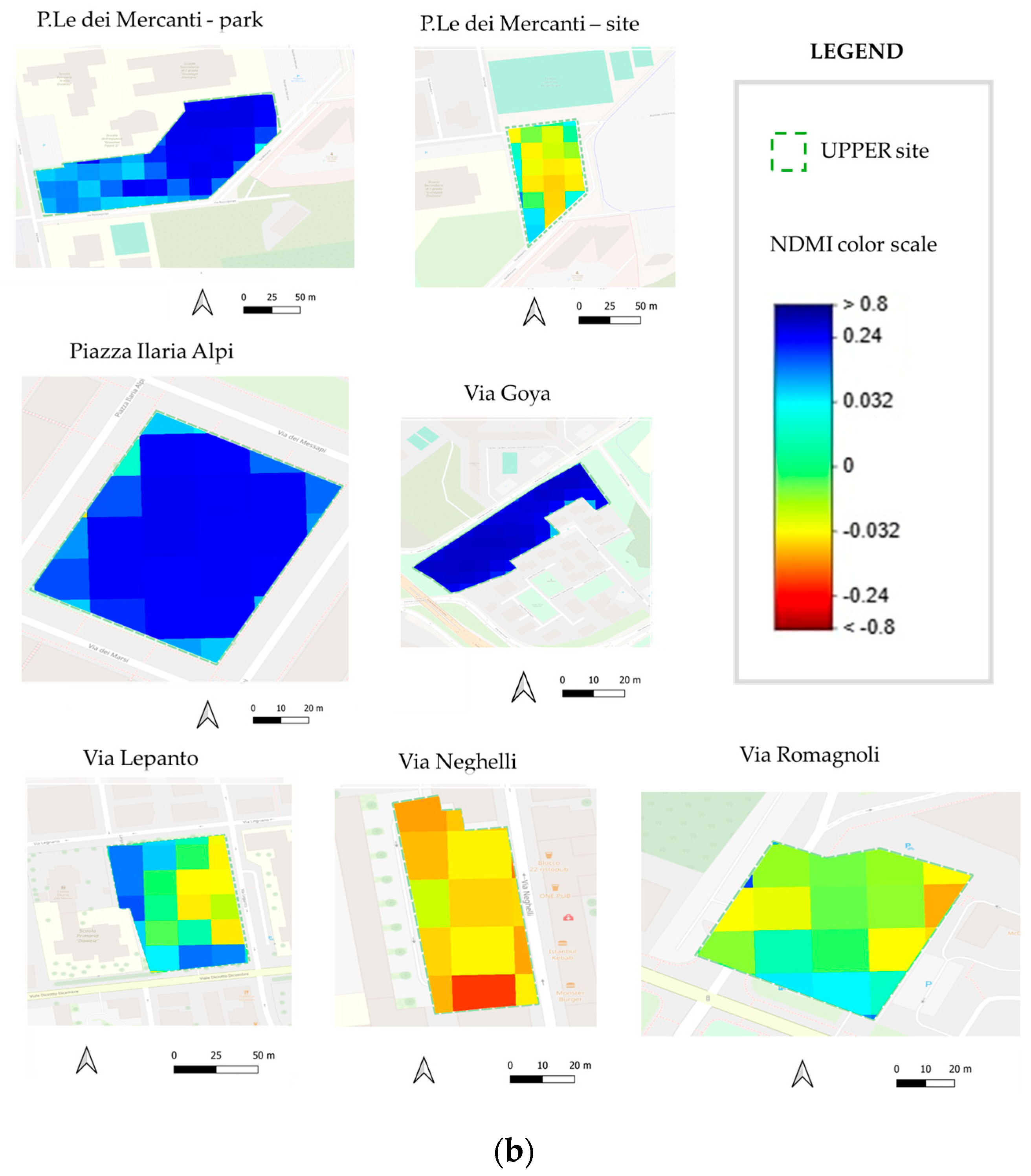
4.1.3. NDMI Mapping for 2024
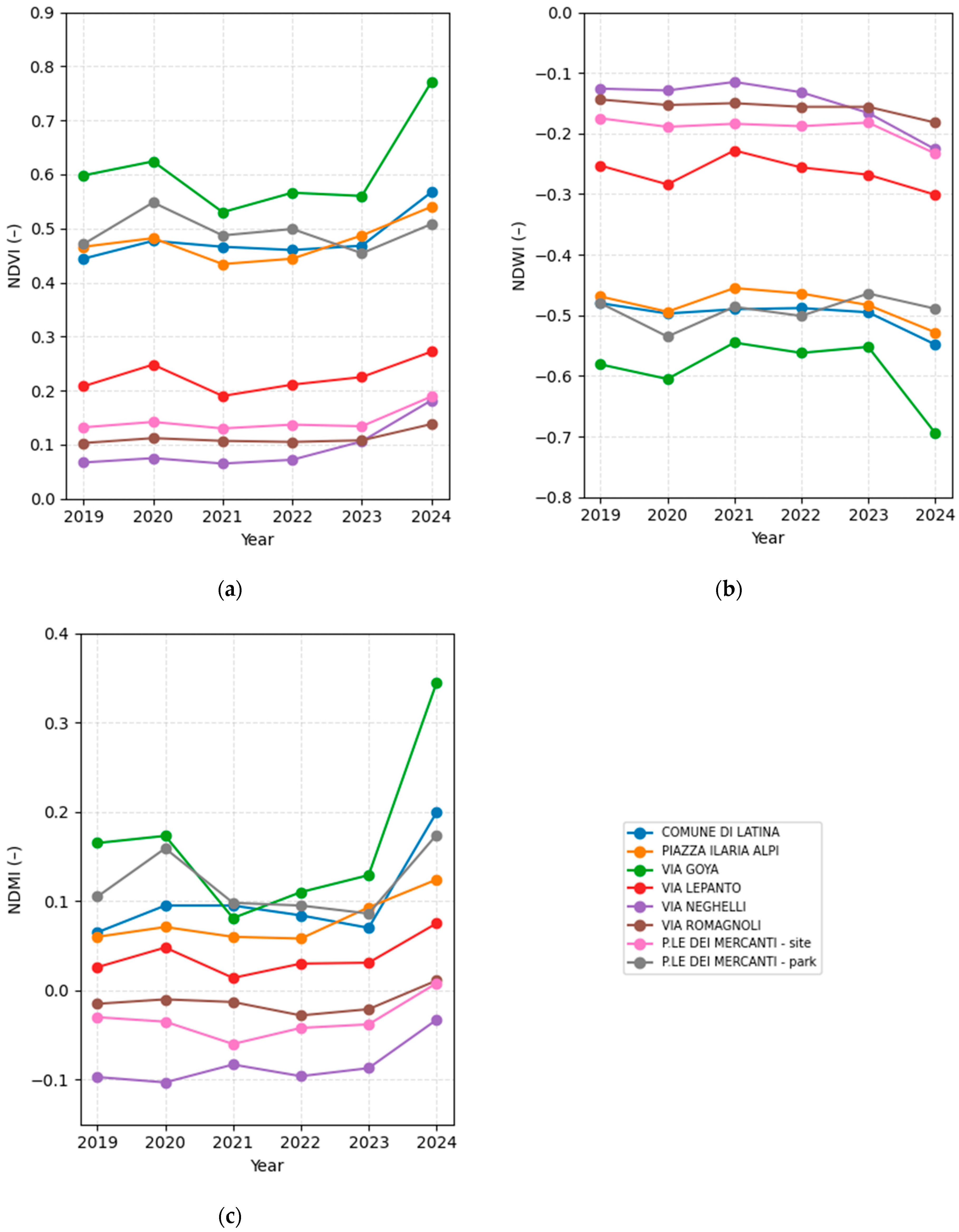
4.1.4. Temporal Variations in the Indices (2019–2024)
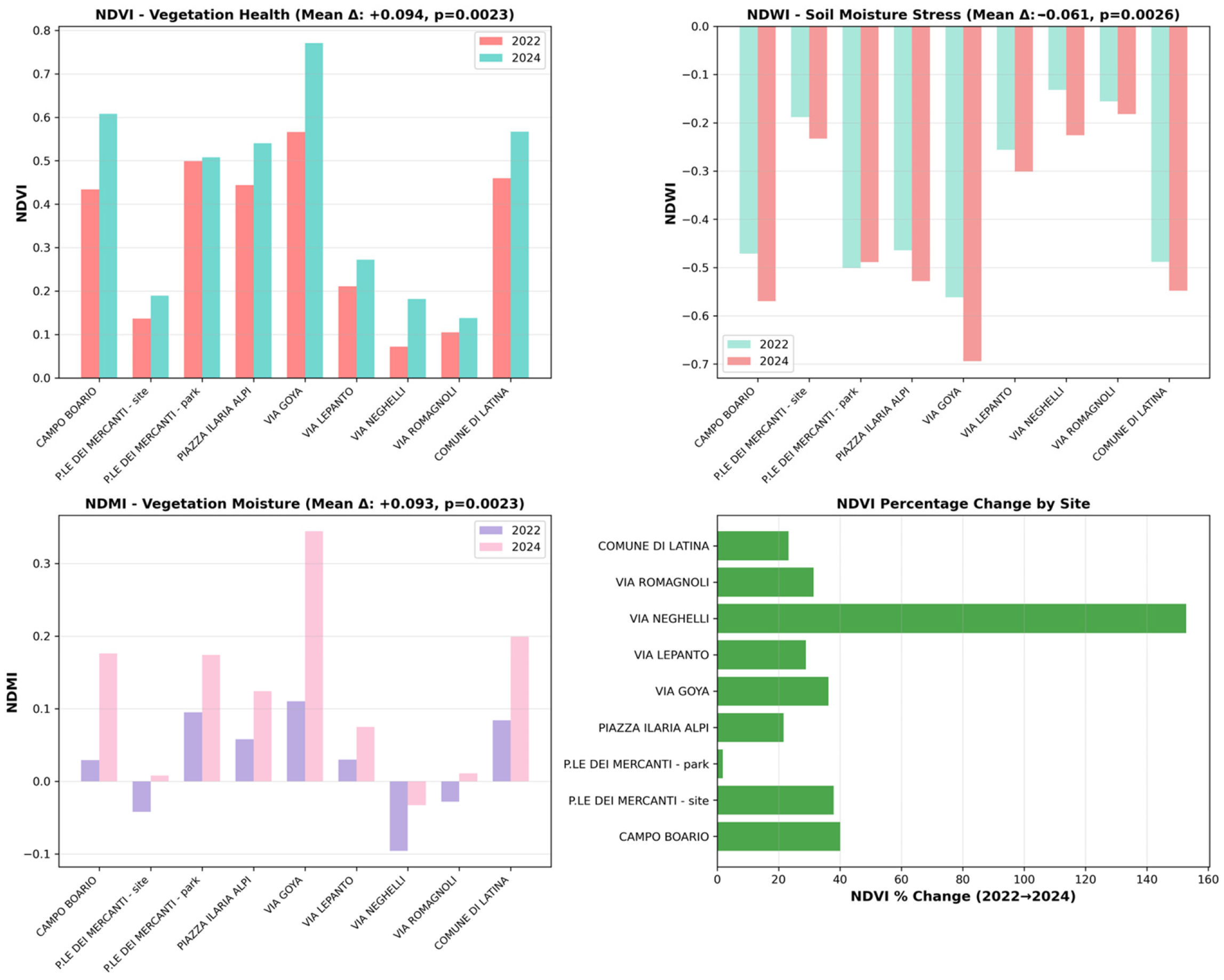
4.1.5. Considerations About Indices Variations (2022–2024)
4.2. Meteo-Climatic Variables Influence on UPPER Sites
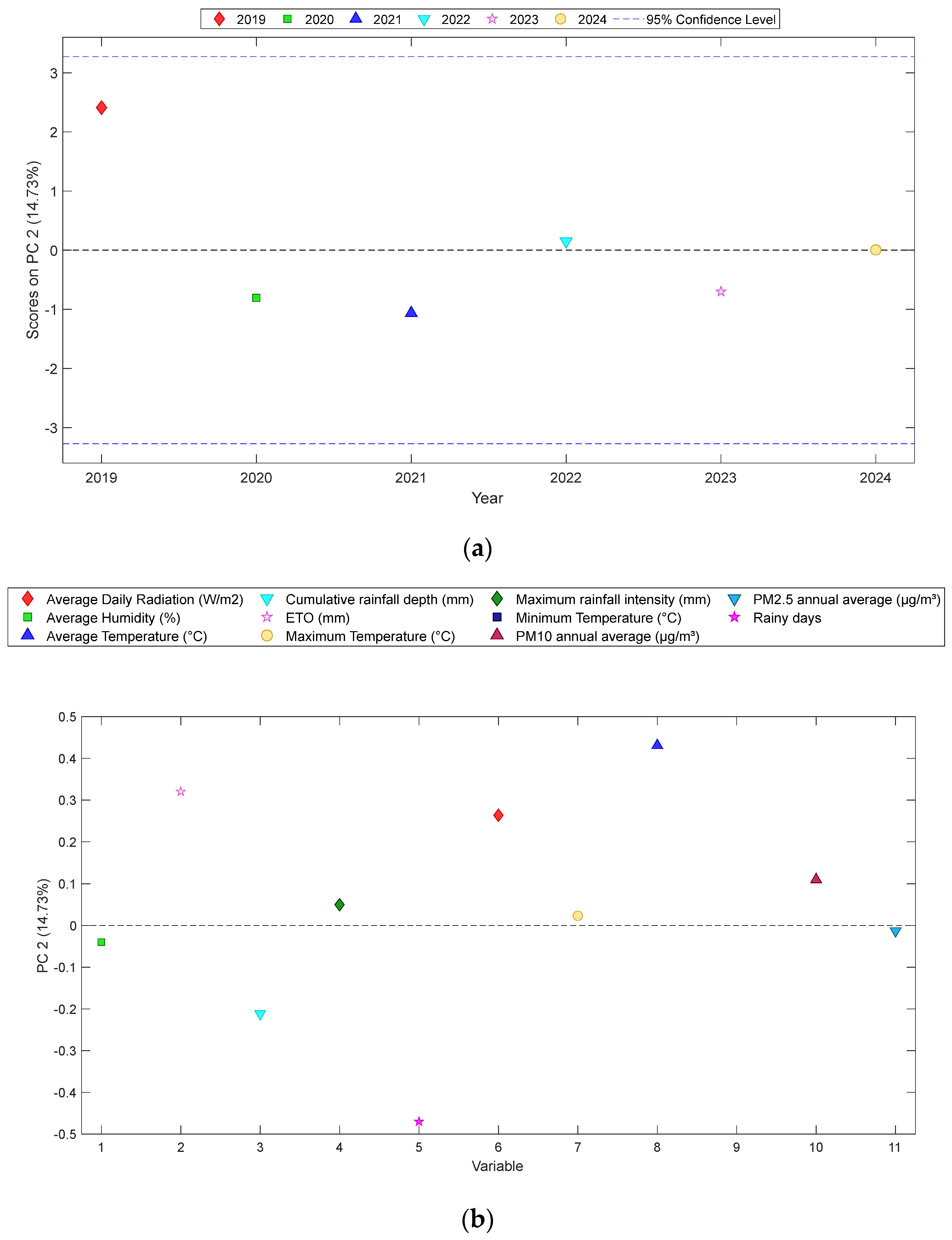
4.2.1. Exploratory Analysis of Meteo-Climatic and Air Quality Measurements in Comune Di Latina
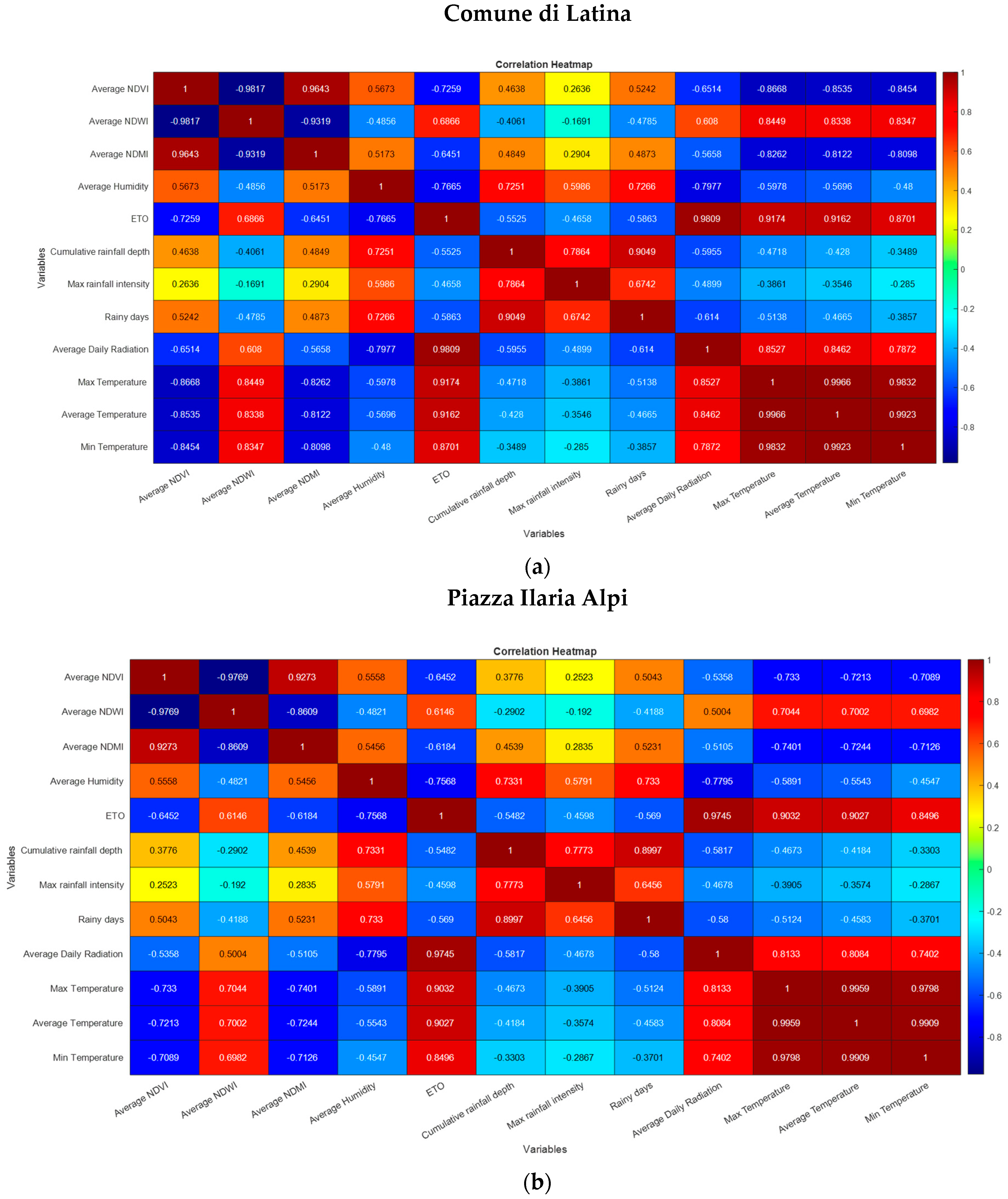
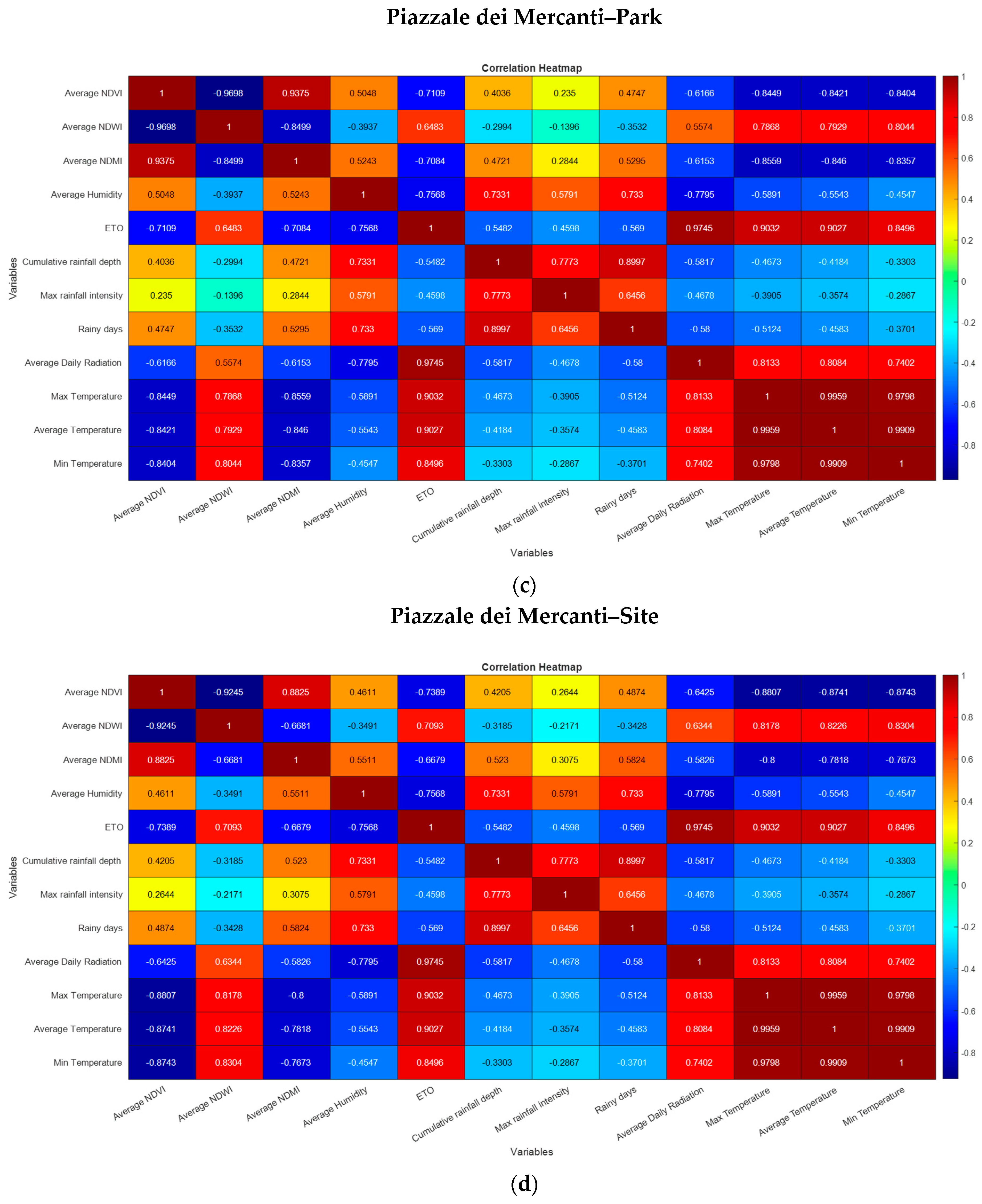
4.2.2. Correlation Analysis of Climatic Variables and Vegetation Indices
4.3. Attribution and Methodological Limitations
5. Conclusions and Future Perspectives
Author Contributions
Funding
Institutional Review Board Statement
Informed Consent Statement
Data Availability Statement
Acknowledgments
Conflicts of Interest
Appendix A

| Dataset Type | Source/Provider | Spatial Coverage and Resolution | Temporal Coverage and Resolution | Main Variables Used |
|---|---|---|---|---|
| Satellite remote sensing (Sentinel-2 L2A) | Copernicus Sentinel-2 mission; Copernicus Data Space Ecosystem/Sentinel Hub | Municipality of Latina and UPPER Areas of Interest (AOIs); 10 m (VIS–NIR), 20 m (red-edge, SWIR), 60 m (atmospheric bands) | 1 January 2019–4 April 2024; 5-day revisit (constellation); images selected with cloud cover ≤ 5% | Surface reflectance bands used to derive NDVI, NDWI and NDMI for each AOI. |
| Meteo-climatic data | ARSIAL–Integrated agrometeorological service of Lazio Region (SIARL); Meteo-climatic ground station “B.GO CARSO” (B.go Carso, LT11CME, Lat: 41.53777° N, Lon: 12.85528° E) | Reference station for the Comune di Latina area (regional agrometeorological network) | 1 January 2019–4 April 2024; monthly aggregates from daily records | Average relative humidity; reference evapotranspiration (ETO); cumulative rainfall depth; maximum rainfall intensity; number of rainy days; average daily global radiation; minimum, maximum and mean air temperature. |
| Air quality data | ARPA Lazio–Regional Environmental Protection Agency; urban traffic station “LATINA DE CHIRICO–63” (Lat: 41.451131° N, Lon: 12.891731° E; 21 m a.s.l.) | Urban traffic monitoring site in Latina (ZONE IT1218) | 1 January 2019–4 April 2024; daily averages (2024 based on 93 days) | Daily PM10 and PM2.5 concentrations (µg m−3); only these pollutants used due to data completeness. |
| UPPER NbS intervention areas | UPPER project WebGIS shapefiles; Provincial Territorial Information System of Latina; processed in QGIS | Seven NbS sites within the Municipality of Latina (P.le dei Mercanti, Piazza Ilaria Alpi, Via Goya, Via Lepanto, Via Neghelli, Via Romagnoli); AOIs used for index extraction | Static AOIs representing pre- and post-intervention footprints; used for all years 2019–2024 | Polygon boundaries of intervention areas, used to spatially aggregate NDVI, NDWI and NDMI and to link satellite indices with site-specific NbS typologies. |
Appendix B
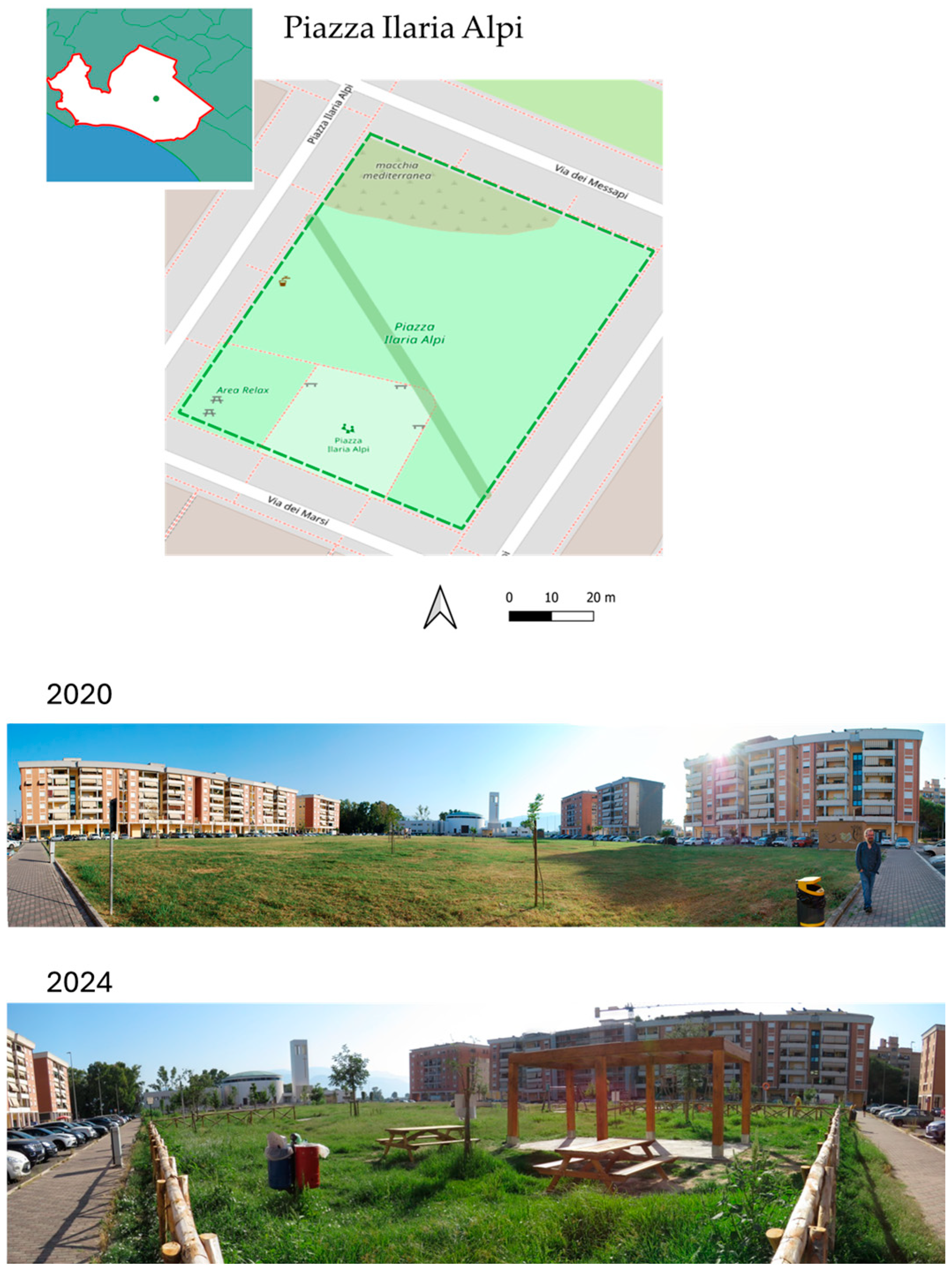
- Pre-intervention (2020): The area was characterized by a predominantly paved surface with sparse, isolated vegetation, limited canopy cover, and minimal shading. Soil sealing and the absence of structured green infrastructure resulted in low vegetation vitality and reduced ecological functionality of the space.
- Post-intervention (2024): Following the NbS implementation (2022–2023), the site was converted into a diversified urban forest composed of native tree and shrub species, combined with permeable surfaces, rainwater-harvesting infrastructure, and underground irrigation for the establishment phase.

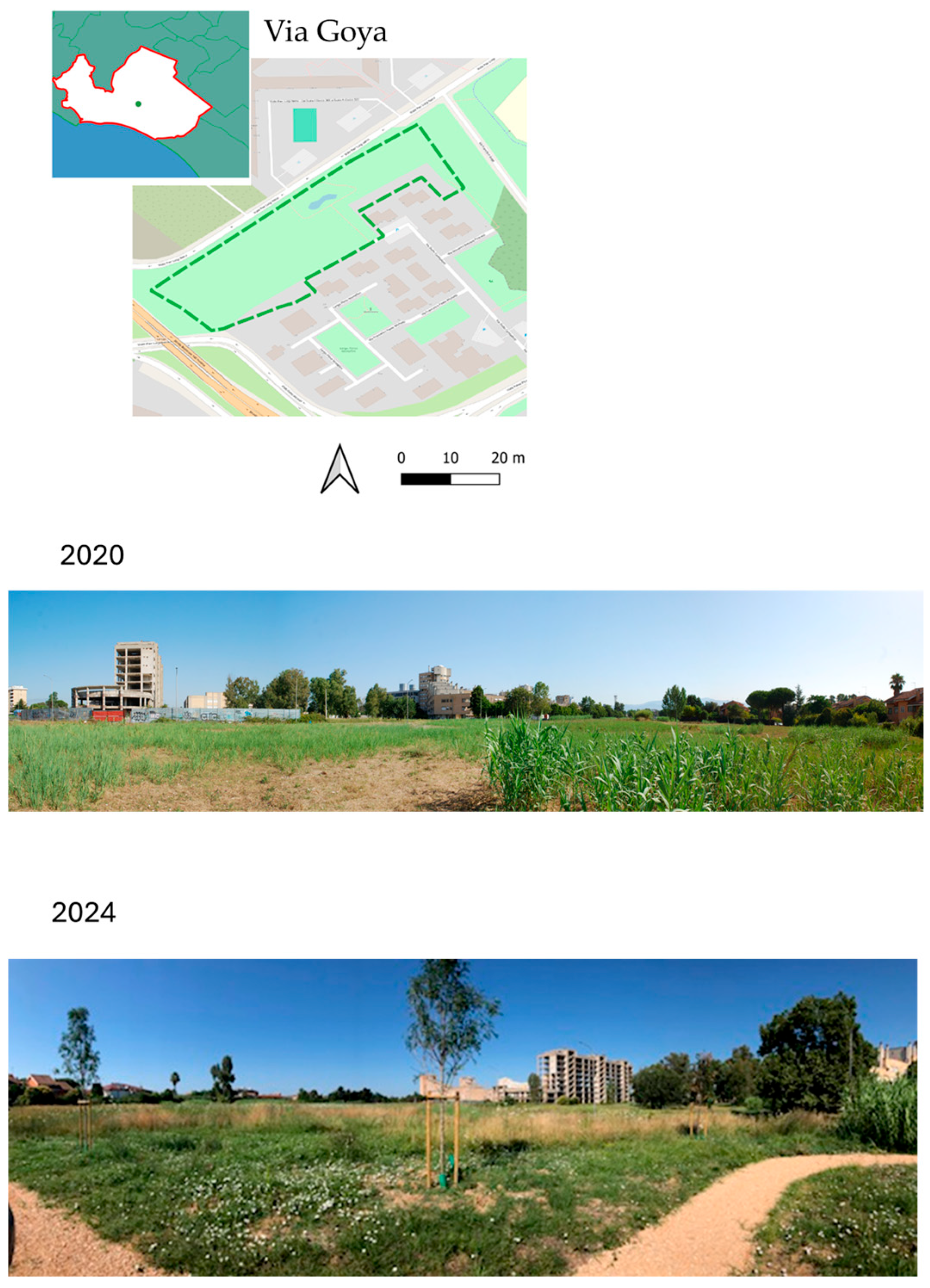
- Pre-intervention (2020): The site showed heterogeneous ground cover with fragmented vegetation, limited understory structure, and weak functional connectivity with the adjacent regenerated wooded area. The absence of a coherent design restricted both ecological performance and recreational use.
- Post-intervention (2024): The NbS intervention established an urban forest connected to the existing woodland, with continuous planting of indigenous, climate-adapted species, a central catchment area for irrigation, and a network of pedestrian and cycling paths.

References
- Cohen-Shacham, E.; Walters, G.; Janzen, C.; Maginnis, S. Nature-Based Solutions to Address Global Societal Challenges; IUCN: Gland, Switzerland, 2016; Volume 97, pp. 2016–2036. [Google Scholar]
- European Commision. The Solution Is in Nature; Science for Environment Policy; Future Brief 24; Science Communication Unit: Bristol, UK, 2021. [Google Scholar]
- Sheikholeslami, D.; Murti, R. Nature-Based Recovery Initiative Nature-Based Solutions for Recovery-Opportunities, Policies and Measures; IUCN: Gland, Switzerland, 2021. [Google Scholar]
- Dumitru, A.; Wendling, L. Evaluating the Impact of Nature-Based Solutions: A handbook for Practitioners; European Commission EC: Brussels, Belgium, 2021. [Google Scholar]
- IUCN. Global Standard for Nature-Based Solutions. A User-Friendly Framework for the Verification, Design and Scaling up of NbS; IUCN: Gland, Switzerland, 2020; Volume 15, p. 2022. [Google Scholar]
- Bauduceau, N.; Berry, P.; Cecchi, C.; Elmqvist, T.; Fernandez, M.; Hartig, T.; Krull, W.; Mayerhofer, E.; Sandra, N.; Noring, L. Towards an EU Research and Innovation Policy Agenda for Nature-Based Solutions & Re-Naturing Cities: Final Report of the Horizon 2020 Expert Group on ‘Nature-Based Solutions and Re-Naturing Cities’; Publications Office of the European Union: Luxembourg, 2015. [Google Scholar]
- Sowińska-Świerkosz, B.; García, J. What are Nature-based solutions (NBS)? Setting core ideas for concept clarification. Nat. Based Solut. 2022, 2, 100009. [Google Scholar] [CrossRef]
- Scott, M.; Lennon, M.; Haase, D.; Kazmierczak, A.; Clabby, G.; Beatley, T. Nature-based solutions for the contemporary city/Re-naturing the city/Reflections on urban landscapes, ecosystems services and nature-based solutions in cities/Multifunctional green infrastructure and climate change adaptation: Brownfield greening as an adaptation strategy for vulnerable communities?/Delivering green infrastructure through planning: Insights from practice in Fingal, Ireland/Planning for biophilic cities: From theory to practice. Plan. Theory Pract. 2016, 17, 267–300. [Google Scholar]
- Kabisch, N.; Frantzeskaki, N.; Pauleit, S.; Naumann, S.; Davis, M.; Artmann, M.; Haase, D.; Knapp, S.; Korn, H.; Stadler, J. Nature-based solutions to climate change mitigation and adaptation in urban areas: Perspectives on indicators, knowledge gaps, barriers, and opportunities for action. Ecol. Soc. 2016, 21, 39. [Google Scholar] [CrossRef]
- Augusto, B.; Roebeling, P.; Rafael, S.; Ferreira, J.; Ascenso, A.; Bodilis, C. Short and medium-to long-term impacts of nature-based solutions on urban heat. Sustain. Cities Soc. 2020, 57, 102122. [Google Scholar] [CrossRef]
- Qiu, X.; Kil, S.H.; Jo, H.K.; Park, C.; Song, W.; Choi, Y.E. Cooling Effect of Urban Blue and Green Spaces: A Case Study of Changsha, China. Int. J. Environ. Res. Public Health 2023, 20, 2613. [Google Scholar] [CrossRef] [PubMed]
- Kumar, P.; Debele, S.E.; Khalili, S.; Halios, C.H.; Sahani, J.; Aghamohammadi, N.; Andrade, M.F.; Athanassiadou, M.; Bhui, K.; Calvillo, N.; et al. Urban heat mitigation by green and blue infrastructure: Drivers, effectiveness, and future needs. Innovation 2024, 5, 100588. [Google Scholar] [CrossRef] [PubMed]
- Kabisch, N.; Remahne, F.; Ilsemann, C.; Fricke, L. The urban heat island under extreme heat conditions: A case study of Hannover, Germany. Sci. Rep. 2023, 13, 23017. [Google Scholar] [CrossRef] [PubMed]
- Qin, Y.; Ghalambaz, S.; Sheremet, M.; Baro, M.; Ghalambaz, M. Deciphering Urban Heat Island Mitigation: A Comprehensive Analysis of Application Categories and Research Trends. Sustain. Cities Soc. 2024, 101, 105081. [Google Scholar] [CrossRef]
- Van den Bosch, M.; Sang, Å.O. Urban natural environments as nature-based solutions for improved public health—A systematic review of reviews. Environ. Res. 2017, 158, 373–384. [Google Scholar] [CrossRef] [PubMed]
- Budoni, A. Sotto l’ombrello delle Nature Based Solutions. Il caso del Progetto Upper del Comune di Latina. Contesti. Città Territ. Progett. 2023, 2, 76–93. [Google Scholar]
- Budoni, A.; Ricci, L. Green and blue infrastructures as the structure of a bioregion: The case of the Pontina bioregion. WIT Trans. Ecol. Environ. 2020, 249, 179–190. [Google Scholar]
- Bonifazi, G.; Gasbarrone, R.; Serranti, S. Assessing the Environmental Performances of Nature-Based Solutions Implementation in Urban Environments through Visible and Near-Infrared Spectroscopy: A Combined Approach of Proximal and Remote Sensing for Monitoring and Evaluation. Sustainability 2023, 15, 16076. [Google Scholar] [CrossRef]
- Raymond, C.M.; Frantzeskaki, N.; Kabisch, N.; Berry, P.; Breil, M.; Nita, M.R.; Geneletti, D.; Calfapietra, C. A framework for assessing and implementing the co-benefits of nature-based solutions in urban areas. Environ. Sci. Policy 2017, 77, 15–24. [Google Scholar] [CrossRef]
- Chrysoulakis, N.; Somarakis, G.; Stagakis, S.; Mitraka, Z.; Wong, M.-S.; Ho, H.-C. Monitoring and Evaluating Nature-Based Solutions Implementation in Urban Areas by Means of Earth Observation. Remote Sens. 2021, 13, 1503. [Google Scholar] [CrossRef]
- European Space Agency. SENTINEL-2. Available online: https://sentinels.copernicus.eu/web/sentinel/copernicus/sentinel-2 (accessed on 16 December 2025).
- McFeeters, S.K. The use of the Normalized Difference Water Index (NDWI) in the delineation of open water features. Int. J. Remote Sens. 1996, 17, 1425–1432. [Google Scholar] [CrossRef]
- Gao, B.-C. NDWI—A normalized difference water index for remote sensing of vegetation liquid water from space. Remote Sens. Environ. 1996, 58, 257–266. [Google Scholar] [CrossRef]
- Ludescher, J.; Bunde, A.; Schellnhuber, H.J. Statistical significance of seasonal warming/cooling trends. Proc. Natl. Acad. Sci. USA 2017, 114, E2998–E3003. [Google Scholar] [CrossRef] [PubMed]
- Bro, R.; Smilde, A.K. Principal component analysis. Anal. Methods 2014, 6, 2812–2831. [Google Scholar] [CrossRef]
- Wise, B.M.; Gallagher, N.; Bro, R.; Shaver, J.; Windig, W.; Koch, R.S. PLS Toolbox 4.0.; Eigenvector Research, Inc.: Wenatchee, WA, USA, 2007. [Google Scholar]
- Montgomery, D.C.; Runger, G.C.; Hubele, N.F. Engineering Statistics; John Wiley & Sons: Hoboken, NJ, USA, 2009. [Google Scholar]
- Kendall, M.G. The Advanced Theory of Statistics; Macmillan Publishers: New York, NY, USA, 1946. [Google Scholar]
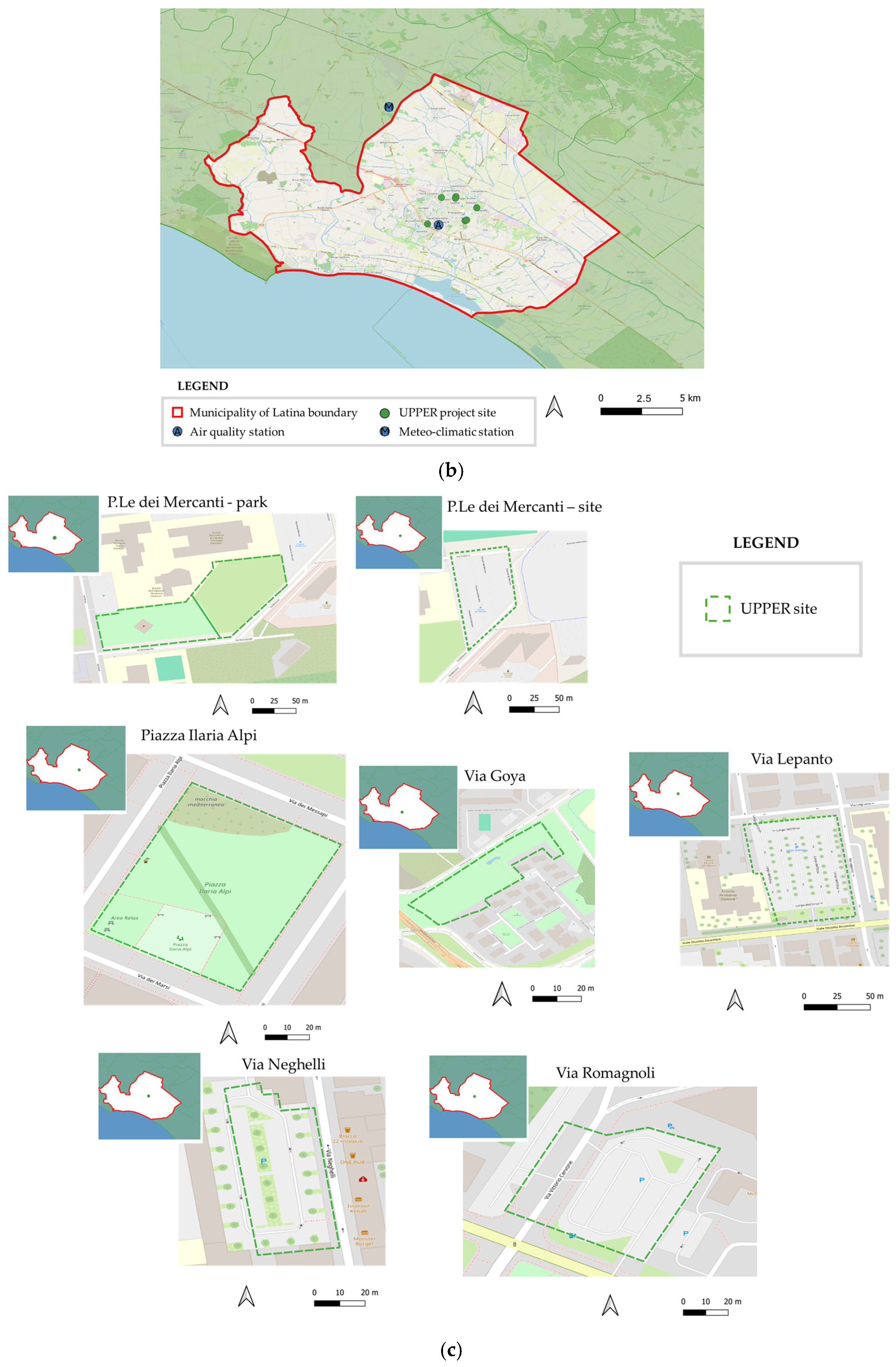






| Site | Coordinates | Type of Site | Main NbS Intervention | Key Design Elements and Objectives |
|---|---|---|---|---|
| P.Le dei Mercanti–demonstration site (parking area) | 41.4555967° N 12.9131632° E | Parking area | Green retrofit of impervious parking surfaces | Systematic redesign of parking layout to reduce impermeable surfaces; introduction of bioswales and flowerbeds with native trees and shrubs; drip irrigation during establishment; species selected for biodiversity promotion, water conservation and long-term low irrigation demand in Mediterranean/semi-arid climate. |
| P.Le dei Mercanti–Production Park (park/green area) | 41.4542585° N 12.9115145° E | Park/green area | Productive green park with integrated water management | Diverse composition of native trees and shrubs; integrated water management systems to capture and retain rainfall for vegetation; reduction in dependence on external water supplies; emphasis on sustainable resource management and ecological infrastructure. |
| Piazza Ilaria Alpi (demonstration site; park/green area) | 41.463126° N 12.919005° E | Urban park/green area | Urban forest with water and energy-oriented NbS | Establishment of a diverse urban forest of native shrubs and trees; underground irrigation systems for initial growth phase; rainwater harvesting infrastructure; use of eco-friendly materials for urban furniture and pergolas; provisions for photovoltaic installations to support long-term operational sustainability. |
| Via Goya (demonstration site; park/green area) | 41.45188° N 12.883506° E | Urban/food forest | Urban forest connected to existing woodland | Design in continuity with a regenerated wooded area containing centuries-old trees; pedestrian and cycling paths around a central catchment area for irrigation; all plant species selected from indigenous vegetation adapted to local climate; enhancement of recreational use and ecological connectivity. |
| Via Lepanto (demonstration site; parking area) | 41.4718173° N 12.9043426° E | Parking area | Green retrofit with bioswales and native vegetation | Conversion of highly urbanized, impervious parking surfaces into productive ecological zones; introduction of bioswales and flowerbeds with native trees and shrubs; drip irrigation during establishment; species selected for biodiversity, drought tolerance and reduced long-term water demand. |
| Via Neghelli (demonstration site; parking area) | 41.4706980° N 12.9040640° E | Parking area | Vegetation-based retrofit of parking | Redesign of parking to reduce sealed surfaces; planting of native trees and shrubs in bioswales and vegetated beds; drip irrigation systems in early phases; focus on stormwater management, biodiversity support and progressive reduction in irrigation needs. |
| Via Romagnoli (demonstration site; parking area) | 41.4713234° N 12.8937944° E | Parking area near bus station | Ecological retrofitting with climate-resilient trees | Transformation of parking area and adjacent flowerbeds with native tree species; species chosen for ecological function, drought tolerance and aesthetic value; objectives include enhancing ecological connectivity, supporting pollinators, and mitigating the urban heat island effect via increased canopy cover and evapotranspiration; drip irrigation during establishment with long-term reduction in irrigation through deep-rooted, water-efficient species. |
| AOI | Year | NDVI | NDWI | NDMI | Number of Satellite Images | |||
|---|---|---|---|---|---|---|---|---|
| Mean | Std. Dev. | Mean | Std. Dev. | Mean | Std. Dev. | |||
| Comune di Latina | 2019 | 0.444 | 0.199 | −0.480 | 0.185 | 0.065 | 0.126 | 16 |
| 2020 | 0.477 | 0.211 | −0.497 | 0.194 | 0.095 | 0.129 | 30 | |
| 2021 | 0.466 | 0.208 | −0.490 | 0.191 | 0.095 | 0.134 | 19 | |
| 2022 | 0.460 | 0.203 | −0.488 | 0.188 | 0.084 | 0.124 | 28 | |
| 2023 | 0.468 | 0.197 | −0.495 | 0.189 | 0.070 | 0.116 | 20 | |
| 2024 | 0.567 | 0.217 | −0.548 | 0.198 | 0.199 | 0.124 | 5 | |
| P.Le dei Mercanti–Site | 2019 | 0.132 | 0.101 | −0.175 | 0.093 | −0.03 | 0.051 | 26 |
| 2020 | 0.142 | 0.108 | −0.189 | 0.097 | −0.035 | 0.061 | 42 | |
| 2021 | 0.13 | 0.088 | −0.184 | 0.085 | −0.06 | 0.048 | 32 | |
| 2022 | 0.137 | 0.099 | −0.188 | 0.092 | −0.042 | 0.055 | 40 | |
| 2023 | 0.134 | 0.088 | −0.182 | 0.082 | −0.038 | 0.049 | 35 | |
| 2024 | 0.189 | 0.101 | −0.233 | 0.089 | 0.008 | 0.055 | 6 | |
| P.Le dei Mercanti–Park | 2019 | 0.471 | 0.133 | −0.48 | 0.111 | 0.105 | 0.068 | 27 |
| 2020 | 0.548 | 0.151 | −0.535 | 0.119 | 0.159 | 0.083 | 43 | |
| 2021 | 0.487 | 0.138 | −0.486 | 0.108 | 0.098 | 0.096 | 33 | |
| 2022 | 0.499 | 0.142 | −0.501 | 0.109 | 0.095 | 0.094 | 38 | |
| 2023 | 0.454 | 0.137 | −0.464 | 0.106 | 0.086 | 0.077 | 33 | |
| 2024 | 0.508 | 0.156 | −0.489 | 0.116 | 0.174 | 0.065 | 7 | |
| Piazza Ilaria Alpi | 2019 | 0.466 | 0.125 | −0.469 | 0.102 | 0.06 | 0.051 | 26 |
| 2020 | 0.482 | 0.132 | −0.494 | 0.109 | 0.071 | 0.066 | 44 | |
| 2021 | 0.434 | 0.124 | −0.455 | 0.099 | 0.06 | 0.065 | 37 | |
| 2022 | 0.444 | 0.117 | −0.464 | 0.096 | 0.058 | 0.057 | 38 | |
| 2023 | 0.487 | 0.134 | −0.483 | 0.108 | 0.093 | 0.064 | 35 | |
| 2024 | 0.54 | 0.114 | −0.528 | 0.092 | 0.124 | 0.055 | 7 | |
| Via Goya | 2019 | 0.598 | 0.098 | −0.581 | 0.063 | 0.165 | 0.075 | 28 |
| 2020 | 0.624 | 0.1 | −0.605 | 0.065 | 0.173 | 0.078 | 46 | |
| 2021 | 0.53 | 0.113 | −0.545 | 0.073 | 0.081 | 0.082 | 36 | |
| 2022 | 0.566 | 0.102 | −0.562 | 0.068 | 0.11 | 0.071 | 37 | |
| 2023 | 0.56 | 0.111 | −0.552 | 0.074 | 0.129 | 0.081 | 35 | |
| 2024 | 0.771 | 0.091 | −0.694 | 0.062 | 0.344 | 0.086 | 6 | |
| Via Lepanto | 2019 | 0.208 | 0.157 | −0.253 | 0.156 | 0.026 | 0.086 | 25 |
| 2020 | 0.248 | 0.192 | −0.284 | 0.18 | 0.048 | 0.11 | 45 | |
| 2021 | 0.19 | 0.16 | −0.228 | 0.15 | 0.014 | 0.085 | 35 | |
| 2022 | 0.211 | 0.169 | −0.256 | 0.159 | 0.03 | 0.09 | 36 | |
| 2023 | 0.225 | 0.167 | −0.268 | 0.157 | 0.031 | 0.084 | 33 | |
| 2024 | 0.272 | 0.165 | −0.301 | 0.154 | 0.075 | 0.081 | 7 | |
| Via Neghelli | 2019 | 0.067 | 0.037 | −0.126 | 0.05 | −0.097 | 0.04 | 23 |
| 2020 | 0.075 | 0.048 | −0.129 | 0.065 | −0.103 | 0.048 | 45 | |
| 2021 | 0.065 | 0.042 | −0.115 | 0.054 | −0.083 | 0.038 | 35 | |
| 2022 | 0.072 | 0.04 | −0.132 | 0.053 | −0.096 | 0.04 | 36 | |
| 2023 | 0.106 | 0.038 | −0.166 | 0.044 | −0.087 | 0.041 | 34 | |
| 2024 | 0.182 | 0.054 | −0.226 | 0.055 | −0.033 | 0.053 | 7 | |
| Via Romagnoli | 2019 | 0.103 | 0.085 | −0.144 | 0.076 | −0.015 | 0.037 | 24 |
| 2020 | 0.112 | 0.089 | −0.153 | 0.08 | −0.01 | 0.047 | 46 | |
| 2021 | 0.107 | 0.087 | −0.15 | 0.078 | −0.013 | 0.046 | 35 | |
| 2022 | 0.105 | 0.09 | −0.156 | 0.081 | −0.028 | 0.045 | 33 | |
| 2023 | 0.108 | 0.083 | −0.156 | 0.075 | −0.021 | 0.041 | 34 | |
| 2024 | 0.138 | 0.056 | −0.182 | 0.058 | 0.011 | 0.04 | 7 | |
| Comune di Latina | P.Le dei Mercanti–Site | P.Le dei Mercanti–Park | Piazza Ilaria Alpi | Via Goya | Via Lepanto | Via Neghelli | Via Romagnoli | |
|---|---|---|---|---|---|---|---|---|
| 2022 | 0.460 | 0.137 | 0.499 | 0.444 | 0.566 | 0.211 | 0.072 | 0.105 |
| 2023 | 0.468 | 0.134 | 0.454 | 0.487 | 0.560 | 0.225 | 0.106 | 0.108 |
| 2024 | 0.567 | 0.189 | 0.508 | 0.540 | 0.771 | 0.272 | 0.182 | 0.138 |
| Increment 2022–2024 | +0.107 | +0.052 | +0.009 | +0.096 | +0.205 | +0.061 | +0.110 | +0.033 |
| Comune di Latina | P.Le dei Mercanti–Site | P.Le dei Mercanti–Park | Piazza Ilaria Alpi | Via Goya | Via Lepanto | Via Neghelli | Via Romagnoli | |
|---|---|---|---|---|---|---|---|---|
| 2022 | −0.488 | −0.188 | −0.501 | −0.464 | −0.562 | −0.256 | −0.132 | −0.156 |
| 2023 | −0.495 | −0.182 | −0.464 | −0.483 | −0.552 | −0.268 | −0.166 | −0.156 |
| 2024 | −0.548 | −0.233 | −0.489 | −0.528 | −0.694 | −0.301 | −0.226 | −0.182 |
| Increment 2022–2024 | −0.060 | −0.044 | 0.012 | −0.064 | −0.132 | −0.044 | −0.095 | −0.025 |
| Comune Di Latina | P.Le dei Mercanti–Site | P.Le dei Mercanti–Park | Piazza Ilaria Alpi | Via Goya | Via Lepanto | Via Neghelli | Via Romagnoli | |
|---|---|---|---|---|---|---|---|---|
| 2022 | 0.084 | −0.042 | 0.095 | 0.058 | 0.110 | 0.030 | −0.096 | −0.028 |
| 2023 | 0.070 | −0.038 | 0.086 | 0.093 | 0.129 | 0.031 | −0.087 | −0.021 |
| 2024 | 0.199 | 0.008 | 0.174 | 0.124 | 0.344 | 0.075 | −0.033 | 0.011 |
| Increment 2022–2024 | +0.115 | +0.050 | +0.079 | +0.066 | +0.234 | +0.045 | +0.063 | +0.040 |
Disclaimer/Publisher’s Note: The statements, opinions and data contained in all publications are solely those of the individual author(s) and contributor(s) and not of MDPI and/or the editor(s). MDPI and/or the editor(s) disclaim responsibility for any injury to people or property resulting from any ideas, methods, instructions or products referred to in the content. |
© 2026 by the authors. Licensee MDPI, Basel, Switzerland. This article is an open access article distributed under the terms and conditions of the Creative Commons Attribution (CC BY) license.
Share and Cite
Gasbarrone, R.; Bonifazi, G.; Serranti, S. Monitoring the Sustained Environmental Performances of Nature-Based Solutions in Urban Environments: The Case Study of the UPPER Project (Latina, Italy). Sustainability 2026, 18, 864. https://doi.org/10.3390/su18020864
Gasbarrone R, Bonifazi G, Serranti S. Monitoring the Sustained Environmental Performances of Nature-Based Solutions in Urban Environments: The Case Study of the UPPER Project (Latina, Italy). Sustainability. 2026; 18(2):864. https://doi.org/10.3390/su18020864
Chicago/Turabian StyleGasbarrone, Riccardo, Giuseppe Bonifazi, and Silvia Serranti. 2026. "Monitoring the Sustained Environmental Performances of Nature-Based Solutions in Urban Environments: The Case Study of the UPPER Project (Latina, Italy)" Sustainability 18, no. 2: 864. https://doi.org/10.3390/su18020864
APA StyleGasbarrone, R., Bonifazi, G., & Serranti, S. (2026). Monitoring the Sustained Environmental Performances of Nature-Based Solutions in Urban Environments: The Case Study of the UPPER Project (Latina, Italy). Sustainability, 18(2), 864. https://doi.org/10.3390/su18020864