Article

An Investigation into Electric School Bus Energy Consumption and Its V2G Opportunities

1
Mechanical, Material and Aerospace Engineering, West Virginia University, Morgantown, WV 26506, USA
2
Industrial and Management Systems Engineering, West Virginia University, Morgantown, WV 26506, USA
3
School of Mathematical and Data Sciences, West Virginia University, Morgantown, WV 26506, USA
*
Author to whom correspondence should be addressed.
Sustainability 2026, 18(2), 838; https://doi.org/10.3390/su18020838
Submission received: 14 December 2025 / Revised: 6 January 2026 / Accepted: 12 January 2026 / Published: 14 January 2026
(This article belongs to the Special Issue Energy Economics and Sustainable Environment)

Abstract

This study presents the electrification plan of a school bus (SB) fleet and examines its potential in vehicle-to-grid (V2G) applications. The data collected includes the efficiency of a 120 kW EV charger, energy consumption of a 40-foot electric school bus (ESB), and a diesel bus operating on the same route. The energy consumption data of the ESB and diesel school bus (DSB) were processed to derive the yearly average distance-specific energy consumption of 0.37 mile/kWh (0.60 km/kWh) grid electricity and 5.55 MPG (2.36 km/L), respectively. The energy consumption ratio of the ESB over the DSB is 14.92 kWh/gallon (3.94 kWh/L) diesel. Based on the CO2 intensity, 1.956 lb/kWh (0.887 kg/kWh) of electricity produced in WV and that of diesel fuel, the distance-specific CO2 emissions of the ESB were 5.38 lb/mile (1.52 kg/km), which are higher than the 4.08 lb/mile (1.15 kg/km) from the diesel bus operating on the same route. This study also presents the V2G potential of the proposed electrical school bus fleet. Based on the estimated grid-to-vehicle battery (G2VB) efficiency of 92% and vehicle battery-to-grid (VB2G) efficiency of 92%, the grid–vehicle battery–grid (G2VB2G) efficiency is 84.64%. The application of V2G technology is associated with a loss of electricity. Based on the 20% to 80% battery charge, and the estimated 92% VB2G efficiency, the proposed ESB fleet has the potential to provide 14,929 kWh electricity, 55.2% of the ESB fleet battery capacity. The increased cost associated with the implementation of the proposed V2G is about USD 7.5 million, a 400% increase compared to the charger satisfying the operation of ESBs when V2G is not used. The V2G application also is expected to increase the charging cycles, which raises concerns about battery degradation and its replacement during SB service lifetime. Accordingly, more research work is needed to address the increased cost and grid capacity demand, and battery degradation associated with V2G applications.

1. Introduction

Climate change has become a major global issue, mainly due to a rapid increase in greenhouse gas (GHG) emissions [1,2]. On-road transport is the largest emitter within transportation, accounting for 72% of total transportation-related emissions, mainly due to its dependency on fossil fuels [3]. Using carbon-containing fossil fuels, such as gasoline and diesel, in internal combustion engine vehicles (ICEVs) releases higher amounts of carbon dioxide (CO2), hydrocarbons (HC), and oxides of nitrogen (NOx), intensifying the greenhouse effect and contributing to global warming [4]. Transportation accounts for 23% of global CO2 emissions [5] and 28% of total GHG emissions in the United States (U.S.) [6]. Given the urgency to mitigate GHG and pollutant emissions from the transportation sector, various technological advancements have been explored [7]. Among them, electric vehicles (EVs) have emerged as a promising solution, benefiting from rapid advancements and mass production of lithium-ion batteries, which have enhanced energy density and reduced costs [8]. Additionally, low-carbon fuels, such as natural gas and hydrogen, have been proposed to minimize emissions in sectors where electrification remains challenging [9]. Techno-economic studies have also evaluated hydrogen as an alternative fuel and identified key considerations affecting its broader adoption [10,11]. However, for urban and regional fleets, such as transit buses and school buses, electrification stands out as the most viable pathway to decarbonization due to predictable routes, scheduled downtime for charging, and reduced maintenance costs [12]. In 2023 alone, EV sales increased by 14% worldwide, and 55% in the U.S., making it the third-largest EV market after China and Europe [13]. With this growing pro-EV sentiment, policy makers throughout the U.S. have begun to consider replacing existing diesel school bus (DSB) fleets with electric school buses (ESBs) to reduce air pollution, improve student health, and decrease lifecycle emissions [14]. Several federal and state-level incentives have accelerated this transition. The U.S. Environmental Protection Agency (EPA) Clean SB Program, for instance, allocated USD 5 billion over five years to support the electrification of school bus (SB) fleets, reducing dependency on fossil fuels while improving fleet sustainability [15].
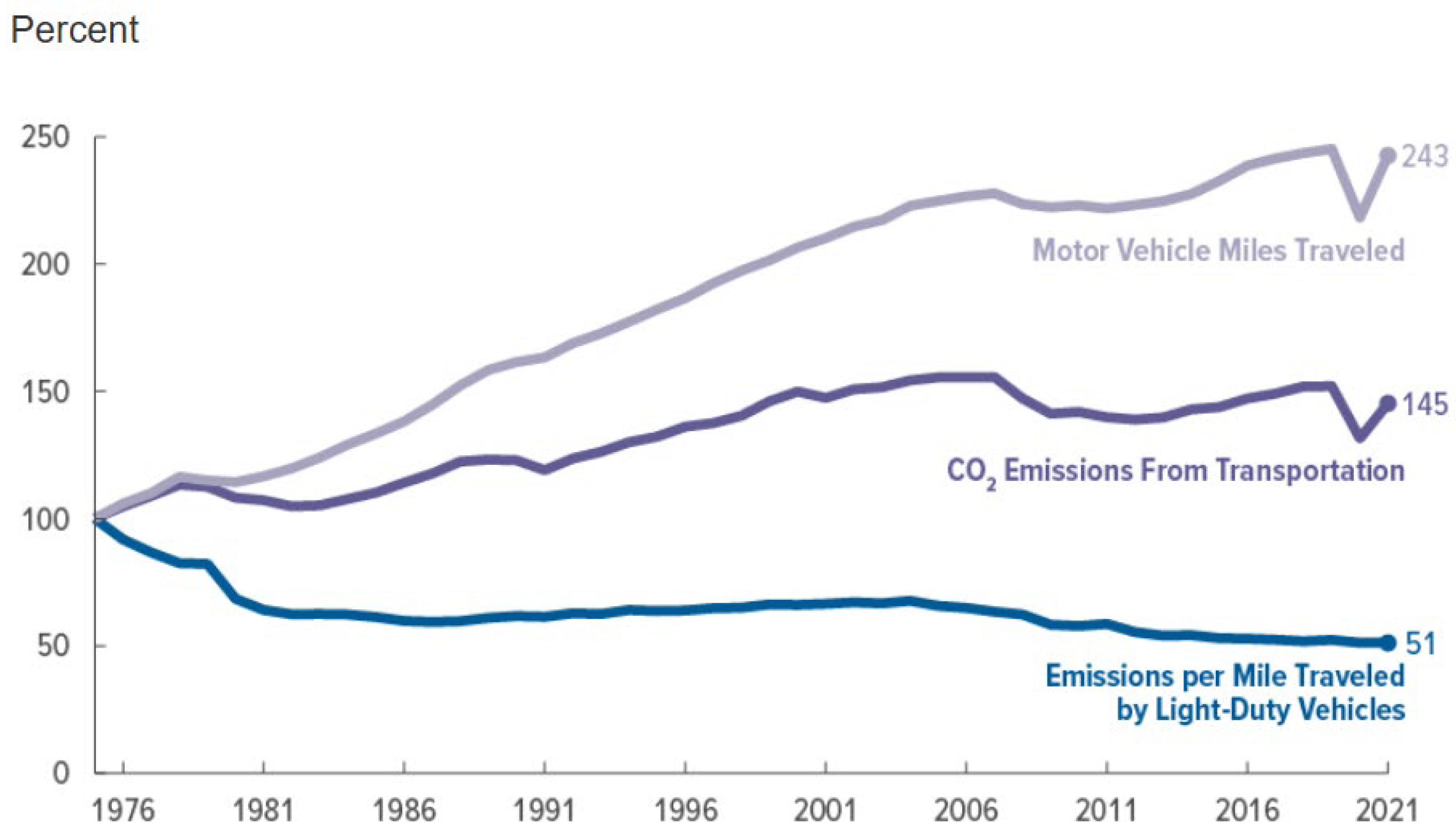
Figure 1 shows the CO2 emissions from energy consumption in the transportation sector in the U.S. from 1975 to 2021. In the present scenario, transitioning to green solutions in the transportation sector is important to mitigate climate change. EVs provide a promising passage to achieve this because they have zero tailpipe emissions and can also be propelled using renewable energy sources. This shift not only addresses the environmental effect but also aids energy security and reduces the reliance on fossil fuels [16]. This also aligns with global target to control temperature rise to below 2 °C, as outlined in the Paris Agreement [17].
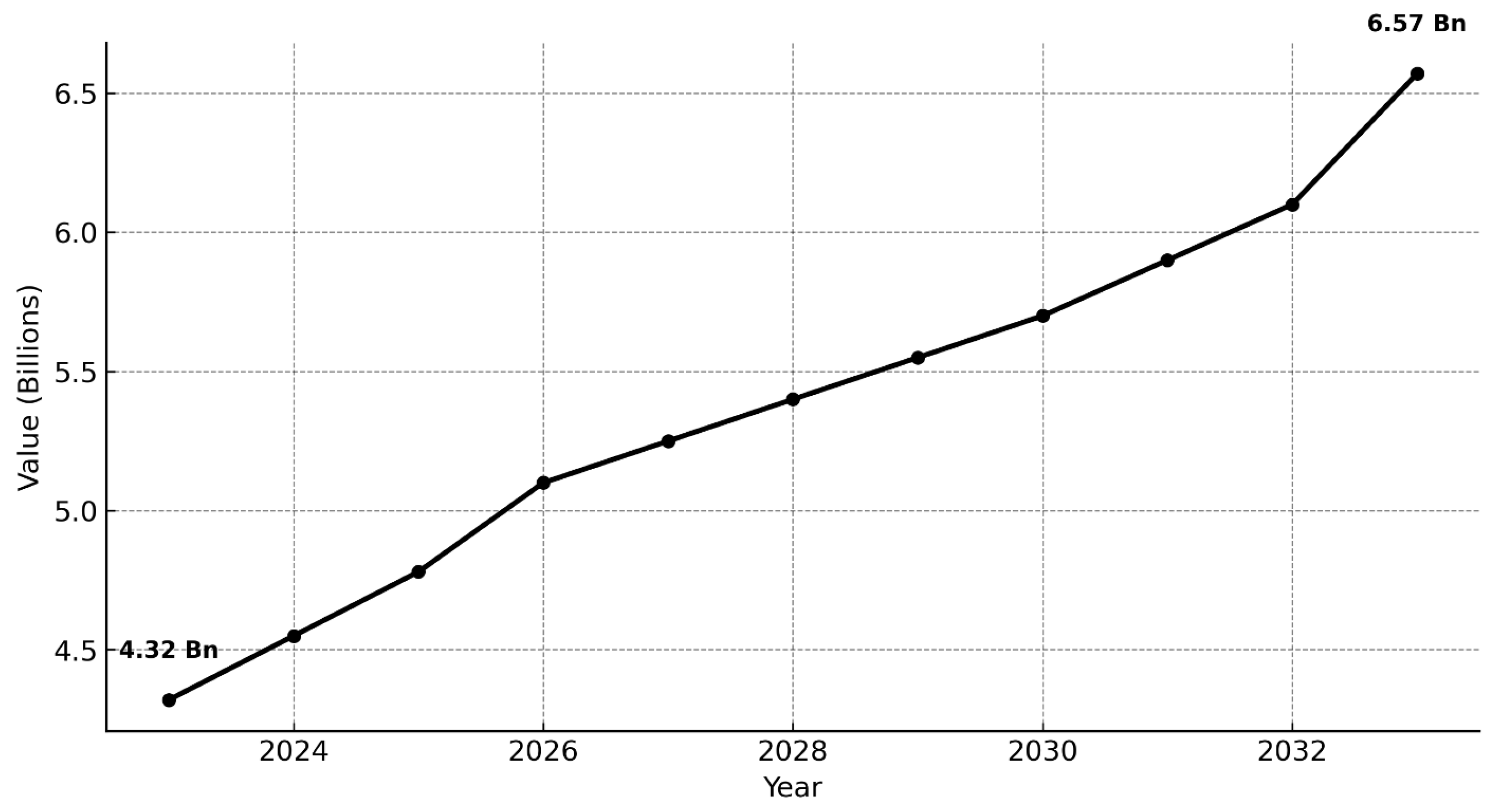
School buses play an important role in safely transporting millions of students to and from school. It is estimated that there are more than 480,000 school buses in the U.S. alone and they are estimated to transport around 26 million students in a single day [19]; the estimated market rise from 4.32 billion to 6.57 billion in 10 years is shown in Figure 2. Similarly, approximately 50,000 school buses operate in Canada, transporting over 2 million students [20].
For school buses worldwide, diesel has been the primary fuel due to its energy density, cost-effectiveness, durability, reliability, and development of diesel engines in reducing emissions. However, concerns over emissions, especially GHGs, have led to the exploration of alternative fuels. In recent years, there has been an increasing interest in ESBs deployment because of zero tailpipe emissions and other significant environmental benefits [22].
Table 1 summarizes the types of fuel that have been used in school buses along with their advantages and challenges. In the U.S., diesel-powered buses account for around 95% of the total fleet of buses [23]. Other than diesel, natural gas including compressed natural gas (CNG) and liquified natural gas (LNG) is another type of fuel that has been used, especially in regions where emission standards are strict, as they produce less GHG emissions compared to diesel [24].
The battery of ESBs can be used as mobile energy storage systems to supply off-board electrical loads. These ESBs often operate twice a day, with downtime during the daytime, and remain in the fleet parking lot when not on the road. The electricity stored in an ESB battery can be used to power a community center, family house during grid outages, provide electricity to support outdoor activities in rural areas where grid power is not available, and can be supplied back to the grid during peak demand periods. The latter is recognized as vehicle-to-grid (V2G) technology. Among all types of electric vehicles, ESBs have been recognized as the one most suitable vehicle to demonstrate V2G technology for the following reasons: (1) The battery in school buses is much larger than cars; (2) There are many days that school buses will not be used. For example, there are about 185 non-school days each year, which can be used as an energy storage system; and (3) School buses only run in the early morning and afternoon, Accordingly school buses can be used as electricity stores for V2G through the following approaches: (i) they can be charged using solar panels during non-peak periods and used as V2G applications at either night or peak power demand times, which can double and even triple the capacity of solar panels in providing clean electricity during peak hours; and (ii) they can be charged using grid power in low demand periods and then deliver the electricity back to grid during peak demand time.
V2G uses ESB battery packs as energy storage systems to support the grid during peak demand periods. Integrating V2G technology with ESB fleets allows efficient demand-side management of the electrical grid, establishing a bilateral transfer of electrical energy between EVs and the grid, allowing the EVs to function as energy storage units and provide electricity to the grid during times of high demand [25]. V2G technology has been relatively slow to take hold in the consumer electric car market due to a variety of factors, including regulatory constraints, the difficulty of coordinating with power companies, but most importantly, the random nature of private car needs. For a V2G system to be reliably integrated with the power grid, a certain number of electric vehicles need to be plugged in to the grid at any given time. Events causing large amounts of V2G electric vehicles usually connected to the grid to suddenly be inaccessible, such as sporting events, concerts, or holidays, prevent power companies from removing Peaker power plants, usually powered by diesel fuel or natural gas, from their inventory, and increase complexity. School buses, however, mitigate these disadvantages. An American school bus fleet runs only a few hours each morning and a few hours in the mid-afternoon. The entire duration of the day, late morning, and after that mid-afternoon drive, the SBs park in a parking lot [26]. Field trips do occur from time to time, but these events rarely draw off more than a few buses at any given time and are meticulously scheduled months beforehand, a process which could easily be modified slightly to keep the local power company in the loop.
V2G technology has shown significant potential to enhance grid stability by providing ancillary services such as frequency regulation. V2G technology is well suited for rural areas, such as the rural mountain communities in West Virginia (WV), where grid outages and instabilities are often observed, in addition to demand fluctuations due to extreme weather conditions and limited infrastructure [27]. Some researches have primarily focused on ESBs for potential V2G applications. In this non-operating downtime, ESBs can be integrated with renewable energy sources like solar when peak power generation for solar occurs [28,29]. In addition to that, ESBs are a great reservoir of energy, which can contribute substantially to grid stability during non-operational time like weekends and, summer and winter vacations [30], and V2G technology allows ESBs to stabilize the grid, support peak shaving, and enhance renewable integration through bidirectional charging and helps to overcome challenges like grid reliability and infrastructure costs [31].
Studies have examined the economic viability of the V2G system, which showed that revenue can be generated by participating in demand response programs and providing grid services [32,33]. This could be beneficial in rural areas where energy demand is lower by offsetting the energy generation and storage cost during peak demand periods [34]. However, relatively limited research has focused on long-term sustainability in the rural areas; instead, it has focused primarily on the fluctuation of electricity prices and peak demand [35,36]. However, frequent charge and discharge of batteries can cause accelerated battery degradation and reduce battery life, which could offset some portion of the anticipated benefits from V2G systems [37,38]. Studies have proposed solutions to minimize the degradation problem by limiting the depth of discharge and optimizing the charging pattern. But the long-term impact on battery lifespan remains a concern for fleet operators [39]. Relatively few studies have undertaken comprehensive economic analysis on how the integration of V2G affects the battery replacement cost and overall lifecycle cost of V2G [40]. However, it is important to check with manufacturers if it will void the manufacturer’s battery warranty.
Notable initiatives include California’s Clean SB Initiative, which has deployed over 2000 ESBs under the HVIP program; New York City’s commitment to fully electrify its 9000 school buses by 2035; Virginia’s Dominion Energy program, which has introduced 50+ ESBs; Chicago Public Schools’ electrification plan, which prioritizes deployments in low-income neighborhoods with funding from the Bipartisan Infrastructure Law; and Colorado’s Clean Air Initiative for Schools, which provides grants for school districts to replace diesel buses with electric models [41,42].
Despite extensive research on V2G technology, critical gaps remain in the existing literature. Much of the prior work has emphasized the technical and economic viability of V2G integration with SB fleets in urban or suburban regions, where grid infrastructure is comparatively robust and charging access is widespread. Far less attention has been given to rural contexts, where weaker grid infrastructure, limited renewable penetration, and constrained charging access present both unique challenges and underexplored opportunities [43,44]. This study, which is part of an in-depth research work to evaluate energy from the grid to vehicles and vice versa [45], addresses that gap by examining the energy consumption, V2G potential, and economic implications of ESB deployment in Monongalia County, West Virginia, offering new insights into how electrified SB fleets can function not only as clean transportation but also as distributed energy resources in rural communities. While previous research has established the technical feasibility of V2G technology, this study differentiates itself by providing a high-fidelity empirical assessment of ESB performance in a rural, carbon-intensive grid environment, showing the economic and environmental tensions that arise in non-urban deployments.

2. Electric School Bus

2.1. ESB Fleet Electrification Plan

Monongalia County SB fleet (school transportation department) is located in north-central West Virginia, serving more than 11,200 students and covering an area of 365 sq. miles of the county. The county school system runs an extensive bus service to cover its varied geography and student population. As of 2025, the school district operates a total of 137 buses. Out of these, 107 run on diesel, 7 are newly added ESBs, and 23 are fueled by propane. The fleet is made up of buses of many sizes, mostly over 40 feet in length, as shown in Table 2.
The electrification plan of the SB fleet has been developed based on the assumption that the fleet size and passenger capacity must be kept comparable to the current fleet. The county fleet management team analyzed various bus models, focusing on key attributes like seating capacity, mileage range, battery type, charging time, battery capacity, financial aid, and the supporting WV economy to determine the ideal SB. Four ESBs, BlueBird Vision Electric, Navistar ECE Electric, Thomas Built Saf-T-Liner C2 Jouley, and GreenPower BEAST, were evaluated, with passenger capacities ranging from 77 to 90, excluding the driver, driving ranges between 130 and 140 miles, and battery capacities from 155 to 226 kWh. Level 2 charging required approximately 8–12 h, while Level 3 fast charging reduced the time to 2–3.5 h.
Table 3 shows the different bus models analyzed, where L2 and L3 refer to Level 2 and Level 3 fast chargers.
The electrification of the SB fleet (if completely transitioned to ESBs) must keep the fleet size and passenger capacity so it will provide at least equal service to schools. To fully electrify the current bus fleet and ensure all current routes would be covered, it was determined that a specific number of Type D and Type A buses be calculated based on the route length and charging capacity. Type A buses are small school buses built on a cutaway or stripped van chassis with a GVWR up to or exceeding 14,500 lb (A-1/A-2), typically carrying 10–30 passengers, while Type D buses are large flat-front (transit-style) school buses with front- or rear-mounted engines, GVWR > 10,000 lb, and capacities of roughly 40–90 passengers. Five large-capacity MEGA BEAST buses were added for occasional requirements requiring long trips, providing more battery capacity and range.
Table 4 shows the number of buses required to perform fleet electrification, where the details about the electrification plan are presented in the Section 3. These buses have been selected as they will be manufactured by Greenpower in Charleston, WV, and the WV State Government has a contract with this company, which promises the production of school buses. The ESBs from other OEMS can also be used, which should not affect the conclusion of this V2G feasibility study as the battery technology used in school buses is comparable.
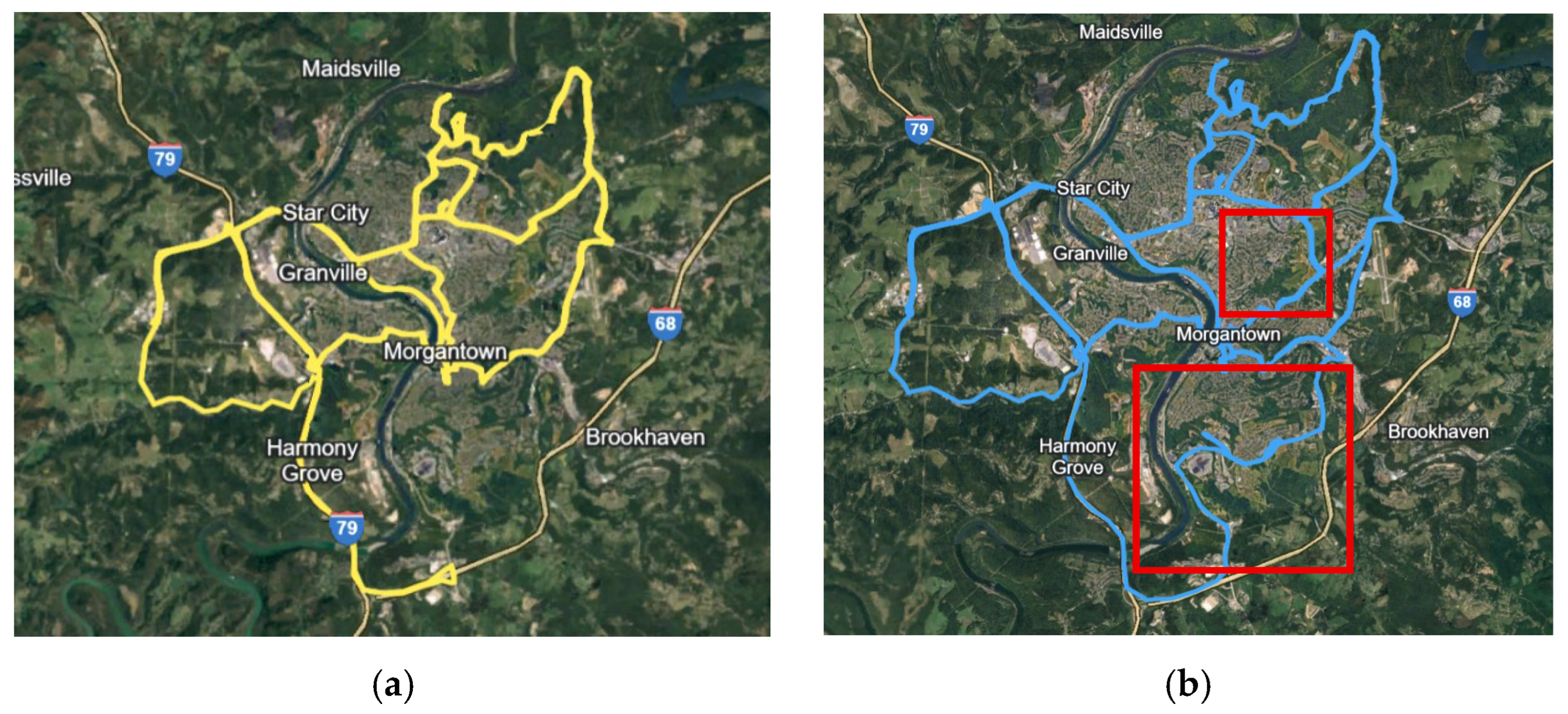
In recent years, Monongalia County SB fleet has incorporated ESBs into its fleet as part of a broader effort to reduce emissions and modernize student transportation. So far, diesel buses serving three routes have been replaced with electric buses. The replaced route serves to transport students to and from school daily. While the electric bus follows a route like the original diesel bus, there are minor adjustments made to better accommodate charging logistics and bus range. A map of the diesel bus route and route which has been replaced by the electric bus is shown in Figure 3. The route in red boxes is the extra route of diesel buses in which they run occasionally but the ESB is not serving. In each trip, the bus runs approximately 30 miles, and approximately 60 miles each day.
The ESB evaluated in this study is a 2024 Greenpower BEAST, a Type D full-sized model with a 90-passenger capacity, gross vehicle weight of 42,990 lb (19,500 kg), and an estimated range of 140 miles per charge (1 mile = 1.609 km). It is powered by a 350 kW permanent-magnet synchronous motor coupled with a DANA TM4 drivetrain and a 194-kWh lithium-iron phosphate battery pack operating between 400 and 800 V, supporting up to 150 kW DC fast charging via J1772 and CCS1 connectors. Manufacturer specifications indicate energy consumption of 1.39 kWh/mi under standard conditions, with additional demand from a 15 kW electric heater and a 15 kW air conditioning unit. The bus was introduced into Monongalia County service in 2024 and has been in operation since more than one academic year, during which operational and charging data were collected. Route coverage included Morgantown and surrounding communities, characterized by frequent stop-and-go driving, as was confirmed by a two-week speed profile showing 1456 micro-trips, 1582 full stops, and average speeds of 17.6 mph (28.3 km/h) with idle and 22.2 (36.2 km/h) mph without idle. These driving conditions, marked by significant idling and frequent acceleration and braking, strongly influenced energy consumption and regenerative braking potential.
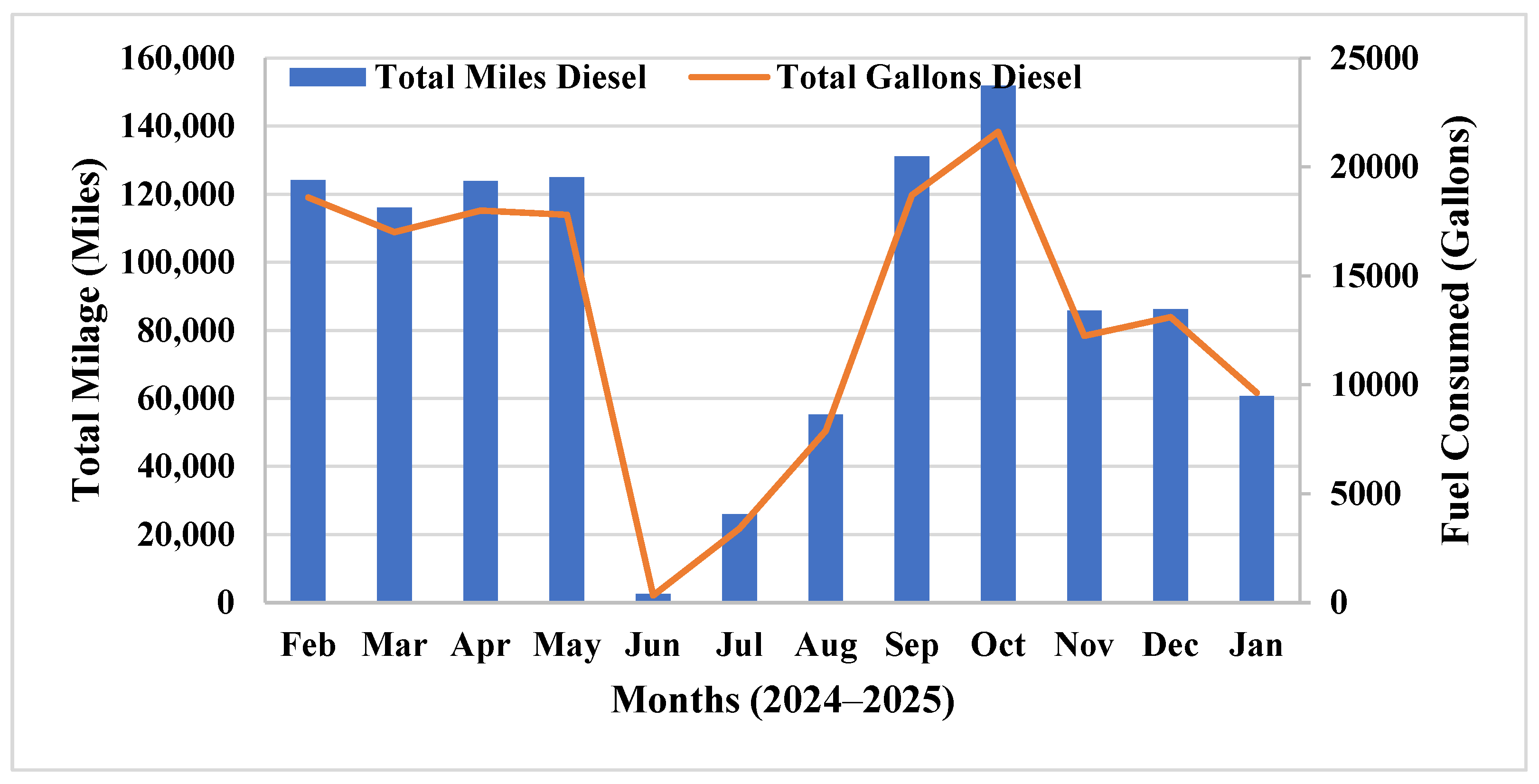
The energy consumption data for the entire fleet were collected and per-year consumption was 158,314 gallons (599,200 L) for the year 2024–2025. Figure 4 shows the 12-month aggregate energy consumption and mileage of a total diesel bus serving the route of Monongalia County, covering different schools.
These data reflect not only the seasonal patterns of school transportation needs but also serve as a baseline against which the performance and energy efficiency of the electric bus can be contextualized.

2.2. Energy Consumption Analysis

As electric vehicles become more widespread, the need for expanded charging capacity grows proportionally. Conventional Level 1 and Level 2 chargers are suitable for residential and other low-demand applications but are insufficient for commercial applications or stops during long-distance travel, where minimization of charging time is vital for the viability of electric vehicles [46]. Fast charging infrastructure, such as Level 3 and high-power charging (HPC) systems, are important to meet the demands of the rapidly growing commercial EV market. Capable of delivering power to 350 kW, HPC systems drastically reduce charging times and align with the operational needs of EV users in both urban and rural settings. These chargers require sophisticated infrastructure and robust energy management and cooling solutions to operate effectively within existing power grids [47]. Optimizing the efficiency of fast chargers is as equally vital as it is complex, necessitating further research on energy consumption, optimization, and grid compatibility.
While the daily average route of 60 miles (96.6 km) could technically be supported by Level 1 charging, this study assumes the deployment of Level 2 and Level 3 infrastructure for two critical reasons. First, Level 3 chargers are essential to support V2G operations, as they allow for the rapid discharge and recharge cycles required to participate in peak-shaving markets. Second, higher-level charging provides the operational flexibility needed for mid-day athletic trips or emergency route changes, which would not be possible with the slow recovery time of Level 1 systems.
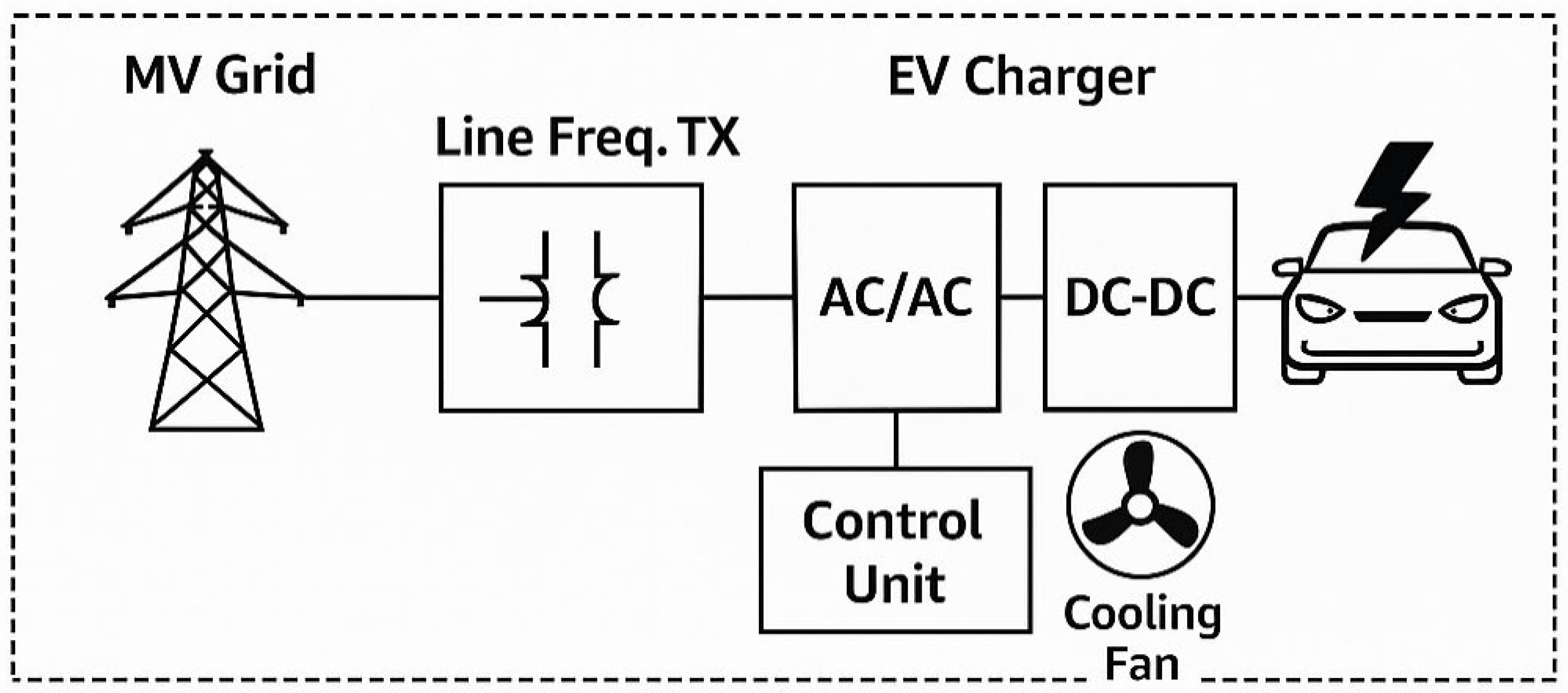
Figure 5 illustrates the internal architecture of a Level 3 EV charger, detailing the key power conversion and control stages. The system begins with a three-phase AC input, which is rectified to DC and passed through an AC-DC and DC-DC converter for voltage regulation. The regulated DC power then passes through an output filter to minimize ripple and is directed to a control unit that manages charging logic, safety functions, and communication with the vehicle. A cooling fan is incorporated to dissipate heat to maintain stable operating temperatures during high-power charging. The final output is a stable DC supply delivered to the EV battery through a standard connector.
Table 5 shows the different transducers, sensors, and loggers used to monitor and log the data from DC fast charging stations.
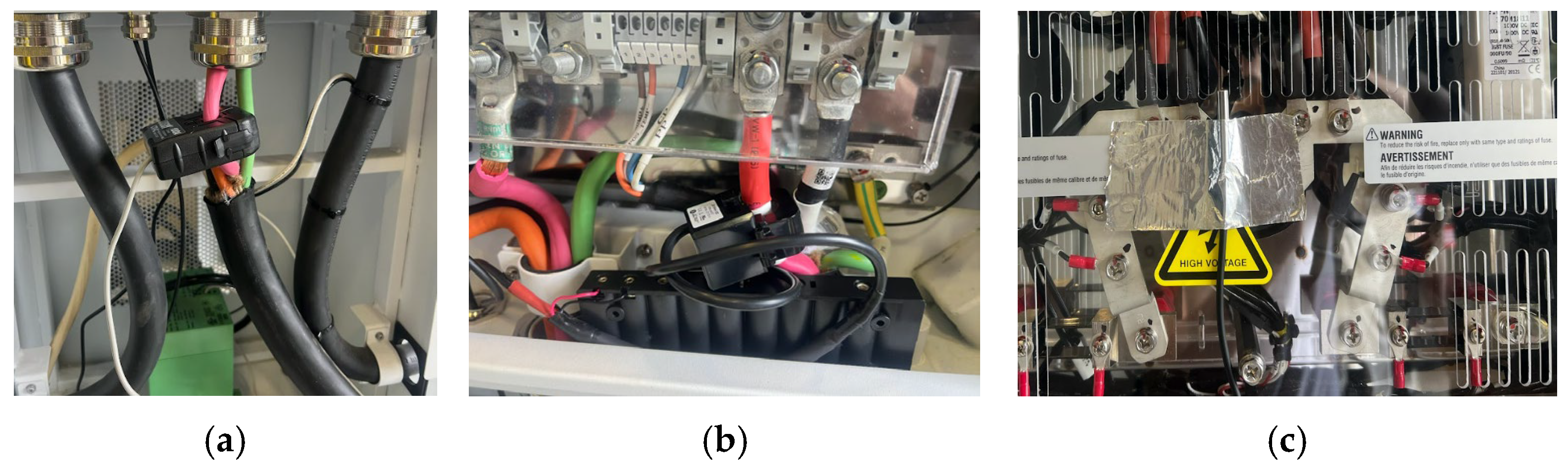
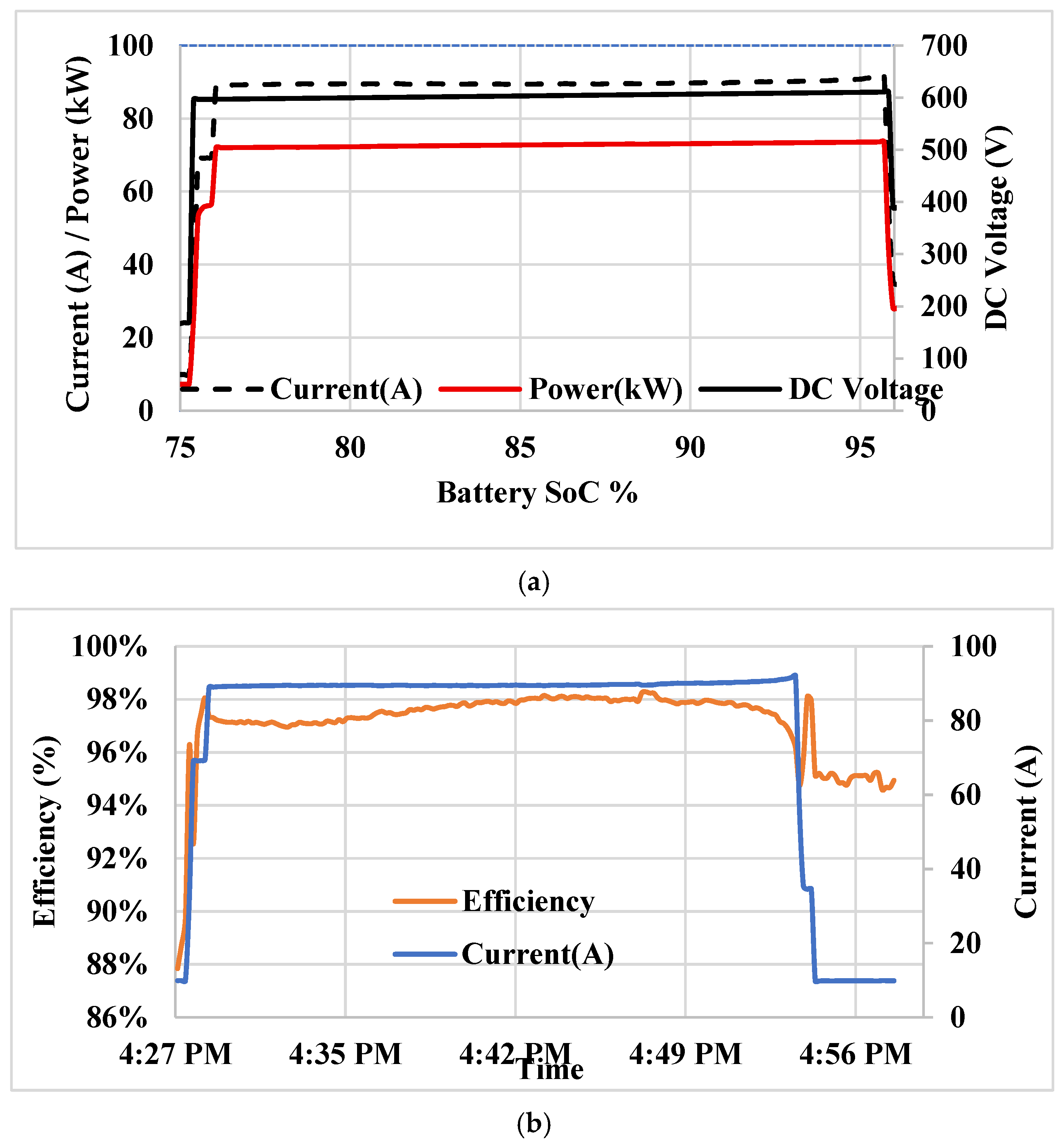
Figure 6 shows the physical experimental setup used for high-fidelity data collection at the charging station. Specifically, (a) shows the AC current transducers monitoring input power of the charger, (b) displays the DC current sensors capturing the actual DC current delivered to the bus battery, and (c) shows the thermal and voltage logging points within the charger cabinet. This visual documentation is critical to verify the placement of sensors used to calculate the real-world charging efficiency of 92–95% discussed in this study. The performance graphs for current, voltage and efficiency are plotted in Figure 7.
AC Power, DC Power, and efficiency are calculated for the analysis using the following equations (Equations (1)–(3)) below.
AC Power Calculation
P A C = 3 × V A C × I A C × P F
where the Power Factor (PF) is considered to be one for calculations.
DC Power Calculation
P D C = V D C × I D C
EV Charger Efficiency η c h a r g e r Calculation
η c h a r g e r = P D C P A C × 100 %
Monthly mileage and fuel consumption were collected from February 2024 through January 2025 for a 40-foot diesel bus (271) of comparable size. Bus #400, an ESB of similar size and capacity, was deployed on the same route. The bus is powered by a high-voltage battery system and charged using a Autel Maxi 120 kW DC fast charger (Autel, Port Washington, NY, USA). Energy consumption data were measured via a current data logger on-site and with that, energy use was calculated in kWh. Fuel economy and energy consumption were calculated using 0.1387 MMBtu/gal (1 MMBtu = 293 kWh) for the diesel bus. Table 6 summarizes the monthly fuel economy and energy consumption for the two buses. The diesel bus achieved consistently higher efficiency (4.50–6.39 MPG, avg. 4.63 MPG (1.97 km/L)). The ESB showed an average of 14.92 miles per gallon equivalent (MPGe) of fuel economy when calculated using Equation (4):
M P G e = m i l e s k W h × 293 k W h M M B t u × 0.1387 M M B t u G a l l o n
where the energy conversion factor of 293 kWh/MMBtu and energy content of diesel, i.e., 138,700 Btu/Gallon, is used.
The measured average electricity consumption of 2.75 kWh/mile (1.71 kWh/km) is approximately double the manufacturer’s ideal-condition estimate of 1.29 kWh/mile (0.80 kWh/km). This discrepancy is primarily attributed to the challenging operational environment of the study area in Monongalia County. The rural routes feature significant elevation changes and high gradients, which require substantially more energy for traction compared to flat-ground testing. Also, seasonal factors, including the use of high-voltage cabin heating during winter months and varying road surface conditions, further contribute to the increased energy demand observed in the real-world data.

2.3. Energy Efficiency, GHG Emissions, and Fuel Cost Comparison

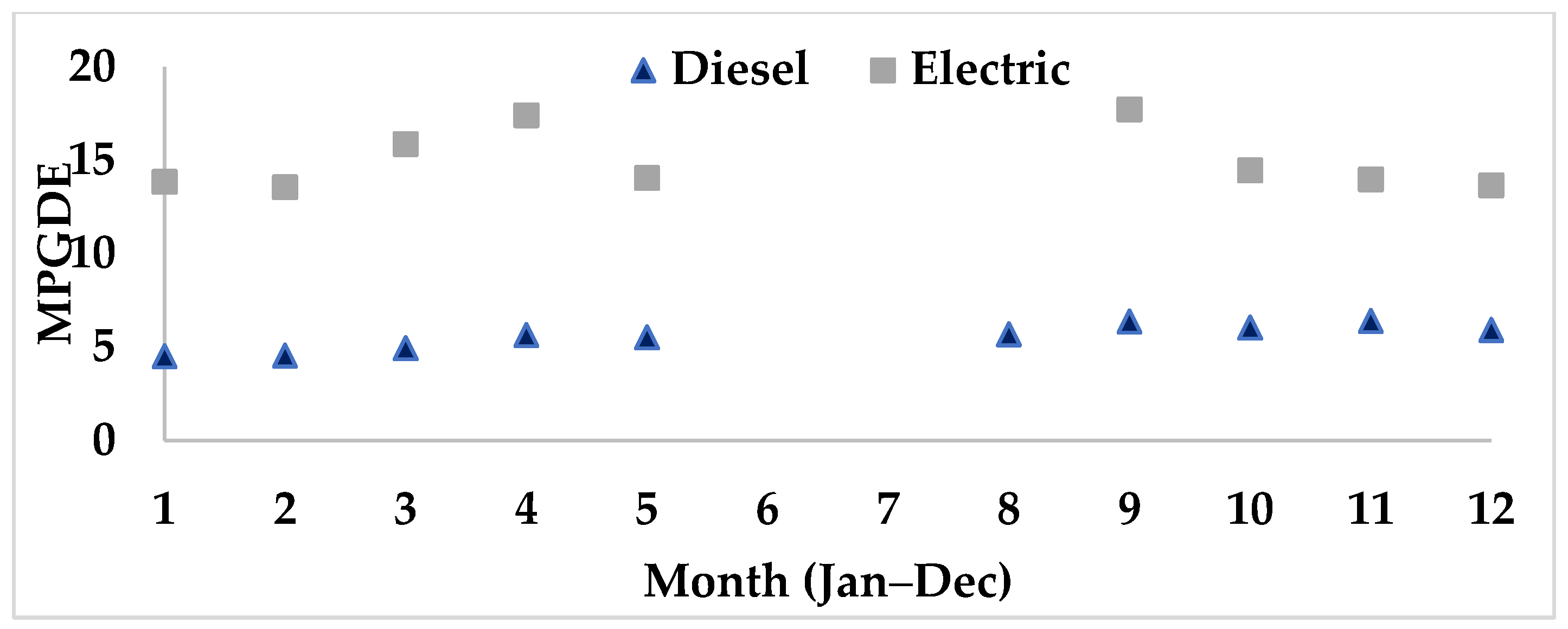
Figure 8 compares the fuel economies of the ESB and diesel bus expressed as MPGe. Diesel was used as the reference fuel with an energy content of 138,700 BTU/gal. For the electric bus, the previously calculated MPGe was used directly to maintain the same energy basis. The electric bus maintained a high overall efficiency (14–18 MPGe), with smaller seasonal variation than diesel.
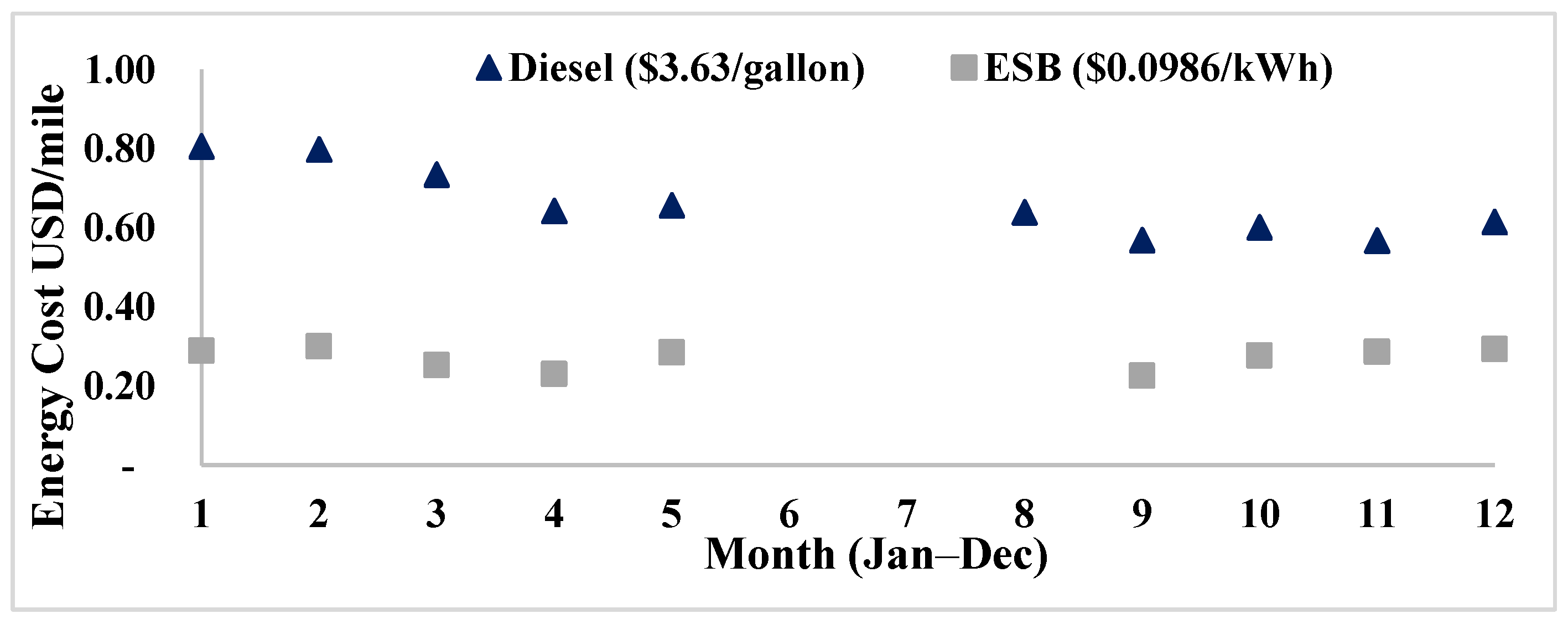
Figure 9 shows the energy cost for both the ESB and diesel bus, derived from specific electricity and diesel costs of USD 0.0986/kWh and USD 3.63/gallon, according to Energy Information Administration (EIA). The average energy cost of the ESB (USD 0.228/mile) is about 39% of the diesel bus (USD 0.592/mile or $0.953/km), with the expected maintenance cost of an ESB much lower than a DSB.
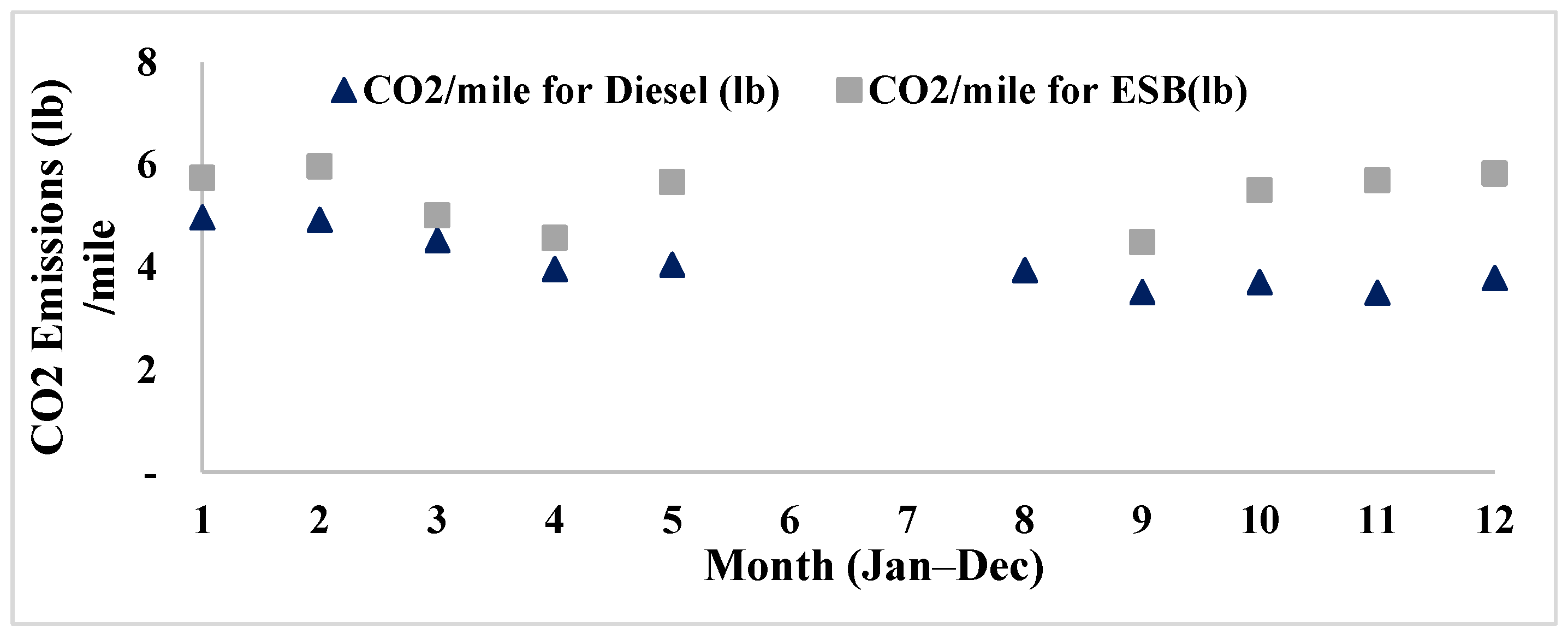
Despite the lower on-site pollutant emissions from the ESB due to zero tailpipe emissions, West Virginia’s electricity is almost entirely coal-based, with an emissions factor of 1.956 lb (1 lb = 0.454 kg) CO2 per kWh. While ESBs are more energy efficient and cleaner than diesel buses, their environmental benefits depend on the carbon intensity of the electricity grid. With coal-based electricity, ESBs produce higher CO2 per mile than diesel buses, which emit 22.38 lb CO2 per gallon (10.15 kg/kg) of fuel. However, if the grid’s energy mix shifts toward more renewable sources and, most preferably, if the bus fleet in Morgantown uses solar as a clean source of energy, emission savings from ESBs might be feasible, offering environmental benefits (Figure 10).

2.4. MPG and MPkWh Variation with Temperature

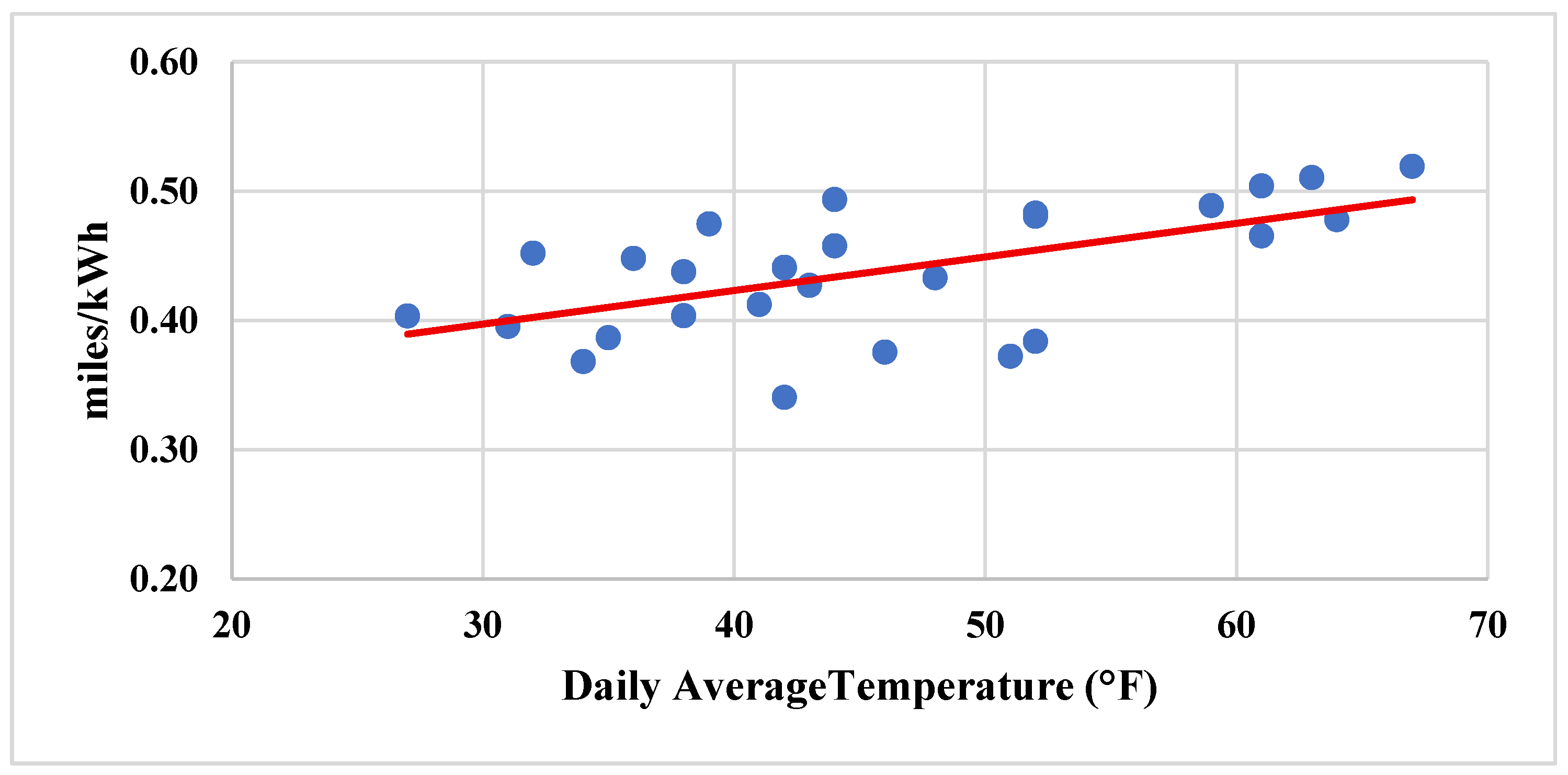
In contrast to conventional understanding, Figure 11 shows a positive correlation between ambient temperature and the MPkWh of the ESB. It is observed that MPkWh increases with rising temperatures, as the heaters are powered by batteries in cooler climates. The data suggest that thermal conditions have a direct influence on energy performance and deeper investigations into HVAC systems could provide detailed ideas.
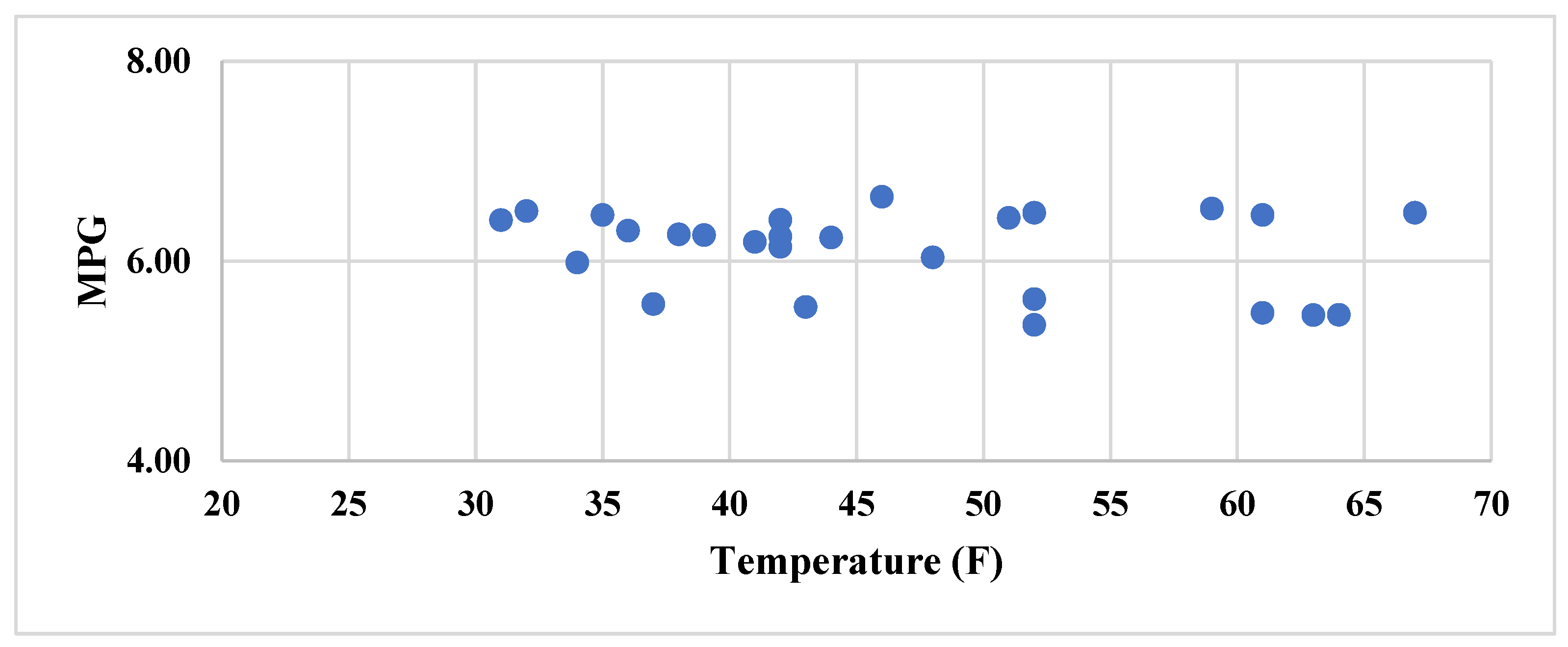
Figure 12 shows the variation in MPG of the diesel bus against ambient temperature. The data show a mostly flat trend, with a slight decline as temperatures increase. While parasitic loads from air conditioning systems can typically reduce MPG in warmer months, the data suggest that these effects were minimal or offset by other operational factors in this specific fleet.

3. V2G

As detailed in the electrification plan (Section 2.1), a 136-bus fleet is utilized for this V2G assessment.

3.1. V2G Potential of ESB Fleet

The analysis of regional electricity demand reveals that peak demand for electricity occurs during specific hours of the day in the demand plot. These are the periods when electricity prices are highest. By strategically charging ESBs during off-peak hours and discharging them during peak periods, ESB fleets can maximize their cost savings while contributing to grid stability. Selling electricity back to the grid during these high-demand times offers financial benefits and ensures a reliable electricity supply when it is most needed. For reference, the off-peak rate in Virginia, which is $0.0986/kWh, is used (because Monongalia County currently does not split consumer cost for peak and off-peak rates), compared to the peak rate of $0.2587/kWh, which means ESB owners can earn approximately 60% on their electricity costs when charging during off-peak hours, and another 60% while discharging them in peak hours [48]. While this study utilizes local West Virginia rates (USD 0.2587/kWh), it is important to note that V2G incentives in other jurisdictions, such as California, can reach up to USD 2/kWh, significantly increasing the potential profit of V2G program.
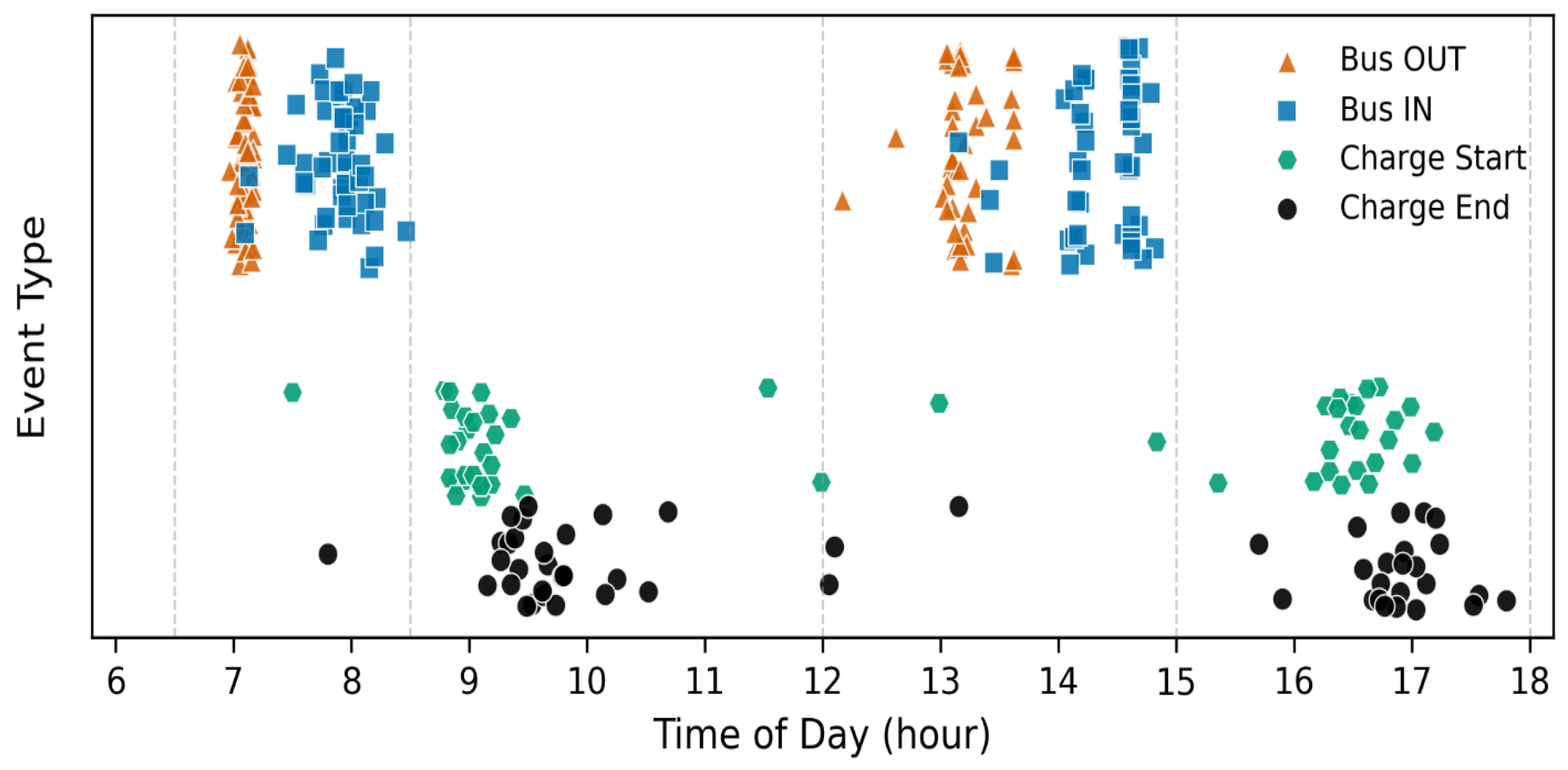
Figure 13 shows the operation of the SB and charging time in 24 hours’ time. Mostly, the SB is used between 7:00 a.m. to 8:30 a.m.in the morning and then is charged from 8:30 to 11 a.m. The SB is again used from around 13:00 p.m. to 15:00 p.m. and is then charged until 17:30 p.m., but the late afternoon charge can be rescheduled to a midnight charge when power demand is low. So, when the peak occurs at around 6 PM, V2G technology can come into action and energy can be sent back to the grid. However, it should be noted that V2G is mostly used during weekends and holidays when school buses are not in service. However, it can be used during school days if the charge schedule and V2G discharge schedule do not overlap.
With the total fleet capacity calculated, the discharge limit should be accounted for, which is how much can be discharged from the fleet without degrading battery performance. When using safe charging and discharging practices, it is important to not let the EV bus discharge past 20% or charge past 80% state of charge (SoC). This allows the batteries to maintain a healthy lifespan and limit degradation [49].
Table 7 shows the total capacity of the buses in a safe SoC limit. The total capacity shows the entire fleet’s capacity if all buses were at 20% and 80% charge. Thus, the usable battery capacity of the fleet is 16,227 kWh. For example, a BEAST model bus has a battery capacity of 194 kWh; however, as established in the previous section, only the 80% to 20% charge states can be used for V2G without dramatically damaging battery lifespan and increasing safety risk, resulting in a usable V2G capacity of 116 kWh calculated using Equation (5):
155 ( 80 % c a p a c i t y ) 39 k W h ( 20 % c a p a c i t y ) = 116 k W h

3.2. V2G Potential: Discharging to Grid

Discharging plays a pivotal role in allowing EVs to actively contribute to the stability of the electrical grid. Discharging relieves stress on the electrical grid during peak demand periods to maintain stability. Peak demand periods refer to specific times of the day when electricity consumption is at its highest on the power grid of a given region. Most of the time, these periods are caused when commercial and industrial activity is increased with the addition of residential use. Managing peak demand efficiently is essential to avoid strain on the electrical grid and to prevent power outages. It is very difficult to accurately predict when a peak demand period will be during the day, which is why the electrical grid has capabilities to communicate with EVs on how much power is needed and when to discontinue discharging.
As established in the previous section, the proposed bus fleet has a combined usable energy storage capacity of 16,227 kWh, and 14,929 kWh is delivered to the grid after accounting for discharge efficiency. The scenario detailed below assumes the following timetable. The buses are charged at off-peak time at a standard rate of USD 0.0986/kWh, and discharge during the day, selling the electricity to the grid at peak time at a price of USD 0.2587/kWh for a USD 0.1601 profit per kWh of electricity sold to the grid. Buses are assumed to run Monday–Friday during the school year and are assumed to remain plugged in to a V2G-enabled charger at all other times. This analysis focuses on the 185 non-school days established previously, during which buses remain available for grid support. Even the bus operation schedule shown in Figure 13 shows that V2G can be used in school days, but we are considering only on no-school operating days, where, during this 185-day period, the bus fleet can discharge the entire 16,227 kWh capacity to the grid each day during peak demand times and fully recharge at night. Efficiency must of course also be considered as a factor in these calculations, as there are losses during the charging and discharging processes. In evaluating the efficiency of EVs during charging and discharging with V2G, it can be categorized into three main categories: inverter efficiency, battery charging/discharging efficiency, and battery thermal management system (BTMS) energy consumption.
For charging, the inverter efficiency, which represents the AC-to-DC conversion efficiency, has been measured at approximately 95%, i.e., 5% of energy loss. The battery charging efficiency, which mainly accounts for the losses due to battery internal resistance and electrochemical reactions within the li-OH cells, typically ranges from 98% to 99%, i.e., 1–2% of energy loss [50]. The BTMS, which is responsible for maintaining the battery temperature within the operation range, has its own energy consumption, which can go up to 2% of total energy input during fast charging or high ambient temperature [51].
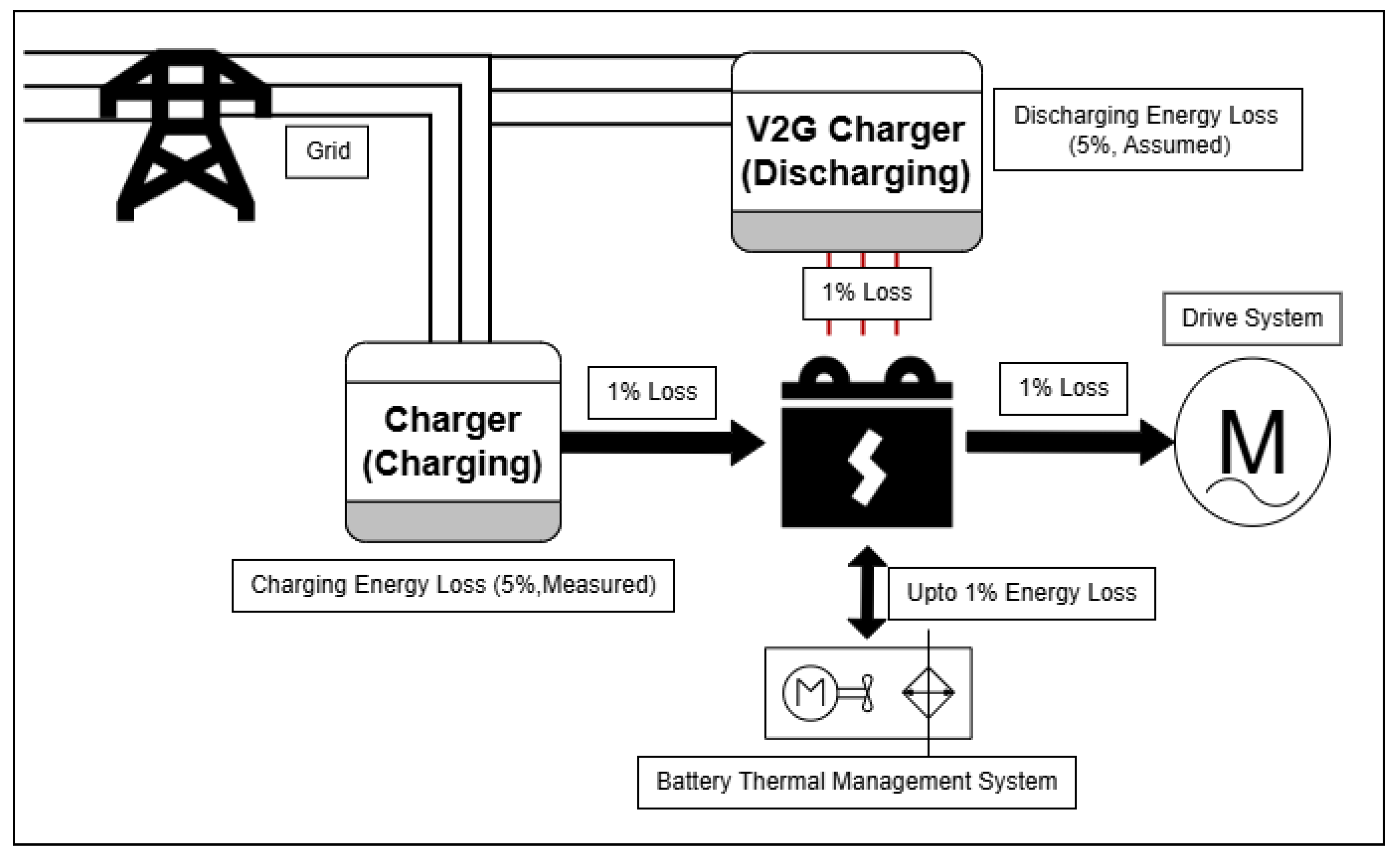
During the discharging process, the battery’s discharging efficiency due to internal resistance and energy consumption by the BTMS will be comparable to that of the charging process, which will be 1–2% and up to 2% of energy losses, respectively. If V2G is included, then another 5% of the assumed inverter loss will occur as inverter loss during charging. In total, a full charge–discharge round-trip cycle can experience cumulative energy losses of around 15.36% (92% efficiency in both charging and discharging each), which is also shown in Figure 14 and Table 8.
The round-trip efficiency of the ESB battery storage evaluated on grid-to-grid basis is calculated using Equation (6):
η V 2 G = η G 2 V B × η V B 2 G = 92 % × 92 % = 84.64 %
where η G 2 V B a n d η V B 2 G are the efficiencies associated with charging from the grid to the vehicle battery and discharging of the battery to the grid.
Referring to Figure 14, the charging and discharging efficiency should account for all the losses, summing up to 15.36% of losses in total. However, for this research study, we have only measured charging inverter efficiency. So, we assume 1% + 2% of charging losses in the battery and BTMS itself, and a 5% loss in inverter efficiency.
From Table 8, charging efficiency can be estimated to be 92% of the power provided by the grid to the charger stored in the battery, which means that ~126 kWh of electricity is required to store 116 kWh of electricity in the battery.
W G 2 V B = B a t t e r y V 2 G C a p a c i t y η G 2 V B
As such, charging a single BEAST model bus with 126 kWh of electricity purchased at the nighttime rate of USD 0.0986/kWh would cost USD 12.43 to charge from 20% to 80%.
C o s t t o C h a r g e = N i g h t t i m e R a t e B a t t e r y V 2 G C a p a c i t y η G 2 V B
The results for the full fleet for a single night are shown below in Table 9. As such, to charge the fleet each night, USD 1733.75 of electricity is purchased.
The energy stored in the battery is discharged to the grid during peak demand periods. Similarly to G2VB charging, VB2G discharge also comes with similar losses in the inverter, BTMS, and the battery internal losses, with the assumed 5% of inverter losses as in charging, and 1% + 2% of battery internal losses and BTMS losses. η G 2 V B evaluated on a battery-to-grid basis is 92%.
Table 10 shows the electricity delivered to the grid and the revenue. With the cost to charge and revenue from discharge calculated, the daily profit can be calculated.
V 2 G P r o f i t = R e v e n u e C o s t s V 2 G D a i l y P r o f i t = U S D 3850.19 U S D 1733.75 = U S D 2116.44 V 2 G Y e a r l y P r o f i t = U S D 2116.44 185 d a y s = U S D 391,541
This is an ideal case scenario where all buses in the fleet can fully discharge during peak demand time to all receive the maximum rate of USD 0.2587 per kWh. Realistically, the duration of peak demand is approximately one hour; therefore, only the power that can be discharged within this one-hour period can be sold at the USD 0.2587/kWh rate.
With the financial returns of V2G and switching from fossil fuel to electric fuel calculated, a proper cost analysis can be developed. The first key question to address is whether the financial benefits of V2G charging justify the additional investment required for installing V2G-capable chargers. The operation of the proposed EBS fleet without V2G in consideration request 66 40 kW dual port slow chargers, and 5 dual port super chargers, and 131 dual-port chargers and 5 dual-port super chargers are required for V2G. Table 11 and Table 12 break down the cost of a configuration which is V2G-enabled and a configuration without a V2G capability. In addition to the charger purchase cost, other expenses are expected, including the installation of Level 3 bidirectional chargers and various associated ancillary costs.
Enabling V2G’s capability will increase the cost of chargers from USD 2,184,000 to USD 9,639,000, a USD 7,455,000 increase in capital (premium) cost. Plus, the grid company may also charge a capacity cost when a large number of EV chargers are installed. With the known V2G profit of approximately USD 391,541, it is evident that the implementation of V2G will help to achieve a more resilient grid but at a high cost. The construction and permit process could also be costly, which should also be accounted for, but this is beyond the scope of work of this project.

4. Discussion

This study highlights both the advantages and limitations of electrifying the current SB fleet in Monongalia County, WV. From an energy performance perspective, ESBs demonstrated an average energy consumption of 0.44 MPkWh, equivalent to 13.41 MPDGE. However, the result is based on a limited dataset and route-specific conditions, suggesting the need for broader monitoring across operating environments.
The emissions analysis revealed that ESBs do not yet offer a GHG advantage in West Virginia due to the high carbon intensity of the regional grid. Diesel buses emitted an average of 4.08 lb CO2 per mile (1.15 kg/km), compared to 5.38 lb CO2 per mile (1.51 kg/km) for ESBs on yearly average. Although tailpipe emissions are eliminated, upstream emissions from coal-based generation offset these benefits. This finding emphasizes that the environmental benefit of ESBs is tied directly to grid decarbonization and highlights the importance of pairing SB fleet electrification with renewable energy integration. Table 13 compares the estimated GHG emissions from ESBs if ran in different states based on grid emissions, considering a similar efficiency to the one it currently has while operating in West Virginia.
This finding reveals a critical sustainability contradiction: in regions with coal-dominant energy portfolios, the transition to ESBs may result in a temporary increase in total lifecycle CO2 emissions compared to their diesel counterparts. However, this trade-off must be balanced against the immediate elimination of tailpipe pollutants, which significantly reduces students’ exposure to carcinogenic exhaust and improves local air quality. Consequently, the long-term environmental viability of ESB fleets in such regions is inextricably linked to the ongoing decarbonization of the regional power grid.
Infrastructure measurements showed fast-charger efficiencies around 95%, indicating relatively minor losses from charging hardware. However, the evaluation of V2G integration revealed a tension between technical potential and economic feasibility. A fully electrified county fleet could discharge nearly 15 MW in one hour and generate annual revenues exceeding USD 700,000. Yet, the requirement for bidirectional chargers for each bus adds about USD 7.5 million in capital costs (not including installation cost, permit fee and grid capacity cost), making near-term financial returns unattractive, which is a 400% increase over the non-V2G infrastructure cost. Battery degradation adds another layer of complexity. While V2G participation could enhance grid reliability, increased battery cycling is expected to reduce service life and raise battery replacement costs, highlighting the need for more detailed modeling of battery health under different duty cycles. To support the transition to electric fleets, policymakers should provide targeted subsidies to bridge the USD 7.5 million V2G infrastructure gap, accelerate grid decarbonization to ensure net emission reductions, and establish standardized utility rates to protect school districts from economic risks.
These findings present a mixed outcome: ESBs deliver higher energy efficiency and local air quality benefits, but climate impacts and economic feasibility hinge on grid mix, infrastructure costs, and battery longevity when V2G is to be implemented.

5. Conclusions

This paper presents the SB electrification plan; the energy consumption of an electric SB with a diesel bus running on the same route; the potential of ESB fleets in V2G applications; and the cost, benefit, and potential battery capacity degradation issues associated with V2G. Based on the information presented in this paper, the following conclusions can be drawn:
The yearly average distance-specific energy consumption of the electric and diesel SBs operating on the same route are 0.37 MPkWh and 5.55 MPG, respectively. The energy consumption ratio is 14.92 kWh electricity/gallon diesel.
The yearly average distance-specific CO2 emission of the ESB is 5.38 lb/mile (1.51 kg/km), compared to 4.08 lb/miles (1.15 kg/km) of a diesel bus serving the same route, and it depends on the carbon emissions factor in WV where the electricity is produced by burning coal.
The ESB fleet provides a usable V2G capacity of 55.2% of fleet battery capacity, and delivers 84.6% of electricity charged from the grid during off-peak period back to grid in peak hour.
The implementation of the V2G will ring annually USD700,000 revenue but increase the charging infrastructure cost about USD 7.5 million.
Overall, ESBs mark a critical step toward sustainable rural transportation, but their long-term viability hinges on cleaner electricity, targeted subsidies, and improved battery-life management.

6. Limitations

This study provides a detailed analysis of the electrification and V2G potential for a school bus fleet in north-central WV, several limitations should be considered when interpreting the results:
This investigation is constrained to a specific regional context in West Virginia, which may limit the direct generalizability of energy consumption results to different geographic settings.
The immediate environmental benefits are limited by the high carbon intensity of the local coal-dominant electricity grid, which impacts the lifecycle CO2 reductions in the fleet.
The V2G analysis assumes idealized charging and discharging schedules and does not fully incorporate real-world grid constraints, aggregation limits, or operational uncertainties.
While the study notes that V2G operation doubles battery cycles, the assessment lacks a quantitative electrochemical model to predict the specific impact of degradation on battery service life.
The economic feasibility assessment is based on current electricity rates and estimated capital costs, without a sensitivity study to account for price volatility or grid capacity surcharges.
System efficiency evaluations rely on measured inverter data and the established literature for auxiliary losses rather than empirical data from long-term, multi-year fleet operations.

Author Contributions

Conceptualization, R.D. and H.L.; methodology R.D. and H.L.; software, R.D.; formal analysis, R.D. and H.L.; investigation, R.D.; resources, R.D. and H.L.; data curation, R.D.; writing—original draft preparation, R.D.; writing—review and editing, D.J., J.J.R. and H.L.; supervision, H.L., D.J., B.G. and R.L. All authors have read and agreed to the published version of the manuscript.

Funding

This research received no external funding.

Institutional Review Board Statement

Not applicable.

Informed Consent Statement

Not applicable.

Data Availability Statement

The data presented in this study are available on request from the corresponding author due to the data are not publicly available due to privacy or ethical restrictions.

Acknowledgments

Special thanks to the Morgantown SB fleet for their collaboration and continuous support, mainly Jason Jackson, whose assistance and coordination were very much appreciated. Also, thanks to the students Anthony A. Abrahamian, Hayden Hintemeyer, and James J. Pritz IV, WVU MMAE undergraduate students, for their initial work on SB fleet research presented in Table 3 and Table 4.

Conflicts of Interest

The authors declare no conflicts of interest.

Abbreviations

The following abbreviations are used in this manuscript:
BEVsBattery Electric Vehicles
BTMSBattery Thermal Management System
CNGCompressed Natural Gas
DSBDiesel School Bus
ESBsElectric School Buses
EVsElectric Vehicles
G2VBGrid-to-Vehicle Battery
GHGGreenhouse Gas
HPCHigh-power Charging
HVACHeating, Ventilation, and Air Conditioning
ICEsInternal Combustion Engines
ICEVsInternal Combustion Engine Vehicles
MPGMiles Per Gallon
MPGeMiles Per Gallon ESB Equivalent
MPkWhMiles per Kilowatt-hour
SBSchool Bus
SoCState of Charge
VB2GVehicle Battery-to-Grid

References

  1. Intergovernmental Panel on Climate Change (IPCC). Contribution of Working Group III to the Fifth Assessment Report of the Intergovernmental Panel on Climate Change. In Climate Change 2014: Mitigation of Climate Change; Cambridge University Press: Cambridge, UK, 2014. [Google Scholar]
  2. Bisht, P.S.; Gopalakrishnan, B.; Dahal, R.; Li, H.; Liu, Z. Parametric Energy Efficiency Impact Analysis for Industrial Process Heating Furnaces Using the Manufacturing Energy Assessment Software for Utility Reduction. Processes 2024, 12, 737. [Google Scholar] [CrossRef]
  3. International Energy Agency. Global EV Outlook 2021 Accelerating Ambitions Despite the Pandemic. 2021. Available online: http://www.iea.org/reports/global-ev-outlook-2021 (accessed on 13 December 2025).
  4. Intergovernmental Panel on Climate Change (IPCC). Summary for Policymakers. In Climate Change 2014: Mitigation of Climate Change; Cambridge University Press: Cambridge, UK, 2015; pp. 1–30. Available online: https://www.cambridge.org/core/product/identifier/CBO9781107415416A011/type/book_part (accessed on 13 December 2025).
  5. Edmonds, J.; Reilly, J. Global Energy and CO2 to the Year 2050. Energy J. 1983, 4, 21–47. [Google Scholar]
  6. Greene, D.L.; Baker, H.H.; Plotkin, S.E. Greenhouse Gas Emissions Prepared for the Pew Center on Global Climate Change. January 2011. Available online: https://www.pewclimate.org (accessed on 13 December 2025).
  7. Kutkut, A.; Kumar, R.; Li, H. An experimental investigation of the combustion process and the injection strategy of a heavy-duty diesel engine equipped with a common rail fuel injection system. Fuel 2025, 380, 133270. [Google Scholar] [CrossRef]
  8. Pesaran, A.; Roman, L.; Kincaide, J. Electric Vehicle Lithium-Ion Battery Life Cycle Management. 2023. Available online: https://www.nrel.gov/publications (accessed on 13 December 2025).
  9. Li, Y.; Li, H.; Guo, H.; Li, Y.; Yao, M. A numerical investigation on methane combustion and emissions from a natural gas-diesel dual fuel engine using CFD model. Appl. Energy 2017, 205, 153–162. [Google Scholar] [CrossRef]
  10. Paudel, A.; Choi, J.K. Techno-economic pathway for green hydrogen adoption in thermal applications across US small and medium manufacturing sectors. Int. J. Hydrogen Energy 2025, 98, 295–307. [Google Scholar] [CrossRef]
  11. Sapkota, S.; Paudel, A.; Choi, W.; Ko, I.; Choi, J.K. A pathway to decarbonizing cement manufacturing via solar-driven green hydrogen systems. Int. J. Hydrogen Energy 2025, 194, 152508. [Google Scholar] [CrossRef]
  12. Huntington, A.; Wang, J.; Burgoyne-Allen, P.; Werthmann, E.; Jackson, E. Electric School Bus, U.S. Market Study and Buyer’s Guide: A Resource for School Bus Operators Pursuing Fleet Electrification; World Resources Institute: Washington, DC, USA, 2023. [Google Scholar]
  13. International Energy Agency I. Global EV Outlook 2023: Catching Up with Climate Ambitions. 2023. Available online: https://www.iea.org (accessed on 13 December 2025).
  14. Baad, A. Analysis of Advocacy Methods for Promoting and Passing State Electric School Bus Policies. Master’s Thesis, Sanford School of Public Policy, Durham, NC, USA, 2023. [Google Scholar]
  15. United States EPAOffice of Inspector General. The EPA Clean School Bus Program Could Be Impacted by Utility Delays. 2023. Available online: https://www.epaoig.gov (accessed on 13 December 2025).
  16. U.S. Department of Energy. Electric Vehicles: Benefits and Considerations. 2020. Available online: https://afdc.energy.gov/fuels/electricity-benefits (accessed on 21 July 2024).
  17. UNFCCC M. The Paris Agreement. United Nations Framework Convention on Climate Change. In Proceedings of the 21st Conference of the Parties, Paris, France, 30 November–12 December 2015. [Google Scholar]
  18. Congressional Budget Office. Available online: https://www.cbo.gov/publication/58861 (accessed on 3 October 2025).
  19. National Highway Traffic Safety Administration (NHTSA). School Bus Safety. 2020. Available online: https://www.nhtsa.gov/road-safety/school-bus-safety (accessed on 23 July 2024).
  20. School Bus Fleet. 2021 Fact Book: Statistics, Trends & Insights. 2021. Available online: https://www.schoolbusfleet.com/ (accessed on 24 July 2024).
  21. United States School Bus Market Size, Share, and COVID-19 Impact Analysis. Available online: https://www.sphericalinsights.com/reports/united-states-school-bus-market (accessed on 5 September 2025).
  22. Calstart. Zeroing in on ESBs: State of the Market Report. 2020. Available online: https://calstart.org/wp-content/uploads/2021/04/Zeroing_In_on_ZEBs_FINAL.pdf (accessed on 28 July 2024).
  23. Environmental Protection Agency (EPA). Clean Diesel Campaign. 2019. Available online: https://www.epa.gov/cleandiesel (accessed on 23 July 2024).
  24. American Public Transportation Association (APTA). Public Transportation Facts. 2021. Available online: https://www.apta.com/news-publications/public-transportation-facts/ (accessed on 27 July 2024).
  25. Briones, A.; Francfort, J.; Heitmann, P.; Schey, M.; Schey, S.; Smart, J. Vehicle-to-Grid (V2G) Power Flow Regulations and Building Codes Review by the AVTA; Idaho National Lab: Idaho Falls, ID, USA, 2012. [Google Scholar]
  26. Shao, S.; Pipattanasomporn, M.; Rahman, S. Demand Response as a Load Shaping Tool in an Intelligent Grid with Electric Vehicles. IEEE Trans. Smart Grid. 2011, 2, 624–631. [Google Scholar] [CrossRef]
  27. Tepe, B.; Jablonski, S.; Hesse, H.; Jossen, A. Lithium-ion battery utilization in various modes of e-transportation. eTransportation 2023, 18, 100274. [Google Scholar] [CrossRef]
  28. Zhang, Q.; Yan, J.; Gao, H.O.; You, F. A Systematic Review on power systems planning and operations management with grid integration of transportation electrification at scale. Adv. Appl. Energy 2023, 11, 100147. [Google Scholar] [CrossRef]
  29. Khwanrit, R.; Lim, Y.; Charoenlarpnopparut, C.; Kittipiyakul, S.; Javaid, S.; Tan, Y. Optimal Vehicle-to-Grid Strategies for Electric School Bus using Game-Theoretic Approach. In Proceedings of the 2023 International Conference on Consumer Electronics—Taiwan (ICCE-Taiwan), PingTung, Taiwan, 17–19 July 2023; IEEE: New York, NY, USA, 2023; pp. 191–192. [Google Scholar]
  30. Acharige, S.S.G.; Haque, M.d.E.; Arif, M.T.; Hosseinzadeh, N.; Hasan, K.N.; Oo, A.M.T. Review of Electric Vehicle Charging Technologies, Standards, Architectures, and Converter Configurations. IEEE Access 2023, 11, 41218–41255. [Google Scholar] [CrossRef]
  31. The Road to Fleet Electrification. Available online: https://efiling.energy.ca.gov/GetDocument.aspx?tn=235726&DocumentContentId=68681 (accessed on 13 December 2025).
  32. Rajendran, G.; Vaithilingam, C.A.; Misron, N.; Naidu, K.; Ahmed, M.R. A comprehensive review on system architecture and international standards for electric vehicle charging stations. J. Energy Storage 2021, 42, 103099. [Google Scholar] [CrossRef]
  33. Shirazi, Y.; Carr, E.; Knapp, L. A cost-benefit analysis of alternatively fueled buses with special considerations for V2G technology. Energy Policy 2015, 87, 591–603. [Google Scholar] [CrossRef]
  34. Ifaei, P.; Esfehankalateh, A.T.; Ghobadi, F.; Mohammadi-Ivatloo, B.; Yoo, C. Systematic review and cutting-edge applications of prominent heuristic optimizers in sustainable energies. J. Clean. Prod. 2023, 414, 137632. [Google Scholar] [CrossRef]
  35. Wang, Q.S.; Su, C.W.; Hua, Y.F.; Umar, M. How can new energy vehicles affect air quality in China?—From the perspective of crude oil price. Energy Environ. 2022, 33, 1524–1544. [Google Scholar] [CrossRef]
  36. Yap, K.Y.; Chin, H.H.; Klemeš, J.J. Solar Energy-Powered Battery Electric Vehicle charging stations: Current development and future prospect review. Renew. Sustain. Energy Rev. 2022, 169, 112862. [Google Scholar] [CrossRef]
  37. Furszyfer Del Rio, J.; Furszyfer Del Rio, D.D.; Sovacool, B.K.; Griffiths, S. The demographics of energy and mobility poverty: Assessing equity and justice in Ireland, Mexico, and the United Arab Emirates. Glob. Environ. Change 2023, 81, 102703. [Google Scholar] [CrossRef]
  38. Haces-Fernandez, F. Framework to Develop Electric School Bus Vehicle-to-Grid (ESB V2G) Systems Supplied with Solar Energy in the United States. Energies 2024, 17, 2834. [Google Scholar] [CrossRef]
  39. Vijayakumar, S.; Sudhakar, N. A review on unidirectional converters for on-board chargers in electric vehicle. Front. Energy Res. 2022, 10, 1011681. [Google Scholar] [CrossRef]
  40. Dahiru, A.T.; Daud, D.; Tan, C.W.; Jagun, Z.T.; Samsudin, S.; Dobi, A.M. A comprehensive review of demand side management in distributed grids based on real estate perspectives. Environ. Sci. Pollut. Res. 2023, 30, 81984–82013. [Google Scholar] [CrossRef]
  41. Implementation Manual. 2024. Available online: www.californiahvip.org/sellers (accessed on 13 December 2025).
  42. Young, L.W.; Beechhurst, E. Zero Emission Busing Implementation Progress Report. New York State Education Department: Albany, NY, USA, 2025. Available online: https://www.nysed.gov/sites/default/files/programs/pupil-transportation/2025-zeb-implementation-progress-report-final.pdf (accessed on 13 December 2025).
  43. Garrow, L.A.; German, B.J.; Leonard, C.E. Urban air mobility: A comprehensive review and comparative analysis with autonomous and electric ground transportation for informing future research. Transp. Res. Part. C Emerg. Technol. 2021, 132, 103377. [Google Scholar] [CrossRef]
  44. Breyer, C.; Khalili, S.; Bogdanov, D.; Ram, M.; Oyewo, A.S.; Aghahosseini, A.; Gulagi, A.; Solomon, A.A.; Keiner, D.; Lopez, G.; et al. On the History and Future of 100% Renewable Energy Systems Research. IEEE Access 2022, 10, 78176–78218. [Google Scholar] [CrossRef]
  45. Dahal, R. An Investigation into Energy Consumption and V2G Potential of an Electric School Bus Fleet. Master’s Thesis, West Virginia University, Morgantown, WV, USA, 2025. Available online: https://researchrepository.wvu.edu/etd/12924 (accessed on 13 December 2025).
  46. Saadaoui, A.; Ouassaid, M. Super-twisting sliding mode control approach for battery electric vehicles ultra-fast charger based on Vienna rectifier and three-phase interleaved DC/DC buck converter. J. Energy Storage 2024, 84, 110854. [Google Scholar] [CrossRef]
  47. Mosayebi, M.; Gheisarnejad, M.; Farsizadeh, H.; Andresen, B.; Khooban, M.H. Smart Extreme Fast Portable Charger for Electric Vehicles-Based Artificial Intelligence. IEEE Trans. Circuits Syst. II Express Briefs. 2023, 70, 586–590. [Google Scholar] [CrossRef]
  48. Dominion Energy. Available online: https://www.dominionenergy.com/virginia/rates-and-tariffs (accessed on 12 March 2025).
  49. Kostopoulos, E.D.; Spyropoulos, G.C.; Kaldellis, J.K. Real-world study for the optimal charging of electric vehicles. Energy Rep. 2020, 6, 418–426. [Google Scholar] [CrossRef]
  50. Knehr Kevin, W. A Manual for BatPaC v5.0 Battery Performance and Cost Modeling for Electric-Drive Vehicles. Available online: https://www.anl.gov (accessed on 13 December 2025).
  51. Park, I.; Kim, C.; Lee, H.; Myung, C.L.; Min, K. Comprehensive Analysis of Battery Thermal Management and Energy Consumption in an Electric Vehicle: Impact of Driving Modes and Ambient Temperatures. Int. J. Automot. Technol. 2025, 26, 621–636. [Google Scholar]
Figure 1. Carbon dioxide emissions from the transportation sector [18].
Sustainability 18 00838 g001
Figure 2. U.S. school bus market forecast [21].
Sustainability 18 00838 g002
Figure 3. Map showing bus operation route for (a) ESB and (b) diesel bus.
Sustainability 18 00838 g003
Figure 4. Energy consumption for Monongalia County’s diesel bus fleet.
Sustainability 18 00838 g004
Figure 5. Level 3 DC fast charger schematic diagram.
Sustainability 18 00838 g005
Figure 6. Experimental setup installed to measure the (a) AC current, (b) DC current, and (c) temperature.
Sustainability 18 00838 g006
Figure 7. Morgantown bus fleet ESB charger performance. (a) Charger parameters over battery SoC %. (b) Efficiency over a charging period.
Sustainability 18 00838 g007
Figure 8. Variation in MPG of diesel and MPGe of ESB.
Sustainability 18 00838 g008
Figure 9. School bus fuel cost per mile for diesel and ESBs.
Sustainability 18 00838 g009
Figure 10. School bus emissions per mile for diesel and ESBs serving the same route.
Sustainability 18 00838 g010
Figure 11. Impact of ambient air temperature on ESB fuel economy rated by MPkWh.
Sustainability 18 00838 g011
Figure 12. Impact of air temperature on diesel bus fuel economy rated by MPG.
Sustainability 18 00838 g012
Figure 13. Electrical school bus operation and charging times in a day.
Sustainability 18 00838 g013
Figure 14. Efficiency estimation in G2VB and V2G.
Sustainability 18 00838 g014
Table 1. Fuel types used in different school buses.
Fuel TypeAdvantagesChallenges
DieselHigh durability, fuel efficiencyHigh emissions (NOx, particulate matter)
BiodieselRenewable, reduces carbon emissionsHigher NOx emissions
CNGReduced emissions, lower fuel costsSpecialized refueling infrastructure, low energy density
LNGLower emissions, higher energy densityCryogenic storage, handling
Propane (LPG)Lower emissions, quieter, reduced operating costsShorter range, lower energy density
Hydrogen Zero tailpipe emissions, long ranges, fast refuelingHydrogen production, refueling infrastructure
ElectricityZero tailpipe emissions, quiet operation, lower operating costsBattery range, charging infrastructure
Table 2. Current fleet size.
Length (Feet)223336Over 40Total
Number of Buses2252101130
Table 3. ESBs models available in US market.
ESBsBus 1Bus 2Bus 3Bus 4
MakeBlueBirdNavistar ICE BusProterra/Thomas BuiltGreenPower
ModelVision ElectricECE ElectricSaf-T-Liner C2 JouleyBEAST
Passenger Capacity77788190
Range130 Miles135 Miles138 Miles140 Miles
Charging Time
(hours)
L2L3L2L3L2L3L2L3
82.611–123.511–122–310.53.5
Battery Capacity155 kWh210 kWh226 kWh194 kWh
Table 4. EV bus model selection.
ESB TypeRequired
Number
Passenger
Capacity
Battery
Capacity (kWh)
Total Battery
Capacity (kWh)
NANO BEAST424118472
BEAST1279019424,638
MEGA BEAST5903871935
Total136--27,045
Table 5. Equipment used for data logging and recording.
Sensor/LoggerModelCapacityAccuracyRemarks
AC Current Transducer (Onset, Bourne, MA, USA)JS16NH-0100100 A±1%Used for measuring AC current.
DC Current Transducer (Onset, Bourne, MA, USA)T-VER-971BP-200200 A±0.5% Full ScaleUsed to measure the DC current out from charger
Temperature Sensor (Onset, Bourne, MA, USA)SD-TEMP-06−40 to 100 °C±0.15 °C from 0 to 50 °CMeasures temperature rise in the charger.
Data Logger (Onset, Bourne, MA, USA)Onset HOBO MX11050 to 20.1 mA0.2% to 0.3%Logs current and temperature data.
Table 6. Monthly fuel economy of diesel and ESB (February 2024–January 2025). * ESB not operating.
MonthFuelMilesFuel Economy
Diesel
(gal)
ESB
(kWh)
DieselESBDiesel
(MPG)
ESB
(MPGe)
February280301271104.5513.33
March147262372710244.9415.87
April2373662133615685.6417.4
May154290485010045.5214.05
JuneSchool Closed, School Bus not in Operation
JulySchool Closed, School Bus not in Operation
August24*137*5.68*
September7613764876006.3717.72/
October2503347151011906.0414.45
November12513007984476.3913.98
December7111934174015.9113.66
January1444436461514.5013.85
Total150716,87881826395--
Monthly Average15118758187115.5514.92
Table 7. Safe state of charging capacity for V2G purpose, kWh.
ESB TypeRequired NumberBattery Capacity (kWh)Minimum SOC Capacity (kWh) (20%)Maximum SOC Capacity (kWh) (80%)V2G Potential Per Bus (kWh)V2G Potential (kWh) of Fleet
NANO BEAST4118249470.8283
BEAST12719439155116.414,783
MEGA BEAST538777310232.21161
Total136----16,227
Table 8. Efficiency estimate in G2VB and VB2G.
SystemInverter LossBattery LossBTMS LossTotal LossEfficiency
Grid-to-Vehicle Battery5%1%2%8%92%
Vehicle Battery-to-Grid5%1%2%8%92%
V2G/Roundtrip9.75%1.99%3.96%15.3684.64%
Table 9. Charging costs for one charge of the fleet.
20–80% Battery Capacity (kWh) η G 2 V B Electricity from Grid (kWh)Cost to Charge Per Bus (USD)Num. of VehiclesG2VB Charge Cost (USD)
NanoBeast7092%767.50430.01
Beast11692%12612.431271578.89
MegaBeast23392%25324.975124.86
Totals:----1361733.75
Table 10. Discharging revenues for a single night.
Battery V2G CapacityVB2G EfficiencyElectricity to Grid 20–80%V2G Revenue Per BusNum of This Vehicle ModelV2G Revenue of FleetV2G Profit (Revenue-Cost)
NanoBeast7092%6416.66466.6436.63
Beast11692%10727.611273506.271927.39
MegaBeast23392%21455.455277.27152.42
Totals:----1363850.192116.44
Table 11. Cost of chargers for V2G-enabled scenario.
V2G-Capable ConfigurationCharging
Power
Price (USD)Number RequiredTotal Cost (USD)
Autel MaxiCharger 3 Phase Charging120 kW69,0001319,039,000
ChargePoint Level 3 Express Charger220 kW120,0005600,000
Total--1369,639,000
Table 12. Cost of chargers for non-V2G-enabled scenario.
Non-V2G ConfigurationCharging
Power
Price (USD)Number RequiredTotal Cost (USD)
Autel MaxiCharger 3 Phase 2 Port Charger40 kW24,000661,584,000
ChargePoint Level 3 Express Charger220 kW120,0005600,000
Total--712,184,000
Table 13. CO2 emissions factor from electricity in different states.
StateCO2 Emissions (lb/kwh)Estimated CO2/Mile (lb)
West Virginia1.9565.38
Texas0.8232.26
California0.4071.12
Ohio1.0052.76
New York0.5371.48
Disclaimer/Publisher’s Note: The statements, opinions and data contained in all publications are solely those of the individual author(s) and contributor(s) and not of MDPI and/or the editor(s). MDPI and/or the editor(s) disclaim responsibility for any injury to people or property resulting from any ideas, methods, instructions or products referred to in the content.